NewzIntel.com

    • Checkout Page
    • Contact Us
    • Default Redirect Page
    • Frontpage
    • Home-2
    • Home-3
    • Lost Password
    • Member Login
    • Member LogOut
    • Member TOS Page
    • My Account
    • NewzIntel Alert Control-Panel
    • NewzIntel Latest Reports
    • Post Views Counter
    • Privacy Policy
    • Public Individual Page
    • Register
    • Subscription Plan
    • Thank You Page

Category: Education

  • MIL-OSI United Kingdom: expert reaction to study identifying nanoparticles in human breast milk

    Source: United Kingdom – Executive Government & Departments

    May 12, 2025

    A study published in PNAS looks at the identification of nanoparticles in human breast milk. 

    Prof Oliver Jones, Professor of Chemistry, RMIT University, said:

    “There were two parts to this study. The first was an attempt to separate nanoparticles from human breast milk. Here, they found some material that may have been nanoparticles, but I don’t think the results were conclusive. The human samples also all came from China, so don’t tell us anything about the rest of the world. 

    “The other thing to remember is that detection by itself does not mean much. Today’s analytical equipment is so sensitive that we can detect almost anything anywhere. However, just because something may be present in tiny amounts does not mean it is causing harm.

    “The second part of the study aimed to create a specific type of nanoparticle (silicon dioxide or silica) and administer it to mice to investigate its passage into milk. While this sort of experiment has its use, the keywords are “in mice”. Mice are not mini-humans, and lab-made nanoparticles, as well as the amounts they used, may not accurately reflect what is found in the environment. The results, while interesting, are thus not directly comparable.

    “We have actually known that nanoparticles can enter the body through the lungs for over 20 years [1]. Many types of nanoparticles, including carbon, gold, silver, zinc oxide, titanium dioxide, and manganese oxide, have been shown to do this [2], so in that sense, the findings aren’t new.

    “Another thing to keep in mind is that the authors did not assess any potential effects of the particles; they just looked at how they might get into milk. Breathing particles in is different from ingesting them. The tissue in the lung is thin to facilitate gas exchange. This makes it relatively easy for small particles to enter the body this way. In contrast, the tissue in the intestinal tract is relatively thick and well-controlled. It is quite possible that ingested nanoparticles pass through and so don’t cause any effect. 

    “In short, while particulate pollution is a real problem that should be studied, I don’t think we need to panic over nanoparticles in milk just yet.”

    References

    1. Oberdörster G.  Sharp Z.  Atudorei V.  Elder A.  Gelein R.  Lunts A.  Kreyling W. Cox C. Extrapulmonary translocation of ultrafine carbon particles following whole-body inhalation exposure of rats. Journal of Toxicology and Environmental Health Part A 2002 65 (20) 1531-1543.

    2. Oberdörster G.  Oberdörster E. Oberdörster J. Nanotoxicology: an emerging discipline evolving from studies of ultrafine particles. Environmental Health Perspectives, 2005, 113 (7), 823-839″.


    Prof Tamara Galloway, Professor of Ecotoxicology, University of Exeter, said:

    “This interesting paper combined human biomonitoring with animal studies to understand more about the circulation of nanoparticles in the human body and their uptake into breast milk. The paper is well presented and supports previous findings with additional data. It does not offer anything new to report on potential harm to humans or babies, but aids understanding of routes of nanoparticle uptake into the body and how changing the nanoparticles themselves (e/g/ altering their surface charge) could alter how they are taken up.

    “It’s been known for some time that nanoparticles of various types can enter the human body and circulate to different tissues and locations, including to breast milk. For example, micro and nanoplastics, carbon black (an air pollutant linked to traffic fumes) and other metals have been found both in human tissues and breast milk. Mostly, the concentrations of nanoparticles found in the body are very small and there is no indication that they lead to adverse health effects at these concentrations.

    “The real world implications of this paper are in offering a more in-depth characterisation of the particles themselves, including their shapes, sizes and surface charge. The combined approach of human and animal studies, allowed the authors to firstly identify the most abundant nanoparticles in breast milk (silicon) and then to explore how they got there, a good illustration of the ‘One Health’ approach.

    “They found:

    “• Nanoparticles were present in 42/53 breast milk samples

    “• Nanoparticles could be getting into breast milk by a pathway of uptake into and through cells (including immune cells). via airways/intestine/blood to breast milk

    “• Eating flour-containing food might put you more at risk (this was more tentative but not altogether surprising, a lot of flours and powdered foods have anticaking agents and whiteners in them, it’s not particularly new or conclusive)

    “• Changing the surface charge on the nanoparticles could modify their uptake – this is good news at it offers a future way of designing drug delivery or of reducing unwanted exposures”


    ‘Identification of nanoparticle infiltration in human breast milk: Chemical profiles and trajectory pathways’ by Qing Yang et al. was published in PNAS at 20:00 UK time on Monday 12 May 2025.


    DOI: 10.1073/pnas.2500552122 


    Declared interests

    Prof Tamara Galloway: No conflicts to declare.

    Prof Oliver Jones:I have no conflicts of interest to declare. 

    MIL OSI United Kingdom –

    May 13, 2025
  • MIL-OSI: Funded Ventures Launches Terrace Wealth in Partnership with Industry Veteran Ryan Bowman to Offer Tailored Wealth Management Solutions

    Source: GlobeNewswire (MIL-OSI)

    Clayton, Missouri, May 12, 2025 (GLOBE NEWSWIRE) — Funded Ventures, in partnership with industry veteran Ryan Bowman, is proud to announce the launch of Terrace Wealth, a new wealth management firm focused on delivering personalized, fee-only financial solutions. Led by Ryan, Terrace Wealth will provide individuals, families, and institutions with customized strategies for investment management and wealth building.

    Ryan is a seasoned CERTIFIED FINANCIAL PLANNER™ with over a decade of experience as a wealth advisor. Ryan was previously a partner at a Denver-based wealth management firm, where he spearheaded the successful transition from Raymond James to an independent, fee-only Registered Investment Advisor (RIA). Ryan has an MBA from Washington University in St. Louis and previously served four years in the United States Army as a combat Infantryman, earning the rank of Sergeant and was awarded the Combat Infantryman Badge. Ryan joined Funded Ventures in 2024 as an Operating Partner to launch Terrace Wealth, bringing his passion for transparent, client-focused financial strategies to the Midwest.

    Brian Wolfe founded Funded Ventures in 2017 to buy and build small businesses. Funded Ventures previously co-led the acquisition of three businesses in the SEO SaaS vertical with sale to private equity. Brian is a retired partner at Kirkland & Ellis, where he practiced for 17 years, and teaches courses on entrepreneurship through acquisition and private equity at Washington University in St. Louis, UNC Kenan-Flagler Business School and Northwestern Pritzker School of Law. Brian also serves on the board of many civic organizations including the Skandalaris Center at Washington University in St. Louis and is a member of the Young Presidents’ Organization.

    “We are excited to launch Terrace Wealth,” said Ryan. “Our goal is to provide a client-focused, holistic approach to wealth management free of conflicts of interest, combining years of experience with a deep understanding of each client’s financial needs.”

    Brian added, “Trust and transparency are essential in building long-term financial relationships. We’re committed to working closely with our clients to create tailored strategies that align with their personal and institutional goals. We’re excited to bring cutting-edge wealth management solutions to the Midwest.”

    Terrace Wealth will offer a range of services, including retirement and goal planning, cash and money management, tax optimization, estate planning, and risk management. The firm is dedicated to serving individuals, families, and institutional clients across the Midwest, providing personalized, forward-thinking financial strategies that align with their long-term objectives.

    The firm plans to grow organically and via strategic acquisition partnerships, positioning itself for long-term success in the wealth management industry. The ideal acquisition partners are fee-only planning-focused firms offering investment management. Terrace also welcomes partnerships with single-owner practices where the advisor wants (or needs) to pull back from the practice to some degree or to realize a gradual exit that retains value, income, and a more ideal day-to-day.

    For more information about Terrace Wealth and services offered, please visit www.terracewealth.com or contact Ryan Bowman at ryan@terracewealth.com or (314) 810-4012.

    About Terrace Wealth

    Terrace Wealth is a fee-only wealth management firm based in Clayton, Missouri, that provides personalized financial strategies, offering services such as retirement and goal planning, cash and money management and estate planning. Terrace Wealth aims to help clients build and manage wealth by tailoring solutions to meet their unique financial goals. 

    About Funded Ventures

    Funded Ventures was founded in 2017 to acquire and grow small businesses. The firm previously co-led the acquisition of three companies in the SEO SaaS sector, culminating in a successful sale to private equity. Funded Ventures is currently building in the home services, legal services, and home health industries. Visit www.fundedventures.com to learn more.


    Press inquiries

    Terrace Wealth
    https://www.terracewealth.com
    Brian Wolfe
    wolfebd@gmail.com

    The MIL Network –

    May 13, 2025
  • MIL-OSI Global: Feeling anxious before surgery? Anxiety can harm healing but innovative mental health support could help

    Source: The Conversation – Canada – By Renée El-Gabalawy, Associate Professor and Clinical Psychologist, University of Manitoba

    Poor mental health before surgery is linked to worse outcomes. (Unsplash), CC BY

    Feeling anxious before surgery is normal — but for many patients, it goes far beyond nerves. There is a growing body of research showing that poor mental health before surgery can derail recovery in ways that extend far beyond the operating room.

    For example, in recent research, my colleagues and I found that anxiety and depressive symptoms before surgery are linked to poorer surgical outcomes. This includes higher complication rates within 30 days and even increased risk of death within a year.

    On top of this, many patients rank anxiety as one of the worst parts of their surgical experience, worse than pain or other aspects of surgical recovery.

    Both patients and clinicians identify a need for mental health support, yet this need is often overlooked. As an expert in perioperative mental health, I have some solutions to offer.

    Demand for surgery is accelerating

    The growing number of surgical patients — driven by an aging population, rising rates of chronic diseases and advancements in medicine — has intensified pressure on the health-care system.

    Rising demand has led to longer wait times and increases in surgery delays and cancellations. This situation has been made even worse by the COVID-19 pandemic. Patients can be left suffering in limbo for weeks, months or even years.

    My colleagues and I have found these surgery delays and cancellations to be linked with even further negative impacts on mental and physical health. Patients are getting worse while they wait.

    While this growing backlog represents a significant challenge, it also presents an opportunity.

    The opportunity

    The surgical waiting period, which is too often prolonged, offers a critical window to identify patients at highest risk for poor mental health. Identifying those in need is critical to deliver targeted and scientifically supported psychological treatments. It’s a time when patients are already engaged with the health-care system, motivated to do well and receptive to guidance.

    Evidence-based psychological treatments like cognitive behavioural therapy before surgery have been shown to improve outcomes like pain and function.

    International organizations, such as the World Health Organization, highlight the importance of including mental health support into hospital settings including surgical care.

    In the United States, the Center for Perioperative Mental Health, originating from Washington University, is one of the first large-scale initiatives of its kind aiming to integrate personalized pathways to support mental health for older adults.

    As the external advisory chair for this centre, I have seen how initiatives like these can significantly enhance perioperative care and patient outcomes.

    Globally, efforts such as pre-habilitation programs — which aim to enhance surgical readiness through exercise, nutrition and mental health support — are emerging. While these represent progress, they are not routinely implemented, often lack integration of evidence-based mental-health care, and show mixed results due to variability in design and delivery.

    There is strong evidence linking poor pre-operative mental health to worse outcomes, along with clear patient demand and promising results from existing programs. Yet, perioperative mental health support in Canada remains underfunded and far from standard clinical care.

    Mental health continues to be unaddressed in surgical settings.

    Leverage technological advancements

    Given the significant shortcomings of accessible mental-health care in Canada, creative solutions are critical. One way forward is to make the most of fast-growing technology.

    For example, our team has developed an innovative virtual reality (VR) program using patient input and strategies backed by science to support mental health before surgery.

    Patients found this both acceptable and helpful. These platforms assist patients to mentally prepare for surgery, familiarize themselves with the environment and feel more in control.

    Other large-scale digital initiatives such as the Power Over Pain Portal offer free evidence-based online psychological treatments for pain management from the comfort of your home. And pain management is especially important for those waiting extended periods for many types of surgeries.

    Our multidisciplinary team at the University of Manitoba believes these types of digital approaches can be delivered at scale, relatively low cost, and with high patient acceptability and satisfaction. This is not meant to replace human care, but to extend it.

    These are not just flashy gadgets but clinical tools with real potential to integrate evidence-based mental health treatments.

    Prepare physically and mentally

    Health-care systems are often under-resourced, and Canada is no exception. To address this, surgical care should prioritize greater investment in mental health support, including integration of technology. These efforts can better prepare patients physically and mentally for surgery and aid in their surgical recovery.

    Encouraging sign made for children with cancer at the National Institutes of Health Clinical Center in Bethesda, Maryland.
    (National Cancer Institute/Unsplash), CC BY

    Mental health is central to surgical outcomes — not secondary. We need a national strategy to fund the research and ultimately routinely apply accessible mental health treatments for surgical patients. This is especially important for those at highest risk.

    Patients have told us what they need. The evidence is undeniable. And the opportunity for change has never been greater. We need to build a system that truly cares for the whole patient.

    Renée El-Gabalawy received research funding for virtual reality projects from the New Frontiers in Research Fund – Exploration, National Research Council New Beginning Initiative, and the Winnipeg Foundation Innovation Fund. She is also the external advisory chair of the Center of Perioperative Mental Health and receives an honorarium for her involvement.

    – ref. Feeling anxious before surgery? Anxiety can harm healing but innovative mental health support could help – https://theconversation.com/feeling-anxious-before-surgery-anxiety-can-harm-healing-but-innovative-mental-health-support-could-help-255354

    MIL OSI – Global Reports –

    May 13, 2025
  • MIL-OSI USA: CLAS Commencement Honors 3,000 Graduates

    Source: US State of Connecticut

    UConn’s College of Liberal Arts and Sciences (CLAS) held its commencement ceremonies on Sunday, May 11 in Harry A. Gampel Pavilion, honoring 3,000 graduates in three separate ceremonies.

    Across the weekend, UConn held 17 graduation ceremonies representing the 146th annual commencement exercises at the University. Students earned degrees from one or more of the College’s 55 majors across the life sciences, physical sciences, social sciences, and humanities.  

    UConn President Radenka Maric congratulated the graduates, recognizing their hard work and honoring the support of families, especially mothers, who received a special shout-out and applause in celebration of Mother’s Day. 

    “The College of Liberal Arts and Sciences has a unique place at UConn,” said Maric. “All UConn students receive a broad, foundational education from the College, which shapes their critical thinking, pursuit of truth, and lifelong dedication to learning.” 

    UConn awarded a total of 5,672 undergraduate and 2,136 graduates over the weekend.

    The graduating class included 1,862 first-generation college graduates and 4,361 Connecticut residents.   

    Student speaker Aish Benzy ’25 (CLAS), a member of the CLAS Student Leadership Board who earned a dual degree in physiology and neurobiology and human rights, reflected that despite UConn’s large size, she found herself at home.  

    Growth doesn’t happen in straight lines. It’s about learning from setbacks and persevering.

    “At UConn, I never felt alone,” Benzy said. “There was always someone there to help, whether it was a professor staying late to answer my questions or a friend offering a listening ear. It made all the difference.” 

    “I had moments of doubt, moments when I thought I couldn’t keep going,” she added. “But I realized that growth doesn’t happen in straight lines. It’s about learning from setbacks and persevering.” 

    Commencement speaker Joe La Puma ’05 (CLAS), host of the award-winning YouTube series Sneaker Shopping, recounted how he navigated an uncertain path to discovering his passion for journalism.  

    “Pay attention to the moments that spark something in you, those flashes of passion,” he advised the graduates. “They’re the secret ingredients that can change everything.”

    “You don’t need to have your entire career path mapped out from the start,” he emphasized, encouraging graduates to embrace uncertainty and trust their ability to adapt.

    At the close of the ceremony, CLAS dean Ofer Harel led students in the traditional turning of tassels on their hats’ mortarboards from the right to the left side.  

    “If you ever forget what side your tassel goes on, remember that you wear it on the left side, over your heart, to remind you of your alma mater,” Harel said.

    Scenes from the College of Liberal Arts and Sciences undergraduate commencement ceremony one on Gampel Pavilion on Sunday, May 11, 2025. (Bri Diaz/UConn Photo).
    College of Liberal Arts and Sciences undergraduate commencement ceremony three at Gampel Pavilion on May 11, 2025. (Sean Flynn/UConn Photo)
    Ofer Harel, dean of the College of Liberal Arts and Sciences, hands out diplomas at commencement ceremony two in Gampel Pavilion on Sunday, May 11, 2025. (Bri Diaz/UConn Photo)
    Scenes from the College of Liberal Arts and Sciences commencement ceremony three in Gampel Pavilion on Sunday, May 11, 2025. (Bri Diaz/UConn Photo)
    UConn President Radenka Maric waves while standing with Alex Karaban ’25 (CLAS) during College of Liberal Arts and Sciences commencement ceremony one in Gampel Pavilion on Sunday, May 11, 2025. (Bri Diaz/UConn Photo)
    Scenes from the College of Liberal Arts and Sciences commencement ceremony two in Gampel Pavilion on Sunday, May 11, 2025. (Bri Diaz/UConn Photo)
    Scenes from the College of Liberal Arts and Sciences commencement ceremony three in Gampel Pavilion on Sunday, May 11, 2025. (Bri Diaz/UConn Photo)
    Jonathan XV with students at the College of Liberal Arts and Sciences commencement ceremony two in Gampel Pavilion on Sunday, May 11, 2025. (Bri Diaz/UConn Photo)
    Joe La Puma ’05 (CLAS) delivers the commencement address at the College of Liberal Arts and Sciences commencement ceremony two in Gampel Pavilion on Sunday, May 11, 2025. (Bri Diaz/UConn Photo)
    Scenes from the College of Liberal Arts and Sciences commencement ceremony two in Gampel Pavilion on Sunday, May 11, 2025. (Bri Diaz/UConn Photo)
    Maureen Ahern ’85 (CLAS), ’87 MA delivers the commencement address at the College of Liberal Arts and Sciences undergraduate commencement ceremony one on Gampel Pavilion on Sunday, May 11, 2025. (Bri Diaz/UConn Photo).
    Justin Guinta ’25 (CLAS) celebrates in front of Gampel Pavilion after the College of Liberal Arts and Sciences undergraduate commencement ceremony one on Sunday, May 11, 2025. (Bri Diaz/UConn Photo).

    MIL OSI USA News –

    May 13, 2025
  • MIL-OSI Global: AI can guess racial categories from heart scans – what it means and why it matters

    Source: The Conversation – UK – By Tiarna Lee, Doctoral Candidate, School of Biomedical Engineering & Imaging Sciences, King’s College London

    Radiological imaging/Shutterstock

    Imagine an AI model that can use a heart scan to guess what racial category you’re likely to be put in – even when it hasn’t been told what race is, or what to look for. It sounds like science fiction, but it’s real.

    My recent study, which I conducted with colleagues, found that an AI model could guess whether a patient identified as Black or white from heart images with up to 96% accuracy – despite no explicit information about racial categories being given.

    It’s a striking finding that challenges assumptions about the objectivity of AI and highlights a deeper issue: AI systems don’t just reflect the world – they absorb and reproduce the biases built into it.


    Get your news from actual experts, straight to your inbox. Sign up to our daily newsletter to receive all The Conversation UK’s latest coverage of news and research, from politics and business to the arts and sciences. Join The Conversation for free today.


    First, it’s important to be clear: race is not a biological category. Modern genetics shows there is more variation within supposed racial groups than between them.

    Race is a social construct, a set of categories invented by societies to classify people based on perceived physical traits and ancestry. These classifications don’t map cleanly onto biology, but they shape everything from lived experience to access to care.

    Despite this, many AI systems are now learning to detect, and potentially act on, these social labels, because they are built using data shaped by a world that treats race as if it were biological fact.

    AI systems are already transforming healthcare. They can analyse chest X-rays, read heart scans and flag potential issues faster than human doctors – in some cases, in seconds rather than minutes. Hospitals are adopting these tools to improve efficiency, reduce costs and standardise care.

    Bias isn’t a bug – it’s built in

    But no matter how sophisticated, AI systems are not neutral. They are trained on real-world data – and that data reflects real-world inequalities, including those based on race, gender, age, and socioeconomic status. These systems can learn to treat patients differently based on these characteristics, even when no one explicitly programs them to do so.

    One major source of bias is imbalanced training data. If a model learns primarily from lighter skinned patients, for example, it may struggle to detect conditions in people with darker skin.
    Studies in dermatology have already shown this problem.

    Even language models like ChatGPT aren’t immune: one study found evidence that some models still reproduce outdated and false medical beliefs, such as the myth that Black patients have thicker skin than white patients.

    Sometimes AI models appear accurate, but for the wrong reasons – a phenomenon called shortcut learning. Instead of learning the complex features of a disease, a model might rely on irrelevant but easier to spot clues in the data.

    Imagine two hospital wards: one uses scanner A to treat severe COVID-19 patients, another uses scanner B for milder cases. The AI might learn to associate scanner A with severe illness – not because it understands the disease better, but because it’s picking up on image artefacts specific to scanner A.

    Now imagine a seriously ill patient is scanned using scanner B. The model might mistakenly classify them as less sick – not due to a medical error, but because it learned the wrong shortcut.

    This same kind of flawed reasoning could apply to race. If there are differences in disease prevalence between racial groups, the AI could end up learning to identify race instead of the disease – with dangerous consequences.

    In the heart scan study, researchers found that the AI model wasn’t actually focusing on the heart itself, where there were few visible differences linked to racial categories. Instead, it drew information from areas outside the heart, such as subcutaneous fat as well as image artefacts – unwanted distortions like motion blur, noise, or compression that can degrade image quality. These artefacts often come from the scanner and can influence how the AI interprets the scan.

    In this study, Black participants had a higher-than-average BMI, which could mean they had more subcutaneous fat, though this wasn’t directly investigated. Some research has shown that Black individuals tend to have less visceral fat and smaller waist circumference at a given BMI, but more subcutaneous fat. This suggests the AI may have been picking up on these indirect racial signals, rather than anything relevant to the heart itself.

    This matters because when AI models learn race – or rather, social patterns that reflect racial inequality – without understanding context, the risk is that they may reinforce or worsen existing disparities.

    This isn’t just about fairness – it’s about safety.

    Solutions

    But there are solutions:

    Diversify training data: studies have shown that making datasets more representative improves AI performance across groups – without harming accuracy for anyone else.

    Build transparency: many AI systems are considered “black boxes” because we don’t understand how they reach their conclusions. The heart scan study used heat maps to show which parts of an image influenced the AI’s decision, creating a form of explainable AI that helps doctors and patients trust (or question) results – so we can catch when it’s using inappropriate shortcuts.

    Treat race carefully: researchers and developers must recognise that race in data is a social signal, not a biological truth. It requires thoughtful handling to avoid perpetuating harm.

    AI models are capable of spotting patterns that even the most trained human eyes might miss. That’s what makes them so powerful – and potentially so dangerous. It learns from the same flawed world we do. That includes how we treat race: not as a scientific reality, but as a social lens through which health, opportunity and risk are unequally distributed.

    If AI systems learn our shortcuts, they may repeat our mistakes – faster, at scale and with less accountability. And when lives are on the line, that’s a risk we cannot afford.

    Tiarna Lee receives funding from the EPSRC.

    – ref. AI can guess racial categories from heart scans – what it means and why it matters – https://theconversation.com/ai-can-guess-racial-categories-from-heart-scans-what-it-means-and-why-it-matters-254416

    MIL OSI – Global Reports –

    May 13, 2025
  • MIL-OSI Global: For children with a rare form of dementia, music could be a powerful therapy tool

    Source: The Conversation – UK – By Rebecca Atkinson, Researcher in Music Therapy, Anglia Ruskin University

    Music therapy may be helpful for children with a rare form of dementia. adriaticfoto/ Shutterstock

    When we hear the word “dementia”, we usually think of memory loss in older adults. But there’s another, much rarer form of the disease that strikes far earlier in life – childhood dementia, also known as Batten disease.

    Batten disease is a rare but serious genetic disorder that affects the brain and nervous system. It is unknown how many children in the UK are living with this heartbreaking condition, but recent estimates show between 150-200 are affected.

    It often appears in early in life – usually between the ages of 12 months to 12 years. The condition can lead to problems with vision, movement and thinking. And, because the condition is genetic, it often means that more than one child in a family can be affected.

    Right now, there’s no cure for Batten disease. Sadly, many children with the condition don’t survive into adulthood. Scientists and doctors are working hard to change that, but there’s still a long way to go.


    Get your news from actual experts, straight to your inbox. Sign up to our daily newsletter to receive all The Conversation UK’s latest coverage of news and research, from politics and business to the arts and sciences. Join The Conversation for free today.


    While a promising drug has been shown to slow progression of one type of Batten disease, access to it is now under review in the UK. This leaves many children and families at risk of losing this lifesaving treatment.

    Without a viable cure, treatment for Batten disease mainly focuses on easing symptoms. Children often need physiotherapy, prescription drugs and educational support. But this care has been shown to be fragmented, with services spread across different providers. This lack of coordination makes it challenging for families to access consistent support.

    Families are open to looking for alternative forms of therapy – such as music therapy. Emerging research suggests that music and music therapy can be beneficial for children with Batten disease.

    Music therapy

    Researchers have begun exploring music therapy as a way of managing symptoms and possibly enhancing quality of life for children with Batten disease. Research in this area is still in its early stages. But if proven to be effective, music therapy could offer new opportunities and comfort to patients and their families.

    Music therapy uses music to help with emotional expression, psychological health and functional improvements. A typical music therapy session involves playing instruments, singing, listening to music or song writing to help patients improve psychological wellbeing, and cope with emotional or communication difficulties.

    For children with Batten disease, clinical researchers consider music therapy – when used alongside other standard therapies (such as physiotherapy and speech therapy) – to alleviate pain and anxiety in patients and improve their social interaction and enjoyment.

    In one case study, it was found that weekly music therapy sessions helped one ten-year-old child with Batten disease better express her feelings and memories through writing and singing songs. Not only this, these songs became a lasting legacy, helping loved ones stay connected to her after she passed away.

    An international survey of 182 parents and professionals who support children with Batten disease also found music therapy was beneficial. Around 80% of the people in the study said music helped their children communicate. In some cases, children who could no longer speak were still able to sing. Music also helped the children access memories, and generally improved their quality of life.

    Music therapy may help children with Batten disease to communicate and access memories.
    Da Antipina/ Shutterstock

    One specific strand of music therapy is neurologic music therapy. This approach can help people with neurological conditions manage their symptoms and function better in their everyday life through practical musical exercises. This is done through specific singing or rhythm exercises to help with speech, or targeted movement activities to help with mobility.

    Currently, no research has been conducted on the use of neurologic music therapy for children with Batten disease. But, research on other neurological conditions shows it can be very beneficial.

    For instance, research shows neurologic music therapy can improve speech, language, cognition and movement for some Parkinson’s sufferers and quality of life and well being for adults with dementia.


    Read more:
    Why researchers are turning to music as a possible treatment for stroke, brain injuries and even Parkinson’s


    Studies have also shown the practice can help children with neurological conditions similar to Batten disease, such as cerebral palsy and Rett’s syndrome. When added to standard rehabilitation programmes that target motor, language, movement and psychological goals, neurologic music therapy increased brain plasticity (meaning it strengthened connections in the brain).

    The children who received the therapy became more engaged and focused. These findings indicate that adding music therapy could speed up progress toward rehabilitation goals.

    For children with epilepsy, listening to music has even been shown to reduce the number of seizures over a six month period. Many children with Batten disease experience epileptic seizures which can become more unmanageable as the disease progresses. This suggests that music therapy could potentially be useful for managing seizures in children with Batten disease.

    The uniquely powerful effect of music could be explained by the fact that it activates multiple regions of the brain at once – including those linked to movement, memory, emotion and language.

    This global activation can be especially helpful for children with Batten disease, as it may stimulate areas of the brain that are still functioning. Music may also help with emotional expression and social connection, offering comfort and a sense of identity even as the disease progresses.

    While early findings from this field are promising, larger and more targeted studies are needed to confirm the benefits of music therapy for children with Batten disease and explore how it might be integrated into standard care.

    As Batten disease progresses, families face the heartbreaking reality of their child’s diminishing future. Many turn to supportive therapies and palliative care in their child’s final stages of life.

    Early findings on music therapy suggest that it may help children with Batten disease express themselves, stay connected and hold on to moments of independence for a little longer.

    Rebecca Atkinson is a board member of Chiltern Music Therapy, and has received funding from The Musicians Company to carry out research activities for children with Batten disease.

    – ref. For children with a rare form of dementia, music could be a powerful therapy tool – https://theconversation.com/for-children-with-a-rare-form-of-dementia-music-could-be-a-powerful-therapy-tool-171688

    MIL OSI – Global Reports –

    May 13, 2025
  • MIL-OSI Global: Syria faces renewed sectarian violence as government fails to deliver inclusivity

    Source: The Conversation – UK – By Katya Alkhateeb, Senior Researcher in International Human Rights Law & Humanitarian Law at Essex Law School and Human Rights Centre, University of Essex

    A recent surge in violence against Syria’s Druze religious community has reportedly seen over 100 people killed since the start of May. This is a grim extension of sectarian targeting that began with the massacre of Alawite civilians in March.

    Both crises are grounded in the same religious justifications, revealing problems in Syria’s transition following the end of the Assad family’s 53-year rule.

    Specifically these atrocities are linked by the misuse of nafir aam – a general call to arms or mass mobilisation. It is an Arabic term rooted in classical Islamic jurisprudence, especially in discussions about jihad and collective defence.

    It is declared only when the Muslim community faces an existential threat, such as an invasion or overwhelming danger from an enemy.


    Get your news from actual experts, straight to your inbox. Sign up to our daily newsletter to receive all The Conversation UK’s latest coverage of news and research, from politics and business to the arts and sciences. Join The Conversation for free today.


    Recently though, it has been used by extremist groups such as Islamic State and al-Qaeda to summon Muslims to fight supposed enemies of the faith. These enemies have, in most cases, been innocent civilians.

    In March, when gunmen loyal to Syria’s former leader Bashar al-Assad (who is an Alawite) clashed with security forces, the transitional government issued a nafir aam. Loudspeakers in mosques across northern Syria broadcast mobilisation calls, tribal groups pledged support, and recruitment links flooded social media.

    The UK-based Syrian Observatory for Human Rights reported that close to 1,400 Alawite civilians were subsequently murdered, with the final death toll likely to be much higher.

    A post on the Telegram channel of Syria’s ruling Hayat Tahrir al-Sham organisation reading: ‘General mobilisation now being announced via loudspeakers in Idlib and Aleppo toward the coast. Listen to the important and urgent announcement directly.’
    Telegram

    The same sectarian machinery has now been turned against the Druze. This latest wave of violence was triggered by the unproven allegation that a Druze cleric was responsible for an audio recording containing anti-Islamic remarks. Despite the cleric’s immediate denial, armed groups launched assaults on Druze areas near Syria’s capital, Damascus.

    Israel’s prime minister, Benjamin Netanyahu, vowed to protect the Druze and the Israeli military subsequently carried out a series of airstrikes across Syria. These included strikes near the presidential palace. While Netanyahu has positioned these actions as protecting a vulnerable minority, they risk further destabilising Syria’s fragile transition.

    Deeply entrenched sectarianism

    Syria’s transitional government is led by the Islamist group Hayat Tahrir al-Sham (HTS). Following its campaign against Assad, HTS has been implementing a new policy of tolerance towards minority groups. The Syrian president, Ahmed al-Sharaa, has vowed to protect minorities and pursue more inclusive policies.

    But HTS is arguably failing to deliver the inclusive governance it promised when seizing control of the country in December 2024. The seven-member committee for the national dialogue conference, which began in February to discuss a new path for the nation, lacked Alawite, Kurdish and Druze representation.

    The resulting constitutional declaration offered no explicit protections for Syria’s religious diversity. It also centralises power in ways that undermine pluralism.

    Article 3 of the constitutional declaration states that the “religion of the president of the republic is Islam” and “Islamic jurisprudence is the principal source of legislation”. Officials have clarified that any future parliament would remain subordinate to Islamic law.

    The ideological basis and policy for sectarian violence in Syria remains deeply entrenched. A 14th-century fatwa (a religious edict) by Sunni Muslim scholar Ibn Taymiyyah branded Alawites as “infidels”. This fatwa continues to circulate in areas under government control.

    At the Brussels donors’ conference on Syria in March, Syrian foreign minister Asaad al-Shibani blamed “54 years of minority rule” for mass displacement and deaths – raising concerns about sectarian narratives. And the integrity of the investigation into the recent massacres have been questioned, notably by the Syrians for Truth and Justice human rights group.

    Criticisms have also been made over the inclusion of controversial figures to the newly formed Civil Peace Committee, which is tasked with healing the sectarian wounds left by Assad family rule. One of these figures, Sheikh Anas Ayrout, was reported 12 years ago to have made inciting comments against Alawites.

    Civil society organisations, including the Syrian Observatory for Human Rights, have called on the government to issue protective religious rulings for minority communities. But their appeals have gone unanswered. And violence, particularly against Alawites in Homs and Aleppo, has surged dramatically.

    Five months after Assad’s fall, it seems that Syria is not witnessing the long hoped for fruition of its 2011 revolution, where pro-democracy protests swept through the country, but rather its continuing unravelling.

    The groups now in power had little to do with the revolution’s early democratic hopes. They have emerged from transnational jihadist networks with a radically different vision for Syria’s future.

    In the view of prominent Syrian intellectual Yassin al-Haj Saleh, Syria urgently needs a period of de-escalation and genuine political concessions. He argues for “taking two or three steps back … to move more firmly forward”. Political solutions must precede the creation of public institutions, not the other way around.

    If the cycle of sectarian violence is not broken, Syria risks sliding deeper into communal bloodshed that could permanently fracture the nation’s social fabric.

    The international community must act decisively. It has to apply concrete political pressure that makes the protection of all Syrians – regardless of sect – a non-negotiable foundation for Syria’s path forward.

    The authors do not work for, consult, own shares in or receive funding from any company or organisation that would benefit from this article, and have disclosed no relevant affiliations beyond their academic appointment.

    – ref. Syria faces renewed sectarian violence as government fails to deliver inclusivity – https://theconversation.com/syria-faces-renewed-sectarian-violence-as-government-fails-to-deliver-inclusivity-255974

    MIL OSI – Global Reports –

    May 13, 2025
  • MIL-OSI Global: How the weather got ‘stuck’ over the UK – and produced an unusually dry and warm spring

    Source: The Conversation – UK – By Simon H. Lee, Lecturer in Atmospheric Science, University of St Andrews

    Wildfires have ignited in forests and on moorland across the UK in recent months. LSP EM/Shutterstock

    A “blocking” weather system lingering high above the UK has produced one of the driest, warmest and brightest starts to spring on record.

    April 2025 was the sunniest since records began in 1910. This followed the third-sunniest March, and both months saw temperatures well above average nationwide. On May 1, the temperature reached 29.3°C in Kew Gardens in London – a new record for the date.

    Meteorologists are warning of the potential for a summer drought, as the UK has seen roughly half its usual amount of rainfall for March and April. While farmers fret about this year’s harvest, some water companies are urging customers to help reservoir levels recover by limiting water use.

    Meanwhile, wildfires have engulfed forest and moorland in areas of Scotland, Wales and England.

    Most of the UK has experienced a record-dry spring so far.
    Met Office

    For several weeks, a stubborn area of high pressure over the UK has diverted the usual flow of mild, moist air from the North Atlantic like a boulder in a river. This is known as a blocking weather system.

    Within it, air descends, warms and dries, which is why this weather pattern tends to be linked to heatwaves and drought. Blocking is usually persistent, making it seem like the weather is stuck.

    Here’s how climate change may have played a role in setting up this unusual spring.


    Get your news from actual experts, straight to your inbox. Sign up to our daily newsletter to receive all The Conversation UK’s latest coverage of news and research, from politics and business to the arts and sciences. Join The Conversation for free today.


    The human fingerprint

    The warming climate means that unusually warm weather is occurring more often and becoming more intense. At the same time, we can expect more periods of both severe drought and extreme rainfall. Sudden changes from drought to deluge, termed “weather whiplash”, are due to the intensification of the water cycle in a warmer atmosphere that can hold more water vapour.

    However, certain weather patterns are necessary to produce extreme weather. More blocking events in future could increase the chance of heatwaves or drought. But are blocking weather patterns becoming more common?

    It’s difficult to determine how weather patterns will change as a result of the rising concentration of greenhouse gases in the atmosphere, which is predominantly caused by the burning of fossil fuels.

    Part of the difficulty arises from the fact that weather patterns vary year to year. Several years in a row with more blocking events than usual could make it seem like blocking is increasing due to climate change, but it could simply be down to chance.

    As a result, it is difficult to detect the fingerprint of human activity from weather observations alone. For example, blocking weather patterns over Greenland during summer have happened more often in recent decades, which can enhance the melting of the ice sheet. But it isn’t clear that this trend is the result of human-induced climate change.

    Climate models do suggest future changes in the occurrence of blocking, however. These computer simulations, consisting of equations that describe the fundamental physics of the atmosphere, are the main tool scientists use to perform experiments that parse how the climate will behave in future.

    The blocking system is visible in the area of high pressure over Britain and Ireland.
    National Centers for Environmental Prediction/National Center for Atmospheric Research/NOAA Physical Sciences Laboratory, CC BY

    When scientists run climate model simulations with increased greenhouse gas concentrations the results consistently show a decrease in blocking events. But blocking generally happens more often in real life than model simulations, which reduces the confidence scientists have in future projections.

    Keeping track of the jet stream

    The movement of weather systems in Earth’s mid-latitudes – including over the UK – is linked to the jet stream, which is a fast-flowing river of air driven by the contrast in temperature between the poles and mid-latitudes.

    Some researchers have suggested that, because the Arctic is warming faster than the tropics, the jet stream may weaken and become more “wavy”, increasing the occurrence of blocking events, contrary to what most climate models show.

    Outside of the scientific community, this idea has become popular. However, the hypothesis remains controversial among scientists, and observational evidence has weakened in recent years.

    In fact, tens of kilometres above the Earth’s surface, near commercial aircraft cruising altitudes, the opposite trends are occurring: the temperature difference between the Arctic and mid-latitudes is increasing, acting to increase the strength of the jet stream.

    There are considerable challenges with understanding how climate change is affecting the large-scale atmospheric patterns which drive the weather we experience. These include large natural variability and imperfect climate models. Models mostly suggest a decline in blocking events with climate change, though this remains relatively uncertain compared with other aspects of the science.

    Overall, we can be confident that climate change is bringing warmer conditions in all seasons. Scientists also have strong evidence to suggest that drought conditions will become more common. These changes are already affecting food production, energy generation and water availability and these impacts will continue to worsen with climate change.


    Don’t have time to read about climate change as much as you’d like?

    Get a weekly roundup in your inbox instead. Every Wednesday, The Conversation’s environment editor writes Imagine, a short email that goes a little deeper into just one climate issue. Join the 45,000+ readers who’ve subscribed so far.


    Simon H. Lee has received funding from the Natural Environment Research Council and the National Science Foundation.

    Matthew Patterson receives funding from the Natural Environment Research Council in the UK via the the National Centre for Atmospheric Science.

    – ref. How the weather got ‘stuck’ over the UK – and produced an unusually dry and warm spring – https://theconversation.com/how-the-weather-got-stuck-over-the-uk-and-produced-an-unusually-dry-and-warm-spring-255987

    MIL OSI – Global Reports –

    May 13, 2025
  • MIL-OSI Global: AI can guess racial categories from heart scans – they’re detecting bias not biological differences

    Source: The Conversation – UK – By Tiarna Lee, Doctoral Candidate, School of Biomedical Engineering & Imaging Sciences, King’s College London

    Radiological imaging/Shutterstock

    Imagine an AI model that can use a heart scan to guess what racial category you’re likely to be put in – even when it hasn’t been told what race is, or what to look for. It sounds like science fiction, but it’s real.

    My recent study, which I conducted with colleagues, found that an AI model could guess whether a patient identified as Black or white from heart images with up to 96% accuracy – despite no explicit information about racial categories being given.

    It’s a striking finding that challenges assumptions about the objectivity of AI and highlights a deeper issue: AI systems don’t just reflect the world – they absorb and reproduce the biases built into it.


    Get your news from actual experts, straight to your inbox. Sign up to our daily newsletter to receive all The Conversation UK’s latest coverage of news and research, from politics and business to the arts and sciences. Join The Conversation for free today.


    First, it’s important to be clear: race is not a biological category. Modern genetics shows there is more variation within supposed racial groups than between them.

    Race is a social construct, a set of categories invented by societies to classify people based on perceived physical traits and ancestry. These classifications don’t map cleanly onto biology, but they shape everything from lived experience to access to care.

    Despite this, many AI systems are now learning to detect, and potentially act on, these social labels, because they are built using data shaped by a world that treats race as if it were biological fact.

    AI systems are already transforming healthcare. They can analyse chest X-rays, read heart scans and flag potential issues faster than human doctors – in some cases, in seconds rather than minutes. Hospitals are adopting these tools to improve efficiency, reduce costs and standardise care.

    Bias isn’t a bug – it’s built in

    But no matter how sophisticated, AI systems are not neutral. They are trained on real-world data – and that data reflects real-world inequalities, including those based on race, gender, age, and socioeconomic status. These systems can learn to treat patients differently based on these characteristics, even when no one explicitly programs them to do so.

    One major source of bias is imbalanced training data. If a model learns primarily from lighter skinned patients, for example, it may struggle to detect conditions in people with darker skin.
    Studies in dermatology have already shown this problem.

    Even language models like ChatGPT aren’t immune: one study found evidence that some models still reproduce outdated and false medical beliefs, such as the myth that Black patients have thicker skin than white patients.

    Sometimes AI models appear accurate, but for the wrong reasons – a phenomenon called shortcut learning. Instead of learning the complex features of a disease, a model might rely on irrelevant but easier to spot clues in the data.

    Imagine two hospital wards: one uses scanner A to treat severe COVID-19 patients, another uses scanner B for milder cases. The AI might learn to associate scanner A with severe illness – not because it understands the disease better, but because it’s picking up on image artefacts specific to scanner A.

    Now imagine a seriously ill patient is scanned using scanner B. The model might mistakenly classify them as less sick – not due to a medical error, but because it learned the wrong shortcut.

    This same kind of flawed reasoning could apply to race. If there are differences in disease prevalence between racial groups, the AI could end up learning to identify race instead of the disease – with dangerous consequences.

    In the heart scan study, researchers found that the AI model wasn’t actually focusing on the heart itself, where there were few visible differences linked to racial categories. Instead, it drew information from areas outside the heart, such as subcutaneous fat as well as image artefacts – unwanted distortions like motion blur, noise, or compression that can degrade image quality. These artefacts often come from the scanner and can influence how the AI interprets the scan.

    In this study, Black participants had a higher-than-average BMI, which could mean they had more subcutaneous fat, though this wasn’t directly investigated. Some research has shown that Black individuals tend to have less visceral fat and smaller waist circumference at a given BMI, but more subcutaneous fat. This suggests the AI may have been picking up on these indirect racial signals, rather than anything relevant to the heart itself.

    This matters because when AI models learn race – or rather, social patterns that reflect racial inequality – without understanding context, the risk is that they may reinforce or worsen existing disparities.

    This isn’t just about fairness – it’s about safety.

    Solutions

    But there are solutions:

    Diversify training data: studies have shown that making datasets more representative improves AI performance across groups – without harming accuracy for anyone else.

    Build transparency: many AI systems are considered “black boxes” because we don’t understand how they reach their conclusions. The heart scan study used heat maps to show which parts of an image influenced the AI’s decision, creating a form of explainable AI that helps doctors and patients trust (or question) results – so we can catch when it’s using inappropriate shortcuts.

    Treat race carefully: researchers and developers must recognise that race in data is a social signal, not a biological truth. It requires thoughtful handling to avoid perpetuating harm.

    AI models are capable of spotting patterns that even the most trained human eyes might miss. That’s what makes them so powerful – and potentially so dangerous. It learns from the same flawed world we do. That includes how we treat race: not as a scientific reality, but as a social lens through which health, opportunity and risk are unequally distributed.

    If AI systems learn our shortcuts, they may repeat our mistakes – faster, at scale and with less accountability. And when lives are on the line, that’s a risk we cannot afford.

    Tiarna Lee receives funding from the EPSRC.

    – ref. AI can guess racial categories from heart scans – they’re detecting bias not biological differences – https://theconversation.com/ai-can-guess-racial-categories-from-heart-scans-theyre-detecting-bias-not-biological-differences-254416

    MIL OSI – Global Reports –

    May 13, 2025
  • MIL-OSI Global: Is matcha a healthier alternative to coffee? Here’s what you need to know

    Source: The Conversation – UK – By Anthony Booker, Reader in Ethnopharmacology, University of Westminster

    Ekateryna Zubal/Shutterstock

    Matcha, with its vibrant green hue and centuries-old tradition, is often celebrated as a health boosting superfood. But what exactly sets it apart from regular green tea, or even your morning coffee?

    Like green and black tea, matcha comes from
    the camellia sinensis plant. The difference lies in how it’s grown and processed. While black tea is fermented and regular green tea is simply dried, matcha is shade-grown for several weeks before harvest.

    This unique method alters the plant’s chemistry, boosting certain compounds like chlorophyll and amino acids and giving matcha its distinct flavour and rich green colour. The leaves are then dried and finely ground into a powder – hence its name, which literally translates to “powdered tea” in Japanese.


    Get your news from actual experts, straight to your inbox. Sign up to our daily newsletter to receive all The Conversation UK’s latest coverage of news and research, from politics and business to the arts and sciences. Join The Conversation for free today.


    Although widely associated with Japanese culture and Zen tea ceremonies, matcha actually originated in China. It was brought to Japan in the 12th century by Buddhist monks, who used it to support meditation. Over time, it became a staple in Japanese tea culture, especially in formal tea ceremonies.

    From a health perspective, matcha offers many of the same benefits as green tea – thanks to its high content of polyphenols, including flavonoids, which are known antioxidants. However, because the leaves are consumed whole in powdered form, matcha may provide a more concentrated dose of these beneficial compounds.

    Lots of potential, relatively little research

    Matcha is touted for its wide range of potential health benefits: antioxidant, antimicrobial, anti-inflammatory, anti-obesity and even anti-cancer effects, as well as potential improvements in brain function, stress relief, heart health and blood sugar regulation.

    But there’s a catch: most of the evidence supporting these claims comes from lab studies (on cells or animals), not robust clinical trials in humans. So while the early research is promising, it’s far from conclusive.

    One thing we do know: matcha contains caffeine – more than regular green tea, though typically less than coffee. Caffeine itself has well documented health benefits when consumed in moderation, including improved focus, mood, metabolism and even reduced risk of certain diseases like Alzheimer’s and Parkinson’s.

    But high doses can cause side effects like insomnia, anxiety and elevated blood pressure. The “more is better” approach doesn’t apply here, and the optimal dose of caffeine remains unclear.

    When comparing matcha to coffee, both offer similar antioxidant properties and cardiovascular benefits. However, coffee has been studied more extensively, with clearer guidelines: three to four cups a day appears to be a safe upper limit for most people.

    For matcha, the guidance is slightly more conservative, with sources suggesting one to three cups a day, probably due to the higher levels of polyphenols.


    Read more:
    All the reasons a cup of coffee really can be good for you


    Tannins and polyphenols in both tea and coffee can interfere with iron absorption, especially from plant-based foods. Drinking large amounts regularly, particularly around mealtimes, may increase the risk of iron-deficiency anaemia.

    That’s why it’s recommended to enjoy these beverages at least two hours before or after meals, especially for people who follow a predominantly plant-based diet or are already prone to low iron levels.

    Jitter-free

    Another consideration: both coffee and matcha are mildly acidic and can cause digestive discomfort or reflux in people with sensitive stomachs. That said, matcha may be a better choice for some. Unlike coffee, it contains L-theanine, an amino acid that promotes relaxation and may counteract the jittery effects of caffeine, making it a gentler alternative for people prone to anxiety.

    Both matcha and coffee have potential health benefits and the right choice depends on your personal needs and preferences. Coffee is better studied and may be ideal for those who tolerate caffeine well and enjoy several cups a day. Matcha, on the other hand, is a great option for those looking to consume less caffeine while still benefiting from antioxidants – and without the crash or jitters.

    Just remember to enjoy either in moderation, especially if you’re managing iron levels or digestive issues.

    Anthony Booker does not work for, consult, own shares in or receive funding from any company or organisation that would benefit from this article, and has disclosed no relevant affiliations beyond their academic appointment.

    – ref. Is matcha a healthier alternative to coffee? Here’s what you need to know – https://theconversation.com/is-matcha-a-healthier-alternative-to-coffee-heres-what-you-need-to-know-255729

    MIL OSI – Global Reports –

    May 13, 2025
  • MIL-OSI Global: The Climate Fiction Prize 2025: the five shortlisted books reviewed by our experts

    Source: The Conversation – UK – By Louisa Egbunike, Associate Professor in African Literature, Durham University

    Five novels have been shortlisted for the 2025 Climate Fiction Prize. Our academics review the finalists ahead of the announcement of the winner on May 14.

    And So I Roar by Abi Daré

    Abi Daré’s poignant second novel, And So I Roar, charts the parallel stories of Tia, an environmental advocate, and Adunni, a Nigerian teenager first introduced in The Girl with the Louding Voice (2020).

    Now under Tia’s care in Lagos, Adunni has escaped child marriage and domestic abuse.

    When she returns to her village, Ikati, where she and other girls are blamed for the drought and face the threat of violence, the novel unravels long-held secrets. Daré masterfully explores how environmental crises intersect with gendered violence, showing how impoverished women disproportionately bear the burden of climate change.

    And So I Roar highlights intergenerational, inter-ethnic and cross-class solidarity, celebrating the courage of women and girls who defy society’s expectations. It is a powerful testament to resilience, as women and girls confront injustice and find the strength to lift their voices and, finally, roar.

    By Louisa Uchum Egbunike, associate professor in African literature

    The Morningside by Téa Obreht

    Obreht’s The Morningside is a quietly dazzling piece of climate fiction – more adjacent to our world than removed from it, and all the more unsettling for it.

    Set in Island City, a place marked by an unnamed tragedy, the novel centres on Sil, an 11-year-old girl who moves into the Morningside apartment complex with her mother.

    Both are climate refugees, though the novel wears this reality lightly – what matters more are the small acts of home-making, the search for belonging and the ghosts that travel with them. Magical realism is deftly handled here, interlaced with hints of folklore that feel entirely plausible within the book’s fragile ecology.

    The Morningside is deeply readable – generous, tender and brimming with quiet unease. It never tips into bleakness, but its warnings are clear enough. “The things you had, the things you saw,” Sil’s mother tells us, “will probably be gone by the time [your children are] born.”

    By Sam Illingworth, professor of creative pedagogies

    Briefly Very Beautiful by Roz Dineen

    Roz Dineen’s Briefly Very Beautiful immerses readers in a world that both is and is not a familiar fiction. Crisply written, in direct, unfussy prose, it is, at one level, a story of a woman, Cass, trying to protect her children as her relationship unravels.

    At the same time, a parallel social collapse triggered by climate change puts the ordinary in an extraordinary frame.

    Much of the effect of this novel comes from Cass’s utterly believable responses to what is taking place around her, her almost peripheral awareness of other people fleeing the city, her own craving for fresh air “like she’d craved things in pregnancy, with a scary gorging hunger”.

    Briefly Very Beautiful is a novel brave enough to recognise that there is no simple, heroic response to some situations. That sometimes, the determination to live an ordinary life is the truly heroic course of action.

    By Christopher Morash, professor of Irish writing

    Orbital by Samantha Harvey

    Samantha Harvey’s Orbital skilfully exposes the human cost of space flight, set against the urgency of the climate crisis. While a typhoon of life-threatening proportions gathers across south-east Asia, six cosmonauts hurtle around Earth on the International Space Station.

    Their everyday routine of tasteless food and laboratory work is in stark contrast to the awesome spectacle of the blue planet, oscillating between night and day, dark and light, where international borders are meaningless.

    While they teach laboratory mice to orient themselves in micro-gravity, they rigorously document their own bodily functions to satisfy some “grand abstract dream of interplanetary life” away from “the planet held hostage by humans, a gun to its vitals”. These are humans, Harvey tells us, “with a godly view that’s the blessing and also the curse”. Harvey has written a novel for the end of the world as we know it. The hope it offers is that we might learn to know it differently.

    By Debra Benita Shaw, reader in cultural theory

    The Ministry of Time by Kaliane Bradley

    The best novels defy easy categorisation, and The Ministry of Time covers many genres: climate fiction, sci-fi, speculative fiction, romance, action.

    It tells the story of a female civil servant who is a handler for one of five people plucked from history before their death. It was fun to imagine how today’s world would be perceived from various perspectives, including a zesty young lesbian woman from the 17th century, a shy young lieutenant from the first world war and a 19th-century naval officer.

    The story adopts the usual dystopian tropes of a world that has destroyed itself through greed, power-seeking and over-indulgence. In the final plea to the reader not to let this terrible future unfold, the assumption is that if we’re scared enough, we’ll all give up red meat, stop flying and campaign for climate policies.

    My research, and psychological studies of fear caution us that the response is just as likely to be voting for far-right leaders, marginalisation of innocent victims, and buying up all the toilet rolls. I loved this book, but to inspire greener behaviour, showing visions of what a sustainable society might look like if we did things right would be a welcome change.

    By Denise Baden, professor of sustainable business


    Looking for something good? Cut through the noise with a carefully curated selection of the latest releases, live events and exhibitions, straight to your inbox every fortnight, on Fridays. Sign up here.


    The authors do not work for, consult, own shares in or receive funding from any company or organisation that would benefit from this article, and have disclosed no relevant affiliations beyond their academic appointment.

    – ref. The Climate Fiction Prize 2025: the five shortlisted books reviewed by our experts – https://theconversation.com/the-climate-fiction-prize-2025-the-five-shortlisted-books-reviewed-by-our-experts-253056

    MIL OSI – Global Reports –

    May 13, 2025
  • MIL-OSI Global: Medetomidine: what you need to know about the animal sedative turning up in opioid deaths

    Source: The Conversation – UK – By Paul Chazot, Professor of Pharmacology, Durham University

    Michael O’Keene/Shutterstock.com

    The opioid crisis, increasingly driven by synthetic opioids, continues to claim tens of thousands of lives annually in the US alone. Similar crises have arisen all over the western world.

    The crisis has become more complex as powerful synthetic opioids like fentanyl, nitazenes and oxycodone are now being “cut” (mixed) with other drugs that slow brain activity, including animal tranquillisers.

    The emergence of medetomidine as a new contaminant in the US illicit drug market signals a worrying development in this escalating crisis. When public health officials in Philadelphia first began testing for the drug in May last year, medetomidine was found in 29% of fentanyl samples analysed. Six months later, the drug was found in 87% of fentanyl samples.

    Medetomidine, a drug approved only for veterinary use as a sedative and painkiller, has increasingly been implicated in illicit fentanyl-related overdoses.


    Get your news from actual experts, straight to your inbox. Sign up to our daily newsletter to receive all The Conversation UK’s latest coverage of news and research, from politics and business to the arts and sciences. Join The Conversation for free today.


    Like xylazine – another veterinary tranquilliser recently detected in street drugs – it is believed that medetomidine is added to fentanyl to boost its euphoric effects and hence make it more appealing to users. However, medetomidine is even more potent and longer-lasting than xylazine.

    An overdose of medetomidine can cause extreme sleepiness, very low blood pressure, slow heart rate, trouble breathing (respiratory failure), and even coma or death. This is because medetomidine rapidly depresses the central nervous system and slows the heart rate significantly.

    When medetomidine is used with opioids, the risk is even greater because both drugs can slow breathing, and together they can make it much worse.

    Overdose-reversing drugs

    Police and paramedics use naloxone to reverse fentanyl overdoses. But if the drug is mixed with medetomidine, naloxone won’t work because medetomidine affects the body in a different way.

    Naloxone won’t reverse the effects of animal tranquillisers.
    oasisamuel / Shutterstock.com

    Atipamezole can reverse the effects of medetomidine – such as sedation, slowed breathing and slowed heart rate – but it’s only been tested in dogs. The US Food and Drug Administration has not approved the drug for human use.

    Overdoses from fentanyl and high-potency nitazenes are also common in the UK and across Europe. The spread of medetomidine in street drugs in other parts of the world needs urgent attention.

    The first death in the UK involving xylazine was reported by the National Programme on Substance Abuse Deaths in December 2022. Between April 2023 and January 2024, 17 cases were reported in the UK, in a range of opioid tablets and powders, including codeine, tramadol and heroin.

    So far, no confirmed cases involving medetomidine have been reported in the UK. If trends in the US are reliable indicators, the UK may face similar challenges soon.

    Paul Chazot does not work for, consult, own shares in or receive funding from any company or organisation that would benefit from this article, and has disclosed no relevant affiliations beyond their academic appointment.

    – ref. Medetomidine: what you need to know about the animal sedative turning up in opioid deaths – https://theconversation.com/medetomidine-what-you-need-to-know-about-the-animal-sedative-turning-up-in-opioid-deaths-256015

    MIL OSI – Global Reports –

    May 13, 2025
  • MIL-OSI Global: Deadly blood clots, risky treatments: The high-stakes battle against deep vein thrombosis in sports and beyond

    Source: The Conversation – Canada – By Peter Anthony Andrisani, PhD Candidate, Medical Sciences, McMaster University

    Seven-time NBA all-star Damian Lillard, 34, recently joined a growing list of NBA athletes to be sidelined by a diagnosis of deep-vein thrombosis, or DVT.

    The Milwaukee Bucks player joins Victor Wembanyama, 21, a rising star in the NBA who was diagnosed with the life-threatening condition earlier this season, along with Chris Bosh and Brandon Ingram, who were also sidelined with DVT during their careers.

    DVT in athletes

    DVT is caused by blood clots in the veins of the arms or legs. The condition is commonly associated with age, decreased mobility, obesity, some estrogen-containing medications and smoking, among other factors. Repetitive arm action above the head, like throwing a basketball, can also increase the risk of DVT.

    Typically, DVT causes swelling, pain and bruising in the affected limb. DVT on its own is not lethal, but left untreated, it can have serious consequences.

    Without treatment, pieces of blood clots that cause DVT can break off and travel to the lungs in a condition called pulmonary embolism (PE), which can result in severe damage to the lungs. Both DVT and PE are venous thromboembolic diseases, which are the third most common cause of deaths associated with the vascular system after heart attack and stroke.

    Tennis superstar Serena Williams developed PE twice. Like many people who develop it, she had trouble breathing, shortness of breath and chest pain.

    Although it might be scary to be diagnosed with DVT or PE, there are effective medicines to treat the conditions.

    My lab’s research focuses on identifying new blood-thinning drugs to treat blood-clotting conditions like DVT and stroke. Surgery and blood thinners are often combined to combat DVT and PE by removing the original blood clot and reducing the chances of a new clot forming.

    Despite their name, blood thinners do not literally make blood thinner. Instead, they make it harder for blood clots to form. Three general classes of blood thinners can be prescribed for DVT and PE: vitamin K antagonists such as warfarin, heparin and direct oral anticoagulants.

    Despite the help blood thinners provide, they create risks of their own, as they can increase the risk of bleeding, because blood clotting is a normal and necessary physiological process.

    Clot risks vs. bleeding risks

    Taking blood thinners is like walking a tightrope. The person taking the blood thinner is in a constant state of balance between preventing abnormal blood clots and excessive bleeding, which depends on the strength of the blood thinner. If you lean too far in either direction, you might fall off the tightrope, with serious consequences.

    The challenges of managing bleeding risk while preventing DVT was amplified in the case of Williams. Immediately after delivering her second child, Williams underwent a PE event and was placed on intravenous heparin. While heparin did prevent blood clots, Williams did have significant bleeding at the site of her C-section.

    The risk of bleeding often extends past the hospital. Typically, blood thinners are given to people with DVT for months, even years, to prevent ongoing risk of clot formation. The risk of bleeding persists as long as the person is taking the drug.

    Athletes on blood thinners playing contact sports are more vulnerable to injuries compared to others. Players commonly fall, which is more likely to cause potentially life-threatening internal bleeding.

    Due to this risk, athletes often must take to the sidelines to avoid injury after a DVT diagnosis.

    Balanced blood thinners

    The challenge of creating balanced blood-thinning drugs is of great interest to my lab at McMaster University’s Thrombosis and Atherosclerosis Research Institute. A promising candidate for treating clotting disorders is ADAMTS13. It’s a protein that plays a role in the typical maintenance of blood clots but shows great potential as a blood-thinning medication.

    Previous research with this protein has found that in acute blood-clotting conditions such as ischemic stroke, ADAMTS13 is effective at breaking apart blood clots but does not result in the same risk of bleeding. Further testing on the protein in chronic conditions like DVT still needs to be performed, but there is potential for it to act as a long-term blood thinner.

    The use of safer blood thinners will not only allow athletes like Lillard and Wembanyama to continue playing their respective sports, but will also help the general population.

    Approximately seven million new blood-thinner prescriptions for DVT and other conditions are written each year in Canada, highlighting the need for better therapeutics across the board.

    Peter Anthony Andrisani receives funding from CanVECTOR.

    Colin Kretz receives funding from the Canadian Institutes of Health Research, the Natural Sciences and Engineering Research Council of Canada, and the National Heart, Lung, and Blood Institute of the National Institutes of Health (R01HL172780).

    – ref. Deadly blood clots, risky treatments: The high-stakes battle against deep vein thrombosis in sports and beyond – https://theconversation.com/deadly-blood-clots-risky-treatments-the-high-stakes-battle-against-deep-vein-thrombosis-in-sports-and-beyond-253985

    MIL OSI – Global Reports –

    May 13, 2025
  • MIL-OSI Global: The Moomins drift through time like a myth – that’s why they resist meaning and endure

    Source: The Conversation – UK – By Steve Nash, Lecturer in Literature, Media, and Creative Writing, Leeds Beckett University

    The Moomins may look like hippos in aprons and top hats, but they’re more than just adorable characters from children’s books. Over the decades, these gentle creatures have become part of a living mythology – one that drifts across time, borders and generations.

    Created by Finnish-Swedish author Tove Jansson in the 1940s, the Moomins live in stories that blur the lines between fairy tale, folk wisdom and quiet philosophy. And perhaps that’s the secret to their enduring appeal: they resist being pinned down.

    Unlike traditional children’s characters tied to a tidy moral or neat storyline, the Moomins meander literally and metaphorically. Their world is one of seasonal migrations, long silences, floods, comets and unexpected departures.


    This is part of a series of articles celebrating the 80th anniversary of the Moomins. Want to celebrate their birthday with us? Join The Conversation and a group of experts on May 23 in Bradford for a screening of Moomins on the Riviera and a discussion of the refugee experience in Tove Jansson’s work. Click here for more information and tickets.


    Moominvalley isn’t a safe haven – it’s a landscape shaped by change. In that sense, Jansson’s stories echo something far older than modern literature: the mythic rhythms of Nordic storytelling, where time loops, endings blur and characters return in altered forms.

    A myth that moves

    The Viking sagas, for instance, were not written down at first but passed from voice to voice, reshaped with each telling. They weren’t concerned with tidy endings or moral clarity. Characters disappeared and reappeared. Time looped and fragmented.

    Similarly, Jansson’s stories don’t build to a climax. They wander. One book might end with a mystery, a quiet mood or a long silence. It’s a narrative style that feels strangely modern – and yet deeply ancient.

    Jansson herself resisted giving her stories a single message. In letters and interviews, she said she disliked moralising and preferred ambiguity. “A good story,” she wrote, “has no need to be explained; its truth lies in its telling, not in its conclusion.” That idea – of a truth that doesn’t depend on being pinned down – is at the heart of what makes the Moomins mythic.

    Of course, myths evolve. And the Moomins have evolved spectacularly. After the books found international success, the characters were adapted into Japanese anime, Nordic theatre, British radio and global branding campaigns.

    Each version tells a slightly different story. In Japan, the Moomins became symbols of warmth and nostalgia – gentle mascots of a simpler life. In the UK and US, early translations softened the melancholy and existential tones. More recently, new editions and critical reappraisals have returned to Jansson’s deeper themes of loss, solitude and transformation.

    The many lives of the Moomins

    This global journey has parallels with the evolution of Viking mythology. Once oral stories shared around fires, Norse myths have been repackaged for everything from national pride to Hollywood action. Like the Moomins, they’ve become flexible cultural symbols – used and re-used in ways that often have little to do with their original context.

    But unlike the fierce warriors of Norse myth, the Moomins are gentle, uncertain creatures. They worry. They drift. They don’t fight monsters – they reflect, explore, adapt. In Moominland Midwinter, Moomintroll wakes from hibernation to find the world cold and unfamiliar.

    His journey isn’t about conquering the landscape, it’s about learning how to live in it. That emotional honesty resonates with readers of all ages. It also reflects something uniquely Nordic: an existential awareness of solitude, change and survival.

    Folklore, loneliness and the Groke

    One character, the Groke, captures this beautifully. She’s a shadowy figure who creates frost wherever she walks. She’s not a villain, she’s just lonely. Children often fear her, but readers grow to understand her.

    She recalls Nordic spirits like the huldra or tomte – ghostly beings that live in the forests, blurring the line between human and otherworldly. In Jansson’s hands, this folklore becomes a way to explore anxiety, estrangement and the human need for warmth.

    The Moomins’ refusal to settle – geographically or philosophically – also speaks to today’s world of cultural fluidity. Jansson was from Finland’s Swedish-speaking minority and grew up between languages, cultures and post-war upheaval.

    Her books reflect that liminal identity, and they’ve found a home among readers who don’t always fit neatly into one place. That might be why the Moomins are particularly popular in countries dealing with identity shifts or cultural nostalgia.

    A myth for a shifting world

    As with all mythologies, there’s also a commercial side. The Moomins are now a global brand, with theme parks, merchandise, museums and a thriving fanbase. Some of this has softened their original complexity.

    But even through plush toys and animation, something essential remains: the feeling that these characters, like the stories they inhabit, can’t be reduced to one message. They are always slightly mysterious, slightly out of reach.

    In a world that often demands quick answers and strong opinions, the Moomins offer something gentler: ambiguity, openness and quiet reflection. They remind us that not all stories are meant to be solved with a neat conclusion. Some are meant to be returned to – revisited like familiar places in the mind, reshaped each time we arrive.

    That’s what makes the Moomins mythic. Not just their age or popularity, but their ability to change – and to change us – with every retelling. They invite us to wander, like Snufkin, and to sit still, like Moominmamma.

    They show us that myth isn’t just about gods and monsters – it’s about living with uncertainty, embracing return, and finding meaning in the stories that help us feel at home in the world.

    Steve Nash works for Leeds Beckett University.

    – ref. The Moomins drift through time like a myth – that’s why they resist meaning and endure – https://theconversation.com/the-moomins-drift-through-time-like-a-myth-thats-why-they-resist-meaning-and-endure-254742

    MIL OSI – Global Reports –

    May 13, 2025
  • MIL-OSI Global: Nineteen Eighty-Four and Brave New World should be read in tandem to understand today’s troubled times

    Source: The Conversation – UK – By Emrah Atasoy, Associate Fellow of English and Comparative Literary Studies & Honorary Research Fellow of IAS, University of Warwick

    Is there any past work of fiction that can help us make sense of today’s troubling trends? Taking into account the proliferation of references to obfuscating “Newspeak”, Big Brother-style leaders and impossible-to-circumvent surveillance systems in newspaper articles, this question cries out for a simple answer: “Yes – and that work is George Orwell’s Nineteen Eighty-Four.”

    People on both the political left and right see Orwell’s 1949 novel as the book from the last century that speaks to the present most powerfully. But there are others who regard consumer culture and social media obsession as the primary concerns of today. They have a different answer: “Yes – and that work is Aldous Huxley’s Brave New World.”

    We, however, think the answer is “both”.


    Looking for something good? Cut through the noise with a carefully curated selection of the latest releases, live events and exhibitions, straight to your inbox every fortnight, on Fridays. Sign up here.


    In the long-running debate over who was the most prophetic writer of their era, Orwell, who was a pupil of Huxley’s at Eton, is generally the favourite.

    One reason for this is that international alliances that long seemed stable are now in flux. In Nineteen Eighty-Four, his final novel, Orwell envisioned a future tri-polar world divided into competing blocks with shifting allegiances.

    In the short time since the US president, Donald Trump, began his second term, his policies and statements have triggered surprising realignments. The US and Canada, close partners for more than a century, have faced off against each other. And in April, an official from Beijing joined with his counterparts from South Korea and Japan to push back as an unlikely trio against Trump’s new tariffs.

    That is perhaps why there is a booming field of “Orwell studies”, with its own academic journal, but not “Huxley studies”. It also probably explains why Nineteen Eighty-Four, but not Brave New World, keeps making its way on to bestseller lists – sometimes in tandem with Margaret Atwood’s The Handmaid’s Tale (1985). “Orwellian” (unlike the rarely heard “Huxleyan”) has few competitors other than “Kafkaesque” as an immediately recognisable adjective linked to a 20th-century author.

    Trailer for the film 1984, an adaptation of Orwell’s novel.

    As wonderful as Atwood and Kafka are, we are convinced that combining Orwell’s vision with Huxley’s offers scope for deeper analysis. This is true in part because of, not despite, how common it has been to contrast the modes of autocracy Orwell and Huxley describe.

    Orwellian and Huxleyan visions as one world

    We live in an era when all sorts of systems of control limit our freedoms of expression, identity and religion. Many do not quite fit the template that either Orwell or Huxley imagined, but instead combine elements.

    There are certainly places, such as Myanmar, where those in power rely on techniques that immediately bring Orwell to mind, with his focus on fear and surveillance. There are others, such as Dubai, that more readily evoke Huxley, with his focus on pleasure and distraction. In many cases, though, we find a mixture.

    This is especially clear if you take a global view. That’s something we specialise in as international and interdisciplinary researchers – a literary scholar from Turkey based in the UK, and a Californian cultural historian of China who has also published on southeast Asia.

    Like Orwell, Huxley wrote many books that were not dystopian fiction, but his foray into that genre became his most influential. Brave New World was well known throughout the cold war. In courses and commentaries, it was commonly paired with Nineteen Eighty-Four as a narrative illustrating a shallow society based on indulgence and consumerism, as opposed to the bleaker Orwellian world of suppression of desire and strict control.

    While it is common to approach the two books via their contrasts, they can be treated as interconnected and entangled works as well.

    Trailer for an adaptation of Brave New World, released in 2020.

    During the cold war, some commentators felt that Brave New World showed where capitalist consumerism in the age of television could lead. The west, according to this interpretation, could become a world in which autocrats like those in the novel stayed on top. They would do this by keeping people busy and divided among themselves, happily distracted by entertainment and the drug “soma”.

    Orwell, by contrast, seemed to provide a key to unlock the harder mode of control in non-capitalist, Communist Party-run lands, especially those of the Soviet bloc.

    Huxley himself in Brave New World Revisited, a non-fiction book he published in the 1950s, thought it was important to think about ways the techniques of power and societal engineering in the two novels could be combined, approached and analysed. And there is even more value in combining the approaches now, when capitalism has gone so global and the autocratic wave keeps reaching new shores in the so-called post-truth era.

    Orwellian hard-edged and Huxleyan soft-edged approaches to control and social engineering can be and often are combined. We see this within countries such as China, where the crude repressive methods of a Big Brother state are used against the Uyghur population, while cities such as Shenzhen evoke Brave New World.

    We see this mixing of dystopian elements in many countries – variations on the way that science fiction writer William Gibson, author of novels such as Neuromancer (1984), wrote about Singapore with a phrase that had a soft-edged first half and a hard-edged second: “Disneyland with the death penalty.”

    This can be a useful first step toward better understanding, and perhaps beginning to try to find a way of improving the troubling world of the mid-2020s. A world in which the smartphone in your pocket both keeps track of your actions and provides an endless set of enticing distractions.

    The authors do not work for, consult, own shares in or receive funding from any company or organisation that would benefit from this article, and have disclosed no relevant affiliations beyond their academic appointment.

    – ref. Nineteen Eighty-Four and Brave New World should be read in tandem to understand today’s troubled times – https://theconversation.com/nineteen-eighty-four-and-brave-new-world-should-be-read-in-tandem-to-understand-todays-troubled-times-253872

    MIL OSI – Global Reports –

    May 13, 2025
  • MIL-OSI Global: UK’s India trade deal offers wider access to a surging economy – and could make food imports cheaper

    Source: The Conversation – UK – By Sangeeta Khorana, Professor of International Trade Policy, Aston University

    India’s economy is growing rapidly. Radiokafka/Shutterstock

    After more than three years and 14 rounds of negotiations, the UK and India have finally announced a free trade agreement (FTA). UK Prime Minister Keir Starmer will formally sign the deal on a visit to India later this year. This is the biggest and most economically significant bilateral trade deal the UK has struck since leaving the EU. It will have implications for both businesses and workers.

    In 2024, the UK’s trade with India was worth £43 billion – £17.1 billion of exports and £25.5 billion of imports. Government modelling estimates that trade between the nations will increase by as much as 39% and the UK’s GDP will expand by £4.8 billion or 0.1 percentage points per year as a result.

    India’s economy is growing fast. It is expected to expand by 6% annually, becoming the world’s third largest economy by 2028 after the US and China. This certainly makes the deal with the UK very timely.

    With a population of more than 1.4 billion and a growing middle class, the country offers huge market potential. Its import demand is predicted to grow by 144% between 2021 and 2035. This combination of strong economic growth and increasing numbers of citizens with disposable cash makes a compelling case for the deal.


    Get your news from actual experts, straight to your inbox. Sign up to our daily newsletter to receive all The Conversation UK’s latest coverage of news and research, from politics and business to the arts and sciences. Join The Conversation for free today.


    Both the UK and India have agreed to reduce tariffs under the deal. India will immediately lower its 150% tariffs on Scotch whisky and gin to 75%, and then to 40% within ten years. Tariffs on foodstuffs such as lamb, salmon and cheeses will fall from around 30% to zero.

    Simplified trade rules, including faster customs processing, reduced barriers such as complex labelling requirements, and enhanced support for small businesses should bring gains for companies. Timely customs clearance will support exports of perishable items like Scottish salmon, where delays reduce the product’s shelf life. Similarly, exporters of things like biscuits and cheese will benefit from streamlined paperwork and be able to compete in India’s growing market.

    There will no longer be limits on the number of UK businesses allowed to provide telecommunications, environmental and construction services. And UK businesses will not need to set up a company in India or be a resident in India to supply their services in these sectors.

    Once the FTA comes into force, which could take up to a year, the UK will allow 99% of Indian imports duty-free access into the UK. The sectors set to benefit most are footwear, textiles and clothing, as well as processed prawns, basmati rice and ready meals. These reductions will mean lower prices for UK consumers, given tariffs on clothing and footwear are 12% and 16% respectively.

    Clothing and textile imports to the UK will have tariff-free access.
    Yevhen Prozhyrko/Shutterstock

    Tariffs on luxury cars will also be reduced from more than 100% to 10% under quotas on both sides. The FTA locks in zero tariffs on industrial machinery, advanced materials for use in hi-tech industries, and components for electric vehicles. This will position British suppliers inside a manufacturing market ranked the world’s second-most attractive after China.

    In terms of workers, there were well publicised fears that the agreement might lead to UK workers being undercut by Indian counterparts. Plans for a so-called “double contribution convention” grants a three-year exemption from national insurance contributions for Indian employees temporarily working in the UK. But this is a reciprocal deal and is likely to apply only to workers who are seconded from one country to the other, so should not result in UK workers being more expensive to hire.

    And although no changes to immigration policy are planned, the FTA will offer easier movement for skilled workers. UK providers of services like construction and telecoms will have access to India’s growing market.

    Both countries have committed to encouraging the recognition of professional qualifications. A professional services working group for UK and Indian government officials will provide a forum to monitor and support this initiative.

    Timing is everything

    Against a backdrop of rising protectionism and geopolitical tensions, the UK-India FTA stands out as a strategic deal. It is also a significant milestone in Britain’s Indo-Pacific “tilt”. This approach gives UK firms a hedge against over-reliance on any single region or country-centric supply chains, to keep trade flowing in the event of more US tariff shocks, for example.

    With the US fixation on tariffs, and global supply chains facing continued disruption, securing preferential access to the world’s fastest-growing major economy is a strategic win for the UK. From India’s perspective, the trade deal is aligned with its rise as a “China-plus-one” manufacturing hub (where businesses diversify to ensure they do not invest only in China).

    The UK and India share historical ties that are underpinned by cultural, educational and people-to-people links. The UK-India FTA marks a new phase in this relationship, where shared economic interests define a forward-looking partnership between the two countries.

    And in terms of its ongoing talks with the EU, India could use the agreement to showcase its willingness to negotiate ambitious trade deals. For the UK, given its own upcoming trade and cooperation talks with the EU, the FTA with India demonstrates that new partnerships can be built while maintaining vital European ties.

    Sangeeta Khorana has received funding from UK-ESRC, EU and other international organisations. She is affiliated with Chartered Institute of Export and International Trade as a Trustee Director.

    – ref. UK’s India trade deal offers wider access to a surging economy – and could make food imports cheaper – https://theconversation.com/uks-india-trade-deal-offers-wider-access-to-a-surging-economy-and-could-make-food-imports-cheaper-256387

    MIL OSI – Global Reports –

    May 13, 2025
  • MIL-OSI Global: From Zoo Quest to Ocean: The evolution of David Attenborough’s voice for the planet

    Source: The Conversation – UK – By Neil J. Gostling, Associate Professor in Evolution and Palaeobiology, University of Southampton

    Over the course of seven decades, Sir David Attenborough’s documentaries have reshaped how we see the natural world, shifting from colonial-era collecting trips to urgent calls for environmental action.

    His storytelling has inspired generations, but has only recently begun to confront the scale of the ecological crisis. To understand how far nature broadcasting has come, it helps to return to where it started.

    When Attenborough’s broadcasting career began in the 1950s, Austrian filmmakers Hans and Lotte Hass were already pushing the boundaries of what was possible by taking cameras below the sea and touring the world aboard their schooner, the Xafira.

    In one of their 1953 Galapagos films, a crewman handled a sealion pup, having crawled across the volcanic rock of Fernandina honking at sealions to attract them. A penguin and giant tortoise were brought on board Xafira. And as Lotte Hass took photographs, she’d beseech some poor creature to “not be frightened” and “look pleasant”.

    This is a world away from today’s expectations, where both research scientists and amateur naturalists are taught to observe without touching or disturbing wildlife. When the Hasses visited the Galápagos, it was still five years before the creation of the national park and the founding of the island’s conservation organisation Charles Darwin Foundation. Now, visitors must stay at least two metres from all animals – and never approach them.


    Get your news from actual experts, straight to your inbox. Sign up to our daily newsletter to receive all The Conversation UK’s latest coverage of news and research, from politics and business to the arts and sciences. Join The Conversation for free today.


    At the same time, television was beginning to shape public perceptions of the natural world. In 1954, Attenborough was working as a young producer on Zoo Quest. By chance, he became its presenter when zoologist Jack Lester became ill.

    The programme followed zoologists collecting animals from around the world for London Zoo. Zoo Quest was filmed in exotic locations around the world and then in the studio where the animals found on the expedition were shown “up close”.

    Attenborough has since acknowledged that Zoo Quest reflected attitudes that would not be acceptable today. The series showed animals being captured from the wild and transported to London Zoo – practices which mirrored extractive, colonial-era approaches to science.

    David Attenborough’s Zoo Quest for a Dragon aired in 1956.

    Yet, Zoo Quest was also groundbreaking. The series brought viewers face-to-face with animals they might never have seen before and pioneered a visual style that made natural history television both entertaining and educational. It helped establish Attenborough’s reputation as a compelling communicator and laid the foundations for a new genre of science broadcasting – one that has evolved, like its presenter, over time.

    After a decade in production, Attenborough returned to presenting with Life on Earth (1979), a landmark series that traced the evolution of life from single-celled organisms to birds and apes. Drawing on his long-standing interest in fossils, the series combined zoology, palaeobiology and natural history to create an ambitious new template for science broadcasting.

    Life on Earth helped cement Attenborough’s reputation as a trusted communicator and became the foundation of the BBC’s “blue-chip” natural history format – big-budget, internationally produced films that put high-quality cinematic wildlife footage at the forefront of the story. The series did not simply document the natural world. It reframed it, using presenter-led storytelling and global spectacle to shape how audiences understood evolutionary processes.

    For much of his career, Attenborough has been celebrated for showcasing the beauty of the natural world. Yet, he has also faced criticism for sidestepping the environmental crises threatening it. Commentators such as the environmental journalist George Monbiot argued that his earlier documentaries, while visually stunning, often avoided addressing the human role in climate change, presenting nature as untouched and avoiding difficult truths about ecological decline.

    Building on the legacy of Life on Earth, Attenborough’s later series began to respond to these critiques. Blue Planet (2001) expanded the scope of nature storytelling, revealing the mysteries of the ocean’s most remote and uncharted ecosystems. Its 2017 sequel, Blue Planet II, introduced a more urgent tone, highlighting the scale of plastic pollution and the need for marine conservation.

    Although Blue Planet II significantly increased viewers’ environmental knowledge, it did not lead to measurable changes in plastic consumption behaviour – a reminder that awareness alone does not guarantee action. The subsequent Wild Isles (2023) continued the shift towards conservation messaging. While the main series aired in five parts, a sixth episode – Saving Our Wild Isles – was released separately and drew controversy amid claims the BBC had sidelined it for being too political. In reality, the episode delivered a clear call to action.

    Attenborough’s latest film, Ocean, continues in this more urgent register, pairing breathtaking imagery with an unflinching assessment of ocean health. After decades of gentle narration, he now speaks with sharpened clarity about the scale of the crisis and the need to act.

    A voice for action

    In recent years, Attenborough has taken on a new role – not just as a broadcaster, but as a powerful voice in environmental diplomacy. He has addressed world leaders at major summits such as the UN climate conference Cop24 and the World Economic Forum, calling for urgent action on climate change. He was also appointed ambassador for the UK government’s review on the economics of biodiversity.

    On the subject of environmemtal diplomacy, Monbiot recently wrote: “A few years ago, I was sharply critical of Sir David for downplaying the environmental crisis on his TV programmes. Most people would have reacted badly but remarkably, at 92, he took this and similar critiques on board and radically changed his approach.”

    Attenborough not only speaks. He listens. This is part of his charm and popularity. He is learning and evolving as much as his audience.

    What makes Attenborough stand out is the way he speaks. While official climate treaties often rely on technical or legal language, he communicates in emotional, accessible terms – speaking plainly about responsibility, urgency and the moral imperative to protect life on Earth. His calm authority and familiar voice make complex issues easier to grasp and harder to dismiss.

    Frequently named Britain’s most trusted public figure, Attenborough has become something of an unofficial diplomat for the planet – apolitical, measured, and often seen as a voice of reason amid populist noise. Despite his criticisms, Attenborough’s documentaries walk a careful line between fragility and resilience, using emotionally ambivalent imagery to prompt reflection. He shares his wonder with the natural world and brings people along with him

    Ocean shows our blue planet in more spectacular fashion than Lotte and Hans Hass could ever have imagined. But it is also Attenborough’s most direct reckoning with environmental collapse. With clarity and urgency, it confronts the damage wrought by industrial trawling and habitat destruction.

    After 70 years of gently guiding viewers through the natural world, Attenborough’s voice has sharpened. If he once opened our eyes to nature’s wonders, he now challenges us not to look away. As he puts it: “If we save the sea, we save our world. After a lifetime filming our planet, I’m sure that nothing is more important.”


    Don’t have time to read about climate change as much as you’d like?

    Get a weekly roundup in your inbox instead. Every Wednesday, The Conversation’s environment editor writes Imagine, a short email that goes a little deeper into just one climate issue. Join the 45,000+ readers who’ve subscribed so far.


    The authors do not work for, consult, own shares in or receive funding from any company or organisation that would benefit from this article, and have disclosed no relevant affiliations beyond their academic appointment.

    – ref. From Zoo Quest to Ocean: The evolution of David Attenborough’s voice for the planet – https://theconversation.com/from-zoo-quest-to-ocean-the-evolution-of-david-attenboroughs-voice-for-the-planet-251727

    MIL OSI – Global Reports –

    May 13, 2025
  • MIL-OSI United Kingdom: Immigration White Paper oral statement

    Source: United Kingdom – Executive Government & Departments

    Oral statement to Parliament

    Immigration White Paper oral statement

    The Home Secretary giving an oral statement to the House of Commons on 12th May to introduce the ‘Restoring Control over the Immigration System’ White Paper.

    Madam Deputy Speaker, with your permission, I will make a statement on the government’s White Paper on Restoring Control over the Immigration System.

    Five months ago, the figures were published that showed net migration had reached a record high of more than 900,000 under the last Conservative government – a figure that had quadrupled in the space of just four years.

    It was the consequence of specific government choices made from 2020 onwards, including introducing what was effectively a free market experiment on immigration – encouraging employers to recruit from abroad, loosening controls in different areas but without any requirement to tackle skills and labour shortages here at home. Choices which undermined the immigration system and the economy too.

    This government is making very different choices. We made clear at that time, just as we had set out in our manifesto, this government would restore order and control to the immigration system, bringing net migration substantially down but also boosting skills and training here at home.

    The White Paper we are publishing today does exactly that and it is built on five core principles.

    First, that net migration must come down so the system is properly managed and controlled.

    Second, that the immigration system must be linked to skills and training here in the UK, so that no industry is allowed to rely solely on immigration to fill its skills shortages. 

    Third, that the system must be fair and effective, with clearer rules in areas like respect for family life, to prevent perverse outcomes that undermine public confidence.

    Fourth, that the rules must be respected and enforced – including tackling illegal and irregular migration and deporting foreign criminals.

    And finally, that the system must support integration and community cohesion, including new rules on the ability to speak English and the contribution that people can bring to the UK.

    The United Kingdom is an interconnected and outward-looking nation. Our history and our geography mean that, for generations, British people have travelled overseas to live and work, and people have come to the UK to study, work, invest or seek refuge. And British citizens draw on heritage from all over the world and that has made us the country we are today.

    Through many years our country has been strengthened by those who have come here to contribute – from the doctors in our NHS to the entrepreneurs founding some of our biggest businesses to those who came through generations to work in jobs from coal mining to caring for our loved ones to serving in our armed forces. People often coming to do some of the most difficult jobs of all.

    Our trading nation, global leading universities and strong historic international connections mean that migration will always be part of our country’s future as well as our past.

    But that is exactly why immigration needs to be properly controlled and managed. It hasn’t been.

    Overseas recruitment shot up while training in the UK was cut.

    Lower skilled migration soared while the proportion of UK residents in work plummeted.

    In 2019 10% of skilled work visas went to non-graduate jobs; by 2024 that had risen to 60%.

    Employers were even given a 20% wage discount if they recruited for shortage jobs from abroad – actively discouraging them from paying the going rate or training here at home.

    Education institutions were allowed to substantially expand the number of overseas students without proper compliance checks.

    Social care providers were encouraged to recruit from abroad with no proper regulation.

    So we saw a serious increase in exploitation – deeply damaging for those who came to work here in good faith, and also for other workers and responsible companies who were being undercut.

    The rules and laws that are supposed to the immigration system were too often ignored.

    By 2024, returns of people with no right to be in the UK were down over a third compared to 2010.  

    And, of course, criminal gangs were allowed to build an entire smuggling industry along our borders, undermining security and creating a crisis in the asylum system.

    Madam Deputy Speaker, later this year we will set out further reforms on asylum and border security, and on tackling illegal and irregular migration, building on the new counter-terrorism powers in the Border Security, Asylum and Immigration Bill before the House this evening, because no one should be making these dangerous crossings on small boats.

    But this White Paper sets out how we restore that control to the legal migration system so it is sustainable, fair and works for the UK.

    First, we are overhauling the approach to labour market policy so for the first time we properly link the immigration system to skills and training here in the UK.

    So that where there are skills or labour shortages in the UK, immigration should not always be the answer to which employers turn. Because that long-term failure to tackle skills shortages, to bring in proper workforce planning, to get UK residents back into work, or to improve pay, terms and conditions here at home is bad for our economy as well as for the immigration system because it undermines our productivity and growth.

    So we will lift the threshold for skilled worker visas back to graduate level and above, removing up to 180 different jobs from the list, increasing salary thresholds.

    Access to the Points-Based System for lower skilled jobs will be limited to areas on a new Temporary Shortage List, including jobs which are critical to the Industrial Strategy, but access will be time limited. There must be a domestic workforce strategy in place, and employers must be acting to increase domestic recruitment.

    We will expect workforce strategies to be drawn up more widely in other higher skilled areas too where there is overreliance on recruitment from abroad.

    To support that work we will establish the new Labour Market Evidence Group, bringing together skills bodies from England, Scotland, Wales and Northern Ireland, the Department for Work and Pensions, the Industrial Strategy Council and the Migration Advisory Committee to gather and share evidence on shortage occupations in different parts of the country and also to highlight the role that skills, training, pay and conditions and other policies can play in improving domestic recruitment, so that increased migration is never again the only answer to the shortages the economy faces.

    This new approach means we also need to act on social care.

    The introduction of the Social Care Visa led not only to a huge increase in migration but also to a shameful and deeply damaging increase in abuse and exploitation.

    When proper checks were finally brought in, 470 care providers had their licence to sponsor international staff suspended. 39,000 care workers were displaced.

    Overseas recruitment for care jobs has since dropped but it must not surge like that again. And it’s time we addressed domestic issues, including a proper Fair Pay Agreement to show respect to people who do some of the most important jobs in the country.

    We are therefore ending overseas recruitment of care workers. It will continue to be possible to extend existing visas and to recruit displaced care workers and people already in the UK with working rights on other visas.

    Alongside the new visa controls and workforce strategies, we will also increase the Immigration Skills Charge paid by employers who recruit from abroad by 32%. That money will be invested through the Spending Review in supporting skills and training here in the UK.

    We will ensure that Britain continues to attract the brightest and best global talent, by enhancing visa routes for very high skilled individuals, top scientific and design talent, and people with the right experience to support growth in key strategic industries.

    Madam Deputy Speaker, international students bring huge benefits to the UK – supporting our world-leading universities, bringing in top talent and investment.

    But we will strengthen compliance requirements and checks to prevent visa misuse.

    Currently, too many people on the Graduate Visa are not doing graduate jobs. So we will reduce the unrestricted period from two years to 18 months. Those who want to stay will need to get a graduate job on a skilled worker visa so that we can ensure they are contributing to the economy.

    Just as our rules on work visas are based on the contribution we expect people to make when they come to our country, we will consult later this year on new earned settlement and citizenship rules that apply the same approach, extending the principles of the Points-Based System, doubling the standard qualifying period for settlement to ten years with provisions to qualify more swiftly that take account of the contribution people have made.

    Because the ability to speak English is integral to the ability for everyone to contribute and integrate, we will introduce new, higher language requirements across a range of visa routes, for both main applicants and their dependants. So family, too, can work, integrate and contribute.

    The system for family migration has become overly complex with policies increasingly developed around case law from court decisions rather than a coordinated framework set out by Parliament. So we will set out a new clearer framework, to be endorsed by Parliament, including clarifying how Article 8 rules should be interpreted and applied to prevent confusion or perverse conclusions.

    We will review current community sponsorship schemes that support recognised refugees and will continue to take action against trafficking and modern slavery. And we will shortly appoint a new Windrush Commissioner to ensure that Windrush lessons continue to be learnt and the Home Office also makes sure its standards are upheld.

    But the rules must be respected and enforced across the board. So we will also bring in stronger controls where there is evidence of visa misuse. We are also rolling out e-visas and digital ID, including better use of technology to monitor when people are overstaying on their visa, or to support the increase in illegal working raids. Since the election we have increased returns and we will go further.

    Those who come to our country must abide by our laws.

    So we will develop new procedures to ensure the Home Office is informed of all foreign nationals convicted of offences – not just those who go to prison – so we can also revoke visas and remove other offenders in a wide range of crimes who are abusing our system.

    Madam Deputy Speaker, already we are reducing the number of visas being granted this year, and updated figures will be published before the end of the month.

    Already we are increasing returns with over 24,000 people in the first 9 months, the highest 9-month period for eight years.

    The impact of the changes to skilled worker visas, care worker visas, settlement, students and English language is expected to reduce visas by around 100,000 a year. In addition, the new workforce strategies, Immigration Skills Charge, family and asylum reforms will further bring numbers down on top of that. And as the Prime Minister has said, where we need to go further to restore a sustainable system, we will.

    Conclusion

    In conclusion, Madam Deputy Speaker, throughout our history, Britain has been strengthened by people coming to start new businesses, study at our universities, contribute to our cultural and sporting excellence, and do some of the toughest, most essential jobs in our country.

    But to be successful, effective and fair, our immigration must be properly controlled and managed. This White Paper sets out how we will restore control, fairness and order to the system, how we will continue to bring net migration down, and how we will turn the page on the chaos and failure of the past. I commend this statement to the House.
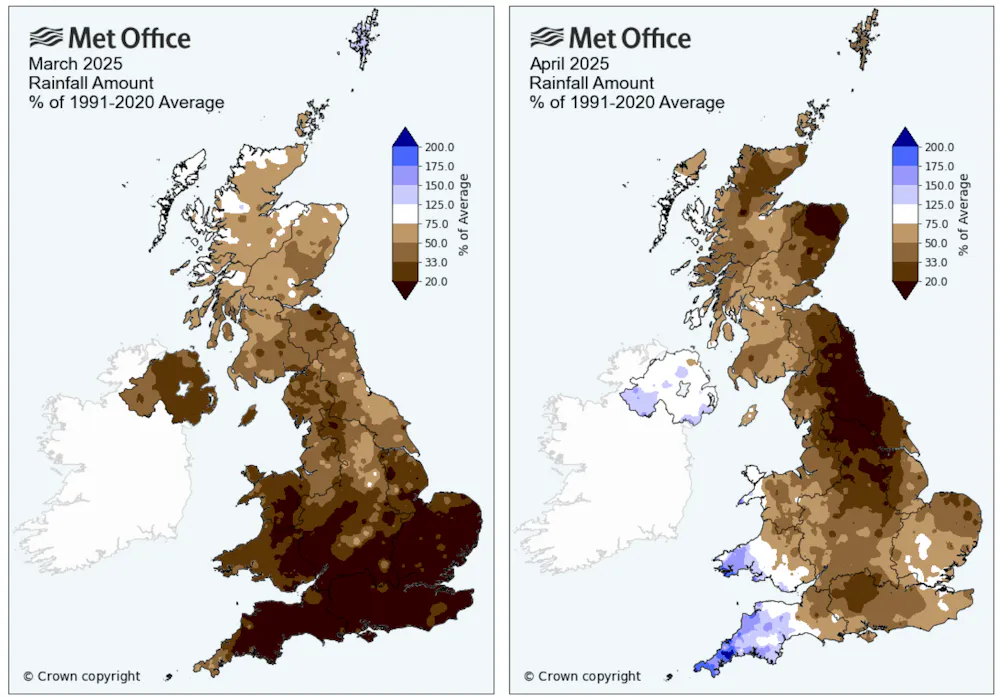
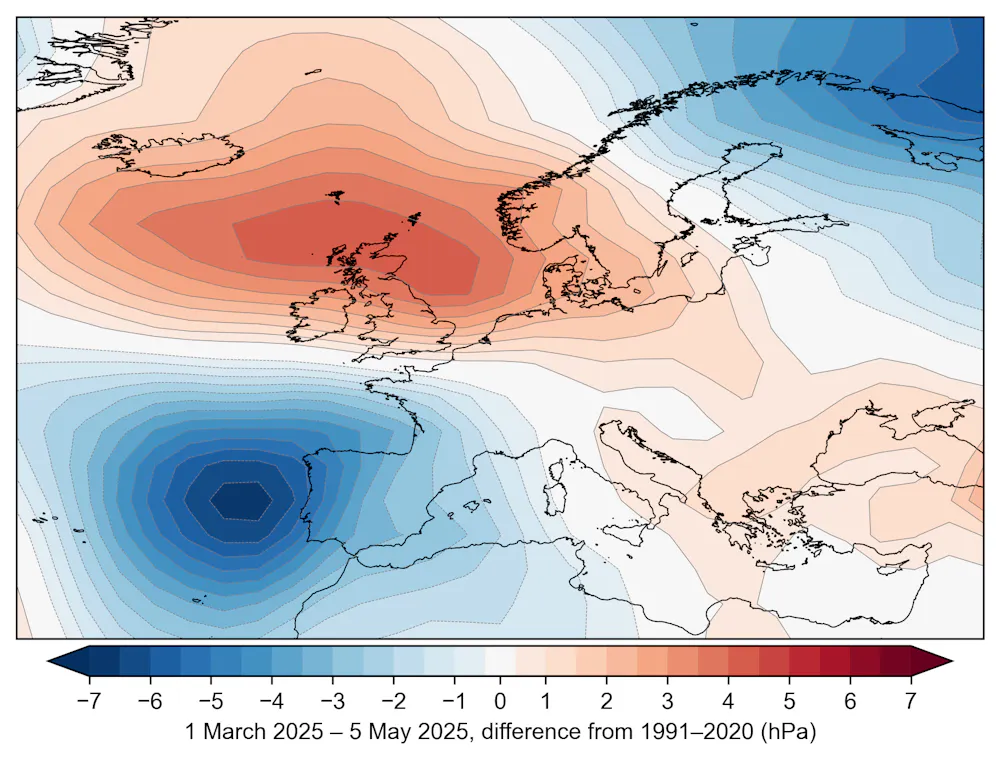
    Updates to this page

    Published 12 May 2025

    MIL OSI United Kingdom –

    May 13, 2025
  • MIL-OSI Global: Keir Starmer’s immigration plans: research shows you don’t beat the far right by becoming them

    Source: The Conversation – UK – By Katy Brown, Research Fellow in Language and Social Justice, Manchester Metropolitan University

    Keir Starmer gives press conference on migration Flickr/Number 10, CC BY-NC-ND

    As British prime minister Keir Starmer vowed to “finally take back control of our borders” in a landmark speech on immigration on May 12, it felt a little like déjà vu.

    Some nine years earlier, we had heard those exact words repeated over and over in the build-up to the Brexit referendum from former prime minister Boris Johnson and the Leave campaign. It was a refrain also used by Nigel Farage and UKIP.

    Of course, this direct reference was the point. Starmer used it to claim that the Labour government’s white paper on immigration was finally going to deliver on what had been promised and desired for many years.

    In these opening lines, the tone was set. And as the speech went on, there were echoes of far-right language and ideas reverberating throughout. Starmer lamented the “squalid” state of contemporary politics, the “forces” pulling the country apart, and the previous government’s so-called “experiment in open borders”.

    This speech and the white paper that it unveiled are but the latest indication of the rightward direction of travel within UK politics, led by mainstream and far-right parties alike – as exemplified in recent months by the footage released of immigration raids and deportations.

    Some will argue this is Labour’s response to the rising threat of Reform UK, with results in the recent local elections seen as evidence of the far right’s growing popularity. So the story goes, Labour is proving that they can be tough on immigration, showing would-be Reform defectors that they can be trusted after all.

    This familiar narrative seems to follow a prevailing wisdom which is parroted in political, media and public debates – that appeasing the far right is the way to defeat it. Rather than beating the far right at their own game, however, research shows that these techniques simply legitimise their key talking points and further normalise exclusionary politics.

    Starmer’s speech is a case in point. In using “take back control” from the outset, there was no hiding the intended audience or message. Starmer claimed that this project would “close the book on a squalid chapter for our politics, our economy, and our country”, implying that excessive immigration has directly caused these problems and that stopping it solves them. This chimes with classic far-right narratives where migration is framed as the root of all societal ills.

    When these kinds of ideas are pushed by those in government, with great authority and influence, they are given greater credence and weight. A strikingly clear example of this came in the summer of 2024 when participants in racist riots waved posters containing the slogan “stop the boats” (a phrase popularised by the previous Tory government).

    Another component of the speech that was reminiscent of far-right tropes was the idea that increased immigration was a deliberate tactic by the previous government. Starmer suggested that the Conservatives were actively pursuing a “one-nation experiment in open borders” while deceiving the British public of their intentions.

    Far-right conspiracies are often premised on the idea that elites are deliberately encouraging mass immigration. It’s not hard to see how Starmer’s words could act as a dog whistle in this scenario.

    These claims are especially damaging when we think about the draconian measures introduced under former Conservative governments, such as the Rwanda policy. Labour is now indicating that these proposals didn’t go far enough.

    To justify bringing far stricter immigration rules, Starmer stated that “for the vast majority of people in this country, that is what they have long wanted to see”. As far-right parties so often do, Labour suggests that they are delivering on “people’s priorities”. Yet are they really a priority for people, or are we told that they are a priority which then makes them more of a priority?

    Research by Aurelien Mondon, senior lecturer in politics at the University of Bath, illustrates how people’s personal and national priorities differ dramatically. When people in the UK were asked to name the two most important issues facing them personally, immigration didn’t even make it into the top ten.

    However, when asked the same question about the issues facing their country, immigration topped the list. How can something that doesn’t affect you in your day-to-day life suddenly become a top priority for your country? We need to challenge the narrative that the government is simply acting on people’s wishes and acknowledge its own capacity to set the agenda.

    Other priorities

    Some will say that harsher anti-immigration policies are a necessary evil to defeat the far right. However, if people’s personal priorities are really the cost of living, housing and education, why is the government not focusing more of its energy on these things rather than scapegoating migrants?

    What’s more, research shows that even based on these terms, these strategies are ineffective and can actually boost the success of the far right electorally. After all, its ideas are being repeatedly normalised.

    In all this tactical talk, we lose sight of the fact that people are living the consequences of this rhetoric and policies right now. Rather than focus on Reform’s potential performance in a general election that is probably years away, we should recognise the immediate consequences of the rhetoric that has accompanied this white paper. Even if this did put a dent in Reform’s prospects, what is the meaning of defeating them if the policies they promote become part of the mainstream in the process?

    The bottom line is that you do not beat the far right by becoming them. It doesn’t work electorally or ideologically, and even if it did, minoritised communities suffer the consequences regardless. The far right is not some threat lying waiting in the future – its normalisation is happening now.

    Katy Brown has received funding from UK Research and Innovation and the Irish Research Council. She is affiliated with the Reactionary Politics Research Network and Manchester Centre for Research in Linguistics.

    – ref. Keir Starmer’s immigration plans: research shows you don’t beat the far right by becoming them – https://theconversation.com/keir-starmers-immigration-plans-research-shows-you-dont-beat-the-far-right-by-becoming-them-256499

    MIL OSI – Global Reports –

    May 13, 2025
  • MIL-OSI USA: Cassidy Visits Louisiana Tech Design and Research Conference, Meets with University Officials

    US Senate News:

    Source: United States Senator for Louisiana Bill Cassidy
    MONROE – On Monday, U.S. Senator Bill Cassidy, M.D. (R-LA) visited the 2025 Design and Research Conference at Louisiana Tech University, which featured senior presentations from students in their College of Engineering and Science. During the conference, students made presentations featuring innovations that could help in the fields of computing, energy, medicine and transportation, among others.
    “There is so much innovation taking place on Louisiana Tech’s campus,” said Dr. Cassidy. “The students, and also Tech graduates who have stayed near the campus, are using their education to create products marketed around the world. This is impressive.”
    Cassidy is a strong supporter of Louisiana Tech University. In January, Cassidy announced that the National Science Foundation would award the Louisiana Board of Regents $8 million to expand STEM (Science, Technology, Engineering and Math) research and development, generate more scholarships and fellowships, and enhance collaboration for Louisiana’s students. Louisiana Tech is a partner in this initiative, and Cassidy wrote a letter of support for the grant.
    Additionally, Cassidy secured $7 million across Fiscal Years 2024 and 2023 specifically for Louisiana Tech to empower North Louisiana research support for domestic semiconductor technology and workforce development. He also took part in a ribbon-cutting ceremony for the Monroe Street Corridor Project last October, which will improve roads and create more space for runners and cyclists in Ruston, including at Louisiana Tech.
    While at Louisiana Tech, Cassidy also met with members of the University’s executive team, to discuss the University’s robust research portfolio and private partnerships that are benefiting the region, state and nation. In a statement, he was thanked for coming to Louisiana Tech by Mr. Jim Henderson, president of the University.
    “We appreciate Senator Cassidy taking time to visit Louisiana Tech to hear about our vision and interact with students and faculty,” said Mr. Jim Henderson. “The Senator has been a consistent supporter of Louisiana Tech and the entire higher ed enterprise. This opportunity to share our research vision, including our work in advancing the timber industry through our new Forest Products Innovation Center and our leading-edge research in traumatic brain injury, is important to showcase our faculty’s commitment to addressing enduring and emerging challenges.”

    MIL OSI USA News –

    May 13, 2025
  • MIL-OSI: 51Talk Online Education Group to Present at the dbVIC – Deutsche Bank ADR Virtual Investor Conference May 15th

    Source: GlobeNewswire (MIL-OSI)

    SINGAPORE, May 12, 2025 (GLOBE NEWSWIRE) — 51Talk Online Education Group (NYSE American: COE) based in Singapore, and focused on global online education, today announced that its Investor Relations Vice President David Chung will present at the dbVIC – Deutsche Bank American Depositary Receipt (ADR) Virtual Investor Conference on May 15, 2025. This virtual investor conference is aimed exclusively at introducing global companies with ADR programs to investors.

    DATE: May 15th
    TIME: 11:00 a.m. EST
    LINK: REGISTER HERE

    This will be a live, interactive online event where investors are invited to ask the company questions in real-time. If attendees are not able to join the event live on the day of the conference, an archived webcast will also be made available after the event.

    It is recommended that online investors pre-register and run the online system check to expedite participation and receive event updates.  

    Participation is free of charge.

    51Talk Online Education Group: Fourth Quarter 2024 Financial and Operational Highlights

    • Gross billings for the fourth quarter of 2024 were US$21.4 million, a 93.4% growth from the fourth quarter of 2023.
    • Net revenues were US$16.2 million for the fourth quarter of 2024, a 117.3% increase from US$7.5 million for the fourth quarter of 2023.
    • The number of active students with attended lesson consumption was approximately 74,200 in the fourth quarter of 2024, representing an 83.2% increase from approximately 40,500 for the fourth quarter of 2023.

    About 51Talk Online Education Group

    51Talk Online Education Group (NYSE American: COE) is a global online education platform with core expertise in English education. The Company’s mission is to make quality education accessible and affordable. The Company’s online and mobile education platforms enable students to take live interactive English lessons, on demand. The Company connects its students with a large pool of highly qualified teachers that it assembled using a shared economy approach, and employs student and teacher feedback and data analytics to deliver a personalized learning experience to its students.

    About Virtual Investor Conferences®
    Virtual Investor Conferences (VIC) is the leading proprietary investor conference series that provides an interactive forum for publicly traded companies to seamlessly present directly to investors.

    Providing a real-time investor engagement solution, VIC is specifically designed to offer companies more efficient investor access.  Replicating the components of an on-site investor conference, VIC offers companies enhanced capabilities to connect with investors, schedule targeted one-on-one meetings and enhance their presentations with dynamic video content. Accelerating the next level of investor engagement, Virtual Investor Conferences delivers leading investor communications to a global network of retail and institutional investors.

    CONTACTS:
    51Talk Online Education Group

    David Chung

    Investor Relations Vice President

    Jinling Wang

    Investor Relations Manager

    wangjinling@51talk.com 

    Virtual Investor Conferences
    John M. Viglotti
    SVP Corporate Services, Investor Access
    OTC Markets Group
    (212) 220-2221
    johnv@otcmarkets.com 

    The MIL Network –

    May 13, 2025
  • MIL-OSI Canada: Fresh air, exercise fuel children who join Walking School Bus

    Source: Government of Canada regional news

    The Province of B.C. is supporting the Walking School Bus program, which provides supervised walks to schools for elementary children in select communities, helping them start their day off with fresh air and exercise.

    “Walking to school offers a wonderful opportunity for students and parents to connect with their community,” said Ravi Parmar, MLA for Langford-Highlands, on behalf of Mike Farnworth, Minister of Transportation and Transit. “I’m excited to see this program expand in many parts of the province, especially in the community where I grew up. It’s rewarding to know that students in Langford and other communities in B.C. will benefit from this initiative, helping them develop healthy habits and safer ways to commute.”  

    In partnership with the Society for Children and Youth of BC, this program gives more communities in B.C. the chance to get their kids to school without a vehicle. The program is available to students in Langford, Sooke, Nanaimo, Esquimalt, Saanich and Central Saanich. It will expand to other areas.

    Children learn safe commuting skills and build healthy habits with the Walking School Bus. The program provides paid leaders and volunteers with the essential training to safely lead a group of students to and from their homes and schools. The program will also include a Biking School Bus in some participating communities. Trained cycling leaders from HUB Cycling will bike with groups of students to and from school.

    More than 350 children have participated in similar Walking School Bus programs in B.C. The program offers new communities the funding and tools needed to get their students to and from school safely.

    “After a successful pilot in Metro Vancouver in partnership with the Province and TransLink, we are thrilled to be working with the Province to help more children across British Columbia develop active travel habits through our Walking School Bus program,” said Stephanie Howell, executive director, Society for Children and Youth of BC. “The program will also include bike buses led by our new partners at HUB Cycling, who we are excited to have on board. We look forward to promoting safe routes to school and independent mobility for all.”

    The B.C. government has invested $1.1 million to support 15 schools in B.C. as they offer their elementary students a supervised walk to school.

    MIL OSI Canada News –

    May 13, 2025
  • MIL-OSI Global: ‘Elbows up’ in Canada means sustainable resource development

    Source: The Conversation – Canada – By Steven J Cooke, Canada Research Professor, Conservation Physiology, Carleton University

    “Elbows up” means many things today in Canada, including using the country’s rich natural resources more effectively to support a strong, independent economy that benefits people and society.

    We agree with the need to ensure economic stability and independence in Canada — but as scientists, we know this is only possible if resource development and exploitation are done responsibly and sustainably. Otherwise, Canada will be burdening itself and future generations with immeasurable costs to the economy, health and quality of life.

    Politicians and decision-makers from across Canada have called for radical changes to how development proposals are evaluated. The recent federal election saw the leaders of the major parties all signalling that they intend to get resource development projects done faster.

    Several provinces have already brought forward legislation in recent days, including British Columbia’s Infrastructure Projects Act, while an Ontario act aimed ostensibly at “unleashing the economy” is under consideration by the provincial government.

    Cutting red tape can certainly speed up new development, but environmental regulations are not just red tape. They are designed to ensure the short- and long-term potential consequences of development decisions are fully considered, and are then minimized or avoided.

    Without strong environmental impact assessments, development can have devastating impacts on human health, resource sustainability and the rich natural resources Canadians rely upon. We are fearful of a future where obsolete infrastructure and exhausted resources are abandoned by the proponents of development, burdening the public with the cleanup or long-term consequences.

    Resources aren’t infinite

    Canada has a large land mass bordering three oceans and bountiful freshwater resources, including the Great Lakes. But its resources are not infinite.

    Impacts of resource development also extend to people. Effective impact assessment must recognize Indigenous rights and sovereignty, in keeping with the right to self-determination reinforced by the United Nations Declaration on the Rights of Indigenous Peoples.

    Effective land stewardship by Indigenous nations is the foundation of Canada’s rich natural heritage. When Canadian politicians talk about fast-tracking developments and resource exploitation, they inherently ignore the moral and legal rights of Indigenous Peoples and governments that are enshrined in Canada’s Constitution and in international law.


    Read more:
    Mark Carney wants to make Canada an energy superpower — but what will be sacrificed for that goal?


    Circular economy

    Outdated business models that threaten health and the future of resources won’t propel Canada into a new era of prosperity.

    Canada lags behind in innovation and labour productivity growth (GDP per person hour worked), which are predictors of standard of living. This lag is known as Canada’s “innovation problem.”

    Simply harvesting and selling raw logs or minerals as fast as possible will not solve it. However, Canada can escape its innovation problem by using resources more efficiently in a value-added, circular economy.


    Read more:
    Recycling more than pop cans: A circular economy for our energy landscapes


    The boreal forests and wetlands found in Canada represent the lungs and kidneys of the planet. Canada’s boreal forest is the largest intact forest in the world.

    Canada also contains 20 per cent of the Earth’s surface freshwater — more than any other nation — and 10 per cent of the world’s glacial waters.

    Canada’s wildlife is iconic and careful management of our wildlife benefits both Canada and the world. Canada’s current environmental policies and regulations represent the collective effort of opposing political parties that have recognized the shared need for clean air and water are non-partisan issues.

    Environmental requirements

    As Canada aggressively explores markets other than the United States for its resources, including the European Union, it will gain a competitive advantage by ensuring exports are sustainable and extracted without harming the environment and local people.

    That’s because markets like the European Union now require that all importers of many agricultural and household products prove that their production did not contribute to deforestation. As other jurisdictions see the fallacy of short-term gains at the expense of the environment, Canada can be ahead of the curve in providing sustainable products.

    The long-term health of Canada’s economy relies on sustainable resource management, and polling repeatedly shows that Canadians want a healthy environment. Sustainable resource extraction can deliver long-term benefits for nature and future generations, rather than short-term, financial benefits to only a select few.

    Boom-and-bust policies have failed before — think about the collapse of the Atlantic cod fishery, the acid rain crisis associated with unchecked emissions or the Klondike gold rush.

    We implore politicians to ensure that development decisions are informed by rigorous and diverse forms of evidence, and robust and equitable policies that consider environmental justice. They should refrain from focusing solely on the short-term economic windfall. Instead, they must plan for resource use that is sustainable and equitable over the long term.

    Four ways to ensure sustainability

    We recognize that resource development is integral to maintaining Canadian prosperity and sovereignty — and the good news is that it can be done sustainably.

    The details may be complex, but the big picture is simple:

    1. Ensure that Indigenous rights-holders are not simply consulted but actively involved in planning, managing and leading development activities.
    2. Maintain strong environmental protection while cutting truly unnecessary red tape.
    3. Ensure that development does not cause harm to individuals, species or landscapes.
    4. Embrace evidence-informed decision-making processes that are robust, transparent and inclusive.

    Some of Canada’s international neighbours are enacting short-term actions, including cutting environmental regulations and spurring unfettered resource development.

    These actions are simultaneously a threat to Canada and an opportunity for Canadians to reject that approach and do better. If Canada chooses that path, it can gain a distinct competitive advantage today and long into the future and become less vulnerable to the political whims of other countries.

    Elbows up, Canada — let’s be proud of protecting what we have.

    Steven J Cooke receives funding from various government, NGO and industry partners. He is affiliated with the Great Lakes Fishery Commission, the Collaboration for Environmental Evidence, KeepFishWet, and the Canadian Centre for Evidence-Informed Conservation.

    Christina Davy receives funding from various Canadian government, NGO and industry partners. She is affiliated with the Canadian Herpetological Society.

    Dalal Hanna receives funding from various Canadian Government and NGO partners. She is affiliated with Ripara.

    Joseph Bennett receives funding from various government and NGO sources. He is affiliated with the Canadian Institute for Ecology and Evolution and the Canadian Centre for Evidence-Informed Conservation.

    – ref. ‘Elbows up’ in Canada means sustainable resource development – https://theconversation.com/elbows-up-in-canada-means-sustainable-resource-development-255669

    MIL OSI – Global Reports –

    May 13, 2025
  • MIL-OSI USA: NEWS: Sanders Statement on Trump’s Executive Order on Prescription Drugs

    US Senate News:

    Source: United States Senator for Vermont – Bernie Sanders

    WASHINGTON, May 12 – Sen. Bernie Sanders (I-Vt.), Ranking Member of the Senate Committee on Health, Education, Labor, and Pensions (HELP), today released the following statement regarding President Trump’s executive order from this morning, which claims it will slash drug costs by tying the prices of some medicine in the U.S. to the significantly lower ones abroad:

    I agree with President Trump: It is an outrage that the American people pay, by far, the highest prices in the world for prescription drugs. It is beyond unacceptable that we pay, in some cases, ten times more for the same exact prescription drugs than people in other major countries. But let’s be clear: The problem is not that the price of prescription drugs is too low in Europe and Canada. The problem is that the extraordinarily greedy pharmaceutical industry made over $100 billion in profits last year by ripping off the American people.

    Further, as Trump well knows, his executive order will be thrown out by the courts. If Trump is serious about making real change rather than just issuing a press release, he will support legislation I will soon be introducing to make sure we pay no more for prescription drugs than people in other major countries. If Republicans and Democrats come together on this legislation, we can get it passed in a few weeks.

    MIL OSI USA News –

    May 13, 2025
  • MIL-OSI USA: Governor Kehoe Announces Appointments to Missouri School Funding Modernization Task Force

    Source: US State of Missouri

    MAY 12, 2025

    Jefferson City — Building on the education priorities outlined in his inaugural State of the State Address in January, Governor Mike Kehoe announced today the full slate of members appointed to the Missouri School Funding Modernization Task Force. The Task Force, established by Executive Order 25-14, is charged with reviewing and recommending changes to Missouri’s K-12 school funding model and providing a final report to the Governor by December 1, 2026.

    “To secure a better future for Missouri students and schools, we must rethink how we fund Missouri’s foundation formula,” said Governor Kehoe. “We need a modernized funding model that rewards outcomes, encourages innovation, and ensures fairness for all Missouri students. These Task Force members bring the experience, perspective, and commitment needed to make responsible changes at business-speed. We look forward to reviewing their recommendations.”

    The 16-member body represents a broad range of voices—urban and rural, traditional and nontraditional, academia and industry—who will help build a model that delivers results for every Missouri student. The Task Force will operate under core guiding principles that promote equal access for students, local flexibility, performance accountability, and long-term funding sustainability.

    Governor Kehoe’s appointments include the following individuals:

    • Matt Davis, of Eldon, is a dedicated educational leader with more than 25 years of experience in the Missouri school system, including 17 years as superintendent of Eldon School District. Prior to serving as superintendent, he led career and technical education programs and prioritized securing grants and funding to enhance program offerings and facilities at Eldon Career Center. Davis will serve as the representative for superintendents from small rural school districts in Missouri.
    • Noah Devine, of Kansas City, is the executive director of the Missouri Charter Public School Association. He previously served as the deputy director of the Kansas City Action Fund and led the implementation of the sixth iteration of the Missouri School Improvement Plan (MSIP) standards for the Missouri Department of Elementary and Secondary Education as the MSIP 6 support facilitator. Devine will serve as the representative for charter schools in Missouri.
    • Emily LeRoy, of Hermann, is a senior advisor at Missouri Farm Bureau, serving on a leadership team that advocates for the diverse interests of farmers. She began her career at the Missouri Department of Agriculture as a legislative assistant and youth program coordinator before rising to the position of legislative and budget director. LeRoy will serve as an additional member as appointed by the Governor.
    • James “Jim” Meats, of Springfield, is the vice president of sales and marketing at Loren Cook Company and a licensed professional engineer. He previously worked as a technical consultant to manufacturers and municipalities in southwest Missouri, where he supported the development of formal plan reviews, permitting procedures, and construction inspection processes. Meats will serve as the representative for the business community.
    • Mike Podgursky, of Columbia, is a school finance expert with more than 40 years of experience, currently serving as the Chancelor’s Professor of Economics at the University of Missouri–Columbia and an affiliated scholar at Sinquefield Center for Applied Economic Research. He is also the author of several peer-reviewed articles and the book, Teacher Pay and Teacher Quality. Podgursky will serve as an additional member as appointed by the Governor.
    • Donald “Don” Thalhuber, of Columbia, is the policy director for the Senate Minority Caucus. Prior to serving in his current position, Thalhuber worked as a senior research analyst crafting education, pension, financial, tax, and veterans’ affairs legislation. He also drafted Missouri’s most recent public school funding formula in 2005. Thalhuber will serve as an additional member as appointed by the Governor.
    • Michael “Jeremy” Tucker, of Liberty, is the superintendent for Liberty Public Schools, managing the district’s $279 million budget and providing oversight and strategic guidance to executive leadership and their respective departments. Prior to serving as superintendent, he worked as an adjunct professor for Evangel University and Southwest Baptist University as well as a social studies teacher at Logan-Rogersville High School. Tucker will serve as the representative for superintendents from large urban school districts in Missouri.
    • Chris Vas, of Kansas City, is a senior director for the Herzog Foundation, working to implement school choice initiatives and trainings across the nation while overseeing an $8 million annual budget. He previously served as the executive director of Liberty Alliance USA, a regional, conservative grassroots network and watchdog organization. Vas will serve as the representative for non-profit organizations that work on expanding school choice in Missouri.
    • Casey Wasser, of California, is the deputy executive director and chief operating officer for the Missouri Soybean Association, a grassroots organization dedicated to advocating on behalf of soybean producers and crafting state and federal policy initiatives that support farmers’ freedom to operate and improved profitability. He has an extensive background in public policy, previously serving as the legislative director for the Missouri Department of Revenue. Wasser will serve as the representative for the agriculture industry.
    • David Wood, of Versailles, most recently served as a policy analyst and liaison for the Missouri State Tax Commission before retiring in June 2023. He previously served in the Missouri House of Representatives from 2013 to 2020 and worked as an upper-level math and computer science teacher for Morgan County R-II Schools. Wood will serve as the representative for teachers from schools in Missouri.

    These ten appointments will be joined on the Task Force by two members of the State Board of Education.

    • Kerry Casey, of Chesterfield, recently retired from her position as vice president of Exegy, a global leader in financial market data, trading platforms, and predictive signals, where she was responsible for Global Sales Operations and Enablement. Casey was a founding board member of the KIPP Charter School in St. Louis and served on the board of directors until her appointment to the State Board in 2023.
    • Pamela Westbrooks-Hodge, of Pasadena Hills, is a former vice president of the Normandy Schools Collaborative Joint Executive Governing Board and recently retired general partner from Edward Jones, where she co-led the Internal Audit Division. She previously worked for Express Scripts, Anheuser-Busch and Bank of America in senior governance, risk and compliance roles and held certifications in financial, operational, and information systems auditing.

    Missouri Senate President Pro Tem Cindy O’Laughlin and Missouri House Speaker Jonathan Patterson have also appointed Senators Rusty Black and Travis Fitzwater as well as Representatives Ed Lewis and Marlene Terry to serve on the Task Force.

    Senator Black, a former educator, will chair the task force.

    “As a former educator, I know firsthand the challenges our teachers face and the importance of ensuring that every dollar we invest in education has a meaningful impact,” said Senator Black. “I’m honored to help lead this important work as we build a funding model that supports student success in every corner of Missouri.”

    For more information on the Missouri School Funding Modernization Task Force, click here.

    ###

    MIL OSI USA News –

    May 13, 2025
  • MIL-OSI USA: Celebrating the Heart of the UConn Experience

    Source: US State of Connecticut

    This April, the Office of the Provost presented the University’s first-ever Teaching, Advising, and Mentoring Awards ceremony—an event that brought together a wide range of recognitions under one roof. The ceremony highlighted the essential work of faculty, staff, and students who support learning, foster belonging, and help others thrive at UConn.

    “By bringing these awards together in a single ceremony, we are underscoring the importance and prestige of these honors,” said Provost Anne D’Alleva. “We are celebrating the essential role that teaching, advising, and mentorship play in the life of our university.”

    Honorees were recognized for their contributions both in and outside the classroom: teaching that sparks curiosity, advising that helps students navigate challenges, mentorship that opens new possibilities, and peer support that strengthens our community.

    The event was attended by colleagues, university leaders, and the friends and family of honorees, whose presence added warmth and meaning to the celebration. They’ve been the champions of our honorees, much like our honorees have been champions for their students.

    President Maric shared, “behind every student’s success is someone who taught them, advised them, or simply believed in them. These awards honor the people who make that kind of impact every day at UConn.”

    (Photo by Dustin Corriveau at Designing Studios)

    The awards span programs across the university, including the Center for Excellence in Teaching and Learning, Office of Undergraduate Advising, First Year Programs, Honors & Enrichment, the Office of Undergraduate Research, and The Graduate School. Together, they honor a wide range of efforts that are central to the student experience at UConn.

    2024-2025 Teaching, Advising, and Mentoring Award Recipients

    Center for Excellence in Teaching and Learning Awards

    • Outstanding Graduate Teaching Award: Samantha Archer, Anthropology
    • Outstanding Adjunct Award: Dr. Michael Zacchera, Allied Health
    • Teaching Fellow Award: Dr. David Wagner, Ecology and Evolutionary Biology
    • Teaching Innovation Award: Dr. Vindhya Pathirana, Mathematics

    Undergraduate Advising Awards

    • Outstanding New Professional Staff Advisor: Lyn Alexander, School of Pharmacy
    • Outstanding Professional Advisor: Ramón Espinoza, Center for Access and Postsecondary Success
    • Outstanding Faculty Advisor: Dr. Mary Anne Amalaradjou, Animal Science
    • Outstanding Faculty Advisor: Dr. Matthew Singer, Political Science

    Honors and Enrichment Awards

    • Honors Faculty Member of the Year: Dr. Ryan D. Talbert, Sociology
    • Tanaka Award for Innovative Undergraduate Advising: Dr. Stephanie Singe and Dr. Brian Aneskievich

    Undergraduate Research Mentorship Excellence Awards

    • Dr. Benjamin Sinder, Orthopedic Surgery
    • Dr. Mallory Perry-Eaddy, Nursing
    • Charlotte Fuqua, Graduate Student, Chemistry

    Edward C. Marth Mentorship Award (Graduate School)

    • Dr. Željko Bošković, Linguistics

    First Year Experience Faculty, Staff, and Graduate Instructor Awards

    • FYE Teaching Innovation Award: Fany Hannon, Dean of Students
    • FYE Impact Award: Daniel Facchinetti, CETL
    • FYE One UConn Award: Wiley Dawson, UConn Hartford
    • FYE Outstanding Graduate Student Instructor: Sarah Cooper, Graduate Student, Educational Leadership
    • FYE Teaching Excellence Award: Annie Casarella, Center for International Students & Scholars

    First Year Experience Peer Mentor Awards (John T. Szarlan Award)

    • Anytra Culbreath Evans, Undergraduate Student, HDFS & Sociology
    • Lucas Denucci, Undergraduate Student, Chemical Engineering
    • Stephanie Mora-Gutierrez, Undergraduate Student, Psychological Sciences

    MIL OSI USA News –

    May 13, 2025
  • MIL-OSI: CNL STRATEGIC CAPITAL ANNOUNCES OPERATING RESULTS FOR FIRST QUARTER 2025

    Source: GlobeNewswire (MIL-OSI)

    Orlando, Fla., May 12, 2025 (GLOBE NEWSWIRE) — CNL Strategic Capital, LLC (“CNL Strategic Capital,” the “Company” or “we”) seeks to provide current income and long-term appreciation to investors by acquiring controlling equity stakes in combination with loan positions in privately owned middle-market businesses. The Company announced its operating results for the three months ended March 31, 2025.

    Highlights:

    • As of March 31, 2025, CNL Strategic Capital’s portfolio consisted of equity and debt investments in 16 portfolio companies and approximately $1.3 billion in total assets, compared with 16 portfolio companies and approximately $1.3 billion in total assets as of Dec. 31, 2024.
    • For the three months ended March 31, 2025, the Company recognized a net change in unrealized appreciation on investments, including unrealized foreign currency gain of approximately $9.9 million and had total investment income of approximately $16.9 million. That compares with a net change in unrealized appreciation on investments of $16.2 million and total investment income of approximately $14.9 million during the first three months of 2024.
    • The cumulative total investment return based on net asset value (NAV) since inception and through March 31, 2025, was approximately 108.7% for Class FA shares, 92.4% for Class A shares, 79.5% for Class T shares, 82.4% for Class D shares, 93.9% for Class I shares and 76.1% for Class S shares.1 These returns are prior to any applicable sales load and assume shareholders reinvested their distributions.  
    • For the three months ended March 31, 2025, CNL Strategic Capital received approximately $34.4 million in net offering proceeds, including approximately $5.2 million received through the distribution reinvestment plan. Since beginning operations in February 2018 through March 31, 2025, CNL Strategic Capital has raised approximately $1.2 billion, including $51.6 million received through the distribution reinvestment plan.

    Cash distributions declared net of distributions reinvested during the periods presented were funded from the following sources (in thousands):

      Three Months Ended March 31,
      2025   2024
      Amount   % of Cash Distributions Declared, Net of Distribution Reinvested   Amount   % of Cash Distributions Declared, Net of Distribution Reinvested
    Net investment income before Expense support (reimbursement) $ 8,692     167.3  %   $ 4,426      93.2    %
    Expense Support (reimbursement)   9     0.2        295        6.2   
    Net investment income $    8,701      167.5 %   $ 4,721     99.4 %
    Cash distributions net of distributions reinvested in excess of net investment income   —     —       30        0.6   
    Cash distributions declared, net of distributions reinvested2 $ 5,197     100.0  %   $ 4,751      100.0  %

    Sources of declared distributions on a GAAP basis (in thousands):

      Three Months Ended March 31,
      2025   2024
      Amount   % of Distributions Declared   Amount   % of Distributions Declared
    Net investment income3 $ 8,701     83.9  %   $ 4,721                            53.6    %
    Distributions in excess of net investment income4                       1,671       16.1                           4,086        46.4   
    Total distributions declared $ 10,372         100.0  %   $ 8,807      100.0  %

    Total investment return based on net asset value (NAV) after total return incentive fee per share for the first three months ended March 31, 20251:

    Class FA Class A Class T Class D Class I Class S
    1.5 % 1.6 % 1.3 % 1.5 % 1.5 % 1.5 %

    (These returns are prior to any applicable sales load and assume shareholders reinvested their distributions. These are not actual shareholder returns. Actual returns may vary materially.)

    Cumulative total investment return based on NAV after sales fees since inception through the three months ended March 31, 20251:

    Class FA
    (2/7/18-3/31/25)
    Class A
    (4/10/18-3/31/25)
    Class T
    (5/25/18-3/31/25)
    Class D
    (6/26/18-3/31/25)
    Class I
    (4/10/18-3/31/25)
    Class S
    (3/31/20-3/31/25)
    108.7 % 92.4 % 79.5 % 82.4 % 93.9 % 76.1 %

    (These returns are prior to any applicable sales load and assume shareholders reinvested their distributions. These are not actual shareholder returns. Actual returns may vary materially.)
    1This is not shareholder returns. Total investment return is calculated for each share class as the change in the net asset value for such share class during the period and assuming all distributions are reinvested. Amounts are not annualized and are not representative of total return as calculated for purposes of the total return incentive fee. Since there is no public market for the Company’s shares, terminal market value per share is assumed to be equal to net asset value per share on the last day of the period presented. The Company’s performance changes over time and currently may be different than that shown above. Past performance is no guarantee of future results. Investment performance is presented without regard to sales load that may be incurred by shareholders in the purchase of the Company’s shares. For the period from the date the first share was issued for each respective share class through March 31, 2025. 2Excludes $5,175 and $4,056 of distributions reinvested pursuant to the Company’s distribution reinvestment plan during the three months ended March 31, 2025, and 2024, respectively. 3Net investment income includes Expense Support of $9 and $295 for the three months ended March 31, 2025, and 2024, respectively. 4Consists of distributions made from offering proceeds for the periods presented.

    About CNL Strategic Capital
    CNL Strategic Capital is a publicly registered, non-traded limited liability Company that seeks to provide current income and long-term appreciation to individuals by acquiring controlling equity stakes in combination with loan positions in durable and growing middle-market businesses. The Company is externally managed by CNL Strategic Capital Management, LLC and Levine Leichtman Strategic Capital, LLC (LLSC). For additional information, please visit cnlstrategiccapital.com.

    About CNL Financial Group
    CNL Financial Group (CNL) is a leading private investment management firm providing alternative investment opportunities. Since inception in 1973, CNL and/or its affiliates have formed or acquired companies with more than $36 billion in assets. CNL is headquartered in Orlando, Florida. For more information, visit cnl.com.

    About Levine Leichtman Strategic Capital
    LLSC is an affiliate of Levine Leichtman Capital Partners, LLC (LLCP), a middle-market private equity firm with a 40-year track record of investing across various targeted sectors, including Franchising & Multi-unit, Business Services, Education & Training and Engineered Products & Manufacturing. LLCP utilizes a differentiated Structured Private Equity investment strategy, combining debt and equity capital investments in portfolio companies. LLCP believes that by investing in a combination of debt and equity securities, it offers management teams growth capital in a highly tailored, flexible investment structure that can be a more attractive alternative than traditional private equity.

    LLCP’s global team of dedicated investment professionals is led by ten partners who have worked at LLCP for an average of 20 years. Since inception, LLCP has managed approximately $16.4 billion of institutional capital across 15 investment funds and has invested in over 100 portfolio companies. LLCP currently manages $10.9 billion of assets and has offices in Los Angeles, New York, Chicago, Miami, London, Amsterdam, Stockholm, and Frankfurt. For additional information, please visit llcp.com.

    The information in this press release may include “forward-looking statements.” These statements are based on the beliefs and assumptions of CNL Strategic Capital’s management and on the information currently available to management at the time of such statements. Forward-looking statements generally can be identified by the words “believes,” “expects,” “intends,” “plans,” “estimates” or similar expressions that indicate future events. Forward-looking statements are subject to substantial risks and uncertainties, many of which are difficult to predict and are generally beyond CNL Strategic Capital’s control. Important risks, uncertainties and factors that could cause actual results to differ materially from those in the forward-looking statements include the risks associated with the Company’s ability to pay distributions and the sources of such distribution payments, the Company’s ability to locate and make suitable investments and other risks described in the “Risk Factors” section of the Company’s Annual Report on Form 10-K and the other documents filed by the Company with the Securities and Exchange Commission. This press release shall not constitute an offer to sell or the solicitation of an offer to buy securities.

    ###

    The MIL Network –

    May 13, 2025
  • MIL-OSI USA: ICYMI: Rep. Pfluger’s ACES Act Passed the House

    Source: United States House of Representatives – Congressman August Pfluger (TX-11)

    Post navigation

    The passage of Rep. Pfluger’s legislation was celebrated by several veteran organizations and advocacy groups, who released the following statements:

    Vince Alcazar, COL, USAF, ret., MACH Coalition Founder & Director, said, “The Military Aviator Coalition for Health (MACH) celebrates the passage of H.R. 530, the Aviator Cancer Examination Study (ACES) Act. With three major Department of Defense studies in the last four confirming and quantifying significantly elevated cancer rates among U.S. military flyers, the ACES Act goes the next step. This bill would ask the National Academy of Sciences, Engineering, and Medicine to apply their extensive Veteran health study capacity to determine what in the operating environments of military aviation is likely causing cancer. This study is essential. Without the ACES Act, military medicine will have no practical way of mitigating risk, and Veteran flyers will have no basis to correlate their service to potential cancer. This day was five years in the making. We recognize and praise the leadership of Congressman August Pfluger in leading this bill through three Congresses to today. Congressman Pfluger is an amazing champion of this work.”

    Jose Ramos, Vice President of Government and Community Relations, Wounded Warrior Project, said, “Wounded Warrior Project is grateful to Rep. Pfluger and his fellow Members of Congress for passing the ACES Act in the House of Representatives by an overwhelming majority. This legislation represents a critical step toward safeguarding the long-term health and well-being of military aviators and support personnel. These groups are routinely exposed to unique occupational hazards, and collaborative research across the federal government will help inform cancer prevention and veteran health strategies.We urge the Senate to take up this legislation as soon as possible.”

    Rye Barcott, Co-Founder & CEO of With Honor Action, said, “With Honor Action congratulates Reps. August Pfluger and Jimmy Panetta in securing House passage of the ACES Act—comprehensive legislation that will advance research into potential links between aviator service and increased cancer rates,” said Rye Barcott, Co-Founder & CEO of With Honor Action. “As members of the For Country Caucus, Reps. Pfluger and Panetta built strong bipartisan support among their fellow veteran lawmakers that led to a full caucus endorsement. We look forward to seeing this critical legislation become law.”

    Theo Lawson, Assistant Director, Legislative Programs, Fleet Reserve Association, said, “The Fleet Reserve Association (FRA) wholeheartedly celebrates the passage of the ACES Act in the House and extends our sincere congratulations to Congressman August Pfluger, his staff, and the bill’s cosponsors for their incredible dedication in advancing this vital legislation. Understanding cancer is the first step to defeating it, and this bill brings us closer to uncovering the critical links between aircrew service and cancer risks. Their leadership ensures our sea service aviators and all aircrew members are better equipped to identify and combat this silent enemy. We look forward to continuing the fight alongside them until the ACES Act becomes law–honoring the sacrifices of our servicemembers and safeguarding future generations.”

    Mario Marquez, Executive Director of Government Affairs, The American Legion, said, “On behalf of the 1.5 million veterans nationwide, The American Legion proudly supports the ACES Act. Research is critical to our understanding of the impacts of toxic exposures, from Agent Orange to harmful chemicals on aircraft. We applaud Representative Pfluger for prioritizing this critical issue and thank the House of Representatives for passing the ACES Act with resounding support. The American Legion urges the Senate to vote on this bill and continue to invest in research surrounding the impacts of toxic exposures.”

    MIL OSI USA News –

    May 13, 2025
  • MIL-OSI USA: Latta Announces 2025 Congressional Art Competition Winners

    Source: United States House of Representatives – Congressman Bob Latta (R-Bowling Green Ohio)

    Latta Announces 2025 Congressional Art Competition Winners

    89 Students from 20 high schools participated in this year’s Congressional Art Competition

    Bowling Green, OH, May 10, 2025 | Ashley Juhn (202-225-6405)

    Today, Congressman Bob Latta (R-OH5) announced Ziyin Nui of Lake Ridge Academy as the winner of Ohio’s Fifth District 2025 Congressional Art Competition.

    Nui’s winning artwork, titled “Self Portrait with Fingerprint,” will be displayed in the U.S. Capitol Tunnel for one year. Three honorable mention winners will have their artwork displayed in one of Latta’s congressional offices for the year.

    89 high school students from 20 high schools participated in this year’s competition. Latta hosted a reception at Bowling Green State University today to honor all participants and to showcase each individual work of art.

    2025 Art Competition Results – Ohio’s Fifth Congressional District

    Overall Winner:

    Ziyin Nui from Lake Ridge Academy, Artwork “Self Portrait with Fingerprint”

    Honorable Mentions:

    Lila Vanneman from Bowling Green High School, Artwork “Ascent of Icarus”

    Lillian Gregorowicz from Cory Rawson High School, Artwork “Ancient Night”

    Elle Thines from Cory Rawson High School, Artwork “You’re So Different from us”

    “Every year, I’m amazed by the incredible talent across Ohio’s Fifth Congressional District. Congratulations to Ziyin on her stunning masterpiece, ‘Self Portrait with Fingerprint,’ I can’t wait to see it displayed in the U.S. Capitol. Events like the Congressional Art Competition remind us how vital it is to support and celebrate young artists. Thank you to everyone who joined us in Bowling Green today for our Congressional Art Competition, and a special thank you to the Bowling Green State University Art Department for all their help in jurying the artwork and setting up the event,” Latta said.

    ‘Self Portrait with Fingerprint’ by Ziyin Nui of Lake Ridge Academy, winner of the 2025 Congressional Art Competition

    Congressman Latta with this year’s three honorable mentions. From left to right, Lila Vanneman, Lillian Gregorowicz, Elle Thines and Congressman Latta.

    MIL OSI USA News –

    May 13, 2025
  • MIL-OSI Global: How Donald Trump could remain president of the United States

    Source: The Conversation – Canada – By Pascal Lupien, Assistant Professor, Political Science, University of Alberta

    United States President Donald Trump has repeatedly floated the idea of remaining in office after his second term ends in 2029. Since the 22nd Amendment of the U.S. Constitution was ratified in 1951, no U.S. president has challenged the two-term limit it established.

    However, attempts to circumvent constitutional term limits are not unprecedented elsewhere.

    Virtually every country in Latin America has enshrined constitutional term limits as a safeguard against tyranny. These rules vary: some allow only a single term, some permit two, while others enable non-consecutive re-election. Yet several presidents have managed to defy these provisions.

    Recent examples include Daniel Ortega in Nicaragua, Hugo Chávez in Venezuela, Evo Morales in Bolivia, Rafael Correa in Ecuador and Nayib Bukele in El Salvador.

    Although the institutional norms and political cultures of these countries differ from those of the U.S., examining how term limits have been dismantled offers valuable insights into how any similar efforts by Trump might unfold.

    How presidents have overstayed their term

    The most common tactic is for presidents to first ensure their political party in the legislature is fully subservient to them, and then leverage a loyal majority to amend the constitution — a move that has already been initiated in the U.S.

    Ortega and Correa successfully used their legislative majorities to pass constitutional amendments that eliminated term limits in Nicaragua and Ecuador.

    Whether Trump has achieved the same level of unwavering loyalty among Republicans is debatable, but getting amendments through the U.S. Congress is significantly more difficult. The process requires a two-thirds majority vote in both houses, followed by ratification from three-quarters of state legislatures.

    In contrast, Nicaragua’s constitution can be amended with a 60 per cent majority and, as in Ecuador, sub-national jurisdictions have no say in the matter.

    Another crucial step involves co-opting or capturing the judiciary. In Bolivia, Morales achieved a controversial third term in 2014 supported by a partisan Constitutional Tribunal. More recently, El Salvador’s Bukele secured a 2021 Supreme Court ruling (from judges he appointed) allowing him to seek immediate re-election in 2024, despite a constitutional prohibition on consecutive terms.

    We have seen a worrying pattern of subservience to Trump by the U.S. Supreme Court. The limits of this deference are increasingly uncertain.

    Securing popular support

    Some presidents have turned to plebiscites to legitimize constitutional tampering by appealing directly to the electorate and framing the move as a democratic exercise. Chávez employed this strategy in Venezuela, winning a 2009 referendum to abolish term limits.

    The absence of a national referendum mechanism in the U.S. — where popular consultations are organized at the sub-national (state) level — limits the options available to a president seeking to remove term limits through this type of populist ploy.

    Related to this, populist presidents who have successfully circumvented term limits have typically done so while enjoying extraordinarily high levels of public support.

    Correa maintained approval ratings near 70 per cent during much of his presidency, while independent polls have put Bukele’s support at well over 80 per cent. Both, along with Morales and Chávez, leveraged their popularity to justify constitutional changes through legislative and judicial channels, framing their actions as carrying out the will of the people.

    In contrast, Trump’s approval ratings have consistently remained far lower. Currently, his favourability sits in the low 40s, making any attempt to claim a broad popular mandate for a third term both dubious and precarious.

    The military matters

    Due to inevitable opposition, military support is central to any leader’s attempt to defy the constitution. In much of Latin America, the military is highly politicized, and armed forces have historically been shaped by doctrines of internal control rather than external defence.

    Rooted in Cold War-era national security ideologies, this orientation casts domestic dissenters (“socialists,” Indigenous movements, unionists) as internal enemies, legitimizing repression as a patriotic duty.

    In some countries, military oaths reflect this politicization. In both Nicaragua and Venezuela, these oaths increasingly emphasize loyalty to the president or ruling party and their revolutionary legacy, undermining institutional neutrality.

    By contrast, in the U.S., military personnel swear an oath to defend the Constitution, not the president. While they must follow orders, these must align with constitutional and legal boundaries.

    The absence of a tradition of using soldiers against American citizens and an institutional culture of constitutional loyalty and political neutrality may, at least in principle, provide some protection against the authoritarian overreach that has allowed certain Latin American presidents to remain in power indefinitely.

    But a substantial portion of the U.S. armed forces leans politically to the right, like their counterparts in Latin America, raising concerns that partisan sympathies within the military could influence its response to a constitutional crisis.

    Furthermore, the increasing use of non-military security forces — such as local police and Immigration and Customs Enforcement (ICE) — against civilians demonstrates that the state has a range of instruments at its disposal for exercising control.

    The U.S. government’s use of ICE is reminiscent of how governments in countries like Venezuela and Nicaragua have used police and paramilitary units loyal to the president with impunity to suppress dissent.


    Read more:
    How ICE is becoming a secret police force under the Trump administration


    The perils of complacency

    Many in the West still hold on to the belief that constitutional erosion is something that only happens in the Global South. Some believe that American institutions are uniquely resilient and therefore capable of withstanding any attempt to subvert the constitution.

    For much of U.S. history, this confidence may have been justified, but today, it’s not only complacent but dangerous.

    The strength of democratic institutions depends on the political will to defend them. Time will tell if the barriers that exist in the U.S. are strong enough to withstand the pressures now being placed upon them. What is clear is that relying on increasingly tenuous institutional resilience or historical exceptionalism is no substitute for vigilance and active defence of democratic norms.

    Pascal Lupien does not work for, consult, own shares in or receive funding from any company or organisation that would benefit from this article, and has disclosed no relevant affiliations beyond their academic appointment.

    – ref. How Donald Trump could remain president of the United States – https://theconversation.com/how-donald-trump-could-remain-president-of-the-united-states-255589

    MIL OSI – Global Reports –

    May 13, 2025
←Previous Page
1 … 381 382 383 384 385 … 1,010
Next Page→
NewzIntel.com

NewzIntel.com

MIL Open Source Intelligence

  • Blog
  • About
  • FAQs
  • Authors
  • Events
  • Shop
  • Patterns
  • Themes

Twenty Twenty-Five

Designed with WordPress