Category: Education

  • MIL-OSI Russia: Dmitry Chernyshenko: The youth of Russia and Uzbekistan are united by common spiritual and moral values

    Translation. Region: Russian Federation –

    Source: Government of the Russian Federation – An important disclaimer is at the bottom of this article.

    Previous news Next news

    Dmitry Chernyshenko met with students of Russian universities in Uzbekistan. On the right in the chair is Russian Minister for the Development of the Far East and the Arctic Alexey Chekunkov

    Deputy Prime Minister of Russia Dmitry Chernyshenko discussed issues of science, education and youth policy with students and heads of branches of Russian universities in the Republic of Uzbekistan, and also held a working meeting with Assistant to the President of the Republic of Uzbekistan Saida Mirziyoyeva.

    Speaking to students at the branch of the Moscow State Institute of International Relations (University) of the Russian Foreign Ministry, the Russian Deputy Prime Minister emphasized that this year MGIMO celebrates its 80th anniversary. According to the Deputy Prime Minister, the university can rightfully be proud of its graduates, who are in demand not only in Russia and Uzbekistan, but also around the world

    He also recalled that the 16th BRICS summit was recently held in Kazan, in which the President of Uzbekistan Shavkat Mirziyoyev also took part.

    “As Russian President Vladimir Vladimirovich Putin noted, BRICS includes like-minded people, sovereign countries representing different development models, religions, original civilizations, and cultures. All our states advocate equality, good neighborliness, and mutual respect, the affirmation of high ideals of friendship and harmony, and universal prosperity and well-being. Not in words, but in deeds, they demonstrate a responsible attitude toward the future of the world. The youth of Russia and Uzbekistan are united by common spiritual and moral values. Young people of our countries demonstrate a growing mutual interest in creation in the interests of the well-being and prosperity of our countries,” said Dmitry Chernyshenko.

    The Deputy Prime Minister emphasized that a harmoniously developed person today needs not only to gain knowledge, but also to stay in excellent physical shape, and spoke about the “phygital” format and the Games of the Future.

    The event was also attended by the head of the Ministry for the Development of the Russian Far East, Alexey Chekunkov. He gave a lecture on the development of the Far East.

    The Deputy Prime Minister discussed prospects for developing relations between Russia and Uzbekistan in the area of scientific and educational cooperation with the management of branches of Russian universities.

    The participants of the event were also greeted by the Head of the Department of Social Development of the Administration of the President of the Republic of Uzbekistan Odil Abdurakhmanov. The meeting was moderated by the Deputy Minister of Science and Higher Education of the Russian Federation Konstantin Mogilevsky.

    “Our discussion today is dedicated to improving the quality of training for the fast-growing economy of Uzbekistan in the branches of leading Russian universities. We discussed advanced educational practices and prospects for their replication, the contribution of industrial partners and, of course, pre-university training. Productive cooperation between branches and schools is important both in terms of selecting applicants and in terms of their in-depth training in the Russian language and basic subjects,” the deputy minister noted.

    During the working visit, the Deputy Prime Minister met with Assistant to the President of the Republic of Uzbekistan Saida Mirziyoyeva. The parties discussed projects in the field of education, Russian language teaching programs, expansion of scientific cooperation and interaction in the information environment. Dmitry Chernyshenko invited scientists from Uzbekistan to participate in the flagship event of the Decade of Science and Technology in Russia – the Congress of Young Scientists, which will be held this year from November 27 to 29 in Sirius.

    During the visit, Dmitry Chernyshenko assessed the infrastructure of School No. 5, School No. 21 and the IT Park, visited the Cathedral of the Dormition of the Mother of God and held a working meeting with Metropolitan Vikentiy of Tashkent and Uzbekistan.

    All instruction at Tashkent General Education School No. 5 is in Russian. The Deputy Prime Minister inspected the building, talked to the staff, and attended a literature lesson. Following the visit, the Deputy Prime Minister left a commemorative note.

    “Gratitude and admiration to the wonderful staff of School No. 5 with hope for future meetings with you and your graduates on the path to implementing projects of commonwealth and developing relations between the Republic of Uzbekistan and the Russian Federation,” wrote Dmitry Chernyshenko in the book of honored guests.

    Please note: This information is raw content directly from the source of the information. It is exactly what the source states and does not reflect the position of MIL-OSI or its clients.
    MIL OSI Russia News

  • MIL-OSI Russia: NSU and SibNIA create a joint laboratory “Intelligent systems for testing aircraft structures”

    Translation. Region: Russian Federation –

    Source: Novosibirsk State University – Novosibirsk State University –

    Novosibirsk State University and the Siberian Aviation Research Institute named after S. A. Chaplygin continue their cooperation in the educational and research spheres. At the scientific and production forum “Golden Valley”, which was held from October 31 to November 1 and the main organizer of which was NSU, an agreement was signed to create a joint laboratory “Intelligent systems for testing aircraft structures”. At the first stage, it will be engaged in bench tests of equipment in order to predict possible deformations and breakdowns, in the future, the range of work performed will be expanded – it will also include video analytics, a vibration damping system.

    The laboratory will include students and postgraduates of the Faculty of Information Technology and the Faculty of Mechanics and Mathematics of NSU, as well as employees of partner companies – FAU “SibNIA named after S.A. Chaplygin” FAU (part of the FGBU “Research Center “Institute named after N.E. Zhukovsky”) and JSC TsNIAP “AVIASPETSTEST”, who will act as mentors – a total of 13 people. The head of the laboratory will be Vladimir Berikov, Doctor of Technical Sciences, Senior Researcher at the Institute of Mathematics named after S.L. Sobolev and a lecturer at the Faculty of Information Technology of NSU.

    The laboratory is fully focused on solving applied problems arising during bench tests of aircraft equipment, including the development and creation of modules of the Intelligent Bench Test System for Aircraft Equipment (ISIA) with elements of artificial intelligence; an intelligent operator workstation with connected archives and libraries; intelligent simulators, as well as vibration isolation systems for high-precision instruments and systems.

    — During bench tests of equipment, we will use sensors to collect data streams in our system, use archives and libraries, and analyze all the information received using artificial intelligence systems. Thanks to this, we will be able to predict for what time and what deformations and breakdowns are possible. In this way, we will preserve individual aircraft structures intact, solving the main problem of ground tests, when expensive structures become unusable, — noted Alexander Sychev, Deputy Director of the Center for Interaction with Government Authorities and Industrial Partners of NSU.

    — The organization of a joint laboratory will give a new impetus to the development of methods for testing aircraft structures. I am confident that cooperation with NSU will allow us to significantly advance in the study of the strength of aircraft structures and the subsequent improvement of the test bench base, — commented Alexander Laznenko, head of the research department for fatigue and static strength of aircraft structures at SibNIA.

    At the first stage, the task is to test the capabilities of the intelligent system when testing the main load-bearing parts, and then gradually move on to all parts and units of aircraft structures. What is important is that the integrity of the stand itself will also be monitored, which is also subject to significant loads during testing and may fail.

    The use of artificial intelligence systems and neural networks will not only significantly optimize testing costs, but also reduce the testing time of individual aircraft parts, which can now reach thousands of hours.

    The new laboratory will start operating at NSU this year, and in 2025, a specially equipped site will appear at SibNIA, which will allow NSU students and postgraduates to carry out work directly at the enterprise.

    Another promising area for cooperation between the two organizations is unmanned aircraft systems. Given the developments in this area at NSU and SibNIA, it is planned to create a joint Laboratory of Autonomous and Unmanned Aircraft Systems in the future. In the future, the two laboratories will be combined into the Center for Intelligent Aircraft Systems.

    The Siberian Aviation Research Institute named after S. A. Chaplygin and Novosibirsk State University have been cooperating since 2022, when they began holding a joint seminar on Industrial Mathematics on a regular basis. In 2023, SibNIA and NSU signed an agreement, according to which practical training for students in the field of Computer Systems and Complexes will be organized at the research institute. In August 2024, the two organizations announced plans to create a digital platform for bench testing of aircraft equipment with elements of artificial intelligence within the next two years.

    Please note: This information is raw content directly from the source of the information. It is exactly what the source states and does not reflect the position of MIL-OSI or its clients.

    MIL OSI Russia News

  • MIL-OSI Asia-Pac: Walking Together in Healthy Bay Area – “Celebrating the 75th National Day 10 000 Steps a Day Walking Challenge 2024” Kick-off Ceremony (with photos)

    Source: Hong Kong Government special administrative region

    Walking Together in Healthy Bay Area – “Celebrating the 75th National Day 10 000 Steps a Day Walking Challenge 2024” Kick-off Ceremony (with photos)
    Walking Together in Healthy Bay Area – “Celebrating the 75th National Day 10 000 Steps a Day Walking Challenge 2024” Kick-off Ceremony (with photos)
    ******************************************************************************************

         The Health Bureau (HHB) and the Department of Health (DH) today (November 1) held the “Celebrating the 75th National Day 10 000 Steps a Day Walking Challenge 2024” Kick-off Ceremony to promote the health benefits of walking. On the occasion of the 75th anniversary of the founding of the People’s Republic of China (PRC), Hong Kong will for the first time partner with the Greater Bay Area (GBA) Mainland cities to jointly promote walking under the theme of “Walking Together in Healthy Bay Area” to mark the celebration. Shenzhen and Zhuhai also held the Kick-off Ceremony of their walking activities today. The Secretary for Health, Professor Lo Chung-mau, and the Director of Health, Dr Ronald Lam, officiated at the Kick-off Ceremony, while other officiating guests included Legislative Council Member Mr Tommy Cheung; the Under Secretary for Health, Dr Libby Lee; the Controller of the Centre for Health Protection of the DH, Dr Edwin Tsui; the Chairperson of the Task Group on Promotion of Physical Activities, Dr Lui Siu-fai; the Vice-chairperson of the Task Group on Promotion of Physical Activities, Dr Lobo Louie, and Ms Shelley Lee.     Addressing the ceremony, Professor Lo said, “I sincerely thank the GBA Mainland Cities for their support in promoting walking together on the same day for the celebration of the 75th anniversary of the National Day, as well as promoting a healthy lifestyle among the GBA residents. I would also like to express gratitude for the enthusiastic participation and support in this event from various sectors of community, and I am particularly pleased to meet the ‘people of the same age as our motherland’ here today (that is, being born in 1949), including the Legislative Council Member Mr Tommy Cheung and Ms Lee Lai-kuen, Shelley.”           He emphasised, “Like many other regions and countries, Hong Kong is confronted with the threats arising from an ageing population and non-communicable diseases, and insufficient physical activity is one of the key risk factors of non-communicable diseases, but yet this risk is modifiable. According to the DH’s Student Health Service Annual Health Report for 2022-23 school year, around 90 per cent of students had an insufficient level of physical activity, i.e. not meeting the World Health Organization (WHO)’s recommendation of doing at least 60 minutes of daily moderate to vigorous-intensity physical activity. As for members of the public aged 18 or above, according to the Population Health Survey 2020-22 conducted by the DH, 24.8 per cent performed an insufficient level of physical activity, i.e. not meeting the WHO’s recommendation of doing at least 150 minutes of moderate-intensity aerobic physical activity; or at least 75 minutes of vigorous-intensity aerobic physical activity; or an equivalent amount of physical activity throughout the week. Therefore, I call on everyone, whether school children or adults, to perform more physical activities. School children could participate in the ‘e+ Go to Park’ launched by the HHB in collaboration with the Education Bureau, the DH and the Leisure and Cultural Services Department (LCSD); members of the public aged 18 or above could seize this opportunity to participate in the ’10 000 Steps a Day’ Walking Challenge.”           He added, “Walking is simple form of physical activity and brings plenty of health benefits including maintaining a healthy body weight, improving cardiopulmonary function, strengthening muscles and bones, relieving symptoms of anxiety and depression, as well as reducing the risk of chronic diseases.”             To encourage members of the public to increase their physical activities, the DH launched the “10 000 Steps a Day” Campaign in 2022. For the second Walking Challenge in 2023, a total of 16 000 people participated, with the total number of steps accumulated exceeding 5 billion.           The Walking Challenge commences today and lasts for one month. In addition to individual Walking Challenge, it also includes a Workplace Organisation Walking Challenge, aiming to raise public awareness of the physical and mental health benefits of walking, encourage friends and colleagues to support each other and walk 10 000 steps daily. Adults are recommended to gradually increase their daily step goal to 10 000 based on an individual’s own physical conditions, abilities, pace and circumstances. Any amount of walking is better than sitting, even if the goal cannot be reached yet.           Participants enrol in the Walking Challenge and record their step count during the challenge period through “e+Life”, the health challenge platform launched under the eHealth app. Participants reaching a daily average of 10 000 steps during the challenge period can be awarded an electronic certificate of achievement from the “e+Life” platform. For more details about the Walking Challenge in Hong Kong, please visit the event website of the Walking Challenge (www.10000stepsaday.hk/?lang=en) and the website of “e+Life” (app.ehealth.gov.hk/elife-overview). 

     
    Ends/Friday, November 1, 2024Issued at HKT 20:00

    NNNN

    MIL OSI Asia Pacific News

  • MIL-OSI USA: Governor Newsom announces appointments 10.31.24

    Source: US State of California 2

    Oct 31, 2024

    SACRAMENTO – Governor Gavin Newsom today announced the following appointments:

    Vickie Sakamoto, of Sacramento, has been appointed Assistant State Fire Marshal at the California Department of Forestry and Fire Protection (CAL FIRE.) Sakamoto has been Assistant Deputy Director at the California Department of Forestry and Fire Protection since 2024 and has served in several positions there since 1989, including Division Chief, Deputy State Fire Marshal – Supervisor, Deputy State Fire Marshal III – Specialist and Deputy State Fire Marshal. Sakamoto was a Fire Prevention Technician at the Florin Fire Protection District from 1986 to 1989. She is a member of Northern California Fire Prevention Officers. This position does not require Senate confirmation and the compensation is $200,004. Sakamoto is a Democrat. 

    Donald Butz, of Carlsbad, has been appointed to the State Board of Fire Services. Butz has been Fire Chief at the Lakeside Fire Protection District since 2016. He was an Instructor at the San Diego County Office of Education from 2013 to 2021. Butz was a Fire Chief at the Viejas Fire Department from 2005 to 2016. He was a Deputy Fire Chief at the Rancho Santa Fe Fire Protection District from 1999 to 2005. Butz is Vice President of the Fire Districts Association of California, an ex officio board member at the American Red Cross, a committee member of the SDG&E Wildfire Safety Community Advisory Council, and a member of the California Fire Chiefs Association and the Fire Agencies Insurance Risk Authority. He earned a Master of Arts degree in Leadership: Disaster Preparedness & Executive Fire Leadership from Grand Canyon University and a Bachelor of Arts degree in Management from the University of Phoenix. This position does not require Senate confirmation and there is no compensation. Butz is registered without party preference. 

    Zoraida Diaz, of Hercules, has been appointed to the State Board of Fire Services. Diaz has been Fire Chief for the City of Fremont since 2023. She was a Deputy Fire Chief at the City of Fremont Fire Department from 2021 to 2023. Diaz was an Assistant Chief of Operations for the Oakland Fire Department from 2020 to 2021. She was Battalion Chief at the City of Oakland Fire Department from 2015 to 2020. Diaz is a member of the International Association of Fire Chiefs and the California Fire Chiefs Association. She earned a Master of Science degree in Rehabilitation Counseling and a Bachelor of Arts degree in Psychology from the State University of New York at Albany. This position does not require Senate confirmation and there is no compensation. Diaz is a Democrat.

    Janet Ruiz, of Oceanside, has been appointed to the State Board of Fire Services. Ruiz has been Director of Strategic Communication at the Insurance Information Institute since 2015. She was Director of Communications at the Fireman’s Fund Insurance Company from 2006 to 2014. Ruiz was a Public Affairs Specialist for State Farm Insurance from 1989 to 2006. She is a member of the Chartered Property Casualty Underwriters Society. Ruiz earned a Bachelor of Science degree in Business Administration and Communications from Thomas Edison State University. This position does not require Senate confirmation and there is no compensation. Ruiz is registered without party preference. 

    Yvette Roland, of Los Angeles, has been reappointed to the State Bar Court of California, where she has served since 2014. Roland was a Partner at Duane Morris LLP from 2006 to 2014 and at Hancock, Rothert & Bunshoft LLP from 1990 to 2005. Roland was an Associate at Baker & Hostetler/McCutchen, Black, Verleger & Shea from 1986 to 1990. She was a Law Clerk for the Honorable Terry J. Hatter, Jr. at the U.S. District Court, Central District of California from 1985 to 1986. Roland was a Law Clerk for the NAACP Legal Defense Fund in 1981. She is a member of the National Council of Lawyer Disciplinary Boards, the California Association of Black Lawyers, the Black Women Lawyers Association of Los Angeles, the Los Angeles County Bar Association, and the John M. Langston Bar Association. Roland earned a Juris Doctor degree from the University of California, Los Angeles School of Law, a Master of Education degree from Stanford University and a Bachelor of Arts degree in History and English from the University of California, Riverside. This position does not require Senate confirmation and the compensation is $222,772. Roland is a Democrat.

    Recent news

    News In case you missed it, new analysis from the Public Policy Institute of California (PPIC) found that “violent and property crime rates are less than half of what they were, and property crime is at pre-pandemic levels,” in addition to “savings from less…

    News What you need to know: California is announcing a new state program using $16 million in federal funds to help improve public safety and reduce recidivism by creating long-term supportive housing and support for people exiting incarceration. SACRAMENTO — Governor…

    News Lo que necesita saber: A fines del 2023, California distribuyó más de $267 millones a las agencias policiales locales y a los fiscales en todo el Estado para combatir los delitos organizados contra la propiedad y el comercio minorista. En los primeros nueve…

    MIL OSI USA News

  • MIL-OSI Europe: ASIA/INDIA – Resignation and succession of metropolitan archbishop of Bombay

    Source: Agenzia Fides – MIL OSI

    Saturday, 25 January 2025

    Vatican City (Agenzia Fides) – The Holy Father has accepted the resignation from the pastoral care of the metropolitan archdiocese of Bombay, India, presented by His Eminence Cardinal Oswald Gracias.He is succeeded by Archbishop John Rodrigues, until now coadjutor archbishop of the same See.His Exc. Msgr. John Rodrigues was born on 21 August 1967 in Mumbai. He obtained a Licentiate in Dogmatic Theology from the Pontifical Lateran University in Rome (2000-2002). He was ordained a priest on 18 April 1998 for the Metropolitan Archdiocese of Bombay.He has held the following positions: Deputy Parish Priest of St. Michael in Mahim (1998-1999); Secretary to the Cardinal Metropolitan Archbishop of Bombay (1999-2000); Professor of Dogmatic Theology (2002-2013) and Dean of Studies (2011-2013) at St. Pius X College in Goregaon.Appointed Titular Bishop of Deulto and Auxiliary Bishop of Bombay on 15 May 2013, he received episcopal consecration on 29 June. He was transferred to the Diocese of Poona on 25 March 2023. (Agenzia Fides 25/1/2025)
    Share:

    MIL OSI Europe News

  • MIL-OSI Europe: AFRICA/ALGERIA – Resignation and appointment of bishop of Laghouat

    Source: Agenzia Fides – MIL OSI

    Saturday, 25 January 2025

    Vatican City (Agenzia Fides) – Pope Francis has accepted the resignation from the pastoral governance of the Diocese of Laghouat (Algeria) presented by His Exc. Msgr. John Gordon MacWilliam, M. Afr. At the same time the Holy Father has appointed the Reverend Fr. Diego Ramón Sarrió Cucarella, M.Afr., former dean of the Pontifical Institute of Arabian and Islamic Studies (PISAI) in Rome, as bishop of Laghouat, Algeria.Msgr. Diego Ramón Sarrió Cucarella was born on 20 July 1971 in Valencia, Spain. He studied philosophy at the Faculty of Theology of Madrid, and theology at Tangaza University, Nairobi, Kenya.He was ordained a priest on 2 June 2001.After ordination, he held the role of animator at the Cultural and Saharian Documentation Centre in Ghardaïa, diocese of Laghouat (2001-2003). He was awarded a licentiate at PISAI (2004-2006) and went on to serve as director of the diocesan library of Tunisi (2006-2009). He obtained a doctorate in Islamic studied from Georgetown University in Washington D.C. (2009-2013), and went on to serve as director (2014-2017) and president (2017-2024) of PISAI.He teaches Islamic subjects at the Pontifical Lateran University of Rome, and is a consultor of the Dicastery for Interreligious Dialogue. (Agenzia Fides, 25/1/2025)
    Share:

    MIL OSI Europe News

  • MIL-OSI Africa: National Basketball Association (NBA) Africa and University Mohammed VI Polytechnic Launch New Youth Basketball Initiative in Morocco, Through EVOSPORT

    Source: Africa Press Organisation – English (2) – Report:

    PARIS, France, January 25, 2025/APO Group/ —

    NBA Africa (www.NBA.com) and University Mohammed VI Polytechnic (UM6P), through its subsidiary EVOSPORT, today announced a new collaboration to support youth basketball in Morocco. The collaboration marks the league’s most expansive youth basketball development programming ever in Morocco and makes UM6P an official partner of NBA Africa.

    UM6P is a Moroccan university that focuses on developing solutions to specific continental and, more broadly, global challenges. The university is engaged in economic and human development and puts innovation at the forefront of African growth. In alignment with this vision, UM6P has launched EVOSPORT, its subsidiary dedicated to sports development, with the ambition of contributing to the creation of a dynamic and sustainable Moroccan and African sports ecosystem.

    The collaboration between NBA Africa and UM6P will be implemented by EVOSPORT, in collaboration with Act4Community, which is a part of OCP Group’s ecosystem. Together, they will launch four Jr. NBA leagues that will reach nearly 2,000 boys and girls ages 18 and under annually in Khouribga, Gantour, Laayoune and El Jadida, as well as Morocco’s first NBA Basketball Schools in all four locations. More than 200 local coaches will also participate in Jr. NBA Coaches Workshops in each city.

    The announcement was made today at a signing ceremony at UM6P France in Paris, the university’s branch in Europe, by UM6P President Hicham El Habti, NBA Deputy Commissioner and Chief Operating Officer Mark Tatum, NBA Africa CEO Clare Akamanzi and Basketball Africa League (BAL) President Amadou Gallo Fall.

    “We have seen firsthand through our previous initiatives in Morocco that there is incredible passion for basketball across the country,” said Akamanzi. “Together with UM6P and ahead of the first BAL games in Morrocco in April, we look forward to significantly expanding our youth basketball development efforts in the country and providing opportunities for thousands of Moroccan youth to learn and play the game.”

    “We are thrilled to work with NBA Africa to bring this transformative youth basketball program to Morocco,” said El Habti. “At UM6P, we believe in the power of sports to inspire and develop young minds. This collaboration aligns perfectly with our mission to foster innovation and contribute to the socio-economic development of Africa. Through EVOSPORT, we are committed to creating opportunities for young athletes to thrive and achieve their full potential.”

    UM6P, as a key component of OCP Group’s ecosystem, has significantly contributed to the group’s long-standing commitment to sports development in Morocco. The collaboration with NBA Africa supports the youth targeted by the Act4Community program and reflects OCP Group’s corporate social responsibility aiming for sustainable and tangible improvements in living standards through job creation, entrepreneurship, culture and sports.

    The announcement builds on NBA Africa’s and the OCP Group’s previous collaboration that has featured previous Jr. NBA leagues in the cities of Benguerir and Khouribga. NBA Africa has reached more than 100,000 Moroccan youth and coaches through youth basketball development programming to date.

    MIL OSI Africa

  • MIL-Evening Report: NZ Palestinian network co-founder Janfrie Wakim praises ‘heroic Gaza’, calls for more action

    Asia Pacific Report

    A co-founder of a national Palestinian solidarity network in Aotearoa New Zealand today praised the “heroic” resilience and sacrifice of the people of Gaza in the face of Israel’s ruthless attempt to destroy the besieged enclave of more than 2 million people.

    Speaking at the first solidarity rally in Auckland Tāmaki Makaurau since the fragile ceasefire came into force last Sunday, Janfrie Wakim of the Palestine Solidarity Network Aotearoa (PSNA) also paid tribute to New Zealand protesters who have supported the Palestine cause for the 68th week.

    “Thank you all for coming to this rally — the first since 7 October 2023 when no bombs are dropping on Gaza,” she declared.

    “The ceasefire in Gaza is fragile but let’s celebrate the success of the resistance, the resilience, and the fortitude — the sumud [steadfastness] — of the heroic Palestinian people.

    “Israel has failed. It has not achieved its aims — in the longest war [15 weeks] in its history — even with $40 billion in aid from the United States. It has failed to depopulate the north of Gaza, it has a crumbling economy, and 1 million Israelis [out if 9 million] have left already.”

    Wakim said that the resistance and success in defeating Israel’s “deadly objectives” had come at a “terrible cost”.

    “We mourn those with families here and in Gaza and now in the West Bank who made  the ultimate sacrifice with their lives — 47,000 people killed, 18,000 of them children, thousands unaccounted for in the rubble and over 100,000 injured.

    Grieving for journalists, humanitarian workers
    “We grieve for but salute the journalists and the humanitarian workers who have been murdered serving humanity.”


    Janfrie Wakim speaking at today’s Palestine rally in Tamaki Makaurau. Video: APR

    She said the genocide had been enabled by the wealthiest countries in the world and the Western media — “including our own with few exceptions”.

    “Without its lies, its deflections, its failure to report the agonising reality of Palestinians suffering, Israel would not have been able to commit its atrocities,” Wakim said.

    “And now while we celebrate the ceasefire there’s been an escalation on the West Bank — air strikes, drones, snipers, ethnic cleansing in Jenin with homes and infrastructure being demolished.

    “Checkpoints have doubled to over 900 — sealing off communities. And still the Palestinians resist.

    “And we must too. Solidarity. Unity of purpose is all important. Bury egos. Let humanity triumph.”

    Palestinian liberation advocate Janfrie Wakim . . . “Without its lies, its deflections, its failure to report the agonising reality of Palestinians suffering, Israel could not have been able to commit its atrocities.” Image: David Robie/APR

    90-year-old supporter
    During her short speech, Wakim introduced to the crowd the first Palestinian she had met in New Zealand, Ghazi Dassouki, who is now aged 90.

    She met him at a Continuing Education seminar at the University of Auckland in 1986 that addressed the topic of “The Palestine Question”. It shocked the establishment of the time with Zionist complaints and intimidation of staff which prevented any similar academic event until 2006.

    Wakim called for justice for the Palestinians.

    “Freedom from occupation. Liberation from apartheid. And peace at last after 76 years of subjugation and oppression by Israel and its allies,” she said

    She called on supporters to listen to what was being suggested for local action — “do what suits your situation and energy. Our task is to persist, as Howard Zinn put it”.

    “When we organise with one another, when we get involved, when we stand up and speak out together, we can create a power no government can suppress,” she said.

    “We don’t have to engage in grand, heroic actions to participate in the process of change. Small acts, when multiplied by millions of people, can transform the world.”

    Introduced to the Auckland protest crowd today . . . Ghazi Dassouki, who is now aged 90.

    As a symbol for peace and justice in Palestine, slices of water melon and dates were handed out to the crowd.

    Calls to block NZ visits by IDF soldiers
    Among many nationwide rallies across Aotearoa New Zealand this weekend, were many calls for the government to suspend entry to the country from soldiers in the Israeli Defence Forces (IDF).

    “New Zealand should not be providing rest and recreation for Israeli soldiers fresh from the genocide in Gaza,” said PSNA national chair John Minto.

    “We wouldn’t allow Russian soldiers to come here for rest and recreation from the invasion of Ukraine so why would we accept soldiers from the genocidal, apartheid state of Israel?”

    As well as the working holiday visa, since 2019 Israelis have been able to enter New Zealand for three months without needing a visa at all.

    This visa-waiver is used by Israeli soldiers for “rest and recreation” from the genocide in Gaza.

    Minto stressed that IDF soldiers had killed at least 47,000 Palestinians — 70 percent of them women and children.

    The International Court of Justice (ICJ) has declared Israeli actions a “plausible genocide”; Amnesty International, and Human Rights Watch have branded the continuous massacres as genocide and extermination; and the latest report from UN Special Rapporteur on Human Rights in the Occupied Palestine Territories Francesca Albanese has called it “genocide as colonial erasure”.

    Watermelon slices for all . . . a symbol of peace, the seed for justice. Image: David Robie/APR

    War crimes red flags
    Also, the International Criminal Court (ICC) has issued arrest warrants for Israeli Prime Minister Benjamin Netanyahu and former Israeli Defence Minister Yoav Gallant for war crimes and crimes against humanity.

    “All these red flags for genocide have been visible for months but the government is still giving the green light to those involved in war crimes to enter New Zealand,” Minto said.

    Last month, PSNA again wrote to the government asking for the suspension of travel to New Zealand for all Israeli soldiers and reservists.

    Meanwhile, 200 Palestinian prisoners held in Israeli jails have been set free under the terms of the Gaza ceasefire deal between Israel and Hamas. Seventy of them will be deported to countries in the region, reports Al Jazeera.

    Masses of people have congregated in Ramallah, celebrating the return of the released Palestinian prisoners.

    A huge crowd waved Palestinian flags, shouted slogans and captured the joyful scene with their phones and live footage shows.

    The release came after Palestinian fighters earlier handed over four female Israeli soldiers who had been held in Gaza to the International Red Cross in Palestine Square.

    The smiling and waving soldiers appeared to be in good health and were in high spirits.

    MIL OSI AnalysisEveningReport.nz

  • MIL-OSI USA: Senator Murray Statement on Trump Reinstating Expanded Global Gag Rule, Targeting Reproductive Health Care

    US Senate News:

    Source: United States Senator for Washington State Patty Murray

    Washington, D.C. — Tonight, U.S. Senator Patty Murray (D-WA), a senior member and former Chair of the Senate Health, Education, Labor and Pensions (HELP) Committee, issued the following statement on President Donald Trump reinstating the expanded Global Gag Rule or “Mexico City Policy,” from his first term—which had detrimental effects on women, providers, and public health partners around the world. The Global Gag Rule prevents foreign organizations receiving U.S. global health assistance from providing information, referrals, or services for legal abortion or advocating for access to abortion services in their country—even with their own money.

    Trump also issued a second executive order tonight that rescinds President Biden’s Executive Orders 14076 and 14079, which were issued to protect reproductive health in the U.S. following the Supreme Court’s 2022 decision to overturn Roe v. Wade. Executive Order 14076 directed the Department of Health and Human Services (HHS), Federal Trade Commission (FTC), and Department of Justice (DOJ) to take and consider steps to protect reproductive health care services and access, including expanding access to contraceptives. Executive Order 14079, which took further steps to protect access to reproductive health care, including providing technical assistance for providers and directing the Secretary of HHS to advance access through Medicaid for patients traveling across state lines for care.  

    “It is unsurprising, but extremely telling, that some of the very first moves of Donald Trump’s second administration prioritize attacking reproductive health care and targeting vulnerable women and girls around the world.

    When we invest in a safer and healthier world, that pays dividends for America. Make no mistake: this dangerous policy prevents NGOs from using their own resources to provide lifesaving reproductive health services, and it forces organizations to make impossible choices that restrict access to care for some of the most desperate people across the globe.

    “There is nothing ‘pro-life’ about reinstating a policy that, during Trump’s first term, undermined lifesaving public health work, caused widespread fear and confusion among health workers, and led to worse health outcomes and more unsafe abortions. And in the wake of the Dobbs decision here at home, the Trump administration is also pulling back important executive orders that directed agencies to protect access to reproductive health services.”

    “These are just some of the first of many attacks on reproductive health care we can expect to see from the Trump administration—Democrats will fight back every way we can, but we need everyone to raise their voices to prevent these blatant attacks from going unnoticed, or worse, becoming normalized.”

    Senator Murray has long pushed to repeal the Global Gag Rule, and is a longtime cosponsor of the bipartisan Global Health, Empowerment and Rights (HER) Act, which would permanently repeal the rule, put an end to the back-and-forth between administrations, and provide stability for global health NGOs and the women around the world who rely on them for critical health services. As the top Democrat on the HELP Committee from 2015-2022, Senator Murray spoke out forcefully against the expanded Global Gag Rule Trump issued at the beginning of his first administration.  

    MIL OSI USA News

  • MIL-OSI Russia: Congratulations from the rector of SPbPU Andrey Rudskoy on the Russian Students’ Day

    Translation. Region: Russian Federation –

    Source: Peter the Great St Petersburg Polytechnic University – Peter the Great St Petersburg Polytechnic University –

    Dear friends! I congratulate you on one of my favorite holidays – Russian Students’ Day!

    This holiday of youth, enthusiasm, and determination has been celebrated at all times. I remember my student years with warmth and nostalgia, an important part of which were construction teams. Full of enthusiasm and ideas, we participated in SSO work shifts, made friends and worked, learned mutual assistance and support, laid the foundation for our future life.

    Dear students, I am glad that today you are studying at our wonderful university, which is already 125 years old, that together with you we are moving science forward, adding new discoveries to the treasury of human knowledge. You, the young generation, are talented and brave, open and cheerful, happy and ambitious, looking to the future with hope and without fear, in a word, such as students have always been. You accept the challenges of modernity, overcome difficulties and pave your own unique path.

    Our university is a leader in many areas, and I am proud of you, our young generation. I am proud of your successes not only in studies, but also in science, sports, art, social activities and work.

    And today I am happy to congratulate you on your Day! With all my heart I wish you to spend your student years with full dedication and remember them for the rest of your life. I wish you not to lose the inspiration of true researchers, set high goals for yourself and make your dreams come true!

    Happy holiday, dear ones!

    Rector of SPbPU, Academician of the Russian Academy of Sciences Andrey Rudskoy

    Please note: This information is raw content directly from the source of the information. It is exactly what the source states and does not reflect the position of MIL-OSI or its clients.

    MIL OSI Russia News

  • MIL-OSI Global: Why ancient Mesopotamians would have used a sheep’s liver to predict Donald Trump’s election odds

    Source: The Conversation – UK – By Selena Wisnom, Lecturer in the Heritage of the Middle East, University of Leicester

    With one week to go, the US presidential election race is on a knife-edge. Jonah Elkowitz / Shutterstock

    I’m standing in a basement kitchen prodding at a sheep’s liver, looking for marks on its smooth surface. People crowd around to film the proceedings, since I’m here to ask a question that everyone wants to know the answer to: will Donald Trump win the US election?

    I’m following instructions that were first written down by the ancient Babylonians 4,000 years ago, and still survive today. Every crease on the liver has a meaning, and cuneiform tablets discovered in modern-day Iraq explain how to interpret them.

    Armed with this knowledge, it’s possible to calculate the answer to any question, so long as it is yes or no, by adding up the number of positive or negative signs and seeing which comes out on top.

    Since this liver had an overwhelming number of bad omens in it, I concluded that it declared no for Trump this time. Though in 2016 this method predicted a win well before he had won the Republican nomination, and in 2020 foretold that he would not be reelected that year.

    Will Trump win the US election?

    What started as an entertaining talk for a university open day has since become a serious part of my research – not because I sincerely believe in it, but because it gives us some of the earliest evidence in history for how human beings reason and think.

    Looking at livers also makes a serious underlying point about how humans have coped with uncertainty throughout history, and still struggle to today. People have developed techniques as varied as astrology, tarot cards and even peering into entrails in response to the agony of not knowing, or the strain of trying to make a difficult decision.

    Given the level of feeling invested in this election, it’s a unique moment where perhaps we can appreciate that, in this respect, we are not so different from those who lived thousands of years ago, even if our methods of looking into the future are different.

    Asking the entrails

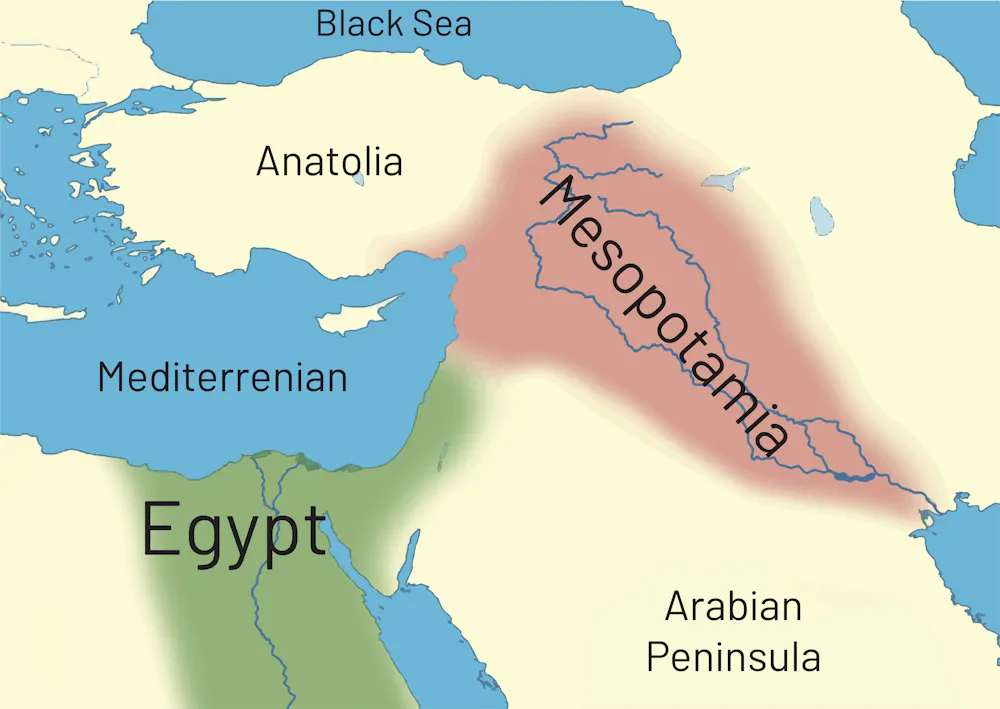
    Developed in its classic form in Babylon, entrail divination was practised throughout ancient Mesopotamia, the written history of which spans from the 3rd millennium BC to the 1st century AD.

    It was enormously important in all sections of society – a standard part of political decision-making at the royal court, but accessible to all. Budget options were even available for those who could not afford a sheep.

    People addressed their questions directly to the gods and believed that at the moment of asking, the answer would be written on the entrails. This could then be “read” by a diviner trained in this esoteric language.

    A map of Mesopotamia, a historical region in modern-day Iraq.
    aipsidtr / Shutterstock

    Sitting in the British Museum is an archive of real questions that were asked by the king of Assyria (a kingdom in northern Mesopotamia) in the 7th century BC. All kinds of affairs of state were put before the gods. Are the Egyptians going to attack? Has the enemy taken the town under siege? And will the governors return home safely?

    Reading the archive, you get a real sense of nerves on a knife-edge as the king waited for news from far away, wanting to know what had happened to his troops and trying to decide what to do next.

    Not only did he ask them about what would happen in the future, but he also consulted them on possible courses of action. Should the Assyrian army go to war? Should the king send a messenger to make peace? Asking the opinion of the gods would have helped him feel more confident in his next steps.

    The Babylonians did not have elections. But that did not mean the king could do whatever he wanted. It was important for his public image to have the gods onside, as well as for his own reassurance.

    Whenever a powerful official was appointed, the entrails would be read to ensure the gods approved. The head of the army, high priests and other important positions were all subject to this requirement. On one occasion, even the choice of crown prince – and hence the future king of Assyria – was put to this test.

    Interpreting the entrails was held to almost scientific standards of exactitude. Diviners worked in pairs or groups of up to 11, checking each other’s work to make sure they got it right. This was not a vague or woolly process, but a real attempt to ensure “accuracy” that could not be manipulated to simply come up with the answer that the king wanted to hear.

    Modern forecasting

    We all want to know what the future has in store, and have come up with ingenious ways of trying to find out, from opinion polls and data modelling to Paul the octopus, who developed a reputation for picking the winners of football matches during the 2010 World Cup. But are our methods really any better than looking inside a sheep?

    As all investors are warned, past performance does not guarantee future results. Yet the only data we have to inform our predictions comes from the past, and most of our models can’t take into account “unknown unknowns”.

    As many experts have found, predicting the future is a difficult business: opinion polls can lie and people change their minds, while economists have often been blindsided by a sudden crash.


    Read more:
    Harris nudges ahead of Trump in the polls – but could the economy prove her downfall?


    A Babylonian clay liver used for divination in Mesopotamia from 2050–1750 BC.
    Science Museum Group Collection, CC BY-NC-ND

    Since liver divination only answers “yes” or “no”, it is going to be right 50% of the time just through the law of averages. Despite its randomness, its success rate may well have seemed convincing at the time.

    And when we trust the authority of the source, it’s easy to find a way to explain away a wrong result – the prediction got halfway there, answered a different question, or would have been right if x hadn’t happened.

    We shouldn’t be blind to the weaknesses of our own methods. We are often wrong, and the Babylonians could sometimes be right.

    Selena Wisnom does not work for, consult, own shares in or receive funding from any company or organisation that would benefit from this article, and has disclosed no relevant affiliations beyond their academic appointment.

    ref. Why ancient Mesopotamians would have used a sheep’s liver to predict Donald Trump’s election odds – https://theconversation.com/why-ancient-mesopotamians-would-have-used-a-sheeps-liver-to-predict-donald-trumps-election-odds-242251

    MIL OSI – Global Reports

  • MIL-OSI Global: Small Things Like These: Magdalene laundries drama is a powerful rumination on compassion – and its limits

    Source: The Conversation – UK – By Ruth Barton, Professor in Film Studies, Trinity College Dublin

    In 2021, Ireland’s then Taoiseach (prime minister), Enda Kenny, delivered a formal apology to the survivors of the Magdalene laundries. The laundries were religious institutions where unmarried mothers and other “fallen” women were forced into slave labour.

    “It struck me,” he said, “that for generations Ireland had created a particular portrait of itself as a good living God-fearing nation. Through this and other reports we know this flattering self-portrait to be fictitious … by any standards it was a cruel, pitiless Ireland distinctly lacking in a quality of mercy.”

    His words might well serve as a prologue to the new film adaptation of Claire Keegan’s 2020 novella, Small Things Like These. So too might a brief moment in the equally excoriating, if less nuanced film, The Magdalene Sisters (2002). In it, one of the young women begs a local delivery boy to help her escape, but in the end he lets her down.

    History films work in various ways. One is to comfort the viewer that such a time is consigned to the past. Melodramas like The Magdalene Sisters and that other notable Magdalene story, Philomena (2013), find a form of closure when their victims confront their oppressors.

    Another is to refuse a neat ending, to force us to imagine what might happen in the lives of the protagonists after the final credits have rolled. In Small Things Like These, that protagonist is coal-man, Bill Furlong (Cillian Murphy), who finds himself inexplicably troubled as he is finishing off his delivery business in the days before Christmas 1985.

    All is well at home, where his five daughters quarrel amicably around the kitchen table as they do their homework under the eye of his wife, Eileen (Eileen Walsh). Money is tight but they’re getting by.

    Making a delivery to the local convent, he comes across a young woman, Sarah (Zara Devlin), locked in the coal shed. The discovery sets off his own memories of being brought up by a single mother, and, after her death, by a wealthy landowner, Mrs Wilson (Michelle Fairley). The film confronts kindly Bill with a dilemma: to shut his eyes, as do the other inhabitants of New Ross, to what is going on in the convent, or to aid the young woman.

    The mother superior, Sister Mary (Emily Watson), knows that the stooped coal-man standing uneasily in her office is no match for her. As she warns him, the future education of his younger daughters in the school adjacent to the convent is not guaranteed. Other of the villagers, who sense his confusion, tell him not to involve himself. His wife, even as she doesn’t fully understand what is going through his head, is horrified by the merest suggestion that he will disrupt the status quo.

    The price of compassion

    In a less nuanced film, this advice might prompt the viewer to further empathise with Bill, egging him on to action. But here, the suffocating moral blanket that lies over the city – visually rendered as a thick fog that merges into a drizzle and occasional snow, and the narrow, constricting streets through which he moves – remind us that nonconformity comes with a heavy price.

    The community may pile into the church for Christmas mass but, as Eileen admonishes Bill, there is no point in helping the starving child he meets on the road with the spare coins from his pocket – his father will only drink the money. What small closure comes at the film’s end is fragile and contingent.

    The trailer for Small Things Like These.

    Another risk of telling stories from history is to sacrifice the particular for the universal. Small Things Like These manages, through its visuals and its achingly believable performances (Murphy’s most of all) to be a film rooted in the Ireland that Kenny evoked in his speech. At the same time, it prompts us to question the limits of compassion – how much easier is it to conform to social norms than step outside them.

    The film ends fittingly with a tribute to the more than 56,000 young women who were sent to Magdalene institutions for “penance and rehabilitation” between the years 1922 and 1996. And the children who were taken from them.

    It is not history’s job to impose lessons on the present. But at the same time, it would be inadequate for viewers not to ask what we would have done in Bill’s place. And, more uncomfortably, what, faced with the knowledge of the multiple injustices of our own society, we ourselves are doing now.


    Looking for something good? Cut through the noise with a carefully curated selection of the latest releases, live events and exhibitions, straight to your inbox every fortnight, on Fridays. Sign up here.


    Ruth Barton does not work for, consult, own shares in or receive funding from any company or organisation that would benefit from this article, and has disclosed no relevant affiliations beyond their academic appointment.

    ref. Small Things Like These: Magdalene laundries drama is a powerful rumination on compassion – and its limits – https://theconversation.com/small-things-like-these-magdalene-laundries-drama-is-a-powerful-rumination-on-compassion-and-its-limits-242057

    MIL OSI – Global Reports

  • MIL-OSI Global: The next president will play a key role in shaping US trade policy – here’s what voters need to know

    Source: The Conversation – USA – By Bedassa Tadesse, Professor of Economics, University of Minnesota Duluth

    From the ports of Los Angeles to the cornfields of Iowa, the U.S.’s international trade policy is a force that shapes the lives of every American. With the presidential election looming in November 2024, discussing trade policy isn’t just an academic exercise – it’s a civic responsibility.

    As an economist, I have spent years studying this topic. Trade policy has profound effects on how industries operate, from production locations to competitive dynamics. These changes impact everyday life, from the cost of your morning coffee to the job security in your local community.

    And, because the president has extensive control over trade policy, every presidential election is a referendum on the issue.

    The two most recent administrations – President Donald Trump and Vice President Mike Pence from 2017 to 2021 and President Joe Biden and Vice President Kamala Harris from 2021 to today – have had starkly different approaches to trade policy. The contrast shows how a president’s economic philosophy can reshape the nation’s global business strategy.

    Both Trump and Harris are on the ballot in November. Harris is expected to carry on Biden’s trade policies if she wins. This comparison offers insight into how the next U.S. president will govern on trade.

    2017-2021: Trump and Pence on trade

    Trump pursued a protectionist trade agenda during his time in office.

    Protectionism refers to government policies that limit international trade to benefit domestic industries. These measures include tariffs – taxes on imported goods – quotas and regulations that make imports more expensive.

    One of Trump’s first acts in office was withdrawing from the Trans-Pacific Partnership — a colossal 12-nation pact that would have covered 40% of global output. His decision cost America both access to lucrative Asian markets and a powerful counterweight to China’s economic influence.

    Closer to home, Trump renegotiated the North American Free Trade Agreement (NAFTA) into the United States-Mexico-Canada Agreement,
    tightening rules for automakers. The effect? While wages for workers in the automotive industry and vehicle prices for American consumers increased, it barely spurred any additional domestic car production.

    Trump also launched a tariff-driven trade war with China and the European Union, asserting it would address unfair practices and reduce the U.S. trade deficit. The strategy, however, prompted retaliatory tariffs, resulting in higher consumer prices and job losses in U.S. industries dependent on imported components. While some sectors benefited from the approach, American farmers suffered due to export losses, necessitating government subsidies.

    Trump and his new running mate, JD Vance, have signaled their intent to revive the “America First” trade strategy. Their campaign platform calls for sweeping tariffs, including a blanket 10% tariff on all goods and a more aggressive 60% tariff specifically targeting Chinese products.

    2021-today: Biden and Harris on trade

    In contrast, the Biden-Harris administration adopted a multilateral approach emphasizing cooperation between countries.

    The administration maintained most of Trump’s tariffs on Chinese goods and some on steel and aluminum imports from other countries. However, they reframed the measures as part of a broader push to rein in climate change and protect workers’ rights.

    The administration also launched initiatives like the Indo-Pacific Economic Framework for Prosperity, or IPEF, signaling a return to Obama-era trade strategies prioritizing regional partnerships in the Pacific. The IPEF aims to strengthen economic ties with Asian countries by coordinating policies to enhance supply chain resilience and promote clean energy rather than focusing solely on tariff reductions.

    The Biden-Harris approach emphasizes international cooperation while valuing domestic job creation, particularly in clean energy and manufacturing. However, maintaining many of Trump’s tariffs on Chinese goods, steel and aluminum has kept costs high for some U.S. businesses and consumers.

    Building on the Biden administration’s policies, the Harris campaign has signaled its aim to shield lower- and middle-income households from new tariffs that could raise prices while maintaining a tough stance on China through existing tariffs and trade restrictions.

    Presidential powers and influence on trade

    The president plays a critical role in setting America’s trade policy.

    The president can negotiate international trade deals, although Congress must approve them to become law. The executive branch also controls tariffs; under statutes such as the Trade Act of 1974, the president can impose them without congressional approval.

    In addition, the president can declare national emergencies related to trade, appoint trade representatives, issue executive orders to manage federal trade policies, and impose sanctions that can influence global trade dynamics.

    Free trade agreements can boost exports and promote economic growth, but they may also displace certain workers. In contrast, tariffs on imports protect some domestic industries but raise prices for American consumers. Studies show that tariffs imposed under Trump, and continued by Biden, have led to higher prices, reduced output and lower employment, harming the U.S. economy.

    Trade policies also affect diplomatic relationships and global supply chains. So, as voters sift through the candidates’ trade policy positions, they must look beyond the soundbites. Understanding how each approach affects job markets, consumer prices and global competitiveness will help voters cast an informed ballot that aligns with their vision for the country’s future.

    In the world of trade, every vote counts.

    Bedassa Tadesse does not work for, consult, own shares in or receive funding from any company or organization that would benefit from this article, and has disclosed no relevant affiliations beyond their academic appointment.

    ref. The next president will play a key role in shaping US trade policy – here’s what voters need to know – https://theconversation.com/the-next-president-will-play-a-key-role-in-shaping-us-trade-policy-heres-what-voters-need-to-know-241301

    MIL OSI – Global Reports

  • MIL-OSI Security: Defense News: VCNO Visits Students, Navy Leadership in Newport

    Source: United States Navy

    Vice Chief of Naval Operations Adm. Jim Kilby visited Newport, R.I., to meet with students and Navy leadership, Oct. 30.

    While addressing students and staff at Surface Warfare Schools Command, Kilby stressed the achievements and lessons learned the schoolhouse has played since the Navy’s role in the Red Sea.

    “In the last year, this community has witnessed firsthand the importance of what you learn at SWSC,” said Kilby. “It’s proved that you are ready to response in crisis and able to adapt to the longest sustained attacks at sea we’ve seen since World War II.”

    “This may not be the high-end fight, but the speed and scale of response will carry lessons learned for the Navy throughout our Fleet,” he continued. “I could not be more proud and more impressed with the work being done here.”

    SWSC’s mission is to ready sea-bound warriors to serve on surface combatants as officers, enlisted engineers and enlisted navigation professionals in order to fulfill the Navy’s mission to maintain global maritime superiority.

    The school maintains state-of-the-art technology in classrooms and trainers to ensure the surface warfare community remains ready for any fight to defend our nation and freedom of the seas.

    During his time at Naval Station Newport, Kilby spoke with leadership attending the Senior Enlisted Academy and the Naval Leadership and Ethics Center and stressed the leaders’ role in CNO’s Navigation Plan 2024.

    “You are all a critical piece of executing CNO’s NAVPLAN,” said Kilby. “Whether it’s from ensuring our Sailor’s Quality of Service to maintaining our platforms, you are the leaders out there getting it done. I thank you for your sacrifice and ownership entering this new level of responsibility and accountability… congratulations.”

    The SEA is the Navy’s only professional military education institution dedicated to senior enlisted personnel, focusing on management, leadership, national security and physical fitness.

    NLEC provides training for the foundational principles of ethical leadership across the naval profession, guiding the development of leaders who possess a deep, unwavering sense of responsibility, authority, and accountability. 

    Kilby also met with Rear Adm. Darryl Walker, president of the U.S. Naval War College (NWC), at the institution’s Newport campus where the NAVPLAN was announced earlier this year.

    Established in 1884, NWC is the oldest institution of its kind in the world. The college delivers excellence in education, research, and outreach, informing today’s decision makers, educating tomorrow’s leaders, and engaging partners and allies on all matters of naval power in order to preserve the peace, respond in crisis, and win decisively in war.

    Naval Station Newport is home to 50 different commands and is the Navy’s premier site for training and educating officers, officer candidates, senior enlisted personnel and midshipman candidates into future leaders, as well as testing and evaluating advanced undersea warfare and development systems.

    MIL Security OSI

  • MIL-OSI Global: Tariffs are back in the spotlight, but skepticism of free trade has deep roots in American history

    Source: The Conversation – USA – By Erik Guzik, Assistant Clinical Professor of Management, University of Montana

    Noted economic nationalist Alexander Hamilton. Douglas Sacha/Getty Images

    One of the more surprising developments in recent American politics has been the backlash against free trade.

    As recently as a decade ago, Democrats and Republicans alike generally favored free trade. But with the 2024 presidential election just days away, both Republican Donald Trump and Democrat Kamala Harris are leaning hard on protectionism. The Trump campaign in particular is promoting tariffs that would be difficult to imagine coming from a Republican presidential candidate just a decade ago.

    This new post-neoliberal moment might seem confounding. But it hearkens back to economic policies – and political parties – from around the time of the nation’s founding, and it offers clues to our divided present.

    Back in the late 18th century, the Founding Father Alexander Hamilton helped put in place a set of policies designed to encourage U.S. industry and to promote economic development and innovation.

    That arrangement, which laid the groundwork for what became known as the “American System,” emerged in part as a counterbalance to British conceptions of free trade. And the American System quickly grew as accepted economic policy as a young America developed its industrial strength.

    Hamilton’s economic nationalism

    In the early years of the republic, the U.S. didn’t have much of a trade policy at all.

    When the U.S. officially achieved independence in 1783 with the signing of the Treaty of Paris, the Articles of Confederation – the nation’s first constitution – greatly limited the federal government’s powers, including its ability to regulate foreign trade.

    These restrictions reflected the reality of 13 very different states that had been more united against the British – and their trade controls – than in support of a common vision of economic development.

    The economic conditions within this loosely connected nation quickly worsened. A deepening economic crisis, rising debt, inflation, cheap British manufactured goods and rising bankruptcy soon emerged. Such changing conditions gave rise to calls for a new national economic policy.

    This economic strain was an important factor leading to the drafting of the U.S. Constitution, ratified in 1789. The Constitution gave the federal government the capacity to regulate trade with foreign countries and, for the first time, to collect taxes. Both were privileges once held exclusively by sovereign American states.

    The ‘second American revolution’

    A strengthened American Congress made passing a national Tariff Act one of its first tasks. When it was ratified in 1789, a national import tax replaced customs previously enacted by the states. Perhaps indicating the magnitude of this change, supporters called it “the Second American Revolution,” passed as it was on July 4, 1789. In effect, it helped create a new conception of the American political and economic system, with a much stronger role for the state in economic matters.

    Duties were levied on 30 commodities, including hemp and textiles. Perhaps foreshadowing trade policy of a future era, the Tariff Act also placed duties of 12.5% on goods imported from China and India.

    The main architect of this new industrial policy was Hamilton, who released his seminal work on economic policy, Report on Manufactures, in 1791. Hamilton’s ideas were based on transforming a predominantly agricultural nation into one defined, at least in part, by growing and diversified industry.

    Though often overlooked, Hamilton’s Report on Manufactures also contained a grander vision – it sought to encourage the development of American invention and ingenuity as a form of economic policy and argued for unlocking “the genius of the people” so that “the wealth of a nation may be promoted.”

    To promote this spirit of national enterprise, Hamilton encouraged promoting technological progress, subsidizing research, attracting migrants, supporting a new financial system and implementing a patent system to promote invention. Such policies were in many ways an extension of previous policy enshrined in Section 8 of the Constitution.

    Tariffs and their discontents

    As the use of tariffs continued in the decades following Hamilton’s plan, policymakers turned increasingly protective in an attempt to more directly promote American industry. They enacted tariffs to insulate growing American industries from foreign competition, primarily from the U.K.

    By the early 19th century, this growing protectionist movement coalesced around the powerful Kentucky legislator Henry Clay and his Whig Party. Clay, who first referred to the American System by name, and his allies were instrumental in raising average national tariff rates to 20% in 1816.

    Those sweetmeats will cost you.
    Library of Congress

    When crisis appeared during the Panic of 1819, a collapse in cotton prices, a tightening of credit, widespread foreclosures and rising unemployment followed. In response, Clay and his allies raised tariff rates again, to 50% in 1828.

    The increasing use of tariffs provoked a fierce response from some in the nation’s agricultural and slave-owning class, who objected to perceived Northern dominance and a strong federal government. One prominent Southern critic at the time referred to the 1828 tariff as the “tariff of abominations.”

    Indeed, opposition to elements of the American System was one of the chief policy goals of early Democratic politicians such as Andrew Jackson, and fights over the system presaged later sectional fights leading up to the Civil War.

    As an industrial revolution took root in American society in the decades that followed, tariffs remained a cornerstone of U.S. economic policy. By the late 1850s, tariffs had become integrated into the policy of the newly formed Republican Party and an important plank of Abraham Lincoln’s economic platform.

    Toward the end of the 19th century, a changing Democratic Party, supported increasingly by a strong agricultural populist movement, continued to largely oppose the tariff system, arguing it benefited powerful industrialists at the expense of the working class while offering little to counter economic crisis.

    The breakup of the American System − and why it matters today

    Between 1861 and 1933, tariffs were a standard tool of U.S. economic policy. During this period, tariffs on dutiable goods often averaged 40% to 50%, especially in the late 19th and early 20th centuries. U.S. policymakers didn’t seriously question tariffs as a form of industrial policy until the deepening of the Great Depression in the 1930s.

    Following World War II, the U.S. decisively shifted away from tariffs. The Smoot-Hawley Tariff Act was widely blamed for deepening the Great Depression and contributing to the international conflicts of the 1930s and 1940s, effectively ending the protectionist era of U.S. industrial history.

    The establishment of the Federal Reserve in 1913 provided policymakers with a novel tool – monetary policy – to deal with economic downturns. The Keynesian revolution provided still another policy response for governments to consider during periods of economic crisis: spending as fiscal stimulus to create jobs and income.

    Finally, as postwar American policy embraced open global trade, American economic policy pursued more direct mechanisms to foster national innovation and entrepreneurship – effectively breaking up policy once dependent on activist trade intervention. With the elimination of tariffs, one of the great periods of American economic growth and innovation followed.

    In 2024, the Republican platform has, in many ways, returned to its origins by offering tariffs as a key economic strategy. Likewise, the Democratic platform, with its skepticism of concentrated corporate power, coupled with a renewed focus on financial support for small businesses and entrepreneurship, echoes its own earlier generation.

    As Americans head to the polls, it’s worth asking how current economic proposals with deep roots in the American System of old might help shape economic policy in the future.

    Erik Guzik does not work for, consult, own shares in or receive funding from any company or organization that would benefit from this article, and has disclosed no relevant affiliations beyond their academic appointment.

    ref. Tariffs are back in the spotlight, but skepticism of free trade has deep roots in American history – https://theconversation.com/tariffs-are-back-in-the-spotlight-but-skepticism-of-free-trade-has-deep-roots-in-american-history-241311

    MIL OSI – Global Reports

  • MIL-OSI Global: New Orleans schools still separate and unequal 70 years after Brown v. Board of Education

    Source: The Conversation – USA – By Connie L. Schaffer, Professor of Teacher Education, University of Nebraska Omaha

    First graders led the desegregation of New Orleans’ public schools in November 1960. Bettmann via Getty

    Sixty-four years ago this November, public schools in New Orleans began to desegregate. School buildings once designated as “white” opened their doors to Black students. The integration process, which deeply divided the city, was led by four first-grade girls.

    Tessie Prevost, Leona Tate and Gail Etienne were the first Black students to attend the McDonogh 19 School. Ruby Bridges was assigned to the previously all-white William Frantz Public School. Newspapers worldwide ran photographs of the girls walking past protesters and entering the schools accompanied by federal marshals.

    When Prevost died in July 2024, she was lauded as a Civil Rights hero. Oprah Winfrey paid tribute to her at the Democratic National Convention.

    Prevost herself did not realize her role in history until high school, when a teacher assigned the class a project on Brown v. Board of Education, the 1954 U.S. Supreme Court ruling that desegregated American schools. As she researched, she discovered her own name and story. She took this discovery to her parents, and they gave her a box of photographs and letters about her place in history, including a note from Eleanor Roosevelt praising her courage.

    To some, Prevost represents the promises of the Civil Rights Movement: integration and equality. As our research on New Orleans Public Schools shows, however, neither of these promises has ever been fully realized.

    New Orleans’schools resegregated in the late 20th century, and the city’s predominantly Black schools still lag behind white schools in many ways.

    ‘All deliberate speed’

    In the landmark 1954 U.S. Supreme Court decision Brown v. Board of Education, the justices ordered U.S. public schools to desegregate “with all deliberate speed” – language that allowed Southern cities and states to drag their heels.

    New Orleans schools did not begin desegregating for six years. Even then, only four first-grade girls out of thousands of Black students were permitted to enroll in white schools.

    The New Orleans district would subsequently desegregate one additional grade per year. As a member of that first desegregated class, Prevost was always in the grade being integrated. As such, all the grades above her remained segregated.

    Indeed, McDonogh 19 remained segregated during the first year of integration because all its white students immediately stopped attending. By December 1960, the school’s only students were the three Black girls. Two white students briefly enrolled in January, but their family succumbed to the pressure of the boycott and soon withdrew their children.

    White New Orleans residents protesting school integration in 1960.
    Bettmann / Contributor via Getty

    When Prevost, Etienne and Tate entered second grade, McDonogh 19 still had very low enrollment. In third grade, in 1962, the girls transferred to T.J. Semmes Elementary School, where enrollment of white students was much higher.

    Within that white student majority, the girls encountered many cruel classmates. White students, encouraged by some teachers and parents, tormented their Black peers. Prevost recalled this as the worst time in her life.

    “The white teachers and students did not want us there,” she said. “Every day there were beatings and cursing. They spat on us and ripped off our clothes.”

    After several years, Prevost’s parents recognized the impact of this heinous racism on their daughter and transferred her into a predominantly Black junior high school. Prevost would again be separated from most of her white peers.

    Equality in name only

    The Brown ruling also promised an equal education regardless of race. In practice, that has yet to happen.

    Most white teachers in New Orleans opposed desegregation, and the district initially allowed teachers to choose where they would teach. In 1972, however, the district reassigned many teachers to work in desegregated schools, and many quit in protest. Other white teachers struggled to connect and engage with their Black students, leading to disaffection among Black students. Their academic achievement declined, and dropout rates began to rise.

    Simultaneously, white flight was working against integration. Between 1960 and 1980, the white population of New Orleans dropped 20%, resegregating many New Orleans schools. By 2004, 50 years after the Brown ruling, McDonogh 19 – which by then had been renamed Louis Armstrong Elementary – was again effectively segregated by race: Nearly 100% of its students were Black.

    Across the district, academic performance declined in predominantly Black schools. By the 1990s, student achievement became increasingly measured by standardized tests known to be biased against students of color and poor students. Black students were also more likely to be taught by teachers with fewer years of experience and less education.

    By 1998, test scores at Louis Armstrong Elementary had fallen well below national, state and district averages. The school was also in a state of deep disrepair. In the summer of 2005, the city closed the school, and a few months later, Hurricane Katrina hit New Orleans.

    The abandoned school building sustained heavy wind damage and flooding. Water reached halfway up the walls of the first floor, leaving toxic mud, peeling chalkboards and mold-encrusted furniture.

    A legacy

    Following Katrina, the State Board of Education stripped New Orleans Public School District of its authority to manage public education.

    The state of Louisiana and charter organizations took over city schools, making New Orleans Public Schools the first all-charter school district in the U.S. Despite the change in governance, New Orleans schools remained segregated by race. Over a decade later, in 2017, roughly 75% of schools had populations of 95% students of color, and test scores showed only incremental improvement.

    Prevost, whose married name was Tessie Williams, lived in New Orleans her whole life, working at Louisiana State University for over two decades.

    She returned to McDonogh 19 in 2022, when the restored building opened as the Tate, Etienne and Prevost Center. The site, once a symbol of resistance to civil rights, is now a community center and museum committed to advancing the unfulfilled promises of the Brown ruling.

    As an adult, when Prevost spoke publicly about desegregation, she recalled the difficulty and disappointment she and others faced. But she tended to emphasize her hope for the future.

    “The ways that we are different are things that we should celebrate,” she said in a Black History Month interview with Louisiana State University. “There is so much power and freedom when we see differences in a positive light.”

    The authors do not work for, consult, own shares in or receive funding from any company or organization that would benefit from this article, and have disclosed no relevant affiliations beyond their academic appointment.

    ref. New Orleans schools still separate and unequal 70 years after Brown v. Board of Education – https://theconversation.com/new-orleans-schools-still-separate-and-unequal-70-years-after-brown-v-board-of-education-235642

    MIL OSI – Global Reports

  • MIL-OSI Global: Rust Belt voters aren’t all white, but election coverage of the region often ignores the concerns of people of color there

    Source: The Conversation – USA – By Christabel Devadoss, Assistant Professor in Global Studies and Human Geography, Middle Tennessee State University

    Wisconsin voters lining up to cast their ballots in the 2022 midterm election, Oct. 25, 2022, in Milwaukee. Scott Olson/Getty Images

    Every four years, national media turn their attention to the Rust Belt, a term that describes Midwestern industrial and manufacturing states whose economies were decimated by the decline of those industries in the 1970s. This region contains the coveted states of Ohio, Michigan, Wisconsin and Pennsylvania.

    Many rural parts of these states have a majority of white residents. The broader Rust Belt, however, also has long and important Black and Indigenous histories and contains some of the nation’s fastest-growing minority populations – in particular Latino, Arab and Asian communities.

    Yet when reporters descend on the rural Rust Belt to understand voters, the people they talk to are almost exclusively white.

    I am a geographer who studies the experiences of communities of color in the rural Rust Belt. Rural is a relative term, but when it comes to policy research, it usually refers to nonmetropolitan areas. From 2021 to 2023, I interviewed 35 people who live or lived in Ohio, Pennsylvania, Michigan and Indiana and identified as Black, Indigenous or people of color.

    I found that these Rust Belt residents have pressing concerns of political importance. Some of these issues are shared by white residents – and, as such, are well documented. But Rust Belt residents of color have additional problems that politicians and the media have long overlooked.

    Local impacts

    My interviewees described typical rural Rust Belt struggles.

    They complained of limited internet access, few or no grocery stores, declining roads and other infrastructure-related challenges. Jobs and opportunities for career advancement were scarce in their communities, while death and suicide rates were high.

    These difficulties are faced by white Rust Belt residents as well. But other struggles they mentioned are less often considered part of the rural experience.

    They described feeling socially isolated and discriminated against at work and school. Many had experienced racial or ethnic profiling by potential employers and police and been verbally harassed.

    One man, Miguel, who worked in carpentry, said his colleagues openly used racial slurs against him.

    “I was putting away some boxes, and they said, ‘Oh that’s because you w–backs are good at packing things in trucks,’” he told me.

    All names used here are pseudonyms; research ethics require me to protect the identity of my subjects.

    “A lot gets brushed under the rug,” said Bao, a Vietnamese American woman whose father also works in a hostile environment. “All the management folks are white,” so “if you speak up, you lose your job or are ignored.”

    These comments conveyed an overall sense of not “belonging.”

    As one woman from rural Pennsylvania explained, people regularly ask her, “No, really, where you from?”

    “They want to hear ‘Asian’ or ‘Korean,’” she said. “It’s very uncomfortable for me.”

    These racial tensions worsen during election periods. Some people I interviewed reported having been turned away or threatened at voting stations – harassment they attributed to their religious, cultural and political backgrounds, or the way they looked.

    Many Rust Belt voters of color already lack political power because they live in racially gerrymandered districts. When news coverage of the region ignores their voices, too, it compounds that feeling of not belonging.

    In 2017, The Washington Post visited the small town of Jefferson, Ohio, in Ashtabula County, to interview voters described as “rural Americans who fear they’re being forgotten” after Donald Trump’s election. Their coverage focused almost exclusively on white residents.

    “How did you go to Ashtabula County and not see Black people?” asked Belle, a resident who identified as African American.

    Not always Republican

    In the past three presidential elections, Ashtabula County has followed state trends: It backed Obama in 2008 and 2012, then voted for Trump in 2016 and 2020.

    Trump won Ashtabula with 60% of the vote in 2020. That’s 26,890 votes, which means that 16,497 people still voted for Democrat Joe Biden. In the years since, Ashtabula County residents have also voted with the state in two Democratic-backed initiatives: to protect abortion rights and legalize marijuana.

    In other words, just because a state or district backs a Republican for president doesn’t mean everyone is Republican, or that Republican voters always vote the party line. They can split their votes, and have.

    Even Ohio’s largely Republican delegation in the House of Representatives is misleading about the state’s political makeup. Ohio is a heavily gerrymandered state where voting districts have been drawn to benefit Republican candidates.

    U.S. Senate elections show more diversity in Ohio’s voting base.

    In 2018, Democrat Sen. Sherrod Brown won 53% of all votes in Ohio, including 51% of those cast in Ashtabula County. Four years later, both the state and Ashtabula County picked Republican JD Vance over Democrat Tim Ryan to replace the outgoing Republican Sen. Rob Portman.

    Why it matters

    In September 2024, Vance – now Trump’s vice presidential running mate – claimed that Haitian migrants in Springfield, Ohio, were kidnapping and eating cats and dogs. After Trump echoed that false claim on the debate stage, the city got 30-plus bomb threats and other threats of violence, and had to close multiple schools.

    During the pandemic, Trump’s derogatory branding of COVID-19 as the “Chinese virus” and “Kung Flu” led to increased hate crimes against immigrants and people of color.

    In my interviews, several participants mentioned how local restaurants and stores owned by Asian Americans had been vandalized. One woman, Lanh, who lived outside Springfield, said her favorite restaurant had to close.

    “They started vandalizing the restaurant, writing graffiti and set the restaurant on fire,” she said.

    The owners were from Thailand, but, Lanh said, the vandals “thought they were Chinese. Folks around the local community like my parents didn’t feel safe,” she added. “I didn’t feel safe.”

    Hateful political rhetoric is known to increase hate crimes against immigrants and people of color.

    When the Rust Belt is stereotyped as red and white, such experiences go unheard.

    So do some good news stories.

    The emergence of Black-owned bee farms in northeast Ohio, for instance, is one small example in a host of businesses started by people of color. Together, they are helping to boost the region’s beleaguered economy, much as Haitian immigrants have been fueling Springfield’s growth.

    Rural America is nuanced

    Nationwide, 24% of rural Americans identified as people of color in the 2020 census.

    That figure is probably low because the census tends to undercount nonwhite respondents – a problem that was particularly evident in 2020. Even so, that’s a quarter of rural residents who don’t fit the national stereotype of rural America.

    Rural America is white and Republican. It’s also trans, queer, Black, Hispanic, Indigenous, South Asian, Democratic and much more. Even if some are Republican, they still aren’t the rural Rust Belt Republicans portrayed in the national media.

    Ignoring these nuances reinforces stereotypes that the rural Rust Belt is the exclusive domain of white conservativism. But this region isn’t now, and never has been, simply red and white.

    Christabel Devadoss received funding from the American Council of Learned Societies (ACLS).

    ref. Rust Belt voters aren’t all white, but election coverage of the region often ignores the concerns of people of color there – https://theconversation.com/rust-belt-voters-arent-all-white-but-election-coverage-of-the-region-often-ignores-the-concerns-of-people-of-color-there-224466

    MIL OSI – Global Reports

  • MIL-OSI Global: Independent voters think for themselves and stay out of politics – 3 essential reads

    Source: The Conversation – USA – By Jeff Inglis, Politics + Society Editor, The Conversation US

    Jessie Harris, left, a registered independent voter in South Carolina, casts a ballot in February 2024. Joe Lamberti for The Washington Post via Getty Images

    In the 2024 election, the two major-party campaigns and many news reporters are spending a lot of time talking about independent voters – those who are neither aligned with the Republican Party nor the Democratic Party. Despite the power that political independents are anticipated to have over the election results, there’s a lot that remains unknown about this group.

    The Conversation U.S. has published several articles about what is known, and why it’s hard to know much more. Here are selections from some of those articles:

    1. How many independent voters are there?

    It’s very hard to answer that question, wrote Thom Reilly, a professor of public affairs at Arizona State University. Part of the problem is figuring out how to define who independent voters are. Surveys often ask people if they are Republicans, Democrats or independents, and if they answer that they are independents, the surveys ask how strongly they might lean toward one party or the other. But this muddies the waters of political identity, Reilly wrote:

    It’s possible that some voters identify as independent but really just have weaker political preferences than party die-hards, while still maintaining some loyalty to one party or the other. And some independent voters change their political identification from one cycle to another. That makes it hard to tell who an independent voter is and how many of them exist.”

    Those changing alignments, Reilly wrote, “may require scholars, media outlets and the public to shift their traditional two-party view of American politics.”


    Read more:
    Why is it so hard to know how many independent voters there are?


    2. Independent voters think for themselves

    Independent voters exhibit a key quality that most Americans expect of their fellow citizens: They base their views on their life experiences.

    Unfortunately, as politics scholars Shanna Pearson-Merkowitz at the University of Maryland and Joshua J. Dyck at UMass Lowell explained, this is an attribute almost unique to political independents:

    In contrast, Democrats’ and Republicans’ ideas of what problems deserve government attention and how to solve them are much less likely to be based on their own life experiences, and instead simply mirror the information they have gained from leading political figures on social media, on cable news networks or through other partisan information outlets.”

    For instance, independents living in neighborhoods with high levels of gun violence are far more likely to report being concerned about gun violence than independents who live in safer areas. But, Pearson-Merkowitz and Dyck wrote,

    “for Democrats and Republicans, there is no relationship between where they live and their level of concern about gun violence: Whether they live in a relatively dangerous community or a relatively safe one, their views on gun violence reflect their party’s messages on the issue.”


    Read more:
    Politics is still both local and personal – but only for independents, not for Democrats or Republicans


    3. Independents less likely to engage in any politics

    Research into independents’ political activity finds them tending to stay away from politics, wrote Julio Borquez, a political science scholar at the University of Michigan-Dearborn:

    “Perhaps most importantly, pure independent voters are simply less likely to vote than those who express any degree of partisan attachment. In the 2020 presidential election, reported turnout among pure independents was about 20 percentage points lower than turnout among other voters, including independents who lean toward a party.”

    Research has found members of this group “tend to be genuinely put off by partisan conflict and party labels,” Borquez wrote. Different studies have found, for instance, that they prefer photos of neighborhoods that did not show political yard signs over the same photos of the same neighborhoods with homes displaying political yard signs. And they pay less attention to campaigns and partisan social media than people with partisan affiliations.

    So they are indeed independent – but the question remains whether they will be uninvolved in 2024 or motivated to cast their ballots and make their views known.


    Read more:
    Independent voters are few in number, influential in close elections – and hard for campaigns to reach


    ref. Independent voters think for themselves and stay out of politics – 3 essential reads – https://theconversation.com/independent-voters-think-for-themselves-and-stay-out-of-politics-3-essential-reads-241193

    MIL OSI – Global Reports

  • MIL-OSI Global: Americans own guns to protect themselves from psychological as well as physical threats

    Source: The Conversation – USA – By Nick Buttrick, Assistant Professor of Psychology, University of Wisconsin-Madison

    Many gun owners cite protection as a reason to carry a firearm. RJ Sangosti/MediaNews Group/The Denver Post via Getty Images

    Kamala Harris, Donald Trump, Tim Walz and JD Vance all have something in common. All four of them, along with an estimated 42% of American adults, have lived in a home with at least one gun.

    Gun ownership in the United States is widespread and cuts across all sorts of cultural divides – including race, class and political ideology. Like all mass experiences in American life, owning a gun can mean very different things to different people.

    One thing that American gun owners tend to agree on, no matter their differences, is that guns are for personal protection. In a 2023 Pew survey, 72% of gun owners reported that they owned a firearm at least in part for protection, and 81% of gun owners reported that owning a gun helped them to feel safer. This perspective contrasts to that of gun owners in other developed economies, who generally report that guns are more dangerous than safe and that they own a gun for some other reason.

    I’m a psychologist who studies contemporary society. In the lab, my colleagues and I have been investigating this feeling of safety that American gun owners report. We’re trying to get a more complete sense of just what people are using their firearms to protect against. Our research suggests it goes much deeper than physical threats.

    Social scientists are exploring the motivations and effects of owning a gun.
    Cécile Clocheret/AFP via Getty Images

    Protection goes beyond the physical

    By combining social-scientific research on firearms ownership with a raft of interviews we’ve conducted, we’ve developed a theory that gun owners aren’t just protecting against the specific threat of physical violence. Owners are also using a gun to protect their psychological selves. Owning a gun helps them feel more in control of the world around them and more able to live meaningful, purposeful lives that connect to the people and communities they care for.

    This sort of protection may be especially appealing to those who think that the normal institutions of society – such as the police or the government – are either unable or unwilling to keep them safe. They feel they need to take protection into their own hands.

    This use of a deadly weapon to provide comfort and solace may come at a cost, however, as firearms often bring a heightened sense of vigilance with them. Firearm instructors frequently teach owners to be especially aware of their environment and all the potential dangers and threats within. When gun owners look for danger, they often are more likely to find it.

    Gun owners may end up perceiving the world as a more dangerous place, institutions as more uncaring or incompetent, and their own private actions as all the more important for securing their lives and their livelihoods.

    How gun owners feel during daily life

    What does this cycle of protection and threat look like in everyday life? My colleagues and I recently ran a study to investigate. We’re still undergoing peer review, so our work is not final yet.

    We recruited a group of over 150 firearms owners who told us that they regularly carry their guns, along with over 100 demographically matched Americans who have never owned a gun. Over two weeks, our research team texted the participants at two random times each day, asking them to fill out a survey telling us what they were doing and how they were feeling.

    To get a sense of how guns change the psychological landscape of their owners, we divided our gun-carrying group into two. When we texted one half of the group, before we asked any other questions, we simply asked whether they had their gun accessible and why they’d made that decision. For the other half of our gun-owning participants, and for our non-gun-owning control group, firearms and firearm carrying never came up.

    When subtly reminded of guns in general – regardless of whether their gun was accessible – our participants reported feeling more safe and in control and that their lives were more meaningful. Thanks to our random-assignment procedure, we can be pretty confident that it was thinking about guns, as opposed to any differences in the underlying groups themselves, that caused this particular increase in psychological well-being.

    About half of the times that we texted, the gun owners told us that they had a gun accessible at that moment. When a gun was handy, our participants told us that they were feeling more vigilant and anxious, and that their immediate situation was more chaotic. This result didn’t seem to be driven by owners choosing to have guns available when they were putting themselves into objectively more dangerous situations: We found the same pattern when we looked just at moments when our participants were sitting at home, watching television.

    Raising fear and promising rescue

    Contemporary American gun ownership may have conflicting messages embedded within it. First, a gun is a thing you can use to bolster your fundamental psychological needs to feel safe, to feel in control and to feel like you matter and belong. Second, having a gun focuses your attention on the dangers of the world.

    By both fueling a sense of danger and holding out the promise of rescuing you from the fear, messaging around guns may end up locking some owners into a sort of doom loop.

    A sense of responsibility goes along with gun ownership for the vast majority of Americans who own a firearm.
    Matt McClain/The Washington Post via Getty Images

    My collaborators and I are currently exploring whether stressing other parts of gun ownership may help owners to move beyond this negative spiral. For instance, while owners often talk about “danger,” they also talk frequently about “responsibility.”

    Being a responsible gun owner is central to many owners’ identities. In one study, 97% of owners reported that they were “more responsible than the average gun owner,” and 23% rated themselves as being in the top 1% of responsibility overall. This, of course, is statistically impossible.

    To more fully understand the many ways responsible firearm ownership can look, we are in the process of interviewing gun owners from all around the state of Wisconsin, a notably diverse state when it comes to gun ownership. We’re tapping into as many of the ways of owning a gun as we can, talking with protective owners, hunters, sport shooters, collectors, folks in urban areas, folks in rural areas, men, women, young people, old people, liberals, conservatives, and, of course, trying to capture the complex ways that race shapes ownership.

    Who do gun owners feel they are responsible for? What kinds of actions do they think responsible owners take?

    We hope to learn more about the many different ways that people conceptualize what a gun can do for them. American gun cultures are complex and distinct things. By exploring the worldviews that support firearm ownership, we can better understand what it means to live in the U.S. today.

    Nick Buttrick receives funding from the National Science Foundation and the Wisconsin Department of Justice.

    ref. Americans own guns to protect themselves from psychological as well as physical threats – https://theconversation.com/americans-own-guns-to-protect-themselves-from-psychological-as-well-as-physical-threats-239363

    MIL OSI – Global Reports

  • MIL-OSI Global: In Hawaii, parasites and viruses team up in the battle against fruit flies – an entomologist explains the implication for global pest control

    Source: The Conversation – USA – By Kelsey Coffman, Assistant Professor of Entomology & Plant Pathology, University of Tennessee

    Diachasmimorpha longicaudata, a parasitoid wasp that helps control pests. Sheina Sim, CC BY

    Take a stroll along one of the beaches on Hawaii Island in late summer, and you’ll likely stumble upon almond-shaped fruits lying in the sand. Known as false kamani nuts, or tropical almonds, they fall from tall, shady Terminalia catappa trees that line the many picturesque ocean views on the island.

    But what may not be clear to the casual beachgoer is that there’s a fight for survival occurring within the flesh of these unassuming fruits. Tropical almonds are one of many active battlegrounds in a war between a global agricultural pest, a parasitic wasp and a beneficial virus.

    As an entomologist who studies insect viruses, I want to untangle the complex interactions that insects have evolved with microbes. The findings might help researchers tackle global food security issues.

    A global pest challenge

    At the center of this conflict are invasive fruit flies in the family Tephritidae, many of which have spread across the globe and wreak havoc on hundreds of commercial fruits and vegetables.

    In Hawaii, several species of tephritid fruit fly invaded, starting in the late 1800s. They have caused major economic losses to fruit production across the islands. Scientists and fruit growers have undertaken enormous efforts to control these flies since their initial introductions, but they remain a serious economic problem.

    One reliable method of control has been to release tiny insects called parasitoid wasps into the wild that can hunt down immature fruit flies and target them for annihilation. The term parasitoid describes an organism that spends its development as a parasite and eventually kills its host.

    Parasitoid wasps use an elongated stinger, known as an ovipositor, to drill into fruits where flies are developing and pierce the fly’s body to lay an egg within. Wasp eggs hatch inside the fly host and gradually devour the entire fly from the inside out.

    Human use of parasitoid wasps or other natural enemies to control pest populations is known as biological control, or biocontrol. It was so successful in Hawaii that several species of parasitoid wasp have established wild populations on the islands. They have helped continuously suppress multiple fruit fly pests to this day.

    The release of nonnative insects for biocontrol could have unforeseen negative consequences for local ecosystems. Therefore, federal agencies like the U.S. Department of Agriculture have strict regulations for new and existing biocontrol programs.

    The enemy of my enemy is my friend

    So, how do wasps achieve the impressive feat of reducing fruit fly pest populations? Once laid inside a fly host, the wasp must face the fly’s immune system, which will try to suffocate the egg before it hatches.

    This inhospitable environment has forced wasps to evolve an arsenal of microscopic substances, also known as molecular factors, to combat fly defenses. These include a cocktail of different molecules introduced by the wasp mother at the time of egg-laying.

    The goal of these factors is to manipulate the fruit fly’s physiological processes, like its development from egg to adult and its immune response to invading parasites. By interacting with molecular components, like proteins, that make up insect physiological pathways, parasitoid wasp factors can delay insect host development and suppress host immunity to allow the wasp offspring to feed on fly tissue unharmed.

    This is the origin story of an unlikely partnership that many species of parasitoid wasp have formed with beneficial viruses. Virus particles multiply to massive quantities within the reproductive organs of female wasps during their development. Wasp mothers then use their ovipositor like a hypodermic needle to inject virus particles into host insects during egg-laying.

    The virus particles turn into biological weapons that infect cells of the wasp’s host. This infection disrupts processes like the fly’s immune response. Developing wasps benefit from the virus’s activity and return the favor by passing on the virus to future wasp generations.

    Not all heroes wear capes

    Diachasmimorpha longicaudata is a small, bright orange wasp with a distinctively long ovipositor. The literal translation of longicaudata is “long-tailed” in Latin. But don’t let its charismatic appearance fool you.

    D. longicaudata is ferocious in its ability to feast on several species of fruit fly pests, such as the Mediterranean fruit fly, Ceratitis capitata, and the oriental fruit fly, Bactrocera dorsalis. Because of D. longicaudata’s ability to attack a wide variety of fruit fly pests, pest management specialists around the world have released the wasps into agricultural ecosystems, where they dependably establish new populations and provide sustained pest control.

    Like many parasitoids, D. longicaudata has formed an alliance with a virus known as Diachasmimorpha longicaudata entomopoxvirus, or DlEPV.

    DlEPV replicates within the venom gland of female wasps, which stores billions of virus particles. Virus particles are so densely packed in there that they often cause the venom gland to appear iridescent blue.

    DlEPV particles are highly lethal when injected into flies in the lab. The virus freezes the fly’s development and replicates with abandon until the fly’s ultimate demise.

    In contrast, the alliance between wasp and virus is so strong that curing D. longicaudata wasps of their resident DlEPV infection causes the wasp offspring to die inside the fly hosts.

    A new potential path forward

    My colleagues and I published a study showing that DlEPV may play a critical role in helping D. longicaudata make a meal out of so many different fruit fly pests. We found a link between D. longicaudata survival and DlEPV lethality within different fruit fly host species.

    When we infected C. capitata and B. dorsalis flies with DlEPV, the virus successfully replicated and killed large swaths of fly hosts. However, DlEPV couldn’t replicate within the melon fly, Zeugodacus cucurbitae, a fly species that D. longicaudata wasps cannot use as hosts.

    These findings shine new light on the effect viruses have on host-parasite rivalries. The presence of these viruses could influence how useful parasitoid wasps are in getting rid of fruit fly pests. In the case of D. longicaudata, its associated virus may be responsible for the decades of reliable aid this wasp has provided to fruit fly biocontrol programs around the world.

    This work has also revealed a new potential tool in the war against fruit fly pests. DlEPV is now known as a lethal enemy for several of the world’s most destructive pest species. If researchers can determine precisely how DlEPV exploits fly hosts at a molecular level, they could one day incorporate the same strategies that this virus uses into new fruit fly pest control methods.

    Kelsey Coffman receives funding from USDA National Institute of Food and Agriculture (NIFA).

    ref. In Hawaii, parasites and viruses team up in the battle against fruit flies – an entomologist explains the implication for global pest control – https://theconversation.com/in-hawaii-parasites-and-viruses-team-up-in-the-battle-against-fruit-flies-an-entomologist-explains-the-implication-for-global-pest-control-234780

    MIL OSI – Global Reports

  • MIL-OSI Russia: Young scientists from the State University of Management presented the results of their research at the All-Russian forum “Science of the Future – Science of the Young”

    Translation. Region: Russian Federation –

    Source: State University of Management – Official website of the State –

    From October 29 to November 1, the IX All-Russian Youth Scientific Forum “Science of the Future – Science of the Young” is being held at the Samara National Research University named after Academician S.P. Korolev.

    The forum is attended by more than 500 Russian and foreign researchers, winners of the mega-grant program, heads of world scientific schools and laboratories, young scientists, students and postgraduates.

    At the opening ceremony, the participants were addressed with welcoming words by the Head of the Department of the Presidential Administration of Russia for Scientific and Educational Policy Tatyana Gracheva, the Director of the Department of State Policy in the Sphere of Scientific and Technological Development of the Ministry of Education and Science of Russia Anton Shashkin, the Chairperson of the Committee on Education and Science of the Samara Regional Duma Svetlana Ilyina, the President of Samara University, Academician of the Russian Academy of Sciences Viktor Soyfer, the Rector of Samara University Vladimir Bogatyrev and the Scientific Director of Samara University, Academician of the Russian Academy of Sciences Evgeny Shakhmatov.

    The main topics of the forum’s business program were the search for effective ways to attract young people to solve the problems outlined in the Strategy for Scientific and Technological Development of the Russian Federation, and the formation of an effective system of interaction between science, technology and production. At the plenary sessions, leading scientists and experts spoke about new trends in aircraft manufacturing and space exploration, quantum technologies and artificial intelligence, problems of neurodegeneration and how young researchers can build a successful career in science.

    The State University of Management was represented at the forum by Associate Professor of the Innovation Management Department Denis Serdechny and Director of the Business Incubator Dmitry Rogov.

    Denis Serdechny spoke at the opening of the Information Technology and Mathematics section with a scientific report on software and hardware systems and intelligent platform digital solutions in the field of agro-industrial technologies. In his report, the associate professor of the Department of Innovation Management spoke about the competencies of the State University of Management in building ecosystems and platform solutions for business, as well as about the results of research within the framework of a large scientific project – developed methods for assessing the digital maturity of agricultural enterprises, the concept of a data parser for a digital platform and the concept of an intelligent decision support system for computer vision for agricultural tasks.

    Dmitry Rogov opened the Engineering Sciences section by presenting a report on the application of mass service theory tools to optimize the operation of transport infrastructure facilities. Particular attention was paid to simulation modeling, which is used both at the design stage of new infrastructure facilities, which are complex mass service systems, and to optimize the operation of existing ones. The SMU postgraduate student demonstrated to the meeting participants a transport hub model created in the AnyLogic environment, formed on the basis of several logical layers: a two-dimensional scheme, a process diagram, and 3D visualization, and presented the results of an assessment of the qualitative indicators of the system’s functioning, necessary for further analysis and management decision-making.

    Subscribe to the TG channel “Our GUU” Date of publication: 10/31/2024

    Please note: This information is raw content directly from the source of the information. It is exactly what the source states and does not reflect the position of MIL-OSI or its clients.

    MIL OSI Russia News

  • MIL-OSI Canada: Keynote – 2024 Nuclear Law School

    Source: Government of Canada News

    On October 25, 2024, Pierre Tremblay, CNSC President and CEO, delivered the keynote address at the Canadian Nuclear Law Organization’s Nuclear Law School 2024, held in Toronto, Ontario. In his remarks, he spoke about areas of focus for the CNSC and the important function the CNSC’s Legal Services team plays in supporting Canada’s nuclear regulator.  

    – Check against delivery – 

    Introduction

    Good afternoon, everyone. Thank you for that kind introduction.  

    Bonjour. Merci pour cette aimable présentation. 

    I would like to acknowledge that we are gathered here today on the traditional territory of many nations, including the Mississaugas of the Credit, the Anishnabeg, the Chippewa, the Haudenosaunee and the Wendat peoples, and on what is now home to many diverse First Nations, Inuit, and Métis peoples. 

    I am honoured to work with and learn from communities across unceded lands throughout Canada, and want to acknowledge all First Nations, Inuit, and Métis peoples who’s original and treaty territories we stand upon across Turtle Island.

    As mentioned, I am Pierre Tremblay, President of the 

    Canadian Nuclear Safety Commission, or CNSC. I have now had the privilege of leading the CNSC for almost 3 months, and I could not be happier to be speaking to you all today on behalf of the regulator. 

    I’m so pleased you have also had the opportunity to hear from some of the CNSC’s many experts, with Pascale Bourassa speaking about the practical considerations around compliance with and enforcement of the nuclear regulatory requirements for Canadian export controls. 

    And from Catherine Howlett on the role of the regulator and how we intend to manage licensing decisions in the context of the Impact Assessment Act. 

    I myself have 40 years in Canada’s nuclear sector, all of which have been very rewarding. My career has given me a deep appreciation and respect for the people who work in the sector and their shared focus on safety and the culture that supports it. 

    My new position with the CNSC is affording me the opportunity to play an essential role in the nuclear sector by serving the public in protecting Canada’s environment and its people. 

    The CNSC is a world class nuclear regulator and I’m honoured to be leading this organization through such an exciting period for the nuclear sector. 

    For my remarks this afternoon, I’d like to speak about the work the CNSC is doing to fulfil our important mandate, while ensuring our readiness for the future.

    Important Work of the Regulator

    As Canada’s nuclear regulator, the CNSC oversees the full lifecycle of nuclear facilities and activities, regulating the use of nuclear energy and materials to protect the health, safety, and security of people and the environment while ensuring Canada’s respect for its international obligations, including non-proliferation. 

    All licensing decisions are made by the Commission, a quasi-judicial, independent tribunal set up at arm’s length from government, and with no ties to the nuclear industry. 

    This is an interesting and crucial time for Canada’s nuclear sector. With a growing global energy demand, driven by electrification and our collective response to climate change, the potential for nuclear as a reliable baseload energy source is significant.

    Given Canada’s long history and expertise in the nuclear field, there is of course a strong interest in maintaining its competitive advantage, and to keep pace with countries that are heavily investing in nuclear.

    While the CNSC is independent and impartial, we are aware of and engaged with the external environment in which nuclear operates. 

    The increased attention on and priority of nuclear are important factors motivating the CNSC to ensure regulatory readiness and efficiency. 

    This is particularly true as we prepare for the eventual deployment of advanced and small modular reactor technologies.

    In regulating to ensure safety, readiness and efficiency is achievable with no corners being cut. Our expectations for industry are the same. Together, we can all ensure the safe deployment of nuclear projects.

    The possibility of the broad deployment of small modular reactors – or SMRs – requires us to be ready in new and different ways.

    This is just one driver to modernize our regulatory framework and practices. 

    As a part of our modernization efforts, we undertook a full strategic review of the CNSC’s regulatory framework to identify gaps and opportunities for improvement to ensure clarity of requirements for SMRs, such as shifting from a prescriptive approach to a technology-neutral performance-based approach.

    This includes proposed Nuclear Security Regulations that respond to changes in security threats and adapt to technological advancements. 

    The current regulations do not in our view adequately consider a risk-informed approach – nor do they consider different technologies, sizes, locations, and alternative approaches to address potential security threats and risks. 

    This could prevent licensees and proponents from using new security technologies or innovative practices that meet – or exceed – the regulatory objective to delay potential adversaries. 

    Mind you, modernizing our regulations isn’t new. It is a continuation of years of work and something the CNSC is always in the process of doing.

    For example, in 2020, following extensive consultation, the Radiation Protection Regulations were updated to enhance protections for nuclear sector works, including accommodations for workers who are breastfeeding, and a lower annual limit for radiation doses to the lens of the eye.

    This is just one example where we have leveraged over 20 years of experience with the Nuclear Safety and Control Act and advances in science to ensure our regulatory framework reflects our current and modern reality.

    By necessity, this work is ongoing. As the sector evolves, so does the regulatory landscape.

    We are also ensuring we do not work in isolation. As we modernize and ready ourselves for new technologies, we continue to look for ways to collaborate and coordinate with other government agencies here at home, as well as our regulatory counterparts around the world. 

    For example, the CNSC is working closely with the Impact Assessment Agency of Canada to ensure processes are well aligned to reduce duplication of work. 

    The CNSC recognizes the vital role of the Impact Assessment Agency of Canada. The renewed emphasis on nuclear in the pursuit of clean growth requires many agencies to play equally important roles.

    We remain committed to supporting the work of our partners and the Government’s action plan – Building Canada’s Clean Future – while continuing to honour our own commitment of being efficient as the nuclear safety regulator.

    It’s not just coordination at home. International cooperation has far-reaching benefits for world-wide nuclear safety and helps to ensure a streamlined and safe approach to deployment for these projects. 

    CNSC along with our colleagues in the US and UK have taken essential steps to enable the sharing of knowledge and best practices to foster the safe deployment of nuclear technologies worldwide. 

    Agreements such as the trilateral Memorandum of Cooperation between the CNSC, the US Nuclear Regulatory Commission and the UK’s Office for Nuclear Regulation support collaboration on the technical reviews of advanced reactor and SMR technologies.

    Under this agreement we work together to develop shared technical assessment approaches, collaborate on pre-application activities to ensure mutual preparedness, and collaborate on research, training, and in the development of regulatory approaches. 

    Preparing for the future is a global effort. When we join forces with international organizations, our collective expertise can grow considerably and accelerate our progress, while also enhancing our primary focus on safety. 

    Together, we will be well-equipped to manage any challenges that we may face. 

    The CNSC’s mandate also includes communicating objective scientific, technical, and regulatory information to the public. 

    As the regulator, we must instill confidence in Canadians that decisions are risk-informed, evidence- and science-based. And that the safety of Canadians and the environment are at the forefront of all that we do. 

    We do this by communicating and engaging with the public we serve – and by disseminating objective information to the public. 

    Nuclear technologies and activities are not limited by Canada’s provincial and territorial borders. 

    And so, we share information with and provide opportunities for engagement to all Canadians, not just those in the traditional nuclear-host communities. 

    The CNSC also encourages open dialogue through consultation and engagement, with staff from across our organization engaging with communities and stakeholders nationwide.

    In practice, this includes participating in community events, engaging with the public and intervenors during Commission proceedings, delivering educational presentations, and continuing to prioritize relationship-building with Indigenous Nations and communities through continued and meaningful engagement, consultation and mutual learning.

    Effective communication and engagement build trust through openness, transparency and listening – and public trust is critical. 

    We are doing our part and expect industry to do the same. 

    The CNSC has outlined such expectations clearly in our regulatory documents for Indigenous engagement and public information and disclosure. 

    Proponents and industry have the responsibility to develop meaningful, long-term relationships with Indigenous Nations and communities whose treaty lands, territories, and potential and established rights could be impacted by nuclear activities. 

    They must also develop and maintain programs that ensure effective communication with the public as a licensing condition. 

    Only through such efforts will they earn trust and support for their projects. 

    We as the regulator will be watching and expect performance to be maintained as new technologies are sought after. 

    Internal efforts

    I have mentioned a few times today, that safety is our top priority. A strong safety culture is an essential component, helping to build trust within the organization, as well as with the public we serve.

    That is why the CNSC continues to prioritize understanding and strengthening our regulatory safety culture through various mechanisms, most recently through the Independent Safety Culture Assessment led by the International Atomic Energy Agency, or IAEA. 

    With almost 80 years of nuclear safety and security in Canada, our long history has taught us the importance of self-reflection and the need for continuous improvement, and that complacency is the enemy of excellence.

    We know that a culture for safety is an ongoing journey, which is why we continue to look for opportunities such as this mission to support our reflection and self-improvement. The IAEA recognized this in their preliminary findings, noting that we demonstrate a continued commitment for external review to help continuously improve. They recognized the strong personal commitment of staff to the CNSC safety mission, and our recognition that we face a significant amount of change in the coming years which we will need to continue to prepare for.

    The CNSC has also worked to better understand the important role diversity and inclusion play in safety culture. We know that diverse voices lead to better decision-making and better safety outcomes. 

    While I may not have faced the challenges in my career that some have, I am very aware of the need to direct our energies and efforts to ensure diversity in the talent pipeline. 

    Efforts such as this will let us engage the best and the brightest. It will foster innovation and improve our regulatory decisions. Complex challenges like those we face in the nuclear sector require varied perspectives. 

    Conclusion

    Many of you may be wondering, where do I fit? What role do I have to play? 

    There is value in gaining operational experience, which can be obtained in many ways. We live in a dynamic world, and our legislative framework is ever evolving. Embrace that uncertainty and the change that comes with it and challenge yourselves to continuously grow and learn. 

    The CNSC’s Legal Services team is a great example of this. They are an integral part of our organization, both in day-to-day operations as well as part of our management team. They act as counsel at Commission hearings and represent the CNSC in litigation. 

    Our Legal Services team directly supports the business of the CNSC as the regulator and, as such, contributes to the broader nuclear sector. 

    They do this by providing in-house legal advice to the CNSC, including advice on the interpretation of the Nuclear Safety and Control Act and its related regulations and other legislation that may affect CNSC operations. With their experience and knowledge, they assist the Commission in its modernization efforts to find ever more effective means of delivering on its mandate.

    As lawyers, you know that you do not make policy. You interpret the law and give advice. You are not in a position to dictate outcomes; rather you provide strategic legal perspectives that bring valuable insight and contributions through your work.

    There is a necessary balance here. Courageous decision-making is needed at this time, and your legal advice to your clients can help them advance their important priorities. 

    We are at a critical point in history. And we have lots to do. 

    I can reassure you that the CNSC will be here making sure that safety remains top of mind for everyone. 

    There is a strong foundation in place and a great deal of work already underway to ensure we are ready. I am eager to guide the CNSC as an organization as we continue this journey.

    This is a very exciting time for the nuclear sector, and I look forward to what the future holds.

    Thank you again for inviting me to speak at your 2024 Nuclear Law School, I look forward to answering any questions you may have. 

    MIL OSI Canada News

  • MIL-OSI Canada: Government of Canada to announce support for the YMCA of Southwestern New Brunswick

    Source: Government of Canada News

    Government of Canada to announce support for the YMCA of Southwestern New Brunswick

    Saint John, New Brunswick · October 31, 2024 · Atlantic Canada Opportunities Agency (ACOA)

    Wayne Long, Member of Parliament for Saint John – Rothesay, on behalf of the Honourable Gudie Hutchings, Minister of Rural Economic Development and Minister responsible for ACOA, will make an announcement regarding  the YMCA’s Glenn Carpenter Outdoor Education Centre
     

    Date: November 1, 2024

    Time: 11:00 a.m.       

    Location:
    YMCA of Southwestern New Brunswick
    191 Churchill Boulevard
    Saint John, New Brunswick
    E2K 3E2

    Connor Burton
    Press Secretary
    Office of the Minister of Rural Economic Development and of the Atlantic Canada Opportunities Agency
    Connor.Burton@acoa-apeca.gc.ca

    MIL OSI Canada News

  • MIL-OSI USA: Exceptional Teachers Chosen for Master Teacher Program

    Source: US State of New York

    Governor Kathy Hochul today announced the selection of 144 STEM teachers for the New York State Master Teacher Program, a professional network of more than 1,700 public-school teachers with a passion for inspiring the next generation of educational leaders. Twenty-six counselors were also selected as part of the inaugural Master Counselor Program.

    “Here in New York, we are incredibly grateful for our teachers’ and counselors’ dedication to inspiring and shaping the minds of our students – the next generation of leaders in our state,” Governor Hochul said. “Through the New York State Master Teacher Program, we’re recognizing the hardworking educational leaders who are helping us build a world-class education system here in New York for generations to come.”

    In addition, the application process for the next round is open now through January 26, 2025. Interested applicants can review the eligibility requirements and attend an information session with program staff.

    The new members represent 83 school districts with a Master Teacher or Master Counselor among their faculty, with 40 program members from high-needs districts including Albany, Buffalo, Binghamton, Plattsburgh City, Rochester, Schenectady, Syracuse, Utica, and, for counselors, New York City School Districts.

    Master Teachers support students in grades K-12 in the areas of science, technology, computer science, robotics, coding, engineering, math, and integrated STEM.

    More than half of the new members have been in the classroom for more than ten years, and more than 45 percent have been teaching for 15 or more years. The incoming group of Master Teachers is comprised of 25 percent elementary level teachers, 48 teachers with multiple teaching certifications, 15 teachers certified in Special Education and two teachers who hold a Bilingual Education Extension.

    The Master Counselors are active members of their professional associations serving in leadership roles, and regularly engage with local industries to help students and their families chart a path to student success. More than half of the 2024 Master Counselors have been in a counseling role for longer than ten years. The counselors serve in various district-level and state-level roles, joining the program as experienced leaders dedicated to developing and sharing best practices. One-third of the Master Counselors hold additional certificates or NYS trainings including Occupational Therapy, Disability Services, National Board, and Mental Health Counseling.

    SUNY Chancellor John B. King Jr. said, “As the state’s largest educator preparation provider, SUNY is proud of the success of all teachers and school counselors throughout their careers. We applaud Governor Hochul for recognizing excellence in teaching as well as the importance of school counselors in helping New York State students achieve their aspirations for college and careers.”

    Master Teachers and Master Counselors are leaders in their professions, serving as mentors for students and early-career teachers and counselors. Many new members have been awarded grants for STEM or counseling program resources. The Master Teacher Program is hosted at nine SUNY campuses to leverage the expertise of the University’s faculty and existing educator preparation programs, and SUNY counterparts collaborate regularly with local STEM career and industry experts.

    The total number of teachers and counselors selected from each region, and the respective partner SUNY campus, are:

    • Capital Region: 219 Master Teachers and 4 Master Counselors (University at Albany)
    • Central New York: 213 Master Teachers and 3 Master Counselors (SUNY Cortland)
    • Finger Lakes: 223 Master Teachers and 3 Master Counselors (SUNY Geneseo)
    • Long Island: 206 Master Teachers and 5 Master Counselor (Stony Brook University)
    • Mid-Hudson: 200 Master Teachers and 7 Master Counselors (SUNY New Paltz)
    • Mohawk Valley: 140 Master Teachers and 4 Master Counselors (SUNY Oneonta)
    • North Country: 130 Master Teachers and 6 Master Counselor (SUNY Plattsburgh)
    • Southern Tier: 252 Master Teachers and 7 Master Counselors (Binghamton University)
    • Western New York: 244 Master Teachers and 7Master Counselors (SUNY Buffalo State)
    • New York City: 160 Master Teachers (in partnership with Math for America) and 5 Master Counselors

    Throughout their four-year participation in the Program, Master Teachers, and Master Counselors will receive a $15,000 stipend annually; engage in peer mentoring and intensive content-oriented professional development opportunities throughout the academic year; work closely with pre-service and early career teachers and counselors to foster a supportive environment for the next generation of STEM teachers and counselors; and attend required regional meetings to participate in and lead professional development sessions each year.

    A full list of Master Teachers and Counselors and their school districts is available.

    MIL OSI USA News

  • MIL-OSI Russia: Representatives of the architectural bureau “DA bureau” shared their experience and told how to find the desired job without having any experience

    Translation. Region: Russian Federation –

    Source: Saint Petersburg State University of Architecture and Civil Engineering – Saint Petersburg State University of Architecture and Civil Engineering – Kamila Gilmutdinova and Olga Belyakova

    SPbGASU is holding a competition for the best concept for the main building lobby among students. Our university graduates who have achieved success in the profession have been invited as experts to evaluate the competition entries. In order to improve the students’ professional competencies, they also hold educational lectures. One of them was given by leading architect Olga Belyakova and senior architect Kamila Gilmutdinova from the architectural bureau “DA bureau”, which implements projects in Russia and abroad.

    Olga Belyakova and Kamila Gilmutdinova graduated from SPbGASU in different years and believe that they received a high-quality education, but they emphasize: in order to remain a sought-after specialist in today’s reality, an architect must study all his life, but in a bachelor’s degree it is better to focus on studying. Because the work requires a lot of time and effort, which is why there is a high risk of getting significant gaps in basic knowledge. But in these years, participation in competitions, workshops, summer schools, inter-university events, and training courses are encouraged.

    “These are great stories that help not only expand professional knowledge and skills, but also develop communication skills, provide new useful contacts in areas of interest to you. This is no less important for successful activity,” the experts believe.

    First of all, they paid attention to the range of job responsibilities of a practicing architect. Thus, work on a project includes not only design, but also interaction with the customer, builders, specialists in related industries, approvals and edits, budget allocation, adherence to the schedule and even periodic emotional and professional burnout. But all this is compensated by the successful implementation of projects. And it, in turn, is impossible not only without professionalism, but also without love for the specialty.

    “It is the love for the work and the creative approach that unite the teams of our bureau,” emphasized Olga Belyakova. Kamilla Gilmutdinova added: “We do not simply design objects, we write their unique history through design and architectural forms.”

    During the lecture, they, relying on their own projects, told how to design and implement objects with an area from ten square meters to thirteen hectares. Among them are offices, restaurants, shops, and other spaces. Kamila Gilmutdinova demonstrated a completed project of a cultural heritage site, which became a successful example of the fact that architecture does not dictate a concept. Inspired by natural phenomena, the architect used color effects, digital technologies, and distributed zones without major redevelopment. Speaking about her project of a jewelry store, Olga Belyakova advised carefully studying the customer’s technical specifications and working out all the details. Because in this case, even improper lighting and installation of mirrors can reduce sales several times.

    “A competent and beautiful design attracts a large number of visitors, the right lighting allows you to present jewelry favorably, and mirrors placed in the most advantageous places emphasize their beauty when trying on. Zoning by means of lighting helped to create a kind of navigator for customers who easily find the necessary department. We also added a unique digital element – a robotic arm, which is clearly visible from the street and attracts passers-by, therefore, potential customers. When designing stores, you should always proceed from the product range. This is one of the main rules,” Olga reminded.

    Kamila added that there are limitations in the design of any object, and they are the ones that create the rules for the architect, and therefore the project itself. Therefore, they need to be clarified at the beginning of the work.

    The numerous projects demonstrated interested the students so much that they not only clarified the smallest details in working on them, but also asked the main question: “Is it possible to get a job in a bureau if you have no experience, and what competencies do you need to have in order to attract attention?” It turned out that the lack of experience for a young specialist is not an obstacle to employment. The main thing is to have a desire to work, improve professional knowledge, the ability to work in a team, have communication skills, since the profession involves constant interaction with many people. And be proactive, and not automatically carry out assigned tasks.

    “When selecting candidates, we are also interested in their hobbies. This fact confirms the versatility of a person and the ability to organize their time. It will be much easier to work if you have a sense of humor and are not afraid to ask experienced colleagues about incomprehensible things. During the probationary period, we evaluate not only technical skills, but also pay attention to these personal qualities,” the architects said.

    In addition, they advised to learn now how to use your time rationally for work and rest, learn foreign languages, set priorities in order to understand where you need to spend more effort for the effectiveness of work or study. Because in future professional activities you need to clearly focus on the project, the design, that is, the main things. Do not be upset because of someone else’s (even authoritative) opinion that you will not succeed, because a subjective opinion is not an assessment or a sentence. Often in practice, everything turns out the other way around, and people reach professional heights.

    “I gladly accepted the offer to act as an expert of the competition, because, firstly, I graduated from SPbGASU. Secondly, it is interesting and useful to share my experience. When I was still studying in college, a university student inspired me with her story about studying to move to St. Petersburg and further receive higher education here. As a master’s student, I attended a lecture by “DA bureau”, which inspired me even more. I hope that I will become such an inspiration for the guys,” Olga said.

    “It is always important to show the path to the profession by your own example, to inspire, because it is difficult for a young specialist to immediately understand the mechanism of work, and information from practitioners expands this understanding,” summed up Kamila Gilmutdinova.

    Please note: This information is raw content directly from the source of the information. It is exactly what the source states and does not reflect the position of MIL-OSI or its clients.

    MIL OSI Russia News

  • MIL-OSI USA: Middlesex Biotech Alum Publishes Fruit-fly Research

    Source: US State of Connecticut

    Jacqueline Guillemin, originally from the town of East Hampton, was homeschooled before deciding to pursue higher education. She wanted to further her studies but was unsure of which path to take. Her mother suggested CT State Middlesex (at that time Middlesex Community College), and it felt like an ideal choice, providing a smooth transition from homeschooling into college life.

    While at Middlesex, Jackie balanced being a full-time student with a part-time job. For a brief period, she also attended UConn as a full-time student while continuing her studies and work at Middlesex. At first, she was an environmental science major, driven by her interest in nature. However, her interests expanded when she enrolled in a biology course with Middlesex professor Frank Stellabotte, Ph.D.

    “When I took Dr. Stellabotte’s introductory biology course, I learned that the natural world had so much more to offer,” said Jackie.

    Jackie also added she was fortunate to study under several inspiring professors at Middlesex.

    “Clearly Dr. Stellabotte made an amazing impact on my education, introducing me to the topics I study today. Additionally, I would not be where I am without the support from [chemistry professor] Dr. Kimberly Thomas, who helped me find my passion for teaching in the sciences. Professor [Emerita] Donna Hylton, who gave me great guidance while working with the Computer Club as president,” Jackie said. “Honestly, I could list so many mentors from Middlesex as favorites!”

    Jackie recalls several standout Middlesex memories—from exploring genetics and zebrafish research with Dr. Stellabotte to hosting and gaming at Computer Club LAN nights.

    “Middlesex offered many opportunities to build a community and to truly feel connected which was very impactful to me,” said Jackie, who graduated from Middlesex in 2017 with an associate degree in biotechnology.

    When it came time to transfer to UConn to complete a four-year degree, Jackie again received strong support from Dr. Stellabotte along with advisor Emily Canto, who helped her build a compelling resume. Most of Jackie’s credits from Middlesex transferred smoothly, preparing her well for upper-level courses at UConn.

    Jackie went on to earn a bachelor’s degree in biology/biological sciences from UConn in 2019.

    Today, Jackie lives just outside of Burlington, VT, having chosen the University of Vermont (UVM) Department of Biology for her doctoral studies.

    “It’s a nice community of students and a broad biology program, which I appreciated for building my knowledge for a more integrative understanding of biology,” Jackie mentioned.

    At UVM’s Stanley Lab, Jackie’s research focuses on how fruit flies choose their food. She said she investigates feeding behaviors on a cellular and molecular level, seeking to understand how internal factors, like previous meals, influence their preferences.

    “We can use our knowledge of the fruit fly taste system to understand how humans integrate taste information and ways to decrease pest damage,” Jackie said.

    Jackie recently published an article in Cell Reports journal (Guillemin, 2023) describing previously unknown cellular functions in fruit flies, using innovative techniques to observe their taste response behaviors. Her findings revealed that certain cells activate upon detecting amino acids, prompting the flies to stop eating and lay eggs.

    “We use tools that allow us to modify the flies to piece together what parts are needed for taste and taste-related behaviors. Using these tools, I was able to ‘turn on’ the cell function and see what the fly does in response to that signal being sent to the brain,” Jackie explained. “Further, I can look at the brain in live flies and offer them different tastes and observe if the cell turns on to those tastes. We found that these cells turn on when in contact with protein building blocks called amino acids, and that they tell the fly to stop eating and instead lay eggs where ever they detect them.”

    Looking ahead, Jackie aims to complete her doctoral degree and hopes to secure a postdoctoral position that allows her to pursue independent research. Ultimately, she envisions a career that combines both research and teaching, passions she discovered during her time at Middlesex.

    During her time at Middlesex a decade ago, Jackie held various roles, including working in the Academic Success Center, serving as an educational assistant, and supporting the after-school STEAM Train computer training programs with Professor Hylton. At UVM, Jackie actively participates in her department’s social committee and holds a leadership position with the Out in STEM (OSTEM) group. Her teaching experience spans multiple semesters, covering subjects from genetics to comparative invertebrate physiology.

    This past summer, Jackie presented her research at the International Conference of Olfaction and Taste in Iceland, and in the fall, she attended the Society of Neuroscience conference in Chicago to showcase her latest findings for her next research paper.

    For prospective Middlesex students, Jackie encourages them to embrace every learning opportunity.

    “It may just feel like a class or two, but you are making connections for life in those classrooms. Relish in the time you have to talk with your professors about all of your favorite topics from that class,” advised Jackie. “And, most importantly, there is no such thing as a stupid question.”

    October 2024

    MIL OSI USA News

  • MIL-OSI Africa: US-Africa relations under Biden: a mismatch between talk and action

    Source: The Conversation – Africa – By Christopher Isike, Director, African Centre for the Study of the United States, University of Pretoria

    In his first year in office, US president Joe Biden committed to resetting US-Africa relations based on a doctrine of equal partnership.

    He sent his secretary of state, Antony Blinken, to Kenya, Côte d’Ivoire and Nigeria. The visit was used to outline the administration’s policy outlook towards Africa. It laid the ground for the official US-Africa policy commitment that Blinken launched the following year in South Africa.

    Since then, there have been high level engagements between the US and African countries to deepen ties. They included visits by top cabinet members of the administration: vice-president Kamala Harris, secretary of defence Lloyd Austin and treasury secretary Janet Yellen. First lady Jill Biden also came.

    Biden hosted a well attended US-Africa Leaders Summit in Washington DC in December 2022. Kenyan president William Ruto paid a state visit to the White House in May.

    Yet our view, which is based on years of studying and writing on US and Africa relations, is that the Biden administration has not fulfilled its commitment to resetting US-Africa relations based on an equal partnership. It hasn’t recognised Africa’s growing agency in international affairs.

    We argue that there has been a mismatch between the rhetoric and practice of an equal partnership. For example, African leaders or the African Union were not consulted about the agenda of the 2022 US-Africa Leaders Summit. This was also the case with the US’s Africa strategy.

    This reflects the traditional paternalistic relationship of the US with Africa.


    Read more: Joe Biden in Africa: US president has ignored the continent for his entire term — why he’s visiting Angola


    Biden is due to visit Angola in December – his only African visit as president. A much more encouraging message of equal partnership would have been delivered if the US-Africa Leaders Summit, for example, had been held at the African Union headquarters in Ethiopia. Biden would have then been able to engage with African leaders in the continent early in his term.

    A full diary of engagements

    There are a number of positive indicators of Biden’s commitment to reset relations with Africa.

    August 2022: The first tangible step was through the US Strategy Toward Sub-Saharan Africa. This presented a shift in emphasis from great power politics (vis-a-vis China and Russia in Africa) and Trump’s America First diplomacy, to one of mutual respect and partnership (at least on paper) under Biden.

    Priorities included fostering open societies, delivering democratic and security dividends, advancing pandemic recovery and economic opportunity, and supporting the climate agenda.

    December 2022: The US-Africa Leaders Summit in Washington DC was attended by 49 African leaders, three months after the release of the Africa strategy. The focus was on

    strengthening ties with African partners based on principles of mutual respect and shared interests and values.

    Biden pledged US$55 billion in investments until 2025 to advance goals that aligned with shared priorities. The US is said to have allocated 80% of said funds.

    The US used the summit to formally announce its support for the African Union’s membership of the G20. This was realised when the AU officially joined the G20 as a permanent member in 2023.

    November 2023: Biden hosted Angolan president João Lourenço at the White House on an official visit. They discussed cooperation on the economy, security, energy, transport, telecommunications, agriculture and outer space.

    May 2024: Kenyan president William Ruto’s state visit was the first by an African leader in more than 15 years.

    September 2024: US ambassador to the United Nations Linda Thomas-Greenfield announced US support for Africa getting two permanent seats on the UN security council.

    Finally, Biden’s visit to Angola, set for the first week in December would be the first by a US president since 2015.

    What’s gone wrong

    It’s possible to see serious flaws in the US approach towards Africa set against the expectation of an equal partnership.

    Firstly, the US has attempted to undermine African agency through its bid to pressure African countries to condemn Russia’s invasion of Ukraine. Many African countries chose non-alignment.

    Secondly, the US championing two seats for Africa on the security council looks commendable on the surface. But the lack of veto power perpetuates power imbalances between Africa and the current permanent security council members – the US, France, the UK, Russia and China.

    US vice-president Kamala Harris visited Zambian president Hakainde Hichilema in 2023. Salim Dawood/AFP via Getty Images.

    The question again is how equal the partnership is if Africa will be a junior member of the security council.

    Thirdly, there has been a lack of joint agenda setting. African countries have made no input into US-Africa strategy or the US-Africa Leaders Summit.

    Failing to consult African leaders, institutions and civil society on the continent’s own priorities reflects the same old practice of imposing priorities on African states. It looks like a continuation of the usual passing off of American national interests as African interests.

    Fourthly, there have been challenges in implementing what’s set out in the US Strategy Toward Sub-Saharan Africa. These have included inadequate resource allocation.


    Read more: US-Africa trade deal turns 25 next year: Agoa’s winners, losers and what should come next


    Fifth, the Biden administration has used the Africa Growth and Opportunity Act (Agoa) as diplomatic leverage over African countries. For example, in October 2023 it announced the removal of Uganda, Niger, Gabon and Central African Republic from the beneficiaries. Earlier, the administration removed Ethiopia, Guinea, Mali and Burkina Faso. These countries were removed from Agoa for not complying with US human rights and political demands.

    Between February and March 2024, the US Congress also considered the US-South Africa Bilateral Relations Bill, which risks South Africa’s exclusion from Agoa because of Pretoria’s position on the Israel/Palestine conflict.

    Lastly, the fact that Biden is only visiting Africa in the last days of his presidency suggests Africa is not a priority. The fact that only one African head of state has been afforded a state visit to Washington reinforces this thinking.

    If the US is serious about equal partnership, it mustn’t treat Africa as an afterthought. It must always consult African states in shaping policies that affect them and the continent.

    Ruth Kasanga, a postgraduate student in the Department of Political Sciences and Research Assistant at the African Centre for the Study of the United States, University of Pretoria, made contributions to this article.

    – US-Africa relations under Biden: a mismatch between talk and action
    – https://theconversation.com/us-africa-relations-under-biden-a-mismatch-between-talk-and-action-242307

    MIL OSI Africa

  • MIL-OSI: Significant Technology Upgrades Fueling Strong Growth Opportunities for U.S. Commercial Drone Market

    Source: GlobeNewswire (MIL-OSI)

    PALM BEACH, Fla., Oct. 31, 2024 (GLOBE NEWSWIRE) — FN Media Group News Commentary – The commercial drone industry is witnessing rapid growth and transforming various sectors such as agriculture, delivery and logistics, and energy among others. Advancements in drone technologies have led to increased demand and utilization in industries such as filming, emergency response, construction, and real estate. Additionally, drone software solution providers and manufacturers are continuously innovating and upgrading their offerings to cater to diverse market needs. As governments establish regulatory frameworks, the integration of drones into industries is expected to accelerate. This, in turn, is likely to create lucrative opportunities for market expansion over the forecast period. A report from Grand View Research projected that the U.S. commercial drone market size is expected to grow at a compound annual growth rate (CAGR) of 9.1% through 2030. The report said: “Furthermore, favorable legislations and rising use of commercial drones by authorities in the U.S. is expected to attract various industries to utilize drones for different processes. Similarly, government authorities across the region are constantly working on framing new regulations for the commercial applications of drones. This is attributed to increased focus on the adoption of commercial drones due to their economic potential, while prioritizing the safety and security of the country. This, in turn, is anticipated to drive the U.S. commercial drone market growth over the forecast period.” Active Tech Companies in the markets today include ZenaTech, Inc. (NASDAQ: ZENA), Kratos Defense & Security Solutions, Inc. (NASDAQ: KTOS), AgEagle Aerial Systems Inc. (NYSE: UAVS), EHang Holdings Limited (NASDAQ: EH), Ondas Holdings Inc. (NASDAQ: ONDS).

    Grand View Research continued: “Moreover, the U.S. is expected to witness a convergence of technologies, societal acceptance as well as a favorable regulatory landscape that is further expected to increase demand for commercial drones in various industries. The continuous development in drone technological capabilities and related software, their commercial applications, as well as the associated benefits, are anticipated to experience steady expansion as it offers added features and easy control to drone operators. Such type of developments by market players are expected to drive the U.S. commercial market growth. Additionally, the introduction of updated drone regulations has optimized the procedure for legally conducting commercial drone operations. The positive regulations are expected to attract entrepreneurs to use commercial drones. For instance, in the U.S., some of the significant changes in the Federal Aviation Administration (FAA) regulation’s Part 107 update includes the removal of “section 333 exception” and relaxed standards for pilots. This change in regulations that are required for commercial operations of drones, is anticipated to drive the market growth over the forecast period.”

    ZenaTech Inc.’s (NASDAQ:ZENA) ZenaDrone Completes the First Phase of an IQ Nano Inventory Management Trial for Multinational Auto Parts Customer – ZenaTech, a technology company specializing in AI (Artificial Intelligence) drone solutions and enterprise SaaS (Software-as-a-Service) solutions, today announced that its subsidiary, ZenaDrone, has successfully completed the first phase of drone testing and 3D mapping, and is beginning the next phase of production of a paid trial for a multinational auto parts manufacturer. This production phase consists of flying automatic and fully autonomous flights of the IQ Nano drone in an inventory management application.

    Testing took place over several months at ZenaDrone’s production facility in Sharjah, United Arab Emirates (UAE) to ensure the smooth operation of the inventory scanning application. The 3D mapping took place just recently at the customer’s site consisting of scanning and mapping the warehouse area to create a 3D map that automates the drone flight path and its operations while in production.

    View video showing the IQ Nano in test flight here.

    The production phase is set to begin imminently and will consist of the IQ Nano flying and reading product and component bar codes, collecting information for verification and integration with the customer’s inventory management and accounting systems.

    “We look forward to the production phase and concluding a successful trial, proving the viability of the IQ Nano and enabling us to deliver our product to our customer. A successful trial also opens the potential to win additional business with this customer and to verifiably demonstrate IQ Nano’s utility for the benefit of attracting additional market interest. The revolutionary use of an indoor drone for productivity and cost savings value can be implemented across hundreds of warehouse facilities, turning a week-long activity like counting inventory into a day,” said CEO Shaun Passley, Ph.D. – Get the full details by visiting: https://www.financialnewsmedia.com/news-zena/

    Additional Groundbreaking ZenaTech Inc. Developments this week include:

    ZenaTech Enters the Drone Sensor and Components Market Establishing a New Taiwan Subsidiary to Win More US Defense Contracts for Its AI Drones – ZenaTech also announced it will establish a new company in Taiwan to manufacture drone sensors and components for use in the drone products produced by its subsidiary ZenaDrone. The new company, named Spider Vision Sensors Ltd., will ensure ZenaDrone’s products are compliant with the US National Defense Authorization Act (NDAA), an important requirement for the company to win more business with the US Military.

    Spider Vision Sensors Ltd. will manufacture drone sensors, electronics, and components such LiDAR (Light Detection and Ranging), thermal, infrared, multi-spectral and hyper sensors, cameras, and PBCs (Printed Circuit Boards). Having in-house manufactured sensors and components will enable ZenaDrone to have a steady supply to fulfill customer orders and drone production needs at its Sharjah, UAE, and future Arizona-based drone manufacturing facilities. Taiwan was selected due to its size and skills as an electronics hub, and the availability of low-cost alternative components versus those from China. The new company is currently at the prototype stage, and the manufacturing facility is expected to be open in November.

    “Establishing a drone sensor and components manufacturer in Taiwan will help bring our products to market faster and removes dependencies on any Chinese made electronics. This will position us to win more US military contracts via achieving Green UAS (Uncrewed Arial Systems) and Blue UAS certifications as an approved supplier,” said CEO Shaun Passley, Ph.D. Read this full release at: https://finance.yahoo.com/news/zenatech-enters-drone-sensor-components-113000155.html

    Other recent developments in the technology industry include:

    Kratos Defense & Security Solutions, Inc. (NASDAQ: KTOS), a Technology Company in the Defense, National Security and Global Markets, recently announced that it will publish financial results for the third quarter 2024 after the close of market on Thursday, November 7th. Management will discuss the Company’s operations and financial results in a conference call beginning at 2:00 p.m. Pacific (5:00 p.m. Eastern).

    The call will be available at www.kratosdefense.com. Participants may register for the call using this Online Form. Upon registration, all telephone participants will receive the dial-in number along with a unique PIN that can be used to access the call. For those who cannot access the live broadcast, a replay will be available on Kratos’ website.

    AgEagle Aerial Systems Inc. (NYSE: UAVS) a leading provider of best-in-class unmanned aerial systems (UAS), sensors and software solutions for customers worldwide in the commercial and government verticals, recently announced the appointment of Kevin Lowdermilk to the Company’s board of directors effective October 25, 2024.

    Company CEO, Bill Irby, commented, “It is a privilege to have Kevin join our board. His distinguished career and leadership in some of the most challenging technology sectors speak to his ability to drive success through vision, strategy and execution. We are grateful to work alongside him and leverage his expertise to support the future expansion of our global footprint in both government and commercial verticals, as we position the Company for long-term shareholder value.”

    EHang Holdings Limited (NASDAQ: EH), the world’s leading Urban Air Mobility (“UAM”) technology platform company, recently announced it has entered into a strategic partnership with the Civil Aviation Flight University of China (the “CAFUC”). Building upon the CAFUC’s extensive expertise in civil aviation education, research, and talent development, the two parties will collaborate on cultivating skilled personnel, including operators and maintenance staffs for EHang’s pilotless electric Vertical Take-Off and Landing (“eVTOL”) aircraft, and their training for personnel licenses and operational supervision. This partnership aims to address the surging demand for talents in the low-altitude economy and foster the sustainable, high-quality development of the civil unmanned aerial vehicle (“UAV”) industry.

    During a briefing of the State Council Information Office of China on October 8, 2024, Chunlin Li, Vice Chairman of the National Development and Reform Commission (“NDRC”), highlighted the booming low-altitude economy and the rising demand for UAV operators. It is estimated that China faces a talent shortage of up to 1 million in this field. The NDRC will continue enhancing job creation efforts and driving the development of strategic emerging industries such as the low-altitude economy and future industries.

    Ondas Holdings Inc. (NASDAQ:ONDS), a leading provider of private industrial wireless networks and commercial drone and automated data solutions, recently announced that its wholly-owned subsidiary Ondas Autonomous Systems Inc. (“OAS”) has entered into an investment agreement with a private investor group, including Charles & Potomac Capital, LLC (“Charles & Potomac”) and Privet Ventures LLC (“Privet Ventures”), for an investment of $3.5 million in convertible notes of OAS. The investment in OAS will support OAS’ business expansion plan and deliver on the substantial growth opportunity in the defense, security, and critical infrastructure and industrial markets targeted by OAS’ Optimus and Iron Drone autonomous drone platforms.

    “We are pleased to secure this initial investment to support the exceptional growth opportunities created by our OAS team across Airobotics and American Robotics,” said Eric Brock, Chairman and CEO of Ondas Holdings and OAS. “Indeed, we have a responsibility to now expand operations and accelerate growth at OAS to meet the urgent needs for security and intelligence for our critical military, government and industrial customers. I am personally investing $1.0 million in this transaction, via Privet Ventures, signaling my firm belief in the substantial value we are creating for all stakeholders including the investors in OAS and Ondas Holdings.”

    About FN Media Group:

    At FN Media Group, via our top-rated online news portal at www.financialnewsmedia.com, we are one of the very few select firms providing top tier one syndicated news distribution, targeted ticker tag press releases and stock market news coverage for today’s emerging companies. #tickertagpressreleases #pressreleases

    Follow us on Facebook to receive the latest news updates: https://www.facebook.com/financialnewsmedia

    Follow us on Twitter for real time Market News: https://twitter.com/FNMgroup

    Follow us on Linkedin: https://www.linkedin.com/in/financialnewsmedia/

    DISCLAIMER: FN Media Group LLC (FNM), which owns and operates FinancialNewsMedia.com and MarketNewsUpdates.com, is a third party publisher and news dissemination service provider, which disseminates electronic information through multiple online media channels. FNM is NOT affiliated in any manner with any company mentioned herein. FNM and its affiliated companies are a news dissemination solutions provider and are NOT a registered broker/dealer/analyst/adviser, holds no investment licenses and may NOT sell, offer to sell or offer to buy any security. FNM’s market updates, news alerts and corporate profiles are NOT a solicitation or recommendation to buy, sell or hold securities. The material in this release is intended to be strictly informational and is NEVER to be construed or interpreted as research material. All readers are strongly urged to perform research and due diligence on their own and consult a licensed financial professional before considering any level of investing in stocks. All material included herein is republished content and details which were previously disseminated by the companies mentioned in this release. FNM is not liable for any investment decisions by its readers or subscribers. Investors are cautioned that they may lose all or a portion of their investment when investing in stocks. For current services performed FNM has been compensated forty nine hundred dollars for news coverage of the current press releases issued by ZenaTech, Inc. by the Company. FNM HOLDS NO SHARES OF ANY COMPANY NAMED IN THIS RELEASE.

    This release contains “forward-looking statements” within the meaning of Section 27A of the Securities Act of 1933, as amended, and Section 21E the Securities Exchange Act of 1934, as amended and such forward-looking statements are made pursuant to the safe harbor provisions of the Private Securities Litigation Reform Act of 1995. “Forward-looking statements” describe future expectations, plans, results, or strategies and are generally preceded by words such as “may”, “future”, “plan” or “planned”, “will” or “should”, “expected,” “anticipates”, “draft”, “eventually” or “projected”. You are cautioned that such statements are subject to a multitude of risks and uncertainties that could cause future circumstances, events, or results to differ materially from those projected in the forward-looking statements, including the risks that actual results may differ materially from those projected in the forward-looking statements as a result of various factors, and other risks identified in a company’s annual report on Form 10-K or 10-KSB and other filings made by such company with the Securities and Exchange Commission. You should consider these factors in evaluating the forward-looking statements included herein, and not place undue reliance on such statements. The forward-looking statements in this release are made as of the date hereof and FNM undertakes no obligation to update such statements.

    Contact Information:

    Media Contact email: editor@financialnewsmedia.com – +1(561)325-8757

    SOURCE: FN Media Group

    The MIL Network

  • MIL-OSI Russia: Dmitry Chernyshenko held meetings with Russian teachers and youth of Uzbekistan in Tashkent

    Translation. Region: Russian Federation –

    Source: Government of the Russian Federation – An important disclaimer is at the bottom of this article.

    Previous news Next news

    Dmitry Chernyshenko, as part of a working visit to Uzbekistan, talked with teachers who are participants in projects of the Russian Ministry of Education. With the Minister of Education Sergey Kravtsov and the head of the Department of Social Development of the Administration of the President of the Republic of Uzbekistan Odil Abdurakhmanov

    During his working visit to Uzbekistan, Deputy Prime Minister of Russia Dmitry Chernyshenko spoke with teachers participating in humanitarian projects implemented by the Russian Ministry of Education: “Russian Teacher Abroad”, “Class!” (“Zur!”) and “Baby” (“Mittivoi”).

    The Deputy Prime Minister emphasized the importance of the work of Russian teachers, who make a significant contribution to the development of bilateral relations between Uzbekistan and Russia.

    “The project “Russian Teacher Abroad” is developing in almost 30 countries. Uzbekistan is one of the leaders in the number of Russian teachers, which emphasizes the importance of bilateral cooperation in the field of education between our countries and the corresponding attitude of our Presidents to this. I know that you closely interact with your Uzbek colleagues and introduce advanced educational technologies here. It is important to build a continuous educational trajectory between specialists from Uzbekistan and Russian business,” the Deputy Prime Minister emphasized.

    Dmitry Chernyshenko thanked the teachers for their dedicated work and promotion of the Russian language and culture in the republic.

    “We are doing a lot of work within the framework of the “Class!” project. Teachers from the Russian Federation undergo appropriate training and advanced training at the A.I. Herzen Russian State Pedagogical University in St. Petersburg. Then they come to the Republic of Uzbekistan and teach Russian, exchanging experiences with local teachers,” noted the Minister of Education of Russia Sergei Kravtsov.

    The head of the Russian Ministry of Education added that the Russian side is also ready to provide methodological assistance so that the training of in-demand specialists here is carried out at a high level.

    During the event, participants also discussed the Russian federal project “Professionalism” and textbooks on Russian as a foreign language.

    At a meeting with participants in youth projects and programs implemented by the Russian Federation, the Deputy Prime Minister noted the significance and legacy of the World Youth Festival and discussed strengthening international youth relations between Uzbekistan and Russia.

    The topic of projects and initiatives that are planned to be implemented within the framework of the 80th anniversary of Victory in the Great Patriotic War was separately touched upon.

    In addition, they discussed ways to increase young people’s interest in science and issues of media literacy.

    “You know that our country pays a lot of attention to the international youth agenda. Some of you personally took part in the World Youth Festival, which took place in the federal territory of Sirius. When organizing such an event, it was very important for us that young people from all over the world, including from our fraternal Republic of Uzbekistan, come, look at the created infrastructure and participate in the events,” said Dmitry Chernyshenko.

    He also noted the importance of Uzbekistan’s support for phygital sports and the Future Games.

    “The delegation of Uzbekistan was one of the largest at the World Youth Festival. More than 300 young people from all corners of our country participated in the festival, had the opportunity to find new friends to learn about the experience of countries around the world, and also to demonstrate the unique experience of Uzbekistan in working with youth,” emphasized the moderator of the event, head of the Volunteer Association of Uzbekistan Shirin Abidova.

    During the meeting, Dmitry Chernyshenko awarded the commemorative medal “World Youth Festival 2024” to representatives of Uzbekistan and Russia who made a great contribution to the preparation and holding of this large-scale event. The medals were awarded in accordance with the order of Russian President Vladimir Putin.

    The meeting was also attended by Ambassador Extraordinary and Plenipotentiary of the Russian Federation to the Republic of Uzbekistan Oleg Malginov, Deputy Head of Rosmolodezh Denis Ashirov, Head of the Representative Office of Rossotrudnichestvo in the Republic of Uzbekistan Irina Staroselskaya, Head of the Department of Social Development of the Administration of the President of the Republic of Uzbekistan Odil Abdurakhmanov, First Deputy Director of the Agency for Youth Affairs of the Republic of Uzbekistan Dilnozahon Kattakhanova.

    “Rosmolodezh is pursuing a course to strengthen international youth relations. It is important for us to help young people from Russia and other countries find common ground in various spheres of activity. Joint projects and programs are a contribution to the development of modern society and the construction of a happy future,” emphasized State Secretary – Deputy Head of the Federal Agency for Youth Affairs (Rosmolodezh) Denis Ashirov.

    The Deputy Prime Minister of Russia also greeted the participants of the international motor rally of the Future Games Trophy Route 2.0 project and gave the start to the Tashkent – Jizzakh stage.

    The Deputy Prime Minister recalled that the run started in October at the Russia – Sports Power forum in Ufa. It will pass through the territory of eight states – participants of the global phygital movement.

    “Phygital and Future Games are a new competition format that was invented in Russia on the instructions of President Vladimir Putin and became known to the entire world. We know the intention of your head of state and the people of Uzbekistan to also be nominated to host the Future Games in your country. I thank the leadership of the republic and everyone who works with young people for their caring attitude to this format, which allows new stars to develop, who show themselves well both in computer games and in real sports,” said Dmitry Chernyshenko.

    Please note: This information is raw content directly from the source of the information. It is exactly what the source states and does not reflect the position of MIL-OSI or its clients.

    MIL OSI Russia News

  • MIL-OSI Global: US-Africa relations under Biden: a mismatch between talk and action

    Source: The Conversation – Africa – By Christopher Isike, Director, African Centre for the Study of the United States, University of Pretoria

    In his first year in office, US president Joe Biden committed to resetting US-Africa relations based on a doctrine of equal partnership.

    He sent his secretary of state, Antony Blinken, to Kenya, Côte d’Ivoire and Nigeria. The visit was used to outline the administration’s policy outlook towards Africa. It laid the ground for the official US-Africa policy commitment that Blinken launched the following year in South Africa.

    Since then, there have been high level engagements between the US and African countries to deepen ties. They included visits by top cabinet members of the administration: vice-president Kamala Harris, secretary of defence Lloyd Austin and treasury secretary Janet Yellen. First lady Jill Biden also came.

    Biden hosted a well attended US-Africa Leaders Summit in Washington DC in December 2022. Kenyan president William Ruto paid a state visit to the White House in May.

    Yet our view, which is based on years of studying and writing on US and Africa relations, is that the Biden administration has not fulfilled its commitment to resetting US-Africa relations based on an equal partnership. It hasn’t recognised Africa’s growing agency in international affairs.

    We argue that there has been a mismatch between the rhetoric and practice of an equal partnership. For example, African leaders or the African Union were not consulted about the agenda of the 2022 US-Africa Leaders Summit. This was also the case with the US’s Africa strategy.

    This reflects the traditional paternalistic relationship of the US with Africa.


    Read more:
    Joe Biden in Africa: US president has ignored the continent for his entire term — why he’s visiting Angola


    Biden is due to visit Angola in December – his only African visit as president. A much more encouraging message of equal partnership would have been delivered if the US-Africa Leaders Summit, for example, had been held at the African Union headquarters in Ethiopia. Biden would have then been able to engage with African leaders in the continent early in his term.

    A full diary of engagements

    There are a number of positive indicators of Biden’s commitment to reset relations with Africa.

    August 2022: The first tangible step was through the US Strategy Toward Sub-Saharan Africa. This presented a shift in emphasis from great power politics (vis-a-vis China and Russia in Africa) and Trump’s America First diplomacy, to one of mutual respect and partnership (at least on paper) under Biden.

    Priorities included fostering open societies, delivering democratic and security dividends, advancing pandemic recovery and economic opportunity, and supporting the climate agenda.

    December 2022: The US-Africa Leaders Summit in Washington DC was attended by 49 African leaders, three months after the release of the Africa strategy. The focus was on

    strengthening ties with African partners based on principles of mutual respect and shared interests and values.

    Biden pledged US$55 billion in investments until 2025 to advance goals that aligned with shared priorities. The US is said to have allocated 80% of said funds.

    The US used the summit to formally announce its support for the African Union’s membership of the G20. This was realised when the AU officially joined the G20 as a permanent member in 2023.

    November 2023: Biden hosted Angolan president João Lourenço at the White House on an official visit. They discussed cooperation on the economy, security, energy, transport, telecommunications, agriculture and outer space.

    May 2024: Kenyan president William Ruto’s state visit was the first by an African leader in more than 15 years.

    September 2024: US ambassador to the United Nations Linda Thomas-Greenfield announced US support for Africa getting two permanent seats on the UN security council.

    Finally, Biden’s visit to Angola, set for the first week in December would be the first by a US president since 2015.

    What’s gone wrong

    It’s possible to see serious flaws in the US approach towards Africa set against the expectation of an equal partnership.

    Firstly, the US has attempted to undermine African agency through its bid to pressure African countries to condemn Russia’s invasion of Ukraine. Many African countries chose non-alignment.

    Secondly, the US championing two seats for Africa on the security council looks commendable on the surface. But the lack of veto power perpetuates power imbalances between Africa and the current permanent security council members – the US, France, the UK, Russia and China.

    The question again is how equal the partnership is if Africa will be a junior member of the security council.

    Thirdly, there has been a lack of joint agenda setting. African countries have made no input into US-Africa strategy or the US-Africa Leaders Summit.

    Failing to consult African leaders, institutions and civil society on the continent’s own priorities reflects the same old practice of imposing priorities on African states. It looks like a continuation of the usual passing off of American national interests as African interests.

    Fourthly, there have been challenges in implementing what’s set out in the US Strategy Toward Sub-Saharan Africa. These have included inadequate resource allocation.


    Read more:
    US-Africa trade deal turns 25 next year: Agoa’s winners, losers and what should come next


    Fifth, the Biden administration has used the Africa Growth and Opportunity Act (Agoa) as diplomatic leverage over African countries. For example, in October 2023 it announced the removal of Uganda, Niger, Gabon and Central African Republic from the beneficiaries. Earlier, the administration removed Ethiopia, Guinea, Mali and Burkina Faso. These countries were removed from Agoa for not complying with US human rights and political demands.

    Between February and March 2024, the US Congress also considered the US-South Africa Bilateral Relations Bill, which risks South Africa’s exclusion from Agoa because of Pretoria’s position on the Israel/Palestine conflict.

    Lastly, the fact that Biden is only visiting Africa in the last days of his presidency suggests Africa is not a priority. The fact that only one African head of state has been afforded a state visit to Washington reinforces this thinking.

    If the US is serious about equal partnership, it mustn’t treat Africa as an afterthought. It must always consult African states in shaping policies that affect them and the continent.

    Ruth Kasanga, a postgraduate student in the Department of Political Sciences and Research Assistant at the African Centre for the Study of the United States, University of Pretoria, made contributions to this article.

    Samuel Oyewole is affiliated with Federal University Oye-Ekiti, Nigeria.

    Christopher Isike does not work for, consult, own shares in or receive funding from any company or organisation that would benefit from this article, and has disclosed no relevant affiliations beyond their academic appointment.

    ref. US-Africa relations under Biden: a mismatch between talk and action – https://theconversation.com/us-africa-relations-under-biden-a-mismatch-between-talk-and-action-242307

    MIL OSI – Global Reports