Category: Education

  • MIL-Evening Report: I have a stuffy nose, how can I tell if it’s hay fever, COVID or something else?

    Source: The Conversation (Au and NZ) – By Deryn Thompson, Eczema and Allergy Nurse; Lecturer, University of South Australia

    Lysenko Andrii/Shutterstock

    Hay fever (also called allergic rhinitis) affects 24% of Australians. Symptoms include sneezing, a runny nose (which may feel blocked or stuffy) and itchy eyes. People can also experience an itchy nose, throat or ears.

    But COVID is still spreading, and other viruses can cause cold-like symptoms. So how do you know which one you’ve got?

    Remind me, how does hay fever cause symptoms?

    Hay fever happens when a person has become “sensitised” to an allergen trigger. This means a person’s body is always primed to react to this trigger.

    Triggers can include allergens in the air (such as pollen from trees, grasses and flowers), mould spores, animals or house dust mites which mostly live in people’s mattresses and bedding, and feed on shed skin.

    When the body is exposed to the trigger, it produces IgE (immunoglobulin E) antibodies. These cause the release of many of the body’s own chemicals, including histamine, which result in hay fever symptoms.

    People who have asthma may find their asthma symptoms (cough, wheeze, tight chest or trouble breathing) worsen when exposed to airborne allergens. Spring and sometimes into summer can be the worst time for people with grass, tree or flower allergies.

    However, animal and house dust mite symptoms usually happen year-round.

    Ryegrass pollen is a common culprit.
    bangku ceria/Shutterstock

    What else might be causing my symptoms?

    Hay fever does not cause a fever, sore throat, muscle aches and pains, weakness, loss of taste or smell, nor does it cause you to cough up mucus.

    These symptoms are likely to be caused by a virus, such as COVID, influenza, respiratory syncytial virus (RSV) or a “cold” (often caused by rhinoviruses). These conditions can occur all year round, with some overlap of symptoms:


    Natasha Yates/The Conversation

    COVID still surrounds us. RSV and influenza rates appear higher than before the COVID pandemic, but it may be due to more testing.

    So if you have a fever, sore throat, muscle aches/pains, weakness, fatigue, or are coughing up mucus, stay home and avoid mixing with others to limit transmission.

    People with COVID symptoms can take a rapid antigen test (RAT), ideally when symptoms start, then isolate until symptoms disappear. One negative RAT alone can’t rule out COVID if symptoms are still present, so test again 24–48 hours after your initial test if symptoms persist.

    You can now test yourself for COVID, RSV and influenza in a combined RAT. But again, a negative test doesn’t rule out the virus. If your symptoms continue, test again 24–48 hours after the previous test.

    If it’s hay fever, how do I treat it?

    Treatment involves blocking the body’s histamine release, by taking antihistamine medication which helps reduce the symptoms.

    Doctors, nurse practitioners and pharmacists can develop a hay fever care plan. This may include using a nasal spray containing a topical corticosteroid to help reduce the swelling inside the nose, which causes stuffiness or blockage.

    Nasal sprays need to delivered using correct technique and used over several weeks to work properly. Often these sprays can also help lessen the itchy eyes of hay fever.

    Drying bed linen and pyjamas inside during spring can lessen symptoms, as can putting a smear of Vaseline in the nostrils when going outside. Pollen sticks to the Vaseline, and gently blowing your nose later removes it.

    People with asthma should also have an asthma plan, created by their doctor or nurse practitioner, explaining how to adjust their asthma reliever and preventer medications in hay fever seasons or on allergen exposure.

    People with asthma also need to be alert for thunderstorms, where pollens can burst into tinier particles, be inhaled deeper in the lungs and cause a severe asthma attack, and even death.

    What if it’s COVID, RSV or the flu?

    Australians aged 70 and over and others with underlying health conditions who test positive for COVID are eligible for antivirals to reduce their chance of severe illness.

    Most other people with COVID, RSV and influenza will recover at home with rest, fluids and paracetamol to relieve symptoms. However some groups are at greater risk of serious illness and may require additional treatment or hospitalisation.

    For RSV, this includes premature infants, babies 12 months and younger, children under two who have other medical conditions, adults over 75, people with heart and lung conditions, or health conditions that lessens the immune system response.

    For influenza, people at higher risk of severe illness are pregnant women, Aboriginal people, people under five or over 65 years, or people with long-term medical conditions, such as kidney, heart, lung or liver disease, diabetes and decreased immunity.

    If you’re concerned about severe symptoms of COVID, RSV or influenza, consult your doctor or call 000 in an emergency.

    If your symptoms are mild but persist, and you’re not sure what’s causing them, book an appointment with your doctor or nurse practitioner. Although hay fever season is here, we need to avoid spreading other serious infectious.

    For more information, you can call the healthdirect helpline on 1800 022 222 (known as NURSE-ON-CALL in Victoria); use the online Symptom Checker; or visit healthdirect.gov.au or the Australian Society of Clinical Immunology and Allergy.

    Deryn Thompson is affiliated with Loreal, Ego Pharmaceuticals and Quality Use of Medicines Alliance having received honorariums for educational talks or advisory work.

    ref. I have a stuffy nose, how can I tell if it’s hay fever, COVID or something else? – https://theconversation.com/i-have-a-stuffy-nose-how-can-i-tell-if-its-hay-fever-covid-or-something-else-240453

    MIL OSI AnalysisEveningReport.nz

  • MIL-Evening Report: Grave cleaning videos are going viral on TikTok. Are they honouring the dead, or exploiting them?

    Source: The Conversation (Au and NZ) – By Edith Jennifer Hill, Associate Lecturer, Learning & Teaching Innovation, Flinders University

    Shutterstock

    Cleaning the graves of strangers is the latest content trend taking over TikTok. But as millions tune in to watch the videos, it’s becoming clear not all of them are created equal. Two grave-cleaning creators in particular seem to reside at opposite ends of the trend.

    One of the first accounts to gain popularity for grave cleaning was @ladytaphos. This account is run by Alicia Williams, a Virginia resident who treats the graves with great dignity. Williams will often share the story of the person residing within, and acts with grace and kindness as she restores beauty to the graves.

    On the other end of the spectrum is Kaeli Mae McEwen, or @the_clean_girl, who leans into more clickbait-y tactics. McEwen is known for throwing a pink spiky ball through a graveyard and cleaning the grave it lands on. She also uses her videos to promote her own pink foamy cleaner (which at one point could be purchased via a link in her bio).

    Cleaning and death

    While Williams’ and McEwen’s videos may seem novel to some, death and cleaning have a long and varied relationship that spans time and cultures.

    Washing a loved one’s body before burial or cremation isn’t just practical – it’s a significant ritual that provides meaning during a period of grief. In certain cultures and religions it’s also a process of purification, or preparation for the afterlife.

    Much has been written about cleaning and clearing out the homes of deceased people. Family members often won’t agree on how to approach such a task. In his essay on death and objects, author Tony Birch writes about his mother clearing out his grandmother’s house.

    “My mother decided that our first task after her death was to empty out her Housing Commission flat and scrub it clean,” Birch writes.

    He first laments the move, but later recognises the value of cleaning together before sorting – and treasuring – the items his grandmother left behind.

    Grave cleaning is a practice steeped in history.
    Shutterstock

    Margaretta Magnuson’s 2017 book, The Gentle Art of Swedish Death Cleaning, is a humorous and thoughtful introduction to the Swedish movement of döstädning. The book (and subsequent reality TV series) has sparked various conversations on death and cleaning, and especially on cleaning before you yourself pass away so you don’t leave a mess for your loved ones.

    Grave cleaning can be seen as another continuation of caring for the deceased. People who decide to clean the graves of strangers may do so out of respect, or in an attempt to give them “their name back” (as names on graves become visible following the removal of debris).

    Two very different approaches

    Williams and McEwen are received quite differently by viewers. Anecdotally, viewers respond more positively to the calmer and more respectful cleaning videos by Williams, who takes time to explain the process while ensuring the correct products are used.

    Meanwhile, many find McEwen’s videos problematic and criticise her for not adhering to proper graveyard decorum. McEwen makes a spectacle of sites of mourning, such as by pretending to vacuum graves, replacing flowers placed by others and making jokes. Viewers also speculate the products she uses may cause damage to the graves.

    Perceived intent plays a role in how each creator’s content is received. While Williams focuses on respectfully restoring graves to their former glory, McEwen positions herself as the focus and merely uses the graves for content.

    A complex emotional object

    Similar to other funerary objects such as coffins and urns, graves are associated with both the person who died and the fact of their death. As such, they are emotionally complex objects that bring both strength and sadness to those left behind.

    But graves are unique also in that they are private objects of grief exposed in a public context. Anyone visiting the graveyard can view and interact with them. Does that make them “fair game” for content creators?

    Graves don’t just represent deceased loves ones. They can also act as stand-ins in their absence, becoming stone bodies of sorts. As sociologist Margaret Gibson describes in her book Objects of the Dead: Mourning and Memory in Everyday Life, “death reconstructs our experience of objects”.

    “There is the strangeness of realising that things have outlived persons, and, in this regard, the materiality of things is shown to be more permanent than the materiality of the body,” she says.

    Caring for and cleaning graves can therefore be interpreted as caring for the deceased, by extending their existence through the materiality of their resting place.

    Psychological researcher Svend Brinkmann asserts artefacts such as graves are “culturally sanctioned”, gaining “significance from a collective system of meaning”.

    In other words, we as a community create and uphold reverence for such items. This is partly why the desecration of graves is viewed as abhorrent. It is societally understood to be a desecration of the person themselves. It’s also why content creators must tread lightly.

    A reason for haunting?

    There are ways to interact with gravestones (and even create content) which acknowledge their complexity and connection to their owners.

    TikTok creator Rosie Grant (@ghostlyarchive) bakes recipes found on headstones and records the process. She has even met with the families of the deceased to make the recipes together and learn more about the people behind the engraving-worthy food.

    However, randomly cleaning the graves of strangers is fraught territory – and rife with potential privacy issues. It isn’t clear whether McEwen seeks permission from loved ones before cleaning graves, but contextually this seems unlikely.

    Recent discussions have also uncovered questionable editing in her videos. Some graves in her before-and-after videos have been edited to appear cleaner and to have their structure altered. McEwen’s pink foaming cleaner also appears to be a blue cleaner edited to appear pink, raising even more questions about intent and responsibility.

    While McEwen claims to be “honouring” lives by cleaning “final resting places”, the consensus from viewers is her actions are dishonourable. As one host commented on a in podcast discussing McEwen cleaning a baby’s grave while speaking in a kiddish voice: “Fuck you, you’re going to get haunted.”

    The authors do not work for, consult, own shares in or receive funding from any company or organisation that would benefit from this article, and have disclosed no relevant affiliations beyond their academic appointment.

    ref. Grave cleaning videos are going viral on TikTok. Are they honouring the dead, or exploiting them? – https://theconversation.com/grave-cleaning-videos-are-going-viral-on-tiktok-are-they-honouring-the-dead-or-exploiting-them-240553

    MIL OSI AnalysisEveningReport.nz

  • MIL-OSI China: Hong Kong, Macao aim to be global talent hubs

    Source: China State Council Information Office 2

    Fireworks celebrating the 75th anniversary of the founding of the People’s Republic of China illuminate the sky over Victoria Harbour in Hong Kong, Oct 1, 2024. [Photo/Xinhua]
    Experts from the Hong Kong and Macao special administrative regions said the central government’s new directive to transform the two regions into international hubs for top-tier talent will fulfill local demand for talent while propelling the country’s high-quality development.
    To achieve this objective, both regions should leverage their distinct advantages and policy incentives to attract and retain external talent, while strengthening mechanisms to nurture local talent, they said.
    The resolution on further deepening reform comprehensively to advance Chinese modernization, which was adopted on July 18 at the third plenary session of the 20th Central Committee of the Communist Party of China, voiced support for Hong Kong and Macao in building themselves into international hubs for high-caliber talent.
    Luo Yong, chairman of the Hong Kong Quality and Talent Migrants Association, said the resolution marks the first explicit directive from the central authorities regarding the SAR’s talent policies, demonstrating Hong Kong’s significant importance to national development.
    Daniel Lee Ho-wah, president of the Hong Kong People Management Association, a professional human resources management body, said that Hong Kong will be a direct beneficiary of the resolution.
    Official data shows that the city’s population is projected to reach 8.19 million by mid-2046, with one-third being age 65 or older.
    Building Hong Kong into an international talent hub will help address the city’s challenges related to its aging population and labor shortage.
    The welcome influx of talent will also spur the growth of various industries in Hong Kong, upgrade the city’s economic structure and attract more investment, Lee said.
    Lau Siu-kai, a consultant with the Chinese Association of Hong Kong and Macao Studies, a Beijing-based think tank, said he believes that professionals attracted to Hong Kong will leverage the city as a gateway to the Chinese mainland and overseas.
    These professionals will not only contribute to the development of Hong Kong and the mainland but also help foster a positive global narrative of the country, Lau added.
    The Hong Kong SAR government has ramped up talent-attraction initiatives since late 2022. As of June 30, the city had received more than 320,000 applications through various talent programs, of which 200,000 had been approved, and more than 130,000 of the applicants had arrived in Hong Kong.
    Leveraging advantage
    Luo of the Hong Kong Quality and Talent Migrants Association said the “one country, two systems” principle has always been a magnet for global professionals, and the city should further leverage this advantage to enhance its appeal. Considering Hong Kong’s relatively narrow industry scope, the city needs to collaborate with mainland cities in the Guangdong-Hong Kong-Macao Greater Bay Area on talent policies.
    Luo’s association has been hosting talent summits and fostering exchanges with high-end talent organizations and international talent groups. He noted that professionals, whether from Hong Kong, the mainland or overseas, share a common interest in exploring growth prospects in the city, especially for foreigners who hope to tap mainland opportunities through Hong Kong.
    Luo emphasized the magnetic effect of career-advancement prospects on high-caliber professionals, suggesting that providing such opportunities is key to attracting the world’s best.
    Shang Hailong, a lawmaker and chairman of the Hong Kong Top Talent Services Association, proposed targeted scholarship programs to entice people from countries involved in the Belt and Road Initiative to study in Hong Kong.
    Hong Kong should not just attract professionals, but also needs to retain them, Shang said.
    As the city prepares for a wave of visa renewals in the coming years, the government could use the opportunity to address the practical challenges faced by newcomers.
    Lee of the Hong Kong People Management Association underlined the need to address expatriates’ concerns in finding suitable accommodations for their families and the right schools for their children.
    Lee suggested that the government collaborate with international or English-language schools to reserve spots for the children of senior professionals. Additionally, enterprises can help provide them with affordable transitional housing.
    He emphasized that going to Hong Kong is not just an individual decision by the professionals, but a family matter as well. Resolving livelihood challenges is essential to encouraging them to relocate to the city, Lee said.
    Zhou Ping, director of the Macao One Belt, One Road Research Center at City University of Macao, said the plenary session’s resolution provides crucial guidance for advancing Macao’s talent framework.
    He said Macao’s emphasis on new industries in recent years boasts several advantages that are distinct from those of Hong Kong in attracting talent. Macao’s “1+4” industry diversification strategy, unveiled in 2023, involves promoting the growth of one key sector — tourism and leisure — alongside the advancement of the big health, modern finance and high-tech industries, as well as conventions, exhibitions, culture and sports.
    This strategic approach opens doors for experts to swiftly assume leadership positions within these industries, Zhou said.
    Wong Kam-fai, a legislator and an associate dean of the faculty of engineering at Chinese University of Hong Kong, said fostering local talent is critical for the long-term development of Hong Kong’s talent base.
    Despite Hong Kong’s established prowess in finance, innovation and technology, trade and aviation, there remains a shortage of skilled human resources in some applied technology disciplines such as information technology, electrical and mechanical engineering, maritime engineering and logistics, he said.
    To address this gap, Wong proposed strengthening cooperation with the city of Shenzhen, Guangdong province, in training talent with applied skills.
    Hong Kong can establish vocational training colleges on the mainland, offering programs with mutually recognized qualifications, Wong said, adding that graduates from these colleges could be allowed to work in Hong Kong, becoming a force in the city’s talent pool.
    The government could also construct primary and secondary boarding schools, offering mainland and international curriculums that cater to the needs of families from Shenzhen and Hong Kong. These institutions could serve as incubators for Hong Kong’s future professionals.
    Addressing challenges
    Addressing the challenges in fostering innovation and technology talent, Wong suggested that the government establish a committee to focus on the issue. This committee could help the Education Bureau of the Hong Kong SAR create and update the innovation and technology program framework, and systematically develop the professionals required by various industries, he added.
    Zhou from City University of Macao also emphasized the importance of local talent development. He said the Macao SAR government should offer greater support to the region’s 10 higher education institutions, with a focus on disciplines integral to the city’s future growth.
    He also encouraged these institutions to consider establishing branches on Hengqin island of Zhuhai, Guangdong province, to capitalize on the synergy of the whole Greater Bay Area.

    MIL OSI China News

  • MIL-OSI Economics: New ADB Country Director for Azerbaijan Assumes Office

    Source: Asia Development Bank

    BAKU, AZERBAIJAN (7 October 2024) — The Asian Development Bank (ADB) has appointed Sunniya Durrani-Jamal as its new Country Director for Azerbaijan. She joined the Azerbaijan Resident Mission today to officially commence her role.

    Ms. Durrani-Jamal will lead ADB’s operations in Azerbaijan and manage the bank’s relationships with the government and other stakeholders. She will oversee the preparation and implementation of the bank’s new country partnership strategy (CPS). The new CPS will build on ADB’s existing work in Azerbaijan, and its strategic focus areas will be aligned with the government’s development strategy and ADB’s Strategy 2030.

    “It is an honor to lead ADB’s efforts in Azerbaijan, a country of rich culture and significant economic potential,” said Ms. Durrani-Jamal. “My priority is to extend ADB’s enduring collaboration with the government, help diversify the economy and improve the quality of life for people in Azerbaijan. This includes expanding renewable energy, addressing climate change, and helping the Caucasus nation transition to a private-sector-led green economy.”

    Azerbaijan’s 10-year development strategy, Azerbaijan 2030: National Priorities for Socio-Economic Development, outlines the country’s ambitions to develop a sustainable and competitive economy, foster an inclusive society, improve human capital, transition to green growth, and improve infrastructure.

    As Asia and the Pacific’s climate bank, ADB is also supporting Azerbaijan’s Presidency of COP29, including via capacity building ahead of the landmark United Nations climate summit set to take place in Baku next month

    Ms. Durrani-Jamal has more than 25 years’ professional experience, including 16 years with ADB where she has held key senior roles. These include country director for Cambodia, senior advisor to ADB’s vice president for east Asia, southeast Asia, and the pacific; and senior economist.

    Ms. Durrani-Jamal holds a master’s degree in economics (human development) from the University of Sussex, United Kingdom, and a master of science in economics (monetary policy) from Quaid-i-Azam University, Pakistan. She succeeds outgoing Country Director Candice McDeigan who held this position from 2021.

    Since Azerbaijan joined the bank in 1999, ADB has committed more than $5 billion in sovereign and private sector assistance, including in transport, energy, health care, and agriculture.

    ADB is committed to achieving a prosperous, inclusive, resilient, and sustainable Asia and the Pacific, while sustaining its efforts to eradicate extreme poverty. Established in 1966, it is owned by 69 members—49 from the region.

    MIL OSI Economics

  • MIL-OSI Asia-Pac: Appointment of Director of Hong Kong International Legal Talents Training Office announced

    Source: Hong Kong Government special administrative region

    Appointment of Director of Hong Kong International Legal Talents Training Office announced
    Appointment of Director of Hong Kong International Legal Talents Training Office announced
    ******************************************************************************************

         The Department of Justice announced today (October 8) that following an open recruitment exercise, Dr Yang Ling will take up the appointment as the Director of the Hong Kong International Legal Talents Training Office. Dr Yang will take up the appointment on November 1. The Secretary for Justice, Mr Paul Lam, SC, welcomed the appointment.     Commenting on Dr Yang’s appointment, Mr Lam said, “Dr Yang is a recognised scholar in international legal and dispute resolution with extensive management experience, including from her time at the Hong Kong International Arbitration Centre. I am confident that she will be able to lead the office to take forward the policy initiatives of developing Hong Kong as a capacity-building centre for legal talent in domestic, foreign and international law.”     The Hong Kong International Legal Talents Training Office has been set up to serve as the co-ordinating body to take forward the establishment of the Hong Kong International Legal Talents Training Academy set out in the 2023 Policy Address. The Office will also serve as the secretariat for the Hong Kong International Legal Talents Training Expert Committee, which has been established and formed by three advisory boards comprising eminent legal experts and scholars from renowned international, Mainland and local legal organisations, and universities as members. Members of the Expert Committee are appointed in their personal capacity, and the list of membership is set out in the Appendix.     Capitalising on Hong Kong’s bilingual common law system and international status, the Academy will regularly organise practical training courses, seminars, international exchange programmes and more to promote exchanges among talent in regions along the Belt and Road. It will also provide training for talent in the practice of foreign-related legal affairs for the country, and nurture legal talent conversant with international law, common law, civil law and the country’s legal system. This initiative will be conducive in consolidating Hong Kong’s position as an international legal and dispute resolution services centre in the Asia-Pacific region.     A brief biographical note of Dr Yang is set out below:     Dr Yang was admitted to the Chinese Bar in 2004 and currently holds the position of the Deputy Secretary-General and Head of China Relations of the Hong Kong International Arbitration Centre (HKIAC). She obtained an LL.M. in International Law in 2006 and a PhD in 2009 from Wuhan University. Prior to joining the HKIAC in 2018, she was an Associate Professor at the East China University of Political Science and Law where she taught international arbitration for more than eight years. In addition, she was a visiting scholar at the University of Aix-en-Provence Marseille III in 2008 and at Boston University School of Law in 2017. Dr Yang has published widely on issues of international dispute resolution and arbitration in China, and currently serves as Executive Editor-in-Chief for the Shanghai International Arbitration Review. She has also been appointed as an arbitrator.

     
    Ends/Tuesday, October 8, 2024Issued at HKT 11:30

    NNNN

    MIL OSI Asia Pacific News

  • MIL-OSI New Zealand: Funding and payments – MPTT

    Source: Tertiary Education Commission

    For the full requirements, see the MPTT funding conditions for the relevant year.
    Funding mechanism
    The Minister responsible for tertiary education issues the MPTT funding mechanism. The funding mechanism outlines the general form and essential components of the fund. It provides the mandate for the Tertiary Education Commission (TEC) to allocate the funding and what the funding can be used for, and details how we administer the fund.
    Funding is agreed off-Plan via a funding confirmation letter.
    A TEO that receives MPTT funding is required to:

    The overall amount of MPTT funding available is set through the Government’s annual budget process. We determine the appropriate amount of MPTT funding for a TEO through an off-Plan assessment process.
    Funding allocation and payments
    Funding allocations, including any amendments, are available through the My Allocations and Payments app on Ngā Kete.
    MPTT funding is paid in accordance with your funding confirmation documentation, which specifies the amount of funding payable for consortium activities and/or fees top-ups, and/or brokerage services (as applicable).
    For the calculation of indicative allocations see the methodology from the relevant year. The most recent information is at the top.
    For more details regarding your specific allocation, please contact customerservice@tec.govt.nz or your Relationship Manager.
    Fees top-ups and brokerage services (first 50%)
    MPTT fees top-ups and brokerage services is paid in equal monthly instalments, except for the brokerage incentive success payment (second 50%).
    Brokerage success (second 50%)
    Brokerage success payments (second 50%) are made three times per year, based on the MPTT Actuals reports provisioned on Workspace 2.
    For the TEO to receive the success payment:

    the learner must achieve the successful outcome within 18 months of leaving the MPTT programme, and
    the TEO must report the successful outcome through Workspace 2 using the provisioned MPTT Actuals template.

    Both brokerage payments are made to the TEO that the learner first enrolled with.
    Consortium activities funding
    MPTT consortium activities funding is paid in equal monthly instalments.
    Learner Support Funding
    As of 30 June 2020, Learner Support Funding has replaced the MPTT Transitional Tools Grant. Learner Support Funding is allocated to each consortium. 
    Learners have access to the support funding when they need it, as assessed by the consortium.
    Consortia will receive the learner support funding via monthly instalments as part of their consortium funding.
    We determine the amount of funding that each consortium receives by using the number of learners the consortium is funded for. Any unspent funding will be recovered.
    Funding rates
    This page provides information on the MPTT funding rates.
    Interactions with Fees Free
    MPTT interaction with Fees Free
    If a learner enrolled in MPTT on or after 1 July 2020, their MPTT training does not count towards the use of a learner’s fees-free entitlement, or count as prior study. This means learners will not be disadvantaged by enrolling in MPTT initiatives.
    Learners must meet all other Fees Free eligibility criteria to qualify to receive Fees Free.
    See the Fees Free website for more information on eligibility requirements.
    Fees free for learners who completed an MPTT course that started after 1 July 2020
    If a learner completed an MPTT course that started on or after 1 July 2020, this study will not impact their eligibility for Fees Free tertiary education. If the learner has previously accessed Fees Free, and has remaining entitlement, they may be able to use this at a later date (should they meet the criteria applicable at the time of enrolment in further study).
    Credits obtained from MPTT courses that started on or after 1 July 2020 are not included as part of the prior study criteria 60 credits limit. 
    Fees Free for learners who completed an MPTT course prior to 1 July 2020
    Any MPTT study that started before 1 July 2020 will continue to be included in prior study calculations for fees-free eligibility.
    This table shows entitlement based on when a learner started MPTT

    MPTT course start/end date

    Outcome

    Starts on, or after, 1 January 2018, and ends prior to 30 June 2020

    This study will count towards the use of a learner’s fees-free entitlement.

    Starts on, or after, 1 January 2020 and continues after July 2020

    See table below.

    Starts on, or after, 1 July 2020

    The study will not count towards the use of a learner’s fees-free entitlement.

    This table shows the proportion of a course that does count towards a learner’s fees-free entitlement use.

    Course start date 

    Percentage of course post 1 July 

    Proportion of course that counts towards entitlement use

     1 January – 30 April 2020

     Less than 50%

     100%

     1 January – 30 April 2020

     50% to less than 75%

     50%

     1 January – 30 April 2020

     75% or more

     0%

     1 May – 30 June 2020

     33% or more

     0%

     1 May – 30 June 2020

     Less than 33%

     100%

    Funding wash-ups
    For the calculation of funding wash-ups see the methodology and technical specifications from the relevant year. The most recent information is at the top.

    MIL OSI New Zealand News

  • MIL-OSI New Zealand: Here comes the Summer Road Renewals

    Source: New Zealand Transport Agency

    The Bay of Plenty will benefit from its share of more than $2 billion in funding for nationwide pothole prevention and maintenance over the next 3 years, with a significant volume of road renewals planned for the region.

    This funding boost enables NZ Transport Agency Waka Kotahi (NZTA) to focus on road rebuilding and improving the overall network condition through more intensive treatments and increasing the road surface quality.

    Approximately 110 lane kilometres in the Bay of Plenty will either be rebuilt or resealed over coming summers, with a significant portion of this planned to take place over the next 6 months.

    “The Bay of Plenty network is heavily used every day by a variety of road users, including freight operators, commuters, and tourists,” says Sandra King, NZTA’s Bay of Plenty System Manager.

    “To complete the volume of road renewals needed, people can expect disruption across the network. Road rebuilding can often involve replacing all or most of the structural road layers, it’s intensive work with some sections under construction for extended periods of time.

    “We’re looking at how we can minimise disruption by thinking differently and challenging ourselves and our suppliers to be as efficient and effective as possible. This includes using methods such as road closures to allow suppliers to get in and complete work in a quicker and safer way, and with fewer road cones,” Ms King explains.

    While there will be various maintenance worksites across the Bay of Plenty this summer, there is a focus on State Highway 29 (SH29), specifically near Hanga Road, the Kaimai Café and the Kaimai School. To minimise impacts to traffic, this work will be done at night and starts this month.

    Some renewal sites have kicked off early, crews are making the most of the weather now with 2 worksites on State Highway 2 (SH2) between Paengaroa and Ōtamarākau already halfway through construction.

    As much work as possible will be completed before Christmas, then there will be a short break over the holiday period. Workers will then get back into it until autumn sets in.

    “With so much work taking place it is inevitable road users will come across worksites and traffic management. When you see roadworkers out on the road, travel safely through their worksites, follow signage and any instructions you receive, and give them a wave to say thanks for their tremendous work,” says Ms King.

    The sites that will be the most disruptive over the summer months are indicated on the maps  attached.

    This work is funded through the State Highway Maintenance and Pothole Prevention activity classes in the National Land Transport Programme (NLTP).

    MIL OSI New Zealand News

  • MIL-Evening Report: Productivity is often mistaken for wages. What does it really mean? How does it work?

    Source: The Conversation (Au and NZ) – By David Peetz, Laurie Carmichael Distinguished Research Fellow at the Centre for Future Work, and Professor Emeritus, Griffith Business School, Griffith University

    Alexey_Rezvykh/Shutterstock

    Australia’s productivity growth has reverted to the same stagnant pattern as before the pandemic, according to the Productivity Commission’s latest quarterly report.

    Productivity is complex and often misunderstood in media and policy debates. So before we read too much into this latest data, here are six key things to understand about productivity.

    1. It’s about quantities, not costs

    Productivity “measures the rate at which output of goods and services are produced per unit of input”. So it’s about how many workers does it take to make how many widgets?

    Most Australian workplace managers don’t know how to measure productivity correctly.

    If someone says “higher wages mean lower productivity”, they don’t know what they’re talking about. Wages aren’t part of the productivity equation. People often cite “productivity” as a reason for a policy they like because they can’t say “we like higher profits”.

    In fact, high wages can encourage firms to introduce new technology that improves productivity. If labour becomes more expensive, it may be more profitable for firms to invest in labour-saving technology.

    But lower productivity isn’t always a bad thing. Sometimes higher selling prices can lower productivity. It seems odd, but works like this: if prices for commodities such as iron ore or coal are high, it becomes profitable for mining companies to dig through more rock to get to it.

    This takes more time. But it’s now worth extracting these small quantities, because they’re so valuable. For this reason, with high commodity prices, mining labour productivity fell by 13% between 2019-20 and 2022-23. Mining productivity had the largest negative impact on national productivity growth in 2022-23.

    2. Productivity is directed by management, not workers

    The biggest single factor that shapes productivity is technology. Who’s responsible for what technology a business introduces? Management. Workers often don’t have much of a say.

    OECD research suggests new technology such as artificial intelligence (AI) meets lower resistance from employees when they are consulted over its introduction. That’s because new technology makes their firms more competitive and they want to keep their jobs.

    Not surprisingly, there’s lots of research showing management that engages and consults workers gets greater output.

    Output will also be better with an educated and skilled workforce. If people can do more things with their brains, they’ll be more productive.

    3. Measuring productivity is dodgier the more complex it gets

    Measuring labour productivity – output per unit of labour input – is fairly straightforward if you’ve got a single output that is sold in a free market, and you’re looking at a single input (labour). It’s not hard to measure, or describe, the number of cars produced per worker in a week.

    It gets very tricky when you’re looking at multi-factor productivity (output per unit of, say, labour-and-capital input). Economists can’t even describe the denominator. (What even is a unit of “labour-and-capital”?) So they express what they measure as an index (giving it a value of 100 in some base year). All sorts of bold assumptions get made.

    Estimates are highly creative. In its report, the Productivity Commission looked at revisions to quarterly growth figures and found productivity estimates are “constantly being revised”.

    On almost a third of occasions, initial estimates are out by 0.5 percentage points or more. When your estimate is that productivity increased by 0.5% – the number for the year to this June quarter – the potential for error is huge.

    Even more creative assumptions are made when you try to measure productivity in the public sector, when the market is not the aim.

    Productivity is higher in classrooms when there are fewer teachers per student. At least, the bean-counters will tell you that, but the students will tell you the opposite.

    So you should be very wary when someone says the “productivity challenge is […] greater and more pressing in the non-market sector”, when the meaning is so contested.

    4. It is best measured over long periods

    Productivity growth is so erratic, that you can tell very little from one quarter’s figures. “Revise, revise, revise again”, as the PC report said.

    Often the best thing to do, as the Australian Bureau of Statistics recognised long ago is to average it over the whole of a “growth cycle”, that is, between one peak of growth and the next.

    Trouble is, growth cycles vary in length, and the end point is not easy to pick when it happens, only later.


    Growth averaged over a long period is a lot more meaningful than growth measured over a short period. At least the Productivity Commission showed five-year averages alongside it’s latest quarterly estimates. But chances are your start date will be at a different stage in the growth cycle to your end date, so it’s not that good a measure.

    5. Productivity is falling here and overseas

    In Australia, productivity growth has been on a long-term decline since the 1960s, with a brief, unsustained upturn in the mid 1990s.

    That pattern gives pause for thought: if big reforms to competition policy, industrial relations and wage fixing were aimed at improving productivity growth, why was that unsustainable, and why did it then continue to decline? It pays to remember that a lot of reforms people advocate in the name of productivity growth have quite different aims and effects anyway.

    Internationally, the picture is not much different.

    Productivity growth across industrialised countries has unevenly but gradually declined since the 1950s and 1960s. The world-wide adoption of what were often called neoliberal reforms from the 1980s failed to improve productivity growth.

    6. Productivity growth once drove living standards. Not any more

    In theory, higher labour productivity enables higher living standards. In practice, that is driven by the ability of workers to negotiate for higher wages.


    It depends on how you measure it and what years you focus on, but from at least the early 2010s, productivity growth was much faster than hourly compensation per employee.

    Again, it’s not just Australia. The OECD calls this the “decoupling” of wages and productivity.

    Just because something can increase potential earnings growth, it does not follow that it will.

    As a university employee and since then, David Peetz has undertaken research over many years with occasional financial support from governments from both sides of politics, employers and unions. He has been and is involved in several Australian Research Council-funded and approved projects, some of which included contributions from an employer body, a superannuation fund, and two unions. The projects do not concern the subject matter of this article.

    ref. Productivity is often mistaken for wages. What does it really mean? How does it work? – https://theconversation.com/productivity-is-often-mistaken-for-wages-what-does-it-really-mean-how-does-it-work-240113

    MIL OSI AnalysisEveningReport.nz

  • MIL-OSI Asia-Pac: Legal training office director named

    Source: Hong Kong Information Services

    The Department of Justice announced today that Yang Ling will take up the appointment as Director of the Hong Kong International Legal Talents Training Office with effect from November 1.

    Secretary for Justice Paul Lam welcomed Dr Yang’s appointment, which was made following an open recruitment exercise, noting that she is a recognised scholar in international legal and dispute resolution with extensive management experience, including her time at the Hong Kong International Arbitration Centre.

    “She will be able to lead the office to take forward the policy initiatives of developing Hong Kong as a capacity-building centre for legal talent in domestic, foreign and international law,” he added.

    The International Legal Talents Training Office has been set up to serve as the co-ordinating body to take forward the establishment of the Hong Kong International Legal Talents Training Academy set out in the 2023 Policy Address.

    The office will also serve as the secretariat for the Hong Kong International Legal Talents Training Expert Committee, which was formed by three advisory boards comprising eminent legal experts and scholars from renowned international, Mainland and local legal organisations, and universities as members.

    Capitalising on Hong Kong’s bilingual common law system and international status, the academy will regularly organise training courses, seminars, international exchange programmes and more to promote exchanges among talent in regions along the Belt & Road.

    It will also provide training for talent in the practice of foreign-related legal affairs for the country, and nurture legal talent conversant with international law, common law, civil law and the country’s legal system.

    Dr Yang was admitted to the Chinese Bar in 2004 and currently holds the position of Deputy Secretary-General and Head of China Relations of the Hong Kong International Arbitration Centre (HKIAC).

    Prior to joining the HKIAC in 2018, Dr Yang was Associate Professor at the East China University of Political Science & Law where she taught international arbitration. She was also a visiting scholar at the University of Aix-en-Provence Marseille III in 2008 and at Boston University School of Law in 2017.

    MIL OSI Asia Pacific News

  • MIL-Evening Report: 700 million plastic bottles: we worked out how much microplastic is in Queensland’s Moreton Bay

    Source: The Conversation (Au and NZ) – By Elvis Okoffo, PhD candidate in Environmental Science, The University of Queensland

    M-Productions/Shutterstock

    When it rains heavily, plastic waste is washed off our streets into rivers, flowing out to the ocean. Most plastic is trapped in estuaries and coastal ecosystems, with a small fraction ending up offshore in the high seas.

    In the coastal ocean, waves and tides break down plastic waste into smaller and smaller bits. These micro and nanoplastics linger in the environment indefinitely, impacting the health of marine creatures from microorganisms all the way up to seabirds and whales, which mistake them for food.

    When we look at the scale of the problem of microplastics (smaller than 5mm) and nanoplastics (defined as 1 micrometer or less), we find something alarming. Our new research shows the shallow embayment of Moreton Bay, off Brisbane in Southeast Queensland now has roughly 7,000 tonnes of accumulated microplastics, the same as 700 million half-litre plastic bottles.

    This bay accumulates plastics fast, as the Brisbane River funnels the city’s waste into it, along with several other urban rivers. The research hasn’t yet been done, but we would expect similar rates of microplastics in Melbourne’s Port Phillip Bay and Sydney Harbour.

    Our research shows how much plastic waste from a big city makes it into its oceans.

    Brisbane’s Moreton Bay has mangroves and seagrass meadows as well as a port and many urban rivers.
    Ecopix/Shutterstock

    Plastic buildup in Moreton Bay

    What volume of microplastics does a large city accumulate offshore? It’s hard to measure this for cities built on open coastlines. That’s because sediments and microplastics are rapidly washed away from the original source by waves and currents.

    But Moreton Bay is different. The large sand islands, Moreton (Mugulpin) and North Stradbroke (Minjerribah) Islands largely protect the bay from the open ocean. This is why the bay is better described as an enclosed embayment. These restricted bays act as a trap for sediments and pollutants, as waves and currents have limited ability to wash them out. These bays make it possible to accurately measure a city’s microplastic build-up.

    The bay supports a range of marine habitats from mangroves, seagrass and coral reefs, as well as an internationally recognised wetland for migrating seabirds. Dugong and turtles have long grazed the seagrass in Moreton Bay’s shallow protected waters, while dolphins and whales are also present. But microplastic buildup may threaten their existence.

    Most types of plastic are denser than water, which means most microplastics in coastal seas will eventually sink to the seafloor and accumulate in sediment. Mangroves and seagrass ecosystems are particularly good at trapping sediment, which means they trap more microplastics.

    We wanted to determine whether Moreton Bay’s varying ecosystems had accumulated different amounts of plastics in the sediment.

    We measured the plastic stored in 50 samples of surface sediment (the top 10cm) from a range of different ecosystems across Moreton Bay, including mangroves, seagrass meadows and mud from the main tidal channels.

    The result? Microplastics were present in all our samples, but their concentrations varied hugely. We found no clear pattern in how plastics had built up. This suggests plastics were entering the bay from many sources.

    We tested for seven common plastics: polycarbonate (PC), polyethylene (PE), polyethylene terephthalate (PET), poly (methyl methacrylate) (PMMA), polypropylene (PP), polystyrene (PS), and polyvinyl chloride (PVC).

    Of these, the most abundant microplastic was polyethylene (PE). This plastic is widely used for single-use plastic items such as chip packets, plastic bags and plastic bottles. It’s the most commonly produced and used plastic in Australia and globally.

    In total, we estimate the bay now holds about 7,000 tonnes of microplastic in its surface sediments.

    In our follow-up paper we explored how rapidly these plastics had built up over time. We took two sediment cores from the central part of the bay, where sediment is accumulating. Cores like this act as an archive of sediment and environmental changes over time.

    The trend was clear. Before the 1970s, there were no microplastics in Moreton Bay. They began appearing over the next three decades. But from the early 2000s onwards, the rate rose exponentially. This is in line with the soaring rate of plastic production and use globally. Our analysis shows a direct link between microplastic concentration and population growth in Southeast Queensland.

    The challenge of measuring microplastics

    To date, we have had limited knowledge of how much plastic is piling up on shallow ocean floors. This is because measuring microplastics is challenging. Traditionally, we’ve used observation by microscope and a technique called absorption spectroscopy, in which we shine infrared light on samples to determine what it’s made up of. But these methods are time-consuming and can only spot plastic particles larger than 20 micrometres, meaning nanoplastics weren’t being measured.

    Our research team has been working to get better estimates of microplastic and nanoplastic using a different technique: pyrolysis-gas chromatography mass spectrometry. Here, a sample is dissolved in a solvent and then heated until it vaporises. Once in vapour form, we can determine the concentration of plastic and what types of plastics are present.

    This method can be used to estimate how much plastic pollution is present in everything from water to seafood to biosolids and wastewater.

    What’s next?

    It’s very likely microplastics are building up rapidly in other restricted bays and harbours near large cities, both in Australia and globally.

    While we might think microplastics are safe once buried in sediment, they can be consumed by organisms that live in the sediments. Currents, tides and storms can also wash them out again, where marine creatures can eat them.

    This is not a problem that will solve itself. We’ll need clear management strategies and policies to cut plastic consumption and improve waste disposal. Doing nothing means microplastics will keep building up, and up, and up.

    Elvis Okoffo receives funding from the Goodman Foundation, The Australian Academy of Science and The Australian Research Council (ARC) Training Centre for Hyphenated Analytical Separation Technologies (HyTECH).

    Alistair Grinham has received funding from state and federal government, industry and NGOs. He has an honorary role at the University and works for environmental monitoring company Fluvio.

    Ben Tscharke receives funding from the Australian Criminal Intelligence Commission and the Australian Research Council.

    Helen Bostock receives funding from the Australian Research Council.

    Kevin Thomas receives funding from the Australian Criminal Intelligence Commission, Australian Research Council, Goodman Foundation, Minderoo Foundation, National Health and Medical, Research Council, Queensland Corrective Services, Queensland Health and Research Council of Norway.

    ref. 700 million plastic bottles: we worked out how much microplastic is in Queensland’s Moreton Bay – https://theconversation.com/700-million-plastic-bottles-we-worked-out-how-much-microplastic-is-in-queenslands-moreton-bay-238892

    MIL OSI AnalysisEveningReport.nz

  • MIL-Evening Report: Australia will protect a vast swathe of the Southern Ocean, but squanders the chance to show global leadership

    Source: The Conversation (Au and NZ) – By Andrew J Constable, Adviser, Antarctica and Marine Systems, Science & Policy, University of Tasmania

    The Albanese government has today declared stronger protections for the waters around Heard Island and McDonald Islands, one of Australia’s wildest, most remote areas. The marine park surrounding the islands will be extended by 310,000 square kilometres, quadrupling its size.

    Announcing the decision, Environment Minister Tanya Plibersek said Heard Island and McDonald Islands – about 4,000 kilometres southwest of Perth – are a “unique and extraordinary part of our planet. We are doing everything we can to protect it.”

    But the announcement, while welcome, is a missed opportunity on several fronts.

    Important areas around the islands remain unprotected, despite a wealth of scientific evidence pointing to the need for safeguards. On this measure, the government could have done far more to protect this unique wildlife haven.

    A special place

    Heard Island and McDonald Islands are a crucial sanctuary for marine life in the Southern Ocean. The land and surrounding waters support a food chain ranging from tiny plankton to fish, invertebrates, seabirds and marine mammals such as elephant seals and sperm whales.

    Both the marine and land environments of the islands are globally recognised for their ecological significance, and include species not found elsewhere in Australia.

    In 2002, a marine reserve was declared over the islands and parts of the surrounding waters. The reserve was extended in 2014.

    The expansion announced today means most waters around the islands have protection. The new safeguards primarily extend to foraging areas for seals, penguins and flying birds such as albatrosses.

    The expansion covers some deep water areas but excludes important deeper water locations including underwater canyons and seamounts, and a feature known as Williams Ridge.

    This is an important oversight that compromises the strength of the expanded protections.

    The protections do not extend to an important undersea feature known as William’s Ridge.

    The science is clear

    In March this year, my colleagues and I released a report showing existing protections for Heard Island and McDonald Islands were no longer adequate and should urgently be expanded.

    The report drew on more than two decades’ of research and new scientific understanding. In particular, we found climate change was warming the waters around the islands, posing risks to marine life such as the mackerel icefish.

    The icefish lives in shallow water and is an important food source for other animals. To maintain the islands’ biodiversity as the climate warms, we recommended extending the existing marine reserve to cover more shallow waters in the east, and protecting currently unprotected deeper waters.

    Today’s announcement does not protect these deeper waters. This is a major shortcoming. Our report showed deeper water areas to the east of Heard Island are significant to the region’s biodiversity, and to its ability to cope with warmer seas under climate change.

    The government says its decision came after extensive consultation with a range of parties – including the fishing industry and conservation groups.

    Heard Island and McDonald Islands host valuable fisheries for Patagonian toothfish and mackerel icefish. The footprint of fishing operations has expanded over the past 30 years.

    The fishery for mackerel icefish uses a range of methods including bottom trawling. This is the only fishery in the Southern Ocean to use bottom trawling methods. This is a damaging fishing technique that uses towed nets to catch fish and other marine species on or near the seabed.


    Read more:
    These extraordinary Australian islands are teeming with life – and we must protect them before it’s too late


    Deeper water areas to the east of Heard Island are significant to the region’s biodiversity.
    Wikimedia/Tristannew, CC BY

    A range of non-target fish species, especially skates, are accidentally caught by the fisheries around Heard Island and McDonald Islands. Skates are a vulnerable species because they are slow to grow and mature. Indicators suggest skate bycatch is too high.

    The new measures should have prevented fishing in some deeper waters to reduce pressure on this and other vulnerable species. In particular, bottom trawling should have been prohibited.

    As climate change worsens and fishing activity continues, the area must be managed to take account of these dual pressures. The management should also maximise the resilience of species imperilled by climate change, such as mackerel icefish – a cold-adapted species not found anywhere else in Australia’s marine zone.

    My colleagues and I proposed deep-sea protections over about 30% of the existing fishing grounds around Heard Island and McDonald Islands. Catch limits would not have been adjusted, and the fisheries were not likely to have been substantially affected.

    The decision to allow fishing, including bottom-trawling, in some areas of high conservation value means other measures will be needed to protect marine life in deep areas under pressure from climate change.

    An opportunity missed

    Today’s announcement follows a decision by the government last year to triple the size of Macquarie Island Marine Park. The move was largely in keeping with the science, and both protected important biodiversity regions and provided for fisheries.

    The protection awarded to Heard Island and McDonald Islands falls short of this standard. It fails to protect vulnerable marine species from climate change and fishing, and squanders a chance for Australia to show international leadership.

    Andrew J Constable received part funding from Pew Charitable Trusts and Australian Marine Conservation Society to produce the independent report on “Understanding the marine ecosystems surrounding Heard Island and McDonald Islands (HIMI) and their conservation status”.

    ref. Australia will protect a vast swathe of the Southern Ocean, but squanders the chance to show global leadership – https://theconversation.com/australia-will-protect-a-vast-swathe-of-the-southern-ocean-but-squanders-the-chance-to-show-global-leadership-240789

    MIL OSI AnalysisEveningReport.nz

  • MIL-OSI New Zealand: Defence News – RNZN divers assess sunken ship in Samoa

    Source: New Zealand Defence Force

    HMNZS Manawanui is in water about 30m deep and a light oil sheen from its initial capsize is being dispersed by wind and waves, Maritime Component Commander Commodore Shane Arndell says.

    Royal New Zealand Navy (RNZN) divers were on the water at first light today to assess the wreckage of the ship, which ran on to a reef south of Upolu on Saturday night and sunk on Sunday morning.

    “The dive team has begun assessing the area where HMNZS Manawanui sank to better understand the environmental impacts and clean-up efforts required in Samoa,” Commodore Arndell said.

    A number of government agencies are involved in supporting the Samoan Government’s response to the incident, Experts from Maritime New Zealand and other agencies are also assisting with understanding the environmental impacts and initiating clean-up actions. Wildlife experts from Massey University have been assisting with the response and the New Zealand Defence Force, which has 28 personnel in Samoa, is working closely with the Samoan Government.

    A range of equipment was sent to Samoa with New Zealand Defence Force personnel (NZDF) to assist with the initial response and help address environmental impacts to the area.

    Equipment includes remotely operated vehicles used to establish the debris field, and also Maritime NZ spill response equipment, which can be used both in the water and on the land.

    “Our personnel have begun clearing flotsam from the beach area and environmental assessments and clean up activities are under way,” Commodore Arndell said.

    “A light oil sheen from the ship’s initial capsizing is being dispersed by wind and waves.”

    Maritime NZ responders are working closely with Samoan authorities, and NZDF personnel on the ground, to develop plans around how to support the environmental response.

    The Royal Navy’s HMS Tamar is helping provide security and logistical support in the immediate area.

    “As more information is gathered from the responders on the ground, NZDF will bring further equipment from New Zealand to support the response,’’ Commodore Arndell said.

    The site of the sunken vessel – which is lying about 30m deep – had been declared a “prohibited area” by Samoan officials.

    Late on Monday night, 72 of the 75 crew and passengers rescued from Manawanui arrived back in New Zealand on board a RNZAF C-130J Hercules.

    They were being provided welfare support and were re-uniting with families this afternoon.

    The three other members from another government agency were due to return today on a commercial flight.

    HMNZS Manawanui Commanding Officer Commander Yvonne Gray said the incident was when her “very worst imagining became a reality”.

    “However, my team responded in exactly the way I needed them to. They acted with commitment, with comradeship and, above all, with courage.”

    BACKGROUND INFORMATION:

    • The group of NZDF personnel in Samoa includes members of the Navy’s specialist hydrography and dive unit.
    • Maritime NZ’s response team currently includes six staff.
    • Two expert wildlife maritime incident responders from Massey University are supporting the response, and have specialist equipment, including wildlife medication and cleaning facilities.
    • HMNZS Manawanui carried several marine standard chemicals on-board for use with ships husbandry e.g. cleaning products. There were no hazardous chemicals on-board beyond those that would be carried by most commercial ships.
    • The ship carried about 950 tonnes of Automotive Gas Oil for this deployment. This is a light oil commercial diesel commonly used by both commercial and military vessels.

    MIL OSI New Zealand News

  • MIL-Evening Report: What is amortisation, and what does it have to do with Peter Dutton’s nuclear proposal?

    Source: The Conversation (Au and NZ) – By Jessica Yi, Course coordinator, University of South Australia

    atk work/Shutterstock

    This article is part of The Conversation’s “Business Basics” series where we ask experts to discuss key concepts in business, economics and finance.


    Nuclear power is expensive, but it remains a cornerstone of the Coalition’s plan to get Australia to net-zero emissions.

    The federal opposition is yet to release its own costings for the proposal.

    Nonetheless, federal Opposition Leader Peter Dutton caused something of a stir when in a recent speech, he said the costs of Australia’s nuclear plants could be “amortised” over their 80-year lifespan.

    If hearing a word like “amortised” immediately makes your eyes glaze over, you’re probably not alone.

    To make things even more confusing, Dutton may have confused the term with the closely related concept of “depreciation”. We’ll discuss why later.

    But amortisation and depreciation are both important concepts in any corporate decision making.

    So what exactly was the opposition leader talking about here, and what does it mean to write off the cost of an asset over time?

    What is amortisation?

    Amortisation has a wide range of applications across finance, including credit, loans and investment planning.

    Here, though, we’ll focus on what amortisation means in the accounting context.

    You might notice amortisation looks a bit like the more familiar term “mortgage”. This is because both are derived from the same root in Latin.

    Amortise comes from “ad” – Latin for “to” – and “mortus” – which means “dead”.

    Obviously, we usually don’t mean dead in a literal sense – rather, the more abstract process of bringing something to an end.

    Spreading costs over time

    In corporate accounting, amortisation is a technique used to gradually write down the cost or value of an intangible asset over its expected period of use.

    It helps to think of intangible assets as things that don’t have a “grabbable” physical presence. Companies can operate using all kinds of intangible assets, such as copyrights, trademarks and patents.

    In contrast, tangible assets are physical things like land, machinery, buildings and vehicles.

    Companies can purchase intangible assets, but they can also generate them internally.

    Company trademarks are examples of intangible assets.
    rvlsoft/Shutterstock

    Finite or infinite

    Intangible assets can also have a “finite” or “infinite” useful life. If deemed infinitely useful, an asset does not need to be amortised.

    If only finitely useful, however, its economic benefit to a company will be systematically reduced over the span of its useful life.

    To account for this, we list some of its consumption as an expense on the company’s balance sheet each year. This process helps spread the cost of an asset evenly over its life.

    It’s important to note that amortisation is a “non-cash” expense. It appears on a company’s balance sheet as an expense and can lower profit, but it doesn’t affect a company’s cash flows.

    How is it calculated?

    There are a few different ways to calculate how costs should be spread over an asset’s useful life. For amortisation, one of the most common is the straight-line method.

    Using the straight-line method, amortisation can be calculated by dividing an asset’s “depreciable amount” by its useful life.

    Intangible assets – such as software – often have only a finite useful life.
    CapturePB/Shutterstock

    The depreciable amount is the cost or value of an asset minus its “residual value” – what it is worth at the end of its useful life.

    The residual value of an intangible asset will usually be zero, unless a third party has committed to purchase it at the end of its life, or its value can be determined on some active market.

    What’s depreciation then?

    You might be more familiar with the related term “depreciation”. Both accounting concepts refer to spreading the costs of long-life assets over their finite useful life.

    The main difference is that amortisation is used to expense intangible assets while depreciation expenses tangible assets – physical things such as buildings, machinery and plant.

    This leads to another key difference. Often, it is much easier to estimate the residual value of a tangible asset at the end of its useful life, because it or its component parts can be more easily sold.

    Depreciation deals with tangible assets, such as machinery.
    Another77/Shutterstock

    Wait, how are nuclear reactors ‘intangible’?

    Reading this, you may have spotted something. As explained above, the main difference between the “amortisation” and the “depreciation” is the type of depreciable assets.

    If we go back to how Dutton used the concept of amortisation in his speech, we can reasonably conclude the term depreciation would have been more technically correct.

    He was speaking specifically about the useful life of nuclear plants, which clearly have tangible, physical forms.

    You could argue he was referring to one of amortisation’s other meanings: the amortisation of a loan or other liability in finance. Amortisation in this sense refers to spreading out loan payments over time.

    This is unlikely, however, given he was specifically speaking about the useful life of the nuclear plants and the cost of depreciable assets.

    Careful with your calculations

    It should be noted that just because an asset has a long useful life, that doesn’t mean its amortisation or depreciation costs will be small.

    Let’s look at some of the examples employed by Dutton: nuclear plants, touted to have 80 years of useful life, and renewables, such as wind turbines with 20 to 30 years.

    It might be tempting to assume nuclear plants would have a lower depreciation expense, with a significantly longer useful life, but that risks ignoring their enormous initial upfront costs and continuous restructure costs that need to be capitalised.

    If the initial and capitalised cost or value of nuclear plants are significantly greater than those of renewables, the annual depreciation expense of nuclear plants could end up being significantly greater.

    It all depends on what goes into the equation. Depreciating costs can’t give us anything for free.

    Jessica Yi does not work for, consult, own shares in or receive funding from any company or organisation that would benefit from this article, and has disclosed no relevant affiliations beyond their academic appointment.

    ref. What is amortisation, and what does it have to do with Peter Dutton’s nuclear proposal? – https://theconversation.com/what-is-amortisation-and-what-does-it-have-to-do-with-peter-duttons-nuclear-proposal-240321

    MIL OSI AnalysisEveningReport.nz

  • MIL-OSI China: Music festival harmonizes past and present

    Source: China State Council Information Office 3

    The Beijing Music Festival opened on Saturday with a stunning fusion of the East and the West. As dusk settled over the capital city, the National Centre for the Performing Arts concert hall glowed against the cool autumn evening, inviting the audience into a world where music and nature seemed to harmonize.

    The China National Symphony Orchestra and composer-conductor Tan Dun opened the concert with the Golden Bell Chimes (bianzhong) of the Qing Dynasty (1644-1911), a remarkable artifact housed at the Palace Museum in Beijing.

    The opening piece Ancient Bells of Peking’s Central Axis is composed by Tan and features pipa (four-stringed Chinese lute) player Zhao Cong.

    The music piece was inspired by Beijing’s Central Axis — the 7.8-kilometer north-south line through the capital’s historical center, inscribed on the UNESCO World Heritage List on July 27.

    As Zhao’s fingers move across the strings of the pipa, the instrument’s ancient timbre felt as timeless as the city itself, invoking images of iconic buildings from the past, such as the Forbidden City, China’s imperial palace from 1420 to 1911, now known as the Palace Museum, Jingshan Park and the Bell and Drum Towers, blending seamlessly with the contemporary orchestral sounds behind her.

    An old friend of the Beijing Music Festival, the annual classical music event launched in 1998 by maestro Yu Long, Tan made his debut at the festival in 2001, performing his Oscar-winning music piece Crouching Tiger, Hidden Dragon, a film score Tan composed for director Ang Lee’s 2001 film of the same name.

    “I have performed at the festival many times and every time it feels like a reunion with old friends,” says Tan a day before the concert in Beijing. “Music is like a flowing river; a continuous, ever-evolving force that transcends time. Just as a river never stops moving, music flows from generation to generation, carrying the contributions of countless musicians across eras.”

    “The Beijing Music Festival, over nearly 30 years, carries stories, emotions and historical contexts, acting as a bridge between the past and the present, the East and the West. Many great musicians from around the world perform during the festival. Just like a river connecting different lands and people, the festival connects generations of cultures,” Tan says.

    During the first half of the concert, Tan also led the China National Symphony Orchestra to perform his music piece Passacaglia: Secret of Wind and Birds, during which the orchestra members held up their phones to play the recordings of birds chirping to traditional Chinese instruments.

    Young Chinese suona player Liu Wenwen, a first-time performer at the Beijing festival, shared the stage with the orchestra and Tan, performing the famous suona piece Hundreds of Birds Paying Homage to Phoenix. As the nation’s first student in a doctoral program for the suona at the Shanghai Conservatory of Music, Liu, a 13th-generation suona player, is also one of the most active young players in China.

    “We had many discussions about programs for the opening concert for this year’s Beijing Music Festival. Thanks to Tan, we presented Chinese music works during the first half of the concert and Western music pieces in the second half, bringing a sonic journey that bridges Chinese heritage with Western traditions,” says Zou Shuang, artistic director of the Beijing festival, from Oct 5 to 13, with nine concerts by international musicians.

    One of the highlights during the second half of the concert was cellist Wang Jian and violinist Lu Wei playing Mozart’s Symphonie Concertante in E-flat Major, K 364 under Tan’s baton.

    Composed in 1779, the piece, one of Mozart’s most famous works written specifically for the violin, the viola and the orchestra, is played in three movements, showcasing the interplay between the violin and viola supported by a full orchestra.

    “If a cellist were to attempt to play the viola part, there would be both technical and musical challenges. The highly skilled cellist Wang Jian did a great job,” says Yu, an old friend of Wang who first invited the cellist to perform at the Beijing Music Festival in 1999.

    “How hard is it for the cellist to interpret the viola part? Just imagine star tennis player Zheng Qinwen playing ping-pong using a tennis racket and winning,” adds Yu.

    “The viola’s range sits higher than a cello, which can be physically demanding and requires mastery of the thumb position and fluent shifting. Mozart’s style calls for light, delicate articulation, especially in the interplay between the violin and viola,” he says. “The cellist would need to overcome challenges in range, articulation, tone production, and ensemble balance to maintain the integrity of Mozart’s delicate and intricate writing.”

    Considered a child prodigy, Wang was enrolled in the primary school affiliated to the Shanghai Conservatory of Music at 9.

    In 1979, celebrated violinist Isaac Stern made a historic visit to China with a documentary crew. In 1981, the documentary about Stern’s visit titled From Mao to Mozart: Isaac Stern in China was released, winning an Oscar for Best Documentary. Wang became known internationally as the child prodigy in the film who played the cello with seriousness.

    In 1985, Wang entered the Yale School of Music. The following year, he made his debut at Carnegie Hall. Since then, he has embarked on an international career.

    “When I first performed at the Beijing Music Festival in 1999, I had lived and toured abroad for decades. The festival’s atmosphere created an intimate connection between the performers and the audience, which impressed me and allowed me to frequently return to my home country,” says Wang, 56. “The festival has made great contributions to the country’s booming classical music scene.”

    Tan says he will embark on a trip to France with the China National Symphony Orchestra from Wednesday to Oct 15, performing in Toulouse, Aix-en-Provence and Paris to celebrate the 60th anniversary of China-France diplomatic relations.

    They will bring the same programs as the Beijing concert, which also include French composer Maurice Ravel’s famous Bolero and Russian composer Igor Stravinsky’s The Firebird.

    “The concert celebrates musical diversity and cultural fusion. It is a powerful reminder of music’s ability to transcend boundaries, inspiring us for the upcoming performances in France,” says Tan.

    MIL OSI China News

  • MIL-OSI USA: Kugler, The Global Fight Against Inflation

    Source: US State of New York Federal Reserve

    Thank you, Isabel, and thank you for the opportunity to speak here at the ECB today.1 I am particularly pleased to be part of this year’s conference because the theme you have chosen has, for some time now, also been a theme of my career as an academic and public servant. Every day, of course, central bankers must bridge science and practice, drawing on the insights that research provides, specifically, because the economy and the world are continuously subject to new circumstances. We must do so, and put those insights into practice, because everyone in the United States, and in Europe, and around the world, depends on a healthy and growing economy, and depends on policymakers making the right decisions to help keep it that way.

    But well before I came to the Federal Reserve, I was also bridging science and practice. First, as a labor economist, when, for example, I was exploring how employment, productivity, and earnings are influenced not only by educational attainment and experience, but also by policies. Later, as chief economist at the Department of Labor, I brought science to bear in carrying out its mission of supporting workers. As the U.S. representative at the World Bank, economic science was likewise crucial in deciding how to best direct the institution’s resources to where they were needed the most. In each of these roles, I have learned a bit more about the need to balance rigorous scientific understanding of the problems that people face with the real-world experiences of those people, which sometimes do not fit so neatly into an economic theorem or principle.
    Most recently, my colleagues and I on the Federal Open Market Committee (FOMC) have been focused on the very practical task of reducing inflation while keeping employment at its maximum level. To understand the recent experience of high inflation in the United States, it is helpful to consider how inflation behaved around the world after the advent of the COVID-19 pandemic. In the remainder of my remarks, I will discuss the global dimensions of the recent bout of high inflation in different economies, both comparing similarities and contrasting differences, with a special emphasis on the factors that enabled the United States to achieve disinflation while having stronger economic activity relative to its peers. I will then conclude with some comments on the U.S. economic outlook and the implications for monetary policy.
    Starting with the similarities in our inflationary experiences, in early 2020, a worldwide pandemic disrupted the global economy and ultimately caused a surge of inflation around the world. Global goods production was hobbled, transportation and other aspects of supply chains became entangled, and there were significant labor shortages, all combining to cause a severe imbalance between supply and demand in much of the world. Sharp increases in commodity prices were exacerbated by Russia’s invasion of Ukraine. The result was a global escalation of inflation. As you can see by the black line on slide 2, a measure of world headline inflation in 26 economies accounting for 60 percent of global gross domestic product (GDP) rose to a degree that had not been experienced since the early 1980s.
    This worldwide increase of inflation was synchronized and widespread across advanced and emerging economies. To measure the synchronization and breadth of this inflationary period, Federal Reserve Board researchers have employed a dynamic factor model to estimate a common component of inflation across these 26 economies.2 As you can see by the blue line on slide 2, the estimated global component accounts for a large share of the variation of headline inflation among these economies after inflation began rising sharply in 2021. This evidence is consistent with the familiar story of widespread lockdowns, shutdowns of manufacturing plants in different parts of the world, disrupted logistic networks, increases in shipping costs, and longer delivery times. In the recovery, we also saw globally higher demand for commodities, intermediate inputs, and final goods and services, with demand exceeding a still-constrained supply.
    Indeed, one important contributor to the recent co-movement in inflation across the world has been food and energy prices. As you know, most of the time variations in inflation are heavily influenced by food and energy prices, which tend to be more volatile than the prices for other goods and services. Because many food and energy commodities are traded internationally, retail prices paid by consumers also tend to have some degree of global synchronization. Thus, as you would expect, the black line in the left chart on slide 3 shows that food and energy inflation faced by consumers around the world—here called noncore inflation—rose substantially in the recent inflationary episode. Moreover, world noncore inflation is largely accounted for by its global component in yellow, thus also showing a high degree of global synchronization.
    Another thing we can say about the recent worldwide escalation of inflation is how widely diffused it was across different price categories. Core inflation excludes food and energy prices, and it includes many categories more exposed to domestic conditions such as housing and medical services. Yet, as shown by the black and red lines in the right chart on slide 3, the recent rise in core inflation showed a high degree of global synchronization, with the global component accounting for a large share of the post-pandemic inflation. Looking back in history, this is the first time since the 1970s that we saw a rise in core inflation so widespread across such a large number of countries. Moreover, underlying this rise in core inflation in the United States and other advanced economies, research carried out by Federal Reserve Board economists shows that there was a widespread rise in prices across the whole range of categories within the core basket.3
    Academics and policymakers have debated about the possible reasons explaining the recent co-movement of inflation around the world. The COVID-19 pandemic was a global phenomenon and had effects on supply and demand that were similar in many countries. On the supply side, businesses closed, affecting goods production and the provision of services. There were labor shortages due to illness, social distancing, early retirements, and declines in immigration, with all of these factors making it harder to produce goods and services.4 Production disruptions and labor shortages propagated around the world due to long and intricate supply chains forged over several decades of growing globalization in trade. The imbalance between supply and demand widened as consumers switched their spending from services to goods, straining transportation capacity that further disrupted supply chains.5 This re-allocation of demand from services to goods also strained the ability of firms to produce, as they struggled to find qualified workers due to the needed re-allocation of workers across sectors.6 This demand was also likely fueled by the fiscal response to COVID-19 in 2020 and 2021. All of these factors drove up costs, and there were others. Russia’s war on Ukraine intensified the increases in energy and food commodity prices during the recovery from the pandemic. And the interaction of these different forces also likely played a role.7 For example, as Asia increased production to meet higher demand for goods in the U.S., this may have driven up wages and other input costs in Asia, increasing demand for imports from other places and, in turn, raising costs there, and so on. My assessment is that both supply and demand contributed to the recent global inflationary episode, including in the United States, with international trade of goods, including commodities, and services playing an important role in disseminating these forces around the world.
    One salient aspect of past inflationary episodes is the observation that core inflation typically falls more slowly than it increases. As we can see by the red lines on slide 4, world core inflation rose more quickly than it decreased in the three most recent episodes of significant inflation and disinflation—from a trough in 1972 to a new trough in 1978; from 1978 to a trough in 1986; and then the recent episode, from the end of 2020 through the first quarter of 2024. In these episodes, the escalation of four-quarter core inflation increased by an average of 7/10 percentage point per quarter to its peak, while it decreased by an average of only 3/10 percentage point per quarter to the trough.8
    Still, it is important that central bankers not only compare similarities across economies in the recent inflation fight, but also contrast the differences. Notably, another important feature of the last three inflation and disinflation periods is that though the share of core inflation explained by the common component increases when inflation rises, this share decreases when inflation falls, as can be seen by the black shaded areas of the three panels on slide 4. This suggests that while the reasons underlying the co-movement of inflation across the world—such as global supply disruptions and commodity price shocks—may have been important when prices were increasing, they have been less important when prices have decreased. This evidence indicates that factors that vary from economy to economy become more relevant in the disinflationary period.
    Economic researchers have raised several possible explanations for the different inflation trajectories experienced by different economies during this post-pandemic period. For example, some point to differences in the magnitudes of the demand and supply imbalances driven by the shutdown and reopening of each economy, with this imbalance possibly playing a larger role on inflation in the euro area relative to the United States.9 While noting that differences in the size of fiscal stimulus in different countries were likely important, the targeting of that stimulus also differed, in some cases with a greater emphasis on addressing supply disruptions.10 Global factors also affect various economies differently, with studies showing that the exposures to fluctuations in commodity prices are an important issue.11 For instance, Europe was heavily affected by natural gas shortages related to Russia’s war on Ukraine, while gas supplies in the United States were more plentiful during this period. Also, supply chains were untangled at different speeds in different parts of the world, with, for instance, low water levels in the Panama Canal and attacks in the Red Sea by Houthi rebels affecting different shipping routes differently around the world. And, last but not least, differences in labor market tightness very likely played a role, with evidence pointing to its importance in the United States in driving up nominal wage growth, a factor that likely helped keep employment and economic activity at healthy levels.12
    Researchers at the Board of Governors also find that differences in the pace of disinflation across countries have been largely driven by different trajectories of services price inflation.13 As shown on slide 5, they find that the dispersion of inflation across countries peaked in 2023 and has been declining since then for headline and core goods, but not so much for core services inflation, with housing developments helping to account for the differences in services inflation. Other cross-country research suggests that wage developments help explain services inflation dynamics.14 Indeed, services inflation from both the United States and the euro area have been elevated. Still, while U.S. housing services inflation has been running higher than the wage-driven nonhousing component, the reverse is true in the euro area.
    While the cross-country differences during the recent bout of high inflation have emerged more prominently during the disinflationary period, economic growth has been very heterogenous since the onset of the COVID-19 pandemic. Generally speaking, the U.S. has experienced a significantly stronger recovery than other advanced economies. As we can see in the left panel on slide 6, real GDP has grown substantially more in the United States since 2021. This is also the case with respect to the larger components of GDP, such as consumption and investment, shown in the right two panels.
    In explaining why the U.S. has managed to bring down inflation and experience strong economic activity, I believe that the combination of restrictive monetary policy together with convex supply curves can help explain these developments.15 In addition, there are three supply-related factors that have also made significant contributions to the combination of rapid disinflation together with continued and resilient growth.
    First, there are important factors that have affected total factor productivity differently across countries. For instance, the U.S. has seen greater business dynamism, as reflected in a higher rate of new business formation, shown in the left panel on slide 7. This is important because while most new firms fail, a small share of those that survive grow rapidly and make significant contributions to aggregate productivity.16 Moreover, the pandemic-era business creation surge has been particularly strong in high-tech sectors, such as computer systems design as well as research and development services.17 In fact, we have also seen greater growth in total factor productivity in the U.S. relative to other advanced economies, as shown in the right figure on slide 7. In addition, while the artificial intelligence (AI) technology is still in its nascency, U.S. businesses across different sectors of the economy are investing in and adopting AI. According to the Business Trends and Outlook Survey of the Census, more than 20 percent of companies in 15 sectors have adopted AI.18 It may be too early to tell, but additional productivity gains may be coming from tasks that are enhanced by AI through process improvements.19
    Second, we have seen a stronger rate of labor productivity growth in the United States as shown in the left panel on slide 8.20 The economic policy response to the pandemic in the U.S. was robust, but it was different from the response in many other advanced economies. In other economies, the emphasis was on maintaining employment, and specifically keeping workers employed in their existing firms when the pandemic arrived. This was the case, for example, in the euro area, and the middle panel indeed shows that the unemployment rate peaked several times higher in the United States. This approach minimized euro-area job losses, but it may have limited the flow of workers to more-productive sectors of the economy, which is supported by Federal Reserve Board research showing substantially more sectoral re-allocation of workers in the United States compared to the euro area, as seen in the right figure on slide 8.21
    Third, the U.S. labor supply has grown in the post-pandemic period. The labor force participation rate increased solidly, especially from the beginning of 2021 through the middle of 2023, and the U.S. population increased strongly because of high levels of immigration. While recent immigration flows into some European countries have been comparable in proportion to those into the U.S., as seen in the left figure on slide 9, new immigrants may have contributed relatively more to U.S. growth because they often integrate more quickly into the labor force, as seen in the right figure.22
    Finally, and turning our focus to monetary policy, this stronger economic performance, with falling inflation, has allowed the FOMC to be patient about the timing in reducing our policy rate. This performance gave us time to strongly focus on the inflation side of our mandate. And this, together with the bump in inflation early this year, helps explain why we began to ease monetary policy to less-restrictive levels only after other central banks of advanced economies had done so. But now, the combination of significant ongoing progress in reducing inflation and a cooling in the labor market means that the time has come to begin easing monetary policy, and I strongly supported the decision by the FOMC in our September meeting to cut the federal funds rate by 50 basis points.
    Looking ahead, while I believe the focus should remain on continuing to bring inflation to 2 percent, I support shifting attention to the maximum-employment side of the FOMC’s dual mandate as well. The labor market remains resilient, but I support a balanced approach to the FOMC’s dual mandate so we can continue making progress on inflation while avoiding an undesirable slowdown in employment growth and economic expansion. If progress on inflation continues as I expect, I will support additional cuts in the federal funds rate to move toward a more neutral policy stance over time.
    Still, my approach to any policy decision will continue to be data dependent and to rely on multiple and diverse sources of data to form my view of how the economy is evolving. For instance, I am closely monitoring the economic effects from Hurricane Helene and from geopolitical events in the Middle East, since these could affect the U.S. economic outlook. If downside risks to employment escalate, it may be appropriate to move policy more quickly to a neutral stance. Alternatively, if incoming data do not provide confidence that inflation is moving sustainably toward 2 percent, it may be appropriate to slow normalization in the policy rate.
    As I have described, the escalation of inflation unleashed by the pandemic was global in scope, and the fight to reduce inflation has also been global. Each of our economies faces its own unique mixture of challenges, but by comparing our similarities and contrasting our differences, I believe we can learn from each other’s experiences.
    In conclusion, let me thank those of you in this room who contribute to bridging science and practice. For those working on the policy side, thank you for the hard work you do each day to analyze the economic data that allows not only policymakers like me, but also consumers and businesses to gain a better understanding of ongoing developments in the global economy. On the academic side, thank you for your creativity and ingenuity in asking policy-relevant questions and pushing the boundaries of our understanding of an ever-changing economic landscape.

    1. The views expressed here are my own and are not necessarily those of my colleagues on the Federal Reserve Board or the Federal Open Market Committee. Return to text
    2. See Danilo Cascaldi-Garcia, Luca Guerrieri, Matteo Iacoviello, and Michele Modugno (2024), “Lessons from the Co-Movement of Inflation around the World,” FEDS Notes (Washington: Board of Governors of the Federal Reserve System, June 28). Return to text
    3. I refer to updated estimates from the following works: Hie Joo Ahn and Matteo Luciani (2020), “Common and Idiosyncratic Inflation,” Finance and Economics Discussion Series 2020-024 (Washington: Board of Governors of the Federal Reserve System, March; revised August 2024); and Eli Nir, Flora Haberkorn, and Danilo Cascaldi-Garcia (2021), “International Measures of Common Inflation,” FEDS Notes (Washington: Board of Governors of the Federal Reserve System, November 5). Return to text
    4. See Danilo Cascaldi-Garcia, Musa Orak, and Zina Saijid (2023), “Drivers of Post-Pandemic Inflation in Selected Advanced Economies and Implications for the Outlook,” FEDS Notes (Washington: Board of Governors of the Federal Reserve System, January 13). Return to text
    5. See Gianluca Benigno, Julian di Giovanni, Jan J.J. Groen, and Adam I. Noble (2022), “The GSCPI: A New Barometer of Global Supply Chain Pressures,” Staff Reports 1017 (New York: Federal Reserve Bank of New York, May). Return to text
    6. See Francesco Ferrante, Sebastian Graves, and Matteo Iacoviello (2023), “The Inflationary Effects of Sectoral Reallocation,” Journal of Monetary Economics, vol. 140, supplement (November), pp. S64–S81. Return to text
    7. See Paul Ho, Pierre-Daniel Sarte, and Felipe Schwartzman (2022), “Multilateral Comovement in a New Keynesian World: A Little Trade Goes a Long Way (PDF),” Working Paper Series 22-10 (Richmond: Federal Reserve Bank of Richmond, November). Return to text
    8. For the 1972–78 period, we define the inflation ascent path as 1972:Q3 to 1974:Q4, while its descent path is 1975:Q1 to 1978:Q2. For the 1978–86 period, we define the inflation ascent path as 1978:Q3 to 1980:Q2, while its descent path is 1980:Q3 to 1986:Q2. For the 2020–24 period, we define the inflation ascent path as 2021:Q1 to 2022:Q4, while its descent path is 2023:Q1 to 2024:Q1 because it is the latest available data. Return to text
    9. See Domenico Giannone and Giorgio Primiceri (2024), “The Drivers of Post-Pandemic Inflation,” NBER Working Paper Series 32859 (Cambridge, Mass.: National Bureau of Economic Research, August). Return to text
    10. For the economic effects on the size of fiscal stimuli, see Oscar Jorda and Fernanda Nechio (2023), “Inflation and Wage Growth since the Pandemic,” European Economic Review, vol. 156, 104474. Return to text
    11. See Christiane Baumeister, Gert Peersman, and Ine Van Robays (2010), “The Economic Consequences of Oil Shocks: Differences across Countries and Time (PDF),” in Renee Fry, Callum Jones, and Christopher Kent, eds., Inflation in an Era of Relative Price Shocks (Sydney: Reserve Bank of Australia), pp. 91–128; and Andrea De Michelis, Thiago Ferreira, and Matteo Iacoviello (2020), “Oil Prices and Consumption across Countries and U.S. States,” International Journal of Central Banking, vol. 16 (March), pp. 3–43. Return to text
    12. For the effects of labor market tightness on price and wage inflation, see Olivier J. Blanchard and Ben S. Bernanke (2022), “What Caused the U.S. Pandemic-Era Inflation?” NBER Working Paper Series 31417 (Cambridge, Mass.: National Bureau of Economic Research, June); Olivier J. Blanchard and Ben S. Bernanke (2024), “An Analysis of Pandemic-Era Inflation in 11 Economies,” NBER Working Paper Series 32532 (Cambridge, Mass.: National Bureau of Economic Research, May). Return to text
    13. See Maria Aristizabal-Ramirez, Dylan Moore, and Eva Van Leemput (forthcoming), “What Goes Up Together Must Not Come Down Together: An Analysis of Services Disinflation,” Forthcoming as an International Finance Discussion Paper (Washington: Board of Governors of the Federal Reserve System). Return to text
    14. See Pongpitch Amatyakul, Deniz Igan, and Marco Jacopo Lombardi (2024), “Sectoral Price Dynamics in the Last Mile of Post-COVID-19 Disinflation,” BIS Quarterly Review, March, pp. 45–57. Return to text
    15. See Adriana D. Kugler (2024), “Disinflation without a Rise in Unemployment? What Is Different This Time Around,” speech delivered at the 2024 Stanford Institute for Economic Policy Research Economic Summit, Stanford University, Stanford, Calif., March 1. Return to text
    16. See Titan Alon, David Berger, Robert Dent, and Benjamin Pugsley (2018), “Older and Slower: The Startup Deficit’s Lasting Effects on Aggregate Productivity Growth,” Journal of Monetary Economics, vol. 93 (January), pp. 68–85; and Ryan Decker, John Haltiwanger, Ron Jarmin, and Javier Miranda (2014), “The Role of Entrepreneurship in U.S. Job Creation and Economic Dynamism,” Journal of Economic Perspectives, vol. 28 (Summer), pp. 3–24. Return to text
    17. See Ryan Decker and John Haltiwanger (2024), “High Tech Business Entry in the Pandemic Era,” FEDS Notes (Washington: Board of Governors of the Federal Reserve System, April 19). Return to text
    18. In data released September 23, 2024, the share of firms reporting the use of AI to perform tasks previously done by employees in producing goods or services was 27 percent. Return to text
    19. See Lisa D. Cook (2024), “Artificial Intelligence, Big Data, and the Path Ahead for Productivity,” speech delivered at “Technology-Enabled Disruption: Implications of AI, Big Data, and Remote Work,” a conference organized by the Federal Reserve Banks of Atlanta, Boston, and Richmond, Atlanta, October 1. Return to text
    20. See Francois de Soyres, Joaquin Garcia-Cabo Herrero, Nils Goernemann, Sharon Jeon, Grace Lofstrom, and Dylan Moore (2024), “Why Is the U.S. GDP Recovering Faster than Other Advanced Economies?” FEDS Notes (Washington: Board of Governors of the Federal Reserve System, May 17). Return to text
    21. See Joaquin García-Cabo, Anna Lipińska, and Gaston Navarro (2023), “Sectoral Shocks, Reallocation, and Labor Market Policies,” European Economic Review, vol. 156 (July), 104494. Return to text
    22. See Courtney Brell, Christian Dustmann, and Ian Preston (2020), “The Labor Market Integration of Refugee Migrants in High-Income Countries,” Journal of Economic Perspectives, vol. 34 (Winter), pp. 94–121. Return to text

    MIL OSI USA News

  • MIL-OSI China: Mobile payment helps fuel holiday consumption

    Source: People’s Republic of China – State Council News

    China’s innovative mobile payment options fueled a new wave of inbound travel-related consumption during the National Day holiday period that ended on Monday, injecting more vitality into the global tourism industry, said industry experts.

    Data from leading online payment platform Alipay showed that inbound visitors are increasingly embracing mobile payment methods while traveling across China, as their spending on the platform surged around 120 percent year-on-year during the first four days of the weeklong holiday.

    The uptick in transactions was particularly pronounced among tourists from over 10 countries and regions that have been granted visa-free access to China since last year. Their Alipay usage saw a nearly threefold year-on-year increase, the platform said.

    Meanwhile, Chinese businesses are also capitalizing on the growing influx of international consumers. The number of merchants using Alipay for foreign customers doubled during the first four days of the holiday compared with the same period in 2023.

    The top services that foreign tourists used through Alipay during this year’s National Day holiday were ride-hailing, bike-sharing, flight and train bookings, and food delivery.

    Ouyang Rihui, assistant dean of the China Center for Internet Economy Research at Central University of Finance and Economics, said that visa-free access, flight recovery and convenient mobile payments are among key factors driving the rise of inbound tourism in China.

    “This will not only boost domestic consumption, but will also inject fresh impetus into the global tourism industry,” Ouyang added.

    In a move to further facilitate transactions for foreigners, the State Administration for Market Regulation and the National Data Administration announced last week that eight cities will pilot a program designed to make it easier for individual business owners to adopt mobile payment platforms.

    Individual businesses in cities including Suzhou in Jiangsu province, Hangzhou in Zhejiang province and Jinan in Shandong province will be supported in streamlining the procedure needed to handle payment codes for foreign credit cards, according to the two authorities.

    They said that mobile payment platforms do not have access to the registration information of individual businesses and, therefore, the process of opening merchant payment codes was time-consuming.

    The new move will make it easier for over 11 million individual business entities, which make up 9.3 percent of the total national businesses, to open such codes, the authorities said.

    The nation has been making greater efforts to facilitate payment for foreign visitors.

    In March, the State Council, China’s Cabinet, released guidelines aimed at improving the accessibility of bank card payments, promoting the use of cash and expanding mobile payment options for travelers.

    The Chinese mainland recorded an estimated 95 million trips made by foreign tourists in the first nine months of this year, up 55.4 percent year-on-year, according to the Ministry of Culture and Tourism.

    Luigi Gambardella, president of ChinaEU, an international association promoting digital and high-tech cooperation between Chinese and European companies, said that China’s efforts to enhance mobile payment options for international users is a significant step forward.

    “The transformation not only benefits individual travelers and merchants, but also strengthens China’s position as a world leader in the adoption of mobile payments and a major contributor to global advancement in fintech,” Gambardella said.

    MIL OSI China News

  • MIL-Evening Report: Politics with Michelle Grattan: Danielle Wood on the keys to growing Australia’s weak productivity

    Source: The Conversation (Au and NZ) – By Michelle Grattan, Professorial Fellow, University of Canberra

    “Productivity” might sound a nerdy word to many, but improving it is vital for a more affluent life for Australians in coming years. At the moment it is languishing.

    Investigating ways in which our national productivity can be improved is at the heart of the work of the Productivity Commission, headed by Danielle Wood.

    Wood is an economist and former CEO of the Grattan Institute. Picked by Treasurer Jim Chalmers for the PC job, she has already acquired a reputation for being willing to express forthright views, even when they don’t suit the government. She joins us today to talk about the tasks ahead, the commission’s work and some of the current big issues.

    On Australia’s weak productivity numbers, Wood highlights what steps the government can and can’t take:

    There’s a lot in productivity that’s outside of government’s control. So we sometimes talk about it like it’s something that government does to the economy. There’s a lot around technology, the pace of change and diffusion of change that are critically important for productivity that’s largely outside of government’s hands.

    There’s no sort of single lever that you pull that makes all the difference. And, you know, if you looked at the Productivity Commission’s last big review of productivity released at the start of last year, you definitely get that sense.

    If I was to pick just a small number […] of what I think are critically important areas. Sensible, durable, long-term market-based approach to climate policy that’s going to allow us to make the huge transition, including the energy transition that we need in the lowest possible cost way. That’s hugely important for long-run productivity. Housing: fixing the housing challenge and that’s got to go to some pretty serious work being done on planning policy, which I think is really important.

    Then I would point to policies that support the rollout of new technologies. As I said before technological change is critical for productivity growth. So policies that build the right environment, particularly for big changes in technology like AI. So there you’re looking at the regulatory environment, your data policies, your IP policies. They all need to be working together.

    If I can sneak in one more, I would put the government’s announcement that it will revitalise national competition policy, and I think that’s a really exciting one. And if it’s done well, if they can actually get the states to come to the table and agree on areas where we can reduce regulatory and other barriers to competition across the country, that’s a really important lever for getting economic dynamism moving again.

    How has working from home has affected productivity?

    Look, it’s a very big change, and you don’t often get these kinds of really sharp structural shifts in behaviour and in labour markets, and we’re still learning about it.

    The research tends to suggest that hybrid work, so working at home sometimes and in the office sometimes, […] doesn’t seem to have negative productivity impacts If anything, slightly positive productivity benefits, and it has big benefits to individuals in terms of giving them flexibility, avoiding the commute and particularly for things like women’s workforce participation. I think it’s been really helpful and positively influential.

    On the other hand, fully remote work, which is rarer – there is some evidence if you’re not ever coming into the office, you miss out on some of the spill-over benefits of sharing ideas, the kind of water-cooler effects, training and development.

    I work from home one day a week, on Monday, and I do no meetings or calls on that day. And I do all my deep, deep work on Monday, and then the rest of the week I’m in the office and back to back.

    With housing policy front and centre and a debate about whether changes to negative gearing and the capital gains discount should be made, Wood hoses down how much difference that would make:

    It’s not a silver bullet on the house price front. There may be other reasons that you make those changes, particularly if you were doing a kind of broader base tax reform exercise. I would say that you’d want to have those on the table. But when it comes to housing challenges, there’s probably some bigger ones there. The ones […] around planning, around construction productivity, around workforce, are going to be more important in the long term to getting the housing challenge right.

    Wood was initially had concerns about the Future Made in Australia policy. Now she says she now is pleased with where the government has landed:

    Look, I’m certainly very pleased with the guardrails that the government have put in place. I think the publishing of the national interest framework, which puts a lot more economic rigour around the assessments of particular sectors looking for support, was a really important development.

    Certainly puts my mind at ease that there is a lot of rigour around who gets support. Because as you said there is always a risk with these types of policies that we end up wasting money for supporting industries that don’t have a good case for economic support from the taxpayer.

    — Transcript —

    Michelle Grattan: Danielle Wood is almost a year into her post as head of the Productivity Commission. A leading economist and formerly chief of the think tank the Grattan Institute, Wood has taken the Commission’s message out into the public arena. She’s been refreshingly forthright in her willingness to critique government policies, most notably the Future Made in Australia industry policy, for which legislation is due to pass Parliament soon. Languishing productivity is one of Australia’s major economic challenges. In this podcast, Danielle Wood joins us to discuss this and other issues.

    Danielle Wood in your relatively brief time as head of the Productivity Commission, you’ve been out and about and publicly vocal a good deal more, I think, than your predecessors, sometimes criticising government policies. Did you decide on this strategy when you accepted the job? And how important do you think it is for the head of key institutions like the Commission and indeed the Reserve Bank to be willing to use their voices even when that might make the Government squirm a bit?

    Danielle Wood: A very interesting question, Michelle. Look, I mean, I have been out and about a lot, and I certainly did make that a deliberate strategy. And that’s largely because I think organisations like the Productivity Commission have a really important role in informing and shaping debate and making the case for difficult policy reform. I think it’s true to say that any time I say something that might be seen as politically inconvenient for the government the media get excited. And there’s probably a lot more reporting on those comments than perhaps a lot of the other commentary I’ve been making. Making those sort of criticisms is definitely not something I do lightly. But I think there are circumstances where the PC has deep expertise and research in areas. And I think if the policy’s not as well designed as it could be that there can be a case for independent agencies like the PC to speak up. And in doing so I really hope that makes the debate stronger. I think it makes the policy responses stronger. And I think we’re fortunate to have a system with the degree of political maturity that allows that to happen. You know, there are actually not that many countries with an independent, broad ranging policy institution like the Productivity Commission. The fact that governments of various stripes have supported that role over several decades now – I think it makes it a really important and unique part of the policy landscape.

    Michelle Grattan: Now productivity in Australia is languishing. What are the reasons, do you think, for this? And what are the top performing countries when it comes to productivity and how are they performing better?

    Danielle Wood: This is a complicated one and I think it’s really important to differentiate, as I’ll do, Michelle, between what’s happened since COVID and the more business as usual world pre-COVID, because we’ve been on this crazy rollercoaster ride when it comes to productivity in the post-COVID period. It shot up very rapidly early on in COVID as we shut down parts of the economy because they were the lower productivity services sectors that mechanically made it go up. We then came down that hump as things reopened.

    On the other side of COVID we’ve also had a very strong labour market just because of the very fast increase in working hours we’ve seen as unemployment’s come down, as borders have reopened, as people are working more hours. Our capital stock hasn’t kept up and that’s kept productivity really subdued in the post-COVID period. So we’re running at only about half a percent in the year to June.

    In that period, most countries have been going through similar challenges. The US actually stands out as a very strong performer in this post-COVID period and we’re doing some work with the RBA at the moment looking at that and trying to understand that – it may be because of their COVID policies or because they’ve got a fairly substantial investment boom underway. It can be about differences in the labour market. But we’re looking at that question.

    The more substantive piece, given that a lot of that is about the macro environment, is really the question of what are we recovering to? You’ll recall that that decade sandwiched between COVID and the GFC leading up to 2020 saw really weak productivity growth. We were running about 1.1% a year on average – the lowest level in 60 years. That was not just an Australian phenomenon. At that point, if you looked around the industrialised world, we saw that same sluggish productivity growth basically everywhere.

    There’s a number of structural factors at play that we think contributed to that. One is the expansion of services sectors– they tend to be lower productivity. We’ve seen fewer gains from technological advancements – at least up to that point technology hadn’t played the same role in driving productivity improvements as it had in the past. A reduction in economic dynamism, so fewer new businesses being started, fewer people changing jobs. And just more generally lower levels of investment – it looked like businesses were scarred in a post-GFC world and were not investing in the way they had in the past. So there’s a lot of common factors across countries. The real question going forward is can we break free of some of those constraints and see productivity moving again?

    Michelle Grattan: So what would you say would be the three most productivity enhancing measures that Australia could take in the short term?

    Danielle Wood: You’re really going to try and pin my colours to the mast Michelle! So two things I think are really important to say at the outset of this conversation. First, there’s a lot in productivity that’s outside of government’s control. So we sometimes talk about it like it’s something that government does to the economy. There’s a lot around technology, the pace of change and diffusion of change that are critically important for productivity, largely outside of government’s hands.

    The other thing to say is it’s a game of inches. You actually need governments to move across a range of different policy fronts at once. There’s no single lever that you pull that makes all the difference. And if you look at the Productivity Commission’s last big review of productivity released at the start of last year, you definitely get that sense. There were 70 recommendations, five big areas for reform.

    But if I was to pick just a small number of critically important areas, and we will take some political constraints off the table here maybe for the purposes of this conversation… a sensible, durable, long-term market-based approach to climate policy that’s going to allow us to make the huge transition, including the energy transition that we need in the lowest possible cost way. That’s hugely important for long-run productivity.

    Housing. Fixing the housing challenge. And that’s got to go to some pretty serious work being done on planning policy, which I think is really important. But there are a lot of other barriers to housing supply around the regulatory environment and workforce. And that matters because if you can’t build houses where people live close to jobs, if people can’t get into housing, they have reduced capacity to start their own businesses and take risks in the economy. That is a big drag on productivity over time.

    Then I would point to policies that support the rollout of new technologies. As I said before, technological change is critical for productivity growth. So policies that build the right environment, particularly for big changes in technology like AI. There you’re looking at the regulatory environment, your data policies, your IP policies. They all need to be working together, of course we need to manage the risks associated with these new technologies, but we don’t want to be putting unnecessary impediments that would slow down technological change across the economy.

    So those are three big areas. Actually, if I can sneak in one more… the Government has announced that it will revitalise national competition policy, and I think that’s a really exciting one. And if it’s done well, if they can actually get the states to come to the table and agree on areas where we can reduce regulatory and other barriers to competition across the country, that’s a really important lever for getting economic dynamism moving again.

    Michelle Grattan: Just on housing, there’s been a lot of controversy lately, of course, around negative gearing and the discount. Do you think that it would be useful to change negative gearing arrangements and the capital gains discount? The Grattan Institute, where you came from, was a supporter of change. Do you agree with that?

    Danielle Wood: You know, it’s not something that the Productivity Commission has done work on so I can’t talk about it from a PC perspective.

    Michelle Grattan: But you are, beyond tax, you’re a tax expert.

    Danielle Wood: Yes, indeed. But look, what we said in that Grattan work, which I think is important, is it’s not a silver bullet on the house price front. There might be other reasons that you make those changes, particularly if you were doing a kind of broader base tax reform exercise I would see that you’d want to have those on the table. But when it comes to housing challenges, there’s probably some bigger ones there. You know, the ones I was talking about before around planning, around construction productivity, around workforce, that are going to be more important in the long term to getting the housing challenge right.

    Michelle Grattan: So you would say it is a second-order issue in terms of housing policy?

    Danielle Wood: In terms of housing affordability that’s right. But there may be other reasons that you would look at it if you were looking at the tax system more broadly.

    Michelle Grattan: Now, you mentioned services before, and they’re obviously an increasingly large part of our economy, and yet it’s hard to define productivity in this sector. For example, if you have a carer spending a longer time with a person in a nursing home, is that actually increasing productivity? Probably not, but it has other obvious benefits. So how do you deal with this non-market part of the economy?

    Danielle Wood: It’s an incredibly important question and it’s a very difficult one, and I think there are two parts to it. So the thing you’re picking up with your aged care example is essentially the challenge of trying to measure service quality. Across the national accounts when we work out productivity we try and adjust for quality, and I think the ABS does that really well in some areas like housing and technology, there are ways that they control for quality change over time, but that is very hard to do in services.

    The PC did some recent work where we looked at this question for health and we tried to control for improvements in health outcomes across a range of chronic diseases. And what we found is productivity is much higher than what would be measured using traditional techniques because we’ve seen these really big improvements in outcomes for treating chronic diseases that don’t get captured in the statistics. And that gets even harder, as you say, in areas like aged care. How do you measure the warmth of care or the quality of care? I think we just have to recognise that there will always be gaps in the statistics and they are not perfect when it comes to measuring quality of services.

    The other big challenge when it comes to services is that historically we haven’t seen the same productivity gains in services as we’ve seen in areas like manufacturing or agriculture. Going forward, I think we can look at new technologies like AI and see potential for gains in some areas of government-provided services like health and perhaps education. But there are going to be other sectors, particularly those care sectors, where it is irreducibly human. You know, I say labour is the product, that spending time with people is what you are providing. And that means it’s just going to be harder to get productivity gains in those sectors. So none of that is to say that we shouldn’t provide these services and continue to support them and expand them where there is a good economic or social policy case to do so. But we need to recognise that the productivity gains will not be there in those areas as they are in other parts of the economy.

    Michelle Grattan: Now you have a long-term interest in childcare and the Commission has just recommended a major expansion in government spending on early childhood education and care, but it does not envisage that this will in fact lift women’s participation in the workforce to any great degree. So is expanding childcare now mainly about educational equity rather than participation and productivity?

    Danielle Wood: Well, I think the first thing to say is that childcare has been transformative for women’s workforce participation. And even in the last few years, Michelle, as you would know, as it’s become more affordable, we have seen big gains in workforce participation. Women’s workforce participation is now at record levels.

    But it is true that you expect some of those gains to start to slow down as participation rises. And what we found in our report is not that there aren’t barriers to access and affordability that constrain women’s choices, but that childcare is a smaller part of that now. And things like the tax and transfer system, withdrawal of family tax benefits play a bigger role in the sort of workforce disincentives that we’ve been worried about for a long time. Critically, though, as you say, it’s the education benefits that really loom large here. And we found that kids that are going to get the most out of childcare in terms of their development and education are the ones that are accessing it least. So children from disadvantaged backgrounds tend to use care a lot less than other children. Helping those children get the benefits of care for development, for being school ready, is a critical social and economic opportunity.

    Michelle Grattan: The pandemic saw a big shift to many people working from home, and this has continued to a considerable degree. Workers want it and indeed, in some companies, are demanding it. What are the productivity implications of this shift?

    Danielle Wood: Yeah, look, it’s a very big change and you don’t often get these really sharp structural shifts in behaviour and in labour markets. And we’re still learning about it, you need to be modest about these things, but from the research and data we’ve seen to date, I’m much less concerned that it’s going to have a big negative impact as we might have been earlier on. And by that, I mean the research tends to suggest that hybrid work, so working at home sometimes and in the office sometimes, particularly well-managed hybrid work, doesn’t seem to have negative productivity impacts. If anything, it has slightly positive productivity benefits. And it has big benefits to individuals in terms of giving them flexibility, avoiding the commute. And particularly for things like women’s workforce participation I think it’s been really helpful and positively influential.

    On the other hand, fully remote work, which is rarer… there is some evidence, again, the data is mixed, but some studies suggest that it may negatively affect productivity. If you’re not ever coming into the office, you miss out on some of the spill-over benefits of sharing ideas, the kind of watercooler effects, training, development. So, if we were in a world where everyone was working fully remotely I think I would be more concerned. But I think broadly, when it comes to hybrid work, the best evidence we have suggests it’s unlikely to be a drag on productivity.

    Michelle Grattan: What about your own work? Do you work from home at all?

    Danielle Wood: I work from home one day a week on Monday, and I do no meetings or calls on that day. And I do all my deep work on Monday. Then the rest of the week I’m in the office and back-to-back.

    Michelle Grattan: Now, the government has made a number of important changes in the industrial relations area. It’s been a priority for it. How important are workplace arrangements to productivity and have the recent changes been positive or negative or mixed for our productivity challenge?

    Danielle Wood: Look, it’s definitely fair to say that workplace relations policies matter for productivity. This is not an area that the Commission has been asked to look into for some time. I think the last time we did a serious review into workplace relations was a decade or so ago, Michelle. And in that review, we really talked about the balancing act that exists – the need to balance the need for good standards in the workplace and protections for workers, against the benefits that come with flexibility and the advantages of that for business. And at that time, we had suggestions for improvements, but we found that the system was working relatively well. There have been a number of changes since then, including in recent years. But without reviewing those in any detail, it’s difficult for me to comment on the broader impact of those particular changes.

    Michelle Grattan: Treasurer Jim Chalmers indicated some time ago when he was talking about the reform of the PC that he wanted it to be active in the sphere of the energy transition. How have you responded to this?

    Danielle Wood: Something that I’ve done since taking on the role of Chair is to recognise the need to build expertise in some key policy areas that aren’t going away. So we’ve developed a number of research streams, energy and climate being one of those. We are really building up a team that will continue to work on those issues and put out research on those issues over time. We have a new Commissioner, Barry Sterland, who has deep expertise in climate policy, so that’s an important part of building that internal expertise. So you will see us putting out a whole series of pieces on energy and climate and I think we’re really well-placed to make a constructive contribution in that sphere. So watch this space.

    Michelle Grattan: Could you give us any detail of time or topic?

    Danielle Wood: I am not able to do that at the moment for various complicated reasons, but there will certainly be material coming out next year.

    Michelle Grattan: One thing that you made a media splash on was the Government’s Future Made in Australia program, its industry program aimed at supporting Australian industry in the transition to the green economy. You expressed some concern about it at the time. Are you now convinced that there are enough guardrails around this policy that it doesn’t become a waste of taxpayer money and that money won’t be going to rent seekers who don’t deserve or need it?

    Danielle Wood: Look, I’m certainly very pleased with the guardrails that the Government has put in place. I think the publishing of the National Interest Framework, which puts a lot more economic rigour around the assessments of particular sectors looking for support, was a really important development. We think that it’s really important that those sector assessments be done before the government offers support to new areas. And we’ve encouraged things like the sort of public release of those assessments, which I believe will occur. So, I think provided that process gets used, it certainly puts my mind at ease that there is a lot of rigour around who gets support. Because as you said, you know, there is always a risk with these types of policies that we end up wasting money supporting industries that don’t have a good case for economic support from the taxpayer.

    Michelle Grattan: So would the Commission be doing its own assessment of how this program is working after some time?

    Danielle Wood: We are putting in a submission to the Treasury consultation process on the frameworks that might underpin the national interest assessments and the legislation, if it passes, I think requires ongoing consultation with the Commissioners as Treasury does these assessments. So we will continue to play an active role in this process going forward.

    Michelle Grattan: Now, just finally, in a speech recently, you defended the role of economists in assessing government policies and programs. You were saying that they were able to tell, in your words, inconvenient truths, but you also had a go at your profession saying that many have been willfully blind to questions of distribution, arguing that it’s not their job to consider economic inequality. Can you just say what you’re getting at here and perhaps give some examples of this failing? And why do you think this blind spot is there?

    Danielle Wood: Well let me let me give the plug for economists, Michelle, before we talk about all our failures. As I was trying to say in that speech, economists bring something really important to the table in policy discussions, and that is, you know, rigorous frame frameworks for thinking about trade-offs. And that’s really important in the policy world because you’ve got a million good ideas out there, as you know, but you’ve got scarce resources. Scarce time, scarce money. You need to prioritise and you need to make trade-offs. So economists can and should play a really important role in policy for that reason.

    The blind spots I was talking about, as I said, there had been a sort of strain in the economics profession, I think, for a long time that basically said we’re focussed on questions of efficiency, we don’t do distribution. And I think that came from the fact that that was seen to involve value judgements that we don’t want to contend with. We’ve since learned a lot more about the way in which inequality can feed into growth, around the importance of issues like economic mobility. I think most economists would now understand that these are actually really important economic as well as social questions. In terms of where that played out – probably the place where it was most evident, and I think this is probably more squarely in the US and Australia, was around fallout to trade policy and trade liberalization. It was all about increasing the size of the pie, which it did very effectively. But it certainly never said that, you know, there wouldn’t be any losers from that. I think the learning was that you really have to care about the transition, that you have to work with the communities and workers that are affected if you’re doing a policy that’s broadly in the public good, but sees some people go backwards. I think we did that better in Australia than the US, but there are probably still some lessons to learn there.

    The other area I was pointing out where I think economists haven’t always covered themselves with glory, more in the Australian context, was around opening up human services markets to competition. I think there were a number of areas where we were too enamoured with the idea that competition and consumer choice would drive good outcomes, and we just didn’t give enough thought to questions of provider incentives, the regulatory frameworks we would need in place. I think employment services and vocational education and training are key examples of that, and probably some of the challenges we face with the NDIS at the moment as well. So I think they were areas where some economists were a bit naive and certainly I think the thinking and the profession has progressed a lot about how we could do better in those types of markets.

    Michelle Grattan: Danielle Wood, thank you so much for joining us today. We hope to hear continued bold words from you in the months and years ahead. That’s all for today’s Conversation Politics podcast. Thank you to my producer, Ben Roper. We’ll be back with another interview soon, but goodbye for now.

    Michelle Grattan does not work for, consult, own shares in or receive funding from any company or organisation that would benefit from this article, and has disclosed no relevant affiliations beyond their academic appointment.

    ref. Politics with Michelle Grattan: Danielle Wood on the keys to growing Australia’s weak productivity – https://theconversation.com/politics-with-michelle-grattan-danielle-wood-on-the-keys-to-growing-australias-weak-productivity-240793
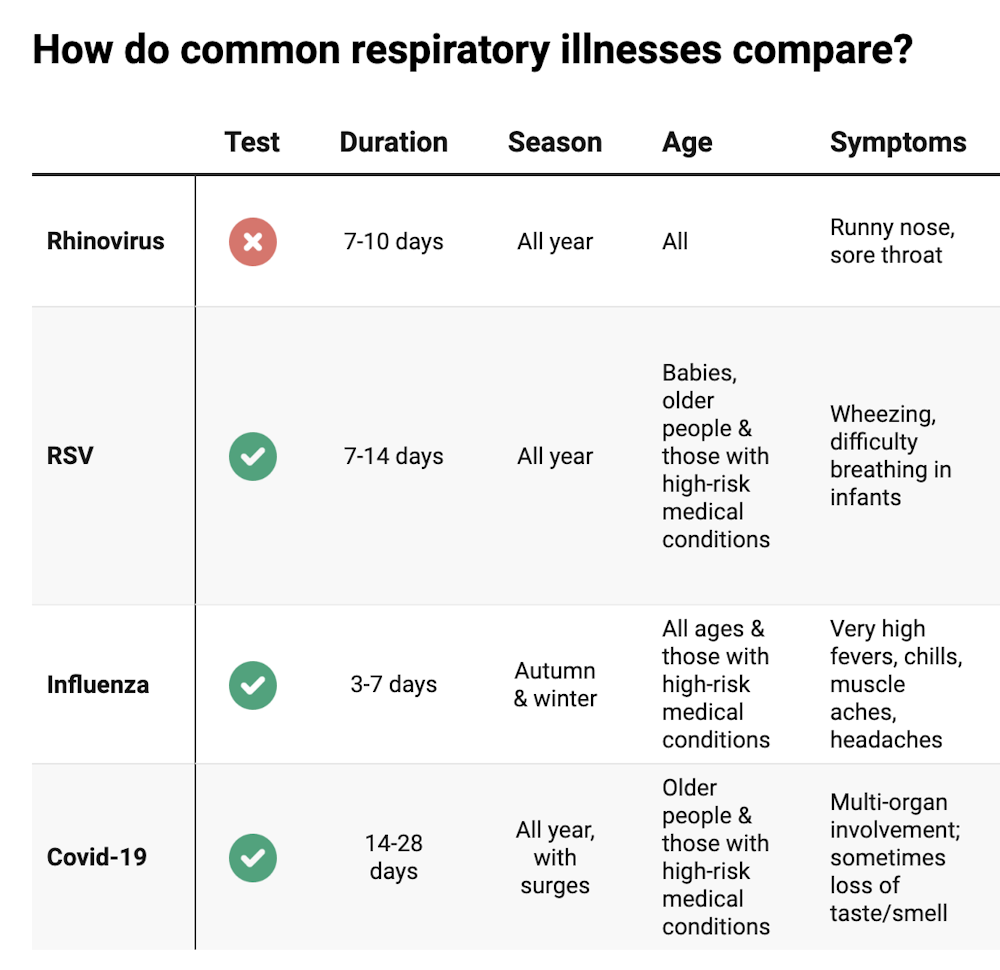
    MIL OSI AnalysisEveningReport.nz

  • MIL-OSI Africa: When medicines don’t work: eliminating neglected tropical diseases will reduce drug resistance – a win for all

    Source: The Conversation – Africa – By Francisca Mutapi, Professor in Global Health Infection and Immunity. and co-Director of the Global Health Academy, University of Edinburgh

    A major health challenge of our time is when drugs no longer work to treat infections. This happens when the agents that cause infections – they may be bacteria, viruses or fungi – become resistant to the drugs.

    Antimicrobials are a broad range of medications that act on microbes – like bacteria, fungi, viruses, or parasites. Antibiotics, for instance, are one type of antimicrobial working against bacteria.

    Resistance to antimicrobial drugs therefore makes it difficult to treat and prevent a wide range of infections.

    Antibiotic resistance compromises public health programmes, such as TB treatments. It can also compromise other medical interventions where treatment is needed to prevent infection, like surgery, caesarean sections or cancer treatment.

    The main causes of antimicrobial resistance are the misuse and overuse of antimicrobials in humans, animals and plants.

    Antimicrobial resistance leads to more deaths and illness in Africa compared to anywhere else. The continent recorded 21% of the global antimicrobial resistance related deaths in 2019. In that year, over 1.05 million deaths in Africa were associated with antimicrobial resistance. This poses an exceptional health threat.

    Worryingly, antimicrobial resistance related deaths are predicted to increase globally. The trend is already being observed in Africa. For example, the latest data shows that the share of E. coli infections resistant to cephalosporins (the antibiotic used to treat them) is rising.

    To change this, it’s necessary to reduce the burden of diseases that require antimicrobial treatment.

    One group of infectious diseases prevalent in Africa are the neglected tropical diseases (NTDs). There are already effective tools to prevent and even eliminate them. But every year, millions of people are infected and treated for them using antimicrobials. This increases the risk of spreading resistance.

    Having been involved in the design and implementation of large-scale neglected tropical diseases control programmes, I argue for a push to eliminate these diseases. This must be done through integrated approaches, including preventive medicine, water and sanitation, and controlling the agents that spread the diseases.

    Even countries where neglected tropical diseases are not common should make this push, as part of global health security.

    Controlling neglected tropical diseases

    Neglected tropical diseases are a group of 21 diverse conditions capable of causing long term health and economic challenges.

    They are caused by a variety of pathogens including worms, bacteria, fungi and viruses. Of these diseases, six are treated with antibiotics: buruli ulcer, leishmaniasis, leprosy, onchocerciasis, trachoma and yaws.

    Globally, millions of people with neglected tropical diseases are treated with antimicrobials every year.

    One of the most effective public health approaches for controlling neglected tropical diseases is preventative chemotherapy, which involves mass drug administration, where people are treated without diagnosis. Nonetheless, it is not sustainable, both in terms of cost and because it increases the risk of antimicrobial resistance.

    However, preventative chemotherapy is a necessary and effective tool for reducing infection and disease. Since 2012, over 600 million people have been cured of neglected tropical disease infection this way.

    An example of this is Zimbabwe’s control programme for schistosomiasis (an acute disease caused by parasitic worms), which I’ve been involved with. Preventative chemotherapy was administered to about 5 million children every year between 2012 and 2019. Infection levels were reduced from 32% to just under 2% in children aged 6-15.

    (Author provided)

    The latest World Health Organization report from 2022 indicated that just under 1.7 billion people globally required preventative chemotherapy. Of these just under 600 million are in Africa.

    Another risk for an increase in antimicrobial resistance is that the antibiotics used to treat neglected tropical diseases are also used to treat other infections. For example, azithromycin (for treating trachoma and yaws) is used also to treat other bacterial infections including bronchitis, pneumonia and sexually transmitted diseases.

    Already, of the six neglected tropical diseases that are treated with antibiotics, five have documented drug resistance. This trend will only increase.

    It’s therefore vital that neglected tropical diseases are eliminated so that fewer antibiotics and antimicrobials are used. This also protects people from other dangerous infections.

    Ready-made tools

    The good news is that the tools to eliminate neglected tropical diseases already exist.

    Within the past decade, 51 countries have eliminated at least one neglected tropical disease. Underlying these successes are the use of multiple tools, cross-sectoral strategies and sustained efforts to prevent and treat infections.

    ”>

    In the case of diseases which are transmitted by animals or insects (vectors), it’s about controlling the vector. For instance, killing the flies that transmit onchocerciasis parasites or snail hosts for schistosomiasis.

    Similarly, provision of safe water and sanitation facilities is critical for disease elimination. For example, the organisms that cause some diseases spend some stages of their life in faeces (poop). So, when faeces are poorly disposed of, they can contaminate the environment and the disease can be passed on.

    The World Health Organization has set a target of 100 countries eliminating at least one neglected tropical disease by 2030.

    This would be a massive health and economic win for countries where the diseases are prevalent.

    It will also lead to a reduction in antimicrobial use – which is a vital global health goal.

    – When medicines don’t work: eliminating neglected tropical diseases will reduce drug resistance – a win for all
    https://theconversation.com/when-medicines-dont-work-eliminating-neglected-tropical-diseases-will-reduce-drug-resistance-a-win-for-all-239658

    MIL OSI Africa

  • MIL-Evening Report: Partisanship dominates as federal parliament fights over Middle East war

    Source: The Conversation (Au and NZ) – By Michelle Grattan, Professorial Fellow, University of Canberra

    Federal parliament has split on partisan lines over the Middle East crisis, just a day after the anniversary of the Hamas atrocities against Israelis.

    After discussions between Anthony Albanese and Peter Dutton failed to reach agreement, the government’s wide-ranging motion passed the House of Representatives with the Coalition voting against it.

    The Greens abstained from voting. Almost all the crossbench voted with the government, although “teal” MP Allegra Spender said “I wish that we as a parliament could come together and lead unitedly”.

    The division between Labor and Coalition over the escalating war has increasingly widened over recent months, with Dutton giving unqualified backing to Israel’s strategy and using the issue to paint the prime minister as a “weak” leader.

    The government, while backing Israel’s right to defend itself, has had a more qualified position, including supporting calls for a ceasefire.

    The long motion reiterated “unequivocal condemnation” of the Hamas’ terror attacks, and called for the immediate release of the remaining hostages.

    It condemned antisemitism “in all its forms and stands with Jewish Australians who have felt the cold shadows of antisemitism reaching into the present day”.

    It also recognised the number of Palestinian civilians killed in Gaza, and supported international efforts to provide humanitarian assistance in Gaza and Lebanon.

    It condemned Iran’s attacks on Israel and recognised Israel’s right to defend itself.

    Backing international efforts for a ceasefire in Gaza and in Lebanon, the motion reaffirmed “support for a two-state solution, a Palestinian State alongside Israel, so that Israelis and Palestinians can live securely within internationally recognised borders, as the only option to ensuring a just and enduring peace”.

    As well, the motion recognised the deep distress the Middle East situation was causing many in Australia.

    Albanese told parliament the government would continue to call for de-escalating the violence and conflict in the region. “Tragically, we are seeing the situation worsening.”

    “Further hostilities put civilians at risk. We cannot accept the callous arithmetic of so-called acceptable casualties.”

    Dutton said the motion was supposed to be about what had happened on October 7.

    “The prime minister is trying to speak out of both sides of his mouth.”

    “There has been a position of bipartisanship on these issues, and your predecessors would have had the decency to respect the Jewish community in a way that you have not done today. And for that, prime minister, you should stand condemned.”

    He accused Albanese of rejecting the opposition’s position “for his own political domestic advancement”.

    A later attempt by Dutton to move his alternative motion was shut down by the government.

    In the Senate Greens senators held up placards with the words “SANCTIONS NOW”. Some Greens wore keffiyehs.

    Crossbencher Lidia Thorpe accused Foreign Minister Penny Wong of being “complicit in genocide”.

    Michelle Grattan does not work for, consult, own shares in or receive funding from any company or organisation that would benefit from this article, and has disclosed no relevant affiliations beyond their academic appointment.

    ref. Partisanship dominates as federal parliament fights over Middle East war – https://theconversation.com/partisanship-dominates-as-federal-parliament-fights-over-middle-east-war-240791

    MIL OSI AnalysisEveningReport.nz

  • MIL-OSI Global: When medicines don’t work: eliminating neglected tropical diseases will reduce drug resistance – a win for all

    Source: The Conversation – Africa – By Francisca Mutapi, Professor in Global Health Infection and Immunity. and co-Director of the Global Health Academy, University of Edinburgh

    A major health challenge of our time is when drugs no longer work to treat infections. This happens when the agents that cause infections – they may be bacteria, viruses or fungi – become resistant to the drugs.

    Antimicrobials are a broad range of medications that act on microbes – like bacteria, fungi, viruses, or parasites. Antibiotics, for instance, are one type of antimicrobial working against bacteria.

    Resistance to antimicrobial drugs therefore makes it difficult to treat and prevent a wide range of infections.

    Antibiotic resistance compromises public health programmes, such as TB treatments. It can also compromise other medical interventions where treatment is needed to prevent infection, like surgery, caesarean sections or cancer treatment.

    The main causes of antimicrobial resistance are the misuse and overuse of antimicrobials in humans, animals and plants.

    Antimicrobial resistance leads to more deaths and illness in Africa compared to anywhere else. The continent recorded 21% of the global antimicrobial resistance related deaths in 2019. In that year, over 1.05 million deaths in Africa were associated with antimicrobial resistance. This poses an exceptional health threat.

    Worryingly, antimicrobial resistance related deaths are predicted to increase globally. The trend is already being observed in Africa. For example, the latest data shows that the share of E. coli infections resistant to cephalosporins (the antibiotic used to treat them) is rising.

    To change this, it’s necessary to reduce the burden of diseases that require antimicrobial treatment.

    One group of infectious diseases prevalent in Africa are the neglected tropical diseases (NTDs). There are already effective tools to prevent and even eliminate them. But every year, millions of people are infected and treated for them using antimicrobials. This increases the risk of spreading resistance.

    Having been involved in the design and implementation of large-scale neglected tropical diseases control programmes, I argue for a push to eliminate these diseases. This must be done through integrated approaches, including preventive medicine, water and sanitation, and controlling the agents that spread the diseases.

    Even countries where neglected tropical diseases are not common should make this push, as part of global health security.

    Controlling neglected tropical diseases

    Neglected tropical diseases are a group of 21 diverse conditions capable of causing long term health and economic challenges.

    They are caused by a variety of pathogens including worms, bacteria, fungi and viruses. Of these diseases, six are treated with antibiotics: buruli ulcer, leishmaniasis, leprosy, onchocerciasis, trachoma and yaws.

    Globally, millions of people with neglected tropical diseases are treated with antimicrobials every year.

    One of the most effective public health approaches for controlling neglected tropical diseases is preventative chemotherapy, which involves mass drug administration, where people are treated without diagnosis. Nonetheless, it is not sustainable, both in terms of cost and because it increases the risk of antimicrobial resistance.

    However, preventative chemotherapy is a necessary and effective tool for reducing infection and disease. Since 2012, over 600 million people have been cured of neglected tropical disease infection this way.

    An example of this is Zimbabwe’s control programme for schistosomiasis (an acute disease caused by parasitic worms), which I’ve been involved with. Preventative chemotherapy was administered to about 5 million children every year between 2012 and 2019. Infection levels were reduced from 32% to just under 2% in children aged 6-15.

    The latest World Health Organization report from 2022 indicated that just under 1.7 billion people globally required preventative chemotherapy. Of these just under 600 million are in Africa.

    Another risk for an increase in antimicrobial resistance is that the antibiotics used to treat neglected tropical diseases are also used to treat other infections. For example, azithromycin (for treating trachoma and yaws) is used also to treat other bacterial infections including bronchitis, pneumonia and sexually transmitted diseases.

    Already, of the six neglected tropical diseases that are treated with antibiotics, five have documented drug resistance. This trend will only increase.

    It’s therefore vital that neglected tropical diseases are eliminated so that fewer antibiotics and antimicrobials are used. This also protects people from other dangerous infections.

    Ready-made tools

    The good news is that the tools to eliminate neglected tropical diseases already exist.

    Within the past decade, 51 countries have eliminated at least one neglected tropical disease. Underlying these successes are the use of multiple tools, cross-sectoral strategies and sustained efforts to prevent and treat infections.

    ”>

    In the case of diseases which are transmitted by animals or insects (vectors), it’s about controlling the vector. For instance, killing the flies that transmit onchocerciasis parasites or snail hosts for schistosomiasis.

    Similarly, provision of safe water and sanitation facilities is critical for disease elimination. For example, the organisms that cause some diseases spend some stages of their life in faeces (poop). So, when faeces are poorly disposed of, they can contaminate the environment and the disease can be passed on.

    The World Health Organization has set a target of 100 countries eliminating at least one neglected tropical disease by 2030.

    This would be a massive health and economic win for countries where the diseases are prevalent.

    It will also lead to a reduction in antimicrobial use – which is a vital global health goal.

    Francisca Mutapi receives funding from the Aspen Global Innovation Programme, Scottish Funding Council funding to the University of Edinburgh, Academy of Medical Sciences, British Academy and the Royal Society.
    Francisca Mutapi is the Deputy Director of the Tackling Infections to Benefit Africa (TIBA) Partnership and Deputy Board Chair of Uniting to Combat NTDS

    ref. When medicines don’t work: eliminating neglected tropical diseases will reduce drug resistance – a win for all – https://theconversation.com/when-medicines-dont-work-eliminating-neglected-tropical-diseases-will-reduce-drug-resistance-a-win-for-all-239658

    MIL OSI – Global Reports

  • MIL-OSI Russia: “Challenges of digitalization and new university solutions”: the first forum of additional professional education will be held at the National Research University Higher School of Economics

    MILES AXLE Translation. Region: Russian Federation –

    Source: State University Higher School of Economics – State University Higher School of Economics –

    1st Moscow Forum of Continuing Education “Challenges of Digitalization and New University Solutions” will take place on November 14–16, 2024, at the HSE Cultural Center on Pokrovsky Boulevard. This event will be the largest in Russia in the field of continuing professional education (CPE). Representatives of universities, the government, and businesses will discuss current trends, advanced teaching methods, and technological solutions offered in this area.

    The program includes more than 50 events on 10 thematic tracks. The forum will also include an exhibition of digital solutions in EdTech. The participants will focus on current issues of additional education for adults. Various aspects of the digitalization of additional professional education will be discussed here: current developments and educational solutions, cases of universities and EdTech companies, research results, modern development directions and approaches to organizing additional professional education, features of business education and the development of continuous education in creative industries, IT, medicine, agriculture, etc.

    Events are organized in a variety of formats: panel discussions, TED, round tables, sections of reports, case sessions, master classes, world cafe, open mic.

    HSE experts will present the digital ecosystem of HSE’s continuing professional education and various innovative educational solutions for continuing education of adults.

    There will also be plenary sessions and thematic tracks relevant to the field of additional professional education:

    “State policy and new solutions in additional professional education”;

    “Digital transformation of DPO”;

    “Quality of DPO”;

    “Product approach and marketing in additional professional education”;

    “AI and data analysis in continuous education”;

    “Modern business education: market needs and the role of business schools”;

    “Continued Professional Education for Healthcare: Traditions and Innovations”;

    “Continued Professional Education as a Digital Educational and Industrial Environment for Design Projects and Creative Startups”;

    “DPO for agrotech”;

    “Design and organization of additional professional education programs.”

    Workshops will be organized under the advanced training program “DPO: digitalization and new educational solutions” with a choice of one of the profiles – artificial intelligence, digital transformation, marketing and pedagogical design of additional professional education programs.

    An important part of the forum will be an exhibition of digital solutions for DPO from EdTech companies, universities and corporate universities. The exhibitors are leading companies and experts in the EdTech industry, who will demonstrate digital products and services for the sphere of DPO and continuous education: modern systems for managing the educational process and developing educational content, interactive services, neural networks, CRM and BI systems, marketplaces, etc.

    Participants will have an excellent opportunity to get acquainted with in-demand EdTech projects and establish business contacts.

    In addition to the business part, the forum offers a cultural program with excursions around the HSE and networking.

    Andrey Lavrov, senior director of the National Research University Higher School of Economics:

    — Today, the development of university DPO is becoming a strategically important task given the current state of the labor market and the demographic structure of our society. The shortage of qualified personnel, the speed of technological change, the widespread use of artificial intelligence technologies — all this poses enormous challenges for universities. The Higher School of Economics, as one of the national leaders in DPO, began to look for answers to these challenges, and one of them was the digitalization of our adult education system. In a short time, we were able to create a digital ecosystem for managing all processes in DPO and we are not stopping there, we continue to develop this system. This experience, combined with serious expertise in the field of organizing the educational process, allows us to create a platform for exchanging experiences, searching for technological and optimal solutions for organizing and implementing additional education programs in universities. This is the first such large-scale event for Russian DPO, and we are confident in its relevance and practical benefits.

    Please note: This information is raw content directly from the source of the information. It is exactly what the source states and does not reflect the position of MIL-OSI or its clients.

    Please note; This information is raw content directly from the information source. It is accurate to what the source is stating and does not reflect the position of MIL-OSI or its clients.

    http://vvv.hse.ru/nevs/edu/970922927.html

    EDITOR’S NOTE: This article is a translation. Apologies should the grammar and or sentence structure not be perfect.

    MIL OSI Russia News

  • MIL-OSI Russia: “Argonauts-2024”: more than four hundred students and schoolchildren applied to participate in the journalism competition

    MILES AXLE Translation. Region: Russian Federation –

    Source: Novosibirsk State University – Novosibirsk State University –

    All-Russian Student Journalism Competition named after Alexander Goryunov “The Argonauts” has finished accepting participants’ work. This year, 414 media projects from 34 Russian cities have applied to participate.

    The student section received 245 applications, the school section – 128. The third section, “Art Journalism,” received 40 applications. Works were accepted in several nominations at once.

    The following nominations were included in the school section: press; television journalism; radio journalism; photojournalism; multimedia project. In the student section: print; television journalism; radio journalism; photojournalism; multimedia project. In a separate nomination, “ART-journalism” named after Yulia Barmaeva, works were accepted that were made about culture and people of culture.

    — We have been holding this competition for the thirteenth year. And it is very pleasing that the number of people wishing to participate is not decreasing. For us, this means, first of all, that students and even schoolchildren are still interested in the profession of “Journalist”. We see that the children are not indifferent to the life of the country, the lives of individuals, bright personalities. I am sure that many winners of “Argonauts” will become the pride of this profession over time. We have already begun checking the submitted works. And I can say that among them there are almost no routine, template ones, — noted Olga Dmitrievna Zhuravel, Doctor of Philological Sciences, Head of direction “Journalism” at NSU.

    The winners and prize winners of the competition will receive an invitation to participate in the Argonaut School, which will be held on October 28-29, 2024, at the Boiling Point – Novosibirsk and NSU. This event will become a platform for exchanging experiences, gaining new knowledge and skills. The School will end with awarding the winners of the competition.

    — I participated in the Argonauts when I was still in school. I applied in the Press nomination, Interview sub-nomination and took third place with my work on the topic of animal protection. I was awarded a certificate of honor, which I was later able to attach to my creative portfolio when applying for the Journalism program at NSU. This year, I applied for the second time, only in the student section. It included my video stories about the Kronotsky State Nature Reserve, which I shot during my summer internship. In the Multimedia Project nomination, my team and I submitted our collective work with a longread about children’s camps. Based on the results of the competition, I want to see how modern trends in journalism have changed since my school days, what current schoolchildren are doing, how this can be compared with what was before, see how students are now performing and what they focus on in their work, – shared her thoughts about this year’s competition fourth-year student of the Journalism program at NSU Elizaveta Elster.

    Please note: This information is raw content directly from the source of the information. It is exactly what the source states and does not reflect the position of MIL-OSI or its clients.

    Please note; This information is raw content directly from the information source. It is accurate to what the source is stating and does not reflect the position of MIL-OSI or its clients.

    http://www.nsu.ru/n/media/nevs/education/argonauts-2024-more than-four-hundred-students-and-schoolchildren-applied-for-participation-in-journalism/

    EDITOR’S NOTE: This article is a translation. Apologies should the grammar and or sentence structure not be perfect.

    MIL OSI Russia News

  • MIL-OSI Russia: Project “AtomPro”: foreign students of SPbPU learned about advanced technologies of Rosatom

    MILES AXLE Translation. Region: Russian Federation –

    Source: Peter the Great St Petersburg Polytechnic University – Peter the Great St Petersburg Polytechnic University –

    Experts from the company “Rusatom – International Network” Polytechnic and held an expert meeting within the framework of the “AtomPro” project for foreign students of the Institute of Energy, dedicated to advanced technologies of water treatment, water purification and desalination.

    The meeting was attended by students from Afghanistan, Turkey, Egypt, Algeria, China, Nigeria, Cameroon, Kenya, Iraq, Madagascar, Zambia, Ghana, Pakistan, Sudan, Paraguay, Cambodia, Rwanda. The AtomPro project is aimed at popularizing knowledge about Russian nuclear technologies through a series of expert lectures by representatives of businesses of the Rosatom State Corporation with foreign students of flagship universities.

    The meeting discussed key areas of Rosatom’s activities in the field of water treatment, desalination and environmental safety.

    Anna Belyakova, Senior Manager of Product Development Management at Rusatom International Network, touched upon several areas of the corporation’s work in this area. Modern desalination systems can be integrated with nuclear power plants. This allows for the efficient use of their heat and electricity to obtain fresh water, making the process more economical. Autonomous desalination plants were also presented, which are especially important for remote regions where access to water is limited.

    Representatives of the private institution “RMS” shared their experience of implementing water purification technologies at international facilities, emphasizing the importance of reusing water in industry to reduce its consumption. These solutions not only save resources, but also help minimize the impact on the environment, reducing environmental risks.

    Particular attention was paid to hybrid desalination technologies that combine evaporation and membrane filtration methods, which increases the reliability and efficiency of the process. At the end of the meeting, an interactive business game was held for foreign students. The best team received memorable prizes.

    The expert meeting became part of the developing cooperation between the university and Rosatom, aimed at popularizing Russian scientific and engineering thought among foreign students. Such an alliance in the international arena helps not only to attract students, but also creates a comfortable environment for development and adaptation both in education and in a professional career.

    Please note: This information is raw content directly from the source of the information. It is exactly what the source states and does not reflect the position of MIL-OSI or its clients.

    Please note; This information is raw content directly from the information source. It is accurate to what the source is stating and does not reflect the position of MIL-OSI or its clients.

    https://vvv.spbstu.ru/media/nevs/partnership/project-atompro-foreign-students-spbpo-learned-about-advanced-technologies-rosatom/

    EDITOR’S NOTE: This article is a translation. Apologies should the grammar and or sentence structure not be perfect.

    MIL OSI Russia News

  • MIL-OSI Russia: Polytechnicians discussed cooperation with Russian Mechanics

    MILES AXLE Translation. Region: Russian Federation –

    Source: Peter the Great St Petersburg Polytechnic University – Peter the Great St Petersburg Polytechnic University –

    Representatives of the Higher School of Transport of the Institute of Mechanical Engineering and Technology from the Polytech Voltage Machine development team visited the company “Russian Mechanics”, which has specialized in the production of high-traffic off-road vehicles for over 50 years. It was this company that developed the first snowmobile in the USSR, the “Buran”.

    The production is located next to the Rybinsk Reservoir, a place with picturesque landscapes, ideal for a ride with the wind in the wind on the equipment produced by “Russian Mechanics”. Rybinsk itself with its historical center is no less beautiful.

    However, the Polytechnicians came not only to admire the city, but also to discuss areas of cooperation with the management of the Russian Mechanics company. Its employee, 2020 IMMiT graduate and Polytechnic Ambassador Yaroslav Pukazov conducted a full tour of the production, demonstrated the conveyor assembly of equipment and spoke about the aspects of putting the new development into serial production.

    The guests, in turn, demonstrated unmanned electric GAZelle, which they recently competed with in the final of the Fifth Level competition. This platform could potentially establish inter-shop logistics for transporting finished products to the warehouse. The company’s management and CEO Leonid Mozheiko, having become familiar with the capabilities of the unmanned vehicle, became interested in launching a trial project on their territory to improve efficiency and optimize logistics when expanding production areas.

    Following the meeting, its participants identified at least five areas of R&D that could become a step towards a strategic partnership between SPbPU and Russian Mechanics.

    Please note: This information is raw content directly from the source of the information. It is exactly what the source states and does not reflect the position of MIL-OSI or its clients.

    Please note; This information is raw content directly from the information source. It is accurate to what the source is stating and does not reflect the position of MIL-OSI or its clients.

    https://vvv.spbstu.ru/media/nevs/partnership/polytechnics-discussed-cooperation-with-Russian-mechanics/

    EDITOR’S NOTE: This article is a translation. Apologies should the grammar and or sentence structure not be perfect.

    MIL OSI Russia News

  • MIL-OSI Russia: Polytechnic University at the International Astronomy Olympiad

    MILES AXLE Translation. Region: Russian Federation –

    Source: Peter the Great St Petersburg Polytechnic University – Peter the Great St Petersburg Polytechnic University –

    The third Open World Astronomy Olympiad (OWAO) was held in Sirius. About 100 schoolchildren from 20 countries took part in it, half of them in person.

    The Olympiad opened with congratulations from the cosmonauts from near-Earth orbit, who are currently conducting scientific experiments as part of the ISS crew. These are Oleg Kononenko, Nikolai Chub and Aleksandr Grebenkin. The participants in the competition were congratulated by the Minister of Education of Russia Sergei Kravtsov and Hero of Russia cosmonaut Oleg Skripochka, who also gave a lecture.

    The Olympiad had four rounds: theoretical, practical, observational and testing. Participants solved problems on knowledge of the starry sky, analyzed scientific material, performed astronomical calculations and made forecasts. And, of course, they communicated with famous scientists and cosmonauts, which undoubtedly contributes to increasing the motivation of talented young people to receive a STEM education. This area of youth policy is a priority both in Russia and around the world.

    The expert from Polytechnic at the Olympiad was Hussein Ali Krayani, a teacher of additional education at the Higher School of MOP and a senior lecturer at the department. He is invited to the jury for the second time.

    Hussein combines his work as an expert with active work to popularize the International Astronomy Olympiad. He helps expand its geography and attract new participants from Arab countries.

    The energy and activity of such polytechnicians as Hussein Krayani undoubtedly contribute to strengthening the image of Russian education in the world and help increase the number of talented applicants to St. Petersburg Polytechnic University, said Dmitry Arsenyev, Vice-Rector for International Affairs at SPbPU.

    Please note: This information is raw content directly from the source of the information. It is exactly what the source states and does not reflect the position of MIL-OSI or its clients.

    Please note; This information is raw content directly from the information source. It is accurate to what the source is stating and does not reflect the position of MIL-OSI or its clients.

    https://vvv.spbstu.ru/media/nevs/international_activize/polytech-at-the-international-astronomical-olympiad/

    EDITOR’S NOTE: This article is a translation. Apologies should the grammar and or sentence structure not be perfect.

    MIL OSI Russia News

  • MIL-OSI Russia: Polytechnic University chess players held a large-scale tournament

    MILES AXLE Translation. Region: Russian Federation –

    Source: Peter the Great St Petersburg Polytechnic University – Peter the Great St Petersburg Polytechnic University –

    The Botvinnik Chess Club of SPbPU organized an open international interuniversity online chess tournament INTER SEP-24 as part of the Interuniversity Team Battles series. More than 1,000 people took part in the event.

    The chess players included representatives from Russia, Turkey, Bangladesh, Argentina, Kenya, Australia, Switzerland, Fiji, Brazil, India, Ghana, South Africa, Great Britain, Kazakhstan, Liberia and Mexico.

    The organization and conduct of the tournament was carried out by Polytech students Ruslan Barseghyan, Makari Yanchev, Alexey Arkhipovsky, Alexander Khvoshchev, Alena Makovkina, Alexey Aktyufeev, Daniil Agalakov, Lev Bystritsky, Artem Mkrtchyan, Elizaveta Khazagaeva, Anna Sukhova, Anastasia Kotova, Daniil Podreshetnikov, Bogdan Sivov, Angelina Velichko, Anastasia Bulyuk, Denis Zhdanov and Anastasia Kondratyeva.

    As a result, the AITU team from Astana took first place. The representatives of the Baikal State University from Irkutsk came in second. The third place was awarded to the TUSUR team from Tomsk.

    Once again, the largest inter-university tournament brought together representatives from 16 countries. We intend to develop and expand this event further to make it part of the international university culture, – shared the head of the SPbPU chess club Pavel Martynov.

    The final table of the international interuniversity chess tournament INTER SEP-24 can be seen atlink.

    Please note: This information is raw content directly from the source of the information. It is exactly what the source states and does not reflect the position of MIL-OSI or its clients.

    Please note; This information is raw content directly from the information source. It is accurate to what the source is stating and does not reflect the position of MIL-OSI or its clients.

    https://vvv.spbstu.ru/media/nevs/sport/chess-players-Polytechnic-held-a-large-scale-tournament/

    EDITOR’S NOTE: This article is a translation. Apologies should the grammar and or sentence structure not be perfect.

    MIL OSI Russia News

  • MIL-OSI United Kingdom: Early years education too important to be left to chance

    Source: United Kingdom – Executive Government & Departments

    Ofsted has today published the final part in its series of Best start in life research reviews relating to early years education.

    Today’s report focuses on what progress looks like for pre-school aged children in the 4 specific areas of learning – literacy, mathematics, understanding the world, and expressive arts and design.

    The research is clear: early education is too important to be left to chance. A high-quality early years curriculum is particularly important as not all children get the same start in life – for example, due to differences in the level of help they receive at home.

    Today’s report highlights how the 4 specific areas of learning give breadth and richness to the early years curriculum, and show how early learning is connected.

    A strong foundation in literacy and mathematics gives children lifelong benefits and is crucial to their future success. Early literacy development helps with children’s language and vocabulary and can support their emotional understanding. Equally, effective early mathematical learning and encouraging positive attitudes to numbers and maths are crucial to children’s later achievement. Expressive arts provide children with opportunities to learn new skills and be creative. Understanding the world is a broad area and, for babies and young children, learning needs to be connected so they can build on their pre-existing knowledge to learn new ideas in the familiar contexts around them.

    To deliver a high-quality early years curriculum, practitioners need to understand how children develop and learn, so they can plan the next steps in their learning. Teaching in the specific areas should also offer children opportunities to develop their executive function skills, which are one of the best predictors of a child’s later success.

    Today’s report draws together all the findings from the research series and suggests the key indicators of an effective early years education include:

    • interactions between children and adults that are high-quality, including both caring interactions and those promoting children’s thinking. Finding out what children know and can do is more useful than standing back and observing
    • carefully considering what we teach our youngest children so that adults can make the best use of available time and ensure all children learn important knowledge, concepts and ideas
    • helping children to learn new things by making links with things that they already know
    • making sure that what children learn is sequenced appropriately for each area of learning. For example, in mathematics children need to build understanding of concepts in a clear hierarchy, but in other areas a different approach to sequencing might be better
    • developing a child’s executive function, such as a child’s ability to hold information in their working memory and work with that information, is not left to chance. These skills are crucial and do not just develop of their own accord
    • ensuring practitioners avoid making tasks too complicated, so that children’s working memory isn’t overwhelmed
    • setting out activities that children might experience is not enough. Practitioners ensure that learning is not left to chance and that all children have the support and guidance they need

    Sir Martyn Oliver, His Majesty’s Chief Inspector, said:

    A high-quality early education benefits all children, particularly the most vulnerable, and is far too important to be left to chance. Learning in the early years is fundamental to providing children with the tools they need to thrive throughout their education, and beyond. That is all the more important for children from disadvantaged backgrounds. If we get early education right for our most vulnerable children, we’ll get it right for all children.

    Early years practitioners deserve our gratitude for their hard work in making sure that every child gets off to the best start in life. I hope that this research series helps them to consider what an excellent early years curriculum for all children might look like.

    Today’s report builds on the findings of part 1 and part 2. The series of early years reviews aims to help practitioners raise the quality of early years education.

    Press office

    8.30am to 6pm Monday to Friday 0300 013 0415

    Updates to this page

    Published 8 October 2024

    MIL OSI United Kingdom

  • MIL-OSI United Kingdom: A strong foundation in Reception and key stage 1 sets children up for success

    Source: United Kingdom – Executive Government & Departments

    Ofsted has today published a report looking at how schools support children to develop the foundational knowledge and skills they need by the end of key stage 1, to give them the best chance of educational success later on.

    • Not all children are finishing key stage 1 with the foundational skills and knowledge they need – particularly the most vulnerable and disadvantaged.
    • Evidence that teaching of early reading is improving, but weaknesses remain in some schools’ English curriculums.
    • Strong curriculum and teaching have greatest impact on children who begin school with the lowest starting points.

    Schools continue to face significant challenges in dealing with the impact of the COVID-19 pandemic on the behaviour and social skills of children currently in Reception and key stage 1. Today’s report identifies areas it might be particularly important for schools to focus on.

    While all schools recognise the importance of the earliest years of a child’s education, the report finds that disadvantaged children who need the most help to secure strong learning aren’t always finishing key stage 1 with the foundational knowledge and skills they will need throughout the rest of their education – the ability to communicate, read, write and calculate as well as strong physical, emotional and social development. This is making it harder for these children to learn in later key stages.

    The report highlights that the teaching of early reading is improving but notes that, beyond the teaching of phonics, schools’ English curriculums are often not effective. Inspectors found that too often children are asked to complete complex reading and writing tasks before they have been taught and practised the knowledge and skills needed to be successful.

    The report also makes clear that strong curriculum and teaching have the greatest impact on children who begin school with the lowest starting points. As a result, any weaknesses in curriculum, teaching or assessment are widening the gaps that already exist between these children, particularly those with special educational needs, and their peers.

    Inspectors found that one of the main barriers to children’s learning in Reception and key stage 1 is where the foundational knowledge they need to know is not clearly identified in the curriculum. This often leaves teachers unsure about what to prioritise in their teaching and assessment.

    The report also notes that chosen teaching methods are not always helping children learn what they need to know, and assessment sometimes fails to help teachers understand what children are able to do. For example, children may be expected to write a story before they have been taught how to form letters and spell the words they want to write.

    Ofsted identifies several examples of good practice. For example, some schools have adapted their curriculum to emphasise language development in response to an increasing number of children joining Reception with speech, language and communication difficulties.

    The report makes a series of recommendations for schools to ensure children build the foundational knowledge and skills they need by the end of key stage 1, including:

    • making sure that the foundational knowledge and skills that children will need for later learning are clearly set out in the curriculum
    • providing children with sufficient opportunities to practise using their foundational knowledge and skills so they become fully embedded
    • making sure that teaching methods are suited to the subject being taught and what children already know
    • ensuring that assessment can pick up children’s misunderstandings quickly so that teachers are able to support those who need extra help at the earliest possible stage
    • making sure that end of key stage assessments do not disproportionately influence decisions about curriculum and teaching methods

    Sir Martyn Oliver, His Majesty’s Chief Inspector, said:

    A child’s first few years at school are vitally important to their future learning and development. We know that by providing children with an excellent early education, we can set them up with the tools they need to flourish throughout the later stage of their education.

    It’s encouraging that there has been some good progress in improving the teaching of early reading and mathematics in primary schools. But schools are still having to navigate the impact of the pandemic, and many children are still catching up on lost learning. It is those children who are most vulnerable who benefit most from a strong start to their education. I hope this report helps teachers and school leaders in developing a curriculum that provides all children with the knowledge and skills that they need.

    Notes to editors

    1. The report draws on evidence from Ofsted’s previous publications as well as 20 visits by His Majesty’s Inspectors (HMI) to schools.
    2. In light of this report’s findings, Ofsted will be reviewing and updating guidance for inspectors to ensure they focus more on how well curriculum, teaching and assessment is enabling children in Reception and key stage 1 to learn foundational knowledge.

    Press office

    8.30am to 6pm Monday to Friday 0300 013 0415

    Updates to this page

    Published 8 October 2024

    MIL OSI United Kingdom

  • MIL-OSI Video: Deputy Minister Mr Alvin Botes, delivers a public lecture at at the University of KwaZulu Natal

    Source: Republic of South Africa (video statements-2)

    The Deputy Minister of International Relations and Cooperation Mr Alvin Botes, delivers a public lecture at the University of KwaZulu Natal, Durban, The Public Lecture will focus on a review of South Africa’s role in the world after 30 years of democracy, including challenges and opportunities.

    https://www.youtube.com/watch?v=gU3TdSWafvg

    MIL OSI Video

  • MIL-OSI USA: Reeling In Marine Energy Data with Expanded Analysis Tools

    Source: US National Renewable Energy Laboratory

    Software Pinpoints Way To Generate Maximum Electricity From Waves, Tides, and Currents


    Marine energy devices have the potential to deliver gigantic amounts of power―if they can survive the ocean’s punishing conditions. Innovative system designs are needed to convert wave movements into electricity, but the sea is vast and complex, and deployment in these remote locations is expensive.

    Created by the U.S. Department of Energy’s (DOE’s) National Renewable Energy Laboratory (NREL), Pacific Northwest National Laboratory (PNNL), and Sandia National Laboratories (Sandia), the Marine and Hydrokinetic Toolkit (MHKiT) can save time and money in the assessment of breakthrough technologies in marine renewable energy (MRE) and their performance under a wide range of aquatic conditions.

    [embedded content]

    NREL research involving MHKiT and other tools is helping maximize the amount of renewable marine energy captured from the ocean and other bodies of water. Video by NREL. Text version

    How can researchers and developers overcome obstacles and harness the full potential of MRE, a small fraction of which could provide enough electricity to power approximately 22 million U.S. homes? Part of the solution lies with the measurement of waves and ocean currents, as well as power production, using real-world and modeled data. MHKiT supplies the data validation and standardized analysis tools needed to make informed decisions and maximize the potential clean power generated from this abundant supply.

    Recent updates to the version of MHKiT built for the MATLAB programming platform (MHKiT-MATLAB), which is used extensively by industry engineers and university researchers, allow users to model extreme sea states and visualize theoretical river flow and turbulence. Parallel updates to the version of MHKiT built for the Python programming platform (MHKiT-Python) include additional support for multidimensional data commonly generated by authorities such as the Coastal Data Information Program (CDIP) and the National Oceanic and Atmospheric Administration (NOAA).

    A wave energy converter device preparing for ocean deployment at the Coastal Studies Institute, East Carolina University Outer Banks Campus. Photo by Andrew Simms, NREL

    “New functionality in MHKiT-MATLAB gives more developers the ability to standardize their measurement data, which not only can tell us the amount of energy and turbulence found at each site,” MHKiT-MATLAB Developer and NREL Data Scientist Andrew Simms said. “It also lets us explore site conditions in more in-depth ways, hopefully leading to tidal turbines that can operate reliably for a long time into the future.”

    Both versions of the toolkit provide code needed to maximize the potential of MRE systems. One set of features helps researchers model severe ocean conditions, such as unusually strong and large waves and swells. Other modules make it possible to analyze river and tidal flow data based on acoustic Doppler current profiler measurements. The software helps researchers analyze how new technologies stack up against power performance, power quality, mechanical load, and resource specifications of the International Electrotechnical Commission, as well as the demands of specific marine sites and conditions.

    MHKiT’s reproducible code examples guide users at every stage, from raw measurements to standardized analysis. The free, open-source suite of software gives users full access to MHKiT tools, allowing developers to process their data in a standardized way while gaining a comprehensive understanding of each step of analysis and contributing feedback along the way.

    Going With the Flow of Two Major Programming Platforms

    With recent updates to the toolkit, the large number of researchers, designers, and developers who work in MATLAB-based environments can now use MHKiT to support more areas of their MRE modeling and analysis efforts, as well as contribute to ongoing tool refinement. New MHKiT-MATLAB (v0.5.0) features provide support for modeling extreme ocean conditions and generating river turbine visualizations with Delft3D modeling.

    More extensive enhancements and additions to MHKiT-Python (v0.8.2) offer improved identification and analysis of significant wave events, including crests and crossings, as well as calculations of individual wave heights. The Doppler Oceanography Library for pYthoN (DOLfYN) module adds altimeter support, better handling of data collected on the Nortek software that is standard for CDIP and NOAA, and more robust support for raw data interface (RDI) files. Other updates augment the processing and analysis of dimensional data (NetCDF) while streamlining the overall Python-based development process.

    Lifting Performance With a Rising Tide of Collaboration

    Developers of this hydraulic and electric reverse osmosis wave energy converter are using MHKiT to perform standardized power performance calculations from data collected in the ocean off Nags Head, North Carolina. Photo by Andrew Simms, NREL

    “Yes, MHKiT is a powerful tool, with standardized, validated code, software, and data that make it possible to control analysis quality,” NREL MHKiT-MATLAB Developer Chris Ivanov said. “But its real strengths lie in ongoing contributions of the collaborative community. Partners across the country and around the world help identify areas for future functionality and put modules through their paces in exploring new scenarios and ever-evolving system designs.”

    Since the launch of MHKiT in 2020, the toolkit has been downloaded more than 29,000 times, with more than 30 collaborators contributing features and documentation to shape its functionality. Recently, this extended team has focused on unit testing, continuous integration, and code reviews to keep the software up to date while maintaining its effectiveness and reliability.

    Unit testing ensures that each component of the toolkit functions correctly, while continuous integration automatically evaluates and integrates changes. Regular code reviews help identify and address issues, improving overall code quality.

    Scanning the Horizon for the Next Wave

    Funded by DOE’s Water Power Technologies Office, MHKiT data and software tools are supplemented with clear and comprehensive examples of how to perform many different analysis tasks. In future Python and MATLAB versions, MHKiT developers plan to expand and improve these example notebooks, as well as build modules for acoustic monitoring and continue to refine overall functionality and performance. 

    “Before, most MRE developers were forced to build their own tools for data processing and analysis,” Simms said. “Now, MHKiT gives everyone a head start on data analysis. If we can make analysis as easy and painless as possible, developers can spend more of their time building better devices.”

    Learn more about MHKiT, NREL’s marine energy research and tools, and the laboratory’s leadership in powering the blue economy. And subscribe to the NREL water power newsletter, The Current, for the latest news on NREL’s water power research.

    MIL OSI USA News