Category: Education

  • MIL-OSI Analysis: How tea, chocolate and apples could help lower your blood pressure

    Source: The Conversation – UK – By Christian Heiss, Professor of Cardiovascular Medicine, Head of Department of Clinical and Experimental Medicine, University of Surrey

    Pixel-Shot/Shutterstock

    We’re constantly told to “eat healthy” – but what does that actually mean? Even doctors sometimes struggle to offer clear, practical advice on which specific foods support health, why they work and what real benefits people can expect.

    A growing body of research is starting to offer some answers. Along with colleagues, I have researched whether a group of plant compounds called flavan-3-ols could help lower blood pressure and improve blood vessel function. The results suggest these everyday compounds may have real potential for protecting heart health.

    Flavan-3-ols – sometimes called flavanols or catechins – are natural plant compounds that belong to the flavonoid family. They’re part of what gives plants their colour and helps protect them from sunlight and pests.

    For us, they show up in some of our most familiar foods: cocoa, green and black tea, grapes, apples and even some berries. That slightly tart or bitter note you taste in dark chocolate or strong tea? That’s flavan-3-ols at work.

    Scientists have long been interested in their health effects. In 2022, the Cosmos trial (Cocoa Supplement and Multivitamin Outcomes Study), which followed over 21,000 people, found that cocoa flavanols, but not multivitamin supplements, reduced deaths from cardiovascular disease by 27%. Our study set out to dig even deeper, focusing specifically on their effects on blood pressure and endothelial function (how well blood vessels dilate and respond to blood flow).


    Get your news from actual experts, straight to your inbox. Sign up to our daily newsletter to receive all The Conversation UK’s latest coverage of news and research, from politics and business to the arts and sciences.


    We analysed data from 145 randomised controlled trials involving more than 5,200 participants. These studies tested a range of flavan-3-ol-rich foods and supplements, including cocoa, tea, grapes, apples and isolated compounds like epicatechin, and measured their effects on two key cardiovascular markers: blood pressure and flow-mediated dilation (FMD): a measure of how well the inner lining of blood vessels functions.

    The studies ranged from short-term (a single dose) to longer-term interventions lasting weeks or months. On average, participants consumed about 586 mg of flavan-3-ols daily; roughly the amount found in two to three cups of tea, one to two servings of dark chocolate, two tablespoons of cocoa powder, or a couple of apples.

    Regular consumption of flavan-3-ols led to an average drop in office blood pressure of 2.8 mmHg systolic (the top number) and 2.0 mmHg diastolic (the bottom number).

    But for people who started with elevated blood pressure or diagnosed hypertension, the benefits were even greater with reductions of up to 6–7 mmHg systolic and 4 mmHg diastolic. That’s comparable to the effects of some prescription blood pressure medications and could significantly lower the risk of heart attacks and strokes.

    We also found that flavan-3-ols improved endothelial function, with an average 1.7% increase in FMD after sustained intake. This benefit appeared even in participants whose blood pressure was already normal, suggesting these compounds may help protect blood vessels through multiple pathways.

    Side effects were uncommon and typically mild, usually limited to minor digestive issues, suggesting that adding flavan-3-ol-rich foods to your diet is generally safe.

    Supporting cardiovascular health

    While the benefits were most pronounced in those with high blood pressure, even people with normal readings saw improvements in vascular function. This suggests flavan-3-ols may help prevent cardiovascular problems before they begin.

    High blood pressure is one of the major drivers of heart disease worldwide, even at levels that don’t qualify as full-blown hypertension (140/90 mmHg or higher). Recent guidelines from the European Society of Cardiology now recognise that even “elevated” blood pressure (120–139 systolic and 70–89 diastolic) carries increased risk.

    Lifestyle changes, particularly diet and exercise, are recommended by doctors as first-line strategies. But patients and even healthcare providers often lack clear, specific guidance on which foods truly make a difference. Our findings help fill this gap by showing that boosting flavan-3-ol intake through everyday foods may offer a simple, evidence-based way to support cardiovascular health.

    What about supplements?

    Some studies tested supplements or isolated flavan-3-ol compounds, but these generally showed smaller effects than whole foods like tea or cocoa. This may be because other beneficial compounds in whole foods work together, enhancing absorption and effectiveness.

    At present, it appears both safer and more effective to focus on getting flavan-3-ols from foods rather than high-dose supplements, especially for people taking medications, since interactions are not fully understood.

    The studies we reviewed suggest that 500–600 mg of flavan-3-ols daily may be enough to see benefits. You could reach this by combining two to three cups of green or black tea, one to two servings (about 56g) of dark chocolate or two to three tablespoons of cocoa powder, two to three apples, plus other flavan-3-ol-rich fruits like grapes, pears and berries

    Eating apples, pears, grapes and berries could help support your heart health.
    Oksana Klymenko/Shutterstock

    Small daily swaps, then, like trading a sugary snack for an apple and a piece of dark chocolate or adding an extra cup of tea, could gradually improve your heart health over time. Because flavan-3-ol content can vary between foods, monitoring your blood pressure at home may help you see if it’s making a difference for you.

    More research is needed, particularly in people with diabetes, where the results were less consistent. We also need to better understand how flavan-3-ols interact with medications and whether even greater benefits can be achieved when combined with other healthy habits.

    But the evidence is now strong enough to recommend flavan-3-ol-rich foods as part of a heart-healthy diet. As clinicians seek practical, affordable lifestyle strategies for patients, these findings bring us closer to the idea of using food as medicine.

    Of course, flavan-3-ols aren’t a magic fix. They won’t replace medication for everyone. But combined with other healthy habits, they may offer a meaningful – and delicious – boost to cardiovascular health. And unlike many health fads, this isn’t about exotic superfoods or expensive powders. It’s about foods many of us already enjoy, used a little more intentionally.

    Christian Heiss has received funding from Lipton Teas & Infusions, Ageless Science, iThera, the Medical Research Council, the EPSRC, European Partnership on Metrology, co-financed from European Union’s Horizon Europe Research and Innovation Programme and UK Research and Innovation. He is member of the board of the European Society of Vascular Medicine, president of the Vascular, Lipid and Metabolic Medicine Council of the Royal Society of Medicine, and chairperson-elect of the ESC WG Aorta and Peripheral Vascular Diseases.

    ref. How tea, chocolate and apples could help lower your blood pressure – https://theconversation.com/how-tea-chocolate-and-apples-could-help-lower-your-blood-pressure-256631

    MIL OSI Analysis

  • MIL-OSI Analysis: Action is the antidote to ecological grief and climate anxiety – an ecotherapist explains

    Source: The Conversation – UK – By Louise Taylor, Early Career Researcher and Ecotherapist, Queen’s University Belfast

    Brussels, Belgium. 21st February 2019. High school and university students stage a protest against the climate policies of the Belgian government. Alexandros Michailidis / Shutterstock.com

    There’s a popular quote by the 13th-century poet and spiritual teacher Rumi: “The cure for the pain is in the pain.” This line often echoes through my mind when I’m working with clients, especially those experiencing ecological grief and climate anxiety.

    As an ecotherapist – a therapist guided by nature and nature-based therapeutic approaches – and environmental researcher, I work with people who are navigating the emotional weight of ecological breakdown.

    Ecotherapy helps people reconnect with the natural world as a way to support mental and emotional wellbeing. It might involve walking in green spaces, mindfulness practices in nature, working with natural materials, or nature-based rituals.

    Whether it’s planting a garden, sitting under a tree, or engaging in conservation efforts, ecotherapy helps people feel more grounded, more connected and more resilient both emotionally and spiritually.


    Get your news from actual experts, straight to your inbox. Sign up to our daily newsletter to receive all The Conversation UK’s latest coverage of news and research, from politics and business to the arts and sciences.


    In my practice, I’ve noticed that younger people are more likely to experience climate anxiety, while older generations tend to experience ecological grief. The difference is subtle but important. Anxiety often relates to what lies ahead and a sense of powerlessness. Grief is about what has already been lost.

    This emotional divide makes sense when we consider what has happened to the natural world over recent decades. Older adults have witnessed the loss of species, habitats and biodiversity in real time. Many have rich memories and relationships with landscapes that no longer exist as they once did. Meanwhile, younger generations face the terrifying uncertainty of a rapidly changing climate and an increasingly unstable future.

    Both grief and anxiety are valid, but they are not the same.

    I have explored these experiences in depth while researching nature connection, mental health and how the climate and ecological crisis is reshaping this relationship.

    At the outset, I assumed that greater connection with nature would always lead to improved mental wellbeing. But that wasn’t the full picture.

    What I found instead was that deepening our connection with the natural world can indeed foster healing, but it can also sharpen our awareness of the damage being done. This heightened sensitivity can trigger emotional pain, despair and even a decline in mental wellbeing.

    Swiss psychiatrist and psychotherapist Carl Jung once said, “There is no coming to consciousness without pain.” That’s exactly what climate-anxious and ecologically grieving people are expressing: the deep psychological toll of recognising the scale of the crisis we’re facing. For some, it affects their ability to function, to enjoy their lives and to maintain relationships.

    How to stay well

    The question I kept returning to in my work was this: how do we stay well in a time of collapse? My research pointed to one consistent answer: action.

    Engaging in pro-environmental actions emerged as the most effective way people coped with emotional strain. These weren’t merely acts of activism — they became spiritual practices, grounded in care, connection and meaning. Through these actions, people began to reclaim a sense of power and purpose in the face of overwhelming ecological loss.

    For many, this was also a path back to what eco-philosophers call the ecological self: the part of us that extends beyond the individual and identifies with the living world.

    This self isn’t driven by ego or personal gain, but by the impulse to build relationships, nurture communities and support the flourishing of all life. It represents an expanded way of being; one that understands health and healing as collective, not just personal.

    Importantly, these actions don’t have to be large-scale. They might involve growing your own herbs or vegetables, for instance, or joining a local conservation effort, forming a community group to protect waterways or green spaces, or participating in climate strikes and land defence work. What matters is that the action is relational: rooted in reciprocity and care.

    The conclusion of my research was clear: in the face of ecological distress, mental wellbeing is sustained not by thoughts, but by meaningful action.

    Healing through action

    In Northern Ireland, where I live and work, I’ve seen a growing grassroots environmental movement. Communities are stepping up to protect landscapes under threat, from campaigns to defend the Sperrin Mountains from gold mining, to local resistance against the pollution that’s devastating Lough Neagh, the largest freshwater lake in Ireland and the UK.

    This is unpaid, often invisible labour, but it’s powerful. It gives people a way to process their emotions, to feel less helpless and to turn grief into agency.

    Many environmentalists talk about “saving the planet”. But the truth is, the Earth will go on. What’s under threat is us: our ways of life, our communities, our ability to thrive. The dread we feel is rooted in the enormity of this realisation.

    To stay well while caring deeply about the Earth means learning to live with this pain, and still choosing to act. It requires us to show up, to be present and to tend to both the human and non-human world with care and reciprocity. As we do, we become more empowered and less overwhelmed.

    If you are struggling with climate anxiety or ecological grief, know this: the goal isn’t to suppress your feelings. The goal is to acknowledge them, and then use them as fuel for meaningful action.

    Don’t underestimate small acts. The way forward isn’t to wait for hope: it’s to create it through connection, courage and commitment.

    In a time of ecological uncertainty, wellness doesn’t come from thinking differently. It comes from doing differently.

    Louise Taylor does not work for, consult, own shares in or receive funding from any company or organisation that would benefit from this article, and has disclosed no relevant affiliations beyond their academic appointment.

    ref. Action is the antidote to ecological grief and climate anxiety – an ecotherapist explains – https://theconversation.com/action-is-the-antidote-to-ecological-grief-and-climate-anxiety-an-ecotherapist-explains-260428

    MIL OSI Analysis

  • MIL-OSI Analysis: Obesity care: why “eat less, move more” advice is failing

    Source: The Conversation – UK – By Lucie Nield, Senior Lecturer in Nutrition and Dietetics, University of Sheffield

    New Africa/Shutterstock

    For years, people living with obesity have been given the same basic advice: eat less, move more. But while this mantra may sound simple, it’s not only ineffective for many, it can be deeply misleading and damaging.

    Obesity is not just about willpower. It’s a complex, chronic, relapsing condition and affects around 26.5% of adults in England, and 22.1% of children aged ten–11 in England.

    A new report estimates the rapidly growing number of people that are overweight or obese costs the UK £126 billion a year. This includes £71.4 billion in reduced quality of life and early mortality, £12.6 billion in NHS treatment costs, £12.1 billion from unemployment and £10.5 billion in informal care.

    Food campaigners and health experts have called for urgent government action, including expanding the sugar tax to more products, restricting junk food advertising and mandating reformulation of ultra processed foods. As Henry Dimbleby, author of a government-commissioned independent report called the National Food Strategy, warned: “We’ve created a food system that’s poisoning our population and bankrupting the state.”


    Get your news from actual experts, straight to your inbox. Sign up to our daily newsletter to receive all The Conversation UK’s latest coverage of news and research, from politics and business to the arts and sciences.


    Without significant policy change, these costs are projected to rise to £150 billion a year by 2035. Despite this, much of the UK’s approach continues to frame obesity as a lifestyle issue that can be tackled by emphasising personal responsibility. But this framing ignores the bigger picture.

    We now understand that obesity is multifactorial. Genetics, childhood experiences, cultural norms, economic disadvantage, psychological health, mental illness and even the kind of job you have all play a role. These aren’t things you can simply change with a Fitbit and salad.

    This broader perspective isn’t new. In 2007, the UK government’s Foresight report mapped out the complex web of factors behind rising obesity rates, describing how modern environments actively promote weight gain.

    This “obesogenic environment” refers to the world we live in. Its one where high-calorie, low-nutrient foods are cheap and everywhere, and where physical activity has been engineered out of everyday life, from car-centric cities to screen-dominated leisure time.

    Outdated obesity advice isn’t working.

    These environments don’t affect everyone equally. People in more deprived areas are significantly more exposed to conditions that drive obesity, such as food deserts (areas with limited access to affordable, nutritious food), poor public transport and limited green space. In this context, weight gain becomes a normal biological response to an abnormal environment.

    Why “eat less, move more” falls short

    Despite growing awareness of these systemic issues, most UK obesity strategies still centre on individual behaviour change, often through weight management programmes that encourage people to cut calories and exercise more. While behaviour change has a place, focusing on it exclusively creates a dangerous narrative: that people who struggle with their weight are simply lazy or lack willpower.

    This narrative fuels weight stigma, which can be incredibly harmful. Yet data shows a clear link between higher rates of obesity and deprivation, especially among children.

    It’s clear many people still don’t understand the role of structural and socioeconomic factors in shaping obesity risk. And this misunderstanding leads to judgement, shame and stigma, especially for children and families who are already vulnerable.

    What should good obesity care look like?

    Instead of outdated advice and blame, we need a holistic, stigma-free and science-informed approach to obesity care, one that reflects current Nice guidelines and the Obesity Health Alliance’s recommendations. There are several things that need to be done.

    First, we should recognise obesity as a chronic disease. Obesity is not a failure of willpower. It’s a relapsing, long-term medical condition. Like diabetes or depression, it requires structured, ongoing support, not short-term fixes or crash diets.

    Second, we need to tackle weight stigma head-on. Weight-based discrimination is widespread in schools, workplaces and even healthcare settings. We need training for professionals to reduce bias, promote inclusive care and adopt person-centred, non-stigmatising language. Discriminatory practices must be challenged and eliminated.

    Third, deliver personalised, multidimensional support. Treatment plans should be tailored to each person’s life, including their cultural background, psychological history and social context. This includes shared decision-making, regular follow-up and integrated mental health support.

    And fourth, focus on changing the environment, not just people. We must shift the focus to the systems and structures that make healthy choices so hard. That means investing in affordable, nutritious food; improving access to physical activity; and tackling inequality at its roots.

    Time for a systemic shift

    Obesity isn’t just about what people eat or how often they exercise. It’s shaped by biology, experience and the environment we build around people. Framing it as a personal failure not only ignores decades of evidence – it actively harms the very people who need support.

    If we want to reduce stigma, improve health outcomes – and avoid a £150bn crisis – then the “eat less, move more” era must come to an end. What we need instead is a bold, compassionate, evidence-based systems approach – one that sees the whole person and the world they live in.

    Lucie Nield receives funding from NIHR.

    Catherine Homer receives funding from NIHR. She is affiliated with Royal Society of Public Health.

    ref. Obesity care: why “eat less, move more” advice is failing – https://theconversation.com/obesity-care-why-eat-less-move-more-advice-is-failing-254628

    MIL OSI Analysis

  • MIL-OSI USA: School of Nursing Class of 2029 Student Profiles: Abigail Griffiths and Katherine Wojtas

    Source: US State of Connecticut

    As summer continues, so does orientation. With over 200 students entering the School of Nursing as the class of 2029, the program’s academic advisors make sure every student is equipped with the necessary tools to succeed.

    These students all have a different story to tell, but no matter their journey they all have one thing in common – a passion for nursing.

    Abigail Griffiths (Contributed Photo)

    Abigail (Abby) Griffiths

    From Northeast Ohio, Abigail Griffiths ’29 (NURS) wants nothing more than to be a pediatric oncology nurse. Her experience with friends and family having cancer is what motivates her to be that helping hand when times get tough.

    When Griffiths was younger, her grandmother passed away from cancer, leaving a lasting impact on Griffiths’ life. She also witnessed the effects cancer had on one of her friends from her high school tennis team. Griffiths saw the mental and physical struggles her teammate and grandmother were dealing with and knew how hard that battle had been.

    “To be able to be someone who can help people who are going through similar situations is really important to me,” said Griffiths. “So being able to hopefully make a difference in someone’s life or even being able to make someone smile when they are sick or having a rough time makes me happy and is something I strive to do.”

    The research opportunities that the School of Nursing offers, and UConn’s community and environment is what stood out to Griffiths when choosing where to continue her education.

    Griffiths referred to UConn as “one big family,” and while she’s excited to further her education in nursing, she is also ready to discover herself. During her time as a Husky, she plans on continuing her swimming career by joining UConn Club Swimming. She’s also looking forward to UConn basketball games and meeting new people within her School of Nursing class.

    As she gets ready to become a Husky this fall semester, she’s taking a special piece of advice from her swimming coach with her: “You are just as worthy and capable of everything in life just as much as everyone else – I deserve to be here and I am capable of doing very well in nursing school and even through hard times I can still do great things,” Griffiths said.

    Katherine Wojtas (Contributed Photo)

    Katherine (Katie) Wojtas

    Katherine Wojtas ’29 (NURS), from upstate New York, is no stranger when it comes to traveling. Wojtas has been to the Dominican Republic three times to assist in community development and sustainability projects and doesn’t plan on stopping there.

    While in the Dominican Republic she helped communities in the sugar cane fields. With her fellow students, she laid cement floors in houses, built a running water system, and built latrines. Wojtas plans to continue doing community service abroad as a Husky, where she can hopefully travel with the School of Nursing.

    “The opportunities for local and global service were one of the main reasons why I chose UConn,” she said. “I hope to travel to Ireland or Rwanda with the School of Nursing since it is a meaningful way to learn and make an impact at the same time!”

    Wojtas is entering her first year with experience in the healthcare field. During her senior year of high school, she participated in a medical career program at her local nursing home. She received hands-on experience in various healthcare roles and got to shadow nurses.

    “It helped me confirm my passion for nursing by allowing me to shadow professionals and learn basic clinical skills. It also opened my eyes to the impact nurses have on patient care,” she said.

    Her goal is to become a nurse practitioner and in the future work as a dermatologist or obstetrician-gynecologist (OBGYN). She’s excited to start clinicals and learn from the School of Nursing faculty.

    Apart from her own academics and studying abroad, Wojtas wants to join the Women’s Club Flag Football team and healthcare affiliated clubs to connect with others who have similar interests.

    “I hope to grow personally and professionally, maintain strong grades, and gain the confidence and skills necessary to become an RN,” said Wojtas.

    Check out our other class of 2029 student profiles:

    Shaunty Mae Vidad and Carlin Sabo

    MIL OSI USA News

  • MIL-OSI USA: School of Nursing Class of 2029 Student Profiles: Abigail Griffiths and Katherine Wojtas

    Source: US State of Connecticut

    As summer continues, so does orientation. With over 200 students entering the School of Nursing as the class of 2029, the program’s academic advisors make sure every student is equipped with the necessary tools to succeed.

    These students all have a different story to tell, but no matter their journey they all have one thing in common – a passion for nursing.

    Abigail Griffiths (Contributed Photo)

    Abigail (Abby) Griffiths

    From Northeast Ohio, Abigail Griffiths ’29 (NURS) wants nothing more than to be a pediatric oncology nurse. Her experience with friends and family having cancer is what motivates her to be that helping hand when times get tough.

    When Griffiths was younger, her grandmother passed away from cancer, leaving a lasting impact on Griffiths’ life. She also witnessed the effects cancer had on one of her friends from her high school tennis team. Griffiths saw the mental and physical struggles her teammate and grandmother were dealing with and knew how hard that battle had been.

    “To be able to be someone who can help people who are going through similar situations is really important to me,” said Griffiths. “So being able to hopefully make a difference in someone’s life or even being able to make someone smile when they are sick or having a rough time makes me happy and is something I strive to do.”

    The research opportunities that the School of Nursing offers, and UConn’s community and environment is what stood out to Griffiths when choosing where to continue her education.

    Griffiths referred to UConn as “one big family,” and while she’s excited to further her education in nursing, she is also ready to discover herself. During her time as a Husky, she plans on continuing her swimming career by joining UConn Club Swimming. She’s also looking forward to UConn basketball games and meeting new people within her School of Nursing class.

    As she gets ready to become a Husky this fall semester, she’s taking a special piece of advice from her swimming coach with her: “You are just as worthy and capable of everything in life just as much as everyone else – I deserve to be here and I am capable of doing very well in nursing school and even through hard times I can still do great things,” Griffiths said.

    Katherine Wojtas (Contributed Photo)

    Katherine (Katie) Wojtas

    Katherine Wojtas ’29 (NURS), from upstate New York, is no stranger when it comes to traveling. Wojtas has been to the Dominican Republic three times to assist in community development and sustainability projects and doesn’t plan on stopping there.

    While in the Dominican Republic she helped communities in the sugar cane fields. With her fellow students, she laid cement floors in houses, built a running water system, and built latrines. Wojtas plans to continue doing community service abroad as a Husky, where she can hopefully travel with the School of Nursing.

    “The opportunities for local and global service were one of the main reasons why I chose UConn,” she said. “I hope to travel to Ireland or Rwanda with the School of Nursing since it is a meaningful way to learn and make an impact at the same time!”

    Wojtas is entering her first year with experience in the healthcare field. During her senior year of high school, she participated in a medical career program at her local nursing home. She received hands-on experience in various healthcare roles and got to shadow nurses.

    “It helped me confirm my passion for nursing by allowing me to shadow professionals and learn basic clinical skills. It also opened my eyes to the impact nurses have on patient care,” she said.

    Her goal is to become a nurse practitioner and in the future work as a dermatologist or obstetrician-gynecologist (OBGYN). She’s excited to start clinicals and learn from the School of Nursing faculty.

    Apart from her own academics and studying abroad, Wojtas wants to join the Women’s Club Flag Football team and healthcare affiliated clubs to connect with others who have similar interests.

    “I hope to grow personally and professionally, maintain strong grades, and gain the confidence and skills necessary to become an RN,” said Wojtas.

    Check out our other class of 2029 student profiles:

    Shaunty Mae Vidad and Carlin Sabo

    MIL OSI USA News

  • MIL-OSI Security: DHS Sends Administrative Subpoenas to Harvard University

    Source: US Department of Homeland Security

    After many previous requests to hand over relevant information concerning foreign students, DHS will now send subpoenas forcing Harvard to comply

    WASHINGTON – On Wednesday, the Department of Homeland Security announced that it would send administrative subpoenas to Harvard University regarding its Student Visitor and Exchange Program.

    This comes after the university repeatedly refused past non-coercive requests to hand over the required information for its Student Visitor and Exchange Program certification.

    “We tried to do things the easy way with Harvard. Now, through their refusal to cooperate, we have to do things the hard way,” said Assistant Secretary Tricia McLaughlin. “Harvard, like other universities, has allowed foreign students to abuse their visa privileges and advocate for violence and terrorism on campus. If Harvard won’t defend the interests of its students, then we will.” Given the allegations of disciplinary disparity involving nonimmigrant students, the documents from Immigration and Customs Enforcement (ICE) demand that Harvard turn over relevant records, communications, and other documents relevant to the enforcement of immigration laws since January 1, 2020.

    On April 16, 2025, Secretary Noem demanded Harvard provide information about the criminality and misconduct of foreign students on its campus. Secretary Noem warned refusal to comply with this lawful order would result in SEVP termination. On May 22, she ordered DHS to terminate the Harvard University’s Student and Exchange Visitor Program (SEVP) certification.

    As Secretary Noem explained in a recent op-ed at the Washington Post, Harvard was given multiple chances to submit the requested information voluntarily and on its own timeline. Because of the university’s repeated refusals, these subpoenas are the only option left for the Department.

    Other universities and academic institutions that are asked to submit similar information should take note of Harvard’s actions, and the repercussions, when considering whether or not to comply with similar requests.

    # # #

    MIL Security OSI

  • MIL-OSI Submissions: ‘Big Beautiful Bill’ will have Americans paying higher prices for dirtier energy

    Source: The Conversation – USA (2) – By Daniel Cohan, Professor of Civil and Environmental Engineering, Rice University

    Congress passed Donald Trump’s tax and spending bill on July 3, 2025. Kevin Carter/Getty Images

    When congressional Republicans decided to cut some Biden-era energy subsidies to help fund their One Big Beautiful Bill Act, they could have pruned wasteful subsidies while sparing the rest. Instead, they did the reverse. Americans will pay the price with higher costs for dirtier energy.

    The nearly 900-page bill that President Donald Trump signed on July 4, 2025, slashes incentives for wind and solar energy, batteries, electric cars and home efficiency while expanding subsidies for fossil fuels and biofuels. That will leave Americans burning more fossil fuels despite strong public and scientific support for shifting to renewable energy.

    As an environmental engineering professor who studies ways to confront climate change, I think it is important to distinguish which energy technologies could rapidly cut emissions or need a financial boost to become viable from those that are already profitable but harm the environment. Unfortunately, the Republican bill favors the latter while stifling the former.

    The Spring Creek Mine in Decker, Mont., is just one mine in the Powder River Basin, the most productive coal-producing region in the U.S.
    AP Photo/Matthew Brown

    Cuts to renewable electricity

    Wind and solar power, often paired with batteries, provide over 90% of the new electricity added nationally and around the world in recent years. Natural gas turbines are in short supply, and there are long lead times to build nuclear power plants. Wind and solar energy projects – with batteries to store excess power until it’s needed – offer the fastest way to satisfy growing demand for power. Recent technological breakthroughs put geothermal power on the verge of rapid growth.

    However, the One Big Beautiful Bill Act rescinds billions of dollars that the Inflation Reduction Act, enacted in 2022, devoted to boosting domestic manufacturing and deployments of renewable energy and batteries.

    It accelerates the phaseout of tax credits for factories that manufacture equipment needed for renewable energy and electric vehicles. That would disrupt the boom in domestic manufacturing projects that had been stimulated by the Inflation Reduction Act.

    Efforts to build new wind and solar farms will be hit even harder. To receive any tax credits, those projects will need to commence construction by mid-2026 or come online by the end of 2027. The act preserves a slower timeline for phasing out subsidies for nuclear, geothermal and hydrogen projects, which take far longer to build than wind and solar farms.

    However, even projects that could be built soon enough will struggle to comply with the bill’s restrictions on using Chinese-made components. Tax law experts have called those provisions “unworkable,” since some Chinese materials may be necessary even for projects built with as much domestic content as possible. For example, even American-made solar panels may rely on components sourced from China or Chinese-owned companies.

    Princeton University professor Jesse Jenkins estimates that the bill will mean wind and solar power generate 820 fewer terawatt-hours in 2035 than under previous policies. That’s more power than all U.S. coal-fired power plants generated in 2023.

    That’s why BloombergNEF, an energy research firm, called the bill a “nightmare scenario” for clean energy proponents.

    However, one person’s nightmare may be another man’s dream. “We’re constraining the hell out of wind and solar, which is good,” said U.S. Rep. Chip Roy, a Texas Republican who is backed by the oil and gas industry.

    Federal tax credits for homeowners who install solar panels will now expire at the end of 2025.
    AP Photo/Michael Conroy

    Electric cars and efficiency

    Cuts fall even harder on Americans who are trying to reduce their carbon footprints and energy costs. The quickest phaseout comes for tax credits for electric vehicles, which will end on Sept. 30, 2025. And since the bill eliminates fines on car companies that fail to meet fuel economy standards, other new cars are likely to guzzle more gas.

    Tax credits for home efficiency improvements such as heat pumps, efficient windows and energy audits will end at the end of 2025. Homeowners will also lose tax credits for installing solar panels at the end of the year, seven years earlier than under the previous law.

    The bill also rescinds funding that would have helped cut diesel emissions and finance clean energy projects in underserved communities.

    Federal tax credits for buying electric vehicles will end on Sept. 30, 2025.
    AP Photo/Jae C. Hong

    Support for biofuels and fossil fuels

    Biofuels and fossil fuels fared far better under the bill. Tens of billions of dollars will be spent to extend tax credits for biofuels such as ethanol and biodiesel.

    Food-based biofuels do little good for the climate because growing, harvesting and processing crops requires fertilizers, pesticides and fuel. The bill would allow forests to be cut to make room for crops because it directs agencies to ignore the effects of biofuels on land use.

    Meanwhile, the bill opens more federal lands and waters to leasing for oil and gas drilling and coal mining. It also slashes the royalties that companies pay to the federal government for fuels extracted from publicly owned land. And a new tax credit will subsidize metallurgical coal, which is mainly exported to steelmakers overseas.

    The bill also increases subsidies for using captured carbon dioxide to extract more oil and gas from the ground. That makes it less likely that captured emissions will only be sequestered to combat climate change.

    Summing it up

    With fewer efficiency improvements, fewer electric vehicles and less clean power on the grid, Princeton’s Jenkins projects that the law will increase household energy costs by over $280 per year by 2035 above what they would have been without the bill. The extra fossil fuel-burning will negate 470 million tons of anticipated emissions reductions that year, a 7% bump.

    The bill will also leave America’s clean energy transition further behind China, which is deploying more solar and wind power and electric vehicles than the rest of the world combined.

    No one expected President Joe Biden’s Inflation Reduction Act to escape unscathed with Republicans in the White House and dominating both houses of Congress, even though many of its projects were in Republican-voting districts. Still, pairing cuts to clean energy with support for fossil fuels makes Trump’s bill uniquely harmful to the world’s climate and to Americans’ wallets.

    This article includes some material previously published on June 10, 2025.

    Daniel Cohan receives research funding from the Carbon Hub at Rice University. He previously received research funding from Project InnerSpace, the Mitchell Foundation, the National Science Foundation, NASA, and the Environmental Protection Agency.

    ref. ‘Big Beautiful Bill’ will have Americans paying higher prices for dirtier energy – https://theconversation.com/big-beautiful-bill-will-have-americans-paying-higher-prices-for-dirtier-energy-260588

    MIL OSI

  • MIL-OSI Submissions: ‘Big Beautiful Bill’ will have Americans paying higher prices for dirtier energy

    Source: The Conversation – USA (2) – By Daniel Cohan, Professor of Civil and Environmental Engineering, Rice University

    Congress passed Donald Trump’s tax and spending bill on July 3, 2025. Kevin Carter/Getty Images

    When congressional Republicans decided to cut some Biden-era energy subsidies to help fund their One Big Beautiful Bill Act, they could have pruned wasteful subsidies while sparing the rest. Instead, they did the reverse. Americans will pay the price with higher costs for dirtier energy.

    The nearly 900-page bill that President Donald Trump signed on July 4, 2025, slashes incentives for wind and solar energy, batteries, electric cars and home efficiency while expanding subsidies for fossil fuels and biofuels. That will leave Americans burning more fossil fuels despite strong public and scientific support for shifting to renewable energy.

    As an environmental engineering professor who studies ways to confront climate change, I think it is important to distinguish which energy technologies could rapidly cut emissions or need a financial boost to become viable from those that are already profitable but harm the environment. Unfortunately, the Republican bill favors the latter while stifling the former.

    The Spring Creek Mine in Decker, Mont., is just one mine in the Powder River Basin, the most productive coal-producing region in the U.S.
    AP Photo/Matthew Brown

    Cuts to renewable electricity

    Wind and solar power, often paired with batteries, provide over 90% of the new electricity added nationally and around the world in recent years. Natural gas turbines are in short supply, and there are long lead times to build nuclear power plants. Wind and solar energy projects – with batteries to store excess power until it’s needed – offer the fastest way to satisfy growing demand for power. Recent technological breakthroughs put geothermal power on the verge of rapid growth.

    However, the One Big Beautiful Bill Act rescinds billions of dollars that the Inflation Reduction Act, enacted in 2022, devoted to boosting domestic manufacturing and deployments of renewable energy and batteries.

    It accelerates the phaseout of tax credits for factories that manufacture equipment needed for renewable energy and electric vehicles. That would disrupt the boom in domestic manufacturing projects that had been stimulated by the Inflation Reduction Act.

    Efforts to build new wind and solar farms will be hit even harder. To receive any tax credits, those projects will need to commence construction by mid-2026 or come online by the end of 2027. The act preserves a slower timeline for phasing out subsidies for nuclear, geothermal and hydrogen projects, which take far longer to build than wind and solar farms.

    However, even projects that could be built soon enough will struggle to comply with the bill’s restrictions on using Chinese-made components. Tax law experts have called those provisions “unworkable,” since some Chinese materials may be necessary even for projects built with as much domestic content as possible. For example, even American-made solar panels may rely on components sourced from China or Chinese-owned companies.

    Princeton University professor Jesse Jenkins estimates that the bill will mean wind and solar power generate 820 fewer terawatt-hours in 2035 than under previous policies. That’s more power than all U.S. coal-fired power plants generated in 2023.

    That’s why BloombergNEF, an energy research firm, called the bill a “nightmare scenario” for clean energy proponents.

    However, one person’s nightmare may be another man’s dream. “We’re constraining the hell out of wind and solar, which is good,” said U.S. Rep. Chip Roy, a Texas Republican who is backed by the oil and gas industry.

    Federal tax credits for homeowners who install solar panels will now expire at the end of 2025.
    AP Photo/Michael Conroy

    Electric cars and efficiency

    Cuts fall even harder on Americans who are trying to reduce their carbon footprints and energy costs. The quickest phaseout comes for tax credits for electric vehicles, which will end on Sept. 30, 2025. And since the bill eliminates fines on car companies that fail to meet fuel economy standards, other new cars are likely to guzzle more gas.

    Tax credits for home efficiency improvements such as heat pumps, efficient windows and energy audits will end at the end of 2025. Homeowners will also lose tax credits for installing solar panels at the end of the year, seven years earlier than under the previous law.

    The bill also rescinds funding that would have helped cut diesel emissions and finance clean energy projects in underserved communities.

    Federal tax credits for buying electric vehicles will end on Sept. 30, 2025.
    AP Photo/Jae C. Hong

    Support for biofuels and fossil fuels

    Biofuels and fossil fuels fared far better under the bill. Tens of billions of dollars will be spent to extend tax credits for biofuels such as ethanol and biodiesel.

    Food-based biofuels do little good for the climate because growing, harvesting and processing crops requires fertilizers, pesticides and fuel. The bill would allow forests to be cut to make room for crops because it directs agencies to ignore the effects of biofuels on land use.

    Meanwhile, the bill opens more federal lands and waters to leasing for oil and gas drilling and coal mining. It also slashes the royalties that companies pay to the federal government for fuels extracted from publicly owned land. And a new tax credit will subsidize metallurgical coal, which is mainly exported to steelmakers overseas.

    The bill also increases subsidies for using captured carbon dioxide to extract more oil and gas from the ground. That makes it less likely that captured emissions will only be sequestered to combat climate change.

    Summing it up

    With fewer efficiency improvements, fewer electric vehicles and less clean power on the grid, Princeton’s Jenkins projects that the law will increase household energy costs by over $280 per year by 2035 above what they would have been without the bill. The extra fossil fuel-burning will negate 470 million tons of anticipated emissions reductions that year, a 7% bump.

    The bill will also leave America’s clean energy transition further behind China, which is deploying more solar and wind power and electric vehicles than the rest of the world combined.

    No one expected President Joe Biden’s Inflation Reduction Act to escape unscathed with Republicans in the White House and dominating both houses of Congress, even though many of its projects were in Republican-voting districts. Still, pairing cuts to clean energy with support for fossil fuels makes Trump’s bill uniquely harmful to the world’s climate and to Americans’ wallets.

    This article includes some material previously published on June 10, 2025.

    Daniel Cohan receives research funding from the Carbon Hub at Rice University. He previously received research funding from Project InnerSpace, the Mitchell Foundation, the National Science Foundation, NASA, and the Environmental Protection Agency.

    ref. ‘Big Beautiful Bill’ will have Americans paying higher prices for dirtier energy – https://theconversation.com/big-beautiful-bill-will-have-americans-paying-higher-prices-for-dirtier-energy-260588

    MIL OSI

  • MIL-OSI Russia: INNOPROM-2025: New Horizons of Industrial Development

    Translation. Region: Russian Federal

    Source: Peter the Great St. Petersburg Polytechnic University –

    An important disclaimer is at the bottom of this article.

    The 15th anniversary industrial exhibition INNOPROM continues its work in Yekaterinburg. Today the pavilions opened their doors to all categories of visitors, and the flow of guests has noticeably increased. The trend of this year’s exhibition is the demonstration of advanced developments that have already proven their effectiveness in real production conditions.

    The delegation of the Polytechnic University takes part in key events of the business program, where current issues of industrial development, innovative technologies and scientific and technical cooperation are discussed.

    Thus, at the Polytechnic stand, a cooperation agreement was signed between the Federal State Autonomous Institution “Digital Industrial Technologies” and Peter the Great St. Petersburg Polytechnic University.

    The document, which envisages cooperation between the parties in order to implement joint expert and analytical activities aimed at highlighting the results and stimulating the development and effective application of advanced digital and production technologies, artificial intelligence technologies in industrial sectors of the Russian Federation economy, was signed by the director of the organization Eduard Shantayev and the chief designer for the key scientific and technological development area of SPbPU “System Digital Engineering”, director of the Advanced Engineering School of SPbPU “Digital Engineering” Alexey Borovkov.

    Alexey Borovkov also took part in the events of the INNOPROM business program, including the session “Fast. Complex. Precise. How additive technologies accelerate industrial development.” The participants discussed the prospects for industry growth due to increased demand for additive technologies and materials, tools for interaction between business, science and the state, as well as successful cases of implementing such technologies in industry.

    During his speech, Alexey Ivanovich spoke about a world-class project carried out in the interests of the Fuel Division of the Rosatom State Corporation – the development of a digital twin of a VVER-1000 fuel assembly (FA) with an anti-debris filter and mixing grids.

    The optimized design of the anti-debris filter and the geometry of the mixing grids of the fuel assembly was developed in six months and, in contrast to the original product, is 10 times more efficient, the speaker emphasized.

    Alexey Borovkov also presented the developments of the Polymer Composite Materials laboratory of the Advanced Engineering School of SPbPU “Digital Engineering”, including demonstrators of overprinting and induction welding technologies for thermoplastic composite materials, as well as automated laying out of thermoplastic unidirectional prepregs.

    According to Alexey Borovkov, overprinting technology is ideal for working with engineering polymers due to the absence of a number of technological limitations and is of great interest for integration into large technological chains: laying out – stamping – printing.

    An award ceremony was held at the Polytechnic stand. For his great contribution to the development of Peter the Great St. Petersburg Polytechnic University, the General Director of the Union of Defense Industry Enterprises of the Sverdlovsk Region Vladimir Shchelokov received the “For Merits” badge of distinction. The honorary award was presented to him by the Scientific Secretary of SPbPU Dmitry Karpov.

    SPbPU is an active member of the Union. The University improves the quality of personnel training in the military-industrial complex, as well as in the field of scientific research and educational services. The Union participates in the implementation of federal target programs and technology platforms to achieve leadership in the leading high-tech sectors of the economy: aviation and engine building, rocket and space industry, nuclear power complex, shipbuilding, electronic and radio-electronic industry and others. The Union includes more than 100 enterprises and organizations.

    It is a great honor for me to receive this award. I would like to express my gratitude for the fruitful cooperation with the Polytechnic University. A distinctive feature of your university is the ability to implement projects, and visual confirmation of this can be seen at the exhibition stand. There is much to learn from the Polytechnic University. And I am sincerely proud of our friendship, – said Vladimir Shchelokov.

    In turn, Vladimir Shchelokov awarded the director of the Center for Scientific and Technological Partnership and Targeted Training of SPbPU Oleg Ipatov with a commemorative medal “80 Years of the Great Victory”.

    This year, INNOPROM pays special attention to machines, units, machine tools and robotic systems that are actively used in various industries today. The technological potential of SPbPU is presented at a separate stand. Here, visitors can get acquainted with innovative developments that have undergone practical testing and are ready for implementation in industrial production.

    At the exhibition, a team from the Laboratory of Light Materials and Structures (LLMS) of IMMiT demonstrated electric arc 3D printing. Right before the eyes of the audience, a “Laval nozzle” was created – a gas channel of a special profile designed to accelerate the gas flow to supersonic speeds.

    The printing technology is based on melting metal wire using an electric arc. This approach allows for high-speed production of products: up to 2.2 kg/h for aluminum alloys and up to 6 kg/h for steel. The key advantage is the absence of restrictions on the shape of the part: the manipulator easily moves along the rail system and follows the growth of the product, which allows for the implementation of the concept of an open production cell.

    The laboratory carries out a full cycle of implementation of additive technologies – design and launch of 3D printing installations, personnel training, technical support and production support.

    Mikhail Kuznetsov, Head of the Laser and Additive Technologies Research Laboratory at the Institute of Metallurgy and Metallurgy at St. Petersburg Polytechnic University, spoke about the laboratory’s work at INNOPROM: At the exhibition, we presented the “Nomad” laser cladding complex, samples made using laser welding and additive technologies. Of particular interest are the hip joint cups. The samples were made as part of R&D in close cooperation with the Armalit JSC company with the participation of the Vreden Institute of Traumatology and are evidence of how modern solutions can effectively work to address the challenges of import substitution and technological sovereignty of the country. We held a number of productive meetings with industry representatives and engineering centers from different regions of Russia. It is especially valuable that enterprises from a wide variety of industries, from aircraft manufacturing to medicine, are interested in our technologies. This indicates a high degree of versatility and applied significance of our solutions.

    The Polytechnic University was also represented in the international agenda of the forum. Candidate of Technical Sciences, Associate Professor of the Higher School of Computer Technology and Information Systems of Peter the Great St. Petersburg Polytechnic University, Leading Researcher of the Gazpromneft-Polytech Scientific and Educational Center, Analyst in the project “Automation of Seismic Data Processing Using Artificial Neural Networks” Sergey Khlopin took part in the round table “Russian-Chinese Scientific and Technical Cooperation in the Field of Development and Implementation of High Technologies”. As part of the session “Projects and Technologies in the Field of Intellectual Production”, he made a report “Current Models for the Implementation of Digital Technological Projects in the Field of Geological Exploration”. Sergey Vladimirovich spoke about the cooperation between SPbPU and Chinese partners.

    Sergey Khlopin, commenting on the results of his speech, noted: This year, INNOPROM-2025 became a platform for demonstrating the start of the work process of Gazpromneft-Polytech REC specialists in the field of AI application for geological exploration. One of the key tasks that the models being created will be aimed at solving in the future is the labor-intensive manual processing of seismic information. In tests, the model shows accuracy comparable to classical methods on linear data, but significantly exceeds them in cases with nonlinear dependencies, which are more common in practice. However, the project has just started, so the team faces various difficulties during development. Neural networks do not always give the correct result. We are solving the problem of the relevance of the data received.

    Since 2018, Polytech has implemented more than 20 contracts for research and development work with 12 of the largest industrial and research companies in China. The most active cooperation is in the field of telecommunications and IT technologies, aviation industry, automotive industry and new materials. During the discussion of the interaction of the Gazpromneft-Polytech REC with an industrial partner, Sergey Khlopin demonstrated the successful experience of implementing a scientific project aimed at the practical application of the results of industrial operation. He also emphasized the importance of further developing cooperation and expressed confidence in the formation of reliable partnerships with representatives of the PRC in an alliance with an industrial partner.

    Please note: This information is raw content obtained directly from the source of the information. It is an accurate report of what the source claims and does not necessarily reflect the position of MIL-OSI or its clients.

    .

    MIL OSI Russia News

  • MIL-OSI Russia: HSE and Zhejiang Communication University Strengthen Partnership in Creative Education

    Translation. Region: Russian Federal

    Source: State University “Higher School of Economics” –

    An important disclaimer is at the bottom of this article.

    The site may not display correctly in older browser versions. For optimal site experience, we recommend using a modern browser.

    We use cookies to improve the HSE website and make it more convenient to use. More detailed information about the use of cookies can be foundHere, our rules for processing personal data are –Here. By continuing to use the site, you confirm that you have been informed of the use of cookies by the HSE website and agree with our rules for processing personal data. You can disable cookies in your browser settings.

    ABC ABC ABC A A A A A

    Regular version of the site

    Date

    July 9

    Headings

    The article mentions

    Persons

    Please note: This information is raw content obtained directly from the source of the information. It is an accurate report of what the source claims and does not necessarily reflect the position of MIL-OSI or its clients.

    .

    MIL OSI Russia News

  • MIL-OSI Analysis: AI and art collide in this engineering course that puts human creativity first

    Source: The Conversation – USA (2) – By Francesco Fedele, Associate Professor of Civil and Environmental Engineering, Georgia Institute of Technology

    A Georgia Tech University course links art and artificial intelligence. Yuichiro Chino/Moment via Getty Images

    Uncommon Courses is an occasional series from The Conversation U.S. highlighting unconventional approaches to teaching.

    Title of course:

    Art and Generative AI

    What prompted the idea for the course?

    I see many students viewing artificial intelligence as humanlike simply because it can write essays, do complex math or answer questions. AI can mimic human behavior but lacks meaningful engagement with the world. This disconnect inspired the course and was shaped by the ideas of 20th-century German philosopher Martin Heidegger. His work highlights how we are deeply connected and present in the world. We find meaning through action, care and relationships. Human creativity and mastery come from this intuitive connection with the world. Modern AI, by contrast, simulates intelligence by processing symbols and patterns without understanding or care.

    In this course, we reject the illusion that machines fully master everything and put student expression first. In doing so, we value uncertainty, mistakes and imperfection as essential to the creative process.

    This vision expands beyond the classroom. In the 2025-26 academic year, the course will include a new community-based learning collaboration with Atlanta’s art communities. Local artists will co-teach with me to integrate artistic practice and AI.

    The course builds on my 2018 class, Art and Geometry, which I co-taught with local artists. The course explored Picasso’s cubism, which depicted reality as fractured from multiple perspectives; it also looked at Einstein’s relativity, the idea that time and space are not absolute and distinct but part of the same fabric.

    What does the course explore?

    We begin with exploring the first mathematical model of a neuron, the perceptron. Then, we study the Hopfield network, which mimics how our brain can remember a song from just listening to a few notes by filling in the rest. Next, we look at Hinton’s Boltzmann Machine, a generative model that can also imagine and create new, similar songs. Finally, we study today’s deep neural networks and transformers, AI models that mimic how the brain learns to recognize images, speech or text. Transformers are especially well suited for understanding sentences and conversations, and they power technologies such as ChatGPT.

    In addition to AI, we integrate artistic practice into the coursework. This approach broadens students’ perspectives on science and engineering through the lens of an artist. The first offering of the course in spring 2025 was co-taught with Mark Leibert, an artist and professor of the practice at Georgia Tech. His expertise is in art, AI and digital technologies. He taught students fundamentals of various artistic media, including charcoal drawing and oil painting. Students used these principles to create art using AI ethically and creatively. They critically examined the source of training data and ensured that their work respects authorship and originality.

    Students also learn to record brain activity using electroencephalography – EEG – headsets. Through AI models, they then learn to transform neural signals into music, images and storytelling. This work inspired performances where dancers improvised in response to AI-generated music.

    The Improv AI performance at Georgia Tech on April 15, 2025. Dancers improvised to music generated by AI from brain waves and sonified black hole data.

    Why is this course relevant now?

    AI entered our lives so rapidly that many people don’t fully grasp how it works, why it works, when it fails or what its mission is.

    In creating this course, the aim is to empower students by filling that gap. Whether they are new to AI or not, the goal is to make its inner algorithms clear, approachable and honest. We focus on what these tools actually do and how they can go wrong.

    We place students and their creativity first. We reject the illusion of a perfect machine, but we provoke the AI algorithm to confuse and hallucinate, when it generates inaccurate or nonsensical responses. To do so, we deliberately use a small dataset, reduce the model size or limit training. It’s in these flawed states of AI that students step in as conscious co-creators. The students are the missing algorithm that takes back control of the creative process. Their creations do not obey AI but reimagine it by the human hand. The artwork is rescued from automation.

    What’s a critical lesson from the course?

    Students learn to recognize AI’s limitations and harness its failures to reclaim creative authorship. The artwork isn’t generated by AI, but it’s reimagined by students.

    Students learn chatbot queries have an environmental cost because large AI models use a lot of power. They avoid unnecessary iterations when designing prompts or using AI. This helps reducing carbon emissions.

    The Improv AI performance on April 15, 2025, featured dancer Bekah Crosby responding to AI-generated music from brain waves.

    What will the course prepare students to do?

    The course prepares students to think like artists. Through abstraction and imagination they gain the confidence to tackle the engineering challenges of the 21st century. These include protecting the environment, building resilient cities and improving health.

    Students also realize that while AI has vast engineering and scientific applications, ethical implementation is crucial. Understanding the type and quality of training data that AI uses is essential. Without it, AI systems risk producing biased or flawed predictions.

    Francesco Fedele does not work for, consult, own shares in or receive funding from any company or organization that would benefit from this article, and has disclosed no relevant affiliations beyond their academic appointment.

    ref. AI and art collide in this engineering course that puts human creativity first – https://theconversation.com/ai-and-art-collide-in-this-engineering-course-that-puts-human-creativity-first-256673

    MIL OSI Analysis

  • MIL-OSI Analysis: Exploring questions of meaning, ethics and belief through Japanese anime

    Source: The Conversation – USA (2) – By Ronald S. Green, Professor and Chair of the Department of Philosophy and Religious Studies, Coastal Carolina University

    A still from the Japanese anime ‘Spirited Away.’ Choo Yut Shing via Flickr, CC BY

    Uncommon Courses is an occasional series from The Conversation U.S. highlighting unconventional approaches to teaching.

    Title of course:

    Anime and Religious Identity: Cultural Aesthetics in Japanese Spiritual Worlds

    What prompted the idea for the course?

    As a scholar who studies Japanese religion and has a lifelong love of visual storytelling, I started using anime in my class to spark conversations around the Buddhist ideas of karma and Shintō notions of “kami,” or spirits in nature.

    When I introduced the idea of karma, a scene from “Mob Psycho 100” – a Japanese manga and anime series from 2016 to 2022 about a shy teenage boy with powerful psychic abilities – came up in discussion. It sparked a conversation about how our intentions and actions carry real moral weight. In Buddhism, karma is not just about punishment or reward in a future life. It is believed to play out in the present – shaping how we relate to others and how we grow or get stuck as people.

    Later, when I explained kami in Shintō, a quiet moment from “Mushishi” helped students think differently about the world around them. “Mushishi” is a slow-paced, atmospheric anime about a wandering healer who helps people affected by mysterious spiritlike beings called mushi. These beings are not gods or monsters but part of nature itself – barely seen, yet always present. The series gave students a visual language for imagining how spiritual forces might exist in ordinary places.

    The Japanese animation movie ‘Mushishi.’

    Over the years, two moments convinced me to create a full course. First was my students’ strong reaction to Gyōmei Himejima, the Pure Land Buddhist priest in “Demon Slayer.” He is a gentle but powerful guardian who refuses to hate the demons he must fight. His actions lead to honest and thoughtful conversations about compassion, fear and the limits of violence.

    One student asked, “If Gyōmei doesn’t hate even the demons, does that mean violence can be compassionate?” Another pointed out that Gyōmei’s strength does not come from anger, but from grief and empathy. These kinds of insights showed me that anime was helping students think through complex ethical questions that would have been harder to engage through abstract theory alone.

    The second moment came from watching “Dragon Ball Daima.” In this 2024 series, familiar heroes are turned into children. This reminded me of Buddhist stories about being reborn and starting over, and it prompted new questions: If someone loses all the strength they had built up over time, are they still the same person? What, if anything, remains constant about the self, and what changes?

    What does the course explore?

    This course helps students explore questions of meaning, ethics and belief that anime brings to life. It examines themes such as what happens when the past resurfaces? What does it mean to carry the weight of responsibility? How should we act when our personal desires come into conflict with what we know is right? And how can suffering become a path to transformation?

    What materials does the course feature?

    We start with “Spirited Away,” a 2001 animated film about a young girl who becomes trapped in a spirit world after her parents are transformed into pigs. The story draws on Shintō ideas such as purification, sacred space and kami. Students learn how these religious concepts are expressed through the film’s visual design, soundscape and narrative structure.

    Later in the semester, we watch “Your Name,” a 2016 film in which two teenagers mysteriously begin switching bodies across time and space. It’s a story about connection, memory and longing. The idea of “musubi,” a spiritual thread that binds people and places together, becomes central to understanding the film’s emotional impact.

    Attack on Titan,” which first aired in 2013, immerses students in a world marked by moral conflict, sacrifice and uncertainty. The series follows a group of young soldiers fighting to survive in a society under siege by giant humanoid creatures known as Titans. Students are often surprised to learn that this popular series engages with profound questions drawn from Buddhism and existential thought, such as the meaning of freedom, the tension between destiny and individual choice, and the deeper causes of human violence.

    The characters in these stories face real struggles. Some are spirit mediums or time travelers. But all of them must make hard decisions about who they are and what they believe.

    As the semester goes on, students develop visual or written projects such as short essays, podcasts, zines or illustrated stories. These projects help them explore the same questions as the anime, but in their own voices.

    Why is this course relevant now?

    Anime has become a global phenomenon. But even though millions of people watch it, many do not realize how deeply it draws on Japanese religious traditions. In this course, students learn to look closely at what anime is saying about life, morality and the choices we make.

    Through these characters’ journeys, students learn that religion is not just something found in ancient texts or sacred buildings. It can also live in the stories we tell, the art we create and the questions we ask about ourselves and the world.

    Ronald S. Green does not work for, consult, own shares in or receive funding from any company or organization that would benefit from this article, and has disclosed no relevant affiliations beyond their academic appointment.

    ref. Exploring questions of meaning, ethics and belief through Japanese anime – https://theconversation.com/exploring-questions-of-meaning-ethics-and-belief-through-japanese-anime-260035

    MIL OSI Analysis

  • MIL-OSI Analysis: My city was one of hundreds expecting federal funds to help manage rising heat wave risk – then EPA terminated the grants

    Source: The Conversation – USA – By Brian G. Henning, Professor of Philosophy and Environmental Studies and Science, Gonzaga University

    The Pacific Northwest heat wave of 2021 left cities across Washington state sweltering in dangerous temperatures. AP Photo/Ted S. Warren

    In June 2021, a deadly heat wave pushed temperatures to 109 degrees Fahrenheit (43 Celsius) in Spokane, Washington, a northern city near the Idaho border where many homes weren’t built with central air conditioning.

    As the heat lingered for over a week, 19 people died in Spokane County and about 300 visited hospitals with signs of heat-related illnesses.

    Scientists say it’s not a matter of if, but when, another deadly heat wave descends on the region. To help save lives, the city teamed up with my university, Gonzaga, to start preparing for a hotter future.

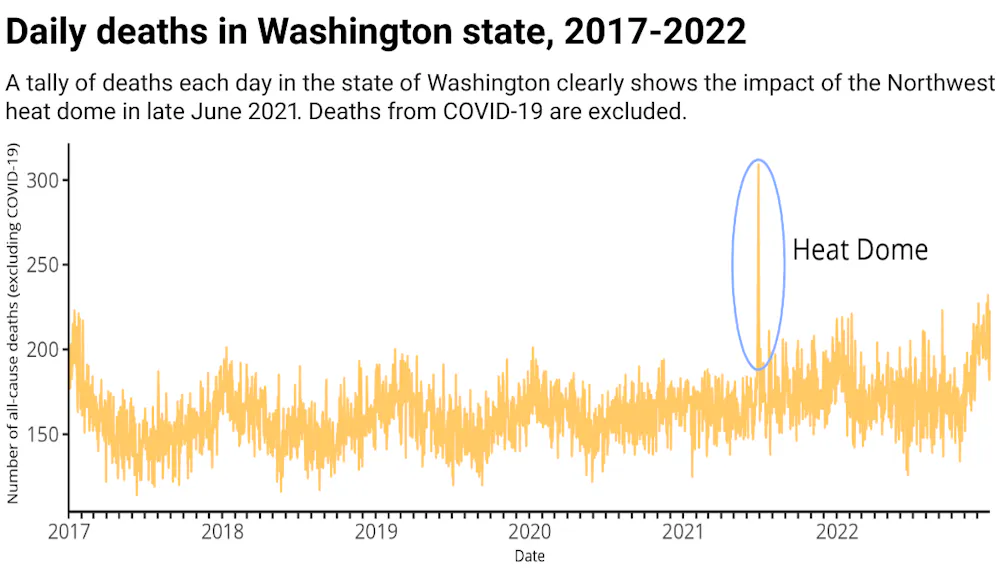
    A chart of all deaths, excluding COVID-19, shows the extraordinary impact the 2021 heat dome had in Washington.
    ‘In the Hot Seat’ report, 2022

    We were excited and relieved when the community was awarded a US$19.9 million grant from the Environmental Protection Agency to help it take concrete steps to adapt to climate change and boost the local economy in the process. The grant would help establish resilience hubs with microgrids and help residents without air conditioning install energy-efficient cooling systems. The city doesn’t have the means to make these improvements on its own, even if they would save lives and money in the long run.

    Less than a year later, the Trump administration abruptly terminated the funding.

    Spokane’s grant wasn’t the only one eliminated – about 350 similar grants that had been awarded to help communities across the country manage climate changes, from extreme heat and wildfire smoke to rising seas and flooding, were also terminated on the grounds that they don’t meet the White House’s priorities. Many other grants to help communities have also been terminated.

    Many of the communities that lost funding are like Spokane: They can’t afford to do this kind of work on their own.

    Why cities like Spokane need the help

    Like many communities in the American West, Spokane was founded in the late 19th century on wealth from railroads and resource extraction, especially gold, silver and timber.

    Today, it is a city of 230,000 in a metro area of a half-million people, the largest on the I-90 corridor between Minneapolis and Seattle. In many ways, Spokane could be on the cusp of a renaissance.

    In January 2025, the U.S. Department of Commerce announced a $48 million grant to develop a tech hub that could put the Inland Northwest on a path to become a global leader in advanced aerospace materials. But then, in May, the Trump administration rescinded that grant as well.

    The lost grants left the economy – and Spokane’s ability to adapt fast enough to keep up with climate changes – uncertain.

    Heat waves are becoming a growing risk in Spokane, known for its river and falls that tumble near downtown.
    Roman Eugeniusz/Wikimedia Commons, CC BY-SA

    This is not a wealthy area. The median household income is nearly $30,000 less than the state average. More than 13 out of every 100 people in Spokane live in poverty, above the national average, and over 67% of the children are eligible for free or reduced lunch.

    The city is a light blue island in a dark red sea, politically speaking, with a moderate mayor. Its congressional district has voted Republican by wide margins since 1995, the year that then-House Speaker Tom Foley lost his reelection bid.

    Lessons from the 2021 heat dome

    The 2021 heat wave was a catalyzing event for the community. The newly formed Gonzaga Institute for Climate, Water and the Environment brought together a coalition of government and community partners to apply for the EPA’s Climate and Environmental Justice Community Change Grant Program. The grants, funded by Congress under the Inflation Reduction Act of 2022, were intended to help communities most affected by pollution and climate change build adaptive capacity and boost the safety of their residents.

    A key lesson from the 2021 heat dome was that temporary, or pop-up, cooling centers don’t work well. People just weren’t showing up. Our research found that the best approach is to strengthen existing community facilities that people already turn to in moments of difficulty.

    Half the $19.9 million award was for outfitting five resilience hubs in existing libraries and community centers with solar arrays and battery backup microgrids, allowing them to continue providing a safe, cool space during a heat wave if the power shuts down.

    The locations and plans for five resilience hubs to serve Spokane, and the infrastructure they would receive.
    Gonzaga Institute for Climate, Water and the Environment

    Another $8 million in grant funding was meant to provide 300 low- to moderate-income homeowners with new high-efficiency electric heat pump heating, ventilation and air conditioning systems, providing more affordable utility bills while improving their ability to cool their homes and reducing fossil fuel emissions.

    Communities are left with few options

    Now, this and other work is at risk in Spokane and cities and towns like it around the country that also lost funding.

    According to the Trump administration, the program – designed to help hundreds of communities around the country become safer – was “no longer consistent with EPA funding priorities.”

    A class action lawsuit was recently filed over the termination of the grants by a coalition that includes Earth Justice and the Southern Environmental Law Center. If the case is successful, Spokane could see its funding restored.

    Meanwhile, the city and my team know we have to move fast, with whatever money and other resources we can find, to help Spokane prepare for worsening heat. We formed the Spokane Climate Resilience Collaborative – a partnership between community organizations, health officials and the city – as one way to advance planning for and responding to climate hazards such as extreme heat and wildfire smoke.

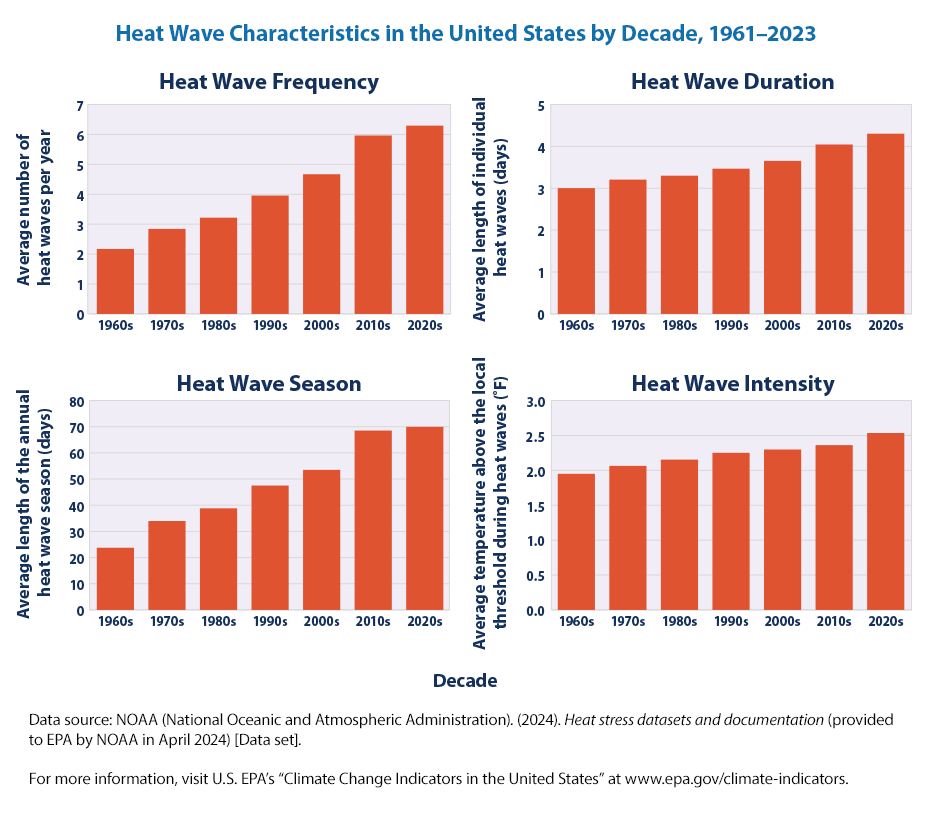
    As concentrations of heat-trapping gasses accumulate in the atmosphere, both the frequency and severity of heat waves increase. It is only a matter of time before another deadly heat dome arrives.

    Brian G. Henning receives funding from the Environmental Protection Agency.

    ref. My city was one of hundreds expecting federal funds to help manage rising heat wave risk – then EPA terminated the grants – https://theconversation.com/my-city-was-one-of-hundreds-expecting-federal-funds-to-help-manage-rising-heat-wave-risk-then-epa-terminated-the-grants-259009

    MIL OSI Analysis

  • MIL-OSI: Banzai Appoints Dean Ditto as Chief Financial Officer

    Source: GlobeNewswire (MIL-OSI)

    SEATTLE, July 09, 2025 (GLOBE NEWSWIRE) — Banzai International, Inc. (NASDAQ: BNZI) (“Banzai” or the “Company”), a leading marketing technology company that provides essential marketing and sales solutions, today announced the appointment of Dean Ditto, CPA, as Chief Financial Officer of the Company, effective July 14, 2025. Mr. Ditto replaces Interim Chief Financial Officer, Alvin Yip, who will continue with the Company in the role of Chief Accounting Officer.

    Dean Ditto has over 30 years’ experience as a strategic financial leader with a track record of implementing critical business initiatives that drive profitable growth at both public and private companies. Prior to joining Banzai, Mr. Ditto was Chief Financial Officer of Akerna Corp. a SaaS technology company where he led a corporate restructuring plan that produced cost savings of $6 million annually. Previously, he was CFO of Mydecine Innovations Group, Inc., a biotech and life sciences company, where he raised $40 million through public and private offerings to support drug and IP development and operations. As CFO of Sigue Corporation, a closely-held Fintech provider, Mr. Ditto worked to improve the business planning, budgeting and financial analysis processes. He has also served in financial leadership roles at OSI Systems, Dental Lab Holdings, KARL STORZ Endoscopy-America, Countrywide Home Loans, Giant Bicycle USA, and Ford Motor Company. Mr. Ditto holds a Bachelor of Arts in Economics and Management from Albion College, and holds a Master of Business Administration from the Kelley School of Business at Indiana University.

    “On behalf of our board and management team, I would like to welcome Dean to the position. We are privileged to have someone of his caliber and financial skill set serve as our CFO,” said Joe Davy, Founder and CEO of Banzai. “I would like to thank Alvin for his contribution in leading us to this inflection point, and welcome Dean’s capabilities in scaling public technology companies. His achievements as well as expertise in financial management of listed companies will make a significant addition to the strategic operation and development of Banzai going forward.”

    Mr. Ditto added, “I am excited to be appointed as CFO as we prepare Banzai for the future in a rapidly evolving market. I look forward to working with Joe, the executive team, and the finance team as we continue to execute on our strategic and financial priorities focused on value-added growth and our commitments to all shareholders.”

    About Banzai

    Banzai is a marketing technology company that provides AI-enabled marketing and sales solutions for businesses of all sizes. On a mission to help their customers grow, Banzai enables companies of all sizes to target, engage, and measure both new and existing customers more effectively. Banzai has over 90,000 customers including RBC, Dell Technologies, New York Life, Thermo Fisher Scientific, Thinkific, and ActiveCampaign. Learn more at www.banzai.io. For investors, please visit https://ir.banzai.io.

    Forward-Looking Statements

    This press release contains forward-looking statements within the meaning of the Private Securities Litigation Reform Act of 1995. Forward-looking statements often use words such as “believe,” “may,” “will,” “estimate,” “target,” “continue,” “anticipate,” “intend,” “expect,” “should,” “would,” “propose,” “plan,” “project,” “forecast,” “predict,” “potential,” “seek,” “future,” “outlook,” and similar variations and expressions. Forward-looking statements are those that do not relate strictly to historical or current facts. Examples of forward-looking statements may include, among others, statements regarding Banzai International, Inc.’s (the “Company’s”): future financial, business and operating performance and goals; annualized recurring revenue and customer retention; ongoing, future or ability to maintain or improve its financial position, cash flows, and liquidity and its expected financial needs; potential financing and ability to obtain financing; acquisition strategy and proposed acquisitions and, if completed, their potential success and financial contributions; strategy and strategic goals, including being able to capitalize on opportunities; expectations relating to the Company’s industry, outlook and market trends; total addressable market and serviceable addressable market and related projections; plans, strategies and expectations for retaining existing or acquiring new customers, increasing revenue and executing growth initiatives; and product areas of focus and additional products that may be sold in the future. Because forward-looking statements relate to the future, they are subject to inherent uncertainties, risks and changes in circumstances that are difficult to predict and many of which are outside of our control. Forward-looking statements are not guarantees of future performance, and our actual results of operations, financial condition and liquidity and development of the industry in which the Company operates may differ materially from those made in or suggested by the forward-looking statements. Therefore, investors should not rely on any of these forward-looking statements. Factors that may cause actual results to differ materially include changes in the markets in which the Company operates, customer demand, the financial markets, economic, business and regulatory and other factors, such as the Company’s ability to execute on its strategy. More detailed information about risk factors can be found in the Company’s Annual Report on Form 10-K and the Company’s Quarterly Reports on Form 10-Q under the heading “Risk Factors,” and in other reports filed by the Company, including reports on Form 8-K. The Company does not undertake any duty to update forward-looking statements after the date of this press release.

    Investor Relations
    Chris Tyson
    Executive Vice President
    MZ Group – MZ North America
    949-491-8235
    BNZI@mzgroup.us
    www.mzgroup.us

    Media
    Nancy Norton
    Chief Legal Officer, Banzai
    media@banzai.io

    The MIL Network

  • MIL-OSI Russia: Chinese universities deepen educational cooperation with Central Asian countries

    Translation. Region: Russian Federal

    Source: People’s Republic of China in Russian – People’s Republic of China in Russian –

    An important disclaimer is at the bottom of this article.

    Source: People’s Republic of China – State Council News

    XI’AN, July 9 (Xinhua) — When Dilnaz from Kazakhstan received her master’s degree in late June this year, her entire student life in China flashed before her eyes. During her two years of master’s studies, she had the opportunity to study at two campuses of Northwestern Polytechnical University (NWPU): one in Almaty and the other in Xi’an, Shaanxi Province (Northwest China), a distance of more than 3,000 kilometers.

    Studying in two countries was an amazing and unforgettable experience, Dilnaz said. It was made possible by the launch of an international education program two years ago at SZPU, a renowned engineering university in China.

    Let us recall that in May 2023, within the framework of the first China-Central Asia summit, an agreement was signed between NWPU and the Kazakh National University named after Al-Farabi /KazNU/ to open a Kazakhstani branch of NWPU. Already in October of the same year, eight Kazakhstani students, including Dilnaz, became the first master’s students of this branch in Almaty. They studied in the specialties of materials science, information and communication engineering, computer science and technology, which are the strongest disciplines at NWPU.

    In recent years, as China deepens cooperation with Central Asian countries under the Belt and Road Initiative, education has become a key area of bilateral cooperation. A number of Chinese universities have opened branches in Central Asian countries, giving new impetus to the development of higher education cooperation between China and Central Asia.

    For example, in July 2024, a branch of Beijing Language and Culture University was officially opened in Kazakhstan, and in the same month, a branch of Northwest Agriculture and Forestry University was opened in Tashkent, which became the first Chinese university branch in Uzbekistan. In May of this year, Xi’an University of Architecture and Civil Engineering and Osh Technological University of Kyrgyzstan (OshTU) signed an agreement in Xi’an to establish an architectural institute at OshTU.

    In the more than 30 years since the establishment of diplomatic relations between China and the five Central Asian countries, bilateral relations have achieved leaps and bounds, as evidenced by the continuous strengthening of political mutual trust and the intensification of trade and economic exchanges and people-to-people contacts, which has created conditions for the opening of branches of Chinese universities in Central Asian countries, noted Gu Wei, a research fellow at the Institute of International Studies of the Shanghai Academy of Social Sciences.

    According to her, the entry of Chinese universities into the international arena with the establishment of foreign branches meets the needs of Central Asian countries in training highly qualified personnel and will contribute to the deepening of cooperation between China and Central Asian countries.

    In May 2025, SZPU, together with KazNU, established the China-Kazakhstan Elite Engineering Institute, signing an agreement on joint training of bachelors in artificial intelligence under the “2 2” scheme with the issuance of double diplomas. This project became a new breakthrough for the two universities in the field of training specialists, creating a new architecture of high-level international cooperation.

    “These achievements clearly demonstrate the deep coordination and joint development of the parties in the field of training specialists and scientific and innovative activities, actively promoting cultural mutual enrichment and scientific cooperation,” noted Vice-Rector of SZPU Yue Xiaokui.

    As the Minister of Education of the People’s Republic of China Huai Jinpeng reported in May at the first Meeting of Ministers of Education “China-Central Asia”, at present more than 18 thousand young people from Central Asia are studying in Chinese universities. -0-

    Please note: This information is raw content obtained directly from the source of the information. It is an accurate report of what the source claims and does not necessarily reflect the position of MIL-OSI or its clients.

    .

    MIL OSI Russia News

  • MIL-OSI Asia-Pac: LCQ2: Raising students’ awareness of their hometowns and ancestral origins

    Source: Hong Kong Government special administrative region

    LCQ2: Raising students’ awareness of their hometowns and ancestral origins 
    Question:
     
    It has been reported that every year around Ching Ming Festival, a large number of members of the public travel north with their children to pay tribute to their ancestors and visit their ancestral hometowns. On raising students’ awareness of their hometowns and ancestral origins, will the Government inform this Council:
     
    (1) given that in the reply to my question in 2022, the Government has indicated that it would keep in view the suggestions from various sectors of society for follow-up action regarding the suggestion of adding the item on “native place” back to the Student Information Form of students of kindergartens, primary schools and secondary schools, of the progress of the relevant work, including whether it will explicitly require students to fill in the correct information about their native places; if so, of the specific implementation timetable; if not, the reasons for that;
     
    (2) whether the Education Bureau will consider incorporating the element of “exploring one’s roots” into the teaching according to the students’ native places, so as to raise their awareness of their hometowns and ancestral origins; if so, of the specific plans; if not, the reasons for that; and
     
    (3) as there are views that the activities under the Government’s Clansmen Culture Promotion Scheme are all organised by clansmen associations, it is difficult for such activities to cover the student level, whether the Government will consider launching clansmen cultural activities targeted at students; if so, of the specific plan; if not, the reasons for that?
     
    Reply:
     
    President,
     
    The Education Bureau (EDB) attaches great importance to nurturing students’ sense of nationhood, encouraging schools to implement national education through a “multipronged and co-ordinated” approach and organising diversified student activities in a manner of “organic integration and natural connection”, with a view to enhancing students’ understanding of the same cultural roots the Mainland and Hong Kong share. A number of related learning elements have been incorporated into the curricula of primary and secondary levels. For instance, Primary Humanities covers the concepts of family members, family names, native places and hometowns, etc. It helps students understand the history and development of their hometowns, so as to enhance their awareness of their ancestral origins and foster the affection for their native places and clansmen. Junior Secondary History includes the topics on the development of various local Chinese organisations, including clansmen associations, to help students learn about the services and contributions of relevant organisations, promoting the virtues of philanthropy and mutual support.
     
    “We treasure our historical legacy and never forget our roots”. Filial piety and fraternal duty are important values in Chinese culture. Enhancing students’ understanding to their native places and ancestral origins contributes to cultivation of their inheritance of Chinese culture, national identity and sense of belonging to the country.
     
    In fact, the understanding of nowadays primary and secondary school students on their native places or family backgrounds and histories is not solely derived from school education or classroom learning. It is more shaped by the students’ life experiences, such as tomb sweeping and visits to relatives in the hometown as aforementioned, family gatherings, or travelling to hometown, etc. In addition to the diversified learning activities organised by schools, such as hometown cuisine sharing sessions and tours for students to explore their roots, many school sponsoring bodies and schools in Hong Kong are named after clansmen associations or hometowns. As a result, students are generally familiar with the concept of “native places” and the sentiments associated with it.
     
    Our reply to the question raised by Professor the Hon Lau Chi-pang is as follows:
     
    (1) and (2) There are still different opinions and views in society on requiring students to fill in their “native place” in the personal information column of the student handbook. Some believe that requiring students to fill in their “native place” in the personal information on the Student Information Form is conducive to “native place” education and cultivating students’ affection for home and country. At the same time, some pointed out that the “native place” column in the Student Information Form is a type of personal information. When collecting the data, schools must comply with the requirements of the Personal Data (Privacy) Ordinance, clearly stating the purpose of collection. Data collection must also be appropriate and commensurate with the objectives. It is learnt that more and more schools have resumed adding the “native place” column to the Student Information Form currently.
     
    In fact, by understanding their native places, students can trace their family histories, learn about the cultural characteristics of different regions, and gain a more comprehensive understanding of the country, as well as the multicultural nature of the world. However, the implementation strategies can be flexible and varied according to the school situation. Requiring students to report their “native places” in the personal information section of the student handbook is just one such way. Enforcing a unified and mandatory implementation method would not contribute to increasing the effectiveness of learning and teaching.
     
    To enhance students’ understanding of the same cultural roots the Mainland and Hong Kong share, it is considered that the implementation strategies should be comprehensive. A more effective approach would be integrating the curricula of secondary and primary schools for students to learn within and beyond the classroom in a co-ordinated way. For instance, the Primary Humanities curriculum covers the learning content of family names, native places, hometowns, etc. Teachers incorporate the learning element of “exploring one’s roots” to inspire students to gain a deeper understanding of their native places, and deepen their understanding of their hometowns and ancestral origins. This also enables students to acquire knowledge of the scenic spots and specialty products of their hometowns, learning to show concern over the development and changes in their hometowns.
     
    Schools incorporating related learning element in a multipronged way is a practice worth promoting. For example, at the teacher professional conference of the Primary Humanities recently, teachers shared their open lessons titled “My Family: Learn About Family Names, Native Places and Hometowns” and exchanged their experiences. Some schools choose their students’ native places as the destinations of sister school exchanges and in the Mainland exchange programmes, so as to allow students to learn about the country’s development through life experience. These are common practices.
     
    Some schools include a “native place” field in the Student Information Form, which enables teachers to understand the backgrounds and needs of students and devise suitable learning activities to better cater for learner diversity and improve the effectiveness of learning and teaching. This is also an effective practice.

    However, we also understand that some schools, for various reasons such as diverse opinion among stakeholders over collection of personal data or inapplicability to ethnic minority students, etc, have not included the “native place” field in the Student Information Form.
     
    The EDB understands that school contexts vary and will not rigidly require all secondary schools, primary schools and kindergartens to add the “native place” field to the Student Information Form. Hong Kong is a diverse and inclusive society and there are students of different ethnicities studying together in campus. Individuals from different cultural backgrounds engage with and respect on each other. Therefore, we encourage schools to enhance communication with stakeholders to gain parents’ understanding and support. At the same time, schools should deliver education on “native places” in a multipronged approach, with a view to helping students develop an understanding of their connection to their families and hometowns, recognise their cultural roots, and cultivate respect for and understanding of the cultures of different regions.
     
    (3) To deepen the public’s understanding of and sense of belonging to their hometowns, thereby fostering the spirit of loving the country, Hong Kong and their hometowns, the Chief Executive launched in his 2023 Policy Address the
    “Clansmen Culture Promotion Scheme” (the Scheme) for a period of three years, for application by clansmen associations to subsidise their organisation of activities to promote and preserve hometown culture, unite clansmen in Hong Kong and facilitate exchanges between Hong Kong and the Mainland. There is no restriction on the form of the activities, as long as they are non-profit-making in nature and in line with the objectives of the Scheme. Clansmen associations applying for the subsidy may, having regard to their needs, explore collaboration with other event organisers, including schools, in organising the activities. Taking a project approved under the first year of the Scheme as an example, the Federation of Hong Kong Guangdong Community Organisations conducted the “Guangdong Intangible Cultural Heritage in Schools” programme at the end of last year to host cultural workshops in various primary and secondary schools. Nearly 1 000 students and parents were engaged. 
     
    In conclusion, to cultivate students’ sense of belonging to their hometowns, we must adopt a “multipronged and co-ordinated” approach that integrates learning within and beyond the classroom, linking curriculum with real-life experiences. Education on “native places” is an important element. Enhancing students’ awareness of their native places and ancestral origins involves more than school education. It also needs the efforts and co-ordination on all fronts such as public education, family education and even the social atmosphere. It requires the concerted efforts and enhanced collaboration of different stakeholders in society to advance this initiative. Various departments of the Hong Kong Special Administrative Region Government, including the Home and Youth Affairs Bureau and the EDB, will continue to be responsible for the relevant promotional work, and explore practicable measures by listening to the views of different stakeholders, including relevant organisations, community groups, schools and parents, so as to forge a consensus among different sectors and create a conductive atmosphere. We will collaborate closely with various stakeholders to cultivate in the young people the spirit of “treasuring their historical legacy and never forgetting their roots”.
     
    Thank you, President.
    Issued at HKT 19:25

    NNNN

    MIL OSI Asia Pacific News

  • MIL-OSI USA: Office of the Governor – News Release – Gov. Green Signs Landmark Legislation Pertaining to Maui Wildfires Settlement and Fire Marshal

    Source: US State of Hawaii

    Governor Josh Green, M.D., today enacted legislation to solidify the global settlement for claims relating to the August 2023 Maui wildfires and to further codify the role of Hawai‘i’s first State Fire Marshal in nearly 46 years.

    “Today we are re-envisioning the path forward in the roadmap of wildfire prevention and recovery,” said Governor Green. “We are taking action from both ends of the wildfire spectrum — building a more robust fire prevention framework within the state and enacting historic legislation that will aid in timely access to compensation following disaster. This crisis impacts us on many fronts, and it is time we tackle it the same way, from multiple directions.”

    HB 1001: RELATING TO SETTLEMENT OF CLAIMS RELATED TO THE MAUI WILDFIRES
    House Bill 1001 (Act 301) establishes the Maui Wildfires Settlement Trust Fund to provide dedicated funding for those affected by the 2023 Maui wildfires. The bill appropriates $807.5 million to support the state’s contribution in the settlement of claims, which shall be deposited into the trust fund. Additional contributions to the state fund include funding from the County of Maui, Hawaiian Electric, Kamehameha Schools, Charter Communications/Spectrum, Hawaiian Telcom and West Maui Land Company.

    Governor Green sought to establish this funding to provide timely compensation for survivors’ claims as an alternative to lengthy litigation, ensuring those affected do not have to wait years to rebuild their lives. Recipients of compensation from the settlement trust fund shall agree to release the state and any additional parties that contribute to the fund from all further liability arising from the Maui wildfires.

    “This legislation is a huge win and sets a new precedent for swift settlement of claims for wildfire victims,” said Governor Green. “It should not take years for people to see compensation or begin rebuilding. This is about healing, restoring trust and helping families recover as quickly as possible in the place they call home.”

    The measure emphasizes providing meaningful compensation by specifying that property and casualty insurance companies can only recover payments made to a policyholder through a statutory lien. This provision demonstrates the state’s commitment to prioritizing the individuals affected by the wildfire to receive claims directly.

    The settlement agreement totals $4.037 billion and resolves claims of liability against multiple defendants, including the County of Maui. The agreement aims to reduce the legal load of the judicial system while avoiding the high costs associated with litigation.

    HB 1064: RELATING TO FIRE PROTECTION
    In accordance with the Fire Safety Research Institute’s three-phase report — developed to improve fire preparedness and response following the August 2023 Maui wildfires —  House Bill 1064 (Act 302) effectuates the recommendations provided in “Phase 3” of the report. Phase 3 focuses on the forward-looking portion of the investigation and proposes improvements to the Office of the State Fire Marshal, which was originally established under Act 209, Session Law of Hawai‘i 2024.

    Under Act 302, the Office of the State Fire Marshal is transferred to the Department of Law Enforcement and will be led by the State Fire Marshal. The legislation further clarifies the roles, duties, and discretionary authority of both the Office and the State Fire Marshal, supporting the state’s efforts to provide coordinated, statewide fire prevention and readiness strategies. To enhance coordination between the Office of the State Fire Marshal and the State Fire Council, the bill outlines responsibilities and the organizational structure related to matters such as reporting and recommending amendments to the state fire code.

    The bill requires the Fire Chief of each county to investigate and maintain an annual record of fire occurrences. These records must be submitted to the Office of the State Fire Marshal for centralized analysis. The county submissions will assist the State Fire Marshal in compiling biennial statistical reports, including those made available to the public and those submitted to the Legislature.

    “Last month, I appointed Dori Booth as Hawai‘i’s new State Fire Marshal, reviving a critical public safety position that has been vacant for nearly 46 years,” said Governor Green. “This appointment marks a turning point as we redefine the role — empowering the office with clear authority and resources to better protect our state through fire prevention strategies and analysis.”

    “My first month in office has been both eye-opening and incredibly encouraging,” said State Fire Marshal Dori Booth. “I’ve had the opportunity to meet with dedicated state and county partners, as well as private stakeholders, who are all working tirelessly to enhance fire prevention, readiness, and resiliency across our islands. These conversations have been instrumental in shaping my initial assessments and understanding the unique strengths each organization brings to the table. The feedback I’ve received has affirmed the vital role the Fire Marshal’s Office can play — not only in supporting these existing efforts, but also in unifying them to build a stronger, more resilient Hawai‘i. HB 1064 is a meaningful step forward, and I’m honored to stand with so many committed partners as we move toward a safer future together.”

    Lastly, HB 1064 establishes the State Fire Marshal Selection Commission and defines its roles and structure. The selection commission will be given the authority to appoint and remove the State Fire Marshal, evaluate the State Fire Marshal’s performance, and address matters of public interest.

    “With the State Fire Marshal position re-established for the first time in nearly five decades, this legislation gives the office the structure, authority, and support it needs to succeed,” said Senator Brandon Elefante (Senate District 16 – ‘Aiea, ‘Aiea Heights, Hālawa, Pearlridge, Newtown, Royal Summit, Waimalu, Waiau, Momilani, Pacific Palisades, and Pearl City), who chairs the Senate Public Safety and Military Affairs Committee. “It’s a significant step in building a stronger, more coordinated approach to fire prevention and public safety across Hawai‘i.”

    There is $2.2 million appropriated in fiscal year 2026 and an equal amount for fiscal year 2027 to support the establishment and operations of the Office and State Fire Marshal.

    Video of the bill signing can be seen here.
    The slide deck presented by the Governor can be viewed here.
    Photos of the bill signing ceremonies, courtesy Office of the Governor, will be uploaded here.

    MIL OSI USA News

  • MIL-OSI United Kingdom: DfE Update: 9 July 2025

    Source: United Kingdom – Government Statements

    Correspondence

    DfE Update: 9 July 2025

    Latest information and actions from the Department for Education about funding, assurance and resource management, for academies, local authorities and further education providers.

    Applies to England

    Documents

    Details

    Latest for further education

    Article Title
    Information Adult skills fund: updates to rules and guidance for 2025 to 2026
    Information Maths and English condition of funding
    Information English and maths continuing professional development available
    Information The further education workforce data collection
    Information Discover the latest updates to the Apprenticeship Service

    Latest information for academies

    Article Title
    Information Maths and English condition of funding
    Reminder PE and sports premium data collection
    Events and webinars Academy Finance Professionals July Power Hour: Academy Trust Handbook
    Events and webinars Academies technical update 2025 to 2026
    Events and webinars Financial management service (FMS) comparison matrix

    Latest information for local authorities

    Article Title
    Information Adult skills fund: updates to rules and guidance for 2025 to 2026
    Information Maths and English condition of funding
    Information The further education workforce data collection
    Information Discover the latest updates to the Apprenticeship Service
    Reminder PE and sports premium data collection

    Updates to this page

    Published 9 July 2025

    Sign up for emails or print this page

    MIL OSI United Kingdom

  • Are flash floods directly linked to climate change?

    Source: Government of India

    Source: Government of India (4)

    The catastrophic flash floods in Texas a couple of days earlier, triggered by extremely heavy rainfall, which caused over 100 deaths and widespread destruction, have once again raised a pressing question- are flash floods directly linked to climate change? Successive research by environmental agencies corroborates this, saying climate change is a significant factor in the increased risk, frequency and intensity of floods in several parts of the world.

    Research suggests human-caused climate change is driving more and more extreme weather conditions, which include extremely heavy and sometimes untimely rains, which directly contribute to flooding, especially when proper city planning is not in place.

    Studies say warmer temperatures cause a more moisture-laden atmosphere, which turns into more intense rainfall with increased frequency. The recent Texas floods were found to have been made significantly worse by climate change, as atmospheric conditions favoured slow-moving thunderstorms, which caused heavy rains in the same area for hours. Warmer global temperatures have increased the atmosphere’s capacity to hold moisture, resulting in heavier and more concentrated rainfall events that can overwhelm drainage systems and waterways.

    In layman’s terms, climate change leads to higher global temperatures and warmer air holds more moisture. Climate-related researches say with every one-degree Celsius rise in temperature, the atmosphere’s capacity to hold more water vapour rises by about 7%.

    It can be understood from the fact that the recent very heavy rainstorms in Texas delivered about 20% more rainfall than they did in the late 1950s, a time when global temperatures were considerably lower, according to the National Climate Assessment. As climate change continues to warm the planet, extreme rainfall events in Texas are projected to become even more frequent in the coming decade, as highlighted in a 2024 report by the state’s climatologist. The worry is that it’s not just Texas, but across the US, the heaviest storms are predicted to produce more rain as the Earth continues to warm.

    Such storms can trigger deadly flooding far inland, which was on full display in 2024 when Hurricane Helene caused severe flooding across Appalachia. Similarly, in 2021, flash floods caused by Hurricane Ida claimed dozens of lives in the Northeastern US. According to the National Climate Assessment, more than one-third of the estimated 230 billion dollar in inland flood damage in the US between 1988 and 2021 would not have occurred without climate change.

    Storms increase the likelihood of intense and short-duration rainfall in several parts of the globe, which is becoming a major trigger for flash floods. Moreover, climate change also gives rise to sea levels and constantly rising sea levels invariably exacerbate coastal flooding, which seriously threatens human populations and physical assets-infrastructure in the coastal regions.

    In fact, across the US, Europe and other parts of the globe, similar patterns are observed with coastal and inland states facing flood risks due to tropical storms, hurricanes and prolonged rainfall events. In the US, riverine floods are also a concern, especially along major waterways like the Mississippi. In many areas, deforestation, wetland loss and poorly planned development have also disrupted natural drainage systems, reducing the landscape’s ability to buffer heavy rains.

    Like the United States, Europe is also grappling with more frequent and severe flooding. In 2021 and successive years, devastating floods in Germany, Belgium, Italy, the Netherlands, Luxembourg, Poland, the Czech Republic, Slovakia, Austria, Hungary and others highlighted the region’s exposure to extreme weather.

    Climate change is intensifying heavy rainfall events across the continent, particularly in Central and Western Europe. Uncontrolled urban expansion, river channelization and reduced natural water retention due to agricultural and industrial development have made many European regions more prone to flooding. In mountainous areas, rapid snowmelt and glacial lake outbursts, both linked to rising temperatures, also contribute to sudden floods.

    Studies have shown that climate change has increased the likelihood and intensity of heavy rainfall events in both the US and Europe. For example, in Europe, research indicates that human-caused climate change doubled the likelihood of the intense rainfall that caused recent floods in Central Europe. Similarly, in the US, climate change has been linked to more extreme rainstorms and increased flood risk.

    Despite the growing risks, many communities around the country are still not planning for more intense rainstorms as they build roads, floodways, and storm infrastructure. Local governments around the country rely on historical rainfall records from concerned agencies.

    Another factor that may be contributing to the severe floods, however, is human activity and land-use change. Most of the recent floods in Central Europe are river floods, which makes the links between the flooding and climate change less straightforward.

    Central Europe’s devastating floods were made worse by climate change, which scientists say offers glimpses of a bleak future for the world’s fastest-warming continent. In fact, Europe is the fastest-warming continent. The last five years were on average around 2.3°C warmer than the second half of the 19th century, according to the Copernicus Climate Service.

    Addressing these challenges requires a multi-pronged approach. In the short term, improving early warning systems, emergency response mechanisms and public awareness can help save lives. Upgrading drainage infrastructure, reinforcing levees and dams and integrating green infrastructure like rain gardens, permeable pavements and restored wetlands are essential for long-term flood resilience. Urban planning must prioritize flood risk zones, restrict construction in vulnerable areas and promote sustainable land use.

    And at a broader scale, reducing greenhouse gas emissions remains critical to mitigating the root cause of climate-driven floods. International cooperation, climate adaptation funding and policy reforms are necessary to prepare communities for the escalating risks posed by a warming world. Without decisive action, not only the US and Europe, but the majority of countries across the globe are likely to see floods becoming an even more destructive and persistent threat in the decades ahead. Without more ambitious climate action, global warming is expected to reach around 3°C by the end of the century, which would be much more disastrous to the humanity.

  • MIL-OSI USA: Continuing the Quest for Clays

    Source: NASA

    Written by Eleanor Moreland, Ph.D. Student Collaborator at Rice University

    For the past month and a half, Perseverance has been exploring the Krokodillen plateau in search of clay-bearing rocks. An earlier blog discussed that these rocks could hold clues to Mars’ watery past, and Perseverance has been exploring multiple potential locations to find a suitable target to sample. When a coring target could not be found at the previous outcrop, the Science Team decided to return to the “Main Topsail” locality. In a single drive to this area, Perseverance drove 411.7 meters (1,350.7 feet, or just over a quarter mile) — the longest driving distance ever accomplished by a robotic vehicle on another planet. Go, Percy, go! 
    Back in the region near “Main Topsail” and “Salmon Point,” the team attempted to abrade and sample the clay-bearing rocks at a few different targets. These rocks, however, are proving very breakable and difficult to sample and abrade. Perseverance has experienced challenging fine-grained rocks before, such as during the fan front campaign inside Jezero crater. In that scenario and this one, the Science and Engineering teams work together diligently to find the highest priority targets and find rocks that could withstand the abrasion and coring processes. In this case, the team has decided to return to the site of a previous abrasion, “Strong Island,” to sample the rock we have already abraded and analyzed. This abrasion showed the strong clay signature the team is looking to sample, and we will make another coring attempt this week. 

    This past week, the Perseverance team hosted two very special visitors, Madeline and Joshua, and had the unique honor of fulfilling their wishes through the Make-A-Wish foundation. During their visits to JPL, Madeline and Joshua were named honorary Mars 2020 Operations Team Members. They visited the test rovers in the JPL Mars Yard, watched data arrive from the rover with the Perseverance operations team, and attended a rover planning meeting, collaborating with the science and engineering team members on campus. Madeline and Joshua will forever be connected to the Mars 2020 mission, as each selected the name of one of our planning targets. Madeline’s target, “Jigging Cove,” was a target for Mastcam-Z and SuperCam “all techniques” analysis, including LIBS, VISIR, and RMI. Joshua’s selection, “Gallants,” will be used for the next coring target. Carrying forward the resilience shown by Madeline and Joshua, Perseverance will attempt to sample this clay-rich bedrock before continuing the investigation along the Jezero crater rim. 

    MIL OSI USA News

  • MIL-OSI United Kingdom: Westminster’s green makeover: £500,000 funding boost for public spaces | Westminster City Council

    Source: City of Westminster

    Westminster City Council has selected 16 local projects to receive funding through its Greening Westminster grants programme — a community-led initiative to make the city’s public spaces greener, healthier, and more welcoming. 
     
    This year, almost £500,000 has been awarded to a range of local groups and partner organisations to deliver green projects in parks, on highways and housing estates.   

    From tree planting and pollinator-friendly flowers to edible gardens and greener play areas, the chosen projects showcase a creative, community-driven approach to bring more nature into Westminster’s built-up urban environment. 

     The Greening Westminster programme is a key part of the Council’s Fairer Westminster strategy, which helps improve the environment and supports communities to make positive changes in their neighbourhoods. The programme also aims to give residents greater access to high-quality green spaces that benefit their health and wellbeing.  

     Projects include:  

    • The Onion Garden (Victoria): Adding more plants and wildlife features to a popular community garden.
    • Charfield Court in Bloom  (Amberley Estate): Residents are adding greenery to their housing estate.
    • Covent Garden Playground: Making the playground greener with plants and showcasing a sustainable approach
    • University of Westminster: Improving green spaces on campus and along Marylebone Road.
    • North Paddington Food Bank – The Roots Garden Kitchen: Creating a garden to grow food for the community by the community.  
    • Parish of St Marylebone: Turning church gardens into greener, more welcoming public spaces.
    • Paddington Now BID: Putting up flower baskets with pollinator-friendly plants on Eastbourne Terrace. 

    Cllr Geoff Barraclough, Westminster City Council Cabinet Member for Planning and Economic Development, said:  

    “We’re proud to support these inspiring community-led projects that will help make Westminster greener, healthier, and more welcoming for everyone.  

    “By working together with local groups, we’re transforming public spaces into vibrant places that bring people closer to nature and to each other, which is part of our Fairer Environment commitment.” 

    For more information and a full list of funded projects, visit: 
    www.westminster.gov.uk/greening-westminster 

    ENDS 

    • The Council received 20 applications for its Greening Westminster grants programme and approved 16  
    • Since 2017, Greening Westminster has supported 51 projects across Westminster  

    The 16 recipients who have successfully been awarded funding: 

    Walterton and Elgin Community Homes (WECH) 
    Parish of St Marylebone
    Covent Garden Playground
    St Augustine’s School
    St Barnabas Church
    St Stephens Church 
    North Paddington food bank
    The Onion Garden
    University of Westminster
    Stone Wharf Gardens
    Charfield Court Resident Group – Amberley Estate 
    Grosvenor Residents Association – Edric House
    Hallfield Estate
    Oldham’s Walk
    Community 4 All – Lydford Hall garden

    MIL OSI United Kingdom

  • MIL-OSI Asia-Pac: LCQ18: Hong Kong elderly people spending retirement years in the Mainland

    Source: Hong Kong Government special administrative region – 4

         Following is a question by the Hon Erik Yim and a written reply by the Secretary for Health, Professor Lo Chung-mau, in the Legislative Council today (July 9):

    Question:

         The 2024 Policy Address proposes to strengthen elderly services and foster an elderly-friendly building environment. There are views pointing out that the choice of Hong Kong elderly persons to spend their retirement years in the Mainland, particularly other Mainland cities of the Guangdong-Hong Kong-Macao Greater Bay Area (GBA), can not only improve elderly persons’ quality of life, but also free up valuable living space in Hong Kong and ease the burden of public welfare on the Government. Moreover, amid the recent significant adjustments in property prices in the Mainland, such as areas like Huidong County in Huizhou and Shaxi Town in Zhongshan, some members of the public have proposed that the SAR Government may study the construction or purchase of buildings in the Mainland with better views, affordable rents, and more spacious and brighter interiors at lower costs for use as public rental housing (PRH), so as to provide Hong Kong elderly people with new opportunities to spend their retirement years in the Mainland. In this connection, will the Government inform this Council:

    (1) whether it will consider acquiring vacant properties pending sale in the Mainland cities of GBA for use as PRH flats with which the elderly people can replace their existing PRH flats in Hong Kong, thereby encouraging them to spend their retirement years in the Mainland cities of GBA; if so, of the details;

    (2) given that at present, under the Pilot Scheme for Direct Cross-boundary Ambulance Transfer in the Greater Bay Area, arrangements can be made for patients to be transferred directly from designated sending hospitals in Shenzhen to designated public hospitals in Hong Kong in a point-to-point mode, whether the Government will further deepen the collaboration mechanism concerned by expanding the scope of the pilot scheme this year to cover other major cities in GBA and include emergency cases, so that emergency transport to Hong Kong can be arranged when necessary for elderly patients retiring in such cities, with a view to increasing the incentive for them to go north for retirement; and

    (3) whether it will strengthen collaboration with the Mainland cities of GBA, such as jointly promoting remote diagnosis and AI medical consultation, to enhance healthcare service efficiency, as well as driving the development of gerontechnology and relevant industries, thereby better supporting Hong Kong people in spending their retirement years in such Mainland cities?

    Reply:

    President,

         The Hong Kong Special Administrative Region (HKSAR) Government has been following the principle of complementarity and mutual benefits to enhance co-operation with Mainland cities of the Guangdong-Hong Kong-Macao Greater Bay Area (GBA), on the premise of benefitting the development of Hong Kong and the Mainland, so as to provide more options and convenience for Hong Kong residents who choose to work, reside or retire on the Mainland.

         Having consulted the Housing Bureau, the Labour and Welfare Bureau, the Department of Health and the Hospital Authority (HA), the reply to the question raised by the Hon Erik Yim is as follows:

    (1) The Housing Bureau has all along been supporting the implementation of various strategies and policies to cope with an ageing population. In order to strengthen the support to those who choose to retire on the Mainland, the Housing Bureau makes flexible arrangement for elderly public rental housing (PRH) residents who are required to surrender their PRH flats or delete their names from the tenancies upon receiving portable cash assistance. Considering Hong Kong elderly persons may encounter adaptation issues after moving to the Mainland, the Hong Kong Housing Authority and the Hong Kong Housing Society allow elderly persons to retain their PRH flats or their names in the tenancies for no more than six months, with the grace period starting from the date of the elderly persons’ departure from Hong Kong. The above measure could address elderly persons’ concern about moving to the Mainland and help release PRH flats for turnover.

    (2) The study on the provision of land-based cross-boundary transfer for non-emergency and non-critically ill patients and the exploration of rolling out a pilot co-operation scheme for cross-boundary referral of patients between designated hospitals were put forward in the Outline Development Plan for the GBA. The Chief Executive of the HKSAR also put forward in his 2023 Policy Address the initiative to explore cross-boundary ambulance transfer arrangements between hospitals in the GBA. With the support of various national ministries, the HKSAR Government, in collaboration with the Guangdong Provincial Government, the Shenzhen Municipal Government and the Macao SAR Government, officially launched the one-year Pilot Scheme for Direct Cross-boundary Ambulance Transfer in the Greater Bay Area (Pilot Scheme) on November 30, 2024.

         The Pilot Scheme starts by arranging direct cross-boundary ambulance transfer of patients from designated sending hospitals in Shenzhen and Macao (i.e. the University of Hong Kong – Shenzhen Hospital (HKU-SZH) and the Conde S. Januario Hospital of Macao) to designated public hospitals in Hong Kong. Upon assessment and agreement by the teams of designated cross-boundary collaborating hospitals, arrangements can be made for patients with specific clinical needs and suitable clinical conditions (including that the conditions are relatively stable) to be transferred directly to Hong Kong between designated hospitals in a point-to-point mode without the handover of patients between ambulances at boundary control points, thus minimising risks posed to patients during transfer. Indeed, persons with urgent medical needs should receive treatment at the nearest medical facility. Therefore, the Pilot Scheme does not cover emergency cases.

         Subject to the effectiveness and operational experience of the Pilot Scheme, the governments of Guangdong, Hong Kong and Macao will consider how to extend the Pilot Scheme, such as including more designated hospitals (including those in GBA Mainland cities other than Shenzhen) and/or extending the Pilot Scheme to a two-way arrangement.

    (3) As mentioned above, the HKSAR Government will follow the principle of complementarity and mutual benefits to strengthen the collaboration with Mainland cities of the GBA. Indeed, the resources, needs, relevant laws and regulations, and regulatory regimes differ between Hong Kong and the Mainland. The HKSAR Government will explore cross-boundary facilitation measures on the premise that these cross-boundary measures are feasible and mutually beneficial.

         Specifically, the Government has been implementing various measures to facilitate the retirement of Hong Kong elderly persons in Mainland cities of the GBA, including providing subsidised residential care services and portable cash assistance. Among them, the Residential Care Services Scheme in Guangdong provides an additional choice for eligible Hong Kong elderly persons to receive subsidised residential care services. The Labour and Welfare Bureau signed a “Letter of Intent on Collaboration to Expand the Residential Care Services Scheme in Guangdong” with the Department of Civil Affairs of Guangdong Province in November 2023 to co-operate in selecting suitable residential care homes for the elderly operated by Mainland organisations in Mainland cities of the GBA for joining the Scheme. With the assistance of the relevant authorities, the number of residential care homes for the elderly in Guangdong joining the Scheme has increased to 15, scattering in six Mainland cities within the GBA. The Government has, starting from this May, commissioned a non-governmental organisation to provide Social and Care Support Service for the elderly participants of the Scheme and their families, and will launch a two-year pilot arrangement by the end of this year to share part of the medical expenses that the elderly participants of the Scheme need to bear on their own under the National Basic Medical Insurance Policy.

         In terms of healthcare services, the public or subsidised healthcare services provided by the HKSAR Government are based on catering for the needs of local Hong Kong residents, rather than the healthcare needs of Hong Kong residents on the Mainland or overseas. Nevertheless, the Government has been actively promoting GBA healthcare collaboration in recent years to provide Hong Kong residents, who regularly travel to and from Mainland cities in the GBA for work or living, with additional choices of subsidised healthcare services comparable to those in Hong Kong at designated service points on the Mainland. Such measures, however, are not intended to fully cater for the healthcare services required by Hong Kong residents who choose to settle on the Mainland. Examples include:

    (i) The Government launched the Elderly Health Care Voucher Greater Bay Area Pilot Scheme in 2024 to extend the coverage of the Elderly Health Care Vouchers (EHCVs) to seven integrated medical/dental institutions in Mainland cities of the GBA, offering more convenience and flexibility for eligible Hong Kong elderly persons by providing more service points in the GBA for them to better use their EHCVs on primary healthcare services to improve health conditions. The Government announced this May to extend the said Pilot Scheme and to increase 12 additional pilot medical institutions to cover all nine Mainland cities in the GBA. Among the 12 additional pilot medical institutions, four (viz. two located in Zhuhai and one each in Zhongshan and Guangzhou) launched the service on June 26 and July 9 respectively, while another two new service points in Foshan will launch the service on July 17. It is expected that the remaining six pilot medical institutions will launch the service gradually in the second half of this year. By then, together with the two existing service points operated by the HKU-SZH, eligible Hong Kong elderly persons can use the EHCVs at a total of 21 service points in Mainland cities of the GBA.

    (ii) The Government announced this March the extension of the Pilot Scheme for Supporting Patients of the HA in the GBA till March 31, 2026, with a view to enabling eligible patients of the HA to choose to receive subsidised consultation services at the designated collaborating healthcare institution in the GBA. The Scheme aims to provide Hong Kong people with more choices when receiving HA’s services, and is currently applicable to the HKU-SZH. The Government and the HA will evaluate the effectiveness and the scope of services of this Pilot Scheme each year and make necessary adjustments in a timely manner.

    (iii) In order to enhance the continuity of medical care for elderly persons through facilitating their secure use of electronic health records across the boundary, the Government has progressively launched the new functions of “Cross-boundary Health Record” and “Personal Folder” of the eHealth mobile application (eHealth App) at the HKU-SZH and the seven medical institutions under the Elderly Health Care Voucher Greater Bay Area Pilot Scheme since July 2024. The two functions have will be progressively extended to the new medical institutions under the said Pilot Scheme this year. In addition, elderly persons and their carers can also use the eHealth App to check their EHCV balance and usage record, as well as access at any time important information stored in the eHealth App, such as their medications, allergies and adverse drug reactions.

         Separately, the Ministry of Human Resources and Social Security and the National Healthcare Security Administration promulgated the Interim Measures for Participation in Social Insurance by Hong Kong, Macao and Taiwan Residents on the Mainland in 2019, allowing eligible Hong Kong residents to participate in the national health insurance schemes on the Mainland.

    MIL OSI Asia Pacific News

  • MIL-OSI Asia-Pac: LCQ5: Application of legal technology and artificial intelligence

    Source: Hong Kong Government special administrative region – 4

         Following is a question by the Hon Maggie Chan and a reply by the Acting Secretary for Justice, Dr Cheung Kwok-kwan, in the Legislative Council today (July 9):

    Question:

         It is learnt that the Department of Justice has been actively promoting the application of legal technology (lawtech) and artificial intelligence (AI) in the legal sector. There are views that the Government should actively develop AI tools (e.g. large language model developed by the Hong Kong Generative AI Research and Development Center) for application in areas of the common law, so as to enhance the operational efficiency and competitiveness of the legal sector. In this connection, will the Government inform this Council:

    (1) whether it has currently developed large language models for application in areas of the common law; if so, of the specific details and the implementation timetable; if not, the reasons for that;

    (2) whether it has plans to organise lawtech and AI summits or international exhibitions with the Mainland on a regular basis, so as to promote exchanges and co-operation between the Mainland and Hong Kong in lawtech; if so, of the details; if not, the reasons for that; whether it has plans to introduce lawtech from the Mainland and apply it in areas of Hong Kong common law, as well as promote the Mainland’s AI legal service products to Hong Kong and overseas; if so, of the details; if not, the reasons for that; and

    (3) of the measures in place to ensure that small and medium-sized law firms in Hong Kong can benefit from the development of lawtech and AI, such as providing technical support, introducing a tax allowance for “lawtech equipment” and subsidising their procurement of lawtech-related equipment?

    Reply:

    President,

    (1) The Hong Kong Generative Artificial Intelligence Research and Development Center (HKGAI), an inter-school co-operative research centre led by the Hong Kong University of Science and Technology, has developed the first local large language model (LLM) based on DeepSeek technology with full parameter fine-tuning – “HKGAI V1”. The HKGAI has developed multiple vertical applications for various public service sectors based on this local LLM, including the generative artificial intelligence (AI) document assistance application “HKPilot” and the legal-related “LexiHK”. The Department of Justice (DoJ) is currently participating in the pilot use of “HKPilot” and is considering participating in the trial of “LexiHK” after reviewing its effectiveness. At the same time, the Faculty of Law of the Chinese University of Hong Kong has recently collaborated with an AI software company to develop a legal information AI model based on the Cantonese LLM to facilitate the digital transformation of the legal system and industry. WiseLaw Digital Technology, a company incubated by the Hong Kong Polytechnic University, has also recently announced its innovation achievement in legal AI products. The DoJ will collaborate with the HKGAI and other relevant government departments or institutions based on the trial results, market technology development, the needs of the legal sector and the community, and related resource considerations to examine and promote the further application of AI in the legal sector, especially LLMs related to Hong Kong law.

    (2) The DoJ attaches great importance on the development of areas of lawtech and AI, and believes that forums and exhibitions provides an important platform for fostering exchange and co-operation. Currently, the DoJ is actively preparing related activities, aiming to hold the first large-scale activity open to global participants, creating a diverse and open exchange platform to promote the sharing of wisdom and experience from various regions.

         We note that there are currently a number of well-developed lawtech enterprises in Mainland China. Since Mainland lawtech is now primarily designed for the Mainland legal system, it may not be directly applicable to Hong Kong’s common law market. However, we strongly encourage Mainland lawtech enterprises to set up in Hong Kong to explore the local legal market, develop AI products suitable for the Hong Kong common law market, and use Hong Kong as a springboard to develop markets in other common law jurisdictions overseas.

    (3) To promote the development of lawtech, the DoJ established the Consultation Group on Lawtech Development (Consultation Group) in January 2025, and invited the industry and various stakeholders to jointly study and formulate policy measures related to lawtech. The Consultation Group members include representatives from the legal and dispute resolution sectors, law schools, and the lawtech industry, including representatives from small and medium-sized law firms, ensuring that the policies will suit the needs of practitioners.

         The Consultation Group notes in particular the challenges faced by small and medium-sized law firms in promoting the use of lawtech. In addition to economic factors, we understand that small and medium-sized law firms often have limited understanding of lawtech, and traditional practice models tend to rely less on technology, which affects their willingness to adopt new technologies.

         In response to this situation, the DoJ has accepted the suggestion of the Consultation Group and plans to promote the use of technology in the legal industry progressively in three stages:

    (1) Phase 1: Lawtech awareness and education

         The aim of the first stage of the policy on promoting lawtech is to change certain ingrained mindsets and practices within the legal profession by raising their awareness of lawtech, and helping them to understand the benefits of the use of lawtech that can bring to the profession and the risk management awareness that the profession should have. To this end, the DoJ is organising a series of lawtech-related roundtables and events to raise the profession’s understanding of lawtech and to facilitate the exchange and sharing of information between the profession and lawtech experts to enable them to plan for viable adoption of lawtech.

         The DoJ is also aware of the importance of educating law students about lawtech, and will work with stakeholders in legal education and training to strengthen training related to lawtech in legal education curricula through the Standing Committee on Legal Education and Training platform. The DoJ plans to draft and publish a roadmap to assist the legal profession in embarking on their path to technology applications. The DoJ also plans to issue ethical and security guidelines for the legal profession to follow when using lawtech.

    (2) Phase 2: Promoting the profession’s engagement with lawtech products

         The DoJ intends to organise an exhibition of lawtech products to enable the legal profession to access and experience a variety of lawtech products available in the market and to identify lawtech solutions suitable for their business development.

         In addition, we are considering conducting a market survey to consolidate a list of lawtech products available in the market in order to provide more comprehensive information to the legal sector for reference.

    (3) Phase 3: Promoting the use of lawtech in the legal profession

         The DoJ will encourage local and overseas lawtech enterprises to establish and grow in the local market, thereby fostering Hong Kong’s lawtech ecosystem. The DoJ will review the effectiveness of the above strategies and take policy measures to promote the use of lawtech in the legal profession as appropriate. The DoJ will also review the existing legal framework from time to time in order to better support and regulate the development of innovative and emerging legal technologies.

         Through these strategies, we hope to effectively enhance the awareness and use of lawtech by the legal profession, thereby enhancing the efficiency and quality of professional services and strengthening Hong Kong’s position as an international legal services and dispute resolution centre in the Asia-Pacific region.

         Thank you, President.

    MIL OSI Asia Pacific News

  • MIL-OSI United Kingdom: Our five principles for SEND reform

    Source: Liberal Democrats UK

    Liberal Democrat Leader Ed Davey and Education Spokesperson Munira Wilson have written to Keir Starmer setting out five principles for SEND reform, and offering to work on a cross-party basis with the government to ensure the reforms deliver for children with SEND and their families.

    The five principles include maintaining the right to SEND assessments for children, boosting special school capacity, improving early identification and cutting waiting lists. The Liberal Democrats are also calling for more support for local authorities to provide SEND services and better training for school staff.

    The full letter can be found below:  

    Dear Prime Minister,

    We are writing to you regarding the recent reporting on your Government’s forthcoming reform of the special education needs and disabilities (SEND) system.

    Let us be clear: after years of Conservative neglect, the SEND system needs fundamental change. Your commitment to reform is welcome.

    For too long, a broken system has forced children and families to fight long battles to get the support they need. Outcomes for those children haven’t improved while council deficits have ballooned, leaving many on the brink.

    Change is sorely needed. But this reform must be honest, ambitious, and must have children at its heart. It cannot see children’s rights rolled back.

    Many parents are deeply worried that the forthcoming reforms will leave their children worse 

    off, with an erosion of the rights that underpin the support they need. The lack of clarity from your Government is leading to worry and confusion, with constant conflicting reports on what exactly is being considered. SEND families are being deprived of the certainty they need to live their lives.

    Those families have waited too long for a system that works. We need to get this right.

    We are writing to outline five fundamental principles, which we believe should underpin the coming reform.

    Our five principles and priorities for SEND reform are as follows:

    1. Putting children and families first Children’s rights to SEND assessment and support must be maintained and the voices of children and young people with SEND and of their families and carers must be at the centre of the reform process.
    2. Boosting specialist capacity and improving mainstream provision Capacity in state special provision must be increased, alongside improvements to inclusive mainstream provision, with investment in both new school buildings and staff training.
    3. Supporting local government Local authorities must be supported better to fund SEND services, including through:
      1. The extension of the profit cap in children’s social care to private SEND provision, where many of the same private equity backed companies are active, and
      2. National government funding to support any child whose assessed needs exceed a specific cost.
    4. Early identification and shorter waiting lists Early identification and intervention must be improved, with waiting times for diagnosis, support and therapies cut.
    5. Fair funding The SEND funding system must properly incentivise schools both to accept SEND pupils and to train their staff in best practice for integrated teaching and pastoral care.

    We would welcome the chance to discuss these principles and priorities with you further. Together with our Liberal Democrat colleagues, we are eager to work with you on a cross-party basis, to make sure that the forthcoming reforms truly deliver for children with SEND and for their families.  

    Yours sincerely, 

    Ed Davey 
    Munira Wilson

    MIL OSI United Kingdom

  • MIL-OSI Russia: Double success: the first graduates of SPbPU and Lanzhou University of Economics and Finance received diplomas

    Translation. Region: Russian Federal

    Source: Peter the Great St. Petersburg Polytechnic University –

    An important disclaimer is at the bottom of this article.

    The Institute of Industrial Management, Economics and Trade of SPbPU hosted the first graduation of bachelors of the international educational double degree program with Lanzhou University of Economics and Finance (China).

    The defense of final qualification works in the direction of “Economics” (profile “Finance”) was held in English on the campus of Lanzhou University of Economics and Finance in Gansu Province. Students presented the results of their research on current issues of finance, economic analysis and investment management. The examination committee from SPbPU included the director of the Higher School of Engineering and Economics of IPMEiT Dmitry Rodionov, associate professor of VIES and program director Daria Krasnova, associate professors of VIES Ekaterina Burova and Evgeny Konnikov. The members of the committee highly appreciated the level of preparation of the graduates.

    Joint final assessment is a vivid example of successful academic cooperation. Each defense becomes not just an exam for students, but an important step in strengthening scientific and cultural ties between our countries. We highly value the partnership with our Chinese colleagues and are confident that it will develop, opening up new opportunities for students and teachers, – commented Dmitry Rodionov.

    During the award ceremony for the best graduates, student Zhang Liwen was awarded the badge of excellent student of the 3rd degree. Student Zhang Xinran received gratitude for the responsible performance of the duties of a class monitor during two years of study in St. Petersburg.

    This project confirms that international partnership in education opens up new opportunities for students and teachers. It was very nice to see the guys and take part in the defense of their research achievements. Joint defenses not only strengthen academic ties, but also allow for the exchange of best practices in training future financiers, says Daria Krasnova, head of the international educational program.

    “It is a great honor for me to participate in the joint defense of theses between our universities,” shared student Shan Yuhong. “It was an invaluable experience that allowed me not only to present the results of my research to an international commission, but also to get acquainted with Russian approaches to economics and finance. I would especially like to thank the teachers for their qualified comments and recommendations, which will help me in my future academic and professional activities.”

    A joint educational program with a Chinese university is not only an academic exchange, but also a bridge between cultures. Today’s defenses have shown how effective such a partnership is: students demonstrate unique competencies, and their research opens up new prospects for scientific cooperation. I thank all participants of this project for their contribution to strengthening international ties! – concluded the Director of IPMEiT Vladimir Shchepinin.

    Please note: This information is raw content obtained directly from the source of the information. It is an accurate report of what the source claims and does not necessarily reflect the position of MIL-OSI or its clients.

    .

    MIL OSI Russia News

  • MIL-OSI USA: Amata Highlights Capitol Visit for 2025 Malofie Congressional Art Competition Winner Deborah Vaiotu

    Source: United States House of Representatives – Congresswoman Aumua Amata (Western Samoa)

    Washington, D.C. – On behalf of Congresswoman Uifa’atali Amata, Chief of Staff Leafaina Tavai welcomed the 2025 winner of the Malofie Congressional Art Competition, Deborah Vaiotu of Tafuna High School and Malaeloa Village, to the U.S. Capitol for the opening of her artwork last week, accompanied by her sister Evoline. Deborah’s outstanding artwork titled “Motherhood” is now on display for the next year.

    Judges

    American Samoa’s competition was judged in March with over 25 strong entries from local students. The winners from congressional districts all over the nation are invited yearly to the Capitol to see their artwork on display, attend a national reception, and other activities. 

    Motherhood

    “Congratulations to Deborah for her beautiful and especially heartwarming artwork, which represents American Samoa so well,” said Congresswoman Amata. “Everyone exclaims over her lovely depiction of a strong Samoan mother with a baby.”

    “Thank you to all of the competition participants, and I know this year had so many good entries, which is a credit to these creative students and their excellent art teachers,” she continued. 

    The winning artwork is displayed where thousands of Capitol tour groups each year will see the rows of work by skilled young people all over the country. Members of Congress will walk by the display wall many times over the year ahead. 

    “As I return to Washington, it will be wonderful to see all the new art in place showcasing originality and cultural influences from all over the country,” concluded Amata. “Thank you again to this year’s generous sponsors making this opportunity available to our students.”

    Congresswoman Amata’s office works in partnership with the American Samoa Department of Education to hold the competition, select several standouts, and determine one to represent American Samoa in Washington. American Samoa’s public and private high schools are invited to send entries for the competition.

    ###

    MIL OSI USA News

  • MIL-OSI Africa: Government to ensure that the SANDF is well resourced 

    Source: Government of South Africa

    In spite of the ongoing financial constraints which affect the planning and operations of the South African National Defence Force (SANDF), government has assured the troops that they will have the resources needed to defend and protect the country.

    “This includes ensuring soldiers are properly equipped with the uniforms, boots, protective gear, and habitable facilities catering for the needs of all including women soldiers and persons with disabilities,” the Minister of Defence and Military Veterans, Angie Motshekga, said on Wednesday in Parliament.

    Selected “Model Units” will receive priority upgrades ensuring safety and security, well- maintained bases, sports and recreation facilities, and training areas.

    Soldiers on deployment will also get priority support for all their needs during deployment.

    “Efforts are underway to rejuvenate the SANDF’s human resource profile, modernise, maintenance, repair and overhaul of the prime mission equipment, with the South African Defence Industry (SADI) as the key national defence partner,” the Minister said during the debate of the budgets of the Departments of Defence and Military Veterans.

    The Department of Defence Human Resources Plan for the 2025 Medium Term Expenditure Framework reflects a deliberate and phased approach to sustaining a capable, rejuvenated, and cost-efficient defence workforce within existing budgetary constraints.
    The Department of Defence has received a total budget allocation of R57 183 billion for 2025/26.

    Of this budget allocation, R36 703 billion has been set as the ceiling for the Compensation of Employees (COE), constituting approximately 64% of the defence allocation.

    Furthermore, approximately R8 359 billion is earmarked, which includes, among others:
    • R2 773 billion for accommodation charges, leases and municipal services;
    • R2 556 billion for the Southern African Development Community (SADC) Mission in the Democratic Republic of Congo (SAMIDRC);
    • R1 464 billion transfer payment to Armscor;
    • R487 million for the Republic’s assessed contribution to SADC for the SAMIDRC deployment;
    •  R480 million for the repair and maintenance of maritime defence systems;
    •  R300 million for day-to-day maintenance and emergency repairs and
    •  R200 million-rand for the procurement of vehicles and technology for border safeguarding.

    The Defence Force has been allocated R12 billion to meet its constitutional mandate.

    Repositioning the South African Defence Industry

    The Department of Defence is working on repositioning the SADI to pursue the strategic goal of economic growth and job creation.

    “In this regard the SADI must be positioned as a vital economic asset, ready for expansion to drive national development and support government priorities for a capable state and become a strong local defence industry that creates jobs, develops new technologies, and ensures that the SANDF is well-equipped.

    “Cooperation between Denel, local companies, and international partners will be expanded to boost exports and attract investment. The centrality of Denel is critical in the maintenance and support of the SANDF,” the Minister said.

    She called for the repositioning of Armscor as an entity for SANDF Equipment and Capability Modernisation, to be intensified to make sure that Maintenance, Repair, and Overhaul (MRO) for midlife upgrades and modernisation of PME (air, land, naval domains) guarantees the longevity and mission effectiveness for the SANDF.

    Military veterans

    The military veterans has been allocated R878 million for the 2025/26 financial year.

    “In collaboration with sister departments, we have embarked on a project to repatriate the remains of our fallen heroes and heroines in Zambia and Zimbabwe during 2024. A total number of 35 mortal remains have been repatriated thus far and further work is underway,” the Minister said.

    Over the past three audited financial years the Department of Military Veterans Education Support Benefit provided learners and students as follows:
    • During the 2021/22 financial year, 3 711 learners and students at a cost of R88 million.
    • In the 2022/23 financial year, a total number of 4 114 learners and students at a cost of R126 million.
    • 3 690 learners and students cost the department R135 million during the 2023/24 financial year.

    The unaudited information for the 2024/25 financial year, shows that 2 738 learners and students were provided with education support to continue with their studies.

    To date at least 100 have graduated. – SAnews.gov.za

    MIL OSI Africa

  • MIL-OSI United Kingdom: HALO Award 2025 winner announced

    Source: United Kingdom – Government Statements

    News story

    HALO Award 2025 winner announced

    Anna McLoughlin Fine Jewellery wins the Hallmarking Awareness and Learning Online (HALO) Award 2025.

    The British Hallmarking Council (BHC) is delighted to learn that Anna McLoughlin Fine Jewellery has been awarded the prestigious Hallmarking Awareness and Learning Online (HALO) Award for 2025, in recognition of her innovative work to engage customers with the importance of hallmarking and consumer protection in the jewellery sector.

    The HALO Award, established by the BHC in 2021, and now operating under the Assay Assured banner, a joint venture between the 4 assay offices of the UK (Birmingham, Edinburgh, London and Sheffield) is awarded annually. HALO recognises the UK-based jewellery business that uses their online platform in the most creative ways to leverage the added value that hallmarking provides, and to educate their audience on the meaning and importance of the hallmark.

    Anna McLoughlin, founder of Anna McLoughlin Fine Jewellery, said:

    I’m absolutely thrilled to have won the HALO award for a second time. I feel that hallmarking, and raising awareness of it amongst both my clients and fellow micro-businesses, is incredibly important. It adds prestige to a piece and is a legal guarantee that the quality of the metal is actually what I say it is!

    By law, all items described as being made from precious metals above certain weight limits must be hallmarked by one of the 4 UK Assay Offices. The hallmark confirms the metal’s purity, identifies the individual or business putting the item on the market, and ultimately protects both consumers and retailers from counterfeiting and false descriptions.

    The Chair of the British Hallmarking Council, Noel Hunter, said:

    I congratulate Anna McLoughlin Fine Jewellery on winning this year’s HALO Award and commend the extensive efforts undertaken to educate and protect the consumer by embedding hallmarking awareness into all aspects of the business.

    For more information on hallmarking, visit the British Hallmarking Council and Assay Assured websites.

    For more information about Anna McLoughlin Fine Jewellery, visit the Anna McLoughlin Fine Jewellery website.

    Updates to this page

    Published 9 July 2025

    MIL OSI United Kingdom

  • MIL-OSI Russia: The Faculty of Information Technology of NSU has graduated the first master’s students of two new programs

    Translation. Region: Russian Federal

    Source: Novosibirsk State University –

    An important disclaimer is at the bottom of this article.

    Yesterday, the first Master’s students graduated from two new programs Faculty of Information Technology NSU, launched in 2023, are “Internet of Things” and “Artificial Intelligence and Data Science”. The programs are distinguished by their interdisciplinary nature and in-depth training, which allows solving a wide range of problems in in-demand IT areas.

    The Internet of Things (IoT) is a network of physical objects that can be connected using various technologies and sensors to collect and analyze data. This data can be used to optimize processes, improve quality of life, and manage resources. The development of IoT opens up new opportunities for business, industry, transportation, healthcare, and many other areas. However, to realize all these opportunities and benefits, a qualified team of specialists is needed who have deep knowledge in a wide range of areas, from programming and data analytics to communications technology and security, and also understand the operation of the sensors themselves and the subject area in which they are used.

    — IoT is one of the trends in the development of modern IT. When preparing to create and design solutions for the Internet of Things, a master’s student must demonstrate a whole range of knowledge. Firstly, it is necessary to learn how to work in conditions of limited computing performance and electricity, since Internet of Things devices must provide a long battery life. Secondly, in order for your system to work, a computer is not enough, you must ensure the transfer of this data. Thirdly, where we deal with data, the task arises to ensure its safety and protection. I will give an example from the healthcare sector. We all know smart watches that measure the pulse, count the number of steps, etc. In order for them to perform tasks, for example, monitoring the health of the elderly, it is necessary to implement more complex Internet of Things tools. The question arises: since this is personal, medical data, it is necessary to provide for its correct protection. Thus, in order to work in the IoT field, you need to be able to solve a whole range of problems and be an expert in different sections of modern information technology. Within the framework of the new direction, we are training exactly such specialists, — the dean of the NSU FIT, Corresponding Member, spoke about the features of the program. RAS Mikhail Lavrentiev.

    The new program is also distinguished by the fact that during their studies, master’s students participate in the implementation of projects that are carried out on order or in cooperation with businesses working in the IoT area. Thus, the university’s partner in organizing the new master’s program was the company “Laboratory of the Internet of Things”, which develops ground equipment for satellite systems, as well as the company YADRO.

    Denis Enes, a graduate of the Master’s program “Internet of Things” at the NSU Institute of Information Technologies, shares his impressions of the training:

    – I graduated from the NSU FIT Bachelor’s degree program in Computer Science and Systems Engineering. At the same time, a new program appeared in the FIT Master’s program – Internet of Things. I wanted to study something new, so I applied. The workload was heavy, especially in the first year, so it was difficult to combine study and work. However, it was worth the effort: as a result, I acquired knowledge that was different from what I received in my Bachelor’s degree, so now I have more opportunities for further career development.

    In the second program, “Artificial Intelligence and Data Science,” students received the necessary knowledge to work with artificial intelligence. They learned to develop intelligent solutions by participating in real company projects, as well as to apply AI and Data Science technologies in information and analytical activities for a wide range of areas of the digital economy.

    — We have developed a program that allows our master’s students to understand what artificial intelligence is, what needs to be done to make its systems work, how to construct a database, how to estimate the size of the required hardware base that will support the system. So, now AI is increasingly penetrating into people’s everyday lives — these are solutions for automatic face recognition when entering an office or an entrance, recognizing car numbers to open a barrier, garage, etc. Such systems require a minimal hardware base. We are preparing students for the fact that it is necessary not only to build an artificial intelligence system, but to understand what is sufficient to solve a specific range of problems, — explained Mikhail Lavrentyev.

    The new educational program is actively supported by partners, including Postgres Professional, YADRO, institutes of the Siberian Branch of the Russian Academy of Sciences, and other companies.

    Graduates of the Artificial Intelligence and Data Science program talk about their learning experiences and future plans.

    Ilya Stetsky:

    — Studying on the program was very interesting and useful. If before admission I thought that neural networks were something narrow, then during the master’s program this area was presented more broadly, from different sides, I discovered different areas of AI application. In general, the training was comprehensive and deep. In the future, I plan to work in the field of real-time data stream processing.

    Chinese student Aisaiti Baishan:

    — I am very glad that I spent these two years in Akademgorodok! Before NSU, I studied at Chongqing University. I decided to enroll here because NSU is very famous in China, everyone knows that it has a high level of education, including in mathematics and IT, and professional teachers. I plan to return home to China and continue my postgraduate studies. I received my diploma and now I want to thank everyone for these two years at the university!

    Material prepared by: Varvara Frolkina, NSU press service

    Please note: This information is raw content obtained directly from the source of the information. It is an accurate report of what the source claims and does not necessarily reflect the position of MIL-OSI or its clients.

    .

    MIL OSI Russia News

  • MIL-OSI Russia: Joint projects of SPbPU and KRSU: contribution to the development of scientific potential

    Translation. Region: Russian Federal

    Source: Peter the Great St. Petersburg Polytechnic University –

    An important disclaimer is at the bottom of this article.

    Another working visit of the Polytechnic University delegation to the Kyrgyz-Russian Slavic University (KRSU) took place. This time, the participants discussed joint events aimed at developing the scientific potential of KRSU. The delegation of SPbPU included the head of the Project Office “Slavic Universities” Nikita Golovin, associate professor of the Higher Engineering Physics School of the Institute of Economics and Technology Viktor Malyugin, representatives of the Higher School of Hydraulic Engineering and Power Engineering of the Institute of Scientific Research – Professor Natalia Politaeva and Associate Professor Alexander Chusov, as well as the head of the Quality Control Department Maxim Dyuldin.

    The program of the visit focused on two main areas: the development of a comprehensive plan for the development of the High-Mountain Observatory of Atmospheric Physics of KRSU (VGOFAP) and the joint implementation of applied projects in the interests of KRSU’s industrial partner, Alliance Altyn LLC.

    The high-mountain observatory is located in the north-east of Kyrgyzstan and is a unique scientific laboratory conducting scientific research in the field of atmospheric physics, ecology, climate change, interaction of geospheres, geodynamics and seismology. To get acquainted with the scientific equipment and areas of research, the Polytechnic delegation visited the observatory and assessed the capabilities of the infrastructure.

    The Polytechnics also held a field meeting with the Vice-Rector for International, Scientific and Innovative Activities of KRSU and the Director of the Observatory Leonid Sverdlik, where they discussed the observatory’s development directions and possible applied projects. Dean German Lotsev, Deputy Dean for Research Natalia Ershova and Director of the Scientific and Technical Center Dmitry Glazunov participated in the meeting on behalf of KRSU. The Polytechnic representatives proposed solutions to problems aimed at maintaining a safe environmental situation in the Issyk-Kul Lake area and in Bishkek.

    In particular, they discussed a project to measure the parameters of dust aerosol flows (concentration, quantitative and granulometric composition of dust particles, direction and speed of dust flow transfer) based on the observatory, as well as dustiness within Bishkek (comparative diagnostics method). To do this, it is necessary to modernize the infrastructure and place additional equipment on the territory of KRSU in Bishkek. It is possible to use the existing mobile environmental laboratory of KRSU. The project will result in recommendations for improving the environmental situation. It is planned to involve specialists from the Civil Engineering Institute and the Institute of Electronics and Telecommunications in the work.

    The Polytechnic delegation visited the scientific station of the Russian Academy of Sciences in Bishkek, which conducts research into modern geodynamic processes as a basis for earthquake forecasting, seismological research based on the digital telemetry seismological network in the territory of the Bishkek forecasting polygon and a number of other works related to seismic processes in the region. For KRSU, the scientific center is a partner for student practices and internships, as well as in conducting scientific work, including jointly with the High-Mountain Observatory of Atmospheric Physics of KRSU.

    The station’s director, Anatoly Rybin, introduced the polytechnicians to the laboratories, main areas of work and results. SPbPU professor Viktor Malyugin shared with his Kyrgyz colleagues proposals for the implementation of a joint (with KRSU and the RAS) applied project to develop fiber-optic sensors for measuring seismic activity and predicting catastrophic situations. Its goal is to measure displacements and stress distribution in the Issyk-Ata fault area (Bishkek is located in a seismically dangerous region, and most of the city is in the 8-9-point zone). In the future, it will be possible to use the measurement results to predict seismic activity in the region. It is planned to involve specialists from the Institute of Electronics and Telecommunications and the Institute of Power Engineering.

    The final stage of the visit was an extended meeting of representatives of the two universities. The parties confirmed their interest in developing the infrastructure of the KRSU VGOFAP and implementing scientific and educational projects on its basis. The participants also discussed cooperation between the research groups of the universities and interaction with industrial partners. According to the roadmap of joint events of SPbPU—KRSU, by the end of 2025 they will develop a comprehensive plan for the development of the KRSU High-Mountain Observatory of Atmospheric Physics and determine the range of work, including the modernization of the scientific infrastructure.

    In addition, a meeting was held with the industrial partner of KRSU “Alyans Altyn” to coordinate joint projects. At the first stage, SPbPU specialists will participate in the implementation of developments in three areas:

    implementation of lean manufacturing principles to optimize processes, reduce losses and improve the efficiency of all departments (PISh CI SPbPU); automation and digitalization of production and management processes to improve efficiency, reduce costs and ensure transparency (Higher School of UKFS IKNK SPbPU); implementation of technologies and practices aimed at reducing the negative impact on the environment, based on environmental monitoring data (ISI SPbPU).

    The meeting participants discussed the conclusion of contracts for R&D, as well as the involvement of students and young scientists in applied developments and industrial projects. The polytechnics shared their experience of cooperation with large industrial companies and gave recommendations on contractual work with Alliance Altyn. The parties agreed to consider in more detail the issue of opening a specialized scientific and educational center at KRSU together with a partner company.

    Please note: This information is raw content obtained directly from the source of the information. It is an accurate report of what the source claims and does not necessarily reflect the position of MIL-OSI or its clients.

    .

    MIL OSI Russia News