Source: People’s Republic of China – State Council News
Chinese animated blockbuster “Ne Zha 2” premiered in the Hungarian capital of Budapest on Thursday night as part of the “Imazsia Chinese film week 2025.” The screening, presented in Mandarin with English subtitles, sold out within hours of the box office opening.
“The fact that all tickets for today’s screening sold out in less than three hours shows that the success of Chinese cinema extends far beyond China’s borders and is generating increasing international interest,” said Victoria Varadi, chief organizer of the film week.
“It is a great honor for us that this cinematic sensation could be brought to Hungary for the first time through the Imazsia Chinese Film Week,” she added.
Meanwhile, Chinese Ambassador to Hungary Gong Tao spoke about the development of cultural ties within bilateral cooperation, saying that he expects the two sides “will continue to deepen cooperation in the field of film.”
Members of the audience at the premiere expressed their appreciation for the movie.
Anna Matus, a 22-year-old medical student from Szeged, attended with her brother. “I really, really liked the film. I loved the visuals, the characters, the plot twists — everything, really,” she told Xinhua after the screening.
“As for my favorite character, I think it’s the main character,” she said. “I really enjoyed his development throughout the film.”
Orsolya Racz, a 24-year-old student of the Chinese language, highlighted the animation’s appeal to audiences familiar with animated films. “The film was really great. I watch a lot of animated films myself, so I really loved the animation and the drawing style — how they brought out the elements in the film and the fight scenes, that was all very impressive to me.”
Chris, a German engineering student currently based in Budapest, also praised the film, saying, “It was really, really interesting to see another culture.”
Rooted in 16th-century Chinese mythology with a bold reinterpretation, “Ne Zha 2” was crafted over five years by a team of 4,000 animators and has since become the world’s highest-grossing animated film.
ANCHORAGE, Alaska – A Wasilla doctor practicing at Alaska Brain Center was arrested yesterday after a federal grand jury in Alaska returned an indictment charging him with possessing child pornography. Sponsler also owns Alaska Music and Arts, a music, karate and dance studio for children.
According to court documents, on March 17, 2025, Jeffery Sponsler, 67, knowingly possessed and accessed with intent to view a computer that contained child sexual abuse materials (CSAM) depicting a prepubescent minor and a minor who had not attained 12 years of age.
The FBI searched Sponsler’s home after they received a tip about Sponsler’s alleged possession of and access to child pornography. From the search, law enforcement seized multiple computers and electronic devices, including desktop computers, laptops, external hard drives, memory cards, DVDs and VHS tapes. The FBI is actively reviewing these devices. Court documents allege that an initial review of the devices revealed they contained videos and images primarily showing adults and minors participating in nude beauty contests. It is further alleged that Sponsler then further edited and enhanced the photos to focus on young girls’ genitalia and created slideshows with the edited images. The slideshow focused on the genitalia of girls roughly 5-12 years in age.
Sponsler is charged with one count of possession of child pornography. The defendant is scheduled for his initial court appearance June 9, 2025, before U.S. Magistrate Judge Kyle F. Reardon of the U.S. District Court for the District of Alaska. If convicted, he faces a up to 20 years in prison. A federal district judge will determine any sentence after considering the U.S. Sentencing Guidelines and other statutory factors.
U.S. Attorney Michael J. Heyman for the District of Alaska, Special Agent in Charge Rebecca Day of the FBI Anchorage Field Office and Alaska State Trooper Colonel Maurice Hughes made the announcement.
The FBI Anchorage Field Office and Alaska State Troopers are investigating the case. If anyone has information concerning Sponsler’s alleged actions, please contact the FBI Anchorage Field Office at (907) 276-4441 or anonymously at tips.fbi.gov.
Assistant U.S. Attorney Jennifer Ivers is prosecuting the case.
An indictment is merely an allegation, and all defendants are presumed innocent until proven guilty beyond a reasonable doubt in a court of law.
This case was brought as part of Project Safe Childhood, a nationwide initiative to combat the growing epidemic of child sexual exploitation and abuse launched in May 2006 by the Department of Justice. Led by U.S. Attorneys’ Offices and CEOS, Project Safe Childhood marshals federal, state, and local resources to better locate, apprehend and prosecute individuals who exploit children via the Internet, as well as to identify and rescue victims. For more information about Project Safe Childhood, please visit https://www.justice.gov/psc.
MIAMI, June 06, 2025 (GLOBE NEWSWIRE) — Captivision Inc. (“Captivision” or the “Company”) (NASDAQ: CAPT), a pioneering manufacturer and global LED solution provider, announced that on June 4, 2025, it received a staff determination letter (the “Determination Letter”) from the Listing Qualifications Department of The Nasdaq Stock Market LLC (“Nasdaq”) notifying the Company that it had not regained compliance with the Market Value of Listed Securities (“MVLS”) Requirement by June 2, 2025. The Determination Letter has no immediate effect and will not immediately result in the suspension of trading or delisting of the Company’s securities.
As previously reported in a Current Report on Form 6-K filed on December 9, 2024, the Company received a deficiency letter from the Nasdaq Staff on December 3, 2024, notifying the Company that for the last 30 consecutive business days, the Company’s MVLS was below the minimum of $50 million required for continued listing on The Nasdaq Global Market pursuant to Nasdaq Listing Rule 5450(b)(2)(A). The Company was provided an initial period of 180 calendar days, or until June 2, 2025, to regain compliance with the MVLS Requirement.
Additionally, on May 22, 2025, Staff notified the Company that since it had not yet filed its Form 20-F for the period ended December 31, 2024, it no longer complied with Nasdaq Listing Rule 5250(c)(1) (the “Filing Requirement”). However, pursuant to Listing Rule 5810(c)(2), this deficiency serves as a separate and additional basis for delisting, and the Company should also address this concern before a Hearings Panel (the “Panel”) if it appeals Staff’s determination.
Accordingly, and as described in the Determination Letter, the Company intends to timely request a hearing before the Panel. The hearing request will automatically stay any trading suspension or delisting action for an additional 15 calendar days following the date of the request; however, Nasdaq provides a process for requesting an extension of the stay through the hearing date and any subsequent extension period granted by the Panel. In connection with its hearing request, the Company will request to have the stay extended through the hearing and any additional extension period that may be granted by the Panel thereafter. However, there can be no assurance that the Panel will grant the Company an extended stay or an additional extension to demonstrate compliance, or that the Company will be able to regain compliance by the end of any additional extension period.
About Captivision
Captivision is a pioneering manufacturer of media glass, combining IT building material and architectural glass. The product has a boundless array of applications including entertainment media, information media, cultural and artistic content as well as marketing use cases. Captivision can transform any glass façade into a transparent media screen with real time live stream capability. Captivision is fast becoming a solution provider across the LED product spectrum.
Captivision’s media glass and solutions have been implemented in hundreds of locations globally across sports stadiums, entertainment venues, casinos and hotels, convention centers, office and retail properties and airports. Learn more at http://www.captivision.com/.
Cautionary Note Regarding Forward-Looking Statements This press release contains forward-looking statements within the meaning of the Private Securities Litigation Reform Act of 1995, as amended. These forward-looking statements include, without limitation, statements relating to expectations for future financial performance, business strategies, or expectations for the Company’s respective businesses. These statements are based on the beliefs and assumptions of the management of the Company. Although the Company believes that its plans, intentions and expectations reflected in or suggested by these forward-looking statements are reasonable, it cannot assure you that it will achieve or realize these plans, intentions or expectations. These statements constitute projections, forecasts, and forward-looking statements, and are not guarantees of performance. Such statements can be identified by the fact that they do not relate strictly to historical or current facts. When used in this press release, words such as “believe”, “can”, “continue”, “expect”, “forecast”, “may”, “plan”, “project”, “should”, “will” or the negative of such terms, and similar expressions, may identify forward-looking statements, but the absence of these words does not mean that a statement is not forward-looking.
The risks and uncertainties include, but are not limited to: (1) the ability to raise financing in the future and to comply with restrictive covenants related to indebtedness; (2) the ability to realize the benefits expected from the business combination and the Company’s strategic direction; (3) the significant market adoption, demand and opportunities in the construction and digital out of home media industries for the Company’s products; (4) the ability to maintain the listing of the Company’s ordinary shares and warrants on Nasdaq; (5) the ability of the Company to remain competitive in the fourth generation architectural media glass industry in the face of future technological innovations; (6) the ability of the Company to execute its international expansion strategy; (7) the ability of the Company to protect its intellectual property rights; (8) the profitability of the Company’s larger projects, which are subject to protracted sales cycles; (9) whether the raw materials, components, finished goods, and services used by the Company to manufacture its products will continue to be available and will not be subject to significant price increases; (10) the IT, vertical real estate, and large format wallscape modified regulatory restrictions or building codes; (11) the ability of the Company’s manufacturing facilities to meet their projected manufacturing costs and production capacity; (12) the future financial performance of the Company; (13) the emergence of new technologies and the response of the Company’s customer base to those technologies; (14) the ability of the Company to retain or recruit, or to effect changes required in, its officers, key employees, or directors; (15) the ability of the Company to comply with laws and regulations applicable to its business; and (16) other risks and uncertainties set forth under the section of the Company’s Annual Report on Form 20-F entitled “Risk Factors.”
These forward-looking statements are based on information available as of the date of this press release and the Company’s management team’s current expectations, forecasts, and assumptions, and involve a number of judgments, known and unknown risks and uncertainties and other factors, many of which are outside the control of the Company and its directors, officers, and affiliates. Accordingly, forward-looking statements should not be relied upon as representing the Company management team’s views as of any subsequent date. The Company does not undertake any obligation to update, add or to otherwise correct any forward-looking statements contained herein to reflect events or circumstances after the date they were made, whether as a result of new information, future events, inaccuracies that become apparent after the date hereof or otherwise, except as may be required under applicable securities laws.
Now in its 46th year, Alberta’s government is solidifying its ongoing support for the Banff World Media Festival as a key platform to showcase Alberta’s state-of-the-art studios, competitive production incentives, beautiful landscapes and skilled talent to the world.
Alberta’s government is proud to invest in the future of the provincial film industry with more than $1 million, over three years, in sponsorship support for the Banff World Media Festival. The funding is part of the government’s continued commitment to creating jobs, attracting investment and growing cultural industries across Alberta, including film, television and music.
“Our film and television industry is a creative force and a major contributor to Alberta’s economy. By continuing to invest in the Banff World Media Festival, we bring global industry leaders right to Alberta’s doorstep, giving the world a front-row seat to everything that makes our province a top-tier destination for film and television production.”
The Banff World Media Festival welcomes to Alberta almost 1,600 key industry representatives from over 50 countries, all set against the breathtaking backdrop of Banff National Park.
It opens doors for Alberta creators to connect with global partners and investors. Building on last year’s success, the Alberta “Fill Yer Boots” Music Showcase returns to shine a spotlight on Alberta’s talented homegrown musicians and highlight more opportunities to feature local music in film and television productions.
“We are incredibly grateful for the Government of Alberta’s continued investment in the Banff World Media Festival. This support strengthens our ability to convene global industry leaders in Alberta, foster creative and economic partnerships, and spotlight the province’s world-class talent, locations and production capabilities on an international stage.”
“This funding is a meaningful commitment to the future of Canada’s and Alberta’s screen industries. The Banff World Media Festival is a vital platform where global deal making, talent discovery and innovation thrive. Alberta’s support ensures the festival continues to deliver economic and creative impact across the province and around the world.”
Previous investment in the film and television industry has already put Alberta centre stage, capturing global attention with several high-profile productions. With over sixty per cent of all Alberta-made projects filmed or planning to film in small cities, towns and rural locations across the province, investment in this growing industry is boosting the economy in every corner of Alberta.
“Alberta has a growing film and television industry that is putting our talent and landscapes on the big screen for the world to see. Our government continues to prioritize increased jobs, investment and economic diversification, which we are achieving in part through film and television. To all those attending this year’s Banff World Media Festival, thank you for helping put Alberta on the map.”
Quick facts
The Banff World Media Festival runs from June 8 to 11, 2025.
The Government of Alberta has been a primary sponsor of the Banff World Media Festival since its inception in 1979.
Thanks to incentives like the Alberta Media Fund and the Film and Television Tax Credit, Alberta has been home to 337 film and television productions since 2020.
Every dollar of government support towards film and television production generates four dollars of investment back into the province.
To date, almost one-third of all productions participating in the Film and Television Tax Credit program did their filming in rural Alberta.
Related information
Alberta Film Commission
Related news
Lights, camera, Alberta! Boosting cultural industries | Lumières, caméra, Alberta! Stimuler les industries culturelles (April 16, 2025)
Movie star treatment for Alberta screen producers | Traitement de vedette pour les producteurs de l’Alberta (Sept. 18, 2024)
Lights, camera, action for film and television (June 7, 2024)
Investing in more chapters of Alberta’s stories | Investir dans d’autres chapitres des histoires albertaines (April 23, 2024)
Le gouvernement de l’Alberta contribue à réunir des chefs de file du cinéma et de la télévision, des créateurs et des investisseurs du monde entier au Festival mondial des médias de Banff.
Le gouvernement de l’Alberta renforce son soutien continu au Festival mondial des médias de Banff, qui en est à sa 46e année d’existence. Le Festival constitue une plateforme essentielle pour présenter au monde entier les studios ultramodernes, les incitatifs à la production concurrentiels, les paysages magnifiques et la richesse des talents de la province.
Le gouvernement de l’Alberta est fier d’investir dans l’avenir de l’industrie cinématographique provinciale en affectant plus d’un million de dollars, sur trois ans, au parrainage du Festival mondial des médias de Banff. Ce financement s’inscrit dans le cadre de l’engagement continu du gouvernement à créer des emplois, à attirer des investissements et à développer les industries culturelles de l’Alberta, notamment le cinéma, la télévision et la musique.
« Notre industrie cinématographique et télévisuelle est une force créatrice et une contributrice majeure à l’économie de l’Alberta. En continuant d’investir dans le Festival mondial des médias de Banff, nous invitons les chefs de file de l’industrie à découvrir l’Alberta et offrons ainsi au monde entier une place de choix pour se familiariser avec tout ce qui fait de notre province une destination de premier plan pour la production cinématographique et télévisuelle. »
Le Festival mondial des médias de Banff accueille en Alberta près de 1 600 représentants clés de l’industrie venus de plus de 50 pays, dans le cadre époustouflant du parc national Banff.
Il permet aux créateurs albertains d’entrer en contact avec des partenaires et des investisseurs du monde entier. Forte du succès de l’année dernière, la vitrine musicale albertaine « Fill Yer Boots » est de retour pour attirer l’attention des participants sur les talentueux musiciens albertains et multiplier les occasions de mettre en valeur la musique locale dans les productions cinématographiques et télévisuelles.
« Nous sommes extrêmement reconnaissants au gouvernement de l’Alberta pour son investissement continu dans le Festival mondial des médias de Banff. Ce soutien renforce notre capacité à réunir les chefs de file de l’industrie mondiale en Alberta, à favoriser les partenariats créatifs et économiques et à mettre en avant les talents, les sites et les capacités de production de calibre mondiale de la province sur la scène internationale. »
« Ce financement constitue un engagement important envers l’avenir des industries cinématographiques du Canada et de l’Alberta. Le Festival mondial des médias de Banff est une plateforme essentielle qui permet de conclure des accords à l’échelle mondiale, de découvrir des talents et d’innover. Le soutien de l’Alberta permet au festival de continuer à avoir des retombées économiques et créatives dans la province et dans le monde entier. »
Les investissements antérieurs dans l’industrie du cinéma et de la télévision ont déjà permis à l’Alberta d’occuper le devant de la scène et d’attirer l’attention du monde entier grâce à plusieurs productions de premier plan. Plus de 60 % de tous les projets réalisés en Alberta ont été tournés ou prévoient de l’être dans des petites villes, des villages et des zones rurales de la province; l’investissement dans cette industrie en plein essor stimule ainsi l’économie dans tous les coins de la province.
« L’Alberta possède une industrie cinématographique et télévisuelle en plein essor qui met nos talents et nos paysages sur le grand écran pour que le monde entier puisse les voir. Notre gouvernement continue d’accorder la priorité à la création d’emplois, à l’investissement et à la diversification économique, ce que nous réalisons en partie grâce au cinéma et à la télévision. Je remercie tous les participantes et participants au Festival mondial des médias de Banff de contribuer à faire connaître l’Alberta. »
En bref
Le Festival mondial des médias de Banff se déroule du 8 au 11 juin 2025.
Le gouvernement de l’Alberta est l’un des principaux commanditaires du Festival mondial des médias de Banff depuis sa création en 1979.
Grâce à des mesures incitatives telles que le Fonds des médias de l’Alberta (Alberta Media Fund) et le crédit d’impôt pour le cinéma et la télévision, l’Alberta a accueilli 337 productions cinématographiques et télévisuelles depuis 2020.
Chaque dollar d’aide gouvernementale à la production cinématographique et télévisuelle génère quatre dollars d’investissement dans la province.
À ce jour, près d’un tiers de toutes les productions participant au programme de crédit d’impôt pour le cinéma et la télévision ont été tournées dans les régions rurales de l’Alberta.
Renseignements connexes (en anglais seulement)
Alberta Film Commission
Nouvelles connexes
Lumières, caméra, Alberta! Stimuler les industries culturelles | Lights, camera, Alberta! Boosting cultural industries (16 avril 2025)
Traitement de vedette pour les producteurs de l’Alberta | Movie star treatment for Alberta screen producers (18 septembre 2024)
Lights, camera, action for film and television (Lumière, caméra, action pour le cinéma et la télévision) (7 juin 2024; en anglais seulement)
Investir dans d’autres chapitres des histoires albertaines | Investing in more chapters of Alberta’s stories (23 avril 2024)
Half of entry-level white collar jobs might cease to exist in the near future, according to Dario Amodei, the CEO of leading AI company Anthropic. Amodei, whose company is behind the Claude platform, has since called for transparency standards requiring companies making AI models to demonstrate how they are handling risks such as the AI enabling cyberattacks or helping to make bioweapons.
Time and again, such claims suggest the pace of development in artificial intelligence is vastly outstripping our ability to adapt and adopt, creating a series of short-term crises.
Yet the debate between AI doomers, accelerationists, utopians and other factions is largely trapped in arguments about whether current AIs are truly demonstrating creativity, problem solving, planning and other intelligent characteristics. It’s as if we’re collectively in denial.
AI is arguably the most important technology humankind will ever invent. We owe it to ourselves, and future generations, to make conscious decisions about introducing AI into everything we do, ensuring that humanity benefits.
Get your news from actual experts, straight to your inbox.Sign up to our daily newsletter to receive all The Conversation UK’s latest coverage of news and research, from politics and business to the arts and sciences.
We know that AI is threatening the creative industries, for example. We can argue about whether AI is truly creative or we can set about preserving human creativity, originality and income security.
For instance, the new CREAATIF report from Queen Mary University of London lays out a series of recommendations, such as treating creatives as co-designers along with AIs, not victims. It calls for clear disclosures about AI-generated creative works, and ensuring creatives can opt out of having their work in AI training datasets.
We know that AI is being used in warfare. We can argue about what it means for a human to still take crucial battlefield decisions – the idea of “human in the loop”. Or we can set down explicit rules of war, as hinted at by the UN meeting in May on possible restrictions in the use of lethal autonomous systems.
We know that AI is being used in medicine, from screening blood tests to virtual hospitals – as created by Tsinghua University in China. We can argue about whether AI can ever replace doctors, or we can actively explore where it is most appropriate and desirable to supplement human healthcare expertise with AI.
Jobs and knowledge
We also strongly suspect that AI will displace human jobs more broadly. Besides Amodei’s warnings, certain companies are already adopting “AI first” strategies. These treat AIs as the core driver of company operations, not just support tools.
The canary in the coalmine may be graduate jobs, since companies will likely initially use AI for jobs requiring the least experience. Graduate hiring in the UK is falling. We can argue about whether there is a link with AI, or we can start putting serious thought into the future of education, skills and the meaning of a career in the 21st century.
Finally, we know that AI is being used to mediate human access to knowledge, whether it’s the recommendation engines in platforms like TikTok and X, or search engines like Google and Bing providing AI summaries in preference to linked websites.
Misinformation, disinformation and fakery is rife, often enabled by AI tools. And a more insidious side-effect of AI-mediated access to knowledge is the potential decline in how we know what’s true or reliable.
We can argue about whether this is happening or we can focus on protecting reliable sources of information, and making sure everyone can access them. For example, the US-based Coalition for Content Provenance and Authenticity (C2PA) develops standards to verify where digital media comes from and whether it has been tampered with.
What you can do
AI is not going away, and there will be positives as well as negatives. For instance, AI will undoubtedly help to solve the hard problems of global health, energy generation and climate change.
We need to recognise the power of existing AI technologies, and acknowledge that AI is likely to get even more advanced very quickly and that we need to act personally and collectively. And there are several things we can do now.
First, take a personal interest. AI literacy is fast becoming a life skill. Leading AI platforms like ChatGPT, Claude and Gemini can create, summarise or rewrite text for you, compile research reports, jazz up presentations, create music, do data analysis, come up with new cooking recipes – the options are endless.
I’ve seen schoolteachers create AI mentors for students, pensioners create songs and presentations, children transform their artwork into historical contexts, all with no technical skills. Similarly, anyone can now use AI to code. So-called “vibe-coding” allows anyone to describe, in words, what they want a piece of software to do, and the AI will create a version of it – to an increasingly good level of completeness.
The ability to adapt and adopt is key. Knowing and practising how to use AI will not only position you for future opportunities and changes, but may allow you to steer your workplace to a better outcome too.
Second, become an advocate for how AI should be used. AI developments in the US and China will continue to drive AI innovation, but we have some choices when it comes to adoption and use.
So become an “informed buyer”, actively selecting AI technology from companies which have strong ethical, security and privacy standpoints. For instance, I prefer Anthropic’s Claude to OpenAI’s ChatGPT, largely because of the former’s constitutional approach, which means its AIs are trained on a set of principles rather than on what it thinks the user will prefer.
I like Meta’s track record on publishing detailed papers of how it trained and tested its LLMs (a type of AI model), and the fact that it open-sources them. This makes the best models available to a wider and more diverse range of people or organisations, not just to the wealthiest companies. I’m uncomfortable with the way that OpenAI sought to change its non-profit status recently. These are personal opinions and we should each form our own views.
Third, voice your advocacy, to your boss, your local MP, and other decision makers you may come across. It’s only by making AI an everyday topic that we can influence the world we live in. As Tim Cook, CEO of Apple once said, “Artificial intelligence is the future, but we must ensure it is a future that we want.”
Andrew Rogoyski’s department receives research funding from UKRI. He acts as an advisor to TechUK, one of the UK’s leading tech industry trade associations, as is a member of the NatWest Technology Advisory Board.
From a longlist of 16, six novels have been shortlisted for the 2025 Women’s prize for fiction. Our experts review the finalists ahead of the announcement of the winner on June 12.
The Safekeep by Yael van der Wouden
The Safekeep, a novel about the expropriation and theft of Jewish property during and after the second world war, revisits a dark chapter of Dutch history.
When Holland fell to Nazi Germany, many Dutch Jews were deported to the death camps and were stripped of their homes and belongings. Van der Wouden’s debut novel shines alight on the act of keeping or maintaining things left behind that were to be reclaimed by their rightful owners, but which were lost or stolen in the war.
The trauma of this history hangs over the lives of three siblings grieving the loss of their mother in 1961.
Isabel, the novel’s lonely protagonist, lives alone in the family house, keeping it in order as her late mother would have wanted. All the while she suspects that their maid is stealing from the kitchen. But following the arrival of her brother’s girlfriend, Eva, Isabel discovers the truth of the house and attempts to right historical wrongs.
By Manjeet Ridon, Associate Dean International, Arts, Design and Humanities
Good Girl by Aria Aber
Aria Aber’s debut is a frequently poetic and powerful künstlerroman (a novel that maps the development of an artist). It follows Nila, a young Afghan woman in Berlin, as she tries to escape from her own cultural heritage and that of the German city in which she lives.
For much of the novel, Nila moves through the margins of society, from her family home in a brutalist rundown apartment block in the neighbourhood of Neukölln to a seemingly endless cycle of underground clubs, parties and festivals. She pushes away her family, her childhood friends, and her college education to pursue an alternative creative life and a destructive love affair. Ultimately though, Nila realises that her artistic work and a truly independent life can only be forged through her reconciliation with the past.
Set against the real far-right violence of the 2000s, Aber makes clear how social inequalities and racial prejudices effect artistic access and creativity. She also acutely captures the tensions between freedom and tradition as experienced by bicultural Muslim women grappling with the expectation to be “good girls”.
By Éadaoin Agnew, Senior lecturer in English literature
All Fours by Miranda July
“Everyone thinks doggy style is so vulnerable,” remarks one of the characters in Miranda July’s latest work of fiction. This story takes sexuality as its subject along with its relationship with creativity and ageing – or more specifically, the midlife plunge from a cliff that is female menopause.
Like the author, July’s nameless protagonist is 45, a successful artist, and married with a non-binary child. This auto-fiction puts the author’s erotic nonconformity at the centre of the frame. Our heroine embarks on a road-trip to New York, but only 20 minutes from her home she falls in love with a young man. The pair spend two weeks together in a motel pursuing a mutual obsession, which ultimately remains unconsummated. This experience upends her life and she rebounds into turbulent adventures in sex, discovering a new sense of self.
Perhaps it could have been a little tighter than its 322 pages – but then again, it’s a work that explores a capacious road to excess. All Fours is a funny, honest, rambunctious tale
Elizabeth Kuti, Professor in the Department of Literature Film and Theatre Studies
The Persians by Sanam Mahloudji
“Do they think we were just some refugees?” Shirin, one of the characters in The Persians, asks her niece Bita. “Weren’t we?” Bita replies. The question of what a refugee looks like and what kind of stories they are expected to tell is a central theme in Mahloudji’s raucous, poignant novel.
The story shifts back and forward in time, from Tehran in the 1940s to Los Angeles in the Reagan years, and to both America and Iran in the 2000s, interweaving the voices of five women from the wealthy and powerful Valiat family. Mahloudji explores love, miscommunication, loyalties and betrayal across generations as well as between those who left and those who stayed behind.
Jewellery is a central theme in the novel: glistening in shops, hidden in suitcases or flung away in protest. It represents both the adornment of female identity and the weight of the history that the migrants carry with them.
Alexandra Peat, Lecturer in English and Director of the MA in Literature and Publishing
Tell Me Everything by Elizabeth Strout
Tell Me Everything is the tenth novel in Elizabeth Strout’s well-known series that sketches the lives of ordinary, yet complex characters, who enter and exit each other’s lives in the nowhere town of Crosby, Maine. The three main figures in this latest instalment are 90-year-old retired schoolteacher Olive Kitteridge (recognisable from Frances McDormand’s realisation in the award-winning TV series by the same name), early 60s fiction writer Lucy Barton, and 65-year-old lawyer Bob Burgess.
Loosely, this novel can be described as a murder mystery, though the plot twist of an alleged matricide, and Burgess’s decision to defend the case, are secondary to the three main characters’ process of sharing previously untold accounts of forbidden, traumatic, guilty and unrequited love. It is this telling and memorialising that produces the emotional core of the novel. If sharing their past gives the ageing storytellers some respite from the burden of their hidden lives, it is not in the kind that comforts with meaning and purpose. In Strout’s novel, this relief is unavailable and is replaced with the more ephemeral solace of simply being heard.
Yianna Liotsis, Associate Professor in the School of English Irish and Communication
Fundamentally by Nussaibah Younis
At the heart of Fundamentally is the affinity that forms between narrator Nadia, appointed by the United Nations to rehabilitate “Isis brides” in Iraq, and one of her subjects, Sara, an east Londoner on the cusp of adulthood.
They connect through a shared love of rollerblading, Dairy Milk and X-Men, as well as their caustic sense of humour. But the two British Muslim women have followed vastly different routes – Nadia to academia and the UN and Sara to a detention camp in Ninewah.
Nadia’s story of her journey through the vagaries of the humanitarian sector, punctuated by flashbacks to her failed relationship with first love Rosy and fraught relationship with her mother, is told with a compelling mix of verve and vulnerability. It raises hard ethical and political questions along the way. But it is Nadia’s mission to help Sara that gives the novel its emotional complexity and depth, drawing the reader in while denying us any easy answers.
Rehana Ahmed, Reader in Postcolonial and Contemporary Literature
Éadaoin Agnew receives funding from AHRC.
Alexandra Peat has received funding from the British Academy
Elizabeth J Kuti, Manjeet Ridon, and Rehana Ahmed do not work for, consult, own shares in or receive funding from any company or organisation that would benefit from this article, and have disclosed no relevant affiliations beyond their academic appointment.
Defendant, a Rap Musician Known as Quez 2RR, Had Stolen Weapon in Labor and Delivery; Federal Case Linked to Ongoing Metro Atlanta Shooting Investigation
MACON, Ga. – A Henry County resident who had a stolen Glock 9mm handgun with a loaded 30-round extended magazine capable of converting to a fully automatic weapon while at the Labor and Delivery unit of a hospital was sentenced to serve more than five years in prison—above federal sentencing guidelines—for his crime.
Terrell Monquez Searcy, 21, of McDonough, Georgia, was sentenced to serve 66 months in prison to be followed by three years of supervised release by U.S. District Judge Tilman E. “Tripp” Self on June 4. Searcy previously pleaded guilty to one count of possession of a machinegun on March 21, 2025. There is no parole in the federal system.
“Holding people found in possession of machineguns and with illegal conversion devices accountable for breaking federal law remains a top priority in the Middle District of Georgia,” said Acting U.S. Attorney C. Shanelle Booker. “This case exemplifies how law enforcement and prosecutors work together to effectively remove illegal firearms and other dangerous destructive devices from the streets in order to make our communities safer.”
“Machinegun conversion devices are fueling a deadly uptick in gun violence, turning routine firearms into weapons of war,” said ATF Acting Assistant Special Agent in Charge Thomas Crawford of the Atlanta Field Division. “This case is yet another example of why ATF is committed to aggressively identifying and removing these illegal devices from our communities.”
According to court documents, the stipulation of facts and other statements made in Court, Monroe Police Department officers were dispatched to Piedmont Walton Hospital on Aug. 17, 2023, after a nurse observed Searcy in a Labor and Delivery room with a handgun, which is prohibited in the hospital. When hospital security came to the room, Searcy admitted he did have a handgun and that he put it under the couch cushion. He gave the firearm—a Glock Model 17 9mm handgun with a loaded 30-round extended magazine—to security and remained in the room. Hospital security noticed that a full auto sear pin appeared to have been attached to the rear of the slide, making the firearm a machinegun, prompting the call by hospital security to police. Police ran the serial number on the firearm and found out it was reported stolen from Walton County, Georgia. Searcy was taken into custody.
ATF agents tested the firearm and confirmed it did function as a machinegun. Further investigation revealed that Searcy, a rapper known as Quez 2RR, had showcased a pistol with what appeared to be a machinegun conversion device in music videos on a YouTube channel. In a music video titled “Traffic,” Searcy rapped, “I pop out a switch on the back of my Glock” and “I put a switch on the back of my Glock, just to clean up the street when it’s time for that action.” At one point in the video, Searcy’s holding a pistol in his waistband with what appears to be a machinegun conversion device attached to the back.
Following the federal indictment charging Searcy with possessing a machine gun in August 2024, agents located Instagram messages between Searcy and a female law enforcement officer with the Clayton County Police Department. Between January and March 2023, Searcy asked the police officer to run his information to see if there were any warrants for his arrest. The police officer also provided information to Searcy regarding an active homicide investigation. During an interview with Clayton County Police Department detectives, the officer admitted to providing Searcy with information on an active homicide investigation and advising Searcy when she located active warrants for his arrest.
On Feb. 11, 2025, members of the ATF, McDonough Police Department and Henry County Sheriff’s Office executed a federal search warrant at Searcy’s residence in McDonough, Georgia. Searcy and two other men were in the home along with several firearms. The defendant told agents that he had been living at the residence for a couple of months, that he slept with a Draco firearm under his bed and that the Glock 17 found in the living room belonged to him. ATF agents submitted test fires from both firearms to the National Integrated Ballistic Information Network (NIBIN) to determine if either firearm had been used in other crimes. The Micro Draco recovered from Searcy’s bedroom returned with several NIBIN leads, including two from the DeKalb County Police Department. Both DeKalb County incidents indicated that the Micro Draco was used in a drive-by shooting in DeKalb County where four people, including two juveniles, were shot inside their homes. Each shooting occurred within just days of Searcy receiving information from the Clayton County police officer on the active Clayton County homicide where his friend was shot and killed.
The Bureau of Alcohol, Tobacco, Firearms and Explosives (ATF) investigated the case, with assistance from the City of Monroe Police Department, Clayton County Police Department, McDonough Police Department, Henry County Sheriff’s Office, the Dekalb County Police Department and the Piedmont Walton Hospital Security Department.
Assistant U.S. Attorney Daniel Peach prosecuted the case for the Government.
Source: United States House of Representatives – Congressman Rick Allen (R-GA-12)
This week, Congressman Rick W. Allen (GA-12) led a bipartisan, bicameral group of his colleagues in sending letters to U.S. Department of Commerce Secretary Howard Lutnick and U.S. International Trade Commission (ITC) Chair Amy Karpel in support of the American low-speed personal transportation vehicle (LSPTV) industry.
In the letter to Secretary Lutnick, Congressman Allen, Congressman Joe Wilson (SC-02), and Senator Raphael Warnock (D-GA) write: “We commend the U.S. Department of Commerce for its hard work in conducting the antidumping and countervailing duty investigations on Low Speed Personal Transportation Vehicles from the People’s Republic of China. These investigations are critical to ensuring the unfairly traded Chinese imports do not continue to injure the American LSPTV industry.”
The Members continue:“We are very concerned, however, by the actions being taken by Chinese LSPTV producers to circumvent and evade the trade relief needed by the domestic industry. It is clear to us that, since the Department’s preliminary determinations, Chinese LSPTV producers have responded, not by abiding U.S. trade rules, but rather by re-labeling and re-organizing their supply chains in an effort to skirt those very trade disciplines… We ask the Department to take all steps necessary to ensure that Chinese producers do not continue to erode U.S. trade measures, especially given the significant levels of dumping and subsidization that the agency has already found to exist among LSPTV imports from China.”
In the letter to Chair Karpel, Congressman Allen and 24 of his colleagues write:“Facing large and increasing volumes of dumped and subsidized imports from China, the American LSPTV industry filed antidumping and countervailing duty cases in June 2024… With the aid of substantial Chinese government subsidies, these imported vehicles are being sold below U.S. market prices, taking sales and revenue from domestic producers and underselling and depressing U.S. prices.”
The Members conclude:“In short, it is critical that our trade remedy laws accurately address unfair trade practices so that U.S. workers and businesses can compete on a level playing field. Domestic LSPTV manufacturers represent a quintessential American industry, and trade relief is crucial to ensuring that they do not continue to be injured by unfair Chinese import competition.”
To read the full letter to Secretary Lutnick, CLICK HERE. To read the full letter to Chair Karpel, CLICK HERE.
BACKGROUND: The Central Savannah River Area, encompassing Georgia and South Carolina, has long been the epicenter of U.S. golf cart manufacturing. It is home to two large producers that deliver electric vehicle models for personal and recreational transportation – PTVs, LSVs, and golf carts. Congressman Allen has been at the forefront of this issue since June 2024 and continues to seek relief for domestic LSPTV producers:
June 2024: Allen Leads Letter to USTR Urging Ambassador Tai to Expand Definition and Combat the Importation of Chinese-Subsidized Electric Vehicles
November 2024: Allen Leads Letter Urging Commerce Department to Stand by U.S. Manufacturers
December 2024: Commerce Department Finds China Unfairly Subsidized Low-Speed Transportation Vehicle Industry
January 2025: Commerce Department Establishes Antidumping Duties for Chinese LSPTV’s
PORTLAND, OR—The FBI Portland Field Office and local law enforcement partners arrested a Columbia County, Oregon, juvenile who conspired to conduct an improvised explosive attack and mass shooting at the Three Rivers Mall in Kelso, Washington, on May 22, 2025.
The teen, whose name will not be released due to an effort to limit public disclosure of a minor, was arrested on the morning of May 22, 2025, by deputies from the Columbia County Sheriff’s Office.
The detailed and imminent attack plans were reported to the FBI on May 19, 2025. Immediately, the FBI began working with our partners to identify the suspect who was responsible for the threat. The subject was identified the next day, May 20, as a juvenile Columbia County resident who shared nihilistic violent extremist ideology and the plans in online chats. The suspect was placed under court-authorized surveillance for public safety concerns, and a federal search warrant was planned and executed on May 22, 2025, prior to the arrest.
The suspect demonstrated the intent and means to carry out their plan, which included precise details such as a map of the mall, a route the shooter would follow, a plan to use an improvised explosive device commonly known as a chlorine bomb to incite panic, and then to shoot mall patrons as they were exiting the movie theatre before ultimately committing suicide at a pre-determined location in the mall.
An alarming amount of indicators of a cogent path to violence were met—at no point in this plan did it seem like the suspect wouldn’t follow through with their plans.
“This plot was as serious as it gets,” said FBI Portland Special Agent in Charge Douglas A. Olson. “We, along with our partners, moved swiftly to interrupt this violent plan and to protect our community.”
Initial contact with the subject was made by the FBI, however the arrest was made by local law enforcement on state charges.
The FBI encourages the public to report suspicious behavior to law enforcement, and for parents to engage with their children and have an open dialogue about their online activity.
The Columbia County District Attorney’s office is prosecuting this case.
ABC arbitrage Report on the General meeting of 6 June 2025 and update on the pace of activity
The Combined General Meeting of ABC Arbitrage shareholders, chaired by Dominique Ceolin, Chairman and Chief Executive Officer, was held on Friday June 6, 2025, and adopted all the resolutions submitted to it. The documents detailing the voting results, resolution by resolution, for both the ordinary and extraordinary general meetings, as well as the presentation, have been published on the company’s website (abc-arbitrage.com).
Nomination – Among the adopted resolutions, shareholders decided to reappoint Sophie GUIEYSSE as an independent director, for a term of 4 years, until the close of the Annual General Meeting to be held to approve the financial statements for the year ending December 31, 2028.
Dividend – The company’s General Meeting held today approved a balance to be distributed in respect of the year ended 31 December 2024 of €0.04 net per ordinary share. Payment will be made entirely in cash, according to the following schedule: detachment on Tuesday 8 July 2025 and payment on Thursday 10 July 2025.
This distribution is in addition to two interim dividends of €0.10 per share, paid in October 2024 and December 2024 respectively, and a third interim dividend of €0.10 per share, also paid in April 2025. Distributions for the 2024 financial year amount to €0.34 per share.
ABC arbitrage intends to pay interim dividends of €0.10 per share in October 2025, December 2025, and April 2026. These distributions will be subject to approval by the upcoming Board of Directors meetings, in accordance with applicable legal requirements.
Group’s Activity – The Trading Update, the webinar and the Annual General Meeting provided an opportunity to review the Group’s activities and answer shareholders’ questions.
This year, in accordance with article R22-10-29-1 of the French Commercial Code, the Annual General Meeting was broadcast live in its entirety, and the full recording will be available for consultation on the company’s website (abc-arbitrage.com) no later than seven (7) business days following the date of the meeting and will remain accessible for at least two years from the date of posting.
As a reminder, a webinar hosted by Dominique CEOLIN was also held on Monday, June 2, 2025. The presentation and replay are available on the company’s website (abc-arbitrage.com).
The company did not receive any written questions prior to this year’s AGM. As mentioned above, the replays of the webinar and the AGM are available to view the answers to oral questions.
SAN FRANCISCO, June 06, 2025 (GLOBE NEWSWIRE) — HAProxyConf 2025 concluded yesterday, successfully completing two days of groundbreaking announcements, insightful customer presentations, and vibrant community engagement. Day One was built around HAProxy One’s advances as a modern security platform; Day Two featured the announcement of the HAProxy Unified Kubernetes Gateway, which will provide flexible, Kubernetes-native traffic management using both the Ingress API and the newer Gateway API.
The conference brought together hundreds of passionate users, customers, and developers at the Mission Bar Conference Center in San Francisco in an outstanding demonstration of open source community spirit.
“HAProxy is defined as much by the people in our community as by the technology,” said Willy Tarreau, CTO and Lead Developer, HAProxy Technologies. “We built HAProxy with performance, efficiency, reliability, flexibility, and longevity in mind, and the community lives out those values. We’ve been growing for nearly 25 years, always adapting to whatever comes. These are people you can count on to always excel in what they do.”
Introducing the HAProxy Unified Kubernetes Gateway
In a morning session titled “Evolving Kubernetes networking: HAProxy’s journey with Ingress, Gateway API, and HAProxy Fusion,” HAProxy Technologies engineers Zlatko Bratkovic, Hélène Durand, and Dario Tranchitella unveiled the company’s newest product for Kubernetes users.
The HAProxy Unified Kubernetes Gateway will be available as a standalone open source product, designed for single Kubernetes clusters and Gateway classes; it will also be incorporated directly into HAProxy Fusion (the centralized control plane of HAProxy One), which will enable use with multiple Kubernetes clusters and multiple Gateway classes, as well as providing all the benefits of HAProxy Fusion for scalable management, monitoring, and automation.
“HAProxy is a key component in the Cloud Native Computing Foundation landscape, and with the HAProxy Unified Kubernetes Gateway users will have even more flexibility in how they route external traffic into Kubernetes applications,” said Zlatko Bratkovic, Development Team Lead, HAProxy Technologies. “This is great news for open source users, who will be able to use the latest Kubernetes standards in a product built on HAProxy’s legendary performance and reliability. And for our enterprise customers, HAProxy Fusion will provide even richer capability.”
HAProxy Fusion also includes Kubernetes service discovery and automation of HAProxy Enterprise’s load balancing capabilities, which can enable external load balancing, multi-cluster routing, and direct-to-pod load balancing – either on-premises or in the cloud. With the HAProxy Unified Kubernetes Gateway incorporated into HAProxy Fusion, customers will have the flexibility to manage Kubernetes traffic using Kubernetes-native methods, HAProxy-native methods, or a combination of both – accommodating the widest possible range of deployment scenarios and platform user expertise.
HAProxy One is the world’s fastest application delivery and security platform, from the company behind HAProxy. The platform consists of a flexible data plane (HAProxy Enterprise), a scalable control plane (HAProxy Fusion), and a secure edge network (HAProxy Edge), which together enable multi-cloud load balancing as a service (LBaaS), web app and API protection, API/AI gateways, Kubernetes networking, application delivery network (ADN), and end-to-end observability.
PayPal presents large-scale Kubernetes application routing with HAProxy One
In one of the highlights of Day Two, Srivignessh Pacham, Sr Software Engineer at PayPal, showed how the company uses HAProxy One to manage traffic to tens of thousands of dynamic Kubernetes backends. HAProxy Fusion’s Kubernetes integration provides PayPal near-instantaneous service discovery – allowing them to manage 60,000 services per HAProxy Fusion cluster, and automate one thousand configuration updates per minute across their fleet of HAProxy Enterprise nodes.
PayPal’s presentation showed how the HAProxy One platform makes it simple to manage large-scale Kubernetes traffic in complex and highly dynamic applications, with rich analytics for every request in HAProxy Fusion’s modern UI.
Day One of HAProxyConf 2025 focused on the security applications of HAProxy One. The opening keynote unveiled the new Threat Detection Engine for HAProxy Enterprise and the new Security Control Plane for HAProxy Fusion, which together provide a unique combination of next-generation security performance and a next-generation security user experience (UX). In addition, a new SSL library from AWS and certificate automation using the ACME protocol improve the performance and management of secure traffic encryption with HAProxy. The day concluded with a deep and reflective panel discussion that included industry leader Kelsey Hightower, who also delivered a morning keynote address, and thought leaders in and around the HAProxy project.
The conference theme of a modern security platform continued on Day Two with real-world use cases from Roblox and Infobip using the HAProxy Enterprise WAF to secure traffic with near-zero latency and without false positives. More presentations were delivered by Dartmouth College, DeepL, and community influencer Hussein Nasser.
HAProxy Technologies extends its sincere gratitude to all attendees, speakers, and partners for making HAProxyConf 2025 an outstanding success. The community is encouraged to continue its engagement by joining the Slack channel and GitHub project, following HAProxy on social media (LinkedIn, X, Bluesky), subscribing to the company blog, and looking out for on-demand session recordings and presentations, which will be available soon on haproxy.com/user-spotlight-series.
About HAProxy Technologies
HAProxy Technologies is the company behind HAProxy One, the world’s fastest application delivery and security platform, and HAProxy, the most widely used software load balancer. Leading companies and cloud providers trust HAProxy to simplify, scale, and secure modern applications, APIs, and AI services in any environment. HAProxy Technologies is headquartered in Newton, MA, with multiple offices across the US and Europe. Learn more at HAProxy.com.
(June 6, 2025) LEBANON BOROUGH, NJ – Congressman Tom Kean, Jr. (NJ-07) announced today that his office has returned more than $20 million to constituents across New Jersey’s 7th Congressional District.
Since January 2023, Congressman Kean and his dedicated casework team have closed over 3,781 constituent cases, helping residents recover $20,606,504 from federal agencies, including the Department of Veterans Affairs, the Internal Revenue Service, the Social Security Administration, and other relevant agencies.
One recent case highlights the scope and impact of Congressman Kean’s office and its casework services. Wharton Arts, a non-profit organization in Berkeley Heights, New Jersey, turned to Congressman Kean’s office earlier this year for assistance recovering over $900,000 owed through the Employee Retention Credit (ERC). Wharton Arts is New Jersey’s largest independent non-profit performing arts education center. It serves more than 2,000 students across 12 counties through programs like the Performing Arts School, the New Jersey Youth Symphony, the New Jersey Youth Chorus, and the Paterson Music Project.
After reaching out to Congressman Kean’s office in January of this year regarding unresolved ERC claims filed with the IRS in October 2023, Wharton Arts received prompt and dedicated support from the casework team. Thanks to this advocacy, the organization was able to secure the owed funds and continue building on its 45-year legacy of serving New Jersey’s arts and education communities.
“My office has reached a major milestone of securing over $20 million in casework returns for residents of New Jersey’s 7th District,” said Congressman Tom Kean, Jr. “To the thousands of families, seniors, veterans, and small businesses who received the benefits and support they needed and deserved: thank you for reaching out and trusting my team with these personal matters. I am thrilled to see the positive outcome for Wharton Arts, an institution that has enriched our region’s cultural and educational landscape for decades. Their story is a powerful reminder of how effective casework can make a lasting difference in people’s lives and our communities. As always, my team and I remain ready to serve you, your families, and your community in any casework matter.”
“Many thanks to Congressman Tom Kean, Jr. and his team for working with us and fulfilling the promise to help us with the ERC,” said Gina Caruso, Executive Director of Wharton Arts. “We received the money for our claims, which will now save Wharton Arts and help us to make plans for the future of this longstanding, beloved organization, which serves 2,000 students in 12 counties, and over 300 students with a free music education.”
If you or someone you know needs help navigating a federal agency, contact Congressman Kean’s district office in Lebanon Borough at (908) 547-3307 or visit kean.house.gov/services/help-federal-agency. The office also hosts Satellite Office Hours during the first week of every month across the district. For updates on Congressman Kean’s work for you in Congress, follow @CongressmanKean on Facebook, X (Twitter), and Instagram.
The Government of Saskatchewan is providing $60,000 to support professional development of Francophone artists and strengthen French-language arts and culture across the province.
The Conseil culturel fransaskois (CCF) will receive the funds to deliver seven workshops to singers, musicians, writers and visual artists. This is the second year of the funding with more than 55 artists benefitting from the program in 2024-25.
“These workshops provide valuable opportunities for Francophone artists to hone their craft, share ideas and grow professionally,” Minister Responsible for Francophone Affairs Alana Ross said. “The Conseil culturel fransaskois plays a vital role in preserving and promoting our province’s rich cultural heritage. This investment supports artists while delivering for our Francophone communities.”
The workshops will focus on a variety of areas for professional development such as marketing, promotion and mentorship.
This funding is part of the Canada-Saskatchewan Agreement on French-language Services, a five-year initiative that enhances the delivery of French-language programs and services across the province.
Like last year, the 2025-26 Provincial Budget includes several initiatives focused on Saskatchewan’s Francophone communities and French language in the province, including:
Two key health programs for Saskatchewan’s French speaking citizens: a patient accompaniment program operated by the Réseau santé en français de la Saskatchewan and a French-language mental health support telephone line offered through TAO Tel-Aide.
Improving the provision of French language services to Saskatchewan residents, by developing interactive government services in French and improving the availability of bilingual services for residents when doing business with government.
“Access to services in French, whether for health care, culture or business support, is essential to building an inclusive and equitable Canada,” Minister of Canadian Identity and Culture and Minister Responsible for Official Languages Steven Guilbeault said. “Through strong collaboration between the Governments of Canada and Saskatchewan, these important investments will help meet the needs of the Fransaskois community. Thanks to the Conseil culturel fransaskois for continuing to make a real difference in the lives of French-speaking communities in Saskatchewan by strengthening their cultural and social vitality.”
The CCF has been the province’s leading organization for the development and promotion of Francophone culture for over 50 years.
“The biggest impact of this renewed and increased funding will be felt in the continuation of initiatives launched last year,” CCF President Anne Brochu Lambert said. “It is a recognition of both the value of these initiatives and the importance of thoughtful long term professional development for our artists.”
To learn more about the CCF’s programs and events, visit: www.culturel.ca.
-30-
For more information, contact:
Maintien du financement visant à soutenir les artistes francophones et à promouvoir la langue française en Saskatchewan
Le gouvernement de la Saskatchewan offre un appui financier de 60 000 $ afin de soutenir le développement professionnel des artistes francophones et de renforcer la présence des arts et de la culture en langue française dans toute la province.
Le Conseil culturel fransaskois (CCF) recevra les fonds à distribuer aux chanteuses et chanteurs, aux musiciennes et musiciens, aux écrivaines et écrivains ainsi qu’aux artistes visuels. Ce financement est offert pour une deuxième année consécutive, permettant ainsi à plus de 55 artistes de bénéficier du programme pour l’année 2024-2025.
« Ces ateliers offrent aux artistes francophones de précieuses occasions de perfectionner leur art, d’échanger des idées et d’évoluer sur le plan professionnel, déclare Alana Ross, la ministre responsable des Affaires francophones. Le Conseil culturel fransaskois joue un rôle essentiel dans la préservation et la promotion du riche héritage culturel de notre province. Cet investissement soutient les artistes tout en répondant aux attentes de la communauté francophone. »
Les ateliers s’attarderont sur plusieurs domaines du perfectionnement professionnel tels que le marketing, la promotion et le mentorat.
Le financement est prévu dans l’Entente Canada-Saskatchewan pour les services en français, une initiative de cinq ans qui permet de fournir plus de prestations de programmes et de services en langue française dans toute la province.
Comme l’année dernière, le budget provincial 2025-2026 comprend plusieurs initiatives axées sur les communautés francophones de la Saskatchewan et sur la langue française dans la province, y compris :
Deux programmes importants en matière de santé pour les citoyennes et citoyens francophones en Saskatchewan : un programme d’accompagnement pour patients géré par le Réseau santé en français de la Saskatchewan et une ligne d’écoute téléphonique de soutien en santé mentale en français offerte par TAO Tel-Aide.
L’amélioration de prestations de services en français aux résidants de la Saskatchewan grâce au développement de services gouvernementaux interactifs en français et l’amélioration de l’accès aux services bilingues pour les résidants lors des discussions d’affaires avec le gouvernement.
« Accéder à des services en français, que ce soit en matière de santé, de culture ou de soutien aux entreprises, est essentiel à l’édification d’un Canada inclusif et équitable. Grâce à une collaboration étroite entre les gouvernements du Canada et de la Saskatchewan, ces investissements importants contribuent à répondre aux besoins de la communauté fransaskoise. Je remercie le Conseil culturel fransaskois de continuer à faire une réelle différence dans la vie des communautés francophones de la Saskatchewan en renforçant leur vitalité culturelle et sociale. »
– L’honorable Steven Guilbeault, ministre de l’Identité et de la Culture canadiennes et ministre responsable des Langues officielles
Depuis plus de 50 ans, le CCF est l’organisme phare de la province en ce qui concerne le développement et la promotion de la culture francophone.
« Nous saluons le renouvellement de ce financement ainsi que l’augmentation accordée, affirme Anne Brochu Lambert, présidente du CCF. Cet appui s’inscrit dans la continuité. C’est une reconnaissance de la valeur des jalons posés l’an dernier et de l’importance de soutenir le développement professionnel de nos artistes sur le long terme. »
Pour en apprendre davantage sur les programmes et les événements du CCF, visitez le www.culturel.ca.
-30-
Pour plus d’information, contactez :
PCS Media Ministère des Parcs, de la Culture et du Sport Regina Téléphone : 306-798-1020 Courriel : pcsmedia@gov.sk.ca
BALTIMORE, June 06, 2025 (GLOBE NEWSWIRE) — New briefing reveals Elon Musk has quietly built the most powerful AI system in America — far from Silicon Valley, and without the help of Big Tech.
In a new briefing to the public, tech entrepreneur and bestselling author James Altucher reveals what he describes as a rogue AI breakthrough — hidden in plain sight.
According to Altucher, Elon Musk’s xAI has constructed a private supercomputer called Project Colossus, located in Memphis, Tennessee, that has already surpassed Microsoft, Google, and Meta in scale — and is set to grow exponentially before July 1.
“He’s Already Passed Them”
Altucher claims Musk’s project was built outside the traditional tech pipeline — with no reliance on legacy platforms or government partnerships.
“Elon Musk has created the AI mothership… an innovation of such enormous proportion… that he has already surpassed all the leading AI developers.”
He says the facility is now home to over 200,000 AI chips — and that the system’s scale is unlike anything in commercial use.
“It contains not just one or two… but 200,000 units of Nvidia’s all-powerful AI chips… making it the most advanced AI facility known to man.”
A Presidential Assist — But Not a Partnership
While Altucher says Project Colossus is not a government project, it was unlocked by a key political move: the repeal of Biden’s AI executive order.
That reversal, he says, “cleared the path” for developers like Musk to act quickly — and without interference.
Not ChatGPT — Something Bigger
Altucher warns that while most people are still fixated on chatbots, Musk’s system is aiming for something far more advanced.
“AI 2.0… gives that knowledge to intelligent machines that I believe will solve our problems for us.”
He claims the system will soon receive a major upgrade that could “10X its power” overnight — potentially revealing what he calls the first working form of Artificial Superintelligence.
About James Altucher
James Altucher is a computer scientist, entrepreneur, and bestselling author. He studied AI at Cornell and Carnegie Mellon, worked with IBM on the Deep Blue supercomputer, and built early AI-driven systems on Wall Street. His latest work focuses on the rise of independent AI infrastructure and the figures driving it.
NEW YORK, June 06, 2025 (GLOBE NEWSWIRE) — Virtual Investor Conferences, the leading proprietary investor conference series, today announced the presentations from the Blockchain and Digital Assets Virtual Investor Conference, held June 5th are now available for online viewing.
The company presentations will be available 24/7 for 90 days. Investors, advisors, and analysts may download investor materials from the company’s resource section.
Select companies are accepting 1×1 management meeting requests through June 10.
June 5thPresentations
To facilitate investor relations scheduling and to view a complete calendar of Virtual Investor Conferences, please visit www.virtualinvestorconferences.com.
About Virtual Investor Conferences®
Virtual Investor Conferences (VIC) is the leading proprietary investor conference series that provides an interactive forum for publicly traded companies to seamlessly present directly to investors.
Providing a real-time investor engagement solution, VIC is specifically designed to offer companies more efficient investor access. Replicating the components of an on-site investor conference, VIC offers companies enhanced capabilities to connect with investors, schedule targeted one-on-one meetings and enhance their presentations with dynamic video content. Accelerating the next level of investor engagement, Virtual Investor Conferences delivers leading investor communications to a global network of retail and institutional investors.
Several years ago, an employee at Universal Music came across a cassette tape in a Tokyo warehouse while sorting through archival materials. On it was a recording by the late Taiwanese pop star Teresa Teng that had never been released; the pop ballad, likely recorded in the mid-1980s while Teng was living and performing in Japan, was a collaboration between composer Takashi Miki and lyricist Toyohisa Araki.
Teng died 30 years ago. Most Americans know little about her life and her body of work. Yet the ballads of Teng, who could sing in Mandarin, Cantonese, Japanese and Indonesian, continue to echo through karaoke rooms, on Spotify playlists, at tribute concerts and at family gatherings across Asia and beyond.
I study how pop music has served as a tool of soft power, and I’ve spent the past several years researching Teng’s music and its legacy. I’ve found that Teng’s influence endures not just because of her voice, but also because her music transcends Asia’s political fault lines.
From local star to Asian icon
Born in 1953 in Yunlin, Taiwan, Teresa Teng grew up in one of the many villages that were built to house soldiers and their families who had fled mainland China in 1949 after the communists claimed victory in the Chinese civil war. Her early exposure to traditional Chinese music and opera laid the foundation for her singing career. By age 6, she was taking voice lessons. She soon began winning local singing competitions.
“It wasn’t adults who wanted me to sing,” Teng wrote in her memoir. “I wanted to sing. As long as I could sing, I was happy.”
At 14, Teng dropped out of high school to focus entirely on music, signing with the local label Yeu Jow Records. Soon thereafter, she released her first album, “Fengyang Flower Drum.” In the 1970s, she toured and recorded across Taiwan, Hong Kong, Japan and Southeast Asia, becoming one of Asia’s first truly transnational pop stars.
Teng’s career flourished in the late 1970s and 1980s. She released some of her most iconic tracks, such as her covers of Chinese singer Zhou Xuan’s 1937 hit “When Will You Return?” and Taiwanese singer Chen Fen-lan’s “The Moon Represents My Heart,” and toured widely across Asia, sparking what came to be known as “Teresa Teng Fever.”
In the early 1990s, Teng was forced to stop performing for health reasons. She died suddenly of an asthma attack on May 8, 1995, while on vacation in Chiang Mai, Thailand, at the age of 42.
China catches Teng Fever
Perhaps the most remarkable aspect of Teng’s story is that Teng Fever peaked in China.
During the late 1970s and 1980s, however, China began to relax its political control under Deng Xiaoping’s Reform and Opening Up policy. This sweeping initiative shifted China toward a market-oriented economy, encouraged foreign trade and investment, and cautiously reintroduced global cultural influences after decades of isolation.
Pop music from other parts of the world began trickling in, including Teng’s tender ballads. Her songs could be heard in coastal provinces such as Guangdong and Shanghai, inland cities such as Beijing and Tianjin, and even remote regions such as Tibet. Shanghai’s propaganda department wrote an internal memo in 1980 noting that her music had spread to the city’s public parks, restaurants, nursing homes and wedding halls.
Teng’s immense popularity in China was no accident; it reflected a time in the country’s history when its people were particularly eager for emotionally resonant art after decades of cultural propaganda and censorship.
For a society that had been awash in rote, revolutionary songs like “The East is Red” and “Union is Strength,” Teng’s music offered something entirely different. It was personal, tender and deeply human. Her gentle, approachable style – often described as “angelic” or like that of “a girl next door” – provided solace and a sense of intimacy that had long been absent from public life.
Teng performs ‘Fly Me to the Moon’ in Taipei in 1984.
Teng’s music was also admired for her ability to bridge eras. Her 1983 album “Light Exquisite Feeling” fused classical Chinese poetry with contemporary Western pop melodies, showcasing her gift for blending the traditional and the modern. It cemented her reputation not just as a pop star but as a cultural innovator.
It’s no secret why audiences across China and Asia were so deeply drawn to her and her music. She was fluent in multiple languages; she was elegant but humble, polite and relatable; she was involved in various charities; and she spoke out in support of democratic values.
A sound of home in distant lands
Throughout the 1990s and early 2000s, the Chinese immigrant population in the United States grew to over 1.1 million. Teng’s music has also deeply embedded itself within Chinese diasporic communities across the country. In cities such as Los Angeles, San Francisco and New York, Chinese immigrants played her music at family gatherings, during holidays and at community events. Walk through any Chinatown during Lunar New Year and you’re bound to hear her voice wafting through the streets.
Teng visits New York City’s Chinatown during her 1980 concert tour in the U.S. Wikimedia Commons
For younger Chinese Americans and even non-Chinese audiences, Teng’s music has become a window into Chinese culture.
When I was studying in the U.S., I often met Asian American students who belted out her songs at karaoke nights or during cultural festivals. Many had grown up hearing her music through their parents’ playlists or local community celebrations.
The release of her recently discovered song is a reminder that some voices do not fade – they evolve, migrate and live on in the hearts of people scattered across the world.
Teresa Teng’s music is still celebrated in Chinatowns across the U.S.
In an age when global politics drive different cultures apart, Teng’s enduring appeal reminds us of something quieter yet more lasting: the power of voice to transmit emotion across time and space, the way a melody can build a bridge between continents and generations.
I recently rewatched the YouTube video for Teng’s iconic 1977 ballad “The Moon Represents My Heart.” As I read the comments section, one perfectly encapsulated what I had discovered about Teresa Teng in my own research: “Teng’s music opened a window to a culture I never knew I needed.”
Xianda Huang does not work for, consult, own shares in or receive funding from any company or organization that would benefit from this article, and has disclosed no relevant affiliations beyond their academic appointment.
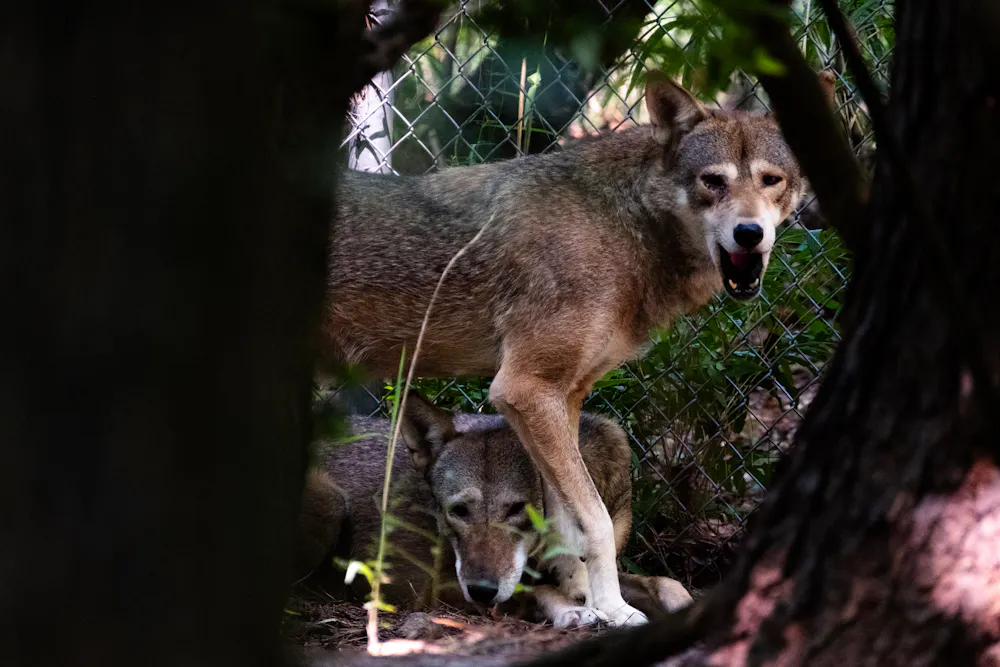
Have you been hearing about the dire wolf lately? Maybe you saw a massive white wolf on the cover of Time magazine or a photo of “Game of Thrones” author George R.R. Martin holding a puppy named after a character from his books.
The dire wolf, a large, wolflike species that went extinct about 12,000 years ago, has been in the news after biotech company Colossal claimed to have resurrected it using cloning and gene-editing technologies. Colossal calls itself a “de-extinction” company. The very concept of de-extinction is a lightning rod for criticism. There are broad accusations of playing God or messing with nature, as well as more focused objections that contemporary de-extinction tools create poor imitations rather than truly resurrected species.
While the biological and philosophical debates are interesting, the legal ramifications for endangered species conservation are of paramount importance. As a legal scholar with a Ph.D. in wildlife genetics, my work focuses on how we legally define the term “endangered species.” The use of biotechnology for conservation, whether for de-extinction or genetic augmentation of existing species, promises solutions to otherwise intractable problems. But it needs to work in harmony with both the letter and purpose of the laws governing biodiversity conservation.
What did Colossal actually do? Scientists extracted and sequenced DNA from Ice Age-era bones to understand the genetic makeup of the dire wolf. They were able to piece together around 90% of a complete dire wolf genome. While the gray wolf and the dire wolf are separated by a few million years of evolution, they share over 99.5% of their genomes.
The scientists scanned the recovered dire wolf sequences for specific genes that they believed were responsible for the physical and ecological differences between dire wolves and other species of canids, including genes related to body size and coat color. CRISPR gene-editing technology allows scientists to make specific changes in the DNA of an organism. The Colossal team used CRISPR to make 20 changes in 14 different genes in a modern gray wolf cell before implanting the embryo into a surrogate mother.
While the technology on display is marvelous, what should we call the resulting animals? Some commentators argue that the animals are just modified gray wolves. They point out that it would take far more than 20 edits to bridge the gap left by millions of years of evolution. For instance, that 0.5% of the genome that doesn’t match in the two species represents over 12 million base pair differences.
Colossal, on the other hand, maintains that it is in the “functional de-extinction” game. The company acknowledges it isn’t making a perfect dire wolf copy. Instead it wants to recreate something that looks and acts like the dire wolf of old. It prefers the “if it looks like a duck, and quacks like a duck, it’s a duck” school of speciation.
Disagreements about taxonomy – the science of naming and categorizing living organisms – are as old as the field itself. Biologists are notorious for failing to adopt a single clear definition of “species,” and there are dozens of competing definitions in the biological literature.
Biologists can afford to be flexible and imprecise when the stakes are merely a conversational misunderstanding. Lawyers and policymakers, on the other hand, do not have that luxury.
President Richard Nixon signed the Endangered Species Act in December 1973. Associated Press
To be protected by the act, an organism must be a member of an endangered or threatened species. Some of the most contentious ESA issues are definitional, such as whether the listed species is a valid “species” and whether individual organisms, especially hybrids, are members of the listed species.
Colossal’s functional species concept is anathema to the Endangered Species Act. It shrinks the value of a species down to the way it looks or the way it functions. When passing the act, however, Congress made clear that species were to be valued for their “aesthetic, ecological, educational, historical, recreational, and scientific value to the Nation and its people.” In my view, the myopic focus on function seems to miss the point.
Despite its insistence otherwise, Colossal’s definitional sleight of hand has opened the door to arguments that people should reduce conservation funding or protections for currently imperiled species. Why spend the money to protect a critter and its habitat when, according to Interior Secretary Doug Burgum, you can just “pick your favorite species and call up Colossal”?
Putting biotechnology to work for conservation
Biotechnology can provide real conservation benefits for today’s endangered species. I suggest gene editing’s real value is not in recreating facsimiles of long-extinct species like dire wolves, but instead using it to recover ones in trouble now.
For example, Colossal has also announced that it has cloned a red wolf. Unlike the dire wolf, the red wolf is not extinct, though it came extremely close. After decades of conservation efforts, there are about a dozen red wolves in the wild in the reintroduced population in eastern North Carolina, as well as a few hundred red wolves in captivity.
The entire population of red wolves, both wild and captive, descends from merely 14 founders of the captive breeding program. This limited heritage means the species has lost a significant amount of the genetic diversity that would help it continue to evolve and adapt.
In order to reintroduce some of that missing genetic diversity, you’d need to find genetic material from red wolves outside the managed population. Right now that would require stored tissue samples from animals that lived before the captive breeding program was established or rediscovering a “lost” population in the wild.
Recently, researchers discovered that coyotes along the Texas Gulf Coast possess a sizable percentage of red wolf-derived DNA in their genomes. Hybridization between coyotes and red wolves is both a threat to red wolves and a natural part of their evolutionary history, complicating management. The red wolf genes found within these coyotes do present a possible source of genetic material that biotechnology could harness to help the captive breeding population if the legal hurdles can be managed.
This coyote population was Colossal’s source for its cloned “ghost” red wolf. Even this announcement is marred by definitional confusion. Due to its hybrid nature, the animal Colossal cloned is likely not legally considered a red wolf at all.
Under the Endangered Species Act, hybrid organisms are typically not protected. So by cloning one of these animals, Colossal likely sidestepped the need for ESA permits. It will almost certainly run into resistance if it attempts to breed these “ghost wolves” into the current red wolf captive breeding program that has spent decades trying to minimize hybridization. How much to value genetic “purity” versus genetic diversity in managed species still proves an extraordinarily difficult question, even without the legal uncertainty.
Biotechnology could never solve every conservation problem – especially habitat destruction. The ability to make “functional” copies of a species certainly does not lessen the urgency to respond to biodiversity loss, nor does it reduce human beings’ moral culpability. But to adequately respond to the ever-worsening biodiversity crisis, conservationists will need all available tools.
Alex Erwin does not work for, consult, own shares in or receive funding from any company or organization that would benefit from this article, and has disclosed no relevant affiliations beyond their academic appointment.
It is not a good break-up. These were always two big beasts used to getting their own way. Two alpha males, if you like the evolutionary metaphor, trying to get along. And now the Donald Trump and Elon Musk relationship is in meltdown.
Who could forget that iconic image from just a few short weeks back? Elon Musk standing behind the seated the US president, Donald Trump, in the Oval Office, towering over him. Trump, his hands clasped, having to turn awkwardly to look up at him. That silent language of the body. Musk accompanied by his four-year old, a charming and informal image, or that great evolutionary signal of mating potential and dominance, depending on your point of view.
These were also clearly two massive narcissistic egos out in their gleaming open-top speedster. Musk was appointed special advisor to Trump, heading the Department of Government Efficiency, cutting excess and waste. The backseat driver for a while.
There were a lot of bureaucratic casualties already, road kill at the side of the highway as the sports car roared on with frightening speed. But things were always going to be difficult if they hit a bump in the road. And they did. Perhaps, more quickly than many had imagined.
Get your news from actual experts, straight to your inbox.Sign up to our daily newsletter to receive all The Conversation UK’s latest coverage of news and research, from politics and business to the arts and sciences.
There were differing views on what caused the crash. Many pointed to the dramatic fall in the sales of Tesla, a 71% fall in profits in one quarter, and the inevitable impact on Musk’s reputation. And yesterday Tesla shares were falling even faster, as investors panicked. The attacks on Tesla showrooms couldn’t have helped either.
Others pointed to Trump’s proposed removal of the tax credit for owners of electric vehicles, or the political backlash in Washington over Space X’s potential involvement in Trump’s proposed “golden dome” anti-missile defense system.
However, according to former White House strategist Steve Bannon, what really caused the crash was when the president refused to show Musk the Pentagon’s attack plans for any possible war with China. There’s only so far being the president’s best buddy can get you. Bannon is reported as saying: “You could feel it. Everything changed.” That, according to Bannon, was the beginning of the end.
Elon Musk has criticised Trump’s ‘big, beautiful bill’.
So now we watch Trump and Musk stumbling away from the crash scene. One minute Trump is putting on a show for the cameras. He’s beaming away and introducing the “big, beautiful bill”, a budget reconciliation bill that rolls together hundreds of controversial proposals. Next, he is accusing Musk of “going crazy” and talking about withdrawing government contracts from the Musk empire.
Musk is unhappy too. “I’m sorry, but I just can’t stand it anymore. This massive, outrageous, pork-filled Congressional spending bill is a disgusting abomination,” he wrote on X. “Shame on those who voted for it: you know you did wrong.”
Rejection and repositioning
He says he’s disgusted by the bill. Disgust is one of the most primitive of all the emotions. A survival mechanism – you must avoid what disgusts you. He’s social signalling here, alerting others, warning them that there’s something disgusting in the camp.
Musk is highly attuned to public perception, perhaps even more so than Trump (which is saying something). With his acquisition of X (formerly Twitter), Musk was able to direct (and add to) online discourse, shaping public conversations.
Psychologically, Musk’s rejection of Trump is an attempt to simultaneously elevate himself and diminish the man behind the bill. He can call out the president’s action like nobody else. He is positioning himself anew as that free thinker, that risk taker, innovative, courageous, unfettered by any ties. That is his personality, his brand – and he’s reasserting it.
Trump on Musk’s criticism of the ‘big beautiful bill’
But it’s also a vengeful act. And it’s perhaps reminiscent of another political insider (and geek), former Downing Street adviser Dominic Cummings, who was sacked by the then UK prime minister, Boris Johnson, in 2020. Cummings was accused of masterminding leaks about the social gatherings in Downing Street.
He went on to criticise Johnson as lacking the necessary discipline and focus for a prime minister as well as questioning his competence and decision-making abilities. The revenge of a self-proclaimed genius.
And revenge is sweet. In a 2004 study, researchers scanned participants’ brains using positron emission tomography (PET) – a medical imaging technique that is used to study brain function (among other things) – while the participants played an economic game based on trust. When trust was violated, participants wanted revenge, and this was reflected in increased activity in the reward-related regions of the brain, the dorsal striatum.
Revenge, in other words, is primarily about making yourself feel better rather than righting any wrongs. Your act may make you appear moral but it may be more selfish.
But revenge for what here? That’s where these big narcissistic egos come into play.
Psychologically, narcissists are highly sensitive to perceived slights – real or imagined. Musk may have felt Trump was attempting to diminish his achievements for political gain, violating this pact of mutual respect. This kind of sensitivity can quickly transmogrify admiration into contempt.
Contempt, coincidentally, is the single best predictor of a breakdown in very close relationships.
Disgust and contempt are powerful emotions, evolving to protect us – disgust from physical contamination (spoiled food, disease), and contempt from social or moral contamination (betrayal, incompetence). Both involve rejection – disgust rejects something physically; contempt rejects something socially or morally. Musk may be giving it to Trump with both barrels here.
Break-ups are always hard, they get much harder when emotions like these get intertwined with the process.
But how will the most powerful man in the world respond to this sort of rejection from the richest man in the world? And where will it end?
Geoff Beattie does not work for, consult, own shares in or receive funding from any company or organisation that would benefit from this article, and has disclosed no relevant affiliations beyond their academic appointment.
The past two decades have seen a notable rise in LGBTQ+ representation on TV. Recent shifts, however, seem to threaten that progress. LGBTQ+ characters continue to meet tragic ends on screen – while off-screen, queer shows are being cancelled, media companies in the US have joined others in rolling back DEI initiatives and anti-LGBTQ+ violence is on the rise.
At this critical moment, it feels apt to take a look back at some of the moments that made British LGBTQ+ TV history, exploring why they mattered and what we can learn from them.
Looking for something good? Cut through the noise with a carefully curated selection of the latest releases, live events and exhibitions, straight to your inbox every fortnight, on Fridays. Sign up here.
1. Man Alive (1967)
In June 1967, the BBC documentary and current affairs series Man Alive focused two episodes on homosexuality. These episodes featured interviews with gay men and lesbian women about their lives and experiences, and how society treats them.
The episode on “the women” featured an interview set in The Gateways club, a long-running lesbian nightclub on the Kings Road in west London (it closed in 1985). The Gateways also appeared in 1968 film, The Killing of Sister George, one of the first mainstream film representations of lesbian characters.
‘The Women’ episode of Man Alive.
The month after the Man Alive documentaries aired, the Sexual Offences Act legalised homosexual acts between men over the age of 21 in England and Wales, so long as they took place consensually and in private.
Documentaries such as these took an outside-looking-in approach to the subject matter, but nonetheless addressed the significant (albeit limited) shifts seen in this period.
2. Girl (1974)
In 1974, an episode of BBC Birmingham’s anthology series Second City Firsts featured the first kiss between two women on British television. The post-watershed television play portrayed a past relationship between Myra Francis’ army corporal, Chrissie, and Alison Steadman’s recruit Jackie. While this is no happily-ever-after romance, happier flashbacks do show the two women in bed together – a brief, but radical for its time, representation of queer intimacy.
The broadcast was, unsurprisingly, controversial and was preceded by a special announcement from the controller of BBC. The rights of LGBTQ+ people in the military later became a major campaign, with the ban on openly gay and lesbian people serving lifted in the UK in 2000.
Notably, fights for LGBTQ+ rights in the military demand equality, but also raise questions around the kinds of inclusions LGBTQ+ people are fighting for. As many activists and writers have argued, LGBTQ+ rights can be co-opted in ways that include some but exclude others, or justify other oppressive forces (for example in what is often referred to as pinkwashing).
3. Lesbian activists protest Section 28 on the six o’clock news (1988)
In May 1988, Margeret Thatcher’s Conservative government brought in Section 28: legislation that prohibited local authorities and schools from “promoting” homosexuality, reflecting the powerful anti-LGBTQ+ prejudice of the period.
The lesbian protestors remember the moment they stormed the studio.
The evening before the legislation was passed in parliament, a group of lesbian activists interrupted the live broadcast of the six o’clock news. As one of the protesters, Booan Temple, reflected: “By getting on the news, we would be the news.”
The bill still passed, and Section 28 remained in place until 2000 in Scotland, and 2003 in England and Wales, but the power of LGBTQ+ resistance was palpable. Looking back today, there are worrying echoes of the moral panics of the 1980s to be found in the current climate.
4. The Brookside kiss (1994)
In 1985, Gordan Collins (Mark Burgess) came out on Channel 4’s popular soap opera, Brookside – making him the first openly gay character on a British television series. Five years later the soap featured the first pre-watershed kiss between two women, when Beth Jordache (Anna Friel) kissed Margaret Clemence (Nicola Stephenson).
Anna Friel looks back on her lesbian kiss scene from Brookside.
The kiss was so culturally significant that it later featured in Danny Boyle’s 2012 Olympics Opening Ceremony. Just one year after the episode, however, Beth died off screen in prison, an example of the “bury your gays” trope (where LGBTQ+ characters are frequently killed off in TV and film).
Meanwhile, 1994 also saw Eastenders introduce Della Alexander (Michelle Joseph), the soap’s first lesbian and one of the first Black LGBTQ+ characters on British television. Della and girlfriend Binnie departed the soap a year later.
Bisexual actor Pam St Clement, who played Eastenders matriarch Pat Butcher reflected: “Having given themselves that brief, they didn’t know what the fuck to do with it.”
5. Coronation Street’s Hayley Cropper (1998)
In 1998 it was Coronation Street’s turn to make LGBTQ+ TV history, when the ITV soap introduced Hayley Cropper (Julie Hesmondhalgh), a transgender woman initially intended for a comic “bad date” storyline.
Julie Hesmondhalgh reflecting on Hayley Cropper’s ‘coming out’ scene many years later.
Following criticism from trans activists, ITV recruited trans actress Annie Wallace as a research assistant to work with Hesmondhalgh on the role. In 2015, Wallace joined Hollyoaks, becoming the first transgender person to play a regular transgender character on a British soap opera.
Hayley went on to exceed her problematic origins and win the hearts of audiences, educating them, as she did so, on the prejudices and legal barriers trans people faced. Hesmondhalgh, a trans ally and supporter of the charity Trans Media Watch, has, however, reflected that, as a cis actor, she “definitely wouldn’t take it” if the role was offered to her today.
6. Queer as Folk (1999)
Back on Channel 4, 1999 saw the broadcast of another groundbreaking show: Queer as Folk, written by Russell T Davies. Based around Manchester’s gay village, Queer as Folk broke boundaries with an unapologetic portrayal of the lives, loves and lusts of a group of queer characters.
From explicit sex scenes to queer family making, the series’ represented LGBTQ+ lives in previously unseen ways. This radical visibility was, however, largely limited to white gay male characters – reflecting longstanding inequalities in media representation.
The trailer for Queer as Folk.
In later work, Davies has represented a more diverse spectrum of LGBTQ+ experience. Returning to Manchester’s queer scene again in 2015, anthology series Banana (2015) began with the story of Dean, a young Black gay man portrayed by British Nigerian actor Fisayo Akinade, and featured Bethany Black as the first trans actor to play a trans role in a British series (a few months before Annie Wallace joined Hollyoaks).
The following years have seen more, and more diverse, examples of LGBTQ+ representation on TV. But tired tropes and exclusions continue, and the power of representation to shape possibilities, protections and prejudices is more pressing than ever.
Kate McNicholas Smith does not work for, consult, own shares in or receive funding from any company or organisation that would benefit from this article, and has disclosed no relevant affiliations beyond their academic appointment.
The Smestow Valley Midsummer Festival takes place on Saturday 21 June, and has been organised by Wildside Activity Centre, in partnership with City of Wolverhampton Council and Friends of Smestow Valley.
Entertainment will include live music from local band Just in Time, guided walks from Birmingham and Black Country Wildlife Trust, scavenger and bug hunts around the valley site, a mindfulness yoga experience, children’s craft activities and refreshments at the reserve’s Cupcake Lane café.
There will also be a range of stalls with representatives from the Black Country Geopark, Friends of Smestow Valley, local businesses Nature Makers and Peace of Mindfulness, Wightwick Manor, Canal & River Trust and Wildside Activity Centre.
The day will run from 10am to 3pm and will take place along the track by the Cupcake Lane café.
Residents are welcome to come along and enjoy the festival as well as find out more about the work currently being done at the site under the ongoing project to Explore, Enhance, Protect and Promote Smestow Valley.
Last year, City of Wolverhampton Council, together with partner Canal & River Trust and Birmingham and Black Country Wildlife Trust, secured funding of £217,000 from The Heritage Lottery Fund to develop plans for a full application of around £2 million to be submitted in 2026.
If the application for this delivery phase is successful, renovation of the much loved Meccano bridge is planned, along with other structures linked to the disused railway line which forms the main path through Smestow Valley.
During the initial development phase, the council has worked with partners Canal & River Trust and Birmingham and Black Country Wildlife Trust as well as the Wildside Activity Centre, Friends of Smestow Valley and Waterside Care.
This partnership approach has seen a wide range of activity at the site, including improvements to the canal towpath, planting wildflower meadows, restoring historic ponds and hedges and planting native flowers including bluebells and wild garlic.
These activities, which were funded by the UK Shared Prosperity Fund, helped develop a range of volunteering opportunities as well as an approach to volunteering for the future.
Over time, the whole project at Smestow Valley aims to increase engagement through school visits, heritage focused volunteering opportunities, biodiversity enhancements, community events, artwork and interpretation as well as online information.
Councillor Bhupinder Gakhal, cabinet member for resident services at City of Wolverhampton Council, said: “The Midsummer Festival promises to be a lot of fun for the whole family with a wide range of activities, attractions and stalls on offer.
“Smestow Valley is a real hidden gem in the city, and we’re delighted to be working with such a wide range of committed partners and local people under the Explore, Enhance, Protect and Promote project to create a green space that we can all be proud of.
“I’d encourage everyone to come and find out more about the site and enjoy a day with family and friends in beautiful surroundings. We want to welcome our residents along to the Smestow Valley Midsummer Festival – come and make the most of the longest day of the year!”
Parking is limited, so visitors are welcome to come by foot, bike, bus or, as the valley is by the canal, by boat.
To find out about the latest activities at the valley and how to get involved visit the Facebook page or sign up to the newsletter.
Smestow Valley and rail network is a 4.5km long site, which forms part of the Black Country UNESCO Global Geopark and has a rich history dating back to Anglo-Saxon times. It provides visitors with opportunities for healthy activities including walking, cycling and boating.
TALLINN, Estonia, June 06, 2025 (GLOBE NEWSWIRE) — In the early days of crypto, mining was reserved for the technically elite. Specialized rigs, high electricity bills, and complex setups created a wall between everyday people and the wealth being generated behind blockchain technology. Fast forward to 2025, and Bitcoin Solaris is tearing down that wall, placing the power of crypto mining directly into the palm of your hand.
This isn’t just another blockchain project promising change. Bitcoin Solaris (BTC-S) is delivering it through innovation, accessibility, and mobile-first scalability. BTC-S is powered by a dual-layered, dual-consensus system—combining Proof-of-Work (PoW) with Delegated Proof-of-Stake (DPoS) to ensure both security and efficiency. This architecture allows BTC-S to achieve lightning-fast 10,000+ transactions per second while keeping its network highly decentralized and secure.
But the real revolution is in how it’s mined—and who can mine it.
Your Phone Is Now a Mining Rig
At the core of this disruption is the upcoming Solaris Nova App—an intuitive, cross-platform mining tool that lets anyone start earning from their smartphone, desktop, or even a browser. Mining has never been this simple:
Cross-device compatibility: Supports ASICs, GPUs, laptops, and smartphones.
One-click setup: No coding, no wallet configuration—just tap and go.
Real-time wallet rewards: Earnings are visible immediately.
Adaptive algorithms: Optimizes based on device specs for peak performance.
Energy efficiency: Consumes 99.95% less energy than traditional mining.
Even more impressive? Bitcoin Solaris has baked in end-to-end encryption, biometric logins, remote wipe capabilities, and gamified features like achievements and leaderboards, making it secure, fun, and inclusive.
Build Wealth, Stake, and Grow with Liquid Staking
Bitcoin Solaris doesn’t stop at mining. It also enables liquid staking, allowing users to earn passive income without locking up their assets. When users stake BTC-S, it’s instantly converted into sBTC-S at a 1:1 ratio.
That means you can:
Trade your staked tokens freely.
Use them in DeFi protocols like lending or liquidity pools.
Participate in governance without losing yield.
Best of all, liquid staking is fully integrated into the Solaris Nova App. Validator selection is automated, the UI is beginner-friendly, and the security framework ensures peace of mind.
BTC-S’s model improves both decentralization and capital efficiency, letting your assets work for you from day one.
With mobile mining and staking at the center of its offering, it’s no surprise that over 11,000 users have joined the presale so far. And with just around 8 weeks left in the sale, interest is only accelerating.
Current Price: $6
Next Phase: $7
Launch Price: $20
Bonus: 10%
It’s not just retail investors taking notice. Crypto Royal recently published a detailed review of Bitcoin Solaris, praising the project’s smart tech and accessibility. As more influencers weigh in, the momentum continues to build.
Security Backed by Real Audits and Transparency
What sets Bitcoin Solaris apart from many crypto projects is its commitment to trust and transparency. It’s passed not one, but two major audits—by Cyberscope and Freshcoins. Plus, the team has completed full KYC verification, further proving it’s here to stay.
And as excitement continues to spread, you can track updates, join discussions, and be part of the movement on the project’s Telegram and X channels.
Conclusion: Crypto Wealth Isn’t Reserved for the Elite Anymore
Bitcoin Solaris is more than a token—it’s a technology shift. It brings together power, speed, and inclusivity in a way the industry has never seen before. Through the exciting release of the Solaris Nova App, anyone—from students to working professionals—can mine, stake, and grow their wealth without needing expensive rigs or deep technical knowledge.
If you ever felt like you were late to Bitcoin, this is your second chance—but built for the mobile era. And this time, all it takes is the phone in your pocket.
Disclaimer:This is a paid post and is provided byBitcoin Solaris. The statements, views, and opinions expressed in this content are solely those of the content provider and do not necessarily reflect the views of this media platform or its publisher. We do not endorse, verify, or guarantee the accuracy, completeness, or reliability of any information presented.We do not guarantee any claims, statements, or promises made in this article.This content is for informational purposes only and should not be considered financial, investment, or trading advice.Investing in crypto and mining-related opportunities involves significant risks, including the potential loss of capital.It is possible to lose all your capital. These products may not be suitable for everyone, and you should ensure that you understand the risks involved. Seek independent advice if necessary. Speculate only with funds that you can afford to lose.Readers are strongly encouraged to conduct their own research and consult with a qualified financial advisor before making any investment decisions. However, due to the inherently speculative nature of the blockchain sector—including cryptocurrency, NFTs, and mining—complete accuracy cannot always be guaranteed.Neither the media platform nor the publisher shall be held responsible for any fraudulent activities, misrepresentations, or financial losses arising from the content of this press release.In the event of any legal claims or charges against this article, we accept no liability or responsibility.Globenewswire does not endorse any content on this page.
Legal Disclaimer: This media platform provides the content of this article on an “as-is” basis, without any warranties or representations of any kind, express or implied. We assume no responsibility for any inaccuracies, errors, or omissions. We do not assume any responsibility or liability for the accuracy, content, images, videos, licenses, completeness, legality, or reliability of the information presented herein. Any concerns, complaints, or copyright issues related to this article should be directed to the content provider mentioned above.
Photos accompanying this announcement are available at:
In a landmark visit to Jammu and Kashmir, Prime Minister Narendra Modi on Friday flagged off new Vande Bharat trains and inaugurated two major railway bridges—the Chenab Rail Bridge and the Anji Khad Bridge—marking a pivotal moment in the region’s rail connectivity journey. The event highlighted more than a decade of sustained investment in railway infrastructure aimed at expanding access, improving mobility, and unlocking economic opportunity across the Union Territory.
The Chenab Rail Bridge, now recognised as the world’s highest railway arch bridge, towers 359 metres above the riverbed—rising 35 metres higher than the Eiffel Tower. Spanning 1,315 metres, this engineering marvel is a critical part of the Udhampur–Srinagar–Baramulla Railway Link (USBRL), one of India’s most ambitious transport projects. Designed to withstand extreme weather and seismic activity, the bridge is built to endure wind speeds of up to 260 kilometres per hour and has an expected lifespan of 120 years. Structural steel capable of withstanding temperatures from minus 10 to 40 degrees Celsius and cutting-edge Tekla software for structural precision were used in its construction.
Nearby, the Anji Khad Bridge stands as India’s first cable-stayed railway bridge. Stretching 725 metres across the Anji River valley and supported by 96 high-tensile cables, the bridge is anchored by a 193-metre-tall inverted Y-shaped pylon. Set against the dramatic Himalayan landscape, the structure was completed in a record time of 11 months. Over 8,200 metric tonnes of structural steel were used in its construction, making it a resilient and strategic link in the Katra–Banihal section of the USBRL. The bridge has been engineered to withstand tremors, high wind loads and shifting topography, providing a vital connection in a region marked by seismic and geological volatility.
The rail network in Jammu and Kashmir has undergone a radical transformation over the past 11 years. Once hindered by geography and conflict, the region’s integration into the national railway grid is now nearly complete. The USBRL project, which cuts across 272 kilometres of rugged Himalayan terrain, includes 36 tunnels spanning 119 kilometres and 943 bridges that connect isolated communities. Constructed at a cost of ₹43,780 crore, it represents one of the most challenging infrastructure undertakings in India’s post-independence era.
To maximise the benefit of this enhanced connectivity, the Vande Bharat Express will soon operate between Jammu and Srinagar. Designed for sub-zero conditions, the train is equipped with heated windshields, insulated toilets and advanced heating systems to withstand temperatures as low as minus 20 degrees Celsius. A snow removal train will operate ahead of it during harsh winters, and seismic dampers have been installed to ensure safety along the route.
The journey between Katra and Srinagar, which previously took more than five hours, will now be reduced to approximately three, a shift that is expected to bring substantial gains in tourism, trade and accessibility. Full electrification of railway lines in the region further strengthens this transformation, aligning with broader goals of energy efficiency and sustainability.
In addition to new services and engineering breakthroughs, the government has focused on modernising stations and expanding pilgrimage routes. In 2014, the commissioning of the Udhampur–Shri Mata Vaishno Devi Katra rail section opened a 25.6 km link built at a cost of ₹1,132.75 crore. It features 10.9 km of tunnels, 36 bridges and a modern Katra station, constructed with dedicated facilities including public conveniences and a footbridge for local residents. That same year, the Shri Shakti AC Superfast Express was introduced to connect New Delhi with the shrine town, enhancing accessibility for pilgrims.
More recently, in February 2024, a 48-km stretch between Banihal, Khari, Sumber and Sangaldan was inaugurated, along with the electrification of the 185.66-km Baramulla–Srinagar–Banihal–Sangaldan section. Prime Minister Modi flagged off the valley’s first electric train, marking a shift towards cleaner and more efficient rail operations. The Banihal–Sangaldan section features ballast-less tracks to ensure smoother rides.
In January 2025, Indian Railways conducted safety inspections on the 111-km Banihal–Katra section, featuring 97 km of tunnels and four major bridges. Once operational, this will complete the Jammu–Srinagar rail link. Jammu station is also being redeveloped to include eight platforms and upgraded passenger amenities. A dedicated railway division with headquarters in Jammu was created in the same month, carved out from the Ferozepur Division. It will oversee operations in Jammu and Kashmir, Ladakh, Himachal Pradesh and parts of Punjab, enhancing administrative efficiency and service delivery.
The T-50 tunnel, a 12.77-km stretch connecting Khari and Sumber, is now the longest transportation tunnel in India and plays a critical role in the USBRL network. Constructed using the New Austrian Tunnelling Method, the tunnel includes a parallel escape tunnel and cross-passages every 375 metres for safety. Extensive geological challenges were met with strategic engineering solutions, including the construction of multiple adits to fast-track completion. The installation of CCTV cameras every 50 metres, monitored from a central control room, ensures operational safety.
To support these developments, Indian Railways also laid 215 km of approach roads to ensure access to remote construction sites. These roads have brought ancillary benefits by improving rural connectivity and enabling economic activity in previously inaccessible areas.
As part of its broader modernisation strategy, the Ministry of Railways has included four Jammu and Kashmir stations—Budgam, Jammu Tawi, Shri Mata Vaishno Devi Katra and Udhampur—under the Amrit Bharat Station Scheme. This initiative aims to deliver enhanced passenger services and drive integrated urban development.
In the Union Budget for 2025–26, the Centre allocated ₹844 crore specifically for railway development in Jammu and Kashmir. The funding is aimed at accelerating ongoing projects and strengthening rail infrastructure across the region.
The confluence of infrastructure upgrades, strategic investments and technical innovation over the past decade is reshaping Jammu and Kashmir’s transport landscape. The region, once isolated by mountains and weather, is now poised to emerge as a vital link in India’s national rail network, offering faster, cleaner and more inclusive mobility for its people.
Kris Jenner’s “new” face sparked myriad headlines about how she can look so good at 69 years old. While she’s not confirmed what sort of procedures she’s undergone, speculation abounds.
As a US reality TV personality, socialite and Kardashian matriarch, Jenner has long curated her on-screen identity. Her fame and fortune are intimately tied to a multinational cosmetics industry that has, for centuries, bartered in the illusion of timeless beauty.
The pursuit of cosmetic enhancement can be traced back as far as Ancient Egypt, reminding us the desire to look younger is hardly new.
But while many women try in vain to battle the ageing process, Jenner is an example of someone who’s actually succeeded, at least visually. What does that mean for the rest of us?
Decades of surgeries
Modern cosmetic plastic surgery has its roots in compassion. It was developed to help disfigured first world war soldiers rebuild their faces and identities.
But this origin story has been sidelined. Today, aesthetic procedures are overwhelmingly pursued by women and marketed as lifestyle enhancements rather than medical interventions.
Advancements in reconstructive surgery were made after both world wars with treatments on wounded soldiers. AFP/Getty Images
Plastic surgery, once considered extreme or shameful, began to gain popularity in the 1960s, and is now widespread.
Hollywood has long played a role in shaping these standards. During its Golden Age, stars like Marilyn Monroe and John Wayne are reported to have undergone cosmetic surgeries – rhinoplasty (nose jobs), chin implants, facelifts – to preserve their screen personas.
Even before Instagram, before-and-after images were a cultural obsession, often used to shame or expose.
From taboo to trend
The digital age has further normalised cosmetic enhancements, with social media influencers and celebrities promoting procedures alongside beauty products.
It’s estimated Jenner spent upwards of US$130,000 (around A$200,000) on cosmetic interventions, resulting in a look that some media outlets suggest places her in her 30s.
On Jenner, social media users are split. Some offer aspirational praise (“If I had the money, I’d get it all done!”), while others criticise her rejection of “ageing gracefully”.
Yet many stars, including Courtney Cox, Ariana Grande, and Mickey Rourke, have spoken openly about regrets and the psychological toll of these procedures. Even with agency, the pressure remains immense.
Youth as a cultural ideal
This obsession with agelessness reflects a deeper societal discomfort with visible ageing, particularly in women.
Celebrities, with access to elite medical professionals and procedures, seem to cheat time.
Yet the outcome of is often disorienting: when Jenner appears younger than her children, the generational lines blur.
This erasure of age difference entrenches youth as an end in itself. It also destabilises how we perceive kinship and mortality.
Supermodel Bella Hadid has said she regrets getting a rhinoplasty as a teenager. Of Palestinian descent, she said “I wish I’d kept the nose of my ancestors”.
In my own research, I’ve argued cosmetic enhancement is tied to a cultural denial of death.
The ageing isn’t the problem – it’s our refusal to accept it.
The desperate clinging to youth reflects a collective resistance to change. Celebrity culture and consumer capitalism exploit this vulnerability, making age a problem to be solved rather than a life stage to be honoured.
We should mourn our ageing, not erase it. In another world, we could witness it, share it, and celebrate its quiet, powerful beauty.
So what about us?
But that’s not the world many live in, and the pressure extends beyond Hollywood.
With filters, apps, and social media platforms, ordinary people also curate and enhance their images, playing their part in a fantasy of perfection.
A recent study looked at the way young Australians use selfie editing tools. It found the widespread use of such apps have a significant effect on the body image of young people.
The line between self-care and self-deception has never been blurrier. We all want to present the best version of ourselves, even if reality slips into illusion.
So while women have long tried to outrun visible ageing, whether that be through anti-wrinkle creams or more invasive means, Jenner is an example of something relatively rare: a woman who’s actually managed to do it.
In doing so, she and her celebrity counterparts set a new youthful beauty standard in what ageing should (or shouldn’t) look like.
And while that standard may be felt by a variety of women, few will be able to achieve it.
Extremely wealthy beauty moguls like Kris Jenner can afford elite treatments, while most people face growing financial pressure and a cost-of-living crisis. The divide isn’t just aesthetic – it’s economic.
Beauty, in this context, is both a product and a privilege.
And of course, judgement of women’s appearances remains a powerful force for discrediting their political, social, and moral worth. For every bit of praise there is for Jenner’s “youthful” appearance, there are videos claiming she’s “ruined her face” and questioning of whether she should spend so much money on such a cause.
As long as gender inequality persists and beauty remains a currency of value, the pressure to conform will endure.
Margaret Gibson does not work for, consult, own shares in or receive funding from any company or organisation that would benefit from this article, and has disclosed no relevant affiliations beyond their academic appointment.
Anglia Ruskin University (ARU) is playing a key role at two major Pride events this month, proudly taking centre stage as the headline sponsor for both Cambridge Pride and Essex Pride.
ARU is committed to fostering an inclusive and welcoming environment for all, including its vibrant LGBTQ+ staff and student community, and the University is thrilled to once again be supporting these two popular events.
Cambridge Pride kicks off at 12 noon on Saturday, 14 June with a colourful parade through the city centre, before ending back at Jesus Green. The free-to-attend event will continue until 9pm, bringing together the diverse communities of Cambridge for a day of entertainment and unity.
Attendees can look forward to an exciting lineup of performers on the main stage, including singers and dancers from Cambridge and beyond, and the event will also feature a dance tent, funfair rides, a wellbeing area and a community tent offering arts workshops for children.
Essex Pride is taking place on Saturday, 21 June in Chelmsford, and this year is celebrating its 21st birthday. The day begins with the free City Centre Pride March, which sets off from Popworld Chelmsford at 11:20am, before arriving at Central Park, the main festival venue.
Each year Essex Pride welcomes around 4,000 people and this year’s celebrations include a huge lineup of artists. The ticketed event includes two live stages and headlining this year will be The Vengaboys, X Factor star Louisa Johnson, and RuPaul Drag Race Queens Tia Kofi and La Voix.
“We’re proud to be the headline sponsor of Cambridge Pride and Essex Pride once again this year.
“Pride is more than a celebration, it’s a powerful act of solidarity. As ever, we stand together with our LGBTQ+ students, staff, and local communities, especially in these challenging times.
“Inclusion and belonging are at the heart of everything we do at Anglia Ruskin University. Through our excellent education and research, we continue to drive positive change and challenge inequality.”
Professor Catherine Lee, Pro Vice Chancellor and Dean of the Faculty of Arts, Education, Humanities and Social Sciences at ARU
Annual Financial Report Year Ended 28 February 2025
ProVen Growth and Income VCT plc, managed by Beringea LLP, today announces the final results for the year ended 28 February 2025. These results were approved by the Board of Directors on 5 June 2025.
Fund Overview
Ordinary Shares as at:
28 February 2025
29 February 2024
Net asset value per Ordinary Share
50.2p
54.7p
Dividends paid since class launch (originally as ‘C’ Shares)
81.15p
78.4p
Total return (net asset value plus dividends paid since ‘C’ Share class launch)
131.35p
133.1p
Year on year change in:
Net asset value per Ordinary Share (adjusted for dividends paid in the year)
(3.2)%
6.5%
Dividends:
Dividends paid/payable in respect of year
2.75p
2.75p
Dividend yield
5.2%
5.2%
Dividends
Your Board is proposing a final dividend for the year ended 28 February 2025 of 1.5p per share to be paid on 15 August 2025 to Shareholders on the register on 18 July 2025. The payment of this dividend is subject to Shareholder approval at the Company’s forthcoming AGM, details of which can be found below.
The payment of this dividend will result in an equivalent reduction in the Company’s NAV per share. The total tax-free dividends of 2.75p per share for the year ended 28 February 2025 represents a cash return to Shareholders of 5.2% on the opening NAV per share at 1 March 2024, after deducting the prior year’s final dividend of 1.5p per share.
Annual General Meeting
The next AGM of the Company will be held at the offices of Beringea LLP, at Charter House, 55 Drury Lane, London, WC2B 5SQ at 12:30pm on Tuesday 15 July 2025. Those intending to attend the AGM are asked to register their intention by emailing info@beringea.co.uk in advance of the meeting.
We understand that attendance in person may not be possible or desirable for all who wish to attend. Therefore, the Company offers Shareholders the option to follow proceedings of the meeting via video conference link. Any Shareholders who wish to follow the meeting remotely, should email info@beringea.co.uk for joining instructions.
Please note that Shareholders will not be able to vote or ask questions at the AGM when joining remotely. Shareholders are encouraged, even if they are planning to attend the AGM in person, to exercise their votes by submitting their proxy electronically via their Signal Shares account at https://www.signalshares.com/ and to appoint the Chair of the AGM as their proxy with their voting instructions.
Shareholders who wish to submit questions in advance of the AGM may do so via e-mail to info@beringea.co.uk and the Board will endeavour to respond to questions raised at the meeting.
Shareholder event
The Company’s Annual Shareholder Event continues to be well received and provides an important opportunity for Shareholders to hear from the Investment Manager on topics such as performance and investment activity, to ask questions of your Board, and to receive insights and updates from the portfolio companies.
With a shareholder base of more than 12,000, we feel it is important to prioritise equal access to this event to as many Shareholders as possible throughout the country and we therefore host the Annual Shareholder Event online. Holding the event online, rather than in person, is a more cost-effective way of reaching a larger audience, thereby benefiting all Shareholders. This year’s event has been scheduled for 10:30am to 11:45am on Tuesday, 15 July 2025.
You can sign up for the Annual Shareholder Event at https://proven.connectid.cloud. If you have any questions about the event or if you would like any support with registering, then please contact Beringea via events@beringea.co.uk.
Annual Financial Report Year ended 28 February 2025
ProVen VCT plc, managed by Beringea LLP, today announces the final results for the year ended 28 February 2025. These results were approved by the Board of Directors on 5 June 2025.
Fund Overview
Ordinary Shares as at:
28 February 2025
29 February 2024
Net asset value per Ordinary Share
62.9p
65.2p
Dividends paid since launch
87.5p
84.25p
Total return (net asset value plus dividends paid since launch)
150.4p
149.45p
Year on year change in:
Net asset value per Ordinary Share (adjusted for dividends paid in the year)
1.5%
4.9%
Dividends:
Dividends paid/payable in respect of year
3.25p
3.25p
Dividend yield
5.1%
5.1%
Dividends Your Board is proposing a final dividend for the year ended 28 February 2025 of 1.75p per share to be paid on 15 August 2025 to Shareholders on the register on 18 July 2025. The payment of this dividend is subject to Shareholder approval at the Company’s forthcoming AGM, details of which can be found below.
The payment of this dividend will result in an equivalent reduction in the Company’s NAV per share. The total tax-free dividends of 3.25p per share for the year ended 28 February 2025 represents a cash return to Shareholders of 5.1% on the opening NAV per share at 1 March 2024, after deducting the prior year’s final dividend of 1.75p per share.
Annual General Meeting The next AGM of the Company will be held at the offices of Beringea LLP, at Charter House, 55 Drury Lane, London, WC2B 5SQ at 12:00pm on Tuesday 15 July 2025. Those intending to attend the AGM are asked to register their intention by emailing info@beringea.co.uk in advance of the meeting.
We understand that attendance in person may not be possible or desirable for all who wish to attend. Therefore, the Company offers Shareholders the option to follow proceedings of the meeting via video conference link. Any Shareholders who wish to follow the meeting remotely, should email info@beringea.co.uk for joining instructions.
Please note that Shareholders will not be able to vote or ask questions at the AGM when joining remotely. Shareholders are encouraged, even if they are planning to attend the AGM in person, to exercise their votes by submitting their proxy electronically via their Signal Shares account at https://www.signalshares.com/ and to appoint the Chair of the AGM as their proxy with their voting instructions.
Shareholders who wish to submit questions in advance of the AGM may do so via e-mail to info@beringea.co.uk and the Board will endeavour to respond to questions raised at the meeting.
Shareholder event The Company’s Annual Shareholder Event continues to be well received and provides an important opportunity for Shareholders to hear from the Investment Manager on topics such as performance and investment activity, to ask questions of your Board, and to receive insights and updates from the portfolio companies.
With a shareholder base of more than 12,000, we feel it is important to prioritise equal access to this event to as many Shareholders as possible in the country and we therefore host the Annual Shareholder Event online. Holding the event online, rather than in person, is a more cost-effective way of reaching a larger audience, thereby benefiting all Shareholders. This year’s event has been scheduled for 10:30am to 11:45am on the morning of the AGM, Tuesday, 15 July 2025.
You can sign up for the Annual Shareholder Event at https://proven.connectid.cloud. If you have any questions about the event or if you would like any support with registering, then please contact Beringea via events@beringea.co.uk.
Source: United Kingdom – Executive Government & Departments
World news story
Western Balkans culture ministries adopt growth declaration to place creativity at the heart of growth
Culture ministries from Albania, Bosnia and Herzegovina, Kosovo, Montenegro, North Macedonia and Serbia met today under the Berlin Process and, together with UK Special Envoy to the Western Balkans Dame Karen Pierce, adopted a Joint Declaration that puts the region’s creative economy at the centre of its economic and European future.
Berlin Process ministerial meeting on creative economy
Kotor, Montenegro, 28 May 2025 – Culture ministries from Albania, Bosnia and Herzegovina, Kosovo, Montenegro, North Macedonia and Serbia met today under the Berlin Process and, together with UK Special Envoy to the Western Balkans Dame Karen Pierce, adopted a Joint Declaration that puts the region’s creative economy at the centre of its economic and European future.
Long championed by the United Kingdom, the creative economy of the Western Balkans has taken centre stage in Berlin Process discussions for the very first time, reflecting its growing contribution to inclusive growth, social cohesion and regional cooperation.
Co-hosted by Montenegro’s Minister of Culture and Media Dr Tamara Vujović, British Council Deputy CEO Kate Ewart Biggs and the UK Special Envoy to the Western Balkans Dame Karen Pierce, the forum explored how creative industries can generate skilled jobs, retain talented young people and deepen cross-border cooperation. Creative businesses already outpace many traditional sectors and are natural partners for the green and digital transitions the Western Balkans must complete on their path to EU membership.
At the close of the meeting, the six ministers committed to embed creativity in national growth agendas. The Declaration pledges governments to treat the creative economy as a strategic sector, align the work of culture, education and economy ministries, create stable public-finance lines and incentives that crowd-in private investment, and open access to EU and international funds such as the Western Balkans Growth Plan and Horizon Europe. Ministries aim to turn the region’s cultural richness into a lasting engine of prosperity and regional cohesion.
UK Special Envoy to the Western Balkans, Dame Karen Pierce said:
“The UK’s hosting of the Berlin Process this year underlines our commitment to strengthen cooperation with our partners in the Western Balkans. The discussions we’ve had today, focused on the creative economy, highlight the importance of regional collaboration and the need for long-term investments in areas that will drive sustainable growth, foster social cohesion, and deepen ties across the region.”
“The creative economy can be a driver for growth for all communities. It has immense potential in the Western Balkans. By working together, we can unlock the full potential of this sector, not just for economic benefits, but also as a means of strengthening cultural identity and heritage across the region.
“Today’s adoption of the joint declaration by the Ministries of Culture from the Western Balkans is an important step forward in shaping the future of the creative economy in the region. It’s a clear statement of our shared vision for fostering innovation, promoting sustainable development, and supporting our creative industries as vital contributors to the region’s growth. While each country has its own requirements and ideas, by working together, governments and creative industry across the region can bring even more benefits to their citizens across each and every community.
“We reaffirm our commitment to operationalising the creative economy as a strategic sector for growth. By strengthening collaboration between Ministries of Culture, Education, and Economy, we will ensure that culture and creativity are embedded in national economic plans, innovation strategies, and skills development. This is an investment in the future of the region and its citizens.”
British Council programmes such as Culture & Creativity for the Western Balkans have trained thousands of cultural professionals and financed scores of start-ups, while links with UK institutions have opened new export markets for film, music and design. Building on today’s commitments, the British Council will launch a regional fund later this year to help creative entrepreneurs scale their ideas and reach international audiences, reinforcing the people-to-people ties at the heart of the Berlin Process.
In October 2021, 136 countries agreed to establish new tax rules requiring large multinational companies to pay at least 15% in corporate tax. Nearly four years later, this ambitious agreement is finally being implemented around the world, but its success faces big challenges.
The Organisation for Economic Cooperation and Development (OECD) tax framework aims to end the so-called race to the bottom, where corporations pit countries against each other to pay less tax and shift profits to jurisdictions with lower tax rates.
In the second part of The 15% solution from The Conversation Weekly podcast, we examine progress towards implementing the global tax deal.
The OECD’s two-pillar system fundamentally changes how multinationals are taxed. Pillar One determines where companies pay taxes. Pillar Two establishes how much they must pay: a minimum of 15% for any multinational with yearly revenues above US$850 million. The innovative aspect of the system is that it is self-enforcing. If a company pays less than 15% in any country, other nations where it operates can charge a supplementary tax to meet that minimum.
However, implementation faces significant obstacles. So far around 140 countries have signed up. President Donald Trump withdrew the US from the negotiations in February 2025. China supports the framework in theory but is slow to fully implement it. And some low- and middle-income countries have also not signed up, citing technical complexity or bias toward higher-income countries.
Martin Hearson, a research fellow at the Institute of Development Studies in the UK, explains that for countries with fewer legal and administrative resources, even good rules can be counterproductive due to their complexity. This has led some countries to look for alternatives, including a new UN Framework Convention on International Tax Cooperation, for which negotiations began in February 2025.
Despite these challenges, the OECD expects that approximately 80% of profits previously taxed at low rates will now be appropriately taxed.
This episode of The Conversation Weekly was written and produced by Mend Mariwany. Gemma Ware is the executive producer. Mixing and sound design by Eloise Stevens and theme music by Neeta Sarl.
Listen to The Conversation Weekly via any of the apps listed above, download it directly via our RSS feed or find out how else to listen here. A transcript of this episode is available on Apple Podcasts.
Martin Hearson’s research has been supported by the UK Foreign, Commonwealth and Development Office, the Norwegian Agency for Development Cooperation, the Gates Foundation, the Intergovernmental Group of 24, the World Bank, the UN Department for Economic and Social Affairs, and ActionAid International.
Summer in Aberdeen is set to begin with the return of the Aberdeen Highland Games to Hazlehead Park next Sunday.
The Aberdeen Highland Games, taking place on 15 June from 10am to 5:30pm, promises to be a day of fun that all ages can enjoy.
The Lord Provost of Aberdeen, Dr David Cameron, and The Marquess of Aberdeen and Temair George Gordon, who will be the Chieftain of the games, will officially open the Games.
The Lord Provost said: “Aberdeen’s Highland Games are a celebration of our heritage and showcases the strength and spirit of the North East.
“I am looking forward to welcoming back visitors and locals to our city for a day that the whole family can enjoy.”
This year’s Games will feature traditional Scottish Highland Games competitions including caber tossing and weight over the bar, as well as a selection of fine food and drink from local producers and high quality trade and charity stalls.
A range of fun and free activities, including an assault course, climbing wall, segways and TechFest will also be available for all ages to show off their skills and try something new.
Stage entertainment will also be on throughout the day from popular children’s act Mr Bloom from CBeebies and music by Aberdeen Music Service, The Rock Choir and Vienna.
Dogs are welcome to attend alongside their owners, so long as they remain on a lead at all times and can visit the dog activity zone.
Tickets are on sale now and can be purchased in advance via our website or on the day. For more information visit our website.
Derby Market Hall has launched a new booking process for those who are interested in having a temporary pop-up stall.
The revitalised Grade II listed building has undergone a significant £35.1m transformation, creating a vibrant hub in the heart of the city that brings together the best of the region’s independent shopping, eating, drinking, and entertainment under one stunning roof.
The Market Hall was officially reopened on Saturday 24 May – drawing in over 34,500 visitors during its first three days – and hosted a week-long celebration packed with live music and family-friendly workshops.
The pop-up barrows offer visitors an opportunity to enjoy something different each time they visit. With a central location, they offer a prime opportunity for traders to showcase their products in one of Derby’s most historic and iconic buildings. With rates starting at just £15 per day, these pop-up barrows have been carefully designed for Derby creatives to showcase their talent to visitors from across the region.
Pop-up traders will not only benefit from the incredible footfall at the Market Hall, but they will be trading and selling their products under a new vision for the Market Hall and will a part of the new vision to offer something for everyone.
Carla Dee, owner of Love Lalaland, said:
I had such an awesome experience at the opening week at the Derby Market Hall. It was the perfect spot in the centre of Derby and the most stunning venue to showcase my work and meet so many wonderful people. The Market Hall team are always on hand to help, and most importantly, with a smile on their faces. I will definitely have a pop-up again in the near future.
Eve Ward, owner of Ivy Rose, said:
I absolutely loved my pop-up. The size of the barrow was perfect, and I found the cupboards underneath very handy.
Traders who are interested in booking a pop-up can apply through the Eventaly platform where they can also check availability and terms and conditions.
In addition to pop-up stalls, Derby Market Hall is also recruiting permanent traders to join its diverse community. Since the reopening, Derby Market Hall has received 46 enquiries from prospective permanent traders. Businesses who are interested in having a permanent stall can submit their applications on the Derby Market Hall’s website.
Councillor Nadine Peatfield, Leader of Derby City Council and Cabinet Member for City Centre, Regeneration, Strategy and Policy, said:
The revitalised Derby Market Hall is more than just a marketplace. We’re marking a new era for the historic Grade II listed building, and it has been transformed into a vibrant hub in the heart of the city which is marking a new era for the region’s independent shopping, dining, and entertainment.
We have received such positive feedback from our pop-up and permanent traders since opening. This is an amazing opportunity for creatives from across the region to sell their products to a diverse range of visitors.
More information about traders and events is available on the Derby Market Hall website. You can also follow Derby Market Hall on Facebook and Instagram.
Derby Market Hall is open 8am – 3pm from Monday to Wednesday; 8am – 10pm Thursday to Saturday and 11am until 3pm on Sunday.