Category: Environment

  • MIL-OSI USA: RIDOH and DEM Lift Advisory at Slack Reservoir

    Source: US State of Rhode Island

    The Rhode Island Department of Health (RIDOH) and Rhode Island Department of Environmental Management (DEM) have lifted the recommendation to avoid recreational activities at Slack Reservoir in Smithfield/Johnston. The harmful algae bloom (HAB) caused by blue-green algae (cyanobacteria) has cleared. Recent testing shows algae levels are low and no toxins were detected, meeting safety guidelines.

    HAB conditions can change quickly, and blooms may affect Slack Reservoir again, or other areas in Rhode Island. Water with HABs may be bright to dark green with thick, floating algal mats. The water may look like green paint, thick pea soup, or green cottage cheese. If you see water like this, keep people and pets away from it. Toxins may persist in the water after a blue-green algae bloom is no longer visible.

    To report suspected blue-green algae blooms, contact DEM’s Office of Water Resources at 401-222-4700 Press 6 or DEM.OWRCyano@dem.ri.gov and if possible, send a photograph of the reported algae bloom. For more information and the Cyanobacteria Tracker Dashboard that lists current advisories and data, visit: www.dem.ri.gov/bluegreen

    MIL OSI USA News

  • MIL-OSI USA: RIDOH and DEM Lift Advisory at Slack Reservoir

    Source: US State of Rhode Island

    The Rhode Island Department of Health (RIDOH) and Rhode Island Department of Environmental Management (DEM) have lifted the recommendation to avoid recreational activities at Slack Reservoir in Smithfield/Johnston. The harmful algae bloom (HAB) caused by blue-green algae (cyanobacteria) has cleared. Recent testing shows algae levels are low and no toxins were detected, meeting safety guidelines.

    HAB conditions can change quickly, and blooms may affect Slack Reservoir again, or other areas in Rhode Island. Water with HABs may be bright to dark green with thick, floating algal mats. The water may look like green paint, thick pea soup, or green cottage cheese. If you see water like this, keep people and pets away from it. Toxins may persist in the water after a blue-green algae bloom is no longer visible.

    To report suspected blue-green algae blooms, contact DEM’s Office of Water Resources at 401-222-4700 Press 6 or DEM.OWRCyano@dem.ri.gov and if possible, send a photograph of the reported algae bloom. For more information and the Cyanobacteria Tracker Dashboard that lists current advisories and data, visit: www.dem.ri.gov/bluegreen

    MIL OSI USA News

  • MIL-OSI Africa: The ‘Oil Industry, African Energy Chamber (AEC) and Africa Bromance’ Remains Committed to Africa’s Energy Development Despite Attacks from Foreign Funded Groups

    Source: APO

    In yet another attack on the African oil and gas industry, Extinction Rebellion has condemned South Africa as it strives to advance oil and gas exploration across its offshore market. An article published this week by the group’s spokesperson Moraig Peden cites new offshore oil and gas projects as being in direct conflict with the country’s climate commitments, despite the fact that operators have secured environmental authorization to explore offshore. Representing the voice of the African energy sector, the African Energy Chamber (AEC) (https://EnergyChamber.org) condemns the article as yet another blatant attack on not only the African energy industry but its population at large. Oil and gas will play a fundamental role in alleviating energy poverty in Africa and the AEC – in collaboration with the oil industry and African communities – will continue advocating for offshore exploration and production.   

    Groups such as Extinction Rebellion has been consistent in their attacks against the industry, turning to violent and disruptive measures to voice their biases and relentless opposition. Rather than peaceful protests, foreign funded environmental groups have turned to climate-motivated sabotage. Activists from Shut the System, for example, sabotaged internet cables in London in early 2025. Following which, the group stated that they “vow to wage a campaign of sabotage targeting the tools, property and machinery of those most responsible for global warming.” This is a direct attack on the industry.  

    Another group, Just Stop Oil, has also been relentless. Attacks include throwing soup at Van Gogh’s Sunflowers painting, throwing paint on Stonehenge, gluing themselves to roads to stop traffic, cable-tying themselves to goal posts at sports events and England-wide blockades at ten critical oil facilities in 2022. Just Stop Oil protestors were also given multi-year prison sentences in England in 2024 for their roles in closing multiple junctions of the M25 motorway. In the US, Greenpeace was issued to pay $660 million in damages in 2025 for malicious interference with the Dakota Access Pipeline. The group also has a history of occupying coal power plants and blocking coal shipments in New Zealand, Australia and the UK. But it is the group’s attacks on the industry in Africa that stand to bring far-reaching disruptions.   

    Greenpeace has been strongly opposing exploration in Africa by companies such as Shell, Meren Energy (formerly Africa Oil Corp), TotalEnergies and more. All three companies have secured environmental authorization and/or financing for their offshore activities but Greenpeace continues to launch attacks against these companies. The company challenged Shell’s exploration rights in court and continues to ask for donations to support its attacks on oil companies.  

    “We at the chamber expected these attacks as we approach this next edition of AEW: Invest in African Energies. These attacks always come. We denounce the violence of Extinction rebellion.  We hope that we will have a robust conversation about Africans right to drill and provide energy for the millions of Africans that live without access to electricity or clean cooking solutions. The AEC-Africa-Oil and Gas Industry bromance will continue fighting for Africa. We will continue fighting to make energy poverty history. We will continue fighting for generations to come,” states NJ Ayuk, Executive Chairman of the AEC.  

    It is clear that the writer Peden does not fully understand the African context. If the writer truly understood what every day Africans in Mali, Mozambique, Namibia and other countries go through, she would not have this extremist and radical environmental agenda against the continent’s energy development. We must be reminded that over 600 million Africans live without access to electricity while over 900 million people live without access to clean cooking solutions. But it seems that Extinction Rebellion is bent on ensuring that Africans remain without access to electricity or the energy they need for the future. This is exactly what the AEC opposes. This is also why we are proud to be part of a bromance with Africa and the global oil and gas industry. This is why we will continue fighting for oil and gas exploration.  

    It is surprising to see that Extinction Rebellion and Peden criticize African exploration efforts when they fail to criticize the bromance between countries in other parts of the world and the oil and gas industry. They do not criticize Norway for producing four million bpd and sanctioning new energy projects or the UK which is drilling in the North Sea or the US in the Gulf. It is Africa, where people want to drill for more oil and gas to help lift the continent out of poverty, that the attacks come. 

    “I was hoping the she would bring Greta Thunberg along because she will protest anything. Moraig Peden and the foreign funded green groups now have the Mantashe Derangement Syndrome.  The attacks on Africans by Moraig Peden and Extinction rebellion deceitful and dishonest, Or blatantly dishonest. This is just the beginning, Africans and the energy industry have been through tough times, but you’ve never seen me quit and there’s no quitting on our fight to make energy poverty history and industrialize Africa. We see Moraig Peden’s attacks as simply hypocrisy especially coming from a wealthy woman with a Eurocentric view of energy who believes Africans should stay in the dark while she is shopping for car elevators” Concluded Ayuk. 

    Distributed by APO Group on behalf of African Energy Chamber.

    Media files

    .

    MIL OSI Africa

  • MIL-OSI Security: Environmental crime threatening peace and security, finds new INTERPOL-UN Environment report

    Source: Interpol (news and events)

    8 December 2016

    Washington DC, USA – More than 80 per cent of countries consider environmental crime a national priority, with the majority saying new and more sophisticated criminal activities increasingly threaten peace and security.

    INTERPOL and UN Environment surveyed close to 70 countries for their new joint report, ‘Environment, Peace and Security – A Convergence of Threats’, released today at the Law, Justice and Development Week 2016 hosted by the World Bank in Washington DC.

    The report focuses on the links between global environmental crime, valued at USD 91 – 258 billion annually, and other criminal activities, including organized crime and terrorism.

    More than 60 per cent of surveyed countries stated they were witnessing new environmental crimes or modus operandi, indicating growing sophistication and adaptation by transnational organized crime groups.

    In addition, 84 per cent reported a convergence with other serious crimes, such as corruption (42 per cent), counterfeiting (39 per cent), drug trafficking (36 per cent), cybercrime (23 per cent) and financial crime (17 per cent).

    INTERPOL Secretary General Jürgen Stock said: “Environmental crime is transnational in scope and insidious in nature. It robs governments of much-needed revenues, people of their livelihoods, and communities of peace and security. The international community needs to support a comprehensive approach by following rhetoric with action, policy with implementation and law with enforcement.”

    The report found that some non-state armed groups, terrorist groups and criminal networks fund their activities by exploiting natural resources in conflict areas, posing a serious threat to peace and security. It is estimated that at least 40 per cent of internal conflicts have a link to natural resources.

    “The time has come to meet the threat of environmental crime with a coordinated response from member states, international organizations and the United Nations. Such a response must address the need for improved information sharing, enhanced protection of civilians, better law enforcement and a deeper understanding of the drivers of conflicts,” said Erik Solheim, Under-Secretary-General of the United Nations and Head of UN Environment.

    With environmental crime sometimes viewed as an alternative to poverty for low-income populations, their needs are exploited by criminal groups which rely on them for activities, such as illegal poaching, logging, fishing or mining.

    The report recommends, among others: a multidisciplinary approach to tackling environmental crime; greater information exchange across sectors; increased focus on the implementation of environmental policy; and stronger financial support including through Official Development Assistance.

    The report’s publication follows the resolution adopted at the 71st session of the UN General Assembly in November which calls for enhanced cooperation between the UN and INTERPOL against transnational crime and terrorism.

    MIL Security OSI

  • MIL-OSI Security: Global corruption in forestry sector worth USD 29 billion a year – INTERPOL report

    Source: Interpol (news and events)

    9 December 2016

    LYON, France – An INTERPOL report released on International Anti-Corruption Day underlines the scale of criminal activity tied to the forestry sector and the importance of coordinating anti-corruption efforts to protect forests.
     
    Among its key findings, the report entitled Uncovering the Risks of Corruption in the Forestry Sector estimates that the annual global cost of corruption in the forestry sector is worth some USD 29 billion.
     
    It also found that bribery is reported as the most common form of corruption in the forestry sector. Other forms of corruption include fraud, abuse of office, extortion, cronyism and nepotism.
     
    The report says that criminal networks use corruption and bribe officials to establish ‘safe passage’ for the illegal movement of timber. Criminal groups also exploit these routes to transport other illicit goods such as drugs and firearms.
     
    It includes an example from Peru where the mayor of an important timber trading city was arrested for his involvement in drug trafficking through plywood shipments. The mayor controlled a timber business that had been used to strategically build a logistical network for bribing officials to move illegally harvested timber out of the country.
     
    Using this network, the mayor and other drug traffickers were able to move cocaine hidden in plywood shipments. Upon arrest, police seized assets worth USD 71 million which could not be accounted for.
     
    “By raising awareness and documenting current corruption practices as well as potential solutions, we empower law enforcement officers in the field. This increases the chances of criminals getting caught and is one of the greatest deterrents to corruption,” said INTERPOL Secretary General Jürgen Stock.

    INTERPOL’s report released on International Anti-Corruption Day underlines the scale of criminal activity tied to the forestry sector and the importance of coordinating anti-corruption efforts to protect forests.

    In 2012, INTERPOL launched Project Leaf to counter various aspects of forestry crime, including illegal logging and timber trafficking, and related crimes such as corruption.

    “An international, coordinated response is an essential part of the solution to combat the organized transnational criminal groups involved in forestry crime. Our collective goal must be to turn corruption into a high risk, low profit activity,” added the Head of INTERPOL.

    To this end the key measures that the report recommends include capacity building across the entire law enforcement chain, enhanced financial investigation techniques, and adoption of INTERPOL’s I-24/7 global secure communications network for anti-corruption investigators.

    In 2012, INTERPOL launched Project Leaf to counter various aspects of forestry crime, including illegal logging and timber trafficking, and related crimes such as corruption.

    Under the Project, INTERPOL can issue international notices and alerts on behalf of member countries to request information on, and warn of, the movements and activities of people, vehicles and vessels.
     
    It can also organize national and regional training sessions relevant to forestry crime, including evidence collection, chain-of-custody and operational planning.

    Funded by the Norwegian Agency for Development, Project Leaf works in collaboration with UN Environment to help shape a global response to forestry crime.

    MIL Security OSI

  • MIL-OSI Canada: Turning waste into economic growth

    [. This growth has solidified Alberta as a leader across Canada and the world in producing manufactured goods and materials.

    To build on the province’s leadership, Alberta’s government is investing up to $49 million from the industry-funded Technology Innovation and Emissions Reduction (TIER) program to support 18 new projects. These projects will create close to 1,600 jobs and inject $233 million into Alberta’s economy.

    “Manufacturing is a pillar of our economy, employing tens of thousands of Albertans and solving real-world challenges. This funding will help manufacturers do more with the resources we already have, producing the goods Albertans rely on while strengthening the province’s global competitiveness, creating more jobs and protecting the environment.”

    Rebecca Schulz, Minister of Environment and Protected Areas

    The province’s investment through Emissions Reduction Alberta (ERA) will expand the development of waste management, carbon utilization, critical minerals, energy storage, geothermal, oil sands and more. It will also create Alberta’s first recycling system for agricultural plastics and a facility that turns wood waste from construction, demolition and renovation into valuable building materials.

    “By investing in advanced materials and circular economy solutions, we’re helping Alberta’s industries stay competitive, create jobs and reduce emissions. This funding supports technologies that make better use of our resources while cutting costs. It’s a win for both the economy and the environment.”

    Justin Riemer, chief executive office, Emissions Reduction Alberta

    The funding will help businesses such as Pro-Pipe Service and Sales in Nisku create new technology that aims to lower costs and expand the use of geothermal energy projects in Alberta and beyond. Carbonova Corporation in Calgary will also use the funding to develop its process to turn plant-based waste like woodchips and byproducts from oil refining into carbon nanofibers, which are 40 times stronger than steel, and used in products like batteries and sports equipment.

    “Support from the provincial government through Emissions Reduction Alberta is instrumental in launching our organics processing pilot facility in Alberta. By converting organic material into clean, high-value cellulosic fiber, we’re helping avoid methane emissions from landfills and creating low-carbon feedstocks that support decarbonization across multiple downstream industries.”

    Dane McSpedon, chief executive officer, Hughes Energy Group

    “ERA’s support in developing higher-performing recycled materials reflects the Government of Alberta’s confidence in homegrown innovation. NOVA Chemicals has a proud legacy of advancing technologies that reshape plastics for a better future, and we are pleased to receive this funding as we demonstrate how Alberta ingenuity can deliver sustainable solutions with global impact.”

    Rocky Vermani, senior vice-president of innovation, sustainability and strategy, NOVA Chemicals

    “Government of Alberta funding through ERA is the catalyst that makes industrial-scale wood recovery possible. It sends a clear signal to investors and municipalities that Alberta is ready to lead the shift toward a low-carbon, circular building economy.”

    Jay Sanderson, president, Backroads Reclamation

    “Support from the Government of Alberta through Emissions Reduction Alberta is a game-changer for our Nisku facility. This funding accelerates our timeline, creates local jobs and helps launch a new made-in-Alberta carbon-based battery materials industry utilizing abundant sustainable carbon waste. It’s a major step forward in building local clean-tech solutions with global impact.”

    Mitchell Miller, chief executive officer, Atlas Power Technologies Inc.

    Quick facts

    • The 18 projects will reduce about 3.4 million tonnes of emissions by 2030.
    • All projects involve field testing, piloting, demonstration or first-of-kind implementation of a new technology.
    • The TIER fund uses industry dollars to help Alberta facilities invest in innovative emissions-reduction technology to stay globally competitive, create jobs and save money.

    Related information

    • Emissions Reduction Alberta
    • Technology Innovation and Emissions Reduction System

    Multimedia

    • Watch the news conference

    MIL OSI Canada News

  • MIL-OSI Asia-Pac: Pest Control Steering Committee reviews progress of anti-mosquito work in combating chikungunya fever, and efforts in rodent control implemented by departments (with photo)

    Source: Hong Kong Government special administrative region

    Pest Control Steering Committee reviews progress of anti-mosquito work in combating chikungunya fever, and efforts in rodent control implemented by departments (with photo) 
    Mosquito control
     
         The representative of the Food and Environmental Hygiene Department (FEHD) reported to the PCSC the situation of mosquito proliferation this year thus far. The gravidtrap indices for Aedes albopictus from April to June 2025 (1.2 per cent in April, 8.6 per cent in May and 9.5 per cent in June) were lower than those in the same period in 2024 (4.2 per cent in April, 15.7 per cent in May and 14 per cent in June) and remained at a relatively low level. With the rainy season approaching, the FEHD has continued to intensify the mosquito prevention and control work with relevant government departments in areas under their purview, including eliminating mosquito breeding places, applying larvicides, conducting fogging operations to eradicate adult mosquitoes, and placing mosquito trapping devices at suitable locations. The FEHD will continue to conduct on-site inspections with relevant departments, and provide them with professional advice and technical support. The rainfall from April to June in 2025 was lower than the previous year, and with the effort of the Government and relevant stakeholders, the gravidtrap indices in some monitored areas reaching alert levels (zero in April, six in May and two in June) dropped compared with the same period in 2024 (one in April, 10 in May and four in June).
     
    In spite of that, the rainfall in June 2025 reached 237.3 millimeters, which was higher than in April (57.1 millimeters) and May (81.6 millimeters). As the hot and rainy weather approaches, combined with the increase in inbound and outbound passenger traffic during the upcoming summer holiday, the overall risk of mosquito borne diseases may rise significantly. The departments will closely monitor the situation of mosquito infestation as reflected by the surveillance indices and strengthen mosquito prevention and control measures based on the recommendations discussed at the meeting, including constantly updating the list of mosquito infestation hotspots to adjust and plan their work based on the actual situation, to ensure that mosquito prevention and control work is prompt and effective.
     
         It is worth noting that in addition to dengue fever, Aedes albopictus can also transmit chikungunya fever (CF). CF is a statutorily notifiable infectious disease in Hong Kong. Recently, a considerable number of CF infection cases have been reported in neighbouring regions and some overseas countries. As Hong Kong people frequently travel to and from different places, if a citizen is infected with CF abroad and is bitten by mosquitoes in Hong Kong during the infectious period, and subsequently the mosquitoes bite other people, local transmission may occur. In view of this, although there have been no CF cases in Hong Kong since 2020, the industry and the public must remain vigilant and intensify mosquito prevention and control efforts to avoid the risk of local cases during the summer.
     
         Owing to the communicable disease notification mechanism established by Guangdong, Hong Kong and Macao, the Centre for Health Protection (CHP) of the Department of Health (DH) has kept abreast of the latest situation of CF in Guangdong Province.  At the meeting, the CHP briefed the PCSC about the latest global situation and international response measures regarding CF, as reported by the World Health Organization. 
     
    The CHP has reminded the public to take precautionary and personal protection measures against mosquitoes, both locally and when travelling outside Hong Kong. The CHP’s Port Health Division has stepped up inspections at the boundary control points to ensure good environmental hygiene and effective implementation of anti-mosquito measures. The Division also conducts temperature screening for inbound travellers. Any travellers with fever will be assessed on health conditions and referred to hospitals for follow up when necessary. The CHP will also maintain close liaison with relevant stakeholders, such as airlines and the travel industry, to provide the latest disease information and health advice in a timely manner. The CHP has set up a dedicated webpage on CF (www.chp.gov.hk/en/features/109029.html 
         In addition, the CHP has issued a letter to all doctors and hospitals in Hong Kong to provide them with the latest epidemiological information and appeal them to watch out for CF-related symptoms among those who return to Hong Kong from outbound travel. If CF cases are detected, they should be immediately referred to hospitals for treatment and reported to the DH in accordance with the established mechanism, so that the DH can initiate epidemiological investigations, and implement prevention and control measures. The Hospital Authority (HA) has reminded healthcare professionals to be vigilant in early identification of patients for timely diagnosis and management of patients. Once a suspected case is detected, the HA will activate the surveillance and notification mechanism and report the case to the CHP immediately.
     
         Following Typhoon Wipha, the accumulation of stagnant water may have created mosquito breeding places, increasing the risk of mosquito infestation. Relevant departments and stakeholders will promptly launch a new round of actions to thoroughly eliminate mosquito breeding places, supplemented by fogging operations (i.e. ultra-low volume spraying) to eradicate adult mosquitoes. Subsequently, the departments will continue to take proactive anti-mosquito measures, including clearing potential breeding grounds at least once a week during the rainy season and timely co-ordination of fogging operations until the season ends, in a collective effort to safeguard public health.
     
    Rodent control
     
         Starting from 2024, the FEHD has fully adopted thermal imaging cameras with AI technology to conduct the Rodent Activity Survey (RAS) and establish a RAR in each district. The FEHD uses AI to analyse thermal images captured by cameras to detect and understand rodent pathways and activity ranges. This helps assess rodent infestation objectively and effectively to allocate resources precisely for targeted rodent control measures. The RAR in the second half of 2024 was 94 per cent (for every 100 images, 94 of them did not detect rodents), and the number of survey locations with RAR lower than 80 per cent has decreased by 10 as compared to the first half of 2024. From 2025, the FEHD’s RAS has been extended to public housing estates and parks managed by the Housing Authority and the Leisure and Cultural Services Department. Relevant departments will have more data to enhance precision in rodent control work and make the survey more representative.
     
         Making reference to the results of the RAS, the FEHD continues to strengthen rodent control and implement a series of targeted rodent prevention and control measures, including overnight anti-rodent operations and the application of new anti-rodent technologies and tools, which have gradually shown positive results. From January to June, 2025, the FEHD collected a total of approximately 57 200 live rodents, marking an increase of 92 per cent and 54 per cent as compared to the same periods in 2023 and 2024 respectively.
     
         In the meeting, the FEHD briefed participants on how to make effective use of the RAR data to address rodent blackspots, and properly allocate resources to step up rodent prevention and control work so as to achieve a precise and effective rodent control strategy, for reference by relevant departments.
     
         The effectiveness of prevention and control of rodents relies on the co-operation of stakeholders from various sectors. On December 31, 2024, the FEHD launched the first phase of the Anti-rodent Charter, targeting residential premises to raise residents’ awareness of environmental hygiene and foster good habits to create a rodent-free environment. Residential premises that sign the Charter will be provided with free anti-rodent technical support from the FEHD, including invitations to attend pest control seminars organised by the department. As of June 15, 2025, 640 residential premises have signed the Charter, covering over 580 000 households. Two premises, with over 40 households, that signed the Charter have participated in the Pilot Scheme on Joint Property Management. Other participants joining the Pilot Scheme will be gradually invited to sign the Charter when they are ready.
     
         The FEHD has actively provided technical support to residential premises that signed the Charter and organised 48 publicity and education activities over the past six months, including rodent control seminars, exhibitions and site visits, to encourage community participation in daily anti-rodent efforts. A total of approximately 2 150 people took part. Among these, two large-scale rodent control seminars held by the FEHD in March and June, 2025 were very well-received, attracting over 400 anti-rodent liaison ambassadors.
     
         All departments agreed to continue to strengthen rodent prevention and control measures in premises under their respective management, to strengthen internal monitoring and assessment of the outcome of rodent control work, and to actively encourage relevant sectors and stakeholders to co-operate with the Government’s work, eliminating rodents’ fundamental survival conditions of food, harbourage and passages from their respective areas.
     
         The second-stage environmental hygiene-related legislative amendments was passed by the Legislative Council on May 8, 2025 and will come into effect on August 17, to more effectively tackle rodent infestation and other environmental hygiene issues. The FEHD can now serve a “Notice of Elimination of Vermin” to persons responsible for management of the building (e.g. property management companies) when appropriate, for their follow-up action to eliminate vermin infestation in common parts of a building. Under the legislative amendments, the maximum penalty for non-compliance with “Notice of Elimination of Vermin” will be raised from a fine at level 2 ($5,000) and a daily fine of $100 to a fine at level 4 ($25,000) and a daily fine of $450, so as to enhance deterrent effect.
     
    The meeting was chaired by the Under Secretary for Environment and Ecology, Miss Diane Wong. Participants of the meeting came from three policy bureaux and 20 government departments and organisations.
    Issued at HKT 22:32

    NNNN

    MIL OSI Asia Pacific News

  • MIL-OSI Asia-Pac: Pest Control Steering Committee reviews progress of anti-mosquito work in combating chikungunya fever, and efforts in rodent control implemented by departments (with photo)

    Source: Hong Kong Government special administrative region

    Pest Control Steering Committee reviews progress of anti-mosquito work in combating chikungunya fever, and efforts in rodent control implemented by departments (with photo) 
    Mosquito control
     
         The representative of the Food and Environmental Hygiene Department (FEHD) reported to the PCSC the situation of mosquito proliferation this year thus far. The gravidtrap indices for Aedes albopictus from April to June 2025 (1.2 per cent in April, 8.6 per cent in May and 9.5 per cent in June) were lower than those in the same period in 2024 (4.2 per cent in April, 15.7 per cent in May and 14 per cent in June) and remained at a relatively low level. With the rainy season approaching, the FEHD has continued to intensify the mosquito prevention and control work with relevant government departments in areas under their purview, including eliminating mosquito breeding places, applying larvicides, conducting fogging operations to eradicate adult mosquitoes, and placing mosquito trapping devices at suitable locations. The FEHD will continue to conduct on-site inspections with relevant departments, and provide them with professional advice and technical support. The rainfall from April to June in 2025 was lower than the previous year, and with the effort of the Government and relevant stakeholders, the gravidtrap indices in some monitored areas reaching alert levels (zero in April, six in May and two in June) dropped compared with the same period in 2024 (one in April, 10 in May and four in June).
     
    In spite of that, the rainfall in June 2025 reached 237.3 millimeters, which was higher than in April (57.1 millimeters) and May (81.6 millimeters). As the hot and rainy weather approaches, combined with the increase in inbound and outbound passenger traffic during the upcoming summer holiday, the overall risk of mosquito borne diseases may rise significantly. The departments will closely monitor the situation of mosquito infestation as reflected by the surveillance indices and strengthen mosquito prevention and control measures based on the recommendations discussed at the meeting, including constantly updating the list of mosquito infestation hotspots to adjust and plan their work based on the actual situation, to ensure that mosquito prevention and control work is prompt and effective.
     
         It is worth noting that in addition to dengue fever, Aedes albopictus can also transmit chikungunya fever (CF). CF is a statutorily notifiable infectious disease in Hong Kong. Recently, a considerable number of CF infection cases have been reported in neighbouring regions and some overseas countries. As Hong Kong people frequently travel to and from different places, if a citizen is infected with CF abroad and is bitten by mosquitoes in Hong Kong during the infectious period, and subsequently the mosquitoes bite other people, local transmission may occur. In view of this, although there have been no CF cases in Hong Kong since 2020, the industry and the public must remain vigilant and intensify mosquito prevention and control efforts to avoid the risk of local cases during the summer.
     
         Owing to the communicable disease notification mechanism established by Guangdong, Hong Kong and Macao, the Centre for Health Protection (CHP) of the Department of Health (DH) has kept abreast of the latest situation of CF in Guangdong Province.  At the meeting, the CHP briefed the PCSC about the latest global situation and international response measures regarding CF, as reported by the World Health Organization. 
     
    The CHP has reminded the public to take precautionary and personal protection measures against mosquitoes, both locally and when travelling outside Hong Kong. The CHP’s Port Health Division has stepped up inspections at the boundary control points to ensure good environmental hygiene and effective implementation of anti-mosquito measures. The Division also conducts temperature screening for inbound travellers. Any travellers with fever will be assessed on health conditions and referred to hospitals for follow up when necessary. The CHP will also maintain close liaison with relevant stakeholders, such as airlines and the travel industry, to provide the latest disease information and health advice in a timely manner. The CHP has set up a dedicated webpage on CF (www.chp.gov.hk/en/features/109029.html 
         In addition, the CHP has issued a letter to all doctors and hospitals in Hong Kong to provide them with the latest epidemiological information and appeal them to watch out for CF-related symptoms among those who return to Hong Kong from outbound travel. If CF cases are detected, they should be immediately referred to hospitals for treatment and reported to the DH in accordance with the established mechanism, so that the DH can initiate epidemiological investigations, and implement prevention and control measures. The Hospital Authority (HA) has reminded healthcare professionals to be vigilant in early identification of patients for timely diagnosis and management of patients. Once a suspected case is detected, the HA will activate the surveillance and notification mechanism and report the case to the CHP immediately.
     
         Following Typhoon Wipha, the accumulation of stagnant water may have created mosquito breeding places, increasing the risk of mosquito infestation. Relevant departments and stakeholders will promptly launch a new round of actions to thoroughly eliminate mosquito breeding places, supplemented by fogging operations (i.e. ultra-low volume spraying) to eradicate adult mosquitoes. Subsequently, the departments will continue to take proactive anti-mosquito measures, including clearing potential breeding grounds at least once a week during the rainy season and timely co-ordination of fogging operations until the season ends, in a collective effort to safeguard public health.
     
    Rodent control
     
         Starting from 2024, the FEHD has fully adopted thermal imaging cameras with AI technology to conduct the Rodent Activity Survey (RAS) and establish a RAR in each district. The FEHD uses AI to analyse thermal images captured by cameras to detect and understand rodent pathways and activity ranges. This helps assess rodent infestation objectively and effectively to allocate resources precisely for targeted rodent control measures. The RAR in the second half of 2024 was 94 per cent (for every 100 images, 94 of them did not detect rodents), and the number of survey locations with RAR lower than 80 per cent has decreased by 10 as compared to the first half of 2024. From 2025, the FEHD’s RAS has been extended to public housing estates and parks managed by the Housing Authority and the Leisure and Cultural Services Department. Relevant departments will have more data to enhance precision in rodent control work and make the survey more representative.
     
         Making reference to the results of the RAS, the FEHD continues to strengthen rodent control and implement a series of targeted rodent prevention and control measures, including overnight anti-rodent operations and the application of new anti-rodent technologies and tools, which have gradually shown positive results. From January to June, 2025, the FEHD collected a total of approximately 57 200 live rodents, marking an increase of 92 per cent and 54 per cent as compared to the same periods in 2023 and 2024 respectively.
     
         In the meeting, the FEHD briefed participants on how to make effective use of the RAR data to address rodent blackspots, and properly allocate resources to step up rodent prevention and control work so as to achieve a precise and effective rodent control strategy, for reference by relevant departments.
     
         The effectiveness of prevention and control of rodents relies on the co-operation of stakeholders from various sectors. On December 31, 2024, the FEHD launched the first phase of the Anti-rodent Charter, targeting residential premises to raise residents’ awareness of environmental hygiene and foster good habits to create a rodent-free environment. Residential premises that sign the Charter will be provided with free anti-rodent technical support from the FEHD, including invitations to attend pest control seminars organised by the department. As of June 15, 2025, 640 residential premises have signed the Charter, covering over 580 000 households. Two premises, with over 40 households, that signed the Charter have participated in the Pilot Scheme on Joint Property Management. Other participants joining the Pilot Scheme will be gradually invited to sign the Charter when they are ready.
     
         The FEHD has actively provided technical support to residential premises that signed the Charter and organised 48 publicity and education activities over the past six months, including rodent control seminars, exhibitions and site visits, to encourage community participation in daily anti-rodent efforts. A total of approximately 2 150 people took part. Among these, two large-scale rodent control seminars held by the FEHD in March and June, 2025 were very well-received, attracting over 400 anti-rodent liaison ambassadors.
     
         All departments agreed to continue to strengthen rodent prevention and control measures in premises under their respective management, to strengthen internal monitoring and assessment of the outcome of rodent control work, and to actively encourage relevant sectors and stakeholders to co-operate with the Government’s work, eliminating rodents’ fundamental survival conditions of food, harbourage and passages from their respective areas.
     
         The second-stage environmental hygiene-related legislative amendments was passed by the Legislative Council on May 8, 2025 and will come into effect on August 17, to more effectively tackle rodent infestation and other environmental hygiene issues. The FEHD can now serve a “Notice of Elimination of Vermin” to persons responsible for management of the building (e.g. property management companies) when appropriate, for their follow-up action to eliminate vermin infestation in common parts of a building. Under the legislative amendments, the maximum penalty for non-compliance with “Notice of Elimination of Vermin” will be raised from a fine at level 2 ($5,000) and a daily fine of $100 to a fine at level 4 ($25,000) and a daily fine of $450, so as to enhance deterrent effect.
     
    The meeting was chaired by the Under Secretary for Environment and Ecology, Miss Diane Wong. Participants of the meeting came from three policy bureaux and 20 government departments and organisations.
    Issued at HKT 22:32

    NNNN

    MIL OSI Asia Pacific News

  • MIL-OSI United Kingdom: Innovative projects given go ahead by MMO

    Source: United Kingdom – Government Statements

    News story

    Innovative projects given go ahead by MMO

    The Marine Management Organisation (MMO) Marine Licensing team grants marine licences to protect and enhance England’s marine environment.

    New Habitat Structure in Teesside

    The Tees Rivers Charitable Trust applied to MMO to install up to 18 dock wall fittings (vertipools) and up to three modular floating islands within Middlehaven Dock, near Middlesbrough, to increase biodiversity and available habitat for wildlife.

    Each vertipool can store up to 1.5 litres of intertidal seawater, which increases the habitat for invertebrates. Up to three modular floating habitat islands will be installed consisting of up to 20 modules, made with a coconut fibre matting. They will be planted with up to 30 different freshwater and up to 13 different halophyte species, all of which are native to the UK.

    The roots of the plants form valuable habitats and refuge for aquatic organisms such as juvenile fish, while also filtering the water. The platforms also provide roosting and feeding areas for birds.

    As part of the application process, the marine licensing team carried out a Habitat Regulations Assessment (HRA) and consulted with relevant organisations.

    Once completed, the project should increase local biodiversity and bring public amenity benefits by inspiring young ecologists and reconnecting the public with nature.

    Floating Offshore Wind Demonstration Project

    Wave Hub Limited applied to vary their existing marine licence in relation to the Twin Hub Floating Offshore Wind Demonstration Project. The variation would change their marine licence to allow 40mw of power rather than 32mw, and extend it for five years to January 2037 to allow adequate time for works to be completed following additional funding contracts.

    The requested variation will also extend the operational period, because while floating offshore wind technology is relatively new, the design life of fixed bottom offshore wind farms often exceeds 30 years, the aim for floating wind technology is to achieve a similar, if not greater longevity.

    The marine licensing team worked closely with both the applicant and advisors during and after the consultation, answering any follow up questions to ensure the application was processed as quickly as possible.

    The changes to the marine licence will allow the project greater flexibility and improve the longevity of the floating wind farm.

    Woodside Ferry Terminal Upgrade

    Mersey Travel Limited applied for a marine licence to replace the Woodside ferry terminal in Merseyside.

    The ferry service at Woodside, on the edge of The Wirral, dates back to the 13th century and a new ferry terminal was built during the 19th century. The aim of the development is to allow the Woodside ferry landing to operate for the next 25 years.

    The works involve removing the linking bridge and installing new foundations called monopiles, which will support a replacement landing area.

    The marine licensing team liaised closely with the applicant and consultees throughout the application process. The team also undertook a Habitats Regulations Assessment (HRA) and included conditions on the marine licence to minimise impacts to the environment, including a working in cold weather ban to reduce impacts to birds during sensitive times.

    Once complete, the new ferry terminal should vastly improve access for residents and tourists in the area.

    Greatham Marsh Restoration

    The Greatham Marsh Restoration project is centred on the restoration of intertidal habitat on low-lying land near Greatham Village in Teesside. The objective of the project is to restore Greatham Marsh and to enable the natural migration of intertidal habitats as sea levels rise. BAM Nuttall contractors made a marine licence application to remove the tidal barrier, which is maintained by the Environment Agency, in order to connect the watercourse to the floodplain.

    The work is part of a wider programme called Tees Tidelands, which will open the tributaries to tidal influence, enable fish passage and re-establish parts of the natural estuary.

    The licence associated with the existing flood defence structure commenced in 1980 and will expire in 2029. One of the conditions of the original licence stipulates that when the licence expires, the works shall be removed, and the riverbanks and foreshore reinstated.

    The removal of this structure would allow tidal flow to propagate upstream to flood the agricultural land and would allow the formation of both lower and upper intertidal marsh.

    The marine licensing team provided ongoing support to the applicant, allowing them time to provide further information and respond to application updates.

    Updates to this page

    Published 23 July 2025

    MIL OSI United Kingdom

  • MIL-OSI Analysis: Togo’s ‘Nana-Benz’: how cheap Chinese imports of African fabrics has hurt the famous women traders

    Source: The Conversation – Africa – By Fidele B. Ebia, Postdoctoral fellow, Duke Africa Initiative, Duke University

    The manufacturing of African print textiles has shifted to China in the 21st century. While they are widely consumed in African countries – and symbolic of the continent – the rise of “made in China” has undermined the African women traders who have long shaped the retail and distribution of this cloth.

    For many decades Vlisco, the Dutch textile group which traces its origins to 1846 and whose products had been supplied to west Africa by European trading houses since the late 19th century, dominated manufacture of the cloth. But in the last 25 years dozens of factories in China have begun to supply African print textiles to west African markets. Qingdao Phoenix Hitarget Ltd, Sanhe Linqing Textile Group and Waxhaux Ltd are among the best known.

    We conducted research to establish how the rise of Chinese-made cloth has affected the African print textiles trade. We focused on Togo. Though it’s a tiny country with a population of only 9.7 million, the capital city, Lomé, is the trading hub in west Africa for the textiles.

    We conducted over 100 interviews with traders, street sellers, port agents or brokers, government officials and representatives of manufacturing companies to learn about how their activities have changed.

    “Made in China” African print textiles are substantially cheaper and more accessible to a wider population than Vlisco fabric. Our market observations in Lomé’s famous Assigamé market found that Chinese African print textiles cost about 9,000 CFA (US$16) for six yards – one complete outfit. Wax Hollandais (50,000 CFA or US$87) cost over five times more.

    Data is hard to come by, but our estimates suggest that 90% of imports of these textiles to Lomé port in 2019 came from China.

    One Togolese trader summed up the attraction:

    Who could resist a cloth that looked similar, but that cost much less than real Vlisco?

    Our research shows how the rise of China manufactured cloth has undermined Vlisco’s once dominant market share as well as the monopoly on the trade of Dutch African print textiles that Togolese traders once enjoyed.

    The traders, known as Nana-Benz because of the expensive cars they drove, once enjoyed an economic and political significance disproportionate to their small numbers. Their political influence was such that they were key backers of Togo’s first president, Sylvanus Olympio – himself a former director of the United Africa Company, which distributed Dutch cloth.

    In turn, Olympio and long-term leader General Gnassingbé Eyadéma provided policy favours – such as low taxes – to support trading activity. In the 1970s, African print textile trade was considered as significant as the phosphate industry – the country’s primary export.

    Nana-Benz have since been displaced – their numbers falling from 50 to about 20. Newer Togolese traders – known as Nanettes or “little Nanas” – have taken their place. While they have carved out a niche in mediating the textiles trade with China, they have lower economic and political stature. In turn, they too are increasingly threatened by Chinese competition, more recently within trading and distribution as well.

    China displaces the Dutch

    Dating back to the colonial period, African women traders have played essential roles in the wholesale and distribution of Dutch cloth in west African markets. As many countries in the region attained independence from the 1950s onwards, Grand Marché – or Assigamé – in Lomé became the hub for African print textile trade.

    While neighbouring countries such as Ghana limited imports as part of efforts to promote domestic industrialisation, Togolese traders secured favourable conditions. These included low taxes and use of the port.

    Togolese women traders knew the taste of predominantly female, west African customers better than their mostly male, Dutch designers. The Nana-Benz were brought into the African print textile production and design process, selecting patterns and giving names to designs they knew would sell.

    They acquired such wealth from this trade that they earned the Nana-Benz nickname from the cars they purchased and which they used to collect and move merchandise.

    Nana-Benz exclusivity of trading and retailing of African print textiles cloth in west African markets has been disrupted. As Vlisco has responded to falling revenues – over 30% in the first five years of the 21st century – due to its Chinese competition, Togolese traders’ role in the supply chain of Dutch cloth has been downgraded.

    In response to the flood of Chinese imports, the Dutch manufacturer re-positioned itself as a luxury fashion brand and placed greater focus on the marketing and distribution of the textiles.

    Vlisco has opened several boutique stores in west and central Africa, starting with Cotonou (2008), Lomé (2008) and Abidjan (2009). The surviving Nana-Benz – an estimated 20 of the original 50 – operate under contract as retailers rather than traders and must follow strict rules of sale and pricing.

    While newer Togolese traders known as Nanettes are involved in the sourcing of textiles from China, they have lower economic and political stature. Up to 60 are involved in the trade.

    Former street sellers of textiles and other petty commodities, Nanettes began travelling to China in the early to mid-2000s to source African print textiles. They are involved in commissioning and advising on the manufacturing of African print textiles in China and the distribution in Africa.

    While many Nanettes order the common Chinese brands, some own and market their own. These include what are now well-known designs in Lomé and west Africa such as “Femme de Caractère”, “Binta”, “Prestige”, “Rebecca Wax”, “GMG” and “Homeland”.

    Compared to their Nana-Benz predecessors, the Nanettes carve out their business from the smaller pie available from the sale of cheaper Chinese cloth. Though the volumes traded are large, the margins are smaller due to the much lower final retail price compared to Dutch cloth.

    After procuring African print textiles from China, Nanettes sell wholesale to independent local traders or “sellers” as well as traders from neighbouring countries. These sellers in turn break down the bulk they have purchased and sell it in smaller quantities to independent street vendors.

    All African print textiles from China arrive in west Africa as an incomplete product – as six-yard or 12-yard segments of cloth, not as finished garments. Local tailors and seamstresses then make clothes according to consumer taste. Some fashion designers have also opened shops where they sell prêt-à-porter (ready-to-wear) garments made from bolts of African print and tailored to local taste. Thus, even though the monopoly of the Nana-Benz has been eroded, value is still added and captured locally.

    Since the COVID-19 pandemic, Chinese actors have become more involved in trading activity – and not just manufacturing. The further evolution of Chinese presence risks an even greater marginalisation of locals, already excluded from manufacturing, from the trading and distribution end of the value chain. Maintaining their role – tailoring products to local culture and trends and linking the formal and informal economy – is vital not just for Togolese traders, but also the wider economy.

    Rory Horner receives funding from the British Academy Mid-Career Fellowship. He is also a Research Associate at the Department of Geography, Environmental Management and Energy Studies at the University of Johannesburg.

    Fidele B. Ebia does not work for, consult, own shares in or receive funding from any company or organisation that would benefit from this article, and has disclosed no relevant affiliations beyond their academic appointment.

    ref. Togo’s ‘Nana-Benz’: how cheap Chinese imports of African fabrics has hurt the famous women traders – https://theconversation.com/togos-nana-benz-how-cheap-chinese-imports-of-african-fabrics-has-hurt-the-famous-women-traders-260924

    MIL OSI Analysis

  • MIL-OSI Russia: More than half a century in energy. Polytechnic says goodbye to Valery Lebedev

    Translation. Region: Russian Federal

    Source: Peter the Great St. Petersburg Polytechnic University –

    An important disclaimer is at the bottom of this article.

    On July 23, Deputy Director of the Institute of Nuclear Energy (branch) of SPbPU in Sosnovy Bor, former director of the Leningrad NPP Valery Ivanovich Lebedev passed away. He devoted more than 54 years to the cause of his life, nuclear energy.

    Valery Ivanovich was born on November 3, 1947 in the city of Teikovo, Ivanovo Region. In 1971, he graduated from the Ivanovo Power Engineering Institute, specializing in “Automation of Thermal Power Processes” and was assigned to the Leningrad Nuclear Power Plant in Sosnovy Bor. At first, he worked as an engineer of control and measuring instruments and automation, then became a senior engineer of the Skala information system, a senior repairman of the Skala IVS, head of the thermal automation and measurements shop, and chief engineer of the station. And in 1996, he headed the Leningrad NPP.

    Under the leadership of Valery Lebedev, the enterprise underwent large-scale modernization, many safety systems were improved and created, and for the first time in the industry, the service life of RBMK power units No. 1 and 2 was successfully extended. Valery Ivanovich actively supported cooperation with the World Association of Nuclear Operators (WANO), the IAEA and other international organizations on issues of reconstruction and improving the safety level of the Leningrad Nuclear Power Plant.

    In 1998, V. I. Lebedev received the academic degree of candidate of technical sciences, and in 1999 – doctor. Since 2000, he worked as a professor of the department of “Nuclear and thermal power plants” of the power engineering faculty of the St. Petersburg State Polytechnical University, passing on his professional experience and knowledge to new generations of power engineers.

    After 14 years of managing the Leningrad NPP, Valery Lebedev moved to work at the Institute of Nuclear Energy (branch) of SPbPU in Sosnovy Bor, where he was its director until 2018, then deputy.

    V. I. Lebedev is the author of three scientific discoveries, 80 inventions, five monographs and over 150 scientific articles. He was a full member of the International Academy of Sciences of Ecology, Human and Nature Safety (MANEB), a full member of the Academy of Inventions and Discoveries, a full member of the International Academy of Informatization, vice-president of the Baltic Academy of Informatization, a member of the dissertation doctoral council of the All-Russian Research and Design Institute of Power Technologies (VNIPIET).

    Valery Ivanovich is a laureate of the Russian Government Prize, and for his work and scientific achievements he was awarded the Order of Glory to Russia, the 1st degree honorary badge of the Russian Academy of Natural Sciences, the Peter I, P. L. Kapitsa, N. K. Roerich medals of the Manastino Institute of Nuclear Biology and Ethnography “For Contribution to Ecology”, and the departmental badge “Veteran of Nuclear Power and Industry”.

    The passing of Valery Ivanovich Lebedev was a great loss for the scientific school of St. Petersburg and the Leningrad region, for Russian energy, and a huge loss for his family and friends. The Polytechnic University expresses its sincere condolences to the family, friends, and colleagues of Valery Ivanovich.

    Please note: This information is raw content obtained directly from the source of the information. It is an accurate report of what the source claims and does not necessarily reflect the position of MIL-OSI or its clients.

    .

    MIL OSI Russia News

  • MIL-OSI USA: Governor Stein, Department of Environmental Quality Announce $204 Million for Drinking Water and Wastewater Projects

    Source: US State of North Carolina

    Headline: Governor Stein, Department of Environmental Quality Announce $204 Million for Drinking Water and Wastewater Projects

    Governor Stein, Department of Environmental Quality Announce $204 Million for Drinking Water and Wastewater Projects
    lsaito

    Raleigh, NC

    Governor Josh Stein announced today that 27 counties across the state will receive more than $204 million in funding for 48 drinking water and wastewater infrastructure projects. The awards will improve drinking water and wastewater infrastructure, address PFAS and other forever chemicals, identify and replace lead pipes, and improve resiliency after future storms.

    “When you turn on the faucet in your home, you shouldn’t have to worry about whether that water is safe for your family,” said Governor Josh Stein. “These investments will help ensure North Carolinians have access to clean drinking water and will help keep people safe when disaster strikes.”   

    “At DEQ, we’re committed to ensuring everyone in North Carolina has access to clean water,” said Department of Environmental Quality Secretary Reid Wilson. “This funding will address aging infrastructure and improve public health for communities large and small.”

    Notable projects include:

    • The Town of Bryson City (Swain County) will receive $9.2 million in Clean Water State Revolving Funds for wastewater treatment plant improvements.
    • The Town of Waynesville (Haywood County) will receive $8.2 million from the Clean Water State Revolving Fund for improvements to the Little Champion Gravity Sewer and Pump Station.
    • The City of Graham (Alamance County) will receive $3.4 million in Infrastructure Investment and Jobs Act (IIJA) Drinking Water State Revolving Fund-Emerging Contaminant (PFAS) Construction funding for Graham-Mebane Water Treatment Plant improvements.
    • The Fayetteville Public Works Commission (Cumberland County) will receive $20.5 million from IIJA Drinking Water State Revolving Fund Emerging Contaminant (PFAS) Construction funding for the P.O. Hoffer / Glenville Lake Water Treatment Plant Granulated Activated Carbon (GAC) facility.
    • The Town of River Bend (Craven County) will receive $6.3 million in Drinking Water State Revolving Funds for Phase II drinking water improvements.
    • The Martin County Regional Water and Sewer Authority will receive $1 million in IIJA Drinking Water State Revolving Fund-Emerging Contaminant (PFAS) Construction funding for GAC filters for PFAS removal.
    • The City of Lenoir (Caldwell County) will receive $5.6 million from the Clean Water State Revolving Fund for Lower Creek Wastewater Treatment Plant Process Basin Improvements. Lenoir will also receive $1 million in IIJA Drinking Water State Revolving Fund Lead Service Line funding for its Lead Service Line Inventory Phase 3 project.
    • The City of Lexington (Davidson County) will receive $13.7 million in Clean Water State Revolving Funds for the Lexington Regional Wastewater Treatment Plant Solids Handling Improvements project.
    • The City of Henderson (Vance County) will receive $10.7 million from the Clean Water State Revolving Fund for the Sandy Creek Pump Station and Force Main project.
    • The Town of Warrenton (Warren County) will receive $10 million from the Clean Water State Revolving Fund for its Phase IV Wastewater Treatment Plant Improvements project.
    • The City of Sanford (Lee County) will receive $7.3 million in Clean Water State Revolving Funds for its Dry Creek Basin Sewer Rehabilitation project and $1 million each for its Sanford/TriRiver Water/Chatham County and Sanford/TriRiver Water/Siler City Lead Service Line Inventory projects.
    • The Pfeiffer-North Stanly Water Association (Stanly County) will receive $4.9 million in Drinking Water State Revolving Funds for its N. Main Street and Old 52 waterline replacement project.
    • Carolina Water Service, Inc. will receive a total of $5.5 million for six projects involving PFAS-related, lead service line identification or water line-related funding in Cumberland, Gaston, Moore and Pender counties.

    A list of all projects selected for funding is available on the North Carolina Department of Environmental Quality (NCDEQ) website.

    NCDEQ’s Division of Water Infrastructure reviewed 133 eligible applications, which requested a total of $1.57 billion. The State Water Infrastructure Authority approved the awards during its July 16 meeting. The Authority is an independent body with primary responsibility for awarding federal and state funding for water infrastructure projects. 

    Funding this round came from the State Revolving Funds, including IIJA funds. The State Revolving Funds provide low-interest loans that may be partially forgiven for drinking water and wastewater projects. State Revolving Funds are funded by federal capitalization grants and revolving loan repayments. This round included IIJA Emerging Contaminants (PFAS) funds and IIJA Lead Service Line Replacement funds. 

    The Division of Water Infrastructure’s Fall 2025 funding round begins July 29. Applications are due by 5 p.m. Sept. 30, 2025. Funding for the Fall 2025 round will come from multiple existing programs, including evaluating options to address PFAS contamination, identifying and replacing lead service lines, and Viable Utility Reserve grants. The Viable Utility Reserve provides grants to local government units that are designated as Distressed for planning and construction projects that will support the long-term viability of the utility. 

    In addition, the Division will accept applications on a rolling basis for the new federal supplemental appropriations from the 2025 American Relief Act to build resilience to infrastructure for Hurricane Helene-impacted communities. Helene State Revolving Fund supplemental funds for western North Carolina towns that have experienced Helene damage will continue to be available through year-round applications starting at the end of July until 2026.  

    The Division of Water Infrastructure will conduct in-person funding application training for the Fall 2025 funding round at six locations: Clyde, Hickory, Boone, Fayetteville, Winterville, and Research Triangle Park/Durham. A virtual option via Webex will also be available, and a recording of the training will be posted on the Division’s training web page.

    Learn more about the Division of Water Infrastructure’s funding programs here. 

    Jul 23, 2025

    MIL OSI USA News

  • MIL-OSI Analysis: Gene editing technology could be used to save species on the brink of extinction

    Source: The Conversation – UK – By Cock Van Oosterhout, Professor of Evolutionary Genetics, University of East Anglia

    Earth’s biodiversity is in crisis. An imminent “sixth mass extinction” threatens beloved and important wildlife. It also threatens to reduce the amount of genetic diversity – or variation – within species.

    This variation in genes within a species is crucial for their ability to adapt to changes in the environment or resist diseases. Genetic variation is therefore crucial for species’ long term survival.

    Traditional conservation efforts – such as protected areas, measures to prevent poaching, and captive breeding – remain essential to prevent extinction. But even when these measures succeed in boosting population numbers, they cannot recover genetic diversity that has already been lost. The loss of a unique gene variant can take thousands of years of evolution before it is recovered by a lucky mutation.

    In a new paper in Nature Reviews Biodiversity, an international team of geneticists and wildlife biologists argues that the survival of some species will depend on gene editing, along with more traditional conservation actions. Using these advanced genetic tools, like those already revolutionising agriculture and medicine, can give endangered species a boost by adding genetic diversity that isn’t there.

    Genetic engineering is not new. Plant breeders have used it for decades to develop crops with traits to boost disease resistance and drought tolerance. Around 13.5% of the world’s arable land grows genetically modified crops. Gene-editing tools such as Crispr are also being used in “de-extinction” projects that aim to recreate extinct animals.

    The Dallas-based company Colossal Laboratory & Biosciences has attracted headlines for its efforts to bring back the woolly mammoth, dodo and dire wolf. In de-extinction, the DNA of a living relative species is edited (changed) to approximate the extinct species’ most charismatic traits.

    For example, to “resurrect” a woolly mammoth, Colossal’s researchers plan to splice mammoth genes (recovered from ancient remains) into the genome of the Asian elephant to produce a cold-hardy, hairy elephant-mammoth hybrid. Colossal recently engineered grey wolf pups with 20 gene edits from the extinct dire wolf’s DNA.

    Colossal edited grey wolves to have traits from extinct dire wolves.
    Colossal

    The “Jurassic Park”-style revival of long-gone creatures has attracted considerable attention and funding, which has accelerated the development of genome engineering techniques. These same genome editing tools can be used for conservation of existing and endangered species. If we can edit a mouse to have mammoth hair, or edit a wolf to resemble a dire wolf, why not edit an endangered bird’s genome to make it more resilient to disease and climate change?

    Museum specimens

    Using DNA from historical specimens, scientists can identify important genetic variants that a species has lost. Many museums hold century-old skins, bones, or seeds – a genomic time capsule of past diversity. With genome editing, it is possible to reintroduce these lost variants into the wild gene pool.

    By restoring genetic variation, species can be fortified against emerging diseases and environmental change. A sharp decline in population numbers is called a “bottleneck”. During a bottleneck, inbreeding and genetic drift lead to the random loss of genetic diversity. Harmful mutations can also increase in frequency. Such “genomic erosion” compromises the health of individuals and can make populations more prone to extinction.

    If we can pinpoint a particularly damaging mutation that has become widespread in the population or a variant that has been lost, we could replace it in a few individuals using gene editing. Aided by natural selection, the healthy variant would gradually spread in the population.

    If a threatened species lacks genes that it desperately needs to survive new conditions, why not borrow them from a close relative that already has those traits? Known as facilitated adaptation, this could help wildlife cope with threats such as climate change.

    In agriculture, such cross-species gene transfers are routine. Tomatoes have been engineered with a mustard plant gene to tolerate cold, and chestnut trees got a wheat gene for disease resistance. There is no reason why such techniques cannot be expanded to animals.

    These genetic interventions can complement, but never replace traditional conservation measures. Habitat protection, control of invasive predators, captive breeding programmes, and other on-the-ground action remain absolutely necessary. Importantly, gene editing only makes sense if the target population has recovered in numbers enough (often through conservation), to allow natural selection to do its job.

    Measuring the risk of extinction

    Gene-edited animals or plants wouldn’t have a chance if released into a barren habitat or a poaching hotspot. Genomic tools can give an extra edge to species that are already being saved from immediate threats, equipping them for adaptive evolution in the future.

    Climate zones are shifting, new diseases are spreading, and once-isolated populations are cut off in small fragments of habitat. Without intervention, even intensive habitat management might not prevent a wave of extinctions.

    However, a strategy of gene editing also comes with significant risks and unknowns. One technical concern is off-target effects – Crispr and other gene-editing techniques might make unintended DNA changes in addition to the intended edit. In other words, you attempt to insert a disease-resistance gene, but accidentally disrupt another gene in the process. Similarly, a gene may have more than one function, which is known as pleiotropy.

    Especially in less-well studied species, we may not be aware of all those functions or pleiotropic effects. Regulatory inertia and public scepticism may also present big obstacles – these issues have historically limited the rollout of genetically modified (GM) organisms, particularly in agriculture.

    There are also evolutionary and ecological uncertainties. A deliberate gene edit might have knock-on effects on how the species evolves over time. For instance, if one individual is given a highly beneficial gene that spreads rapidly, it could replace all the other gene variants at that location in the genome (the full complement of DNA in the organism’s cell). This is known as a “selective sweep”, and it inadvertently reduces the genetic diversity in that region of the genome.

    Some critics argue that the narrative of a genetic quick fix could distract from the root causes of biodiversity loss. If people believe we can simply “edit” a species to save it, will that undermine the urgency to protect habitats or cut carbon emissions? Portraying extinction as reversible might seed false hope and reduce the motivation for tough environmental action.

    Conservation efforts, strong environmental policies and legal protections remain indispensable. So do habitat restoration, climate action and reducing the impact made on the environment by humans.

    Nevertheless, genome engineering is a new tool in the conservation toolbox. It’s one that –given the right assistance and environmental encouragement – can help save species from extinction.


    Get your news from actual experts, straight to your inbox. Sign up to our daily newsletter to receive all The Conversation UK’s latest coverage of news and research, from politics and business to the arts and sciences.

    Cock Van Oosterhout receives funding from the Royal Society for conservation genomics work on threatened bird species in Mauritius, and a donation by the Colossal Foundation for conservation genomic research on the pink pigeon. He is member of the Conservation Genetics Specialist Group of the IUCN (International Union for Conservation of Nature).

    ref. Gene editing technology could be used to save species on the brink of extinction – https://theconversation.com/gene-editing-technology-could-be-used-to-save-species-on-the-brink-of-extinction-261419

    MIL OSI Analysis

  • MIL-OSI Russia: How RUDN University ecologists conducted an expedition to Baskunchak

    Translation. Region: Russian Federal

    Source: Peoples’Friendship University of Russia –

    An important disclaimer is at the bottom of this article.

    The Institute of Ecology has had a student popular science travel club for 5 years, opened by NSO GreenLab. With the support of teachers, students organize independent expeditions – scientific research trips with the implementation of a set scientific task, as well as popular science and educational trips.

    “GreenLab does not go on hikes just like that. Each of our outdoor events has a scientific or educational purpose. We see a request from students to participate in such scientific expeditions. Most are not interested in just walking or driving a route to see something beautiful and take a photo for the sake of it – they need something to take with them, in addition to vivid impressions. New knowledge, skills necessary for a future career, understanding of the structure of various ecosystems and natural processes. We select those who are in solidarity with our values and are ready not only to travel, but also to study. So not only students from other RUDN departments go with us, but also from other universities,” – Daniil Mironov, GreenLab outdoor manager, student of the Institute of Ecology (Applied Mathematics and Computer Science, 1st year).

    During the existence of the NSO, students have been on expeditions not only within Russia, but also abroad. The young researchers have worked in Kamchatka Krai, Murmansk Oblast, the Republic of Dagestan, Kalmykia, Karelia, Primorsky Krai, as well as in the regions of Kazakhstan, Uzbekistan, Italy and the Czech Republic.

    One of the latest expeditions took place in the Astrakhan region. A group of students went to the vicinity of Lake Baskunchak. This is not only a famous salt lake, but also karst caves and chalk quarries with various minerals and ancient fossils.

    “The goal of the expedition is to study steppe ecosystems, as well as the geological features of Lake Baskunchak and Mount Bogdo. Bogdo is only 150 meters high, but it is the highest point of the Caspian lowland. Few people know, but this mountain is a real salt dome covered with sedimentary rocks. The salt layers below gradually squeeze it out, causing it to grow by several millimeters per year, promising to erupt in millions of years as real salt lava,” Daniil Mironov, GreenLab outdoor manager, student at the Institute of Ecology (“Applied Mathematics and Computer Science”, 1st year).

    “We got acquainted with the local flora and fauna – we saw menacing solpugs, anxious snakes and numerous dung beetles. We experienced the changeability of the weather in the steppes – we conducted radial walks under the scorching sun, and in the evenings we cooked dinner and listened to lectures in the rain. We managed to walk along the surface of Baskunchak and in its brine (salt solution of lake water), the bottom of which is covered with the mineral halite – the same table salt that we use and which is mined here on an industrial scale,” – Lada Yaseneva, a student of the Institute of Ecology (Ecology and Nature Management, 2nd year).

    Lake Baskunchak itself is fed by 19 springs, of which only 2 are fresh. Underground water passes through layers of salt, becoming saturated and then flowing into Baskunchak itself. The concentration of salt in the lake is about 250 ml/l, which makes it one of the saltiest in Russia and in the world. Salt is not the only mineral that can be found in the vicinity of Baskunchak. There are chalk quarries around – active and exhausted, in which you can find minerals and ancient fossils, such as vertebrae of fish that lived more than 200 million years ago. Participants were able to take away samples of gypsum and feldspars.

    “In a few days, we managed to visit the most interesting places: we climbed Mount Bogdo with its incredible views, visited a gypsum quarry where the land resembled alien landscapes, and, of course, we reached Lake Baskunchak. We had to walk 10 km to the lake, but it was worth it! Walking on salt was painful – my legs cut like broken glass – but the feeling of standing in the middle of an endless white desert was unforgettable. And as souvenirs, we brought home salt crystals and gypsum,” – Daria Dobrova, a student at the Institute of Ecology (“Energy and Resource-Saving Processes in Chemical Engineering, Petrochemistry and Biotechnology”, 1st year).

    Please note: This information is raw content obtained directly from the source of the information. It is an accurate report of what the source claims and does not necessarily reflect the position of MIL-OSI or its clients.

    .

    MIL OSI Russia News

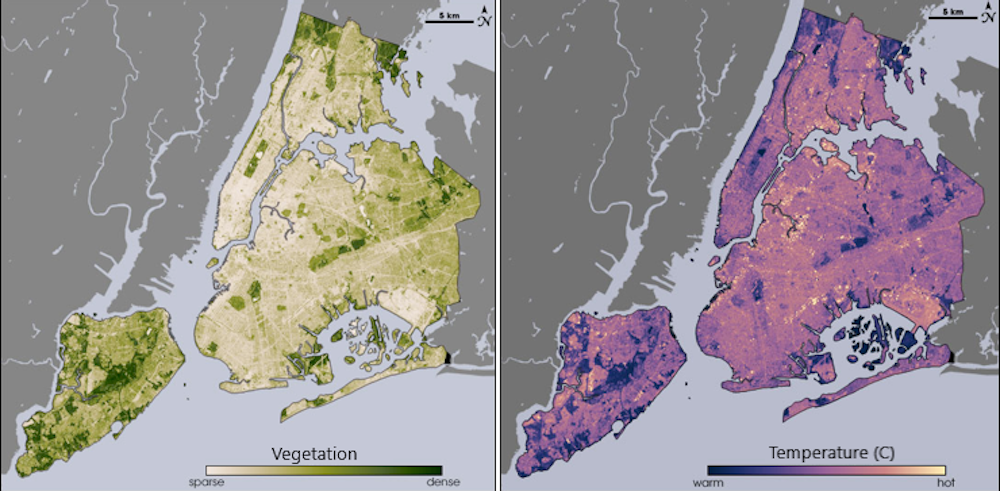
  • MIL-Evening Report: 2 ways cities can beat the heat: Which is best, urban trees or cool roofs?

    Source: The Conversation (Au and NZ) – By Ian Smith, Research Scientist in Earth & Environment, Boston University

    Trees like these in Boston can help keep neighborhoods cooler on hot days. Yassine Khalfalli/Unsplash, CC BY

    When summer turns up the heat, cities can start to feel like an oven, as buildings and pavement trap the sun’s warmth and vehicles and air conditioners release more heat into the air.

    The temperature in an urban neighborhood with few trees can be more than 10 degrees Fahrenheit (5.5 Celsius) higher than in nearby suburbs. That means air conditioning works harder, straining the electrical grid and leaving communities vulnerable to power outages.

    There are some proven steps that cities can take to help cool the air – planting trees that provide shade and moisture, for example, or creating cool roofs that reflect solar energy away from the neighborhood rather than absorbing it.

    But do these steps pay off everywhere?

    We study heat risk in cities as urban ecologists and have been exploring the impact of tree-planting and reflective roofs in different cities and different neighborhoods across cities. What we’re learning can help cities and homeowners be more targeted in their efforts to beat the heat.

    The wonder of trees

    Urban trees offer a natural defense against rising temperatures. They cast shade and release water vapor through their leaves, a process akin to human sweating. That cools the surrounding air and reduces afternoon heat.

    Adding trees to city streets, parks and residential yards can make a meaningful difference in how hot a neighborhood feels, with blocks that have tree canopies nearly 3 F (1.7 C) cooler than blocks without trees.

    Comparing maps of New York’s vegetation and temperature shows the cooling effect of parks and neighborhoods with more trees. In the map on the left, lighter colors are areas with fewer trees. Light areas in the map on the right are hotter.
    NASA/USGS Landsat

    But planting trees isn’t always simple.

    In hot, dry cities, trees often require irrigation to survive, which can strain already limited water resources. Trees must survive for decades to grow large enough to provide shade and release enough water vapor to reduce air temperatures.

    Annual maintenance costs – about US$900 per tree per year in Boston – can surpass the initial planting investment.

    Most challenging of all, dense urban neighborhoods where heat is most intense are often too packed with buildings and roads to grow more trees.

    How cool roofs can help on hot days

    Another option is “cool roofs.” Coating rooftops with reflective paint or using light-colored materials allows buildings to reflect more sunlight back into the atmosphere rather than absorbing it as heat.

    These roofs can lower the temperature inside an apartment building without air conditioning by about 2 to 6 F (1 to 3.3 C), and can cut peak cooling demand by as much as 27% in air-conditioned buildings, one study found. They can also provide immediate relief by reducing outdoor temperatures in densely populated areas. The maintenance costs are also lower than expanding urban forests.

    Two workers apply a white coating to the roof of a row home in Philadelphia.
    AP Photo/Matt Rourke

    However, like trees, cool roofs come with limits. Cool roofs work better on flat roofs than sloped roofs with shingles, as flat roofs are often covered by heat-trapping rubber and are exposed to more direct sunlight over the course of an afternoon.

    Cities also have a finite number of rooftops that can be retrofitted. And in cities that already have many light-colored roofs, a few more might help lower cooling costs in those buildings, but they won’t do much more for the neighborhood.

    By weighing the trade-offs of both strategies, cities can design location-specific plans to beat the heat.

    Choosing the right mix of cooling solutions

    Many cities around the world have taken steps to adapt to extreme heat, with tree planting and cool roof programs that implement reflectivity requirements or incentivize cool roof adoption.

    In Detroit, nonprofit organizations have planted more than 166,000 trees since 1989. In Los Angeles, building codes now require new residential roofs to meet specific reflectivity standards.

    In a recent study, we analyzed Boston’s potential to lower heat in vulnerable neighborhoods across the city. The results demonstrate how a balanced, budget-conscious strategy could deliver significant cooling benefits.

    For example, we found that planting trees can cool the air 35% more than installing cool roofs in places where trees can actually be planted.

    However, many of the best places for new trees in Boston aren’t in the neighborhoods that need help. In these neighborhoods, we found that reflective roofs were the better choice.

    By investing less than 1% of the city’s annual operating budget, about US$34 million, in 2,500 new trees and 3,000 cool roofs targeting the most at-risk areas, we found that Boston could reduce heat exposure for nearly 80,000 residents. The results would reduce summertime afternoon air temperatures by over 1 F (0.6 C) in those neighborhoods.

    While that reduction might seem modest, reductions of this magnitude have been found to dramatically reduce heat-related illness and death, increase labor productivity and reduce energy costs associated with building cooling.

    Not every city will benefit from the same mix. Boston’s urban landscape includes many flat, black rooftops that reflect only about 12% of sunlight, making cool roofs that reflect over 65% of sunlight an especially effective intervention. Boston also has a relatively moist growing season that supports a thriving urban tree canopy, making both solutions viable.

    Phoenix, left, already has a lot of light-colored roots, compared with Boston, right, where roofs are mostly dark.
    Imagery © Google 2025.

    In places with fewer flat, dark rooftops suitable for cool roof conversion, tree planting may offer more value. Conversely, in cities with little room left for new trees or where extreme heat and drought limit tree survival, cool roofs may be the better bet.

    Phoenix, for example, already has many light-colored roofs. Trees might be an option there, but they will require irrigation.

    Getting the solutions where people need them

    Adding shade along sidewalks can do double-duty by giving pedestrians a place to get out of the sun and cooling buildings. In New York City, for example, street trees account for an estimated 25% of the entire urban forest.

    Cool roofs can be more difficult for a government to implement because they require working with building owners. That often means cities need to provide incentives. Louisville, Kentucky, for example, offers rebates of up to $2,000 for homeowners who install reflective roofing materials, and up to $5,000 for commercial businesses with flat roofs that use reflective coatings.

    In Boston, planting trees, left, and increasing roof reflectivity, right, were both found to be effective ways to cool urban areas.
    Ian Smith et al. 2025

    Efforts like these can help spread cool roof benefits across densely populated neighborhoods that need cooling help most.

    As climate change drives more frequent and intense urban heat, cities have powerful tools for lowering the temperature. With some attention to what already exists and what’s feasible, they can find the right budget-conscious strategy that will deliver cooling benefits for everyone.

    Lucy Hutyra has received funding from the U.S. federal government and foundations including the World Resources Institute and Burroughs Wellcome Fund for her scholarship on urban climate and mitigation strategies. She was a recipient of a 2023 MacArthur Fellowship for her work in this area.

    Ian Smith does not work for, consult, own shares in or receive funding from any company or organization that would benefit from this article, and has disclosed no relevant affiliations beyond their academic appointment.

    ref. 2 ways cities can beat the heat: Which is best, urban trees or cool roofs? – https://theconversation.com/2-ways-cities-can-beat-the-heat-which-is-best-urban-trees-or-cool-roofs-260188

    MIL OSI AnalysisEveningReport.nz

  • MIL-OSI United Kingdom: Government unveils updates to Private Fund Regime and Sound Business Practice Policy23 July 2025 The first two initiatives which will help to protect and grow Jersey’s financial services sector have been announced. The Jersey Private Fund, JPF, regime has been modernised to be better aligned with… Read more

    Source: Channel Islands – Jersey

    23 July 2025

    The first two initiatives which will help to protect and grow Jersey’s financial services sector have been announced. 

    The Jersey Private Fund, JPF, regime has been modernised to be better aligned with the needs of international professional investors. 

    Proposals to simplify the Sound Business Practice Policy, SBPP, have been published which, once approved, will streamline its application whilst a more comprehensive review of this framework is undertaken. 

    Both initiatives are part of the Competitiveness Programme and were unveiled at its launch event. 

    Jersey Private Fund 

    The Minister with responsibility for Financial Services, Deputy Ian Gorst, has signed a Ministerial Order to update the JPF. 

    Effective from 6 August 2025, the revised JPF Guide and a new statutory instrument, the Collective Investment Funds (Jersey Private Funds) Order, will come into force. 

    These changes will: 

    • remove the 50-offer / investor cap; 
    • expand the definition of professional investor; 
    • permit the listing of interests in JPFs with the Jersey Financial Services Commission’s consent; and 
    • introduce a 24-hour authorisation process for JPF applications submitted by registered Designated Service Providers.

    Jill Britton, Director General of the JFSC, said: “The updated JPF regime is a significant step, keeping Jersey’s fund offering evolving with the needs of industry. JPFs continue to be a regulated product that investors can have confidence in – these changes streamline the regime and, together with our commitment to faster authorisation, we are underscoring our commitment to excellent service.” 

    Joe Moynihan, CEO, Jersey Finance, said: “Since its launch in 2017, the JPF has become Jersey’s fastest-growing fund category, particularly well-suited to private equity, venture capital and real asset strategies. As private capital continues to evolve globally, these updates will further increase Jersey’s appeal to managers and professional investors seeking flexible and well-regulated fund solutions.” 

    Deputy Gorst said: “These revisions follow industry engagement and reflect a broader global movement toward bespoke, efficient private fund vehicles for professional investors. They provide certainty for fund promoters and reinforce Jersey’s appeal as a jurisdiction of choice for private capital.” 

    Sound Business Practice Policy 

    The SBPP, jointly developed by Government of Jersey and the JFSC, identifies ‘sensitive activities’ which require additional information or scrutiny before the JFSC consents to them. The Codes of Practice for investment business, funds service business, certified funds and trust and company businesses all require registered persons to have due regard to the SBPP. 

    The SBPP has served Jersey well in understanding and managing risk, but updates are required to ensure it remains fit for modern-day business. 

    The proposed amendments simplify its scope of application, reducing potential business frictions and delays. The “Repeal of the Control of Borrowing Framework”, recently published by the Government of Jersey, includes a review of the SBBP framework with a view to establish a more flexible risk-based approach in the medium-term. 

    Jill Britton said: “This is about modernising regulation while taking a progressive stance against financial crime. Refining the SBPP removes unnecessary complexity and enables firms to focus on what matters, identifying and managing real risk. It’s a shift toward more intelligent regulation, where the emphasis is on outcomes and accountability, not just process”. 

    Joe Moynihan added: “We welcome the simplification of the SBPP, which should have a material impact on Jersey’s competitiveness as an IFC that is very much open for high quality business. These changes, which are in response to industry feedback, are another good example of our agility as an IFC and the positive collaborative relationship there is between industry, the Government of Jersey and the JFSC.” 

    Deputy Gorst said: “This change will enable businesses to do what they already do well: determine the risk of their activity and to act accordingly. Jersey has a mature and sophisticated financial services sector, and this change acknowledges that. The simplification of the SBPP does not reduce Jersey’s commitment to combatting financial crime but rather acknowledges that the industry understand risk and allows them to take greater responsibility for managing it.” 

    Competitiveness Programme 

    The Competitiveness Progamme has brought together government, the regulator and industry with the goal of protecting Jersey’s current economic strength, while unlocking new pathways for growth over the next ten years. 

    The programme is organised around four strategic workstreams, with each designed to address a key dimension of Jersey’s competitiveness: 

    • International Tax Strategy – focusing on creating a tax framework that keeps Jersey competitive and compliant in a fast-changing global landscape. 
    • Business and Regulatory Environment – delivering practical, quick-impact improvements to ease of doing business and regulatory efficiency, while also shaping longer-term reforms. 
    • External Growth Strategy – comparing Jersey’s strengths and weaknesses, opportunities and threats, against global trends and competing jurisdictions, this stream will offer data-driven insights and targeted investment opportunities to fuel long-term, realisable international growth. 
    • Future Competitiveness and Regulation – bringing together a high-level panel of global experts to synthesise and prioritise the findings from across the workstreams, producing an independent report for Ministers. 

    At the end of this process of research and reflection, the Government will publish a final report and action plan in 2026 that will shape Jersey’s strategy into the next decade.

    These efforts align closely with other major initiatives such as Jersey Finance’s Vision2050 and the JFSC’s registry and strategic reviews, which ensures that workstreams are not happening in silos, but as part of a broader, coordinated vision. 

    For more on the Financial Services Competitiveness Programme, please see: Financial services competitiveness programme​​.

    MIL OSI United Kingdom

  • MIL-OSI Submissions: 2 ways cities can beat the heat: Which is best, urban trees or cool roofs?

    Source: The Conversation – USA (2) – By Ian Smith, Research Scientist in Earth & Environment, Boston University

    Trees like these in Boston can help keep neighborhoods cooler on hot days. Yassine Khalfalli/Unsplash, CC BY

    When summer turns up the heat, cities can start to feel like an oven, as buildings and pavement trap the sun’s warmth and vehicles and air conditioners release more heat into the air.

    The temperature in an urban neighborhood with few trees can be more than 10 degrees Fahrenheit (5.5 Celsius) higher than in nearby suburbs. That means air conditioning works harder, straining the electrical grid and leaving communities vulnerable to power outages.

    There are some proven steps that cities can take to help cool the air – planting trees that provide shade and moisture, for example, or creating cool roofs that reflect solar energy away from the neighborhood rather than absorbing it.

    But do these steps pay off everywhere?

    We study heat risk in cities as urban ecologists and have been exploring the impact of tree-planting and reflective roofs in different cities and different neighborhoods across cities. What we’re learning can help cities and homeowners be more targeted in their efforts to beat the heat.

    The wonder of trees

    Urban trees offer a natural defense against rising temperatures. They cast shade and release water vapor through their leaves, a process akin to human sweating. That cools the surrounding air and reduces afternoon heat.

    Adding trees to city streets, parks and residential yards can make a meaningful difference in how hot a neighborhood feels, with blocks that have tree canopies nearly 3 F (1.7 C) cooler than blocks without trees.

    Comparing maps of New York’s vegetation and temperature shows the cooling effect of parks and neighborhoods with more trees. In the map on the left, lighter colors are areas with fewer trees. Light areas in the map on the right are hotter.
    NASA/USGS Landsat

    But planting trees isn’t always simple.

    In hot, dry cities, trees often require irrigation to survive, which can strain already limited water resources. Trees must survive for decades to grow large enough to provide shade and release enough water vapor to reduce air temperatures.

    Annual maintenance costs – about US$900 per tree per year in Boston – can surpass the initial planting investment.

    Most challenging of all, dense urban neighborhoods where heat is most intense are often too packed with buildings and roads to grow more trees.

    How cool roofs can help on hot days

    Another option is “cool roofs.” Coating rooftops with reflective paint or using light-colored materials allows buildings to reflect more sunlight back into the atmosphere rather than absorbing it as heat.

    These roofs can lower the temperature inside an apartment building without air conditioning by about 2 to 6 F (1 to 3.3 C), and can cut peak cooling demand by as much as 27% in air-conditioned buildings, one study found. They can also provide immediate relief by reducing outdoor temperatures in densely populated areas. The maintenance costs are also lower than expanding urban forests.

    Two workers apply a white coating to the roof of a row home in Philadelphia.
    AP Photo/Matt Rourke

    However, like trees, cool roofs come with limits. Cool roofs work better on flat roofs than sloped roofs with shingles, as flat roofs are often covered by heat-trapping rubber and are exposed to more direct sunlight over the course of an afternoon.

    Cities also have a finite number of rooftops that can be retrofitted. And in cities that already have many light-colored roofs, a few more might help lower cooling costs in those buildings, but they won’t do much more for the neighborhood.

    By weighing the trade-offs of both strategies, cities can design location-specific plans to beat the heat.

    Choosing the right mix of cooling solutions

    Many cities around the world have taken steps to adapt to extreme heat, with tree planting and cool roof programs that implement reflectivity requirements or incentivize cool roof adoption.

    In Detroit, nonprofit organizations have planted more than 166,000 trees since 1989. In Los Angeles, building codes now require new residential roofs to meet specific reflectivity standards.

    In a recent study, we analyzed Boston’s potential to lower heat in vulnerable neighborhoods across the city. The results demonstrate how a balanced, budget-conscious strategy could deliver significant cooling benefits.

    For example, we found that planting trees can cool the air 35% more than installing cool roofs in places where trees can actually be planted.

    However, many of the best places for new trees in Boston aren’t in the neighborhoods that need help. In these neighborhoods, we found that reflective roofs were the better choice.

    By investing less than 1% of the city’s annual operating budget, about US$34 million, in 2,500 new trees and 3,000 cool roofs targeting the most at-risk areas, we found that Boston could reduce heat exposure for nearly 80,000 residents. The results would reduce summertime afternoon air temperatures by over 1 F (0.6 C) in those neighborhoods.

    While that reduction might seem modest, reductions of this magnitude have been found to dramatically reduce heat-related illness and death, increase labor productivity and reduce energy costs associated with building cooling.

    Not every city will benefit from the same mix. Boston’s urban landscape includes many flat, black rooftops that reflect only about 12% of sunlight, making cool roofs that reflect over 65% of sunlight an especially effective intervention. Boston also has a relatively moist growing season that supports a thriving urban tree canopy, making both solutions viable.

    Phoenix, left, already has a lot of light-colored roots, compared with Boston, right, where roofs are mostly dark.
    Imagery © Google 2025.

    In places with fewer flat, dark rooftops suitable for cool roof conversion, tree planting may offer more value. Conversely, in cities with little room left for new trees or where extreme heat and drought limit tree survival, cool roofs may be the better bet.

    Phoenix, for example, already has many light-colored roofs. Trees might be an option there, but they will require irrigation.

    Getting the solutions where people need them

    Adding shade along sidewalks can do double-duty by giving pedestrians a place to get out of the sun and cooling buildings. In New York City, for example, street trees account for an estimated 25% of the entire urban forest.

    Cool roofs can be more difficult for a government to implement because they require working with building owners. That often means cities need to provide incentives. Louisville, Kentucky, for example, offers rebates of up to $2,000 for homeowners who install reflective roofing materials, and up to $5,000 for commercial businesses with flat roofs that use reflective coatings.

    In Boston, planting trees, left, and increasing roof reflectivity, right, were both found to be effective ways to cool urban areas.
    Ian Smith et al. 2025

    Efforts like these can help spread cool roof benefits across densely populated neighborhoods that need cooling help most.

    As climate change drives more frequent and intense urban heat, cities have powerful tools for lowering the temperature. With some attention to what already exists and what’s feasible, they can find the right budget-conscious strategy that will deliver cooling benefits for everyone.

    Lucy Hutyra has received funding from the U.S. federal government and foundations including the World Resources Institute and Burroughs Wellcome Fund for her scholarship on urban climate and mitigation strategies. She was a recipient of a 2023 MacArthur Fellowship for her work in this area.

    Ian Smith does not work for, consult, own shares in or receive funding from any company or organization that would benefit from this article, and has disclosed no relevant affiliations beyond their academic appointment.

    ref. 2 ways cities can beat the heat: Which is best, urban trees or cool roofs? – https://theconversation.com/2-ways-cities-can-beat-the-heat-which-is-best-urban-trees-or-cool-roofs-260188

    MIL OSI

  • MIL-OSI Submissions: How the nature of environmental law is changing in defense of the planet and the climate

    Source: The Conversation – USA (2) – By Dana Zartner, Professor of International Studies, University of San Francisco

    A 2017 New Zealand law recognizes inherent rights of the Whanganui River. Jason Pratt, CC BY-SA

    While the dangerous effects of climate change continue to worsen, legal efforts to address a range of environmental issues are also on the rise.

    Headlines across the globe tout many of these legal actions: South Korea’s Climate Law Violates Rights of Future Generations; Ukraine is Ground Zero in Battle for Ecocide Law; Paris Wants to Grant the River Seine Legal Personhood; and Montana Court Rules Children Have the Right to a Healthy Environment, to name a few recent examples.

    As an environmental lawyer, I see that most of these suits use one of five legal strategies that have been developed over the past couple of decades. These approaches vary in terms of who is filing the lawsuit, against whom, and whether the underlying legal perspective is based on protecting human rights or the rights of the environment itself. But they all share an innovative approach to protect all life on this planet.

    1. Right to a healthy environment

    In 2022, the United Nations declared that humans have “the right to a clean, healthy and sustainable environment … essential to protecting human life, well-being and dignity.” More than 150 countries have similar declarations in their constitutions or laws, often alongside protections for other human rights, such as those to education and medical care.

    These rights are held by humans, so people can sue for alleged violations. Typically they sue one or more government agencies, whose responsibility it is to protect human rights.

    One recent case using this approach was Held v. Montana, in which a group of young people in 2024 won a lawsuit against the state of Montana for violating the state constitution’s right to a “clean and healthful environment.” The state Supreme Court agreed with the plaintiffs and struck down a law barring the consideration of climate effects when evaluating proposals for fossil fuel extraction. Similar cases have been heard in the U.S. and other countries around the world.

    Rikki Held, the lead plaintiff in the Montana case, center seated, confers with the Our Children’s Trust legal team before the start of the trial on June 12, 2023.
    William Campbell/Getty Images

    2. The rights of future generations

    A legal concept called “intergenerational equity” is the idea that present generations must “responsibly use and conserve natural resources for the benefit of future generations.” First codified in international law in the 1972 Stockholm Declaration, the principle has been gaining popularity in recent decades. International organizations and national governments have enshrined this principle in law.

    Focused on humans’ rights, these laws allow people and groups to bring claims, usually against governments, for allowing activities that are altering the environment in ways that will harm future generations. One well-known case that relied on this legal principle is Future Generations v. Ministry of the Environment and Others, in which a Colombian court in 2018 agreed with young people who had sued, finding that the Colombian government’s allowance of “rampant deforestation in the Amazon” violated the pact of intergenerational equity.

    3. Government responsibility

    Another human-centered approach is the public trust doctrine, which establishes “that certain natural and cultural resources are preserved for public use” and that governments have a responsibility to protect them for everyone’s benefit.

    While the concept of “public trust” has long existed in the law, recently it has been used to bring suit against governments for their failure to address climate change and other environmental degradation. In Urgenda Foundation v. the State of the Netherlands, a Dutch court held in 2019 that the government has a responsibility to mitigate the effects of climate change due to the “severity of the consequences of climate change and the great risk of climate change occurring.” Since the decision, the Dutch government has sought to reduce emissions by phasing out the use of coal, increasing reliance on renewable energy and aiming to achieve carbon neutrality by 2050.

    Government responsibility for the public trust was also a basis of the Juliana v. U.S. case, where a group of young people sued the U.S. government for breaching the public trust by not doing enough to curb greenhouse gas emissions. The U.S. Supreme Court ultimately declined to hear an appeal of a lower court’s ruling, but the lack of a specific ruling by the nation’s highest court has given continued hope to new cases, which continue to be filed based on the same principle.

    A documentary examining the movement to protect the rights of nature.

    4. Rights of nature

    The rights of nature is one of the fastest-growing environmental legal strategies of the past decade. Since Ecuador recognized the rights of Pachamama, the Quechua name for Mother Earth, in its Constitution in 2008, more than 500 laws on the rights of nature have been enacted around the world.

    The principle recognizes the legal rights of natural entities, such as rivers, mountains, ecosystems or even something as specific as wild rice. The laws that grant these rights don’t focus on humans but rather nature itself, often including language that the natural entity has the right to “exist and persist.”

    The laws then provide a mechanism for the natural entity – whether through a specific group assigned legal guardianship or other community efforts – to protect itself by filing lawsuits in court. In the 2018 Colombian case, the court found that the Amazon ecosystem has rights, which must be respected and protected.

    Similarly, in Bangladesh in 2019 the courts recognized the rights of all the country’s rivers, requiring, among other things, a halt on damaging development along the rivers that block their natural flow. The court also created a commission to serve as legal guardians of the country’s rivers.

    The destruction of a dam in Ukraine, which emptied this former reservoir, is being investigated as a possible crime of ecocide.
    Tarasov/Ukrinform/Future Publishing via Getty Images

    5. Defining a new crime: Ecocide

    In 2024, the governments of Vanuatu, Fiji and Samoa formally proposed that the international community recognize a new crime under international law. Called “ecocide,” the principle takes a nature-focused approach and includes any unlawful act committed with “the knowledge that there is a substantial likelihood of severe and either widespread or long-term damage to the environment.”

    Put another way, what genocide is to humans, ecocide is to nature. It is being proposed as an addition to the 2002 Rome Statute, which created the International Criminal Court to prosecute war crimes, genocide and crimes against humanity.

    While the idea is relatively new, in addition to the international efforts, several countries have incorporated ecocide into their laws – including Vietnam, France, Chile and Ukraine. A Ukrainian prosecutor is currently investigating the June 2023 destruction of a dam in a Russian-occupied area of the country as a potential crime of ecocide, because of the widespread flooding and habitat destruction that resulted.

    The European Union has also incorporated ecocide into its Environmental Crime Directive, which applies to all EU member countries, providing them with a mechanism to hear ecocide claims in their national courts.

    Using these ideas

    Each of these legal concepts has the potential to increase protection for the environment – and the people who live in it. But determining which strategy has the greatest chance of success depends on the details of the existing law and legal system in each community.

    All of these legal strategies have a role in the fight to protect and preserve the environment as an integral, interdependent living thing that is vitally important to us as humans but also in its own right.

    Dana Zartner is a volunteer with the Earth Law Center assisting with the editing of toolkits and guides, but has not worked on any of its lawsuits.

    ref. How the nature of environmental law is changing in defense of the planet and the climate – https://theconversation.com/how-the-nature-of-environmental-law-is-changing-in-defense-of-the-planet-and-the-climate-258982

    MIL OSI

  • MIL-OSI Russia: China-Tajikistan Joint Laboratory on Biodiversity Conservation and Sustainable Use Opens in Dushanbe

    Translation. Region: Russian Federal

    Source: People’s Republic of China in Russian – People’s Republic of China in Russian –

    An important disclaimer is at the bottom of this article.

    Source: People’s Republic of China – State Council News

    BEIJING, July 23 (Xinhua) — The China-Tajikistan Joint Laboratory on Biodiversity Conservation and Sustainable Use under the Belt and Road Initiative recently opened in Dushanbe.

    The opening ceremony of the new laboratory took place on Monday in the capital of Tajikistan, the press service of the Xinjiang Institute of Ecology and Geography of the Chinese Academy of Sciences (CAS) reported. The event was attended by Deputy Minister of Science and Technology of China Chen Jiachang and President of the National Academy of Sciences of the Republic of Tajikistan (NAS RT) Kobiljon Khushvakhtzoda.

    The Chinese Ministry of Science and Technology will work with the Tajik side to promote high-quality laboratory construction by providing political support, training international research teams, and promoting the protection of biological resources and the coordinated development of the industry, Chen Jiachang said in a conversation with researchers from both sides.

    He expressed hope that the laboratory will serve as a model for scientific and technological cooperation between China and Tajikistan and give new impetus to the high-quality development of the Belt and Road.

    The project of the China-Tajikistan joint laboratory was approved on October 14, 2024. Its founders are the Xinjiang Institute of Ecology and Geography of the Academy of Sciences of the Republic of Tajikistan and the National Academy of Sciences of the Republic of Tajikistan. The work of the new institution will be aimed at expanding the capabilities of scientific and technological innovation and coordinated development in the fields of biodiversity conservation and ecological services in Central Asian countries, according to a statement published on the website of the Xinjiang Institute of Ecology and Geography. -0-

    Please note: This information is raw content obtained directly from the source of the information. It is an accurate report of what the source claims and does not necessarily reflect the position of MIL-OSI or its clients.

    .

    MIL OSI Russia News

  • MIL-OSI Africa: The Food and Agriculture Organization of the United Nations (FAO) unveils massive online open course for waterbird management in African wetlands

    Source: APO – Report:

    .

    A new massive online open course (MOOC) developed by the Food and Agriculture Organization of the United Nations (FAO) and partners is set to support the sustainable management of wetlands and waterbirds in the Sahel and North Africa.

    The new course, ‘Identifying and counting waterbirds in North Africa and the Sahel – how and why?’, provides training in essential skills for international waterbird monitoring and insights into the ecological challenges facing wetland habitats.

    It was produced by the RESSOURCE+ Project as part of the FAO-led Sustainable Wildlife Management (SWM) Programme, and was designed in collaboration with Tour du Valat and the French Biodiversity Agency.

    A MOOC is a free online course that offers unlimited participation and is open to everyone, although this new course targets in particular French-speaking participants from North African and Sahelian countries.

    “By strengthening the national and local capacities in the participating countries, this massive online open course will foster sustainable wetland management and biodiversity conservation,” said Zhimin Wu, Director of FAO’s Forestry Division.

    Skills for waterbird monitoring

    Registration is now open until 1 December 2025 for the first session of the course.

    Participants will learn how to access networks of waterbird observers, collect and interpret data, and identify and count around 210 waterbird species in North Africa and the Sahel region.

    The course provides 40 hours of online training, structured into six modules and featuring 35 animated sequences, 10 video interviews with experts, over 5 000 photos and video clips of birds, and 210 factsheets designed to facilitate species identification, along with numerous quizzes, tests and further learning resources.

    It should take roughly six weeks to complete the training, which is self-paced, enabling participants to fit the course around their schedules. Participants are eligible for certification provided they successfully complete the course within three months.

    During the first six weeks, the course designers will be on call to respond to participants’ questions through the chat function. Additional MOOC sessions are planned for 2026 and beyond. 

    The RESSOURCE+ Project

    The RESSOURCE+ Project supports governments and communities in conserving wetlands and waterbirds in Sahelian countries. The project aims to promote waterbird monitoring, sustainable levels of hunting and effective wetland conservation policies in the Sahel. It is co-funded by the French Facility for Global Environment and the European Union through the Sustainable Wildlife Management Programme.

    The RESSOURCE+ Project is led by FAO with support from technical partners recognized for their expertise, in collaboration with national authorities, wildlife institutions, NGOs and local communities.

    – on behalf of Food and Agriculture Organization of the United Nations (FAO): Regional Office for Africa.

    MIL OSI Africa

  • MIL-OSI Asia-Pac: BFAC appreciates Consumer Council’s committed efforts in encouraging continuous improvement in product standards

    Source: Hong Kong Government special administrative region – 4

    The following is issued on behalf of the Business Facilitation Advisory Committee Secretariat:

         The Business Facilitation Advisory Committee held its 57th meeting today (July 23). At the meeting, the Consumer Council briefed members on its mechanism and procedures regarding comparative product testing.

         To safeguard consumer’s interests and enable informed consumption choices for a better quality of life, one of the important tasks of the Council is to conduct tests, surveys and research on consumer products to provide objective and unbiased information to consumers. The Council has adopted a structured and transparent process for conducting product testing and research. The evaluations are designed from user’s perspectives, focusing on performance, safety and/or sustainable consumption, etc. The results are published in “CHOICE Magazine” and other media of the Council, reaching more consumers through media coverage. In addition, the Council shares the findings and recommendations with relevant traders before publishing the report and invites them to provide comments in regard to the findings. This mechanism provides an effective communication platform for the Council and traders, while also serving as a reminder to manufacturers to prioritise quality and safety when optimising the overall production process, thereby strengthening consumer protection and also building a better reputation. 

         The Committee appreciated the Council’s ongoing efforts in building a safe and sustainable consumption environment, and strengthening communication and liaison between consumers and traders. 

         The Committee also received the work reports of its three task forces:

    Wholesale and Retail Task Force (WRTF)
    ——————————————-
     

    • The Environmental Protection Department (EPD) briefed the WRTF on the common legislative framework for Producer Responsibility Schemes (PRSs) and the initial proposal of the PRS on Plastic Beverage Containers and Beverage Cartons. The EPD stated that the common legislative framework would set out the general operational mechanisms for PRSs, the responsibilities of relevant stakeholders, and the associated regulatory control measures, etc. This framework would facilitate the future inclusion of more regulated products into the PRSs progressively, taking into account actual circumstances and expanding the waste-to-resources capacities. Regarding the initial proposal of the PRS on Plastic Beverage Containers and Beverage Cartons, the WRTF agreed that all sectors of society should share the responsibility to protect the environment, and suggested the EPD continue to communicate with the trades, ensuring various factors are thoroughly considered before implementing the Scheme.
    • The Customs & Excise Department (C&ED) briefed the WRTF on the operation, procedures and advantages of the Mainland-Hong Kong “Single Submission for Dual Declaration” Scheme. The C&ED launched the Scheme in November 2024, currently covering all cargo passing through land boundary control points between the two places. Cargo information submitted by Mainland enterprises to the Mainland platform will be encrypted and automatically sent to the Hong Kong platform, from which Hong Kong enterprises can retrieve relevant cargo information for completing a local Customs declaration. The WRTF welcomed the “Single Submission for Dual Declaration” Scheme, and considered that it would facilitate Customs declarations for local enterprises.

    Food Business and Related Services Task Force (FRSTF)
    ————————————————————
     

    • The Fire Services Department (FSD) consulted the FRSTF on the new requirements for the installation of fire extinguisher cabinets in outdoor seating accommodation (OSA) of licensed food premises. The FSD proposed that all new licensing applications of food premises shall impose a requirement of installing a fully enclosed, dedicated fire extinguisher cabinet within the OSA of food premises to prevent fire extinguishers from being adversely affected by dust, moisture and other environmental factors, thereby ensuring their prompt and effective operation in the event of a fire. The FRSTF noted the proposal and suggested that the FSD to provide clear requirements for fire extinguisher cabinets to facilitate the trade’s compliance.
    • The Hong Kong Productivity Council (HKPC) briefed the FRSTF on the Digital DIY (DDIY) Portal to facilitate the digital transformation of Hong Kong’s food and beverage industry. The DDIY Portal is designed to facilitate local enterprises, especially small and medium-sized enterprises (SMEs), in identifying suitable digital transformation solutions and connecting them to reputable service providers for implementation, enhancing operational efficiency and creating business opportunities. The FRSTF welcomed the business facilitation services provided by the HKPC and suggested the HKPC to consider performing the role of project manager to assist trades in successful implementation of digital solutions.

    Task Force on Business Liaison Groups (BLGTF)
    —————————————————
     

    • The HKPC briefed the BLGTF on the main services of the SME ReachOut and other popular government funding schemes. SME ReachOut helps SMEs identify suitable funding schemes, answers application inquiries and provides form-review advisory services. Currently there are more than 40 government funding schemes targeting SMEs, covering areas such as business expansion, upgrading and transformation, research and development, fostering technology talent, and promoting new industrialisation, along with a number of industry-specific funding schemes. The HKPC briefed the BLGTF on details of some popular funding schemes and provided information on their application eligibility, funding amount and funding scope. The BLGTF thanked the HKPC for the briefing.

         The Committee also expressed appreciation for the commitment and achievements of the bureaux and departments in continuously implementing the business facilitation measures under the Be the Smart Regulator Programme to enhance their business licensing services. 

         Papers for the Committee meeting are available at www.gov.hk/en/business/supportenterprises/bf/advisory/index.htm for public access.

    MIL OSI Asia Pacific News

  • MIL-OSI Asia-Pac: EPD convictions in June

    Source: Hong Kong Government special administrative region – 4

         Thirty-six convictions were recorded in June 2025 for breaches of legislation enforced by the Environmental Protection Department.
     
         One of the convictions was under the Air Pollution Control Ordinance, seven were under the Noise Control Ordinance, seven were under the Public Cleansing and Prevention of Nuisances Regulation, six were under the Product Eco-responsibility Ordinance, 14 were under the Waste Disposal Ordinance and one was under the Water Pollution Control Ordinance.
     
         A company was fined $30,000, which was the heaviest fine in June, for importing controlled waste without a permit.

    MIL OSI Asia Pacific News

  • MIL-OSI Asia-Pac: LCQ16: Conservation of geopark in Sai Kung

    Source: Hong Kong Government special administrative region – 4

    Following is a question by the Hon Stanley Li and a written reply by the Secretary for Environment and Ecology, Mr Tse Chin-wan, in the Legislative Council today (July 23):

    Question:

    There are views that the geopark in Sai Kung (geopark), as part of Hong Kong’s precious natural and geological heritage, has ecological conservation, scientific research and tourism education values. However, it has been reported that with the increase in the number of tourists recently, the pollution problem of the geopark has been worsening, posing challenges to the natural environment and the sustainable development of scenic areas. In this connection, will the Government inform this Council:

    (1) of the current numbers and distribution of litter bins and waste separation facilities in the geopark, as well as the frequency of waste removal and conveyance at such facilities; in view of the waste disposal pressure arising from the surge in the number of tourists, whether the Government has specific plans to increase the number of temporary cleansing facilities, optimise the waste conveyance routes or introduce smart waste monitoring equipment to enhance the efficiency of disposal; if so, of the details; if not, the reasons for that;

    (2) whether it has launched publicity and educational measures on the conservation of the geopark (such as by placing publicity notices in the geopark and producing guidebooks); whether it will make use of multimedia to step up multilingual publicity and introduce interactive environmental education experience projects, and publicise “Leave No Trace” tourism through travel agencies and at the entrances of scenic areas; if so, of the details; if not, the reasons for that;

    (3) regarding littering in the geopark, of the relevant law enforcement manpower and frequency of inspections at present, as well as the number of relevant prosecutions instituted in the past three years; whether it will consider installing additional surveillance devices at the key areas where littering is often detected; if so, of the details; if not, the reasons for that;

    (4) whether the Government will establish an interdepartmental working group (comprising the Leisure and Cultural Services Department, the Environmental Protection Department, the Agriculture, Fisheries and Conservation Department, etc) to co-ordinate the geopark’s waste management; whether it will promote tripartite co-operation among the Government, environmental groups and local villagers/business operators in handling refuse in the geopark, such as by encouraging business operators in neighbouring areas to take part in the cleaning work, recruiting community volunteers to go to the geopark for cleaning on a regular basis, or introducing an “Environmental Contribution Award Scheme” to attract the input of community resources; if so, of the details; if not, the reasons for that; and

    (5) in the light of the ecological sensitivity of the geopark, whether the Government has plans to assess its visitor carrying capacity, and formulate measures such as booking of time slots or limiting visitor flows to strike a balance between visitor demand and environmental conservation; whether the Government will, in the long run, devise a Development Strategy for Hong Kong Geopark and incorporate waste management into its contents, while formulating systematic improvement proposals by combining ecological restoration, low-carbon tourism facilities (e.g. setting up distribution points for degradable rubbish bags) and the environmental impact assessment mechanism; if so, of the details; if not, the reasons for that?

    Reply:

    President,

    Hong Kong UNESCO Global Geopark (Hong Kong Geopark) consists of two geological regions, the Northeast New Territories Sedimentary Rock Region and Sai Kung Volcanic Rock Region. Most of the geopark attractions are located within country parks and special areas, and the Agriculture, Fisheries and Conservation Department (AFCD) is responsible for the regular management work. In response to the question raised by Hon Stanley Li, a detailed reply is provided as follows:

    (1) The AFCD has been committed to keeping the country parks clean and educating the public to cherish nature. Since 2015, through the “take your litter home” campaign, visitors have been encouraged to cultivate a sense of stewardship towards the natural environmental. To tie in with this initiative, litter bins and recycling bins along hiking trails have been removed since the end of 2017, while litter collection facilities are retained at recreational sites (e.g. barbecue sites and campsites) for use by visitors if needed. The AFCD collects litter from recreational sites, hiking trails and public toilets. The litter is then either transported to landfills or handed over to recycling service contractors for processing. The AFCD would flexibly adjust the arrangement for and frequency of litter collection and handling according to actual needs at different locations in country parks, as well as the usage and hygiene conditions of popular sites. In particular, during long holidays and weekends, the AFCD would strengthen relevant cleaning work. In response to the recent upsurge of visitors at some popular Hong Kong Geopark attractions, the AFCD has enhanced cleaning and management efforts, and the environmental conditions at these sites remain generally good.

    (2) In regard to the issue of countryside litter, it is crucial to promote the message of reducing waste at source and caring for nature to the public. The AFCD has organised a variety of education activities, such as roving exhibitions, nature interpretation services, etc, to raise public awareness on responsible hiking practices. These messages have also been disseminated through multimedia, such as online videos (website: www.youtube.com/@HongKongCountryParks) and social media channels (Hong Kong Country Parks Facebook: www.facebook.com/hongkongcountryparks), in a lively manner to continuously raise the public’s awareness. Posters, promotion banners and signages have been displayed at suitable locations in Hong Kong Geopark and at the entrances and exits of hiking trails to remind visitors to take their litter away and observe hiking etiquette. In collaboration with the Travel Industry Council of Hong Kong, seminars and field trips have been organised for tourist guides to enhance their understanding of Hong Kong Geopark attractions, and the message of “take your litter home”. The AFCD has also co-operated with the Economic and Trade Offices in the Mainland and the Forestry Administration of Guangdong Province to publicise relevant messages through social media channels in the Mainland, and will continue to promote the relevant messages of “leave no trace” through various channels and initiatives.

    (3) According to the Country Parks and Special Areas Regulations (Cap. 208A), anyone who litters in country parks or special areas commits an offence and is liable to prosecution. Upon conviction, the offender may be fined up to $10,000 and imprisoned for three months. In addition, under the Fixed Penalty (Public Cleanliness and Obstruction) Ordinance (Cap. 570), any person who violates the above offence may be subject to a fixed fine of $3,000. Currently, about 150 AFCD staff conduct regular patrols and law enforcement actions in country parks and special areas over the territory. Patrols and law enforcement are part of the regular management work of country parks, and there is no detailed breakdown of the manpower and the number of patrols conducted at each country park and special area for combatting littering offences. The number of patrols conducted, prosecution instituted and fixed penalty notice issued for littering by the AFCD in country parks and special areas across the territory over the past three years are tabulated as follows:
     

    Year Number of patrol Number of prosecution (within Hong Kong Geopark) Number of fixed penalty notice (within Hong Kong Geopark)
    2022 13 024 1 (0) 13 (0)
    2023 13 891 0 (0) 8 (0)
    2024 14 266 0 (0) 7 (1)

    In light of the recent upsurge of visitors at Hong Kong Geopark Sai Kung High Island Reservoir East Dam, the AFCD has been enhancing efforts in reminding visitors to keep countryside clean by displaying banners at suitable locations, including entrances and exits of hiking trails, and using local and Mainland social media platforms (e.g. Xiaohongshu), as well as taking law enforcement actions against littering and other offences within country parks. The AFCD will continue to review and adjust the patrolling arrangements in country parks from time to time in the light of actual circumstances, and arrange special operations or utilise technology such as smart surveillance when necessary to strengthen law enforcement work against illegal activities within country parks.

    (4) Most Hong Kong Geopark attractions are located within the country parks, and the cleaning work is conducted by the AFCD. When litter is identified in public areas outside the country parks, it will be referred to the Food and Environmental Hygiene Department (FEHD) for cleanup. The AFCD has been working closely with various stakeholders to conserve the geological heritage and natural environment of Hong Kong Geopark. This includes assisting villages around the attractions of the park to follow up on environmental hygiene issues. To raise awareness among the youth about protecting the natural environment, the AFCD has invited students to collect litter during field trips to Hong Kong Geopark. In addition, the AFCD has encouraged and co-ordinated volunteer cleanup activities in Hong Kong Geopark. Since last year, over 20 such activities have been organised.

    (5) Important geological and ecological sites of Hong Kong Geopark are protected under legislation including the Country Parks Ordinance and the Marine Parks Ordinance. The main objectives of Hong Kong Geopark are nature conservation, education and sustainable development. When planning and establishing Hong Kong Geopark in the early years, the Government formulated guiding principles to avoid the construction of facilities that would adversely affect the environment. The planning of suitable facilities depends on the actual conditions of different attractions, including their capacity to accommodate higher number of visitors and their ecological sensitivity. For example, sites with higher visitor carrying capacity such as the High Island Reservoir East Dam and Sharp Island, visitor facilities to facilitate visit and education purposes are provided therein; for areas that require preservation in their natural state, such as the coastline along Fa Shan of High Island, the Ung Kong Group and the Ninepin Group, visitor facilities like public piers or trails are avoided, and visitors are encouraged to enjoy sightseeing there by boat tours instead.

    In response to the recent surge in visitor numbers at popular attractions within Hong Kong Geopark, the AFCD is reviewing the carrying capacity of these popular sites and will develop management strategies, such as co-ordinated traffic control measures with relevant authorities, and enhanced visitor management measures when necessary to prevent overcrowding. During peak hiking seasons, the AFCD will also increase the frequency of patrols, enhance cleaning and management efforts, and strengthen the promotion of hiking etiquette to ensure visitor safety and protection of nature, thereby achieving the co-existence of ecotourism and nature conservation. 

    MIL OSI Asia Pacific News

  • MIL-OSI Asia-Pac: LCQ22: Waste reduction measures in sports stadiums

    Source: Hong Kong Government special administrative region – 4

    Following is a question by the Hon Doreen Kong and a written reply by the Secretary for Culture, Sports and Tourism, Miss Rosanna Law, in the Legislative Council today (July 23):

    Question:

    The 15th National Games (NG) will be held in Guangdong, Hong Kong and Macao in November this year. One of the key highlights of the Games is the thorough implementation of green initiatives in organising the event, and the endeavour to make it the first carbon-neutral event in the history of NG. However, there are views that the Kai Tak Sports Park (KTSP), which is a newly-opened international flagship stadium, still has room for improvement in its waste reduction measures. In this connection, will the Government inform this Council:

    (1) given that the KTSP previously prohibited audience from bringing any containers into sport events for security reasons and declined to provide reusable cups, but it has been reported that various types of prohibited containers were found in the corporate boxes and VIP seats during several major sport events held in the Park, whether the authorities have reviewed why there were such inconsistencies in the standards, and how they will ensure the fairness and consistency in the relevant requirements in the future;

    (2) as there are views pointing out that while the KTSP allowed audience to bring plastic or silicone water bottles and cups into the venue during concerts held in April this year, relevant arrangements were not made for sport events which had left local and overseas audience at a loss, (i) of the reasons why the aforesaid arrangements were not implemented consistently for different types of events, and (ii) whether the Government will request the KTSP to clearly define the types of events for which the aforesaid arrangements are to be implemented and the specific justifications;

    (3) as there are views that Hong Kong has mature experience in reusable container systems, and that the arrangement of “reuse instead of disposal” has been successfully implemented in many large shopping centres, restaurant chains and major events (e.g. the Hong Kong Sevens held at the Hong Kong Stadium in the past), which are effective in reducing the amount of waste, and it is learnt that the KTSP has also adopted “sustainability” (i.e. striving to integrate operational solutions conducive to sustainable development, and optimising resource usage) as one of its core values, of the reasons for not implementing the reusable container systems in the KTSP so far; and

    (4) how the stadiums in Hong Kong (including the KTSP and other competition venues) will specifically implement the element of green initiatives under the principles of “green, inclusive, open and clean” during the 15th NG, so as to create exemplary venues for the 15th ‍NG in the Guangdong-Hong Kong-Macao Greater Bay Area?

    Reply:

    President,

    The Kai Tak Sports Park (KTSP) is the largest sports infrastructure in Hong Kong’s history and is crucial for the Government’s promotion of the development of sports and mega event economy. With its official commissioning on March 1 this year, the KTSP has quickly established itself as a new hub for hosting major sports and entertainment events.

    The Kai Tak Sports Park Limited (the Operator) is committed to providing an enjoyable experience for visitors attending major sports and entertainment events at the KTSP. While ensuring proper implementation of areas of importance such as event arrangements and venue security, the Operator is also dedicated to optimising the daily management and operations of the KTSP, including promoting environmentally friendly and low-carbon measures.

    In consultation with the Environmental Protection Department (EPD), my reply to the questions raised by the Hon Doreen Kong is as follows:

    (1) To ensure safety and order when staging large-scale events, all visitors entering the venues of the KTSP must comply with the venue rules set out by the Operator, as well as the conditions of entry stipulated in response to the requirements of event organisers. For instance, outside food and drinks, long umbrellas, glass or metal containers etc, are prohibited from being brought into the venues. All spectators, including those in suites and VIP areas, must adhere to the same rules and conditions.

    Depending on the nature and arrangements of the event, individual organisers may arrange for special catering services for their guests in designated areas, subject to the Operator’s approval. The Operator will consider such requests provided that they do not affect the safety of the events. Such special catering services will apply to designated areas only. For example, the use of glass containers is only allowed inside the suite area. When enjoying the event at the balcony seats of the suite, suite users still need to follow the same venue rules, including the prohibition on using glass containers.

    (2) In view of the varying nature and risks between sports and entertainment events, the Operator has established different venue rules for the two event categories.

    The essence of sports events is competitiveness. When competing teams are battling against each other, especially in intense situations, the interaction among the fans could more easily lead to confrontations. Therefore, spectators at sports events are generally not allowed to bring water bottles or containers of any size (whether capped or not) into the venues so as to prevent such bottles or containers from being thrown at other spectators or players, thereby ensuring the safety of everyone inside the venue. In fact, another major sports venue in Hong Kong, namely the Hong Kong Stadium, as well as other international sports stadiums also stipulate similar requirements during sports events for security reasons.

    For entertainment events (such as concerts), since there is no competition between battling teams, the likelihood of conflict among the audience is lower. The Operator and event organisers generally allow spectators to bring empty plastic or silicone reusable bottles/cups not larger than 600 millilitres with bottle/cups caps and liquids removed.

    The Operator will disseminate relevant rules and conditions of entry through its website and other channels (such as social media, press releases, or event guides from the organisers) before the staging of large-scale events to ensure that spectators are well-informed to facilitate their preparation in advance. The Operator has indeed explained the details and considerations of different rules and entry conditions in past events.

    (3) The Operator is dedicated to promoting sustainable development. While ensuring safety, hygiene and effective operations, the Operator has been collaborating with the Government to promote environmental protection through a multi-pronged approach.

    Adhering to the objectives of “Use Less, Waste Less” and resources circulation, the KTSP has placed waste separation and recycling facilities as well as installed a waste decomposition system to convert food waste, paper cups, and other paper containers into compostable materials. All the compost produced can be used as fertiliser for plants within the precinct, showcasing the concepts of green management and resources circulation. To further promote environmental protection, all paper cups used by the Operator in the KTSP are certified biodegradable. This promotes a plastic-free culture, reducing the use of plastic tableware by spectators on one hand, while helping to maintain hygiene standards and enhance audience experience on the other.

    The Operator has conducted research and made reference to practices in Hong Kong and other regions when formulating the above venue management measures. On the suggestion of using reusable plastic containers, after careful consideration, the Operator concluded that the processes involved in transporting and cleaning these reusable containers would generate additional carbon emissions and consume other resources. In addition, as reusable plastic containers are not biodegradable, they do not support the plastic-free initiative and undermine the KTSP’s efforts in promoting carbon reduction and resources circulation. In contrast, the use of biodegradable paper cups aligns well with and makes good use of the above-mentioned waste decomposition system at the KTSP, leading to a better overall carbon reduction outcome.

    The Culture, Sports and Tourism Bureau and the EPD will continue to maintain close communication with the Operator to further promote environmental protection work at the KTSP, while ensuring that spectators attending major events continue to have an enjoyable experience.

    (4) To adhere to the principle of “simple, safe and wonderful”, and the philosophy of being “green, inclusive, open and clean” in organising the Games, Guangdong, Hong Kong, and Macao will make joint efforts in achieving the goal of carbon neutrality for the 15th National Games, the 12th National Games for Persons with Disabilities and the 9th National Special Olympics Games. The National Games Coordination Office (Hong Kong) has formulated a “Green National Games” action plan and engaged a professional carbon auditing agency to carry out the related works such as establishing a carbon-neutral framework and collaborative initiatives, conducting comprehensive carbon emission measurement and accounting, promoting public participation in green initiatives and managing carbon offset and certification. The green and carbon-reduction measures in Hong Kong include using existing sports facilities and venues for the Games; implementing energy-saving strategies and increasing renewable energy use at competition venues (for example, applying electricity-free cooling coating and installing solar panels); advocating green transportation and securing new energy vehicles for shuttle services through sponsorship; promoting environmentally friendly accommodation; strengthening the use of digital publicity and document sharing to minimise paper use; enhancing waste separation and recycling; and setting up green exhibitions and games at competition venues to promote the concept of “Green National Games”.

    MIL OSI Asia Pacific News

  • MIL-OSI Russia: US Science Agency Members Oppose Trump Administration’s Science Policy

    Translation. Region: Russian Federal

    Source: People’s Republic of China in Russian – People’s Republic of China in Russian –

    An important disclaimer is at the bottom of this article.

    Source: People’s Republic of China – State Council News

    LOS ANGELES, July 23 (Xinhua) — More than 140 employees of the U.S. National Science Foundation (NSF) have signed a letter condemning the Donald Trump administration’s science policies and actions, which they say have undermined one of the country’s leading science funding institutions.

    In a letter released Monday to Zoe Lofgren, ranking member of the House Committee on Science, Space, and Technology, scientists accuse the Trump administration of drastically cutting staff, cutting funding for critical research, and slashing the agency’s budget.

    Due to concerns about the possible consequences, all but one of the employees’ signatures were revoked.

    The signatories expressed concern about a series of “politically motivated” and “legally questionable” actions by the Trump administration that threaten the integrity of the NSF and undermine the civil service protections guaranteed by federal law.

    The statement follows similar letters of protest issued last month by scientists and employees at the National Institutes of Health and the Environmental Protection Agency, as well as a recent “Voyager Declaration” signed by current and former employees of the U.S. National Aeronautics and Space Administration (NASA). –0–

    Please note: This information is raw content obtained directly from the source of the information. It is an accurate report of what the source claims and does not necessarily reflect the position of MIL-OSI or its clients.

    .

    MIL OSI Russia News

  • MIL-OSI Asia-Pac: Latest situation of Big Wave Bay Beach

    Source: Hong Kong Government special administrative region

    Attention TV/radio announcers:

    Please broadcast the following as soon as possible:

         Here is an item of interest to swimmers.

         The Leisure and Cultural Services Department announced today (July 23) that the shark prevention net at Big Wave Bay Beach in Southern District, Hong Kong Island, has been repaired, and the beach is reopened. The beach was temporarily closed earlier for shark prevention net maintenance work.
     
         However, according to the Beach Water Quality Forecast System of the Environmental Protection Department (www.epd.gov.hk/epd/english/environmentinhk/water/beach_quality/forecast_system.html), the Beach Water Quality Forecast Index for Big Wave Bay Beach is 4, which means the predicted water quality at this beach is “Very Poor” due to potential transient water quality fluctuations caused by heavy rain. The red flag has been hoisted, and beachgoers are advised not to enter the water to safeguard their health.

    MIL OSI Asia Pacific News

  • MIL-OSI United Kingdom: Council Targets Prolific Fly-Tipper in Major Enforcement Operation

    Source: City of Birmingham

    Published: Wednesday, 23rd July 2025

    Birmingham City Council successfully carried out a major enforcement operation to arrest a prolific fly-tipper who had been under investigation for the past six months.

    The individual was believed to be responsible for a significant number of illegal waste dumping incidents in the south of the city, causing environmental damage and blighting local communities.

    As part of the investigation, the Council seized one vehicle that had been used to transport and dump waste illegally and West Midlands Police seized three vehicles for road traffic offences. In connection with the case, one person has been arrested.

    Councillor Majid Mahmood, Cabinet Member for Environment and Transport, said: “Fly-tipping is a blight on our communities and a serious criminal offence. We will not tolerate individuals who think they can profit by dumping waste illegally and leaving the clean-up costs to taxpayers. This joint operation between the council’s waste enforcement team and WM Police sends a clear message – if you fly-tip in Birmingham, we will investigate, we will find you, and we will take action.

    “We are committed to protecting our neighbourhoods and the environment. Illegal dumping not only scars our streets and green spaces, but it also poses health risks and undermines the hard work of residents who take pride in their communities.

    “I want to thank our enforcement teams for their tireless efforts in tracking down offenders and bringing them to justice. We will continue to use every tool at our disposal — from receiving intelligence from the public to surveillance, vehicle seizures and prosecutions — to crack down on this behaviour. I am sure everyone is really pleased when we catch these criminals.”

    The Council urges residents to remain vigilant and continue reporting any suspected fly-tipping or unlicensed waste carriers. Anyone with any information on cases of fly-tipping is urged to contact www.birmingham.gov.uk/flytipping.

    The Council continues to work closely with West Midlands Police and other partners to investigate and prosecute fly-tipping offences wherever possible.

    MIL OSI United Kingdom

  • World Court is poised to mark the future course of climate litigation

    Source: Government of India

    Source: Government of India (4)

    The United Nations’ highest court will deliver an opinion on Wednesday that is likely to determine the course of future climate action across the world.

    Known as an advisory opinion, the deliberation of the 15 judges of the International Court of Justice (ICJ) in The Hague is legally non-binding. It nevertheless carries legal and political weight and future climate cases would be unable to ignore it, legal experts say.

    “The advisory opinion is probably the most consequential in the history of the court because it clarifies international law obligations to avoid catastrophic harm that would imperil the survival of humankind,” said Payam Akhavan, an international law professor.

    In two weeks of hearings last December at the ICJ, also known as the World Court, Akhavan represented low-lying, small island states that face an existential threat from rising sea levels.

    In all, over a hundred states and international organisations gave their views on the two questions the U.N. General Assembly had asked the judges to consider.

    They were: what are countries’ obligations under international law to protect the climate from greenhouse gas emissions; and what are the legal consequences for countries that harm the climate system?

    Wealthy countries of the Global North told the judges that existing climate treaties, including the 2015 Paris Agreement, which are largely non-binding, should be the basis for deciding their responsibilities.

    Developing nations and small island states argued for stronger measures, in some cases legally binding, to curb emissions and for the biggest emitters of climate-warming greenhouse gases to provide financial aid.

    PARIS AGREEMENT AND AN UPSURGE IN LITIGATION

    In 2015, at the conclusion of U.N. talks in Paris, more than 190 countries committed to pursue efforts to limit global warming to 1.5 degrees Celsius (2.7 degrees Fahrenheit).

    The agreement has failed to curb the growth of global greenhouse gas emissions.

    Late last year, in the most recent “Emissions Gap Report,” which takes stock of countries’ promises to tackle climate change compared with what is needed, the U.N said that current climate policies will result in global warming of more than 3 C (5.4 F) above pre-industrial levels by 2100.

    As campaigners seek to hold companies and governments to account, climate‑related litigation has intensified, with nearly 3,000 cases filed across almost 60 countries, according to June figures from London’s Grantham Research Institute on Climate Change and the Environment.

    So far, the results have been mixed.

    A German court in May threw out a case between a Peruvian farmer and German energy giant RWE RWEG.DE, but his lawyers and environmentalists said the case, which dragged on for a decade, was a still victory for climate cases that could spur similar lawsuits.

    Earlier this month, the Inter-American Court of Human Rights, which holds jurisdiction over 20 Latin American and Caribbean countries, said in another advisory opinion its members must cooperate to tackle climate change.

    Campaigners say Wednesday’s court opinion should be a turning point and that, even if the ruling itself is advisory, it should provide for the determination that U.N. member states have broken the international law they have signed up to uphold.

    “The court can affirm that climate inaction, especially by major emitters, is not merely a policy failure but a breach of international law,” said Fijian Vishal Prasad, one of the law students that lobbied the government of Vanuatu in the South Pacific Ocean to bring the case to the ICJ.

    Although it is theoretically possible to ignore an ICJ ruling, lawyers say countries are typically reluctant to do so.

    “This opinion is applying binding international law, which countries have already committed to. National and regional courts will be looking to this opinion as a persuasive authority and this will inform judgments with binding consequences under their own legal systems,” Joie Chowdhury, senior attorney at the Center for International Environmental Law, said.

    The court will start reading out its opinion at 3 p.m. (1300 GMT).

    (Reuters)

  • MIL-OSI United Kingdom: New survey shows just 27% of all waste crime incidents reported

    Source: United Kingdom – Executive Government & Departments

    Press release

    New survey shows just 27% of all waste crime incidents reported

    Environment Agency publishes results of National Waste Crime Survey 2025, showing almost three quarters of all waste crimes go unreported

    Landowners and farmers are being urged to help the Environment Agency stop waste crime as new research shows only 12% reported the most recent incidents which affected them. 

    The findings were revealed today (Wednesday 23 July) in the results of the Environment Agency’s National Waste Crime Survey 2025, which also show more than half (57%) of landowners and farmers are estimated to have been affected by waste crime.  

    Networks of organised criminal groups operating across the country are targeting privately owned property and land, particularly in rural locations, to dump rubbish collected through illegal means. The waste industry, landowners and farmers who took part in the survey estimate 35% of waste crime is committed by organised crime groups, attracted by financial gains.  

    Last year, three men were convicted following a major investigation led by the Environment Agency into large-scale illegal deposits of more than 26,000 tonnes of waste – the equivalent weight of around 2,170 double-decker buses – at 17 sites across the country. Organised criminal gang members approached waste facilities and offered to dispose of baled waste at reduced costs, which they later abandoned. 

    The Environment Agency is determined to stop waste crime, protect the environment, and pursue criminals. It’s essential to know when and where these offences are happening – and the survey shows only just more than a quarter (27%) of all waste crimes are reported. 

    To ensure it has the best possible information to identify and stop the culprits, the Environment Agency is appealing to landowners and farmers to report every incident to its 24-hour incident hotline on 0800 80 70 60. Reports of any known or suspected illegal waste activity can also be made anonymously to Crimestoppers by calling 0800 555 111. 

    Steve Molyneux, Environment Agency Deputy Director for Waste & Resources Regulation, said:

    Waste criminals’ toxic crimes cause widespread and significant harm to people, places and the economy. The Environment Agency is determined to use all our powers and resources to stop waste criminals, but we cannot achieve this alone.  

    Our survey shows almost three quarters of waste offences go unreported, so we urge industry and the public to help us stop waste criminals faster by sharing what they know about the people carrying out these heinous crimes.

    Circular Economy Minister Mary Creagh said:  

    Through our Plan for Change, this government will crack down on the waste cowboys, seize and crush fly-tippers’ vans, and clean up Britain. 

    With the shocking scale of this challenge revealed today, we are tightening the net on the organised crime groups who exploit our broken waste system.  

    We will not stand and watch while our countryside is polluted by criminals who undercut decent businesses.

    Sam Corp, Head of Regulation at the Environmental Services Association, said:

    With more than half of British landowners now reporting that they have fallen victim to the illegal dumping of waste, the survey findings are further evidence of the waste crime epidemic facing the UK, much of which is perpetrated by organised crime groups.    

    It is essential that we all exercise our duty of care to ensure waste does not fall into criminal hands and that, across society, we report all waste crime when we see it to help the authorities identify and stop the culprits.

    Dan Cooke, Director of Policy, Communications & External Affairs at CIWM, said:

    Waste crime causes misery and anxiety to communities wherever it occurs. It also damages local economies and undermines the professional recycling, resources and waste sector.   

    These latest National Waste Crime Survey figures show the extent of the challenge we face and the need for renewed focus and action. We can all do something to tackle waste crime and to bring those responsible to account. 

    CIWM encourages everyone to report suspicious activity or any incidents involving the illegal tipping of waste materials – wherever and whenever you see it. By reporting it to your local authorities or to the Environment Agency, you’re increasing the chance of prosecution and of swift action to maintain the quality of local environments on which our economy depends. 

    Conducted in February, the survey is used to help better understand the nature and scale of waste crime, as perceived by those experiencing it, including landowners, farmers and the waste industry.  

    The survey’s results show waste criminals are active across the country, with respondents estimating 20% of all waste produced may be illegally managed at some point in the supply chain – enough to fill Wembley Stadium 35 times. 

    Waste industry respondents who had suffered waste crime reported incurring significant costs, with 52% experiencing losses exceeding £50,000 due to illegal waste sites, 44% from illegal waste exports, and 32% from large-scale fly-tipping. 

    Under their Plan for Change, the government has confirmed rogue operators caught transporting and dealing with waste illegally will face up to five years in prison under new legislation. This will act as a strong deterrent and ensure the full force of the law comes down hard on those trashing the nation’s communities.   

    The Environment Agency fully supports legitimate operators and is working hard in collaboration with other partners to stop illegal waste management. In one recent successful prosecution, a former teacher who filled two quarries in Hertfordshire with enough illegal waste to fill the Royal Albert Hall nearly three times over was ordered to pay almost £79,000 following an Environment Agency investigation.  

    And, in another prosecution brought by the Environment Agency, a County Durham man was jailed for 44 weeks in February for operating an illegal waste site without an environmental permit.

    Updates to this page

    Published 23 July 2025

    MIL OSI United Kingdom

  • MIL-OSI Africa: Central African Republic Innovates with Nature-Based Solutions and Reaffirms Commitment to Urban Climate Resilience

    Source: APO – Report:

    .

    The World Bank approved today an additional grant financing in the amount of $9.175 million (just over CFAF 5.3 billion) from the Global Environment Facility (GEF) for the Inclusive and Resilient Cities Project in the Central African Republic (PROVIR). This additional financing aims to improve access to climate-resilient infrastructure in the cities of Bangui and Berbérati by financing Nature-based Solutions, including the regeneration of urban forests and the planting of avenues and public spaces.

    With this funding, about 300,000 people in Bangui and Berberati—including vulnerable groups such as refugees, internally displaced persons, returnees, women, and youth—will benefit from improved living conditions with improved access to flood-safe and erosion-protected infrastructure.

    “The Central African Republic, which is ranked second in the world in terms of high vulnerability to climate change, is exposed to numerous natural disaster risks exacerbated by deforestation and climate change,” said Guido Rurangwa, World Bank Country Manager for the Central African Republic. “Nature-based solutions have great potential for the country. By combining these with grey infrastructure in Bangui and Berberati, they will increase rainwater retention capacity, reducing the risk of flooding and soil erosion. Their multi-purpose nature will also provide many livelihood opportunities ranging from forest products to fishing opportunities.”

    PROVIR is part of the World Bank’s programmatic support to the urban development sector in the Central African Republic and adopts an integrated approach. It supports the World Bank Group’s climate change and resilience agenda, including the Climate Change Action Plan (2021-2025), which aims to promote green, resilient, and inclusive development and competitive cities.

    Project preparation benefited from technical assistance and grants from the Global Facility for Disaster Reduction and Recovery (GFDRR), City Climate Finance Gap Fund (Gap Fund), and NBS Invest.

    – on behalf of The World Bank Group.

    MIL OSI Africa