Category: Environment

  • MIL-OSI USA: Murray, Daines Introduce Bill to Cut Red Tape, Create Simplified Pathway for Ecosystem Restoration in Regulated Floodplains

    US Senate News:

    Source: United States Senator for Washington State Patty Murray
    Washington, D.C. — Today, U.S. Senator Patty Murray (D-WA), Vice Chair of the Senate Appropriations Committee, introduced the Floodplain Enhancement and Recovery Act with Senator Steve Daines (R-MT). This bipartisan legislation would create a new pathway for ecosystem restoration projects in floodplains that meet specific low-risk criteria and would simplify approval for important restoration work while still upholding flood safety standards.
    Under the current Federal Emergency Management Agency (FEMA) policy, any proposed development in a regulated floodway, whether it’s a shopping mall or salmon habitat, must prove that it will not increase the base flood elevation (BFE) of the area. This requirement is commonly referred to as the “No Rise” rule. While important for protecting communities from increased flood risks, it has had major unintended consequences on important environmental restoration in Washington state and around the country.
    “Here in Washington state ensuring our waterways stay healthy is critical for not just environmental conservation efforts, but important for our communities and economy as well. This legislation will simplify approval of ecosystem restoration projects in floodplains, which is critical for many projects in Washington state where many communities are in a regulated floodway,” said Senator Murray. “Government should be making it easier to protect our environment, not harder. I am proud to be a partner to the many Tribes and advocates in Washington state that have been pushing for the Floodplain Enhancement and Recovery Act, and I will continue to fight for commonsense solutions to protect and restore our ecosystems.”
    In Washington state, many salmon habitat restoration projects involve placing woody debris in a waterway to slow water and make safe spaces for juvenile salmon to develop. These projects, and many others, often fail the “No Rise” rule. Currently, the only way around the rule is to first update FEMA’s flood maps with the projected BFE impacts. This requires extensive and very expensive hydrologic and hydraulic analyses, often performed by a third-party engineer. FEMA then reviews the analyses, replicates them, and approves them internally before giving the okay to move forward, which has taken up to three years to complete. While this process often makes sense in an urbanized, flood-prone community, it is an unnecessary exercise for restoration in remote areas.
    “Critical ecosystem restoration projects across Montana have been abandoned due to FEMA’s onerous and costly ‘No Rise’ rule. This commonsense, bipartisan bill will reduce unnecessary burdens on important conservation and restoration work, while continuing to keep our communities safe from flooding,” said Senator Daines.
    Many communities in Washington have avoided doing restoration work in regulated floodways—which makes up much of the state—to avoid the associated costs. This bill would allow for a more efficient process for ecosystem restoration in a regulated floodplain and addresses the issue of “No Rise,” which has been a priority concern for a number of Tribal communities and salmon advocates in Washington state for the last few years.
    “Ecosystem restoration projects reduce flood risk and restore the natural functions of floodplains,” said Ed Johnstone, Chairman of Northwest Indian Fisheries Commission. “This proposed legislation is a strong step toward removing an undue burden for these essential habitat restoration and nature-based solution projects. Treaty tribes support legislation that keeps communities safe while restoring salmon habitat and protecting treaty rights in the Pacific Northwest.”
    “Restoring healthy floodplains is just one of many nature-based solutions that must be integrated into our national efforts to make communities safer and rivers healthier in the face of increasingly extreme weather,” said Eileen Shader, Senior Advisor for American Rivers Action Fund and a floodplains expert. “Making sure that these cost-efficient and common-sense restoration projects are not limited by inefficiencies in the regulatory framework is an important step in ensuring lives and property are protected.” 
    “The Association of State Floodplain Managers supports this legislation because it is a practical solution balancing the need to identify any relevant impacts of floodplain restoration projects with time, effort and resources to do so,” said Chad Berginnis, Executive Director of The Association of State Floodplain Managers. “The land use and development standards of the NFIP need to be sensibly applied in a way to protect and enhance the natural and beneficial functions of our nation’s floodplains.”  
    “We appreciate Senator Murray’s leadership and partnership in developing this important legislation. It’s a common-sense approach that reduces costs and delays for watershed restoration while maintaining flood safety,” said Casey Sixkiller, Director of the Washington State Department of Ecology. “By giving our federal partners more flexibility in their review processes, this bill will help move critical ecosystem and salmon recovery projects forward without unnecessary regulatory hurdles or added costs.”
    “There are many benefits to having intact natural floodplains. One of them is that they lower the risks associated with flooding. That is one of the main reasons why The Nature Conservancy supports policies, like this one from Senators Murray and Daines, that help scale up work to restore floodplains,” said Cameron Adams, Policy Advisor for The Nature Conservancy. “This bipartisan legislation would give communities the flexibility they want and need to do science-backed ecosystem restoration projects in flood zones. These types of projects don’t just benefit people, but also plants and animals that thrive in healthy landscapes.”
    “Ecosystem restoration projects are a vital tool to address landscape recovery and habitat restoration, especially after major weather events. This amendment would make it easier for local communities to develop effective and necessary restoration projects by streamlining the approval process for ecosystem restoration projects,” said Jeremy Peters, CEO of National Association of Conservation Districts. “NACD appreciates the clarity and flexibility provided in this amendment and looks forward to seeing how local conservation districts will have an even greater impact in areas in need of restoration.”
    Senator Murray has been a champion for protecting and strengthening critical salmon and fish populations throughout her time in the Senate. Senator Murray secured a historic $2.85 billion investment in salmon and ecosystem restoration programs—including $400 million for a new community-based restoration program focused on removing fish passage barriers in the Bipartisan Infrastructure Law—and in the Inflation Reduction Act, Murray secured hundreds of millions for Washington state priorities including $15 million for the Pacific Coastal Salmon Recovery Fund, $3 million to support facilities at the Olympic Coast National Marine Sanctuary, $27 million for Pacific salmon research, and more.
    Last Congress, as then-Chair of the Senate Appropriations Committee, Murray protected critical funding for salmon recovery and fishery projects in the Fiscal Year 2024 government spending bills she negotiated and passed into law, including securing: $50 million in the construction of the Howard Hanson Dam Fish Passage facility; $75 million for the Pacific Salmon account at the National Marine Fisheries Service (NMFS), $65 million for the Pacific Coastal Salmon Recovery Fund, $54 million for the EPA’s Puget Sound Geographic Program, and more.

    MIL OSI USA News

  • MIL-OSI USA: Ricketts Leads Resolution Announcing Renewable Fuels Month

    US Senate News:

    Source: United States Senator Pete Ricketts (Nebraska)

    WASHINGTON, D.C. – Today, U.S. Senator Pete Ricketts (R-NE), a member of the Senate Environment and Public Works Committee, led a bipartisan resolution to designate May 2025 as Renewable Fuels Month in America. Ricketts is a longtime champion of renewable fuels.

    Renewable fuels like ethanol and biodiesel are a win for Nebraska and a win for America,” said Senator Ricketts. “They save consumers money, support Nebraska agriculture, protect our environment, and promote American energy independence. I appreciate the bipartisan support for this resolution and call on all Americans to choose renewable fuels.

    “I’ve always been a proud supporter of renewable fuels like ethanol and biodiesel,” said Senator Fischer. “Not only do they expand markets for Nebraska’s farmers and lower prices at the pump for consumers, but they play a vital role in achieving America’s energy independence. I want to thank Senator Ricketts for leading the charge on this important resolution in the U.S. Senate.”

    “With President Trump back in the White House, America is set to become energy dominant, and biofuels will make up an important part of that equation. Our resolution recognizes the power of renewable fuels and outlines the great advantages they bring to the table, including boosting the domestic market for farmers and adding jobs and economic vitality in the Heartland. With Iowa continuing to lead the nation in renewable fuels, our resolution also recognizes the importance of rural communities and thanks the hard-working men and women who get these products to market,” said Senator Grassley.

    “Renewable fuels are an important part of American energy, and I’m proud to join my colleagues in designating this month as Renewable Fuels Month,” said Senator Marshall“By supporting homegrown energy sources like ethanol and biodiesel, we are creating stronger markets for Kansas farmers, cleaner air for our communities, and a more secure future for our state and nation.”

    “Renewable fuels bolster our domestic energy production and move America towards energy independence,” said Senator Ernst. “I’m proud to support this resolution to designate May as ‘Renewable Fuels Month’ and continue to advocate for producers who deliver our homegrown, Iowa fuel to consumers and drive down prices at the pump.”

    Iowa’s biofuel industry is a national leader because we trust our farmers and fuel producers to drive energy innovation,” said Rep. Nunn, who leads companion legislation in the U.S. House of Representatives. “Recognizing May as Renewable Fuels Month highlights how renewable biofuels are powering America’s energy growth, strengthening our energy independence, and fueling a stronger future for Iowa’s farmers and families.”

    Nebraska’s farmers, ranchers, and producers help power America with clean, homegrown energy that strengthens our economy and communities,” said Dawn Caldwell, Executive Director of Renewable Fuels Nebraska. “Renewable Fuels Nebraska is thrilled to celebrate them this Renewable Fuels Month, and we’re deeply grateful for Senator Ricketts’ steadfast leadership in both Lincoln and Washington, D.C. on behalf of our state and our industry. His resolution shines a well-deserved spotlight on the men and women who fuel the Good Life and beyond.”

    Co-sponsors of the bill include U.S. Senators Tina Smith (D-MN), Chuck Grassley (R-IA), Joni Ernst (R-IA), Deb Fischer (R-NE), Roger Marshall (R-KS), and Jerry Moran (R-KS).

    The text of the resolution can be found here.

    MIL OSI USA News

  • MIL-OSI USA: Attorney General James, NYCHA, and Trees New York Announce $750,000 Tree Planting, Workforce Development, and Environmental Education Project at Public Housing Campuses

    Source: US State of New York

    Attorney General James joins Trees New York, NYCHA, and tenants to plant trees at Red Hook Houses in Brooklyn.

    The Trees for NYCHA project was made possible by funds from three OAG settlements with polluters, including:

    • $663,738 from a 2007 Clean Air Act settlement with American Electric Power Service Corporation;
    • $59,500 from a 2023 settlement with Reliant Transportation over unlawful bus idling; and
    • $26,762 from a 2022 settlement with Verizon over practices contributing to the spread of Legionnaires’ disease.

    The project has a total of four elements: tree plantings, workforce development, tree stewardship, and youth environmental education.

    • Tree Planting: 340 trees are being planted across NYCHA properties, and 59 additional trees are being planted in adjacent communities near NYCHA campuses.
    • Workforce Development: In partnership with Green City Force, the project has trained young adults from low-income communities in environmental and green job skills.
    • Tree Stewardship: Volunteers have been trained to care for the new trees, ensuring the sustainability of the expanded canopy.
    • Youth Engagement: Public school students near NYCHA campuses have participated in hands-on environmental education and tree care activities, linking ecology to academic enrichment.

    NYCHA is the largest Public Housing Authority in the nation, housing one in 17 New Yorkers. NYCHA is also the second largest owner of open space in the city, owning over 2,400 acres and supporting approximately 1,000 acres of tree canopy. In New York City, there is generally less tree canopy cover in areas with lower-income housing and higher proportions of people of color. In neighborhoods with clusters of NYCHA developments, these developments are often the primary source of canopy cover in the neighborhood. In recent years, resource constraints and climate-driven damage have led to canopy loss. Trees for NYCHA has helped reverse this trend while empowering residents as partners in environmental restoration.

    The OAG would like to thank NYCHA and Trees New York for their partnership and collaboration.

    This project was handled for the Office of the Attorney General by Policy Advisor Peter C. Washburn of the Environmental Protection Bureau, under the supervision of Bureau Chief Lemuel M. Srolovic. The Environmental Protection Bureau is part of the Division for Social Justice, which is led by Chief Deputy Attorney General Meghan Faux and overseen by First Deputy Attorney General Jennifer Levy.

    MIL OSI USA News

  • MIL-OSI USA: Lankford, Hudson Unveil Bill to End Biden-Era ‘Social Cost’ Climate Models, Supercharge Trump’s American Energy Agenda

    US Senate News:

    Source: United States Senator for Oklahoma James Lankford
    WASHINGTON, DC — Senator James Lankford (R-OK) today introduced the Transparency and Honesty in Energy Regulations Act alongside Congressman Richard Hudson (R-NC), legislation that will eliminate the use of “social cost” metrics in federal rulemaking and reinforce President Donald Trump’s Unleashing American Energy executive order.
    “Under President Trump, American energy dominance is back, and states like Oklahoma are fueling the charge,” said Lankford. “This bill pushes back on the Biden Administration’s war on American energy producers by ensuring federal rulemaking is grounded in facts—not flawed models or political agendas. It’s a necessary step to restore transparency, rein in government overreach, and keep American energy competitive.”
    “The Biden-Harris Administration used every tool at their disposal to advance their radical green agenda,” said Hudson. “My bill ensures that going forward, no Administration can use inaccurate, unreliable standards to pass dangerous regulations.”
    Background
    The social cost of greenhouse gas metrics are theoretical measurements that try to put a price or economic impact on emissions. Measurement theories have been used by the federal government to determine the economic impact of potential federal regulations, even though they are unscientific and can result in more burdensome regulations.
    Lankford’s bill would prohibit the Environmental Protection Agency, the Department of Energy, the Interior Department, the Council on Environmental Quality, the Federal Energy Regulatory Commission, the Department of the Treasury, the Department of Agriculture, the Department of Commerce, and the Department of Health and Human Services from using the social cost of carbon, the social cost of methane, and social cost of nitrous oxide as rationales for their regulations.
    The Washington Reporter published an exclusive on the legislation, which you can read HERE.

    MIL OSI USA News

  • MIL-OSI Canada: Environment and Climate Change Canada Enforcement lays 200 charges under the Fisheries Act against one company for alleged offences related to unauthorized deposits of deleterious substances

    Source: Government of Canada News

    May 1, 2025 – Montréal, Quebec

    The Government of Canada is committed to protecting the health, safety, and environment of Canadians. Environment and Climate Change Canada enforces the laws that protect the air, water, and natural environment in Canada, and it takes pollution incidents and threats to the environment very seriously.

    On April 30, 2025, Environment and Climate Change Canada Enforcement laid 200 charges against ArcelorMittal Canada inc. for violation of subsection 36(3) of the Fisheries Act. Under subsection 36(3) of the Fisheries Act, it is prohibited to deposit or permit the deposit of a deleterious substance in water frequented by fish or in any place where the deleterious substance may enter any such water.

    The charges stem from several investigations launched by Environment and Climate Change Canada enforcement officers. These investigations were conducted into alleged deposits of deleterious substances into several fish-bearing waterways made by the Mont-Wright mining complex and the Fire Lake mine in the Fermont region of Quebec. The incidents reportedly occurred between May 2014 and June 2022.   

    All charges are currently before the Court, and they have not yet been proven. Under Canadian law, those charged are presumed innocent until proven guilty. Therefore, Environment and Climate Change Canada will not be commenting further at this time.

    Environment and Climate Change Canada has created a free subscription service to help Canadians stay current with what the Government of Canada is doing to protect the natural environment.

    MIL OSI Canada News

  • MIL-OSI: OptimizeRx Releases 2025 Environmental, Social, and Governance (ESG) Report

    Source: GlobeNewswire (MIL-OSI)

    WALTHAM, Mass., May 01, 2025 (GLOBE NEWSWIRE) — OptimizeRx Corp. (the “Company”) (Nasdaq: OPRX), a leading provider of healthcare technology solutions helping life sciences companies reach and engage healthcare professionals (HCPs) and patients, has published its Environmental, Social and Governance (ESG) report for 2025.

    As a company focused on optimizing meaningful engagement opportunities at critical junctures of the healthcare journey, we remain dedicated to aligning our mission with our responsibilities as a corporate citizen.

    “Our stakeholders continue to expect us to transparently disclose our commitment to environmental, social, and governance responsibilities,” stated Marion Odence-Ford, Chief Legal Officer & Chief Human Resources Officer. “During calendar year 2024, we enhanced our disclosures on a wide range of ESG topics. We improved our Institutional Shareholder Services (ISS) ESG rating, moving from the seventh decile to the first decile and earning prime status. We are proud of our achievements and look forward to realizing more progress in the years to come.”

    ESG Report Highlights:

    Governance:

    • The pursuit of responsible governance is a top-down endeavor, and the Company’s Board of Directors and the Nominating & Governance Committee have worked closely with the Executive Team to ensure our business strategies and practices align with our corporate governance policies.
    • Our annual double-materiality survey has identified a clear three-year trend in the topics our stakeholders care about most. These topics are clustered in three main areas:
      • Data Protection: Customer Privacy and Data & Cybersecurity;
      • Ethics and Governance: Business Ethics, Responsible Marketing & Advertising, Corporate Governance, and Anti-Competitive Behavior; and
      • Human Capital: Human Capital & Resources, Labor Practices & Management, and Talent Acquisition & Retention.

    Planet:

    • This year’s ESG Report continues to build on past successes, adding additional detail in the form of a methodology appendix, more comprehensive data on Scope 1 emissions, and reporting on additional individual greenhouse gases.

    People:

    • OptimizeRx continues to believe that impartiality in employment practices is an essential part of our business and is necessary to contribute to a culture of respect. We provide merit-based opportunities to all individuals without regard to age, race, color, national origin, ancestry, citizenship, religion, gender, sexual orientation or gender identity.
    • We prioritize recruiting, retaining, and incentivizing a highly qualified workforce as the success of OptimizeRx is dependent on the skills, experience, and efforts of our employees. We also believe that contributions stemming from each employee’s cultural, economic and social background, experience, and thought are essential in making our Company stronger. Collaboration drawn from a range of perspectives enhances decision-making, sparks innovation, and drives better business outcomes. An inclusive culture boosts employee engagement, attracts top talent, and reduces turnover which furthers long-term success.
    • This year, the Company introduced the SPARK employee recognition program to recognize and celebrate Sustained Excellence, Positive Impact, Accountability, Resilience and Kindness.
    • Another recent initiative includes a Competency Model to clearly define competency levels and expectations for skills, knowledge and experience, and to provide department-specific career progression visuals, to guide each employee’s growth and success.

    Prosperity:

    • We remain vigilant in our quest to turn healthcare challenges into opportunities. Not only do these opportunities present us with new ways to grow and learn, but also to do better for our customers, employees, and the patients we impact, because increasing stakeholder value also drives shareholder value.
    • The Company has seen strong adoption of its Dynamic Audience Activation Platform (DAAP), an AI-enabled platform that delivers predictive and privacy-safe marketing solutions that connects life sciences, HCPs and patients across the most robust network of personal and clinical platforms.
    • The 2024 integration of the consumer-focused solutions of Healthy Offers, Inc. (dba Medicx Health), strengthens our ability to deliver on our mission across expanded stakeholder groups with our increased data and analytics capabilities.

    To read OptimizeRx’s full ESG report, please visit the Company’s governance page on its website or click here.

    About OptimizeRx
    OptimizeRx is a leading healthcare technology company that’s redefining how life science brands connect with patients and healthcare providers. Our platform combines innovative AI-driven tools like the Dynamic Audience Activation Platform (DAAP) and Micro-Neighborhood Targeting (MNT) to deliver timely, relevant, and hyper-local engagement. By bridging the gap between HCP and DTC strategies, we empower brands to create synchronized marketing solutions that drive faster treatment decisions and improved patient outcomes.

    Our commitment to privacy-safe, patient-centric technology ensures that every interaction is designed to make a meaningful impact, delivering life-changing therapies to the right patients at the right time. Headquartered in Waltham, Massachusetts, OptimizeRx partners with some of the world’s leading pharmaceutical and life sciences companies to transform the healthcare landscape and create a healthier future for all.

    Important Cautions Regarding Forward-Looking Statements
    This press release contains forward-looking statements within the meaning of the Private Securities Litigation Reform Act of 1995. Words such as “anticipates”, “believes”, “estimates”, “expects”, “forecasts”, “intends”, “plans”, “projects”, “targets”, “designed”, “could”, “may”, “should”, “will” or other similar words and expressions are intended to identify these forward-looking statements. All statements that reflect the Company’s expectations, assumptions, projections, beliefs or opinions about the future, other than statements of historical fact, are forward-looking statements, including, without limitation, statements relating to the Company’s growth, business plans, future performance. These forward-looking statements are based on the Company’s current expectations and assumptions regarding the Company’s business, the economy, and other future conditions. The Company disclaims any intention or obligation to publicly update or revise any forward-looking statements, whether because of new information, future events, or otherwise, except as required by applicable law. Forward-looking statements are inherently subject to risks and uncertainties, some of which cannot be predicted, or quantified. Future events and actual results could differ materially from those set forth in, contemplated by, or underlying the forward-looking statements. The risks and uncertainties to which forward-looking statements are subject include, but are not limited to, the effect of government regulation, competition, and other risks summarized in the Company’s Annual Report on Form 10-K for the fiscal year ended December 31, 2024, its subsequent Quarterly Reports on Form 10-Q, and its other filings with the Securities and Exchange Commission.

    OptimizeRx Contact 
    Andy D’Silva, SVP Corporate Finance   
    adsilva@optimizerx.com   
      
    Investor Relations Contact
    Steven Halper
    LifeSci Advisors, LLC
    shalper@lifesciadvisors.com

    The MIL Network

  • MIL-OSI USA: Chairmen Guthrie and Griffith Along with Vice Chairman Joyce and Reps. James and Obernolte Issue Statement on Passage of Bills to Stop California EV Mandates

    Source: United States House of Representatives – Congressman Jay Obernolte (R-Hesperia)

    WASHINGTON, D.C. – Today, Congressman Brett Guthrie (KY-02), Chairman of the House Committee on Energy and Commerce, and Congressman Morgan Griffith (VA-09), Chairman of the Subcommittee on Environment, along with other members of the Committee applauded the passage of three resolutions of disapproval under the Congressional Review Act to repeal disastrous electric vehicle (EV) mandates. 

    “The passage of these resolutions is a victory for Americans who will not be forced into purchasing costly EVs because of California’s unworkable mandates,”said Chairmen Guthrie and Griffith. “If not repealed, the California waivers would lead to higher prices for both new and used vehicles, increase our reliance on China, and strain our electric grid. The passage of these three resolutions will help to protect Americans from some of the worst policies of the Biden-Harris Administration. Thank you to Vice Chairman Joyce, Congressman James, and Congressman Obernolte for your work to ensure that families and businesses can continue choosing the vehicles they need.”

    “American consumers, not out-of-touch politicians, should decide what vehicle best fits their individual needs,”said Congressman John Joyce, M.D.“Since I arrived in Washington, I have led this fight to protect consumer freedom and save the American auto industry from dangerous environmental regulations. As this legislation takes its first step toward reaching President Trump’s desk, I urge my colleagues in the Senate to support this bill to save our auto industry and protect the freedom of the open road.”

    “Michigan is not afraid of the future, but we demand to be a part of it. The Biden Administration left behind comply-or-die Green New Deal mandates that threaten to crush our trucking industry and drive-up costs for hardworking Americans,” said Congressman James. “I know — my family has a trucking company. Republicans are working hard to implement President Trump’s America First Agenda, and the first step is repealing the rules and waivers that fueled Bideninflation.”

    “I’m proud that the House passed my resolution to stop California’s unworkable engine emission standards from becoming national policy,”said Congressman Obernolte. “These regulations would raise costs for consumers, crush small businesses, and threaten critical supply chains across the country. It is Congress’ job to ensure that one state’s overreach doesn’t dictate how all Americans live, work, or drive.”

    Read an Op-ed from Chairman Guthrie, Vice Chairman Joyce, Congressman James, and Congressman Obernolte on these resolutions here.

    Background:

    The Clean Air Act generally preempts individual states from setting their own vehicle emission standards. However, section 209 of the Clean Air Act allows the Environmental Protection Agency to waive state preemption for California. This carveout was intended to allow California to implement stricter air vehicle emission standards to address “compelling and extraordinary circumstances” involving local air pollution – not to remake the auto industry and limit consumer choice nationwide. 

    The Biden EPA granted these waivers that have allowed California to ban sales of new gas, diesel, and hybrid vehicles, as well as heavy-duty trucks, while also mandating 100% electric vehicle sales by 2035. With approval of these resolutions, Congress is exercising its important oversight responsibilities and reining in the regulatory overreach of the previous administration. 

    • H.J.Res. 88, led by Rep. John Joyce (PA-13), Vice Chairman of the House Committee on Energy and Commerce, will repeal California’s Advanced Clean Cars II (ACCII) waiver, allowing the State to ban the sale of gas-powered vehicles by 2035.
    • H.J.Res. 87, led by Rep. John James (MI-10), will repeal California’s Advanced Clean Trucks (ACT) waiver, which currently would allow the State to mandate the sale of zero-emission trucks.
    • H.J.Res. 89, led by Rep. Jay Obernolte (CA-23), will put an end to California’s implementation of its most recent nitrogen oxide (NOx) engine emission standards, which create burdensome and unworkable standards for heavy-duty on-road engines.

    ###

    MIL OSI USA News

  • MIL-Evening Report: Logging devastated Victoria’s native forests – and new research shows 20% has failed to grow back

    Source: The Conversation (Au and NZ) – By Maldwyn John Evans, Senior Research Fellow, Fenner School of Environment and Society, Australian National University

    Old growth mountain ash forest in the Maroondah water supply catchment, Victoria. Chris Taylor

    Following the end of native logging in Victoria on January 1 2024, the state’s majestic forests might be expected to regenerate and recover naturally. But our new research shows that’s not always the case.

    We quantified the extent of regeneration following logging in the eucalypt forests of southeastern Australia between 1980 and 2019. This included nearly 42,000 hectares of logged mountain ash forest in Victoria’s Central Highlands.

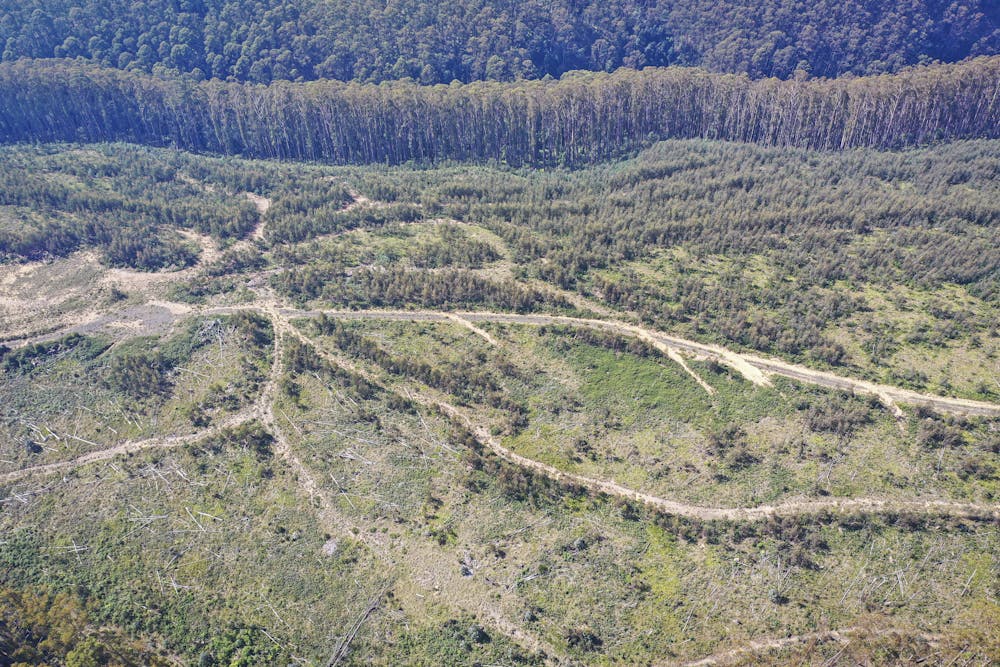
    We analysed satellite data, logging records, on-ground surveys and drone photography, and discovered that nearly 20% of logged areas failed to regenerate. This represents more than 8,000 hectares of forest lost. All that remains in these areas are grassy clearings, dense shrublands or bare soils.

    We also found the rate of regeneration failure has increased over the past decade. While failure was rare in the 1980s, it became much more common over time – affecting more than 80% of logged sites by 2019.

    These regeneration failures weren’t random. They were found mostly in close proximity to each other, on areas with steep slopes, relatively low elevation, and where the area of clear-felled forest was long and narrow.

    Our research shows more needs to be done to restore Victoria’s forest after logging.

    Failed regeneration in the Upper Thomson water supply catchment.
    Chris Taylor/Lachie McBurnie

    Restoring majestic forests and their vital services

    Victoria is home to some of the most spectacular forests on the planet. They include extensive stands of mountain ash, the tallest flowering plant on Earth, which can grow to almost 100 metres in height. Alpine ash, another giant, can grow up to 60m tall.

    These forests have great cultural significance to Indigenous people and support many recreational and tourism activities.

    Healthy forest ecosystems also deliver clean water and carbon storage services. In fact, mountain ash forests contain more carbon per hectare than most other forests around the world.

    But Victoria’s forests have long been logged for timber and pulp. The main method of logging – clearfelling – scars the landscape, leaving large areas devoid of trees if natural tree regeneration fails.

    Mountain ash is especially vulnerable

    Our research revealed 19.2% of areas logged between 1980 and 2019 in our study area (8,030ha out of 41,819ha cut) failed to regenerate naturally.

    We also found strong evidence of a significant increase in the extent of failed regeneration over 40 years, increasing from less than two hectares per cutblock in 1980 (about 7.5%) to more than nine hectares per cutblock in 2019 (about 85%), on average.

    We found regeneration failure was more likely in mountain ash forests compared with other forest types.

    This adds to the case for listing the mountain ash forests of the Central Highlands of Victoria as a threatened ecological community.

    The presence of non-eucalypt categories of vegetation indicates large areas of regeneration failure in forest near Mt Matlock, in the Central Highlands of Victoria.
    Chris Taylor

    A responsibility to restore

    Under Victoria’s Code of Forest Practice for Timber Production, logged native forests must be properly regenerated within two to three years of harvest.

    That’s because it is nearly impossible for the native forest to regenerate after three years without human intervention. The young trees face too much competition from grass and shrubs.

    These degraded areas no longer hold the value they once did and they cannot provide the same level of ecosystem services such as carbon storage, water purification, or habitat for wildlife.

    With no current government restoration plan, these landscapes will remain degraded indefinitely. The Victorian government retains legal responsibility to restore these degraded forests, but currently lacks any large-scale restoration strategy, making action urgently required.

    Photographs of vegetation categories on logged sites: Eucalyptus regeneration near Toolangi (A), grass-dominated area near Mt Matlock (B), shrubby vegetation at Ballantynes Saddle (C), Daviesia vegetation near Mt Matlock (D), Acacia near Mt Baw Baw (E), and bare earth near Mt Matlock (F).
    Chris Taylor

    A way forward: using green bonds to fund regeneration

    Our research shows the regeneration of forests after logging is not guaranteed. Nature often needs a helping hand. But we need to find ways to fund these projects.

    Globally, governments have used “green bonds” to lower the cost of borrowing tied explicitly to measurable environmental results.

    Victoria already has green bonds “to finance new and existing projects that offer climate change and environmental benefits”. But funds are typically used to finance investments in transport, renewable energy, water and low carbon buildings.

    As part of a coalition of researchers, environmental organisations, and finance sector partners we proposed a A$224 million green bond for forest regeneration. This proposal was put to the Victorian government via the Treasury Corporation of Victoria.

    Green bond funding would help leverage co-investment from the Commonwealth government and philanthropic partners to improve monitoring and biodiversity outcomes in native forests.

    As part of the proposed green bond, areas of logged forest where natural regeneration has failed would be restored.

    Other investments under the green bond could include creating tourism ventures (and associated jobs), controlling feral animals such as deer, and biodiversity recovery – creating habitat for endangered species such as the southern greater glider and Leadbeater’s possum, for example.

    The $224 million required for the ten years of the green bond — or around $22.4 million per year — is less than the substantial losses Victoria incurred on its investment in VicForests over the past decade.

    Our research suggests leaving nature to its own devices would mean losing a fifth of the forests logged over the past 40 years. Bringing the trees back has multiple benefits and would be well worth the investment.

    Maldwyn John Evans receives funding from the Australian Government.

    David Lindenmayer receives funding from The Australian Government, the Australian Research Council and the Victorian Government. He is a Councillor with the Biodiversity Council and a Member of Birdlife Australia.

    Chris Taylor does not work for, consult, own shares in or receive funding from any company or organisation that would benefit from this article, and has disclosed no relevant affiliations beyond their academic appointment.

    ref. Logging devastated Victoria’s native forests – and new research shows 20% has failed to grow back – https://theconversation.com/logging-devastated-victorias-native-forests-and-new-research-shows-20-has-failed-to-grow-back-254465

    MIL OSI AnalysisEveningReport.nz

  • MIL-OSI USA: Zinke Awarded Top Conservation Honors by Theodore Roosevelt Conservation Partnership

    Source:

    TRCP recognized Zinke’s extensive track record on conservation and the protection of public lands

    (WASHINGTON, DC) On Wednesday, the Theodore Roosevelt Conservation Partnership (TRCP) awarded Congressman Ryan Zinke (MT-01) with the James D. Range Conservation Award for his work on wildlife conservation and the protection of public lands, particularly his introduction of the Public Lands in Public Hands Act and Wildlife Movement Through Partnerships Act.


    The award is the highest honor given by TRCP and is granted to one Democrat and one Republican each year for their dedication to protecting public lands and healthy herds. Zinke was honored for his extensive track record on the protection of public access to public lands and his longtime work on mapping and conserving migration corridors for iconic big game species like elk, mule deer, and pronghorn antelope. 


    “Growing up as a Boy Scout in the Flathead, one thing was instilled in me over and over again: you pack out what you pack in, leave campsites cleaner than you found them. That lesson, combined with the North American Conservation Ethic, guides my policymaking to ensure the next generation can hunt, fish, and hike in the same magnificent landscapes we did,” said Congressman Zinke. “Hunting and fishing are the backbone of wildlife and habitat conservation. I’m honored to accept this award, and I want to thank the colleges, conservation groups, and local stakeholders who’ve offered expert advice and support throughout my conservation efforts. Protecting public lands, migration corridors, and public access aren’t red or blue issues; they are red, white, and blue issues, and we must continue to work together to preserve what makes Montana so special.”


    “Montana’s hunting and fishing legacy and public access is legendary,” said K.C. Walsh, Theodore Roosevelt Conservation Partnership board of directors’ member and Montana Fish & Wildlife commissioner. “Ryan Zinke has been a champion for keeping public lands in public hands and for the protection of big game migrations in Montana and the Nation.  Congratulations on this well-deserved recognition, Representative Zinke.”


    “Representative Zinke’s commitment to public lands and conservation has made him a champion of hunters and anglers,” said Joel Pedersen, president and CEO of the Theodore Roosevelt Conservation Partnership. “TRCP is thrilled to award him the James D. Range Conservation Award and we look forward to continue working with Representative Zinke to help guarantee all Americans quality places to hunt and fish.”


    A national sportsmen’s organization based out of Missoula, Montana, TRCP’s mission is to guarantee all Americans quality places to hunt and fish. The annual Capital Conservation Awards Gala brings together conservationists, elected officials, policymakers, and business leaders who share a commitment to our hunting and fishing traditions. It is a chance to celebrate that conservation is, and always has been, bipartisan and uniquely American.


    A partial list of Congressman Zinke’s work on conservation issues follows: 


    • Public Lands in Public Hands Act
      • (118th & 119th Congress)
        Protects public access to federal lands by prohibiting most sales/transfers unless previously authorized, requiring congressional approval for large tracts, and preserving nearly 30 million acres for public use.
    • Wildlife Movement Through Partnerships Act
      • (118th & 119th Congress)
        Codifies Secretarial Order 3362, the Wildlife Crossing Pilot Program, and USDA’s Migratory Big Game Initiative to enhance big game migration corridors and critical wintering habitat through federal and state collaboration.
    • Gateway Communities and Recreation Enhancement Act
      • (Part of EXPLORE Act, 118th Congress)
        Creates digital access passes, promotes lesser-known recreation sites, and supports local economies, housing, and infrastructure through agency-community collaboration.
    • Wildlife Corridors on Working Lands Act
      • (118th & 119th Congress)

        directs the United States Department of Agriculture (USDA) to provide more resources and incentives for farmers and ranchers to increase habitat connectivity and wildlife movement on working lands

    • Secretarial Order 3356
      • Expanded hunting, fishing, and recreational shooting opportunities on DOI lands while advancing conservation through state, tribal, and territorial partnerships.
    • Secretarial Order 3362
      • Directed federal-state collaboration to improve big-game winter range and migration corridors in 11 western states, respecting state wildlife management and private property rights
    • Great American Outdoors Act
      • Major bipartisan conservation law that created the largest investment in public lands infrastructure in generations. The bill was first constructed by then-Secretary Zinke, originally the Restore Our Parks Act and later bundled with other bills to become GAOA, is delivering historic funding to national parks and public land maintenance.


    ###

    MIL OSI USA News

  • MIL-OSI USA: Justice Department Files Complaints Against Hawaii, Michigan, New York and Vermont Over Unconstitutional State Climate Actions

    Source: US State of Vermont

    WASHINGTON — The Justice Department today filed complaints against the states of New York and Vermont over their “climate superfund laws.” In separate actions, the Justice Department yesterday filed lawsuits against the states of Hawaii and Michigan to prevent each state from suing fossil fuel companies in state court to seek damages for alleged climate change harms.

    President Trump recently directed Attorney General Pamela Bondi to take action to stop the enforcement of state laws that unreasonably burden domestic energy development so that energy will once again be reliable and affordable for all Americans. These lawsuits advance President Trump’s directive in Executive Order 14260, Protecting American Energy from State Overreach.

    “These burdensome and ideologically motivated laws and lawsuits threaten American energy independence and our country’s economic and national security,” said Attorney General Pamela Bondi. “The Department of Justice is working to ‘Unleash American Energy’ by stopping these illegitimate impediments to the production of affordable, reliable energy that Americans deserve.”

    “When states seek to regulate energy beyond their constitutional or statutory authority, they harm the country’s ability to produce energy and they aid our adversaries,” said Acting Assistant Attorney General Adam Gustafson of the Justice Department’s Environment and Natural Resources Division. “The Department’s filings seek to protect Americans from unlawful state overreach that would threaten energy independence critical to the wellbeing and security of all Americans.”

    According to the complaints filed yesterday in the U.S. District Courts for the District of Hawaii and the Western District of Michigan, Hawaii and Michigan intend to sue fossil fuel companies to seek damages for alleged climate change harms.  The government alleges that these anticipated actions are preempted by the Clean Air Act and violate the Constitution. Such lawsuits burden energy production, force the American people to pay more for energy, and make the United States less able to defend itself from hostile foreign actors.

    Complaints filed today in U.S. District Courts for the Southern District of New York and for the District of Vermont challenge expropriative laws passed by New York and Vermont. These “climate superfund” laws would impose strict liability on energy companies for their worldwide activities extracting or refining fossil fuels. The laws assess penalties for those businesses’ purported contributions to harms that those states allegedly are experiencing from climate change. The New York law seeks $75 billion from energy companies, while the Vermont law seeks an unspecified amount.

    Today’s complaints allege that the New York Climate Change Superfund Act and the Vermont Climate Superfund Act are preempted by the federal Clean Air Act and by the federal foreign affairs power, and that they violate the U.S. Constitution. The Justice Department seeks a declaration that these state laws are unconstitutional and an injunction against their enforcement.

    Complaints:

    MIL OSI USA News

  • MIL-OSI Security: Justice Department Files Complaints Against Hawaii, Michigan, New York and Vermont Over Unconstitutional State Climate Actions

    Source: United States Attorneys General 1

    WASHINGTON — The Justice Department today filed complaints against the states of New York and Vermont over their “climate superfund laws.” In separate actions, the Justice Department yesterday filed lawsuits against the states of Hawaii and Michigan to prevent each state from suing fossil fuel companies in state court to seek damages for alleged climate change harms.

    President Trump recently directed Attorney General Pamela Bondi to take action to stop the enforcement of state laws that unreasonably burden domestic energy development so that energy will once again be reliable and affordable for all Americans. These lawsuits advance President Trump’s directive in Executive Order 14260, Protecting American Energy from State Overreach.

    “These burdensome and ideologically motivated laws and lawsuits threaten American energy independence and our country’s economic and national security,” said Attorney General Pamela Bondi. “The Department of Justice is working to ‘Unleash American Energy’ by stopping these illegitimate impediments to the production of affordable, reliable energy that Americans deserve.”

    “When states seek to regulate energy beyond their constitutional or statutory authority, they harm the country’s ability to produce energy and they aid our adversaries,” said Acting Assistant Attorney General Adam Gustafson of the Justice Department’s Environment and Natural Resources Division. “The Department’s filings seek to protect Americans from unlawful state overreach that would threaten energy independence critical to the wellbeing and security of all Americans.”

    According to the complaints filed yesterday in the U.S. District Courts for the District of Hawaii and the Western District of Michigan, Hawaii and Michigan intend to sue fossil fuel companies to seek damages for alleged climate change harms.  The government alleges that these anticipated actions are preempted by the Clean Air Act and violate the Constitution. Such lawsuits burden energy production, force the American people to pay more for energy, and make the United States less able to defend itself from hostile foreign actors.

    Complaints filed today in U.S. District Courts for the Southern District of New York and for the District of Vermont challenge expropriative laws passed by New York and Vermont. These “climate superfund” laws would impose strict liability on energy companies for their worldwide activities extracting or refining fossil fuels. The laws assess penalties for those businesses’ purported contributions to harms that those states allegedly are experiencing from climate change. The New York law seeks $75 billion from energy companies, while the Vermont law seeks an unspecified amount.

    Today’s complaints allege that the New York Climate Change Superfund Act and the Vermont Climate Superfund Act are preempted by the federal Clean Air Act and by the federal foreign affairs power, and that they violate the U.S. Constitution. The Justice Department seeks a declaration that these state laws are unconstitutional and an injunction against their enforcement.

    Complaints:

    MIL Security OSI

  • MIL-OSI USA: Rep. Scholten Honors Medal of Merit Students for Outstanding Community Leadership

    Source: United States House of Representatives – Congresswoman Hillary Scholten – Michigan

    GRAND RAPIDS, MI – U.S. Congresswoman Hillary Scholten (MI03) honored a group of exceptional students from across West Michigan as recipients of the Medal of Merit Award at her third annual ceremony. The students were recognized not only for academic and extracurricular excellence, but for their outstanding commitment to service, civic engagement, and community leadership.

    “When I meet students like this, I’m reminded that our future is in very good hands,” said Rep. Scholten. “Whether volunteering, mentoring peers, or stepping up as leaders in and out of the classroom, these students represent the best of West Michigan’s future. They are already showing us what it means to lead with integrity, compassion, and purpose. I’m proud to represent them and excited to see what they’ll accomplish next.”

    Each student was nominated by their school for demonstrating compassion, initiative, and a deep dedication to bettering their communities. Parents, educators, and counselors were also acknowledged for their critical role in supporting the students’ growth and leadership. The students were described by their schools as tenacious, kind, and driven—natural leaders who uplift those around them.

    The Medal of Merit ceremony served as a powerful reminder of the importance of service and the strength of the next generation of changemakers. Rep. Scholten encouraged the honorees to continue leading, wherever their paths may take them, and to never underestimate the impact of showing up for others.

    The 2025 winners are as follows:

    • Audrey McKeiver, West Catholic High School
    • Abigail Strand, City High Middle School
    • Jacob Barnes, Forest Hills Central High School
    • Brenna Tran, Godwin Heights High School
    • Wyatt Sall, South Christian High School
    • Nathan Oki, West Michigan Aviation Academy
    • Dillany Perez, Union High School
    • Barrett Vernon, Innovation Central High School
    • Brielle Voorhes, Tri-Unity Christian High School
    • Katence Brown-Holzgen, Catholic Central High School
    • Austin Alcumbrack, Cedar Springs High School
    • Luke Dykstra, Covenant Christian High School
    • Dana Fradelle, Environmental Middle High School
    • Isolde Deal, Ravenna High School
    • Abimael Diaz, Grand Rapids Christian High School
    • Luke Pouillon, East Grand Rapids High School
    • Emilio Hernandez-Martin, Forest Hills Northern High School
    • Noah Bartle, Forest Hills Eastern High School
    • Kendyl Sweany, Rockford High School
    • Sophia Galbavi, Grand Haven High School

    ###

    MIL OSI USA News

  • MIL-OSI Asia-Pac: India Advocates Global Action on Chemicals and Waste at BRS COPs 2025

    Source: Government of India

    India Advocates Global Action on Chemicals and Waste at BRS COPs 2025

    Union Minister for Environment Forest & Climate Change Shri Bhupender Yadav leads Indian Delegation at high-level Segment in Geneva

    Shri Yadav emphasizes India’s Regulatory Framework and Global Leadership on Plastic Pollution

    Posted On: 01 MAY 2025 8:27PM by PIB Delhi

    An Inter-Ministerial delegation from India, led by the Union Minister of Environment, Forest and Climate Change, Shri Bhupender Yadav, is participating in the Conference of the Parties (COPs) to the Basel, Rotterdam and Stockholm (BRS) Conventions, taking place in Geneva from 30th April to 1st May, 2025. The theme of this year’s high-level segment is “Make visible the invisible: Sound management of chemicals and wastes.”

    During his address in opening ceremony, Shri Bhupender Yadav emphasized that the theme reflects the global imperative of addressing the often-unseen threats of chemical and waste mismanagement. He reiterated India’s commitment to environmentally sound policies, underpinned by a robust legal and institutional framework.

    Key Interventions and Bilateral Engagements

    At the ministerial roundtable on ‘Means of Implementation’, Shri Yadav highlighted that the effective execution of the BRS Conventions relies significantly on access to finance, technology transfer, capacity-building, technical assistance, and strengthened international cooperation. He outlined India’s integrated approach to implementing the conventions through national legislation such as the Environment (Protection) Act, the Hazardous and Other Wastes (Management and Transboundary Movement) Rules, and the E-Waste Management Rules, 2016, which are supported by sustained investments in institutional and technical infrastructure.

    On the sidelines of the COPs, the Union Minister Shri Yadav participated in a consultation meeting organized by Norway on the work of the Intergovernmental Negotiating Committee (INC) on Plastic Pollution. He apprised participants of India’s domestic initiatives such as the ban on identified single-use plastic items and the implementation of Extended Producer Responsibility (EPR) for plastic packaging.

    Shri Yadav further underlined India’s pioneering role in international environmental governance under the leadership of Prime Minister Shri Narendra Modi, highlighting that India introduced a resolution on single use plastics at UNEA-4, bringing the issue to the center of global discourse.

    During the bilateral meeting with Ms. Katrin Schneeberger, Director of the Federal Office for the Environment, Switzerland, Shri Yadav discussed matters related to the development of a legally binding international instrument on plastic pollution, and India’s support for the establishment of a Science-Policy Panel on Chemicals and Waste, as mandated by UNEA resolutions.

    Forward-Looking Engagement

    The High-Level Segment of the BRS COPs features ministerial roundtables and interactive dialogues focused on collaborative global action.

    India remains steadfast in its commitment to multilateral environmental cooperation and will continue to advocate for the interests of developing countries while ensuring equitable, science-based, and sustainable solutions for the planet.

    *****

    GS

    (Release ID: 2125922) Visitor Counter : 51

    MIL OSI Asia Pacific News

  • MIL-OSI Asia-Pac: Brainstorming Session on Pumped Storage Projects to Power India’s Renewable Future organized at Scope Complex

    Source: Government of India

    Posted On: 01 MAY 2025 6:53PM by PIB Delhi

    A high-level Brainstorming Session on “Pumped Storage Projects: Powering India’s Renewable Future” was successfully organized today at the SCOPE Convention Centre, New Delhi, by THDC India Ltd. and Central Electricity Authority (CEA) in association with NTPC, with the support of CBIP & INCOLD.

    The session witnessed the participation of over 300 distinguished delegates including top government officials, policymakers, developers, environmental experts, regulators, and senior representatives from the public and private sectors from near about 95 organisations and institutions from all around the country. The day-long event focused on the growing role of Pumped Storage Projects (PSPs) in supporting India’s renewable energy transition and achieving the national target of net zero emissions by 2070.

    The event was graced by Sh. Pankaj Agarwal (IAS), Secretary, Ministry of Power, GoI, as the Chief Guest, along with Sh. Akash Tripathi (IAS), Additional Secretary (Hydro), Ministry of Power, GoI, as the Guest of Honour. Shri M.G. Gokhale, Member (Hydro), CEA; Shri Gurdeep Singh, CMD, NTPC; Shri R.K. Vishnoi, CMD, THDCIL; Shri Mohmmad Afzal, Joint Secretary (Hydro), MoP; Shri Bhupender Gupta, Director (Technical), THDCIL, Sh. A. K. Dhinkar, Secretary, CBIP along with other senior officers of Power Sector in India were among the dignitaries present at the ceremony.

    The event featured four focused panel discussions that covered critical themes, including the “Policy, Planning, and Regulatory Framework for Pumped Storage Projects (PSPs)”, “Geological, Civil, and Material Considerations in PSP Development”, “Environmental and Forest Clearance Framework- Challenges & Streamlining”, and “Implementation Challenges & Way Forward for PSPs in India”. These discussions provided valuable insights into the complexities and opportunities within each area, fostering a productive dialogue among policymakers, developers, technical experts, and environmental professionals.

    Shri Pankaj Agarwal, IAS, Secretary, Ministry of Power, Govt. of India during his address, emphasized that ensuring grid stability is a matter of urgent national priority and every state must actively contribute to this effort. He further underlined the need for Sub-regions within states to become self-sufficient from a grid management perspective, with a strong focus on flexible generation and load shifting. He added that there is a need of brainstorming and policy dialogue to fast-track PSP development, with a focus on reviewing procedural delays and streamlining processes and platforms like these are vital for building consensus and enabling coordinated sectoral action.

    Shri Akash Tripathi, (IAS), Additional Secretary (Hydro), Ministry of Power, GoI in his address, highlighted that the genesis of this workshop lies in the need to bring together relevant stakeholders to collaborate on accelerating the development of Pumped Storage Projects (PSPs). He noted that the workshop aims to foster brainstorming and exchange of key policy perspectives on how to fast-track PSP implementation

    Shri M.G. Gokhale, Member (Hydro), CEA highlighted the vast potential of Pumped Storage Projects (PSPs) in India, emphasizing their critical role in achieving the country’s Net Zero targets through reliable energy storage. He noted that, around 3 GW of PSP capacity is expected to be added in 2025-26, including the commissioning of the 1000 MW Tehri PSP in the coming months.

    Shri Gurdeep Singh, CMD, NTPC stressed the urgent need for large-scale deployment of Pumped Storage Projects (PSPs), stating that the energy transition cannot succeed without robust storage solutions. Given the intermittent nature of renewables, he emphasized the need of storage capabilities for a stable shift to renewable energy and reliable grid management.

    Shri R.K. Vishnoi, CMD, THDCIL welcomed the imminent dignitaries and emphasized that the workshop is aimed at deliberating on the development of Pumped Storage Projects (PSPs). He noted that the focus will be on identifying roadblocks and exploring ways to ensure faster and more efficient execution of projects on the ground. Sh. Vishnoi also addressed the scope of automation in various aspects of operations and how it can ensure seamless operations, and enhance efficiency.

    Sh. A. K. Dhinkar, Secretary, CBIP delivered the vote of thanks, expressing gratitude to the eminent panellist for their participation and contributions. He highlighted the importance of accelerating the development of Pumped Storage Projects as a key player in building a resilient and sustainable future.

    The first panel discussion was focused on the topic “Policy, Planning & Regulatory Framework for PSPs,” moderated by Shri Mohammad Afzal, Joint Secretary (Hydro), Ministry of Power. The panel included Sh. Bhupender Gupta, Director (Technical), who deliberated on the developer’s perspective on PSP development under the current policy regime.

    Expert speakers from organizations such as Ministry of Power, GoI; MoEF &CC, GoI; CEA, NTPC, THDC, NHPC, REC/PFC, SJVN, NEEPCO, CWC, UPJVNL, Greenko Group, GSI, CSMRS, MAHAGENCO, JSW Energy, APGENCO, Adani Group, OHPC, TATA Power, Karnataka Power Corporation, and premier academic institutions like IIT Roorkee shared case studies, best practices, and innovative strategies to overcome challenges in PSP planning and execution.

    Deliberations highlighted the urgent need for streamlined policy support, faster clearance mechanisms, robust financing options, and strengthened collaboration between central and state agencies to scale up PSP deployment across India. The session concluded with a comprehensive summary by CEA and a vote of thanks by THDC.

    Notably, THDC India Ltd., a subsidiary of NTPC, is also in the final stages of commissioning India’s first Variable Speed Pumped Storage Plant of 1000 MW capacity at Tehri, Uttarakhand, having successfully completed critical tests—marking a significant milestone in India’s energy storage journey.

    *****

    SK

    (Release ID: 2125872) Visitor Counter : 107

    MIL OSI Asia Pacific News

  • MIL-OSI USA: Capito Applauds House Passage of Resolutions to Repeal California’s Radical EV Mandate

    US Senate News:

    Source: United States Senator for West Virginia Shelley Moore Capito

    WASHINGTON, D.C. – Today, U.S. Senator Shelley Moore Capito (R-W.Va.), Chairman of the Senate Environment and Public Works (EPW) Committee, applauded the House of Representatives’ passage of joint resolutions of disapproval under the Congressional Review Act (CRA) to repeal California’s EV waivers that prohibit the sale of new gas-powered light-duty vehicles by 2035, and set unrealistic and stringent requirements for heavy-duty trucks and heavy-duty diesel engines. Chairman Capito and U.S. Senators Deb Fischer (R-Neb.), and Markwayne Mullin (R-Okla.) have introduced identical resolutions in the Senate.

    “I congratulate my House colleagues for taking this important step towards eliminating the radical California waivers and displaying the bipartisan support behind reversing the EV mandate. We know these rules would not only eliminate consumer choice, but also create harmful impacts across multiple sectors of our economy that would lead to major job losses felt far outside of California. I continue to work with my colleagues and Senate Republican leadership to address all options available in the Senate to repeal these rules,” Chairman Capito said.

    MIL OSI USA News

  • MIL-OSI USA: Governor Pillen’s Pro-Water, Pro-Ag Legislation Advances

    Source: US State of Nebraska

    . This legislation was introduced at the request of the Governor. 

    “Water is our lifeblood. As a farming and ranching state that is growing, this is the right time for Nebraska to create a modern model of stewardship and double-down on our work to protect and enhance our water resources. The newly structured Department of Water, Energy and Environment allows us to prioritize the management of both water quantity and water quality under the same leadership – while also streamlining duplicative government and cutting red tape. This legislation is a win-win for our state.” 

    Gov. Pillen said he appreciated Senator Tom Brandt’s hard work to successfully advance this important legislation. Once signed into law, LB 317 will merge two existing code agencies: the Department of Natural Resources (DNR) with the Department of Environment and Energy (DEE).

    In February, Gov. Pillen appointed Jesse Bradley to serve as interim director to both DEE and DNR. He will lead the restructured agency. 

    The legislation will be signed into law by Governor Pillen next week.

    MIL OSI USA News

  • MIL-OSI USA: Welch Leads Introduction of the Nulhegan River and Paul Stream Wild and Scenic River Study Act to Protect Vermont Waterways

    US Senate News:

    Source: United States Senator Peter Welch (D-Vermont)

    WASHINGTON, D.C. — The Vermont Congressional Delegation, U.S. Senators Bernie Sanders (I-Vt.), Peter Welch (D-Vt.) and U.S. Representative Becca Balint (VT-At Large) this week reintroduced the bicameral Nulhegan River and Paul Stream Wild and Scenic River Study Act. This bill would protect the ecological, recreational, and economic value of Northern Vermont waterways by commissioning a study to determine whether the Nulhegan River and Paul Stream could be included in the National Wild and Scenic Rivers System.  “Keeping Vermont’s rivers healthy is crucial to the success of our outdoor recreation and tourism industries. We’re proud to once again introduce this legislation as a Delegation help protect our State’s natural beauty and boost our economy,” said the Vermont Congressional Delegation. “This bill is an important step forward in preserving and protecting the Nulhegan River and Paul Stream for future generations of Vermonters to enjoy.”  The National Wild and Scenic Rivers System protects free-flowing rivers with outstanding natural, cultural, or recreational value. Since its creation in 1968, the system has grown to encompass more than 13,400 miles of rivers across the country, including segments of the Missisquoi and Trout Rivers in Vermont. Depending on their characteristics, rivers may be classified as wild, scenic, or recreational. Wild and Scenic rivers are managed to maintain their free-flowing condition, high water quality, and outstanding recreational opportunities, from rafting to fishing. 
    The Nulhegan River and Paul Stream Wild and Scenic River Study Act is supported by a broad coalition of local municipalities, cultural and regional organizations, and environmental conservation groups, including American Rivers, the Connecticut River Joint Commission, Connecticut River Conservancy, Essex County Conservation District, Nature Conservancy, Northeastern Vermont Development Association, Northern Forest Canoe Trail, Nulhegan Band of the Coosuk – Abenaki Nation, Trout Unlimited (including the David and Francis Smith Northeast Kingdom Chapter), Vermont Chapter of the Native Fish Coalition, and the Vermont River Conservancy.  Last Congress, Senator Welch led the Vermont Congressional Delegation in introducing the Nulhegan River and Paul Stream Wild and Scenic River Study Act of 2023, which was passed out of the Senate Committee on Energy and Natural Resources with bipartisan support. In December 2024, the Senate unanimously passed the Delegation’s bill.  Learn more about the Nulhegan River and Paul Stream Wild and Scenic River Study Act of 2025. 
    Read the full text of the bill.  

    MIL OSI USA News

  • MIL-OSI USA: Padilla Statement on Republican Attacks on California’s Clean Air Act Waivers

    US Senate News:

    Source: United States Senator Alex Padilla (D-Calif.)

    Padilla Statement on Republican Attacks on California’s Clean Air Act Waivers

    WASHINGTON, D.C. — Today, U.S. Senator Alex Padilla (D-Calif.), Ranking Member of the Senate Rules Committee and a member of the Senate Environment and Public Works Committee, issued the following statement after House Republicans erroneously voted to strike down three California Clean Air Act waivers, which authorize California’s clean cars and trucks programs. The Senate Parliamentarian and the Government Accountability Office (GAO) have already determined that California’s Clean Air Act waivers are not subject to the simple majority threshold in the Congressional Review Act (CRA) and therefore would require 60 votes to secure Senate passage.

    “House Republicans’ misguided and cynical attempts to gut the Clean Air Act and undercut California’s climate leadership ignores the reality of California’s strength as the fourth largest economy in the world. I will continue to defend our state’s authority to protect our residents, clean our air, lower costs, and transition to a clean energy economy.

    “Let me also be clear about process. The Senate parliamentarian has already upheld decades of precedent and determined these CRAs are not allowed by Senate rules. If Senate Republicans take up these measures under the Congressional Review Act, they will be going nuclear by overruling the Parliamentarian, all to baselessly attack California.”

    Senator Padilla has been outspoken in pushing back against Republican attacks on California’s Clean Air Act waivers and welcomed the Senate parliamentarian’s decision that waivers are not subject to the CRA. He also joined Senators Schiff and Whitehouse in blasting Trump and Zeldin’s weaponization of the EPA when the GAO had already found that California’s Clean Air Act waivers are not subject to the CRA. Padilla and Schiff also slammed the Trump Administration’s intent to roll back dozens of the EPA’s regulations that protect California’s air and water.

    MIL OSI USA News

  • MIL-OSI USA: Duckworth Slams Trump Administration’s Plans to Cancel Nearly a Billion Dollars in EPA Environmental Justice Grants, Putting the Health of Low-Income Communities and Families At Risk

    US Senate News:

    Source: United States Senator for Illinois Tammy Duckworth
    April 30, 2025
    [WASHINGTON, D.C.] – Today, U.S. Senator Tammy Duckworth (D-IL)—founding co-chair of the Senate’s Environmental Justice Caucus—issued the following statement after a court filing revealed the Environmental Protection Agency (EPA) plans to cancel nearly one billion dollars in environmental justice grants issued under the Biden Administration to 781 awardees across the country. These previously-approved grants help communities get the lead out of our kids’ drinking water, clean up dangerous toxins, protect against floods and wildfires, address the ongoing effects of legacy pollution—such as higher cancer, asthma and death rates—and more:
    “Contrary to the Trump Administration’s ‘Make America Healthy Again’ mantra, this move will make America sicker for generations to come,” Duckworth said. “Donald Trump is willing to devastate the long-term health and livelihood of communities across the country to make his billionaire buddies richer—it’s beyond despicable. I’m outraged, and I’m going to keep doing everything in my power to push back against this Administration’s cruel agenda to deteriorate the health and safety of millions just to put even more money in the ultra-wealthy’s pockets.”
    These grants are part of the $3 billion in funding that Duckworth and fellow Senate Environmental Justice Caucus co-chair Cory Booker (D-NJ) successfully secured in the historic Inflation Reduction Act—the first time that environmental justice community grant funding has been authorized to EPA.
    Additionally, Duckworth led the charge in the U.S. Senate to remove lead drinking water pipes across the country. Her Drinking Water and Wastewater Infrastructure Act (DWWIA), which was included in the Bipartisan Infrastructure Law, is the most significant federal investment in water infrastructure in history, including $15 billion for national lead service line replacement. DWWIA, which focuses on disadvantaged communities, is helping rebuild our nation’s crumbling and dangerous water infrastructure and enable communities to repair and modernize their failing wastewater systems.
    Last month, Duckworth and Booker condemned the Trump Administration for shutting down all of EPA’s environmental justice offices and slashing over 30 EPA regulations that have helped protect our nation’s public health and the environment for decades. In February, Duckworth and Booker—along with U.S. Senator Lisa Blunt Rochester (D-DE)—urged EPA Administrator Zeldin to reopen the EPA’s Office of Environmental Justice and External Civil Rights (OEJECR), which Duckworth and Booker led the charge to create. Duckworth also recently helped introduce legislation that would permanently codify the Office of Environmental Justice within the Department of Justice’s (DOJ) Environment and Natural Resources Division (ENRD) in response to Attorney General Bondi’s order eliminating all environmental justice efforts at the DOJ. 
    -30-

    MIL OSI USA News

  • MIL-OSI Canada: Challenging unconstitutional net-zero legislation

    [. According to the Alberta Electric System Operator’s analysis, the regulations in question would make Alberta’s electricity system more than 100 times less reliable than the province’s supply adequacy standard. Albertans expect their electricity to remain affordable and reliable, but implementation of these regulations could increase costs by a staggering 35 per cent.

    Canada’s constitution is clear. Provinces have exclusive jurisdiction over the development, conservation and management of sites and facilities in the province for the generation and production of electrical energy. That is why Alberta’s government is referring the constitutionality of the federal government’s recent net-zero electricity regulations to the Court of Appeal of Alberta.

    “The federal government refused to work collaboratively or listen to Canadians while developing these regulations. The results are ineffective, unachievable and irresponsible, and place Albertans’ livelihoods – and more importantly, lives – at significant risk. Our government will not accept unconstitutional net-zero regulations that leave Albertans vulnerable to blackouts in the middle of summer and winter when they need electricity the most.”

    Danielle Smith, Premier

    “The introduction of the Clean Electricity Regulations in Alberta by the federal government is another example of dangerous federal overreach. These regulations will create unpredictable power outages in the months when Albertans need reliable energy the most. They will also cause power prices to soar in Alberta, which will hit our vulnerable the hardest.”

    Mickey Amery, Minister of Justice and Attorney General

    Finalized in December 2024, the federal electricity regulations impose strict carbon limits on fossil fuel power, in an attempt to force a net-zero grid, an unachievable target given current technology and infrastructure. The reliance on unproven technologies makes it almost impossible to operate natural gas plants without costly upgrades, threatening investment, grid reliability, and Alberta’s energy security.

    “Ottawa’s electricity regulations will leave Albertans in the dark. They aren’t about reducing emissions – they are unconstitutional, ideological activist policies based on standards that can’t be met and technology that doesn’t exist. It will drive away investment and punish businesses, provinces and families for using natural gas for reliable, dispatchable power. We will not put families at risk from safety and affordability impacts – rationing power during the coldest days of the year – and we will continue to stand up for Albertans.”

    Rebecca Schulz, Minister of Environment and Protected Areas

    “Albertans depend on electricity to provide for their families, power their businesses and pursue their dreams. The federal government’s Clean Electricity Regulations threaten both the affordability and reliability of our power grid, and we will not stand by as these regulations put the well-being of Albertans at risk.”

    Nathan Neudorf, Minister of Affordability and Utilities

    Related information

    • Conference Board of Canada socio-economic Impacts of Canada’s 2030 Emissions Reduction Plan – (April 2025)
    • Alberta Electric System Operator’s position on Canadian Energy Regulations

    Related news

    • Federal rules add electricity costs and increase unreliability (March 2025)
    • Responding to Ottawa’s electricity regulations: Joint Statement (Dec. 2024)
    • Impact Assessment Act lands Ottawa in court again (Nov. 2024)
    • Proposed clean electricity regulations: Premier Smith (Aug. 2023)

    Multimedia

    • Watch the news conference

    MIL OSI Canada News

  • MIL-OSI USA: $53 Million Expansion at Storm King Art Center Complete

    Source: US State of New York

    overnor Hochul announced the reopening of Storm King Art Center with new buildings and landscapes, including visitor welcome pavilions with consolidated parking and accessible amenities; the construction of a conservation, fabrication, and maintenance building; and a holistic approach to landscape stewardship and environmental sustainability. The $53 million project is supported by a $11.3 million investment from the New York State Council on the Arts, Empire State Development and the New York State Energy Research and Development Authority.

    “Storm King Art Center combines world-class art and culture with one of the most beautiful landscapes in the world,” Governor Hochul said. “With this incredible expansion of Storm King Art Center, Hudson Valley will benefit from increased tourism, expanded opportunities for growth and the restorative power of art and culture.”

    Storm King Art Center in the Town of New Windsor, Orange County, offers local, national, and international audiences a chance to discover sculpture amid 500 acres of Hudson Valley landscape. In response to growth, Storm King launched a capital project to enhance the visitor experience and protect its art, nature, and people. The completed project includes multiple elements: a ticket and information pavilion, restroom pavilion, and group pavilion — new spaces for visitor hospitality that are united by an outdoor lobby and framed by native plantings; and the state-of-the-art David R. Collens Building for Conservation, Fabrication, and Maintenance, which supports the museum’s work with artists and the care of its collection. The project also reclaims two former parking lots within the museum grounds, creating five acres of new landscape for art and programming.

    New York State Council on the Arts Executive Director Erika Mallin said, “Critical investments like this demonstrate the Governor and Legislature’s understanding of the importance and impact of our sector and of supporting the diversity of arts and culture across the state. With this support, Storm King will attract thousands of new visitors to experience this breathtaking destination that will serve residents and visitors for generations to come.”

    Empire State Development President, CEO and Commissioner Hope Knight said, “With captivating installations and exhibits set against dramatic views of the Hudson Valley that have inspired artists for generations, Storm King is an only-in-New-York experience. Empire State Development and the Mid Hudson Regional Economic Development Council are proud to support Storm King’s expansion, which will not only boost intense interest from visitors, residents, and art lovers but also strengthen this cultural destination’s economic impact within the region and across the state.”

    New York State Energy Research and Development Authority President and Chief Executive Officer Doreen M. Harris said, “Today we celebrate the power of public-private partnerships to advance energy progress for New Yorkers through creative solutions. The incorporation of sustainable building practices into the new Storm King Art Center visitor experience is an example of how this incredibly important work can blend seamlessly into New York’s existing landscape and support economic development in the Hudson Valley.”

    Storm King Executive Director Nora Lawrence said, “I am thrilled to welcome visitors back to Storm King as we unveil the completed capital project and open an exciting exhibition season. This project has resulted in thoughtfully designed spaces that elevate and enhance what Storm King does best–provide people with a singular experience of art in nature. It embodies our mission and commitment to a sustainable future, ensuring that Storm King can thrive and share that experience with generations to come.”

    State Senator James Skoufis said, “Storm King Art Center’s capital project is an outstanding, transformative addition for our region, providing for enhanced creative opportunities and proper stewardship of this remarkable place. I am thrilled to witness the Center’s continued expansion of arts education programming and accessibility for all who visit, and I applaud the Governor and Storm King’s leadership for supporting this extraordinary vision.”

    Cornwall Town Supervisor Josh Wojehowski said, “Storm King Art Center’s $53 million-dollar visionary project is a good example of what a public private partnership can deliver when local, county and state governments work together on a regionally significant project. The end result will enhance the way visitors, staff, and artists experience the Art Center. The Town of Cornwall and local business community look forward to working with SKAC on creating additional opportunities for Art Center visitors to enhance their trips in our downtown areas and take advantage of all our community has to offer.”

    Learn more about Storm King Art Center here.

    About the New York State Council on the Arts

    The mission of the New York State Council on the Arts is to foster and advance the full breadth of New York State’s arts, culture, and creativity for all. To support the ongoing recovery of the arts across New York State, the Council on the Arts will award $162 million for FY2025, serving organizations and artists across all 10 state regions. The Council on the Arts further advances New York’s creative culture by convening leaders in the field and providing organizational and professional development opportunities and informational resources. Created by Governor Nelson Rockefeller in 1960 and continued with the support of Governor Kathy Hochul and the New York State Legislature, the Council is an agency that is part of the Executive Branch. For more information on NYSCA, please visit arts.ny.gov, and follow NYSCA’s Facebook page, on X @NYSCArts and Instagram @NYSCouncilontheArts.

    About Empire State Development

    Empire State Development (ESD) is New York’s chief economic development agency. The mission of ESD is to promote a vigorous and growing economy, encourage the creation of new job and economic opportunities, increase revenues to the State and its municipalities, and achieve stable and diversified local economies. Through the use of loans, grants, tax credits and other forms of financial assistance, ESD strives to enhance private business investment and growth to spur job creation and support prosperous communities across New York State. ESD is also the primary administrative agency overseeing the Regional Economic Development Councils and the marketing of “I LOVE NEW YORK,” the State’s iconic tourism brand. For more information on Regional Councils and Empire State Development, visit www.regionalcouncils.ny.gov and www.esd.ny.gov

    About New York State Energy Research and Development Authority

    The project received $600,000 in funding through NYSERDA’s Building Cleaner Communities Competition to implement sustainable building practices, such as air source heat pumps, passive design strategies, energy recovery ventilation, an enhanced building envelope, roof mounted solar, as well as infrastructure 12 electric vehicle charging stations.

    MIL OSI USA News

  • MIL-OSI Global: Some ‘Star Wars’ stories have already become reality

    Source: The Conversation – USA – By Daniel B. Oerther, Professor of Environmental Health Engineering, Missouri University of Science and Technology

    Tatooine’s moisture farming equipment stands in the desert of Tunisia, where parts of the ‘Star Wars’ movie series were filmed. Véronique Debord-Lazaro via Flickr, CC BY-SA

    Just 48 short years ago, movie director George Lucas used the phrase “A long time ago in a galaxy far, far away” as the opening to the first “Star Wars” movie, later labeled “Episode IV: A New Hope.” But at least four important aspects of the “Star Wars” saga are much closer – both in time and space – than Lucas was letting on.

    One, the ability to add blue food coloring to milk, was possible even at the time the first film came out. But in 2024, “Star Wars”-themed blue milk became periodically available in grocery stores.

    And we, an environmental health engineer and a civil engineer, know there are at least three more elements of these ancient, distant Lucas stories that might seem like science fiction but are, in fact, science reality.

    Moisture farming

    In that first movie, “Episode IV,” Luke Skywalker’s Uncle Owen was a farmer on the planet of Tatooine. He farmed water from air in the middle of a desert.

    It might sound impossible, but it’s exactly what experts discussed at the second International Atmospheric Water Harvesting Summit hosted by Arizona State University in March 2025.

    Each day, a human needs to consume about the equivalent of 0.8 gallons of water (3 liters). With more than 8 billion people living on the planet, that means engineers need to produce nearly 2.6 trillion gallons (10 trillion liters) of clean drinking water every year. Taken globally, rainfall would be enough, but it’s distributed very unevenly – including landing in the oceans, where it immediately becomes too salty to drink safely.

    Deserts, which cover about one-fifth of the Earth’s land area, are home to about 1 billion people.

    Researchers at places such as Berkeley have developed solar-powered systems that can produce clean drinking water from thin air. In general, they use a material that traps water molecules from the air within its structure and then use sunlight to condense that water out of the material and into drinkable liquid. But there is still a ways to go before they are ready for commercial distribution and available to help large numbers of people.

    Researchers can harvest water from air in the desert, in a process powered only by the Sun.

    Space debris

    When the second Death Star was destroyed in “Return of the Jedi,” it made a huge mess, as you would expect when blowing to smithereens an object at least 87 miles across (140 kilometers). But the movie’s mythology helpfully explains a hyperspace wormhole briefly opened, scattering much of the falling debris across the galaxy.

    As best as anyone can tell, a hyperspace wormhole has never appeared near Earth. And even if such a thing existed or happened, humans might not have the technology to chuck all our trash in there anyway. So we’re left with a whole lot of stuff all around us, including in space.

    According to the website Orbiting Now, in late April 2025 there were just over 12,000 active satellites orbiting the planet. All in all, the United States and other space-faring nations are trying to keep track of nearly 50,000 objects orbiting Earth. And there are millions of fragments of space debris too small to be observed or tracked.

    Just as on Earth’s roads, space vehicles crash into each other if traffic gets too congested. But unlike the debris that falls to the road after an Earth crash, all the bits and pieces that break off in a space crash fly away at speeds of several thousand miles per hour (10,000 to 30,000 kph) and can then hit other satellites or spacecraft that cross their paths.

    This accumulation of space debris is creating an increasing problem. With more satellites and spacecraft heading to orbit, and more stuff up there moving around that might hit them, space travel is becoming more like flying the Millennium Falcon through an asteroid field every day.

    Engineers at NASA, the European Space Agency and other space programs are exploring a variety of technologies – including a net, a harpoon and a laser – to remove the more dangerous pieces of space junk and clean up the space environment.

    Dodging obstacles in space is no picnic.

    The Force itself

    To most Earth audiences, the Force was a mysterious energy field created by life that binds the galaxy together. That is until 1999, when “Episode I: The Phantom Menace” revealed that the Force came from midi-chlorians, a microscopic, sentient life form that lives within every living cell.

    To biologists, midi-chlorians sound suspiciously similar to mitochondria, the powerhouse of our cells.
    The current working hypothesis is that mitochondria emerged from bacteria that lived within cells of other living things. And mitochondria can communicate with other life forms, including bacteria.

    There are many different kinds of mitochondria, and medical professionals are learning how to transplant mitochondria from one cell to another just like they transplant organs from one person’s body to another. Maybe one day a transplant procedure could help people find the light side of the Force and turn away from the dark side.

    May the Fourth – and the Force – be with you.

    Daniel B. Oerther is affiliated with the American Academy of Environmental Engineers and Scientists.

    William Schonberg occasionally receives funding from NASA.

    ref. Some ‘Star Wars’ stories have already become reality – https://theconversation.com/some-star-wars-stories-have-already-become-reality-255563

    MIL OSI – Global Reports

  • MIL-OSI USA: April 30th, 2025 VIDEO: Heinrich Questions Trump Administration Nominees on Protecting Public Lands, Upholding the Law, Ensuring Tribal Consultation

    US Senate News:

    Source: United States Senator for New Mexico Martin Heinrich
    WASHINGTON — During a Senate Energy and Natural Resources Committee hearing, U.S. Senator Martin Heinrich (D-N.M.), Ranking Member of the Committee, questioned Trump Administration nominees on upholding the law, protecting public lands from large scale sales, and ensuring Tribal nations are consulted during the permitting process. The nominees considered by the Committee today include Mr. Tristan Abbey for Energy Department Administrator of the Energy Information Agency, Ms. Leslie Beyer for Interior Department Assistant Secretary for Lands and Mineral Management, Mr. Theodore J. Garrish for Energy Department Assistant Secretary for Nuclear Energy, and Dr. Andrea Travnicek for Interior Department Assistant Secretary for Water and Science.
    During his opening remarks, Heinrich sought commitments from the nominees to follow the law as enacted by Congress and support and defend — rather than demolish — the offices and programs entrusted to their oversight, especially amid unprecedented attacks on career federal workers.

    VIDEO: U.S. Senator Martin Heinrich (D-N.M.) Demands Answers from Pending Trump Administration Nominees on Protecting Public Lands, Upholding the Law, and Ensuring Tribal Nations Are Consulted in Permitting Reform, April 30, 2025.
    Heinrich began his line of questioning by asking Leslie Beyer, nominee for Interior Department Assistant Secretary for Lands and Mineral Management, about her support of divesting from public lands, “As Assistant Secretary you will oversee management of more than 245 million acres of public land. This land belongs to all Americans— including every single one of my constituents. Americans highly value their ability to access these lands for hunting, fishing, and other recreational uses. Do you support the large-scale divestment of our public lands?”
    Ms. Beyer avoided directly answering whether or not she supports public lands divestment, “Sir, only Congress has the ability to dispose of any public lands. But I believe that our public lands have multiple use mandates, and they can be used for energy production, recreation, any number of other uses, for the benefit of all Americans.”
    Heinrich turned to Dr. Andrea Travnicek to clarify the Trump Administration’s intentions with recent actions decreasing the timeline of National Environmental Policy Act (NEPA) reviews, which will inevitably harm meaningful consultations with Tribal nations, “Dr. Travnicek, you’ve been on staff for several months now and I appreciate many of our conversations, but [your role] gives you specific insights in the decisions that have already been made in the Department. The new guidance for NEPA projects that the Secretary announced for energy projects does not make any mention of Tribal consultation. However, it requires all reviews to be done within 14-28 days. I have personally never seen meaningful Tribal consultation completed in that time frame. My question is: Is the Administration proposing to eliminate Tribal consultation for these projects?”
    Dr. Travnicek responded, “Thank you Senator Heinrich and I appreciate the conversations that we have had already. So, we know that there’s been a lot of conversations for a long tome related to trying to streamline the permitting processes, right? I think we’ve all been frustrated by that. We’ve seen some of these discussions here within this Committee as well. So, we are really just trying to figure out how we can move forward while still meeting the different requirements as well. We know that the Endangered Species Act (ESA) was mentioned in there, and the National Historic Preservation Act (NHPA). Also, we know that we will have to engage with Tribes. So, at the same time, how do we get permits out the door, get the infrastructure in place, develop the resources we need? So, it’s going to be trying to work on all the above, working with ESA, NHPA, and also engaging with the Tribes.”
    Heinrich pushed back, “As someone who strongly supported permitting reform, and a majority of members on this Committee did— I think we largely support getting to yes or no faster. I really want to urge you to make sure that the Tribal consultation process is not a ‘check the box’ exercise, and that it is meaningful.”
    Heinrich returned to questioning Beyer to address arbitrary stop work orders on permitted projects and the job losses it is creating, “Let me quote back something that you said a few minutes ago: ‘If our companies can’t get permits, we will be behind.’ I agree with that sentiment. Two weeks ago, Secretary Burgum sent a letter to the Acting Director of OEM, the Bureau of Ocean Energy Management, ordering an unprecedented stop work order to Equinor’s empire wind project off the coast of New York. That’s a fully permitted project. It has undergone rigorous review. It’s already under construction. And it would power half a million homes. Cancelling this project is a job killer for the skilled trades. And my concern is that it will squash any faith that the private sector has in the federal permitting process. If we do this to one project of one energy type, you can do it to another of a different energy type. So, if fully permitted projects are subjected to arbitrary stop work orders, how can we expect the private sector to commit capital to permit those large, expensive projects?”
    Beyer replied, “Senator, thank you for that question. As you know, I have not been confirmed so I did not participate in that decision making-”
    Heinrich redirected her answer, “Speak to the larger issue. Not to the specificity of that issue.”
    Beyer answered, “Right. We need all forms of energy that we can get our hands on. There is a premium to secure, reliable, and affordable energy. I’m from Texas; we have a lot of wind energy there. I appreciate that it’s additive. But there is a premium to secure, affordable, and reliable energy that is not weather dependent in my view. And I will adhere to the guidance of the Secretary if I am confirmed.”
    Heinrich clarified her answer, “In your view, should permitting be transparent and predictable?”
    Beyer responded, “Yes sir.”
    Heinrich wrapped his questions, “Thank you.”

    MIL OSI USA News

  • MIL-OSI USA: Governor Pillen Celebrates EPA E15 Waiver

    Source: US State of Nebraska

    “The benefit of a nationwide market is massive for Nebraska ethanol – and every family in our country filling up their tank. This emergency waiver is a big boost for Nebraska’s producers and will allow consumers to benefit and save from the E15 advantage thanks to lower costs at the pump. The Trump Administration continues to go to bat for America’s farmers – and this is yet another example of a strong partnership that’s earning results for agriculture.”

    Earlier this month, Gov. Pillen joined a letter to the Environmental Protection Agency (EPA) from a bipartisan group of governors asking Administrator Lee Zeldin to issue an emergency waiver to help drivers in the summer. 

    Nebraska is one of several Midwest states approved to sell E15 year-round starting April 28. Establishing a nationwide waiver will help provide a stable supply of fuel and stem shortages and price hikes during the busy summer driving season.

    MIL OSI USA News

  • MIL-OSI USA: Dingell, Fitzpatrick Lead Bipartisan Group of 44 Lawmakers in Urging EPA to Maintain CERCLA Designation for PFAS

    Source: United States House of Representatives – Congresswoman Debbie Dingell (12th District of Michigan)

    Representatives Debbie Dingell (D-MI) and Brian Fitzpatrick (R-PA) today led a bipartisan group of 44 House members in sending a letter to Environmental Protection Agency (EPA) Administrator Lee Zeldin urging the Agency to uphold the rule designating the two most dangerous PFAS — PFOA and PFOS — as hazardous substances under the Comprehensive Environmental Response, Compensation, and Liability Act (CERCLA).

    “After years of widespread PFAS contamination impacting communities across the country, EPA finalized a CERCLA rule last year that gives the agency stronger tools to investigate and clean up some of the most contaminated sites. Rolling back this progress would pose risks to both public health and the economy,” the lawmakers write. “If the CERCLA rule is rescinded, the financial burden of cleaning up PFAS-contaminated sites would increasingly fall on taxpayers. The Department of Defense (DOD) has already spent more than $2 billion addressing PFAS contamination from legacy uses like firefighting foam — a fraction of what will be required to remediate all impacted military sites. Delaying cleanup only allows contamination to spread further, making future efforts more costly and complex. The CERCLA rule helps ensure that the parties responsible for PFOA and PFOS pollution — including industrial actors who contributed to widespread contamination — bear the financial responsibility. Without this vital rule, communities across the country could be left footing the bill for cleanup, placing a significant burden on states, localities, and communities.”

    “Further, PFAS are linked to an array of health harms, including testicular and kidney cancer, impaired fetal development, and infertility. These chemicals are extremely toxic to both the environment and the human body, and due to their strong chemical bonds, they can take years to break down,” the lawmakers continue. “Communities across the country have faced significant PFAS contamination, including in areas like Oscoda, MI, and Horsham, PA, where legacy use of firefighting foam at military sites have contaminated drinking water sources. Also, several communities across the country are living with significant contamination, and it is our duty as Members of Congress to address this crisis and protect our constituents.”

    “EPA’s core mission is to protect human health and the environment. In order to fulfill that mission with respect to PFAS contamination — while also avoiding significant economic burdens on taxpayers — it is essential that the CERCLA rule remains in place,” the lawmakers conclude. “For decades, utilities and landfills have managed the treatment of hazardous substances to safeguard public health, and EPA has made clear it will exercise enforcement discretion, focusing on the worst actors responsible for serious PFOA and PFOS contamination. With nearly every American having some level of PFAS in their blood, rescinding this rule would fail to protect our communities and would undermine long-term economic progress. For these reasons, we urge you to uphold the CERCLA designations for PFOA and PFOS.”

    Dingell has long led the fight against PFAS as the sponsor of the PFAS Action Act, which includes establishing a strong national drinking water standard. Additionally, Dingell has introduced the No PFAS in Cosmetics Act PFAS Alternatives Act, and Keep Food Containers Safe from PFAS Act. The designation of PFOS and PFOA – two of the most widely used and notoriously harmful PFAS substances – as hazardous substances by the EPA under the Comprehensive Environmental Response, Compensation, and Liability Act (CERCLA), is a key pillar of Dingell’s bipartisan PFAS Action Act.

    View the full text of the letter here.

    The letter is also signed by Representatives Jake Auchincloss, Nanette Barragán, Jack Bergman, Brendan Boyle, André Carson, Troy Carter, Steve Cohen, Diana DeGette, Christopher Deluzio, Cleo Fields, Brian Fitzpatrick, Laura Gillen, Josh Gottheimer, Chrissy Houlahan, Robin Kelly, Ro Khanna, Jen Kiggans, Mike Lawler, Seth Magaziner, Jennifer McClellan, Betty McCollum, Jim McGovern, Gwen Moore, Joe Neguse, Alexandria Ocasio-Cortez, Chris Pappas, Brittany Pettersen, Chellie Pingree, Mike Quigley, Delia Ramirez, Deborah Ross, Pat Ryan, Linda Sánchez, Mary Gay Scanlon, Jan Schakowsky, Terri Sewell, Eric Sorensen, Darren Soto, Haley Stevens, Mark Takano, Shri Thanedar, Rashida Tlaib, Jill Tokuda, Juan Vargas, and Bonnie Watson Coleman.

    MIL OSI USA News

  • MIL-OSI Global: Ukraine minerals deal: the idea that natural resource extraction can build peace has been around for decades

    Source: The Conversation – UK – By Bridget Storrie, Teaching Fellow, Institute for Global Prosperity, UCL

    Ukraine has finally signed its minerals agreement with the US. The deal states that Washington will eventually receive a share of the profits from the sale of Ukrainian natural resources, providing an economic incentive to continue investing in Ukraine’s defence and reconstruction.

    The US treasury secretary, Scott Bessant, says the deal demonstrates the Donald Trump administration’s commitment to peace in Ukraine.

    On the surface, there is nothing surprising about the deal. The idea that natural resource extraction can play a role in building peace has been around for a decade or two, and has been promoted by the World Bank, the UN and the mining industry itself.

    But what is surprising is how the conversation about mining and peace has changed. It used to be about increasing prosperity in war-torn countries, rather than the “who gets what” that has been associated with this deal.


    Read more:
    US-Ukraine minerals deal looks better for Kyiv than expected – but Trump is an unpredictable partner


    The idea that mining can contribute to peace emerged somewhat paradoxically from the demonstrated capacity of natural resources to drive conflict in places like Afghanistan, the Democratic Republic of Congo (DRC) and Sierra Leone. The theory is that mining can also lead to development – and therefore peace – if it is managed properly.

    If local communities are consulted, revenues are shared fairly, harms are minimised, and if there is transparency and accountability, a mine can play a role in lifting countries out of the economic, environmental and social mess war brings.

    In reality, things are more complicated. The idea that mining can bring about positive change suffers from the same top-down and externally led approach to building peace as the wider peacebuilding model in which it sits. It doesn’t necessarily take local realities and aspirations into account.

    But over the past two decades, natural resources in conflict-affected areas have attracted an enormous amount of attention from UN agencies. The United Nations Environmental Programme (Unep), for example, established an initiative in 2008 aimed at understanding the risks and opportunities presented by high-value natural resources.

    It developed policies and practices related to mining intended to be part of the UN’s peace and security architecture. These included guidance for UN staff working in post-conflict countries that are rich in resources.

    In Sierra Leone, Unep identified the inability of the Environmental Protection Agency to monitor environmental performance and force compliance as a significant risk to the sustainable development of the mining industry. The agency had become overwhelmed by the number of environmental impact assessments submitted for review as the sector expanded after the end of the civil war in 2002.

    A dedicated project to build capacity in Sierra Leone was set up by the UN to remedy this. The project team report that the environmental impact assessment process itself provided an opportunity for dialogue and trust-building between those involved.

    Around the same time, a raft of initiatives were was developed for the extractive sector itself to encourage responsible mining. These included the Kimberley Process, a UN-mandated certification scheme designed to eliminate the trade in conflict diamonds. Sierra Leone has been a member since it was launched in 2003.

    The Extractive Industries Transparency Initiative (EITI), an Oslo-based organisation of government, industry and civil society representatives was also established in 2003. Its aim is to promote the good governance of oil, gas and mineral extraction through the reporting of revenues and payments.

    The concept of good governance has been expanded to include promoting the participation of women, as well as the disclosure of information relating to the environmental impact of a mine. Over 50 countries now implement the EITI Standard.

    All these initiatives and processes can be criticised. But the point is that natural resources in conflict zones have, to a degree at least, been understood as sites for negotiation and dialogue for some time.

    Lowering the bar

    The natural resources beneath Ukraine have become sites for something else – a conflict-riven back-and-forth over their control. And it’s not just in Ukraine. The US is reportedly considering a minerals-for-security deal in the DRC, where Rwandan-backed rebels are currently seizing resource-rich territory in the east.

    The bar appears to have dropped substantially where mining and peacebuilding is concerned. In the heyday of the liberal peacebuilding project, metal and mineral deposits in war-torn countries, like the copper beneath Afghanistan, promised a more positive future, albeit with caution. That optimism now seems misplaced.

    In Afghanistan, this is because the country has fallen back under the control of the Taliban. Mines are quickly being developed to take advantage of the country’s mineral wealth. But the technical, financial and environmental checks associated with mining are reportedly being bypassed. There are concerns that any revenues won’t benefit the population in the way they should.

    In Ukraine, it’s something different. The mineral deposits there are being used to prop up geopolitical ambitions that reflect the dangerous, transactional and increasingly extractive world we now seem to live in. Specifically, the Ukrainian mineral deposits are bringing an authoritarian, Trumpian version of peace to life.

    It is a peace that comes through the geopolitical expression of power by the operation of mines, the acquisition of territory, the expulsion of citizens from certain places, and the top-down transformation of other people’s space.

    This has already expressed itself in Trump’s vision for the US to take over the Gaza Strip, which prompted the UN’s secretary-general, António Guterres, to warn against ethnic cleansing.

    An opencast manganese ore mine in Ukraine.
    Romeo Rum / Shutterstock

    I have written about the problem of natural resource-related peacebuilding before. Whether liberal or illiberal, this problem is the same: geological resources are non-renewable.

    There is a profound paradox here. Whatever we want these resources to do for us, they can’t do it indefinitely. And we are heading for even more trouble if we think they can.

    Expecting a voracious Trump administration or a beleagured Ukrainian one to think about this is expecting too much. But therein lies the tragedy of current peacebuilding endeavours.

    They are fixated on the here-and-now, in the hope that the social, environmental, ecological and geological future will take care of itself. Unfortunately, it won’t.

    Bridget Storrie does not work for, consult, own shares in or receive funding from any company or organisation that would benefit from this article, and has disclosed no relevant affiliations beyond their academic appointment.

    ref. Ukraine minerals deal: the idea that natural resource extraction can build peace has been around for decades – https://theconversation.com/ukraine-minerals-deal-the-idea-that-natural-resource-extraction-can-build-peace-has-been-around-for-decades-252090

    MIL OSI – Global Reports

  • MIL-OSI Global: Fleeting fireflies illuminate Colorado summer nights − and researchers are watching

    Source: The Conversation – USA – By Orit Peleg, Associate Professor of Computer Science, University of Colorado Boulder

    Fireflies in Boulder, Colo., during the summer of 2023. Radim Schreiber/Firefly Experience, CC BY

    The Colorado June air was thick with summer heat. Mosquitoes rose in clouds around us, testing our resolve while we gathered our cameras and sensors. We walked into the wetland, down the unmarked path until the cattails rose shoulder-high. The sounds of frogs and crickets filled the air as we set up our cameras and waited. Then we spotted them: tiny lights lifting from the grasses, blinking in slow rhythms.

    Bioluminescent lampyrid beetles, commonly known as fireflies or lightning bugs, are widespread throughout the Eastern United States but far more scarce west of Kansas.

    Even though many are stargazers and hikers, most Colorado residents don’t know that fireflies share their state.

    We are an associate professor of computer science and a Ph.D. candidate who are working to shed light on Colorado’s hidden fireflies.

    In the past few years, we have observed and filmed elusive bioluminescent fireflies all over Colorado, racing each summer against their brief and unpredictable flashing season.

    The authors − Orit, left, and Owen − in the field, taking notes and observing specimens.
    Nolan R. Bonnie and Mac Stone

    Last year in early June it was too early, we thought, for fireflies in Colorado. For weeks we had been checking weather forecasts, comparing them to previous years, waiting for warmer nights and rising temperatures − the signs that would tell us it’s firefly time.

    Then we got a tip. A friend mentioned seeing one or two flashes near their property. The next morning we packed our gear, rearranged our schedules and contacted our volunteer network. The field season began in a literal flash.

    As adults, fireflies live and flash for only about two weeks a year − and even then, just for a few hours each night. It’s easy to blink and miss the entire season. The next generation overwinters underground as larvae, emerging as adults the following year, though development may take up to two years in arid climates. Making the most of that narrow window is one of the many reasons we rely on volunteers who help us spot the first flashes and record observations across Colorado.

    Western fireflies face unique environmental challenges

    Our work joins a growing chorus of scientific observation focused on western fireflies, which pop up across the arid landscape near temporary wetlands, marshes, drainages, desert rivers and other water sources. Because of the dry landscape, these populations tend to be fragmented, isolated to where the water is and nowhere in between.

    This strong tie to small, unstable habitat spells vulnerability for the fireflies. If the water runs out, or their habitats are damaged by water or light pollution, the flashing populations could vanish. Pesticides in water are toxic to firefly larvae and their prey, and artificial light inhibits the flash courtship between males and females, preventing successful reproduction. Many populations and species of fireflies are threatened with extinction in the United States due to these factors.

    Organizations such as our lab at the University of Colorado and the Xerces Society for Inverteberate Conservation are studying the distribution of and direct threats to western firefly populations. Many of the species are either endangered or not yet described.

    The fireflies of the Photuris genus along the Front Range, for example, still do not have a species name and appear to be genetically distinct from other Photuris around the country. Preliminary genetic results suggest at least one new species might be found here. The genetic data also suggests at least five different bioluminescent species of fireflies are present in Colorado.

    How flash patterns help fireflies (and us) tell species apart

    During their short mating season, fireflies use their flash patterns as mating calls.

    Males produce a series of flash-on, flash-off events, each with specific durations and pauses. These Morse code-like signals communicate what type and how fit the fireflies are to potential mates in the darkness.

    When females detect a suitable male, they respond with their own unique flash pattern.

    Our work piggybacks on this evolutionary adaptation. We first recorded populations from around the U.S. using two video cameras, which allowed us to accurately track individual fireflies in three dimensions and separate their flash patterns.

    We used the data on the flash behavior from different species to train a neural network that can classify the firefly’s flash pattern with a high degree of accuracy. Our algorithm learns the unique flash patterns from our data and can identify the species of firefly that is present in a video.

    This is a powerful tool for firefly conservation efforts. The camera footage can cover more time and ground than field surveys conducted by humans, and our algorithm can more quickly identify species that might be threatened.

    Fostering community engagement with citizen science

    Based on our success with community science data collection across other states, including Tennessee, South Carolina and Massachusetts, we wanted to apply the same principles to Colorado’s firefly populations. This is a big undertaking: There are dozens of fragmented sites where fireflies are active across Colorado, and more are reported by volunteers every season. Our team of two cannot visit and survey every site during the short firefly season.

    In 2023 we put out our first call for volunteers in Colorado. Since that time, 18 community members in Boulder, Fort Collins, Divide and Loveland joined the filming effort. We provide cameras for the volunteers, who bring them to their nearby wetlands and set them up in the fading light.

    Last summer we partnered with local land management agencies in Boulder, Fort Collins and Loveland to host informative community events, where we spoke about firefly biology and conservation to audiences of all ages. On many of those nights, as the flashes began, we heard the excitement build: quiet gasps, hushed enthusiasm and a whisper such as, “Look at that beautiful streak of light!”

    Fireflies have an important story to tell, and here in Colorado that story is just beginning. Their brief flashes each summer help us learn about communication, ecology and how these delicate insects respond to an ever-changing world.

    If you’d like to help us find and study fireflies in Colorado, you can sign up to join our community science project.

    Orit Peleg receives funding from the City of Boulder Open Space and Mountain Parks, CU Boulder’s Timmerhaus Fund Ambassadors, National Geographic Society, and Research Cooperation for Science Advancement.

    Owen Martin receives funding from Boulder Open Space and Mountain Parks (OSMP).

    ref. Fleeting fireflies illuminate Colorado summer nights − and researchers are watching – https://theconversation.com/fleeting-fireflies-illuminate-colorado-summer-nights-and-researchers-are-watching-253593

    MIL OSI – Global Reports

  • MIL-OSI USA: Oil prices and refinery margins fell slightly in first quarter of 2025

    Source: US Energy Information Administration

    In-brief analysis

    May 1, 2025

    Data source: CME Group, Bloomberg L.P.
    Note: Refinery margin is calculated as the 3-2-1 crack spread on the U.S. Atlantic Coast, which represents two barrels of gasoline and one barrel of distillate fuel oil minus three barrels of Brent crude oil. 1Q25=first quarter of 2025


    During the first quarter of 2025 (1Q25), crude oil prices generally decreased while U.S. refinery margins initially increased before decreasing in the final month of the quarter. In this quarterly update, we review petroleum markets price developments in 1Q25, covering crude oil prices, refinery margins, biofuel compliance credit prices, and natural gas plant liquids prices.

    Crude oil prices
    After reaching a quarterly high of $82 per barrel (b) on January 15, crude oil prices generally declined through the end of the first quarter, settling at $75/b on March 31. Although our preliminary world petroleum supply and demand estimates suggest global consumption outpaced production—which typically puts upward pressure on prices—oil prices largely fell following concerns surrounding future economic growth.

    According to the U.S. Bureau of Economic Analysis, U.S. GDP declined 0.3% in 1Q25. This marks the first economic contraction since 1Q22. Economic growth concerns weigh on oil prices because a decline in economic activity reduces demand for oil.

    Refinery margins
    U.S. refinery utilization started 2025 at 93% but fell below 90% beginning in mid-January, ending the quarter at 86%. Midwest utilization was particularly high, remaining above 90% through all but the last week of the quarter. West Coast utilization fell from 80% to 90% in January and February to below 75% in late March, partly due to an outage at PBF Energy’s Torrance refinery as well as a major outage at the company’s Martinez refinery, both in California. East Coast utilization started the year at 83% but decreased below 60% in late February and through March, ending the quarter at 59%. This reflects normal spring maintenance and a major turnaround at Phillips 66’s Bayway refinery in Linden, New Jersey. After undergoing seasonal maintenance, Gulf Coast utilization began increasing in March going into the second quarter as refiners prepare for the summer demand season.


    In February, refinery crack spreads—a proxy for refining margins—for gasoline were about 35 cents per gallon (cpg) at New York Harbor, about 8 cents above the 2020–24 average. Los Angeles crack spreads were about 70 cpg in February, about 9 cents higher than average. In March, crack spreads fell to 23 cpg at New York Harbor and 61 cpg at Los Angeles, both below their five-year averages for the month. Crack spreads for distillate fuel oil, which had been below average through most of 2024, increased this winter. This increase is partially supported by heating oil consumption in response to cold weather.

    Biofuel compliance credit prices
    The prices for biomass-based diesel (D4) and ethanol (D6) renewable identification number (RIN) credits—the compliance mechanism used for the Renewable Fuel Standard (RFS) program administered by the U.S. Environmental Protection Agency (EPA)—have been higher in 1Q25 than in 2024 because of higher feedstock prices and less production of biodiesel and renewable diesel—the two fuels that generate most D4 RINs. RIN prices peaked in late February and again in late March, when they were higher than at any time since 2023.

    In 1Q25, D4 RINs traded at a slight premium to D6 RINs because of low biomass-based diesel production. We estimate that the combined domestic production of biodiesel and renewable diesel for January 2025 decreased by about 30% from the previous month to about 230,000 barrels per day, the least since December 2022.

    Data source: Bloomberg L.P.
    Note: RIN=renewable identification number; 1Q25=first quarter of 2025


    Natural gas plant liquids
    The natural gas plant liquids (NGPL) composite price at Mont Belvieu, Texas, rose 10% in 1Q25 compared with the previous quarter to an average of $8.10 per million British thermal units, driven by gains in ethane and propane prices.

    Most NGPL prices follow crude oil prices, except for ethane, which is linked to natural gas prices. Ethane prices climbed 4% from January 1 to March 31, following a sharp rise in the Henry Hub natural gas price (21%). Propane prices increased 7% because of strong heating demand this winter, especially in January. Normal butane and isobutane prices decreased about 20% over the quarter, dropping at a faster rate than West Texas Intermediate crude oil prices. Natural gasoline prices fell 1% throughout 1Q25 and have been at a premium to crude oil prices on a heat-value basis.

    Data source: Bloomberg L.P.
    Note: 1Q25=first quarter of 2025


    Principal contributor: Petroleum and Liquid Fuels Markets Team

    MIL OSI USA News

  • MIL-OSI NGOs: Greenpeace Africa concludes a landmark community experience-sharing workshop in Mbandaka, DRC, with strong calls for forest protection and food sovereignty

    Source: Greenpeace Statement –

    Mbandaka, 1 May 2025 – Greenpeace Africa has successfully concluded a two-day community experience-sharing workshop in Mbandaka, Democratic Republic of Congo (DRC), bringing together 20 Indigenous and local community leaders from across the region. Held from 28th to 29th April 2025, the workshop focused on amplifying local solutions for forest protection and food sovereignty, grounded in Indigenous People’s  rights and agroecology.

    Over the course of the workshop, participants exchanged practical strategies, discussed challenges, and co-created recommendations to strengthen grassroots forest solutions  and food sovereignty efforts. The gathering also laid the foundation for deeper collaboration among communities and with national actors to advance just and sustainable solutions.

    “We are pleased to have provided a meaningful space for Indigenous Peoples and local communities to express themselves, share their local forest solutions, and learn from one another’s experiences, successes, and challenges. Throughout these rich exchanges, we identified a range of community-based solutions that hold strong potential for protecting forests, empowering local communities, and improving their living conditions. As we conclude this two-day workshop, we do so with a clear and actionable roadmap that reflects the priorities and needs of Indigenous Peoples and local communities in forest protection. We are fully committed to ensuring that their voices are heard, their rights are protected, and their leadership is supported in all efforts moving forward.” said Bonaventure Bondo, Greenpeace Africa Forest Campaigner for the Congo Basin.

    At the heart of the workshop was a participatory community-led assessment aimed at capturing the lived realities, ongoing initiatives, and pressing needs of Indigenous Peoples and local communities. This assessment is a crucial step in shaping Greenpeace Africa’s future strategy, workplan, and activities across forest and food system campaigns in the Congo Basin.

    Elizabeth Atieno, Greenpeace Africa Food Campaigner, noted, “We are not just here to collect stories,  we are grounding our next steps in real experiences. This wasn’t just a workshop. It was a space to listen, to understand, and to build from the ground up. The assessment from this workshop will inform how we design our campaigns, engage with policy, and support the communities already doing the work. From this workshop, we are not just leaving with ideas  we are leaving with alliances, recommendations, and a clear direction for policy advocacy.”

    Community leaders also emphasized the urgency of recognition, protection, and support for their locally led forest solutions.

    “We are doing the work with or without support, protecting forests, growing food, preserving traditional knowledge. But we need policies that see us, strategies that include us, and resources that reach us,” said Valentin Engobo , a community leader from Lokolama. 

    The workshop ended with renewed energy and a clear direction: to continue amplifying community-led initiatives, pushing for policy change, and mobilizing solidarity across borders.

    END

    Contact:Raphael Mavambu, Communication and Media, [email protected], Greenpeace Africa

    MIL OSI NGO

  • MIL-OSI USA: NASA Soars to New Heights in First 100 Days of Trump Administration

    Source: NASA

    Today is the 100th day of the Trump-Vance Administration after being inaugurated on Jan. 20. In his inaugural address, President Trump laid out a bold and ambitious vision for NASA’s future throughout his second term, saying, “We will pursue our manifest destiny into the stars, launching American astronauts to plant the Stars and Stripes on the planet Mars.” NASA has spent the first 100 days in relentless pursuit of this goal, continually exploring, innovating, and inspiring for the benefit of humanity.
    “In just 100 days, under the bold leadership of President Trump and acting Administrator Janet Petro, NASA has continued to further American innovation in space,” said Bethany Stevens, NASA press secretary. “From expediting the return of American astronauts home after an extended stay aboard the state-of-the-art International Space Station, to bringing two new nations on as signatories of the Artemis Accords, to the historic SPHEREx mission launch that takes us one step closer to mapping the secrets of the universe, NASA continues to lead on the world stage. Here at NASA, we’re putting the America First agenda into play amongst the stars, ensuring the United States wins the space race at this critical juncture in time.”
    A litany of victories in the first 100 days set the stage for groundbreaking success throughout the remainder of the term. Read more about NASA’s cutting-edge work in this short, yet dynamic, period of time below:
    Bringing Astronauts Home Safely, Space Station Milestones

    America brought Crew-9 safely home. NASA astronauts Butch Wilmore, Suni Williams, and Nick Hague, along with Roscosmos cosmonaut Aleksandr Gorbunov, returned to Earth after a successful mission aboard the International Space Station, splashing down in the Gulf of America. Their safe return reflects America’s unwavering commitment to the agency’s astronauts and mission success.
    A new, American-led mission launched to space. The agency’s Crew-10 mission is currently aboard the space station, with NASA astronauts Anne McClain and Nichole Ayers, joined by international partners from Japan and Russia. NASA continues to demonstrate American leadership and the power of space diplomacy as we maintain a continuous human presence in orbit.
    The agency welcomed home NASA astronaut Don Pettit, concluding a seven-month science mission aboard the orbiting laboratory. Pettit landed at 6:20 a.m. Kazakhstan time, April 20 on his 70th birthday, making him NASA’s oldest active astronaut and the third oldest person to reach orbit.
    NASA astronaut Jonny Kim launched and arrived safely at the International Space Station, marking the start of his first space mission. Over eight months, he’ll lead groundbreaking research that advances science and improves life on Earth, proving once again that Americans are built to lead in space.
    The four members of the agency’s SpaceX Crew-11, NASA astronauts Zena Cardman and Mike Fincke, JAXA (Japan Aerospace Exploration Agency) astronaut Kimiya Yui, and Roscosmos cosmonaut Oleg Platonov were named by NASA. Launching no earlier than July 2025, this mission continues America’s leadership in long-duration human spaceflight while strengthening critical global partnerships.
    NASA announced Chris Williams will launch in November 2025 for his first spaceflight. His upcoming mission underscores the pipeline of American talent ready to explore space and expand our presence beyond Earth.
    NASA is inviting U.S. industry to propose two new private astronaut missions to the space station in 2026 and 2027 – building toward a future where American companies sustain a continuous human presence in space and advance our national space economy.
    NASA and SpaceX launched the 32nd Commercial Resupply Services mission, delivering 6,700 pounds of cargo to the International Space Station. These investments in science and technology continue to strengthen America’s leadership in low Earth orbit. The payload supports cutting-edge research, including:

    New maneuvers for free-flying robots

    An advanced air quality monitoring system

    Two atomic clocks to explore relativity and ultra-precise timekeeping

    Sending Humans to Moon, Mars

    Teams began hot fire testing the first of three 12-kW Solar Electric Propulsion (SEP) thrusters. These high-efficiency thrusters are a cornerstone of next-generation spaceflight, as they offer greater fuel economy and mission flexibility than traditional chemical propulsion, making them an asset for long-duration missions to the Moon, Mars, and beyond. For Mars in particular, SEP enables three key elements required for success:

    Sustained cargo transport

    Orbital maneuvering

    Transit operations

    NASA completed the fourth Entry Descent and Landing technology test in three months, accelerating innovation to achieve precision landings on Mars’ thin atmosphere and rugged terrain.
    NASA’s Deep Space Optical Communications experiment aboard Psyche broke new ground, enabling the high-bandwidth connections vital for communications with crewed missions to Mars.
    Firefly Aerospace’s Blue Ghost Mission One successfully delivered 10 NASA payloads to the Moon, advancing landing, autonomy, and data collection skills for Mars missions.
    Intuitive Machines’ IM-2 mission achieved the southernmost lunar landing, collecting critical data from challenging terrain to inform Mars exploration strategies.
    NASA cameras aboard Firefly’s Blue Ghost lander captured unprecedented footage of engine plume-surface interactions, offering vital data for designing safer landings on the Moon and Mars.
    The agency’s Stereo Cameras for Lunar Plume-Surface Studies (SCALPSS) 1.1 aboard Blue Ghost collected more than 9,000 images of lunar descent, providing insights on lander impacts and terrain interaction to guide future spacecraft design.
    New SCALPSS hardware delivered for Blue Origin’s Blue Mark 1 mission also is enhancing lunar landing models, helping build precision landing systems for the Moon and Mars. The LuGRE (Lunar Global Navigation Satellite System Receiver Experiment) on Blue Ghost acquired Earth navigation signals from the Moon, advancing autonomous positioning systems crucial for lunar and Mars operations.
    The Electrodynamic Dust Shield successfully cleared lunar dust, demonstrating a critical technology for protecting equipment on the Moon and Mars.
    Astronauts aboard the space station conducted studies to advance understanding of how to keep crews healthy on long-duration Mars missions.
    NASA’s Moon to Mars Architecture Workshop gathered industry, academic, and international partners to refine exploration plans and identify collaboration opportunities.

    Artemis Milestones

    NASA completed stacking the twin solid rocket boosters for Artemis II, the mission that will send American astronauts around the Moon for the first time in more than 50 years. This is a powerful step toward returning our nation to deep space.
    At NASA’s Kennedy Space Center in Florida, teams joined the core stage with the solid rocket boosters inside the Vehicle Assembly Building.
    Engineers lifted the launch vehicle stage adapter atop the SLS (Space Launch System) core stage, connecting key systems that will soon power NASA’s return to the Moon.
    Teams received the Interim Cryogenic Propulsion Stage and moved the SLS core stage into the transfer aisle, clearing another milestone as the agency prepares to fully integrate America’s most powerful rocket.
    NASA attached the solar array wings that will help power the Orion spacecraft on its journey around the Moon, laying the groundwork for humanity’s next giant leap.
    Technicians installed the protective fairings on Orion’s service module to shield the spacecraft during its intense launch and ascent phase, as NASA prepares to send astronauts farther than any have gone in more than half a century.
    The agency’s next-generation mobile launcher continues to take shape, with the sixth of 10 massive modules being installed. This structure will carry future Artemis rockets to the launch pad.
    NASA and the Department of Defense teamed up aboard the USS Somerset for Artemis II recovery training, ensuring the agency and its partners are ready to safely retrieve Artemis astronauts after their historic mission around the Moon.
    NASA unveiled the Artemis II mission patch. The patch designates the mission as “AII,” signifying not only the second major flight of the Artemis campaign but also an endeavor of discovery that seeks to explore for all and by all.

    America First in Space

    NASA announced the first major science results from asteroid Bennu, revealing ingredients essential for life, a discovery made possible by U.S. leadership in planetary science through the OSIRIS-REx (Origins, Spectral Interpretation, Resource Identification, and Security-Regolith Explorer) mission. The team found salty brines, 14 of the 20 amino acids used to make proteins, and all five DNA nucleobases, suggesting that the conditions and ingredients for life were widespread in our early solar system. And this is just the beginning – these results were from analysis of only 0.06% of the sample.
    NASA was named one of TIME’s Best Companies for Future Leaders, underscoring the agency’s role in cultivating the next generation of American innovators.
    NASA awarded contracts to U.S. industry supporting Earth science missions,  furthering our understanding of the planet while strengthening America’s industrial base.
    As part of the Air Traffic Management-Exploration project, NASA supported Boeing’s test of digital and autonomous taxiing with a Cessna Caravan at Moffett Federal Airfield. The test used real-time simulations from the agency’s Future Flight Central to gather data that will help Boeing refine its systems and safely integrate advanced technologies into national airspace, demonstrating American aviation leadership.
    NASA successfully completed its automated space traffic coordination objectives between the agency’s four Starling spacecraft and SpaceX’s Starlink constellation. Teams demonstrated four risk mitigation maneuvers, autonomously resolving close approaches between two spacecraft with different owner/operators.  
    In collaboration with the National Institute of Aeronautics, NASA selected eight finalists in a university competition aimed at designing innovative aviation solutions that can help the agriculture industry. NASA’s Gateways to Blue Skies seeks ways to apply American aircraft and aviation technology to enhance the productivity, efficiency, and resiliency of American farms. 
    In Houston, United Airlines pilots successfully conducted operational tests of NASA-developed technologies designed to reduce flight delays. Using technologies from the Air Traffic Management Exploration project, pilots flew efficient re-routes, avoiding airspace with bad weather upon departure. United plans to expand the use of these capabilities, another example of how NASA innovations benefit all humanity. 
    On March 11, NASA’s newest astrophysics observatory, SPHEREx, launched on its journey to answer fundamental questions about our universe, thanks to the dedication and expertise of the agency’s team. Riding aboard a SpaceX Falcon 9 from Vandenberg Space Force Base, SPHEREx will scan the entire sky to study how galaxies formed, search for the building blocks of life, and look back to the universe’s earliest moments. After launch, SPHEREx turned on its detectors, and everything is performing as expected.

    Also onboard were four small satellites for NASA’s PUNCH (Polarimeter to Unify the Corona and Heliosphere) mission, which will help scientists understand how the Sun’s outer atmosphere becomes solar wind. These missions reflect the best of the agency – pushing the boundaries of discovery and expanding our understanding of the cosmos.

    On March 14, NASA’s EZIE (Electrojet Zeeman Imaging Explorer) mission launched from Vandenberg Space Force Base. This trio of small satellites will study auroral electrojets, or intense electric currents flowing high above Earth’s poles, helping the agency better understand space weather and its effects on our planet. The mission has taken its first measurements, demonstrating that the spacecraft and onboard instrument are working as expected.
    The X-59 quiet supersonic aircraft cleared another hurdle on its way to first flight. The team successfully completed an engine speed hold test, confirming the “cruise control” system functions as designed. 
    NASA researchers successfully tested a prototype that could help responders fight and monitor wildfires, even in low-visibility conditions. The Portable Airspace Management System, developed by NASA’s Advanced Capabilities for Emergency Response Operations project, safely coordinated simulated operations involving drones and other aircraft, tackling a major challenge for those on the front lines. This is just one example of how NASA’s innovation is making a difference where it’s needed most. 
    NASA’s Parker Solar Probe completed its 23rd close approach to the Sun, coming within 3.8 million miles of the solar surface while traveling at 430,000 miles per hour – matching its own records for distance and speed. That same day, Parker Solar Probe was awarded the prestigious Collier Trophy, a well-earned recognition for its groundbreaking contributions to heliophysics. 
    In response to severe weather that impacted more than 10 states earlier this month, the NASA Disasters Response Coordination System activated to support national partners. NASA worked closely with the National Weather Service and the Federal Emergency Management Agency serving the central and southeastern U.S. to provide satellite data and expertise that help communities better prepare, respond, and recover. 
    As an example of how NASA’s research today is shaping the transportation of tomorrow, the agency’s aeronautics engineers began a flight test campaign focused on safely integrating air taxis into the national airspace. Using a Joby Aviation demonstrator aircraft, engineers are helping standardize flight test maneuvers, improving tools to assist with collision avoidance and landing operations, and ensuring safe and efficient air taxis operations in various weather conditions.
    NASA premiered “Planetary Defenders,” a new documentary that follows the dedicated team behind asteroid detection and planetary defense. The film debuted at an event at the agency’s headquarters with digital creators, interagency and international partners, and now is streaming on NASA+, YouTube, and X. In its first 24 hours, it saw 25,000 views on YouTube – 75% above average – and reached 4 million impressions on X. 
    Finland became the 53rd nation to sign the Artemis Accords, reaffirming its commitment to the peaceful, transparent, and responsible exploration of space. This milestone underscores the growing global coalition led by the United States to establish a sustainable and cooperative presence beyond Earth.
    In Dhaka, Bangladesh, NASA welcomed a new signatory to the Artemis Accords. Bangladesh became the 54th nation to commit to the peaceful, safe, and responsible exploration of space. It’s a milestone that reflects our shared values and growing global momentum, reaffirming the United States’ leadership in building a global coalition for peaceful space exploration. 
    At NASA’s Armstrong Flight Research Center in Edwards, California, engineers conducted calibration flights for a new shock-sensing probe that will support future flight tests of the X-59 quiet supersonic demonstrator. Mounted on a research F-15D that will follow the X-59 closely in flight, the probe will gather data on the shock waves the X-59 generates, providing important data about its ability to fly faster than sound, but produce only a quiet thump.
    In its second asteroid encounter, Lucy flew by the asteroid Donaldjohanson and gave NASA a close look at a uniquely shaped fragment dating back 150 million years – an impressive performance ahead of its main mission target in 2027.
    A celebration of decades of discovery, NASA’s Hubble Space Telescope celebrated its 35th anniversary with new observations ranging from nearby solar system objects to distant galaxies – proof that Hubble continues to inspire wonder and advance our understanding of the universe.
    The SPHEREx team rang the closing bell at the New York Stock Exchange, spotlighting NASA’s newest space telescope and its bold mission to explore the origins of the universe.
    NASA received six Webby Awards and six People’s Voice Awards across platforms – recognition of America’s excellence in digital engagement and public communication.
    The NASA Electric Aircraft Testbed and Advanced Air Transport Technology project concluded testing of a 2.5-megawatt Wright Electric motor designed to eventually serve large aircraft. The testing used the project’s capabilities to simulate altitude conditions of up to 40,000 feet while the electric motor, the most powerful tested so far at the facility, ran at both full voltage and partial power. NASA partnered with the Department of Energy on the tests.
    U.S. entities can now request the Glenn Icing Computational Environment (GlennICE) tool from the NASA Software Catalog and discover solutions to icing challenges for novel engine and aircraft designs. A 3D computational tool, GlennICE allows engineers to integrate icing-related considerations earlier in the aircraft design process and enable safer, more efficient designs while saving costs in the design process.

    For more about NASA’s mission, visit:

    Home Page

    -end-
    Bethany StevensHeadquarters, Washington202-358-1600bethany.c.stevens@nasa.gov

    MIL OSI USA News