NewzIntel.com

    • Checkout Page
    • Contact Us
    • Default Redirect Page
    • Frontpage
    • Home-2
    • Home-3
    • Lost Password
    • Member Login
    • Member LogOut
    • Member TOS Page
    • My Account
    • NewzIntel Alert Control-Panel
    • NewzIntel Latest Reports
    • Post Views Counter
    • Privacy Policy
    • Public Individual Page
    • Register
    • Subscription Plan
    • Thank You Page

Category: Environment

  • MIL-OSI Economics: Panasonic Energy Enters into Off-site Corporate PPA for Geothermal Power Generation

    Source: Panasonic

    Headline: Panasonic Energy Enters into Off-site Corporate PPA for Geothermal Power Generation

    Osaka, Japan – April 8, 2025 Panasonic Energy Co., Ltd. (“Panasonic Energy”) (https://www.panasonic.com/global/energy/), a Panasonic Group Company, commenced the use of renewable energy power from geothermal power generation on April 1, 2025, having concluded an off-site corporate PPA1 with Kyuden Mirai Energy Co. Through retail electricity supplier Panasonic Operational Excellence Co., Ltd. Panasonic Energy expects to receive approximately 50 GWh of electricity per year, which will reduce CO2 emissions by approximately 22,000 tons per year.
    Since its establishment in 2022, Panasonic Energy has actively promoted its decarbonization efforts in line with its mission of “Achieving a society in which the pursuit of happiness and a sustainable environment are harmonized free of conflict.” Accordingly, by September 2024, all nine of its sites in Japan achieved zero-CO2 factories2 through efforts such as the use of non-fossil fuel energy certificates. At the same time, Panasonic Energy has also been striving to improve its Corporate Renewable Energy Self-sufficiency Rate,3 and in addition to solar power generation (including on-site PPAs) at its sites, it has introduced off-site corporate PPAs for solar power and onshore wind power. By introducing geothermal power generation, which allows for stable power generation unaffected by weather conditions, Panasonic Energy will be able to increase its renewable energy self-sufficiency rate for its electricity consumption in Japan from the current approximately 15% to approximately 30%,4 and the total CO2 emission reduction effect will be approximately 50,000 tons per year. This is equivalent to the annual CO2 absorption of approximately 56 square kilometers of forest. 5
    Panasonic Energy has set the target of a 50% reduction in its carbon footprint6 by fiscal 20317 compared to fiscal 2022 and is promoting the reduction of CO2 emissions throughout its entire supply chain. In particular, it aims to achieve zero CO2 emissions at all of its global factories by fiscal 2029 and will continue to accelerate decarbonization, including by expanding the introduction of renewable energy, in order to reduce its environmental impact and contribute to the realization of a sustainable society.

    1: Off-site corporate PPAA contract method in which a power generation company (or a developer, investor, or the like) who owns renewable energy sources and a power purchaser (e.g., consumer) enter into a purchase and sale contract for renewable energy power at a pre-agreed price and period, and renewable energy power generated by the renewable energy source installed off-site, not in the demand area, is supplied to the power purchaser via the general power grid. (Source: Ministry of the Environment/Mizuho Research & Technologies, About Off-site Corporate PPA)
    2: Zero-CO2 factoryFactories that have achieved virtually zero CO2 emissions by conserving energy, introducing renewable energy, and using carbon credits, etc.
    3: Corporate Renewable Energy Self-sufficiency RateAn indicator showing the proportion of renewable energy supplied from a company’s own dedicated power generation facilities. This rate does not take certificate-only procurement into account.
    4: Basis of calculationCalculations based on actual electricity consumption at all of the company’s sites in Japan in 2024.
    5: Basis of calculationWell-maintained 36 to 40-year-old artificial cedar forests. (Data source: Forestry Agency of Japan’s website)
    6: Carbon footprintThe amount of greenhouse gas emissions in terms of CO2 equivalent throughout the entire life cycle, from raw material procurement to disposal and recycling.
    7: Fiscal XXXXThe fiscal year ending in that specific year. For example, fiscal 2031 refers to the fiscal year ending in March 2031.

    MIL OSI Economics –

    April 8, 2025
  • MIL-OSI New Zealand: Greenpeace Statement: Greenpeace corrects Federated Farmers’ impotent attack

    Source: Greenpeace

    In response to the “desperate bid” by Federated Farmers to curtail Greenpeace, the environmental heavyweight has issued a correction to the agri-industry lobby group’s “scurrilous complaint” made to the Charities Commission yesterday.
    Greenpeace Aotearoa spokesperson Niamh O’Flynn says, “It’s just another attempt to shut down dissent by Federated Farmers. The Feds are a lobby group for New Zealand’s biggest polluters, and this crack at peaceful protest is part of a global trend that we must not stand for.
    Greenpeace has faced polluters trying to shut us down for decades. Just like the French bombed the Rainbow Warrior 40 years ago to try to stop our opposition to nuclear testing in the Pacific, and the oil industry is currently trying to eliminate Greenpeace in the US, this is another, albeit impotent, attempt to curtail legitimate peaceful protest.”
    Greenpeace says that the Federated Farmers list of Greenpeace protests is far from comprehensive and omits dozens of examples of direct action that have played a key role in bringing about positive change in Aotearoa and beyond.
    O’Flynn says, “Greenpeace has a long history of taking direct action to highlight environmental injustices and stop polluting industries like Fonterra from harming the environment. Federated Farmers have curated a list of some of our most impactful actions – but they’ve left quite a few out and we want to set the record straight.”
    “Since the 1970s, Greenpeace has campaigned in Aotearoa and the Pacific to ensure that the environment is protected from harm by industries like nuclear weapons, fossil fuels, intensive dairy and commercial fishing that cause significant harm to our collective home. That means that sometimes we will put our bodies on the line to stop corporations from harming the planet.”
    “Importantly, many of our actions to highlight environmental injustice have led to changes that we pride ourselves on as a nation. The nuclear free campaigns of the 1970s and 80s led to New Zealand declaring itself nuclear free, and to the end of nuclear testing in the Pacific. The GE-free campaign led to New Zealand imposing a moratorium on GE crops. The campaign to end oil and gas exploration led to a ban on new offshore oil and gas exploration in Aotearoa. The campaign to stop the Ruataniwha Dam protected the rivers of the Hawke’s Bay from pollution from intensive dairy expansion, and prevented conservation land from being flooded to build a dam.
    “New Zealanders care deeply about nature and history shows that Greenpeace protests have protected that.. Our actions sit alongside long-fought legal battles, petitions, and mass protests and marches in the streets of New Zealand’s biggest cities.
    “We wanted to take this opportunity to reflect on our long history of actions that have succeeded in protecting nature from industries that seek to destroy it.”
    An expanded (but not comprehensive), list of key Greenpeace Aotearoa actions dating back to the 1970s is below.
    1970s:
    • In 1972, the Nuclear Campaign started with the first protest flotilla mobilisation to oppose and disrupt the French Government’s atmospheric nuclear weapons testing programme at Moruroa Atoll in Te Ao Maohi/French Polynesia. This was led by the boat (SV) Greenpeace III, previously named the Vega.
    • In 1973, a second, larger flotilla sailed to the Moruroa Atoll including the Vega. Sailing into the nuclear testing zone prevented the French from being able to detonate bombs.
    1980s:
    • In July 1985, the Greenpeace boat Rainbow Warrior was bombed in the Auckland Harbour following direct actions in the Pacific to oppose nuclear testing – including the evacuation of the people of Rongelap.
    • In September 1985, Greenpeace sent MV Greenpeace to protest against the French Government’s nuclear testing programme at Moruroa Atoll alongside a flotilla of New Zealand protest boats including SV Vega, SV Alliance, SV Varangian, and SV Breeze.
    1990s:
    • In 1995 Greenpeace once again sailed the Rainbow Warrior II into nuclear testing zones in Moruroa and Tahiti to protest the resumption of French nuclear testing.
    • In 1995, Greenpeace protested against CHOGM in Auckland over the impending execution of Ogoni environmental activist Ken Saro-Wiwa by the military regime that ruled Nigeria.
    • In 1997, Greenpeace activists blocked the Stratford gas-fired power station’s generators being unloaded in the Port of Taranaki
    • In 1998, during the SV Rainbow Warrior II tour, Greenpeace ‘unplugged’ Fletcher Challenge Energy’s seismic testing cabling in Taranaki.
    • During the 1990s, Greenpeace championed the creation of a 50 million square kilometre Southern Ocean Whale Sanctuary around the Antarctic continent and launched a series of anti-whaling expeditions into the Southern Ocean to expose and confront the Japanese Government’s bogus ‘scientific’ whaling fleet operating there.
    2000s:
    • In December 2000, Greenpeace activists stopped the production of genetically engineered feed at a Tegel plant in Takanini.
    • In 2002, activists in Auckland scaled a waste incineration facility chimney, capped it, and locked on to highlight dioxin pollution.
    • In August 2003, Greenpeace activists boarded a coal ship in Tauranga in opposition to coal mining.
    • In 2004, the SV Rainbow Warrior II‘s crew used inflatable boats to disrupt the NZ bottom trawler, Ocean Reward, to stop it destroying deep-sea life while fishing in international waters in the Tasman Sea. They delayed the fishing vessel from deploying its trawl net by attaching an inflatable life-raft to it, running the gauntlet of being shot at with compressed air guns and sprayed with high pressure fire hoses by the Ocean Reward’s crew.
    • In May 2004, Greenpeace activists locked on to the Auckland McDonalds distribution centre gates over McDonalds’ use of GE feed.
    • In February 2005, Greenpeace activists occupied the roof of the Marsden B power station.
    • In July 2006, Greenpeace activists locked on to a Chinese bottom trawling ship in the Port of Nelson to prevent the destruction caused by the bottom trawling industry to the seafloor.
    • In October 2008, Greenpeace activists in Tokoroa locked on to logging equipment to stop conversion to pasture for intensive agriculture.
    • In October 2009, Greenpeace activists locked on to a palm kernel shipment in Taranaki to protest links to rainforest destruction and climate change.
    • In November 2009, Greenpeace activists shut down a pit of a New Vale lignite coal mine, used by Fonterra to help fuel operations at its nearby Edendale dairy factory.
    2010s
    • In May 2010, Greenpeace activists locked on to a Fonterra coal power plant in Clandeboye
    • In February 2011, Greenpeace activists locked on to a ship carrying palm kernel in New Plymouth to protest the links to rainforest destruction and climate change.
    • Also in 2011, a flotilla of boats from around the North Island, including the Te Whanau a Apanui fishing vessel San Pietro, began a landmark at-sea protest against offshore oil surveying by oil giant Petrobras that lasted 42 days.
    • In 2012, Greenpeace activists occupied the oil drilling ship The Noble Discoverer in Port Taranaki and camped on its tower for 77 hours, to protest the environmental destruction caused by oil drilling.
    • In 2013, as part of the Oil Free Seas Flotilla, Greenpeace activists broke the newly introduced Anadarko Amendment by sailing into the exclusion zone to confront oil giant Anadarko at sea.
    • In September 2016, Greenpeace ‘returned to sender’ the site office at the Ruataniwha Dam construction site. The activists removed the site office from its location near the Makaroro River, and returned it to the regional council who were promoting the dam’s construction. After a long campaign to prevent this dam from being built, the Council pulled its funding for the dam and the land exchange required to construct it was declared unlawful by the Supreme Court.
    • In 2016, Greenpeace and people from around the country blockaded Sky City which was hosting the annual oil industry conference.
    • In 2016 Greenpeace activists locked on board the NIWA taxpayer-funded climate and ocean research boat which had been chartered by petroleum giant Chevron to survey for oil in New Zealand waters
    • In August 2017, Greenpeace protestors spent 12 hours locked inside irrigation pipes in a bid to slow the construction of the Central Plains Water Scheme
    • In September 2017, Greenpeace activists staged a ‘lightning’ occupation of a dam construction site in Canterbury after facing legal threats from a big irrigation company.
    • The Amazon Warrior Sea Protest in 2017, where Greenpeace’s Executive Director Russel Norman and two others jumped into the ocean in front of the Amazon Warrior to prevent seismic drilling.
    • In July 2018, Greenpeace protestors occupied the site of a proposed dairy expansion in Mackenzie Country and refused to leave.
    • The occupation of oil drilling support vessel the Skandi Atlantic at the port of Timaru in 2019, to prevent it from supporting oil giant OMV to search for oil off the coast of Taranaki
    • In 2019, Greenpeace activists alongside youth climate movement School Strike 4 Climate occupied the headquarters of OMV in Taranaki for several days over the role of the fossil fuel industry in fuelling the climate crisis.
    2020s:
    • In 2020, Greenpeace activists climbed the Fertiliser Association building and unfurled a giant banner calling for an end to the use of synthetic nitrogen fertiliser. Subsequently, the government introduced a cap on the amount of synthetic nitrogen fertiliser used on farms.
    • In 2021, Greenpeace activists took action against fishing company Talleys in Nelson, painting a message on the side of the ship to protest bottom trawling.
    • In 2022, Greenpeace activists deployed a 1500 square metre banner at the Kapuni Fertiliser factory, labelling synthetic nitrogen fertiliser ‘cancer fertiliser’.
    • In 2023, Greenpeace activists dropped banners inside the Parliament gallery to protest inaction on climate change.
    • In 2024, Greenpeace activists scaled Fonterra’s Te Rapa dairy factory in Hamilton and dropped a giant banner reading ‘Fonterra’s methane cooks the climate’, to protest the superheating methane gas produced by Fonterra’s oversized dairy herd.
    • Also in 2024, Greenpeace shut down the offices of Straterra – a mining lobbying firm who are working to advance seabed mining off the coast of Taranaki despite widespread community opposition. Two Greenpeace activists scaled the building while three others locked themselves inside the offices.
    • In November 2024, Greenpeace activists interrupted the AGM of Manuka Resources – the parent company of seabed mining company Trans-Tasman Resources who are attempting to mine the seabed off the coast of Taranaki.
    • In April 2025, Greenpeace activists shut down operations at a palm kernel storage facility in Port Taranaki for several hours, preventing a ship from offloading thirty thousand tonnes of palm kernel connected to the destruction of Indonesian rainforests.

    MIL OSI New Zealand News –

    April 8, 2025
  • MIL-OSI New Zealand: Release: David Parker to step down from Parliament

    Source: New Zealand Labour Party

    Long-serving Labour MP and former Minister David Parker has today announced his intention to leave Parliament.

    “It has been a privilege to be elected by the people of New Zealand to represent their interests in Parliament for the last 23 years,” David Parker said.

    “I have served to the best of my ability as Attorney General and Minister of Trade, Revenue, Economic Development, Associate Finance, Climate Change, Energy, Environment, State Services, Transport and Land Information.

    “In Opposition my roles have included Finance, Foreign Affairs, Treaty Settlements, Conservation and Deputy Leader.

    “I leave enthusiastic for New Zealand and for the New Zealand Labour Party. I want to thank my Parliamentary colleagues and wish them well for the hard work ahead.

    “I was a serial entrepreneur before coming to Parliament and have been an agent for change while here. I will return to the private sector and continue building a prosperous and egalitarian nation,” David Parker said. 

    David Parker will deliver a valedictory speech in early May. A date will be confirmed once agreed with the Business Committee.


    Stay in the loop by signing up to our mailing list and following us on Facebook, Instagram, and X.

    MIL OSI New Zealand News –

    April 8, 2025
  • MIL-Evening Report: ER Report: A Roundup of Significant Articles on EveningReport.nz for April 8, 2025

    ER Report: Here is a summary of significant articles published on EveningReport.nz on April 8, 2025.

    The latest update on NZ’s state of the environment is sobering – but there are glimmers of progress
    Source: The Conversation (Au and NZ) – By Christina McCabe, PhD Candidate in Interdisciplinary Ecology, University of Canterbury Shutterstock/synthetick If left unaddressed, many environmental changes in Aotearoa New Zealand could threaten livelihoods, health, quality of life and infrastructure for generations to come, according to the latest update on the state of the environment. The Ministry for the Environment and StatsNZ produce an environmental assessment every three years, collating data and trends on air quality, freshwater and marine environments, the land and climate. The latest report shows that long-term drivers of change – including international influences, economic demands and climate change

    ‘Never our intention to mock Jesus’ – Naked Samoans respond to backlash over controversial poster
    By Susana Suisuiki, RNZ Pacific journalist Pasifika comedy troupe Naked Samoans is facing a backlash from some members of the Pacific community over its promotional poster. In the image, which has now been taken down, the Naked Samoans depicted themselves as the 12 disciples surrounding Jesus, a parody of The Last Supper. Several Pasifika influencers condemned the image online, with one person labelling it “disrespectful”. However, Naked Samoan group member Oscar Kightley told RNZ Pacific Waves he did not anticipate the uproar. Oscar Kightley talking to RNZ Pacific Waves. The award-winning writer has addressed the backlash as they gear up

    Here’s who topped the rankings in this year’s scorecard for sustainable chocolate – and which confectionery giant refused to participate
    Source: The Conversation (Au and NZ) – By Stephanie Perkiss, Associate professor in accounting, University of Wollongong Jiri Hera/Shutterstock With the Easter weekend now around the corner, the sixth edition of the Global Chocolate Scorecard has just been released. This is an annual initiative produced by Be Slavery Free, in collaboration with two Australian universities and a wide range of consultants and sustainability interest groups. It ranks companies across the entire chocolate sector – from major multinational producers through to retailers – on a wide range of sustainability policies and practices. This year, there have been some improvements across the

    This Easter, check out which chocolate brands are most ethical
    Source: The Conversation (Au and NZ) – By Stephanie Perkiss, Associate professor in accounting, University of Wollongong Jiri Hera/Shutterstock With the Easter weekend now around the corner, the sixth edition of the Global Chocolate Scorecard has just been released. This is an annual initiative produced by Be Slavery Free, in collaboration with two Australian universities and a wide range of consultants and sustainability interest groups. It ranks companies across the entire chocolate sector – from major multinational producers through to retailers – on a wide range of sustainability policies and practices. This year, there have been some improvements across the

    Open letter to NZME board – don’t allow alt-right Canadian billionaire to take over NZ’s Fourth Estate
    NZME directors ‘have concerns’ about businessman Jim Grenon taking editorial control NZME’s directors have fired their own shots in the war for control of the media company, saying they have concerns about a takeover bid including the risk of businessman Jim Grenon taking editorial control. In a statement to the NZX, the board said it was delaying its annual shareholders meeting until June and opening up nominations of other directors. NZME . . . RNZ report on NZME’s directors “firing their own shots in the war for control of the media company”. Grenon, a New Zealand resident since 2012, bought

    Why are some cats more allergenic than others? It’s not their coat length
    Source: The Conversation (Au and NZ) – By Jazmine Skinner, Lecturer in Animal Science, University of Southern Queensland evrymmnt/Shutterstock Allergies can be debilitating for those who have them – even more so when the cause of the allergic reaction is a beloved pet. Second only to dust mites, the humble domestic house cat is one of the major causes of indoor allergens for people. But what is the actual source of the allergic response? And are certain breeds less allergenic than others? There are many myths and misconceptions related to cat allergens, so let’s debunk a few. Cats produce several

    Australia’s innovative new policies are designed to cut smoking rates – here are 6 ideas NZ could borrow
    Source: The Conversation (Au and NZ) – By Janet Hoek, Professor in Public Health, University of Otago Shutterstock/chayanuphol At the start of this month, when denicotinisation would have been due to come into effect in Aotearoa New Zealand (had the government not repealed smokefree laws), Australia introduced innovative smokefree policies to change the look, ingredients and packaging of tobacco products. New Zealand’s current goal is to reduce smoking prevalence to no more than 5% (and as close to zero as possible) among all population groups. However, realising this goal now seems very unlikely. Latest figures show 6.9% of the general

    Trump has Australia’s generic medicines in his sights. And no-one’s talking about it
    Source: The Conversation (Au and NZ) – By Deborah Gleeson, Associate Professor in Public Health, La Trobe University PeopleImages.com – Yuri A/Shutterstock While Australia was busy defending the Pharmaceutical Benefits Scheme against threats from the United States in recent weeks, another issue related to the supply and trade of medicines was flying under the radar. Buried on page 19 of the Trump’s administration’s allegations of barriers to trade was a single paragraph related to Australia’s access to generic medicines. These are cheaper alternatives to branded medicines that are no longer under patent. The US is concerned about how much notice

    New research shows digital technology is linked to reduced wellbeing in young kids. So what can parents do?
    Source: The Conversation (Au and NZ) – By Jacquelyn Harverson, PhD Candidate, School of Psychology, Deakin University Alex Segre/ Shutterstock Once upon a time, children fought for control of the remote to the sole family television. Now the choice of screen-based content available to kids seems endless. There are computers, tablets, phones and gaming consoles offering streaming services, online content and apps. Children also use devices at school, with digital literacy part of the Australian curriculum from the start of school. The speed and scale of this change has left parents, researchers and policymakers scrambling to catch up. And it

    3.5 million Australians experienced fraud last year. This could be avoided through 6 simple steps
    Source: The Conversation (Au and NZ) – By Gary Mortimer, Professor of Marketing and Consumer Behaviour, Queensland University of Technology Zigres/Shutterstock About 14% of Australians experienced personal fraud last year. Of these, 2.1 million experienced credit card fraud, 675,300 were caught in a scam, 255,000 had their identities stolen and 433,000 were impersonated online. According to the Australian Bureau of Statistics latest Personal Fraud Survey, between July 2023 and June 2024, Australians lost A$2.1 billion through credit card fraud. This was up almost 9% from the previous year. Even after reimbursements, the loss was still $477 million. These figures do

    What do medieval puzzles and the New York Times Connections have in common?
    Source: The Conversation (Au and NZ) – By Emma Knowles, Lecturer, Western Civilisation Program, Australian Catholic University Getty The New York Times Connections game asks players to categorise 16 words into four groups of four. For example, in one collection of 16, a category included “blow”, “cat”, “gold” and “sword”: these are all words that might come before “fish”. As described by puzzle editor Wyna Liu, completing the puzzle should feel “challenging and satisfying”. Players are encouraged to “think flexibly”. Liu says her job as puzzle designer is “to trick you”. Challenging word-based games are not a modern invention. In

    Selling your old laptop or phone? You might be handing over your data too
    Source: The Conversation (Au and NZ) – By Ritesh Chugh, Associate Professor, Information and Communications Technology, CQUniversity Australia berdiyandriy/Shutterstock You’re about to recycle your laptop or your phone, so you delete all your photos and personal files. Maybe you even reset the device to factory settings. You probably think your sensitive data is now safe. But there is more to be done: hackers may still be able to retrieve passwords, documents or bank details, even after a reset. In fact, 90% of second-hand laptops, hard drives and memory cards still contain recoverable data. This indicates that many consumers fail to

    MIL OSI Analysis – EveningReport.nz –

    April 8, 2025
  • MIL-Evening Report: The latest update on NZ’s state of the environment is sobering – but there are glimmers of progress

    Source: The Conversation (Au and NZ) – By Christina McCabe, PhD Candidate in Interdisciplinary Ecology, University of Canterbury

    Shutterstock/synthetick

    If left unaddressed, many environmental changes in Aotearoa New Zealand could threaten livelihoods, health, quality of life and infrastructure for generations to come, according to the latest update on the state of the environment.

    The Ministry for the Environment and StatsNZ produce an environmental assessment every three years, collating data and trends on air quality, freshwater and marine environments, the land and climate.

    The latest report shows that long-term drivers of change – including international influences, economic demands and climate change – mean many natural systems have become less resilient and are at risk of collapse. But it also highlights improvements in urban air quality and reduced waste flows to landfill.

    Real risks to people, communities and places

    Many environmental trends in New Zealand are sobering.

    Soil erosion is increasing and continues to degrade downstream freshwater and marine ecosystems. Soils misplaced from land, including through landslides or gradual loss of topsoil, can threaten homes and infrastructure and reduce the potential for growing food or storing carbon.

    Climate change is projected to increase erosion rates by up to 233%, depending on future emissions scenarios.

    Native forests are most effective at reducing soil erosion, but exotic forests can also help. The report shows the area planted in exotic forest has increased by 12% (220,922 hectares) between 1996 and 2018, with most of this new area coming from exotic grassland.

    Landfill contaminants, including leachates and microplastics, threaten soil health. New Zealand remains the highest producer of waste to landfill per capita among developed countries, but waste flows to landfill have dropped by 11% in 2023, compared with a 2018 peak.

    The report offers another glimmer of progress. While air pollution still affects health, long-term air quality is gradually improving thanks to a shift away from cars with combustion engines.

    Population growth and urban development are displacing green spaces.
    Getty Images

    Water quality and green spaces

    What happens on land commonly flows into water, often affecting human health and recreation. The report shows that between 2019 and 2024, nearly half of all groundwater monitoring sites failed to meet drinking water standards for E. coli at least once. Nitrate concentrations also rose at around half of all sites.

    Freshwater ecosystems are critically affected by the space we give them. Urban development can displace natural features such as wetlands and floodplains, which store water and provide a buffer against extreme weather events.

    Four in five New Zealanders live in urban areas and the report shows green spaces have not kept up with population growth. Continued development near rivers and on floodplains, without maintaining natural buffers, increases risks to homes and infrastructure as flood extremes worsen with climate change.

    Coastal areas face their own challenges. Rising seas and storm surges threaten not only homes and roads, but also culturally significant places. As many as 420 archaeological sites on public conservation land are at risk of coastal inundation and 191 marae are within one kilometre of the coast.

    Livelihoods and biodiversity at risk

    New Zealand is a globally significant biodiversity hotspot and natural landscapes are central to cultural identity. The land and waters, and species we share them with, are inseparable from Māori identity. The economy, from agriculture to tourism, also depends on thriving ecosystems.

    But many pressures on biodiversity are worsening, according to the report. About 94% of native reptiles and 78% of native birds are threatened or at risk of extinction.

    Extreme weather events (expected to increase with climate change) threaten food and fibre crops. The report estimates the recovery of these sectors from Cyclone Gabrielle will cost up to NZ$1.1 billion.

    Pest species continue to damage ecosystems at a cost of $9.2 billion in 2019–20, including primary-sector losses of $4.3 billion.

    Wilding conifers are a particular concern, having invaded an estimated two million hectares of land, primarily on the conservation estate. Without careful management, the report projects they could cover up to 25% of New Zealand’s land within 30 years.

    The restoration of Te Auaunga, Auckland’s longest urban river, is helping to reduce flooding and improve recreational spaces.
    Shutterstock/aiyoshi597

    Stories behind the numbers

    For the first time, the ministry has released a companion report to share stories of hope.

    It highlights the links between environmental challenges and how nature-based approaches can benefit both people and the environment.

    In Tairāwhiti, for instance, a native forest restoration project is protecting Gisborne’s drinking water supply. A large block of commercial pine is being replaced with native forests to stabilise erodible land, filter water runoff before it reaches dams, and provide habitat for native flora and fauna.

    In Auckland, the Making Space for Water program is restoring Te Auaunga (Oakley Creek), the city’s longest urban river. The work includes widening the river channel, removing restrictive structures and planting native vegetation to regenerate historical wetland habitats. Along with reducing flooding in the area, these changes provide improved recreational spaces for people.

    The report notes the complexity of interactions between people and the natural environment, which means that many impacts cannot be seen straight away. For instance, nitrates move through groundwater very slowly and we may continue to see the effects of past decisions for some time yet. Furthermore, climate change can amplify many environmental stressors.

    The state of our environment mirrors our collective decisions. This update offers an opportunity to guide those decisions towards a more resilient future.

    Christina McCabe is affiliated with Te Whare Wānanga o Waitaha / The University of Canterbury, and Te Pūnaha Matatini, a Centre of Research Excellence.

    – ref. The latest update on NZ’s state of the environment is sobering – but there are glimmers of progress – https://theconversation.com/the-latest-update-on-nzs-state-of-the-environment-is-sobering-but-there-are-glimmers-of-progress-254051

    MIL OSI Analysis – EveningReport.nz –

    April 8, 2025
  • MIL-OSI Australia: Prescribed hazard reduction burns in O’Connor, Weetangera and Hawker

    Source: Australian National Party


    As part of ACT Government’s ‘One Government, One Voice’ program, we are transitioning this website across to our . You can access everything you need through this website while it’s happening.

    Skip to content


    Released 08/04/2025

    Two prescribed hazard reduction burns in O’Connor Ridge and Pinnacle Nature Reserve in Weetangera and Hawker will commence today, subject to suitable weather and fuel moisture conditions.

    The prescribed hazard reduction burns in O’Connor Ridge and Pinnacle Nature Reserve are being conducted to reduce weeds and exotic species, as well as reduce the fire hazard in the area.

    See the location map of the burn sites.

    Experienced ACT Parks and Conservation Service fire managers will conduct and oversee the burning operations. Every effort is made to conduct burns in weather conditions that will minimise the impact of smoke, but temporary smoke cover is possible and may be visible across parts of Canberra.

    Fire crews will be on the ground monitoring and patrolling the prescribed burns to their conclusions.

    Smoke, flame, and glowing embers may be seen at these sites, which is normal for these types of operations. The public are asked not to call emergency triple-zero unless they see any unattended fire.

    Prescribed burns are an important part of the ACT’s annual Bushfire Operations Plan to enhance ecological quality, reduce the risk of bushfires and help keep Canberrans safe.

    More information about prescribed hazard reduction burns is available on the Parks ACT website.

    – Statement ends –

    ACT Environment, Planning and Sustainable Development Directorate | Media Releases

    Media Contacts

    «ACT Government Media Releases | «Directorate Media Releases

    MIL OSI News –

    April 8, 2025
  • MIL-OSI USA: Case, Neguse Introduce Resolution To Designate April as National Native Plant Month

    Source: United States House of Representatives – Congressman Ed Case (Hawai‘i – District 1)

    (Washington, DC) – U.S. Representative Ed Case (D-Hawai’i-01), along with U.S. Representative Joe Neguse (D-Colorado-02), today introduced a resolution to designate April as National Native Plant Month to promote the importance of biodiversity, climate and water conservation throughout our country. The Senate passed its version of the resolution co-sponsored by U.S. Senator Mazie Hirono.

    “Native plants are not just a vital part of our natural landscape; they are integral to the environmental health of our nation,” said Case. “From supporting biodiversity to enhancing local ecosystems, native plants play a crucial role in promoting sustainability and resilience in our environment.”

    Colorado is home to over 3,000 native plant species, all of which play a crucial role in environmental conservation. As biodiversity declines, we must continue to advocate for and take action that protects our environment while highlighting the importance of native plant species. That’s why I’m proud to join Rep. Case in leading the effort to designate April as National Native Plant Month,” said Neguse, House Assistant Minority Leader.

    Case continued: “In my home state of Hawai‘i, our kuleana (responsibility) is to care for over 1,400 native plant species, nearly 90% of which are endemic, meaning they are found nowhere else on Earth. These plants are not only critical to the islands’ biodiversity but also serve as living treasures that reflect the resilience and adaptation of life in an isolated, often harsh environment.”

    “Native plants are those best suited to our local climates and support native insects and wildlife,” said Jennifer Neale, Director of Research & Conservation, Denver Botanic Gardens. “We connect people with plants, native plants in particular, through our horticultural displays, educational programming and scientific studies. We should all celebrate our native plants and the unique beauty they bring to our local landscapes.”

    “The Hawai‘i Nature Center’s core mission is to connect children and families to nature via environmental education and outdoor exploration,” said Todd Cullison, the Executive Director of the Hawai‘i Nature Center. 

    “A main focus is teaching our keiki about their island home and how to mālama ‘āina (care for the land).  A significant tenet of this is the ecological and cultural importance of native and endemic plants, how they provide ecosystem services like soil formation and nutrient cycling, promote clean water and provide habitat for native wildlife . 

    “This resolution by Representative Neguse of Colorado and Representative Case of Hawai‘i further solidifies the importance of native plants and provides a pathway for future celebration and education that Hawai‘i Nature Center and other entities can embrace into the future.”

    “At the National Tropical Botanical Garden, we are committed to the perpetuation of Hawaiʻi’s irreplaceable native plants and native biodiversity everywhere,” said Tami Rollins, Interim CEO, National Tropical Botanical Garden.

    “Hawaiian native plants are at the very foundation of our island ecosystems, the livelihoods of our communities, and the essence of Hawaiian culture. Dedicating a month to native plants across the country is a great way to foster appreciation and inspire action for these increasingly imperiled species that are critical to life on our island home – from the ʻāina of Hawaiʻi to the entire planet.”

    Case continued: “Beyond their ecological value, native plants in Hawai‘i hold profound cultural and historical significance for Native Hawaiian communities. For centuries, Hawaiians have relied on these plants for a variety of essential purposes, including as staple foods like sweet potato (‘uala), taro (kalo), and breadfruit (‘ulu), which were central to their diet and agricultural system. These plants also provided medicinal benefits, with species like ‘a‘ali‘i (hopbush) and ni‘oi (chili pepper) integral to the holistic health practices of Native Hawaiians  By designating this month, we can shine a spotlight on the importance of native plants in maintaining the ecological balance of our communities and encourage the public to take steps to protect and conserve these species.”

    Attachment(s):

    ·        Text of measure here

    ·        Case remarks here

    ·        Picture of ‘Ōhi‘a lehua with ʻIʻiwi bird – Hawai‘i courtesy Keith Burnett

    ·        Picture of acacia koa – Hawai‘i courtesy National Tropical Botanical Garden

    ·        Picture of native plants – Plains Garden at Denver Botanic Gardens courtesy Scott Dressel-Martin

    ·        Picture of endangered Penstemon Penlandii  – Colorado courtesy Scott Dressel-Martin

    ###

    MIL OSI USA News –

    April 8, 2025
  • MIL-OSI New Zealand: Tiny Tara iti travels near and far

    Source: Department of Conservation

    Date:  08 April 2025

    Tara iti/NZ fairy tern is New Zealand’s rarest endemic breeding bird. With fewer than 45 individuals, the tara iti is nationally critical and despite intensive management has teetered on the brink of extinction since the 1980s.

    Senior Biodiversity Ranger Alex Wilson says the tiny Tara iti weighs a mere 70 grams, but the youngster from a “plucky and feisty” species clocked up more than 1700 km during four epic flights in February and March. The bird, part of the DOC-Auckland Zoo Tara iti captive rearing programme is fitted with a small “backpack” transmitter to track its movements.

    Over two days in late February, the little Tara iti covered 508 km on a trip around Northland, leaving from and returning to Kaipara Harbour. Two weeks later, in mid-March, it set off on the first of two visits to Thames in Coromandel, covering more than 600 km in total.

    “Its final effort was the most impressive, leaving Kaipara on 21 March, arriving in New Plymouth late the next day – clocking up 324 km,” Alex says.

    “Over the course of the next three days it returned to Kaipara – with a stop at Kawhia on the way – adding a further 320 km to its journey.”

    Alex says it’s not clear why or whether all juvenile Tara iti travel so far, or whether adults also accompany them.

    “Up until now we have had to rely on incidental reports of juvenile Tara iti outside their known habitats – so the tracking data from this bird gives valuable insight into the capabilities of young birds.

    “A better understanding of their movements and habitat use is a vital development for the programme and the species survival,” she says.

    “We’re encouraging people around the North Island to keep an eye out for Tara iti, and report sightings to taraiti@doc.govt.nz, because they could be popping up in all these places,” Alex says.

    The public can now donate directly to Tara iti recovery project.

    Over the next five years, the NZ Nature Fund in partnership with DOC is seeking to raise $1.57 million for tara iti conservation from public donors and philanthropists. The funds will be used to accelerate DOC’s tara iti recovery programme and ensure the species survives beyond the next 50 years through a number of initiatives such as;

    • Developing between three and five new safe breeding sites within the birds existing habitat range, but outside the four main current nesting sites.
    • Creating new habitats with shell patches at the existing and new breeding sites.
    • Expanding the buffer predator control range so all tara iti breeding have sufficient control to ensure protection.

    To donate visit NZ Nature Fund

    Background information

    DOC works closely with partners, including iwi groups Patuharakeke Te Iwi Trust Board, Te Uri o Hau Settlement Trust, Nga Maungawhakahii O Kaipara Development Trust, Ngāti Wai Trust Board, and Ngāti Manuhiri Settlement Trust, Auckland Zoo, The Shorebirds Trust, NZ Fairy Tern Charitable Trust, About Tern, Birds NZ, Auckland Council, Tara Iti Golf Club, NZ Nature Fund and local trapping groups.

    Generous support for the breeding season has been provided by organisations such as the Shorebirds Trust, Endangered Species Foundation, Pākiri Beach Holiday Park, Auckland Council, Manāki Whitebait, Tongariro National Trout Centre, and New Zealand King Salmon.

    Contact

    For media enquiries contact:

    Email: media@doc.govt.nz

    MIL OSI New Zealand News –

    April 8, 2025
  • MIL-OSI New Zealand: Tuna (eel) stranding at Te Waihora/Lake Ellesmere

    Source: Environment Canterbury Regional Council

    Date: 08 Apr 2025

    Thousands of tuna (eel) trying to migrate to the sea were stranded at Te Waihora/Lake Ellesmere last week, so we worked with Te Taumutu Rūnanga to clear the path for future migrations.

    Rūnanga  became aware of a large tuna migration, estimated to be 20 tonne, on Thursday night (3 April), and most tuna successfully made it to sea.

    Many tuna became stranded, and while this is very sad, this is a natural event that occurs every year.

    One of the natural triggers for tuna migration is the presence of seawater. On Thursday night seawater was washing from the sea into the lake, which likely triggered the urge to migrate.

    Check out Ngāi Tahu’s video about the tuna stranding on their Facebook page.

    About the tuna heke (eel migration)

    Tuna heke is the phrase used to describe mature eels that migrate to the sea to spawn. These migrating fish stop feeding and undergo many physiological changes to prepare for their journey.

    During the migration to the spawning grounds, they rely on stores of body fat to sustain them. By the time they spawn they are normally thin and die shortly after.

    In absence of a lake opening, they will follow any pathway and unfortunately can find themselves stranded and perish.

    The NIWA website has more information on tuna heke.

    Working together to help the tuna

    Tuna are an important taonga species for Ngāi Tahu and Te Taumutu Rūnanga. They are essential to the continuation of mahinga kai for Ngāi Tahu and the wider community at Te Waihora/Lake Ellesmere.

    At the request of Te Taumutu Rūnanga, we sent machinery to the site and started work on Sunday morning to lower the beach crest so that further waves of migrating tuna will have a shorter and less steep journey to the ocean.

    The earthworks to shorten the path for future migration are now complete and will last until shingle naturally washes into the area to fill it up again.

    In consultation with rūnanga representatives onsite, the decision was made to bury the deceased tuna. Tikanga (custom) and its application is determined by the hapū.

    Opening the lake

    Te Waihora is the largest lake in Waitaha/Canterbury and has no natural outlet to the sea. It was opened by generations of Ngāi Tahu before Pākehā arrival. The first written settler’s record of an artificial opening between the lake and sea was in 1852. It has been opened over 300 times since.

    The opening is governed by a National Water Conservation Order and a range of resource consents held jointly by Ngāi Tahu and us.

    However, many groups have an opportunity to share their views before a final decision is made.

    A full opening of the lake to the sea is very expensive and is a carefully considered process after consultation with a wide range of parties. The lake also naturally closes itself when shingle washes back into the cut and this can occur very quickly depending on sea conditions.

    Other work we’re doing in the area

    There is significant cultural and ecological long-term work being undertaken at Te Waihora/Lake Ellesmere to restore and rejuvenate the mana, mauri and ecosystem health of Te Waihora and its catchment.

    The programme works in partnership with Te Rūnanga o Ngāi Tahu, us, Selwyn District Council, Christchurch City Council and Department of Conservation (DOC) to improve water quality, mahinga kai and biodiversity values, such as through wetland and riparian restoration.

    Two significant projects in the programme are:

    1. The Whakaora Te Waikēkēwai project, led by Te Taumutu Rūnanga and co-managed with us, is restoring the mid-lower reaches of Te Waikēkēwai/Waikēkēwai Stream through riparian restoration, on-farm actions, and restoring a significant wetland for iwi.
    2. The Weed Strikeforce, which is delivered by DOC and co-funded by us, is restoring lakeshore wetlands at scale through targeted control of willows and woody weeds, fostering natural regeneration (Rejuvenating the mauri and ecosystem health of Te Waihora).

    MIL OSI New Zealand News –

    April 8, 2025
  • MIL-OSI United Kingdom: Environmental permit reforms to empower regulators to slash business red tape

    Source: United Kingdom – Executive Government & Departments

    Press release

    Environmental permit reforms to empower regulators to slash business red tape

    UK and Welsh Governments launch joint consultation to reform environmental permitting regulations, supporting UK Government’s Plan for Change

    Streamlined environmental permitting will drive economic growth and help tackle crime while continuing to safeguard the environment, under reforms unveiled by Environment Minister Emma Hardy today (Tuesday 8 April). 

    The UK and Welsh Governments have today launched an eight-week consultation on reforming environmental permitting for England and Wales to speed up the work of regulators and the industries they support, demonstrating rapid delivery of a commitment in the UK Government’s Regulatory Action Plan to consult on reforms to permitting legislation before Easter. 

    Reforming the process for exemptions could empower regulators – the Environment Agency and Natural Resources Wales – to use the proposed powers in the following ways, among others: 

    • Taking speedy action: simplifying processes such as for bringing suitable land back into beneficial use for new housing or infrastructure, strongly supporting regional growth.   
    • New permitting exemptions for certain flood risk activities: which could make it easier to install survey equipment for monitoring river flow and water quality.  
    • Potential greater flexibility around the use of scaffolding in or alongside rivers: supporting the UK Government’s key mission of growing the economy for communities across the country.   
    • Changes to exemptions abused by rogue waste operators: the proposals could enable regulators to clamp down on illegal activity that blights communities and causes environmental harm. 
    • Stringent safeguards: the proposals look to ensure effective controls apply where there is a high risk of environmental harm and to keep the regulatory system open and accountable. 

    The proposals cover a wide variety of activities undertaken by businesses or individuals operating within guardrails that protect the environment, such as managing flood risk, handling waste, and the discharging of water – ensuring that exempt activities relating to the latter do not pollute inland freshwaters, coastal waters, or relevant territorial waters. 

    Making environmental permitting more agile and responsive through the UK Government’s Plan for Change will empower regulators to slash red tape for businesses, putting an end to delays that can slow down the decisions needed to get spades in the ground.  

    The proposed changes would also allow a quicker and more flexible response to new technologies and emerging risks, benefitting businesses while protecting the environment.   

    The consultation has been recommended by economist and former charity leader Dan Corry in his landmark review into the regulators and regulation at the Department for Environment, Food and Rural Affairs. 

    Environment Minister Emma Hardy said:

    This Government is committed to delivering streamlined, hassle-free regulation that protects the environment while also driving economic growth. 

    As part of the Plan for Change, we are rewiring Defra and its arms-length bodies to boost economic growth and unleash an era of building, while also supporting stringent environmental safeguards. 

    I encourage all interested parties to take part in the consultation and help shape the future of the environmental permitting regime.

    Jo Nettleton, Chief Regulator at the Environment Agency, said:

    The Environment Agency firmly believes protecting the environment and sustainable development go hand-in-hand and we support the Government’s aim to get the economy growing. 

    We welcome the proposed reforms to environmental permitting, which will empower us to carry out our role as a fair and proportionate regulator for people and the environment while supporting business and sustainable economic growth.

    Environmental permitting plays an important role in protecting the environment and human health from a wide range variety of risks, such as from flooding, water and air pollution, and contamination from waste. 

    While a review of the regulations in 2023 found them to be functioning effectively, it also identified potential improvements, such as making the framework more responsive to changes on the ground and the needs of operators. 

    Operators of exempt activities are not required to hold a permit, but there are still specified conditions with which operators must comply.  

    The current process for changing which activities are exempt and the conditions that apply is lengthy and subject to disruption, which has led to delays in bringing forward changes in the past.  

    The proposed reforms will speed up work to update the regulations, allowing the Environment Agency and Natural Resources Wales to make decisions proportionate to the level of environmental risk on which activities should be exempt from environmental permits.

    Share this page

    The following links open in a new tab

    • Share on Facebook (opens in new tab)
    • Share on Twitter (opens in new tab)

    Updates to this page

    Published 8 April 2025

    MIL OSI United Kingdom –

    April 8, 2025
  • MIL-OSI New Zealand: Environment report shows human activities are driving changes affecting health, livelihoods and homes: New Zealand’s environmental reporting series: Our environment 2025

    Source: Statistics New Zealand

    Environment report shows human activities are driving changes affecting health, livelihoods and homes – 8 April 2025 – The way New Zealanders choose to live is continuing to have a significant impact on the environment, affecting our health, quality of life, homes and livelihoods in both positive and negative ways, a major report on the environment shows.

    Our environment 2025 is the Ministry for the Environment and Stats NZ’s latest three-yearly update on the state of New Zealand’s environment. The report draws on regular six-monthly reporting in the air, atmosphere and climate, freshwater, land, and marine domains, to provide an overall picture of the environment, including how each of these domains are connected.

    Secretary for the Environment, James Palmer, says much of the change seen in our air, water, climate, marine environment, and land over time has been caused by people whose lives are in turn affected by those changes.

    Files:

    MIL OSI New Zealand News –

    April 8, 2025
  • MIL-OSI New Zealand: BusinessNZ – Consumers hold line on sustainability, expect business to do the same

    Source: BusinessNZ

    New research shows that while the cost of living remains top concern for New Zealand’s consumers, their commitment to sustainability remains strong.
    The Kantar and Sustainable Business Council (SBC) Better Futures 2025 report – now in its 16th year, surveyed 1,000 New Zealanders. Results show there are high expectations of businesses to take responsibility for their environmental and social impacts.
    Kantar’s Sustainable Transformation Practice Lead Jason Cate says businesses should be rethinking how they engage with consumers on environmental and social issues.
    “Perceptions show businesses are falling short of consumers’ expectations in the sustainability space. Although global pressures mean it’s more challenging for businesses to prioritise social and environmental responsibility, these issues remain key to New Zealanders – and consumers continue to hold the line on sustainability issues year on year.
    “Consumers expect businesses to do the same, if not go further, to help them make the better choices they aspire to.”
    Sixty percent of people surveyed said they were prepared to invest time and money to support companies doing good in the sustainability space, while almost half (49%) said they had stopped buying certain products because of their environmental impact.
    “Businesses cannot walk away from their sustainability commitments without losing trust in their brand,” Cate says.
    SBC’s Head of Environmental, Social and Governance Jay Crangle says the report reaffirms calls for businesses to go beyond storytelling, with New Zealanders expecting action on the big issues.
    “We’re seeing proof that meaningful actions speak louder than words when it comes to environmental sustainability and social responsibility. Consumers are looking for businesses to show more than tell. When they do tell, consumers want to see transparency and authenticity.”
    Consumers again ranked social issues as more of a priority than environmental issues – with a sharp increase in concern over access to good, affordable healthcare (up 9% on 2024). Almost one-third of a consumer’s perception of a brand is now shaped by what they’re doing to minimise the social harm of their products or services.
    “Environmental issues remain important to consumers, but social concerns are increasingly apparent and pressing,” Crangle says.
    “There is clear commercial benefit in engaging genuinely with both sustainability and social issues, because there’s substantial overlap in the interest for progress in both. But engagement must be authentic and relevant to your business, or consumers will notice.”
    Notes:
    This is the 16th year Kantar has been monitoring the issues New Zealanders care most deeply about. 
    Find the full 2025 Better Futures report online here: https://www.kantarnewzealand.com/latest-thinking/better-futures/
    The 2025 top five concerns for New Zealanders (percentage change since 2024):
    1. The cost of living (+1)
    2. Not having access to good, affordable healthcare (+9)
    3. Protection of children from mental, physical and sexual abuse (-2)
    4. The level and treatment of mental health issues (+3)
    5. The impact of social media (+4)
    The top five environmental concerns for New Zealanders (percentage change since 2024):
    1. Pollution of lakes, rivers and seas (-1)
    2. Managing our waste including recycling (+3)
    3. Microplastics in the environment and food sources (+1)
    4. Protection and management of conservation land and waterways (+2)
    5. The impact of climate change on New Zealand (+2)
    Margin of error ±5% points at the 95% confidence level.

    MIL OSI New Zealand News –

    April 8, 2025
  • MIL-OSI New Zealand: Russel Norman – NZ’s Environment Report Card is Alarming – Greenpeace

    Source: Greenpeace

    The Government’s three-yearly environment report card, Our Environment 2025, documents the rapid and dramatic decline of nature in Aotearoa, Greenpeace says.
    “The report documents the alarming decline of nature in Aotearoa, driven by activities such as industrial dairying and fishing, and highlights the desperate need for strong Government regulation to protect nature from more harm”, says Dr. Russel Norman, Greenpeace Aotearoa Executive Director.
    “Here are a few of the lowlights: There is only a single species of indigenous bat that is NOT at risk of extinction; only a single species of frog NOT at risk of extinction; just 22% of birds are safe from extinction; over 2,000kg of protected corals pulled up by commercial fishing nets. And on and on the list goes.
    “We are in a biodiversity crash dive, driven by industrial exploitation combined with inadequate government regulation to protect nature.
    “The very foundations of life in Aotearoa – our food systems, our drinking water, and the wildlife we share the country with are on the brink. Native species and ecosystems are on the verge of collapse.
    “Successive governments have allowed profiteering corporations to pollute, exploit, and degrade the environment for decades. And now, everyday New Zealanders are paying the price – through unsafe drinking water, eroding land, unswimmable rivers, depleted fish numbers, and native wildlife that are slipping away. This crisis is political, it’s systemic, and it’s urgent.
    “We have had far too few regulations to protect nature and too much freedom to destroy it for profit.
    “At a time when we need bold action, the Luxon Government is opening the door for polluters to profit while nature collapses.
    “The Government needs to repeal the fast track act, and abandon the RMA reforms. These changes will only make the crisis worse – handing even more power to corporations to fast-track destruction and block environmental protections,” says Norman.
    Some lowlights from the report:
    Terrestrial (p.23-25)
    • Only 6% of indigenous reptile species are NOT threatened with extinction or at risk of becoming threatened with extinction. 72% of reptile species have declining populations.
    • Only 22% of indigenous terrestrial bird species are NOT threatened with extinction or at risk of becoming threatened with extinction. And 22% of species have declining populations.
    • Only 1 indigenous bat species (out of 5) is NOT threatened with extinction or at risk of becoming threatened with extinction. And only one species has an increasing population.
    • Only 1 indigenous frog species (out of 14) is NOT threatened with extinction or at risk of becoming threatened with extinction. 12 species have declining populations.
    • Native ecosystems continue to be destroyed – 88,000 hectares lost between 1996 and 2018.
    Freshwater
    • Half of all lakes are in poor health, contaminated by excess nutrients. Only a third of lakes are in good or very good health (pg. 31).
    • Most freshwater-dependent birds threatened with extinction or at risk of becoming threatened with extinction
    • 76% of freshwater fish are threatened with extinction or at risk of becoming threatened with 63% of fish populations in decline (37)
    • Half of freshwater monitoring sites failed to meet e.coli standard (ie fecal contamination)
    • Only 10% of our wetlands remain yet they continue to be drained and degraded for livestock farming (pg 34).
    • At least 48 percent of the river network is at least partially inaccessible to migratory fish, such as Tuna/eel though a further 36 percent has not yet been assessed and could be inaccessible (pg 36).
    • Nitrate contamination in groundwater is increasing in nearly half of monitored sites (47%) – pg 31
    • Severely polluted rivers found in intensive dairy regions – Canterbury, Waikato and Southland (see map pg 31)
    • 12% of groundwater monitoring sites failed nitrate drinking water standard (ie the 50 year old WHO standard that is very high compared with modern evidence)
    • 45% of entire river length unsafe for swimming, (even though much of this length is in the high country where industries have very little presence)
    Ocean
    • 91% of indigenous seabirds are threatened with extinction or at risk of becoming threatened (p.46).
    • 22 percent of indigenous marine mammal species (10 of 49) were threatened with extinction or at risk of becoming threatened (p.46).
    • Estimated 3,613 seabirds and 476 fur seals were caught in trawling and longline fisheries in one year (p.43)
    • 2,073 kilograms of protected coral were reported as caught in one year (p.43)
    • 12% of assessed fish stocks (19 of 152) were overfished or depleted in 2023, including some stock of black cardinalfish, orange roughy and scallops. FIve stocks had collapsed. (p.43)
    • 15 Hector’s dolphins deaths due to commercial bycatch in 2023-24 (up from usual 0-5 per year). (p.43)
    • Few biogenic habitats (like kelp forests, seagrass meadows and sponge gardens) are monitored in New Zealand, but most that are have experienced loss or damage. (p.48)
    Climate
    • Marine heatwaves have become more frequent, intense and longer-lasting, including. In 2022, New Zealand experienced a record number of marine heatwave days, and the two longest and most intense marine heatwaves on record in some locations. (pg 44)
    • Marine heatwaves have caused unusual fish migrations, severe bleaching and necrosis of sponges, large losses of farmed salmon and southern bull kelp (rimurapa), and likely contributed to the mass mortality of blue penguins (kororā) in the Bay of Plenty pg 65
    • In some areas sea level is expected to rise 20 to 30 centimetres by 2050 compared with 2005 levels. For many parts of the country, a 30-centimetre rise is a threshold for extreme flooding, above which a 100-year coastal storm becomes an annual event (pg 45)
    • In 2021, extreme rainfall events that caused flooding in Canterbury were 10 to 15 percent more intense because of climate change. Similarly, extreme weather and associated flooding on the West Coast in 2021 were nearly 10 percent more intense due to climate change (pg 62)
    • The frequency of extreme temperature events in New Zealand has increased two to threefold due to human influence since pre-industrial times (pg 62)
    • Total glacier ice volumes in New Zealand decreased 35 percent, and the rate of annual loss increased between 1978 and 2020 pg 64
    Other
    • Without changes to land-use, erosion rates are predicted to worsen with climate change. Sediment loads to waterways are expected to increase by up to 233% by 2090 (pg 18)
    • Almost half (49%) of soil at monitored sites is compacted (pg 19)
    • Emerging evidence is finding soils may be contaminated with microplastics (pg 20)
    • Microplastics are widespread throughout the marine environment, and they accumulate in animals as they move up the food chain. Found in many fish species eaten by humans and in green- lipped mussels. (p.42)
    • 67% of items counted in Litter Intelligence were plastic, hazardous plastic additives have been detected in debris in NZ beaches. (p.42)
    • In 2019, air pollution was a factor in 3,239 premature deaths,12,653 cases of childhood asthma 13,237 hospitalisations. Air pollution from motor vehicles was associated with 71 percent of these hospitalisations and 69 percent of premature deaths. (pg 68)
    • Premature deaths associated with NO2 exposure from motor vehicle emissions increased 28 percent, and hospitalisations increased 39 percent. (68)
    • Social costs resulting from the health impacts associated with air pollution were estimated at $15.3 billion for the year 2019, with 69 percent of these costs associated with air pollution from motor vehicles (pg 68)
    • As a result of climate change there is an increasing risk that insect-spread viruses like the Zika virus and dengue fever will be introduced from overseas and locally transmitted

    MIL OSI New Zealand News –

    April 8, 2025
  • MIL-OSI Submissions: Environment report shows human activities are driving changes affecting health, livelihoods and homes: New Zealand’s environmental reporting series: Our environment 2025

    Source: Statistics New Zealand

    Environment report shows human activities are driving changes affecting health, livelihoods and homes – 8 April 2025 – The way New Zealanders choose to live is continuing to have a significant impact on the environment, affecting our health, quality of life, homes and livelihoods in both positive and negative ways, a major report on the environment shows.

    Our environment 2025 is the Ministry for the Environment and Stats NZ’s latest three-yearly update on the state of New Zealand’s environment. The report draws on regular six-monthly reporting in the air, atmosphere and climate, freshwater, land, and marine domains, to provide an overall picture of the environment, including how each of these domains are connected.

    Secretary for the Environment, James Palmer, says much of the change seen in our air, water, climate, marine environment, and land over time has been caused by people whose lives are in turn affected by those changes.

    Files:

    • Environment report shows human activities are driving changes affecting health, livelihoods and homes
    • New Zealand’s environmental reporting series: Our environment 2025

    MIL OSI –

    April 8, 2025
  • MIL-OSI USA: Gillibrand Reintroduces Legislation To Designate The Finger Lakes Region As A National Heritage Region

    US Senate News:

    Source: United States Senator for New York Kirsten Gillibrand

    Legislation Would Promote Tourism And Help Preserve The History And Environment Of The Finger Lakes Region

    U.S. Senator Kirsten Gillibrand reintroduced the bipartisan Finger Lakes National Heritage Area Act, which would designate the Finger Lakes region as a National Heritage Area (NHA). NHAs are established by Congress to recognize a region’s natural, cultural, or historic significance. Securing this designation for the Finger Lakes would promote tourism and help ensure that the area’s history and natural landscape are preserved for generations to come.

    “Home to beautiful landscapes, rich history, and thriving small businesses, the Finger Lakes are a national treasure,” said Senator Gillibrand. “In recognition of all that this area has to offer, I’m leading the push to designate the region as a National Heritage Area. This designation will promote tourism, create jobs, conserve natural resources, and make sure local communities have what they need to thrive for years to come. I am proud to introduce this bill alongside my colleagues on the other side of the aisle, and I am committed to getting it signed into law.”

    The Finger Lakes National Heritage Area Act was also introduced in the House of Representatives by Rep. Claudia Tenney (R-NY-24). The bill is endorsed by the Finger Lakes Tourism Alliance.

    “We are pleased to stand with Senator Gillibrand’s office, Congresswoman Tenney’s office and all of our regional partners as the Finger Lakes National Heritage Area legislation is reintroduced into session, ” said Meghan Nulty, President & CEO of the Finger Lakes Tourism Alliance. “While we were all saddened that the legislation did not reach the President’s desk last year, we stand firm in our commitment to the National Heritage Area designation for this region. The core motivation to seek a National Heritage Area designation for the Finger Lakes remains unchanged: to do tourism more responsibly and to honor the reasons our region is a landmark worthy of sharing with the world. Our industry stands on the shoulders of the Haudenosaunee, the suffragists, the abolitionists and innovators that uniquely make up the story of America and our work continues hand-in-hand with Senator Gillibrand’s office, the NY Congressional Delegation and the support of our county-level and industry partners. We thank Senator Gillibrand and all our partners across the region for their support and assistance in getting the Finger Lakes region one step closer to this designation.”

    The process for designating a region as a National Heritage Area usually involves two steps. First, Congress passes a bill directing the National Park Service to conduct a feasibility study, which determines whether the area is suitable for being designated as an NHA. If the results of the feasibility study are positive, Congress then must pass a second bill to formally designate the region. 

    Gillibrand has been leading the push to designate the Finger Lakes as an NHA for years. In 2015, she first announced the Finger Lakes National Heritage Area Study Act, which directed the National Park Service to conduct a feasibility study for the area. This bill was signed into law in 2019, and the National Park Service completed its feasibility study and confirmed the Finger Lakes’ eligibility in 2023. Now, the Finger Lakes National Heritage Area Act would complete the second step in the process and formally create the Finger Lakes NHA.

    The following 14 New York counties would comprise the Finger Lakes NHA: Cayuga, Chemung, Cortland, Livingston, Monroe, Onondaga, Ontario, Schuyler, Seneca, Steuben, Tioga, Tompkins, Wayne, and Yates.

    MIL OSI USA News –

    April 8, 2025
  • MIL-OSI Economics: Committee advances discussions on trade-related climate measures and technology transfer

    Source: WTO

    Headline: Committee advances discussions on trade-related climate measures and technology transfer

    Trade-related climate measures
    Members discussed two new proposals, namely the Republic of Korea’s communication titled “Key Considerations for Trade-related Climate Measures (TrCMs): Suggested approaches toward a sustainable future” and the submission of Djibouti, presented by Burkina Faso, on behalf of least developed countries (LDCs) on “Perspectives on LDC environment-friendly trade and trade-related climate challenges”.
    Members welcomed the two submissions, noting the need to collectively address regulatory fragmentation and trade disruptions arising from the increasing use of TrCMs. Many supported the Republic of Korea’s call to ensure that TrCMs are consistent, interoperable, flexible and transparent, while striking a balance between climate objectives and WTO trade rules.
    Recognizing the challenges that LDCs face in adapting to trade-related climate policies, members emphasized the importance of addressing their specific needs and ensuring fair, equitable trade. They called for stronger support in technology transfer, capacity building and other measures to enhance LDCs’ economic situation, trade and climate resilience.
    As a follow-up to thematic sessions on TrCMs and guiding questions from the Committee Chair (Ambassador Erwin Bollinger of Switzerland), members also engaged in a substantive discussion on the way forward in addressing TrCMs in the Committee.
    Technology transfer
    On 1 April, the Committee held its 5th thematic session on technology transfer. The co-coordinators, Ms. Chanikarn Dispadung of Thailand and Mr. Richard Tarasofsky of Canada, briefed members on the key takeaways from the session.
    They said the session addressed a wide spectrum of challenges and opportunities in environmental technology transfer, fostering experience-sharing among international organizations, member governments and the private sector. Speakers identified key barriers to technology transfer, including high costs and technical requirements; supply, demand and knowledge/IP gaps; and the need for adequate funding and innovative financing mechanisms.
    Other identified barriers included stakeholder engagement and trust; infrastructure; and market size for technology absorption.  Best practices and successful approaches were also highlighted. These included needs-based and locally tailored solutions; public-private partnerships; South-South collaboration; innovative financing mechanisms; and possibilities for integrating climate technology and governance frameworks.
    Delegates emphasized the importance of tailored solutions that adapt to local contexts, with enabling conditions like skilled labour, investment and regulatory frameworks. Concrete recommendations were made for WTO action, including coordination and knowledge-sharing with relevant international organizations, as well as more targeted technical assistance through existing frameworks such as Aid for Trade.
    The thematic session series, launched in November 2023 at the request of members, serves as a platform to deepen understanding of specific issues of interest through concrete case studies and practical experience sharing. Previous sessions have addressed topics such as the clean energy transition and trade-related climate measures.
    All presentations and the co-moderators’ report from the 5th thematic session are available here.
    Transparency and information sharing
    As part of WTO “reform by doing”, the Committee followed up on a proposal from Barbados, Colombia, India, Grenada, Paraguay, Singapore, St. Kitts and Nevis, the United Kingdom and Uruguay to further improve “Administrative processes to enhance clarity and accessibility of information”.  
    Moreover, at the request of a group of members — Argentina, Australia, Brazil, Japan, India, Paraguay and the United States — the WTO Secretariat provided a briefing on its current and planned workstreams related to trade and environment, covering activities across various WTO divisions and with outside organizations. Members appreciated the detailed briefing provided. They reaffirmed the value of regular updates and suggested exploring ways to enhance two-way communication. Additionally, members continued discussions on improving other processes to ensure greater clarity and accessibility of information within the Committee and across committees.
    Additionally, the WTO Secretariat presented the 2023 update to the WTO Environmental Database.
    The Secretariat of the United Nations Framework Convention on Climate Change (UNFCC) presented outcomes from the 2024 Climate Change Conference (COP29) and outlined preliminary plans for COP30, scheduled for November 2025 in Brazil. The WTO Secretariat also provided an update on its initial preparations for COP30, noting that planning is still in the early stages. The Secretariat will continue to keep members informed of any developments.
    More information about the WTO Secretariat at COP29 is available here.
    Other
    Members were further briefed on developments regarding the Dialogue on Plastics Pollution and Environmentally Sustainable Plastics Trade (DPP) and the Trade and Environmental Sustainability Structured Discussions (TESSD).
    The European Union provided an update on its Green Deal, highlighting recent regulatory changes aimed at simplifying processes and reducing compliance burdens for businesses. Members welcomed the update and reiterated concerns about the trade impact of key measures, particularly the EU Deforestation Regulation and the Carbon Border Adjustment Mechanism.
    Parties to the Agreement on Climate Change, Trade, and Sustainability (ACCTS) — Costa Rica, Iceland, New Zealand and Switzerland — briefed the Committee on the key features (JOB/TE/93) of ACCTS as an innovative agreement on trade, climate change and environmental sustainability. Trade liberalization in environmental goods and services under the Agreement will be extended to all WTO members on a non-discriminatory basis.
    The UN Food and Agriculture Organization and the Organisation for Economic Co-operation and Development presented their latest work related to trade and the environment.
    Next meeting
    The next Committee meeting will take place during “WTO Trade and Environment Week,” scheduled for 30 June to 4 July 2025.

    Share

    MIL OSI Economics –

    April 8, 2025
  • MIL-OSI USA: From FIRST Robotics to NASA Rockets: Angel Saenz’s Journey to White Sands

    Source: NASA

    Long before joining NASA’s Test and Evaluation Support Team contract in October 2024, Angel Saenz was already an engineer at heart.
    A STEM education program at his high school helped unlock that passion, setting him on a path that would eventually lead to NASA’s White Sands Test Facility in Las Cruces, New Mexico.

    The program – FIRST Robotics Competition – is run by global nonprofit, FIRST (For Inspiration and Recognition of Science and Technology). It was the brainchild of prolific inventor Dean Kamen, best known for creating the Segway.
    In what the organization calls “the ultimate sport for the mind,” teams of students spend six weeks working under adult mentors—and strict rules—to design, program, and build industrial-sized robots before facing off in a themed tournament. Teams earn points for accomplishing various engineering feats, launching, grappling, and climbing their way through the obstacles of a game that’s less football and more American Ninja Warrior.
    Competing during the 2013 and 2014 seasons with the White Sands-sponsored Deming Thundercats, Saenz said FIRST was a link between abstract mathematical ideas and real-world applications.
    “Before joining FIRST, equations were just something I was told to solve for a grade, but now I was applying them and seeing how they were actually useful,” he said.
    By turning education into an extracurricular activity as compelling as video games and as competitive as any varsity sport, FIRST completely reshaped Saenz’s approach to learning.
    “There are lots of other things kids can choose to do outside of school, but engineering was always that thing for me,” he said. “I associate it with being a fun activity, I see it more as a hobby.”
    That kind of energy—as any engineer knows—cannot be destroyed. Today Saenz channels it into his work, tackling challenges with White Sand’s Composite Pressure group where he tests and analyzes pressure vessel systems, enabling their safe use in space programs.
    “Having that foundation really helps ground me,” he said. “When I see a problem, I can look back and say, ‘That’s like what happened in FIRST Robotics and here’s how we solved it.’”
    Deming High School teacher and robotics mentor David Wertz recognized Saenz’s aptitude for engineering, even when Saenz could not yet see it in himself.
    “He wasn’t aware that we were using the engineering process as we built our robot,” Wertz said, “but he was always looking for ways to iterate and improve our designs.”
    Saenz credits those early hands-on experiences for giving him a head start.
    “It taught me a lot of concepts that weren’t supposed to be learned until college,” he said.
    Armed with that knowledge, Saenz graduated from New Mexico State University in 2019 with a dual degree in mechanical and aerospace engineering.
    Now 28 years old, Saenz is already an accomplished professional. He adds White Sands to an impressive resume that includes past experiences with Albuquerque-based global manufacturing company Jabil and Kirtland Airforce Base.
    Though only five months into the job, Saenz’s future at White Sands was set into motion more than a decade ago when he took a field trip to the site with Wertz in 2013.
    “The kind invitations to present at White Sands or to take a tour of the facility has inspired many of the students to pursue degrees in engineering and STEM,” Wertz said. “The partnership continues to allow students to see the opportunities that are available for them if they are willing to put in the work.”
    In a full-circle moment, Saenz and Mr. Wertz recently found themselves together at White Sands once again for the 2024 Environmental, Innovation, Safety, and Health Day event. This time not as student and teacher, but as industry colleagues in a reunion that could not have been better engineered.

    The 2025 FIRST Robotics World Competition will take place in Houston at the George R. Brown Convention Center from April 16 to April 19. NASA will host an exciting robotics exhibit at the event, showcasing the future of technology and spaceflight. As many as 60,000 energetic fans, students, and industry leaders are expected to attend. Read more about NASA’s involvement with FIRST Robotics here.

    MIL OSI USA News –

    April 8, 2025
  • MIL-OSI Global: In Canada’s 2025 federal election, is anyone paying attention to rural communities?

    Source: The Conversation – Canada – By Sarah-Patricia Breen, Adjunct Professor, School of Environmental Design and Rural Development, University of Guelph

    The 2025 federal election is characterized by anxiety, primarily driven by the actions and economic consequences of United States President Donald Trump’s agenda.

    As tariffs and threats to Canadian sovereignty continue, it is little wonder why election promises have so far focused on jobs, tax breaks, infrastructure reinvestment, trade and military spending.

    While sovereignty and rising costs of food, energy and critical minerals are key election issues, rural Canada has not been the focus of any of the major political parties.

    The importance of rural Canada

    Rural Canada is home to roughly one in five Canadians. It’s also home to the vast majority of the Canadian land base, including watersheds and food sheds — geographical areas that supply food to the population — as well as energy sources, critical minerals and forests.

    As Canada faces increasing economic uncertainty, rural areas will play a critical role in supplying essential resources. Ensuring they benefit from this role requires strong place- and evidence-based rural development programs and policies from the federal government, whoever leads it after April 28.

    Significant challenges — from trade wars to climate change — impact every community across Canada. However, what this looks like and how this is felt on the ground is different across rural Canada. All too often government policies and programs fail rural citizens and communities in one of two ways:

    1. They don’t account for the impact of rural Canada. This means policies and programs fail to consider how rural realities can interfere with their intended implementation.

    2. They don’t account for the impact of policies and programs on rural Canada. These failures are the unintended impacts that “place-blind” policies and programs have on rural communities.

    Creating regional disparities

    These policy failures are driven by an urban bias in federal policies and programs. This bias is a result of limited or obscured rural data and the concentration of policy and decision-makers in Ottawa. These policy failures contribute to larger problems, like Canada’s growing issue with regional disparities, often along rural-urban lines.

    This is nothing new.


    Read more:
    Canadian election 2021: Why rural Canada must play a central role


    Rural Canada has a long history of being misunderstood and poorly represented in federal policy. Past and current federal efforts to include rural Canada in policymaking have been sporadic or uneven.

    A national Rural Secretariat was established in 1996, and a “rural lens” was established in 1998. Both had the express purpose of providing leadership and co-ordination related to rural and remote areas within the federal government. These programs were then dismantled by the former Conservative government in 2013.

    In 2019, the Liberal government established Canada’s first minister of rural economic development. Alongside this came a strategy for rural Canada, new tools to incorporate rural considerations and the Centre for Rural Economic Development, which included regionally located rural advisers.

    However, as of 2025, these efforts have been weakened or ignored. The minister for rural economic development is now the minister of agriculture and agri-food and rural economic development. The Centre for Rural Economic Development — now housed in a separate ministry from the minister — has quietly ended its regional rural adviser program.

    The risks of a sector-based focus

    These examples illustrate the ongoing uncertainty of how realities of rural Canada are integrated — or not — into federal policies and programs. Rural Canada is often lumped in with a particular sector, including agriculture or natural resources. The de facto rural policy then becomes sector-focused.

    This is a problem, because rural communities often have little or no power over resource development decisions and are largely at the mercy of companies that can simply pack up and leave.

    A sector-based approach also ignores the multiple, complex and integrated needs and opportunities across rural places. The 2024 State of Rural Canada illustrates this complexity of rural issues. It offers recommendations to policymakers, one of which is the development of a comprehensive, cross-sectoral strategy that recognizes the diversity of rural Canada and provides a framework for co-ordinated action.

    The need to shift to integrated, place-based approaches over sector-based is echoed in findings from research conducted both in Canada and internationally.

    Based on our research across rural Canada, we support these findings. We also support the recent statement by the Canadian Rural Revitalization Foundation, which calls on the federal government to implement the following actions:

    1. Revitalize the rural lens;
    2. Strengthen the Centre for Rural Development;
    3. Deliver rural development in rural Canada for rural Canada.

    No vision?

    Rural Canada is vital to the future of Canada. It is critical that all political parties campaigning for the federal election have a platform that meaningfully includes rural Canada — and refrain from focusing only on sectors that operate in rural Canada.

    The Canadian Rural Revitalization Foundation recently released a list of questions that people can pose to their potential member of Parliament.

    No. 1 on this list is: “What is your party’s vision for rural and northern Canada?” And yet few of the parties are answering or tackling that question during the ongoing election campaign.

    Sarah-Patricia Breen has received funding from the Social Sciences and Humanities Research Council of Canada, Mitacs and the Government of British Columbia. She is a past president of the Canadian Rural Revitalization Foundation.

    Heather Hall has received funding from the Social Sciences and Humanities Research Council of Canada, the Ontario Early Researcher Award Program, the Agricultural Research Institute of Ontario (ARIO) and the Ontario Ministry of Agriculture, Food and Rural Affairs. She is a former board member of the Canadian Rural Revitalization Foundation and on the Board of Directors for the Northern Policy Institute.

    Kyle Rich receives funding from the Social Sciences and Humanities Research Council of Canada. He is a former board member of the Canadian Rural Revitalization Foundation.

    Ryan Gibson has received funding from the Social Sciences and Humanities Research Council of Canada, Ontario Agri-Food Innovation Alliance, and Mitacs. Ryan is the past president of the Canadian Rural Revitalization Foundation and the Canadian Community Economic Development Network.

    – ref. In Canada’s 2025 federal election, is anyone paying attention to rural communities? – https://theconversation.com/in-canadas-2025-federal-election-is-anyone-paying-attention-to-rural-communities-253195

    MIL OSI – Global Reports –

    April 8, 2025
  • MIL-OSI Africa: New Chairperson and Deputy Chairperson of IDT elected

    Source: South Africa News Agency

    Monday, April 7, 2025

    Public Works and Infrastructure Minister Dean Macpherson has welcomed the election of Zimbini Hill as the Chairperson and Professor Raymond Nkado as the Deputy Chairperson of the Independent Development Trust (IDT).

    Hill is the former interim chairperson of the IDT, with 20 years’ experience as an executive leader in sectors ranging from financial services to public sector governance. She holds an MBA in Finance from Cass Business School at the City University of London.

    Professor Nkado is the former Executive Dean for the Faculty of Engineering and the Built Environment at the University of the Witwatersrand, former President of the South African Council for Project and Construction Management Professionals. He holds a PMP qualification from the Project Management Institute of the United States.

    “The Minister met with the Board this morning to welcome the latest appointments and wish them success for the remainder of their term,” the Department of Public Works and Infrastructure said in a statement on Monday. 

    Thereafter, the Board met with just the trustees to elect a Chairperson and Deputy Chairperson from among its members. 

    “Today’s board meeting brings about much needed stability to the IDT and brings an end to vacancies that have existed at the entity for the last 18 months.

    “The new board will now have to deal with several challenges currently facing the IDT, including ensuring full compliance with the ongoing PWC investigation into the PSA Oxygen Plant Tender, restoring public trusts in the IDT and putting the entity back onto a pathway of good, clean, and transparent governance,” the department said. 

    READ | Macpherson welcomes PwC probe into R800m oxygen plant tender. – SAnews.gov.za

    Share this post:

    MIL OSI Africa –

    April 8, 2025
  • MIL-OSI Security: Dauphin County Man Charged With Violations of Clean Air Act and Conspiring to Defraud the United States and Violate the Clean Air Act

    Source: Office of United States Attorneys

    HARRISBURG – The United States Attorney’s Office for the Middle District of Pennsylvania announced that Ryan Spencer, age 33, of Harrisburg, PA, was charged by criminal information on April 4, 2025, for conspiracy to impede the lawful functions of the Environmental Protection Agency (EPA) and to violate the Clean Air Act, and individual violations of the Clean Air Act.

    According to Acting United States Attorney John C. Gurganus, between 2013 and March 12, 2024, Spencer, a Service Manager at Pro Diesel Werks, LLC, doing business as Pro Diesel Werks, along with Pro Diesel Werks owner Roy Ladell Weaver and other co-conspirators, disabled the hardware emissions control systems on the diesel vehicles of Pro Diesel Werks customers (a practice referred to as a “delete” or “deleting”), defeating the systems’ ability to reduce pollutant gases and particulate matter being emitted to the atmosphere. The information further alleges that Spencer and his co-conspirators also tampered with the emissions diagnostic systems on the vehicles to prevent the diagnostic system software from monitoring the emission control system hardware deletes (a practice referred to as a ‘tune” or “tuning).

    On February 19, 2025, a federal grand jury indicted Weaver and Pro Diesel Werks for conspiracy to impede the lawful functions of the EPA and to violate the Clean Air Act, and individual violations of the Clean Air Act. 

    The case was investigated by the EPA’s Criminal Investigations Division. Assistant U.S. Attorney David C. Williams, Environmental Crimes Section Trial Attorney Ronald A. Sarachan, and Environmental Crimes Section Senior Trial Attorney Richard J. Powers are prosecuting the case.

    The maximum total penalty under federal law for these offenses is seven years of imprisonment, a term of supervised release following imprisonment, and a fine. A sentence following a finding of guilt is imposed by the Judge after consideration of the applicable federal sentencing statutes and the Federal Sentencing Guidelines.

    Indictments and Criminal Informations are only allegations. All persons charged are presumed to be innocent unless and until found guilty in court.

    # # #

    MIL Security OSI –

    April 8, 2025
  • MIL-OSI: Occidental and 1PointFive Secure Class VI Permits for STRATOS Direct Air Capture Facility

    Source: GlobeNewswire (MIL-OSI)

    HOUSTON, April 07, 2025 (GLOBE NEWSWIRE) — Occidental (NYSE: OXY) and its subsidiary 1PointFive today announced that the U.S Environmental Protection Agency approved its Class VI permits to sequester carbon dioxide (CO2) captured from STRATOS when the world’s largest Direct Air Capture (DAC) facility begins operating in Ector County, Texas. The permits, the first issued to sequester CO2 from a DAC project, allows Occidental to leverage its expertise managing large quantities of CO2 while advancing technology that strengthens the United States’ energy security and furthers economic growth in Texas.

    The permits, issued under the Safe Drinking Water Act’s Underground Injection Control program, are a critical component of Occidental’s plan to securely and durably store CO2 captured from the atmosphere. Throughout EPA’s rigorous review process, Occidental demonstrated that its technologies, processes, monitoring programs and other procedures meet or exceed federal and state requirements for injection wells that store CO2 in geologic formations more than one mile underground.

    “This is a significant milestone for the company as we are continuing to develop vital infrastructure that will help the United States achieve energy security,” said President and Chief Executive Officer Vicki Hollub. “The permits are a catalyst to unlock value from carbon dioxide and advance Direct Air Capture technology as a solution to help organizations address their emissions or produce vital resources and fuels.”

    STRATOS is designed to capture up to 500,000 tonnes of CO2 per year and is on-track to start commercial operations in 2025.

    About Occidental

    Occidental is an international energy company with assets primarily in the United States, the Middle East and North Africa. We are one of the largest oil and gas producers in the U.S., including a leading producer in the Permian and DJ basins, and offshore Gulf of America. Our midstream and marketing segment provides flow assurance and maximizes the value of our oil and gas, and includes our Oxy Low Carbon Ventures subsidiary, which is advancing leading-edge technologies and business solutions that economically grow our business while reducing emissions. Our chemical subsidiary OxyChem manufactures the building blocks for life-enhancing products. We are dedicated to using our global leadership in carbon management to advance a lower-carbon world. Visit Oxy.com for more information.

    About 1PointFive

    1PointFive is a Carbon Capture, Utilization and Sequestration (CCUS) company that is working to help curb global temperature rise to 1.5°C through the deployment of decarbonization solutions, including Carbon Engineering’s Direct Air Capture and AIR TO FUELS™ solutions alongside geologic sequestration hubs. Visit 1PointFive.com for more information.

    AIR TO FUELS™ is a registered trademark of Carbon Engineering ULC.

    Forward-Looking Statements

    This news release contains “forward-looking statements” within the meaning of the “safe harbor” provisions of the Private Securities Litigation Reform Act of 1995, including those relating to Occidental’s and 1PointFive’s development and operation of STRATOS, permit benefits, and related impacts on carbon emissions and the production of low-carbon products, which are based on current expectations, beliefs, plans, estimates, and forecasts. All statements other than statements of historical fact are forward-looking statements for purposes of federal and state securities laws. Words such as “believe,” “will,” “may,” “expect,” “plan,” or similar expressions that convey the prospective nature of events or outcomes are generally indicative of forward-looking statements. You should not place undue reliance on these forward-looking statements, which speak only as of the date of this news release. Unless legally required, Occidental and 1PointFive do not undertake any obligation to update, modify, or withdraw any forward-looking statements as a result of new information, future events, or otherwise.

    These statements are not guarantees of future performance as they involve assumptions that may prove to be incorrect and risks and uncertainties, including those that are beyond Occidental’s and 1PointFive’s control. Factors that may cause actual results to differ materially from forward-looking statements include Occidental’s and 1PointFive’s ability to develop and employ existing or new technology on a commercial scale, to access capital, to collaborate with third parties and customers, and to receive approvals from regulatory bodies, as well as market conditions, geopolitical events, and scientific developments. Additional factors that may affect Occidental’s and 1PointFive’s development and operation of STRATOS, the benefits of the permits and related impacts on carbon emissions and the production of low-carbon products can be found in Occidental’s filings with the U.S. Securities and Exchange Commission (SEC), which may be accessed at the SEC’s website at sec.gov. Information included herein is not necessarily material to an investor in Occidental’s securities.

    Contacts

    The MIL Network –

    April 8, 2025
  • MIL-OSI USA: In Meeting with Environmental Groups, Duckworth Recommits to Defending and Promoting Environmental Justice as Trump Slashes EPA

    US Senate News:

    Source: United States Senator for Illinois Tammy Duckworth

    April 05, 2025

    [WASHINGTON, D.C.] – U.S. Senator and co-founder of the Senate’s first-ever Environmental Justice Caucus Tammy Duckworth (D-IL) last week met with members of the League of Conservation Voters (LCV) and the Illinois Environmental Council (IEC) to discuss President Trump’s recent attacks on the Environmental Protection Agency (EPA), cuts to dozens of EPA regulations that protect our nation’s public health and threats to dismantle Inflation Reduction Act (IRA) tax credits that promote clean jobs and support a green energy economy. Duckworth also reiterated that she will not let up in her work to promote and defend environmental justice. Photos of the meeting can be found on the Senator’s website.

    “The Trump Administration seems determined to undermine protections aimed at helping every American—no matter their zip code—breathe safe air, drink clean water and live, work and play on uncontaminated land,” Duckworth said. “In order to help preserve our environment for generations to come, we need to push back against Trump’s attacks on EPA and his dangerous cuts to over 30 critical regulations that have helped protect public health and our environment for decades. I appreciated the opportunity to speak with the League of Conservation Voters and the Illinois Environmental Council about our shared priorities as well as the need for environmental justice, and I will continue to work in Congress to move our country forward in the push against climate change.”

    As co-chair and co-founder of the U.S. Senate Environmental Justice Caucus, Duckworth has been a strong advocate for bringing environmental justice to Illinois and across the country. She led the charge in the U.S. Senate to remove lead drinking water pipes across the country. Her Drinking Water and Wastewater Infrastructure Act (DWWIA), which was included in the BIL, is the most significant federal investment in water infrastructure in history, including $15 billion for national lead service line replacement. DWWIA, which focuses on disadvantaged communities, is helping rebuild our nation’s crumbling and dangerous water infrastructure and enable communities to repair and modernize their failing wastewater systems.

    Last month, Duckworth issued a statement alongside Senator Cory Booker (D-NJ), fellow founding co-chair of the Senate’s first Environmental Justice Caucus, condemning the Trump Administration for taking actions to shut down all EPA environmental justice offices and slash dozens critical regulations that help protect public health and environment.

    -30-


    MIL OSI USA News –

    April 8, 2025
  • MIL-OSI Canada: Nova Scotia Welcomes Nordic Heads of Mission

    Source: Government of Canada regional news

    Nova Scotia is welcoming the five heads of mission representing Denmark, Finland, Iceland, Norway and Sweden in Canada, who are in Halifax together on a joint diplomatic visit beginning today, April 7.

    During the three-day visit, provincial ministers and other officials will meet with the Nordic region diplomats to explore opportunities to strengthen existing trade partnerships and exchange insights on shared priorities.

    For the Nordic countries, areas of special interest include the blue economy (sustainable use of ocean resources for economic growth); renewable energy and green solutions; healthcare and life sciences; technology and innovation; and trans-Atlantic security and defence. For Nova Scotia, this includes opportunities to increase its self-reliance and invest in critical minerals, wind resources and the seafood sector.

    “We’re thrilled to welcome the ambassadors from the Nordic region to talk about our shared goals and the mutual benefits of working together to protect citizens and strengthen trade opportunities,” said Barbara Adams, Nova Scotia’s Deputy Premier. “Nova Scotia is ready to do business, and we have a lot to offer. We’re excited to share the innovative work happening in Nova Scotia to harness our resources, promote Nova Scotia products and services and so much more.”

    Deputy Premier Adams, who is also Nova Scotia’s Minister responsible for Military Relations, will join the heads of mission for a visit at Canadian Forces Base Halifax. The diplomats’ itinerary also includes stops at the Centre for Ocean Ventures and Entrepreneurship in Dartmouth and the NATO DIANA Regional Office for North America in Halifax, as well as meetings with a half dozen provincial ministers.

    The officials began their visit today with a luncheon hosted by Lt.-Gov. Mike Savage. They will later participate in a panel discussion at Dalhousie University hosted by the Halifax chapter of the Canadian International Council. The event is open to the public.


    Quotes:

    “Nova Scotia and the Nordic region hold much in common. Our economies and the lives of our residents are intertwined with the ocean; we are investing significantly in technology and infrastructure to power our increasingly green and digital economies; and we are hotbeds of innovation, advanced research and culture. On behalf of all five Nordic heads of mission, we very much look forward to our first joint visit to Nova Scotia and to deepening our relations as trans-Atlantic partners.”
    — Hlynur Guðjónsson, Ambassador of Iceland to Canada


    Quick Facts:

    • the Nordic region includes five sovereign states – Denmark, Finland, Iceland, Norway, Sweden – and the self-governing territories of the Faroe Islands, Greenland and Åland
    • visiting heads of mission include Hanna-Leena Korteniemi, Ambassador of Finland to Canada; Signe Burgstaller, Ambassador of Sweden to Canada; Hlynur Guðjónsson, Ambassador of Iceland to Canada; Nikolaj Harris, Ambassador of Denmark to Canada; Trygve Bendiksby, Head of Mission, Royal Norwegian Embassy in Ottawa
    • meetings are scheduled with Growth and Development Minister Colton LeBlanc, Addictions and Mental Health Minister Brian Comer, Fisheries and Aquaculture Minister Kent Smith, Cyber Security and Digital Solutions Minister Jill Balser, Natural Resources Minister Tory Rushton and Environment and Climate Change Minister Timothy Halman
    • as declared in the Nordic Council of Ministers’ Agenda 2030, the Nordic region has a vision to become the most sustainable and integrated region in the world by 2030
    • the Nordic Council of Ministers is supporting the visit

    Additional Resources:

    News release – Premier Promotes Nova Scotia in Denmark: https://news.novascotia.ca/en/2025/04/04/premier-promotes-nova-scotia-denmark

    More information on the public panel with the heads of mission is available at: https://events.dal.ca/event/4409-jmeucecic-public-panel-conversation-with-the-nordic-amb

    Nordic Co-operation – the Nordic Council of Ministers and the Nordic Council: https://www.norden.org/en


    Other than cropping, Province of Nova Scotia photos are not to be altered in any way

    MIL OSI Canada News –

    April 8, 2025
  • MIL-OSI USA: Castor, Buchanan, Soto and Bilirakis Aim to Protect Florida’s Coasts from Offshore Drilling

    Source: United States House of Representatives – Reprepsentative Kathy Castor (FL14)

    WASHINGTON, D.C. – Today, U.S. Reps. Kathy Castor (FL-14), Vern Buchanan (FL-16), Darren Soto (FL-9) and Gus Bilirakis (FL-12) introduced critical bipartisan legislation, the Florida Coastal Protection Act, to permanently prohibit oil and natural gas exploration, development, and production off Florida’s coast.  

    “Florida is a special but fragile place, and our way of life depends on clean water. Dangerous offshore drilling can devastate both our environment and our economy, posing huge risks to everything that makes Florida special. Our Florida coasts are beloved by people across the globe. Tourism and fishing are the lifeblood of our coastal economy in the Sunshine State, so we must ensure our water, beaches, and wildlife in the Eastern Gulf are sustained, said Rep. Castor. “Together we can permanently protect these waters, our planet, our pocketbooks and our people from costly oil disasters and pollution.”

    “While I support responsible investments in American energy, we must also recognize the unique importance of protecting Florida’s coastline,” said Rep. Buchanan. “The Deepwater Horizon disaster in 2010 showed just how devastating an offshore spill can be to our economy, environment and way of life. As co-chair of the bipartisan Florida congressional delegation, I remain committed to working with colleagues on both sides of the aisle to safeguard our state’s beautiful beaches and coastal waters.”

    “Florida’s coastline is more than a beautiful backdrop—it’s a vital part of who we are. Our beaches and marine ecosystems support hundreds of thousands of jobs, drive tourism, sustain our fishing industries, and provide a home to some of the most unique and fragile wildlife in the world,” said Rep. Darren Soto. “Offshore drilling puts all of that at risk. One spill could devastate our economy and irreparably damage ecosystems that took generations to build. This bipartisan legislation reflects a shared commitment to safeguarding our waters—not just for today, but for every generation that comes after us. Floridians deserve clean beaches, thriving marine life, and a resilient coastal economy—and that starts with keeping oil rigs off our shores for good.”

    “We’ve seen the long-lasting harm that can come from oil spills including: damage to the environment, disruption to marine life, and the paralysis of local economies that depend heavily on fishing, tourism, and recreation,” said Rep. Bilirakis. “Protecting Florida’s pristine coastline from future oil spills is crucial for preserving its unique ecosystems.  Ensuring the health of the coastline will safeguard not only the environment but also the livelihoods of communities that rely on its natural beauty and resources.”

    Endorsing organizations of the Florida Coastal Protection Act include Oceana, Natural Resources Defense Council (NRDC), Defenders of Wildlife, Earthjustice, League of Conservation Voters, Environment America, Surfrider Foundation, Turtle Island Restoration Network, Nassau Hiking & Outdoor Club, Lee (MA) Greener Gateway Committee, South Shore Audubon Society (Freeport, NY), Sierra Club, and The CLEO Institute.

    Read the full text of the bill.

    “Oceana applauds Rep. Castor and Rep. Buchanan for advancing the bipartisan tradition of protecting Florida’s coasts,” said Oceana Campaign Director Joseph Gordon. “Oil spills can be economically devastating for communities that rely on clean oceans and healthy wildlife. This visionary bill will forever secure Florida’s treasured coastlines from the threat of offshore oil drilling, protecting an essential way of life for millions of people who call the Sunshine State home – and millions more who visit its shores every year.”

    “This important legislation will protect Florida’s environment, economy, climate, and way of life from the harmful effects of offshore oil and gas development,” said Katie Bauman, Florida Policy Manager of the Surfrider Foundation. “The Surfrider Foundation urges members of Congress to support the Florida Coastal Protection Act and other bills to permanently prohibit new offshore drilling in U.S. waters.”

    Yoca Arditi-Rocha, Executive Director of The CLEO Institute added, “As a state where our clean beaches are a central driver of our tourism economy, The Florida Coastal Protection Act is essential to protecting the people and places we love. We can avoid using dirty and dangerous fuels by transitioning to clean electric vehicles and investing in public transportation. This is how we guarantee clean water and air for all.

    “Florida’s beaches, bottlenose dolphins and manatees are too important to risk for more oil, but we’ve seen repeatedly that when we drill, we spill,” said Lisa Frank, Executive Director of Environment America. The Florida Coastal Protection Act would conserve our waters and wildlife for generations to come by keeping offshore drilling out of Florida’s waters. Congress should pass this bill immediately and send it to President Trump’s desk.”

    “The barrier islands, white sandy beaches and coastal marshes surrounding Florida’s shoreline provide necessary habitat for iconic reef fish, extensive shorebird populations, sea turtles and marine mammals like the Florida manatee,” said Ben Prater, Southeast Program Director for Defenders of Wildlife. “This legislation will protect Florida’s coasts from the known, concrete risks of offshore drilling while moving to ensure a safer future for the endangered and imperiled coastal wildlife that call the state home.”

    “Permanently protecting Florida’s pristine Gulf coast from the threats of offshore drilling has had resounding support for years, regardless of political party,” said Earthjustice senior legislative representative Laura M. Esquivel. “From their robust tourism sector to their vital sustainable fishing industry, Floridians cherish the Gulf and want it free of toxic oil and gas. This bipartisan bill is proof that safeguarding a brighter future for Florida’s Gulf coast is within reach, and that Representatives Castor, Soto, Buchanan, and Bilirakis can make it happen.”

    “For decades, Floridians—Democrats and Republicans alike—have stood united against offshore drilling, knowing it threatens the state’s tourism-driven economy, coastal communities, and way of life. The Florida Coastal Protection Act reflects this long-standing bipartisan opposition by ensuring that our beaches, fisheries, and marine ecosystems are not put at risk for the sake of short-term fossil fuel profits. Healthy Gulf supports efforts to secure permanent protections for Florida’s waters, and we urge Congress to uphold the will of the people by passing this vital legislation,” said Martha Collins, Executive Director for Healthy Gulf.

    “Protecting Florida’s waters puts coastal communities and wildlife above polluters and brings us closer to a world where our waters are free from oil spills, endangered whale populations are free from seismic blasting, and local economies can thrive,” said Taryn Kiekow Heimer, Director of Ocean Energy at the Natural Resources Defense Council. “Now more than ever, we need leadership from Congress to protect our oceans from an industry that only cares about its bottom line – and a Trump administration willing to do anything to give those oil billionaires what they want.”

    “Our coasts are a source of life, livelihood, and recreation for coastal communities and the millions of visitors they see every year,” said Athan Manuel, Director of Sierra Club’s Lands Protection Program. “They also support untold diverse wildlife and ecosystems that are put at risk by exploitation from the oil and gas industry. This bill provides much-needed critical protections for the health of our coastal communities and to ensure that future generations will get to enjoy the wonders of our oceans and beaches.”

    ###

    MIL OSI USA News –
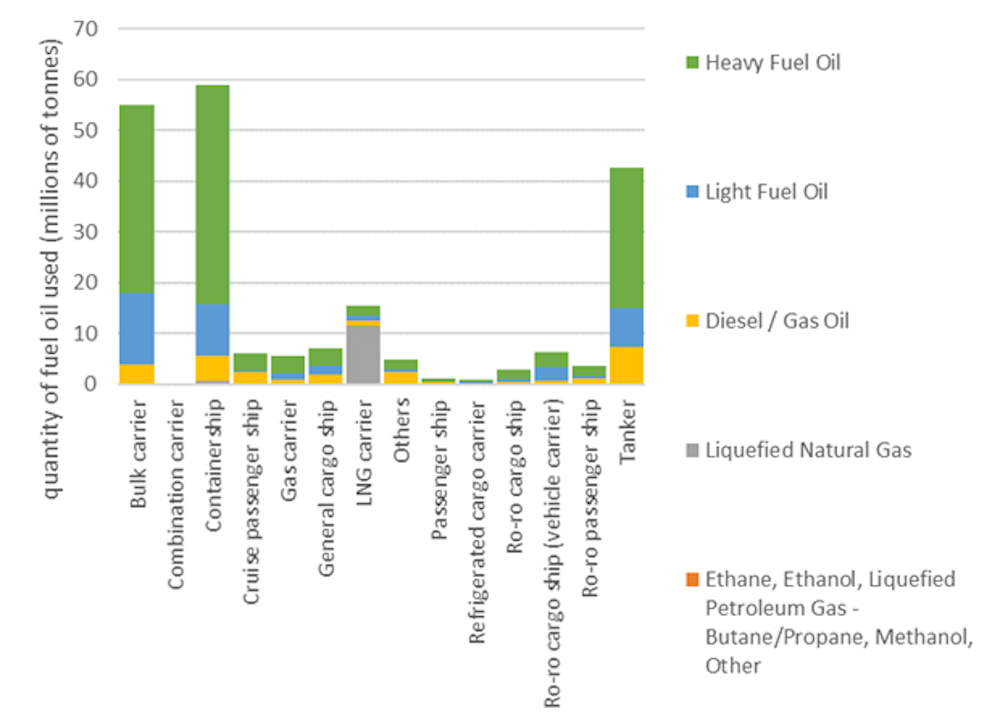
    April 8, 2025
  • MIL-OSI Global: At a pivotal meeting, the world is set to decide how to cut shipping emissions

    Source: The Conversation – UK – By Simon Bullock, Research Associate, Shipping and Climate Change, University of Manchester

    GreenOak / shutterstock

    You’re probably reading this article on a device assembled in Asia, using materials shipped there from all around the world. After it was made, your phone or laptop most likely travelled to your country on a huge ship powered by one of the world’s largest diesel engines, one of thousands plying the world’s oceans. All this maritime activity adds up: international shipping burns over 200 million tonnes of fossil fuels a year.

    The sector is trying to clean up its act. Its 2023 global climate strategy set a “strive” ambition of 30% cuts in greenhouse gas emissions by 2030, relative to 2008 emissions and 80% by 2040. That’s close to a level of ambition that can deliver on the Paris climate agreement, but this target urgently needs policies to make it happen. This is also urgent: 2030 is only five years away.

    The technology to deliver a rapid transition exists. Wind propulsion technology – yes, sails – can be fitted to existing ships, and much of the sector could soon switch to zero-emission fuels if they were seen as a good investment.

    That said, the transition needs to be fast and will be costly. This raises questions about who is to foot the bill.

    That’s the backdrop for a pivotal meeting this week in London at the International Maritime Organization (IMO). The IMO is the United Nations’ agency, made up of 175 nation states, charged with coordinating a response on shipping’s climate pollution. At this meeting, nations will take a series of decisions which will have a profound impact on whether the sector makes a rapid transition away from fossil fuels, or if it continues to limp along on its current high-carbon course.

    There are two crucial and interlinked decisions to be taken, and at the moment the proposals range from strong to exceptionally weak. Outcomes could go either way.

    Improving efficiency

    The efficiency of shipping hasn’t got much attention, even though it’s an important part of reducing emissions. One key policy is the Carbon Intensity Indicator, which measures how much carbon is emitted per tonne of cargo for every mile travelled. The IMO’s current strategy requires improving this efficiency by 40% by 2030, compared to 2008 levels.

    Annual fuel oil consumption (by ship type):

    How different fuels were used by different ship types (2023 data).
    IMO Future Fuels, CC BY-NC-SA

    But here’s the problem: global demand for shipping is expected to grow by around 60% in that same time. So even with a 40% efficiency boost, total emissions from shipping could stay the same – or even go up – because so much more cargo will be moved.

    Despite this, many countries haven’t updated their policies to reflect this growing demand or to align with the IMO’s updated “30% cuts by 2030” target.

    Some countries, including Palau – a Pacific island nation vulnerable to climate change – and the UK, have pushed for stronger action. But there remains a long way to go before the world agrees on an ambitious path forward.

    Green energy

    The more hotly debated issue is around a fiendishly complicated set of “mid-term measures”. A key part of this is creating a “global fuel standard” – essentially, targets for how much “zero emission” (or “green”) fuel ships must use and by when.

    These rules would come with penalties or costs for using polluting fuels, which would effectively put a price on greenhouse gas emissions. Experts have long agreed that putting a price on shipping pollution is the most effective way to encourage cleaner and more efficient practices. But despite nearly 20 years of discussions, countries still haven’t agreed how to do this.

    Decisions are further complicated by wrangles over how to fairly distribute the revenues from these penalties.

    Who should get the revenues from shipping pollution?
    Uncle_Dave / shutterstock

    The good news is that the world is less than a week away from a decision which will put a price on shipping pollution in some form. The bad news is that proposals on the table could easily deliver a weak, uncertain price signal which doesn’t push the industry to invest in more green solutions. And the fuel standard itself might fall short of the ambitious climate targets set in 2023.

    Until now, talks on improving shipping efficiency and on pricing polluting fuels have happened separately. A big task at the IMO summit in London is to integrate the two into one coordinated plan.

    From a climate perspective, these policies should be judged by whether they will work together to cut shipping emissions by 30% by 2030 (the IMO’s current target).

    As things stand, that outcome is still possible – but is now an uphill battle. Agreement this week is crucial and countries will show their true colours. If they can’t agree to agree more ambitious policies it will undermine the IMO’s ability to regulate shipping emissions.

    Historically, the IMO tends to take its biggest decisions in the last hours of Thursday in week-long negotiations. Both ambitious and more cautious countries have a lot on the line, as the measure adopted will be legally binding for all of them.

    A positive result depends on whether powerful groups such as the European Union line up to support ambitious measures, as as proposed by African, Caribbean, Central American and Pacific countries as well as the UK.

    Although countries have agreed on climate targets for shipping, some still refuse to support the policies needed to actually phase out fossil fuels fast enough. That stance much change. If done right, IMO negotiations this week could be a turning point – not just for shipping, but for renewable energy and climate action worldwide.


    Don’t have time to read about climate change as much as you’d like?

    Get a weekly roundup in your inbox instead. Every Wednesday, The Conversation’s environment editor writes Imagine, a short email that goes a little deeper into just one climate issue. Join the 40,000+ readers who’ve subscribed so far.


    Simon Bullock is a member of the Institute of Marine Engineering, Science and Technology

    Christiaan De Beukelaer receives funding from the ClimateWorks Foundation.

    Tristan Smith owns shares in UMAS International, that working alongside UCL Energy Institute, provides advisory services on the subject of maritime decarbonisation. My research group is recipient of research funding from UKRI, Climateworks Foundation and Quadratue Climate Foundation. I am on the advisory board of the Global Maritime Forum, and the Strategy Board of the Getting to Zero Coalition – not for profit structures that work across governments and industry stakeholders on maritime decarbonisation.

    – ref. At a pivotal meeting, the world is set to decide how to cut shipping emissions – https://theconversation.com/at-a-pivotal-meeting-the-world-is-set-to-decide-how-to-cut-shipping-emissions-253462

    MIL OSI – Global Reports –

    April 8, 2025
  • MIL-OSI Australia: Canberra’s first food strategy gets green light in ACT Budget

    Source: Northern Territory Police and Fire Services

    The new plan will help support and grow the territory’s local food production sector.

    The ACT Government is investing $455,000 towards the implementation of the Canberra Region Local Food Strategy.

    Part of the 2024–25 ACT Budget, this funding will help grow Canberra’s local food production sector.

    The ACT is the first Australian state or territory to launch a plan to support and grow its local food system.

    Funding for the first year of the Strategy’s implementation will deliver a Local Food Chain Infrastructure Study.

    The study will explore opportunities to support small-medium sized local food producers in Canberra and the surrounding region who struggle to compete with larger commercial providers.

    The study will focus on areas of food packaging, distribution, storage and networking. It will build on data from the Agriculture and Food in the ACT Study, currently underway.

    It will also aim to reduce barriers for getting local food produce into local marketplaces and grocery stores.

    Shaped by community feedback, the strategy will ultimately strengthen Canberrans’ access to healthy, affordable food.

    Funding has also been provided to examine opportunities for using suitable ACT Government land to support local food production, and to help educate the community on how to grow food in the ACT.

    The Canberra Region Local Food Strategy is available on the ACT Environment website.


    Get ACT news and events delivered straight to your inbox, sign up to our email newsletter:


    MIL OSI News –

    April 8, 2025
  • MIL-OSI Australia: Tuggeranong Creek re-naturalised

    Source: Northern Territory Police and Fire Services

    Over the next few years, the water plants will grow to create a beautiful landscape.

    Sections of Tuggeranong Creek in Calwell have been re-naturalised with native plants and grasses replacing concrete. The project will help improve habitat and the quality of water flowing into Lake Tuggeranong.

    Concrete sections of the creek have been replaced with naturalised creek beds featuring pools and riffles. Thousands of water plants have been planted at the site.

    The new water plants will:

    • trap sediments
    • absorb nutrients and pollution
    • reduce the risk of blue-green algal blooms.

    The plants will also provide important habitat for native wildlife such as water bugs, yabbies and water birds. The plants will grow over the next few years to create a beautiful landscape.

    The creek channel has been widened to slow the water down. This will allow it to filter into the soil and support the surrounding landscape while still protecting the surrounding suburbs from flooding.

    Two viewing platforms will provide a space for the community to enjoy the area.

    This project is one of several that are trialling improvements in stormwater quality and waterway healthy. These include:

    • new wetland designs including floating wetlands
    • reconnecting street drains and pipes to green space
    • stormwater recycling to irrigate sports fields
    • raingardens that treat runoff before it enters big drains.

    The Healthy Waterways program is helping to deliver on the goals of the ACT Water Strategy 2014-44. The government is currently seeking feedback from the community on changes to the strategy which aim to find new and adaptable ways to care for our waterways in the ACT.

    More information about the Healthy Waterways Program is available on the ACT Environment website.

    Have your say on the changes to the ACT Water Strategy 2014-44 on the YourSay website.


    Get ACT news and events delivered straight to your inbox, sign up to our email newsletter:


    MIL OSI News –

    April 8, 2025
  • MIL-OSI USA: Congressman Valadao Reintroduces Legislation to Improve the Central Valley’s Drinking Water

    Source: United States House of Representatives – Congressman David G Valadao (CA-21)

    WASHINGTON – Today, Congressman David Valadao (CA-22) joined Rep. Norma Torres (CA-35) to reintroduce the Nitrate and Arsenic in Drinking Water Act. This bipartisan bill amends the Safe Drinking Water Act to provide resources for nitrate and arsenic reduction, with priority given to assisting underserved communities.

    “Access to clean drinking water is essential for the health and well-being of every American—especially in rural and underserved communities like the Central Valley,” said Congressman Valadao. “This bipartisan bill gives rural communities that rely on groundwater the resources they need to reduce harmful contaminants and ensure our water supply is safe. I’m proud to join Rep. Torres to help our small towns throughout the Valley fix this ongoing issue.”

    “This is a public health emergency in the Inland Empire and across the country. The contamination of our water supply with nitrate and arsenic is a direct threat to the health and safety of my constituents,” said Rep. Torres. “I’m committed to securing the resources needed to address this crisis, especially for the most vulnerable—infants, pregnant women, and individuals with enzyme deficiencies. The Inland Empire, particularly former agricultural areas, faces some of the worst contamination levels in the state, and we cannot wait any longer to ensure we make clean drinking water accessible for everyone.”

    Background:

    Larger towns and cities tend to depend on surface water for drinking, whereas smaller, often rural, communities depend on groundwater. Historically, agricultural heavy areas have led to increased nitrate in drinking and groundwater, including many communities throughout the Central Valley. The Removing Nitrate and Arsenic in Drinking Water Act aims to make additional federal resources available for small, rural communities to reach compliance with the maximum contaminant level of nitrate or arsenic under the Safe Drinking Water Act.

    The Nitrate and Arsenic in Drinking Water Act would:

    • Amend the Safe Drinking Water Act to provide grants for nitrate and arsenic reduction.
    • Authorize $15 million for FY26 and every fiscal year after.
    • Direct the Administrator of the Environmental Protection Agency (EPA) to conduct a review on programs under the Safe Drinking Water Act, taking into consideration the diverse needs of underserved populations.

    Current supporting organizations include: Three Valleys Municipal Water District, Coachella Valley Water District, West Valley Water District, Cucamonga Valley Water District, and Elsinore Valley.

    Read the full bill here.

    ###

    MIL OSI USA News –

    April 8, 2025
  • MIL-OSI Global: How to gauge flood risk before you buy or rent a seafront property

    Source: The Conversation – UK – By Avidesh Seenath, Course Director, MSc Environmental Change and Management, University of Oxford

    Torcross on the south Devon coast. Julian Gazzard/Shutterstock

    Rising sea levels, stronger storms and increased erosion are making life on the coast riskier and more unpredictable. For potential buyers or renters, particularly in the wake of another winter of storms and flooding, questions around whether to invest in coastal properties are more urgent now than ever.

    The desire to understand flood risk before committing to a seaside home is understandable, but assessing that risk isn’t always straightforward. Knowing how people perceive these risks, however, will help scientists better communicate such risks.

    We surveyed over 700 UK residents in a nationwide study to understand how access to flood prediction maps, which indicate the relative risk of flooding for areas based on factors like sea-level rise, storm surges, and local topography, affected their housing preferences. These maps are typically available through government websites and are often consulted during the home-buying process via online property listings or planning reports.

    The results were striking. Once people were shown flood risk maps, their preferences changed decisively – away from scenic seafront properties and towards locations that were inland and considered to be “safe”.

    However, while this change in preference seems rational, it reveals a deeper underlying problem: flood risk is not being communicated clearly or effectively in the UK. Many people in our study treated flood maps as if their predictions were absolute and misinterpreted areas at risk of flooding as being exposed to actual flooding. In reality, these maps are based on mathematical models with varying degrees of complexity and uncertainty.

    Some widely used models are simple and treat flooding as a result of land elevation alone. Others are more complex and attempt to simulate how floodwater spreads over land. Unsurprisingly, these models can produce conflicting results.

    In our survey, participants were shown multiple flood maps for the same town produced by different models. Confusion quickly followed, as different models reported different flood risks for the same areas. The uncertainty led to significant risk-averse behaviour.

    This change in how people choose where to live matters, not just for individual property decisions but for entire coastal economies. If potential buyers avoid seafront homes en masse due to unclear or alarming flood maps, local property markets will probably suffer. So might businesses that rely on local footfall. Meanwhile, some renters, especially younger ones or those on lower incomes, might still take on flood-prone properties without fully understanding the long-term risks or securing adequate insurance. So, what can be done?

    Making sense of flood maps

    Flood prediction maps need to be presented and communicated more clearly. Instead of technical jargon, plain language and relatable visuals on flood maps will help people understand the level of risk and what it actually means. Colour-coded maps are a good start, but they should also explain what the colours represent, and how likely the worst-case scenarios really are.

    The general public, including prospective property buyers, need to be educated on how to read and interpret these maps. Currently, flood information is often tucked away in legal documents during conveyancing or buried in dense government websites. Instead, it should be part of the house-hunting process: visible, accessible and accompanied by guidance.

    Policymakers and real estate professionals must recognise the psychological impact of flood predictions. Overstating risk can cause panic; understating it can leave people unprepared. The goal should be to empower people instead of scaring them, by balancing transparency with nuance.

    Flood models are a vital tool for understanding and managing flood risks in a changing climate. But they are only as effective as our ability to understand and use them wisely. Our research highlights that it’s not just about having the data – it’s about making that data work for real people making life-changing decisions.

    So, before buying or renting that dream seafront home, check the flood maps – and carefully ask and consider what’s behind them. Be curious about what kind of model was used, how recent the data is and what the uncertainties are. With clearer information and better public understanding, coastal communities can more easily adapt – not abandon – our treasured seaside towns.


    Don’t have time to read about climate change as much as you’d like?

    Get a weekly roundup in your inbox instead. Every Wednesday, The Conversation’s environment editor writes Imagine, a short email that goes a little deeper into just one climate issue. Join the 40,000+ readers who’ve subscribed so far.


    The authors do not work for, consult, own shares in or receive funding from any company or organisation that would benefit from this article, and have disclosed no relevant affiliations beyond their academic appointment.

    – ref. How to gauge flood risk before you buy or rent a seafront property – https://theconversation.com/how-to-gauge-flood-risk-before-you-buy-or-rent-a-seafront-property-253313

    MIL OSI – Global Reports –

    April 8, 2025
  • MIL-OSI Global: EPA must use the best available science − by law − but what does that mean?

    Source: The Conversation – USA – By H. Christopher Frey, Glenn E. Futrell Distinguished University Professor of Environmental Engineering, North Carolina State University

    Science is essential as the U.S. Environmental Protection Agency carries out its mission to protect human health and the environment.

    In fact, laws passed by Congress require the EPA to use the “best available science” in many decisions about regulations, permits, cleaning up contaminated sites and responding to emergencies.

    For example, the Clean Air Act requires the EPA to rely on science for setting emission standards and health-based air quality standards. The Safe Drinking Water Act requires the EPA to consider the best available peer-reviewed science when setting health-based standards. The Clean Water Act requires the agency to develop surface water quality criteria that reflect the latest science. The Toxic Substances Control Act requires the EPA to use the best available science to assess risk of chemicals to human health and the environment.

    But what exactly does “best available science” mean?

    That’s an important question as the Trump administration launches an effort to roll back clean air and water regulations at the same time it is preparing to replace all the members of two crucial EPA science advisory boards and considering eliminating the Office of Research and Development – the scientific research arm of the EPA.

    What is best available science?

    Some basic definitions for best available science can be found in laws, court rulings and other sources, including the EPA’s own policies.

    The science must be reliable, unbiased, objective and value-neutral, meaning it is not influenced by personal views. Best available science is the result of the scientific process and hypothesis testing by scientists. And it is based on current knowledge from relevant technical expertise and must be credible.

    The EPA’s scientific integrity policy includes “processes and practices to ensure that the best available science is presented to agency decision-makers and informs the agency’s work.” Those include processes to ensure data quality and information quality and procedures for independent reviews by scientific experts outside of government.

    Environmental Protection Agency employees and others protest the Trump administration’s actions involving the agency on March 25, 2025, in Philadelphia.
    AP Photo/Matt Rourke

    I have seen the importance of these processes and procedures personally. In addition to being an academic researcher who works on air pollution, I am a former member of the EPA’s Science Advisory Board, former chair of the EPA’s Clean Air Scientific Advisory Committee, and from 2022 to 2024 served as assistant administrator of the EPA’s Office of Research and Development and the EPA science adviser.

    Advisory boards and in-house research

    The EPA Science Advisory Board plays an important role in ensuring that the EPA uses the best available science. It is tasked with reviewing the scientific and technological basis of EPA actions.

    The 1978 Environmental Research, Development, and Demonstration Authorization Act ordered EPA to establish the board. The Science Advisory Board’s members must be “qualified by education, training, and experience to evaluate scientific and technical information on matters referred to the Board.” But those members can be replaced by new administrations, as the Trump administration is planning to do now.

    During the first Trump administration, the EPA replaced several independent scientists on its advisory boards in a manner that deviated from established practice, according to the Government Accountability Office, and brought in scientists connected with the industries the EPA regulates. I was one of the independent scientists replaced, and I and others launched an independent review panel to continue to deliver expert advice.

    No matter who serves on the EPA’s advisory boards, the agency is required by law to follow the best available science. Failing to do so sets the stage for lawsuits.

    The same law that established the Science Advisory Board is also a legal basis for the Office of Research and Development, the agency’s scientific research arm and the EPA’s primary source for gathering and developing the best available science for decision-makers.

    During my time at the EPA, the Office of Research and Development’s work informed regulatory decisions involving air, water, land and chemicals. It informed enforcement actions, as well as cleanup and emergency response efforts in EPA’s regions.

    State agencies and tribal nations also look to the EPA for expertise on the best available science, since they typically do not have resources to develop this science themselves.

    Federal courts affirm using best available science

    Federal courts have also ordered the EPA to use the best available science, and they have recognized the importance of reviews by external experts.

    In 2024, for example, the U.S. Court of Appeals for the District of Columbia Circuit denied an industry petition to review an EPA standard involving ethylene oxide, a pollutant emitted by some chemical and industrial facilities that has been associated with several types of cancer.

    The court accorded an “extreme degree of deference” to the EPA’s evaluation of scientific data within its area of expertise. The court listed key elements of the EPA’s best available science, including “an extensive, eighteen-year process that began in 1998, involved rounds of public comment and peer review by EPA’s Science Advisory Board (‘SAB’), and concluded in 2016 when EPA issued a comprehensive report on the subject.”

    The District of Columbia Circuit in 2013 also affirmed the central role of science to inform revisions of National Ambient Air Quality Standards, which set limits for six common air pollutants.

    In that case, Mississippi v. EPA, the court noted that the EPA must receive advice from its Clean Air Scientific Advisory Committee, or CASAC. The court advised that, while the agency can deviate from the committee’s scientific advice, “EPA must be precise in describing the basis for its disagreement with CASAC.”

    The Trump administration in 2025 dismissed all members of CASAC and said it planned to replace them.

    What does this all mean?

    Requiring the agency to use the best available science helps ensure that decisions are based on evidence, and that the reasoning behind them is the result of well-accepted scientific processes and free from biases, including stakeholder or political interference.

    The scientific challenges facing the EPA are increasing in complexity. Responding to them effectively for the health of the population and the environment requires expertise and robust scientific processes.

    H. Christopher Frey does not work for, consult, own shares in or receive funding from any company or organization that would benefit from this article, and has disclosed no relevant affiliations beyond their academic appointment.

    – ref. EPA must use the best available science − by law − but what does that mean? – https://theconversation.com/epa-must-use-the-best-available-science-by-law-but-what-does-that-mean-253209

    MIL OSI – Global Reports –

    April 8, 2025
←Previous Page
1 … 142 143 144 145 146 … 277
Next Page→
NewzIntel.com

NewzIntel.com

MIL Open Source Intelligence

  • Blog
  • About
  • FAQs
  • Authors
  • Events
  • Shop
  • Patterns
  • Themes

Twenty Twenty-Five

Designed with WordPress