Category: Environment

  • MIL-OSI United Kingdom: New guide to research and innovation challenges for climate adaptation released

    Source: United Kingdom – Executive Government & Departments

    News story

    New guide to research and innovation challenges for climate adaptation released

    A new report identifying the research and innovation needed to support the UK to adapt effectively to climate change has been released.

    Image of a bumblebee collecting pollen from a bluebell.

    A new report identifying the research and innovation needed to support the UK to adapt effectively to climate change has been released today.  

    Developed by the Government Office for Science and the Department for Environment, Food and Rural Affairs, the Climate Adaptation Research and Innovation Framework (CARIF) outlines the research and innovation needed around climate adaptation. 

    CARIF is designed to make it easier for government, industry, and research communities to work together to tackle the challenges we face around adapting to climate change. The new framework is the first time the UK research needs across government and across sectors have been brought together in one place.   

    Environment Minister Emma Hardy said:

    We are already seeing the impact of climate change and extreme weather on people’s lives, from transport disruption to flooding in people’s homes.  

    This is why, alongside our research into climate adaptation, we are exploring how we can set out stronger objectives to drive action to increase our preparedness for the impacts of climate change up to and beyond the next National Adaptation Programme in 2028.

    Government Chief Scientific Adviser Professor Dame Angela McLean said:

    We need new research to make the UK more resilient to climate change, and innovation to improve how effectively and affordably we ready systems for change. The UK has world-leading science capabilities which we can harness to ensure we are ready for future climate impacts.  

    We have spoken with academia, industry, UK government and the financial sector to produce this first Climate Adaptation Research and Innovation Framework. It aims to drive use of our science capabilities to address the climate adaptation challenge.

    CARIF covers 11 sectors including nature, working land and seas, food security, water supply, energy, telecommunications and ICT, transport, town and cities and community preparedness/response, buildings, health, and business and finance.  

    Read the Climate Adaptation Research and Innovation Framework here.

    Updates to this page

    Published 7 April 2025

    MIL OSI United Kingdom

  • MIL-OSI Asia-Pac: Concrete firm fined by court

    Source: Hong Kong Information Services

    China Concrete Company Ltd today was today fined $212,000 after it carried out works at its two concrete batching plants in Yau Tong without a specified process licence and failed to comply with an air pollution abatement notice.

    The two plants, located at 20 and 22 Tung Yuen Street, were found to have contravened the Air Pollution Control Ordinance. The company pleaded guilty to 28 summonses at Kwun Tong Magistrates’ Court and was fined a total of $212,000.

    The Environmental Protection Department said it had made every effort to combat the plants’ illegal operations. To date, it has issued 39 summonses for criminal prosecution against the company.

    Thirty of those charges have now resulted in conviction, while the remaining nine cases of non-compliance are still in progress.

    Under new amendments to the Air Pollution Control Ordinance due to take effect on April 11, the Director of Environmental Protection will be empowered to issue closure notices to premises if the director has reasonable cause to believe that unlicensed SP operations are taking place.

    Stressing that the legal amendments have proved decisive in addressing the Tung Yuen Street plants’ illegal operations, the department said China Concrete Company Ltd had given notice that it would cease all concrete batching and related operations early this month.

    The department said that if the two plants are found to have continued conducting unlicensed operations after the legal amendments take effect, it will take stringent action in accordance with the law.

    MIL OSI Asia Pacific News

  • MIL-OSI Asia-Pac: Concrete batching plants in Yau Tong convicted for violating Air Pollution Control Ordinance

    Source: Hong Kong Government special administrative region

    Concrete batching plants in Yau Tong convicted for violating Air Pollution Control Ordinance 
    A spokesperson for the Environmental Protection Department (EPD) said that the department has been making unremitting efforts to follow up on the illegal operations of the two CBPs. To date, the EPD has issued a total of 39 summonses for criminal prosecution against the company, with 30 charges successfully convicted so far, while the remaining nine cases of non-compliance are still in process.
     
    Moreover, new amendments to the APCO, taking effect on April 11, empower the Director of Environmental Protection to issue a closure notice to premises if he or she has reasonable cause to believe that unlicensed SP operations are taking place. The amended APCO has proven decisive in addressing the illegal operations by the two CBPs. The EPD has received a notification from the China Concrete Company Limited earlier indicating that they will cease all operations of the concrete batching process and related operations by early April. The EPD has been closely monitoring the situation, and its latest observations revealed that the two CBPs will cease operation.
     
    The spokesperson added, “The EPD will continue to closely monitor the situation. Should the two CBPs be found to continue the unlicensed operations after the amended APCO takes effect, the department will take stringent action in accordance with the law.”
    Issued at HKT 18:30

    NNNN

    MIL OSI Asia Pacific News

  • MIL-OSI Russia: Comprehensive Security in Universities: The Ministry of Education and Science and the National Anti-Corruption Commission held a seminar for rectors

    Translartion. Region: Russians Fedetion –

    Source: Peter the Great St Petersburg Polytechnic University – Peter the Great St Petersburg Polytechnic University –

    On April 4 and 5, Peter the Great St. Petersburg Polytechnic University hosted a training seminar on “Comprehensive Security in a Higher Education Organization” for rectors of Russian universities. The event was organized by the Russian Ministry of Science and Higher Education and the National Anti-Terrorism Committee. Participants discussed issues of comprehensive security for universities under the jurisdiction of the ministry.

    The seminar was opened by the Minister of Science and Higher Education of Russia Valery Falkov. In his video address, he drew the attention of university rectors to the need to personally monitor student safety issues.

    In the context of a special military operation, the topic of comprehensive security of universities is more relevant than ever. External national threats – extremism, terrorism, “school shooting”, “Columbine”, interethnic and interfaith conflicts – are taking place against the backdrop of an unprecedented hybrid war declared against our state. Today, personal attention and participation of university management in ensuring anti-terrorist security is necessary, – emphasized Valery Falkov.

    In this regard, on behalf of the National Anti-Terrorism Committee, the Ministry of Science and Higher Education of Russia has developed and launched a refresher course on “Integrated Security in a Higher Education Organization” for rectors of universities subordinate to the Ministry of Education and Science of Russia. As a result of the training, participants will gain knowledge of effective methods of countering threats among young people and a corresponding certificate.

    Every rector without exception should know the basics of comprehensive security. All universities should develop their own comprehensive security program, which is designed to preserve the lives and health of students, teachers and staff. The management should approach the development of security measures in a comprehensive manner, not only include in the program measures to increase the level of physical security, but also conduct training for staff and students on emergency response measures, noted Valery Falkov.

    The Minister of Science and Higher Education of the Russian Federation called on university leaders to establish cooperation with regional authorities and law enforcement agencies on all issues, especially those related to security. He emphasized that universities should do a lot of work to debunk myths and refute unreliable facts in connection with the information attack, which is primarily aimed at young people.

    Deputy Minister of Science and Higher Education Konstantin Mogilevsky also addressed the participants.

    We thank the rector of SPbPU Andrey Ivanovich Rudskoy for organizing the venue for the event. Polytechnic University is an outstanding university, one of our leading universities, so everyone will surely find something interesting here. Rectors face many tasks, and the most important of them is to create conditions for our young people to receive a quality education, to train highly qualified specialists. And such issues as comprehensive security must definitely be in the rectors’ field of vision, – said Konstantin Mogilevsky.

    He said that comprehensive security is a multi-level system that can be divided into two areas: physical protection of facilities and preventive work. Together with the NAC, the Russian Ministry of Education and Science’s universities have developed algorithms for the actions of personnel, employees of private security organizations and students in the event of the commission (threat of commission) of terrorist crimes. Interaction with the Ministry of Internal Affairs, the Russian Guard, the FSB has also been defined, and a model of behavior for offenders has been developed. Konstantin Mogilevsky presented the activities of the Coordination Council and coordination centers on issues of developing an active civic position among young people, preventing interethnic and interfaith conflicts, countering the ideology of terrorism and preventing extremism.

    Rector of SPbPU Andrey Rudskoy shared the experience of the Polytechnic University in the field of ensuring comprehensive security.

    This task is one of the priorities for our university community. Taking into account modern realities, we must ensure the sustainable functioning of educational institutions, create safe conditions for students to study for the benefit of Russia’s further development. In recent years, the Polytechnic University has created a fairly effective system of measures to ensure the safety of students and employees, Andrey Rudskoy emphasized.

    Andrey Ivanovich spoke about the technical equipment of the university facilities, interaction with law enforcement agencies and security organizations, and the activities of the University Security Center. The Polytechnic regularly conducts training in various areas with the involvement of the city’s law enforcement agencies. Particular attention is paid to issues of prevention of possible involvement of employees and students in illegal activities using phones and other messengers. Also, the Polytechnic carries out extensive information work in the field of security.

    State Secretary — Deputy Head of the Federal Agency for Youth Affairs Denis Ashirov spoke about joint work with the National Anti-Terrorism Committee. First Deputy Head of the Office of the National Anti-Terrorism Committee Igor Kulyagin gave a lecture on “Comprehensive Security of an Educational Organization of Higher Education in Counteracting Terrorism. The Structure of Preventive Work”. Director of the National Center for Information Counteraction to Terrorism and Extremism in the Educational Environment Sergey Churilov spoke about ensuring anti-terrorist security within the framework of comprehensive security of an educational organization of higher education.

    The seminar participants considered the most important issues of security in universities, discussed anti-terrorist activities, information threats, and the prevention of illegal actions. In addition, they were given a tour of the laboratories of the Technopolis Polytech research complex.

    On April 5, Andrey Tolmachev, Director of the Department of Information Policy and Comprehensive Security of the Russian Ministry of Education and Science, presented certificates to rectors who had completed the training.

    Photo archive

    Please note: This information is raw content directly from the source of the information. It is exactly what the source states and does not reflect the position of MIL-OSI or its clients.

    MIL OSI Russia News

  • MIL-OSI China: China to speed up eco-monitoring digitalization

    Source: China State Council Information Office 2

    An aerial drone photo taken on Oct. 21, 2023 shows a view at Lulin lake in Lushan City, China’s Jiangxi province. [Photo/Xinhua]
    China’s Ministry of Ecology and Environment has unveiled a plan to further transform the country’s national ecological monitoring network into a digitized and smart system.
    By 2027, China aims to explore a new generation of monitoring networks in key regions, utilizing advanced technologies such as unmanned maintenance and smart sampling, with standardized monitoring operations being carried out nationwide, according to the plan.
    By 2030, China’s eco-environment monitoring network system will be systematically revamped to include an integrated aerial, terrestrial and maritime monitoring network, along with a basically established “smart brain,” it said.
    The move marks a concrete step toward digitalized and smart environmental monitoring, said Jiang Huohua, head of the ministry’s ecological and environmental monitoring department.
    Air and water monitoring will be updated with unmanned operations, as well as smart sampling and analysis. Additionally, biodiversity tracking will leverage advanced smart equipment such as infrared cameras and bird sound recorders to achieve over 85 percent accuracy in species identification.
    In terms of noise monitoring, urban sound environment monitoring equipment will not only be able to track decibel levels but also identify sources of the noise, according to Jiang.
    New technologies like artificial intelligence and satellite remote sensing will play increasingly significant roles in China’s eco-environmental monitoring, with policies rolled out to develop environmental protection robots and remote-operation equipment, he told a press conference last month.

    MIL OSI China News

  • MIL-OSI United Kingdom: Former NFU President and farmer Baroness Minette Batters appointed by Defra to lead Farm Profitability Review

    Source: United Kingdom – Executive Government & Departments

    Press release

    Former NFU President and farmer Baroness Minette Batters appointed by Defra to lead Farm Profitability Review

    Crossbench peer, Baroness Batters appointed by the Secretary of State to provide recommendations on farm profitability.

    Baroness Minette Batters and Secretary of State Steve Reed

    Former NFU President and farmer, Baroness Minette Batters has been appointed to lead a review of farm profitability.  

    The new appointment by Secretary of State for Environment, Food and Rural Affairs Steve Reed will see Baroness Batters providing recommendations on farm profitability both to him and the Farming Minister.  

    Listening to farmers and growers will be at the heart of Baroness Batters’ work, covering all land areas and sectors of the industry, as well as engaging with other government departments whose work impacts farmers. 

    She will provide short, medium and long term recommendations and propose actions for government and industry that will support farming profitability as part of this government’s New Deal for Farmers.  

    This work will be supported by the newly formed Profitability Unit within Defra.  

    Baroness Batters’ review will also help the development of the food strategy, farming roadmap and the Land Use Framework, and build on other work such as the review of Defra’s regulatory landscape led by Dan Corry. 

    Her aim is to help ensure our farming sector is more viable, self-sustaining and competitive in the long-term.

    Secretary of State for Environment, Food and Rural Affairs, Steve Reed, said:   

    Backing British farmers is the backbone of all work to support rural economic growth and boost Britain’s food security.  

    We have taken strong action to protect the future of the sector with the New Deal for Farmers. But we must go further and faster as part of our Plan for Change to put money into the pockets of farmers and drive growth. 

    That is why I am delighted to appoint Baroness Batters, and her years of experience as a leader during a time of great change in British agriculture make her uniquely placed to provide recommendations on tackling the deep-rooted problems holding the sector back and support farmers’ long-term profits.

    Baroness Minette Batters said:  

    I will leave no stone unturned in trying to find solutions to boost farm profitability. But we should be under no illusions how difficult this work will be. There will not be one ‘silver bullet’ to fire but I’m hopeful this review can make a difference to a sector that produces the nation’s food, underpins the rural economy and delivers so much for the environment.   

    I’m pleased to be appointed to lead this review and look forward to working with farmers and growers to provide recommendations to government, food retailers, processors and manufacturers.

    The appointment is one of a number of actions that the government is taking to improve the profitability of farmers, including through fair competition in the supply chain, ensuring planning reforms make it quicker for farmers to build the buildings they need on their farms, and helping farmer diversify income streams and make additional money from selling surplus energy from solar panels and wind turbines by accelerating connections to the grid. 

    As set out in the Plan for Change, the government is focused on supporting our farmers, rural economic growth and boosting Britain’s food security and are going further to develop a 25-year farming roadmap to make the sector more profitable in the decades to come.

    Notes to editors

    • Baroness Batters will begin her role on 7 April 2025. 
    • The appointment will be for a period of six months with recommendations provided to the Secretary of State within that timeline.

    About Baroness Minette Batters

    Baroness Batters joined the NFU when she started farming, and rose to be county chair and a member of several NFU committees.  As the first woman president of NFU, Minette has been a positive force within the agricultural industry. She served as President of the National Farmers Union from 2018 to 2024, having previously served as Deputy President from 2014 to 2018.  

    In her role as deputy president and then president, Batters has represented the farming community at a time of great change, during the agricultural transition. Batters has supported orderly change and maintenance of high standards in UK agriculture. 

    She was appointed as a crossbench member of the House of Lords in 2024 and was made a Deputy Lieutenant to Her Majesty Queen Elizabeth in 2021.

    She was brought up on a tenanted farm in Wiltshire and now runs the tenanted family farm in Wiltshire, a mixed farming business including a 100-cow continental cross suckler herd, as well as sheep and arable. Diversification on the farm includes the conversion of a 17th Century barn into a wedding and events venue, and horse liveries.

    Updates to this page

    Published 7 April 2025

    MIL OSI United Kingdom

  • MIL-OSI Australia: More than a thousand new homes for north Curtin

    Source: Northern Territory Police and Fire Services

    The site has the potential to supply up to 1300 townhouses and multi-unit dwellings.

    The ACT Government is progressing work to deliver more than 1300 homes in north Curtin.

    Canberrans are invited to have their say on the design of the site, which is located directly adjacent to Yarra Glen Drive.

    The existing north Curtin horse paddocks will welcome the new homes, close to transport, local services and places of employment.

    The site has the potential to supply up to 1300 townhouses and multi-unit dwellings.

    The future residential neighbourhood is envisioned as high-quality, sustainable and vibrant with quality public streets and spaces.

    Canberrans are being asked to share their thoughts on what they feel is important in terms of urban design, landscape design, built form, access and design quality on the site.

    This community feedback will be used to help develop the draft Planning Conditions for the North Curtin Residential Area.

    This will be used to assess future development applications for the site.

    Canberra’s population is set to grow to 500,000 by 2027.

    The ACT Government is supporting the supply of new homes, particularly focused on areas close to transport and services, as well as investing in the infrastructure to support them. 

    The north Curtin consultation will also feed into further consultation on a broader ‘Draft Southern Gateway Planning and Design Framework’ over the next two years.

    This will guide future development along Canberra’s southern transport corridor from Woden to the City.

    The Southern Gateway Planning and Design Framework

    The government will engage with the community on the principles of growth and development of more housing, public spaces and infrastructure along the light rail 2B corridor, including Adelaide Avenue and Yarra Glen Drive. 

    This follows the City and Gateway Design Framework established in 2018 in Canberra’s north, ahead of the completion of light rail stage 1.

    The Southern Gateway Planning and Design Framework will be developed in consultation with the National Capital Authority (NCA).

    The feedback from the north Curtin engagement will be lodged with the NCA towards the end of the financial year, before determining final planning controls.

    This will build on the principles laid out in the Woden District Strategy released in November 2023.

    A referral is also in progress with the Australian Government Department of Climate Change, Energy, the Environment and Water (DCCEEW) under the Environmental Protection and Biodiversity Conservation Act 1999 (EPBC Act), to assess potential environmental impacts.

    YourSay survey

    Canberrans can have their say on the North Curtin Residential Area via the YourSay survey.

    The survey is open until 11 June 2024.


    Get ACT news and events delivered straight to your inbox, sign up to our email newsletter:


    MIL OSI News

  • MIL-OSI New Zealand: Federated Farmers Statement: ‘Law-breaking’ Greenpeace must lose charity status

    Source: Federated Farmers

    Federated Farmers is calling for the Government to immediately strip Greenpeace of their charitable status, following the activist group’s illegal occupation of Port Taranaki this week.
    “There is no way Greenpeace should be eligible for charitable status when they’re engaging in illegal activity like this,” says Federated Farmers spokesperson Richard McIntyre.
    “They may call themselves a charity, but in reality they’re nothing short of an extreme activist group who illegally disrupt legitimate businesses and spread dangerous misinformation.”
    Charitable status in New Zealand is intended to support organisations that advance public benefit through education, relief of poverty, and other recognised charitable purposes.
    Under the Charities Act, organisations must operate for the public good and not primarily serve political or advocacy purposes.
    “Greenpeace clearly fails that test and allowing them to maintain their charitable status risks completely undermining the credibility of the entire charitable sector,” McIntyre says.
    “Allowing these law-breaking activists to continue masquerading as a charity is a total slap in the face for thousands of legitimate charities who actually provide a valuable service to society.
    “To make matters worse, hardworking Kiwi taxpayers are effectively being forced to subsidise Greenpeace’s illegal activity and political activism through huge tax breaks for their donors.”
    Federated Farmers say Greenpeace have demonstrated a clear pattern of disruptive behaviour, political activism and illegal conduct.
    “It’s time for Charities Services to stop turning a blind eye to this blatant breach of their rules and remove Greenpeace from the Charities Register,” McIntyre says.
    “If an organisation can occupy ports, threaten livelihoods, and deliberately mislead the public – all while claiming charitable status – then the system is clearly broken.”
    Today Federated Farmers have lodged a formal complaint with Charities Services requesting they open an inquiry into Greenpeace’s conduct and eligibility for charitable status.
    A copy of that complaint has been sent to Community and Voluntary Sector Minister Hon Louise Upston and Minister of Internal Affairs Hon Brooke van Velden.
    Greenpeace’s pattern of illegal behaviour includes:
    – The Noble Discoverer Ship Occupation in 2012, where seven Greenpeace activists unlawfully boarded an oil drilling ship in Port Taranaki and camped on its tower for 77 hours. All were arrested and convicted of trespass. 
    – The Amazon Warrior Sea Protest in 2017, where Greenpeace’s Executive Director Russel Norman and two others were arrested under the Crown Minerals Act for jumping into the sea to obstruct a seismic survey vessel. 
    – The Parliament Crane Protest in 2017, where four activists trespassed on a construction site behind Parliament and climbed a crane to hang a protest banner during the visit of a US Secretary of State. All were arrested.
    – The Fonterra Te Rapa Dairy Factory Protest in 2024, where Greenpeace activists scaled Fonterra’s Te Rapa dairy factory in Hamilton. Seven were arrested and charged with being in an enclosed yard and formally trespassed.
    – The Straterra Offices Protest in Wellington, where two Greenpeace activists scaled the building while three others locked themselves inside the offices. All five were arrested.
    – The Port Taranaki Occupation in 2025, where six activists disrupted port operations in a premeditated action, blocking critical feed for drought-stricken farmers, resulting in four arrests. 

    MIL OSI New Zealand News

  • MIL-OSI New Zealand: Fire Safety – Fire season changes – Te Tai Tokerau Northland District

    Source: Fire and Emergency New Zealand

    Most of Fire and Emergency New Zealand’s Te Tai Tokerau Northland District will transition to a restricted fire season from 11.59pm tonight (Monday, 7 April), until further notice.
    The Muri Whenua Zone, Northland Islands and Public Conservation Land will remain in a prohibited fire season. Details for these areas are below:
    • Muri Whenua Zone: Continues to be under a prohibited fire season, meaning no outdoor fires are allowed.
    • Northland Islands and  Public Conservation Land: Continues to be under a permanent prohibited fire season, meaning no outdoor fires are allowed at any time of the year.
    • Restricted Fire Season: Outdoor fires can only be lit with a fire permit authorised by Fire and Emergency New Zealand.
    Acting Northland Community Risk Manager Michael Champtaloup emphasised the importance of applying for a permit to ensure community safety.
    “The recent rain across the District, coupled with cooler, damper conditions make it less likely that a fire will get out of control,” he says.
    “We’re allowing people to light fires with permits again, but – as always – we expect that they take care in how and where fires are lit, ensure fires are properly extinguished and all permit conditions are followed”.
    Anyone who is unsure of the current fire season status and the requirement for a fire permit or if a total fire ban is in effect should go to www.checkitsalright.nz to check if they can light a fire. This tool enables you to check what fire season your area is in, as well as providing safety tips if you are able to light a fire, and access to apply for a fire permit if one is required.

    MIL OSI New Zealand News

  • MIL-OSI Australia: A chance encounter 40 years on

    Source:

    Two school friends lost touch after they left high school 40 years ago.

    But by coincidence they met again late last year in the Horsham Incident Control Centre during the Grampians fire, where they were both Level 3 incident controllers.

    Lachie Gales is now the group officer for Wangaratta Group of brigades and Peter West works for the Department of Energy, Environment and Climate Action.  

    “We were close from about age 14 through to when Peter left to study forestry at ANU,” Lachie said. “I remember hitch hiking to Canberra to visit him.” 

    Peter knew that Lachie was a volunteer with CFA, but their paths never crossed. 

    “We grew up in Wangaratta and both attended Wangaratta High School,” Peter said. “My sister Wendy still lives there, so during my visits back home I occasionally heard about Lachie from her. 

    “When you have kids, you tell them all your stories of growing up and mention names from your past. My kids had heard of Lachie but never met him – like some folklore myth.” 

    While Peter was deployed at the Grampians fire over Christmas 2024, he heard that Lachie was arriving on the next deployment.  

    “I was in the middle of running an IMT briefing with a room full of people. I looked around and saw this figure entering the room and I instantly knew he was Lachie – a kind of old gentrified Lachie, not the cocky larrikin but a responsible grown-up.”

    “I hung back in the crowded meeting room as Peter worked through a full IMT/EMT briefing, not wanting to intrude on his eyeline,” Lachie said. “Clearly, he was a person that displayed empathy and respect and engaged people with a leadership style that impressed me from the outset.” 

    At the end of the meeting, Lachie and Peter exchanged an awkward handshake. 

    “When we shook hands, I was struck by his height,” Lachie said. “I didn’t remember Peter towering above me at school. He still had plenty of hair and just as unkempt as it was in the 1970s. All I could manage to say was, ‘Well, here we are’.” 

    “It felt weird in the context of this busy IMT scene. We were both swept away into IMT changeover, with him having to get his head around the current state of the fire,” Peter said. 

    The following day, before Peter travelled back to Gippsland, he looked for Lachie. 

    “We shut the door and left the IMT outside,” Peter said. “We chatted about family mostly, then friends and although it felt like I was speaking to a different person, the old Lachie was there 
    as well. 

    “There was a formal, polite edge to our conversation but a curiously familiar ease at the same time. He was a totally different person. I realised I only knew a fragment of his story and experience but behind the glasses and beard I could still see the Lachie I used to know.” 

    “I was really pleased when Peter reappeared in the ICC and suggested we take some time together,” Lachie said. 

    “We didn’t get a long time on our own and I was struck by how much I learned about his life. He must have felt interrogated as I peppered him with questions. He was genuinely open and generous in the face of my nervousness. 

    “I’ve stayed in touch with a handful of mates from school and was able to talk about them. I married Beth, who was also at school with us, and was falling over myself to show Peter her photo.” 

    When Lachie and Peter reflected on their chance encounter, to some extent they were not surprised that their paths had finally crossed given they are both Level 3 incident controllers. 

    “One of the best things about IMTs is that you form strong relationships with those you work with and you are constantly running into people from past campaigns and reconnecting,” Peter said. “I like the emergency management family vibe – but this was reconnecting to a new level.” 

    “There’s a lot of strength in our IMTs where a disparate group of people, all with varied skill sets and drawn from all over the nation, find themselves united in a common effort to achieve great things,” Lachie said. 

    “Peter and I grew up in a regional town and our values were formed by that experience together. That showed up big time in Horsham 40 years later, as we found ourselves sharing the motivation to contribute at the highest level we could to keep our community and our environment safe.” 

    • Lachie and Peter as teenagers at Federation Hut, Mt Feathertop
    Submitted by News and Media

    MIL OSI News

  • MIL-OSI China: China accelerates eco-environment monitoring digitalization

    Source: China State Council Information Office 2

    An aerial drone photo taken on Oct. 21, 2023 shows a view at Lulin lake in Lushan City, China’s Jiangxi province. [Photo/Xinhua]
    China’s Ministry of Ecology and Environment has unveiled a plan to further transform the country’s national ecological monitoring network into a digitized and smart system.
    By 2027, China aims to explore a new generation of monitoring networks in key regions, utilizing advanced technologies such as unmanned maintenance and smart sampling, with standardized monitoring operations being carried out nationwide, according to the plan.
    By 2030, China’s eco-environment monitoring network system will be systematically revamped to include an integrated aerial, terrestrial and maritime monitoring network, along with a basically established “smart brain,” it said.
    The move marks a concrete step toward digitalized and smart environmental monitoring, said Jiang Huohua, head of the ministry’s ecological and environmental monitoring department.
    Air and water monitoring will be updated with unmanned operations, as well as smart sampling and analysis. Additionally, biodiversity tracking will leverage advanced smart equipment such as infrared cameras and bird sound recorders to achieve over 85 percent accuracy in species identification.
    In terms of noise monitoring, urban sound environment monitoring equipment will not only be able to track decibel levels but also identify sources of the noise, according to Jiang.
    New technologies like artificial intelligence and satellite remote sensing will play increasingly significant roles in China’s eco-environmental monitoring, with policies rolled out to develop environmental protection robots and remote-operation equipment, he told a press conference last month.

    MIL OSI China News

  • MIL-Evening Report: 98% of Queensland prawn areas at risk of inundation by rising seas this century

    Source: The Conversation (Au and NZ) – By Caitie Kuempel, Lecturer, School of Environment and Science, Griffith University

    As climate change wreaks havoc with the world’s oceans, future production of fish, crustaceans and other aquatic organisms is under threat.

    Our new research shows how this disturbance will play out for Australia’s prawn industry, which is concentrated in Queensland. We found by 2100, sea level rise threatens to flood 98% of the state’s approved prawn areas.

    The problem is not confined to prawns – Queensland barramundi farming is also at risk from sea-level rise. Climate change also poses challenges for other major seafood industries in Australia, including salmon in Tasmania.

    Australian seafood is vital to our culture and diets, and the national economy. We must take steps now to ensure the aquaculture industry thrives in a warmer world.

    Spotlight on Queensland prawns

    Aquaculture refers to breeding, rearing and harvesting fish, crustaceans, algae and other organisms in water. Australia’s aquaculture industry is expected to be worth A$2.2 billion by 2028–29.

    Aquaculture can involve a variety of methods, from ponds and sea cages to indoor tank systems and even giant ships.

    Aquaculture is one of Queensland’s fastest-growing primary industries – partly due to burgeoning production in prawn farming.

    Queensland is also expected to experience a 0.8m sea-level rise by 2100, under a high-emissions scenario. Our research investigated how this could affect the state’s aquaculture industry.

    We did this by examining existing data on coastal inundation and erosion from sea-level rise, combined with data on current and future aquaculture production areas.

    We found 43% of sites where aquaculture production is currently occurring are at risk from sea-level rise. Prawn farming is the most vulnerable.

    About 98% of areas approved for prawn farming in Queensland are expected to be inundated by seawater by 2100. The risk includes 88% of areas currently producing prawns. Prawns are grown in large ponds on land near the coast with access to saltwater, which makes them particularly vulnerable to inundation. Annual prawn production losses due to sea-level rise could reach up to A$127.6 million by century’s end.

    Inundation and coastal erosion can cause breaches in pond walls compromising their structural integrity. These risks may be amplified when sea-level rise coincides with coastal flooding. Rising seas can also increase salinity in surrounding soils and groundwater, further affecting ponds. Other aquaculture infrastructure, such as hatcheries, buildings, and roads, may also be disrupted.

    The Gold Coast region – a prawn production hub – is particularly vulnerable. Damage caused by ex-Tropical Cyclone Alfred highlights the vulnerability of coastal infrastructure to extreme weather. This will only worsen as the planet warms.

    Queensland barramundi farms also face a serious threat. Some 44% of areas producing barramundi are likely to be exposed to inundation, causing up to A$22.6 million in annual production losses. Meanwhile, two of Queensland’s designated “Aquaculture Development Areas” – regions earmarked by the state government for industry expansion – may be unsuitable due to future sea levels. Both are located in the Hinchinbrook Shire Council area.

    Beyond rising seas

    Globally and in Australia, climate change is posing myriad challenges to seafood farmers.

    Rising water temperatures stress animals such as salmon, lowering oxygen levels which slows growth rates and increases their risk of disease. Such depletion is a particular concern in already low-oxygen environments, such as Tasmania’s Macquarie Harbour.

    Ocean heatwaves can cause mass fish deaths and devastate production. In Tasmania in February, more than 5,500 tonnes of dead fish were dumped at southern Tasmanian waste facilities – a problem linked to warmer water temperatures.

    Dead and decomposing fish can further alter oxygen levels in water, spread disease to wild populations and attract scavengers. In the Tasmanian case, fish remains washed up on public beaches, angering the public and leading to calls for greater industry regulation.

    Extreme weather further complicates aquaculture operations. Storms, flooding and abnormal rain patterns can affect water salinity which impacts species growth and survival. They can also damage vital infrastructure, which may allow animals to escape.

    This occurred in 2022, when repeated flooding and disease outbreaks on oyster farms in New South Wales led to complete stock losses, prolonged farm closures and workers being laid off.

    Surviving a warmer future

    Not all aquaculture operations will suffer under climate change. Warming waters can lead to longer growing seasons in temperate regions. It can also expand suitable habitat for tropical species such as tilapia, mussels and oysters. Regions previously inhospitable to aquaculture may become viable production zones.

    For the countries and producers that are expected to suffer, those that plan for and adapt to climate shifts can minimise losses.

    Key steps industry and government can take include:

    • planning farms in lower-risk areas and relocating vulnerable sites

    • implementing climate-resilient infrastructure and restoring coastal ecosystems near farms to buffer against climate impacts

    • expanding to include diverse species and selectively breeding stock that can tolerate the changing conditions

    • strategic government policies and planning, financial incentives, and investment in resilient infrastructure to help the industry stay ahead of climate risks.

    With the right strategies, Australia’s aquaculture industry can adapt to a changing climate and continue to contribute to food security and community wellbeing.

    Caitie Kuempel receives funding from the Blue Economy Cooperative Research Centre. She is affiliated with BECRC Marine Spatial Planning project.

    Marina receives Griffith University International Postgraduate Research Scholarship and Griffith University Postgraduate Research Scholarship as and HDR PhD Student

    ref. 98% of Queensland prawn areas at risk of inundation by rising seas this century – https://theconversation.com/98-of-queensland-prawn-areas-at-risk-of-inundation-by-rising-seas-this-century-253330

    MIL OSI AnalysisEveningReport.nz

  • MIL-OSI New Zealand: Finding a way forward for Pōhutukawa Glade, Karekare

    Source: Auckland Council

    Last month the Waitākere Local Board approved, in principle, the relocation of slip material currently stored at Pōhutukawa Glade in Karekare, to Waitipu Park, near Te Henga.

    AT contractors removed and temporarily stockpiled around 2275m3 of slip material from Karekare at Pōhutukawa Glade to facilitate road network repairs in the area following the early 2023 severe weather events. Karekare was particularly hard-hit, with dozens of slips on the only two roads to the area.  

    Because the Waitākere Ranges is known to be infected with Kauri Dieback disease (a biosecurity pest organism) and kauri is present in the area it needs to be removed to an MPI-approved location.

    A long-term solution for the removal and deposit of the material elsewhere has been explored and discussed with the Waitākere Ranges Local Board, iwi, Auckland Council (Regional Parks, Local Parks and Environmental Services) and some representatives from within the Karekare community.  

    Waitipu Park is a former quarry site and is currently closed to the public. It offers an opportunity to keep the slip material within the area.

    It’s anticipated that slip material will be removed however some may be distributed and capped within the Glade subject to the results of an arborist report.

    For more information read the local board report and minutes [PDF 350KB].

    MIL OSI New Zealand News

  • MIL-OSI New Zealand: Community nurseries: the green heart of Auckland’s restoration efforts

    Source: Auckland Council

    Auckland’s community nurseries are playing a critical role in restoring the region’s natural environment. This growing network of over 60 active nurseries produces native plants each year for conservation projects, community planting days and school initiatives.

    Chair of the Policy and Planning Committee Councillor Richard Hills is grateful to the committed community nursery volunteers who make conservation easy by connecting people, knowledge, and landscapes.

    “The propagation of native plants through nurseries is vital to our conservation efforts and restoration of the natural environment in Auckland. These seedlings help to repair ecosystems and habitats for animals and insects not only in our native bush, but also our parks and streets.

    “The Restoring Takarunga Hauraki programme led by Lance Cablk is an outstanding example of this, and I have loved to watch their nursery and restoration work literally grow before our eyes. The size and scale of what they’re achieving for our community and our environment is phenomenal”

    The nurseries, driven by dedicated volunteers, iwi groups and environmental organisations, are not only regenerating ecosystems but also strengthening communities and preparing Auckland for the impacts of climate change. They supply thousands of native plants annually for local restoration projects on Auckland Council parks and work with landowners to help improve biodiversity on private land.

    Auckland Council’s General Manager Environmental Services Samantha Hill highlights their importance.

    “Without the dedication of community nurseries, much of Auckland’s community-led restoration work simply couldn’t happen. Auckland Council is proud to support these initiatives, ensuring they have the resources they need to grow and thrive,” she says.

    Auckland Council’s commitment is backed by $2 million in funding over 10 years to support nursery initiatives that increase capacity, diversify plant production and enhance resilience against environmental challenges such as soil erosion and biodiversity loss.

    Te Aka Kōtuia: strengthening the network of community nurseries

    Established in 2018, Te Aka Kōtuia – Kaitiaki & Community Nurseries, is a collaborative network bringing together 39 native plant nurseries, including iwi-led initiatives, school nurseries, and community projects, across Tāmaki Makaurau.

    With support from Auckland Council and organisations like the Kaipātiki Project and Uru Whakaaro, Te Aka Kōtuia promotes eco-friendly practices like eco-sourcing and biosecurity while fostering knowledge-sharing among nurseries, iwi, and community groups.

    David Bowden, Urban Ngahere Advisor at Auckland Council, says community nurseries are at the heart of Auckland’s conservation movement.

    “They’re places where people share knowledge, learn new skills, nurture biodiversity, and strengthen connections between people and nature.”

    Ngau-te-ringaringa: restoring Takarunga Hauraki

    One shining example of community-led restoration is the Ngau-te-ringaringa Community Nursery, part of the Restoring Takarunga Hauraki (RTH) project.

    Volunteers and community groups come together to collect seeds, grow native plants and restore local ecosystems. The nursery partners with schools, marae, and iwi organisations to educate and inspire future environmental guardians, providing rangatahi (young people) with hands-on experience in ecological restoration.

    “It’s not just about restoring the environment—it’s about bringing people together with a shared purpose. Our nursery has become a hub for learning, collaboration, and community-driven action,” says Restoring Takarunga Hauraki programme lead Lance Cablk.

    By fostering sustainable practices, strengthening community ties, and restoring native habitats, Auckland’s community nurseries are shaping a greener, more resilient future for the region.

    For more information visit Restoring Takarunga Hauraki.

    MIL OSI New Zealand News

  • MIL-OSI New Zealand: Protecting our endangered fish

    Source: Environment Canterbury Regional Council

    Members of our Land Management and Biodiversity teams, along with representatives from EOS, ACCG and several local farmers, travelled to Corbies Creek to learn from Department of Conservation (DOC) rangers and Martha Jolly, who is completing her PhD at the University of Canterbury on built and natural barriers protecting native fish species.

    “These populations of endangered fish species are really small and fragmented,” Jolly said.

    Of particular note is the lowland longjaw galaxid, one of Aotearoa/New Zealand’s most endangered fish.

    “We have seven known populations left, all at risk of extinction through extreme events like floods, droughts and invasion by bigger predatory fish such as trout,” she said.

    Together with partners across the region, we have funded deliberate fish passage barriers to protect indigenous biodiversity in a practice known as isolation management.

    MIL OSI New Zealand News

  • MIL-Evening Report: Biosecurity policies can be annoying – but a century of Antarctic data shows they work  

    Source: The Conversation (Au and NZ) – By Rachel Leihy, Ecologist, Arthur Rylah Institute for Environmental Research

    Visitors to Australia are often shocked at having to declare an apple or wooden item under our biosecurity policies. Biosecurity policies are used to keep out pest species and diseases. But they’re expensive to uphold and people can question their worth.

    The good news is, they work – and Antarctica’s strict biosecurity policies prove it.

    Under the web of agreements governing Antarctica, cargo must be checked for any sign of plants, seeds, insects and rodents. Visitors must ensure the items they bring are clean.

    In our new research, we analysed a century of data on how many species have been introduced to the icy continent and surrounding sub-Antarctic islands.

    Though there’s little human presence here, many species have been introduced and several have established – including rodents, aphids, and weedy plants – in a surprisingly short time. But across most sub-Antarctic islands, we found the rate of introduced species has remained steady, or slowed, after biosecurity policies were introduced, even as more humans arrived.

    The exception was the Antarctic continent itself, where species introductions are increasing. This is likely due to surging visitor numbers and inconsistent biosecurity efforts between different nations and tourist operators.

    Our work shows biosecurity policies work – if they’re followed.

    Biosecurity in the cold

    Antartica and sub-Antarctic islands such as Heard and McDonald Islands have an exceptional richness of species. Wandering albatrosses and emperor penguins live nowhere else. Some islands are home to meadows of megaherbs.

    Unfortunately, introduced species have had dramatic effects. Mice eat albatrosses alive. Midges entirely change the functioning of terrestrial systems. Weedy plants outcompete and displace unusual plants on several islands.

    Antarctic environments are particularly susceptible to introduced species. New species tend to have faster life cycles and are more tolerant of disturbance. Most indigenous species evolved without predators or competitors.

    As the climate heats up, introduced species get a boost. Warmer conditions make it easier for them to get their first foothold, and they do better with warmer climates than do the indigenous species.

    These vulnerabilities are why nations responsible for sub-Antarctic islands and those who jointly govern Antarctica through the Antarctic Treaty put strict biosecurity protocols in place from the 1990s onwards.

    These policies ban the deliberate introduction of new species and specify the measures visitors and cargo have to undergo to reduce the chance of new species being introduced accidentally.

    These protocols include cleaning equipment, clothing and cargo. In many cases, these policies also require eradication of any potentially damaging species if found.

    Is it worth it?

    All this takes time and money. To do it properly requires many hours of inspections and specific facilities, among other things. Ongoing research is also needed, to ensure the policies keep working.

    But eradication of species once established is often even more expensive. Costs are rising globally. Invasive species have cost Australia at least A$390 billion since the 1960s. Eradicating introduced rabbits, rats and mice from Australia’s Macquarie Island cost about A$25 million.

    So, are our biosecurity efforts worth the cost?

    Assessing the effectiveness of biosecurity policies is rare because it is difficult. To properly gauge effectiveness, you need data from before and after the policy came in. It’s also hard to pinpoint when a species made the jump to the cold; it’s harder to spot one new plant than a thriving population years after the first seeds took root.

    We believe our work solves these problems. We collected data on species arrivals across the Antarctic region and corrected for biases using new mathematical approaches that account for differences in survey effort over time.

    Most species introductions now happen by accident. Because introductions are closely tied to the numbers of visitors, we expected more species would arrive as visitor numbers grew. But on most sub-Antarctic islands, that didn’t happen. Species arrived at the same rate or more slowly than expected, even as more visitors came.

    In other words, the policies are working.

    Why is Antarctica the exception?

    Since 1998, biosecurity policies for the Antarctic continent haven’t managed to slow the rates of introductions.

    Newly introduced species are largely being found on the Antarctic Peninsula, where most tourists and scientists go. The peninsula has the mildest climate of the whole continent and is where Antarctica’s native flowering plants are found, as well as mosses, lichens and fungi.

    The new arrivals include annual bluegrass which displaces native plants. Also arriving are invertebrates, such as midges and springtails which can alter how nutrients are cycled in soil and shift other ecosystem functions.

    It’s not fully clear why biosecurity policies aren’t working as well on the continent as for the islands. Likely causes include inconsistencies in how biosecurity is policed by different nations, a rapidly warming climate and very rapidly growing numbers of people to the peninsula.

    What does this mean for the world?

    Introduced species are one of the largest environmental and economic challenges we face, according to an authoritative recent assessment.

    This may seem surprising. But the unchecked impact of species such as red fire ants, varroa mite and feral pigs cost Australian farmers billions each year. Prevention is usually better – and cheaper – than the cure.

    What our research shows is that biosecurity policies actually work to protect the environment and are likely to be cheaper than the cost of control or eradication. Introduced species now cost the global economy an estimated $423 billion annually.

    Society and decision-makers can see environmental regulations as a cost without a benefit. Being able to show the real advantages of these regulations is vital.

    Rachel Leihy works for the Arthur Rylah Institute for Environmental Research and Monash University, Melbourne, Australia. This research was done as a part of the Australian Research Council funded program Securing Antarctica’s Environmental Future.

    Melodie McGeoch receives funding from the Australian Research Council – SRIEAS Grant SR200100005 Securing Antarctica’s Environmental Future.

    Steven Chown receives funding from the Australian Research Council. He is an Honorary life member of the Scientific Committee on Antarctic Research.

    ref. Biosecurity policies can be annoying – but a century of Antarctic data shows they work   – https://theconversation.com/biosecurity-policies-can-be-annoying-but-a-century-of-antarctic-data-shows-they-work-252494

    MIL OSI AnalysisEveningReport.nz

  • MIL-OSI New Zealand: Shellebrating* groundbreaking turtle research |

    Source: Department of Conservation

    By Krysia Nowak and Karen Middlemiss

    *While leatherback turtles don’t actually have a shell, they have pretty thick skins, so we think they wouldn’t mind the pun.

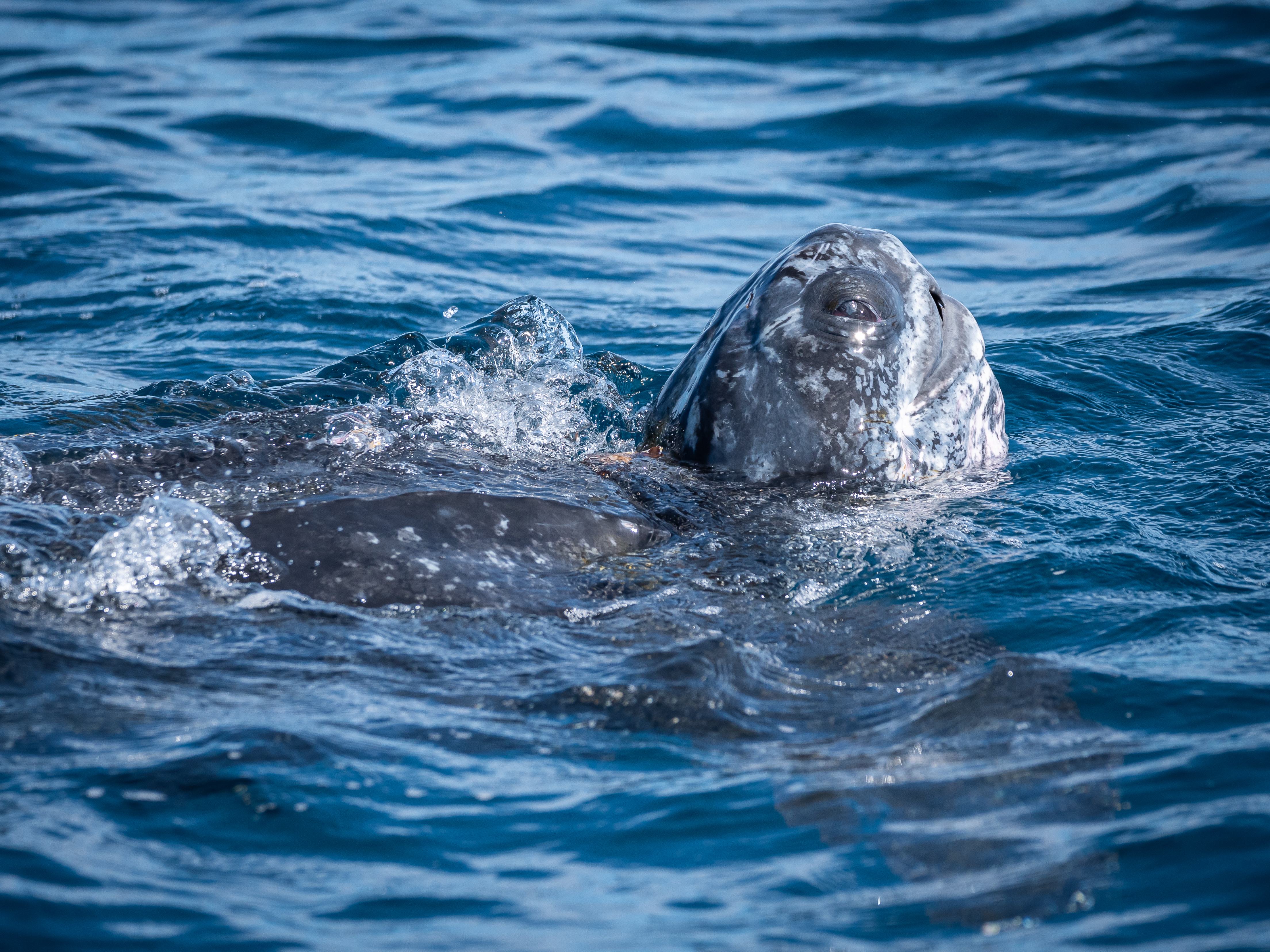
    What if we told you the largest sea turtles in the world visit Aotearoa New Zealand and that our waters are important to their survival? That they’re Critically Endangered, and that we know almost nothing about how they spend their time here? 

    You might say it’s about time we learn about them, and that’s exactly what we’re doing in our new research collaborating with USA-based Upwell Turtles.  

    Turtles crossing borders 

    Leatherback turtles aren’t worried about international boundaries.  

    The leatherbacks which visit New Zealand waters are part of the Western Pacific population that forage on the US West Coast and then migrate some 12,000km to nesting beaches in Indonesia, Papua New Guinea, New Caledonia, and the Solomon Islands.  

    Leatherbacks have been tagged for monitoring when they come ashore at nesting beaches overseas, but there aren’t many known foraging areas where it’s possible to tag them in open water and study their movements. The Bay of Plenty is one of those known areas. 

    For the love of jelly(fish)

    We have the opportunity to tag turtles at sea during summer and early autumn when our waters are full of their favourite food – jellyfish! 

    Leatherbacks can weigh more than 350 kilograms and need to eat more than 1/2 their body weight in jellyfish to get enough energy for long trips. The jellyfish-rich waters off the Bay of Plenty are important to leatherback migration success.

    Human for scale: Upwell Executive Director George Shillinger tagging nesting leatherbacks in Playa Grande Costa Rica in 2007 | Upwell Turtles

    Running the gauntlet 

    Leatherbacks face many risks in various countries across the huge distances they travel between foraging grounds and nesting beaches. Threats can include unintentional capture by fisheries (bycatch), the harvesting of adult turtles and eggs, plastic pollution, nesting beach habitat loss, climate change, and vessel strike.

    Currently, the biggest threat to leatherback turtles, globally, is from commercial fishing. Most turtles accidentally caught by fisheries in New Zealand waters are released alive, but we need to learn how to reduce bycatch numbers to better protect them. 

    It’s a minefield for a turtle travelling across international boundaries, and we’ve seen a decline in this population of over 80% in the last 40 years. That’s why international collaboration is so important for their research and conservation if we are to have any chance of recovering the population. 

    Collaborating for conservation  

    We’re working with scientists who have been studying leatherbacks for decades. Being able to work together to study their habitat use in New Zealand waters will be another piece in the migration puzzle for these ancient turtles. 

    Dr George Shillinger, Executive Director of Upwell Turtles, says leatherbacks are among the most highly migratory and transboundary marine species on the planet.  

    “Effective conservation requires international collaboration from nesting beaches all the way to distant foraging habitats.” 

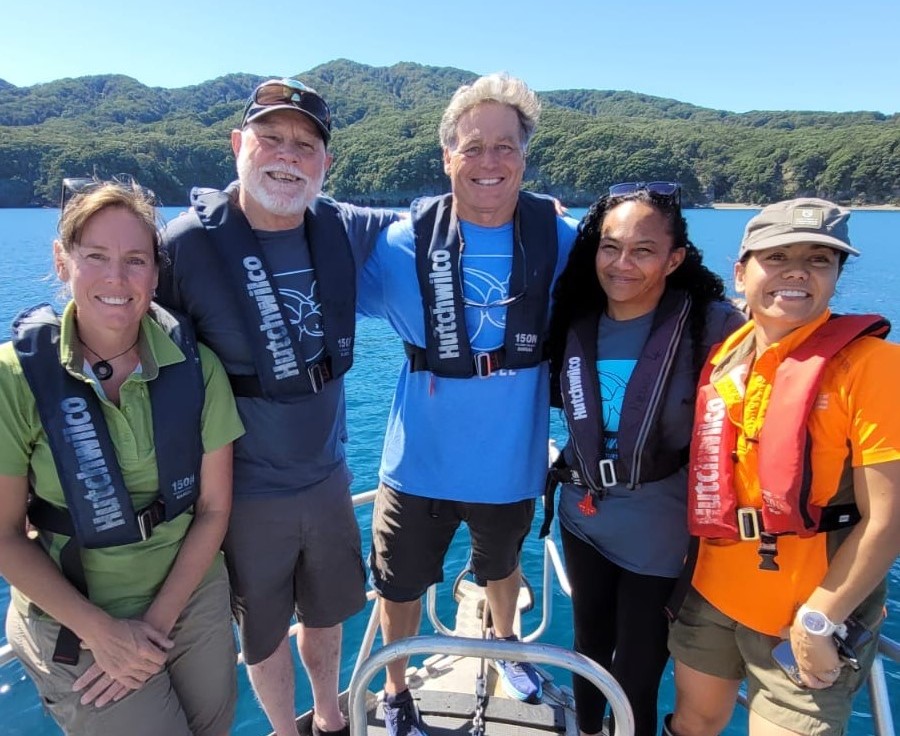
    Some of the leatherback researchers and partners out on the boat | DOC

    Taking to the air 

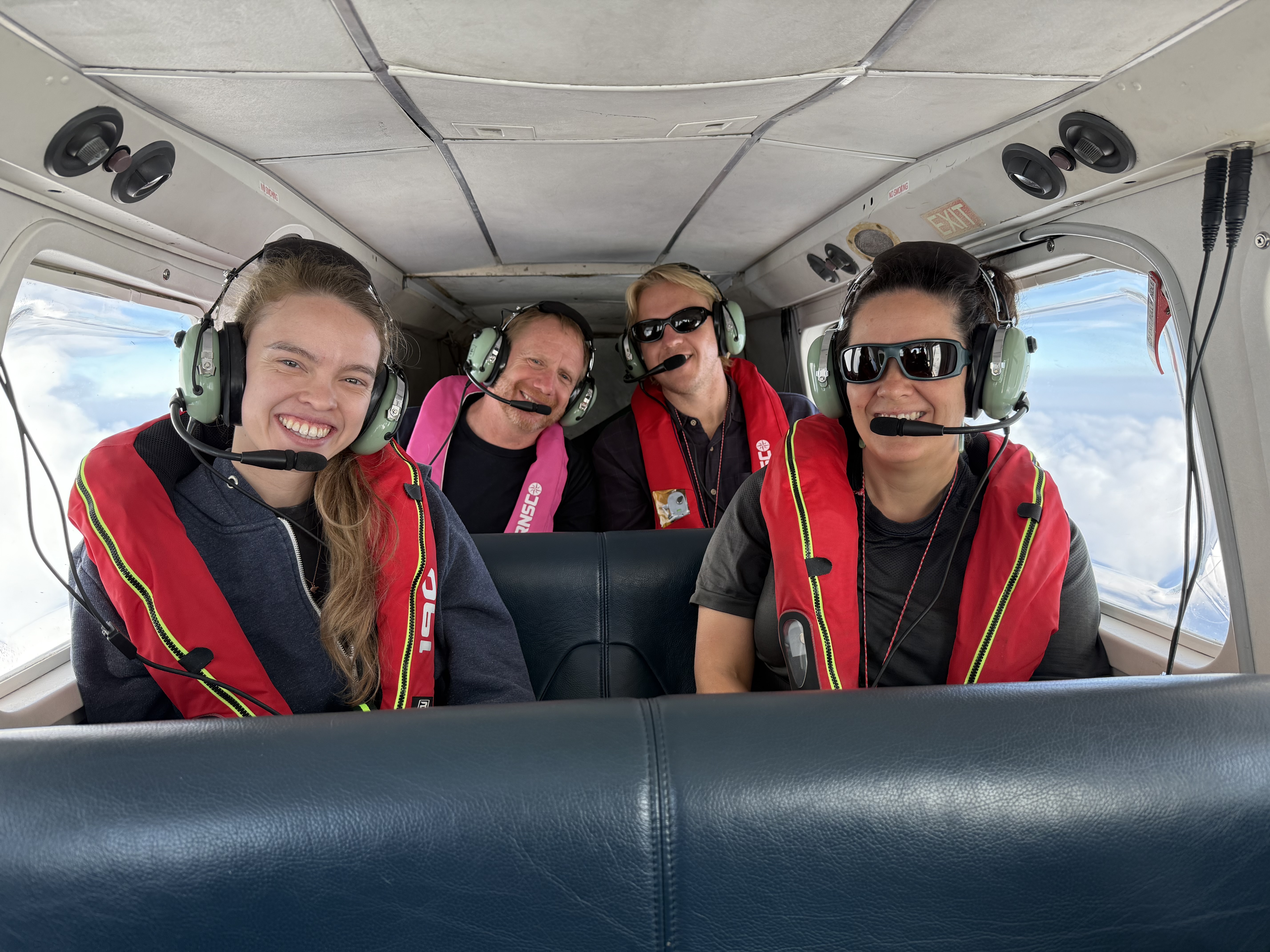
    Our turtle-team recently took to the air over the Bay of Plenty as a starting point to find out more about leatherbacks in New Zealand waters. We worked with Upwell Turtles, and with support and expertise from NIWA, Monash University (Australia), and Moss Landing Marine Laboratories (USA).  

    While we had George and Scott here from Upwell Turtles, they graciously gave us some of their time and expertise, to help develop our own techniques to catch and tag leatherbacks. 

    The international research crew monitoring for leatherbacks from a plane | Sean Williamson

    Practice Makes Perfect 

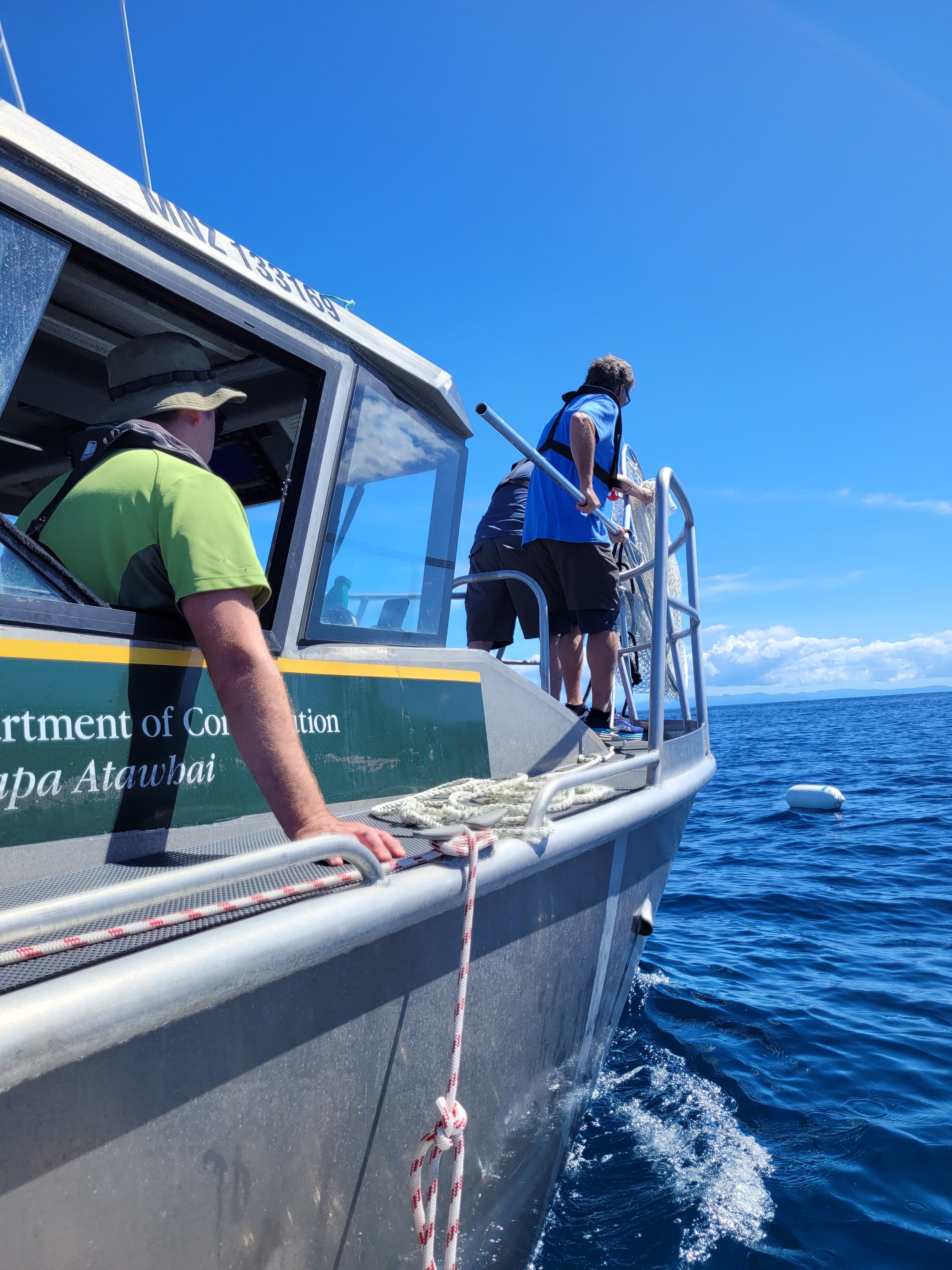
    Along with our international experts, we assembled an array of technical equipment, and formed a team including Tauranga DOC staff, Tuhua Island kaitiaki, and a local marine conservationist, all eager to embrace the challenge of finding and netting such large animals. 

    Heading out on our DOC boat off the coast of Tauranga on calm, sunny weekend in March we focused our efforts on a large rubber fender co-opted as a ‘pretend’ turtle. Few fenders have had such an exciting couple of days! 

    The team has now honed the required skills and techniques to safely net actual turtles. In future, when we do this for real, we will have a spotter plane in the air and other boats on the water to help us find turtles – leatherbacks can be tricky to spot from sea level. 

    Where to from here? 

    Because leatherback turtles have historically visited the Bay of Plenty, we’re working to build partnerships with local iwi and hapū, and the Bay of Plenty community, as well as collaborating with our research partners. 

    We’re starting to plan our next steps into the world of tagging, aiming for next summer when the turtles and jellyfish have returned to the Bay.  

    Everything we learn from tagging studies of leatherback turtles in our waters will help inform future conservation efforts for this species, which is so ancient we call it the tuatara of our oceans. We’ll be doing our part in the international effort to protect a species on the brink of extinction.   

    How you can help leatherback turtles: 

    • No marine turtles nest on beaches in New Zealand, any turtle on the beach should be reported immediately to 0800 DOC HOT (0800 362 468).
    • Spot a sea turtle in the water around New Zealand? You can report sightings to
    turtles@doc.govt.nz 
    • You can help protect leatherbacks and other marine animals by preventing plastics and pollution from reaching our oceans. 

    MIL OSI New Zealand News

  • MIL-OSI USA: SPC Tornado Watch 132 Status Reports

    Source: US National Oceanic and Atmospheric Administration

    Search by city or zip code. Press enter or select the go button to submit request
    Local forecast by”City, St” or “ZIP” 

    SPC on Facebook

    @NWSSPC

    NCEP Quarterly Newsletter

    Home (Classic)SPC Products   All SPC Forecasts   Current Watches   Meso. Discussions   Conv. Outlooks   Tstm. Outlooks   Fire Wx Outlooks     RSS Feeds   E-Mail AlertsWeather Information   Storm Reports   Storm Reports Dev.   NWS Hazards Map   National RADAR   Product Archive   NOAA Weather RadioResearch   Non-op. Products   Forecast Tools   Svr. Tstm. Events   SPC Publications   SPC-NSSL HWTEducation & Outreach   About the SPC   SPC FAQ   About Tornadoes   About Derechos   Video Lecture Series   WCM Page   Enh. Fujita Page   Our History   Public ToursMisc.   StaffContact Us   SPC Feedback

    Watch 132 Status Reports

    Watch 132 Status Message has not been issued yet.

    Top/Watch Issuance Text for Watch 132/All Current Watches/Forecast Products/Home

    Weather Topics:Watches, Mesoscale Discussions, Outlooks, Fire Weather, All Products, Contact Us

    NOAA / National Weather ServiceNational Centers for Environmental PredictionStorm Prediction Center120 David L. Boren Blvd.Norman, OK 73072 U.S.A.spc.feedback@noaa.govPage last modified: April 06, 2025
    DisclaimerInformation QualityHelpGlossary
    Privacy PolicyFreedom of Information Act (FOIA)About UsCareer Opportunities

    MIL OSI USA News

  • MIL-OSI China: China to accelerate digitalization of eco-environment monitoring network

    Source: People’s Republic of China – State Council News

    BEIJING, April 6 — China’s Ministry of Ecology and Environment has unveiled a plan to further transform the country’s national ecological monitoring network into a digitized and smart system.

    By 2027, China aims to explore a new generation of monitoring networks in key regions, utilizing advanced technologies such as unmanned maintenance and smart sampling, with standardized monitoring operations being carried out nationwide, according to the plan.

    By 2030, China’s eco-environment monitoring network system will be systematically revamped to include an integrated aerial, terrestrial and maritime monitoring network, along with a basically established “smart brain,” it said.

    The move marks a concrete step toward digitalized and smart environmental monitoring, said Jiang Huohua, head of the ministry’s ecological and environmental monitoring department.

    Air and water monitoring will be updated with unmanned operations, as well as smart sampling and analysis. Additionally, biodiversity tracking will leverage advanced smart equipment such as infrared cameras and bird sound recorders to achieve over 85 percent accuracy in species identification.

    In terms of noise monitoring, urban sound environment monitoring equipment will not only be able to track decibel levels but also identify sources of the noise, according to Jiang.

    New technologies like artificial intelligence and satellite remote sensing will play increasingly significant roles in China’s eco-environmental monitoring, with policies rolled out to develop environmental protection robots and remote-operation equipment, he told a press conference last month.

    MIL OSI China News

  • MIL-OSI New Zealand: Greenpeace Statement – ‘Anchor Rainforest Killer’ palm kernel protest continues in New Plymouth

    Source: Greenpeace

    Greenpeace activists remain on the roof of an Agrifeeds palm kernel storage warehouse in Port Taranaki despite police intervention to remove other protestors inside the facility.

    Two orangutans have attached a 70-metre banner reading ‘Anchor Rainforest Killer’ to the roof and have locked themselves to the building. They are now entering their tenth hour on the roof of the building.
    Greenpeace is also suing Fonterra for misleading claims on Anchor Butter packaging. The packaging claims that the butter is ‘100% New Zealand grass-fed’, however, a Fonterra dairy cow’s diet can be composed of up to 20% palm kernel – a product linked to rainforest destruction in Indonesia.
    From inside the Agrifeeds storage shed, Greenpeace spokesperson Sinéad Deighton-O’Flynn said, “Fonterra markets its Anchor butter as ‘grass-fed’, but this is a deception. Every year, dairy cows in New Zealand are fed almost two million tonnes of palm kernel imported from Southeast Asia.
    “Rainforests are being burned, peatlands are being drained, and rows of palm trees are being planted in their place to feed Fonterra’s oversized dairy herd.
    “This facility here in New Plymouth has been linked to illegal palm plantations in Indonesia, connecting Anchor butter and other Fonterra products with the destruction of lush rainforests and the wildlife that depend on them.
    “As more and more evidence emerges of New Zealand’s link to destructive palm kernel, Fonterra must ban the use of this blood-soaked animal feed on all their farms across Aotearoa.”
    In Taranaki, New Zealand – Greenpeace activists dressed as orangutans climbed onto the roof of Fonterra’s biggest palm kernel supplier, where they deployed a 500 square meter banner that reads ‘Anchor Rainforest Killer’. Meanwhile, three more activists inside the Agrifeeds facility locked themselves to pillars, stopping a ship from Indonesia carrying 30 thousand tonnes of palm kernel expeller from unloading. The Greenpeace activists are protesting against the use of palm kernel as cow feed on Fonterra farms due to the product’s links to illegal palm plantations and deforestation of paradise rainforests in Southeast Asia.

    MIL OSI New Zealand News

  • MIL-OSI New Zealand: Greenpeace Statement – Taranaki: Greenpeace activists stop unloading of palm kernel sourced from Indonesian rainforests

    Source: Greenpeace

    Greenpeace Aotearoa activists in Taranaki have occupied the storage facility of Fonterra’s biggest palm kernel supplier Agrifeeds this morning, stopping a ship from Indonesia carrying 30 thousand tonnes of palm kernel expeller from unloading.
    The organisation says that it is protesting against the use of palm kernel as cow feed on Fonterra farms due to the product’s links to illegal palm plantations and deforestation of paradise rainforests in Southeast Asia.
    Inside the facility, two activists have locked themselves to pillars, preventing trucks of feed from unloading. Meanwhile, a team on the roof has unfurled a 500 square metre banner labelling the Fonterra butter brand Anchor as a ‘rainforest killer’.
    Greenpeace spokesperson Sinéad Deighton-O’Flynn is inside the facility and says, “Fonterra markets its Anchor butter as ‘grass-fed’, but this is a deception. Every year, dairy cows in New Zealand are eating almost two million tonnes of palm kernel imported from Southeast Asia.
    “Rainforests are being burned, peatlands are being drained, and rows of palm trees are being planted in their place to feed Fonterra’s oversized dairy herd.”
    Greenpeace activist Danika Plowman, also inside the storage facility, says, “Rainforests and the wildlife that inhabit them should not be destroyed to feed to dairy cows here in New Zealand. We’re here to tell Fonterra to end the use of palm kernel and cut its ties to deforestation now.”
    Deighton-O’Flynn says, “Just this year, this facility was linked to illegal palm plantations in Indonesia, connecting Anchor butter and other Fonterra products with the destruction of lush rainforests and the wildlife that depend on them.
    “Fonterra has failed to take accountability for the deforestation in its supply chain, and instead has tried to hide behind greenwash, by falsely claiming that its products are “grass-fed”.
    “No one should have to worry about whether the butter they are spreading on their toast is fuelling deforestation and driving orangutans towards extinction. We are calling on Fonterra to stop its greenwash and cut its ties to deforestation. “
    “As more and more evidence emerges of New Zealand’s link to destructive palm kernel, Fonterra must ban the use of this blood-soaked animal feed on all their farms across Aotearoa.”

    MIL OSI New Zealand News

  • MIL-OSI New Zealand: Super-sized granny flats coming to backyards

    Source: New Zealand Government

    The Coalition Government will go even further than it earlier proposed to make it easier to build granny flats by increasing the maximum size allowed to be built without consents, say RMA Reform and Housing Minister Chris Bishop, Associate Finance Minister Shane Jones and Building and Construction Minister Chris Penk. 

    “It’s currently far too hard to build the homes New Zealanders need, with even the simplest dwellings tangling up homeowners and builders in red tape. That’s a big part of the reason why we’re replacing the Resource Management Act (RMA) with new laws based on property rights,” Mr Bishop says. 

    “At present, people who want to build a simple standalone dwelling on their properties need a building consent under the Building Act. In many cases, a resource consent under the Resource Management Act is required as well. These processes are complicated, time-consuming, and costly. 

    “Last year the Government consulted on allowing granny flats of up to 60 sq m to be built without building or resource consents. The proposal received huge support, and as a result the Government has agreed to go even further by increasing the maximum size to 70 sq m,” Mr Bishop says. 

    “Making it faster and more affordable to build granny flats provides families with more housing options, particularly for grandparents, people with disabilities, young adults and workers in the rural sector. We know increasing housing availability directly translates to lower living costs for our communities.  

    “A new National Environmental Standard (NES) under the RMA will be developed and in place by the end of this year to give effect to our proposals, timed to take effect with changes to the Building Act. This NES will require all councils to permit a granny flat on sites in rural and residential zones without the need to gain a resource consent.” 

    The move delivers on a New Zealand First-National coalition agreement to amend the Building Act and resource consenting system to make it easier to build granny flats. 

    “In the Far North I saw how extended family often live together at the same property. Changing the rules to make it easier to build more family accommodation allows generational living at an affordable price,” Mr Jones says. 

    “I am delighted to see this proposal come to fruition through this Government, which enables pragmatic solutions to problems which have previously been thought too difficult to solve.” 

    Mr Penk says the Government is laser-focused on making it easier for builders and all tradies to get on and do what they do best. 

    “Removing regulatory barriers and taking a commonsense approach to the consenting system is a critical part of increasing housing supply for Kiwis. 

    “The sector is vital to New Zealand, and we want to support its growth and productivity by doing all we can to get builders back on their tools, and out of the office by reducing their paperwork.” 

    The Government will introduce an amendment to the Building Act in the middle of this year which will exempt granny flats from needing a building consent if:  

    • The granny flat has a simple design and meets the Building Code
    • Building work is carried out by authorised building professionals 
    • Homeowners notify their local council before they commence building and once it is completed. 

    “We have carefully considered the feedback to make sure the path forward strikes the right balance between enabling housing growth and managing risks,” Mr Penk says. 

    “To support councils with local infrastructure funding for growing communities, the Government has agreed that infrastructure charges will continue to apply to granny flats through the Project Information Memorandum process.” 

    Note to editors:

    • Public consultation ran from 17 June to 12 August 2024 and received a total of 1970 submissions. 
    • A summary of submissions was published in November 2024 and can be found on the MBIE website
    • The proposed consent exemption will not apply to any building work currently in progress or existing structures that fit the specifications of a granny flat under the final exemption criteria. It will apply only to granny flats built after the exemption is in force.
    • Anyone who is unsure whether their building work needs a building or resource consent should check with their local council. 

    MIL OSI New Zealand News

  • MIL-OSI USA: Padilla, Schiff, Whitehouse Welcome Senate Parliamentarian’s Reaffirmation That California’s Clean Air Act Waivers Not Subject to Congressional Review Act

    US Senate News:

    Source: United States Senator Alex Padilla (D-Calif.)

    Padilla, Schiff, Whitehouse Welcome Senate Parliamentarian’s Reaffirmation That California’s Clean Air Act Waivers Not Subject to Congressional Review Act

    WASHINGTON, D.C. — Today, U.S. Senators Alex Padilla (D-Calif.), Adam Schiff (D-Calif.), and Sheldon Whitehouse (D-R.I.), members of the Senate Environment and Public Works Committee, welcomed the Senate parliamentarian’s decision that California’s Clean Air Act waivers are not subject to the Congressional Review Act (CRA). The decision reaffirms that President Trump and Environmental Protection Agency (EPA) Administrator Lee Zeldin cannot weaponize the CRA to repeal these waivers as part of their assault on clean air and the environment.
    “In passing the Clean Air Act on an overwhelmingly bipartisan basis, Congress explicitly granted California the ability to set more stringent vehicle emissions standards to protect public health from California’s unique air quality challenges,” said Senator Padilla. “I am pleased that the Senate parliamentarian upheld decades of precedent and confirmed that California’s Clean Air Act waivers are not subject to the Congressional Review Act. This latest stunt from Trump’s EPA was a clearly bogus attempt to undercut California’s climate leadership, and it failed. I’ll keep fighting to defend California’s authority to protect our residents, safeguard clean air, and lower costs for consumers.”
    “Congress granted the California the power to regulate its own pollution and vehicle emissions standards and did so on a bipartisan basis almost 60 years ago. The result has been an important one and advanced clean air and water rules that have had a major impact on California and the rest of the country,” said Senator Schiff. “Today, another nonpartisan and independent voice has reaffirmed that California’s vehicle emissions standards are not subject to repeal under the expedited processes of the Congressional Review Act, upholding our state’s right to protect our air and the health of our 40 million residents. The Golden State has been the gold standard for fighting harmful air pollution, and today’s ruling allows that fight to continue. This is a victory for the power of the states that Congressional Republicans seem so eager to undermine now that they have returned to power in Washington. I will continue to work in the Senate to protect the health and wellness of every Californian whose lives have been improved by these standards for more than a generation.”
    “From slashing investments that lower household energy costs to rolling back protections for clean air and clean water, Trump and his polluter minions at EPA have endangered our nation’s public health, economy, and climate safety. Due to evil influence by the polluting industries that bankrolled Trump’s campaign, Americans will pay—with their health and with their wallets—for the Trump-Musk weaponization of the EPA in service to big polluters,” said Ranking Member Whitehouse. “Congress put California’s ability to set vehicle emissions standards in the Clean Air Act, which has already protected generations of Americans from fossil fuel emissions. These emissions heat up our planet, make it harder for many to breathe, and increase costs for families. We’re gratified that the Senate parliamentarian followed decades of precedent showing that California’s Clean Air Act waivers are not subject to the Congressional Review Act. The lie about ‘cooperative federalism’ as the model for EPA to follow is laid bare when environmental regulatory and enforcement authority of the states is stronger than federal requirements. Here, the Clean Air Act provides California the authority to set more stringent vehicle emission standards, and Administrator Zeldin pulled out all the stops to attack that authority despite decades of practice and precedent. His legally unfounded scheme was first cooked up by industry lawyers in the polluter-friendly op-ed pages of The Wall Street Journal. Never mind the hundreds of millions of Americans suffering from bad air quality, climate change-driven natural disasters, and climateflation in everything from insurance premiums to grocery prices, Zeldin again decided to take his marching orders from polluters. Tells you all you need to know.”
    Senators Padilla, Schiff, and Whitehouse previously blasted Trump and Zeldin’s weaponization of the EPA as the Government Accountability Office (GAO) also found that Clean Air Act waivers to California are not subject to the Congressional Review Act. Padilla and Schiff also slammed the Trump Administration’s intent to roll back dozens of the EPA’s regulations that protect California’s air and water.

    MIL OSI USA News

  • MIL-OSI USA: Capito, Fischer, Mullin Introduce Resolutions to Repeal California’s Radical EV Mandate

    US Senate News:

    Source: United States Senator for West Virginia Shelley Moore Capito

    WASHINGTON, D.C.  Today, U.S. Senators Shelley Moore Capito (R-W.Va.), Chairman of the Senate Environment and Public Works (EPW) Committee, Deb Fischer (R-Neb.), and Markwayne Mullin (R-Okla.) introduced joint resolutions of disapproval under the Congressional Review Act (CRA) to repeal California’s EV waivers that prohibit the sale of new gas-powered light-duty vehicles by 2035, and set unrealistic and stringent requirements for heavy-duty trucks and heavy-duty diesel engines.

    “By sending these rules to Congress, Administrator Zeldin and the Trump administration followed the law and addressed the Biden administration’s attempt to circumvent Congress in this process. California’s extreme EV mandate imposes unrealistic and stringent requirements, fails to meet the Clean Air Act’s requirements for a waiver, forces the hand of American consumers, and makes our country more reliant on China for critical minerals. The American people have made it clear that they want consumer choice – not an EV mandate. I will continue to address all options available to strike down these rules and eliminate the consequential impact they would make across our country,” Chairman Capito said.

    “As we saw under the Biden administration, what happens in California doesn’t stay in California. Their emissions regulation will cripple the truck manufacturing industry nationwide, overloading companies and truckers with expensive, heavy-handed requirements. This inevitably leads to increased prices for families across the nation. My resolution will overturn the Biden administration’s waiver allowing the ACT regulation to take effect without congressional review,” Senator Fischer said. 

    “We cannot allow California’s costly and extreme Green New Deal agenda to bankrupt families and eliminate consumer choice for hundreds of millions of American families. Thankfully, after four years of ineffective one-size-fits-all crippling bureaucracy, the Trump administration is bringing back common sense. I’m grateful to my colleagues for partnering with me on this effort,” Senator Mullin said.

    BACKGROUND:

    • February 2024: Senator Capito joined Rep. Cathy McMorris Rodgers (R-Wash.-05), Senator Markwayne Mullin (R-Okla.), and Rep. John Joyce (R-Pa.-13), in a bicameral letter to EPA Administrator Michael Regan warning of the legal and economic consequences of granting a Clean Air Act waiver request from the state of California, which would enable the state to require 35% of automobile sales to be zero-emission vehicles in model year 2026, and finally, 100% of them by 2035.
    • December 2024: Senator Capito pledged to work to reverse the Biden administration’s lame duck action of approving California’s waiver to implement its “Advanced Clean Cars II” regulation.

    MIL OSI USA News

  • MIL-OSI USA News: WEEK 11 WINS: President Trump Unleashes Economic Prosperity

    Source: The White House

    It was another highly successful week for the American people as President Donald J. Trump continues his relentless pursuit of strength, prosperity, and peace — and lays the foundation for America to be the global powerhouse for generations to come.

    Here is a non-comprehensive list of wins in week 11:

    • Illegal crossings hit a stunning new record low — down 95% over last year.
      • The number of unaccompanied illegal immigrant children also reached a record low.
      • Los Angeles Times: “California-Mexico border, once overwhelmed, now nearly empty”
      • Bloomberg: “US-Bound Migration Plunges 99% Along Panama Jungle Route”
    • President Trump continued to rid our communities of illegal immigrant criminals.
      • The Trump Administration directed the successful arrests of three illegal immigrant MS-13 gang members in Florida, wanted on first-degree murder charges, and another high-ranking MS-13 member in New York, linked to 11 murders.
      • The Trump Administration directed the transfer of 17 violent illegal immigrant terrorists from the U.S. to El Salvador.
      • The Trump Administration, with state and local law enforcement, successfully arrested more than 40 individuals in a Texas operation targeting the brutal Tren de Aragua gang.
      • The Trump Administration deported an illegal immigrant “influencer” who infamously encouraged fellow illegal immigrants to become squatters.
      • Since taking office, the Trump Administration has arrested 113,000+ illegal immigrants, deported 100,000+ illegal immigrants, and released just nine illegal immigrants into the U.S. — a staggering 99.995% decrease over the same period last year under Biden.
    • President Trump implemented his bold plan for reciprocal trade as he seeks to reverse the decades of globalization that has decimated our industrial base.
      • Coalition for a Prosperous America: “A permanent, universal baseline tariff resets the global trade environment and finally addresses the destructive legacy of decades of misguided free-trade policies. President Trump’s decision to implement a baseline tariff is a game-changing shift that prioritizes American manufacturing, protects working-class jobs, and safeguards our economic security from adversaries like China. This is exactly the type of bold action America needs to restore its industrial leadership.”
      • National Cattlemen’s Beef Association: “For too long, America’s family farmers and ranchers have been mistreated by certain trading partners around the world. President Trump is taking action to address numerous trade barriers that prevent consumers overseas from enjoying high-quality, wholesome American beef.”
    • Americans saw early results of President Trump’s declaration that the days of economic surrender are over.
      • Nissan abandoned plans to eliminate a shift at its Tennessee production facility.
      • General Motors announced it will increase truck production at its Indiana assembly plant.
      • Guardian Bikes announced it will expand its production capacity and grow its U.S.-based investment.
      • Equipment giant JCB committed to doubling the size of its new U.S. manufacturing facility.
      • Ford Motor Company and Stellantis both announced they will offer U.S. consumers employee pricing on their vehicles.
    • President Trump continued to pursue peace through strength around the world.
      • President Trump deployed additional military assets to the Middle East as a warning to the Iranian regime.
      • The Trump Administration inked a $2 billion air defense deal with Poland.
      • President Trump secured a pledge from Finland to raise its defense spending to 3% of its GDP.
      • President Trump held a successful call with Egyptian President El-Sisi to discuss the immense progress the U.S. has made in eliminating Houthi terrorists.
      • President Trump had a “productive call” with Vietnamese leader To Lam, who expressed willingness to cut the country’s tariffs on U.S. imports.
    • President Trump’s economic agenda delivered more relief for Americans.
      • The latest jobs report shattered expectations for the second straight month — highlighted by massive private sector job growth, a spike in full-time employment, wage growth, and an expanding labor market.
      • CNBC: “Private companies added 155,000 jobs in March, more than expected”
      • Wholesale egg prices continued to drop, falling to an average price of $3 per dozen — or nearly 60% since January amid the Trump Administration’s efforts to combat the avian bird flu and repopulate the chicken supply.
    • President Trump secured the release of two U.S. citizens detained in Mexico.
    • President Trump signed an executive order to crack down on price gouging and ticket scalping in the entertainment industry.
    • President Trump established the United States Investment Accelerator to attract and facilitate billion-dollar investments in the U.S.
    • The Department of Energy unveiled plans to use thousands of acres of its land — including national laboratory campuses, nuclear sites, and former enrichment plants — to quickly develop data centers that will power the artificial intelligence revolution.
    • The Department of Energy removed additional regulatory barriers on liquefied natural gas exports.
    • The Department of the Treasury launched a new public-private partnership to safeguard the financial system against illicit activities by the Iranian regime and announced additional sanctions against Iran as part of the Trump Administration’s maximum pressure strategy.
    • The Department of the Treasury leveled new sanctions against financiers of the Sinaloa drug cartel, which has flooded our country with deadly fentanyl.
    • The Department of the Treasury announced additional sanctions against a network of Houthi terrorist facilitators.
    • The Department of the Treasury withdrew burdensome, duplicative climate-based financial risk guidelines from the banking industry.
    • The Department of the Interior announced its next oil and gas lease sale in the Gulf of America, fulfilling President Trump’s pledge to unleash American energy.
    • The Department of the Interior implemented President Trump’s executive order to enhance public safety, clean up lands, protect federal parks, and preserve historic monuments in the District of Columbia.
    • The Department of Health and Human Services launched a department-wide restructuring to realign with its core mission and save taxpayers billions of dollars.
    • The Department of Health and Human Services announced states can bar welfare recipients from using taxpayer dollars to purchase unhealthy soft drinks.
    • The Department of Labor announced it will return $1.4 billion in unused COVID funds back to the U.S. Treasury.
    • The Federal Bureau of Investigation announced a record number of new agent applications under its new leadership.
    • The Department of Justice dismissed a Biden-era lawsuit against common-sense, effective Georgia election law reforms.
    • The Department of Justice launched investigations into DEI initiatives at Stanford University, University of California, Berkeley, University of California, Los Angeles, and University of California, Irvine.
    • The Department of Justice said it will pursue the death penalty for the accused cold-blooded killer of UnitedHealthcare CEO Brian Thompson.
    • The Environmental Protection Agency continued cutting wasteful spending, shuttering a politicized museum erected by the Biden Administration, consolidating office space, and eliminating duplicative grants and contracts — saving taxpayers tens of billions of dollars.
    • The Department of Defense directed a review of the military’s physical fitness standards to ensure it remains the strongest, most lethal fighting force on the planet.
    • The Department of Education and the Department of Justice launched a joint effort to ensure rapid investigations into violations of women’s civil rights.
    • The Department of Education issued a final warning to Maine over its ongoing refusal to comply with Title IX by forcing women to compete against men in athletics.
    • The Department of Education warned states with unlawful K-12 “diversity, equity, and inclusion” programs that they are at risk of losing federal funding.
    • The Department of Education encouraged state education officials to leverage federal funds to support school choice initiatives — a key part of President Trump’s education agenda.
    • The Department of Agriculture paused federal funding to Maine over its unlawful policies forcing women to compete against men in athletics.
    • The Department of Agriculture announced sweeping reforms to protect forests and boost domestic timber production.
    • The Department of Transportation announced an updated Safe Streets and Roads for All grant program, eliminating DEI and environmental justice requirements that prevented money from getting where it is needed.
    • The Department of Transportation continued making progress on the unprecedented backlog of unfulfilled grants left over by the Biden Administration.
    • The Department of Housing and Urban Development launched a streamlined website that efficiently provides vital information to Americans and saves taxpayers in the long run.
    • U.S. Citizenship and Immigration Services formally removed the option of a third gender on immigration paperwork, further restoring common sense to government.
    • Dr. Mehmet Oz was confirmed as Administrator of the Centers for Medicare and Medicaid Services and Matthew Whittaker was confirmed as the U.S. Ambassador to NATO — continuing the rapid pace at which President Trump’s nominees receive final approval.

    MIL OSI USA News

  • MIL-OSI USA: Cramer, Thune, Durbin Ask President Trump to Permit Nationwide, Year-Round Sale of E15 Fuel

    US Senate News:

    Source: United States Senator Kevin Cramer (R-ND)

    WASHINGTON, D.C. — U.S. Senator Kevin Cramer (R-ND) joined a bipartisan group of Senate colleagues, led by U.S. Senators John Thune (R-SD) and Dick Durbin (D-IL), in sending a letter to President Donald Trump requesting the year-round sale of E15 fuel. Specifically, the letter asked President Trump to use the nationwide temporary waivers provided under the Clean Air Act to extend the Reid vapor pressure waiver through the 2025 summer driving season. Supported by Cramer, the U.S. Environmental Protection Agency has enabled the year-round sale of E15 fuel through nationwide temporary waivers for the past several years.

    “To meet our nation’s energy needs and decrease the cost of fuel, we must deploy an all-of-the-above energy strategy, which includes leveraging domestic biofuels,” the senators wrote“As affirmed by the actions you took to first allow year-round E15 in 2019, and those approved for the summers afterward, the sale of higher blends of biofuels like E15 through the summer months supports the domestic fuel supply, reduces consumer costs, and promotes American biofuels and agriculture feedstocks.

    “Utilizing American ethanol year-round is a direct solution to reinforcing our energy supply and reducing consumer costs, and the issuance of a nationwide waiver for the 2025 summer driving season is a clear path toward these shared goals,” the senators continued.

    The letter was also signed by U.S. Senators Tammy Baldwin (D-WI), Tammy Duckworth (D-IL.), Joni Ernst (R-IA), Deb Fischer (R-NE), Chuck Grassley (R-IA), Josh Hawley (R-MO), John Hoeven (R-ND), Amy Klobuchar (D-MN), Jerry Moran (R-KS), Gary Peters (D-MI), Pete Ricketts (R-NE), Mike Rounds (R-SD), Elissa Slotkin (D-MI), and Tina Smith (D-MN).

    Click here for the letter

    MIL OSI USA News

  • MIL-OSI Asia-Pac: Joint Declaration on the Establishment of India-Thailand Strategic Partnership

    Source: Government of India

    Posted On: 04 APR 2025 6:47PM by PIB Delhi

    During 03-04 April 2025, H.E. Shri Narendra Modi, Prime Minister of the Republic of India paid an Official Visit to Thailand and participated in the 6th BIMSTEC Summit in Bangkok, on the invitation of H.E. Ms. Paetongtarn Shinawatra, Prime Minister of the Kingdom of Thailand. Prime Minister Modi was accorded a ceremonial welcome by Prime Minister Shinawatra at the Government House in Bangkok.

    Acknowledging the deep civilisational, cultural, religious and linguistic bonds and 78 years of establishment of diplomatic ties between India and Thailand, both leaders held wide ranging discussions on various areas of bilateral cooperation including defence and security, trade and investment, connectivity, science and technology, innovation, space, education, health, culture, tourism and people-to-people exchanges. They also exchanged views on sub-regional, regional, and multilateral issues of mutual interest. Both leaders witnessed exchange of several MoUs covering various areas of cooperation. They also welcomed the establishment of an India-Thailand Consular Dialogue.

    Prime Minister Shinawatra and Prime Minister Modi also visited Wat Phra Chetuphon Wimon Mangkhalaram Rajwaramahawihan to pay homage to the historic Reclining Buddha.

    Taking into consideration the existing cooperation and the potential for closer cooperation not only at the bilateral and regional levels but also in the global context in view of the rapidly evolving global geopolitical situation, the two leaders agreed to elevate the existing bilateral relations to a Strategic Partnership. This marks a new chapter of enhanced partnership for realising the full potential of cooperation between the two countries.

    The Strategic Partnership is based on mutual commitment to strengthen bilateral relations for the continuing peace, stability and prosperity of the two countries and their respective regions. The Strategic Partnership will serve as an important foundation for the two countries to chart a future-oriented and mutually-beneficial path towards increasing opportunities, closer cooperation and to jointly respond to common challenges.

    The Strategic Partnership will build upon existing agreements and mechanisms of cooperation which encompass partnering in political, defence and security, trade and investment, connectivity, education, socio-cultural development and people-to-people exchanges, as well as other areas of mutual interest.

    In declaring this Strategic Partnership, the two leaders reaffirmed their shared interests in a free, open, transparent, rules-based, inclusive, prosperous and resilient Indo-Pacific region and reiterated their strong support for ASEAN Centrality. They also reaffirmed their commitment to exploring concrete activities to implement the ASEAN-India Joint Statement on Cooperation on the ASEAN Outlook on the Indo-Pacific (AOIP) for Peace, Stability and Prosperity in the Region through enhanced cooperation between the AOIP and the Indo-Pacific Oceans Initiative (IPOI) including Thailand’s constructive role to co-lead the Maritime Ecology Pillar of the IPOI with Australia.

    In an effort to further broaden and deepen the relationship between the two countries, the two leaders agreed to the following:

    ­Political Cooperation

    Strengthen political engagement through regular high-level exchanges at the Leadership level, including on the sidelines of multilateral meetings with a view to discuss shared regional interests, as well as to address regional and global security challenges.

    Convene regular meetings between the Foreign Ministers and Senior Officials from respective Ministry of Foreign Affairs/External Affairs under existing mechanisms of Joint Committee for Bilateral Cooperation at the Foreign Ministers’ level and Foreign Office Consultations at the Senior Officials’ level.

    Promote regular Parliamentary exchanges between both countries.

    Defence and Security Cooperation

    Strengthen the existing mechanisms of defence cooperation, as well as to promote further collaboration between the defence sectors of the two countries, with particular emphasis on defence technology, defence industry, research, training, exchanges, exercises and capacity building including by establishing appropriate mechanisms.

    Enhance security cooperation through regular dialogues and exchanges between the respective security and law enforcement agencies/ organisations, also by including a Deputy National Security Adviser/ Secretary General level strategic dialogue between the Thai National Security Council and the National Security Council Secretariat of India, to address the increasingly challenging global and regional security environment and cooperate on both traditional and non-traditional security issues such as defence, maritime security, cybersecurity, counter terrorism, law enforcement issues and combating transnational organised crime like cyber-crimes, international economic crimes, anti-money laundering and human, drug, arms and wildlife trafficking, through exchange of information and intelligence, and sharing of best practices.

    Economic, Trade and Investment Cooperation

    To organise regular meetings and exchanges between the respective Ministry of Commerce/Commerce & Industry under existing mechanism of the Joint Trade Committee between India and Thailand. It was also agreed to ensure annual meetings of existing mechanisms to promote trade and investment between the two countries; to facilitate trade and resolve market access issues with a view to strengthening both countries’ linkages to the global supply chain and to enhance the confidence of the private sectors of both countries; including through cooperation in harmonization, equivalence and Mutual Recognition of Standards of mutually agreed areas; and to prepare for new areas of trade and investment, especially in future-oriented industries, such as renewable energy, electric vehicles, digital technology, robotics, ICT, space technology, biotechnology, creative industry and startups.

    Welcome the increasing bilateral trade, which reached approximate US$ 15 billion in 2023-24 and seek to enhance sustainable bilateral trade to realise its full potential, through an expansion of economic linkages in potential areas. Promote sustainable trade in sectors such as value-added marine products, smartphones, electrical vehicles, food processing, petroleum products, auto components, services and pharmaceuticals.

    Promote trade facilitation and to deepen cooperation under the existing agreements and frameworks, including the Framework Agreement for Establishing Comprehensive Free Trade Area between Thailand and India and the ASEAN-India Trade in Goods Agreement (AITIGA). Provide greater impetus to bilateral trade by exploring the establishment of local currency-based settlement mechanism.

    To support and expedite the review of the ASEAN-India Trade in Goods Agreement (AITIGA) to make it more user-friendly, simple and trade facilitative for businesses, aiming to achieve substantial conclusion in 2025 and to strengthen supply chains between India and ASEAN Countries.

    Promote closer collaboration between the investment promotion agencies of the two countries, including the Board of Investment of Thailand and Invest India, to promote effective utilisation of existing investment policies and schemes, particularly those driving forward the vision of Ignite Thailand through Act East Policy and Make In India, as well as the utilisation of Special Economic Zones (SEZs) & Industrial Corridors in both countries for increasing bilateral investment.

    Organise regular meetings on annual basis of the India-Thailand Joint Business Forum (ITJBF) to serve as the main mechanism for exchanges and the promotion of joint projects and collaboration between the private sectors of the two countries.

    Explore appropriate mechanisms to promote exchanges between entrepreneurs, SMEs, and startups. Keeping in mind the common strategic goals of capacity building and increased market access for India and Thailand startup ecosystems, both sides agreed to conduct startup related activities including mentorship programmes and expert sessions on sectors of mutual importance, focused investor pitching, business matchmaking with corporates and business associations, innovation challenges, integration of academic institutes in both countries and supporting cross-incubation models.

    Promote closer collaboration between the financial service providers in India and Thailand to facilitate trade, investment, and cross-border payments to strengthen economic and financial linkages between the two countries.

    Promote cooperation for sustainable economic growth, including Bio-Circular- Green Economy and Life Style for Environment, especially in the areas of renewable energy, and energy efficiency technologies, to meet both sides’ respective climate change goals.

    Connectivity

    Enhance all modes of connectivity such as physical, digital and financial between India and Thailand and strengthen regional linkages, including through expediting the India-Myanmar-Thailand Trilateral Highway and its eastward extension, as well as the India, Myanmar and Thailand Motor Vehicles Agreement, strengthening regional maritime connectivity through coastal shipping and enhancing port-to-port connections and to encourage the civil aviation authorities of the two countries to continue engaging in discussions for enhancing air connectivity between both countries.

    Socio-cultural, Educational and People-to-People Exchanges

    Foster the positive momentum of people-to-people exchanges, as well as promote potential areas of tourism between the two countries.

    Strengthen mechanisms of cooperation between the Ministries responsible for education in both countries in order to promote educational cooperation, including through mutual recognition of qualifications, increased exchanges of scholarships for students pursuing university-level education in India and Thailand, to facilitate student exchanges, joint research and fellowships. Promote cooperation in skill development, English Language training, Technical and Vocational Education and Training (TVET), Thai and Hindi Studies, and collaboration between educational and training institutions in both countries.

    Strengthen the links between the two countries through the deepening of cultural relations and cooperation, including in performing arts, exhibitions, seminars, conference, archaeology, archives, museums, research and documentation, and festivals as identified in the Cultural Exchange Programme (CEP).

    Explore potential areas of collaboration in sports, such as sports integrity, sports governing bodies, sport sciences & research, sports industry, and sports tourism, as well as exchanges of experts and practitioners in areas of mutual interest.

    Promote closer collaboration between India and Thailand in establishing closer cooperation with the North Eastern Region (NER) of India and to increase exchanges, particularly in the areas of tourism, culture, education, vocation and technical cooperation.

    Strengthen cooperation between Ministries responsible for science and technology to address new challenges and create opportunities with increased exchanges and closer collaboration in science and technology, through joint research projects, workshops, and exchanges in priority areas such as agriculture, biotechnology, ICT and space technology.

    Promote closer cooperation between the two countries in the areas of health, medical products, as well as traditional medicine, including through increased exchanges of information, research and development, and human resource development.

    Establish exchanges and cooperation involved in women’s all-round development, including leadership, decision-making and vocational skills to enhance women entrepreneurship.

    Regional, Multilateral and International Cooperation

    Enhance cooperation between India and Thailand especially at the United Nations to promote constructive role of both sides on global issues of mutual concern and interest.

    Strengthen cooperation between India and Thailand within regional and sub-regional frameworks, including the Association of Southeast Asian Nations (ASEAN), Ayeyawady-Chao Phraya-Mekong Economic Cooperation Strategy (ACMECS), Mekong-Ganga Cooperation (MGC), Bay of Bengal Initiative for Multi-Sectoral Technical and Economic Cooperation (BIMSTEC), Indian Ocean Rim Association (IORA), Asia Cooperation Dialogue (ACD) and Indonesia-Malaysia-Thailand Growth Triangle (IMT-GT) and promote synergies and complementarities among these frameworks with the aim to comprehensively and effectively address regional and sub-regional challenges.

    Strengthen cooperation between Thailand and India in multilateral frameworks such as G77 and South-South Cooperation to jointly advocate the voice of developing countries.

    Jointly strengthen the ASEAN-India Comprehensive Strategic Partnership established at the 19th ASEAN-India Summit to commemorate the 30th Anniversary of ASEAN-India Dialogue Relations in 2022 in Phnom Penh and welcome India’s continued support for ASEAN Centrality and active cooperation in ASEAN-led mechanisms in the evolving regional architecture.

    Further strengthen cooperation under the Mekong-Ganga Cooperation (MGC) framework for enhancing socio-economic development and connectivity of the region, and further strengthen the centuries old civilisational ties.

    Promote the leading and proactive role of India and Thailand as founding members and the two largest economies of BIMSTEC in working towards a prosperous, resilient and open Bay of Bengal community, while capitalising on the commitment from the recent adoption of the BIMSTEC Charter as well as the unique character of BIMSTEC as a bridge between South and Southeast Asia. Strengthen BIMSTEC transport connectivity through implementation of the BIMSTEC Master Plan for Transport Connectivity and related agreements, including the Agreement on Maritime Transport Cooperation.

    The Prime Minister of the Kingdom of Thailand and the Prime Minister of the Republic of India agreed to task the Ministry of Foreign Affairs of the Kingdom of Thailand and the Ministry of External Affairs of the Republic of India to coordinate with relevant agencies to formulate a Joint Plan of Action towards the effective implementation of the Strategic Partnership.


    ***

    MJPS/SR

    (Release ID: 2118985) Visitor Counter : 22

    MIL OSI Asia Pacific News

  • MIL-OSI Asia-Pac: UPGRADATION OF PORTS

    Source: Government of India

    Posted On: 04 APR 2025 4:59PM by PIB Delhi

    Under Modernisation pillar of Sagarmala Programme, 234 projects at cost of around Rs. 2.91 Lakh crores have been undertaken for implementation across Coastal States/UTs. These projects are implemented by Central Ministries, IWAI, Indian Railways, State Government and Major Ports etc. Out of these, 103 projects worth Rs. 32,634 crores have been completed and 56 projects worth Rs. 74,744 crores are under implementation. The details of projects undertaken in Sagarmala Programme in the State of Andhra Pradesh under Port Modernisation pillar is annexed. [Annexure-I]

    Under the Sagarmala Scheme, the Ministry provides financial assistance to State/UT Governments for Port infrastructure projects, Coastal berth projects, Road & Rail projects, fishing harbours, skill development projects, Coastal community development, cruise terminal and projects such as Ro-Pax ferry services. Ministry has till date undertaken 119 projects at a total Cost of Rs. 9407 Cr. for partial funding under Sagarmala Scheme. Out of these, 72 projects have been completed till date. The State Wise details of projects under Sagarmala Scheme are annexed. [Annexure-II]. Under Sagarmala Scheme, Ministry is partially funding 12 projects costing around Rs. 2,410 Crore in the State of Andhra Pradesh including Visakhapatnam Port Authority. Out of these, 7 projects have been completed. The details of projects are provided at Annexure-III.

    Major Ports are under the jurisdiction of the Ministry of Ports, Shipping and Waterways. The details of companies (public and private) which are involved in the construction and upgradation of Major Ports across the country is annexed. [Annexure-IV]

    Annexure – I

    List of Sagarmala Projects in Andhra Pradesh under Ports Modernisation pillar.

    Annexure II

    Annexure-III

    List of Sagarmala-funded Projects in Andhra Pradesh

    Annexure-IV

    Companies (public and private) which are involved in the construction and upgradation of Major Ports

    • West Bengal: Syama Prasad Mookerjee Port

    Century Ports Pvt. Ltd.

    Mackintosh Burn Limited

    M/s Biswajyoti Bhattacharyya

    M/s Tribeni Constructions Ltd

    Hooghly Oil and Gas Terminal Private Limited (HOGTPL)

    HDC Bulk Terminal Ltd (HBTL)

    Ganges bulk terminal Pvt. Ltd.

    • Tamil Nadu: Kamarajar Port Limited

    Indian Pors Rail & Ropeway Corporation Limited

    Tamil Nadu Road Development Company (TNRDC)

    Jan De Nul Dredging India Pvt. Limited

    Van Oord Dredging and Marine Contractors bv

    Sripathy Associate Pvt. Ltd.

    Sentinel Technologies Pvt. Ltd.

    • Tamil Nadu:V.O. Chidambaranar Port Authority

    M/s Jandenul Dredging India Pvt. Ltd.

    M/s Surabhi pile foundation & Gio Technics Pt. Ltd. Mumbai.

    M/s Jefferson samuelraj& Sons.

    M/s TTK Construction, Madurai

    M/s R.K & Sons, Salem

    M/s JSWTMTPL, Mumbai

    M/s Tuticorin International Container Terminal Pvt. Ltd. (TICTPL), Tuticorin.

    • Maharashtra: Jawaharlal Nehru Port Authority

    M/s Ferro Concrete Construction (India) Pvt. Ltd. Indore, MP

    M/s Thakur- Mhatre JV, Mumbai.

    M/s Alfra- Backbone- Tarmat JV Mumbai

    M/s Thakur-Mhatre- Kharpatil JV, Mumbai

    M/s RKEC Projects Ltd., Visakhapatnam.

    M/s Blue Star Construction Co,

    M/s Manoj Infracon Private Limited, Mumbai.

    M/s J.M. Mhatre infra Pvt. Ltd, Mumbai.

    M/s Paresh Construction Co., Mumbai

    M/s JPR Balaji Infra Pvt. Ltd., Jalna.

    M/s Niraj Cement Structurals Ltd., Mumbai.

    M/s Ferro Concrete Construction (India) Pvt. Ltd., Mumbai

    M/s DEV Engineers

    M/s Capacite Engineering Pvt Ltd and M/s. Capacit’e Infraprojects Ltd. (JV), Mumbai.

    M/s P.P. Kharpatil Construction Pvt. Ltd., Mumbai

    M/s ITD Cementation Ltd., Mumbai

    M/s Shandar Interior Pvt. Ltd, Pune

    M/s Van Oord India Pvt Ltd

    M/s MAN Infra Construction Ltd

    M/s ITD Cementation

    M/s MAN Infraconstruction Ltd

    M/s Antelec Pvt Ltd

    M/s Doosan Enerbility Vietnam

    M/s Doosan Enerbility Vietnam

    M/s Wuxi Huadong Heavy Machinery

    M/s Cullen Grummitt& Roe (India) Pvt. Ltd.

    M/s Egis India Consulting Engineers Pvt Ltd

    M/s Ultratech Environmental Consultancy and Laboratory Pvt Ltd.

    M/s National Institute of Oceanography (NIO)

    M/s Gujarat Institute of Desert Ecology (GUIDE)

    M/s ARI Simulation, New Delhi

    M/s Central Water and Power Research Station, Pune (CWPRS)

    • Maharashtra: Mumbai Port Authority

    M/s Vanoord India Private Ltd.

    M/s Magoxy Infra Pvt. Ltd.

    M/s BELIEVE Infra Project Pvt. Ltd.

    M/s Belhekar and Kale Associated (JV)

    M/s Kargwal Construction Pvt. Ltd

    M/s ITD Cementation India Ltd.

    M/s DVP Infraprojects Pvt Ltd.

    • Andhra Pradesh: Visakhapatnam Port Authority

    M/s Rail Vikas Nigam Limited

    M/s RKEC & M/s SBEC

    M/s ITD Cementation Ltd.,

    M/s SSN&Co.

    M/s Indus Project Pvt. Ltd.

    M/s SSN&Co.

    M/s PJR Constructions (P) Ltd.

    M/s JD Constructions

    M/s GR Constructions

    M/s Sri Venkateswara Constructions

    M/s Md. Jahangeer

    M/s Lalitha Constructions

    M/s Hardware Tools and Machinery Projects Pvt Ltd.,

    M/s IPRCL

    M/s IPRCL

    M/s JD Constructions

    M/s ShrushtiContechPvt. Ltd. & Others.

    M/s AKVR Infra

    M/s Shell Refractories and Insulations, (JV) with M/s. Karagwal Constructions Pvt.

    M/s Integrated Cargo Terminal Pvt. Ltd.

    M/s Everson Marine Trade Pvt. Ltd.

    • Gujarat: Deendayal Port Authority

    M/s Kandla International Caontainer Terminal

    M/s Italgrus.r.l., Italy

    M/s Suzlon Energy Limited, New Delhi

    M/s Inox Wind Limited, Noida.

    M/s RISHI Shipping, Gandhidham

    M/s Merit BMH Engg. Pvt. Ltd., Chennai

    M/s Sterling and Wilson Pvt. Ltd.

    M/s Omkar Enterprise, Ahmedabad

    M/s Hi-Tech Elastomers Ltd., Ahmedabad

    M/s Hi-Tech Elastomers Ltd., Ahmedabad

    M/s Woodfield Systems International Pvt. Ltd., Mumbai

    M/s Italgrus.r.l., Italy

    M/s Jay Project, Baroda and M/s Patel Construction Co., Gandhi Dham

    M/s Jay Project, Baroda

    M/s C.K Electrical, Surat

    M/s L&T Energy Green Tech Limited, Vadodara.

    M/s Adani Ports & Special Economic Zone Limited (APSEZL)

    M/s Hindustan Gateway Container Terminal Kandla Pvt. Ltd.

    M/s Kandla Oil Terminal Private Ltd.

    M/s Coviva Energy Terminal Ltd.

    M/s Rock and Reef Dredging Pvt Ltd.

    M/s K.K. Sorathia JV Hariom Earthmovers and Transport, Adipur

    M/s BMS Projecs – Marymatha JV

    M/s Indian port rail & ropeway corporation limited (IPRCL)

    M/s Neelkanth Infratech Pvt. Ltd.

    M/s Hariom Earthmovers and Transport – Adipur

    M/s Radhe Associated, Mehsana

    M/s Neelkanth Infratech Pvt. Ltd.

    M/s Dhanji K. Patel

    M/s Patel Corrtech JV

    M/s Patel Construction Co., Gandhidham

    M/s Baldaniya Construction

    • Goa: Mormugao Port Authority

    M/s South West Port Ltd (SWPL)

    M/s Delta Ports Mormugao Terminal Pvt. Ltd.

    M/s Goa IGT Pvt. Ltd. Navi Mumbai

    • Kerala: Cochin Port Authority

    M/s KVJ Builders & Developers Pvt. Ltd. Kochi

    M/s KVJ Builders & Developers Pvt. Ltd. Kochi

    M/s RKEC Projects Pvt. Ltd., Visakhapatnam

    • Karnataka: New Mangalore Port Authority

    M/s JSW-MCTPL

    • Odisha: Paradip Port Authority

    Paradip East Quay Coal Terminal Pvt. Ltd.

    Jindal Paradip Port Ltd.

    This information was given by the Union Minister of Ports, Shipping and Waterways, Shri Sarbananda Sonowal in a written reply to QUESTION NO. 5544 in the Lok Sabha.

    *****

    GDH/HR

    (Release ID: 2118872) Visitor Counter : 86

    MIL OSI Asia Pacific News

  • MIL-OSI Asia-Pac: India set to launch a pioneering inter-ministerial scientific study to address zoonotic spillover risks at the human-wildlife-environment interface

    Source: Government of India

    India set to launch a pioneering inter-ministerial scientific study to address zoonotic spillover risks at the human-wildlife-environment interface

    The comprehensive research project aims to develop a real-time surveillance model to detect and diagnose zoonotic diseases in bird sanctuary workers and nearby residents

    The National One Health Mission exemplifies the Government’s commitment to leveraging cutting-edge science in real-world settings to anticipate and mitigate public health risks. By embracing the One Health approach, we are shifting from reactive responses to proactive preparedness: DG, ICMR

    Posted On: 04 APR 2025 4:44PM by PIB Delhi

    In a first-of-its-kind initiative, India is set to begin an ambitious, inter-ministerial scientific study aimed at detecting zoonotic diseases that could spill over from birds to humans, focusing on the critical intersection of human, bird, and forest health. The study entitled, “Building a surveillance model for detecting zoonotic spillover in increased bird-human interaction settings using the One Health approach: A study at selected bird sanctuaries and wetlands” was launched at the Indian Council of Medical Research Headquarters, here today. This unique study will be conducted in select bird sanctuaries and wetlands across Sikkim, Maharashtra and Tamil Nadu, leveraging the One Health approach to monitor the health of both human populations and migratory bird species, as well as the environment in which they coexist.

    On the occasion, Dr. Rajiv Bahl, Director General, ICMR and Secretary, DHR said, “Just as a strong radar system is essential for timely and precise action, robust surveillance systems are critical for early detection and containment of emerging health threats. Scientific departments have a pivotal role in developing innovative tools and advancing research to strengthen these surveillance ‘radars’ which can be implemented in a programmatic manner. The National One Health Mission (NOHM) exemplifies the Government of India’s commitment to leveraging cutting-edge science in real-world settings to anticipate and mitigate public health risks. By embracing the One Health approach, we are shifting from reactive responses to proactive preparedness—an urgent global necessity.”

    Dr. Ranjan Das, Director, National Centre for Disease Control (NCDC) said, “It is imperative to understand the mechanisms and drivers responsible for zoonotic spillovers, so that timely and coordinated actions can be taken. NCDC welcomes this vital initiative, which aligns with our national strategy to detect, prevent, and respond to zoonotic threats. Strengthening surveillance at the human-animal-environment interface will significantly enhance India’s preparedness for future outbreaks.”

    Dr. Sangeeta Aggarwal, Scientist F, Office of the Principal Scientific Adviser to the Government of India said, “This is a pioneering example of inter-ministerial cooperation on scientific surveillance, essential for resilient health systems. Such collaborations are key to ensuring that our science translates into actionable policy.”

    Mr Sunil Sharma, Assistant Inspector General of Forest, Ministry of Environment, Forest and Climate Change (MoEFCC) said, “This collaborative effort reinforces our commitment to conserving biodiversity while protecting communities from emerging health risks. Wildlife and ecosystem health are deeply intertwined with human well-being, and this study rightly addresses that balance. MoEFCC will provide continuous support for this and other initiatives of One Health.”

    With India being a vital hub along the Central Asian migratory bird flyway, bird sanctuaries represent an interface where the risk of zoonotic transmission is heightened. Bird sanctuary workers, including rescue teams and veterinarians, are especially vulnerable due to their close proximity to wild and migratory birds. The interconnectedness of forest ecosystems, avian populations, and local human communities makes this an urgent area for surveillance. The study aims to develop a real-time surveillance model to detect and diagnose zoonotic diseases in bird sanctuary workers and nearby residents. It will involve periodic sampling of birds and environmental specimens to screen for emerging pathogens, utilizing advanced diagnostic tools like Next Generation Sequencing (NGS) for the early identification of novel infections.

    This comprehensive research project, involving collaboration between multiple ministries, including the Ministry of Environment, Forest and Climate Change; Ministry of Health and Family Welfare and Ministry of Agriculture will establish India’s first early warning system for zoonotic spillovers, enhancing the country’s preparedness to respond to potential public health threats. By integrating wildlife health, environmental science, and human health, the study represents a critical step toward safeguarding both public and environmental health in India.

    *****

    MV

    HFW/ICMR Inter-Ministerial Study on One Health/04April2025/1

    (Release ID: 2118855) Visitor Counter : 68

    MIL OSI Asia Pacific News

  • MIL-OSI Asia-Pac: Bridging Progress: The Rise of the New Pamban Bridge

    Source: Government of India

    Bridging Progress: The Rise of the New Pamban Bridge

    India’s first vertical lift sea bridge sets a new benchmark in modern infrastructure and maritime harmony

    Posted On: 04 APR 2025 5:21PM by PIB Delhi

    Introduction

    Prime Minister Shri Narendra Modi will inaugurate the New Pamban Bridge during his visit to Tamil Nadu on April 6, on the auspicious occasion of Ram Navami.

    The New Pamban Bridge stands as a testament to India’s engineering prowess and visionary infrastructure development. Rooted in history, its story traces back to 1914 when British engineers constructed the original Pamban Bridge, a cantilever (a long piece of metal or wood that extends from a wall to support the end of a bridge) structure with a Scherzer Rolling Lift span to connect Rameswaram Island with mainland India.

    For over a century, it served as a critical lifeline for pilgrims, tourists, and trade. However, the harsh marine environment and growing transportation demands necessitated a modern solution. In 2019, the Government of India sanctioned the construction of a technologically advanced, future-ready replacement.

    The result is India’s first vertical lift railway sea bridge, a 2.07-kilometre-long marvel spanning the Palk Strait in Tamil Nadu. Blending heritage with innovation, the New Pamban Bridge not only preserves the cultural and historical importance of the region but also marks a significant leap forward in design, connectivity, and regional development.

    The New Pamban Bridge was constructed by Rail Vikas Nigam Limited (RVNL), a Navratna PSU under the Ministry of Railways.

    Key Features of the New Pamban Bridge:

    The 72.5-meter navigational span can be lifted up to 17 meters, allowing larger ships to pass underneath.

    The new bridge is 3 meters higher than the existing one, improving sea connectivity.

    The substructure is designed for two tracks, with the superstructure initially accommodating a single line.

    The use of modern materials and engineering techniques will ensure the bridge’s longevity.

    The bridge has been constructed with stainless steel reinforcement, high-grade protective paint, and fully welded joints.

    Special polysiloxane coating protects it from corrosion, ensuring longevity in the harsh marine environment.

    The Need & Vision for the New Pamban Bridge

    By the early 21st century, the old bridge could no longer meet the demands of modern transportation. The increasing volume of traffic, coupled with the need for faster and safer connectivity prompted the government to envision a new structure that would be technologically advanced, durable, and future-ready.

    The construction of a state-of-the-art sea bridge that could accommodate growing traffic volumes, ensure durability and facilitate smoother maritime navigation. The New Pamban Bridge was conceived to address the limitations of its predecessor while paving the way for enhanced regional connectivity and economic growth.

    The New Pamban Bridge is set to ensure:

    • Enhanced Transportation: Accommodating heavier rail traffic and faster trains.
    • Maritime Integration: Allowing larger vessels to pass without disruptions.
    • Durability: Ensuring a lifespan of over 100 years with minimal maintenance.

    Modern Construction Techniques
     

    The original 1914 bridge was vital for trade and pilgrimage but was no longer suitable for modern rail demands. Given the region’s seismic activity, cyclones, and marine corrosion, a resilient, technologically advanced replacement was essential. Rail Vikas Nigam Limited (RVNL), under the Ministry of Railways, led the project, ensuring it met higher speed, load, and maritime requirements. This new bridge enhances connectivity while showcasing India’s infrastructure capabilities in safety, durability, and innovation.

    1. Selection of Launching Method
    • Site constraints like limited support structures, low shore draft, ship traffic, fishing activity, and strong sea currents made conventional lift span launching methods unfeasible.
    • The solution used was pier-to-pier launching of the lift span girder using the ‘Auto Launching Method based on Relationship Principle,’ designed by Suntech Construction Engineering Consultants and verified by IIT Madras.
    1. Transportation, Assembly and Final Welding
    • After painting and inspection, segments were trucked to Pamban, where a temporary platform with two EOT cranes (Electric Overhead Traveling Cranes) enabled girder assembly. Welding was done in specialized huts, joints inspected by PAUT (Phased Array Ultrasonic Testing), and corrosion protection completed with metalizing and painting.
    • Metalizing and painting completed corrosion protection, ensuring structural integrity.
    1. Launching of the Lift Span
    • Following assembly at Abutment No. 2, the 448.305m lift span was launched in 90 sequences to Pier 77–78 using launching girders and the auto-launching method, with counterweights ensuring precise movement along a 2.65° curve.
    1. Components of the Launching System
    • Key components included steel stools, stainless steel sliding bases, and swing-type traverse bases with guide rollers. Two front launching girders (51m each) and two rear ones (47m each) were supported at multiple points
    • Each girder set had ~10 MT counterweights. Tooth plates held jack pistons, and 200T Hilman Rollers enabled smooth movement. Pivots allowed 360° rotation. Push/pull jacks (50T, 1000mm stroke) enabled span movement, requiring 13.375T–18.725T force, factoring lateral resistance.
    1. Hydraulic Jacking and Final Placement
    • Eight 200T hydraulic jacks lifted the span and repositioned the girders.
    • Mounted on frames at end cross girders, they hung during movement and were supported by adjustable stools at each pier, ensuring precise placement.
    1. Lift Span Movement Sequence
    • With launching girders aligned and span loaded, movement began. Each pier was spaced 20m apart. The 75.70m span required two moves per pier—16m first (rear over pier), then 4m (front over next pier).
    • Rear and front girders moved in turn to the next piers. This process, repeated over 90 sequences for 448.325m, took 2–3 days per pier. Once at its final position, temporary equipment was removed and the span lowered onto bearings.
    1. Erection of Towers
    • Towers were fabricated in 28 segments, painted, and transported to Pamban using trailers.
    • A temporary jetty allowed segments to be loaded onto barges via a 150 MT crane and hauled by boats. A marine crane launched segments near the navigational channel.
    • Towers were connected by a lintel forming a 21.30m × 6.80m × 4.50m machine room housing the lifting system. The room weighs ~100 MT, with 315 MT counterweights at each end ensuring balance and smooth operation.


    Challenges in Construction: Overcoming the Odds

    The construction of the new Pamban Bridge presented numerous challenges, ranging from environmental obstacles to logistical complexities. The Palk Strait’s turbulent waters, strong winds, and unpredictable weather patterns created difficulties in the construction process. Additionally, the region’s susceptibility to cyclones and seismic activity necessitated careful planning and robust design.

    Another significant challenge was managing logistics, particularly the transportation of heavy materials to the remote construction site. The team had to make the most of the narrow timeframes offered by tidal conditions to ensure timely delivery. Despite these obstacles, the engineers and workers demonstrated remarkable ingenuity, leveraging innovative solutions, advanced technology, and unwavering determination to overcome the difficulties and successfully complete the bridge.

    Throughout the execution of the project; which involved over 1,400 tons of fabrication, the launching of lift spans and 99 girders, as well as track and electrification work carried out at sea, the entire operation was completed without a single injury.

    India Making its Mark on a Global Scale

    While the new Pamban Bridge is India’s first vertical lift sea bridge, it shares similarities with other globally recognized bridges known for their technological advancements and unique designs. These include the Golden Gate Bridge in the United States, Tower Bridge in London and the Oresund Bridge in Denmark-Sweden. Each of these iconic structures, though different in design and functionality, represents a pinnacle of engineering excellence. Now, the new Pamban Bridge stands proudly in their company, combining cutting-edge technology with the challenges posed by India’s coastal and seismic conditions.


    Safety & Environmental Features

    Conclusion
    The New Pamban Bridge is a symbol of India’s ability to blend tradition with innovation. Overcoming environmental, logistical, and technical challenges, this state-of-the-art vertical lift railway bridge stands as a proud testament to the nation’s growing infrastructure capabilities. With its modern design, enhanced safety features, and commitment to sustainability, the bridge not only revitalizes a critical transport link but also strengthens regional connectivity and economic development. As trains and ships are all set to pass effortlessly over and under, the bridge serves as a reminder of what can be achieved when vision meets determination.

    References:

    • Ministry of Railways

    Click here to download PDF

    ****

    Santosh Kumar/ Ritu Kataria/ Kritika Rane

    (Release ID: 2118895) Visitor Counter : 113

    MIL OSI Asia Pacific News