Category: Environment

  • MIL-OSI Asia-Pac: Asia-Pacific International Private Law Summit opens Hong Kong Legal Week 2024 (with photos)

    Source: Hong Kong Government special administrative region

         The Hong Kong Legal Week 2024, an annual flagship event of the legal sector and the Department of Justice (DoJ) to showcase Hong Kong as an international legal and dispute resolution services centre, was launched today (November 4).

         Themed “Hong Kong Common Law System: World-Class Springboard to China and Beyond”, the five-day event provides an opportunity for participants from all corners of the world to engage in a series of insightful discussions and fruitful exchanges with prominent experts, practitioners and government officials on a wide spectrum of topics, including international law, developments in alternative dispute resolution, opportunities in the Guangdong-Hong Kong-Macao Greater Bay Area (GBA), and the rule of law in the region and beyond.

         The Asia-Pacific International Private Law Summit 2024, themed “Springboard to Opportunities: Utilising International Private Law and Technology to Facilitate Access to Credit, Investment, and Sustainable Development in the Asia-Pacific Region”, was held as the opening event of this year’s Hong Kong Legal Week. Organised by the International Institute for the Unification of Private Law (UNIDROIT) and the DoJ, the biennial Summit brought together preeminent legal academics and renowned practitioners worldwide to discuss how the unification and co-ordination of various areas of international private law can support economic growth and facilitate smoother cross-border interactions. More than 1 100 registrations from 46 jurisdictions have been received for this event.

         In his welcome remarks, the Secretary for Justice, Mr Paul Lam, SC, said that today’s Summit gathered leading legal minds from across the Asia-Pacific region, which is home to enormous economic potential and encompasses a diverse array of legal systems, to explore how to unlock the region’s full economic potential and ensure long-term sustainable growth, harmonisation and modernisation of private law across the region, as well as how Hong Kong could contribute in this regard. Aside from the collaborative efforts of the DoJ and UNIDROIT in promoting the development, implementation, and deeper understanding of private international law and international commercial law across the Asia-Pacific region, the DoJ and UNIDROIT have also co-operated on other fronts. In particular, the Secretary for Justice expressed his gratitude for UNIDROIT’s support to the DoJ’s secondment programme, which offers opportunities to Hong Kong’s legal professionals to work at the UNIDROIT Secretariat. He further noted that the DoJ places great importance on nurturing legal talent and will continue to provide professional development opportunities to legal talent with a view to strengthening Hong Kong’s position as a leading international legal and dispute resolution centre. To further the DoJ’s capacity building initiatives, the Secretary for Justice announced that the Hong Kong International Legal Talents Training Academy will be set up, and he extended a warm invitation to all to join the launch ceremony of the Academy, which will take place on the final day of the Hong Kong Legal Week 2024.

         The Commissioner of the Ministry of Foreign Affairs in the Hong Kong Special Administrative Region (HKSAR), Mr Cui Jianchun, and the Secretary-General of UNIDROIT, Professor Ignacio Tirado, also delivered their welcome remarks at the event. The closing remarks were delivered by the Deputy Secretary for Justice, Mr Cheung Kwok-kwan.

         Mr Cui said that China has been consistently innovating its diplomatic ideas to make global governance and international law fairer and more equitable. He noted that the HKSAR has been proactively responding to national development strategies and committed to reforms that benefit the people of Hong Kong. He said he is confident that Hong Kong will make the best use of the strength of “one country” and the convenience of “two systems”, while leveraging its unique advantages, such as its systems, talent and location, to act as a “world-class springboard” for connecting China with the rest of the world.

         Professor Tirado said that he is glad to be back to Hong Kong again to join the Summit, which has become one of the legal world’s leading events in the international arena. He said he is also pleased to see Hong Kong back on its feet, stronger than ever, after getting through the pandemic, and has flourished back into its dynamic, efficient, cosmopolitan and multicultural self, an extraordinary and unique legal and financial hub that the entire world recognises.

         Other conferences and seminars of the Hong Kong Legal Week include the Second Legal Forum on Interconnectivity and Development organised by the Office of the Commissioner of the Ministry of Foreign Affairs in the HKSAR and the DoJ tomorrow (November 5); “Beyond Litigation: The Vibrant Landscape of Alternative Dispute Resolution of Hong Kong”, fireside chat on experience sharing of resolving sports disputes and the annual Hong Kong Mediation Lecture under the theme “Mediation and Sustainable Development along the Belt and Road” on Wednesday (November 6); and “Joint Contribution to the Construction of Rule of Law in the GBA” on Thursday (November 7). The Legal Week will end this Friday (November 8) with “Rule of Law: The Best Business Environment”, at which the Academy will be officially launched.

         In addition, an exhibition featuring the milestones and achievements in the construction of the rule of law by the country in the modern era, as well as the role played by Hong Kong in contributing to the developments, has been set up at the venue this year.

         For more details on the Hong Kong Legal Week 2024, please visit the dedicated website www.legalweek.hk. The event is broadcast live on the dedicated website and at webcast.info.gov.hk.                        

    MIL OSI Asia Pacific News

  • MIL-OSI United Kingdom: Mayor’s pioneering policies set to halve emissions from new buildings as London leads the way in cutting energy use

    Source: Mayor of London

    • Sadiq’s ambitious planning policies ensure the capital is outperforming national requirements for cutting energy use in new buildings, driving down carbon emissions and supporting investment in green technologies – including solar panels and heat pumps
    • London achieved 57 per cent higher carbon savings in proposed new buildings than required by national building regulations in 2023 – a seven per cent increase compared to the previous year.
    • New data also reveals that London’s overall emissions have fallen 21 per cent since start of the Mayor’s tenure in 2016, significantly faster than the national average 

    London is leading the country in driving down energy use and reducing emissions, new City Hall data published today has revealed.

    The Mayor’s London Plan – which sets out policies that address the global climate emergency and the housing crisis whilst providing a blueprint to make London a greener and healthier city – is helping to drive these achievements.

    The Plan’s net zero carbon target, which applies to all major planning applications, is delivering 57 per cent higher carbon reductions in proposed new developments than required by national building regulations. Where developers cannot achieve net zero on site, the Plan ensures that they contribute funds to support other decarbonisation projects in London boroughs.   

    City Hall’s 2023 Energy Monitoring Report, published today, showcases the significant impact of the Mayor’s policies and highlights the vital role cities play when they are given power to drive down carbon emissions, reduce energy costs, support supply chains and drive investment in clean technology. The report highlights: 

    • Emissions from proposed new developments were less than half of the CO2 levels required to meet national Building Regulations, with a saving of over 32,000 tonnes. This is equivalent to 27,000 return flights from London to New York.  
    • More than a quarter of this saving came from energy efficiency measures – saving 8,552 tonnes of CO2 emissions. This is the equivalent to adding loft insulation to over 13,000 homes. 
    • 84 per cent of proposed developments in the capital, featuring over 20,000 homes and more than 1,000,000m2 of non-residential floor space, plan to use heat pumps for their heating system – the majority being large, centralised heat pumps supplying communal and site-wide heat networks. These heating systems service a number of buildings on a site.  
    • 92 per cent of proposed developments will include solar panels. Combined, these panels will be the size of approximately 14 football pitches (having a cumulative area of 70,000 m²), totalling £21 million in new solar investment. 
    • More than 28,000 homes (91 per cent of all new homes) are set to connect to either communal heat networks or area-wide district heat networks.   

    City Hall has also today published the London Energy and Greenhouse Gas Inventory, which looks at emissions in London between 1 January 2022 and 31 January 2022 and shows significant reductions in emissions in the capital in recent years:

    • Since Sadiq took office in 2016, total emissions in the capital have fallen 21 per cent, significantly faster than the national average (16 per cent). 
    • London’s emissions have dropped 43 per cent since their peak in 2000, despite a 23 per cent increase in population.
    • Emissions from transport are dropping faster in London than across the UK. Since 2016, London has had an 18 per cent drop in transport emissions compared with a 13 per cent drop nationwide.

    Since 2016, the Mayor’s carbon offsetting policy has enabled £333 million to be secured for net zero projects across London. This fund will be redirected by local authorities to projects in their neighbourhoods that will reduce London’s emissions. Projects include energy efficiency improvements and renewable energy installations on council-owned buildings such as schools and community centres.

    Deputy Mayor for Environment and Energy Mete Coban said: “It’s fantastic to see London leading the country in reducing emissions and that the Mayor’s ambitious planning policies are bringing down energy bills and helping Londoners become more energy efficient. 

    “The Mayor has committed to making London a net zero-carbon city by 2030 and this new data shows we are progressing in the right direction. 

    “Sadiq and I continue will continue to work tirelessly to help boost London’s green economy to build a better, greener city for everyone.”  

    Helena Rivers, Net Zero Lead, Building and Places, Europe and India, AECOM said: “The GLA’s energy monitoring report for 2023 highlights a significant milestone, with on-site CO2 emission reductions from new development averaging 57.4% beyond national building regulation standards.  

    “This progress underscores the effectiveness of the GLA’s leading London Plan policies aimed at achieving net zero by 2030, which AECOM is proud to support in their implementation.  

    “The evolving policy landscape, including the Future Homes Standard and the Future Building Standard, will play a crucial role in this success.  

    “As we adapt to these new policies, it is essential to maintain our momentum in meeting the GLA targets, whilst striving to ensure a sustainable future for London.” 

    MIL OSI United Kingdom

  • MIL-OSI Europe: Answer to a written question – Disasters in Chios and need for full compensation for mastic producers and all those affected – E-001760/2024(ASW)

    Source: European Parliament

    Member States may provide support for restoration of agricultural potential damaged by natural disasters and for preventive actions in accordance with Regulation (EU) 2021/2115[1].

    It is up to Member States to plan those interventions in their CAP Strategic Plan (CSP) and eventually support investments to restore agricultural production potential of mastic crops. Eligible investments may be funded entirely (up to 100%) by EU resources, under the European Agricultural Fund for Rural Development (EAFRD).

    The CSP may also offer financial support in form of loans, guarantees or working capital to help farmers restore agricultural potential after such events.

    Member States may benefit from exceptional market measures including support packages to address economic difficulties of farmers financed from the agricultural reserve according to the regulation (EU) 1308/2013[2].

    In the case of adverse climatic events which can be assimilated to a natural disaster, national authorities may also grant support to farmers from their national budget in line with EU State aid rules[3].

    According to the Floods Directive[4], the objectives for risk reduction are determined at national level by the Member States based on local and regional circumstances[5]. The same applies to the selection and prioritisation of measures aiming to reduce the risk from flooding.

    For the period 2021-2027, Cohesion Policy supports Greece with some EUR  379 million (public expenditure), to invest on risk prevention and management of floods through targeted measures under the sectoral programmes ‘Environment and climate change’ and ‘Civil Protection’.

    Under the regional programme ‘Voreio Aigaio’, EUR 13 million (public expenditure) are granted to flood protection actions.

    • [1] Article 73 of Regulation (EU) 2021/2115 of the European Parliament and of the Council of 2 December 2021 establishing rules on support for strategic plans to be drawn up by Member States under the common agricultural policy (CAP Strategic Plans) and financed by the European Agricultural Guarantee Fund (EAGF) and by the European Agricultural Fund for Rural Development (EAFRD) and repealing Regulations (EU) No 1305/2013 and (EU) No 1307/2013, OJ L 435/1, 6.12.2021.
    • [2] Regulation (EU) 1308/2013 European Parliament and of the Council of 17 December 2013 establishing a common organisation of the markets in agricultural products and repealing Council Regulations (EEC) No 922/72, (EEC) No 234/79, (EC) No 1037/2001 and (EC) No 1234/2007, OJ L 347/671, 20.12.2013.
    • [3] Guidelines for state aid in the agricultural and forestry sectors and in rural areas 2022/C 485/01, OJ C 485, 21.12.2022, p. 1; Commission Regulation (EU) 2022/2472 declaring certain categories of aid in the agricultural and forestry sectors and in rural areas compatible with the internal market in application of Articles 107 and 108 of the Treaty on the Functioning of the European Union, OJ L 327, 21.12.2022, p. 1; Commission Regulation (EU) No 1408/2013 of 18 December 2013 on the application of Articles 107 and 108 of the Treaty on the Functioning of the European Union to de minimis aid in the agriculture sector, OJ L 352, 24.12.2013 p. 9.
    • [4] Directive 2007/60/EC of the European Parliament and of the Council of 23 October 2007 on the assessment and management of flood risks, OJ L 288, 6.11.2007, p. 27-34.
    • [5] https://environment.ec.europa.eu/topics/water/water-framework-directive/implementation-reports_en#ref-6th-implementation-report-2021
    Last updated: 4 November 2024

    MIL OSI Europe News

  • MIL-OSI Asia-Pac: ADDRESS TO THE NATION BY THE HON’BLE PRESIDENT OF INDIA SMT. DROUPADI MURMU ON THE EVE OF REPUBLIC DAY 2025

    Source: Government of India

    Posted On: 25 JAN 2025 7:17PM by PIB Delhi

    My Dear Fellow Citizens,

    Namaskar!

    I am happy to be addressing you on this historic occasion. On the eve of Republic Day, I offer you my heartiest congratulations! On January 26, 75 years ago, our founding document, the Constitution of India, came into effect.

    The Constituent Assembly, after nearly three years of debates, adopted the Constitution on 26th of November in 1949. That day, 26th November, has been celebrated as Samvidhan Divas, that is, Constitution Day, since 2015.

    Republic Day is indeed a matter of collective joy and pride for all citizens. Seventy-five years, someone might say, is only the blink of an eye in the life of a nation. No, I will say, not these past 75 years. This has been the time when the long-dormant soul of India has awakened again, taking strides to regain its rightful place in the comity of nations. Among the oldest civilizations, India was once known as a source of knowledge and wisdom. There, however, came a dark phase, and inhuman exploitation under colonial rule led to utter poverty.

    Today, we should first recall the brave souls who made great sacrifices to free the motherland from the shackles of foreign rule. Some were well known, while some remained little known till recently. We are celebrating this year the 150th birth anniversary of Bhagwan Birsa Munda, who stands as a representative of the freedom fighters whose role in the national history is now being recognised in true proportions.

    In the early decades of the twentieth century, their struggles consolidated in an organized nationwide independence movement. It was the nation’s good fortune to have the likes of Mahatma Gandhi, Rabindranath Tagore and Babasaheb Ambedkar, who helped it rediscover its democratic ethos. Justice, liberty, equality and fraternity are not theoretical concepts that we came to learn in modern times; they have always been part of our civilisational heritage. It also explains why the critics who were cynical about the future of the Constitution and the Republic when India had newly become independent were proven so thoroughly wrong.

    The composition of our Constituent Assembly was also a testimony to our republican values. It had representatives from all parts and all communities of the country. Most notably, it had 15 women among its members, including stalwarts such as Sarojini Naidu, Rajkumari Amrit Kaur, Sucheta Kripalani, Hansaben Mehta and Malati Choudhury. When women’s equality was only a distant ideal in many parts of the world, in India women were actively contributing in shaping the destiny of the nation.

    The Constitution has become a living document because civic virtues have been part of our moral compass for millennia. The Constitution provides the ultimate foundation of our collective identity as Indians; it binds us together as a family. For 75 years now, it has guided the path of our progress. Today, let us humbly express our gratitude to Dr. Ambedkar, who chaired the Drafting Committee, other distinguished members of the Constituent Assembly, various officers associated with and others who worked hard and bequeathed us this most wonderful document.

    Dear Fellow Citizens,

    The 75 years of the Constitution are marked by an all-round progress of a young republic. At the time of Independence and even later, large parts of the country had faced extreme poverty and also hunger. But one thing we were not deprived of was our belief in ourselves. We set down to create the right conditions in which everyone would have the opportunity to flourish. Our farmers toiled hard and made our country self-sufficient in food production. Our labourers worked relentlessly to transform our infrastructure and manufacturing sector. Thanks to their sterling efforts, India’s economy today influences the global economic trends. Today, India is taking leadership positions in international forums. This transformation would not have been possible without the blueprint laid down by our Constitution.

    In recent years, the economic growth rate has remained persistently high, creating job opportunities for our youth, putting more money in the hands of farmers and labourers, and also lifting more people out of poverty. The bold and far-sighted economic reforms will sustain this trend in the years to come. Inclusion is the cornerstone of our growth saga, distributing the fruits of developments as widely as possible.

    As the Government continues to assign top priority to financial inclusion, initiatives such as the Pradhan Mantri Jan Dhan Yojana, Pradhan Mantri Jeevan Jyoti Bima Yojana, Pradhan Mantri Suraksha Bima Yojana, MUDRA, Stand-Up India and Atal Pension Yojana have been expanded to provide more people access to a variety of financial support schemes.

    Equally importantly, the government has redefined the notion of welfare, making basic necessities such as housing and access to drinking water a matter of entitlement. Every effort is being made to extend a helping hand to the marginalized communities, particularly of the Scheduled Castes, Scheduled Tribes and Other Backward Classes. For example, there have been pre-matric and post-matric scholarships, national fellowships, overseas scholarships, hostels and coaching facilities for the youth from the SC communities. The Pradhan Mantri Anusuchit Jaati Abhyuday Yojana is making progress in reducing poverty among the SC communities by adding employment and income generation opportunities. There have been dedicated schemes for aiming for the socio-economic development of ST communities, including Dharti Aaba Janjatiya Gram Utkarsh Abhiyan and Pradhan Mantri Janjati Adivasi Nyaya Maha Abhiyan (PM-JANMAN). A Development and Welfare Board has been constituted for the De-notified, Nomadic and Semi Nomadic Communities.

    Meanwhile, the focus on physical infrastructure development, including roads and railways, ports and logistics hubs, over the past decade has created a platform that will support growth for decades to come.

    The way the government has used technology in the field of finance has been exemplary. A variety of digital payment options as well as the system of direct benefit transfer have promoted inclusion, bringing a significant number of people within the formal system. It has also brought unprecedented transparency in the system. In the process, within a few years we have created a robust Digital Public Infrastructure that is among the best in the world.

    The banking system has been in a healthy condition after a series of bold measures such as the Insolvency and Bankruptcy Code, effecting a substantial reduction in the Non-Performing Assets of Scheduled Commercial Banks.

    Dear Fellow Citizens,

    We won freedom in 1947, but many relics of a colonial mindset persisted among us for long. Of late, we have been witnessing concerted efforts to change that mindset. Among the most noteworthy of such efforts was the decision to replace the Indian Penal Code, the Code of Criminal Procedure and the Indian Evidence Act with the Bharatiya Nyaya Sanhita, the Bharatiya Nagarik Suraksha Sanhita and the Bharatiya Sakshya Adhiniyam. Based also on Indian traditions of jurisprudence, the new criminal laws place the delivery of justice instead of punishment at the centre of the criminal justice system. Moreover, the new laws grant top priority to countering crimes against women and children.

    Reforms of such magnitude require an audacity of vision. Another measure that promises to redefine the terms of good governance is the Bill introduced in Parliament to synchronise election schedules in the country. The ‘One Nation One Election’ plan can promote consistency in governance, prevent policy paralysis, mitigate resource diversion, and reduce the financial burden, apart from offering many other benefits.

    There has also been a fresh engagement with our civilisational heritage. The ongoing Mahakumbh can be seen as an expression of the richness of that heritage. An exciting array of initiatives is underway in the domain of culture to preserve and revitalise our traditions and customs.

    India is a hub of great linguistic diversity. In order to conserve as well as celebrate this richness, the Government has recognised Assamese, Bengali, Marathi, Pali and Prakrit as classical languages. This category already includes Tamil, Sanskrit, Telugu, Kannada, Malayalam, and Odia. The Government is proactively promoting research in 11 classical languages now.

    I look forward to the completion of India’s first Archaeological Experiential Museum in Vadnagar of Gujarat, being developed next to an excavation site that shows evidence of human settlement from around 800 BCE. The museum will bring together in one place a wide range of arts, crafts and cultural elements from different eras.

    Dear Fellow Citizens,

    It is, after all, our young generation that is going to shape the India of tomorrow. Education, in turn, shapes these young minds. Therefore, the Government has increased its investment in education and made every effort to improve every parameter related to this sector. The results so far are more than encouraging. The last decade has transformed education, in terms of quality of learning and physical infrastructure and digital inclusion. For the medium of instruction, the regional languages are promoted at more levels. It is not surprising that there has been a notable improvement in students’ performance. I am glad to learn that women teachers have played a crucial role in this transformation, since more than 60 percent of those who became teachers in the last decade are women.

    The expansion and mainstreaming of vocational and skill education is a welcome development. This is also supplemented now by the scheme to provide our youth internship opportunities in the corporate sector.

    With a stronger foundation of the school-level education, India has been scaling new heights in various branches of knowledge, particularly in science, along with technology. For example, India stands sixth in terms of intellectual property filings in the world. We have consistently improved our ranking in the Global Innovation Index, moving from 48th position in 2020 to 39th in 2024.

    With rising self-assurance, we are increasing our participation in cutting-edge research with a series of initiatives. The National Quantum Mission aims to create a vibrant and innovative ecosystem in this new frontier of technology. Another noteworthy beginning is with the National Mission on Interdisciplinary Cyber Physical System, which plans to focus on several advanced technologies including artificial intelligence, machine learning, robotics and cyber security. These technologies were called futuristic till recently, but they are fast becoming part of our daily lives.

    The Genome India Project has been not only an exciting venture in exploring nature; it is also a veritable defining moment in the history of science in India. Under its flagship programme, the genome sequencing of 10,000 Indians have been made available for further research only this month. This pathbreaking project will open new vistas in biotechnology research and also give a fillip to the public healthcare system.

    The Indian Space Research Organisation has been taking giant leaps in space in recent years. This month, the ISRO once again made the nation proud with its successful Space Docking Experiment. India has now become the fourth country in the world to have this capability.

    Our increasing confidence levels as a nation are also reflected in the arena of sports and games where our players have scripted thrilling success stories. Last year, our athletes made a mark in the Olympic Games. In the Paralympic Games, we sent our largest-ever contingent, who came back with our best-ever performance. Our chess champions impressed the world, as our men and women won the gold at the FIDE Chess Olympiad. The achievements in the sports during the year 2024 were capped by D. Gukesh, who became the youngest World Chess Champion.

    Supported by a great improvement in training facilities at the ground level, these sportspersons have made us proud with their winning drive and inspired the next generation to aim higher and higher.

    Our brothers and sisters living abroad have taken the best of our culture and civilisation to different parts of the globe and have made us proud with their achievements in diverse fields. They have always considered themselves to be a part of the India Story. As I said at the Pravasi Bharatiya Divas earlier this month, I am confident of their proactive and enthusiastic participation in the making of a Viksit Bharat, a developed India, by the year 2047.

    Dear Fellow Citizens,

    Thanks to substantial and concrete progress in a wide range of areas, we are marching towards the future, holding our heads high. The key to our future is our youth and especially the young women. Their dreams are moulding the India of tomorrow, when we will be celebrating the centenary of our Independence. And when today’s children will salute the tricolour on 26th January of 2050, they will tell their next generation that this great quest would not have been possible without our incomparable Constitution guiding them along the way.

    Our future generations will also keep in mind the mission of Independent India in the world. In the words of the Father of the Nation, Mahatma Gandhi [and I quote]

    “If Swaraj was not meant to civilize us, and to purify and stabilize our civilization, it would be nothing worth. The very essence of our civilization is that we give a paramount place to morality in all our affairs, public or private.” [unquote]

    Today, let us reaffirm our commitment to strive to realise Gandhiji’s dreams. His watchwords, truth and nonviolence, will continue to remain relevant for the whole world. He also taught us that rights and duties are but the two sides of the coin – indeed, the true source of rights is duty. Today we recall his lessons in compassion too – compassion not only for our human neighbours but also for our other neighbours, namely, flora and fauna, rivers and mountains.

    Each of us must contribute to the efforts to counter the global threat of climate change. There have been two exemplary initiatives in this regard. At the global level, India is leading a mass movement, called Mission Lifestyle for Environment, to inspire individuals and communities to be more pro-active in protecting and preserving the environment. Last year, on World Environment Day, we launched a unique campaign, ‘Ek Ped Maa Ke Naam’, paying tribute to the nurturing power of our mothers as well as of Mother Nature. Its target of planting 80 crore seedlings was achieved ahead of the deadline. The world can learn from such innovative moves that people can adopt as their own movements.

    Dear Fellow Citizens,

    Let me once again congratulate you all on the occasion of Republic Day. My congratulations to the soldiers guarding our borders as well as police and paramilitary personnel keeping it safe within the borders. My congratulations also to the members of the judiciary, the bureaucracy and our missions abroad. My best wishes to you in all your endeavours.

    Thank you.

    Jai Hind!

    Jai Bharat!

    ***

    MJPS/SR/SKS

    (Release ID: 2096205) Visitor Counter : 54

    MIL OSI Asia Pacific News

  • MIL-OSI USA: Working together for fire survivors, Governor Newsom welcomes President Trump to Los Angeles

    Source: US State of California 2

    Jan 24, 2025

    What you need to know: Governor Newsom welcomed President Trump to Los Angeles and pledged to work together to support survivors and secure federal assistance. 

    LOS ANGELES – Today, Governor Gavin Newsom met with President Trump on the tarmac at Los Angeles International Airport. The President is in Los Angeles to survey areas destroyed by firestorms earlier this month. 

    Next to Air Force One, the Governor welcomed the President to California and emphasized areas of collaboration and coordination with the federal government. Governor Newsom urged President Trump to support Los Angeles recovery and rebuilding efforts. 

    We welcome President Trump to California with an open hand. Just as President Trump supported California during the pandemic, we will work together again for firestorm survivors and communities across Los Angeles who deserve all the help they can get from federal, state and local governments. 

    While we work on recovery, we’re also deploying crews across the region to protect against potential mudslides from the rains expected this weekend. We’re not out of the woods but the people of Los Angeles should know we’re not leaving your side.

    Governor Gavin Newsom

    Yesterday, Governor Newsom was joined by legislative and local leaders as he signed a $2.5 billion disaster relief package for Los Angeles. Already, nearly $118 million of this funding has gone out the door to augment state agencies and departments supporting response and recovery efforts.

    Deploying crews to protect communities from potential mudslides

    The state began prepositioning flood resources and conducting educational outreach to local communities earlier this week. DWR has 10 flood fight material stockpiles located in Southern California with materials at the ready to deploy 5,650 super sacks, 271,000 burlap sandbags, 777 plastic sheeting rolls, 17,790 wood stakes, among other items.

    More than 400 members from the California Conservation Corps will be working on watershed protection at firestorm burn scar areas to place silt fencing, straw wattles, and compost socks to act as physical barriers to filter contaminants found in rainwater runoff. In addition, over 80 California National Guard service members from the 649th Engineering Company are working 24-hour operations at the Sierra Madre Villa debris basin to protect communities from potential mudslides. They are directly supporting LA County Department of Public Works and DWR.

    Supporting recovery, protecting survivors

    Governor Newsom has issued a number of executive orders in response to the Los Angeles firestorms to help aid in rebuilding and recovery, create more temporary housing, and protect survivors from exploitation and price gouging:

    • Providing tax relief to those impacted by the fires. California postponed the individual tax filing deadline to October 15 for Los Angeles County taxpayers. Additionally, the state extended the January 31, 2025, sales and use tax filing deadline for Los Angeles County taxpayers until April 30 — providing critical tax relief for businesses. Governor Newsom suspended penalties and interest on late property tax payments for a year, effectively extending the state property tax deadline.
    • Rebuilding Los Angeles faster and stronger. Governor Newsom issued an executive order to streamline the rebuilding of homes and businesses destroyed — suspending permitting and review requirements under the California Environmental Quality Act (CEQA) and the California Coastal Act.
    • Fast-tracking temporary housing and protecting tenants and homeowners. To help provide necessary shelter for those immediately impacted by the firestorms, the Governor issued an executive order to make it easier to streamline construction of accessory dwelling units, allow for more temporary trailers and other housing, and suspend fees for mobile home parks. Governor Newsom also issued an executive order that prohibits landlords in Los Angeles County from evicting tenants for sharing their rental with survivors displaced by the Los Angeles-area firestorms. For homeowners, California has worked with five major lenders, as well as 270 financial institutions, to provide mortgage relief to their customers.
    • Mobilizing debris removal and cleanup. With an eye toward recovery, the Governor directed fast action on debris removal work and mitigating the potential for mudslides and flooding in areas burned. He also signed an executive order to allow expert federal hazmat crews to start cleaning up properties as a key step in getting people back to their properties safely. The Governor also issued an executive order to help mitigate risk of mudslides and flooding and protect communities by hastening efforts to remove debris, bolster flood defenses, and stabilize hillsides in affected areas. 
    • Safeguarding survivors from price gouging. Governor Newsom expanded restrictions to protect survivors from illegal price hikes on rent, hotel and motel costs, and building materials or construction. Report violations to the Office of the Attorney General here.
    • Directing immediate state relief. The Governor signed legislation providing over $2.5 billion to immediately support ongoing emergency response efforts and to jumpstart recovery efforts for Los Angeles. California quickly launched CA.gov/LAfires as a single hub of information and resources to support those impacted and bolsters in-person Disaster Recovery Centers.  
    • Getting kids back in the classroom. Governor Newsom signed an executive order to quickly assist displaced students in the Los Angeles area and bolster schools affected by the firestorms.
    • Protecting victims from real estate speculators. The Governor issued an executive order to protect firestorm victims from predatory land speculators making aggressive and unsolicited cash offers to purchase their property.

    Get help today

    Californians can go to CA.gov/LAfires – a hub for information and resources from state, local and federal government.  

    Individuals and business owners who sustained losses from wildfires in Los Angeles County can apply for disaster assistance:

    • Online at DisasterAssistance.gov
    • By calling 800-621-3362
    • By using the FEMA smart phone application
    • Assistance is available in over 40 languages
    • If you use a relay service, such as video relay service (VRS), captioned telephone service or others, give FEMA the number for that service.

    Featured, Press Releases

    Recent news

    News What you need to know: Governor Gavin Newsom today met with firefighters who have been on the frontlines battling ongoing flames from the initial Los Angeles firestorm. Los Angeles, California – Taking a moment to reflect on the profound response effort to…

    News What you need to know: Alongside community, city, county, and legislative leaders, Governor Newsom signed special session legislation to provide over $2.5 billion for Los Angeles to bolster ongoing response efforts and jumpstart recovery and rebuilding. LOS…

    News Los Angeles, California – Governor Gavin Newsom today issued a proclamation declaring January 23, 2025, as Ed Roberts Day. The text of the proclamation and a copy can be found below: PROCLAMATIONKnown as the “Father of Independent Living,” Ed Roberts was a…

    MIL OSI USA News

  • MIL-OSI USA: Governor Newsom meets with frontline firefighters battling unprecedented Los Angeles firestorms

    Source: US State of California 2

    Jan 24, 2025

    What you need to know: Governor Gavin Newsom today met with firefighters who have been on the frontlines battling ongoing flames from the initial Los Angeles firestorm.

    Los Angeles, CaliforniaTaking a moment to reflect on the profound response effort to contain wildfires that ignited during historic hurricane-force winds, Governor Gavin Newsom today met with and thanked firefighters from CAL FIRE and the Pasadena Fire Department for their courageous efforts to extinguish these blazes. Backed by the biggest state investment in fire response in history, for nearly three weeks, thousands of firefighters and personnel have mobilized to Southern California.

    My deepest appreciation goes to the men and women on the frontlines that continue to protect our communities. They have faced intense, unrelenting conditions, battling fires along thousands of acres, all while fighting extreme conditions on the ground. We will continue to help Californians, not only by putting these wildfires out, but also as they begin their road to recovery.

    Governor Gavin Newsom

    Damaging winds, extreme fire conditions

    Working around the clock day and night, highly trained personnel equipped with a host of specialized gear tirelessly fought these record-breaking firestorms.

    With the possibility for very rapid fire spread, on January 6, CAL FIRE and the Governor’s Office of Emergency Services  strategically pre-positioned hundreds of firefighting personnel, fire engines, handcrews, aircraft and additional support in key fire-prone areas – augmenting regional capacity during this particularly dangerous weather event.

    Then, on January 7, firefighters and first responders rushed by ground and air to battle major blazes – like the Palisades and Eaton fires – fanned by hurricane-force 100 mph winds

    “In my 34 years as a firefighter, I have never seen fire conditions in January like those we experienced,” said CAL FIRE Director Chief Joe Tyler

    “The Eaton Fire was something we have never experienced – winds were gusting over 100 mph,” said Pasadena Fire Department Apparatus Engineer Sean Katt.

    The state continued to surge resources to Southern California to fight these wildfires and protect the public safety of the impacted communities – while local, state and federal firefighters simultaneously stopped the forward spread and contained at least 14 other blazes

    “Already being prepositioned in Southern California allowed us to arrive to the Palisades Fire quickly compared to driving across the state,” said CAL FIRE Battalion Chief John Slate who is stationed in Merced County.

    Historic state response

    At its height, 16,000+ personnel were battling blazes across Southern California, including firefighters from CAL FIRE, the California Department of Corrections and Rehabilitation, and local government. 

    Response efforts have included more than 2,000 pieces of firefighting equipment – 1,490+ engines, 80+ aircraft, 200+ dozers and 210+ water tenders to aid in putting out the fires. 

    The Governor deployed a surge of California Highway Patrol Special Response Teams to provide ongoing law enforcement capacity to further protect fire damaged communities in Los Angeles. In addition, Governor Newsom ordered the activation of more than 2,500 California National Guard service members to augment firefighting operations and support local law enforcement to protect communities from looting. Also strengthening public safety efforts, the Governor signed an executive order directing state agencies to support local law enforcement partners as they lift evacuation orders.  

    Overall, multiple countries, 12 states, and tribal governments would augment the larger response to these firestorms.

    Looking to recovery

    As the state now focuses on helping families recover from these historic wildfires, the state on Wednesday deployed specialized debris flow teams to Southern California ahead of wet weather.

    On Thursday, signed a $2.5 billion bipartisan relief package to help Los Angeles rebuild faster from the firestorms. 

    In addition, the Governor has issued a number of executive orders to help aid in rebuilding and recovery, including:

    • Providing tax relief to those impacted by the fires, California postponed the individual tax filing deadline for Los Angeles County taxpayers. Additionally, the state extended the sales and use tax filing deadline for Los Angeles County taxpayers  — providing critical tax relief for businesses
    • Rebuilding Los Angeles faster and stronger by streamlining the rebuilding of homes and businesses destroyed — suspending permitting and review requirements under the California Environmental Quality Act (CEQA) and the California Coastal Act.
    • Fast-tracking temporary housing, helping provide necessary shelter for those immediately impacted by the firestorms and making it easier to streamline construction of accessory dwelling units, allow for more temporary trailers and other housing, and suspend fees for mobile home parks.  
    • Mobilizing debris removal and cleanup by directing fast action on debris removal work and mitigating the potential for mudslides and flooding in areas burned and allowing expert federal hazmat crews to start cleaning up properties as a key step in getting people back to their properties safely.
    • Safeguarding survivors from price gouging by expanding restrictions to protect survivors from illegal price hikes on rent, hotel and motel costs, and building materials or construction
    • Getting kids back in the classroom to quickly assist displaced students in the Los Angeles area and bolster schools affected by the firestorms.
    • Protecting firestorm survivors from predatory land speculators making aggressive and unsolicited cash offers to purchase survivors’ property.

    For those Californians impacted by the firestorms in Los Angeles, there are resources available.

    Get help today

    Californians can go to CA.gov/LAfires – a hub for information and resources from state, local and federal government.  

    Individuals and business owners who sustained losses from wildfires in Los Angeles County can apply for disaster assistance:

    • Online at DisasterAssistance.gov
    • By calling 800-621-3362
    • By using the FEMA smart phone application
    • Assistance is available in over 40 languages
    • If you use a relay service, such as video relay service (VRS), captioned telephone service or others, give FEMA the number for that service.

    Recent news

    News What you need to know: Alongside community, city, county, and legislative leaders, Governor Newsom signed special session legislation to provide over $2.5 billion for Los Angeles to bolster ongoing response efforts and jumpstart recovery and rebuilding. LOS…

    News Los Angeles, California – Governor Gavin Newsom today issued a proclamation declaring January 23, 2025, as Ed Roberts Day. The text of the proclamation and a copy can be found below: PROCLAMATIONKnown as the “Father of Independent Living,” Ed Roberts was a…

    News What you need to know: The state is helping expand in-person Disaster Recovery Centers with online resources designed to help survivors get the help they need faster. Los Angeles, California – California continues to secure critical resources for survivors of the…

    MIL OSI USA News

  • MIL-OSI China: Giant panda couple makes public debut in Washington

    Source: People’s Republic of China – State Council News

    Giant panda Qing Bao eats an apple at the Smithsonian’s National Zoo in Washington, D.C., the United States, Jan. 24, 2025. The giant panda couple, Bao Li and Qing Bao, made their first public appearance on Friday since their arrival at the Smithsonian’s National Zoo here. Sent as part of a 10-year international giant panda protection cooperation program, the three-year-old pandas, Bao Li, male, and Qing Bao, female, departed their hometown in Sichuan Province and arrived in the U.S. capital city on Oct. 15, 2024. [Photo/Xinhua]

    WASHINGTON, Jan. 25 — The giant panda couple, Bao Li and Qing Bao, made their first public appearance on Friday since their arrival at the Smithsonian’s National Zoo here.

    Attending the ceremony to celebrate the official public debut of the pandas hosted by the zoo, Chinese Ambassador to the United States Xie Feng said: “Embracing pandas is embracing peace and friendship.”

    “Our shared love for pandas has deepened my conviction that China and the United States have much more in common than what divides us,” said Xie.

    Highlighting the achievements on panda cooperation, he said: “I will feel more confident that as long as we work together, we can make big, great things happen, to the benefit of both our countries and the world.”

    Brandie Smith, director of the Smithsonian’s National Zoo and Conservation Biology Institute, thanked China for sending a new pair of giant pandas to Washington.

    The collaboration between the United States and China on the conservation and research of giant pandas has yielded fruitful results and helped the number of giant pandas grow steadily, which has been a success story, said Smith.

    Sent as part of a 10-year international giant panda protection cooperation program, the three-year-old pandas, Bao Li, male, and Qing Bao, female, departed their hometown in Sichuan Province and arrived in the U.S. capital city on Oct. 15, 2024.

    Giant panda Bao Li eats bamboo at the Smithsonian’s National Zoo in Washington, D.C., the United States, Jan. 24, 2025. [Photo/Xinhua]
    Giant panda Bao Li eats bamboo at the Smithsonian’s National Zoo in Washington, D.C., the United States, Jan. 24, 2025. [Photo/Xinhua]
    Giant panda Qing Bao eats a carrot at the Smithsonian’s National Zoo in Washington, D.C., the United States, Jan. 24, 2025. [Photo/Xinhua]
    Kids look at the giant pandas at the Smithsonian’s National Zoo in Washington, D.C., the United States, Jan. 24, 2025. [Photo/Xinhua]
    A staff member dressed in panda costume shows the key to the gate of panda house at the Smithsonian’s National Zoo in Washington, D.C., the United States, Jan. 24, 2025. [Photo/Xinhua]
    Kids perform during the ceremony to celebrate the official public debut of the giant pandas at the Smithsonian’s National Zoo in Washington, D.C., the United States, Jan. 24, 2025. [Photo/Xinhua]
    Chinese Ambassador to the United States Xie Feng addresses the ceremony to celebrate the official public debut of the giant pandas at the Smithsonian’s National Zoo in Washington, D.C., the United States, Jan. 24, 2025. [Photo/Xinhua]

    MIL OSI China News

  • MIL-OSI Asia-Pac: Enforcement of targeted measures by various agencies after imposition of GRAP to control and abate air pollution in Delhi-NCR during the period from 15.10.2024 to 31.10.2024

    Source: Government of India

    Posted On: 03 NOV 2024 3:31PM by PIB Delhi

    With the implementation of revised Graded Response Action Plan (GRAP) by the Commission for Air Quality Management (CAQM) in NCR and Adjoining Areas since 15.10.2024, comprehensive and target specific actions under Stages I & II of GRAP are being taken by the concerned agencies responsible for control of air pollution in NCR. Stage-I of GRAP has been in-force since 15.10.2024 and Stage-II since 22.10.2024 in the entire NCR. During 15.10.2024 – 31.10.2024 period, a range of preventive and remedial measures were initiated to abate air pollution in the region. Summary of the actions taken by different agencies in this regard are as follows:

    Setting up a GRAP Monitoring Control Room in the Commission To follow up and monitor the targeted actions by NCR States, a GRAP Monitoring Control Room has been set up in the Commission since 15.10.2024 which is headed by Member (CAQM). A dedicated WhatsApp group has been created for smooth flow of information between Control Room and concerned Nodal Officers of States. The Control Room remains operational throughout the week.

    Some of the highlights of GRAP actions taken by the NCR States are as under: Inspection of Construction & Demolition (C&D) sites and action taken: As per the GRAP action, inspection of C&D sites has been intensified by concerned agencies to ensure compliance of air pollution control measures. Based on such inspections, action is being taken against non-complying units. More than 7000 C&D sites were inspected across NCR and Environmental Compensation (EC) has been imposed on 597 non-complying sites and orders for closure have been issued for 56 sites.

    Deployment of Mechanical Road Sweeping Machines (MRSMs), Water Sprinklers (WS) and Anti-Smog Guns (ASGs) to control Road Dust: To control the dust pollution at its source, deployment of MRSMs, Water Sprinklers and ASGs has been increased across NCR. In Delhi alone on an average 81 MRSMs were deployed daily while in Haryana and UP, 36 MRSMs were deployed daily to arrest the dust pollution from roads. Similarly, on an average around 600 water sprinklers and ASGs each were also deployed on daily basis across NCR.

    Enforcement actions in Vehicular Sector: Intensive drive was taken to challan non-compliant vehicles on account of non-possession of PUCs, visibly polluting, carrying C&D waste, etc. Overaged vehicles found plying on road were also impounded.  A total of around 54,000 vehicles have been challaned for non-possession of PUCs and around 3900 overaged vehicles have been impounded across NCR during the period (15.10.2024 – 31.10.2024).

    Enforcement of MSW Management measures: Intensive inspections were carried out for illegal dumping sites across NCR and necessary action taken against illegal sites. More than 5300 such inspections were carried out. Accordingly, action against defaulters for MSW burning during GRAP period was also taken.

    Enforcement actions in Industrial Sectors and use of DG sets: Enforcement drives have been taken by NCR State agencies to inspect industries and DG sets and take action against non-complying units by imposing EC and/or issuing closure.  Approx. 1400 industries and 1300 DG sets were inspected and action against non-complying units were taken.  

    Efforts by the concerned agencies responsible for control of air pollution in Delhi-NCR will be further intensified during the GRAP period as per the prevailing situation.

    ***

    VM/GS

    (Release ID: 2070436) Visitor Counter : 27

    MIL OSI Asia Pacific News

  • MIL-OSI Asia-Pac: India launches updated National Biodiversity Strategy and Action Plan (NBSAP) at COP 16 to the Convention on Biological Diversity (CBD), in Colombia

    Source: Government of India (2)

    India launches updated National Biodiversity Strategy and Action Plan (NBSAP) at COP 16 to the Convention on Biological Diversity (CBD), in Colombia

    India adopted ‘Whole-of-Government’ and ‘Whole-of-Society’ approach in updating its NBSAP, outlining strategies to address environmental challenges through ecosystem restoration, species recovery programmes, and community-driven conservation efforts: MoS Shri Kirti Vardhan Singh

    Posted On: 03 NOV 2024 9:19AM by PIB Delhi

    Union Minister of State for Environment, Forest and Climate Change, Shri Kirti Vardhan Singh, released India’s updated National Biodiversity Strategy and Action Plan (NBSAP), at the 16th meeting of the Conference of Parties (COP 16) to the Convention on Biological Diversity (CBD). The document was released during a special event called ‘Roadmap for achieving the Kunming-Montreal Global Biodiversity Framework (KMGBF) targets and release of India’s updated NBSAP’, on 30th October 2024, in Cali, Colombia.

    The event witnessed the distinguished presence of Mauricio Cabrera, Vice-Minister of Environment and Sustainable Development, Colombia; Ms. Kandya Obezo, Vice-Minister of Multilateral Affairs, Colombia; and Ms. Astrid Schomaker, Executive Secretary, CBD; Shri Tanmay Kumar, Special Secretary, Ministry of Environment, Forest and Climate Change, Government of India, and Shri C. Achalender Reddy, Chairman, National Biodiversity Authority.

    During the event, Shri Kirti Vardhan Singh stated that the updated NBSAP, aligned with the KMGBF, is a vital roadmap to address the strategies to halt and reverse biodiversity loss by 2030, with a longer-term vision of living in harmony with nature by 2050. He highlighted that India had adopted the ‘Whole-of-Government’ and ‘Whole-of-Society’ approach in updating its NBSAP. The Minister further highlighted that the updated NBSAP acknowledges environmental challenges and outlines strategies to address them through ecosystem restoration, species recovery programmes, and community-driven conservation efforts focusing on the restoration of degraded ecosystems, the protection of wetlands, and the sustainable management of marine and coastal areas.

    Special Secretary, MoEFCC, emphasized India’s governance framework for biodiversity conservation, exemplified by the Biological Diversity Act of 2002 and its amendments of 2023. This framework includes a three-tier institutional structure comprising the National Biodiversity Authority, State Biodiversity Boards, and local Biodiversity Management Committees, ensuring effective implementation at all levels. The MoEFCC serves as the central agency responsible for coordinating biodiversity conservation efforts across India. The NBSAP update was driven by an extensive consultative process, led by MoEFCC and involving 23 central Ministries, multiple Departments, State-level organizations, communities, and other stakeholders. The updated NBSAP aligns with the Kunming-Montreal Global Biodiversity Framework, setting 23 national biodiversity targets through an extensive consultative process involving diverse stakeholders.

    It was further informed that India’s updated National Biodiversity Strategy and Action Plan (NBSAP) had been prepared under the able and constant guidance of Shri Bhupender Yadav, Union Minister for Environment, Forest and Climate Change, and Ms. Leena Nandan, Secretary, MoEFCC. The updated NBSAP emphasizes the adoption of a transformative approach and focuses on an ecosystem-based management approach, a bottom-up approach for implementation, mainstreaming biodiversity, sectoral integration, and inter-agency cooperation. It also provides insight into the current status of biodiversity across India and trends therein, existing policy and institutional framework, biodiversity expenditure, and potential biodiversity finance solutions.

    Link to the Updated NBSAP:

    https://ort.cbd.int/nbsaps/my-country/8D6F8524-3F89-5B94-FC00-2927C0F47AF9/view#0.53/45.8/-124.4


    *****

    VM

    (Release ID: 2070401) Visitor Counter : 15

    MIL OSI Asia Pacific News

  • MIL-OSI Asia-Pac: Union Government initiates enquiry into the death of Elephants in Bandhavgarh Tiger Reserve of Madhya Pradesh

    Source: Government of India

    Union Government initiates enquiry into the death of Elephants in Bandhavgarh Tiger Reserve of Madhya Pradesh

    MP Government also constitutes five-member State level Committee, comprising members from civil society, scientist and veterinarian, to independently inquire into the matter

    Posted On: 02 NOV 2024 6:40PM by PIB Delhi

    The Wildlife Crime Control Bureau (WCCB) of the Ministry of Environment, Forest and Climate change has constituted a team to enquire into the death of ten elephants in Bandhavgarh Tiger Reserve of Madhya Pradesh. The team is conducting an independent enquiry in the matter.

    Further, the State Government of Madhya Pradesh has also constituted a five-member State level committee, to enquire into the matter and submit a report to the Government. The five-member committee is headed by APCCF (Wildlife). The committee has members from civil society, scientist and veterinarian. The matter is also being enquired into by the Head of State Tiger Strike Force (STSF). The STSF has combed the forests and the adjoining villages and is conducting an in-depth enquiry about the incident.

    The Principal Chief Conservator of Forest and Chief Wildlife Warden, Madhya Pradesh is camping in Bandhavgarh and supervising the enquiry and actions being taken in the matter. On the other hand, Additional Director General of Forests (Project Tiger & Elephant) & Member Secretary, National Tiger Conservation Authority, along with AIG NTCA, Nagpur, have visited the sites and held discussions with the State officials on the various related issues and probable cause of the deaths of elephants.

    As per the preliminary information shared by the concerned officers from the State of Madhya Pradesh, the death of the elephants may be because of poisoning. The final cause of death shall only be ascertained after through enquiry, detailed Postmortem reports, results of histopathological and toxicological reports and other corroborative evidences. Further, preventive measures are being taken to avoid possibilities of such incidents by the State officials and monitoring of other elephant herds in and around Bandhavgarh reserve has been enhanced as informed by the officials.

    Background

    The patrolling staff of Bandhavgarh Tiger Reserve detected the death of four elephants in Salkhania beats of Pataur and Khiatuli range of Bandhavgarh Tiger Reserve in Madhya Pradesh on 29.10.24. On further combing of the adjoining areas, six more elephants were found sick or unconscious in the vicinity. The field staff and local veterinary officers started medication of the sick elephants, which was supported by a team of veterinarians from the School of Wildlife Forensic and Health (SWFH). The services of Dr. A. B. Srivastava, Retired Head of SWFH was also taken. The opinion of veterinarian and faculty at Wildlife Institute of India (WII), Dehradun was also taken.

    However, four sick elephants succumbed to death on 30.10.24. Further, even after continuous medication and treatment, remaining two sick and unconscious elephants lost their lives on 31.10.24. Out of those dead ten elephants, one was male and nine were female. Further, amongst the ten dead elephants, six were juvenile/subadults and four were adults. The information revealed that the herd of thirteen elephants had raided the Kodo millet crop in the vicinity of the forest.

    The postmortem of the ten elephants was done by a team of 14 veterinarians/wildlife veterinarian. The viscera after the postmortem have been sent to IVRI Izzatnagar, Bareilly and FSL, Sagar for toxicological and histopathological investigations on 01.11.24. However, the blood and other samples were sent to SWFH on 30.10.24, while treatment of the sick elephants, have prima facie indicated the presence of toxins in the samples sent.


    *****

    VM

    (Release ID: 2070350) Visitor Counter : 79

    MIL OSI Asia Pacific News

  • MIL-OSI Asia-Pac: Ministry of Culture completes Special Campaign 4.0 focusing on institutionalization of Swachhata and minimizing pendency in the Offices

    Source: Government of India (2)

    Posted On: 02 NOV 2024 4:56PM by PIB Delhi

    Ministry of Culture (MoC), along with its organizations, participated in the Special Campaign 4.0 while focusing mainly on institutionalization of Swachhata and minimizing pendency in Government Offices.

    During implementation phase from 2nd to 31st October,2024, the Ministry achieved 100% targets in carrying out cleanliness drives in all designated 529 sites. 100% files in Record Management viz.12,668 Physical files and 3261 E-files were reviewed. 1167 Physical Files & 470 E-Files have been weeded out and closed, respectively. Revenue to the tune of Rs.31,73,667/- was generated by disposing of scarps. A total of 46876 Sq.ft. area was freed. In addition, 100% Public Grievances; 60% Public Grievances Appeals, 73% MP References 55% PMO References were disposed of. Ministry released 5 Press Statements. 187 Tweets were also issued by the Ministry and its various organizations.

    Cleanliness drive conducted at Ramappa Temple, Hyderabad and Warangal Fort, Hyderabad sites

    Ramappa Temple, Hyderabad


    Before                                           After

    Warangal Fort, Hyderabad


    Before                                         After


    Digitization of Records

    The National Archives of India(NAI), an attached office of Ministry of Culture, has collections of approximately 34 crore pages. The NAI has a plan to convert all its physical collections into digital and make it accessible to the society online.  NAI has started a digitization programme through outsourcing. NAI has started the work of digitization of 30 Crore pages and uploading the same on Department search portal i.e. www.abhilekh-patal.in. and the work is expected to be completed in two years.  56,07,806 pages have been digitized in the month of October 2024 with complete DMS implementation, Bar-coding and each record have 24 number of indexing field.

    Conservation of Records

    As a part of restorative conservation of records, The National Archives of India (NAI) repaired 2380 number of sheets; stitched and bound 14 vols and 160 files/mics items; and also repaired 44 maps during the period.

    (On going conservation of Records at NAI)

    Appraisal of Records

    Ministry of Home Affairs, Ministry of Railway, Ministry of Coal and Directorate General CRPF, New Delhi have intimated NAI for appraisal of 680, 1366, 81 and 102 files, respectively. NAI has initiated action for joint appraisal of the above files as per provisions of Public Record Act & Rules.

    Record Management Training

    The following Training Programmes in Record Management were conducted by National Archives of India during Special Campaign 4.0 :-

    1. 178th Orientation course on Records Management for the Central Government officials/Departmental Records Officers was conducted for three days from 23-25 October 2024 at NAI, Records Centre, Jaipur. 27 participants from various Ministries/ Departments like Ministry of Finance, Ministry of Heavy Industries, Ministry of Defence, Atomic Energy, Archaeological Survey of India and PSUs etc. participated in this orientation course.


    2.As part of special campaign 4.0, a workshop/training session on ‘Records Management’ was conducted by NAI at Ministry of Coal on 18th October, 2024. Approximately 40 participants including ASO, SO and US level officers attended the workshop.


    Exhibition

    The National Archives of India organized an exhibition titled “सुशासन और अभिलेख as part of Special Campaign 4.0 for Swachhata. The exhibition was inaugurated by Hon’ble Culture Minister Shri Gajendra Singh Shekhawat on 1st October 2024 at NAI and remained open for public viewing till 30th October, 2024.

    Best Practice:

    Adding a creative dimension to the SHS Campaign,2024 and Special Campaign 4.0 some of the Organizations of Ministry of Culture have undertaken the following initiatives with citizen involvement and collective action as part of good practice:-

    1. Waste to Art Initiatives by National Council for Science Museums (NCSM) by engaging community in the waste to art initiatives: –
      1. 3 days Waste to Art Exhibition organized at National Science Centre, New Delhi, a Unit of NCSM, from 24th to 26th September,2024.


    b) Shadow Art piece crafted from discarded electronic, electrical & spare parts,  and A Coffee Table Book curated by NCSM Hqrs, Kolkata using waste material.

     (Coffee Table Book)

    1. Workshop on Composting Garden Waste organized by Goa Science Centre and Planetarium, a Unit of NCSM.


    Workshop on Vermicomposting organized by District Science Centre, Dharampur, Gujarat, a Unit of NCSM.


    1. Workshop on Hand made paper organized by Goa Science Centre and Planetarium Goa, a Unit of NCSM.


    1. Mobile Science Exhibition on Hygiene and Sanitation organised by District Science Centre, Dharmpur, Gujarat, a Unit of NCSM.
    1. Preservation of Gandhi Papers by Asiatic Society of Kolkata(ASK) 
    1. Curative Preservation of Manuscripts and Book “Ramayana” by Asiatic Society of Kolkata(ASK).


    Ministry of Culture is committed to continue with the good works done during Special Campaign in order to promote and institutionalize swachhata, and reduce pendency in all organizations.

    ***

    SKT/

    (Release ID: 2070325) Visitor Counter : 57

    MIL OSI Asia Pacific News

  • MIL-OSI Global: Maia Sandu’s victory in second round of Moldovan election show’s limits to Moscow’s meddling

    Source: The Conversation – UK – By Stefan Wolff, Professor of International Security, University of Birmingham

    Following a campaign marred by widespread and credible allegations of massive interference by Russia and pro-Russian proxies, Moldova’s incumbent president, Maia Sandu, has won another term in the second round of presidential elections.

    According to preliminary results published by the country’s central electoral commission on November 3, Sandu beat her second-round challenger, Alexandr Stoianoglo, with 55% of the vote and on a higher turnout than in the first round of elections on October 20.

    There were more than 180,000 votes between the incumbent and her challenger. In a country with an electorate of just over three million people, this is a significant margin, especially when compared with the razor-thin yes vote in the EU referendum that was on the same day as the first round of the presidential election two weeks ago. In that election, Sandu came first with 42%, compared to Staionoglo’s 26%, but in the EU poll, just 10,000 votes separated the yes and the no votes.

    Sandu, who campaigned on a strongly pro-European platform, prevailed despite pro-Russian interference and fearmongering and a campaign by Stoianoglo that emphasised the importance of good relations with both Moscow and Brussels.

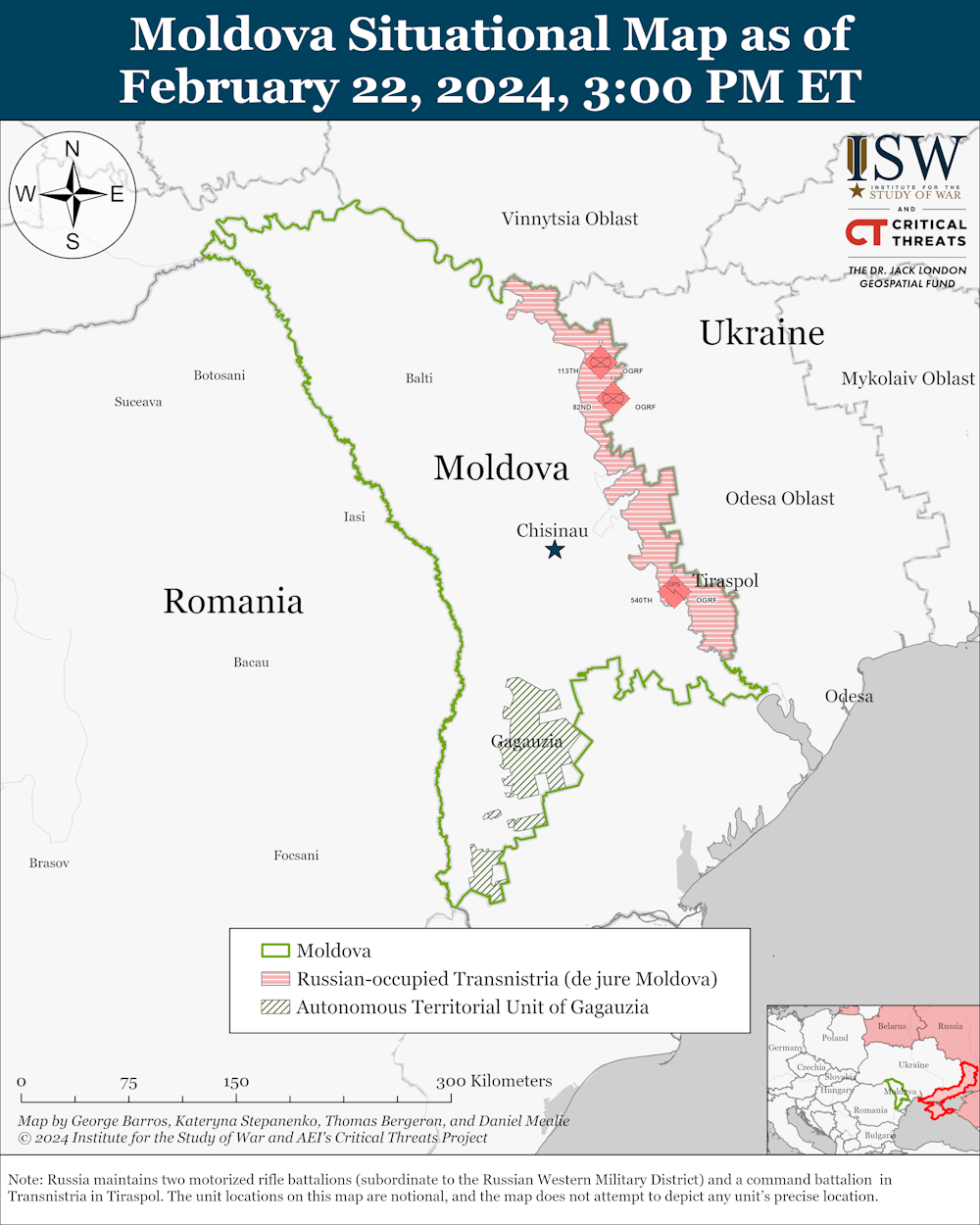
    Moldova’s election result will certainly have come as a relief not only to Sandu and her supporters but also to Moldova’s western partners. It is the first time that a popularly elected president has won a second term in the tiny landlocked former Soviet satellite. The country borders Romania and Ukraine and has a small but significant Russian breakaway region, Transnistria, as a constant reminder of Moscow’s influence in the region.

    Moldova’s election presents a clear difference to the Georgian parliamentary election results on October 26, which saw an openly pro-Russian Georgian Dream party win an election considered as neither particularly free nor fair, in results that the Georgia’s opposition-aligned president and western pollsters allege have been rigged.

    Sandu’s win, by contrast, demonstrates both the appeal of the idea of a European future and the limits of Russian interference. Yet the understandable enthusiasm about the result in Moldova also needs to be tempered by a more careful analysis of some of the deeply entrenched societal cleavages that the elections have all but confirmed and the difficulties that lie ahead.

    Deep divisions

    Sandu’s win overall looks impressive. But she did not win the vote in Moldova itself, where Stoianoglo beat her by some 30,000 votes. What saved Sandu, like the EU referendum, was the strong support for her among voters in the diaspora, where she captured almost five times as many votes as Stoianoglo.

    Just over 270,000 votes (83%) of the votes cast by Moldovans living abroad, predominantly in western Europe and north America, saw her comfortably across the finishing line. There may be good reasons not to distinguish between votes from inside and outside Moldova – but the optics are not good.

    Nor can the overall margin of Sandu’s victory gloss over the fact that her supporters inside the country are predominantly concentrated in the capital and the centre of the country. In the capital Chisinau, in the centre of Moldova, Sandu won with 57%, representing almost one-third of her total vote inside the country. In the north and south of the country, Stoianoglo generally took the largest vote share.

    In the country’s second-largest city, Balti in the north, he won 70% of the vote, compared to Sandu’s 30%. In the southern autonomous region of Gagauzia, a hotbed of pro-Russian, anti-European activism, Sandu obtained less than 3%. In Transnistria, Sandu came away with just 20% of the vote.

    Map of Moldova showing the breakaway regions of Transnistria and Gaugazia.
    Institute for the Study of War

    These results are not surprising, given the outcome of the first round of the elections. But they represent fall in support for Sandu compared to in 2020, when she beat the then incumbent, socialist party leader Igor Dodon. Four years ago, Sandu obtained over 250,000 votes more than Dodon, winning almost 58% of the total vote. While she took the overwhelming share of the diaspora vote then as well, she also bested Dodon in most constituencies in the south.

    Dodon campaigned for Stoianoglo in this election, but much of the challenger’s support was very probably due to a massive pro-Russian interference campaign that capitalised on many Moldovans’ fears and frustrations. Pro-Moscow messages aimed to capitalise on fears about being dragged into Russia’s war against Ukraine.

    But there was also frustration with a government that has made little progress on much needed anti-corruption reforms and presided over a serious cost-of-living crisis in the aftermath of the Covid-19 pandemic and made worse by the war on Moldova’s eastern neighbour. Sandu’s party, the Party of Action and Solidarity (PAS) won a commanding majority in the 2021 elections – so failures of the government are seen as failures of Sandu and her agenda.

    Challenges ahead

    That Sandu won the presidency again, and against these odds, demonstrates her resilience. But it can’t be taken for granted that her party will similarly prevail in parliamentary elections due by the autumn of 2025. She may well be forced into a difficult cohabitation with a potentially socialist-led government next year. In a parliamentary democracy, in which the powers of the government by far exceed those of the president, this could significantly slow down Moldova’s EU accession negotiations.

    But there are also some silver linings on the horizon. That Sandu won clearly demonstrates the limits of Russian interference. There is a core part of the Moldovan electorate that cannot be swayed by Russian misinformation or vote buying. This is a basis on which Sandu and PAS can build.

    Perhaps more importantly, Sandu and Stoianoglo both sent conciliatory signals on election eve. Stoianoglo emphasised the importance of respecting the outcome of the democratic process and expressed the hope that Moldovans would now move beyond hatred and division. Sandu acknowledged the concerns of those who had not voted for her and promised to serve as the president of all Moldovans and to work for the country’s further development.

    If they both stay true to their word, Moldova may finally break with a past of repeated political crises and economic stagnation.

    Stefan Wolff is a past recipient of grant funding from the Natural Environment Research Council of the UK, the United States Institute of Peace, the Economic and Social Research Council of the UK, the British Academy, the NATO Science for Peace Programme, the EU Framework Programmes 6 and 7 and Horizon 2020, as well as the EU’s Jean Monnet Programme. He is a Trustee and Honorary Treasurer of the Political Studies Association of the UK and a Senior Research Fellow at the Foreign Policy Centre in London.

    ref. Maia Sandu’s victory in second round of Moldovan election show’s limits to Moscow’s meddling – https://theconversation.com/maia-sandus-victory-in-second-round-of-moldovan-election-shows-limits-to-moscows-meddling-242796

    MIL OSI – Global Reports

  • MIL-OSI Global: Cop16: the world’s largest meeting to save nature has ended with no clear path ahead

    Source: The Conversation – UK – By Harriet Bulkeley, Professor of Geography, Durham University

    Increasing rights for Indigenous people and local communities was one of the few steps forward at Cop16. Philipp Montenegro, CC BY-NC-ND

    Progress at the UN’s biodiversity summit, Cop16, in Cali, Columbia, has been slow. Frustratingly so.

    There were high hopes that the Colombian hosts could coordinate action between developed and developing countries towards reaching the landmark global biodiversity agreement reached in Montreal, Canada at Cop15 two years ago. But after two weeks and one long night, negotiations ended abruptly. Many delegates had to leave to catch flights home with key issues unresolved.

    This conference started with alarming news that the latest edition of the red list – the official record of threatened species – shows that more than one third of tree species face extinction in the wild. That’s more than the number of threatened birds, mammals, reptiles and amphibians combined.

    Urging negotiators to recognise the seriousness of this nature crisis, Colombia’s president Gustavo Petro warned they were facing “the battle for life”.

    There was certainly no shortage of people seeking solutions.

    In the heart of the city, Cop16’s green zone hosted vibrant music, film screenings, indigenous arts and crafts. Local people, businesses and conference delegates discussed creative and collaborative ways to address the nature crisis.

    Over in the blue zone, the official conference space, there was a notable increase in the diversity of communities participating across side events and pavilions. The links between biodiversity and human health were highlighted. So too was the importance of nature for water and food security.

    In his opening video message, UN secretary general Antonio Guterres urged countries gathered to “engage all of society” as “la Cop de la gente” (a Cop of the people).

    So protests from Indigenous people and local communities were particularly powerful. Including greater recognition for these groups in the final decisions from the meeting was a rare sign of progress. A new fund to ensure that these groups would receive a share of the profits from the commercial use of digital sequence information – genetic information from native plants and animals – was another victory.

    A new set of principles developed by the UK government to prioritise gender issues in conservation and ensure fair access to the benefits biodiversity action for all marginalised groups received widespread support.

    The focus on economic resilience was more prominent than ever, with two days dedicated to business and finance. In 2018, only 300 businesses attended Cop14 in Egypt. In Cali, this number was 3,000.

    Delegates assemble for the negotiations at Cop16​.
    Philipp Montenegro, CC BY-NC-ND

    Private investors, pension funds, the insurance industry and public banks stressed the importance of creating robust measures of biodiversity improvement. Business sectors focused on transition plans that could support fair and transparent means of reporting progress. The nature tech sector is growing too, with start-ups expected to attract up to $2 billion (£1.5 billion) in investments by the end of 2024.

    Back in the negotiating halls, delegates faced an uphill struggle. Only 44 out of 196 national plans to protect biodiversity have been updated to reflect the new targets. So, it’s no surprise that a gap is widening between current reality and the ambitious set of 23 targets which governments must reach by 2030. While countries agreed to a progress review in 2026, no consensus was reached on the indicators to be used. Progress was painfully slow.

    Negotiators debated how the global agreement on biodiversity should interact with its sister conventions on climate and desertification. Further discussions next year might identify how this could work but this probably won’t lead to drastic change. Some countries, including India and Russia, still seemed unwilling to accept the critical risks posed to nature and society of exceeding the 1.5°C global target for climate change.

    Many developing nations were concerned that greater integration between the climate crisis and biodiversity would lead to “double counting” of funding with the danger that developed countries could backtrack on their promises to support dedicated action on nature. Others, including the EU, argued that action to conserve and restore nature was an essential part of tackling all environmental and societal global challenges.

    The deadlock between these positions continued for days. In the final hours of Cop16, negotiators reached a compromise that sets out a more integrated pathway for bringing action on climate and nature together. While the effects of climate change directly exacerbate biodiversity loss, restoring nature can be a powerful tool in the fight to mitigate the climate crisis and benefit biodiversity. Nature-based solutions – measures like restoring peatlands and wetlands, planting trees and mangroves – help build that resilience.

    Heads of state and ministers joining at the midpoint of the meeting pointed out the need to ensure that nature is protected both for its own sake and for the communities that depend on healthy ecosystems for their livelihood and wellbeing.

    But at the end of a long final night, these words were not accompanied by concrete plans for action or the financial commitments about how nature protection should be paid for that many at Cop16 were hoping for.

    Whole of society, all of government?

    The global biodiversity agreement set in 2022 called for a whole of society approach to address the nature crisis. Cop16 certainly delivered. From local communities to huge businesses, there was a spirit of rolling up sleeves and putting investment and innovation to work using nature-based solutions to restore and conserve biodiversity.

    One of many packed side-events which bought the ‘whole of society’ together at Cop16.
    Philipp Montenegro, CC BY-NC-ND

    The same energy and commitment was clear from many of the local and sub-national governments assembled at Cop16. The first gathering of Mayors for Nature demonstrated significant commitment to action.

    Leaders from California and Quebec set the tone by investing in large-scale programmes, with Quebec not only committing to fund their own biodiversity action but also contributing to the global biodiversity fund – the first regional government to do so.

    But national governments struggled to move forward. The complexity of addressing biodiversity and its necessary interactions with sectors such as agriculture, transport and mining, as well as concerns over historic injustices between developing and developed countries, was perhaps too much for Cop16 to resolve.

    The risk is that, as governments navigate these challenges, the private sector could accelerate action without scrutiny. I worry that the lack of policy coordination could deter investors and slow the pace of action that local communities and regional governments want to make. Rather than waiting for global consensus, groups can catalyse change while holding each other accountable to make swift progress to save nature.


    Don’t have time to read about climate change as much as you’d like?

    Get a weekly roundup in your inbox instead. Every Wednesday, The Conversation’s environment editor writes Imagine, a short email that goes a little deeper into just one climate issue. Join the 40,000+ readers who’ve subscribed so far.


    Harriet Bulkeley receives funding from the European Commission and currently serves as an advisor to the UK Department of Environment, Food and Rural Affairs.

    ref. Cop16: the world’s largest meeting to save nature has ended with no clear path ahead – https://theconversation.com/cop16-the-worlds-largest-meeting-to-save-nature-has-ended-with-no-clear-path-ahead-242160

    MIL OSI – Global Reports

  • MIL-OSI NGOs: Türkiye: Proposed ‘agents of influence’ law is attack on civil society and must be rejected   

    Source: Amnesty International –

    Türkiye’s parliament must reject the draft amendment to the country’s ‘espionage’ laws which, if passed, would significantly threaten the ability of civil society organizations to operate freely within the country, said more than 80 organizations ahead of an expected vote in parliament. Scores of other organizations issued similar statements, calling on the legislators to reject the proposal.  

    If passed, this law would represent a significant threat to the ability of civil society to operate freely within the country 

    If approved, the new article – publicly referred to as the “agents of influence” law – would amend the penal code and criminalize unspecified “acts” that are “in line with the strategic interests or instructions of a foreign state or organization against the security or domestic or foreign political interests of the State in line with the strategic interests or instructions of a foreign state or organization.”

    “If passed, this law would represent a significant threat to the ability of civil society to operate freely within the country,” the civil society organizations said in a joint statement.

    The signatories point at the fact that the draft law fails the test of legal certainty and foreseeability, a fundamental tenet of law – meaning that articles of law must be understandable and predictable by the relevant people; individuals must be able to foresee which acts or omissions will make them criminally liable and what punishment will be applied for the act or omission committed.

    The proposed legislative package, passed by the Parliamentary Justice Commission on 23 October, is expected to be voted on by members of the Turkish Parliament in the coming days. 

    The draft law threatens to criminalize legitimate activities such as the documentation of human rights violations by state or non-state actors, imposing heavy penalties including lengthy prison terms for anyone found to have breached the same. If these so-called offenses are committed during “wartime” or in relation to the “state’s preparation for or war activities or military operations”, the penalty could be between eight to 12 years imprisonment.  

    If the provision is adopted, the rights to freedom of expression of all, including seeking and receiving information, would be also at risk of being violated

    “We are also concerned that the proposed law fails to set out clear criteria for what specific acts constitute a criminal offence without adequate safeguards or effective remedies against potential abuses of the law,” said the organizations. 

    “Arbitrary interpretation of broadly worded, vague laws are used to target and prosecute human rights defenders, journalists, lawyers and many other civil society organizations in Türkiye. If the provision is adopted, the rights to freedom of expression of all, including seeking and receiving information, would be also at risk of being violated. It would create a chilling effect on important human rights work, and potentially impede their activities.” 

    Background 

    The legislative package proposes to add a new penalty, Article 339/A “Committing offenses against the security or political interests of the state” under the seventh section, “Crimes Against State Secrets and Espionage,” of the Turkish Penal Code (Law No. 5237).  

    Terminology in the proposed article is vulnerable to abuse. For example, “strategic interests,” “instructions,” “organization,” and “domestic or foreign political interests of the State” are overly broad and vague. Ill-defined or overly broad laws can be susceptible to arbitrary application and abuse, thus risk being instrumentalized to target people that the state authorities consider dissenting or criminalize the legitimate activities of civil society organizations, such as those documenting human rights violations in the country.  

    The proposed article is in violation of international human rights law and standards as well as Türkiye’s Constitution and national laws as it threatens freedom of expression and violates the principle of legality which includes the principle of foreseeability, a fundamental concept of criminal law. 

    As well as the signatories to this statement, numerous other organizations have published their own statements including the Association of Civil Society Development Center (see here), the Women’s Platform for Equality (see here), the Third Sector Foundation of Turkiye (see here), the International Press Institute (see here), the Committee to Protect Journalists (see here), Human Rights Watch (see  here), journalism organisations, trade unions and others (see here).

    For more information, please contact [email protected] in London or [email protected] in Istanbul 

    The number of signatories to the joint statement is increasingly daily. A copy of the statement is being sent to all Turkish MPs.

    SIGNATORIES
    1. About Life Foundation (YADA) 
    2. AG-DA Gender Equality Solidarity Network 
    3. Ali İsmail Korkmaz Foundation 
    4. Altyazı Cinema Association 
    5. Amnesty International Türkiye 
    6. Ankara Initiative for Freedom of Thought 
    7. Ankara Solidarity Academy 
    8. Another School is Possible Association 
    9. Association for Monitoring Equal Rights 
    10. Batman Bar Association 
    11. Bodrum Women’s Solidarity Association 
    12. Center for Spatial Justice 
    13. Citizen’s Initiative 
    14. Citizens’ Assembly 
    15. DEMOS Research Association 
    16. Dersim Bar Association 
    17. Diyarbakır Bar Association 
    18. Families of LGBTs in İstanbul 
    19. Free Colors Association 
    20. GALADER-Ankara Rainbow Families Association 
    21. Green Thought Association 
    22. Hakkari Bar Association 
    23. Human Rights Agenda Association 
    24. Human Rights Association 
    25. Human Rights Association Ankara Branch LGBTI+ Commission 
    26. Human Rights Association Istanbul Branch 
    27. Human Rights Foundation of Türkiye 
    28. Izmir Women’s Solidarity Association 
    29. Kaos GL Association 
    30. Katre Women’s Counceling and Solidarity Association 
    31. Kirkayak Culture – Migration and Cultural Studies Center 
    32. Kuşadası Caferli Beautification and Solidarity Association 
    33. Lambdaistanbul LGBT Solidarity Association 
    34. Lawyers for Freedom Association 
    35. Leader Women Association 
    36. Life Memory Freedom Association 
    37. Mardin Bar Association 
    38. Marmaris Public Assembly 
    39. May 17 Association 
    40. Media and Law Studies Association 
    41. Merdiven Social Initiative and Development Association 
    42. Migration Monitoring Association 
    43. Muamma LGBTI+ Education Research and Solidarity Association 
    44. Muğla Environment Platform 
    45. Murat Çekiç Association 
    46. Muş Bar Association 
    47. Natural Life Association 
    48. Nonviolence Education and Research Center 
    49. P24 Independent Journalism Platform 
    50. Press, Publishing, Communication, and Postal Workers’ Union 
    51. Pride Istanbul 
    52. Progressive Journalists Association 
    53. Red Umbrella Sexual Health and Human Rights Association 
    54. Rights Initiative Association 
    55. Romani Godi – Association for Roma Memory Studies 
    56. Rosa Women’s Association 
    57. SES Equality and Solidarity Association 
    58. Siirt Bar Association 
    59. Social Policy, Gender Identity and Sexual Orientation Studies Association 
    60. Support for Improvement in Social and Economic Living Association 
    61. Şanlıurfa Bar Association 
    62. Şırnak Bar Association 
    63. Tarlabaşı Community Support Association 
    64. The Civil Society in the Penal System Association 
    65. The Confederation of Public Employees’ Trade Unions 
    66. Trans Pride Istanbul 
    67. Truth Justice Memory Center 
    68. Turkish Handicap Association 
    69. Türkiye Human Rights Litigation Support Project 
    70. Türkiye Journalists’ Union 
    71. Türkiye Press, Publishing, and Printing Employees’ Union 
    72. University Queer Studies and LGBTI+ Solidarity Association 
    73. Van Bar Association 
    74. Velvele 
    75. Women for Women’s Human Rights Association 
    76. Women’s Culture, Arts, and Literature Association 
    77. Women’s Solidarity Foundation 
    78. Women’s Time Association 
    79. Young Thought Institute 
    80. Youth Organizations Forum 
    81. Yuva Association  

    MIL OSI NGO

  • MIL-OSI United Kingdom: Government incentive for second-hand electric business vans closed04 November 2024 An incentive to encourage local businesses to switch to second-hand electric vans has seen all 25 available incentives successfully applied for in just six weeks. When the scheme launched on 16 September,… Read more

    Source: Channel Islands – Jersey

    04 November 2024

    An incentive to encourage local businesses to switch to second-hand electric vans has seen all 25 available incentives successfully applied for in just six weeks. 

    When the scheme launched on 16 September, local businesses had an opportunity to apply for funding towards the purchase of a second-hand electric van on a first-come, first served basis, as part of the Government of Jersey’s incentive to reduce the Island’s transport emissions. 

    The Minister for the Environment, Deputy Steve Luce, said: “I’m pleased to see such an immediate and positive response from local businesses to the second-hand electric van incentive. This shows a real desire from businesses to switch to electric and support Jersey’s decarbonisation efforts. 

    “Business transport vehicles are responsible for a significant proportion of our transport emissions, so by making the switch to electric, businesses are supporting with the Island’s transition towards a more sustainable transport future.” 

    A separate Electric Vehicle Purchase Incentive (EVPI) continues to be available to both individuals and businesses; at a value of up to £3,500 towards the cost of an electric car or van, or up to £300 towards the cost of an electric moped or motorcycle. 

    Due to the successful uptake of this to date, it is likely to close by the end of 2024. For more information about the Electric Vehicle Purchase Incentive, visit: gov.je/GoElectric​.

    MIL OSI United Kingdom

  • MIL-OSI: Mercuria and HNK Alpha Execute First Carbon Futures Block Trades on Abaxx Commodity Futures Exchange and Clearinghouse

    Source: GlobeNewswire (MIL-OSI)

    TORONTO, Nov. 04, 2024 (GLOBE NEWSWIRE) — Abaxx Technologies Inc. (NEO:ABXX)(OTCQX:ABXXF) (“Abaxx” or the “Company”), a financial software and market infrastructure company, majority shareholder of Abaxx Singapore Pte Ltd. (“Abaxx Singapore”), the owner of Abaxx Commodity Exchange and Clearinghouse (individually, “Abaxx Exchange” and “Abaxx Clearing”), and producer of the SmarterMarkets™ Podcast, today announced the execution of the first two carbon futures block trades, traded between Mercuria and HNK Alpha on October 30, 2024.

    Mercuria and HNK Alpha traded 50 lots of December 2024 CORSIA¹ Phase 1 Carbon Offset Unit Futures at USD $24.00/tCO2e². Mercuria and HNK Alpha also traded 50 lots of December 2025 JREDD+³ Carbon Offset Unit Futures at USD $17.75/tCO2e.

    Abaxx’s carbon futures contracts are designed to enhance price discovery and equip market participants with improved risk management tools. These centrally-cleared, physically-deliverable contracts were launched in June to provide reliable price signals essential for pricing carbon emissions and advancing decarbonization efforts.

    “We’re proud that Mercuria has chosen to use Abaxx Exchange Environmental Futures to better manage their risk in global carbon markets,” said Abaxx Exchange’s Head of Environmental Markets, Alasdair Were. “We’ve built these contracts in collaboration with global market participants and to meet the needs of the commercial market, and we look forward to continue working with world-class trading firms like Mercuria to build liquidity in our carbon markets.”

    Abaxx’s suite of futures contracts for LNG and carbon are open for trading 14 hours a day, Monday through Friday. Visit abaxx.exchange/resources-directory for a full list of clearing firms and execution brokers.

    Notes:
    ¹ Carbon Offsetting and Reduction Scheme for International Aviation
    ² Tonne of carbon dioxide equivalent
    ³ Jurisdictional Reducing Emissions from Deforestation and Forest Degradation

    About Abaxx Technologies

    Abaxx is building Smarter Markets — markets empowered by better financial technology and market infrastructure to address our biggest challenges, including the energy transition. In addition to developing and deploying financial technologies that make communication, trade, and transactions easier and more secure, Abaxx is a majority-owner of Abaxx Exchange and Abaxx Clearing, subsidiaries recognized by MAS as an RMO and ACH, respectively.

    Abaxx Exchange and Abaxx Clearing are a Singapore-based commodity futures exchange and clearinghouse, introducing centrally cleared, physically deliverable commodities futures and derivatives to provide better price discovery and risk management tools for the commodities critical to our transition to a lower-carbon economy.

    For more information please visit abaxx.tech, abaxx.exchange and smartermarkets.media.

    For more information about this press release, please contact:
    Steve Fray, CFO
    Tel: +1 647 490 1590

    Media and investor inquiries:

    Abaxx Technologies Inc.
    Investor Relations Team
    Tel: +1 647 490 1590
    E-mail: ir@abaxx.tech

    Forward-Looking Statements

    This press release includes certain “forward-looking statements” which do not consist of historical facts. Forward-looking statements include estimates and statements that describe Abaxx’s future plans, objectives, or goals, including words to the effect that Abaxx expects a stated condition or result to occur. Forward-looking statements may be identified by such terms as “seeking”, “should”, “intend”, “predict”, “potential”, “believes”, “anticipates”, “expects”, “estimates”, “may”, “could”, “would”, “will”, “continue”, “plan” or the negative of these terms and similar expressions. Since forward-looking statements are based on current expectations and assumptions and address future events and conditions, by their very nature they involve inherent risks and uncertainties. Although these statements are based on information currently available to Abaxx, Abaxx does not provide any assurance that actual results will meet respective management expectations. Risks, uncertainties, assumptions, and other factors involved with forward-looking information could cause actual events, results, performance, prospects, and opportunities to differ materially from those expressed or implied by such forward-looking information.

    Forward-looking information related to Abaxx in this press release includes, but is not limited to, Abaxx’s objectives, goals or future plans, the development and implementation of additional products and futures contracts, the ability to meet commercial demands for its products and to meet the needs of the commercial market, the ability to develop and maintain relationships with trading firms and build liquidity for its products. Such factors impacting forward-looking information include, among others: risks relating to the global economic climate; dilution; Abaxx’s limited operating history; future capital needs and uncertainty of additional financing; the competitive nature of the industry; currency exchange risks; the need for Abaxx to manage its planned growth and expansion; the effects of product development and need for continued technology change; protection of proprietary rights; the effect of government regulation and compliance on Abaxx and the industry; the ability to list Abaxx’s securities on stock exchanges in a timely fashion or at all; network security risks; the ability of Abaxx to maintain properly working systems; reliance on key personnel; global economic and financial market deterioration impeding access to capital or increasing the cost of capital; and volatile securities markets impacting security pricing unrelated to operating performance. In addition, particular factors which could impact future results of the business of Abaxx include but are not limited to: operations in foreign jurisdictions, protection of intellectual property rights, contractual risk, third-party risk; clearinghouse risk, malicious actor risks, third-party software license risk, system failure risk, risk of technological change; dependence of technical infrastructure; and changes in the price of commodities, capital market conditions, restriction on labor and international travel and supply chains. Abaxx has also assumed that no significant events occur outside of Abaxx’s normal course of business.

    Abaxx cautions that the foregoing list of material factors is not exhaustive. In addition, although Abaxx has attempted to identify important factors that could cause actual results to differ materially, there may be other factors that cause results not to be as anticipated, estimated, or intended. When relying on forward-looking statements and information to make decisions, investors and others should carefully consider the foregoing factors and other uncertainties and potential events. Abaxx has assumed that the material factors referred to in the previous paragraphs will not cause such forward-looking statements and information to differ materially from actual results or events. However, the list of these factors is not exhaustive and is subject to change and there can be no assurance that such assumptions will reflect the actual outcome of such items or factors. The forward-looking statements and information contained in this press release represents the expectations of Abaxx as of the date of this press release and, accordingly, is subject to change after such date. Abaxx undertakes no obligation to update or revise any forward-looking statements and information, whether as a result of new information, future events or otherwise, except as required by law. Accordingly, readers are cautioned not to place undue reliance on these forward-looking statements and information. Cboe Canada does not accept responsibility for the adequacy or accuracy of this press release.

    The MIL Network

  • MIL-OSI Canada: Canada brings international leadership ambition on nature and biodiversity to COP16 in Cali, Colombia

    Source: Government of Canada News

    On behalf of Canada and the Honourable Steven Guilbeault, Minister of Environment and Climate Change, the Canadian delegation worked diligently—through negotiations, bilateral discussions, and side events—to bring countries together to advance the implementation of the 23 targets for 2030 laid out in the Kunming–Montréal Global Biodiversity Framework

    November 4, 2024 – Cali, Colombia

    Canada is known for its rich biodiversity and extraordinary natural beauty and takes pride in playing a leadership role in global nature recovery. At the conclusion of the 16th United Nations Biodiversity Conference (COP16) in Cali, Colombia, Canada continued to actively work with international partners toward halting and reversing the biodiversity crisis and advocating for ambitious action to protect nature.

    On behalf of Canada and the Honourable Steven Guilbeault, Minister of Environment and Climate Change, the Canadian delegation worked diligently—through negotiations, bilateral discussions, and side events—to bring countries together to advance the implementation of the 23 targets for 2030 laid out in the Kunming–Montréal Global Biodiversity Framework. They also worked to identify ways to address the key drivers of biodiversity loss, such as pollution, climate change, and overexploitation of nature. Canada and its fellow Nature Champions pushed for the conservation of 30 percent of land and water by 2030 and reaffirmed the importance of respecting the rights and roles of Indigenous peoples.

    After significant collaboration with National Indigenous Organizations and international Indigenous bodies, COP16 successfully established a permanent Indigenous subsidiary body, the first of its kind in any of the UN Rio conventions. Canada welcomes this historic step forward for giving a voice to Indigenous peoples in the UN process.

    The COP also established a multilateral mechanism on digital sequence information aimed at enhancing access and benefit sharing for communities and traditional knowledge holders of biodiversity.

    In addition to these two historic achievements, this COP adopted a program of work to integrate nature and climate change actions. After years of work, countries also endorsed work on ecologically significant marine areas.

    Canada supports the need to mobilize international biodiversity funding. Despite efforts, countries were unable to reach an agreement on critical issues, such as resource mobilization. Canada remains determined to engage with countries and non-state actors at the next opportunity to address these gaps and remains committed to working with Parties to finalize an ambitious strategy.

    In addition to driving ambition in international negotiations, at COP16 Canada:

    • Announced a total of $62 million for seven projects working to protect biodiversity around the world. The projects will support gender-inclusive initiatives and Indigenous-led projects for vulnerable communities to build a stronger, more sustainable future; fight climate change; protect nature; and support resilient local economies.
    • Brought the Nature Champions Network together, with increased membership, and encouraged rapid global biodiversity action through effective implementation of respective national biodiversity strategies.
    • Led two panels in partnership with the Indigenous Leadership Initiative to highlight the importance of collaboration with Indigenous peoples and the success of Indigenous-led conservation and stewardship in Canada. Indigenous Guardians initiatives are crucial to ensuring the sustainability of our planet for current and future generations, and innovative financing models, like the project finance for permanence, are empowering this vital work.
    • Joined the ‘Declaration of the World Coalition for Peace with Nature’, a call for action to enhance national and international efforts and commitments toward achieving a balanced and harmonious relationship with nature.
    • Joined the ‘Mainstreaming Champions Group’, an initiative launched at COP16 to accelerate progress on mainstreaming biodiversity across sectors to help achieve the Global Biodiversity Framework’s mission, goals and targets.

    Backed by over $12 billion in investments since 2015, the Government of Canada has led the largest campaign in Canadian history to support nature and nature-based climate solutions, with the goal of protecting 30 percent of land and water by 2030 and conserving species at risk, in full partnership with provinces, territories, and Indigenous peoples.   

    • COP16 was held in Cali, Colombia, from October 21 to November 1, 2024.

    • Both the 2030 Nature Strategy and the Nature Accountability Bill provide a roadmap for collaboration across all levels of government and with Indigenous peoples in the development and implementation of measures aimed at meeting Kunming–Montréal Global Biodiversity Framework and related Convention on Biological Diversity commitments.

    • The Nature Champions Network is a ministerial-level group launched by Canada that focuses on fostering international awareness and understanding of the global biodiversity framework. 

    • At COP15, Prime Minister Justin Trudeau announced $350 million in funding to support developing countries in advancing biodiversity efforts and to support the implementation of the Kunming–Montréal Global Biodiversity Framework.

    • Indigenous-led conservation is proven to help land, water, and communities thrive, and it is central to Canada’s plan to protect 30 percent of our land and water by 2030.

    • In recent years, the Government of Canada has made historic investments in Indigenous-led conservation projects, including through initiatives like the Indigenous Guardians Program.

    • Project finance for permanence provides multi-partner investments and sustainable financing for large-scale conservation and sustainable development projects. These initiatives bring together Indigenous organizations, governments, and the philanthropic community to identify shared goals for protecting nature and ultimately halting biodiversity loss while advancing community well-being and reconciliation with Indigenous peoples.

    • In 2022, during COP15, Prime Minister Justin Trudeau pledged to deliver up to $800 million in support of up to four Indigenous-led project finance for permanence initiatives, including the Great Bear Sea Project Finance for Permanence.

    • The Great Bear Sea Project Finance for Permanence agreement was officially established in June 2024. Work is underway to finalize the remaining projects over the coming year.

    Hermine Landry
    Press Secretary
    Office of the Minister of Environment and Climate Change
    873-455-3714
    Hermine.Landry@ec.gc.ca

    Media Relations
    Environment and Climate Change Canada
    819-938-3338 or 1-844-836-7799 (toll-free)
    media@ec.gc.ca

    MIL OSI Canada News

  • MIL-OSI United Kingdom: EA re-opens initial consultation for Swadlincote incinerator

    Source: United Kingdom – Executive Government & Departments

    On 1 November 2024 the Environment Agency re-opened the initial consultation into an environmental permit application for an incinerator near Swadlincote.

    • Environment Agency re-opens initial consultation on plans for proposed site in Keith Willshee Way
    • Consultation to run from 1 November to 13 December 2024
    • Environment Agency will consider issues around any likely impact on human health and environment

    Due to the high level of public interest associated with the site, the Environment Agency is re-opening the initial public consultation. The initial public consultation, ran between 28 June 2024 and 2 September 2024.

    R&P Clean Power Limited has applied for the permit to operate an incinerator on Keith Willshee Way, Swadlincote DE11 9EN. The company has also separately applied to Derbyshire County Council for planning.

    The company wants to incinerate up to 230,000 tonnes of non-hazardous waste each year in an incinerator known as an Energy from Waste Facility.

    The proposed facility will incinerate waste to produce energy in the form of electricity. Electricity from this process will be exported to the National Grid.

    An environmental permit sets the conditions which R&P Clean Power Limited must meet when operating the proposed incinerator.  It covers the management and operation of the site and the control and monitoring of emissions.

    Issues that we consider in deciding on the permit are: 

    • Relevant environmental regulatory requirements and technical standards.
    • Information on local population and sensitive sites.
    • Protection of human and environmental health.
    • Comments on whether the right process is being used for the activity, for example, whether the technology is appropriate.
    • Pollution control and any emissions to air, land and water.
    • Whether energy generated by waste incineration is recovered as much as possible.
    • Handling and storage of waste.
    • The impact of noise and odour from vehicle movements on site.
    • Plans to deal with litter and vermin on site.
    • Any permit conditions that may be needed.

    The Environment Agency will consult with partner organisations, including the UK Health Security Agency, as part of the process.  

    Issues such as suitability of the site, operating hours and traffic management to and from it, are matters for the planning authority, not the Environment Agency.

    The Environment Agency can only consider issues covered by the environmental permit and can only refuse a permit application based on technical information.  

    However, in order to build and operate the proposed incinerator, the company will need to be granted both planning permission and an environmental permit.

    To obtain an environmental permit, the company will need to show they are putting in place the necessary measures to meet current standards to protect human health and the environment. In addition, they must explain how any risks that are identified, such as odour and emissions, are prevented or minimised, alongside producing a Fire Prevention Plan.

    Once the consultation closes, the Environment Agency will review all the comments received before reaching a draft decision. R&P Clean Power Limited has the right to appeal if the permit is refused.

    If the Environment Agency thinks it is likely to issue the permit, it will consult again on the draft permit and draft decision document. This means the public will be able comment again if they feel that there is additional information that we have not considered in our decision.  

    If you wish to make comments about the application, please do so by 13 December 2024.

    You can comment by:

    • Visiting our online Citizen Space web page:

     DE11 9EN, R&P CLEAN POWER LIMITED, EPR/LP3327SK/A001: environmental permit consultation – Environment Agency – Citizen Space

    If you need help accessing this consultation in another format please contact us by emailing: PSCpublicresponse@environment-agency.gov.uk or calling 03708 506 506.

    Please use the application number LP3327SK/A001

    Updates to this page

    Published 4 November 2024

    MIL OSI United Kingdom

  • MIL-OSI Asia-Pac: FEHD highly concerned about illegal sale of food such as meat by unlicensed hawkers

    Source: Hong Kong Government special administrative region

    FEHD highly concerned about illegal sale of food such as meat by unlicensed hawkers
    FEHD highly concerned about illegal sale of food such as meat by unlicensed hawkers
    ***********************************************************************************

         In response to a media report on the illegal sale of food items like meat by unlicensed hawkers on Tak Tai Path, Kwai Chung, a spokesman for the Food and Environmental Hygiene Department (FEHD) today (November 4) said that the department has deep concern and has taken prompt action to combat these illegal acts in order to safeguard public health and food safety.     The FEHD spokesman said that during an enforcement operation in August this year, the FEHD staff arrested an unlicensed hawker for selling frozen meat and sushi illegally. In addition, they arrested three unlicensed hawkers for selling second-hand goods at the same location last week. To prevent similar irregularities, the FEHD has strengthened inspections at the location. Furthermore, the FEHD will organise special operations and conduct blitz inspections at locations across the territory that have frequent illegal hawking activities. The FEHD will take stringent enforcement actions against the illegal sale of food by hawkers. The FEHD also encourages members of the public to report hawkers selling suspicious food to the department.     The spokesman emphasised that under the Food Business Regulation (Cap. 132X), any person who sells restricted food (including frozen meat, sashimi and sushi) without permission commits an offence and is liable to a maximum fine of $50,000 and six months’ imprisonment upon conviction. No one should defy the law. The spokesman reminded members of the public that consuming food from unknown sources and expired food, particularly high-risk food like meat, sashimi and sushi, may pose serious food safety risks. Members of the public should refrain from patronising illegal hawkers when purchasing any food. 

     
    Ends/Monday, November 4, 2024Issued at HKT 22:26

    NNNN

    MIL OSI Asia Pacific News

  • MIL-OSI USA: SPC Tornado Watch 704 Status Reports

    Source: US National Oceanic and Atmospheric Administration

    Search by city or zip code. Press enter or select the go button to submit request
    Local forecast by”City, St” or “ZIP” 

    SPC on Facebook

    @NWSSPC

    NCEP Quarterly Newsletter

    Home (Classic)SPC Products   All SPC Forecasts   Current Watches   Meso. Discussions   Conv. Outlooks   Tstm. Outlooks   Fire Wx Outlooks     RSS Feeds   E-Mail AlertsWeather Information   Storm Reports   Storm Reports Dev.   NWS Hazards Map   National RADAR   Product Archive   NOAA Weather RadioResearch   Non-op. Products   Forecast Tools   Svr. Tstm. Events   SPC Publications   SPC-NSSL HWTEducation & Outreach   About the SPC   SPC FAQ   About Tornadoes   About Derechos   Video Lecture Series   WCM Page   Enh. Fujita Page   Our History   Public ToursMisc.   StaffContact Us   SPC Feedback

    Watch 704 Status Reports

    Watch 704 Status Message has not been issued yet.

    Top/Watch Issuance Text for Watch 704/All Current Watches/Forecast Products/Home

    Weather Topics:Watches, Mesoscale Discussions, Outlooks, Fire Weather, All Products, Contact Us

    NOAA / National Weather ServiceNational Centers for Environmental PredictionStorm Prediction Center120 David L. Boren Blvd.Norman, OK 73072 U.S.A.spc.feedback@noaa.govPage last modified: November 04, 2024
    DisclaimerInformation QualityHelpGlossary
    Privacy PolicyFreedom of Information Act (FOIA)About UsCareer Opportunities

    MIL OSI USA News

  • MIL-OSI United Kingdom: Company prosecuted for failing to complete reservoir safety works

    Source: United Kingdom – Executive Government & Departments

    The Environment Agency has prosecuted a Midlands company for failing to complete safety works on a Lancashire reservoir.

    Ward’s reservoir near Belmont, Lancashire. Credit: Environment Agency

    • Midlands-based company fails to carry out safety recommendations at reservoir near Belmont
    • Enforcement notice required completion of safety works

    The Environment Agency has prosecuted a Midlands company which failed to safely maintain Ward’s Reservoir in Lancashire, putting residents in nearby Belmont at risk.

    At Kidderminster Magistrates’ Court on 8 October 2024, Blue Lagoon Heritage Limited, of Old Marlbrook Quarry, Lydiate Ash, Bromsgrove, admitted failing to comply with an enforcement notice. This was issued under the Reservoirs Act 1975.

    This required the company to complete essential maintenance and construction works in the interests of public safety. The company was ordered to pay fines and costs of £5,445.

    Safety checks

    The court heard that a notice was served on the company by the Environment Agency’s National Reservoir Safety Team in May 2021. This was to carry out safety measures under the supervision of a qualified civil engineer.

    However, the company by October 2021 had failed to carry out the work and weekly safety checks by Environment Agency officers were started.

    In June 2022, the Environment Agency intervened to protect public safety, commissioning contractors to inspect and free the outlet valve.

    This allowed levels in the reservoir to be managed and maintained at 5.25 metres below the maximum top water level, significantly reducing its risk of failure.

    In the continued absence of adequate management by the company the Environment Agency has since been conducting site visits and engineer safety checks.

    The reservoir spillway which was not maintained. Credit: Environment Agency

    Karl Hunter, Enforcement Advisor for the Environment Agency’s National Reservoir Safety Team, said:

    The director and owners of Blue Lagoon Heritage Limited failed to respond to advice and enforcement notices to improve the unacceptable and unsafe condition.

    This failure to comply came despite repeated site inspections and warnings from Environment Agency officers and independent expert engineers.

    This caused unacceptable risks to local residents and businesses in the village of Belmont and surrounding areas downstream of the reservoir.

    The owners of all Large Raised Reservoirs are regulated under the Reservoirs Act 1975 by the Environment Agency.

    The Act requires owners to maintain their reservoirs in full compliance with safety recommendations, set periodically by independent reservoir engineers.

    Blue Lagoon Heritage Limited took ownership of Ward’s Reservoir in 2019 and has consistently failed in its legal duty.

    We will continue to work to tackle inadequate maintenance of reservoirs which puts lives at risk. We are committed to ensuring that reservoir safety standards are adhered to.

    The charge:

    That Blue Lagoon Heritage Limited, (Company number 07390323) by 29 July 2021 as undertaker of Wards (Blue Lagoon) Reservoir, had failed to comply with the requirements of a Notice.

    This was made on the 20 May 2021 under Section 10(7)(b) of the Reservoirs Act 1975. This required safety measures to be put into effect at Wards (Blue Lagoon) Reservoir under the supervision of a qualified civil engineer by the 28 July 2021. Contrary to Section 22(1)(b) of the Reservoirs Act 1975.

    Background Information

    Reservoirs in England and Wales capable of holding more than 25,000 cubic metres of water must be registered with the Environment Agency.

    The owners (‘Undertakers’) must comply fully with the requirements of the Reservoirs Act 1975.

    The Act is designed to provide a regulatory framework for maintaining reservoir safety to prevent an uncontrolled release of water and risk to life.

    People can report environmental incidents to our 24/7 hotline on 0800 80 70 60 or Crimestoppers anonymously and in confidence on 0800 555 111.

    Updates to this page

    Published 4 November 2024

    MIL OSI United Kingdom

  • MIL-OSI Canada: Canada releases draft regulations to cap pollution, drive innovation, and create jobs in the oil and gas industry

    Source: Government of Canada News

    After years of steady progress, Canada’s climate plan is working to deliver greenhouse gas pollution reductions for Canadians

    November 4, 2024 – Ottawa, Ontario

    After years of steady progress, Canada’s climate plan is working to deliver greenhouse gas pollution reductions for Canadians. Across the economy, Canadian workers and businesses are innovating to reduce greenhouse gas pollution while creating good jobs and cleaner air.

    Canadians and their communities bear the brunt and pay the costs from increased extreme weather events due to climate change—costs that are reflected in the price of groceries, insurance, and local taxes. They understand that all sectors must do their fair share to decrease pollution and address climate change. The oil and gas sector is Canada’s largest source of greenhouse gas pollution, and emissions from part of the sector continue to grow. As an important part of the Canadian economy supporting 400,000 jobs, the oil and gas sector is well positioned to reinvest record profits into projects that drive cleaner production that will help create and sustain good jobs for generations.

    Today, the Government of Canada introduced draft regulations to put a clear limit on greenhouse gas pollution from oil and gas production. The proposed regulations work by setting a cap on greenhouse gas pollution within the sector, equivalent to 35 percent below 2019 levels. They would create a cap-and-trade system designed to recognize better-performing companies and incentivize those that are higher polluting to invest in making their production processes cleaner.

    The proposed regulations put a limit on pollution, not production, and have been informed by extensive engagement with industry, Indigenous groups, provinces and territories, and other stakeholders. The proposed regulations are carefully designed around what is technically achievable within the sector, while allowing continued production growth. Many oil and gas producers share our commitment to a strong, low-carbon economy, and some have already committed to significant methane emissions reductions and the implementation of carbon capture technology to reduce greenhouse gases.

    Canada is the world’s fourth-largest producer of oil and the fifth-largest producer of gas. As demand for oil and gas peaks in the coming decade and begins to decline, the fuels extracted with the least amount of pollution will be in highest demand. The oil and gas greenhouse gas pollution cap will help the sector remain competitive as the global economy continues to decarbonize and allow Canada to quickly and effectively respond to shifting global demand.

    The oil and gas greenhouse gas pollution cap is part of a suite of measures to cut pollution, including significant financial supports for carbon capture and storage and other clean technologies that also support workers, namely through the federal Canada Growth Fund and new investment tax credits.

    The climate decisions we make today will help contribute directly to a cleaner, safer environment and good jobs for future generations. The oil and gas greenhouse gas pollution cap will stimulate the investment needed to innovate and build a thriving economy that works for everyone. Canada has a historic opportunity to act to combat the climate crisis and create a strong 21st century economy where we continue to be an energy supplier for the world.

    The Government will continue to consult to inform the final regulations, which will be published in 2025.

    • The Government of Canada will continue to consult to inform the final regulations, which it plans to publish next year. Written comments in response to the proposed regulations can be submitted during the formal consultation period from November 9, 2024, to January 8, 2025.  

    • According to Statistics Canada’s latest figures, operating profits in the oil and gas sector increased tenfold after the pandemic, from $6.6 billion in 2019 to $66.6 billion in 2022. Profits have remained strong with consecutive record years, and capital expenditures have been targeting new production rather than decarbonization. The draft regulation will encourage the sector to redirect these record profits into decarbonization.

    • The Canadian Climate Institute estimates that by 2025, Canada will experience annual losses in economic growth of $25 billion as a result of climate change, underlining the need to take urgent action for the sake of our economy, our environment, and our future.

    • According to the most recent National Inventory Report, Canada’s oil and gas sector accounted for 31 percent of national emissions in 2022, making it the largest contributor to Canada’s emissions.

    • Capping the greenhouse gas pollution from the oil and gas sector is one of the key measures outlined in Canada’s 2030 Emissions Reduction Plan, a sector-by-sector roadmap to reduce Canada’s overall emissions to 40–45 percent below our 2005 pollution levels in the most cost-effective way possible while building a stronger economy for the 21st century.

    • The Government of Canada has supported carbon capture projects such as Strathcona Resources, an oil sands company that has a $2 billion project with agreements to store up to two million tonnes of carbon dioxide per year. The federal government also recently supported Entropy, an Alberta-based company, to scale up its carbon capture and sequestration technology at a natural gas facility, which will reduce emissions by 2.8 million tonnes over 15 years and support more than 1,200 good jobs for Albertans.

    • Early estimates from the Canadian Climate Institute show that Canada’s emissions have started to decline in 2023, the first year since the pandemic when the economy was back in full operation.

    • Environment and Climate Change Canada analysis shows that, with the oil and gas greenhouse gas pollution cap, oil and gas production is projected to grow by 16 percent by 2030–2032 from 2019 levels, provided the sector implements technically achievable decarbonization measures.

    • The oil and gas greenhouse gas pollution cap would regulate upstream oil and gas facilities, including offshore facilities, and would also apply to liquefied natural gas production facilities. These subsectors represent the majority of emissions from the oil and gas sector, with the upstream subsector representing about 85 percent of sector emissions in 2022. The emissions cap will cover activities such as oil sands extraction and upgrading, conventional oil production, natural gas production and processing, and production of liquified natural gas.

    • The latest analysis from the International Energy Agency shows that global demand for fossil fuels, including oil, will peak by 2030 without any more policy action to reduce emissions. With further policy action, oil demand would peak even sooner.

    Hermine Landry
    Press Secretary
    Office of the Minister of Environment and Climate Change
    873-455-3714
    Hermine.Landry@ec.gc.ca

    Media Relations
    Environment and Climate Change Canada
    819-938-3338 or 1-844-836-7799 (toll-free)
    media@ec.gc.ca

    MIL OSI Canada News

  • MIL-OSI Europe: Written question – Water security in the EU – E-002133/2024

    Source: European Parliament

    17.10.2024

    Question for written answer  E-002133/2024
    to the Commission
    Rule 144
    Dan-Ştefan Motreanu (PPE)

    According to an October 2024 report by the European Environment Agency[1], only 37 % of the EU’s surface water bodies have reached a ‘good’ or ‘high’ ecological status, which reflects the overall health of the EU’s aquatic ecosystems.

    Surface waters face multiple threats, including air pollution from sources such as coal burning and vehicle emissions, as well as pollution from agricultural activity, which releases harmful waste into the soil.

    What actions does the Commission plan to take to strengthen efforts aimed at restoring the EU’s rivers, lakes, coastal waters and other key bodies of water, to ensure the long-term security and resilience of this essential resource?

    Submitted: 17.10.2024

    • [1] European Environment Agency, Europe’s state of water 2024: the need for improved water resilience, 15 October 2024, https://www.eea.europa.eu/en/analysis/publications/europes-state-of-water-2024.
    Last updated: 4 November 2024

    MIL OSI Europe News

  • MIL-OSI USA: Rep. Watson Coleman & County Executive Benson Celebrate $47 Million Federal Grant for Mercer to Replace Lincoln Avenue Bridge in Trenton

    Source: United States House of Representatives – Congresswoman Bonnie Watson Coleman

    October 31, 2024

    Trenton, NJ (Thursday, October 31, 2024)  — Today, Rep. Bonnie Watson Coleman (NJ-12) and Mercer County Executive Dan Benson announced a $47 million federal grant award to replace the Lincoln Avenue Bridge in Trenton.

    The grant is part of the U.S. Department of Transportation’s Bridge Investment Program (BIP), a Biden-Harris Administration initiative to replace, rehabilitate, improve, and preserve bridges across the country. The program is a result of the Bipartisan Infrastructure Law, which Rep. Watson Coleman voted for, and President Biden signed. At the beginning of this year, Rep. Watson Coleman sent a letter to Transportation Secretary Pete Buttigieg, encouraging the Department to approve Mercer County’s application for this grant. Senator Cory Booker also strongly advocated for Mercer County’s grant application, providing letters of support for three consecutive years, including in January of this year.

    As a member of the House Appropriations Subcommittee on Transportation, Housing and Urban Development, Rep. Watson Coleman works tirelessly to ensure the Department of Transportation has the resources necessary for grant programs like the BIP.

    “I am so excited to announce this significant investment from the Biden-Harris Administration to replace the Lincoln Avenue Bridge,” said Rep. Watson Coleman. “This funding will replace the existing structure with a safer, more reliable, and more durable passage across Assunpink Creek. Thousands of Trentonians rely on the Lincoln Ave bridge, which provides a key footpath to Trenton Central High School. I’m incredibly grateful to the Biden-Harris Administration, Secretary Buttigieg, Mercer County, and the City of Trenton for their partnership.”

    “The Lincoln Avenue Bridge has served Trenton’s residents for generations but has now reached the end of its lifespan,” said Senator Booker. “I am proud to have helped secure this unprecedented $47 million investment to replace this century-old bridge, and ensure everyone in Mercer County has access to safe and reliable infrastructure for years to come.”

    “I’m pleased to see such dedicated investment in our nation’s infrastructure thanks to the Biden-Harris Administration,” said Senator George Helmy. “It’s imperative that the safety of New Jersey commuters is a top priority and this funding from the Department of Transportation’s Bridge Investment Program ensures that drivers and passengers alike can feel secure traveling across the Lincoln Avenue Bridge. I would like to thank President Biden, Vice President Harris, and Transportation Secretary Pete Buttigieg for their tireless work in updating our nation’s infrastructure, as well as Congresswoman Watson Coleman, Trenton Mayor Gusciora, and Mercer Country Executive Dan Benson for fighting on behalf of their constituents and their needs.”

    Spanning 687 feet, the Lincoln Avenue Bridge is the longest county-owned bridge in Mercer, and at ninety-three years it is also one of the oldest. The bridge crosses both the Assunpink Creek and Amtrak’s busy Northeast Corridor Rail Line, connecting neighborhoods and serving as a primary conduit for students on their way to and from Trenton Central High School.

    Mercer County began Concept Development on the Bridge Replacement Project in 2015, as it became clear that the current structure was reaching the end of its lifespan. The Federal BIP grant will cover most of the project’s estimated $63 million cost, with the remainder coming from Mercer County and from funds provided by the New Jersey Department of Transportation (NJDOT).

    “I want to thank Senator Booker and Congresswoman Watson Coleman for partnering with us to procure the largest infrastructure grant in Mercer County history,” said Mercer County Executive Dan Benson. “For nearly a century, the Lincoln Avenue Bridge has tied together neighborhoods in our Capital City, and by replacing the aging structure we ensure that this corridor remains safe and accessible to Trenton residents for generations to come. We’re excited to kick off another major public works project for Mercer County, and we look forward to using local union labor to build under a Project Labor Agreement.”

    Planning on the project is expected to finish next year, and has included input from various stakeholders, including the City of Trenton, Amtrak, NJ Transit, The Delaware Valley Regional Planning Commission, and the NJ Department of Environmental Protection. The bridge will be replaced in phases so that one lane will remain open at all times.

    “The DOT’s Bridge Investment Program funding is essential for advancing the Lincoln Avenue Bridge project,” said Trenton Mayor Reed Gusciora. This funding will not only enhance accessibility and safety for our community, but will also ensure that our infrastructure is equipped to meet the needs of today and tomorrow. We are grateful for this investment in our Capital City.”

    “In 2024, Mercer County has made significant strides to ensure our financial house is in order,” said Mercer County Commissioner Chair John Cimino. As an engineering professional, I recognize that a $47 million grant for a single bridge is an uncommon achievement. I look forward to many more successes like this in the future.”

    “New Jersey appreciates the Biden-Harris Administration’s commitment to investing in transportation infrastructure to improve our local communities,” said NJDOT Commissioner Fran O’Connor. “This $47 million federal grant to replace the Lincoln Avenue Bridge over Amtrak and the Assunpink Creek in Trenton provides critical funding to get this project to construction to ensure we have a safe transportation system for all users – whether they are driving, biking, walking, or riding a train.”

    “The residents of Trenton and greater Mercer County lead busy lives, which has put strain on our aging infrastructure. This substantial federal grant to replace the Lincoln Avenue Bridge will help ensure that every trip made is safe and efficient for years to come,” said Senator Shirley K. Turner. “I thank Rep. Watson Coleman and County Executive Benson for their dedication to this project and their commitment to improving our community’s transportation system.”

    “This is a sterling example of when government and community partners come together to do big things for the benefit of the community they serve,” said Assemblyman Anthony S. Verrelli. “Repairing, replacing, and maintaining infrastructure like the Lincoln Ave. Bridge is critical to bring social and economic equity to the local neighborhood, the City of Trenton, and Mercer County as a whole. Thank you, County Executive Benson and our federal partners, for their leadership and financial support of the critical endeavor.”

    “Today’s announcement is a victory for Trenton residents and for all who travel through our community. I am so grateful to see local, county, state, and federal partners coming together in support of this grant, this is what good government looks like” said Assemblywoman Verlina Reynolds-Jackson. “This project is an investment in our future; it ensures that our infrastructure evolves to meet the needs of our growing community and literally and figuratively keeps our residents more connected.”

    MIL OSI USA News

  • MIL-OSI Asia-Pac: Hong Kong Legal Week 2024 to commence on Monday

    Source: Hong Kong Government special administrative region

         Hong Kong Legal Week 2024, an annual flagship event of the legal sector and the Department of Justice (DoJ), is one of the most anticipated legal and dispute resolution events in the region and beyond. Themed “Hong Kong Common Law System: World-Class Springboard to China and Beyond”, the five-day event will start Monday (November 4) and run until November 8. The Hong Kong Legal Week 2024 will provide an opportunity for participants to engage in a series of professional and insightful discussions and exchanges with prominent experts, practitioners, government officials and academics on a wide spectrum of topics from international law, developments in alternative dispute resolution, opportunities in the Guangdong-Hong Kong-Macao Greater Bay Area, to the rule of law in the region and beyond.

         Hong Kong Legal Week 2024 will open on Monday with the Asia-Pacific International Private Law Summit, co-organised by the International Institute for the Unification of Private Law and the DoJ. The Hong Kong International Legal Talents Training Academy, one of the policy initiatives set out in the 2023 Policy Address, will also be officially launched on the last day of this year’s Hong Kong Legal Week.

         In addition to the insightful events, there will be an exhibition at the venue highlighting the achievements in the construction of the rule of law by the country in the modern era, and the role played by Hong Kong in contributing to the developments.

         A series of international and important events to be featured at the Hong Kong Legal Week 2024 are as below:

    November 4
    * Asia-Pacific International Private Law Summit 2024

    November 5
    * The Second Legal Forum on Interconnectivity and Development

    November 6
    * Beyond Litigation: The Vibrant Landscape of Alternative Dispute Resolution of Hong Kong
    * 2024 Hong Kong Mediation Lecture

    November 7
    * Joint Contribution to the Construction of Rule of Law in the GBA

    November 8
    * Rule of Law: The Best Business Environment

         For more details on Hong Kong Legal Week 2024, please visit the dedicated website at www.legalweek.hk. Live broadcasts will be available on the dedicated website and at webcast.info.gov.hk.

    MIL OSI Asia Pacific News

  • MIL-OSI China: New climate financing goal expected

    Source: China State Council Information Office

    China will collaborate with other Global South countries at an upcoming conference to push for a new, ambitious climate financing goal from developed nations that can adequately support climate actions in developing countries.

    Formerly known as the 29th session of the Conference of the Parties to the United Nations Framework Convention on Climate Change, COP29 is slated to be held in Baku, Azerbaijan, from Nov 11 to 22.

    Xia Yingxian, director of the Ministry of Ecology and Environment’s Department of Climate Change, made the remarks at a news conference organized by the State Council Information Office in Beijing on Friday.

    Emphasizing the critical need to adhere to the objectives and principles outlined in the Convention and the Paris Agreement, Xia expressed China’s aspirations for COP29 to send a resoundingly positive message that the global climate multilateral process is irreversible and that international cooperation is absolutely essential.

    He highlighted that the UN assembly must enhance the efficacy of global endeavors in combating the climate crisis, offer sustained momentum for worldwide green, low-carbon transitions and innovations, and buttress climate resilience.

    Xia especially underscored the pivotal importance of a specific climate financing target from developed countries for developing nations to achieve a successful COP29.

    A key task for the UN climate gathering is to establish a New Collective Quantified Goal on climate financing, which represents a post-2025 climate financing commitment from developed economies to developing nations.

    In 2009, developed countries pledged to deliver $100 billion per year in international climate funding by 2020. The 2015 Paris Agreement on climate change extended the target, requiring contributing nations to maintain the annual contribution through 2025. But the promise has not yet been fully materialized.

    Xia said parties should adhere to the authorization of Article 9 of the Paris Agreement. This means that developed countries must fulfill their funding obligations and continue to lead in mobilizing funds, rather than renegotiate or rewrite relevant arrangements, he said.

    Article 9 stipulates that “developed country parties shall provide financial resources to assist developing country parties with respect to both mitigation and adaptation in continuation of their existing obligations under the Convention”.

    The official stressed a specific target number from developed nations as “golden key” and “master switch” to ensure fruitful outcomes from COP29. He stated that the conference must ensure that the level of support from developed countries aligns with the level of action taken by developing countries.

    Continuously aligning with fellow developing nations, China will press developed countries to meet their financial commitments and devise innovative and substantial financial assistance to adequately support climate initiatives in developing countries, he said.

    “China is willing to work together with all parties to make efforts for the success of COP29,” Xia said.

    MIL OSI China News

  • MIL-OSI Asia-Pac: AFCD holds Opening Ceremony of Robin’s Nest Country Park and Launching Ceremony of Discovering Robin’s Nest Country Park Hiking Challenge (with photos)

    Source: Hong Kong Government special administrative region

         The Agriculture, Fisheries and Conservation Department (AFCD) today (November 2) held the Opening Ceremony of Robin’s Nest Country Park (RNCP) and Launching Ceremony of Discovering Robin’s Nest Country Park Hiking Challenge, which is also one of the activities to celebrate the 75th anniversary of the founding of the People’s Republic of China.
     
         RNCP, located in Sha Tau Kok, Northeastern New Territories, was established in March this year as the 25th country park in Hong Kong, forming an ecological corridor with Shenzhen Wutong Mountain. The AFCD has launched a series of publicity and education activities themed “Discovering Robin’s Nest Country Park – The Interconnected Ecology and Landscape”, in which Discovering Robin’s Nest Country Park Hiking Challenge activity was kick-started today. Through promotional videos and the activity, the public is encouraged to explore the rich green tourism resources of Robin’s Nest, which symbolises the ecological integration of Hong Kong and Shenzhen, from multiple perspectives.
     
         Officiating at the opening ceremony include the Secretary for Environment and Ecology, Mr Tse Chin-wan; the Chairman of the Legislative Council Panel on Environmental Affairs, Mr Lau Kwok-fan; the Director of the Northern Metropolis Co-ordination Office, Mr Vic Yau; the Director of Agriculture, Fisheries and Conservation, Mr Mickey Lai; the Deputy Secretary-General of Shenzhen Municipal People’s Government, Mr Chan Yaodong; the Second-level Inspector of the Urban Administration and Law Enforcement Bureau of Shenzhen Municipality, Mr Yang Liqun, and the Deputy Director of the Planning and Natural Resources Bureau of Shenzhen Municipality, Mr Gao Erjian, etc.
     
         In his opening speech, Mr Tse said that RNCP, which is connected to the Shenzhen Wutong Mountain Scenic Area, has beautiful sceneries, rich biodiversity and human history. Its establishment is beneficial for ecological conservation and history revitalisation, marking a significant milestone in the ecological integration of Hong Kong and Shenzhen. The country has always emphasised on building a beautiful China and a beautiful Hong Kong. In this regard, the Hong Kong Special Administrative Region (HKSAR) Government has undertaken various initiatives to enhance the beauty of Hong Kong, including establishment of the North Lantau Marine Park, development of the Sam Po Shue Wetland Conservation Park and updating of Hong Kong Biodiversity Strategy and Action Plan. The HKSAR Government will continue to collaborate with all sectors of society to advance ecological civilisation and co-create a greener and more sustainable future.
     
         Speaking at the ceremony, Mr Chan stated that the Shenzhen Wutong Mountain and Hong Kong RNCP are interconnected by mountain ranges, streams, waterways and cultures are close to each other. RNCP embodies the shared aspiration of Hong Kong and Shenzhen for a beautiful ecological environment, making it highly significant. It is hoped that both sides, being geographically interdependent, will continue to strengthen co-operation in areas such as resilience to climate change, development of Northern Metropolis in Hong Kong, technological innovations in ecology and environment, alignment of ecological and environmental planning and standard, development of the beautiful Loop as well as improvement of urban ecological spaces.
     
         Following the opening ceremony, about 40 nature enthusiasts with extensive hiking experience from Shenzhen and Hong Kong embarked on the first hike of Discovering Robin’s Nest Country Park Hiking Challenge to enhance the exchanges and foster friendship between the two places.
     
         In addition, the public and tourists can participant in the Discovering Robin’s Nest Country Park Hiking Challenge activity from today until February 28 next year. Participants need to register on the Discovering Robin’s Nest Country Park Hiking Challenge website (www.discoveringrncp.hk) and visit the eight designated checkpoints along the two hiking trails in RNCP, the Robin’s Nest Country Trail and Lin Ma Hang Country Trail, scanning QR codes with their smartphones at checkpoints to record their completion. Participants who have completed a designated number of checkpoints during the event will receive themed prizes of RNCP.
     
         The AFCD reminds the public to take into account their physical strength, hiking experience and weather situation in planning a hike. The public are also encouraged to hike in groups and help conserve the countryside by practising proper hiking etiquette, for example by bringing along reusable water bottles and towels, and “Take Your Litter Home”.
     
         Moreover, the AFCD has produced a series of promotional videos titled “Discovering Robin’s Nest Country Park” focusing on the natural scenery, biodiversity, and cultural history of Robin’s Nest. The public is welcome to enjoy the videos, which will be gradually uploaded to Hong Kong Country Parks YouTube channel (www.youtube.com/@HongKongCountryParks).                  

    MIL OSI Asia Pacific News

  • MIL-OSI Asia-Pac: Muse Fest HK 2024 celebrates 10th anniversary with over 70 exciting programs (with photos)

    Source: Hong Kong Government special administrative region

         The Leisure and Cultural Services Department (LCSD) will launch the Muse Fest HK 2024 in November, rolling out over 70 fabulous programmes in LCSD museums and art spaces. With the same theme “Hong Kong H.A.S. (History. Art. Science.) Museums”, the 10th edition of the Museum Festival enables members of the public to immerse themselves in Hong Kong’s rich and distinctive cultural heritage and artistic diversity, offering an alternative museum experience. Most activities are free, and members of the public are welcome to join on the spot.
          
         The inaugural event of the Muse Fest 2024, “Fun@Museum Carnival”, is being held today and tomorrow (November 2 and 3) at the Hong Kong Cultural Centre (HKCC) Piazza, Hong Kong Museum of Art (HKMoA), Hong Kong Space Museum (HKSpM) and Salisbury Garden in Tsim Sha Tsui. The carnival features a variety of programmes. There are performances of Intangible Cultural Heritage (ICH) items such as “Vital Lion Dance” opening performance and “Puppetry Encounters” performance today. The Director of Leisure and Cultural Services, Mr Vincent Liu, officiated at the opening ceremony of the Muse Fest HK 2024 and eye-dotting for lion dances this morning. Addressing the ceremony, Mr Liu said this year marks the 10th Edition of Muse Fest. The opening carnival this year focuses in “Chinese Cutlure”, promoting the development and inheritance of Chinese culture and history through diversified performances and interactive workshops. With the theme of “Hong Kong H.A.S. (History. Art. Science.) Museums” this year, Muse Fest will continue to broaden citizens’ scope of knowledge in these areas.
          
         The booths of flower button, lion dance and lion head crafts by the ICH Office are well received, with visitors busy taking photos with the lion head. Some also made lion head crafts to experience this ICH item which combines martial arts and performing arts. In the afternoon, the carnival invited a seasoned puppet group to perform classic plays such as “Daming Prefecture”, “Zhong Kui Getting Drunk” and “Sun Wukong Thrice Beat the Bony Demon”, winning great applause from audiences.
          
         In addition to the popular ICH-related programmes, the booths of the Conservation Office have also attracted many passers-by. They have been engaged in learning the use of wax materials in artefacts protection, or making their own light clay cake model magnets with a wooden cake mould. The Gear Up – Nano World Outreach Programme booth, presented by the Science Promotion Unit of the Hong Kong Science Museum, has been surrounded by children viewing the comic-style panels and interactive exhibits introducing nano science. Apart from the booth activities, the carnival has invited Community Cultural Ambassadors 2024 the Windpipe Chinese Music Ensemble and Chinese and Western music ensembles of the Music Office to deliver live performances at the HKCC Piazza to boost the atmosphere. The Hong Kong Public Libraries promotes theme-based reading through the Library-on-Wheels outreach truck and storytelling sessions by Story Ambassadors, while the Interactive Storytelling Device – Joyful Reading of Three Kingdoms – allows participants to acquire knowledge through playing games. Meanwhile, the HKSpM has organised a treasure hunt named Cosmic Voyage, inviting visitors to follow the hints on the treasure map and find out the answers at the Exhibition Hall to learn about the universe and space science in various aspects.
          
         The carnival will continue tomorrow with more extraordinary events. The Pok Fu Lam Village Fire Dragon Association and Pokfulam Kaifong Welfare Association will bring the fire dragon dance performance to Tsim Sha Tsui tomorrow from 4pm to 6pm. Locals residents and tourists can join the parade and learn about the traditions and historical significance of the fire dragon dance. Visitors can touch and take a closer look at the unicorn head and create postcards at the unicorn booth. In addition to the above mentioned lion head crafts booth, a waxing in conservation activity, “Gear Up – Nano World” outreach programme -Nanoboy Ornament Workshop, Library-on-Wheels with Storytelling Sessions and the Interactive Storytelling Device. Those interested in movies should not miss the animated film screening of “Chang An” to be held at the Lecture Hall of the HKMoA, which is organised by the Film Programmes Office.
          
         Various museums will host fun days during weekends in November. The Sheung Yiu Folk Museum Fun Day will be held on November 9, featuring a photo-taking corner, video screenings and workshops to enhance visitors’ understanding of Hakka culture and customs. The “Spark Joy @Oi!” Fun Day 2024 at Oil Street Art Space on November 10 will feature handpan music performances, workshops and guided tours by artists. The Hong Kong Museum of the War of Resistance and Coastal Defence (MWRCD) and the Hong Kong Heritage Museum will offer a variety of activities on November 16 for the public. The Hong Kong Railway Museum Fun Day and the ICH Office’s ICH Fun Day at the Sam Tung Uk Museum will be staged on November 17 and November 23 respectively. Demonstrations and education activities will be held at the Fireboat Alexander Grantham Exhibition Gallery Fun Day on November 30 to enhance the public’s knowledge of the Fireboat Alexander Grantham and the history of Hong Kong’s sea rescue. Moreover, the Conservation Office will arrange the Guardians of Museum Artefacts at the Shenzhen Museum: The Behind the Scenes of Conservators talk on November 16 at the HKMoA where the specialist from the Shenzhen Museum will introduce preventive conservation work.
          
             In addition to the day-time events, museums also offer exciting night-time activities. The Flagstaff House Museum of Tea Ware, in celebration of its 40th anniversary, will host An Evening with Flagstaff House Museum of Tea Ware for two nights. On November 23, where visitors can enjoy the outdoor immersive light show titled “Gentle Smoke of Tea” at the museum’s façade and “The Sound of Art” concert at the lawn. On November 24, in addition to the light show, visitors can explore the indoor “Gardens of Four Seasons” interactive display and visit the museum exhibitions.
          
         This year’s Muse Fest will continue to launch a mega publication and souvenir sale, offering up to 50 per cent discounts for selected museum publications and souvenirs.
          
         LCSD Museum Pass holders may also enjoy exclusive admission to experience a variety of special programmes during the festival period. For the event “Meet the Curator – Hong Kong Museum of the War of Resistance and Coastal Defence”, assistant curators of the MWRCD will introduce the curation and stories behind the exhibitions, and how the curatorial team delivers the history of the War of Resistance and Coastal Defence to audiences. They will also take you on a special tour to permanent and thematic exhibitions of the museum. For another exclusive programme, “The Fireboat Then and Now Guided Tour – A Fireman Leads the Way”, a retired firemen who served on the fireboat will share the bits and pieces of the adventurous experience in the historic vessel as docent.
          
         Apart from the museums under the management of the LCSD, a total of 27 Guangdong-Hong Kong-Macao collaborative partners (including those in Guangdong-Hong Kong-Macao Greater Bay Area Museum Alliance) participate in this year’s Museum Festival, bringing much excitement to the activities. The Shenzhen Museum will launch Hong Kong Museum Festival 2024 Shenzhen Branch – “The Beauty of Ingenuity” series of research activities to enable members of the public, especially young people to explore the profound depth of Chinese traditional culture through carefully-designed courses, including wood carving and gilding, a woodworking activity with mortise and tenon joinery, seal engraving and printmaking.
          
         For more details of the Muse Fest 2024, please visit the website at:
         https://www.museums.gov.hk/mf2024.
                                           

    MIL OSI Asia Pacific News

  • MIL-OSI Russia: Marat Khusnullin: More than 5 thousand public and courtyard areas have been improved in Russia since the beginning of the year

    Translation. Region: Russian Federation –

    Source: Government of the Russian Federation – An important disclaimer is at the bottom of this article.

    Since the beginning of 2024, 2,746 public and 2,417 courtyard areas have been improved in the regions of Russia. This work is being carried out under the federal project “Formation of a comfortable urban environment” as part of the national project “Housing and urban environment”, Deputy Prime Minister Marat Khusnullin reported.

    “This year, the national project “Housing and Urban Environment” will end, but the improvement program will be continued in the new national project “Infrastructure for Life”. It will also address the task set by the President in the decree on the national development goals of the country, to put at least 30 thousand spaces in order. We have already achieved significant results in this work. Since the beginning of this year, 5,163 public and courtyard areas have been renovated in the country. Such places not only have a positive effect on the appearance of cities, but also become new points of attraction for local residents, making settlements more attractive for tourism. In addition, it is worth noting that every year the involvement of Russian citizens in the development of their settlements is growing,” said Marat Khusnullin.

    In 2024, 26.9% of Russians from the total number of citizens aged 14 and over living in municipalities where projects are being implemented took part in the development of a comfortable urban environment. Thus, the number of Russians involved in resolving improvement issues reached 24.8 million people. Among them, 17.2 million people voted for improvement projects during the all-Russian vote. Citizens also participated in questionnaires, surveys, design games, forums and other events.

    “As part of the implementation of the federal project “Formation of a comfortable urban environment”, since 2019, more than 30 thousand public and more than 39 thousand courtyard areas in 84 regions of our country have been improved. At the same time, the quality of the urban environment in the country has increased by an average of 20%,” said Minister of Construction and Housing and Public Utilities Irek Faizullin.

    Active work is also underway to implement projects that won the All-Russian competition to create a comfortable urban environment, including in the Republic of Dagestan, Ryazan Oblast and Donetsk People’s Republic.

    In particular, thanks to the federal project, the historical part of the village of Richa in the Republic of Dagestan has been improved. Convenient pedestrian zones, viewing platforms and places for holding festive events have been organized there.

    In addition, the appearance of the historical center of the city of Kasimov in the Ryazan region has been improved, where the Cathedral Square has been improved. The Young Guard Park in the city of Krasnodon in the Lugansk People’s Republic has also been reconstructed.

    Please note: This information is raw content directly from the source of the information. It is exactly what the source states and does not reflect the position of MIL-OSI or its clients.

    MIL OSI Russia News

  • MIL-OSI Asia-Pac: Country park opens

    Source: Hong Kong Information Services

    The Agriculture, Fisheries & Conservation Department (AFCD) today held an opening ceremony for Robin’s Nest Country Park (RNCP) and launched a hiking challenge for the park that will also form part of celebrations for the 75th anniversary of the founding of the People’s Republic of China.

    The 25th country park in Hong Kong, RNCP is located at Sha Tau Kok in the northeastern New Territories, and forms an ecological corridor with Shenzhen Wutong Mountain.

    Officiating at the ceremony, Secretary for Environment & Ecology Tse Chin-wan highlighted that the RNCP, which connects to the Shenzhen Wutong Mountain Scenic Area, boasts beautiful scenery and rich biodiversity.

    “Its establishment is beneficial for ecological conservation and history revitalisation, marking a significant milestone in the ecological integration of Hong Kong and Shenzhen,” he added.

    Deputy Secretary-General of Shenzhen Municipal People’s Government Chan Yaodong, who also officiated, stated that RNCP embodies the shared aspiration of Hong Kong and Shenzhen for a beautiful ecological environment.

    Mr Chan said he hopes that both places will strengthen co-operation in areas such as resilience to climate change, the development of the Northern Metropolis, technological innovations in ecology and the environment, alignment of ecological and environmental planning and standards, the development of the Loop, and improvements to urban ecological spaces.

    The public and tourists can participate in the Discovering Robin’s Nest Country Park Hiking Challenge from today until February 28 next year.

    Participants should register on the dedicated website, then visit eight designated checkpoints along the two hiking trails in RNCP, namely the Robin’s Nest Country Trail and Lin Ma Hang Country Trail. They can scan QR codes with their smartphones at checkpoints to record their progress in the challenge.

    Participants who complete a designated number of checkpoints during the event will receive themed prizes.

    Additionally, the AFCD has produced a series of promotional videos, titled Discovering Robin’s Nest Country Park, and these are being uploaded to the Hong Kong Country Parks YouTube channel.

    MIL OSI Asia Pacific News