Category: Europe

  • MIL-OSI Australia: Improving cancer outcomes for culturally and linguistically diverse communities in the Illawarra

    Source: New South Wales Premiere

    Published: 7 March 2025

    Released by: Minister for Health


    A $30,000 NSW Government grant will fund cancer screening and prevention education to improve cancer outcomes for culturally and linguistically diverse (CALD) communities in the Illawarra.

    The Multicultural Community Screening Education and Healthy Living Illawarra project will deliver community education sessions on bowel, breast and cervical cancer screening as well as smoking cessation to the local Arabic, Italian, Macedonian and Burmese (Karenni and Karen speaking) community. A wellbeing expo with light physical activities and walking groups will also be delivered as part of the project.

    Multicultural communities face significant barriers accessing cancer screening services and care, often due to language barriers, poor health literacy, trauma, and cultural stigma and beliefs.

    The Cancer Institute NSW Multicultural Community Grants are awarded regularly to help support local community groups and health services to roll out targeted initiatives that will support people with multilingual information to reduce their cancer risk, in a way that is aligned with their cultural beliefs.

    The grants are one of the ways the NSW Government through the Cancer Institute NSW is supporting CALD communities to improve cancer outcomes. Other initiatives include targeted cancer prevention campaigns, multilingual resources to build health literacy, training of bilingual community educators to deliver cancer education and provision of social support for people who have been diagnosed with cancer and carers affected by cancer.

    For more info visit the Cancer Screening and Prevention and Cancer Control (Multicultural) Grants webpage.

    Quotes attributable to Health Minister, Ryan Park:

    “In NSW, around 30 per cent of people were born overseas, with one in four people speaking a language other than English at home – higher than any other state or territory.

    “Unfortunately, these communities have some of the lowest participation rates in cancer screening and can experience inequitable access to health care.”

    Quotes attributable to Member for Wollongong, Paul Scully:

    “Language should not be a barrier to understanding your cancer risks or getting the best possible cancer care if you need it and this funding will help to change that.

    “I have heard from and worked with too many families who had trouble negotiating the health system or understanding their health needs because of language barriers and this will help to break those barriers down.

    “By supporting community-led education and wellbeing initiatives, we are supporting people from diverse backgrounds to take charge of their health and improve cancer outcomes across the Illawarra Shoalhaven.”

    Quotes attributable to Chief Cancer Officer and Chief Executive Cancer Institute NSW, Professor Tracey O’Brien AM:

    “Breaking down barriers and supporting multicultural communities can’t be achieved in isolation and we are so grateful to be working together with health services and community organisations to ensure all people across NSW, regardless of who they are or where they come from, have access to timely and culturally appropriate cancer care and support.” 

    Quotes attributable to Chief Executive Illawarra Shoalhaven Local Health District, Margot Mains:

    “These projects’ educational sessions will focus on prevention, screening and early detection for bowel, breast and cervical cancer, including demonstrations on self-testing kits and providing translated information. There will also be sessions to support and encourage healthy lifestyles that focus on smoking cessation, physical activity and healthy eating.”

    MIL OSI News

  • MIL-OSI Security: Buffalo man sentenced for being a felon in possession of a firearm

    Source: Office of United States Attorneys

    BUFFALO, N.Y.-U.S. Attorney Michael DiGiacomo announced today that Henry Ford, 37, of Buffalo, NY, who was convicted of being a felon in possession of a firearm, was sentenced to time serve (approximately 11 months) and three years’ supervised release  by U.S. District Judge John L. Sinatra, Jr.

    Assistant U.S. Attorney Donna M. Duncan, who handled the case, stated that in April 2024, a search warrant was executed on Ford’s person and at Ford’s Erb Street residence. Investigators recovered a loaded handgun from Ford’s pocket. Subsequent investigation revealed the handgun was reported stolen from Georgia in September 2019. During the search of Erb’s residence, investigators recovered a second firearm and ammunition. That firearm was reported stolen in the City of Buffalo in March 2024. In October 2008, Ford was convicted of a felony in Erie County Court and is legally prohibited from possessing a firearm.

    The sentencing is the result of an investigation by the Bureau of Alcohol, Tobacco, Firearms, and Explosives, under the direction of Special Agent-in-Charge Bryan Miller, and the Buffalo Police Department, under the direction of Commissioner Alphonso Wright.

    # # # #

    MIL Security OSI

  • MIL-OSI USA: Irish-American Heritage Month, 2025

    US Senate News:

    Source: The White House
    class=”has-text-align-center”>BY THE PRESIDENT OF THE UNITED STATES OF AMERICA
    A PROCLAMATION
    Irish Americans have played a crucial role in our great American story — courageously overcoming adversity and hardship to embolden our culture, enliven our spirit, and fortify our way of life.  This Irish-American Heritage Month, we commemorate the special bond of friendship between the United States and Ireland — and we honor the extraordinary contributions of Irish-American citizens past and present.
         During the 19th and 20th centuries, millions of Irish immigrants departed the rolling countryside of the Emerald Isle for the bustling cities of Boston, Chicago, and New York — leaving behind their homeland and embarking on a daring journey across the Atlantic in hopes of a new frontier of opportunity and a better future for their families.  Since then, Irish Americans have fought for our freedom on the battlefield, served in our halls of government, and pioneered legendary businesses ‑- leaving a lasting mark on their communities and our national identity.
         The United States and Ireland also enjoy a long friendship strengthened by economic ties, a shared commitment to democracy, and the timeless values of faith, family, and freedom.  As my Administration works to correct trade imbalances with the European Union, our historic relationship with Ireland presents an opportunity to advance fairer trade policies and stronger investment opportunities that benefit both nations.
         To this day, Irish Americans are known as some of the toughest, most driven, and most devoted people on the face of the Earth.  Their faith in God, love of family, and indelible commitment to our national promise continue to inspire citizens all across our country.  This Irish-American Heritage Month, we salute the undying resilience and resolve of the Irish-American community, pay tribute to their tremendous achievements, and pledge to forge a future that strengthens our shared values, deepens our traditions, and restores America as one glorious Nation under God.
         NOW, THEREFORE, I, DONALD J. TRUMP, President of the United States of America, by virtue of the authority vested in me by the Constitution and the laws of the United States, do hereby proclaim March 2025 as Irish-American Heritage Month.  I call upon all Americans to celebrate the achievements of Irish Americans and their contributions to our Nation with appropriate ceremonies, activities, and programs.
         IN WITNESS WHEREOF, I have hereunto set my hand this sixth day of March, in the year of our Lord two thousand twenty-five, and of the Independence of the United States of America the two hundred and forty-ninth.                                DONALD J. TRUMP

    MIL OSI USA News

  • MIL-OSI USA: Remarks by President Trump in Joint Address to Congress

    US Senate News:

    Source: The White House
    class=”has-text-align-center”>U.S. Capitol
    Washington, D.C.
    9:19 P.M. EST
    (March 4, 2025)
         THE PRESIDENT:  Thank you.  (Applause.)  Thank you very much.  Thank you very much.  It’s a great honor.  Thank you very much. 
    Speaker Johnson, Vice President Vance, the first lady of the United States — (applause) — members of the United States Congress, thank you very much.  
    And to my fellow citizens, America is back.  (Applause.)
    AUDIENCE:  USA!  USA!  USA! 
    THE PRESIDENT:  Six weeks ago, I stood beneath the dome of this Capitol and proclaimed the dawn of the golden age of America.  From that moment on, it has been nothing but swift and unrelenting action to usher in the greatest and most successful era in the history of our country. 
    We have accomplished more in 43 days than most administrations accomplished in four years or eight years, and we are just getting started.  (Applause.)  Thank you. 
    I return to this chamber tonight to report that America’s momentum is back, our spirit is back, our pride is back, our confidence is back, and the American dream is surging bigger and better than ever before.  (Applause.)  The American dream is unstoppable, and our country is on the verge of a comeback, the likes of which the world has never witnessed and perhaps will never witness again.  There’s never been anything like it.  (Applause.)
    The presidential election of November 5th was a mandate like has not been seen in many decades.  We won all seven swing states, giving us an electoral college victory of 312 votes.  (Applause.)  We won the popular vote —
    REPRESENTATIVE GREEN:  (Inaudible.)
    THE PRESIDENT:  — by big numbers and won counties in our country —
    AUDIENCE:  Booo —
    AUDIENCE:  USA!  USA!  USA!
    REPRESENTATIVE GREEN:  You are — you have no right to cut Medicaid.
    AUDIENCE:  USA!  USA!  USA! 
    THE PRESIDENT:  — and won counties in our country 2,700 to 525 on a map that reads almost completely red for Republican.  (Applause.) 
    Now, for the first time in modern history, more Americans believe that our country is headed in the right direction than the wrong direction.  In fact, it’s an astonishing record: 27-point swing, the most ever.  (Applause.)
    Likewise, small-business optimism saw its single largest one-month gain ever recorded. 
    SPEAKER JOHNSON:  Mr. President —
    THE PRESIDENT:  A 41-point jump.
    (Speaker Johnson strikes the gavel.) 
         SPEAKER JOHNSON:  Members are directed to uphold and maintain decorum in the House and to cease any further disruptions.  That’s your warning.
    REPRESENTATIVE GREEN:  He has no mandate to cut Medicaid.
    SPEAKER JOHNSON:  Members are engaging in willful and continuing breach of decorum, and the chair is prepared to direct the sergeant at arms to restore order to the joint session.  (Applause.)
    Mr. Green, take your seat.  Take your seat, sir. 
    REPRESENTATIVE GREEN:  He has no mandate to cut Medicaid.
    SPEAKER JOHNSON:  Take your seat.
    (Cross-talk.) 
    Finding that members continue to engage in willful and concerted disruption of proper decorum, the chair now directs the sergeant at arms to restore order.  (Applause.)  Remove this gentleman from the chamber.  (Applause.)
    REPRESENTATIVE GREEN:  Shame on all of you.
         (Members of the audience sing “Na Na Hey Hey Kiss Him Goodbye.”)
         (Cross-talk.)
         You have no mandate.
    SPEAKER JOHNSON:  Members are directed to uphold and maintain decorum in the House.
    Mr. President, you can continue.
    THE PRESIDENT:  Thank you.
    Over the past six weeks, I have signed nearly 100 executive orders and taken more than 400 executive actions — a record — to restore common sense, safety, optimism, and wealth all across our wonderful land.  The people elected me to do the job, and I’m doing it.  (Applause.)
    In fact, it has been stated by many that the first month of our presidency — it’s our presidency — (applause) — is the most successful in the history of our nation by many.  (Applause.)  And what makes it even more impressive is that — do you know who number two is?  George Washington.  How about that?  (Laughter and applause.)  How about that?  I don’t know about that list, but we’ll take it. 
    Within hours of taking the oath of office, I declared a national emergency on our southern border — (applause) — and I deployed the U.S. military and Border Patrol to repel the invasion of our country.  And what a job they’ve done. 
    As a result, illegal border crossings last month were, by far, the lowest ever recorded. Ever.  (Applause.)  They heard my words, and they chose not to come.  Much easier that way. 
    In comparison, under Joe Biden, the worst president in American history — (applause) — there were hundreds of thousands of illegal crossings a month, and virtually all of them, including murderers, drug dealers, gang members, and people from mental institutions and insane asylums, were released into our country.  Who would want to do that?
    This is my fifth such speech to Congress, and, once again, I look at the Democrats in front of me, and I realize there is absolutely nothing I can say to make them happy or to make them stand or smile or applaud.  Nothing I can do.  I could find a cure to the most devastating disease — a disease that would wipe out entire nations, or announce the answers to the greatest economy in history or the stoppage of crime to the lowest levels ever recorded, and these people sitting right here will not clap, will not stand, and certainly will not cheer for these astronomical achievements.  They won’t do it no matter what.
    Five times I’ve been up here.  It’s very sad, and it just shouldn’t be this way.  (Applause.)
    So, Democrats sitting before me, for just this one night, why not join us in celebrating so many incredible wins for America?  For the good of our nation, let’s work together and let’s truly make America great again.  (Applause.)
    Every day, my administration is fighting to deliver the change America needs, to bring a future that America deserves, and we’re doing it.  This is a time for big dreams and bold action. 
    Upon taking office, I imposed an immediate freeze on all federal hiring, a freeze on all new federal regulations, and a freeze on all foreign aid.  (Applause.)  I terminated the ridiculous Green New Scam.  I withdrew from the unfair Paris Climate Accord, which was costing us trillions of dollars that other countries were not paying.  (Applause.)  I withdrew from the corrupt World Health Organization.  (Applause.)  And I also withdrew from the anti-American U.N. Human Rights Council.  (Applause.)
    We ended all of Biden’s environmental restrictions that were making our country far less safe and totally unaffordable.  And importantly, we ended the last administration’s insane electric vehicle mandate, saving our autoworkers and companies from economic destruction.  (Applause.)
    To unshackle our economy, I have directed that for every 1 new regulation, 10 old regulations must be eliminated, just like I did in my very successful first term.  (Applause.)  And in that first term, we set records on ending unnecessary rules and regulations like no other president had done before. 
    We ordered all federal workers to return to the office.  They will either show up for work in person or be removed from their job.  (Applause.)  
    And we have ended weaponized government, where, as an example, a sitting president is allowed to viciously prosecute his political opponent, like me.  How did that work out? (Laughter.)  Not too good.  (Applause.)  Not too good. 
    And I have stopped all government censorship and brought back free speech in America.  It’s back.  (Applause.) 
    And two days ago, I signed an order making English the official language of the United States of America.  (Applause.)  
    I renamed the Gulf of Mexico the Gulf of America.  (Applause.) 
    And, likewise, I renamed — for a great president, William McKinley — Mount McKinley again.  (Applause.)  Beautiful Alaska.  We love Alaska.
    We’ve ended the tyranny of so-called diversity, equity, and inclusion policies all across the entire federal government and, indeed, the private sector and our military.  (Applause.)  And our country will be woke no longer.  (Applause.)
    We believe that whether you are a doctor, an accountant, a lawyer, or an air traffic controller, you should be hired and promoted based on skill and competence, not race or gender.  Very important.  (Applause.)  You should be hired based on merit.  And the Supreme Court, in a brave and very powerful decision, has allowed us to do so.
    Thank you.  Thank you very much.  Thank you.  (Applause.)
    We have removed the poison of critical race theory from our public schools.  And I signed an order making it the official policy of the United States government that there are only two genders: male and female.  (Applause.) 
    I also signed an executive order to ban men from playing in women’s sports.  (Applause.) 
         Three years ago, Payton McNabb was an all-star high school athlete — one of the best — preparing for a future in college sports.  But when her girls’ volleyball match was invaded by a male, he smashed the ball so hard in Payton’s face, causing traumatic brain injury, partially paralyzing her right side, and ending her athletic career.  It was a shot like she’s never seen before.  She’s never seen anything like it.
    Payton is here tonight in the gallery.  And, Payton, from now on, schools will kick the men off the girls’ team or they will lose all federal funding.  (Applause.) 
    And if you really want to see numbers, just take a look at what happened in the woman’s boxing, weightlifting, track and field, swimming, or cycling, where a male recently finished a long-distance race five hours and 14 minutes ahead of a woman for a new record by five hours.  Broke the record by five hours. 
    It’s demeaning for women, and it’s very bad for our country.  We’re not going to put up with it any longer.  (Applause.) 
    What I have just described is only a small fraction of the commonsense revolution that is now, because of us, sweeping the entire world.  Common sense has become a common theme, and we will never go back.  Never.  Never going to let that happen.  (Applause.)
    Among my very highest priorities is to rescue our economy and get dramatic and immediate relief to working families.  As you know, we inherited from the last administration an economic catastrophe and an inflation nightmare.  Their policies drove up energy prices, pushed up grocery costs, and drove the necessities of life out of reach for millions and millions of Americans.  They’ve never had anything like it. 
    We suffered the worst inflation in 48 years but perhaps even in the history of our country. They’re not sure.  As president, I’m fighting every day to reverse this damage and make America affordable again.  (Applause.)
    Joe Biden especially let the price of eggs get out of control.
    AUDIENCE:  Booo —
    THE PRESIDENT:  The egg price is out of control, and we’re working hard to get it back down. 
    Secretary, do a good job on that.  You inherited a total mess from the previous administration.  Do a good job.  (Applause.) 
    A major focus of our fight to defeat inflation is rapidly reducing the cost of energy.  The previous administration cut the number of new oil and gas leases by 95 percent, slowed pipeline construction to a halt, and closed more than 100 power plants.  We are opening up many of those power plants right now.  (Applause.) 
    And, frankly, we have never seen anything like it.  That’s why, on my first day in office, I declared a national energy emergency.  (Applause.)  As you’ve heard me say many times, we have more liquid gold under our feet than any nation on Earth and by far.  And now I’ve fully authorized the most talented team ever assembled to go and get it.  It’s called drill, baby, drill.  (Applause.) 
    My administration is also working on a gigantic natural gas pipeline in Alaska — among the largest in the world — where Japan, South Korea, and other nations want to be our partner with investments of trillions of dollars each.  There’s never been anything like that one.  It will be truly spectacular.  It’s all set to go.  The permitting is gotten.
    And later this week, I will also take historic action to dramatically expand production of critical minerals and rare earths here in the USA.  (Applause.)  
    To further combat inflation, we will not only be reducing the cost of energy, but we’ll be ending the flagrant waste of taxpayer dollars.  (Applause.)  And to that end, I have created the brand-new Department of Government Efficiency – DOGE. (Applause.) Perhaps you’ve heard of it — perhaps — which is headed by Elon Musk, who is in the gallery tonight.  (Applause.)
    Thank you, Elon.  He’s working very hard.  He didn’t need this.  (Laughs.)  He didn’t need this.  Thank you very much.  We appreciate it.  Everybody here, even this side, appreciates it, I believe.  (Applause.)  They just don’t want to admit that.
    Just listen to some of the appalling waste we have already identified.
    $22 billion from HHS to provide free housing and cars for illegal aliens.
    $45 million for diversity, equity, and inclusion scholarships in Burma.
    $40 million to improve the social and economic inclusion of sedentary migrants.  Nobody knows what that is.  (Laughter.) 
    $8 million to promote LGBTQI+ in the African nation of Lesotho, which nobody has ever heard of.  (Laughter.)
    $60 million for Indigenous peoples and Afro-Colombian empowerment in Central America.  $60 million.
    $8 million for making mice transgender.  (Laughter.)  This is real.
    $32 million for a left-wing propaganda operation in Moldova.
    $10 million for male circumcision in Mozambique.
    $20 million for the Arab “Sesame Street” in the Middle East.  It’s a program.  $20 million for a program.
    $1.9 billion to recently created decarbonization of homes committee, headed up — and we know she’s involved — just at the last moment, the money was passed over — by a woman named Stacey Abrams.  Have you ever heard of her?
    AUDIENCE:  Booo —
    THE PRESIDENT:  A $3.5 million consulting contract for lavish fish monitoring.
    $1.5 million for voter confidence in Liberia.
    $14 million for social cohesion in Mali.
    $59 million for illegal alien hotel rooms in New York City. 
    AUDIENCE:  Booo —
    THE PRESIDENT:  He’s a real estate developer.  He’s done very well.
    $250,000 to increase vegan local climate action innovation in Zambia.
    $42 million for social and behavior change in Uganda.
    $14 million for improving public procurement in Serbia.
    $47 million for improving learning outcomes in Asia.  Asia is doing very well with learning.  (Laughter.)  Don’t know what we’re doing.  We should use it ourselves.
    And $101 million for DEI contracts at the Department of Education, the most ever paid.  Nothing even like it.
    Under the Trump administration, all of these scams — and there are far worse, but I didn’t think it was appropriate to talk about them.  They’re so bad.  Many more have been found out and exposed and swiftly terminated by a group of very intelligent, mostly young people, headed up by Elon.  And we appreciate it.  We’ve found hundreds of billions of dollars of fraud.  (Applause.)
    And we’ve taken back the money and reduced our debt to fight inflation and other things.  Taken back a lot of that money.  We got it just in time. 
    AUDIENCE MEMBERS:  (Inaudible.)
    THE PRESIDENT:  This is just the beginning.  The Government Accountability Office, a federal government office, has estimated annual fraud of over $500 billion in our nation, and we are working very hard to stop it.  We’re going to.
    We’re also identifying shocking levels of incompetence and probable fraud in the Social Security program for our seniors and that our seniors and people that we love rely on.  Believe it or not, government databases list 4.7 million Social Security members from people aged 100 to 109 years old.
    THE PRESIDENT:  It lists 3.6 million people from ages 110 to 119.  I don’t know any of them.  I know some people that are rather elderly, but not quite that elderly.  (Laughter.) 
    3.47 million people from ages 120 to 129. 
    3.9 million people from ages 130 to 139.
    3.5 million people from ages 140 to 149.
    And money is being paid to many of them, and we’re searching right now. 
    In fact, Pam, good luck.  Good luck.  You’re going to find it.
    But a lot of money is paid out to people because it just keeps getting paid and paid, and nobody does — and it really hurts Social Security and hurts our country.
    1.3 million people from ages 150 to 159.  And over 130,000 people, according to the Social Security databases, are age over 160 years old.  
    We have a healthier country than I thought, Bobby.  (Laughter and applause.)
    Including, to finish, 1,039 people between the ages of 220 and 229; one person between the age of 240 and 249; and one person is listed at 360 years of age.
    AUDIENCE MEMBER:  Joe Biden!  (Laughter.)
    THE PRESIDENT: More than 100 years older than our country. 
    But we’re going to find out where that money is going, and it’s not going to be pretty. 
    By slashing all of the fraud, waste, and theft we can find, we will defeat inflation, bring down mortgage rates, lower car payments and grocery prices, protect our seniors, and put more money in the pockets of American families.  (Applause.) 
    And today, interest rates took a beautiful drop — big, beautiful drop.  It’s about time.
    And in the near future, I want to do what has not been done in 24 years: balance the federal budget.  We’re going to balance it.  (Applause.) 
    With that goal in mind, we have developed in great detail what we are calling the gold card, which goes on sale very, very soon.  
         For $5 million, we will allow the most successful, job-creating people from all over the world to buy a path to U.S. citizenship.  It’s like the green card but better and more sophisticated.  (Laughter.)  And these people will have to pay tax in our country.  They won’t have to pay tax from where they came.  The money that they’ve made, you wouldn’t want to do that, but they have to pay tax, create jobs.
    They’ll also be taking people out of colleges and paying for them so that we can keep them in our country, instead of having them being forced out.  Number one at the top school, as an example, being forced out and not being allowed to stay and create tremendous numbers of jobs and great success for a company out there.
    So, while we take out the criminals, killers, traffickers, and child predators who were allowed to enter our country under the open border policy of these people — the Democrats, the Biden administration — the open border, insane policies that you’ve allowed to destroy our country — we will now bring in brilliant, hardworking, job-creating people.  They’re going to pay a lot of money, and we’re going to reduce our debt with that money.  (Applause.)
    Americans have given us a mandate for bold and profound change.  For nearly 100 years, the federal bureaucracy has grown until it has crushed our freedoms, ballooned our deficits, and held back America’s potential in every possible way.  The nation founded by pioneers and risk-takers now drowns under millions and millions of pages of regulations and debt. 
    Approvals that should take 10 days to get instead take 10 years, 15 years, and even 20 years before you’re rejected.  Meanwhile, we have hundreds of thousands of federal workers who have not been showing up to work. 
    My administration will reclaim power from this unaccountable bureaucracy, and we will restore true democracy to America again. (Applause.)  Any federal bureaucrat who resists this change will be removed from office immediately — (applause) — because we are draining the swamp.  It’s very simple.  And the days of rule by unelected bureaucrats are over.  (Applause.)
    And the next phase of our plan to deliver the greatest economy in history is for this Congress to pass tax cuts for everybody.  They’re in there.  They’re waiting for you to vote.  (Applause.) 
    And I’m sure that the people on my right — I don’t mean the Republican right, but my right right here — I’m sure you’re going to vote for those tax cuts, because, otherwise, I don’t believe the people will ever vote you into office.  So, I’m doing you a big favor by telling you that.  (Applause.)
    But I know this group is going to be voting for the taxes.  (Applause.)
    Thank you.  It’s a very, very big part of our plan.  We had tremendous success in our first term with it.  A very big part of our plan.  We’re seeking permanent income tax cuts all across the board.
    And to get urgently needed relief to Americans hit especially hard by inflation, I’m calling for no tax on tips, no tax on overtime, and no tax on Social Security benefits for our great seniors.  (Applause.) 
    (Addressing Speaker Johnson.)  Good luck.
    And I also want to make interest payments on car loans tax deductible but only if the car is made in America.  (Applause.)  
    And, by the way, we’re going to have growth in the auto industry like nobody has ever seen.  Plants are opening up all over the place.  Deals are being made.  Never seen. That’s a combination of the election win and tariffs. 
    It’s a beautiful word, isn’t it? 
    That, along with our other policies, will allow our auto industry to absolutely boom.  It’s going to boom.  Spoke to the majors today — all three — the top people, and they’re so excited.  In fact, already, numerous car companies have announced that they will be building massive automobile plants in America, with Honda just announcing a new plant in Indiana, one of the largest anywhere in the world.  (Applause.) 
    And this has taken place since our great victory on November 5th, a date which will hopefully go down as one of the most important in the history of our country.  (Applause.)  
    In addition, as part of our tax cuts, we want to cut taxes on domestic production and all manufacturing.  And just as we did before, we will provide 100 percent expensing.  It will be retroactive to January 20th, 2025, and it was one of the main reasons why our tax cuts were so successful in our first term, giving us the most successful economy in the history of our country.  First term — we had a great first term.  (Applause.) 
    If you don’t make your product in America, however, under the Trump administration, you will pay a tariff and, in some cases, a rather large one.  Other countries have used tariffs against us for decades, and now it’s our turn to start using them against those other countries.
    On average, the European Union, China, Brazil, India, Mexico, and Canada — have you heard of them? — and countless other nations charge us tremendously higher tariffs than we charge them.  It’s very unfair.  India charges us auto tariffs higher than 100 percent.  China’s average tariff on our products is twice what we charge them.  And South Korea’s average tariff is four times higher.  Think of that: four times higher.  And we give so much help militarily and in so many other ways to South Korea, but that’s what happens.
    This is happening by friend and foe.  This system is not fair to the United States and never was.  And so, on April 2nd — I wanted to make it April 1st, but I didn’t want to be accused of April Fool’s Day.  (Laughter.)  Just one day, which cost us a lot of money.  (Laughter.)  But we’re going to do it in April. I’m a very superstitious person. April 2nd, reciprocal tariffs kick in.  And whatever they tariff us — other countries — we will tariff them.  That’s reciprocal, back and forth.  (Applause.)  Whatever they tax us, we will tax them.
    If they do non-monetary tariffs to keep us out of their market, then we will do non-monetary barriers to keep them out of our market.  There’s a lot of that too.  They don’t even allow us in their market.
    We will take in trillions and trillions of dollars and create jobs like we have never seen before.  I did it with China, and I did it with others.  And the Biden administration couldn’t do anything about it because it was so much money.  They couldn’t do anything about it.
    We have been ripped off for decades by nearly every country on Earth, and we will not let that happen any longer.  (Applause.) 
    Much has been said over the last three months about Mexico and Canada, but we have very large deficits with both of them.  But even more importantly, they have allowed fentanyl to come into our country at levels never seen before, killing hundreds of thousands of our citizens and many very young, beautiful people — destroying families.  Nobody has ever seen anything like it. 
    They are, in effect, receiving subsidies of hundreds of billions of dollars.  We pay subsidies to Canada and to Mexico of hundreds of billions of dollars.  And the United States will not be doing that any longer.  We’re not going to do it any longer.  (Applause.)
    Thanks to our America First policies we’re putting into place, we have had $1.7 trillion of new investment in America in just the past few weeks.  (Applause.)  The combination of the election and our economic policies — the people of SoftBank, one of the most brilliant anywhere in the world, announced a $200 billion investment.  OpenAI and Oracle — Larry Ellison — announced $500 billion investment, which they wouldn’t have done if Kamala had won.  (Applause.)
    Apple announced $500 billion investment.  Tim Cook called me.  He said, “I cannot spend it fast enough.”  It’s going to be much higher than that, I believe.  They’ll be building their plants here, instead of in China. 
    And just yesterday, Taiwan Semiconductor — the biggest in the world, most powerful in the world, has a tremendous amount — 97 percent of the market, announced a $165 billion investment to build the most powerful chips on Earth right here in the USA.  (Applause.) 
    And we’re not giving them any money.  Your CHIPS Act is a horrible, horrible thing.  We give hundreds of billions of dollars, and it doesn’t mean a thing.  They take our money, and they don’t spend it.  All that meant to them — we’re giving them no money.  All that was important to them was they didn’t want to pay the tariffs, so they came and they’re building.  And many other companies are coming.  
    We don’t have to give them money.  We just want to protect our businesses and our people.  And they will come because they won’t have to pay tariffs if they build in America.  And so, it’s very amazing.
    You should get rid of the CHIP Act.  And whatever is left over, Mr. Speaker, you should use it to reduce debt or any other reason you want to.  (Applause.) 
    Our new trade policy will also be great for the American farmer — I love the farmer — (applause) — who will now be selling into our home market, the USA, because nobody is going to be able to compete with you.  Because those goods that come in from other countries and companies, they’re really, really in a bad position in so many different ways.  They’re uninspected.  They may be very dirty and disgusting, and they come in and they pour in, and they hurt our American farmers.
    The tariffs will go on agricultural product coming into America.  And our farmers, starting on April 2nd — it may be a little bit of an adjustment period.  We had that before, when I made the deal with China.  Fifty billion dollars of purchases, and I said, “Just bear with me,” and they did.  They did.  Probably have to bear with me again, and this will be even better.  
    That was great.  The problem with it was that Biden didn’t enforce it.  He didn’t enforce it.  Fifty billion dollars of purchases, and we were doing great, but Biden did not enforce it.  And it hurt our farmers, but our farmers are going to have a field day right now.
    So, to our farmers, have a lot of fun.  I love you too.  I love you too.  (Applause.)  It’s all going to happen.
    And I have also imposed a 25 percent tariff on foreign aluminum, copper, lumber, and steel, because if we don’t have, as an example, steel and lots of other things, we don’t have a military and, frankly, we just won’t have a country very long.
    Here today is a proud American steelworker, fantastic person from Decatur, Alabama.  Jeff Denard has been working at the same steel plant for 27 years in a job that has allowed him to serve as the captain of his local volunteer fire department; raise seven children with his beautiful wife, Nicole; and over the years, provide a loving home for more than 40 foster children.  So great, Jeff.  (Applause.) 
    Thank you, Jeff.  Thank you, Jeff.  (Applause.)
    Stories like Jeff’s remind us that tariffs are not just about protecting American jobs.  They’re about protecting the soul of our country.  Tariffs are about making America rich again and making America great again.  And it’s happening, and it will happen rather quickly.
    There will be a little disturbance, but we’re okay with that.  It won’t be much. 
    AUDIENCE MEMBER:  No, we’re not!
    THE PRESIDENT:  No, you’re not.  Oh.  (Laughter.)
    And look — and look where Biden took us.  Very low.  The lowest we’ve ever been.
    Jeff, I want to thank you very much.
    And I also want to recognize another person who has devoted herself to foster care community.  She worked so hard on it.  A very loving person.  Our magnificent first lady of the United States.  (Applause.)
    Melania’s work has yielded incredible results, helping prepare our nation’s future leaders as they enter the workforce.  
    Our first lady is joined by two impressive young women — very impressive: Haley Ferguson, who benefited from the first lady’s Fostering the Future initiative and is poised to complete her education and become a teacher, and Elliston Berry, who became a victim of an illicit deepfake image produced by a peer.  With Elliston’s help, the Senate just passed the Take It Down Act — 
    This is so important.  Thank you very much, John.  John Thune, thank you.  (Applause.)  Stand up, John.  Thank you, John.  (Applause.)  Thank you all very much.  Thank you.
    And thank you to John Thune and the Senate.  A great job.
    — to criminalize the publication of such images online.  This terrible, terrible thing.  And once it passes the House, I look forward to signing that bill into law.  Thank you.  
    And I’m going to use that bill for myself too, if you don’t mind — (laughter) — because nobody gets treated worse than I do online.  Nobody.  (Laughter.) 
    That’s great.  Thank you very much to the Senate.  Thank you.
    But if we truly care about protecting America’s children, no step is more crucial than securing America’s borders.  Over the past four years, 21 million people poured into the United States.  Many of them were murderers, human traffickers, gang members, and other criminals from the streets of dangerous cities all throughout the world.  Because of Joe Biden’s insane and very dangerous open border policies, they are now strongly embedded in our country, but we are getting them out and getting them out fast.  (Applause.)
    And I want to thank Tom Homan.  And, Kristi, I want to thank you.  And Paul of Border Patrol, I want to thank you.  What a job they’ve all done.  Everybody.  Border Patrol, ICE.  Law enforcement, in general, is incredible.  We have to take care of our law enforcement.  (Applause.)  We have to. 
    Last year, a brilliant 22-year-old nursing student named Laken Riley — the best in her class, admired by everybody — went out for a jog on the campus of the University of Georgia.  That morning, Laken was viciously attacked, assaulted, beaten, brutalized, and horrifically murdered.  Laken was stolen from us by a savage illegal alien gang member who was arrested while trespassing across Biden’s open southern border and then set loose into the United States under the heartless policies of that failed administration.  It was indeed a failed administration.
    He had then been arrested and released in a Democrat-run sanctuary city — a disaster — before ending the life of this beautiful young angel.
    With us this evening are Laken’s beloved mother, Allyson, and her sister, Lauren.  (Applause.)
    Last year, I told Laken’s grieving parents that we would ensure their daughter would not have died in vain.  That’s why the very first bill I signed into law as your 47th president mandates the detention of all dangerous criminal aliens who threaten public safety.  It’s a very strong, powerful act.  (Applause.)  It’s called the Laken Riley Act.  (Applause.) 
    So, Allyson and Lauren, America will never, ever forget our beautiful Laken Hope Riley.  (Applause.)
    Thank you very much.
    Since taking office, my administration has launched the most sweeping border and immigration crackdown in American history, and we quickly achieved the lowest numbers of illegal border crossers ever recorded.  Thank you.  (Applause.)
    The media and our friends in the Democrat Party kept saying we needed new legislation.  “We must have legislation to secure the border.”  But it turned out that all we really needed was a new president.  (Applause.) 
    AUDIENCE:  Trump!  Trump!  Trump!
    THE PRESIDENT:  Thank you.
    Joe Biden didn’t just open our borders.  He flew illegal aliens over them to overwhelm our schools, hospitals, and communities throughout the country.  Entire towns, like Aurora, Colorado, and Springfield, Ohio, buckled under the weight of the migrant occupation and corruption like nobody has ever seen before.  Beautiful towns destroyed.
    Now, just as I promised in my Inaugural Address, we are achieving the great liberation of America.  (Applause.)
    But there still is much work to be done. 
    Here tonight is a woman I have gotten to know: Alexis Nungaray from Houston.  Wonderful woman.  Last June, Alexis’s 12-year-old daughter, her precious Jocelyn, walked to a nearby convenience store.  She was kidnapped, tied up, assaulted for two hours under a bridge, and horrifically murdered.  Arrested and charged with this heinous crime are two illegal alien monsters from Venezuela, released into America by the last administration through their ridiculous open border.
    The death of this beautiful 12-year-old girl and the agony of her mother and family touched our entire nation greatly. 
    Alexis, I promised that we would always remember your daughter — your magnificent daughter.  And earlier tonight, I signed an order keeping my word to you.  
    One thing I have learned about Jocelyn is that she loved animals so much.  She loved nature.  Across Galveston Bay from where Jocelyn lived in Houston, you will find a magnificent national wildlife refuge. A pristine, peaceful, 34,000-acre sanctuary for all of God’s creatures on the edge of the Gulf of America.
    Alexis, moments ago, I formally renamed that refuge in loving memory of your beautiful daughter, Jocelyn.
    So, Mr. Vice President, if you would, may I have the order?  (Applause.)
    (The president holds up the executive order.)
    Thank you very much. 
    All three savages charged with Jocelyn and Laken’s murders were members of the Venezuelan prison gang — the toughest gang, they say, in the world — known as Tren de Aragua.  Two weeks ago, I officially designated this gang, along with MS-13 and the bloodthirsty Mexican drug cartels, as foreign terrorist organizations.  (Applause.)  They are now officially in the same category as ISIS, and that’s not good for them. 
    Countless thousands of these terrorists were welcomed into the U.S. by the Biden administration, but now every last one will be rounded up and forcibly removed from our country, or, if they’re too dangerous, put in jails, standing trial in this country, because we don’t want them to come back ever.
    With us this evening is a warrior on the front lines of that battle, Border Patrol agent Roberto Ortiz.  Great guy.  (Applause.)  
    In January, Roberto and another agent were patrolling by the Rio Grande, near an area known as Cartel Island — doesn’t sound too nice to me — when heavily armed gunmen started shooting at them.  Roberto saw that his partner was totally exposed, in great danger, and he leapt into action, returning fire and providing crucial seconds for his fellow agent to seek safety, and just barely.  I have some of the prints of that event, and it was not good. 
    Agent Ortiz, we salute you for your great courage and for your line of fire that you took and for the bravery that you showed.  We honor you, and we will always honor you.  Thank you, Roberto, very much.  (Applause.)  Thank you, Roberto. 
    And I actually got to know him on my many calls to the border.  He’s a great, great gentleman.
    The territory to the immediate south of our border is now dominated entirely by criminal cartels that murder, rape, torture, and exercise total control — they have total control over a whole nation — posing a grave threat to our national security.  The cartels are waging war in America, and it’s time for America to wage war on the cartels, which we are doing.  (Applause.)
    Five nights ago, Mexican authorities, because of our tariff policies being imposed on them — think of this — handed over to us 29 of the biggest cartel leaders in their country.  That has never happened before.  They want to make us happy.  (Applause.)  First time ever.
    But we need Mexico and Canada to do much more than they’ve done, and they have to stop the fentanyl and drugs pouring into the USA.  They’re going to stop it.  
    I have sent Congress a detailed funding request laying out exactly how we will eliminate these threats to protect our homeland and complete the largest deportation operation in American history, larger even than current record holder, President Dwight D. Eisenhower, a moderate man but someone who believed very strongly in borders.  Americans expect Congress to send me this funding without delay so I can sign it into law. 
    So, Mr. Speaker, John Thune, both of you, I hope you’re going to be able to do that.  Mr. Speaker, thank you.  Mr. Leader, thank you.  Thank you very much.  And let’s get it to me.  I’ll sign it so fast, you won’t even believe it.  (Applause.)
    And as we reclaim our sovereignty, we must also bring back law and order to our cities and towns.  (Applause.)  In recent years, our justice system has been turned upside down by radical-left lunatics.  Many jurisdictions virtually ceased enforcing the law against dangerous repeat offenders while weaponizing law enforcement against political opponents like me.
    My administration has acted swiftly and decisively to restore fair, equal, and impartial justice under the constitutional rule of law, starting at the FBI and the DOJ.  
    Pam, good luck.  Kash, wherever you may be, good luck.  (Applause.)  Good luck.  Pam Bondi, good luck.  So important.  Going to do a great job.  (Applause.)  
    Kash, thank you.  Thank you, Kash.  (Applause.)
    They have already started very strong.  They’re going to do a fantastic job.  You’re going to be very proud of them. 
    We’re also, once again, giving our police officers the support, protection, and respect they so dearly deserve.  They have to get it.  They have such a hard, dangerous job, but we’re going to make it less dangerous.  The problem is the bad guys don’t respect the law, but they’re starting to respect it, and they soon will respect it.
    (Cross-talk.)
    This also includes our great fire departments throughout the country.  Our firemen and women are unbelievable people, and I will never forget them.  And besides that, they voted for me in record numbers, so I have no choice.  (Applause.)
    One year ago this month, 31-year-old New York police officer Jonathan Diller — unbelievably wonderful person and a great officer — was gunned down at a traffic stop on Long Island.  I went to his funeral.  The vicious criminal charged with his murder had 21 prior arrests, and they were rough arrests too.  He was a real bad one.
    The thug in the seat next to him had 14 prior arrests and went by the name of “Killer.”  He was Killer.  He killed other people.  They say a lot of them. 
    I attended Officer Diller’s service, and when I met his wife and one-year-old son, Ryan, it was very inspirational, actually.  His widow’s name is Stephanie, and she is here tonight.  Stephanie, thank you very much, Stephanie.  Thank you very much.  (Applause.)
    Stephanie, we’re going to make sure that Ryan knows his dad was a true hero — New York’s Finest.  And we’re going to get these cold-blooded killers and repeat offenders off our streets, and we’re going to do it fast.  Got to stop it. 
    They get out with 28 arrests.  They push people into subway trains.  They hit people over the back of the head with baseball bats.  We got to get them out of here. 
    I’ve already signed an executive order requiring a mandatory death penalty for anyone who murders a police officer.  And, tonight, I’m asking Congress to pass that policy into permanent law.  (Applause.)
    I’m also asking for a new crime bill, getting tough on repeat offenders while enhancing protections for America’s police officers so they can do their jobs without fear of their lives being totally destroyed.  They don’t want to be killed.  We’re not going to let them be killed.
    Joining us in the gallery tonight is a young man who truly loves our police.  His name is D.J. Daniel.  He is 13 years old, and he has always dreamed of becoming a police officer.  (Applause.)
    But in 2018, D.J. was diagnosed with brain cancer.  The doctors gave him five months at most to live.  That was more than six years ago.  (Applause.)
    Since that time, D.J. and his dad have been on a quest to make his dream come true, and D.J. has been sworn in as an honorary law enforcement officer, actually, a number of times.  Pec- — the police love him.  The police departments love him. 
    And tonight, D.J., we’re going to do you the biggest honor of them all.  I am asking our new Secret Service director, Sean Curran, to officially make you an agent of the United States Secret Service.  (Applause.)
    (Director Curran presents Mr. Daniel with a Secret Service Agent credential.)
    AUDIENCE:  D.J.!  D.J.!  D.J.!
    THE PRESIDENT:  Thank you, D.J. 
    D.J.’s doctors believe his cancer likely came from a chemical he was exposed to when he was younger.  Since 1975, rates of child cancer have increased by more than 40 percent.  Reversing this trend is one of the top priorities for our new presidential commission to make America healthy again, chaired by our new secretary of Health and Human Services, Robert F. Kennedy, Jr.  (Applause.) 
    AUDIENCE MEMBER:  MAHA, baby!
    THE PRESIDENT:  With the name “Kennedy,” you would have thought everybody over here would have been cheering.  (Laughter.)  How quickly they forget.  
    Our goal is to get toxins out of our environment, poisons out of our food supply, and keep our children healthy and strong.  
    As an example, not long ago — you can’t even believe these numbers — 1 in 10,000 children had autism. 1 in 10,000.  And now it’s 1 in 36.  There’s something wrong.  One in 36.  Think of that. 
    So, we’re going to find out what it is, and there’s nobody better than Bobby and all of the people that are working with you — you have the best — to figure out what is going on.  
    Okay, Bobby?  Good luck.  It’s a very important job.  Thank you.  (Applause.)  Thank you.  Thank you.
    My administration is also working to protect our children from toxic ideologies in our schools. 
         A few years ago, January Littlejohn and her husband discovered that their daughter’s school had secretly socially transitioned their 13-year-old little girl.  Teachers and administrators conspired to deceive January and her husband, while encouraging her daughter to use a new name and pronouns — “they/them” pronouns, actually — all without telling January, who is here tonight and is now a courageous advocate against this form of child abuse.  January, thank you.  Thank you.  Thank you very much.  (Applause.)  Thank you.  Thank you. 
    Stories like this are why, shortly after taking office, I signed an executive order banning public schools from indoctrinating our children with transgender ideology.  (Applause.) 
    I also signed an order to cut off all taxpayer funding to any institution that engages in the sexual mutilation of our youth.  (Applause.)  And now I want Congress to pass a bill permanently banning and criminalizing sex changes on children and forever ending the lie that any child is trapped in the wrong body.  This is a big lie.  (Applause.)
    And our message to every child in America is that you are perfect exactly the way God made you.  (Applause.)
         Because we’re getting wokeness out of our schools and out of our military, and it’s already out, and it’s out of our society.  We don’t want it.  Wokeness is trouble.  Wokeness is bad.  It’s gone.  It’s gone.  And we feel so much better for it, don’t we?  Don’t we feel better?  (Applause.)  
         Our service members won’t be activists and ideologues.  They will be fighters and warriors.  They will fight for our country.           And, Pete, congratulations.  Secretary of Defense, congratulations.  (Applause.)
         And he’s not big into the woke movement, I can tell you.  (Laughter.)  I know him well. 
         I am pleased to report that, in January, the U.S. Army had its single best recruiting month in 15 years and that all armed services are having among the best recruiting results ever in the history of our services.  (Applause.)  What a difference.
         And you know it was just a few months ago where the results were exactly the opposite.  We couldn’t recruit anywhere.  We couldn’t recruit.  Now we’re having the best results, just about, that we’ve ever had.  What a tremendous turnaround.  It’s really a beautiful thing to see.  People love our country again.  It’s very simple.  They love our country, and they love being in our military again.  So, it’s a great thing.  And thank you very much.  Great job.  Thank you.  (Applause.)
         We’re joined tonight by a young man, Jason Hartley, who knows the weight of that call of duty.  Jason’s father, grandfather, and great-grandfather all wore the uniform. 
         Jason tragically lost his dad, who was also a Los Angeles County sheriff’s deputy, when he was just a boy, and now he wants to carry on the family legacy of service.  Jason is a senior in high school, a six-letter varsity athlete — a really good athlete, they say — a brilliant student, with a 4.46 — that’s good — GPA.  (Laughter.)  And his greatest dream is to attend the U.S. Military Academy at West Point.  (Applause.) 
         And, Jason, that’s a very big deal getting in.  That’s a hard one to get into.  But I’m pleased to inform you that your application has been accepted.  You will soon be joining the Corps of Cadets.  (Applause.) 
         Thank you.  Jason, you’re going to be on the Long Gray Line, Jason. 
         As commander in chief, my focus is on building the most powerful military of the future.  As a first step, I’m asking Congress to fund a state-of-the-art Golden Dome missile defense shield to protect our homeland, all made in the USA.  (Applause.) 
         And Ronald Reagan wanted to do it long ago, but the technology just wasn’t there, not even close.  But now we have the technology.  It’s incredible, actually.  And other places, they have it: Israel has it.  Other places have it.  And the United States should have it too.  Right, Tim?  Right?  (Applause.)  They should have it too.  So, I want to thank you. 
         But it’s a very important.  This is a very dangerous world.  We should have it.  We want to be protected.  And we’re going to protect our citizens like never before.
         To boost our defense industrial base, we are also going to resurrect the American shipbuilding industry, including commercial shipbuilding and military shipbuilding.  (Applause.)
         And for that purpose, I am announcing tonight that we will create a new Office of Shipbuilding in the White House and offer special tax incentives to bring this industry home to America, where it belongs. 
         We used to make so many ships.  We don’t make them anymore very much, but we’re going to make them very fast, very soon.  It will have a huge impact.          To further enhance our national security, my administration will be reclaiming the Panama Canal, and we’ve already started doing it.  (Applause.)
         Just today, a large American company announced they are buying both ports around the Panama Canal and lots of other things having to do with the Panama Canal and a couple of other canals. 
         The Panama Canal was built by Americans for Americans, not for others, but others could use it.  But it was built at tremendous cost of American blood and treasure.  Thirty-eight thousand workers died building the Panama Canal.  They died of malaria.  They died of snake bites and mosquitoes.  Not a nice place to work.  They paid them very highly to go there, knowing there was a 25 percent chance that they would die.  The most expensive project, also, that was ever built in our country’s history, if you bring it up to modern-day costs.
         It was given away by the Carter administration for $1, but that agreement has been violated very severely.  We didn’t give it to China.  We gave it to Panama, and we’re taking it back.  (Applause.)
         And we have Marco Rubio in charge.  Good luck, Marco.  (Laughter and applause.)  Now we know who to blame if anything goes wrong.  (Laughter.) 
    No, Marco has been amazing, and he’s going to do a great job.  Think of it.  He got a hundred votes.  (Applause.)  You know, he was approved with, actually, 99, but the 100th was this gentleman, and I feel very certain — so, let’s assume he got 100 votes.  And I’m either very, very happy about that or I’m very concerned about it.  (Laughter.) 
         But he’s already proven — I mean, he’s a great gentleman.  He’s respected by everybody.  And we appreciate you voting for Marco.  He’s going to do a fantastic job.  Thank you.  (Applause.)  Thank you.  He’s doing a great job.  Great job. 
         And I also have a message tonight for the incredible people of Greenland.  (Laughter.)  We strongly support your right to determine your own future, and, if you choose, we welcome you into the United States of America. 
         We need Greenland for national security and even international security, and we’re working with everybody involved to try and get it.  But we need it, really, for international world security.  And I think we’re going to get it.  One way or the other, we’re going to get it.  
    We will keep you safe.  We will make you rich.  And together, we will take Greenland to heights like you have never thought possible before.  
         It’s a very small population but very, very large piece of land and very, very important for military security.
         America is once again standing strong against the forces of radical Islamic terrorism. 
         Three and a half years ago, ISIS terrorists killed 13 American service members and countless others in the Abbey Gate bombing during the disastrous and incompetent withdrawal from Afghanistan — not that they were withdrawing; it was the way they withdrew.  Perhaps the most embarrassing moment in the history of our country.  
         Tonight, I am pleased to announce that we have just apprehended the top terrorist responsible for that atrocity, and he is right now on his way here to face the swift sword of American justice.  (Applause.)
         And I want to thank, especially, the government of Pakistan for helping arrest this monster. 
         This was a very momentous day for those 13 families, who I actually got to know very well, most of them, whose children were murdered, and the many people that were so badly — over 42 people — so badly injured on that fateful day in Afghanistan.  What a horrible day.  Such incompetence was shown that when Putin saw what happened, I guess he said, “Wow, maybe this is my chance.”  That’s how bad it was.  Should have never happened.  Grossly incompetent people. 
         I spoke to many of the parents and loved ones, and they’re all in our hearts tonight.  Just spoke to them on the phone.  We had a big call.  Every one of them called, and everybody was on the line, and they did nothing but cry with happiness.  They were very happy — as happy as you can be under those circumstances.  Their child, brother, sister, son, daughter was killed for no reason whatsoever. 
         In the Middle East, we’re bringing back our hostages from Gaza.  In my first term, we achieved one of the most groundbreaking peace agreements in generations: the Abraham Accords.  (Applause.) 
    And now we’re going to build on that foundation to create a more peaceful and prosperous future for the entire region.  A lot of things are happening in the Middle East.  People haven’t been talking about that so much lately with everything going on with Ukraine and Russia, but a lot of things are happening in the Middle East.  It’s a rough neighborhood, actually.
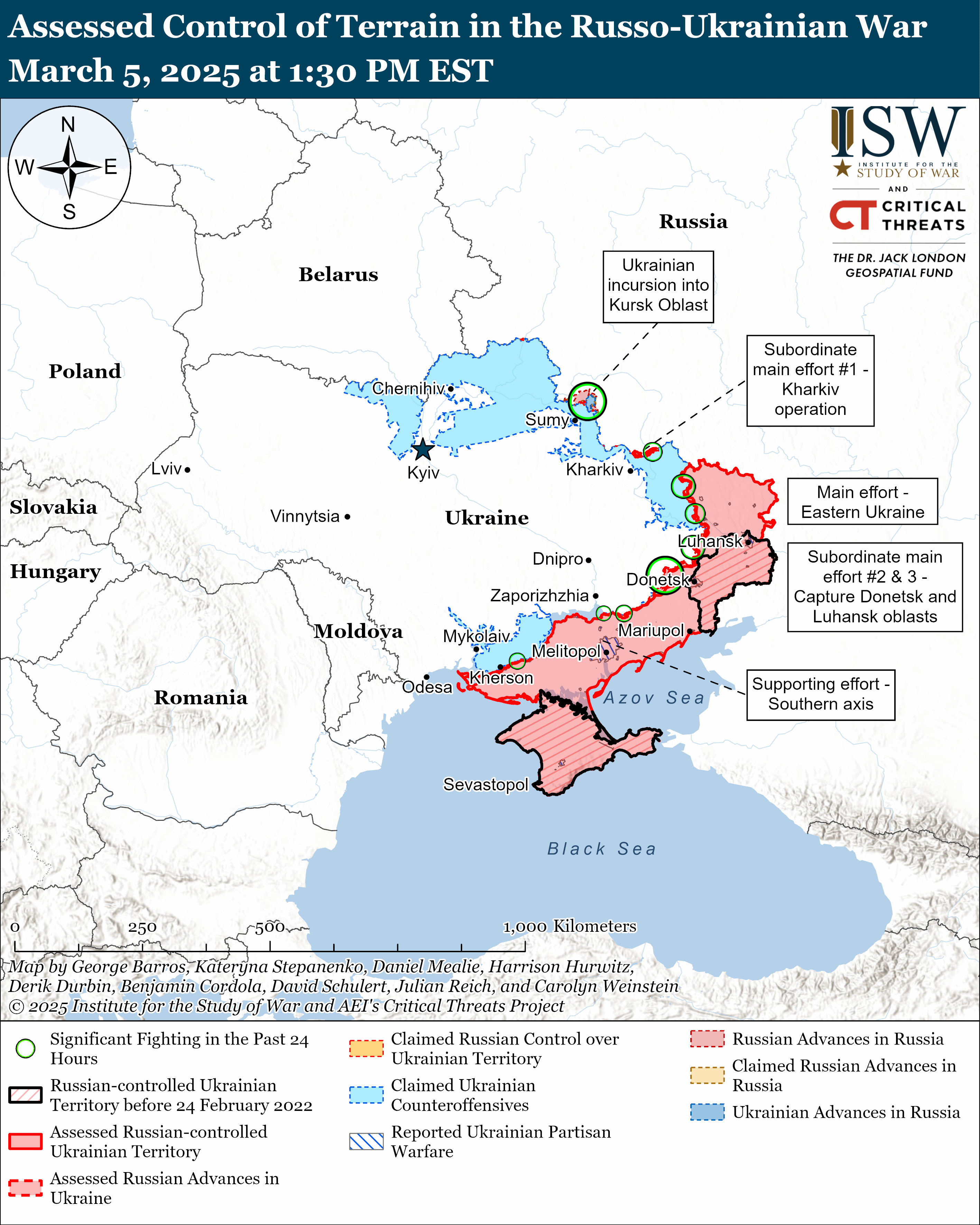
         I’m also working tirelessly to end the savage conflict in Ukraine.  Millions of Ukrainians and Russians have been needlessly killed or wounded in this horrific and brutal conflict with no end in sight. 
         The United States has sent hundreds of billions of dollars to support Ukraine’s defense with no security, with no anything.  (Applause.)
         Do you want to keep it going for another five years? 
         SENATOR WARREN:  Yes!
         THE PRESIDENT:  Yeah.  Yeah, you would say — Pocahontas says, “Yes.”  (Laughter.)
         AUDIENCE MEMBERS:  Booo —
         THE PRESIDENT:  Two thousand people are being killed every single week — more than that.  They’re Russian young people.  They’re Ukrainian young people.  They’re not Americans.  But I want it to stop.
         Meanwhile, Europe has sadly spent more money buying Russian oil and gas than they have spent on defending Ukraine, by far.  Think of that.  They’ve spent more buying Russian oil and gas than they have defending.  And we’ve spent, perhaps, $350 billion.  Like taking candy from a baby, that’s what happened.  And they’ve spent $100 billion.  What a difference that is.  And we have an ocean separating us, and they don’t. 
         But we’re getting along very well with them, and lots of good things are happening. 
         Biden has authorized more money in this fight than Europe has spent by billions and billions of dollars.  It’s hard to believe that they wouldn’t have stopped it and said, at some point, “Come on.  Let’s equalize.  You got to be equal to us.”  But that didn’t happen.
         Earlier today, I received an important letter from President Zelenskyy of Ukraine.  The letter reads, “Ukraine is ready to come to the negotiating table as soon as possible to bring lasting peace closer.”  “Nobody wants peace more than the Ukrainians,” he said.  (Applause.)  “My team and I stand ready to work under President Trump’s strong leadership to get a peace that lasts.  We do really value how much America has done to help Ukraine maintain its sovereignty and independence.  Regarding the agreement on minerals and security, Ukraine is ready to sign it at any time that is convenient for you.” 
         I appreciate that he sent this letter.  Just got it a little while ago.  
         Simultaneously, we’ve had serious discussions with Russia and have received strong signals that they are ready for peace.  Wouldn’t that be beautiful?  Wouldn’t that be beautiful?  (Applause.)  Wouldn’t that be beautiful?
         It’s time to stop this madness.  It’s time to halt the killing.  It’s time to end this senseless war.  If you want to end wars, you have to talk to both sides. 
         Nearly four years ago, amid rising tensions, a history teacher named Marc Fogel was detained in Russia and sentenced to 14 years in a penal colony.  Rough stuff. 
         The previous administration barely lifted a finger to help him.  They knew he was innocent, but they had no idea where to begin.  But last summer, I promised his 95-year-old mother, Malphine, that we would bring her boy safely back home.          After 22 days in office, I did just that, and they are here tonight.  (Applause.) 
         To Marc and his great mom, we are delighted to have you safe and sound and with us. 
         As fate would have it, Marc Fogel was born in a small, rural town — in Butler, Pennsylvania — have you heard of it? — where his mother has lived for the past 78 years.
         I just happened to go there last July 13th for a rally. That was not pleasant.  (Laughter.)  And that is where I met his beautiful mom, right before I walked onto that stage.  And I told her I would not forget what she said about her son.  And I never did, did I?  Never forgot.  
         Less than 10 minutes later, at that same rally, gunfire rang out, and a sick and deranged assassin unloaded eight bullets from his sniper’s perch into a crowd of many thousands of people.           My life was saved by a fraction of an inch, but some were not so lucky.  Corey Comperatore was a firefighter, a veteran, a Christian, a husband, a devoted father, and, above all, a protector. 
         When the sound of gunshots pierced the air — it was a horrible sound — Corey knew instantly what it was and what to do.  He threw himself on top of his wife and daughters and shielded them from the bullets with his own body.
         Corey was hit really hard.  You know the story from there.  He sacrificed his life to save theirs. 
         Two others — very fine people — were also seriously hit.  But thankfully, with the help of two great country doctors, we thought they were gone, and they were saved.  So, those doctors had great talent. 
         We’re joined by Corey’s wife, Helen, who was his high school sweetheart, and their two beloved daughters, Allyson and Kaylee.  Thank you.  (Applause.)
         To Helen, Allyson, and Kaylee, Corey is looking down on his three beautiful ladies right now, and he is cheering you on.  He loves you.  He is cheering you on. 
         Corey was taken from us much too soon, but his destiny was to leave us all with a shining example of the selfless devotion of a true American patriot.  It was love like Corey’s that built our country, and it’s love like Corey’s that is going to make our country more majestic than ever before.  
         I believe that my life was saved that day in Butler for a very good reason.  I was saved by God to make America great again.  I believe that.  (Applause.)  Thank you. 
         Thank you.  Thank you very much.  
         From the patriots of Lexington and Concord to the heroes of Gettysburg and Normandy, from the warriors who crossed the Delaware to the trailblazers who climbed the Rockies, and from the legends who soared at Kitty Hawk to the astronauts who touched the Moon, Americans have always been the people who defied all odds, transcended all dangers, made the most extraordinary sacrifices, and did whatever it took to defend our children, our country, and our freedom.
         And as we have seen in this chamber tonight, that same strength, faith, love, and spirit is still alive and thriving in the hearts of the American people.  Despite the best efforts of those who would try to censor us, silence us, break us, destroy us, Americans are today a proud, free, sovereign, and independent nation that will always be free, and we will fight for it till death. 
         We will never let anything happen to our beloved country, because we are a country of doers, dreamers, fighters, and survivors. 
         Our ancestors crossed a vast ocean, strode into the unknown wilderness, and carved their fortunes from the rock and soil of a perilous and very dangerous frontier.  They chased our destiny across a boundless continent.  They built the railroads, laid the highways, and graced the world with American marvels, like the Empire State Building, the mighty Hoover Dam, and the towering Golden Gate Bridge. 
         They lit the world with electricity, broke free of the force of gravity, fired up the engines of American industry, vanquished the communists, fascists, and Marxists all over the world, and gave us countless modern wonders sculpted out of iron, glass, and steel.  
         We stand on the shoulders of these pioneers who won and built the modern age, these workers who poured their sweat into the skylines of our cities, these warriors who shed their blood on fields of battle and gave everything they had for our rights and for our freedom.  
         Now it is our time to take up the righteous cause of American liberty, and it is our turn to take America’s destiny into our own hands and begin the most thrilling days in the history of our country. 
         This will be our greatest era.  
         With God’s help, over the next four years, we are going to lead this nation even higher, and we are going to forge the freest, most advanced, most dynamic, and most dominant civilization ever to exist on the face of this Earth. 
         We are going to create the highest quality of life, build the safest and wealthiest and healthiest and most vital communities anywhere in the world. 
         We are going to conquer the vast frontiers of science, and we are going to lead humanity into space and plant the American flag on the planet Mars and even far beyond.  (Applause.)
         And, through it all, we are going to rediscover the unstoppable power of the American spirit, and we are going to renew unlimited promise of the American dream. 
         Every single day, we will stand up and we will fight, fight, fight for the country our citizens believe in and for the country our people deserve.  (Applause.)  Thank you.  Thank you.
         AUDIENCE MEMBERS:  Fight!  Fight!  Fight!
         THE PRESIDENT:  My fellow Americans, get ready for an incredible future, because the golden age of America has only just begun.  It will be like nothing that has ever been seen before. 
         Thank you.  God bless you.  And God bless America.  (Applause.)
         Thank you.  Thank you, everybody.  Thank you.  Thank you very much.  Thank you very much.  Thank you. 
    Thank you very much.  Appreciate it.
    Thank you very much.
                                 END                11:00 P.M. EST

    MIL OSI USA News

  • MIL-OSI United Kingdom: expert reaction to study looking at butter or vegetable oils and mortality, as published in JAMA Internal Medicine

    Source: United Kingdom – Executive Government & Departments

    Scientists comment on a study published in JAMA Internal Medicine looking at butter consumption, plant-based oil consumption, and all-cause, cancer-related and cardiovascular disease-related mortality.

    Prof Sarah Berry, Professor of Nutritional Sciences, King’s College London, said:

    “The study shows that high butter consumption is linked to increased cancer and total mortality, whereas plant-based oils are linked to a lower risk of overall mortality and death due to cardiovascular disease and cancer.

    “This research is very timely.  Social media is currently awash with influencers promoting butter as a health food and claiming that seed oils are deadly.  This large-scale, long-term study finds the reverse.  The authors produce further evidence that seed oil consumption is linked to improved health and that butter – delicious as it is – should only be consumed once in a while.

    “In a sane world, this study would give the butter bros and anti-seed oil brigade pause for thought, but I’m confident that their brand of nutri-nonsense will continue unabated.”

    Dr Louise Flanagan, Head of Research for the Stroke Association, said: 

    “Stroke is the fourth leading cause of death in the UK and a leading cause of adult disability – but, fortunately, nine out of 10 strokes can be prevented.  High blood pressure is the cause of around half of all strokes.

    “This study covered a wider range of plant oils than previous research to find that greater consumption of rapeseed oil, soybean oil or olive oil is associated with an overall lower risk of death.  It is positive to see other plant oils being considered in this way as olive oil has been a focus of much research in the past.

    “The suggestion to switch from butter to plant oils is achievable for many people.  However, it was only olive oil that was associated with a lower risk of death due to cardiovascular disease, including stroke.  Olive oil is typically more expensive than other oils like rapeseed which means that its potential health benefits could be out of financial reach for some.

    “The study didn’t consider what eating both butter and plant oils means in terms of health risks, which is likely to be what many people naturally do.  This is potentially something which could be considered in future studies.

    “The Stroke Association encourages people to maintain a healthy diet, exercise regularly, not smoke and monitor alcohol intake, which can help to maintain healthy blood pressure.  Anyone with concerns should speak to their GP.”

    Prof Parveen Yaqoob, professor of nutritional science at the University of Reading, said:

    “The link between diets high in saturated fat, particularly animal-based fat such as butter and lard, and higher mortality has been argued for decades.  I have seen American adverts from the 1960s extolling the virtues of American housewives “polyunsaturating” their husbands when they come home from work.  This is a fun historical reminder of the link between the food industry and dietary health messages, as well as showing how much woman have had to fight for social progress.

    “This latest research provides strong additional data to support the ‘healthier fats’ theory.  The research followed a large cohort of health workers in America over many years.  The use of food frequency questionnaires means that we are relying on the participants to remember what they have eaten and how much, which we know can be an unreliable indicator of actual dietary patterns.

    “The scientists for this study highlight that not all vegetable oils are equal.  Although butter was being replaced by corn oil and sunflower oil, which are polyunsaturated, in the 1960s and 70s, the oils they are talking about in the research – olive, canola and soybean – are mainly monounsaturated.  The researchers suggests that these are more beneficial than the polyunsaturated fats, and refer to the Mediterranean diet, which is higher in monounsaturated fats such as olive oil, for that reason.  While many Western diets shifted away from saturated fat to polyunsaturated fat in the 1970s, the oils that we consume more often now contain more monounsaturates, which seem to be more beneficial.  Given that there are some plant-based oils that are high in saturates – such as palm oil and coconut oil – it is important to consider them separately.

    “Recent dietary fads have suggested a re-examination of evidence on dietary fat.  People who are confused about these conflicting messages about their diet should focus on broader, well-established advice, which can be summarised as: eat more fresh vegetables.”

    Prof Tom Sanders, Professor emeritus of Nutrition and Dietetics, King’s College London, said:

    “This important study shows that people who chose to eat butter don’t live as long as those who chose to eat vegetable oils.  It is a well conducted prospective study of 221,054 health professionals who were in their fifties when enrolled and followed up for 33 years.  Dietary intakes were assessed every 4 years.  The study reports that those who had the highest intake of butter were 15% more likely to die prematurely (from both cardiovascular disease and cancer).  In comparison the opposite was true (a 16 % reduction in relative risk of all-cause mortality), for participants who had the highest intake of vegetable oil.  The same relationship was seen for olive oil, soybean oil and canola oil (rapeseed oil).

    “The strength of the study is the long period of follow-up, repeated measures of dietary intake and adjustment in the statistical analysis for other factors such as smoking habit and obesity.  The findings do not apply to sunflower, palm or coconut oils which were not consumed to any significant extent in this study.  The limitations are that this an observational study not a randomised controlled trial.  Furthermore, the findings with regard to health professionals may differ from the general population because they are better informed about healthy lifestyle choices.

    “Butter is high in saturated fat, contains some trans fatty acids but is very low in polyunsaturated fats.  Whereas unhydrogenated soybean, canola and olive oils are low in saturated fatty acids but high in unsaturated fats.  Replacement of butter with these vegetable oils is well documented to lower blood cholesterol, particularly that associated with low density lipoprotein (LDL) by about 10%.  This change in LDL cholesterol would be predicted to reduce the relative risk of death by about 3% which is much less than what was observed in this study.  It remains possible that a higher intake of polyunsaturated fatty acids (especially linoleic acid) from the vegetable oil may have played a role in reducing risk by a variety of mechanisms.  An alternative explanation may be that health professionals who are sensible follow prevailing healthy eating and lifestyle advice compared to those who don’t.

    “The take home message is that it is healthier to choose unsaturated vegetable oils rather than butter.  This is particularly relevant as there has been much negative publicity about vegetable oils on social media, which are based on unfounded claims of potential harmful effects, rather than deaths as described in the present study.”

    Prof George Davey Smith, FRS FMedSci, Professor of Clinical Epidemiology, University of Bristol, said:

    “Yet again these studies show that the exposure that is accompanied by large differences in other adverse health exposures – e.g. more than double the rate of cigarette smoking in the highest quartile vs lowest quartile of butter consumption is associated with worse health outcomes.  That these differences cannot be taken into account by the statistical models the authors use is well known; measurement error and unmeasured factors ensure this.  It is now more than 30 years since these authors published two high profile papers back to back in the New England Journal of Medicine claiming that vitamin E supplement use would reduce heart disease risk by 40%.  The claims were incorrect, but many people believed them – the story was the headline news in the New York Times – and started taking vitamin E supplements.  However randomised trials later showed this was nonsense: there was no benefit.  This is documented in the first few minutes of this recent talk https://www.youtube.com/watch?v=8IgpTT5ZXXU&t=2s  As in the conclusion of my blog1 on the same authors’ “dark chocolate” paper, the interesting question this paper raises is “why do supposedly legitimate journals keep publishing papers like this?”.”

    1 https://ieureka.blogs.bristol.ac.uk/2024/12/04/dark-chocolate-diabetes/

    * ‘Butter and Plant-Based Oils Intake and Mortality’ by Yu Zhang et al. will be published in JAMA Internal Medicine at 21:00 UK time on Thursday 6 March 2025, which is when the embargo will lift.

    DOI: 10.1001/jamainternmed.2025.0205

    Declared interests

    Prof Sarah Berry: “Sarah has received funding from the Almond Board of California, Malaysian Palm Oil Board and ZOE (Chief scientist at ZOE Ltd, options and consultancy at ZOE Ltd.).”

    Dr Louise Flanagan: “None.”

    Prof Parveen Yaqoob: “Professor Parveen Yaqoob is Deputy Vice-Chancellor, and Pro-Vice-Chancellor (Research & Innovation) of the University of Reading, and professor of nutritional science in the Department of Food and Nutritional Sciences, which has funding from public bodies, charities and businesses to conduct independent scientific research on food and nutrition.

    The Department has done work on dietary fat, including research co-authored by Parveen as part of the DIVAS project: https://research.reading.ac.uk/ifnh/cases/milk-dairy-consumption-risk-cardiovascular-diseases-cause-mortality/  Mostly government or UKRI funded, with industry partners.  The papers listed from that project list grant numbers.

    Work on reducing saturated fat in dairy was a REF case study, which includes grant numbers from BBSRC and MRC, and had industry partners throughout, which is one of the ways in which the research was considered to have impact.

    https://results2021.ref.ac.uk/impact/eefa0a3d-4ba8-4419-8c28-836e06b41eed?page=1.”

    Prof Tom Sanders: “I am a member of the Programme Advisory Committee of the Malaysia Palm Oil Board which involves the review of research projects proposed by the Malaysia government.

    I also used to be a member of the Scientific Advisory Committee of the Global Dairy Platform up until 2015.

    I did do some consultancy work on GRAS affirmation of high oleic palm oil for Archer Daniel Midland more than ten years ago.

    My research group received oils and fats free of charge from Unilever and Archer Daniel Midland for our Food Standards Agency Research.

    Tom was a member of the FAO/WHO Joint Expert Committee that recommended that trans fatty acids be removed from the human food chain.

    Member of the Science Committee British Nutrition Foundation.  Honorary Nutritional Director HEART UK.

    Before my retirement from King’s College London in 2014, I acted as a consultant to many companies and organisations involved in the manufacture of what are now designated ultraprocessed foods.

    I used to be a consultant to the Breakfast Cereals Advisory Board of the Food and Drink Federation.

    I used to be a consultant for aspartame more than a decade ago.

    When I was doing research at King’ College London, the following applied: Tom does not hold any grants or have any consultancies with companies involved in the production or marketing of sugar-sweetened drinks.  In reference to previous funding to Tom’s institution: £4.5 million was donated to King’s College London by Tate & Lyle in 2006; this funding finished in 2011. This money was given to the College and was in recognition of the discovery of the artificial sweetener sucralose by Prof Hough at the Queen Elizabeth College (QEC), which merged with King’s College London. The Tate & Lyle grant paid for the Clinical Research Centre at St Thomas’ that is run by the Guy’s & St Thomas’ Trust, it was not used to fund research on sugar. Tate & Lyle sold their sugar interests to American Sugar so the brand Tate & Lyle still exists but it is no longer linked to the company Tate & Lyle PLC, which gave the money to King’s College London in 2006.”

    Prof George Davey Smith: “No COIs.”

    MIL OSI United Kingdom

  • MIL-OSI United Nations: General Assembly Debates Russian Federation’s Security Council Veto of European Amendments Seeking ‘Just’ Peace in Ukraine Based on United Nations Charter

    Source: United Nations General Assembly and Security Council

    The General Assembly today addressed what many delegations decried as “misuse” of the Security Council veto by the Russian Federation on 24 February — the third anniversary of its aggression against Ukraine.

    On that day, Moscow vetoed two of the three European proposals seeking to align the United States-authored draft resolution with the Charter of the United Nations.  The two amendments — one inserting a reference to Ukraine’s sovereignty and territorial integrity and another adding a reference to a comprehensive, just and lasting peace in Ukraine in line with the UN Charter — garnered 9 and 11 votes in favour, respectively, but were not adopted due to the negative votes cast by the Russian Federation.  The other amendment seeking to insert a reference to Moscow’s “full-scale invasion” of Ukraine failed to obtain enough votes to pass.  In the end, the text tabled by the United States was adopted as resolution 2774 (2025) by a vote of 10 in favour to none against, with 5 abstentions (Denmark, France, Greece, Slovenia, United Kingdom), without any amendments.

    Opening today’s plenary, Philémon Yang (Cameroon), President of the General Assembly, expressed regret over another meeting pursuant to A/RES/76/262 following the casting of the veto by a permanent member of the Council — noting that the frequency of vetoes has continued to rise since 2022.  Affirming that Council and Assembly efforts must be complementary, he noted that, while the Veto initiative demonstrates improvement in the United Nations’ capacity to address matters of international security, “we could do more”.  Calling for the Assembly to reflect on how the outcomes of deliberations on the Veto initiative can be more binding.

    He recalled that, at the eleventh Emergency Special Session on 24 February, the Assembly adopted two resolutions:  “Advancing a Comprehensive, Just and Lasting Peace in Ukraine” and “The Path to Peace”, reaffirming its unwavering commitment to the sovereignty, independence, unity, and territorial integrity of Ukraine within its internationally recognized borders.

    In the ensuing debate, the Russian Federation’s representative recalled the Security Council meeting on 24 February and welcomed the adoption of the United States’ text “as a step in the right direction”.  The change of approach in Washington, D.C., following President Donald J. Trump’s inauguration, caught “European pseudo-peacekeepers off guard”.  Allies of the Kyiv regime have been consistently putting forward anti-Russian Federation draft resolutions with no bearing on reality.  Member States should not just choose Charter principles that are more to their taste, he said, as it is not a “restaurant menu”.  The Kyiv regimes’ non-compliance with the Charter caused the Ukraine conflict, he stated.

    However, Ukraine’s delegate stressed that the Russian Federation’s behaviour in the Council following its aggression against her country “is the most vivid example of how detrimental the misuse of the veto could be”.  The Russian Federation vetoed all draft resolutions that the Council attempted to adopt in response to its aggression against Ukraine since 2014. Amendments would have reaffirmed the commitment to Ukraine’s sovereignty, independence and territorial integrity, while the resolution lacks classification of the war as an act of aggression by one Member State against another.  Use of the veto should be restricted when a permanent member is directly involved in the conflict under consideration and therefore cannot be expected to exercise its voting rights and privileges in an impartial manner.  “Nobody wants peace more than Ukrainians, but peace must be real, not just a word,” she stressed.

    Throughout the debate, the Assembly heard a chorus of European voices condemning Russian Federation’s actions in the Council. “Let it be clear, Russia is abusing its veto power to block references to the principle of territorial integrity,” said a representative of the European Union, in its capacity as observer, also citing a second veto obstructing a call for a just, lasting and comprehensive peace in line with the UN Charter.  The Russian Federation has bombed Ukraine cities daily as part of its unprovoked and unjustified war of aggression.  “Russia is undermining the core principles of our multilateral system,” she stated, adding:  “We cannot accept an equivalence between the aggressor and the victim of aggression.”

    MIL OSI United Nations News

  • MIL-OSI United Nations: With Yemen Poised for Renewed Conflict, Insufficient Aid and Environmental Crisis, Security Council Hears Political Process, Humanitarian Funding Urgently Needed

    Source: United Nations General Assembly and Security Council

    “Numbers in My Next Briefings Will Be Worse,” Says Emergency Relief Coordinator

    Fear of Yemen plunging back into widespread conflict is “palpable”, the United Nations’ top official in that country told the Security Council today, calling on the parties to refrain from military posturing and instead agree on a nationwide ceasefire.

    “I see and hear the deep frustration of the Yemeni people who continue to bear the heavy burden of a decade of war” and whose grinding hardship “only deepens”, said Hans Grundberg, Special Envoy of the Secretary-General for Yemen.  He added that gross domestic product (GDP) per capita has more than halved, the Yemeni rial in Government-controlled areas has fallen by 50 per cent in the last year and poverty has surged across the country.

    Even though large-scale ground operations have not resumed since the UN-mediated truce was implemented in April 2022, he reported that military activity continues.  On that, he voiced concern over recent reports of shelling, drone attacks, infiltration attempts and mobilization campaigns recently witnessed in Ma’rib, Al Jawf, Shabwa and Ta’iz.  Relatedly, he warned against a rise in rhetoric from the parties, who are pre-positioning themselves publicly for military confrontation.  Words, intent and signals matter, and “escalatory discourse can have real consequences”, he added.

    Stressing that his team remains “undeterred” amid enormous challenges, he highlighted its recent, relentless engagement with both Yemeni and international stakeholders.  To settle the conflict, the parties must agree on a nationwide ceasefire and a mechanism to implement it.  Furthermore, he underlined the need for a political process that includes “a broad spectrum of Yemenis that will allow this conflict to settle once and for all”.

    While welcoming the continued cessation of attacks by Ansar Allah on vessels in the Red Sea and targets in Israel during the last month, he emphasized that “enabling environments for peace can be fragile and fleeting” and “positive developments must be put on a more-permanent footing”.  Reiterating his determination to convene the parties at any opportunity to end this decade-long conflict, he stated:  “We owe it to the millions of Yemenis not to waver or falter in our determination on this.”

    “I am not here to defend programmes, spreadsheets and institutions, but people,” said Tom Fletcher, Under-Secretary-General for Humanitarian Affairs and Emergency Relief Coordinator.  Severe funding cuts are a “body blow”, he stressed.  Humanitarian coordinators are analysing where to make dramatic cuts, as well as “the implications of the tough choices we are making on which lives not to save”, he added.  On the United States’ designation of the Houthis as a foreign terrorist organization, he said that it is vital to ensure civilians in Yemen have access to essential food and medicine — whether through commercial or humanitarian channels.

    Continuing, he observed that 9.6 million women and girls in Yemen are in severe need of life-saving humanitarian assistance, while 1.5 million girls remain out of school — preventing them from breaking cycles of discrimination.  “As your funding for Yemen evaporates, the numbers in my next briefings will be worse,” he warned, adding that more women will die and more will be forced into survival sex, begging, coerced prostitution, human trafficking and selling their children.  And yet, he noted, women remain on the frontlines of survival and recovery — 40 per cent of the Yemen Humanitarian Fund goes to women-led organizations, most of which are local.

    Also briefing the Council today was Nesmah M. Ali, civil-society representative from the Peace Track Initiative, who said that Yemen’s myriad crises have weakened State institutions, collapsed social protection systems and created multidimensional insecurities.  Recalling that she was forced to leave her hometown in 2020, she stated:  “I am a migrant of conflict and climate change.”  The war has devastated Yemen’s environment, she said, adding that attacks on oil refineries and ports, landmines in fields and coastal areas and destruction of power stations and water systems have left that country in ruins.

    And climate change is deepening Yemen’s crisis, she stressed, as floods displace landmines, complicate demining actions and exacerbate pre-war intertribal conflicts over scarce resources.  While women are disproportionately affected by climate change and more vulnerable to natural disasters, their stories of determination — “amid vanishing fish, ruined crops and deferred dreams” — highlight their unwavering strength, and she urged the Council to prioritize the impact of climate change and conflict on gender equality.

    Council Members Condemn Detentions

    In the ensuing discussion, many Council members condemned the ongoing detention by the Houthis — officially known as Ansar Allah — of UN personnel and the tragic death of a World Food Programme (WFP) staff member in their captivity.

    Among them was Panama’s delegate, who called for the immediate and unconditional release of all humanitarian and diplomatic personnel, as well as respect for their fundamental human rights.  The representative of France urged the Houthis to end all threats and disinformation campaigns against humanitarian actors.  Picking up that thread, the United Kingdom’s delegate expressed support for the UN’s decision to pause humanitarian operations in Saada, describing this pause as “a direct consequence” of the Houthi threat undermining the security and safety of aid workers.

    United States Designates Houthis as Terrorist Organization, Others Urge Dialogue

    The representative of the United States said that her country is taking concrete steps to eliminate the Houthis’ capabilities by designating them as a foreign terrorist organization and using targeted sanctions to deprive them of illicit revenues.  “Our sanctions seek to preserve space for legitimate activities that support Yemenis living in Houthi-controlled territory who bear no responsibility for the Houthis’ malign actions,” she stressed.  Washington, D.C., will also take steps to stop Iran’s support for Houthi terrorism, and she added:  “We will take action against the Houthis should they resume their reckless attacks in the Red Sea and surrounding waterways and on Israel.”

    However, her counterpart from the Russian Federation called on the United States Government to reconsider its decision to designate Ansar Allah as a terrorist organization, stressing that “openly antagonising one of the key sides to the conflict will do no good”.  The voices of all political forces must be considered, and the ineffective logic of maximum pressure abandoned, he stressed, drawing attention to Moscow’s proposal to create a framework for collective security in the Persian Gulf.

    Pakistan’s delegate also emphasized the critical role of dialogue, highlighting regional initiatives led by Saudi Arabia and Oman.  He also noted that there have been no new attacks on commercial shipping since the onset of the ceasefire in Gaza.  “While we unequivocally condemn such attacks,” he added that it is crucial to acknowledge that “the absence of the attacks coincides with the maintenance of the ceasefire in Gaza”. 

    While also welcoming the pause in attacks in the Red Sea and on Israel, the representative of the Republic of Korea voiced concern over the Houthis’ “repeatedly declared” readiness to resume such attacks if the hard-won ceasefire and hostage deal in Gaza breaks down.  “This is simply unacceptable,” he asserted.

    Speakers Underline Nexus between Conflict and Environment

    On the fragile situation on the ground, the speaker for Greece said that “the risk of military escalation has not eclipsed”.  As a historic seafaring nation, Greece supports the freedom of navigation and is committed to safeguarding maritime security in the region.  Highlighting the interconnectedness of climate, peace and security, he said that the FSO Safer and the Greek-flagged MV Sounion cases demonstrated the conflict’s environmental and humanitarian consequences.

    The convergence of prolonged conflict, environmental degradation and climate change has created a perfect storm of crises in Yemen, echoed Denmark’s delegate, Council President for March, speaking in her national capacity.  As the world’s third-most vulnerable country to climate change, Yemen is highly affected by climate-induced disasters, she observed, urging the Council to ensure that climate considerations are integrated into peacebuilding strategies, local mediation efforts and a future peace settlement process.

    Also highlighting the impact of climate change and conflict on food and water insecurity, the representative of Slovenia — whose country is a founding member of the Global Alliance to Spare Water from Armed Conflicts — called for the protection and development of water resources and infrastructure in Yemen.  “We strongly believe that water issues can be an entry point for grassroots dialogue and mutual understanding between parties, as well as empowering women,” he added. 

    Painting a grim picture of the dire humanitarian situation in Yemen, Sierra Leone’s delegate — who also spoke for Algeria, Guyana and Somalia — called for increased support for the 2025 Humanitarian Response Plan. “Despite shrinking aid budgets, we recognize the tireless efforts of humanitarian organizations and their personnel to meet the urgent needs of the Yemeni people,” he said.  China’s representative also urged States to increase humanitarian assistance and prioritize food security, emphasizing that “a political solution is a fundamental way out of the Yemeni issue”.

    Yemen’s Speaker Urges Aid Organizations Relocate to Aden

    As the conflict enters its eleventh year, the Yemeni people aspire to peace, said that country’s representative. However, these aspirations could not materialize due to the destructive approach of Iran-backed Houthi militias who rejected all efforts to that end, he said, welcoming the United States’ designation of the Houthis as a terrorist organization.  He underscored the importance of strategic partnerships to support the Government’s efforts to end the coup, restore State institutions and extend State authority over all Yemeni soil. 

    He further stressed that, despite the economic, humanitarian, social and institutional challenges caused by the war, the Government is making “tremendous efforts” to address currency depreciation and unemployment.  Condemning the ongoing detention of international personnel, he cautioned that the militias “will not stop their blackmailing of the international community”.  Accordingly, he urged the UN and other international organizations to transfer their headquarters to Aden, the temporary capital.

    MIL OSI United Nations News

  • MIL-OSI Australia: Interview with FIVEAA Breakfast with David Penberthy and Will Goodings

    Source: Australian Government – Minister of Foreign Affairs

    Sonya Feldhoff, Host: This is a breakfast that is the biggest breakfast not only in South Australia. So, let’s get this right, this is all over the country and for the 23rd year running, it is hosted by Senator Penny Wong, who joins us now. Senator, thank you for your time.

    Penny Wong, Foreign Minister: Good morning to everybody. Happy, well, it’s not quite IWD because we hold this breakfast the closest day to, but happy almost International Women’s Day.

    Feldhoff: Now, this is your 23rd year as host, but I want to take a moment because this breakfast wouldn’t be without the person who founded it and led it for the first, what, 10 or 11 years? Senator Rosemary Crowley.

    Foreign Minister: Yes that’s right, who passed away just recently. And look, on International Women’s Day and at this breakfast, you’ve heard me talk about the importance of remembering and honouring women who’ve gone before and who’ve paved the way, as well as thinking about what more we have to do. And it’s really important for us to honour Rose today. I mean, she was the first woman the Labor Party sent to Canberra, elected in the early 80s, which seems remarkable that it took that long. First woman to be a Minister from South Australia in the Federal Parliament. And one of the things she did, as you said Sonya, was establish this breakfast. And I remember I was actually on her breakfast committee before I went into Parliament, helping organise it. It was smaller then and it’s grown year on year and it was something Rosemary was so committed to. So, it’s really wonderful to be able to honour her today.

    Feldhoff: And we talk about those important things that she did. But having sat next to her on several occasions, she had a fiery, fire in her belly. She had a sense of humour. She was an amazingly fun woman to be around.

    Foreign Minister: She really was. She had a great sense of humour, very witty, sometimes quite bawdy. I remember.

    Jules Schiller, Host: Bawdy.

    Foreign Minister: Bawdy, yes.

    Feldhoff: She was.

    Foreign Minister: I’d say Rose, Rose, I can’t say that.

    Feldhoff: She was an amazing woman. So, we remember her today and I think that she’ll be in the minds of many people today.

    Foreign Minister: Absolutely.

    Schiller: Let’s get to your portfolio, Penny.

    Foreign Minister: Can’t we just talk about this? This is much more, this is much more relaxed.

    Schiller: Well, I’ll hit you with a quote because I think this is a good quote to sum up what’s happened. Vladimir Lenin said ‘there are decades where nothing happens and there are weeks when decades happen.’ Does that sum up what’s happened this week with some momentous kind of tectonic plate shifting with alliances and, you know, support for Ukraine and not support for Ukraine? How are you handling everything?

    Foreign Minister: Okay, well, first, I don’t think the Australian Foreign Minister should be quoting Lenin. So, I’m just going to leave that with you. But you’re right, I mean, I think tectonic is probably the, you know, the phrase that people have been using which is, you know, this is a very different time. I’ve said for some time President Trump and the Trump administration have said they were going to do things differently. So, we ought not be surprised about that. And what’s important is that we remain cool headed and disciplined, work together and navigate what is a very changing world, in Australia’s national interests. And that’s certainly how I will approach it and how the Prime Minister is approaching it.

    Feldhoff: Is your job as Foreign Minister more difficult today than it was a week ago? Given what we’ve seen in the last week.

    Foreign Minister: I probably measure it in slightly longer terms. Before the election I did think a lot about what sort of world we were in and I talked about the fact that how many changes, how much there was moving in the international landscape and certainly since the election I think we’ve continued to see that. And it’s very important that one, to remain cool headed and calm and to work as we are to try and maximise Australia’s relationships, to elevate our presence in the region and to work with others across the world in support of those international rules which matter to us. I talk about relationships, rules and region, and that’s really defined what we have done this term and what I’ve done as your Foreign Minister.

    Schiller: We had Chinese warships obviously doing live fire exercises and that was big news. You know, Virgin flight kind of reported it and that was all. Have you been speaking to your Chinese counterparts about how that unfolded and maybe you’d like to see it happen differently next time?

    Foreign Minister: Oh, absolutely. I mean, I spoke to the Prime Minister when that happened and I was actually in South Africa for the G20 and had a bilateral meeting with Foreign Minister Wang Yi scheduled and we agreed that I would speak very directly and clearly to the Chinese about our views. Obviously, we also operate in international waters. Australia does, and we support the international laws which enable countries to operate in those waters, which are international waters. So, not Australia’s territorial waters. But when we do so, and if we engage in these sorts of exercises, we do give much more notice. You do issue what’s called a notice to airmen – still men, I’m afraid, Sonya – which is to ensure that all aircraft and vessels in the area are aware. But we also give earlier notice. And what I said very clearly to the Foreign Minister of China is that our expectation is that notice such as Australia would give in the South China Sea or elsewhere where we operate would be what we would expect.

    Feldhoff: You’re listening to 891 ABC Radio Adelaide. Sonya and Jules here with you for breakfast, broadcasting here from the Convention Centre which will host the International Women’s Day Breakfast, the biggest one in the country.

    Foreign Minister: I’m just going to tell your listeners that this is, we are sitting at a desk, being very good and talking to each other as these massive number of women and some men walk in and lots of school kids, I can see, who got up early. So, it’s pretty busy.

    Feldhoff: This is the thing, isn’t it? We’ve got a whole heap of school kids here and when we take it, look at the message for girls and women. But people generally, you know, I think a lot of us would have felt unsettled with the talk of nuclear weapons from Emmanuel Macron yesterday. As you talk to these women and men who will be in the room today, do you have a sense of optimism? Because I think there would be a lot of people at the moment for whom that would be far away.

    Foreign Minister: Well, first, just on the number of young women, that’s one of the things I have really sought to do as host, and that is to increase the number of schools that attend. And we’ve been really pleased at how that’s been taken up, because I think part of what matters today is that mix across generations and that you get women who’ve done a lot and been around a lot and have seen a lot engaging with girls, school kids who are at the beginning of their adult life and having that discussion. Optimism, I suppose. I think that we have agency so we have the capacity to do what we can do and we should do that. So, we should be talking about de-escalation, we should be talking about engagement and dialogue, because we know that to avert, to keep peace, you need both deterrence, but you also need reassurance and you need to engage as an international player in a way that provides both deterrence and reassurance. That’s how you ensure stability and peace. So, I suppose I think of it much more as what can we do? And we should focus on maximising what we can do rather than wringing our hands about what others are doing.

    Schiller: I know you have to go, Penny, but just message to women listening. I mean, I was thinking of younger women, especially because they’re facing – you’ve got Andrew Tate, they’ve got revenge porn, you know, all this, all these threats to, kind of things to overcome for them. Like, I guess women of your generation were. So, what’s your message to women on this day?

    Foreign Minister: Well, can I message both men and women? First I would say what I said about marriage equality. There’s nothing to fear from equality. Equality is about all of us having an opportunity and the world is a better place where we all have an opportunity. And what I’d say to young women is what I always say, is that women can do anything.

    Feldhoff: On that note, we’ll make sure you get to where you need to be to make sure you can do anything. Senator Penny Wong, who will be hosting this breakfast for the 23rd time consecutively. Thank you so much.

    Foreign Minister: Thank you. And can I just plug for the ABC? Know that they didn’t ask me to do this. Thank you so much for your support for this over so many years. It’s part of the, you know, what Adelaide does and we really appreciate the ABC support.

    Schiller: Thank you, Penny.

    MIL OSI News

  • MIL-OSI Australia: Interview with ABC Adelaide Breakfast with Sonya Feldhoff and Jules Schiller

    Source: Australian Government – Minister of Foreign Affairs

    Sonya Feldhoff, Host: This is a breakfast that is the biggest breakfast not only in South Australia. So, let’s get this right, this is all over the country and for the 23rd year running, it is hosted by Senator Penny Wong, who joins us now. Senator, thank you for your time.

    Penny Wong, Foreign Minister: Good morning to everybody. Happy, well, it’s not quite IWD because we hold this breakfast the closest day to, but happy almost International Women’s Day.

    Feldhoff: Now, this is your 23rd year as host, but I want to take a moment because this breakfast wouldn’t be without the person who founded it and led it for the first, what, 10 or 11 years? Senator Rosemary Crowley.

    Foreign Minister: Yes that’s right, who passed away just recently. And look, on International Women’s Day and at this breakfast, you’ve heard me talk about the importance of remembering and honouring women who’ve gone before and who’ve paved the way, as well as thinking about what more we have to do. And it’s really important for us to honour Rose today. I mean, she was the first woman the Labor Party sent to Canberra, elected in the early 80s, which seems remarkable that it took that long. First woman to be a Minister from South Australia in the Federal Parliament. And one of the things she did, as you said Sonya, was establish this breakfast. And I remember I was actually on her breakfast committee before I went into Parliament, helping organise it. It was smaller then and it’s grown year on year and it was something Rosemary was so committed to. So, it’s really wonderful to be able to honour her today.

    Feldhoff: And we talk about those important things that she did. But having sat next to her on several occasions, she had a fiery, fire in her belly. She had a sense of humour. She was an amazingly fun woman to be around.

    Foreign Minister: She really was. She had a great sense of humour, very witty, sometimes quite bawdy. I remember.

    Jules Schiller, Host: Bawdy.

    Foreign Minister: Bawdy, yes.

    Feldhoff: She was.

    Foreign Minister: I’d say Rose, Rose, I can’t say that.

    Feldhoff: She was an amazing woman. So, we remember her today and I think that she’ll be in the minds of many people today.

    Foreign Minister: Absolutely.

    Schiller: Let’s get to your portfolio, Penny.

    Foreign Minister: Can’t we just talk about this? This is much more, this is much more relaxed.

    Schiller: Well, I’ll hit you with a quote because I think this is a good quote to sum up what’s happened. Vladimir Lenin said ‘there are decades where nothing happens and there are weeks when decades happen.’ Does that sum up what’s happened this week with some momentous kind of tectonic plate shifting with alliances and, you know, support for Ukraine and not support for Ukraine? How are you handling everything?

    Foreign Minister: Okay, well, first, I don’t think the Australian Foreign Minister should be quoting Lenin. So, I’m just going to leave that with you. But you’re right, I mean, I think tectonic is probably the, you know, the phrase that people have been using which is, you know, this is a very different time. I’ve said for some time President Trump and the Trump administration have said they were going to do things differently. So, we ought not be surprised about that. And what’s important is that we remain cool headed and disciplined, work together and navigate what is a very changing world, in Australia’s national interests. And that’s certainly how I will approach it and how the Prime Minister is approaching it.

    Feldhoff: Is your job as Foreign Minister more difficult today than it was a week ago? Given what we’ve seen in the last week.

    Foreign Minister: I probably measure it in slightly longer terms. Before the election I did think a lot about what sort of world we were in and I talked about the fact that how many changes, how much there was moving in the international landscape and certainly since the election I think we’ve continued to see that. And it’s very important that one, to remain cool headed and calm and to work as we are to try and maximise Australia’s relationships, to elevate our presence in the region and to work with others across the world in support of those international rules which matter to us. I talk about relationships, rules and region, and that’s really defined what we have done this term and what I’ve done as your Foreign Minister.

    Schiller: We had Chinese warships obviously doing live fire exercises and that was big news. You know, Virgin flight kind of reported it and that was all. Have you been speaking to your Chinese counterparts about how that unfolded and maybe you’d like to see it happen differently next time?

    Foreign Minister: Oh, absolutely. I mean, I spoke to the Prime Minister when that happened and I was actually in South Africa for the G20 and had a bilateral meeting with Foreign Minister Wang Yi scheduled and we agreed that I would speak very directly and clearly to the Chinese about our views. Obviously, we also operate in international waters. Australia does, and we support the international laws which enable countries to operate in those waters, which are international waters. So, not Australia’s territorial waters. But when we do so, and if we engage in these sorts of exercises, we do give much more notice. You do issue what’s called a notice to airmen – still men, I’m afraid, Sonya – which is to ensure that all aircraft and vessels in the area are aware. But we also give earlier notice. And what I said very clearly to the Foreign Minister of China is that our expectation is that notice such as Australia would give in the South China Sea or elsewhere where we operate would be what we would expect.

    Feldhoff: You’re listening to 891 ABC Radio Adelaide. Sonya and Jules here with you for breakfast, broadcasting here from the Convention Centre which will host the International Women’s Day Breakfast, the biggest one in the country.

    Foreign Minister: I’m just going to tell your listeners that this is, we are sitting at a desk, being very good and talking to each other as these massive number of women and some men walk in and lots of school kids, I can see, who got up early. So, it’s pretty busy.

    Feldhoff: This is the thing, isn’t it? We’ve got a whole heap of school kids here and when we take it, look at the message for girls and women. But people generally, you know, I think a lot of us would have felt unsettled with the talk of nuclear weapons from Emmanuel Macron yesterday. As you talk to these women and men who will be in the room today, do you have a sense of optimism? Because I think there would be a lot of people at the moment for whom that would be far away.

    Foreign Minister: Well, first, just on the number of young women, that’s one of the things I have really sought to do as host, and that is to increase the number of schools that attend. And we’ve been really pleased at how that’s been taken up, because I think part of what matters today is that mix across generations and that you get women who’ve done a lot and been around a lot and have seen a lot engaging with girls, school kids who are at the beginning of their adult life and having that discussion. Optimism, I suppose. I think that we have agency so we have the capacity to do what we can do and we should do that. So, we should be talking about de-escalation, we should be talking about engagement and dialogue, because we know that to avert, to keep peace, you need both deterrence, but you also need reassurance and you need to engage as an international player in a way that provides both deterrence and reassurance. That’s how you ensure stability and peace. So, I suppose I think of it much more as what can we do? And we should focus on maximising what we can do rather than wringing our hands about what others are doing.

    Schiller: I know you have to go, Penny, but just message to women listening. I mean, I was thinking of younger women, especially because they’re facing – you’ve got Andrew Tate, they’ve got revenge porn, you know, all this, all these threats to, kind of things to overcome for them. Like, I guess women of your generation were. So, what’s your message to women on this day?

    Foreign Minister: Well, can I message both men and women? First I would say what I said about marriage equality. There’s nothing to fear from equality. Equality is about all of us having an opportunity and the world is a better place where we all have an opportunity. And what I’d say to young women is what I always say, is that women can do anything.

    Feldhoff: On that note, we’ll make sure you get to where you need to be to make sure you can do anything. Senator Penny Wong, who will be hosting this breakfast for the 23rd time consecutively. Thank you so much.

    Foreign Minister: Thank you. And can I just plug for the ABC? Know that they didn’t ask me to do this. Thank you so much for your support for this over so many years. It’s part of the, you know, what Adelaide does and we really appreciate the ABC support.

    Schiller: Thank you, Penny.

    MIL OSI News

  • MIL-OSI Global: Why Ukraine still holds the winning hand

    Source: The Conversation – Canada – By Aisha Ahmad, Associate Professor, Political Science, University of Toronto

    Days after United States President Donald Trump publicly humiliated Ukrainian President Volodymyr Zelenskyy at the White House, the U.S. paused military aid and cut off intelligence-sharing with Kyiv.

    Zelenskyy is now scrambling to salvage a deal with Trump, offering him Ukraine’s rich natural resources even without a firm security guarantee.

    What if Zelenskyy is getting scammed? Trump is notorious for violating agreements, and so dealing with him is risky. Does Ukraine have a choice? As Trump ominously told Zelenskyy: “You don’t have the cards.”

    It’s true Ukraine is the weaker party in the enduring conflict with Russia, but that doesn’t mean it has to surrender its freedom, territory and wealth to foreign invaders. Even if Trump’s deal turns out to be a con job, the Ukrainian people can still defeat Russia, and they can do it without America’s help.

    If the absolute worst should happen, Ukrainian fighters could choose to play a different hand: insurgency.

    Insurgents often hold the advantage

    I have studied asymmetric wars around the world for 20 years, and insurgency is the ultimate death trap for foreign powers that invade weaker countries. Insurgencies reverse the asymmetry of conventional wars: the weaker player has the battlefield advantage, while the stronger party slowly bleeds out and goes bankrupt.

    This is not a scenario that anyone in Ukraine wants, but if Trump and Russia’s Vladimir Putin refuse to deal fairly with Zelenskyy, they may unwittingly unleash this hell upon the world.

    If it turns out the peace deal is a scam, Ukrainian fighters could be forced to switch from conventional to irregular warfare.

    How?

    First, as Russia rapidly advances, Ukrainian fighters would disband regular armed forces and form covert, decentralized militia units. They would hide all military and cash assets, and blend into local communities. Civilian clothes only.

    From the outside, it would look like the defending military has dissolved and given up. The invaders will foolishly believe they have achieved total victory.

    Insurgents do this to lure the enemy deeper into their territory and stretch them thin. They let them put up their “Mission Accomplished” banners. They go to the invader’s victory celebrations and applaud them. They ensure their invaders feel comfortable, and that overconfidence makes them lazy and careless.

    Insurgents wait and watch

    In the first year, insurgents lay low, develop covert networks and watch every move, every detail.

    Within six months, they know how the enemy takes his morning coffee, and they have a perfect record of the critical supply lines feeding the invader’s army. They also join the enemy’s puppet security forces, using this as an opportunity to gather intelligence and plan raids. The first phase is all about reconnaissance and infiltration.

    Time is the great advantage of the insurgent. Smart insurgents measure their success over the course of decades, not months. The fact is, counterinsurgency operations are exponentially more expensive than the cost of waging a successful insurgency, and so the longer insurgents can embroil the invader in their trap, the more the invader goes bankrupt.


    Read more:
    Why annexing Canada would destroy the United States


    Insurgents allow invaders to spend tens of billions of dollars on pipelines and mining projects, and then they spend a few thousand dollars to blow up those investments. Or they co-opt those projects, tax them and use the revenue to destroy other enemy assets. Disorder is much easier to sow than order.

    Playing the long game

    Insurgents can play this game forever, while the invader drowns itself in futility and debt. Remember the Taliban’s old adage: “The Americans have all the watches, but we have all the time.”

    Conventional wars also typically have higher military casualties than insurgencies, so pivoting to irregular warfare will likely reduce soldiers’ casualty rates.

    In three years, the Ukrainian military is estimated to have lost at least 70,000 soldiers in its conventional war. That’s more than the Afghan Taliban lost in 20 years of insurgency.

    Holding a front line is a much bloodier business than blowing up a gas pipeline or supply convoy. Effective hit-and-run attacks are designed to keep insurgents alive, allowing them to blend back into civilian communities unnoticed.

    Unfortunately, because insurgents must blend into civilian populations to be effective, invaders typically retaliate by striking civilians targets, which may increase casualties. Russia would most certainly attack Ukrainian civilians, just as it is doing in the conventional war.

    Ukraine’s geographical advantage

    But Ukraine’s vast rural terrain makes it impossible for Russia to do to Ukrainians what Israel has done to Gazans.

    The Ukrainian landscape is comprised of expansive plains, forests and mountains in the west. Although it lacks jungles, a Ukrainian insurgency could deploy a combination of urban insurgency and guerrilla war tactics, using its vast rural territory to evade capture.

    Ukraine’s territorial advantages and military capacity would make it very hard for Russia to successfully repress an insurgency like it did in Chechnya.

    Attacks on civilian targets also inevitably draw more people into insurgency, thus creating an ever-expanding crisis for the invader. Whether through drone or missile strikes, this strategy is known to make insurgencies worse over time. Putin will inevitably scream about Ukrainian “terrorists,” but by then, Russia will be ensnared in the death trap.

    Nobody in their right mind would want to live in this grim and miserable future scenario. To avoid this calamity, Trump and Putin must realize that a Ukrainian insurgency could disembowel Russian power and destabilize Europe for decades. Unless they deal fairly with Zelenskyy today, they are gambling with European security, and playing a game where nobody wins.

    Aisha Ahmad receives funding from the Social Sciences and Humanities Research Council of Canada.

    ref. Why Ukraine still holds the winning hand – https://theconversation.com/why-ukraine-still-holds-the-winning-hand-251549

    MIL OSI – Global Reports

  • MIL-OSI USA: British national indicted in organized multi-state fraud and money laundering scheme

    Source: US Immigration and Customs Enforcement

    PROVIDENCE, R.I. – A British national from Northern Ireland residing illegally in the United States has been indicted by a Rhode Island federal grand jury in for participating in a multi-state construction and money laundering fraud scheme uncovered by a U.S. Immigration and Customs Enforcement investigation. The scheme is alleged to have defrauded residents of several states of over $1 million.

    The indictment charges Elijah Gavin aka Timothy O’Reilly aka Elijah Thomas, 29, with wire fraud conspiracy, wire fraud, and money laundering.

    According to court documents, Gavin and other co-conspirators are purported to be associated with the so-called Traveling Conmen Fraud Group (Conmen Travelers), a group recognized by the FBI’s Terrorist Screen Center as a transnational organized crime group.

    Gavin and his co-conspirators allegedly defrauded property owners in Rhode Island, Massachusetts, New Jersey, and New York of more than over $1 million by misrepresenting to property owners who they were, the qualifications of their construction businesses, and construction needs or repairs required on properties. Co-conspirators billed property owners and collected funds for equipment that was not needed or used.

    The victims of this scheme included a 78-year-old Rhode Island woman who was fraudulently induced to pay over $850,000 for unnecessary foundation and basement repairs, including in checks written to Gavin and others.    

    Money collected through this conspiracy was deposited into bank accounts controlled by co-conspirators or transferred to other individuals who laundered the fraudulently obtained funds.

    Gavin last entered the United States lawfully in 2022 but did not comply with the terms of his admission. He is currently wanted on local charges in the U.K. Gavin has been detained in criminal federal custody since his arrest in New Jersey on January 29. Arraignment is scheduled for March 10, 2025, at the U.S. District Court in Providence.

    A federal indictment is merely an accusation. A defendant is presumed innocent unless and until proven guilty.          

    The matter is being investigated by ICE, the Rhode Island State Police, and U.S Diplomatic Security Service.

    Members of the public can report crimes and suspicious activity by dialing 866-DHS-2-ICE (866-347-2423) or completing the online tip form.

    MIL OSI USA News

  • MIL-OSI Security: Recidivist Possessor of Child Sexual Abuse Material Sentenced to Prison

    Source: Office of United States Attorneys

    Defendant was on Supervised Release for Possessing CSAM at Time of New CSAM Offense

    MACON, Ga. – A Bryon, Georgia, resident who was serving federal supervised release for possessing child sexual abuse material (CSAM) when GBI agents caught him online downloading sexually explicit images of children less than a year after he was released from prison was sentenced for his crime and violating his federal supervision.

    Clarence L. Brown, II, 46, of Byron, Georgia, was sentenced to serve 120 months in prison to be followed by ten years of supervised release by U.S. District Judge Marc T. Treadwell on March 5, after he previously pleaded guilty to possession of child pornography on Dec. 19, 2024. In addition, Brown’s supervised release was revoked in Case No. 5:22-CR-27-001 in which Brown pleaded guilty and was sentenced for one count of receipt of child pornography and one count of possession of child pornography in the Middle District of Florida. As a result, Brown was sentenced to serve ten months in prison consecutively to the above sentence to be followed by ten years of supervised release concurrently to the above sentence. Brown will have to register as a sex offender upon release from prison. There is no parole in the federal system.

    “Viewing and sharing explicit images of children being sexually abused is a federal crime that our office will prosecute to the fullest extent of the law,” said Acting U.S. Attorney C. Shanelle Booker. “Holding online child predators accountable for their crimes—and in this case, their repeated crimes against children—is a high priority for our federal prosecutors and the local, state and federal law enforcement partners dedicated to protecting children.”

    “Clarence L. Brown’s actions are a tragic reminder of the persistence of individuals who prey on children, despite previous consequences,” said GBI Director Chris Hosey. “The GBI remains committed to investigating and bringing to justice those who possess and distribute child sexual abuse material. We will continue to work alongside our state, federal and local law enforcement partners to protect children from these heinous crimes and hold offenders accountable.”

    According to court documents and statements referenced in court, on June 8, 2021, a Georgia Bureau of Investigation (GBI) Child Exploitation and Computer Crimes Unit (CECCU) agent conducted an undercover online investigation to identify individuals downloading child sexual abuse material (CSAM, also called child pornography). That same day, task force agents identified two video files downloaded by Brown depicting CSAM involving prepubescent girls and adult males. Search warrants were executed at Brown’s residences in Byron, Georgia, on Nov. 4, 2021. Several devices were seized at the residence and underwent forensic examination. In total, agents found at least nine video files depicting the sexual abuse and exploitation of children, many of whom were younger than 12 years old. Of note, one CSAM video file had a total run time of ten minutes, and the other CSAM video file was almost 24 minutes long.

    Brown was convicted for receipt of child pornography and possession of child pornography in the Middle District of Florida on July 24, 2017 (listed as Case No. 5:22-CR-27-001 in the Middle District of Georgia). Brown began his term of supervised release in that case on Nov. 25, 2020. Less than one year later, Brown was found to be in possession of child pornography in the Middle District of Georgia.

    These cases were brought as part of Project Safe Childhood, a nationwide initiative to combat the growing epidemic of child sexual exploitation and abuse, launched in May 2006 by the Department of Justice. Led by the U.S. Attorneys’ Offices and the DOJ’s Child Exploitation and Obscenity Section, Project Safe Childhood marshals federal, state and local resources to locate, apprehend and prosecute individuals who exploit children, as well as identify and rescue victims. For more information about Project Safe Childhood, please visit www.projectsafechildhood.gov.

    The case was investigated by the Georgia Bureau of Investigation’s Child Exploitation and Computer Crimes Unit (GBI CEACCU) with assistance from the National Center for Missing and Exploited Children (NCMEC)

    Assistant U.S. Attorney Monica Daniels is prosecuting the case for the Government. 

    MIL Security OSI

  • MIL-OSI Economics: Transcript of COM Regular Press Briefing, March 6, 2025

    Source: International Monetary Fund

    March 6, 2025

    SPEAKER:  Ms. Julie Kozack, Director of the Communications Department, IMF

     *  *  *  *  *

    MS. KOZACK: Good morning, everyone, and welcome to this IMF press briefing. It is very good to see you all, both those of you who are here in person and, of course, our colleagues online as well.

    I am Julie Kozak, Director of the Communications Department. As usual, this briefing is embargoed until 11 a.m. Eastern Time in the U.S. I will start with a short announcement and then take your questions in person on Webex and via the Press Center. 

    The 2025 Spring Meetings of the IMF and World Bank Group will take place from Monday, April 21 through Saturday, April 26. Press registration to attend the spring meetings in person in Washington D.C. is now open and you can register through www.IMFconnect.org. 

    And with that, I will now open the floor for your questions. For those connecting virtually, please turn on both your camera and microphone when speaking. And with that, over to you. 

    QUESTIONER: If the Congress does not approve the future agreement, as it is established by the local law, does the IMF give the money to Argentina? 

    MS. KOZACK: Okay, so that is a question on Argentina. Any other questions on Argentina? I do not see any hands up in the room. Let us go online. QUESTIONER: Do you think we are already in the final stage? And what remains to announce the Staff Agreement with the IMF?

    QUESTIONER: Good morning. I was wondering about also there have been versions of a new loan up to $20 billion and the first deployment of $8 billion this year. Can you confirm that, or can you give us an insight into the fresh funds that could be coming in the new agreement? And also, when can we expect a signing of the letter of intent? 

    QUESTIONER: So, my question is about the Congress. President Milei confirmed that the staff-level agreement must be approved by the Parliament as indicated by the Argentine law. So, is that also a requirement from the IMF itself or could the President sign a decree avoiding the current law that requires the staff-level agreement to be approved by Parliament. 

    QUESTIONER: I want to ask about the scope of the potential agreement with Argentina. There are reports out saying it could be as high, or there is an expectation it could be as high as $20 billion.

    QUESTIONER: I think a few people have already asked, but when [do] you expect to reach a staff-level agreement, whether, as the Argentine government has said, it is only the final numbers that need to be agreed and not other technical aspects? And whether the IMF requires that the entirety of the SLA be reviewed by Congress for approval or if whether a general outline produced by the government will be enough? 

    MS. KOZACK: Okay, very good. So, with that, let me go ahead and talk about Argentina. So, first, I just want to start by saying, as I think many of you know, both the Managing Director and the First Deputy Managing Director recently met with the Argentine authorities. And as they recently emphasized, we are continuing to make good progress toward a program, and we are working constructively with the Argentine authorities in this regard. The authorities’ stabilization and growth plan is delivering significant results.

    It has made notable strides in reducing inflation, stabilizing the economy, and fostering a return to growth in the country, and poverty is finally beginning to decline in Argentina. To sustain these early gains, there is a shared understanding about the need to continue to adopt a consistent set of fiscal, monetary and exchange rate policies, while very importantly, advancing growth enhancing reforms. And the new program would build on the progress achieved so far while also addressing Argentina’s remaining challenges. 

    Now, with respect to some of the questions regarding Congressional approval, we do take note of President Milei’s commitment to seek congressional support for a new IMF supported program. As we have often said in the past, strong ownership and broad support are key to the program’s success, 

    Here, I want to emphasize, though, that securing congressional support is a decision of the authorities as legislated in Argentine domestic law. And at the same time, of course, as I just noted, broad political and social support can enhance program implementation. Questions regarding the specific process on achieving or seeking congressional support should be addressed really to the Argentine authorities because it is a matter of domestic law. 

    From our side, as I noted, the negotiations are continuing in a constructive manner. In terms of the process from the IMF side. Once the negotiations are completed, as with any IMF program or proposed program, the final arrangement, the documents, will require approval of the IMF’s Executive Board. And we will provide further updates as we have them. 

    With respect to some of the questions about the details of the negotiations, the potential size of the program. All I can say right now is this is still under discussion as part of the ongoing and constructive dialogue that we are having with the authorities. And we will provide an update when we have more information that we can share with you. 

    QUESTIONER: On Lebanon, so following recent reports that the Lebanese government is in discussions with IMF over a potential deal on its financial default in public debt. I just want to see if the IMF can confirm these reports. If so, what does it look like? Are there any contingencies to this? And will there be an IMF mission visiting Lebanon? Thank you. 

    MS. KOZACK: So, what I can share on Lebanon is that an IMF team will visit Lebanon very soon, March 10th to 14th. This mission is aimed at, of course, meeting the new authorities, discussing Lebanon’s recent economic developments, its reconstruction needs, and the authorities’ economic priorities in the near-term. This is a fact-finding mission that will take place. But beyond this fact-finding mission, as we look ahead, future next steps could include helping the authorities to formulate a comprehensive economic reform program.

    Our staff continues to be closely engaged with the authorities. We are providing policy advice and capacity development to help the authorities’ efforts to rebuild Lebanon’s economy and institutions in coordination with other international partners. And that is what I have for now on Lebanon. 

    QUESTIONER: I wanted to ask you about what is happening in the United States. The trade wars have begun, and we are seeing some impact already, both in terms of market reaction and a lot of volatility in the markets, ups, and downs. We are also seeing some interesting developments in terms of bond markets and yields; it is going to increase the cost of borrowing. So, I wanted to ask you if you, at this point, I know we’ve asked this question before, but I wonder if you’ve got an additional assessment, as we’re now seeing some of these policies that had been promised taking effect, and whether you can say now whether you’re expecting an impact on the global economy and also on the U.S. economy and the affected economies that have been targeted thus far — China, Canada, Mexico. 

    QUESTIONER: As a follow up to [that] question, does the IMF consider that the ongoing developments of the U.S. tariffs and trade wars would push other nations to seek more trade relations and more alliances with other economic organizations and trade organizations such as BRICS, for example, or others? And broadly speaking, what is the IMF assessment of the global fragmentation that is going on right now? Do you see that it is slowing down or opposite it is moving faster, taking into account the latest developments in the United States?

    QUESTIONER: I would like to focus on the development of 10 years of U.S. bond yield movement. The 10-year bond yield now decreased, dropping substantially. And what does it mean? What is the implication of the movement? Does it represent some U.S. recession or U.S. economy? 

    QUESTIONER: With the tariffs actually now in place, has the IMF undertook a study to determine the potential impact on small island states that are heavily dependent on flows and goods and commodities coming out of the United States, more specifically, those countries within the Caribbean region who are very much dependent and could face significant inflationary pressures based on these tariffs?

    MS. KOZACK: So, first I want to just step back a little bit to recognize that we have seen now several new and significant developments over the past few days. The U.S. has imposed tariffs on Canada and Mexico as well as additional tariffs on China. Canada and China have, in response, announced tariffs on some U.S. goods and other measures. And Mexico has indicated that it will provide more details in the coming days.

    And as we have said before, you know, while assessing the full impact of tariffs on economic activity and inflation will depend on many factors, we do expect to provide an analysis of this, certainly at the global level and for the most affected countries at the time of our World Economic Outlook update in April. And of course we will also cover this issue, I imagine, in some of the regional updates where relevant. And I want to also emphasize that as part of our bilateral surveillance with countries, the individual Article IV reports this topic will also be covered to the extent that the countries are affected. 

    What I can say today is that if sustained the impact of the U.S. tariffs on Canada and Mexico can be expected to have a significant adverse economic impact on those countries given their very strong integration and exposure to the U.S. market. 

    Now, more broadly, there were some questions about financial market movements. So let me also just step back for a moment on some of these, and here I want to refer to some remarks that our Managing Director has been making recently. As she’s been saying, we are now in the midst of significant transformations, and these include the rapid advance of AI to changing patterns of capital flows and trade. She has also been mentioning that trade is no longer the engine of global growth that it used to be. 

    For example, during the period of 2000 to 2019, global trade growth reached nearly 6 percent on an annual basis, whereas over the more recent period of 2022 to 2024, global trade is growing closer to 3 percent. So global trade growth has been on a downward — has declined. And of course, it is in this more global context that governments are recalibrating their approaches and adjusting policies. 

    I also want to recognize, of course, that we have seen increased volatility in financial markets. We see that in indicators such as the VIX. We also have seen indicators of global uncertainty showing an increase. And what will be critical to assess what the economic impact of this will be — will be whether these trends are short-lived or whether they are sustained. Generally speaking, our research shows that both historically and across countries, sustained periods of elevated uncertainty can be associated with both households and firms holding back on consumption and investment decisions. And as I said, we will be providing a comprehensive analysis of our views on the global economy and individual economies as part of the World Economic Outlook that will be released in April. 

    On the specific question on U.S. bond yields, we do recognize of course, that U.S. bond yields have moved lower since the beginning of the year. And it does seem that on that basis markets may be reappraising or reassessing their views, particularly on the outlook for monetary policy. I will stop there and move on.

    QUESTIONER: When is the IMF Board expected to review and approve the next disbursement for Ukraine? Are there any remaining conditions or procedural steps that Ukraine must fulfill before approval? And the Ukrainian government is engaging in debt restructuring efforts with its creditors. How does the IMF assess Ukraine’s debt sustainability and what role does this play in bord’s decision making process regarding future disbursement announcements?

    QUESTIONER: So, to follow up on previous question. In February, you stated, that Ukraine would have access to about U.S. $900 million for the next review. Now we are speaking about $400 million. So, why the IMF has made a decision to adjust to the total sum of disbursement that will be provided to Ukraine?

    QUESTIONER: And do you think that it can impact financial stability of Ukrainian economy or there is no risk for them? 

    QUESTIONER: How do you expect the freezing of the U.S. aid for Ukraine might impact the program you have already on course right now? And how does this affect the global plan that had been made like a year ago or two years ago now? 

    QUESTIONER: I just want to follow up the last question about the impact — what the impact Trump administration is doing. Does this impact the IMF projections on Ukraine this and next year? 

    QUESTIONER: An adjacent question, maybe related to the prospect for ending the war. And, you know, we have seen economic developments in Russia continue to percolate along even though the war has been going on and there have been sanctions. Have you started to look at what the end of the war could mean for both the Russian and Ukrainian economies in terms of, you know, perhaps, you know, assuming that there would be an end of sanctions once there was a cessation of hostilities, whether that would give a boost to the Russian economy, maybe the European economy in general could lower costs, things like that? So just kind of walk us through what you are seeing there. 

    MS. KOZACK: Okay, let me go ahead on Ukraine. So, just to bring everyone up to speed. So, on February 28th, the IMF staff, and the Ukrainian authorities reached a staff-level agreement on the Seventh Review of the four-year EFF arrangement. This is subject to approval of the IMF’s Executive Board. Ukraine is expected to draw, as noted, about U.S. $400 million, and that would bring total disbursements under the program to U.S. $10.1 billion.

    I just want to note that program performance in Ukraine remains strong. All of the end December quantitative performance criteria were met, and understandings were reached between the Ukrainian authorities and IMF staff on a set of policies and reforms to sustain macroeconomic stability. The structural reform agenda in Ukraine is continuing to make good progress, and there are strong commitments from the Ukrainian authorities in a number of other areas. 

    Now on some of the specific questions, first on the matter of the disbursement, what I can say there is that it is not unusual over the life of a program for the pattern of disbursements to shift based on evolving balance of payments needs. And that is what has happened in this case. It is also important to emphasize that the overall size of the program, which is $15.6 billion, remains unchanged. And so that shift in disbursement pattern reflects the shifting balance of payments pattern for Ukraine. 

    So, on the issue the debt restructuring and debt process, what I can say there is that restoring debt sustainability in Ukraine hinges on continued implementation of the authority’s debt restructuring strategy, where completing the treatment of the GDP warrants remains important. And it also hinges very much on continuation of the revenue-based fiscal adjustment strategy, which is supported under the program. And as you know, Ukraine’s debt has been assessed in the last review to be sustainable on a forward-looking basis contingent on these two areas that I just mentioned. And of course, there will be a revised debt sustainability assessment as part of the ongoing review. 

    With respect to the other question, what I can say here is that the Ukrainian economy, you know, has shown continued resilience despite the challenges arising from the war. At the time of the Seventh Review, the last review, we estimated GDP growth to be 3.5 percent in 2024. But we did expect it at that time to moderate to 2 to 3 percent in 2025. And that was reflecting some headwinds from labor constraints and damage to energy infrastructure, given the ongoing war. It is the case in general for Ukraine, and we have been saying this throughout the life of the program, that the outlook remains exceptionally uncertain, especially as the war continues and it is taking a heavy toll on Ukraine’s people, economy, and infrastructure. 

    On the more recent developments that you were referring to, we are following these developments very closely. It is premature at the moment to comment on them, but we are following them, and we will make an assessment in due course.

    And on your question, the answer is essentially the same. We are following the developments very closely, and we will, as developments evolve, be undertaking obviously an assessment of what a peace deal could potentially look like and what would be the implications for all of the involved parties. 

    QUESTIONER: Julie, can you on the basis of having studied previous conflicts ending, can you just give us divorced from Ukraine and Russia, but just can you give us an indication of what generally happens when a conflict ends, what that means? And is there anything that we can draw on, at least just from history? 

    MS. KOZACK: So, I do not have, you know, off the top of my head a piece of research that I can kind of point to in terms of the interest analysis. What I certainly can say is that we always, for all of our member countries, hope for peace and stability in all of our member countries. And I think at that moment this is really what I can say. But I take note of the importance of your point, and we will, I have no doubt, in due course be conducting all of the necessary analysis as events unfold.

    QUESTIONER: I have two questions mainly on Egypt. as Egypt is scheduled for 10th of March for the discussion of the Fourth Review of the EFF for the country, what are we expecting from this meeting? And if you please, could you update us on the RSF facility worth $1.2 billion for the country? Thank you so much. 

    QUESTIONER: I would second exactly those questions. And just to add to that, I know it says on the IMF Executive Board calendar that the Board will be discussing waivers of non-observance for some of the performance criteria related to Egypt’s loan program and modifications for others. Are you able to tell us any more about exactly which criteria the Board will be looking at? And on the RSF, if you are able to give us any more detail about the prospective value of that. I know it has been put at $1 billion before. A related question, not on Egypt but on Gaza. I would be interested to know if the IMF has begun to think, whether internally or with partners in the region, about what its potential role would be in funding a reconstruction plan for Gaza given the $50 billion, upwards of $50 billion, cost of any reconstruction. 

    QUESTIONER: I may repeat questions about the value of current tranche to be given to Egypt and the timing of when the central bank of Egypt to receive it. And also, I have another question about the program of state assets selling. Will we witness some steps, new steps in that program? Could it be connected with the decision to be taken in March?

    MS. KOZACK: And any other questions on Egypt? All right. And then I have a question that came in through the Press Center. I am going to read it out loud – ’Does the IMF’s approval of the fourth tranche to Egypt require Egypt to implement some reforms? And when will the Fifth Review of the loan be held? What is the estimated size of the loan allocated to Egypt, and here will it be dispersed in installments or in one lump sum?’

    On Egypt – on March 10th, our Executive Board will be discussing Egypt’s Article IV consultation and the fourth review under the EFF. It will also be discussing at the same time Egypt’s request for an RSF, the Resilience and Sustainability Facility. Subject to completion by the Executive Board, the authorities, would have access to $1.2 billion under the EFF. So, under the EFF program. And then in addition, subject again to approval by our Executive Board, the size of the RSF would be about U.S. $1.3 billion. Regarding the RSF, like all of the IMF programs, the RSF is also delivered in tranches. So, it is not one lump sum up front. It is a phased program where tranches are dispersed on the basis of conditions being met. 

    And with respect to some of the other questions, what I can say today is just that we will provide, of course, more details following the Board meeting and on the question of waivers and modifications and also the questions on the state-owned enterprises. And again, the board meeting will be on March 10th. 

    QUESTIONER: I have two questions related to Japan. Firstly, amid rising uncertainty due to President Trump’s tariff policy, I would like to ask you — ask your thoughts on whether the Bank of Japan, currently in a rate hike phase, should continue raising rate or take more cautious approach in assessing the impact. And secondly, President Trump recently made remarks suggesting that Japan and China are engaging in currency devaluation. I would appreciate it if you share your views on Japan’s foreign exchange policy. Thank you. 

    MS. KOZACK: So, maybe just stepping back to give a bit of context on Japan. What I can say on Japan is that on the growth side, growth this year is expected to strengthen, and we also expect inflation to converge to the Bank of Japan’s 2 percent target by the end of 2025. 

    In 2024, growth in Japan slowed due to some temporary supply disruptions. But since then, we have seen a strengthening in growth driven by domestic demand, particular — particularly private consumption in Japan and rising wages. And we expect this to continue into 2025, where we project growth, at the time of the January WEO, we projected growth at 1.1 percent for Japan in 2025. And of course, just to say that we will be updating this projection as part of the April forecast. 

    Looking at inflation — headline and core inflation, as I said, are expected to decline gradually toward the 2 percent target. We have been supportive of the Bank of Japan’s recent monetary policy decisions. We believe that these decisions will help anchor inflation expectations at the 2 percent target but also given balance risks around inflation, our assessment has been that further hikes in the policy interest rate should continue to be data dependent, and they should proceed at a gradual pace over time. 

     With respect to the question on the exchange rate, what I can say there is that the Japanese authorities have affirmed their commitment to a flexible exchange rate regime. Japan’s flexible exchange rate regime has helped the country or has helped the economy absorb the impact of shocks. And it also supports the focus of monetary policy on price stability. And at the same time, what I can say is that that flexible exchange rate regime is helping maintain an external position that is in line with fundamentals. 

    QUESTIONER: Could you give us an update on the negotiations for Ethiopia, please? And on El Salvador, the deal that you agreed on in December and was approved a couple of weeks ago involves the government not increasing its exposure to Bitcoin. Government has continued to buy through the Office of Bitcoin, which is linked to the presidential palace. But yesterday the Fund said that these purchases do not increase the government’s exposure to Bitcoin. Could you please explain that? 

    QUESTIONER: Also on El Salvador, obviously he was saying to not to not buy it as a government reserve. I just wanted to, I guess, contrast to the U.S. I mean, President Trump has very much announced a digital assets reserve, including Ethereum and other coins, as well as Bitcoin. And I wondered if the IMF could – can you comment on the U.S. program or how would you distinguish the two countries and why the IMF might be taking a different approach?

    MS. KOZACK: All right, let me go ahead and take the El Salvador question in Ethiopia and then we will go back. I see many hands up online. 

    So, on El Salvador, as you know, last week our Executive Board approved a 40-month Extended Fund Facility, EFF, for U.S. $1.4 billion and with an immediate disbursement of $113 million. The program is expected to catalyze financial and technical support from other IFIs. And this will lead to a combined total over the program period of about U.S. $3.5 billion of support for El Salvador. The goals of the program are to restore fiscal sustainability, rebuild external and financial buffers, strengthen governance and transparency, and ultimately create the conditions for stronger and more resilient growth. 

    Regarding Bitcoin, in particular, the program aims to address the risks associated with the Bitcoin project to protect consumers and investors, as well as to limit potential fiscal costs. So, to start, there were recent legal reforms that have made the acceptance of Bitcoin voluntary, and taxes can be paid only in U.S. dollars. Under the program, the government has committed to not accumulate for their Bitcoins at the level of the overall public sector. 

    Regarding the recent increase in Bitcoin holding by the Strategic Bitcoin Reserve Fund, the authorities have confirmed that these are consistent with the agreed program conditionality, and we do remain engaged with the authorities on this important issue. 

    And then, to your question. We are obviously closely monitoring President Trump’s announcement in this area. The Presidential Working Group on Digital Asset Markets has not yet completed its work. So, we do not yet have details on the implementation of this proposal, but we will come back in due course. 

    And then turning to the question on Ethiopia. So just an update on Ethiopia. On January 17th, the IMF Executive Board completed the Second Review of the arrangement, the ECF arrangement for Ethiopia, and that allowed for a drawdown of about U.S. $245 million. The ECF arrangement supports the authorities’ reforms to address macroeconomic imbalances, restore external debt sustainability, and lay the foundation for strong private sector-led growth. 

    I can also just remind you that the Managing Director recently traveled to Ethiopia. She was there February 8th and 9th. She met with Prime Minister Abiy and his team to take stock of the economic reforms and the progress that is being made in the country. And she also took the opportunity to meet with other stakeholders, including representatives of the private sector. 

    QUESTIONER: My question is on USAID. USAID has now totally stopped its business. And to what extent do you see the impact, especially on lower income countries at the global level? And should you consider using your facility to support them just in case? 

    MS. KOZACK: So, on this issue, we are obviously again paying close attention to developments, and we are working with our country authorities. But it is, at the same time, it is too early to really say what the precise impact may be. And so, we will come back in due course. For now, we are monitoring.

    QUESTIONER: I have a question on Senegal. Following a recent audit of the country’s debt, it was found to be 99.7 percent of GDP. That was in 2023. And I know that IMF has said before that Senegal debt was stable even though it was high. I am wondering if that is the figure that you still consider sustainable. And then also with regards on talks of a new IMF program, I am wondering if Senegal could be asked to reimburse previous dispersion under this reporting period. 

    QUESTIONER: Still on Senegal, as soon as the report from the Audit Supreme Court was released, we saw rating agency downgrading Senegal sovereign notes. So, the country is now stuck. It cannot raise funds from the internal market, and it cannot go in a very comfortable position in international markets while they still face a lot of challenges. So, I am wondering why the IMF is working fast and bold to find a solution for Senegal in the midterm or even long-term. Is there any situation where IMF can provide a short-term, I mean, short-term relief to the country so they can go through these hard moments in a very soft way? 

    MS. KOZACK: So, on Senegal, what I can say is that we are actively engaged in discussions with the authorities with respect to the Court of Auditors Report and the associated misreporting under the IMF program. The Court of Auditors Report was released on February 12th. The Court confirmed that the fiscal deficit and debt were under reported during the period of 2019 to 2023.

    So, what we are doing is working closely with the authorities in their efforts to preserve fiscal and debt sustainability. We are working actively to advance on our discussions following the publication of the report, and we are also working with the authorities on measures to correct and remedy the misreporting that took place. What I can add is that the resolution of the misreporting in line with IMF policy is a precondition for discussions of any future financial assistance by the IMF.

    And with respect to potential consequences, I can say that the IMF does not impose any sanctions for misreporting cases. It is up to our Executive Board to decide on the next steps. And those next steps, you know, could include a waiver. And that waiver could — it could also include; it could be a waiver without a request for reimbursement. So, all of those discussions on Senegal are now underway. We are actively, very much working with the authorities, supporting as much as possible their efforts on fiscal and debt sustainability, as I said. And we will come back and report back when we have more information on Senegal. 

    I have a question here online that I am going to read. It came from the Press Center on Thailand. And the question is – ‘The upcoming World Bank IMF Annual Meetings in Thailand will bring significant attention to Southeast Asia’s economic outlook. From the from IMF’s perspective, how can Thailand best leverage this opportunity to address regional challenges such as digital transformation, climate change adaptation, and income inequality? And what collaborative initiatives between the IMF and Thailand are being planned to ensure lasting economic benefits for the country beyond the meetings themselves?’ 

    So, on this very important question, a very nice question, actually, what I can say is that we are very much looking forward to having Thailand host the annual meetings in 2026. So, this will be in October of 2026. Every three years, we do our Annual Meetings abroad. 2026, October will be Thailand. So, mark your calendar. I can also add that preparations are underway. The Fund, the IMF staff are working hand in hand with the Thai authorities to make this a highly successful event and showcasing the significant strides that Thailand has made since it last hosted our annual meetings in 1991. So, it will be 25 years when we get to 2026. 

    The Managing Director recently met with Bank of Thailand’s Governor Sethaput at the AlUla Conference in Saudi Arabia. They discussed the preparations for the annual meetings and agreed that it would be a very good opportunity to showcase on the global stage the region’s dynamism and economic activities. And of course, the meetings will also allow Thailand to position itself as a key contributor to the international economic dialogue and to gather views and experiences from countries throughout the membership of the IMF and the World Bank. 

    This ongoing close relationship leading up to and beyond, we hope, the Annual Meetings will focus on prioritizing reform reforms that are necessary to ensure the lasting benefits for Thailand and building the relationships and the shared policy, dialogue and experiences we hope will deepen our engagement, our excellent engagement and relationship with Thailand and will be sustained even past the Annual Meetings in 2026.

    QUESTIONER: My question is, what are the IMF growth projections for Jordan amid the ongoing impact of the Gaza war? And when will the Third Review under the EFF begin? And are any adjustments expected to the war’s region effect on Jordan’s economy? 

    MS. KOZACK: So, what I can share on Jordan is that the Executive Board on December 12th completed the Article IV Consultation with Jordan and the Second Review under the EFF arrangement. The mission for the next review, which will be the Third Review, is expected to take place in April.

    What I can also say is that Jordan has demonstrated resilience and maintained macroeconomic stability throughout the prolonged regional conflict. This resilience reflects the authority’s continued implementation of sound macroeconomic policies and progress with reforms. While recent developments in the region, particularly the ceasefire agreements, give rise to some cautious optimism, uncertainty, of course, in Jordan does remain high. And with respect to the growth projections, what I can say is that growth in 2024 was 2.3 percent. We are projecting growth at 2.5 percent in 2025 and a further increase in growth in 2026 to 3 percent. But like in all countries, we will be updating these projections as both part of our April World Economic Outlook Global Forecast, and also, of course, the team will be doing a full assessment of the Jordanian economy as part of their mission in April 

    And so, with this, I’m going to bring this press briefing to a close. Thank you all very much. Thank you very much for participating today. As a reminder, the briefing is embargoed until 11 a.m. Eastern Time in the U.S. The transcript, as always, will be made available later today on IMF.org. And in case of clarifications or additional questions, please reach out to my colleagues at media@IMF.org. And I wish everyone a wonderful day, and I look forward to seeing you next time. Thank you very much. 


    * * * * *


    IMF Communications Department
    MEDIA RELATIONS

    PRESS OFFICER: Boris Balabanov

    Phone: +1 202 623-7100Email: MEDIA@IMF.org

    MIL OSI Economics

  • MIL-OSI USA: Secretary of Defense Pete Hegseth Greets the United Kingdom’s Secretary of State for Defence John Healey and Takes Questions From the Press

    Source: United States Department of Defense

    SECRETARY OF DEFENSE PETE HEGSETH: Well, Mr. Secretary, your entire delegation, welcome to the Pentagon. It’s great to see you. It was wonderful to meet you the first time in Brussels, and have some great interactions about our mutual interest, no doubt. And your prime minister, it was a privilege to meet him as well. He was here last week. Our nations, as you know, share a long and special relationship. Stronger today than ever before. I experienced that firsthand myself, as many of our generation has, on the battlefield, shoulder-to-shoulder with British troops in Afghanistan. I know how capable they are, how tough they are, and how close our bond is as brothers across the Atlantic, full stop.

    And so we are grateful for oh the many years that we have stood by each other’s side. And at the same, we are in the middle of a dynamic security environment, where on that continent, President Trump is calling on our European allies to take the lead, and you have done just that, sir. In fact, you chaired the first meeting of the Ukraine defense contact group that I had a pleasure to speak to. That was your first time as chair, and you’ll continue to it. And that’s, again, the United Kingdom stepping up.

    And then, once again, when your prime minister was here, you called me, we had a chance to speak briefly about the increase in defense spending that the U.K. is undertaking. So U.K. leadership is absolutely critical, and we very much appreciate it. We want to work together to achieve peace and security in Europe by working to bring an end to the war in Ukraine, building sustainable deterrence on the continent, and then increasing our allied capabilities and interoperability.

    And European leadership of NATO, led by the U.K., led by others, is, we believe, the future of defense on the continent, ensuring we provide a peaceful future for your kids and my kids and your grandkids and my grandkids. That’s ultimately what it’s about. I also want to thank the British people for the warm support they give to US forces stationed in the U.K. as well. It’s a long-standing relationship that we are very grateful for. So, you’re true allies, longtime friends. We’re new friends, but we’re getting there, and fellow warriors, so thank you very much for being here, Mr. Secretary.

    SECRETARY OF STATE FOR DEFENCE JOHN HEALEY: Mr. Secretary, thank you for such a warm welcome and such warm words. It’s great to be back in Washington, and it’s good to see you again. We last met last month in NATO, and then you challenged Europe to step up. You challenged us to step up on Ukraine, on defense spending, on European security. And I say to you that we have, we are, and we will further. And last week, the British prime minister announced the biggest increase in defense spending since the end of the Cold War, and we will go further.

    You also asked the U.K. to step up on leadership on Ukraine alongside the U.S., and indeed, you were with me when we had the 46 nations round the table at a week’s notice at the Ukraine Contact Group. Our meeting today follows very good discussions between President Trump and Prime Minister Starmer a week ago today, in which they both pledged to work together, our nations would work together to secure lasting peace in Ukraine. And we have a chance today to discuss the progress on that path to peace, with the opportunity that President Trump has created now since the 20th of January.

    When your president and my prime minister met last week, your president also said that the U.K. and the U.S. have a relationship like no other, and I think for me, that was exemplified last night at the British Embassy, when we were able to lay on a party to celebrate the 250th birthday of the U.S. Marine Corps. And for more than a century, your U.S. Marines and our Royal Marines have trained together. They fought together, and too often they’ve died together, defending the values that our two free nations share.

    And Pete, as you say, you know that from your own experience and your own service. And in many ways, for me, they embody the sort of warrior force that both you and I as defense secretaries are dedicated in our roles to strengthen because we know that we have to strengthen together with allies, deterrence in the face of rising threats.

    And finally, if I may, you’ve spoken about the deep bond between our two nations, and I’d say to you, I’m here today to strengthen that defense and security bond between our two nations. It’s needed now more than ever in this new era that we must face together. So thank you for receiving us and thank you for welcoming our delegation and I look forward to the discussions ahead.

    SECRETARY HEGSETH: And to that, I say, amen. Thank you. Appreciate you being here. If it’s OK, we’ll take a few questions for either myself or the secretary.

    Pentagon Press Secretary John Ullyot : We’ll take two from the U.S. press, and we’ll take two from the British press. Go with the U.S.

    Q: Mr. Secretary, you have said that Europe needs to do more to contribute to defense. Is a security guarantee of troops from France and the U.K. enough for Ukraine?

    SECRETARY HEGSETH: I think it’s been very encouraging to watch our friends in the U.K. and in France step up to say they are prepared to take the lead to ensure an enduring peace in Ukraine. What the president has also said time and time again is, let’s not get ahead of ourselves. Let’s get both sides to the table. Let’s get a commitment to peace, and that is what President Trump is actively doing, both with the Russians and Vladimir Putin and also the Ukrainians and Zelenskyy. So, there will be…in order to maintain enduring peace, there’s a security aspect to it. The U.K. and France have pledged, along with others, to be the core part of that, there will be other aspects that are part of further terms of the negotiation.

    Mr. Ullyot: British press. Go ahead.

    Q: Mr. Secretary, there are reports that a negotiating team will be going to Saudi Arabia next week. Given a renewed push for peace, will you reconsider resupplying Ukraine with weapons, or have the taps been turned off permanently?

    SECRETARY HEGSETH: As the president has pointed out, it is a pause. Exactly what he said from the beginning, pause pending a true commitment to a path to peace. The president is paying a very keen eye to precisely what the Ukrainians are saying and doing about committing to that peace process, and we’re very encouraged by the signs we’re seeing. Ultimately, he will make the determination, but it is a pause for now.

    Q: Thank you.

    Mr. Ullyot: U.S. press.

    Q: Missy Ryan, Washington Post. Secretary Healey, a question for you. Obviously, you both have referenced this strong, historic relationship. At the same time, what does it mean for the U.K. that its closest ally is now voicing the same narrative that Russia is voicing, vis a vis the war in Ukraine and seeming to align itself more closely with Russia versus what it has done in the past?

    SECRETARY HEALEY: Look, first of all, I don’t believe as members of government and decision takers, we’re the people to comment on every twist and turn in this process. I’m fixed on the historic opportunity the president has created to bring a lasting and secure peace to Ukraine. That’s what he and my prime minister dedicated themselves to do last week. And you’ve seen since then, the British prime minister pulled together in London, leaders of 18 nations to discuss the detail of a path to peace. And the president also has asked Europe to step up, and we are.

    The U.K. is ready to take on a leadership in that task. You saw that from Keir Starmer at the weekend, in the way that he is pulling the parties together, ensuring that we take Ukraine with us and that we work closely alongside the United States. And it’s the detail of those discussions which are rightly behind the scenes that the defense secretary and I will now pursue this afternoon.

    Mr. Ullyot: Last question from Danielle with the U.K. press.

    Q: Yeah. Thank you so much. Danielle [inaudible] Daily Telegraph. This is for both secretaries. What’s the plan if the Ukrainian Front line falls apart in the next couple of days? Does Britain, Europe have permission to intervene and help? And secondly, if I may, does Britain have the ability to use its nuclear deterrent by itself?

    SECRETARY HEALEY: Nobody who has been to Ukraine, who has talked with Ukraine, who has worked with the Ukrainian leaders, or met the Ukrainian servicemen and women, or the civilians, believe that they will not fight, nor do I or the prime minister doubt that as President Zelenskyy has said, they are ready to sign the important economic deal with the U.S. They are ready for a ceasefire. They want the guarantees and the security that must follow to ensure that they will not again face Russian invasion and Russian aggression. But they, like we, are willing to work to make the most of this unique opportunity that we now have, and that’s a responsibility on all of us. And that is very clear from our prime minister. It’s clear from the president. It’s also clear from President Zelenskyy, too.

    And as far as your question about nuclear, it is a question that it will be unthinkable and unprecedented for any defense secretary or any government to start commenting on or speculating on.

    SECRETARY HEGSETH: We are watching, obviously very closely, the front line of troops. I mean, our chairman our defense department, of course, we monitor that very closely. But ultimately, we’re interested in creating the conditions for peace. I mean, to the previous question from the Washington Post, the press is interested in narratives. Our president is interested in peace. So, we will get characterized one way or another, oh, your stance is pro Russia or pro…it’s all garbage. The president got elected to bring peace in this conflict, and he is working with both sides in a way that only President Trump can. Let’s be clear, only President Trump can, to bring them to the table to end the killing. And I can tell you from being behind the scenes, he is laser-focused on making that happen, and we’re closer today than we’ve ever been because of his leadership. Thank you very much.

    Mr. Ullyot: Thank you very much, press.

    MIL OSI USA News

  • MIL-OSI USA: Cornyn on Pres. Trump’s Efforts to End Ukraine War

    US Senate News:

    Source: United States Senator for Texas John Cornyn
    WASHINGTON – Today on the floor, U.S. Senator John Cornyn (R-TX) lauded President Trump’s efforts to restore peace around the world through strength and deterrence and to broker an agreement that would end the war between Russia and Ukraine. Excerpts of Sen. Cornyn’s remarks are below, and video can be found here.
    “I was glad to see President Zelensky clearly express his gratitude to President Trump and the American taxpayer for our support for the country of Ukraine over the last three years.”
    “It’s time for the war in Ukraine to end. President Trump is right, but the more difficult question is how?”
    “We should all be grateful to President Trump for taking on the difficult but essential task of brokering a peace agreement to end this devastating war.”
    “In order to achieve a lasting peace, both sides of the conflict must be willing to sit down and negotiate and make concessions.”
    “I’m glad to see that President Zelensky has indicated a willingness for Ukraine to do so, in part through a critical minerals arrangement with the United States government.”
    “There must be some real and tangible and enforceable security assurances for Ukraine.”
    “President Zelensky and President Putin are not fighting this war in some sort of vacuum—allies of the United States and adversaries alike around the world are watching.”
    “What President Trump is doing to secure peace in this dangerous world is an act of moral leadership and, I believe, divinely inspired. Jesus said in the Beatitudes, ‘Blessed are the peacemakers, for they will be called sons of God.’”
    “If President Trump is successful in securing a lasting peace, I for one think he will have earned the Nobel Peace Prize.”
    “It’s my sincere hope that President Zelensky and President Putin will both accept the olive branch offered by President Trump by coming to the table and by making the necessary, enforceable concessions to ensure a lasting peace.”

    MIL OSI USA News

  • MIL-OSI Russia: Transcript of COM Regular Press Briefing, March 6, 2025

    Source: IMF – News in Russian

    March 6, 2025

    SPEAKER:  Ms. Julie Kozack, Director of the Communications Department, IMF

     *  *  *  *  *

    MS. KOZACK: Good morning, everyone, and welcome to this IMF press briefing. It is very good to see you all, both those of you who are here in person and, of course, our colleagues online as well.

    I am Julie Kozak, Director of the Communications Department. As usual, this briefing is embargoed until 11 a.m. Eastern Time in the U.S. I will start with a short announcement and then take your questions in person on Webex and via the Press Center. 

    The 2025 Spring Meetings of the IMF and World Bank Group will take place from Monday, April 21 through Saturday, April 26. Press registration to attend the spring meetings in person in Washington D.C. is now open and you can register through www.IMFconnect.org. 

    And with that, I will now open the floor for your questions. For those connecting virtually, please turn on both your camera and microphone when speaking. And with that, over to you. 

    QUESTIONER: If the Congress does not approve the future agreement, as it is established by the local law, does the IMF give the money to Argentina? 

    MS. KOZACK: Okay, so that is a question on Argentina. Any other questions on Argentina? I do not see any hands up in the room. Let us go online. QUESTIONER: Do you think we are already in the final stage? And what remains to announce the Staff Agreement with the IMF?

    QUESTIONER: Good morning. I was wondering about also there have been versions of a new loan up to $20 billion and the first deployment of $8 billion this year. Can you confirm that, or can you give us an insight into the fresh funds that could be coming in the new agreement? And also, when can we expect a signing of the letter of intent? 

    QUESTIONER: So, my question is about the Congress. President Milei confirmed that the staff-level agreement must be approved by the Parliament as indicated by the Argentine law. So, is that also a requirement from the IMF itself or could the President sign a decree avoiding the current law that requires the staff-level agreement to be approved by Parliament. 

    QUESTIONER: I want to ask about the scope of the potential agreement with Argentina. There are reports out saying it could be as high, or there is an expectation it could be as high as $20 billion.

    QUESTIONER: I think a few people have already asked, but when [do] you expect to reach a staff-level agreement, whether, as the Argentine government has said, it is only the final numbers that need to be agreed and not other technical aspects? And whether the IMF requires that the entirety of the SLA be reviewed by Congress for approval or if whether a general outline produced by the government will be enough? 

    MS. KOZACK: Okay, very good. So, with that, let me go ahead and talk about Argentina. So, first, I just want to start by saying, as I think many of you know, both the Managing Director and the First Deputy Managing Director recently met with the Argentine authorities. And as they recently emphasized, we are continuing to make good progress toward a program, and we are working constructively with the Argentine authorities in this regard. The authorities’ stabilization and growth plan is delivering significant results.

    It has made notable strides in reducing inflation, stabilizing the economy, and fostering a return to growth in the country, and poverty is finally beginning to decline in Argentina. To sustain these early gains, there is a shared understanding about the need to continue to adopt a consistent set of fiscal, monetary and exchange rate policies, while very importantly, advancing growth enhancing reforms. And the new program would build on the progress achieved so far while also addressing Argentina’s remaining challenges. 

    Now, with respect to some of the questions regarding Congressional approval, we do take note of President Milei’s commitment to seek congressional support for a new IMF supported program. As we have often said in the past, strong ownership and broad support are key to the program’s success, 

    Here, I want to emphasize, though, that securing congressional support is a decision of the authorities as legislated in Argentine domestic law. And at the same time, of course, as I just noted, broad political and social support can enhance program implementation. Questions regarding the specific process on achieving or seeking congressional support should be addressed really to the Argentine authorities because it is a matter of domestic law. 

    From our side, as I noted, the negotiations are continuing in a constructive manner. In terms of the process from the IMF side. Once the negotiations are completed, as with any IMF program or proposed program, the final arrangement, the documents, will require approval of the IMF’s Executive Board. And we will provide further updates as we have them. 

    With respect to some of the questions about the details of the negotiations, the potential size of the program. All I can say right now is this is still under discussion as part of the ongoing and constructive dialogue that we are having with the authorities. And we will provide an update when we have more information that we can share with you. 

    QUESTIONER: On Lebanon, so following recent reports that the Lebanese government is in discussions with IMF over a potential deal on its financial default in public debt. I just want to see if the IMF can confirm these reports. If so, what does it look like? Are there any contingencies to this? And will there be an IMF mission visiting Lebanon? Thank you. 

    MS. KOZACK: So, what I can share on Lebanon is that an IMF team will visit Lebanon very soon, March 10th to 14th. This mission is aimed at, of course, meeting the new authorities, discussing Lebanon’s recent economic developments, its reconstruction needs, and the authorities’ economic priorities in the near-term. This is a fact-finding mission that will take place. But beyond this fact-finding mission, as we look ahead, future next steps could include helping the authorities to formulate a comprehensive economic reform program.

    Our staff continues to be closely engaged with the authorities. We are providing policy advice and capacity development to help the authorities’ efforts to rebuild Lebanon’s economy and institutions in coordination with other international partners. And that is what I have for now on Lebanon. 

    QUESTIONER: I wanted to ask you about what is happening in the United States. The trade wars have begun, and we are seeing some impact already, both in terms of market reaction and a lot of volatility in the markets, ups, and downs. We are also seeing some interesting developments in terms of bond markets and yields; it is going to increase the cost of borrowing. So, I wanted to ask you if you, at this point, I know we’ve asked this question before, but I wonder if you’ve got an additional assessment, as we’re now seeing some of these policies that had been promised taking effect, and whether you can say now whether you’re expecting an impact on the global economy and also on the U.S. economy and the affected economies that have been targeted thus far — China, Canada, Mexico. 

    QUESTIONER: As a follow up to [that] question, does the IMF consider that the ongoing developments of the U.S. tariffs and trade wars would push other nations to seek more trade relations and more alliances with other economic organizations and trade organizations such as BRICS, for example, or others? And broadly speaking, what is the IMF assessment of the global fragmentation that is going on right now? Do you see that it is slowing down or opposite it is moving faster, taking into account the latest developments in the United States?

    QUESTIONER: I would like to focus on the development of 10 years of U.S. bond yield movement. The 10-year bond yield now decreased, dropping substantially. And what does it mean? What is the implication of the movement? Does it represent some U.S. recession or U.S. economy? 

    QUESTIONER: With the tariffs actually now in place, has the IMF undertook a study to determine the potential impact on small island states that are heavily dependent on flows and goods and commodities coming out of the United States, more specifically, those countries within the Caribbean region who are very much dependent and could face significant inflationary pressures based on these tariffs?

    MS. KOZACK: So, first I want to just step back a little bit to recognize that we have seen now several new and significant developments over the past few days. The U.S. has imposed tariffs on Canada and Mexico as well as additional tariffs on China. Canada and China have, in response, announced tariffs on some U.S. goods and other measures. And Mexico has indicated that it will provide more details in the coming days.

    And as we have said before, you know, while assessing the full impact of tariffs on economic activity and inflation will depend on many factors, we do expect to provide an analysis of this, certainly at the global level and for the most affected countries at the time of our World Economic Outlook update in April. And of course we will also cover this issue, I imagine, in some of the regional updates where relevant. And I want to also emphasize that as part of our bilateral surveillance with countries, the individual Article IV reports this topic will also be covered to the extent that the countries are affected. 

    What I can say today is that if sustained the impact of the U.S. tariffs on Canada and Mexico can be expected to have a significant adverse economic impact on those countries given their very strong integration and exposure to the U.S. market. 

    Now, more broadly, there were some questions about financial market movements. So let me also just step back for a moment on some of these, and here I want to refer to some remarks that our Managing Director has been making recently. As she’s been saying, we are now in the midst of significant transformations, and these include the rapid advance of AI to changing patterns of capital flows and trade. She has also been mentioning that trade is no longer the engine of global growth that it used to be. 

    For example, during the period of 2000 to 2019, global trade growth reached nearly 6 percent on an annual basis, whereas over the more recent period of 2022 to 2024, global trade is growing closer to 3 percent. So global trade growth has been on a downward — has declined. And of course, it is in this more global context that governments are recalibrating their approaches and adjusting policies. 

    I also want to recognize, of course, that we have seen increased volatility in financial markets. We see that in indicators such as the VIX. We also have seen indicators of global uncertainty showing an increase. And what will be critical to assess what the economic impact of this will be — will be whether these trends are short-lived or whether they are sustained. Generally speaking, our research shows that both historically and across countries, sustained periods of elevated uncertainty can be associated with both households and firms holding back on consumption and investment decisions. And as I said, we will be providing a comprehensive analysis of our views on the global economy and individual economies as part of the World Economic Outlook that will be released in April. 

    On the specific question on U.S. bond yields, we do recognize of course, that U.S. bond yields have moved lower since the beginning of the year. And it does seem that on that basis markets may be reappraising or reassessing their views, particularly on the outlook for monetary policy. I will stop there and move on.

    QUESTIONER: When is the IMF Board expected to review and approve the next disbursement for Ukraine? Are there any remaining conditions or procedural steps that Ukraine must fulfill before approval? And the Ukrainian government is engaging in debt restructuring efforts with its creditors. How does the IMF assess Ukraine’s debt sustainability and what role does this play in bord’s decision making process regarding future disbursement announcements?

    QUESTIONER: So, to follow up on previous question. In February, you stated, that Ukraine would have access to about U.S. $900 million for the next review. Now we are speaking about $400 million. So, why the IMF has made a decision to adjust to the total sum of disbursement that will be provided to Ukraine?

    QUESTIONER: And do you think that it can impact financial stability of Ukrainian economy or there is no risk for them? 

    QUESTIONER: How do you expect the freezing of the U.S. aid for Ukraine might impact the program you have already on course right now? And how does this affect the global plan that had been made like a year ago or two years ago now? 

    QUESTIONER: I just want to follow up the last question about the impact — what the impact Trump administration is doing. Does this impact the IMF projections on Ukraine this and next year? 

    QUESTIONER: An adjacent question, maybe related to the prospect for ending the war. And, you know, we have seen economic developments in Russia continue to percolate along even though the war has been going on and there have been sanctions. Have you started to look at what the end of the war could mean for both the Russian and Ukrainian economies in terms of, you know, perhaps, you know, assuming that there would be an end of sanctions once there was a cessation of hostilities, whether that would give a boost to the Russian economy, maybe the European economy in general could lower costs, things like that? So just kind of walk us through what you are seeing there. 

    MS. KOZACK: Okay, let me go ahead on Ukraine. So, just to bring everyone up to speed. So, on February 28th, the IMF staff, and the Ukrainian authorities reached a staff-level agreement on the Seventh Review of the four-year EFF arrangement. This is subject to approval of the IMF’s Executive Board. Ukraine is expected to draw, as noted, about U.S. $400 million, and that would bring total disbursements under the program to U.S. $10.1 billion.

    I just want to note that program performance in Ukraine remains strong. All of the end December quantitative performance criteria were met, and understandings were reached between the Ukrainian authorities and IMF staff on a set of policies and reforms to sustain macroeconomic stability. The structural reform agenda in Ukraine is continuing to make good progress, and there are strong commitments from the Ukrainian authorities in a number of other areas. 

    Now on some of the specific questions, first on the matter of the disbursement, what I can say there is that it is not unusual over the life of a program for the pattern of disbursements to shift based on evolving balance of payments needs. And that is what has happened in this case. It is also important to emphasize that the overall size of the program, which is $15.6 billion, remains unchanged. And so that shift in disbursement pattern reflects the shifting balance of payments pattern for Ukraine. 

    So, on the issue the debt restructuring and debt process, what I can say there is that restoring debt sustainability in Ukraine hinges on continued implementation of the authority’s debt restructuring strategy, where completing the treatment of the GDP warrants remains important. And it also hinges very much on continuation of the revenue-based fiscal adjustment strategy, which is supported under the program. And as you know, Ukraine’s debt has been assessed in the last review to be sustainable on a forward-looking basis contingent on these two areas that I just mentioned. And of course, there will be a revised debt sustainability assessment as part of the ongoing review. 

    With respect to the other question, what I can say here is that the Ukrainian economy, you know, has shown continued resilience despite the challenges arising from the war. At the time of the Seventh Review, the last review, we estimated GDP growth to be 3.5 percent in 2024. But we did expect it at that time to moderate to 2 to 3 percent in 2025. And that was reflecting some headwinds from labor constraints and damage to energy infrastructure, given the ongoing war. It is the case in general for Ukraine, and we have been saying this throughout the life of the program, that the outlook remains exceptionally uncertain, especially as the war continues and it is taking a heavy toll on Ukraine’s people, economy, and infrastructure. 

    On the more recent developments that you were referring to, we are following these developments very closely. It is premature at the moment to comment on them, but we are following them, and we will make an assessment in due course.

    And on your question, the answer is essentially the same. We are following the developments very closely, and we will, as developments evolve, be undertaking obviously an assessment of what a peace deal could potentially look like and what would be the implications for all of the involved parties. 

    QUESTIONER: Julie, can you on the basis of having studied previous conflicts ending, can you just give us divorced from Ukraine and Russia, but just can you give us an indication of what generally happens when a conflict ends, what that means? And is there anything that we can draw on, at least just from history? 

    MS. KOZACK: So, I do not have, you know, off the top of my head a piece of research that I can kind of point to in terms of the interest analysis. What I certainly can say is that we always, for all of our member countries, hope for peace and stability in all of our member countries. And I think at that moment this is really what I can say. But I take note of the importance of your point, and we will, I have no doubt, in due course be conducting all of the necessary analysis as events unfold.

    QUESTIONER: I have two questions mainly on Egypt. as Egypt is scheduled for 10th of March for the discussion of the Fourth Review of the EFF for the country, what are we expecting from this meeting? And if you please, could you update us on the RSF facility worth $1.2 billion for the country? Thank you so much. 

    QUESTIONER: I would second exactly those questions. And just to add to that, I know it says on the IMF Executive Board calendar that the Board will be discussing waivers of non-observance for some of the performance criteria related to Egypt’s loan program and modifications for others. Are you able to tell us any more about exactly which criteria the Board will be looking at? And on the RSF, if you are able to give us any more detail about the prospective value of that. I know it has been put at $1 billion before. A related question, not on Egypt but on Gaza. I would be interested to know if the IMF has begun to think, whether internally or with partners in the region, about what its potential role would be in funding a reconstruction plan for Gaza given the $50 billion, upwards of $50 billion, cost of any reconstruction. 

    QUESTIONER: I may repeat questions about the value of current tranche to be given to Egypt and the timing of when the central bank of Egypt to receive it. And also, I have another question about the program of state assets selling. Will we witness some steps, new steps in that program? Could it be connected with the decision to be taken in March?

    MS. KOZACK: And any other questions on Egypt? All right. And then I have a question that came in through the Press Center. I am going to read it out loud – ’Does the IMF’s approval of the fourth tranche to Egypt require Egypt to implement some reforms? And when will the Fifth Review of the loan be held? What is the estimated size of the loan allocated to Egypt, and here will it be dispersed in installments or in one lump sum?’

    On Egypt – on March 10th, our Executive Board will be discussing Egypt’s Article IV consultation and the fourth review under the EFF. It will also be discussing at the same time Egypt’s request for an RSF, the Resilience and Sustainability Facility. Subject to completion by the Executive Board, the authorities, would have access to $1.2 billion under the EFF. So, under the EFF program. And then in addition, subject again to approval by our Executive Board, the size of the RSF would be about U.S. $1.3 billion. Regarding the RSF, like all of the IMF programs, the RSF is also delivered in tranches. So, it is not one lump sum up front. It is a phased program where tranches are dispersed on the basis of conditions being met. 

    And with respect to some of the other questions, what I can say today is just that we will provide, of course, more details following the Board meeting and on the question of waivers and modifications and also the questions on the state-owned enterprises. And again, the board meeting will be on March 10th. 

    QUESTIONER: I have two questions related to Japan. Firstly, amid rising uncertainty due to President Trump’s tariff policy, I would like to ask you — ask your thoughts on whether the Bank of Japan, currently in a rate hike phase, should continue raising rate or take more cautious approach in assessing the impact. And secondly, President Trump recently made remarks suggesting that Japan and China are engaging in currency devaluation. I would appreciate it if you share your views on Japan’s foreign exchange policy. Thank you. 

    MS. KOZACK: So, maybe just stepping back to give a bit of context on Japan. What I can say on Japan is that on the growth side, growth this year is expected to strengthen, and we also expect inflation to converge to the Bank of Japan’s 2 percent target by the end of 2025. 

    In 2024, growth in Japan slowed due to some temporary supply disruptions. But since then, we have seen a strengthening in growth driven by domestic demand, particular — particularly private consumption in Japan and rising wages. And we expect this to continue into 2025, where we project growth, at the time of the January WEO, we projected growth at 1.1 percent for Japan in 2025. And of course, just to say that we will be updating this projection as part of the April forecast. 

    Looking at inflation — headline and core inflation, as I said, are expected to decline gradually toward the 2 percent target. We have been supportive of the Bank of Japan’s recent monetary policy decisions. We believe that these decisions will help anchor inflation expectations at the 2 percent target but also given balance risks around inflation, our assessment has been that further hikes in the policy interest rate should continue to be data dependent, and they should proceed at a gradual pace over time. 

     With respect to the question on the exchange rate, what I can say there is that the Japanese authorities have affirmed their commitment to a flexible exchange rate regime. Japan’s flexible exchange rate regime has helped the country or has helped the economy absorb the impact of shocks. And it also supports the focus of monetary policy on price stability. And at the same time, what I can say is that that flexible exchange rate regime is helping maintain an external position that is in line with fundamentals. 

    QUESTIONER: Could you give us an update on the negotiations for Ethiopia, please? And on El Salvador, the deal that you agreed on in December and was approved a couple of weeks ago involves the government not increasing its exposure to Bitcoin. Government has continued to buy through the Office of Bitcoin, which is linked to the presidential palace. But yesterday the Fund said that these purchases do not increase the government’s exposure to Bitcoin. Could you please explain that? 

    QUESTIONER: Also on El Salvador, obviously he was saying to not to not buy it as a government reserve. I just wanted to, I guess, contrast to the U.S. I mean, President Trump has very much announced a digital assets reserve, including Ethereum and other coins, as well as Bitcoin. And I wondered if the IMF could – can you comment on the U.S. program or how would you distinguish the two countries and why the IMF might be taking a different approach?

    MS. KOZACK: All right, let me go ahead and take the El Salvador question in Ethiopia and then we will go back. I see many hands up online. 

    So, on El Salvador, as you know, last week our Executive Board approved a 40-month Extended Fund Facility, EFF, for U.S. $1.4 billion and with an immediate disbursement of $113 million. The program is expected to catalyze financial and technical support from other IFIs. And this will lead to a combined total over the program period of about U.S. $3.5 billion of support for El Salvador. The goals of the program are to restore fiscal sustainability, rebuild external and financial buffers, strengthen governance and transparency, and ultimately create the conditions for stronger and more resilient growth. 

    Regarding Bitcoin, in particular, the program aims to address the risks associated with the Bitcoin project to protect consumers and investors, as well as to limit potential fiscal costs. So, to start, there were recent legal reforms that have made the acceptance of Bitcoin voluntary, and taxes can be paid only in U.S. dollars. Under the program, the government has committed to not accumulate for their Bitcoins at the level of the overall public sector. 

    Regarding the recent increase in Bitcoin holding by the Strategic Bitcoin Reserve Fund, the authorities have confirmed that these are consistent with the agreed program conditionality, and we do remain engaged with the authorities on this important issue. 

    And then, to your question. We are obviously closely monitoring President Trump’s announcement in this area. The Presidential Working Group on Digital Asset Markets has not yet completed its work. So, we do not yet have details on the implementation of this proposal, but we will come back in due course. 

    And then turning to the question on Ethiopia. So just an update on Ethiopia. On January 17th, the IMF Executive Board completed the Second Review of the arrangement, the ECF arrangement for Ethiopia, and that allowed for a drawdown of about U.S. $245 million. The ECF arrangement supports the authorities’ reforms to address macroeconomic imbalances, restore external debt sustainability, and lay the foundation for strong private sector-led growth. 

    I can also just remind you that the Managing Director recently traveled to Ethiopia. She was there February 8th and 9th. She met with Prime Minister Abiy and his team to take stock of the economic reforms and the progress that is being made in the country. And she also took the opportunity to meet with other stakeholders, including representatives of the private sector. 

    QUESTIONER: My question is on USAID. USAID has now totally stopped its business. And to what extent do you see the impact, especially on lower income countries at the global level? And should you consider using your facility to support them just in case? 

    MS. KOZACK: So, on this issue, we are obviously again paying close attention to developments, and we are working with our country authorities. But it is, at the same time, it is too early to really say what the precise impact may be. And so, we will come back in due course. For now, we are monitoring.

    QUESTIONER: I have a question on Senegal. Following a recent audit of the country’s debt, it was found to be 99.7 percent of GDP. That was in 2023. And I know that IMF has said before that Senegal debt was stable even though it was high. I am wondering if that is the figure that you still consider sustainable. And then also with regards on talks of a new IMF program, I am wondering if Senegal could be asked to reimburse previous dispersion under this reporting period. 

    QUESTIONER: Still on Senegal, as soon as the report from the Audit Supreme Court was released, we saw rating agency downgrading Senegal sovereign notes. So, the country is now stuck. It cannot raise funds from the internal market, and it cannot go in a very comfortable position in international markets while they still face a lot of challenges. So, I am wondering why the IMF is working fast and bold to find a solution for Senegal in the midterm or even long-term. Is there any situation where IMF can provide a short-term, I mean, short-term relief to the country so they can go through these hard moments in a very soft way? 

    MS. KOZACK: So, on Senegal, what I can say is that we are actively engaged in discussions with the authorities with respect to the Court of Auditors Report and the associated misreporting under the IMF program. The Court of Auditors Report was released on February 12th. The Court confirmed that the fiscal deficit and debt were under reported during the period of 2019 to 2023.

    So, what we are doing is working closely with the authorities in their efforts to preserve fiscal and debt sustainability. We are working actively to advance on our discussions following the publication of the report, and we are also working with the authorities on measures to correct and remedy the misreporting that took place. What I can add is that the resolution of the misreporting in line with IMF policy is a precondition for discussions of any future financial assistance by the IMF.

    And with respect to potential consequences, I can say that the IMF does not impose any sanctions for misreporting cases. It is up to our Executive Board to decide on the next steps. And those next steps, you know, could include a waiver. And that waiver could — it could also include; it could be a waiver without a request for reimbursement. So, all of those discussions on Senegal are now underway. We are actively, very much working with the authorities, supporting as much as possible their efforts on fiscal and debt sustainability, as I said. And we will come back and report back when we have more information on Senegal. 

    I have a question here online that I am going to read. It came from the Press Center on Thailand. And the question is – ‘The upcoming World Bank IMF Annual Meetings in Thailand will bring significant attention to Southeast Asia’s economic outlook. From the from IMF’s perspective, how can Thailand best leverage this opportunity to address regional challenges such as digital transformation, climate change adaptation, and income inequality? And what collaborative initiatives between the IMF and Thailand are being planned to ensure lasting economic benefits for the country beyond the meetings themselves?’ 

    So, on this very important question, a very nice question, actually, what I can say is that we are very much looking forward to having Thailand host the annual meetings in 2026. So, this will be in October of 2026. Every three years, we do our Annual Meetings abroad. 2026, October will be Thailand. So, mark your calendar. I can also add that preparations are underway. The Fund, the IMF staff are working hand in hand with the Thai authorities to make this a highly successful event and showcasing the significant strides that Thailand has made since it last hosted our annual meetings in 1991. So, it will be 25 years when we get to 2026. 

    The Managing Director recently met with Bank of Thailand’s Governor Sethaput at the AlUla Conference in Saudi Arabia. They discussed the preparations for the annual meetings and agreed that it would be a very good opportunity to showcase on the global stage the region’s dynamism and economic activities. And of course, the meetings will also allow Thailand to position itself as a key contributor to the international economic dialogue and to gather views and experiences from countries throughout the membership of the IMF and the World Bank. 

    This ongoing close relationship leading up to and beyond, we hope, the Annual Meetings will focus on prioritizing reform reforms that are necessary to ensure the lasting benefits for Thailand and building the relationships and the shared policy, dialogue and experiences we hope will deepen our engagement, our excellent engagement and relationship with Thailand and will be sustained even past the Annual Meetings in 2026.

    QUESTIONER: My question is, what are the IMF growth projections for Jordan amid the ongoing impact of the Gaza war? And when will the Third Review under the EFF begin? And are any adjustments expected to the war’s region effect on Jordan’s economy? 

    MS. KOZACK: So, what I can share on Jordan is that the Executive Board on December 12th completed the Article IV Consultation with Jordan and the Second Review under the EFF arrangement. The mission for the next review, which will be the Third Review, is expected to take place in April.

    What I can also say is that Jordan has demonstrated resilience and maintained macroeconomic stability throughout the prolonged regional conflict. This resilience reflects the authority’s continued implementation of sound macroeconomic policies and progress with reforms. While recent developments in the region, particularly the ceasefire agreements, give rise to some cautious optimism, uncertainty, of course, in Jordan does remain high. And with respect to the growth projections, what I can say is that growth in 2024 was 2.3 percent. We are projecting growth at 2.5 percent in 2025 and a further increase in growth in 2026 to 3 percent. But like in all countries, we will be updating these projections as both part of our April World Economic Outlook Global Forecast, and also, of course, the team will be doing a full assessment of the Jordanian economy as part of their mission in April 

    And so, with this, I’m going to bring this press briefing to a close. Thank you all very much. Thank you very much for participating today. As a reminder, the briefing is embargoed until 11 a.m. Eastern Time in the U.S. The transcript, as always, will be made available later today on IMF.org. And in case of clarifications or additional questions, please reach out to my colleagues at media@IMF.org. And I wish everyone a wonderful day, and I look forward to seeing you next time. Thank you very much. 


    * * * * *


    IMF Communications Department
    MEDIA RELATIONS

    PRESS OFFICER: Boris Balabanov

    Phone: +1 202 623-7100Email: MEDIA@IMF.org

    https://www.imf.org/en/News/Articles/2025/03/06/tr030625-transcript-of-com-regular-press-briefing

    MIL OSI

    MIL OSI Russia News

  • MIL-OSI Global: Bridget Jones’s husband must die – how the women of our rom coms must lose love to find it again

    Source: The Conversation – UK – By Charlotte Ireland, Associate Researcher, Department of English, University of Birmingham

    In the first three Bridget Jones films, the eponymous chaotic heroine has been on a seemingly endless quest to not be single. We have watched her secure, lose and secure again the heart of buttoned-up human rights lawyer Mark Darcy. Sadly, the cycle must continue and in the newest and last instalment, Mad About the Boy, she loses him all over again.

    The brand of romantic comedy Bridget Jones belongs to, which came about in the late 90s and early 2000s, thrives on the chaos of single life, not “smug married” life. Bridget works best when she is self-deprecating, single and searching.

    Helen Fielding’s Bridget Jones’s Diary (1996) has been, and continues to be, described as the “urtext” of chick lit — a defining novel from which others in the genre descend.

    In chick lit, characters are often navigating the ebbs and flows of contemporary female experience, negotiating the challenges of juggling personal autonomy, career, family, friendship and love.

    The new film cleaves closely to these tried and tested tropes of the genre. And, in a twist, the film’s writers have killed off Mark Darcy. Fielding’s novel Mad About the Boy (2013) is set several years after Darcy’s death, which occurs when he’s on a humanitarian mission in Sudan.


    Looking for something good? Cut through the noise with a carefully curated selection of the latest releases, live events and exhibitions, straight to your inbox every fortnight, on Fridays. Sign up here.


    Bridget isn’t the first 2000s romantic lead to lose her great love. Fans of Sex and the City watched Carrie Bradshaw lose Big, the man she had pursued with equally wavering success across the show’s six seasons, in its reboot And Just Like That.

    While it may be frustrating that the writers felt that they couldn’t tell a story about Bridget or Carrie without making them single, the exploration of dating, friendships and careers has matured in these new instalments. Age, widowhood and a changing dating landscape have introduced alternative narratives – grief, dating with children, across ages and online.

    Totally new romantic prospects

    Divorce is a familiar theme in chick lit. It can be seen in Jojo Moyes’ Someone Else’s Shoes (2023), Marian Keyes’ Again, Rachel (2022) and even Candace Bushnell’s Is There Still Sex in the City? (2019). Given how frequently divorce appears in chick lit, it’s worth asking: why did Darcy and Big have to die?

    Studies show that 60% of people going through a divorce may be open to reconciliation. For Bridget and Carrie, divorce would have left the romantic door open.

    Also, as the path of reconciliation has been tread so many times with these men, there are only so many stories left to tell. New romantic interests would bring new dynamics, new issues to explore and more uncertainty for fans.

    Bridget Jones and Sex in the City were pioneering. They featured honest and open discussion of being single in your 30s. They depicted candid portrayals of female sexuality, including discussions about self-pleasure. They showed Bridget and Carrie navigating complex relationships, difficult careers and friendships in a way many hadn’t seen at the time.

    Stories of divorce and marriage are common in chick lit. So death, widowhood and middle-age allow the writers of Bridget Jones and And Just Like That to tread new ground for the same audiences in a way they did when they first came out.

    Dating through grief and at an older age

    Widowed dating brings avoidance, awkwardness and guilt. Bridget and Carrie initially claim they will never have sex again, feeling out of place in the dating world. Yet, there is a palpable sense of interest that makes them go back on this pronouncement quickly.

    Guilt follows their first post-widowhood dates, as they sense their late husbands watching: Carrie through flickering lights, Bridget through an owl.

    Carrie is told she must date again to give her readers a “glimmer of hope” (and sell more books). Similarly, Mad About the Boy critiques the stigma surrounding older single women.

    Both have been praised for their portrayal of widowed dating realities (And Just Like That) and as a moving study of grief (Mad About the Boy).

    Chapter 2, the UK’s only dating app for widowers and widows, found a lack of resources on widowed dating so surveyed over 500 people across the UK who had lost a partner. They found, on average, widows and widowers started dating two years and seven months after their loss. Nearly 50% felt some form of guilt (or as though they were “replacing” or “cheating” on their deceased partner), while only 7% didn’t find it difficult.

    Bridget Jones, once a relatable 30-something dater, now reflects the realities of such widowed dating in midlife. Bringing these experiences to a popular, entertaining format sparks conversations about grief, love, and second chances – challenging stigmas while acknowledging the complexities of moving forward.

    The consistency of friendships

    What remains constant in both Bridget and Carrie’s lives is friendship, which studies have found becomes even more vital after loss.

    In Mad About the Boy, Bridget’s friends “surrounded [her] like a womb” after Darcy’s death. In And Just Like That, Miranda comforts Carrie in bed, rubbing her back just as Big once did.

    “Friends are the family we choose for ourselves”, a phrase often attributed to writer Edna Buchanan, is a common saying that encapsulates the close friendships in chick lit. This is reflected in the “urban family of single friends”, a stock feature of the genre.

    These friendships aren’t just supportive — they’re essential to the heroines’ survival and happiness. The message is clear: romantic love may fade, but true friendships endure.

    Charlotte Ireland does not work for, consult, own shares in or receive funding from any company or organisation that would benefit from this article, and has disclosed no relevant affiliations beyond their academic appointment.

    ref. Bridget Jones’s husband must die – how the women of our rom coms must lose love to find it again – https://theconversation.com/bridget-joness-husband-must-die-how-the-women-of-our-rom-coms-must-lose-love-to-find-it-again-249914

    MIL OSI – Global Reports

  • MIL-OSI Global: Where Trump’s outbursts have left Ukraine and Europe

    Source: The Conversation – UK – By Sam Phelps, Commissioning Editor, International Affairs

    This article was first published in The Conversation UK’s World Affairs Briefing email newsletter. Sign up to receive weekly analysis of the latest developments in international relations, direct to your inbox.


    It has not been a good week for relations between the US and Ukraine. After a meeting in the Oval Office between the two countries’ presidents descended into acrimony before the eyes of the world, the minerals deal that Donald Trump had said would be the first step towards a ceasefire with Russia was temporarily called off.

    Ukraine’s president, Volodymyr Zelensky has since tried to salvage the relationship, announcing that he is ready to sign the minerals deal at “any time and in any convenient format”. Trump, on the other hand, has continued to fume. He took to his Truth Social media platform on March 3 to slam Zelensky’s remarks to reporters that the end to the war “is still very, very far away”.

    “This is the worst statement that could have been made by Zelensky, and America will not put up with it for much longer,” Trump wrote. “This guy doesn’t want there to be peace as long as he has America’s backing.”

    The following day, Trump paused US military aid to Ukraine. And he has now suspended intelligence sharing, cutting off the flow of information that has been critical to Ukraine’s ability to hit strategic targets inside Russia.


    Sign up to receive our weekly World Affairs Briefing newsletter from The Conversation UK. Every Thursday we’ll bring you expert analysis of the big stories in international relations.


    According to Stefan Wolff and Tetyana Malyarenko, who are both regular contributors to our coverage of the war in Ukraine, neither of these two moves will have an immediate game-changing effect on the war. But, in their view, they do increase pressure on Ukraine to accept whatever peace deal Trump will ultimately make with Putin.

    Trump’s manoeuvring poses not only a threat to Ukraine, but the rest of Europe too. As Wolff and Malyarenko report, European nations are now scrambling to strengthen their own security. Following Friday’s White House showdown, the EU revealed plans to mobilise an additional €800 billion (£670 million) for European defence. European leaders were reportedly close to agreeing a deal for this plan as this newsletter was being written.

    The challenges Europe faces on the way to becoming strategically independent from the US are enormous, write Wolff and Malyarenko. But a stronger, and more independent Europe, will be crucial for the war in Ukraine moving forward – particularly as the effects of the US aid suspension hit.


    Read more:
    Europe-Nato ‘coalition of the willing’ scrambles for collective response to hostility from Trump and threat from Putin


    As Veronika Poniscjakova of the University of Portsmouth writes, the battlefield advantage in Ukraine is now overwhelmingly with Russia. The Russian military is putting intense pressure on Ukrainian troops in the Kherson oblast in the south of the country.

    According to Poniscjakova, Russian forces are now reportedly attempting to cross the Dnipro river, which would allow them a clear run at the strategically important port city of Kherson. Reporting from the frontlines has described Russian assaults on Dnipro crossings as “suicide missions” that are involving heavy Russian casualties.


    Read more:
    Russia launching ‘suicide missions’ across strategic Dnipro river as pause in US aid hampers defence


    Russian forces are trying to seize a foothold across Ukraine’s Dnipro River.
    Institute for the Study of War

    Since returning to the White House, Trump has echoed some of Putin’s favourite claims. He has stated that Ukraine does not have any cards to play, is unwilling to do a peace deal and has to give up land to Russia.

    In the view of Natasha Lindstaedt, a professor in the Department of Government at the University of Essex, Trump’s support for Putin threatens security worldwide. It plays perfectly into the hands of China, she writes, which could now be emboldened to expedite its plan to annex Taiwan.

    All of this, Lindstaedt says, will make the US more vulnerable. In her view, the US is more secure and prosperous when it is working in partnership with its allies to ensure security, stability, free trade and investment. “If the US were to even reduce its security commitments to Nato by 50%, estimates suggest trade with members would fall by US$450 billion,” Lindstaedt says.


    Read more:
    How Trump’s spat with Zelensky threatens the security of the world – including the US


    Back in the Oval Office, Friday’s meeting was undoubtedly a major setback for Zelensky. He left the meeting publicly weakened, with Trump telling him to “come back when you’re ready for peace”.

    But Zelensky is not the first leader to walk out of a face-to-face meeting with their tail between their legs. In this piece, Marcus Holmes of the William & Mary Global Research Institute and Nicholas John Wheeler of the University of Birmingham draw a historical parallel in a 1961 summit between the then US president, John F. Kennedy, and the Soviet premier, Nikita Khrushchev, in Vienna.


    Read more:
    Trump and Zelensky: when face-to-face diplomacy goes wrong it can be disastrous – especially if the whole world is watching


    At that time, Kennedy admitted that Khrushchev “beat the hell out of me”, leaving him convinced that tensions with the Soviet Union would escalate. “It’s going to be a cold winter,” he remarked afterwards.

    But, as Holmes and Wheeler write, there was one crucial difference: Kennedy and Khrushchev’s bruising exchange happened behind closed doors. Zelensky was forced to experience his own Vienna moment in front of the world. This, they say, could make it even harder for Zelensky to recover politically.

    The art of the deal

    At no point in the meeting did Trump and Vance seek a resolution to their disagreement with Zelensky or attempt to find common ground. Holmes and Wheeler call this a “domination ritual” – designed to make clear that Ukraine is in no position to set terms.

    In this piece, Andrea Caputo, a professor of strategy & negotiation at the University of Lincoln, breaks down Trump’s negotiation style. Unlike typical US negotiators who are thought to avoid emotional expression, Trump uses anger and confrontation to dominate discussions and control narratives.

    He frames negotiations in zero-sum terms, where every deal must have a clear winner and loser. This, Caputo says, reinforces his public image as a strong leader.

    Caputo argues that Zelensky should have structured negotiations around US economic interests rather than western unity or moral imperatives. Otherwise, he is speaking a negotiation language that Trump doesn’t understand.


    Read more:
    How to negotiate with Trump: forget principles and learn to speak the language of business


    In the high-stakes arena of international security, Caputo says that understanding your counterpart’s negotiation style isn’t just good practice – it may be essential for survival.


    World Affairs Briefing from The Conversation UK is available as a weekly email newsletter. Click here to get updates directly in your inbox.


    ref. Where Trump’s outbursts have left Ukraine and Europe – https://theconversation.com/where-trumps-outbursts-have-left-ukraine-and-europe-251661

    MIL OSI – Global Reports

  • MIL-OSI Security: Employee at Multinational DVD Company Charged with Stealing, Selling Pre-Release Commercial DVDs for Blockbuster Films

    Source: United States Attorneys General

    A worker at a DVD and Blu-ray manufacturing and distribution company used by major movie studios was arrested today in Memphis, Tennessee, for allegedly stealing DVDs and Blu-rays of blockbuster movies from the company and selling them before their official scheduled release dates. A digital copy of at least one of the stolen Blu-rays was illegally distributed tens of millions of times over the internet, causing the copyright owner tens of millions of dollars in losses.

    According to court documents, Steven R. Hale, 37, of Memphis, worked for a multinational company that, among other things, manufactured and distributed DVDs and Blu-rays of movies. From approximately February 2021 to March 2022, Hale allegedly stole numerous “pre-release” DVDs and Blu-rays, that is, discs being prepared for commercial distribution in the United States and not available for sale to the public. These included DVDs and Blu-rays for such popular films as “F9: The Fast Saga,” “Venom: Let There Be Carnage,” “Godzilla v. Kong,” “Shang-Chi and the Legend of the Ten Rings,” “Dune,” and “Black Widow.” Hale allegedly sold the DVDs and Blu-rays through e-commerce sites. At least one pre-release Blu-ray that Hale allegedly stole and sold, “Spider-Man: No Way Home,” was “ripped” — that is, extracted from the Blu-ray by bypassing the encryption that prevents unauthorized copying — and copied. That digital copy was then illegally made available over the internet more than a month before the Blu-ray’s official scheduled release date. Copies of “Spider-Man: No Way Home” were downloaded tens of millions of times, with an estimated loss to the copyright owner of tens of millions of dollars.

    The indictment, unsealed today, charges Hale with two counts of criminal copyright infringement and one count of interstate transportation of stolen goods. If convicted, he faces a maximum penalty of five years in prison on each criminal copyright infringement count and 10 years in prison on the interstate transportation of stolen goods count. A federal district judge will determine any sentence after considering the U.S. Sentencing Guidelines and other statutory factors.

    Supervisory Official Antoinette T. Bacon of the Justice Department’s Criminal Division, Acting U.S. Attorney Reagan Fondren for the Western District of Tennessee, and Special Agent in Charge Joseph E. Carrico of the FBI Nashville Field Office made the announcement.

    The FBI is investigating the case.

    Senior Counsel Matthew A. Lamberti and Trial Attorney Debra Ireland of the Criminal Division’s Computer Crime and Intellectual Property Section and Assistant U.S. Attorney Raney Irwin for the Western District of Tennessee are prosecuting the case.

    An indictment is merely an allegation. All defendants are presumed innocent until proven guilty beyond a reasonable doubt in a court of law.

    MIL Security OSI

  • MIL-OSI USA: Gov. Kemp Signs AFY25 Budget – Delivering Hurricane Relief, Tax Refunds, and Major One-Time Investments

    Source: US State of Georgia

    ATLANTA – Governor Brian P. Kemp, joined by First Lady Marty Kemp, Lt. Governor Burt Jones, Speaker Jon Burns, House and Senate Appropriations Chairmen Tillery and Hatchett, constitutional officers, and members of the Georgia General Assembly, today signed the Amended Budget for Fiscal Year 2025

    Excerpt of Governor Kemp’s Remarks

    I want to start by thanking the great legislative partners you see behind us and those next to me, including Lt. Governor Burt Jones, Speaker Jon Burns, Chairman Blake Tillery, Chairman Matt Hatchett, and the members of the General Assembly from both chambers and parties who overwhelmingly voted for this budget.

    We’re also glad to be joined by the Constitutional Officers here with us today and the nation’s best First Lady, Marty Kemp!

    I also want to thank OPB Director Rick Dunn and his team for all the time and hard work they put into the budget process each year alongside our partners in the House and Senate Budget Offices and all the time and effort they still have left to give as we work on the big budget. Let’s give his team a round of applause.

    Today, I’ll sign the amended budget for Fiscal Year 2025… a budget that gives relief to Georgians devastated by Hurricane Helene… makes our schools and communities safer through strategic investments… and yet again returns hard-earned money to the taxpayers. 

    All of this investment is designed to benefit our local communities but it’s also going to keep Georgians working in all parts of the state during these uncertain economic times.

    As we all know too well, inflation may have come down, but high prices haven’t. And that’s why this budget includes 1 billion dollars for another one-time refund for hardworking taxpayers!

    And as just a reminder to you all behind me, we still need the General Assembly to pass the enabling legislation.

    I’m sure some of these men and women up here will help us out with that later today!

    And as soon as we pass the second tax cut acceleration measure, we’ll be able to keep even more of Georgians’ money in their pockets… because they know how to spend it better than the government does!

    My goal working with the members of the General Assembly who have been such strong supporters in these measures has been to help Georgians fighting through 40-year-high inflation. 

    To give them a chance during these challenging times to keep their businesses going and provide for their families by putting more money in their pockets. And to help them and their children have good-paying jobs by developing an environment that attracts business and opportunity.

    That’s what people voted for in November of 2024; that’s what we’ve all been doing; and that’s what we’re going to keep doing!

    So, thank you, legislators, for helping us keep Georgia the best place to live, work, and raise a family through budgets like this.

    You can watch Governor Kemp’s full remarks and the signing of the budget here.

    “This budget includes critical midyear adjustments for Georgia’s education system, economic development projects, transportation infrastructure and public safety,” said Lt. Governor Burt Jones. “Additionally, over $250 million is included for Georgia’s agriculture and timber communities impacted by Hurricane Helene, along with relief for our fellow Georgians and local communities for recovery and cleanup efforts. I want to thank Governor Kemp, Speaker Burns, Chairman Tillery, and all members of the Senate Appropriations Committee for their hard work to ensure we passed a balanced and fiscally conservative budget, as we prepare for fiscal year 2026. Georgia is a shining example of how to budget efficiently and effectively, while putting Georgian’s hard earned dollars back in their pockets. I look forward to our continued work to appropriate taxpayer dollars in a fiscally, conservative manner.”

    “This budget reaffirms Georgia’s commitment to making strategic investments that strengthen and uplift every community, family, and citizen across our great state—all while putting money back in the pockets of taxpayers,” said Speaker Jon Burns. “As we look ahead, the House is looking forward to working alongside Governor Kemp to continue prioritizing fiscally responsible and measured investments that secure the future success of our state for generations to come.”

    In addition to investments in healthcare, public safety, education, and returning $1 billion to taxpayers through a third one-time special tax refund, the amended budget includes investments and allocations for:

    • Hurricane Helene Relief: More then $867 million for response costs and relief, including but not limited to, one-time grants to public rural and critical access hospitals included in the major disaster declaration area to assist in financial stabilization and recovery efforts, disaster relief assistance to impacted farmers and timber producers, and grants to non-profits for Hurricane Helene rebuilding and recovery efforts.
    • Education and Workforce Development: $140 million in additional allocations to fully fund QBE and support our local school systems to help us build an unrivaled workforce as we work to make Georgia the Top State for Talent.
    • Public Safety and Corrections: More than $434 million in new funding for the Department of Corrections to fortify state facilities, invest in Corrections Officers, and equip them with the tools they need to be effective and efficient.
    • Fighting Human Trafficking: $3.5 million to design a recovery center for victims of human trafficking – an effort championed by First Lady Marty Kemp – and over $187,000 to expand the Human Trafficking Prosecution Unit to the Macon and Augusta regions.
    • School Security: An additional $50 million in one-time funds for another round of security grants to all K-12 public schools.
    • Coastal Water Infrastructure: $501.7 million in funding for the development and construction of water infrastructure in Georgia’s coastal region to meet the growing demand due to historic economic development.
    • Local Water and Sewer Infrastructure: Over $266 million in funding for the Georgia Environmental Finance Authority to support water and sewer infrastructure development projects across Georgia.
    • Local Road Infrastructure: $265 million into the local maintenance and improvement grant program and $46 million to the Georgia Transportation Infrastructure Bank’s grant and loan program. 
    • Combating Wildfires: $4.7 million for the Forestry Commission to purchase a new fire suppression helicopter

    MIL OSI USA News

  • MIL-OSI Banking: CSO-3 optical Earth-observation satellite successfully launched

    Source: Thales Group

    Headline: CSO-3 optical Earth-observation satellite successfully launched

    • The CSO system comprises three defense and security satellites
    • This trio has two distinct missions: reconnaissance for CSO-1 and CSO-3, and identification for CSO-2, affording higher resolution and refined analysis
    • The very-high-resolution optical instrument flying on each satellite is a marvel of technology built by prime contractor Thales Alenia Space

    Cannes, March  6th, 2025 – The CSO-3 military observation satellite has been successfully launched by Arianespace atop an Ariane 6 from Europe’s spaceport in French Guiana. Carrying a very-high-resolution optical instrument built by Thales Alenia Space, the joint venture between Thales (67%) and Leonardo (33%), the satellite was developed by prime contractor Airbus Defence & Space for the French defense procurement agency DGA on behalf of the French Air and Space Force’s Space Command, with delegated oversight from the French space agency CNES.

    CSO © CNES

    The third and last component in the CSO system for France’s MUSIS* military program, CSO-3 will provide increased coverage and revisit capabilities to enable more effective conduct of military operations and faster crisis response.

    Designed to the most stringent intelligence and defense requirements, CSO-3 is equipped with a cutting-edge instrument developed by Thales Alenia Space. This instrument is the core of the mission, affording exceptional resolution and detail of Earth’s surface. Its unrivaled performance enables it to acquire imagery at extremely high resolution, even in low-light conditions and at night thanks to its infrared capabilities. Its advanced technologies include latest-generation optical systems and ultra-sensitive sensors. 

    CSO © CNES

    Like for the previous Helios 1, Helios 2 and Pleiades satellites, Thales Alenia Space designed strategic equipment for the CSO system, including the solar arrays, very-high-throughput image telemetry systems, and encryption/decryption modules to ensure data security and confidentiality. The company also supplied the system’s telemetry, tracking and control transponders.

    “The launch of CSO-3 is a major milestone for French sovereignty in space, both in terms of launch capabilities and satellite technology,” said Hervé Derrey, Thales Alenia Space CEO. “With the completion of this system, France is leading the way in optical space reconnaissance. The CSO system’s exceptional performance is based in particular on the optical instrument built by the teams at Thales Alenia Space and our industry partners. These unique skills in Europe are strategically important and demonstrate our ability to meet the new challenges facing French and European sovereignty.”

    *Multinational Space-based Imaging System for Surveillance, Reconnaissance, and Observation

    About THALES ALENIA SPACE

    Drawing on over 40 years of experience and a unique combination of skills, expertise and cultures, Thales Alenia Space delivers innovative solutions for telecommunications, navigation, Earth observation, environmental management, exploration, science and orbital infrastructures. Governments and private industry alike count on Thales Alenia Space to design and build satellite-based systems that provide anytime, anywhere connections and positioning, monitor our planet, enhance management of its resources and explore our Solar System and beyond. Thales Alenia Space sees space as a new horizon, helping to build a better, more sustainable life on Earth. A joint venture between Thales (67%) and Leonardo (33%), Thales Alenia Space also teams up with Telespazio to form the parent companies’ Space Alliance, which offers a complete range of services. Thales Alenia Space posted consolidated revenues of approximately €2.2 billion in 2023 and has around 8,600 employees in 8 countries, with 16 sites in Europe.
     

    MIL OSI Global Banks

  • MIL-OSI Banking: Members share experiences on going beyond tariff codes to implement environmental measures

    Source: WTO

    Headline: Members share experiences on going beyond tariff codes to implement environmental measures

    Organized and moderated by Luis Oña-Garcés of Ecuador, the session featured experience-sharing by members implementing environmental measures which are controlled at the border based on tariff classification categories beyond the Harmonized System codes.
    A series of key questions guided delegations in addressing environmental measures implemented through tariff classification, exploring the use of specific codes and additional categories designed for this purpose. Other mechanisms used at the border, such as certifications or licences, were also analysed. Good practices identified in the implementation and monitoring of these measures were shared. The objective was to understand the challenges and results of these strategies.
    The European Union shared its process used to track trade in products covered by regulations of fluorinated greenhouse gases, ozone-depleting substances, and deforestation. This included the EU TARIC databases which identify specific products beyond 6-digit HS codes. This more exact definition helped customs operations by enhancing traceability and smoothing the cross-border process.
    The EU suggested that the World Customs Organization (WCO) put in place a project aimed at improving the classification of green technology and environmentally friendly products by refining definitions and collaborating with international organizations. The EU noted that updating the current HS system to recognize products under green initiatives and the circular economy will streamline processes, enhance policy enforcement, and improve trade efficiency and traceability.
    The United Kingdom indicated that collaboration between trade and customs is essential to understand limitations posed by the HS and to apply solutions that can be implemented at the border. The UK emphasized that differentiation of production processes or end-use, especially for environmental products, is challenging. It noted that national tariff lines and harmonized definitions/standards are alternatives to HS amendments.
    The UK presented a case study showing that HS codes have no precise categories for recycling, reuse and waste of textiles, which hamper monitoring trade. Discrepancies in customs classification and contamination cause trade barriers due to HS code definitions not conforming with industry procedures. To avoid this, the UK said greater WTO member cooperation can enhance knowledge of trade restrictions due to unclear HS nomenclature.
    The Dominican Republic reported on the successful implementation of Multilateral Environmental Agreements (MEAs) and their integration into the country’s customs tariff system. It has introduced further subdivisions in its tariff structure, beyond the HS standard codes, to monitor environmentally sensitive products and institutionalised interagency planning and coordination through the creation of a Green Customs Department.
    Addressing challenges and opportunities, the Dominican Republic noted the obstacles encountered, particularly on outdated law frameworks, and emphasized the significance of effective technology-driven customs regulation and staff training to improve understanding and implementation of environmental policies while maintaining trade efficiency.
    Jamaica also highlighted its efforts in enforcing environmental policies on plastics pollution, hazardous waste treatment and disposal, and the development of renewable energy through customs policy. However, Jamaica noted the numerous challenges that hinder effective enforcement both at the national level and regionally within the Caribbean Community (CARICOM). These include insufficient stakeholder knowledge of MEAs and lack of coordination among regulatory and customs institutions. Jamaica said that enforcement continues to be difficult despite advancement because of a shortage of resources and the need for additional interagency coordination. The country continues to modernize customs practices and simplify policies according to international environmental commitments, with the aim of striking a balance between trade facilitation and sustainability goals.
    The HS is a multipurpose international product nomenclature developed by the WCO. It comprises more than 5,000 commodity groups or categories, each of them identified by a six-digit code. See here for the current HS 2022 nomenclature.
    The system is used by 212 economies as a basis for their customs tariffs and for the collection of international trade statistics. Over 98% of the merchandise in international trade is classified in terms of the HS.
    A first thematic session on Greening the HS was held in June 2024. It provided a detailed presentation of the HS role and structure, including its potential and limitations in identifying goods of policy interest. The challenge of defining environmental goods and making them visible in the HS were discussed, as were proposed HS amendments by the Food and Agriculture Organization and the Basel, Rotterdam and Stockholm Conventions.
    The Chair of the Committee on Market Access, Nicola Waterfield of Canada, said that the presentations gave members an opportunity to learn about a very wide range of challenges and solutions beyond the HS to implement their environmental policies. They also highlighted the crossovers between greening efforts and the work of the Committee on transparency in import and export restrictions and prohibitions which would be notified as quantitative restrictions.
    As with past thematic sessions in the Committee, and to respond to a demand by members, the WTO Secretariat will prepare a factual summary report based on information shared.

    Share

    MIL OSI Global Banks

  • MIL-OSI Submissions: Global Bodies – IPU report: Parliamentary gender gap narrowed over the past 30 years but progress stalled in 2024

    Source: Inter-Parliamentary Union

    Geneva, Switzerland, Thursday 6 March 2025 – A new IPU report analysing three decades of women in national parliaments reveals that the percentage of seats held by women has risen from 11.3% in 1995 to 27.2% in 2025.

    The IPU report Women in parliament 1995-2025 commemorates 30 years since the 1995 Beijing Declaration and Platform for Action, the landmark UN framework which set out a roadmap for gender equality and women’s rights. (ref. https://www.ipu.org/resources/publications/reports/2025-03/women-in-parliament-1995-2025 )

    The report shows that, from 2000 to 2015, the proportion of women in parliament rose steadily. However, in recent years, this progress has slowed.

    And in 2024, despite a high number of elections with 73 chamber renewals globally, women’s parliamentary representation increased by only 0.3 percentage points, marking the slowest rate of progress since 2017.

    Parity achieved in six countries

    In 1995, no parliament had achieved gender parity.

    In 2025, six parliaments have parity or more women than men in their single or lower chambers (Rwanda, Cuba, Nicaragua, Mexico, Andorra and the United Arab Emirates).

    Regional differences

    The Americas have seen the most significant increase in women’s parliamentary participation, with a 22.7 percentage point gain across all chambers combined over 30 years. The region now has the highest average, with 35.4% of seats held by women.

    From leading the world 30 years ago for gender equality in parliament, Asia now lags behind; the region recorded the slowest growth with a gain of just 8.9 points since 1995.

    2024 elections: More diversity and prominence for gender issues

    Despite the current pushback against diversity in the United States, the November 2024 elections saw two Black women elected to the Senate for the first time and the first openly transgender person to be elected to Congress.

    The United Kingdom Parliament elected in 2024 is also the most ethnically diverse in the country’s history with Black, Asian and ethnic minorities, both men and women, comprising around 13% of the House of Commons.

    The report notes that gender issues, particularly abortion rights and issues of gender identity, had a polarizing effect on many of the elections last year, in some cases spurring an anti-feminist backlash and in others serving to mobilize female voters.

    Violence against women in politics

    The report also points to political violence against women in 2024 elections:

    Mexico’s 2024 election was one of its most violent, with an estimated 130 candidates, including 30 women, allegedly attacked, according to Data Cívica.

    In the Republic of Korea, a woman MP was physically attacked during the election campaign.

    In the United Kingdom, the 2024 election saw an “alarming rise” in candidate abuse according to a report by the country’s Electoral Commission, disproportionately affecting women.

    However, some countries, with IPU support, have taken noteworthy steps to address gender-based violence in elections and parliaments, including Australia and the United Republic of Tanzania.

    Proactive steps towards gender parity

    Countries which have taken steps towards ensuring greater gender balance have seen the most laudable progress.

    These steps include implementing well-designed quotas, making parliaments more gender-sensitive and addressing violence against women.

    The report underlines that two factors have made a significant difference in the share of women elected to parliaments: electoral systems – especially proportional representation or mixed systems – and gender quotas in any form.

    In countries with gender quotas in place, the proportion of women elected or appointed was 31.2% in 2024 compared to 16.8% in countries without.

    Quotes

    IPU President, Tulia Ackson: “True progress in women’s political representation requires political will, intentional steps and a long-term commitment. At a time when women’s rights are on the backfoot in some regions of the world, women’s leadership is more important than ever.”

    President of the IPU Forum of Women Parliamentarians, Cynthia López Castro: “The journey from 11% to 27% women in parliaments over 30 years shows us that change is possible, but also that our work is far from done as we aim for gender parity. We need to encourage the next generation to come forward and continue the fight.”

    IPU Secretary General, Martin Chungong: “IPU analysis shows that the gender glass ceiling in parliaments has cracked but is far from shattered. There has been progress but the backlash against women’s rights in some countries is extremely worrying. It will take both women and men to overcome these challenges and accelerate progress towards gender parity.”

    The IPU is the global organization of national parliaments. It was founded in 1889 as the first multilateral political organization in the world, encouraging cooperation and dialogue between all nations. Today, the IPU comprises 181 national Member Parliaments and 15 regional parliamentary bodies. It promotes peace, democracy and sustainable development. It helps parliaments become stronger, younger, greener, more innovative and gender-balanced. It also defends the human rights of parliamentarians through a dedicated committee made up of MPs from around the world.

    MIL OSI – Submitted News

  • MIL-OSI Russia: Five best articles in Russian for 06.03.2025

    MIL Analysis: Here are the top five Russian language articles published today. The analysis includes five key articles prioritized at the moment.

    Today’s analysis provides us with new results from Moscow Exchange for a year of transactions on the derivatives market. Technological sovereignty is developing independently in education.

    Marat Khusnullin said that the road infrastructure of the overpass on the 6th km of the highway A-149 “Adler – Krasnaya Polyana” is already 50% of the total task.

    Moscow Metro continues to surprise, now it is possible to pay for a trip with digital rubles. Rosneft has also developed a new high-precision robotic complex to identify the internal devices of reactor equipment and ensure the health and safety of personnel.

    You can read one of the articles below.

    1. Financial news: Almost 200 thousand people concluded transactions on the futures market of the Moscow Exchange in February.

    Transactions with futures and options on the Moscow Exchange in February 2025 were concluded by 193 thousand individuals (153 thousand in February 2024). Their share in the total trading volume of exchange-traded derivatives amounted to 63%.

    2. Vladimir Stroyev took part in an expert discussion on Russia’s technological sovereignty.

    On March 5, 2025 within the framework of the Exhibition-Forum of Educational Technologies, Infrastructure and Intellectual Solutions MMCO.EXPO-2025 an expert discussion “Rectors’ Club” was held, in which the Rector of the State University of Management Vladimir Stroyev took part.

    3. Marat Khusnullin: Reconstruction of the overpass on the Adler bypass is 50% complete.

    Modernization of the road network is one of the fundamental tasks to ensure dynamic development of the whole country. For this purpose, among other things, city bypasses are being built. In particular, the Adler bypass project is being implemented, within the framework of which the overpass on the 6th km of the A-149 Adler-Krasnaya Polyana highway is being reconstructed. Today the readiness of this artificial structure is 50%, said Deputy Prime Minister Marat Khusnullin.

    4. Moscow Metro launched a pilot of digital ruble payments by means of a universal QR code.

    The Moscow Metro together with the Central Bank of the Russian Federation (CBR) and VTB Bank is conducting a pilot launch of a new method of digital ruble fare payment by means of a universal QR code. Within the framework of the closed beta-testing the focus group has successfully purchased Troika cards and topped up the balance with a digital ruble at ticket offices.

    5. “Rosneft” creates robots for diagnostics of petrochemical equipment.

    Specialists of the Company’s Volgograd Scientific Institute developed a new high-precision robotic complex that determines the vertical position of internal devices of reactor equipment. The complex has been successfully tested at petrochemical industry enterprises of the Russian Federation.

    Learn more about MIL’s content and data services by visiting milnz.co.nz.

    Regards MIL!

    MIL OSI Russia News

  • MIL-OSI United Nations: Leveraging South-South and triangular cooperation: inclusive and technological innovations for urban health and disaster risk reduction

    Source: UNISDR Disaster Risk Reduction

    Time: 8:00 New York | 13:00 Geneva | 19:00 Bangkok | 21:00 Incheon 
    Date: 12, 19, 26 March 2025 (Wednesdays)
    (Three 120-minute online sessions and one post-course survey)
    Workshop Language: English with simultaneous interpretation in Arabic, Chinese, French, Portuguese, Russian, Spanish and International Sign Language.

    Background

    Resilient and inclusive cities are key to achieving global commitments such as the 2030 Agenda for Sustainable Development, the Sendai Framework for Disaster Risk Reduction, and the Paris Agreement on Climate Change. These cities ensure no one is left behind by actively involving all community members, particularly marginalized groups like persons with disabilities, older persons, among others in resilience planning and decision-making. The Sendai Framework emphasizes that inclusive disaster risk reduction (DRR) is essential for effective risk management, while the 2030 Agenda highlights the importance of inclusivity in achieving Sustainable Development Goal 11, which aims to make cities inclusive, safe, resilient, and sustainable. The Pact for the Future (2024) further underscores the need to empower all individuals, regardless of their background, to contribute meaningfully to the design and implementation of urban resilience strategies.

    Technological solutions play a crucial role in disaster risk reduction and management by enhancing early warning systems, real-time monitoring, and rapid response capabilities. Countries and cities are increasingly adopting and sharing innovative solutions, such as satellite-based remote sensing, AI-powered predictive analytics, and IoT-enabled sensors, to detect hazards and improve disaster preparedness. Collaborative initiatives, including joint research, technology transfers, and capacity-building programs, enable developing countries to leverage cost-effective, context-specific innovations. Mobile applications, digital communication platforms, and drone technology—often co-developed through South-South and Triangular Cooperation—enhance response efforts, fostering resilience and data-driven decision-making across at-risk regions.

    In addition to these principles, South-South and Triangular Cooperation (SSTC) offers valuable opportunities to foster knowledge sharing, capacity building, and technology exchange among countries in the Global South. The Buenos Aires outcome document of BAPA+40 (2019) underscores the role of local authorities, women, and youth in advancing South-South and Triangular Cooperation and promoting inclusive societies to achieve sustainable development. By leveraging South-South and Triangular Cooperation, cities can adopt innovative solutions to address disaster risks, including the use of technology for early warning systems, data analytics, and inclusive infrastructure design. This approach aligns with global efforts, such as WHO’s Healthy Cities initiative, which integrates public health into urban planning to enhance resilience, inclusivity, and well-being. Through South-South and Triangular Cooperation, the use of technology, and a focus on inclusivity, cities can strengthen their disaster risk reduction capacities and better prepare for challenges such as climate change, urbanization, and other emerging risks.

    Since 2020, UNOSSC, UNDRR GETI, PAHO/WHO have jointly organized four certificate online training programmes. These programs focused on leveraging South-South and Triangular Cooperation, disaster risk reduction, and integrating health emergency response and preparedness into building resilient cities and societies, addressing various phases of the COVID-19 pandemic, including outbreak response, emergency management, and recovery. The training series has been highly successful, attracting over 9,800 live session participants and over 6,500 self-paced learners from 155 countries and territories.

    Building on its success, the fifth joint training will be held in March 2025 by UNDRR, UNOSSC and PAHO/WHO, aiming to provide a foundation for engaging multi-level governments and diverse stakeholders, particularly the most at-risk groups—such as women, older persons, and person with disabilities—in disaster risk reduction, health emergency, and disaster risk management. The course will emphasize the importance of a whole-of-society approach, the use of technology, and the facilitation of South-South and Triangular Cooperation in creating inclusive, resilient and healthy cities, featuring practical tools and examples.  

    Course Objective:

    This training serves as an introductory training for urban leaders, planners, and practitioners, aiming to:

    • Increase awareness and understanding for managing complex urban disaster risks, health emergencies, and disaster risk management, leveraging technology, and facilitating South-South and Triangular Cooperation;
    • Introduce useful concepts and tools to strengthen inclusion, especially the inclusion of persons with disabilities and older persons in urban disaster risk management;
    • Better prepare city stakeholders and engage them in making cities resilient and inclusive for future crises, health and non-health emergencies and uncertainties;
    • Facilitate learning through South-South and Triangular Cooperation and sharing of experience; 
    • Inspire and motivate whole-of-society to play a key and active role in securing resilient, inclusive and sustainable urban futures.

    Expected outcome:

    By the end of this training, participants shall be able to:

    • Describe disaster risk reduction, health emergency and disaster risk management, South-South and Triangular Cooperation, use of technology, and the whole-of-society approach for creating inclusive, resilient and healthy cities;
    • Apply concepts and tools such as the Disaster Resilience Scorecard for Cities – Inclusion of Persons with Disabilities, the Disability Inclusion in Hospital Disaster Risk Management Tool (INGRID-H), and health facilities strategic risk assessment;
    • Provide examples of good practices and relevant solutions by local government authorities and diverse stakeholders in inclusive and technology-driven disaster risk reduction, health emergency response preparedness, and South-South and Triangular Cooperation.

    Targeted Audience

    Local and national government officials in charge of disaster risk reduction and management, urban development and planning and public health emergency preparedness, national associations of municipalities, urban resilience and development practitioners, as well as civil society, private sector, and academia.

    The course is open to all participants from both developed and developing countries. Participants from Least Developed Countries (LDCs) and Small Island Developing States (SIDs) are highly encouraged.

    No. of Trainees: 

    Maximum 1,000 participants can attend the live training sessions, on a first come first served basis. 

    Facilitators:

    Experts from UNDRR, UNOSSC, and PAHO with guest speakers representing various stakeholder groups, e.g., older persons, youth, women, person with disabilities, local and national governments, and academic network.

    Post-course Survey

    To enable evidence-based course evaluation, a post-course survey will be disseminated to participants to collect feedback on the course content and organization, as well as understanding participants’ development needs for follow-up and to facilitate future programmatic designing.

    Certificate:

    Certificate of participation will be given only to participants who attend all three training sessions live and complete a post-course survey. 

    Programme

    Date Program

    Wed, 12 Mar 2025

    8 AM NY EST

    9 PM KST

    (120 minutes)

    Session 1: Inclusion of Persons with Disabilities in Disaster Risk Reduction (led by UNDRR)

    • Welcome Remarks by UNOSSC, PAHO and UNDRR
    • Course introduction
    • Introduction to Disaster risk reduction (DRR), urban resilience and Making Cities Resilient 2030 (MCR2030)
    • Disability Inclusive Disaster Risk Reduction (DiDRR)
    • Practical tool for strengthening meaningful participation and accessibility of persons with disabilities in DRR
    • Case examples and experience sharing from local governments and stakeholders
    • Mini quiz

    Wed, 19 Mar 2025

    8 AM NY EST

    9 PM KST

    (120 minutes)

    Session 2: Older Persons and Disability Inclusive Urban Health Emergencies and Disaster Risk Management (led by PAHO/WHO)

    • Welcome & introduction
    • Mini quiz
    • Resilient Cities for All: Addressing Health Emergencies and Disaster Risks for the older persons
    • Disability Inclusion in Health Facilities Disaster Risk Management

    Wed, 26 Mar 2025

    8 AM NY EST

    9 PM KST

    (120 minutes)

    Session 3: Leveraging Technological Innovation for Urban Disaster Risk Reduction and Management (led by UNOSSC)

    • Welcome & introduction
    • Panel Presentations
    • Q&A and Panel conclusion
    • Training Wrap-up
    • Closing Remarks by UNOSSC, PAHO and UNDRR

    Organizers

    The United Nations Office for Disaster Risk Reduction (UNDRR) Global Education and Training Institute (GETI) was established in 2010 to develop a new cadre of professionals in disaster risk reduction and climate change adaptation to build disaster resilient societies. GETI has a global mandate to provide capacity building support to mainstream disaster risk reduction and climate change adaptation into sustainable development; convene and support inter-city learning to strengthen resilience (Making Cities Resilient); and to provide capacity building and best practice sharing support to national training institutions working on resilience issues. Based in Incheon, the Republic of Korea, UNDRR GETI is also the global secretariat of the Making Cities Resilient 2030 (MCR2030).

    The United Nations Office for South-South Cooperation (UNOSSC) was established to promote, coordinate and support South-South and triangular cooperation (SSTC) globally and within the United Nations system. UNOSSC initiated the “Global South-South Development Center Phase II” (2025-2030), with full funding support from the Government of China, which aims to facilitate practical SSTC initiatives globally in advancing the Sustainable Development Goals (SDGs).

    Pan American Health Organization (PAHO/WHO) Health Emergencies Department works with countries of the American Region to increase the health sector resilience to emergencies and disasters. PAHO’s priority is to deliver rapid, predictable, and comprehensive support to Member States in terms of prevention, risk reduction, preparedness, surveillance, response, and early recovery in case of any threat to human health, including outbreaks or disasters caused by natural phenomena, biological, chemical or radiological agent, human activities, conflicts or any other hazard. When national capacities are overwhelmed, PAHO is ready to lead and coordinate the international health response to contain disasters, including outbreaks, and to provide effective relief and recovery to affected populations. 

    For more information, contact:

    MIL OSI United Nations News

  • MIL-OSI United Nations: Integrating Disaster Risk Reduction in Kenya’s Dadaab Refugee Complex

    Source: UNISDR Disaster Risk Reduction

    In May 2024, heavy rains in Kenya triggered severe flooding, affecting the communities in Dadaab refugee complex and displacing over 20,000 people, according to UNHCR. The floods disrupted schooling, destroyed latrines and homes, blocked roads, and heightened the risk of disease outbreaks. The high population density, combined with limited infrastructure and resources make the complex and its inhabitants highly vulnerable to climate-related disasters.

    The Dadaab refugee complex, situated in Garissa County, has been continuously expanding since its creation in 1991. Home to more than 400,000 people, the three camps that make up the complex welcome victims of conflict and persecution but also climate shocks.

    Despite disasters and displacement being deeply interconnected, and refugees facing recurring disasters, DRR has often been an afterthought in humanitarian responses.

    “Historically, our focus has been on immediate humanitarian response-providing shelter, food, and protection for displaced populations. DRR was often seen as a secondary priority in the urgency of crisis response. However, with the increasing frequency and intensity of climate-related disasters, we can no longer afford to address displacement and disasters separately. We now recognize that resilience must be built from the outset. Integrating DRR into our work is critical to ensure that communities we serve are not perpetually vulnerable to the next disaster.” Mr William Ejalu, Head of UNHCR Dadaab sub-office.

    As these displacements become more protracted, the Government of Kenya, supported by humanitarian and development partners, launched the Shirika plan. It aims to transition refugee camps into integrated municipalities, promoting durable solutions to displacement that strengthen resilience and promote inclusion. This municipalization process constitutes a critical opportunity to embed disaster risk reduction (DRR) into broader humanitarian and development strategies.

    Recognizing this window of opportunity, the United Nations Office for Disaster Risk Reduction (UNDRR) and the United Nations University (UNU) conducted a scoping mission to Dadaab in January 2025, as part of project accelerating disaster risk reduction in humanitarian action supported by the Government of Germany. The mission assessed disaster risks and identified the best ways to leverage the Early Warnings for All (EW4All) and Making Cities Resilient 2030 initiatives to support the integration of DRR in the refugee complex and in the establishment of the new municipalities.

    “The future of disaster risk reduction in refugee settings hinges on strong partnerships, and innovative solutions. As displacement becomes increasingly protracted and climate risks intensify, we must act now to integrate refugees into national resilience strategies. This is not just about reducing risks-it’s about safeguarding lives, protecting livelihoods, and ensuring that no one, regardless of their status, is left behind.” Mr. Huw Beynon, Deputy Chief, UNDRR Regional Office for Africa

    In this context, there is an opportunity to reduce disaster risk and build resilience in Dadaab. To support this, UNDRR and UNU proposed four areas of collaboration including improving disaster risk governance; strengthening early warning and early action; enhancing data and knowledge management and promoting community-led resilience.

    “Refugees should not be the last to know when disaster strikes. They need to be integrated into national early warning systems just as any other resident. Integrating refugees into national disaster preparedness systems is not just a matter of equity but also of efficiency. When everyone receives early warnings, response times improve, and lives are saved.” Mr Vitalis Ogur, Assistant County Commissioner, Dadaab Subcounty

    This initiative will serve as a model for DRR in refugee-hosting municipalities worldwide, demonstrating that even in displacement settings, resilience is possible.

    “Dadaab is no longer just a refugee camp-it is evolving into a municipality. This means we must work with all stakeholders and integrate disaster risk in everything we do, to ensure that we develop a resilient sustainable municipality.” Mr Emma Mohammed, Municipal Manager, Dadaab Municipality,

    By leveraging the strengths of EW4All, MCR2030, and the municipalization process, stakeholders can move beyond short-term humanitarian responses to build long-term resilience for both refugees and host communities.

    MIL OSI United Nations News

  • MIL-OSI Europe: Press release – “We cannot afford to depend on others to keep us safe”, Metsola tells EU leaders

    Source: European Parliament

    At the European Council in Brussels, the European Parliament President reassured leaders that the EP can move quickly and efficiently to meet today’s unprecedented security challenges.

    “Too much is at stake, and we cannot wait any longer”, she argued, stressing the urgency for Europe to take care of its own security.

    On Ukraine, she stressed that “Peace must be a real one that does not simply lull all into a false sense of security by allowing an aggressor to keep trying to take over sovereign nations. Peace must guarantee freedom for Ukraine, security for Europe and a deterrent for those who think they can take it through force.”

    On defence, she called on the EU to invest more in defence: “Our ambition must match the unprecedented threat, the boldness of our proposals, and the speed at which they are put into action.” She was encouraged to see many good proposals on the table. “Extraordinary times require immediate measures, so I welcome all creative and flexible solutions to substantially increase and accelerate our investments in the defence sector.”

    She reassured leaders that the European Parliament can adjust to demanding circumstances by moving quickly, efficiently and effectively. “Working through the European Parliament, especially on decisions of this magnitude, is a way of fostering trust in our Union. Yes, we need swift action, but acting together is the only way of ensuring broad and deep public backing.”

    Speaking about the next Multiannual Financial Framework, she called on leaders to “align our EU budget with our priorities. We have a real opportunity to fund the strategic autonomy we need,” she said.

    Read the full speech.

    MIL OSI Europe News

  • MIL-OSI Europe: Women Climate Leaders Network marks first anniversary with insights to accelerate green investment activities

    Source: European Investment Bank

    March 2025 marks the first anniversary of the Women Climate Leaders Network (WCLN), launched by the EIB Group to champion green innovation and support businesses in their green transition.

    Over the past year, the network, comprising 48 women climate leaders from the private sector across the 27 EU member states, has developed actionable recommendations to help small and medium-sized enterprises (SMEs) and mid-sized companies adopt greener approaches and green innovations. Members shared their insights with EU policymakers at the EIB Group Forum.

    The paper outlines proposals to accelerate green investment for SMEs and innovation from a policy and finance perspective. WCLN considers that targeted financial support for distinct company segments is more effective at promoting transformative investment. Mid-sized companies are instrumental for Europe’s productivity growth and green innovation capacity but suffer financing constraints. Recommendations further include local knowledge-sharing platforms, simplified reporting, capacity building, and linking green to business benefits. Additionally, the Network advocates for enhanced policies to scale green innovation through temporary tax incentives, adjusted financial regulations, and regulatory sandboxes.

    The Network confirms that a single point of entry guidance for the next Multiannual Financial Framework – EU’s long-term budget – will be crucial in informing SMEs about available EU financing.

    As the Women Climate Leaders Network enters its second year, it remains dedicated to empowering businesses in the EU’s transition to a greener, more inclusive future.

    For more information

    MIL OSI Europe News

  • MIL-OSI Europe: MOTION FOR A RESOLUTION on the white paper on the future of European defence – B10-0149/2025

    Source: European Parliament

    Reinis Pozņaks, Adam Bielan, Rihards Kols, Cristian Terheş, Alberico Gambino, Alexandr Vondra, Aurelijus Veryga, Jadwiga Wiśniewska, Joachim Stanisław Brudziński, Michał Dworczyk, Roberts Zīle, Sebastian Tynkkynen, Bogdan Rzońca, Carlo Fidanza, Ondřej Krutílek, Veronika Vrecionová, Geadis Geadi
    on behalf of the ECR Group

    B10‑0149/2025

    European Parliament resolution on the white paper on the future of European defence

    (2025/2565(RSP))

    The European Parliament,

     having regard to the ‘Strategic Compass for Security and Defence – For a European Union that protects its citizens, values and interests and contributes to international peace and security’, which was approved by the Council on 21 March 2022 and endorsed by the European Council on 25 March 2022,

     having regard to the national security strategies of the Member States,

     having regard to Council Decision (CFSP) 2017/2315 of 11 December 2017 establishing permanent structured cooperation (PESCO) and determining the list of participating Member States[1],

     having regard to Regulation (EU) 2021/697 of the European Parliament and of the Council of 29 April 2021 establishing the European Defence Fund and repealing Regulation (EU) 2018/1092[2],

     having regard to Regulation (EU) 2023/1525 of the European Parliament and of the Council of 20 July 2023 on supporting ammunition production (ASAP)[3],

     having regard to Regulation (EU) 2023/2418 of the European Parliament and of the Council of 18 October 2023 on establishing an instrument for the reinforcement of the European defence industry through common procurement (EDIRPA)[4],

     having regard to European Court of Auditors (ECA) special report 04/2025 of 6 February 2025 entitled ‘EU military mobility – Full speed not reached due to design weaknesses and obstacles en route’[5],

     having regard to the report by Enrico Letta of 18 April 2024 entitled ‘Much more than a market’, and in particular the section ‘Promoting peace and enhancing security: towards a Common Market for the defence industry’,

     having regard to the report by Mario Draghi of 9 September 2024 entitled ‘The future of European competitiveness’, and in particular chapter four thereof, ‘Increasing security and reducing dependencies’,

     having regard to the report by Sauli Niinistö of 30 October 2024 entitled ‘Safer Together – Strengthening Europe’s Civilian and Military Preparedness and Readiness’,

     having regard to the North Atlantic Treaty,

     having regard to the Madrid Summit Declaration issued by NATO heads of state or government participating in the meeting of the North Atlantic Council in Madrid on 29 June 2022,

     having regard to the NATO 2022 Strategic Concept of 29 June 2022 and the Vilnius Summit Communiqué issued by NATO heads of state and government participating in the meeting of the North Atlantic Council in Vilnius on 11 July 2023,

     having regard to the three joint declarations on EU-NATO cooperation signed on 8 July 2016, 10 July 2018 and 10 January 2023,

     having regard to the Washington Summit Declaration issued by the NATO heads of state or government participating in the North Atlantic Council in Washington, D.C. on 10 July 2024,

     having regard to Rule 136(2) of its Rules of Procedure,

    A. whereas, following the deteriorating geopolitical context and security environment in recent years, the strengthening of European defence, the bolstering of Europe’s operational capabilities and the ramping up of defence production are key initiatives that must be undertaken for ensuring peace, fostering development and strengthening unity between citizens and the Member States, and will contribute decisively to peace on our continent and towards ensuring the long-term security of Ukraine;

    B. whereas the recognition that Russia is the most significant threat to Europes security for the foreseeable future is paramount, and all Member States must therefore ensure a widespread increase in defence production and operational capabilities in order to ensure that credible deterrence is restored on the European continent, while simultaneously recognising that the instability in the southern neighbourhood must be fully taken into consideration;

    C. whereas, in light of the worsening external environment and despite the efforts made in recent years to enhance the EU’s crisis preparedness through new legislation, mechanisms and tools across various policy areas, the EU and its Member States remain vulnerable to multiple crisis scenarios;

    D. whereas the Commissioner for Defence and Space, Andrius Kubilius, and the Vice-President of the Commission / High Representative of the Union for Foreign Affairs and Security Policy, Kaja Kallas, have been jointly tasked with producing a white paper on the future of European defence within the first 100 days of the mandate of the new Commission; whereas this paper aims to move from political objectives expressed in general terms to specific and quantifiable objectives, and to constitute an element of defence planning;

    E. whereas the timing of the white paper may coincide with a review of the Strategic Compass threat analysis, as well as with possible proposals for a revision of the Strategic Compass, as the majority of its commitments are due for completion by 2025;

    F. whereas the white paper’s principal focus must be to outline a clear plan for how the Member States can address and overcome their growing need for greater financial, operational and logistical resources for their national armed forces and intelligence services;

    G. whereas the white paper must ensure that an effective and financeable strategy that counters hybrid warfare can be realised, particularly one that counters the ongoing attacks on subsea infrastructure that are essential for global energy transport and digital communications, as approximately 99 % of global data traffic is reliant on undersea fibre-optic cables;

    H. whereas the undersea network of the Member States consists of 39 such cables, ensuring connectivity across the Mediterranean, North Sea and Baltic Sea; whereas recent undersea cable disruptions are often dismissed as maritime accidents; whereas emerging technologies and rapid advancements in autonomous underwater drones and deep-sea espionage capabilities create key vulnerabilities that are being exploited by hostile state and non-state actors;

    I. whereas the white paper must ensure complementarity with NATO’s Strategic Concept as NATO is and must remain the principal security guarantor for the Euro-Atlantic area;

    1. Reiterates its firm support for initiatives aimed at strengthening the European defence and deterrence capacity, addressing hybrid and cyber threats, promoting industrial cooperation in the defence sector, and providing the Member States and their allies with high-quality defence products in the required quantities and at short notice; underlines that these objectives require vision, concreteness and shared commitments, both in the strictly military field and in the industrial, technological and intelligence sectors;

    2. Emphasises that the EU must adopt a comprehensive, all-encompassing approach to civilian and military preparedness and readiness, involving both government and society as a whole, as European defence is confronted with increasingly complex challenges that demand a shift in approach, in particular regarding artificial intelligence (AI), cybersecurity and multi-domain operational strategies; considers the importance of strengthening cooperation with NATO and like-minded countries and engaging with the United States to increase the resilience of the transatlantic relationship;

    3. Expects the white paper on the future of European defence to differentiate between short-term and long-term plans and objectives, to predominantly address defence sector capability issues, industrial competitiveness and investment needs, as well as to frame the overall approach to EU defence integration, with the aim of strengthening the Member States’ abilities to respond to threats – particularly in the context of Russia’s continuing war of aggression in Ukraine, combined with evolving geopolitical challenges to Europe’s southern flank, and increased military capabilities of hostile state and non-state actors – reinforce EU-NATO cooperation, ensure more efficient Member State defence spending, improve coordination between the Member States, and strengthen strategic partnerships while prioritising the transatlantic relationship;

    4. Underlines that Europe must take on greater responsibility and welcomes the fact that higher Member State investment in defence is already accelerating the consolidation of the EU’s Defence Technological and Industrial Base (EDTIB), which includes a number of large multinational companies, mid-caps and over 2 000 small and medium-sized enterprises (SMEs); stresses that the different EU initiatives and regulations should work together to incentivise this process, rather than presenting obstacles; underlines the importance of improving coherence and coordination between EU instruments and programmes of common European interest for defence;

    5. Reiterates, in this regard, that it will also be important to promptly adopt the European defence industry programme (EDIP), in order to support the European defence industrial strategy (EDIS), adopted in March 2024, which aims to enhance the EU’s defence readiness and specifically its industrial capacity;

    6. Encourages the expansion of financial support to future European defence spending initiatives that promote the mass development of operational capabilities and strategic enablers, along with a robust enhancement of civil defence infrastructure to ensure the national resilience of the Member States;

    7. Welcomes the announcement of the proposal for the exemption of defence spending from EU limitations on public spending – a first, fundamental step in the right direction;

    8. Recalls that on 31 January 2025, 19 of the Member States sent a letter urging the European Investment Bank (EIB) to take a stronger role in financing security and defence, in particular re-evaluating the EIB’s list of excluded activities, increasing funding for defence-related investments and exploring the issuance of ‘defence bonds’;

    9. Calls on the EIB to further review its policy on defence investment; welcomes the EIB’s decision to update the definition of eligible dual-use projects, but notes that its lending policy still excludes the financing of ammunition and weapons, as well as equipment or infrastructure exclusively dedicated to military use; underlines that more should be done to enable access to financing and facilitate the de-risking of defence projects across the financial institutions;

    10. Urges the Member States to support the establishment of a defence, security and resilience bank to serve as a multilateral lending institution designed to provide low-interest, long-term loans that can support key national security priorities such as rearmament, defence modernisation, rebuilding efforts in Ukraine and the buying back of critical infrastructure currently owned by hostile non-EU countries;

    11. Encourages EU defence actions aimed at supporting, initiating and incentivising better Member State coordination as Member States are the principal customers of defence equipment, and stresses that any EU initiative for defence must aim to reach a critical mass of capability development, support an appreciable share of Europe’s overall defence investments and support its defence industrial tools with financial means that have a structural effect, without coming at the expense of national defence spending;

    12. Encourages the Member States to promote cooperation between different European defence firms to encourage the combining of resources and competencies, in order to spur innovation and the development of modern military equipment;

    13. Considers that the strategic environments in which many EU common security and defence policy (CSDP) missions are present are radically deteriorating, with an ongoing war of aggression by Russia in Ukraine and its spillover effect into Moldova and the South Caucasus, a wave of coup d’états in the Sahel region and renewed terrorist campaigns in Somalia and Mozambique, all of which demonstrate the need for the white paper to ensure flexibility in a 360 degree approach to European security that strives towards building a credible and capable deterrence capacity for the Member States, and ensures that Member State civilian and military personnel can deter and respond rapidly to the growing threat environment;

    14. Recognises that the current geopolitical paradigm is the result of decades of underinvestment in European security and over-reliance on allies and partners; considers it a key priority of the white paper to outline an actionable plan to revitalise and advance deterrence along the periphery of Europe with a combination of joint civilian and military training missions that specialise in combined arms training, counter-unmanned aerial vehicle (C-UAV) and counter-improvised explosive device (C-IED) capabilities, and enhance interoperability and interchangeability among the Member States and non-EU countries;

    15. Calls for the white paper to ensure that the CSDP’s access to planning, resources and logistics is utilised in a manner that permits the CSDP to become the primary enabler of civilian crisis management during emergencies, and can be used as a practice hub for societal resilience and recovery in the face of both human-induced and natural disasters;

    16. Stresses that the white paper should promote close coordination between the EU and NATO to aid our collective defence and deterrence efforts, as well as the alliance’s effort to promote cooperative security through defence capacity-building and its open door policy;

    17. Calls for the white paper to outline how the EU and NATO should collaborate on building an integrated approach to the Black Sea, with a view to strengthening partnership in the areas of security, energy and connectivity; calls for the EU to redouble joint efforts by the EU and NATO to strengthen the deterrence and resilience of the Eastern Partnership countries by developing maritime defence capabilities, enhancing maritime interoperability, providing capabilities to deter and defend against cyber intrusions and attacks, expanding intelligence-sharing and maintaining modern outfitting of national armed forces;

    18. Highlights that Russia’s aggression against Ukraine and Iran’s aggression against Israel have demonstrated the use of drones at an unprecedented scale in modern warfare, urges the Member States to utilise the European Peace Facility, Permanent Structured Cooperation, the European Defence Agency and other available and future instruments to ensure that investment, development and joint procurement of counter unmanned aerial systems (C-UAS) and airborne electronic attack (AEA) equipment are prioritised, and to integrate C-UAS and AEA into the strategic doctrine of CSDP military training missions;

    19. Concurs with the ambition of enhancing the European pillar within NATO, with a view to augmenting strategic complementarity, by increasing the amount and range of NATO advanced training courses between European allies and partners to ensure that the Member States close the gap with the United States in operational capabilities and effectiveness; stresses that the development of EU operational capabilities can go hand in hand with the deepening of EU-NATO cooperation;

    20. Emphasises that the rise of asymmetric transnational threats has increasingly blurred the distinction between external and internal security, as well as between military and non-military security, and that this shifting landscape necessitates a comprehensive and adaptive approach to security at EU level; underlines that the Member States’ increases in defence spending should be complementary to the EU’s overall security strategy, which must evolve in response to changes in the strategic environment;

    21. Recognises that NATO and leading allies such as the United States and the United Kingdom are playing a crucial role in coordinating and leading the efforts to support Ukraine militarily not only with weapons, ammunition and equipment, but also intelligence and data; considers Russia’s ongoing war of aggression as further evidence that the most important countries for European security remain the United States and United Kingdom, as the war continues to reveal profound structural faults in EU security and defence architecture and unacceptable shortfalls in its capabilities;

    22. Highlights the need to ensure the security of the Black Sea region by assisting in the demining of Ukraine’s seawaters and to encourage the Member States to offer joint training exercises in this regard, with an emphasis on the development of maritime mine counter measure capabilities and critical seabed infrastructure protection;

    23. Underlines the importance of undersea cables and in this regard expresses worry about the recent series of cable disruptions in the Baltic Sea, which raise concerns about hybrid warfare tactics, particularly plausible deniability in state-sponsored sabotage; recalls that Russia’s increased naval presence, also through its shadow fleet, in European waters, highlights the vulnerabilities of seabed infrastructure; stresses the need to expand NATO and EU naval coordination for Baltic Sea patrols, enhance surveillance and defensive capabilities, increase investment in undersea surveillance technologies and strengthen partnerships with private telecom and energy companies for real-time monitoring of undersea threats;

    24. Encourages the Member States to provide specialised opportunities for SMEs in the European defence sector so they have the capacity to participate in the bidding process via measures such as creating a pre-approved list of companies to facilitate a speedier engagement process, introducing private equity firms that invest in SMEs into the procurement process, assisting SME growth through incubation and capital investment, reducing the complexities of bidding for contracts, and devising an internal effort to reform the amount of time taken to address contract details;

    25. Encourages the Member States to support binding commitments in their defence budgets that ensure a minimum expenditure in the field of research and development spending, in order to ensure that SME engagement and a spillover effect into the civilian marketplace can be tangibly supported;

    26. Emphasises that the Member States’ ambitions to achieve defence readiness should also be advanced through partnerships and prioritise, where possible, the integration of the Ukrainian Defence Technological and Industrial Base into the wider European Defence Technological and Industrial Base (EDTIB) and transatlantic defence technological and industrial cooperation, with a particular emphasis on joint drone and munitions development;

    27. Encourages initiatives such as the EU’s Act in Support of Ammunition Production (ASAP) to serve as a standard for advancing the much-needed increase in munitions and capabilities required for our armed forces, using ASAP as a basis for combining credible and effective multi-domain conventional force capabilities, missile defences, space support, drone development and various other key capabilities as outlined in the EDA’s Capability Development Plan;

    28. Stresses that the white paper must include an outline of institutional reforms that reinforce changes in procurement regulations and intellectual property frameworks, as well as leveraging tax incentives to promote defence-related innovation; emphasises that any such changes must be designed to ensure speed and efficiency within the procurement process and management life cycle of Member State weapons systems;

    29. Encourages speedy financing for enhancing military mobility in a manner that guarantees the upgrading of infrastructure for dual-use military and civilian purposes, contributes to the EU’s defence capabilities and realises a fully operational military Schengen area; underlines that such investments offer significant economic and security benefits; calls on the Commission to act on the recommendations of the 2025 ECA special report on military mobility and to give greater importance to the military assessment during the selection process for dual-use projects;

    30. Stresses that military mobility requires the elimination of regulatory bottlenecks that hinder the delivery of capabilities and limit the investment required to modernise defence capabilities and improve military mobility; emphasises, therefore, that the removal of obstacles, implementation of flow-monitoring and optimisation of systems for addressing cross-border threats are crucial and must be reflected in the white paper;

    31. Urges the Commission to consider financing that ensures that anti-access/area denial capabilities and civil-military fusion are prioritised within any infrastructure development objectives, particularly along the eastern flank;

    32. Supports initiatives for industrial reinforcement actions that benefit SMEs or mid-caps, demonstrate a contribution to the creation of new forms of cross-border cooperation or involve the creation of new infrastructure, facilities or production lines, or the establishment of new or the ramping-up of existing manufacturing capacities of crisis-relevant products;

    33. Encourages the Member States to prioritise the pre-deployment of personnel and capabilities in support of the eastern flank, combined with a follow-on forces and rapid deployment capability that ensures effective border security and deterrence against both hybrid warfare and Russian military manoeuvres;

    34. Underlines the Arctic’s strategic importance within the EU’s defence framework, underscoring the need for strengthened deterrence and defence capabilities in close coordination with NATO; emphasises that this cooperation is essential to address the intensifying militarisation and resource competition operated by Russian and Chinese activities in the region, and to counterbalance their expanding influence and military presence;

    35. Encourages the Member States to ensure closer synergies with national joint training and evaluation centres in Eastern Partnership countries, while also ensuring that there is widespread Member State representation in CSDP missions throughout the Eastern Partnership region, and to encourage greater participation of non-EU countries in these missions, particularly non-EU countries that have hosted successfully completed CSDP missions;

    36. Considers outer space to be an increasingly contested area, with the weaponisation of space on the rise, space security becoming an ever more critical and contested issue, and a growing rush to militarise space infrastructure; highlights the need to prioritise the defence and security of space as a critical part of Europe’s defence, and underscores the importance of securing Europe’s space capabilities and infrastructure, both on land and in orbit, to ensure continuous, secure access to data and communications;

    37. Recognises the important role that emerging disruptive technologies such as quantum computing and AI will play in our future relations with Russia and China, and calls for increasing Europe’s resilience to emerging disruptive technologies in all CSDP missions and operations;

    38. Considers that hybrid threats in the years to come will see the systematic combination of information warfare, agile combat manoeuvres, mass cyber warfare and emerging and disruptive technologies from seabed to space, with both advanced air-breathing and space-based surveillance and strike systems deployed, all of which will be enabled by advanced AI, quantum computing, increasingly ‘intelligent’ drone swarm technologies, offensive cyber capabilities, hypersonic missile systems, and nanotech and bio-warfare;

    39. Underlines the importance of civil defence and preparedness in the medium and long term, including the need to establish adequate civil protection infrastructure and planning for emergency situations; calls for the EU, its Member States and local governments to ensure the necessary investments for those purposes and a dedicated investment guarantee programme within the EIB for crisis-proofing and civil defence infrastructure;

    40. Instructs its President to forward this resolution to the European Council, the Council, the Commission, in particular the President of the Commission, the Commissioner for Defence and Space and the other competent Commissioners, the Vice-President of the Commission / High Representative of the Union for Foreign Affairs and Security Policy, the UN Secretary-General, the NATO Secretary General, the President of the NATO Parliamentary Assembly, the EU security and defence agencies and the governments and parliaments of the Member States and partner countries.


    MIL OSI Europe News

  • MIL-OSI Europe: At a Glance – Union of skills – 06-03-2025

    Source: European Parliament

    As the EU is undergoing parallel digital, green and demographic transitions and, at the same time, seeking to hold course on competitiveness, skilled people have become vital. While education and training policies are within the remit of Member States, the EU supports them with guidance, funding and coordination. The European Commission has put forward a new initiative, the Union of skills, to address the existing shortages in terms of both occupations and skills in the EU, and Parliament is to debate it during the March session.

    MIL OSI Europe News