Competitiveness is a multifaceted concept connected with the need to foster the EU’s productivity, the most important driver of long-term growth. While competitiveness has always been an important focus of attention for EU leaders, the past years of multiple crises and an increasingly complex geopolitical situation have brought the topic to the forefront of the political agenda. Turning the EU into a strong and independent global actor supported by a robust economic base, as well as competitive products and services, has become a core priority for the European Council. Recently, much thinking has gone into ways of strengthening both EU competitiveness and the EU’s internal market. At a special meeting on 17-18 April 2024, the European Council discussed competitiveness extensively. Landmark reports by two Italian former prime ministers – Enrico Letta and Mario Draghi – have also fed into the discussion. Furthermore, in the Strategic Agenda for 2024 to 2029, which sets the European Council’s priorities for the current 5-year institutional cycle, ‘a prosperous and competitive Europe’ features as one of the three core headline objectives, alongside ‘a free and democratic Europe’ and ‘a strong and secure Europe’. Likewise, European Commission President Ursula von der Leyen’s political guidelines also call for ‘a new plan for Europe’s sustainable prosperity and competitiveness’. Competitiveness will be discussed in depth during an informal meeting of Heads of State or Government on 8 November 2024, which is expected to result in a ‘Budapest Declaration’.
The confirmation hearings of the Commissioners-designate will begin today.
MEPs will evaluate whether the Commissioners-designate are qualified both to be a member of the College and to carry out the particular duties to which they have been assigned.
Bernd Lange (S&D, Germany), Chair of the Committee on International Trade, and Sven Simon (EPP, Germany), Chair of the Committee on Constitutional Affairs, will hold a press point after the hearing outside the meeting room. You can follow it live on Parliament’s webstreaming and on EbS.
14.30 – 17.30, room ANTALL 4Q2
Glenn Micallef
Portfolio: Commissioner for Intergenerational Fairness, Youth, Culture and Sport
Nela Riehl (Greens/EFA, Germany), Chair of the Committee on Culture and Education, will hold a press point after the hearing outside the meeting room. You can follow it live on Parliament’s webstreaming and on EbS.
Elissavet Vozemberg-Vrionidi (EPP, Greece), Chair of the Committee on Transport and Tourism, will hold a press point after the hearing outside the meeting room. You can follow it live on Parliament’s webstreaming and on EbS.
In line with Article 165 of the Treaty on the Functioning of the European Union, the Commission aims to develop a European dimension in sport by supporting and supplementing Member States’ actions.
The Commission promotes and supports a European Sport Model[1] based on the autonomy of sport, the openness of competitions, the value of sporting merit and a solidarity and interdependence between elite and grassroots sport.
The Commission encourages participation in sport and health-enhancing physical activity via the creation of adequate opportunities for sport and physical activity for all generations through communication initiatives and events such as the European Week of Sport[2] and funding opportunities for European projects.
Through its SHARE 2.0 initiative[3], the Commission enhanced stakeholders’ capacity to identify and use EU funding opportunities — such as the cohesion funds and NextGenerationEU — to foster sport and physical activity.
Also, the integrity of athletes, mental health and well-being in sport and dual careers for athletes are supported through the Erasmus+ programme[4].
The Council conclusions on sport innovation[5] adopted in 2021 recognise that innovative sport infrastructures, and the processes for their construction and maintenance, can, among other things, provide better and safer conditions for sport and physical activity.
The Council conclusions on sustainable and accessible sports infrastructure[6] adopted in 2022 address transition to more sustainable sport infrastructure in the broadest social, economic and environmental sense.
Finally, the Commission is committed to identifying and spreading good practices across Member States.
The Commission places significant importance on investing in research and innovation to address plant health challenges, with EUR 189 million allocated over the past 4 years through Horizon Europe[1][2].
Plant health research and innovation, including the development of knowledge and tools to tackle plant pests, remains a priority in the future work programmes under Cluster 6[3] of Horizon Europe.
Cryphonectria parasitica is regulated in the EU as protected zone quarantine pest. Furthermore, the pest is regulated in the EU as Union regulated non-quarantine pest (RNQP) and as a result the propagating material specifically of Castanea sativa (chestnuts) introduced into or moved in the whole EU has to be free from the pest.
As Greece is not a protected zone, eradication of the pest is not a legal obligation and therefore no financial contribution from the Single Market Programme is provided for such measures.
However, the Common Agricultural Policy Strategic Plan Regulation[4] offers Member States different possibilities to help farmers cope with pest infestations which may include support for investments, support in form of loans, guarantees and working capital, insurance schemes, cooperation projects and advisory services. I t is up to Member States to plan and implement such measures.
The EU Horizon Europe funded project AdvisoryNetPEST[5] will establish and upgrade a network of advisory services across the EU, increasing the knowledge sharing between advisors, and among the whole AKIS[6], promoting the adoption of innovative solutions on crop protection by farmers.
[4] Regulation (EU) 2021/2115 of the European Parliament and of the Council of 2 December 2021 establishing rules on support for strategic plans to be drawn up by Member States under the common agricultural policy (CAP Strategic Plans) and financed by the European Agricultural Guarantee Fund (EAGF) and by the European Agricultural Fund for Rural Development (EAFRD) and repealing Regulations (EU) No 1305/2013 and (EU) No 1307/2013, OJ L 435/1, 6.12.2021.
The Fitness Check of the EU Regulation on Trade in Seal Products[1] and the EU Seal Pups Directive[2] has been launched to assess whether these instruments remain fit for purpose as to their effectiveness, efficiency, coherence, relevance, and EU added value. Such evaluations are common practice in the lifespan of any piece of EU legislation.
A report of the Fitness Check performed by external contractors on behalf of the Commission, which is expected in January 2025, will integrate the results of the public consultation and the call for evidence, a factual summary of which is already available on the Have Your Say portal[3], and of targeted consultations with key stakeholders, as well as own literature review/research to fill possible knowledge gaps.
The report will serve as input to a Commission Staff Working Document to be published in the first quarter of 2025.
On the basis of the Fitness Check findings, the Commission will consider whether further measures are needed.
[1] Regulation (EU) 2015/1775 of the European Parliament and of the Council of 6 October 2015 amending Regulation (EC) No 1007/2009 on trade in seal products and repealing Commission Regulation (EU) No 737/2010, OJ L 262, 7.10.2015, p. 1-6.
[2] Council Directive 89/370/EEC of 8 June 1989 amending Directive 83/129/EEC concerning the importation into Member States of skins of certain seal pups and products derived therefrom, OJ L 163, 14.6.1989, p. 37-37.
Directive 2003/88/EC[1] lays down minimum safety and health requirements for the organisation of working time, including minimum 11 consecutive hours of daily rest.
The directive offers significant flexibilities to establish derogations in sectors and situations where this is necessary, including in the defence industry.
Member States may derogate from daily rest for specific activities, such as those involving the need for continuity of service or production.
These derogations may be adopted by national law or collective agreements. Derogations can be introduced for any activity, if adopted by collective agreements. For all derogations the workers concerned must receive equivalent periods of compensatory rest or, exceptionally, appropriate protection.
In Jaeger[2], the Court emphasised the health and safety implications of missing minimum rest periods and held that compensatory rest for missed daily rest must follow immediately after the working time it is supposed to counteract.
Only in entirely exceptional circumstances, where granting equivalent compensatory rest is impossible for objective reasons, appropriate protection can be permissible.
Accordingly, the directive opens the possibility in certain circumstances for shifts to last 24 hours continuously, provided that the conditions to derogate from daily rest are fulfilled.
Member States may choose whether to implement derogations enshrined in the directive and whether to entrust national social partners with it.
The Commission currently does not intend to propose a revision of the directive[3].
[1] Directive 2003/88/EC of the European Parliament and of the Council of 4 November 2003 concerning certain aspects of the organisation of working time, OJ L 299, 18.11.2003, p. 9-19.
[2] Judgment of 9 September 2003, Landeshauptstadt Kiel v Norbert Jaeger, C-151/02, ECLI:EU:C:2003:437.
[3] For more details on European defence industry see the reply to E-001846/2024.
The initial Regulation on Trade in Seal Products[1] allowed, as an exception, the placing on the EU market of seal products from hunts regulated by national law and conducted for the sole purpose of the sustainable management of marine resources.
The regulation was amended in 2015[2], removing that exception, to reflect the outcomes of World Trade Organisation rulings in the EU-Seal products case[3].
The Fitness Check of the EU Regulation on Trade in Seal Products and of the EU Seal Pups Directive[4] has been launched to assess their functioning, effectiveness and impact against their objectives, and whether they remain fit for purpose. Such evaluations are common practice in the lifespan of any piece of EU legislation.
A report of the Fitness Check performed by external contractors on behalf of the Commission, which is expected in January 2025, will integrate the results of the public consultation and the call for evidence, a factual summary of which is already available on the Have Your Say portal[5], and of targeted consultations with key stakeholders, as well as own literature review/research to fill possible knowledge gaps.
The report will serve as input to a Commission Staff Working Document to be published in the first quarter of 2025.
On the basis of the Fitness Check findings, the Commission will consider whether further measures are needed.
[1] Regulation (EC) No 1007/2009 of the European Parliament and of the Council of 16 September 2009 on trade in seal products, OJ L 286, 31.10.2009, p. 36-39.
[2] Regulation (EU) 2015/1775 of the European Parliament and of the Council of 6 October 2015 amending Regulation (EC) No 1007/2009 on trade in seal products and repealing Commission Regulation (EU) No 737/2010, OJ L 262, 7.10.2015, p. 1-6.
[4] Council Directive 89/370/EEC of 8 June 1989 amending Directive 83/129/EEC concerning the importation into Member States of skins of certain seal pups and products derived therefrom, OJ L 163, 14.6.1989, p. 37-37.
Member States may provide support for restoration of agricultural potential damaged by natural disasters and for preventive actions in accordance with Regulation (EU) 2021/2115[1].
It is up to Member States to plan those interventions in their CAP Strategic Plan (CSP) and eventually support investments to restore agricultural production potential of mastic crops. Eligible investments may be funded entirely (up to 100%) by EU resources, under the European Agricultural Fund for Rural Development (EAFRD).
The CSP may also offer financial support in form of loans, guarantees or working capital to help farmers restore agricultural potential after such events.
Member States may benefit from exceptional market measures including support packages to address economic difficulties of farmers financed from the agricultural reserve according to the regulation (EU) 1308/2013[2].
In the case of adverse climatic events which can be assimilated to a natural disaster, national authorities may also grant support to farmers from their national budget in line with EU State aid rules[3].
According to the Floods Directive[4], the objectives for risk reduction are determined at national level by the Member States based on local and regional circumstances[5]. The same applies to the selection and prioritisation of measures aiming to reduce the risk from flooding.
For the period 2021-2027, Cohesion Policy supports Greece with some EUR 379 million (public expenditure), to invest on risk prevention and management of floods through targeted measures under the sectoral programmes ‘Environment and climate change’ and ‘Civil Protection’.
Under the regional programme ‘Voreio Aigaio’, EUR 13 million (public expenditure) are granted to flood protection actions.
[1] Article 73 of Regulation (EU) 2021/2115 of the European Parliament and of the Council of 2 December 2021 establishing rules on support for strategic plans to be drawn up by Member States under the common agricultural policy (CAP Strategic Plans) and financed by the European Agricultural Guarantee Fund (EAGF) and by the European Agricultural Fund for Rural Development (EAFRD) and repealing Regulations (EU) No 1305/2013 and (EU) No 1307/2013, OJ L 435/1, 6.12.2021.
[2] Regulation (EU) 1308/2013 European Parliament and of the Council of 17 December 2013 establishing a common organisation of the markets in agricultural products and repealing Council Regulations (EEC) No 922/72, (EEC) No 234/79, (EC) No 1037/2001 and (EC) No 1234/2007, OJ L 347/671, 20.12.2013.
[3] Guidelines for state aid in the agricultural and forestry sectors and in rural areas 2022/C 485/01, OJ C 485, 21.12.2022, p. 1; Commission Regulation (EU) 2022/2472 declaring certain categories of aid in the agricultural and forestry sectors and in rural areas compatible with the internal market in application of Articles 107 and 108 of the Treaty on the Functioning of the European Union, OJ L 327, 21.12.2022, p. 1; Commission Regulation (EU) No 1408/2013 of 18 December 2013 on the application of Articles 107 and 108 of the Treaty on the Functioning of the European Union to de minimis aid in the agriculture sector, OJ L 352, 24.12.2013 p. 9.
[4] Directive 2007/60/EC of the European Parliament and of the Council of 23 October 2007 on the assessment and management of flood risks, OJ L 288, 6.11.2007, p. 27-34.
Padma Awards – one of the highest civilian Awards of the country, are conferred in three categories, namely, Padma Vibhushan, Padma Bhushan and Padma Shri. The Awards are given in various disciplines/ fields of activities, viz.- art, social work, public affairs, science and engineering, trade and industry, medicine, literature and education, sports, civil service, etc. ‘Padma Vibhushan’ is awarded for exceptional and distinguished service; ‘Padma Bhushan’ for distinguished service of high order and ‘Padma Shri’ for distinguished service in any field. The awards are announced on the occasion of Republic Day every year.
2. These Awards are conferred by the President of India at ceremonial functions which are held at RashtrapatiBhawan usually around March/ April every year. For the year 2025, the President has approved conferment of 139Padma Awards including1 duo case (in a duo case, the Award is counted as one) as per list below. The list comprises 7Padma Vibhushan, 19 Padma Bhushan and 113 Padma Shri Awards. 23of the awardees are women and the list also includes 10 persons from the category of Foreigners/NRI/PIO/OCI and13Posthumous awardees.
The Ministry of Tourism, Government of India, is participating at World Travel Market (WTM) London, being held from 5th – 7th November, 2024 at Excel London. United Kingdom is the second largest source market for inbound tourists to India. With a strong diaspora population of almost 1.9 million, United Kingdom has one of the biggest Indian diaspora. Ministry is participating at WTM with a delegation of almost 50 stakeholders including State Governments, inbound tour operators, airlines, hoteliers from the Indian travel industry to showcase India’s vibrant cultural diversity and the vast range of tourism products and immersive experiences. This initiative aligns with India’s strategic goal to enhance inbound tourism and position the country as a premier global travel destination.
The India Pavilion at WTM 2024 showcases the India’s rich kaleidoscope of cultures, languages, and traditions, each contributing not only to its rich tourism landscape but also the gamut of niche tourism experiences such as spiritual & wellness, wedding, adventure, ecotourism and gourmet. The focus of this year`s India pavilion is Wedding Tourism, MICE and Mahakumbh. A special mock Mandapam in the Pavilion has been created to give the look and feel of an Indian wedding.
Besides Ministry of Tourism, Government of India, several other stakeholders including State Tourism Departments, tour operators, airlines, PSUs etc is participating in the India Pavilion at WTM. The co-participants include State Tourism Departments from Uttarakhand, Jammu& Kashmir, Puducherry, Dadra & Nagar Haveli and Daman & Diu, tour operators / Destination Management Companies, airline, resorts and IRCTC. Other State Tourism Departments of Goa, Odisha, Kerala, Tamil Nadu, Telangana, Karnataka, Rajasthan, Uttar Pradesh and Madhya Pradesh are also participating to showcase their unique tourism experiences and connect with potential clients and partners. The India pavilion was jointly inaugurated by the High Commissioner of India, Shri Vikram Doraiswami and Director General, Ministry of Tourism, Government of India, Ms Mugdha Sinha in the presence of Smt Parvati Parida, Deputy Chief Minister of Odisha, Shri Juapally Rao, Tourism Minister of Telengana and Tourism Ministers from other States.
A total number of 9.5 million foreign tourists visited India during 2023 out of which 0.92 million visits were from UK, making it the third largest source market for inbound tourists to India. The Chalo India initiative was launched by the Hon`ble Prime Minister of India to engage the Indian diaspora for promoting India to their non-Indian friends. As part of this initiative, the Indian diaspora will invite their non-Indian friends to explore the grandeur of Incredible India. The Ministry of Tourism has developed the Chalo India portal where the diaspora can register and refer their non Indian friends to visit India. Gratis e tourist visa to the visiting foreign guests is also been given as an incentive under the program. Through this initiative, the Indian diaspora will play a vital role in promoting the country as a premier global tourist destination, showcasing its rich heritage and diverse culture to the world. In order to populate this initiative on a larger scale, and in view of UK having the 2nd largest Indian diaspora community, Ministry is kicking off the program under Chalo India initiative from London.
Among its other initiatives, Ministry of Tourism has recently launched the ‘Incredible India Content Hub and Digital Portal’ on the revamped Incredible India digital portal on the World Tourism Day, 27th September 2024. The Incredible India Content Hub is a comprehensive digital repository for the use of diverse range of stakeholders including government officials, ambassadors, tour operators, journalists, students, researchers, film makers, authors and content creators. The Incredible India Digital Portal is a tourist-centric one stop digital solution designed to enhance the travel experience for visitors to India.
India remains the world’s fastest growing major economy and is committed to ensure that its continued growth path is equipped to deal with the challenges of climate change, its goal of achieving net-zero emission by 2070 etc. The G20 leadership year has showcased the diversity and capacity of the tourism potential of India to the world. The improvement in tourism infrastructure such as hospitality network, aviation India is poised for a leap in tourism. At the same time India is committed to the G20 Goa Roadmap for developing sustainable and nature positive, pro planet and green tourism destinations.
The 352nd Governing Body meeting of the International Labour Organisation (ILO) is being held at Geneva (Switzerland) from 28 October to 7 November 2024. The India delegation is led by Ms Sumita Dawra, Secretary, Ministry of Labour and Employment during the first week. During the discussions today, Ms. Dawra highlighted the importance of inclusive economic policies that generate quality jobs, support social protection, and promote gender equality. Our national efforts to create decent work opportunities for all segments of society, particularly women and youth, which align closely with ILO’s call for a renewed social contract was reiterated.
Ms Dawra highlighted India’s positive experience in this regard, and informed the ILO Governing Body members on the following:
India’s commitment to improving living standards is reflected in significant initiatives covering all dimensions of poverty that have led to 248 million individuals escaping multidimensional poverty in the last 9 years, as measured by the multidimensional poverty index.
The significant employment growth over the recent years was showcased, with government policies, skilling programs, and economic growth adding around 170 million persons in economic activity during 2016-17 and 2022-23 as per provisional estimates. India’s economic trajectory demonstrates sustained job creationacross key sectors, it was underlined.
Besides, India has significantly expanded its social protection coverage. This is recognised by the recent ILO’s flagship World Social Protection Report 2024–26, which points out doubling of social protection coverage in India. Besides, our largest in-kind Social Protection scheme,namely the Targeted Public Distribution System, is well captured as a part of special coverage in the report, as one of the world’s largest legally binding social assistance schemes providing in-kind food security to about 800 million people.
Further, India’s remarkable transformation over the past decade, in terms of financial inclusion and prioritizing access to financial services for vulnerable populations, was highlighted. Thereby the Government has empowered millions of individuals and families, fostering a more inclusive and secure society.
Government initiatives like PM Jan Dhan Yojana bridge the financial gap for the unbanked, while PM Jeevan Jyoti Yojana and PM Suraksha Bima Yojana offer affordable life and accident insurance, the Governing Body was informed.
On 30 October 2024, during the discussion on the proposal for greater democratisation within ILO Governing Body, India commended ILO but at the same time expressed support for comprehensive reforms in governance in not just ILO but other UN Bodies too.
Taking the opportunity, India emphasized that a convergent approach will ensure UN bodies operate more synergistically for fulfilling the shared vision of promoting social justice and sustainable and inclusive development globally. Geographic diversity, with due consideration to population and workforce, should be the guiding principles for a fairer, more equitable and balanced geographical representation within ILO, it was stated by Secretary, Labour & Employment, GoI in India’s intervention on the issue.
A high-level Indian Delegation, led by Principal Secretary to Prime Minister, Dr. PK Mishra, took part in G-20 Disaster Risk Reduction Working Group (DRRWG) Ministerial Meeting from 30th October to 1st November 2024, held in Belem, Brazil.
With the active participation of the Indian Delegation, consensus arrived in finalising the first Ministerial declaration on Disaster Risk Reduction (DRR). In his inventions, during various Ministerial sessions, Dr. PK Mishra shared the progress made by the Government of India in reducing disaster risks and in upscaling disaster financing in India.
Dr. PK Mishra emphasized India’s proactive approach to disaster risk reduction (DRR), on five priorities of DRRWG, which were enunciated during Indian Presidency of G20 i.e. Early warning systems, Disaster resilient infrastructure, DRR financing, Resilient recovery and Nature based solutions. In the disaster resilient infrastructure, he shared Prime Minister’s global initiative of Coalition for Disaster Resilience Infrastructure (CDRI), which has now 40 countries and 7 International Organisations, as members.
The Principal Secretary to Prime Minister reiterated Government of India’s commitment to the Sendai Framework and called for increased international collaboration on knowledge sharing, technology transfer, and sustainable development to enhance disaster resilience globally.
Indian Delegation also participated in Troika meeting with the Ministers of Brazil and South Africa, and held bilateral meetings with ministers from the host country Brazil and other countries namely Japan, Norway, South Africa, South Korea, Germany, and Heads of invited International Organisations.
Responding to the call by UNSG on Extreme Heat, Principal Secretary to the PM, shared experience & steps being taken including the focus on promoting traditional practices to suit local conditions.
The first DRR WG was established on India’s initiative during its Presidency of G20 in 2023. Dr Mishra, congratulated the Brazilian Presidency on its continuation of the DRRWG, and scaling it up to Ministerial level and affirmed India’s support to South Africa on DRRWG on their upcoming G20 Presidency next year.
India’s participation underscores its growing role in global DRR efforts and its commitment to building a safer and more resilient world.
Prime Minister Narendra Modi speaks with Prime Minister of Greece Both leaders reiterate commitment to strengthen Strategic Partnership
They review progress in bilateral trade, defence, shipping and connectivity, in follow-up to PM Mitsotakis’s visit to India
They exchange views on regional and global issues, including IMEEC
Posted On: 02 NOV 2024 8:22AM by PIB Delhi
Prime Minister Narendra Modi received a telephone call from the Prime Minister of Greece, H.E. Mr. Kyriakos Mitsotakis.
PM Mitsotakis warmly congratulated PM Modi on his re-election following the general elections in India.
Both leaders appreciated the momentum generated in bilateral ties through recent high-level exchanges and reiterated their firm commitment to further strengthen India-Greece Strategic Partnership.
They reviewed progress in a number of areas of bilateral cooperation, including trade, defence, shipping and connectivity, in follow-up to PM Mitsotakis’s visit to India earlier this year.
The two leaders also exchanged views on various regional and global issues of interest, including IMEEC and developments in West Asia.
Source: United Kingdom – Executive Government & Departments
The Nuclear Decommissioning Authority group have announced five organisations as winners of this year’s supply chain awards.
NDA supply chain award winners revealed
Morgan Sindall Infrastructure, The Decommissioning Delivery Partnership, PA Consulting, Antech and The Higher Activity Waste Thermal Treatment Tranche 1 Team are the big winners in this year’s supply chain awards.
The awards recognise the vital role that supply chain companies play in helping the NDA group deliver its nationally important mission and clean-up its 17 nuclear sites across the UK.
NDA Group Chief Commercial and Business Development Officer, Emma Ferguson-Gould, said:
These awards not only recognise how important the supply chain is to our mission, but they also showcase the variety of innovative work being delivered by businesses throughout the UK and beyond on our behalf.
We’re looking forward to presenting the winners with their awards at the event in January.
The event is a fantastic opportunity to see pioneering work from our mission critical supply chain, who the NDA group are committed to encouraging, supporting, and developing, not just for today, but for the future.
NDA’s supply chain conference, which usually attracts around 1,700 delegates and 300 exhibitors, will take place on 16 January 2025 at The International Centre in Telford. Registration is open now with full details available on the supply chain event website.
The full list of winners is below. Visit our LinkedIn page to view the films explaining more about each category and those shortlisted:
Best approach to achieving social value
Winner: The Decommissioning Delivery Partnership
Best approach to environmental sustainability
Winner: Morgan Sindall Infrastructure
Best example of applying creative and innovative solutions
Winner: PA Consulting for harnessing AI at Sellafield Ltd
Best example of delivering excellence through collaboration
Winner: The Higher Activity Waste Thermal Treatment Tranche 1 Team
The Issuer gives notice pursuant to Condition 8 (c) of the Conditions that all ETP Securities of the classes specified in Exhibit A are to be compulsorily redeemed and that the Issuer has nominated 09 December 2024 to be the Early Redemption Date in respect of all such classes. The Early Termination Amount for a particular class will be determined on the Early Redemption Date.
The Securityholders of each class of ETP Securities will be entitled to the Value per ETP Securities for such class as determined on the Early Redemption Date and multiplied by the number of ETP Securities held on record day. The payment will be made via Euroclear Bank.
It is expected that the ETP Securities subject to this Early Redemption Event will stop trading on the exchange venue listed in Exhibit A after the close of trading on 06 December 2024. The Issuer submitted the exchange venue with a notice for the ETP Securities to be delisted. If you wish to sell your securities before the compulsory redemption of these securities, you should do so by the close of trading on this date.
Capitalised terms not defined herein shall have the meaning given to them in the Issue Deed relating to the ETP Securities.
LONDON, Nov. 04, 2024 (GLOBE NEWSWIRE) — Nodem Capital, a new secondaries firm which aims to meet the acute need across Next Wave markets for a creative liquidity provider, has officially launched.
The firm will offer secondary liquidity to the holders of venture capital-backed assets in markets that include Emerging Europe, Turkey, Latin America, Southeast Asia and India. These Next Wave markets are defined as the world minus the 10 ‘legacy’ advanced economies such as North America and Western Europe.
Nodem will specialise in offering partial liquidity (through preferred equity investments) to ‘non-sellers’ who want to maintain exposure and control but accelerate liquidity for distributions or growth.
Nodem is well into the process of seeking FCA authorisation. All investment activities will commence once regulatory approvals are granted. Initial investor capital is in place, and the anticipated timeline is for investments to start in Q1 of 2025.
In January 2025, Nodem will host a launch event and kick off monthly online panel discussions with leading Next Wave investors.
Nodem was founded by Alex Branton, a former senior member of the private equity and venture capital teams at Sturgeon Capital. Sturgeon is an emerging markets investment firm with assets over $300 million, and investors include Chevron, the IFC and SBI.
Before Sturgeon, Alex was also an investor at Cambridge Associates, advising some of the world’s most sophisticated institutions.
Alex said: “Having spent my career as both a General Partner and Limited Partner in emerging markets, I feel uniquely qualified to solve the liquidity needs of our stakeholders.
“We’re building a firm that investors can rely on for speedy solutions tailored to the specific needs of LPs and GPs active in our markets.”
Pitchbook data suggest that from a near non-existent base in 2011-12, there has been a rapid build-up in capital raised by venture capital funds across Next Wave markets, peaking in 2021 when nearly $57bn was raised. The explosion in capital raising from 2019-21 was fuelled by earlier successes in the US/China and major early mobile internet successes by Next Wave VCs.
Whilst these early fund vintages are rapidly maturing, widescale exits continue to be pushed back – with up to 20/ times as many companies now being financed by VCs versus exited.
Alex added: “Many investors are now seeking, and struggling to find, liquidity solutions for their Next Wave holdings, resulting in LPs being reluctant to commit to new funds until value is released from earlier vintages.
“Nodem is launching ahead of an expected ten-fold increase in the investable universe, which is defined as the value of assets held in venture capital funds older than 10 years old, to around $130bn. This presents us with a clear opportunity to serve clients in these markets.”
For more information about Nodem Capital, visit nodem.com.
Headline: Thales’s Naval DRAKON solution enhances interoperability and secure connectivity for naval forces
Share this article
With the return of high-intensity conflicts and an increasingly complex threat environment, naval forces must be prepared to take part in allied operations involving the coordinated deployment of multiple platform types including surface ships, submarines, aircraft and unmanned platforms.
Thales has developed Naval DRAKON to meet these new requirements, providing a cybersecure, interoperable connectivity solution for deployed forces by tying together multiple communication systems (military and commercial satcoms, VLF/LF, HF, V/UHF, etc.).
The new solution enables naval forces to control their electromagnetic footprint at sea and adapt communications to the operational tempo of the mission by prioritising data rate, discretion, resilience or low latency.
@Thales
“With Naval DRAKON, Thales is opening a new chapter in naval communications by guaranteeing secure, seamless communications for all the platforms deployed on collaborative combat operations, whatever the circumstances,” said Alexandre Bottero, Vice President, Networks and Infrastructure Systems, Thales.
With the growing number of platform types deployed (allied naval formations, unmanned surface vessels, unmanned air systems, etc.), the broad array of communication systems available and the multitude of threats (missiles, torpedoes, drones, etc.), naval force coordination is becoming increasingly complex.
Naval DRAKON was specifically developed to provide high-data-rate, robust and secure communications between naval vessels, airborne sensors and command centres. It is designed around an open architecture to support all the latest and most advanced communications technologies such as wideband HF (HF XL), ultra-compact multi-orbit satcom terminals, high-data-rate LOS radio and software-defined V/UHF.
This sea-proven solution enables naval forces to control their electromagnetic footprint at sea and adapt communications to the operational tempo of the mission by prioritising data rate, discretion, resilience or low latency.
Thales is a recognised leader in critical systems integration, working with more than 20 naval shipyards around the world and equipping more than 400 naval platforms, including about 100 submarines, over the last 40 years. Earlier this year, the Jacques Chevallier, the first of France’s new fleet replenishment tankers, completed a deployment of several months equipped with the COMTICS voice distribution system and the PARTNER-C communications management system.
The other fleet replenishment tankers in the Jacques Chevallier class, as well as the FDI defence and intervention frigates for France and Greece and the UK Royal Navy’s T31 frigates, will be the first vessels to be equipped with this new, scalable solution, which will support advanced functionalities such as spectrum management, decision support, flow management, cybersecurity management and smart maintenance.
Naval DRAKON will tie together all these services and functionalities to provide a fully integrated solution for naval forces.
About Thales
Thales (Euronext Paris: HO) is a global technology leader serving the Defence & Security, Aerospace & Space and Cybersecurity & Digital Identity markets.
The Group develops products and solutions that help make the world safer, greener and more inclusive.
Thales invests close to €4 billion a year in Research & Development, particularly in key areas such as AI, cybersecurity, quantum technologies, cloud technologies and 6G.
Thales has 81,000 employees in 68 countries. In 2023, the Group generated sales of €18.4 billion.
Seven new bus routes have been introduced in Stoke-on-Trent to make it easier for residents to get around the city.
Some of the additional services are completely new and some are existing routes which will now run into the evenings and at weekends. They are in addition to the service improvements which were introduced by the city council in May.
The new routes are:
Service 6A(Blythe Bridge – Meir Park – Meir – Longton – City Centre) – additional early morning buses on weekdays, operated by First Potteries.
Service 9A(Tunstall – Mill Hill – Bradeley – City Centre) – a new service operating every 30 minutes during the daytime Monday to Saturday, operated by D&G Bus, starting on 11 November.
Service 11 (Longton – Stoke – Newcastle) – later evening buses on the Longton to Newcastle section of route on Mondays to Saturdays, operated by D&G Bus.
Service 19/19A (City Centre – Sneyd Green) – new routes serving Cobridge Health Centre, providing a direct link along Leek New Road to and from the Sneyd Green area, operated by Stanton’s of Stoke.
Service 21 (City Centre – Stoke – Trentham) – new hourly Sunday service operated by First Potteries.
Service 22 (Longton – Blurton – Trentham – Royal Stoke University Hospital – Newcastle) – a new hourly Sunday service, operated by First Potteries, and further buses operating later into the evenings on Mondays to Saturdays, operated by D&G Bus.
Service 43 (City Centre – Milton – Baddeley Green) – new hourly Sunday service operated by First Potteries.
Councillor Finlay Gordon-McCusker, cabinet member for transport, infrastructure and regeneration, said: “Improving the city’s transport links is a key priority for Stoke-on-Trent City Council and is part of our wider vision of creating a healthier, wealthier and greener city for all.
“Now we want to build on our commitment to improving public transport in the city by putting on even more new services which will make it easier for residents to get to work, college, their jobs and our city centre.”
Cllr Gordon-McCusker added: “Earlier this year, we announced new routes which run more frequently and operate at the weekends. We also recently helped to introduce routes like the number 42 bus in Norton after listening to residents who say they have been cut off for many years.
“We want to see these services continue for as long as possible, so I encourage all residents across the city to make use of our buses and ensure that these routes are sustainable for the long term.”
David Brookes, managing director of D&G Bus, said: “The bus operators of Stoke-on-Trent, in collaboration with the city council, have worked together as part of the Enhanced Partnership to introduce these new routes, funded through the Bus Service Improvement Plan.
“The partnership has been a tremendous success, and we are proud to have been part of it. The introduction of these routes, alongside the Affordable Fares scheme and other improvements, such as enhanced bus stop infrastructure, are all positive outcomes from the partnership that will further elevate and improve public transport in Stoke-on-Trent.”
The new bus routes are part of the city council’s Bus Service Enhancement Scheme, part of the wider Bus Service Improvement Plan (BSIP) which is being funded by £31.6 million from the Department for Transport (DfT).
Already, BSIP has seen the launch of the incredibly successful Affordable Fares scheme, which offers discounted bus tickets to adults and young people, and improvements to more than 180 bus stops around the city.
The next phase of the Bus Service Enhancement Scheme will see a tender produced for more new bus routes in the city, including proposals for daytime buses to the Middleport area and later, evening buses for Abbey Hulton, Blurton, Chell and Norton.
Source: United Kingdom – Executive Government & Departments 3
New Juno satellite to support military operations will be designed and built in the UK.
Artist impression of Juno
Armed forces personnel are to have access to the latest space technology for military operations, following a deal signed for a new satellite.
The £40 million project with Surrey Satellite Technology Ltd will support around 200 skilled jobs, boosting the UK’s space sector and helping to grow the economy.
Named Juno, the satellite will be able to capture daytime images of the Earth’s surface, strengthening the UK’s Intelligence, Surveillance, and Reconnaissance (ISR) capabilities. Expected to launch in 2027, Juno will have advanced imagery sensors, building on the capabilities of Tyche, UK Space Command’s first satellite which successfully launched in August this year.
Both satellites form part of the Ministry of Defence’s space-based Intelligence, Surveillance, and Reconnaissance programme, which will deliver a constellation of satellites and supporting ground systems by 2031.
These satellites will support military operations, for instance by monitoring adversary activities, and also contribute to other government tasks, including natural disaster monitoring, the development of mapping information, environmental monitoring and tracking the impact of climate change around the world.
Minister for Defence Procurement and Industry Maria Eagle said:
“The contract for Juno shows the UK’s commitment to grow one of the most innovative and attractive space economies in the world and keep our competitive edge in space science and technology.
“Juno will not only support Armed Forces personnel deployed globally, but also support highly skilled jobs, delivering on the government’s growth mission.”
Air Chief Marshal Sir Rich Knighton said:
“With Tyche in space, and Juno now on contract, UK Space Command’s ISTARI programme is making great strides, showcasing innovation and collaboration across government and industry.
“With these Earth Observation satellites on orbit, UK Space Command and defence will be better equipped to conduct all-domain military operations and deliver assured space-based intelligence, surveillance, and reconnaissance to the joint force and our allies.”
The contract for Juno was awarded via competitive procurement to Surrey Satellite Technology Ltd (SSTL), the same company that manufactured Tyche.
SSTL employs around 400 engineers, technicians and support staff across its two sites in Guildford, Surrey, and Bordon, Hampshire. With around half of these employees expected to work on the project, Juno will play a key part in securing critical UK skills in the growing global space sector. The project will also help inform the procurement strategy for future space capability requirements.
Andrew Cawthorne, Managing Director, SSTL, said:
“We’re incredibly proud that the Ministry of Defence has again placed its trust in SSTL to deliver the UK’s next sovereign intelligence, surveillance, and reconnaissance spacecraft.
“Juno will offer a step change in imaging capability over Tyche, SSTL’s demonstrator spacecraft which launched in August and is now being operated for UK Space Command. We look forward to continuing our successful relationship with UK Space Command, DE&S, and Dstl, and playing a leading role in delivering the UK Defence Space Strategy.”
Paul Russell, Space team leader at DE&S said:
“Placing contracts and managing delivery of a new generation of UK military capabilities for use in a complex and critical environment takes incredible focus and collaborative working with our defence and industry partners. These efforts are key in ensuring the UK Armed Forces have access to the surveillance and intelligence information they need to maintain a competitive edge.”
Following a campaign marred by widespread and credible allegations of massive interference by Russia and pro-Russian proxies, Moldova’s incumbent president, Maia Sandu, has won another term in the second round of presidential elections.
According to preliminary results published by the country’s central electoral commission on November 3, Sandu beat her second-round challenger, Alexandr Stoianoglo, with 55% of the vote and on a higher turnout than in the first round of elections on October 20.
There were more than 180,000 votes between the incumbent and her challenger. In a country with an electorate of just over three million people, this is a significant margin, especially when compared with the razor-thin yes vote in the EU referendum that was on the same day as the first round of the presidential election two weeks ago. In that election, Sandu came first with 42%, compared to Staionoglo’s 26%, but in the EU poll, just 10,000 votes separated the yes and the no votes.
Sandu, who campaigned on a strongly pro-European platform, prevailed despite pro-Russian interference and fearmongering and a campaign by Stoianoglo that emphasised the importance of good relations with both Moscow and Brussels.
Moldova’s election result will certainly have come as a relief not only to Sandu and her supporters but also to Moldova’s western partners. It is the first time that a popularly elected president has won a second term in the tiny landlocked former Soviet satellite. The country borders Romania and Ukraine and has a small but significant Russian breakaway region, Transnistria, as a constant reminder of Moscow’s influence in the region.
Moldova’s election presents a clear difference to the Georgian parliamentary election results on October 26, which saw an openly pro-Russian Georgian Dream party win an election considered as neither particularly free nor fair, in results that the Georgia’s opposition-aligned president and western pollsters allege have been rigged.
Sandu’s win, by contrast, demonstrates both the appeal of the idea of a European future and the limits of Russian interference. Yet the understandable enthusiasm about the result in Moldova also needs to be tempered by a more careful analysis of some of the deeply entrenched societal cleavages that the elections have all but confirmed and the difficulties that lie ahead.
Deep divisions
Sandu’s win overall looks impressive. But she did not win the vote in Moldova itself, where Stoianoglo beat her by some 30,000 votes. What saved Sandu, like the EU referendum, was the strong support for her among voters in the diaspora, where she captured almost five times as many votes as Stoianoglo.
Just over 270,000 votes (83%) of the votes cast by Moldovans living abroad, predominantly in western Europe and north America, saw her comfortably across the finishing line. There may be good reasons not to distinguish between votes from inside and outside Moldova – but the optics are not good.
Nor can the overall margin of Sandu’s victory gloss over the fact that her supporters inside the country are predominantly concentrated in the capital and the centre of the country. In the capital Chisinau, in the centre of Moldova, Sandu won with 57%, representing almost one-third of her total vote inside the country. In the north and south of the country, Stoianoglo generally took the largest vote share.
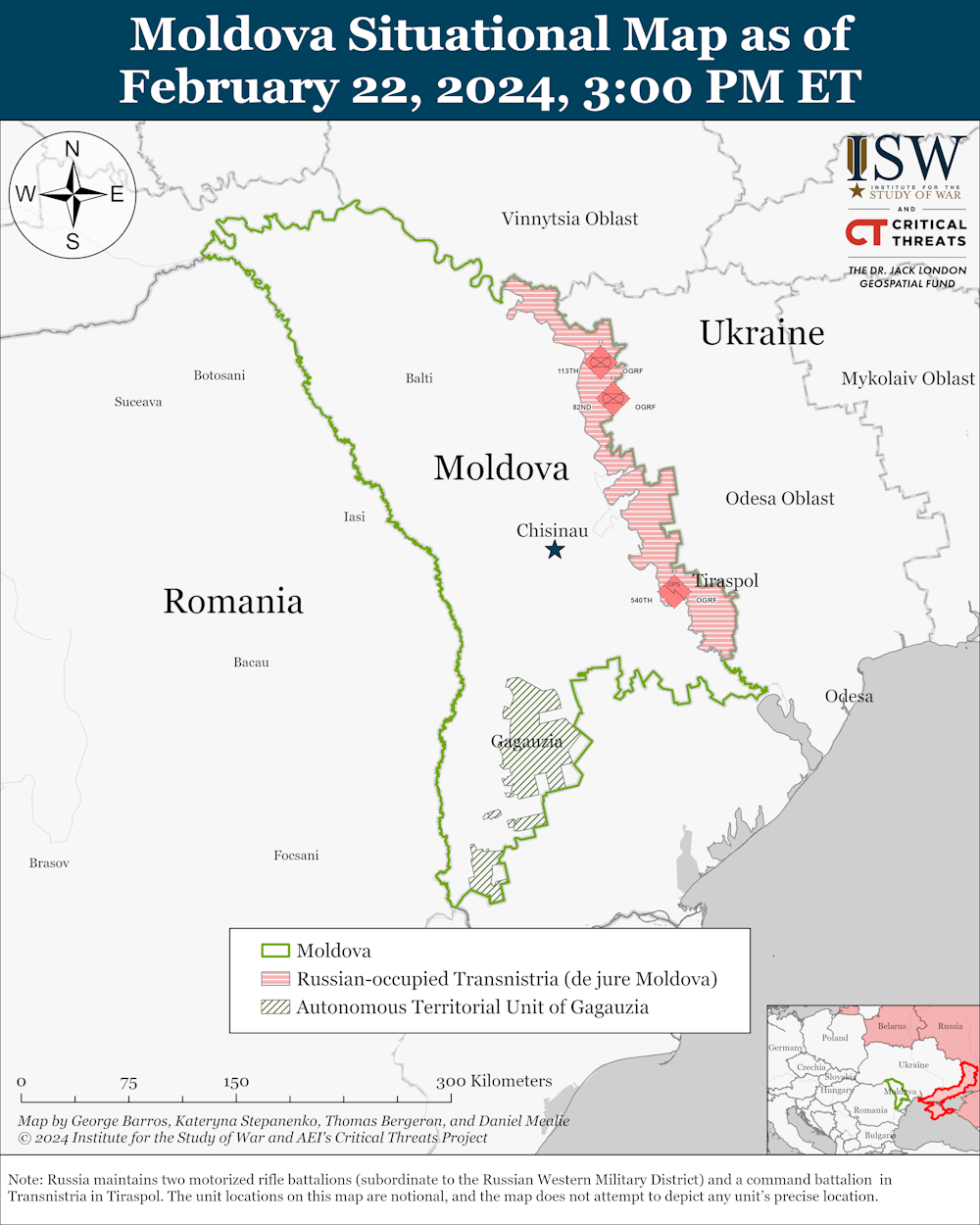
In the country’s second-largest city, Balti in the north, he won 70% of the vote, compared to Sandu’s 30%. In the southern autonomous region of Gagauzia, a hotbed of pro-Russian, anti-European activism, Sandu obtained less than 3%. In Transnistria, Sandu came away with just 20% of the vote.
Map of Moldova showing the breakaway regions of Transnistria and Gaugazia. Institute for the Study of War
These results are not surprising, given the outcome of the first round of the elections. But they represent fall in support for Sandu compared to in 2020, when she beat the then incumbent, socialist party leader Igor Dodon. Four years ago, Sandu obtained over 250,000 votes more than Dodon, winning almost 58% of the total vote. While she took the overwhelming share of the diaspora vote then as well, she also bested Dodon in most constituencies in the south.
Dodon campaigned for Stoianoglo in this election, but much of the challenger’s support was very probably due to a massive pro-Russian interference campaign that capitalised on many Moldovans’ fears and frustrations. Pro-Moscow messages aimed to capitalise on fears about being dragged into Russia’s war against Ukraine.
But there was also frustration with a government that has made little progress on much needed anti-corruption reforms and presided over a serious cost-of-living crisis in the aftermath of the Covid-19 pandemic and made worse by the war on Moldova’s eastern neighbour. Sandu’s party, the Party of Action and Solidarity (PAS) won a commanding majority in the 2021 elections – so failures of the government are seen as failures of Sandu and her agenda.
Challenges ahead
That Sandu won the presidency again, and against these odds, demonstrates her resilience. But it can’t be taken for granted that her party will similarly prevail in parliamentary elections due by the autumn of 2025. She may well be forced into a difficult cohabitation with a potentially socialist-led government next year. In a parliamentary democracy, in which the powers of the government by far exceed those of the president, this could significantly slow down Moldova’s EU accession negotiations.
But there are also some silver linings on the horizon. That Sandu won clearly demonstrates the limits of Russian interference. There is a core part of the Moldovan electorate that cannot be swayed by Russian misinformation or vote buying. This is a basis on which Sandu and PAS can build.
Perhaps more importantly, Sandu and Stoianoglo both sent conciliatory signals on election eve. Stoianoglo emphasised the importance of respecting the outcome of the democratic process and expressed the hope that Moldovans would now move beyond hatred and division. Sandu acknowledged the concerns of those who had not voted for her and promised to serve as the president of all Moldovans and to work for the country’s further development.
If they both stay true to their word, Moldova may finally break with a past of repeated political crises and economic stagnation.
Stefan Wolff is a past recipient of grant funding from the Natural Environment Research Council of the UK, the United States Institute of Peace, the Economic and Social Research Council of the UK, the British Academy, the NATO Science for Peace Programme, the EU Framework Programmes 6 and 7 and Horizon 2020, as well as the EU’s Jean Monnet Programme. He is a Trustee and Honorary Treasurer of the Political Studies Association of the UK and a Senior Research Fellow at the Foreign Policy Centre in London.
Increasing rights for Indigenous people and local communities was one of the few steps forward at Cop16. Philipp Montenegro, CC BY-NC-ND
Progress at the UN’s biodiversity summit, Cop16, in Cali, Columbia, has been slow. Frustratingly so.
There were high hopes that the Colombian hosts could coordinate action between developed and developing countries towards reaching the landmark global biodiversity agreement reached in Montreal, Canada at Cop15 two years ago. But after two weeks and one long night, negotiations ended abruptly. Many delegates had to leave to catch flights home with key issues unresolved.
This conference started with alarming news that the latest edition of the red list – the official record of threatened species – shows that more than one third of tree species face extinction in the wild. That’s more than the number of threatened birds, mammals, reptiles and amphibians combined.
Urging negotiators to recognise the seriousness of this nature crisis, Colombia’s president Gustavo Petro warned they were facing “the battle for life”.
There was certainly no shortage of people seeking solutions.
In the heart of the city, Cop16’s green zone hosted vibrant music, film screenings, indigenous arts and crafts. Local people, businesses and conference delegates discussed creative and collaborative ways to address the nature crisis.
Over in the blue zone, the official conference space, there was a notable increase in the diversity of communities participating across side events and pavilions. The links between biodiversity and human health were highlighted. So too was the importance of nature for water and food security.
In his opening video message, UN secretary general Antonio Guterres urged countries gathered to “engage all of society” as “la Cop de la gente” (a Cop of the people).
So protests from Indigenous people and local communities were particularly powerful. Including greater recognition for these groups in the final decisions from the meeting was a rare sign of progress. A new fund to ensure that these groups would receive a share of the profits from the commercial use of digital sequence information – genetic information from native plants and animals – was another victory.
A new set of principles developed by the UK government to prioritise gender issues in conservation and ensure fair access to the benefits biodiversity action for all marginalised groups received widespread support.
The focus on economic resilience was more prominent than ever, with two days dedicated to business and finance. In 2018, only 300 businesses attended Cop14 in Egypt. In Cali, this number was 3,000.
Delegates assemble for the negotiations at Cop16. Philipp Montenegro, CC BY-NC-ND
Private investors, pension funds, the insurance industry and public banks stressed the importance of creating robust measures of biodiversity improvement. Business sectors focused on transition plans that could support fair and transparent means of reporting progress. The nature tech sector is growing too, with start-ups expected to attract up to $2 billion (£1.5 billion) in investments by the end of 2024.
Back in the negotiating halls, delegates faced an uphill struggle. Only 44 out of 196 national plans to protect biodiversity have been updated to reflect the new targets. So, it’s no surprise that a gap is widening between current reality and the ambitious set of 23 targets which governments must reach by 2030. While countries agreed to a progress review in 2026, no consensus was reached on the indicators to be used. Progress was painfully slow.
Negotiators debated how the global agreement on biodiversity should interact with its sister conventions on climate and desertification. Further discussions next year might identify how this could work but this probably won’t lead to drastic change. Some countries, including India and Russia, still seemed unwilling to accept the critical risks posed to nature and society of exceeding the 1.5°C global target for climate change.
Many developing nations were concerned that greater integration between the climate crisis and biodiversity would lead to “double counting” of funding with the danger that developed countries could backtrack on their promises to support dedicated action on nature. Others, including the EU, argued that action to conserve and restore nature was an essential part of tackling all environmental and societal global challenges.
The deadlock between these positions continued for days. In the final hours of Cop16, negotiators reached a compromise that sets out a more integrated pathway for bringing action on climate and nature together. While the effects of climate change directly exacerbate biodiversity loss, restoring nature can be a powerful tool in the fight to mitigate the climate crisis and benefit biodiversity. Nature-based solutions – measures like restoring peatlands and wetlands, planting trees and mangroves – help build that resilience.
Heads of state and ministers joining at the midpoint of the meeting pointed out the need to ensure that nature is protected both for its own sake and for the communities that depend on healthy ecosystems for their livelihood and wellbeing.
But at the end of a long final night, these words were not accompanied by concrete plans for action or the financial commitments about how nature protection should be paid for that many at Cop16 were hoping for.
Whole of society, all of government?
The global biodiversity agreement set in 2022 called for a whole of society approach to address the nature crisis. Cop16 certainly delivered. From local communities to huge businesses, there was a spirit of rolling up sleeves and putting investment and innovation to work using nature-based solutions to restore and conserve biodiversity.
One of many packed side-events which bought the ‘whole of society’ together at Cop16. Philipp Montenegro, CC BY-NC-ND
The same energy and commitment was clear from many of the local and sub-national governments assembled at Cop16. The first gathering of Mayors for Nature demonstrated significant commitment to action.
Leaders from California and Quebec set the tone by investing in large-scale programmes, with Quebec not only committing to fund their own biodiversity action but also contributing to the global biodiversity fund – the first regional government to do so.
But national governments struggled to move forward. The complexity of addressing biodiversity and its necessary interactions with sectors such as agriculture, transport and mining, as well as concerns over historic injustices between developing and developed countries, was perhaps too much for Cop16 to resolve.
The risk is that, as governments navigate these challenges, the private sector could accelerate action without scrutiny. I worry that the lack of policy coordination could deter investors and slow the pace of action that local communities and regional governments want to make. Rather than waiting for global consensus, groups can catalyse change while holding each other accountable to make swift progress to save nature.
Don’t have time to read about climate change as much as you’d like?
Harriet Bulkeley receives funding from the European Commission and currently serves as an advisor to the UK Department of Environment, Food and Rural Affairs.
VATICAN/ANGELUS – All Saints Day: “How much hidden saintliness there is in the Church!”Vatican City (Agenzia Fides) – The Beatitudes are “the Christian’s identity card” and “the way to holiness”. This was stated by Pope Francis during the Angelus prayer on the Solemnity of All Saints Day.Referring to the Gospel of the day, the Pope recalled that holiness is both “a gift from God” and “our response to God”.“It is a gift from God because, as Saint Paul says, it is He who sanctifies. With His grace, He heals us and frees us from all that prevents us from loving as He loves us, as Blessed Carlo Acutis used to say, there may always be ‘less of me to make room for God’”, stressed the Bishop of Rome, adding that God “offers us His holiness, but He does not impose it. He leaves us the freedom to engage in his plans”.All this, Pope Francis continued, “we see all of this in the life of the saints, even in our time”. In this context, the Pope recalled Saint Maximilian Kolbe, Saint Teresa of Calcutta and Saint Oscar Romero: “We we can make a list of many saints, many of them: those we venerate on the altars and others, that I like to call the saints “next door”, the everyday ones, hidden, who go forward in their daily Christian life”.“How much hidden saintliness there is in the Church!” said the Pope. “We recognize so many brothers and sisters formed by the Beatitudes: poor, meek, merciful, hungry and thirsty for justice, workers for peace. They are people “filled with God”, incapable of remaining indifferent to the needs of their neighbour; they are witnesses of shining paths, possible for us too”.After the Angelus, the Pope’s thoughts turned to the Holy Land and he warned: “War is always a defeat, always! And it is ignoble, because it is the triumph of the lie, of falsehood.” He recalled the suffering of the innocent: “I think of the 153 women and children massacred in Gaza in recent days,” said the Pope, who described the war not only as a triumph of lies, but also of falsehood, because “they seek the greatest self-interest and the greatest damage to the enemy, trampling on human lives, the environment, the infrastructure, everything; and all of this is disguised with lies,” said the Pope. He again called for prayer: “Let us pray for tormented Ukraine, let us pray for Palestine, Israel, Lebanon, Myanmar, Sudan, and for all the peoples who are suffering because of war.” Pope Francis also expressed his “closeness to the people of Chad, in particular the families of the victims of the grave terrorist attack a few days ago, as well as those who have been affected by floods. And in the face of these environmental disasters, let us pray for the populations of the Iberian Peninsula, especially the Valencian community: for the deceased and their loved ones, and for all the damaged families. May the Lord sustain those who are suffering, and those who are bringing relief”.Finally, thinking of tomorrow, Saturday 2 November, the day on which the deceased are commemorated, Pope Francis recalled: “Those who can, go in these days to pray at the tomb of your own loved ones. Let us not forget: the Eucharist is the greatest and most effective prayer for the soul of the departed”. (FB) (Agenzia Fides, 1/11/2024)
Share:
by Cosimo GrazianiBaku (Agenzia Fides) – From 11 to 22 November the annual Conference of the Parties (COP) of the United Nations Framework Convention on Climate Change will take place, in its 29th edition. This year the conference will take place in Baku (Azerbaijan), a country whose economy and development are based on the exploitation of hydrocarbons.It is not the first time that the COP has been organized by an oil or gas producer: last year it was the turn of the United Arab Emirates, and in 2012 it was Qatar. But this and other aspects of the host country, combined with the current political situation around the world, make this year’s conference a particularly important event, not only in terms of environmental issues.The COP29 discussions will focus on revising the collective objectives in terms of their financing. The aim is to formulate new economic targets to help developing countries adapt and mitigate the effects of climate change. The starting point is the commitment made by developed countries, historically responsible for the majority of CO2 emissions, had made way back in 2009, that is, to allocate 100 billion dollars per year. In the current situation, that annual figure is no longer sufficient and will necessarily have to be raised.It remains to be seen whether it will be objectively achieved, since the previously set threshold of $100 billion per year has never been reached.Another important topic on the agenda is the revision of Article 6 of the Paris Agreement, which regulates emissions trading between states.In terms of organizing the Conference, Azerbaijan has been coordinating in recent years with the United Arab Emirates and Brazil, the next organizer of the COP, in order to link the agenda as much as possible with the past and the future.As part of this year’s activities, Azerbaijani organizers have launched a number of environmental initiatives in parallel with the negotiations surrounding the event. These include the creation of a platform for dialogue between private individuals, government bodies and non-governmental organizations to help developing countries prepare and submit their Biennial Transparency Reports (BTRs), which all countries must submit from this year onwards, to document the measures they have taken to combat climate change.However, there is a serious risk that environmental issues will be pushed into the background and overshadowed by issues affecting the host country itself.Two issues in particular are at the heart of the criticism levelled at Baku in the run-up to the conference: the weight of hydrocarbons in the national economy and the profile of the political regime.The state-owned Azerbaijani hydrocarbon company Socar will increase gas production in the coming years to fulfill contracts with European countries, for which Azerbaijan is the country that has replaced Russia in supplying energy sources. It is therefore questionable to what extent the country can really contribute to an effective climate agreement and whether critical voices can really be heard at the conference. The COP29 regulations, meanwhile, contain a provision in Article 16 requiring compliance with the laws of the Republic of Azerbaijan, which may be intended to silence critical voices. The Azerbaijani government, meanwhile, responded to such interpretations by stressing that foreign interference in the proceedings of the conference would not be accepted. However, the participation of representatives of non-governmental organizations is a cornerstone of the conference negotiations, and restricting their presence could affect the decision-making process and the final outcome.Even more important is the possible entanglement of the COP with sensitive foreign policy issues. For months, Baku has been sending the message that it is seeking a “peace COP” in clear connection with the crisis between Armenia and Azerbaijan, even if the explicit references so far concern crises in Europe and the Middle East. (Agenzia Fides, 4/11/2024)
Share:
New Delhi (Agenzia Fides) – The Indian edition of Pope Francis’ new encyclical “Dilexit Nos”, published on October 24, aims to bring the message of Christ closer to Catholics in India and “enrich the spiritual journey of the faithful thanks to the focus on the universal and intimate nature of divine love”, said the General Secretariat of the Indian Bishops’ Conference during the presentation of the encyclical, which has already been translated and published by the in-house publishing house, so that the Indian faithful “can appreciate its spiritual benefits and can be inspired with joy in their lives”.At the presentation, which took place yesterday, November 3, in New Delhi, the Secretary General of the Bishops’ Conference and Archbishop of Delhi, Anil Joseph Thomas Couto, also reminded the faithful of the 350th anniversary of the apparition of the Sacred Heart of Jesus to Saint Margaret Mary Alacoque, an event still celebrated by the Catholic Church today as a testimony to Christ’s perennial love for humanity. “The encyclical,” he stressed, “invites the baptized to immerse themselves in the heart of Christ, which Pope Francis describes as the incarnation of the tangible and transforming nature of God’s love, a love deeply rooted in the realities of daily life, both in moments of hardship and struggle and in those of silent contemplation.” Indian Christians, he hoped, “can draw inspiration from the heart of Christ.” The Archbishop also underlined the special importance of the message of Pope Francis’ encyclical for India: this message touches “the diverse social and cultural landscape of the country and nourishes a spirituality marked by mercy and compassion,” he said.An example of a person who has witnessed the merciful love of the Sacred Heart of Jesus throughout her life in India is Sister Marienie of the Congregation of the Apostolic Carmel (founded in India in 1870), who died of cancer in Kerala last October 21 at the age of 58. The nun, who was very devoted to the Sacred Heart, had become the ‘Amma’ (mother) of hundreds of mostly Muslim women in the Malappuram district of Kerala and dedicated herself to their social development, education, professional, human and spiritual support. The nun had been in charge of the ‘Fatimagiri Social Service Centre’ since 2010. She helped the women in the villages in their daily lives, both in emergency situations (after floods or natural disasters) and with regular educational programs that significantly improved the lives of women and their families. The Bishop of Calicut, Varghese Chakkalackal, remembered her as “a consecrated woman who, filled with the love that emanates from the Sacred Heart of Jesus, touched people with her love and brought compassion and healing to everyone she served”. (PA) (Agenzia Fides, 4/11/2024)
Share:
Abuja (Agenzia Fides) – “Our young people are excessive consumers of hard drugs and do all kinds of unimaginable things. They arm themselves, steal and kidnap fellow citizens. How can we explain that today people are being killed senselessly, as if human life were not precious and inalienable?”, said Lucius Iwejuru Ugorji, Metropolitan Archbishop of Owerri and President of the Catholic Bishops’ Conference of Nigeria (CBCN). According to the archbishop, the “explosion of crime in Nigeria is linked to the spread of drugs among young people”, pointing to the consumption of hard drugs as a key factor in criminal acts that seriously endanger peaceful coexistence in the country.The prelate recalled the Biafra conflict, expressing his concern: “It seems that we are suffering more than during the 30-month war between Nigeria and Biafra, caused by the sheer greed of our leaders,” referring to the civil war that took place between 1967 and 1970. Msgr. Ugorji also questioned the origin of the violence, stating that “if these horrible things had not been caused by the use of hard drugs, what would we have attributed these actions to?”. He also stressed that “the perpetrators of these crimes come from our communities. They do not come from nowhere. They are not really unknown gunmen, as they are often described.”According to the 2018 UNODC report ‘Drug use in Nigeria’, which was the first large-scale national survey on drug use in Nigeria, one in seven people (aged 15 to 64) has used drugs in the past year. In addition, one in five people who have used drugs in the past year suffer from drug-related disorders.Also, according to the UNODC, drug use is behind many crimes such as theft, burglary, prostitution and shoplifting. There are also crimes directly related to drug trafficking. Gangs and criminal networks involved in drug trafficking resort to bribery, intimidation and murder to protect their business. Violence associated with drug trafficking further increases the crime rate, helping to perpetuate lawlessness and insecurity.The spread of drugs among young people is also encouraged by videos of local rappers praising their use.Despite the measures taken by the Nigerian authorities to combat the phenomenon, in 2021 the number of Nigerians who are regular drug users was at least 14 million according to the Nigerian National Drug Law Enforcement Agency. Among the most popular substances, especially among young people, are cannabis, cocaine, heroin, diazepam, tramadol, amphetamines and codeine.In Nigeria, a bill is being considered to sentence drug traffickers to the death penalty, which is provoking strong reactions from lawyers and human rights defenders, who consider it unnecessary and inhumane (the current law provides for up to life imprisonment for the most serious cases of drug trafficking). (L.M.) (Agenzia Fides, 4/11/2024)
Share:
We align ourselves with the statement made by the European Union.
As we commemorate the 75th anniversary of the Geneva Conventions, the need to reaffirm the vital rules and principles enshrined in these conventions and their continued relevance is, sadly, more acute than ever.
The ICRC’s Challenges report paints a partly gloomy picture. It reminds us of the need to continuously reaffirm our support for international humanitarian law and the central imperative of protecting civilians, who too often have to pay the highest price in situations of war.
As also pointed out in the Challenges report, new technologies present both opportunities and risks. IHL is as relevant here as in other areas. International law, including international humanitarian law, applies in cyberspace, as it does elsewhere.
Lack of respect for International Humanitarian Law – increasingly as a deliberate strategy of war – continues to be the single most important challenge for protecting people in armed conflict. Respect for these rules must be improved. Accountability is key to ensure compliance, but also to prevent and deter future violations. The work to strengthen the compliance and implementation of International Humanitarian Law therefore requires effective measures to ensure accountability.
To ensure the effective protection of all civilians under IHL we must acknowledge that different groups are affected in different ways. All persons, including women and men, girls and boys, experience armed conflicts differently. Sweden welcomes that the resolutions include clear gender perspectives. Recognizing the distinct needs, vulnerabilities and capacities is essential for both a fair and effective implementation of international humanitarian law and for delivering humanitarian assistance to those in greatest need. This includes investing in women’s leadership in emergency response.
We must also acknowledge the importance of integrating a climate perspective, not least in our work with disaster risk reduction and anticipatory action.
We support the mandate of the ICRC and express our gratitude for their invaluable work., Serving as the guardian of International Humanitarian Law and acting as a neutral intermediary, the ICRC continues to play a pivotal role in current conflicts. We also commend the IFRC, and the national societies for their essential and locally led efforts in prevention, protection, and humanitarian assistance.
It will enable an estimated £500,000 of landlord works to be completed by Catella APAM’s sustainable retrofit and principal contracting business, Vantage, on the 17,000 sq. ft. space across multiple units.
Superbowl UK, renowned for its premier entertainment and leisure experiences, will establish a new mixed use concept venue, featuring 12 bowling lanes, Crazy Club Soft Play area, interactive darts, a bar and diner, and SEGA Prize Zone Arcade, which will open in early 2025.
Superbowl UK’s new mixed use concept creates a vibrant leisure hub on Victoria Arcade and Victoria Street, building on the council’s recent transformation works to pedestrianise Victoria Street.
Superbowl UK’s exciting plans to bring this empty retail space back to life align to the council’s vision for the city centre – based on better connectivity, more homes, jobs, skills and learning opportunities and investment in the visitor economy – and demonstrates how town and city centre retail can be adapted to create a more vibrant city centre.
The benefits of this approach are already showing with independent tourism STEAM data highlighting an increase of visitors to the city from 9.8 million to over 10 million last year.
Councillor Chris Burden, City of Wolverhampton Council Cabinet Member for City Development, Jobs and Skills, said: “This is exactly the type of new development our extensive works on Victoria Street were designed to attract and it will be great to see works starting on site soon now that planning approval has been granted.
“The scheme provides a major boost to the city centre’s leisure offer for residents and visitors, creates jobs for local people, increases footfall and dwell time to support current and emerging businesses, and complements plans coming forward for major regeneration around the Market Square area in partnership with the ECF.
“The Superbowl UK investment, will ensure the currently vacant retail space will be occupied, boosting the local economy, and creating 30 new job opportunities for residents, including management positions and guest experience hosts.
“The development will also serve as a catalyst for further investment, and the council continues to work with Catella APAM on attracting other new leisure and food and beverage occupiers, to capitalise on their confidence in the city.”
Harry Wilce, Asset Manager at Catella APAM, said: “We are delighted to welcome Superbowl UK to the Mander Centre as the main anchor for our leisure offer to improve the customer offer at the centre and extend the operating hours, generating significant increase in footfall for the city centre.”
An incentive to encourage local businesses to switch to second-hand electric vans has seen all 25 available incentives successfully applied for in just six weeks.
When the scheme launched on 16 September, local businesses had an opportunity to apply for funding towards the purchase of a second-hand electric van on a first-come, first served basis, as part of the Government of Jersey’s incentive to reduce the Island’s transport emissions.
The Minister for the Environment, Deputy Steve Luce, said: “I’m pleased to see such an immediate and positive response from local businesses to the second-hand electric van incentive. This shows a real desire from businesses to switch to electric and support Jersey’s decarbonisation efforts.
“Business transport vehicles are responsible for a significant proportion of our transport emissions, so by making the switch to electric, businesses are supporting with the Island’s transition towards a more sustainable transport future.”
A separate Electric Vehicle Purchase Incentive (EVPI) continues to be available to both individuals and businesses; at a value of up to £3,500 towards the cost of an electric car or van, or up to £300 towards the cost of an electric moped or motorcycle.
Due to the successful uptake of this to date, it is likely to close by the end of 2024. For more information about the Electric Vehicle Purchase Incentive, visit: gov.je/GoElectric.
Derry community organisations honoured at 2024 Pride of Place Awards
4 November 2024
Eglinton’s Aspace2 and DEEDS (Dementia Engaged and Empowered Derry and Strabane) in Creggan were celebrating at the weekend as they received national recognition for their key role in the community. Both organisations received runners up awards at the prestigious IPB Pride of Placer Awards which were announced in the Hillgrove Hotel in County Monaghan on Saturday night.
Aspace2, who support adults with additional needs in learning additional skills to allow them to fulfil their potential, received the runners up award in the Community Wellbeing Initiative category of the Main Competition. DEEDS, a community based model of support for people living with dementia, their carers and families, finished runners up in the Community Wellbeing Initiative city category. Mayor of Derry City and Strabane District Council, Councillor Lilian Seenoi-Barr, represented the Council area at the awards where she was joined by representatives of both organisations. “I am so proud to see these two brilliant local initiatives recognised on the national stage,” she said. “These awards rightly celebrate and recognise the selfless efforts of people to make their local neighbourhoods better places to live, work and socialise and these two projects embody that spirit.
“I appreciated the opportunity to spend the evening with their teams and acknowledge the key work they do to give people with additional needs the support and guidance they need to get the most out of life.” The DEEDS Project has grown immensely over the last ten years thanks to the support from the National Lottery Community Fund. From one single memory group based in Creggan it has expanded into an organisation that boasts six social groups, two activity groups, a choir, carers education, carers drop in, intergenerational work, connection to the community, large scale Dementia friendly events and trips, and a suite of training and education courses. More recently it launched a pre-diagnosis programme in partnership with the Western Health and Social Care Trust, the first of its kind in Northern Ireland. DEEDS offer members a chance to meet other people in a friendly and relaxed environment and in a weekly social group in their own community or join an activity group where they can take part in different activities, learn new skills or practice old ones. Aspace2 is a Community Interest Company (CIC) and Aspace2 Multisensory Centre is a registered charity located in the rural community of Campsie. The building at Aspace2 has been customised to an extremely high standard to meet the accessibility needs of all attending the centre. The vision of Aspace2 is to provide a service that supports adults with additional needs to learn the skills necessary to live an independent, purposeful lifestyle and grow to make informed, fulfilling life choices in an age appropriate, respectful, and inclusive manner. Training is user-led, trainees’ individual pathways are chosen to reflect their future learning and or employability choices. Employability Training is offered in the catering school and factory floor coffee shop, retail training is offered in the Artspace shop and creative opportunities are provided in the art rooms and upcycling studio. Aspace2 strives to nurture the potential of people with a disability to thrive in a socially inclusive society. For further details of all the nominees for the Pride of Place Awards and to watch the awards back visit the Pride of Place Awards at prideofplace.ie
On October 31, 2024, a corporate governance forum was held in Moscow, organized by the Moscow Exchange.
The forum brought together more than 500 participants and guests of the event, who represented over 300 companies.
The panel discussions featured representatives of the Bank of Russia, the Ministry of Finance, the Moscow Exchange, major Russian issuers, investors, professional communities, as well as corporate secretaries and recognized experts in this field.
The leitmotif of the forum was the challenges that the corporate governance system of companies has to face in the process of their IPO and in their further activities. The participants of the discussions considered the importance of corporate governance, including the role of information disclosure for the formation and development of capital markets in modern conditions. The speakers touched upon the topics of improving this system as a key element in increasing trust in financial markets, as well as ensuring the protection of the rights and interests of shareholders.
Particular attention was paid to the significance of the Corporate Governance Code adopted ten years ago and its impact on strengthening the system of relationships between management, the board of directors, shareholders of the company and other stakeholders. The forum participants discussed how this document contributes to increasing the transparency and efficiency of public companies, whether it should be amended and what prospects await its development in the future.
Elena Kuritsyna, Senior Managing Director for Issuer and Government Relations at Moscow Exchange:
“I am glad that the forum has become a space for constructive and open dialogue between representatives of government agencies, the regulator, business and the expert community. I am confident that its results will be used both for sharing experiences and developing effective solutions for interaction between issuers and investors, and for further improvement of legislation and corporate governance practices. I would like to thank all participants and guests of the forum for their active participation and contribution to the discussion of the most important issues of corporate governance development in Russia.”
At the end of the forum, a ceremonial ceremony took place award ceremony winners of the XXVII annual annual report competition.
Moscow Exchange Group operates the largest multifunctional exchange platform in Russia for trading shares, bonds, derivatives, currencies, money market instruments and commodities. The Group includes a central depository and a clearing center that acts as a central counterparty in the markets, which allows Moscow Exchange to provide its clients with a full cycle of trading and post-trading services.
Contact information for media 7 (495) 363-3232PR@moex.com
Please note: This information is raw content directly from the source of the information. It is exactly what the source states and does not reflect the position of MIL-OSI or its clients.
Please note; This information is raw content directly from the information source. It is accurate to what the source is stating and does not reflect the position of MIL-OSI or its clients.