Category: Europe

  • MIL-OSI Economics: François Villeroy de Galhau: Fintechs – at the forefront of “new frontiers”

    Source: Bank for International Settlements

    Ladies and Gentlemen,

    I am delighted to welcome you to the Banque de France for this fifth annual Fintech Forum, organised jointly by the ACPR and AMF. I would like to extend a warm welcome to Marie-Anne Barbat-Layani, Chair of the AMF, and to thank Clara Chappaz, Secretary of State for Artificial Intelligence and Digital Technologies, for her presence at the close of this morning’s proceedings. We created this Forum with a simple aim: to show that the Banque de France, and our Authorities, are as much those of the fintechs as they are of the incumbent players, and that innovation and regulation do not necessarily constitute an odd couple.

    Today I would like to illustrate this with a continuity, a break with the past, and a challenge. First, the continuity: while the first few months of 2024 have witnessed a stabilisation of the amount of funds raised, the ACPR and the Banque de France remain resolutely committed to fintechs (I). The break with the past concerns the surge in artificial intelligence: the ACPR stands ready to assume the role of “market supervisor” for the French financial sector (II). Lastly, the challenge is one of balancing openness and trust: as from next January, DORA legislation will provide more trust – as well as more requirements (III).

    I. Continuity: the commitment of the Banque de France and the ACPR to the innovative ecosystem

    1. A stabilising financial environment

    After the heady years of 2021 and 2022, followed by a sharp downturn in 2023,i funds raised by French fintechs stabilised in the first half of 2024 at EUR 560 million, compared with EUR 568 million in the first half of 2023.ii Therefore France is still the EU’s biggest market, ahead of Germany (nearly EUR 500 million), but continues to lag well behind the United Kingdom (EUR 1.3 billion). This stabilisation is due in particular to the shift in monetary policy: the last increase in key rates was in September 2023, and since then we have cut rates twice by 25 basis points, in June and September, as a result of the sharp fall in inflation. I will refrain from saying any more as we are in a “silent period”.

    MIL OSI Economics

  • MIL-OSI United Kingdom: Meeting between EU High Representative and Vice-President and Foreign Secretary: joint press release, 14 October 2024

    Source: United Kingdom – Executive Government & Departments 3

    Foreign Secretary David Lammy and EU High Representative Josep Borrell reaffirmed the importance of the relationship between the EU and the UK for European security.

    EU High Representative and Vice-President Josep Borrell and Foreign Secretary David Lammy in Luxembourg.

    The United Kingdom Secretary of State for Foreign, Commonwealth and Development Affairs, Rt Hon David Lammy MP, and the EU High Representative for Foreign Affairs and Security Policy, Josep Borrell, met today ahead of attending the EU Foreign Affairs Council to exchange views with EU Foreign Affairs Ministers on shared security challenges facing Europe. 

    The Foreign Secretary and the High Representative reiterated their ironclad commitment to maintain support to Ukraine as it defends its freedom and sovereignty against Russian aggression; and their condemnation of third-country support to Russia’s military.  

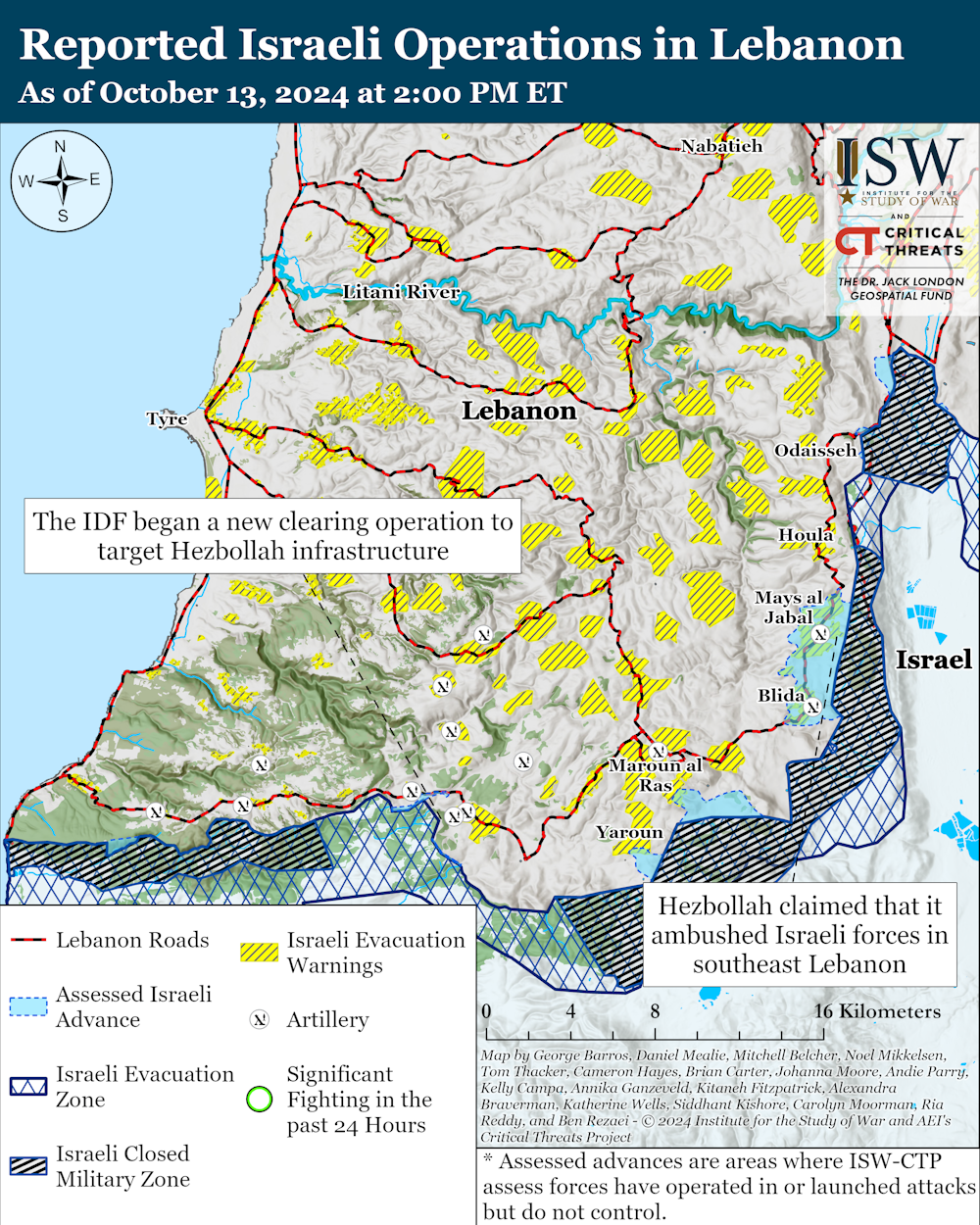
    They shared their deep concern about spiralling violence in the Middle East and call for an immediate ceasefire across the Israel-Lebanon border; and in Gaza for the release of all hostages, unhindered access for humanitarian aid and renewed focus on a two-state solution. They underline their unwavering support to UNIFIL’s role. It is vital that peacekeepers and civilians are protected. They fully support UNIFIL’s work in South Lebanon, which is mandated in UN Resolution 1701.

    They condemn Iranian attacks on Israel and its supply of ballistic missiles to Russia for use against Ukraine and are committed to sanction Iran’s regime on that account.  

    In the light of a difficult geopolitical context, the High Representative and the Foreign Secretary reaffirmed the importance of the relationship between the European Union and the United Kingdom for European security and defence and agreed to advance work towards a security partnership to address common threats and challenges.

    They underlined the importance and value of regular exchanges and the need for the EU and the UK to stand together as close partners in security and defence. High Representative Borrell and UK Foreign Secretary Lammy agreed during their meeting that the UK and EU will establish a six-monthly Foreign Policy Dialogue between the UK Foreign Secretary and the EU High Representative for Foreign Affairs, to enable strategic cooperation on the highest priority issues and first meeting in early 2025.  In addition, they also agreed to a number of regular UK-EU strategic consultations to sit underneath this on Russia/Ukraine, the Indo-Pacific, the Western Balkans and Hybrid threats. 

    In the face of an increasingly volatile and unstable world, the time is right for friends to stand together in partnership and work together on our shared foreign policy and security challenges.

    Media enquiries

    Email newsdesk@fcdo.gov.uk

    Telephone 020 7008 3100

    Contact the FCDO Communication Team via email (monitored 24 hours a day) in the first instance, and we will respond as soon as possible.

    Updates to this page

    Published 14 October 2024

    MIL OSI United Kingdom

  • MIL-OSI Economics: Gabriel Makhlouf: Opening statement – joint Oireachtas Committee on Finance, Public Expenditure and Reform, and Taoiseach

    Source: Bank for International Settlements

    Good afternoon Chair, Committee members.

    Thank you for the invitation to appear before you today. I am joined by Deputy Governors Vasileios Madouros and Derville Rowland.

    I will begin by giving a brief overview of the economic outlook in the EU and in Ireland, before I touch on some consumer protection issues.

    The economic outlook in the EU

    Turning to the outlook, growth in the euro area as a whole slowed in the second quarter of 2024, driven by weaker investment and consumption. Having said this, the latest projections are for a consumption-led growth recovery, albeit marginally weaker than what was previously expected. Employment growth is projected to be somewhat weaker than its pre-pandemic average.  

    We remain on track to reach our 2 per cent inflation target in the fourth quarter of 2025, although some uncertainty remains around this baseline forecast. In particular more persistent services inflation and stronger than expected wage growth could impact the forecast.

    At the most recent ECB Governing Council meeting, my colleagues and I decided to lower the deposit facility rate by 25 basis points, to 3.5 per cent. This was informed by the euro area inflation outlook, the dynamics of underlying inflation and the strength of monetary policy transmission.

    Last month we also implemented changes we had announced in March to the operational framework for implementing monetary policy, which sees the spread between the main refinancing operations rate (MRO) and our main policy rate – the deposit facility rate – set at 15 basis points.

    The economic outlook in Ireland

    Turning to the Irish economy, it continues to grow at a strong pace supported by the buoyancy of domestic economic activity.  Our latest Quarterly Bulletin – published last month – paints a picture of a resilient domestic economy poised to grow in the region of 2.5 per cent annually through to 2026.  Headline inflation has eased considerably to below 2 per cent, and is expected to remain between 1.5 and 2 per cent out to 2026.

    However, challenges to maintaining such performance are becoming more evident. Stronger than expected growth, over and above the economy’s potential rate, has brought into sharp focus domestic supply and infrastructure constraints. These, in turn, present a situation where globally-determined inflation in Ireland is declining substantially, while more domestically-driven inflation, as reflected in services price inflation, remains significant at around 4 per cent.

    Given current conditions, the continued expansionary fiscal stance adds unnecessary stimulus to an economy at full employment. Against the current macroeconomic backdrop, increasing net spending in excess of 5 per cent over an extended period implies that the fiscal stance will aggravate price inflation and wage pressures, undermining competitiveness and creating risks that could damage sustainable economic growth.

    As my pre-Budget letter of 4 July to the Minister for Finance – and the paper on the housing market we published last month – observed, higher levels of public investment are likely to be required over the coming years given known deficits in housing and to meet longer term structural challenges linked to the climate transition.

    So while the projected increases in public investment are necessary, careful management of the overall fiscal stance is needed to avoid overheating. With the economy already at full employment, there is a risk that increasing public investment on the scale envisaged fuels overheating pressures and results in poor value for money. To avoid this outcome, it would have been preferable if the upward revisions to public investment had been accommodated while keeping overall net spending below 5 per cent. Undoubtedly, this would have presented difficult choices and trade-offs to be made in other areas of expenditure and on taxation.

    Furthermore, to ensure additional government expenditure yields real improvements in services and that infrastructure investment is delivered efficiently, essential change outside of fiscal measures is needed in broader public policy areas. This includes in particular addressing delays and bottlenecks in the planning system, in the building regulation process and in construction. Progress in these areas would also help to further incentivise and crowd-in private investment.

    Consumer protection

    Let me turn to consumer protection.  The Central Bank’s mission is to serve the public interest by maintaining monetary and financial stability while ensuring that the financial system operates in the best interests of consumers and the wider economy. All of our work is aimed at serving the public interest and protecting consumers of financial services, whether it is through the Consumer Protection Code, the mortgage measures, monetary policy, our oversight of payments systems, or supervising to ensure firms are resilient and are acting in the best interests of their consumers.

    The environment in which we operate is changing rapidly, driven by technological change and by consumer preferences. The ways in which we as consumers buy, use and engage with financial services has changed hugely, leading to new risks in the financial sector we supervise and for the consumers we protect.

    As outlined in my two recent letters to yourselves, the Central Bank is making changes to the way we are organised to deliver our financial regulation responsibilities. Consumer protection remains a core part of those responsibilities. But in order to continue to deliver on our mandate both today and into the future, we are changing our approach to ensure that consumers of financial services are protected in an increasingly complex environment. This enhanced approach is based on accumulated experience, on insight, on best practice and is built for a faster moving and more complex financial services sector. We are making the most fundamental strengthening of our consumer protection approach for more than a decade.

    In terms of frameworks, as you know, we will shortly be introducing an updated Consumer Protection Code. This follows the largest, most in-depth review of the Code since it was introduced to ensure that it is fit for purpose into the future, is reflective of the changed nature of financial services and strengthens protections for consumers. This is a tangible demonstration of our ongoing commitment to the protection of consumers of financial services right across the country, and we have consulted widely on it to ensure we hear consumers’ and other stakeholders’ views directly.

    To implement the rules we need the right operational approach internally. This includes moving to an integrated framework where, at an operational level, directorates with oversight of banks, insurance companies and capital markets will be responsible for the supervision of all the functions of their respective sectors (as opposed to separate directorates undertaking supervisory activities for consumer protection, prudential regulation and market supervision).  

    The new approach will make it easier to direct our supervisory resources to the areas of most risk to consumers or the system more widely. Importantly, we are taking the existing team that stood in a single consumer protection directorate and placing them where their expertise is most required, directly in supervisory directorates across banks, insurance and funds. ‘Mainstreaming’ consumer protection activity in this way will enable us to dedicate greater attention and resources to where the particular risk is at a point in time. The new approach will allow us to do more, not less, to protect consumers.

    Let me give an example of how we see the interconnections in our work in relation to consumer protection. Next week we will publish our analysis of the shortfall between the cost of flooding in Ireland and that portion of the cost which is not insured. We know that Ireland will face more frequent and severe floods as the effects of climate change continue to crystallise and as we approach critical tipping points in a range of significant areas that increasingly require urgent action. Climate change has implications for the economy and for the financial system and floods in particular will impact directly on communities and consumers as well as the balance sheets of insurance companies. We cannot require insurance companies to provide flood insurance cover but our analysis can help everyone to understand the risks and support the cooperation and coordination required from the many stakeholders involved in building flood resilience in Ireland.

    Finally, and as set out in my letter, the internal operational changes that we are making will not change the focus on consumer protection at the most senior levels of the Central Bank. Derville Rowland, as Deputy Governor (Consumer and Investor Protection), will continue to have consumer protection at the core of her responsibilities. The Central Bank Commission’s Consumer Advisory Group will also continue to operate as it does now. And the entire senior leadership team led by me will continue to have a focus on consumer protection.

    These changes will come into effect in January and we are convinced that they are the best way for the Central Bank to continue to deliver on its mission, ensuring the financial system continues to operate in the best interests of consumers and the wider economy.

    Conclusion

    We are happy to take your questions.

    MIL OSI Economics

  • MIL-OSI United Kingdom: Make sure you are eligible for Pension Credit

    Source: Scotland – City of Dundee

    Pensioners across Dundee are being encouraged to apply for Pension Credit. 

    On average, this could be an extra £3,900 a year. 

    From this year, pensioners who receive pension credit are automatically eligible for the Winter Fuel Payment. 

    The Council’s Advice Services team will be directly targeting households that may be eligible for Pension Credit. The team will be calling, emailing and carrying out face-to-face activities to assess eligibility and assist with the application process. 

    In addition, the Council will be working with partners, including the DWP and Dundee Citizens Advice Bureau, in the coming weeks to encourage people to apply for this benefit. 

    The last date to make a successful backdated claim for Pension Credit to receive this year’s Winter Fuel Payment is 21 December. Applicants need to request 3 months backdating when a claim is made in order to qualify. 

    Since February this year nearly £1.5 million has been paid to the pensioners of Dundee in various benefits, with the average Pension Credit award being £63.51 per week. 

    Pension Credit is a payment for those whose income is less than the UK Government states someone over Pension age should receive.    

    Entitlement to Pension Credit depends on a person’s circumstances and looks at all the income in the household as well as savings over a certain amount. Whilst savings are considered, there is no upper threshold, so having savings does not necessarily mean there would be no entitlement.    

    Pension Credit also gives eligibility to free NHS dental treatment, NHS glasses, free TV License for over 75s, amongst other benefits.    

    Anyone looking to get a benefits check should contact us on cas@dundeecity.gov.uk or via our Older Peoples Take-up Campaign line on 01382 434474.

    Council Leader Mark Flynn said: “Since the launch of this campaign, we’ve managed to get nearly £1.5 million into the pockets of pensioners across the city.  

    “We know that many people will struggle with their heating bills over the winter period, which is why it’s so important for them to come forward and apply for Pension Credit, as this automatically makes them eligible for the Winter Fuel Allowance. 

    “Hundreds of people are missing out on this important payment, and that needs to change. I want to highlight the great work of the council welfare rights team who are working tirelessly to contact pensions across Dundee to check eligibility and help them with their application.  

    “I have no doubt that without their hard work, many more pensioners would be struggling this winter. 

    “If you know someone who you think is eligible, please do get in touch with our team so that they can carry out a check for you.”

    MIL OSI United Kingdom

  • MIL-OSI Europe: October 2024 euro area bank lending survey

    Source: European Central Bank

    15 October 2024

    • Credit standards remained unchanged for firms in the third quarter of 2024, after more than two years of consecutive tightening
    • Credit standards eased for loans to households for house purchases but tightened for consumer credit
    • Housing loan demand rebounded strongly on the back of expected interest rate cuts and improving housing market prospects
    • Impact of policy rate decisions on bank net interest income turned negative for the first time since the end of 2022

    According to the October 2024 bank lending survey (BLS), euro area banks reported unchanged credit standards – banks’ internal guidelines or loan approval criteria – for loans or credit lines to enterprises in the third quarter of 2024 (net percentage of banks of 0%; Chart 1). Banks also reported a further net easing of their credit standards for loans to households for house purchase (net percentage of -3%), whereas credit standards for consumer credit and other lending to households tightened further (net percentage of 6%). For firms, the net percentage was lower than expected by banks in the previous survey round, although risk perceptions continued to have a small tightening effect. For households, credit standards eased somewhat more than expected for housing loans, primarily because of competition from other banks, and tightened more than expected for consumer credit, mainly owing to additional perceived risks. For the fourth quarter of 2024, banks expect a net tightening of credit standards for loans to firms and consumer credit and a net easing for housing loans.

    Banks’ overall terms and conditions – the actual terms and conditions agreed in loan contracts – eased strongly for housing loans and slightly for loans to firms, while moderately tightening for consumer credit. Lending rates and margins on average loans were the main drivers of the net easing for loans to firms and housing loans, whereas tighter consumer credit terms and conditions were mainly attributable to margins on both riskier and average loans.

    For the first time since the third quarter of 2022, banks reported a moderate net increase in demand from firms for loans or drawing of credit lines (Chart 2), while remaining weak overall. Net demand for housing loans rebounded strongly, while demand for consumer credit and other lending to households increased more moderately. Lower interest rates drove firms’ loan demand, while fixed investment had a muted effect. For housing loans, the net increase in housing loan demand was mainly driven by declining interest rates and improving housing market prospects, whereas consumer confidence and spending on durables supported demand for consumer credit. In the fourth quarter of 2024 banks expect net demand to increase across all loan segments, especially for housing loans.

    Euro area banks reported a moderate improvement in access to funding for retail funding, money markets and debt securities in the third quarter of 2024. Access to short-term retail funding improved, whereas access to long-term retail funding remained broadly unchanged. For the fourth quarter of 2024, banks expect access to funding to remain broadly unchanged across market segments.

    The reduction in the ECB’s monetary policy asset portfolio had a slightly negative impact on euro area banks’ market financing conditions over the last six months, which banks expect to continue over the next six months. In addition, banks reported that the ECB’s reduction of its monetary policy asset portfolio had an overall contained effect on their lending conditions, which they expect to continue in the coming six months, reflecting the gradual and predictable nature of the adjustment to the ECB’s portfolio.

    The phasing-out of TLTRO III continued to negatively affect bank liquidity positions. However, in light of the small remaining outstanding amounts of TLTRO III, banks reported a broadly neutral impact on their overall funding conditions and neutral effects on lending conditions and loan volumes.

    Euro area banks reported the first negative impact of the ECB interest rate decisions on their net interest margins since the end of 2022, while the impact via volumes of interest-bearing assets and liabilities remained negative. Banks expect the negative net impact on margins associated with ECB rate policy to deepen and to result in a decline in overall profitability from the high levels reached during the 2022-2023 tightening cycle. Banks expect the impact of provisions and impairments on profitability to remain slightly negative.

    The quarterly BLS was developed by the Eurosystem to improve its understanding of bank lending behaviour in the euro area. The results reported in the October 2024 survey relate to changes observed in the third quarter of 2024 and changes expected in the fourth quarter of 2024, unless otherwise indicated. The October 2024 survey round was conducted between 6 and 23 September 2024. A total of 156 banks were surveyed in this round, with a response rate of 99%.

    Chart 1

    Changes in credit standards for loans or credit lines to enterprises, and contributing factors

    (net percentages of banks reporting a tightening of credit standards, and contributing factors)

    Source: ECB (BLS).

    Notes: Net percentages are defined as the difference between the sum of the percentages of banks responding “tightened considerably” and “tightened somewhat” and the sum of the percentages of banks responding “eased somewhat” and “eased considerably”. The net percentages for “Other factors” refer to an average of the further factors which were mentioned by banks as having contributed to changes in credit standards.

    Chart 2

    Changes in demand for loans or credit lines to enterprises, and contributing factors

    (net percentages of banks reporting an increase in demand, and contributing factors)

    Source: ECB (BLS).

    Notes: Net percentages for the questions on demand for loans are defined as the difference between the sum of the percentages of banks responding “increased considerably” and “increased somewhat” and the sum of the percentages of banks responding “decreased somewhat” and “decreased considerably”. The net percentages for “Other factors” refer to an average of the further factors which were mentioned by banks as having contributed to changes in loan demand.

    For media queries, please contact William Lelieveldt, tel.: +49 69 1344 7316.

    Notes

    MIL OSI Europe News

  • MIL-OSI Germany: October results of the Bank Lending Survey (BLS) in Germany | Credit standards for firms not tightened further

    Source: Deutsche Bundesbank in English

    For the first time in nearly three years, the German banks responding to the Bank Lending Survey (BLS) did not tighten their credit standards for loans to enterprises further in the third quarter of 2024, but eased them marginally instead. On the other hand, they once again tightened their credit standards for loans to households for house purchase and for consumer credit and other lending to households For the fourth quarter, banks are planning to tighten their credit standards for loans to enterprises again, partly owing to pessimistic market and economic expectations.
    The surveyed banks, did not, on balance, change credit terms and conditions for loans to enterprises. Terms and conditions were eased for loans to households for house purchase and tightened for consumer credit and other lending to households.
    Demand for loans increased in all three loan categories. As expected by banks, the resurgence of demand for loans to enterprises that started in the previous quarter continued. The increase in demand for loans to households exceeded the previous quarter’s expectations.
    The ECB Governing Council’s past and expected key interest rate decisions had a positive impact on net interest income, thereby contributing to an improvement in banks’ profitability in the 2024 summer half-year. For the winter half-year 2024-25, banks are expecting the key interest rate decisions to have a negative impact on their net interest income as well as on their profitability.
    The BLS covers three loan categories: loans to enterprises, loans to households for house purchase, and consumer credit and other lending to households. For the first time in nearly three years, the surveyed banks did not tighten their credit standards (i.e. their internal guidelines or loan approval criteria) for loans to enterprises further, but eased them marginally. By contrast, they tightened their standards for loans to households again. The net percentage of banks that adjusted their requirements was −3% for loans to enterprises (compared with +3% in the previous quarter), +7% for loans for house purchase (compared with +7% in the previous quarter), and +15% for consumer credit and other lending to households (compared with +7% in the previous quarter). In the previous quarter, banks had planned to tighten their standards marginally for loans to enterprises. By contrast, the adjustments in loans to households for house purchase were broadly consistent with what had been planned in the previous quarter; standards for consumer credit and other lending to households were tightened more strongly than planned.
    The recent marginal easing of credit standards for loans to enterprises took place against the backdrop of many and varied low-impact factors – an indication of banks’ uncertain assessments of the general situation. While banks indicated that the general economic situation and the economic outlook were having a restrictive impact on all loan categories, only loans to households have been subject to a tightening of credit standards thus far.

    The banks cited their perception of increased credit risk as the key factor behind the tightening of credit standards for loans to households, attributing this to households’ lower creditworthiness. For the fourth quarter of 2024, banks are planning to tighten credit standards for loans to enterprises and consumer credit and other lending to households, but are not planning to adjust the standards for loans to households for house purchase.
    Although, on aggregate, banks made hardly any changes in the third quarter to their credit terms and conditions (i.e. the terms and conditions actually approved as laid down in the loan contract) for loans to enterprises, this conceals lower lending rates on the one hand and an increase in margins on riskier loans on the other. Terms and conditions for loans to households for house purchase were eased, on the whole. The expansionary adjustments are the outcome of reduced lending rates and lower margins irrespective of credit ratings. As regards consumer credit and other lending to households, meanwhile, limits on loan amounts and increased margins irrespective of credit ratings were the main reasons for the tightened credit terms and conditions overall.
    Demand for bank loans in Germany rose on balance in all loan categories in the third quarter of 2024. The pick-up in demand for loans to enterprises that had begun in the previous quarter continued. This was consistent with banks’ expectations in the previous quarter. Banks saw the decline in the general level of interest rates as the main reason for the increase in demand. For the first time in around two years, this factor no longer dampened, but rather supported, firms’ demand for loans. In addition, funding needs for debt refinancing, restructuring and renegotiation increased. After a second quarter in which fixed investment had been the main driver of overall demand growth, only small and medium-sized enterprises demanded marginally more lending for this purpose in the third quarter. The “inventories and working capital” factor, which had also contributed significantly to the increase in demand in the previous quarter, had an overall slightly dampening effect on demand in the third quarter, as large firms had less need for loans for this purpose. A reduction in internal financing options pushed demand slightly upwards.

    According to banks, households increased their demand for loans for house purchase mainly because they took a more positive view of the housing market outlook. In addition, the general interest rate level once again pushed up demand. Banks believe that demand for consumer credit and other loans to households increased since more durable consumer goods were being purchased and consumer confidence was on the rise. The rejection rate rose for loans to enterprises and consumer credit and other lending to households, whereas it fell for the second time in a row for loans to households for house purchase. For the next three months, the surveyed banks are expecting to see demand increase further across all three loan categories.
    The October survey round contained ad hoc questions on participating banks’ financing conditions and the impact of the ECB Governing Council’s past and expected key interest rate decisions. It also included questions on the impact of the Eurosystem’s monetary policy asset portfolios and on the third series of targeted longer-term refinancing operations (TLTRO III).
    Against the backdrop of conditions in financial markets, German banks reported that their funding situation had improved somewhat compared with the previous quarter. The ECB Governing Council’s past and expected future key interest rate decisions have had, overall, a positive impact on banks’ profitability over the past six months. However, following the two interest rate cuts in June and September of this year, fewer banks reported a positive impact than in previous surveys. Banks continued to attribute the positive impact to an increase in net interest income. For the 2024-25 winter half-year, banks are expecting the key interest rate decisions to have a negative impact on their net interest income as well as on their profitability. The reduction in the Eurosystem’s monetary policy securities holdings, taken in isolation, had a positive impact on profitability, as it contributed to an increase in net interest income. German banks assessed the impact on their capital ratios, too, as positive.
    Over the past six months, TLTRO III has had hardly any impact on the financial situation of banks in Germany. Only in terms of profitability did banks continue to report a positive impact. For the first time, TLTRO III no longer had any impact on the liquidity position of banks in Germany. As the deadline for repaying borrowed funds in full is December 2024, banks are not expecting TLTRO III to have any further impact on their financial situation over the next six months.
    The Bank Lending Survey, which is conducted four times a year, took place between 6 September and 23 September 2024. In Germany, 33 banks took part in the survey. The response rate was 97%.

    MIL OSI

    MIL OSI German News

  • MIL-OSI Russia: Polytechnic conducted an audit of the library of a partner university in Kyrgyzstan

    MILES AXLE Translation. Region: Russian Federation –

    Source: Peter the Great St Petersburg Polytechnic University – Peter the Great St Petersburg Polytechnic University –

    An expert group of the Polytechnic University information and library complex visited the Kyrgyz-Russian Slavic University (KRSU) in Bishkek. The purpose of the visit was to analyze the library collection of colleagues. The experts were interested in the readiness to transform the information support of the educational process when introducing new educational technologies from our university.

    In modern universities, an important requirement for information support of educational programs is the availability of resources at any time and in any place. This means that it is necessary to organize convenient access to electronic materials. It is also important to fill the repositories with relevant educational publications that will be useful to students.

    At meetings with the KRSU administration, the polytechnicians emphasized that the library is an important part of the university’s information system. However, upon closer examination of its work, it became clear that outdated technologies were used. The presentation of new approaches from the SPbPU Information and Library Complex interested colleagues. The KRSU library is ready to master new systems in order to integrate into the digital educational environment.

    KRSU plans to create an electronic library based on SPbPU technologies. Library staff will be trained to host educational resources and works of academic staff. This will make the library one of the most modern in Kyrgyzstan. During the development of the roadmap, activities and indicators will be determined for the successful creation of an electronic library that will provide access to educational and scientific materials and will allow tracking their popularity.

    At the international conference “The Role of Libraries in the Innovative Development of the Kyrgyz Republic”, polytechnics discussed the importance of creating an electronic library and introducing technologies for access to online resources. Participants emphasized the need to improve the skills of students and teachers in the use of electronic materials.

    Please note: This information is raw content directly from the source of the information. It is exactly what the source states and does not reflect the position of MIL-OSI or its clients.

    Please note; This information is raw content directly from the information source. It is accurate to what the source is stating and does not reflect the position of MIL-OSI or its clients.

    http://www.spbstu.ru/media/nevs/international_activize/polytech-conducted-an-audit-of-the-library-of-partner-university-in-kyrgyzstan/

    MIL OSI Russia News

  • MIL-OSI Russia: We invite you to the first inter-university career exhibition and forum Agrocon 2024

    MILES AXLE Translation. Region: Russian Federation –

    Source: State University of Management – Official website of the State –

    On October 19, 2024, the first inter-university career exhibition and forum of companies in the agro-industrial complex Agrocon 2024 will be held at the Peoples’ Friendship University of Russia, where students of all specialties are invited.

    The purpose of the event is to popularize and promote agriculture among young people, attract qualified specialists of all areas to agriculture, and facilitate the formation of a strategic partnership between the university community, agricultural companies, and government bodies.

    The event includes the following:

    Career exhibition of companies; Conducting panel discussions: o “Agroholdings and Universities”; o “Biotechnology and food security”; o “Green chemistry in agriculture”; Presentations in the interactive format AgroSlam; Conducting interactive master classes, tastings, raffles.

    Following the Agrocon 2024, it is planned to create a single platform for communication between students and agriculture, universities and agricultural companies. The creation of close ties between business and the academic environment will help build effective career paths for young professionals.

    Students can register to participate in the event through the website – Agrocon.pro.

    To coordinate the participation of the GUU staff, please contact the official representative of the Organizing Committee – A.E. Robert, e-mail: robert@agrocon.pro.

    Subscribe to the tg channel “Our State University” Announcement date: 10/15/2024

    Please note: This information is raw content directly from the source of the information. It is exactly what the source states and does not reflect the position of MIL-OSI or its clients.

    Please note; This information is raw content directly from the information source. It is accurate to what the source is stating and does not reflect the position of MIL-OSI or its clients.

    We invite you to the first inter-university career exhibition and forum Agrocon 2024

    MIL OSI Russia News

  • MIL-OSI United Kingdom: Members appointed and reappointed to the Parole Board

    Source: United Kingdom – Executive Government & Departments

    The Secretary of State has approved the appointment and reappointments of Parole Board members.

    Appointment of Independent members

    The following members have been appointed for a 5-year term from 1 May 2024 until 30 April 2029:

    • Celeste Myrie
    • Heidi Leavesley
    • Rob McKeon
    • Emma Pusill

    Reappointment of existing members

    The reappointments of 115 Parole Board members have been approved. Details of those reappointed and the duration of each reappointment are provided below.

    Judicial members

    The following member has been reappointed for a further term of 2 years from 1 October 2023 until 31 July 2025

    • HH Jeremy Roberts

    The following member has been reappointed for a further term of 5 years from 1 October 2024 until 30 September 2029:

    •  Sir Timothy King

    The following members have been reappointed for a further term of 5 years from 1 October 2022 until 30 September 2027:

    • HH Ruth Downing
    • HH Andrew Jefferies
    • HH Anthony Lowe
    • HH Barbara Mensah

    The following members have been reappointed for a further term of 5 years from 1 September 2023 until 31 August 2028:

    • HHJ Noel Lucas
    • HHJ David Nathan Miller
    • HH Marcus Tregilgas-Davey

    The following members have been reappointed for a further term of 5 years from 1 November 2023 until 31 October 2028:

    • HH John Hand KC
    • HH Peter Jones
    • HH Roger Kaye
    • HH Anne Kiernan
    • HH James Orrell
    • HH Erik Salomonsen
    • HH Patrick Thomas
    • HH Michael Topolski

    The following members will be reappointed for a further term of 7 years from 1 December 2024 until 30 November 2031:

    • HH Anthony Ansell
    • HH Pamela Badley
    • HH Stephen Dawson
    • HH John Harrow

    The following members will be reappointed for a further term of 5 years from 1 October 2025 until 30 September 2030:

    • HJ Anthony Bate
    • HH Martin Beddoe
    • HH Geoffrey Kamil CBE
    • HHJ Louise Kamill
    • HH Graham White

    The following member will be reappointed for a further term of 7 years from 24 November 2024 until 23 November 2031:

    • Sir John Saunders

    Psychologist members

    The following members will be reappointed for a further term of 5 years from 1 October 2024 until 30 September 2029:

    • Rachel Atkinson
    • Dr Taljinder Basra
    • Gerhard Fritz
    • Julia Houston
    • Noreen Shami
    • Claire Thompson
    • Victoria Tunbridge

    The following member will be reappointed for a further term of 5 years from 1 October 2025 – 30 September 2030:

    • Joanne Lackenby

    Psychiatrist members

    The following members have been reappointed for a further term of 5 years from 1 November 2023 until 31 October 2028:

    • Dr Dawn Black
    • Dr Sandra Evans
    • Dr Kevin Murray
    • Dr Amanda Taylor

    Independent members

    The following member has been reappointed for a further term of 5 years from 2 August 2023 until 1 August 2028:

    • Stephanie McIntosh

    The following members have been reappointed for a further term of 5 years from 3 December 2022 until 2 December 2027:

    • Lindsay Addyman
    • Simon Ash
    • Dawn Baker
    • Kerrie Bell
    • Dr Andrew Dale
    • Christopher Emerson
    • Kay Fielding
    • Philip Geering
    • Kirsten Hearn
    • Aikta-Reena Solanki
    • Jane Thomson
    • David Watson

    The following members will be reappointed for a further term of 5 years from 1 October 2024 until 30 September 2029:

    • Maneer Afsar
    • Ifty Ahmed
    • Aysha Allibhaye
    • Zaiada Bibi
    • Malcolm Brain
    • Derek Bray
    • Marcia Brooks
    • Ngozi Lyn Cole
    • Rachel Craven
    • Stephen Garrett OBE
    • David Gravells
    • Joanna Hinds
    • Damian Hughes
    • Murad Hussain
    • Akeel Hussain
    • Sara Johnson
    • Michael Mellun
    • Jenny Mooney
    • Shubhada Patil
    • Rachel Pickering
    • Sukbinder Rai
    • Rachel Robertson
    • Vinnett Walsh
    • Sheila Wright

    Independent Members to be reappointed for a further term of 7 years from 1 December 2024 to 30 November 2031:

    • Shazia Ahmed
    • Katy Barrow
    • Daniel Bunting
    • Dr Rob Cawley
    • Michelle Coulson
    • Jo Dowling
    • Hedd Emrys-Vine
    • Melanie Essex
    • Elaine Moloney
    • Victoria Farmer
    • Douglas Paxton
    • Alison Pearson
    • Margaret Prythergch
    • Elizabeth Rantzen
    • Karol Sanderson
    • Lisa Sanderson
    • Sarah Wells
    • Cassie Williams

    The following members will be reappointed for a further term of 5 years from 1 October 2024 to 30th September 2029:

    • Jane Christian
    • Lucy Gampell OBE
    • Ronno Griffiths
    • Glyn Hibberd
    • Brenda McAll-Kersting
    • David Mylan
    • Aruna Walsh

    The following members will be reappointed for a further term of 5 years from 1 October 2025 to the 30th September 2030:

    • Peter Coltman
    • Geoff Crowe
    • Victoria Doughty
    • Sir Stewart Eldon
    • Rebecca Hunt
    • Chitra Karve
    • Susan Lewis
    • Tom Millest
    • Steve Pepper
    • Jenny Portway
    • Nigel Stone
    • Jennie Sugden
    • Kay Terry
    • Alan Whiffin

    Updates to this page

    Published 15 October 2024

    MIL OSI United Kingdom

  • MIL-OSI United Kingdom: Riverside Sunderland regeneration boosted by new £30 million Homes England investment

    Source: United Kingdom – Executive Government & Departments

    Latest development in long-term partnership sees government’s housing and regeneration agency invest £29.75 million to boost Council’s £49.94 million investment in Riverside Sunderland infrastructure

    Credit: Sunderland City Council, Faulknerbrowns and Pillar Visuals

    Major works to transform Sunderland’s former industrial heartland into a thriving new urban quarter has been turbo-charged by £30 million of additional funding.

    Sunderland City Council and Homes England have agreed a funding package that will help accelerate the ongoing transformation and implementation of the Riverside Sunderland masterplan.

    The government’s housing and regeneration agency will provide £29.75 million to support the delivery of critical infrastructure, in addition to previously approved council funding of £49.94 million, taking the total infrastructure investment to almost £80 million.

    The funding package will underpin numerous interventions across the site, which will create around 1,000 new homes, new community infrastructure and 1million square ft of employment space, which is essential to the Council’s social and economic growth strategy.

    Immediate priorities include works to the New Wear footbridge and the creation of connections between the new residential development sites at Sheepfolds, Vaux and Farringdon Row.

    The funding is helping to leverage significant private sector investment, with contributions from Canada Life, Legal and General, and Placefirst Limited forming part of over £600m already invested in the Riverside Regeneration programme.

    Councillor Michael Mordey, leader of Sunderland City Council, said:

    Sunderland is growing its reputation as one of the most ambitious and innovative local authorities in the country, leveraging public and private sector investment to deliver a world-class place to live, work and play. 

    Securing investment on this scale is only possible because we commit and then deliver – time and time again – and this is a fantastic vote of confidence in our plans for a dynamic, vibrant new urban residential district.  We’re proud to be leading this from the front.

    Homes England chief executive Peter Denton said:

    Riverside Sunderland embodies how it’s possible to breathe new life into a place of huge historical significance for the area, and I’m very happy the Agency can support what is a strong, locally-led vision to become a reality.

    It’s our job and privilege to help put these plans into action by providing funding and wider expertise, working hand in glove with local leaders to create a sustainable, high-quality place that really works for people.

    The funding announcement signals the latest commitment to long-term partnership between Homes England and North East local authorities, galvanised by the announcement of a Strategic Place Partnership between the Agency and North East Combined Authority on 11 October.

    ENDS

    Notes to editors

    Contact information

    For further information, imagery or interview requests please contact media@HomesEngland.gov.uk or 0207 874 8262.

    Updates to this page

    Published 15 October 2024

    MIL OSI United Kingdom

  • MIL-OSI: Matter Real Estate and GCM Grosvenor Continue Strategic European Residential Partnership with Investments in Germany and Denmark

    Source: GlobeNewswire (MIL-OSI)

    LONDON, Oct. 15, 2024 (GLOBE NEWSWIRE) — Matter Real Estate (“Matter”), a London-based real estate investment firm, with support from one of its investors, GCM Grosvenor (NASDAQ: GCMG), is pleased to announce its initial investment in residential development platform 15 Degree in Germany as well as further investment into the Velkomn platform in Denmark.

    Matter, with the support of various GCM Grosvenor funds, will commit to new projects totalling over €500m across both companies, with the goal of developing a 2,000-unit portfolio across two of Europe’s strongest residential markets. Velkomn, a platform established by Matter in 2023 to invest in single-family residential properties in Denmark, recently purchased a 667-unit stabilised portfolio across eight schemes for €170m.

    Matter has also committed to funding equity for €250 million of developments with 15 Degree, a German residential developer and manager. The 15 Degree partnership, a new investment for Matter, will facilitate the development of a portfolio of sustainable residential properties in Berlin. The investment broadly supports the evolution of both new and distressed projects in the German market with the initial two assets secured totalling 156 units.

    These investments build upon GCM Grosvenor’s previous commitments to Matter platform company Placefirst, a leading developer of attainable housing in the UK, and strategically enhance GCM Grosvenor’s access to two of Europe’s most significant residential markets. The ongoing partnership reinforces the two firms’ commitment to pursuing strong, risk-adjusted opportunistic investments in the European residential sector for their clients.

    David Christie, CEO at Matter Real Estate, said: “Our partnership with GCM Grosvenor continues to go from strength to strength. These two investments show that Matter has the expertise to implement our pan-European residential strategy across key markets which present attractive growth opportunities. We look forward to sustaining our ongoing partnership with GCM Grosvenor and welcoming other investors in these strategies.”

    Peter Braffman, Managing Director at GCM Grosvenor, said: “European residential strategies remain a core focus of our investment program given the favourable supply/demand dynamics and the critical need for quality rental housing across the region. Our strategic investment program with Matter has given us a unique access point to these markets which we believe can generate positive outcomes for our clients and future residents.”

    END

    About Matter Real Estate

    Founded in 2021, Matter Real Estate is a real estate investment firm that focuses the living sector real estate across Europe. It takes an operational approach, focusing on assets that meet fundamental end-user needs in sectors where there is structural demand, but barriers to large-scale investment. Matter invests in sectors including, but not limited to, build-to-rent, single-family housing, senior living and affordable housing. Matter has a 16-person team all based in London. For more information, please visit http://www.matterrealestate.co.uk.

    About GCM Grosvenor
    GCM Grosvenor (Nasdaq: GCMG) is a global alternative asset management solutions provider with approximately $79 billion in assets under management across private equity, infrastructure, real estate, credit, and absolute return investment strategies. The firm has specialized in alternatives for more than 50 years and is dedicated to delivering value for clients by leveraging its cross-asset class and flexible investment platform. GCM Grosvenor’s experienced team of approximately 540 professionals serves a global client base of institutional and individual investors. The firm is headquartered in Chicago, with offices in New York, Toronto, London, Frankfurt, Tokyo, Hong Kong, Seoul and Sydney. For more information, visit: gcmgrosvenor.com.

    Media Contacts
    Greenbrook
    James Madsen and Emelia Rice | +44 20 7952 2000 | MatterRE@greenbrookadvisory.com

    The MIL Network

  • MIL-OSI Europe: Prime Minister to meet new NATO Secretary General and hold joint press conference

    Source: Government of Sweden

    Prime Minister to meet new NATO Secretary General and hold joint press conference – Government.se

    Please enable javascript in your browser

    Press release from Prime Minister’s Office

    Published

    Prime Minister Ulf Kristersson will meet with NATO Secretary General Mark Rutte at NATO headquarters in Brussels on Wednesday 16 October. Following the meeting, they will hold a joint press conference.

    The topics for discussion at the meeting will include NATO’s deterrence and defence and the Alliance’s support to Ukraine. 

    Mark Rutte succeeded Jens Stoltenberg as Secretary General of NATO on 1 October this year.  

    The press conference will begin at 13.50 and will be broadcast live on the NATO website. 

    Media representatives wishing to attend the press conference in person require special accreditation from NATO: follow the link under ‘Shortcuts’.

    Press contact

    MIL OSI Europe News

  • MIL-OSI New Zealand: Dairy export quota Bill passes first reading

    Source: New Zealand Government

    The Government’s work to boost export value has hit another milestone, with a new dairy Bill passing its first reading in Parliament today, Agriculture Minister Todd McClay announced.

    “The Dairy Industry Restructuring (Export Licences Allocation) Amendment Bill will modernise New Zealand’s dairy export quota system to grow export and farmgate returns,” Mr McClay says.

    “More dairy companies are manufacturing niche and high-value products, but the current system excludes many of them from receiving dairy export quota – this is a lost opportunity for those businesses and for New Zealand.”

    This Bill follows a review of the dairy export quota system in 2023, which identified opportunities to improve quota allocation, to better reflect the diversity of the dairy industry.

    New Zealand currently administers quota allocation for bovine dairy exports to the United States, the United Kingdom, the European Union, Japan, and the Dominican Republic.

    “The Bill proposes changes to the export quota system that include shifting quota allocation from the proportion of milk solids a company collects from farmers, to a system based on their export history. 

    This will maximise and further boost dairy’s $23 billion in annual export revenue by allowing a wider range of exporters to tap into new markets and opportunities,” Mr McClay says.

    The Bill also enables portions of individual quotas to be reserved for dairy exporters currently ineligible for quota and those only eligible for less than 200 tonnes.

    “It will also unlock quota for non-bovine animal dairy exporters, such as sheep, goat and deer milk processors, opening up new export opportunities and revenue streams.”

    “This is all part of the Government’s work to support a successful primary sector and achieve our ambitious goal of doubling exports by value in ten years. 

    “The Government is committed to backing our primary producers, returning value to the fame gate and boosting our economy, because it is only through a strong economy we can lift incomes, reduce the cost of living and afford the public services Kiwis deserve.”

    MIL OSI New Zealand News

  • MIL-OSI Russia: Buyers of the Moscow-on-the-Wave fish markets can use the bonus points of the Million Prizes program

    MILES AXLE Translation. Region: Russian Federation –

    Source: Moscow Government – Government of Moscow –

    To the city loyalty program “A Million Prizes” fish markets joined “Moscow is on the wave”. in the Mitino and Kosino-Ukhtomsky districts. Participants of the capital’s electronic projects, such as “City of Ideas”, “Active Citizen”, “Electronic House”, “City of Tasks”, “Our City”, and others can get back 10 percent of the cost of purchases at the market in the form of city (green) points (no more than five thousand points in each of the markets).

    To do this, when paying for a purchase, you need to go to the site from a mobile device ag-together.ru using an account on the mos.ru portal. Then you need to click on the button with the shield image in the upper right corner of the page and show the cashier the participant’s QR code.

    In addition, fish markets are partners of the “

    The Moscow-on-the-Wave fish market opened in the Kosino-Ukhtomsky district in November 2023, and in Mitino in September 2024. The area of each market is several thousand square meters. Here you can buy fish and seafood caught in different parts of Russia: in the Kamchatka Territory, Murmansk Oblast, Yakutia, Crimea and other regions. In addition, you can take your children to a master class, watch a performance by musicians or a chef competition on stage, or have lunch in a cafe. Thus, at the fish market in Mitino, among other establishments, there is a signature bistro “Moscow-on-the-Wave”.

    The markets have shopping arcades, storage areas with different temperature conditions, food courts, and master class studios. In addition, there are laboratories that check the quality of all products sold at the market.

    More information about the activity Department of Trade and Services– in the official telegram channel.

    Please note: This information is raw content directly from the source of the information. It is exactly what the source states and does not reflect the position of MIL-OSI or its clients.

    Please note; This information is raw content directly from the information source. It is accurate to what the source is stating and does not reflect the position of MIL-OSI or its clients.

    http://vvv.mos.ru/nevs/item/145231073/

    MIL OSI Russia News

  • MIL-OSI Russia: Consultations on the property and help from movers: Muscovites received more than a million notifications from the super service “Moving under the renovation program”

    MILES AXLE Translation. Region: Russian Federation –

    Source: Moscow Government – Government of Moscow –

    Since 2020, Muscovites have received over a million notifications from the super service “Moving under the renovation program”. It includes many functions – a set of instructions, notifications and electronic services that help those moving. This was reported by the Minister of the Moscow Government, Head of the Department of Urban Development Policy of the City of Moscow Vladislav Ovchinsky.

    In the notifications of the super service, residents receive information about the start of resettlement, invitations to view the new apartment and messages about the readiness of the project and contract for signing. Notifications are made through a personal account on the mos.ru portal and push notifications.

    “In total, more than a million notifications have been sent to users since the launch of the super service. The most frequent of them are related to giving consent to the offered apartment – there are more than 363 thousand such messages, with sending a letter with an offer of an apartment – more than 289 thousand, with the start of relocation – more than 188 thousand. Notifications about signing a contract and registering for relocation were received by 159 thousand and 40 thousand people, respectively,” said Vladislav Ovchinsky.

    In addition to notifications, the service has personal instructions for residents who are in the process of moving. The document is drawn up taking into account the life situation of the owners.

    In addition, with the help of the super service, users can receive six online services, such as ordering free help from movers and a car for transporting things, as well as leaving a request to eliminate construction defects. Among them are four digital services supervised by the capital’s Department of City Property. They allow Muscovites to reduce the number of visits to information centers.

    “Participants in the renovation program who have a full account on the mos.ru portal can sign up for an inspection of the apartment offered by the city. After the contract is ready, it is necessary to choose a convenient time to sign it. It is also possible to sign up for an appointment with a notary online and upload the necessary documents. These services have already been used more than 11.7 thousand times since their launch,” said the Minister of the Moscow Government, head of the capital’s Department of City Property

    Maxim Gaman.

    As noted by the Department of Information Technology of the City of Moscow, the following will help prepare for the move: general instructions. It is available in the super service without authorization on the portal. With the help of the memo, owners can find out how the move is organized, get information about the necessary documents for drawing up a contract, and also use links to useful services.

    Resettlement under the renovation program affectedover 176 thousand Muscovites. They have received new apartments or are in the process of moving.

    You can find out more about apartments and houses under the renovation program on this page.

    The renovation program was approved in August 2017. It concerns about a million Muscovites and provides for the resettlement of 5,176 houses. In 2023 alone, 59 new buildings in the capital were handed over for settlement and the resettlement of over 47 thousand people was ensured. Earlier, Sergei Sobyanin instructedto double the pace of implementation of the renovation program.

    Moscow is one of the leaders among regions in terms of construction rates and volumes. Over the past five years, within the framework of the federal project “Housing” of the national project “Housing and Urban Environment“The volume of construction and commissioning of residential buildings in the capital has doubled – from three million to five to seven million square meters per year.

    Please note: This information is raw content directly from the source of the information. It is exactly what the source states and does not reflect the position of MIL-OSI or its clients.

    Please note; This information is raw content directly from the information source. It is accurate to what the source is stating and does not reflect the position of MIL-OSI or its clients.

    http://vvv.mos.ru/nevs/item/145227073/

    MIL OSI Russia News

  • MIL-OSI Russia: Visually impaired visitors to VDNKh can use inclusive services

    MILES AXLE Translation. Region: Russian Federation –

    Source: Moscow Government – Government of Moscow –

    October 15 marks International White Cane Day. It was established to remind society of the existence of people with disabilities, the need to help them and show solidarity. VDNKh pays great attention to the development of a comfortable environment and inclusive services, including for the visually impaired. There are excursions with audio description, special classes, audio guides and free transport.

    In particular, at the Cosmonautics and Aviation Center and the Slovo Museum of Slavic Literature, visually impaired and blind guests can take free sightseeing tours. They are conducted by guides trained in audio description. They help to get acquainted with the exhibits, conveying visual information in words. To register, you must contact the administrator of the excursion department by phone: 7 495 544-35-09 or send a request by e-mail: admin_museum@vdnkh.ru.

    Visually impaired visitors can get acquainted with the amazing underwater world at classes at the Moskvarium knowledge center. Applications are accepted at the following e-mail addresses: info@moskvarium.ru orop@moskvarium.ru.

    Tactile models help to learn about the iconic architectural symbols of the country’s main exhibition. The VDNKh museum has a copy of the main entrance arch, the Cosmonautics and Aviation Center has a copy of Pavilion No. 34, and the information center in the main entrance arch has a model of the territory and Pavilion No. 1 “Central”.

    The Moscow Model pavilion hosts an exhibition of tactile models of six iconic city landmarks: the Spasskaya Tower of the Moscow Kremlin, the Bolshoi Theatre, the Cathedral of Christ the Saviour, the Triumphal Arch, one of Stalin’s seven skyscrapers and the State Historical Museum. Descriptions for all the models are provided in Braille.

    The VDNKh Museum and the information center in the main entrance arch have a system of information and orientation in space called “Talking City”. Thanks to it, people with limited mobility, including the visually impaired, can move around independently. Voice prompts help blind guests navigate and find an object of interest using a sound beacon.

    Visually impaired and blind visitors can also learn about the history and architecture of VDNKh. with the help of an audio guide. The route runs from the main entrance arch to pavilion No. 34 “Cosmos” and back. In an hour and a half, guests get acquainted with 38 objects, including national pavilions and fountains.

    You can enter the exhibition area and the objects located there with a guide dog. A document confirming its special training is required. In addition, disabled people of groups I, II, III, disabled children, as well as persons transporting them, can park for free on the territory of VDNKh. In this case, information about the vehicle must be entered in the Federal Register of Disabled People. In addition, free transport for people with limited mobility runs around the exhibition area from 09:00 to 20:40. To order a car, call: 7 495 974-33-99.

    Please note: This information is raw content directly from the source of the information. It is exactly what the source states and does not reflect the position of MIL-OSI or its clients.

    Please note; This information is raw content directly from the information source. It is accurate to what the source is stating and does not reflect the position of MIL-OSI or its clients.

    http://vvv.mos.ru/nevs/item/145232073/

    MIL OSI Russia News

  • MIL-OSI Russia: More than a million trips have been made by passengers on electric ships since the beginning of the year

    MILES AXLE Translation. Region: Russian Federation –

    Source: Moscow Government – Government of Moscow –

    Since the beginning of the year, passengers have made more than one million trips on electric vessels of regular river routes. The first route, Kievskiy – Fili Park, was used about 650 thousand times, and the second, ZIL – Pechatniki, over 350 thousand. This was reported by the Deputy Mayor of Moscow for Transport and Industry Maxim Liksutov.

    “The popularity of regular river transport is growing every day. You can use our unique Russian-made electric vessels at any time of the year. We are opening new berths and improving the infrastructure to make trips even more comfortable. On behalf of Sergei Sobyanin, we continue to develop the most innovative type of urban transport,” said Maxim Liksutov.

    Regular river electric transport is being developed continuously. Up to five more routes are planned to be organized by 2030. In 2025 alone, the fleet will be replenished with 10 vessels, and five new berths will appear. In addition, another line of electric vessels is being developed. It is expected to improve transport accessibility for almost 60 thousand residents of four districts of the capital.

    More than a month ago opened new berths. Passengers have already used them over 17 thousand times. In total, since the beginning of the movement, the ships have made more than 53 thousand trips and traveled 470 thousand kilometers.

    Electric vessels are fully integrated into the unified Moscow transport system. From October 1 to April 30, winter tariffs apply: the cost of one trip with a Troika card and biometrics is 100 rubles on weekdays and 130 rubles on weekends and holidays. With a bank card and SBP, you need to pay 120 and 150 rubles, respectively. Free travel is provided for children under seven years old accompanied by one adult and holders of Unified tickets for 30, 90 and 365 days.

    June 20, 2023 Vladimir Putin and Sergei Sobyanin opened the world’s first year-round regular river route for electric transport: the ships departed from the Kyiv pier to the Heart of the Capital stop. The most popular departure point remains the Kyiv pier – more than 20 percent of all trips start there.

    Please note: This information is raw content directly from the source of the information. It is exactly what the source states and does not reflect the position of MIL-OSI or its clients.

    Please note; This information is raw content directly from the information source. It is accurate to what the source is stating and does not reflect the position of MIL-OSI or its clients.

    http://vvv.mos.ru/nevs/item/145136073/

    MIL OSI Russia News

  • MIL-OSI Russia: More than 100 houses resettled under renovation program in the west of the capital

    MILES AXLE Translation. Region: Russian Federation –

    Source: Moscow Government – Government of Moscow –

    Since the beginning of the renovation program, 39 new buildings have been handed over for settlement in the west of the capital. Residents of 151 old buildings will move into them, more than 100 of them have already been completely resettled. This was reported by the Deputy Mayor of Moscow for Urban Development Policy and Construction Vladimir Efimov.

    “Since the beginning of the renovation program in the west of the capital, 20.5 thousand residents of 151 old houses have begun resettling. At present, 105 buildings have already been completely resettled. City residents have been provided with apartments in 39 new buildings. In total, 548 houses in the west of the capital are planned to be resettled, in which more than 100 thousand Muscovites live. They will be provided with equivalent housing with improved finishing,” said Vladimir Efimov.

    Under the renovation program, Muscovites are provided with comfortable housing. New buildings are located in modern, well-appointed areas with developed infrastructure.

    “The resettlement of residents under the renovation program in the west of the capital began in April 2018. Of the 105 completely resettled houses, the largest number is in the Mozhaisk district – 26, another 21 are in Fili-Davydkovo and 18 are in Ochakovo-Matveevsky,” emphasized the Minister of the Moscow Government, head of the capital’s Department of Urban Development Policy

    Vladislav Ovchinsky.

    Participants in the renovation program are offered equivalent apartments in the same areas where their old houses are located. According to the Minister of the Moscow Government, head of the capital’s Department of City Property Maxim Gaman, the renovation program is aimed at increasing the level of comfort for Muscovites without interfering with their established way of life. During its entire implementation, over 19.6 thousand city residents living in nine districts in the west of the capital received new apartments. Since the beginning of 2024 alone, almost 3.9 thousand people have become owners of housing in new buildings, and another 1.1 thousand city residents are still making their choice.

    Earlier Sergei Sobyanin reported, that since the beginning of the year, 23 new buildings have been commissioned in the capital, and 44 residential complexes have been handed over for occupancy.

    Renovation program approved in August 2017. It concerns about a million Muscovites and provides for the resettlement of 5,176 houses. In 2023 alone, 59 new buildings in the capital were handed over for settlement and the resettlement of more than 47 thousand people was ensured. Earlier, Sergei Sobyanin instructed to double the pace of implementation of the renovation program.

    Moscow is one of the leaders among regions in terms of construction rates and volumes. Over the past few years, within the framework of the federal project “Housing” of the national project “Housing and Urban Environment” the volume of residential construction and commissioning in the capital has doubled – from three to five to seven million square meters per year. More information about this and other national projects being implemented in Moscow can be found on the website.

    Please note: This information is raw content directly from the source of the information. It is exactly what the source states and does not reflect the position of MIL-OSI or its clients.

    Please note; This information is raw content directly from the information source. It is accurate to what the source is stating and does not reflect the position of MIL-OSI or its clients.

    http://vvv.mos.ru/nevs/item/145223073/

    MIL OSI Russia News

  • MIL-OSI Russia: Moscow has seen a more than twofold increase in the number of tests for early detection of breast cancer

    MILES AXLE Translation. Region: Russian Federation –

    Source: Moscow Government – Government of Moscow –

    October 15 marks World Breast Cancer Day. The main factor for successful and effective treatment is early detection of the disease. The capital’s achievements in the field of breast cancer diagnostics were told by Anastasia Rakova, Deputy Mayor of Moscow for Social Development.

    “Breast cancer is a common oncological disease among women. Timely detection of the disease is extremely important for successful treatment. Thanks to the new standard of oncological care, over the past five years we have achieved significant results in diagnostics. Thus, in 2023, the percentage of breast cancer detection at early stages was 79.1 percent, which is significantly higher than the 2018 figure of 73.2 percent. The introduction of modern technologies and equipment, such as digital mammographs, has also more than doubled the number of examinations. But for a timely diagnosis, it is also important for city residents to be aware of regular health checks and self-diagnosis of breast cancer. That is why on October 15, World Breast Cancer Day, many buildings in Moscow, including the Ostankino Tower and the Crimean Bridge, will be illuminated in pink, and in several Outpatient Oncology Care Centers we will open an exhibition dedicated to women who have overcome breast cancer. Bright photos and inspiring stories of heroines will become support for women who have faced breast cancer and will demonstrate that even in difficult times you can find the strength to fight,” said Anastasia Rakova.

    The opening of two women’s health centers in December 2023 and September 2024 played an important role in the early detection of the disease. They now have rooms for the early diagnosis of breast diseases, equipped with modern mammographs. For the early diagnosis of breast cancer, women aged 40 and over can undergo mammography as part of a medical examination, and women under 40 are offered an ultrasound.

    In case of suspected breast cancer, patients are referred to one of the outpatient oncology care centers. Here, a multimodal appointment with an oncologist is organized for them. Thanks to clearly defined algorithms, the necessary measures for diagnosis are carried out in the shortest possible time.

    In addition, the city cares about the mental state of patients and their relatives – the Moscow Oncopsychological Service works for them. The psychological well-being and positive attitude of the patient have a positive effect on the effectiveness of treatment.

    The capital is actively implementing new standards for breast cancer treatment. They include the use of innovative adjuvant, i.e., enhancing the body’s immune response, schemes with targeted drugs to prevent relapses.

    The city’s approach to breast cancer diagnostics and treatment continues to improve. It ensures high efficiency in the fight against this disease. Timely diagnosis, advanced surgical, radiation and drug methods in combination allow to significantly improve treatment results and increase the quality of life of patients.

    In order to detect the disease in a timely manner, women need to regularly conduct self-diagnosis. Information about it is available on the website Moscow City Health Department.

    Listen, explain, support: who are oncopsychologists and how do they help their patientsThanks to the digitalization of oncology laboratories, the time for diagnosis has been reduced by 20 percent

    Please note: This information is raw content directly from the source of the information. It is exactly what the source states and does not reflect the position of MIL-OSI or its clients.

    Please note; This information is raw content directly from the information source. It is accurate to what the source is stating and does not reflect the position of MIL-OSI or its clients.

    http://vvv.mos.ru/nevs/item/145243073/

    MIL OSI Russia News

  • MIL-OSI Russia: Sobyanin: The draft budget for 2025 includes the development of digital technologies

    MILES AXLE Translation. Region: Russian Federation –

    Source: Moscow Government – Government of Moscow –

    Moscow is one of the world leaders in the development and application of digital technologies in the daily lives of city residents. Their further implementation in all sectors will improve the availability and quality of services provided to residents, as well as increase the efficiency of the capital’s management system.

    “Currently, there are more than 90 digital projects in Moscow using artificial intelligence. Among them are medical AI services in radiation diagnostics, an intelligent transport system, a voice assistant for the Citywide Contact Center, and others. In the next three years, we will continue the digital transformation to improve the availability and quality of services, as well as the efficiency of the city management system. We have allocated budget funds for this,” wrote Sergei Sobyanin

    in his telegram channel.

    Source: Sergei Sobyanin’s Telegram channel @mos_sobyanin 

    Among the most priority projects and areas:

    — development and operation of a unified medical information and analytical system — unification of technologies that increase the efficiency of doctors and help patients receive fast and high-quality medical care in any healthcare facility in the city;

    — modernization, development and replication of existing subsystems and services of the Moscow Electronic School, including the development of the Teacher Portfolio and Digital Teacher services based on artificial intelligence, as well as the refinement of the MESh services to meet the needs of colleges. The large-scale project of comprehensive updating of the Moscow Electronic School infrastructure will continue.

    Moscow is the Russian leader in the implementation of artificial intelligence (AI) technologies in the urban environment. To improve the efficiency of government bodies and provide the highest quality service to citizens and businesses, the use of AI in the social sphere and urban economy is expanding. Today, the capital is implementing more than 90 digital projects using AI. These include medical AI services in radiation diagnostics, an intelligent transport system, a voice assistant for a citywide contact center, as well as AI algorithms in video analytics to identify shortcomings in urban economy and improvement.

    In 2025–2027, this work will continue, including using a new promising area – artificial intelligence technologies.

    Please note: This information is raw content directly from the source of the information. It is exactly what the source states and does not reflect the position of MIL-OSI or its clients.

    Please note; This information is raw content directly from the information source. It is accurate to what the source is stating and does not reflect the position of MIL-OSI or its clients.

    https://vvv.mos.ru/major/themes/11897050/

    MIL OSI Russia News

  • MIL-OSI Russia: The water areas of 15 capital piers have been cleared of garbage

    MILES AXLE Translation. Region: Russian Federation –

    Source: Moscow Government – Government of Moscow –

    Specialists from the city’s municipal services complex have cleared the waters of 15 Moscow piers of garbage. This was reported by the Deputy Mayor of Moscow for Housing and Public Utilities and Improvement Petr Biryukov.

    “We have completed complex hydrotechnical works to clean the water areas of passenger berths. The need for these measures was caused by the pollution of the river bottom with large household waste and scrap metal, which could lead to damage to pleasure boats,” the deputy mayor said.

    Before cleaning the waters, divers carefully examined the bottom. Large household waste was raised to the surface using a barge equipped with a crane. The discovered items were moved to the shore for disposal.

    To ensure uninterrupted operation of shipping, water areas were cleaned only on weekdays in the morning.

    According to Pyotr Biryukov, all of the capital’s berths will be prepared for winter: stairways, granite surfaces and fences will be cleaned and washed.

    Please note: This information is raw content directly from the source of the information. It is exactly what the source states and does not reflect the position of MIL-OSI or its clients.

    Please note; This information is raw content directly from the information source. It is accurate to what the source is stating and does not reflect the position of MIL-OSI or its clients.

    http://vvv.mos.ru/nevs/item/145233073/

    MIL OSI Russia News

  • MIL-OSI Video: UK BSL report summary: The transition from education to employment for young disabled people

    Source: United Kingdom UK House of Lords (video statements)

    The House of Lords Public Services Committee has published its report on the transition from education to work for young disabled people. It calls on the government to work with employers to ensure they have the tools and support they need to create inclusive workplaces. The report also calls for increased awareness of the workplace rights of disabled people and the urgent need for systems to tackle workplace discrimination.

    You can find out more about the report in this video, or you can read a summary at https://ukparliament.shorthandstories.com/transition-employment-young-disabled-people-public-services-lords-report/index.html

    #HouseOfLords #UKParliament

    https://www.youtube.com/watch?v=hmfRh6I2d0k

    MIL OSI Video

  • MIL-OSI Russia: A pedestrian boulevard will appear on part of the former Severyanin industrial zone

    MILES AXLE Translation. Region: Russian Federation –

    Source: Moscow Government – Government of Moscow –

    In the north-east of the capital, as part of the redevelopment of part of the former industrial zone Severyanin, a pedestrian boulevard will be built. This was reported by the Deputy Mayor of Moscow for Urban Development Policy and Construction Vladimir Efimov.

    “The integrated development program allows us to build comfortable city blocks and create modern public spaces: parks, squares, embankments. For example, on part of the former Severyanin industrial zone, not far from Krasnaya Sosna Street, a boulevard will appear, which will occupy 0.6 hectares. This is almost 10 percent of the entire territory of the integrated development project. In addition, landscaping will be carried out near residential and educational facilities,” said Vladimir Efimov.

    The section being reorganized is easily accessible from the Rostokino station of the Moscow Central Circle and the platform of the same name on the Yaroslavl direction.

    “On a plot of 7.18 hectares, the KRT operator will build a residential quarter for participants in the renovation program and other city needs with an area of more than 152 thousand square meters, as well as an educational complex for 650 children. In addition, the project includes the improvement of courtyards, the territory of the school and kindergarten: there will be recreation areas, children’s and sports grounds,” said the Minister of the Moscow Government, Head of the Department of City Property

    Maxim Gaman.

    Earlier, the Mayor of Moscow said that within the framework of 236 projects integrated development of territories About 1.25 thousand hectares of urban spaces will be improved. Walking areas, sports grounds, bike paths, entertainment and recreation areas will be created.

    According to the program of integrated development of territories, multifunctional city blocks are created, where roads, comfortable housing and all necessary infrastructure are designed on the site of former industrial zones and inefficiently used areas. Currently, 236 such projects with a total area of more than 3.1 thousand hectares are at various stages of implementation in Moscow. Their development is being carried out on the orders of Sergei Sobyanin.


    Please note: This information is raw content directly from the source of the information. It is exactly what the source states and does not reflect the position of MIL-OSI or its clients.

    Please note; This information is raw content directly from the information source. It is accurate to what the source is stating and does not reflect the position of MIL-OSI or its clients.

    http://vvv.mos.ru/nevs/item/145225073/

    MIL OSI Russia News

  • MIL-OSI Russia: Moscow Mayor: Funds for school reconstruction included in draft budget

    MILES AXLE Translation. Region: Russian Federation –

    Source: Moscow Government – Government of Moscow –

    649.6 billion rubles will be allocated for the development of Moscow education in 2025. The city will continue to implement the educational infrastructure modernization program. The draft budget provides the necessary funds for the implementation of a large-scale program for the reconstruction of Moscow schools. Thanks to it, a modern educational environment will be formed, which will make Moscow education even more effective. Currently, 50 schools are being modernized. From 2025, the program will include up to 100 buildings annually.

    “In the field of education, in 2025, we will continue to modernize the entire infrastructure. The draft budget includes funds for a large program to reconstruct the capital’s schools. We will continue to improve the territories of educational institutions. We will expand the network of pre-professional classes so that in every district of Moscow, schoolchildren have the opportunity to prepare for a profession,” wrote Sergei Sobyanin

    in his telegram channel.

    Source: Sergei Sobyanin’s Telegram channel @mos_sobyanin 

    Moscow schools will continue to implement a unique project to prepare for the Unified State Exam (USE). Conducting practical training will allow eleventh-graders to study in groups formed by their level of knowledge and pass it successfully.

    As part of the modernization of the secondary vocational education system, the city is carrying out a large-scale transformation of its infrastructure and content. The draft budget provides the necessary resources for the implementation of new educational programs created taking into account a practice-oriented approach and with the participation of employers and professional associations.

    The capital will continue to upgrade the workshops of city colleges to ensure that practical and laboratory classes are conducted at the most modern technical level, as well as creating new practical training sites located near enterprises that are potential employers.

    In addition to work on updating the material and technical base of existing colleges, it is planned to build four large educational complexes. In them, thanks to technologies and new teaching formats, professionals for the enterprises of the future will be trained. In addition to the Rudnevo industrial park, it is planned to create two more similar sites for practical training of students.

    In 2025–2027, admission to city colleges will be significantly increased. This will fully satisfy the demand for secondary vocational education from ninth-grade school graduates, as well as other categories of youth and adult residents.

    Grant support for educational organizations for achieving significant results will also continue. In 2025, grants will be provided to Moscow colleges for high results in student training for the first time. The funds will be used to encourage teachers and masters of industrial training. The city will distribute 20 such grants annually. The draft budget for 2025 allocates 4.8 billion rubles for providing grants to educational organizations.

    Teachers are provided with a reward for class management and an allowance for working with electronic technologies of the Moscow Electronic School (MES) project. In addition, participation in the project to prepare students for the Unified State Exam implies the possibility of receiving additional payments, the amount of which depends on the teaching load and the results achieved.

    The city will continue to pay grants for the development of electronic educational materials “MESh”. These are electronic teaching aids, scenarios, topics, tests on functional literacy, in demand by teachers and schoolchildren.

    Sergei Sobyanin named the most useful MES services for teachers

    Strengthening the material and technical base of social institutions

    The draft budget provides 817.8 billion rubles for repairs and re-equipping educational, medical and other social institutions with modern equipment, including 298.6 billion rubles in 2025.

    It is planned to allocate 141.1 billion rubles (in 2025 — 89.2 billion rubles) for the development and strengthening of the material and technical base of healthcare institutions in 2025–2027. The funds will ensure the completion of the second stage of the reconstruction of outpatient clinics in 2025, the overhaul of hospitals, the creation of women’s and mental health centers, as well as the equipping of healthcare institutions with modern medical equipment, including under life cycle contracts.

    It is planned to allocate 462.3 billion rubles for the development and strengthening of the material and technical base of educational organizations over three years, including 129.7 billion rubles in 2025. The funds are intended for the implementation of the program for the reconstruction of capital schools, the modernization of the secondary vocational education system, and for the improvement of the territories of educational organizations.

    It is planned to allocate 28.9 billion rubles for the development of the material and technical base of social protection institutions in the next three years, including 11.1 billion rubles in 2025. The funds will allow for the renovation of stationary institutions for the elderly, the improvement of the territories of stationary family education assistance centers, and the completion of the formation of a network of Moscow longevity centers in all districts of Moscow.

    It is planned to allocate 48.3 billion rubles for the repair and strengthening of the material and technical base of sports facilities, including 18 billion rubles in 2025. The funds will ensure the renovation of sports areas and large city facilities, as well as comprehensive capital repairs of sports facilities according to the new Moscow standard.

    It is planned to allocate 32.5 billion rubles in total to strengthen the material and technical base of cultural institutions (major and current repairs, acquisition of equipment) in 2025–2027, including 12 billion rubles in 2025.

    Please note: This information is raw content directly from the source of the information. It is exactly what the source states and does not reflect the position of MIL-OSI or its clients.

    Please note; This information is raw content directly from the information source. It is accurate to what the source is stating and does not reflect the position of MIL-OSI or its clients.

    https://vvv.mos.ru/major/themes/11896050/

    MIL OSI Russia News

  • MIL-OSI Russia: Innovative technologies of Polytechnic University in the assessment of welded joint deformations

    MILES AXLE Translation. Region: Russian Federation –

    Source: Peter the Great St Petersburg Polytechnic University – Peter the Great St Petersburg Polytechnic University –

    The staff of the research laboratory “Laser and Additive Technologies” of the Institute of Mechanical Engineering, Materials and Transport of SPbPU successfully completed research work under a contract with the company “Engineering Construction Service”. The specialists analyzed and compared residual deformations of welded joints with different welding methods.

    Scientists conducted research on a robotic technological complex for hybrid laser-arc welding. They evaluated different types of welding: laser, hybrid laser-arc, laser with filler wire of samples made of steel grade St3 with a thickness of 10 mm, as well as one-sided and two-sided – manual arc and mechanized semi-automatic in active gases and mixtures.

    The main thing in the project is to demonstrate the capabilities of university laboratories in developing innovative technologies for enterprises in the real sector of the economy based on the accumulated experience of the Polytechnic University. Such interaction accelerates the professional development of young scientists and helps to increase the technological sovereignty of the country, – noted the director of the IMMiT Anatoly Popovich.

    The specialists conducted a metallographic study of samples obtained using different welding methods and made a comparative analysis of residual deformations using 3D scanning. It turned out that less deformation occurs with hybrid laser-arc welding, and most of all with one-sided manual arc welding.

    We have experimentally confirmed the advantages of laser and hybrid laser-arc welding over traditional arc processes. The productivity of the welding process has increased ninefold. The consumption of shielding gas has decreased by 7-9 times, welding wire – by 25-35 times, power consumption – by 2-9 times. Welding deformations have decreased by four times. In other words, using laser welding technologies, it is possible to obtain joints with smaller deformations while reducing the cost of the welding process by 7-10 times, – said Mikhail Kuznetsov, Head of the Research Laboratory “LiAT” of IMMiT.

    Please note: This information is raw content directly from the source of the information. It is exactly what the source states and does not reflect the position of MIL-OSI or its clients.

    Please note; This information is raw content directly from the information source. It is accurate to what the source is stating and does not reflect the position of MIL-OSI or its clients.

    https://vvv.spbstu.ru/media/nevs/science_and_innovations/innovative-technologies-of-polytechnic-in-the-assessment-of-deformations-of-welded-joints/

    MIL OSI Russia News

  • MIL-OSI Russia: Polytechnic University student wins BRICS Future Skills championship

    MILES AXLE Translation. Region: Russian Federation –

    Source: Peter the Great St Petersburg Polytechnic University – Peter the Great St Petersburg Polytechnic University –

    The annual international championship on promising technologies and skills BRICS Future Skills was held in Kazan

    Dmitry Zharkov, a student at the St. Petersburg Polytechnic University’s Institute of Civil Engineering, joined the joint team of Russia and China. Together with his partners, he became the winner in the innovative technology track “Artificial Intelligence and Generative Design of Buildings and Territories”.

    The team developed a multifunctional system for designing and master planning of logistics parks and technology parks. This includes optimal use of land taking into account the requirements of the technical task, automation of design, analysis of natural factors and resources for sustainable development, automated modeling of buildings to speed up development, simulation of air flows and agent modeling for building logistics routes. The team’s success once again confirmed the high level of training and competence of Russian students in the field of advanced technologies.

    The competition in the “BIM Information Modeling Technologies” competency was attended by 15 teams from Russia, China, South Africa and Kazakhstan. The participants demonstrated how modern methods accelerate and improve design, creating effective and innovative solutions. It is important to emphasize the importance of international cooperation and innovation in information technology, — commented Anna Korotkova, the championship’s chief expert and senior lecturer at the Higher School of Industrial and Construction Geometry and Design at the Institute of Information Science of St. Petersburg Polytechnic University.

    The event was organized by the BRICS Business Council, the International Platform for Skills and Professions Development, the Agency for Professions and Skills Development, and the International Center for Information Technology and Communications. The championship became a platform for demonstrating advanced technological solutions, exchanging experience in the field of digital transformation, and launching joint educational programs aimed at developing the digital economy in the BRICS countries.

    Please note: This information is raw content directly from the source of the information. It is exactly what the source states and does not reflect the position of MIL-OSI or its clients.

    Please note; This information is raw content directly from the information source. It is accurate to what the source is stating and does not reflect the position of MIL-OSI or its clients.

    https://vvv.spbstu.ru/media/nevs/achivments/polytech student-became-winner-of-the-brix-future-skills-tech-challenge/

    MIL OSI Russia News

  • MIL-OSI Europe: Netherlands Pavilion at Expo 2025 Osaka Reveals First Round of Gold Sponsors 

    Source: Government of the Netherlands

    AkzoNobel and Randstad partner up on “Common Ground” in Japan-Netherlands Business  Cooperation.

    The Kingdom of the Netherlands has announced that AkzoNobel and Randstad will become Gold Sponsors for the Netherlands Pavilion at Expo 2025 Osaka Japan. The announcement was made during an event held at the Embassy of the Kingdom of the Netherlands in Tokyo, Japan on October 4, 2024. Hiroaki Takahashi, Country sales manager of Automotive and Specialty Coatings at AkzoNobel Japan, and Jos Schut, CHRO Randstad, were invited there on behalf of Marc Kuipers, Commissioner General for the Netherlands at Expo 2025 Osaka. At the Embassy, Aino Jansen, Project Director Expo 2025 Osaka, shared the pavilion’s vision, program, and an overview of sponsorship packages. At the same event, Philips was also announced as a Silver Sponsor for the Netherlands Pavilion.

    The Netherlands is very proud to participate in the Expo 2025 Osaka Kansai Japan, to be held from 13 April to 13 October 2025. With its participation theme “Common Ground,” The Netherlands aims to showcase Dutch innovative solutions in areas such as the energy transition. During Expo 2025, the pavilion intends to provide “Common Ground”: a meeting place for businesses, knowledge institutions, governments and (cultural) organizations to bring together different perspectives and expertise in order to find collective solutions to global challenges.

    Marc Kuipers, Commissioner General for the Netherlands at Expo 2025 Osaka

    “I am delighted to announce our partners, including two Gold Sponsors, for the Osaka-Kansai Expo 2025. These partnerships represent a crucial step in deepening business and cultural ties between the Netherlands and Japan,” says Mr. Kuipers, “Together with AkzoNobel, Randstad, and Philips, we are excited to work under the theme of ‘Common Ground’, advancing our shared vision and collaboration towards a sustainable future.”

    Kaj van Alem, President of AkzoNobel Japan and Global Director for AkzoNobel’s Wood Coatings business

    “AkzoNobel is excited to be involved in this incredible initiative at the Osaka World Expo as part of our commitment to a better future. The event will be a tremendous global stage that represents a perfect opportunity for AkzoNobel in Japan, to showcase its extensive portfolio of sustainability-driven innovative solutions.”

    Kajetan Slonina, Chairman and CEO, Randstad K.K. / Chief Executive, APAC, Randstad Jos Schut, CHRO, Randstad K.K.& APAC, Randstad

    “We are pleased for Randstad to be able to participate in the EXPO 2025 Netherlands Pavilion as a supporting company. Randstad originated in the Netherlands, the country which influenced the way we work. At Randstad we aim to be the world’s most equitable and specialized talent company. We are committed to actively contributing to the creation of a sustainable and better future. We contribute to global society’s needs by promoting fair labor markets, realizing fairness in the workplace, and through the green transition. The Common Ground concept advocated by the Netherlands Pavilion is a vision and a shared mission. We are aligned with this vision, aiming to create a society where everyone can find meaningful and rewarding work, develop the skills they need, and work with vitality as their true selves. We eagerly anticipate the opportunity to meet you on Common Ground and embark on this journey together.”

    Sponsorships

    The Netherlands Pavilion is still accepting applications from companies and organizations interested in becoming sponsors, as well as organizing events in the event space within the pavilion.

    Event space at the Netherlands pavilion available for rent

    The event space within the Netherlands Pavilion will be available for external organizations to rent during the Expo.

    Details regarding the sponsor packages and event space rental can be found here: https://nlexpo2025.nl/en/organize-event

    For more information of the Netherlands participation and the Road2Osaka at Expo 2025 Osaka, Kansai, visit http://www.nlexpo2025.nl | http://www.orandaexpo2025.nl

    MIL OSI Europe News

  • MIL-OSI Europe: October results of the Bank Lending Survey (BLS) in Germany | Credit standards for firms not tightened further

    Source: Deutsche Bundesbank in English

    For the first time in nearly three years, the German banks responding to the Bank Lending Survey (BLS) did not tighten their credit standards for loans to enterprises further in the third quarter of 2024, but eased them marginally instead. On the other hand, they once again tightened their credit standards for loans to households for house purchase and for consumer credit and other lending to households For the fourth quarter, banks are planning to tighten their credit standards for loans to enterprises again, partly owing to pessimistic market and economic expectations.
    The surveyed banks, did not, on balance, change credit terms and conditions for loans to enterprises. Terms and conditions were eased for loans to households for house purchase and tightened for consumer credit and other lending to households.
    Demand for loans increased in all three loan categories. As expected by banks, the resurgence of demand for loans to enterprises that started in the previous quarter continued. The increase in demand for loans to households exceeded the previous quarter’s expectations.
    The ECB Governing Council’s past and expected key interest rate decisions had a positive impact on net interest income, thereby contributing to an improvement in banks’ profitability in the 2024 summer half-year. For the winter half-year 2024-25, banks are expecting the key interest rate decisions to have a negative impact on their net interest income as well as on their profitability.
    The BLS covers three loan categories: loans to enterprises, loans to households for house purchase, and consumer credit and other lending to households. For the first time in nearly three years, the surveyed banks did not tighten their credit standards (i.e. their internal guidelines or loan approval criteria) for loans to enterprises further, but eased them marginally. By contrast, they tightened their standards for loans to households again. The net percentage of banks that adjusted their requirements was −3% for loans to enterprises (compared with +3% in the previous quarter), +7% for loans for house purchase (compared with +7% in the previous quarter), and +15% for consumer credit and other lending to households (compared with +7% in the previous quarter). In the previous quarter, banks had planned to tighten their standards marginally for loans to enterprises. By contrast, the adjustments in loans to households for house purchase were broadly consistent with what had been planned in the previous quarter; standards for consumer credit and other lending to households were tightened more strongly than planned.
    The recent marginal easing of credit standards for loans to enterprises took place against the backdrop of many and varied low-impact factors – an indication of banks’ uncertain assessments of the general situation. While banks indicated that the general economic situation and the economic outlook were having a restrictive impact on all loan categories, only loans to households have been subject to a tightening of credit standards thus far.

    The banks cited their perception of increased credit risk as the key factor behind the tightening of credit standards for loans to households, attributing this to households’ lower creditworthiness. For the fourth quarter of 2024, banks are planning to tighten credit standards for loans to enterprises and consumer credit and other lending to households, but are not planning to adjust the standards for loans to households for house purchase.
    Although, on aggregate, banks made hardly any changes in the third quarter to their credit terms and conditions (i.e. the terms and conditions actually approved as laid down in the loan contract) for loans to enterprises, this conceals lower lending rates on the one hand and an increase in margins on riskier loans on the other. Terms and conditions for loans to households for house purchase were eased, on the whole. The expansionary adjustments are the outcome of reduced lending rates and lower margins irrespective of credit ratings. As regards consumer credit and other lending to households, meanwhile, limits on loan amounts and increased margins irrespective of credit ratings were the main reasons for the tightened credit terms and conditions overall.
    Demand for bank loans in Germany rose on balance in all loan categories in the third quarter of 2024. The pick-up in demand for loans to enterprises that had begun in the previous quarter continued. This was consistent with banks’ expectations in the previous quarter. Banks saw the decline in the general level of interest rates as the main reason for the increase in demand. For the first time in around two years, this factor no longer dampened, but rather supported, firms’ demand for loans. In addition, funding needs for debt refinancing, restructuring and renegotiation increased. After a second quarter in which fixed investment had been the main driver of overall demand growth, only small and medium-sized enterprises demanded marginally more lending for this purpose in the third quarter. The “inventories and working capital” factor, which had also contributed significantly to the increase in demand in the previous quarter, had an overall slightly dampening effect on demand in the third quarter, as large firms had less need for loans for this purpose. A reduction in internal financing options pushed demand slightly upwards.

    According to banks, households increased their demand for loans for house purchase mainly because they took a more positive view of the housing market outlook. In addition, the general interest rate level once again pushed up demand. Banks believe that demand for consumer credit and other loans to households increased since more durable consumer goods were being purchased and consumer confidence was on the rise. The rejection rate rose for loans to enterprises and consumer credit and other lending to households, whereas it fell for the second time in a row for loans to households for house purchase. For the next three months, the surveyed banks are expecting to see demand increase further across all three loan categories.
    The October survey round contained ad hoc questions on participating banks’ financing conditions and the impact of the ECB Governing Council’s past and expected key interest rate decisions. It also included questions on the impact of the Eurosystem’s monetary policy asset portfolios and on the third series of targeted longer-term refinancing operations (TLTRO III).
    Against the backdrop of conditions in financial markets, German banks reported that their funding situation had improved somewhat compared with the previous quarter. The ECB Governing Council’s past and expected future key interest rate decisions have had, overall, a positive impact on banks’ profitability over the past six months. However, following the two interest rate cuts in June and September of this year, fewer banks reported a positive impact than in previous surveys. Banks continued to attribute the positive impact to an increase in net interest income. For the 2024-25 winter half-year, banks are expecting the key interest rate decisions to have a negative impact on their net interest income as well as on their profitability. The reduction in the Eurosystem’s monetary policy securities holdings, taken in isolation, had a positive impact on profitability, as it contributed to an increase in net interest income. German banks assessed the impact on their capital ratios, too, as positive.
    Over the past six months, TLTRO III has had hardly any impact on the financial situation of banks in Germany. Only in terms of profitability did banks continue to report a positive impact. For the first time, TLTRO III no longer had any impact on the liquidity position of banks in Germany. As the deadline for repaying borrowed funds in full is December 2024, banks are not expecting TLTRO III to have any further impact on their financial situation over the next six months.
    The Bank Lending Survey, which is conducted four times a year, took place between 6 September and 23 September 2024. In Germany, 33 banks took part in the survey. The response rate was 97%.

    MIL OSI

    MIL OSI Europe News

  • MIL-OSI Europe: EU external borders: Detections down 42% in first 9 months of 2024

    Source: Frontex

    The number of irregular border crossings into the European Union fell by 42% to 166 000 in the first nine months of this year, according to preliminary data collected by Frontex.*

    The most significant declines in irregular border crossings were observed on the Western Balkan and Central Mediterranean routes, with a 79% and 64% decline, respectively.

    Over 3 000 Frontex officers and staff are deployed across Europe  to help manage the EU’s external borders.

    Key highlights for the first nine months of 2024:

    • Central Mediterranean recorded a 64% drop (y/y) in irregular border crossings.
    • Western Balkans region demonstrated a significant decline of 79%.
    • Eastern Land Border and Western African route saw the highest increases, at 192% and 100%, respectively.
    • Top three nationalities so far this year: Syria, Mali, Ukraine.

    The Central Mediterranean route continued its significant downward trend this year. Between January and September, the number of arrivals on this route fell by 64% to 47 700.

    The Eastern Mediterranean, which has continued to rise this year, saw an increase of 15% in the first nine months of the year to 45 600.  In September, this was the busiest route with the highest number of detections at 6 750, compared with 5 600 detections in the Central Mediterranean.

    The number of detections on the Western African route remained exceptionally high in the January-September period, reaching over 30 600, double the figure from the same period of last year.

    The number of detections in the Western Balkan route recorded the biggest drop of all the main migratory routes to the EU this year with the fall of 79% to nearly 17 000.

    With an increase of 192% to 13 200, the Eastern Land Borders continued to record high numbers of arrivals this year.

    On the Channel route, the number of detections between January and September increased by 2% to reach 47 514.

    * Note: The preliminary data presented in this statement refer to the number of detections of irregular border crossing at the external borders of the European Union. The same person may cross the border several times in different locations at the external border.

    MIL OSI Europe News

  • MIL-OSI Global: IDF actions against UN peacekeepers suggest Israel may be considering occupying part of southern Lebanon

    Source: The Conversation – UK – By Vanessa Newby, Assistant Professor, Institute of Security and Global Affairs, Leiden University

    The United Nations security council has expressed strong concern for the safety of peacekeepers in Lebanon after a series of incidents over the past week in which UN positions have come under fire from the Israel Defense Forces as they continue their push in the south of the country.

    “UN peacekeepers and UN premises must never be the target of an attack,” the security council said on October 14 in a statement adopted by consensus of the 15-member council. It urged all parties to respect the security and safety of the United Nations Interim Force in Lebanon (Unifil) operating in south Lebanon.

    In recent days, the Israel Defense Forces (IDF) have struck the Unifil on several occasions, damaging cameras, shooting directly at peacekeepers and, on October 13, two Israeli tanks entered a UN compound for 45 minutes and set off smoke bombs.

    The same day Israel requested that Unifil withdraw five kilometres back from the blue line which constitutes the de facto border between Israel and Lebanon, to keep them “out of harm’s way”.

    On each occasion, the IDF has either claimed it was acting in self-defence against Hezbollah or that its actions were accidental. These explanations have failed to convince the rest of the world.

    The US, several European countries and the EU have all stated that UN peacekeepers must not be harmed. The UN secretary general, António Guterres, contends these attacks may constitute war crimes and are a breach of both international law and international humanitarian law.


    Read more:
    UN peacekeepers at risk as they deliver protection for civilians in southern Lebanon


    Since 1978, Unifil has lost 337 peacekeepers, making Lebanon the most costly, in human terms, of all the UN peacekeeping operations. But despite these risks it has remained in post. Throughout Unifil’s deployment, IDF has put it under pressure both directly and through a proxy force, the South Lebanon Army (SLA). As such Unifil has a strong institutional memory of staying put in the direst of circumstances which makes it unlikely to recommend a drawdown.

    What’s more, the security council is aware that if Unifil leaves the area, another UN-led conflict resolution mechanism is likely to be required in future. This logic is why Unifil mandates have always been renewed – albeit sometimes for three months or less.

    The biggest threat to Unifil’s deployment is if one or more troop contributing countries decide the risks are too high and withdraw their contingents. The post-2006 Unifil mission comprises the highest number of European troop contingents of all peace operations worldwide with the main contributors being Italy, Spain, Ireland, and France.

    The two sectors that comprise the mission – sector west and sector east – are led by Italy and Spain respectively. The biggest non-EU contributors are India, Ghana, Indonesia and Malaysia. If one or more of these countries were to decide to withdraw troops, this could trigger a reevaluation of the mission’s ability to deploy.

    If Unifil were to leave, it is worth noting that their compounds have a large amount of expensive equipment – much of it owned nationally by the troop contributing countries. The logistical challenge of moving troops and equipment in a battle zone would be very difficult and dangerous.

    Despite the intense fighting, many civilians still remain. The death toll from the hostilities is now estimated to be 2,306 dead and 10,698 wounded. Unifil’s presence remains crucial to monitor the hostilities and wherever possible, provide civilian protection and humanitarian assistance. But for that to be possible, Israel’s allies must continue to exert pressure to ensure that the IDF ceases all attacks on Unifil.

    A new ‘zone of security’?

    One possible reason for the attacks is that the IDF believes ridding the area of Unifil exposes Hezbollah and will enable the IDF to continue their incursion unhindered by the watchful eyes of an international observer.

    Israel’s ground offensive in southern Lebanon, October 13 2024.
    Institute for the Study of War

    But there’s another possibility. During the Lebanese civil war, the IDF occupied a section of Lebanese land bordering Israel that was known as the “zone of security”. Its purpose was to serve as a buffer zone for northern Israel, initially designed to protect Israeli citizens from Palestinian militia, and later also from the Shia resistance groups Amal and Hezbollah.

    The Israeli request for Unifil to move five kilometres back from the blue line could mean Israel is considering reestablishing some kind of buffer zone. Several factors point to this being a possibility – although the IDF and the Israeli government may not be aligned on this issue as recent tensions suggest.

    First, the IDF has now deployed units from at least four divisions into Lebanon. The volume of troop numbers deployed is upwards of 15,000 suggesting this incursion is more than a limited operation.

    Second, 29 Unifil compounds lie along the blue line. Were they to be evacuated by the UN, there would be nothing to stop the IDF from moving in and developing them into their own strongholds. While UN positions would need reinforcement and protection equipment, they would nonetheless remain useful.

    Third, in 2006 the IDF tried to destroy Hezbollah from the air and deployed limited haphazard ground incursions. These tactics failed and the prevailing view may now be that the only way to guarantee the safe return of 65,000 Israelis to their homes in northern Israel is through an occupation.

    But unlike the previous occupation, where the IDF was aided by the SLA, Israel currently has no partner in Lebanon, and it is unlikely to find a willing accomplice among the Lebanese population to help them manage the security of a buffer zone. This means IDF troops would directly bear the brunt of attacks from resistance groups, and the northern Israeli villages would be unlikely to remain secure.

    The Netanyahu government’s continued use of military solutions to solve political problems has worrying implications for Israel, Lebanon and the Middle East as a whole. At this stage, Israel looks as if it might be settling back into a conflict that could become another “forever war”.

    Thus far, the tactics used by the IDF would imply they are not thinking ahead to “the day after” and the cost to Israel that would come with the prolonged occupation of a buffer zone.

    This article was written with assistance from John Molloy, lt. col. (rtd.) Irish Defence Forces and former senior Unifil political & civil affairs officer, 2008-2017.

    Chiara Ruffa receives funding from the Swedish Research Council, the Fulbright Commission and the European Commission.

    ref. IDF actions against UN peacekeepers suggest Israel may be considering occupying part of southern Lebanon – https://theconversation.com/idf-actions-against-un-peacekeepers-suggest-israel-may-be-considering-occupying-part-of-southern-lebanon-241297

    MIL OSI – Global Reports