MIL OSI Translation. Government of the Republic of France statements from French to English –
Source: Canton of Neuchatel Switzerland
04.10.2024
In September 2024, an increase in the number of job seekers (63) and unemployed (85) is noted and these numbers stand at 5,322 and 3,487 people respectively.
The unemployment rate in Neuchâtel increased by 0.1 pt compared to the previous month to reach 3.9%. It is up for the third consecutive month but the increase is more moderate this month (it was 0.2 pt the previous month and 0.3 pt in July). An increase of 0.1 pt is also observed at the national level and at the French-speaking level with rates reaching 2.5% and 3.6% respectively.
In terms of entry dynamics, the number of registrations in an ORP in the canton amounts to 693 people in September compared to 688 in August. As for exit dynamics, the number of people who left the ORP amounts to 628, or 41 fewer than the previous month.
Concerning the monthly variations in the number of unemployed in the canton, the evolution is contrasted. Indeed, an increase is observed among young people under 25 (45) and mainly concerns young people reaching the end of vocational training. People aged 25 to 49 (45) also see their numbers increase. On the contrary, a slight decrease is observed for those over 50 (-5). Thus, the unemployment rate for young people (under 25) increases by 0.5 pt to reach 4.9% and the unemployment rate for seniors remains stable at 3.3%.
As for the economic sectors, an increase in the number of unemployed is noted for the other manufacturing activities sector (20) and watchmaking (15). No significant decrease is noted in September.
EDITOR’S NOTE: This article is a translation. Apologies should the grammar and/or sentence structure not be perfect.
The 45th ASEAN Senior Officials Meeting on Drug Matters (ASOD) and Its Related Meetings, which included six ASOD + Dialogue Partner(s) Consultations, namely with Australia, India, Japan, the Republic of Korea (ROK), Russia and Plus Three, were held via videoconference on 3-4 October 2024. The Meetings were attended by the ASOD Leaders of all ASEAN Member States, Dialogue Partners and the Deputy Secretary-General of ASEAN for ASEAN Political-Security Community. Timor-Leste attended as Observer. The Meetings were preceded by meetings of the five ASOD Working Groups (WG), namely on Preventive Education, Treatment and Rehabilitation, Law Enforcement, Research and Alternative Development, that were held on 2 October 2024. The series of meetings discussed, among others, the latest drug situation, emerging trends, best practices and potential cooperation against illicit drugs in the region.
The post ASEAN convenes 45th ASOD and Related Meetings appeared first on ASEAN Main Portal.
A Concluding Statement describes the preliminary findings of IMF staff at the end of an official staff visit (or ‘mission’), in most cases to a member country. Missions are undertaken as part of regular (usually annual) consultations under Article IV of the IMF’s Articles of Agreement, in the context of a request to use IMF resources (borrow from the IMF), as part of discussions of staff monitored programs, or as part of other staff monitoring of economic developments.
The authorities have consented to the publication of this statement. The views expressed in this statement are those of the IMF staff and do not necessarily represent the views of the IMF’s Executive Board. Based on the preliminary findings of this mission, staff will prepare a report that, subject to management approval, will be presented to the IMF Executive Board for discussion and decision.
Washington, DC – October 4, 2024:
San Marino’s economy remains resilient, supported by a more diversified growth model with manufacturing and the nonfinancial service exporting sectors as key drivers. Prudent fiscal policy and access to international capital markets helped weather the pandemic and energy crises. However, additional fiscal consolidation is warranted given the still high debt level and contingent liabilities from the financial sector. Notwithstanding important progress in resolving legacy issues, further efforts are needed to improve asset quality and strengthen banks’ capitalization and profitability. With the recently negotiated European Union (EU) association agreement, San Marino has a unique opportunity to accelerate much-needed public and financial sector reforms and to further the integration with the EU’s single market to boost confidence in the economy and lift potential growth.
San Marino’s economic growth remained positive despite adverse external shocks, including a regional slowdown and higher interest rates. After an exceptionally strong post-pandemic recovery in 2021-22, growth slowed in 2023 to 0.4 percent following a decline in external demand. Manufacturing, which has been operating at high levels, has decelerated as export orders declined, in part due to the phase-out of fiscal incentives in Italy and a related slowdown in the construction sector. The strong service sector performance, benefiting from the tourism boom and healthy domestic demand, kept employment growing at a robust pace.
Growth is projected to edge up in 2024, strengthening further in 2025, as external demand improves. Stronger consumption on the back of rising real wages and higher investment, facilitated by easing financial conditions, will support domestic and external demand next year. However, there are risks ahead. Downside risks are related to the weakening of external demand while remaining vulnerabilities in the financial sector constitute one of the key domestic risks. The underlying strength of the manufacturing sector, the healthy private sector balance sheets, and prompt implementation of the EU association agreement constitute upside risks to the baseline.
The fiscal position was stronger than expectedlast year but further efforts are needed to ensure sustainability.The government has saved the cyclical tax revenues, kept expenditures in check and primary balance stable in 2023. However, moderate government spending pressures arose in 2024 ―as real spending compression reached its limits and the cost of interest subsidies for the private sector expanded. The public debt-to-GDP ratio continued declining, but its level remains high.
Additionalfiscal consolidation is needed to mitigate financing risks, build fiscal buffers, and reduce the debt-to-GDP ratio below 60 percent.San Marino is an euroized small open economy with a vulnerable financial sector and limited fiscal buffers. The government’s goal of reducing public debt below 60 percent of GDP over the medium term is an important anchor to guide fiscal policy. To achieve this target a moderate additional fiscal effort totaling 1 percent of GDP over the next three years is recommended through:
Designing and implementing a tax reform package introducing a value-added tax (VAT) and broadening the income tax base. With a low tax-to-GDP ratio, introducing a VAT in San Marino can simultaneously enhance fiscal revenues and tax efficiency while minimizing related distortions, increasing fairness and progressivity, and aligning indirect tax procedures with international standards, benefitting the ease of exports. Redesigning tax rebates to avoid overlaps with other exemptions—such as San Marino Card (SMaC) discounts and income tax deductions—can further rationalize the system. The authorities should leverage the technology used for the SMaC in combination with electronic invoicing to mitigate tax avoidance in the new VAT system. Equallyimportant, income tax revenues can be significantly enhanced by rationalizing income tax deductions.
Improving the efficiency of public spending.San Marino should shift from real expenditure compression across all spending areas to prioritizing consolidation of spending with low social return. In this context, it will be important to review transfers to the private sector―including interest subsidy programs―to ensure that transfers are more targeted. Reviewing extra-budgetary funds is also needed to rationalize spending. Large investment plans require sound prioritization based on rigorous cost-benefit analyses.
Keepingpublic wages and pensions growth in check. Moderate public wage and pension growth was key to improving the primary balance. Looking forward, given the limited fiscal space, it is critical to avoid public wage and pension growth above domestic inflation.
Long-term demographic challenges will require additional parametric pension recalibration. The 2022 pension reform has increased contributions, delaying the depletion of the pension fund for a decade. However, ensuring the long-term sustainability of the pension system will require further parametric calibrations to address generous benefits. In addition, there is a need to continue the gradual diversification of the investments of the pension fund towards international markets to mitigate concentration of risks and increase returns.
The debt management strategy needs strengthening to minimize refinancing risks. The recently published fiscal strategy marks an important advancement in the predictability of fiscal policy and communication with investors, but further efforts are needed to upgrade San Marino’s debt management capacity, including more autonomy to implement the financing plan approved in the budget. To smooth the debt amortization of the Eurobond in 2027, the authorities should consider liability management operations, including smaller international issuances with longer maturities.
Banks’ liquidity and reported profits improved in 2023, but declining interest margins, high personnel costs, and remaining legacy non-performing loans (NPLs) pose risks going forward. Higher interest rates last year have improved banks’ cyclical profits without deteriorating the quality of loan portfolios, but structural profitability remains low. The safeguarding of profits to increase capital, as requested by the Central Bank, is welcome. However, with limited income-generating assets, high operating costs, and tight reported capitalization in some banks, the financial sector remains vulnerable.
A speedy adjustment of banks’ costs is a priority to improve long-term viability and capital positions. Most banks’ profitability remains significantly lower than regional peers. The continuing reduction of income-generating assets in recent years has not been followed by a scale-down of banking sector employment. San Marino’s banking system also has the largest number of branches per capita in Europe. With the EU association agreement, the opening of the banking sector will bring new opportunities, but San Marino banks need to improve efficiency to be competitive.
Important progress has been made in implementing the authorities’ strategy to reduce nonperforming loans (NPLs) through an Asset Management Company (AMC) and calendar provisioning. The write-off of a large NPL position and AMC securitization have reduced the NPL ratio from 53 to 21 percent. The asset recovery of the AMC has progressed better than expected, with the principal of state-guaranteed senior securities declining from 70 to 44½ million euros in the first half of 2024. Meanwhile, calendar provisioning has prompted banks to expedite the recovery and write-offs of NPLs. However, it will be important to improve dissemination of the information about the AMC asset recovery to anticipate and address any bottlenecks. The risk weights for junior securities should be increased faster to reflect the difference between the net book value and the real economic value of NPLs on banks’ balance sheets. Any undercapitalization that could arise from the securitization process and the implementation of calendar provisioning should be promptly addressed with credible capitalization plans. To strengthen CBSM supervisory powers and to help attract external capital, legal limits on banks’ shareholding structure should be lifted.
The bank resolution framework needs to be updated to widen burden-sharing. The bank resolution law should be updated to gradually complete the alignment with EU standards. The process needs to be coordinated with addressing existing issues in the banking system.
San Marino should continue to make progress to strengthen its AML/CFT framework. The domestic legal framework was amended in 2023 to incorporate the 5th EU AML Directive and improve technical compliance with the FATF standards. This resulted in an upgrade by MONEYVAL on technical compliance for AML/CFT sanctions regime. The National ML/TF Risk Assessment will be updated next year. San Marino should continue working to enhance the adequacy, accuracy, and up-to-dateness of its central beneficial ownership registry.
The EU association agreement sets an ambitious financial sector reform agenda. The agreement requires the central bank of San Marino (CBSM) to complete the alignment of the regulatory framework with the EU. To that end, the CBSM will need additional staff and financial resources. The CBSM financial position should be strengthened to safeguard its independence and support financial sector stability through an effective lender of last resort capacity. To comply with EU standards, legacy issues should be addressed, including through a gradual conversion of the perpetual bond owned by the state-owned bank into liquid instruments. Overall, while the banking sector has 15 years to meet the requirements, earlier implementation, as envisaged by the authorities, will boost confidence.
The conclusion of the EU association negotiations signals strong commitment to deeper integration with the EU and could lift potential growth by accelerating structural reforms. The successful implementation of the agreement is a priority and will support the competitiveness of the manufacturing sector and help consolidate gains in tourism. The authorities should ensure sufficient resources and staff are available to support implementation without undermining the fiscal consolidation path. In addition, further labor market flexibility is needed to improve labor reallocation, including in the banking sector. Real estate market reforms to facilitate price and market information dissemination and foreign ownership, will be key to support NPL resolution. Finaly, the authorities should foster energy safety and green transition, including by allowing households to sell back excess solar generated electricity.
The mission would like to thank the authorities and other counterparts for their warm hospitality as well as candid and productive discussions.
Editor’s note: This week, at the Google Responsible AI Summit in Paris, our VP of Trust & Safety Laurie Richardson delivered a keynote address to an audience of experts across academia, industry, startups, government and civil society. The following excerpt has been edited for brevity.
AI has the potential to solve big challenges, from saving lives by predicting when and where floods may occur, to transforming our understanding of the biological world and drug discovery. However, in order to realize these opportunities, it is critically important that we build and maintain trust in AI’s potential.
That’s why, as people begin to use AI in their daily lives, we are building technology in ways that seek to maximize benefits and minimize risks.
Our AI Responsibility Lifecycle
Our Trust & Safety teams are pioneering testing, training and red-teaming techniques to ensure that when our GenAI products go to market, they are both bold and responsible. Every day, we learn more about how to test for safety, neutrality, fairness and dangerous capabilities, and we’re committed to sharing our approach more broadly.
This year we launched our AI Responsibility Lifecycle framework to the public. This is a four-phase process — covering Research, Design, Governance and Sharing — that guides responsible AI development end-to-end at Google.
Detecting abuse at scale
Our teams across Trust & Safety are also using AI to improve the way we protect our users online. AI is showing tremendous promise for speed and scale in nuanced abuse detection. Building on our established automated processes, we have developed prototypes that leverage recent advances, to assist our teams in identifying abusive content at scale.
Using LLMs, our aim is to be able to rapidly build and train a model in a matter of days — instead of weeks or months — to find specific kinds of abuse on our products. This is especially valuable for new and emerging abuse areas, such as Russian disinformation narratives following the invasion of Ukraine, or for nuanced scaled challenges, like detecting counterfeit goods online. We can quickly prototype a model and automatically route it to our teams for enforcement.
LLMs are also transforming training. Using new techniques, we can now expand coverage of abuse types, context and languages in ways we never could have before — including doubling the number of languages covered with our on-device safety classifiers in the last quarter alone. Starting with an insight from one of our abuse analysts, we can use LLMs to generate thousands of variations of an event and then use this to train our classifiers.
We’re still testing these new techniques to meet rigorous accuracy standards, but prototypes have demonstrated impressive results so far. The potential is huge, and I believe we are at the cusp of dramatic transformation in this space.
Boosting collaboration and transparency
Addressing AI-generated content will require industry and ecosystem collaboration and solutions; no one company or institution can do this work alone. Earlier this week at the summit, we brought together researchers and students to engage with our safety experts to discuss risks and opportunities in the age of AI. In support of an ecosystem that generates impactful research with real-world applications, we doubled the number of Google Academic Research Awards recipients this year to grow our investment into Trust & Safety research solutions.
Finally, information quality has always been core to Google’s mission, and part of that is making sure that users have context to assess the trustworthiness of content they find online. As we continue to bring AI to more products and services, we are focused on helping people better understand how a particular piece of content was created and modified over time.
Earlier this year, we joined the Coalition for Content Provenance and Authenticity (C2PA), as a steering committee member. We are partnering with others to develop interoperable provenance standards and technology to help explain whether a photo was taken with a camera, edited by software or produced by generative AI. This kind of information helps our users make more informed decisions about the content they’re engaging with — including photos, videos and audio — and builds media literacy and trust.
Our work with the C2PA directly complements our own broader approach to transparency and the responsible development of AI. For example, we’re continuing to bring our SynthID watermarking tools to additional gen AI tools and more forms of media including text, audio, visual and video.
We’re committed to deploying AI responsibly — from using AI to strengthen our platforms against abuse to developing tools to enhance media literacy and trust — all while focused on the importance of collaborating, sharing insights and building AI responsibly, together.
MILES AXLE Translation. Region: Russian Federation –
Source: State University of Management – Official website of the State –
On October 1, 2024, a master class was held at the State University of Management with Professor, Deputy Governor of the Oryol Region, Head of the Representative Office of the Oryol Region to the Government of the Russian Federation Alexander Biryukov on the topic “State and Municipal Projects and Programs”.
The event was held as part of a series of open lectures with invited speakers, organized by the Department of Project Management. The participants of the meeting were 2nd-year students of the Master’s program “Project and Program Management”.
During the master class, Alexander Biryukov spoke about the experience of using various methods of project and program management in the development of the Oryol region, about the specifics of planning and change management in the implementation of state and municipal programs.
The speaker provided a comparative analysis of the approach to implementing projects in the Belgorod, Kaluga and Oryol regions, and examined examples of implementing a portfolio of PPP projects in the field of agriculture.
At the end of the event, a discussion with the students took place, during which Alexander Petrovich spoke about the specifics of interaction with various stakeholder groups, with state and federal authorities, and also answered questions about the implementation and planning of projects in an unstable environment using the example of the Belgorod Region.
Subscribe to the TG channel “Our GUU” Date of publication: 10/4/2024
Please note: This information is raw content directly from the source of the information. It is exactly what the source states and does not reflect the position of MIL-OSI or its clients.
Please note; This information is raw content directly from the information source. It is accurate to what the source is stating and does not reflect the position of MIL-OSI or its clients.
Source: Africa Press Organisation – English (2) – Report:
PARIS, France, October 4, 2024/APO Group/ —
Two weeks after the highly successful inaugural Tranoï Tokyo trade show held in Japan from September 4-5, over 20 exceptional fashion brands from across Africa and the diaspora showcased their designs at the Paris Fashion Week on 26-29 September at Tranoï, Palais Brongniart as part of Afreximbank’s CANEX Presents Africa initiative (www.Afreximbank.com).
Afreximbank’s dedicated scenographic exhibition space showcased a diverse array of brands, including Ethiopia’s Mafi Mafi, Kenya’s Adele Dejak, We Are NBO, and Katush, Zanzibar’s Doreen Mashika, and Nigeria’s Emmy Kasbit, WUMAN and Bloke. Representing South Africa were JUDY SANDERSON, David Tlale, and Thebe Magugu, while Zimbabwe was represented by Vanhu Vamwe.
Other incredible brands included The Cloth from Trinidad and Tobago, Olooh and Kente Gentlemen from Côte d’Ivoire, Ghana’s Christie Brown and Beyodoe, Late For Work from Morocco and Margaux Wong from Burundi.
The event climax was a highly anticipated runway show, celebrating the richness and diversity of Africa’s design talent. Held beneath the majestic columns of the iconic Palais Brongniart, the show marked a historic moment in the global fashion calendar.
Artistic Director Jenke Ahmed Tailly, renowned for his visionary approach, curated an exclusive fashion show featuring three distinguished African designers Sukeina, Lagos Space Programme and Thebe Magugu, each presenting unique collections that embodied the essence of African creativity and craftsmanship. This presentation highlighted the synergy between tradition and modernity, with designs that ranged from bold, avant-garde statements to intricate, culturally inspired pieces.
The event provided a powerful platform for these designers to showcase their work to an international audience, affirming Africa’s growing influence on the global fashion scene. From vibrant textiles and intricate patterns to contemporary silhouettes and sustainable innovations, the runway show captured the continent’s rich heritage and innovative approach to fashion. Each designer brought their distinct vision to life, offering a fresh perspective on what African fashion represents in the 21st century.
Commenting on the event, Mrs. Kanayo Awani, Afreximbank’s Executive Vice President, Intra-African Trade and Export Development, said: “We are immensely proud of our growing impact on Africa’s Creative and Cultural Industries through CANEX Presents Africa initiative which continues to spotlight the continent’s abundant talent. This moment is quite significant as it marks the first time three of our designers have taken to the prestigious runway at the Paris Fashion Week – a milestone only possible following years of consistent hard work and focus. By providing an exclusive platform to these brands to showcase their designs and engage with international buyers, we are not only developing the continent’s creative sectors but also expanding Africa’s influence in global cultural trade.”
Given the relevance and opportunities provided by the creative economy as a key driver for development and job creation, Afreximbank has deployed the Creative Africa Nexus Programme (CANEX) to facilitate the development and growth of the creative and cultural industries in Africa and the diaspora. The programme provides a range of financial and non-financial interventions to support Africa’s production, trade, and investment in creative content. CANEX Presents Africa provides emerging fashion designers with a platform for development through the transfer of skills, linkages and partnerships as well as market access opportunities aimed at equipping the participants with skills for creating financially sustainable businesses capable of being scaled.
The inaugural CANEX Presents Africa event took place in Porto, Portugal in October 2021. To date, 80 designers from 27 African countries and the Diaspora have benefited from the initiative.
Current account surplus at €381 billion (2.6% of euro area GDP) in four quarters to second quarter of 2024, after a €76 billion surplus (0.5% of GDP) a year earlier.
Geographical counterparts: largest bilateral current account surpluses vis-à-vis United Kingdom (€215 billion) and Switzerland (€79 billion) and largest deficits vis-à-vis China (€78 billion) and United States (€18 billion).
The current account of the euro area recorded a surplus of €381 billion (2.6% of euro area GDP) in the four quarters to the second quarter of 2024, following a €76 billion surplus (0.5% of GDP) a year earlier (Table 1). This development was mainly driven by a larger surplus for goods (from €72 billion to €358 billion) and, to a lesser extent, by widening surpluses for services (from €134 billion to €149 billion) and for primary income (from €34 billion to €37 billion). Moreover, the deficit for secondary income decreased slightly from €164 billion to €163 billion.
The estimates on goods trade broken down by product group show that, in the four quarters to the second quarter of 2024, the increase in the goods surplus was mainly due to a smaller deficit in energy products (from €454 billion to €275 billion). In addition, the surplus for machinery and manufactured products increased from €240 billion to €318 billion, while the balance for other products switched from a €28 billion deficit to a €2 billion surplus.
The higher surplus for services in the four quarters to the second quarter of 2024 was mainly due to larger surpluses for telecommunication, computer and information (from €159 billion to €184 billion) and for travel (from €47 billion to €57 billion), and a lower deficit for other business services (from €54 billion to €42 billion). This was partly offset by a widening deficit for other services (from €55 billion to €75 billion) and a decreasing surplus for transport (from €16 billion to €1 billion).
The increase in the primary income surplus in the four quarters to the second quarter of 2024 was mainly due to larger surpluses in direct investment (from €73 billion to €100 billion) and other primary income (from €5 billion to €14 billion), partly offset by a larger deficit in portfolio equity (from €143 billion to €182 billion).
Table 1
Current account of the euro area
(EUR billions, unless otherwise indicated; transactions during the period; non-working day and non-seasonally adjusted)
Source: ECB. Notes: “Equity” comprises equity and investment fund shares. Goods by product group is an estimated breakdown using a method based on statistics on international trade in goods. Discrepancies between totals and their components may arise from rounding.
Data on the geographical counterparts of the euro area current account (Chart 1) show that in the four quarters to the second quarter of 2024, the euro area recorded its largest bilateral surpluses vis-à-vis the United Kingdom (€215 billion, up from €184 billion a year earlier) and Switzerland (€79 billion, down from €89 billion). The euro area also recorded a surplus vis-à-vis the residual group of other countries of €96 billion, after a €21 billion deficit a year earlier. The largest bilateral deficits were recorded vis-à-vis China(€78 billion, down from €135 billion a year earlier) and the United States (€18 billion, down from €32 billion).
The most significant changes in the geographical components of the current account relative to the previous year were as follows: the goods deficit vis-à-vis China declined from €166 billion to €105 billion, while the balance vis-à-vis Russia shifted from a deficit (€41 billion) to a surplus (€3 billion). Furthermore, the balance vis-à-vis the residual group of Other countries shifted from a deficit (€104 billion) to a surplus (€39 billion), which was partly explained by a smaller deficit vis-à-vis Norway (from €39 billion to €21 billion) and a shift from a deficit (€6 billion) to a surplus (€5 billion) vis-à-vis Saudi Arabia. The goods surplus increased vis-à-vis the United Kingdom (from €116 billion to €148 billion) and vis-à-vis the United States (from €169 billion to €191 billion). In services, the deficit vis-à-vis the United States increased (from €117 billion to €141 billion), which was more than offset by a shift from a deficit (€15 billion) to a surplus (€18 billion) vis-à-vis Offshore centres. In primary income, the deficit vis-à-vis Offshore centres (€11 billion) turned to a surplus (€21 billion), while a smaller deficit is recorded vis-à-vis the United States (from €82 billion to €67 billion). The deficit in secondary income vis-à-vis the EU Member States and EU institutions outside the euro area decreased (from €77 billion to €71 billion).
Chart 1
Geographical breakdown of the euro area current account balance
(four-quarter moving sums in EUR billions; non-seasonally adjusted)
Source: ECB. Note: “EU non-EA” comprises the non-euro area EU Member States and those EU institutions and bodies that are considered for statistical purposes as being outside the euro area, such as the European Commission and the European Investment Bank. “Other countries” includes all countries and country groups not shown in the chart, as well as unallocated transactions.
At the end of the second quarter of 2024, the international investment position of the euro area recorded its largest net assets on record, increasing to €1.18 trillion vis-à-vis the rest of the world (8.0% of euro area GDP), up from €0.76 trillion in the previous quarter (Chart 2 and Table 2).
Chart 2
Net international investment position of the euro area
(net amounts outstanding at the end of the period as a percentage of four-quarter moving sums of GDP)
The €423 billion increase in net assets was mainly driven by lower net liabilities in other investment (down from €0.76 trillion to €0.63 trillion) and in portfolio equity (from €3.31 trillion to €3.19 trillion), as well as larger net assets in direct investment (up from €2.41 trillion to €2.52 trillion) and in reserve assets (up from €1.22 trillion to €1.27 trillion).
Table 2
International investment position of the euro area
(EUR billions, unless otherwise indicated; amounts outstanding at the end of the period, flows during the period; non-working day and non-seasonally adjusted)
Source: ECB. Notes: “Equity” comprises equity and investment fund shares. Net financial derivatives are reported under assets. “Other volume changes” mainly reflect reclassifications and data enhancements. Discrepancies between totals and their components may arise from rounding.
The developments in the euro area’s net international investment position in the second quarter of 2024 were driven mainly by positive price changes, transactions and other volume changes which were slightly offset by negative exchange rate changes (Table 2 and Chart 3). The large positive price changes reflect the divergent evolution of the stock exchange markets in the euro area and outside the euro area.
At the end of the second quarter of 2024, direct investment assets of special purpose entities (SPEs) amounted to €3.52 trillion (28% of total euro area direct investment assets), down from €3.59 trillion at the end of the previous quarter (Table 2). Over the same period, direct investment liabilities of SPEs decreased from €3.26 trillion to €3.25 trillion (33% of total direct investment liabilities).
At the end of the second quarter of 2024 the gross external debt of the euro area amounted to €16.52 trillion (112% of euro area GDP), down by €78 billion compared with the previous quarter.
Chart 3
Changes in the net international investment position of the euro area
(EUR billions; flows during the period; non-working day and non-seasonally adjusted)
Source: ECB. Note: “Other volume changes” mainly reflect reclassifications and data enhancements.
This statistical release incorporates revisions to the data for the reference periods between the first quarter of 2020 and the first quarter of 2024. The revisions reflect revised national contributions to the euro area aggregates as a result of the incorporation of newly available information, including from major regular revisions.
Source: United Kingdom – Executive Government & Departments
Scientists comment on a government pledge of £21.7bn for carbon capture projects.
Prof Stuart Haszeldine, Professor of Carbon Capture and Storage at the University of Edinburgh, said:
“This is fourth time lucky for CCS in the UK. After 3 false starts on projects with single sources to capture CO2, a change of philosophy has produced multiple industrial CO2 capture projects, mutually supporting pipelines feeding into secure geological stores. This ambitious and complex pathway is starting to convert the world’s first nation to industrialise coal use into the world’s first nation to decarbonise industry.
“The UK’s long CCS design journey started in 2005 with an unexpected offer from BP – not accepted by Government, leading to a competition to retrofit coal power electricity not awarded in 2011, then last minute cancellation in 2016 of funding for gas powered capture, and from 2018 a pivot to industrial projects mutually supporting shared pipelines and stores.
“CCS has operated successfully and safely in the Norwegian North Sea since 2006. But the debate between Perfect or Pragmatic on CCS still exercises those commentators and campaigners who prefer to completely escape from fossil fuels. However, hundreds of CO2 injections into geological storage worldwide have been competed with no leakage. But providing energy from adequate supplies of renewable electricity, and electrolysis to make green hydrogen, will not be installed for several decades. CCS provides achievable steps to rapidly decrease emissions at industrial scale, starting a transition into a lower carbon future. This is a revolutionary leap in energy systems.
“Perception of price remains the biggest blockage to routine installation of CCS. But the cost of government subsidy for the first projects will be spread between across the national energy system – equivalent to a fraction of penny each kilowatt hour. At full decarbonisation, CCS will cost around 15 pence per litre of petrol – much less than annual market price variations, and affordable.
“Anticipating successful CCS operating projects, the UK government now needs to plan future CCS projects to operate without government grant support. Existing policies are mis-directed to pay for permissions to emit. What is needed for the future is a payment reward for storage of CO2. That can be achieved by an extended obligation on oil company suppliers of fossil carbon to capture and store CO2 emissions arising from their products. That principle was legally established for development of new oilfields in the UK Supreme Court ‘Finch’ case in June 2024.”
Declared interests
Stuart Haszeldine is not funded by hydrocarbon companies or CCS developers supported by government
The Isle of Wight Council’s Adult Community Learning team is excited to announce the launch of its autumn programme, offering a diverse range of workshops and courses.
Whether you’re interested in improving your functional skills in English and maths, exploring ICT, or engaging in arts, crafts, health, and wellbeing activities, there is something for everyone.
There are also FREE online short courses available.
Alternatively, you can speak to a member of staff by calling 01983 817280 or visiting The Learning Centre at Westridge, Ryde.
If you’re looking to develop your skills further, perhaps to retrain or return to work, you can book a careers appointment with Claire Rixon, our information, advice, and guidance professional.
Claire can assist with CV writing, covering letters, and application forms, and provide support with career changes, redundancy, education, and training. To book an appointment, call 01983 817280.
Drop-in sessions are also available at Westridge, Ryde centre every Friday from 9.30am to 12.30pm during term time. No booking is necessary; just pop in during these times.
For those needing help with online learning or computer access, the ICT drop-in dates for this term are:
18 October
15 November
29 November
13 December
If you need advice with job applications, the drop-in dates are:
MILES AXLE Translation. Region: Russian Federation –
Source: Rosneft – Rosneft – An important disclaimer is at the bottom of this article.
From October 1 to 4, the Rosneft Research Institute in Ufa held a unique oil and gas conference, “Digital Technologies in Hydrocarbon Production: Modern Challenges.” This year, more than 700 participants from 54 Russian cities registered for the large-scale event.
On the first day, the conference venue featured an alley of Rosneft’s science-intensive software. Participants were given a unique opportunity to get acquainted with the functionality of 17 software packages designed to support exploration, design, and development of oil and gas fields.
12 conference sections were devoted to current issues of geological exploration and oil production using digital products. Industry experts discussed modern technologies of artificial intelligence, extraction of reserves in complex geological conditions, as well as trends in professional training of personnel. Participants demonstrated the latest achievements in seismic exploration, robotics, 3D printing.
The conference announced the release of new software “RN-Alpha” for joint modeling of field development, underground and surface infrastructure. With the help of this software, it will be possible to implement a seamless format for data transfer from field developers to designers. To date, 24 software modules and 9 calculation services have been created and tested. More than 200 conceptual design projects have been digitized and loaded into the software database. A distinctive feature of “RN-Alpha” is the prompt calculation of hundreds of options. This helps to make engineering and management decisions quickly and efficiently.
The conference also included a series of tournaments using digital simulators created by specialists from a scientific institute in Ufa. Participants solved tasks related to the work of a chief geologist at an oil-producing enterprise and a geonavigator.
Department of Information and Advertising of PJSC NK Rosneft October 4, 2024
Please note: This information is raw content directly from the source of the information. It is exactly what the source states and does not reflect the position of MIL-OSI or its clients.
Please note; This information is raw content directly from the information source. It is accurate to what the source is stating and does not reflect the position of MIL-OSI or its clients.
Household gross disposable income increased in second quarter of 2024 at a lower annual rate of 4.8%, after 6.1% in the first quarter of 2024. The compensation of employees grew at a lower rate of 5.5% (after 6.0%), and gross operating surplus and mixed income of the self-employed increased at a lower rate of 4.6% (after 5.9%). Household consumption expenditure grew at a lower rate of 3.1% (after 4.2%).
The household gross saving rate increased to 14.9% in the second quarter of 2024, compared with 14.5% in the previous quarter.
Household gross non-financial investment (which refers mainly to housing) decreased at a lower annual rate of -1.7% in the second quarter of 2024 (after -3.2% ). Loans to households, the main component of household financing, increased at an unchanged rate of 0.5%.
Household financial investment increased at a higher annual rate of 2.1% in the four quarters to the second quarter of 2024, after 1.9% in the four quarters to the first quarter of 2024. Among its components, currency and deposits grew at a higher rate of 2.3% (after 1.5%), while investment in debt securities increased at a lower rate (28.1% after 40.2%). Investment in shares and other equity grew at a higher rate of 0.3% (after 0.0%). This was due to unlisted shares and other equity decreasing more slowly (-0.3% after -0.9%), while investment fund shares grew at a broadly unchanged rate (1.9%). Investment in listed shares decreased faster (-0.9% after -0.6%). Life insurance decreased at a broadly unchanged rate (-0.2%) and pension schemes grew at a lower rate (2.2% after 2.4%).
Household net worth increased at an annual rate of 2.8% in the second quarter of 2024, after 2.1% in the previous quarter. Net financial and non-financial assets grew due to valuation gains in addition to investments. Housing wealth, the main component of non-financial assets, increased (0.5%) after decreasing in the previous quarter (-1.3%). The household debt-to-income ratio decreased to 83.1% in the second quarter of 2024 from 87.5% in the second quarter of 2023.
Non-financial corporations
Net value added by NFCs grew at a higher annual rate of 1.6% in the second quarter of 2024 (after 1.2% in the previous quarter). The negative growth rate of gross operating surplus decreased (-3.5% after -4.2%), while the growth rate of net property income – defined in this context as property income receivable minus interest and rent payable – increased (4.2% after 0.7%). As a result gross entrepreneurial income (broadly equivalent to cash flow) decreased at a lower rate of -1.3% (after ‑3.7%).[1]
NFCs’ gross non-financial investment decreased at a faster annual rate of -7.0% (after -5.8% in the previous quarter).[2] NFCs’ financial investment grew at a higher rate of 2.2% (after 1.9%) in the four quarters to the second quarter of 2024. Among its components, currency and deposits grew at a higher rate (2.5% after 0.4%), while loans granted increased at a lower rate (3.8% after 4.2%). Investment in shares and other equity grew at an unchanged rate of 1.6%.
Financing of NFCs increased at a higher annual rate of 1.0% (after 0.8%), as financing via debt securities (3.1% after 2.2%), shares and other equity (0.8% after 0.4%) and trade credits (2.1% after 0.4%) all grew at higher rates. Loan financing grew at a lower rate of 0.8% (after 1.2%).[3]
NFCs’ debt-to-GDP ratio (consolidated measure) decreased to 66.7% in the second quarter of 2024, from 69.2% in the same quarter of the previous year; the non-consolidated, wider debt measure decreased to 128.2% from 131.3%.
This statistical release incorporates revisions to the data since the first quarter of 2020.
Revisions of the entire time series may be more pronounced in this and the following release as in 2024 EU countries implement a benchmark revision in national accounts statistics. For further information see also: https://ec.europa.eu/eurostat/web/esa-2010/data-revision.
The annual growth rate of non-financial transactions and of outstanding assets and liabilities (stocks) is calculated as the percentage change between the value for a given quarter and that value recorded four quarters earlier. The annual growth rates used for financial transactions refer to the total value of transactions during the year in relation to the outstanding stock a year before.
The euro area and national financial accounts data of non-financial corporations and households are available in an interactive dashboard.
Hyperlinks in the main body of the statistical release are dynamic. The data they lead to may therefore change with subsequent data releases as a result of revisions. Figures shown in annex tables are a snapshot of the data as at the time of the current release.
The ECB publishes experimental Distributional Wealth Accounts (DWA), which provide additional breakdowns for the household sector. The release of results for 2024 Q2 is planned for 29 November 2024 (tentative date).
Source: United Kingdom – Executive Government & Departments
Right wing separated from airframe in-flight, Radnor Range, Powys, 5 October 2023
This statement provides an update on the ongoing AAIB investigation into an accident involving a UAS CGT 50 unmanned aircraft at Radnor Range, Powys on 5 October 2023. During a demonstration flight, the unmanned aircraft suffered a structural failure of the right wing. It entered an uncontrolled descent, striking the ground near to some personnel working on the range. There were no injuries.
The investigation, which is nearing completion, has considered the reason for the structural failure, and for the ground personnels’ proximity to the aircraft’s flight path. A final report will be published in due course.
MILES AXLE Translation. Region: Russian Federation –
Source: Government of the Russian Federation – An important disclaimer is at the bottom of this article.
Dmitry Patrushev met with the Governor of Novosibirsk Region Andrey Travnikov
Deputy Prime Minister Dmitry Patrushev visited Novosibirsk Oblast as part of a working trip to the regions of the Siberian Federal District, where he discussed issues of the region’s socio-economic development with Governor Andrei Travnikov.
According to Dmitry Patrushev, Novosibirsk Region is traditionally one of the centers of attraction for competent personnel, scientific community and business. This year, active growth of investments is noted. The manufacturing sector is developing, in particular, technological and knowledge-intensive production.
Speaking about agriculture, the Deputy Prime Minister separately noted the positive dynamics in livestock farming. Novosibirsk Oblast is the first region in Siberia in terms of livestock and poultry production, and is among the top three in terms of milk production. The new harvest is currently being harvested here in full swing. Despite the difficult weather conditions, more than 2 million tons of grain have already been harvested, the Deputy Prime Minister noted, and wished farmers worthy results.
“The government, for its part, supports the development of the region’s agro-industrial complex. In 2024, more than 2 billion rubles have been allocated for these purposes. But the pace of delivery needs to be increased. It is also necessary to analyze the work within the framework of the state programs “Land” and “Comprehensive Development of Rural Territories,” Dmitry Patrushev emphasized.
He also noted the work of the Novosibirsk Region in the field of nature management and environmental protection. The region participates in the activities of the national project “Ecology” to eliminate illegal dumps and preserve forests. This year, the Government allocated 281 million rubles for them. In the national project “Ecological Well-being”, the list of areas will be expanded. In particular, the region will continue to work on creating a waste management system within the framework of the new federal project “Closed Cycle Economy”.
The Deputy Prime Minister expressed confidence that all this will improve the level of comfort and quality of life of the population of the Novosibirsk Region.
Please note: This information is raw content directly from the source of the information. It is exactly what the source states and does not reflect the position of MIL-OSI or its clients.
Please note; This information is raw content directly from the information source. It is accurate to what the source is stating and does not reflect the position of MIL-OSI or its clients.
MILES AXLE Translation. Region: Russian Federation –
Source: Rosneft – Rosneft – An important disclaimer is at the bottom of this article.
The team of the company “Slavneft-Krasnoyarskneftegaz” took 1st place in the International Engineering Championship “CASE-IN” within the framework of “Russian Energy Week”. Young specialists of the enterprise created a software algorithm based on a neural network, allowing to predict failures in the operation of production equipment and take timely measures to prevent them. The award for the developed project was personally presented to the oil workers by Deputy Chairman of the Government of the Russian Federation Alexander Novak.
The algorithm, built on the basis of a neural network, regulates the content of chloride salts in oil and warns of possible failures of pump units and jumps in liquid levels in devices. The flexibility of the algorithm allows it to be used in any area, which can significantly increase production efficiency.
The neural network module has been successfully tested on real data obtained at the Kuyumbinskoye field in Eastern Siberia. The studies have shown that the developed software improves the accuracy of forecasts by 80-90% compared to traditional methods. The new technology makes the process of oil preparation and equipment management as predictable as possible, thereby ensuring stability and continuity of production.
Rosneft is a leader in IT developments and innovative changes in the Russian oil and gas industry. The company is betting on digitalization in all areas of activity, which is one of the key elements of the Rosneft-2030 strategy. The emphasis on the implementation of digital technologies allows for increased transparency, controllability and speed of decision-making throughout the Company’s production chain.
Reference:
Slavneft-Krasnoyarskneftegaz, a joint venture between NK Rosneft (operator) and PJSC Gazprom Neft, carries out geological survey, exploration and production of hydrocarbons in five license areas with a total area of over 18 thousand km2 in the Evenki municipal district of Krasnoyarsk Krai. Thanks to the use of highly effective methods of geological exploration, drilling and well testing, Slavneft-Krasnoyarskneftegaz is one of the industry leaders in terms of growth rates of hydrocarbon reserves.
Department of Information and Advertising of PJSC NK Rosneft October 4, 2024
Please note: This information is raw content directly from the source of the information. It is exactly what the source states and does not reflect the position of MIL-OSI or its clients.
Please note; This information is raw content directly from the information source. It is accurate to what the source is stating and does not reflect the position of MIL-OSI or its clients.
While trying to deliver malware on victims’ devices and stay on them as long as they can, sometimes attackers are using quite unusual techniques. In a recent campaign starting in 2022, unknown malicious actors have been trying to mine cryptocurrency on victims’ devices without user consent; they’ve used large amounts of resources for distribution, but what’s more, used multiple unusual vectors for defense evasion and persistence. One of these vectors was abusing the open-source SIEM “Wazuh” agent.
We are quite sure that this campaign was a global one, but in this article, we’ll focus on an infection chain that, according to our telemetry, was targeting mainly Russian-speaking users. The attackers distributed the malicious files using websites for downloading popular software (uTorrent, Microsoft Office, Minecraft, etc.) for free. These websites were shown to users in the top search results in Yandex. Malware was also distributed through Telegram channels targeted at crypto investors and in descriptions and comments on YouTube videos about cryptocurrency, cheats and gambling.
Infection
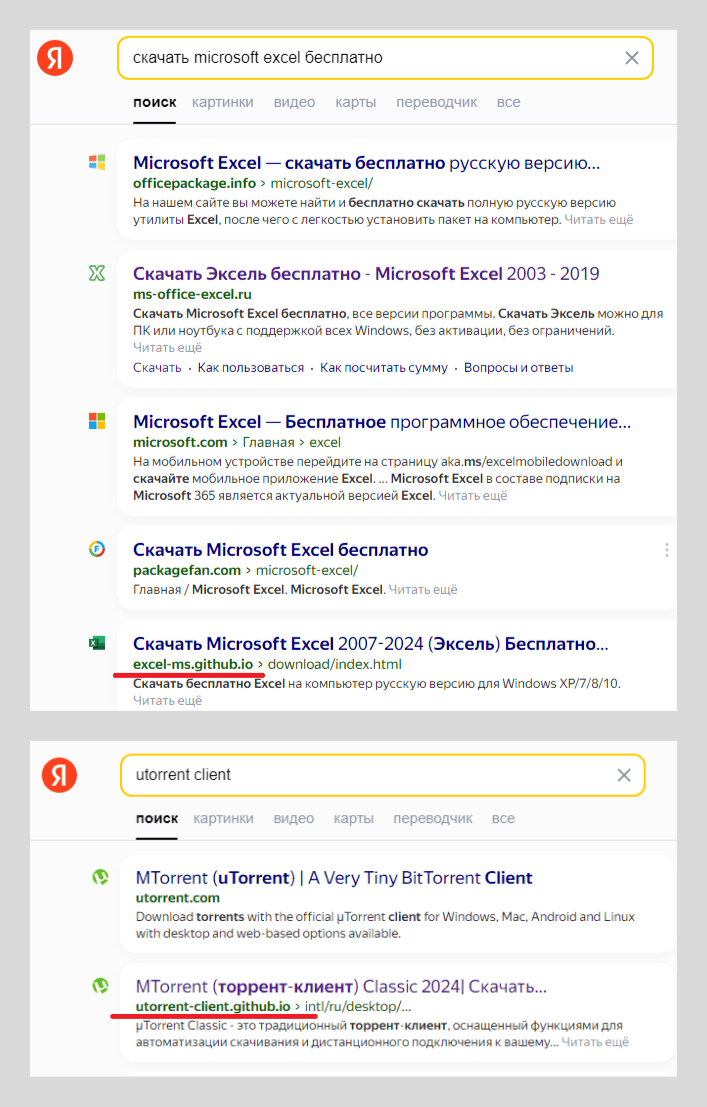
The attackers were advertising their websites in Yandex search results. Users would see these malicious sites in the top results when searching for resources freely distributing popular software like uTorrent, MS Excel, MS Word, Minecraft, Discord and so on.
Links to malicious websites in Yandex search results
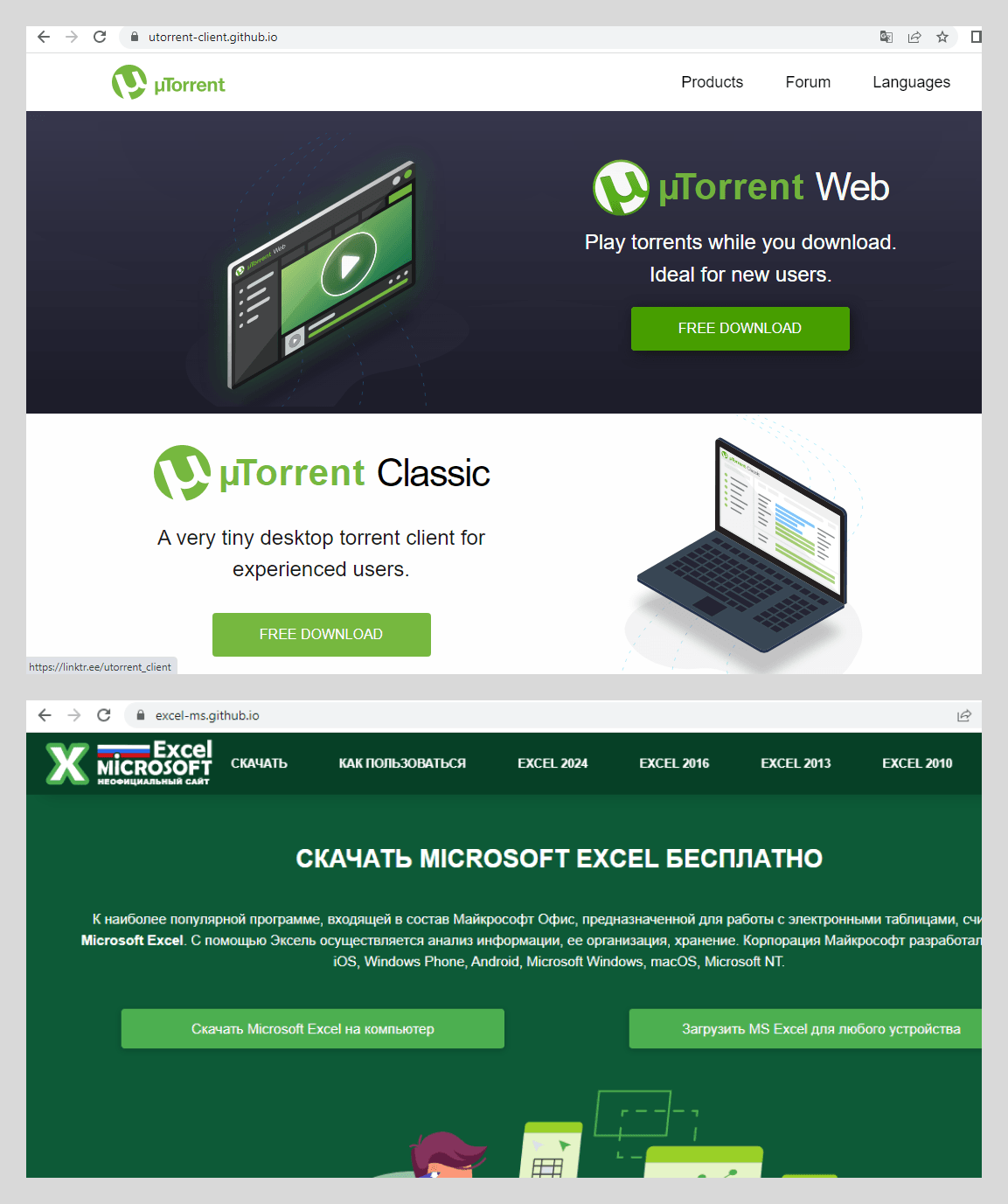
The frontend of these websites is a copy of either the official software website or a known piracy website distributing this kind of software:
Malicious websites
The attackers are running multiple Telegram channels distributing the malware in question. These channels are most definitely targeted at cryptocurrency owners or cheating gamers: they are offered to download specific software that presumably might be of interest to them. To prevent anyone trying to disclose information about these channels and the fraudulent activity of their creators, the administrators disabled message forwarding, screenshots, and previews of these channels in the Telegram web-version.
Malware in the attackers’ Telegram channel
Even more, the malware was also distributed via YouTube. The attackers uploaded numerous videos in English from multiple accounts which were presumably stolen. It’s also possible that the video content was downloaded from other YouTube channels and reuploaded without the authors’ consent. In the video description and in the top comment the attackers left links to their resources and instructions on how to launch the malware. Some of these links redirected users immediately to malicious websites, while others led to the aforementioned Telegram channels. We have also seen links to known IP logging websites, allowing the malicious actors to collect the IP addresses of anyone who follows the link and gets redirected to the malware-carrying website.
Examples of videos with malicious links in their description or comments
Comment with a link to a malicious Telegram channel
Persistence and defense evasion
After visiting the attackers’ website or channel, users might download a ZIP file being falsely advertised as popular software. Inside the archive is an MSI file and a TXT file with a password required for installation. There are also instructions on how to install the software, in which the attackers recommend disabling any installed antivirus and Windows Defender beforehand. In many cases, the instructions and the password are also provided on the websites and channels from which the user downloaded the malicious archive.
Content of text file
When launched, the MSI file asks for the password from the TXT file, which is one of the first countermeasures against sandbox analysis. If the user specifies the right password, the CustomAction field value of the MSI file is executed — this is effectively a VB script. This script launches a BAT file which extracts the next element of the attack chain from an encrypted archive. The first step is to escalate privileges by adding another BAT file to autorun, granting SYSTEM privileges for a single execution. After that, the system reboots.
CustomAction field value in the MSI file
The BAT file from autorun extracts the encrypted RAR archive and runs the “start” command with two DLL files as arguments — these were previously extracted from the archive. One of these files is a legitimate AutoIt interpreter and the second is a legitimate dynamic library with a valid digital signature. The malicious payload is an A3X script which was compiled into an EXE file and injected right inside the second DLL file signature.
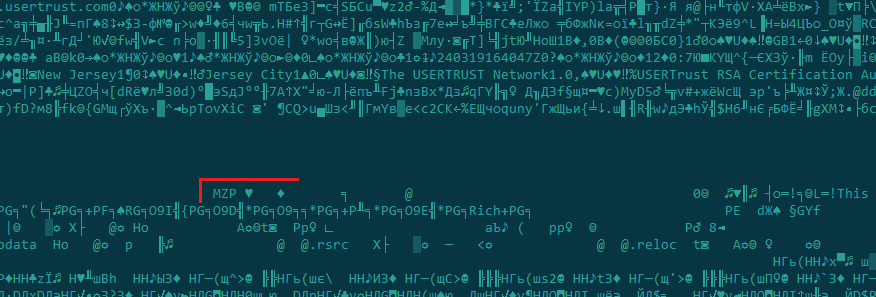
Malicious payload hidden inside a legit dynamic library signature
This technique is interesting for two reasons. First, the A3X script is added to the signature in such a way that its validity remains intact and the whole file is still considered as signed, even with the payload. Such a malicious addition is almost impossible to detect without file content analysis. Second, the AutoIt interpreter has an interesting way of reading files that were specified in its launch argument. The file is scanned for a specific AutoIt signature which is present only in compiled scripts, and all other contents of the file are ignored. This behavior allows the attackers to hide their malicious payload anywhere in the file where it won’t be harmful for the container itself.
Signature at the beginning of the A3X script
Placing malicious payloads in an arbitrary section of a file is not new. Such techniques have been used not only with AutoIt, but with other platforms too. But what makes this attack stand out is the bypass of signature verification, making it possible for the payload-bearing file to seem legitimate.
File with payload successfully bypasses signature verification
If the “start” command failed, the BAT file removes the entire directory with the installed files, including itself. Otherwise, the malicious A3X implant is launched, which checks all active processes in attempt to find anything related to debugging or anti-malware products. If anything is found, the script immediately exits, as you can see in the snippet of deobfuscated code below.
Security process name check by malicious implant
The compiled A3X script contains multiple FileInstall function calls. This function takes two arguments: a path to the file that will be installed, and its destination path. Before compilation, this call just copies the file from its source path to its destination, but during the compilation the interpreter stores the files for installation right inside the compiled script.
The resulting file contains not only the executable code itself, but also additional malicious files which will be installed directly from the implant. These files are required for persistence and to execute the next steps of the infection chain. The files are installed to the following paths:
For persistence purposes, the directories containing the installed files have system, hidden and read-only attributes. In addition, using the icacls utility, the implant forbids all users across all domains to remove these folders, change their permissions, own them, add any files or subdirectories, write to them any attributes (including extended ones), or remove files from them.
Files are copied to directories with unusual names for a reason. For example, the folder name “Classic.{BB64F8A7-BEE7-4E1A-AB8D-7D8273F7FDB6}” is treated specially by Windows Shell: Explorer will find the GUID in its name and treat it as a link — in this case to the Action Center. As a result, the user will not be able to view the contents of the directory.
Malicious directory in Explorer
After installing all the necessary files, the implant establishes persistence using WMI by creating filters which are activated by common events — common enough to guarantee filter activation. For each created filter, a polling frequency is specified. When a filter is activated, a specific command is executed using the __FilterToConsumerBinding class.
Once every three minutes, the netcat utility masked as StartMenuExperienceHost.exe is launched with the C&C address of the attackers (sportjump[.]ru) and “-e cmd.exe” as its arguments. It is then used as a reverse shell by the attackers.
Once every five to ten minutes, files named “nun.bat” are executed. They are copies of the same file which starts the next step of the infection chain. The attackers created two copies to increase the chance of malware execution, but if there are no outages, both of them are launched.
Once every fifteen minutes, the next step of the infection chain is launched directly via the “start” command.
All these methods are used again for a better persistence by launching the “insta.bat” file right before the end of the A3X implant execution.
Launch of the netcat utility
Persistence is established not only through WMI; the implant also directly starts netcat, the “nun.bat” files, and the “start” command. After that, it also abuses the registry keys “Image File Execution Options”, “Debugger” and “MonitorProcess” with the same goals.
One of the most interesting things about some variants of the malware is the download and use of the Wazuh SIEM agent for remote access and telemetry harvesting. To ensure that the attackers can execute any arbitrary command on the victim’s device, during the agent installation, the “remote_commands” option is set.
Installation and launch of the Wazuh agent
The first stage of the A3X implant collects the following information: computer name, username, OS version and architecture, CPU name, data about the GPU and installed AV software. All this information along with the current time is sent to a special Telegram bot chat controlled by the attackers. We’ve also seen some of the malware variants sending a screenshot of the user’s desktop or installing a malicious browser extension, which may replace cryptocurrency wallets in the clipboard.
Malicious browser extension
The next stage of the infection chain consists of two DLL files, that use the same technique as the first stage: a legitimate AutoIt interpreter and another A3X implant, located in the signature of the legitimate dynamic library. This implant is the final payload in the malware variant described here. It injects into a newly created explorer.exe process memory an open-source miner named SilentCryptoMiner, which contains the URL of the attacker’s mining configuration. This configuration specifies the cryptocurrency to be mined, the wallet, and so on. In the analyzed variants, we could see that the attackers mostly use anonymous cryptocurrencies like Monero or Zephyr.
Example of the miner configuration
Aside from its main purpose of generating cryptocurrency, SilentCryptoMiner can also hide its own activity from the processes specified in the “stealth-targets” argument and stop processes from the “kill-targets” process names list.
Attack geography
Most of the attacks with this infection chain targeted Russian users (87.63%). After that, the other top ten countries with the highest number of users affected by these attacks were Belarus, India, Uzbekistan, Kazakhstan, Germany, Algeria, Czech Republic, Mozambique, and Turkey.
TOP 10 countries where users were affected by the described infection chain, June — August 2024 (download)
Conclusion
The attack described in this article vividly illustrates the fact that even mass campaigns can be quite complex and open up a wide range of opportunities for attackers. As a result of the multistage infection chain, the attackers can establish persistence in users’ systems in multiple ways, gaining full access. Even though the main goal of the attackers is to make profit by stealthily mining cryptocurrency, some variants of the malware can perform additional malicious activity, such as replacing cryptocurrency wallets in the clipboard and taking screenshots. The most interesting action in this attack was the implementation of unusual techniques like using an SIEM agent as backdoor, adding the malicious payload to a legitimate digital signature, and hiding directories containing malicious files.
It’s important to mention that the websites, videos, and Telegram channels created by the attackers primarily target users seeking free versions of popular software or videogame cheats. This audience makes an easy target for the attackers because they are open to installing unofficial software from obscure sources and disabling security measures.
Our products detect this malware with the following names:
HEUR:Trojan-Dropper.OLE2.Agent.gen
HEUR:Trojan.BAT.Agent.gen
HEUR:Trojan.VBS.Agent.gen
Trojan.Script.AutoIt.ak
Trojan.BAT.Agent.cix
Trojan.BAT.Miner.id
HEUR:Trojan.Multi.Agent.gen
PDM:Trojan.Win32.Generic
MITRE ATT&CK Matrix
Tactic
Technique ID
Technique
Resource Development
T1608.006
Stage Capabilities: SEO Poisoning
T1608.001
Stage Capabilities: Upload Malware
Execution
T1204.001
User Execution: Malicious Link
T1204.002
User Execution: Malicious File
T1059.010
Command and Scripting Interpreter: AutoHotKey & AutoIT
T1059.003
Command and Scripting Interpreter: Windows Command Shell
Vientiane (Agenzia Fides) – Reactivating dialogue to aim for a solution to the political crisis in Myanmar and a realistic peace: this is the objective of the international conference that Laos, current president of the “Association of Southeast Asian Nations” (ASEAN) – of which Myanmar is a member – has proposed to organize and host. This is a step to address the crisis and civil conflict that is upsetting Myanmar after the military coup of 2021, which is also having effects on neighboring nations, on a social and economic level but also for the flow of refugees. The conference would be organized by the ASEAN “troika”, composed of Indonesia, Laos and Malaysia, established in September 2023 to continue diplomatic efforts. The announcement was made by Lao Foreign Minister Saleumxay Kommasith at the ASEAN Foreign Ministers’ Meeting in Vientiane on October 3, without specifying the date when the conference would be held. In the aftermath of the coup in 2021, ASEAN leaders issued a “five-point plan” on the situation in Myanmar, calling for: an immediate end to violence; the initiation of constructive dialogue to seek a peaceful solution; the appointment and hosting of an ASEAN special envoy to facilitate the mediation of the dialogue process; the possibility for ASEAN to provide humanitarian assistance; and frequent visits by the ASEAN special invitee to Myanmar to meet with all relevant parties. Some ASEAN member states have not recognised the military government in Myanmar, and Myanmar’s prime minister and foreign minister have been barred from ASEAN summits and ASEAN foreign ministers’ meetings since 2022. “There is no progress in implementing the ASEAN five-point plan. Therefore, Myanmar’s participation in ASEAN foreign ministers’ meetings and summits remains at a non-political level,” said Indonesian Foreign Minister Retno Marsudi. Marsudi said both the military and the resistance forces have refused to participate in the dialogue, a key plank of ASEAN’s proposal: The exiled “National Unity Government” (NUG), formed by a group of lawmakers ousted in the coup, has said it will engage in dialogue with the military only if it stops all violence, releases all political prisoners and agrees to form a federal democratic union. The ruling military junta said on August 22 that it will only consider dialogue if the People’s Defense Force (PDF) – the resistance militias formed after the coup – renounce violence and attacks against the military. After the stalemate lasted for about two years, without any significant progress, in early 2024 – when Laos took over the rotating presidency of ASEAN – the Burmese junta began sending a non-political representative to attend the organization’s summits. Now, with the proposal of the international conference, something is moving again on the level of regional diplomacy. Particular commitment is recorded by the Indonesian Foreign Ministry, which is organizing informal sessions of talks on the civil war in Myanmar in Jakarta, involving representatives of Indonesia, ASEAN, the European Union and the United Nations. Furthermore, after the resistant forces of the “Brotherhood Alliance” took control of the Burmese region bordering China, Beijing – interested in trade and stability in the area – has also become more involved, mediating a ceasefire between the Alliance and the Burmese military government, hoping for “maximum moderation”. (PA) (Agenzia Fides 4/10/2024) Share:
EDITOR’S NOTE: This article is a translation. Apologies should the grammar and/or sentence structure not be perfect.
A team of scientists from the International Atomic Energy Agency (IAEA) will return to Japan next week to conduct marine sampling near the Fukushima Daiichi Nuclear Power Station (FDNPS). This mission is part of the Agency’s extensive monitoring and assessment activities that support its ongoing safety review of the ALPS treated water discharges.
The IAEA conducts interlaboratory comparisons (ILCs) based on marine environment samples to verify the radiological data used by Japan in planning and implementing the water discharges. The ILCs also facilitate assessments of the application of relevant international safety standards in establishing and implementing monitoring programmes to accurately evaluate public exposure by Tokyo Electric Power Company (TEPCO) – operator of the plant – and the Government of Japan.
From 7 to 18 October, the IAEA team will observe the collection of seawater, marine sediment, fish and seaweed samples from coastal waters in the vicinity of the FDNPS. The mission will also include sampling at a local fish market and monitoring the preparation of samples for delivery to participating laboratories.
International experts from the Third Institute of Oceanography, China, the Korea Institute of Nuclear Safety, and the Spiez Laboratory, Switzerland—all members of the IAEA’s Analytical Laboratories for the Measurement of Environmental Radioactivity (ALMERA) network – will participate in the mission to provide independent corroboration of Japan’s environmental monitoring capabilities.
After collection, the samples will be sent to all participating laboratories for analysis for a range of radionuclides. The results of analyses from the IAEA Laboratories in Monaco and Vienna, the ALMERA member laboratories as well as the participating Japanese laboratories, will be submitted to the IAEA for evaluation, with a focus on identifying any statistically significant differences.
The results of the analyses of the samples can also be compared with those from previous ILCs to assess any changes in radionuclide levels in the marine environment since the discharge of ALPS-treated water began in August last year.
The findings will be publicly released to ensure transparency by September 2025.
This mission is part of the IAEA’s extensive monitoring and assessment activities for the safety review of ALPS-treated water. In the series of ILCs, the Agency has already published several reports evaluating TEPCO’s capabilities for accurately measuring the radionuclides in the treated water stored on site, and another analyzing radionuclides in seawater, sediment, fish, and seaweed samples collected in November 2022.
Additionally, IAEA experts stationed at the Agency’s office at FDNPS conduct regular independent on-site analyses of the batches of treated water. In September this year, the Agency confirmed that the tritium level in the ninth batch of ALPS treated water was far below Japan’s operational limit. The IAEA has earlier confirmed that the tritium concentrations in the previous eight batches, totalling approximately 64 500 cubic meters of water, were also far below operational limits.
Next week’s mission will also provide samples for the Agency’s ILC project initiated in 2014 to support the quality assurance of broader marine environmental monitoring by Japanese laboratories. The results for this segment of the work will be released in June 2025.
Source: Organization for Security and Co-operation in Europe – OSCE
Headline: OSCE donates IT equipment to Gender Sensitive Police Units under Tajikistan’s Ministry of Internal Affairs
Amy Sevimli, Head of the Human Dimension Department at the OSCE Programme Office in Dushanbe (centre-left) and Barotali Homidzoda, Head of the Public Order Protection Department (centre-right) at the donation ceremony of IT and office equipment, Dushanbe, 4 October 2024. (OSCE/Inomullo Mirboboev) Photo details
On 4 October 2024, the OSCE Programme Office in Dushanbe donated a set of IT and office equipment to the Public Order Department and the Gender Sensitive Police Units under the Ministry of Internal Affairs of Tajikistan.
The donated technical equipment will support the Government of Tajikistan in its efforts to prevent and combat domestic violence in the country. In particular, it will support the work of the Gender Sensitive Police Units, 14 of which have been established with the support of the Office, to timely identify domestic violence cases, provide effective protection to and refer the survivors to appropriate support services, while considering and prioritizing their needs.
The event is part of the Office’s support for Tajik law enforcement authorities to respond to domestic violence through a victim-centered approach, and aligns with Tajikistan’s OSCE commitments to prevent and combat violence against women, including domestic violence.
A Concluding Statement describes the preliminary findings of IMF staff at the end of an official staff visit (or ‘mission’), in most cases to a member country. Missions are undertaken as part of regular (usually annual) consultations under Article IV of the IMF’s Articles of Agreement, in the context of a request to use IMF resources (borrow from the IMF), as part of discussions of staff monitored programs, or as part of other staff monitoring of economic developments.
The authorities have consented to the publication of this statement. The views expressed in this statement are those of the IMF staff and do not necessarily represent the views of the IMF’s Executive Board. Based on the preliminary findings of this mission, staff will prepare a report that, subject to management approval, will be presented to the IMF Executive Board for discussion and decision.
Washington, DC – October 4, 2024:
San Marino’s economy remains resilient, supported by a more diversified growth model with manufacturing and the nonfinancial service exporting sectors as key drivers. Prudent fiscal policy and access to international capital markets helped weather the pandemic and energy crises. However, additional fiscal consolidation is warranted given the still high debt level and contingent liabilities from the financial sector. Notwithstanding important progress in resolving legacy issues, further efforts are needed to improve asset quality and strengthen banks’ capitalization and profitability. With the recently negotiated European Union (EU) association agreement, San Marino has a unique opportunity to accelerate much-needed public and financial sector reforms and to further the integration with the EU’s single market to boost confidence in the economy and lift potential growth.
San Marino’s economic growth remained positive despite adverse external shocks, including a regional slowdown and higher interest rates. After an exceptionally strong post-pandemic recovery in 2021-22, growth slowed in 2023 to 0.4 percent following a decline in external demand. Manufacturing, which has been operating at high levels, has decelerated as export orders declined, in part due to the phase-out of fiscal incentives in Italy and a related slowdown in the construction sector. The strong service sector performance, benefiting from the tourism boom and healthy domestic demand, kept employment growing at a robust pace.
Growth is projected to edge up in 2024, strengthening further in 2025, as external demand improves. Stronger consumption on the back of rising real wages and higher investment, facilitated by easing financial conditions, will support domestic and external demand next year. However, there are risks ahead. Downside risks are related to the weakening of external demand while remaining vulnerabilities in the financial sector constitute one of the key domestic risks. The underlying strength of the manufacturing sector, the healthy private sector balance sheets, and prompt implementation of the EU association agreement constitute upside risks to the baseline.
The fiscal position was stronger than expectedlast year but further efforts are needed to ensure sustainability.The government has saved the cyclical tax revenues, kept expenditures in check and primary balance stable in 2023. However, moderate government spending pressures arose in 2024 ―as real spending compression reached its limits and the cost of interest subsidies for the private sector expanded. The public debt-to-GDP ratio continued declining, but its level remains high.
Additionalfiscal consolidation is needed to mitigate financing risks, build fiscal buffers, and reduce the debt-to-GDP ratio below 60 percent.San Marino is an euroized small open economy with a vulnerable financial sector and limited fiscal buffers. The government’s goal of reducing public debt below 60 percent of GDP over the medium term is an important anchor to guide fiscal policy. To achieve this target a moderate additional fiscal effort totaling 1 percent of GDP over the next three years is recommended through:
Designing and implementing a tax reform package introducing a value-added tax (VAT) and broadening the income tax base. With a low tax-to-GDP ratio, introducing a VAT in San Marino can simultaneously enhance fiscal revenues and tax efficiency while minimizing related distortions, increasing fairness and progressivity, and aligning indirect tax procedures with international standards, benefitting the ease of exports. Redesigning tax rebates to avoid overlaps with other exemptions—such as San Marino Card (SMaC) discounts and income tax deductions—can further rationalize the system. The authorities should leverage the technology used for the SMaC in combination with electronic invoicing to mitigate tax avoidance in the new VAT system. Equallyimportant, income tax revenues can be significantly enhanced by rationalizing income tax deductions.
Improving the efficiency of public spending.San Marino should shift from real expenditure compression across all spending areas to prioritizing consolidation of spending with low social return. In this context, it will be important to review transfers to the private sector―including interest subsidy programs―to ensure that transfers are more targeted. Reviewing extra-budgetary funds is also needed to rationalize spending. Large investment plans require sound prioritization based on rigorous cost-benefit analyses.
Keepingpublic wages and pensions growth in check. Moderate public wage and pension growth was key to improving the primary balance. Looking forward, given the limited fiscal space, it is critical to avoid public wage and pension growth above domestic inflation.
Long-term demographic challenges will require additional parametric pension recalibration. The 2022 pension reform has increased contributions, delaying the depletion of the pension fund for a decade. However, ensuring the long-term sustainability of the pension system will require further parametric calibrations to address generous benefits. In addition, there is a need to continue the gradual diversification of the investments of the pension fund towards international markets to mitigate concentration of risks and increase returns.
The debt management strategy needs strengthening to minimize refinancing risks. The recently published fiscal strategy marks an important advancement in the predictability of fiscal policy and communication with investors, but further efforts are needed to upgrade San Marino’s debt management capacity, including more autonomy to implement the financing plan approved in the budget. To smooth the debt amortization of the Eurobond in 2027, the authorities should consider liability management operations, including smaller international issuances with longer maturities.
Banks’ liquidity and reported profits improved in 2023, but declining interest margins, high personnel costs, and remaining legacy non-performing loans (NPLs) pose risks going forward. Higher interest rates last year have improved banks’ cyclical profits without deteriorating the quality of loan portfolios, but structural profitability remains low. The safeguarding of profits to increase capital, as requested by the Central Bank, is welcome. However, with limited income-generating assets, high operating costs, and tight reported capitalization in some banks, the financial sector remains vulnerable.
A speedy adjustment of banks’ costs is a priority to improve long-term viability and capital positions. Most banks’ profitability remains significantly lower than regional peers. The continuing reduction of income-generating assets in recent years has not been followed by a scale-down of banking sector employment. San Marino’s banking system also has the largest number of branches per capita in Europe. With the EU association agreement, the opening of the banking sector will bring new opportunities, but San Marino banks need to improve efficiency to be competitive.
Important progress has been made in implementing the authorities’ strategy to reduce nonperforming loans (NPLs) through an Asset Management Company (AMC) and calendar provisioning. The write-off of a large NPL position and AMC securitization have reduced the NPL ratio from 53 to 21 percent. The asset recovery of the AMC has progressed better than expected, with the principal of state-guaranteed senior securities declining from 70 to 44½ million euros in the first half of 2024. Meanwhile, calendar provisioning has prompted banks to expedite the recovery and write-offs of NPLs. However, it will be important to improve dissemination of the information about the AMC asset recovery to anticipate and address any bottlenecks. The risk weights for junior securities should be increased faster to reflect the difference between the net book value and the real economic value of NPLs on banks’ balance sheets. Any undercapitalization that could arise from the securitization process and the implementation of calendar provisioning should be promptly addressed with credible capitalization plans. To strengthen CBSM supervisory powers and to help attract external capital, legal limits on banks’ shareholding structure should be lifted.
The bank resolution framework needs to be updated to widen burden-sharing. The bank resolution law should be updated to gradually complete the alignment with EU standards. The process needs to be coordinated with addressing existing issues in the banking system.
San Marino should continue to make progress to strengthen its AML/CFT framework. The domestic legal framework was amended in 2023 to incorporate the 5th EU AML Directive and improve technical compliance with the FATF standards. This resulted in an upgrade by MONEYVAL on technical compliance for AML/CFT sanctions regime. The National ML/TF Risk Assessment will be updated next year. San Marino should continue working to enhance the adequacy, accuracy, and up-to-dateness of its central beneficial ownership registry.
The EU association agreement sets an ambitious financial sector reform agenda. The agreement requires the central bank of San Marino (CBSM) to complete the alignment of the regulatory framework with the EU. To that end, the CBSM will need additional staff and financial resources. The CBSM financial position should be strengthened to safeguard its independence and support financial sector stability through an effective lender of last resort capacity. To comply with EU standards, legacy issues should be addressed, including through a gradual conversion of the perpetual bond owned by the state-owned bank into liquid instruments. Overall, while the banking sector has 15 years to meet the requirements, earlier implementation, as envisaged by the authorities, will boost confidence.
The conclusion of the EU association negotiations signals strong commitment to deeper integration with the EU and could lift potential growth by accelerating structural reforms. The successful implementation of the agreement is a priority and will support the competitiveness of the manufacturing sector and help consolidate gains in tourism. The authorities should ensure sufficient resources and staff are available to support implementation without undermining the fiscal consolidation path. In addition, further labor market flexibility is needed to improve labor reallocation, including in the banking sector. Real estate market reforms to facilitate price and market information dissemination and foreign ownership, will be key to support NPL resolution. Finaly, the authorities should foster energy safety and green transition, including by allowing households to sell back excess solar generated electricity.
The mission would like to thank the authorities and other counterparts for their warm hospitality as well as candid and productive discussions.
The latest report presenting estimates of the size and performance of Jersey’s economy in 2023 has been published today by Statistics Jersey.
The report presents estimates of the size and performance of Jersey’s economy, measured according to an internationally agreed framework. Estimates are provided for calendar year 2023 as well as historical data.
Summary – in 2023
Gross Domestic Product (GDP)
GDP increased by 7.3% in real terms compared with 2022.
GDP was £6,575 million.
GDP per head of population increased in real terms by 7.0% compared with 2022.
GDP per head of population was £63,500.
The increases in both GDP and GDP per head of population were above the previous 10-year average.
Sectoral breakdown – Gross Value Added (GVA)
The annual increase in overall GDP was driven by the financial and insurance activities sector, particularly as a result of increased net interest income in the monetary intermediation (banking) sub-sector.
The largest percentage increase in GVA was observed in the financial and insurance activities sector which increased in real terms by 19.4% in 2023.
Excluding the financial and insurance activities sector, the GVA for the rest of the economy increased in real terms by 0.4%.
Labour productivity
Productivity, measured as GVA per full-time equivalent (FTE) worker increased by 8.8% in real terms in 2023.
This annual increase was again driven by increased profits in the financial and insurance activities sector which recorded a real-term increase in productivity of 19.8%.
Source: Organization for Security and Co-operation in Europe – OSCE
Headline: OSCE donates specialized vehicles and equipment to strengthen Moldovan Border Police
Donation ceremony of specialized vehicles, analytical software and doculus lumus magnifiers, Chisinau, Moldova, 3 October 2024. (OSCE) Photo details
The OSCE provided specialized vehicles and equipment to the General Inspectorate of Border Police during a ceremony held on 3 October 2024 in Chisinau, Moldova. This was done in support of Moldova’s efforts in preventing and addressing transnational organized crime.
The donation includes three K9 specialized vehicles, software, and Doculus Lumus magnifiers, used to check identification documents. These items will improve the Moldovan Border Police’s rapid response capabilities, identify advanced threat and risk analysis, and aid in the detection of forged documents at border crossing points.
“I am positive that the OSCE donation of specialized vehicles for the K9 Unit, software tools for the Risk Analysis Department, and magnifiers for first-line border officers will further support the Moldovan Border Police in effectively identifying and mitigating threats at the border,” said Izabela Sylwia Hartmann, Deputy Head of the OSCE Mission to Moldova.
“The specialized vehicles and equipment will enable the Border Police to transport police service dogs efficiently and enhance their capacity to detect and prevent cross-border crimes,” said Siv-Katrine Leirtroe, Head of the Border Security and Management Unit of the OSCE Transnational Threats Department. “Despite increasing challenges, the Moldovan Border Police has demonstrated commendable resilience and unwavering commitment, and we are here to support them in enhancing their operational capabilities.”
“This donation represents a significant contribution to enhancing our operational capabilities to safeguard the borders of the Republic of Moldova,” said Diana Salcuțan, Deputy Head of the General Inspectorate of Border Police. “We highly appreciate the OSCE’s support in strengthening our ability to combat cross-border crimes and ensure the security and stability of our country and the wider region.”
As part of its ongoing efforts, the OSCE will facilitate a study visit for the K9 Unit of the Moldovan Border Police to France in November 2024. Training cycles on detecting forged documents with a five-day train-the-trainers courses will also continue in January 2025.
These assets were donated as part of the “Support to the Law Enforcement Agencies in Moldova in Response to the Security Challenges in the Region” and the “Increasing Operational Awareness of Border Security and Management Officers to Detected Forged Documents and Impostors at border crossing points of the OSCE participating States and Partners for Co-operation” projects. These assets were funded through extra-budgetary assistance from the United States of America.
Deputy President Paul Mashatile says he is confident that his working visit to the United Kingdom and Ireland will improve trade and investment relations, which have been stagnant for years.
The Deputy President spoke during an engagement with the South African Chamber of Commerce (SACC) in London on Thursday. The SACC is an umbrella organisation and conduit for trade, community and investment into and out of South Africa.
The country’s second-in-command is in the United Kingdom for the second leg of his working visit to improve trade and investment relations between the nations and to woo investors following his travels to Ireland.
The country’s second-in-command reiterated that the political environment in South Africa is stable for investment because of the newly established GNU, which has been operational for less than 100 days and is already yielding results.
“Our numerous meetings with potential investors have revealed a shift in their attitudes and perceptions towards South Africa, indicating an optimistic outlook.
“Our alliance, based not on personal sentiments but on the aspiration to enhance South Africa and, consequently, the lives of our citizens, will undoubtedly sustain the GNU administration for five years.”
However, he said they will measure the GNU’s success based on the number of employment and entrepreneurs they assist in establishing sustainable enterprises.
“Businesses hope to continue working with the government in the public-private partnership that has reduced load shedding, improved transport and logistics infrastructure, and strengthened national capacity to combat crime and corruption,” the Deputy President said.
Shifting his focus to energy, he stated that investors have demonstrated that ending the load shedding that began in 2007 is the most positive news.
“They confirmed that it allows them to conduct business without uncertainty. The elimination of power outages was largely due to a series of measures implemented by the State-owned power utility, Eskom and government over the past two years.”
He also told the SACC that government was addressing the obstacles in the freight logistics system that continue to impede competitiveness and undermine economic growth.
“We are on a mission to create and sustain a bankable investment pipeline of priority, credible, quality and high-impact projects that span the country through Infrastructure South Africa, the primary driver of the National Infrastructure Plan 2050,” he explained.
Mashatile believes that the SACC plays an essential role in engaging with businesses to promote bilateral trade and investment links between the United Kingdom and South Africa.
“It is our responsibility as leaders in our respective regions to foster an atmosphere that encourages entrepreneurship, fosters innovation, and drives inclusive growth.”
In addition, he expressed his desire to increase South Africa’s exports of valuable goods and services to the United Kingdom.
“It is excellent that the two countries already exchange food and beverages. It is critical that we collaborate to create strategies to accelerate international trade and investment.”
Mashatile announced that the State was simplifying regulatory procedures through the Red Tape Task Team, making it easier for businesses to operate and invest locally.
He concluded his address with South Africa’s stance on peace and stability in Africa and globally, stressing that the nation is anti-war and pro-peace.
“We reaffirm our commitment to the inviolability of sovereignty and the importance of national security.
“More immediately, we support [silencing the guns]. We want to see peaceful and mutual coexistence between Russia, Ukraine, Israel, Sudan, and the rest of the globe, because war is terrible for business.” – SAnews.gov.za
Source: ASEAN – Association of SouthEast Asian Nations
The 45th ASEAN Senior Officials Meeting on Drug Matters (ASOD) and Its Related Meetings, which included six ASOD + Dialogue Partner(s) Consultations, namely with Australia, India, Japan, the Republic of Korea (ROK), Russia and Plus Three, were held via videoconference on 3-4 October 2024. The Meetings were attended by the ASOD Leaders of all ASEAN Member States, Dialogue Partners and the Deputy Secretary-General of ASEAN for ASEAN Political-Security Community. Timor-Leste attended as Observer. The Meetings were preceded by meetings of the five ASOD Working Groups (WG), namely on Preventive Education, Treatment and Rehabilitation, Law Enforcement, Research and Alternative Development, that were held on 2 October 2024. The series of meetings discussed, among others, the latest drug situation, emerging trends, best practices and potential cooperation against illicit drugs in the region.
The post ASEAN convenes 45th ASEAN Senior Officials Meeting on Drug Matters and Related Meetings appeared first on ASEAN Main Portal.
SA a trusted partner in delivering global business services
South Africa is a trusted partner in delivering key global business services such as financial risk, regulatory support and digital services to United Kingdom investors, says Deputy Minister of Trade, Industry and Competition Andrew Whitfield.
The Deputy Minister delivered the keynote address during the South Africa-UK roundtable on Global Business Services (GBS) in London. The session was hosted by Business Process Enabling South Africa in London.
“With a highly skilled, English-speaking workforce, South Africa has positioned itself as a go-to hub for outsourcing services ranging from legal support to digital transformation.
“South Africa’s competitive advantage in offering cutting-edge solutions at a fraction of the cost, saving companies up to 50% compared to other outsourcing destinations puts our country in good stead,” Whitfield explained.
According to the Department of Trade, Industry and Competition, the roundtable formed part of a high-level mission to the United Kingdom (UK) which is being led by Deputy President Paul Mashatile. The visit is focused on promoting South Africa as a premier investment destination.
Whitfield highlighted that the South African global business services (GBS) sector has evolved from traditional call centre services into providing high-value, complex services that meet the needs of global investors.
He added that the UK remained South Africa’s largest source market for GBS, accounting for over 56 000 jobs and generating £650 million in revenue through partnerships with leading UK firms such as British Gas, Scottish Power, and Virgin Atlantic.
Whitfield emphasised that since the introduction of the GBS incentive, more than 50 global companies have established operations in South Africa, generating R40 billion in export revenue.
The primary objective of the incentive which became effective from 1 January 2019, is to create employment in South Africa through servicing offshore activities. The secondary objectives of the programme are to: – Create employment opportunities for the youth (age 18-34 years); and – Contribute to the country’s export revenue from offshoring services.
Growth
He added that the workforce has grown significantly, from 26 700 jobs in 2015 to over 104 000 today.
In addition, the GBS Masterplan is playing an important role in this growth shifting the focus from low-cost call centres to more sophisticated, high-value services, such as data analytics, financial services, and digital risk management.
“Our GBS sector offers far more than cost savings; it delivers quality outcomes with proven resilience. South Africa has shown an exceptional ability to adapt, including the successful implementation of flexible work-from-home models.
“Additionally, we have not experienced any electricity outages for over 190 days, which is a critical factor for global businesses seeking reliable operations,” said the Deputy Minister.
Looking ahead, Whitfield said the GBS Masterplan envisions creating up to 500 000 cumulative jobs by 2030, through continued expansion and new investments.
The Global Business Services Masterplan was signed by the department and stakeholders on 18 November 2021.
The Masterplan process brings together government, industry, social partners and labour to set a common vision and action agenda for developing and growing the sector.
“We will work tirelessly with all stakeholders to realise this high-growth scenario, particularly as global businesses increasingly look to South Africa as a destination for innovative digital services and niche sector solutions.”
Furthermore, he urged UK businesses to explore the lucrative opportunities in South Africa’s GBS sector.
“Our value proposition is clear, quality services, major cost savings, and a stable environment. We invite British investors to take advantage of the opportunities our dynamic sector offers and contribute to its continued growth.
“Ultimately, this is a key sector to realising the Government of National Unity’s apex priority to rapid economic growth and job creation,” he said.
The Deputy Minister was pleased with the positive engagements and sentiment from GBS companies present, who have a healthy pipeline to expand their operations in South Africa in the next 12 months. –SAnews.gov.za
MILES AXLE Translation. Region: Russian Federation –
Source: Peter the Great St Petersburg Polytechnic University – Peter the Great St Petersburg Polytechnic University –
Nikita Blagoy, a postgraduate student at the Institute of Industrial Management, Economics and Trade, and an assistant at the Higher School of Engineering and Economics, received a scholarship from the President of the Russian Federation for students and postgraduates studying abroad. In early September, Nikita went to China. Before leaving, he told us about his academic path at the Polytechnic University, and how his ideas about life and science changed. And after a while, he contacted us to share his first impressions of his internship at the Dalian University of Technology.
Please note: This information is raw content directly from the source of the information. It is exactly what the source states and does not reflect the position of MIL-OSI or its clients.
Please note; This information is raw content directly from the information source. It is accurate to what the source is stating and does not reflect the position of MIL-OSI or its clients.
MILES AXLE Translation. Region: Russian Federation –
Source: Moscow Exchange – Moscow Exchange –
04.10.2024 10:38
In accordance with the Methodology for determining the risk parameters of the stock market and deposit market of PJSC Moscow Exchange by NCO NCC (JSC), on 10/04/2024, 10:38 (Moscow time), the values of the upper limit of the price corridor (up to 106.96) and the range of market risk assessment (up to 1152.78 rubles, equivalent to a rate of 11.25%) of the security RU000A0JXXD3 (Rosnft1P6) were changed
Please note: This information is raw content directly from the source of the information. It is exactly what the source states and does not reflect the position of MIL-OSI or its clients.
Please note; This information is raw content directly from the information source. It is accurate to what the source is stating and does not reflect the position of MIL-OSI or its clients.
MILES AXLE Translation. Region: Russian Federation –
Source: Moscow Exchange – Moscow Exchange –
04.10.2024 10:38
In accordance with the Methodology for determining the risk parameters of the stock market and the deposit market of Moscow Exchange PJSC by NCO NCC (JSC) on 10/04/2024, 10:38 (Moscow time), the values of the upper limit of the price corridor (up to 106.21) and the range of market risk assessment (up to 1139.83 rubles, equivalent to a rate of 10.0%) of the security RU000A0JXXE1 (Rosnft1P7) were changed
Please note: This information is raw content directly from the source of the information. It is exactly what the source states and does not reflect the position of MIL-OSI or its clients.
Please note; This information is raw content directly from the information source. It is accurate to what the source is stating and does not reflect the position of MIL-OSI or its clients.
Stanford University (USA) annually collects and analyzes information from the international scientometric database Scopus about the most authoritative scientists. When compiling the ratings, both qualitative and quantitative citation metrics are taken into account. The obtained information is posted on the Elsevier website. According to the company, the scientists presented in the lists make up 2% of the most influential scientific specialists. Among them are 13 SPbPU scientists.
Nine of the university’s researchers were included in both rankings at once: the most cited authors at the end of 2023 and for their entire research career. The greatest successes were achieved by:
Nikolay Vatin is the director of the Scientific and Technological Complex “Digital Engineering in Civil Engineering”, chief researcher at the Laboratory of Protected and Modular Structures, Professor at the Higher School of Advanced Digital Technologies NIS “Digital Engineering”, Doctor of Technical Sciences;
Vladimir Mostepanenko is the chief researcher at the Scientific Laboratory “Micro- and Nanoelectronic Systems on a Chip” at the NIS “Digital Engineering”, Doctor of Physical and Mathematical Sciences;
Vadim Davydov is a leading engineer at the Center for New Materials of the Research and Modeling of Materials Research Center of the Institute of Mechanical Engineering, Materials and Transport, Doctor of Physical and Mathematical Sciences;
Galina Klimchitskaya is the chief researcher at the Scientific Laboratory “Micro- and Nanoelectronic Systems on a Crystal” at the NIS “Digital Engineering”, Doctor of Physical and Mathematical Sciences;
Anatoly Popovich – Director of the Institute of Mechanical Engineering, Materials and Transport, Professor of the Research Center “Structural and Functional Materials” of the Institute of Mechanical Engineering and Technology, Chief Researcher of the Laboratory “Synthesis of New Materials and Structures” of the Advanced Engineering School “Digital Engineering”, Doctor of Technical Sciences;
Lev Utkin is a professor at the Higher School of Artificial Intelligence Technologies at the Institute of Computer Science and Cybersecurity; Leading Researcher at the Research Laboratory “Supercomputer Technologies and Machine Learning” NIS “Digital Engineering”, Doctor of Technical Sciences;
Anton-Jiri Krivtsov – Director of the Higher School of Theoretical Mechanics and Mathematical Physics of the Institute of Physics and Mechanics, Corresponding Member of the Russian Academy of Sciences, Doctor of Physical and Mathematical Sciences;
Mikhail Shur is a leading researcher at the Laboratory of Computational Hydro-Aeroacoustics and Turbulence at the Scientific and Technical Complex “Mathematical Modeling and Intelligent Control Systems” of the NIS “Digital Engineering”, Candidate of Physical and Mathematical Sciences.
Andrey Travin is a senior researcher at the laboratory “Computational hydroaeroacoustics and turbulence” of the Scientific and Technical Complex “Mathematical modeling and intelligent control systems” of the NIS “Digital Engineering”, Candidate of Physical and Mathematical Sciences.
In addition, two Polytechnic University researchers are included in the list of the most cited researchers for the past year. The 2023 ranking includes Mikhail Strelets, head of the Computational Hydroaeroacoustics and Turbulence Laboratory at the Mathematical Modeling and Intelligent Control Systems Scientific and Technical Complex at the Digital Engineering Institute, Doctor of Physical and Mathematical Sciences, and Sergey Barykin, professor at the Higher School of Service and Trade at the Institute of Industrial Management, Economics and Trade, Doctor of Economic Sciences.
Also, two SPbPU scientists are included in the annual list of the most cited authors by indicators for the entire career path. These are Sergey Shevkunov, a leading researcher at the Center for Technological Projects, Doctor of Technical Sciences, and Sergey Roshchupkin, a professor at the Higher School of Fundamental Physical Research of the Physics and Mechanics Institute, Doctor of Technical Sciences.
We are proud that Polytechnics have entered the ranking of the most cited scientists in the world. This is a clear confirmation of the high level of scientific research conducted at our university and the significance of contributions to global science. Being included in such rankings is not only a sign of recognition of individual merits, but also the result of the hard work of the entire scientific team, which strives for innovation and high research standards. I am sure that many discoveries and achievements await us ahead, which will inspire students and young scientists to new achievements, – commented Vice-Rector for Research Yuri Fomin.
Please note: This information is raw content directly from the source of the information. It is exactly what the source states and does not reflect the position of MIL-OSI or its clients.
Please note; This information is raw content directly from the information source. It is accurate to what the source is stating and does not reflect the position of MIL-OSI or its clients.
MILES AXLE Translation. Region: Russian Federation –
Source: Moscow Exchange – Moscow Exchange –
Please note: This information is raw content directly from the source of the information. It is exactly what the source states and does not reflect the position of MIL-OSI or its clients.
Please note; This information is raw content directly from the information source. It is accurate to what the source is stating and does not reflect the position of MIL-OSI or its clients.
Maximum amount of funds placed (in placement currency)
235,000,000.00
Placement period, days
11
Date of deposit
10/04/2024
Refund date
10/15/2024
Minimum placement interest rate, % per annum
19.00
Conditions of imprisonment, urgent or special
Urgent
Minimum amount of funds placed for one application (in placement currency)
235,000,000.00
Maximum number of applications from one Participant, pcs.
1
Auction form, open or closed
Open
Basis of the Agreement
General Agreement
Schedule (Moscow time)
Preliminary applications
from 12:00 to 12:10
Applications in competition mode
from 12:10 to 12:15
Setting a cut-off percentage or declaring the auction invalid
until 12:25
Additional terms
Placement of funds with the possibility of early withdrawal of the entire deposit amount and payment of interest accrued on the deposit amount at the rate established by the deposit transaction, in the event of non-compliance of the Bank with the requirements established by paragraph 2.1. of the Regulation “On the procedure for selecting banks for placing funds of the Moscow Small Business Lending Assistance Fund in deposits (deposits) under the GDS” (as amended on the date of the deposit transaction), early withdrawal at the “on demand” rate, payment of interest at the end of the term, without replenishment
EDITOR’S NOTE: This article is a translation. Apologies should the grammar and or sentence structure not be perfect.