At the LIBE Committee meeting on 24 June 2025, Ms Anna Sjöberg, Head of Europol’s European Counter Terrorism Centre (ECTC), delivered a presentation of the latest EU Terrorism Situation & Trend Report (EU TE-SAT) covering the year 2024. She opened by underscoring the report’s comprehensive scope, combining data on terrorist attacks, arrests, and convictions across EU Member States, contextualised within evolving ideological trends.
Ms Sjöberg highlighted that in 2024, 14 EU Member States reported 58 terrorist attacks — including 34 completed, 5 failed and 19 foiled). The report distinguishes between and elaborates in-depth on different forms of terrorism, based on varying ideologies: jihadist terrorism, right-wing terrorism, left-wing and anarchist terrorism, ethno-nationalist and separatist terrorism and other types of terrorism. In assessing the terrorist threat in the EU, Europol emphasised the recent geopolitical developments such as the conflict in Gaza, anti-Semitism across the entire ideological spectrum, the Russian war against Ukraine, and the ability of Syria’s new government to fight terrorism.
During the ensuing debate, Members were keen to highlight the need for enhanced information exchange between the Member States with Europol, the threat of returning foreign fighters, and the recruitment of minors through social media platforms. Discussion also touched upon the issue of state-sponsored terrorism.
Concluding, Ms Sjöberg stressed the TE SAT’s crucial role in guiding EU-wide counter terrorism efforts and fostering coordinated responses via Europol’s ECTC.
Question for written answer E-002206/2025/rev.1 to the Commission Rule 144 Sophie Wilmès (Renew), Hilde Vautmans (Renew), Oihane Agirregoitia Martínez (Renew), Dan Barna (Renew), Billy Kelleher (Renew)
In March 2025, US embassies in several EU Member States sent a letter to a number of private European companies that have contracts with the US Government, asking them to clarify whether they run DEI programmes that violate US President Trump’s executive order against race- and sex-based preferences and ending equal opportunities programmes (Executive Order No 14173). The letter sought to clarify that the executive order applies to any firm doing business with the US Government, including non-US companies. The document also stated that the existence of such programmes could prevent these companies from working with the US Government in the future.
The media reported that companies in Belgium, France and Italy received this letter, with the French Government denouncing it as ‘unacceptable interference’. A number of companies have said they will comply with the request, such as GSK in Belgium.
In this context:
1.Is the Commission aware of the Member States in which companies have received this letter and which companies have accepted or refused the request?
2.What is the Commission doing to address this situation?
3.What is the Commission doing to prevent European companies from being subject to interference from non-EU countries that advocate values contrary to our own?
At the LIBE Committee meeting on 24 June 2025, Ms Anna Sjöberg, Head of Europol’s European Counter Terrorism Centre (ECTC), delivered a presentation of the latest EU Terrorism Situation & Trend Report (EU TE-SAT) covering the year 2024. She opened by underscoring the report’s comprehensive scope, combining data on terrorist attacks, arrests, and convictions across EU Member States, contextualised within evolving ideological trends.
Ms Sjöberg highlighted that in 2024, 14 EU Member States reported 58 terrorist attacks — including 34 completed, 5 failed and 19 foiled). The report distinguishes between and elaborates in-depth on different forms of terrorism, based on varying ideologies: jihadist terrorism, right-wing terrorism, left-wing and anarchist terrorism, ethno-nationalist and separatist terrorism and other types of terrorism. In assessing the terrorist threat in the EU, Europol emphasised the recent geopolitical developments such as the conflict in Gaza, anti-Semitism across the entire ideological spectrum, the Russian war against Ukraine, and the ability of Syria’s new government to fight terrorism.
During the ensuing debate, Members were keen to highlight the need for enhanced information exchange between the Member States with Europol, the threat of returning foreign fighters, and the recruitment of minors through social media platforms. Discussion also touched upon the issue of state-sponsored terrorism.
Concluding, Ms Sjöberg stressed the TE SAT’s crucial role in guiding EU-wide counter terrorism efforts and fostering coordinated responses via Europol’s ECTC.
Renewable energy sources such as wind, solar and hydroelectric power, ocean and geothermal energy, biomass and biofuels offer cleaner alternatives to fossil fuels. They reduce pollution, broaden our energy options and decrease our dependence on volatile fossil fuel prices. In 2022, renewable energy accounted for 23% of the European Union’s energy consumption. In 2023, lawmakers increased the Union’s target for the share of renewable sources of energy in gross energy consumption from 32% to 42.5% by 2030, aiming for 45%.
The European Union is founded on the values of respect for human dignity, freedom, democracy, equality, the rule of law and respect for human rights, including the rights of persons belonging to minorities, as laid down in Article 2 of the Treaty on European Union (TEU). In order to ensure that these values are respected, Article 7 TEU provides for an EU mechanism to determine the existence of, and possibly sanction, serious and persistent breaches of EU values by a Member State. It has only been activated in relation to Poland and Hungary so far. The EU is also bound by its Charter of Fundamental Rights and is committed to acceding to the European Convention for the Protection of Human Rights and Fundamental Freedoms. Following the emergence of threats to EU values in some Member States, the EU institutions are strengthening their toolbox to counter democratic backsliding and protect democracy, the rule of law, fundamental rights, equality and minorities across the Union.
Central Asia links the huge Asian continent with Europe. The EU recognises its strategic importance in trade and energy routes, as well as in resources such as gas, oil and minerals (particularly gold, uranium and all types of rare earths). In 2019, the EU updated its Central Asia strategy to focus on resilience (covering areas such as human rights, border security and the environment), prosperity (with a strong emphasis on connectivity) and regional cooperation. The first-ever EU-Central Asia Summit, which took place in April 2025, represented a milestone and was an opportunity to upgrade relations to a strategic partnership, deepen trade and focus on energy economic cooperation, investment, high-quality connectivity, digitalisation, sustainable development and security cooperation (including hybrid threats). A EUR 12 billion investment package is planned through the Global Gateway, aimed at improving trade routes. It is a key opportunity for the EU to demonstrate its geopolitical interest in intensifying bilateral engagement and enhancing regional cooperation with Central Asia, to reduce its dependence on China and Russia in the context of global geopolitical changes. The summit also focused on climate action, human rights and strategic resources (including critical raw materials). In the light of the situation in Afghanistan, Central Asia has become crucial for security and stability. The January 2022 riots in Kazakhstan, which ended after the Collective Security Treaty Organization sent Russian-led troops, and the border clashes between Central Asian countries show the risk of instability in a region under Moscow’s influence. This influence in Central Asia is, however, weakening as a result of the Russian invasion of Ukraine and the concentration of troops at the front. This shift has created opportunities for Central Asian countries to emerge as more independent regional actors and has opened new avenues for partnership and cooperation with the EU in areas such as energy, raw materials and connectivity. However, Russia remains a key security provider in the region, with military facilities in three of the five Central Asian countries, and it controls two thirds of arms’ imports and supports the region’s governments. For trade and investment, the Chinese influence is growing with its Belt and Road Initiative. In response to the initiative, the EU has increased its engagement and investment in the region with the EU Global Gateway. Taking into account individual Member States’ assistance, the EU has become the largest donor in Central Asia, allocating over EUR 550 million to the Central Asia regional multiannual indicative programme for 2021-2027. The EU and Central Asia have taken important steps through the EU Global Gateway to develop the Trans-Caspian Transport Corridor, aimed at creating a multimodal, modern and competitive route linking Europe and Central Asia. Parliament continues to highlight the importance of resp[…]
EU chemicals and pesticides legislation aims to protect human health and the environment, as well as to prevent barriers to trade. It consists of rules governing the marketing and use of particular categories of chemical products, a set of harmonised restrictions on the placing on the market and use of hazardous substances, and protocols for handling major accidents and exports of dangerous substances. The two most important achievements at EU level are the CLP Regulation and the REACH Regulation. Under the European Green Deal and particularly the ‘chemicals for sustainability’, ‘farm to fork’ and ‘biodiversity’ strategies, EU legislation on chemicals and pesticides is undergoing a revision process.
Each EU institution and the Member States scrutinise the EU budget. The European Court of Auditors and the European Parliament perform detailed checks at various levels. Each year, Parliament scrutinises the implementation of the budget with a view to granting discharge to the Commission, the other EU institutions and the decentralised EU agencies.
This fact sheet presents the background and essential provisions of the Treaty of Lisbon. The objective is to provide historical context for the emergence of this latest fundamental EU text from those that came before it. The specific provisions (with article references) and their effects on EU policies are explained in more detail in the fact sheets dealing with particular policies and issues.
Protection of personal data and respect for private life are fundamental European rights. The European Parliament has always insisted on the need to strike a balance between enhancing security and safeguarding human rights, including data protection and privacy. New EU data protection rules strengthening citizens’ rights and simplifying rules for companies in the digital age took effect in May 2018. Research prepared for the European Parliament indicates that EU legislation related to regulating data flows contributes EUR 51.6 billion annually to GDP in the European Union. Research prepared for the European Parliament’s Committee of Inquiry to investigate the use of Pegasus and equivalent surveillance spyware (PEGA Committee) confirms the importance of data protection in defending democracy and individual freedoms in the EU.
The aim of the EU’s asylum policy is to offer appropriate status to any non-EU national requiring international protection in one of the Member States and ensure compliance with the principle of non-refoulement[1]. To this end, the EU is striving to develop a Common European Asylum System.
The European neighbourhood policy (ENP) applies to Algeria, Armenia, Azerbaijan, Belarus, Egypt, Georgia, Israel, Jordan, Lebanon, Libya, Moldova, Morocco, Palestine, Syria, Tunisia and Ukraine. It aims to strengthen the prosperity, stability and security of all. It is based on democracy, the rule of law and respect for human rights and is a bilateral policy between the EU and each partner country, with regional cooperation initiatives: the Eastern Partnership (EaP) and the Union for the Mediterranean[1].
VICTORIA, Seychelles, June 25, 2025 (GLOBE NEWSWIRE) — Bitget, the leading cryptocurrency exchange and Web3 company, proudly joins ETHMilan 2025 as the official Viscoti Sponsor, aligned with its expansion strategy in Europe and beyond. Held on June 24 at the iconic Museo Nazionale Scienza e Tecnologia in Milan, Italy, ETHMilan brings together developers, founders, and thinkers shaping the decentralized future.
This event follows hot on the heels of Bitget’s high-profile MotoGP partnership, marking a powerful back-to-back showcase of the brand’s expanding influence—on the track and on the blockchain stage. ETHMilan’s timing couldn’t be better, as it underscores Bitget’s commitment to blending mainstream visibility with meaningful industry engagement.
ETHMilan 2025 gathered more than 1,000 participants and featured over 50 speakers, including notable names like Alessandro Mazza, Marco Monaco from TAC, Stefano Rossi from PwC Italia, and Filippo Moraschi (FolksFinance). As one of Italy’s largest Web3 conferences, ETHMilan has staged impactful panels on DeFi, DAOs, Ethereum scaling, and creative tech innovation.
As part of this year’s program, Bitget’s Chief Operating Officer, Vugar Usi Zade, took to the stage to discuss how centralized exchanges (CEXs), blockchain, and crypto infrastructure are redefining the global financial system. In a cycle where institutions and regulations are finally catching up with the technology, Vugar shared insights on how CEXs are adapting, shifting from transactional platforms to ecosystem enablers.
The appearance aligns with Bitget’s broader push to shape the discourse around crypto maturity, user trust, and long-term utility. “ETHMilan is more than a developer event—it’s a signal that Milan is becoming a serious node on the global Web3 map,” said Vugar. “Bitget is here not just to participate, but to help drive the conversations that move the industry forward.”
Bitget also hosted a breakfast reception at the Museum of Science & Technology, offering builders and industry leaders a space to connect over key themes like compliance, CeFi/DeFi evolution, and everything else crypto-related.
The event marks another milestone in Bitget’s expansion across Europe, where it continues to operate under increasing regulatory clarity, including licenses in Italy, Lithuania, Georgia, and several other markets. With over 120 million users globally and a daily trading volume of $20 billion, Bitget’s presence at ETHMilan reflects its commitment to driving adoption.
About Bitget
Established in 2018, Bitget is the world’s leading cryptocurrency exchange and Web3 company. Serving over 120 million users in 150+ countries and regions, the Bitget exchange is committed to helping users trade smarter with its pioneering copy trading feature and other trading solutions, while offering real-time access to Bitcoin price, Ethereum price, and other cryptocurrency prices. Formerly known as BitKeep, Bitget Wallet is a leading non-custodial crypto wallet supporting 130+ blockchains and millions of tokens. It offers multi-chain trading, staking, payments, and direct access to 20,000+ DApps, with advanced swaps and market insights built into a single platform. Bitget is at the forefront of driving crypto adoption through strategic partnerships, such as its role as the Official Crypto Partner of the World’s Top Football League, LALIGA, in EASTERN, SEA and LATAM markets, as well as a global partner of Turkish National athletes Buse Tosun Çavuşoğlu (Wrestling world champion), Samet Gümüş (Boxing gold medalist) and İlkin Aydın (Volleyball national team), to inspire the global community to embrace the future of cryptocurrency.
Risk Warning:Digital asset prices are subject to fluctuation and may experience significant volatility. Investors are advised to only allocate funds they can afford to lose. The value of any investment may be impacted, and there is a possibility that financial objectives may not be met, nor the principal investment recovered. Independent financial advice should always be sought, and personal financial experience and standing carefully considered. Past performance is not a reliable indicator of future results. Bitget accepts no liability for any potential losses incurred. Nothing contained herein should be construed as financial advice. For further information, please refer to ourTerms of Use.
Photos accompanying this announcement are available at
VICTORIA, Seychelles, June 25, 2025 (GLOBE NEWSWIRE) — Bitget, the leading cryptocurrency exchange and Web3 company, proudly joins ETHMilan 2025 as the official Viscoti Sponsor, aligned with its expansion strategy in Europe and beyond. Held on June 24 at the iconic Museo Nazionale Scienza e Tecnologia in Milan, Italy, ETHMilan brings together developers, founders, and thinkers shaping the decentralized future.
This event follows hot on the heels of Bitget’s high-profile MotoGP partnership, marking a powerful back-to-back showcase of the brand’s expanding influence—on the track and on the blockchain stage. ETHMilan’s timing couldn’t be better, as it underscores Bitget’s commitment to blending mainstream visibility with meaningful industry engagement.
ETHMilan 2025 gathered more than 1,000 participants and featured over 50 speakers, including notable names like Alessandro Mazza, Marco Monaco from TAC, Stefano Rossi from PwC Italia, and Filippo Moraschi (FolksFinance). As one of Italy’s largest Web3 conferences, ETHMilan has staged impactful panels on DeFi, DAOs, Ethereum scaling, and creative tech innovation.
As part of this year’s program, Bitget’s Chief Operating Officer, Vugar Usi Zade, took to the stage to discuss how centralized exchanges (CEXs), blockchain, and crypto infrastructure are redefining the global financial system. In a cycle where institutions and regulations are finally catching up with the technology, Vugar shared insights on how CEXs are adapting, shifting from transactional platforms to ecosystem enablers.
The appearance aligns with Bitget’s broader push to shape the discourse around crypto maturity, user trust, and long-term utility. “ETHMilan is more than a developer event—it’s a signal that Milan is becoming a serious node on the global Web3 map,” said Vugar. “Bitget is here not just to participate, but to help drive the conversations that move the industry forward.”
Bitget also hosted a breakfast reception at the Museum of Science & Technology, offering builders and industry leaders a space to connect over key themes like compliance, CeFi/DeFi evolution, and everything else crypto-related.
The event marks another milestone in Bitget’s expansion across Europe, where it continues to operate under increasing regulatory clarity, including licenses in Italy, Lithuania, Georgia, and several other markets. With over 120 million users globally and a daily trading volume of $20 billion, Bitget’s presence at ETHMilan reflects its commitment to driving adoption.
About Bitget
Established in 2018, Bitget is the world’s leading cryptocurrency exchange and Web3 company. Serving over 120 million users in 150+ countries and regions, the Bitget exchange is committed to helping users trade smarter with its pioneering copy trading feature and other trading solutions, while offering real-time access to Bitcoin price, Ethereum price, and other cryptocurrency prices. Formerly known as BitKeep, Bitget Wallet is a leading non-custodial crypto wallet supporting 130+ blockchains and millions of tokens. It offers multi-chain trading, staking, payments, and direct access to 20,000+ DApps, with advanced swaps and market insights built into a single platform. Bitget is at the forefront of driving crypto adoption through strategic partnerships, such as its role as the Official Crypto Partner of the World’s Top Football League, LALIGA, in EASTERN, SEA and LATAM markets, as well as a global partner of Turkish National athletes Buse Tosun Çavuşoğlu (Wrestling world champion), Samet Gümüş (Boxing gold medalist) and İlkin Aydın (Volleyball national team), to inspire the global community to embrace the future of cryptocurrency.
Risk Warning:Digital asset prices are subject to fluctuation and may experience significant volatility. Investors are advised to only allocate funds they can afford to lose. The value of any investment may be impacted, and there is a possibility that financial objectives may not be met, nor the principal investment recovered. Independent financial advice should always be sought, and personal financial experience and standing carefully considered. Past performance is not a reliable indicator of future results. Bitget accepts no liability for any potential losses incurred. Nothing contained herein should be construed as financial advice. For further information, please refer to ourTerms of Use.
Photos accompanying this announcement are available at
Source: United Kingdom – Executive Government & Departments
Press release
UK to provide hundreds of air defence missiles for Ukraine with money from seized Russian assets
The UK will boost Ukraine’s air defence with 350 missiles using funds from seized Russian assets, helping to protect Ukrainians from Putin’s attacks.
UK to provide 350 ASRAAM air defence missiles using £70m of funding raised from the interest on seized Russian assets
The new package of missiles can be used with UK-provided air defence launchers, helping to protect Ukrainian citizens from Russian missile and drone attacks
Comes as the Prime Minister and Defence Secretary visit The Hague for an annual summit of NATO leaders, with de-escalation in the Middle East and support for Ukraine topping the agenda
The UK will boost Ukraine’s air defence with 350 missiles using funds from seized Russian assets, helping to protect Ukrainians from Putin’s attacks.
The ASRAAM missiles can be fired using the RAVEN Ground Based Air Defence System supplied by the UK to Ukraine, with five more RAVEN systems due for imminent delivery, bringing the total to 13.
Initially used as air-to-air missiles fired from fighter jets, RAF engineers adapted ASRAAM in just three months to be launched from the back of a UK designed and built truck, working with a British defence industry team from MBDA UK, based in Bolton.
The UK, together with allies, is stepping up its support for Ukraine – providing £4.5 billion of military support this year – more than ever before. This support is vital to European security but is also supporting economic growth across the UK, supporting the Prime Minister’s Plan for Change and delivering a defence dividend across the UK.
The missiles will be funded using £70m worth of interest generated from seized Russian assets under the Extraordinary Revenue Acceleration (ERA) scheme.
Prime Minister Keir Starmer said:
“Russia, not Ukraine, should pay the price for Putin’s barbaric and illegal war, so it is only right we use the proceeds from seized Russian assets to ensure Ukraine has the air defence it needs.
“The security of Ukraine is vital to the security of the UK and the Euro-Atlantic area, and our support will never waiver.
“My message to President Putin is clear: Russia needs to stop its indiscriminate attacks on innocent Ukrainian people and return to the negotiating table.”
It comes as the Prime Minister, Defence Secretary and Foreign Secretary join NATO leaders for the Alliance’s annual summit in the Hague, where they will meet counterparts to discuss de-escalation efforts in the Middle East, as well as further military support for Ukraine.
Defence Secretary John Healey MP said:
“Ukrainians are continuing to fight with huge courage – civilians and military alike. I am committed to ensuring Ukraine has the support they need to put them in the strongest possible position to secure peace.
“Russia’s indiscriminate missile and drone attacks on Ukrainian cities show that Putin is not serious about peace, and it’s right that we use funds from seized Russian assets to help Ukraine defend itself from this onslaught.
“These air defence missiles will save Ukrainian lives, using equipment developed jointly by British military engineers and our defence industry – showing how we are delivering on our Strategic Defence Review’s commitment to learn lessons from Ukraine.”
In March, the Prime Minister announced a historic £1.6 billion deal to provide more than five thousand air defence missiles for Ukraine – creating 200 new jobs and supporting a further 700. Defence supports more than 434,000 skilled jobs in the UK.
The UK will also invest a record £350m this year to increase the supply of drones to Ukraine from a target of 10,000 in 2024 to 100,000 in 2025.
The UK has sent around 400 different capabilities to Ukraine, with a £150 million package including drones, tanks and air defence systems announced on 12 February 2025, a £225 million package including drones, boats and munitions announced on 19 December 2024, and 650 lightweight multirole missiles announced on 6 September 2024.
The UK is absolutely committed to securing a just and lasting peace in Ukraine and are engaging with key allies in support of this effort.
Headline: AI and collaboration tools: how cyberattackers are targeting SMBs in 2025
Cyberattackers often view small and medium-sized businesses (SMBs) as easier targets, assuming their security measures are less robust than those of larger enterprises. In fact, attacks through contractors, also known as trusted relationship attacks, remain one of the top three methods used to breach corporate networks. With SMBs generally being less protected than large enterprises, this makes them especially attractive to both opportunistic cybercriminals and sophisticated threat actors.
At the same time, AI-driven attacks are becoming increasingly common, making phishing and malware campaigns easier to prepare and quickly adapt, thus increasing their scale. Meanwhile, cybersecurity regulations are tightening, adding more compliance pressure on SMBs.
Improving your security posture has never been more critical. Kaspersky highlights key attack vectors every SMB should be aware of to stay protected.
How malware and potentially unwanted applications (PUAs) are disguised as popular services
Kaspersky analysts have used data from the Kaspersky Security Network (KSN) to explore how frequently malicious and unwanted files and programs are disguised as legitimate applications commonly used by SMBs. The KSN is a system for processing anonymized cyberthreat-related data shared voluntarily by opted-in Kaspersky users. For this research, only data received from the users of Kaspersky solutions for SMBs were analyzed. The research focused on the following applications:
ChatGPT
Cisco AnyConnect
Google Drive
Google Meet
DeepSeek
Microsoft Excel
Microsoft Outlook
Microsoft PowerPoint
Microsoft Teams
Microsoft Word
Salesforce
Zoom
Between January and April 2025 alone, nearly 8,500 SMB users encountered cyberattacks in which malware or PUAs were disguised as these popular tools.
Among the detected threats, the highest number (1652) of unique malicious and potentially unwanted files mimicked Zoom, the widely used video conferencing platform. This accounted for nearly 41% of all unique files detected, a 14-percentage point increase compared to 2024. Microsoft Office applications remained frequent targets for impersonation: Outlook and PowerPoint each accounted for 16%, Excel for nearly 12%, while Word and Teams made up 9% and 5%, respectively.
Share of unique files with names mimicking the nine most popular legitimate applications in 2024 and 2025 (download)
A comparison of the threat landscape in 2024 and 2025 reveals a clear shift: with the growing popularity of AI services, cyberattackers are increasingly disguising malware as various AI tools. According to our analysis, the number of unique malicious files mimicking ChatGPT grew by 115%, reaching 177 in the first four months of 2025. This contributed to a three-percentage-point increase in the tool’s share among the most mimicked applications. DeepSeek, a large language model launched only in 2025, has immediately appeared on the list of impersonated tools.
Another cybercriminal tactic to watch for in 2025 is the growing use of collaboration platform brands to trick users into downloading or launching malware and PUAs. As mentioned above, the share of threats disguised as Zoom increased by 14 percentage points, reaching 1652 unique files, while Microsoft Teams and Google Drive saw increases of over three and one percentage points, respectively, with 206 and 132 cases. This pattern likely reflects the normalization of remote work and geographically distributed teams, which has made these platforms integral to business operations across industries.
Attackers are clearly leveraging the popularity and credibility of these services to increase the success rate of their campaigns.
Malicious file names mimicking popular services
2024
2025
2025 vs 2024
Zoom
26.24%
40.86%
14.62 p.p.
Microsoft Teams
1.84%
5.10%
3.25 p.p.
ChatGPT
1.47%
4.38%
2.9 p.p.
DeepSeek
0
2.05%
–
Google Drive
2.11%
3.26%
1.15 p.p.
The total number of unique malicious and unwanted files imitating legitimate applications slightly declined year-over-year, from 5,587 in 2024 to 4,043 in 2025.
Main types of threats affecting the SMB Sector, 2025 (download)
The top threats targeting SMBs in 2025 included downloaders, Trojans, and adware.
Leading the list are downloaders, potentially unwanted applications designed to install additional content from the internet, often without clearly informing the user of what’s being downloaded. While not inherently malicious, these tools are frequently exploited by attackers to deliver harmful payloads to victims’ devices.
Trojans ranked next. These are malicious programs that carry out unauthorized actions such as deleting, blocking, modifying, or copying data, or disrupting the normal operation of computers and networks. Trojans are among the most prevalent forms of malware, and cyberattackers continue to use them in a wide range of malicious campaigns.
Adware also made the top three list. These programs are designed to display advertisements on infected computers or substitute a promotional website for the default search engine in a browser. Adware often comes bundled with freeware or shareware, effectively serving as the price for using the free software. In some cases, Trojans silently download and install adware onto the victim’s machine.
Among other common types of threats were DangerousObject, Trojan-Dropper, Backdoor, Trojan-Downloader, HackTool, Trojan-PSW, and PSW-Tool. For instance, we recently identified a campaign involving a Trojan-Downloader called “TookPS“, which was distributed through fake websites imitating legitimate remote access and 3D modeling software.
How scammers and phishers trick victims into giving up accounts and money
We continue to observe a wide range of phishing campaigns and scams targeting SMBs. Attackers aim to steal login credentials for various services, from delivery platforms to banking systems, or manipulate victims into sending them money.
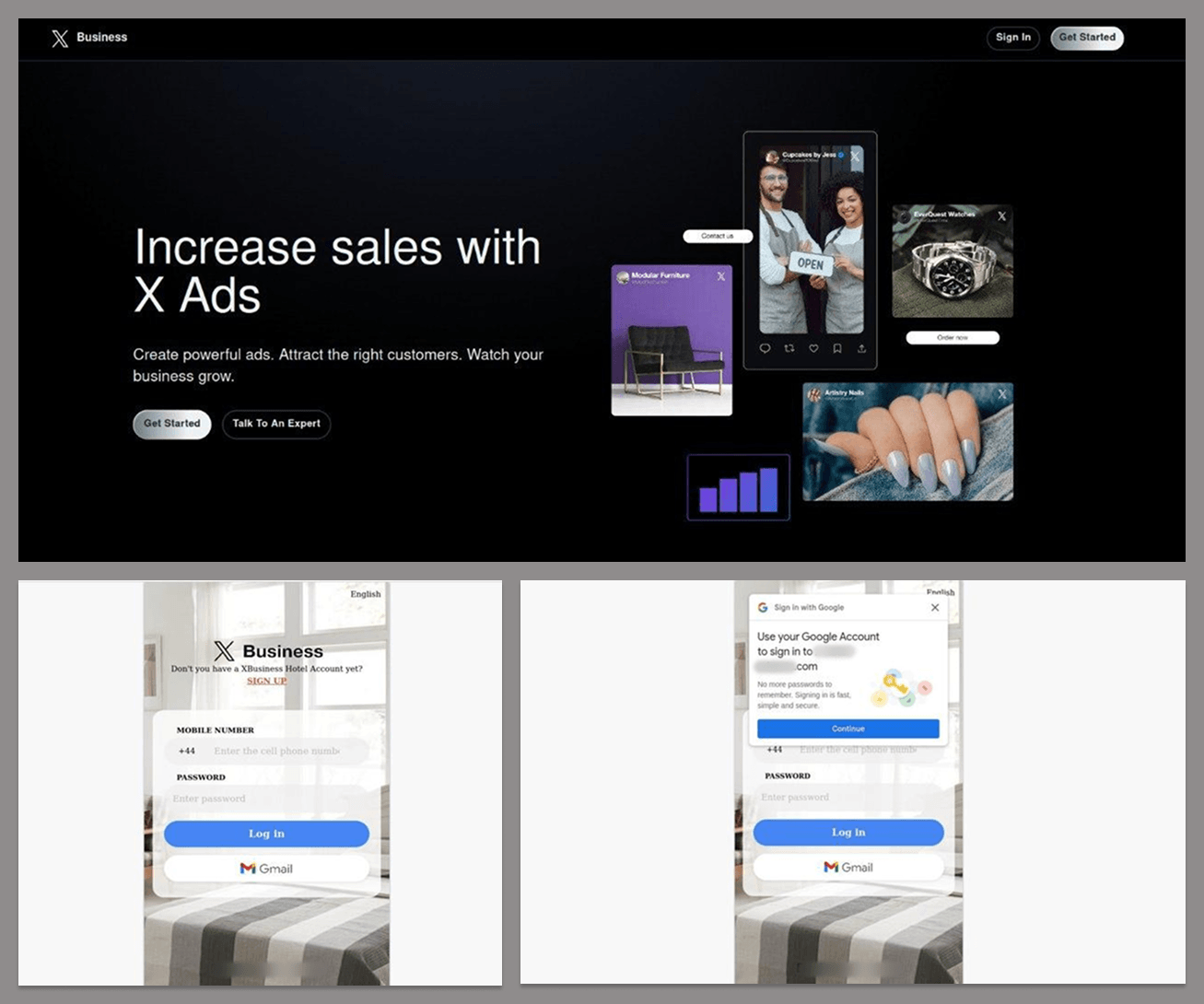
To do this, cyberattackers use a variety of lures, often imitating landing pages from brands commonly used by SMBs. One example is a phishing attempt targeting Google business accounts. The bait lures victims with the promise of promoting their company on X. It requires them to first log in to a dedicated platform using their Google account with credentials that will end up in cyberattackers’ hands.
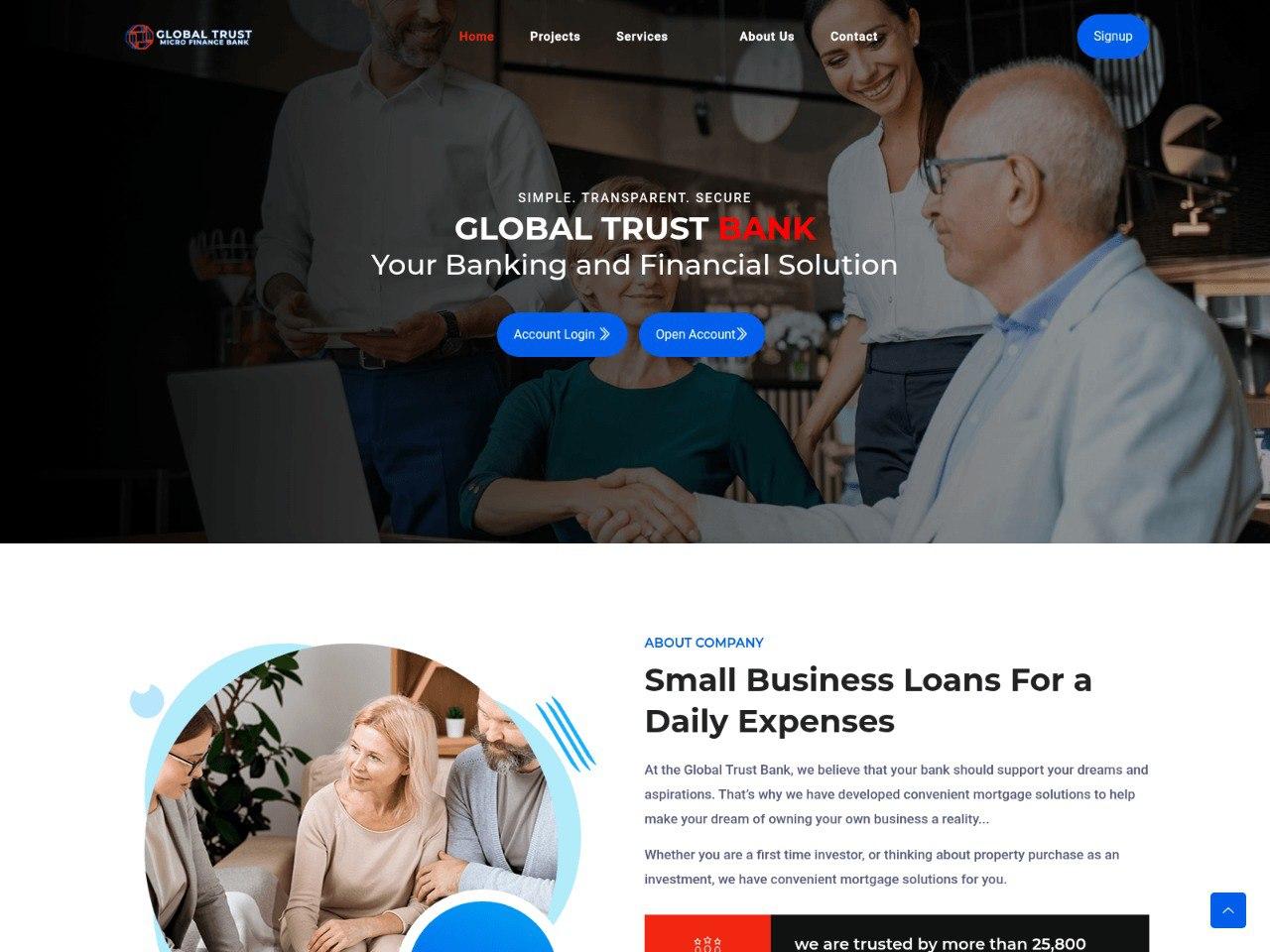
Another fake landing page impersonated a bank that offered business loans: a “Global Trust Bank”. Since legitimate organizations with that name exist in multiple countries, this phishing attempt may have seemed believable. The attackers tried to lure users with favorable business loan terms – but only after victims submitted their online banking credentials, giving the criminals access to their accounts.
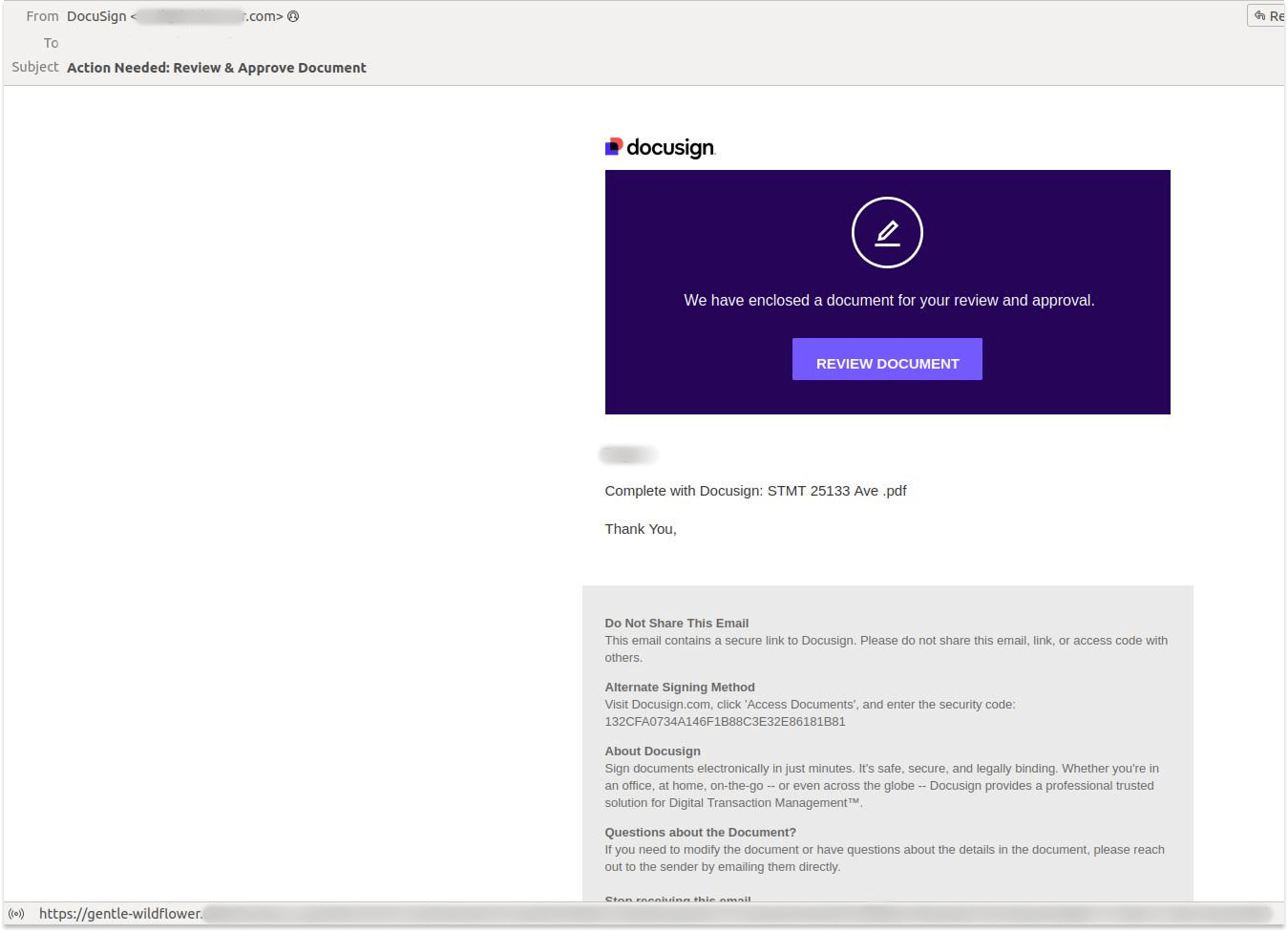
We also saw a range of phishing emails targeting SMBs. In one recent case detected by our systems, the attacker sent a fake notification allegedly from DocuSign, an electronic document-signing service.
SMBs can even find themselves targeted by classic Nigerian scams. In one recent example, the sender claimed to represent a wealthy client from Turkey who wanted to move $33 million abroad to allegedly avoid sanctions, and invited the recipient to handle the funds. In Nigerian scams, fraudsters typically cajole money. They may later request a relatively small payment to a manager or lawyer compared to the amount originally promised.
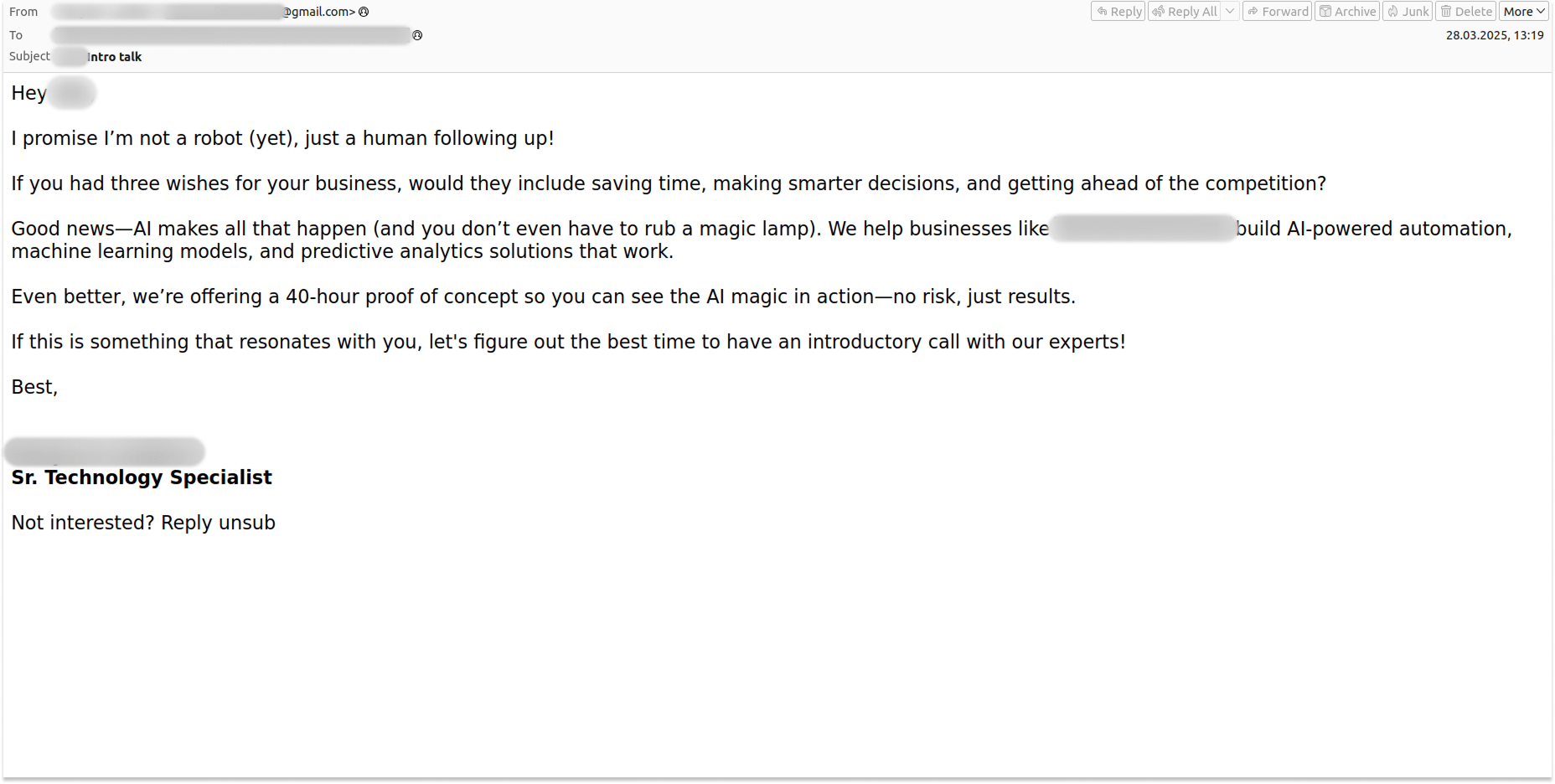
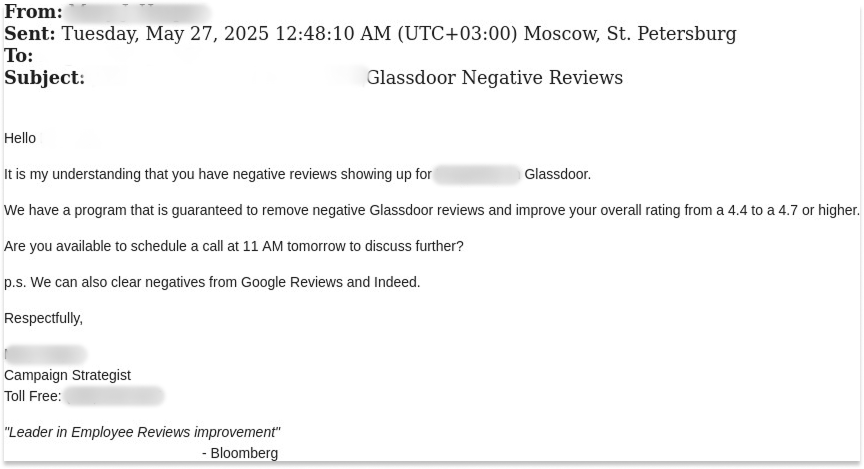
Beyond these threats, SMBs are bombarded daily with hundreds of spam emails. Some promise attractive deals on email marketing or loans; others offer services like reputation management, content creation, or lead generation. In general, these offers are crafted to reflect the typical needs of small businesses. Not surprisingly, AI has also made its way into the spam folder – with offers to automate various business processes.
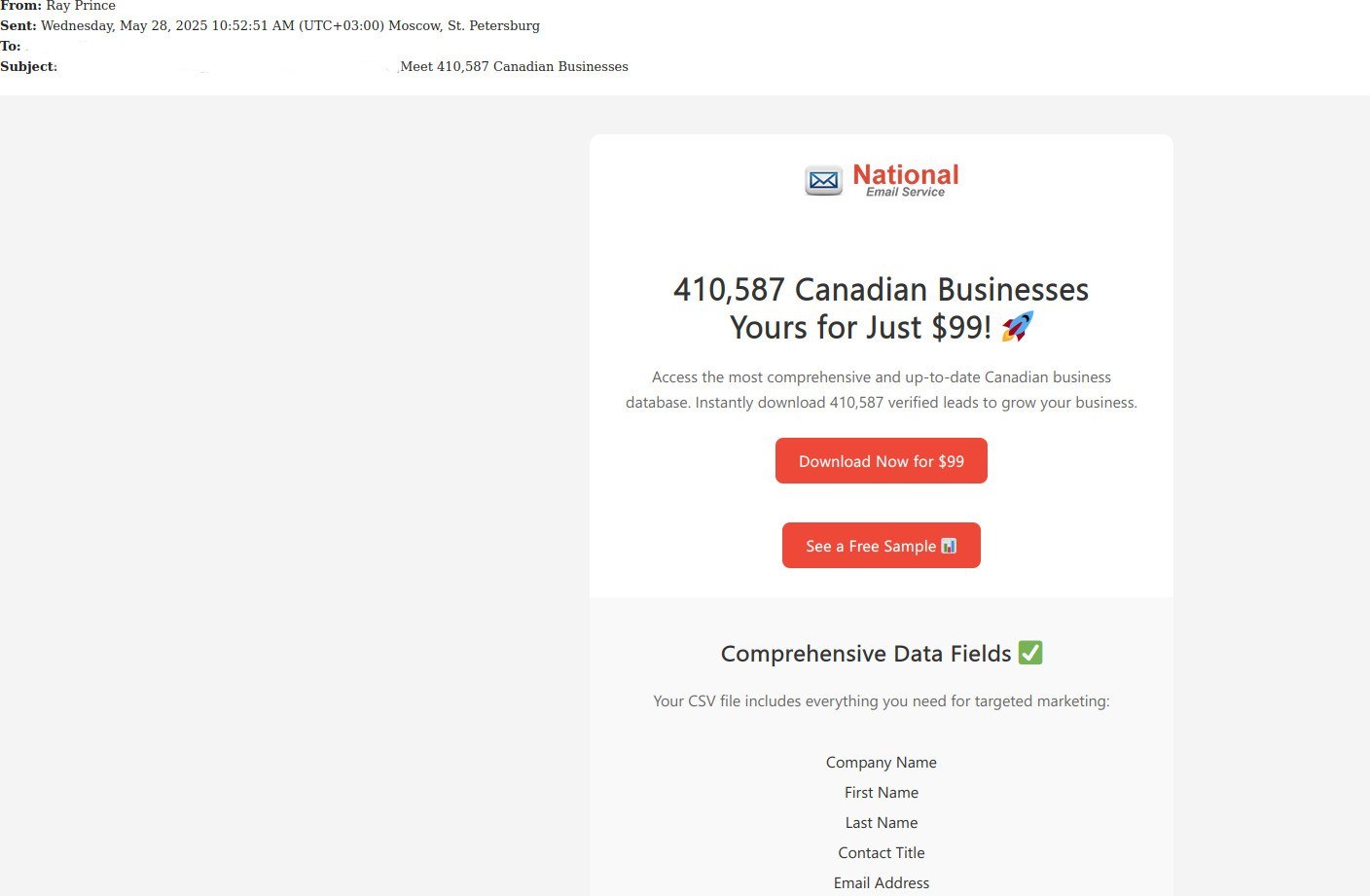
We have also seen spammers offering dubious deals like purchasing a database of over 400,000 businesses for $100, supposedly to be used for selling the company’s B2B products, or manipulating reviews on a review platform.
Security tips
SMBs can reduce risks and ensure business continuity by investing in comprehensive cybersecurity solutions and increasing employee awareness. It is essential to implement robust measures such as spam filters, email authentication protocols, and strict verification procedures for financial transactions and the handling of sensitive information.
Another key step toward cyber resilience is promoting awareness about the importance of comprehensive security procedures and ensuring they are regularly updated. Regular security training sessions, strong password practices, and multi-factor authentication can significantly reduce the risk of phishing and fraud.
It is also worth noting that searching for software through search engines is an insecure practice, and should be prohibited in the organization. If you need to implement new tools or replace existing ones, make sure they are downloaded from official sources and installed on a centralized basis by your IT team.
Cybersecurity Action Plan for SMBs
Define access rules for corporate resources such as email accounts, shared folders, and online documents. Monitor and limit the number of individuals with access to critical company data. Keep access lists up to date and revoke access promptly when employees leave the company. Use cloud access security brokers to monitor and control employee activities within cloud services and enforce security policies.
Regularly back up important data to ensure the preservation of corporate information in case of emergencies or cyberincidents.
Establish clear guidelines for using external services and resources. Create well-defined procedures for coordinating specific tasks, such as implementing new software, with the IT department and other responsible managers. Develop short, easy-to-understand cybersecurity guidelines for employees, with a special focus on account and password management, email protection, and safe web browsing. A well-rounded training program will equip employees with the knowledge they need and the ability to apply it in practice.
Implement specialized cybersecurity solutions that provide visibility and control over cloud services, such as Kaspersky Next.
Source: Organization for Security and Co-operation in Europe – OSCE
Headline: OSCE Mission Hands Over Specialized Vehicles to Kosovo Police to Improve Public Safety and Security
The OSCE Mission in Kosovo handed over five specialized vehicles to the Kosovo Police K9 unit on 24 June 2025 to enhance the operational capabilities of police canine teams.
The vehicles, specially modified to support the safe and efficient transport of police dogs and their handlers during critical missions, will improve the mobility and responsiveness of K9 teams deployed in various security operations.
In addition, the Mission has overseen essential repairs to the existing kennels used by the K9 unit. These upgrades include improved ventilation systems, structural reinforcements, and enhanced sanitation facilities to ensure the wellbeing and readiness of the police dogs. The kennel repairs are a vital part of maintaining high standards of care and ensuring that the canine officers are in optimal condition to perform their specialized duties.
“The safety and security of all communities living in Kosovo remains our key priority,” said Ambassador Gerard McGurk, Head of the OSCE Mission in Kosovo, speaking at the handover event. “The delivery of specialized vehicles and the renovation of the K9 kennels represent tangible steps towards strengthening public safety and building trust across all communities in Kosovo,” he added.
Kosovo Police General Director, Colonel Gazmend Hoxha, said that the longstanding co-operation with the OSCE has been instrumental in advancing the capabilities of the Kosovo Police. He underlined that the partnership is vital for improving the police’s ability to detect and confiscate illicit arms and explosives, ultimately contributing to a safer and more secure Kosovo.
The initiative is part of an extra-budgetary project funded by the Government of Germany and the European Union, focused on strengthening the canine capacity of Kosovo’s police services to detect and confiscate small arms and light weapons (SALW), ammunition, and explosives — key priorities for maintaining public safety and security. As part of the same project, the Mission built a training polygon for the K9 unit in 2023.
Through this support, the OSCE Mission in Kosovo is contributing to the long-term development and modernization of the police K9 unit. These improvements not only enhance operational efficiency but also demonstrate a shared dedication to security, professionalism, and the welfare of police dogs. The strengthened K9 capacity will play a crucial role in countering illegal arms trafficking and explosives, thereby fostering a safer environment for all people of Kosovo.
Source: Organization for Security and Co-operation in Europe – OSCE
Headline: OSCE Mission Hands Over Specialized Vehicles to Kosovo Police to Improve Public Safety and Security
The OSCE Mission in Kosovo handed over five specialized vehicles to the Kosovo Police K9 unit on 24 June 2025 to enhance the operational capabilities of police canine teams.
The vehicles, specially modified to support the safe and efficient transport of police dogs and their handlers during critical missions, will improve the mobility and responsiveness of K9 teams deployed in various security operations.
In addition, the Mission has overseen essential repairs to the existing kennels used by the K9 unit. These upgrades include improved ventilation systems, structural reinforcements, and enhanced sanitation facilities to ensure the wellbeing and readiness of the police dogs. The kennel repairs are a vital part of maintaining high standards of care and ensuring that the canine officers are in optimal condition to perform their specialized duties.
“The safety and security of all communities living in Kosovo remains our key priority,” said Ambassador Gerard McGurk, Head of the OSCE Mission in Kosovo, speaking at the handover event. “The delivery of specialized vehicles and the renovation of the K9 kennels represent tangible steps towards strengthening public safety and building trust across all communities in Kosovo,” he added.
Kosovo Police General Director, Colonel Gazmend Hoxha, said that the longstanding co-operation with the OSCE has been instrumental in advancing the capabilities of the Kosovo Police. He underlined that the partnership is vital for improving the police’s ability to detect and confiscate illicit arms and explosives, ultimately contributing to a safer and more secure Kosovo.
The initiative is part of an extra-budgetary project funded by the Government of Germany and the European Union, focused on strengthening the canine capacity of Kosovo’s police services to detect and confiscate small arms and light weapons (SALW), ammunition, and explosives — key priorities for maintaining public safety and security. As part of the same project, the Mission built a training polygon for the K9 unit in 2023.
Through this support, the OSCE Mission in Kosovo is contributing to the long-term development and modernization of the police K9 unit. These improvements not only enhance operational efficiency but also demonstrate a shared dedication to security, professionalism, and the welfare of police dogs. The strengthened K9 capacity will play a crucial role in countering illegal arms trafficking and explosives, thereby fostering a safer environment for all people of Kosovo.
Source: Organization for Security and Co-operation in Europe – OSCE
Headline: Uzbekistan’s Ombudsman institution, civil society organizations gain skills in alternative reporting to UN treaty bodies
Uzbekistan’s Ombudsman institution, civil society organizations gain skills in alternative reporting to UN treaty bodies | OSCE
Skip navigation
Navigation
Navigation
Home Newsroom News and press releases Uzbekistan’s Ombudsman institution, civil society organizations gain skills in alternative reporting to UN treaty bodies
Source: Organization for Security and Co-operation in Europe – OSCE
Headline: Uzbekistan’s Ombudsman institution, civil society organizations gain skills in alternative reporting to UN treaty bodies
Uzbekistan’s Ombudsman institution, civil society organizations gain skills in alternative reporting to UN treaty bodies | OSCE
Skip navigation
Navigation
Navigation
Home Newsroom News and press releases Uzbekistan’s Ombudsman institution, civil society organizations gain skills in alternative reporting to UN treaty bodies
Scottish Greens call for buses in Glasgow to be nationalised
More in Transport
The Scottish Greens have called for Glasgow’s buses to be brought back into public ownership to deliver cheaper fares and a better service for passengers.
Later today (Wednesday 25th June), the Scottish Greens will use a Members’ Business debate to call on the Scottish Government to support the expansion of publicly owned bus services in Glasgow to deliver high-quality, affordable and reliable services.
Whilst local authorities in Scotland have the power to bring bus services in-house, the Scottish Government has made this process complicated and slow. SPT – Strathclyde Partnership for Transport – has recently consulted the public on their plans to either commission or run bus services in Glasgow, however, campaigners are concerned about ongoing delays and the lack of funding available.
Ahead of a Green debate in Holyrood about bringing buses back into public hands, party co-leader and sponsor of the Members Business Debate Patrick Harvie said:
“Glasgow deserves world-class public transport, but everyone who uses it can see that it’s confusing, expensive and unreliable. Fares have increased, routes have been cut, and passengers have been left stranded.
“But if we had publicly owned bus companies we’d deliver great results for communities.
“You just have to look at Lothian buses in Edinburgh – over the last decade, they’ve paid back a £36 million dividend to the Council that runs them. That’s the norm in many parts of Europe, and cities like Manchester have made great progress in recent years too.
“So why shouldn’t we be running our own buses here in Glasgow?”
Mr Harvie called on the Scottish Government to follow the Scottish Greens’ lead to make public transport cheaper and more accessible for all. He added:
“The Scottish Greens have a track record of making public transport cheaper for people across Scotland. We delivered free bus travel for young people under the age of 22 and were the first to scrap peak rail fares.
“Bus fares should be cheap or free for everyone, all the time. But without reliable, accessible and integrated buses even free travel won’t get you very far.
“Councils desperately need the power to plan the routes they need and cap fares. But that’s only the first step – from there we need to properly support new publicly owned operators.
“If we get this right, Glasgow and the wider region can achieve better buses for everyone. Glasgow deserves nothing less.”
Source: United Kingdom – Executive Government Non-Ministerial Departments 2
Press release
Side hustlers urged to get tax returns sorted now
HMRC is encouraging anyone with a side hustle to check if they need to complete a Self Assessment tax return for the 2024 to 2025 tax year.
If you earn more than £1,000 from additional income, you may need to register for Self Assessment.
Filing now means you will know your tax situation sooner and can spread payments over time.
HMRC’s digital services make filing quick and easy.
Anyone earning extra income through a side hustle is being urged to check if they need to register for Self Assessment – and if so, file their tax return now.
HM Revenue and Customs (HMRC) is encouraging those with additional income streams – from online selling and content creation to dog walking and property rental – to understand their tax obligations and get ahead of the January deadline rush.
The £1,000 threshold is key: anyone who earns more than this from their side hustle in a tax year may need to register for Self Assessment and complete a tax return. This includes gains or income received from cryptoassets.
Anyone who thinks they may need to complete a tax return for the 2024 to 2025 tax year can use the checker tool on GOV.UK to find out. New entrants to Self Assessment must register to receive their Unique Taxpayer Reference.
Myrtle Lloyd, HMRC’s Director General for Customer Services, said:
Whether you are selling handmade crafts online, creating digital content, or renting out property, understanding your tax obligations is essential. If you earn more than £1,000 from these activities, you may need to complete a Self Assessment tax return.
Filing early puts you in control – you will know exactly what you owe, can plan your payments, and avoid the stress of the January rush. You don’t need to pay immediately when you file – you have until 31 January to settle your tax bill.
The deadline to submit a Self Assessment tax return online and pay any tax owed for the 2024 to 2025 tax year is 31 January 2026.
Early preparation is particularly important for sole traders or landlords with a qualifying income over £50,000, as they will also need to get ready to start using Making Tax Digital (MTD) for Income Tax from April 2026. This will require digital record-keeping and quarterly updates using compatible software.
Visit GOV.UK to find out more about Self Assessment and how to file a tax return.
you need to make sure your tax return includes any gains or income received in relation to cryptoassets.
Capital Gains Tax may be due if you sold or exchanged any cryptoassets. This includes selling cryptoassets for money, exchanging one type for another, using cryptoassets to make purchases, or gifting them away.
Income Tax and National Insurance Contributions may also be due if you received cryptoassets from employment, or were involved in cryptoasset-related activities that generate income (for example, lending and staking).
new for tax year 2024 to 2025: Dedicated sections are being introduced within the Self Assessment tax return for declaring cryptoassets separately from Capital Gains and Trusts and Estates.
full guidance on cryptoasset taxation can be found on GOV.UK by searching for ‘tax when you sell cryptoassets’.
According to insight commissioned by HMRC and published in 2023, one in 10 people in the UK are operating in the hidden economy with 65% of these individuals most likely operating side hustles and largely unaware that they should be registered for tax.
U.N. nuclear watchdog chief Rafael Grossi said on Wednesday his top priority is getting his inspectors back to Iran’s nuclear facilities to assess the impact of U.S. and Israeli military strikes and verify its stocks of enriched uranium.
“This is the number 1 priority,” International Atomic Energy Agency chief Grossi told a news conference at an Austrian security cabinet meeting. He is seeking his inspectors’ return to Iranian sites including the three plants where it was enriching uranium until Israel launched strikes on June 13.
Asked if Iran had informed him of the status of its stocks of enriched uranium, particularly its uranium enriched to up to 60% purity, close to weapons grade, he pointed to a letter he received from Iran on June 13, saying Iran would take “special measures” to protect its nuclear materials and equipment.
“They did not get into details as to what that meant but clearly that was the implicit meaning of that. We can imagine this material is there,” Grossi said, suggesting much of that material had survived the attacks.
Source: Hong Kong Government special administrative region – 4
Following is a question by the Hon Jeffrey Lam and a written reply by the Secretary for Culture, Sports and Tourism, Miss Rosanna Law, in the Legislative Council today (June 25):
Question:
It has been reported that in recent years, the popular artistic toy industry and the “goods economy” (i.e. economic activities relating to intellectual property (IP) peripheral products of animation, comics, games, idols, etc) have expanded rapidly worldwide. Last year, the global market of “blind boxes” (i.e. sealed boxes whose IP peripheral products are not made known to consumers in advance) reached US$14.5 billion (approximately HK$113.1 billion), with some IP merchandise created by Hong Kong designers generating hundreds of millions of dollars in value in the international market. However, there are views that the popular artistic toy industrial chain in Hong Kong is not yet mature and requires precise policy support. In this connection, will the Government inform this Council:
(1) whether it has compiled statistics for the period between 2022 and 2024 on (i) the number of companies registered in Hong Kong that were involved in the design, production or sale of popular artistic toys, (ii) the contribution of the popular artistic toy industry to Gross Domestic Product, (iii) the number of professional practitioners in the popular artistic toy industry, and (iv) among the projects approved under the Government’s funding schemes or funds for driving the development of the cultural and creative industries (e.g. the CreateSmart Initiative), the proportion of projects related to the popular artistic toy industry and the total amount of funding involved; if such data is unavailable, whether the Government will review if this emerging industry is outside the scope of the existing policy;
(2) whether it has compiled statistics on the number of registrations filed with the Intellectual Property Department by local designers for artistic toy character designs from 2022 to 2024, and the number of cases in which Hong Kong enterprises have successfully turned local IP into mass-produced merchandise;
(3) of the number of pop-up stores or exhibitions relating to the theme of popular artistic toys that were approved to be held in public venues (e.g. the West Kowloon Cultural District and galleries of the Leisure and Cultural Services Department) in the past year, and the average duration of such exhibitions;
(4) among the events supported by the Mega Events Coordination Group last year, of the proportion of mega events that had the theme of popular artistic toys (e.g. designers’ autograph and sale sessions and blind box bazaars), as well as the data on the number of people who attended such events; and
(5) as the Financial Secretary pointed out earlier on in a blog post that some IP with Hong Kong elements created by Hong Kong designers has generated hundreds of millions of dollars in value, and there are views that this reflects that the calibre of the local creative industry is of an international standard, whether the Government has formulated specific measures to assist in the development of the industrialisation of Hong Kong’s IP and to promote the maximisation of the value of local IP; if so, of the details; if not, the reasons for that?
Reply:
President,
Art toy refers to toys designed by designers and artists, and infused with rich cultural connotations and fashionable creativity. It can be traced back to figures in the 1960s of the 20th century which were mostly derivative models of anime characters for the purposes of appreciation and collection. Noting the emergence and development of art toy in recent years which bring in opportunities for the creative industries in Hong Kong, the Cultural and Creative Industries Development Agency (CCIDA) under the Culture, Sports and Tourism Bureau (CSTB) has been actively supporting projects related to Hong Kong’s art toy industry, including setting up Hong Kong pavilions at exhibitions in the Mainland and overseas to support the industry in the promotion of art toys originated in Hong Kong.
My reply to the various parts of the question raised by the Hon Jeffrey Lam’s question, in consultation with the Census and Statistics Department (C&SD) and the Intellectual Property Department (IPD), is as follows:
(1) The cultural and creative industries (CCI) form an integral part of creating a diversified economy in Hong Kong. CCI covers the design sector whereas art toy design is grouped under this sector. According to the C&SD’s latest statistics, the value added by the design sector reached over $4.2 billion in 2023, accounting for over 0.1% of Gross Domestic Product in Hong Kong, and 3.1% of that of CCI. The number of establishments and practitioners engaged in the design sector were around 7 490 and 18 650 respectively.
From 2022 till now, the CCIDA funded and fostered eight Hong Kong art toy-related projects through the CreateSmart Initiative (CSI). Overseas projects included driving the industry to participate in “Promote Hong Kong Designer Toys through Thailand Exhibitions”, “Promote Hong Kong Designer Toys through Thailand Toy Expo 2024”, “Promote Hong Kong Art Toys through Indonesia Exhibition 2024” and “Promote Hong Kong Art Toys through Thailand Toy Expo 2025”. These four projects facilitated over 20 business deals and more than 370 business enquiries and contacts, and ideal selling records were made for individual participating designers. For example, a Hong Kong art toy designer sold art toys of over $0.5 million and successfully reached out an Indonesian toy agent to expand his retail business in Indonesia. In the Mainland, the CSI funded the industry to participate in “Hong Kong Creative Pavilion@China (Shenzhen) International Cultural Industry Expo and Trade Fair plus Hong Kong@Shenzhen Cultural Industry Expo”, “Hong Kong Creative Pavilion@2024 Hangzhou Cultural & Creative Industry Expo”, “China International Cartoon & Animation Festival (Hangzhou)” and “China International Animation Copyright Fair (Dongguan)”. The CCIDA set up Hong Kong pavilions in these exhibitions to promote Hong Kong’s art toy, animation, game and related industries. These four Hong Kong pavilions attracted a total of over 160 000 participants, reaching out over 1 300 business deals and more than 120 business enquiries and contacts. The eight projects obtained about $38 million of the CSI funding.
In fact, Hong Kong creators made great achievements in the global art toy industries in recent years. Their art toy characters designed and the products generated by their intellectual properties (IPs) successfully occupy a remarkable market share in markets of Hong Kong, the Mainland and overseas. Among them, Hong Kong renowned designers Lung Ka-sing and Kenny Wong created iconic art toy products, making great profits for the art toy industries. Lung also won an illustration award in Belgium, being the first Chinese designer to win this prize. Besides, Wong’s designs have collaborations with various international trendy brands for rolling out IP products.
(2) According to the IPD, the Locarno classification published by the World Intellectual Property Organization is the system adopted for classifying articles under the local registered designs system. There is no specific class for “artistic toy characters”, which are instead classified under Class 21 (sub-class 01) – “games and toys”. The numbers of applications and registrations under this sub-class from 2022 to 2024 are as follows:
2022
2023
2024
Number of applications (Number of designs involved (Note 1))
31 (66)
39 (79)
59 (82)
Number of registrations (Note 2)
78
76
41
Note 1: Each design application may contain one or more designs. Note 2: Since it takes time to process applications, the number of registrations shown may not equal to the number of applications received in a particular year.
Other than obtaining protection for the design of an article under the registered designs system, the same may also be considered as a sign for registration under the trade marks system, or as an original artistic work protected by the copyright system (registration not required). Rights holders need to consider their overall IP protection and utilisation strategy, as well as the relevant legal requirements.
Over the years, there have been numerous examples of Hong Kong businesses transforming local cultural and creative IPs into mass-produced products. This may be done by various ways such as sales and licensing, and it also depends on the types of IPs being utilised. The Government does not have statistics in this regard.
(3) and (4) Different types of mega events in Hong Kong cover various areas, among which many of the events with profound IP elements are well received by the public. Events in 2024 include “100% DORAEMON & FRIENDS” Tour, Pokémon GO City Safari, PANDA GO! FEST HK, ComplexCon Hong Kong, Hypefest Hong Kong, and the annual Ani-com & Games Hong Kong that gathers animation, comics and figurines, etc. The CSTB supported these activities in different ways. As an estimate, these events attracted over five millions of participants.
In 2024, there were nine art toy-related projects exhibited in venues of the West Kowloon Cultural District and the Leisure and Cultural Services Department. Their average exhibition period was about 17 days. In addition, there were lots of activities relating to the theme of art toy held in different government and private venues (such as shopping malls).
(5) The Government has been promoting the development of the trading and commercialisation of local IPs, including various measures related to CCI.
In strengthening IP protection, the copyright system is an essential component of the IP regime, offering protection for original works including those in the literary and artistic fields, and is crucial to the development of the local creative industries and a knowledge-based economy. The Copyright (Amendment) Ordinance 2022 came into effect in May 2023 to enhance copyright protection in the digital environment. The IPD is also conducting a comprehensive review of the local registered design system and plans to launch a public consultation within this year to ensure that the system remains up-to-date, aligns with current international standards, and meets the needs of Hong Kong’s future economic development. Besides, the CCIDA is actively supporting cultural IP projects (including those related to art toy mentioned above) through the CSI, and driving applicants to make applications for IP protection for their cultural and creative products, formulate IP agreements and manage IP portfolios, etc. so as to assist creators in exploring business opportunities.
In enhancing capacity building, the IPD has in recent years provided more comprehensive and in-depth IP training courses and practical workshops for practitioners across various sectors, including those in the cultural and creative industries, with a target to benefit 5 000 practitioners across different industries within the current term of the Government. Besides, in collaboration with the Law Society of Hong Kong, the IPD has been providing free IP consultation services for small and medium enterprises through practising lawyers on a pro bono basis.
On promotion effort, the Hong Kong Trade Development Council (HKTDC) continues to enrich large-scale activities such as the Hong Kong International Film and TV Market, the Hong Kong International Licensing Show and the Hong Kong Book Fair in order to support local original works to exploit the Mainland and international markets. The CCIDA has also funded the HKTDC to enhance the Asia IP Exchange portal, adding a database for arts, cultural and creative IPs to facilitate potential buyers in searching for relevant information, and introducing more elements of market transaction, such as business matching events, market information and professional service packages on IP trading to foster cross-sectoral collaboration. The CCIDA will facilitate more registration of local and non-local cultural and creative products on the Asia IP Exchange portal to promote the transactions of cultural IPs.
Source: Hong Kong Government special administrative region
SCED attends China Forum in Paris, France Speaking at the forum, Mr Yau remarked that Asia is currently contributing 60 per cent to global growth, and that the Asian market, in particular the Mainland market, presents a unique opportunity for businesses looking to expand their horizons across the global trade landscape. As a “super connector” between foreign investors and the Mainland market, Hong Kong serves as a perfect springboard for French businesses to tap into the Mainland market.
Mr Yau said that in 2024, Hong Kong’s total trade amounted to US$1,350 billion, and was the world’s fifth-largest trading entity. Every year Hong Kong channels a massive volume of trade between the Mainland and the rest of the world. Meanwhile, under the Mainland and Hong Kong Closer Economic Partnership Arrangement (CEPA), the most liberal free trade agreement ever offered by the Mainland, Hong Kong enterprises and professionals can enjoy the most preferential access to the Mainland market. CEPA is also nationality neutral and does not impose any restrictions on the source of investments. He encouraged the French business sector to set up company in Hong Kong to enjoy the preferential treatment under CEPA to enter the Mainland market.
Mr Yau added that Hong Kong has a simple and low tax system and there is no restriction on the flow of capital. In addition to the Mainland market, French businesses can also access the Southeast Asian market by using Hong Kong as a base for their regional operations in Asia. Hong Kong is also deepening its trade ties with the Middle East and the Association of Southeast Asian Nations countries, and is reaching out to Central Asia to explore new markets.
Mr Yau concluded that Hong Kong already has strong links with France, adding that the French community is one of the largest and most successful in Hong Kong. Among the European Union member states, France is the third largest in merchandise trade with Hong Kong and second largest in services trade. He believes that there is still significant trade potential between Hong Kong and France that would bring better synergy and mutual benefits.
During his stay in Paris, Mr Yau also paid a courtesy call on Minister of the Chinese Embassy in France Mr Chen Dong to update him on Hong Kong’s latest economic and trade developments, and new initiatives such as the reduction of liquor duty to promote liquor trading.
Mr Yau also visited the headquarters of Elior Group SA and its facilities to learn about the company’s operation and business development. He then hosted a dinner for representatives of the France Hong Kong Business Association to learn about the latest development directions of local enterprises and exchange views on enhancing co-operation between Hong Kong and France.
Before proceeding to Paris, Mr Yau visited a wine cellar in Armagnac and met with representatives of the Armagnac trade on June 23 (France time) to promote the advantages of Hong Kong as a liquor trading hub.
Mr Yau will depart for Hong Kong on June 25 (France time). Issued at HKT 9:00
Source: United Kingdom – Executive Government & Departments
A study published in NPJ Vaccines looks at adjuvants in vaccines and their association with a lower risk of dementia.
Dr Julia Dudley, Head of Research at Alzheimer’s Research UK, said:
“Dementia is not an inevitable part of ageing. Identifying ways to reduce dementia risk is a priority for research, and vaccination offers an intriguing area of exploration. There have been an increasing number of studies suggesting a link between people who receive certain vaccinations, like the Shingrix vaccine, and a decreased risk of dementia. This study offers a potentially different perspective on what might be linked to this finding.
“In this latest large US-based observational study, researchers are proposing that it might be the adjuvant that is providing a protective effect, rather than the disease the vaccine is seeking to protect against. This study looked at dementia diagnoses in people who had received vaccines with the AS01 adjuvant and those who had a flu vaccine, which doesn’t contain this component.
“An adjuvant is a substance in the vaccine used to create a boosted immune response, designed to give more effective protection upon exposure to the virus.AS01 is in the shingles vaccine Shingrix, and Arexvy, the vaccine to protect against respiratory syncytial virus (RSV).
“They found people who had Shingrix, Arexvy or both of these vaccines were less likely to get a dementia diagnosis within 18 months. They found no difference between the Shingrix or Arexvy in terms of reducing dementia risk.
“One of the strengths of the study is that it adjusted for factors that could influence risk, such as underlying health conditions and some lifestyle and environmental factors. However, as the study is observational and examined past health data, the researchers cannot conclude how the Shingrix and Arexvy vaccines may protect against dementia. We also cannot rule out that the link between vaccine and dementia risk is due to other factors not captured in this study, such as social and lifestyle factors.
“One of the limitations highlighted by the authors was around people not having a dementia diagnosis when they could be living with the condition, which could skew the findings. We do not know if the adjuvant is reducing the risk of dementia or delaying its onset. The follow-up period was only 18 months, so more research is needed to determine the potential long-term effects of the vaccines.
“As we understand more about the biological mechanisms behind any protective effects seen with vaccines, we may be able to investigate new treatment approaches.”
Prof Kevin McConway, Emeritus Professor of Applied Statistics, Open University, said:
“This is an interesting, worthwhile and statistically competent piece of work, but a lot more research needs to be done to make good sense of its possible implications for health care. In fact it’s a good example of how scientific and medical knowledge has to be built up through a series of studies, not just a single piece of work.
“Previous research has provided pretty convincing evidence that vaccination against shingles, in older people, can reduce dementia risk. A recent study (published 2024), by the same research team responsible for the new study, found that the reduction in dementia risk is greater in people who had the shingles vaccine now in most widespread use, including in the UK (it’s called Shingrix), than with the previous vaccine (Zostavax).
“However, that study could not provide direct evidence on the reason for the risk difference between the two shingles vaccines. One possibility is that having shingles might increase dementia risk, and that the new vaccine provides better protection against shingles than the old one did, so reducing dementia risk. Another is that there’s some component in the new vaccine that reduces dementia risk. Or it could be some combination of these possibilities.
“The new Shingrix vaccine differs from the old Zostavax vaccine in several ways, but one difference is Shingrix vaccine contain a substance called AS01, while Zostavax does not. Some previous research has indicated that it’s possible that AS01 somehow provides in itself a reduction in dementia risk. AS01 is not the ingredient of the vaccine that directly incites the immune system to develop immunity against shingles. Instead it is an adjuvant – a substance that is intended to help the immune system to respond to the vaccination.
“AS01 is also used as an adjuvant in another vaccination offered to older people; the vaccination against the respiratory virus infection RSV (respiratory syncytial virus), which is now recommended for people in the UK aged 75-79. One of the vaccines in use against RSV also contains AS01. (There’s another available vaccine that does not contain it.) So the research team responsible for the new study used data from a large set of American electronic health records, to compare dementia risk over a period of 18 months after vaccination for older people who had had various different vaccinations containing AS01 (just the RSV vaccine, just the shingles vaccine, or both). These people were compared with older people who had had a flu vaccine, not containing AS01.
“The researchers found that those who had had either of the two AS01-containing vaccines (against RSV or shingles) had a lower risk of being diagnosed with dementia in the 18 months after vaccination than those who had had the flu vaccine. This pattern of lower risk showed up in people who had had just one of the AS01 vaccines, or both, though there were some relatively small (and statistically uncertain) differences in the average size of the risk reduction, compared to the flu vaccine, for different groups.
“What’s still not known from this study is exactly why these risk differences occur. The researchers mention that, in some way, they could occur because having either RSV or shingles might in itself increase dementia risk, so that having a vaccine that makes it less likely to have one or both of those diseases might reduce dementia risk. Or it could be because of some protective effect of the AS01 adjuvant, which is in these vaccines but not in the flu vaccine. (Or some combination of these possible effects.)
“The researchers give some arguments why they feel AS01 itself is likely to play a protective role against dementia. I don’t have expertise in virology so can’t comment directly on those arguments. But it’s at least a possibility, from all the existing evidence, that AS01 could have a protective effect. This study also doesn’t provide direct evidence on how AS01 might work to reduce dementia risk, but the researchers give some suggestions based on other studies as to what could be happening. Again I can’t comment on those.
“It’s because of this inevitable lack of knowledge about exactly how AS01 might be involved in reducing dementia risk that the researchers are asking for more studies, some of them using other research methods, to find out more. I agree with this recommendation, because in my view the results of this study provide a clear justification for looking further. But we’re not yet anywhere near the stage of using the results of the new study to change clinical practice. Also, the new study can’t make the timescale of risk reduction very clear, because the follow-up period to look for dementia diagnoses was relatively short at 18 months.
“This was an observational study – the people weren’t assigned at random to receive a particular pattern of vaccinations, but just did what they would have done anyway in consultation with health professionals. In any observational study, there can be issues about what is causing what. The basic problem is that people who receive different vaccinations will also differ in terms of many other factors – age, sex, what diseases they have previously had or still have, and many more. Some of these factors may be potential confounders, as they are called – that is, there’s a possibility that they are the cause of differences in dementia risk, and not the actual vaccinations at all.
“The researchers did a very thorough job of allowing for potential confounders, by doing something called propensity score matching. This involves setting up a statistical model that predicts people’s chances of having a dementia outcome, regardless of what vaccines they had had, and then matching people who (for example) had had the RSV vaccine but not the shingles vaccine with people who had had the flu vaccine. In this research the statistical model for the matching involves a very wide range of potential confounders. Then direct comparisons are based on these matched pairs of people. That means one can get a lot closer to comparing like with like groups, who don’t differ (on average) in terms of potential confounding factors.
“The process can’t entirely avoid the possibility that there are confounding factors that couldn’t be dealt with in this way, and that’s why the research paper says clearly that unmeasured confounding can’t be entirely ruled out. So there has to remain doubt about whether the risk differences are caused by the different vaccines. This is in addition to the inevitable doubts about which aspects of the vaccines (AS01 or something else as well) might be causes of the risk differences – if indeed it’s the vaccines that do turn out to cause the differences. These are yet more reasons why this research is nowhere near being the last word.”
Prof Sir Andrew Pollard FMedSci, Ashall Professor of Paediatric Infection and Immunity and Director of the Oxford Vaccine Group, University of Oxford, said:
“There are now a number of studies which have shown an association between shingles vaccination in older adults and a reduced rate of dementia in the vaccinated population. The fact that two different vaccine platforms (both live attenuated shingles vaccines and the adjuvanted shingles subcomponent vaccine) saw similar associations supported the idea that the mechanism was as a result of vaccine-prevention of reactivation of the usually dormant shingles virus in the brain. Another virus from the same family, herpes simplex virus (the cold sore virus) has also been associated with dementia raising the possibility that both of these viruses (shingles and herpes simplex) could cause infection, possibly silently and recurrently, in the brain that led eventually to dementia. Unfortunately, there is no licensed vaccine for herpes simplex at this time. However, this latest study published in npj vaccines shows that another vaccine, against the completely unrelated respiratory virus, RSV, is also associated with a reduced rate of dementia. The authors argue that this is because of a non-specific effect of these vaccines on the immune system which generates an environment in our bodies which is somehow protective against dementia, though further studies are needed to confirm this. Such a mechanism could account for the effects driven by both shingles and RSV vaccines. The various studies of the impact of vaccination on dementia are all observational studies which could have a risk of bias, as it can be challenging to adequately control for differences between those who seek vaccination and those who don’t, but the consistent finding across multiple studies makes the observation more convincing. It is premature to be too certain about the mechanism by which vaccines might reduce dementia risk, but these observations provide further incentive for those eligible to turn up for their scheduled vaccination visits to prevent the unpleasant and potentially serious and life-threatening infections for which they were designed, but with the added possible benefit of a longer dementia-free life-span. What’s not to like?”
‘Lower risk of dementia with AS01- adjuvanted vaccination against shingles and respiratory syncytial virus infections’ by Maxime Taquet et al. was published in npj vaccines at 10:00 UK time Wednesday June 25th 2025.
DOI: 10.1038/s41541-025-01172-3
Declared interests
Prof Kevin McConway: No conflicts.
For all other experts, no reply to our request for DOIs was received.
This week we are marking Shared Lives – a scheme that recruits and approves Carers from all backgrounds and introduces and matches them with individuals assessed as having a social care need.
A Shared Lives celebration event was held recently, bringing carers and families together to share stories and friendships.
Karyn Ross, who manages the Councils Shared Lives scheme, said: “I’ve worked for Shared Lives for a long time now and it’s just a lovely scheme and a natural way for someone to move from one family setting to another.
“It’s important that our families can all get together.”
An afternoon tea was organised, and the families had a great time enjoying a special time together.
Cllr Linda Bigham, Cabinet Member for Adult Services, said: “It was a fabulous event and great to see how people share everything together – dreams, ambitions and the happy and sad moments in life. We are very lucky in Coventry that we have so many people who are willing to share their lives and care for one another. We are really blessed.”
Shared lives introduces and matching individuals who are assessed as having social care needs with Approved Shared Lives Carers who invite individuals into their family homes to share their lives.
The Council’s Scheme covers Coventry and Warwickshire and is registered with the Care Quality Commission (CQC). The Scheme is always recruiting new carers who are offered a full training programme and support during the assessment and approval. Once carers are approved, we match referrals ensuring the Carers skills, abilities and lifestyle will complement the support of an individual placed. Our Carers open their homes and lifestyle to support individuals needing extra support to live fulfilling lives in the heart of their communities. They receive a financial package as part of the scheme.
For more details call 024 7678 5339 or visit coventry.gov.uk/sharedlives
Shared Lives Carer, Lucy was one of those at the celebrations. Lucy first provided respite care for Katie and now provides long term care.
She said: “I want to be the best support that I can – and Katie has supported me in my journey of supporting her.”
Lucy said: “Katie showed me the support she needed. She was the one guiding me.”
Katie added: “Together we make a great team”
To ensure the placement was right, Katie had many visits to Lucy’s home before Katie wanted to move in long term.
Katie has a visual impairment and is someone who relies on people’s voices and always thought Lucy’s voice was very kind.
Katie’s Mum Sue, said: “I am so happy for Katie’s future, it gives me peace of mind, that Katie now has someone who will care for her as I do.”
Katie also added: “Mum can now spend time on herself, I like to know that.”
Everyone at the event wore an ‘I love shared lives’ sticker, which tells you everything about the project.
Hear from Lucy and Katie by watching the video below.
Source: Moscow Government – Government of Moscow –
Two new open-air water recreation areas to appear in park “Moskvoretsky” and in the natural and historical park “Kuzminki-Lyublino”. As in other pools, the duration of sessions will be one and a half to three hours, and the cost is from 550 rubles for adults and 250 rubles for children. For the comfort of guests, awnings and umbrellas are provided, which are already included in the ticket price. More information about the terms of visit can be found at website.
“Pools in
parks of Moscow are becoming increasingly popular among residents and visitors of the city. To make your vacation as comfortable as possible, all swimming areas are equipped with the appropriate infrastructure. For example, sun loungers with umbrellas and storage lockers are provided for visitors. In total, 14 swimming pools will be operating in the parks this season,” said the Minister of the Moscow Government, Head of the Moscow Department of Culture Alexey Fursin.
Each of the new sites has two pools: a large one (1.4 meters deep) and a small one (0.6 meters).
To ensure safety, a water treatment system is used in the pools: the water undergoes round-the-clock multi-stage filtration, purification and constant laboratory monitoring. Technical maintenance is carried out after each session. All swimming areas are equipped with a heating system, which allows maintaining a comfortable water temperature in any weather.
The sites will also have paid rental points where you can rent towels, as well as purchase armbands and disposable slippers.
Project “Summer in Moscow” — the main event of the season. It brings together the most vibrant events of the capital. Every day, charity, cultural and sports events are held in all districts of the city, most of which are free. “Summer in Moscow” is being held for the second time, and this season will be more eventful: new, original and colorful festivals and events will be added to the traditional ones.
Please note: This information is raw content directly from the source of the information. It is exactly what the source states and does not reflect the position of MIL-OSI or its clients.
Please Note; This Information is Raw Content Directly from the Information Source. It is access to What the Source Is Stating and Does Not Reflect
With countries in danger of failing to meet their Sustainable Development Goals targets – and their human rights obligations – leaders attending theFinancing for Development Conferencemust act fast to avert climate catastrophe and guarantee the human rights of billions of people currently being denied socio-economic justice, said Amnesty International.
The 4th International Conference for Financing for Development will take place from 30 June to 3 July in Seville, Spain.It provides aunique opportunity to reform development financing at all levels and address financing challenges preventing the urgently needed investment push to achieve theSustainable Development Goals (SDGs)by 2030. The SDGs were put in place 10 years ago to guarantee peace and prosperity for people and the planet, now and in the future.
“Years of underinvestment by all states mean the majority of the Sustainable Development Goals are way off track from their 2030 target. This conference must confront the immediate crisis linked to the cutting of international assistance by major donors, whilst committing to structural reforms that could provide sustainable sources of financing for the longer term – from advancing international tax cooperation and addressing the debt crisis, to reforming international financial institutions and promoting more inclusive systems of financing and development,” said Riva Jalipa, Amnesty International’s Financing for Rights Lead Adviser.
“A series of robust measures must be put in place if the SDGs are to become a reality. The US and other governments must reverse cuts to aid budgets. Wealthy states must support the UN tax treaty process whilst providing debt relief for countries in or at risk of debt distress including cancellation where appropriate. Fossil fuels subsidies must be redirected towards investment in clean energy and leaders must commit to a full, fast, fair and funded fossil fuel phase out across all sectors and invest adequately in a just and equitable transition. Adopting these measures will go a long way to rescuing the SDGs and ensure social, economic and climate justice for millions across the world.”
Amnesty International will also be co-hosting a Virtual Side Event at the Financing for Development Conference, Seville:Reparative Justice in Financing for Development. The session will focus on development financing and reparative justice as a means through which a human rights-based economy which redresses both existing and historical injustices can not only be conceptualized but also practically actioned.Register to attend via Zoom.
Background
TheSustainable Development Goals (SDGs)were put in place 10 years ago to guarantee peace and prosperity for people and the planet, now and in the future. The 17 goals aimed to address global challenges, including poverty, inequality, climate change, environmental degradation, peace, and justice – to ensure no one was left behind. However,years of underinvestment by all states meanover 80% of the Sustainable Development Goals (SDGs)’ targets are off track due to underinvestment by all states.