Category: Europe

  • MIL-OSI NGOs: Gaza: As starvation spreads, our colleagues and those we serve are wasting away – joint statement

    Source: Amnesty International –

    As the Israeli government’s siege starves the people of Gaza, aid workers are now joining the same food lines, risking being shot just to feed their families. With supplies now totally depleted, humanitarian organisations are witnessing their own colleagues and partners waste away before their eyes.

    Exactly two months since the Israeli government-controlled scheme, the Gaza Humanitarian Foundation, began operating, 109 organisations are sounding the alarm, urging governments to act: open all land crossings; restore the full flow of food, clean water, medical supplies, shelter items, and fuel through a principled, UN-led mechanism; end the siege, and agree to a ceasefire now.

    “Each morning, the same question echoes across Gaza: will I eat today?” said one agency representative. 

    Massacres at food distribution sites in Gaza are occurring near-daily. As of July 13, the UN confirmed 875 Palestinians were killed while seeking food, 201 on aid routes and the rest at distribution points. Thousands more have been injured. Meanwhile, Israeli forces have forcibly displaced nearly two million exhausted Palestinians with the most recent mass displacement order issued on July 20, confining Palestinians to less than 12 per cent of Gaza. WFP warns that current conditions make operations untenable. The starvation of civilians as a method of warfare is a war crime. 

    Just outside Gaza, in warehouses – and even within Gaza itself – tons of food, clean water, medical supplies, shelter items and fuel sit untouched with humanitarian organisations blocked from accessing or delivering them. The Government of Israel’s restrictions, delays, and fragmentation under its total siege have created chaos, starvation, and death. An aid worker providing psychosocial support spoke of the devastating impact on children: “Children tell their parents they want to go to heaven, because at least heaven has food.” 

    Doctors report record rates of acute malnutrition, especially among children and older people. Illnesses like acute watery diarrhoea are spreading, markets are empty, waste is piling up, and adults are collapsing on the streets from hunger and dehydration. Distributions in Gaza average just 28 trucks a day, far from enough for over two million people, many of whom have gone weeks without assistance.

    The UN-led humanitarian system has not failed, it has been prevented from functioning. 

    Humanitarian agencies have the capacity and supplies to respond at scale. But, with access denied, we are blocked from reaching those in need, including our own exhausted and starved teams. On July 10, the EU and Israel announced steps to scale up aid. But these promises of ‘progress’ ring hollow when there is no real change on the ground. Every day without a sustained flow means more people dying of preventable illnesses. Children starve while waiting for promises that never arrive. 

    Palestinians are trapped in a cycle of hope and heartbreak, waiting for assistance and ceasefires, only to wake up to worsening conditions. It is not just physical torment, but psychological. Survival is dangled like a mirage. The humanitarian system cannot run on false promises. Humanitarians cannot operate on shifting timelines or wait for political commitments that fail to deliver access.

    Governments must stop waiting for permission to act. We cannot continue to hope that current arrangements will work. It is time to take decisive action: demand an immediate and permanent ceasefire; lift all bureaucratic and administrative restrictions; open all land crossings; ensure access to everyone in all of Gaza; reject military-controlled distribution models; restore a principled, UN-led humanitarian response and continue to fund principled and impartial humanitarian organisations. States must pursue concrete measures to end the siege, such as halting the transfer of weapons and ammunition. 

    Piecemeal arrangements and symbolic gestures, like airdrops or flawed aid deals, serve as a smokescreen for inaction. They cannot replace states’ legal and moral obligations to protect Palestinian civilians and ensure meaningful access at scale. States can and must save lives before there are none left to save.

    Signatories: 

    1. American Friends Service Committee (AFSC)
    2. A.M. Qattan Foundation
    3. A New Policy
    4. ACT Alliance
    5. Action Against Hunger (ACF)
    6. Action for Humanity
    7. ActionAid International
    8. American Baptist Churches Palestine Justice Network
    9. Amnesty International
    10. Asamblea de Cooperación por la Paz
    11. Associazione Cooperazione e Solidarietà (ACS)
    12. Bystanders No More
    13. Campain
    14. CARE 
    15. Caritas Germany
    16. Caritas Internationalis
    17. Caritas Jerusalem
    18. Catholic Agency for Overseas Development (CAFOD)
    19. Center for Mind-Body Medicine (CMBM)
    20. CESVI Fondazione
    21. Children Not Numbers
    22. Christian Aid
    23. Churches for Middle East Peace (CMEP)
    24. CIDSE- International Family of Catholic Social Justice Organisations
    25. Cooperazione Internazionale Sud Sud (CISS)
    26. Council for Arab‑British Understanding (CAABU)
    27. DanChurchAid (DCA)
    28. Danish Refugee Council (DRC)
    29. Doctors against Genocide
    30. Episcopal Peace Fellowship
    31. EuroMed Rights
    32. Friends Committee on National Legislation (FCNL)
    33. Forum Ziviler Friedensdienst e.V.
    34. Gender Action for Peace and Security
    35. Global Legal Action Network (GLAN)
    36. Global Witness
    37. Health Workers 4 Palestine
    38. HelpAge International
    39. Humanity & Inclusion (HI)
    40. Humanity First UK
    41. Indiana Center for Middle East Peace
    42. Insight Insecurity
    43. International Media Support
    44. International NGO Safety Organisation
    45. Islamic Relief
    46. Jahalin Solidarity
    47. Japan International Volunteer Center (JVC)
    48. Kenya Association of Muslim Medical Professionals (KAMMP)
    49. Kvinna till Kvinna Foundation
    50. MedGlobal
    51. Medico International
    52. Medico International Switzerland (medico international schweiz)
    53. Medical Aid for Palestinians (MAP)
    54. Mennonite Central Committee (MCC)
    55. Médecins Sans Frontières (MSF)
    56. Médecins du Monde France
    57. Médecins du Monde Spain
    58. Médecins du Monde Switzerland
    59. Mercy Corps
    60. Middle East Children’s Alliance (MECA)
    61. Movement for Peace (MPDL)
    62. Muslim Aid
    63. National Justice and Peace Network in England and Wales
    64. Nonviolence International
    65. Norwegian Aid Committee (NORWAC)
    66. Norwegian Church Aid (NCA)
    67. Norwegian People’s Aid (NPA)
    68. Norwegian Refugee Council (NRC)
    69. Oxfam International
    70. Pax Christi England and Wales
    71. Pax Christi International
    72. Pax Christi Merseyside
    73. Pax Christi USA
    74. Pal Law Commission
    75. Palestinian American Medical Association
    76. Palestinian Children’s Relief Fund (PCRF)
    77. Palestinian Medical Relief Society (PMRS)
    78. Peace Direct
    79. Peace Winds
    80. Pediatricians for Palestine
    81. People in Need
    82. Plan International
    83. Première Urgence Internationale (PUI)
    84. Progettomondo
    85. Project HOPE
    86. Quaker Palestine Israel Network
    87. Rebuilding Alliance
    88. Saferworld
    89. Sabeel‑Kairos UK
    90. Save the Children (SCI)
    91. Scottish Catholic International Aid Fund
    92. Solidarités International
    93. Støtteforeningen Det Danske Hus i Palæstina
    94. Swiss Church Aid (HEKS/EPER)
    95. Terre des Hommes Italia
    96. Terre des Hommes Lausanne
    97. Terre des Hommes Nederland
    98. The Borgen Project
    99. The Center for Mind-Body Medicine (CMBM)
    100. The Glia Project
    101. The Global Centre for the Responsibility to Protect (GCR2P)
    102. The Institute for the Understanding of Anti‑Palestinian Racism
    103. Un Ponte Per (UPP)
    104. United Against Inhumanity (UAI)
    105. War Child Alliance
    106. War Child UK
    107. War on Want
    108. Weltfriedensdienst e.V.
    109. Welthungerhilfe (WHH)


    MIL OSI NGO

  • MIL-OSI NGOs: As mass starvation spreads across Gaza, our colleagues and those we serve are wasting away

    Source: Amnesty International –

    As the Israeli government’s siege starves the people of Gaza, aid workers are now joining the same food lines, risking being shot just to feed their families. With supplies now totally depleted, humanitarian organisations are witnessing their own colleagues and partners waste away before their eyes.

    Exactly two months since the Israeli government-controlled scheme, the Gaza Humanitarian Foundation, began operating, 109 organisations are sounding the alarm, urging governments to act: open all land crossings; restore the full flow of food, clean water, medical supplies, shelter items, and fuel through a principled, UN-led mechanism; end the siege, and agree to a ceasefire now.

    “Each morning, the same question echoes across Gaza: will I eat today?” said one agency representative. 

    Each morning, the same question echoes across Gaza: will I eat today?

    Humanitarian agency representative in Gaza

    Massacres at food distribution sites in Gaza are occurring near-daily. As of July 13, the UN confirmed 875 Palestinians were killed while seeking food, 201 on aid routes and the rest at distribution points. Thousands more have been injured. Meanwhile, Israeli forces have forcibly displaced nearly two million exhausted Palestinians with the most recent mass displacement order issued on July 20, confining Palestinians to less than 12 per cent of Gaza. WFP warns that current conditions make operations untenable. The starvation of civilians as a method of warfare is a war crime. 

    Just outside Gaza, in warehouses – and even within Gaza itself – tons of food, clean water, medical supplies, shelter items and fuel sit untouched with humanitarian organisations blocked from accessing or delivering them. The Government of Israel’s restrictions, delays, and fragmentation under its total siege have created chaos, starvation, and death. An aid worker providing psychosocial support spoke of the devastating impact on children: “Children tell their parents they want to go to heaven, because at least heaven has food.” 

    Doctors report record rates of acute malnutrition, especially among children and older people. Illnesses like acute watery diarrhoea are spreading, markets are empty, waste is piling up, and adults are collapsing on the streets from hunger and dehydration. Distributions in Gaza average just 28 trucks a day, far from enough for over two million people, many of whom have gone weeks without assistance.

    The UN-led humanitarian system has not failed, it has been prevented from functioning. 

    Humanitarian agencies have the capacity and supplies to respond at scale. But, with access denied, we are blocked from reaching those in need, including our own exhausted and starved teams. On July 10, the EU and Israel announced steps to scale up aid. But these promises of ‘progress’ ring hollow when there is no real change on the ground. Every day without a sustained flow means more people dying of preventable illnesses. Children starve while waiting for promises that never arrive. 

    Palestinians are trapped in a cycle of hope and heartbreak, waiting for assistance and ceasefires, only to wake up to worsening conditions. It is not just physical torment, but psychological. Survival is dangled like a mirage. The humanitarian system cannot run on false promises. Humanitarians cannot operate on shifting timelines or wait for political commitments that fail to deliver access.

    Governments must stop waiting for permission to act. We cannot continue to hope that current arrangements will work. It is time to take decisive action: demand an immediate and permanent ceasefire; lift all bureaucratic and administrative restrictions; open all land crossings; ensure access to everyone in all of Gaza; reject military-controlled distribution models; restore a principled, UN-led humanitarian response and continue to fund principled and impartial humanitarian organisations. States must pursue concrete measures to end the siege, such as halting the transfer of weapons and ammunition. 

    Piecemeal arrangements and symbolic gestures, like airdrops or flawed aid deals, serve as a smokescreen for inaction. They cannot replace states’ legal and moral obligations to protect Palestinian civilians and ensure meaningful access at scale. States can and must save lives before there are none left to save.

    Signatories: 

    1. American Friends Service Committee (AFSC)
    2. A.M. Qattan Foundation
    3. A New Policy
    4. ACT Alliance
    5. Action Against Hunger (ACF)
    6. Action for Humanity
    7. ActionAid International
    8. American Baptist Churches Palestine Justice Network
    9. Amnesty International
    10. Asamblea de Cooperación por la Paz
    11. Associazione Cooperazione e Solidarietà (ACS)
    12. Bystanders No More
    13. Campain
    14. CARE 
    15. Caritas Germany
    16. Caritas Internationalis
    17. Caritas Jerusalem
    18. Catholic Agency for Overseas Development (CAFOD)
    19. Center for Mind-Body Medicine (CMBM)
    20. CESVI Fondazione
    21. Children Not Numbers
    22. Christian Aid
    23. Churches for Middle East Peace (CMEP)
    24. CIDSE- International Family of Catholic Social Justice Organisations
    25. Cooperazione Internazionale Sud Sud (CISS)
    26. Council for Arab‑British Understanding (CAABU)
    27. DanChurchAid (DCA)
    28. Danish Refugee Council (DRC)
    29. Doctors against Genocide
    30. Episcopal Peace Fellowship
    31. EuroMed Rights
    32. Friends Committee on National Legislation (FCNL)
    33. Forum Ziviler Friedensdienst e.V.
    34. Gender Action for Peace and Security
    35. Global Legal Action Network (GLAN)
    36. Global Witness
    37. Health Workers 4 Palestine
    38. HelpAge International
    39. Humanity & Inclusion (HI)
    40. Humanity First UK
    41. Indiana Center for Middle East Peace
    42. Insight Insecurity
    43. International Media Support
    44. International NGO Safety Organisation
    45. Islamic Relief
    46. Jahalin Solidarity
    47. Japan International Volunteer Center (JVC)
    48. Kenya Association of Muslim Medical Professionals (KAMMP)
    49. Kvinna till Kvinna Foundation
    50. MedGlobal
    51. Medico International
    52. Medico International Switzerland (medico international schweiz)
    53. Medical Aid for Palestinians (MAP)
    54. Mennonite Central Committee (MCC)
    55. Médecins Sans Frontières (MSF)
    56. Médecins du Monde France
    57. Médecins du Monde Spain
    58. Médecins du Monde Switzerland
    59. Mercy Corps
    60. Middle East Children’s Alliance (MECA)
    61. Movement for Peace (MPDL)
    62. Muslim Aid
    63. National Justice and Peace Network in England and Wales
    64. Nonviolence International
    65. Norwegian Aid Committee (NORWAC)
    66. Norwegian Church Aid (NCA)
    67. Norwegian People’s Aid (NPA)
    68. Norwegian Refugee Council (NRC)
    69. Oxfam International
    70. Pax Christi England and Wales
    71. Pax Christi International
    72. Pax Christi Merseyside
    73. Pax Christi USA
    74. Pal Law Commission
    75. Palestinian American Medical Association
    76. Palestinian Children’s Relief Fund (PCRF)
    77. Palestinian Medical Relief Society (PMRS)
    78. Peace Direct
    79. Peace Winds
    80. Pediatricians for Palestine
    81. People in Need
    82. Plan International
    83. Première Urgence Internationale (PUI)
    84. Progettomondo
    85. Project HOPE
    86. Quaker Palestine Israel Network
    87. Rebuilding Alliance
    88. Saferworld
    89. Sabeel‑Kairos UK
    90. Save the Children (SCI)
    91. Scottish Catholic International Aid Fund
    92. Solidarités International
    93. Støtteforeningen Det Danske Hus i Palæstina
    94. Swiss Church Aid (HEKS/EPER)
    95. Terre des Hommes Italia
    96. Terre des Hommes Lausanne
    97. Terre des Hommes Nederland
    98. The Borgen Project
    99. The Center for Mind-Body Medicine (CMBM)
    100. The Glia Project
    101. The Global Centre for the Responsibility to Protect (GCR2P)
    102. The Institute for the Understanding of Anti‑Palestinian Racism
    103. Un Ponte Per (UPP)
    104. United Against Inhumanity (UAI)
    105. War Child Alliance
    106. War Child UK
    107. War on Want
    108. Weltfriedensdienst e.V.
    109. Welthungerhilfe (WHH)

    MIL OSI NGO

  • MIL-OSI United Kingdom: CMA proposes action to drive more competition on mobile platforms

    Source: United Kingdom – Government Statements

    Press release

    CMA proposes action to drive more competition on mobile platforms

    Measures designed to boost the UK’s app economy, unlocking global success and ensuring UK consumers aren’t left behind.

    The Competition and Markets Authority (CMA) is today proposing to designate Apple and Google with ‘strategic market status’ (SMS) in each of their mobile platforms and has published separate roadmaps of potential actions to improve competition.

    The UK app economy

    The UK has a vibrant app developer community, representing Europe’s largest app economy by revenue and app developer count. In total, the UK app economy generates an estimated 1.5% of the UK’s GDP and supports around 400,000 jobs here. App-led innovation has powered the success of strategically important sectors for the UK, like financial services and gaming. Fintech stands out, attracting over £18 billion in inward investment over the past 3 years. Meanwhile, gaming contributes £6 billion to the UK economy, with mobile gaming alone bringing in nearly £2 billion a year. UK developers are also behind many of the apps that make modern life work – helping millions of people work, shop, bank, travel, game, consume content and stay connected.

    UK mobile platforms

    Apple and Google’s mobile platforms hold an effective duopoly, with around 90 – 100% of UK mobile devices running on Apple or Google’s mobile platform. The CMA’s investigation has heard concerns affecting businesses and consumers in the UK. These differ across Apple and Google but include:

    • inconsistent and unpredictable app review processes can create uncertainty for developers, meaning delayed or failed launches
    • inconsistent app store search rankings may favour apps owned by the firms
    • up to 30% commission on some in-app purchases, as well as restrictions on developers ‘steering’ customers outside of their app stores, for example towards other ways to pay or subscribe, which could make some business models unviable, reduce consumer choice, and chill innovation
    • restrictions on developers’ access to features and functionality including between smartphones and wearable technology (such as smart watches) may be impeding innovation
    • ‘Choice architecture’ (like default settings, pre-installation, prominence, prompts, and friction) may favour the firms’ own services, limiting competition and genuine choice for users.

    It is essential the digital economy works well to power the success of businesses across the UK economy. More competition and choice will unlock opportunities for UK businesses to invest, innovate and grow, as well as allowing UK consumers to benefit from the latest innovations, high quality experiences and more choice.

    A proportionate, pro-innovation approach

    The UK’s new digital markets competition regime can help unlock opportunities for innovation and growth, by promoting competition in digital markets while protecting UK consumers and businesses from unfair or harmful practices. To support pace and provide greater predictability for Apple and Google and other market participants, the CMA has published roadmaps outlining how it would prioritise actions taken during the first half of any designation period. Measures outlined in the roadmaps focus on areas including:

    App stores

    • Ensuring a fair and transparent app review process and app store rankings to give UK app developers certainty
    • Allowing the ability to ‘steer’ users out of app stores, for example to make purchases. Potentially driving innovation and financial savings for developers

    Interoperability

    • Ensuring UK app developers have interoperable access to key Apple functionality to create innovative products and services
    • Addressing Apple restrictions on digital wallets to ensure UK FinTech can compete, and enabling connected devices like smartwatches and gaming headsets to seamlessly connect with smartphones

    Consumer choice

    • Ensuring consumers have a genuine choice over the services they use on their devices

    AI services

    • Exploring the factors likely to be important for the development of AI services like voice assistants on mobile devices to ensure a level playing field in this rapidly advancing sector

    Sarah Cardell, Chief Executive of the CMA, said:

    Apple and Google’s mobile platforms are both critical to the UK economy – playing an important role in all our lives, from banking and shopping to entertainment and education. But our investigation so far has identified opportunities for more innovation and choice.

    The targeted and proportionate actions we have set out today would enable UK app developers to remain at the forefront of global innovation while ensuring UK consumers receive a world-class experience. Time is of the essence: as competition agencies and courts globally take action in these markets, it’s essential the UK doesn’t fall behind.

    The CMA welcomes views on its proposed designation decisions and accompanying roadmaps. A final decision on both SMS designations will be made by 22 October 2025.

    More information about these investigations is available on the Apple and Google case pages.

    Read more on today’s announcement in this blog.

    Notes to editors

    1. On 23 January 2025 the CMA launched two separate SMS investigations – one into Apple and another into Google – to assess these firms’ position in their respective ‘mobile ecosystems.’ The investigations are exploring the impact on people who use mobile devices and the businesses developing services or content for these devices. The CMA is today publishing proposed decision reports and roadmaps as part of these parallel investigations.
    2. The CMA will be consulting with affected businesses and consumer groups widely over the coming months. The CMA expects to begin consulting on a first set of priority interventions from shortly after any designation decision and will publish an updated roadmap addressing our approach to the more complex issues the CMA has identified in the first half of 2026.
    3. The issues covered by the proposed designations are being scrutinised around the world and the CMA recognises that any proposed action taken must fit with decisions being taken elsewhere.
    4. In line with the CMA’s prioritisation principles and the strategic steer from government, the CMA’s roadmaps consider targeted measures where it can make a difference in the UK, and which fit with steps taken, or proposed, in other jurisdictions such as the EU and US.
    5. A finding that Google/Apple has SMS does not imply that it has acted anti-competitively. If the CMA designates Google and/or Apple as having SMS, it would then be able (subject to a legal framework that includes further public consultation and showing that measures are proportionate) to introduce interventions (including as set out in the roadmap) to unlock competition, increase innovation, and protect consumers.
    6. FinTech figures from: Innovate Finance FinTech Investment Landscape reports
    7. For media enquiries, contact the CMA press office on 020 3738 6460 or press@cma.gov.uk.

    Updates to this page

    Published 23 July 2025

    MIL OSI United Kingdom

  • MIL-OSI United Kingdom: Jobs unlocked as first wave of hydrogen projects sign contracts

    Source: United Kingdom – Government Statements

    Press release

    Jobs unlocked as first wave of hydrogen projects sign contracts

    10 projects from the first phase of the government’s flagship hydrogen programme can begin construction.

    • Spades in the ground as 10 of the UK’s first commercial-scale green hydrogen projects sign contracts, boosting growth as part of Plan for Change
    • homegrown, green hydrogen to fuel range of British business and industry with clean power, from tissue manufacturing and waste disposal to breweries and bus services
    • projects to unlock more than 700 good jobs across Britain in the clean energy industries of the future, while delivering on clean energy mission and industrial strategy

    Skilled jobs will be created in Britain’s industrial heartlands, as the first commercial-scale green hydrogen projects in the country sign long-term contracts to fuel heavy industry with clean, homegrown energy. 

    In an update to the hydrogen market, the government has confirmed that 10 projects from the first phase of its flagship hydrogen programme – Hydrogen Allocation Round (HAR1) – can begin construction, supporting the government’s mission to become a clean energy superpower.   

    This means spades can now enter the ground across the country in a major boost to the UK’s hydrogen industry, creating highly skilled jobs in industrial cities and regions such as South Wales, Bradford (North West), North Scotland and Teesside (North East).  

    These projects will support British industry to move away from using fossil fuels towards domestically-produced low-carbon hydrogen, reducing emissions heavy industry – such as steel, glass and heavy transport – ensuring decarbonisation is a route to reindustrialisation. 

    The HyMarnham project in Newark, Nottinghamshire has already started construction. The project is transforming the old High Marnham coal-fired power station into a clean energy hub by using hydrogen to decarbonise waste disposal operations.  

    Cromarty Hydrogen Project in Northeast Scotland is another of the 10 projects. The project’s 3 5MW electrolysers – which use electricity to split water into hydrogen and oxygen – will power local industrial users, including distilleries. 

    Taken together, the projects are expected to create over 700 jobs, including roles for apprentices, graduates, pipefitters and engineers. They are also expected to bring in over £400 million of private capital investment which has been committed between 2024 and 2026 – driving economic growth and British innovation through the Plan for Change. 

    The update comes as Andrex and Kleenex producer Kimberly-Clark announces that it will be the first major consumer goods company in the UK to make a significant commitment to green hydrogen. Kimberly-Clark, together with energy partners HYRO, Carlton Power, and Schroders Greencoat, will invest a combined £125 million into HAR1 projects at two plants in Barrow-in-Furness, Cumbria and Northfleet, Kent.

    Minister for Industry, Sarah Jones, said: 

    This government is rolling out hydrogen out at scale for the first time, with 10 of the first projects now shovel-ready to start powering businesses with clean, homegrown energy from Teesside to Devon.  

    Hydrogen will help us cut industrial emissions and support Britain’s industrial renewal by creating thousands of jobs in our industrial heartlands as part of the Plan for Change. 

    Neil McDermott, Chief Executive of Low Carbon Contracts Company (LCCC), said: 

    LCCC is proud to have signed the UK’s first Low Carbon Hydrogen Agreements, supporting the development of projects under the Hydrogen Production Business Model.  

    These agreements provide revenue stability for producers, and a clear signal that low-carbon hydrogen has a key role to play in the UK’s future energy system.  

    We look forward to working closely with project developers to bring these projects into operation.

    Dan Howell, Managing Director at Kimberly-Clark UK & Ireland said:  

    We are delighted to be the first UK consumer goods manufacturer to really embrace green hydrogen, showing that manufacturing industries can take the lead and overcome the technical challenge and adopt green hydrogen at scale. This initiative builds on the investments and progress we’ve already made with innovative technologies for our business, our consumers and our customers.

    Today’s announcement follows the Spending Review which saw an extra £500 million confirmed for the first ever hydrogen transport and storage network as part of Britain’s industrial renewal, connecting hydrogen producers with vital end users, including power stations and industry for the first time. 

    The government has also announced that it will consult on transmission-level hydrogen blending – assessing the economic and technical feasibility for hydrogen to be blended into the networks that are the backbone of Britain’s gas system, before it is safely transported into homes and businesses. 

    Hydrogen transmission blending has the potential to reduce costs for hydrogen production projects and the wider energy system, and the consultation will also gather evidence to assess whether hydrogen blending could lower consumers’ energy bills. 

    Clare Jackson, CEO of Hydrogen UK, said:  

    Signing these contracts demonstrates the confidence and commitment of both the government and industry in building a sustainable hydrogen sector.   

    Our members are at the forefront of this transition, and their projects will play a vital role in meeting the UK’s net-zero targets while driving economic growth and job creation.

    Dr Emma Guthrie, CEO of the Hydrogen Energy Association, said:  

    This announcement marks a significant and encouraging milestone for the UK’s hydrogen sector.   

    The signing of contracts for 10 projects under HAR1 provides vital momentum and confidence for industry and investors alike.   

    We look forward to seeing these projects move into the next phase, helping to scale up the UK’s low carbon hydrogen economy.

    Pierre de Raphélis-Soissan, CEO of Hynamics UK who are developing the Tees Green Hydrogen project, said:  

    We are delighted that Tees Green Hydrogen has successfully signed a contract as part of the Hydrogen Allocation Round.   

    We are committed to advancing low carbon hydrogen solutions that not only support the UK’s energy transition but also contribute to a sustainable future for our communities.   

    This achievement marks a significant milestone in the journey towards industrial decarbonisation within the Tees Valley region.

    Gareth Mills and Kevin Selleslags, on behalf of Bradford Low Carbon Hydrogen (BLCH) said: 

    Signing our contract to take the largest HAR 1 project forward is a significant step.  

    Thanks to the government’s investment, we’re able to continue to progress our plans to transform Birkshall from a former fossil fuel gas site powering Bradford’s homes and businesses to a flagship low carbon hydrogen production facility and fuelling station.  

    The scheme will not only help the area decarbonise with cleaner fuel but will vitally create around £120 million and support 125 jobs in the regional economy.

    Alistair Collins, Director at HyMarnham Power, said:   

    As one of the first HAR1 projects now commissioning electrolyser systems, we’re proud to demonstrate what government support can unlock, real infrastructure, green hydrogen production and a tangible contribution to the UK’s net zero and energy security goals.

    Lucy Whitford, RES’ Managing Director, UK&I, said:  

    Green hydrogen, created using British low carbon energy, will revolutionise how we power industry, helping the UK to build a globally competitive, zero carbon economy in the process.  

    We are proud of the success of HYRO’s Northfleet project, which will show how we can make green hydrogen a reality.

    Notes to editors

    HAR1 projects are expected to access over £2 billion over 15 years in revenue support from the Hydrogen Production Business Model and over £90 million in capital expenditure support via the Net Zero Hydrogen Fund. 

    Further details of the 10 projects which have signed to HAR1 are detailed in the table below, with contracts available on the LCCC registry

    Government is working collaboratively with the project developer of the final HAR1 project to ensure they are ready to sign the Low Carbon Hydrogen Agreement as soon as possible. 

    See the transmission blending consultation.

    Project name Developer Constituency Summary
    Cromarty Hydrogen Project Scottish Power & Storegga Caithness, Sutherland and Easter Ross Cromarty Green Hydrogen Project is located in northeast Scotland and is being developed by Scottish Power and Storegga. The project will use electricity from nearby wind farms produce hydrogen that could be sold to local industrial offtakers, including distilleries.
    Bradford Low Carbon Hygen Bradford East Bradford Low Carbon Hydrogen is located within the city centre of Bradford, Yorkshire and is being developed by Hygen in partnership with Ryze. The project will use renewable electricity to produce hydrogen for use in a range of offtakers in the mobility sector. JCB and Wrightbus are key potential customers.
    West Wales Hydrogen Project Morgen & Trafigura Mid and South Pembrokeshire West Wales Hydrogen Project is located in Milford Haven, West Wales, and is being developed by MorGen and Trafigura. The project will produce hydrogen could be sold to local industrial offtakers including Natural Gas facilities to decarbonise their operations.
    High Marnham JG Pears & GeoPura Newark HyMarnham is located on the site of an old coal power station in the East Midlands and is being developed by JG Pears and GeoPura. Hydrogen produced is expected to be used by GeoPura to supply their remote power generation units and by JG Pears as part of their waste disposal operations.
    Whitelee Green Hydrogen Scottish Power Kilmarnock and Loudoun Whitelee Green Hydrogen is located in central Scotland, 14 miles south of Glasgow and is being developed by Scottish Power. The project will use electricity from Whitelee Wind Farm to produce hydrogen to be sold to local distilleries and transportation companies to decarbonise their operations.
    Green Hydrogen 3 HYRO Gravesham Green Hydrogen 3 is located in Northfleet, South east, and is developed by HYRO. Electricity will be sourced through a renewable Power Purchase Agreement and aims to be used to produce hydrogen for use in a paper mill to power industrial boilers.
    Trafford Carlton Power Stretford and Urmston (Greater Manchester) Trafford Hydrogen Project is located in Trafford, Manchester and is being developed by Carlton Power. The project will produce hydrogen to be sold to a range of local industrial offtakers.
    Barrow   Barrow-in-Furness (Cumbria) Barrow Hydrogen is located in Cumbria and is being developed by Carlton Power. The project could provide low carbon hydrogen to the neighbouring Kimberly Clark tissue manufacturing site.
    Langage   South West Devon (Plymouth) Langage green hydrogen is located in Plymouth and is being developed by Carlton Power. The project will supply hydrogen to companies located in Langage Energy Park which could utilise Hydrogen in place of gas in industrial processes such as minerals processing.
    Tees Green EDF/Hynamics Redcar (Teesside) The Tees Green hydrogen project is located in Teeside. Low carbon hydrogen will be produced from electricity generated in the Teesside Offshore Wind Farm for use in the production of Sustainable Aviation Fuel, helping decarbonise the aviation industry in the future.

    Updates to this page

    Published 23 July 2025

    MIL OSI United Kingdom

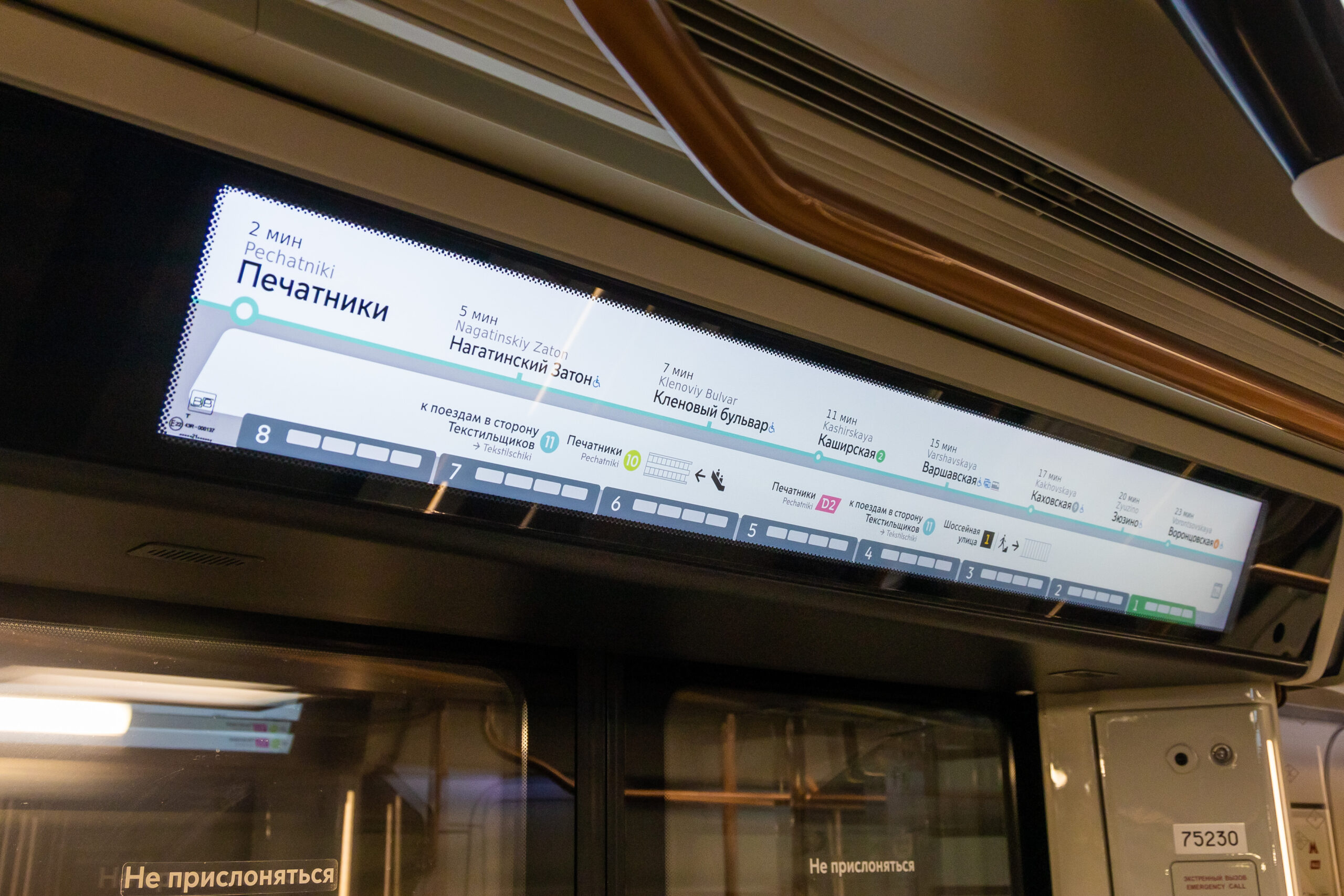
  • MIL-OSI Russia: Moscow Metro – Time for new technologies! Testing neural voice in audio messages in the Moscow metro.

    Source: Moscow Metro

    Time for new technologies! Testing neural voice in audio messages in the Moscow metro.

    Time for new technologies! Testing neural voice in audio messages in the Moscow metro. – Московское метро тестирует нейроголос в аудиосообщениях.

    We are gradually introducing artificial intelligence into the capital’s transport system. For example, since the beginning of the year, a neural network has been helping Alexandera’s chatbot answer your questions. Now, as part of a pilot project, AI will assist announcers in the Moscow metro.

    As Maksim Liksutov explained, audio announcements are one of the most important ways to communicate with passengers. Sometimes something changes in metro operations: an escalator is closed for repair or trains follow a different route. Each situation requires a prompt announcement. Neural voice will help solve this task in minutes.

    Moreover, the required audio file can be created remotely. Specialists only need to:

    Prepare the text.

    Upload it to the program.

    Adjust the voice — choose the timbre, intonation, and pause length. By the way, AI was trained on real recordings of metro announcers.

    We will test neural voice on the Line 1, which has many transfers to the MCC, MCD, other metro lines, car and railway stations. Also, Komsomolskaya station is located here — the leader in the number of transport infrastructure objects announced by announcers.

    «Voices in neural processing allow creating prompt audio announcements in the unified style of Moscow Transport. After the pilot launch of the technology on the Line 1, we will decide on its further use in the metro and beyond. We will also consider passengers’ wishes. We continue to implement the most modern digital services, as instructed by Moscow Mayor Sergey Sobyanin», — said Maksim Liksutov.

    MIL OSI Russia News

  • MIL-OSI Europe: Press statement by President António Costa following the 30th EU–Japan summit 2025

    Source: Council of the European Union

    European Council President António Costa took part in to the 30th EU–Japan summit 2025. In his press statement following the plenary session, he emphasised the importance of strengthening EU-Japan relations, in particular in security and defence, multilateralism, and in trade and economic security.

    MIL OSI Europe News

  • MIL-OSI Banking: RBI Bulletin – July 2025

    Source: Reserve Bank of India

    Today, the Reserve Bank released the July 2025 issue of its monthly Bulletin. The Bulletin includes four speeches, four articles and current statistics.

    The four articles are: I. State of the Economy; II. Revisiting the Oil Price and Inflation Nexus in India; III. Determinants of Overnight Uncollateralised Money Market Volume- An Empirical Assessment; and IV. Household Inflation Expectations in India: Emerging Trends, Determinants and Impact of Monetary Policy.

    I. State of the Economy

    The global macroeconomic environment remained fluid in June and July so far amidst geo-political tensions and tariff policy uncertainties. Domestic economic activity held up, with improving kharif agricultural season prospects, continuation of strong momentum in the services sector and modest growth in industrial activity. Headline CPI inflation remained below 4 per cent for the fifth consecutive month in June driven by deflation in food prices. System liquidity remained in surplus to facilitate a faster transmission of policy rate cuts to the credit markets. The external sector remained resilient, backed by ample foreign exchange reserves and a moderate external debt-to-GDP ratio.

    II. Revisiting the Oil Price and Inflation Nexus in India

    By Sujata Kundu, Soumasree Tewari and Indranil Bhattacharyya

    In the backdrop of volatile global crude oil prices and a less regulated petrol and diesel prices regime, this paper reassesses the impact of international crude oil price movements on headline inflation in the Indian context.

    Highlights:

    • Since the pandemic, the global economy has experienced large gyrations in crude oil prices. India, being a net oil importer, has remained susceptible to the vagaries of global crude oil prices and has been actively intervening in the domestic fuel market to contain the adverse fallout of higher oil prices on domestic inflation and output.

    • Empirical estimates suggest that a 10 per cent rise in global crude oil prices could increase India’s headline inflation by around 20 basis points on a contemporaneous basis. In the post-pandemic period, the impact on inflation, although largely contained, has been statistically significant with the surge in crude oil prices owing to the post-pandemic demand revival, which further intensified due to the supply chain disruptions caused by the outbreak of the Russia-Ukraine war in early 2022.

    • While Government measures have limited the impact of global crude oil price fluctuations on headline inflation, increase in oil import dependency warrants measures not only to contain the spillovers to domestic prices but also to gradually transit towards alternative sources of fuel for more efficient management of domestic fuel prices in the long run.

    III. Determinants of Overnight Uncollateralised Money Market Volume – An Empirical Assessment

    By Srijashree Sardar and Alqama Pervez

    The uncollateralised money market holds a pivotal position in India’s monetary framework, serving as the principal avenue for the exchange of central bank reserves. Its significance is further underscored by the fact that the weighted average call rate (WACR) functions as the operating target of the Reserve Bank of India’s monetary policy. Against this backdrop, the article seeks to empirically examine the factors influencing trading volumes in the unsecured interbank segment of the Indian money market.

    Highlights:

    • The temporal distribution of trades in the call money market exhibits skewness within the day. The bulk of the trades occur in the first hour of any given day which may be attributed to the fact that primary dealers, the major borrowers in the segment, tend to fulfil their funding needs early in the day.

    • System liquidity conditions, spread of the weighted average call rate over the policy repo rate, divergence of overnight forward premia from interest rate differential, inflows to and outflows from government accounts, trading volume of the collateralised segment and market trading hours are found to have a significant impact on call volume during the period of the study (2019-2024).

    • Divergence of overnight forward premia from the interest rate differential has a positive impact on call volume, indicating arbitrage by banks during times of such divergence.

    • Co-operative banks participation in call money market decreased significantly after the Reserve Bank’s directive for mandatory membership on NDS-CALL trading platform for call money market activity. It has, however, rebounded in the recent months, following an increase in membership of co-operative banks.

    IV. Household Inflation Expectations in India: Emerging Trends, Determinants and Impact of Monetary Policy

    By Ankit Ruhi, Kanupriya Sharma and Subhadhra Sankaran

    Household inflation expectations rose in the aftermath of the COVID-19 pandemic and geopolitical tensions, and have remained largely elevated since. In view of these developments, this article analyses the evolving trends in household inflation expectations. It proposes alternative methods for adjusting higher values of expectations reported in Inflation Expectations Survey of Households and identifies the key macroeconomic factors influencing these expectations. Finally, the impact of policy interventions, especially since the adoption of flexible inflation targeting (FIT) regime, is also examined.

    Highlights:

    • Households’ inflation expectations exhibit systematic upward bias compared to those of professionals and businesses, even in periods of stable or low inflation.

    • Median inflation expectation and the disagreement across demographic groups is gradually moderating since 2023-24.

    • Perceived past inflation expectations add to stickiness in household expectations even as influence of realised inflation dynamics becomes stronger when expectations are adjusted for extreme values.

    • Transition to the FIT regime has successfully aided in stabilising inflation expectations. Monetary policy actions are found to effectively anchor inflation expectations.

    • While headline inflation is more influential than food inflation, volatile and broad-based food inflation may keep overall expectations elevated, underscoring the importance of continued policy emphasis on headline inflation.

    The views expressed in the Bulletin articles are of the authors and do not represent the views of the Reserve Bank of India.

    (Puneet Pancholy)  
    Chief General Manager

    Press Release: 2025-2026/769

    MIL OSI Global Banks

  • MIL-OSI United Kingdom: Summer ready: MHRA issues updated guidance on medicines and medical devices during holiday season

    Source: United Kingdom – Government Statements

    Press release

    Summer ready: MHRA issues updated guidance on medicines and medical devices during holiday season

    As the UK enters the heart of summer – with temperatures rising and families holidaying – the Medicines and Healthcare products Regulatory Agency (MHRA) is reinforcing essential safety advice for anyone using medicines or medical devices.

    As the UK enters the heart of summer – with temperatures rising and families holidaying – the Medicines and Healthcare products Regulatory Agency (MHRA) is reinforcing essential safety advice for anyone using medicines or medical devices. The aim is to help everyone enjoy the summer safely, while ensuring their healthcare routine stays effective. 

    Dr Alison Cave, Chief Safety Officer at the MHRA, commented: 

    “When the sun comes out and the thermometer rises, it’s easy to forget that heat can affect medicines and medical devices, and that some treatments can change how you respond to sun and heat. These refreshed summer tips are vital to help people stay safe and well throughout the summer.” 

    1. Store medicines below 25oC 

    • Avoid leaving medicines in direct sun, hot cars, travel bags, or on sunny windowsills – temperatures can easily exceed safe storage limits and degrade tablets, inhalers, insulin, EpiPens and more.  

    • If you spot changes in smell, colour, texture, or performance of your medicines, consult a pharmacist.  

    • While travelling, keep your medicines in a cool bag or stay in temperature-controlled environments. 

    2. Check your medicines and devices in the heat 

    • Even well-sealed medical devices – like blood glucose monitors – can misread if exposed to excessive heat or humidity.   

    • Stay cool, keep devices dry, and run periodic control checks. 

    • Be alert during heatwaves: some medicines can worsen dehydration or impair temperature regulation, including diuretics, blood pressure drugs, diabetes treatments, antipsychotics, and stimulants.  

    3. Prioritise hydration and heat awareness 

    • Heatstroke and dehydration can happen fast. Watch for dizziness, confusion, headaches or dark urine, especially if you’re on medication that affects fluid balance, such as a diuretic. 

    • Drink water regularly, find shade or cool spaces, and avoid peak sun.  

    4. Be sun-smart with sun-sensitising medicines 

    • Several medicines – such as methotrexate, certain antibiotics, diuretics, antidepressants, acne or eczema treatments, and even painkillers like ibuprofen –can increase sun sensitivity, leading to severe sunburn and blistering.  

    • Use a high-SPF sunscreen, wear protective clothing, and avoid midday sun (11 am – 3 pm). 

    5. Hay fever alert – stay informed   

    • Avoid unlicensed treatments like Kenalog hay fever injections, which are licensed as a medicine for other conditions, but not for the treatment of hay fever. The benefits of using it to treat people with hay fever have not been shown to outweigh the risks.     

    6. Be aware of implanted medical devices when travelling 

    • For those with implants (e.g. pacemakers), carry your implant ID card at airport security. Most body scanners are safe, but be aware of hand-held wands and device-specific device advice.  

    7. Report safety issues via the Yellow Card scheme 

    • If exposure to heat, sun, or medications seems to have affected your medicine, report it via the MHRA’s Yellow Card scheme – the UK system for flagging medicine/device safety concerns. 

    • Prompt reporting helps the MHRA identify adverse reactions early and act to protect public health.  

    Notes to editors  

    1. Report any concerns through the MHRA Yellow Card scheme, which can be accessed at https://yellowcard.mhra.gov.uk/ 

    2. The Medicines and Healthcare products Regulatory Agency (MHRA) is responsible for regulating all medicines and medical devices in the UK by ensuring they work and are acceptably safe.  All our work is underpinned by robust and fact-based judgements to ensure that the benefits justify any risks.  

    3. The MHRA is an executive agency of the Department of Health and Social Care.  

    4. For media enquiries, please contact the newscentre@mhra.gov.uk, or call on 020 3080 7651.

    Updates to this page

    Published 23 July 2025

    MIL OSI United Kingdom

  • MIL-OSI USA: Congressman Díaz-Balart: Doing More for National Security with Less, in the FY 2026 National Security and State Department Funding Bill

    Source: United States House of Representatives – Congressman Mario Diaz-Balart (25th District of FLORIDA)

    WASHINGTON, D.C. – This morning, House Appropriations Committee Vice Chair and Chairman of the Subcommittee on National Security, the Department of State, and Related Programs (NSRP), Mario Díaz-Balart (FL-26), joined Cheryl Casone on Mornings with Maria on Fox Business to discuss the NSRP Fiscal Year 2026 funding bill, concerns over a potential Democrat-led government shutdown, and allegations surrounding former President Obama’s role in the Russia collusion hoax against President Trump.

    ###

    MIL OSI USA News

  • MIL-OSI Africa: Lusophone Compact Presents Investment Opportunities to Accelerate Inclusive Development at 15th Community of Portuguese-Speaking Countries (CPLP) Summit

    Source: APO – Report:

    The Lusophone Compact Secretariat last week engaged with leaders of the Community of Portuguese-Speaking Countries (CPLP) at their 15th Summit and economic forum in Bissau, Guinea-Bissau. The July 15-18 meetings provided a strategic platform to showcase the Lusophone Compact’s role in attracting private financing to accelerate sustainable economic development in African member countries. 

    An initiative by the African Development Bank in partnership with the Governments of Portugal and Brazil, the Lusophone Compact supports private sector investment in the six African member states of the CPLP: Angola, Cabo Verde, Guinea-Bissau, Mozambique, São Tomé and Príncipe, and Equatorial Guinea. Representing a community of more than 300 million people across four continents, with a combined GDP of $2.3 trillion in 2024, the CPLP holds immense potential for trade, investment, and inclusive economic transformation. 

    Compact objectives are: promoting inclusive private sector development, mobilizing blended finance and technical assistance, strengthening economic resilience and regional integration, and aligning with national development priorities and the CPLP’s economic agenda. 

    During the summit, officials of the Lusophone Compact secretariat participated in high-level policy dialogues on food security, technology, and sustainability, which align with the thematic focus of the summit under Guinea-Bissau’s rotating presidency. The Compact team also presented its suite of financing tools and eligibility criteria while supporting resource mobilization efforts in member countries. 

    “The 15th CPLP Summit presented a unique opportunity to reinforce the strategic priorities of the Lusophone Compact, particularly in areas of food security, technology, and sustainability,” said Neima Ferreira Coordinator of the Lusophone Compact at the African Development Bank. “With the right tools, partnerships and vision, Portuguese-speaking countries can lead a new era of investment-driven development.” 

    The host country, Guinea-Bissau, reaffirmed its commitment to private sector-led growth and expressed strong interest in aligning the Compact’s support mechanisms with its national development strategy. 

    One of the Compact’s flagship achievements is the Cabeólica Project in Cabo Verde –  a large-scale public-private wind energy project, co-financed by the African Development Bank and the European Investment Bank. The project supplies more than 20 percent of Cabo Verde’s electricity, avoids the emission of thousands of tons of CO2 annually, and has created more than 150 local jobs. Cabeólica has become a benchmark for sustainable infrastructure and innovative finance in the region. 

    As Portuguese-speaking countries seek new engines for economic growth, the Lusophone Compact offers a robust mechanism for mobilizing private sector capital, fostering regional cooperation, and advancing shared development objectives. 

    Learn more about the Lusophone Compact here (https://apo-opa.co/44ZMHGt). 

    – on behalf of African Development Bank Group (AfDB).

    Media contact: 
    Communication and External Relations Department 
    media@afdb.org

    Media files

    .

    MIL OSI Africa

  • MIL-OSI Europe: Italy: EIB provides €120 million to AGSM AIM to strengthen power grid

    Source: European Investment Bank

    AGSM

    • The agreement will enable power grid modernisation and reliability improvement work in three key municipalities in Veneto, with direct benefits for residents and businesses.
    • The operation will help make the local energy system more efficient and able to meet the challenges of the green transition and digitalisation.

    The European Investment Bank (EIB) and AGSM AIM have signed a finance contract totalling €120 million to strengthen and modernise the power grid in the three Italian municipalities of Vicenza, Verona and Grezzana, all strategic areas for the group served by the V-RETI S.p.A. business unit.

    The financing – which can be used all at once or split into tranches – is a step forward in promoting the energy transition and the goals of REPowerEU. The funds will be directed to projects improving the grid’s operational efficiency, resilience and sustainability, in line with EU decarbonisation and digitalisation objectives.

    EIB Vice-President Gelsomina Vigliotti said: “This agreement shows our growing practical commitment to backing investments to make power grids more modern, sustainable and resilient, benefiting local communities and Italy’s energy transition.”

    AGSM AIM Managing Director Alessandro Russo added: “This new EIB financing confirms our commitment to investing in our longstanding operational areas, making them more modern and sustainable. These technical operations are also strategically important to providing residents and businesses with an efficient power supply able to meet future challenges. The support of an institution like the EIB shows the strength of our business plan and the group’s ability to lead the national energy transition.”

    Background information

    The European Investment Bank (ElB) is the long-term lending institution of the European Union, owned by its Member States. It finances investments that contribute to EU policy objectives. EIB projects bolster competitiveness, drive innovation, promote sustainable development, enhance social and territorial cohesion, and support a just and swift transition to climate neutrality. In the last five years, the EIB Group has provided more than €58 billion in financing for projects in Italy. All projects financed by the EIB Group are in line with the Paris Climate Agreement. The EIB Group does not fund investments in fossil fuels. We are on track to deliver on our commitment to support €1 trillion in climate and environmental sustainability investment in the decade to 2030 as pledged in our Climate Bank Roadmap. Over half of the EIB Group’s annual financing supports projects directly contributing to climate change mitigation and adaptation, and a healthier environment. Approximately half of the EIB’s financing within the European Union is directed towards cohesion regions, where per capita income is lower.

    AGSM AIM Group provides essential services to individuals and products of high added value for the development of businesses, entities and institutions. It operates in the electrical energy, gas, district heating, energy efficiency, street lighting, telecom services, electric mobility and environmental health sectors. Created by the merger of AGSM Verona and AIM Vicenza, the publicly owned group (61.2% owned by the municipality of Verona and 38.8% by the municipality of Vicenza) has positioned itself as a benchmark for the energy, technological, sustainability and digital transitions. Its multi-business model enabled it to record substantial profitability growth in 2024, with solid business performance. Its €1.9 billion in revenue, €182 million EBITDA, over 2 000 employees and 890 000 electricity and gas customers make it one of Italy’s biggest multi-utility companies.

    MIL OSI Europe News

  • MIL-OSI Europe: Missions – CONT Mission to Bratislava (Slovakia), 26-28 May 2025 – 26-05-2025 – Committee on Budgetary Control

    Source: European Parliament

    CONT mission to Slovakia © Image used under license from Adobe Stock

    The purpose of this mission was to assess the situation in Slovakia related to ensuring the sound financial Management of EU funds and, more generally, to the protection of the EU’s financial interests.

    MIL OSI Europe News

  • MIL-OSI Europe: Written question – Definition of ‘misinformation’ and ‘disinformation’, ‘lying’ and ‘misleading information’ in primary and secondary Union law – E-002768/2025

    Source: European Parliament

    Question for written answer  E-002768/2025/rev.1
    to the Commission
    Rule 144
    Marieke Ehlers (PfE), Rachel Blom (PfE), Ton Diepeveen (PfE), Auke Zijlstra (PfE), Sebastian Kruis (PfE), Sebastiaan Stöteler (PfE)

    No definition of ‘misinformation’ and ‘disinformation’ is laid down in any primary or secondary source of EU law. Article 3(h) of the Digital Services Act contains merely a definition of ‘illegal content’. Only on its website does the Commission seem to suggest a definition, but it does not refer to any definition laid down in a legal text[1].

    Legal doctrine denounces the lack of a consistent definition of misinformation and disinformation within the European legal order, as well as its negative impact on legal certainty[2].

    • 1.Why can the Commission not agree with the co-legislators on a legal definition of ‘disinformation’ and ‘misinformation’, even though this is essential to be able to combat them?
    • 2.In the Commission’s view, what is the difference between ‘lying’ and ‘misinformation’?
    • 3.The Commission defines misinformation as ‘false OR misleading information’. Does the Commission then mean that misleading information can also be true? And if misleading information can be factually correct, what is the difference between sanctioning factually correct information and censorship?

    Submitted: 8.7.2025

    • [1] https://digital-strategy.ec.europa.eu/en/policies/online-disinformation.
    • [2] K. Bleyer-Simon, U. Reviglio, ‘Defining Disinformation across EU and VLOP Policies’, European Digital Media Observatory, October 2024.
    Last updated: 23 July 2025

    MIL OSI Europe News

  • MIL-OSI Europe: Opening statement by President von der Leyen at the EU-Japan Summit

    Source: EuroStat – European Statistics

    European Commission Statement Tokyo, 23 Jul 2025 Prime Minister,

    Thank you for hosting us at the 30th Japan–EU Summit, it is good to be back in Tokyo. Yesterday’s visit to the Osaka World Expo was a real highlight. The Japanese pavilion stood out; it is a wonder of craftsmanship. Its wooden elegance offered a sense of serenity and safety. To me, it also captures the essence of our partnership: calm, resilient, and deeply rooted. And this is so valuable in a turbulent world. Europe and Japan are close and trusted friends. We share values: fairness, openness, and respect for rules. And together, we have the scale not only to defend our interests, but to shape global outcomes. Together we represent a fifth of the world’s GDP. Our Economic Partnership Agreement is solid, and it delivers. This Summit is our chance to take the next steps: To strengthen our joint competitiveness, enhance our common security, and set global standards aligned with our values. I look forward to our discussions.

    MIL OSI Europe News

  • MIL-OSI United Kingdom: Tailored support for Aberdeen oil and gas workers

    Source: United Kingdom – Executive Government & Departments

    Press release

    Tailored support for Aberdeen oil and gas workers

    Around 200 oil and gas workers in Aberdeen and Aberdeenshire will be offered tailored support to seize clean energy job opportunities.

    • Around 200 oil and gas workers in Aberdeen and Aberdeenshire will be offered tailored support and funding to help unleash the North Sea’s clean energy future
    • new skills pilot will support a fair and prosperous transition by giving workers the tools and support to move into the thousands of high-quality jobs being created in growth industries like offshore wind, carbon capture and hydrogen – delivering on UK Government’s Plan for Change
    • backed by £900,000, the pilot will be delivered in partnership between the UK Government, Scottish Government and Skills Development Scotland

    Around 200 Aberdeen oil and gas workers are set to benefit from a tailored skills programme launched today (Wednesday 23 July), which will support them to take advantage of the high-quality job opportunities in Scotland’s growing clean energy sector.   

    The Oil and Gas Transition Training Fund, backed by £900,000 of UK Government funding, will help build the pipeline of skilled workers needed to make Britain a clean energy superpower as part of the government’s Plan for Change. 

    The programme is open to current and former oil and gas workers who live in or are employed in Aberdeen or Aberdeenshire, and are interested in moving into roles within clean energy, to take advantage of the thousands of high-quality jobs being created in the clean energy growth industries of the future.

    Successful applicants will receive careers advice and funding towards training courses – supporting local people into opportunities in sectors such as offshore wind, hydrogen and carbon capture and storage, which could include roles in welding, electrical engineering, and construction.

    This underscores the government’s commitment to unleashing the North Sea’s clean energy future and putting workers, communities, families and trade unions at the heart of a prosperous and sustainable transition for oil and gas.     

    Aberdeen is a key growth region for clean energy and is the headquarters of Great British Energy, alongside a thriving offshore wind and carbon capture industry. It is estimated that the offshore wind sector could support up to 100,000 direct and indirect jobs in Great Britain by 2030, with many jobs expected to be generated in other growth areas.  

    The programme will be delivered in partnership between the UK Government, Scottish Government and Skills Development Scotland. 

    Minister for Energy Michael Shanks said:

    Aberdeen has been the energy capital of Britain for decades and while oil and gas will be with us for decades to come, we are determined to make sure that workers are supported to access the thousands of jobs in industries such as offshore wind and carbon capture.  

    This funding will help deliver a fair and prosperous transition in the North Sea, unlocking the full potential of renewable energy and reaping the economic benefits from the skills and experiences of Aberdeen’s workforce.

    Secretary of State for Scotland Ian Murray said:

    It’s great news that this vital skills training in Aberdeen is now going live. We are absolutely committed to supporting Scotland’s world-class oil and gas workers as we transition to clean energy.  

    This pilot will ensure there is a key role for our offshore workers in delivering our net zero future.

    Cabinet Secretary for Climate Action and Energy Gillian Martin said: 

    The North East of Scotland has long been a titan in the oil and gas industry and the expertise within our workforce must be at the heart of driving a just transition to new fuels and sustainable energy. 

    This new Oil and Gas Transition Training Fund will support offshore workers to take on roles in the sustainable energy sector and has been designed and developed by the Scottish Government, supported by funding from UK Government’s Regional Skills Pilot for Aberdeen and Aberdeenshire, and will be delivered by Skills Development Scotland. 

    Through initiatives such as the Just Transition Fund and the Energy Transition Fund, the Scottish Government has already invested £120 million in the North East’s transition to net zero to help create green jobs, support innovation, and secure the highly skilled workforce of the future.

    Skills Development Scotland Chair Frank Mitchell said:

    Scotland’s oil and gas workforce possesses a broad range of skills and experience which is vital to the continued growth of the renewable energy sector. 

    The shift to sustainable energy generation and transmission represents a generational opportunity, and this funding will assist workers in making the most of their expertise in that growing sector. 

    Our careers advisers are available for anyone who needs support in considering their options, or whether applying for the fund is right for them.

    This builds on previous government action to drive investment and deliver the next generation of good jobs for North Sea workers, including: 

    Oil and gas workers are also benefitting from the Energy Skills Passport, in collaboration with industry and Scottish Government, which helps workers to identify routes into several roles in offshore wind including construction and maintenance. This will also be expanded to include more clean energy sectors over time. 

    The Aberdeen pilot is part of the Department for Energy Security and Net Zero Regional Skills Pilots. Funding has already been given to Cheshire West and Chester, North and North East Lincolnshire and Pembrokeshire to identify skills support that is needed in their area. These areas will be considered for further funding for targeted measures. The Aberdeen pilot did not receive funding as part of Phase 1 of the Regional Skills Pilot as extensive skills mapping for Aberdeen and Aberdeenshire has already been undertaken. 

    Sue Ferns OBE, Senior Deputy General Secretary at Prospect union said:

    This is an important announcement which recognises the vital need for more support for workers transitioning away from carbon-intensive jobs. 

    We will only be able realise the government’s ambitious decarbonisation agenda through investing in the workforce in the energy sector, and the progression of these skills pilots is a welcome signal of intent to better support workers to re-skill. The transition will be different for different workers, so it is welcome that this intervention offers flexibility in what training courses will be funded. 

    As the sector continues with the transition it is vital employers are also held to account for helping their workers gain the necessary skills and training, and unions will be working with the Government to ensure employers step up to the plate and provide further support to transitioning workers.

    Katy Heidenreich, Director of Supply Chain and People at Offshore Energies UK said:

    Aberdeen’s integrated energy workforce has the expertise that’s essential for the offshore energy we need today and for the roll out of renewable energy alongside it.  

    The UK’s energy workers have a proud heritage and hold high value jobs in oil and gas, which the nation needs for decades to come.  

    This world-class expertise is essential for building a low carbon, high growth energy future and it’s critical government and industry work together to secure it.

    Russell Borthwick, Chief Executive at the Aberdeen and Grampian Chamber of Commerce said: 

    The North East of Scotland will be the engine room for the UK’s energy transition. As we pivot from oil and gas to renewables and new technology it’s vital that our workforce is leading that process – not left behind.  

    We welcome investment in the skills needed to unlock the opportunity ahead. Matching these skills with sustainable career paths will depend upon a strong future pipeline of projects, a stable policy landscape and a clear consensus between industry and government on the direction of travel.

    Case study

    Many oil and gas workers have already made the transition. Aishawarya Lakshmanann started as an electrical engineer in oil and gas in Aberdeen, before moving into clean energy and is now working for Ocean Winds on an offshore wind farm. She said: 

    Being able to lead a sustainable life has always been my dream and is what drove me towards the renewables sector.  

    As an engineer I worked in the oil and gas sector from 2018, and it made me rethink how we use our natural energy resources. The UK’s thriving renewable energy sector aligns perfectly with my life and career goals.  

    My transition from oil and gas into renewables has been hugely beneficial for me, allowing me to build a more sustainable life and make a positive impact on the issues we face globally.  

    The idea of creating a carbon neutral world fascinates me as an engineer and working for a major offshore wind company is providing a great place to learn and grow alongside brilliant minds. It’s great to see the funding announcement from UK government to support others to make the transition.

    Notes to editors

    The Aberdeen and Aberdeenshire Regional Skills Pilot was announced in January.

    The Regional Skills Pilot comes from the Office for Clean Energy Skills Fund and has been awarded to the following regions: 

    • North and North East Lincolnshire-Midlands Net Zero Hub hosted by Nottingham City Council 
    • Cheshire West and Chester – North West Net Zero Hub – overseen by Local Enterprise Partnerships and Combined Authorities in the North West 
    • Pembrokeshire – Welsh Government  *Aberdeen and Aberdeenshire- Scottish Government. 

    To be eligible, applicants must be resident or work for an employer in the oil and gas sector with an office in the Aberdeen City or Aberdeenshire area or have worked in the oil and gas sector within the last 2 years. 

    Further information regarding eligibility and how to apply can be found at: Oil and Gas Transition Training Fund.

    Up to 100,000 jobs supported by offshore wind in Great Britain by 2030: This includes direct and indirect jobs. Information on the methodology underpinning this estimate can be found here: Job estimates for wind generation by 2030: methodology note

    North Sea oil and gas production is in natural decline, with a 72% reduction in production occurring between 1999 and 2023, so embracing clean energy is the route to the jobs and investment of the future.  

    This natural decline of oil and gas in the North Sea is already having an impact on jobs and will continue to do so. ONS figures show that direct jobs in oil and gas extraction fell by around a third between 2014 and 2023, despite ongoing domestic licensing and production.

    Updates to this page

    Published 23 July 2025

    MIL OSI United Kingdom

  • MIL-OSI United Kingdom: Pilot to support oil and gas workers in the North East

    Source: Scottish Government

    Oil and Gas Transition Training Fund launched.

    Oil and gas workers in the North East will be able to access tailored support to help them transition into the sustainable energy sector thanks to a new programme launched today. 

    The Oil and Gas Transition Training Fund will enable successful applicants to access careers advice and funding for training to move into sectors such as offshore wind, onshore wind, hydrogen and carbon capture. 

    It is expected to support around 200 oil and gas workers in Aberdeen and Aberdeenshire to build the skills needed to access sustainable energy jobs and has been designed and developed by the Scottish Government, working in partnership with UK Government’s £900,000 Regional Skills Pilot for Aberdeen and Aberdeenshire. The fund will be delivered by Skills Development Scotland and has been supported by an additional £40,000 from the Scottish Government.

    Through initiatives such as the Just Transition Fund and the Energy Transition Fund, the Scottish Government has already invested over £120 million into transitioning the North East to net zero by creating green jobs, supporting innovation, and securing the highly skilled workforce of the future.

    Cabinet Secretary for Climate Action and Energy Gillian Martin said: 

    “The North East has long been a titan in the oil and gas industry and the valuable expertise within our workforce must be at the heart of the transition to new fuels and sustainable energy.

    “This new Oil and Gas Transition Training Fund will support offshore workers to take on roles in the sustainable energy sector and has been designed and developed by the Scottish Government, supported by funding from UK Government’s Regional Skills Pilot for Aberdeen and Aberdeenshire, and will be delivered by Skills Development Scotland.

    “I am determined to ensure a positive impact and powerful legacy of Scotland’s clean energy revolution which benefits communities across the North East of the country.”

    Skills Development Scotland Chair Frank Mitchell said:

    “Scotland’s oil and gas workforce possesses a broad range of skills and experience which is vital to the continued growth of the renewable energy sector.

    “The shift to sustainable energy generation and transmission represents a generational opportunity, and this funding will assist workers in making the most of their expertise in that growing sector.

    “Our careers advisers are available for anyone who needs support in considering their options, or whether applying for the fund is right for them.”

    UK Government Minister for Energy Michael Shanks said:

    “Aberdeen has been the energy capital of Britain for decades and while oil and gas will be with us for decades to come, we are determined to make sure that workers are supported to access the thousands of jobs in industries such as offshore wind and carbon capture.  

    “This funding will help deliver a fair and prosperous transition in the North Sea, unlocking the full potential of renewable energy and reaping the economic benefits from the skills and experiences of Aberdeen’s workforce.” 

    Background 

    Further information on eligibility and how to apply can be found at: https://transitiontrainingfund.scot/

    MIL OSI United Kingdom

  • MIL-OSI United Kingdom: Final days to take part in Local Government Reorganisation survey 23 July 2025 Final days to take part in Local Government Reorganisation survey

    Source: Aisle of Wight

    Time is running out for Island residents to take part in a key survey that could help shape the future of local government across the region.

    The Local Government Reorganisation (LGR) survey closes this Sunday (27 July), and residents are being encouraged to share their views before the deadline.

    The Isle of Wight Council, in partnership with neighbouring councils, is asking for feedback on how local services should be delivered in the future.

    The ‘Our Place, Our Future’ survey explores local identity and how services can better reflect the needs of communities. 

    Thanks to community feedback, the survey has been simplified since its launch, making it quicker and more user-friendly to complete.

    Councillor Phil Jordan, Leader of the Isle of Wight Council, said: “We’re really grateful to everyone who has taken the time to share their views so far. If you haven’t yet taken part, please do so before Sunday.”

    While most of Hampshire operates under a two-tier structure, with services split between county and district or borough council, the Isle of Wight already functions as a unitary authority, delivering all local services directly.

    Under the proposals being considered, the Isle of Wight would remain a unitary authority. Meanwhile, the mainland councils are exploring the creation of four new unitary councils to replace the existing 15-council structure.

    The survey is being run independently, and responses will help shape the proposals submitted to government later this year.

    You can take part online, or if you’d prefer a different method, such as a paper copy or a telephone interview, this can be arranged:

    • send an email to ourplaceourfuture@thinksinsight.com; 
    • call 020 7845 5880 — opening hours are Monday to Friday, 9am to 6pm;
    • pick up a paper copy from any council library.

    MIL OSI United Kingdom

  • MIL-OSI United Kingdom: There’s plenty of work behind the festival scenery

    Source: Scotland – City of Edinburgh

    Culture and Communities Convener Cllr Margaret Graham looks ahead to August and champions the behind-the-scenes efforts in today’s Edinburgh Evening News.

    As I approach the first summer in my new role, it has been very informative meeting many of the people responsible for making our summer festivals happen.
    It has also focused my mind on the issues residents have brought to my attention regarding the impact it has on their lives.

    We are getting ready, not just to host our 2025 summer festivals, but to show the world what our city can achieve. Teamwork and dedication run deep behind the scenes of our world class events management.

    Edinburgh in August is a city like no other, as our residents and visitors enjoy access to thousands of outstanding shows and events. With careful planning and efficient management, working closely with our partners, we welcome the world while keeping our city running smoothly for everyone.

    With so many more people in the city, we need to keep public transport moving and manage busy areas throughout the city to keep everyone safe.

    The Edinburgh Festivals contribute £407 million to the local economy and 8500 FTE jobs. This figure represents the total economic impact, including spending by visitors and participants, as well as the wider effects on local businesses and jobs.

    This year we are enjoying a summer of music too. Robbie Williams performed at Murrayfield in May, the Castle concerts enjoyed beautiful weather and the very successful Edinburgh Jazz and Blues Festival has just come to a close.

    We are looking forward to welcoming rock legends Oasis and AC/DC in August for sell-out shows along with the Summer Sessions at the Royal Highland Centre.

    With the city’s population effectively doubling during August, we will once again have a series of summertime street closures in the city centre to make our streets and pavements easier and safer to navigate.

    There will be extra trains, trams, and buses to accommodate concert goers, along with those attending our summer festivals. With this in mind our advice to all is to please plan-ahead as we expect both the city centre and Murrayfield area to be very busy.

    We endeavour to work hard to understand and balance the needs of residents, visitors and businesses while enabling the summer festivals and major events to take place successfully within the city.

    Our role in this is a real source of pride for the council.

    Published: July 23rd 2025

    MIL OSI United Kingdom

  • MIL-OSI United Kingdom: Welsh Secretary heads to US and Canada to boost trade and investment

    Source: United Kingdom – Executive Government & Departments

    Press release

    Welsh Secretary heads to US and Canada to boost trade and investment

    This visit comes as Aston Martin resume exports to the US, protecting 600 jobs in St Athan.

    Welsh Secretary Jo Stevens with Aston Martin apprentices in St Athan in May 2025

    • The deal negotiated with the US protects thousands of car making jobs and supports growth in the Welsh aerospace industry.
    • Secretary of State for Wales, Jo Stevens, in Toronto and New York to drive further inward investment to Wales

    Welsh Secretary Jo Stevens is this week (22-25 July) travelling to the United States and Canada on a mission to boost trade and investment in Wales. The two countries are among the most significant markets for Welsh exports, with goods and services worth over £2 billion destined for the US and Canada each year. 

    Trade and investment between Wales and North America supports over 50,000 Welsh jobs. With the significant economic links between the countries, the US and Canada provides Welsh businesses with great opportunities to grow and prosper. The visit follows the signing of the UK’s economic prosperity deal with the US in May, protecting businesses and securing jobs across the country, and boosting key sectors in Wales like steel, aerospace, car making and life sciences.

    Car manufacturer Aston Martin, which has a base in St Athan in the Vale of Glamorgan employing at least 600 people, resumed exports to the United States following the successful trade deal. The Welsh Secretary will visit the new Aston Martin showroom in New York City and meet executives.

    Jo Stevens’ visit to North America comes after the UK Government’s publication of its Industrial Strategy and aims to highlight Wales as a key destination for inward investment into the UK.

    During the visit the Welsh Secretary will raise awareness of this December’s Investment Summit in Wales, encouraging North American business leaders and investors to participate in the event.

    Driving investment into Wales is the Welsh Secretary’s primary goal, with high profile business facing events and roundtable meetings with industry leaders and investors in Toronto and New York.

     Her programme includes: 

    • Hosting a reception for business at Aston Martin’s new showroom in New York City

    • Meeting key Canadian businesses with an interest in Wales – including from manufacturing and other sectors – at a roundtable meeting in Toronto.

    • A business breakfast with investors in sport real estate in the UK in New York. 

    Speaking ahead of the visit, Secretary of State for Wales Jo Stevens said:

    There are strong and important economic and cultural ties between Wales and North America and it is fantastic to be able to promote these and help strengthen them further.

    The UK Government has made economic growth our key mission and our new trade deal with the United States delivers fantastic benefits for our key businesses like Aston Martin and for working people across Wales.

    I want to build on this progress and while I am in the USA and Canada I will be discussing further opportunities for investment in Wales with companies like Aston Martin.

    My message is very clear – Wales is open for business.

    Deputy Trade Commissioner for North America, Alan Gogbashian said: 

    From sports economy firms to the automotive industry, Wales plays a key role in the UK economy, and has strong trade and investment ties with Canada and the United States.

    It’s fantastic to host the Secretary of State for Wales in New York and Toronto this week to engage with current transatlantic businesses including Aston Martin, and to connect with potential investors ahead of the Investment Summit in Wales later this year.

    The Welsh Secretary’s itinerary also includes a reception in Toronto with business and cultural groups with interests in Wales and meetings with individual investors in Wales like Vale Mining. 

    The Welsh Secretary travels to Toronto on Tuesday, 22 July and then onto New York City before returning to the UK on 25 July.

    ENDS

    Updates to this page

    Published 23 July 2025

    MIL OSI United Kingdom

  • MIL-OSI Europe: EU–Japan summit 2025: joint statement

    Source: Council of the European Union

    The President of the European Council, António Costa, and the President of the European Commission, Ursula von der Leyen, representing the EU, met Japanese Prime Minister, Shigeru Ishiba at the 30th EU-Japan summit in Tokyo, Japan. The summit provided an opportunity to show the closeness of the EU-Japan partnership, ever more important in the current turbulent geopolitical context.

    MIL OSI Europe News

  • MIL-OSI United Kingdom: Nick Park to Join Ribbon-Cutting Ceremony for The Harris Reopening – Public Invited to Take Part in Special Celebration

    Source: City of Preston

    The Harris, Preston’s iconic Grade I listed building, will reopen to the public on Sunday, 28 September 2025 following a major transformation.

    Oscar-winning animator Nick Park, creator of Wallace & Gromit and proud Prestonian, will join The Mayor of Preston and Councillor Hindle, Cabinet Member for Arts and Culture to officially cut the ribbon and welcome visitors back into the building after its ambitious refurbishment.

    To mark the occasion, ten local residents will have the unique chance to meet Nick Park in person and take part in the opening day festivities. The Harris is now calling for nominations from the public to put forward someone who deserves this once-in-a-lifetime opportunity.

    Councillor Anna Hindle, Cabinet Member for Culture and Arts at Preston City Council said:

    “We’re thrilled to welcome Nick Park to The Harris to celebrate this momentous day. This is more than a reopening, it’s a new chapter for a space that belongs to the people of Preston. We want local residents to be right at the heart of it.”

    Meet Nick Park – How to Nominate

    Nominations open on Wednesday, 23 July and will close on Monday, 1 September 2025.
    Anyone with a Preston postcode (PR) can be nominated, and a short explanation of why they deserve the opportunity must be provided.

    Forms will be available online via The Harris – Nominations to Meet Nick Park, and in person at the library.

    Ten winners will be selected at random and will:

    • Meet and greet with Nick Park.
    • Join Nick Park and The Mayor of Preston during the official ribbon-cutting on Sunday, 28 September.

    Free Public Tickets for Opening Day

    The Harris will open its doors to the public on Sunday 28 September following the 10am ribbon-cutting ceremony.

    To manage crowds, entry will be free but ticketed, with timed slots available throughout the day. Tickets will be available to book online from Monday, 1 September 2025.

    Plan your visit

    ‘Wallace & Gromit in A Case at the Museum’ will run from Sunday, 28 September 2025 to Monday, 5 January 2026 at The Harris. For more information see The Harris Announces Reopening Exhibition: ‘Wallace & Gromit in A Case at the Museum’.

    About The Harris

    Opened in 1893, the Grade I listed building is owned and managed by Preston City Council. Based in Preston, Lancashire, The Harris is one of the leading museums, galleries and libraries in the region and an Arts Council England National Portfolio Organisation. Host to art collections of national significance, exciting activities and events for all ages and an award-winning contemporary art programme, The Harris is Preston’s landmark cultural hub.   

    Currently delivering Harris Your Place project, made possible with National Lottery Heritage Fund; UK Government Towns Fund; Preston City Council; Lancashire County Council; the Preston, South Ribble and Lancashire City Deal; DCMS; Arts Council England, public donations and a wide range of Trusts and Foundations including Garfield Weston Foundation, Wolfson Foundation, The Harris Charity, Harris Trust and Friends of the Harris.  

    The magnificent Grade I Listed building is poised to reopen on Sunday, 28 September 2025. To learn more about The Harris, please visit: The Harris.

    About Aardman

    Aardman is an employee-owned company, based in Bristol (UK) and co-founded in 1976 by Peter Lord and David Sproxton. An independent, multi-Academy Award® and BAFTA® award winning studio, it produces feature films, series, advertising, games and interactive entertainment. Current animated productions include series 7 of Shaun the Sheep and a third series of The Very Small Creatures. 

    Its productions are global in appeal, novel, entertaining, brilliantly characterised and full of charm reflecting the unique talent, energy and personal commitment of the Aardman team. The studio’s work – which includes the creation of much-loved characters including Wallace & Gromit, Shaun the Sheep, Timmy Time and Morph – is often imitated, and yet the company continues to lead the field producing a rare brand of visually stunning, comedic content for cinema, broadcasters, digital platforms and live experiences around the world. Recent celebrated projects include the brand-new Wallace & Gromit film Vengeance Most Fowl which premiered on BBC One on Christmas Day 2024 and was released on Netflix globally on the 3rd of January 2025.  The BAFTA® nominated feature film Chicken Run: Dawn of the Nugget, Academy Award® nominated short film Robin Robin, International Emmy® award winning Shaun the Sheep: The Flight Before Christmas, BAFTA® nominated preschool series The Very Small Creatures and the recent CGI comedy series for kids Lloyd of the Flies.

    The studio runs the Aardman Academy, its world-class training facility delivering excellence in film and animation training and mentoring for students around the world. The Aardman Academy offers a variety of courses from intensive one-day workshops to its flagship seven-month In-Studio Stop Motion course. All courses are delivered by industry-leading tutors and mentors with decades of experience. The Aardman Academy is an integral part of the business, representing the studio’s inclusive ethos and commitment to nurturing the animation talent of the future.

    In November 2018 it became an Employee-Owned Organisation, to ensure Aardman remains independent and to secure the creative legacy and culture of the company for many decades to come.

    Visit Aardman for more information.

    MIL OSI United Kingdom

  • MIL-OSI United Kingdom: STEP talks fusion energy careers with local students

    Source: United Kingdom – Executive Government & Departments

    News story

    STEP talks fusion energy careers with local students

    Students explored careers in fusion energy as STEP partnered with Bassetlaw District Council for Jo White MP’s Summer School in Worksop and Westminster.

    Jo White MP talks to Summer School participants. Image credit: UK Industrial Fusion Solutions Ltd.

    Young people got hands-on with the future of clean energy last week, as the STEP team hosted a workshop, in partnership with Bassetlaw District Council, to kick off Bassetlaw MP Jo White’s Summer School. 

    Hosted at The Bridge Skills Hub and Fusion Energy Café in Worksop on Friday, students got the chance to explore the ongoing transformation of the West Burton site, ask big questions about fusion energy, and meet the people already helping to deliver the STEP programme. 

    The students heard directly from STEP employees about their own career journeys into the industry, from engineering and science to communications and project management, and discussed how a project like STEP will require people of all talents and backgrounds to succeed. 

    Then on Monday the students started their week in Parliament, as part of Jo White’s Summer School, where they took part in a mock Select Committee session. 

    They put their questions to STEP’s Head of Communications Ben Bradley, alongside representatives from government and industry, grilling them on the progress of the STEP Programme and the opportunities it will create locally, as well as the wider clean energy sector. 

    STEP Head of Communications Ben Bradley said:

    Part of STEP’s mission to develop our prototype fusion energy power plant is about the benefit we can bring to communities and economies across North Nottinghamshire, Lincolnshire and the wider East Midlands, so it was great to engage with talented young people and discuss the opportunities of the programme.

    We hope that some of these local young people will be part of the future workforce that delivers the mission to commercialise fusion energy at STEP – and changes the world!

    The event at the Fusion Energy Café and The Bridge Skills Hub was hosted by Bassetlaw District Council and marks a growing relationship between STEP, based at West Burton in North Nottinghamshire, and surrounding local communities.

    Bassetlaw MP Jo White said:

    When I stood for election, my commitment to local people was that I would resurrect the summer school that former MP John Mann ran for 11 years. I saw for myself the difference it made with young people.

    It gave them an idea of what they wanted to do with their lives. Parents and grandparents told me that their children went down [to Parliament] as children and came back as adults because they were shown new opportunities and aspirations they would never have otherwise dreamed of.

    Notes to Editors

    The first of its kind, STEP is the UK’s major technology and infrastructure programme to build a prototype fusion power plant that will demonstrate net energy, fuel self-sufficiency and a viable route to plant maintenance.  This will pave the way for the potential development of a fleet of future fusion power plants around the world and the commercialisation of fusion energy.

    We’ll achieve this by producing a prototype tokamak power plant – in an innovative spherical shape – that will demonstrate net energy. That’s why the programme is called STEP: it stands for ‘Spherical Tokamak for Energy Production’.  But STEP is about more than tokamak technology – it’s a huge endeavour encompassing design, site development and construction, alongside supply chain logistics and industry. Fusion research and development has the potential to catalyse new ideas and technologies that will benefit multiple industries and help secure our future on this planet.

    By fusing government and business, inspiration and pragmatism, theory and practice, UK-expertise and international impact, we’re going to realise the step-change that will secure humanity’s bright future. A recent report by AMION, commissioned by local authorities, set out the economic potential of the STEP programme.

    Social media coverage and images from the Bassetlaw workshop event

    To sign-up for updates about STEP, visit: step.ukaea.uk or follow our social channels @STEPtoFusion.

    Updates to this page

    Published 23 July 2025

    MIL OSI United Kingdom

  • MIL-OSI Russia: Free stretching training sessions are held at the venues of the Summer in Moscow project

    Translation. Region: Russian Federal

    Source: Moscow Government – Government of Moscow –

    An important disclaimer is at the bottom of this article.

    As part of the project “Summer in Moscow” You can join free stretching workouts. Regular classes will help strengthen your muscle corset and improve your posture: in a modern big city, whose residents spend a significant part of their time in the office, one of the most common problems is back problems.

    Stretching helps increase muscle elasticity, which will help avoid pain and, possibly, injuries. Exercises also improve blood circulation and reduce tension throughout the body. They also have a positive effect on a person’s emotional state: they reduce stress levels and help cope with anxiety.

    Stretching training is part of a free year-round project “My Sports District”. Experienced instructors demonstrate a set of exercises aimed at relaxing the back and, if necessary, correct the participants’ mistakes.

    Places for training

    Classes are held on the roofs of the district centers “Meeting Place”, such as “Prague”, “Rassvet”, “Neva” in the Northern Administrative District, “Yantar” and “Sofia” in the Eastern Administrative District, “Budapest” and “Mars” in the North-Eastern Administrative District, “Elbrus”, “Angara”, “Orbita” in the Southern Administrative District, “Vysota” and “Ekran” in the South-Eastern Administrative District, on Sundays from 11:45 to 12:45. To join them, you need to register on the project website. You need to bring a fitness mat with you.

    Outdoor training sessions are held at the Summer in Moscow project sitesFree training sessions are held in courtyards and parks as part of the Summer in Moscow

    For those who want to engage in physical culture in the most beautiful places of the capital, a project has been organized “Sports Weekend”. Stretching training takes place at various venues, from festivals to park areas. You can join classes at the Vorontsovo estate, the Muzeon arts park, the Kolomenskoye and Tsaritsyno museums and reserves, and the GES-2 Culture House. In total, more than 50 unique venues have been created for city residents and guests.

    The project classes are free, with prior registration. You do not need to bring any additional equipment.

    Project “Summer in Moscow”— the main event of the season. It brings together the most vibrant events of the capital. Every day, charity, cultural and sports events are held in all districts of the city, most of which are free. “Summer in Moscow” is being held for the second time, and this season will be more eventful: new, original and colorful festivals and events will be added to the traditional ones.

    Get the latest news quicklyofficial telegram channel the city of Moscow.

    Please note: This information is raw content obtained directly from the source of the information. It is an accurate report of what the source claims and does not necessarily reflect the position of MIL-OSI or its clients.

    .

    MIL OSI Russia News

  • MIL-OSI Russia: Another building will appear in the Kuzminki district under the renovation program

    Translation. Region: Russian Federal

    Source: Moscow Government – Government of Moscow –

    An important disclaimer is at the bottom of this article.

    In the Kuzminki area, they are planning to build another house under the renovation program. This was reported by Juliana Knyazhevskaya, Chairman of the Committee for Architecture and Urban Development of Moscow (Moskomarkhitektura).

    “Moskomarkhitektura has amended the land use and development rules for a territory of 0.85 hectares at the address: Volgogradsky Prospekt, land plot 107a. The total area of the building will be 54 thousand square meters,” said Yuliana Knyazhevskaya.

    The new building will be located less than 500 meters from the Kuzminki metro station, which will provide the building with good transport accessibility.

    Earlier, the Mayor of Moscow spoke about resettlement under the renovation program in Khoroshevo-Mnevniki.

    The renovation program was approved in August 2017. It concerns about a million Muscovites and provides for the resettlement of 5,176 houses. Sergei Sobyanin ordered to increase the pace of implementation of the renovation program in twice.

    Moscow is one of the leaders among regions in terms of construction volumes. High rates of housing construction correspond to the goals and initiatives of the national project “Infrastructure for life”.

    Get the latest news quickly official telegram channel the city of Moscow.

    Please note: This information is raw content obtained directly from the source of the information. It is an accurate report of what the source claims and does not necessarily reflect the position of MIL-OSI or its clients.

    .

    MIL OSI Russia News

  • MIL-OSI Russia: The main stage of the Green Market will host a program for capital businessmen

    Translation. Region: Russian Federal

    Source: Moscow Government – Government of Moscow –

    An important disclaimer is at the bottom of this article.

    On July 23, the main stage of the Green Market on Bolotnaya Square will host the event “SberBusiness. Wednesday” for Moscow entrepreneurs. Sber specialists and experts from the Made in Moscow project will talk about how to take your business to a new level and achieve maximum efficiency. Discussions, a panel session, and master classes will be held for guests. To attend the event, you need registration on the mos.ru portal.

    The program will begin at 14:30 and will be divided into three thematic blocks. The first will be dedicated to promotion tools available to Moscow entrepreneurs with the support of the city, including the Made in Moscow project. Speakers will talk about online and offline opportunities for business development, as well as the strength of the capital’s entrepreneurial community. Representatives of Moscow business will speak on the main stage — Svetlana Kruglikova, founder of the Esply men’s cosmetics brand, and Maria Bursakova, founder of the Made in Moscow coffee shops.

    The second block will be dedicated to Sber’s partner companies that help develop the local brand. Experts will present tools for emotional branding, effective promotion of regional brands through retail media, as well as solutions for effective business management. The speakers will be the head of the Internet Marketing Department of the inSales online trade management platform Elizaveta Markova, the head of the Cooper advertising platform department Alexander Noskov and the head of the GR projects sector of Sberbank Moscow Maria Losevskaya.

    The third block will feature a panel session dedicated to common mistakes entrepreneurs make when working with brands, patents and copyrights. Experts and businessmen will discuss how to avoid legal risks and protect intellectual property using examples from real Moscow companies. The moderator will be Alexandra Bondar, head of the PR department of the Made in Moscow project. The speakers will be the founder and CEO of the patent company Institute of Innovations and Law Max Lutskovsky, chief lawyer of the company Kangaroo. Pro Nadezhda Odnorog, founder of the Bagryanitsa clothing brand Anastasia Aksenova and founder of the Avetida brand Vera Gavrik.

    In addition, the Sber hub will host a master class by Elizaveta Markova dedicated to creating inspiring visual content for business.

    Events for Moscow entrepreneurs with the support of Sber are held on Bolotnaya Square from July 9 to September 14 on Wednesdays. Experts on key topics for starting and developing a business in the capital speak on the main stage of the Green Market. The first topic on July 9 was HR trends in 2025 and the future of HR.

    Moscow received an award from the All-Russian competition “Know Ours” for supporting local brandsIn the Active Citizen project you can appreciate the Made in Moscow art pavilions

    “Made in Moscow” is a project to promote local brands. Today it has more than seven thousand brands, and on the site you can find over 34 thousand products created in the capital. Entrepreneurs receive free support measures – from participation in large city events to information assistance.

    Project “Summer in Moscow” — the main event of the season. It brings together the most vibrant events of the capital. Every day, charity, cultural and sports events are held in all districts of the city, most of which are free. “Summer in Moscow” is being held for the second time, and this season will be more eventful: new, original and colorful festivals and events will be added to the traditional ones.

    Get the latest news quickly official telegram channel the city of Moscow.

    Please note: This information is raw content obtained directly from the source of the information. It is an accurate report of what the source claims and does not necessarily reflect the position of MIL-OSI or its clients.

    .

    MIL OSI Russia News

  • MIL-OSI Russia: Open-air cinema opens at Northern River Terminal

    Translation. Region: Russian Federal

    Source: Moscow Government – Government of Moscow –

    An important disclaimer is at the bottom of this article.

    At the Northern River Terminal, as part of the project “Summer in Moscow” An open-air cinema will appear. City residents are invited to watch exclusive premieres and legends of foreign and Russian cinema for free.

    The Northern River Terminal is one of the favorite places for recreation for residents and guests of the capital. We try to organize as much entertainment as possible for visitors – these are themed festivals and holidays, weekly sports training and much more. Now there is a summer cinema here. This is a great opportunity to spend time outdoors with the whole family. We continue to develop the Northern River Terminal on behalf of Sergei Sobyanin,” said the Deputy Mayor of Moscow for Transport and Industry

    Maxim Liksutov.

    The sessions will be held from Thursday to Sunday at 18:00 and 20:30. The program includes the best films and cartoons for family viewing. Each visitor will be able to choose a film to their liking.

    For the convenience of viewers, the cinema has been equipped with soft seats. In addition, before the screening, everyone can take free popcorn, juice or water. The number of tickets for each session is limited. You can view the film schedule and register for the screening atproject website.

    The cinema will be open until the end of September. In August, it will host an exclusive screening of a documentary film dedicated to the 90th anniversary of the Moscow Metro.

    Project “Summer in Moscow”— the main event of the season. It brings together the most vibrant events of the capital. Every day, charity, cultural and sports events are held in all districts of the city, most of which are free. “Summer in Moscow” is being held for the second time, and this season will be more eventful: new, original and colorful festivals and events will be added to the traditional ones.

    Get the latest news quicklyofficial telegram channel the city of Moscow.


    Please note: This information is raw content obtained directly from the source of the information. It is an accurate report of what the source claims and does not necessarily reflect the position of MIL-OSI or its clients.

    .

    MIL OSI Russia News

  • MIL-OSI Russia: Moscow entrepreneurs send humanitarian aid to the SVO zone — Sobyanin

    Translation. Region: Russian Federal

    Source: Moscow Government – Government of Moscow –

    An important disclaimer is at the bottom of this article.

    Six residents of Moscow technology parks sent over 60 tons of humanitarian medical aid to the special military operation (SVO) zone. This was reported by Sergei Sobyanin in his telegram channel.

    “Thus, a pharmaceutical company from the Mosgormash technopark has developed and launched the production of drugs that thicken the blood and reduce bleeding. They are in great demand on the front lines, when it is necessary to quickly provide first aid. A resident of Mosmedpark produces vacuum devices for treating wounds using negative pressure. They improve blood circulation in tissues, promote healing, and protect against infections,” the Moscow Mayor wrote.

    Source: Sergei Sobyanin’s Telegram channel @mos_sobyanin

    Another Mosmedpark company is developing hemostatic bandages, powder and gel based on chitosan, a biopolymer obtained from crustacean shells. The products are capable of quickly stopping any external bleeding.

    Three manufacturers also provide assistance to the SVO fightersTechnopark “Strogino”. One of them, a 3D factory, produces individual ampoule cases for safe packaging and transportation of medicines. The second company makes antiseptic elastic bandages, belts, knee pads and elbow pads for the prevention of arthritis and protection from hypothermia. The third resident produces dressings: plasters, surgical bandages and other products.

    At the initiative of entrepreneurs, products are sent to the special military operation zone free of charge.

    Please note: This information is raw content obtained directly from the source of the information. It is an accurate report of what the source claims and does not necessarily reflect the position of MIL-OSI or its clients.

    .

    MIL OSI Russia News

  • MIL-OSI Russia: 70 percent of asphalt renewal work on the Third Transport Ring has been completed

    Translation. Region: Russian Federal

    Source: Moscow Government – Government of Moscow –

    An important disclaimer is at the bottom of this article.

    Specialists from the city services complex have completed 70 percent of the work to replace asphalt on the Third Transport Ring (TTK). This was reported by the Deputy Mayor of Moscow for Housing and Public Utilities and Improvement Petr Biryukov.

    “Special attention is paid to maintaining the capital’s roads in a standard condition. Every year, as part of preparation for the autumn-winter period, we carry out activities to renew the asphalt concrete pavement. This year, large-scale work is planned on the Third Transport Ring – the second longest key ring road, there we will repair 16 sections with a total area of about 700 thousand square meters,” said Pyotr Biryukov.

    Work has already been completed at nine sites, including the interchange with Ostapovsky Proezd, Avtozavodskaya Street within the Third Transport Ring, the section from Andreevsky Bridge to Komsomolsky Prospekt, as well as some places on the outer and inner rings from Volgogradsky Prospekt to Avtozavodskaya Street in both directions.

    Currently, repairs are ongoing on the section from Komsomolsky Prospekt to Berezhkovsky Bridge and in the Gagarin Tunnel. More than 200 specialists and over 100 units of specialized equipment are involved in the work on the TTK.

    One of the reasons for road repairs is rutting, which is caused by heavy traffic. It causes discomfort to drivers and can have a negative impact on safety. Therefore, the condition of the highway surface is regularly checked, the warranty period is monitored, and the asphalt is changed in a timely manner. Work is carried out mainly at night, when traffic is less intense.

    The repairs are carried out in several stages. First, specialists mill the existing surface, then put the inspection wells and rain grates in order, after which they lay new asphalt. At the final stage, road markings are applied.

    During repairs, modern technologies are used and asphalt concrete mixtures are used, which are produced by city-owned plants. During the season, these enterprises produce more than two million tons of mixture.

    Get the latest news quicklyofficial telegram channel the city of Moscow.

    Please note: This information is raw content obtained directly from the source of the information. It is an accurate report of what the source claims and does not necessarily reflect the position of MIL-OSI or its clients.

    .

    MIL OSI Russia News

  • MIL-OSI Russia: Participants of the International Summer School of Restoration of SPbGASU are working on the concept of preserving an ancient temple

    Translation. Region: Russian Federal

    Source: Saint Petersburg State University of Architecture and Civil Engineering –

    An important disclaimer is at the bottom of this article.

    Participants of the International Summer School of Restoration at the site

    The International Summer School of Restoration is taking place at SPbGASU, which is being held jointly with the International Restoration Center and the Restoration Association (Rosregionrestavratsiya). It is attended by 12 students from Greece, Kazakhstan, Kazan and St. Petersburg. They are working on a historical heritage site and the concept of preserving and developing the historical territory of the unique wooden Church of the Nativity of the Blessed Virgin Mary.

    The current church is located in the village of Listvenka, Boksitogorsk District, Leningrad Region, and is a cultural heritage site of federal significance. It is one of the oldest church buildings in Leningrad Region – it was built in 1599 and rebuilt in 1720.

    As the head of the summer school of restoration, candidate of architecture, associate professor of the department of architectural and urban heritage, head of the project “Scientific and educational laboratory “Restoration and renovation of architectural heritage” (NOL) Nadezhda Akulova said, the participants of the summer school talked with the rector of the Church of the Nativity of the Blessed Virgin Mary, visited the nearby surroundings and immersed themselves in the history of the area, learned about the place where, according to the rector, “Moscow and St. Petersburg are connected.” Thus, they were deeply immersed not only in the object, but also in important historical zones, feeling their special atmosphere.

    In addition to SPbGASU, the school’s organizers and leaders also include the Director of the International Restoration Center Tatyana Chernyaeva and the Head of the Department for the Restoration of Cultural Heritage Sites of the Leningrad Region State Autonomous Cultural Institution “International Restoration Center” Tatyana Afanasyeva.

    The defense of the projects is planned for July 24 at the International Restoration Center in the village of Rozhdestveno.

    Please note: This information is raw content obtained directly from the source of the information. It is an accurate report of what the source claims and does not necessarily reflect the position of MIL-OSI or its clients.

    .

    MIL OSI Russia News

  • MIL-OSI Russia: Vice Premier He Lifeng to visit Sweden on July 27-30 to participate in trade talks with the US – Ministry of Commerce

    Translation. Region: Russian Federal

    Source: People’s Republic of China in Russian – People’s Republic of China in Russian –

    An important disclaimer is at the bottom of this article.

    Source: People’s Republic of China – State Council News

    Xinhua | 23.07.2025

    Key words: china-politics

    Source: Xinhua

    Vice Premier He Lifeng will visit Sweden from July 27-30 to participate in trade talks with the US – Ministry of Commerce Vice Premier He Lifeng will visit Sweden from July 27-30 to participate in trade talks with the US – Ministry of Commerce

    Please note: This information is raw content obtained directly from the source of the information. It is an accurate report of what the source claims and does not necessarily reflect the position of MIL-OSI or its clients.

    .

    MIL OSI Russia News