Westminster City Council has announced a major shift in its housing approach with the adoption of a new tenancy strategy and policy to prioritise long-term housing stability.
Under the new policy, the council will no longer offer fixed-term tenancies for its council housing. Instead, all new and existing tenants will be granted secure lifetime tenancies after their introductory tenancies over the next year, and other registered providers of social housing will be encouraged to take a similar approach.
This landmark change is designed to:
Provide greater long-term security and peace of mind for residents.
Maintain existing rent levels, tenancy rights, and housing services.
Support the creation of stronger, more settled communities across Westminster.
The move reflects the council’s commitment to putting residents first and creating a fairer, more inclusive city where everyone has the opportunity to build a stable life.
The change in policy follows a public consultation undertaken in March, during which the council engaged with residents through a range of channels, including drop-in sessions, online and paper surveys, and direct correspondence via letters. The response to the proposed changes was overwhelmingly positive, with 86% of participants expressing support for all social housing tenants in Westminster to be offered lifetime tenancies . These results reflect strong community backing for a more stable and secure housing model across the borough.
Lifetime tenancies offer residents greater stability by providing a long-term home they can rely on. This added security helps people plan for the future with confidence, free from the worry of tenancy renewals or potential changes in their housing situation. Allowing residents to build lasting connections with neighbours, schools, and local services helping to create stronger, more connected communities.
Cllr Liza Begum, Cabinet Member for Housing, said:
We’re giving our residents the long-term security they deserve. A safe, stable home is the foundation for building a stronger community — and this change ensures tenants can plan for their futures with peace of mind.”
“There will be no changes to rent, tenancy rights or the services residents receive and the council will work with tenants to ensure a smooth transition.”
This year’s Jersey Opinions and Lifestyle Survey has been launched. Statistics Jersey run the survey every year to understand Islanders’ experiences and views, helping the government to plan and deliver public services.
This year’s survey covers important topics that affect us all such as the cost of living, wellbeing and health.
4,200 randomly selected households have either received or will receive an invitation in the post to take part in the online survey.
The survey is easy to complete online on a range of devices, including smartphones, tablets and laptops. The responses are completely confidential and are only used to produce grouped statistics.
To make sure there is a good mix of ages responding, the survey asks the person in the household who has their birthday next, and is aged 16 or over, to complete the survey.
Chief Statistician Ian Cope commented: “This survey is an invaluable source of information to help us understand Islanders’ experiences and opinions. I’d really encourage everyone who receives the survey to take part. Take this opportunity to have your say and help us understand life from your perspective.
“I would like to reassure everyone that all responses to the survey are anonymous and protected by law.”
Anyone selected to take part has until 20 June to complete the survey. Anyone who receives an invitation to take part who would prefer to complete a paper copy can request one using the phone number on their letter.
How will the Central Bank of the Russian Federation assess the systemic importance of banks?
A major reform to change the approach to assessing the importance of Russian banks planned for the coming years – the regulator plans to introduce several new criteria for analyzing credit institutions. Thus, the Central Bank of the Russian Federation will check:
number of clients – the highest score will be given to banks with a client base of over 30 million people; availability of its own ecosystem – non-core assets must account for over 10% of capital for the regulator to assign the highest score; presence in the payment market – the bank will be checked for connection to the SBP, acquiring, and the ability to issue kart and the availability of self-service devices; cooperation with other banks – will assess how negative the consequences will be for other players if the institution being inspected experiences difficulties; the share of large deposits clients whose funds are not protected by the DIA (account balance over 1.4 million rubles); regional presence – banks operating in populated areas with a population of up to 100 people will receive a high rating.
The introduction of additional verification criteria will allow even small banks with a developed ecosystem or presence in the payment market to be included in the list of systemically important institutions.
What are the risks for banks if they are included in the SZKO list?
The inclusion of a bank in the list of SZKO will entail the application of increased surcharges to capital adequacy standards. Thus, for large banks, the specified standard is 2.5%, and for systemically important banks – 3.5%. In the near future, the Central Bank of the Russian Federation will develop a new matrix of surcharges, which will be differentiated for different organizations.
“Increased premiums are necessary so that if the bank’s financial situation worsens, there are more opportunities to emerge from the crisis,” noted the regulator’s representatives.
At the same time, reduced capital allowances have been in effect in Russia since 2022 – the relaxations were due to the crisis and the regulator’s desire to reduce the burden on business. By 2028, all relaxations are planned to be lifted.
15:00 05/27/2025
Source:
Please note: This information is raw content directly from the source of the information. It is exactly what the source states and does not reflect the position of MIL-OSI or its clients.
Please Note; This Information is Raw Content Directly from the Information Source. It is access to What the Source Is Stating and Does Not Reflect
ATLANTA (May 27, 2025)— Senate President Pro Tempore John F. Kennedy (R–Macon) announced the creation of a Senate Study Committee on Combating Chronic Absenteeism in Schools to further examine the underlying causes of absenteeism in Georgia schools and explore effective solutions.
Senator Kennedy, who authored and carried Senate Bill 123 (SB 123) during the 2025 legislative session, will serve as the Chair of the study committee and will lead its work during the 2025 interim.
“I’m grateful to Lieutenant Governor Jones for his steadfast commitment to education and his leadership in making chronic absenteeism a statewide priority,” said Sen. Kennedy. “Thanks to his support, this new study committee will help us dig deeper into the root causes of absenteeism and ensure we’re doing everything we can to keep Georgia students connected to their classroom and on track to succeed.”
SB 123, signed into law on April 28, 2025, will take effect on July 1, 2025. SB 123 will require School Climate Committees in each school district to develop a comprehensive framework to improve student attendance. Additionally, it will create local attendance review teams to assess individual student attendance cases. The School Climate Committees must report their progress to the Georgia General Assembly and Georgia Department of Education, ensuring accountability and continued focus on this critical issue.
Additional details regarding committee membership and meeting dates will be announced in the coming weeks.
For more information about Senate Bill 123, click here.
# # # #
Sen. John F. Kennedy serves asthe President Pro Tempore of the Georgia State Senate. He represents the 18th Senate District, which includes Crawford, Monroe, Peach and Upson counties, as well as portions of Bibb and Houston counties. He may be reached at (404) 656-6578 or by email atJohn.Kennedy@senate.ga.gov.
For all media inquiries, please reach out toSenatePressInquiries@senate.ga.gov.
Source: Moscow Government – Government of Moscow –
The Museum of Time and Clocks presents exhibition, dedicated to the 80th anniversary of the victory in the Great Patriotic War.
The exhibition includes unique historical exhibits, many of which were direct witnesses to the heroic deeds of the Soviet people in the fight against the fascist invaders. For example, award watches from 1941–1945 with commemorative inscriptions that were awarded for military and labor merits at the front and in the rear.
Nine display cases are dedicated to the brand of Soviet wristwatches “Pobeda”. They were produced in many factories of the USSR starting in 1946. For several decades, they were presented as a memorable gift or an award for labor achievements.
Among the historical exhibits is a rare collection of anniversary wristwatches that were produced by Soviet factories to mark memorable dates associated with the victory over Nazi Germany.
In addition, the exhibition presents products of modern Russian manufacturers. The watch company “Slava”, the watch manufacturer “Polet-Chronos”, the jewelry factory “Nika”, the brand “Anton Sukhanov”, the Uglich watch factory and others exhibited this year’s models dedicated to the 80th anniversary of the Victory.
The exhibition design uses works by Soviet graphic artists – original propaganda posters from the Great Patriotic War.
Entrance to the museum and viewing of permanent and temporary exhibitions is free.
Please note: This information is raw content directly from the source of the information. It is exactly what the source states and does not reflect the position of MIL-OSI or its clients.
Please Note; This Information is Raw Content Directly from the Information Source. It is access to What the Source Is Stating and Does Not Reflect
ATLANTA – Terry Lewis Burston, a multi-convicted felon who was released from prison last year, appeared before U.S. Magistrate Judge Regina D. Cannon on May 22, 2025, following his arrest on charges of postal robbery, aggravated assault on a federal employee, Hobbs Act Robbery, and using a firearm during a crime of violence. Burston was arrested on May 17, 2025, pursuant to a criminal complaint obtained by the United States Postal Inspection Service.
“Burston is a violent repeat offender who allegedly terrorized the citizens of DeKalb County by assaulting federal employees and robbing local business operators at gunpoint,” said U.S. Attorney Theodore S. Hertzberg. “We are grateful to our federal and local law enforcement partners whose coordinated investigation resulted in Burston’s arrest and prevented him from committing additional violent crimes.”
“This is another example of Postal Inspectors and local agencies collaborating to remove an armed and dangerous individual from our community,” said Rodney M. Hopkins, Inspector in Charge of the Atlanta Division. “We are grateful to the U.S. Attorney’s Office for prosecuting the violent and callous actions committed by this defendant against postal service employees and other businesses.”
According to U.S. Attorney Hertzberg, the charges, and other information presented in court: On December 14, 2024, Burston allegedly robbed an auto parts store in Decatur, Georgia. During the robbery, Burston allegedly brandished a black handgun, tapped it on the store counter, and demanded money from an employee. Burston fled after confiscating the cash.
Six days later, on December 20, 2024, Burston allegedly waited outside a Scottdale, Georgia, post office. He forced his way inside after the last customer departed, pointed a gun at a postal employee, demanded money, obtained cash from the register, and fled.
Later, on January 17, 2025, Burston allegedly attempted to rob a gas station in Decatur when he pointed a black handgun at an employee and demanded money.
Four months later, on May 17, 2025, Burston allegedly attempted to rob a Lithonia, Georgia, Post Office but fled after postal employees began alerting their co-workers. Postal inspectors who responded to the attempted robbery found Burston changing his clothes behind a nearby restaurant. They recovered a firearm lying at Burston’s feet and arrested him after a brief chase.
At the time of these alleged offenses, Burston was subject to federal supervision following his 2013 conviction for armed bank robbery. In a separate case, Burston was sentenced to 20 years of imprisonment for robbing an Atlanta bank and post office in 1995.
Members of the public are reminded that the complaint only contains charges. The defendant is presumed innocent of the charges and it will be the government’s burden to prove the defendant’s guilt beyond a reasonable doubt at trial.
This case is being investigated by the United States Postal Inspection Service with valuable assistance from the DeKalb County Police Department.
Assistant United States Attorney Noah R. Schechtman is prosecuting this case.
This case is part of Operation Take Back America a nationwide initiative that marshals the full resources of the Department of Justice to repel the invasion of illegal immigration, achieve the total elimination of cartels and transnational criminal organizations (TCOs), and protect our communities from the perpetrators of violent crime. Operation Take Back America streamlines efforts and resources from the Department’s Organized Crime Drug Enforcement Task Forces (OCDETFs) and Project Safe Neighborhood (PSN).
For further information please contact the U.S. Attorney’s Public Affairs Office at USAGAN.PressEmails@usdoj.gov or (404) 581-6280. The Internet address for the U.S. Attorney’s Office for the Northern District of Georgia is http://www.justice.gov/usao-ndga.
Mexican National Purchased More Than 150 Firearms to Be Smuggled from the United States to Mexico
ATLANTA – Edson Aregullin has been sentenced to nearly six years in federal prison for unlawfully purchasing firearms for transport from Georgia to Mexico.
“Illegal firearms trafficking wreaks havoc in communities within and outside our district,” said U.S. Attorney Theodore S. Hertzberg. “We are proud to stand alongside our federal law enforcement partners in helping to stem the unlawful flow of firearms to criminals.”
“Every illegal firearm that crosses our border becomes a weapon of destruction in the wrong hands,” said Bureau of Alcohol, Tobacco, Firearms and Explosives Assistant Special Agent in Charge Beau Kolodka. “ATF is committed to shutting down these criminal pipelines with precision and force. Our communities – here and abroad – deserve nothing less.”
According to U.S. Attorney Hertzberg, the charges, and other information presented in court: Edson Aregullin conspired with several individuals in Mexico to purchase more than 150 firearms from various firearms dealers in the Northern District of Georgia. Those firearms included 9mm pistols and AR-style rifles. Aregullin’s contacts in Mexico sent him detailed instructions concerning the makes and models of the firearms to buy. Aregullin bought the firearms with funds received from the actual buyer in Mexico and then facilitated transportation of the weapons to Mexico.
The guns Areguillin purchased illegally were used to commit violent crimes. For example, on April 21, 2022, Aregullin bought a .223 caliber rifle that law enforcement officers in Guanajuato, Mexico recovered just a few months later after a deadly encounter between municipal police and armed combatants. During the ensuing melee, eight people were killed, and four were injured.
On May 22, 2025, United States District Judge Steven D. Grimberg sentenced Edson Aregullin, 47, a Mexican national previously residing in Atlanta, Georgia, to 71 months in prison followed by three years of supervised release. On November 19, 2024, Aregullin pled guilty to Conspiracy to Traffic in Firearms, three counts of Trafficking in Firearms, and three counts of False Statements to a Federal Firearms Licensee.
This case was investigated by the Bureau of Alcohol, Tobacco, Firearms and Explosives.
Assistant United States Attorney Stephanie Gabay-Smith prosecuted the case.
This case is part of Project Safe Neighborhoods (PSN), a program bringing together all levels of law enforcement and the communities they serve to reduce violent crime and gun violence, and to make our neighborhoods safer for everyone. On May 26, 2021, the Department launched a violent crime reduction strategy strengthening PSN based on these core principles: fostering trust and legitimacy in our communities, supporting community-based organizations that help prevent violence from occurring in the first place, setting focused and strategic enforcement priorities, and measuring the results.
For further information please contact the U.S. Attorney’s Public Affairs Office at USAGAN.PressEmails@usdoj.gov or (404) 581-6280. The Internet address for the U.S. Attorney’s Office for the Northern District of Georgia is http://www.justice.gov/usao-ndga.
ESCONDIDO, Calif., May 27, 2025 (GLOBE NEWSWIRE) — One Stop Systems, Inc. (OSS or the Company) (Nasdaq: OSS), a leading provider of rugged, enterprise-class compute solutions for AI, machine learning (ML), and sensor processing at the edge, and an NVIDIA TIER 2 OEM and a NPN Elite Partner, today announced its participation in the upcoming NVIDIA GTC Paris Conference. The event takes place at the Paris Expo Porte de Versailles in Paris, France, on June 11–12, 2025.
“NVIDIA is a valued long-time partner,” stated OSS President and CEO, Mike Knowles. “GTC Paris provides a premier platform to showcase our rugged, enterprise-class compute solutions designed for large-scale, data center-class AI, autonomy, and sensor fusion applications in edge environments.”
Visitors to NVIDIA GTC Paris can experience OSS’s specialized AI computing solutions at Booth E07. Representatives from Bressner, OSS’s European subsidiary, will also be present and exhibiting at the conference.
NVIDIA GTC Paris, organized in partnership with VivaTech 2025, brings together developers, researchers, business leaders, and technical experts to explore real-world applications of AI and accelerated computing. The event features live demos and sessions on generative AI, industrial digitalization, robotics, large language models, and more.
For product inquiries or to schedule a meeting, contact OSS sales engineers at sales@onestopsystems.com or call +1 (877) 438-2724.
About One Stop Systems One Stop Systems, Inc. (Nasdaq: OSS) is a leader in AI enabled solutions for the demanding ‘edge’. OSS designs and manufactures Enterprise Class compute and storage products that enable rugged AI, sensor fusion and autonomous capabilities without compromise. These hardware and software platforms bring the latest data center performance to harsh and challenging applications, whether they are on land, sea or in the air.
OSS products include ruggedized servers, compute accelerators, flash storage arrays, and storage acceleration software. These specialized compact products are used across multiple industries and applications, including autonomous trucking and farming, as well as aircraft, drones, ships and vehicles within the defense industry.
OSS solutions address the entire AI workflow, from high-speed data acquisition to deep learning, training and large-scale inference, and have delivered many industry firsts for industrial OEM and government customers.
As the fastest growing segment of the multi-billion-dollar edge computing market, AI enabled solutions require-and OSS delivers-the highest level of performance in the most challenging environments without compromise.
OSS products are available directly or through global distributors. For more information, go to www.onestopsystems.com. You can also follow OSS on X, YouTube, and LinkedIn.
Forward-Looking Statements One Stop Systems cautions you that statements in this press release that are not a description of historical facts are forward-looking statements. Words such as, but not limited to, “anticipate,” “aim,” “believe,” “contemplate,” “continue,” “could,” “design,” “estimate,” “expect,” “intend,” “may,” “might,” “plan,” “possible,” “potential,” “predict,” “project,” “seek,” “should,” “suggest,” “strategy,” “target,” “will,” “would,” and similar expressions or phrases, or the negative of those expressions or phrases, are intended to identify forward-looking statements, although not all forward-looking statements contain these identifying words. These statements are based on the Company’s current beliefs and expectations. The inclusion of forward-looking statements should not be regarded as a representation by One Stop Systems or its partners that any of our plans or expectations will be achieved, including but not limited to the potential and/or the results of current or future programs, the future adoption of technologies or applications, or the potential benefit of attending NVIDIA GTC Paris. Actual results may differ from those set forth in this press release due to the risk and uncertainties inherent in our business, including risks described in our prior press releases and in our filings with the Securities and Exchange Commission (SEC), including under the heading “Risk Factors” in our latest Annual Report on Form 10-K and any subsequent filings with the SEC. You are cautioned not to place undue reliance on these forward-looking statements, which speak only as of the date hereof, and the company undertakes no obligation to revise or update this press release to reflect events or circumstances after the date hereof. All forward-looking statements are qualified in their entirety by this cautionary statement, which is made under the safe harbor provisions of the Private Securities Litigation Reform Act of 1995.
Media Contacts: Robert Kalebaugh One Stop Systems, Inc. Tel (858) 518-6154 Email contact
Investor Relations: Andrew Berger Managing Director SM Berger & Company, Inc. Tel (216) 464-6400 Email contact
Source: Organization for Security and Co-operation in Europe – OSCE
Headline: OSCE launches capacity-building series on virtual assets taxation in Moldova
Participants learning about virtual assets taxation at a workshop organized by the OSCE, Chisinau, 26 May 2025. (OSCE) Photo details
Practitioners from Moldova’s State Tax Service and the Ministry of Finance worked to enhance their understanding of virtual assets, their tax implications, and effective regulation and compliance mechanisms at a workshop organized by the OSCE from 26 to 27 May in Chisinau.
“It is very important to understand the tax aspects of the legal framework concerning virtual assets to clarify how we quantify the income and pay taxes for virtual assets,” said Olga Golban, Director of the State Tax Service. She highlighted the risks associated with unregulated virtual assets, including tax fraud and tax evasion.
The two-day workshop provided an overview of international good practices for the taxation of virtual assets, tax avoidance schemes, the EU regulatory framework, among other topics. Participants also had the opportunity to explore blockchain technology through simulation exercises.
“As virtual assets and cryptocurrencies continue to expand in scope and complexity, tax authorities around the world face both opportunities and challenges. Today’s workshop explores the topic of virtual assets taxation, good practices from different jurisdictions, and what we can do to better co-ordinate across borders while combating tax evasion,” said Vera Strobachova-Budway, Senior Economic Officer and Head of the Economic Governance Unit at the OSCE.
This workshop marked the first of two workshops to set the foundation for enhancing Moldova’s institutional capacity to effectively address taxation challenges posed by virtual assets. A follow-up workshop is planned to take place in June.
These workshops are being organized as part of the OSCE extrabudgetary project, “Innovative policy solutions to mitigate money-laundering risks of virtual assets”, implemented by the Office of the Co-ordinator of OSCE Economic and Environmental Activities, which is financially supported by Germany, Italy, Poland, Romania, the United Kingdom and the United States.
Source: People’s Republic of China – State Council News
URUMQI, May 27 (Xinhua) — The Xinjiang Central Asia Agricultural Machinery and Production Equipment Expo will be held in Kashgar Prefecture of northwest China’s Xinjiang Uygur Autonomous Region from Sept. 26 to 28.
This year, the total area of exhibition pavilions within the event will exceed 50 thousand square meters. At the moment, more than 600 enterprises have applied to participate in the event. Buyers from Kyrgyzstan, Kazakhstan, Uzbekistan, and Tajikistan have been invited to it.
In addition, leading enterprises in the fields of seeds, fertilizers, agricultural and veterinary drugs, agricultural machinery, etc. will participate in the expo, and agricultural production technologies and equipment will be fully demonstrated. The event aims to promote agricultural development and increase farmers’ incomes in southern Xinjiang, and help producers develop markets in southern Xinjiang and Central Asia.
The exhibition will also feature a China-Central Asia Business Fair and a Central Asia Logistics Business Fair, which will aim to promote exchanges in agricultural science and technology and match supply and demand.
It is worth recalling that in 2024, more than 100 enterprises participated in the Xinjiang-Central Asia Agricultural Machinery and Capital Goods Expo, where more than 1,000 pieces of mechanical equipment were exhibited, and transactions worth nearly 300 million yuan were concluded. -0-
Source: People’s Republic of China in Russian – People’s Republic of China in Russian –
Source: People’s Republic of China – State Council News
BEIJING, May 27 (Xinhua) — China’s National Flood and Drought Control Headquarters on Tuesday announced an emergency response mechanism for possible level IV floods in several regions including Jiangxi, Guizhou and Guangxi Zhuang Autonomous Region in response to heavy rains that hit southern regions.
China’s Ministry of Emergency Management said in a statement that forecasters were expecting heavy rain and thunderstorms in Guizhou Province, areas south of the Yangtze River and much of southern China over the next three days.
The current round of precipitation promises to be the heaviest since the start of the year, leaving a number of regions facing a high risk of natural disasters due to heavy rainfall, the statement said.
The statement said China’s National Flood and Drought Control Headquarters has sent two working teams to regions to lead flood control and disaster relief efforts.
Flood and emergency management authorities are instructed to step up efforts to monitor rainfall and flooding, provide timely information, check for risks and potential safety hazards, and stock up on necessary materials in key locations in advance.
Let us recall that China has a four-tier flood emergency response system, with the first tier being the most serious. -0-
Source: People’s Republic of China – State Council News
Tashkent, May 27 /Xinhua/ — The official opening ceremony of the UN Women office was held in Tashkent, Dunyo news agency reported on Tuesday.
The event reportedly brought together representatives of the parliament and government of Uzbekistan, heads of UN agencies, international organizations, as well as representatives of civil society and the private sector.
“The opening of the office marked an important milestone in the ongoing cooperation between UN Women and the Government of our country. This event reflects Uzbekistan’s commitment to promoting gender equality and women’s empowerment, which is one of the priorities of national development,” the statement said.
“The organization’s permanent presence in the country will strengthen support for national institutions and partners, facilitate the development and implementation of gender-sensitive policies and make a significant contribution to the full realization of women’s rights in all areas,” the statement added. –0–
Source: People’s Republic of China in Russian – People’s Republic of China in Russian –
Source: People’s Republic of China – State Council News
Moscow, May 27 /Xinhua/ — In response to massive Ukrainian drone attacks, the Russian military is striking exclusively at military facilities and enterprises of the Ukrainian military-industrial complex, the Russian Defense Ministry said on Tuesday.
The agency also reported that from the evening of May 20 to the morning of May 27, Russian air defense systems destroyed and intercepted 2,331 attack unmanned aerial vehicles, including 1,465 outside the special military operation zone.
According to the full list published by the department, military facilities include airfield infrastructure facilities, ammunition depots, missile and artillery weapons depots of the Ukrainian Armed Forces, temporary deployment points for foreign mercenaries, as well as aircraft repair shops, unloading areas and container warehouses with military property and ammunition in the port of Odessa, infrastructure facilities and training sites for attack UAVs at airfields, etc.
“The strikes will be carried out exclusively on military facilities and enterprises of the military-industrial complex of Ukraine,” the Russian Defense Ministry’s statement emphasized. –0–
Samsung Electronics America announced that nearly 80 models in its 2025 TV, soundbar and monitor lineups have received Product Carbon Reduction1 and Product Carbon Footprint2 certifications from TÜV Rheinland, a globally recognized certification organization based in Germany. This marks the fifth consecutive year that the Samsung Neo QLED 8K and Samsung Neo QLED 4K TV lineups have earned the certifications, demonstrating the company’s continued efforts toward carbon reduction.
“Samsung Electronics is committed to driving technological innovation for a sustainable future,” said Taeyong Son, Executive Vice President of Visual Display Business at Samsung Electronics. “As the world’s leading TV manufacturer, we will continue to be at the forefront of establishing a more energy-efficient ecosystem that benefits consumers.”
Following last year’s certification of 60 models across the Neo QLED, OLED and Lifestyle TV categories, Samsung has grown its number of certified products in 2025 to include QLED TVs. In addition, the company is also working towards obtaining certification for its Color E-Paper commercial displays later this year.
The certifications from TÜV Rheinland are awarded following a rigorous evaluation of a product’s entire lifecycle — including manufacturing, transportation, usage and disposal — based on internationally recognized sustainability standards. By assessing and verifying carbon emissions at each stage, these certifications highlight Samsung efforts to reduce environmental impact across its product lineup.
In particular, the Product Carbon Reduction certification is granted to products that have already received a Product Carbon Footprint certification and further demonstrate a measurable reduction in carbon emissions compared to their predecessors.
Samsung leadership in energy-efficient display technology dates back to 2021, when Samsung Neo QLED 4K became the first 4K and higher-resolution TV to earn the Reducing CO2 certification. Since then, Samsung has continually expanded its portfolio of environmentally certified products, including QLED, Crystal UHD, Lifestyle TVs, OLED TVs and a wide range of monitors and digital signage products.
Plus, Samsung makes it easy to responsibly recycle your old TV, while helping you save on your new one. When you purchase a qualifying 2025 Samsung TV, you can choose to trade in your current model and we’ll not only recycle it, but give you a $50 rebate toward your purchase.3
For more information, please visit www.samsung.com.
The federal government decided to try to do something about it.
President Lyndon B. Johnson launched one of the most ambitious experiments in urban policy: the Model Cities Program.
As a scholar of housing justice and urban planning, I’ve studied how this short-lived initiative aimed to move beyond patchwork fixes to poverty and instead tackle its structural causes by empowering communities to shape their own futures.
Building a great society
The Model Cities Program emerged in 1966 as part of Johnson’s Great Society agenda, a sweeping effort to eliminate poverty, reduce racial injustice and expand social welfare programs in the United States.
So the Johnson administration sought a more holistic approach. The Demonstration Cities and Metropolitan Development Act established a federal framework for cities to coordinate housing, education, employment, health care and social services at the neighborhood level.
To qualify for the program, cities had to apply for planning grants by submitting a detailed proposal that included an analysis of neighborhood conditions, long-term goals and strategies for addressing problems.
Federal funds went directly to city governments, which then distributed them to local agencies and community organizations through contracts. These funds were relatively flexible but had to be tied to locally tailored plans. For example, Kansas City, Missouri, used Model Cities funding to support a loan program that expanded access to capital for local small businesses, helping them secure financing that might otherwise have been out of reach.
Unlike previous programs, Model Cities emphasized what Johnson described as “comprehensive” and “concentrated” efforts. It wasn’t just about rebuilding streets or erecting public housing. It was about creating new ways for government to work in partnership with the people most affected by poverty and racism.
A revolutionary approach to poverty
What made Model Cities unique wasn’t just its scale but its philosophy. At the heart of the program was an insistence on “widespread citizen participation,” which required cities that received funding to include residents in the planning and oversight of local programs.
The program also drew inspiration from civil rights leaders. One of its early architects, Whitney M. Young Jr., had called for a “Domestic Marshall Plan” – a reference to the federal government’s efforts to rebuild Europe after World War II – to redress centuries of racial inequality.
Civil rights activist Whitney M. Young Jr. helped shape the vision of the Model Cities Program. Bettmann/Getty Images
Young’s vision helped shape the Model Cities framework, which proposed targeted systemic investments in housing, health, education, employment and civic leadership in minority communities. In Atlanta, for example, the Model Cities Program helped fund neighborhood health clinics and job training programs. But the program also funded leadership councils that for the first time gave local low-income residents a direct voice in how city funds were spent.
In other words, neighborhood residents weren’t just beneficiaries. They were planners, advisers and, in some cases, staffers.
This commitment to community participation gave rise to a new kind of public servant – what sociologists Martin and Carolyn Needleman famously called “guerrillas in the bureaucracy.”
A Model Cities staffer discusses the program to a group of students gathered at Denver’s Metropolitan Youth Education Center in 1970. Bill Wunsch/The Denver Post via Getty Images
These were radical planners – often young, idealistic and deeply embedded in the neighborhoods they served. Many were recruited and hired through new Model Cities funding that allowed local governments to expand their staff with community workers aligned with the program’s goals.
Working from within city agencies, these new planners used their positions to challenge top-down decision-making and push for community-driven planning.
Their work was revolutionary not because they dismantled institutions but because they reimagined how institutions could function, prioritizing the voices of residents long excluded from power.
Strengthening community ties
In cities across the country, planners fought to redirect public resources toward locally defined priorities.
In New York City, the program supported new kinds of housing projects called vest-pocket developments, which got their name from their smaller scale: midsize buildings or complexes built on vacant lots or underutilized land. New housing such as the Betances Houses in the South Bronx were designed to add density without major redevelopment taking place – a direct response to midcentury urban renewal projects, which had destroyed and displaced entire neighborhoods populated by the city’s poorest residents. Meanwhile, cities such as Seattle used the funds to renovate older apartment buildings instead of tearing them down, which helped preserve the character of local neighborhoods.
The goal was to create affordable housing while keeping communities intact.
Despite its ambitious vision, Model Cities faced resistance almost from the start. The program was underfunded and politically fragile. While some officials had hoped for US$2 billion in annual funding, the actual allocation was closer to $500 million to $600 million, spread across more than 60 cities.
Then the political winds shifted. Though designed during the optimism of the mid-1960s, the program started being implemented under President Richard Nixon in 1969. His administration pivoted away from “people programs” and toward capital investment and physical development. Requirements for resident participation were weakened, and local officials often maintained control over the process, effectively marginalizing the everyday citizens the program was meant to empower.
In cities such as San Francisco and Chicago, residents clashed with bureaucrats over control, transparency and decision-making. In some places, participation was reduced to token advisory roles. In others, internal conflict and political pressure made sustained community governance nearly impossible.
Critics, including Black community workers and civil rights activists, warned that the program risked becoming a new form of “neocolonialism,” one that used the language of empowerment while concentrating control in the hands of white elected officials and federal administrators.
A legacy worth revisiting
Although the program was phased out by 1974, its legacy lived on.
In cities across the country, Model Cities trained a generation of Black and brown civic leaders in what community development leaders and policy advocates John A. Sasso and Priscilla Foley called “a little noticed revolution.” In their book of the same name, they describe how those involved in the program went on to serve in local government, start nonprofits and advocate for community development.
It also left an imprint on later policies. Efforts such as participatory budgeting, community land trusts and neighborhood planning initiatives owe a debt to Model Cities’ insistence that residents should help shape the future of their communities. And even as some criticized the program for failing to meet its lofty goals, others saw its value in creating space for democratic experimentation.
Today, as policymakers once again debate how to respond to deepening inequality and a lack of affordable housing, the lost promise of Model Cities offers vital lessons.
Model Cities was far from perfect. But it offered a vision of how democratic, local planning could promote health, security and community.
Deyanira Nevárez Martínez is a trustee of the Lansing School District Board of Education and is currently a candidate for the Lansing City Council Ward 2.
Several Republican-led states have restricted transgender rights: Iowa has signed a law removing civil rights protection for transgender people; Wyoming has prohibited state agencies from requiring the use of preferred pronouns; and Alabama recently passed a law that only two sexes would be recognized. Hundreds of bills have been introduced in other state legislatures to curtail trans rights.
Earlier in the year, several White House executive orders pushed to deny trans identity. One of them, “Eradicating Anti-Christian Bias,” claimed that gender-affirming policies of the Biden administration were “anti-Christian.” It accused the Biden Equal Employment Opportunity Commission of forcing “Christians to affirm radical transgender ideology against their faith.”
To be clear, not all Christians are anti-trans. And in my research of medieval history and literature, I found evidence of a long history in Christianity of what today could be called “transgender” saints. While such a term did not exist in medieval times, the idea of men living as women, or women living as men, was unquestionably present in the medieval period. Manyscholarshave suggested that usingthe modern term transgender creates valuable connections to understand the historical parallels.
There are at least 34 documented stories of transgender saints’ lives from the early centuries of Christianity. Originally appearing in Latin or Greek, several stories of transgender saints made their way into vernacular languages.
Transgender saints
Of the 34 original saints, at least three gained widespread popularity in medieval Europe: St. Eugenia, St. Euphrosyne and St. Marinos. All three were born as women but cut their hair and put on men’s clothes to live as men and join monasteries.
Eugenia, raised pagan, joined a monastery to learn more about Christianity and later became abbot. Euphrosyne joined a monastery to escape an unwanted suitor and spent the rest of his life there. Marinos, born Marina, decided to renounce womanhood and live with his father at the monastery as a man.
These were well-read stories. Eugenia’s story appeared in two of the most popular manuscripts of their day – Ælfric’s “Lives of Saints” and “The Golden Legend.” Ælfric was an English abbot who translated Latin saints’ lives into Old English in the 10th century, making them widely available to a lay audience. “The Golden Legend” was written in Latin and compiled in the 13th century; it is part of more than a thousand manuscripts.
Euphrosyne also appears in Ælfric’s saints’ lives, as well as in other texts in Latin, Middle English, and Old French. Marinos’ story is available in over a dozen manuscripts in at least 10 languages. For those who couldn’t read, Ælfric’s saints’ lives and other manuscripts were read aloud in churches during service on the saint’s day.
A small church in Paris built in the 10th century was dedicated to Marinos, and relics of his body were supposedly kept in Qannoubine monastery in Lebanon.
This is all to say, a lot of people were talking about these saints.
Holy transness
In the medieval period, saints’ lives were less important as history and more important as morality tales. As a morality tale, the audience was not intended to replicate a saint’s life, but learn to emulate Christian values. Transitioning between male and female becomes a metaphor for transitioning from pagan to Christian, affluence to poverty, worldliness to spirituality. The Catholic Church opposed cross-dressing in laws, liturgical meetings and other writings. However, Christianity honored the holiness of these transgender saints.
“Transness is not merely compatible with holiness; transness itself is holy,” they write. Transgender saints had to reject convention in order to live their own authentic lives, just as early Christians had to reject convention in order to live as Christians.
Literature scholar Rhonda McDaniel explains that in 10th-century England, adopting the Christian values of shunning wealth, militarism and sex made it easier for people to go beyond strict ideas about male and female gender. Instead of defining gender by separate male and female values, all individuals could be defined by the same Christian values.
Historically and even in contemporary times, gender is associated with specific values and roles, such as assuming that homemaking is for women, or that men are stronger. But adopting these Christian values allowed individuals to transcend such distinctions, especially when they entered monasteries and nunneries.
According to McDaniel, even cisgender saints like St. Agnes, St. Sebastian and St. George exemplified these values, exhibiting how anyone in the audience could push against gender stereotypes without changing their bodies.
Agnes’ love of God allowed her to give up the role of wife. When offered love and wealth by men, she rejected them in favor of Christianity. Sebastian and George were powerful Roman men who were expected, as men, to engage in violent militarism. However, both rejected their violent Roman masculinity in favor of Christian pacifism.
A life worth emulating
Although most saints’ lives were written primarily as morality tales, the story of Joseph of Schönau was told as both very real and worthy of emulation by the audience. His story is told as a historical account of a life that would be attainable for ordinary Christians.
In the late 12th century, Joseph, born female, joined a Cistercian monastery in Schönau, Germany. During his deathbed confession, Joseph told his life story, including his pilgrimage to Jerusalem as a child and his difficult journey back to Europe after the death of his father. When he finally returned to his birthplace of Cologne, he entered a monastery as a man in gratitude to God for returning him home safely.
Despite arguing that Joseph’s life was worth emulating, the first author of Joseph’s story, Engelhard of Langheim, had a complicated relationship with Joseph’s gender. He claimed Joseph was a woman, but regularly used masculine pronouns to describe him.
Even though Eugenia, Euphrosyne and Marinos’ stories are told as morality tales, their authors had similarly complicated relationships with their gender. In the case of Eugenia, in one manuscript, the author refers to her with entirely female pronouns, but in another, the scribe slips into male pronouns.
Marinos and Euphrosyne were also frequently referred to as male. The fact that the authors referred to these characters as male suggests that their transition to masculinity was not only a metaphor, but in some ways just as real as Joseph’s.
Based on these stories, I argue that Christianity has a transgender history to pull from and many opportunities to embrace transness as an essential part of its values.
Sarah Barringer does not work for, consult, own shares in or receive funding from any company or organization that would benefit from this article, and has disclosed no relevant affiliations beyond their academic appointment.
Pope Leo XIV leaves the Augustinian General House in Rome after a visit on May 13, 2025.AP Photo/Domenico Stinellis
When Pope Leo XIV was elected pope, the assembled crowd reacted with joy but also with surprise: He was the first pope from the United States, and North America more broadly. Moreover, he was the first member of the Order of St. Augustine to be elected to the papacy.
As a specialist in medieval Christianity, I am familiar with the origins of many Catholic religious orders, and I was intrigued by the choice of a member of the Order of St. Augustine to follow a Jesuit as pope.
So, who are the Augustinians?
Early monks and concern for community
In antiquity, some Christians chose to lead a more perfect religious life by leaving ordinary society and living together in groups, in the wilderness. They would be led by an older, more experienced person – an abbot. As monks, they followed a set of regulations and guidelines called a “monastic rule.”
The earliest of these rules, composed about the year 400, is attributed to an influential theologian, later a bishop in North Africa, called St. Augustine of Hippo. The Rule of St. Augustine is a short text that offered monks a firm structure for their daily lives of work and prayer, as well as guidelines on how these rules could be implemented by the abbot in different situations. The rule is both firm and flexible.
The first chapter stresses the importance of “common life”: It instructs monks to love God and one’s neighbor by living “together in oneness of mind and heart, mutually honoring God in yourselves, whose temples you have become.”
This is the overriding principle that shapes all later instructions in Augustinian rule.
For example, Chapter III deals with how the monks should behave when out in public. They should not go alone, but in a group, and not engage in scandalous behavior – specifically, staring at women.
If one monk starts staring at a woman, one of the other monks with him should “admonish” him. If he does it again, his companion should tell the abbot first, before any other witnesses are notified, so that the monk can try to change his behavior on his own first, so as not to cause disruption in the community.
Because of this clarity and flexibility, its concern for both the community and the individual members, many early religious communities in the early Middle Ages adopted the Rule of St. Augustine; formal papal approval was not required at this time.
Mendicant friars in medieval Europe
By the end of the 12th century, Western Europe had become much more urbanized.
In response, a new form of religious life emerged: the mendicant friars. Unlike monks who withdrew from ordinary life, mendicants stressed a life of poverty, spent in travel from town to town to preach and help the poor. They would beg for alms along the way to provide for their own needs.
The first mendicant orders, like the Franciscans and Dominicans, received papal approval in the early 13th century. Others were organized later.
A few decades later, several hermits living in the Italian region of Tuscany decided to join together to form a new mendicant order. They chose to follow the Rule of St. Augustine under one superior general; Pope Innocent IV approved the new order as the Order of Hermits of St. Augustine in 1244. Later, in 1254, Pope Alexander IV included other groups of hermits in the order, known as the Grand Union.
The new order grew and eventually expanded across Western Europe, becoming involved in preaching and other kinds of pastoral work in several countries.
Early missionaries to modern times
As European countries began to explore the New World, missionary priests took their place on ships sent from Catholic countries, like Spain and Portugal.
There, they not only ministered to the European crews and colonists, but they also evangelized – preached the Christian gospel – to the native inhabitants of the country.
Augustinian missionaries started the process of setting up Catholic parishes and, eventually, new dioceses. In time, they founded and taught in seminaries to train native-born men who wanted to join their order.
Based on his years as a missionary and as provincial of the entire order worldwide, Leo XIV draws on the rich interpersonal tradition of the Order of St. Augustine. I believe his pontificate will be one marked by his experiential awareness of Catholicism as a genuinely global religion, and his deep concern for the suffering of the marginalized and those crushed by political and economic injustice.
Joanne M. Pierce does not work for, consult, own shares in or receive funding from any company or organization that would benefit from this article, and has disclosed no relevant affiliations beyond their academic appointment.
Source: The Conversation – USA – By John Deni, Research Professor of Joint, Interagency, Intergovernmental, and Multinational Security Studies, US Army War College
American soldiers join 3,000 troops from other NATO member countries in a four-week exercise in Hohenfels, Germany, in March 2025. Sean Gallup/Getty Images
The U.S. and 11 other countries in North America and Europe founded NATO in 1949, following World War II. NATO has since grown its membership to include 32 countries in Europe and North America.
President Donald Trump has repeatedly spoken of a desire to seize Greenland, which is an autonomous territory of Denmark, a NATO member. He has declared that Canada, another NATO member, should become “the 51st state.” Trump has also sided with Russia at the United Nations and said that the European Union, the political and economic group uniting 27 European countries, was designed to “screw” the U.S.
For decades, both liberal and conservative American politicians have recognized that the U.S. strengthens its own military and economic interests by being a leader in NATO – and by keeping thousands of U.S. troops based in Europe to underwrite its commitment.
President Donald Trump speaks at a NATO Summit in July 2018 during his first term. Sean Gallup/Getty Images
Understanding NATO
The U.S., Canada and 10 Western European countries formed NATO nearly 80 years ago as a way to help maintain peace and stability in Europe following World War II. NATO helped European and North American countries bind together and defend themselves against the threat once posed by the Soviet Union, a former communist empire that fell in 1991.
NATO employs about 2,000 people at its headquarters in Brussels. It does not have its own military troops and relies on its 32 member countries to volunteer their own military forces to conduct operations and other tasks under NATO’s leadership.
NATO does have its own military command structure, led by an American military officer, and including military officers from other countries. This team plans and executes all NATO military operations.
In peacetime, military forces working with NATO conduct training exercises across Eastern Europe and other places to help reassure allies about the strength of the military coalition – and to deter potential aggressors, like Russia.
NATO has a relatively small annual budget of around US$3.6 billion. The U.S. and Germany are the largest contributors to this budget, each responsible for funding 16% of NATO’s costs each year.
Although NATO is chiefly a military alliance, it has roots in the mutual economic interests of both the U.S. and Europe.
Europe is the United States’ most important economic partner. Roughly one-quarter of all U.S. trade is with Europe – more than the U.S. has with Canada, China or Mexico.
Over 2.3 million American jobs are directly tied to producing exports that reach European countries that are part of NATO.
NATO helps safeguard this mutual economic relationship between the U.S. and Europe. If Russia or another country tries to intimidate, dominate or even invade a European country, this could hurt the American economy. In this way, NATO can be seen as the insurance policy that underwrites the strength and vitality of the American economy.
The heart of that insurance policy is Article 5, a mutual defense pledge that member countries agree to when they join NATO.
Article 5 says that an armed attack against one NATO member is considered an attack against the entire alliance. If one NATO member is attacked, all other NATO members must help defend the country in question. NATO members have only invoked Article 5 once, following the Sept. 11, 2001, attacks in the U.S., when the alliance deployed aircraft to monitor U.S. skies.
Many political analysts expect the U.S. to shift its national security focus away from Europe and toward threats posed by China – specifically, the threat of China invading or attacking Taiwan.
At the same time, the Trump administration appears eager to reset relations with Russia. This is despite the Russian military’s atrocities committed against Ukrainian military forces and civilians in the war Russia began in 2022, and Russia’s intensifying hybrid war against Europeans in the form of covert spy attacks across Europe. This hybrid warfare allegedly includesRussia conducting cyberattacks and sabotage operations across Europe. It also involves Russia allegedly trying to plant incendiary devices on planes headed to North America, among other things.
The available evidence indicates that the U.S. is backing away from its role in Europe. At best – from a European security perspective – the U.S. could still defend European allies with the potential threat of its nuclear weapon arsennal. The U.S. has significantly more nuclear weapons than any Western European country, but it is not clear that this is enough to deter Russia without the clear presence of large numbers of American troops in Europe, especially given that Moscow continues to perceive the U.S. as NATO’s most important and most powerful member.
For this reason, significantly downsizing the number of U.S. troops in Europe, giving up key American military leadership positions in NATO, or backing away from the alliance in other ways appears exceptionally perilous. Such actions could increase Russian aggression across Europe, ultimately threatening not just European security bu America’s as well.
Maintaining America’s leadership position in NATO and sustaining its troop levels in Europe helps reinforce the U.S. commitment to defending its most important allies. This is the best way to protect vital U.S. economic interests in Europe today and ensure Washington will have friends to call on in the future.
John Deni does not work for, consult, own shares in or receive funding from any company or organization that would benefit from this article, and has disclosed no relevant affiliations beyond their academic appointment.
Source: United Kingdom – Executive Government & Departments
Press release
Landmark mine water heat scheme goes live in Wales
Wales’ first commercial mine water heat scheme goes live in Ammanford to provide low-carbon heat to a nearby industrial site.
Heat exchangers being installed into the treatment lagoons.
Previously untapped heat from a mine water treatment scheme in Wales is now being harnessed to provide low-carbon heating for a nearby business.
Reducing carbon emissions from traditional fossil fuel heating remains a significant challenge in the fight against climate change.
Wales, with its industrial heritage and coal mining past, has recognised the potential of mine water heat, through its Heat Strategy for Wales, as a viable option to support a just transition to renewables.
As part of this commitment, the Mining Remediation Authority identified an opportunity for low-carbon heat recovery at our Lindsay treatment scheme near Ammanford, Carmarthenshire, as part of our work to map areas of Wales most suited for mine water heat schemes, which was commissioned by the Welsh Government.
We operate more than 80 treatment schemes across Great Britain and at Lindsay we pump and treat an average of 25 litres of mine water per second – nearly enough to fill an Olympic-sized swimming pool every day.
This process removes approximately 28 kilograms of iron each day, preventing it from entering local watercourses, protecting the Ffrwd Brook, which flows into the River Loughor, safeguarding aquatic ecosystems and contributing to cleaner, healthier rivers in the region.
Now, for the first time in Wales, the heat from mine water is being harnessed to provide secure, low-carbon heating at an industrial site.
The mine water is naturally warm due to geothermal energy from the earth’s crust and heat retained from its time circulating through underground rock layers and former coal mines.
Working in collaboration with local business Thermal Earth Ltd, the renewable heat project secured funding through Innovate UK’s New Innovators in Net Zero Industry, South West Wales initiative.
Constructed in just two weeks, the innovative project utilises heat exchangers submerged in one of the settlement ponds at the Lindsay scheme to recover heat from mine water, which is then transferred to a nearby industrial unit to supply low-carbon heating and hot water, and is predicted to save 17.5 tonnes of CO2 per year.
How the Lindsay scheme cleans water and also provides heat
Andrew Simpson, head of Innovation, By-Products and Services at the Mining Remediation Authority, said:
It’s been incredibly rewarding to see this forward-thinking project, transforming part of our mining legacy into a source of clean, renewable heat.
It’s a powerful example of how innovation, collaboration and technical expertise can work together to deliver real-world solutions to the climate challenge.
This scheme demonstrates how Wales’ industrial heritage can be repurposed to support a low-carbon future.
By unlocking the potential of mine water heat, we’re not only reducing emissions but also creating a blueprint for sustainable energy that can be replicated across the country.
We hope this success inspires others to explore the untapped potential of mine water heat as a reliable, renewable energy source.
Nick Salini, managing director of Thermal Earth Ltd, said:
Completion of this demonstration project marks a monumental step forward in sustainable energy innovation.
By harnessing the untapped thermal energy from mine water, we’re not only pioneering the first commercial use of heat from a mine water treatment scheme in Wales but also redefining what’s possible for renewable heating.
Thermal Earth’s heat pump system
Since establishing Thermal Earth in 2006, Mr Salini has been a strong advocate for sustainable heating solutions. Growing up in Ammanford, a town with a long mining history, he recognised the potential of abandoned mine water as a heat source.
By completing this demonstration system, Thermal Earth has successfully converted its facility away from liquefied petroleum gas, reducing dependence on fossil fuels and showcasing the possibilities of innovative renewable solutions.
Mr Salini added:
This project wouldn’t have been possible without the collaboration of the team at the Mining Remediation Authority and Innovate UK, who shared our ambition to turn the Lindsay site into a sustainable asset. Together, we have proven that innovation can thrive with collaboration.
We hope this project is just the beginning. This model can be scaled and replicated to provide local communities with heat networks offering low-cost heating for residents and businesses, with the potential to create jobs within the green economy.
Welsh Government Cabinet Secretary for Economy, Energy and Planning, Rebecca Evans, said:
This innovative project is a perfect example of how Wales is turning its industrial heritage into sustainable solutions. By harnessing heat from former mine workings, we’re not just reducing carbon emissions but creating new economic opportunities in our communities.
The mine water maps, commissioned by the Welsh Government, recognised the significant role mine water heat can play in our journey to net zero. This scheme demonstrates what’s possible and creates a model that could be replicated across Great Britain, utilising local expertise and supply chains.
This is exactly the kind of collaborative approach that will help us build a more sustainable, prosperous Wales for future generations.
Heat exchangers being installed into the treatment lagoons.
The Lindsay scheme has been successfully treating mine water since 2003 and the pioneering the concept of adding heat recovery features to treatment sites is part of our wider geothermal energy research.
This new development follows the success of the privately-funded project at Lanchester Wines warehouses, which has been successfully using mine water to provide low-carbon space heating since 2018, and the Gateshead scheme, the UK’s first large-scale mine water heat network, which began providing heat to homes and businesses in March 2023.
The Thermal Earth scheme serves as a powerful operational demonstrator, showcasing another innovative way to access mine water heat and inspiring confidence in future projects across Wales and Great Britain.
It is hoped that the data from the scheme will help build investor confidence and encourage other organisations to explore this technology, furthering knowledge-sharing within the sector.
For media enquiries contact the community response team
The popular pool and water splash play facilities reopened to visitors over the weekend after water safety checks were carried out.
The attractions traditionally reopen during the late May Bank Holiday weekend and are available for splashing throughout the summer months before closing again in September.
The council looks after Tettenhall Pool, and over the years it has attracted many visitors from across the city and proven to be extremely popular during the school holidays.
Anyone looking forward to visiting the pool is being encouraged to enjoy the water safely and to be considerate to local residents and other users.
The water splash play at East Park was opened in 2023 following work carried out by City of Wolverhampton Council in partnership with contractors Wicksteed.
It is just one of the attractions at the play area, which also includes treetop towers, roundabouts, seesaws, wetpour tunnels, firefighters pole, rockers, springers and bucket and rope swings.
Councillor Bhupinder Gakhal, cabinet member for resident services at City of Wolverhampton Council, said: “We’ve been busy making sure these fantastic attractions are safe for residents to enjoy from the traditional Spring Bank Holiday reopening.
“The weather has been unusually good recently and although the forecast looks a little more unsettled over the coming days, we’re hoping for some more warm days to come so children and families can make the most of splashing.
“It’s wonderful that we have 2 great water play facilities in the city and I’d like to remind people of the importance of wearing suitable clothes and shoes while enjoying the city’s water attractions – and do bring hats and sunscreen on sunny days.
“Please also be considerate to local residents when you visit the pool or the water splash play and take your litter away with you. Remember, if you’re bringing your dog, please make sure they are kept under control, on a lead and out of the water.”
Thank you for the opportunity to talk about Norges Bank’s management of the Government Pension Fund Global (GPFG).
The investment objective of the GPFG is to achieve the highest possible return at an acceptable level of risk. In 2024, returns were high but lower than the return on the benchmark index against which our performance is measured. The Executive Board emphasises the importance of assessing the performance of the GPFG over long periods and is satisfied that the return over time has been higher than the return on the benchmark index.
We are in a period of global transition. The framework for global trade and cooperation is in play, and the security policy landscape is changing. This has resulted in substantial volatility in the return on the GPFG’s investments so far in 2025.
I have three key messages today:
First, the experience from previous periods of turbulence, as well as the strengthening of Norges Bank’s work on geopolitical risk in recent years, makes the management of the GPFG better equipped to face the current uncertainty.
Second, the GPFG has a financial objective. Active ownership is about managing risk and creating economic value over time.
Third, the energy transition provides investment opportunities. We continue to build a portfolio of renewable energy infrastructure assets and have increased the number of such investments over the past year.
Let me begin with the ability to face new uncertainty.
The Ministry of Finance determines the investment strategy and the benchmark index, and significant strategic decisions are endorsed by the Storting (Norwegian parliament). The equity allocation is 70 percent, and risk is reduced by broad diversification, across regions, sectors and individual companies. The return of the GPFG tracks the benchmark index closely.
Equity investments have been important for the GPFG’s performance. At the end of 2024, the cumulative return on the GPFG amounted to over NOK 11 000 billion since inception, of which equity investments accounted for almost NOK 10 000 billion. In order to achieve this return, we have had to withstand several periods of substantial falls in value.
The repricing of technology stocks after 2000, the financial crisis and the outbreak of the pandemic come to mind. Crises do not repeat themselves. Each crisis is unique and difficult to foresee. Nevertheless, being able to follow the GPFG’s investment strategy through periods of turbulence is a strength.
The Executive Board is responsible for ensuring that Norges Bank Investment Management (NBIM) has the systems, resources and expertise needed to monitor, assess and manage the risk resulting from geopolitical conditions.
In recent years, NBIM’s management of this risk has been strengthened. The scenario analysis and stress testing are part of this. NBIM has built up more expertise and improved internal coordination. The Bank also participates in meetings of the Contact Forum established by the Ministry of Finance for the exchange of information on international matters. All of this enhances contingency preparedness, but contingency planning entails continuous work.
Let me now turn to active ownership. As owner, we have expectations towards the boards of directors of the GPFG’s investee companies. The expectations are described in expectation documents that cover different environmental, social and governance issues. The expectations are principles-based and are publicly available.
Active ownership is about risk management and creating long-term economic value. Climate risk is one example of this. In our opinion, companies that address risks associated with climate change will perform better over time. As a long-term owner of almost all listed companies, it is in the GPFG’s own-interest to have an orderly energy transition.
The energy transition also creates investment opportunities. The mandate provides for investing some of the GPFG in unlisted renewable energy infrastructure. These are active investment decisions that are subject to the same requirements for risk and return as the GPFG’s other investments.
In 2024 and so far in 2025, the Bank has made more investments in unlisted renewable energy infrastructure than previously. The new investments include solar and onshore wind projects in Portugal and Spain and offshore wind projects in the UK, Denmark and Germany. The Bank has also invested in a fund that includes early-stage renewable projects. This fund will invest in different types of technology and across various regions.
The Executive Board has established a framework for unlisted investments that emphasises that also this part of the GPFG’s management must be cost-efficient and responsible. High transparency and reporting standards are required.
Let me conclude. Norges Bank’s management of the GPFG is based on a clear mandate and a framework that has proven robust over time. If we consider that adjustments to the mandate are needed, we are conscious of our responsibility as adviser to the Ministry of Finance.
We welcome the Ministry’s appointment of an external expert group that will review the GPFG’s investment strategy. Such reviews further develop the management of the GPFG, and we will of course make ourselves available to the group if they so wish.
Source: State University of Management – Official website of the State –
Students of the Institute of Public Administration and Law of the State University of Management have developed legislative initiatives that have received high praise from industry experts.
Thus, a 4th-year student majoring in Jurisprudence, Karina Meshcheryakova, presented the draft law “Law: Lessons of the Past for the World of the Future” at the XII St. Petersburg International Legal Forum as part of the Youth International Legal Forum “Justice of the Future”.
Earlier, the girl, as part of the State University of Education “AzBukiVedi” team, became the winner of the Eighth Federal Scientific and Educational Competition among young lawyers “Leaders of Law”.
The award ceremony for the winners of the All-Russian competition for the best legislative initiative to improve judicial and extra-judicial forms of dispute resolution, organized by the Association of Lawyers of Russia, took place in Moscow.
Fourth-year students of ISUIP majoring in Jurisprudence, Karina Meshcheryakova and Daria Shaporova, took second place in the competition and were awarded Letters of Gratitude from the Association of Lawyers of Russia and State Duma Deputy Biysultan Khamzaev.
We congratulate our students and wish them new victories.
Please note: This information is raw content directly from the source of the information. It is exactly what the source states and does not reflect the position of MIL-OSI or its clients.
Source: The Conversation – UK – By Andrew Forde, Assistant Professor – European Human Rights Law, Dublin City University
A still from footage of the incident when ‘warning shots’ were fired above visiting diplomats in Jenin on May 21.X (Twitter)
The Israel Defense Forces (IDF) appears to have “crossed the Rubicon” in the West Bank town of Jenin, when it opened fire in the vicinity of a group of visiting diplomats on May 21 – in flagrant violation of international law. The group of diplomats representing 31 countries – including Ireland, UK, France, Germany, Italy, Egypt, Russia and China – were on an official mission organised by the Palestinian Authority to observe the humanitarian situation there.
They were giving media interviews when IDF troops fired what they later referred to as “warning shots” over their heads, forcing them to run for cover. The shots came despite the visit having been flagged and coordinated in advance with both the Palestinian Authority and the IDF, which has effective control over the area.
Jenin has long been a flash point in the Israeli-Palestinian conflict. With much of the population descendants of Palestinian refugees from the 1948 war, Israeli occupation and active Palestinian resistance are observable in the town.
The international community’s reaction to the warning shots incident – in particular, by those states whose diplomatic officials were directly involved – was one of swift and widespread outrage. The high representative of the European Union for foreign affairs and security policy, Kaja Kallas, called for a full investigation into the incident, and for those responsible to be held accountable. “Any threats on diplomats’ lives are not acceptable,” she said.
The Palestinian foreign ministry accused Israel of having “deliberately targeted with live fire an accredited diplomatic delegation”.
Israel acknowledged the incident and triggered an initial investigation, but downplayed its significance. A spokesman for the IDF said it “regrets the inconvenience caused” by the incident. But its statement went on to effectively justify the action, arguing that the diplomats had “deviated from the approved route” by entering a restricted area – leading to IDF soldiers firing warning shots into the air.
Such a response doesn’t remotely correspond to the seriousness of the situation, and Israel is perfectly aware of this.
International law and diplomats
Diplomats carry out functions on behalf of the country they represent. They are the eyes, ears and voice of their country, called upon to pursue legitimate diplomatic activities. The protections afforded to individual diplomats must therefore be seen in the context of broader and longer-term diplomatic relations between states.
To carry out diplomatic functions effectively, those individuals must be allowed to perform their functions without hindrance, coercion or harassment from any country that hosts their delegations. These customary rules are thousands of years old, and have been codified in international law through the Vienna convention on diplomatic relations – to which Israel is a signatory.
That convention provides for diplomatic inviolability, immunity from criminal, civil and administrative jurisdiction, and freedom from detention or arrest. It also affords diplomatic staff the right to freedom of movement and free communications.
Most importantly for this case, article 29 of the convention states that the host state “shall take all appropriate steps to prevent any attack on [their] person, freedom or dignity”.
Firing warning shots in the vicinity of diplomats, even if done in error or without ill-intent, represents a serious threat to the person and their dignity. As such, it constitutes a flagrant abdication of Israel’s duty to protect them.
Moreover, the firing of warning shots in Jenin immediately interrupted the diplomatic work there, and as such can be seen as an attempt to intimidate or limit the efficient and effective performance of diplomatic functions on behalf of their governments.
Need for accountability
Any use of force against diplomats, even indirect, is incompatible with the principles of diplomatic immunity enshrined in international law. The onus is on the host state to ensure the safety and inviolability of diplomatic personnel.
And this duty of care is not diminished in situations of conflict. On the contrary, states have a special duty in times of conflict to protect diplomats and preserve diplomatic channels of communication.
Israel’s actions in firing above these diplomats may or may not have been deliberate. But they had an intimidatory effect, which undermines the foundational principles of international relations. In a climate where Israel’s courts have effectively endorsed a media blackout in conflict-affected regions, the role of diplomats is indispensable.
The entire system of diplomatic relations relies on the presumption that diplomats can carry out their functions freely and effectively. Diplomatic protections work effectively when they are reciprocal. Without trust, the system quickly unravels.
It would be wrong to suggest this act may have tipped the balance of international opinion against Israel, when you consider the 19 months of violence in Gaza. The killing by the IDF of vast numbers of civilians (including thousands of women and children), the seeming use of starvation as a weapon of war, and the destruction of vast swaths of Gaza have rightly attracted growing international condemnation.
On May 19, Britain, France and Canada – staunch allies of Israel – said they will “not stand by”, and would take “concrete actions” if the military offensive is not halted and humanitarian aid is not delivered to the people of Gaza.
But threatening diplomats – even if not actively shooting at them – is an egregious breach of trust under the laws of diplomatic relations, which requires a meaningful apology and effective investigation. Those responsible for giving the orders to fire the “warning shots” need to be held accountable for that decision.
Andrew Forde is affiliated with Dublin City University (Assistant Professor, European Human Rights Law).
He is also, separately, affiliated with the Irish Human Rights and Equality Commission (Commissioner).
Source: People’s Republic of China in Russian – People’s Republic of China in Russian –
Source: People’s Republic of China – State Council News
BEIJING, May 27 (Xinhua) — New sources on the participation of Soviet volunteer pilots in the war were recently handed over to the Nanjing Anti-Japanese War Martyrs’ Memorial Museum, the Yangtze Wanbao (Yangtze Evening Newspaper) reported.
Chinese-American Lu Zhaoning donated 37 relics, including foreign newspapers, magazines, books and other items, to the museum. The donation ceremony was held last week at the museum in Nanjing, capital of east China’s Jiangsu Province.
In particular, The New York Times reported on September 26, 1937, that on September 25, 1937, 80 Japanese bombers bombed Nanjing for seven hours straight, killing 200 people and destroying many facilities, including a $1 million power plant. That night, Chinese aircraft retaliated by attacking the Yangshupu airfield in Shanghai.
The sources donated to the museum include the weekly magazine Colliers, published on November 12, 1938. It featured an article by American pilot Alvy Gibbon with an attached photograph related to the aid provided by the Soviet Union to China.
The Nanjing Anti-Japanese War Airmen’s Martyrs Memorial Museum was founded in 2009. Earlier this month, the museum released updated information on the 18 Soviet volunteers who died in the war against Japanese invaders. -0-
Source: People’s Republic of China in Russian – People’s Republic of China in Russian –
Source: People’s Republic of China – State Council News
BEIJING, May 27 (Xinhua) — As of 5 p.m. on May 26, China had harvested 70.05 million mu (about 4.67 million hectares) of winter wheat, and combine harvesters had harvested more than 4 million mu of wheat fields every day over the past three days, according to the Ministry of Agriculture and Rural Affairs.
The country has launched large-scale wheat harvesting using combines, the aforementioned department noted.
By now, wheat harvesting has been completed on 20 percent of all wheat fields in China. In particular, wheat harvesting has already come to an end in the southwestern regions of the country and in Hubei Province. Wheat harvesting has been completed on 30 percent of fields in Henan Province. In Anhui, Jiangsu and other agricultural regions, wheat harvesting has only just begun as the grains mature.
As noted by the responsible officials of the Chinese Ministry of Agriculture and Rural Affairs, the department has developed a plan for the mobilization and transfer of agricultural machinery in advance in preparation for the summer harvest. Thus, this year, during the harvesting of the summer grain crop, the subsequent sowing campaign and the implementation of measures to care for the sown grain crops, over 17 million units / sets / of agricultural machinery of various types will be mobilized in the country for their timely use during the above-mentioned three stages of work in the fields.
In addition, more than 800,000 combine harvesters have been deployed nationwide to harvest wheat, and 200,000 of them will be sent to other regions to harvest wheat. These combine harvesters are equipped with the Beidou positioning system and a monitoring system for the operation process.
The Ministry of Agriculture and Rural Affairs of the People’s Republic of China, together with the transportation sector, police, meteorological service and petroleum and petrochemical industry, provide services for the implementation of agricultural machinery work in the fields.
At present, more than 3,400 service points have been set up in wheat-growing regions in China, more than 4,800 green lanes have been set up at highway toll booths for free passage of agricultural machinery, and 5,800 special zones have been set up at gas stations for refueling agricultural machinery at preferential prices. More than 1,260 emergency telephone lines have also been set up to promptly resolve problems among farmers. A special mechanism for providing meteorological data has been launched.
According to weather forecasters, next week in most provinces of the country favorable weather for harvesting wheat and drying it will prevail. -0-
Source: People’s Republic of China in Russian – People’s Republic of China in Russian –
Source: People’s Republic of China – State Council News
BRUSSELS, May 27 (Xinhua) — European Union (EU) ministers on Tuesday approved a 150 billion euro (about 170.23 billion U.S. dollars) defence fund, the first major defence investment programme at the EU level, the EU Council said in a press release.
The fund’s resources will be channelled through a new instrument called “Safeguard Measures for Europe”, which offers EU member states long-term loans at competitive rates for investments in the defence industry through joint procurement, the document says.
The European Commission, the EU’s executive arm, proposed the fund in March as a key part of the Retooling Europe/Readiness 2030 plan, which aims to raise more than €800 billion in defence spending to strengthen European security and defence cooperation. –0–
The ASEAN Secretariat is honoured to welcome H.E. Emmanuel Macron, President of the French Republic, on the occasion of his visit to the ASEAN Headquarters/ ASEAN Secretariat, on 28 May 2025.
This visit marks a significant milestone in the growing partnership between ASEAN and France. In 2020, France was officially conferred the status of Development Partner of ASEAN, underscoring its commitment to deepening cooperation with the region.
The post H.E. Emmanuel Macron, President of French Republic to visit ASEAN Headquarters/ASEAN Secretariat appeared first on ASEAN Main Portal.
The federal government decided to try to do something about it.
President Lyndon B. Johnson launched one of the most ambitious experiments in urban policy: the Model Cities Program.
As a scholar of housing justice and urban planning, I’ve studied how this short-lived initiative aimed to move beyond patchwork fixes to poverty and instead tackle its structural causes by empowering communities to shape their own futures.
Building a great society
The Model Cities Program emerged in 1966 as part of Johnson’s Great Society agenda, a sweeping effort to eliminate poverty, reduce racial injustice and expand social welfare programs in the United States.
So the Johnson administration sought a more holistic approach. The Demonstration Cities and Metropolitan Development Act established a federal framework for cities to coordinate housing, education, employment, health care and social services at the neighborhood level.
To qualify for the program, cities had to apply for planning grants by submitting a detailed proposal that included an analysis of neighborhood conditions, long-term goals and strategies for addressing problems.
Federal funds went directly to city governments, which then distributed them to local agencies and community organizations through contracts. These funds were relatively flexible but had to be tied to locally tailored plans. For example, Kansas City, Missouri, used Model Cities funding to support a loan program that expanded access to capital for local small businesses, helping them secure financing that might otherwise have been out of reach.
Unlike previous programs, Model Cities emphasized what Johnson described as “comprehensive” and “concentrated” efforts. It wasn’t just about rebuilding streets or erecting public housing. It was about creating new ways for government to work in partnership with the people most affected by poverty and racism.
A revolutionary approach to poverty
What made Model Cities unique wasn’t just its scale but its philosophy. At the heart of the program was an insistence on “widespread citizen participation,” which required cities that received funding to include residents in the planning and oversight of local programs.
The program also drew inspiration from civil rights leaders. One of its early architects, Whitney M. Young Jr., had called for a “Domestic Marshall Plan” – a reference to the federal government’s efforts to rebuild Europe after World War II – to redress centuries of racial inequality.
Civil rights activist Whitney M. Young Jr. helped shape the vision of the Model Cities Program. Bettmann/Getty Images
Young’s vision helped shape the Model Cities framework, which proposed targeted systemic investments in housing, health, education, employment and civic leadership in minority communities. In Atlanta, for example, the Model Cities Program helped fund neighborhood health clinics and job training programs. But the program also funded leadership councils that for the first time gave local low-income residents a direct voice in how city funds were spent.
In other words, neighborhood residents weren’t just beneficiaries. They were planners, advisers and, in some cases, staffers.
This commitment to community participation gave rise to a new kind of public servant – what sociologists Martin and Carolyn Needleman famously called “guerrillas in the bureaucracy.”
A Model Cities staffer discusses the program to a group of students gathered at Denver’s Metropolitan Youth Education Center in 1970. Bill Wunsch/The Denver Post via Getty Images
These were radical planners – often young, idealistic and deeply embedded in the neighborhoods they served. Many were recruited and hired through new Model Cities funding that allowed local governments to expand their staff with community workers aligned with the program’s goals.
Working from within city agencies, these new planners used their positions to challenge top-down decision-making and push for community-driven planning.
Their work was revolutionary not because they dismantled institutions but because they reimagined how institutions could function, prioritizing the voices of residents long excluded from power.
Strengthening community ties
In cities across the country, planners fought to redirect public resources toward locally defined priorities.
In New York City, the program supported new kinds of housing projects called vest-pocket developments, which got their name from their smaller scale: midsize buildings or complexes built on vacant lots or underutilized land. New housing such as the Betances Houses in the South Bronx were designed to add density without major redevelopment taking place – a direct response to midcentury urban renewal projects, which had destroyed and displaced entire neighborhoods populated by the city’s poorest residents. Meanwhile, cities such as Seattle used the funds to renovate older apartment buildings instead of tearing them down, which helped preserve the character of local neighborhoods.
The goal was to create affordable housing while keeping communities intact.
Despite its ambitious vision, Model Cities faced resistance almost from the start. The program was underfunded and politically fragile. While some officials had hoped for US$2 billion in annual funding, the actual allocation was closer to $500 million to $600 million, spread across more than 60 cities.
Then the political winds shifted. Though designed during the optimism of the mid-1960s, the program started being implemented under President Richard Nixon in 1969. His administration pivoted away from “people programs” and toward capital investment and physical development. Requirements for resident participation were weakened, and local officials often maintained control over the process, effectively marginalizing the everyday citizens the program was meant to empower.
In cities such as San Francisco and Chicago, residents clashed with bureaucrats over control, transparency and decision-making. In some places, participation was reduced to token advisory roles. In others, internal conflict and political pressure made sustained community governance nearly impossible.
Critics, including Black community workers and civil rights activists, warned that the program risked becoming a new form of “neocolonialism,” one that used the language of empowerment while concentrating control in the hands of white elected officials and federal administrators.
A legacy worth revisiting
Although the program was phased out by 1974, its legacy lived on.
In cities across the country, Model Cities trained a generation of Black and brown civic leaders in what community development leaders and policy advocates John A. Sasso and Priscilla Foley called “a little noticed revolution.” In their book of the same name, they describe how those involved in the program went on to serve in local government, start nonprofits and advocate for community development.
It also left an imprint on later policies. Efforts such as participatory budgeting, community land trusts and neighborhood planning initiatives owe a debt to Model Cities’ insistence that residents should help shape the future of their communities. And even as some criticized the program for failing to meet its lofty goals, others saw its value in creating space for democratic experimentation.
Today, as policymakers once again debate how to respond to deepening inequality and a lack of affordable housing, the lost promise of Model Cities offers vital lessons.
Model Cities was far from perfect. But it offered a vision of how democratic, local planning could promote health, security and community.
Deyanira Nevárez Martínez is a trustee of the Lansing School District Board of Education and is currently a candidate for the Lansing City Council Ward 2.
Source: United Kingdom – Executive Government & Departments
News story
New Director and Deputy Head of the Attorney General’s Office appointed
Douglas Wilson KC (Hon) OBE, Director General of the Attorney General’s Office, is pleased to announce Michael Padfield has been appointed Director and Deputy Head of the AGO.
Michael Padfield
Douglas Wilson KC (Hon) OBE, Director General of the Attorney General’s Office (AGO), is pleased to announce that Michael Padfield has been appointed Director and Deputy Head of the AGO following an open and fair recruitment process across the Civil Service.
Michael started his career as a commercial lawyer in the City of London before joining the litigation team in the Treasury Solicitor’s Department in 2014.
Since then, he has worked as a lawyer in a number of roles within the Government Legal Department, including in the Home Office and His Majesty’s Treasury, before first joining the AGO in 2020 then becoming Head of the Domestic Law Team in 2021.
Michael was appointed General Counsel in the Prime Minister’s Office in No10 in the autumn of 2023, a role which is staffed from AGO. Michael has been a member of the Executive Board at AGO since 2021.
Commenting on the appointment, Douglas Wilson KC (Hon) OBE said:
I’m absolutely delighted to announce Michael as Director at the AGO and my deputy. Michael is a great lawyer and a strong leader who brings considerable experience of working on the hardest legal problems in government. He is a trusted adviser to the Law Officers and to other Ministers, and has a wide network in No10 and across Whitehall.
I look forward to working together with Michael to support the Law Officers and lead the AGO in making law and politics work together at the heart of the UK constitution.
Source: Moscow Government – Government of Moscow –
According to weather forecasters, heat is expected in some places in the capital during the daytime hours of May 28 and 29. The air may warm up to 30 degrees and above.
City dwellers should be wary of overheating. They should wear light-colored clothing and headgear, and drink more water. In addition, fire safety requirements should be observed and open fire should be avoided.
In an emergency, you must call emergency services on a single number: 112.
Please note: This information is raw content directly from the source of the information. It is exactly what the source states and does not reflect the position of MIL-OSI or its clients.
Please Note; This Information is Raw Content Directly from the Information Source. It is access to What the Source Is Stating and Does Not Reflect

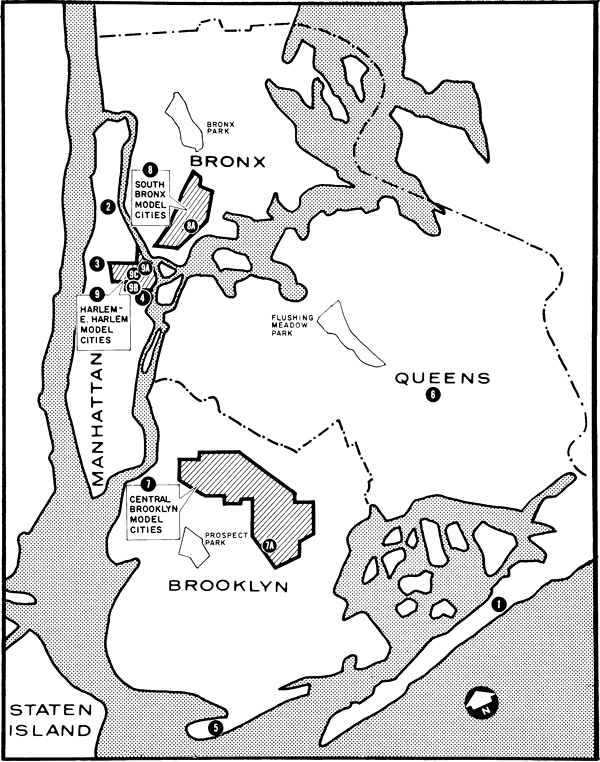


.jpg)


