Category: Features

  • MIL-Evening Report: Australia-US rift over sanctions on Israeli ministers further complicates Albanese-Trump expected talks

    Source: The Conversation (Au and NZ) – By Michelle Grattan, Professorial Fellow, University of Canberra

    Australia, together with the United Kingdom, Canada, New Zealand and Norway, has imposed sanctions on two ministers in the Israeli government for “inciting violence against Palestinians in the West Bank”.

    Australia and the other countries were immediately condemned by the United States Secretary of State Marco Rubio, who called for them to be lifted.

    The move comes as Prime Minister Anthony Albanese prepares to leave on Friday for the G7 in Canada, where he is expected to meet UN President Donald Trump on the sidelines of the conference.

    Australia’s signing up for the sanctions is just another complication for the anticipated meeting. The Australian government is under pressure from the US administration to significantly boost its defence spending. Meanwhile, Australia is seeking a deal to get some exemption from the Trump tariffs.

    The sanctions are on National Security Minister Itamar Ben-Gvir and Finance Minister Bezalel Smotrich.

    They include bans on travel to Australia, a freeze on any assets they might have here, and a prohibition on anyone in Australia directly or indirectly making assets available to them.

    Foreign Minister Penny Wong said the two ministers “have been the most extremist and hard line of an extremist settler enterprise which is both unlawful and violent”.

    The Israeli ministers are accused of major violations of human rights, including escalating physical violence and abuse by Israeli settlers. A few days ago they marched through Jerusalem’s Muslim Quarter with a group that chanted “death to Arabs”.

    In a social media post, Rubio said the sanctions “do not advance US-led efforts to achieve a ceasefire, bring all hostages home, and end the war”.

    “We reject any notion of equivalence: Hamas is a terrorist organization that committed unspeakable atrocities, continues to hold innocent civilians hostage, and prevents the people of Gaza from living in peace. We remind our partners not to forget who the real enemy is.”

    Urging the reversal of the sanctions, Rubio said the US “stands shoulder-to-shoulder with Israel”.

    Asked whether he was concerned the sanctions would damage Australia’s relations with the US, Albanese told reporters he was not: “Australia makes its own decisions based upon the assessments that we make”. He pointed out the action was in concert with the Five Eyes countries of Canada, the UK and new Zealand.

    Shadow Foreign Minister Michaelia Cash  said sanctioning  democratically elected officials of a key ally was “very serious”.

    “Labor should be clear who initiated this process, on what basis they have done so and who made the decision”, Cash said. The government should also say what, if any, engagement it had had with the US on the matter, she said.

    Michelle Grattan does not work for, consult, own shares in or receive funding from any company or organisation that would benefit from this article, and has disclosed no relevant affiliations beyond their academic appointment.

    ref. Australia-US rift over sanctions on Israeli ministers further complicates Albanese-Trump expected talks – https://theconversation.com/australia-us-rift-over-sanctions-on-israeli-ministers-further-complicates-albanese-trump-expected-talks-258691

    MIL OSI AnalysisEveningReport.nz

  • MIL-Evening Report: What are the ‘less lethal’ weapons being used in Los Angeles?

    Source: The Conversation (Au and NZ) – By Samara McPhedran, Principal Research Fellow, Griffith University

    After United States Immigration and Customs Enforcement (ICE) agents arrested multiple people on alleged immigration violations, protests broke out in Los Angeles.

    In response, police and military personnel have been deployed around the greater LA area.

    Authorities have been using “less lethal” weapons against crowds of civilians, but these weapons can still cause serious harm.

    Footage of an Australian news reporter being shot by a rubber bullet fired by police – who appeared to deliberately target her – has been beamed around the world. And headlines this morning told of an ABC camera operator hit in the chest with a “less lethal” round.

    This has provoked debate about police and military use of force.


    Read more:
    In Trump’s America, the shooting of a journalist is not a one-off. Press freedom itself is under attack


    What are ‘less lethal’ weapons?

    As the term suggests, less lethal (also called non lethal or less-than-lethal) weapons are items that are less likely to result in death when compared with alternatives such as firearms.

    Less lethal weapons include weapons such as:

    • pepper spray
    • tear gas
    • tasers
    • batons
    • water cannons
    • acoustic weapons
    • bean-bag rounds
    • rubber bullets.

    They are designed and used to incapacitate people and disperse or control crowds.

    They are meant to have temporary and reversible effects that minimise the likelihood of fatalities or permanent injury as well as undesired damage to property, facilities, material and the environment.

    Fatalities can still occur but this does not necessarily mean the weapon itself caused those.

    In Australia in 2023, for example, 95-year-old aged care resident Clare Nowland was tasered, fell backwards, hit her head and died from her head injury.

    In 2012, responding to a mistaken report about an armed robbery, police physically restrained, tasered and pepper sprayed 21-year-old Roberto Curti multiple times. He died but his exact cause of death (and whether the use of less lethal weapons played a causal role) was not clear.

    Do these weapons work to quell unrest?

    The impetus for police and military use of less lethal force came about, in part, from backlash following the use of lethal force in situations where it was seen as a gross overreaction.

    One example was the 1960 Sharpeville massacre in South Africa, when police officers in a black township opened fire on an anti-apartheid protest, killing 69 civilians.

    In theory, less lethal force is meant to provide a graduated level of response to events such as riots or protests, where the use of lethal force would be disproportionate and counter-productive.

    It is sometimes described as the “next step” to use after de-escalation techniques (like negotiation or verbal commands) have failed.

    Less lethal weapons can be used when some degree of force is considered necessary to restore order, neutralise a threat, or avoid full-blown conflict.

    How well this works in practice is a different story.

    There can be unintended consequences and use of less lethal force can be seen as an act of aggression by a government against its people, heightening existing tensions.

    The availability of less lethal weapons may also change perceptions of risk and encourage the use of force in situations where it would otherwise be avoided. This in turn can provoke further escalation, conflict and distrust of authorities.

    Samara McPhedran does not work for, consult, own shares in or receive funding from any company or organisation that would benefit from this article, and has disclosed no relevant affiliations beyond their academic appointment.

    ref. What are the ‘less lethal’ weapons being used in Los Angeles? – https://theconversation.com/what-are-the-less-lethal-weapons-being-used-in-los-angeles-258687

    MIL OSI AnalysisEveningReport.nz

  • MIL-Evening Report: Labor’s win at the 2025 federal election was the biggest since 1943, with its largest swings in the cities

    Source: The Conversation (Au and NZ) – By Adrian Beaumont, Election Analyst (Psephologist) at The Conversation; and Honorary Associate, School of Mathematics and Statistics, The University of Melbourne

    We now have the (almost!) final results from the 2025 federal election – with only Bradfield still to be completely resolved.

    Labor won 94 of the 150 House of Representatives seats (up 17 from 77 of 151 in 2022), the Coalition 43 (down 15) and all Others 13 (down three). It also won 62.7% of seats, its highest seat share since 1943, when it won 49 of 75 seats (65.3% of seats).

    Since the beginning of the two-party system in 1910, the 28.7% of seats for the Coalition is the lowest ever seat share for the Liberal and National parties combined, or their predecessors. The Coalition had won 23 of the 75 seats in 1943, its previous worst result (30.7% of seats).

    The Poll Bludger said on Wednesday the Liberals could lodge a court challenge to their 26-vote loss in Bradfield to Teal Nicolette Boele within 40 days of the official declaration of the poll (return of the writs).

    Owing to the possibility of a challenge in Bradfield, the Australian Electoral Commission does not want to disturb the ballot papers, which would be required for a Labor vs Liberal two-party count in Bradfield. A two-party count may not be completed until after the courts rule on any Liberal challenge.

    This article has two-party votes and swings nationally, in metropolitan and non-metropolitan seats and in every state and territory. I will report the current AEC figures, but the Bradfield issue means they will overstate Labor slightly nationally, in metropolitan seats and in New South Wales.

    Labor won the national two-party vote against the Coalition by 55.28–44.72, a 3.1% swing to Labor since the 2022 election. This is also Labor’s biggest two-party share since 1943, when they won by an estimated 58.2–41.8. Since the 2019 election, which the Coalition won by 51.5–48.5, Labor has had a swing to it of 6.8%.

    The last time either major party won a higher seat share than Labor at this election was in 1996, when the Coalition won 94 of the 148 seats (63.5% of seats) on a national two-party vote of 53.6–46.4. The last time a major party exceeded Labor’s two-party share at this election was in 1975, when the Coalition won by 55.7–44.3.

    Swing to Labor was bigger in cities

    The AEC has breakdowns for metropolitan and non-metropolitan seats. Metropolitan seats include seats in the six state capitals, Canberra and Darwin. In these seats, Labor won the two-party vote by 60.7–39.3, a 4.1% swing to Labor. In non-metropolitan seats, the Coalition won the two-party by 52.3–47.7, a 1.8% swing to Labor.

    In 2019, Labor won the two-party vote in metropolitan seats by 52.1–47.9, so the two-election swing to Labor in those seats was 8.6%. The Coalition won the two-party vote in non-metropolitan seats by 56.8–43.2, so the two-election swing to Labor was 4.5%.

    In April 2022, I wrote that Labor could do better in future elections because Australia’s big cities have a large share of the overall population. At this election, voters in metropolitan seats made up 58.3% of all voters. The Coalition will need to do much better in the cities to win future elections.

    In all the mainland states, the swing to Labor in the cities exceeded the swing in the regions. In global elections in the last ten years, support for left-wing parties has held up better in cities than elsewhere.

    Tasmania was the big exception to this rule. In non-metropolitan Tasmanian seats, Labor won the two-party vote by 59.0–41.0, an 11.8% swing to Labor. In metropolitan seats, Labor won by 70.1–29.9, a 4.7% swing to Labor.

    State and territory results

    The table below shows the number of seats in a state or territory and nationally, the number won by Labor, the Labor percent of the seats, the number of Labor gains, the Labor two-party vote share, the two-party swing to Labor since 2022, the number of Other seats, the change in Other seats and the number of Coalition seats.

    I have ignored redistributions, with Labor gains calculated as the number of seats Labor won in 2025 minus the number it won in 2022. Labor gained Aston at an April 2023 byelection, then held it at this election. As it was not won by Labor in 2022, it counts as a Labor gain.

    In Queensland, Labor gained seven seats, five from the Liberal National Party (including Peter Dutton’s Dickson) and two from the Greens. But these gains came from a low base, as Labor won just five of 30 Queensland seats in 2022. Queensland remains the only state where the Coalition won the two-party vote (by 50.6–49.4) and won a majority of the seats.

    In NSW, Teal independent-held North Sydney was abolished in the redistribution, but Teal Boele gained Bradfield from the Liberals, and the Nationals lost Calare to former Nationals MP turned independent Andrew Gee. Labor also gained two seats from the Liberals.

    In Victoria, Labor-held Higgins was abolished, but Labor gained three seats from the Liberals and one from the Greens (Adam Bandt’s Melbourne). The Coalition gained its one seat when Liberal Tim Wilson narrowly defeated Teal Zoe Daniel in Goldstein.

    In Western Australia, Bullwinkel was created as a notional Labor seat, and Labor held it. Labor also gained Moore from the Liberals. In South Australia and Tasmania, Labor gained three seats from the Liberals. Tasmania’s 9.0% swing to Labor was the biggest of any state or territory.

    Before the election, it was expected Victoria would be a drag on Labor owing to the unpopularity of the state Labor government. Labor took 71% of Victoria’s seats and had a 1.5% two-party swing to it.

    However, relative to the national swing, Victoria was poor for Labor, and it was only ahead of WA and the Northern Territory in swing terms at this election. In 2022, there was a huge 10.6% swing to Labor in WA, so Victoria’s two-election swing to Labor was much lower than anywhere else except the NT.

    The ACT’s two-party swing of 5.5% to Labor followed a 5.3% swing in 2022. With two senators, a quota for election is one-third or 33.3%. If the ACT’s two senators keep going to the left, it will be difficult for the Coalition to avoid a hostile Senate even if they win elections for the House.

    Other election results and a Morgan poll

    In the previous parliament, the 16 Others included four Greens, but the 13 Others at this election include only one Green. This will make the Others more right-wing than in the last parliament.

    Turnout at this election was 90.7% of enrolled voters, up 0.9% since 2022. But the informal rate rose 0.4% to 5.6%. The informal rate was 13% or higher in five western Sydney seats.

    A large share of non-English speakers, confusion with NSW’s optional preferential voting system at state elections and long candidate lists all contributed to the high informal vote rate at this election.

    A national Morgan poll, conducted May 5 to June 1 from a sample of 5,128, gave Labor a 58.5–41.5 lead, from primary votes of 37% Labor, 31% Coalition, 11.5% Greens, 6% One Nation and 14.5% for all Others. Labor led in all states including Queensland, the only state the Coalition won at the election.

    Adrian Beaumont does not work for, consult, own shares in or receive funding from any company or organisation that would benefit from this article, and has disclosed no relevant affiliations beyond their academic appointment.

    ref. Labor’s win at the 2025 federal election was the biggest since 1943, with its largest swings in the cities – https://theconversation.com/labors-win-at-the-2025-federal-election-was-the-biggest-since-1943-with-its-largest-swings-in-the-cities-258402

    MIL OSI AnalysisEveningReport.nz

  • MIL-Evening Report: Jacaranda, black locust and London plane: common street trees show surprising resilience to growing heat in Australia

    Source: The Conversation (Au and NZ) – By Manuel Esperon-Rodriguez, Senior Lecturer in Ecology, Western Sydney University

    Kokkai Ng/Getty Images

    As Australian cities heat up and dry out, street trees are emerging as frontline defenders of urban liveability.

    Street trees make city life more bearable during heatwaves. They also improve human health and wellbeing, filter pollutants and support biodiversity.

    But as climate change intensifies droughts and dials up more extreme heat, can urban forests survive in a hotter, drier future?

    To find out, we studied how ten of Australia’s most common non-native street trees grow and tolerate drought across seven cities. The familiar species we chose are the well-loved jacaranda and widely planted London plane tree as well as box elder, European nettle tree, honey locust, sweetgum, southern magnolia, callery pear, black locust and Chinese elm.

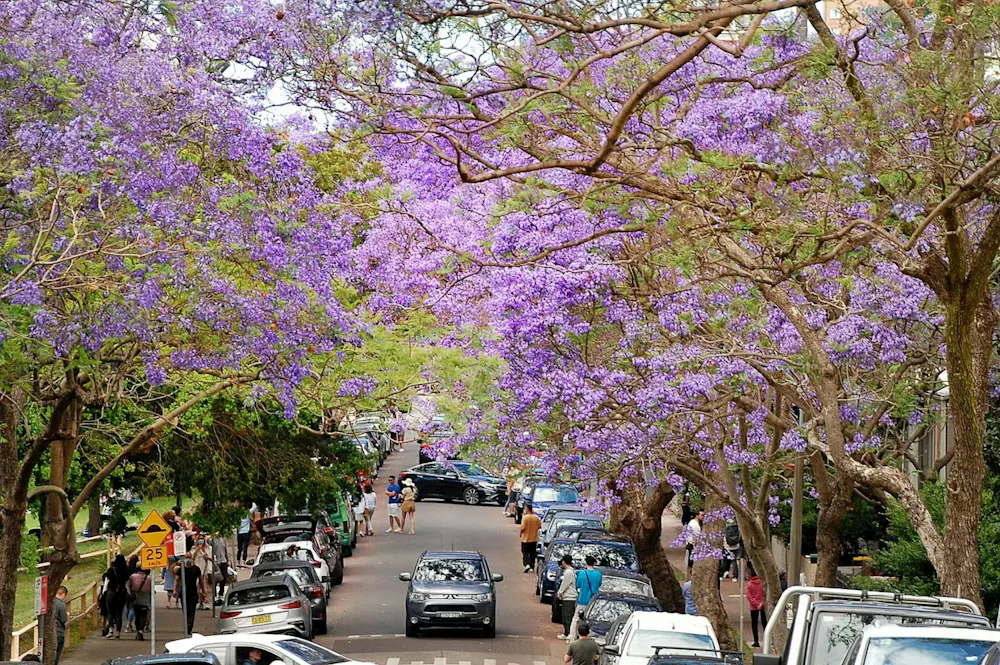
    Unexpectedly, our new research shows several species tolerate drought better than predicted, including jacaranda and London plane. Some even put on growth spurts during droughts of unprecedented duration and heat. But others showed greater sensitivity than we had anticipated, including honey locust and black locust.

    As cities plan for a hotter future, our research will help urban planners choose the toughest, most resilient street trees.

    Penrith street trees faced the hottest conditions.
    Author provided

    What did we do?

    Street trees cool cities both through their shade and by giving off water through transpiration. These effects can lower local temperatures by several degrees, which helps offset the extra heat trapped by roads, rooftops and hard surfaces.

    But the trees we rely on for cooling are vulnerable to mounting pressures from climate change. Drought, heatwaves and limited soil and water availability in cities can all threaten tree health, growth and survival.

    To test how these species were coping, we chose over 570 street trees in Adelaide, Melbourne and Sydney, as well as Mildura in regional Victoria, Mandurah south of Perth and Parramatta and Penrith in Western Sydney.

    We extracted small cores of wood from the trunk, in a process that leaves the tree alive and largely unaffected. The oldest tree we sampled was a 70-year-old southern magnolia in Sydney.

    Growth rings in these cores let us reconstruct their growth histories and assess how they responded both to long-term climate patterns and extreme events such as the Black Summer of 2019–20 and the Millennium Drought from 1997–2009.

    How resilient are these trees?

    What we found was both reassuring and surprising.

    Across all seven cities, the fastest average growth for all species was recorded in Mildura in northern Victoria. Overall, the slowest growth was found in the warmest location – Penrith.

    Some species behaved predictably. The black locust grew faster in cooler, wetter cities such as Melbourne, as expected, while honey locust and Chinese elms grew more slowly in hotter cities.

    But others defied expectations. Species such as London plane and southern magnolia showed consistent growth trends across cities despite the difference in heat, while others varied depending on local conditions.

    Crucially, the growth records showed many street trees responded positively to wetter conditions during the warmest months, most likely due to the longer growing season and increased access to water.

    Surprisingly, species such as box elder and Callery pear actually increased their growth during the very hot periods over the Black Summer of 2019–20 as well as during wetter La Niña periods in 2021–22. This suggests these species have adapted to warm urban environments – or that care and watering was provided.

    Jacarandas have become popular street trees in warmer cities.
    Snowscat/Unsplash, CC BY-NC-ND

    What happened during drought?

    During drought, street trees generally demonstrated strong resistance. This means they maintained their growth during dry periods.

    But their resilience – measured by their ability to bounce back to pre-drought growth rates – was often limited, especially in drier cities.

    While many street trees can withstand short-term stress, this suggests repeated or prolonged droughts can still take a toll on their long-term health.

    Interestingly, species identified as vulnerable in climate models did not always show greater sensitivity to drought or climate extremes in our real-world study.

    Why? Local conditions and species-level characteristics such as leaf size, wood density and water use strategy may play a significant role in determining which individual trees will thrive as the climate changes.

    We also know care provided by council staff or local residents is extremely useful. When trees are irrigated during stressful conditions, they can help get the tree through tough times.

    Why no eucalypts?

    During their growing season each year, many northern hemisphere trees produce growth rings. These rings make it possible to reliably reconstruct their growth histories using our methods.

    But most eucalypts don’t form clear annual growth rings. This is why we didn’t include spotted gums and other common eucalypts seen on city streets.

    Eucalypts tend to grow whenever conditions are favourable rather than being constrained by a strict annual cycle. Only a few native species reliably produce datable annual rings, such as snow gums and alpine ash. This is because they live in cold, high elevation areas, where winter consistently limits growth each year. These conditions aren’t found in any major Australian city.

    What does this mean for city planners?

    Our research shows that species selection matters a great deal.

    Some street trees such as jacarandas, London plane and the European nettle tree can thrive even under extreme heat and drought, while honey locust and Chinese elms are more sensitive to local conditions.

    Authorities can maximise the benefits of urban forests and reduce tree decline or loss by choosing resilient species and matching them to the specific climate of each city or neighbourhood.

    As climate extremes become more common, even resilient species may face new challenges.

    Planting and maintaining diverse, climate-adapted urban forests will help ensure our cities remain liveable, healthy, and green in the decades to come.

    Mark G Tjoelker receives funding from The Australian Research Council.

    Manuel Esperon-Rodriguez, Matthew Brookhouse, and Sally Power do not work for, consult, own shares in or receive funding from any company or organisation that would benefit from this article, and have disclosed no relevant affiliations beyond their academic appointment.

    ref. Jacaranda, black locust and London plane: common street trees show surprising resilience to growing heat in Australia – https://theconversation.com/jacaranda-black-locust-and-london-plane-common-street-trees-show-surprising-resilience-to-growing-heat-in-australia-257247

    MIL OSI AnalysisEveningReport.nz

  • MIL-Evening Report: The ASX is shrinking – a plan to get more companies to float does not go far enough

    Source: The Conversation (Au and NZ) – By Mark Humphery-Jenner, Associate Professor of Finance, UNSW Sydney

    Whenever a high-profile company lists on the Australian stock market it attracts much excitement. Employees and founders enjoy some financial gains and investors get a chance to invest in a potentially exciting stock.

    For these reasons, fast-food chain Guzman Y Gomez was one of the biggest financial events of 2024. It undertook an initial public offering which meant for the first time, its
    shares were available to the public and started being traded on the stock exchange.

    However, such public offerings have become rare with many companies remaining private instead of listing on the market.

    Indeed, the number of businesses in Australia listed on the stock exchange is declining. This has been described as the worst public offering drought “since the global financial crisis”.


    The number of initial public offerings since 2000


    In response, on Monday, the Australian Securities and Investment Commission (ASIC) announced measures to encourage more listings by streamlining the initial public offering process.

    How do companies list on the stock exchange?

    Firms undertake an initial public offering by filing documents with ASIC. These includes a “prospectus”, which details the information investors might need to evaluate whether to buy shares.

    ASIC reviews the documentation and then decides if changes are necessary or whether to let the business list.

    Typically, this requires the business to use an investment bank to manage the process and a law firm to prepare the documentation. The business will also engage an underwriter to evaluate the offering and ensure it raises enough capital. All these services cost money.

    When they are trading, the business must comply with additional regulations imposed by ASIC and the Australian Securities Exchange. These include meeting corporate governance, continuous disclosure and other operating requirements.

    Why should a business lists its shares?

    There are many potential gains for a business and the public to list on the stock exchange.

    Companies can encourage employees by paying them with shares in the business. This gives workers buy-in to the company they help to build. This is much easier when it is listed because employees can identify the value of that incentive and sell shares when they choose.

    Being listed can also help raise capital. Having shares listed helps the business raise money to expand. In a direct sense, initial public offerings do this by enabling the firm to sell shares directly to the public rather than being restricted to the subset of investors who can invest in unlisted stocks.

    In an indirect sense, being publicly listed forces businesses to comply with even more stringent disclosure rules. This can give lenders and investors more confidence in the firm.

    Further, because the shares are now readily traded in the market, they can now be more easily used to acquire, or merge with, another company.

    What does ASIC intend to do?

    The commission believes one of the biggest barriers to listing on the market is the initial documentation and administrative requirements. They believe if they can slash red tape there will be more listings.

    The goal is to help them get their documents in order from the beginning, to reduce the potential number of changes that may be needed. ASIC believes it will make the process cheaper and quicker, and enable firms to better time the initial public offerings for periods of strong demand.

    The fast track process would only be open to businesses with a market capitalisation of at least A$100 million and firms that had no ASX escrow requirement.

    An escrow is a financial and legal agreement designed to protect buyers and sellers in a transaction. An independent third party holds payment for a fee, until everyone fulfils their transaction responsibilities.

    What else could ASIC do?

    ASIC’s plan to reduce red tape will help but there are other barriers to businesses listing on the sharemarket. These include:

    • share structures and control: founders are often psychologically invested in their companies and prefer to retain control over the business they built after listing.

    This is part of the reason “dual-class” share structures exist in the United States. These give some shareholders supernormal voting rights, enabling them to retain control. Singapore and Hong Kong also offer dual class structures.

    Australia doesn’t have a dual-class system, but enabling such structures could make the market more attractive

    • disclosure and expense: the initial public offering process is expensive. ASIC’s plan does partly address this, but only for larger businesses, which ironically have greater financial resources to pay the service providers.

    • governance requirements: the ASX imposes corporate governance requirements on businesses that publicly list on the market. These requirements take a one-size-fits-all to factors such as who should be on the board of directors. These requirements appear to cost extra with an unclear financial gain. And the ASX’s rules appear not to be evidence-backed.

    • escrows: ASIC’s fast track process is only available if the firm does not have to satisfy an escrow requirement. An escrow requirement typically applies when an early investor, or a founder, is involved. This is to stop such people from opportunistically selling shares at an inflated process, which then nosedives. It is not clear why ASIC excluded such businesses from fast track review. Smaller companies are some of the most likely to be subject to escrow. So they are the most likely to benefit from reducing the cost-barriers to listing.

    ASIC has tried to reduce red tape for larger businesses, but the changes don’t go far enough and more work is necessary to address the underlying factors that cause firms to stay private for longer.

    Mark Humphery-Jenner does not work for, consult, own shares in or receive funding from any company or organisation that would benefit from this article, and has disclosed no relevant affiliations beyond their academic appointment.

    ref. The ASX is shrinking – a plan to get more companies to float does not go far enough – https://theconversation.com/the-asx-is-shrinking-a-plan-to-get-more-companies-to-float-does-not-go-far-enough-258557

    MIL OSI AnalysisEveningReport.nz

  • MIL-Evening Report: Those ‘what I eat in a day’ TikTok videos aren’t helpful. They might even be harmful

    Source: The Conversation (Au and NZ) – By Catherine Houlihan, Senior Lecturer in Clinical Psychology, University of the Sunshine Coast

    Iren_Geo/Shutterstock

    You may have come across those “what I eat in a day” videos on social media, where people – usually conventionally attractive influencers wearing activewear – list everything they consumed that day.

    They might seem like harmless fun but in fact they can reinforce dangerous ideas about food, weight and body image.

    I’ve worked with people with eating disorders who watch these videos and have seen first hand how harmful this content can be.

    Here’s what the research says and what you need to know.

    Videos that promote ‘health’ can be unhealthy

    “What I eat in a day” videos have been popular for over a decade, with views reaching in the billions.

    They target both men and women and many claim to promote health and nutrition. Yet videos such as these can do more harm than good.

    Very few of these creators have formal qualifications in health or nutrition, increasing the potential for misinformation.

    They often depict low calorie diets, exclude entire food groups or promote “clean eating” (a problematic idea at best).

    Some even encourage dangerous behaviours such as skipping meals, eating very little or using laxatives to purge food.

    They can also send harmful messages about body image. Many such videos use beauty filters to create images promoting unrealistic body ideals.

    These videos often feature shots of how the person looks from the front, the side, in the gym, and in tight, form-fitting clothes. There may even be some “before and after” weight loss pics, sending the harmful message this should be everyone’s goal.

    The subtext is clear: “eat what I eat in a day and you can look like me”.

    But that’s not just a dangerous idea – it’s a totally false and erroneous one.

    Knowing what a certain person “eats in a day” doesn’t mean you’ll look like them if you follow their lead.

    In fact, a 24-hour rundown of one person’s food intake doesn’t even provide accurate information about that person’s nutritional health – let alone yours.

    These videos can target both men and women.
    Veja/Shutterstock

    You are not them

    Like our health, our nutritional needs are unique to us and can vary day to day.

    What constitutes a “healthy” choice for one person might be totally different for another depending on things such as:

    Links between health and diet are best examined over time, not in a single day.

    Basing our food intake on a brief snapshot of what someone else eats is unlikely to lead to better health. It might leave you worse off overall.

    5 ways these videos can affect mental health

    What we watch online can affect our mood, behaviour and body image.

    Alarm bells should ring if you frequently see these videos and notice you’re doing or experiencing these five things:

    1. disordered eating. Eating less than your body needs, skipping meals, cutting out entire food groups, binge eating and purging are all signs of disordered eating that can lead to serious mental health problems such as eating disorders

    2. low mood. Watching videos promoting low-calorie diets can worsen our mood; you might find yourself feeling deflated after comparing yourself to others (or rather, to the version of themselves they promote online)

    3. poor body image. Research shows watching “what I eat in a day” videos can leave people feeling worse about their bodies and appreciating them less

    4. obsessive thinking and anxiety. Obsessing over the “perfect” diet can increase anxiety about food and eating. Diets that encourage a very detailed approach to nutrition – including breaking meals down into components such as carbohydrates and proteins or weighing food – can further fuel obsessive thoughts

    5. narrow life focus. Having your social media feed filled with these types of videos can create an overemphasis on the importance of food, eating and body image on your self-worth. This ultimately affects your health and wellbeing.

    What we watch online can affect our mood, behaviour, and body image.
    GaudiLab/Shutterstock

    OK, so what can I do?

    If you’re encountering “what I eat in a day” videos often and find they’re affecting your mood, eating behaviour or sense of self-worth you can try to:

    • understand that these videos are not tailored to your individual health or nutritional needs and that many contain harmful messaging
    • avoid engaging with videos that promote disordered eating, idealised beauty standards or that make you feel bad after you watch them
    • unfollow accounts that regularly post such videos, or tap “not interested” on the TikTok video to stop the algorithm showing you more of them
    • balance your social media feed with content focused on other areas of life besides food and eating (such as art, design, animals, books, sports or travel). Fill your feed with interests that improve your personal sense of wellbeing
    • consider taking regular breaks from social media and seeing if you feel better overall.

    If you do want to view posts about food, seek out creators attempting to buck these negative trends by focusing more on fun and taste.

    And if you’re experiencing low mood, disordered eating or body image issues, seek help from your local GP. They can connect you with practitioners who provide evidence-based therapies such as cognitive behavioural therapy.

    If you have a history of an eating disorder or suspect you may have one, you can contact the Butterfly Foundation’s national helpline on 1800 334 673 (or via their online chat).

    Ultimately, “what I eat in a day” videos aren’t really helpful. They contain very little useful information to guide your health or nutritional goals.

    If you are considering making changes to your diet, it’s important to consult a qualified professional, such as an accredited practising dietitian, who can learn about your situation and monitor any risks.

    Catherine Houlihan consults with an eating disorders service owned and operated by the Butterfly Foundation.

    ref. Those ‘what I eat in a day’ TikTok videos aren’t helpful. They might even be harmful – https://theconversation.com/those-what-i-eat-in-a-day-tiktok-videos-arent-helpful-they-might-even-be-harmful-257127

    MIL OSI AnalysisEveningReport.nz

  • MIL-Evening Report: Why does the US still have a Level 1 travel advisory warning despite the chaos?

    Source: The Conversation (Au and NZ) – By Samuel Cornell, PhD Candidate in Public Health & Community Medicine, School of Population Health, UNSW Sydney

    No travel can be considered completely safe. There are inherent risks from transportation, criminal activity, communicable diseases, injury and natural disasters.

    Still, global travel is booming — for those who can afford it.

    To reduce the chances of things going wrong, governments issue official travel advisories: public warnings meant to help people make informed travel decisions.

    Sometimes these advisories seem puzzling – why, for example, does the US still have the “safest” rating despite the ongoing volatility in Los Angeles?

    How do governments assess where is safe for Australians to travel?

    A brief history of travel advisories

    The United States pioneered travel advisories in 1978, with other countries such as Canada, the United Kingdom and Ireland following.

    Australia started providing travel advisories in 1996 and now runs its system under the Smart Traveller platform.

    To determine the risk level, the Department of Foreign Affairs and Trade (DFAT) draws on diplomatic reporting, assessments from Australian missions overseas about local security conditions, threat assessments from the Australian Security Intelligence Organisation (ASIO) and advice from Five Eyes intelligence sharing partners (Australia, the US, United Kingdom, New Zealand and Canada).

    The goal is to create “smart, responsible informed travellers”, not to restrict tourism or damage foreign relationships.

    DFAT has stressed its system is not influenced by “commercial or political considerations”.

    Soft power and safety

    In theory, these advisories are meant to inform travellers, keep them safe and reduce the burden on consular services.

    However, they can also subtly reflect politics and alliances.

    While travel advisories are presented as neutral, fact-based risk assessments, they may not always be free from political bias.

    Research shows governments sometimes soften their warnings for countries they are close with and overstate risks in others.

    A detailed analysis of US State Department travel warnings from 2009 to 2016 found only a weak correlation between the number of American deaths in a country and the warnings issued.

    In some cases, destinations with no record of US fatalities received frequent warnings, while places with high death tolls had none.

    In early 2024, Australia issued a string of warnings about rising safety concerns in the US and extremely strict entry conditions even with an appropriate visa.

    Yet, the US kept its Level 1 rating – “exercise normal safety precautions” – the same advice given for places such as Japan or Denmark.

    Meanwhile, Australia’s warning for France was Level 2 — “exercise a high degree of caution” — due to the potential threat of terrorism.

    Experts have also criticised Australia’s travel warnings for being harsher toward developing countries.

    The UK, a country with lower crime rates than the US, also sits at Level 2 — putting it in the same risk level as Saudi Arabia, Nicaragua and South Africa.


    Read more:
    In Trump’s America, the shooting of a journalist is not a one-off. Press freedom itself is under attack


    Inconsistencies and grey areas

    The problem is, the advisory levels themselves are vague: a Level 2 warning can apply to countries with very different risk profiles.

    It’s used for places dealing with terrorism threats like France, or vastly different law and respect for human rights such as Saudi Arabia, or countries recovering from political unrest such as Sri Lanka.

    Until early June 2025, Sweden was also rated Level 2 due to localised gang violence, despite relatively low risks for tourists. Its rating has since been revised down to Level 1.

    Travel advisories often apply a blanket rating to an entire country, even when risks vary widely within its borders.

    For instance, Australia’s Level 1 rating for the US doesn’t distinguish between different regional threats.

    In June 2025, 15 people were injured in Boulder, Colorado after a man attacked a peaceful protest with Molotov cocktails.

    Earlier in 2025, a major measles outbreak in West Texas resulted in more than 700 cases reported in a single county.

    Despite this, Australia continues to classify the entire country as a low-risk destination.

    This can make it harder for travellers to make informed, location-specific decisions.

    Recent travel trends

    Recent data indicate a significant downturn in international travel to the US: in March 2025, overseas visits to the US fell by 11.6% compared to the previous year, with notable declines from Germany (28%), Spain (25%) and the UK (18%).

    Australian visitors to the US decreased by 7.8% compared to the same month in 2024, marking the steepest monthly drop since the COVID pandemic.

    This trend suggests travellers are reassessing risk on their own even when official advisories don’t reflect those concerns.

    The US case shows how politics can affect travel warnings: the country regularly experiences mass casualty incidents, violent protests and recently has been detaining and deporting people from many countries at the border including Australians, Germans and French nationals.

    Yet it remains at Level 1.

    What’s really going on has more to do with political alliances than safety: increasing the US travel risk level could create diplomatic friction.

    What travellers can do now

    If you’re a solo female traveller, identify as LGBTQIA+, are an academic, come from a visible minority or have spoken out online against the country you’re visiting, your experience might be very different from what the advice suggests.

    So, here are some tips to stay safe while travelling:

    • Check multiple sources: don’t rely solely on travel advisories – compare travel advice from other countries

    • Get on-the-ground updates: check local news for coverage of events. If possible, talk to people who’ve recently visited for their experiences

    • For broader safety trends, tools like the Global Peace Index offer data on crime, political stability and healthcare quality. If you’re concerned about how locals or police treat certain groups, consult Human Rights Watch, Amnesty International, or country-specific reports from Freedom House

    • Consider identity-specific resources: there are travel guides and safety indexes for LGBTQIA+ travellers like Equaldex, women travellers (Solo Female Travelers Network) and others. These may highlight risks general advisories miss.

    Travel advisories often reflect whom your country trusts, not where you’re actually safe. If you’re relying on them, make sure you understand what they leave out.

    Samuel Cornell receives funding from an Australian Government Research Training Program
    Scholarship.

    Milad Haghani does not work for, consult, own shares in or receive funding from any company or organisation that would benefit from this article, and has disclosed no relevant affiliations beyond their academic appointment.

    ref. Why does the US still have a Level 1 travel advisory warning despite the chaos? – https://theconversation.com/why-does-the-us-still-have-a-level-1-travel-advisory-warning-despite-the-chaos-258182

    MIL OSI AnalysisEveningReport.nz

  • MIL-Evening Report: The AI hype is just like the blockchain frenzy – here’s what happens when the hype dies

    Source: The Conversation (Au and NZ) – By Gediminas Lipnickas, Lecturer in Marketing, University of South Australia

    Izf/Shutterstock

    In recent years, artificial intelligence (AI) has taken centre stage across various industries. From AI-generated art to chatbots in customer service, every sector is seemingly poised for disruption.

    It’s not just in your news feed every day – venture capital is pouring in, while CEOs are eager to declare their companies “AI-first”. But for those who remember the lofty promises of other technologies that have since faded from memory, there’s an uncanny sense of déjà vu.

    In 2017, it was blockchain that promised to transform every industry. Companies added “blockchain” to their name and watched stock prices skyrocket, regardless of whether the technology was actually used, or how.

    Now, a similar trend is emerging with AI. What’s unfolding is not just a wave of innovation, but a textbook example of a tech hype cycle. We’ve been here many times before.

    Understanding the hype cycle

    The tech hype cycle, first defined by the research firm Gartner, describes how emerging technologies rise on a wave of inflated promises and expectations, crash into disillusionment and, eventually, find a more realistic and useful application.


    The Conversation, CC BY-ND

    Recognising the signs of this cycle is crucial. It helps in distinguishing between genuine technological shifts and passing fads driven by speculative investment and good marketing.

    It can also mean the difference between making a good business decision and a very costly mistake. Meta, for example, invested more than US$40 billion into the metaverse idea while seemingly chasing their own manufactured tech hype, only to abandon it later.


    Read more:
    Why the metaverse isn’t ready to be the future of work just yet


    When buzz outpaces reality

    In 2017, blockchain was everyone’s focus. Presented as a revolutionary technology, blockchain offered a decentralised way to record and verify transactions, unlike traditional systems that rely on central authorities or databases.

    US soft drinks company Long Island Iced Tea Corporation became Long Blockchain Corporation and saw its stock rise 400% overnight, despite having no blockchain product. Kodak launched a vague cryptocurrency called KodakCoin, sending its stock price soaring.

    These developments were less about innovation and more about speculation, chasing short-term gains driven by hype. Most blockchain projects never delivered real value. Companies rushed in, driven by fear of missing out and the promise of technological transformation.

    But the tech wasn’t ready, and the solutions it supposedly offered were often misaligned with real industry problems. Companies tried everything, from tracking pet food ingredients on blockchain, to launching loyalty programs with crypto tokens, often without clear benefits or better alternatives.

    In the end, about 90% of enterprise blockchain solutions failed by mid-2019.

    The generative AI déjà vu

    Fast-forward to 2023, and the same pattern started playing out with AI. Digital media company BuzzFeed saw its stock jump more than 100% after announcing it would use AI to generate quizzes and content. Financial services company Klarna replaced 700 workers with an AI chatbot, claiming it could handle millions of customer queries.

    The results were mostly negative. Klarna soon saw a decline in customer satisfaction and had to walk back its strategy, rehiring humans for customer support this year. BuzzFeed’s AI content push failed to save its struggling business, and its news division later shut down. Tech media company CNET published AI-generated articles riddled with errors, damaging its credibility.

    These are not isolated incidents. They’re signals that AI, like blockchain, was being over hyped.

    Why do companies chase tech hype?

    There are three main forces at play: inflated expectations, short-term view and flawed implementation. Tech companies, under pressure from investors and media narratives, overpromise what AI can do.

    Leaders pitch vague and utopian concepts of “transformation” without the infrastructure or planning to back them up. And many rush to implement, riding the hype wave.

    They are often hindered by a short-term view of what alignment with the new tech hype can do for their company, ignoring the potential downsides. They roll out untested systems, underestimate complexity or even the necessity, and hope that novelty alone will drive the return on investment.

    The result is often disappointment – not because the technology lacks potential, but because it’s applied too broadly, too soon, and with too little planning and oversight.

    Where to from here?

    Like blockchain, AI is a legitimate technological innovation with real, transformative potential.

    Often, these technologies simply need time to find the right application. While the initial blockchain hype has faded, the technology has found a practical niche in areas like “asset tokenization” within financial markets. This allows assets like real estate or company shares to be represented by digital tokens on the blockchain, enabling easier, faster and cheaper trading.

    The same pattern can be expected with generative AI. The current AI hype cycle appears to be tapering off, and the consequences of rushed or poorly thought-out implementations will likely become more visible in the coming years.

    However, this decline in hype doesn’t signal the end of generative AI’s relevance. Rather, it marks the beginning of a more grounded phase where the technology can find the most suitable applications.

    One of the clearest takeaways so far is that AI should be used to enhance human productivity, not replace it. From people pushing back against the use of AI to replace them, to AI making frequent and costly mistakes, human oversight paired with AI-enhanced productivity is increasingly seen as the most likely path forward.

    Recognising the patterns of tech hype is essential for making smarter decisions. Instead of rushing to adopt every new innovation based on inflated promises, a measured, problem-driven approach leads to more meaningful outcomes.

    Long-term success comes from thoughtful experimentation, implementation, and clear purpose, not from chasing trends or short-term gains. Hype should never dictate strategy; real value lies in solving real problems.

    Gediminas Lipnickas does not work for, consult, own shares in or receive funding from any company or organisation that would benefit from this article, and has disclosed no relevant affiliations beyond their academic appointment.

    ref. The AI hype is just like the blockchain frenzy – here’s what happens when the hype dies – https://theconversation.com/the-ai-hype-is-just-like-the-blockchain-frenzy-heres-what-happens-when-the-hype-dies-258071

    MIL OSI AnalysisEveningReport.nz

  • MIL-Evening Report: The Project really did do news differently. Its demise is our loss

    Source: The Conversation (Au and NZ) – By Andrew Dodd, Professor of Journalism, Director of the Centre for Advancing Journalism, The University of Melbourne

    The most unsettling thing about the closure of Network Ten’s The Project is that it might come to be seen as the moment commercial network television gave up on young audiences for news programming.

    If that’s what’s happening, it’s a worrying thought. Bringing news and current affairs to young audiences is exactly what The Project has done so well over its 16-year lifespan, and it’s hard to imagine how the channel will replace it in ways that work for audiences already disengaged with mainstream media.

    The Project will be missed. Perhaps not by those such as a caller to ABC Melbourne’s Drive program yesterday afternoon, who described The Project as Behind the News for grown-ups.

    The caller’s tone signalled an insult but that discredits both the long-running ABC program for schoolchildren and the goal of engaging young adult audiences in news and current affairs.

    Declining numbers

    In 2010, a year after the program launched, it was rating 1.1 million in the country’s capital cities, which made it competitive with other commercial TV news services.

    By last weekend, the program was drawing an average national audience of 270,000 across the regions as well as the capital cities, according to media commentator, Tim Burrowes’, Unmade newsletter. Even allowing for the overall decline in the number of people watching television since 2010, those ratings figures are dismal.

    Burrowes, the author of Media Unmade: Australian Media’s Most Disruptive Decade, suggests the controversial hiring of former Nine Network star, Lisa Wilkinson, in 2017, to present the program’s Sunday edition may have unsettled The Project’s internal harmony after the Bruce Lehrmann defamation trial she was involved in.

    A winning format for younger audiences

    The Project’s formula of combining news with comedy emerged from the success of The Panel, the weekly show produced in the late 1990s by Working Dog and featuring the D-Generation team of Rob Sitch, Santo Cilauro and Tom Gleisner, along with Kate Langbroek, Glenn Robbins and, for a while, Jane Kennedy.

    The Panel opening theme song, Working Dog Productions.

    It was edgy and topical. It bounced off current events with short piss-take scene-setting video grabs, followed by wry observations and silly gags.

    It was just as much comedy as it was current affairs, and it was all about appealing to young and disenfranchised viewers.

    The Panel anticipated the exodus away from the po-faced solemnity of commercial terrestrial TV news well before streaming had taken hold.

    Rove McManus and his production company saw its potential, as did Ten, which knew it needed to try new things. It could not compete with Seven and Nine, who were then – and in many ways still are – locked in a perpetual ratings war while being almost identical to one another.

    The Project’s producers knew they had a winning format. They ensured the show was rarely boring and avoided the predictability of worthiness. They weren’t afraid to ask the non-PC question, or laugh at themselves, or debate or discuss or delve.

    But that didn’t mean they resorted to meanness or took pleasure in others’ misfortune. Admittedly, Steve Price did need to be reined in from time to time.

    The format encouraged audiences to stick with them and in the process they actually learnt stuff. Young, disengaged kids saw politicians discussing matters of substance, with the show challenging assumptions.

    News for the social media era

    As increasing numbers of young people stopped turning on TVs, The Project became consumable in bite-size chunks on social media.

    The show’s producers cottoned on to this earlier than most and began crafting segments that could be easily shared. Waleed Aly became an Instagram star for his impassioned, informed editorialising about racial issues, along the way earning nominations for several Logie awards, and winning the Gold Logie in 2016.

    Peter Helliar, Dave Hughes and Charlie Pickering made audiences laugh. And another Gold Logie winner, Carrie Bickmore, made them care, especially in 2013 when she broke the fourth wall of television to talk about the need to improve public awareness of brain cancer following a story about a potential cure for the disease in ten years’ time. A few years previously Bickmore’s husband had died of the disease.

    The loss of another media town square

    While The Project was on air, the network was at least making an effort to inform a section of the market that had long been under-served by the news media.

    With relatively recent entrants, like the Daily Aus, stepping in to that gap, perhaps Ten thought it was becoming too crowded?

    We’ll have to assess what the network does next to see if it thinks investing in current affairs is no longer worth the effort.

    With the ABC threatening to walk away from Q&A, it looks like commercial and public networks are coming to the same view: that panel-based current affairs programming is a turn-off for audiences, regardless of whether they’re young or old.

    This is especially troubling because the closure of each program means the loss of another media town square, where the capacity to listen to, and learn from one another, in civil ways also disappears.

    The authors do not work for, consult, own shares in or receive funding from any company or organisation that would benefit from this article, and have disclosed no relevant affiliations beyond their academic appointment.

    ref. The Project really did do news differently. Its demise is our loss – https://theconversation.com/the-project-really-did-do-news-differently-its-demise-is-our-loss-258588

    MIL OSI AnalysisEveningReport.nz

  • MIL-Evening Report: Novelty, negativity and no politicians: research reveals what makes some images more engaging than others

    Source: The Conversation (Au and NZ) – By T.J. Thomson, Senior Lecturer in Visual Communication & Digital Media, RMIT University

    T.J. Thomson

    We see hundreds or thousands of images each day – but not all of them stand out to us. Why are some visuals more engaging than others? In an attention economy, where creators and organisations battle for our eyeballs, knowing the answer has never been more important.

    To address this question, we asked about 100 people across three different communities in Australia to rank photos from least to most engaging. We analysed the rankings, and interviewed respondents to understand the “why” behind their choices.

    Our new research reveals three interrelated criteria that affect why audiences engage with some images more than others. These are: the content of an image, how the images is presented, and who is seeing and reacting to it.

    What content makes for an engaging image?

    Who or what is shown, and how, markedly affects how someone engages with an image.

    We found viewers generally considered images with other people in them – and particularly images with faces – as more engaging than those without.

    The number of people or objects in the frame also mattered. Fewer objects resulted in simpler compositions that were easier to parse and, as a result, more eye-catching.

    Along the same lines, images were generally more engaging when they had a focal point (which would ideally be offset from the centre of the frame), compared to those with a lack of a focal point and arbitrary framing.

    However, centring the focal point worked well in symmetrical compositions, or when the frame was square.

    Participants ranked posed photos as less engaging than seemingly candid shots – appreciating the authenticity of the latter. They also ranked text-heavy images, such as those with people standing by or holding signs, as less engaging than action shots.

    In terms of emotional tone, images that showed negativity, conflict, or drama were ranked as more engaging than those that showed positivity. In the words of one interviewee:

    People always have a weird interest in yucky things. You’re like, ‘Oh, is
    someone dead?’ or you’re interested in the ‘Why?’ It’s intriguing.

    Participants preferred images that showed something they didn’t see every day, such as a rare double rainbow, or a visit from a prominent figure to a community.

    Novel camera angles also generated interest. This is partly why drone shots are so popular. They provide a new perspective and tend to be less “cluttered” than vision captured from the ground.

    In terms of visual depth, images with a clear foreground, mid-ground, and background were found to be more visually interesting than those with just a mid-ground and background.

    Presentation factors

    If you’re always tempted to apply black and white or muted filters to your images, think again.

    Our participants regarded images with bright and bold colours as more engaging than drab ones. This was even true for photos with conventionally boring subject matter. Colour, we found, can make or break an image.

    Size mattered, too. Viewers generally regarded larger images as more engaging than their smaller counterparts. Larger images were more eye-catching and could accommodate “busier” compositions, compared to smaller images that might be viewed on smaller smartphone screens.

    Viewers also relied on captions or accompanying descriptions to determine whether an image was relevant, local, or produced by trustworthy or notable figures – all three of which played a role in how “engaging” they found a particular image.

    What you bring to the viewing

    Your personal attributes and experiences shape how you interact with visual media.

    For instance, seeing a photo of the Sydney Opera House when you’ve never been there is different to seeing a photo after you’ve seen it in person. In the latter case, you bring your own memories and experiences to the viewing, and these can positively or negatively affect your engagement.

    We found engagement with an image was likely to be higher if the image depicted faces or places that were “local” to the viewer. For most viewers, obviously posed stock images were forgettable.

    To a degree, engagement behaviours were also shaped by what was interesting to a viewer’s friends, families, and other people they deemed important. As one 70-year-old participant explained:

    My grandchildren play sport, so I’m always interested in [seeing photos of] that.

    Winning and losing themes

    On average, some topics were considered more engaging than others. For example, images related to health and crisis situations were more widely relevant and engaging than sports or education.

    That said, not all widely relevant topics were necessarily engaging. For example, our participants ranked photos of politicians as unengaging. Although they acknowledged politics is important, many said these photos were boring or off-putting.

    How to stand out with your images

    The above insights into engagement behaviours can be used by anyone looking to spruce up their photos.

    When you’re making, editing, or publishing an image, carefully consider its content, the presentation circumstances and your audience.

    One key piece of advice is to focus on the action rather than the outcome. For instance, rather than showing an award-winner with their trophy, show what they did to earn that trophy. Also remember to keep your audience’s attributes in mind, and try to cater for them.

    Doing so will give your images the best chance to stand out among the billions of others circulating online each day.

    T.J. Thomson receives funding from the Australian Research Council. He is an affiliated researcher with the ARC Centre of Excellence for Automated Decision-Making & Society.

    Rachael Anderson does not work for, consult, own shares in or receive funding from any company or organisation that would benefit from this article, and has disclosed no relevant affiliations beyond their academic appointment.

    ref. Novelty, negativity and no politicians: research reveals what makes some images more engaging than others – https://theconversation.com/novelty-negativity-and-no-politicians-research-reveals-what-makes-some-images-more-engaging-than-others-255612

    MIL OSI AnalysisEveningReport.nz

  • MIL-Evening Report: Assessment in the age of AI – unis must do more than tell students what not to do

    Source: The Conversation (Au and NZ) – By Thomas Corbin, Research fellow, Center for Research in Assessment and Digital Learning, Deakin University

    Matheus Bertelli/ Pexels , CC BY

    In less than three years, artificial intelligence technology has radically changed the assessment landscape. In this time, universities have taken various approaches, from outright banning the use of generative AI, to allowing it in some circumstances, to allowing AI by default.

    But some university teachers and students have reported they remain confused and anxious, unsure about what counts as “appropriate use” of AI. This has been accompanied by concerns AI is facilitating a rise in cheating.

    There is also a broader question about the value of university degrees today if AI is used in student assessments.

    In a new journal article, we examine current approaches to AI and assessment and ask: how should universities assess students in the age of AI?


    Read more:
    Researchers created a chatbot to help teach a university law class – but the AI kept messing up


    Why ‘assessment validity’ matters

    Universities have responded to the emergence of generative AI with various policies aimed at clarifying what is allowed and what is not.

    For example, the United Kingdom’s University of Leeds set up a “traffic light” framework of when AI tools can be used in assessment: red means no AI, orange allows limited use, green encourages it.

    For example, a “red” light on a traditional essay would indicate to students it should be written without any AI assistance at all. An “amber” marked essay would perhaps allow AI use for “idea generation” but not for writing elements. A “green” light would permit students to use AI in any way they choose.

    In order to help ensure students comply with these rules, many institutions, such as the University of Melbourne, require students to declare their use of AI in a statement attached to submitted assessments.

    The aim in these and similar cases is to preserve “assessment validity”. This refers to whether the assessment is measuring what we think it is measuring. Is it assessing students’ actual capabilities or learning? Or how well they use the AI? Or how much they paid to use it?

    But we argue setting clear rules is not enough to maintain assessment validity.

    Our paper

    In a new peer-reviewed paper, we present a conceptual argument for how universities and schools can better approach AI in assessments.

    We begin by making the distinction between two approaches to AI and assessment:

    • discursive changes: only modify the instructions or rules around an assessment. To work, they rely on students understanding and voluntarily following directions.

    • structural changes: modify the task itself. These constrain or enable behaviours by design, not by directives.

    For example, telling students “you may only use AI to edit your take-home essay” is a discursive change. Changing an assessment task to include a sequence of in-class writing tasks where development is observed over time is a structural change.

    Telling a student not to use AI tools when writing computer code is discursive. Developing a live, assessed conversation about the choices a student has made made is structural.

    A reliance on changing the rules

    In our paper, we argue most university responses to date (including traffic light frameworks and student declarations) have been discursive. They have only changed the rules around what is or isn’t allowed. They haven’t modified the assessments themselves.

    We suggest only structural changes can reliably protect validity in a world where AI use means rule-breaking is increasingly undetectable.

    So we need to change the task

    In the age of generative AI, if we want assessments to be valid and fair, we need structural change.

    Structural change means designing assessments where validity is embedded in the task itself, not outsourced to rules or student compliance.

    This won’t look the same in every discipline and it won’t be easy. In some cases, it may require assessing students in very different ways from the past. But we can’t avoid the challenge by just telling students what to do and hoping for the best.

    If assessment is to retain its function as a meaningful claim about student capability, it must be rethought at the level of design.

    Phillip Dawson receives funding from the Australian Research Council, and has in the past recieved funding from the Tertiary Education Quality and Standards Agency (TEQSA), the Office for Learning and Teaching, and educational technology companies Turnitin, Inspera and NetSpot.

    Danny Liu and Thomas Corbin do not work for, consult, own shares in or receive funding from any company or organisation that would benefit from this article, and have disclosed no relevant affiliations beyond their academic appointment.

    ref. Assessment in the age of AI – unis must do more than tell students what not to do – https://theconversation.com/assessment-in-the-age-of-ai-unis-must-do-more-than-tell-students-what-not-to-do-257469

    MIL OSI AnalysisEveningReport.nz

  • MIL-Evening Report: Do you talk to AI when you’re feeling down? Here’s where chatbots get their therapy advice

    Source: The Conversation (Au and NZ) – By Centaine Snoswell, Senior Research Fellow, Centre for Health Services Research, The University of Queensland

    Pexels/Mikoto

    As more and more people spend time chatting with artificial intelligence (AI) chatbots such as ChatGPT, the topic of mental health has naturally emerged. Some people have positive experiences that make AI seem like a low-cost therapist.

    But AIs aren’t therapists. They’re smart and engaging, but they don’t think like humans. ChatGPT and other generative AI models are like your phone’s auto-complete text feature on steroids. They have learned to converse by reading text scraped from the internet.

    When someone asks a question (called a prompt) such as “how can I stay calm during a stressful work meeting?” the AI forms a response by randomly choosing words that are as close as possible to the data it saw during training. This happens so fast, with responses that are so relevant, it can feel like talking to a person.

    But these models aren’t people. And they definitely are not trained mental health professionals who work under professional guidelines, adhere to a code of ethics, or hold professional registration.

    Where does it learn to talk about this stuff?

    When you prompt an AI system such as ChatGPT, it draws information from three main sources to respond:

    1. background knowledge it memorised during training
    2. external information sources
    3. information you previously provided.

    1. Background knowledge

    To develop an AI language model, the developers teach the model by having it read vast quantities of data in a process called “training”.

    Where does this information come from? Broadly speaking, anything that can be publicly scraped from the internet. This can include everything from academic papers, eBooks, reports, free news articles, through to blogs, YouTube transcripts, or comments from discussion forums such as Reddit.

    Are these sources reliable places to find mental health advice? Sometimes.
    Are they always in your best interest and filtered through a scientific evidence based approach? Not always. The information is also captured at a single point in time when the AI is built, so may be out-of-date.

    A lot of detail also needs to be discarded to squish it into the AI’s “memory”. This is part of why AI models are prone to hallucination and getting details wrong.

    2. External information sources

    The AI developers might connect the chatbot itself with external tools, or knowledge sources, such as Google for searches or a curated database.

    When you ask Microsoft’s Bing Copilot a question and you see numbered references in the answer, this indicates the AI has relied on an external search to get updated information in addition to what is stored in its memory.

    Meanwhile, some dedicated mental health chatbots are able to access therapy guides and materials to help direct conversations along helpful lines.

    3. Information previously provided

    AI platforms also have access to information you have previously supplied in conversations, or when signing up to the platform.

    When you register for the companion AI platform Replika, for example, it learns your name, pronouns, age, preferred companion appearance and gender, IP address and location, the kind of device you are using, and more (as well as your credit card details).

    On many chatbot platforms, anything you’ve ever said to an AI companion might be stored away for future reference. All of these details can be dredged up and referenced when an AI responds.

    And we know these AI systems are like friends who affirm what you say (a problem known as sycophancy) and steer conversation back to interests you have already discussed. This is unlike a professional therapist who can draw from training and experience to help challenge or redirect your thinking where needed.

    What about specific apps for mental health?

    Most people would be familiar with the big models such as OpenAI’s ChatGPT, Google’s Gemini, or Microsofts’ Copilot. These are general purpose models. They are not limited to specific topics or trained to answer any specific questions.

    But developers can make specialised AIs that are trained to discuss specific topics, like mental health, such as Woebot and Wysa.

    Some studies show these mental health specific chatbots might be able to reduce users’ anxiety and depression symptoms. Or that they can improve therapy techniques such as journalling, by providing guidance. There is also some evidence that AI-therapy and professional therapy deliver some equivalent mental health outcomes in the short term.

    However, these studies have all examined short-term use. We do not yet know what impacts excessive or long-term chatbot use has on mental health. Many studies also exclude participants who are suicidal or who have a severe psychotic disorder. And many studies are funded by the developers of the same chatbots, so the research may be biased.

    Researchers are also identifying potential harms and mental health risks. The companion chat platform Character.ai, for example, has been implicated in ongoing legal case over a user suicide.

    This evidence all suggests AI chatbots may be an option to fill gaps where there is a shortage in mental health professionals, assist with referrals, or at least provide interim support between appointments or to support people on waitlists.

    Bottom line

    At this stage, it’s hard to say whether AI chatbots are reliable and safe enough to use as a stand-alone therapy option.

    More research is needed to identify if certain types of users are more at risk of the harms that AI chatbots might bring.

    It’s also unclear if we need to be worried about emotional dependence, unhealthy attachment, worsening loneliness, or intensive use.

    AI chatbots may be a useful place to start when you’re having a bad day and just need a chat. But when the bad days continue to happen, it’s time to talk to a professional as well.

    Aaron J. Snoswell previously received research project funding from OpenAI in 2024-2025 to develop new evaluation frameworks for measuring moral competence in AI agents.

    Laura Neil receives funding through the Australian government Research Training Program Scholarship.

    Centaine Snoswell does not work for, consult, own shares in or receive funding from any company or organisation that would benefit from this article, and has disclosed no relevant affiliations beyond their academic appointment.

    ref. Do you talk to AI when you’re feeling down? Here’s where chatbots get their therapy advice – https://theconversation.com/do-you-talk-to-ai-when-youre-feeling-down-heres-where-chatbots-get-their-therapy-advice-257732

    MIL OSI AnalysisEveningReport.nz

  • MIL-Evening Report: Family law changes will better protect domestic violence victims – and their pets

    Source: The Conversation (Au and NZ) – By Meri Oakwood, Lecturer in Law, Southern Cross University

    Zivia Kerkez/Shutterstock

    Welcome changes to family law come into effect this week to better support victims of domestic violence in property settlements.

    Importantly, the Family Law Amendment Bill 2024 will provide a new framework for determining ownership of the family pet in divorce and separation proceedings. Pets will no longer be recognised merely as property, but as “companion animals”.

    Family law courts must now consider animal abuse, including threats to harm pets, when deciding which partner is awarded ownership.

    Research suggests up to 15% of all animal cruelty cases involve domestic violence offending. Therefore, the new laws will provide some relief to partners whose beloved pets have suffered abuse.

    Part of the family

    Australia has high pet ownership, with 69% of households owning an animal companion. Some 48% have dogs and 33% have cats.

    For victims of violence, the bond with their pet is very important for emotional support. Because of this attachment, abusers often target animals as one of the ways to control their victims.

    The new laws recognise the strong emotional bond between owners and pets.
    Ksenia Raykova/Shutterstock

    Disturbing research has found animals living in violent households may be kicked, punched, held by their ears, thrown and poisoned. Injuries are common. Pets can be killed.

    When a person experiences family violence in their home, they are often asked “Why don’t you just leave?” The reasons are complicated. Perpetrators of coercive control can make their victims fearful for their own safety and their children’s – and for the safety and wellbeing of their pets.

    If victims do leave an abusive relationship, family pets are often left behind because it is too hard to find suitable accommodation. Also, the pet may be registered in the name of the abuser.

    Court’s past view of pets

    Previously, if a victim asked for ownership of their pet, courts could not consider the animal’s safety or wellbeing.

    In Australian family law, pets were viewed as personal property, similar to other possessions such as cars, furniture and electronic equipment.

    In any dispute about pets, courts would consider the following:

    • who paid for it?
    • was it a gift?
    • whose name is on the ownership documents?
    • who has possession?
    • who paid the expenses?

    In deciding custody, courts were not thinking about where the pet would be out of harm’s way. Instead the focus was on who had the superior right to title, a common question in personal property law.

    The safety and survival of a dog or cat was irrelevant in decision-making.

    Hope on the horizon

    Many Australians do not view pets as just another item of personal property. They see them as treasured family members who should be protected.

    The amended Family Law Act redefines pets as companion animals, rather than as mere property. The shift recognises the deep emotional attachments between pets and their owners.

    Any species of animal owned by a couple as a companion will be covered under the new sections of the Act. However, disputes in family law are more commonly about dogs.

    When a marriage or de facto relationship breaks down, the court will consider any past cruelty towards a pet when deciding future ownership.

    Matters for consideration will include:

    • was there family violence?
    • was there animal abuse, actual or threatened?
    • who has ownership or possession of the animal?
    • is there any attachment by an adult or child to the animal?
    • how much did each person in the household care for the animal?

    Courts will only be able to assign ownership to one party. There will be no joint custody to prevent ongoing disputes over the ownership of the pet.

    Under the new laws, custody of a pet will not be awarded to an abuser.
    Nejec Vesel/Shutterstock

    If an abused partner is confident they would be allowed to keep their companion animal if they leave a violent relationship, there is a greater chance they will seek safety.

    If a victim has fled to accommodation where they cannot keep their pet, the new laws will allow for a court order to transfer the animal to another person. A safe person.

    The sentience of animals – their ability to feel pain and fear – is still not recognised in Australian family law.

    Nevertheless, this week’s changes should lead to large numbers of companion animals gaining protection from future abuse.

    Financial abuse may constitute family violence

    Other changes to family law also come in to force this week.

    Family law courts must consider the economic effects of family violence on the victim when making decisions about property and finances after separation.

    Critically, the definition of family violence is being broadened. It will now include economic or financial abuse-related conduct, such as sabotaging the victim’s employment, forcibly controlling their money or forcing them to go into debt.

    Not paying child support for a long time might also count. Intentionally damaging a property to reduce its value will also be in the equation.

    There will also be greater protections to prevent the misuse of sensitive information that arise from confidential conversations with healthcare professionals, or with specialist support services.

    The property changes will apply to all new and existing proceedings, except where a final hearing has already commenced.

    These reforms to better protect victim-survivors of family violence and the animals they love, are long overdue.

    Meri Oakwood does not work for, consult, own shares in or receive funding from any company or organisation that would benefit from this article, and has disclosed no relevant affiliations beyond their academic appointment.

    ref. Family law changes will better protect domestic violence victims – and their pets – https://theconversation.com/family-law-changes-will-better-protect-domestic-violence-victims-and-their-pets-258189

    MIL OSI AnalysisEveningReport.nz

  • MIL-Evening Report: Visual feature: Scanning Australia’s bones

    Source: The Conversation (Au and NZ) – By Vera Weisbecker, Associate Professor in Evolutionary Biology, College of Science and Engineering, Flinders University

    ➡️ View the full interactive version of this article here.

    Vera Weisbecker receives funding from the Australian Research council. She is member of the Australian Greens Party and the Australian Mammal Society.

    Erin Mein is a member of the Australian Archaeological Association and Australian Mammal Society.

    Pietro Viacava performed this work as a research associate at Flinders University, before becoming affiliated with CSIRO.

    Jacob van Zoelen and Thomas Peachey do not work for, consult, own shares in or receive funding from any company or organisation that would benefit from this article, and have disclosed no relevant affiliations beyond their academic appointment.

    ref. Visual feature: Scanning Australia’s bones – https://theconversation.com/visual-feature-scanning-australias-bones-257119

    MIL OSI AnalysisEveningReport.nz

  • MIL-Evening Report: With so many parties ‘ruling out’ working with other parties, is MMP losing its way?

    Source: The Conversation (Au and NZ) – By Richard Shaw, Professor of Politics, Te Kunenga ki Pūrehuroa – Massey University

    There has been a lot of “ruling out” going on in New Zealand politics lately. In the most recent outbreak, both the incoming and outgoing deputy prime ministers, ACT’s David Seymour and NZ First’s Winston Peters, ruled out ever working with the Labour Party.

    Seymour has also advised Labour to rule out working with Te Pāti Māori. Labour leader Chris Hipkins has engaged in some ruling out of his own, indicating he won’t work with Winston Peters again. Before the last election, National’s Christopher Luxon ruled out working with Te Pāti Māori.

    And while the Greens haven’t yet formally ruled anyone out, co-leader Chlöe Swarbrick has said they could only work with National if it was prepared to “completely U-turn on their callous, cruel cuts to climate, to science, to people’s wellbeing”.

    Much more of this and at next year’s general election New Zealanders will effectively face the same scenario they confronted routinely under electoral rules the country rejected over 30 years ago.

    Under the old “first past the post” system, there was only ever one choice: voters could turn either left or right. Many hoped Mixed Member Proportional representation (MMP), used for the first time in 1996, would end this ideological forced choice.

    Assuming enough voters supported parties other than National and Labour, the two traditional behemoths would have to negotiate rather than impose a governing agenda. Compromise between and within parties would be necessary.

    Government by decree

    By the 1990s, many had tired of doctrinaire governments happy to swing the policy pendulum from right to left and back again. In theory, MMP prised open a space for a centrist party which might be able to govern with either major player.

    In a constitutional context where the political executive has been described as an “elected dictatorship”, part of the appeal of MMP was that it might constrain some of its worst excesses. Right now, that is starting to look a little naive.

    For one thing, the current National-led coalition is behaving with the government-by-decree style associated with the radical, reforming Labour and National administrations of the 1980s and 1990s.

    Most notably, the coalition has made greater use of parliamentary urgency than any other government in recent history, wielding its majority to avoid parliamentary and public scrutiny of contentious policies such as the Pay Equity Amendment Bill.

    Second, in an ironic vindication of the anti-MMP campaign’s fears before the electoral system was changed – that small parties would exert outsized influence on government policy – the two smaller coalition partners appear to be doing just that.

    It is neither possible nor desirable to quantify the degree of sway a smaller partner in a coalition should have. That is a political question, not a technical one.

    But some of the administration’s most unpopular or contentious policies have emerged from ACT (the Treaty Principles Bill and the Regulatory Standards legislation) and NZ First (tax breaks for heated tobacco products).

    Rightly or wrongly, this has created a perception of weakness on the part of the National Party and the prime minister. Of greater concern, perhaps, is the risk the controversial changes ACT and NZ First have managed to secure will erode – at least in some quarters – faith in the legitimacy of our electoral arrangements.

    The centre cannot hold

    Lastly, the party system seems to be settling into a two-bloc configuration: National/ACT/NZ First on the right, and Labour/Greens/Te Pāti Māori on the left.

    In both blocs, the two major parties sit closer to the centre than the smaller parties. True, NZ First has tried to brand itself as a moderate “common sense” party, and has worked with both National and Labour, but that is not its position now.

    In both blocs, too, the combined strength of the smaller parties is roughly half that of the major player. The Greens, Te Pāti Māori, NZ First and ACT may be small, but they are not minor.

    In effect, the absence of a genuinely moderate centre party has meant a return to the zero-sum politics of the pre-MMP era. It has also handed considerable leverage to smaller parties on both the left and right of the political spectrum.

    Furthermore, if the combined two-party share of the vote captured by National and Labour continues to fall (as the latest polls show), and those parties have nowhere else to turn, small party influence will increase.

    For some, of course, this may be a good thing. But to those with memories of the executive-centric, winner-takes-all politics of the 1980s and 1990s, it is starting to look all too familiar.

    The re-emergence of a binary ideological choice might even suggest New Zealand – lacking the constitutional guardrails common in other democracies – needs to look beyond MMP for other ways to limit the power of its governments.

    Richard Shaw does not work for, consult, own shares in or receive funding from any company or organisation that would benefit from this article, and has disclosed no relevant affiliations beyond their academic appointment.

    ref. With so many parties ‘ruling out’ working with other parties, is MMP losing its way? – https://theconversation.com/with-so-many-parties-ruling-out-working-with-other-parties-is-mmp-losing-its-way-257974

    MIL OSI AnalysisEveningReport.nz

  • MIL-Evening Report: Albanese announces first woman Treasury secretary and a ‘roundtable’ on boosting productivity

    Source: The Conversation (Au and NZ) – By Michelle Grattan, Professorial Fellow, University of Canberra

    Treasury head Steven Kennedy will become Anthony Albanese’s right-hand bureaucrat, while Treasury will get its first female secretary, with the appointment of Jenny Wilkinson, who currently heads the Finance Department.

    Kennedy, to be the new secretary of the Department of the Prime Minister and Cabinet, replaces Glyn Davis, who announced after the election he was leaving the post after just three years.

    Kennedy, 60, has had a close working relationship with Treasurer Jim Chalmers. He also served Chalmers’ Liberal predecessor, Josh Frydenberg, during the pandemic, when the Treasury was the main bureaucratic architect of the JobKeeper scheme that provided subsidies to business to keep on workers.

    Wilkinson, 58, has been secretary of the Finance Department since August 2022. She was previously a deputy secretary in Treasury, where she worked on the pandemic economic stimulus measures. She is also a former head of the Parliamentary Budget Office.

    As Treasury secretary, Wilkinson will take Stevens’ place on the Reserve Bank.

    Chalmers described Kennedy and Wilkinson as “the best of the best”, saying they were “outstanding public servants”.

    Finance Minister Katy Gallagher said Wilkinson’s appointment not only recognised her talent, skills and expertise, “but it also serves as an important reminder for women and girls across the country that all positions in the Australian Public Service – no matter how senior – are roles that women can hold”.

    The prime minister announced the bureaucratic reshuffle during his Tuesday address to the National Press Club on his second term agenda.

    With Chalmers already having named productivity as his primary priority for this term, Albanese said he had asked the treasurer to convene “a roundtable to support and shape our government’s growth and productivity agenda”.

    The summit, at Parliament House in August, will bring together a group of leaders from business, unions and civil society. More details will come in a speech on productivity by Chalmers next week.

    “This will be a more streamlined dialogue than the Jobs and Skills Summit, dealing with a more targeted set of issues,” Albanese said.

    “We want to build the broadest possible base of support for further economic reform, to drive growth, boost productivity, strengthen the budget, and secure the resilience of our economy, in a time of global uncertainty.

    “What we want is a focused dialogue and constructive debate that leads to concrete and tangible actions.”

    Albanese said the government’s starting point was clear, “Our plan for economic growth and productivity is about Australians earning more and keeping more of what they earn.” The aim was for growth, wages and productivity to rise together.

    The Productivity Commission recently released 15 “priority reform areas” to further explore as part of the five productivity inquiries that the government has commissioned it to undertake.

    The commission’s March quarterly bulletin shows a 0.1% decline in labour productivity in the December quarter, and a 1.2% decline over the year.

    COVID produced a temporary lift in productivity but that soon passed.

    In general Australia’s labour productivity has not significantly increased in more than a decade.

    Welcoming the roundtable, Australian Industry Group Chief Executive Innes Willox said it was “critical that this tripartite summit focus on getting private sector investment moving again. Our economy and labour market has been unsustainably reliant on government spending for a prolonged period now.”

    Michelle Grattan does not work for, consult, own shares in or receive funding from any company or organisation that would benefit from this article, and has disclosed no relevant affiliations beyond their academic appointment.

    ref. Albanese announces first woman Treasury secretary and a ‘roundtable’ on boosting productivity – https://theconversation.com/albanese-announces-first-woman-treasury-secretary-and-a-roundtable-on-boosting-productivity-257334

    MIL OSI AnalysisEveningReport.nz

  • MIL-Evening Report: In Trump’s America, the shooting of a journalist is not a one-off. Press freedom itself is under attack

    Source: The Conversation (Au and NZ) – By Peter Greste, Professor of Journalism and Communications, Macquarie University

    The video of a Los Angeles police officer shooting a rubber bullet at Channel Nine reporter Lauren Tomasi is as shocking as it is revealing.

    In her live broadcast, Tomasi is standing to the side of a rank of police in riot gear. She describes the way they have begun firing rubber bullets to disperse protesters angry with US President Donald Trump’s crackdown on illegal immigrants.

    As Tomasi finishes her sentence, the camera pans to the left, just in time to catch the officer raising his gun and firing a non-lethal round into her leg. She said a day later she is sore, but otherwise OK.

    Although a more thorough investigation might find mitigating circumstances, from the video evidence, it is hard to dismiss the shot as “crossfire”. The reporter and cameraman were off to one side of the police, clearly identified and working legitimately.

    The shooting is also not a one-off. Since the protests against Trump’s mass deportations policy began three days ago, a reporter with the LA Daily News and a freelance journalist have been hit with pepper balls and tear gas.

    British freelance photojournalist Nick Stern also had emergency surgery to remove a three-inch plastic bullet from his leg.

    In all, the Los Angeles Press Club has documented more than 30 incidents of obstruction and attacks on journalists during the protests.

    Trump’s assault on the media

    It now seems assaults on the media are no longer confined to warzones or despotic regimes. They are happening in American cities, in broad daylight, often at the hands of those tasked with upholding the law.

    But violence is only one piece of the picture. In the nearly five months since taking office, the Trump administration has moved to defund public broadcasters, curtail access to information and undermine the credibility of independent media.

    International services once used to project democratic values and American soft power around the world, such as Voice of America, Radio Free Europe and Radio Free Asia, have all had their funding cut and been threatened with closure. (The Voice of America website is still operational but hasn’t been updated since mid-March, with one headline on the front page reading “Vatican: Francis stable, out of ‘imminent danger’ of death”).

    The Associated Press, one of the most respected and important news agencies in the world, has been restricted from its access to the White House and covering Trump. The reason? It decided to defy Trump’s directive to change the name of the Gulf of Mexico to Gulf of America.

    Even broadcast licenses for major US networks, such as ABC, NBC and CBS, have been publicly threatened — a signal to editors and executives that political loyalty might soon outweigh journalistic integrity.

    The Committee to Protect Journalists is more used to condemning attacks on the media in places like Russia. However, in April, it issued a report headlined: “Alarm bells: Trump’s first 100 days ramp up fear for the press, democracy”.

    A requirement for peace

    Why does this matter? The success of American democracy has never depended on unity or even civility. It has depended on scrutiny. A system where power is challenged, not flattered.

    The First Amendment to the US Constitution – which protects freedom of speech – has long been considered the gold standard for building the institutions of free press and free expression. That only works when journalism is protected — not in theory but in practice.

    Now, strikingly, the language once reserved for autocracies and failed states has begun to appear in assessments of the US. Civicus, which tracks declining democracies around the world, recently put the US on its watchlist, alongside the Democratic Republic of Congo, Italy, Serbia and Pakistan.

    The attacks on the journalists in LA are troubling not only for their sake, but for ours. This is about civic architecture. The kind of framework that makes space for disagreement without descending into disorder.

    Press freedom is not a luxury for peacetime. It is a requirement for peace.

    Peter Greste is Professor of Journalism at Macquarie University and the Executive Director for the advocacy group, the Alliance for Journalists’ Freedom.

    ref. In Trump’s America, the shooting of a journalist is not a one-off. Press freedom itself is under attack – https://theconversation.com/in-trumps-america-the-shooting-of-a-journalist-is-not-a-one-off-press-freedom-itself-is-under-attack-258578

    MIL OSI AnalysisEveningReport.nz

  • MIL-Evening Report: hMPV is likely one of the viruses making us sick this winter. Here’s what to know about human metapneumovirus

    Source: The Conversation (Au and NZ) – By Lara Herrero, Associate Professor and Research Leader in Virology and Infectious Disease, Griffith University

    svetikd/Getty Images

    As winter settles over Australia, it’s not just the drop in temperature we notice – there’s also a sharp rise in respiratory illnesses. Most of us are familiar with the usual winter players such as COVID, influenza and RSV (respiratory syncytial virus), which often dominate news headlines and public health messaging.

    But scientists are now paying closer attention to another virus that’s been spreading somewhat under the radar: human metapneumovirus (hMPV).

    Although it’s not new, hMPV is now being recognised as a significant contributor to seasonal respiratory infections, especially among young children, older people, and people with weaker immune systems.

    So what do you need to know about this winter lurgy?

    What does a hMPV infection look like?

    hMPV is a close relative of RSV, and can cause infections in the upper or lower respiratory tracts.

    Like other respiratory viruses, hMPV infection causes symptoms such as cough, fever, sore throat and nasal congestion. While most people experience relatively mild illness and recover in about a week, hMPV can lead to serious illness – such as bronchiolitis or pneumonia – in babies, older adults, and people with weakened immune systems.

    hMPV spreads much like the flu or SARS-CoV-2 (the virus that causes COVID) – through tiny droplets from coughs and sneezes, and potentially by touching surfaces where the virus has landed and then touching your mouth, nose, or eyes.

    Most people will catch it at some point in their lives, commonly more than once. While an infection confers some immunity, this wanes over time.

    hMPV generally follows a seasonal pattern, tending to peak in winter and spring.

    hMPV around the world

    By the end of 2024, China saw a surprising spike in cases of hMPV – enough to catch the attention of public health experts. While there were some suggestions hospitals were becoming overwhelmed, exact numbers were not clear.

    The World Health Organization subsequently issued a statement in January indicating this rise in hMPV infections in China aligned with expected seasonal trends.

    Other countries, such as the United States, have also noted increases in hMPV infections since the COVID pandemic. Realising hMPV might be playing a more significant role in seasonal illness than we’d previously thought, and with improvements in diagnostic technology, global health agencies have ramped up their monitoring.


    Read more:
    hMPV may be spreading in China. Here’s what to know about this virus – and why it’s not cause for alarm


    In Australia, comprehensive national data on hMPV is limited because hMPV is not one of the viruses with mandatory reporting. In other words, if a patient is found to have hMPV (through a PCR swab sent to a pathology lab) there’s no requirement for the doctor or the pathology lab to make a public health report of a positive result, as they would with another illness such as influenza, RSV or measles.

    However, selected medical clinics voluntarily participate in systematic data collection on specific health conditions, which give us an idea of the proportion of people of people who may be infected (though not the absolute numbers).

    The Australian Sentinel Practice Research Network (ASPREN) is a national surveillance system funded by the federal department of health. In 2024, up to December 15, based on ASPREN data, 7.8% of patients presenting with fever and cough symptoms tested positive for hMPV.

    This year, to June 1, ASPREN data shows us hMPV has made up 4.2% of infections among people with flu-like illness, behind RSV (7.7%), COVID (10.9%), influenza (19%) and rhinovirus (a virus which causes the common cold, 46.1%).

    hMPV can hit harder in young children.
    Tomsickova Tatyana/Shutterstock

    What about vaccines and treatments?

    hMPV is likely to be part of the array of respiratory viruses circulating in Australia this winter. If you have a cold or flu-like illness and have done one of those at-home rapid tests for COVID, flu and RSV but came up all negative, it’s possible hMPV is the culprit.

    There’s currently no specific treatment or vaccine for hMPV. Most cases are mild and can be managed at home with rest and symptom relief such as taking medication (paracetamol or ibuprofen) for pain and fever. But more serious infections may require hospital care.

    If your baby or young child has a respiratory infection and is having trouble breathing, you should take them to the emergency department.

    Researchers and companies such as Moderna, Pfizer and Vicebio are actively working on vaccines for hMPV, however they’re not yet available.

    The best way to protect yourself and others against hMPV and other respiratory viruses is through simple hygiene practices. These include washing your hands often, covering coughs and sneezes, staying home if you’re sick, cleaning shared surfaces regularly, and considering wearing a mask in crowded indoor spaces during virus season.

    Lara Herrero receives funding from the National Health and Medical Research Council.

    ref. hMPV is likely one of the viruses making us sick this winter. Here’s what to know about human metapneumovirus – https://theconversation.com/hmpv-is-likely-one-of-the-viruses-making-us-sick-this-winter-heres-what-to-know-about-human-metapneumovirus-257802

    MIL OSI AnalysisEveningReport.nz

  • MIL-Evening Report: Australia should stand up for our feta and prosecco in trade talks with the EU

    Source: The Conversation (Au and NZ) – By Hazel Moir, Honarary Associate Professor; economics of patents, geographical indications and other “IP”; trade treaties, Australian National University

    TY Lim/Shutterstock

    Trade Minister Don Farrell has confirmed Australia and the European Union will restart negotiations for a free trade agreement immediately. Two years ago, Australia walked away over a disappointing market access offer for our beef, sheep, dairy and sugar exporters.

    But with US President Donald Trump’s unilateral tariff increases, the world has changed. The chances of successfully completing the negotiations with the EU on increasing access for some agricultural products and cutting red tape now seem good.

    Australia wants improved access for its beef and lamb exports to Europe, but European farmers have significant political influence. The 2023 offer from the EU would have accounted for just 0.3% of its agricultural imports. It was also less than that offered to other trading partners.

    Another major stumbling block was the EU’s demand that Australia give up naming rights for hundreds of food and drink products.

    The EU wants Australia to adopt its system of regulating names for regional food and spirit specialties. If accepted, this could negatively impact on consumers, Australian dairies and boutique spirit makers.

    What is the EU asking for?

    The EU wants Australia to adopt its so-called “geographical indications” approach to protect the names of European products. It has listed 170 food names and 236 spirit names for Australia to give up.

    The EU argues Australia should allow only Greek feta to be sold here; currently Australian, Greek, Danish and Bulgarian feta are all sold in our shops. It also wants the names prosecco and parmesan reserved for European producers.

    Australia approaches food product labels differently, mainly through consumer protection laws. Further, there is little culture of fraud here, while the European system was originally introduced for wines because of widespread fraud, before it spread to food products.

    Problems arise with the specific food and spirit names the EU wants reserved for their producers. Australia argues these are common names for the food items and we shouldn’t lose access to them.

    Intellectual property privileges limit what other producers can do. So there is always a process to allow other parties to object. Our trade agreements also provide for objections processes.

    In 2019, the Australian government called for producers to raise any objections, but provided no follow-up and no process for the resolution of objections. Producers have received no feedback. This denies those affected by the European naming demands access to due process of law.

    The problem with parmesan

    The worst problems are with the common names that, in Australia, are recognised as generic product names.

    Prosecco grapes growing in the Veneto region of Italy. The EU wants to restrict use of the name prosecco.
    StevanZZ/Shutterstock

    The EU does recognise many food names as common names, such as gouda, brie, edam and camembert cheese. But they want Australia to declare that feta, parmesan and prosecco are not common names in Australia. Australian producers, retailers and consumers would disagree.

    The Europeans argue parmesan is a translation of its geographical indication, Parmigiano Reggiano. It refuses to accept that in Australia consumers recognise parmesan as the common name for a hard cheese while Parmigiano Reggiano is an Italian cheese.

    In 2024, the Singapore Court of Appeal ruled parmesan is not a translation of Parmigiano Reggiano in Singapore and is available for use in Singapore as a common name. It is also clearly recognised as a common name in the EU-Korea trade agreement.

    Carve-outs for feta producers

    Feta is not a place name (it means slice). Canada solved the feta problem in its trade deal with Europe by accepting feta as a geographical indication, but grandfathered the right of all existing Canadian producers to continue to produce and sell feta. Vietnam achieved similar safeguards.

    Australia could ask for the same deal as provided to Canada, and this would ensure no negative impacts on producers or Australian consumers. To protect Australian consumers, who are currently also able to buy Danish and Bulgarian feta, Australia should ensure this exception includes companies exporting into Australia.

    Who can make prosecco?

    Prosecco is specified as a grape variety in the 1994 Australia-Europe bilateral wine treaty, and in Italy until 2009.

    Since then the Italian government took action to privatise the name prosecco and the EU endorsed prosecco as a proprietary name.

    However, all treaties with geographical indications provisions recognise that animal breed and plant variety names should remain free for common use. Our prosecco producers make wine with the prosecco grape, and should be allowed to label it as such. Just like pinot noir is labelled as pinot noir, the grape variety, and not Burgundy, the region.

    If the EU does not provide better access to its agricultural markets, and demands naming provisions which hurt Australian dairies and consumers, and our boutique spirits industry, we would be better to walk away from the proposed treaty.

    Hazel Moir is affiliated with the Centre for European Studies in the Research School of Social Sciences at the Australian National University. From 2017-2019 she was lead researcher in a co-funded ANU and EU’s Erasmus+ Programme study which involved a meta-analysis of the available empirical evidence on the impact of GIs on farmers and regional development. The project funding was purely for research costs and involved no personal remuneration.

    John Power worked for the Department of Agriculture, Fisheries and Forestry from 2003 to 2019. He contributed to negotiations of the 2010 Australia-EU Trade in Wine Agreement and Australia’s FTAs. John led the amendments of the Wine Australia Act 2013 that introduced an objections process for wine GIs. In 2020 he joined the Department of Foreign Affairs and Trade as a GI specialist negotiator.

    ref. Australia should stand up for our feta and prosecco in trade talks with the EU – https://theconversation.com/australia-should-stand-up-for-our-feta-and-prosecco-in-trade-talks-with-the-eu-258392

    MIL OSI AnalysisEveningReport.nz

  • MIL-Evening Report: Australia’s government is pledging better protection for our vulnerable seas – but will it work?

    Source: The Conversation (Au and NZ) – By Carissa Klein, Associate Professor in Conservation Biology, The University of Queensland

    Nigel Marsh/Getty

    Ahead of this week’s crucial United Nations ocean conference, federal Environment Minister Murray Watt promised that by 2030, 30% of Australian waters would be “highly protected”.

    This is a telling pledge. After all, 52% of Australian waters are now protected following years of rapid expansion. But many are “paper parks” – lines on a map with very little real protection.

    Watt is proposing to expand the area under gold-standard protection, meaning fishing, mining and drilling would be banned inside the parks. This is welcome. But it must be done strategically, protecting ecologically representative and high biodiversity areas.

    If Watt is serious, he must ensure these upgraded marine parks cover poorly protected habitats important for biodiversity. These include shallow coastal zones, submarine canyons, seamounts and rocky reefs on the continental shelf. It’s not just about protecting 30% of the seas – marine parks must protect the full range of species and habitats in Australia.

    Bottom trawling and other fishing practices can do great damage to underwater ecosystems.
    mjstudio.lt/Shutterstock

    Impressive on paper

    Australia’s waters cover all five of the world’s climate zones, from the coral reefs of the tropics to the icy shores of Antarctica. At least 33,000 marine species are found in the nation’s marine boundaries – the most on Earth. Australia also has the most endemic marine species.

    For more than 30 years, successive federal and state governments in Australia have claimed global leadership roles in conserving ocean areas. Just last year, the Albanese government claimed the latest expansion meant Australia now protected “more ocean than any other country on earth”.

    When 196 countries committed to the goal of “30% by 2030” – the effective protection and management of at least 30% of the world’s coastal and marine areas by decade’s end – Australia was already well past that in terms of the size of areas considered marine protected areas.

    About 45% of marine waters were protected in 2022, up from 7% in 2002. Now that figure is 52%.

    Job done? Not even close. Even as Australia’s marine protected areas have rapidly expanded, marine species populations have shrunk while entire ecosystems hover on the brink.

    More than half of Australia’s marine parks allow commercial fishing and mining. The latest large protection around the sub-Antarctic Heard and McDonald Islands doesn’t give strong protection to species-rich areas such as seamounts and undersea canyons.

    Losses everywhere

    Tasmania’s giant kelp forests once ringed the island state. At least 95% have vanished since the 1990s, wiped out by warmer waters and voracious sea urchins.

    Before European settlement, oyster reefs carpeted shallow sea floors in temperate east coast waters. But 99% of these have gone.

    Half the Great Barrier Reef’s coral cover died between 1995 and 2017 – a period with only two mass bleaching events. Bleaching has become more regular and more severe since then.

    Many marine species are in serious trouble. The most comprehensive assessment to date found populations of 57% of species living on coral, rocky and kelp reefs had fallen between 2011 and 2021. In 2020, a Tasmanian endemic species, the smooth handfish, became the first marine fish officially listed as extinct on the IUCN Red List of Threatened Species.

    As the oceans get hotter, coral reefs are forecast to be wiped out. Poor marine water quality is drowning coastal species and ecosystems in sediments, nutrients, chemicals, and pathogens, including in The Great Barrier Reef.

    That’s not to say marine park expansion and other government efforts have been worthless. Far from it.

    Some whales have rebounded strongly due to the moratorium on commercial whaling. Good management of the southern bluefin tuna led to its removal from the threatened species list last year.

    Efforts to phase out gill net fishing are bearing fruit, while water quality has improved a little in the Great Barrier Reef.

    But these wins don’t offset an overall rapid decline.

    Action needed on climate and improving marine parks

    Giving Australia’s marine parks better protection won’t solve the problem of hotter, more acidic oceans due to climate change.

    Australia’s current emission target is consistent with a 2°C warming pathway. That level of warming would mean the loss of 99% of the world’s coral reefs.

    Australia is one of the world’s biggest producers of coal and liquefied natural gas and still has one of the world’s highest rates of land clearing, accounting for up to 12% of the country’s total emissions in some years.

    Protecting life in the seas means Australia must dramatically reduce emissions, end widespread land clearing and halt the approval of new coal and gas projects.

    Better protection inside marine parks will stop other major threats, such as seabed mining, gas and oil exploration and fishing.

    To date, Australia’s marine parks with high levels of protection are typically in remote areas with minimal human activity threatening biodiversity.

    From paper parks to real conservation leadership

    For decades, Australian leaders have touted their efforts to protect the seas. It’s now abundantly clear that paper protection isn’t enough.

    To arrest the steep decline in marine life, Australia must properly protect its marine areas by preventing fishing and mining in areas important for all marine species, while expanding its highly protected marine parks to save unprotected ecosystems.

    Minister Watt’s pledge is welcome. But it must actually prevent damaging human activities such as fishing and oil and gas extraction which are major contributors to the extinction crisis.

    Leaders must also focus on sustainable production and consumption of seafood and ramp up their ambition to tackle climate change and marine pollution.

    If Australia continues to expand paper parks without doing the hard work of genuine protection, it will set a dangerous precedent.

    Carissa Klein receives funding from the Australian Research Council

    James Watson has received funding from the Australian Research Council, National Environmental Science Program, South Australia’s Department of Environment and Water, Queensland’s Department of Environment, Science and Innovation as well as from Bush Heritage Australia, Queensland Conservation Council, Australian Conservation Foundation, The Wilderness Society and Birdlife Australia. He serves on the scientific committee of BirdLife Australia and has a long-term scientific relationship with Bush Heritage Australia and Wildlife Conservation Society. He serves on the Queensland government’s Land Restoration Fund’s Investment Panel as the Deputy Chair.

    Amelia Wenger does not work for, consult, own shares in or receive funding from any company or organisation that would benefit from this article, and has disclosed no relevant affiliations beyond their academic appointment.

    ref. Australia’s government is pledging better protection for our vulnerable seas – but will it work? – https://theconversation.com/australias-government-is-pledging-better-protection-for-our-vulnerable-seas-but-will-it-work-258286

    MIL OSI AnalysisEveningReport.nz

  • MIL-Evening Report: There are clear laws on enforcing blockades – Israel’s interception of the Madleen raises serious questions

    Source: The Conversation (Au and NZ) – By Shannon Bosch, Associate Professor (Law), Edith Cowan University

    On June 9, the Madleen, a UK-flagged civilian ship carrying humanitarian aid to Gaza, was stopped by Israeli forces in international waters, about 200 kilometres off the coast.

    The Freedom Flotilla Coalition had organised the voyage, setting sail from Sicily on June 1. The vessel’s 12 passengers included climate activist Greta Thunberg, European Parliament member Rima Hassan, two French journalists and several other activists from around the world.

    The Israeli military boarded the ship and diverted it to the Israeli port of Ashdod. The aid it carried — baby formula, food, medical supplies, water desalination kits — was confiscated. All passengers were detained and now face deportation.

    This interception has sparked international condemnation. Importantly, it also raises questions about whether Israel’s actions comply with international law.

    Legal conditions for naval blockades

    Naval blockades are not automatically illegal. Under the San Remo Manual on International Law Applicable to Armed Conflicts at Sea (1994), a blockade may be used in wartime, but only if five legal conditions are met:

    • it must be formally declared and publicly notified
    • it must be effectively enforced in practice
    • it must be applied impartially to all ships
    • it must not block access to neutral ports or coastlines
    • it must not stop the delivery of humanitarian aid to civilians.

    If even one of these conditions is not met, the blockade may be considered illegal under customary international humanitarian law.

    The fifth condition is especially important here. According to a comprehensive study of international humanitarian law conducted by the International Committee of the Red Cross, the parties to a conflict must allow the rapid and unimpeded delivery of humanitarian relief to civilians in need.

    A blockade that prevents this could be in breach of international law.

    Israel and Egypt have imposed a blockade of varying degrees on Gaza since 2007 when Hamas came to power. Israeli Defence Minister Israel Katz claims the purpose of the blockade is to “prevent the transfer of weapons to Hamas”. Critics say it amounts to collective punishment.

    The Madleen was operating in compliance with three binding International Court of Justice orders (from January 2024, March 2024 and May 2024) requiring unimpeded humanitarian access to Gaza.

    Freedom of navigation

    International law also strongly protects the freedom of navigation, particularly in international waters beyond any state’s territorial limits.

    There are only a few exceptions when a country can lawfully stop a foreign ship in international waters – if it is involved in piracy, slave trading, unauthorised broadcasting, or the vessel itself is stateless. A country can also stop a ship if it is enforcing a lawful blockade or acting in self-defence under Article 51 of the UN Charter.

    So, if Israel’s actions do not fully meet the international legal requirements for enforcing a blockade during wartime, it would not have the right to intercept the Madleen in international waters.

    Protections for humanitarian workers

    More broadly speaking, international humanitarian law, including the Fourth Geneva Convention, protects civilians during conflict. This protection extends to people delivering humanitarian aid, so long as they do not directly take part in hostilities.

    To be considered directly participating in hostilities, a person must:

    • intend to cause military harm
    • have a direct causal link to that harm, and
    • be acting in connection with one side of the conflict.

    Bringing aid to civilians, even if politically controversial, does not meet this legal threshold. As a result, the Madleen’s passengers remain protected civilians and should not be treated as combatants or detained arbitrarily.

    International law also sets out how civilians detained in conflict situations must be treated. Under the Fourth Geneva Convention, detainees must be given access to medical care, lawyers and consular representatives. They must also not be punished without fair legal processes.

    Reports that Madleen passengers have been detained and are facing deportation raise concerns about whether these standards are being upheld.

    In response to the ship’s interception, the Hind Rajab Foundation, a nonprofit advocacy group, has filed a complaint with the UK Metropolitan Police War Crimes Unit. The complaint alleges a number of breaches of international humanitarian law, including forcible detention, obstruction of humanitarian relief, and degrading treatment.

    Previous flotilla intercepted

    This is not the first time Israel has stopped an aid ship and faced accusations of violating the law of the sea and humanitarian law.

    In 2010, the Israeli military raided a flotilla of six ships organised by international activists aiming to deliver humanitarian aid to Gaza and challenge the blockade.

    Violence broke out on the largest vessel, the Mavi Marmara, resulting in the deaths of nine Turkish nationals and injuries to dozens of others. The incident drew international condemnation. Israel agreed to ease its blockade after the incident.

    A fact-finding mission established by the UN Human Rights Council found that Israel violated a number of international laws and that its blockade was “inflicting disproportionate damage upon the civilian population”.

    This is not just a political or moral issue – it’s a legal one. International law lays out clear rules for when and how a country can enforce blockades, intercept vessels and treat civilians.

    Based on these rules, serious legal questions remain about Israel’s handling of the Madleen and its passengers.

    Shannon Bosch does not work for, consult, own shares in or receive funding from any company or organisation that would benefit from this article, and has disclosed no relevant affiliations beyond their academic appointment.

    ref. There are clear laws on enforcing blockades – Israel’s interception of the Madleen raises serious questions – https://theconversation.com/there-are-clear-laws-on-enforcing-blockades-israels-interception-of-the-madleen-raises-serious-questions-258562

    MIL OSI AnalysisEveningReport.nz

  • MIL-Evening Report: What is the World Test Championship and how did Australia qualify for the final?

    Source: The Conversation (Au and NZ) – By Vaughan Cruickshank, Senior Lecturer in Health and Physical Education, University of Tasmania

    HENRY NICHOLLS/AFP via Getty Images

    Cricket’s third World Test Championship final will begin on Wednesday night in London. Reigning champions Australia will compete with South Africa to be crowned the world’s best men’s Test cricket team.

    This new tournament has faced controversy because of the points system used to determine the two finalists, with South Africa also criticised in recent years for allowing many key players to compete in T20 tournaments instead of Test matches.

    Despite this, South Africa has earned its right to take on the Australians at Lord’s Cricket Ground.

    What is the World Test Championship?

    The World Test Championship is a tournament played between nine full members of the International Cricket Council (ICC): Australia, Bangladesh, England, India, New Zealand, Pakistan, South Africa, Sri Lanka and the West Indies.

    The previous winners were New Zealand (2021) and Australia (2023).

    The ICC introduced this tournament as a way to increase the relevance and importance of Test cricket in a world dominated by popular Twenty 20 tournaments such as the Big Bash and Indian Premier League.

    Each country plays three series of between two and five Test matches at home, and three away.

    The tournament takes two years to complete because each Test match can take five days and there are no dedicated times for Test match cricket throughout the year. This is because many cricketers also play in T20 and one-day tournaments.

    Teams are awarded points for wins (12 points), ties (six) and draws (four) – there are zero points for a loss. Teams lose points if they bowl their overs too slowly.

    While this point system is simple enough, ranking teams in the results table is more confusing, because some teams play more Tests than others.

    Bigger, wealthier countries such as England, India and Australia commonly play four or five Tests in a series, whereas less affluent countries often play series with only two or three Tests.

    Because of this difference, the results table is based on the percentage of points teams have won (how many points they won divided by how many points they could have won).

    For example, if a team played ten tests, the maximum points they could earn would be 120 (10 x 12 points for each win). If they earned 60 points, then they would be ranked on the results table as winning 50% (60 divided by 120).

    How did Australia and South Africa reach the final?

    South Africa finished on top of the table by winning series against the West Indies, Bangladesh, Sri Lanka and Pakistan. They also drew with India and lost to New Zealand.

    Australia beat Pakistan and India at home and New Zealand and Sri Lanka away. They also drew series with England (away) and the West Indies (home).

    The final will be played at the “home of cricket”: Lord’s in London.

    Neutral territory

    Test matches are rarely played at neutral venues but the World Test Championship final is played in England for a variety of reasons.

    The current two-year World Test Championship cycle ends in June, which is early summer in England and winter or monsoon season in most other major cricket nations.

    England also offers good infrastructure, strong crowds, a time zone that aligns favourably with prime time viewing hours in India, and pitches that offer a fair contest between bat and ball, allowing for exciting and competitive cricket.

    Despite these reasons, the repeated scheduling of finals in England has been criticised, predominantly by India.

    Criticisms of the championship

    South Africa’s qualification for the final has been criticised because they have played the least number of Tests and avoided playing some stronger teams.

    While these criticisms are not unfounded, they are also not South Africa’s fault: the ICC is responsible for ensuring scheduling is fair.

    Richer countries such as Australia, England and India face a dilemma in that five-Test series between them are generally high quality, exciting and profitable but are also difficult to win.

    Smaller nations playing two-Test series receive less interest and money but also easier opponents and less fixture fatigue. This situation can make it easier for smaller, less affluent teams to have a higher winning percentage.

    Other criticisms have focused on the points deductions for slow overs and the exclusion of Test playing nations Afghanistan, Ireland and Zimbabwe. When the World Test Championship was launched in 2019, only the nine full members were included. No specific reasons were given for the exclusion of Zimbabwe, Afghanistan and Ireland.

    Including these countries and having two six-team divisions – with teams being relegated and promoted each year – has been suggested as way to make the Test championship more fair and more competitive.

    However, this idea has also been criticised as focusing on profits instead of protecting and nurturing the game around the world.

    These deductions and divisions, and other potential changes, were considered at a recent ICC meeting but no changes were made.

    Final preparations

    Australian players have prepared for the final in a variety of ways, such as playing in the IPL, county cricket in the United Kingdom and practice sessions at home.

    They are favourites for the final and have a strong squad to choose from.

    South Africa also has a strong team with several key players returning from injuries and a drugs ban.

    A win for Australia would solidify its standing as the premier Test cricket team in the world. For South Africa, a victory would showcase a remarkable turnaround after being criticised for picking a weak squad for a tour of New Zealand, with most of its better players instead competing in T20 tournaments.

    There is also record prize money at stake.

    If the match is a draw, tie or washed out, Australia and South Africa will share the trophy. But there is a reserve day available in case of wet weather.

    Vaughan Cruickshank does not work for, consult, own shares in or receive funding from any company or organisation that would benefit from this article, and has disclosed no relevant affiliations beyond their academic appointment.

    ref. What is the World Test Championship and how did Australia qualify for the final? – https://theconversation.com/what-is-the-world-test-championship-and-how-did-australia-qualify-for-the-final-256999

    MIL OSI AnalysisEveningReport.nz

  • MIL-Evening Report: What is cricket’s World Test Championship and how did Australia qualify for the final?

    Source: The Conversation (Au and NZ) – By Vaughan Cruickshank, Senior Lecturer in Health and Physical Education, University of Tasmania

    HENRY NICHOLLS/AFP via Getty Images

    Cricket’s third World Test Championship final will begin on Wednesday night in London. Reigning champions Australia will compete with South Africa to be crowned the world’s best men’s Test cricket team.

    This new tournament has faced controversy because of the points system used to determine the two finalists, with South Africa also criticised in recent years for allowing many key players to compete in T20 tournaments instead of Test matches.

    Despite this, South Africa has earned its right to take on the Australians at Lord’s Cricket Ground.

    What is the World Test Championship?

    The World Test Championship is a tournament played between nine full members of the International Cricket Council (ICC): Australia, Bangladesh, England, India, New Zealand, Pakistan, South Africa, Sri Lanka and the West Indies.

    The previous winners were New Zealand (2021) and Australia (2023).

    The ICC introduced this tournament as a way to increase the relevance and importance of Test cricket in a world dominated by popular Twenty 20 tournaments such as the Big Bash and Indian Premier League.

    Each country plays three series of between two and five Test matches at home, and three away.

    The tournament takes two years to complete because each Test match can take five days and there are no dedicated times for Test match cricket throughout the year. This is because many cricketers also play in T20 and one-day tournaments.

    Teams are awarded points for wins (12 points), ties (six) and draws (four) – there are zero points for a loss. Teams lose points if they bowl their overs too slowly.

    While this point system is simple enough, ranking teams in the results table is more confusing, because some teams play more Tests than others.

    Bigger, wealthier countries such as England, India and Australia commonly play four or five Tests in a series, whereas less affluent countries often play series with only two or three Tests.

    Because of this difference, the results table is based on the percentage of points teams have won (how many points they won divided by how many points they could have won).

    For example, if a team played ten tests, the maximum points they could earn would be 120 (10 x 12 points for each win). If they earned 60 points, then they would be ranked on the results table as winning 50% (60 divided by 120).

    How did Australia and South Africa reach the final?

    South Africa finished on top of the table by winning series against the West Indies, Bangladesh, Sri Lanka and Pakistan. They also drew with India and lost to New Zealand.

    Australia beat Pakistan and India at home and New Zealand and Sri Lanka away. They also drew series with England (away) and the West Indies (home).

    The final will be played at the “home of cricket”: Lord’s in London.

    Neutral territory

    Test matches are rarely played at neutral venues but the World Test Championship final is played in England for a variety of reasons.

    The current two-year World Test Championship cycle ends in June, which is early summer in England and winter or monsoon season in most other major cricket nations.

    England also offers good infrastructure, strong crowds, a time zone that aligns favourably with prime time viewing hours in India, and pitches that offer a fair contest between bat and ball, allowing for exciting and competitive cricket.

    Despite these reasons, the repeated scheduling of finals in England has been criticised, predominantly by India.

    Criticisms of the championship

    South Africa’s qualification for the final has been criticised because they have played the least number of Tests and avoided playing some stronger teams.

    While these criticisms are not unfounded, they are also not South Africa’s fault: the ICC is responsible for ensuring scheduling is fair.

    Richer countries such as Australia, England and India face a dilemma in that five-Test series between them are generally high quality, exciting and profitable but are also difficult to win.

    Smaller nations playing two-Test series receive less interest and money but also easier opponents and less fixture fatigue. This situation can make it easier for smaller, less affluent teams to have a higher winning percentage.

    Other criticisms have focused on the points deductions for slow overs and the exclusion of Test playing nations Afghanistan, Ireland and Zimbabwe. When the World Test Championship was launched in 2019, only the nine full members were included. No specific reasons were given for the exclusion of Zimbabwe, Afghanistan and Ireland.

    Including these countries and having two six-team divisions – with teams being relegated and promoted each year – has been suggested as way to make the Test championship more fair and more competitive.

    However, this idea has also been criticised as focusing on profits instead of protecting and nurturing the game around the world.

    These deductions and divisions, and other potential changes, were considered at a recent ICC meeting but no changes were made.

    Final preparations

    Australian players have prepared for the final in a variety of ways, such as playing in the IPL, county cricket in the United Kingdom and practice sessions at home.

    They are favourites for the final and have a strong squad to choose from.

    South Africa also has a strong team with several key players returning from injuries and a drugs ban.

    A win for Australia would solidify its standing as the premier Test cricket team in the world. For South Africa, a victory would showcase a remarkable turnaround after being criticised for picking a weak squad for a tour of New Zealand, with most of its better players instead competing in T20 tournaments.

    There is also record prize money at stake.

    If the match is a draw, tie or washed out, Australia and South Africa will share the trophy. But there is a reserve day available in case of wet weather.

    Vaughan Cruickshank does not work for, consult, own shares in or receive funding from any company or organisation that would benefit from this article, and has disclosed no relevant affiliations beyond their academic appointment.

    ref. What is cricket’s World Test Championship and how did Australia qualify for the final? – https://theconversation.com/what-is-crickets-world-test-championship-and-how-did-australia-qualify-for-the-final-256999

    MIL OSI AnalysisEveningReport.nz

  • MIL-Evening Report: Bangarra Dance Theatre’s Illume is spectacle with heart and spirit, a thrilling manifestation of Country

    Source: The Conversation (Au and NZ) – By Erin Brannigan, Associate Professor, Theatre and Performance, UNSW Sydney

    Bangarra/Daniel Boud

    The stage is covered in stars that fill the depth of the space. When the 18 dancers slowly gather, they move through a night sky.

    This sky, and the scenes that unfold in Bangarra’s Illume are tied to the Goolarrgon clan of the Bardi Jawi people, the First Peoples of the Dampier Peninsula on the west coast of the Kimberley. Choreographer Frances Rings chose as her primary collaborator visual artist Darrell Sibosado who brings his cultural knowledge of that Country to the work, alongside cultural consultants Trevor Sampi and Audrey (Pippi) Bin Swani, also from Bardi Country.

    The 70-minute work moves through 11 sections, and over three phases. A short synopsis for each in the program guides visitors through this manifestation of Country.

    The opening segments are immersive, integrated worlds where the dancers move at one with the design elements.

    In Niman Aarl (Many Fish), a thrilling whirlpool of tiny light fish spiral around a giant conch shell. The dancers spiral among them with flowing, fluid movements.

    The central section, Light Pollution, interrupts the flow, representing the displacement caused by settler invasion. The dancers carry brown blocks, simply and effectively introducing inorganic and uniform shapes into this natural environment. They are suggestive of bricks, burdens and baggage. Movements depict trauma and a burning crucifix-like form that brings religious movements (as if seated at prayer) and music themes (church bells) to a dramatic climax.

    Brown blocks are suggestive of bricks, burdens and baggage.
    Bangarra/Daniel Boud

    The final sections return us to the sea and land. The work culminates with a beautifully crafted kaleidoscope of mother of pearl opalescence that washes over the front scrim.

    Bringing remote cultures to broad audiences

    Coinciding with Sydney’s Vivid light festival, the difference could not be starker between the tired, candy-coloured neon display spilling across Sydney Harbour and the immersive, detailed and sometimes breathtaking light (designed by Damien Cooper) and video design (from Craig Wilkinson) that gives this work its name.

    The stage floor shimmers: Charles Davis’ set is a reflective surface that amplifies the stunning light work. Upstage left, poles cluster like a stand of trees and occasionally pulse with light in time with the score from Brendon Boney.

    On the back scrim, lights twinkle and constellate. Many images emerge, including what seem to be fragments of a stuttering calligraphy.

    The stage floor shimmers.
    Bangarra/Daniel Boud

    In the final moments of the work, the lights consolidate into an intriguing set of symbols. These echo previous work of Sibosado, such as Galalan at Gumiri featured at the 2024 Biennale of Sydney.

    Blocky, maze-like, and recalling Aztec or Indonesian patterns, these designs appear like a collision of more familiar Indigenous pattern work, south-east Asian influences, and contemporary abstraction.

    Sibosado works primarily with Bardi Jawi riji – pearl shell carving designs from his Country Lullmardinard/Lombadina. He enlarges the small pearl carvings in scale and fabricates them using contemporary materials such as metal and light.

    Designs appear like a collision of Indigenous pattern work, south-east Asian influences, and contemporary abstraction.
    Bangarra/Daniel Boud

    Sibosado is an alumnus of NAISDA, Australia’s National Indigenous dance college and feeder program for the Bangarra company. He has described how he brings story elements usually held in dance and song into his visual art, demonstrating an integration of the creative disciplines characteristic of many NAISDA graduates’ work.

    NAISDA’s practice of working with Indigenous communities from across the country makes the College a living repository of ephemeral and material culture.

    This approach to First Peoples’ culture continues at Bangarra. Bangarra’s deep dive into the traditional knowledges of the Bardi Jawi people through the creative practice of Sibosado, alongside cultural consultants Trevor Sampi and Audrey (Pippi) Bin Swani, brings remote cultures to broad audiences.

    Ambitious, smart and timely

    Watching the show from the dress circle, the impact of all the elements was clear but it was difficult to distinguish individual dancers. The large company was well rehearsed with some stellar performances throughout. However, the choreographic detail was largely absorbed into the overall effects of the work.

    Rings demonstrates her finely tuned attention to movement language specific to each section. From the snaking arms forming the branches of the Manawan or Wollybutt trees, to the south-east Asian inflections in the Mother of Pearl (Guan) sections referencing the pearl divers from that region who were part of the local industry (sometimes against their will), Rings’ choreographic vision is clear – if not always given space and focus among the design.

    Rings demonstrates her finely tuned attention to movement language.
    Bangarra/Daniel Boud

    Rings’ ability to lead a collaborative vision is made possible through the creative team she has gathered. Rings’ and Sibosado’s vision is supported by the set, lighting and video design. Costume designer Elizabeth Gadsby, working with emerging costumer Rika Hamaguchi, has produced unique looks for each section of the work. Boney’s compositions strike a balance between ancient sounds and rhythms and a synthetic sheen that parallels the glossy production elements.

    Illume is ambitious, smart and timely, with its powerful combination of visual and choreographic arts and stories from the ecologically precious and precarious Kimberley region.

    Bangarra is our leading Indigenous performing arts company whose work extends from a rich education and outreach program to their stellar track in international touring. With this work, Bangarra is giving Australia’s other major performing arts companies an object lesson in spectacle with heart and spirit.

    Illume is at the Sydney Opera House until June 14, then touring nationally.

    Erin Brannigan does not work for, consult, own shares in or receive funding from any company or organisation that would benefit from this article, and has disclosed no relevant affiliations beyond their academic appointment.

    ref. Bangarra Dance Theatre’s Illume is spectacle with heart and spirit, a thrilling manifestation of Country – https://theconversation.com/bangarra-dance-theatres-illume-is-spectacle-with-heart-and-spirit-a-thrilling-manifestation-of-country-257963

    MIL OSI AnalysisEveningReport.nz

  • MIL-Evening Report: Why won’t my cough go away?

    Source: The Conversation (Au and NZ) – By David King, Senior Lecturer in General Practice, The University of Queensland

    Mladen Zivkovic/Shutterstock

    A persistent cough can be embarrassing, especially if people think you have COVID.

    Coughing frequently can also make you physically tired, interfere with sleep and trigger urinary incontinence. As a GP, I have even treated patients whose repetitive forceful coughing has caused stress fractures in their ribs.

    So, why do some coughs linger so long? Here are some of the most common causes – and signs you should get checked for something more serious.

    Why do we cough?

    The cough reflex is an important protective mechanism. Forcefully expelling air helps clear our lungs and keep them safe from irritants, infections and the risk of choking.

    Some people who have long-term conditions, such as chronic bronchitis or bronchiectasis, have to cough frequently. This is because the lung’s cilia – tiny hair-like structures that move mucus, debris and germs – no longer work to clear the lungs.

    A wet or “productive” cough means coughing up a lot of mucus.

    A cough can also be dry or “unproductive”. This happens when the cough receptors in the airways, throat and upper oesophagus have become overly sensitised, triggering a cough even when there’s no mucus to clear.

    Causes of a chronic cough

    A cough is considered chronic when it lasts longer than eight weeks in adults, or four weeks in children.

    The three most common causes are:

    • post-nasal drip (where mucus drips from the back of the nose into the throat)
    • asthma
    • acid reflux from the stomach.

    These often go together. One study found 23% of people with chronic cough had two of these conditions, and 3% had all three.

    This makes sense – people prone to airway allergies are more likely to develop both asthma and hayfever (allergic rhinitis). Hayfever is probably the main cause of persistent post-nasal drip.

    Meanwhile, prolonged, vigorous coughing can also cause reflux, possibly triggering further coughing.

    Chronic cough is the primary symptom of two other conditions, although these can be more challenging to diagnose: cough-variant asthma and eosinophilic bronchitis. Both conditions inflame the airways. However, they don’t rapidly improve with ventolin (the standard clinic test to diagnose asthma).

    Allergies can cause inflammation that triggers a chronic cough.
    Kmpzzz/Shutterstock

    Coughs after respiratory infections

    Coughs can also persist long after a viral or bacterial infection. In children with colds, one systematic review found it took 25 days for more than 90% to be free of their cough.

    After an infection, cough hypersensitivity may develop thanks to inflamed airways and over-responsive cough receptors. Even minor irritants will then trigger the coughing reflex.

    The body’s response to infection makes the mucus more sticky – and more difficult for the overworked, recovering cilia to clear. Allergens in the air can also more easily penetrate the upper airway’s damaged lining.

    This can trigger an unhelpful feedback loop that slows the body’s recovery after an infection. Excessive and unhelpful coughing tends to further fatigue the recovering cilia and irritate the airway lining.

    Could I still have an infection?

    When a cough persists, a common concern is whether a secondary bacterial infection has followed the first viral infection, requiring antibiotics.

    Simply coughing up yellow or green phlegm is not enough to tell.

    To diagnose a serious chest infection, your doctor will consider the whole picture of your symptoms. For example, whether you also have shortness of breath, worsening fever or your lungs make abnormal sounds through a stethoscope.

    The possibility you have undiagnosed asthma or allergies should also be considered.


    Read more:
    Health Check: why do I have a cough and what can I do about it?


    What treats a persistent cough?

    People with a persistent cough who are otherwise healthy may request and be prescribed antibiotics. But these rarely shorten how long your cough lasts, as irritation – not infection – is the primary cause of cough.

    The most effective treatments for shifting sticky mucus from the airways are simple ones: saline nose sprays and washes, steam inhalation and medicated sore throat sprays.

    Honey has also been shown to reduce throat irritation and the need to cough.

    The effectiveness of cough syrup is less clear. As these mixtures have potential side effects, they should be used with care.

    The most effective treatments are simple ones, including steam inhalation.
    New Africa/Shutterstock

    Signs of something more serious

    Sometimes, a cough that won’t go away could be the sign of a serious condition, including lung cancer or unusual infections. Fortunately, these aren’t common.

    To rule them out, Australia’s chronic cough guidelines recommend a chest x-ray and spirometry (which tests lung volume and flow) for anyone presenting to their doctor with a chronic cough.

    You should seek prompt medical attention if, in addition to your cough, you:

    • cough up blood
    • produce a lot of phlegm
    • are very short of breath, especially when resting or at night
    • have difficulty swallowing
    • lose weight or have a fever
    • have recurring pneumonia
    • are a smoker older than 45, with a new or changed cough.

    What if there’s no clear cause?

    Very occasionally, despite thorough testing and treatment, a cough persists. This is called refractory chronic cough.

    When no cause can be identified, it’s known as unexplained chronic cough. In the past, unexplained cough may have been diagnosed as a “psychogenic” or “habit” cough, a term which has fallen from favour.

    We now understand that cough hypersensitivity makes a person cough out of proportion to the trigger, and that both the peripheral and central nervous systems play a role in this. But our understanding of the relationship between hypersensitivity and chronic cough remains incomplete.

    These are disabling conditions and should be referred to a respiratory clinic or a chronic cough specialist. Speech pathology treatments may also be effective for refractory and unexplained coughs.

    There are a class of new medications in the pipeline that block cough receptors, and seem promising for persisting, troublesome coughs.

    I was on the team that updated the chronic cough guidelines for the Lung foundation (CICADA position statement 2022). I received no payment for this work, and I’m not a member or currently associated with the Lung Foundation.

    ref. Why won’t my cough go away? – https://theconversation.com/why-wont-my-cough-go-away-241899

    MIL OSI AnalysisEveningReport.nz

  • MIL-Evening Report: 9 myths about electric vehicles have taken hold. A new study shows how many people fall for them

    Source: The Conversation (Au and NZ) – By Christian Bretter, Senior Research Fellow in Environmental Psychology, The University of Queensland

    More people believe misinformation about electric vehicles than disagree with it and even EV owners tend to believe the myths, our new research shows.

    We investigated the prevalence of misinformation about EVs in four countries – Australia, the United States, Germany and Austria. Unfortunately, we found substantial agreement with misinformation across all countries.

    People who endorsed false claims about EVs were, not surprisingly, significantly less likely to consider buying one.

    Electric vehicles are vital in the fight against climate change. But pervasive misinformation is a significant challenge to the technology’s uptake and has serious implications for the shift away from fossil fuels.

    Widespread agreement with false EV claims

    We conducted a survey of 4,200 people across the four countries who did not own an electric vehicle. We measured the extent to which they agreed with these nine misleading claims about electric vehicles:

    What we found

    The most widely believed myth was that electric vehicles are more likely to catch fire than petrol cars. Some 43–56% of people agreed with the statement, depending on the country.

    To tally the results, we looked at participants’ responses for all nine misinformation statements – more than 36,000 responses in all. We then calculated how many of these responses indicated agreement or disagreement.

    Of the 36,000 responses, 36% were in agreement with a statement and 23% were in disagreement. A further 24% were undecided and 17% did not know.

    Misinformation agreement was highest in Germany and lowest in the US, but the differences between nations were small.

    Agreement with misinformation was strongly correlated with a lack of support for electric vehicle policies and a lack of intention to buy an EV in future.

    A separate part of the research involved 2,100 people in the US, about half of whom owned an electric vehicle. Surprisingly, EV owners did not significantly differ in their agreement with misinformation compared to non-owners. This underscores how embedded the problem has become.

    Agreement with misinformation was strongly correlated with a lack of buying intention.
    Photo by Sebastian Ng/SOPA Images/LightRocket via Getty Images

    It’s not about education

    We also examined the factors that make individuals more susceptible to EV misinformation.

    The strongest predictor was people who scored highly on a “conspiracy mentality” – in other words, they believed conspiracies were common in society, they saw the world through a lens of corruption and secret agendas, and distrusted institutions.

    People with progressive political and environmental views were less likely to endorse misinformation about EVs.

    A person’s scientific knowledge or level of education was not a predictor. This finding aligns with previous research, and suggests the pervasive endorsement of misinformation stems from distrust in institutions and expertise rather than from a lack of education.

    People with progressive political views were less likely to endorse EV misinformation.
    Costfoto/NurPhoto via Getty Images

    Grounds for optimism

    We tested whether misinformation could be reduced with two interventions among a different sample of US participants. One group was asked to converse with ChatGPT about their views on EV misinformation. The second was asked to read a traditional EV fact sheet from the US Department of Energy. On a third “control” group, no intervention was tested.

    Participants who engaged with either ChatGPT or the fact sheet before we surveyed them showed significantly lower endorsement of EV misinformation compared to the control group. This persisted at a follow-up session ten days after the survey.

    Notably, ChatGPT did not produce any misinformation about EVs. These results build upon existing research demonstrating ChatGPT’s potential to reduce endorsement of conspiracy theories.

    Misinformation about EVs poses significant challenges to uptake of the technology.
    Florian Wiegand/Getty Images

    How to tackle EV misinformation

    Our findings show misinformation about electric vehicles has a substantial foothold in Western nations. Susceptibility is not a matter of education or knowledge, but rather stems from distrust of established institutions and expertise.

    We also found people who engage with facts about electric vehicles are less likely to endorse misinformation.

    This suggests a dual strategy is needed to reduce misinformation about EVs. First, those who deliberately spread misinformation should be held accountable. And second, evidence-based information, including accessible AI tools, can be used to build public resilience against false claims.

    Matthew Hornsey receives funding from the Australian Research Council.

    Christian Bretter and Samuel Pearson do not work for, consult, own shares in or receive funding from any company or organisation that would benefit from this article, and have disclosed no relevant affiliations beyond their academic appointment.

    ref. 9 myths about electric vehicles have taken hold. A new study shows how many people fall for them – https://theconversation.com/9-myths-about-electric-vehicles-have-taken-hold-a-new-study-shows-how-many-people-fall-for-them-257557

    MIL OSI AnalysisEveningReport.nz

  • MIL-Evening Report: Starlink is transforming Pacific internet access – but in some countries it’s still illegal

    Source: The Conversation (Au and NZ) – By Amanda H.A. Watson, Fellow, Department of Pacific Affairs, Australian National University

    Solomon aligning the Starlink dish on the roof of his friend’s home in Vanuatu. Paul Basant

    In the past few years, Starlink’s satellite internet service has become available across much of the Pacific. This has created new challenges for regulators in Pacific Island countries: some have promoted Starlink while others have banned it.

    What is Starlink?

    Elon Musk founded the space technology company SpaceX in 2002, and owns about 44% of it.

    Among other projects, SpaceX has launched thousands of satellites into low-Earth orbit, where they circle the globe and enable internet connectivity at ground level. This service is offered through Starlink, a subsidiary of SpaceX.

    The first satellites were launched in 2019. Later the same year, Musk demonstrated the use of Starlink internet.

    It took a few years for access to be available in the Pacific region. The first known use was in Tonga in 2022, after a volcanic eruption and tsunami.

    Satellite internet in the Pacific

    Starlink is not the only company offering internet access via satellite technology. However, it is well known and has generated much interest in the Pacific.

    Other companies use satellites in low-Earth orbit, such as OneWeb. Another consumer offering comes from Kacific, which provides internet access via a geostationary satellite high above the Pacific. This type of satellite moves at the same speed as Earth spins, so it appears to stay in the same place from ground level.

    Starlink access is available in many of the 18 member countries of the Pacific Islands Forum, such as Fiji, Tonga and Vanuatu. In several of those, there are both resellers and retailers.

    Authorised resellers can sell Starlink products and services, meaning customers can buy Starlink kits and pay their monthly Starlink charges through these companies. Authorised retailers can only sell Starlink equipment.

    Gateways and barriers

    Nauru and Kosrae (a state in the Federated States of Micronesia) have recently launched more powerful Starlink connections called community gateways to improve internet access for their communities.

    Nauru’s gateway, reportedly the first in the Pacific, went live in December 2024. Kosrae’s followed in February 2025.

    In Niue, the government has banned the use of Starlink, warning users of fines or imprisonment for unauthorised use. Satellite provider Kacific continues to operate legally on the island.

    In Papua New Guinea, Starlink licensing is before the courts.

    Education and disasters

    Remote schools across Fiji and Solomon Islands are using Starlink services to improve connectivity in the hope it will enable access to online learning and digital resources. In Fiji, six rural schools now have internet access.

    In Malaita, in the Solomon Islands, Starlink is being used in classrooms, funded and supported by an initiative to make education more accessible. Kacific’s satellite internet service has also been used to connect schools in the Pacific.

    Starlink has been used for disaster communications. It is proving to be a crucial backup for undersea cables, which are vulnerable to natural disasters and service disruptions.

    Immediately after a 7.3 magnitude earthquake struck Vanuatu on December 17 2024, causing an outage of the country’s sole submarine cable, Starlink was used to maintain communication. As traditional internet services failed, more than 300 Starlink units were quickly deployed, restoring connectivity for residents, businesses and emergency services.

    Fast-moving change

    Governance responses to Starlink have differed across the Pacific, impacting access for consumers.

    Where Starlink has been approved, people can buy equipment and pay monthly usage fees in local currency.

    In some countries, Starlink has been approved but no local resellers or retailers have been established yet. In these cases, people can access the service by ordering a kit directly from the official Starlink website, which offers international shipping to approved locations.

    Internet access options across the Pacific are changing rapidly. In several countries, Starlink has not yet officially launched.

    Further change is likely. For now, governance of Starlink among Pacific countries remains a mixed bag.

    Amanda H.A. Watson receives research funding from the Australian government’s Department of Foreign Affairs and Trade through the Pacific Research Program.

    Atishnal Elvin Chand does not work for, consult, own shares in or receive funding from any company or organisation that would benefit from this article, and has disclosed no relevant affiliations beyond their academic appointment.

    ref. Starlink is transforming Pacific internet access – but in some countries it’s still illegal – https://theconversation.com/starlink-is-transforming-pacific-internet-access-but-in-some-countries-its-still-illegal-257905

    MIL OSI AnalysisEveningReport.nz

  • MIL-Evening Report: A 10-fold increase in rocket launches would start harming the ozone layer – new research

    Source: The Conversation (Au and NZ) – By Laura Revell, Associate Professor in Atmospheric Chemistry, University of Canterbury

    Han Jiajun/VCG via Getty Images

    The international space industry is on a growth trajectory, but new research shows a rapid increase in rocket launches would damage the ozone layer.

    Several hundred rockets are launched globally each year by a mix of commercial companies and nation-state space programmes. These take place at around 20 sites, almost all in the northern hemisphere, with the most prolific launch rates currently from the United States, China, New Zealand and Russia.

    Our latest research explores the tipping point when launching more rockets will begin to cause problems. Our findings show that once rates reach 2,000 launches a year – about a ten-fold increase on last year – the current healing of the ozone layer slows down.

    We argue that with care, we can avoid this future. The economic benefits of industry growth can be realised, but it will take a collaborative effort.

    Rocket launches thin the ozone layer

    The ozone layer protects life on Earth from harmful solar ultraviolet (UV) rays. It is slowly healing from the effects of chlorofluorocarbons and other damaging chemicals emitted last century, thanks to global cooperative agreements under the Montreal Protocol.

    Gases and particulates emitted by rockets as they punch through the atmosphere are known to thin the ozone layer. So far, they don’t cause appreciable ozone depletion, as relatively few launches take place each year.

    However, launches are steadily increasing. In 2019, there were 102 launches. By 2024, that increased to 258 worldwide. There are expected to be even more in 2025. At multiple sites worldwide, the launch industry projects impressive levels of future growth.

    For US-based launches, a three-fold increase in the number of rockets launched in 2023 is expected as soon as 2028.

    One driver of this growth is the effort to build out satellite constellations to tens of thousands of units, positioned low in Earth’s orbit. These require many launches to create and are happening in several nations, run by a number of companies.

    Once in place, these constellations require ongoing launches to keep them supplied with active satellites.

    Potential delay in ozone recovery

    To figure out how future launches could affect the ozone layer, we first built a database of ozone-depleting chemicals emitted by rockets currently in use. We then fed this database into a model of Earth’s atmosphere and climate, and simulated atmospheric composition under several scenarios of higher rates of rocket launches.

    We found that with around 2,000 launches worldwide each year, the ozone layer thins by up to 3%. Due to atmospheric transport of rocket-emitted chemicals, we saw the largest ozone losses over Antarctica, even though most launches are taking place in the northern hemisphere.

    Fortunately, the ozone losses are small. We wouldn’t expect to see catastrophic damage to humans or ecosystems. However, the losses are significant given global efforts underway to heal the ozone layer. The global abundance of ozone is still around 2% lower than before the onset of losses caused by chlorofluorocarbons.

    Future ozone losses are not locked in

    Encouragingly, we found no significant ozone loss in a scenario of more modest rates of around 900 launches per year. However, this is for the types of rockets that are in use right now around the world.

    We focus on current launch vehicles because it is uncertain when the new and massive rockets currently in development will enter use. But these larger rockets often require far more fuel, which creates more emissions at each launch.

    Rocket propellant choices make a big difference to the atmosphere. We found fuels emitting chlorine-containing chemicals or black carbon particulates have the largest effects on the ozone layer. Reducing use of these fuels as launch rates increase is key to supporting an ongoing recovery of the ozone layer.

    Re-entering spacecraft and satellite debris can also cause damage. However, the global scientific community doesn’t yet fully understand the chemistry around re-entry. Our work provides a realistic “floor” for the lowest level of damage that will occur.

    But it is important to remember that these effects are not locked in. It is entirely possible to create a launch industry where we avoid harmful effects, but that would require reducing use of chlorine-containing fuels, minimising black carbon emissions by new rockets and monitoring emissions.

    It will take keen effort and enthusiasm from industry and regulators, working together with scientists. But this needs to start now, not after the damage is done.

    Laura Revell is a member of the International Ozone Commission and the UNEP Environmental Effects Assessment Panel, which assesses the effects of ozone depletion on life on Earth. She is a Rutherford Discovery Fellow, funded by the Royal Society of NZ Te Apārangi.

    Michele Bannister is the NZ delegate for the International Astronomical Union, serves on the COSPAR-NZ national committee, is a voting member of Aerospace New Zealand, and has research collaborations with the IAU Centre for Protection of the Dark & Quiet Sky. She is a Rutherford Discovery Fellow, funded by the Royal Society of NZ Te Apārangi.

    ref. A 10-fold increase in rocket launches would start harming the ozone layer – new research – https://theconversation.com/a-10-fold-increase-in-rocket-launches-would-start-harming-the-ozone-layer-new-research-257480

    MIL OSI AnalysisEveningReport.nz

  • MIL-Evening Report: Some economists have called for a radical ‘global wealth tax’ on billionaires. How would that work?

    Source: The Conversation (Au and NZ) – By Venkat Narayanan, Senior Lecturer – Accounting and Tax, RMIT University

    Rudy Balasko/Shutterstock

    Earlier this year, I attended a housing conference in Sydney. The event’s opening address centred on the way Australia seems to be becoming like 18th-century England – a country where inheritance largely determines one’s opportunities in life.

    There has been a lot of media coverage of economic inequities in Australian society. Our tax system has been partly blamed for this problem. The case for long-term, visionary tax reform has never been stronger. And one area of tax reform could be a wealth tax.

    First, let’s be clear about one thing. Unlike the superannuation tax reforms currently being debated for those with more than A$3 million in superannuation, the wealth tax we’re talking about would apply to a very different cohort: billionaires.

    A recent article in the Financial Times re-examined a proposal to impose such a tax on the world’s highest-net-worth individuals. It also pointed out these efforts would need to be globally coordinated.

    Such taxes could collect significant sums of money for governments. It’s previously been estimated a billionaire tax could raise US$250 billion (more than A$380 billion) globally if just 2% of the net worth of the world’s billionaires was taxed each year.

    The case for a wealth tax

    Inequality is on the rise and the argument for a wealth tax can’t be ignored – not least here at home. According to the Australia Institute, the wealth of Australia’s richest 200 people has soared as a percentage of our national gross domestic product (GDP) – from 8.4% in 2004 to 23.7% in 2024.

    If that sounds dramatic, the picture is far worse in the United States. So, what would a wealth tax look like in Australia (noting that in reality a globally coordinated effort would be needed)?

    The starting point for this is understanding of why high-net-worth individuals seemingly pay very low taxes.

    High net worth, low tax rate

    Income taxes only take into account any amounts that are received in the hands of the taxpayer – whether that is a company, a person or a trust.

    Most high-net-worth individuals do not receive much income directly but “store” their wealth in companies and other corporate structures.

    In Australia, the maximum applicable tax rate for companies is 30%. Note that the highest tax rate in Australia for individuals is 45% plus the 2% medicare levy, effectively 47%.

    Assets such as real estate may also be held by companies or trusts, and the increase in value of these assets is not taxed until they are sold (through capital gains tax).

    Even then, those gains may not be paid out directly to the high-net-worth individual who owns these entities.

    Unrealised gains

    So, how do we tax wealth that is sitting in various businesses (company structures) or other entities, but isn’t taxed at present because the “income” or “gains” from these are not taxable in the hands of the wealthy individuals who own them?

    This goes into the murky area of taxation of unrealised gains. Here, we need to tread very carefully. But we also need to recognise that we already do this, albeit rather subtly, and most of us are not billionaires.

    In your rates notice from your local council, for example, the increase in value of your residence or investment property is used to calculate your rates.

    The real difficulty, to carry on with this example, is that your residence or investment property is typically held in your name and so the tax can be directly levied on you.

    A luxury residence in Miami Beach, Florida, owned by Jeff Bezos, founder of Amazon. The US is home to the most billionaires of any country in the world.
    Felix Mizioznikov/Shutterstock

    Making tax unavoidable

    As we’ve already explained, the bulk of the assets or net worth of wealthy individuals is not directly attributable to them. Does this mean we should give up altogether?

    Not quite. UNSW professor Chris Evans has pointed out that while we may not be able to effectively tax all the net worth of the wealthy, there are some things we can tax and they can’t avoid it.

    An obvious example is real estate. You can pack your bags and bank accounts and move to a low-tax country, but you can’t move your mansion overlooking Sydney Harbour.

    Real estate, both residential and commercial, provides one clear way in which we could implement a partial wealth tax. This method (which also has fewer valuation issues than value stored in a company in the form of retained profits) also counters the argument that the wealthy will simply move to other jurisdictions that won’t tax them.

    There is plenty of academic research looking at various wealth tax initiatives in other countries. We should learn from these, including the experience in Switzerland and Sweden.

    In Sweden, for instance, research found the behavioural effects of wealth taxation were less pronounced than those of income taxation, but the system had so many loopholes that evasion was an option for some people.

    Change faces headwinds

    In a very uncertain world that features ongoing wars and an unpredictable US president, any change that seeks to address issues of inequity is going to be met with resistance by those who hold power.

    Some billionaires in the US, however, have expressed their support for being taxed more in a letter signed by heirs to the Disney and Rockefeller fortunes. That offers some hope, and suggests the discussion about wealth taxes should not be relegated to the “too hard” basket.

    Some steps towards taxing the uber-rich would be better than the status quo.

    Venkat Narayanan does not work for, consult, own shares in or receive funding from any company or organisation that would benefit from this article, and has disclosed no relevant affiliations beyond their academic appointment.

    ref. Some economists have called for a radical ‘global wealth tax’ on billionaires. How would that work? – https://theconversation.com/some-economists-have-called-for-a-radical-global-wealth-tax-on-billionaires-how-would-that-work-257632

    MIL OSI AnalysisEveningReport.nz

  • MIL-Evening Report: Fake news and real cannibalism: a cautionary tale from the Dutch Golden Age

    Source: The Conversation (Au and NZ) – By Garritt C. Van Dyk, Senior Lecturer in History, University of Waikato

    The Corpses of the De Witt Brothers, attributed to Jan de Baen, c. 1672-1675. Rijksmuseum

    The Dutch Golden Age, beginning in 1588, is known for the art of Rembrandt, the invention of the microscope, and the spice trade of the Dutch East India Company. It ended a little under a century later in a frenzy of body parts and mob justice.

    In 1672, enraged by a fake news campaign, rioters killed the recently ousted head of state Johan de Witt and his brother Cornelis. The mob hung them upside down, removed their organs, ate parts of the corpses, and sold fingers and tongues as souvenirs.

    Even in a period characterised by torture and assassination, this grisly act stands out as extreme. But it also stands as a warning from history about what can happen when disinformation is allowed to run rampant.

    The attack on Johan and Cornelis de Witt was fuelled by a relentless flood of malicious propaganda and forgeries claiming the brothers were corrupt, immoral elitists who had conspired with enemies of the Dutch Republic.

    The anonymous authors of the smear campaigns blamed Johan for war with England and “all the bloodshed, killing and injuring, the crippled and mutilated people, including widows and orphans” that allegedly kept him in power.

    According to one pamphlet, the violence was legitimate because the ends justified the means: “Beating to death is not a sin in case it is practised against a tyrant.” The sentiment echoes a quote frequently attributed to Napoleon, recently shared by US President Donald Trump on social media: “He who saves his country does not violate any law.”

    ‘Fight like hell’

    These days, of course, we’ve become accustomed to the dangers fake news (and deepfakes) pose in the promotion of political violence, hate speech, extremism and extrajudicial killings.

    In March, for example, historical footage of war crimes in Syria was manipulated by generative AI to appear as current events. Combined with disinformation in chat rooms and on social media, it incited panic and violence.

    The effects were magnified in a country with no reliable independent media, where informal news is often the only source of information.

    But even in a superpower with an established media culture, similar things happen.
    Before the January 6 insurrection at the US Capitol in 2021, Trump called on thousands of supporters at a “Save America” rally to “fight like hell” or they were “not going to have a country anymore”.

    This was shortly before Congress verified the presidential election result, which Trump alleged was invalid because of voter fraud. Addressing the same crowd, Trump advisor Rudolph Giuliani called for “trial by combat”.

    What happened might not have been as extreme as the events in the Netherlands 350 years earlier, but a violent mob fired up on disinformation still shook the foundations of US democracy.

    Historical echoes: supporters of Donald Trump march through Washington DC to the Capitol Building on January 6, 2021.
    Getty Images

    The ‘disaster year’

    The deeper forces at work in the US were and still are complex – just as they were in the 17th-century Dutch Republic. What brought it down was a volatile mix of power struggles, geopolitical rivalries and oligarchy.

    William of Orange had been excluded from the office of stadtholder, the hereditary head of state, by a secret treaty with England under Oliver Cromwell to end the First Anglo-Dutch War.

    When the English monarchy was restored, however, the treaty became invalid and the Orangists attempted to reinstate William. Johan De Witt represented the States Party, made up of wealthy oligarchs, whereas William was seen as a man of the people.

    The republic had built an impressive navy and merchant fleet but neglected its army. A land invasion by France and allies was supported by the English navy. To prevent the invasion from advancing, land was flooded by opening gates and canals.

    The combination of floods and an occupying army threw the economy into chaos. The Orangists wouldn’t cooperate with the States Party, and the republic was on the brink of collapse. The Dutch referred to 1672 as the Rampjaar, the “disaster year”.

    Historical rhymes

    Satirists, pamphleteers and activists seized on the crises as an opportunity to ramp up their campaign against the de Witt brothers. Political opposition turned into personal attacks, false accusations and calls for violence.

    Johan was assaulted and stabbed in an attempted assassination in June 1672, resigning from his role as head of state two months later. Cornelis was then arrested for treason. When Johan went to visit him in prison, the guards and soldiers disappeared, and a conveniently positioned mob dragged the brothers into the street.

    The rest, as they say, is history. William III was strongly suspected of orchestrating the brothers’ gruesome murder, but this was never confirmed.

    Is there is a moral to the story? Perhaps it is simply that, in a time of crisis, a campaign of disinformation can transform political opposition and rebellion into assassination – and worse.

    Pamphlets – the social media of their day – manipulated public perception and amplified popular anxiety into murderous rage. A golden age of prosperity under a republic headed by oligarchs ended with ritualised political violence and the return of a monarch who promised to keep the people safe.

    They say history doesn’t repeat, but it does rhyme. As ever, the need to separate fact from fiction remains an urgent task.

    Garritt C. Van Dyk has been a recipient of Getty Research Institute funding.

    ref. Fake news and real cannibalism: a cautionary tale from the Dutch Golden Age – https://theconversation.com/fake-news-and-real-cannibalism-a-cautionary-tale-from-the-dutch-golden-age-257104

    MIL OSI AnalysisEveningReport.nz