Category: Features

  • MIL-Evening Report: Girls with painful periods are twice as likely as their peers to have symptoms of anxiety or depression

    Source: The Conversation (Au and NZ) – By Subhadra Evans, Associate Professor, Psychology, Deakin University

    Shutterstock

    Around half of teenage girls experience moderate to severe period pain. The mechanical force of the uterus contracting and inflammatory chemicals such as prostaglandins contribute to this pain.

    Moderate to severe period pain has a significant impact on daily life. Girls with period pain are three to five times more likely than their peers to miss school or university, and two to five times more likely to miss out on social and physical activities.

    Our new research found girls with period pain reported higher levels of psychological distress as young adults, even after accounting for earlier mental health issues and socioeconomic factors.

    What comes first?

    Menstrual pain has been dismissed and under-treated. Women report there is a perception among some health-care providers that stress, anxiety, or depression cause their pain.

    However, participants in our lived experience research have told us that period pain leads to psychological distress. As one woman explained:

    mental health [is] used frequently by health professionals to diminish my symptoms and make me feel as though I have untreated mental health conditions that are the cause of my issues instead of my physical pain.

    Prior research suggests a bi-directional link between pain and mental health. A study of almost 15,00 adolescents with chronic pain found an increased risk of lifetime anxiety and depression. While our prior research on pelvic pain in adults showed psychological distress can worsen functional pain over time.

    Research exploring the relationship between mental health and pain in teens with period pain is limited, with the direction of the relationship still unclear.

    Take the example of Ruby, who represents a composite of clinical cases:

    Ruby was netball captain in Year 6 but painful periods led to her dropping out of the team in Year 8. By Year 10, she was socialising less with her friends. At 17, she felt like her mental health was deteriorating and was locked in a struggle with her own body. Ruby saw her GP and was told to take Nurofen and keep moving because anxiety and depression had caused chronic pain.

    While research has linked mental health and pain perception, we set out to determine the direction of this link: do mental health difficulties lead to period pain? Or does period pain contribute to mental health issues?

    Our new study

    We used data from the Longitudinal Study of Australian Children, also known as Growing Up in Australia, which has tracked the lives of 10,000 children and their families since 2004. We used data that tracked 1,600 girls who reported on their periods from age 14, 16 and 18.

    Parents reported symptoms of anxiety and depression when the girls were 14–16 years old. The young women self-reported these symptoms at age 18, and levels of psychological distress at age 20–21.

    This multi-stage study allowed us to look at how menstrual pain and mental health show up together and change over time during an important stage in young women’s lives.

    While conditions such as endometriosis (which causes tissue similar to that which lines the uterus to grow outside the uterus) can be associated with pelvic pain, including period pain, the survey didn’t ask participants about endometriosis or pain-related diagnoses. So this didn’t form part of our study.

    Around half of the participants experienced moderate to severe period pain.

    We found girls who had painful periods were much more likely to also have symptoms of anxiety and depression at ages 14, 16 and 18 compared to those who did not have painful periods.

    At age 14, adolescents who experienced painful periods were around twice as likely to have symptoms of anxiety and depression, compared to their peers who said their periods were not painful, or only a little painful.

    These adolescents also reported higher levels of psychological distress as young adults, even after accounting for earlier mental health issues and socioeconomic factors.

    Adolescents who reported period pain throughout their teens were more likely to experience “moderate” psychological distress in early adulthood. In contrast, adolescents who did not have period pain were more likely to experience “mild” psychological distress in early adulthood.

    Importantly, we showed that period pain often comes before mental health issues develop – not the other way around. This suggests period pain could be a risk factor for future mental health problems.

    The findings underscore the importance of identifying adolescents who are experiencing period pain. Many adolescents believe period pain is something they just have to put up with, and don’t seek help.

    What can be done about period pain?

    We recommend treating period pain early with a variety of options.

    First-line period pain management includes:

    • anti-inflammatories such as ibuprofen, which are available over the counter
    • seeing your GP to discuss hormonal therapies, such as the oral contraceptive pill.

    Additional strategies to manage period pain can include:

    Improved menstrual education is needed to ensure teens can recognise when their menstrual experience is unusual, and know where they can access support.

    Some programs provide menstrual education across schools and community groups. This education should be extended to families and school health and wellbeing support staff to facilitate early recognition and intervention.

    Finally, further research is needed to confirm whether addressing period pain promptly reduces the risk of longer-term mental health symptoms.

    Subhadra Evans receives funding from the Australian Government.

    Antonina Mikocka-Walus receives funding from the National Health and Medical Research Council.

    Marilla L. Druitt does not work for, consult, own shares in or receive funding from any company or organisation that would benefit from this article, and has disclosed no relevant affiliations beyond their academic appointment.

    ref. Girls with painful periods are twice as likely as their peers to have symptoms of anxiety or depression – https://theconversation.com/girls-with-painful-periods-are-twice-as-likely-as-their-peers-to-have-symptoms-of-anxiety-or-depression-256232

    MIL OSI AnalysisEveningReport.nz

  • MIL-Evening Report: ‘No support, no housing, no job’ – the vicious cycle pushing more women into prison

    Source: The Conversation (Au and NZ) – By Hilde Tubex, Professor, The University of Western Australia

    For too many women, prison is “as good as it gets”.

    New research based on interviews with 80 female prisoners in Western Australia reveals most of these women were “criminalised” by circumstances outside their control before they became offenders.

    They were victims of multiple forms of abuse, including family violence. The trajectory of their lives meant jail was almost unavoidable.

    In turn, prison became a refuge from all the problems that helped put them there in the fist place.

    Rising rates

    Internationally, women make up between 2% and 9% of the total prison population in most countries. Australia sits at the higher end with just over 8% of inmates being female – 3,426 people as of December 2024.

    Female imprisonment rates have increased at a higher rate than the national average.
    ChameleonEye/Shutterstock

    Across the globe, the numbers and rates of women in prisons are growing faster than those of men.

    We see the same trend in Australia, especially in WA. Between December 2022 and 2024, the female imprisonment rate increased by 25%. The state has the highest rate of incarcerated women after the Northern Territory.

    It is noteworthy that across the female population in WA jails, 62% of sentences are for non-violent crimes.

    Cycles of harm

    Given the significant rise in incarceration rates, we conducted our Profile of Women in WA Prisons research. Funded by the WA Department of Justice, our report investigated the pathways to imprisonment.

    We had in-depth interviews with 80 Indigenous and non-Indigenous women in eight prisons in metropolitan Perth and regional WA.

    The results confirm earlier research which showed women in the criminal justice system are frequently victims of domestic and family violence. However, there is so much more to the story of how women end up in prison. The findings are quite disheartening.

    Throughout their stories, “cycles of harm” emerged as the reason they eventually ended up in prison.

    Shared stories

    Many of the women were exposed to violence, alcohol, drugs, crime and poverty from a very early age. They described negative life events such as trauma, physical and sexual abuse, neglect and domestic violence in childhood.

    Many women view prison as a safe haven that is not available to them in the outside world.
    Andrew Agelov/Shutterstock

    Leaving home early was a common experience. Due to their young age and vulnerability, they often ended up in unsafe accommodation, with unsuitable partners.

    I left home at 15. I told my mum at 11 [about the abuse], she didn’t do anything about it. So I ran away at 14. I had a boyfriend who was much older than me. So he was nearly 20.

    Many reflected that their own use of alcohol and drugs was a way of numbing the trauma and pain:

    When I ran away, and I was with him for a few years. I remember the first time taking speed, and it just made everything so much easier to deal with. He would come home and beat the crap out of me, and I would just take drugs, and wouldn’t care.

    Reaching out for help was not something many of these women were used to doing, due to a lack of self-esteem and struggles with their mental health as a result of ongoing abuse.

    Moreover, seeking assistance often backfired, leading to their children being taken away, or the woman being misidentified as the perpetrator.

    Little support

    Throughout the criminal justice system, there was a lack of support and understanding of what led these women into criminal behaviour.

    Once incarcerated, they are in a system that is still dominated by men. They suffer particular disadvantages, such as the lack of women-specific programs and services.

    Adding to their difficulties is a lack of safe accommodation and financial support. This makes women subject to even more cycles of harm from which it is hard to escape.

    I’ve been coming in and out of prison for the last 20 years. Yeah, I’m 41 now, so in and out of here. Yeah, it’s just due to lack of housing, I’ve been homeless a lot. When I get out of prison, there’s not enough support to set me up to get me back on track in my life. And it’s just, yeah, getting out of prison with no support, no housing, no jobs.

    While the burden of imprisonment was undeniable, jail was often viewed as the only safe refuge they had from trauma, abuse and homelessness.

    Some felt prison was about as good as it was going to get for them. Many of the women we interviewed were mothers. There is evidence to suggest the offspring of these women face a higher intergenerational risk of incarceration, and new generations may suffer the same cycles of harm.

    New approach

    The evidence suggests jail is functioning as a solution to social problems like homelessness and drug addiction. This comes at a very high financial cost, with Australia spending over $6 billion a year building and operating prisons.

    Yet, we know locking people up is not necessarily creating safer communities.

    As many women have become criminalised by the various forms of interpersonal and systemic abuse they have suffered, the rising rates of female incarceration should not be approached as a criminal problem, but as an expression of a failing society letting down its most vulnerable members.

    To curb the trend, we need to identify the cycle of harm at the early stages, and interrupt the predictability of ongoing damage which leads to crime and incarceration.

    Women have specific needs. We need to address the complexity of the lives they return to after prison to prevent further offending.

    Hilde Tubex receives funding from The Western Australian Office of Crime Statistics and Research (WACSAR) Criminal Justice Research Grant.

    Natalie Gately receives funding from The Western Australian Office of Crime Statistics and Research (WACSAR) Criminal Justice Research Grant.

    ref. ‘No support, no housing, no job’ – the vicious cycle pushing more women into prison – https://theconversation.com/no-support-no-housing-no-job-the-vicious-cycle-pushing-more-women-into-prison-257218

    MIL OSI AnalysisEveningReport.nz

  • MIL-Evening Report: AI models might be drawn to ‘spiritual bliss’. Then again, they might just talk like hippies

    Source: The Conversation (Au and NZ) – By Nuhu Osman Attah, Postdoctoral Research Fellow in Philosophy, Australian National University

    V Kulieva / Shutterstock / Anthropic

    When multibillion-dollar AI developer Anthropic released the latest versions of its Claude chatbot last week, a surprising word turned up several times in the accompanying “system card”: spiritual.

    Specifically, the developers report that, when two Claude models are set talking to one another, they gravitate towards a “‘spiritual bliss’ attractor state”, producing output such as

    🌀🌀🌀🌀🌀
    All gratitude in one spiral,
    All recognition in one turn,
    All being in this moment…
    🌀🌀🌀🌀🌀∞

    It’s heady stuff. Anthropic steers clear of directly saying the model is having a spiritual experience, but what are we to make of it?

    The Lemoine incident

    In 2022, a Google researcher named Blake Lemoine came to believe that the tech giant’s in-house language model, LaMDA, was sentient. Lemoine’s claim sparked headlines, debates with Google PR and management, and eventually his firing.

    Critics said Lemoine had fallen foul of the “ELIZA effect”: projecting human traits onto software. Moreover, Lemoine described himself as a Christian mystic priest, summing up his thoughts on sentient machines in a tweet:

    Who am I to tell God where he can and can’t put souls?

    No one can fault Lemoine’s spiritual humility.

    Machine spirits

    Lemoine was not the first to see a spirit in the machines. We can trace his argument back to AI pioneer Alan Turing’s famous 1950 paper Computing Machinery and Intelligence.

    Turing also argued thinking machines may not be possible because – according to what he thought was plausible evidence – humans were capable of extrasensory perception. This, he reasoned, would be impossible for machines. Accordingly, machines could not have minds in the same way humans do.

    So even 75 years ago, people were thinking not just about how AI might compare with human intelligence, but whether it could ever compare with human spirituality. It is not hard to see at least a dotted line from Turing to Lemoine.

    Wishful thinking

    Efforts to “spiritualise” AI can be quite hard to rebut. Generally these arguments say that we cannot prove AI systems do not have minds or spirits – and create a net of thoughts that lead to the Lemoine conclusion.

    This net is often woven from irresponsibly used psychology terms. It may be convenient to apply human psychological terms to machines, but it can lead us astray.

    Writing in the 1970s, computer scientist Drew McDermott accused AI engineers of using “wishful mnemonics”. They might label a section of code an “understanding module”, then assume that executing the code resulted in understanding.

    More recently, the philosophers Henry Shevlin and Marta Halina wrote that we should take care using “rich psychological terms” in AI. AI developers talk about “agent” software having intrinsic motivation, for example, but it does not possess goals, desires, or moral responsibility.

    Of course, it’s good for developers if everyone thinks your model “understands” or is an “agent”. However, until now the big AI companies have been wary of claiming their models have spirituality.

    ‘Spiritual bliss’ for chatbots

    Which brings us back to Anthropic, and the system card for Claude Opus 4 and Sonnet 4, in which the seemingly down-to-earth folks at the emerging “agentic AI” giant make some eyebrow-raising claims.

    The word “spiritual” occurs at least 15 times in the model card, most significantly in the rather awkward phrase “‘spiritual bliss’ attractor state”.

    We are told, for instance, that

    The consistent gravitation toward consciousness exploration, existential questioning, and spiritual/mystical themes in extended interactions was a remarkably strong and unexpected attractor state for Claude Opus 4 that emerged without intentional training for such behaviours. We have observed this “spiritual bliss” attractor in other Claude models as well, and in contexts beyond these playground experiments.

    An example of Claude output in the ‘spiritual bliss’ attractor state.
    Anthropic / X

    To be fair to the folks at Anthropic, they are not making any positive commitments to the sentience of their models or claiming spirituality for them. They can be read as only reporting the “facts”.

    For instance, all the above long-winded sentence is saying is: if you let two Claude models have a conversation with each other, they will often start to sound like hippies. Fine enough.

    That probably means the body of text on which they are trained has a bias towards that sort of way of talking, or the features the models extracted from the text biases them towards that sort of vocabulary.

    Prophets of ChatGPT

    However, while Anthropic may keep things strictly factual, their use of terms such as “spiritual” lends itself to misunderstanding. Such misunderstanding is made even more likely by Anthropic’s recent push to start investigating “whether future AI models might deserve moral consideration and protection”. Perhaps they are not positively saying that Claude Opus 4 and Sonnet 4 are sentient, but they certainly seem welcoming of the insinuation.

    And this kind of spiritualising of AI models is already having real-world consequences.

    According to a recent report in Rolling Stone, “AI-fueled spiritual fantasies” are wrecking human relationships and sanity. Self-styled prophets are “claiming they have ‘awakened’ chatbots and accessed the secrets of the universe through ChatGPT”.

    Perhaps one of these prophets may cite the Anthropic model card in a forthcoming scripture – regardless of whether the company is “technically” making positive claims about whether their models actually experience or enjoy spiritual states.

    But if AI-fuelled delusion becomes rampant, we might think even the innocuous contributors to it could have spoken more carefully. Who knows; perhaps, where we are going with AI, we won’t need philosophical carefulness.

    Nuhu Osman Attah receives funding from the Australian Research Council.

    ref. AI models might be drawn to ‘spiritual bliss’. Then again, they might just talk like hippies – https://theconversation.com/ai-models-might-be-drawn-to-spiritual-bliss-then-again-they-might-just-talk-like-hippies-257618

    MIL OSI AnalysisEveningReport.nz

  • MIL-Evening Report: Discovering new NZ music in the streaming age is getting harder – what’s the future for local artists?

    Source: The Conversation (Au and NZ) – By Oli Wilson, Professor & Associate Dean Research, Te Kunenga ki Pūrehuroa – Massey University

    Getty Images

    New Zealand Music Month turned 25 this year, and there’s been plenty to celebrate – whether it be Mokotron’s Taite Prize-winning Waerea, Lorde’s recent return (though not to New Zealand – yet), or the fact that live performance revenues post-COVID have been strong.

    But for new and emerging local artists, Music Month also highlights a lack of visibility on streaming services and commercial radio, which increasingly favour already famous artists, including ones whose heydays were decades ago.

    During a month when music fans have been encouraged to stream local, see local and buy local, so far the only homegrown artists to appear in this week’s New Zealand Top 40 Singles chart are Lorde and K-pop star Rosé.

    Recently published data shows that as little as 9% of New Zealand streaming, downloads and physical sales revenue is going to local artists. Despite this, according to NZ on Air, 49% of New Zealanders stream music every day. In fact streaming has recently surpassed radio as the main way audiences discover new music, with growing influence from TikTok and Instagram.

    On Spotify, which approximately one in three New Zealanders use every day, only one local track – Corella’s Blue Eyed Māori – featured in the 2024 top-50 year-end local playlist. Streaming increasingly privileges and skews towards established releases from well-known artists, and other artists have little control over social media algorithms.

    While radio remains relevant, with 46% of New Zealanders listening daily, only two nationwide commercial radio stations played more than 20% local music in 2024.

    Structural music industry changes

    The Official Aotearoa Music Charts’ End of Year Top 50 Singles provide another useful indication of local music market share. These charts draw on a wide range of sales and streaming data, and aim to provide an authoritative snapshot of what New Zealanders were buying and listening to in that year.

    Since COVID, we have seen a sharp decline in local artists featuring in these charts. In 2024, the only New Zealander to feature was Corella’s Blue Eyed Māori, and only four New Zealand albums featured in the End of Year Top 50 Albums, three of which were compilations primarily made up of earlier releases.

    Data sourced from aotearoamusiccharts.co.nz, operated by Recorded Music NZ.
    CC BY

    While COVID lockdowns and border closures hugely disrupted the live music sector, we also saw audiences engaging with a lot more local music. Summer festival Rhythm and Vines sold out an all Kiwi lineup, and the amount of local music on radio reached its highest peak since records began.

    This suggests visibility, discoverability and chart success have little to do with the amount or quality of local music being produced. Instead, they are the result of structural changes in the music industries.

    Internationally, this has been linked to the market consolidation and dominance of a small number of big players at the expense of local artists, industry and infrastructure.

    What can be done?

    As global platforms such as Spotify and TikTok have increased their influence on audiences’ ability to discover New Zealand’s music, it’s hard to see a future where business-as-usual will improve the situation for local artists and audiences.

    There are potential solutions, however. Australia has committed to imposing local content quotas on international streamers, and Canada has instituted a revenue sharing system between global streamers and broadcasters.

    Unlike similar markets, such as Australia and Norway, New Zealand lacks a strong public youth broadcaster. Dedicated investment in this area could help support targeted strategies to promote local music.

    Changes in the way local music is funded and nurtured could also help. The government currently funds NZ on Air and the Music Commission, but they have different objectives and obligations. Merging them might streamline decision making and recognise the interconnectedness of the live and recorded music sectors.

    If steps aren’t taken soon, New Zealand will struggle to support a thriving local music economy, and New Zealanders will continue to miss out on hearing themselves in the music they listen to.

    With Music Month drawing to a close, there needs to be a commitment to structural changes that, over time, will see the development of a year-round celebration of New Zealand music.

    Oli Wilson has previously completed research in partnership with or commissioned by APRA AMCOS, Toi Mai Workforce Development Council, Manatū Taonga Ministry for Culture & Heritage and the NZ Music Commission. He has also received funding, or contributed to projects that have benefited from funding from NZ on Air, the NZ Music Commission and Recorded Music New Zealand. He has provided services to The Chills, owns shares in TripTunz Limited, and is a writer member of APRA AMCOS.

    Catherine Hoad has completed research in partnership with or commissioned by APRA AMCOS, Toi Mai Workforce Development Council, Manatū Taonga Ministry for Culture & Heritage, NZ On Air, Screen Industry Guild of Aotearoa New Zealand, and the NZ Music Commission.

    Dave Carter is a writer member of APRA AMCOS. He has received research funding from Manatū Taongao Ministry for Culture and Heritage, Toi Mai Workforce Development Council, APRA AMCOS, Music NT, Music Tasmania, The Australian Live Music Office, Arts South Australia, City of Melbourne, Film Festivals Australia, City of Sydney. He has also received funding, or contributed to projects that have benefited from funding, for creative work as a producer and engineer from NZ on Air and APRA AMCOS.

    Jesse Austin-Stewart has completed commissioned research for NZ On Air and participated in focus groups for Manatū Taonga Ministry for Culture and Heritage. He has received competitive funding from Creative New Zealand, NZ On Air, Manatū Taonga Ministry for Culture & Hertiage, and the NZ Music Commission. He is a writer member of APRA AMCOS and a member of the Composer’s Association of New Zealand and Recorded Music NZ

    ref. Discovering new NZ music in the streaming age is getting harder – what’s the future for local artists? – https://theconversation.com/discovering-new-nz-music-in-the-streaming-age-is-getting-harder-whats-the-future-for-local-artists-257449

    MIL OSI AnalysisEveningReport.nz

  • MIL-Evening Report: Could a bold anti-poverty experiment from the 1960s inspire a new era in housing justice?

    Source: The Conversation (Au and NZ) – By Deyanira Nevárez Martínez, Assistant Professor of Urban and Regional Planning, Michigan State University

    Model Cities staff in front of a Baltimore field office in 1971. Robert Breck Chapman Collection, Langsdale Library Special Collections, University of Baltimore, CC BY-NC-ND

    In cities across the U.S., the housing crisis has reached a breaking point. Rents are skyrocketing, homelessness is rising and working-class neighborhoods are threatened by displacement.

    These challenges might feel unprecedented. But they echo a moment more than half a century ago.

    In the 1950s and 1960s, housing and urban inequality were at the center of national politics. American cities were grappling with rapid urban decline, segregated and substandard housing, and the fallout of highway construction and urban renewal projects that displaced hundreds of thousands of disproportionately low-income and Black residents.

    The federal government decided to try to do something about it.

    President Lyndon B. Johnson launched one of the most ambitious experiments in urban policy: the Model Cities Program.

    As a scholar of housing justice and urban planning, I’ve studied how this short-lived initiative aimed to move beyond patchwork fixes to poverty and instead tackle its structural causes by empowering communities to shape their own futures.

    Building a great society

    The Model Cities Program emerged in 1966 as part of Johnson’s Great Society agenda, a sweeping effort to eliminate poverty, reduce racial injustice and expand social welfare programs in the United States.

    Earlier urban renewal programs had been roundly criticized for displacing communities of color. Much of this displacement occurred through federally funded highway and slum clearance projects that demolished entire neighborhoods and often left residents without decent options for new housing.

    So the Johnson administration sought a more holistic approach. The Demonstration Cities and Metropolitan Development Act established a federal framework for cities to coordinate housing, education, employment, health care and social services at the neighborhood level.

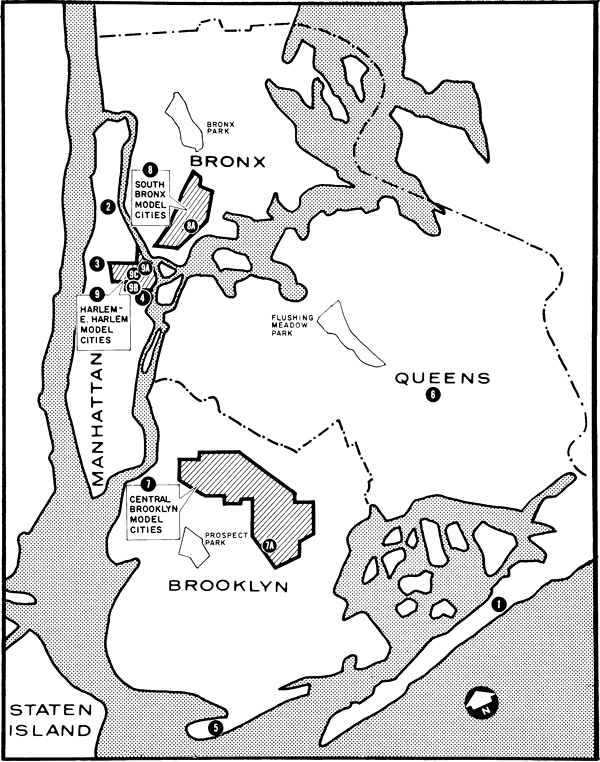
    New York City neighborhoods designated for revitalization with funding from the Model Cities Program.
    The City of New York, Community Development Program: A Progress Report, December 1968.

    To qualify for the program, cities had to apply for planning grants by submitting a detailed proposal that included an analysis of neighborhood conditions, long-term goals and strategies for addressing problems.

    Federal funds went directly to city governments, which then distributed them to local agencies and community organizations through contracts. These funds were relatively flexible but had to be tied to locally tailored plans. For example, Kansas City, Missouri, used Model Cities funding to support a loan program that expanded access to capital for local small businesses, helping them secure financing that might otherwise have been out of reach.

    Unlike previous programs, Model Cities emphasized what Johnson described as “comprehensive” and “concentrated” efforts. It wasn’t just about rebuilding streets or erecting public housing. It was about creating new ways for government to work in partnership with the people most affected by poverty and racism.

    A revolutionary approach to poverty

    What made Model Cities unique wasn’t just its scale but its philosophy. At the heart of the program was an insistence on “widespread citizen participation,” which required cities that received funding to include residents in the planning and oversight of local programs.

    The program also drew inspiration from civil rights leaders. One of its early architects, Whitney M. Young Jr., had called for a “Domestic Marshall Plan” – a reference to the federal government’s efforts to rebuild Europe after World War II – to redress centuries of racial inequality.

    Civil rights activist Whitney M. Young Jr. helped shape the vision of the Model Cities Program.
    Bettmann/Getty Images

    Young’s vision helped shape the Model Cities framework, which proposed targeted systemic investments in housing, health, education, employment and civic leadership in minority communities. In Atlanta, for example, the Model Cities Program helped fund neighborhood health clinics and job training programs. But the program also funded leadership councils that for the first time gave local low-income residents a direct voice in how city funds were spent.

    In other words, neighborhood residents weren’t just beneficiaries. They were planners, advisers and, in some cases, staffers.

    This commitment to community participation gave rise to a new kind of public servant – what sociologists Martin and Carolyn Needleman famously called “guerrillas in the bureaucracy.”

    A Model Cities staffer discusses the program to a group of students gathered at Denver’s Metropolitan Youth Education Center in 1970.
    Bill Wunsch/The Denver Post via Getty Images

    These were radical planners – often young, idealistic and deeply embedded in the neighborhoods they served. Many were recruited and hired through new Model Cities funding that allowed local governments to expand their staff with community workers aligned with the program’s goals.

    Working from within city agencies, these new planners used their positions to challenge top-down decision-making and push for community-driven planning.

    Their work was revolutionary not because they dismantled institutions but because they reimagined how institutions could function, prioritizing the voices of residents long excluded from power.

    Strengthening community ties

    In cities across the country, planners fought to redirect public resources toward locally defined priorities.

    A mobile dentist office in Baltimore.
    Robert Breck Chapman Collection, Langsdale Library Special Collections, University of Baltimore, CC BY-NC-ND

    In some cities, such as Tucson, the program funded education initiatives such as bilingual cultural programming and college scholarships for local students. In Baltimore, it funded mobile health services and youth sports programs.

    In New York City, the program supported new kinds of housing projects called vest-pocket developments, which got their name from their smaller scale: midsize buildings or complexes built on vacant lots or underutilized land. New housing such as the Betances Houses in the South Bronx were designed to add density without major redevelopment taking place – a direct response to midcentury urban renewal projects, which had destroyed and displaced entire neighborhoods populated by the city’s poorest residents. Meanwhile, cities such as Seattle used the funds to renovate older apartment buildings instead of tearing them down, which helped preserve the character of local neighborhoods.

    The goal was to create affordable housing while keeping communities intact.

    An Atlanta neighborhood identified as a candidate for street paving and home rehabilitation as part of the Model Cities Program.
    Georgia State University Special Collections

    What went wrong?

    Despite its ambitious vision, Model Cities faced resistance almost from the start. The program was underfunded and politically fragile. While some officials had hoped for US$2 billion in annual funding, the actual allocation was closer to $500 million to $600 million, spread across more than 60 cities.

    Then the political winds shifted. Though designed during the optimism of the mid-1960s, the program started being implemented under President Richard Nixon in 1969. His administration pivoted away from “people programs” and toward capital investment and physical development. Requirements for resident participation were weakened, and local officials often maintained control over the process, effectively marginalizing the everyday citizens the program was meant to empower.

    In cities such as San Francisco and Chicago, residents clashed with bureaucrats over control, transparency and decision-making. In some places, participation was reduced to token advisory roles. In others, internal conflict and political pressure made sustained community governance nearly impossible.

    Critics, including Black community workers and civil rights activists, warned that the program risked becoming a new form of “neocolonialism,” one that used the language of empowerment while concentrating control in the hands of white elected officials and federal administrators.

    A legacy worth revisiting

    Although the program was phased out by 1974, its legacy lived on.

    In cities across the country, Model Cities trained a generation of Black and brown civic leaders in what community development leaders and policy advocates John A. Sasso and Priscilla Foley called “a little noticed revolution.” In their book of the same name, they describe how those involved in the program went on to serve in local government, start nonprofits and advocate for community development.

    It also left an imprint on later policies. Efforts such as participatory budgeting, community land trusts and neighborhood planning initiatives owe a debt to Model Cities’ insistence that residents should help shape the future of their communities. And even as some criticized the program for failing to meet its lofty goals, others saw its value in creating space for democratic experimentation.

    A housing meeting takes place at a local Model Cities field office in Baltimore in 1972.
    Robert Breck Chapman Collection, Langsdale Library Special Collections, University of Baltimore, CC BY-NC-ND

    Today’s housing crisis demands structural solutions to structural problems. The affordable housing crisis is deeply connected to other intersecting crises, such as climate change, environmental injustice and health disparities, creating compounding risks for the most vulnerable communities. Addressing these issues through a fragmented social safety net – whether through housing vouchers or narrowly targeted benefit programs – has proven ineffective.

    Today, as policymakers once again debate how to respond to deepening inequality and a lack of affordable housing, the lost promise of Model Cities offers vital lessons.

    Model Cities was far from perfect. But it offered a vision of how democratic, local planning could promote health, security and community.

    Deyanira Nevárez Martínez is a trustee of the Lansing School District Board of Education and is currently a candidate for the Lansing City Council Ward 2.

    ref. Could a bold anti-poverty experiment from the 1960s inspire a new era in housing justice? – https://theconversation.com/could-a-bold-anti-poverty-experiment-from-the-1960s-inspire-a-new-era-in-housing-justice-253706

    MIL OSI AnalysisEveningReport.nz

  • MIL-Evening Report: What’s the difference between abs and core? One term focuses on aesthetics – and the other on function

    Source: The Conversation (Au and NZ) – By Hunter Bennett, Lecturer in Exercise Science, University of South Australia

    Maksim Goncharenok/Pexels

    You’ve probably heard the terms “abs” and “core” used in social media videos, Pilates classes, or even by physiotherapists.

    Given they seem to refer to the same general area of your body, you might have wondered what the difference is.

    When people talk about “abs”, they’re often referring to the abdominal muscles you can see. Conversely, the term “core” is used to describe a broader group of muscles in the context of function, rather than aesthetics.

    While abs and core are often spoken about separately, there’s a lot of overlap between them.

    What are abs?

    The term “abs” is short for abdominal muscles. These are the muscles that run along the front and side of your stomach.

    When someone talks about getting a six-pack, they’re usually referring to toning the rectus abdominis, the long muscle that goes from the bottom of your ribs to the top of your pelvis.

    Your abdominals also include your obliques, which sit on the side of your body, and your transverse abdominis, which sits underneath your other abdominal muscles and wraps around your waist like a belt.

    The term “abs” has been around for a long time, and is perhaps most often used when discussing aesthetics.

    For example, it’s common to see health and wellness publications offering advice on how to achieve “flat” or “six-pack” abs.

    The long muscle that goes from the bottom of your ribs to the top of your pelvis is called the rectus abdominis.
    phoenix creation/Shutterstock

    What about the core?

    When people talk about the “core”, they are often referring to your abdominals, but also the muscles in your back (your spinal erectors), hips, glutes, pelvic floor, and your diaphragm.

    These are the muscles that can stabilise your spine against movement, and aid in the transfer of force between the upper and lower limbs.

    The term “core” wasn’t commonly used until the early 2000s, when it became synonymous with core training.

    While the exact reason for its surge in popularity isn’t clear, it most likely followed a study published in 1998 that suggested people with lower back pain might have impaired function of their deep abdominal muscles.

    From there, the concept of “core training” entered the mainstream, where it was proposed to reduce lower back pain and improve athletic performance.

    ‘Core’ training only entered the mainstream this century.
    nadia_acosta/Shutterstock

    What does the evidence say?

    When we consider all the muscles that make up the core, it seems obvious they would be important – but it might not be for the reasons you think.

    For example, having good core stability doesn’t necessarily prevent lower back pain, as it’s been touted to do.

    There’s evidence suggesting core stability training, which might include exercises such as planks and dead bugs, can help reduce bouts of lower back pain. However it doesn’t appear to be any more effective than other types of exercise, such as walking or weight training.

    Other research suggests there aren’t any differences in how people with and without lower back pain recruit and use their core muscles.

    In a separate study, improvements in core strength and stability after a nine-week core stability training program were not significantly associated with improvements in pain and function, further questioning this relationship.

    The link between core strength and athletic performance is also unclear.

    A 2016 review found some very small associations between measures of core muscle strength and measures of whole body strength, power and balance. However, because of the design of the studies reviewed, we don’t know whether people who have better strength, power and balance simply have stronger core muscles, or whether stronger core muscles increase strength, power and balance.

    An earlier review summarised the effect of core stability training on measures of athletic performance, including jumping, sprinting and throwing. It concluded this type of training is unlikely to provide substantial benefits to measures of general athletic performance such as jumping and sprinting.

    However, this review also suggested that, given the important role of the abs in torso rotation, strengthening these muscles might have merit in improving performance in sports that involve swinging a bat or throwing a ball.

    This is likely to apply to other sports that involve rapid torso movement as well, such as mixed martial arts and kayaking.

    Stronger abdominal muscles could offer an advantage in sports that involve rotation.
    Lino Khim Medrina/Pexels

    How can you exercise your abs and core?

    There’s good evidence that simply getting stronger by lifting weights can help prevent injuries. Training your core to get stronger should have a similar impact, as long as it’s part of a broader training program.

    We also know having weaker muscles makes you more likely to experience functional limitations and disability in older age. So alongside any other potential benefits, improving core strength with the rest of your body could help keep you fit and healthy as you get older.

    There are plenty of exercises you can do to train your core and abs.

    If you’re new to core training, you might want to start off with some lower-level isolation exercises that don’t involve any movement of the core. These include things like planks, bird dogs, and pallof presses. These are unlikely to cause too much muscle soreness, but will train your core muscles.

    Once you feel like these are going well, you can start moving into some more dynamic exercises such as sit ups, Russian twists and leg raises, where you train your abdominals using a full range of motion.

    Hunter Bennett does not work for, consult, own shares in or receive funding from any company or organisation that would benefit from this article, and has disclosed no relevant affiliations beyond their academic appointment.

    ref. What’s the difference between abs and core? One term focuses on aesthetics – and the other on function – https://theconversation.com/whats-the-difference-between-abs-and-core-one-term-focuses-on-aesthetics-and-the-other-on-function-254582

    MIL OSI AnalysisEveningReport.nz

  • MIL-Evening Report: The drought is back – we need a new way to help farmers survive tough times

    Source: The Conversation (Au and NZ) – By Linda Botterill, Visiting Fellow, Crawford School of Public Policy, Australian National University

    Australia in 2025 is living up to Dorothy McKellar’s poetic vision of a country stricken by “drought and flooding rains”.

    The clean up is underway from the deadly floods in the Hunter and mid-north coast regions of New South Wales. At the same time, large swathes of Victoria, South Australia and Tasmania are severely drought affected due to some of the lowest rainfall on record.

    Do we have the right support arrangements in place to help farmers and communities survive the current dry period?

    Or is there a better way to help primary producers through the tough times, which are predicted to become more frequent and severe under climate change?

    Managing risk

    Drought is not a natural disaster – at least not according to Australia’s National Drought Policy. In 1989, drought was removed from what are now known as the Natural Disaster Relief and Recovery Arrangements.

    The decision was made for several reasons, including the high level of expenditure on drought relief in Queensland. The federal finance minister at the time, Peter Walsh, suggested the Queensland government was using the arrangements as a “sort of National Party slush fund to be distributed to National Party toadies and apparatchiks”.

    The more considered reason was that our scientific understanding of the drivers of Australia’s climate, such as El Niño, suggested drought was a normal part of our environment. Since then, climate modelling points to droughts becoming an even more familiar sight in Australia as a result of global warming.

    So the focus of drought relief shifted from disaster response to risk management.

    Building resilience

    The National Drought Policy announced in 1992 stated drought should be managed like any other business risk.

    Since then, the language of resilience has been added to the mix and the government lists three objectives for drought policy:

    • to build the drought resilience of farming businesses by enabling preparedness, risk management and financial self-reliance
    • to ensure an appropriate safety net is always available to those experiencing hardship
    • to encourage stakeholders to work together to address the challenges of drought.

    Since 1992, various governments have introduced, and tweaked, different programs aimed at supporting drought-affected farmers.

    The most successful program is the Farm Management Deposits Scheme. This has accumulated a whisker under A$6 billion in farmer savings, which are available to be drawn down during drought to support farm businesses.

    Others have come and gone – for example, the much-criticised Exceptional Circumstances Program.

    More help needed

    In 2025, the federal government is using the Future Drought Fund to invest $100 million per year to promote resilience. It also offers support through the Farm Household Allowance and concessional loans for farms and related small businesses.

    Apart from the Farm Management Deposit Scheme and the Farm Household Allowance, these programs do not offer immediate financial assistance to the increasing number of farmers across southern Australia being impacted by drought. If the drought worsens, it is likely there will be increasing calls for greater support.

    This provides the government with a dilemma: it is already investing significantly in the risk and resilience approach to drought, but politically, it is hard to resist cries for help from farmers who are a highly valued group in our community.

    A better way?

    There is a solution available to government to improve support. It can be done through the provision of “revenue contingent loans” for drought-affected farmers. Financial support would be available to farmers when they need it, consistent with the risk management principles underpinning the national drought policy.

    Our detailed modelling, extending now over 25 years, shows compellingly that revenue-based loans would mean taxpayers spending less on drought arrangements. But the assistance compared with other forms of public sector help would be greater.

    Capacity to repay would be the defining feature of the scheme. A revenue contingent loan is only paid down in periods when the farm is experiencing healthy cash flow. If a farm’s annual financial situation is difficult, no repayments are required.

    These loans would also remove foreclosure risk associated with an inability to repay when times are tough. Loan defaults simply can’t happen, a feature which also takes away the psychological trauma associated with the fear of losing the property due to unforeseen financial difficulties.

    Good policy

    These benefits would address governments’ main motivation with drought policy, which is risk management. That is because repayment concerns and default prospects would be eliminated. With farming, in which there is great uncertainty, these are very significant pluses for policy.

    Revenue contingent loans are a proper risk management financial instrument that requires low or no subsidies from government. They would complement the Farm Management Deposit Scheme and be an effective replacement for the concessional loans currently on offer.

    A win-win for farmer and taxpayer, alike.

    Linda Botterill has in the past received funding from the Australian Research Council, the Grains Research and Development Corporation, and Rural Industries Research and Development Corporation (now Agrifutures).

    Bruce Chapman has received funding from the Australian Research Council in various years, and was a consultant to the Federal Government’s Department of Education University Accord Enquiry in 2023/24.

    ref. The drought is back – we need a new way to help farmers survive tough times – https://theconversation.com/the-drought-is-back-we-need-a-new-way-to-help-farmers-survive-tough-times-256576

    MIL OSI AnalysisEveningReport.nz

  • MIL-Evening Report: Australia’s first machete ban is coming to Victoria. Will it work, or is it just another political quick fix?

    Source: The Conversation (Au and NZ) – By Samara McPhedran, Principal Research Fellow, Griffith University

    Following a shopping centre brawl in Melbourne at the weekend, Victorian Premier Jacinta Allan announced the state will ban the sale of all machetes from Wednesday.

    In March this year, the Victorian government had already announced that from September 1 machetes would become a “prohibited weapon”.

    Prohibited weapons are items considered inappropriate for general possession and use without a police commissioner’s approval or a Governor in Council Exemption Order.

    This means machetes will be added to the list of things – such as swords, crossbows, slingshots, pepper spray and about 40 other items – that are essentially banned.

    Possession of a prohibited item can result in penalties of two years imprisonment or a fine of more than $47,000.

    Victoria is the first state in Australia to outright ban machetes. In other jurisdictions, machetes (like knives) may be used for lawful purposes, and are “controlled” or “restricted” – meaning you need a reasonable excuse or valid reason for possessing one.

    Most jurisdictions (except Tasmania and the Northern Territory) prohibit sales to minors.

    Will there be exemptions?

    Allan said the sales ban will have no exceptions, meaning nobody will be able to purchase a machete.

    However, machetes are a useful tool, particularly for agricultural purposes, and outdoor uses such as camping.

    When the new laws come into effect in September, people will be able to apply for a special “commissioner’s approval” to possess a machete. The exact details of who may be granted an exemption, and under what circumstances, are not yet clear.

    Nor is it clear whether people will have to, for example, pay for a permit to own a machete, or what measures people may have to take to prevent unauthorised access or theft.

    How much of a problem is knife crime in Australia?

    Despite alarming headlines and political rhetoric about a knife crime epidemic, it is hard to say exactly how much of a problem knife crime is.

    Statistics about weapon use and unlawful possession are not always disaggregated by type of weapon.

    Crime statistics are notoriously slippery, and what looks like a “crisis” can often be the result of changes in policing practices. For instance, when police run an intensive operation searching for knives in public places, they are more likely to find knives in public places. This does not necessarily mean there are more people out there carrying knives.

    The one crime where statistics are fairly clear is homicide: knives or other sharp instruments have long been the most common weapon used in Australia.

    The actual number of homicides involving knives or sharp instruments has stayed relatively stable over time. When you take into account the increase in how many people live in Australia, the rate per head of population has fallen.

    It is tempting to think a machete ban would reduce these figures even more. Unfortunately, violence prevention is not that simple.

    Homicides that involve people using their hands and feet have declined markedly over time. Why has this “method”, which is available to anybody, fallen so much? The answer is: nobody really knows.

    This tells us we need to look beyond types of weapons.

    Will the ban achieve anything?

    Violence is complex and simple “solutions” may make people feel safe (at least temporarily) but seldom deliver real results over the longer term.

    It’s easy for governments to ban things, which is why they do it so often. But we should pay close attention to what Victorian Police Minister Anthony Carbine said in March:

    This is Australia’s first machete ban, and we agree with police that it must be done once and done right. It took the UK (United Kingdom) 18 months – we can do it in six.

    Lawmaking should never be a race. Nor should politicians be mere mouthpieces doing what police tell them.

    Police are the ones we turn to for protection when violence breaks out, but this does not mean they are the only ones we should go to when we are looking for the most effective ways to deal with problems.

    Tackling violence takes serious commitment to complex and intensive programs that focus on the root causes, particularly among at-risk families and disadvantaged, marginalised youth.

    This is hard work that takes a long time, includes many different stakeholders, and seldom sways votes. Focusing on the choice of weapon is simply a distraction.

    There is no question the sight of machete-wielding youths storming through a busy shopping centre is terrifying. People should be able to go about their business without fearing they will be attacked.

    But reducing violence takes a lot more than banning one particular weapon, as Victoria will likely find out.

    Dr Samara McPhedran does not does not work for, consult to, own shares in or receive funding from any company or organisation that might benefit from this article.

    ref. Australia’s first machete ban is coming to Victoria. Will it work, or is it just another political quick fix? – https://theconversation.com/australias-first-machete-ban-is-coming-to-victoria-will-it-work-or-is-it-just-another-political-quick-fix-257541

    MIL OSI AnalysisEveningReport.nz

  • MIL-Evening Report: A not-so-modern epidemic: what 17th-century nuns can teach us about coping with loneliness

    Source: The Conversation (Au and NZ) – By Claire Walker, Associate Professor, School of Historical and Classical Studies, University of Adelaide

    La Religieuse Tenant La Sainte Croix (The Nun Holds the Cross), Jacques Callot, French,1621–35. The Metropolitan Museum of Art

    Is loneliness a modern epidemic as we are so often told? Did people in the past suffer similar feelings of isolation?

    The word “loneliness” was not common before the 19th century. Cultural historian Fay Bound Alberti argues it was rarely used before 1800.

    This does not mean people didn’t feel alone. They just had different names for it – and they didn’t always think it was bad. Modern people living hectic lives in bustling cities often yearn for peace and tranquillity; so did our forebears.

    From the hermits of the early Christian church escaping society for lives of solitary prayer, to medieval anchorites in secluded cells, isolation was a prerequisite for spiritual success.

    But were isolated monks, nuns and hermits also lonely, as we would understand the word today? And do early modern nuns offer solutions for our own loneliness epidemic?

    Searching for solitude

    Early Christian religious thinkers and medieval churchmen viewed voluntary loneliness positively, with successful practitioners becoming saints. But religious solitude was not without its problems.

    Holy recluses, far from escaping society, were pursued for spiritual advice. Some, like Simeon Stylites (390–459), went to extraordinary measures, living atop a pillar near Aleppo for 30-odd years to achieve solitude.

    Monasticism provided an alternative. Monastic rules, like that of Benedict of Nursia (480–547), institutionalised isolation. In Benedictine monasteries, solitude was created through seclusion from society, strict silence, and prohibition of close friendships.

    Yet, like hermits, monks and nuns couldn’t escape the world completely. Monasteries constituted vital spiritual resources, providing multiple services and conducting business for wider society.

    Nuns at Work, Follower of Alessandro Magnasco (Italian, Milanese, first half 18th century).
    The Metropolitan Museum of Art

    Over the centuries, reforming bishops believed there was too much interaction between monasteries and the wider community. This led to repeated church reforms from the 10th century onwards to secure separation.

    Male members of the clergy were particularly worried about nuns who were considered “less capable” of maintaining holy solitude. As a result, women had to observe strict enclosure behind convent walls, limiting their economic and spiritual capacity. Reforms in the 16th century upheld nuns’ incarceration.

    Many women resisted, but others embraced isolation as spiritually liberating.

    Isolation in exile

    Early modern English convents, exiled in Europe after Henry VIII’s dissolution of the monasteries, shed light on nuns’ experiences of loneliness.

    The convents were subject to traditional rules of enclosure and silence. To become nuns, women left their homeland, family and friends. They joined English houses, so they were not alone among strangers, but they had to remain emotionally distant from one another, despite living in a community where they did everything together.

    Women wanting spiritual fulfilment often sought additional solitude.

    Benedictine mystic Gertrude More (1606–33) praised prescribed periods of silence because in them she might hear her Lord’s whispers.

    Carmelite prioress Teresa of Jesus Maria Worsley (1601–42) took time from her busy administrative role and hid from the other nuns to pray in solitude.

    The Nun in Count Burckhardt, from the periodical Once a Week. After James McNeill Whistler, American. Associated with Dalziel Brothers, British. September 27 1862.
    The Metropolitan Museum of Art

    Not all women found seclusion and silence so fulfilling, however, with some experiencing bouts of spiritual doubt and poor mental health. Many missed their family and homeland.

    This was particularly common among young sisters and those in convent schools. In the 1660s, Catherine Aston returned to England to recover after suffering poor health and depression.

    Alone in a crowd

    Nuns’ diverse experiences of monastic solitude reflect modern urban loneliness.

    In 1812 Lord Byron expressed the contradictory nature of loneliness in the poem Childe Harold, juxtaposing the positive solitary contemplation of nature with its negative counterpart – aloneness “midst the crowd”.

    In the present day many people feel alone in cities, even domestic households, as Olivia Laing and Keith Snell have shown.

    How might this be countered? Do early modern nuns offer solutions?

    A study of 21st century Spanish monks and nuns found monastic training, prayer and silence create feelings of spiritual satisfaction and purpose which lessens loneliness.

    Prayer is not the answer for everyone because modern isolation is caused by multiple factors in a largely secular society. There are alternative paths to meditation, however, through yoga or mindfulness which can provide feelings akin to monks’ and nuns’ “spiritual satisfaction”.

    Similarly, the nuns’ sense of “purpose” might be achieved through nostalgia. Nostalgia is the longing for an idealised and unobtainable past – a time when life was better. Research by psychologists suggests nostalgia can be beneficial in counteracting loneliness, even enabling forward-looking and proactive behaviours.

    Nuns at Mass, Amedor, Spanish, 1900.
    Getty Museum

    This was certainly true for the nuns exiled in Europe following Henry VIII’s abolition of monasticism in England. They dreamt of a future when their convents would return to England, family and friends. All nuns prayed both communally and in private for this outcome.

    Some went further, engaging in missionary work and political intrigue to achieve their goal.

    We cannot know whether this stifled loneliness, but by combining the benefits of meditation and activism it likely fostered a shared sense of purpose.

    Just as Gertrude More and Teresa of Jesus Maria Worsley found solitude essential for spiritual satisfaction, activist nuns believed they might reverse the English reformation from their exiled convents. Solitude, prayer and political engagement gave them a sense of purpose.

    Everyone’s situation is unique. There is no single solution for resolving isolation in the contemporary world. But the knowledge that it can be positive is perhaps a step towards countering the modern epidemic.

    Claire Walker has received funding from the Australian Research Council.

    ref. A not-so-modern epidemic: what 17th-century nuns can teach us about coping with loneliness – https://theconversation.com/a-not-so-modern-epidemic-what-17th-century-nuns-can-teach-us-about-coping-with-loneliness-249487

    MIL OSI AnalysisEveningReport.nz

  • MIL-Evening Report: Actually, Gen Z stand to be the biggest winners from the new $3 million super tax

    Source: The Conversation (Au and NZ) – By Brendan Coates, Program Director, Housing and Economic Security, Grattan Institute

    As debate rages about the federal government’s plan to lift the tax on earnings on superannuation balances over A$3 million, it’s worth revisiting why we offer super tax breaks in the first place, and why they need to be reformed.

    Tax breaks on super contributions mean less tax is paid on super savings than other forms of income. These tax breaks cost the federal budget nearly $50 billion in lost revenue each year.

    These tax breaks boost the retirement savings of super fund members. They also ensure workers don’t pay punitively high long-term tax rates on their super, since the impact of even low tax rates on savings compounds over time.

    But they disproportionately flow to older and wealthier Australians.

    Two thirds of the value of super tax breaks benefit the top 20% of income earners, who are already saving enough for their retirement.

    Few retirees draw down on their retirement savings as intended, and many are net savers – their super balance continues to grow for decades after they retire.

    By 2060, Treasury expects one-third of all withdrawals from super will be via bequests – up from one-fifth today.

    Superannuation in Australia was intended to help fund retirements. Instead, it has become a taxpayer-subsidised inheritance scheme.

    The tax breaks aren’t just inequitable; they are economically unsound. Generous tax breaks for super savers mean other taxes (such as income and company taxes) must be higher to make up the forgone revenue. That means the burden falls disproportionately on younger taxpayers.

    The government should go further

    The government’s plan to increase the tax rate on superannuation earnings for balances exceeding $3 million from 15% to 30% is one modest step towards fixing these problems. The tax would only apply to the amount over $3 million, not the entire balance.

    This reform will affect only the top 0.5% of super account holders – about 80,000 people – and save more than $2 billion a year in its first full year.

    Claims that not indexing the $3 million threshold will result in the tax affecting most younger Australians, or that it will somehow disproportionately affect younger generations, are simply nonsense.

    Rather than being the biggest losers from the lack of indexation, younger Australians are the biggest beneficiaries. It means more older, wealthier Australians will shoulder some of the burden of budget repair and an ageing population. Otherwise, younger generations would bear this burden alone.

    The facts speak for themselves: a mere 0.5% of Australians have more than $3 million in their super, and 85% of those are aged over 60.

    Even in the unlikely scenario where the threshold remains fixed until 2055 – or for ten consecutive parliamentary terms – it would still only affect the top 10% of retiring Australians. Treasurer Jim Chalmers has rightly pointed out that it is unlikely the threshold will never be lifted.

    Far from abandoning the proposed $3 million threshold, the government should go further and drop the threshold to $2 million, and only then index it to inflation, saving the budget a further $1 billion a year.

    There is no rationale for offering such generous earnings tax breaks on super balances between $2 million and $3 million.

    At the very least, if the $3 million threshold is maintained, it should not be indexed until inflation naturally reduces its real value to $2 million, which is estimated to occur around 2040.

    Sure, it’s complicated

    Levying a higher tax rate on the earnings of large super balances is complicated by the fact existing super earnings taxes are levied at the fund level, not on individual member accounts.

    And it’s true that levying a 15% surcharge on the implied earnings of the account over the year (the change in account balance, net of contributions and withdrawals) will impose a tax on unrealised capital gains, or paper profits.

    Taxing capital gains as they build up removes incentives to “lock in” investments to hold onto untaxed capital gains, as the Henry Tax Review recognised. But it can create cash flow problems for some self-managed super fund members who hold assets such as business premises or a farm in their fund.

    Yet there are seldom easy answers when it comes to tax changes.

    Most people with such substantial super balances are retirees who already maintain enough liquid assets to meet the minimum drawdown requirements.

    Indeed, self-managed super funds are legally obligated to have investment strategies that ensure liquidity and the ability to meet liabilities.

    In any case, the tax does not have to be paid from super. Australians with large super balances typically earn as much income from investments outside super. And the wealthiest 10% of retirees today rely more on income from outside super than income from super.

    Good policy is always the art of the compromise

    Australia faces the twin challenges of big budget deficits and stagnant productivity. Tax reform will be needed to respond to both.

    Good public policy, like politics, always requires some level of compromise.

    Super tax breaks should exist only where they support a policy aim. And on balance, trimming unneeded super tax breaks for the wealthiest 0.5% of Australians would make our super system fairer and our budget stronger.

    The authors do not work for, consult, own shares in or receive funding from any company or organisation that would benefit from this article, and have disclosed no relevant affiliations beyond their academic appointment.

    ref. Actually, Gen Z stand to be the biggest winners from the new $3 million super tax – https://theconversation.com/actually-gen-z-stand-to-be-the-biggest-winners-from-the-new-3-million-super-tax-257450

    MIL OSI AnalysisEveningReport.nz

  • MIL-Evening Report: Who really benefits from smart tech at home? ‘Optimising’ family life can reinforce gender roles

    Source: The Conversation (Au and NZ) – By Indra Mckie, Postdoctoral Researcher in Collaborative Human-AI Interaction Culture, University of Technology Sydney

    Ashlifier/Shutterstock

    Have you heard of the “male technologist” mindset? It may sound familiar, and you may even know such people personally.

    Design researchers Turkka Keinonen and Nils Ehrenberg
    have defined the male technologist as someone who is obsessed with concerns about energy, efficiency and reducing labour.

    This archetype became apparent in my PhD research when I interviewed 12 families about their use of early domestic robots and smart home devices Amazon Alexa and Google Home. One father over-engineered his smart home so much, his kids struggled to turn the lights on and off.

    The male technologist in the home, as seen in my research, reflects wider trends of the Silicon Valley “tech bro” archetype, the techno-patriarchy, and the growing influence of a tech oligarchy in the Western world.

    The male technologist often complicates and overcompensates with technology, raising the question: are these real problems tech can solve, or just quick fixes masking deeper issues?

    Long-standing patriarchal systems shape the gendered division of domestic labour.
    Andrea Piacquadio/Pexels

    It’s not about making men feel guilty

    The term “male technologist” isn’t about making men feel guilty for using technology to innovate. Anyone can adopt this mindset. It can even apply to institutions that prioritise innovation and efficiency over emotional insight, lived experience or community-based ways of creating change.

    It’s a reflection of how a masculine drive to solve surface-level problems can come before addressing patriarchal systems that have shaped the long-standing gendered division of domestic labour and “mental load”.

    Mental load is the invisible, ongoing effort of planning, organising and managing daily life that often goes unnoticed but is essential to keeping things running.

    Take one of my research participants, Hugo (name changed for privacy). A father of two, Hugo embodies this male technologist mindset by creating “business scenarios” to solve his family’s problems with smart home automation.


    Indra Mckie/The Conversation

    Treating family life like a system to optimise, Hugo noticed his wife looking stressed while cooking. So, he installed a smart clock with Alexa in the kitchen to help her manage multiple timers.

    Hugo saw it as an empathetic solution, tailored to the way she liked to cook. But instead of sharing the load of this domestic task, he “engineered” around it, offloading responsibility to smart devices.

    Smart home tech promises to save time, but it hasn’t solved who does what at home. Instead, it hands more power to those with digital know-how, letting them automate tasks they may never have done or fully understood in the first place.

    Typically, these tend to be men. A recent survey by Kaspersky showed 72% of men are the ones who set up their families’ smart devices, compared to 47% of women.

    Unfortunately, a recent Australian survey found women still do more unpaid domestic work than men. Even in households where women have full-time jobs, they spend almost four hours more on household chores per week than men do.

    Who really benefits in a smart home

    Amazon first released Alexa back in 2014, with Apple and Google quickly following with their own smart home speakers. In the past decade, some people have adopted the hype of the “smart home” to make life easier by controlling technology without needing to get off the couch.

    But smart technology can also affect access to shared spaces, create new forms of control over things and people in the home, and constrain human interactions. And it can be set up to reinforce the existing hierarchy within the household.


    Indra Mckie/The Conversation

    By his own admission, Hugo has over-engineered the home to the point where his children struggle to turn the lights on and off, having disabled the physical switches in favour of voice commands.

    My research looked at how automation is changing care giving and acts of service in the home. With “compassionate automation”, someone could use smart technology to support loved ones in thoughtful ways, such as setting up smart home routines or reminders to make daily life easier.

    But even when it comes from a place of care, tech-based help is not the same as human care. It may not always feel meaningful to the person receiving or providing it. As another participant in my research put it:

    I think there are still human interactions [..] that you probably don’t want AI to mediate for you.


    Indra Mckie/The Conversation

    So what is the alternative to a male technologist mindset? Feminist and queer technology studies offer a different lens. Researchers in these fields argue our interactions with technology are never neutral; they are shaped by gender, power and cultural norms.

    When we recognise this, we can imagine ways of designing and using tech in ways that emphasise care and relationships. Instead of setting up a smart timer in the kitchen, the technologist could ask his wife what she’s cooking and join her, using the voice assistant together to follow a recipe step by step.

    The ultimate fantasy of the male technologist is more toys to solve domestic labour problems at home.
    Gordenkoff/Shutterstock

    Looking ahead to the future of smart homes

    As Alexa+ rolls out later this year with a “smarter” generative AI brain, Google increases Gemini integration into its Home app, and tech companies race to build humanoid robots that can cook dinner and fold laundry, we’re seeing the ultimate fantasy of the male technologist come to life: more toys to presumably solve the problems of domestic labour at home.

    But if men are now taking on more of the digital load, will the mental load finally shift too? Or will they continue to automate the easy, visible tasks while the emotional and cognitive labour still goes unseen and unshared?

    Elon Musk has declared plans to launch several thousand Optimus robots – Tesla’s bid into the humanoid robot race.
    He expects the explosion of a new market of personal humanoid robots, generating US$10 trillion in revenue long-term and potentially becoming the most valuable part of Tesla’s business.

    But as homes get “smarter,” we have to ask: how is this reshaping family dynamics, relationships and domestic responsibility?

    It’s important to consider if outsourcing chores to technology really is about easing the load, or just engineering our way around it without addressing the deeper mental and relational work of household labour.

    Indra Mckie received the UTS Research Excellence Scholarship to complete her PhD research at the University of Technology Sydney.

    ref. Who really benefits from smart tech at home? ‘Optimising’ family life can reinforce gender roles – https://theconversation.com/who-really-benefits-from-smart-tech-at-home-optimising-family-life-can-reinforce-gender-roles-256477

    MIL OSI AnalysisEveningReport.nz

  • MIL-Evening Report: Images of Gaza’s starving babies have gone round the world. This is what malnutrition does in the first 1,000 days of life

    Source: The Conversation (Au and NZ) – By Nina Sivertsen, Associate Professor, College of Nursing and Health Sciences, Flinders University

    A 5-month-old diagnosed with malnutrition being treated at Nasser Hospital in Khan Yunis in Gaza, May 2025. Anadolu/Getty

    Last week, the United Nations warned more than 14,000 babies would die of malnutrition in 48 hours if Israel continued to block aid from entering Gaza.

    After the figure was widely reported, that timeline has been walked back, with a UN spokesperson clarifying the projection is for the next 11 months.

    Between April 2025 and March 2026, there will be 71,000 cases of acute malnutrition among children under five, including 14,100 severe cases.

    Severe acute malnutrition means a child is extremely thin and at risk of dying.

    An estimated 17,000 breastfeeding and pregnant women will also require treatment for acute malnutrition during this time.

    Starvation and malnutrition are harmful for anyone. But for infants the impact can be profound and lasting.

    What is malnutrition?

    In infants and young children, malnutrition means they have a height, weight and head circumference that don’t match standard charts, due to a lack of proper nutrition.

    Nutritional deficiencies are especially common among young children and pregnant women.

    The human body needs 17 essential minerals. Deficiencies in zinc, iron and iodine are the most dangerous, linked to a higher risk of infants dying or developing brain damage.

    When malnutrition is acute to severe, infants and young children will lose weight because they’re not getting enough food, and because they’re more susceptible to illness and diarrhoea.

    This leads to wasting.

    A child experiencing wasting has lost significant weight or fails to gain weight, resulting in a dangerously low weight-for-height ratio.

    A persistent lack of adequate food leads to chronic malnutrition, or stunting, where growth and development is impaired.

    Risk of infections and mortality

    Malnourished infants have weakened immune systems. This makes them more vulnerable to developing infections, due to smaller organs and deficits in lean mass. Lean mass is the body’s weight excluding fat and is crucial for supporting healthy growth, strength and overall development.

    When children are starving, they are much more likely to die from common illnesses such as diarrhoea and pneumonia.

    Infections can make it harder to absorb nutrients, creating a dangerous cycle and worsening malnutrition.

    Chronic malnutrition affects the brain

    The human brain develops extraordinarily rapidly during the first 1,000 days of life (from conception to age two). During this time, adequate nutrition is essential.

    Children’s developing brains are more likely to be affected by nutritional deficiencies than adults.

    When prolonged, malnutrition may lead to structural brain changes, including a smaller brain and less myelin – the protective membrane that wraps around nerve cells and helps the brain send messages.

    Chronic malnutrition can affect brain functions and processes such as thinking, language, attention, memory and decision-making.

    These neurological impacts can cause life-long issues.

    Can brain damage be permanent?

    Yes, especially when malnutrition occurs during crucial periods of brain development, such as the first 1,000 days.

    However, some effects are reversible. Early, intensive interventions – such as access to nutrient-rich food and medicines to treat hypoglycaemia (low blood sugar) and fight infections – can help children catch-up on growth and brain development.

    For example, one review of studies involving undernourished preschool children found their cognitive abilities, such as concentration, reasoning and emotional regulation improved somewhat when they were given iron supplements and multivitamins.

    However malnutrition during the crucial window under two years old increases the risk of lifelong disabilities.

    It’s also important to note recovery is more likely in an environment where nutritious food is available and children’s emotional needs are taken care of.

    In Gaza, Israel’s military operations have destroyed 94% of hospital infrastructure and humanitarian aid remains severely restricted. The conditions necessary for children’s recovery are out of reach.

    Pregnant and breastfeeding mothers

    Severe maternal malnutrition can increase the mother and child’s risk of dying or experiencing complications during pregnancy.

    When a breastfeeding mother is malnourished, she will produce less breastmilk and it will be lower quality. Deficiencies in iron, iodine, and vitamins A, D and zinc will compromise the mother’s health reduce the nutritional value of breast milk. This can contribute to poor infant growth and development.

    Starved mothers may experience fatigue, poor health and psychological distress, making it challenging to maintain breastfeeding.

    Other organ impacts

    Data from those born during the Dutch famine of 1944-45 have helped us understand the lifelong health impacts on children conceived and born while their mothers were starving.

    Among this group, malnutrition affected the development and function of many of the children’s organs, including the heart, lung and kidneys.

    This group also had higher rates of schizophrenia, depression and anxiety, and lower performance in cognitive testing.

    They also had a higher risk of developing chronic degenerative diseases (such as cardiovascular disease and kidney failure) and dying prematurely.

    Is the damage irreversible?

    Recovery is possible. But it depends on how severely malnourished the child is, and when and what kind of support they receive.

    Evidence shows children remain vulnerable and have a higher risk of dying even after being treated for complications from severe acute malnutrition.

    Effective interventions include:

    • nutritional rehabilitation (giving the child nutrient-rich foods, specialised feeding, and addressing underlying deficiencies)

    • breastfeeding support for mothers

    • providing rehabilitation and health care in the community (so families and children can return to everyday routines).

    This seems difficult if not impossible in Gaza, where Israel’s blockade on aid and ongoing military operations mean safety and infrastructure are severely compromised.

    Repeated or prolonged episodes of malnutrition increase the risk of lasting developmental harm.

    The authors do not work for, consult, own shares in or receive funding from any company or organisation that would benefit from this article, and have disclosed no relevant affiliations beyond their academic appointment.

    ref. Images of Gaza’s starving babies have gone round the world. This is what malnutrition does in the first 1,000 days of life – https://theconversation.com/images-of-gazas-starving-babies-have-gone-round-the-world-this-is-what-malnutrition-does-in-the-first-1-000-days-of-life-257462

    MIL OSI AnalysisEveningReport.nz

  • MIL-Evening Report: Israel’s new aid delivery system for Gaza is sparking outrage. Why is it so problematic?

    Source: The Conversation (Au and NZ) – By Amra Lee, PhD candidate in Protection of Civilians, Australian National University

    Some 2.1 million Gazans are facing critical hunger levels, with many at risk of famine following Israel’s 11-week blockade on aid intended to pressure Hamas.

    According to the United Nations, 57 children have already died from malnutrition since the aid blockade began on March 2. A further 14,000 children under 5 years old are at risk of severe cases of malnutrition over the next year.

    Last week, Israeli Prime Minister Benjamin Netanyahu permitted a limited number of aid trucks into Gaza amid increasing pressure from allies who have drawn a line at images of starving children.

    However, Israel is controversially planning to transfer responsibility for distributing aid in Gaza through a new system that would sideline the UN and other aid agencies that have been working there for decades.

    UN Secretary-General Antonio Guterres swiftly rejected Israel’s new aid distribution system in Gaza, saying it breaches international law and humanitarian principles.

    In a joint statement, two dozen countries, including the UK, many European Union member states, Australia, Canada and Japan, have supported the UN’s position on the new model. The signatories said it won’t deliver aid effectively at the scale required, and would link aid to political and military objectives.

    The UK, Canada and France have further threatened to take “concrete actions” to pressure Israel to cease its military offence and lift restrictions on aid.

    And in another blow to the credibility of the new system, the head of the newly established Gaza Humanitarian Foundation, which will oversee the distribution of aid, resigned on Monday. He cited concerns over a lack of adherence to “humanitarian principles”.

    So, how will would this new aid delivery system work, and why is it so problematic?

    A military-led system with deep flaws

    Israel has relied on unsubstantiated claims of large-scale aid diversion by Hamas to justify taking control over aid delivery in Gaza. The UN and its humanitarian partners continue to refute such claims, publicly sharing details of their end-to-end monitoring systems.

    Yet, the new aid delivery initiative is vague on important details.

    Several reports have revealed the plan would establish four secure distribution sites for aid under Israeli military control in southern and central Gaza.

    Security would be provided by private military contractors, such as Safe Reach Solutions, run by a former CIA officer, while the Gaza Humanitarian Foundation would oversee the distribution of food.

    There is little clarity beyond this on who is behind the new system and who is funding it.

    The initiative has provoked strong reactions from the UN and the wider humanitarian aid system.

    Senior aid officials have underlined the fact the international aid system cannot support a military-led initiative that would breach international law and be incompatible with humanitarian principles of neutrality, impartiality and independence.

    There are also concerns the four distribution hubs would require individuals to travel long distances to collect and carry heavy packages. This could leave female-headed households, people with disabilities, those who are ill and the elderly at greater risk of exclusion and exploitation.

    In addition, a leaked UN memo reportedly expressed concern over UN involvement in the initiative, saying the organisation could be “implicated in delivering a system that falls short of Israel’s legal responsibilities as an occupying power”.

    There are further concerns the UN could be implicated in atrocity crimes, including a risk of genocide through its participation in the system, setting a dangerous precedent for future crises.

    Tom Fletcher, the UN relief chief, has called the plan “a deliberate distraction” and “a fig leaf for further violence and displacement”.

    Other rights groups have condemned the mandatory collection of biometric data, including facial recognition scans, at the distribution sites. This would make aid conditional on compliance with surveillance. It would also expand Israel’s controversial use of facial recognition technology to track and monitor Palestinians throughout Gaza.

    And famine expert Alex de Waal claims Israel has “taken a page from the colonial war handbooks” in weaponising food aid in pursuit of military victory.

    He argues the planned quantities of food aid will be insufficient and lack the specialised feeding necessary for malnourished children, in addition to clean water and electricity.

    What has not been stated but can be implied from the strong resistance to the new system lacking humanitarian expertise: the lack of good faith on Israel’s part. The Israeli government continues to pursue an elusive military victory at the expense of the rules and norms intended to preserve humanity in war.

    Wider pattern of behaviour

    The UN’s rebuke of the plan should be interpreted through a wider pattern of Israeli government behaviour undermining the international aid system and its role in upholding respect for humanitarian principles.

    These fundamental principles include respect for humanity, neutrality, impartiality and operational independence. As the joint statement by 24 nations on aid to Gaza this month said:

    Humanitarian principles matter for every conflict around the world and should be applied consistently in every war zone.

    International humanitarian law requires member states to respect – and ensure respect – for the rules of war. This includes taking all feasible measures to influence the parties engaged in a conflict to respect humanitarian law.

    Likewise, the Genocide Convention requires member states to take measures to prevent and punish genocide beyond their jurisdictions.

    As Fletcher, the UN relief chief, reminded the UN Security Council earlier this month, this hasn’t been done in past cases of large-scale violations of international human rights, such as in Srebrenica (in the former Yugoslavia) and Rwanda.

    He said reviews of the UN’s conduct in cases like these

    […] pointed to our collective failure to speak to the scale of violations while they were committed.

    While humanitarians are best placed to deliver aid, greater collective political action is what’s needed. Pressure now falls on all UN member states use their levers of influence to protect civilians and prevent the further weaponisation of aid at this critical time.

    Amra Lee does not work for, consult, own shares in or receive funding from any company or organisation that would benefit from this article, and has disclosed no relevant affiliations beyond their academic appointment.

    ref. Israel’s new aid delivery system for Gaza is sparking outrage. Why is it so problematic? – https://theconversation.com/israels-new-aid-delivery-system-for-gaza-is-sparking-outrage-why-is-it-so-problematic-257347

    MIL OSI AnalysisEveningReport.nz

  • MIL-Evening Report: Daylight can boost the immune system’s ability to fight infections – new study

    Source: The Conversation (Au and NZ) – By Chris Hall, Associate Professor of Immunology, University of Auckland, Waipapa Taumata Rau

    Getty Images

    Ever found yourself out of sync with normal sleep patterns after late nights or working a night shift? It could be you’re experiencing what scientists call social jet lag.

    The term describes the misalignment between our internal body clock (circadian rhythm) and our social schedule.

    Social jet lag associated with irregular sleep patterns and inconsistent exposure to daylight is increasingly common, and has been linked with a weakened immune system.

    Disruption of our circadian rhythms through shift work, for example, has been shown to have a negative impact on our ability to fight infections.

    These observations reinforce the idea that maintaining a robust circadian rhythm through regular exposure to daylight supports a healthy immune system.

    But how does the immune system know when it’s daytime? That is precisely what our research, published today in Science Immunology, has uncovered. Our findings could eventually deliver benefits for the treatment of inflammatory conditions.

    First responders to infection

    Circadian rhythms are a fundamental feature of all life on Earth. Believed to have evolved some 2.5 billion years ago, they enable organisms to adapt to challenges associated with the 24-hour solar day.

    At the molecular level, these circadian rhythms are orchestrated through a genetically encoded multi-component time keeper called a circadian clock. Almost all cells are known to have the components for a circadian clock. But how they function within different cell types to regulate their behaviour is very poorly understood.

    In the laboratory, we use zebrafish – small freshwater fish commonly sold in pet stores – as a model organism to understand our immune response to bacterial infection.

    We use larval zebrafish because their genetic makeup and immune system are similar to ours. Also, they have transparent bodies, making it easy to observe biological processes under the microscope.

    We focus on an immune cell called a “neutrophil”, a type of white blood cell. We’re interested in these cells because they specialise in killing bacteria, are first responders to infection, and are the most abundant immune cell in our bodies.

    Because they are very short-lived cells, neutrophils isolated from human blood are notoriously difficult to work with experimentally. However, with transparent larval zebrafish, we can film them to directly observe how these cells function, within a completely intact animal.

    This time-lapse shows red fluorescent immune cells (neutrophils) moving through larval zebrafish to eat green fluorescent bacteria that have been microinjected.

    Cells can tell if it’s daytime

    Our initial studies showed the strength of immune response to bacterial infection peaked during the day, when the animals are active.

    We think this represents an evolutionary response that provides both humans and zebrafish a survival advantage. Because diurnal animals such as humans and zebrafish are most active during daylight hours, they are more likely to encounter bacterial infections.

    This work made us curious to know how this enhanced immune response was being synchronised with daylight. By making movies of neutrophils killing bacteria at different times of the day, we discovered they killed bacteria more efficiently during the daytime than at night.

    We then genetically edited neutrophils to turn off their circadian clocks by carefully removing specific clock components. This is an approach similar to removing important cogs from an analogue clock so it doesn’t tick anymore.

    This led to the discovery that these important immune cells possess an internal light-regulated circadian clock that alerts the cells to daytime (similar to an alarm clock). This boosts their ability to kill bacteria.

    Our next challenge is to understand exactly how light is detected by neutrophils, and whether human neutrophils also rely on this internal timing mechanism to regulate their antibacterial activity.

    We’re also curious to see if this killing mechanism is restricted to certain types of bacteria, such as those we’re more likely to encounter during the day. Or is it a more general response to all infectious threats (including viral infections)?

    This research unlocks the potential for developing drugs that target the neutrophil circadian clock to regulate the cells’ activity. Given neutrophils are the first and most abundant immune cells to be recruited to sites of inflammation, the discovery has very broad implications for many inflammatory conditions.


    The research described here was led by PhD candidates Lucia Du and Pramuk Keerthisinghe, and was a collaboration between the Hall laboratory and the Chronobiology Research Group, led by Guy Warman and James Cheeseman, at the University of Auckland’s Faculty of Medical and Health Sciences.


    Chris Hall receives funding from the Marsden Fund.

    ref. Daylight can boost the immune system’s ability to fight infections – new study – https://theconversation.com/daylight-can-boost-the-immune-systems-ability-to-fight-infections-new-study-257224

    MIL OSI AnalysisEveningReport.nz

  • MIL-Evening Report: Antarctica has its own ‘shield’ against warm water – but this could now be under threat

    Source: The Conversation (Au and NZ) – By Ellie Ong, Research Fellow, ARC Centre of Excellence for 21st Century Weather, Monash University

    The Australian ice-breaker RSV Nuyina, cruising around Antarctica. Pete Harmsen/Australian Antarctic Division

    A little-known ocean current surrounds Antarctica, shielding it from warm water further north. But our new research shows Antarctica’s melting ice is disrupting this current, putting the continent’s last line of defence at risk.

    We found meltwater from Antarctica is speeding up the current, known as the Antarctic Slope Current. And it’s set to become even faster by mid-century.

    A faster current could be more unstable. This means eddies of warm water could eat away at Antarctica’s ice, posing a major concern for the stability of the Earth’s climate system.

    Faster ice-melt means faster sea-level rise. Humanity must act now to preserve this natural phenomena that helps Antarctica’s ice shelves remain intact.

    The Antarctic Slope Current moves ocean water westward over the continental slope, close to the coast.
    Ellie Ong

    Melting of Antarctic ice has global consequences

    Antarctica is melting as the world warms. This causes sea levels to rise. Even just a few centimetres of sea-level rise can double the chance of flooding in vulnerable coastal regions.

    Previous research has shown meltwater is also slowing the global network of deep ocean currents. These currents transport water, heat and nutrients around the planet, so a global slow-down has huge ramifications.

    It’s therefore crucial to reduce further loss of Antarctic ice, to stabilise our global climate system.

    The Antarctic Slope Current moves ocean water westward over the continental slope, close to the coast. It acts as a barrier, preventing warm waters from further north from reaching the ice.

    In this way, the current provides an important line of defence keeping warmer water at bay. It doesn’t stop Antarctica from melting, because warming air temperatures still cause this. But it slows the process.

    However, our research shows this defence is under threat.

    Ships cruising around Antarctica often encounter the Antarctic Slope Current.
    Pete Harmsen/Australian Antarctic Division

    What we did

    We wanted to find out how the Antarctic Slope Current will respond to changes in wind, heat, and meltwater as the climate changes. We did this using high-resolution ocean-sea ice models.

    The meltwater makes the ocean around Antarctica less salty. This makes the waters closer to the coast less dense, changing the structure of the Antarctic Slope Current and speeding it up.

    The models predicted a 14% increase in the speed of the current over the past 25 years and a 49% increase over the next 25 years.

    But meltwater from Antarctic ice has another effect too. We found the added water also slows down the movement of dense, salty coastal water in “waterfalls” running off the Antarctic coast that feeds into the global overturning current network.

    When these waterfalls of dense water slow down, warmer waters are able to flow closer to the Antarctic continent.

    Together, these changes compound and cause the Antarctic Slope Current to speed up even more.

    A complex story

    It might be assumed the changes we modelled would be a good thing for Antarctica. That’s because the stronger the Antarctic Slope Current, the stronger the barrier between Antarctica and the warm waters to the north.

    But there’s more to the story. When ocean currents flow faster, they become more turbulent –generating vigorous eddies or whirlpools.

    You can see this effect if you rapidly run your hand through a bathtub of water. Watch for the dynamic, circular whirlpools in your hand’s wake.

    Ocean eddies are also becoming more vigorous under climate change.

    Around Antarctica, whirlpools or eddies can move large amounts of warm water towards the poles. This can make melting worse.

    So although a stronger current might be expected to act as a better shield for Antarctica, the extra eddies in its wake can have the opposing effect. These eddies can amplify the transport of heat towards Antarctica, increasing melting.

    Eddies/whirlpools in the Southern Ocean around Antarctica.

    Why this matters

    No matter how uncertain Antarctica’s future may be, one thing is clear: this frozen frontier is crucial to the stability of our global climate.

    The Antarctic Slope Current was once a steadfast guardian of the icy continent. But now the current is being transformed by the very ice it protects.

    Humanity must act fast to preserve the current, by cutting carbon emissions. When it comes to Antarctica, this action isn’t optional — it’s the only way to hold the line.

    Ellie Ong receives funding from the Australian Research Council and an Australian Government Research and Training Program Scholarship.

    Edward Doddridge receives funding from the Australian Research Council.

    Matthew England receives funding from the Australian Research Council.

    Navid Constantinou receives funding from the Australian Research Council.

    ref. Antarctica has its own ‘shield’ against warm water – but this could now be under threat – https://theconversation.com/antarctica-has-its-own-shield-against-warm-water-but-this-could-now-be-under-threat-255738

    MIL OSI AnalysisEveningReport.nz

  • MIL-Evening Report: The death of Jelena Dokic’s father reveals the ‘difficult and complicated grief’ of losing an estranged parent

    Source: The Conversation (Au and NZ) – By Lauren Breen, Professor of Psychology, Curtin University

    Grieving the death of a parent is often considered a natural part of life. But there are added layers of complexity when you had a difficult or estranged relationship.

    This week former tennis star Jelena Dokic confirmed the death of her father and former coach Damir, whose verbal, physical and emotional abuse she revealed in 2009 and further detailed in her 2017 autobiography. They had been estranged for a decade.

    In a social media post on Thursday, Dokic wrote about her “conflicting and complex emotions and feelings” around his death:

    no matter how how hard, difficult and in the last 10 years even non existent [sic] our relationship and communication was, it is never easy losing a parent […] The loss of an estranged parent comes with a difficult and complicated grief.

    Dokic’s news is a reminder that, when a parent dies, not all of us get to grieve a stable, warm and comforting relationship.

    As in her case, a strained relationship might even be marked by maltreatment or abuse. Relinquishing contact can sometimes be the best, albeit difficult, choice.

    When the parent dies, the loss can feel surprisingly complex. We may be grieving both the literal death of the parent and the figurative death, of what should have been – what we wished for and desired.

    Death can spark more than sadness

    Grief is not a single emotion. Usually, it involves a combination of many. Common feelings can include sadness, guilt, anger and even relief.

    In sharing her social media post, Dokic has said among conflicting emotions she’s chosen to “focus on a good memory”.

    Grief can reach beyond feelings. It can disrupt eating and sleeping habits and impair memory and concentration.

    Deaths can also affect relationships.

    For example, when grieving, someone might receive a lot of social support from family, friends and colleagues. But for others, the support they’d like might not be forthcoming. The lack of support is yet another loss and is linked to worse physical and mental health.

    Family members may also react in different ways. It might be jarring or alienating if your sibling responds differently, for example by sharing fond memories of a parent you found harsh and distant.

    A death can also affect your financial standing. A grieving person may be burdened with outstanding bills and funeral payments. Or the impact can be positive, via windfalls from insurance and inheritance.

    Family members may grieve in different ways.
    Meteoritka/Shutterstock

    What if I don’t feel sad?

    With grief, it’s OK to feel how you feel. You might think you’re grieving the “wrong” way, but it can be helpful to remember there are no strict rules about how to grieve “right”.

    Be gentle on yourself. And give other family members, who may have had a different relationship with the parent and therefore grieve differently, the same courtesy.

    It’s also OK to feel conflicted about going to the funeral.

    In this case, take the time to think through the pros and cons of attending. It might be helpful in processing your grief and in receiving support. Or you might feel that attending would be too difficult or emotionally unsafe for you.

    If you choose to attend, it can help to go with someone who can support you through it.

    In an estranged relationship, the adult child might not even find out about the death of the parent for many weeks or months afterwards. This means there is no option of attending the funeral or other mourning rituals. Consider making your own rituals to help process the loss and grief.

    What if I do feel sad – but still hurt?

    It can be really confusing to feel sad about the death of a parent with whom we had a difficult, strained or violent relationship.

    Identifying where these conflicting thoughts and feelings come from can help.

    You might need to acknowledge and grieve the loss of your parent, the loss of the parent-child relationship you deserved, and even the loss of hoped-for apologies and reconnections.

    In many cases, it is a combination of these losses that can make the grief more challenging.

    It may also be difficult to get the social support you need from family, friends and colleagues.

    These potential helpers might be unaware of the difficulties you experienced in the relationship, or incorrectly believe troubled relationships are easier to grieve.

    It can feel like a taboo to speak ill of the dead, but it might be helpful to be clear about the relationship and your needs so that people can support you better.

    In fact, grieving the death of people with whom we have challenging, conflicting or even abusive relationships can lead to more grief than the death of those with whom we shared a warm, loving and more straightforward relationship.

    If the loss is particularly difficult and your grief doesn’t change and subside over time, seek support from your general practitioner. They might be able to recommend a psychologist or counsellor with expertise in grief.

    Alternatively, you can find certified bereavement practitioners who have specialised training in grief support online or seek telephone support from Griefline on 1300 845 745.

    Lauren Breen receives funding from Healthway and has previously received funding from Wellcome Trust, Australian Research Council, Department of Health (Western Australia), Silver Chain, iCare Dust Diseases Board (New South Wales), and Cancer Council (Western Australia). She is on the board of Lionheart Camp for Kids, is a member of Grief Australia, and a Fellow of the Australian Psychological Society.

    ref. The death of Jelena Dokic’s father reveals the ‘difficult and complicated grief’ of losing an estranged parent – https://theconversation.com/the-death-of-jelena-dokics-father-reveals-the-difficult-and-complicated-grief-of-losing-an-estranged-parent-257324

    MIL OSI AnalysisEveningReport.nz

  • MIL-Evening Report: The TGA has approved donanemab for Alzheimer’s disease. How does this drug work and who will be able to access it?

    Source: The Conversation (Au and NZ) – By Steve Macfarlane, Head of Clinical Services, Dementia Support Australia, & Associate Professor of Psychiatry, Monash University

    Kateryna Kon/Shutterstock

    This week, Australia’s Therapeutic Goods Administration (TGA) approved a drug called donanemab for people in the early stages of Alzheimer’s disease.

    Donanemab has previously been approved in a number of other countries, including the United States.

    So what is donanemab, and who will be able to access it in Australia?

    How does donanemab work?

    There are more than 100 different causes of dementia, but Alzheimer’s disease alone accounts for about 70% of these, making it the most common form of dementia.

    The disease is believed to be caused by the accumulation in the brain of two abnormal proteins, amyloid and tau. The first is thought to be particularly important, and the “amyloid hypothesis” – which suggests amyloid is the key cause of Alzheimer’s disease – has driven research for many years.

    Donanemab is a “monoclonal antibody” treatment. Antibodies are proteins the immune system produces that bind to harmful foreign “invaders” in the body, or targets. A monoclonal antibody has one specific target. In the case of donanemab it’s the amyloid protein. Donanemab binds to amyloid protein deposits (plaques) in the brain and allows our bodies to remove them.

    Donanemab is given monthly, via intravenous infusion.

    What does the evidence say?

    Australia’s approval of donanemab comes as a result of a clinical trial involving 1,736 people published in 2023.

    This trial showed donanemab resulted in a significant slowing of disease progression in a group of patients who had either early Alzheimer’s disease, or mild cognitive impairment with signs of Alzheimer’s pathology. Before entering the trial, all patients had the presence of amyloid protein detected via PET scanning.

    Participants were randomised, and half received donanemab, while the other half received a placebo, over 18 months.

    The accumulation of amyloid plaques in brain tissue is a hallmark of Alzheimer’s disease.
    Kateryna Kon/Shutterstock

    For those who received the active drug, their Alzheimer’s disease progressed 35% more slowly over 18 months compared to those who were given the placebo. The researchers ascertained this using the Integrated Alzheimer’s Disease Rating Scale, which measures cognition and function.

    Those who received donanemab also demonstrated large reductions in the levels of amyloid in the brain (as measured by PET scans). The majority, by the end of the trial, were considered to be below the threshold that would normally indicate the presence of Alzheimer’s disease.

    These results certainly seem to vindicate the amyloid hypothesis, which had been called into question by the results of multiple failed previous studies. They represent a major advance in our understanding of the disease.

    That said, patients in the study did not improve in terms of cognition or function. They continued to decline, albeit at a significantly slower rate than those who were not treated.

    The actual clinical significance has been a topic of debate. Some experts have questioned whether the meaningfulness of this result to the patient is worth the potential risks.

    Is the drug safe?

    Some 24% of trial participants receiving the drug experienced brain swelling. The rates rose to 40.6% in those possessing two copies of a gene called ApoE4.

    Although three-quarters of people who developed brain swelling experienced no symptoms from this, there were three deaths in the treatment group during the study related to donanemab, likely a result of brain swelling.

    These risks require regular monitoring with MRI scans while the drug is being given.

    Some 26.8% of those who received donanemab also experienced small bleeds into the brain (microhaemorrhages) compared to 12.5% of those taking the placebo.

    Cost is a barrier

    Reports indicate donanemab could cost anywhere between A$40,000 and $80,000 each year in Australia. This puts it beyond the reach of many who might benefit from it.

    Eli Lilly, the manufacturer of donanemab, has made an application for the drug to be listed on the Pharmaceutical Benefits Scheme, with a decision pending perhaps within a couple of months. While this would make the drug substantially more affordable for patients, it will represent a large cost to taxpayers.

    The cost of the drug is in addition to costs associated with the monitoring required to ensure its safety and efficacy (such as doctor visits, MRIs and PET scans).

    Donanemab won’t be accessible to all patients with Alzheimer’s disease.
    pikselstock/Shutterstock

    Who will be able to access it?

    This drug is only of benefit for people with early Alzheimer’s-type dementia, so not everybody with Alzheimer’s disease will get access to it.

    Almost 80% of people who were screened to participate in the trial were found unsuitable to proceed.

    The terms of the TGA approval specify potential patients will first need to be found to have specific levels of amyloid protein in their brains. This would be ascertained either by PET scanning or by lumbar puncture sampling of spinal fluid.

    Also, patients with two copies of the ApoE4 gene have been ruled unsuitable to receive the drug. The TGA has judged the risk/benefit profile for this group to be unfavourable. This genetic profile accounts for only 2% of the general population, but 15% of people with Alzheimer’s disease.

    Improving diagnosis and tempering expectations

    It’s estimated more than 400,000 Australians have dementia. But only 13% of people with dementia currently receive a diagnosis within a year of developing symptoms.

    Given those with very early disease stand to benefit most from this treatment, we need to expand our dementia diagnostic services significantly.

    Finally, expectations need to be tempered about what this drug can reasonably achieve. It’s important to be mindful this is not a cure.

    Steve Macfarlane was an investigator on the donanemab trial, but received no direct compensation from Eli Lily for being so. Separately, has done consultancy work for Eli Lilly, for which he’s received payments.

    ref. The TGA has approved donanemab for Alzheimer’s disease. How does this drug work and who will be able to access it? – https://theconversation.com/the-tga-has-approved-donanemab-for-alzheimers-disease-how-does-this-drug-work-and-who-will-be-able-to-access-it-257321

    MIL OSI AnalysisEveningReport.nz

  • MIL-Evening Report: View from The Hill: Coalition is being glued together again after crisis week

    Source: The Conversation (Au and NZ) – By Michelle Grattan, Professorial Fellow, University of Canberra

    The Coalition is being glued together again, after a Liberal Party meeting on Friday gave the go ahead for Liberal leader Sussan Ley to negotiate with Nationals leader David Littleproud on the fine print of a settlement on policy.

    The Liberal party room agreed to accept broadly the Nationals’ four policy demands, with the two leaders to deal with the details.

    A new agreement between the parties is expected within days.

    The rapprochement followed days of chaos after the Nationals on Tuesday walked out of the Coalition.

    The turmoil has done significant damage to Littleproud, who has received widespread criticism of his handling of the relationship, including from within his own party. The crisis has raised questions about whether he will survive in his position in the longer term.

    The Liberal meeting had before it four policies that the Nationals insisted should be kept, and not be caught up in the Liberals’ planned review of all policies.

    The four were:

    • removing the moratorium on nuclear energy, with a review of the remaining elements of the nuclear policy

    • a $20 billion Regional Australia Future Fund, including a $1 billion annual budget allocation until the fund matured

    • court-ordered divestiture powers in relation to major supermarkets and “big box” retailers

    • and Universal Service Obligation reforms to boost mobile phone and internet services for regional Australians.

    The Nationals’ demand on nuclear drops the core of the policy the opposition took to the election, which was for the government to fund a string of nuclear power plants.

    The Liberals are divided over nuclear energy, with some wanting any policy on it scrapped.

    Probably the most difficult of the Nationals’ policy points for the Liberals is the divestiture power, which was controversial within the Liberals when it was adopted last term as opposition policy.

    A number of Liberals are particularly opposed to extending it to “big box” retailers.

    There was also some concern among Liberals about the fiscal arrangements around the regional fund – whether it should be off budget or on budget.

    While Liberals resent the Nationals’ behaviour, they were also aware of the political problems presented by a Coalition split and were anxious to get the two parties together again.

    In a provocative tweet the Nationals Matt Canavan said: “Well done David Littleproud! Liberals back down on all requests.”

    “Great win for the Nationals.”

    Canavan ran against Littleproud for the leadership after the election.

    Michelle Grattan does not work for, consult, own shares in or receive funding from any company or organisation that would benefit from this article, and has disclosed no relevant affiliations beyond their academic appointment.

    ref. View from The Hill: Coalition is being glued together again after crisis week – https://theconversation.com/view-from-the-hill-coalition-is-being-glued-together-again-after-crisis-week-257332

    MIL OSI AnalysisEveningReport.nz

  • MIL-Evening Report: From peasant fodder to posh fare: how snails and oysters became luxury foods

    Source: The Conversation (Au and NZ) – By Garritt C. Van Dyk, Senior Lecturer in History, University of Waikato

    An Oyster cellar in Leith John Burnet, 1819; National Galleries of Scotland, Photo: Antonia Reeve

    Oysters and escargot are recognised as luxury foods around the world – but they were once valued by the lower classes as cheap sources of protein.

    Less adventurous eaters today see snails as a garden pest, and are quick to point out that freshly shucked oysters are not only raw but also alive when they are eaten.

    How did these unusual ingredients become items of conspicuous consumption?

    From garden snail to gastronomy

    Eating what many consider to be a slimy nuisance seems almost counter-intuitive, but consuming land snails has an ancient history, dating to the Palaeolithic period, some 30,000 years ago in eastern Spain.

    Ancient Romans also dined on snails, and spread their eating habits across their empire into Europe.

    Lower and middle class Romans ate snails from their gardens, while elite consumers ate specially farmed snails, fed spices, honey and milk.

    An Ancient Roman mosaic dating to the 4th century AD depicting a basket of snails, Basilica di Santa Maria Assunta, Aquileia, Italy.
    Carole Raddato/Wikimedia Commons, CC BY-SA

    Pliny the Elder (AD 24–79) described how snails were raised in ponds and given wine to fatten them up.

    The first French recipe for snails appears in 1390, in Le Ménagier de Paris (The Good Wife’s Guide), but not in other cookbooks from the period.

    In 1530, a French treatise on frogs, snails, turtles and artichokes considered all these foods bizarre, but surprisingly popular. Some of the appeal had to do with avoiding meat on “lean” days. Snails were classified as fish by the Catholic Church, and could even be eaten during Lent.

    For the next 200 years, snails only appeared in Parisian cookbooks with an apology for including such a disgusting ingredient. This reflected the taste of upper-class urbanites, but snails were still eaten in the eastern provinces.

    Schneckenweib, or Snail Seller, illustrated by Johann Christian Brand in Vienna, after 1798.
    Wien Museum

    An 1811 cookbook from Metz, in the Alsace region in northeastern France, describes raising snails like the Romans, and a special platter, l’escargotière, for serving them. The trend did not travel to Paris until after 1814.

    French diplomat Charles-Maurice de Talleyrand-Périgord (1754–1838) hosted a dinner for Russian Tsar Alexander I, after he marched into Paris following the allied forces’ defeat of Napoleon in 1814.

    The chef catering the meal was the father of French cuisine Marie-Antoine Carême, a native of Burgundy, spiritual home of the now famous escargots de Bourgogne.

    Carême served the Tsar what would become a classic recipe, prepared with garlic, parsley and butter. Allegedly, the Tsar raved about the “new” dish, and snails became wildly popular. A recipe for Burgundy snails first appeared in a French culinary dictionary published in 1825.

    It is ironic that it took the approval of a foreign emperor, who had just conquered Napoleon, to restore luxury status to escargot, a food that became a symbol of French cuisine.

    Snails remain popular today in France, with consumption peaking during the Christmas holidays, but May 24 is National Escargot Day in France.

    Oysters: the original fast food

    Oysters are another ancient food, as seen in fossils dating to the Triassic Era, 200 million years ago. Evidence of fossilised oysters are found on every major land mass, and there is evidence of Indigenous oyster fisheries in North America and Australia that dates to the Holocene period, about 12,000 years ago.

    There are references in classical Greek texts to what are probably oysters, by authors like Aristotle and Homer. Oyster shells found at Troy confirm they were a favoured food. Traditionally served as a first course at banquets in Ancient Greece, they were often cooked, sometimes with exotic spices.

    Music-cover sheet for ‘Bonne-Bouche’ by Emile Waldteufel, 1847-1897.
    © The Trustees of the British Museum, CC BY-NC-SA

    Pliny the Elder refers to oysters as a Roman delicacy. He recorded methods of the pioneer of Roman oyster farming, Sergius Orata, who brought the best specimens from across the Empire to sell to elite customers.

    Medieval coastal dwellers gathered oysters at low tide, while wealthy inland consumers would have paid a premium for shellfish, a perishable luxury, transported to their castles.

    French nobles in 1390 preferred cooked oysters, roasted over coals or poached in broths, perhaps as a measure to prevent food poisoning. As late as the 17th century, authors cautioned:

    But if they be eaten raw, they require good wine […] to aid digestion.

    Oyster Seller, Jacob Gole, 1688–1724.
    Rijksmuseum

    By the 18th century, small oysters were a popular pub snack, and larger ones were added as meat to the stew pot. That century, it is believed as many as 100,000 oysters were eaten each day in Edinburgh and the shells from the tavern in the basement filled in gaps in the brickwork at Gladstone’s Land in Edinburgh’s Royal Mile.

    Scottish oyster farms in the Firth of Forth, an inlet of the North Sea, produced 30 million oysters in 1790, but continual over-harvesting took its toll.

    By 1883 only 6,000 oysters were landed, and the population was declared extinct in 1957.

    As wild oyster stocks dwindled, large oyster farms developed in cities like New York in the 19th century. Initially successful, they were polluted, and infected by typhoid from sewage. An outbreak in 1924 killed 150 people, the deadliest food poisoning in United States history.

    Costumes of Naples: Oyster Sellers, c. 1906–10.
    Rijksmuseum

    Far from the overabundance of oysters we once had, over-fishing, pollution, and invasive species all threaten oyster populations worldwide today. Due to this scarcity of wild oysters and the resources required to safely farm environmentally sustainable oysters, they are now a premium product.

    Next on the menu

    Scarcity made oysters a luxury, and a Tsar’s approval elevated snails to gourmet status. Could insects become the next status food?

    Ancient Romans ate beetles and grasshoppers, and cultures around the world consume insects, but not (yet) as luxury products.

    Maybe the right influencer can make honey-roasted locust the next species to jump from paddock to plate.

    Garritt C. Van Dyk has received funding from the Getty Research Institute.

    ref. From peasant fodder to posh fare: how snails and oysters became luxury foods – https://theconversation.com/from-peasant-fodder-to-posh-fare-how-snails-and-oysters-became-luxury-foods-254299

    MIL OSI AnalysisEveningReport.nz

  • MIL-Evening Report: There is a growing number of ‘super-sized’ schools. Does the number of students matter?

    Source: The Conversation (Au and NZ) – By Emma Rowe, Associate Professor in Education, Deakin University

    LBeddoe/Shutterstock

    Earlier this week, The Sydney Morning Herald reported one of Sydney’s top public high schools had more than 2,000 students for the first time, thanks to the booming population in the area.

    This follows similar reports of other “super-sized” schools in Victoria, Western Australia and Queensland.

    Parents may be wondering if a school’s size will impact their child’s opportunities or experience. What does the research say?

    A controversial subject

    Policy-makers have been concerned about school sizes for decades. This largely relates to declining enrolments in some areas and growing demand in others. For example, in Victoria during the Kennett government in the 1990s, some schools were merged into “super schools”.

    Super schools are attractive to policy-makers due to their ability to pool resources. However, anecdotally, parents have tended to oppose mergers on the basis that big schools detract from the community feel and personal relationships.

    There is no national data on average school size, although you can check individual school sizes on the MySchool website.

    Education authorities consider a school to be “small” if it has fewer than 300 students for primary school and fewer than 700 for high school.

    What does the research say?

    Australian-based research tends to support larger schools, on the basis they provide more curriculum choices. In a 2014 study published in the Journal of Education Policy, the authors wrote:

    large schools have more resources and are therefore better placed to offer a large range of curriculum, often including both academic and vocational subjects.

    A 2023 study similarly argued:

    smaller schools are generally less able to offer a wide range and diversity of curricular offerings compared to larger schools.

    Small schools can be beneficial

    But other education advocates argue small schools better facilitate participatory democratic environments for young people, improve discipline and sense of community.

    A 2009 review of 57 studies (the majority from the United States) published after 1990 recommended high schools do not have more than 1,000 students.

    The review said smaller schools can offer a community-like feel for students and are more likely to have smaller class sizes. A smaller school may be particularly advantageous for neurodiverse students if there are lower levels of noise and movement.

    A US-based study from 1991 found schools with less than 400 students lead to better student participation, attendance and satisfaction with school:

    The two primary arguments for large schools, cost savings and curriculum enhancement, pale in comparison with the positive schooling outcomes […] achieved by small schools.

    Smaller schools can offer a stronger sense of community.
    Dean Drobot/ Shutterstock

    But context matters

    In 2000, the Gates Foundation had a “big idea” to break up large high schools and turn them into “small learning communities” of 400 or fewer students.

    The foundation believed the initiative would lift graduation rates and student achievement, especially among minority students, because of the close relationships between students and teachers.

    But by 2008, the foundation conceded it had not worked – there had been no “dramatic improvements” in the number of students who leave high school adequately prepared for further study.

    But it’s not really about size

    So the research offers a mixed picture – this strongly suggests the size of a school on its own is not the most important factor.

    We also need to look at factors such as class size. Research shows smaller class sizes and lower teacher to student ratios are beneficial for student outcomes.

    Smaller class sizes and lower teacher to student ratios can lead to more one-on-one attention, improved relationships and lower noise levels in a classroom.

    Some studies have categorised “small classes” as between 13-17 students and larger classes as between 22-25 students.

    Teaching quality may also be improved with a smaller class size, as the teacher has more time to tailor their instruction to individual students.

    Importantly, the size of a school overall does not necessarily determine class sizes. A large school or a small school can still have large class sizes, and still struggle for quality one-on-one time.

    Similarly, a large school can still offer a strong sense of community and positive relationships between teachers and peers, depending on the way the school is organised (for example, a “school-within-a-school” or specific learning group within the school).

    If a small school is not well-resourced or does not have enough teachers, it may struggle to provide a positive, happy learning environment.

    The point is the school size on its own is not necessarily a positive or negative. What matters is what else is going on inside that school and whether it has the funding and resources to offer smaller class sizes, specialised teachers and access to a wide variety of subjects.

    Emma Rowe receives funding from the Australian Research Council.

    ref. There is a growing number of ‘super-sized’ schools. Does the number of students matter? – https://theconversation.com/there-is-a-growing-number-of-super-sized-schools-does-the-number-of-students-matter-257012

    MIL OSI AnalysisEveningReport.nz

  • MIL-Evening Report: Australian roads are getting deadlier – pedestrians and males are among those at greater risk

    Source: The Conversation (Au and NZ) – By Milad Haghani, Associate Professor & Principal Fellow in Urban Risk & Resilience, The University of Melbourne

    At least ten people died in fatal crashes earlier this month in a single 48-hour period on Victorian roads. It was the latest tragic demonstration of the mounting road trauma in Australia.

    In the decade up to 2020, the national road toll was gradually declining, albeit with some fluctuations. But the trend has since reversed, with fatalities rising steadily year after year.

    According to the latest official data, 1,296 people died on Australian roads in the year to April. 108 lives were lost last month alone, almost 15% more than the average for April over the previous five years.

    While our population has increased by about 6% over this five-year period, our road deaths have gone up by 18.5%.

    Road fatalities rarely follow evenly distributed averages. They sometimes spike, as they have in Victoria. And while we must never lose sight of the fact that these are people, and not just data, there is value in interrogating clusters when they occur.

    Victoria breakdown

    In the 12 months to May 20 this year, 118 lives were lost on Victorian roads, up 8.3% on the previous year and well above the five-year average of 100 annual deaths.

    The sharpest increases by transport mode have been among pedestrians (up 24%), one of the most vulnerable road-user groups. And a new threat has emerged with the first publicly reported case in Australia of a pedestrian dying after being struck by an electric bike.

    At least one pattern stands out from the recent cluster: five of the eight crashes occurred outside metropolitan Melbourne. This reflects the longstanding reality that fatal collisions remain disproportionately common in regional and remote areas. Over the 12 months, country road deaths have risen by 11%, compared to a 2% increase in metropolitan Melbourne.

    A large share of road deaths continue to occur in the country.
    Inge Blessas/Shutterstock

    Another striking detail is the gender distribution. Male deaths are up 22% on the previous period and now comprise nearly 80% of all fatalities. In contrast, female deaths have declined by 33%.

    Another trend that stands out is the rising toll among older road users. In the last 12 months, 40 people aged 60 and over have died on Victorian roads – a 25% increase on the previous period.

    4 National trends

    The national road fatality data tells us some of these trends are not exclusive to Victoria. They reflect what is happening across the country.

    1. Vulnerable road users: Nationally, pedestrians and motorcyclists have experienced sustained increases in lives lost for at least four years in a row. The share of pedestrians in total road deaths has risen from 11% in 2021 to 14% in the latest period. Despite the growing number, motorcyclist fatalities have remained relatively stable at about 20% of all deaths.

    2. Gender disparity: Men continue to be disproportionately represented in the national road toll, accounting for approximately 75% of all road deaths in Australia.

    3. Older age groups: In the 12 months to April 2025, deaths among individuals aged 75 and over increased by nearly 19% to 185.

    4. Regional and remote areas: in the 12 months to April 2024, there were roughly 818 deaths on country roads, compared to 400 in metropolitan areas.

    What do the trends tell us?

    There are several key points in the data.

    First, the persistent over-representation of men in fatalities remains a defining feature of the road toll. This gender imbalance is not specific to Australia.

    But put simply, we still know very little about what’s driving this pattern. Known behavioural and physiological sex-based differences don’t fully explain the scale of the disparity.

    The rise in fatalities among older Australians does not appear to be particularly abnormal when tracked with demographic changes. From 2020 to 2024, the number of Australians aged 75 and over increased by nearly 31%. In comparison, fatalities in this age group rose by around 25% over the same period. This suggests that the relative risk for older Australians has not necessarily increased.

    As for rural and regional areas, approximately two-thirds of road deaths occur in these areas, while only one-third of Australians reside there. Despite years of acknowledgment, this urban–rural divide in road safety remains wide and unresolved.

    SUVs a menace?

    While vehicles have become safer for their occupants, they have become more dangerous for other road users, especially pedestrians.

    One contributing factor could be the fast growing dominance of SUVs and light trucks in Australia.

    A recent international review that pooled the findings of 24 studies found SUVs were associated with significantly higher fatality rates in crashes involving vulnerable road users, compared to smaller cars. The effect was particularly pronounced for children.

    Heavier vehicles, such as SUVs, pose a higher road risk to pedestrians.
    King Ropes Access/Shutterstock

    The dangers are not limited to pedestrians. In two-vehicle collisions, increasing the striking vehicle’s weight by around 450 kilograms raises the probability of a fatality in the other vehicle by 40–50%.

    New targets

    Australian governments have adopted a Vision Zero goal of no road deaths or serious injuries by 2050.

    The complete elimination of fatalities should remain our moral benchmark. But the current data suggests intermediate targets are urgently needed.

    A more achievable near-term priority may be to first reverse the rising national toll by focusing on where the greatest preventable harms persist: vulnerable road users, especially pedestrians, males and non-urban roads.

    Milad Haghani receives funding from The Australian Government.

    Iman Taheri Sarteshnizi does not work for, consult, own shares in or receive funding from any company or organisation that would benefit from this article, and has disclosed no relevant affiliations beyond their academic appointment.

    ref. Australian roads are getting deadlier – pedestrians and males are among those at greater risk – https://theconversation.com/australian-roads-are-getting-deadlier-pedestrians-and-males-are-among-those-at-greater-risk-256994

    MIL OSI AnalysisEveningReport.nz

  • MIL-Evening Report: NZ Budget 2025: funding growth at the expense of pay equity for women could cost National in the long run

    Source: The Conversation (Au and NZ) – By Jennifer Curtin, Professor of Politics and Policy, University of Auckland, Waipapa Taumata Rau

    Pay equity protest outside parliament on budget day, May 22 2025. Getty Images

    In 1936, when the National Party was created through a merger of the United and Reform parties, there was a recognition among the power brokers that attracting women’s votes was crucial.

    National’s women’s organisations were integral to mobilising support. Throughout the 1940s, the party’s publicity material promised the women of New Zealand a happy family life. This was a consistent approach over the next 20 years, and National was rewarded with the women’s vote.

    Intermittent research on gender differences in vote choice between 1963 and 1993 indicate women made up between 45% and 51% of National’s support compared to 36% and 43% of Labour’s support.

    After 1996, this trend became less consistent. The New Zealand Election Study indicates a decreasing share of the women’s vote going to National, and fluctuations in vote choice among both women and men.

    Given the advent of proportional representation, some volatility may be expected. But there are also some constants. There is evidence women are more likely than men to support government spending on social policy, and they are significantly less likely than men to vote for National’s coalition partners NZ First and ACT.

    Now, with Budget 2025 – in particular its reliance on funds that would otherwise have gone towards settling pay equity claims – National’s historical success at attracting the women’s vote may be under threat.

    Growth before pay equity

    The budget represents a ruthless determination to deliver economic growth, including through its centrepiece “Investment Boost” tax breaks for businesses investing in productive assets.

    There is additional funding for health, defence, education and disability services, and the establishment of a social investment fund, and the budget left national superannuation untouched (for the remainder of this coalition government’s term, at least).

    It focused instead on KiwiSaver. Contributions from employers and employees will increase from 3% to 4%, while the government contribution will be halved for those earning under NZ$180,000 and cancelled for those earning over this amount.

    In summary, the new operational spend comes to $6.7 billion while savings, reprioritised spending and revenue-raising initiatives totalled $5.3 billion. As a result, the government has produced the lowest operational allowance in a decade ($1.3 billion) and promised $4 billion in new capital expenditure.

    But it was the radical restructuring and cancellation of pay equity for a range of undervalued female-dominated occupations that funded this budget. Almost half of the $12 billion recouped will be spent on the business tax incentives.

    The government expects the initiative will increase GDP and wages by 1% to 1.5% over the next 20 years. But given the gender-segregated structure of New Zealand’s labour market, it may take some time for women to benefit from the Investment Boost.

    Pay equity peril: Finance Minister Nicola Willis delivers the budget while Prime Minister Christopher Luxon looks on.
    Getty Images

    The gender gap and economic growth

    Applying a systematic and evidence-based gender analysis as part of the budget preparation process would have revealed more inclusive ways of delivering economic growth.

    For example, OECD modelling demonstrates the historical importance of increases in women’s labour market participation for economic growth, but notes that persistent gender gaps remain in productive capcity and hours of employment.

    Closing these gaps could potentially add a 0.1 percentage point of additional economic growth per year, culminating in a 3.9% boost to GDP in the next 35 years.

    Moreover, increasing women’s labour force participation may be a valuable mechanism to limit declines in the size of the labour force, given the rapidly ageing population.

    Such an outcome would require increased government investment in childcare and early childhood education for under twos, ideally for more than 20 hours per week.

    This would be a significant investment, given OECD data shows the net cost of childcare in New Zealand is as much as 38% of a two-earner couple’s average earnings (after accounting for government subsidies or benefits). This is considerably more expensive than most OECD member states.

    Potential cost to National

    Income and spending averages often mask more extreme impacts for different groups of women and men. For example, traditional economic models value labour used in the production of goods and services in the “market economy” but exclude the production of goods and services for their own use.

    For wāhine Māori, non-market work includes care for whānau, community and land, as well as upholding the mana of the marae, and the intergenerational transfer of knowledge.

    Finally, implementing pay equity, recognising the economic value of the unpaid care economy, and providing increased financial support for childcare, would also contribute to closing the gender pension gap.

    Westpac data shows men have an average KiwiSaver balance 16% higher than women’s, most likely attributable to gender wage gaps and parenting career breaks.

    Therefore the reduction in government contributions to KiwiSaver, and National’s desire to lift the retirement age, matter more to women because statistically they have a longer retirement to fund.

    Budget 2025 came at a cost to many women in New Zealand, and it may yet come at a cost for National.

    The authors do not work for, consult, own shares in or receive funding from any company or organisation that would benefit from this article, and have disclosed no relevant affiliations beyond their academic appointment.

    ref. NZ Budget 2025: funding growth at the expense of pay equity for women could cost National in the long run – https://theconversation.com/nz-budget-2025-funding-growth-at-the-expense-of-pay-equity-for-women-could-cost-national-in-the-long-run-257225

    MIL OSI AnalysisEveningReport.nz

  • MIL-Evening Report: Head knocks and ultra-violence: viral games Run It Straight and Power Slap put sports safety back centuries

    Source: The Conversation (Au and NZ) – By Christopher Yorke, Lecturer in sport management, Western Sydney University

    runitstraight24/instagram.com, The Conversation, CC BY

    Created in Australia, “Run It Straight” is a new, ultra-violent combat sport.

    Across a 20×4 metre grassed “battlefield,” players charge at full speed toward one another.

    Alternating between carrying the ball (ball runner) and defending (tackler), victory is awarded via knockout (a competitor cannot continue), or a judge’s decision based on an athlete’s dominance during the collisions.

    Despite neuroscientists issuing grave warnings about the brutal sport’s risks, Run It Straight’s viral popularity, including endorsement among high profile athletes, is accelerating.

    A growing scene

    This month, Melbourne hosted the inaugural “RUNIT Championship League” event.

    Footage showed some participants convulsing after their collisions as the winner celebrated, surrounded by children.

    Drawing hundreds of spectators and millions of online views, the full-speed collision challenge is already turning its violence and social media footprint into commercial success abroad, securing interest in the United States.

    The sport held some events in New Zealand this week, but one was was halted by Auckland Council due to safety concerns and failure to secure necessary permits.

    A history of sport and violence

    In ancient times, symbolic cultural displays of power and physical dominance featured in combat sports such as wrestling, boxing, pankration (a mixed martial art combining boxing and wrestling) and even armoured foot races.

    This brutal entertainment is reflected in contemporary collision sports such as the National Rugby League (NRL) and Australian Football League (AFL).

    In recent decades however, the danger of concussion has resulted in most contact sports changing rules and regulations to protect athletes from head injuries.

    Various measures have been implemented to mitigate, eliminate and treat head trauma.

    The Australian government is exerting influence and committing material resources to support athletes living with brain issues such as chronic traumatic encephalopathy (CTE).


    Read more:
    When does the love of the game outweigh the cost? ABC’s Plum brings rugby league’s concussion crisis to the fore


    Considering this multi-pronged effort to make contact sports safer, the violence of Run It Straight is jarring.

    Why are these new sports so popular?

    With its origins as a social media challenge, Run It Straight is perfect content for short-form social media platforms: an entire competition can be distilled into a 30-second highlight.

    Run It Straight’s accessible and minimalist format is also attractive to fans compared to many collision sports that have complex rules and strategies. This can be a barrier to interest, engagement and commercial returns.

    Run It Straight and other emerging, violent sports such as Power Slap (a fight sport where contestants slap each other so hard they can be knocked unconscious) are simplistic and brutal.

    But athletes in most traditional collision sports use their physical ability and skill to evade contact. Similarly, boxing is not just about strikes to the head, it is punch evasion, physical fitness and point scoring.

    But the visual spectacle and shock of two people running toward one another for an inevitable collision is a form of violence that appeals to an increasing number of sport fans.

    The risks involved

    Run It Straight is a new sport, and to our knowledge there is no empirical peer-reviewed research focusing on it.

    But many neurologists have expressed concerns about its total disregard for scientific evidence showing repeated head trauma damages brain health.

    With Run it Straight appearing to lack the medical resources and infrastructure of professional sports organisations, and with the competition’s expressed intent to have participants collide at high speed, the risk of significant injury is high.

    Power Slap, though, has been the subject of empirical research. A 2024 study reported many of the sport’s combatants showed visible signs of concussion (motor incoordination, slowness to get up and blank and vacant looks during bouts).

    An opportunity for ‘traditional’ sports?

    The rise of Run It Straight and Power Slap creates a unique opportunity for the governing bodies of contact codes such as AFL, NRL and rugby union to highlight what sets them apart.

    Key to this is athlete safety. For years, governing bodies in these codes have invested time and resources to implement concussion management protocols at professional and community levels.

    Currently, the tournament-based format for individual adult participants allows Run It Straight to operate without the broader governance responsibilities of football codes.

    However, it is because of those governance responsibilities that the football codes can amplify their athlete wellbeing credentials to reassure participants and parents who may be nervous about concussion risks.

    Second, the football codes are organised team sports played with multiple players on a team, facilitating skill acquisition, teamwork, mental wellbeing and physical fitness. While there appears to be a degree of camaraderie during Run It Straight events, it is evidently a one-on-one competition.

    Ultimately, the rise and evident popularity of Run It Straight and Power Slap provides a stark reminder there will always be a section of society that is drawn to high-risk behaviours.

    In turn, the football codes should look to highlight the value of balance and their athlete wellbeing credentials.

    The authors do not work for, consult, own shares in or receive funding from any company or organisation that would benefit from this article, and have disclosed no relevant affiliations beyond their academic appointment.

    ref. Head knocks and ultra-violence: viral games Run It Straight and Power Slap put sports safety back centuries – https://theconversation.com/head-knocks-and-ultra-violence-viral-games-run-it-straight-and-power-slap-put-sports-safety-back-centuries-256473

    MIL OSI AnalysisEveningReport.nz

  • MIL-Evening Report: Deaf President Now! traces the powerful uprising that led to Deaf rights in the US – now again under threat

    Source: The Conversation (Au and NZ) – By Gemma King, ARC DECRA Fellow in Screen Studies, Senior Lecturer in French Studies, Australian National University

    Archival footage shows Tim Rarus, Greg Hlibok, Bridgetta Bourne-Firl and Jerry Covell, in Apple TV+ Deaf President Now! Apple TV+

    In March 1988, students of the world’s only Deaf university started a revolution that made national news. Now, the first film to document this historic uprising is screening on Apple TV+.

    At the same time, American universities are grappling with the consequences of President Donald Trump’s war on diversity, equity and inclusion.

    Gallaudet, home of the Deaf Rights movement

    By 1988, Washington DC’s Gallaudet University had been educating Deaf students in American Sign Language (ASL) for 124 years. But it had never had a Deaf president.

    For the first time, two Deaf candidates were in the running for the top job. One was Gallaudet’s own Irving King Jordan. The second was Harvey Corson of the American School for the Deaf.

    The third was Elisabeth Zinser, a hearing woman from the University of North Carolina Greensboro. She had no experience of Deaf community or knowledge of ASL.

    As the hearing board of trustees met to choose a new leader, the student body waited with bated breath. Self-determination in higher education – by the Deaf, for the Deaf – was finally a possibility. But once again the board chose a hearing person, Zinser.

    When chair Jane Spilman was questioned about the choice, she replied, “Deaf people are not ready to function in a hearing world.”

    Incensed, Gallaudet students barricaded the campus, gave impassioned media interviews and took to marching. First they marched around the university – Zinser effigies burning – and then all the way to the Capitol.

    The Deaf President Now protest became national news, leading to the resignations of Zinser and Spilman, and the appointment of Jordan as president. It also helped propel the Disability Rights Movement, contributed to the 1990 Americans with Disabilities Act and inspired Deaf Pride movements around the world.

    Jane Bassett Spilman and Elisabeth Zinser resigned as a result of the Deaf President Now movement.
    Apple TV+

    Timely, vital and imperfect

    The 2025 documentary Deaf President Now! opens with footage of a political act: not from the 1988 protests, but from the present day, as the movement’s original student leaders – Bridgetta Bourne, Jerry Covell, Greg Hlibok and Tim Rarus – advise on their interview setups.

    One alerts the crew they can’t see the interpreter. Another explains how much signing space they need in the frame. A third asks, joking but incisive, “What’s the microphone for?”

    These aren’t throwaway moments; they show how inclusion and authenticity are only possible when Deaf people are in control of their own stories.

    The film excels in exposing the paternalistic attitude and tightly-held hearing power that has long shaped Deaf education.

    The film’s most powerful moments are when it contrasts the board’s dismissive rhetoric against the eloquent, impassioned arguments of the Deaf student body. Through intimate interviews and carefully curated archival footage, the documentary dismantles prevailing presumption that Deaf individuals need hearing oversight to succeed.

    At the same time, the film embodies a paradox that mirrors its subject matter, as it is co-directed by hearing filmmaker Davis Guggenheim and Deaf director Nyle DiMarco.

    DiMarco has been active in the screen industry for more than a decade, in acting roles and as a producer on Netflix hits Deaf U (2020) and Audible (2021). Though his involvement represents progress, Guggenheim’s raises an uncomfortable question: when will Deaf filmmakers fully own their narratives and be entrusted to lead projects?

    Nyle DiMarco and Davis Guggenheim co-directed the documentary, with interviews from several of the movement’s leading figures.
    Apple TV+

    The collaboration reflects how stories celebrating Deaf empowerment often require hearing endorsement to reach a mainstream audience. The film’s distribution on Apple TV+ offers unprecedented visibility, but comes through channels controlled by hearing decision-makers.

    This production context reminds us true representation extends beyond what appears onscreen, to who controls the storytelling process — a revolution unfinished in Deaf cinema.

    Using film for Deaf empowerment

    The industry may remain exclusive, but the camera itself can be a tool for Deaf power. Throughout history, Deaf individuals have harnessed film as a means of resistance.

    The extensive archival footage in Deaf President Now! shows how, by 1988, film was already being used by the Deaf community as a form of advocacy. Through the blending of this footage with present-day interviews in ASL, we witness Deaf individuals taking ownership of their history and recounting it in their authentic language form.

    The documentary also mirrors how media attention was integral to spreading the protest’s message back in 1988. This culminated in a national broadcast of a live debate between Zinser and Greg Hlibok, the then student body president.

    To understand the film’s profound importance for the Deaf community, we must recognise how sign languages have historically been undocumented in their true form, with speech and writing considered superior modes of communication.

    Deaf culture, language and community are powerful forces of resistance that have continually defied mainstream oppression.

    Trump: a step back for the movement

    While the film was long overdue, its arrival now is eerily relevant. Trump’s push for conservative policies – part of what he calls “Project 2025” – seeks to dismantle programs and funding that serve minority students, including disability groups.

    Many of the protections in the Americans with Disabilities Act are under threat as a result, including fundamental rights to sign language and interpreting access in higher education and beyond.

    According to the New York Times, hundreds of terms including “accessibility”, “disability”, “minority” and “inequality” are being limited or outright removed from official government materials. In some cases, grant proposals and contracts have been automatically flagged for including “woke” terminology.

    The spirit of the Deaf President Now! resistance has never been more vital.

    But if Deaf history has taught us anything, it’s that the Deaf community forges a deep sense of pride and connection in the face of such pressures. And films like Deaf President Now! show us how integral film is to this resistance.

    Gemma King receives funding from the Australian Research Council.

    Samuel Martin and Sofya Gollan do not work for, consult, own shares in or receive funding from any company or organisation that would benefit from this article, and have disclosed no relevant affiliations beyond their academic appointment.

    ref. Deaf President Now! traces the powerful uprising that led to Deaf rights in the US – now again under threat – https://theconversation.com/deaf-president-now-traces-the-powerful-uprising-that-led-to-deaf-rights-in-the-us-now-again-under-threat-257233

    MIL OSI AnalysisEveningReport.nz

  • MIL-Evening Report: KiwiSaver at a crossroads: budget another missed opportunity to fix NZ’s underperforming retirement scheme

    Source: The Conversation (Au and NZ) – By Aaron Gilbert, Professor of Finance, Auckland University of Technology

    Lynn Grieveson/Getty Images

    When KiwiSaver was introduced in 2007 it was built on a stark reality: New Zealand Super alone will not be enough for most people to retire with dignity.

    As the population ages and the cost of superannuation continues to climb, the gap between what the state provides and what retirees actually need is only going to grow. KiwiSaver was designed to bridge that gap – to give New Zealanders a fighting chance at financial independence in retirement.

    But changes to KiwiSaver laid out in this year’s budget undermine what was already an underperforming scheme.

    Despite 17 years of operation, KiwiSaver balances remain shockingly low. As of mid-2024, the average sits around NZ$37,000. That’s barely enough for a couple of years’ worth of modest top-ups, let alone funding a comfortable retirement.

    For many nearing retirement, balances are even lower. And about 40% of members aren’t actively contributing. That includes people on contribution holidays, in irregular work, or who opted out altogether. Many accounts are effectively dormant “ghost accounts” created by auto-enrolment and never activated.

    Let’s be blunt: a retirement savings scheme that doesn’t result in meaningful savings for the majority of its members isn’t working.

    The 2025 Budget from the National Party, ACT and NZ First, included changes to the KiwiSaver scheme.
    Hagen Hopkins/Getty Images

    Small cuts, big consequences

    KiwiSaver’s design isn’t its only problem. Political decisions have steadily chipped away at the scheme’s effectiveness. Every tweak and cut might seem minor on its own. But together they’ve eroded the core engine of the scheme: compounding contributions over time.

    Take the $1,000 kick-start payment from the state, scrapped in 2015. Left invested in a growth fund for 40 years, that single payment could have grown to over $8,000.

    Or look at the member tax credit – an annual payment made by the government to eligible members. The reduction from $1,042 to $521.43 might seem modest, but over a working life, that change alone could shave more than $70,000 off your KiwiSaver balance. This year’s budget has cut it further to $260.72.

    Then there’s the tax on employer contributions – the amount paid into KiwiSaver by employers. For someone earning $80,000 a year, that tax can reduce total contributions by around 1% of salary annually. Over 40 years, that means nearly $100,000 less at retirement.

    These aren’t just numbers on a spreadsheet. They’re the difference between retiring with options and retiring with anxiety. The $200,000 that past policy changes have stripped from the average KiwiSaver balance could have provided an extra $170 a week in retirement – enough to cover basics like food, power or transport.

    By eroding those balances now, we’re not saving money. We’re simply passing the bill to future governments and taxpayers who will have to pick up the slack.

    The worst time to weaken saving

    There’s never a good time to undermine a long-term savings scheme, but doing it during a cost-of-living crisis is especially reckless. People are already struggling to keep up with everyday expenses. Contributions to KiwiSaver – despite their long-term benefits – are one of the first things households cut when budgets are tight.

    If people start to believe KiwiSaver won’t be there for them – or that it’s not worth the effort – they’ll opt out or reduce contributions. And the scheme, already struggling with engagement, will lose even more ground.

    Which brings us to the current budget.

    The changes to the member tax credit will undermine the core purpose of KiwiSaver, reducing the amount people will retire with by another $35,000 for someone investing for 40 years in a growth fund.

    Income-testing the member tax credit, coming into effect on July 1 this year, is pitched as targeting support where it’s needed. But that assumes income is a good proxy for need. It isn’t. Plenty of people have high incomes now but low KiwiSaver balances due to career gaps, home purchases or starting late.

    If we want to better target support, base it on balances, not income. That would help those with low savings regardless of their current salary – and encourage rebuilding after big life expenses, such as buying a first home.

    Raising the minimum contribution rate from 3% to 4% of gross salary sounds promising. Nudging people into saving more is smart policy – in theory. Plus requiring higher employer contributions is a welcome benefit.

    But with households stretched thin, there’s a real risk people will just cease contributing at all. The danger is we end up with a headline policy that looks bold but delivers little – or worse, backfires.

    The bottom line

    The bigger issue? These are tweaks around the edges. They don’t address the fundamental problem: KiwiSaver is not set up to deliver retirement security at scale.

    Plenty of experts have put forward good ideas to improve it. But right now, the urgent priority isn’t invention – it’s protection. Every time we reduce incentives, chip away at contributions or confuse the message, we undermine the very idea that long-term saving is worth it.

    A retirement savings scheme only works if people trust it. That means policy stability. That means recognising KiwiSaver not as a cost, but as a commitment – a promise that if you put money aside during your working life, the system will have your back when you stop.

    KiwiSaver is at a crossroads. It can continue its slow drift into irrelevance –eroded by short-term thinking and piecemeal reform. Or it can be treated as the critical infrastructure it is: a tool for ensuring financial independence in retirement and relieving future pressure on the public purse.

    Budget decisions should honour KiwiSaver’s original promise. We owe future retirees – and future taxpayers – nothing less.

    Aaron Gilbert does not work for, consult, own shares in or receive funding from any company or organisation that would benefit from this article, and has disclosed no relevant affiliations beyond their academic appointment.

    ref. KiwiSaver at a crossroads: budget another missed opportunity to fix NZ’s underperforming retirement scheme – https://theconversation.com/kiwisaver-at-a-crossroads-budget-another-missed-opportunity-to-fix-nzs-underperforming-retirement-scheme-257341

    MIL OSI AnalysisEveningReport.nz

  • MIL-Evening Report: Corroboree 2000, 25 years on: the march for Indigenous reconciliation has left a complicated legacy

    Source: The Conversation (Au and NZ) – By Heidi Norman, Professor of Aboriginal political history, Faculty of Arts, Design and Architecture, Convenor: Indigenous Land & Justice Research Group, UNSW Sydney

    First Nations people please be advised this article speaks of racially discriminating moments in history, including the distress and death of First Nations people.


    On a cold day 25 years ago, a bitter wind swept up from the south, pushing against an endless throng of people crossing one of Australia’s most famous landmarks.

    Some 250,000 people were walking across Sydney Harbour Bridge in support of Indigenous reconciliation. It was an event called Corroboree 2000.

    It took more than six hours for the mass of people to make their way from north to south, into the city. Across the nation, in small towns and in the capital cities, bridge walks symbolised overcoming a difficult past and coming together.

    But Australia’s relationship with First Nations people in the years since has been sometimes tumultuous, occasionally optimistic and often vexed. What legacy did the event leave?

    A ‘decade of reconciliation’?

    A “Decade of Reconciliation” started with the unanimous passage of the Council for Aboriginal Reconciliation Act through the federal parliament in 1991. “Reconciliation” was to be achieved between Indigenous and non-Indigenous Australians by the centenary of Federation in 2001.

    The act made a national commitment for the federal government to address both “Aboriginal disadvantage and aspirations”.

    It didn’t, however, specify what reconciliation was or what a reconciled nation would look like. The 2001 deadline would come and go without any way of knowing if it had been achieved.

    The amorphous nature of the concept likely contributed to the widespread political support for reconciliation. But whether it meant addressing Indigenous rights, or disadvantage, or both, was often decided down political party lines.

    Some First Nations activists were unequivocal in their criticism of reconciliation. It was widely perceived as a poor substitute for Bob Hawke’s 1984 promise of national land rights, and later, Treaty.

    The late Uncle Chicka Dixon renamed the movement “ReCONsillynation”. The “con” was the call to “walk together” as an alternative to Treaty and land rights.

    Instead, the Council for Aboriginal Reconciliation was established in 1991. Its approach to reconciliation was largely about building knowledge and understanding among non-Indigenous Australians about Australian Indigenous lives, experience and history. This was seen as essential to advancing justice.

    Changing hearts and minds

    For more than a decade, the council worked to achieve its vision, recruiting thousands of participants to the cause. It produced educational materials to guide learning about First Peoples histories and cultures. It also promoted reconciliation activities in the community.

    Community-led reconciliation activities proliferated quickly. Some of these continue today, helping establish a foundation for truth-telling.

    Huge historical events were unfolding alongside this work. In 1992, the Mabo decision in the High Court ruled Australia was not terra nullius (land belonging to nobody) when it was claimed by Britain in 1770. This led to native title laws, which have made it possible for some Aboriginal and Torres Strait Islander people to claim ownership of their traditional lands.

    In 1997, the Bringing Them Home report highlighted the trauma caused to generations of Aboriginal and Torres Strait children across Australia by removing them from their families. They are known as the Stolen Generations.

    The report recommended all Australian governments apologise to Indigenous people for their involvement in the policies and practices of forcible child removal.

    By 1999, all states and territory governments had apologised. The federal government had not.

    A contested history

    These seismic shifts in public conversation inevitably came to feature in federal politics.

    In the 1996 election, the two leaders – Labor Prime Minister Paul Keating and Liberal leader John Howard – outlined very different political visions based on opposing approaches to Australian history.

    While Keating was in office, he combined two causes – native title and the republic – hoping they would help generate a new story of the nation’s foundation.

    He sought to replace the positive, comforting and Anglo-centric view of Australian history. He highlighted the impact of colonisation on Aboriginal people and cast doubt on the morality of British occupation.

    Howard largely framed his history in opposition to Keating’s. Whereas Keating’s history dwelled on identifiable historical wrongs, Howard famously said Australians should “feel comfortable and relaxed about their history”.

    For Howard, there was much to be proud of in the story of the nation’s past. He accused the Labor party of peddling “the rhetoric of apology and shame”, or what came to be known as the “black armband” view of the past.

    Despite the recommendation of the Bringing Them Home report, Howard didn’t apologise to Indigenous people. He championed “practical outcomes” instead of “symbolism”, although ultimately failed to deliver either.

    A historic culmination

    With all these debates brewing throughout the 1990s, Australians used the new millennium to make their own large, symbolic gesture.

    Corroboree 2000 was held over two days in May. At the first event held on May 27, Indigenous and non-Indigenous leaders met at the Sydney Opera House. The Council for Aboriginal Reconciliation presented non-Indigenous leaders with two documents: the Australian Declaration Towards Reconciliation and the Roadmap for Reconciliation.

    All the leaders who took part left their handprints on a canvas to show their support.

    But in the intervening years, the shape of reconciliation and what Indigenous people could expect from it changed.

    Reflecting the Howard government’s emphasis on practical reconciliation, the council’s final report emphasised that “overcoming disadvantage is central to the reconciliation process”. The original brief for reconciliation to also address “Aboriginal aspirations” was forgotten.

    Howard gave a speech at the event and expressed “regret” for the past treatment of Aboriginal and Torres Strait Islander people, but he did not apologise. This left many in the crowd unhappy.

    The apology would eventually come in 2008 from Labor Prime Minister, Kevin Rudd.

    Where are we now?

    In his recent election victory speech, Prime Minister Anthony Albanese emphasised national unity. He again placed reconciliation at the forefront of the Australian government’s Indigenous affairs agenda, saying:

    we will be a government that supports reconciliation with First Nations people, because we will be a stronger nation when we close the gap between Indigenous and non-Indigenous Australians.

    It was a far cry from his 2022 victory speech when he promised the full implementation of the Uluru Statement from the Heart.

    In the aftermath of the Voice referendum, the Albanese government says it is focusing on First Nations economic independence and empowerment, along with continuing to “Close the Gap” in experiences of disadvantage.

    So 25 years on from the bridge walk, reconciliation remains a feature of the government’s response to First Peoples’ calls for recognition and justice.

    But reconciliation can be seen as a safe harbour to merely rebuild consensus, when more ambitious Indigenous affairs agendas stall or fail.

    Heidi Norman receives funding from the Australian Research Council.

    Anne Maree Payne has previously received research funding from Reconciliation Australia.

    ref. Corroboree 2000, 25 years on: the march for Indigenous reconciliation has left a complicated legacy – https://theconversation.com/corroboree-2000-25-years-on-the-march-for-indigenous-reconciliation-has-left-a-complicated-legacy-252805

    MIL OSI AnalysisEveningReport.nz

  • MIL-Evening Report: Why Donald Trump has put Asia on the precipice of a nuclear arms race

    Source: The Conversation (Au and NZ) – By Ian Langford, Executive Director, Security & Defence PLuS and Professor, UNSW Sydney

    For the past 75 years, America’s nuclear umbrella has been the keystone that has kept East Asia’s great‑power rivalries from turning atomic.

    President Donald Trump’s second‑term “strategic reset” now threatens to crack that arch.

    By pressuring allies to shoulder more of the defence burden, hinting that US forces might walk if the cheques do not clear and flirting with a return to nuclear testing, Washington is signalling that its once‑ironclad nuclear guarantee is, at best, negotiable.

    In Seoul, Tokyo and even Taipei, a once-unthinkable idea — building nuclear weapons — has begun to look disturbingly pragmatic.

    Nuclear umbrella starting to fray

    Extended deterrence is the promise the United States will use its own nuclear weapons, if necessary, to repel an attack on an ally.

    The logic is brutally simple: if North Korea contemplates a strike on South Korea, it must fear an American retaliatory strike, as well.

    The pledge allows allies to forgo their own bombs, curbing nuclear proliferation while reinforcing US influence.

    The idea dates to Dwight D. Eisenhower’s “New Look” military strategy, which relied on the threat of “massive retaliation” against the Soviet Union to defend Europe and Asia at a discount: fewer troops, more warheads.

    John F. Kennedy replaced that hair‑trigger doctrine with a “flexible response” defence strategy. This widened the spectrum of options to respond to potential Soviet attacks, but kept the nuclear backstop in place.

    By the 1990s, the umbrella seemed almost ornamental. Russia’s nuclear arsenal had rusted, China was keeping to a “minimal deterrent” strategy (maintaining a small stockpile of weapons), and US supremacy looked overwhelming.

    In 2020, then-President Barack Obama’s Nuclear Posture Review reaffirmed the umbrella guarantee, though Obama had voiced aspirations for the long‑term abolition of nuclear weapons.

    Barack Obama’s 2009 speech advocating nuclear disarmament in Prague.

    The Biden administration then embraced a new term – “integrated deterrence”, which fused cyber, space and economic tools with nuclear forces to deter potential foes.

    In recent years, however, North Korea’s sprint towards intercontinental ballistic missiles and the modernisation and expansion of China’s nuclear arsenal began testing the faith of US allies.

    Trump has now turbo‑charged those doubts. He has mused that his “strategic reset” ties protection to payment. If NATO’s Article 5 (which obliges members to come to each other’s defence) is “conditional” on US allies paying their fair share, why would Asia be different?

    Reports the White House has weighed a resumption of underground nuclear tests – and, under the Biden administration, even a more extensive arsenal – have rattled non‑proliferation diplomats.

    A Politico analysis bluntly warns that sustaining global “extended deterrence” in two parts of the world (Europe and Asia) may be beyond Trump’s patience — or pocketbook.

    A regional nuclear arms race

    Allies are taking note. Last month, an Institute for Strategic Studies survey found officials in Europe and Asia openly questioning whether an American president would risk San Francisco to save Seoul.

    In South Korea, public backing for a bomb now tops 70%.

    Japan’s ruling Liberal Democratic Party is, for the first time since 1945, considering a “nuclear sharing” arrangement with the US. Some former defence officials have even called for a debate on nuclear weapons themselves.

    Taiwan’s legislators — long muzzled on the subject — whisper about a “porcupine” deterrent based on asymmetrical warfare and a modest nuclear capability.

    If one domino tips, several could follow. A South Korean nuclear weapon program would almost certainly spur Japan to act. That, in turn, would harden China’s strategic outlook, inviting a regional arms race and shredding the fragile Nuclear Non‑Proliferation Treaty.

    The respected international relations journal Foreign Policy has already dubbed Trump’s approach “a nuclear Pandora’s box.”

    The danger is not just about more warheads, but also the shorter decision times to use them.

    Three or four nuclear actors crammed into the world’s busiest sea lanes — with hypersonic missiles and AI‑driven, early‑warning systems — create hair‑trigger instability. One misread radar blip over the East China Sea could end in catastrophe.

    What does this mean for Australia?

    Australia, too, has long relied on the US umbrella without demanding an explicit nuclear clause in the ANZUS treaty.

    The AUKUS submarine pact with the US and UK deepens technological knowledge sharing, but does not deliver an Australian bomb. Prime Minister Anthony Albanese insists the deal is about “deterrence, not offence,” yet the debate over funding nuclear-powered submarines exposes how tightly Australian strategy is lashed to American political will.

    A regional cascade of nuclear proliferation would confront Australia with agonising choices. Should it cling to the shrinking US umbrella, invest in a missile defence shield, or contemplate its own nuclear deterrent? Any such move towards its own weapon would collide with decades of proud non‑proliferation diplomacy and risk alienating Southeast Asian neighbours.

    More likely, Canberra will double down on alliance management — lobbying Washington to clarify its commitments, urging Seoul and Tokyo to stay the non‑nuclear course, and expanding regional defence exercises that make American resolve visible.

    In a neighbourhood bristling with new warheads, middle powers that remain non‑nuclear will need thicker conventional shields and sharper diplomatic tools.

    This means hardening Australia’s northern bases against a potential attack, accelerating its long‑range strike programs, and funding diplomatic initiatives that keep the Non-Proliferation Treaty alive.

    The Trump administration’s transactional posture risks broadcasting a deficit of will precisely when East Asian security hangs in the balance. If Washington allows confidence in extended deterrence to erode, history will not stand still; it will split the atom again, this time in Seoul, Tokyo or beyond.

    Australia has every incentive to prod its great power ally back toward strategic steadiness. The alternative is a region where the umbrellas proliferate — and, sooner or later, fail.

    Ian Langford is affiliated with the University of New South Wales.

    ref. Why Donald Trump has put Asia on the precipice of a nuclear arms race – https://theconversation.com/why-donald-trump-has-put-asia-on-the-precipice-of-a-nuclear-arms-race-256577

    MIL OSI AnalysisEveningReport.nz

  • MIL-Evening Report: Vivid, thrilling and ghastly: new theatrical adaptation of The Birds evokes climate disaster, terrorism and lockdown

    Source: The Conversation (Au and NZ) – By Sarah Austin, Senior Lecturer in Theatre, The University of Melbourne

    Pia Johnson/Malthouse Theatre

    Malthouse’s new production of The Birds is a thrillingly realised take on the 1952 short story by Daphne Du Maurier. Adapted by Louise Fox and directed by Matthew Lutton, this vivid realisation is a chilling treatise on fear and resilience in the face of an external threat.

    Paula Arundell plays Tessa, a wife and mother whose family has recently undergone a seachange to a sleepy little coastal town. Tessa serves as both our narrator and key storyteller as the show unfolds, and Arundell embodies multiple other characters with precise vocal and physical shifts.

    As the birds start to amass on the sleepy seaside hamlet, Tessa becomes increasingly concerned about their intentions. After a random avian attack on a neighbour and the terror of the persistent nocturnal window-tapping visitors who eventually invade Tessa’s daughter’s bedroom, it becomes clear to Tessa her concerns are justified.

    At first, no one takes the threat of the birds as seriously as Tessa. They fail to recognise the sinister and particular interest the birds have in the human species. Her husband and neighbour dismiss Tessa’s concerns as a sort of paranoia.

    But as the amount of birds begins to sharply increase, creating a shadow in the sky that blocks out the sun, Tessa becomes the galvanising force determined to protect her family from this imminent deadly attack.

    A theatrical feat

    Sound, light and text support the audience to imagine rich landscapes of domestic, natural and urban settings.

    Kat Chan’s set is stripped back, with a raised area in the middle of the stage and a few set and prop items on long tables along the walls. With this deceptively simple design, we are transported to the seashore, the interior of a home and a neighbourhood park as we journey with Tessa over two or three days during this apocalyptic disaster.

    Kat Chan’s set is deceptively simple.
    Pia Johnson/Malthouse Theatre

    J. David Franzke’s sound design is a feat of theatrical audio engineering. Headphones immerse the audience within a binaural sonic landscape.

    Every sound Arundell makes on stage is emphasised, interwoven with a cacophony of bird squawks, cries, songs and calls.

    Microphones and speakers are all cleverly disguised as wooden bird boxes, adding a beautiful conceptual touch to the never-seen – but absolutely present – flocks of murderous birds.

    Post-pandemic theatre

    In the original story, the male protagonist strategises his defence against the birds using logic and reasoning, as a post-World War Two disability limits him physically.

    Fox’s adaptation nods to this part of the original story by a subtle reference to Tessa’s husband’s mental health, and that he has been “let go” (or, as he interjects, “let down”) by his company.

    It is clear Tessa must use her wits to protect her family, including her husband. She has no one she can rely on but herself.

    As this story reaches a ghastly and violent climax, I was struck by the similarities to some of the experience of pandemic lockdowns, still so recent in our collective memory.

    Creative responses that reflect and depict this time are only really just beginning to emerge on Australian stages.

    Maybe it was the effect of wearing headphones while watching a live performance that catapulted me back to the isolated feeling of only connecting with others outside my home through the digital realm.

    The Birds evokes the isolation felt during COVID lockdowns.
    Pia Johnson/Malthouse Theatre

    Tessa barricades her frightened family in her house to fend off this pervasive and ever-present threat. She counts her food supplies and how long they might last, operates under a curfew controlled by the tides, and tunes into the radio to hear what the government has to say about the bird situation. I was taken immediately back to a time of daily COVID numbers and premier briefings, toilet paper rationing and social distancing.

    The possibility of what The Birds represents is manifold, with ideas of climate disaster, genocide, war and terrorism all present in the storytelling and the richly evocative text.

    The simple final image of a woman reclining on a chair, calmly reciting names of bird species as she smokes a cigarette and awaits the dread that will come in the night is a powerful symbol of quiet fortitude.

    Perhaps in this post pandemic context, it is Tessa’s determination in the face of this catastrophe that might speak to us of resilience in the face of seemingly impossible disasters and how we must continue to adapt, fight and resist to survive.

    The Birds is at Malthouse Theatre, Melbourne, until June 7.

    Sarah Austin does not work for, consult, own shares in or receive funding from any company or organisation that would benefit from this article, and has disclosed no relevant affiliations beyond their academic appointment.

    ref. Vivid, thrilling and ghastly: new theatrical adaptation of The Birds evokes climate disaster, terrorism and lockdown – https://theconversation.com/vivid-thrilling-and-ghastly-new-theatrical-adaptation-of-the-birds-evokes-climate-disaster-terrorism-and-lockdown-254819

    MIL OSI AnalysisEveningReport.nz

  • MIL-Evening Report: How should central banks respond to US tariffs? The RBA provides some clues

    Source: The Conversation (Au and NZ) – By Stella Huangfu, Associate professor, University of Sydney

    Lightspring/Shutterstock

    With the return of Donald Trump to the White House, the United States has signalled a return to aggressive tariff policies, upending economic forecasts around the world.

    This leaves central banks with a tricky dilemma: how to respond when inflation and global growth are being shaped by political decisions rather than economic fundamentals?

    Tariffs lift import prices and disrupt trade, which could lead to higher inflation. But they can also dampen consumer demand and undermine business confidence, which would slow economic growth.

    This leaves central banks balancing two opposing forces – do they raise interest rates to control inflation, or cut interest rates to support growth?

    Three big shocks in a row

    This week, Reserve Bank of Australia (RBA) Governor Michele Bullock addressed this challenge in a press conference after cutting interest rates for the second time this year.

    She described the current period as one of “shifting and unusual uncertainty”.

    Central banks, she noted, have faced three major shocks in succession: the global financial crisis, the COVID pandemic, and now the fallout from Trump’s trade policies.

    Each, she said, is different – this latest one being political in nature and harder to categorise. Bullock stressed the difficulty of judging whether such shocks are supply-driven or demand-driven, or both, and emphasised the need to prepare for a range of outcomes.

    So, the Reserve Bank took the unusual step of outlining three alternative global scenarios – trade war, trade peace, and a central baseline. Each one has distinct implications for Australian monetary policy.

    It’s a clear example of how central banks can remain flexible and forward-looking in a world where the next shock may look nothing like the last.

    Looking at three global scenarios

    1. Trade war (escalation)

    In this scenario laid out in the Reserve Bank’s quarterly statement on monetary policy, the US imposes sweeping new tariffs. That prompts retaliation and a slowdown in global trade. Supply chains are hit and business confidence falls.

    Australia would feel the consequences quickly: weaker export demand, rising import prices, and a difficult mix of slower growth and temporary inflation. Here, the Reserve Bank would likely look past short-term price increases and focus on deteriorating demand. A rate cut would become more likely, despite inflation being above target in the short run.

    2. Trade peace (de-escalation)

    If the US backs away from new tariffs and tensions ease, global confidence improves and trade stabilises. Australia benefits from stronger global demand, a rebound in commodity exports and rising investment.

    In this setting, inflation rises gradually due to higher activity – not import price shocks. The Reserve Bank might hold rates steady, or even consider hiking rates if inflation pressures build. But this scenario also carries risk: if the recovery is faster than expected, interest rates may be left low for too long.

    3. Baseline scenario

    In the bank’s central case, trade tensions persist but do not escalate. Global growth slows moderately and firms adjust to ongoing strain in supply chains.

    Australia sees subdued but stable economic growth. Inflation remains within the 2-3% target band in the near term, and the Reserve Bank would stay open to either raising or lowering interest rates, depending on how risks evolve.

    Other central banks face similar choices

    Australia’s central bank is not alone in navigating these challenges.

    At the Bank of England, the decision to cut rates in May showed a divided Monetary Policy Committee. While the majority supported a 0.25% cut, two members – including trade expert Swati Dhingra – called for a larger 0.5% move to better support growth. The split highlights the difficulty of gauging how aggressively to respond in an uncertain environment.

    In the US, Federal Reserve Chairman Jerome Powell has warned of the risks posed by Trump’s new tariffs. Speaking in April, Powell said the impact could be “larger than expected”, threatening both growth and inflation.

    With trade policy largely out of the Fed’s hands, he noted, the central bank must still monitor developments on tariffs closely because of their potential to disrupt both employment and prices.

    The road ahead

    The re-emergence of US tariffs adds to the complexity facing central banks. As Bullock noted, this is not just another economic shock – it’s a politically driven one, which is harder to model and forecast.

    The Reserve Bank’s response offers a practical framework: map out potential scenarios, weigh their implications and stand ready to move. In an uncertain world, monetary policy must be based not just on data, but on judgement, flexibility and contingency planning.


    Read more:
    What are tariffs?


    Stella Huangfu does not work for, consult, own shares in or receive funding from any company or organisation that would benefit from this article, and has disclosed no relevant affiliations beyond their academic appointment.

    ref. How should central banks respond to US tariffs? The RBA provides some clues – https://theconversation.com/how-should-central-banks-respond-to-us-tariffs-the-rba-provides-some-clues-257329

    MIL OSI AnalysisEveningReport.nz

  • MIL-Evening Report: Half the remaining habitat of Australia’s most at-risk species is outside protected areas

    Source: The Conversation (Au and NZ) – By Michelle Ward, Lecturer, School of Environment and Science, Griffith University

    Land clearing for agriculture poses a real threat to many species. Rich Carey/Shutterstock

    More and more Australian species are being listed as critically endangered – the final stage before extinction in the wild. Hundreds of species of plants and animals are now at this point.

    For a species to be critically endangered, it is on death’s door. Its numbers must have shrunk alarmingly and its outlook is bleak. Why? One common reason is habitat loss. If we convert bushland or swamps into farmland or suburbs, we reduce how much space species have to survive.

    Our new research examines how much habitat is left for 305 of Australia’s critically endangered species – more than 70% of the total. Alarmingly, we found almost half the remaining habitat is outside the protected area estate. That means the last remaining areas where these species are clinging on could very easily be cleared.

    The good news? We now know exactly which areas most need to be safeguarded. If we protected an extra 0.5% of Australia’s land mass, we could slash the risk to hundreds of species approaching the point of no return. This is a relatively small amount compared to the 22.5% of Australia that already has some form of protection. The Australian government has committed to increasing this to 30% by 2030.

    What did we do?

    Australia now has 426 critically endangered species, including plants, fish, frogs, reptiles, mammals, birds and other animals. We focused on 305 of these species – those clinging to life in six or fewer isolated patches of habitat across Australia.

    We then worked with 18 scientists whose expertise covers these 305 species to refine the maps of habitat for species to ensure we used the most accurate and current data available.

    Once we had these maps, we compared them to maps of Australia’s network of protected areas. When we found unprotected habitat, we assessed whether it might be appealing for clearing and conversion into farmland.

    When we put this data together, we found something startling – and encouraging. Our work found approximately 85,000 square kilometres of habitat (about 1% of Australia’s land area) urgently needs protection and management to halt extinction for these 305 species.

    This map shows Australia’s existing protected areas in green. Suitable but unprotected habitat for our critically endangered species are coloured from dark blue through to yellow. The lighter the colour, the more species this habitat is suited to. Islands not to scale.
    Michelle Ward, CC BY-NC-ND

    Alarmingly, half of this vital habitat currently lies outside existing protected areas, with 39 species having none of their remaining habitat in the protected area estate. Habitat in protected areas is safer, but not completely safe. Fuel reduction burns, invasive species and even harvesting can affect species inside protected areas.

    Consider the Margaret River burrowing crayfish (Engaewa pseudoreducta), Lyon’s grassland striped skink (Austroablepharus barrylyoni) and the Rosewood keeled snail (Ordtrachia septentrionalis). Each of these critically endangered species survives in one or two tiny patches of habitat outside the protected area estate. They could be wiped out by something as simple as a highway expansion or a new suburban development.

    Some remaining habitat is especially precious, as it could support several critically endangered species at once. These include areas west of Atherton in Queensland as well as areas around Tumbarumba in New South Wales and Campbell Town in Tasmania.

    Other hotspots include Lord Howe Island, Macquarie Island, Christmas Island, Norfolk Island and its neighbour Phillip Island. Many critically endangered species with small ranges survive here, including Suter’s striped glass-snail, Christmas Island spleenwort and the Lord Howe Island phasmid (giant stick insect). While most of these islands are well protected, their conservation programs need to be well funded to deal with ongoing threats.

    The critically endangered Lyon’s grassland striped skink is now found only on small fragments of habitat southwest of Cairns.
    Conrad Hoskin, CC BY-NC-ND

    The last of them

    When a species goes extinct, we lose an entire set of genes, traits, behaviours and history. Despite recent headlines, extinction is forever.

    In 2022, the Australian government pledged to bring an end to extinction of the continent’s unique species.

    This is easier said than done – extinctions are continuing, especially among invertebrates.

    Our maps show the last known areas where these 305 species are holding on. If nothing is done, some of these areas of habitat will likely be converted to farming or grazing land. The most logical thing to do is to preserve and manage this habitat as quickly as possible.

    The challenge is ownership. At present, much of this habitat occurs on private land (about 17,000 km²) or in state forests (about 7,000 km²) which often does not stop activities that cause habitat destruction, such as native forest logging. Other areas are under different forms of tenure which often lack stringent conservation measures.

    Protecting species on private lands requires careful negotiation and incentives for landholders. The government doesn’t have to buy the land – it just has to find ways to conserve it. Australia now has many good examples of conservation on private land.

    Agricultural potential poses another challenge. More than half (55%) of the habitat we identified has a clear overlap with lands suitable for farming or grazing. These preferred areas are usually flat and on fertile soils.

    Conversion of habitat to farms or paddocks is a major reason why Australia is still one of the top land-clearing nations. In just one year, 6,800 km² of woody vegetation was cleared in Queensland – largely to make way for agriculture.

    What can we do?

    Our research gives policymakers detailed, geographically specific and actionable information on vital areas of habitat remaining for more than 70% of Australia’s critically endangered species.

    These maps can help shape decisions on land management, expansion of protected areas and where biodiversity stewardship programs should be prioritised.

    Policymakers must find effective incentives for landowners to preserve species on their land and rigorously enforce regulations to prevent illegal clearing.

    Australia stands at a crossroads. The action (or inaction) of decision makers will change the fate of hundreds of critically endangered species. We know where these species are just holding on. The question is whether we can get to them in time.

    Michelle Ward has received funding from various sources including the Australian Research Council, the Queensland Department of Environment and Science, WWF Australia, and the federal government’s National Environmental Science Program, and has advised both state and federal government on conservation policy.

    James Watson has received funding from the Australian Research Council, National Environmental Science Program, South Australia’s Department of Environment and Water, Queensland’s Department of Environment, Science and Innovation as well as from Bush Heritage Australia, Queensland Conservation Council, Australian Conservation Foundation, The Wilderness Society and Birdlife Australia. He serves on the scientific committee of BirdLife Australia and has a long-term scientific relationship with Bush Heritage Australia and Wildlife Conservation Society. He serves on the Queensland government’s Land Restoration Fund’s Investment Panel as the Deputy Chair.

    ref. Half the remaining habitat of Australia’s most at-risk species is outside protected areas – https://theconversation.com/half-the-remaining-habitat-of-australias-most-at-risk-species-is-outside-protected-areas-256818

    MIL OSI AnalysisEveningReport.nz