NewzIntel.com

    • Checkout Page
    • Contact Us
    • Default Redirect Page
    • Frontpage
    • Home-2
    • Home-3
    • Lost Password
    • Member Login
    • Member LogOut
    • Member TOS Page
    • My Account
    • NewzIntel Alert Control-Panel
    • NewzIntel Latest Reports
    • Post Views Counter
    • Privacy Policy
    • Public Individual Page
    • Register
    • Subscription Plan
    • Thank You Page

Category: Fisheries

  • MIL-OSI USA: Connecticut Fisherman Sentenced for Tax Evasion

    Source: US State of California

    A Connecticut man was sentenced today to one year and one day in prison for evading taxes on income he earned from commercial fishing in Massachusetts.

    According to court documents and statements made in court, Brian Kobus, of Durham, worked as a commercial fisherman and deckhand for various fishing companies in Massachusetts. After each fishing trip, the companies paid Kobus by check. Despite receiving over $1.2 million in fishing income between 2011 through 2013, and 2017 through 2021, Kobus never filed a federal income tax return or paid the taxes that he owed. To conceal the source and disposition of his income from the IRS, Kobus regularly cashed his paychecks from the fishing companies and used the cash to fund his personal lifestyle.

    In total, Kobus caused a tax loss to the IRS of approximately $377,839.90.

    In addition to his prison sentence, U.S. District Court Judge Nathaniel M. Gorton for the District of Massachusetts ordered Kobus to serve one year of supervised release and to pay $377,839.90 in restitution to the United States.

    Acting Deputy Assistant Attorney General Stuart M. Goldberg of the Justice Department’s Tax Division and Acting U.S. Attorney Joshua S. Levy for the District of Massachusetts made the announcement.

    IRS Criminal Investigation is investigating the case.

    Trial Attorney Matthew L. Cofer of the Tax Division and Assistant U.S. Attorney Victor Wild for the District of Massachusetts prosecuted the case.

    MIL OSI USA News –

    January 23, 2025
  • MIL-OSI Asia-Pac: Marine fish culture licences for operation in Wong Chuk Kok Hoi and Mirs Bay fish culture zones open for applications

    Source: Hong Kong Government special administrative region

         A spokesman for the Agriculture, Fisheries and Conservation Department (AFCD) today (October 17) announced that marine fish culture licences for operation in Wong Chuk Kok Hoi and Mirs Bay fish culture zones are open for application from today.

         The spokesman said, “The AFCD has commenced the two new fish culture zones in Wong Chuk Kok Hoi and Mirs Bay for operation. The two are located in open waters with better currents, which facilitate the adoption of modern aquaculture facilities and technology such as steel truss cages or HDPE (high-density polyethylene) gravity-type cages with strong wind and wave resistance, together with automated feeding and real-time monitoring systems. They also allow fishermen to operate aquaculture in an intensification mode. Their establishment promotes and assists fishermen in switching to a modernised and sustainable mode of operation, thus facilitating the sustainable development of the local fisheries industry.”

         The AFCD accepts applications for marine fish culture licences for operation in the two new fish culture zones from today to December 16. Applicants shall provide a detailed business plan, including an introduction to the proposed sustainable mariculture business, as well as explaining the kind of deep-sea cages to be used and the business itself, which should comply with relevant cage requirements as well as environmental protection and mitigation measures. 

         The spokesman noted that persons interested in operating in the above new fish culture zones may consider applying for marine fish culture licences through funding from the Sustainable Fisheries Development Fund or through self-financing to develop mariculture businesses. 

         The AFCD designated Wong Chuk Kok Hoi, Mirs Bay, Outer Tap Mun and Po Toi (Southeast) as four new fish culture zones in December last year, covering a total area equivalent to three times that of the original fish culture zones. Among these, Wong Chuk Kok Hoi and Mirs Bay fish culture zones commenced first. The AFCD will review the operation in these two new fish culture zones to further improve the planning of the two new fish culture zones at Outer Tap Mun and Po Toi (Southeast), and to prepare for commencing these new fish culture zones in due course.

         The AFCD will hold a briefing session on October 22 for interested parties to provide information on the application process and licensing requirements of marine fish culture licences for operation in the new fish culture zones. Details of application and the briefing are available on the AFCD website: www.afcd.gov.hk/english/fisheries/fish_aqu/fish_aqu_mfco/newfczmfcl2024.html.

    MIL OSI Asia Pacific News –

    January 23, 2025
  • MIL-OSI Global: Meet the winners of this year’s Three Minute Thesis competition

    Source: The Conversation – UK – By Adam Smith, Senior Consultant, Universal Impact

    Tae PY15MU/Shutterstock

    The winners of a competition which challenges academics to explain their research in just three minutes have been announced.

    A total of 850 researchers from across the UK entered the tenth annual Vitae Three Minute Thesis (3MT®) competition, which was sponsored by The Conversation through its Universal Impact training and mentoring subsidiary.

    These were narrowed down first to 65 competitors and then six finalists, before a judging panel and a public vote determined the winning three.

    The overall judges’ award went to Jo Baker from Newcastle University for her presentation on children’s speech difficulties, which was perfectly illustrated through the use of an original cartoon.

    Speech and language therapist Jo Baker impressed the judges.

    Ulster University’s James McMullan captured the public’s imagination with his presentation on whether eating fish could be the secret to healthy ageing, winning the people’s choice award.

    Universal Impact also had the chance to pick an editor’s champion. We chose Muhammad Muddasar at University of Limerick for his research looking at whether the heat we waste on a daily basis could be transformed into a new energy source.

    The other finalists were Ferdinando Sereno at UCL, Natalie Weir at University of Derby and Charlie Gerlis from the University of the West of England.

    Originally developed by the University of Queensland, the competition challenges doctoral researchers to communicate their research to a non-expert audience – in three minutes or less.

    As a judge, I was blown away by the overall standard of the entries – this really was a masterclass in research communications.

    All of the academics involved spoke passionately about their research, explaining how it could contribute to making the world a better place.

    Each of these researchers deserved their place in the final and it took lengthy discussions before the panel was able to pick a winner.

    This year’s final was broadcast live online with the winners announced on Friday, October 4.

    The presentations were recorded and uploaded online ahead of a public vote.

    ‘It opens minds and opens doors’**

    At Universal Impact, we have been delighted to support this mission by joining the judging panel and mentoring the champions (who also receive a coveted trophy and small grant) to help them build on their success and take their research to an even wider audience.

    Vitae, which organised the competition, is a non-profit organisation that supports the professional development of researchers.

    Rachel Cox, head of membership and engagement at Vitae, said: “The Vitae Three Minute Thesis is a fantastic competition which provides a unique opportunity for doctoral researchers to think differently about how they communicate work that is meaningful to them to a wider audience.

    “It opens minds and opens doors for the individuals involved, as it can be a pathway to a wide variety of future careers, as previous participants have shown.

    “At Vitae, we are proud of the impact this competition has had over the past ten years, and we are excited to see what it can do over the next decade.

    “We are also delighted that Universal Impact and The Conversation are supporting this year’s event.”

    You can find out more about the competition and the work of Vitae here.

    – ref. Meet the winners of this year’s Three Minute Thesis competition – https://theconversation.com/meet-the-winners-of-this-years-three-minute-thesis-competition-240740

    MIL OSI – Global Reports –

    January 23, 2025
  • MIL-OSI Europe: Audience with a delegation of Ministers participating in the G7 Meeting on Inclusion and Disability

    Source: The Holy See

    Audience with a delegation of Ministers participating in the G7 Meeting on Inclusion and Disability, 17.10.2024
    This morning, in the Vatican Apostolic Palace, the Holy Father Francis received in audience the participants in the G7 Meeting on Inclusion and Disability, to whom he delivered the following address:

    Address of the Holy Father
    Distinguished Ministers and Delegates,Ladies and Gentleman,
    Excuse me for being late, but there were many things happening this morning. I greet all of you with gratitude and appreciation for your efforts to promote the dignity and rights of people with disabilities. When I was once speaking about people with disabilities, someone said to me, “be careful because we all have a disability!” All of us. It is true. This meeting, on the occasion of the G7, is concrete evidence of the desire to build a more just and inclusive world, in which each person, with his or her own abilities, can live to the full and contribute to the growth of society. Instead of speaking about disabilities, let us speak about different abilities because everyone has abilities. For example, I remember a group from a restaurant that visited here, which included both the cooks and waiters, and all of them were young men and women with disabilities. They all worked very well. I thank the Italian Minister for Disabilities, the Honourable Alessandra Locatelli, who is present today, for promoting this important initiative. Thank you.
    Yesterday you signed the “Charter of Solfagnano”, the fruit of your work on such fundamental issues as inclusion, accessibility, independent living and the empowerment of persons. These themes are also present in the Church’s vision of human dignity. Indeed, every person is an integral part of the universal human family, and no one should fall victim to a throwaway culture, absolutely no one. This type of culture generates prejudice and damages society.
    First, the inclusion of persons with disabilities must be recognized as a priority by all countries. I do not like the word “disability”, I prefer “differently abled”. Sadly, even today in some countries people find it hard to acknowledge the equal dignity of such persons (cf. Fratelli Tutti, 98). Creating an inclusive world entails not only adapting structures but also changing minds, in order that people with disabilities may considered full participants in social life. There can be no authentic human development without the involvement of the most vulnerable members of society. Universal accessibility is thus a great goal to be pursued, so that every physical, social, cultural and religious barrier may be eliminated and every individual can be enabled to develop his or her talents and contribute to the common good at every stage of life, from childhood to old age. It pains me when people live in a culture that discards old people. Old people offer wisdom but they are discarded as if they were a pair of old shoes.
    Providing adequate facilities and services for people with disabilities is not only a matter of social assistance – it is not a policy of welfare – but it is about justice and respect for their dignity. All countries have the responsibility of ensuring the necessary conditions for the integral development of each individual within inclusive communities (cf. Fratelli Tutti, 107).
    It is important, then, to work together in making it possible for persons with disabilities to choose their own path in life, free of the fetters of prejudice. The human person – let us remember – must never be a means but always an end! This means enhancing each person’s abilities and providing opportunities for dignified employment. Excluding people from the possibility of work is a grave form of discrimination (cf. Fratelli Tutti, 162). Work is the anointing of dignity. If you exclude the possibility, you take that away from them. The same thing can be said with regard to participation in cultural events and sporting activities: excluding people with disabilities is an affront to human dignity.
    The new technologies can also prove to be a powerful means for increasing inclusion and participation, provided they are made accessible to everyone. These technologies need to be directed towards the common good and placed at the service of a culture of encounter and solidarity. Technology ought to be used wisely, in order to avoid creating further inequalities and to help overcoming those that already exist.
    Finally, in speaking of inclusion, we must take into account the urgent needs of the earth, our common home. We cannot be indifferent to the humanitarian emergencies linked to climate crises and conflicts, which have the greatest impact on those who are most vulnerable, including persons with disabilities (cf. Laudato Si’, 25). It is our duty to ensure that those with disabilities are not left behind in such situations, and that they are properly cared for and protected. What is needed is a system of prevention and emergency response that takes into account their specific needs and guarantees that no one is excluded from protection and assistance.
    Ladies and Gentlemen, I view your work as a sign of hope for a world that all too often disregards people with disabilities or unfortunately rejects them away before they are born, “returning them to the sender” after seeing a scan. I urge you to persevere in your efforts, inspired by faith and the conviction that each person is a precious gift to society. Saint Francis of Assisi, who bore witness to a boundless love for the most vulnerable, reminds us that true wealth is found in our encounter with others – this culture of encounter needs to be developed – especially with those who tend to be “discarded” by an ersatz culture of wellbeing. Among those who are victims of being discarded are grandparents. Grandparents and elderly are left in nursing homes. This is a very bad thing. It reminds me of a good story. There was a grandfather who lived with his family, but as he grew older, he would make a mess while eating. One day the father made a separate table in the kitchen and told his son, “Grandpa will eat in the kitchen, so that we can invite guests”. After some time passed, the father came home from work to find his five-year-old son playing with tables. He asked him, “What are you doing?”. The son replied “I’m making a small table”. “A small table? Why?”, asked the father. The son replied, “for you dad, for when you become old”. What we do with old people, our children will do with us. Let us not forget that. Together we can build a world in which the dignity of each person is fully recognized and respected.
    May God bless you and always accompany you in this important undertaking. Thank you.

    MIL OSI Europe News –

    January 23, 2025
  • MIL-OSI United Kingdom: Conference highlights personal experiences during Hate Crime Awareness Week

    Source: Northern Ireland City of Armagh

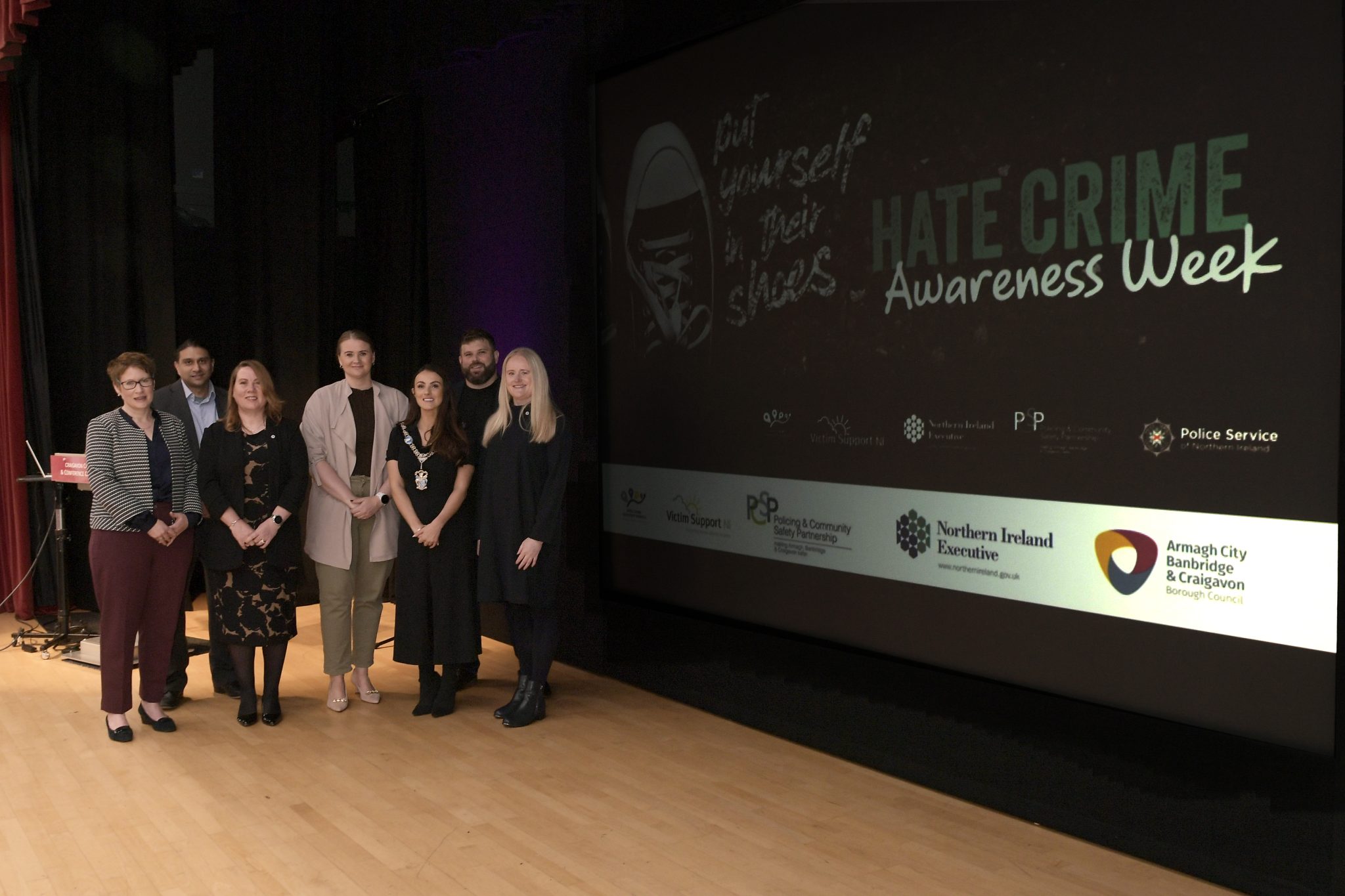
    Pictured at the recent Hate Crime Conference are: Back Row: Temporary /Superintendent Sue Steen MBE, Vishal Bedi, Ethnic Minority Police Association, Michael Avila, Hate Crime Advocacy Service, Adam Corner, Temporary Chief Inspector, Sgt Sinead Loughlin, Annette Blaney, PCSP Project Coordinator. Front Row: Patricia Gibson, PCSP Manager, Junior Minister Aisling Reilly, Lord Mayor of Armagh City, Banbridge and Craigavon, Councillor Sarah Duffy, Geraldine Hanna, Commissioner Designate for Victims of Crime for Northern Ireland and Ruth Allen, Head of Community Development.

    A hard-hitting conference to raise awareness of Hate Crime was held recently at Craigavon Civic and Conference Centre – and left a huge impact on those in attendance.

    Attended by Minister Aisling Reilly, the ‘Put Yourself in their Shoes’ event gave voice to a number of guest speakers from a variety of walks of life, who shared their very personal experiences of being a victim of Hate Crime.

    Organised in partnership with Armagh, Banbridge & Craigavon Policing & Community Safety Partnership (PCSP) and Victim Support NI, this event also focused on the Victim Support NI Hate Crime Manifesto which highlights how statutory, community and private sector partners can work collaboratively to improve support to victims and curb hate in society.

    “Hate Crime incidents are something we unfortunately now hear about on an almost daily basis and everyone should be able to live a life free from fear and isolation,” commented the Lord Mayor of Armagh City, Banbridge and Craigavon Councillor Sarah Duffy.

    “The individuals who spoke today were incredibly brave to share their story to help raise awareness of Hate Crime, and really made us all think about how we would feel if we were on the receiving end of it.”

    Hate Crime is the perpetrator’s hostility or prejudice against any person or property on the grounds of the victim’s ethnicity, sexual orientation, gender identity, religion, political opinion or disability – and these incidents have continued to rise in Northern Ireland over the past decade.

    “This conference was really informative and helped to increase awareness and understanding about Hate Crime and in particular, really opened our eyes to the hate incidents that people have experienced in our communities,” commented Alderman Mark Baxter, Chair of the PCSP.

    “We would encourage everyone to report any incidents of Hate Crime and to never be afraid to speak out against it. We all need to tackle this together.”

    To report a Hate Crime please contact the Police on 101 or online https://www.psni.police.uk/report You can also call Crimestoppers on 0800 555 111 with complete anonymity.

    For help, support and advice on Hate Crime, click here: https://hcasni.com/

    This event was part funded by Armagh City, Banbridge and Craigavon Borough Council and The Executive Office.

    Pictured at the recent Hate Crime Conference are Ruth Allen, Head of Community Development, Patricia Gibson, PCSP Manager, Junior Minister Aisling Reilly, Lord Mayor of Armagh City, Banbridge and Craigavon, Councillor Sarah Duffy and Geraldine Hanna, Commissioner Designate for Victims of Crime for Northern Ireland.
    Pictured at the recent Hate Crime Conference are Ruth Allen, Head of Community Development, Vishal Bedi, Ethnic Minority Police Association, Patricia Gibson, PCSP Manager, Junior Minister Aisling Reilly, Lord Mayor of Armagh City, Banbridge and Craigavon, Councillor Sarah Duffy, Michael Avila, Hate Crime Advocacy Service and Geraldine Hanna, Commissioner Designate for Victims of Crime for Northern Ireland.

    MIL OSI United Kingdom –

    January 23, 2025
  • MIL-OSI United Kingdom: Environment Agency works to preserve North East salmon stocks

    Source: United Kingdom – Executive Government & Departments

    Atlantic salmon stocks in the Tyne remain buoyant despite stocks across England reaching new lows according to a report released last week (Monday 7 October).

    An image of an adult salmon.

    Atlantic salmon stocks in the Tyne remain buoyant despite stocks across England reaching new lows according to a report released last week (Monday 7 October).  

    According to the Atlantic Salmon Stock Assessment for 2024 from the Environment Agency and the Centre for Environment, Fisheries and Aquaculture Science (Cefas), 90% of principal salmon rivers in England are classified as either “at risk” or “probably at risk,” meaning salmon numbers are below minimum levels to support sustainable populations.

    However, the River Tyne’s salmon stocks are the only location where they remain “not at risk” and the Coquet and Wear are amongst only three rivers nationally where stocks are deemed to be “probably not at risk”.

    The Environment Agency is working with partners to reduce impacts affecting stocks globally, including barriers to migration, water scarcity from abstraction and the persistent challenge from climate change, including warming seas.

    The Environment Agency and Natural England are calling on everyone from landowners and farmers to energy, waste and water companies to do more to protect this iconic and pivotal species.  

    Jon Shelley, Fisheries Technical Specialist at the Environment Agency said:

    We are proud that the Salmon Stocks in the Tyne remain “not at risk” and that rivers across the North East are providing a safe haven for salmon.

    However, we know the importance of this report and are not complacent in the North East. Action is needed to combat all pressures impacting salmon, to help maintain the salmon stocks in the region and improve the stocks across the country. 

    We will continue our vital work to help preserve the salmon stocks in our area by working closely with our partners and the community.

    Share this page

    The following links open in a new tab

    • Share on Facebook (opens in new tab)
    • Share on Twitter (opens in new tab)

    Updates to this page

    Published 17 October 2024

    MIL OSI United Kingdom –

    January 23, 2025
  • MIL-OSI United Kingdom: expert reaction to study on forever chemicals in bottled and tap water

    Source: United Kingdom – Executive Government & Departments

    October 17, 2024

    A study published in ACS E&T Water looks at PFAS in drinking water. 

    Prof Oliver Jones, Professor of Chemistry, RMIT University, said:

    “PFAS are a family of man-made chemicals based on carbon-fluorine bonds.  They are often termed forever chemicals because they are very resistant to degradation. The name is also a little chemistry joke as the F in forever, and C in chemicals can also stand for Fluorine and Carbon, respectively. Unfortunately, the term is misleading as it implies that PFAS never break down and that if they get in your body, they are there forever – neither of which is true.

    “This new research about PFAS in drinking water may initially sound scary and raise some concerns with the public. However, the authors do not claim to have assessed risk, and we should remember that the mere presence of something does not mean it will automatically cause harm. Any discussion about toxicity is meaningless without both dose and context. For example, we know you can get skin cancer from exposure to UV light, but that does not mean you will get cancer as soon as you go outside. Similarly, you will have no problem drinking a glass of water, but if you inhale the same amount into your lungs, you’ll have health risks. 

    “While PFAS have been linked to a range of health effects, the concentrations of PFAS needed to cause such effects are much higher than the levels reported in this study. In some respects, the work is good news: even the highest total PFAS level reported was just 9.2 ng/L. For reference, one nanogram per litre is 1 part per trillion. This is equivalent to 1 second in 31.5 thousand years. So, yes, 9.2 ng/L is an incredibly small amount, and the risk of PFAS exposure at this level is also very small. Since the researchers only measured ten compounds, it is possible that there was more PFAS present than was reported, but the risk is still very low.

     “The other thing to remember is that PFAS are now ubiquitous in the environment, so if you look hard enough at almost any sample, you will find them. Background contamination from clothes and lab equipment is a problem when assessing PFAS at such low levels, but the authors don’t say how they accounted for this in the main part of the paper.

     “We might say, ‘Why not make the risk zero completely’? But this is impossible to achieve. There is risk in everything we do; for example, if I drive to work, there is a risk I might crash, I go for a swim, I might drown. Both are low risks, but not zero. We could never be sure PFAS concentration was zero, just that it was lower than the minimum amount we could measure. Even the recent US limit of 4ng/L for PFOS and PFOA in drinking water is not based on acceptable risk but just one that can be achieved and reliably measured. 

    “So overall, while this paper is interesting it does not mean you need to avoid bottled (or tap) water”.

    Dr Ovokeroye Abafe, Lecturer in Environmental Sciences, Brunel University of London, said:

    “The study’s conclusions show insights into very simple contaminant reduction methods that can easily be adopted by consumers. The result provides further understanding on the distribution of PFAS in drinking water sources and shows that simple AC filtration and boiling can significantly reduce the concentrations of some PFAS in drinking water, thereby minimising exposure arising from this route.  It is interesting to see very simple and easily adaptable home solutions that can significantly minimise the concentrations of PFAS in drinking water, thereby safeguarding public health.  However, the sample size is relatively small, which is a limitation to be aware of.”

    ‘Factors Influencing Concentrations of PFAS in Drinking Water: Implications for Human Exposure’ by Chuanzi Gao et al. was published in ACS E&T Water at 13:00 UK time on Thursday 17th October.

    Declared interests

    Prof Oliver Jones: “I don’t have any conflicts of interest in this case, but I have in the past received funds from the Environment Protection Authority Victoria and various Australian Water utilities for research into environmental pollution, including PFAS.”

    For all other experts, no reply to our request for DOIs was received.

    MIL OSI United Kingdom –

    January 23, 2025
  • MIL-OSI Economics: Apple celebrates 10 years of Apple Pay

    Source: Apple

    Headline: Apple celebrates 10 years of Apple Pay

    October 17, 2024

    UPDATE

    Apple celebrates 10 years of Apple Pay

    Jennifer Bailey, Apple’s vice president of Apple Pay and Apple Wallet, reflects on a decade of Apple Pay enriching users’ lives, and shares new ways to pay with Apple Pay, including rewards and installments

    When we started our journey with Apple Pay 10 years ago, we saw a unique opportunity to leverage Apple’s hardware and software to make a meaningful impact on the financial health and lives of our customers. From the outset, we envisioned a world where you could use your iPhone to seamlessly pay for everything — from groceries to train tickets, in person and online, across the globe — all while keeping your personal and financial information safe and private.

    Today, Apple Pay is used by hundreds of millions of consumers in 78 markets, at checkout on millions of websites and apps, in tens of millions of stores worldwide, and is supported by more than 11,000 bank and network partners. We hear from customers every day about how much they love the ease, security, and privacy protections Apple Pay provides in their daily lives, and how much they enjoy using it across their devices — including iPhone, Apple Watch, iPad, and Mac.

    One of my earliest memories of realizing how Apple Pay was positively impacting consumers’ lives was when we rolled out Apple Pay for transit in Tokyo, which is used by millions of travelers every day. I watched in awe as people quickly tapped their iPhone or Apple Watch to pay while passing through the turnstiles — no need to fish out any cash, cards, or coins from their wallets, or even unlock or wake their device. It’s a great example of how Apple Pay’s seamless and secure customer experience delivers convenience and peace of mind to consumers around the world, whether they’re commuting to work, shopping online, or picking up their morning coffee.

    We know how important it is for customers to feel secure and trust that their financial transactions are private when making a payment. That’s why we’re always working to safeguard consumers, while also enabling banks to have industry-low levels of fraud for Apple Pay transactions. And it’s also why Apple Pay was designed to protect users’ highly sensitive personal and financial information, like their card number, which is never shared with merchants. Our customers trust that when they use Apple Pay anywhere, they can have the peace of mind that their payments are protected.

    Looking ahead at what’s next for Apple Pay, we are excited to now bring our users more ways to pay, including the option to redeem rewards and access installment loans from Apple Pay-enabled issuers and lenders right at checkout with Apple Pay online and in-app on iPhone and iPad. This gives consumers greater flexibility in how they pay with the easy and trusted Apple Pay experience they already know and love. It also provides Apple Pay-enabled issuers and lenders with new ways to connect with their customers, and make their rewards and installment offerings even more accessible.

    Beyond payments, we’re also advancing our broader vision of replacing users’ physical wallets with an easy, secure, and private digital wallet — Apple Wallet. Today, users can seamlessly and securely add and access eligible event tickets, transit cards, keys, government IDs, and more all from Apple Wallet. And we’re always looking for new ways to make using Apple Wallet convenient while delivering unparalleled security and peace of mind.

    The last decade was an incredible journey, and we’re thrilled that so many people around the world are enjoying the experience that Apple Pay and Apple Wallet provide. I can’t wait to see what the next 10 years have in store.

    — Jennifer Bailey, Apple’s vice president of Apple Pay and Apple Wallet

    More Ways to Pay with Apple Pay

    With iOS 18, eligible users can now access installment loan options from Affirm in the U.S. and from Monzo Flex in the U.K. when checking out with Apple Pay online and in-app on iPhone and iPad.1 And starting today, eligible users in the U.S. and U.K. will also have the option to access Klarna’s flexible payment options right at checkout online and in-app with Apple Pay on iPhone and iPad.

    In the future, users will also be able to access installment payment options from eligible credit or debit cards when making online purchases with Apple Pay in the U.S. with Citi, Synchrony, and across eligible, participating Apple Pay issuers with Fiserv; in Australia with ANZ; in Singapore with DBS; in Spain with CaixaBank; and in the U.K. with HSBC, NewDay, and Zilch, with more issuers to follow. Users in Canada will also have access to Klarna’s flexible payment options at checkout with Apple Pay online and in-app on iPhone and iPad in the future.

    Additionally, with iOS 18, Apple Pay users in the U.S. can now redeem rewards with eligible Discover credit cards2 when they check out with Apple Pay online and in-app on iPhone and iPad. In the future, users will also be able to redeem rewards for purchases with Apple Pay in the U.S. with Synchrony and across eligible, participating Apple Pay issuers with Fiserv and FIS, and in Singapore with DBS, with more issuers to follow.

    Users can now also access Apple Pay on third-party web browsers and computers.3 At checkout, users will be prompted to use their iPhone or iPad to scan a code, and will then be able to securely complete the payment with Apple Pay on iPhone or iPad. And with Tap to Provision, it’s even easier for users to add a credit or debit card to Apple Wallet by simply tapping their eligible card to the back of their iPhone.4

    Next year, customers in the U.S. will also be able to see their PayPal balance when using their PayPal debit card in Apple Wallet, giving them greater visibility and confidence when shopping.

    1. This feature is offered by a card’s issuer, and is subject to issuer eligibility requirements and other issuer terms. This feature is not available in all markets, and may not be available for all types of purchases, such as subscriptions and recurring transactions. The full amount of the transaction will be charged to the user’s card at the time of their purchase, and a statement credit for the redeemed reward amount will be applied to the user’s account.
    2. Redemptions used with Discover credit cards will be reflected as a statement credit on a customer’s account.
    3. iOS 18 or iPadOS 18 or later required. Available with participating merchants on compatible browsers. Compatible browsers require WebSocket support. This feature is not available in all markets.
    4. Must have an eligible and supported card. Not available in all markets. To use this feature, a card’s NFC technology must be activated, and the user may need to enter their card’s security code during setup. Software requirements apply. To ensure a user has all features of this product, their iPhone must be updated to the latest software version.

    In the U.S., Apple Pay is a service provided by Apple Payments Services LLC, a subsidiary of Apple Inc. In other countries and regions, Apple Pay is a service provided by certain Apple affiliates, as designated by the Apple Pay privacy notice. Neither Apple Inc., nor Apple Payments Services LLC, nor its affiliates are a bank. Any card used in Apple Pay is offered by the card issuer.

    The survey was commissioned by Apple and conducted by Morning Consult between September 10-13, 2024, among a sample of 3,014 adults in the U.S. ages 18-64.

    Press Contacts

    Heather Norton

    Apple

    heather_norton@apple.com

    Kimberly Mai

    Apple

    k_mai@apple.com

    Apple Media Helpline

    media.help@apple.com

    MIL OSI Economics –

    January 23, 2025
  • MIL-OSI Security: Defense News: CNO Press Briefing: Atlantic Council

    Source: United States Navy

    GENERAL JAMES L. JONES: Good morning, everybody. And welcome to today’s event with Chief of Naval Operations Admiral Lisa Franchetti—chief of naval operations of the world’s finest Navy, I might add—to discuss her 2024 Navigation Plan for America’s Warfighting [Navy].

    My name is Jim Jones, and I serve as executive chairman emeritus here at the Atlantic Council and as chairman of the Scowcroft Center. So, on behalf of the Scowcroft Center and the Atlantic Council, as well as its Forward Defense Program, I would like to welcome you to this exciting fourth installment of our 2024 Commander Series.

    As we all know, since its origin the United States has relied on her Navy to maintain global maritime dominance, ensuring freedom of navigation, the ability to project US power across the globe and played a critical role in the nation’s strategic deterrent capabilities. As we continue into this era of strategic competition with peer or near-peer adversaries, potential adversaries, namely China and Russia, and the threat landscape evolves, the Navy faces many challenges, and its capabilities are stretched across the world.

    The Navy, and I might add the Marine Corps—you’re not going to get away with a commandant introducing you without mentioning the Marine Corps—but the Navy and her Marines must be ready for the possibility of war in the near future. But beyond that, it will need to continue to enhance its long-term advantage to deter future aggression and ensure a major contribution to global stability. A critical component in the effectiveness of this strategy will be leveraging technological innovation to maintain a ready and modern force. The Navy will need to invest in newer platforms, newer weapon systems, and embrace robotic and autonomous systems as well.

    The key advantage that the United States holds over its adversaries is the strong alliance network the US maintains. The Navy must continue to strengthen these relationships, to enhance collective security, deter adversarial aggression by improving interoperability with joint and allied forces. With so many threats looming on the not-so-distant horizon, it is also imperative that the Navy has a forward-thinking strategic vision that leverages all the advantages the United States holds, and enables the readiness to respond in competition, crisis, and conflict if necessary.

    And so today, we’re extremely fortunate to be joined by the 33rd Chief of Naval Operations Admiral Lisa Franchetti, who will discuss her recently published Navigation Plan for America’s Warfighting Navy. This is her strategic guidance for the US fleet during her tenure. A native of Pittsford, New York, Admiral Franchetti is a graduate of the Medill School of Journalism and was commissioned through Northwestern University NROTC program in 1985. She earned her Surface Warfare qualification on the USS Shenandoah, went on to command at all levels, including Naval Reserve, Central Point, Oregon, USS Ross, Destroyer Squadron 21, US Naval Forces Korea, Carrier Strike Group 9 and 15, the US Sixth Fleet in Italy, and Striking and Support Forces NATO in Portugal.

    In addition to command, she has worked across the Navy and the joint force with emphasis on strategy, international engagement, and interagency collaboration, serving as the director Strategy, Plans, and Policy, J-5, and most recently as the vice chief of naval operations. As chief of naval operations, Admiral Franchetti is responsible for the command, use of resources, and operational efficiency of the naval operating forces and the Navy’s shore activities assigned by the secretary of the navy.

    Admiral Franchetti, we look forward to hearing from you today, and we’re very grateful for your presence here. After the admiral’s keynote remarks, she will be joined by Dan Lamothe for a moderated discussion. Dan has held a long career as a journalist and has written extensively about the armed forces for more than fifteen years. Since 2014, he has been covering the United States military and the Pentagon for The Washington Post. Dan, thank you very much for joining us today.

    I would also like to thank everyone attending this conversation with the admiral, whether in person or virtually. [Convenings] such [as] these are integral to the Atlantic Council’s [Scowcroft] Center for Strategy and Security, which works to develop sustainable, nonpartisan strategies to address the most important security challenges facing the United States and her allies and partners. Consistent with that mission, Forward Defense generates ideas and connects stakeholders in the defense ecosystem to promote an enduring military advantage for the United States, her allies, and partners. Its work identifies the defense strategies, capabilities, and resources of the United States needed to deter and, if necessary, prevail in any future conflict.

    I would like to extend a special thanks to Saab Corporation and Michael Anderson, who, unfortunately, couldn’t be here today but is usually in attendance. Saab and the Atlantic Council launched the Commander Series back in 2009. The vision was to establish a flagship speakers forum for senior military and defense leaders to discuss the most important security challenges, both now and in the future. Over the years, the program has become one of the Council’s main institutions. And we’re thankful to Saab for their continued support and collaborations. Before I turn it over to Admiral Franchetti for her keynote remarks, I’d like to remind everybody that this event is public and on the record. Thank you all for joining the Atlantic Council for what I know will be a captivating conversation.

    Admiral Franchetti, without any further ado, the floor is yours. Welcome.

    LISA FRANCHETTI: Well, thank you, General Jones, for your kind introduction and warm welcome. And I also want to thank the Atlantic Council for letting me be part of the Commander Series. It’s an incredible opportunity. And I’m very excited to have the opportunity to speak with all of you today.

    So, as General Jones just mentioned, I recently released my Navigation Plan for America’s Warfighting Navy, which is my overarching strategic guidance to the Navy to make our nation’s fleet more ready for potential conflict with the PRC by 2027, while also enhancing our Navy’s long-term warfighting advantage. But before I talk a little bit more about that, I want to talk about the why—the why behind the NAVPLAN, and what your navy is doing all around the world to protect our nation’s security and prosperity, to deter any would-be adversary, and to always be ready to fight and win decisively, if called to do so.

    As you all know, our Navy—our nation is and always has been a maritime nation. Seventy percent of our planet is made up of water. Eighty percent of the world’s population lives within two hundred kilometers of the coastline. Ninety percent of the global economy moves by sea. And 95 percent of international communications and about ten trillion dollars of financial transactions transit via undersea fiber optic cables every single day. In the United States alone, seaborn trade carries more tonnage in value than any other mode of transportation each year, generating about $5.4 trillion annually and supporting thirty-one million American jobs. And when our access to the sea is impacted, so too is our economy, our national security, and really our way of life.

    And I could think about a lot of different examples over the past years that demonstrate that intimate connection. Just think back to the impacts of COVID-19, the grounding of the Ever Given in the Suez Canal, and now Houthi attacks in the Red Sea, and even the port strikes on the east and west coast—gulf coast just a few weeks ago. It’s really clear that the seas are the lifeblood of our nation. And since the days of the Revolutionary War, as General Jones pointed out, our Navy and our Marine Corps team has protected and guaranteed our access to that sea. And on Sunday, we just celebrated our 249th birthday.

    I think the events of this year and the actions taken by your Navy-Marine Corps team in the Indo-Pacific, in the Mediterranean, in the Red Sea, and beyond really underscore the enduring importance of American naval power throughout our nation’s history. With an average of about 110 ships and seventy thousand sailors and Marines deployed on any given day, the Navy-Marine Corps team is operating forward, defending our homeland, and keeping open the sea lines of communication that fuel our economy. In the Indo-Pacific right now, the USS George Washington Carrier Strike Group and the America Amphibious Readiness Group, with the 31st MEU embarked, are working alongside allies and partners to sustain a free and open regional order and enhance our collective interoperability.

    In the Baltic, the Atlantic, the high north, and the Mediterranean, our navies continue to work alongside NATO and other partner navies to defend NATO and to support Ukraine as they defend their country and their democracy, to further deter Russian aggression, and to ensure that Russia’s continued unjustified and horrific invasion of the sovereign nation of Ukraine is a strategic failure. And in the eastern Mediterranean, the Red Sea, the western Indian Ocean, our naval forces—including aircraft carrier strike groups, amphibious readiness groups, submarines and multiple destroyers—working alongside allies and partners, are containing the Israel-Hamas conflict, deterring others, especially Iran and its proxies, from escalating hostilities into regional war, and continuing to support Israel’s defense.

    Over the last few weeks, more American destroyers—the Bulkeley, the Frank E. Petersen, Michael Murphy, and the Cole—have joined about a dozen other naval assets over the last year in knocking down Iranian and Houthi-launched ballistic missiles, cruise missiles, and drones in defense of the rules-based international order, in defense of innocent civilian mariners, and in defense of Israel. The ability of our forces to seamlessly operate in any theater speaks to the value our Navy has provided to our nation for the last 249 years.

    We operate in a unique domain. It’s a domain that knows no boundaries. It’s a domain that transcends lines that are drawn on a map, and one in which the Navy provides agile, flexible options and decision space to our nation’s leaders every single day. I could not be more proud of that Navy team. It’s the active and reserve sailors. It’s our civilians. And it’s our families. There’s no other Navy in the world that can operate at this scale. No other Navy in the world can train, deploy, and sustain such a lethal, globally deployed, combat credible force at the pace, the scale, and the tempo that we do.

    And while all that we have achieved these past 249 years has filled me with confidence, I know that we cannot take our foot off the gas, because there’s no doubt that our nation is at an inflection point in history. We are facing a changing and challenging security environment, a changing character of war, and real challenges in ship, submarine, aircraft, construction and maintenance, munitions production, recruiting, and infrastructure maintenance. All while acknowledging the industrial and budgetary constraints complicating our efforts to address these challenges.

    I’ve already talked a little bit about the security environment, but I want to expand on how that’s changed a little bit more. As we are seeing, the rules-based international order that we have upheld, protected, and defended for over three-quarters of a century is under threat, in every ocean. The People’s Republic of China is our pacing challenge and presents a complex, multi-domain and multi-axis threat. I am eyes wide open that the challenge posed by the PRC to our Navy goes well beyond just the size of the PLAN fleet.

    It includes gray zone and economic campaigns, expansion of dual-use infrastructure like airfields and ports, and dual-use forces like the Chinese maritime militia, and a growing nuclear arsenal. It’s backed by a massive defense industrial base, which is on a wartime footing and includes the world’s largest shipbuilding capacity. The growing capabilities, capacity, and reach of the PRC military, along with its increasingly aggressive behavior in the East and South China Seas, underscore what Chairman Xi has told his forces, that they should be ready for war by 2027.

    The PRC is not our only competitor. Russia continues to be an acute threat. Iran, a stabling actor in the Middle East. And we are seeing increasing alignment of these competitors, the PRC, Russia, Iran, North Korea, violent extremist organizations, and globally sponsored terrorist organizations like Hamas, Hezbollah, the Houthis, ISIS-K, and more. In addition to this dynamic security environment, we’re also facing a changing character of war, with advancements in battlefield innovation and cheaper, more accessible technology available to state and nonstate actors alike. We’re all learning a great deal from Russia’s invasion of Ukraine and the continued Houthi ballistic missile, cruise missile, and drone attacks in the Red Sea.

    To get after all these challenges, I would love to have the resources and the industrial base capacity to just expand the size of our force overnight. And I acknowledge the need for a larger, more lethal force. But it’s no secret to any of you that we are facing financial and industrial headwinds at getting, what I like to call, more players on the field. Our budget falls short of the 3 to 5 percent increase above inflation needed to support the Navy’s growth. And we’ve had continuing resolutions for fourteen of the past fifteen years, which stifle our momentum and slow any progress in delivering the warfighting capability and capacity needed to meet the needs of today and tomorrow.

    And while we’re investing significant resources to address our industrial base challenges, change will not happen overnight. We cannot manifest a bigger Navy—a bigger traditional Navy in just a few short years. So as I came into this position, I took all of this in—the changing security environment, the changing character of war, and our own challenges—and that is what provided the context that framed my Navigation Plan. It’s a plan that lays out where we need to go to make our Navy more ready for potential conflict anytime and anywhere. As the CNO who will be at the helm into 2027, I am compelled to do more, and do more faster, to ensure that our Navy is more ready. I can’t stand still as we work to secure long-term investments for our force.

    And so my Navigation Plan essentially parks these known challenges in a box. I’m still going to work on them, but they’re not the only thing I’m going to think about. And it helps me set a course to make strategic gains in the fastest time possible with the resources I can influence. It builds on America’s Warfighting Navy, a document that I released in January that lays out my priorities of warfighting, warfighters, and the foundation that supports them. And the NAVPLAN continues where my predecessor’s 2022 NAVPLAN left off. It lays out my plan to raise our fleet’s baseline level of readiness and put more players on the field—platforms that are ready with the requisite capabilities, weapons, and sustainment, and people that are ready with the right mindset, skills, tools, and training.

    And it does that really in two ways. First, by implementing what I call Project 33, seven key areas in which we need to accelerate, areas where I will invest my personal time and resources and put my thumb on the scale to urgently move the needle, with 2027 as our North Star. And second, by expanding the Navy’s contribution to the joint warfighting ecosystem. This is all about building enduring warfighting advantage by investing in key capabilities and creating the layered effects that the Navy can contribute across all domains, to those of the joint force and those of our allies and partners. This is fundamental to my vision of how we will deter and, if necessary, fight and win our future wars.

    So, going back to the first I’d like to briefly just touch on these seven equally important Project 33 targets, as they align to my priorities of warfighting, warfighters, and the foundation that supports them.

    Under warfighting, my first target is readying our platforms.

    The second target is operationalizing robotic and autonomous systems.

    My third target is fighting from the Maritime Operations Center. That’s our command and control nerve center and it will help synchronize how we deliver effects as a Navy and as a broader joint and combined force.

    Under the warfighters’ bucket, my fourth target is recruiting and retaining talented people.

    My fifth target is delivering the quality of service that our sailors and their families deserve.

    My sixth target is investing in warfighter competency, making our live virtual constructive training as reliable, realistic, and as relevant as possible.

    And finally in the foundation bucket, my seventh target is restoring the critical infrastructure that generates, sustains, and postures our force to fight, prioritizing the Pacific theater.

    Together, these seven targets—really, stretch goals—they represent my plan to make strategic gains in the fastest time possible with the resources I can influence. I know that moving out with purpose and urgency on these targets will deter the PRC and any other potential adversary, and make us even more ready to fight and win decisively should that deterrence fail.

    I’d like to end with just a few comments about the joint warfighting ecosystem I mentioned before because my Navigation Plan is critical to expanding our Navy’s contribution to it. I know that our Navy will never fight alone, so we are laser-focused on developing and integrating key Navy capabilities with those of our joint teammates and of our allies and partners, because it’s the aggregate effects that we deliver collectively that will matter.

    The joint warfighting ecosystem is all about pooling and creating those aggregate effects. It’s a system in which a capability enables and then is enabled by each of its participants. It’s on display in the Middle East right now, and I know it’s one that Admiral Paparo will leverage in the Indo-Pacific.

    Achieving these objectives in my Navigation Plan is an all-hands-on-deck effort where everyone has a role to play—industry, Congress, academia, our joint teammates, our allies and partners, and of course our sailors and our civilians. So I would like to thank all of you here for your interest in our Navy, and I would like to thank you for all that you have done to support our Navy team and will continue to do in the future to support America’s warfighting Navy.

    I have a clock in my office that tells me that there are 807 days left until 1 January 2027. There is no time to waste, and your Navy is ready to get after it. Thank you very much, and I look forward to discussion today. Thank you.

    Dan.

    DAN LAMOTHE: All right. Good morning, everyone.

    LISA FRANCHETTI: Good morning.

    DAN LAMOTHE: Thank you for your time today, ma’am.

    You just spent several minutes articulating your plan. I know you must have spent a lot of time planning that. This town often sees plans that run into headwinds, run into real-life events. Can you walk us through a bit what you think you can do to make this plan durable, make this happen, kind of clear-eyed, noting the headwinds, the budgetary constraints, and other things like that?

    LISA FRANCHETTI: Yeah. Well, thank you. And again, thanks for the chance to talk a little bit about the plan today.

    You know, I think this plan is a little bit different from some of the plans that we have had in the past, and I worked to make sure that it would be durable and it would stick. And I really spent about the last year working on this plan alongside all of our four-star commanders, our fleet commanders, our type commanders to really get after what are the things that we need to do and what we do we need to do to think, act, and operate differently to stay ahead of the challenges that we have with the resources that we can influence right now.

    And so when you look at the plan, it’s very focused—I would say it’s different in a few ways from previous plans.

    First, it’s focused on 2027. It’s focused on the PRC. So I’ve set my priorities, my sight. It’s narrowly focused on getting after those challenges.

    The other thing is that it really builds on Navigation Plan 2022, in which we had about eighteen different areas which we were really focused on and a lot of structure was put in place with single accountable individuals to drive progress in each one of those areas. I took a look, I took a fix, and I said, all right, here’s where we are based on NAVPLAN 2022, and here are seven areas where I think we can really put our foot on the gas and accelerate our progress in those to be real gamechangers in what we need to be able to do in the future.

    I think the last thing I would say what’s different about it is that it does have this single accountable individual responsible for each one of the targets that we’re trying to get after. And what we’ve found through our perform-to-plan and naval sustainment systems, processes have been put in place, if you have a stretch goal, a single accountable individual, and a cadence of accountability, that drives success.

    And the Navigation Plan will change my focus. It changes where I go, what I visit, what reports I get, what meetings I go to. And so my personal attention will be on these Project 33 goals as well as building the capabilities I talk about as the key capabilities for warfighting advantage that will get us where we need to be in the future.

    DAN LAMOTHE: OK. One of your stated goals is boosting surge readiness to 80 percent. I know talking to a lot of analysts in this town, they raise concerns whether real-life events, physics, other things would really challenge this. And I know you’ve raised previously the aircraft as a kind of parallel. Do you see 80 percent as aspirational, achievable, both? And I guess, how do you put your foot on the gas with that?

    LISA FRANCHETTI: Thanks. This is one of the most important—all seven are equally important, but you know, I’ve long said that we need to get more players on the field. There’s a lot of ways to do that. You know, one is to buy new ones. One is to get them in and out of maintenance on time, which is—that’s why I put this goal in here. One is to use what you have differently.

    I am focused on this, because the aviation example is really illustrative of what we know we can achieve. So in 2018, Secretary Mattis challenged our aviation community to get F/A-18 readiness up from 50 percent readiness/availability to 80 percent. And over the process of these—the last couple of years, and now six years on, we’ve been able to sustain 80 percent readiness in the F/A-18s because of the processes that we put in place, data-driven, daily drumbeats of accountability to make sure that we understood what the readiness was, what the barriers were to achieving that readiness, and moving forward.

    They’ve been able to scale that now through other type model series, and we’ve expanded it to the submarine force and also the surface force. So it’s a stretch goal, but I am committed and the team is committed to going after that stretch goal. So we are putting all those—we have, actually, all those processes in place now, and I’m really looking forward to that.

    I will just give another example, a metric in surface that might be useful. So, you know, on-time completion of maintenance availabilities is really important. So if you think back in 2022 we had about 27 percent completion on time, 2023 we moved it up into the 30 percents, and this year we’ll be up to 67 percent. So we put in a lot of procedures to be able to plan maintenance availabilities early in a surface, a submarine, and aviation, making sure we understand what parts we need, having available pool of parts, investing in those parts so they can be there on time; planning our stuff—maintenance availabilities at least six months ahead of time and locking them in to let industry know what’s coming and also get those parts on order. Those are some of the things we’re doing.

    So these are stretch goals, but I am confident that we’re going to work hard to get after them. And if we don’t make exactly 80 percent, we’re going to be farther along the road than we would be if I hadn’t set such an ambitious goal.

    DAN LAMOTHE: OK.

    LISA FRANCHETTI: And I will say all the communities are locked hands on these goals, so we are all committed to working together to get after them.

    DAN LAMOTHE: A lot of discussions about the future of the Navy tend to focus on ship numbers. I heard in your comments there you kind of addressed that head on. To what do you—what degree do you consider that construct limiting, and to what degree do you consider that construct necessary? You know, I—there’s a pragmatic aspect to this, but numbers are numbers, and I’m sure that’s something that you get an earful on a lot as well.

    LISA FRANCHETTI: Certainly. Well, I fully acknowledge that we need a larger, more lethal Navy. You know, we have multiple assessments that say that we need to have a larger Navy, and I really want to work closely, you know, with Congress, with industry to be able to deliver that Navy that we need. And that’s a really important thing.

    But the size of the Navy is not the only thing that matters. I think if you look at that future warfighting ecosystem, it’s really about the effects you can deliver with that Navy from a widely dispersed, disaggregated force integrated with all of the other forces of our joint force, whether it’s cyber, space, Air Force, Army, Marines. You can definitely envision a different type of warfighting environment where all of those effects are layered together, and that is really how we’re going to beat any adversary.

    So, to me, it’s both. We need to focus on getting the fleet that we need with the capabilities we need, but we also need to understand how we’re going to better integrate them with the joint force and alongside our allies and partners. And really, how do we build that interoperability from the ground up with allies and partners through both weapons systems but also exercises, and make sure that we can really plug and play, plug and fight any time that we need to be able to do that?

    DAN LAMOTHE: OK. Thank you.

    Let’s talk some current ops and maybe tie it back to the plan a bit. The Navy’s been extremely busy in the Red Sea and other parts of the Middle East over the last year. You know, I think a lot of us are tracking ship movements and things like that on a level that, you know, is not always common. What is the service learning as a result as seemingly almost daily sailors are knocking, you know, munitions out of the sky? And how long do you think the service can keep this up? It seems to me that there would be concern as this stretches on on magazine depth and also on just, you know, as you’re trying to pivot elsewhere this seemingly doesn’t go away.

    LISA FRANCHETTI: Well, first, I couldn’t be more proud of our Navy and Marine Corps team that’s out there. As I said earlier, you know, from day one we’ve been there to deter further escalation. And you know, I’m very proud of all of our ships—working alongside allies and partners, I would add—there in the Red Sea and in the—in the Indian Ocean to really uphold that rules-based international order.

    I think we’re learning a lot by being in the Red Sea. First, the value of allies and partners. And again, all of these exercises and training that we do all around the world, that’s enabled us to work together to get after this challenge.

    I would say a few other things. First, that our sailors are confident in their weapons system. And that’s really a testament to the development of these weapons systems over the last many years, but also to the training, the certification, all of the work we do to get our sailors, our ships, our aircraft, everything ready to go before they head into harm’s way. And our systems have performed as designed. So, again, it’s a real testament to the designers, the engineers, and now our people who are able to employ them effectively.

    I think the other thing that we’re learning is that we’ve been able to observe all of the different engagements, everything that the Houthis have used, all of their Iranian-supplied weapons systems, and we’ve been able to look at their tactics that they’re using. We’ve been able to use data and extract that information from our weapons systems, bring that back here to the US in a matter of hours. And getting that to our engineers; to our warfighting development centers where they develop tactics, techniques, and procedures; this has been really a gamechangers because then all the experts can work together, understand what’s going on. As tactics evolve, then we can introduce different tactics, adjustments to radars, whatever it is we need to do to be able to get after that.

    I’ll just give a small example. When I was out visiting one of our ships, I got to promote a fire controlman second class to first class. And he was a technician who worked with a gun weapons system, and he had an idea about how he could make the gun more effective against Houthi threats. And he wrote up his idea, he sent it back to the technical authorities, they validated it, and they put it out the rest of the fleet because it was a better way to use the gun and more effective. And so we got to put technology into the hands of a warfighter; we got him to think about how to think, act, and operate differently; and he was really a pioneer in innovating there on the battlefield.

    I always like to say in Ukraine they innovate on the battlefield every single day. They take what they have and they use it differently. We need to be able to do the same. So I think that’s another lesson that we’ve learned there.

    DAN LAMOTHE: OK.

    LISA FRANCHETTI: And to your last point about, you know, are we concerned about our sustainability to be there, of course, our job is to be there, and that is what we train our people to do. So I’m very proud to be able to do that mission. And we’re continuing to work, again, to invest in the munitions as I talk about the foundation—munitions, bases, infrastructure—all those things we need to generate and sustain the force, committed to getting after that.

    DAN LAMOTHE: All right.

    And I think we have just time for one more question. We’ve seen the Abraham Lincoln Strike Group extended. We’ve seen the Marine Expeditionary Unit extended along with the ARG. As we see this extend, you know, it occurs to me we don’t necessarily have a follow-on ARG new behind it. To what degree are you concerned about being able to sustain the tempo out there?

    LISA FRANCHETTI: Well, as you know, we train, deploy, and certify all of our forces to be able to meet the requirements that are set forth, you know, by the secretary. We’re a globally deployed force, and I think that’s one of the greatest things about the flexibility of our Navy. We can generate the forces, we can send them where they need to go, and allow the secretary to be able to move them between the different theaters to get after the missions that we have. So I’m confident in our ability to do that.

    I am very focused on readiness for all of our ships. You know, when you think about in the big picture what are my priorities, first, Columbia, our number-one acquisition priority. But after that, readiness, capability, and then capacity. I’m really focused on readiness and getting after all of these maintenance challenges that have caused some of the delays in the past, whether it’s in our amphibious force or in any one of our platforms. So, again, that’s how we’re going to get after this. And that’s why that’s a key part of our Navigation Plan.

    DAN LAMOTHE: OK. Thank you all for your time today. I’d ask you to remain seated so that the admiral can depart for another meeting.

    LISA FRANCHETTI: Thank you very much.

    DAN LAMOTHE: All right.

    LISA FRANCHETTI: Thank you.

    DAN LAMOTHE: Thank you.

    LISA FRANCHETTI: Oh, thanks. That was fun.

    DAN LAMOTHE: Thank you.

    MIL Security OSI –

    January 23, 2025
  • MIL-OSI Global: Madagascar’s mysterious Teniky rock architecture: study suggests a link to ancient Persia

    Source: The Conversation – Africa – By Guido Schreurs, Professor in Geology, University of Bern

    In the heart of Isalo National Park in central-southern Madagascar, at least 200km from the sea in any direction, is a remote valley with a mysterious past. This place, Teniky, can only be reached on foot, by hiking through a mountainous region dissected by steep canyons.

    Part of the Teniky site has been known for well over 100 years, as we know from names and dates scratched on the rocks there. Various visitors in the 1950s and 1960s with an interest in archaeology described an amphitheatre-shaped location with man-made terraces, a rock shelter with neatly constructed sandstone walls, a chamber cut into the rock with pillars and benches, and a large number of niches cut in the steep cliffs. Recesses are still visible around some of the niches, suggesting that they could be closed off by a wooden or stone slab.

    Among the suggested interpretations were that these structures had been made by shipwrecked Portuguese sailors, or Arabs, or even Phoenicians.

    No similar rock-cut architecture is known anywhere else in Madagascar or on the east African coast, 400km away.

    And until recently, no detailed archaeological studies had ever been carried out at Teniky.

    Madagascar’s past is still the subject of considerable debate. Situated in the south-western Indian Ocean, it is one of the last big islands to have been settled by humans. Genetic studies have identified the people of Madagascar as having come mainly from Africa and from Southeast Asia. Archaeology suggests that the first settlers arrived about 1,500 to 1,000 years ago. The earliest settlements studied have been located along the coast, close to river estuaries.

    Our archaeological study of Teniky, however, points to a new possibility: a former Persian presence in southern Madagascar about 1,000 years ago.

    What we found at Teniky

    Our study of high-resolution satellite images revealed the Teniky site was much larger than previously known. It showed there were more terraces and stone walls on a hill 2km to the west. This led us to take a closer look, hoping to get a better sense of who had lived there and when.

    During field prospecting on this hill we discovered niches, cut in the walls of a rock shelter, that had not been described before.

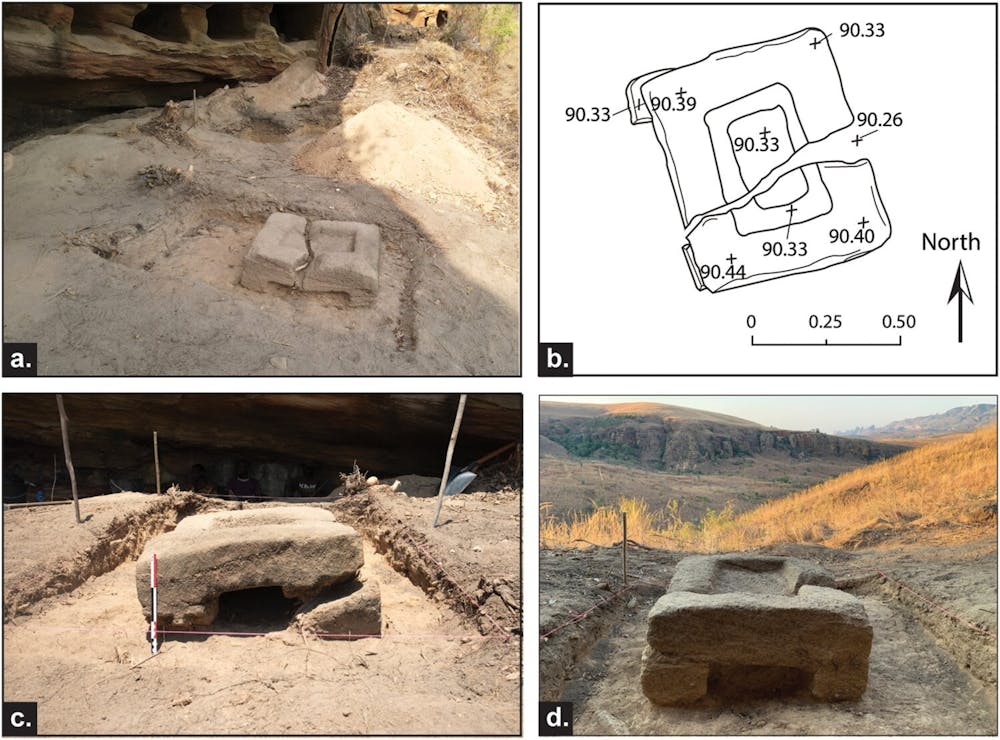
    Excavations at this rock shelter revealed more archaeological structures, including carved sandstone walls and a large stone basin.

    Radiocarbon dating of charcoal samples from the site dated to the late 10th to mid-12th centuries AD. Pieces of ceramic items of southeast Asian and Chinese origin found there have been dated by a specialist to the 11th to 14th centuries AD.

    We also found sandstone quarries from which the stones used to build the walls at the rock shelters were extracted. And we found more stone basins on terraces.

    The terraces cover a total area of about 30 hectares, indicating that Teniky must have been a fair-sized settlement. Water is available all year round in the valley below, where people might have been able to plant crops, fish for eels or even keep cattle.

    Considering the dimensions, location and character of the rock-cut structures at Teniky, we think the niches and chambers served a ritual purpose.

    Who were the people who lived at Teniky?

    There is no other archaeological site like Teniky in Madagascar. So, the question arises as to what group of people settled there, far inland, and carved the niches and chambers in the cliff walls about 1,000 years ago. The presence of imported ceramics indicates that they took part in the Indian Ocean trade networks at the time but doesn’t tell us where they came from.

    We think the answer may lie in the style of the rock-cut niches.

    Rock architecture at Teniky, Madagascar. Courtesy Guido Schreurs.

    They are similar to rock niches of the first millennium or earlier in Iran (formerly Persia). Archaeologists have interpreted those as belonging to Zoroastrian communities, which used them as part of their funeral rites.

    Zoroastrianism was the dominant state religion of the Persian Sasanian Empire (224-656 AD). After the conquest of the Sasanian Empire by the Arabs in the mid-seventh century AD, Islam was imposed.

    Zoroastrian funeral rites do not allow direct burial in the ground, so as not to pollute the earth. Instead, dead bodies are left in places of exposure not touching the ground. Once the flesh has decomposed or been removed by animals, the bone remains are dried and placed in bone receptacles (ossuaries).

    We tentatively interpret the rock-cut architecture at Teniky as having been made by a community with Zoroastrian origins.

    The larger rock-cut niches might have been the places where the bodies of the dead were exposed, and the smaller niches with recesses might have served as ossuaries, closed off by a slab to protect the bones from the rain and thus to prevent them from polluting the earth.

    The stone basins at Teniky show stylistic similarities with those used in Zoroastrian ritual ceremonies to hold water or fire, both agents of ritual purity.

    Zoroastrians abroad

    There are few accounts of Madagascar written at the turn of the first and second millennia AD. Buzurg Ibn Shahriyar, a tenth-century Persian sailor and writer, collected stories from sailors in port towns on the Persian Gulf which suggest that Persian contacts with Madagascar may have existed then. The name Madagascar did not exist at that time but names like “Wak-wak” or “Qumr”/“Komr” may have referred to the island.


    Read more:
    Madagascar cave art hints at ancient connections between Africa and Asia


    Historical documents, archaeological excavations and genetic studies indicate that Zoroastrians left Iran and settled in western India in the late eighth century AD.

    Did they settle on the island of Madagascar too? If the rock-cut architecture and associated stone basins at Teniky are the work of a community with Zoroastrian origins, this would strongly point to a former Persian presence in southern Madagascar about 1,000 years ago.

    Many questions remain. We hope future studies will answer some of them.

    The authors do not work for, consult, own shares in or receive funding from any company or organisation that would benefit from this article, and have disclosed no relevant affiliations beyond their academic appointment.

    – ref. Madagascar’s mysterious Teniky rock architecture: study suggests a link to ancient Persia – https://theconversation.com/madagascars-mysterious-teniky-rock-architecture-study-suggests-a-link-to-ancient-persia-240725

    MIL OSI – Global Reports –

    January 23, 2025
  • MIL-OSI Africa: Madagascar’s mysterious Teniky rock architecture: study suggests a link to ancient Persia

    Source: The Conversation – Africa – By Guido Schreurs, Professor in Geology, University of Bern

    In the heart of Isalo National Park in central-southern Madagascar, at least 200km from the sea in any direction, is a remote valley with a mysterious past. This place, Teniky, can only be reached on foot, by hiking through a mountainous region dissected by steep canyons.

    Isalo area. Guido Schreurs, Author provided (no reuse)

    Part of the Teniky site has been known for well over 100 years, as we know from names and dates scratched on the rocks there. Various visitors in the 1950s and 1960s with an interest in archaeology described an amphitheatre-shaped location with man-made terraces, a rock shelter with neatly constructed sandstone walls, a chamber cut into the rock with pillars and benches, and a large number of niches cut in the steep cliffs. Recesses are still visible around some of the niches, suggesting that they could be closed off by a wooden or stone slab.

    Among the suggested interpretations were that these structures had been made by shipwrecked Portuguese sailors, or Arabs, or even Phoenicians.

    Teniky. Guido Schreurs, Author provided (no reuse)

    No similar rock-cut architecture is known anywhere else in Madagascar or on the east African coast, 400km away.

    And until recently, no detailed archaeological studies had ever been carried out at Teniky.

    Madagascar’s past is still the subject of considerable debate. Situated in the south-western Indian Ocean, it is one of the last big islands to have been settled by humans. Genetic studies have identified the people of Madagascar as having come mainly from Africa and from Southeast Asia. Archaeology suggests that the first settlers arrived about 1,500 to 1,000 years ago. The earliest settlements studied have been located along the coast, close to river estuaries.

    Our archaeological study of Teniky, however, points to a new possibility: a former Persian presence in southern Madagascar about 1,000 years ago.

    What we found at Teniky

    Our study of high-resolution satellite images revealed the Teniky site was much larger than previously known. It showed there were more terraces and stone walls on a hill 2km to the west. This led us to take a closer look, hoping to get a better sense of who had lived there and when.

    During field prospecting on this hill we discovered niches, cut in the walls of a rock shelter, that had not been described before.

    Excavations at this rock shelter revealed more archaeological structures, including carved sandstone walls and a large stone basin.

    Radiocarbon dating of charcoal samples from the site dated to the late 10th to mid-12th centuries AD. Pieces of ceramic items of southeast Asian and Chinese origin found there have been dated by a specialist to the 11th to 14th centuries AD.

    We also found sandstone quarries from which the stones used to build the walls at the rock shelters were extracted. And we found more stone basins on terraces.

    The terraces cover a total area of about 30 hectares, indicating that Teniky must have been a fair-sized settlement. Water is available all year round in the valley below, where people might have been able to plant crops, fish for eels or even keep cattle.

    Considering the dimensions, location and character of the rock-cut structures at Teniky, we think the niches and chambers served a ritual purpose.

    Teniky. Raphael Kunz, Author provided (no reuse)

    Who were the people who lived at Teniky?

    There is no other archaeological site like Teniky in Madagascar. So, the question arises as to what group of people settled there, far inland, and carved the niches and chambers in the cliff walls about 1,000 years ago. The presence of imported ceramics indicates that they took part in the Indian Ocean trade networks at the time but doesn’t tell us where they came from.

    We think the answer may lie in the style of the rock-cut niches.

    Rock architecture at Teniky, Madagascar. Courtesy Guido Schreurs.

    They are similar to rock niches of the first millennium or earlier in Iran (formerly Persia). Archaeologists have interpreted those as belonging to Zoroastrian communities, which used them as part of their funeral rites.

    Zoroastrianism was the dominant state religion of the Persian Sasanian Empire (224-656 AD). After the conquest of the Sasanian Empire by the Arabs in the mid-seventh century AD, Islam was imposed.

    Zoroastrian funeral rites do not allow direct burial in the ground, so as not to pollute the earth. Instead, dead bodies are left in places of exposure not touching the ground. Once the flesh has decomposed or been removed by animals, the bone remains are dried and placed in bone receptacles (ossuaries).

    We tentatively interpret the rock-cut architecture at Teniky as having been made by a community with Zoroastrian origins.

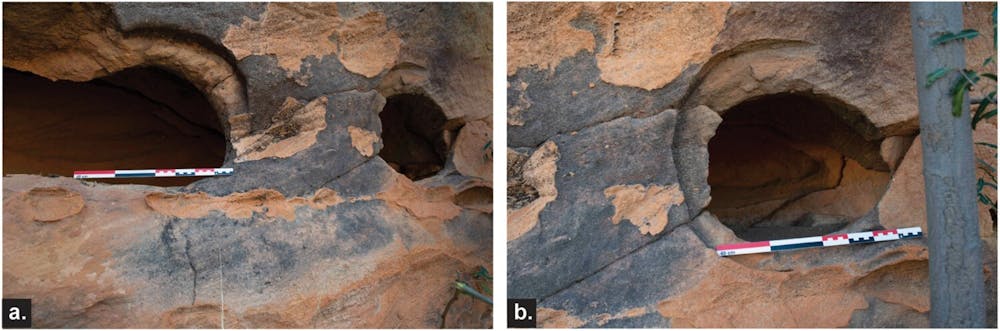
    Circular niches with a recess around the opening. Guido Schreurs, Author provided (no reuse)

    The larger rock-cut niches might have been the places where the bodies of the dead were exposed, and the smaller niches with recesses might have served as ossuaries, closed off by a slab to protect the bones from the rain and thus to prevent them from polluting the earth.

    Basin in front of niches. Guido Schreurs, Author provided (no reuse)

    The stone basins at Teniky show stylistic similarities with those used in Zoroastrian ritual ceremonies to hold water or fire, both agents of ritual purity.

    Zoroastrians abroad

    There are few accounts of Madagascar written at the turn of the first and second millennia AD. Buzurg Ibn Shahriyar, a tenth-century Persian sailor and writer, collected stories from sailors in port towns on the Persian Gulf which suggest that Persian contacts with Madagascar may have existed then. The name Madagascar did not exist at that time but names like “Wak-wak” or “Qumr”/“Komr” may have referred to the island.


    Read more: Madagascar cave art hints at ancient connections between Africa and Asia


    Historical documents, archaeological excavations and genetic studies indicate that Zoroastrians left Iran and settled in western India in the late eighth century AD.

    Did they settle on the island of Madagascar too? If the rock-cut architecture and associated stone basins at Teniky are the work of a community with Zoroastrian origins, this would strongly point to a former Persian presence in southern Madagascar about 1,000 years ago.

    Many questions remain. We hope future studies will answer some of them.

    – Madagascar’s mysterious Teniky rock architecture: study suggests a link to ancient Persia
    – https://theconversation.com/madagascars-mysterious-teniky-rock-architecture-study-suggests-a-link-to-ancient-persia-240725

    MIL OSI Africa –

    January 23, 2025
  • MIL-OSI Global: Aquaculture could harm animal welfare or protect it, depending on what species the farms raise

    Source: The Conversation – USA – By Becca Franks, Assistant Professor of Environmental Studies, New York University

    Raising salmon in a tank at an aquaculture farm in Dubai. Giuseppe Cacace/AFP via Getty Images

    The global aquaculture industry has tripled in size since the year 2000, with producers raising a mind-boggling diversity of species, from seaweeds and clams to carp, salmon and cuttlefish. Many of these creatures are undomesticated and lead complex and highly social lives in the wild.

    The rapid growth in aquaculture means that billions of individual aquatic animals are now being farmed without basic information that could help ensure even minimal welfare standards. Our newly published study shows that these welfare risks are not uniform: Aquaculture is likely to have severe effects on welfare for some species, but negligible impacts on others.

    Whenever humans manage animals on a large scale, welfare becomes a concern. As experts on aquatic animals and their welfare, we believe that taking proactive measures to shape the aquaculture industry’s growth will be critical for its long-term success.

    A cuttlefish tackles a challenge originally designed for human children, demonstrating cephalopods’ complex cognitive processes.

    Complex aquatic lives

    In a wide-ranging review of the existing science, we identified seven risk factors in fish and other sea creatures that would be challenging or impractical to accommodate in captivity. They include 1) migratory behavior, 2) solitary social structures, 3) long life spans, 4) carnivorous feeding habits, 5) cannibalism, 6) living at depths of 165 feet (50 meters) or more, and 7) elaborate courtship or involved parental care.

    We researched these characteristics for each of the more than 400 species currently farmed in aquaculture. Our analysis found that many species of fishes, reptiles and amphibians are likely to suffer in aquaculture because they won’t be able to engage in their natural behaviors in farmed conditions. The same is true for crustaceans such as lobsters and for cephalopods such as cuttlefish.

    In contrast, aquatic plants and other invertebrates such as oysters would experience fewer differences between their life in the wild versus in a tank, pond or other aquaculture production system.

    We also found that species most at risk are among the most expensive on the market but contribute the least to global production. By shifting toward species whose behaviors and life habits are more compatible with aquaculture, the industry could minimize animal welfare risk while also keeping prices down and production quantities high. In other words, protecting aquatic animal welfare is compatible with producing affordable, nutritious food.

    Animal welfare in the water

    Research shows that many aquatic animals are intelligent, emotional, curious, highly social and have strong preferences. Like land animals, they can suffer if their needs aren’t met.

    Consider, for example, the bumphead parrotfish (Bolbometopon muricatum), which is currently farmed in aquaculture. Bumpheads live up to 40 years and travel several kilometers each day in large foraging troops, searching for live coral. On full moons, they come together in the hundreds to spawn and engage in ritual head-bumping contests between the males, like an aquatic version of bison.

    Divers observe a feeding school of bumphead (also referred to as humphead) parrotfish on Australia’s Great Barrier Reef.

    It would be very difficult and expensive to accommodate this species’ long life span, large range, complex foraging behavior and dynamic social relationships in the highly restrictive and monotonous environments of aquaculture.

    We also found examples of invertebrate animals with similarly elaborate ways of life. One example is the red swamp crayfish (Procambarus clarkii), a comparatively small crustacean that builds elaborate tunnel and chamber systems underground. Females care attentively for their tiny offspring, fanning, cleaning and feeding juveniles for up to four months after they hatch.

    In contrast, plant species farmed in aquaculture, such as seaweeds and water spinach (Ipomoea aquatica), are nutritious, protein-rich foods that can be raised without posing direct animal welfare concerns.

    In 2021 alone, 56 species were farmed for the first time. By identifying species that may naturally adapt better to life in captivity, aquaculture producers and policymakers can steer their industry toward a more humane future.

    This approach is already finding support in the U.S., where Washington and California have banned octopus farming. The states acted partly in response to research showing that octopuses are intelligent, curious, social animals that can solve problems and recognize individual people – qualities that are incompatible with being raised en masse for food.

    More research is needed to understand the lives and behaviors of other sea creatures that are currently farmed or targeted for production in the future. Most of these species remain understudied and mysterious, which makes it hard to make informed decisions about whether they are suitable for farming.

    Better data could contribute to aquaculture policy, while also boosting public appreciation for the diversity and intricacy of life on a planet that is 70% aquatic.

    Becca Franks receives funding from TinyBeam Foundation and Open Philanthropy.

    Chiawen Chiang does not work for, consult, own shares in or receive funding from any company or organization that would benefit from this article, and has disclosed no relevant affiliations beyond their academic appointment.

    – ref. Aquaculture could harm animal welfare or protect it, depending on what species the farms raise – https://theconversation.com/aquaculture-could-harm-animal-welfare-or-protect-it-depending-on-what-species-the-farms-raise-240771

    MIL OSI – Global Reports –

    January 23, 2025
  • MIL-OSI Europe: Answer to a written question – Ensuring significant advances during the upcoming 47th Annual Session of the GFCM (4-8 November 2024, Rome) – E-001674/2024(ASW)

    Source: European Parliament

    1. The Commission is investing significant resources in support of the General Fisheries Commission for the Mediterranean (GFCM) 2030 Strategy. The EU voluntary contribution to GFCM, through the EU Grant, has been and will remain instrumental for the implementation of the GFCM management and control measures, the protection of vulnerable species and habitats and the implementation of the subregional approach of the 2030 Strategy.

    2. Under EU leadership, the GFCM has launched a consolidation process of the overall compliance framework, notably the international inspection schemes, under the umbrella of the Compliance Committee, aimed to ensure full implementation of existing management and control measures, transparency and level playing field, based on the examples of good practices from other regional fisheries management organisations (RFMOs). All these objectives are supported by concrete actions in the GFCM work programme for the next years, to be adopted at the annual session.

    3. The Commission aims at promoting the EU fisheries control standards and best practices at the level of the GFCM, including for the modernisation of control tools and implementation of new technologies by all contracting parties. To this end, in May 2024, the EU presented in the Compliance Committee the new EU requirements for the control of small-scale fisheries. The Commission will continue promoting the future uptake in the GFCM framework of innovative digital solutions, including for reporting catches and geo-localisation of fishing vessels.

    Last updated: 16 October 2024

    MIL OSI Europe News –

    January 23, 2025
  • MIL-OSI Europe: Written question – Future of the JET (Joint European Torus) facility in Culham (UK) – P-002028/2024

    Source: European Parliament

    11.10.2024

    Priority question for written answer  P-002028/2024
    to the Commission
    Rule 144
    Kris Van Dijck (ECR), Ondřej Krutílek (ECR), Christophe Grudler (Renew)

    The JET (Joint European Torus) facility in Culham (UK) started out as a joint European project. It plays a crucial role in European fusion research and the development of nuclear fusion as a sustainable energy source.

    Due in part to Brexit, the UK became the owner of the JET facility. It has decided to decommission JET because of its high cost.

    Unfortunately, this entails the risk of losing considerable expertise in the EU and missing out on very significant EU investments. It would also result in the loss of essential knowledge for the construction of the next-generation nuclear fusion reactor, the International Thermonuclear Experimental Reactor (ITER), which will not be operational for some time.

    • 1.What steps has the Commission taken to negotiate with the UK to keep the JET facility open, and do these include considering the joint continuation of the JET facility’s activities?
    • 2.How will the Commission, in the meantime, prevent the EU from losing expertise and established academic cooperation in the field of nuclear fusion, particularly in working towards the full functioning of ITER?
    • 3.Competitiveness and affordable, sustainable energy are rightly two of the Commission’s priorities. Does the Commission have a strategy to support nuclear fusion research so that EU researchers can stay competitive with their non-EU colleagues?

    Submitted: 11.10.2024

    Last updated: 16 October 2024

    MIL OSI Europe News –

    January 23, 2025
  • MIL-OSI Video: UNRWA in need for enabling environment: only 12 trucks of food made to north Gaza | United Nations

    Source: United Nations (Video News)

    Senior UNRWA official Scott Andersen reiterated the need for an enabling environment to bring in aid at scale for people in Gaza, “250 to 300 trucks a day in the south and 30 to 40 trucks a day in the north”, he said.

    Scott Andersen, Deputy Humanitarian Coordinator and Director of UNRWA Affairs in Gaza spoke to reporter today (16 Oct) in New York.

    Anderson told reporters that there are about 470,000 people still in the north of the Strip. There are about 170,000 people in the north primarily in Jabalia. Since September 30, only 12 trucks of food have made it to the population in the north. In the south of the Strip in the declared humanitarian zone, there are about 1.4 million people in a very small space.

    The UNRWA official reiterated the need to have a corresponding number of trucks that come in from the private sector.

    He said, “The things the UN doesn’t do that the private sector does very well. We don’t bring in fresh fruit and vegetables, we don’t bring in eggs, we don’t bring in meat, we don’t bring in a lot of things. We bring in large staple items. That’s our value added. And the value added for the private sectors, they do everything else, and they do it. They do it very well.”

    As winter is approaching Gaza, a lot are needed to be done so the families are safe and protected, Andersen said.

    He explained, “It’s just simple things like road repair, picking up garbage, distributing tents. But this all hinges on our ability to bring things in at the scale that’s needed. You need tarpaulin, you need tents, you need blankets for people, and mattresses and all the things that you would very much expect, as well as clothes.”

    There has not been an importation for the commercial sector, the private sector close in a year, the Deputy Humanitarian Coordinator said, adding that “As all of you know, young children do not remain the same size. They change quite quickly at that age, and there needs to be a way for these kinds of things to be brought to the market or brought to people, so that children can be warm.”

    The Director of UNRWA Affairs in Gaza also said, “We have 100,000 metric tons of food between the World Food Program and UNRWA awaiting to be imported into Gaza. That’s enough for everybody for three to four months.”

    “So the supplies are there, and the willingness is there, the environment, unfortunately, is not there,” he added.

    The UNRWA official continued, “we are coordinating closely with the IDF to try to create an environment. I’d hope we’d have a solution by now, but we’re not quite there, but I do think we’re very much at a tipping point in Gaza in terms of our ability to continue to fight off what would be the lurking man-made famine.”

    Recalling his days in Gaza, Andersen said, “We do see on the ground, big numbers are easy to say, in September, a million people didn’t get food, right? And that sounds horrible. It’s much different when you talk to the actual family that didn’t get the food and they can’t feed their child, or they can’t feed everybody, and the mother or father has to choose which of them is not going to eat today, so their child can. That’s the real-world consequence that we see of not getting aid to people.”

    The Deputy Humanitarian Coordinator reiterated that “Israel has a responsibility to provide security in Gaza, because they’re the only ones that are able to at the moment, and we need to find that solution. Like I said, winter is not far away.”

    Moving onto education, Andersen said, “In primary age education, there are 625,000 children in Gaza that should be in school now. They’re about to miss their second year of education, between this and COVID, that’s four of the last five years. They’re not going to be in a school building, and are very concerned about a lost generation there.”

    He concluded, “The one bright spot, I guess we could say, is we do have decent primary health care. UNRWA is doing about 17,000 consultations a day. We’re in round two of the polio vaccination campaign. We’ve added vitamin A to it this time to try to bolster the immune system for children. The first two days we’ve done just over 150,000 immunizations, we need to get to 560,000, it is what we did last time, and we’re trying to make sure that within the community there’s immunity across everyone for polio.”

    https://www.youtube.com/watch?v=nQzEkPLIpWE

    MIL OSI Video –

    January 23, 2025
  • MIL-OSI Video: Lebanon, Gaza, Occupied Palestinian Territory & other topics – Daily Press Briefing (16 Oct 2024)

    Source: United Nations (Video News)

    Noon Briefing by Stéphane Dujarric, Spokesperson for the Secretary-General.

    Highlights:
    -Secretary-General
    -UNIFIL
    -Lebanon
    -Gaza
    -Occupied Palestinian Territory
    -Syria
    -Cyprus
    -Ukraine
    -Sudan
    -South Sudan
    -World food day
    -Briefings today
    -Briefings tomorrow

    SECRETARY-GENERAL
    This morning, the Secretary-General spoke to the Fifth Committee of the General Assembly on the proposed programme budget for 2025. He said that in a context of major global shocks, the United Nations is more needed than ever — with our unmatched convening power.
    He added that the 2025 programme budget proposal reflects the priorities set out in the Pact for the Future, the Global Digital Compact and the Declaration on Future Generations.
    The Secretary-General also said that the Organization will continue to work to cement its reforms. Some of the proposals he highlighted include continued investment in sustainable development; human rights; boosting support for the unprecedented humanitarian challenges in Gaza; advancing peace and security; and strengthening the UN’s capacities in investigation and ethics.

    UNIFIL
    The United Nations Interim Force in Lebanon or UNIFIL reports that intense exchanges of fire along and beyond the Blue Line continued over the past 24 hours.
    UNIFIL recorded 58 air violations – the highest number for a 24-hour period since 8 October 2023. UNIFIL also detected 1,279 projectiles across the Blue Line, the third highest since 8 October 2023. 1,208, originated from south of the Blue Line, 71 from the north.
    The mission also reported that indirect fire and firing from close to UN positions caused material damage to UN equipment and facilities near Dayr Amis in Sector West and Shab’a in Sector East. Fortunately, no peacekeepers were wounded in these incidents.
    These incidents continue to put UN peacekeepers, who are serving in southern Lebanon to support the implementation of Security Council Resolution 1701 (2006), at serious risk. The UN reiterates that the safety and security of UN personnel and property must be ensured by all actors on the ground and that the inviolability of UN premises must be respected at all times. 
    Meanwhile, the Special Coordinator for Lebanon, Jeanine Hennis-Plasschaert, continues her intensive engagements with all actors to urge an immediate ceasefire and that space be given for a diplomatic solution in line with Security Council Resolution 1701. Following further strikes that resulted in civilian deaths today, near Nabatiyeh, the Special Coordinator emphasized in a statement that violations of international humanitarian law are utterly unacceptable. Civilians and civilian infrastructure must be protected at all times.
    The Secretary-General again condemns the loss of civilian lives.

    LEBANON
    Today, the Office for the Coordination of Humanitarian Affairs says that multiple airstrikes were reported in Nabatiyeh and nearby areas in southern Lebanon. So far, according to local authorities, six fatalities have been confirmed, including the mayor of Nabatiyeh, as well as members of the Disaster Risk Management Unit killed in the strike on the municipality building during a relief management meeting.
    The UN’s health partners tell us that the violence continues to push an already overwhelmed health system to the brink, with devasting impacts on medical care amid huge health needs.
    Since 17 September, the World Health Organization says that it has verified 23 attacks on health care.
    It also flags the impact of intense bombardment and insecurity which are forcing a growing number of health facilities to shut down, particularly in the south.
    Out of 207 primary health care centres and dispensaries in conflict-affected areas, 100 are now closed.
    Despite the challenges, WHO and its partners continue to support Lebanese health authorities and to provide medical supplies for trauma care, cholera prevention. WHO also continues to coordinate with the Lebanese Red Cross and hospitals to equip blood banks with adequate supplies and is working with the Ministry of Public Health of Lebanon to establish trauma centres within the existing hospitals.
    On education, Lebanese authorities report that 77 per cent of public schools cannot provide education services due to either being used as collective shelters or being in directly affected areas.
    Meanwhile, the UN and partners continue to support the response, including by providing food, shelter, water, sanitation and hygiene assistance – but they warn that they are facing operational challenges due to the volatile security situation.

    Full Highlights: https://www.un.org/sg/en/content/noon-briefing-highlight?date%5Bvalue%5D%5Bdate%5D=16%20October%202024

    https://www.youtube.com/watch?v=Nxpq-u89-e0

    MIL OSI Video –

    January 23, 2025
  • MIL-Evening Report: Ocean eddy currents funnel extreme heat and cold to the life-filled depths

    Source: The Conversation (Au and NZ) – By Ming Feng, Senior Principal Research Scientist, CSIRO

    Letowa/Shutterstock

    On land, we’re familiar with heatwaves and cold snaps. But the deep sea also experiences prolonged periods of hot and cold.

    Marine heatwaves and cold spells can severely damage ocean ecosystems and habitats such as coral reefs. These extremes can also force species to move or die and cause sudden losses for fisheries.

    In research published today in Nature, we show almost half of the heatwaves and cold snaps reaching the ocean’s twilight zone – between 200 and 1,000 metres – are driven by large eddy currents, swirling currents which transport warm or cold water.

    As the oceans heat up, heatwaves linked to eddy currents are getting more intense – and so are cold snaps. These pose potential threats to the vast amount of life in the twilight zone, home to the world’s most abundant vertebrate and the largest migration on the planet.

    Monitoring the deep sea is hard

    About 90% of heat trapped by greenhouse gases has gone into the oceans. As a result, marine heatwaves are arriving more frequently – especially off Australia’s east coast, Tasmania, the northeast Pacific coast in the United States and in the North Atlantic.

    Researchers have long relied on satellite measurements of temperatures at the ocean surface to detect these extreme ocean temperature events. Surface temperatures are directly influenced by the atmosphere. But it’s different at depth.

    Satellites can’t measure temperatures under the surface, making the deep sea much harder to monitor.

    Instead, we have a handful of long-term moorings – measurement buoys suspended at depth – across the world’s oceans. These are hugely valuable, as they continuously record temperatures and make it possible to detect extremes temperature changes.

    In recent decades, there have been welcome advances in the form of Argo floats – robotic divers which dive 2,000 metres deep and resurface, sampling temperature and salinity as they go.

    Data from these two sources coupled with traditional measurements from vessels made our research possible.

    Heatwaves inside eddy currents

    The data gave us two million high quality temperature readings or “profiles” across the world’s oceans, spanning three decades. We used this rich data to uncover the role of eddy currents.

    Ocean eddies are huge loops of swirling current, sometimes hundreds of kilometres across and reaching down over 1,000 metres. They’re so large you can see them on satellite images.

    These powerful currents can push warm surface water down deeper or lift deep cold water up, causing rapid temperature changes. Eddies can travel a long distance before dissipating, carrying bodies of colder or warmer water with them.

    We discovered their role in triggering deep heatwaves and cold snaps by examining each temperature profile and cross-matching this with eddies present at the same time and location.

    This showed eddies played a major role in triggering marine heatwaves and cold spells in waters deeper than 100 metres – especially in the mid-latitude oceans north and south of the tropics.

    The East Australian Current takes warm water southward down the east coast, triggering many eddies. More than 70% of deeper marine heatwaves in this area actually took place inside ocean eddies.

    When eddies in this current spin anticlockwise, they tend to bring marine heatwaves, transporting warm water to the depths. But when they spin clockwise, they bring cold deep water up higher, bringing cold spells.

    We found deep extreme temperature events linked to eddies are seen more often in major ocean boundary currents, such as the East Australian and Kuroshio currents in the Pacific and the Gulf Stream in the Atlantic. Deep marine heatwaves also occur in the Leeuwin Current off Western Australia. The stronger the eddy currents, the more likely they are to trigger extreme temperatures deeper down.

    Eddy currents are the main driver for nearly half of all deep ocean heatwaves and cold spells. Other drivers include ocean temperature fronts from strong ocean currents and large-scale ocean waves.

    When eddy currents spin one way, they can send heat to the depths. When they spin another, they can bring cold water towards the surface.
    olrat/Shutterstock

    What does this mean for ocean life?

    Day in, day out, heat trapped by greenhouse gases makes its way to the oceans.

    You would expect marine heatwaves to increase, which they are. But cold snaps haven’t gone away. In fact, extremes of both heat and cold are getting more intense in the deeper ocean as the climate changes.

    Our research suggests eddy currents are acting to magnify the warming rates of marine heatwaves and the cooling rate of the cold spells. Warmer oceans overall are leading to stronger eddy currents, which in turn are able to trigger large temperature change over a greater vertical distance.

    Because we can detect ocean eddies with satellites, we can use this research to predict when deeper marine heatwaves and cold spells are likely. This will help find which ecosystems are likely to be hit by extreme heat or cold and assess what damage they do.

    The ocean layer these extremes affect is called the twilight zone – between 200 and 1,000 metres deep. These depths are home to many important fish species and plankton. In fact, this zone has more fish biomass than the rest of the ocean combined. One small fish, the bristlemouth, is likely the most abundant vertebrate on earth, potentially numbering in the quadrillions – thousands of trillions.

    The mesopelagic Twilight Zone is rich in life. Clockwise from top: mesopelagic jellyfish, viperfish, lanternfish, larvacean, copepod and squid.
    Wikimedia/Drazen et al, CC BY-NC-ND

    When night falls, vast numbers of fish, crustaceans and other creatures migrate towards the surface to feed in the largest animal migration on Earth. During the day, many open ocean fish head to the twilight to avoid sharks, whales and other surface predators.

    Heat and cold brought by eddies aren’t the only threat to the twilight zone. Marine heatwaves can lead to low oxygen levels in the water and reduced nutrients. We will need to find out what threat these combined changes pose to life in the twilight.

    Ming Feng receives funding from CSIRO, the Integrated Marine Observing System (IMOS), Western Australia State Government, and Fisheries Research and Development Corporation

    – ref. Ocean eddy currents funnel extreme heat and cold to the life-filled depths – https://theconversation.com/ocean-eddy-currents-funnel-extreme-heat-and-cold-to-the-life-filled-depths-241363

    MIL OSI Analysis – EveningReport.nz –

    January 23, 2025
  • MIL-OSI United Nations: Experts of the Human Rights Committee Commend Iceland on Progress in Gender Equality, Raise Questions on Domestic and Gender-Based Violence and on Religious Affairs

    Source: United Nations – Geneva

    The Human Rights Committee today concluded its consideration of the sixth periodic report of Iceland on how it implements the provisions of the International Covenant on Civil and Political Rights, with Committee Experts commending Iceland for achieving impressive results in gender equality, while asking questions on domestic and gender-based violence and on religious affairs.

    A Committee Expert said over the past decade, Iceland had made significant progress in promoting civil and political rights, including by addressing several of the Committee’s previous concluding observations.  Notably, Iceland had achieved impressive results in gender equality, with significant representation of women in political leadership, both in Parliament and local governance. 

    Several Experts asked about domestic and gender-based violence.  One Expert asked what specific measures had been taken to continue to raise awareness among the population of domestic violence, including awareness raising campaigns for migrant women?  What had been the impact of these measures on improving the criminal justice response to domestic violence?  Another Expert asked who investigated and prosecuted cases of gender-based violence? An Expert asked if there were any specialised bodies with personnel who had been sensitised to the issue of gender-based violence? 

    An Expert noted that the Evangelical Lutheran Church was recognised as Iceland’s national church and had been granted legal status.  There were concerns that the Church’s status resulted in unequal financial support, compared to other religious organizations.  What measures were in place to ensure that the Constitutional recognition of the Church did not affect the equal enjoyment of rights guaranteed under the Covenant for organizations of other beliefs, particularly when it came to State funding?  How was it ensured that other groups were consulted when developing policies pertaining to religious matters?  What mechanisms were in place to allow children to change their religious affiliation before the age of 16? 

    The delegation said over the past several years, the Icelandic Government had focused strongly on efforts to prevent gender-based violence, including awareness raising campaigns and action plans. There was a gender equality fund, with bi-annual allocations.  Funding had been provided to a women’s shelter in the north of Iceland.  An awareness-raising campaign would take place in the north, drawing particular attention to the women’s shelter.  The Icelandic Government had focused strongly on efforts to prevent gender-based violence with legislative amendments.  New provisions on digital sexual violence and stalking had been added to the Penal Code in 2021.  A new definition of rape was defined in 2018, emphasising consent.

    The delegation said registered religious or philosophical organizations received the same amount of funding as the national church of Iceland.  If both parents belonged to the same religious organization, the child was automatically registered in that same organization.  If the parents’ religious organizations differed, the child was not registered in any and the parents were required to reach an agreement when registering their child.  Children who reached the age of 12 were required to sign the declaration on their religious affiliation with their parents.  At the age of 16, children could register or de-register from a religious organization without parental involvement.

    Introducing the report, Ragna Bjarnadóttir, Director General at the Ministry of Justice of Iceland and head of the delegation, said a significant step towards advancing human rights at home was taken in June this year when the Parliament passed a law establishing a national human rights institution which would become operational on 1 January 2025.  In 2020, a new Act on Gender Equality was enacted, which included the first-ever provision on multiple and intersecting forms of discrimination.  Additionally, Iceland had adopted two Anti-Discrimination Acts that aimed to ensure equal treatment both within and outside the labour market. 

    In concluding remarks, Ms. Bjarnadóttir thanked the Committee for the robust discussion.  The State awaited the concluding observations of the Committee with enthusiasm and would do everything possible to make improvements.

    In her concluding remarks, Tania María Abdo Rocholl, Committee Chairperson, thanked everyone who had participated in the dialogue.  The Committee had discussed many different issues relating to the rights enshrined in the Covenant. 

    The delegation of Iceland was made up of representatives of the Ministry of Social Affairs and Labour; the Ministry of Justice; and the Permanent Mission of Iceland to the United Nations Office at Geneva.

    The Human Rights Committee’s one hundred and forty-second session is being held from 14 October to 7 November 2024. All the documents relating to the Committee’s work, including reports submitted by States parties, can be found on the session’s webpage.  Meeting summary releases can be found here.  The webcast of the Committee’s public meetings can be accessed via the UN Web TV webpage.

    The Committee will next meet in public at 3 p.m. on Thursday, 17 October, to begin its consideration of the second periodic report of Pakistan (CCPR/C/PAK/2).

    Report

    The Committee has before it the sixth periodic report of Iceland (CCPR/C/ISL/6)

    Presentation of Report

    RAGNA BJARNADÓTTIR, Director General at the Ministry of Justice of Iceland and head of the delegation, said Guðmundur Ingi Guðbrandsson, Minister of Social Affairs and Labour, who was meant to lead Iceland’s delegation sent his highest regards, having had to return to Iceland for parliamentary elections which had been called for November. 

    A significant step towards advancing human rights at home was taken in June this year when the Parliament passed a law establishing a national human rights institution which would become operational on 1 January 2025.  Promoting equality and non-discrimination continued to be a core priority for Iceland.  Iceland had ranked first on the Global Gender Gap Index for 15 years in a row and continued to advance equality and drive progress through legislative amendments, policies and increased coordination and monitoring.  In 2020, a new Act on Gender Equality was enacted, which included the first-ever provision on multiple and intersecting forms of discrimination. 

    Additionally, Iceland had adopted two Anti-Discrimination Acts that aimed to ensure equal treatment both within and outside the labour market.  The State had implemented measures to promote gender equality, including through the implementation of equal pay certification. However, challenges persisted, particularly due to gender segregation in the labour market and the undervaluation of women-dominated sectors.  The focus was now shifting from pay equity, to different jobs of equal value based on factors such as education, skills, responsibility, and effort. 

    Important steps had also been taken to improve the right to work of citizens from countries outside the European Economic Area, including by granting unlimited work permits to all residents holding a humanitarian residence permit.  The advancement of the rights of lesbian, gay, bisexual, transgender and intersex persons was another key priority area. Recent important legal milestones included the enactment of the Gender Autonomy Act, and in 2022, the Parliament adopted the first comprehensive action plan on lesbian, gay, bisexual, transgender and intersex persons rights and equality.  These advancements propelled Iceland from ranking number 18 on the ILGA-Europe rainbow map to second place in six years.

    Regrettably, sexual and gender-based violence remained one of Iceland’s most pressing human rights challenges.  In recent years, the State had introduced several new policies and legislative reforms to address this scourge, including important amendments to the General Penal Code. In 2018 the definition of rape was amended to strengthen the legal protection for victims and survivors. Additionally, in 2021, new provisions on stalking and digital sexual violence entered into force. 

    In May 2023, a bill was passed to amend the Act on Health Care Workers to clarify their permission to inform the police when survivors of domestic violence sought related health services.  In 2021, amendments were made to the General Penal Code to further increase judicial protection of victims and survivors of trafficking.  At the start of 2024, a new inter-ministerial steering committee was established to develop a new action plan to combat trafficking in persons. 

    Several changes had been made to improve the rights of prisoners, including by giving more convicted individuals the right to serve their sentence through unpaid community service. The Ministry of Justice was also working on measures to reduce the overall length of proceedings within the justice system.  A permanent mental health team for prisoners had been established, and the number of team members was increased to improve the provision of services.  Ms. Bjarnadóttir said although Iceland had made significant progress, the State acknowledged that there was room for improvement.  Iceland looked forward to the discussion with the Committee.

    Questions by Committee Experts

    A Committee Expert said over the past decade, Iceland had made significant progress in promoting civil and political rights, including by addressing several of the Committee’s previous concluding observations.  Notably, Iceland had achieved impressive results in gender equality, with significant representation of women in political leadership, both in Parliament and local governance.  On the international stage, Iceland had expanded the role of human rights in its foreign policy, demonstrated by its recent election to the Human Rights Council for 2025-2027. The Committee was hopeful that Iceland would continue to work collaboratively with other States in the multilateral arena to advance and protect human rights.

    What was the State party currently doing to educate and raise public awareness about the Covenant, its Optional Protocols, and the Committee’s concluding observations among the judiciary, public officials, civil society and the general public? What information was publicly available about filing complaints under the Optional Protocol?  Was it accessible and in languages for non-Icelandic speakers, such as migrants?  Had Iceland implemented the Committee Views in the individual communications adopted in 2020?  In January 2023, the Office of the Prime Minister published a Green Paper on Human Rights.  What progress had Iceland made to follow through on the Paper’s initiative to develop a national plan on human rights issues for Iceland?  What measures were being taken to ensure ongoing engagement with civil society in developing and implementing the initiatives outlined in the Paper?

    How did Iceland ensure that draft laws which were under development aligned with the Committee’s interpretation of the State’s obligations under the Covenant?  What measures were in place to ensure that those conducting the assessments were trained and kept up to date on the application of the Covenant?  What steps would Iceland take to review and address the gaps between its international obligations and national legislation? Could information be provided on the cases since 2012 where parties had referred to provisions of the Covenant, and how the courts responded to these arguments?

    The Committee welcomed Iceland’s withdrawal of its reservations to the Covenant’s article 10, which mandated the segregation of juvenile offenders from adults, as well as article 14, concerning the principle of double jeopardy.  Iceland, however, retained its reservation to article 20 of the Covenant on prohibiting propaganda for war.  What actions were being taken to remove the reservation to article 20?

    What steps would be taken to fully incorporate articles 10 and 14 into Iceland’s domestic laws and practice?

    Another Expert said the Committee welcomed the recent enactment of legislation by Parliament establishing the Icelandic Institution for Human Rights, a national human rights institution.  What was the timeline for the establishment of the Institution?  How did the new Institution align with the Paris Principles in terms of addressing human rights issues and fulfilling its functions of advising, monitoring, and reporting?  Did it have a mechanism to handle individual complaints?  Could details be provided on the relationship between the new Institution, existing institutions, and civil society?  Were sufficient human, technical, and financial resources available to fully execute its mandate?  Were there any specific unresolved obstacles that had been identified in achieving the Institution’s mission, and if so, how would these be addressed? 

    Were the various agencies sufficiently coordinated so that no critical areas were being overlooked in efforts to address corruption?”  Regarding Act No 40/2020 on the Protection of Whistle Blowers, how many undertakings and other workplaces had introduced procedures for handling internal whistleblowing cases?  What percentage of workplaces with more than 50 eligible employees had implemented this internal whistleblowing procedures, and were these procedures aligned with the recommended model rules?  Had any fines been imposed on employers who had failed to establish such procedures?  It had been reported that Iceland amended its Information Act in 2013 to enhance transparency and freedom of information. However, press freedom advocates raised concerns about certain provisions, citing them as insufficiently robust.  Could a response to this be provided?  What was the current status of the ‘Fishrot’ case? 

    The State party report noted that “No specific plan had been made to implement a more robust framework for conduct for public servants and increase the capacity of the Parliamentary Ombudsman to counter corruption.” Could the State party clarify its position on these points?  Did the new Prosecutor’s Office have sufficient resources to effectively fulfil its mandate?  The State party referred to the establishment of the Judicial Administration.  What was the organizational structure of the Administration?  How were its members appointed? 

    According to the report, “The Act on Prevention of Conflicts of Interest banned the most senior officials within the government offices taking on lobbyist roles for six months after leaving their former position in the Government.”  While this framework was more stringent than before, was it sufficient to apply these restrictions solely to lobbyist positions?  Was a six-month period adequate to mitigate the potential influence of former positions?  How many cases, if any, had the oversight mechanism identified as violations of the law?

    Another Expert commended Iceland on its election to the Human Rights Council.  The State party mentioned that complaints could be lodged to the Equality Complaints Committee, which handed down written decisions on possible violations.  Was this Committee the only complaints mechanism that Icelandic society had?  How many complaints had been registered by the Committee?  What measures had been taken, in consultation with civil society, to guarantee reparation for the victims?  How many decisions published by the Committee had been referred to the courts? 

    Could further information be provided about measures taken to combat hate speech?  What was the role of the Working Group to combat hate speech?   What steps had been taken to implement the recommendations of the Working Group?  Did Iceland include Christian churches in efforts to prevent hate speech against Muslim minorities? 

    A Committee Expert congratulated Iceland for its progress in ensuring pay equality, stemming from the 2018 reforms.  What were the sectors of the economy where the majority of workers were men?  What had been the result of media campaigns aimed at reducing gender segregation in the labour market?  What progress had Iceland made in reducing the pay gap since the introduction of the pay equality system?  Could recent data be provided on gender distribution in decision-making positions in key sectors, including the foreign service, academia and the judiciary? What was being done to ensure there were more women in senior decision-making posts in the private sector? How had cases of multiple discrimination been tackled? 

    Since the implementation of the service law on persons with disabilities, how often had priority been given to persons with disabilities when recruiting staff in the public sector? 

    The Committee noted that the State party had taken significant steps to raise public awareness of domestic violence and sexual assault, including through the provision of training to judges, prosecutors, police officers and health workers.  Awareness-raising campaigns had also been organised to inform Icelandic and migrant women of their rights, including the “Breaking the Silence” project, implemented between 2017 and 2019.  However, in spite of these initiatives, conviction rates for sexual offences remained low and victims faced barriers in accessing justice.  What specific measures had been taken to continue to raise awareness among the population of domestic violence, including awareness raising campaigns for migrant women? 

    What results had initiatives like the “Breaking the Silence” project had?  What had been the impact of these measures on improving the criminal justice response to domestic violence?  Could data be provided on investigations, prosecutions and convictions, as well as protection measures, and how were they accessible to vulnerable populations, including women of foreign origin?  What steps had Iceland taken to increase resources for services for victims of domestic violence?  How was it ensured these resources were accessible to victims in all regions?

    What measures had the State party taken to ensure intersex children did not undergo unjustified surgical operations?  Despite important legislative measures prohibiting unnecessary surgery on intersex children without their free and informed consent, some reports claimed that these measures still contained worrying exceptions for certain types of variations of sex characteristics.  Since the adoption of law no. 154/2020, what concrete measures had Iceland taken to monitor and ensure compliance with this ban?  What safeguards were in place to ensure that evaluations of interventions on intersex children respected human rights, and how did the State party plan to address the shortcomings identified by certain stakeholders, including non-governmental organizations?  What were the objectives of the working group regarding interventions on intersex children? 

    Responses by the Delegation 

    The delegation said there was a special human rights section on the Government’s website where the Covenant could be found in English and translated into Icelandic.  The last report to the Committee was also published on this site.  There was also a special section on the Optional Protocol and the complaints procedure.  The Covenant was part of the syllabus in law and police studies.  The Judicial Administration oversaw the training of judges, including on human rights.  While there had not been a special course on the Covenant, there had been several courses on human rights issues. 

    A Green Paper published in 2023 was prepared for further policymaking in human rights.  It had been essential in the preparation of the bill on the national human rights institution.  In Iceland, domestic legislation was adapted to instruments or treaties that Iceland had ratified, rather than those treaties being incorporated in their entirety.  The Constitution was clearly connected with the Covenant.  It was not common that the Covenant was directly referenced in the courts.   

    Iceland had legislation on the new human rights institution which was passed in June and would begin operations in January 2025. The Icelandic Institution for Human Rights would operate under parliament but would be fully independent and in line with the Paris Principles.  The Institution had a budget of around 1.62 million USD.  Any further financing was up to Parliament.  It was anticipated that the Institution would be up and running by 1 January. 

    Iceland had a multi-faceted approach to anti-corruption and was a signatory to various treaties in the area of anti-corruption. In a recently adopted amendment to the Police Act, an independent quality control service within the police had been established, tasked with promoting better law enforcement and supervision.  A revised code of conduct was adopted this year with Icelandic law enforcement.  The Prime Minister’s Office had an overall coordinating role in regard to the Whistleblowers Act.  The law on access to information provided for several exceptions. Constant awareness raising among civil servants took place, with seminars on access to information. 

    The budget for the District Prosecutor increased in 2019 and 2020. Last year, the Ministry of Justice presented an action plan which included strengthening measures against organized crime.  Police received funding to strengthen their capacity in this regard, including in relation to corruption.  The District Prosecutor led the steering group for the investigative teams. Iceland participated in European financial and regulatory bodies. 

    A special Government agency was responsible for anti-discrimination legislation. There was a special complaints committee which handled complaints submitted under the Equality Act.  It provided written rulings if a provision of the Act had been violated.  From 2020 to 2023, the Equality Committee received 86 complaints of alleged discrimination.  Most of these cases involved discrimination on the basis of gender. The Equality Committee was the main body to address complaints about discrimination, but further complaints could be lodged with the Parliamentary Ombudsman.  Several steps had been taken to raise awareness on the anti-discrimination legislation, including a poster which was produced in multiple languages and distributed in schools. 

    Over the past several years, the Icelandic Government had focused strongly on efforts to prevent gender-based violence, including awareness raising campaigns and action plans.  There was a gender equality fund, with bi-annual allocations.  Funding had been provided to a women’s shelter in the north of Iceland.  A grant had been received to start an awareness campaign on gender-based violence. Information about the women’s shelter was available in many different languages.  An awareness-raising campaign would take place in the north, drawing particular attention to the women’s shelter.  The Icelandic Government had focused strongly on efforts to prevent gender-based violence with legislative amendments. 

    When it came to investigations of sexual and gender-based violence, Iceland had focused on the training of the individuals responsible for handling these cases.  In police studies, there was a mandatory course on violence and power relations. Special attention was paid to sexual violence, including rape, digital sexual violence, and child sexual abuse. Research on how unequal power positions could lead to gender-based violence was examined.  The centre for police training and professional development regularly had courses relating to gender-based violence.  New provisions on digital sexual violence and stalking had been added to the Penal Code in 2021.  A new definition of rape was defined in 2018, emphasising consent. 

    In recent years, Iceland had emphasised protecting vulnerable groups from hate speech.  Hate speech and discrimination were now punishable under the Penal Code.  The Prime Minister appointed a Working Group on hate speech in 2022, which was tasked with coordinating measures on hate speech.  An action plan was presented based on the Working Group’s recommendations, although this was not adopted.  The Icelandic Media Commission could issue a fine if media was found to initiate hatred. Hate speech on social media fell under the scope of the Icelandic Penal Code. 

    The law on equal pay certification came into force in 2018. As of 30 June this year, 607 companies and institutions had received equal pay certification, covering 83 per cent of the total workforce.  Smaller companies went through a simpler system to obtain equal pay recognition. Fines could be imposed on non-certified companies.  Software had been developed to support these efforts, making it easier for companies to implement equal pay systems.  Despite progress, gender pay remained a challenge, particularly due to gender segregation in the labour market.  The Government was working on a plan to address this.  Women remained underrepresented in leadership roles and Iceland continued to work towards this.  Recently, an agreement had been signed to increase the number of women in management positions in the business sector.  To increase the number of teachers, the Government started a plan in 2019, with a focus on young men. 

    The Act on Gender Autonomy prohibited unnecessary surgical procedures on inter-sex children.  The Act stipulated that carrying out surgical procedures on intersex minors who were unable to provide consent was prohibited unless the operation was completely necessary for medical reasons. 

    Questions by Committee Experts

    A Committee Expert said in 2022, after the Committee’s list of issues was developed, the Icelandic police commenced investigations against four journalists who had conducted investigations against a large fishing company which had allegedly bribed officials.  There was concern that the investigation was used to suppress investigative journalism. What measures were in place in Iceland to ensure that investigations into journalists’ work did not create a chilling effect on journalism?  What specific steps were being taken by the State party to guarantee free and independent media in order to protect journalists from harassment and reprisals? 

    Another Expert congratulated Iceland for the attention shown to human rights matters, particularly equality.  What legal aid services were provided for victims of domestic violence?  What resources were available to families challenging medical procedures?  What efforts were being made with regards to the internet and technologies in rural areas? 

    An Expert asked if all hate speech fell under hate propaganda?  To what extent had the State involved civil society in combatting hate speech?  What was Iceland’s position on defamation, and how did this affect victims of gender-based violence?  Did Iceland intend to amend its Criminal Code to prevent a prison sentence for defamation? 

    Another Committee Expert asked why Iceland did not plan to raise the capacity of the Ombudsperson? 

    A Committee Expert asked about horizontal discrimination in the labour market, particularly pertaining to persons with disabilities.  Were measures being taken to reduce discrimination?

    Another Expert asked what awareness raising and training campaigns were in place for members of the Prosecution?  What was the type of independence that the Prosecution enjoyed in Iceland?  Who investigated and prosecuted cases of gender-based violence? 

    An Expert asked if there was any type of specialisation of the judicial bodies? Were there any specialised bodies with personnel who had been sensitised to the issue of gender-based violence? 

    Responses by the Delegation 

    The delegation said the length of pretrial detention had been an issue.  Iceland was undergoing significant work within the Ministry of Justice, including on pretrial detention.  The issue of solitary confinement was also being examined.  The two domestic violence shelters were strategically located to cover as much of the country as possible.  Social services visited the shelters. 

    The Judicial Administration belonged to the judicial branch. The Director of Public Prosecutions was appointed by the Ministry of Justice.  The Office of the Director of Public Prosecutions was an independent authority, and Iceland took great steps to uphold this independence.  Cases of gender-based violence were investigated by the police or the Public Prosecutor, depending on the gravity of the case. Regarding legislative reforms on the definition of rape and consent, Iceland was investigating how this worked in practice. 

    There was a successful programme in place which promoted the participation of persons with disabilities in the labour market. However, it was difficult to have figures on this programme.  The segregation in the labour market for migrants was due to language proficiencies. Migrants heavily dominated two fields in the labour market – the tourism industry and construction – where the language barrier had been lessened.  These were considered to be low-skill work sectors.  Social partners, and unions in Iceland were very strong with a high participation.  Unions in Iceland attended also to complaints raised by non-Union members. 

    The Icelandic police had received training on the timeline of risky relationships to assess risks of gender-based violence.  What had initially served as training for the police had been shared on social media with the intention of reaching victims, or those close to them, to help them recognise the signs and seek help. Iceland was aware there were language barriers when it came to assisting the migrant population.  Telephone interpretation was used with operators who spoke English to overcome the language barrier.  Interpretation could be provided in over 200 languages in a few minutes.  The Government tried to target the migrant population in other languages through social media. 

    All operations on intersex children without their consent were prohibited, unless medically necessary.  When a child was older and able to consent, the consent of the child was required. 

    The Icelandic Equality Act protected individuals from harassment on the grounds of their religion. 

    The delegation said there was no specific body responsible for the coordination of the State’s anti-corruption policies.  Rather, it was the Prime Minister’s office that was responsible for this, with a focus on corruption within the executive branch, while the Ministry of Justice focused on corruption within the police.  The Parliamentary Ombudsman and others were also responsible for tackling corruption.  The Ministry of Justice was in the process of drafting a national corruption strategy with a focus on coordination.  The Whistleblower Act protected individuals who reported acts from the past.  The Ombudsman could initiate an investigation resulting from information received from the public. 

    Another significant step towards combatting corruption was improving access to public information.  Both the public and the media had the right to challenge decisions in the court.  An act had been passed to prevent conflict of interest in the executive branch, preventing senior Ministers from becoming lobbyists for up to six months after leaving their positions, unless granted an exemption. 

    Allegations into the “Fishrot” case were ongoing, and indictments had not yet been issued.  In criminal cases, journalists were protected from disclosing their sources.  There was no legal system in Iceland which prevented journalists from carrying out their work.  However, journalists were not immune from criminal charges, including in activities they had conducted when carrying out their work. 

    Freedom of expression was not seen as unlimited.  It could be curtailed, but this could only be done by law, and if necessary.  This needed to be kept in mind when deciding if expression was punishable as hate speech under the Penal Code.  The Media Commission was responsible for oversight of the media, and complaints could be made to this body.  No one had been sentenced to prison for defamation in Iceland for decades. 

    Icelandic authorities were introducing activities aimed at promoting employment opportunities for persons with disabilities.  This was modelled after initiatives in the United Nations disability strategy, with a focus on inclusive workplaces. 

    Questions by Committee Experts

    A Committee Expert thanked Iceland for the answers on the issue of anti-corruption efforts.  It was vital to make the system easier to understand.  According to the report, Iceland had agreed to begin efforts to include torture as a specific crime in the Penal Code.  What was the current status of these amendments?  What changes were anticipated in the proposed amendments? Would these include penalties proportionate to the crime of torture? 

    The Committee noted that the national preventive mechanism had been established as part of the Ombudsman office, which was under the legislative branch.  This was concerning as the Ombudsman did not consider itself able to comment on judicial decisions.  Could more information be provided on the legislation which was currently being prepared? Did the legislation include provisions to empower the Ombudsman to comment on judicial practices, as well as sufficient resources to enhance its capacity as an oversight mechanism?  Was the Ombudsman independent from Parliament? How was it structured?  What was the timeline for the legislation’s implementation?   There had been concern about the use of pepper spray, spit guards and tasers by the police.  Could the State party comment on this?

    Another Expert said the Committee had noted that the State party had strengthened its mechanisms for the protection of the rights of refugees and asylum seekers, including ensuring respect for the principle of non-refoulement in accordance with its Foreign Nationals Act.  However, according to information provided, some shortcomings remained, particularly with regard to appeal procedures and access to adequate legal representation.  What measures had the State party implemented to ensure the quality and fairness of the procedures for examining applications for international protection?  There were reports that following a change to the system of legal representation for asylum seekers in 2022, asylum seekers would no longer receive adequate legal assistance; could the State party comment on this? 

    Iceland’s Directorate of Immigration and the Immigration and Asylum Appeals Board assessed each application for asylum on a case-by-case basis. However, the Committee was concerned about reports received indicating that the principle of non-refoulement was indirectly violated.  Could the State party comment on these allegations and provide information on the measures put in place to ensure full respect for the principle of non-refoulement in any application for asylum?  Did the State party plan to take concrete steps to improve the efficiency of the processing of refugee claims while ensuring proper hearings?  Were there mechanisms in place to quickly identify and address delays or inefficiencies in the processing of applications? 

    In March 2023, the Government of Iceland amended its Foreign Nationals Act, aimed at enhancing the efficiency and quality of decision-making with humanitarian concerns.  What were the main changes brought about by this amendment to the Act, and how would these amendments contribute to strengthening the protection of the rights of migrants, refugees and asylum seekers?

    The Committee was pleased to note Iceland’s accession to the United Nations Statelessness Conventions in 2021 and the State’s efforts to align its national legislation with international standards.  How did the State party ensure that the definition of statelessness was applied consistently and in line with international standards, including in statelessness determination procedures? 

    The State party had taken steps to improve the protection of children from violence, including through the development of the (Children’s House), a multidisciplinary centre model that provided a safe environment for dealing with cases of abuse and sexual violence.  However, there were reports that resources for these services remained insufficient.  What steps had the State party taken to ensure that financial and educational resources for support centres for abused children were provided to make these centres accessible and responsive to the needs of all populations, including those in rural areas?  What specific measures had been implemented to integrate the prevention of sexual violence and harassment into educational and recreational activities for young people? How did Iceland ensure that online training on sexual violence and harassment was widely accessible and effectively attended by relevant professionals?  What had been the impact of the measures adopted on the effectiveness of the criminal prosecution of violence against children, including sexual violence? 

    Another Expert said there had been ongoing progress in assisting migrants with disabilities.  What were the entities involved in the procedures of identification of victims of trafficking in persons, and under whose coordination were their actions and functions carried out?  Were there plans to increase the resources of this national mechanism to improve identification and support to these victims?  How many victims of trafficking in persons had received legal aid since 2020?  What support was offered to men who were victims of trafficking? 

    In the report, it was noted that employers that exploited workers had acted freely with impunity, due to an inadequate Governmental response. There had been many cases of forced sexual work in nightclubs.  How could it be ensured that the recent legislative amendments in 2023 dealt with the exploitation of migrant workers who worked in areas including construction, tourism and domestic work?  How was it ensured that they were not exposed to abusive practices?  What safeguards had been implemented since 2022 to guarantee that victims were able to report cases without any reprisals? 

    A Committee Expert asked what criteria were used to determine when a minor could be held in the same centre as an adult in prison facilities? The Expert congratulated the State for the implementation of plural-disciplinary measures for mental health. However, the Committee was concerned about allegations regarding isolation cells.  How could Iceland justify the frequent use of these isolation cells?  What were the guarantees put in place when it came to holding minors and vulnerable people in isolation cells.  How was it ensured that these people were not put in isolation without medical screening? What possibilities were provided in Iceland for distance learning?  Were those suffering from mental health problems given appropriate help?  How was it ensured that those prisoners who had urgent needs, including drug addicts, had immediate care? 

    Another Expert said that given the establishment of the Court of Appeal, were there plans to extend the appeal process to minor cases? Recent amendments to the Police Act granted the police broader powers to conduct surveillance without an oversight mechanism.  What steps were being taken to ensure the amendments to the Police Act were not being used to violate privacy rights?  It was noted that the Evangelical Lutheran Church was recognised as Iceland’s national church and had been granted legal status.  There were concerns that the Church’s status resulted in unequal financial support, compared to other religious organizations. 

    What measures were in place to ensure that the Constitutional recognition of the Church did not affect the equal enjoyment of rights guaranteed under the Covenant for organizations of other beliefs, particularly when it came to State funding?  How was it ensured that other groups were consulted when developing policies pertaining to religious matters?  How did Iceland ensure that the registration processes for other groups, which did not apply to the Evangelical Lutheran Church, were fair and equal?  What mechanisms were in place to allow children to change their religious affiliation before the age of 16? 

    Responses by the Delegation

    The delegation said Iceland intended to add torture to the Penal Code as a specific criminal offence, including a punishment which was fitting to the crime.  Iceland had ratified the Optional Protocol in 2019, and the Parliamentary Ombudsman had been serving the role of the national preventive mechanism ever since, conducting unannounced visits to places of detention.  Recommendations by the Ombudsman were taken very seriously.  A full review of the prison system was underway, which included taking the recommendations of the Ombudsman into account.  The Ombudsman was a fully independent body, and the Parliament had no authority on which cases it investigated or on the conclusions.  The Ombudsman had been effective in its role, visiting all the prisons in Iceland and four police stations. 

    According to relatively recent changes, it was permitted for the police to use electro-static weapons when police believed other less severe measures would not be sufficient. 

    The Icelandic authorities were on a good path in processing asylum applications before the start of the war in Ukraine, when there was a surge in asylum applications.  Strict procedural guidelines were in place.  Staffing had been significantly increased, and digital tools had been introduced to improve efficiency and quality within the protection system.  Currently, 100 lawyers who had been thoroughly reviewed were considered as eligible spokespeople for asylum seekers.  An appeal could be considered in the case of compelling reasons. 

    The Directorate of Immigration determined statelessness. Stateless individuals who did not qualify as refugees did possess an independent right to international protection. After receiving refugee status, a stateless person could apply for Icelandic citizenship.  Various grants were available for voluntary return, including a reintegration and travel grant.  However, if an individual refused to leave the country, authorities were left with no choice but to initiate a forced deportation.

    A family justice centre was established for survivors of violence.  The centre led a specific unit which responded to human trafficking cases. The unit included representatives from the police, the directorate of immigration, social services, and the Women’s Shelter, among others.  Female victims were provided with secure housing in the women’s shelter.  Social services provided male victims with secure housing in a guesthouse and other accommodation when necessary.  Victims and presumed victims of human trafficking were entitled to emergency health care.  A leaflet had been produced on trafficking, which included a special section on children.  In June 2022, the Nordic Ministers of Justice established a Working Group on human trafficking, which met twice per year. 

    The principle of non-refoulment had been enacted in the Foreign Nationals’ Act.  Icelandic authorities respected and agreed with the principles of non-refoulement. It was clear in Icelandic legislation that children should never be held in the same prisons as adults, unless it was determined that it was in their own best interests.  There was constant and regular evaluation as to what was the best interest of the child.  Children could not be deprived of liberty for more than 14 days in the specialised centre. However, the situation was evaluated in each case, and sometimes it was determined it was better for the child to stay for a longer period of time.  Work was underway to revise the Child Protection Act, and put even more emphasis on the rights of children, including children deprived of liberty. 

    According to Icelandic legislation, police were obligated to release suspects after 24 hours or bring them before a judge and apply for pretrial detention.  This short time period explained why Icelandic authorities used pretrial detention more often than other countries.  In 98 per cent of cases, people were released after 24 hours. Pretrial detention was only used on around 2 per cent of cases, which was not excessive.  However, Iceland understood there were things to improve. Efforts had been made to diminish the effects of solitary confinement as much as possible, including by increasing access to physical exercise.  The accused always had the right to assistance from a legal counsel.  Nurses monitored new arrivals to the prison and screened them for medical issues and mental health, referring them to doctors if necessary.  All Ombudsman findings were public, and the Ombudsman followed up on the recommendations made to ensure they had been addressed.  There had been serious attempts to increase the collaboration between prison hospitals and the prison facilities. 

    The Ministry of Justice was reviewing the Act of Legal Competence and a bill had been drafted.  The bill aimed to strengthen individual rights when it came to involuntary hospitalisation, among other measures.  The bill was currently under review.  The added authority for the police on additional surveillance measures only applied to public areas; these rules could not be applied to private areas. These measures could only be instigated upon suspicion of a direct link to organised crime, or terrorism. 

    Registered religious or philosophical organizations received the same amount of funding as the national church of Iceland.  If both parents belonged to the same religious organization, the child was automatically registered in that same organization.  If the parents’ religious organizations differed, the child was not registered in any and the parents were required to reach an agreement when registering their child.  Children who reached the age of 12 were required to sign the declaration on their religious affiliation with their parents.  At the age of 16, children could register or de-register from a religious organization without parental involvement.

    Measures had been taken to improve the Barnahus system. The Government had formed a working group focused on different forms of violence against children. 

    Questions by Committee Experts

    A Committee Expert referred to the case of the four journalists; had the charges been dropped or were the cases still proceeding?  What steps had Iceland taken to ensure the push towards Christianity in education did not result in discrimination?

    Another Expert noted that the law on foreign nationals was in line with international standards.  What were the follow-up mechanisms which had been implemented to assess training programmes for professionals, to afford protection for stateless persons?  Could statistics on stateless persons be provided?  What mechanisms were available for access to justice for children who had experienced infringements of their rights?

    An Expert asked for the expected timeline for torture to be included within the Criminal Code.  In situations where there were concerns about the legal process, how were such issues addressed?  Did the national preventive mechanism have the authority to comment on judicial practices? 

    Another Committee Expert asked if there needed to be a judicial decision to enforce solitary confinement?

    An Expert asked what “social dumping” was and what the legislation entailed? 

    A Committee Expert said there were certain parts of the Covenant which were not similar to the European Conventions on Human Rights.  In cases of conflict, which were the guiding principles used? 

    Responses by the Delegation

    The delegation said the cases of the four journalists were not ongoing; the investigation had been terminated without indictment.  Reasons for this were publicly available.  According to the national curriculum guidelines, it was important that pupils learned about various religions and other beliefs in schools. 

    The United Nation High Commissioner for Refugees’ office for the Nordic countries had provided training to the Directorate of Immigration and other key holders on statelessness.  A foreign national who did not meet the criteria for a humanitarian visa was required to leave the country and return to their home country. An emergency shelter was provided by the Icelandic Red Cross which provided emergency assistance to foreign nationals who had received the final rejection of their application for international protection.  They could receive accommodation and food at this shelter. 

    The Parliamentary Ombudsman examined the access to education and work in prisons.  There was significant cooperation with non-governmental organizations.  Solitary confinement was always based on a judicial decision.  It was always the role of the Prosecutor to request pretrial detention, with solitary confinement only requested if necessary.  Proportionality was strictly upheld by the Prosecution and the courts. Efforts had been made to improve the number of health care staff in prison facilities. 

    There was an Ombudsman for Children in Iceland who acted as a spokesperson for all children.  Children could seek support and counselling from the Ombudsman.  A special action plan on “child friendly Iceland” focused on making justice mechanisms more child friendly. 

    The election of Iceland to the Human Rights Council was the result of significant work and formed part of the State’s strategy in mainstreaming human rights, both at home and abroad.  Equality and the rights of lesbian, gay, bisexual, transgender and intersex persons were a key focus.  Iceland continually strove to do better. 

    Closing Remarks 

    RAGNA BJARNADÓTTIR, Director General at the Ministry of Justice of Iceland and head of the delegation, thanked the Committee for the robust discussion.  The advancement of human rights was an ongoing process; Iceland remained committed to protecting the human rights of everyone. The State awaited the concluding observations of the Committee with enthusiasm and would do everything possible to make improvements. 

    TANIA MARÍA ABDO ROCHOLL, Committee Chairperson, thanked everyone who had participated in the dialogue.  The Committee had discussed many different issues relating to the rights enshrined in the Covenant.  The Committee was committed to ensuring that the highest level of civil and political rights was being achieved in Iceland.


    Produced by the United Nations Information Service in Geneva for use of the media; 
    not an official record. English and French versions of our releases are different as they are the product of two separate coverage teams that work independently.


    CCPR24.021E

    MIL OSI United Nations News –
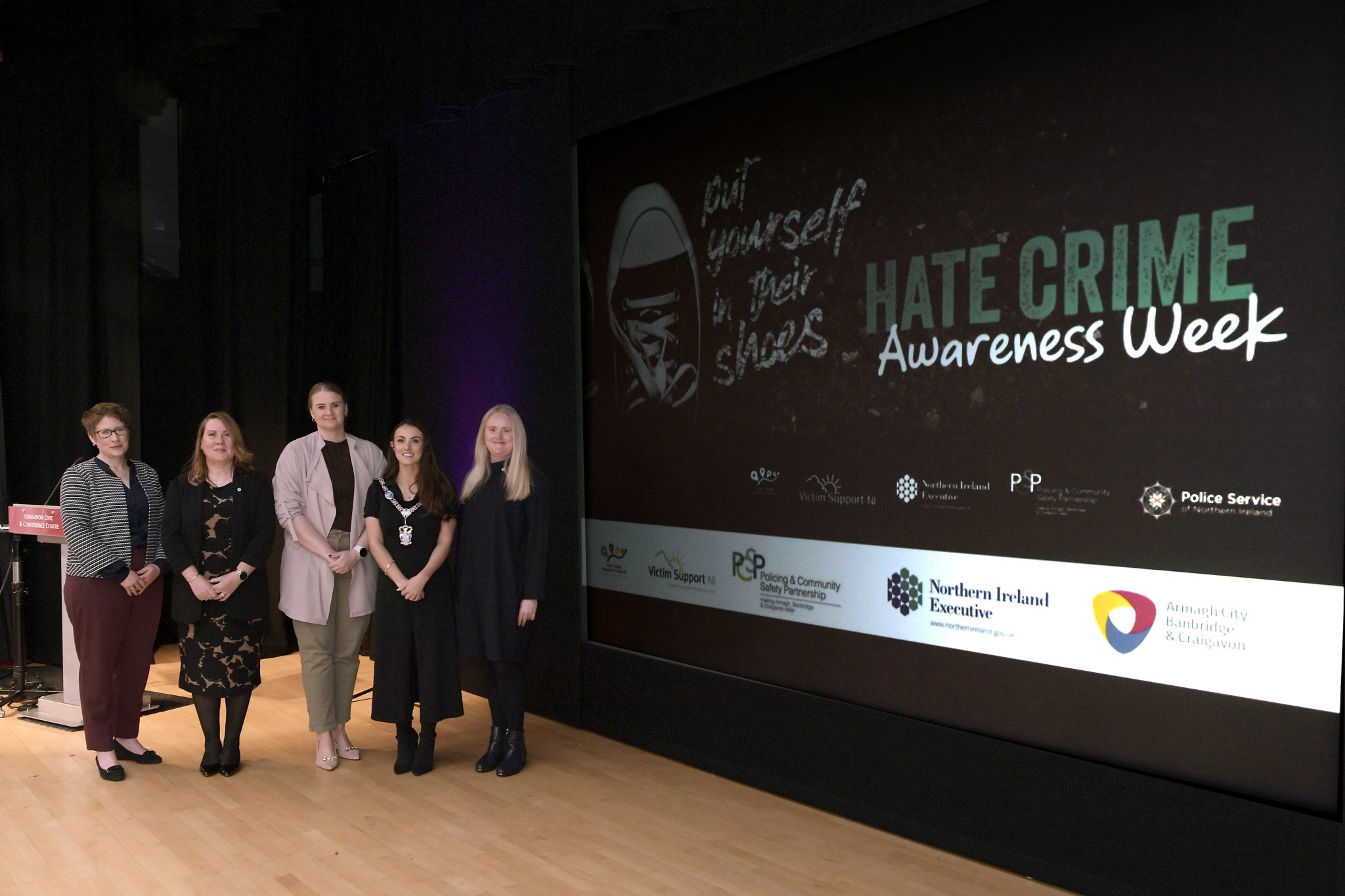
    January 23, 2025
  • MIL-OSI New Zealand: DOC Northland readies for a busy summer

    Source: Department of Conservation

    Date:  17 October 2024

    Many sites are already booked out over the peak Christmas and New Year period, but there are still opportunities for those looking to explore Northland’s natural beauty over the upcoming summer period.

    DOC campsites offer affordable holiday options in pristine settings, and staff work hard to ensure campers can enjoy the summer season with minimal disruptions, says Bronwyn Bauer Hunt, Operations Manager Te Pēwhairangi (Bay of Islands).

    “Northland’s DOC campsites have always been a favourite for summer holidaymakers, offering unique experiences from coastal views to tranquil bush settings. We encourage people to plan ahead and book early where possible, especially during peak times and be aware of the rules in place to protect these special places.”

    “Our islands have special biodiversity values and are home to threatened plant and animal species, some of which only exist in a few places. Wildfire can be devastating to these native ecosystems and we are very concerned about the threat of pest seaweed Caulerpa,” says Bronwyn.

    Background information

    Important information for campers and day trippers

    • Fires: Visitors are reminded not to light fires on any of the islands due to the significant risk to local wildlife and ecosystems.
    • Biosecurity: It’s vital to follow biosecurity rules to protect these fragile environments—clean your gear and check for pests before visiting. It is illegal to fish or anchor a vessel in the defined controlled area of Te Rāwhiti Inlet to help control the spread of Caulerpa.
    • Marine Mammal Sanctuary Bay of Islands: Please respect the sanctuary rules and avoid entering designated safe zones to protect dolphins and other marine life.
    • Dogs: Dogs are not permitted at DOC campsites and areas to prevent disturbance or harm to native wildlife.

    Northland campsite availability for summer 2024/2025:

    While some campsites are booked solid through the busy holiday period, others still have availability for those seeking an adventure later in the summer.

    • Uretiti Campsite—50% availability from Christmas onwards, with more space opening up after the peak holiday period.
    • Trounson Kauri Park and Puketi campsites—plenty of availability through December and January.
    • Puriri, Waikahoa, Urupukapuka Island Campsites—fully booked until mid-January, with availability after that.
    • Otamure Campsite—booked out until the end of January, with some availability from February onwards.

    Some campsites do not need to be booked and operate on a first-come, first-served basis.

    How to camp responsibly:

    • Be prepared—check the latest information on weather, travel conditions, wildlife, walking tracks, and the gear you’ll need before heading out.
    • Respect nature—use biodegradable products, and keep your washing away from rivers, lakes, and the ocean to protect local ecosystems. Most camps have a pack in pack out policy.
    • Check campsite rules—understand where to pitch your tent and whether there are fire restrictions before lighting any outdoor fires.
    • Plan for waste—not all campsites have waste disposal, so campers should take rubbish with them when leaving.
    • Book early—secure your spot at a DOC campsite by booking in advance, especially during peak periods.

    “A lot of these islands are also pest free so checking your boat for any rodent stowaways and other unwanted pests is vital. Dogs are not permitted on islands managed by DOC as they disturb or threaten wildlife.’’

    There is a total fire ban on conservation islands in Northland. Anyone who lights an unauthorised fire could face up to two years’ imprisonment or a fine of up to $200,000, plus the costs of the damage and putting out the fire.

    Contact

    For media enquiries contact:

    Email: media@doc.govt.nz

    MIL OSI New Zealand News –

    January 23, 2025
  • MIL-OSI Security: Connecticut Fisherman Sentenced for Tax Evasion

    Source: United States Attorneys General

    A Connecticut man was sentenced today to one year and one day in prison for evading taxes on income he earned from commercial fishing in Massachusetts.

    According to court documents and statements made in court, Brian Kobus, of Durham, worked as a commercial fisherman and deckhand for various fishing companies in Massachusetts. After each fishing trip, the companies paid Kobus by check. Despite receiving over $1.2 million in fishing income between 2011 through 2013, and 2017 through 2021, Kobus never filed a federal income tax return or paid the taxes that he owed. To conceal the source and disposition of his income from the IRS, Kobus regularly cashed his paychecks from the fishing companies and used the cash to fund his personal lifestyle.

    In total, Kobus caused a tax loss to the IRS of approximately $377,839.90.

    In addition to his prison sentence, U.S. District Court Judge Nathaniel M. Gorton for the District of Massachusetts ordered Kobus to serve one year of supervised release and to pay $377,839.90 in restitution to the United States.

    Acting Deputy Assistant Attorney General Stuart M. Goldberg of the Justice Department’s Tax Division and Acting U.S. Attorney Joshua S. Levy for the District of Massachusetts made the announcement.

    IRS Criminal Investigation is investigating the case.

    Trial Attorney Matthew L. Cofer of the Tax Division and Assistant U.S. Attorney Victor Wild for the District of Massachusetts prosecuted the case.

    MIL Security OSI –

    January 23, 2025
  • MIL-OSI Economics: Burkina Faso formally accepts Agreement on Fisheries Subsidies

    Source: World Trade Organization

    Director-General Okonjo-Iweala said: “I am delighted that Burkina Faso has formally accepted the Agreement on Fisheries Subsidies. As a landlocked, least-developed country, Burkina Faso’s commitment underscores the vital role that all WTO members must play in advancing this Agreement closer towards entry into force to foster sustainable global fisheries worldwide for the benefit of all people’s livelihoods and food security. I hope more members swiftly follow suit.”

    Minister Traoré said: “Burkina Faso’s ratification of the Agreement on Fisheries Subsidies is testimony to the emphasis our country places on honouring its international commitments, in this case its WTO commitments. The significance of an international commitment promoting the sustainability of oceans and their resources, which benefit all — irrespective of geographical location — cannot be overstated”

    “Moreover, we wish to see implementation of this Agreement benefiting all countries, including landlocked ones, through technical capacity-building of stakeholders in the fisheries sector. We are pinning our hopes on the effectiveness of this Agreement in all its dimensions.”

    Burkina Faso’s instrument of acceptance brings to 85 the total number of WTO members that have formally accepted the Agreement. Seventeen African members have formally accepted the Agreement, of which nine are least-developed countries. Twenty-six more formal acceptances are needed for the Agreement to come into effect. The Agreement will enter into force upon acceptance by two-thirds of the membership.

    Adopted by consensus at the WTO’s 12th Ministerial Conference (MC12), held in Geneva on 12-17 June 2022, the Agreement on Fisheries Subsidies sets new, binding, multilateral rules to curb harmful subsidies, which are a key factor in the widespread depletion of the world’s fish stocks. In addition, the Agreement recognizes the needs of developing economies and least-developed countries and establishes a fund to provide technical assistance and capacity building to help them implement the obligations.

    The Agreement prohibits subsidies for illegal, unreported and unregulated (IUU) fishing, for fishing overfished stocks, and for fishing on the unregulated high seas.

    Members also agreed at MC12 to continue negotiations on outstanding issues, with a view to adopting additional provisions that would further enhance the disciplines of the Agreement.

    The full text of the Agreement can be accessed here. The list of members that have deposited their instruments of acceptance is available here. Information for members on how to accept the Protocol of Amendment is available here.

    Share

    MIL OSI Economics –

    January 23, 2025
  • MIL-OSI USA: Thompson Announces $2 Million in Federal Funding for ClearWater Conservancy

    Source: United States House of Representatives – Congressman Glenn Thompson (5th District Pennsylvania)

    COLLEGE TOWNSHIP, Pa.– Today, U.S. Representative Glenn “GT” Thompson announced the ClearWater Conservancy in College Township as the recipient of a $2 million Appalachian Regional Commission (ARC) Partnerships for Opportunity and Workforce and Economic Revitalization (POWER) grant. This investment will construct a local conservation hub and increase environmental stewardship throughout the region.

    “ClearWater Conservancy has been working for decades to advance voluntary conservation efforts throughout our region,” Rep. Thompson said. “The construction of the ClearWater Community Conservation Center will help boost ecotourism and agritourism throughout the area. With this project, there is going to be something for everyone to enjoy. Congratulations to ClearWater Conservancy and their many partners and volunteers for their continued dedication to Central Pennsylvania’s streams and natural landscape.”


    ARC POWER grants target areas affected by the coal-related job losses. ClearWater plans to use the grant to increase public events, educational opportunities and community programming. A historic farmhouse and barn on the property will also be renovated. An ADA (Americans with Disabilities Act) accessible trail will be established to connect the center to the Spring Creek, a world-renowned trout fishing stream.

    “I was thrilled to receive GT’s call telling me that ClearWater would receive a $2 million ARC grant for the new Community Conservation Center,” saidFord Stryker of ClearWater Conservancy. “We appreciate the Congressman’s support to secure this grant, which is a critical piece of the funding strategy because local philanthropy could not cover all the construction costs. The ClearWater Conservancy takes an active role in conserving land and protecting water resources for the preservation and creation of new outdoor recreation assets, working agritourism assets, and agribusinesses. These efforts have become increasingly important as Central Pennsylvania’s economy becomes more reliant on tourism and agriculture following the decline of Central Pennsylvania’s coal-related industries.”

    In addition to ARC funds, local sources will provide $5,968,600, bringing the total project funding to $7,968,600.

    ClearWater Conservancy is an active nonprofit, land trust association focused on environmental stewardship and education. ClearWater Conservancy has conserved 11,000 acres of land, restored 25 miles of streams, and restored 183 acres of riparian forest in Central Pennsylvania since 1980.

    ARC is an economic development agency of the federal government and 13 state governments focusing on 423 counties across the Appalachian region. ARC’s mission is to innovate, partner, and invest to build community capacity, strengthen economic growth in Appalachia, and help the region achieve socioeconomic parity with the nation.

    ARC POWER grants allocate federal resources to support communities and regions that have been affected by job losses in coal mining, coal power plant operations, and coal-related supply chain industries.


    ###

    MIL OSI USA News –

    January 23, 2025
  • MIL-OSI USA: On World Food Day, Rededicating Ourselves to Food Security for All

    Source: USAID

    When Tanzanian farmer and entrepreneur Prakseda Melkior was in just the third grade, she sold a head of spinach that she had grown in her backyard – and decided that she wanted to make a career out of producing food. 

    After studying agriculture at university, she went on to start her own farm, cultivating tomatoes, peppers, and bananas. But the usual method of watering crops using an old pumping water generator powered by diesel fuel was cutting into her profits, costing her the equivalent of thousands of U.S. dollars per year in fuel costs. Fortunately, a local USAID program was offering training to farmers in Melkior’s area in innovative farming techniques and irrigation methods. She used those techniques to water and grow her crops more efficiently, and went on to help train other farmers in the same methods. She also championed an idea for the U.S. government’s Feed the Future initiative to support farmers in installing solar-powered irrigation systems. When Melkior’s own solar system is completed, it will slash her irrigation costs by 70 percent and allow her to keep expanding her farm. “We’ll be harnessing the power of the sun to irrigate our crops,” she said. “It is a game-changer, allowing us to grow more, serve more customers and create more jobs in our community.”

    Helping farmers like Melkior grow more food is particularly important today, as we mark World Food Day amid a historic number of food crises. More than 175 million people globally face life-threatening food insecurity, fueled by conflicts and climate-driven disasters including the recent historic floods in West Africa and El Niño-induced drought across southern Africa. As the world’s largest donor of emergency food assistance, USAID provided more than $5 billion in food security assistance to 134 million people in 61 countries in 2023 – including surging emergency food items to civilians in places like the Democratic Republic of the Congo, Ethiopia, Gaza, Sudan, and South Sudan. 

    On World Food Day, it is also important to underscore that our ambition is not just to respond to hunger crises, but to strengthen food systems so we can help prevent many of these crises altogether. As part of this goal, I announced last month the launch of the “Feed the Future Accelerator,” an effort to deepen our partnerships with Malawi, Tanzania, and Zambia – three countries with both high need for investment in their food systems and high potential for their agricultural sectors to drive long-term, regional reductions in poverty, malnutrition, and hunger. In these countries, we are aligning resources from across the U.S. government, NGOs, foreign governments, and the private sector to advance their progress at becoming agricultural breadbaskets that not only feed hungry people within their borders, but also help to stabilize the food supply across the African continent. 

    As we commemorate this year’s World Food Day, USAID is committed to taking action to address hunger crises and build a future where everyone has sufficient, nourishing, and safe food. 

    MIL OSI USA News –

    January 23, 2025
  • MIL-OSI Economics: Clean Energy Industries Rally Behind Illinois Bills to Save Ratepayers $3 Billion Through Grid Modernization

    Source: American Clean Power Association (ACP)

    Headline: Clean Energy Industries Rally Behind Illinois Bills to Save Ratepayers $3 Billion Through Grid Modernization

    HB5856 and SB3959 will increase the reliability of the Illinois energy grid, protect ratepayers from rising costs, future-proof the economy, and help the state achieve climate goals
    ILLINOIS, October 15, 2024 – Illinois clean energy industries are unified in supporting HB5856 and SB3959, new legislation that will future-proof Illinois’ energy grid and economy, lower consumer costs, meet climate goals, create family-sustaining careers, and mitigate increasing risks of blackouts.
    “Clean energy is the future, and it’s my duty to work toward that future for the benefit of all Illinois residents,” said State Rep. Barbara Hernandez (D-Aurora), lead House sponsor of HB5856. “HB5856 and SB3959 will provide many benefits to Illinois for decades to come, from lowering consumer costs to ushering in thousands of jobs to preventing dangerous blackouts to bolstering our power grid to make Illinois an attractive investment for energy-intensive tech companies.”
    These bills establish the first clean energy storage procurement mandate for the state to ensure a more reliable grid and address challenges that are slowing down renewable energy resource development. HB5856 and SB3959 would save Illinois consumers $30 per month on their energy bills, prevent more than $7 billion in blackout-related expenses, and create as much as $16 billion in economic benefits.
    “Illinois has an ambitious plan to be a national leader in the climate change fight while supercharging the state’s clean energy economy,” said State Sen. Bill Cunningham (D-Chicago). “While Illinois is on the right path to meet its goals, it is at risk of not meeting its more immediate deadlines, which will arrive as early as 2030. HB5856 and SB3959 are thoughtful, strategic bills that will help unleash the clean energy economy’s full potential while strengthening our electric grid to make it more reliable, encouraging development and job growth, and creating additional protections for consumers and all ratepayers.”
    The clean energy industries collectively agree that HB5856 and SB3959 are necessary to address the urgent need for more clean energy storage in Illinois. Federal, regional, and state regulators identify Illinois as at risk for falling short of energy needs. This means the state will face challenges in maintaining a reliable grid and that consumers may experience increased and unpredictable energy rates. Legislative action is needed now because deploying large-scale energy storage resources takes time. Illinois residents are already feeling the impact of regulators’ projections, as the July 2024 PJM Interconnection energy capacity auction saw an 833% increase in energy prices, due to an anticipated energy capacity shortfall that will increase power bills by as much as $30 per month for millions of Illinois residents within the PJM Interconnection territory. HB5856 and SB3959 will directly address this risk by providing incentives to supercharge more solar and wind energy and storage developments for a more diverse, reliable power grid.
    “HB5856 and SB3959 are critical to building on the success of the landmark Climate and Equitable Jobs Act (CEJA) in Illinois,” said Andrew Linhares, Senior Manager, Central Region at Solar Energy Industries Association (SEIA). “The Illinois clean energy economy has flourished in recent years but there’s more work to be done to secure the state’s clean energy future. This thoughtfully crafted legislation will help unleash the full potential of solar and storage and help Illinois achieve 100% clean energy by 2050.”
    A recent study by Mark Pruitt, former director of the Illinois Power Agency, founder of The Power Bureau, and a professor at Northwestern University, found that HB5856’s and SB3959’s target to create at least 8,500 MW of clean energy storage would provide up to $3 billion in consumer cost savings, save up to $7.3 billion in blackout-related costs through increased grid reliability, and generate up to $16.3 billion in economic activity in Illinois by 2050. The study also found that energy storage is the most cost-effective, immediate, and attainable long-term solution. Not only would HB5856 and SB3959 create those benefits, but they would also ensure Illinois meets the clean energy mandates established by CEJA.
    “American Clean Power (ACP) was proud to help lead this collaborative effort to ramp up the procurement and deployment of storage and solar technologies in a way that delivers for the people of Illinois,” said Erika Kowall, Director of Midwestern State Affairs for ACP. “HB5856 and SB3959 will meet the state’s clean energy goals, unleashing the full potential of clean energy’s cost efficiency and economic benefits. We appreciate the leadership of Sen. Cunningham and Rep. Hernandez for swiftly taking up this legislation and hope it can be implemented quickly.”
    “Energy storage will improve the reliability of the Illinois electric grid, and this legislation can’t come at a more important moment,” said Trish Demeter, Managing Director of Advanced Energy United. “The sooner we can begin adding more energy storage, the sooner we can address energy capacity shortfalls due to the ever-growing energy demand from residents and businesses, retiring power stations, and continued investments from energy-intensive industries, while providing savings to consumers and supercharging the Illinois economy.”
    “All of these pieces work together – storage, grid reliability, ratepayer savings, climate goals, and equity,” said Lesley McCain, Executive Director of Illinois Solar Energy and Storage Association. “HB5856 and SB3959 tie together each of these pieces to move Illinois closer toward achieving its climate goals. Energy storage is essential to creating a more reliable grid. A more reliable grid is critical to protecting residents from rising prices and attracting investments from new businesses. Incentivizing growth in these areas will accelerate progress toward our climate goals, which will remove high-polluting energy generators from low-income areas. More growth will stimulate the creation of more high-quality job and career opportunities for all Illinois residents. We’ve made great progress toward the aggressive climate goals established by CEJA, but we must keep learning, adapting, and growing if we want to achieve those goals.”
    Interconnection is another important topic addressed by HB5856 and SB3959. Interconnection is the process of connecting an energy generating system, such as a new residential solar panel installation or a community solar array, to the existing power grid. Currently, the process varies significantly from project to project, which can result in large, unanticipated costs to connect a system to the energy grid. Oftentimes, the large, unanticipated cost arises after the development is completed, which can terminate a project even if the system is built and ready to be energized. HB5856 and SB3959 aim to increase transparency and predictability on the interconnection process to reduce surprise changes and costs and maintain the integrity and safety of the power grid.
    “There are many critical stages to solar energy project development, and interconnection is one of the most critical,” said Carlo Cavallaro, Midwest Regional Director of Coalition for Community Solar Access. “When the system has been built and all that is left is to connect it to the grid, this is not when a project should be stalled or failed. Unfortunately, it happens more than one might think, so HB5856 and SB3959 address this in a way that makes the process more transparent and collaborative. If we can make this process more efficient, then it’ll benefit all ratepayers because the process will be cheaper and faster; and it will help us add new clean energy resources to the grid and reach our clean energy goals faster.”
    “Building on CEJA’s landmark goals, HB5856 and SB3959 are a progressive, evidence-based approach that will establish Illinois’ energy grid as the nation’s leader in clean, affordable, and reliable electricity. It will positively benefit electricity customers, improve grid reliability, and send a bold message far and wide that Illinois is open for clean energy business,” said Jeff Danielson, Vice President of Advocacy at Clean Grid Association. “We’re proud to stand with Illinois’ new generation of energy leaders in the Senate and House, who are focused on building the grid of tomorrow right here in the heartland of America. They are standing up for the clean energy opportunities Illinois’ citizens deserve and showing that a reliable grid and business investments of the future go hand-in-hand. The rest of the Midwest, indeed the USA, will take notice.”
    HB5856 and SB3959 address the following:
    Grid Resilience and Reliability
    Establishes an 8.5 GW utility-scale cumulative storage procurement target for the Illinois Power Agency. Storage is a critical component of a stable and resilient grid, as it provides on-time support for grid infrastructure during high-usage Peak Load periods.
    Creates a storage + solar/wind ecosystem that empowers increased storage development at all scales and multi-tech, from behind-the-meter to utility-scale.
    Creates incentive programs for customers to adopt technology that reduces peak loads, behind-meter storage that reduces peak loads or exports, and combined community solar + storage developments.
    Establishes a robust storage and Virtual Power Plant (VPP) ecosystem that makes it less likely a grid will need to tap non-renewable and high-pollutant fuels during periods of high usage, and ensures the grid uses clean, renewable sources that work together regardless of whether or not the sun is shining or the wind is blowing, increasing the overall reliability of the grid in a sustainable way.
    Economic Benefits, Consumer Protections, and Agency Modernization
    Creates a VPP program to provide cost-savings by tapping devices such as rooftop solar and storage to inject power to the grid during peak times, rather than burning extra non-renewable fuel to meet periods of peak demand.
    Implements a more efficient interconnection process to encourage more clean energy development.
    Fosters utility-scale solar development through new IPA storage procurement targets.
    Creates new incentives that eliminate barriers for ratepayers to adopt solar and storage.
    Creates guaranteed savings for consumers by requiring utilities to pass clean energy savings through to consumers.
    Uncaps the residential Illinois Shines Block to eliminate waiting lists and enable more households to install solar, which will create more demand and jobs for clean energy developers and contribute to a more stable grid.
    Stimulates new storage, solar, and wind development, which will lead to the creation of new high-quality clean energy jobs in every corner of Illinois.
    Modernizes IPA procurement processes to ensure efficient procurement of clean energy and keeps Illinois on track to achieve CEJA goals.
    HB5856 and SB3959 can be read in its entirety HERE. To learn more about the legislation, visit http://www.solarpowersillinois.com/legislation-hb-5856.
    ###
    About Solar Powers Illinois Solar Powers Illinois is a collaborative partnership between the Illinois Solar Energy and Storage Association, Coalition for Community Solar Access, and Solar Energy Industries Association that works to promote the adoption of solar power in Illinois for consumers, businesses, and communities through education, advocacy, and action.
    About Advanced Energy United
    Advanced Energy United educates, engages, and advocates for policies that allow our member companies to compete to repower our economy with 100% clean energy. We work with decision makers at every level of government as well as regulators of energy markets to achieve this goal. The businesses we represent are lowering consumer costs, creating millions of new jobs, and providing the full range of clean, efficient, and reliable energy and transportation solutions. Together, we are united in our mission to accelerate the transition to 100% clean energy in the United States. Advanced Energy United is online at AdvancedEnergyUnited.org and @AdvEnergyUnited.
    About Clean Grid Association (CGA)
    Clean Grid Association (CGA) is a 501(c)(6) nonprofit organization based in St. Paul, Minn., whose mission is to advance renewable energy in the Midwest. CGA has been an active stakeholder in the MISO process at the state and regional levels and a leading organization working on transforming state energy policy. CGA’s membership includes businesses investing in wind, solar, storage, hydrogen and transmission projects, as well as environmental nonprofit organizations, public advocacy groups & clean energy advocates who come together to build the clean energy grid of the future. Learn more at cleangridalliance.org.
    About Coalition for Community Solar Access (CCSA)
    CCSA is a national trade association representing over 130 community solar developers, businesses, and nonprofits. Together, we are building the electric grid of the future where every customer has the freedom to support the generation of clean, local solar energy to power their lives. Through legislative and regulatory advocacy, and the support of a diverse coalition — including advocates for competition, clean energy, ratepayers, landowners, farmers, and environmental justice — we enable policies that unlock the potential of distributed energy resources, starting with community solar. For more information, visit https://www.communitysolaraccess.org and follow the group on X (Twitter), LinkedIn, and Youtube.
    About Illinois Solar Energy and Storage Association (ISEA)
    The Illinois Solar Energy and Storage Association (ISEA) is a non-profit organization that promotes the widespread application of solar and other forms of renewable energy through our mission of education and advocacy. Representing over 150 solar businesses, ISEA is the state resource for renewable energy related policy developments, educational classes, events and access to local renewable energy businesses. http://www.illinoissolar.org.
    About Solar Energy Industries Association (SEIA)
    The Solar Energy Industries Association® (SEIA) is leading the transformation to a clean energy economy, creating the framework for solar to achieve 30% of U.S. electricity generation by 2030. SEIA works with its 1,000 member companies and other strategic partners to fight for policies that create jobs in every community and shape fair market rules that promote competition and the growth of reliable, low-cost solar power. Founded in 1974, SEIA is the national trade association for the solar and solar + storage industries, building a comprehensive vision for the Solar+ Decade through research, education and advocacy. Visit SEIA online at www.seia.org and follow @SEIA on Twitter, LinkedIn and Instagram.

    MIL OSI Economics –

    January 23, 2025
  • MIL-OSI New Zealand: Health – New factsheet a reminder that healthier environments reduce cancer

    Source: Alcohol Healthwatch

    Newly released factsheet titled Ka Hua Mai Te Mate Pukupuku I Te Inu Waipiro – Alcohol Causes Cancer by the Royal Society Te Apārangi is a reminder that, like tobacco and asbestos, alcohol causes cancer.
    Although the link between alcohol and cancer has been known for over 100 years and 4 in 5 New Zealanders drink alcohol, only 1 in 5 of us are aware that alcohol can cause cancer.
    The factsheet also talks about how our environment can be improved to reduce alcohol-related cancers. This includes increasing the price of alcohol, reducing the availability of alcohol, and restricting its marketing.
    “Drinking patterns are highly influenced by our environment,” says Alcohol Healthwatch Health Promotion Advisor Sarah Sneyd. “Alcohol is freely available on street corners and through a click of a button on your phone, it’s cheaper today than it ever has been before, and there is so much advertising that we even see alcohol billboards outside primary schools. There is enormous pressure to drink, and unfortunately every drink increases the risk of seven different types of cancer.”
    Sneyd welcomes the report with hopes that it helps raise awareness of the links between alcohol and cancer, and how we can reduce the cancer burden.
    “With increased environmental protections in our communities, not only will alcohol-related cancers decrease, we will also see fewer drink-driving accidents, less family violence, fewer children maltreated, and less violent crime. Everything we care about will start to improve.”

    MIL OSI New Zealand News –

    January 23, 2025
  • MIL-OSI USA: Governor’s Office Opens Arizona Game And Fish Commission Application

    Source: US State of Arizona

    Mesa, AZ – The Governor’s Office is now accepting applications to fill an upcoming vacancy on the Arizona Game and Fish Commission. Residents knowledgeable and passionate about Arizona wildlife and conservation in eligible counties are welcome to apply.

    The five-member Game and Fish Commission establishes policy, rules, and regulations for the management, preservation and harvest of wildlife and fishery resources, as well as watercraft and off-highway vehicle operations. The commission also serves in an advisory role to the Arizona Game and Fish Department. For more information about the Arizona Game and Fish Commission and its mission visit the Arizona Game and Fish Commission website.

    The commission is structured to ensure geographical and political representation from across Arizona. The current opening must be filled by a resident of Apache, Cochise, Coconino, Graham, Greenlee, La Paz, Mohave, Navajo, Pinal, Yuma, or Yavapai counties. Applicants must disclose their party affiliation on their application and must not have changed party registration within the past two years in order to be eligible.

    Applicants must be received no later than 11:59 p.m. on Monday, October 7th.

    Individuals interested in applying must do so through the Boards and Commissions website. Applicants are required to include their current residential address, political party, and a resume with their application. Any additional materials or letters of recommendation that applicants wish to be included in their application packet should be emailed to [email protected].

    The Game and Fish Appointment Recommendation Commission will be meeting in October to review applications and conduct interviews in-person. Questions regarding the review process should be directed to Cindy Freehauf ([email protected]) with the Arizona Game and Fish Department.

    Individuals also may contact the Governor’s Office of Boards and Commissions by emailing [email protected].

    MIL OSI USA News –

    January 23, 2025
  • MIL-OSI USA: Shapiro Administration Awards $3.4 Million for Stream and Watershed Restoration Projects

    Source: US State of Pennsylvania

    October 16, 2024 – Harrisburg, PA

    Shapiro Administration Awards $3.4 Million for Stream and Watershed Restoration Projects

    The Pennsylvania Department of Environmental Protection (DEP) has awarded more than $3.4 million in grants to projects to improve water quality and fish and wildlife habitat throughout Pennsylvania’s part of the Chesapeake Bay watershed and other watersheds.

    “Ensuring clean water and healthy watersheds is a fundamental right for all Pennsylvanians. With these grant awards we will continue our work to reduce pollution and improve water quality in Pennsylvania,” said DEP Acting Secretary Jessica Shirley. “These projects are creating healthier streams and wetlands across Pennsylvania, reducing flood risk and improving fish and wildlife habitat. We are building on the success we are seeing in the Chesapeake Bay watershed by restoring streambanks, removing legacy sediment, and treating mine water discharge, among other improvements.”

    The 12 awards are funded by the Section 319 Grant program from the U.S. Environmental Protection Agency and selected by DEP. The purpose of the grants is to support projects that carry out best management practices (BMPs) specified in Watershed Implementation Plans for 43 watersheds around the state. The program also supports development of new Watershed Implementation Plans for impaired watersheds in Environmental Justice (EJ) areas. Ten of the 12 grants are for projects in the Chesapeake Bay watershed.

    List of Speakers:
    Adam Ortiz, EPA Region 3 Regional Administrator
    Jill Whitcomb, Acting Deputy Secretary for Water Programs, DEP
    Chris Thompson, Lancaster County Conservation District Manager
    Amanda Goldsmith, Watershed Specialist with Lancaster County Conservation District
    Matt Kofroth, Asst. District Mgr. with the Lancaster County Conservation District

    MIL OSI USA News –

    January 23, 2025
  • MIL-OSI New Zealand: Marine Ecology – Clever sleuthing unmasks mystery ocean creature – NIWA

    Source: NIWA

    A mystery animal has been identified as a species never documented in New Zealand waters.
    Thousands of specimens were collected during NIWA’s three-week Ocean Census voyage to the unexplored Bounty Trough earlier this year, done as part of a 10-year planetary census to discover life in our ocean.
    Watch: the Bounty Trough Ocean Census voyage: 
    https://www.youtube.com/watch?v=OatXX6pdIGg
    Amongst the brilliant selection of fish and invertebrates collected from 3,500m deep, an unusual specimen stumped the experts. NIWA marine biologist and voyage leader Sadie Mills says she and her colleagues resulted to calling it ‘The Thing’. 
    “It looked kind of like a sea star, but we thought it could also be a sea anemone or octocoral. We had several world-leading experts onboard and none of us could place it, and initial DNA sequencing resulted in no close relationship with any known organism. So, it became known as ‘The Thing’,” said Sadie.
    However, after further DNA sequencing, Sadie’s team got a positive result – a 98.9% match to Oligotrema lyra – an abyssal ascidian, or sea squirt. Identification was then morphologically confirmed by taxonomic expert, Dr Mike Page. 
    “It’s amazing that genetics could help us solve the mystery. We actually had two specimens, but it turned out they were both only parts of the whole creature, which is what threw us because we weren’t seeing the full picture. Our resident ascidian expert Mike thinks part of the body was buried in the sediment, and what we collected were the siphons that they use to feed and filter water, which protruded above the sand,” said Sadie.
    While this species is already known to science, it is the first time it has been documented in New Zealand waters and expands our knowledge on the huge diversity of species that fall under our protection. 
    Ascidians are common in New Zealand’s coastal waters and in the deeper waters on our continental shelf. They are amongst the more colourful marine invertebrates that inhabit our coasts, harbours, and oceans.
    When disturbed, sea squirts contract their siphons, expelling streams of water-hence their name. 
    The Ocean Census is a global alliance to accelerate the discovery and protection of life in the ocean founded by The Nippon Foundation and UK ocean exploration foundation Nekton, and endorsed as a Programme of the UN Ocean Decade.  

    MIL OSI New Zealand News –

    January 23, 2025
  • MIL-OSI USA: How a Clean Energy Simulator Is Helping Build a Better Grid

    Source: US National Renewable Energy Laboratory

    A Sweeping Research Platform Can Now Mimic Steady, Predictable Water Power (and More)


    NREL’s energy simulator can mimic the grids of the future—and now, this massive, virtual and real-world research platform can simulate water power, too. Photo by Werner Slocum, NREL

    Say you want to study something big—like a community power grid, a massive pipe system, or roadways crisscrossing the entire United States—but none of it exists, at least not yet. How do you study these invisible labyrinths to make sure they will be safe and efficient?

    Good question, and here is the answer: You do that at the National Renewable Energy Laboratory (NREL) on a platform called the Advanced Research on Integrated Energy Systems (or ARIES, for short).

    NREL’s experts have built a research platform that can create 3D simulations of entire power grids—either existing or theoretical—that contain thousands or even millions of different energy technologies. For example, researchers can populate an existing grid with wind turbines, solar panels, batteries, nuclear facilities, electric vehicles, or even smart devices, like our cell phones, to see how they could impact our future grid.

    But until recently, one grid puzzle piece has not been well represented.

    “The part that has been missing is: How can we simulate or represent water power devices?” said Rob Hovsapian, a mechanical engineer at NREL and an ARIES research advisor who helped introduce hydropower into the platform.

    With ARIES, researchers can play out and plan for almost any future grid scenario. For example: How could huge amounts of renewable energy impact different community grids? And how could hydropower help our power system weather hurricanes, cold snaps, cyberattacks, and other disruptions?

    “It allows us to do those ‘what if’ scenarios,” Hovsapian said. “In the real world, you’re limited to what’s there.”

    Now that ARIES has integrated water power into its grid simulations, researchers can explore even more “what if” scenarios to prepare for the grid to come. Photo by Bryan Bechtold, NREL

    Now, we can ask “what ifs” about water power technologies, like hydropower and the more nascent marine energy (sometimes called ocean energy because it often comes from powerful ocean waves, currents, and tides, but it can refer to energy from river currents as well). Though very different, both water power technologies generate predictable energy, making them a dependable partner for more variable energy sources, like wind energy and solar power. Those renewables, along with energy storage (like batteries), have been part of ARIES for a good while now. It was time to sprinkle a little water into the mix.

    “Now that we can use ARIES to simulate hydropower, we can study more scenarios in more locations and even potential future energy systems,” said Jerry Davis, the laboratory program manager for ARIES. “We want to represent as many renewable generation sources as we can.”

    But that is harder than it might sound.

    A Hydropower Simulator Helps a Remote Alaskan Village

    When fishers return to the harbor in the remote village of Cordova, Alaska, they enter a cove full of mast spikes resembling hundreds of mini-church spires. Those fishers—and there are a lot in Cordova—bring in salmon, halibut, rockfish, and trout but also something less desirable: a 400% increase in energy demand, which can strain the small village’s microgrid, a standalone power system that depends on just two hydropower plants and diesel generators (and diesel must be flown or boated in, often at great expense).

    And that is a problem.

    Cordova’s microgrid—and everything it powers, including hospitals and homes—is vulnerable to spikes in energy demand from the summer fish bonanza and Alaska’s dangerously cold winters as well as extreme weather events, like avalanches and droughts. The village needed solutions—novel ways for their microgrid to bob and weave with all these changes, so they can match energy supply to demand, especially when their economy or lives depend on it.

    But you cannot simply tinker with such a critical system, hoping your manipulations do not cause a blackout or irreparable damage. Nor can you study something that does not exist, like batteries or solar panels that have yet to be installed.

    That is where NREL and ARIES come in.

    The ARIES platform uses data from real-world wind turbines, solar panels, hydropower generators, and more to create a highly accurate virtual simulation of different grid scenarios and how they might react to changes in energy demand, weather, and higher levels of renewable energy. Graphic by Josh Bauer, NREL; photo by Joe DelNero, NREL

    The village was one of the first communities to directly benefit from ARIES’ hydropower emulation platform, which, like the rest of ARIES, relies on hardware and software to accurately simulate the town’s spiderweb of energy devices. ARIES’ software programs, which are built on real-world data, can mimic actual grids (like Cordova’s microgrid), so researchers can manipulate the Cordova system in the safety of a computer simulation. Soon, ARIES will also be able to connect actual hardware, like a hydropower generator, to these virtual simulations so the system can receive live feedback from real tech and learn from it.

    For hydropower, ARIES’ simulation capability is especially valuable. Although researchers can install experimental solar panels and wind turbines at a laboratory field site, they cannot replicate hydropower plants—they are simply too big and too specific to certain river sites or geography.

    Instead, Mayank Panwar, a senior research engineer at NREL, and Hovsapian built what they call a Real-Time Hydropower Emulation Platform, which can mimic real-world hydropower facilities in real time—one second in the hydropower simulator equates to one second in the real world. As of today, their 2.5-megawatt emulator uses data from actual hydropower plants (including those in Cordova) to inform its simulations.

    “As we add more and more technologies to ARIES and there’s more and more variability and uncertainty with the grid, such as wind and solar, hydro will play a key role in providing stability to the grid,” Hovsapian said. “But how would we quantify that? ARIES will be an ideal environment for us to do that.”

    With ARIES, Hovsapian can ask more “what if” questions, like what if this hydropower plant in Cordova is paired with a 10-megawatt battery or 3 megawatts of solar panels instead of 1? And how do these changes impact the grid’s reliability? Thanks to ARIES, Cordova has their answers—and a more resilient grid, too.

    No other system in the world can accomplish this kind of plug-and-play simulation, Hovsapian said.

    And it is not just hydropower that benefits.

    Getting Marine Energy to Communities Quickly

    Marine energy is still in the early stages of development, but these technologies can be valuable sources of clean energy for communities that have ample flowing water and little else. Like Cordova, the Alaskan village of Igiugig also relies on expensive shipments of diesel fuel. Many island communities off the coast of Maine struggle to maintain stable power when weather whips through. Communities in Hawaii, where energy costs are typically higher than in the rest of the country, also often depend on costly imported fuels.

    And yet, all three of these areas have one powerful thing in common: hefty amounts of water. With energy from river currents, waves, and tides, each community could improve its energy resilience and potentially achieve its clean energy goals, too.

    There is just one problem: Before communities opt to install one of these nascent devices, they need greater confidence that the technologies can deliver on their promise—and that is exactly what ARIES can provide.

    Prabakar (right) uses the ARIES research platform to simulate how marine energy technologies, like river current devices, could slot into existing grids and improve a community’s energy resilience. Photo by Joe DelNero, NREL

    “A big part of our mission is de-risking energy technologies, so communities are comfortable deploying them,” Davis said.

    At NREL, researchers are studying marine energy technologies “to make sure that things don’t fail in the field,” said Kumaraguru Prabakar, a research engineer at the laboratory. “Even if a small river generator is powering a small house, it is powering the grid, so you have to make sure it’s safe.”

    And for that—and more complicated analyses—he needs ARIES.

    Right now, Prabakar is examining how marine energy technologies slot into preexisting grids. Currents tend to be consistent, but rivers are still subject to freezes and droughts. Waves and tides are predictable but do not always churn out the same amount of power throughout the day or year. With ARIES, Prabakar can assess how these variations might impact different power systems and whether other solutions, like energy stored as green hydrogen, could balance out these fluctuations.

    ARIES’ biggest gift might be time. In the last decade, researchers used to take years to validate new energy technologies, Prabakar said. But now, with ARIES, experts can significantly speed up that process (ARIES can even pair up with similar simulators at other national laboratories to pull in even more data, capabilities, and answers). Speed is especially critical to accelerate the development of marine energy technologies so they can help fight climate change sooner rather than later.

    “If somebody comes up with an idea to add water power, they should be able to deploy it in less than 12 months,” Prabakar said.

    “It’s exciting,” Hovsapian added. “There are a lot of changes coming, and ARIES can help us prepare.”

    Learn more about the Advanced Research on Integrated Energy Systems (ARIES), the nation’s most advanced platform for energy system integration research and validation at scale. And subscribe to the NREL water power newsletter, The Current, to make sure you do not miss a water power update.

    MIL OSI USA News –

    January 23, 2025
  • MIL-OSI Global: Wildlife, climate and plastic: how three summits aim to repair a growing rift with nature

    Source: The Conversation – UK – By Jack Marley, Environment + Energy Editor, UK edition

    By the end of 2024, nearly 200 nations will have met at three conferences to address three problems: biodiversity loss, climate change and plastic pollution.

    Colombia will host talks next week to assess global progress in protecting 30% of all land and water by 2030. Hot on its heels is COP29 in Azerbaijan. Here, countries will revisit the pledge they made last year in Dubai to “transition away” from the fossil fuels driving climate breakdown. And in December, South Korea could see the first global agreement to tackle plastic waste.

    Don’t let these separate events fool you, though.

    “Climate change, biodiversity loss and resource depletion are not isolated problems” say biologist Liette Vasseur (Brock University), political scientist Anders Hayden (Dalhousie University) and ecologist Mike Jones (Swedish University of Agricultural Sciences).


    Read more:
    Humanity’s future depends on our ability to live in harmony with nature


    “They are part of an interconnected web of crises that demand urgent and comprehensive action.”

    Let’s start with the climate.


    This roundup of The Conversation’s climate coverage comes from our award-winning weekly climate action newsletter. Every Wednesday, The Conversation’s environment editor writes Imagine, a short email that goes a little deeper into just one climate issue. Join the 35,000+ readers who’ve subscribed.


    Earth’s fraying parasol

    “How hot is it going to get? This is one of the most important and difficult remaining questions about our changing climate,” say two scientists who study climate change, Seth Wynes and H. Damon Matthews at the University of Waterloo and Concordia University respectively.

    The answer depends on how sensitive the climate is to greenhouse gases like CO₂ and how much humanity ultimately emits, the pair say. When Wynes and Matthews asked 211 authors of past reports by the Intergovernmental Panel on Climate Change, their average best guess was 2.7°C by 2100.

    “We’ve already seen devastating consequences like more flooding, hotter heatwaves and larger wildfires, and we’re only at 1.3°C above pre-industrial levels — less than halfway to 2.7°C,” they say.


    Read more:
    New survey of IPCC authors reveals doubt, and hope, that world will achieve climate targets


    There is a third variable that is harder to predict but no less important: the capacity of forests, wetlands and the ocean to continue to offset warming by absorbing the carbon and heat our furnaces and factories have released.

    This blue and green carbon pump stalled in 2023, the hottest year on record, amid heatwaves, droughts and fires. The possibility of nature’s carbon storage suddenly collapsing is not priced into the computer models that simulate and project the future climate.

    Parched forests can emit more carbon than they soak up.
    Matthew James Ferguson/Shutterstock

    However, the ecosystems that buffer human-made warming are clearly struggling. A new report from the World Wildlife Fund (WWF) showed that the average size of monitored populations of vertebrate wildlife (animals with spinal columns – mammals, birds, fish, reptiles and amphibians) has shrunk by 73% since 1970.


    Read more:
    Wildlife loss is taking ecosystems nearer to collapse – new report


    Wildlife could become so scarce that ecosystems like the Amazon rainforest degenerate, according to the report.

    “More than 90% of tropical trees and shrubs depend on animals to disperse their seeds, for example,” says biodiversity scientist Alexander Lees (Manchester Metropolitan University).

    “These ‘biodiversity services’ are crucial.”


    Read more:
    Without birds, tropical forests won’t bounce back from deforestation


    The result could be less biodiverse and, importantly for the climate, less carbon-rich habitats.

    Plastic in a polar bear’s gut

    Threats to wildlife are numerous. One that is growing fast and still poorly understood is plastic.

    Bottles, bags, toothbrushes: a rising tide of plastic detritus is choking and snaring wild animals. These larger items eventually degrade into microplastics, tiny fragments which now suffuse the air, soil and water.

    “In short, microplastics are widespread, accumulating in the remotest parts of our planet. There is evidence of their toxic effects at every level of biological organisation, from tiny insects at the bottom of the food chain to apex predators,” says Karen Raubenheimer, a senior lecturer in plastic pollution at the University of Wollongong.


    Read more:
    Scientists reviewed 7,000 studies on microplastics. Their alarming conclusion puts humanity on notice


    Plastic is generally made from fossil fuels, the main agent of climate change. Activists and experts have seized on a similar demand to address both problems: turn off the taps.

    In fact, the diagnosis of Costas Velis, an expert in ocean litter at the University of Leeds, sounds similar to what climate scientists say about unrestricted fossil fuel burning:

    “Every year without production caps makes the necessary cut to plastic production in future steeper – and our need to use other measures to address the problem greater.”


    Read more:
    A global plastic treaty will only work if it caps production, modelling shows


    A production cap hasn’t made it into the negotiating text for a plastic treaty (yet). And while governments pledged to transition away from coal, oil and gas last year, a new report on the world’s energy use shows fossil fuel use declining more slowly than in earlier forecasts – and much more slowly than would be necessary to halt warming at internationally agreed limits. The effort to protect a third of earth’s surface has barely begun.

    Each summit is concerned with ameliorating the effects of modern societies on nature. Some experts argue for a more radical interpretation.

    “Even if 30% of Earth was protected, how effectively would it halt biodiversity loss?” ask political ecologists Bram Büscher (Wageningen University) and Rosaleen Duffy (University of Sheffield).


    Read more:
    Biodiversity treaty: UN deal fails to address the root causes of nature’s destruction


    “The proliferation of protected areas has happened at the same time as the extinction crisis has intensified. Perhaps, without these efforts, things could have been even worse for nature,” they say.

    “But an equally valid argument would be that area-based conservation has blinded many to the causes of Earth’s diminishing biodiversity: an expanding economic system that squeezes ecosystems by turning ever more habitat into urban sprawl or farmland, polluting the air and water with ever more toxins and heating the atmosphere with ever more greenhouse gas.”

    – ref. Wildlife, climate and plastic: how three summits aim to repair a growing rift with nature – https://theconversation.com/wildlife-climate-and-plastic-how-three-summits-aim-to-repair-a-growing-rift-with-nature-241419

    MIL OSI – Global Reports –

    January 23, 2025
←Previous Page
1 … 217 218 219 220 221 … 242
Next Page→
NewzIntel.com

NewzIntel.com

MIL Open Source Intelligence

  • Blog
  • About
  • FAQs
  • Authors
  • Events
  • Shop
  • Patterns
  • Themes

Twenty Twenty-Five

Designed with WordPress