Category: France

  • MIL-OSI Europe: RECOMMENDATION on the draft Council decision on the conclusion of the Agreement between the European Union and the People’s Republic of Bangladesh on certain aspects of air services – A10-0005/2025

    Source: European Parliament

    DRAFT EUROPEAN PARLIAMENT LEGISLATIVE RESOLUTION

    on the draft Council decision on the conclusion of the Agreement between the European Union and the People’s Republic of Bangladesh on certain aspects of air services

    (10844/2024 – C10-0111/2024 – 2015/0188(NLE))

    (Consent)

    The European Parliament,

     having regard to the draft Council decision (10844/2024),

     having regard to the draft Agreement between the European Union and the Government of the People’s Republic of Bangladesh on certain aspects of air services (12911/2015),

     having regard to the request for consent submitted by the Council in accordance with Articles 100(2) and Article 218(6), second subparagraph, point (a)(v), and Article 218(7), of the Treaty on the Functioning of the European Union (C10-0111/2024),

     having regard to Rule 107(1) and (4), and Rule 117(7) of its Rules of Procedure,

     having regard to the recommendation of the Committee on Transport and Tourism (A10-0005/2025),

    1. Gives its consent to the conclusion of the agreement;

    2. Instructs its President to forward its position to the Council, the Commission and the governments and parliaments of the Member States and of the People’s Republic of Bangladesh.

    EXPLANATORY STATEMENT

    The EU- People’s Republic of Bangladesh Agreement


    Negotiations on an EU Horizontal Aviation Agreement were initiated in March 2007 and a draft agreement was initialled in December 2013, with the aim of  restoring legal certainty to the bilateral air services agreements between the People’s Republic of Bangladesh and 8 EU Member States. The Council adopted its Decision on signature of the agreement in December 2015. However, following the UK’s withdrawal from the European Union and the expiry of the transition period on 31 December 2020, it was necessary to remove the references to the United Kingdom from the text of the Agreement before its formal signature. Bangladesh agreed to the removal of those references. On 18 September 2023, the Council took note of the intention to present for signing a text which differed from the text approved by the Council insofar as the references to the UK were concerned.


    On Friday 7 June 2024, the European Union and Bangladesh signed the “Agreement between the European Union and the People’s Republic of Bangladesh on certain aspects of air services”. Subject to the availability of traffic rights in the respective bilateral air services agreements, this EU agreement will allow any EU airline to fly between Bangladesh and the seven concerned EU Member States whose bilateral air services agreements with Bangladesh do not already allow this (Belgium, Denmark, Italy, Netherlands, Poland, France and Slovakia).


    Pending the entry into force of the horizontal agreement, the bilateral air services agreements which it covers only authorise airlines owned and controlled by the signatory Member State or Bangladesh or their nationals to operate flights between that Member States and Bangladesh.

    Procedure


    On Friday 6 September 2024, the ambassadors of the Member States to the EU (Coreper) approved the conclusion of the horizontal aviation agreement between the European Union and Bangladesh.


    In accordance with Rule 107(1) and (4), and Rule 117(7) of Parliament’s rules of procedure, the committee responsible (TRAN) shall submit a recommendation for the approval or rejection of the proposed act. Parliament shall then take a decision by means of a single vote, and no amendments to the Agreement may be tabled. Amendments in committee shall be admissible only if their aim is to reverse the recommendation proposed by the rapporteur.

    Rapporteur’s position


    By granting all EU air carriers non-discriminatory access to routes between the EU and Bangladesh, this agreement promotes competition on air routes between the EU and an important EU partner from Asia and will, consequently, improve connectivity.


    Standard EU clauses on aviation safety, aviation fuel taxation and compatibility with competition rules are included in the agreement, to ensure compatibility of the bilateral air services agreements with EU policies and standards.


    Based on all the above mentioned, the rapporteur recommends that the Committee on Transport and Tourism give its approval for the conclusion of this agreement.


    ANNEX: ENTITIES OR PERSONS FROM WHOM THE RAPPORTEUR HAS RECEIVED INPUT

    Pursuant to Article 8 of Annex I to the Rules of Procedure, the rapporteur declares that he received input from the following entities or persons in the preparation of the report, prior to the adoption thereof in committee:

    Entity and/or person

    Simon Brain, DG Move

    The list above is drawn up under the exclusive responsibility of the rapporteur.

    Where natural persons are identified in the list by their name, by their function or by both, the rapporteur declares that he has submitted to the concerned natural persons the European Parliament’s Data Protection Notice No 484 (https://www.europarl.europa.eu/data-protect/index.do), which sets out the conditions applicable to the processing of their personal data and the rights linked to that processing.


    PROCEDURE – COMMITTEE RESPONSIBLE

    Title

    Conclusion of an agreement between the European Union and the government of the People’s Republic of Bangladesh on certain aspects of air services

    References

    10844/2024 – C10-0111/2024 – 2015/0188(NLE)

    Date of consultation or request for consent

    27.9.2024


    Committee(s) responsible

    TRAN


    Rapporteurs

     Date appointed

    Tomas Tobé

    15.10.2024


    Date adopted

    29.1.2025


    Result of final vote

    +:

    –:

    0:

    41

    2

    0

    Members present for the final vote

    Oihane Agirregoitia Martínez, Daniel Attard, Tom Berendsen, Rachel Blom, Nikolina Brnjac, Nina Carberry, Benoit Cassart, Carlo Ciccioli, Anna Maria Cisint, Vivien Costanzo, Johan Danielsson, Valérie Devaux, Siegbert Frank Droese, Gheorghe Falcă, Jens Gieseke, Borja Giménez Larraz, Sérgio Gonçalves, Roman Haider, Sérgio Humberto, Dariusz Joński, François Kalfon, Martine Kemp, Sophia Kircher, Elena Kountoura, Luis-Vicențiu Lazarus, Julien Leonardelli, Vicent Marzà Ibáñez, Alexandra Mehnert, Ştefan Muşoiu, Jan-Christoph Oetjen, Philippe Olivier, Matteo Ricci, Rosa Serrano Sierra, Stanislav Stoyanov, Kai Tegethoff, Elissavet Vozemberg-Vrionidi, Kosma Złotowski

    Substitutes present for the final vote

    Alberico Gambino, Jutta Paulus, Dario Tamburrano, Kris Van Dijck, Ana Vasconcelos

    Members under Rule 216(7) present for the final vote

    Elisabeth Grossmann

    Date tabled

    30.1.2025


    MIL OSI Europe News

  • MIL-OSI USA: Cracked and Nulled Marketplaces Disrupted in International Cyber Operation

    Source: US State of California

    At Least 17M U.S. Victims Affected

    The Justice Department today announced its participation in a multinational operation involving actions in the United States, Romania, Australia, France, Germany, Spain, Italy, and Greece to disrupt and take down the infrastructure of the online cybercrime marketplaces known as Cracked and Nulled. The operation was announced in conjunction with Operation Talent, a multinational law enforcement operation supported by Europol to investigate Cracked and Nulled.

    Operation Talent Seizure Banner

    Supervisory Official Antoinette T. Bacon of the Justice Department’s Criminal Division, U.S. Attorney Trini E. Ross for the Western District of New York, U.S. Attorney Jaime Esparza for the Western District of Texas, Assistant Director Brian A. Vorndran of the FBI’s Cyber Division, Special Agent in Charge Matthew Miraglia of the FBI Buffalo Field Office, and Special Agent in Charge Aaron Tapp for the FBI San Antonio Field Office made the announcement.

    Cracked

    According to seizure warrants unsealed today, the Cracked marketplace has been selling stolen login credentials, hacking tools, and servers for hosting malware and stolen data — as well as other tools for carrying out cybercrime and fraud — since March 2018. Cracked had over four million users, listed over 28 million posts advertising cybercrime tools and stolen information, generated approximately $4 million in revenue, and impacted at least 17 million victims from the United States. One product advertised on Cracked offered access to “billions of leaked websites” allowing users to search for stolen login credentials. This product was recently allegedly used to sextort and harass a woman in the Western District of New York. Specifically, a cybercriminal entered the victim’s username into the tool and obtained the victim’s credentials for an online account. Using the victim’s credentials, the subject then cyberstalked the victim and sent sexually demeaning and threatening messages to the victim. The seizure of these marketplaces is intended to disrupt this type of cybercrime and the proliferation of these tools in the cybercrime community.

    The FBI, working in coordination with foreign law enforcement partners, identified a series of servers that hosted the Cracked marketplace infrastructure and eight domain names used to operate Cracked. They also identified servers and domain names for Cracked’s payment processor, Sellix, and the server and domain name for a related bulletproof hosting service. All of these servers and domain names have been seized pursuant to domestic and international legal process. Anyone visiting any of these seized domains will now see a seizure banner that notifies them that the domain has been seized by law enforcement authorities.

    The FBI Buffalo Field Office is investigating the case.

    Senior Counsel Thomas Dougherty of the Criminal Division’s Computer Crime and Intellectual Property Section (CCIPS) and Assistant U.S. Attorney Charles Kruly for the Western District of New York are prosecuting the case.

    Nulled

    The Justice Department announced the seizure of the Nulled website domain and unsealed charges against one of Nulled’s administrators, Lucas Sohn, 29, an Argentinian national residing in Spain. According to the unsealed complaint affidavit, the Nulled marketplace has been selling stolen login credentials, stolen identification documents, hacking tools, as well as other tools for carrying out cybercrime and fraud, since 2016. Nulled had over five million users, listed over 43 million posts advertising cybercrime tools and stolen information, and generated approximately $1 million in yearly revenue. One product advertised on Nulled purported to contain the names and social security numbers of 500,000 American citizens.

    The FBI, working in coordination with foreign law enforcement partners, identified the servers that hosted the Nulled marketplace infrastructure, and the domain used to operate Nulled. The servers and domain have been seized pursuant to domestic and international legal process. Anyone visiting the Nulled domain will now see a seizure banner that notifies them that the domain has been seized by law enforcement authorities.

    According to the complaint, Sohn was an active administrator of Nulled and performed escrow functions on the website. Nulled’s customers would use Sohn’s services to complete transactions involving stolen credentials and other information. For his actions, Sohn has been charged with conspiracy to traffic in passwords and similar information through which computers may be accessed without authorization; conspiracy to solicit another person for the purpose of offering an access device or selling information regarding an access device; and conspiracy to possess, transfer, or use a means of identification of another person with the intent to commit or to aid and abet or in connection with any unlawful activity that is a violation of federal law.

    If convicted, Sohn faces a maximum penalty of five years in prison for conspiracy to traffic in passwords, 10 years in prison for access device fraud, and 15 years in prison for identity fraud.

    The FBI Austin Cyber Task Force is investigating the case. The Task Force participants include the Naval Criminal Investigative Service, IRS Criminal Investigation, Defense Criminal Investigative Service, and the Department of the Army Criminal Investigation Division, among other agencies.

    Assistant U.S. Attorneys G. Karthik Srinivasan and Christopher Mangels for the Western District of Texas are prosecuting the case, with Assistant U.S. Attorney Mark Tindall for the Western District of Texas handling the forfeiture component.

    The Justice Department worked in close cooperation with investigators and prosecutors from several jurisdictions on the takedown of both the Cracked and Nulled marketplaces, including the Australian Federal Police, Europol, France’s Anti-Cybercrime Office (Office Anti-cybercriminalité) and Cyber Division of the Paris Prosecution Office, Germany’s Federal Criminal Police Office (Bundeskriminalamt) and Prosecutor General’s Office Frankfurt am Main – Cyber Crime Center (Generalstaatsanwaltschaft Frankfurt am Main – ZIT), the Spanish National Police (Policía Nacional) and Guardia Civil, the Hellenic Police (Ελληνική Αστυνομία), Italy’s Polizia di Stato and the General Inspectorate of Romanian Police (Inspectoratul General al Poliției Romane). The Justice Department’s Office of International Affairs provided significant assistance.

    A complaint is merely an allegation. All defendants are presumed innocent until proven guilty beyond a reasonable doubt in a court of law.

    MIL OSI USA News

  • MIL-OSI Global: Red Sea crisis: supply chain issues set to continue despite Gaza ceasefire

    Source: The Conversation – UK – By Gokcay Balci, Lecturer in Sustainable Freight Transport and Logistics, University of Leeds

    A large container ship passing through the Suez Canal in Egypt. byvalet / Shutterstock

    The world’s major shipping companies say they won’t be sending vessels back to the Red Sea any time soon despite a pledge by Iran-backed Houthi militants in Yemen not to attack them as long as the ceasefire in Gaza holds.

    French shipping and logistics company CMA CGM said in a statement on January 25 that the improved stability was “a positive but fragile sign” for the industry, and that it would continue to prioritise alternative routes.

    Since November 2023, one month after the war in Gaza began, the Houthis have launched missile and drone attacks against roughly 190 commercial and naval ships in the Red Sea’s Bab al-Mandab Strait. The group claims to have carried out attacks on vessels connected with Israel, or heading to its ports, in solidarity with Palestinians in the Gaza Strip. Though this has not always been the case.

    These attacks have prompted many shipping companies to stop using the Red Sea – a route that around 12% of global trade usually passes through – and divert around the southern tip of Africa. This route adds more than 7,000 nautical miles on to a typical round-trip voyage. The number of commercial ships using the Suez Canal to pass between the Mediterranean and the Red Sea plummeted from over 26,000 in 2023 to 13,200 in 2024.

    Supply chains have had to deal with higher shipping costs, product delivery delays, and increased carbon emissions as a result of this diversion. The Gaza ceasefire gave some hope that the disruption would finally end. But shipping lines will not hurry back to the region until long-term security is guaranteed.

    Since November 2023, shipping companies have been diverting their vessels around the southern tip of Africa to avoid the Red Sea.
    Dimitrios Karamitros / Shutterstock

    During the early stages of the crisis, moving a container from Shanghai in China to Europe cost approximately 250% more than before the war in Gaza began. This was largely due to increased fuel costs and higher insurance premiums. Freight rates (the price companies pay to transport goods) remained high throughout 2024, despite some fluctuations.

    The cost of moving a 40-foot container from Shanghai to Rotterdam in the Netherlands, for example, surged from around US$4,400 on average in January to above US$8,000 by August. This had dropped to US$4,900 at the end of the year.

    It is too early to say whether these costs will be passed on to consumers in the form of higher prices – full transmission through the supply chain to consumer prices can take upwards of 12 months. But some estimates suggest global consumer prices could rise by 0.6% on average in 2025 as these increased shipping costs filter through the supply chain.

    Diverting around southern Africa also resulted in delays in the delivery of many goods and components. The proportion of container ships that arrived on schedule dropped from 60% on average worldwide in 2023 to about 50% throughout 2024. This created congestion at ports because ships often arrived at their destination later than planned, resulting in further delivery delays.

    Unreliable transit times are a significant issue for supply chains because they make it difficult for businesses to plan inventory and coordinate production schedules. Indeed, several vehicle manufacturers, including Tesla and Volvo, temporarily suspended manufacturing in early 2024 due to a lack of components. And food supply chains, including those for avocados, tea and coffee, were also affected by delays.

    Since then, many companies have adapted by increasing their safety stock levels and transporting cargo using alternative modes of transport like air and rail. Some European firms have also adopted a strategy called “nearshoring”, where they source products from regions closer to home such as Turkey and Morocco instead of relying on suppliers in Asia.

    Increased emissions

    The longer route around southern Africa requires that ships travelling between Europe and Asia use around 33% more fuel on average than they would use by travelling through the Red Sea at the same speed.

    Over the past decade, most shipping companies have employed a “slow steaming” policy to economise on fuel use and minimise their carbon emissions. But diverted ships have been travelling around 5% faster than usual in an attempt to minimise delays. The increased vessel speeds will have caused the associated emissions toll to rise – large container vessels require 2.2% more fuel for every 1% increase in speed.

    More data is required to determine the precise amount of additional emissions caused by diverting shipping away from the Red Sea. But estimates suggest that approximately 13.6 million tonnes of CO₂ were emitted by ships rerouted from the Red Sea between December 2023 and April 2024 – equivalent to the carbon emissions of nine million cars over the same period. If ships continue to avoid the region, the increased emissions could amount to 41 million extra tonnes of CO₂ per year.

    Some cargo has also shifted from sea transport to air freight, which has a far greater environmental footprint. Shipping a kilogram of product by long-haul air freight generates at least 50 times more CO₂ emissions on average than container shipping.

    Carbon emissions have increased due to the diversion of vessels around southern Africa.
    David G40 / Shutterstock

    Before returning to the Suez Canal, container lines will want to see a prolonged period of stability around the Red Sea. This is due, in part, to safety and security concerns related to the crew, cargo and the ship.

    But shipping companies also have operational challenges to keep in mind associated with the scheduling of port calls and voyages. Shipping lines will find it difficult to switch back to the longer route around Africa immediately if attacks in the Red Sea resume.

    And, at least for now, the situation in the Bab al-Mandab Strait remains unpredictable. In a televised speech on January 20, Houthi leader Abdul-Malik al-Houthi warned: “We have our finger on the trigger.”

    With other disruptions continuing to affect global shipping, such as port strikes, low water levels in the Panama Canal and extreme weather events, supply chain issues are likely to continue throughout 2025.

    Gokcay Balci does not work for, consult, own shares in or receive funding from any company or organisation that would benefit from this article, and has disclosed no relevant affiliations beyond their academic appointment.

    ref. Red Sea crisis: supply chain issues set to continue despite Gaza ceasefire – https://theconversation.com/red-sea-crisis-supply-chain-issues-set-to-continue-despite-gaza-ceasefire-248469

    MIL OSI – Global Reports

  • MIL-OSI: ASUS Announces the Ultra-Light Zenbook A14, Now Available for Pre-Order in Canada

    Source: GlobeNewswire (MIL-OSI)

    KEY POINTS

    • Unload: Sub-1kg minimalist tone-on-tone all-Ceraluminum™ chassis for the ultimate on-the-go experience
    • Unplugged: Energy-efficient Snapdragon® X AI-enabled processor can deliver multi-working-day battery life
    • Unlimited: Optimum Copilot+ performance, user-centric design and seamless cross-device experiences

    TORONTO, Jan. 30, 2025 (GLOBE NEWSWIRE) — ASUS today announced that the Zenbook A14 (UX3407QA-DS52-CA) — the lightest 14-inch Copilot+ PC on the market1, and also the first all-Ceraluminum™ ASUS laptop, is now available for pre-order online on the ASUS Store, with shipments beginning on February 14th. It will also be available at select retailers starting February 14th, with additional configurations available later in the year. In addition to being the lightest 14-inch Copilot+ PC on the market2, the Zenbook A14 is also the first ASUS laptop boasting the new Qualcomm Snapdragon X® AI-enabled processor, offering extreme efficiency and up to 32 hours of battery life3.

    Unload: Redefining thin and light

    Weighing in at 990g (2.18lbs) – which is around 450g (1lb) less than most thin and light laptops4Zenbook A14 sets the new benchmark for ultraportable Copilot+ PCs. Its elegant, lightweight design is ideal for frequent travelers, allowing them to move effortlessly without being weighed down by their tech.

    The chassis is crafted entirely from our innovative Ceraluminum™, a sumptuously tactile material that’s 30% lighter and three times stronger than anodized aluminum. This advanced material ensures durability and portability, making it ideal for everyday use. The nature-inspired Iceland Gray colorway adds a sophisticated touch to the minimalist look, aligning with the Zenbook tradition of timeless design.

    Unplugged: Multi-day battery life

    Zenbook A14 delivers outstanding multi-day battery life, enabled by the power-efficient Qualcomm® Snapdragon™ X Series processor and a high-capacity 70Wh battery. It can provide up to 32 hours of continuous video playback on a single charge, ensuring no interruption over the course of multiple working days.

    The innovative thermal solution, featuring dual lightweight fans and a heat pipe, optimizes key component placement for quiet, effective cooling. With performance reaching up to 45W chipset power and a 0dB Whisper Mode for silent operation, the laptop offers exceptional power efficiency. Even when unplugged, Zenbook A14 delivers consistent performance with no drop in capabilities, making it the perfect travel companion for long flights, road trips, or meeting-packed days.

    Unlimited: A Copilot+ PC driven by the Qualcomm®Snapdragon X Series

    With a Qualcomm® Hexagon NPU (up to 45 TOPS) for AI tasks, Zenbook A14 offers advanced Copilot+ PC experiences, offering real-time insights, performance optimization, and enhanced responsiveness for multi-tasking and productivity. Users can expect seamless video playback, efficient app loading, and rapid task switching.

    Zenbook A14 comes with Microsoft Phone Link to allow users to connect their Android or iOS mobile phone to Windows. Additionally, it also comes with Qualcomm Snapdragon™ Seamless™ integration, which creates a cross-device ecosystem that allows users to switch between compatible Qualcomm® Snapdragon™-powered devices without interruption. It enhances productivity by enabling easy file sharing, screen mirroring, and synchronization between mobile devices and the laptop.

    Security is a top priority with smart privacy features, including Adaptive Lock and Adaptive Dimming to secure sensitive information when users step away from the laptop, and a Microsoft Pluton security chip for an additional layer of hardware protection. The Windows passkey feature offers an added layer of login security.

    Zenbook A14 also offers a refined user experience with an enlarged touchpad featuring Smart Gesture support for comfortable navigation, smudge-free keycaps on the well-spaced keys that have a comfortable 1.3mm travel, and a full suite of I/O ports that allows users to connect devices and peripherals without the need for adapters or dongles. The user-centric design also includes a precision-designed ASUS EasyLift™ hinge for stable, wobble-free screen opening and balanced weight distribution.

    For an immersive multimedia experience, the Zenbook A14 boasts a 14-inch WUXGA Lumina OLED NanoEdge display that delivers vibrant colors and deep contrasts, supported by two powerful speakers for rich audio output. Snapdragon Sound™ features High-Resolution Audio for rich, detailed 24-bit / 192kHz sound, ultra-low latency to ensure audio syncs seamlessly with visuals, and advanced noise cancelation to reduce background noise for clear voice calls and immersive audio.

    AVAILABILITY & PRICING

    The Zenbook A14 (UX3407QA-DS52-CA) powered by the Snapdragon™ X processor is available for pre-order now on the ASUS Store, with deliveries starting from February 14, 2025. More configurations will be available later in Q1.

    • Zenbook A14 (UX3407QA-DS52-CA), (beige) with 16GB of RAM and 512GB of storage for CA$1,299 at selected retailers and the ASUS Store, available for pre-order starting from today.
    • Zenbook A14 (UX3407QA-BS51-CB), grey version with 16GB of RAM and 1TB of storage for CA$1,449 in exclusivity on Best Buy and the ASUS Store, available starting from end of February 2025.
    • Zenbook A14 (UX3407QA-DS51-CA), grey version with 32GB of RAM and 1TB of storage for CA$1,649 at selected retailers and the ASUS Store, available later in Q1 2025.

    Please contact your local ASUS representative for further information.

    SPECIFICATIONS

    ASUS Zenbook A14 (UX3407) 

    Model UX3407QA-DS52-CA UX3407QA-BS51-CB UX3407QA-DS51-CA
    Marketing Name Zenbook A14
    Operating System Windows 11 Home
    Color Zabriskie Beige Iceland Gray Iceland Gray
    Material Magnesium Aluminum
    Weight 990g (2.18lbs)
    Dimensions 31.07 x 21.39 x 1.34 ~ 1.59 cm (12.23″ x 8.42″ x 0.53″ ~ 0.63″)
    Display OLED, 14″, 60Hz, 1920×1200, 100% DCI-P3
    Processor Qualcomm® Snapdragon™ X
    Graphics Qualcomm® Adreno™ GPU
    Memory 16GB LPDDR5X (on board) 16GB LPDDR5X (on board) 32GB LPDDR5X (on board)
    Storage 512 Gb PCIe 4.0 SSD (1 x M.2 2280 slot) 1 TB PCIe 4.0 SSD (1 x M.2 2280 slot) 1 TB PCIe 4.0 SSD (1 x M.2 2280 slot)
    Keyboard English Bilingual French English
    Webcam 1080 FHD IR Camera
    Wi-Fi Wi-Fi 6E + Bluetooth 5.3
    IO Ports 1 x USB 3.2 Gen 2 Type-A
    2 x USB 4.0 Gen 3 Type-C (DP, PD support) 
    1 x HDMI 2.1 (TMDS) 
    1 x 3.5 Audio Combo Jack
    Battery 70Whr
    AC Adapter Type-C, 65W AC Adapter, Output: 20V DC, 3.25A, 65W, Input: 100-240V AC 50/60GHz universal
    Availability ASUS Store and selected retailers, pre-order now ASUS Store and Best Buy, late February ASUS Store and selected retailers later in Q1
    MSRP C$1,299 C$1,449 C$1,649


    NOTES TO EDITORS

    ASUS Zenbook A14 (UX3407) Product Page: https://asus.com/ca-en/laptops/for-home/zenbook/asus-zenbook-a14-ux3407/

    ASUS Zenbook A14 ASUS Store Where to Buy Link: https://shop.asus.com/ca-en/zenbook-a14-ux3407-copilot-pc.html

    ASUS Zenbook Page: https://www.asus.com/ca-en/site/zenbook/

    ASUS LinkedIn: https://www.linkedin.com/company/asus/posts/

    ASUS Pressroom: http://press.asus.com

    ASUS Canada Facebook: https://www.facebook.com/asuscanada/

    ASUS Canada Instagram: https://www.instagram.com/asus_ca

    ASUS Canada YouTube: https://ca.asus.click/youtube

    ASUS Global X (Twitter): https://www.x.com/asus

    About ASUS

    ASUS is a global technology leader that provides the world’s most innovative and intuitive devices, components, and solutions to deliver incredible experiences that enhance the lives of people everywhere. With its team of 5,000 in-house R&D experts, the company is world-renowned for continuously reimagining today’s technologies. Consistently ranked as one of Fortune’s World’s Most Admired Companies, ASUS is also committed to sustaining an incredible future. The goal is to create a net zero enterprise that helps drive the shift towards a circular economy, with a responsible supply chain creating shared value for every one of us.

    _____________________________________
    ¹ According to overall laptop weight, as of December 31, 2024 based on internal ASUS market analysis comparing Zenbook A14 (UX3407) with competing products in its class (laptops certified by Microsoft as Copilot+ PCs) from multiple vendors.
    ² According to overall laptop weight, as of December 31, 2024, based on internal ASUS market analysis comparing Zenbook A14 (UX3407) with competing products in its class (laptops certified by Microsoft as Copilot+ PCs) from vendors including Acer, Apple, HP, Huawei, Lenovo, Microsoft and Samsung.
    ³ Battery tests conducted by ASUS on August 7, 2024, using the 1080p Video Playback scenario. Test configuration: Zenbook A14 (UX3407), FHD OLED panel, Qualcomm Snapdragon X CPU, 1TB SSD, 32GB RAM. Test settings: WiFi enabled but disconnected (not connected to any access point), Windows Power Plan set to Balanced, display brightness set to 150cd/m2. Actual battery life may vary depending on product configuration, usage, operational conditions and power management settings. Battery life will decrease over the lifetime of the battery.
    ⁴ The 15-inch Apple Macbook Air (M3 chip) is 3.3 lbs. The 14-inch Lenovo Slim 7i Aura Edition is 2.84 lbs. The 13.8-inch Microsoft Surface 7th Edition is 2.96 lbs.

    A photo accompanying this announcement is available at: https://www.globenewswire.com/NewsRoom/AttachmentNg/93149c0f-c652-42c7-a4ac-03d1b2c752fe

    The MIL Network

  • MIL-OSI Security: Cracked and Nulled Marketplaces Disrupted in International Cyber Operation

    Source: United States Attorneys General 2

    At Least 17M U.S. Victims Affected

    The Justice Department today announced its participation in a multinational operation involving actions in the United States, Romania, Australia, France, Germany, Spain, Italy, and Greece to disrupt and take down the infrastructure of the online cybercrime marketplaces known as Cracked and Nulled. The operation was announced in conjunction with Operation Talent, a multinational law enforcement operation supported by Europol to investigate Cracked and Nulled.

    Operation Talent Seizure Banner

    Supervisory Official Antoinette T. Bacon of the Justice Department’s Criminal Division, U.S. Attorney Trini E. Ross for the Western District of New York, U.S. Attorney Jaime Esparza for the Western District of Texas, Assistant Director Brian A. Vorndran of the FBI’s Cyber Division, Special Agent in Charge Matthew Miraglia of the FBI Buffalo Field Office, and Special Agent in Charge Aaron Tapp for the FBI San Antonio Field Office made the announcement.

    Cracked

    According to seizure warrants unsealed today, the Cracked marketplace has been selling stolen login credentials, hacking tools, and servers for hosting malware and stolen data — as well as other tools for carrying out cybercrime and fraud — since March 2018. Cracked had over four million users, listed over 28 million posts advertising cybercrime tools and stolen information, generated approximately $4 million in revenue, and impacted at least 17 million victims from the United States. One product advertised on Cracked offered access to “billions of leaked websites” allowing users to search for stolen login credentials. This product was recently allegedly used to sextort and harass a woman in the Western District of New York. Specifically, a cybercriminal entered the victim’s username into the tool and obtained the victim’s credentials for an online account. Using the victim’s credentials, the subject then cyberstalked the victim and sent sexually demeaning and threatening messages to the victim. The seizure of these marketplaces is intended to disrupt this type of cybercrime and the proliferation of these tools in the cybercrime community.

    The FBI, working in coordination with foreign law enforcement partners, identified a series of servers that hosted the Cracked marketplace infrastructure and eight domain names used to operate Cracked. They also identified servers and domain names for Cracked’s payment processor, Sellix, and the server and domain name for a related bulletproof hosting service. All of these servers and domain names have been seized pursuant to domestic and international legal process. Anyone visiting any of these seized domains will now see a seizure banner that notifies them that the domain has been seized by law enforcement authorities.

    The FBI Buffalo Field Office is investigating the case.

    Senior Counsel Thomas Dougherty of the Criminal Division’s Computer Crime and Intellectual Property Section (CCIPS) and Assistant U.S. Attorney Charles Kruly for the Western District of New York are prosecuting the case.

    Nulled

    The Justice Department announced the seizure of the Nulled website domain and unsealed charges against one of Nulled’s administrators, Lucas Sohn, 29, an Argentinian national residing in Spain. According to the unsealed complaint affidavit, the Nulled marketplace has been selling stolen login credentials, stolen identification documents, hacking tools, as well as other tools for carrying out cybercrime and fraud, since 2016. Nulled had over five million users, listed over 43 million posts advertising cybercrime tools and stolen information, and generated approximately $1 million in yearly revenue. One product advertised on Nulled purported to contain the names and social security numbers of 500,000 American citizens.

    The FBI, working in coordination with foreign law enforcement partners, identified the servers that hosted the Nulled marketplace infrastructure, and the domain used to operate Nulled. The servers and domain have been seized pursuant to domestic and international legal process. Anyone visiting the Nulled domain will now see a seizure banner that notifies them that the domain has been seized by law enforcement authorities.

    According to the complaint, Sohn was an active administrator of Nulled and performed escrow functions on the website. Nulled’s customers would use Sohn’s services to complete transactions involving stolen credentials and other information. For his actions, Sohn has been charged with conspiracy to traffic in passwords and similar information through which computers may be accessed without authorization; conspiracy to solicit another person for the purpose of offering an access device or selling information regarding an access device; and conspiracy to possess, transfer, or use a means of identification of another person with the intent to commit or to aid and abet or in connection with any unlawful activity that is a violation of federal law.

    If convicted, Sohn faces a maximum penalty of five years in prison for conspiracy to traffic in passwords, 10 years in prison for access device fraud, and 15 years in prison for identity fraud.

    The FBI Austin Cyber Task Force is investigating the case. The Task Force participants include the Naval Criminal Investigative Service, IRS Criminal Investigation, Defense Criminal Investigative Service, and the Department of the Army Criminal Investigation Division, among other agencies.

    Assistant U.S. Attorneys G. Karthik Srinivasan and Christopher Mangels for the Western District of Texas are prosecuting the case, with Assistant U.S. Attorney Mark Tindall for the Western District of Texas handling the forfeiture component.

    The Justice Department worked in close cooperation with investigators and prosecutors from several jurisdictions on the takedown of both the Cracked and Nulled marketplaces, including the Australian Federal Police, Europol, France’s Anti-Cybercrime Office (Office Anti-cybercriminalité) and Cyber Division of the Paris Prosecution Office, Germany’s Federal Criminal Police Office (Bundeskriminalamt) and Prosecutor General’s Office Frankfurt am Main – Cyber Crime Center (Generalstaatsanwaltschaft Frankfurt am Main – ZIT), the Spanish National Police (Policía Nacional) and Guardia Civil, the Hellenic Police (Ελληνική Αστυνομία), Italy’s Polizia di Stato and the General Inspectorate of Romanian Police (Inspectoratul General al Poliției Romane). The Justice Department’s Office of International Affairs provided significant assistance.

    A complaint is merely an allegation. All defendants are presumed innocent until proven guilty beyond a reasonable doubt in a court of law.

    MIL Security OSI

  • MIL-OSI Europe: OSCE promotes classification system for cyber incidents to strengthen cyber security in Ukraine

    Source: Organization for Security and Co-operation in Europe – OSCE

    Headline: OSCE promotes classification system for cyber incidents to strengthen cyber security in Ukraine

    A presentation at an OSCE workshop on cyber incident classification for cyber security policy and technical experts from Ukraine, 29 January 2025. (OSCE/Ruzica Stojicic Bencun) Photo details

    The OSCE Transnational Threats Department (TNTD) organized a workshop on cyber incident classification for 15 cyber security policy and technical experts from Ukraine, including two women and 13 men. The workshop, held on 29 January, focused on the development and implementation of a national cyber incident classification system, a common scheme for understanding and defining what a cyber incident is, that ensures consistency in crisis management tools and plans.
    With the exponential increase of cyberattacks targeting the country, experts stressed the importance of establishing such a system to ensure effective prioritization and management, particularly for incidents impacting critical infrastructure. The workshop built upon the knowledge and expertise gathered in previous similar events, tailored to Ukraine.
    Yurii Romanchuk, Head of the Cyber Diplomacy Division at the Ministry of Foreign Affairs of Ukraine, stated that “we are particularly interested in developing a unified taxonomy for cyber incident classification, one that will be regularly updated, clearly communicated and effectively utilized by all stakeholders. Interagency co-operation and information exchange within the OSCE framework will significantly enhance the efficiency of incident response at both national and international levels.”
    “Developing a national cyber incident classification system is a key step in managing the thousands, if not hundreds of thousands of cyber threats that Ukraine faces daily,” emphasized John Schabedoth, Cyber Foreign Policy Staff at the German Federal Foreign Office.
    Alban Andreu, Advisor at the Ministry for Europe and Foreign Affairs of France, added: “France supports the OSCE Secretariat’s efforts to implement confidence-building measure 15 (CBM 15) on the protection of critical infrastructure to contribute to capacity-building at national and regional levels. The more we are grounded in concrete outcomes, such as this dedicated workshop for Ukraine, the more we strive for resilience and cooperation in cyberspace.”
    Participants also engaged in a table-top exercise aimed at exploring the practical application of the OSCE’s 16 cyber/ICT security confidence-building measures (CBMs). These measures are designed to address misunderstandings and misperceptions in cyberspace by fostering transparency, communication and co-operation between the OSCE participating States. The exercise demonstrated how CBMs can help prevent escalation during a cyber incident and highlighted the critical role of cross-border collaboration in protecting critical infrastructure.
    The workshop is part of the “Facilitation of the Development and Implementation of National Cyber Incident Severity Scales (NCISS) and Related Measures to Protect Critical Infrastructures” project, funded by France and Germany.

    MIL OSI Europe News

  • MIL-OSI: Cegedim’s revenue grew 6.3% in 2024

    Source: GlobeNewswire (MIL-OSI)


    PRESS RELEASE

    Quarterly financial information as of December 31, 2024
    IFRS – Regulated information – Not audited

    Cegedim’s revenue grew 6.3% in 2024

    • Full year revenue rose 4.7% like for like to €654.5 million
    • Fourth quarter revenue grew 5.9% like for like to €178.7 million
    • All operating divisions contributed to growth in the fourth quarter

    Boulogne-Billancourt, France, January 30, 2025, after the market close

    Revenue

      Fourth quarter Change Q4 2024 / 2023
    in millions of euros 2024 2023

    reclassified(1)

    Reclassification(1) 2023

    Reported

    Reported

    vs. reclassified(1)

    Like for like(2)(3)

    vs. reclassified(1)

    Software & Services 80.1 75.7 (8.7) 84.4 +5.8% +2.8%
    Flow 27.0 24.2 (0.6) 24.8 +12.0% +11.7%
    Data & Marketing 38.4 35.8 0.0 35.8 +7.1% +7.1%
    BPO 21.2 19.6 0.0 19.6 +7.8% +7.8%
    Cloud & Support 12.0 11.3 +9.3 2.0 +6.2% +6.2%
    Cegedim 178.7 166.6 0.0 166.6 +7.2% +5.9%
      Full year Change FY 2024 / 2023
    in millions of euros 2024 2023

    reclassified(1)

    Reclassification(1) 2023

    Reported

    Reported

    vs. reclassified(1)

    Like for like(2)(4)

    vs. reclassified(1)

    Software & Services 307.8 302.3 (24.3) 326.6 +1.8% (1.2)%
    Flow 100.3 93.4 (2.5) 95.9 +7.3% +7.2%
    Data & Marketing 125.9 114.9 0.0 114.9 +9.6% +9.6%
    BPO 82.7 71.5 0.0 71.5 +15.8% +15.8%
    Cloud & Support 37.8 33.9 +26.8 7.1 +11.3% +11.3%
    Cegedim 654.5 616.0 0.0 616.0 +6.3% +4.7%

    Cegedim’s consolidated fourth quarter 2024 revenues rose to €178.7 million, up 7.2% as reported and 5.9% like for like(2) compared with the same period in 2023. All operating divisions contributed to like for like growth in the fourth quarter.

    Over the full year, revenues rose 6.3% as reported and 4.7% like for like compared with 2023. Marketing, health insurance, HR, and cloud businesses delivered the most solid growth over the full year. As expected, the Software & Services division felt the impact of comparisons with Ségur public health investment spending in 2023 and a slowdown in international sales because the Group decided to refocus its UK doctor software activities on Scotland, and then later decided to voluntarily place that business under administration.

    Analysis of business trends by division 

    • Software & Services
    Software & Services Fourth quarter Change Q4 2024 / 2023 Full year Change FY 2024 / 2023
    in millions of euros 2024 2023

    Reclassified(3)

    Reported

    vs. reclassified(1)

    Like for like(2)

    vs. reclassified(1)

    2024 2023

    reclassified(1)

    Reported

    vs. reclassified(1)

    Like for like(2)

    vs. reclassified(1)

    Cegedim Santé 21.3 18.1 +17.2% +1.8% 80.2 76.5 +4.8% (7.1)%
    Insurance, HR, Pharmacies, and other services 47.2 44.9 +5.1% +5.1% 176.7 173.3 +2.0% +1.9%
    International businesses 11.6 12.7 (8.2)% (3.5)% 50.9 52.5 (3.0)% (3.0)%
    Software & Services 80.1 75.7 +5.8% +2.8% 307.8 302.3 +1.8% (1.2)%

    Revenues at Cegedim Santé grew 17.2% as reported in the fourth quarter and 1.8% like for like. Reported growth over the full year came to 4.8%, but like-for-like revenues fell 7.1% due to the absence of Ségur public health investments, which generated revenue of €4.7 million in 2023. Reported growth includes Visiodent from March 1, 2024. The new subsidiary has already started marketing Group products like the Maiia appointment scheduling app and the Claude Bernard database to its clients, but those sales are not reflected in like-for-like growth.

    Others French subsidiaries saw reported revenue growth of 5.1% in the fourth quarter and 2% over the full year (1.9% LFL; Phealing acquired in Q4 2023). Over both the fourth quarter and the full year, the division was propelled by growth at the insurance businesses, thanks to robust project-based sales, and by HR, which is still getting a boost from its client diversification strategy. On the other hand, sales to pharmacies were down substantially—as they were at some of the competitors. This was partly because equipment sales slowed after many pharmacies updated their equipment in 2023. In addition, the pharmacy software business took in more than €2 million in Ségur public health investment revenues in 2023, creating a tough comparison.

    Internationally, revenues from software sales to UK doctors declined, as expected, following the Group’s decision early in the year to refocus the activity on Scotland. Unfortunately, the market proved too sluggish for this plan to succeed. On December 10, the Group decided to deconsolidate this subsidiary after announcing it would be voluntarily placed under administration. That move aggravated the drop in reported revenues in the fourth quarter, which came to 8.2%.

    Flow Fourth quarter Change Q4 2024 / 2023 Full year Change FY 2024 / 2023
    in millions of euros 2024 2023

    reclassified(1)

    Reported

    vs. reclassified(1)

    Like for like(2)

    vs. reclassified(1)

    2024 2023

    reclassified(1)

    Reported

    vs. reclassified(1)

    Like for like(2)

    vs. reclassified(1)

    e-business 15.0 14.0 +7.1% +6.7% 58.5 55.4 +5.6% +5.3%
    Third-party payer 12.0 10.2 +18.7% +18.7% 41.8 38.0 +9.9% +9.9%
    Flow 27.0 24.2 +12.0% +11.7% 100.3 93.4 +7.3% +7.2%

    Fourth-quarter growth in e-business, e-invoicing, and digitized data exchanges was 7.1%. The boost came from a rebound in Invoicing & Purchasing in France and a continued surge at the Healthcare Flow segment, which started early in the year, owing to dynamic new offerings for hospitals that are designed to make their drug purchasing secure. Growth over the full year was a solid 5.6%.

    The digital data flow business dealing with reimbursement of healthcare payments in France (Third-party payer) experienced 18.7% growth in Q4. It was boosted by strong growth in demand for its fraud and long-term illness detection offerings. Over the full year, this trend more than offset the transfer of revenue attributable to the Allianz contract—now attributed to the BPO business—and allowed the unit to post growth of 9.9%.

    • Data & Marketing
    Data & Marketing Fourth quarter Change Q4 2024 / 2023 Full year Change FY 2024 / 2023
    in millions of euros 2024 2023

    reclassified(1)

    Reported

    vs. reclassified(1)

    Like for like(2)

    vs. reclassified(1)

    2024 2023

    reclassified(1)

    Reported

    vs. reclassified(1)

    Like for like(2)

    vs. reclassified(1)

    Data 22.4 21.0 +6.3% +6.3% 65.5 64.5 +1.6% +1.6%
    Marketing 16.0 14.8 +8.2% +8.2% 60.4 50.4 +19.9% +19.9%
    Data & Marketing 38.4 35.8 +7.1% +7.1% 125.9 114.9 +9.6% +9.6%

    Data businesses posted 6.3% yoy growth in the fourth quarter, cementing an improvement over the second half, particularly in France. Thanks to its strong presence on the ground and its agility in adapting to customer demands, the Data business has been able to post positive growth of 1.6% in 2024, following a remarkable year in 2023.

    The Marketing segment had a solid fourth quarter, up 8.2%, and a record year, with growth of 19.9%. The performance showed the soundness of its phygital media strategy for pharmacies and was bolstered by special ad campaigns during the Olympics.

    BPO Fourth quarter Change Q4 2024 / 2023 Full year Change FY 2024 / 2023
                    in millions of euros 2024 2023

    Reclassified(4)

    Reported

    vs. reclassified(1)

    Like for like(2)

    vs. reclassified(1)

    2024 2023

    reclassified(1)

    Reported

    vs. reclassified(1)

    Like for like(2)

    vs. reclassified

    Insurance BPO 15.4 14.0 +9.9% +9.9% 60.0 49.9 +20.2% +20.2%
    Business Services BPO 5.8 5.6 +2.8% +2.8% 22.7 21.6 +5.5% +5.5%
    BPO 21.2 19.6 +7.8% +7.8% 82.7 71.5 +15.8% +15.8%

    The Insurance BPO business grew by 9.9% over the fourth quarter, chiefly owing to its overflow business, which has been flourishing since the start of the year. Growth over the full year amounted to 20.2%, partly thanks to a favorable comparison stemming from the April 1, 2023, launch of the Allianz contract.

    Business Services BPO (HR and digitalization) reported growth of 2.8% in the fourth quarter and 5.5% over the full year on the back of a popular compliance offering and new clients.

    • Cloud & Support
    Cloud & Support Fourth quarter Change Q4 2024 / 2023 Full year Change FY 2024 / 2023
    in millions of euros 2024 2023

    reclassified(1)

    Reported

    vs. reclassified(1)

    Like for like(2)

    vs. reclassified(1)

    2024 2023

    reclassified(1)

    Reported

    vs. reclassified(1)

    Like for like(2)

    vs. reclassified(1)

    Cloud & Support 12.0 11.3 +6.2% +6.2% 37.8 33.9 +11.3% +11.3%

    The Cloud & Support division’s trajectory continued over the fourth quarter, with growth of 6.2% bringing FY growth to 11.3%. The progress reflects our expanded range of sovereign cloud-backed products and services, which earned the ANSSI security visa for SecNumCloud certification.

    Highlights

    Apart from the items cited below, to the best of the company’s knowledge, there were no events or changes during Q4 2024 that would materially alter the Group’s financial situation.

    On December 10, 2024, Cegedim announced that it had voluntarily placed its UK subsidiary—INPS, which sells software for doctors—under administration.

    Significant transactions and events post December 31, 2024
    To the best of the company’s knowledge, there were no post-closing events or changes after December 31, 2024, that would materially alter the Group’s financial situation.

    Outlook

    Like-for-like revenue growth(1) in 2024 was just below the bottom of the announced 5% to 8% range compared with 2023. Had the Group not refocused INPS on Scotland and then closed it later in the year, it would have met the 5% target. This performance is unlikely to jeopardize the outlook for recurring operating income, which is expected to continue improving.
    That said, the deconsolidation of INPS is likely to result in significant non-cash adjustments.
    These statements are not forecasts and are based on financial information that has not yet been audited.

    —————

    WEBCAST ON JANUARY 30, 2025 AT 6:15 PM (PARIS TIME)
    The webcast is available at: www.cegedim.fr/webcast
    The FY 2024 revenue presentation is available at:
    https://www.cegedim.fr/documentation/Pages/presentation.aspx

    Financial calendar:

    2025 March 27 after the close

    March 28 at 10:00 am

    April 24 after the close

    June 13 at 9:30

    July 24 after the close

    September 25 after the close

    September 26 at 10:00 am

    October 23 after the close

    2024 results

    SFAF meeting

    Q1 2025 revenues

    Shareholders’ general meeting

    H1 2025 revenues

    H1 2025 results

    SFAF meeting

    Q3 2025 revenues

    Financial calendar: https://www.cegedim.fr/finance/agenda/Pages/default.aspx

    Disclaimer
    This press release is available in French and in English. In the event of any difference between the two versions, the original French version takes precedence. It was sent to Cegedim’s authorized distributor on January 30, 2025, no earlier than 5:45 pm Paris time.
    The figures cited in this press release include guidance on Cegedim’s future financial performance targets. This forward-looking information is based on the opinions and assumptions of the Group’s senior management at the time this press release is issued and naturally entails risks and uncertainty. For more information on the risks facing Cegedim, please refer to Chapter 7, “Risk management”, section 7.2, “Risk factors and insurance”, and Chapter 3, “Overview of the financial year”, section 3.6, “Outlook”, of the 2023 Universal Registration Document filled with the AMF on April 3, 2024, under number D.24-0233.

    About Cegedim:
    Founded in 1969, Cegedim is an innovative technology and services group in the field of digital data flow management for healthcare ecosystems and B2B, and a business software publisher for healthcare and insurance professionals. Cegedim employs nearly
    6,700 people in more than 10 countries and generated revenue of over €654 million in 2024.
    Cegedim SA is listed in Paris (EURONEXT: CGM).
    To learn more please visit: www.cegedim.fr
    And follow Cegedim on X: @CegedimGroup, LinkedIn, and Facebook.

    Aude Balleydier
    Cegedim
    Media Relations
    and Communications Manager

    Tel.: +33 (0)1 49 09 68 81
    aude.balleydier@cegedim.fr

    Damien Buffet
    Cegedim
    Head of Financial
    Communication

    Tel.: +33 (0)7 64 63 55 73
    damien.buffet@cegedim.com

    Céline Pardo
    Becoming RP Agency
    Media Relations Consultant

    Tel.:        +33 (0)6 52 08 13 66
    cegedim@becoming-group.com


    ____________________________________________________________________________________________________________________________________________________

    (1) At constant scope and exchange rates.

    Annexes

    Breakdown of revenue by quarter and division

    in millions of euros   Q1 Q2 Q3 Q4 Total
    Software & Services   74.3 77.8 75.6 80.1 307.8
    Flow   25.4 24.2 23.7 27.0 100.3
    Data & Marketing   27.0 32.3 28.2 38.4 125.9
    BPO   20.2 19.7 21.6 21.2 82.7
    Cloud & Support   9.0 9.1 7.7 12.0 37.8
    Group revenue   155.9 163.1 156.8 178.7 654.5
    in millions of euros   Q1
    reclassified
    Q2
    reclassified
    Q3
    reclassified
    Q4
    reclassified
    Total
    reclassified
    Software & Services   74.4 76.2 76.0 75.7 302.3
    Flow   24.0 22.8 22.4 24.2 93.4
    Data & Marketing   24.6 30.3 24.1 35.8 114.9
    BPO   14.4 18.4 19.0 19.6 71.5
    Cloud & Support   8.4 7.4 6.8 11.3 33.9
    Group revenue   145.9 155.1 148.3 166.6 616.0

    Revenue breakdown by geographic zone, currency, and division at December 31, 2024

    as a % of consolidated revenues   Geographic zone   Currency
      France EMEA
    ex. France
    Americas   Euro GBP Other
    Software & Services   83.5% 16.4% 0.1%   86.9% 11.4% 1.7%
    Flow   92.1% 7.9% 0.0%   94.6% 5.4% 0.0%
    Data & Marketing   97.9% 2.1% 0.0%   98.1% 0.0% 1.9%
    BPO   100.0% 0.0% 0.0%   100.0% 0.0% 0.0%
    Cloud & Support   99.9% 0.1% 0.0%   100.0% 0.0% 0.0%
    Cegedim Health Data UK   90.6% 9.3% 0.1%   92.2% 6.6% 1.2%

    (1)   As of January 1, 2024, our Cegedim Outsourcing and Audiprint subsidiaries—which were previously housed in the Software & Services division—as well as BSV—formerly of the Flow division—have been moved to the Cloud & Support division in order to capitalize on operating synergies between cloud activities and IT solutions integration.
    (2)   At constant scope and exchange rates.
    (3)   The positive currency impact of 0.2% was mainly due to the pound sterling. The positive scope effect of 1.1% was attributable to the first-time consolidation in Cegedim’s accounts of Visiodent starting March 1, 2024.
    (4)   The positive currency impact of 0.2% was mainly due to the pound sterling. The positive scope effect of 1.4% was attributable to the first-time consolidation in Cegedim’s accounts of Visiodent starting March 1, 2024.

    (1)   3To take advantage of synergies, Cegedim Outsourcing, Audiprint, and BSV have been reassigned to the Cloud & Support division.
    (2)   At constant scope and exchange rates.

    (1)   4To take advantage of synergies, Cegedim Outsourcing, Audiprint, and BSV have been reassigned to the Cloud & Support division.
    (2)   At constant scope and exchange rates.

    Attachment

    The MIL Network

  • MIL-OSI Banking: Introducing new Surface Copilot+ PCs for Business

    Source: Microsoft

    Headline: Introducing new Surface Copilot+ PCs for Business

    As organizations look to the future, accessing and unlocking value through both the cloud and endpoints will become a cornerstone of every AI strategy. Combining the scalability of cloud compute with the efficiency of local AI compute through powerful Neural Processing Units (NPU) with a groundbreaking new category of PCs: Copilot+ PCs. These devices are built to deliver unparalleled performance and intelligence.

    Today, we are excited to announce the latest additions to our Surface for Business Copilot+ PC family: Surface Pro and Surface Laptop, now available with the latest Intel Core Ultra processors (Series 2). Starting Feb. 18, business customers can choose between Intel and Snapdragon-powered Copilot+ PCs from Surface, and experience the most advanced, intelligent and secure PCs available across both platforms.

    In response to one of our top customer requests to provide more cellular connectivity options for mobile work, we are thrilled to share that for the first time, 5G will be coming to Surface Laptop for Business, available later in 2025[i]. This laptop has been redesigned from the ground up to exceed our customers’ expectations for a connected Windows 11 Copilot+ PC and is also equipped with Intel Core Ultra processors (Series 2).

    To round out our business offerings, we are also excited to introduce the new Surface USB4 Dock, new experiences with Microsoft Teams Rooms on Surface Hub 3 and the public preview of Security Copilot in the Surface Management Portal.

    New Surface Copilot+ PCs for Business

    Customers are choosing Surface Copilot+ PCs today for the best in performance, battery life and security. Paired with Microsoft 365 Copilot[ii] and enhanced AI processing power, these devices transform the employee experience to amplify your team’s efficiency and creativity through Copilot+ PC experiences designed for work.

    “At CES, we showcased Copilot+ PCs powered by Intel Core Ultra processors (Series 2) and partnered with Microsoft to ensure that it delivers exceptional performance, longer battery life and cutting-edge security for the Windows ecosystem. We’re excited to introduce new Surface for Business Copilot+ PCs and provide businesses with a wider range of AI-powered devices to enhance efficiency and productivity. Our partnership will continue to drive momentum in the category.”
    Jim Johnson, Senior Vice President and Interim General Manager of Intel’s Client Computing Group

    Surface Laptop for Business with Intel Core Ultra processors (Series 2)

    Available starting  Feb. 18, 2025, starting at $1,499.99 (MSRP)

    Customers choose Surface Laptop because it redefines the premium PC built for work, combining a sleek modern design with incredible performance and industry-leading security. It’s designed to strike the perfect balance between power and portability, maximizing productivity while being a device that employees are proud to carry and use.

    The new Surface Laptop for Business is built with the latest Intel Core Ultra processors (Series 2), an incredible battery that lasts up to 22 hours[iii], anti-reflective displays with ultra-thin bezels, Wi-Fi 7[iv], more ports and an optional smart card reader[v].

    Available in two sizes, the 13.8-inch display offers a larger viewing area than traditional 14-inch screens within a more compact frame, while the 15-inch version provides even more viewing space while remaining easy to carry.

    This thin and compact design delivers on the critical fundamentals that businesses rely on. When compared to Surface Laptop 5, the new Surface Laptop delivers up to 26% faster performance for multi-tasking[vi], up to 2x faster graphics performance[vii], up to 3x the battery life when on Teams calls[viii] and can easily power new AI-powered experiences through the NPU.

    The keyboard on Surface Laptop provides an exceptional typing experience, perfected for comfort, speed and sound with every keystroke. The large precision haptic touchpad delivers realistic feedback when tapped or clicked. Designed for inclusivity, the touchpad allows users to easily adjust pressure sensitivity and use intuitive touch gestures for easier navigation.

    Advancements in laptop design support our customers’ sustainability goals, a critical factor when equipping a large workforce with new devices. The new Surface Laptop contains more recycled content than any other Surface device including 100% recycled rare earth metals in the magnets[ix] and featuring our first ever battery cell to make use of 100% recycled cobalt[x].

    For the first time ever, we’re adding cellular connectivity to our Surface Laptop lineup. Surface Laptop 5G will be available later in 2025, enabling your team to work comfortably and productively from virtually anywhere. We’ll share more details on Surface Laptop 5G in the coming months.

    The new Surface Laptop is a true business machine, designed to meet the needs of modern professionals and enhance productivity in any work environment.

    Surface Pro for Business with Intel Core Ultra processors (Series 2)

    Available starting Feb. 18, 2025, starting at $1,499.99 (MSRP)

    Surface Pro is the go-to device for customers that are looking for a device that can do it all, offering powerful performance, incredible versatility and enterprise-grade security from Microsoft. It quickly adapts to your team’s needs, whether that is typing a report with a Surface Pro Keyboard[xi], taking notes with the Surface Slim Pen[xi] or using the AI-powered ultrawide camera to keep you in frame on Teams calls. With the versatile design of Surface Pro, it can replace the need to use a tablet and a laptop with one device that can give you the best of both.

    The new Surface Pro is built with the latest Intel Core Ultra processors (Series 2), delivers up to 28% more performance[xii], up to 98% more graphics performance[vii] and up to 2x the battery life during Teams calls[xiii] compared to Surface Pro 9. It also features enhanced local AI processing power with an NPU to amplify your team’s intelligence, efficiency and creativity through Copilot+ PC experiences designed for work.

    When paired with the Surface Pro Flex Keyboard[xi], Surface Pro transforms into a highly versatile Windows laptop. The keyboard can be used either attached or wirelessly, allowing users to adapt quickly and work efficiently in any environment, from the office to an airplane or train seat. This flexibility enables users to have a comfortable and premium typing experience that enhances productivity wherever they work.

    The 13-inch PixelSense display extends the versatility of Surface Pro even further. It’s designed to be used easily with touch and pen input as a tablet or a laptop, and the anti-reflective and adaptive color technology helps users to clearly see the content on the screen in almost any lighting environment and reduces reflections by up to 50%. The new optional OLED display delivers new levels of peak brightness and immersive colors that improve readability in even fluorescent office lighting environments or even in direct sunlight.

    Surface Pro also offers versatile and secure sign-in options. Customers can sign in with facial recognition with the built-in Windows Hello Camera or the built-in NFC reader with security keys like the YubiKey 5C NFC to securely get to work without using a password. Surface Pro is also certified for use with Imprivata Enterprise Access Management (EAM), enabling healthcare providers to tap their NFC-enabled badge or security key to quickly sign in and out. This enhances healthcare workflows and safeguards patient data by logging users off instantly, reduces errors by preventing clinicians from charting under the wrong profile, and increases productivity by providing fast and secure user switching.

    Across industries – from retail to education – our customers call out the importance of sustainability in making device purchases, and Surface Pro is designed with those goals in mind. The enclosure is made with a minimum of 89% recycled content, including 100% recycled aluminum alloy and 100% recycled rare earth metals[xiv]. It is also designed for serviceability, with replaceable components such as the motherboard, battery, cameras and a removable SSD that can be accessed through an easy-to-open door behind the kickstand[xv].

    Surface Pro is the perfect device for on the go productivity, delivering lightning-fast performance, AI-accelerated power, all in a thin, light and versatile package.

    Secure by design and by default

    In line with Microsoft’s Secure Future Initiative commitment, security is our top priority, and we’re intently focused on designing our products to be secure by design and by default. We continually raise the bar to deliver robust defense against the evolving threat landscape for both our customers and the entire Windows ecosystem.

    Windows 11, our most secure operating system yet, dramatically reduces exposure to attack by enabling advanced security tools and technologies by design and by default. This protects against phishing, malware, ransomware and other evolving threats.

    Beyond Windows, every layer of a Surface device, from the hardware to the cloud is maintained and protected by Microsoft. This gives customers ultimate control, proactive protection and peace of mind wherever and however they work. Our team constantly thinks about how malicious actors could threaten your business and seamlessly ensures you always have the latest through Windows Update, ensuring you and your teams remain protected and secure.

    Copilot+ PCs are the most secure Windows PCs ever, with the Microsoft Pluton security processor enabled by default on all Copilot+ PCs. Pluton, a chip-to-cloud security technology designed by Microsoft and embedded by silicon partners directly into the CPU, ensures Zero Trust principles at the core. This design helps protect sensitive information such as passwords, user identities and encryption keys from potential attacks. It acts as a secure vault within the computer, ensuring that even if someone gains physical access to the device, they cannot easily steal critical data.

    Pluton receives regular updates directly from Microsoft, ensuring it always has the latest security features and protections against evolving threats. Microsoft is also working across the Windows ecosystem to update the capabilities of Pluton by introducing the Key Storage Provider (KSP) on Intel Core Ultra (Series 2), Snapdragon X Series and AMD Ryzen AI 300 series processors. This will allow for more secure storage and management of cryptographic keys, further strengthening the overall security of the device, and we’ll share more details on this in the coming months.

    This comprehensive approach ensures every layer of a Surface device is protected, providing a seamless and secure experience for users and peace of mind for IT professionals.

    Learn more about what’s new with Microsoft Pluton on the Windows IT Pro Blog.

    Unlocking AI productivity with Windows

    These great new Surface Copilot+ PCs are part of an expanding ecosystem of Windows commercial solutions that serve every job, in every organization. We’re listening to our customers and providing them with more choice so that they can find a Copilot+ PC that fits every need.

    At Ignite, we introduced several AI features that enhance workflows, and boost communication and collaboration by tapping into the NPU on Copilot+ PCs. One of these new experiences is the new and improved Windows Search experience[xvi]. It allows users to find files using associated words and phrases, without needing to remember exact file names or content for both local and active OneDrive for Business files. For example, users can find a document about sustainability by searching for “green presentation.” They can also search images based on their content, including text found in an image. Removing the need for precise keyword matching in file names or content can save valuable time, enabling users to intuitively search for files, information or settings in the ways that they can easily remember.

    Windows, combined with Microsoft 365 and Surface devices, provides a powerful platform for businesses to securely boost productivity, simplify workflows and enhance collaboration. With tools like Windows Autopatch, Autopilot in Intune, and Windows Backup and Hotpatch, deploying and managing these new PCs securely has never been easier.

    New Security Copilot in Surface Management Portal (Preview)

    Available in public preview starting Feb. 24, 2025

    Streamline the management of Surface devices within your organization with the Surface Management Portal in Microsoft Intune. This powerful tool provides IT admins with a centralized platform to monitor, manage and secure all Surface devices, ensuring they are always up-to-date and performing optimally. Capabilities like device health monitoring, warranty and servicing management help businesses maintain a secure and efficient IT environment, reducing downtime and enhancing productivity of their employees.

    We are excited to share that later this month, customers will have access to Security Copilot in the Surface Management Portal. Copilot provides the power of generative AI in Intune to simplify and enhance the device management experience for IT admins.

    With Copilot, IT admins can quickly search for and resolve specific device issues, summarize warranty information, and access support tickets and service orders related to their organization’s Surface devices. This reduces the time and effort needed for routine maintenance tasks, creating more time to focus on other initiatives. In addition, Copilot pulls contextually relevant data from your Intune-enrolled Surface devices along with public information into a single view, streamlining the management process and enhancing overall efficiency.

    We’ve been in private preview with a select group of customers, allowing us to gather critical feedback and insights that have shaped the current experience. Starting Feb. 24, customers can join the public preview, and the insights and learnings we’ll gain can help us shape the future of the Surface Management Portal.

    Learn more about Security Copilot in Surface Management Portal on the Surface IT Pro Blog.

    New Surface USB4 Dock

    Available starting Feb. 18, 2025, at $199.99 (MSRP)

    Enhance your team’s workspace with the new Surface USB4 Dock, the essential dock for productivity and connectivity. Connect and power devices like the new Surface Pro and Surface Laptop with accessories via two USB-C, one USB-A, Ethernet and HDMI ports. This new dock delivers fast charging with the new Surface Pro and Surface Laptop with up to 65W power passthrough and enables fast data transfer of up to 40 Gbps. Dual 4K monitor support, via USB-C or HDMI transforms your workspace into a three-screen powerhouse.

    New Surface Hub 3 experiences

    Surface Hub 3 is the first-party Teams Rooms touch board. We’ve brought iconic Surface design together with the inclusive and collaborative Teams Rooms experiences that define the meeting space. It’s helped our customers create a consistent experience across Hub and other conference rooms and collaborative spaces, for both the teams meeting in those spaces and the IT administrators managing the technology.

    Now, we’re partnering with Teams to bring new experiences to Surface Hub 3. Microsoft Edge on Surface Hub 3 will offer seamless access to websites, third-party web apps and personal content[xvii], with an easy-to-use home screen button for walk-up browsing. Edge will run in Kiosk Mode for privacy and security, and Edge sessions can be shared into Teams meetings.[xviii] General availability for Edge on Hub 3 is targeting Q3 2025.

    Employees want the option to share content however is best for them – so we’re also adding Miracast support to Teams Rooms on Windows devices. Miracast makes it possible to wirelessly project content from a Surface PC to Surface Hub 3.

    Learn more about the new experiences coming to Surface Hub 3 on the Surface IT Pro Blog.

    Order today

    With Windows 10 End-of-Support upcoming on Oct. 14, 2025, now is the time to transition your fleet from Windows 10 to Windows 11 with confidence. After providing 10 years of updates and support, Windows 10 PCs will no longer receive security or feature updates. Our focus is to help businesses and their employees stay protected and more productive by moving to Windows 11 PCs. Surface Copilot+ PCs are the ideal choice to modernize your business. They offer a powerful combination of hardware, software and unparalleled security, to support your business needs while future-proofing to take advantage of new Copilot+ PC experiences being released in the future.

    As you trial and deploy Copilot+ PCs in your environment, consider Surface as your partner to unlock exclusive AI features to help drive bottom-line business results. With options for both Intel and Snapdragon-powered Copilot+ PCs, Surface provides the flexibility to meet your specific business requirements. Order your Surface Copilot+ PCs today and experience the future of business productivity.

    Visit Surface.com/Business to learn more, find a partner or order the new Surface Pro and new Surface Laptop directly from the Microsoft Store. When shopping at Microsoft.com, customers can take advantage of free shipping and an extended 60-day price protection and return window.

    Footnotes:
    [i] Surface Laptop with 5G will be available later in 2025 and not available in all areas. eSIM and 5G support are also not available in all areas; compatibility and performance depend on carrier network, plan and other factors. See carrier for details and pricing

    [ii] Copilot for Microsoft 365 sold separately and requires a qualifying volume license or subscription. Microsoft Copilot for Microsoft 365 | Microsoft 365.

    [iii] Up to 22 hours of battery life based on local video playback test on Surface Laptop 15-inch, 7th Edition with Intel Core Ultra processors (Series 2). Based on local video playback test. Testing conducted by Microsoft in January 2025 using preproduction software and preproduction Surface Laptop 13.8-inch Intel Core Ultra 5 256GB, 16GB RAM devices and Surface Laptop 15-inch Intel Core Ultra 7 256GB, 16GB RAM devices. Testing consisted of full battery discharge during video playback of a .mov file through the Windows Media Player application in 1080p at 24 FPS. All settings were default except screen brightness set to 150 nits with Auto-brightness disabled. Wi-Fi was connected to a network. Battery life varies significantly with settings, usage and other factors.

    [iv] 6GHz band not available in all regions.

    [v] Integrated smart card reader available only on Surface Laptop 15-inch, 7th Edition with Intel Core Ultra processors (Series 2). See Surface.com/Business for more information.

    [vi] Tested January 2025 using CineBench 2024 Multi-Core benchmark. Up to 26% faster comparing Laptop 13.8-inch with Intel Core Ultra 7 processors to Surface Laptop 5 13.5-inch with Intel Core i7. Up to 12% faster comparing Surface Laptop 15-inch with Intel Core Ultra 7 processors to Surface Laptop 5 15-inch with Intel Core i7.

    [vii] Based on 3D Mark WildLife Extreme Unlimited performance testing conducted by Microsoft in January 2025.

    [viii] Based on a Microsoft Teams 10-person video call test. Testing conducted by third-party lab in January 2025 using preproduction software and preproduction Surface Laptop 15-inch, 7th Edition Intel Core Ultra 7 266V, 16GB RAM, 256 GB and Surface Laptop 5 15-inch Intel Core i7-1265U, 16 GB RAM, 512 GB. Testing consisted of full battery discharge during a Microsoft Teams 10-person video call. All settings were default except screen brightness set to 150 nits with Auto-brightness disabled. Wi-Fi was connected to a network. Tested with Windows 11. Battery life varies significantly with settings, usage and other factors.

    [ix] Enclosure includes A Cover, C Bucket, D Cover. 100% recycled aluminum alloy in A Cover, C Bucket and SIM Tray. 100% recycled rare earth metals in magnets. Based on validation performed by Underwriter Laboratories, Inc. using Environmental Claim Validation Procedure (ECVP) for Recycled Content, dated June 20, 2024.

    [x] Contains 1.5% recycled cobalt, consisting of 100% recycled cobalt in the battery cell. Based on validation performed by Underwriter Laboratories, Inc. using Environmental Claim Validation Procedure (ECVP) for Recycled Content, UL ECVP 2809-2, Second Edition, dated June 20, 2024.

    [xi] Surface Pro Keyboard, Surface Pro Flex Keyboard, Surface Slim Pen sold separately.

    [xii] Based on Cinebench 2024 multithread performance testing conducted by Microsoft in January 2025.

    [xiii] Based on a Microsoft Teams 10-person video call test. Testing conducted by third-party lab in January 2025 using preproduction software and preproduction Surface Pro, 11th Edition Intel Core Ultra 7 236V, 16GB RAM, 256 GB storage and a Surface Pro 9 with an i7-1225U processor, 16GB RAM and 256GB storage. Testing consisted of full battery discharge during a Microsoft Teams 10-person video call. All settings were default except screen brightness set to 150 nits with Auto-brightness disabled. Wi-Fi was connected to a network. Tested with Windows 11. Battery life varies significantly with settings, usage and other factors.

    [xiv] Enclosure includes bucket and kickstand. 100% recycled aluminum alloy in bucket. 100% recycled rare earth metals in magnets. Based on validation performed by Underwriter Laboratories, Inc. using Environmental Claim Validation Procedure (ECVP) for Recycled Content, UL ECVP 2809-2, Second Edition, dated June 20, 2024.

    [xv] Solid State Drive (SSD) Retention is only available on Microsoft Surface devices in which the SSD is marketed as removable per the Technical Specifications. Solid State Drive (SSD) Retention is included in both Extended Hardware Service Plus and Microsoft Complete for Business Plus and is also available as an Optional Add-on when purchasing Microsoft Extended Hardware Service and Microsoft Complete for Business. Devices returned to Microsoft with a missing Solid State Drive (SSD) are subject to a Solid State Drive (SSD) replacement fee unless the device is enrolled in the Drive (SSD) Retention offer.

    [xvi] Releasing first to our Windows Insider community on Copilot+ PCs for select languages (Chinese, English, French, German, Japanese and Spanish) and file formats, starting early next year, before rolling out more broadly to our customers. See aka.ms/copilotpluspcs

    [xvii] Software license required.

    [xviii] Pre-release product shown; subject to change prior to commercial release.

    MIL OSI Global Banks

  • MIL-OSI Global: Rachel Reeves’ route to economic growth is a slow one – and there are no guarantees voters will be patient enough

    Source: The Conversation – UK – By Steve Schifferes, Honorary Research Fellow, City Political Economy Research Centre, City St George’s, University of London

    Go My Media/Shutterstock

    After six months of talking down the economy and warning of tough times ahead, the UK chancellor Rachel Reeves has changed her tune. She is now much more optimistic about Britain’s economic prospects and has announced a raft of measures including major pension reforms designed to unlock cash to boost growth and productivity.

    But Labour’s political problem is that none of her plans will have an immediate impact on the UK’s anaemic growth rate – the economy has virtually flatlined for the last six months. From day one Reeves has put growth at the centre of her plans, and a lack of it will mean tough choices in the spring, when she must spell out government spending plans for the next three years.

    The government is focusing on a wide range of “supply side” reforms, including unleashing pension funds to invest in Britain, as well as relaxing the planning system and building infrastructure – many of which have an uncanny resemblance to measures once proposed by former prime minister Liz Truss.

    At the heart of these plans is a big increase in investment in infrastructure to boost productivity – things like roads, public transport and technology – where Britain lags behind its major rivals.

    But there’s a big catch. The independent spending watchdog, the Office for Budget Responsibility (OBR), estimates that it will take years – or even decades – for infrastructure projects to transform the British economy, with only a 0.1% boost in growth in the near term for every additional 1% on public investment.

    Without other measures that have a more immediate impact, the political risk to Labour is that its pledge to make everyone better off may feel hollow to voters.

    The challenges are particularly acute for big transport projects, as the debacle of HS2 illustrates. Even with changes to the planning system, work on expanding Heathrow airport is unlikely to start before 2030. And major projects like the Lower Thames crossing between Kent and Essex and the Sizewell C nuclear reactor in Suffolk have been in the planning stage for nearly 20 years.

    Electricity supply is another crucial area, with the need for more renewable energy and an expansion of the grid. This will now need to be financed largely by private capital as the government has scaled back its “green new deal”.

    So how exactly will all these big plans be financed? The government is hoping to unleash additional investment from the UK pension fund industry, by changing the rules to allow defined benefit (sometimes called final salary) schemes with surpluses to invest more widely.

    Although there is currently £160 billion available in these schemes, this could change if interest rates fall. It is also not clear how attractive such UK infrastructure investment would even be. Many projects, such as in privatised industries like water and electricity, will at least partly be funded by increased charges to consumers.

    The government’s own spending plans to increase public investment are relatively modest. These plans bring government capital spending (which allows for borrowing under the fiscal rules) just slightly above the historic average.

    Planning reform could also prove problematic. Although the government is changing some of the rules, especially in relation to housebuilding, planning decisions will be still made by local authorities. In many cases these will face strong local opposition, potentially delaying decisions.

    This points to the larger political problem for the government. The changes will not eliminate the tension between the government’s growth and environmental objectives, with the latter potentially a crucial issue in many of the marginal seats won by Labour in the last election.

    Heathrow expansion will put the government’s climate targets in serious jeopardy.
    Dinendra Haria/Shutterstock

    Prime Minister Keir Starmer has described the need to pull out the “weeds” of regulation as vital to growth plans. He has already sacked the head of the key regulatory agency, the Competition and Markets Authority. But allowing more consolidation of British industry could create monopolies, which tend to raise prices, increase profits and neglect investment.

    There are even greater concerns over possible deregulation of the financial sector, which could abolish many of the safeguards established after the global financial crisis in 2008.

    What’s missing?

    The government is much less clear on what it is going to do about the supply of skilled labour than the availability of capital. Shortages of skilled workers could limit progress on these big infrastructure projects if workers are also needed to build housing.

    Government plans for boosting skills training, and the funding for further and higher education, are still works in progress. Meanwhile, limits on immigration will reduce the number of skilled construction workers. And the details of the government’s plan to boost the labour force by getting more people on disability benefit back to work have yet to be spelled out.

    As Labour sets out its long-term growth plan, dark clouds are looming. In particular, in global terms the British economy is one of the most dependent on international trade and investment. But most of its trade is with its two largest trading partners – the EU and the USA.

    Growing protectionism in the US, coupled with a lack of access to EU markets caused by Brexit, could have a significant effect on Britain’s growth. The UK economy is projected by the IMF to grow by just 1.6% this year, which is still weak by historic standards.

    It may be of little consolation to the public if this is higher than in France and Germany. Reeves may well find that’s simply not enough to satisfy the expectations of voters.

    Steve Schifferes does not work for, consult, own shares in or receive funding from any company or organisation that would benefit from this article, and has disclosed no relevant affiliations beyond their academic appointment.

    ref. Rachel Reeves’ route to economic growth is a slow one – and there are no guarantees voters will be patient enough – https://theconversation.com/rachel-reeves-route-to-economic-growth-is-a-slow-one-and-there-are-no-guarantees-voters-will-be-patient-enough-248690

    MIL OSI – Global Reports

  • MIL-OSI United Nations: Deforestation-free trade dialogue | UNECE

    Source: United Nations Economic Commission for Europe


    On 13 November 2024, UNECE organized the Deforestation-free trade dialogue. We invited everyone from the wood, cattle, cocoa, coffee, palm oil, rubber and soy sectors as well as those involved in the leather, chocolate, tires and pulp and paper trade and industry to this discussion.

    The special focus of this dialogue was the European Union’s Regulation (EU) 2023/1115 on deforestation-free products (EUDR) and its implications.

    The event was part of the 82nd session of the UNECE Committee on Forests and the Forest Industry and was held in Geneva, Switzerland with simultaneous interpretation in English, Russian and French.


    MIL OSI United Nations News

  • MIL-OSI United Nations: UNECE Expert Meeting on Statistical Data Collection and Sources 2024

    Source: United Nations Economic Commission for Europe

    Information Notice 1 PDF
    Information Notice 2 (logistic information) PDF
    Timetable PDF
    Workshops and Small Group Discussions PDF  
    Report PDF  
    Session 1: Alternative Data Sources and Process Automation  
    Moderators: Paulo Saraiva (INE Portugal) and Rock Lemay (Statistics Canada)
    Tapping into web data for European statistics – challenges and experiences of the ESSnet Web Intelligence Network – Klaudia Peszat and Dominika Nowak (Statistics Poland) PDF   PDF
    Use of non-survey data in production of official statistics – Roger Jensen (Statistics Norway) PDF

    PDF

    Paper

    System-to-System Data Collection in business surveys applied to an agricultural survey: small-scale pilot results – Ger Snijkers, Tim de Jong, Chris Lam and Cath van Meurs (Statistics Netherlands) PDF

    PDF

    Paper

    Data donation of personal physical activity trackers – Maaike Kompier, Anne Elevelt, Annemieke Luiten, Joris Mulder, Barry Schouten and Vera Toepoel (Statistics Netherlands) PDF

    PDF

    Paper

    Investigating paradata for one of the largest surveys in Sweden – Andreea Bolos, Viktor Dahl and Sofia Holsendahl (Statistics Sweden) PDF

    PDF

    Paper

    Citizen-generated data and machine learning: an innovative method to study violence against women – Claudia Villante, Gianpiero Bianchi, Alessandra Capobianchi and Maria Giuseppina Muratore (ISTAT, Italy) PDF

    PDF

    Paper

    SORS Case: Performance Indicators in Population and Agricultural Censuses – Marija Hinda and Nebojsa Tolic (Statistical Office of the Republic of Serbia) PDF

    PDF

    Paper

    Revision of the UN Handbooks on Household Surveys: seeking input from the ECE region – Haoyi Chen (Inter-Secretariat Working Group on Household Surveys)    PDF
    Use of A.I. to use Linkedin as a new source of data – Simona Cafieri, Gerardo Masiello, Emanuele Amoruso and Michele Iannone (ISTAT, Italy) PDF  
    Mobile Phone Data for Enhanced Tourism Statistics in Italy: Insights from Vodafone-Istat Project Foundation – Lorenzo Cavallo, Maria Teresa Santoro and Silvia Di Sante (ISTAT, Italy) PDF PDF
    Tourism Data: Integrated Information System (S2S), sharing data and Official Statistics – Rui Martins, Sofia Rodrigues, Maria Jordão and Carla Braga (INE Portugal) PDF PDF
    Reforming Travel & Tourism Statistics – Tracy Davies and Dean Fletcher (ONS, UK) PDF PDF
    Designing a multichannel assistance service integrated with AI solutions for respondents – Paola Bosso, Silvana Curatolo, Gabriella Fazzi and Paolo Francescangeli (ISTAT, Italy) PDF

    PDF

    Paper

    Smart manufacturing and opportunities for Official statistics, a focus on SMEs – Pasquale Papa, Paola Bosso, Giovanni Gualberto Di Paolo and Diego Distefano (ISTAT, Italy) PDF

    PDF

    Paper

    Session 2: Approach to Multi-Mode and Mixed Source Collection: Navigating Challenges and Leveraging Advantages 
    Moderators: Pasquale Papa (Istat, Italy), Ian O’Sullivan (ONS, UK), Önder Değirmenci (Turkstat, Türkiye)
    Polish experiences in statistical data collection including the use of mixed and multi-mode approaches – Janusz Dygaszewicz and Marcin Szymkowiak (Statistics Poland) PDF PDF
    Successes and challenges of moving from a paper, to an online, based data collection mode for business surveys – Kate Thorsteinsson (ONS, UK) PDF PDF
    Optimizing Collection Strategy- Labor Force Survey – Cindy Ubartas and Sylvie Cyr (Statistics Canada) PDF PDF
    Implementing an Adaptive Survey Design (ASD) for the Transformed Labour Force Survey (TLFS) – Michalina Siemiatkowska and Maria Tortoriello (ONS, UK) PDF PDF
    Conflation of Maps for the Integration of Geospatial Data and Enhancement of Building Registry Quality – Gianluigi Salvucci, Damiano Abbatini, Daniela Ichim, Juri Corradi and Stefania Lucchetti (ISTAT, Italy) PDF PDF
    Data collection of the environmental survey in cities: data validation – Domenico Adamo, Gianpiero Bianchi, Lucia Mongelli and Paolo Francescangeli (ISTAT, Italy) PDF PDF
    Quality of Survey and Administrative Data: Two New Applications of Representativity-Indicators – Nina Sommerland, Ella Williams Davies, Kim Warne and Chelsea-Rhianne McGuire  (ONS, UK) PDF PDF
    Working towards a business-centered vision on data collection – Anita Vaasen-Otten and Leanne Houben (Statistics Netherlands) PDF

    PDF

    Paper

    ONS business-centred approach to research recruitment methods to understand business engagement needs – challenges and successes – Inara Dorsett and Kate Thorsteinsson (ONS, UK) PDF PDF
    Use and Role of Administrative Records/Data In The Modern Turkish Official Statistics Production Process – Önder Değirmenci and Hasan Ali Kozan (Turkstat, Türkiye) PDF PDF
    Redesigning the Dutch Holiday Survey into a smartphone friendly questionnaire – Rachel Vis-Visschers (Statistics Netherlands) PDF

    PDF

    Paper

    Use the Blaise 5 system to implement multi-mode surveys – Gina Cheung (Statistics Netherlands) PDF PDF
    Mixing data collection modes to achieve response rates above 70% – Results of a mixed-mode experiment at the Hungarian Central Statistical Office – Mátyás Gerencsér, Mária Zanatyné Fodor, Linda Mohay, Ferenc Mújdricza and Rozália Kalácska (Statistics Hungary) PDF PDF
    Make it easy to refuse – Marie Fuglsang and Bo Bilde (Statistics Denmark) PDF PDF
    Three experimental insights for strengthening response rates – Viktor Dahl, Sofia Holsendahl and Andreea Bolos (Statistics Sweden) PDF

    PDF

    Paper

    10 years of communication experiments at Statistics Netherlands – Jelmer de Groot (Statistics Netherlands) PDF PDF
    Session 3: Future of Interview Modes and Interviewers 
    Moderators: Susan Oudshoorn and Leonne Hollanders (Statistics Netherlands)
    Experience on Multimode Data Collection in the NSI Spain. Challenges and Opportunities – Francisco Hernández Jiménez (INE, Spain) PDF PDF
    INS Romania’s Experience with CAPI Data Collection for Household Statistical Surveys using Survey Solutions Platform – Ana-Maria Ciuhu and Silvia Pisică (INS, Romania) PDF

    PDF

    Paper

    Developments in Interviewing at Statistics Netherlands: The Challenges for Personal Interviewing in a Targeted Approach – Jack Mommers and Jacky Deneer (Statistics Netherlands) PDF PDF
    Australia’s Data Collection Modernisation – Jodie Stevenson (Australian Bureau of Statistics) PDF PDF
    New Modes of Data Collection for Gaining Cooperation from Young People: The Case of the Survey «Children and Young People: Behavior, Attitudes, and Future Projects» – Samanta Pietropaoli, Federico De Cicco, Serena Liani, Fabio Massimo Rottino and Andrea Stanco (ISTAT, Italy) PDF

    PDF

    Paper

    Developments to Automate and Streamline Data Collection and Support Customers’ Needs – Epp Karus (Statistics Estonia) PDF PDF
    Smart Surveys: How to Implement Smart Data Collection in Official Statistics? – Jelmer de Groot (Statistics Netherlands) PDF PDF
    A Fresh Start: Redesigning Our Field Operation – Including Roles, Contracts, and Casework Allocations – at the ONS – Dulcie Wyatt (ONS UK) PDF PDF
    Applying Workforce Management Principles to Personal Interview Modes – Jack Mommers and Martijn van de Riet (Statistics Netherlands) PDF  

    MIL OSI United Nations News

  • MIL-OSI United Nations: Workshop on Ethics in Modern Statistical Organisations

    Source: United Nations Economic Commission for Europe

    About the meeting

    The workshop will address questions of business and data ethics in the current evolving landscape of Official Statistics. With adoption of new technologies and methodologies, old policy and guidelines of National Statistical Offices are no longer cover all aspects of business operations, so progress in data ethics is now more important than ever. Business ethics is also gaining importance, as NSOs must act as moral agents upholding ethical behavior. Addressing both these questions is essential to maintain public trust and credibility in an evolving and data driven environment.

    The target audience of the includes senior and middle-level managers responsible for business, institutional and data ethics in their NSOs. As well as communication experts who handle ethical issues within their NSOs.

    Detailed information and examples of topics to be covered in the meeting, registration, contributions and other organizational aspects can be found in Information Notice #1.

    Document Title Documents Presentations
    ENG ENG
    Information Notice 1 PDF  
    Information Notice 2 (logistic information) PDF  
    Timetable PDF  
    Report PDF  
    Opening    
    Do statistical ethics apply equally to all – NSOs and other official statistics producers, whether regional/international or other national statistical authorities? Andreas Georgiou (Amherst College)   PDF
    Session 1: Ethics in institutional contexts
    Introducing Session 1: Ethics in Institutional Contexts. Fabrizio Rotundi (Istat, Italy)   PDF
    Democracy dies in darkness without Official Data. Luca Di Gennaro Splendore (University of Malta) PDF PDF
    Structure of ethical issues in new data ecosystems. Marianne Johnson, Timo Koskimäki, Markus Sovala (Statistics Finland) PDF PDF
    Revision of the Swiss Official Statistics Charter: opportunities and risks. Peter Laube (Swiss Ethics Council for Official Statistics), Marcus Baumann (Federal Statistical Office, Switzerland) PDF PDF
    UK Statistic Authority’s Centre for Applied Data Ethics (CADE) – the first three years. Nicola Shearman (Office of National Statistics, UK) PDF PDF
    Investigating Ethical Practices in NSOs – Surveys Results. Katia Ambrosino (Istat) PDF PDF
    Ethics Boot Camp Introduction. Angela Leonetti (Istat, Italy)   PDF
    Session 2: Ethics in daily work life    
    Rules of Professional Ethics in the State Statistics Bodies of the Republic of Belarus. Volha Pazharytskaya (National Statistical Committee of the Republic of Belarus) PDF PDF
    Proposals to Promote Change from Compliance to Ethical Commitment in Istat. Angela Leonetti (Istat)   PDF
    Incorporating ethics in statistical organizations through GSBPM and GAMSO. InKyung Choi (UNECE)   PDF
    French official statistician and ethics: from law to practice. Mylène Chaleix, Olivier Lefebvre (Insee, France) PDF(en) / PDF (fr) PDF
    Ethics in staff and user satisfaction survey (Case of Albania). Vjollca Lasku (Instat, Albania)   PDF
    Session 3: Ethics for new data sources and technology    
    Reimagining how we deliver quality data and statistics: Stats NZ Journey. Emma MacDonald (New Zealand)   PDF
    The Role of Data Ethics to Maintain and Improve Public Trust: The Statistics Canada Experience. Martin Beaulieu (Statistics Canada)   PDF
    Towards a data ethics program for the Australian Bureau of Statistics: Considering privacy, ethics and trust for our innovative data uses. Joanne Hillermann (ABS, Australia)   PDF
    Statistics Netherlands ethics committee – purpose, composition and methods. Esther de Heij (Statistics Netherlands)   PDF
    Ethics of Technology. Milana Karaganis (Statistics Canada)   PDF
    The role of geo-information in ethics within modern statistical institutions. Mirela Deva (Instat, Albania)   PDF
    Session 4: Ethics and proactive communication    
    An ethical approach to the development of social acceptance and its application. John Byrne (Central Statistics Office, Ireland)   PDF
    An assessment of ethics and proactive communication practices in The Nigerian Statistical System. Kumafan Dzaan (Central Bank of Nigeria) PDF PDF
    Ethics and proactive communication: The Istat case. Giulia Peci and Michela Troia (Istat) PDF PDF
    Building trust culture in the office – examples of ethics-driven proactive internal communication at Statistics Poland. Anna Borowska and Olga Świerkot-Strużewska (Statistics Poland)   PDF
    Open discussion for the Reference Book on Ethics    
    Introduction to the Open Discussion for the Reference Book on Ethics. Fabrizio Rotundi (Istat, Italy)   PDF

    MIL OSI United Nations News

  • MIL-OSI United Nations: Ninth Joint OECD-UNECE Seminar on SEEA Implementation

    Source: United Nations Economic Commission for Europe

    Report PDF
    Programme  PDF
    Get to know the speakers PDF
    Concept note PDF
    Link to the Guidelines for Measuring Circular Economy  
    Session 1: Opening & Setting the Scene 
     
    Updates on related work from OECD PDF
    London Group on Environmental Accounting Update PDF
    SEEA-related activities in Asia and the Pacific, ESCAP PDF
    Relevant outcomes from UN Statistical Commission, and work of UNCEEA PDF
    Online inventory of thematic and extended accounts, UNECE PDF
    Session 2: Utilising SEEA for Measuring Circular Economy
     
    2a: Introduction, information needs, existing measurement frameworks and their links with SEEA
     
    The concept of a Circular Economy and the most important measurement points, University of Exeter PDF
    Circular Economy in EU policy, European Commission, DG Environment PDF
    CES Guidelines for Measuring Circular Economy, Finland PDF
    Circular material use rate indicator: how it is calculated, results and interpretation, Eurostat PDF
    2e: Waste Accounts for measuring circularity
    The difficulty of finding circularity in solid waste accounts, Luxembourg PDF
    Limitations of SEEA waste accounts: conceptual, data collection and experiences from policy use, Australia PDF
    Experimental study: Using waste accounts for measuring plastic flows in the EU economy, Eurostat PDF
    2c: New developments and utilising EGSS for measuring jobs, goods and services related to circular-economy
     
    Conceptual framework pillar “socio-economic opportunities of a circular economy”: main indicators, UNECE PDF
    Updating of related classifications-Classification of environmental purposes (CEP), Eurostat PDF
    Using EGSS data for measuring circular economy, France     PDF
    Comparison of EGSS and structural business statistics data on measuring circular economy, Finland PDF
    2d: Measuring flows of biomass and bio-based material in a circular economy
     
    The concept of a Circular Economy and some key agenda for biological materials, University of Exeter PDF
    The sustainable and circular bioeconomy in the EU, European Commission PDF
    Costa Rica: Use of environmental accounts for policy making on circular economy and bioeconomy PDF
    Measuring stocks in the urban mine to monitor circular economy with SEEA, The Netherlands PDF
    2b: Utilising SEEA for measuring physical flows of plastics
     
    Policy development and the development of a statistical guideline on measuring flows of plastic along the lifecycle, UNEP PDF
    Measuring plastic flows with Plastic-KEYs, UNITAR PDF
    What statistics tell us about international trade of plastics? UNCTAD PDF
    Statistics Canada’s Physical Flow Account for Plastic Material PDF
    The use of SEEA – material flow accounts for deriving circular economy indicators, North Macedonia PDF
    Session 3: Informing climate-change-adaptation and response policies with SEEA
     
    3a: Introduction, information needs, existing measurement frameworks and their links with SEEA
    Climate change adaptation policies and SEEA-related information demands, OECD PDF
    Disaster-related statistics and the linkages to SEEA, ESCAP PDF
    Role of NSOs in Achieving National Climate Objectives, UNECE PDF
    3b: Climate change expenditures 
     
    Update on the revision of the Classification of Functions of Government (COFOG), UNSD PDF
    An integrated Approach to the classification of public environmental expenditure, OECD PDF
    G20 Data Gaps Initiative, IMF PDF
    Climate mitigation investments, The Netherlands PDF
    Climate Change Mitigation and Adaptation Expenditures in the Economy: Towards an Operational Definition, United States PDF
    Environmental expenditures account and its application in the Republic of Kazakhstan

    ENG

    RUS

    3c: Measuring ecosystem condition, degradation and loss of ecosystem services
     
    Ecosystem services accounts: from the operational platform (INCA) to their economic bridging (LISBETH), Joint Research Centre  PDF
    The role of the SEEA in the Kunming-Montreal Global Biodiversity Framework (GBF), UNSD PDF
    Ecosystem condition accounting in Statistics Lithuania PDF
    Working with blue carbon ecosystem accounts: value of coastal ecosystems in alleviating impacts of climate change, Australia PDF
    Implementation of Environmental Accounts in Ukraine – results and challenges. Estimation of damages caused by war PDF
    Session 4: Conclusions & Recommendations
     
    Draft conclusions and recommendations  PDF

    MIL OSI United Nations News

  • MIL-OSI United Nations: CES Seminars on Data ethics and timeliness, frequency and granularity of official statistics

    Source: United Nations Economic Commission for Europe

    The informal part of the 71st CES plenary session was held on Wednesday, 28 June 2023 at the Organisation for Economic Co-operation and Development Conference Centre, Paris, France.

    All the documents are available on the main web page of the CES 71st plenary session. For documents, please click on items 8 and 9 at the bottom of the webpage.


    MIL OSI United Nations News

  • MIL-OSI United Nations: HLG-MOS Workshop on the Modernisation of Official Statistics 2023

    Source: United Nations Economic Commission for Europe

    About the meeting

    The High-Level Group for the Modernisation of Official Statistics (HLG-MOS) was established by the Bureau of the Conference of European Statisticians (CES) in 2010 to actively steer the modernisation of statistical organisations. The mission of the HLG-MOS is to work collaboratively to identify trends, threats and opportunities in modernising statistical organisations and provide a common platform for experts to develop solutions in a flexible and agile way. The purpose of the workshop was to ensure that the work of HLG-MOS is community driven and that activities and initiatives are aligned with the implementation of the HLG‑MOS vision, avoiding duplication and maximising efficiency. The workshop will also include sessions where the broad official statistics community could share ongoing initiatives related to modernisation and innovation, thus creating synergies among the organisations and opportunities for further collaboration, which will further enrich the work programme of HLG-MOS.

    The target audience of the workshop is experts, managers and leaders in statistical organisations who work on modernisation and innovation initiatives. This includes experts who have participated in the HLG-MOS activities this year as well as those with a broad knowledge of the recent developments in this area and understanding of international cooperation.

    Document Title

    Documents

    Information Notice 1 (concept note)

    PDF

    Information Notice 2 (logistic information)

    PDF

    Provisional Timetable

    PDF

    Report PDF

    Opening

    Where to go next: a maturing HLG-MOS Anil Arora (Statistics Canada, chair of HLG-MOS)

    Presentation

    HLG-MOS Projects Reporting

    Cloud for Official Statistics John Conway (CSO Ireland) and Claude Julien (UNECE Project Manager)

    Presentation

    Data Governance for Interoperability Framework (DAFI) Project Juan Munoz (INEGI, Mexico) and Carlo Vaccari (UNECE Project Manager)

    Presentation

    ModernStats Carpentries (phase 2 Meta Academy)  Eric Anvar (OECD), Andrew Tait (UNECE), Jonathan Wylie (Statistics Canada)

    Presentation

    Generative AI and Official Statistics

    HLG-MOS White Paper on LLM/GPT Cathal Curtin (Statistics New Zealand)

    Presentation

    Building a SAS to R translation assistant with ChatGPT Florian Givernaud (INSEE, France)

    Transforming the Search for Public Information in Mexico with Advanced Language Models Juan Munoz (INEGI, Mexico)

    Can AI better satisfy users of statistical information? A case study in Istat – Michela Troia, Sara Letardi and Mauro Bruno (Istat, Italy)

    Presentation


    Presentation


    Presentation

    The Promises of Generative AI and What It Means for the Modernisation of NSOs – Doug Smith (Microsoft)

    Presentation

    Innovation Radar

    Digital Twins for Official Statistics  Steve MacFeely (WHO) and Hossein Hassani (International Institute for Applied Systems Analysis)

    Presentation

    ESS Innovation  Jean-Marc Museux (Eurostat)

    Presentation

    Co-development of open source solutions: the .Stat Suite business case Eric Anvar (OECD)

    Presentation

    HLG-MOS Blue Skies Thinking Network Barteld Braaksma (Statistics Netherlands)

    Presentation

    HLG-MOS Modernisation Group Reporting and Plans

    HLG-MOS Expert Meetings InKyung Choi (UNECE)

    Presentation

    Applying Data Science and Modern Methods Gary Dunnet (Statistics New Zealand) 

    Activity Proposals 2024:

    Presentation 

    Capabilities and Communication Anna Borowska (Statistics Poland), Elaine O’Mahoney (CSO Ireland), Fabrizio Rotundi (Istat) and Jeremy Visschers (Statistics Netherlands) 

    Activity Proposals 2024:

    Presentation 

    Supporting Standards Flavio Rizzolo (Statistics Canada)

    Activity Proposals 2024:

    Presentation 

    Setting Modernisation Agenda for 2024

    Soapbox


    HLG-MOS Project Proposals for 2024:


    Small group discussion

    Instruction Notes

    Summary and conclusions – Anil Arora (Statistics Canada, chair of HLG-MOS), Jennifer Banim (CSO Ireland, co-chair of HLG-MOS Executive Board) and Stéphane Dufour (Statistics Canada, co-chair of HLG-MOS Executive Board)


    MIL OSI United Nations News

  • MIL-OSI Global: Art, music and science combine at a new whale exhibition at Winchester Cathedral

    Source: The Conversation – UK – By Ryan Reisinger, Associate Professor in Marine Biology and Ecology, University of Southampton

    University of Southampton, CC BY-NC-ND

    The nave of Winchester Cathedral in Hampshire is, until February 26 2025, home to three monumental ambassadors from the sea, sculpted by artist Tessa Campbell Fraser.

    In Campbell Fraser’s immersive art installation, three sculpted sperm whales (the largest of the toothed whales), hang from the cathedral ceiling. Toothed whales have teeth instead of the keratinous baleen that blue whales and others use to feed on tiny animals, such as krill. Sperm whales, which feed mainly on squid, are the largest predators alive today.

    Their ecology is strange, but impressive. They are socially sophisticated, massive-brained, far-wandering, deep-diving and loud. Sperm whale clicks are the loudest biologically produced sound ever recorded.

    Whales use these strange vocalisations to echolocate as they hunt for prey and to communicate to each other. In this installation, Campbell Fraser has creatively employed sperm whale clicks to vibrate paint on the banners that hang alongside the whales in the cathedral, serving as a visual representation of sperm whale “codas”. These repetitive patterns of clicks, lasting a few seconds, have intrigued researchers since they were first recorded off North Carolina, US, in the 1950s.

    We now know that groups of sperm whales are organised into “vocal clans” based on unique coda repertoires. These whale call signatures have probably been learned culturally, but scientists are yet to understand what they mean.

    While carrying out her research, Fraser Campbell referenced a multidisciplinary research collaboration that’s seeking to translate whale calls using artificial intelligence. Already, that project has discovered that sperm whale codas are far more complex than previously thought.

    The three whale sculptures (which are between three and five metres long) are made, in part, from “ghost gear” – this is abandoned, lost, and discarded fishing gear, collected at sea by British charity Ghost Fishing UK. Floating ghost gear, which includes fishing nets, can kill or entangle marine life such as whales.

    At the opening of the exhibition, Campbell Fraser recounted reports of stranded sperm whales whose stomachs were filled with plastic debris. One sperm whale that was found dead in Pas-de-Calais, France, had 25kg of debris, including nets and rope, in its stomach.

    Despite this lethal backstory, Fraser Campbell’s method of construction gives the whales an ephemerality and lightness. This seems at odds with their mass in real life, for sperm whales can weigh 45 tonnes, but it is apt considering they are nearly weightless in water. This has allowed baleen whales to evolve such massive bodies. Blue whales are the largest animals to have ever lived, despite feeding almost exclusively on tiny krill.

    These three sperm whales are on exhibition until 26 February 2025.
    The University of Southampton., CC BY-NC-ND

    Using netting in these sculptures represents, on one level, the increasing effects of humans on the ocean and whales. On another level, it hints at the long entanglement between human history and whales. Our spiritual, cultural and intellectual links with whales are represented through rich intersections of art and science.

    One famous literary example is the 1851 novel Moby Dick by Herman Melville, which artfully weaved descriptions of whale biology with the human story of pre-industrial whaling. This theme is also explored by our colleague Philip Hoare in his book Leviathan (2009).

    Unfortunately, people have negative effects on the oceans. The consequences of pollution, overfishing and climate change are widespread and increasing. Even in the furthest corners of the sea, whales may encounter humans or be affected by our influence, through climate change, noise and plastic pollution.

    Our research has shown how whale foraging areas in the remote western Antarctic peninsula overlap with an increasing fishery for Antarctic krill which now requires urgent and careful management to ensure its sustainability for people and whales.

    Through an unprecedented compilation of over 1,000 tracks from eight whale species globally, we have produced a world-first map of “whale superhighways” – the blue corridors whales use as they migrate across oceans. This map also highlights how these extensive migrations expose whales to a mosaic of threats at various scales. As a result, protecting whales requires coordinated effort at local and global scales.

    The art of acoustics

    Of course, scale is a key consideration in the design of cathedrals. Winchester is a particularly fine example – at 170m, it is the longest medieval cathedral in the world.

    On February 6, four composer-performers from the University of Southampton’s department of music will perform a specially commissioned, site-specific piece called Echolocations. The music will approach this intersection of art and scientific research from another angle, in part by responding to the expansive acoustics of the cathedral.

    Vocalist Liz Gre and pianist Ben Oliver, with live electronics performed by Pablo Galaz and Drew Crawford, will work with this acoustic to evoke the vast aquatic distances across which whales communicate. And inspired by the ghost netting in Fraser Campbell’s sculptures, the music will address the threat that ongoing human activities are having on marine ecosystems via noise pollution.

    We are polluting the oceans with plastic and sonic garbage. It sometimes seems we will be incapable of action until whale song ends up a digitally rendered collective memory.

    But this performance inspires the same qualities of imagination that enable us to conceive of building the gothic medieval wonder of the cathedral’s nave, conquer oceans to build global trade networks, mine the ocean floor and use machine learning to understand whale song. This level of imagination will be vital in creating a new set of sustainable relations with the rest of the planet.


    Don’t have time to read about climate change as much as you’d like?

    Get a weekly roundup in your inbox instead. Every Wednesday, The Conversation’s environment editor writes Imagine, a short email that goes a little deeper into just one climate issue. Join the 40,000+ readers who’ve subscribed so far.


    Ryan Reisinger receives funding from WWF and the UK Government through Darwin Plus.

    Drew Crawford does not work for, consult, own shares in or receive funding from any company or organisation that would benefit from this article, and has disclosed no relevant affiliations beyond their academic appointment.

    ref. Art, music and science combine at a new whale exhibition at Winchester Cathedral – https://theconversation.com/art-music-and-science-combine-at-a-new-whale-exhibition-at-winchester-cathedral-248024

    MIL OSI – Global Reports

  • MIL-OSI Global: Rachael Reeves’ route to economic growth is a slow one – and there are no guarantees voters will be patient enough

    Source: The Conversation – UK – By Steve Schifferes, Honorary Research Fellow, City Political Economy Research Centre, City St George’s, University of London

    Go My Media/Shutterstock

    After six months of talking down the economy and warning of tough times ahead, the UK chancellor Rachel Reeves has changed her tune. She is now much more optimistic about Britain’s economic prospects and has announced a raft of measures including major pension reforms designed to unlock cash to boost growth and productivity.

    But Labour’s political problem is that none of her plans will have an immediate impact on the UK’s anaemic growth rate – the economy has virtually flatlined for the last six months. From day one Reeves has put growth at the centre of her plans, and a lack of it will mean tough choices in the spring, when she must spell out government spending plans for the next three years.

    The government is focusing on a wide range of “supply side” reforms, including unleashing pension funds to invest in Britain, as well as relaxing the planning system and building infrastructure – many of which have an uncanny resemblance to measures once proposed by former prime minister Liz Truss.

    At the heart of these plans is a big increase in investment in infrastructure to boost productivity – things like roads, public transport and technology – where Britain lags behind its major rivals.

    But there’s a big catch. The independent spending watchdog, the Office for Budget Responsibility (OBR), estimates that it will take years – or even decades – for infrastructure projects to transform the British economy, with only a 0.1% boost in growth in the near term for every additional 1% on public investment.

    Without other measures that have a more immediate impact, the political risk to Labour is that its pledge to make everyone better off may feel hollow to voters.

    The challenges are particularly acute for big transport projects, as the debacle of HS2 illustrates. Even with changes to the planning system, work on expanding Heathrow airport is unlikely to start before 2030. And major projects like the Lower Thames crossing between Kent and Essex and the Sizewell C nuclear reactor in Suffolk have been in the planning stage for nearly 20 years.

    Electricity supply is another crucial area, with the need for more renewable energy and an expansion of the grid. This will now need to be financed largely by private capital as the government has scaled back its “green new deal”.

    So how exactly will all these big plans be financed? The government is hoping to unleash additional investment from the UK pension fund industry, by changing the rules to allow defined benefit (sometimes called final salary) schemes with surpluses to invest more widely.

    Although there is currently £160 billion available in these schemes, this could change if interest rates fall. It is also not clear how attractive such UK infrastructure investment would even be. Many projects, such as in privatised industries like water and electricity, will at least partly be funded by increased charges to consumers.

    The government’s own spending plans to increase public investment are relatively modest. These plans bring government capital spending (which allows for borrowing under the fiscal rules) just slightly above the historic average.

    Planning reform could also prove problematic. Although the government is changing some of the rules, especially in relation to housebuilding, planning decisions will be still made by local authorities. In many cases these will face strong local opposition, potentially delaying decisions.

    This points to the larger political problem for the government. The changes will not eliminate the tension between the government’s growth and environmental objectives, with the latter potentially a crucial issue in many of the marginal seats won by Labour in the last election.

    Heathrow expansion will put the government’s climate targets in serious jeopardy.
    Dinendra Haria/Shutterstock

    Prime Minister Keir Starmer has described the need to pull out the “weeds” of regulation as vital to growth plans. He has already sacked the head of the key regulatory agency, the Competition and Markets Authority. But allowing more consolidation of British industry could create monopolies, which tend to raise prices, increase profits and neglect investment.

    There are even greater concerns over possible deregulation of the financial sector, which could abolish many of the safeguards established after the global financial crisis in 2008.

    What’s missing?

    The government is much less clear on what it is going to do about the supply of skilled labour than the availability of capital. Shortages of skilled workers could limit progress on these big infrastructure projects if workers are also needed to build housing.

    Government plans for boosting skills training, and the funding for further and higher education, are still works in progress. Meanwhile, limits on immigration will reduce the number of skilled construction workers. And the details of the government’s plan to boost the labour force by getting more people on disability benefit back to work have yet to be spelled out.

    As Labour sets out its long-term growth plan, dark clouds are looming. In particular, in global terms the British economy is one of the most dependent on international trade and investment. But most of its trade is with its two largest trading partners – the EU and the USA.

    Growing protectionism in the US, coupled with a lack of access to EU markets caused by Brexit, could have a significant effect on Britain’s growth. The UK economy is projected by the IMF to grow by just 1.6% this year, which is still weak by historic standards.

    It may be of little consolation to the public if this is higher than in France and Germany. Reeves may well find that’s simply not enough to satisfy the expectations of voters.

    Steve Schifferes does not work for, consult, own shares in or receive funding from any company or organisation that would benefit from this article, and has disclosed no relevant affiliations beyond their academic appointment.

    ref. Rachael Reeves’ route to economic growth is a slow one – and there are no guarantees voters will be patient enough – https://theconversation.com/rachael-reeves-route-to-economic-growth-is-a-slow-one-and-there-are-no-guarantees-voters-will-be-patient-enough-248690

    MIL OSI – Global Reports

  • MIL-OSI United Kingdom: Minister for Latin America and Caribbean speech at RUSI Latin American Security Conference 2025

    Source: United Kingdom – Executive Government & Departments

    Parliamentary Under-Secretary of State for Latin America and Caribbean, Baroness Chapman of Darlington, gave a speech at the RUSI Latin American Security Conference 2025.

    Thank you, Malcolm. I was just saying to Malcolm before that the last time I was here was to hear Douglas Alexander speak. This was at a time before Brexit, before COVID.

    We had a coalition government – he was the Shadow Foreign Secretary then, and much in the world has changed since.

    And it’s been far too long – that was, I think 2014, so 11 years ago. And I hope that I’ll be back here – well let’s see if I’m invited back here after this morning!

    Anyway, thank you Malcolm for that warm introduction.

    And good morning, everyone – bom dÍa, buenos dias a todos y todas.

    If you are joining us from Latin America, as I believe some people are online. Thank you for getting up so early – muchismas gracias.

    My Spanish is atrocious, but I am getting some lessons, so hopefully that will be improving soon. And as the Brazilian Ambassador reminded me yesterday, a little bit of Portuguese wouldn’t go amiss either, so I’ll be working on that.

    Before I say anything else, I want to thank RUSI for bringing us together for the third Latin American Security Conference – and to all of your for making this a priority.

    I have a passion for Latin America, and it is great when you get the opportunity to be in a room full of other people that share that view.

    When I meet with Latin American leaders, they tell me that they do feel that they have an important role to play alongside the UK.

    Nobody has told me that they feel ignored by the UK – which is good – but they have all said that they have the desire to be more included in the future.

    The geopolitics that we all spend our time trying to understand and to shape, drives and shapes the prospects for many of the people in Latin America – whether that’s climate change, economic growth and security, in every sense, they are priorities there exactly as they are priorities for us here.

    The war in Ukraine, the conflict in the Middle East, the role of China, US elections – all influence the politics of Latin America.

    Throw in the descent of Venezuela into autocracy, and our as-yet un-ending tragedy that is Haiti – and we have got a lot to talk about together.

    As we approach 200 years of bilateral relations with Brazil, Argentina and Colombia, we should consider how far we’ve come, but also what needs to come next.

    Speaking recently to the next generation of officer cadets at the Royal Naval College at Dartmouth, some 200 years since the days when John Illingworth and Admiral Lord Cochrane supported growing independence across the region, our defence and security co-operation is strong. In Latin America there is pride in our past relationships, and a strong sense that we should do more, not less, together in the future.

    Combatting serious organised crime to protect communities here as well as there, including the heinous trade in human misery that is illegal migration; getting urgent humanitarian relief to those bearing the brunt of natural disasters across the region; pursuing Antarctic science and wider marine protection.

    Perhaps the fact that the UK has positive relationships in Latin America, the fact that it is a relatively safe, peaceful, democratic region, means the spotlight doesn’t rest on it all that often from here in the UK.

    But I see an open, growing, industrious region of the world, without which this government will find it that much harder to achieve our missions of growth, security and climate action.

    Looking across Latin America, the lesson is clear. Without security, you can’t have growth. And without growth, climate action is impossible.

    As we’ve all said hundreds of times – the first responsibility of every government, the bedrock on which the economy sits, and the ultimate guarantor of everything we hold dear, is security.

    While the focus of our attention is rightly on the wars in Europe and the Middle East, Latin America has led the news twice in recent days here in the UK.

    Extraordinary as that is – and I know because I’ve spoken to them, that Colombia and Panama do not always welcome the reason for this attention – there is a place for Latin American countries in geopolitics now that is changing.

    With attention, I think, being positive, comes opportunity.

    Panama – no longer on the financial services grey list; stable, democratic, and inviting infrastructure investment from the UK. We’re seen as a respectful, trusted partner, and they want to do business with us.

    Latin American countries really do want to work with the UK. They see the long-term value in the tailored offer from the investment and security space. We can be proud of it, but we need to make it easier for countries in Latin America to do business with us.

    And I would like to thank Ecuador particularly at the moment, for their term on the Security Council.

    Because we have so much in common with them as independent nations – we must all stand firm in the face of Russia’s invasion of Ukraine, particularly as Russia turns its sights on Latin America as a key target for disinformation, because we know the truth.

    This illegal and unprovoked war by a Permanent Member of the UN Security Council is a flagrant violation of the UN Charter, and the principles of sovereignty and territorial integrity.

    It makes us all, wherever we are, less safe.

    And with so much strong support for Ukraine from across Latin America. I know you will all be looking forward to hearing from Yaroslav Brisiuck from the Ministry of Foreign Affairs later today – on deepening dialogue and cooperation with Latin America and the Caribbean.

    We are not the only country who sees Latin America’s strategic relevance and weight.

    We know our allies in the US are considering their approach as well. The fact that Secretary Rubio’s first foreign trip is to the region, and that he spoke in his confirmation hearing about the positive relationships as well as the challenges that the US faces there demonstrates the centrality of Latin America for US foreign Policy.

    This is no bad thing. And whilst we will not always agree on the specifics every day of this approach or that, we believe that we must continue to be in close dialogue with the region and the US, to work towards common goals.

    When it comes to China’s engagement in the region, we must understand why so many Latin American countries pursue partnerships with China on development, investment and trade.

    But our job – where we can – is to provide Latin America with a choice. An alternative that many say that they want. Maybe not always cheaper, but better.

    From now on, our approach to China will be consistent – cooperating where we can, competing where we have different interests, and challenging where we must.

    But the most important thing about this, is consistency.

    The schizophrenic posturing doesn’t work.

    It’s about calm, straightforward diplomacy, never ignoring issues where we fundamentally disagree, such as the detention of Jimmy Lai.

    But cooperating where it’s in our interests, especially on climate and growth.

    But we know that sustainable growth can’t happen without security.

    Criminal gangs are multinational. Their power to feed off misery while making billions feeds of weak state institutions, drives corruption, deforestation, drug deaths and sex trafficking.

    They pursue profit at any cost, with little cost to themselves, through the production and trafficking of cocaine and other illegal drugs,  destroying lives, communities, and ecosystems in the process.

    Where organised crime gangs are in competition with the state – this is why our role in supporting the peace process in Colombia… this shows us why, it is so vital.

    Illegal mining, deforestation, and the loss of species, human rights abuses, organised immigration crime, channelling of illicit finance, modern slavery, I could go on.

    The impact is being felt now in Latin America, and on the streets of Britain,
    Most of the world’s cocaine produced in Latin America.  

    It transits through Ecuador, Peru, and Bolivia, before being trafficked via increasingly complex, global routes, entering the UK via European ports.

    But let’s be honest with ourselves about this.

    It is cocaine demand in this country that is fuelling so much misery and insecurity across Latin America.

    A kilo of cocaine was valued at approximately £1,600 – at the start of its journey in Latin America.

    But by the time it reaches the UK, its value leaps by more than 1600% to more than £28,000. And that is one hell of a margin. That’s why this trade is so pervasive.

    We are with working France and the Netherlands and European partners, on joint approaches to tackle maritime cocaine trafficking from Latin America into the UK. And we are working with our partners across the region on this as well.

    This includes £19 million from the UK across six Latin American countries over five years. This is not just about seizures.

    We’re backing our partners’ efforts, following the money, building stronger regional links,  and tackling the flow of illicit finance.

    In Ecuador – we are working with our partners to make sure fewer vulnerable people fall prey to transnational drugs cartels, whether as victims and perpetrators of Serious Organised Crime, as well as working alongside US law enforcement, to conduct regular counternarcotic and other illicit trafficking operations in the Caribbean Sea.

    Talking face to face with the brave, specialist law enforcement teams in Ecuador, Colombia and the Caribbean, it is clear to me just how much they value UK expertise and support. And how much value we can add to their operations, because we listen to their needs, respect their expertise and are partners with them for the long term.

    In Peru, Brazil, Brazil, and Ecuador – we are working together to make financial investigations into mining and logging crimes more effective.

    In Colombia – working with state institutions to improve the enforcement of environmental law is at the heart of our work for forest protection.

    Because we can’t protect a single stick of rainforest. It is regional governments that do that. But we can help them with the tools they need to do the job.

    Access to satellite imagery, intelligence and security co-operation, support with judicial processes, police kit, registration of vehicles. Where we can help, we must.

    The Home Office is working with the courageous Colombian police in Bogotá – as part of their work developing key partnerships to identify and disrupt threats to the UK Border, from illegal migration and the trafficking of drugs.

    Together, we are now using advanced technical equipment, enhanced analytical and detection techniques, and improved intelligence flows – to strengthen border security and our collective ability to detect and prevent the movement of cocaine to the UK and Europe, especially in Brazil, Colombia, Ecuador, Panama and Peru.

    I have also made it my priority in my early months in the job to improve our departmental cooperation with the Home Office, The MoD and the NCA. The new Joint Home Office/FCDO Migration Unit will strengthen the cooperation in Whitehall and our efforts on the Ground.

    The Latin America that hundreds of thousands of UK citizens a year visit today is 660 million people strong and counting – with a combined GDP of nearly $6 trillion.

    And happily, in all my visits to the region as well as our conversations in the UK, our partners across Latin America have made it clear that they share this government’s ambition – to achieve long-term, resilient growth, and bring opportunity to people across our countries.

    This is something we are working together to achieve across a vast range of work.

    In Chile, during my visit at the start of the year, I saw how Anglo-American are introducing innovative, safer, and more responsible mining techniques.

    Extraordinary, as someone who comes from the North East of England, married to the son of Welsh miners, to see a remotely operated mine. Without mining obviously there is no decarbonisation, but this is mining that has been done from the centre of Santiago, out in a mine with nobody underground, nobody’s life at risk. It is really something to behold.

    When I travelled to President Sheinbaum’s inauguration, in Mexico we signed a new Memorandum of Understanding with the Mexican Ministry for Agriculture and Rural Development – which will boost trade, advance sustainable agriculture, and renew our partnership.

    And at the end of last year,  the UK became the first European nation to accede to the growing Indo-Pacific trade bloc, the Trans-Pacific Partnership, or ‘CPTPP’, joining Chile, Mexico, and Peru.

    This makes our collective GDP £12 trillion, means zero tariffs for more than 90% of exports between members, and opens up market opportunities across three continents.

    And building on the four agreements with the region we already have – this does represent a huge opportunity for businesses.

    Of course, none of this is possible if the bigger picture is not in place – which bring me to peace and democracy.

    Latin America is now home to many stable democracies – we share so many values.

    And we are working together to uphold human rights, and the rule of law, across the region and at the UN.

    When it comes to the Falkland Islands, our position is steadfast, and our commitment to defending the Falkland Islanders’ right of self-determination will not waiver.

    Only the Falkland Islanders can and should decide their own future.

    This approach underpins the South Atlantic cooperation agreement with Argentina – announced by the Foreign Secretary and former Argentine Foreign Minister Diana Mondino, last September.

    We are grateful for our work in partnership and our dialogue on these issues with Argentina.

    When it comes to Colombia, this government will  advocate for implementation of the 2016 peace  agreement, as a priority.

    We have learned ourselves, through Northern Ireland, that no piece of paper achieves peace. It’s that consistent work of decades by political and community leaders that keeps peace. Peace is hard, requires constant vigilance, but the UK is with Colombia, for the long term, of this journey.

    But the impact of Venezuela’s catastrophic leadership is being felt across the region.

    That is why the UK sanctioned 15 new members of Nicolas Maduro’s regime, who are responsible for undermining democracy, and committing serious human rights abuses – on 10 January, the same day he asserted power illegitimately in Venezuela once again.

    And at a time where we know that you’re all worried about the wider impacts of the abhorrent violence in Haiti, as well as providing £28 million a year to the multilateral institutions still operating on the ground to support the population,  we are providing £5 million to the Kenyan-led Multinational Security Support Mission – working to bring about the stability that is so desperately needed, to pave the way for free and fair elections.

    However far away that prospect feels today, we must never give up hope.

    No country can do right by its citizens, or play its part in the world, when people live in fear and without hope.

    Our determination to tackle climate change and biodiversity loss binds us together. The region is home to so many of the natural assets on which our global prosperity depends.

    A quarter of the world’s tropical rainforest, including the mighty Amazon, and massive deposits of the metals and minerals we all need to make a leap to clean energy.

    The government welcomes the strong leadership we’re seeing from within the region. Building on generations of care led by indigenous people, and decades of pioneering innovation.

    We’re working together with Brazil, to make the next big climate summit in Belém a success, and I’m delighted that Brazil and Chile are working with us through the finance mission of the new Global Clean Power Alliance that the Prime Minister launched at the G20 in Rio with President Lula last year.

    When it comes to minerals that are critical to the transition away from fossil fuels, and toward clean energy, including two thirds of the world’s lithium, the reserves that we need for batteries, Latin America has the resources, and the UK holds the markets and the institutions.

    So we’re working together – across government in the UK and with businesses, and with partners across the region – to take a strategic approach to deliver more diversified and secure supply chains, while raising standards, and mining more responsibly.

    So to close I just want to thank RUSI for making it a priority to bring us together to discuss how the UK, Latin America and our wider partners and allies can work together even more effectively for our shared security and prosperity.

    I’ve sensed a real appetite for this from our partners across the region, but I want all of us here in the UK to be ambitious about what is possible when we work with Latin America.

    And I want us all to recognise the importance of Latin American leadership in changing what is possible at a global level as well, on the challenges and opportunities we face.

    Sure – this government here can improve our economy, we can do better on our security, and our borders, we can do our bit to reduce carbon emissions and support work against climate change.

    We can do that without changing our approach to Latin America. But how much better, and how much more successful, and how much more secure any gains we make will be if we work alongside our partners, our allies in Latin America, now and in the years ahead.

    Thank you.
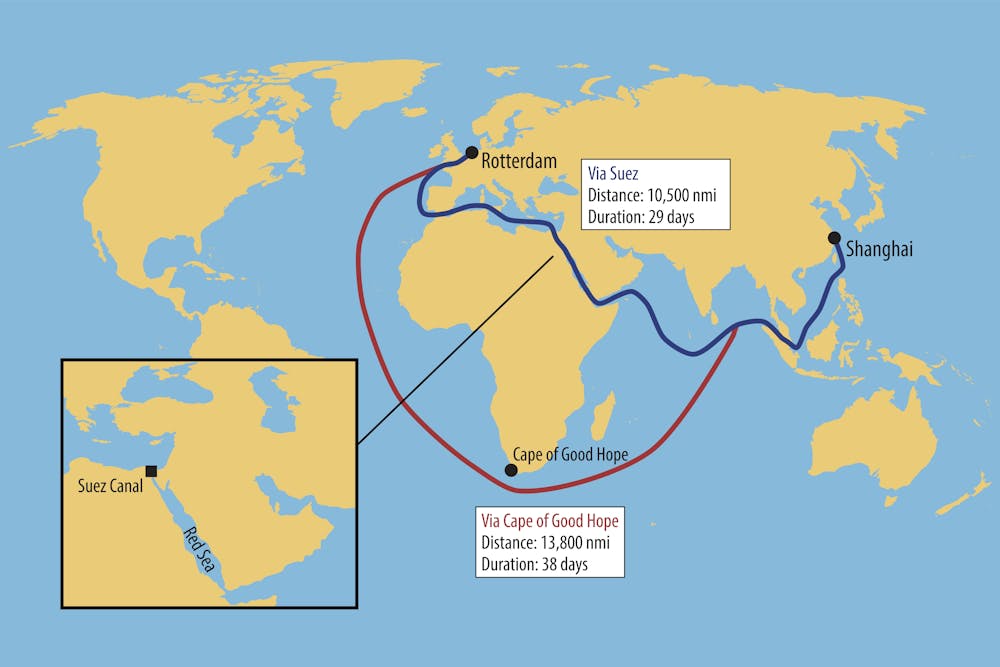
    Updates to this page

    Published 30 January 2025

    MIL OSI United Kingdom

  • MIL-OSI United Kingdom: Counter terror-style powers to strengthen ability to smash smuggling gangs

    Source: United Kingdom – Executive Government & Departments

    Powerful new legislation will give law enforcement tougher tools to pursue people smugglers and disrupt their ability to carry out small boat crossings.

    New counter terror-style powers to identify, disrupt and smash people smuggling gangs will be introduced as part of landmark legislation to protect our borders.

    The measures will for the first time allow counter-terror style tactics to be used against smuggling gangs through unprecedented tools to stop smugglers before they act.

    This includes stronger powers to seize and search mobile phones to investigate organised immigration crime and introducing new offences against gangs conspiring to plan crossings, selling or handling small boat parts for use in the Channel, supplying forged ID documents, for migrants attempting to come here illegally.

    These laws, included within the Border Security, Asylum and Immigration Bill introduced in Parliament today (January 30), are inspired by powers used to combat terrorism and will transform the ability of law enforcement agencies to take earlier and more effective action against organised immigration crime.

    The robust, workable measures will directly go after organised crime groups who – even in the freezing temperatures in the Channel this month – are continuing to organise dangerous crossings, not caring if the vulnerable people they exploit live or die, as long as they pay. The legislation will give greater powers than ever to law enforcement agencies to treat people smuggling as a global security threat as part of our renewed effort to break the business model of these gangs for good and restore order to our asylum system.

    The new laws are being welcomed by law enforcement agencies like the National Crime Agency, Immigration Enforcement and police, and include:

    • allowing immigration officers and police to seize phones, laptops and other electronic devices at an earlier stage before arrests are made, if they are suspected of containing information about organised immigration crime
    • allowing law enforcement to arrest those involved in facilitating organised immigration crime at a much earlier stage than is currently possible, meaning they can intervene quicker, more effectively and before smuggling takes place
    • making it illegal to supply or handle items suspected of being for use by organised crime groups, for example the selling and handling of small boats parts, with those caught facing a prison sentence of up to 14 years
    • creating a new offence for collecting information to be used by organised immigration criminals to prepare for boat crossings. This includes arranging departure points, dates and times, with clear links back to the gangs facilitating the dangerous crossings
    • criminalising the making, adapting, importing and possession of specific articles that could be used in serious crime, carrying a prison sentence of up to 5 years. This includes templates for 3D printed firearms, pill presses and vehicle concealments
    • putting the role of the Border Security Commander, Martin Hewitt, on a legal footing, meaning he will have the authority to convene partners across law enforcement and set strategic priorities for achieving the Home Secretary’s goals. These will be shared with partners like the National Crime Agency as part of their ongoing work upstream to target people smuggling networks
    • to prevent more people being crammed into unsafe, flimsy boats and lives being put at risk by these gangs, we will make it an offence to endanger another life during perilous sea crossing to the UK.  Anyone involved in physical aggression, intimidation or coercive behaviour, including preventing offers of rescue, while at sea will face prosecution and an increased sentence of up to five years in prison

    Border Security is one of the foundations of the government’s Plan for Change. The legislation being introduced today demonstrates our commitment to giving law enforcement the tools and powers they need to protect the integrity of the UK border as we put in place a serious, credible plan to restore order to our asylum system.

    Since July, we have already surpassed our pledge to deliver the highest rate of removals since 2018, with 16,400 people with no right to be in the UK removed since this government took power and have ramped up our enforcement against illegal working by 32% as we look to end the false promise of jobs sold to migrants by people smugglers.   This is in addition to a stream of major people smuggling arrests through a renewed focus on joint international investigations involving the National Crime Agency.

    Home Secretary Yvette Cooper said:

    Over the last six years, criminal smuggling gangs have been allowed to take hold all along our borders, making millions out of small boat crossings.

    This Bill will equip our law enforcement agencies with the powers they need to stop these vile criminals, disrupting their supply chains and bringing more of those who profit from human misery to justice.

    These new counter terror-style powers, including making it easier to seize mobile phones at the border, along with statutory powers for our new Border Security Command to focus activity across law enforcement agencies and border force will turbocharge efforts to smash the gangs.

    Our Plan for Change relies on strong border security. It is critical we have the tools at our disposal to pursue those who undermine them in every way we can.

    Border Security Commander Martin Hewitt said:

    It is vital that government and our law enforcement partners, working together as part of the UK’s border security system, have the right tools to tackle the people smuggling gangs abusing our border.

    This Bill will do exactly that, by equipping teams on the ground dealing with this issue first hand and empowering them to go further and act faster when dismantling organised criminality.

    These crucial measures will underpin our enforcement action across the system, and together with our strengthened relationships with international partners, we will bring down these gangs once and for all.

    NCA Director General Graeme Biggar said:

    Tackling organised immigration crime remains a priority for the NCA.

    The Border Security, Asylum and Immigration Bill should help UK law enforcement act earlier and faster to disrupt people smuggling networks and give us additional tools to target them and their business models.

    These criminal gangs risk the lives of those they transport in their deadly pursuit of profit, and we remain determined to work with partners in the UK and abroad to do all we can to stop them.

    Based on counter-terror tactics, the new powers in this Bill will allow law enforcement to make swifter interventions at a much earlier stage against those conspiring to smuggle people into the UK by small boats or in the backs of lorries.

    Where someone is suspected of selling or handling small boats parts or sharing suspect information online, we will be able to apply these offences against them at this point and make an arrest. Current rules mean law enforcement are unable to intervene until much later on in the process and after they’ve facilitated a small boat crossing.

    In November 2024, Amanj Hasan Zada was jailed for 17 years after being found guilty of organising small boat crossings from his home in Lancashire. Each crossing involved Kurdish migrants who had travelled through eastern Europe, into Germany, Belgium and then France. It is possible the reasonable suspicion element means investigators would have met the requirements to arrest and charge earlier with the new offences. Evidence which showed Zada planning organised immigration crime facilitation – for example discussing moving migrants, purchasing vessels – would have likely been in scope of the offence. Instead of needing to prove a definitive link to a migrant facilitation under current legislation, the new offences could have met the threshold for earlier and faster action to be taken.

    The Bill will also modernise biometric checks overseas to build a clear picture of individuals coming to the UK and preventing those with a criminal history from entering. During crisis evacuations to the UK, the new powers will allow checks to take place much earlier, resulting in the rapid identification of who is eligible to enter the country and reducing the risk of delays or security threats during time sensitive operations.

    In a major upgrade to Serious Crime Prevention Orders, we will also give law enforcement new powers to impose Interim Serious Crime Prevention Orders, allowing them to place instance restrictions on organised immigration criminals alongside other serious criminals. This could include bans on travel, internet and mobile phone use, with curbs also leading to social media blackouts, curfews and restricted access to finances.

    Collectively, these measures will strengthen our response across the system, empowering partners and law enforcement to properly go after the people smuggling gangs.

    Through the Border Security Command, we’re already driving up activity to disrupt the criminal gangs behind this trade.

    The NCA continues to target smuggling networks in the UK and overseas. This includes three arrests this month in Iraq’s Kurdistan Region as a result of a joint operation between the NCA and local law enforcement, the first of its kind.

    But with this legislation we will go further, giving our law enforcement stronger tools than ever before to dismantle the gangs.

    Updates to this page

    Published 30 January 2025

    MIL OSI United Kingdom

  • MIL-OSI Economics: Thales Alenia Space signs contract with ESA to develop the Argonaut Lunar Lander for cargo delivery

    Source: Thales Group

    Headline: Thales Alenia Space signs contract with ESA to develop the Argonaut Lunar Lander for cargo delivery

    The lander will fly to the Moon and land on its surface assuring the European autonomous access to the Moon

    • Thales Alenia Space plays a pioneering role to enable the European autonomous access to the Moon
    • The Argonaut lunar lander is designed to offer versatility in the frame of the Artemis program to deliver cargo, rovers and more, or as stand-alone scientific missions.
    • Thales Alenia Space’s consolidated legacy, advanced technology and long-standing expertise in space exploration puts the company at the cutting-edge of space and human exploration.

    Cannes, January 30th, 2025 – Thales Alenia Space, joint venture between Thales (67%) and Leonardo (33%), has signed a contract with the European Space Agency (ESA), worth € 862 Million, related to the design, the development and the delivery of the Lunar Descent Element (LDE) for ESA’s Argonaut Mission, including responsibility for mission design and integration.

    Planned to be launched from the 2030s, Argonaut will deliver cargo, infrastructure and scientific instruments to the Moon’s surface.

    The first mission is envisioned to deal with delivery of dedicated navigation and telecommunication payloads as well as energy generation and storage system, as European enterprises to explore the Lunar southern area.

    About Argonaut

    © Thales Alenia Space/Briot

    The Argonaut spacecraft consists of three main elements: the lunar descent element (LDE) for flying to the Moon and landing on the target, the cargo platform one, which is the interface between the lander and its payload, and finally, the element that the mission designers want to send to the Moon.

    Adaptability is a key element of Argonaut’s design, which is why the cargo platform is designed to accept any mission profile: cargo for astronauts near the landing site, a rover, technology demonstration packages, production facilities using lunar resources, a lunar telescope or even a power station. The project will strengthen Thales Alenia Space’s skills in several technological areas essential to space exploration beyond the Moon.

    The future space ecosystem requires new solutions dedicated to the transport and return of cargo from low Earth orbit and lunar orbit, as well as crew transport to low Earth orbit. Thales Alenia Space is ready to put in place what is needed to prepare for humanity’s future life and presence in Space, laying the foundations for the post-ISS era and meeting new economic needs for research and science.

    Argonaut consortium: who does what?

    Thales Alenia Space is the prime contractor for the development of the Lunar Descent Element. The overall mission responsibility, ie the use of the LDE and integration with payload, will be the subject of a separate procurement in the future. The Lunar Descent Element is an independent architecture block of the international lunar exploration activities, namely a versatile system to support a variety of missions.

    As prime contractor and system integrator of the Lunar Descent Element, Thales Alenia Space in Italy will lead the industrial consortium that will be responsible for the system, the entry descent and landing aspects, as well as the general and specific architectures of the thermomechanical, avionics and software chains. Thales Alenia Space in France and in the UK will respectively focus on data handling systems and propulsion. OHB System AG as additional core team member of the Thales Alenia Space consortium will be responsible for guidance, navigation and control (GNC), electrical power systems (EPS) and telecommunications (TT&C) aspects.

    “Argonaut lunar lander means a lot to our company” said Hervé Derrey, Thales Alenia Space CEO. “Thanks to this astonishing space vehicle, tons of cargo will be delivered to the Moon’s surface, including rovers, scientific missions and many more. This new element of the Artemis program will serve at facilitating long-duration manned lunar exploration missions and will be crucial to increase European autonomy in lunar exploration. The Moon will also serve as a stepping stone for crewed missions into deep space, with Mars being the next stage of the journey. I wanted to express my gratitude to ESA for awarding this new contract to our company. Today’s major achievement strengthens more than ever Thales Alenia Space’s leading positions in the fields of space transportation systems, orbital infrastructures and space exploration”.

    “We are truly honored that ESA has renewed its trust in our company by awarding Thales Alenia Space this major contract to develop the European lunar lander that will enable Europe to access autonomously to the Moon’s surface”, said Giampiero Di Paolo, Deputy CEO and Senior Vice President, Observation, Exploration and Navigation at Thales Alenia Space. “Today, with its longstanding expertise in space exploration infrastructure and vehicles, our company, in line with ESA’s and ASI’s visions, has decided to enhance its competitiveness by investing in the development of technological solutions to help Europe achieve its goals. Supplying a significant proportion of the International Space Station’s pressurized volume, playing a major role on board Artemis, manufacturing the backbone of Orion’s European service module and leading flagship transportation programs such as IXV or Space Rider, Thales Alenia Space is more than ever at the forefront of exploration and space transportation systems”.


    About Thales Alenia Space

    Drawing on over 40 years of experience and a unique combination of skills, expertise and cultures, Thales Alenia Space delivers cost-effective solutions for telecommunications, navigation, Earth observation, environmental management, exploration, science and orbital infrastructures. Governments and private industry alike count on Thales Alenia Space to design satellite-based systems that provide anytime, anywhere connections and positioning, monitor our planet, enhance management of its resources and explore our Solar System and beyond. Thales Alenia Space sees space as a new horizon, helping to build a better, more sustainable life on Earth. A joint venture between Thales (67%) and Leonardo (33%), Thales Alenia Space also teams up with Telespazio to form the parent companies’ Space Alliance, which offers a complete range of services. Thales Alenia Space posted consolidated revenues of approximately €2.2 billion in 2023 and has around 8,600 employees in 8 countries, with 16 sites in Europe.

    MIL OSI Economics

  • MIL-OSI Europe: EIB Group achieves record results in 2024, targets €95 billion in investments for 2025

    Source: European Investment Bank

    • The EIB Group supported a record of over €100 billion in new investment for Europe’s energy security in 2024.
    • A record of nearly 60% of all EIB Group financing supported the green transition, climate action and environmental sustainability.
    • There was a sharp increase in higher-risk activities, with a record €8 billion committed for equity and quasi-equity investment.
    • Financing for security and defence projects doubled to €1 billion in 2024, with a further doubling planned in 2025.

    The European Investment Bank (EIB) Group signed €89 billion in new financing last year. The Group made more investments than ever before to strengthen EU energy security, mobilising over €100 billion for projects in new and upgraded infrastructure such as grids and interconnectors, renewables, net-zero industries, efficiency and storage. Nearly 60% of the total financing supported the green transition, climate action and environmental sustainability.

    Our preliminary results once again signal robust profitability. At the same time, higher-risk EIB operations to back Europe’s most innovative companies have sharply increased. A record €8 billion in equity and quasi-equity investment from the EIB and the European Investment Fund (EIF) is expected to mobilise €110 billion in growth capital for startups, scale-ups and European pioneers.

    Eligible security and defence investment doubled in 2024, and the goal is to double this figure again this year. Furthermore, the EIB Group significantly extended its eligible investments in dual-use projects, which now include border protection, military mobility, de-mining and de-contamination, space, cybersecurity, anti-jamming equipment, seabed and critical infrastructure protection, research and development, and drones.  

    Looking ahead, the EIB Group plans to increase its overall investments to €95 billion in 2025, with flagship initiatives to support European tech champions and a dedicated TechEU programme, critical raw materials, water management, the energy efficiency of small and medium-sized companies, and a dedicated platform to promote sustainable and affordable housing.

    In parallel with increasing its investment capacity and impact, the EIB Group is making significant progress in cutting red tape for clients and has shortened the time to market required to approve and deploy new investments. During 2024, it introduced simplified appraisal procedures covering more than 40% of its operations.

    “We have broken records with our financing in 2024. We have made ourselves ready to support EU priorities in this new political mandate. And we will play an even more relevant role in 2025 – building on the excellent performance of the EIB Group to increase our impact, bolstering Europe’s security and competitiveness with strategic and ambitious investments,” said EIB Group President Nadia Calviño as she presented the annual operational results of the EIB Group in Brussels.

    Making records

    The EIB Group financing committed in 2024 is expected to power almost 15 million households with clean energy, create up to 1.5 million new jobs in Europe over the next few years, advance therapies against cancer, and help secure affordable housing from Croatia to Latvia.

    In more detail, highlights from last year include:

    • Stepped up higher-risk activities, expected to mobilise about €110 billion in new investments. This includes a record €7.2 billion of investments by the EIF in the equity funds ecosystem, and €1 billion in venture debt by the EIB.
    • More than €14 billion in total investment deployed by the EIF to support Europe’s small businesses and innovators, including in 102 venture capital funds, such as a dedicated fund to back women-owned and gender-balanced startups in space and deep tech.
    • A record €51 billion – around 60% of last year’s investments – to support the green transition, climate action and environmental sustainability, from the world’s first zero-emissions tyre factory in Romania to support for sustainable mobility in Valencia, keeping the EIB Group well on track to meet its target of supporting €1 trillion in climate and environmental sustainability investment in the critical decade to 2030.
    • A record €31 billion to back EU energy security, including for efficiency, renewables, storage and electricity grids, which is expected to support over €100 billion in investment. Flagship initiatives include counter-guarantees to bolster European wind manufacturers, electric vehicle battery manufacturing in France and the Princess Elisabeth Island in Belgium. For grids and storage, financing rose to a record €8.5 billion, mobilising 40% of Europe’s total investment in that sector in 2024, including transmission network upgrades and interconnectors in Spain, Czechia and Germany.
    • Support for eligible security and defence projects doubled to €1 billion, including the deployment of dual-use satellites in Poland, port upgrades to meet the needs of NATO vessels in Denmark and investment by the EIF in dedicated private investment funds. A further doubling of annual investments to €2 billion is expected this year.
    • A record €38 billion to accelerate social and territorial cohesion, including credit lines for farmers in Romania, innovative startups in Greece and just transition projects in Estonia.
    • The EIB Group has also provided financial support to boost climate resilience and adaptation from post-landslide reconstruction in Italy to recovery investments in European regions affected by devastating floods.
    • With more than €2.2 billion disbursed since 2022, EIB Group investments in Ukraine are helping to repair schools, kindergartens and hospitals, upgrade transport and protect energy infrastructure, as well as support the private sector.

    Beyond Ukraine, the EIB Group’s operations outside the European Union are supporting stability in the EU neighbourhood and partner countries on their path to EU membership, including with rail upgrades in countries such as Albania and Montenegro.

    Supporting EU global priorities and helping strengthen Europe’s voice in the world, EIB Group financing also helps drought-stricken countries like Jordan to manage water supplies. Thanks to reinforced partnerships inside and outside the European Union, EIB investments are helping eliminate diseases like polio and support sustainable infrastructure around the world from Vietnam to India.

    Ready for the challenges ahead

    Under President Calviño, who took office in January 2024, the EIB Group has updated its internal policies and investment strategy to maximise impact and scale up support for shared European priorities.

    Changes include:

    • A Strategic Roadmap, aligned with EU policies and agreed by the EU 27 Member States (the EIB’s shareholders) to focus resources on impactful investment on eight core priorities.
    • A revamped framework expanding the EIB Group’s activity in the areas of security and defence, with streamlined internal procedures and new partnerships with external stakeholders, such as the NATO Innovation Fund and the European Defence Agency.
    • EIB governors approved the increase of the gearing ratio, an outdated limit on EIB Group’s investments.[1] This will enable the EIB Group to make the necessary strategic investments to deliver on EU policy goals while preserving its leverage and capital ratios.
    • An action plan with building blocks for a deeper capital markets union.
    • Actions and proposals to cut red tape, improve the usability of EU sustainability reporting rules and optimise the use of EU budget instruments.
    • A stepped up time to market initiative to simplify internal processes and boost efficiency, enabling much faster approvals for new financing.
    • An action plan to improve transparency, accountability and well-being in the workplace, including the appointment of an ombudsperson to swiftly address common workplace issues and improve the working environment.

    More relevant than ever in 2025

    Looking ahead, the EIB Group Operational Plan covers up to €95 billion in new investment in 2025, supported by the Group’s stellar credit rating and strong capital position.

    New initiatives aligned with the priorities of the new European Commission expected to be rolled out in 2025 include:

    • Maintaining a 60% green finance target.
    • Scaling up support for leading technologies, including clean-tech, artificial intelligence, chips, high-performance and quantum computing, health sciences and medical technologies, and Europe’s cutting-edge industrial capacity.
    • An exit platform to facilitate the listing of European scale-ups in EU markets or the acquisition of these promising innovators by European companies.
    • An extension of the highly successful European Tech Champions Initiative (ETCI) as part of the broader goal to boost equity and venture debt investments to scale up Europe’s innovative startups.
    • Further doubling of support for Europe’s security and defence industry
    • A pan-European investment platform for affordable and sustainable housing, together with the European Commission and increased financing for the housing sector.
    • Increasing investment for critical raw materials projects, such as the Keliber lithium production facility in Finland agreed last year.
    • A dedicated water programme of about €4.5 billion to focus investment on flood resilience, and to address water scarcity amid intensifying droughts.
    • New support for Europe’s farmers through agricultural insurance and other de-risking schemes, building on a €3 billion facility to improve access to financing for young farmers and women.
    • A €2.5 billion programme to scale up energy efficiency investments by small and medium-sized companies so they can lower their CO2 emissions and electricity bills.

    EIB Group press conference on annual results

    Background information

    The EIB Group is the financing institution of the European Union owned by its Member States. It supports investment contributing toward EU policy goals, including sustainable growth, social and territorial cohesion, innovation and security. It finances its operations in global capital markets and has been consistently profitable in its operations since its inception. The EIB Group is the pioneer and one of the largest issuers of green bonds, while all of its operations are aligned with the Paris Climate Agreement.


    [1] Subject to final approval by the Council of the European Union.

    MIL OSI Europe News

  • MIL-OSI Global: ‘Sustainable’ aviation fuel and other myths about green airport expansion debunked

    Source: The Conversation – UK – By Jack Marley, Environment + Energy Editor, UK edition

    Taking off: emissions from the aviation sector. WildSnap/Shutterstock

    Environmentalists and locals have resisted a third runway at London’s Heathrow, Europe’s busiest airport, for more than two decades. Today, their efforts took a major setback.

    The UK government has announced it will give the green light to airport expansion. This is not guaranteed to increase growth in the national economy as Chancellor Rachel Reeves hopes. More flights and more emissions are certain, however, at a time when experts are practically screaming at governments to rein them in.


    This roundup of The Conversation’s climate coverage comes from our award-winning weekly climate action newsletter. Every Wednesday, The Conversation’s environment editor writes Imagine, a short email that goes a little deeper into just one climate issue. Join the 40,000+ readers who’ve subscribed.


    “No airport expansions should proceed” without a UK-wide plan to annually assess and control the sector’s climate impact said the government’s watchdog, the Climate Change Committee, in 2023. Aeroplanes are 8% of UK emissions and 2% of the world’s, but they also release gases that seed heat-trapping clouds in the upper atmosphere, which triples air travel’s greenhouse effect.

    While the government’s own advisers have effectively ruled out new runways for the sake of net zero, airport and airline bosses play a different tune. So what does the sector propose to manage its own pollution?

    Not enough cooking oil to save us

    Aviation is a notoriously difficult sector to decarbonise says Richard Sulley, a senior research fellow in sustainability policy at the University of Sheffield: “If electric or hydrogen-powered planes are possible, it won’t be for many years yet.”

    To justify air travel emissions ballooning in the meantime, the aviation sector has promised a mix of “supply-side” measures, like replacing kerosene with so-called “sustainable aviation fuel” (SAF), which Reeves described as “a game changer”, and making planes lighter and more fuel-efficient.

    Efficiency, in this context, is a slippery path to decarbonisation. When a high-emitting activity is reformed so that it consumes less energy, the efficiency savings are generally eclipsed by the increasing demand it drives.


    Read more:
    Expanding Heathrow is incompatible with net zero – here’s the evidence


    “Indeed, the sector’s own plans for growth will outstrip efforts to decarbonise through synthetic fuel, delivering a neutral effect at best,” Sulley says.

    Fuel consumption is the biggest emissions source in aviation.
    Sergey Ginak/Shutterstock

    “Demand-side” measures like fewer flights, taxes on frequent flying and domestic flight bans (see France) could cut emissions, he notes, but are seldom mentioned.

    The UK has set a target for airline fuel to be 10% SAF by 2030. So far we’re at 1.2% – and Sulley reports that the industry has not said how it will scale up in time.

    Even if airlines start taking their commitment to SAF seriously very soon, it’s a dubious solution to aviation’s climate impact according to political economists Gareth Dale (Brunel University) and Josh Moos (Leeds Beckett University).


    Read more:
    Why the world’s first flight powered entirely by sustainable aviation fuel is a green mirage


    Earlier SAF test flights burned coconut oil – 3 million coconuts to power a journey from London to Amsterdam, as Dale and Moos calculate it. At that rate, they argue Heathrow would exhaust the world’s entire crop in a few weeks (there are 18,000 commercial airports worldwide).

    Modern SAF is blended with waste products from farms and kitchens. But the pair argue that the market for used cooking oil is “notoriously unregulated”. SAF may in fact be relabelled palm oil from plantations that are erasing orangutan habitat in the tropics. Again, Dale and Moos argue there is not enough used cooking oil to meet existing, let alone future, demand.

    Transport for the rich, by the rich

    At least the hype around SAF addresses the main problem, albeit misleadingly. Policy experts David Howarth (University of Essex) and Steven Griggs (De Montfort University) marvel at how often “carbon-neutral airports” in aviation sustainability strategies simply mean terminals powered by renewable energy.

    “A terminal’s heating or lighting is, of course, largely irrelevant when its core business is as emissions-intensive as flying,” says Sulley.


    Read more:
    Heathrow 2.0: a ‘sustainable airport’ that pretends no one has to choose between planes and pollution


    Unfortunately for Rachel Reeves, a 2023 report by the New Economics Foundation found that any economic benefits of airport expansion will be largely confined to the airports themselves. Meanwhile, a wealthy subset of UK society can be expected to capture the biggest share of any new flight capacity. Each year, around half of British residents do not fly at all, Sulley points out.

    At the stratospheric heights of that subset are the private jet passengers who are served by “more or less dedicated airports” that are more obscure to the general public, says Raymond Woessner, a geographer at Sorbonne Université. A study published in November found that emissions from these flights rose by 46% between 2019 and 2023. The lead author described wealthy passengers using jets “like taxis”.


    Read more:
    L’insolent succès des jets privés, entre empreinte carbone et controverses


    “Discretion and anonymity” is what one airport nestled in the Oxfordshire countryside promises for “routine celebrity, head of state and royal visits”. Without state direction or regulation, it is these people who are setting the agenda for air travel.

    Woessner notes that the world’s richest man, Elon Musk, successfully lobbied to derail a high-speed rail project in California in 2013. Instead of an option that has shown its ability to cut flight demand, the US will be offered intercontinental rocket travel.


    Read more:
    With planning, high speed rail could reduce flight demand


    Musk’s company SpaceX says that rockets could ferry passengers between New York and Shanghai in under an hour. Rockets would burn “vastly more fuel per trip than conventional aircraft”, says aerospace engineer Angadh Nanjangud of Queen Mary University of London, but this might “drive critical research into carbon-neutral” methane-based rocket fuel.

    It would not be the first time an industry seeking to grow has used an as yet fantastical fuel to justify more carbon in Earth’s atmosphere.


    Read more:
    New York to Paris in 30 mins? How to achieve Elon Musk’s vision of rockets replacing long haul


    “There is the potential to create a good life for all within planetary boundaries,” say Dale and Moos.

    “But getting there requires clipping the wings of the aviation industry.”

    ref. ‘Sustainable’ aviation fuel and other myths about green airport expansion debunked – https://theconversation.com/sustainable-aviation-fuel-and-other-myths-about-green-airport-expansion-debunked-248483

    MIL OSI – Global Reports

  • MIL-OSI Europe: Message of the Holy Father on the occasion of the 150th anniversary of the death of Dom Prosper Guéranger

    Source: The Holy See

    Message of the Holy Father on the occasion of the 150th anniversary of the death of Dom Prosper Guéranger, 30.01.2025
    The following is the Message sent by the Holy Father Francis to the Reverend Fr. Dom Geoffrey Kemlin, Abbot of Saint-Pierre de Solesmes and president of the Congregation of Solesmes OSB on the occasion of the 150th anniversary of the death of Dom Prosper Guéranger:

    Message of the Holy Father
    To the Very Reverend Father Dom Geoffroy Kemlin
    Abbot of Saint-Pierre de Solesmes
    and President of the Congregation of Solesmes OSB
    As you celebrate this year the 150th anniversary of the death of your founder, Dom Prosper Guéranger, I am pleased to join in your thanksgiving. I wish to express my encouragement and my affectionate closeness to those who have committed their lives in the wake of this servant of the Church, or who are working to make his life and work better known. Benedic anima mea Domino. This verse from Psalm 102 was one of the last words he spoke before committing his soul to the hands of the Father on 30 January 1875.
    In evoking Dom Guéranger, my predecessors have underlined the various expressions of his charism received for the edification of the whole Church: his role as restorer of Benedictine monastic life in France, his liturgical knowledge placed at the service of the People of God, his ardent piety towards the Sacred Heart of Jesus and the Virgin Mary, his work in support of the definition of the dogma of the Immaculate Conception and that of papal infallibility, his writings in defence of the freedom of the Church. I would also like to highlight two aspects of this charism that correspond to two current needs of the Church: fidelity to the Holy See and the Successor of Peter, particularly in the area of liturgy, and spiritual paternity.
    Dom Guéranger was undoubtedly one of the first architects of the Liturgy Movement, the fruit of which would be the Constitution Sacrosanctum Concilium of the Second Vatican Council. The historical, theological and ecclesiological rediscovery of the liturgy as the language of the Church and an expression of its faith was at the heart of his work, first as a diocesan priest and then as a Benedictine monk. This rediscovery inspired in particular his publications favouring the return of the dioceses of France to the unity of the Roman liturgy, and it was this rediscovery that prompted him to write the volumes of L’année liturgique in order to make available to priests and lay people the beauty and riches of the liturgy, which is “the first wellspring of Christian spirituality” (Apostolic Letter Desiderio desideravi, no. 61). He strongly affirmed that “the prayer of the Church is the most pleasing to the ear and heart of God, and therefore the most powerful. Happy, then, is he who prays with the Church” (Preface to L’année liturgique). May the example of Dom Guéranger inspire in the hearts of all the baptised not only love for Christ and his Bride, but also filial trust and docile collaboration cum Petro et sub Petro, so that the Church, faithful to her living Tradition, may continue to raise “one and the same prayer capable of expressing her unity” (Apostolic Letter Desiderio desideravi, no. 61).
    I would also like to evoke another aspect of the charism of Dom Guéranger: spiritual paternity. Attentive to the work of the Holy Spirit in souls, Dom Guéranger wanted only one thing: to help them in their search for God. Shaped by the Benedictine Rule and divine praise, his gentle and joyful confidence in God touched the hearts of the monks who came to gather around him, the nuns who benefited from his teachings, but also the men and women with responsibilities in the Church and society, and above all the fathers and mothers of families, the children, the little ones and the humble who sought his spiritual advice. In times of peace, as in times of adversity, they all found in him the strengthening or renewal of their faith, a taste for prayer and love of the Church. May his example of docility to the Holy Spirit and of service inspire and guide many of the faithful in the ways of the Lord, “meek and humble of heart” (Mt 11:29).
    I pray that the work of the Servant of God Dom Guéranger may never cease to produce fruits of holiness in all the faithful, and that it may also remain a living witness to the fruitfulness of monastic life at the heart of the Church.
    It is with this wish that I impart my Blessing to you, Reverend Father, and to your brothers of the Abbey of Saint-Pierre, to those of the Congregation of Solesmes, and to all those who will take part in the commemorations of the return to God of Dom Prosper Guéranger.
    From Saint John Lateran, 2 January 2025
    FRANCIS

    MIL OSI Europe News

  • MIL-OSI China: Defense Ministry Spokesperson’s Remarks on Recent Media Queries Concerning the Military on January 17, 2025 2025-01-21 The Lai Ching-te administration, in collusion with foreign forces, has been making constant provocations for “Taiwan independence”.

    Source: People’s Republic of China – Ministry of National Defense 2

    On the morning of January 17, 2025, Senior Colonel Wu Qian, Director General of the Information Office of the Ministry of National Defense (MND) and Spokesperson for the MND, answered recent media queries concerning the military.

    Senior Colonel Wu Qian, spokesperson for the Ministry of National Defense (MND) of the People’s Republic of China (PRC), answers recent media queries concerning the military on January 17, 2025. (mod.gov.cn/Photo by Li Xiaowei)

    (The following English text is for reference. In case of any divergence of interpretation, the Chinese text shall prevail.)

    I have one piece of information at the top.

    According to the cooperation plan between the Chinese and French militaries, General Wu Yanan, Commander of the PLA Southern Theatre Command and Rear Admiral Guillaume Pinget, Joint Commander of the French Armed Forces in the Asia-Pacific had a video phone call on the morning of January 17. They had an in-depth exchange of views on issues of common interest.

    Question: After an earthquake struck the city of Rikaze in Xizang, President Xi Jinping made important instructions. The PLA and the PAP are actively involved in rescue and disaster relief efforts. Please share more information on it.

    Wu Qian: On January 7, a 6.8-magnitude earthquake jolted Dingri County in the city of Rikaze in Xizang Autonomous Region and caused heavy casualties. President Xi Jinping attached great importance to the disaster relief work and gave important instructions. He emphasized that every effort be made to search for and rescue survivors, treat the injured, and minimize fatalities.

    Military organs and troops at all levels resolutely implemented the important instructions of President Xi and the CMC, making all out efforts to protect the safety of people’s lives and property and ensure social stability. The CMC Joint Operations Command Center promptly activated the emergency response mechanism and guided the PLA Western Theater Command and PAP troops to organize ground and air forces to effectively carry out rescue operations. As of January 15, the PLA and the PAP had all together deployed 2,055 service members and 869 militia personnel, 20 transport aircraft, helicopters, and unmanned aerial vehicles, as well as 297 sets of vehicles and engineering equipment. They have rescued 27 people, relocated 2,756 people, set up 21 field medical support stations, treated and provided medical service to 22,359 injured, constructed 2,812 tents or portable houses, provided more than 95,000 portions of hot meals, transported disaster relief supplies of over 4,300 tons, and cleared more than 4,700 cubic meters of debris.

    When the people are affected by disasters, the military will come to their rescue. When the military and the people unite, there is no challenge we cannot overcome. The Tibetan for “Hello, PLA” echoing through the earthquake-stricken area reflects the profound bond between the military and the people. Standing together with the people in earthquake-stricken areas, the people’s military put into practice the fundamental mission of serving the people wholeheartedly with concrete actions, and built an unbreakable great wall of steel to protect the people.

    Question: Since the beginning of 2025, the PLA and the PAP have commenced their annual military training, making an all out effort to meet the military’s centenary goal. Please provide more information about this.

    Wu Qian: In 2025, military training will focus on responding to real security threats, enhance training under real combat scenarios, strengthen exercises on joint operations system, and fully leverage the deterring and conflict-preventing functions of military training. We will implement the arrangements made at the on-site meeting on basic training and the on-site meeting on combined training, conduct training in accordance with the new basic training outline, and address challenging issues by extensively conducting cross-service mixed formations training. We will give priority to training on new equipment such as new-type fighter jets, vessels and missiles, actively explore training in emerging fields such as unmanned systems and intelligent technologies, and create new growth points for combat capabilities. We will use more “technology+” and “cyber+” methods to solve training problems and advance innovations in technology-enhanced training. We will continue to carry out joint exercises and training with the armed forces of relevant countries and regions on more subjects, expand the scale of forces, increase joint training time, actively participate in international military sports competitions, and promote in-depth and practical training exchanges and cooperation between China and foreign countries.

    Question: General Liu Zhenli, Chief of the Joint Staff Department of the CMC, led a delegation to visit Malaysia and Indonesia. Please brief us more on the bilateral military relations between China and these two countries.

    Wu Qian: General Liu Zhenli, member of the CMC and Chief of the Joint Staff Department of the CMC, visited Malaysia and Indonesia from January 6 to 12. During the visit, the two sides exchanged views on issues of mutual interest, such as the relations between the two countries and militaries, and international and regional situation. The visit aimed at implementing the important consensus reached between the leaders of China and these two countries, enhance strategic communication, deepen cooperation, and elevate the mil-to-mil relationship to new heights.

    Both Malaysia and Indonesia are friendly neighbors of China across the sea. Under the strategic guidance of President Xi Jinping and the leaders of these two countries, China-Malaysia and China-Indonesia relations have witnessed rapid and comprehensive growth, and started a new chapter of building a community with a shared future. As an important part of bilateral relationship, the mil-to-mil relations have also made positive progress. Sound exchanges and cooperation have been realized in high-level exchanges, joint training and exercises, maritime security, and multilateral coordination under the ASEAN framework. We stand ready to work together with the two militaries to further consolidate strategic mutual trust, strengthen personnel exchanges, extend substantive cooperation, jointly uphold international fairness and justice, work together to implement the Global Security Initiative (GSI) and make joint contributions to peace, stability and prosperity of the region and beyond.

    Question: The first Type 076 amphibious assault ship PLANS Sichuan had its launching and commissioning ceremony recently in Shanghai, which received wide media coverage around the world. According to media of the Taiwan region, the ship has astonishing capabilities for three-dimensional landing operations, and the deployment of the ship would be the most dangerous moment for Taiwan. Some foreign news outlets also claimed that the ship will break regional balance of military power and bring unstable factors. What’s your comment?

    Wu Qian: It is a common practice for countries around the world to develop weapons and equipment in accordance with their national defense requirements. China’s independent development and construction of the Type 076 amphibious assault ship is a normal arrangement consistent with China’s national security needs and the overall development of the PLA Navy. The goal is to safeguard national sovereignty, security and development interests and better protect peace and stability in the region and beyond. The vessel is a new-type amphibious assault ship independently developed by China. It applies electromagnetic catapult and arresting technology, and can carry fixed-wing aircraft, helicopters and amphibious equipment. The ship has strong capabilities for amphibious and far-seas operations. After its launching, the ship will conduct equipment adjustments, mooring trials and sea trials.

    China stays committed to the path of peaceful development and a defense policy that is defensive in nature. The launching of the ship is a normal arrangement in the development of the PLA Navy. It is not targeted at any specific entity, region or country.

    Question: According to media reports, China’s military exchanges with foreign countries witnessed solid progress with many highlights in the year 2024. Please brief us more information.

    Wu Qian: In 2024, officers, soldiers and civilian personnel engaged in military diplomacy carried forward our fine traditions and made innovative efforts in our undertaking, and continued to improve the quality and efficiency of international military cooperation. First, shaping a favorable strategic environment. Staying in line with the directions set by head-of-state diplomacy, the Chinese military maintained close and practical military cooperation with Russia; progressively restored strategic communications and institutionalized dialogues with the US; deepened strategic communications with European countries, and engaged in exchanges with defense authorities and militaries from dozens of other countries. Second, safeguarding national sovereignty and security. We lodged diplomatic representations and released information in a timely way to respond to provocations and violations made by certain countries on the Taiwan question and the South China Sea issue, refuting the wrong words and deeds of relevant parties. Third, expanding multilateral diplomacy. As the host, the Chinese military successfully held the 11th Beijing Xiangshan Forum and the West Pacific Naval Symposium. We also actively participated in multilateral events like the Shangri-La Dialogue and the Defense Ministers’ Meeting of the Shanghai Cooperation Organization to make our voice heard on multilateral stages. Fourth, deepening cooperation on joint training and exercises. For the first time, our troops participated in Exercise Peace Unity in Africa and Exercise Formosa in Brazil, which contributed to regional peace and stability. Fifth, fulfilling the responsibilities of a major country. China’s Blue Helmets (peacekeepers) stayed on their combat posts in war zones; Channel 16 (of the PLAN vessel-protection task forces) remains a code for peace in the Gulf of Aden and waters off the coast of Somalia; the Ark Peace, the PLAN hospital ship provided medical services to people of 13 countries in Asia and Africa; and humanitarian demining courses were organized for Cambodia and Laos. The Chinese military has been taking concrete actions to deliver hope, warmth and strength.

    In the new year, staff for military diplomacy will continuously act on Xi Jinping Thought on Strengthening the Military and Xi Jinping Thought on Diplomacy in promoting military diplomacy. We will uphold the concept of building a community with a shared future for mankind and go all out to achieve the centenary goal of the PLA.

    Question: According to media reports, the Chinese military’s oxygen supply support system for plateau units has achieved initial results in recent years, effectively meeting the oxygen needs of troops stationed at high altitudes. Please provide more information about this.

    Wu Qian: President Xi and the CMC have always cared for the well-being and health of officers and soldiers stationed on the plateau regions, and have paid close attention to the issue of providing them with adequate oxygen supply. In recent years, we have developed a plateau oxygen supply support system covering large areas, establishing permanent storage points and a tiered distribution network. This system ensures that our troops on the plateau have access to oxygen during routine duties and can carry portable oxygen supplies during mobile operations. The transition from using oxygen solely for life-saving purposes to using it for improving health and conducting operations has significantly decreased the incidence of plateau-related diseases and acute altitude sickness among military personnel.

    First, we have constructed more permanent oxygen production and supply stations, and equipped more oxygen generators to high-altitude units, making oxygen supply available at the soldiers’ bedside. Second, mobile oxygen production facilities, like oxygen-generating cabins, have been deployed to mission areas, effectively overcoming the challenge of sustaining oxygen supply in remote locations. Third, portable individual oxygen supply devices have been issued to to troops, allowing for flexible utilization based on mission requirements. Fourth, we have intensified our efforts in technological innovation, initiating multiple projects for the development of new oxygen production and supply equipment.

    It is cold in the border areas, yet the troops there are full of passion. For a long time, border defense troops stationed on the plateau have guarded the borders in extremely harsh conditions, making great sacrifices for the country and the people. Their dedication to the country will never be forgotten, and their well-being always tugs at the heartstrings of the people.

    Question: It is reported that a naval vessel recently rescued a sick fisherman while performing a mission in the waters of Huangyan Dao. Could you please give us more details about it?

    Wu Qian: Recently, a Chinese fisherman on Qiongqionghai 03003, who was fishing near Huangyan Dao, suddenly suffered from gastric bleeding. The replenishment ship Qinghaihu of the PLA Navy, which was operating in the vicinity, promptly responded and transferred the ailing fisherman aboard for initial medical treatment. It then navigated to waters east of Yongxing Dao, where a rescue helicopter from the Sansha Maritime Search and Rescue Sub-center airlifted the fisherman to the People’s Hospital of Sansha City for further treatment. The fisherman has now been discharged from the hospital and is in stable condition. The Chinese military will continue to protect the safety of the people’s lives and property and contribute to peace and stability in the South China Sea.

    Question: According to the “Taiwan Central News Agency”, Lai Ching-te, leader of the Taiwan region recently said that countries like China and Russia threaten the rule-based international order and undermine peace and stability in the Indo-Pacific region and beyond. Therefore, Taiwan needs to continue to raise “defense budget” and enhance “defense capabilities.” What’s your comment?

    Wu Qian: Lai Ching-te and his kind have betrayed their ancestors and what he said was far away from the truth. International documents including the Cairo Declaration and the Potsdam Proclamation have confirmed that the Taiwan region should be returned to China. Such fact is an important part of the post-WWII international order. The victory and outcome of the WWII must be respected and safeguarded. There is no other status of the Taiwan region in the international law than being a part of China.

    The Lai Ching-te administration, in collusion with foreign forces, has been making constant provocations for “Taiwan independence”. It is now the biggest source of chaos that undermines peace and stability across the Taiwan Strait and the Asia Pacific. We warn the Lai Ching-te administration and separatists for “Taiwan independence” that any attempt to seek independence by force is just like holding back the tide with a broom, and will eventually lead to self-destruction. Those seeking “Taiwan independence” will never have a good end. The PLA will spare no effort to fight separatism and promote national reunification. We have full confidence that the Taiwan region will return to the motherland and will have a better future after its return.

    Wu Qian: The Chinese Spring Festival of the Year of the Snake is just around the corner. In Chinese tradition, the snake is a symbol of wisdom and vitality It also implies adapability and the conquering of the unyielding with the yielding. As families reunite to bid farewell to the past and embrace the future, I would like to extend warm New Year wishes to you all on behalf of my colleagues. Rest assured that the Chinese military will continue to stand by your side, offering warmth and protection. We will always be the sturdy support you can count on. May our country prosper and our people live in harmony.

    Senior Colonel Wu Qian, spokesperson for the Ministry of National Defense (MND) of the People’s Republic of China (PRC), answers recent media queries concerning the military on January 17, 2025. (mod.gov.cn/Photo by Li Xiaowei)

    MIL OSI China News

  • MIL-OSI United Kingdom: Youth Justice Statistics: record lows in custody and first time entrants

    Source: United Kingdom – Executive Government & Departments

    The Youth Justice Annual Statistics for 2023 to 2024 were published today. There are fewer first time entrants and children in custody, but court delays remain a concern.

    The Youth Justice Statistics for 2023 to 24.

    The Youth Justice Statistics for England and Wales reveal a mix of promising trends and areas requiring urgent attention.

    Key findings include:

    • the number of children entering the system for the first time (first-time entrants (FTE)) fell to its lowest level on record (8,300)
    • stop and searches of children by the police decreased by 4% (103,100)
    • court sentences outnumbered Youth Cautions for the first time – 55% of FTEs received a sentence at court compared with 48% in the previous year – this marks an increasing shift toward diversion and alternative approaches to youth justice
    • the numbers of children in custody has fallen by 3% against the previous year and is the lowest number on record (430)
    • the average time from offence to court completion rose to 225 days, the highest on record, highlighting an ongoing challenge for the justice system and victims
    • while there were encouraging decreases in the numbers and proportions of Black children at various stages in the system, the proportion of Mixed ethnicity children in custody has doubled over the last 10 years
    • almost two-thirds (62%) of children remanded to youth detention accommodation did not go on to receive a custodial sentence, this raises significant concerns
    • The proven reoffending rate for children increased to 32.5%, a 0.3 percentage point increase on the previous year, while the number of children and the number of children who reoffended both increased for the first time in the last 10 years.
    • There were reductions in knife and weapon offences, a fall of 6% compared with the previous year and the sixth consecutive year-on-year decrease.

    In addition to the above findings, arrests of children remained stable, even as adult arrests increased by 8%. Despite widespread media coverage and the consequential public perception that children are responsible for a disproportionate amount of criminal activity, arrests of children accounted for just 8% of total arrests.

    There were reductions in knife and weapon offences, a fall of 6% compared with the previous year and the sixth consecutive year-on-year decrease. Although 20% higher than 10 years ago, this shows that local efforts to bring down offences involving weapons are having an impact.

    Court timeliness

    The average time it takes from offence to court completion has not bounced back and is on average 4 days longer than what we saw during the pandemic when there were court closures.

    This is very troubling because delays place a significant strain on children and victims who are looking to move forward in their lives and potentially delaying justice and delaying them from accessing the right support at the right time.

     We believe that the court system needs major changes. We’re working with the Crown Prosecution Service and HM Courts and Tribunals Service to advocate for the Child First framework, which focuses on creating fair and efficient processes for children, cutting down delays, and achieving better results for everyone involved.

    Tackling over-representation

    There were encouraging improvements in reducing the over-representation of children from Black and Mixed ethnicities. However, we must be clear, any over-representation is unacceptable.

    It is of particular concern that the proportion of children with a Mixed ethnicity in custody has doubled over the last decade. This is a stark reminder of the need for systemic reform.  

    We will continue to build partnerships, promote good practice and provide targeted support in community-based solutions such as through the London Accommodation Pathfinder (the LAP). The LAP prioritises boys of Black or Mixed  heritage facing remand to custody and supports them in a more appropriate and effective community setting.

    We continue to have significant concerns about the high use of remand, which means that hundreds of children experience the negative effects of custody and then go on to receive a community sentence, or no sentence at all. This creates additional trauma and exposure to criminality for the children, and also leads to unnecessary risk and costs for the general public.

    Keith Fraser, Chair of the Youth Justice Board, said:

    There are many positives within this report. The numbers of stop and searches and children entering the system for the first time fell once again after increasing in the previous year. The numbers of children in custody continued to fall, knife and weapon offences have reduced for the sixth consecutive year, and arrests and youth cautions/sentences have remained stable at a time when adult arrests rose by 8%.

    We must continue to build on these trends. The evidence tells us that the best way to prevent prolonged offending is to prevent bringing children into the justice system in the first place. This is the route to positive child outcomes, less crime, fewer victims and safer communities.

    I want to express my gratitude to everyone in the youth justice sector for their dedication and hard work. These reductions show that change is possible. Together, we can build on this momentum to ensure better outcomes for all children.

    Youth Justice Board media enquiries

    Youth Justice Board for England and Wales
    Clive House
    70 Petty France
    London
    SW1H 9EX

    Email comms@yjb.gov.uk

    For out-of-hours press queries 020 3334 3536

    Ends

    Notes to editors

    1. These statistics look at data for the youth justice system in England and Wales for the year ending March 2024 (where available). The publication considers the number of children (those aged 10 to 17) in the system, the offences they committed, the outcomes they received, their demographics and the trends over time.
    2. Youth Custody Statistics also incorporate young adults who have remained in the youth estate,
    3. In addition to the report, there is a summary infographic which highlights the main findings.
    4. This release includes dashboards showing local level data. The YJB does not comment on regional data or localised themes as often there are contexts specific to areas and communities which provide more valuable insight into local youth justice. The relevant local authority would be best placed to respond to requests for comment.

    Updates to this page

    Published 30 January 2025

    MIL OSI United Kingdom

  • MIL-OSI Security: West Africa: INTERPOL border operation nets 45 arrests, seizures worth millions

    Source: Interpol (news and events)

    30 January 2025

    Operation Screen targets international crime networks threatening regional security

    LYON, France – An INTERPOL-coordinated border security operation in West Africa has resulted in 45 arrests and the seizure of drugs, counterfeit medicines, and stolen vehicles worth millions of dollars.

    Held from 21 October to 24 November, Operation Screen West Africa 2024 brought together law enforcement agencies from 12 West African countries to strengthen border security and disrupt transnational organized crime networks.

    The operation notably led to the detection of a suspected Islamic State member at the Mali-Niger-Burkina Faso tri-border area and thwarted the plans of a North African suspect planning to transit through Europe to join ISIS in Syria.

    Frontline officers at land, air and sea border points were provided with INTERPOL Mobile Devices (IMDs) to access INTERPOL’s critical global intelligence, enabling them to conduct in real time over 1.3 million checks against INTERPOL’s databases.

    Checks against INTERPOL’s Stolen and Lost Travel Documents database detected 82 individuals travelling on stolen and irregular passports. Mauritanian authorities also launched an investigation into the international trafficking of French and Spanish passports.


    Over 1.3 million checks against INTERPOL’s databases were carried out by frontline officers, including in Togo.

    Weapons and ammunitions were seized in Côte d’Ivoire during the operation.

    Senegalese sea patrols participated in the INTERPOL-coordinated border security operation.

    Additionally, 11 suspects wanted internationally under INTERPOL Red Notices were arrested during the operation.

    Operational seizures included:

    • 1.6 tonnes of cocaine worth over USD 50 million in Cabo Verde

    • 10 tonnes of amphetamines in Burkina Faso

    • 33 types of counterfeit medicines in Benin and Togo

    • 40 tonnes of substandard pharmaceuticals in Côte d’Ivoire

    Over 100 luxury vehicles stolen in Canada and European countries were also recovered, exposing a network that trafficked stolen cars to West Africa. Almost 50 per cent of the stolen vehicles originated from Canada, where data sharing via INTERPOL’s database has helped identify over 1,500 stolen Canadian vehicles worldwide since February 2024.

    The proceeds from these stolen vehicles often fund organized crime activities, including arms smuggling, drug trafficking, and terror networks.

    Côte d’Ivoire’s Police Commissaire Divisionnaire Ami Flora Savane Fanny said:

    “By addressing critical challenges that transcend borders, Operation Screen has demonstrated the power of international collaboration in combating the scourges of organized crime and terrorism which undermine the security of our populations and weaken the foundations of our institutions.”

    Mohamed Moussa, INTERPOL’s Operation Screen Coordinator, added:

    “This operation marks a critical step in disrupting transnational organized crime networks that threaten regional stability and undermine efforts to build peace and foster development across West Africa.”

    Note to Editors

    The 12 participating countries were Benin, Burkina Faso, Cabo Verde, Côte d’Ivoire, the Gambia, Ghana, Liberia, Mauritania, Nigeria, Senegal, Sierra Leone and Togo.

    The operation fell under Project I-CT Shield, funded by the German Foreign Federal Office.

    MIL Security OSI

  • MIL-OSI Europe: Payments statistics: first half of 2024

    Source: European Central Bank

    30 January 2025

    The European Central Bank (ECB) today published statistics on non-cash payments for the first half of 2024.[2]The statistics comprise indicators on access to and use of payment services, payment cards and terminals by the public, as well as volumes and values of transactions processed through retail and large-value payment systems. This press release focuses on developments in the euro area as a whole, although statistics are also published for all euro area countries as well as non-euro area reporting countries. EU and euro area aggregates are also published.[3]

    Payment services[4]

    In the first half of 2024, the total number of non-cash payment transactions[5] in the euro area increased by 7.4% to 72.1 billion compared with the first half of 2023, while the corresponding total value increased by 1.9% to €113.5 trillion. Card payments accounted for 56% of the total number of transactions, while credit transfers accounted for 22%, direct debits for 15% and e-money payments for 6%. The remaining 1% comprised cheques, money remittances and other payment services (see annex, Table 1).

    Chart 1

    Use of the main payment services in the euro area

    (number of transactions in billions, graph on the right-hand-side refers to half-yearly data)

    Source: ECB.
    Note: Data have been partially estimated for periods prior to 2010, as methodological changes were implemented in those years and some data are not directly available. The historical estimations done by the ECB ensure comparability of figures over the entire period. Statistics were also collected for cheques, money remittances and other payment services which together accounted for 1% of the total number of non-cash euro area payment transactions in the first half of 2024.

    Data on payment services

    Card payments

    In the first half of 2024 the number of card payments within the euro area increased by 10.3% to 40.1 billion compared with the first half of 2023. The corresponding total value of card payments rose by 7.0% to €1.5 trillion, reflecting an average value of around €39 per transaction. The split in the share of remote and non-remote[6] transactions in the total number of card payments was 18% to 82%, while the split in terms of value was 28% to 72%. The number of contactless card payments initiated at a physical electronic funds transfer point of sale terminal increased by 13.2% to 25.8 billion compared with the first half of 2023, with the corresponding total value rising by 13.1% to €0.7 trillion. As a result, their share in the total number of non-remote card payments accounted for 79%, while the corresponding share in terms of value was 62%. At the national level, Lithuania continued to have the largest share of card payments as a percentage of the total number of non-cash payments in the first half of 2024, at around 78% (see annex, Table 2).

    Credit transfers[7]

    In the first half of 2024 the number of credit transfers within the euro area increased by 7.7% to 15.7 billion compared with the first half of 2023, while the corresponding total value increased by 1.7% to €105.2 trillion. As higher-value payments are usually made by credit transfer[8], they accounted for 93% of the total value of non-cash payments. The ratio of transactions initiated electronically to those initiated using paper forms was around 16 to 1, while in terms of value the ratio was around 12 to 1. At the national level, Latvia had the largest share of credit transfers as a percentage of the total number of non-cash payments in the first half of 2024, at around 37% (see annex, Table 2).

    Direct debits

    In the first half of 2024 the number of direct debits within the euro area increased by 2.7% to 11.0 billion compared with the first half of 2023, and the corresponding total value rose by 5.8% to €5.3 trillion. Of the total number of direct debits, those with an electronic mandate accounted for 12% whereas those with consent given in other forms accounted for 88%, while in terms of value the split was 13% to 87%. At the national level, Germany continued to have the largest share of direct debits as a percentage of the total number of non-cash payments in the first half of 2024, at around 32% (see annex, Table 2).

    E-money payments

    In the first half of 2024 the number of e-money payment transactions within the euro area declined by 2.7% to 4.2 billion compared with the first half of 2023, while the corresponding value rose by 6.6% to €0.3 trillion. Of the total number of e-money payment transactions, those made with e-money accounts accounted for 91% whereas those made with cards on which e-money can be stored accounted for 9%, while in terms of value the split was 88% to 12%.

    Cards and accepting devices

    At the end of the first half of 2024 the number of cards with a payment function[9] had increased by 4.4% to 720.6 million compared with the number at the end of the first half of 2023. With a total euro area population of around 352 million, this implies an average of two payment cards per euro area inhabitant.

    At the end of the first half of 2024 the total number of automated teller machines (ATMs) in the euro area had decreased by 3.0% to around 260.9 thousand compared with the number at the end of the first half of 2023. Of these, 30% accepted contactless transactions.

    At the end of the first half of 2024 the total number of point of sale (POS) terminals had increased by 10.1% to around 20.8 million[10] compared with the corresponding number at the end of the first half of 2023. Of these terminals, 86% accepted contactless transactions.

    Payment systems[11]

    Retail payment systems

    Retail payment systems located in the euro area handle mainly payments that are made by individuals and businesses, with a relatively low value and high volume overall.

    In the first half of 2024, 34 retail payment systems within the euro area processed around 52.1 billion transactions with a combined value of €25.1 trillion. Instant credit transfers accounted for 15% of the total number and for 4% of the total value of credit transfer transactions processed by euro area retail payment systems.

    Retail payment systems located in the euro area differ significantly in terms of type, size and geographical scope of transactions they process. The three largest systems (MCMS[12], STEP2-T[13] and CORE in France) processed 64% of the volume and 62% of the value of all transactions processed by the retail payment systems located in the euro area in the first half of 2024.

    Chart 2

    Main retail payment systems located in the euro area, values and numbers of transactions processed in the first half of 2024

    (value of transactions in EUR trillions and number of transactions in billions)

    Source: ECB.

    Data on retail payment systems

    Large-value payment systems

    Large-value payment systems are designed primarily to process large-value and/or high-priority payments made between system participants for their own account or on behalf of their customers. 

    In the first half of 2024, large-value payment systems located in the euro area settled 72.0 million payments with a total value of €222.5 trillion in euro payments, with T2 and EURO1/STEP1 being the two main systems.[14]

    Chart 3

    Main large-value payment systems located in the euro area, values and numbers of transactions processed in the first half of 2024

    (value of transactions in EUR trillions and number of transactions in millions)

    Source: ECB.

    Data on large-value payment systems

    Notes:

    • The full set of payment statistics can be downloaded from the ECB Data Portal (EDP). The EDP also includes interactive dashboards supporting data visualization. Detailed methodological information, including a list of all data definitions, is available under “Payment services and large-value and retail payment systems” in the “Statistics” section of the ECB’s website.
    • The methodological and reporting framework for payments statistics was enhanced to take progressive developments in the payments market and related changes in the legal framework in Europe into account. The enhanced reporting requirements, which came into effect on 1 January 2022, are set out in Regulation ECB/2020/59 amending Regulation ECB/2013/43 on payments statistics and in Guideline ECB/2021/13 on reporting requirements on payments statistics. In addition, the Manual on payments statistics reporting is available on the ECB’s website.
    • Hyperlinks in the main body of the press release and in annex tables lead to data that may change with subsequent releases as a result of revisions. Figures shown in annex tables are a snapshot of the data at the time of the current release. Unless otherwise indicated, statistics referring to the euro area cover the EU Member States that had adopted the euro at the time to which the data relate.

    MIL OSI Europe News

  • MIL-OSI Security: Europol warns consumers to be mindful about fake medicines offered online

    Source: Europol

    Operation SHIELD’s 2024 edition was led by a steering group composed of French, Greek, Italian and Spanish law enforcement authorities. Europol supported this wide-reaching operation with several operational meetings and the deployment of experts with mobile offices offering analytical and forensic support.Preliminary results of Operation SHIELD V418 individuals arrested, charged, or under prosecution 52 organised crime groups investigated4 underground labs…

    MIL Security OSI

  • MIL-OSI Global: Corporate transparency is a step toward a greener economy, but further change is needed

    Source: The Conversation – France – By Madlen Sobkowiak, Associate Professor in Social and Environmental Accounting, EDHEC Business School

    Could corporate transparency be one of the solutions to climate change? Or, at the very least, could it be a way to hold businesses accountable for their environmental impacts? Not by itself, according to our paper, “Shaping nature outcomes in corporate settings”, recently published by The Royal Society.

    Ninety-four percent of investors are doubtful of the validity of corporate sustainability reporting, citing unsupported claims, according to PwC’s Global Investor Survey 2023. And their skepticism is not unfounded.

    Indeed, our paper shows that while corporate transparency is a crucial first step toward a more sustainable economy, it alone will not be enough to drive positive corporate nature outcomes. For change to actually happen, three critical steps are needed: linking corporate actions to their environmental impact, embedding nature outcomes into daily operations and aligning financial incentives with ecological goals.

    The risk of greenwashing

    Even if there is a growing push for nature-related regulation, and especially nature-related disclosures, companies have only started to provide information about their nature-related performance, impacts and risks. This is the essence of the European Union’s Sustainable Finance Disclosures Regulation (SFDR) that came into effect in 2021 and the Corporate Sustainability Reporting Directive (CSRD) that came into effect in 2023. Both initiatives aim to strengthen transparency obligations on environmental, sustainable and governance (ESG) issues within the bloc. This is characteristic of a certain kind of governance, which uses mandated information disclosure as a way of regulating behaviour.

    Does it work? Not on its own, as companies still struggle to fully understand their impacts on nature or the impacts of their supply chain. And they often lack the knowledge and expertise to navigate the evolving and complex landscape of national and international sustainability reporting requirements, let alone take meaningful action. This could result in the dilution of the concept of transparency and a rise in greenwashing, the process of making false or misleading environmental claims.

    Greenwashing might distort relevant information that investors require to make decisions and, in the end, erode their trust in sustainability-related products and/or practices. A study commissioned by the European Union in 2023 found that 53% of green claims on products and services make vague, misleading or even unfounded claims, and 40% have no supporting evidence. In the United States, 68% of executives admitted to being guilty of greenwashing. In this context, the standardisation of sustainability reporting in the EU is necessary and overdue.

    Three key factors for corporate accountability

    My co-authors and I identify three conditions for information disclosures to positively impact nature outcomes: linking companies and ecosystems, translating aspiration into operations and shaping financial-system responsiveness.

    Our current approach, which uses disclosure requirements to drive company behaviour, may be limited, because providing information does not in itself encourage companies to fully achieve nature-positive impacts.

    Linking companies and ecosystems

    This first condition means putting in place radical traceability that links company actions to outcomes in particular settings. This would create the potential for companies to be held accountable regardless of whether they publish data, as well as incentives for them to produce their own data rather than having to respond to requirements created by third parties.

    One example is Cargill, a supplier for the food sector. In the company’s “South American Soy Sustainability Report”, it traces the soy it produces and purchases through its supply chain with locations in several South American countries. The sites are geospatially located with data on the degree of deforestation in each polygon obtained from satellite images. In this respect, traceability creates the possibility for nature accounts.

    Translating aspirations into operations

    This approach is about developing routines and tools that translate strategic intent into on-the-ground behaviour: in other words, linking knowledge and action. Even if companies are well informed about their impacts on nature, translating strategies to reduce impacts and restore nature into operational targets might be difficult. In this regard, it might be useful to translate ambitions into specific metrics that, once embedded in companies, create visibilities and routines that focus on making a change.

    For example, Holcim Spain, an aggregates and cement producer, has developed a monitoring system to evaluate restoration processes by studying nature assets. It has also studied resources based on field samples by cataloguing flora, identifying vegetation, establishing the distribution of birds and insects, assessing the status of biodiversity in the quarry and developing strategies and action plans. Monitoring of activities has been undertaken using a biodiversity index developed in collaboration with the World Wide Fund for Nature (WWF) and the International Union for Conservation of Nature (IUCN)‘s Biodiversity Indicator and Reporting System.

    Shaping financial-system responsiveness

    The final requirement relates to identifying how financial-system actors can enable company actions. To put it another way, it is about aligning financial incentives with environmental goals.

    Company owners and those who fund companies are the most powerful financial actors in this context. Financial stability relies on well-functioning ecosystems; indeed, recent studies have shown that climate change threatens it. Information governance could be used to draw investor attention to nature impacts, mirroring more developed interventions. An example of such a mechanism is the EU’s SFDR, which requires banks, insurers and asset managers to provide information about how they address sustainability risks.

    Another example comes from ASN Bank, which specialises in sustainability banking products and has developed a biodiversity footprinting tool for financial institutions to estimate the impacts of an investment portfolio and identify hotspots therein.

    Better information, less greenwashing

    The more solid, standardised and transparent corporate sustainability information is shared, the better we can combat the greenwashing that undermines the credibility of sustainability efforts. But, while disclosure is key, it is time we take its limits into account. For businesses, this implies adopting governance approaches that shape action and ceasing to rely solely on reporting.

    Madlen Sobkowiak ne travaille pas, ne conseille pas, ne possède pas de parts, ne reçoit pas de fonds d’une organisation qui pourrait tirer profit de cet article, et n’a déclaré aucune autre affiliation que son organisme de recherche.

    ref. Corporate transparency is a step toward a greener economy, but further change is needed – https://theconversation.com/corporate-transparency-is-a-step-toward-a-greener-economy-but-further-change-is-needed-243215

    MIL OSI – Global Reports

  • MIL-OSI Economics: Mission 300: Significant new donor pledges in support of the Sustainable Energy Fund for Africa announced on margins of the Africa Energy Summit

    Source: African Development Bank Group

    Denmark, the United Kingdom, Spain and France have unveiled new or additional contributions to the Sustainable Energy Fund for Africa, demonstrating strong support for the African Development Bank-managed fund as it expands energy access across Africa, including through the Mission 300 partnership. Another new donor – Japan –joined in December 2024 with a $5 million contribution under AGIA.

    SEFA is a multi-donor Special Fund that provides catalytic finance to unlock private sector investments in renewable energy and energy efficiency. It aims to contribute to universal access to affordable, reliable, sustainable, and modern energy services for all in Africa in line with the New Deal on Energy for Africa and Mission 300.

    Mission 300, an ambitious new partnership of the African Development Bank Group, the World Bank Group and other development partners, aims to provide access to electricity to an additional 300 million Africans by 2030.

    France, a new donor to SEFA, will provide €10 million. Denmark, the UK and Spain will increase existing contributions by DKK 100 million (€13.4 million), £8.5 million (€10.13) and €3 million, respectively.

    France’s contribution will bolster the Africa Green Infrastructure Alliance (AGIA), a platform of the African Development Bank, Africa 50 and other partners that will develop transformative sustainable infrastructure projects for investment.

    These contributions come as SEFA enjoyed its best year on record in 2024, with $108 million approved for 14 projects. SEFA now boasts a portfolio of over $300 million in highly impactful investments and technical assistance programmes, which is expected to unlock up to $15 billion in investments and deliver approximately 12 million new electricity connections.

    Denmark’s Acting State Secretary for Development Policy, Ole Thonke, said: “Africa is endowed with enormous untapped potential for renewable energy, which can fuel green industrialisation. The latest Danish financial contribution to SEFA will focus on the newly established Africa-led Accelerated Partnership for Renewables in Africa (APRA), further supporting the continent’s ambitious development and climate goals.”

    “We are halfway through this decisive decade to achieve the sustainable development goals and get on track to tackle climate change,” said Rachel Kyte, UK Special Representative for Climate, Foreign, Commonwealth and Development Office. “Achieving our collective goals of reliable, affordable and clean power is a golden thread that links economic growth, greater investment, strengthened resilience and climate ambition. By accelerating the roll-out of clean power, the UK and Mission 300 are putting green and inclusive growth at the heart of our partnerships with Africa. Our announcement of an additional £8.5 million in UK funding for the AfDB’s SEFA will mobilise the much-needed private sector investment so that more Africans can access clean power right across the continent.”

    Inés Carpio San Román, Alternate Governor of Spain for the African Development Bank, said, “We are pleased that Spain has decided to renew its support for the SEFA fund with a contribution of €3 million. This reaffirms our commitment to the crucial sector of renewable energy, which plays a key role in fostering sustainable development across Africa.”

    “As a strong supporter of Africa’s green infrastructure investments with financial tools that mobilise private finance, France is proud to contribute €10 million to the AGIA through SEFA,” stated Bertrand Dumont, Director General of the French Treasury and Governor for France at the African Development Bank. “This very first contribution is our first step towards reinforcing Africa’s sustainable development and accelerating the continent’s path to a low-carbon economy. By investing in green infrastructure in Africa, we are investing for the future.”

    Dr Daniel Schroth, Director of Renewable Energy and Energy Efficiency at the African Development Bank, said, “We welcome the new commitments from donors whose support underscores the impactful work of SEFA. These contributions are essential in enabling SEFA to fulfil its role as a key delivery vehicle for Mission 300 at this pivotal moment.”

    ABOUT SEFA

    SEFA is a multi-donor Special Fund that provides catalytic finance to unlock private sector investments in renewable energy and energy efficiency. SEFA offers technical assistance and concessional finance instruments to remove market barriers, build a more robust pipeline of projects and improve the risk-return profile of individual investments. The Fund’s overarching goal is to contribute to universal access to affordable, reliable, sustainable, and modern energy services for all in Africa, in line with the New Deal on Energy for Africa and the M300.

    MIL OSI Economics