NewzIntel.com

    • Checkout Page
    • Contact Us
    • Default Redirect Page
    • Frontpage
    • Home-2
    • Home-3
    • Lost Password
    • Member Login
    • Member LogOut
    • Member TOS Page
    • My Account
    • NewzIntel Alert Control-Panel
    • NewzIntel Latest Reports
    • Post Views Counter
    • Privacy Policy
    • Public Individual Page
    • Register
    • Subscription Plan
    • Thank You Page

Category: France

  • MIL-OSI Video: Iran, Israel, Ukraine & other topics – Daily Press Briefing (20 June 2025)

    Source: United Nations (video statements)

    Noon briefing by Stéphane Dujarric, Spokesperson for the Secretary-General.

    Highlights:

    Iran/Israel
    Security Council/Afternoon
    Ukraine
    Occupied Palestinian Territory
    Peacekeeping
    Switzerland
    Children and Armed Conflict
    World Refugee Day
    Sudan
    Sri Lanka
    International Days
    Guests on Monday

    IRAN/ISRAEL
    Speaking to the Security Council this morning, the Secretary-General urged Israel and Iran to give peace a chance and warned Council members that we are not drifting toward crisis – we are racing toward it.
    He said that the Non-Proliferation Treaty is a cornerstone of international security and Iran must respect it. The only way to bridge the trust gap with Iran, he added, is through diplomacy to establish a credible, comprehensive and verifiable solution – including full access to inspectors of the International Atomic Energy Agency.
    Mr. Guterres warned that the only thing that is predictable is that the consequences of continuing this conflict are unpredictable.
    Rosemary DiCarlo, the Under-Secretary-General for Political and Peacebuilding Affairs, told the Council that the scope and scale of attacks in Iran and Israel continue to widen, with grave consequences for civilians in both countries. The intensifying cycle of attacks and counterattacks has resulted in hundreds of civilian casualties, including fatalities, in both Iran and Israel.
    She added that we are teetering on the edge of a full-blown conflict and a humanitarian crisis. International humanitarian law must be respected, including the principles of distinction, proportionality, and precaution in attack.
    Ms. DiCarlo said that we welcome the talks between the Foreign Ministers of France, Germany, the UK, and Iran in Geneva today. We strongly encourage such efforts. We must pursue every possible opportunity to de-escalate, to cease the hostilities, to settle disputes by peaceful means, she said.
    Rafael Grossi, the Director General of the IAEA, told the Council that attacks on nuclear sites in Iran have caused a sharp degradation in nuclear safety and security there. Though they have not so far led to a radiological release affecting the public, there is a danger this could occur, he said.
    Mr. Grossi said that he is ready to travel immediately and to engage with all relevant parties to help ensure the protection of nuclear facilities and the continued peaceful use of nuclear technology in accordance with the Agency mandate, including by deploying Agency nuclear safety and security experts wherever necessary.

    SECURITY COUNCIL/AFTERNOON
    At 3:00 p.m., the Security Council will reconvene for a briefing on Maintenance of Peace and Security of Ukraine. Miroslav Jenča, the Assistant Secretary-General for Europe, Central Asia, and the Americas, and Edem Wosornu, the Director of Operations and Advocacy at OCHA, are expected to brief Council members.

    UKRAINE
    On Ukraine, our colleagues at the Office for the Coordination of Humanitarian Affairs tell us that today, attacks in the cities of Kharkiv and Odesa killed and injured civilians, including children and first responders. This is according to local authorities. Homes, education facilities and utility pipelines were also damaged. Additional casualties were reported in the regions of Donetsk, Kherson, and Dnipro. In Odesa and Kharkiv, humanitarian organizations, supporting local responders, provided hot meals, emergency shelter and psychosocial support.
    Meanwhile, an inter-agency humanitarian convoy today delivered vital aid to the community of Bilozerka in the region of Kherson, in the south of the country. The supplies included hygiene items, bed linen, kitchen sets, first aid kits and a charging station. The area remains under constant shelling, and thousands of residents need humanitarian aid. This was the second humanitarian convoy to reach front-line areas of the Kherson region this week. Our humanitarian colleagues note that some 9.4 million Ukrainians are still displaced inside the country or abroad—more than four years since the full-scale invasion and over a decade into the war that began in 2014. This includes 5.6 million refugees globally, according to the UN Refugee Agency. The International Organization for Migration says that another 3.8 million people remain internally displaced.

    Full highlights: https://www.un.org/sg/en/content/noon-briefing-highlight?date%5Bvalue%5D%5Bdate%5D=20%20June%202025

    https://www.youtube.com/watch?v=eHyjvej_gQM

    MIL OSI Video –

    June 23, 2025
  • MIL-OSI Video: Iran, Israel, Ukraine & other topics – Daily Press Briefing (20 June 2025)

    Source: United Nations (video statements)

    Noon briefing by Stéphane Dujarric, Spokesperson for the Secretary-General.

    Highlights:

    Iran/Israel
    Security Council/Afternoon
    Ukraine
    Occupied Palestinian Territory
    Peacekeeping
    Switzerland
    Children and Armed Conflict
    World Refugee Day
    Sudan
    Sri Lanka
    International Days
    Guests on Monday

    IRAN/ISRAEL
    Speaking to the Security Council this morning, the Secretary-General urged Israel and Iran to give peace a chance and warned Council members that we are not drifting toward crisis – we are racing toward it.
    He said that the Non-Proliferation Treaty is a cornerstone of international security and Iran must respect it. The only way to bridge the trust gap with Iran, he added, is through diplomacy to establish a credible, comprehensive and verifiable solution – including full access to inspectors of the International Atomic Energy Agency.
    Mr. Guterres warned that the only thing that is predictable is that the consequences of continuing this conflict are unpredictable.
    Rosemary DiCarlo, the Under-Secretary-General for Political and Peacebuilding Affairs, told the Council that the scope and scale of attacks in Iran and Israel continue to widen, with grave consequences for civilians in both countries. The intensifying cycle of attacks and counterattacks has resulted in hundreds of civilian casualties, including fatalities, in both Iran and Israel.
    She added that we are teetering on the edge of a full-blown conflict and a humanitarian crisis. International humanitarian law must be respected, including the principles of distinction, proportionality, and precaution in attack.
    Ms. DiCarlo said that we welcome the talks between the Foreign Ministers of France, Germany, the UK, and Iran in Geneva today. We strongly encourage such efforts. We must pursue every possible opportunity to de-escalate, to cease the hostilities, to settle disputes by peaceful means, she said.
    Rafael Grossi, the Director General of the IAEA, told the Council that attacks on nuclear sites in Iran have caused a sharp degradation in nuclear safety and security there. Though they have not so far led to a radiological release affecting the public, there is a danger this could occur, he said.
    Mr. Grossi said that he is ready to travel immediately and to engage with all relevant parties to help ensure the protection of nuclear facilities and the continued peaceful use of nuclear technology in accordance with the Agency mandate, including by deploying Agency nuclear safety and security experts wherever necessary.

    SECURITY COUNCIL/AFTERNOON
    At 3:00 p.m., the Security Council will reconvene for a briefing on Maintenance of Peace and Security of Ukraine. Miroslav Jenča, the Assistant Secretary-General for Europe, Central Asia, and the Americas, and Edem Wosornu, the Director of Operations and Advocacy at OCHA, are expected to brief Council members.

    UKRAINE
    On Ukraine, our colleagues at the Office for the Coordination of Humanitarian Affairs tell us that today, attacks in the cities of Kharkiv and Odesa killed and injured civilians, including children and first responders. This is according to local authorities. Homes, education facilities and utility pipelines were also damaged. Additional casualties were reported in the regions of Donetsk, Kherson, and Dnipro. In Odesa and Kharkiv, humanitarian organizations, supporting local responders, provided hot meals, emergency shelter and psychosocial support.
    Meanwhile, an inter-agency humanitarian convoy today delivered vital aid to the community of Bilozerka in the region of Kherson, in the south of the country. The supplies included hygiene items, bed linen, kitchen sets, first aid kits and a charging station. The area remains under constant shelling, and thousands of residents need humanitarian aid. This was the second humanitarian convoy to reach front-line areas of the Kherson region this week. Our humanitarian colleagues note that some 9.4 million Ukrainians are still displaced inside the country or abroad—more than four years since the full-scale invasion and over a decade into the war that began in 2014. This includes 5.6 million refugees globally, according to the UN Refugee Agency. The International Organization for Migration says that another 3.8 million people remain internally displaced.

    Full highlights: https://www.un.org/sg/en/content/noon-briefing-highlight?date%5Bvalue%5D%5Bdate%5D=20%20June%202025

    https://www.youtube.com/watch?v=eHyjvej_gQM

    MIL OSI Video –

    June 23, 2025
  • MIL-OSI United Kingdom: Now is the time for de-escalation and a return to diplomacy: UK statement at the UN Security Council

    Source: United Kingdom – Executive Government & Departments 3

    Speech

    Now is the time for de-escalation and a return to diplomacy: UK statement at the UN Security Council

    Statement by Ambassador Barbara Woodward, UK Permanent Representative to the UN, at the emergency UN Security Council meeting on Iran.

    This is a pivotal moment for the region.

    A further spiral of conflict poses serious risks to regional and international peace and stability. Our foremost priority must now be to support de-escalation.

    We have long made clear that Iran must not have a nuclear weapon and their nuclear programme represents a serious threat to international peace and security.

    The United States took action last night to alleviate that threat. 

    The United Kingdom did not participate in US or Israeli strikes.

    But military action alone cannot bring a durable solution to concerns about Iran’s nuclear programme.

    My Prime Minister has been clear. We urge Iran  now to show restraint, and we urge all parties to return to the negotiating table and find a diplomatic solution, which stops further escalation and brings this crisis to an end.

    It is in the interests of all parties to pursue such a deal.

    This was the joint call made by my Prime Minister, with his French and German counterparts earlier today. Together with our E3 partners, the UK has long pursued a diplomatic solution to address Iran’s nuclear escalation. On Friday, alongside E3 and EU colleagues, my Foreign Secretary met Iranian Foreign Minister Araghchi in Geneva to press directly for a return to diplomacy. My Foreign Minister spoke to Foreign Minister Araghchi again today and stressed the urgency of this and we continue to engage partners across the region.

    President, the UK reiterates its full support for the IAEA and Director General Grossi for their critical work, professionalism and impartiality. The IAEA and the Non-Proliferation Treaty are key pillars of international security. Threats against IAEA staff and the DG are unacceptable. We urge Iran to cooperate fully with the IAEA. Failure to do so will only further fuel escalation.

    President, now is the time for de-escalation and a return to diplomacy. It is essential Iran chooses this path.

    Updates to this page

    Published 22 June 2025

    MIL OSI United Kingdom –

    June 23, 2025
  • MIL-OSI Global: US and Iran have a long, complicated history, spanning decades before US strikes on nuclear sites

    Source: The Conversation – USA – By Jeffrey Fields, Professor of the Practice of International Relations, USC Dornsife College of Letters, Arts and Sciences

    People observe fire and smoke from an Israeli airstrike on an oil depot in Tehran, Iran, on June 15, 2025. Stringer/Getty Images

    With the U.S. bombing of three nuclear sites in Iran, relations between the two countries have arguably reached one of the lowest points in modern times. But the bad blood between the two countries isn’t new: The U.S. and Iran have been in conflict for decades – at least since the U.S. helped overthrow a democracy-minded prime minister, Mohammed Mossadegh, in August 1953. The U.S. then supported the long, repressive reign of the Shah of Iran, whose security services brutalized Iranian citizens for decades.

    The two countries have been particularly hostile to each other since Iranian students took over the U.S. Embassy in Tehran in November 1979, resulting in economic sanctions and the severing of formal diplomatic relations between the nations.

    Since 1984, the U.S. State Department has listed Iran as a “state sponsor of terrorism,” alleging the Iranian government provides terrorists with training, money and weapons.

    Some of the major events in U.S.-Iran relations highlight the differences between the nations’ views, but others arguably presented real opportunities for reconciliation.

    1953: US overthrows Mossadegh

    Mohammed Mossadegh.
    Wikimedia Commons

    In 1951, the Iranian Parliament chose a new prime minister, Mossadegh, who then led lawmakers to vote in favor of taking over the Anglo-Iranian Oil Company, expelling the company’s British owners and saying they wanted to turn oil profits into investments in the Iranian people. The U.S. feared disruption in the global oil supply and worried about Iran falling prey to Soviet influence. The British feared the loss of cheap Iranian oil.

    President Dwight Eisenhower decided it was best for the U.S. and the U.K. to get rid of Mossadegh. Operation Ajax, a joint CIA-British operation, convinced the Shah of Iran, the country’s monarch, to dismiss Mossadegh and drive him from office by force. Mossadegh was replaced by a much more Western-friendly prime minister, handpicked by the CIA.

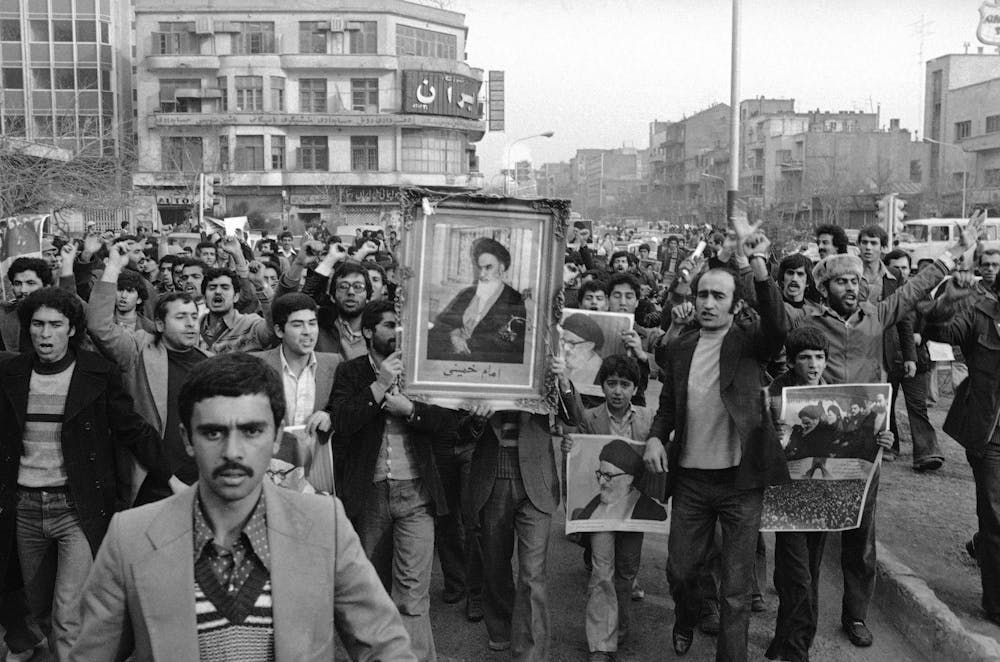
    Demonstrators in Tehran demand the establishment of an Islamic republic.
    AP Photo/Saris

    1979: Revolutionaries oust the shah, take hostages

    After more than 25 years of relative stability in U.S.-Iran relations, the Iranian public had grown unhappy with the social and economic conditions that developed under the dictatorial rule of Shah Mohammad Reza Pahlavi.

    Pahlavi enriched himself and used American aid to fund the military while many Iranians lived in poverty. Dissent was often violently quashed by SAVAK, the shah’s security service. In January 1979, the shah left Iran, ostensibly to seek cancer treatment. Two weeks later, Ayatollah Ruhollah Khomeini returned from exile in Iraq and led a drive to abolish the monarchy and proclaim an Islamic government.

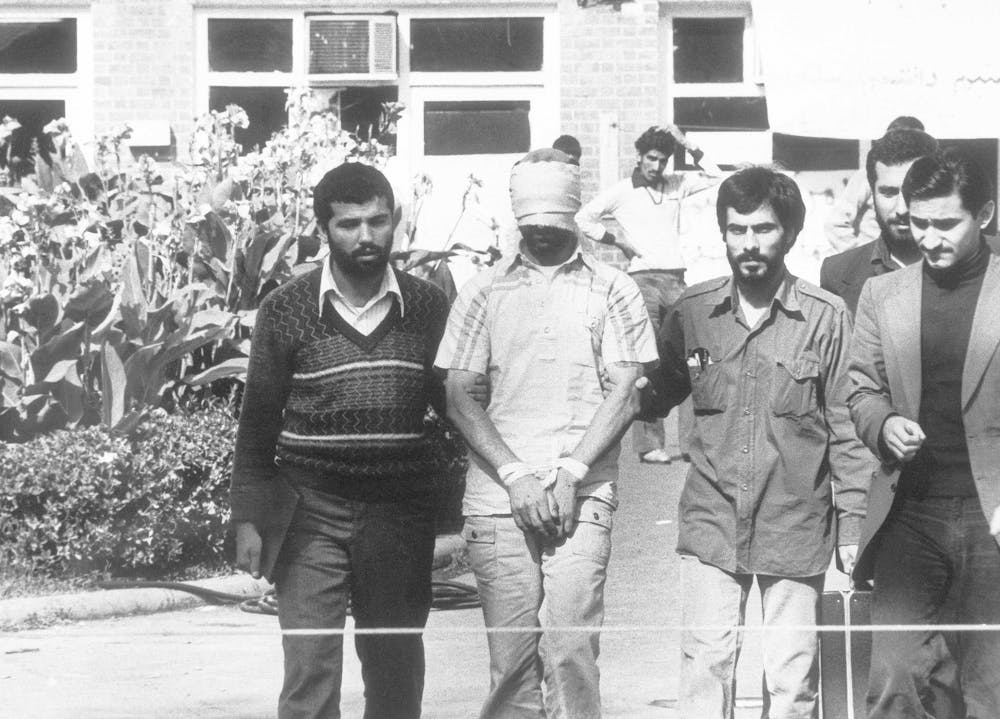
    Iranian students at the U.S. Embassy in Tehran show a blindfolded American hostage to the crowd in November 1979.
    AP Photo

    In October 1979, President Jimmy Carter agreed to allow the shah to come to the U.S. to seek advanced medical treatment. Outraged Iranian students stormed the U.S. Embassy in Tehran on Nov. 4, taking 52 Americans hostage. That convinced Carter to sever U.S. diplomatic relations with Iran on April 7, 1980.

    Two weeks later, the U.S. military launched a mission to rescue the hostages, but it failed, with aircraft crashes killing eight U.S. servicemembers.

    The shah died in Egypt in July 1980, but the hostages weren’t released until Jan. 20, 1981, after 444 days of captivity.

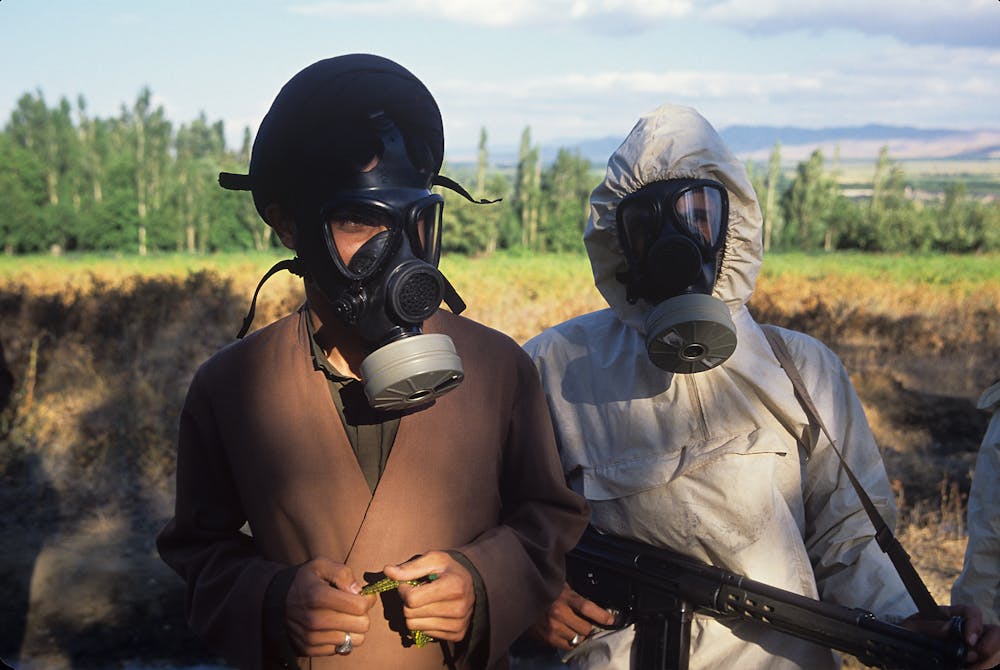
    An Iranian cleric, left, and an Iranian soldier wear gas masks to protect themselves against Iraqi chemical-weapons attacks in May 1988.
    Kaveh Kazemi/Getty Images

    1980-1988: US tacitly sides with Iraq

    In September 1980, Iraq invaded Iran, an escalation of the two countries’ regional rivalry and religious differences: Iraq was governed by Sunni Muslims but had a Shia Muslim majority population; Iran was led and populated mostly by Shiites.

    The U.S. was concerned that the conflict would limit the flow of Middle Eastern oil and wanted to ensure the conflict didn’t affect its close ally, Saudi Arabia.

    The U.S. supported Iraqi leader Saddam Hussein in his fight against the anti-American Iranian regime. As a result, the U.S. mostly turned a blind eye toward Iraq’s use of chemical weapons against Iran.

    U.S. officials moderated their usual opposition to those illegal and inhumane weapons because the U.S. State Department did not “wish to play into Iran’s hands by fueling its propaganda against Iraq.” In 1988, the war ended in a stalemate. More than 500,000 military and 100,000 civilians died.

    1981-1986: US secretly sells weapons to Iran

    The U.S. imposed an arms embargo after Iran was designated a state sponsor of terrorism in 1984. That left the Iranian military, in the middle of its war with Iraq, desperate for weapons and aircraft and vehicle parts to keep fighting.

    The Reagan administration decided that the embargo would likely push Iran to seek support from the Soviet Union, the U.S.’s Cold War rival. Rather than formally end the embargo, U.S. officials agreed to secretly sell weapons to Iran starting in 1981.

    The last shipment, of anti-tank missiles, was in October 1986. In November 1986, a Lebanese magazine exposed the deal. That revelation sparked the Iran-Contra scandal in the U.S., with Reagan’s officials found to have collected money from Iran for the weapons and illegally sent those funds to anti-socialist rebels – the Contras – in Nicaragua.

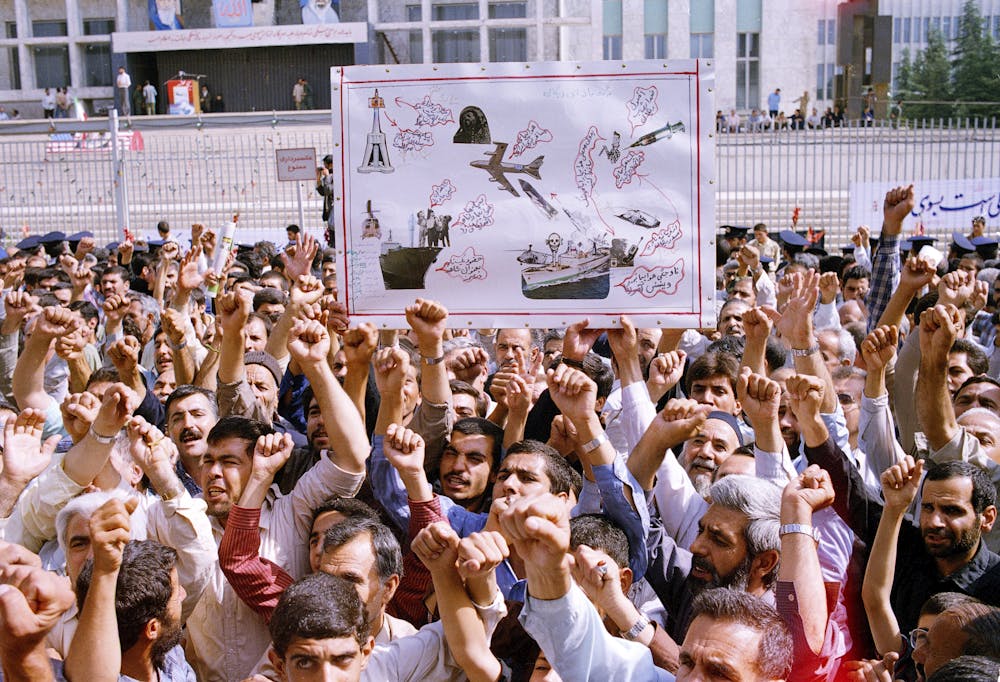
    At a mass funeral for 76 of the 290 people killed in the shootdown of Iran Air 655, mourners hold up a sign depicting the incident.
    AP Photo/CP/Mohammad Sayyad

    1988: US Navy shoots down Iran Air flight 655

    On the morning of July 8, 1988, the USS Vincennes, a guided missile cruiser patrolling in the international waters of the Persian Gulf, entered Iranian territorial waters while in a skirmish with Iranian gunboats.

    Either during or just after that exchange of gunfire, the Vincennes crew mistook a passing civilian Airbus passenger jet for an Iranian F-14 fighter. They shot it down, killing all 290 people aboard.

    The U.S. called it a “tragic and regrettable accident,” but Iran believed the plane’s downing was intentional. In 1996, the U.S. agreed to pay US$131.8 million in compensation to Iran.

    1997-1998: The US seeks contact

    In August 1997, a moderate reformer, Mohammad Khatami, won Iran’s presidential election.

    U.S. President Bill Clinton sensed an opportunity. He sent a message to Tehran through the Swiss ambassador there, proposing direct government-to-government talks.

    Shortly thereafter, in early January 1998, Khatami gave an interview to CNN in which he expressed “respect for the great American people,” denounced terrorism and recommended an “exchange of professors, writers, scholars, artists, journalists and tourists” between the United States and Iran.

    However, Supreme Leader Ayatollah Ali Khamenei didn’t agree, so not much came of the mutual overtures as Clinton’s time in office came to an end.

    In his 2002 State of the Union address, President George W. Bush characterized Iran, Iraq and North Korea as constituting an “Axis of Evil” supporting terrorism and pursuing weapons of mass destruction, straining relations even further.

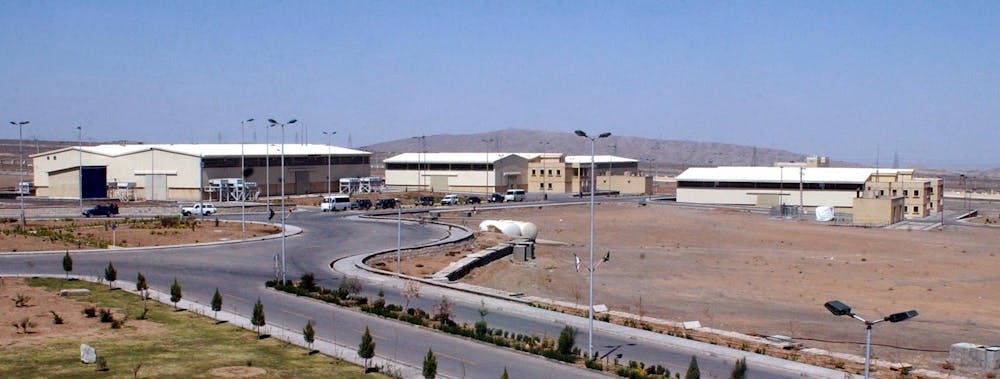
    Inside these buildings at the Natanz nuclear facility in Iran, technicians enrich uranium.
    AP Photo/Vahid Salemi

    2002: Iran’s nuclear program raises alarm

    In August 2002, an exiled rebel group announced that Iran had been secretly working on nuclear weapons at two installations that had not previously been publicly revealed.

    That was a violation of the terms of the Nuclear Nonproliferation Treaty, which Iran had signed, requiring countries to disclose their nuclear-related facilities to international inspectors.

    One of those formerly secret locations, Natanz, housed centrifuges for enriching uranium, which could be used in civilian nuclear reactors or enriched further for weapons.

    Starting in roughly 2005, U.S. and Israeli government cyberattackers together reportedly targeted the Natanz centrifuges with a custom-made piece of malicious software that became known as Stuxnet.

    That effort, which slowed down Iran’s nuclear program was one of many U.S. and international attempts – mostly unsuccessful – to curtail Iran’s progress toward building a nuclear bomb.

    2003: Iran writes to Bush administration

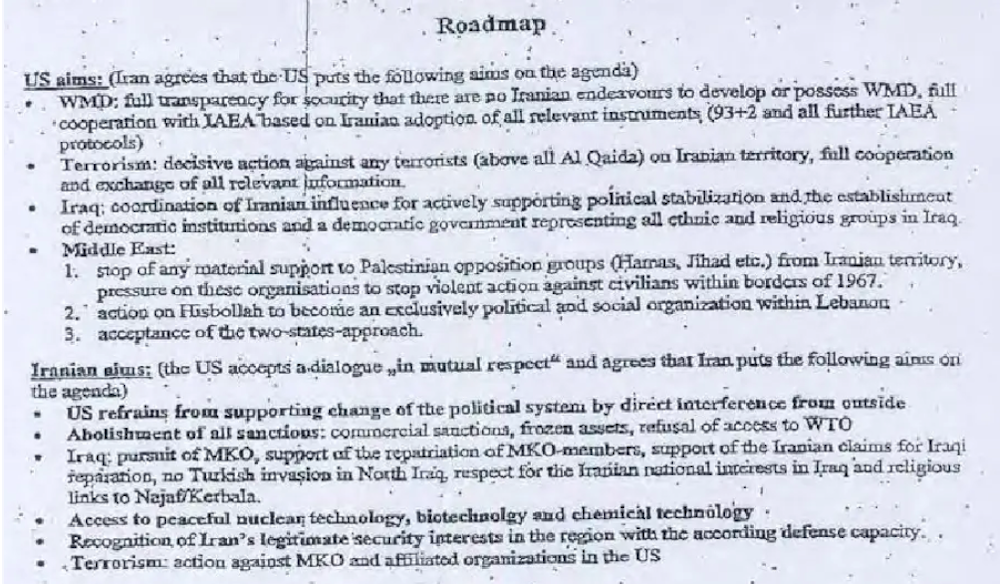
    An excerpt of the document sent from Iran, via the Swiss government, to the U.S. State Department in 2003, appears to seek talks between the U.S. and Iran.
    Washington Post via Scribd

    In May 2003, senior Iranian officials quietly contacted the State Department through the Swiss embassy in Iran, seeking “a dialogue ‘in mutual respect,’” addressing four big issues: nuclear weapons, terrorism, Palestinian resistance and stability in Iraq.

    Hardliners in the Bush administration weren’t interested in any major reconciliation, though Secretary of State Colin Powell favored dialogue and other officials had met with Iran about al-Qaida.

    When Iranian hardliner Mahmoud Ahmadinejad was elected president of Iran in 2005, the opportunity died. The following year, Ahmadinejad made his own overture to Washington in an 18-page letter to President Bush. The letter was widely dismissed; a senior State Department official told me in profane terms that it amounted to nothing.

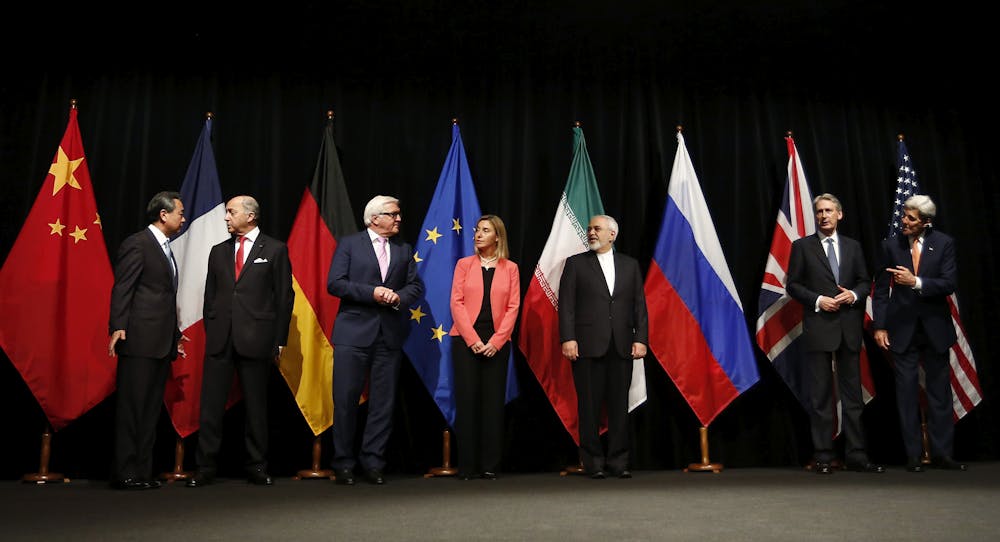
    Representatives of several nations met in Vienna in July 2015 to finalize the Iran nuclear deal.
    Austrian Federal Ministry for Europe, Integration and Foreign Affairs/Flickr

    2015: Iran nuclear deal signed

    After a decade of unsuccessful attempts to rein in Iran’s nuclear ambitions, the Obama administration undertook a direct diplomatic approach beginning in 2013.

    Two years of secret, direct negotiations initially bilaterally between the U.S. and Iran and later with other nuclear powers culminated in the Joint Comprehensive Plan of Action, often called the Iran nuclear deal.

    Two years of secret, direct negotiations conducted bilaterally at first between the U.S. and Iran and later with other nuclear powers culminated in the Joint Comprehensive Plan of Action, often called the Iran nuclear deal.

    Iran, the U.S., China, France, Germany, Russia and the United Kingdom signed the deal in 2015. It severely limited Iran’s capacity to enrich uranium and mandated that international inspectors monitor and enforce Iran’s compliance with the agreement.

    In return, Iran was granted relief from international and U.S. economic sanctions. Though the inspectors regularly certified that Iran was abiding by the agreement’s terms, President Donald Trump withdrew from the agreement in May 2018.

    2020: US drones kill Iranian Maj. Gen. Qassem Soleimani

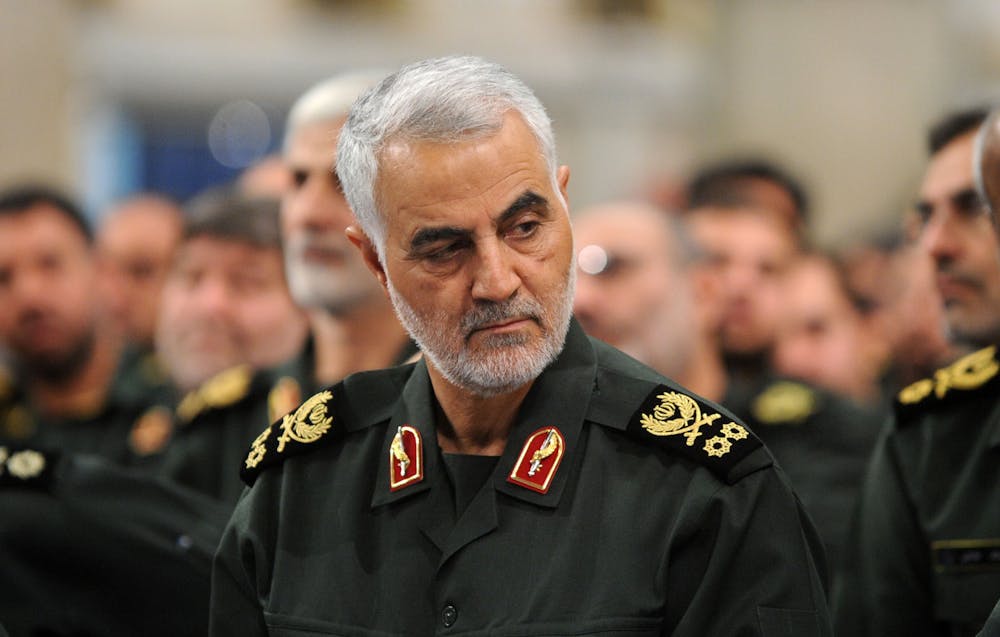
    An official photo from the Iranian government shows Maj. Gen. Qassem Soleimani, who was killed in a Jan. 3 drone strike ordered by President Donald Trump.
    Iranian Supreme Leader Press Office/Anadolu Agency via Getty Images

    On Jan. 3, 2020, an American drone fired a missile that killed Maj. Gen. Qassem Soleimani, the leader of Iran’s elite Quds Force. Analysts considered Soleimani the second most powerful man in Iran, after Supreme Leader Ayatollah Khamenei.

    At the time, the Trump administration asserted that Soleimani was directing an imminent attack against U.S. assets in the region, but officials have not provided clear evidence to support that claim.

    Iran responded by launching ballistic missiles that hit two American bases in Iraq.

    2023: The Oct. 7 attacks on Israel

    Hamas’ brazen attack on Israel on Oct. 7, 2023, provoked a fearsome militarized response from Israel that continues today and served to severely weaken Iran’s proxies in the region, especially Hamas – the perpetrator of the attacks – and Hezbollah in Lebanon.

    2025: Trump 2.0 and Iran

    Trump saw an opportunity to forge a new nuclear deal with Iran and to pursue other business deals with Tehran. Once inaugurated for his second term, Trump appointed Steve Witkoff, a real estate investor who is the president’s friend, to serve as special envoy for the Middle East and to lead negotiations.

    Negotiations for a nuclear deal between Washington and Tehran began in April, but the countries did not reach a deal. They were planning a new round of talks when Israel struck Iran with a series of airstrikes on June 13, forcing the White House to reconsider is position.

    On June 22, in the early morning hours, the U.S. chose to act decisively in an attempt to cripple Iran’s nuclear capacity, bombing three nuclear sites and causing what Pentagon officials called “severe damage.” Iran vowed to retaliate.

    This story has been updated to reflect the U.S. bombing of Iranian nuclear sites on June 22, 2025.

    Jeffrey Fields receives funding from the Carnegie Corporation of New York and Schmidt Futures.

    – ref. US and Iran have a long, complicated history, spanning decades before US strikes on nuclear sites – https://theconversation.com/us-and-iran-have-a-long-complicated-history-spanning-decades-before-us-strikes-on-nuclear-sites-259240

    MIL OSI – Global Reports –

    June 23, 2025
  • MIL-OSI Europe: Middle East crisis: President Meloni speaks with international partners and key regional players

    Source: Government of Italy (English)

    Following the Government meeting called urgently this morning in light of the worsening of the crisis in the Middle East, the President of the Council of Ministers, Giorgia Meloni, has had several conversations over the course of the day with a number of international partners and key regional players.

    In particular, President Meloni has had an exchange of views with the current President of the G7, Canadian Prime Minister Mark Carney, with German Chancellor Friedrich Merz, with French President Emmanuel Macron and with UK Prime Minister Keir Starmer. At regional level, President Meloni has spoken with the Crown Prince and Prime Minister of Saudi Arabia, Mohammed bin Salman Al Saud, with the President of the United Arab Emirates, Mohamed bin Zayed Al Nahyan, and with the Emir of Qatar, Tamim bin Hamad Al Thani.

    In all conversations, there was shared agreement and the utmost importance placed on the need to work towards a swift resumption of negotiations between the parties, in order to avoid further expansion of the conflict and to reach a political solution to the crisis.

    MIL OSI Europe News –

    June 23, 2025
  • MIL-OSI Security: Information for accredited media

    Source: NATO

    PROGRAMME

    Please check the event programme for the schedule of events. The detailed media programme (pdf) also includes pools departures and other technical details.

    VENUE

     On 24 – 25 June, the NATO Summit will take place at the World Forum Convention Centre. The International Media Centre (IMC) is located in the World Forum Convention Centre. 

    The Accreditation Office is located at Stadhouderslaan 15, 2517 HV The Hague.

    PICKING UP YOUR ACCREDITATION BADGE

     You will be granted a media pass only if you received a confirmation from NATO that your application for accreditation has been successful.

     You can collect your NATO Summit media pass at the Accreditation Office, located at Stadhouderslaan 15, 2517 HV The Hague.

     You will need to show a valid national identification document (Passport or ID-card) and press card (or accreditation letter from a recognised media organisation). You will need to bring the same ID document that you used in your accreditation application.

    ACCESS TO THE INTERNATIONAL MEDIA CENTRE

     All media representatives must use Stadhouderslaan 15, 2517 HV The Hague to access the International Media Centre. 

    The location is accessible by city public transport (tram/bus), taxi, car or bike. A passenger drop-off point and bicycle racks are available. There are no parking facilities nearby.

    Tram station World Forum (served by the lines 1 and 17) and bus stop World Forum (served by the lines 24 and 28) are located in the proximity of the Accreditation Office. 

    Please note media will need to go through airport-style security screening which may take longer at peak periods. 

    Given the security procedures and distances between venues, please plan at least 45 minutes for reaching the IMC.

    OPENING HOURS

      Media Centre Accreditation Office
     Saturday, 21 June  Closed  12:00 – 18:00
     Sunday, 22 June  12:00 – 18:00  12:00 – 18:00
     Monday, 23 June  09:00 – 20:00  09:00 – 20:00
     Tuesday, 24 June  Open continuously from 07:00  07:00 – 18:00
     Wednesday, 25 June  Open continuously until 02:00 on 26 June  06:30 – 14:00

    MEDIA CENTRE / FACILITIES

    The IMC includes the following facilities:

    • General filing area which is the main working space for all media accredited to the Summit, with access to internet (free), video and audio feed, and power outlets – available on a first come first serve basis.
    • Editing area – fully booked
    • Indoor/outdoor stand-up positions – fully booked
    • TV presentation positions
    • Press briefing rooms: One large press briefing room (Main Press Theatre) and 13 other press briefing rooms of different sizes. There will also be several informal media huddle/stakeout positions.
    • One Summit TV studio and one online engagements studio
    • Catering facilities for media

    Lockers for media are available in the IMC; belongings can be stored overnight in the lockers. Bulky equipment exceeding the size of the lockers cannot be left / stored in the media centre overnight.

    The World Forum is a non-smoking building.

    For any questions during the Summit, accredited journalists can go to the Information Desk at the Media centre.

    OPEN ACCESS FOR MEDIA

    Media will have unescorted access to the following:

    • Filing, broadcast and catering area.
    • Outdoor stand-up positions
    • Press conference area – when press conferences are taking place.
    • Media huddle/stakeout area – when engagements are taking place.

    NATO Secretary General’s press conferences are open to all accredited media representatives. Press conference announced on the CCTV are open for accredited media present in the IMC.

    POOLED ACCESS FOR MEDIA

    Media access to the main Summit events is pooled. Specific pool cards for each event will be used by NATO to identify the media authorised to attend. Please consult the media programme to identify the pools for each event.

    Media representatives wishing to be considered for a media pool need to contact Summitmediaoperations@hq.nato.int. You will receive a confirmation if your request can be accommodated, and you will be invited to collect your pool card.

    By accepting a NATO pool position, you commit to share immediately all information and material collected while in the pool with any accredited media that request it, at no charge and with no restriction on the use of the material for news purposes. Media representatives and news organisations must identify that it is pooled material every time it is used. Pooled material can only be used for legitimate news purposes and it cannot be sold.

    MEDIA ACCESS TO NATIONAL EVENTS

     Participating Heads of State and Government may hold press conferences in the Media Centre. If those are open to all media, time and location will be announced on the CCTV. 

    Details about national media plans (press briefings, bilateral meetings) are available from the national delegations. Providing information about, and organizing media coverage of bilateral events is the responsibility of the respective national delegations. 

    Please contact the national delegations directly. A contact list of national press officers is available at the Information Desk in the Media Centre.

    BROADCAST AND CONTENT

    NEP Groep/Wirtz Film operates as Host TV for the NATO Summit and covers live all events open to the media. The coverage will be available via satellite (on world feed), in the International Media Centre and on the NATO website. 

    Host TV will also provide continuous broadcast quality video feed of the Public Forum in the IMC. The Public Forum will also be shown live on NATO’s YouTube channel and on www.natopublicforum.org.

    Technical details relevant for broadcasters are available here

    Broadcast-quality B-roll will be available for free download from the NATO Multimedia Portal. Journalists need to register to the portal to be able to download videos: natomultimedia.tv/portal/Register.html. For more information, contact content@natomultimedia.tv.

    Transcripts of the Secretary General’s public remarks, as well as pictures taken by NATO photographers will be available on the NATO website.

    REGISTRATION OF WIRELESS EQUIPMENT

    To ensure your wireless equipment functions properly, safely, and legally during the NATO summit, it’s important to understand whether a license is required and how to comply with national regulations. Please visit to find out:   https://www.rdi.nl/onderwerpen/public-events

    NATO PUBLIC FORUM

    The NATO Public Forum will take place on 24-25 June at the Summit site. Details about the event are available at www.natopublicforum.org.

    Direct coverage by credentialed media will be pooled and access will be escorted from the International Media Centre. Media can ask for access at the Information Desk.

    NOTE: Media cannot participate in the discussions or ask questions.

    INTERPRETATION

    There will be simultaneous interpretation into French, Russian and Ukrainian of the NATO Secretary General’s press conferences and public remarks at the start of the Summit’s working sessions. Interpretation in multiple languages will also available during the live-streaming on the NATO website. 

    Interpretation might be provided for some of the national press conferences. Headsets will be available in the respective press conference rooms.

    SECURITY

    It is strongly recommended to arrive early to clear security checks. Please comply with the instructions of security staff. Passes must be visible at all times.

    If you lose your accreditation badge, please write to NATOAccreditations@hq.nato.int and report at the Information Desk.

    CATERING

    Catering will be available at the Summit venue throughout the Summit at no cost. Snacks, coffee, water will be provided throughout the IMC during opening hours. Hot meals will be provided in the media catering area at times outlined below.

    Day Lunch Dinner Dinner
     22 June  13:00 – 15:00  –  
     23 June  12:30 – 14:30  17.30 -19.30  
     24 June  11:30 – 14:30  19:00 – 21:00  Light catering overnight
     25 June  11:30 – 14:30  18:30-21:00  Light catering overnight

    LOST AND FOUND

     Please check at the Information Desk.

    MAPS

    Access to the premises

    CONTACT POINTS

    General logistics, pool access:  Summitmediaoperations@hq.nato.int

    Media accreditation:  NATOAccreditations@hq.nato.int 

    Edit booths, standups, etc: broadcastoperations@mfasummits.nl 

    TV Studio:  broadcastoperations@hq.nato.int 

    B-roll and video distribution:  content@natomultimedia.tv

    NATO Summit Media Coordination:
    Ms. Alina COCA – Summitmediaoperations@hq.nato.int

    The Netherlands Media Coordination: antoinet-de.haan@minbuza.nl

    Media queries and / or requests for interviews of NATO officials:
    NATO Press and Media Service – press@hq.nato.int
    The Netherlands: NATO2025-press@minbuza.nl

    MIL Security OSI –

    June 23, 2025
  • MIL-OSI Africa: Nigeria secure historic double as first African flag football champions

    Nigeria’s women’s and men’s teams have been crowned the inaugural IFAF African Flag Football champions as the sport marked a major milestone on its journey to a first Olympic Games appearance in Los Angeles 2028.

    The Nigerian men edged a thrilling final game, winning 13-12 to claim gold over hosts Egypt in front of a loud and high-spirited home crowd inside the Club One Stadium in Maadi, Cairo, where distinguished guests included Egypt’s Minister of Youth and Sport Dr Ashraf Sobhi.

    In the women’s tournament, Nigeria put out a confident performance to take victory over Morocco 26-12 in the final, with two decisive second half touchowns thrown by quarterback Anuoluwapo Bello. Bronze medalists Tunisia (men) and Egypt (women) completed the historic podiums.

    In total, 11 teams from eight nations, spanning the African continent, participated in Africa Flag – the first of IFAF’s continental championships series for 2025 and the starting point for what will be the biggest and most important competition cycle in flag football history, culminating in the Olympic Games LA28.

    As African champions, Nigeria’s men and women qualify directly to the IFAF Flag Football World Championships in 2026. The event also saw 10 national teams earn their first official world rankings.

    “This is a great achievement for us and I’m proud of every woman out here,” said Nigeria women’s gold medallist Anuoluwapo Bello. “I feel excited for the girls here. There is an opportunity to go to the World Championships and show everyone what we can do.”

    “It’s amazing, it’s surreal, it’s history, it’s unbelievable,” said Nigeria men’s quarterback Hayes Obinna-Uzoh. “We’ve made history.”

    Egypt men’s quarterback Mahmoud Aboushady said: “We went for it, but we came up just short. The crowd was awesome, and it was a big crowd who were all cheering and that was really touching.”

    Morocco women’s center, silver medallist Sonia Mouimen added: “We usually don’t see crowds of this size making so much noise unless it is at soccer matches. I am very proud of my team.”

    One of the world’s fastest-growing sports, flag football is developing quickly across Africa, with many of IFAF’s member federations in the continent recording more than 100% growth in participation last year.

    The Africa Flag 2025 tournament was delivered in partnership with the NFL, who are working with IFAF to drive the development of flag football in Africa.

    In an effort to ensure the event builds on the legacy for American football across the continent, the NFL is hosting a series of wraparound activities in Cairo. These include:

    • a continental NFL Flag youth championships for U12’s boys and girls teams from across Africa;
    • an NFL talent indentification session, with the potential for players to advance to the NFL Africa-Europe Academy and International Player Pathway (IPP) program;
    • in partnership with IFAF and including the participation of NFL/ IFAF Global Flag football Abassador Elisa de Santis (FRA), a coaching education clinic for aspiring female coaches from Africa.

    Two current NFL players, New York Giants’ Bobby Okereke (Nigeria) and Tanoh Kpassagnon (Ivory Coast/Uganda) have traveled to Cairo to join these activities and were present to witness the historic finals session alongside two-time Super Bowl winner and NFL Africa lead Osi Umeniyora.

    “The first African Continental Championship was a tremendous success, and Egypt proved to be the perfect host as we continue our journey to grow flag football across Africa,” said Umenyiora. “It was inspiring to see nations from across the continent come together for the two-day event and showcase the incredible talent of their young athletes. The NFL is proud to partner with IFAF to help grow the game of flag football, especially as we look ahead to its debut at the LA28 Olympic Games.”

    IFAF President Pierre Trochet said: “Every player and official who set foot on the field in Cairo this week can claim a piece of history. I’m enormously proud and grateful to our Egyptian federation, who have hosted this milestone event with great professionalism and warmth. But the history is less important than the future and what this tournament has demonstrated is the enormous talent and passion for the game that exists right across the African continent. We know this event is just the start and, together with our NFL partners, we are committed to ensuring it acts as a springboard to the long-term development of our game.”

    The IFAF African Flag Football World Championships were hosted over two days (June 20-21) by the Egyptian Federation of American Football, whose President Ali Rafeek said: “No words can truly capture the emotion of this moment. It was a world-class competition filled with outstanding performances and, above all, incredible energy. We’ve been building toward this moment for a while with IFAF leadership and our fellow federations, and we’re proud to see that hard work come to life. Africa is officially on the flag football map, and we’re only getting started.”

    The event in Cairo also witnessed the kick-off of IFAF’s new, comprehensive partnership with the International Testing Agency, whose staff were present to deliver anti-doping education activities for participating athletes and team officials.

    The IFAF Flag Football Continental Championship series will continue in September with the EURO FLAG 2025 event in Paris, France.

    RESULTS AND FINAL STANDINGS

    IFAF Africa Flag 2025  – men’s tournament

    Gold Medal Game
    Nigeria 13 Egypt 12

    Bronze Medal Game
    Tunisia 36 Morocco 14

    5th Place Game: Cameroon 45 Senegal 13
    7th Place Game: South Africa 60 Uganda 0

    Semifinals
    Egypt 21 Morocco 12
    Tunisia 18 Nigeria 40

    Final Placing

    1. Nigeria
    2. Egypt
    3. Tunisia
    4. Morocco
    5. Cameroon
    6. Senegal
    7. South Africa
    8. Uganda

    IFAF Africa Flag 2025 – women’s tournament

    Gold Medal Game
    Nigeria 26 Morocco 12

    Playoff
    Egypt 13 Morocco 19

    Final Placing

    1. Nigeria
    2. Morocco
    3. Egypt

    Distributed by APO Group on behalf of National Football League (NFL).

    Photography and Video Assets: https://apo-opa.co/44rRoJY
    *Rights-released for editorial use. Please credit IFAF

    MIL OSI Africa –

    June 22, 2025
  • MIL-OSI Asia-Pac: HK wine trade promoted in Bordeaux

    Source: Hong Kong Information Services

    Secretary for Commerce & Economic Development Algernon Yau continued his visit to Bordeaux in France to promote Hong Kong’s advantages as a wine and liquor trading hub to the trade.

    Mr Yau held a business roundtable with representatives of the trade of Bordeaux wine, Cognac and Armagnac to discuss the latest developments of the trade and enhance co-operation on promoting wine and liquor trading.

    He highlighted the business opportunities brought about by the strong growth in the demand of wine in the vast Asia-Pacific market, noting that market research revealed China’s wine market generated approximately US$31 billion in revenue in 2024 and is projected to reach US$54 billion in 2030, an annual growth rate of almost 10%.

    With Hong Kong’s wine duty abolished in 2008, the city is now an international wine trading hub and one of the world’s top three wine auction centres, Mr Yau added.

    As regards liquor, the commerce chief said that France remains one of Hong Kong’s top liquor trading partners.

    In 2024, Hong Kong imported US$831 million worth of liquor, and France was its second-largest import market, accounting for 30% of the total. Brandy continued to be a leading category, particularly through high-end retail channels catering to the Mainland market.

    Mr Yau outlined that Hong Kong took introduced a two-tier liquor duty system last October, under which the duty rate was reduced from 100% to 10% for the portion above $200.

    “As a ‘super connector’, linking the East and West, Hong Kong with its strategic location and unique advantages plays a pivotal role in the global liquor trade as a gateway to the fast-growing Asia and Mainland markets.”

    Between 2013 and 2023, imports of spirits in Asia grew 79.3%, a significantly faster rate than the global increase of 42% in the same period. The Mainland is now the third-largest importer of Cognac.

    Mr Yau pointed out that Hong Kong’s signature events such as the Hong Kong International Wine & Spirits Fair and the Hong Kong Wine & Dine Festival, along with biennial events such as ProWine Hong Kong and Vinexpo Asia, provide French producers with unparalleled platforms to promote their brands to international buyers, distributors and liquor enthusiasts.

    MIL OSI Asia Pacific News –

    June 22, 2025
  • MIL-OSI United Nations: Update 296 – IAEA Director General Statement on Situation in Ukraine

    Source: International Atomic Energy Agency (IAEA)

    Nuclear safety remains precarious at Ukraine’s Zaporizhzhya Nuclear Power Plant (ZNPP) and its six reactors cannot be restarted as long as the military conflict continues to jeopardize the situation at the site, Director General Rafael Mariano Grossi told IAEA Member States this week.

    Addressing the regular June meeting of the Board of Governors, the Director General briefed them about his 12th mission to Ukraine during the current conflict, which took place in early June, followed by a visit to Russia, which also focused on nuclear safety and security at the ZNPP.

    Addressing the Board meeting, he highlighted “the extremely vulnerable” status of the off-site power supply at the site, which for more than a month now has relied on one single power line for the electricity it needs to cool its reactors and spent fuel. Before the conflict, Europe’s largest nuclear power plant (NPP) had access to ten power lines.

    In addition, Director General Grossi noted that the ZNPP reactors’ “reliance on groundwater for cooling remains an interim solution, whilst in their cold shutdown state”.  The plant has depended on 11 groundwater wells since the downstream Kakhovka dam was destroyed two years ago.

    In their meeting in Kyiv on 3 June, Ukrainian President Volodymyr Zelenskyy “made a point to recognize the importance of the IAEA’s permanent presence” at the ZNPP, the Director General told the Board, adding he had assured President Zelenskyy of the IAEA’s continued commitment to Ukraine’s nuclear safety and to helping it rebuild its energy infrastructure.

    The Director General added: “As the military conflict moves further into its fourth year, Ukraine needs support, and the IAEA is providing it … it is also crucial to prepare for the reconstruction phase.”

    At the ZNPP, the IAEA team based there has held several meetings with the ZNPP to discuss the site’s electrical system and also visited its 750 kilovolt (kV) switchyard.

    Apart from the sole remaining 330 kV back-up line that was disconnected due to military activities on 7 May, the site does not know the current condition of its five other 330 kV lines, which remain unavailable after they were damaged outside of the ZNPP area early in the conflict.

    The ZNPP said maintenance work was conducted at one of the four 750 kV power lines that was originally connected to the ZNPP before being damaged in 2022. Since the conflict, the ZNPP had lost access to three of its 750 kV lines.

    In addition, the ZNPP informed the IAEA about a planned project to pump water into the cooling pond from the Dnipro River in order to maintain a water level that is sufficient to cool one operating reactor initially, followed by a second unit, until the pond reaches its full capacity. According to the site, a pumping station will be constructed to supply water directly to the cooling pond until the plant can rebuild the Kakhovka dam.

    The exact location of the pumping station cannot yet be determined, as it depends on the security conditions, the ZNPP said, adding the project would only start once military activities cease.

    Separately this week, the IAEA team was informed that that the Russian regulator, Rostekhnadzor, over the next two weeks will perform pre-licensing inspection activities at ZNPP reactor units 1 and 2, whose current operational licences issued by Ukraine are due to expire in December this year and in February 2026, respectively. The IAEA team has requested to observe these activities and will seek additional information regarding items such as the scope of these undertakings and any criteria for assessing nuclear safety.

    Over the past several weeks, the IAEA team has also been monitoring a leak in one reactor unit’s essential service water system which delivers cooling water to the safety systems. The leak – which can occur in NPPs without any significant safety consequences – was discovered during maintenance and the team was informed that it was caused by corrosion. It has since been repaired.

    The IAEA team reported hearing military activities on most days over the past weeks, at varying distances away from the ZNPP including last week’s purported drone attack on the site’s training centre.

    The Khmelnytskyy, Rivne and the South Ukraine NPPs are continuing to operate amid the problems caused by the conflict. Three of their nine operating reactor units are still undergoing planned outages for refuelling and maintenance. The IAEA teams at these plants and the Chornobyl sites have continued to report on – and be informed about – nearby military activities, including drones observed flying nearby. Last Monday, the IAEA teams at Khmelnytskyy and Rivne were required to shelter.

    Over the past two weeks, the IAEA teams based at these four sites have all rotated.

    As part of the IAEA’s assistance programme to support nuclear safety and security in Ukraine, the Chornobyl site received essential items to improve staff living conditions and the National Scientific Centre Institute of Metrology received personal radiation detectors.

    These deliveries were funded by Austria, Belgium, France and Norway and brought the total number of IAEA-coordinated deliveries since the start of the armed conflict to 140.

    MIL OSI United Nations News –

    June 22, 2025
  • MIL-OSI United Nations: Press Arrangements for Next Week’s IAEA General Conference, Including Media Briefing on New Nuclear Energy Projections

    Source: International Atomic Energy Agency (IAEA)

    The 68th Annual Regular Session of the International Atomic Energy Agency (IAEA) General Conference, #IAEAGC, will convene from 16 to 20 September at the Vienna International Centre (VIC) in Vienna, Austria. The opening session takes place on Monday, 16 September, at 10:00 CEST. 

    High-ranking officials and representatives from IAEA Member States will consider and make decisions on a range of issues pertaining to the work and the budget of the Agency.

    The main conference events will take place in the M-Building of the VIC.

    All plenary sessions of the General Conference will be livestreamed on the IAEA website (no login required) in Arabic, Chinese, English, French, Russian and Spanish.

    The opening session of the GC will also be streamed live on the lAEA YouTube channel in high definition, and a download link will be made available afterwards.

    Details of the General Conference, including the provisional agenda, are available on the IAEA website and social media (Facebook, Instagram, LinkedIn, X, Weibo). Photos of the General Conference will be available on Flickr.

    The Press Room on the M-building’s ground floor will be available as a press working area from 08:30 CEST on 16 September.

    Media Briefing on Nuclear Energy Projections

    The IAEA’s latest nuclear power projections will be released on 16 September, in the 44th edition of Energy, Electricity and Nuclear Power Estimates for the Period up to 2050. The report provides detailed global trends in nuclear power by region.

    The IAEA will host a briefing for media on the new projections. IAEA experts, including Henri Paillere, Head of Planning and Economic Studies at the IAEA, will provide the briefing on Monday, 16 September at 09:30 CEST in the Press Room.

    Please note: All information presented during the briefing are under embargo until after the Director General’s opening statement on Monday, 16 September.

    Please inform the IAEA Press Office if you plan to attend the briefing.

    Scientific Forum

    This year’s Scientific Forum, organized on the sidelines of the General Conference on 17 and 18 September, is entitled Atoms4Food – Better Agriculture for Better Life. It will focus on how nuclear science, technology and innovation can enhance sustainable agrifood systems, improve food security and address climate change. 

    The Scientific Forum will cover crop improvement, animal genetics and reproduction, crop and animal disease and pest management, food safety and nutrition, and sustainable management of natural resources, including soil and water. The two-day event will facilitate best practice exchanges, discuss sustainable adoption and scaling up of R&D results, and explore innovative financing and partnerships.

    IAEA Director General Rafael Mariano Grossi will open the Scientific Forum with high-level speakers on Tuesday, 17 September, at 09:30 CEST.

    The Forum will take place in Boardroom D of the C-Building. All sessions will be livestreamed.

    Accreditation

    All journalists – including those with permanent accreditation – are requested to inform the IAEA Press Office of their plans to attend the General Conference. Journalists without permanent accreditation must send copies of their passport and press ID to the IAEA Press Office by 14:00 CEST on Friday, 13 September.

    We encourage those journalists who do not yet have permanent accreditation to request it at UNIS Vienna.

    Access to the plenary sessions of the General Conference and the Scientific Forum for photographers and video camera operators must be requested in advance.

    MIL OSI United Nations News –

    June 22, 2025
  • MIL-OSI United Nations: Nuclear Techniques Make Waves at UN Ocean Conference

    Source: International Atomic Energy Agency (IAEA)

    IAEA Director General Rafael Grossi during the high-level event on combatting marine pollution at the United Nations Conference in Nice, France  (Photo: E. McDonald/IAEA)

    The IAEA highlighted the role of nuclear science in protecting our oceans at the 2025 United Nations Ocean Conference held last week in Nice, France.

    Co-hosted by France and Costa Rica, the conference convened over 10,000 participants, including scientists, diplomats and politicians, to address the triple planetary crisis of climate change, biodiversity loss and pollution. It aimed to accelerate progress towards SDG14, Life Below Water, through innovative technologies and action. The IAEA took center stage at the event to share how nuclear technology is boosting ocean health and tackling critical threats such as marine plastic pollution.

    The IAEA organized and participated in more than a dozen events at the conference, and on research vessels in the Port of Nice. Experts from the IAEA’s Marine Environment Laboratories in Monaco highlighted how isotopic tools can help monitor and reduce plastic pollution in the ocean.

    Plastic waste is not only infiltrating our oceans, but also the human body in the form of microplastics. Without urgent action, the amount of plastic entering the ocean each year could reach 37 million metric tons by 2040, according to UN estimates, becoming a threat to marine and human life.

    Plastic pollution featured prominently throughout the conference, with a focus on the ongoing negotiations for the development of an internationally legally binding instrument to end plastic pollution, including in the marine environment. The negotiations for the United Nations Environment Programme (UNEP)-led treaty are expected to conclude later this year in Geneva, following five previous sessions.

    At the conference, IAEA Director General Rafael Grossi spoke about the IAEA’s work to combat plastic pollution and emphasized the need to share data data between scientists, policymakers and environmental agencies.

    “Four years ago, at the last UN Ocean Conference, I announced NUTEC Plastics, an initiative that gives countries the tools they need to address the issue of marine microplastic pollution. Today, I am delighted to report that we have made significant progress with 99 countries involved, and we have been equipping more than 100 Member State laboratories all over the world. We are building the capacity that countries need to translate data into policies and action.” 

    NUTEC Plastics is an IAEA flagship initiative that supports countries in researching microplastics and using nuclear techniques to improve recycling techniques.

    Director of the IAEA Marine Environment Laboratories Florence Descroix-Comanducci (left), highlighted IAEA’s work to support sustainable ocean management and monitor marine microplastic pollution at the 2025 UN Ocean Conference in France (Photo: E.McDonald/IAEA)

    “Nuclear and isotopic techniques add incredible value to boost ocean health,” said Florence Descroix-Comanducci, Director of the IAEA Marine Environment Laboratories. “Our laboratories in Monaco support Member States in the implementation and use of these techniques, and to develop harmonized methods to generate globally comparable data, especially in light of the forthcoming plastics treaty.”

    At events organized by the IAEA, panelists highlighted the need to address the top of the plastic life cycle to prevent further pollution, employing a “source to sea approach” to reduce marine litter and, by extension, marine plastic pollution. “While many indicators on oceans are moving in the wrong direction, there are also positive points. Our metrics on marine litter are moving in the right direction,” said Martin Adams, Head of the Environment Department at the European Environment Agency. “Timely and relevant data are essential to inform good decision-making, but we don’t need to know everything. We just need to know enough to act.” Other events organized by the IAEA focused on ocean-based carbon dioxide removal, ocean acidification, IAEA support for Small Island Developing States (SIDS), and nuclear energy and ocean health.

    The IAEA’s unique expertise in nuclear applications is contributing to both mitigations, by using radiation technology for waste recycling, and monitoring, by using isotopic techniques to monitor and assess impacts of microplastic pollution. Through the NUTEC Plastics initiative, and with the support of the IAEA’s technical cooperation programme, 99 countries are participating in marine monitoring of microplastics, and 52 around the world are developing innovative recycling technology.

    The International High Level Forum on NUTEC Plastic, organized by the IAEA on 25–26 November 2025, in Manila, Philippines, will highlight the progress achieved to date, address current challenges, and chart course to strengthen regional and international cooperation in the sustainable management of plastic waste through innovative nuclear technologies.

    MIL OSI United Nations News –

    June 22, 2025
  • MIL-OSI United Nations: IAEA to Host Eighth Review Meeting of the Joint Convention

    Source: International Atomic Energy Agency (IAEA)

    The Eighth Review Meeting of the Contracting Parties to the Joint Convention on the Safety of Spent Fuel Management and on the Safety of Radioactive Waste Management (the Joint Convention) will be held at the International Atomic Energy Agency (IAEA) in the M-Building of the Vienna International Centre (VIC) from 17 to 28 March. 

    IAEA Director General Rafael Mariano Grossi will address the opening plenary session on 17 March at 09:00 CET. Jean-Luc Lachaume, Commissioner of the French Authority for Nuclear Safety and Radiation Protection, will preside over the Eighth Review Meeting and will open the proceedings.   

    In force since 2001, the Joint Convention seeks to achieve and maintain a high level of worldwide safety in spent fuel and radioactive waste management. Currently, of the 180 IAEA Member States, 90 are party to the Convention. At Review Meetings held every three years, the Contracting Parties to the Joint Convention present and discuss national reports on the implementation of obligations under the Convention. 

    The agenda for the two-week meeting also includes a topical session on knowledge management related to long term management of disused sealed radioactive sources, radioactive waste and spent fuel, and a discussion of Contracting Parties’ proposals for enhancing the review process. 

    Press Opportunities 

    Journalists are invited to attend: 

    • and the part of the closing session where the Contracting Parties will adopt a Summary Report – currently foreseen to be held in the afternoon of 28 March. For the exact timing of the closing session, please contact press@iaea.org. 

    Both sessions will be streamed live and will take place in Boardroom B/M1 in M Building of the VIC. Photos will also be made available at the IAEA Flickr page. 

    Accreditation 

    All journalists interested in covering the meeting in person – including those with permanent accreditation – are requested to inform the IAEA Press Office of their plans. Journalists without permanent accreditation must send copies of their passport and press ID to the IAEA Press Office.  

    We encourage those journalists who do not yet have permanent accreditation to request it at UNIS Vienna.  

    Please plan your arrival to allow sufficient time to pass through the VIC security check.  

    MIL OSI United Nations News –

    June 22, 2025
  • MIL-OSI United Nations: IAEA Director General’s Introductory Statement to the Board of Governors

    Source: International Atomic Energy Agency (IAEA)

    (As prepared for delivery)

    As the armed conflict in Ukraine enters its fourth year, the nuclear safety and security situation throughout the country continues to be highly precarious. The presence of the IAEA at all Ukrainian nuclear facilities has been and continues to be an invaluable asset to the international community and must be preserved.

    The IAEA remains present at Ukraine’s nuclear power plant facilities. Difficult conditions have in the past month complicated and delayed one rotation of experts, which was safely completed in recent days. Back in December, a drone hit and severely damaged an IAEA official vehicle during a rotation. As I reported to you in the special Board meeting shortly afterward, staff survived this unacceptable attack unharmed, but the rear of the vehicle was destroyed. Other episodes followed, confirming the dangerous situation.

    Around Ukraine, the Khmelnitsky NPP, the Rivne NPP and the South Ukraine NPP, continue to operate amid serious challenges, including on the electricity infrastructure, a major risk to the reliable and stable supply of power crucial for the safe operation of NPPs. The electrical grid’s ability to provide a reliable off-site power supply to Ukrainian NPPs was further reduced by damage sustained following military attacks in November and December 2024, a mission of IAEA experts that visited and assessed seven critical electrical substations concluded late last year. Considering the seriousness of the situation, I visited the Kyivska electrical substation last month to observe the damage sustained first hand. On what was my 11th visit to Ukraine since the start of the war, I also met with President Volodymyr Zelenskyy, reiterating the IAEA’s commitment to supporting nuclear safety and security in Ukraine and our readiness to support the country’s plans to expand nuclear power at Khmelnytskyy NPP. Consultations with Moscow have also taken place and will continue, in the interest of nuclear safety and security at Zaporizhzhya Nuclear Power Plant.

    At Ukraine’s Zaporizhzhya Nuclear Power Plant (ZNPP), where the 6 reactor units are in cold shutdown, the status of the off-site power supply remains extremely vulnerable. For about one week ZNPP had to rely on a single off-site power line following the loss of its only remaining back-up line, confirming the extremely fragile situation. 

    Last month at the Chornobyl site a drone caused significant damage to the structure built to prevent any radioactive release from the reactor damaged in the 1986 accident and to protect it from external hazards. Although this attack did not result in any radioactive release, it nevertheless underlines the persistent risk to nuclear safety during this military conflict.

    Since the Board gathered for its last regular meeting in November 2024, the Agency has arranged 31 deliveries of nuclear safety, security and medical equipment and supplies to Ukraine, bringing the total so far to 108 deliveries valued at more than EUR 15.6 million. The Agency also has initiated the first phase of its support on safety and security of radioactive sources in Ukraine.

    We are grateful to all 30 donor states and the European Union for their extrabudgetary contributions, and I encourage those who can, to support the delivery of the comprehensive assistance programme, for which EUR 22 million are necessary.

    As reflected in my latest report to the Board on Nuclear Safety, Security and Safeguards in Ukraine, I would like to reiterate that all the IAEA’s activities in Ukraine are being conducted in line with relevant resolutions of the UN General Assembly and of the IAEA policy-making organs.

    Madame Chairperson,

    In February, I travelled to Fukushima to participate in collecting water samples off the coast of the Fukushima Daiichi Nuclear Power Station. I did this together with scientists from China, Korea and Switzerland as part of additional measures to promote transparency and build trust in the region during the ongoing release of ALPS-treated water from the plant. Additional measures focus on expanding international participation and transparency, allowing hands-on independent measurements of the concentration level of the water. This work is conducted within agreed parameters set by the IAEA in its role as an independent, impartial and technical organization.  IAEA officials and experts from laboratories from China, France, the Republic of Korea, and Switzerland also sampled ALPS -treated water – prior to dilution – from measurement/confirmation tanks on the premises at the site. The IAEA has maintained its independent monitoring and analysis efforts, confirming that tritium concentrations in the discharged batches remain far below operational limits.

    In December 2024, an IAEA Task Force concluded that the approach TEPCO, and the Government of Japan are taking continues to align with international safety standards.

    While in Japan, I also visited facilities where soil removed after the Fukushima Daiichi Nuclear Power Station accident is safely stored, managed, and recycled, an effort the IAEA has been supporting by working to ensure it meets international safety standards.

    You have before you the Nuclear Safety Review 2025 and the Nuclear Security Review 2025. Both documents present, in their respective areas, an analytical overview, the global trends, and the Agency’s main activities in 2024. They also identify the top priorities for the years ahead.

    This month the inaugural meeting of the Nuclear Security Working Group established under the Nuclear Harmonization and Standardization Initiative’s Regulatory Track will identify nuclear security topics of common interest amongst participating States and share regulatory approaches, good practices and lessons learned in ensuring the security of SMRs.

    Our preparatory work in advance of the launch of Atomic Technology Licensed for Applications at Sea (ATLAS) later this year is progressing. ATLAS will provide a framework to enable the peaceful maritime uses of nuclear technology, a prospect that is generating significant interest.

    Contracting Parties to the Joint Convention on the Safety of Spent Fuel Management and on the Safety of Radioactive Waste Management (Joint Convention) later this month will participate in the 8th Review Meeting to study National Reports with the aim of improving safety in radioactive waste and spent fuel management.

    December saw the start of a new project supporting the establishment of sustainable regulatory infrastructure for radiation safety and the security of radioactive material in Central East Asia and the Pacific Islands.

    In June, Romania will host ConvEx-3, the IAEA’s highest level and most complex emergency exercise. In the event of an incident with transboundary implications, Member States will be called upon to implement a harmonized response and therefore this exercise will have a particular focus on regional collaboration.

    The International Conference on Nuclear and Radiological Emergency Preparedness and Response will be held in December in Riyadh in the Kingdom of Saudi Arabia.

    Madame Chairperson,

    Today, 417 nuclear power reactors operating in 31 countries make up almost 377 gigawatts of installed capacity, providing just under 10 per cent of the world’s total electricity and a quarter of its low-carbon supply.

    It is clear that countries are turning more and more to nuclear energy. In the IAEA’s high case scenario, global nuclear electricity generating capacity is seen increasing two and a half times by 2050.  Delivering on that promise will require public support. That is why the first IAEA International Conference on Stakeholder Engagement for Nuclear Power Programmes will gather governments, industry and practitioners from around the world in the final week of May. Mayors of municipalities with nuclear power facilities from around the world will share their experiences. No one is better placed to assess the impact and contribution to the community of nuclear facilities than those living there.

    Following our first Nuclear Stakeholder Engagement School, hosted by the Abdus Salam International Centre for Theoretical Physics in Trieste, Italy last November, we are now planning two more later this year. In addition, we have also established a new Stakeholder Engagement Advisory Service, which will help countries assess and strengthen their stakeholder engagement programmes.

    The use of Artificial Intelligence (AI) is rapidly evolving and growing in all spheres of life, including in nuclear science and technology. AI data centres require a lot of energy and nuclear reactors provide clean, reliable, and adaptable options, including in the form of SMRs and micro reactors.  Meanwhile, the integration of AI into the nuclear sector offers the chance to streamline operations across the nuclear power project life cycle. In this context the IAEA will host the International Symposium on Artificial Intelligence and Nuclear Energy this December. We look forward to welcoming as many of you as possible to this important and first-of-a-kind event here at the Agency’s headquarters.

    Within the Secretariat we are also intent on making the most of AI while mitigating its risks, therefore we have established official guidelines, a portal and a community of practice.

    Our work on fusion continues apace with the publication of Experiences for Consideration in Fusion Plant Design Safety and Safety Assessment.

    Madame Chairperson,

    The Nuclear Technology Review before you highlights key advancements in nuclear applications that support Member States in addressing critical priorities. This year’s review places particular emphasis on innovations in food safety and authenticity, energy security, early disease detection and cancer treatment, environmental sustainability, and advanced manufacturing.

    In November, the IAEA hosted the Ministerial Conference on Nuclear Science, Technology and Applications and the Technical Cooperation Programme. The Ministerial Declaration recognized both the critical role of nuclear science, technology, and applications in tackling global challenges, and the important role of the Technical Cooperation programme as a key mechanism in transferring, expanding and further accelerating Member State access to nuclear technology, materials, equipment and expertise for peaceful purposes.

    I am pleased to report the IAEA’s technical cooperation programme achieved an implementation rate of 86% in 2024. We provided our emergency assistance to Türkiye and Syria, assessing damage to civil structures following the earthquakes and building the capacities of Turkish and Syrian experts in non-destructive testing. We initiated procurement to reinstate X-ray and laboratory services in Grenada and Honduras in the aftermath of Hurricane Beryl and Tropical Storm Sara, and we aided oil-spill clean-up efforts in Trinidad and Tobago.

    In 2024, the Rate of Attainment for contributions to the TC Fund was 95%, underscoring Member States’ commitment to our work. To ensure resources for the TC programme are sufficient, assured and predicable, I urge Member States to contribute on time, and in full, to the TC Fund.

    Our flagship initiatives are making progress across the globe. Under Atoms4Food, about 27 countries from all regions have officially requested support. Member States have pledged almost EUR 9 million, two thirds of which was contributed by Japan to support livestock production in Côte d’Ivoire, food safety in Mauritania, and molecular laboratories in Vietnam, among other projects.

    Our network of international partnerships has grown with Memoranda of Understanding having been signed with Anglo American, CGIAR, and the Inter-American Institute of Cooperation in Agriculture (IICA). The partnership with Anglo American focuses on combating soil salinization through climate-smart agricultural practices.

    While I was in Japan last month, I signed a partnership with Sumitomo Corporation, one of the world’s largest integrated trading companies, to cooperate particularly in the area of sustainable uses of nuclear related technologies for multiple areas, including healthcare, shipping, fusion and capacity building efforts.  

    Under Rays of Hope, the Anchor Centre in Argentina held its first capacity-building event to strengthen paediatric radiotherapy services in Latin America and the Caribbean, creating a regional network for knowledge exchange and support.

    In January 2025, the IAEA conducted its first national-level quality assurance audit in diagnostic radiology, reviewing 16 hospitals in Qatar.

    The International Conference on Advances in Radiation Oncology (ICARO-4) will take place in the first week of June, focusing on emerging radiotherapy techniques to address global health challenges.

    Under the Zoonotic Disease Integrated Action (ZODIAC), a novel surveillance technology for high-risk pathogens was transferred to the IAEA’s Animal Production and Health Laboratory in November and will soon be passed on to Member States. New funding pledges from the Republic of Korea, Portugal, and Japan are supporting ZODIAC’s coordinated research projects in Asia and Africa, as well as the development of AI-driven platforms for zoonotic disease monitoring.

    Under NUTEC Plastics 104 Member States are engaged in microplastic monitoring, with 42 developing recycling technologies. Four countries in Asia-Pacific and Latin America have validated radiation-based upcycling technology at lab scale, with private sector collaboration helping to build up operations. China is developing a pilot-scale facility, bringing the total number of countries promoting the technology to nine.

    In November this year, the International High-Level Forum on NUclear TEChnology for Controlling Plastic Pollution (NUTEC-Plastics): Scaling Solutions and Partnerships for Global Impact will take place in the Philippines. I thank the Philippines Government for hosting this important milestone.

    The Global Water Analysis Laboratory Network (GloWAL) baseline survey has received 85 responses from 65 countries, informing future activities. Its first coordination meeting for the Spanish-speaking Latin America and the Caribbean is underway.

    Under ReNuAL 2, the construction of new greenhouses in Seibersdorf is nearing completion and the modernized laboratories will be ready to welcome staff soon.  

    Madame Chairperson,

    Regarding the issue of Iran’s nuclear programme, you have before you my latest report on verification and monitoring in the Islamic Republic of Iran in light of United Nations Security Council Resolution 2231 (2015).

    Following my last report, Iran’s stockpile of uranium enriched up to 60% U‑235 has increased to 275 kg, up from 182 kg in the past quarter. Iran is the only non-nuclear weapon State enriching to this level, causing me serious concern.

    It has been four years since Iran stopped implementing its nuclear-related commitments under the Joint Comprehensive Plan of Action (JCPOA), including provisionally applying its Additional Protocol and therefore it is also four years since the Agency was able to conduct complementary access in Iran.

    You also have before you my report on the NPT Safeguards Agreement with the Islamic Republic of Iran. Iran says it has declared all nuclear material, activities and locations required under its NPT Safeguards Agreement. However, this statement is inconsistent with the Agency’s findings of uranium particles of anthropogenic origin at undeclared locations in Iran. The Agency needs to know the current location(s) of the nuclear material and/or of contaminated equipment involved.

    There is also a discrepancy in the material balance of uranium involved in uranium metal production experiments conducted at Jaber Ibn Hayan Mutlipurpose Laboratory, for which Iran has not accounted.

    Having stated it had suspended such implementation, Iran still is not implementing modified Code 3.1, which is a legal obligation for Iran.

    I am seriously concerned that the outstanding safeguards issues remain unresolved. They stem from Iran’s obligations under its Comprehensive Safeguards Agreement and need to be resolved for the Agency to be in a position to provide assurance that Iran’s nuclear programme is exclusively peaceful.

    I deeply regret that Iran, despite having indicated a willingness to consider accepting the designation of four additional experienced Agency inspectors, did not accept their designation.

    There has been no significant progress towards implementing the Joint Statement of 4 March 2023. I call upon Iran urgently to implement the Joint Statement through serious engagement.

    In response to the Board’s request in its resolution of November 2024, I will produce a comprehensive and updated assessment on the presence and use of undeclared nuclear material in connection with past and present outstanding issues regarding Iran’s nuclear programme.

    High-level engagement is indispensable to making real progress. My visit to Tehran last November, and meetings with President Masoud Pezeshkian and Foreign Minister Abbas Araghchi indicate that there may be room for constructive compromises. I hope to see them again soon and pursue effective dialogue and tangible results.

    The Board has before it for approval a draft Additional Protocol for Saint Vincent and the Grenadines.

    I have made it a priority to strengthen the legal framework for safeguards. Since the last Board meeting in November, Oman, Mongolia, Cyprus, Saint Vincent and the Grenadines and Zambia have amended their original Small Quantities Protocols and Saudi Arabia has rescinded its original SQP. The number of States with safeguards agreements in force remains 191, and 143 of these States have additional protocols in force. I call upon the remaining three States Parties to the Treaty on the Non-Proliferation of Nuclear Weapons without comprehensive safeguards agreements to bring such agreements into force without delay. I also encourage States that have not yet concluded additional protocols to do so as soon as possible, and I reiterate my repeated calls for the remaining 14 States with SQPs based on the original standard text to amend or rescind them as soon as possible. Let me assure you that I will continue to use my good offices to strengthen the indispensable legal framework on which the continued peaceful uses of nuclear science and technology rest.

    The IAEA continues to monitor the Democratic People’s Republic of Korea’s nuclear programme.

    The Agency has observed that the 5MW(e) reactor at Yongbyon resumed operation in mid-October 2024, following a shutdown period of approximately 60 days. This shutdown is assessed to be of sufficient length to refuel the reactor and start its seventh operational cycle. Strong indicators of preparations for a new reprocessing campaign, including the operation of the steam plant serving the Radiochemical Laboratory, have been observed.

    In late-January 2025, the DPRK released photographs of General Secretary Kim Jong Un visiting “the nuclear material production base and the Nuclear Weapons Institute”. The depicted centrifuge cascades and infrastructure are consistent with the layout of a centrifuge enrichment facility and with the structure of the Yongbyon Uranium Enrichment Plant. This development follows the DPRK’s publication in September 2024 of photographs of an undeclared enrichment facility at the Kangson Complex. The undeclared enrichment facilities at both Kangson and Yongbyon, combined with General Secretary Kim’s call for “overfulfilling the plan for producing weapons-grade nuclear materials,” are of serious concern. There are indications that the uranium enrichment plants at Kangson and Yongbyon continue to operate, and there are indications that the light water reactor (LWR) at Yongbyon continues to operate. Additions to the support infrastructure have been observed adjacent to the LWR.

    There were no indications of significant changes at the Nuclear Test Site at Punggye-ri, which remains prepared to support a nuclear test.

    The continuation and further development of the DPRK’s nuclear programme are clear violations of relevant UN Security Council resolutions and are deeply regrettable. I call upon the DPRK to comply fully with its obligations under relevant UN Security Council resolutions, to cooperate promptly with the Agency in the full and effective implementation of its NPT Safeguards Agreement and to resolve all outstanding issues, especially those that have arisen during the absence of Agency inspectors from the country. The Agency continues to maintain its enhanced readiness to play its essential role in verifying the DPRK’s nuclear programme.

    Concerning the safety of the LWR, we lack the necessary information to make an assessment. Safety should always be a paramount consideration when operating a reactor. Nuclear safety is a sovereign responsibility of the State and the IAEA supports the States in this area.

    Following the change of Government in the Syrian Arab Republic towards the end of 2024, I have written to the new Minister of Foreign Affairs and Expatriates. I requested cooperation with the Agency to enable us to fulfill our obligation to verify nuclear material and facilities under Syria’s safeguards agreement. I conveyed the importance of continuing and reinforcing cooperation between Syria and the Agency to address unresolved issues. Clarifying these issues remains essential to Syria demonstrating its commitment to nuclear non-proliferation and international peace and security.

    I hope to be able to engage with the new government soon. Bringing total clarity to the situation regarding past activities in this field in Syria is indispensable to the realization of current efforts to modernize the country and put it on a firm path to peace and development.

    In April and May, the IAEA will participate in the Third Preparatory Meeting for the 2026 Review Conference of the Nuclear Non-Proliferation Treaty (NPT) in New York.

    Madame Chairperson,

    The IAEA’s Marie Sklodowska‑Curie Fellowship Programme has been expanding the talent base for the nuclear field since 2020 with 760 female students and graduates from 121 Member States so far having been supported in studying in 72 countries. In the current, fifth cycle, we selected 200 candidates from 109 countries. I would like to thank Member States that have contributed so far. For this programme to continue accepting new fellowship candidates it urgently needs further support. I ask those who can, to support this endeavor. 

    This year, we have planned three Lise Meitner Programme cohorts, in Argentina, Canada and Japan. They are focused on nuclear power, advanced nuclear technologies and research reactors.

    I am happy to report that we have reached parity, women now make up half the staff in the professional and higher categories. This is up from about 30% when I took office in 2019.

    I thank Member States who have paid their regular budget contributions, including some who paid in advance. It is important that all Member States pay their contributions in a timely manner. This will ensure liquidity of the regular budget throughout the year, allowing the Agency to carry out its activities effectively.

    You recently received for your consideration my proposed programme and budget for the 2026-2027 biennium.

    It has been prepared with due consideration of the constraints of the prevailing financial environment. Despite increasing demands and higher operational costs, I have decided for the third time in a row to propose a zero real growth budget. The proposal maintains balance among the different programmes and emphasises my commitment to ensuring our resources are managed with discipline, efficiency and restraint so that we maximize the impact of the Agency’s work.

    This being our first Board meeting of 2025, I want to conclude by saying that I look forward to making 2025 a successful year in which the IAEA benefits all Member States as we advance our common goals of peace and development.

    MIL OSI United Nations News –

    June 22, 2025
  • Guterres warns US bombing of Iran can catastrophically get out of control

    Source: Government of India

    Source: Government of India (4)

    United Nations Secretary-General Antonio Guterres has warned that the “dangerous escalation” of the Iran conflict through US bombing of nuclear sites in the country can catastrophically get out of control.

    In a statement minutes before US President Donald Trump’s address to the nation on Saturday night, Guterres said the attack was “a direct threat to international peace and security.”

    He said he was “gravely alarmed by the use of force by the United States against Iran today” and warned that “there is a growing risk that this conflict could rapidly get out of control – with catastrophic consequences for civilians, the region, and the world.”

    Trump said his “military carried out massive, precision strikes on the three key nuclear facilities in the Iranian regime: Fordo, Natanz, and Esfahan.”

    “Our objective was the destruction of Iran’s nuclear enrichment capacity and a stop to the nuclear threat posed by the world’s No. 1 state sponsor of terror,” he said.

    The US and Israel, Trump said, worked “as a team like perhaps no team has ever worked before.”

    He warned, “There will be either peace or there will be tragedy for Iran, far greater than we have witnessed over the last eight days.”

    There are more targets that the US can hit in Iran, he said.

    “But if peace does not come quickly, we will go after those other targets with precision, speed, and skill. Most of them can be taken out in a matter of minutes.”

    However, in an earlier Truth Social post, Trump also said, “Now is the time for peace! Thank you for your attention to this matter.”

    “There’s no military in the world that could have done what we did tonight. Not even close,” he added.

    Israel had started attacking Iran’s nuclear facilities on June 13, and Iran retaliated with missiles and drones, some of which managed to penetrate Israel’s defence.

    Trump, who had been vacillating between restraint and joining Israel, had said on Thursday that he would decide whether to attack in a two-week frame, but it came two days later.

    The US attack followed an apparently failed last-minute diplomatic effort by foreign ministers of Britain, Germany and France, along with the European Union representative, to de-escalate the situation.

    Two of the three sites that Trump said had been hit had been attacked earlier by Israel.

    They were Fordo and Natanz, which are uranium enrichment facilities where the element is refined to ultimately reach bomb grade.

    The third facility attacked was a storage for the enriched uranium.

    (IANS)

    June 22, 2025
  • MIL-OSI Security: Defense News in Brief: CNO Franchetti Speaks at 2024 Paris Naval Conference

    Source: United States Navy

    Chief of Naval Operations Adm. Lisa Franchetti spoke during a panel while at the Paris Naval Conference in Paris, France on Jan. 24, 2024. The panel was “Future Challenges and Perspectives for Navies.” Speakers included: Chief of the French Navy Adm. Nicolas Vaujour; Royal Navy First Sea Lord and Chief of the Naval Staff of the United Kingdom Adm. Sir Ben Key; Adm. Enrico Credendino, Chief of the Italian Navy; and Vice-Admiral Rajesh Pendharkar, Flag Officer Commanding-in-Chief Eastern Naval Command, Indian Navy.

    MIL Security OSI –

    June 22, 2025
  • MIL-Evening Report: ER Report: A Roundup of Significant Articles on EveningReport.nz for June 22, 2025

    ER Report: Here is a summary of significant articles published on EveningReport.nz on June 22, 2025.

    Caitlin Johnstone: Israel supporters will be despised for the rest of their lives
    Report by Dr David Robie – Café Pacific. – COMMENTARY: By Caitlin Johnstone Do Israel’s supporters know it’s over for them? Like, they know they’re going to be despised for the rest of their lives, right? That they will never, ever live down the fact that they supported a live-streamed genocide? And that it will

    Another Iraq? Military expert warns US has no real plan if it joins Israel’s war on Iran
    Report by Dr David Robie – Café Pacific. – Iran’s Foreign Minister, Abbas Araghchi, held talks with France, Germany, and the United Kingdom yesterday in Geneva as Israel’s attacks on Iran entered a second week. A US-based Iranian human rights group reports the Israeli attacks have killed at least 639 people. Israeli war planes have

    Israel blocks Gaza aid organisations’ access to fuel, hospitals running out
    BEARING WITNESS: By Cole Martin in occupied Bethlehem Kia ora koutou,  I’m a Kiwi journo in occupied Bethlehem, here’s a brief summary of today’s events across the Palestinian and Israeli territories from on the ground. Sixty nine people killed in Gaza, 12 while seeking aid, and 221 injured (172 seeking aid). 11 killed by Israeli

    Analyst dismisses ‘lie by rogue’ Netanyahu over Iran’s nuclear programme
    Asia Pacific Report A leading Middle East analyst has pushed back against US President Donald Trump’s dismissal of the conclusion of his own national intelligence chief, who said in April that Iran is not building a nuclear weapon. Marwan Bishara, Al Jazeera’s senior political analyst, said in an interview that Tulsi Gabbard, the US Director

    ER Report: A Roundup of Significant Articles on EveningReport.nz for June 21, 2025
    ER Report: Here is a summary of significant articles published on EveningReport.nz on June 21, 2025.

    MIL OSI Analysis – EveningReport.nz –

    June 22, 2025
  • MIL-OSI Security: Defense News in Brief: CNO Franchetti Participates in Paris Naval Conference Media Availability

    Source: United States Navy

    Chief of Naval Operations Adm. Lisa Franchetti participates in a media availability following the Paris Naval Conference with Chief of the French Navy Adm. Nicolas Vaujour; Royal Navy First Sea Lord and Chief of the Naval Staff of the United Kingdom Adm. Sir Ben Key; Vice-Admiral Rajesh Pendharkar, Flag Officer Commanding-in-Chief Eastern Naval Command, Indian Navy.

    MIL Security OSI –

    June 22, 2025
  • MIL-OSI Asia-Pac: SCED promotes Hong Kong’s advantages as wine and liquor trading hub in Bordeaux, France (with photos)

    Source: Hong Kong Government special administrative region

    SCED promotes Hong Kong’s advantages as wine and liquor trading hub in Bordeaux, France  
    On June 20 (France time), Mr Yau held a business roundtable and met with representatives of the trade of Bordeaux wine, Cognac and Armagnac to exchange views on the latest developments of the trade and enhance co-operation on promoting wine and liquor trading.
     
    Mr Yau first shared with the trade the business opportunities brought about by the strong growth in the demand of wine in the vast market of Asia Pacific. He said market research revealed that China’s wine market generated approximately US$31 billion in revenue in 2024 and is projected to reach US$54 billion in 2030, reflecting an annual growth rate of almost 10 per cent. He added that with Hong Kong’s wine duty abolished in 2008, the city is now an international wine trading hub and one of the world’s top three wine auction centres.
     
    Turning to liquor, Mr Yau said that France remains one of Hong Kong’s top liquor trading partners, In 2024, Hong Kong imported US$831 million worth of liquor, and France was Hong Kong’s second-largest import market, accounting for 30 per cent of the total. Brandy continued to be a leading category, particularly through high-end retail channels catering to the Mainland market.
     
    Mr Yau added that last October, Hong Kong took another step by introducing a two-tier liquor duty system under which the duty rate was reduced from 100 per cent to 10 per cent for the portion above HK$200. As a “super connector” linking the East and West, Hong Kong with its strategic location and unique advantages plays a pivotal role in the global liquor trade as a gateway to the fast-growing Asia and Mainland markets. Between 2013 and 2023, imports of spirits in Asia grew 79.3 per cent, a significantly faster rate than the global increase of 42 per cent in the same period. The Mainland is now the third-largest importer of Cognac.
     
    Mr Yau added that Hong Kong’s signature events, such as the Hong Kong International Wine & Spirits Fair and the Hong Kong Wine & Dine Festival, along with biennial events such as ProWine Hong Kong and Vinexpo Asia, provide French producers with unparalleled platforms to promote their brands to international buyers, distributors and liquor enthusiasts.
     
    Mr Yau said that coupled with its premier location, free flow of capital and free port status, Hong Kong, as the world’s freest economy and the third-most competitive economy globally, is the best partner for the Bordeaux wine and liquor sector to tap into the tremendous opportunities in the Asia market, notably the Mainland.
     
    On June 21 (France time), Mr Yau took the opportunity to visit vineyards in Bordeaux to learn about their operations and promote Hong Kong’s position as Asia’s wine and liquor trading hub.
    Issued at HKT 9:00

    NNNN

    CategoriesMIL-OSI

    MIL OSI Asia Pacific News –

    June 22, 2025
  • MIL-OSI Australia: Arrests – Aggravated Burglary – Palmerston

    Source: Northern Territory Police and Fire Services

    Northern Territory Police have arrested 5 youths after they allegedly forced their way into a Palmerston home and stole 2 vehicles early this morning.

    At 1:16am the Joint Emergency Services Communication Centre received information that a number of offenders armed with edged weapons had entered a home in Rosebery.

    Earlier the victims had locked themselves in a bedroom before the offenders smashed the bedroom door with a machete and demanded money and keys to 2 vehicles.

    After locating the keys the offenders left the scene and a short time later they allegedly burgled a shop at Frances Bay where they stole a large quantity of alcohol.

    General Duties officers attended the Rosebery home and a crime scene was established.

    Members from Strike Force Trident and the K9 unit were also called out before the stolen vehicles were located on police CCTV and tracked.

    Police then engaged in a short pursuit in Palmerston before the offenders stopped the vehicles and ran.

    The K9 unit then tracked the offenders to an address in Moulden where police arrested a 15-year-old male, 17-year-old male and three 16-year-old males.

    Investigations are continuing.

    Police are urging anyone who may have information about the incidents to contact police on 131 444 as soon as possible and quote reference number P25167478.

    Anonymous reports can be made through Crime Stoppers on 1800 333 000 or online via https://crimestoppersnt.com.au/.

    MIL OSI News –

    June 22, 2025
  • MIL-OSI Economics: Igor Sechin Presents Keynote Speech at SPIEF-2025 Energy Panel

    Source: Rosneft

    Headline: Igor Sechin Presents Keynote Speech at SPIEF-2025 Energy Panel

    As part of the XXVIII St. Petersburg International Economic Forum, an Energy Panel organized with the support of Rosneft was held. Igor Sechin, Chief Executive Officer of the Company, presented the keynote speech “Odyssey Of The Global Economy In Search Of The Golden Fleece. The New Landscape Of Global Energy”.

    The head of Rosneft presented a detailed analysis of the current situation on the energy market.

    Special attention in the report was paid to the overdue transformation of the global energy sector. The development of high technologies requires a significant amount of natural resources, including energy resources. Training and use of artificial intelligence on the basis of large data processing centers is a highly energy-intensive process.

    Igor Sechin noted in his report that our civilization is at a critical juncture – the global energy industry is facing a large-scale transformation and the energy consumption model is changing. Against this backdrop, every country is facing the issue of the need to ensure energy security.

    Huge investments made in recent years to develop alternative energy sources have not yielded tangible results. Moreover, the inclusion of renewable energy sources in the energy systems of a number of countries has reduced reliability and even caused large-scale blackouts.

    The Energy Panel at SPIEF also brought together heads of major energy companies and leading market experts to discuss the prospects and new vectors of global energy development in the emerging multipolar world.

    The event was also attended by Mohammed Bin Saleh Al-Sada, Chairman of Rosneft’s Board of Directors, Delcy Rodriguez, Executive Vice President of the Republic of Venezuela, Zhang Daowei, Vice President of CNPC, Panda Madhusudana Shiva Prasad, Executive Director of Reliance Industries, Simon Aloysius Mantiri, Chief Executive Officer of Pertamina, Alexander Dynkin, Academician of the Russian Academy of Sciences, Zhurabek Mirzamakhmudov, Minister of Energy of the Republic of Uzbekistan, Zhurabek Mirzamakhmudov, Chairman of the Supervisory Board of the Japanese Government’s non-profit initiative for the development of a new oil and gas industry in the Republic of Uzbekistan, and the Chairman of the Supervisory Board of the Japanese Government’s non-profit initiative for the development of a new oil and gas industry.

    The Energy Panel was moderated by Rick Sanchez, a renowned American journalist and host of the RT TV channel.

    THE NEW FACE OF GLOBAL ENERGY

    The current state of the global energy industry is at the stage of forming a new image due to the multiple growth of electricity consumption, the generation of which will be provided by both fossil fuels and renewable sources, said the head of Rosneft. In his report, Igor Sechin described the main factors influencing the change in this image, including: the need to ensure energy security and commercial efficiency of energy sources, budget deficit and avalanche growth of public debt, as well as the demography of developing countries.

    Another factor that, according to the head of Rosneft, affects both energy production and consumption growth is the digital revolution with the application of artificial intelligence and work with big data.

    The electric power sector will have a special role to play, as it will have to overcome the risk of shortages due to the surge in consumption growth in China, India, developing countries and the huge need for electricity to supply data centers and heavy industry. According to Sechin, already today the level of electricity generation in China is more than twice as high as in the U.S., whereas 20 years ago the situation was the opposite.

    In his opinion, investments in this sector will exceed investments in fossil fuels by 50% as early as 2025. ” Indeed, over the past 15 years, electricity consumption has grown at a faster pace, and according to IEA projections, electricity generation is set to nearly double over the next 25 years,” Igor Sechin added.

    At the same time, the largest contribution to this growth will also be made by the countries of the Asia-Pacific region, which will provide 60% of the consumption growth. “This trend is particularly evident in India, where peak demand on the power system has risen by nearly 70% over the past decade,” said the head of Rosneft.

    In his report, Igor Sechin quoted Vaclav Smil, one of the most respected scientists of our time and a proponent of a realistic approach to the transition to new energy sources: “Energy is the universal currency. One of its many forms must be transformed to get anything done.”

    The head of Rosneft noted that modern societies with high energy consumption prefer to use resources with the highest useful energy yield, primarily fossil fuels.

    “Those who can actually take part in shaping the new energy landscape will have the opportunity to achieve advanced economic and technological growth. This brings to mind the legend of the search for the Golden Fleece by the Argonauts who overcame enormous hurdles and troubles on the way to achieving happiness and prosperity,” Igor Sechin said.

    The synthesis of conventional and alternative energy sources is currently the optimal solution for the development of the global energy sector, the head of Rosneft is convinced.

    Igor Sechin emphasized that the search for new energy sources never stops, and today there is active work on the development of a number of promising technologies. However, their full-fledged implementation is still a long way off, as current technological solutions in this area are too expensive and inferior to traditional energy sources in terms of a number of parameters.

    CHINA: SMART APPROACH AND ENERGY INDEPENDENCE

    Igor Sechin noted that China is a unique example of a competent approach to the development of the energy system – the country now accounts for a third of global investments in the energy sector.

    “In my opinion, China, which has already ensured its energy security, is confidently moving towards complete energy independence, forming a stable energy balance based on its own resources. There is no doubt, taking into account the persistence and professionalism of the Chinese comrades, that in the foreseeable future they will achieve the desired result, which will turn China from an importer of energy resources into a major energy exporter,” Rosneft CEO said.

    In recent years, China has been commissioning the largest amount of new renewable energy capacity and is home to more than 70% of the world’s green economy equipment manufacturing capacity. This applies to the entire value chain: from critical minerals to the production of high-tech equipment that has no analogues in Western countries, Sechin emphasized.

    The head of Rosneft also noted China’s efforts in increasing investments in related infrastructure: investments in power grids increased by 15% last year and may double this year.

    At the same time, China has never abandoned fossil fuels. The country has outpaced the rest of the world in terms of commissioning new coal-fired generation capacity over the past five years. “Today, coal accounts for almost 60%  of China’s electricity generation. Last year alone, China issued permits for about 100 gigawatts of new coal-fired power generation , the highest in a decade, which should strengthen coal’s role in the grid,” the Rosneft head emphasized.

    Igor Sechin noted that an important part of the strategy to reduce dependence on energy imports is the processing of coal into synthetic fuels and chemical products.

    “Chinese companies are investing billions of dollars in the development of this industry. According to experts, today in China 40 million tons of coal is used to produce synthetic fuels and more than 260 mln tons for ammonia and methanol production,” Igor Sechin stressed.

    ROSNEFT SYNTHETIC OIL

    Rosneft has completed the development of proprietary technologies and catalysts throughout the entire chain of the GTL process and plans to introduce this technology in Taimyr, Igor Sechin said. He added that all stages of the technological process are covered by relevant patents.

    The head of the Company demonstrated to the participants of the energy panel a flask with the obtained fuel, noting that it is synthetic oil consisting of the purest hydrocarbon molecules with zero sulfur content.

    “To anyone who is interested, we are ready to provide samples,” he added, addressing the participants and audience of the Energy Panel.

    NUCLEAR RENAISSANCE

    The importance of nuclear power, which is a natural complement to fossil fuels, is growing, Igor Sechin noted.

    A few years ago, the nuclear power industry was in a deep crisis due to the decline in activity in the industry. However, then the situation started to change. “Over the past five years, global annual investments in nuclear energy have increased by 50%, reaching 70 billion dollars last year . China has become one of the leaders in nuclear power today. Over the past ten years, the installed capacity of nuclear generation in this country has increased fivefold and approached 60 GW. China plans to complete the construction of 32 more reactors in the coming years,” said Rosneft’s head.

    At the same time, Sechin called it important that China relies on the latest technological achievements of the leading nuclear powers – Russia, the United States and France – to develop its nuclear industry.

    He noted that Russia has many years of experience in building nuclear power plants. The cost of the most modern Russian VVER-1200 reactor is significantly lower than that of the American AP-1000. Today, such reactors are already operating in Russia and are planned to be commissioned in friendly countries.

    “Today, Russia is the only country in the world that has expertise in the entire technological chain of the nuclear fuel cycle, from uranium mining to nuclear fuel disposal. In total, 80 nuclear reactors have been built in the world using Russian technologies,” Igor Sechin said.

    Also, a sodium-cooled nuclear reactor belonging to the category of fast neutron reactors, the BN-800, has been successfully operating in our country for ten years, another latest-generation fast neutron reactor, the BN-1200, is under construction.

    The head of Rosneft expects further growth of investments in the nuclear sector: new technologies, such as small modular reactors, are now attracting increased attention from investors. While such reactors are more mobile, their implementation also requires investments in the development of power grids. In addition, special attention should be paid to their safety and security against terrorist threats.

    ENERGY – DRIVING FORCE OF THE NEW TECHNOLOGICAL REVOLUTION

    The energy sector is one of the main drivers of the new technological revolution, Igor Sechin believes.

    He noted that the digital revolution with the application of artificial intelligence and work with big data should become the basis for labor productivity growth. According to the assessment of investment bank Goldman Sachs, large-scale implementation of high technologies will increase labor productivity by 1.5 p.p. for developed countries and by 1 p.p. for developing countries within 10 years.

    “The development of advanced technologies requires substantial natural resources, as well as large-scale investments in infrastructure and human capital. This, in turn, means a multiple increase in energy consumption,” Rosneft CEO noted.

    He recalled that the use of artificial intelligence on the basis of big data processing centers is a highly energy-intensive process. Such centers, according to Sechin, will contribute more to the growth of global electricity demand than heavy industry or heat supply.

    Igor Sechin also cited the development of the cryptocurrency market as an example of the impact of digitalization on the global energy system. According to him, in less than ten years, cryptocurrency has become an independent industry that today consumes resources on a par with entire countries. For example, the energy consumption of the entire bitcoin network as of May 2025 has already exceeded the level of electricity consumption in Poland.

    “GREEN” TRANSITION TO REGRESSION

    Proponents of the “net zero” concept are leading mankind to energy regression, Igor Sechin believes.

    He recalled that whenever mankind switched to a new type of fuel, the efficiency of the energy system increased and its capabilities expanded. “This was due to the fact that the new energy source usually had a higher energy flux density,” the Rosneft head explained.

    Eminent scientist Pyotr Kapitsa proved – energy flow density is a key characteristic of any kind of energy. “By this indicator, such types of fossil fuels as coal (135.1 W/m2), oil (195 W/m2) and gas (482 W/m2), as well as nuclear energy (241 W/m2) are far ahead of both solar (6.6 W/m2) and wind energy (1.8 W/m2) . Thus, the concept of ‘net zero’ actually crosses out centuries of progressive development of society, offering mankind an energy regression,” said the head of Rosneft.

    At the same time, European politicians do not have the courage to publicly recognize this fact. “Their blind faith in the ‘green’ transition already resembles an addiction. As one of the classics of French literature aptly put: ‘A red nose is a sign of constancy of character’,” Igor Sechin emphasized. The ill-considered strategy of abandoning conventional generation has already resulted in the fact that the cost of electricity in Europe today is five times higher than in the US, he added.

    Sechin also reminded that the European Union continues to try to push through the reduction of the price cap on Russian oil to 45 dollars per barrel.

    “I believe that the real purpose of this is the EU’s desire to increase the efficiency of its purchasing from Russia, not to reduce Russian budget revenues, as was publicly declared. Figures confirm this: according to Western experts, since the beginning of 2023, Europe has purchased more than 20 billion euros worth of Russian oil, thus becoming the fourth largest buyer,” Sechin said.

    However, he thinks it is clear that the U.S. will not agree to lower the price cap because it would negatively affect the profitability of U.S. oil exports.

    THE DECLINE OF THE WEST

    Igor Sechin noted that interest payments on the U.S. government debt divert significant budgetary resources. He reminded that the predicament in which developed countries find themselves due to the growth of government debt is already reflected in the assessment of their creditworthiness. Thus, in May, Moody’s became the last of the three leading international rating agencies to strip the US of its highest credit rating.

    The Rosneft head explained that with the growing deficit, interest payments divert significant budget resources from social and defense spheres. “Last year, net interest payments on the national debt reached a trillion dollars, which accounted for 14% of all state budget expenditures, exceeded defense spending and is already approaching the amount of healthcare spending,” Sechin said.

    The head of Rosneft also recalled on history and gave an example of how great powers come to decline due to excessively high levels of government debt. ” By the late 18th century, French rulers had experienced firsthand how a fiscal guillotine could swiftly transform into a literal one,” Igor Sechin noted.

    By that time, France had accumulated so much debt that it took more than half of all government expenditures to service it, which led to an increase in taxes. According to the Rosneft CEO, this was one of the main reasons for the Great French Revolution, which, in essence, ensured the transition from a monarchy to a bourgeois parliamentary republic.

    INDUSTRY LEADERS

    The Energy Panel of the XXVIII St. Petersburg International Economic Forum continued with presentations by leading industry experts, politicians, scientists, government officials and heads of major international energy companies.

    Their assessments and forecasts largely coincided with the industry development concept presented by Igor Sechin, head of Rosneft.

    Mohammed Bin Saleh Al-Sada, Chairman of Rosneft’s Board of Directors, opened the discussion of Igor Sechin’s report, noting the depth of his analysis. “It was comprehensive – the way you showed that progress and energy are inseparable,” Al-Sada addressed Sechin.

    The head of Rosneft’s Board of Directors drew the audience’s attention to the fact that despite the active promotion of the idea of transition to renewable energy sources, the share of fossil energy sources in the energy mix has not changed in recent decades. He recalled that Igor Sechin mentioned in his report that fossil fuels account for 80% of the global energy balance.

    “I would also like to take as a baton from Mr. Sechin, and pass my comment to you. It’s like food for thought: are we really moving from fossil fuels to renewable fuels?”,” Al-Sada addressed the audience.

    Zhang Daowei, Vice President of China’s CNPC, noted that he listened with interest to the report of Rosneft’s CEO. In his speech, the top manager of the Chinese company expressed similar assessments of the ways of global energy development, in particular, the need for synergy between traditional and new energy sources.

    According to the vice president, CNPC, on the one hand, continues to increase the exploration and development of oil and gas fields domestically and import high-quality resources from abroad, including strengthening long-term cooperation with Russia in hydrocarbon trade. On the other hand, CNPC is actively pursuing a “green” strategy, low-carbon development and realizing the development of a “three-step strategy” combining oil and gas projects with wind, solar, geothermal, hydrogen and carbon capture technologies.

    Simon Aloysius Mantiri, President and CEO of Pertamina Indonesia, said the company is pursuing a dual growth strategy that is based on both conventional resources and low-carbon solutions. At the same time, natural gas plays an important role in the country’s energy mix.

    The head of Pertamina doubled down on the thesis of Igor Sechin’s report and emphasized that by achieving a balance of energy sources and a comprehensive approach, the company is able to ensure high rates of economic growth and, in parallel, carbon neutrality.

    Reliance Industries executive director P.M.S. Prasad said India is not choosing between energy access and innovation. “India is integrating both. By developing scalable, context-specific solutions, India is addressing local priorities while making a significant contribution to global sustainability. From rural microgrids to energy efficient data centers, India is turning its potential into a strategic asset,” Prasad said.

    He also emphasized the significant role of nuclear power generation in the country’s energy balance and spoke about plans to build nuclear power plants in India, including modular ones.

    The renewed interest in investments in NPP construction was noted in the speech of the Minister of Energy of Uzbekistan Zhurabek Mirzamakhmudov. He told about joint plans with Russia to build two units of 55 megawatts each, and two units of WWR type reactors – water-water energetic reactor. The head of the ministry also said that gas-fired power plants are being installed in the country , hydropower is being developed, the share of renewable sources is increasing, and storage systems are being created at the same time.

    The Minister noted the substantial nature of Igor Sechin’s report, which contains a detailed analysis and reflects all trends in the development of global energy, science and economy.

    In her speech, Delcy Rodriguez, Executive Vice President of the Republic of Venezuela, supported the thesis expressed by the Head of Rosneft that energy security issues should come first and named the main components of a stable energy system of the future: energy security, reliable supplies, accessibility for all, and at the same time respect for nature – with minimal environmental impact.

    Speaking about the main threats to energy security, Rodriguez supported Igor Sechin’s assessment: illegal sanctions against producing countries and the hegemony of the dollar are the main threats.

    Nobuo Tanaka, Chairman of the Supervisory Board of the Japanese government’s non-profit Low Carbon Technology Initiative, for his part, said that the answer to energy security is always related to diversifying sources of supply, improving energy efficiency and seeking alternative energy sources, including renewable energy, nuclear energy and regulating the market through predictable policies.

    Igor Sechin’s thesis that the digital revolution opens a new era in the development of the oil and gas industry was warmly echoed by the audience. In particular, David Gadzhimirzaev, General Director of TOFS Oilfield Services Group, thanked Rosneft for supporting innovation and technology development. He emphasized the importance of ensuring the availability, stability and reliability of resources, which is exactly what new technologies that will reduce the cost of bringing barrels to the surface can provide.

    REPORT OF THE CHIEF EXECUTIVE OFFICER OF ROSNEFT I.I. SECHIN AT THE SPIEF ENERGY PANEL

    PRESENTATION OF I.I. SECHIN`S REPORT AT THE SPIEF ENERGY PANEL

    Department of Information and Advertising
    Rosneft Oil Company
    June 21, 2025
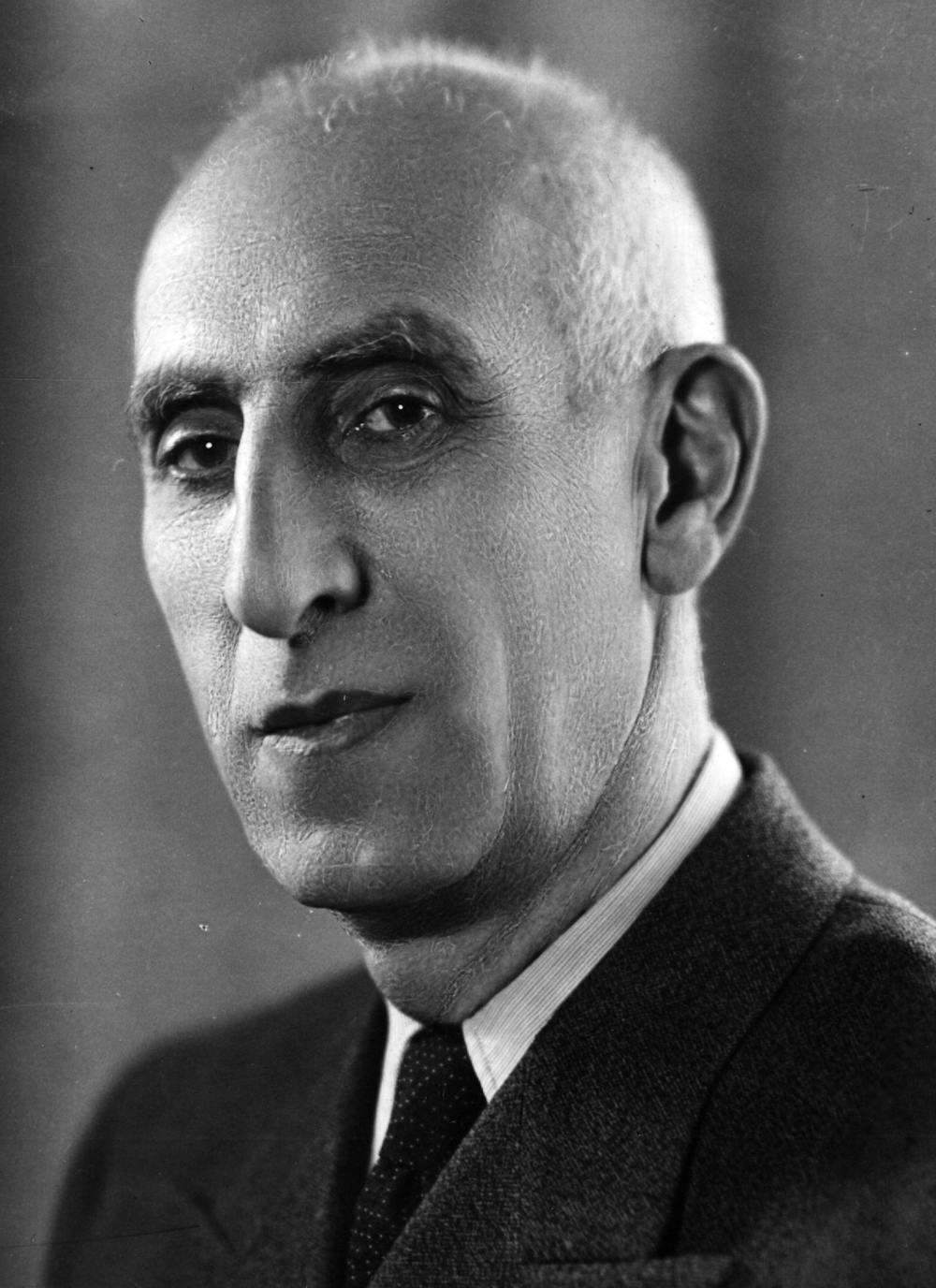
    MIL OSI Economics –

    June 22, 2025
  • MIL-OSI Africa: Medal award ceremony for the 9th Nigerian company of the Economic Community of West African States (ECOWAS) mission to The Gambia


    Download logo

    The 9th Nigerian Company (NIGCOY 9) of the ECOWAS Mission in The Gambia was deployed as part of the mission on the 26th of June 2024. After completing the required period of service in the area of operation, its members were awarded the ECOWAS Peace Medal at a ceremony held on the 9th of May 2025.

    This distinction honours their invaluable contribution, their sacrifices, their unwavering dedication and their constant commitment to peace, stability and security in the west coast region of The Gambia.

    The ceremony took place in the presence of Her Excellency Mrs Miatta Lilly French, ECOWAS Special Representative and Head of Mission in The Gambia, the Gambian Minister of Defence, the Honourable Sering Modou and many high-ranking civilian and military figures.

    In their speeches, the speakers unanimously praised the exemplary commitment of the NIGCOY, as well as its decisive contribution to the maintenance of peace and order in the country. The Special Representative particularly congratulated the company commander on the perfect organisation of the parade, while highlighting the unit’s humanitarian actions and constant support for the Gambian people.

    The presence of the representative of the Chief of Staff of the Armed Forces, Lieutenant-General MO Cham, the Chief of Staff of the Gambian Army, commanders of the defence and security forces, and representatives of the local communities, underlined the strength of the ties between the Gambian Armed Forces and the Nigerian-Iranian contingent.

    Finally, Mission Headquarters presented NIGCOY with an official citation in recognition of its essential role in preserving peace and stability in the West African sub-region.

    Distributed by APO Group on behalf of Economic Community of West African States (ECOWAS).

    MIL OSI Africa –

    June 22, 2025
  • MIL-Evening Report: Another Iraq? Military expert warns US has no real plan if it joins Israel’s war on Iran

    Report by Dr David Robie – Café Pacific. –

    Iran’s Foreign Minister, Abbas Araghchi, held talks with France, Germany, and the United Kingdom yesterday in Geneva as Israel’s attacks on Iran entered a second week.

    A US-based Iranian human rights group reports the Israeli attacks have killed at least 639 people. Israeli war planes have repeatedly pummeled Tehran and other parts of Iran. Iran is responded by continuing to launch missile strikes into Israel.

    Hundreds of thousands of Iranians have protested in Iran against Israel. Meanwhile, President Trump continues to give mixed messages on whether the US will join Israel’s attack on Iran.

    On Wednesday, Trump told reporters, “I may do it, I may not do it”. On Thursday, White House Press Secretary Karoline Leavitt delivered a new statement from the President.

    KAROLINE LEAVITT: “Regarding the ongoing situation in Iran, I know there has been a lot of speculation among all of you in the media regarding the president’s decision-making and whether or not the United States will be directly involved.

    “In light of that news, I have a message directly from the president. And I quote, ‘Based on the fact that there’s a substantial chance of negotiations that may or may not take place with Iran in the near future, I will make my decision whether or not to go within the next two weeks.’”

    AMY GOODMAN, The War and Peace Report: President Trump has repeatedly used that term, “two weeks,” when being questioned about decisions in this term and his first term as president. Leavitt delivered the message shortly after President Trump met with his former adviser, Steve Bannon, who has publicly warned against war with Iran.

    Bannon recently said, “We can’t do this again. We’ll tear the country apart. We can’t have another Iraq,” Bannon said.

    This comes as Trump’s reportedly sidelined National Intelligence Director Tulsi Gabbard from key discussions on Iran. In March, Gabbard told lawmakers the intelligence community, “Continues to assess that Iran is not building a nuclear weapon.”

    But on Tuesday, Trump dismissed her statement, saying, “I don’t care what she said.”

    Earlier Thursday, an Iranian missile hit the main hospital in Southern Israel in Beersheba. After the strike, Israeli Defense Minister Israel Katz threatened to assassinate Ayatollah Khamenei, saying Iran’s supreme leader, “Cannot continue to exist.”

    Israeli Prime Minister Benjamin Netanyahu visited the hospital and likened Iran’s attack to the London Blitz. Netanyahu stunned many in Israel by saying, “Each of us bears a personal cost. My family has not been exempt. This is the second time my son Avner has cancelled a wedding due to missile threats.”

    We’re joined now by William Hartung, senior research fellow at the Quincy Institute for Responsible Statecraft. His new article for The National Interest is headlined, “Don’t Get Dragged Into a War with Iran.”

    Can you talk about what’s going on right now, Bill, the whole question of whether the U.S. is going to use a bunker-buster bomb that has to be delivered by a B-2 bomber, which only the US has?


    Another Iraq: Military expert warns US has no real plan    Video: Democracy Now!

    WILLIAM HARTUNG: Yeah. This is a case of undue trust in technology. The US is always getting in trouble when they think there’s this miracle solution. A lot of experts aren’t sure this would even work, or if it did, it would take multiple bombings.

    And of course, Iran’s not going to sit on its hands. They’ll respond possibly by killing US troops in the region, then we’ll have escalation from there. It’s reminiscent of the beginning of the Iraq War, when they said, “It’s going to be a cakewalk. It’s not going to cost anything.”

    Couple of trillion dollars, hundreds of thousands of casualties, many US veterans coming home with PTSD, a regime that was sectarian that paved the way for ISIS, it couldn’t have gone worse.

    And so, this is a different beginning, but the end is uncertain, and I don’t think we want to go there.

    AMY GOODMAN: So, can you talk about the GBU-57, the bunker-buster bomb, and how is it that this discussion going on within the White House about the use of the bomb — and of course, the US has gone back and forth — I should say President Trump has gone back and forth whether he’s fully involved with this war.

    At first he was saying they knew about it, but Israel was doing it, then saying, “We have total control of the skies over Tehran,” saying we, not Israel, and what exactly it would mean if the US dropped this bomb and the fleet that the US is moving in?

    WILLIAM HARTUNG: Yes, well, the notion is, it’s heavy steel, it’s more explosive power than any conventional bomb. But it only goes so deep, and they don’t actually know how deep this facility is buried. And if it’s going in a straight line, and it’s to one side, it’s just not clear that it’s going to work.

    And of course, if it does, Iran is going to rebuild, they’re going to go straight for a nuclear weapon. They’re not going to trust negotiations anymore.

    So, apparently, the two weeks is partly because Trump’s getting conflicting reports from his own people about this. Now, if he had actual independent military folks, like Mark Milley in the first term, I think we’d be less likely to go in.

    But they made sure to have loyalists. Pete Hegseth is not a profile in courage. He’s not going to stand up to Trump on this. He might not even know the consequences. So, a lot of the press coverage is about this bomb, not about the consequences of an active war.

    AMY GOODMAN: Right, about using it. In your recent piece, you wrote, “Israeli officials suggested their attacks may result in regime change in Iran, despite the devastating destabilising impact such efforts in the region would have.”

    Can you talk about the significance of Israel putting forward and then Trump going back and forth on whether or not Ali Khamenei will be targeted?

    WILLIAM HARTUNG: Yeah, I think my colleague Trita Parsi put it well. There’s been no example of regime change in the region that has come out with a better result. They don’t know what kind of regime would come in.

    Could be to the right of the current one. Could just be chaos that would fuel terrorism, who knows what else.

    So, they’re just talking — they’re winging it. They have no idea what they’re getting into. And I think Trump, he doesn’t want to seem like Netanyahu’s pulling him by the nose, so when he gets out in front of Trump, Trump says, “Oh, that was my idea.”

    But it’s almost as if Benjamin Netanyahu is running US foreign policy, and Trump is kind of following along.

    AMY GOODMAN: You have Netanyahu back in 2002 saying, “Iran is imminently going to have a nuclear bomb.” That was more than two decades ago.

    WILLIAM HARTUNG: Exactly. That’s just a cover for wanting to take out the regime. And he spoke to the US Congress, he’s made presentations all over the world, and his intelligence has been proven wrong over, and over, and over.

    And when we had the Iran deal, he had European allies, he had China, he had Russia. There hadn’t been a deal like that where all these countries were on the same page in living memory, and it was working.

    And Trump trashed it and now has to start over.

    AMY GOODMAN: So, talk about the War Powers Act. The Virginia Senator Kaine has said that — has just put forward a bill around saying it must be — Congress that must vote on this. Where is [Senator] Chuck Schumer [Senate minority leader]? Where is [Hakeem] Jeffries [Congress minoroity leader] on this, the Democratic House and Senate leaders?

    WILLIAM HARTUNG: Well, a lot of the so-called leaders are not leading. When is the moment that you should step forward if we’re possibly going to get into another disastrous war? But I think they’re concerned about being viewed as critical of Israel.

    They don’t want to go out on a limb. So, you’ve got a progressive group that’s saying, “This has to be authorised by Congress.” You’ve got Republicans who are doubtful, but they don’t want to stand up to Trump because they don’t want to lose their jobs.

    “Risk your job. This is a huge thing. Don’t just sort of be a time-server.

    AMY GOODMAN: So, according to a report from IAEA, the International Atomic Energy Agency, released in May, Iran has accumulated roughly 120 kilograms of uranium enriched to 60 percent, which is 30 percent away from weapons-grade level of 90 percent. You have Rafael Grossi, the head of the IAEA, saying this week that they do not have evidence that Iran has the system for a nuclear bomb.

    WILLIAM HARTUNG: Yes, well, a lot of the discussion points out — they don’t talk about, when you’ve got the uranium, you have to build the weapon, you have to make it work on a missile.

    It’s not you get the uranium, you have a weapon overnight, so there’s time to deal with that should they go forward through negotiations. And we had a deal that was working, which Trump threw aside in his first term.

    AMY GOODMAN: Talk about the foreign minister of Iran, Araghchi, in Geneva now speaking with his counterparts from Britain, France, the EU.

    WILLIAM HARTUNG: Well, I don’t think US allies in Europe want to go along with this, and I think he’s looking for some leverage over Trump. And of course, Trump is very hard to read, but even his own base, the majority of Trump supporters, don’t want to go to war.

    You’ve got people like Tucker Carlson, Steve Bannon saying it would be a disaster. But ultimately, it comes down to Trump. He’s unpredictable, he’s transactional, he’ll calculate what he thinks it’ll mean for him.

    AMY GOODMAN: And what impact does protests have around the country, as we wrap up?

    WILLIAM HARTUNG: Well, I think taking the stand is infectious. So many institutions were caving in to Trump. And the more people stand up, 2000 demonstrations around the country, the more the folks sitting on the fence, the millions of people who, they’re against Trump, but they don’t know what to do, the more of us that get involved, the better chance we have of turning this thing around.

    So, we should not let them discourage us. We need to build power to push back against all these horrible things.

    AMY GOODMAN: Finally, if the US were to bomb the nuclear site that it would require the bunker-buster bomb to hit below ground, underground. Are we talking about nuclear fallout here?

    WILLIAM HARTUNG: I think there would certainly be radiation that would of course affect the Iranian people. They’ve already had many civilian deaths. It’s not this kind of precise thing that’s only hitting military targets.

    And that, too, has to affect Iran’s view of this. They were shortly away from another negotiation, and now their country’s being devastated, so can they trust us?

    AMY GOODMAN: Bill Hartung is senior research fellow at the Quincy Institute for Responsible Statecraft. His new piece for The National Interest is headlined, “Don’t Get Dragged Into a War with Iran.”

    Republished from Democracy Now! under Creative Commons.

    This article was first published on Café Pacific.

    MIL OSI Analysis – EveningReport.nz –

    June 22, 2025
  • MIL-OSI China: Bayern, Flamengo reach Club World Cup last 16

    Source: People’s Republic of China – State Council News

    Bayern Munich and Flamengo booked their places in the last 16 of the FIFA Club World Cup on Friday with wins over Boca Juniors and Chelsea, while Benfica boosted its hopes of advancing after routing Auckland City.

    Esperance also kept alive its knockout-stage chances by edging past Los Angeles FC, which joined Auckland in exiting the tournament.

    In Philadelphia, Brazil’s Flamengo moved three points clear at the top of Group D after recovering from a goal down to overcome Chelsea 3-1.

    Portuguese winger Pedro Neto put Chelsea ahead when he capitalized on Wesley Franca’s miscued clearance to dribble almost half the length of the pitch before calmly shooting past Argentine goalkeeper Agustin Rossi.

    Flamengo equalized just after the hour through Bruno Henrique, who tapped home after Gonzalo Plata flicked on Gerson’s cross.

    The Rio de Janeiro outfit suddenly had the momentum, and Henrique turned provider three minutes later as his header set up Danilo to volley home at the far post.

    Chelsea was reduced to 10 men in the 68th minute after Nicolas Jackson was shown a straight red card for a studs-up challenge on Lucas Ayrton.

    Wallace Yan put the result beyond doubt by playing a slick one-two with Plata before firing in from the edge of the six-yard box.

    “We always believed that we had a chance,” Flamengo manager Filipe Luis said afterwards. “I’m very proud because after our mistake in giving away the first goal, we didn’t drop our heads. We continued to play the same way. We gave our all until the end and that warms my heart.”

    In Orlando, Angel Di Maria and Leandro Barreiro scored twice apiece as Benfica romped to a 6-0 victory over Auckland City.

    Benfica initially struggled to breach the New Zealand club’s five-man defense but Di Maria broke the deadlock from the penalty spot just before halftime.

    It was all one-way traffic thereafter, despite a two-hour delay due to a storm alert. Vangelis Pavlidis, Renato Sanches, Barreiro and Di Maria were all on target in the second half as Benfica registered its first win of the tournament.

    The Portuguese side is now second in Group C with four points while Auckland City is last with 16 goals conceded in two matches.

    “This is the longest game of my career,” Benfica head coach Bruno Lage said. “A special thanks to our fans, who have been here for five hours supporting the team. We played as well as we could. The [hot] temperature made it very difficult.”

    In Nashville, Tunisia’s Esperance kept alive its hopes of reaching the next stage with a 1-0 victory over Los Angeles FC.

    Youcef Belaili handed his side the lead in the 70th minute when he pounced on a loose ball in the area and drilled a low shot that deflected in off the left leg of goalkeeper Hugo Lloris.

    Esperance is now third in Group D and will need to beat Chelsea in Philadelphia on Tuesday to progress to the knockout phase. Los Angeles FC is fourth, having failed to pick up a point so far and with no chance of progressing.

    In Miami, France international midfielder Michael Olise scored late as Bayern Munich kept its perfect record intact with a 2-1 win over Argentine side Boca Juniors.

    Harry Kane opened the scoring for the Bundesliga champions when he intercepted a defensive clearance and fired low into the far corner with his weaker left foot.

    Uruguayan forward Miguel Merentiel equalized by running onto Alan Velasco’s through ball and ghosting past Josip Stanisic before clinically finishing past Manuel Neuer.

    Olise restored Bayern’s lead six minutes from time with a fizzing drive from distance after Kane’s clever layoff.

    While the German club is assured of a place in the next round, Boca will need to defeat Auckland City by a hefty margin on Tuesday to have any chance of advancing.

    MIL OSI China News –

    June 21, 2025
  • MIL-OSI Russia: Igor Sechin spoke about the renaissance of nuclear energy

    Translation. Region: Russian Federal

    Source: Rosneft – Rosneft – An important disclaimer is at the bottom of this article.

    The importance of nuclear energy, which is a natural complement to fossil fuels, is growing, said Rosneft Chief Executive Officer Igor Sechin at the Energy Panel at the XXVIII St. Petersburg International Economic Forum.

    “Against the backdrop of growing consumption, all types of generation, including nuclear, are experiencing a rebirth. This is well illustrated by the price of uranium fuel, which has grown more than threefold over the past seven years,” noted Igor Sechin.

    He recalled that the idea of thermonuclear fusion was formulated back in the 1930s, and many famous scientists, including Nobel laureates Hans Bethe, Pyotr Kapitsa, Igor Tamm and later Andrei Sakharov, sought to reproduce this process and control it. In theory, thermonuclear fusion is capable of generating almost four million times more energy than burning oil or coal, said Igor Sechin. However, to maintain a thermonuclear reaction and obtain sustainable energy, it is still necessary to improve the methods of plasma containment, ensuring its stability, and increasing efficiency.

    The head of Rosneft noted that just a few years ago, nuclear energy was in a deep crisis due to a decline in activity in the industry, and such large companies as Westinghouse and Areva had to go through restructuring and change of ownership. However, the situation began to change. “Over the past 5 years, annual global investments in nuclear energy have increased by 50% and reached $70 billion last year. China is becoming one of the leaders in nuclear energy today. Over the past ten years, the installed capacity of nuclear generation in this country has increased fivefold and approached 60 GW. In the coming years, China plans to complete the construction of another 32 reactors,” he noted.

    At the same time, Sechin called an important point the fact that China, in developing its nuclear industry, relies on the latest technological achievements of the leading nuclear powers – Russia, the USA and France, Sechin said.

    He noted that Russia has many years of experience in building nuclear power plants. The cost of the most modern Russian reactor VVER-1200 is significantly lower than the American “AP-1000”. Today, such reactors are already operating in Russia and are planned for commissioning in friendly countries.

    At the same time, Sechin noted, the availability of a resource base is of particular importance. Today, only seven countries, including the Russian Federation, control more than 90% of the world’s uranium fuel production and about 70% of the world’s uranium reserves.

    “Today, Russia is the only country in the world that has expertise in the entire technological chain of the nuclear fuel cycle, from uranium mining to nuclear fuel disposal. In total, 80 nuclear reactors have been built in the world using Russian technologies,” he said.

    Russia also has the world’s only floating low-power nuclear power plant. Four more nuclear power plants are currently under construction.

    In our country, a sodium-cooled nuclear reactor belonging to the category of fast neutron reactors, BN-800, has been successfully operated for ten years already; another fast neutron reactor of the latest generation, BN-1200, is under construction.

    “Reactors of this type incorporate the most advanced technical solutions, including the enlargement of fuel elements, the use of uranium-plutonium mixed fuel, as well as new structural steels with increased radiation protection, which ensure deeper fuel burnup and higher efficiency. In particular, the efficiency of electricity generation increases by 20-25%, even without taking into account the significantly higher efficiency of fuel use,” said the head of Rosneft.

    According to the IEA forecast, by 2050 the installed capacity of nuclear generation in the world will grow by almost 60% and reach 650 GW. “I think this estimate is underestimated. Just a few weeks ago, the US President set a goal to increase the capacity of nuclear generation in this country fourfold to 400 GW,” Sechin noted.

    The head of Rosneft expects further growth in investments in the nuclear sector: new technologies, such as small modular reactors, are attracting increased attention from investors today. Although such reactors are more mobile, their implementation also requires investments in the development of power grids. In addition, special attention should be paid to issues of their safety and security from terrorist threats.

    “Recently, Rolls-Royce announced that it had won a tender to build such reactors in the UK. Experts note that these reactors have a number of features. One of them is described in Ecclesiastes: “What is crooked cannot be made straight, and what is not can not be counted.” None of these reactors have yet been put into operation,” Sechin explained.

    The proposed smaller reactors will require no less effort and expense, including fuel disposal and safety, than existing larger reactors.

    “And finally, nuclear energy is, in any case, a dual-use technology. The issue of non-proliferation of nuclear weapons should be given the closest attention, because it is believed that it is precisely because of them that the Middle East conflict is currently escalating. It is necessary to understand whether we want further expansion of the nuclear club,” Igor Sechin concluded.

    Department of Information and Advertising of PJSC NK Rosneft June 21, 2025

    Please note: This information is raw content directly from the source of the information. It is exactly what the source states and does not reflect the position of MIL-OSI or its clients.

    MIL OSI Russia News –

    June 21, 2025
  • MIL-OSI Russia: The concept of “net zero” actually offers humanity an energy regression – Igor Sechin

    Translation. Region: Russian Federal

    Source: Rosneft – Rosneft – An important disclaimer is at the bottom of this article.

    Supporters of the “net zero” concept are leading humanity to energy regression, noted Rosneft CEO Igor Sechin in his report “The Odyssey of the World Economy in Search of the Golden Fleece. The New Face of World Energy.”

    During his speech at the Energy Panel of the XXVIII St. Petersburg International Economic Forum, the head of the Company noted: every time humanity switched to a new type of fuel, the efficiency of the energy system increased and its capabilities expanded. “This was due to the fact that the new energy source, as a rule, had a higher energy flow density,” Sechin added.

    He recalled that the outstanding scientist Pyotr Kapitsa proved that the energy flow density is a key characteristic of any type of energy. “According to this indicator, such types of fossil fuel as coal (135.1 W/m2), oil (195 W/m2) and gas (482 W/m2), as well as nuclear energy (241 W/m2) are far ahead of solar (6.6 W/m2) and wind energy (1.8 W/m2). Thus, the concept of “net zero” actually crosses out centuries of progressive development of society, offering humanity an energy regression,” said the head of Rosneft.

    He stressed that European politicians lack the courage to publicly acknowledge this fact. “Their blind faith in the “green” transition already resembles an addiction. As one of the classics of French literature aptly put it: “A red nose is a sign of constancy of character,” Igor Sechin stressed.

    “It is clear that the integration of renewable energy sources requires a profound transformation of infrastructure, the scale of which is underestimated. According to the IEA, global investments in the development of energy networks lag behind investments in generation by two and a half times,” he concluded.

    Department of Information and Advertising of PJSC NK Rosneft June 21, 2025

    Please note: This information is raw content directly from the source of the information. It is exactly what the source states and does not reflect the position of MIL-OSI or its clients.

    MIL OSI Russia News –

    June 21, 2025
  • MIL-OSI Russia: Igor Sechin explained how the growth of government debt leads to the decline of the West

    Translation. Region: Russian Federal

    Source: Rosneft – Rosneft – An important disclaimer is at the bottom of this article.

    Interest payments on US government debt are diverting significant budget resources, said Rosneft Chief Executive Officer Igor Sechin during his speech at the Energy Panel at the XXVIII St. Petersburg International Economic Forum.

    He recalled that the predicament in which developed countries find themselves due to the growth of public debt is already reflected in the assessment of their creditworthiness. Thus, in May, Moody’s became the last of the three leading international rating agencies to strip the United States of its highest credit rating.

    “With the growing deficit, interest payments are diverting significant budget resources from the social and defense spheres. Last year, net interest payments on the national debt reached a trillion dollars, which amounted to 14% of all state budget expenditures, exceeded defense expenditures, and is already approaching the amount of healthcare expenditures,” Sechin said.

    The head of Rosneft also turned to history and gave an example of how great powers decline due to excessively high levels of public debt. “The fate of Habsburg Spain in the seventeenth century and monarchical France in the eighteenth, the Ottoman and British empires in the last century fully confirm this theory,” he added.

    “At the end of the 18th century, French rulers experienced for themselves that the fiscal guillotine could very quickly end up as a real guillotine,” Igor Sechin noted. By that time, France had accumulated such a volume of debt that more than half of all government spending was spent on servicing it, which led to an increase in taxes. According to the head of Rosneft, this was one of the main reasons for the Great French Revolution, which, in essence, ensured the transition from a monarchy to a bourgeois parliamentary republic.

    Department of Information and Advertising of PJSC NK Rosneft June 21, 2025

    Please note: This information is raw content directly from the source of the information. It is exactly what the source states and does not reflect the position of MIL-OSI or its clients.

    MIL OSI Russia News –

    June 21, 2025
  • MIL-OSI China: Launch ceremony for Japanese version of Xi’s discourses on Chinese modernization held in Tokyo

    Source: People’s Republic of China – State Council News

    Launch ceremony for Japanese version of Xi’s discourses on Chinese modernization held in Tokyo

    This photo taken on June 19, 2025 shows a scene during the launch ceremony for the Japanese version of a compilation of excerpts from discourses on Chinese modernization by Chinese President Xi Jinping in Tokyo, Japan. The launch ceremony for the Japanese version of a compilation of excerpts from discourses on Chinese modernization by Chinese President Xi Jinping and a seminar on Chinese solutions to global development has been held in Tokyo. (Xinhua/Jia Haocheng)

    The launch ceremony for the Japanese version of a compilation of excerpts from discourses on Chinese modernization by Chinese President Xi Jinping and a seminar on Chinese solutions to global development has been held in Tokyo, attracting more than 120 guests from Chinese and Japanese government bodies, thinktanks and media.

    At the event on Thursday, the guests jointly unveiled the Japanese version of the book. As of now, the book has been published in six foreign languages and has been distributed to 30 countries and regions around the world.

    The guests and scholars believe that the book, which collects a series of key discourses by Xi regarding Chinese modernization, comprehensively reflects the rich connotation and core spirit of Chinese modernization.

    The Japanese version of this work, along with the previously published English, French, Russian, Arabic editions and the recently released Spanish edition, will help the international community gain deeper insights into the historical trend, theoretical system, practical requirements and global significance of Chinese modernization, they added.

    The attendees believe that Chinese modernization is the crystallization of Eastern wisdom that promotes the progress of human civilization, a “monument of the times” forged by the Communist Party of China (CPC) in uniting and leading the people through a century-long journey, a path of human justice that takes root in the land of China and shines with the light of truth, as well as the epitome of Xi’s thoughts on governing the country.

    Chinese-style modernization injects stability and certainty into the world, brings new impetus and opportunities to the world, and instills openness and mutual benefit into the world, they said.

    The event was organized by the Institute of Party History and Literature of the CPC Central Committee and the Chinese Embassy in Japan and hosted by the Central Compilation and Translation Press. 

    1   2   3   >  

    MIL OSI China News –

    June 21, 2025
  • MIL-OSI China: Chinese envoy calls for int’l efforts to ease Israel-Iran tensions

    Source: People’s Republic of China – State Council News

    Fu Cong (C, Front), China’s permanent representative to the United Nations, speaks at a Security Council emergency meeting on threats to international peace and security at the UN headquarters in New York, on June 20, 2025. A Chinese envoy on Friday called for international efforts to promote talks to ease Israel-Iran tensions. (Xinhua/Xie E)

    A Chinese envoy on Friday called for international efforts to promote talks to ease Israel-Iran tensions.

    As the Israel-Iran military conflict enters its eighth day, it is distressing to see the conflict has resulted in a large number of civilian casualties and damage to facilities on both sides, said Fu Cong, China’s permanent representative to the United Nations.

    If the conflict escalates further, not only will both sides suffer greater losses, but regional countries will also be severely affected, he warned.

    Israel’s actions violate international law and the norms of international relations, jeopardize the sovereignty and security of Iran, and undermine regional peace and stability. China unequivocally condemns this, he told an emergency meeting of the Security Council.

    At this critical juncture, the international community should further forge consensus and make every effort to promote talks to ease tensions, he said.

    Fu said there must be an immediate ceasefire and an end to the fighting.

    The use of force is not the right way to resolve international disputes. It will only exacerbate hatred and conflict. The sooner a ceasefire is in place, the less damage will be done. The situation in the region cannot be allowed to slide into an unknown abyss, he said.

    “The parties to the conflict, Israel in particular, should cease fire as soon as possible to prevent the situation from escalating and to avoid any spillover of the fighting.”

    He stressed that the safety of civilians must be ensured.

    The red line for civilian protection in armed conflict must not be crossed at any time, and the indiscriminate use of force is unacceptable. The parties to the conflict must strictly abide by international law, resolutely avoid harming innocent civilians, refrain from attacking civilian facilities, and facilitate the evacuation of third-country nationals, he said.

    The current conflict has interrupted the negotiation process on the Iranian nuclear issue. The attacks on multiple Iranian nuclear facilities set a dangerous precedent and could have catastrophic consequences, said Fu. “We must not waver in the general direction of a political settlement of the Iranian nuclear issue, and we must persist in returning the Iranian nuclear issue to the track of a political solution through dialogue and negotiation.”

    China welcomes the talks in Geneva between the Iranian foreign minister and his counterparts from Britain, France, Germany, as well as the EU foreign and security policy chief, said Fu.

    The Israel-Iran conflict has led to a sudden escalation of tensions in the Middle East, and has had a serious impact on global security. Recently, the foreign ministers of 21 Arab and Islamic countries issued a joint statement, calling for a ceasefire, resuming talks on the Iranian nuclear issue, and maintaining lasting peace in the region. China fully supports the statement, he said.

    The international community, especially major countries with special influence on the parties to the conflict, should make efforts to cool down the situation, rather than doing the opposite, said Fu.

    The Security Council, as the primary body responsible for maintaining international peace and security, should play a greater role in this regard. China supports the council in taking necessary actions in a timely fashion, he said.

    China stands ready to continue to strengthen communication and coordination with all relevant parties, build synergies, uphold justice, and play a constructive role in restoring peace in the Middle East, said the Chinese ambassador.

    MIL OSI China News –

    June 21, 2025
  • MIL-OSI Canada: Strong support for school library policy

    Source: Government of Canada regional news (2)

    MIL OSI Canada News –

    June 21, 2025
  • MIL-OSI Canada: Tomorrow, on the Plains: the Edwin-Bélanger Bandstand kicks off a summer of free music!

    Source: Government of Canada News (2)

    Quebec City, Friday, June 20, 2025 – Beginning tomorrow, the stage of the Edwin-Bélanger Bandstand (EBB) will come alive with the launch of its summer program! From now to August 23, 2025, on Thursdays and Saturdays, Quebec City’s residents and visitors are invited to enjoy free musical and cultural events against the enchanting backdrop of the Plains of Abraham.

    Tennessee Whiskey to start off the season
    This series of shows will begin this Saturday, starting at 7 p.m. The six artists of the group Tennessee Whiskey will be on stage for a faithful recreation of Chris Stapleton’s country music. Backed by six talented musicians, the show promises powerful harmonies and heartfelt guitar solos that brilliantly capture iconic Stapleton songs like Broken Halos and Tennessee Whiskey.

    Next week: Chico Band, and Duo Christian Marc Gendron & Manon Séguin
    To continue this live music series, two vibrant evenings are on the program. On Thursday, June 26 at 7 p.m., the best of Latin music takes over the EBB stage with the Chico Band. Audiences will be transported from Cuba to Brazil, with stops in Colombia and Puerto Rico, to the rhythm of salsa, merengue, reggaeton, cumbia, and more.

    On Saturday, June 28 at the same time, an intimate musical moment will take place with pianist and singer Christian Marc Gendron. In this unique concert, he performs the greatest songs of his career with humor and generosity, joined by his longtime partner, Manon Séguin.

    Please note that the EBB will take a break during the Festival d’été de Québec, from July 3 to 13. Free shows will resume on July 17.

    Something for everyone all summer long
    Every Thursday and Saturday, the EBB will be presenting shows at 7 p.m. or 8 p.m. The stage will pulsate to a diverse range of beats: country music, Latin music, rock, pop, Québécois, jazz, and folk, plus an encounter between the musical traditions of the West and those of the Indigenous peoples. There will be something for all tastes!

    Among the scheduled artists are Tom Folly, Andréanne A. Malette, Sabor 19, Duo Phoenix, Guylaine Tanguay, Yvan Pedneault, Génération Crooner, LBA Band, Coco Country Band, New World Men, Mike DeWay, Kawandak, Gabrielle Destroismaisons, and Patrick Norman & Nathalie Lord.

    The EBB will also offer family-oriented shows on four Saturday mornings: July 19 and 26 and August 9 and 16 at 11 a.m. Arthur L’aventurier, Le Gentil Géant, and other colourful characters will take the stage to entertain the kids.

    New! Two evenings added to the program
    In addition to the musical events already announced, two cultural evenings are now on the program. On Wednesday, July 23, there will be a public lecture, in French, about the American attack on Quebec City in 1775:  Québec 1775-1776 – Le dernier siège. On Friday, August 22, the Royal 22e Régiment will offer a special performance on the EBB stage.

    To learn more about the program: www.plainsofabraham.ca

    Extended business hours for Smith Café at the Central Pavilion
    Smith Café has been on the Plains of Abraham for nearly a year and will again be enhancing the EBB experience with its selection of beverages and food. An aperitif on the Central Pavilion terrace, a picnic on the Plains with a packed lunch, or a savoury coffee in your hand—everything is provided to make your summer enjoyable! This branch of Smith Cafe will offer extended business hours during the shows.

    About the National Battlefields Commission
    The Battlefields Park is Canada’s first national historic park and notably includes the Plains of Abraham and Des Braves Park. Since 1908, the National Battlefields Commission, an agency of the Canadian government, has been striving to preserve and develop this site that brings so many people together. Throughout the year, it offers a variety of activities for those who wish to explore the park and its history. www.plainsofabraham.ca

    MIL OSI Canada News –

    June 21, 2025
←Previous Page
1 … 43 44 45 46 47 … 225
Next Page→
NewzIntel.com

NewzIntel.com

MIL Open Source Intelligence

  • Blog
  • About
  • FAQs
  • Authors
  • Events
  • Shop
  • Patterns
  • Themes

Twenty Twenty-Five

Designed with WordPress