Category: France

  • MIL-OSI Europe: EUROPE/ITALY – Father Herve Du Penhoat new Superior General of the Society of African Missions: “We must orient ourselves ever more towards the missionary aspect, towards others, towards the local Church”

    Source: Agenzia Fides – MIL OSI

    Thursday, 29 May 2025

    SMA

    Rome (Agenzia Fides) – “Thank you very much, thank you all, thank you for this fraternity”: these were the first words spoken by Father François Marie Herve Du Penhoat, elected new Superior General of the Society of African Missions (SMA) at the XXII General Assembly of the Society underway in Rocca di Papa, an Assembly that will end on June 8 (see Fides, 20/5/2025).The new Superior General, 70 years old, of French origin, served as a missionary for 15 years in Benin, from 1991 to 2013, among the Bariba, a West African ethnic group. He was also in Spain and then in France from 2013 to 2025.”In recent years, despite many difficulties, including Covid and the internal restructuring of the SMA, you have given everything, you have worked intensely, and you have been very present in the field. You have demonstrated that you are a united and complementary Council, which was also seen in the preparation of the General Assembly,” said Father François, referring to the 22nd General Assembly of the Society of African Missions underway.”This is a key moment of renewal for our congregation. Thank you very much,” emphasized the new Superior General, thanking the outgoing Superior General, Father Antonio Porcellato, and the other members of the outgoing council, Father François de Paul, Father Rosario, and Father Christophe. “We are counting on your support and collaboration as we move forward together. We are at the end of a cycle in which we have invested a lot in building our congregation; we must now orient ourselves more towards the missionary aspect, towards others, towards the local Church. We are on the right path that will take us far if we all follow it together. Let us continue like this.””When the rhythm of the song changes, the dance steps must also change,” added Father François, quoting an African proverb. “There may be a change of rhythm, but we must first understand this new rhythm in order to follow it; it may be a little chaotic, it is possible, but the Holy Spirit works where chaos reigns.”Since the founding of the SMA in Lyon in 1856, the African continent has been at the heart of the SMA’s mission and life. Over these 169 years, the relationship with Africa has developed and undergone significant changes. In summary, it can be said that Africa, which was initially only the object of the mission, has today become, and is increasingly becoming, an active subject of the mission. Today, the majority of the SMA’s permanent members are of African origin. Furthermore, 90% of the more than 300 seminarians in formation are of African origin. For the pastoral work of proclaiming the Gospel, the missionaries and associates of the SMA are 900 members and 200 seminarians, officially present in 30 countries on four continents. The priority is and remains the first evangelization of the African continent. (AP) (Agenzia Fides, 29/5/2025)
    Share:

    MIL OSI Europe News

  • MIL-OSI Economics: cortAIx SG: Thales Accelerates Trusted AI Innovation in Singapore with Strategic Partnerships

    Source: Thales Group

    Headline: cortAIx SG: Thales Accelerates Trusted AI Innovation in Singapore with Strategic Partnerships

    • Thales’s global acceleration in trusted AI extends to Asia for the first time with the launch of cortAIx SG. Supported by the Singapore Economic Development Board (EDB), cortAIx SG aims to drive the ethical and effective adoption of AI in Singapore, in alignment with Singapore’s National AI strategy. The Group’s global expansion of cortAIx to Singapore has the dual purpose of serving the needs of both the civil and defence ecosystems.
    • Thales is strengthening its strategic partnerships in Singapore by launching joint initiatives with CAAS1, DSTA2, and HTX3across Aviation, Defence, and Public Safety and Security. These enhanced collaborations include an expanded innovation partnership with HTX focused on AI, border security, quantum, and cybersecurity technologies, as well as the creation of a joint Avionics Lab with CAAS—supported by Changi Airport Group, ICAI4, SATS, and Singapore Airlines—to drive next-generation avionics solutions.
    • With these partnerships, cortAIx SG will become an integral part of the Group’s global cortAIx network of 800 highly-skilled AI and data experts, supported by local talent with deep expertise in machine learning, artificial intelligence, and data science.

    On 30th May, Thales and EDB signed a Memorandum of Understanding (MOU) for the launch of cortAIx SG to extend the Group’s global AI programme to Asia, and further accelerate on AI research and industrialisation. With more than 100 products integrating AI, Thales already develops and deploys trusted AI-powered systems in the most complex and challenging environments. Building on this strong foundation, cortAIx SG will serve as an important accelerator, identifying critical challenges and developing high-impact AI solutions for Thales’ business units across Singapore and the broader Asia region. The centre will play a key role in driving the development and implementation of trusted AI systems in complex and mission-critical environments, thereby strengthening Thales’ R&D capabilities and long-term innovation footprint in Singapore.

    cortAIx SG positions Thales Singapore as a hub for AI leadership and joint innovation, aligned with the nation’s ambitions under the National AI Strategy. The centre will be driven by several key initiatives: including projects that enhance utilisation of knowledge and sensor suites to aid planning and decision support; increase operational efficiency; and drive human-autonomy teaming. Thales will work with the Singaporean government and ecosystem to grow domain and technology capabilities in Singapore, bringing together cutting-edge technology, talent and research to AI solutions that are ethical, transparent, explainable, and operationally effective.

    The announcement was made on the occasion of French President Mr. Emmanuel Macron’s State Visit to Singapore, with multiple agreements signed on 29th May and during the France–Singapore Frontier Technologies Forum on 30th May.

    1.Expansion of Strategic Partnership with HTX (Home Team Science & Technology Agency)

    Thales and HTX first signed a Master Agreement for Strategic Partnership for Innovation in 2020.  Today, they expanded the scope of this partnership, extending it for another three years to:

    1. Establish a joint-lab focused on AI-enabled technologies, local capability development and the formation of best practices for trustworthy AI within the local context;  
    2. Enable technology insertion through agile collaboration, testing and technology experimentation aligned to HTX’s evolving needs. Thales will support HTX in translating early-stage technical solutions into concrete systems that can be integrated into HTX’s homeland security programmes to drive rapid innovation and early adoption;
    3. Jointly develop a shared Research and Development (R&D) strategy and future technology roadmap relevant to public safety and security, bringing together HTX, Thales, academia and startups, across five critical technology frontiers: Artificial Intelligence (AI), Brain-Computer Interfaces (BCI), Cybersecurity, Quantum Technologies and Space.

    2.Joint Avionics Lab with Civil Aviation Authority of Singapore (CAAS) to innovate avionics-oriented solutions

    CAAS, Changi Airport Group (CAG), the International Centre for Aviation Innovation (ICAI), SATS Ltd. (SATS), Singapore Airlines (SIA) and Thales signed a Memorandum of Understanding (MOU) on 29th May 2025 to foster greater innovation and collaboration at the aviation ecosystem level.

    Under this MOU, the partners will work together to identify key challenges to solve and undertake joint innovation projects to develop solutions, which could include the following:

    1. Air traffic optimisation, by combining airlines’ flight operations and cockpit data with air traffic management information. AI-enabled algorithms can detect and predict holding patterns within a particular radius around Changi Airport, helping manage congestion and leading to reduced flight delays.
    2. Digitalising and optimising the data shared between airlines, air traffic management and airports. Data from sensors in the aircraft, like cameras or inflight entertainment systems, can provide real-time, automated data to complement current data streams like video content from ground infrastructures. Enhancing these with AI models can help airlines, air traffic managements and airport operators improve collaborative decision making.

    The Avionics Lab in Singapore, the first of its kind for Thales outside France, represents a significant milestone in deepening Thales’ avionics capabilities in Singapore and the region.   The Avionics Lab complements the AIR Lab (jointly set up by CAAS and Thales in 2019 to work on cutting-edge Air Traffic Management solutions) to optimise air transport operations in the region. 

    The Avionics Lab will serve as a vital platform for collaborative innovation, between the world leading aviation eco-system in Singapore and Thales, to co-develop and test cutting edge concepts grounded in real-world operational scenarios, strengthening Singapore’s position as a hub for aviation technologies.

    3.AI in critical systems for Defence through DSTA – Thales co-lab

    Announced in April this year, the Defence Science and Technology Agency (DSTA) and Thales have set up a joint lab for AI-enabled technologies, which can augment combat systems currently in use by the Singapore Armed Forces to efficiently handle drone threats. The lab will work on joint projects, the first of which is related to Counter-Unmanned Aircraft Systems (C-UAS) and advanced sensors.

    Thales is also providing a cyber-secured and AI-powered autonomous mine countermeasures system to the Republic of Singapore Navy, in partnership with ST Engineering. The sonars and mission management system are accompanied by data analysis tools reinforced with AI, in order ​ to facilitate target detection and identification that ease the workload of operators.

    These initiatives form the core of Thales’s AI strategy in Singapore and touch on key sectors aligned with the National AI Strategy 2.0. These collective partnerships will see Thales grow its pool of AI experts in Singapore to over several dozen in the next three years, adding to the Group’s global cortAIx network of 800 highly-skilled AI and data specialists.

    “The launch of cortAIx SG by Thales will add new capabilities to Singapore’s growing AI and innovation ecosystems, and builds on Thales’s longstanding presence in Singapore. We look forward to the impactful AI-enabled solutions cortAIx SG will develop in partnership with our ecosystem for Singapore and the region,” said Cindy Koh, Executive Vice President, EDB.

    “Thales is honoured to be working with our strategic partners in Singapore to bring new technologies to the fore, whether in aviation, in public security or to help reinforce national defence and sovereignty. Being able to announce the launch of cortAIx SG this week, in the presence of Ms Clara Chappaz, French Minister Delegate for AI and Digital Affairs and Ms Josephine Teo, Singapore’s Minister for Digital Development and Information and Minister-in-charge of Smart Nation and Cybersecurity, is a true recognition of our role as a technology leader, notably as France and Singapore celebrate 60 years of bilateral cooperation. cortAIx SG will be a valuable asset to help our customers and partners embrace the vast opportunities AI has to offer, deploying it as a force for good, in support of Singapore’s National AI Strategy. We are excited at the prospect of bringing our leading technology, talent and research to deliver AI solutions that are ethical, transparent, explainable and effective.” said Philippe Keryer, Senior Executive Vice President, Strategy, Research and Technology, Thales.

    Thales in Singapore

    Thales has been present in Singapore since 1973, where it has grown from a small avionics presence into a major hub with 2,000 employees across aerospace, defence, cybersecurity, and digital identity (CDI). The country now hosts Thales’s largest CDI manufacturing centre, avionics manufacturing and MRO centre, and cutting-edge R&D labs, including the AIR Lab with CAAS, a joint lab with HTX and the CINTRA research unit with NTU and CNRS. Recent investments include the Thales Singapore Defence Hub, a Co-Lab with DSTA, and Centres of Excellence in Air Traffic Management and Public Security.

    About Thales

    Thales (Euronext Paris: HO) is a global leader in advanced technologies for the Defence, Aerospace, and Cyber & Digital sectors. Its portfolio of innovative products and services addresses several major challenges: sovereignty, security, sustainability and inclusion.

    The Group invests more than €4 billion per year in Research & Development in key areas, particularly for critical environments, such as Artificial Intelligence, cybersecurity, quantum and cloud technologies. Thales has more than 83,000 employees in 68 countries. In 2024, the Group generated sales of €20.6 billion.

    1Civil Aviation Authority of Singapore

    2Defence Science and Technology Agency

    3Home Team Science & Technology Agency

    4International Centre for Aviation Innovation

    MIL OSI Economics

  • MIL-OSI Global: How trafficked American guns fuel Mexico’s cartel violence – podcast

    Source: The Conversation – Global Perspectives – By Gemma Ware, Host, The Conversation Weekly Podcast, The Conversation

    More than two thirds of guns recovered at Mexican crime scenes originate in the U.S. For decades, Mexico has struggled with staggering levels of gun violence fueled in large part by weapons trafficked across its northern border.

    Now an investigation published by The Conversation has arrived at a new estimate of the scale of this illicit gun trade between the U.S. and Mexico in 2022: 135,000 guns.

    Investigative journalist Sean Campbell and Topher McDougal, a professor of economic development at the University of San Diego, spent a year combing through multiple databases and court documents and conducting interviews to understand how the flow of guns works.

    Their investigation reveals where in the U.S. the guns are coming from, what impact these American guns are having in Mexico, and how difficult it is for American law enforcement agencies to prosecute those trafficking guns across the border.

    Listen to Campbell and McDougal talk about their investigation on The Conversation Weekly podcast.

    You can read the full investigation here.


    This episode of The Conversation Weekly was written and produced by Mend Mariwany and Gemma Ware. Mixing and sound design by Eloise Stevens and theme music by Neeta Sarl.

    Newsclips in this episode from PBS News, CGTN, France24, ABC 7 and NewsNation.

    Listen to The Conversation Weekly via any of the apps listed above, download it directly via our RSS feed or find out how else to listen here. A transcript of this episode is available on Apple Podcasts.

    Sean Campbell and Topher McDougal do not work for, consult, own shares in or receive funding from any company or organisation that would benefit from this article, and have disclosed no relevant affiliations.

    ref. How trafficked American guns fuel Mexico’s cartel violence – podcast – https://theconversation.com/how-trafficked-american-guns-fuel-mexicos-cartel-violence-podcast-256746

    MIL OSI – Global Reports

  • MIL-OSI Global: From working class pubs to sold-out stadiums: how darts has become a major international sport

    Source: The Conversation – Global Perspectives – By Joshua McLeod, Senior Lecturer in Sport Management, Deakin University

    Few sports have witnessed a transformation as dramatic as darts in recent years.

    From its origins as a pub game stereotypically played with cigarette and beer in hand, darts is now serious business.

    With surging television ratings and huge demand for live events, the growth of darts continues to leave many sports looking on in envy.

    There has been a combination of factors at play – not least one exceptionally prodigious teenager. Before discussing those factors, it’s worth taking a closer look at the numbers.

    Becoming big business

    Darts sits alongside a select few sports to have achieved significant commercial growth over the past decade.

    While not at the scale of sports such as the Ultimate Fighting Championship (UFC) and Formula 1, the rise of darts has been prolific.

    In the United Kingdom, a record-breaking peak of 3.7 million viewers watched the 2024 Professional Darts Corporation (PDC) World Championship final. It was Sky Sports’ highest-ever non-soccer broadcast.

    In addition to the PDC World Championship – the sport’s premier knockout event – viewership records were also broken across the 2024 Premier League Darts season, a league-format competition featuring weekly fixtures between top-ranked players.

    On the UK’s Sky Sports, the 15 most-watched nights in the competition’s history all occurred that year.

    The PDC World Championship and Premier League Darts sit alongside the World Matchplay as the “Triple Crown” of most important darts events.

    Outside the UK, darts viewership also continues to grow.

    The Netherlands remains a strong and expanding heartland, while in Germany, viewership for the World Championship final has increased eightfold since 2008.

    In Australia, precise viewing figures are not widely available, but the Foxtel Group’s landmark four-year deal with the PDC in 2023 suggests rising demand.

    Surging audiences are translating into significantly larger broadcast deals.

    In 2025, Sky Sports reportedly outbid Netflix to secure a new £125 million (A$260.3 million) deal for exclusive UK coverage of the PDC for 2026–30. That was double the size of the previous deal.

    In contrast, many other sports face stagnation or even sharp declines in media rights value.

    For instance, the UK Super League rugby’s rights on Sky Sports fell from £40 million (A$83.3 million) per season in 2021 to £21.5 million (A$44.5 million) in 2024.

    Similarly, in soccer, the French Ligue 1’s TV deal with DAZN collapsed due to underwhelming subscriber numbers. Meanwhile, ESPN walked away from its long-standing agreement with Major League Baseball after unsuccessfully trying to cut its US$550 million (A$848 million) annual payment down to $200 million (A$309 million).

    Prize money in darts has also exploded.

    Next year, the winner of the two-week long World Championship will bank £1 million (A$2.08 million) – doubling this year’s purse.

    The prize money was £60,000 (A$124,960) in 2005, representing a 1,567% increase over 20 years.

    Tickets are also hot property. Premier League and World Championship sessions often sell out within minutes worldwide: the UK, Bahrain, New York and even Wollongong have become key stops in darts’ international calendar.

    The recipe for success

    Like Formula 1 and the UFC, darts benefits from being privately operated.

    Without the typical bureaucracy and conflicting interests seen in many traditional sport governing bodies, the PDC can respond more quickly to audience preferences and market opportunities.

    This streamlined, commercially driven approach has been key to darts’ growth.

    The sport has been expertly tailored to modern audiences.

    One of darts’ best-known selling points is the live event experience. The entertainment-first approach is known for loud music, the showmanship of player walk-ons, fancy dress from the crowd and yes, often plenty of alcohol.

    The lines are blurred between sport and party and fans love it.

    Culturally, darts is seen by many as fun, relatable, and rooted in working-class culture. After all, its heritage is in the pub.

    Darts is ideally suited to modern sport media consumption habits: PLD matches last only 20–30 minutes and the up-close TV product works perfectly for social media highlight clips.

    It is also one of the few sports where women compete directly against men.

    This adds another layer of interest for fans and has helped elevate stars such as Fallon Sherrock, who made headlines in 2019 by becoming the first woman to win a match at the PDC World Championship, eventually reaching the final 32.

    A prodigy emerges

    The so-called “Littler Effect” has given darts’ profile a significant boost.

    The emergence of talented teenager Luke Littler has broken new ground for the sport and drawn global interest.

    The English prodigy, who has quickly risen to fame, is by far the sport’s biggest star, but it would be unfair to say darts is a one-man band.

    Luke Humphries and Michael van Gerwen enjoy significant profiles while Phil Taylor is regarded as the sport’s greatest player. Australia’s Simon “The Wizard” Whitlock also forged a successful career.

    There is also colourful two-time world champion Peter Wright.

    Where to from here?

    The success of darts reveals much about modern sports audiences and their preferences.

    Darts does not rely on traditional ideas of athletic excellence, nor does it fit the Olympic ideal.

    Yet, darts is thriving while many traditional sports are stagnating.

    Darts’ success stems from remaining authentic to its working-class roots while evolving into an engaging commercial product suited for television, short-form content and digital media.

    For darts to fully achieve its global potential, the next step has to be continued international growth. Although it has grown steadily in markets like Australia and throughout Asia, the UK remains darts’ dominant base.

    As the global sports marketplace becomes more fragmented and competitive, darts is well positioned to continue growing.

    The authors do not work for, consult, own shares in or receive funding from any company or organisation that would benefit from this article, and have disclosed no relevant affiliations beyond their academic appointment.

    ref. From working class pubs to sold-out stadiums: how darts has become a major international sport – https://theconversation.com/from-working-class-pubs-to-sold-out-stadiums-how-darts-has-become-a-major-international-sport-254807

    MIL OSI – Global Reports

  • Sanjay Jha-led delegation meets Islamic leaders in Indonesia, reaffirms India’s zero-tolerance stand against terrorism

    Source: Government of India

    Source: Government of India (4)

    An all-party Indian parliamentary delegation, led by JD-U MP Sanjay Kumar Jha, on Friday met with KH Ulil Abshar Abdalla, Chairman of the Nahdlatul Ulama Executive Board (PBNU), and Kholili Kholil, Committee Member of Nahdlatul Ulama (NU) in Indonesia, the world’s largest Islamic organisation, and sought their support against violence and religious extremism.

    “Honoured to meet KH Ulil Abshar Abdalla, Chairman of the Nahdlatul Ulama Executive Board, and Kholili Kholil, Committee Member of Nahdlatul Ulama – the world’s largest Islamic organisation. Our All-Party Parliamentary Delegation reaffirmed India’s resolute stand against terrorism and sought support in countering religious extremism,” Sanjay Jha posted on X.

    “As nations bound by the values of ‘Bhinneka Tunggal Ika’ (Unity in Diversity), we called for shared voices to champion peace and justice. KH Ulil expressed deep solidarity with India, strongly condemned the Pahalgam attack, and affirmed the need for India and Indonesia to walk together for peace, cooperation, and progress,” the post added.

    Condemning the April 22 Pahalgam terror attack, which claimed the lives of 26 people, KH Ulil said he felt the pain and called for India and Indonesia to walk hand in hand to promote peace and economic development.

    Earlier on Thursday, the delegation interacted with the resident Ambassadors of friendly diplomatic missions of around 20 countries in Indonesia, sharing detailed insights on Operation Sindoor and clearly explaining the role of Pakistan in the gruesome April 22 Pahalgam terror attack.

    They highlighted India’s measured, non-escalatory, and targeted response following the Pahalgam attack.

    Later, the visiting delegation met the leaders of the National Mandate Party (PAN) of Indonesia including Eddy Soeparno, Vice Chairman of PAN and Deputy Speaker of the Indonesian People’s Assembly, and Viva Yoga Mauladi, Vice Chairman of the Party and also Deputy Minister for Transmigration Republic of Indonesia, along with other leaders and Members of Parliament from PAN sharing views on India’s stance on zero tolerance for terrorism.

    The Indian MPs also had meaningful discussions with researchers and scholars of various think tanks and academia in Indonesia.

    The delegation comprises BJP MPs Aparajita Sarangi, Brij Lal, Hemang Joshi, and Pradan Baruah, Trinamool Congress MP Abhishek Banerjee, CPI(M) Rajya Sabha member John Barittas, senior Congress leader Salman Khurshid, and Former Indian Ambassador to France, Mohan Kumar.

    (With inputs from IANS)

  • France may toughen stance on Israel if it continues blocking Gaza aid, Macron says

    Source: Government of India

    Source: Government of India (4)

    France could harden its position on Israel if it continues to block humanitarian aid to Gaza, French President Emmanuel Macron said on Friday, reiterating that Paris was committed to a two-state solution to resolve the Israel-Palestinian conflict.

    “The humanitarian blockade is creating a situation that is untenable on the ground,” Macron said at a joint press conference in Singapore with Prime Minister Lawrence Wong.

    “And so, if there is no response that meets the humanitarian situation in the coming hours and days, obviously, we will have to toughen our collective position,” Macron said, adding that France may consider applying sanctions against Israeli settlers.

    “But I still hope that the government of Israel will change its stance and that we will finally have a humanitarian response”.

    Israeli Prime Minister Benjamin Netanyahu’s government has hit back at growing international pressure over the war in Gaza, the deadliest fighting in decades of conflict between Israel and the Palestinians.

    Macron was in Singapore on a state visit and he will also deliver the keynote address at the Shangri-La Dialogue, Asia’s premier security forum, which runs this year from May 30-June 1.

    Deep differences between Palestinian militant group Hamas and Israel have stymied previous attempts to restore a ceasefire that broke down in March.

    Under growing international pressure, Israel partially ended an 11-week long aid blockade on Gaza 10 days ago. It has allowed a limited amount of relief to be delivered via two avenues – the United Nations or the U.S.-backed Gaza Humanitarian Foundation.

    The French president said Paris is committed to working towards a political solution and reiterated his support for a two-state solution to the Israel-Palestinian conflict.

    Macron is leaning towards recognising a Palestinian state, diplomats and experts say, a move that could infuriate Israel and deepen Western splits.

    French officials are weighing up the move ahead of a United Nations conference, which France and Saudi Arabia are co-hosting between June 17-20, to lay out the parameters for a roadmap to a Palestinian state, while ensuring Israel’s security.

    Israel launched its campaign in Gaza in response to a Hamas attack in its south on October 7, 2023, that killed some 1,200 people and saw 251 Israelis taken hostage into Gaza, according to Israeli tallies.

    The war since then has killed around 54,000 Palestinians, Palestinian health authorities say, more than in any other of the countless rounds of fighting between the two sides.

    (Reuters)

  • MIL-OSI Russia: UN pays tribute to fallen peacekeepers

    Translation. Region: Russian Federal

    Source: People’s Republic of China in Russian – People’s Republic of China in Russian –

    Source: People’s Republic of China – State Council News

    UNITED NATIONS, May 30 (Xinhua) — The United Nations held a memorial service at its headquarters in New York on Thursday to commemorate peacekeepers who died in the line of duty.

    UN Secretary-General António Guterres laid a wreath in honour of the 4,400 UN peacekeepers who have died since 1948. He later presided over a ceremony in which 57 peacekeepers from more than 30 countries were posthumously awarded Dag Hammarskjöld Medals. They died last year while serving under the UN flag. The medal was also awarded posthumously to a French soldier who died in 1973.

    Over the past decades, more than 2 million women and men have served in 71 missions on four continents, Guterres said at the ceremony. “In the communities and countries where they serve, UN peacekeepers are an important symbol of the UN at its best. And together, they have helped improve the lives of millions of people,” he added.

    UN peacekeeping missions face complex situations such as terrorism, transnational crime and disinformation that make them vulnerable to attack, the Secretary-General noted, stressing the need for peacekeeping to adapt to new realities in these tense and difficult times. –0–

    MIL OSI Russia News

  • France to ban smoking at beaches, parks and outside schools to protect children

    Source: Government of India

    Source: Government of India (4)

    France will ban smoking on beaches, in parks, outside schools and in other locations to protect children, France’s health and families minister said.

    The ban will come into effect in July, Catherine Vautrin said in an interview with the Ouest France newspaper late on Thursday. It will exempt cafe terraces and will not apply to electronic cigarettes.

    “Where there are children, tobacco must disappear,” Vautrin said. “From July 1, beaches, public parks and gardens, school areas, bus shelters, and sports facilities will be smoke-free throughout France. Smoking will therefore be prohibited there, to protect our children.”

    Vautrin said smoking kills around 200 people every day in France.

    Smoking in France is at historic lows, according to a report published this month by the French Observatory for Drugs and Addictive Trends. It found that just under a quarter of people aged 18-75 smoked daily, the lowest since it began keeping records in the late 1990s.

    The UK announced a similar smoking ban last year.

    (Reuters)

  • MIL-OSI New Zealand: New Zealand and India: A broad-based, enduring partnership

    Source: New Zealand Government

    [Speech to the Ananta Aspen Centre, New Delhi, India]
    Namaste, good afternoon. 
    Ms Indrani Bagchi, distinguished guests, ladies and gentlemen. Thank you for the chance to speak with you today. Over the past 18 months, New Zealand and India have been working hard to deepen the excellent relations developing between us.
    It’s great to be back in New Delhi, just over year since our last visit. Last night, we were able to take stock with Minister Jaishankar of the progress New Zealand and India have made in strengthening relations in recent times, while discussing a broad range of challenging issues facing our region and our world. 
    We must, at the outset, pay tribute to Minister Jaishankar. He is one of the world’s leading statesmen, and it is an absolute pleasure to be working with him on this important project of cementing New Zealand-India relations. 
    This afternoon, we would like to outline for you why and how New Zealand seeks stronger relations with India, in the context of our broader approach to foreign policy in these uncertain, disordered times. 
    We will describe New Zealand’s outward face: how our small state of 5.2 million people sees its place in, and interacts with, the rest of the world. We will outline New Zealand’s foreign policy, which was reset after the new Coalition Government came into office in late 2023. We wish you to understand our priorities as well as our national values. And we will describe our determination to do more in, and with South and South East Asia, and especially with the great nation that is India. 
    Who we are
    First and foremost, New Zealand is a small collection of islands in the Southwest Pacific, just north of the penguins. The original discovery and settlement of the Pacific Islands, including New Zealand, is one of the most remarkable stories of exploration in human history. 
    Historians have compared it with space exploration as both were journeys into the unknown. But Pacific navigation is arguably even more remarkable because the canoes that set out from the Asian landmass knew not where they would land, nor when, nor indeed if they would find any new territory.
    But find land they did, as they forged new identities and societies on atolls and islands that today stand as a testament to their imagination, endurance and a resilience to overcome the formidable challenges of distance, geography, and resource scarcity.
    So, New Zealand is a Pacific Island country – we just sailed and paddled further – and we are linked with our Pacific family by geography, history, culture, politics, demography and indeed DNA. 
    We are also, self-evidently, a maritime nation. The Pacific Ocean represents 31 percent of the world’s surface. The Indian Ocean accounts for another 20 percent, so the Indo-Pacific accounts for about half the world’s surface, meaning protecting sea lanes and freedom of navigation is crucial for both India and New Zealand.
    New Zealand is also a migrant nation, one of the most multicultural countries anywhere. Seventeen percent of our people trace their origins to Asia, including six percent who have Indian ancestry. That diversity strengthens us at home – and connects us to the region that shapes our prosperity. Seven of our ten largest export destinations are in Asia. That is no coincidence. It is the reality of a deeply interconnected future. 
    We are also a deeply democratic people, with New Zealand being one of only nine countries who have enjoyed democracy continuously since 1854. 
    We are proud to have granted our earliest people, the Māori, the franchise all the way back in 1867, and to have been the first nation on earth to give women the vote, in 1893. We were also proud, when visiting your new parliament last year, to see New Zealand-made carpet adorning India’s magnificent new chamber in the world’s largest democracy. 
    New Zealanders, as an artefact of our geographical isolation from the world’s great populations centres, have always been outward-looking people, curious about the world around them. Indeed, many of our most iconic New Zealanders have done their best work outside our shores. 
    Lord Ernest Rutherford, who split the atom. Mountaineer Sir Edmund Hillary, who first climbed Mount Everest with Sherpa Tenzing Norgay, and whose legacy we were able to honour in Nepal this week. And, more latterly, cricketer John Wright, who coached India’s national team between 2000-2005; and, lest we forget, while on the subject of cricket, the New Zealand team which stunned the cricketing world in Bengaluru, Pune and Mumbai last year, are just a few of our peak Kiwi performers overseas.
    But, as our cricket team showed, the New Zealand character is forged not by a never-ending pipeline of natural talent – something India is blessed with – but by working very hard to hone the skills needed to compete on the global stage and to make the most of limited resources, whatever the endeavour.
    We push ourselves to work harder because New Zealand has understood these past 80 years, as a small state geographically isolated from the great landmasses of Asia, Europe and the Americas, that only through the conduct of a highly active foreign policy can we advance our national interests, defend our region, and make it more prosperous.
    Foreign Policy Reset
    Distinguished guests, in February 2024 Cabinet endorsed a significant foreign policy reset. 
    The six pillars of our foreign policy reset are as follows:
    First, we are significantly increasing our focus and resources applied to South and Southeast Asia. 
    Second, we have renewed and reinvigorated meaningful engagement with our traditional and likeminded partners. Beginning, as always, with our one formal ally and indispensable partner, Australia, which we visited again just late last week. 
    Third, we are actively sustaining a deeper focus on the Pacific Islands region, bolstering development and security collaboration in response to regional needs and crises.
    Fourth, we are carefully targeting our multilateral engagement to global and transboundary issues, working with close partners to defend and preserve core principles of international law that underpin our security and prosperity. 
    Fifth, we are supporting new groupings that advance and defend our interests and capabilities. The IP4, where we work closely with Australia, South Korea, Japan and NATO, is an example of this new support. 
    Sixth, we are working hard promoting our goal of seriously lifting New Zealand’s export value over the next decade. 
    The six pillars of the Government’s Foreign Policy Reset are underpinned by three key concepts:

    The realism that informs the Government’s foreign policy.
    Our view of the crucial role that diplomacy needs to play in our troubled world.
    And our unshakeable belief that small states matter and that all states are equal.

    In fashioning foreign policy responses the realist tendency is to err on the side of prudence. That is, we are careful in what we say, and when and how we say it. In conditions of great uncertainty and disorder, such as we are currently experiencing, prudence is a both a logical and necessary guiding principle for a small state like New Zealand.
    We see our responsibility to the New Zealand people, in conducting foreign policy, as making cool-headed calculations of the country’s own strengths and weaknesses as we fashion our responses to events large or small that impact upon New Zealand’s interests.
    For a small state like New Zealand, the role of diplomacy is a crucial instrument of our foreign policy. In our complex geostrategic environment never has effective diplomacy been more needed. In the 18 months since returning for a third time as Foreign Minister we’ve spoken widely with colleagues across the globe. We’ve visited 45 countries, several more than once, met with well over 100 Presidents, Prime Ministers, Deputy Prime Ministers and Foreign Ministers, and had over 400 political engagements.

    Summing up those discussions in our National Statement to the United Nations last year, we said it has never been more apparent just how much diplomacy and the tools of statecraft matter in our troubled world. 
    Since war and instability is everyone’s calamity, diplomacy is the business of us all. We have observed that at this moment in time the ability to talk with, rather than at, each other has never been more needed. 
    Those who share our values, and even those who do not, gain from understanding each other’s position, even when we cannot agree. From understanding comes opportunity and from diplomacy comes compromise, the building block of better relations between nations. We said we need more diplomacy, more engagement, more compromise. 
    As Winston Churchill also said in his later years, “meeting jaw-to-jaw is better than war.”

    The inherent tensions and imbalances in the global order – between the desire for a rules-based order that protects small states against aggression, and the unjustified exercise of power by certain Great Powers – have only grown over the last past eight decades. 

    Yet small states matter now as much as they did then. New Zealand holds the foundational belief that all states are equal and that our voices matter as much as more powerful states. 
    Adopting a prudential approach to our diplomacy also means not reacting to everything that happens around you. We are more interested in understanding and anticipating the trend lines that are apparent over much longer periods and how they manifest during our time at the wheel.
    The broadening India-New Zealand relationship
    Which brings us to the India-New Zealand relationship.  India’s trendlines are nothing short of stunning. India’s growth story is well known to us, and it is breathtaking: the fastest-growing economy in the G20 and on track to be the world’s third-largest economy in the coming years. 
    India’s middle class is now almost half a billion strong. In the last decade alone, 250 million Indians have been lifted out of poverty. India’s aviation industry has soared, with the number of airports more than doubling to 157, and a new highway network covering 95,000 kilometres – enough to drive between New Zealand and India eight times. These are not mere statistics; they represent an extraordinary economic transformation. 
    Globally, India has cemented itself as a key player. Hosting the G20 summit in 2023 and landing a spacecraft on the moon’s South Pole two years ago, are testaments to its growing influence. 
    For New Zealand, India presents immense untapped potential. Despite India’s economic scale, it remains only our 12th largest trading partner, accounting for just 1.5 percent of our exports. 
    We are determined to change that. Our strengths – from food and beverage products to agriculture, forestry, horticulture, education, and tourism – are world-class. And our innovation in areas like outer space and renewable energy will find a welcoming partner in India.
    Early in this term we clearly expressed our intent to build a deeper and broader relationship with India. But, as Mahatma Gandhi said, “An ounce of practice is worth more than tons of preaching.” So we have followed through with practical action to broaden our relationship.
    We have sought to increase the tempo and seniority of engagements between our politicians. Our first overseas visit outside our home region of Australia and Pacific was to India, where we visited both Gujarat and New Delhi in March 2024. The Trade Minister has visited India five times. 
    In March his year, Prime Minister Luxon visited India on one of New Zealand’s largest-ever Prime Ministerial missions. And we enthusiastically welcomed India’s President in August 2024, and, just recently, the Minister of State for External Affairs, Shri Pabitra Margherita.
    Since the Foreign Policy Reset, we’ve made concrete strides. We’ve launched negotiations on a Comprehensive Free Trade Agreement – a breakthrough in our economic relationship. But even before that milestone we had put in place measures to deepen the economic relationship, with new arrangements on horticulture, forestry, and education also recently finalised.
    Additionally, we have seen a Memorandum of Understanding signed between Air New Zealand and Air India to explore a codeshare agreement on 16 routes across India, Singapore, Australia, and New Zealand. This will make travel between our nations easier, boosting tourism, education, and business connections. 
    But our relationship with India goes well beyond economic ties. It extends to defence and security – a priority for New Zealand in the Indo-Pacific. In an emerging multipolar world, India is evolving into a geopolitical giant, an indispensable security actor in both regional and global spheres. 
    During a time of great uncertainty, instability and disorder, we have taken steps to work more closely on matters of defence and security with India. A recently signed Defence Cooperation Arrangement will facilitate closer links between our militaries. 
    Meanwhile, we have taken practical steps to work together more closely. The New Zealand Navy is leading Combined Task Force 150, charged with securing trade routes and countering terrorism, smuggling, and piracy in the Indian Ocean and Gulf of Aden. 
    India’s involvement in this mission, as the Deputy Command of the Task Force, underscores the growing closeness of our defence ties. The taskforce has already had very real impact, disrupting the trade of $600 million worth of illegal drugs so far. 
    With tensions rising in the Indo-Pacific, it is crucial for New Zealand to work hand-in-hand with India and other like-minded partners to ensure the region remains free and open, with all nations respecting the rules that underpin peace and stability.
    India makes a significant contribution to upholding the rules-based international system on which we rely, via its growing influence in multilateral forums. 
    In addition, India has been a leader in promoting solar energy worldwide. We were pleased to sign up to the India and France-led International Solar Alliance, which now has over 100 member countries. And New Zealand has endorsed India’s candidature for permanent membership in a reformed UN Security Council.
    Turning to our growing people-to-people links, Prime Minister Modi has spoken often of the Indian diaspora in New Zealand, calling it a “living bridge” between our countries. 
    That is certainly true – the vibrant Indian community in New Zealand is contributing immeasurably to our society. 
    Their economic contribution is enormous, with estimates from six years ago suggesting it was worth around NZ$10 billion. We have no doubt it has grown since. 
    Of course, our partnership is also about more than economics and politics. It’s about people, and there’s no greater expression of that than sport. Cricket, of course, is a key element of our relationship – we will soon mark 100 years of sporting ties with India.
    But our sporting connections go beyond cricket. New Zealand and India have recently signed a Sports Memorandum of Cooperation, paving the way for new collaborations in high-performance sports, technology, research, and people exchanges.
    When you consider the range of measures outlined today across these key areas, it becomes clear that India and New Zealand are building a truly broad-based relationship.

    Concluding Remarks
    In concluding this speech on New Zealand’s foreign policy and our approach to India, and before taking your questions, let us briefly reinforce our key messages here this afternoon.
    First, while we are operating under severe conditions of uncertainty and the world faces extremely difficult economic and security challenges, New Zealand is pursuing a Foreign Policy Reset to help secure our place in the world.
    Second, the foreign policy of this New Zealand Government is unashamedly realist because in conditions of uncertainty prudence is preferable to pious platitudes when it comes to protecting New Zealand’s and the Indo-Pacific’s immediate and longer-term economic and security interests.
    Third, our broadening bilateral relations with India are very important to us. New Zealand is deeply committed to South and South East Asia in general, and India in particular. We are taking concrete actions to make good on our commitment to India and the region, across political engagement, defence and security, trade and economics, people and cultural, and multilateral connections. 
    Ultimately, there’s plenty in our relationship to benefit both New Zealand and India, as we work more closely together on defence and security, on sharing technology and human capital and in cooperating economically. India can rely upon New Zealand’s word and the actions that support them. And we are in it for the long haul. 
    Thank you.

    MIL OSI New Zealand News

  • Trump envoy says Russian concern over NATO enlargement is fair

    Source: Government of India

    Source: Government of India (4)

    U.S. President Donald Trump’s envoy to Ukraine, Keith Kellogg, said Russia’s concern over the eastward enlargement of NATO was fair and the United States did not want to see Ukraine in the U.S.-led military alliance.

    Asked by U.S. network ABC News about a Reuters report that Russia wanted a written pledge over NATO not enlarging eastwards to include Ukraine and other former Soviet republics, Kellogg said: “It’s a fair concern.”

    “We’ve said that to us, Ukraine coming into NATO is not on the table, and we’re not the only country that says that – you know I could probably give you four other countries in NATO and it takes 32 of the 32 to allow you to come in to NATO,” he told ABC late on Thursday. “That’s one of the issues that Russia will bring up.”

    “They’re not just talking Ukraine, they’re talking the country of Georgia, they’re talking Moldova,” Kellogg said, adding that a decision on U.S. views of NATO enlargement was for Trump to make.

    Kellogg said the sequencing of the peace talks would include an attempt to merge the two memorandums drafted by Ukraine and Russia into one single document with talks in Turkey on Monday.

    “When we get into Istanbul next week we’ll sit down and talk,” Kellogg said, adding that the national security advisers from Germany, France and Britain would join discussions on the memorandum with the United States.

    Kellogg said Trump was “frustrated” with Russia because he had seen “a level of unreasonableness” from Russian President Vladimir Putin. He scolded Russia for striking Ukrainian cities and said he had told Ukraine to turn up to talks.

    A conservative estimate of dead and injured in the Ukraine war – from both sides combined – totals 1.2 million, Kellogg said.

    “That is a stunning number – this is war on an industrial scale,” Kellogg told ABC.

    (Reuters)

  • MIL-OSI China: Sinner sends Gasquet into retirement, Djokovic marches on

    Source: People’s Republic of China – State Council News

    World No. 1 Jannik Sinner advanced with a commanding straight-sets victory over French veteran Richard Gasquet, bringing an emotional close to the 38-year-old’s career, while Novak Djokovic progressed smoothly in his pursuit of a record 25th Grand Slam title at the French Open on Thursday.

    The day held special significance for Gasquet, who was making his 22nd and final appearance at Roland Garros, as he had announced he would retire after the tournament. Facing the formidable Sinner, Gasquet battled valiantly but was ultimately overcome 6-3, 6-0, 6-4, ending his run in the second round.

    “Thank you for being very fair with me today, I know what was at stake. It’s your [Gasquet’s] moment. Congrats on an amazing career,” Sinner said post-match.

    Novak Djokovic of Serbia hits a return during the men’s singles second round match against Corentin Moutet of France at French Open tennis tournament 2025 in Paris, France, May 29, 2025. (Xinhua/Gao Jing)

    Djokovic also booked his spot in the last-32 with a straight-sets win over Frenchman Corentin Moutet, triumphing 6-3, 6-2, 7-6 (1).

    Although the 38-year-old Serbian required a medical timeout for a blister on his foot during the match, he displayed characteristic composure and stability. Djokovic will next play Austrian qualifier Filip Misolic.

    “I came to Roland Garros with more confidence, good feelings. Hopefully I can continue like that,” he said.

    Women’s second seed Coco Gauff of the United States delivered a solid performance to beat last year’s junior champion Tereza Valentova 6-2, 6-4.

    Russian prodigy Mirra Andreeva, who made a remarkable run to the semifinals here last year, continued her good form. Having already captured two WTA 1000 titles earlier this season in Dubai and Indian Wells, the 18-year-old defeated American Ashlyn Krueger 6-3, 6-4.

    Elsewhere, reigning Wimbledon champion Barbora Krejcikova suffered an early exit, falling 6-0, 6-3 to Russia’s Veronika Kudermetova. 

    MIL OSI China News

  • MIL-OSI United Kingdom: Joint Statement of the Multilateral Sanctions Monitoring Team (MSMT) on the first report covering DPRK-Russia military cooperation

    Source: United Kingdom – Executive Government & Departments

    Press release

    Joint Statement of the Multilateral Sanctions Monitoring Team (MSMT) on the first report covering DPRK-Russia military cooperation

    Several countries gave a joint statement following the publication of the first report of the Multilateral Sanctions Monitoring Team (MSMT).

    Australia, Canada, France, Germany, Italy, Japan, Netherlands, New Zealand,
    Republic of Korea, the UK and the USA gave a statement following the publication of the first report of the Multilateral Sanctions Monitoring Team (MSMT):

    We, the participating states of the Multilateral Sanctions Monitoring Team (MSMT), released today its first report. This multilateral mechanism was established in October 2024 to monitor and report on the implementation of United Nations sanctions measures on the Democratic People’s Republic of Korea (DPRK). The report is available on the official MSMT website.

    The report, which focuses primarily on unlawful DPRK-Russia military cooperation including arms transfers and Russia’s training of DPRK troops, consolidates information provided by MSMT participating states on violations and evasions of sanction measures stipulated in relevant United Nations Security Council resolutions (UNSCRs). The report also contains information provided by open source intelligence organizations.

    This report is a product of our efforts to address the monitoring gap arising from the disbandment of the UN Security Council’s 1718 Committee Panel of Experts in April 2024 which was caused by Russia’s veto in March 2024. The report will assist with the full implementation of UN sanctions by the international community. The opportunity for dialogue to reestablish the Panel of Experts as a central element of the UN sanctions framework remains open, provided the Panel is restored to the full form it had prior to disbandment.

    With the release of the first MSMT report, we underscore once again our shared determination to fully implement relevant UNSCRs. We urge the DPRK to engage in meaningful diplomacy, and call on all states to join global efforts to maintain international peace and security in the face of ongoing threats from the DPRK and those that facilitate its illicit activities in contravention of relevant UNSCRs.

    We will continue our efforts to monitor the implementation of UNSCRs on the DPRK and raise awareness of ongoing attempts to violate and evade UN sanctions.

    Media enquiries

    Email newsdesk@fcdo.gov.uk

    Telephone 020 7008 3100

    Email the FCDO Newsdesk (monitored 24 hours a day) in the first instance, and we will respond as soon as possible.

    Updates to this page

    Published 30 May 2025

    MIL OSI United Kingdom

  • MIL-OSI: High Arctic Overseas Announces 2025 First Quarter Results

    Source: GlobeNewswire (MIL-OSI)

    NOT FOR DISTRIBUTION TO U.S. NEWSWIRE SERVICES OR FOR DISSEMINATION IN THE UNITED STATES. ANY FAILURE TO COMPLY WITH THIS RESTRICTION MAY CONSTITUTE A VIOLATION OF U.S. SECURITIES LAW

    CALGARY, Alberta, May 30, 2025 (GLOBE NEWSWIRE) — High Arctic ‎Overseas Holdings Corp. (TSXV: HOH) (“High Arctic Overseas” or the “Corporation”) has released its first quarter 2025 financial and operating results. The unaudited condensed interim consolidated financial statements (the “Financial Statements”) and management’s discussion & analysis (“MD&A”) for the quarter ended March 31, 2025, will be available on SEDAR+ at www.sedarplus.ca. All amounts are denominated in United States dollars (“USD”), unless otherwise indicated.

    The common shares of the Corporation began trading on the TSXV on August 16, 2024 under the trading symbol HOH.

    Mike Maguire, Chief Executive Officer commented on the Corporation’s first quarter 2025 financial and operating results:

    “Having established High Arctic Overseas Holdings Corp. with dedicated Management and a resilient core business, this Corporation is well placed to participate meaningfully in anticipated future major project developments.

    Our experience combined with ideal drilling equipment for the challenging PNG environment positions us well.

    I remain excited about our prospects to play a strategic role servicing the major projects anticipated in PNG over the second half of the decade.”

    2025 FIRST QUARTER HIGHLIGHTS

    • Drilling rig 103 remains suspended and drilling rigs 115 and 116 remain cold-stacked;
    • Manpower and rental services maintained similar activity levels to Q4 2024;
    • Revenue and operating margins significantly reduced compared to Q1 2024, largely as a result of rig 103 operating in Q1 2024 versus being suspended in Q1 2025; and
    • Disciplined cashflow management resulted in exiting Q1 2025 with working capital of over $20 million.

    Business strategy

    Our business strategy focused on Papua New Guinea is underpinned by the following cornerstones:

    • Leveraging our core PNG planning and logistics capability to diversify ‎our service offerings;
    • Deploying idle assets into profitable operations;
    • Strengthening local content & participation in the PNG finance and investment communities;
    • An established and efficient corporate structure; and
    • Seeking opportunities to expand and root the business in the Australasian region.

    2025 Strategic Objectives

    • Relentless focus on safety excellence and quality service delivery;
    • Reduce general and administrative expenditures;
    • Grow the manpower business in Papua New Guinea;
    • Maximize potential participation in future major Papua New Guinea projects; and
    • Pursue expansionary transactions that increase shareholder value.

    Since the Corporation and HAES-Cyprus were both wholly-owned by HWO, the transfer of all of the outstanding ordinary shares of HAES-Cyprus to the Corporation was deemed a common control transaction. The Corporation’s Financial Statements are presented under the continuity of interests basis. Financial and operational results contained within this Press Release present the historic financial position, results of operations and cash flows of HAES-Cyprus for all prior periods up to August 12, 2024, under HWO’s control. The financial position, results of operations and cash flows from April 1, 2024 (the date of incorporation of the Corporation) to August 12, 2024, include both HAES-Cyprus and the Corporation on a combined basis and from August 12, 2024, forward include the results of the Corporation on a consolidated basis upon completion of the Arrangement.

    For reporting purposes in the Financial Statements, the MD&A and this Press Release, it is assumed that the Corporation held the PNG business prior to August 12, 2024, and as such, information provided includes the financial and operating results for the three months ended March 31, 2025, including all comparative periods.

    In the above results discussion, the three months ended March 31, 2025 may be referred to as the “quarter” or “Q1 2025” and the comparative three months ended March 31, 2024 may be referred to as “Q1 2024”. References to other quarters may be presented as “QX 20XX” with X/XX being the quarter/year to which the commentary relates.

    FIRST QUARTER 2025 SELECT FINANCIAL AND OPERATIONAL RESULTS OVERVIEW

        Three months ended March 31,
    (thousands of USD except per share amounts)       2025     2024  
    Operating results:        
    Revenue       2,510     11,134  
    Net income (loss)       (1,225)     2,501  
    Per share (basic and diluted) (1)(2)     ($0.10)   $0.20  
    Operating margin (3)       714     4,315  
    Operating margin as a % of revenue (3)       28.4%     38.8%  
    EBITDA (3)       (286)     3,588  
    Per share (basic and diluted) (1)(2)     ($0.02)   $0.29  
    Adjusted EBITDA (3)       (202)     3,530  
    Adjusted EBITDA as a % of revenue (3)       (8.0%)     31.7%  
    Per share (basic and diluted) (1)(2)     ($0.02)   $0.28  
    Operating income (loss) (3)       (998)     2,720  
    Per share (basic and diluted) (1)(2)     ($0.08)   $0.22  
    Cash flow:        
    Cash flow from operating activities       (825)     5,348  
    Per share (basic and diluted) (1)(2)     ($0.07)   $0.43  
    Funds flow from operations (3)       (256)     3,314  
    Per share (basic and diluted) (1)(2)     ($0.02)   $0.27  
    Capital expenditures       74     550  
         
    (thousands of USD except per share amounts and common
    shares outstanding)
        March 31, 2025 December 31, 2024
    Financial position:        
    Working capital (3)       20,212     20,602  
    Cash and cash equivalents       13,902     14,930  
    Total assets       34,133     35,287  
    Shareholder’s equity       29,766     30,953  
    Per share (4)     $2.39   $2.49  
    Common shares outstanding       12,448,166     12,448,166  
    (1)  For periods when the Corporation incurred a net loss the shares outstanding under the Corporation’s equity incentive plans for the periods presented are excluded from the calculation of diluted weighted average number of common shares as the outstanding options were anti-dilutive.
    (2)  For the purposes of computing per share amounts, the number of common shares outstanding for the periods prior to the Arrangement is deemed to be the number of shares issued by the Corporation to the shareholders of HWO upon completion of the Arrangement. See “2024 Corporate Reorganization” section of this Press Release and the Corporation’s Financial Statements for additional details.
    (3)  Readers are cautioned that Operating margin, Operating margin as a % of revenue, EBITDA (Earnings before interest, tax, depreciation, and amortization), Adjusted EBITDA, Adjusted EBITDA as a % of revenue, Operating income (loss), Funds flow from operations and Working capital do not have a standardized meanings prescribed by IFRS. See “Non IFRS Measures” in this Press Release for additional details on the calculations of these measures.
    (4)  Shareholders’ equity per share calculated based on the number of common shares outstanding as at the relevant date.
     

    Operating Results

        Three months ended March 31,
    (thousands of USD, unless otherwise noted)     2025   2024  
    Revenue     2,510   11,134  
    Operating expenses     (1,796)   (6,819)  
    Operating margin (1)     714   4,315  
    Operating margin percentage (1)     28.4%   38.8%  
    (1)   See “Non-IFRS Measures”
     

    Customer-owned rig 103 has been suspended since the second half of 2024 compared to being operational in the first 5.5 months in 2024. As such, the majority of Q1 2025 revenue is from the provision of equipment rental and skilled personnel to key customers within PNG’s oil and gas industry. While minor, the Corporation is seeing increased equipment rental revenues from other industries within PNG. As noted above, revenues for Q1 2024, were inclusive of rig 103 drilling activities plus revenue from the provision of equipment rental and skilled personnel into PNG’s oil and gas industry.

    The Corporation owns two heli-portable drilling rigs (Rigs 115 and 116) which remain preserved and maintained ready for deployment.

    Liquidity and Capital Resources

        Three months ended March 31,
    (thousands of USD)     2025   2024  
    Cash provided by (used in) operations:        
    Operating activities     (825)   5,348  
    Investing activities     (74)   (550)  
    Financing activities     (117)   (124)  
    Effect of foreign exchange rate changes     (12)    
    Increase (decrease) in cash     (1,028)   4,674  
    (thousands of USD, unless otherwise noted)     As at
    March 31, 2025
      As at
    Dec 31, 2024
     
    Current assets     24,230   24,706  
    Working capital(1)     20,212   20,602  
    Working capital ratio(1)     6.0:1   6.0:1  
    Cash and cash equivalents     13,902   14,930  
     (1)  See “Non-IFRS Measures”
     

    Liquidity and Capital Resources
    Cashflows from Operating Activities

    For the three months ended March 31, 2025, cash used in operating activities was $825 (Q1 2024 – cash generated was $5,348). The change in operating cash flow was driven by reduced revenue generating activities and changes in non-cash working capital. Changes in non-cash working capital are listed in Note 13 of the Financial Statements and represent temporary differences as inventory is purchased in support of anticipated sales, deferred revenue is earned and related party balances post the Arrangement.

    Cashflows from Investing Activities

    For the three months ended March 31, 2025, cash used in investing activities was $74 (Q1 2024 – $550). Cash outflows associated with investing activities were directed towards capital expenditures for additional rental assets. The Corporation continues to seek opportunities to invest in additional capital assets, in particular where it can do so with support of customer take-or-pay agreements.

    Cash flows from Financing Activities

    For the three months ended March 31, 2025, cash used in financing activities was $117 (Q1 2024 – $124). Cash outflows associated with finance activities were directed towards lease obligation payments.

    Outlook

    Consistent with the outlook provided by the Corporation in Q4 2024 the outlook for the Corporation’s core business in PNG for the remainder of 2025 remains subdued. Current quarter operating results were largely driven by manpower and rental services delivered to its key customers in PNG’s oil and gas industry. With no near-term drilling activity currently contracted, the Corporation expects equipment rental and manpower to continue as the primary revenue generating activity for 2025. The second half of 2025 is expected to see a decline in these activities as certain projects supported by the Corporation are expected to conclude, and customers have deferred non-essential work as they realize low and volatile near-term commodity prices.

    The Corporation is buoyed by an increase in recent enquiries for services and requests for pricing which may lead to a future upswing in revenue generating activity. The Corporation remains engaged with its principal customer on planning for future drilling activity and continues to focus on enhancing and optimizing its existing rental fleet deployment and manpower solutions offerings. The Corporation also continues to pursue business expansion opportunities in PNG, participating in requests for tender and actively engaging with potential customers for its services in PNG and the wider region while also taking actions to protect its capability to realize the future potential of the business.

    Our rationale for a business strategy focussed on PNG is unchanged. Papua New Guinea possesses substantial deposits of natural resources including significant reserves of oil and natural gas and has emerged as a reliable low-cost energy exporter to Asian markets, particularly for liquefied natural gas (“LNG”). A significant investment in the country’s oil and gas industry was evidenced by the successful construction of the PNG-LNG project in 2014, with the primary partners in the venture being customers of the Corporation. In the period following, the Corporation’s predecessor company committed to the purchase and upgrade of drilling rigs 115 and 116 and expansion of the Corporation’s fleet of rentable equipment including camps, material handling equipment and worksite matting. These investments contributed to a substantive lift in revenues and earnings as PNG enjoyed its highest period of exploration and development activity.

    Since the onset of COVID-19 in early 2020, there has been a substantive reduction in drilling services in PNG. This follows some consolidation among the active exploration and production companies and evolving political and economic influences. In the longer term, High Arctic believes PNG is on the precipice of a new round of large-scale projects in the natural resources sector. ‎The next significant ‎LNG project currently being planned is Papua-LNG, a project lead by the French oil and gas super-major TotalEnergies, with a final investment decision anticipated in late 2025. There is an expectation for increased drilling activity through the latter half of this decade, ‎not only to develop wells for the supply of gas to the Papua-LNG export facility, but also to explore for and ‎appraise other discoveries. The signing of a fiscal stability agreement between the P’nyang gas field joint venture and the government of PNG is another positive signal for that expansionary project to follow Papua-LNG.

    The Corporation is strategically positioned to support these developments, given its dominant position for drilling and associated services in PNG, existing work relationships with the operating companies, and proximity to the proposed sites of operation. The Corporation’s drilling rigs 115 and 116 are portable by helicopter and have been maintained and preserved for future use.

    There are a number of other petroleum projects and substantive nation-building projects including infrastructure, ‎electrification, telecommunications and defense projects planned for the development of PNG. ‎These ‎projects will require access to transport and material handling machinery, quality worksite and temporary ‎road mats and a substantive amount of labour including skilled equipment operators, qualified tradespeople and engineers, ‎geoscientists and other professionals. ‎High Arctic’s business continues to position itself to be a meaningful supplier of services, equipment and manpower for this market.

    NON-IFRS MEASURES

    This Press Release contains references to certain financial measures that do not have a standardized meaning prescribed by International Financial Reporting Standards (“IFRS”) and may not be comparable to the same or similar measures used by other companies. High Arctic Overseas uses these financial measures to assess performance and believes these measures provide useful supplemental information to shareholders and investors. These financial measures are computed on a consistent basis for each reporting period and include Oilfield services operating margin, EBITDA (Earnings before interest, tax, depreciation and amortization), Adjusted EBITDA, Operating loss, Funds flow from operating activities, Working capital and Net cash. These do not have standardized meanings.

    These financial measures should not be considered as an alternative to, or more meaningful than, net income (loss), cash from operating activities, current assets or current liabilities, cash and/or other measures of financial performance as determined in accordance with IFRS.

    For additional information regarding non-IFRS measures, including their use to management and investors and reconciliations to measures recognized by IFRS, please refer to the Corporation’s Q1 2025 MD&A, which is available online at www.sedarplus.ca.

    About High Arctic ‎Overseas Holdings Corp.

    High Arctic Overseas is a market leader in Papua New Guinea providing drilling ‎and specialized well completion services, manpower solutions and supplies rental equipment including rig matting, camps, material ‎handling and drilling support equipment.

    For further information, please contact:

    Mike Maguire
    Chief Executive Officer
    1.587.320.1301

    High Arctic Overseas Holdings Corp.
    Suite 2350, 330–5th Avenue SW
    Calgary, Alberta, Canada T2P 0L4
    www.higharctic.com
    Email: info@higharctic.com

    Forward-Looking Statements
    This Press Release contains forward-looking statements. When used in this document, the words “may”, “would”, “could”, “will”, “intend”, “plan”, “anticipate”, “believe”, “seek”, “propose”, “estimate”, “expect”, and similar expressions are intended to identify forward-looking statements. Such statements reflect the Corporation’s current views with respect to future events and are subject to certain risks, uncertainties, and assumptions. Many factors could cause the Corporation’s actual results, performance, or achievements to vary from those described in this Press Release.

    Should one or more of these risks or uncertainties materialize, or should assumptions underlying forward-looking statements prove incorrect, actual results may vary materially from those described in this Press Release as intended, planned, anticipated, believed, estimated or expected. Specific forward-looking statements in this Press Release include, among others, statements pertaining to the following: general economic and business conditions; the role of the energy services industry in future phases of the energy industry; the outlook for energy services both globally and within PNG; the impact of conflict in the Middle East and Ukraine; the timing and impact on the Corporation’s business related to potential new large-scale natural resources projects and increased drilling activity in PNG; the impact, if any, related to existing or future changes to government regulations by the government of PNG; the impact, if any, on the Corporation’s future financial and operational results related to non-resource development opportunities in PNG; market fluctuations in commodity prices, and foreign currency exchange rates; restrictions on repatriation of funds held in PNG; expectations regarding the Corporation’s ability to manage its liquidity risk; raise capital and manage its debt finance agreements; projections of market prices and costs; factors upon which the Corporation will decide whether or not to undertake a specific course of operational action or expansion; the Corporation’s ongoing relationship with its major customers; customers’ drilling intentions; the Corporation’s ability to position itself to be a significant supplier of services, equipment and manpower for other resource and non-resources based projects in PNG; the Corporation’s expectations related to financial and operational results in 2025, including the expectation that the equipment rental and manpower services portion of the Corporation’s business will be the primary revenue generating activity for fiscal 2025; the timing and ability of the Corporation to put its own administrative infrastructure in place; the Corporation’s ability to invest in additional capital assets, including the impact on the Corporation’s future financial and operational results; the impact, if any, of geo-political events, changes in government, changes to tariff’s or related trade policies and the potential impact on the Corporation’s ability to execute on its 2025 business plan and strategic objectives; the ability of the Corporation to expand its geographic customer base outside of PNG, and the deploying idle heli-portable drilling rigs 115 and 116 and securing future work with other exploration companies in PNG.

    With respect to forward-looking statements contained in this Press Release, the Corporation has made assumptions regarding, among other things, its ability to: maintain its ongoing relationship with major customers; successfully market its services to current and new customers; devise methods for, and achieve its primary objectives; source and obtain equipment from suppliers; successfully manage, operate, and thrive in an environment which is facing much uncertainty; remain competitive in all its operations; attract and retain skilled employees; and obtain equity and debt financing on satisfactory terms and manage liquidity related risks.

    The Corporation’s actual results could differ materially from those anticipated in these forward-looking statements as a result of the risk factors set forth in this Press Release and in the Corporation’s annual 2024 MD&A, which is available on SEDAR+.

    The forward-looking statements contained in this Press Release are expressly qualified in their entirety by this cautionary statement. These statements are given only as of the date of this Press Release. The Corporation does not assume any obligation to update these forward-looking statements to reflect new information, subsequent events or otherwise, except as required by law.

    Neither the TSX Venture Exchange nor its Regulation Services Provider (as that term is defined in the ‎policies of the TSX Venture Exchange) accepts responsibility for the adequacy or accuracy of this release.

    The MIL Network

  • MIL-OSI New Zealand: McClay to champion NZ’s trade interests at OECD and in Brussels

    Source: New Zealand Government

    Trade and Investment Minister Todd McClay will travel to Europe this weekend to advance New Zealand’s trade and investment interests 

    Minister McClay will visit Switzerland, Paris and Brussels for high level ministerial and business meetings.  

    In Switzerland he will attend the first in person meeting of a new pro-trade group with ministers from UAE, Singapore and Switzerland where he will focus on removing trade barriers and the promotion of paperless trade. 

    In Paris he will attend the annual OECD Trade Ministers, a CPTPP ministers discussion, ACCTs Ministers meeting, and a WTO Mini Ministerial meeting. He will also hold discussions with ministers from Canada, China, India, Indonesia, Saudi Arabia, USA.

    He will also undertake a bilateral French programme and meet the French Minister responsible for Trade.

    In Brussels Mr McClay will hold talks with EU Commissioner for Trade, the Commissioner for Agriculture and Food, and EU Vice President responsible for sustainability.  He will also speak at an event to mark the first year of the NZ EU FTA. 

    “One in four Kiwi jobs depend on Trade, and strong trade relationships mean more opportunities for New Zealander.

    The Government’s is committed to the ambitious goal of doubling exports by value in the next ten years to deliver higher paying jobs for all New Zealanders,” Mr McClay says.

    MIL OSI New Zealand News

  • MIL-Evening Report: ER Report: A Roundup of Significant Articles on EveningReport.nz for May 30, 2025

    ER Report: Here is a summary of significant articles published on EveningReport.nz on May 30, 2025.

    French politicians in New Caledonia to stir the political melting pot
    By Patrick Decloitre, RNZ Pacific correspondent French Pacific desk French national politicians have been in New Caledonia as the territory’s future remains undecided. Leaders from both right-wing Les Républicains (LR) and Rassemblement National (RN), — vice-president François-Xavier Bellamy and Marine Le Pen respectively — have been in the French Pacific territory this week. They expressed

    Elon Musk promises more risky launches after sixth Starship failure
    Source: The Conversation (Au and NZ) – By Sara Webb, Lecturer, Centre for Astrophysics and Supercomputing, Swinburne University of Technology What goes up must come down, and earlier this week yet another of SpaceX’s Starships, the biggest and most powerful type of rocket ever built, came back down to Earth in spectacular fashion. In the

    Tracking crime from the cradle: why some people keep breaking the law while most of us never do
    Source: The Conversation (Au and NZ) – By Ayda Kuluk, PhD Candidate in Criminology and Criminal Justice, Griffith University Alena Lom/Shutterstock A major Australian study tracking more than 80,000 Queenslanders from birth to adulthood reveals stark differences between men and women in patterns of criminal behaviour. These patterns offer insights into effective crime prevention strategies.

    Most of Australia’s conservation efforts ignore climate risks – here are 3 fixes
    Source: The Conversation (Au and NZ) – By Yi Fei Chung, PhD Candidate in Environmental Policy, The University of Queensland Imagine replanting various native species only to have them die because the area is too hot or too dry. Or reconnecting woodland habitat only to lose large tracts to bushfire. Well, our new research suggests

    Earth’s seasonal rhythms are changing, putting species and ecosystems at risk
    Source: The Conversation (Au and NZ) – By Daniel Hernández Carrasco, PhD Candidate in Ecology, University of Canterbury Shutterstock/Colin Stephenson Seasonality shapes much of life on Earth. Most species, including humans, have synchronised their own rhythms with those of Earth’s seasons. Plant growth cycles, the migration of billions of animals, and even aspects of human

    Google is going ‘all in’ on AI. It’s part of a troubling trend in big tech
    Source: The Conversation (Au and NZ) – By Zena Assaad, Senior Lecturer, School of Engineering, Australian National University Google recently unveiled the next phase of its artificial intelligence (AI) journey: “AI mode”. This new feature will soon be released as a new option to users of Google’s search engine in the United States, with no

    People with disability are dying from cancers we can actually prevent, our study shows
    Source: The Conversation (Au and NZ) – By Yi Yang, Research Fellow, Social Epidemiology, Melbourne Disability Institute, Melbourne School of Population and Global Health, The University of Melbourne Chona Kasinger/Disabled and Here, CC BY-SA People with disability are missing out on screening programs that could help detect cancer early, and after diagnosis, are less likely

    Researchers created a chatbot to help teach a university law class – but the AI kept messing up
    Source: The Conversation (Au and NZ) – By Armin Alimardani, Senior Lecturer in Law and Emerging Technologies, University of Wollongong Mikhail Nilov/ Pexels , CC BY “AI tutors” have been hyped as a way to revolutionise education. The idea is generative artificial intelligence tools (such as ChatGPT) could adapt to any teaching style set by

    NSW is again cleaning up after major floods. Are we veering towards the collapse of insurability?
    Source: The Conversation (Au and NZ) – By Kate Booth, Associate Professor of Human Geography, University of Tasmania Once again, large parts of New South Wales have been devastated by floods. It’s estimated 10,000 homes and businesses may have been damaged or destroyed and the Insurance Council of Australia reports more than 6,000 insurance claims

    Talk to Me was a rollercoaster, but the Philippou brothers’ Bring Her Back will trap you in a house of horrors
    Source: The Conversation (Au and NZ) – By Jessica Balanzategui, Associate Professor in Media, RMIT University A24 They may have only made two feature films so far, but Danny and Michael Philippou are already being hailed as Australia’s premiere horror auteurs. Their 2023 debut Talk To Me sparked a bidding war between distributors upon its

    Grattan on Friday: Trump, tariffs and the Middle East are looming challenges for Albanese
    Source: The Conversation (Au and NZ) – By Michelle Grattan, Professorial Fellow, University of Canberra Australia these days receives invitations to big-league international conferences. And so Anthony Albanese will be off soon to the G7 meeting in Alberta, Canada, on June 15-17. For the prime minister, what’s most important about this trip is not so

    Radical legal step towards ending impunity for Israel over killing Gaza journalists
    Pacific Media Watch Journalists have been targeted, detained and tortured by the Israeli military in Gaza — and Reporters Without Borders (RSF) has now taken a new approach towards bringing justice these crimes. The Paris-based global media freedom NGO has submitted multiple formal requests to the International Criminal Court (ICC) asking that Palestinian journalists who

    New Australian data shows most of us have PFAS in our blood. How worried should we be?
    Source: The Conversation (Au and NZ) – By Ian A. Wright, Associate Professor in Environmental Science, Western Sydney University New Africa/Shutterstock The Australian Bureau of Statistics (ABS) has this week released new data which tells us about the presence of per- and polyfluoroalkyl substances (PFAS) in Australians’ bodies. The data comes from concentrations measured in

    Labor gains Senate seats in Victoria and Queensland, and surges to a national 55.6–44.4 two-party margin
    Source: The Conversation (Au and NZ) – By Adrian Beaumont, Election Analyst (Psephologist) at The Conversation; and Honorary Associate, School of Mathematics and Statistics, The University of Melbourne Buttons have been pressed to electronically distribute preferences for the Senate in Victoria, the ACT, Queensland and Western Australia. Labor gained a seat from the Liberals in

    Influencer Andrew Tate is charged with a raft of sex crimes. His followers will see him as the victim
    Source: The Conversation (Au and NZ) – By Steven Roberts, Professor of Education and Social Justice, Monash University British prosecutors have this week charged social media influencer Andrew Tate with a string of serious sexual offences, including rape and human trafficking, alleged to have been committed in the United Kingdom between 2012 and 2015. This

    How the North West Shelf expansion risks further damage to Murujuga’s 50,000-year-old rock art
    Source: The Conversation (Au and NZ) – By Benjamin Smith, Professor of Archaeology (World Rock Art), School of Social Sciences, The University of Western Australia Yesterday, new environment minister Murray Watt approved an extension for the North West Shelf liquefied natural gas project. The gas plant at Karratha, Western Australia, will run until 2070. This

    UNESCO expresses ‘utmost concern’ at the state of the Great Barrier Reef
    Source: The Conversation (Au and NZ) – By Jon C. Day, Adjunct Principal Research Fellow, College of Science and Engineering, James Cook University UNESCO’s World Heritage Committee has again raised grave fears for the future of the Great Barrier Reef, highlighting the problems of water pollution, climate change and unsustainable fishing. The committee this week

    Trump’s global trade plans are in disarray, after a US court ruling on ‘Liberation Day’ tariffs
    Source: The Conversation (Au and NZ) – By Susan Stone, Credit Union SA Chair of Economics, University of South Australia A US court has blocked the so-called “Liberation Day” tariffs that US President Donald Trump imposed on imported goods from around 90 nations. This puts implementation of Trump’s current trade policy in disarray. The Court

    30 years ago Australia confronted its Stolen Generation past – then the Howard government blew it
    Source: The Conversation (Au and NZ) – By Anne Maree Payne, Senior Research Fellow, Indigenous Land & Justice Research Group, UNSW Sydney May 2025 marks the 30th anniversary of the establishment of the national inquiry into the forcible removal of Aboriginal and Torres Strait Islander children from their families. Conducted by the Human Rights and

    MIL OSI AnalysisEveningReport.nz

  • MIL-OSI Economics: Air France-KLM confirms order for four A350F

    Source: Airbus

    Headline: Air France-KLM confirms order for four A350F

    Air France-KLM has finalised its order with Airbus for four new generation A350F freighters, following the earlier commitment announced in December 2021. The freighters are destined to increase Air France’s cargo capacity with the most efficient and sustainable cargo aircraft available in the market.

    MIL OSI Economics

  • MIL-Evening Report: French politicians in New Caledonia to stir the political melting pot

    By Patrick Decloitre, RNZ Pacific correspondent French Pacific desk

    French national politicians have been in New Caledonia as the territory’s future remains undecided.

    Leaders from both right-wing Les Républicains (LR) and Rassemblement National (RN), — vice-president François-Xavier Bellamy and Marine Le Pen respectively — have been in the French Pacific territory this week.

    They expressed their views about New Caledonia’s political, economic and social status one year after riots broke out in May 2024.

    Since then, latest attempts to hold political talks between all stakeholders and France have been met with fluctuating responses, but the latest round of discussions earlier this month ended in a stalemate.

    This was because hardline pro-France parties regarded the project of “sovereignty with France” offered by French Overseas Minister Manuel Valls was not acceptable. They consider that three self-determination referendums held in 2018, 2020 and 2021 rejected independence.

    However, the last referendum, in December 2021, was largely boycotted by the pro-independence movement and its followers due to indigenous Kanak cultural concerns around the covid-19 pandemic.

    The pro-France camp is accusing Valls of siding with the pro-independence FLNKS bloc and other more moderate parties such as PALIKA (Kanak Liberation Party) and UPM (Union Progressiste en Mélanésie), who want independence from France.

    Transferring key powers
    Valls is considering transferring key French powers to New Caledonia, introducing a double French/New Caledonian citizenship, and an international standing.

    The pro-France camp is adamant that this ignores the three no referendum votes.

    Speaking to a crowd of several hundred supporters in Nouméa on Tuesday evening, Bellamy said he now favoured going ahead with modifying conditions of eligibility for voters at local provincial elections.

    The same attempts to change the locked local electoral roll — which is restricted to people residing in New Caledonia from before November 1998 — was widely perceived as the main cause for the May 2024 riots, which left 14 dead.

    Bellamy said giving in to violence that erupted last year was out of the question because it was “an attempt to topple a democratic process”.

    Les Républicains, to which the Rassemblement-LR local party is affiliated, is one of the major parties in the French Parliament.

    Its newly-elected president Bruno Retailleau is the Minister for Home Affairs in French President Emmanuel Macron’s coalition government.

    Nouméa Accord ‘now over’
    Bellamy told a crowd of supporters in Nouméa that in his view the decolonisation process prescribed by the 1998 Nouméa Accord “is now over”.

    “New Caledonians have democratically decided, three times, that they belong to France. And this should be respected,” he told a crowd during a political rally.

    In Nouméa, Bellamy said if the three referendum results were ignored as part of a future political agreement, then LR could go as far as pulling out of the French government.

    Marine Le Pen, this week also expressed her views on New Caledonia’s situation, saying instead of focusing on the territory’s institutional future, the priority should be placed on its economy, which is still reeling from the devastation caused during the 2024 riots.

    The efforts included diversifying the economy.

    A Paris court convicted Le Pen and two dozen (RN) party members of embezzling European Union funds last month, and imposed a sentence that will prevent her from standing in France’s 2027 presidential election unless she can get the ruling overturned within 18 months.

    The high-profile visits to New Caledonia from mainland French leaders come within two years of France’s scheduled presidential elections.

    And it looks like New Caledonia could become a significant issue in the pre-poll debates and campaign.

    LFI (La France Insoumise), a major party in the French Parliament, and its caucus leader Mathilde Panot also visited New Caledonia from May 9-17, this time mainly focusing on supporting the pro-independence camp’s views.

    Macron invites all parties for fresh talks in Paris
    On Tuesday, May 27, the French President’s office issued a brief statement indicating that it had decided to convene “all stakeholders” for fresh talks in Paris in mid-June.

    The talks would aim at “clarifying” New Caledonia’s economic, political and institutional situation with a view to reaching “a shared agreement”.

    Depending on New Caledonia’s often opposing political camps, Macron’s announcement is perceived either as a dismissal of Valls’ approach or a mere continuation of the overseas minister’s efforts, but at a higher level.

    New Caledonia’s pro-France parties are adamant that Macron’s proposal is entirely new and that it signifies Valls’ approach has been disavowed at the highest level.

    Valls himself wrote to New Caledonia’s political stakeholders last weekend, insisting on the need to pursue talks through a so-called “follow-up committee”.

    It is not clear whether the “follow-up committee” format is what Macron has in mind.

    But at the weekend, Valls made statements on several French national media outlets, stressing that he was still the one in charge of New Caledonia’s case.

    “The one who is taking care of New Caledonia’s case, at the request of French Prime Minister François Bayrou, that’s me and no one else,” Valls told French national news channel LCI on May 25.

    “I’m not being disavowed by anyone.”

    Local parties still willing to talk
    Most parties have since reacted swiftly to Macron’s call, saying they were ready to take part in further discussions.

    Rassemblement-LR leader Virginie Ruffenach said this was “necessary to clarify the French state’s position”.

    She said the clarification was needed, since Valls, during his last visit, “offered an independence solution that goes way beyond what the pro-independence camp was even asking”.

    Local pro-France figure and New Caledonia’s elected MP at the French National Assembly, Nicolas Metzdorf, met Macron in Paris last Friday.

    He said at the time that an “initiative” from the French president was to be expected.

    Pro-independence bloc FLNKS said Valls’ proposal was now “the foundation stone”.

    Spokesman Dominique Fochi said the invitation was scheduled to be discussed at a special FLNKS convention this weekend.

    Valls’ ‘independence-association’ solution worries other French territories
    Because of the signals it sends, New Caledonia’s proposed political future plans are also causing concern in other French overseas territories, including their elected MPs in Paris.

    In the French Senate on Wednesday, French Polynesia’s MP Lana Tetuanui, who is pro-France, asked during question time for French Foreign Affairs Minister Jean-Noël Barrot to explain what France was doing in the Pacific region in the face of growing influence from major powers such as China.

    She told the minister she still had doubts, “unless of course France is considering sinking its own aircraft carrier ships named New Caledonia, French Polynesia and Wallis and Futuna”.

    French president Emmanuel Macron has been on a southeast Asian tour this week to Vietnam, Indonesia and Singapore, where he will be the keynote speaker of the annual Shangri-La Dialogue.

    He delivers his speech today to mark the opening of the 22nd edition of the Dialogue, Asia’s premier defence summit.

    The event brings together defence ministers, military leaders and senior defence officials, as well as business leaders and security experts, from across the Asia-Pacific, Europe, North America and beyond to discuss critical security and geopolitical challenges.

    More specifically on the Pacific region, Macron also said one of France’s future challenges included speeding up efforts to “build a new strategy in New Caledonia and French Polynesia”.

    As part of Macron’s Indo-Pacific doctrine, developed since 2017, France earlier this year deployed significant forces in the region, including its naval and air strike group and its only aircraft carrier, the Charles de Gaulle.

    The multinational exercise, called Clémenceau 25, involved joint exercises with allied forces from Australia, Japan and the United States.

    This article is republished under a community partnership agreement with RNZ.

    MIL OSI AnalysisEveningReport.nz

  • MIL-OSI Security: Russian National and Leader of Qakbot Malware Conspiracy Indicted in Long-Running Global Ransomware Scheme

    Source: US FBI

    LOS ANGELES – A federal grand jury indictment unsealed today charges a Russian national with leading a group of cyber criminals that developed and deployed the Qakbot malware that infected thousands of computers worldwide, installing ransomware and demanding payment from victims.

    Rustam Rafailevich Gallyamov, 48, of Moscow, Russia, is charged with one count of conspiracy to commit computer fraud and abuse, and one count of conspiracy to commit wire fraud. He is believed to be in Russia and is not in custody.

    In connection with the charges, the Justice Department filed today a civil forfeiture complaint against more than $24 million in cryptocurrency seized from Gallyamov over the course of the investigation. These actions are the latest step in an ongoing multinational effort by the United States, France, Germany, the Netherlands, Denmark, the United Kingdom, and Canada to combat cybercrime.

    “The criminal charges and forfeiture case announced today are part of an ongoing effort with our domestic and international law enforcement partners to identify, disrupt, and hold accountable cybercriminals,” said United States Attorney Bill Essayli for the Central District of California. “The forfeiture action against more than $24 million in virtual assets also demonstrates the Justice Department’s commitment to seizing ill-gotten assets from criminals in order to ultimately compensate victims.”

    “Today’s announcement of the Justice Department’s latest actions to counter the Qakbot malware scheme sends a clear message to the cybercrime community,” said Matthew R. Galeotti, Head of the Justice Department’s Criminal Division. “We will not stop holding cybercriminals accountable, even over a course of years, and we will use every legal tool at our disposal to identify you, charge you, forfeit your ill-gotten gains, and disrupt your criminal activity.”

    “Mr. Gallyamov’s bot network was crippled by the talented men and women of the FBI and our international partners in 2023, but he brazenly continued to deploy alternative methods to make his malware available to criminal cyber gangs conducting ransomware attacks against innocent victims globally,” said Akil Davis, the Assistant Director in Charge of the FBI’s Los Angeles Field Office. “The charges announced today exemplify the FBI’s commitment to relentlessly hold accountable individuals who target Americans and demand ransom, even when they live halfway across the world.”

    According to the indictment, Gallyamov developed, deployed, and controlled the Qakbot malware beginning in 2008. From 2019 onward, Gallyamov allegedly used the Qakbot botnet to infect thousands of victim computers around the world to establish a network or “botnet” of infected computers. Once Gallyamov gained access to victim computers, he provided access to co-conspirators who infected the computers with ransomware, including Prolock, Dopplepaymer, Egregor, REvil, Conti, Name Locker, Black Basta, and Cactus. Gallyamov was paid a portion of the ransoms received from ransomware victims.

    The announcement of charges today is the latest step taken by the Justice Department against the Qakbot conspiracy. In August 2023, a U.S.-led multinational operation disrupted the Qakbot botnet and malware. At that time, the Justice Department announced the seizure of illicit proceeds from Gallyamov, including more than 170 bitcoin and more than $4 million of USDT and USDC tokens.

    According to the indictment, after the disruption and takedown of the Qakbot botnet, Gallyamov and his co-conspirators continued their criminal activities. Instead of a botnet, they allegedly used different tactics, including “spam bomb” attacks on victim companies, where co-conspirators would trick employees at those victim companies into granting access to computer systems. The indictment alleges that Gallyamov orchestrated spam bomb attacks against victims in the United States as recently as January 2025. It also alleges that Gallyamov and his co-conspirators deployed Black Basta and Cactus ransomware on victim computers.

    On April 25, pursuant to a seizure warrant, the FBI seized additional illicit proceeds from Gallyamov, including more than 30 bitcoin and more than $700,000 of USDT tokens. Today, the Department filed a civil forfeiture complaint in the Central District of California against all the illicit proceeds seized from Gallyamov – worth more than $24 million as of today – to forfeit and ultimately return those funds to victims.

    An indictment is merely an allegation. All defendants are presumed innocent until proven guilty beyond a reasonable doubt in a court of law.

    If convicted, Gallyamov would face a statutory maximum sentence of 25 years in federal prison.

    The investigation of Gallyamov was led by the FBI’s Los Angeles Field Office, which worked closely with investigators from Germany’s Bundeskriminalamt (BKA), the Netherlands National Police, the French Police Cybercrime Central Bureau, and Europol. The Justice Department’s Office of International Affairs and the FBI Milwaukee Field Office provided significant assistance.

    The case against Gallyamov is being prosecuted by Assistant United States Attorneys Khaldoun Shobaki and Lauren Restrepo of the Cyber and Intellectual Property Crimes Section, and the Criminal Division’s Computer Crime and Intellectual Property Section (CCIPS) Senior Counsel Jessica Peck. Assistant United States Attorney James Dochterman of the Asset Forfeiture and Recovery Section is prosecuting the forfeiture case.

    These law enforcement actions were taken in conjunction with Operation Endgame, an ongoing, coordinated effort among international law enforcement agencies aimed at dismantling and prosecuting cybercriminal organizations around the world.

    Resources for victims can be found on the following website, which will be updated as additional information becomes available: Qakbot Resources.

    MIL Security OSI

  • MIL-OSI Global: The debate over genocide claims in relation to Gaza intensifies

    Source: The Conversation – UK – By Jonathan Este, Senior International Affairs Editor, Associate Editor

    In the past few days, discussion around whether Israel is committing acts of genocide in Gaza has intensified. On May 28 The Guardian reported that “380 writers and groups” had signed an open letter calling Israel’s military campaign in Gaza “genocide”. The letter reads, in part:

    The use of the words ‘genocide’ or ‘acts of genocide’ to describe what is happening in Gaza is no longer debated by international legal experts or human rights organizations.

    This followed news of a letter to the UK prime minister, Keir Starmer, signed by more than 800 lawyers, including former supreme court justices, calling on the prime minister to impose sanctions on the Israeli government.

    “There is mounting evidence of genocide, which is either being perpetrated or at a minimum at serious risk of occurring,” the letter stated, adding that a recent statement from Israel’s finance minister Belazel Smotrich that the Israel Defense Forces would “wipe out” what remains of Palestinian Gaza was an indication of genocidal intent.

    One of the signatories was Professor Guy Goodwin-Gill, a senior research fellow at All Souls College, Oxford, who has a track record of expertise in international humanitarian law. The Conversation spoke with him to discuss the issue. He said:

    There is no doubt in my mind that war crimes have been committed and although genocide is basically an extreme form of war crime, it can be notoriously difficult to establish intent to destroy a people, in part or in whole.

    The task of proving genocide is hard enough, but [in this case] the evidence can be gathered from the facts on the ground – they speak for themselves. And intent can be inferred from what politicians and officials actually say, especially when it is not denied or qualified.


    Sign up to receive our weekly World Affairs Briefing newsletter from The Conversation UK. Every Thursday we’ll bring you expert analysis of the big stories in international relations.


    But he said he had “reservations about whether, at an inter-state level, a charge of genocide would be levelled against Israel by more than a few states. And if it succeeded, the legal and political consequences.”

    But individual prosecutions for war crimes and genocide are “always a distinct possibility,” he added.

    In fact, the crime of genocide has only been recognised on a handful of occasions since it was first established in 1948. James Sweeney, an expert in international law from Lancaster University has written a brief history of genocide.


    Read more:
    Why have so few atrocities ever been recognised as genocide?


    Meanwhile, in the West Bank city of Jenin, IDF forces sparked international outrage when they fired “warning shots” closer to a group of 25 diplomats on a fact-finding visit in the wake of an Israeli military offensive there.

    Andrew Forde, an expert in international humanitarian law at Dublin City University, considers that this act “crossed the Rubicon”, which is the convention, universally accepted over millennia, of the inviolability of diplomats and their staff. It’s a clear breach, he writes of article 29 of the Vienna convention on diplomatic relations, to which Israel is a signatory, which states that the host state “shall take all appropriate steps to prevent any attack on [their] person, freedom or dignity”.

    Israel responded by offering an apology, but claimed that the diplomats in question had “deviated from the approved route” by entering a restricted area”.

    The incident forced the group of diplomats to scramble for cover and hindered their work in Jenin, Forde writes. As such it is a flagrant breach of Israel’s duty of care. And it sets a dangerous precedent: “Diplomatic protections work effectively when they are reciprocal. Without trust, the system quickly unravels.”


    Read more:
    IDF firing ‘warning shots’ near diplomats sets an unacceptable precedent in international relations


    Israel’s campaign in Gaza is a factor in a hugely complex situation being played out at present in the Middle East, which is straining the relationship between Benjamin Netanyahu and Donald Trump. The US president is talking up the idea of signing a new nuclear deal with Iran to replace the one he withdrew from in 2018. The Israeli prime minister is bitterly opposed to an US-Iran deal and has proposed launching strikes against Iran’s nuclear installations. The pair reportedly clashed over the issue in a phone call this week.

    But Trump recently returned from a trip to the Gulf States, none of which want the sort of regional conflagration that Israeli strikes on Iran could cause. And, as Scott Lucas of University College Dublin writes, he is also very keen to burnish his credentials as a dealmaker, especially in light of his failure to bring the Ukraine war to a close within 24 hours and the failure of the ceasefire in Gaza for which he has claimed much of the credit.

    As Lucas writes, “even as Trump does what he wants over Iran to Netanyahu’s chagrin, the Israeli prime minister is finding that Trump is not restricting what he does closer to home in Gaza”.


    Read more:
    Why are the US and Israel not on the same page over how to deal with Iran? Expert Q&A


    Ukraine: as the US falters, Germany steps up

    Volodymr Zelensky flew to Berlin this week where he met the German chancellor Friedrich Merz, who said Germany would work with Ukraine to develop long-range missiles to attack targets inside Russia. It’s part of an overall plan to expand Germany’s military into the “strongest conventional army in Europe”.

    Stefan Wolff believes Germany’s decision to step up both its military capabilities and its support for Ukraine is highly significant when considered in the context of Donald Trump’s recent threats to abandon his efforts to broker a peace deal between Moscow and Kyiv.

    Wolff, an expert in international security from the University of Birmingham, who has written regularly for The Conversation about the war in Ukraine, says here that “Berlin has the financial muscle and the technological and industrial potential to make Europe more of a peer to the US when it comes to defence spending and burden sharing.” Given the US decision to downscale its security presence in Europe, this could be of enormous consequence for Nato, he writes.


    Read more:
    Germany steps up to replace ‘unreliable’ US as guarantor of European security


    This is also an important development coming, as it does, just a few weeks before Nato’s summit in The Hague on June 24-25. As Amelia Hadfield writes, most of Nato’s members will be only too aware of Trump’s disparagement of Nato and many of its members in recent times and will be considering the potential for a future without US leadership.

    Hadfield, the head of the department of politics at the University of Surrey, notes the irony of Washington calling on the European Nato members to pay more for their own defence. Over much of the lifetime of the alliance, she writes, the US has actively discouraged European defence autonomy. Now, she says, the focus of Nato’s 31 other members must be to prepare for the likelihood that the US plans to at least significantly reduce its support for the alliance in Europe. “A clear mandate is needed, to ensure that being US-less does not render Nato itself useless,” she writes.

    This is already starting to happen, as countries join the “coalition of the willing” spearheaded by Britain and France. But Hadfield believes that boosting European capabilities within Nato is the most sensible way forward and should be the focus of next month’s summit.


    Read more:
    Nato faces a make-or-break decision about how to protect Europe and its future in next few weeks


    A lesson from history

    Donald Trump’s on again off-again relationship with Vladimir Putin is confusing enough for casual followers of world affairs. It must present a considerable headache for the foreign ministers and other diplomats tasked with calibrating their policies around the US stance on Russian aggression.

    But history suggests that the US president’s apparent willingness to allow Russia to grab Ukrainian territory in direct contravention of international law is storing up trouble for the future, writes Tim Luckhurst.

    Luckhurst is the principal of South College, Durham University, and has made a study of the way some governments were happy to allow Hitler to get away with naked aggression in the run-up to the second world war. He sees direct parallels with the way Trump and his senior officials have proposed allowing Putin to have his way with the Crimea and the four provinces of Ukraine which Russia already occupies.

    “Chamberlain’s version of appeasement failed to prevent Adolf Hitler’s aggression in the 20th century,” he writes. “Trump’s version appears equally incapable of deterring Vladimir Putin’s territorial ambitions in the 21st.”


    Read more:
    History shows that Donald Trump is making a serious error in appeasing Vladimir Putin


    World Affairs Briefing from The Conversation UK is available as a weekly email newsletter. Click here to get updates directly in your inbox.


    ref. The debate over genocide claims in relation to Gaza intensifies – https://theconversation.com/the-debate-over-genocide-claims-in-relation-to-gaza-intensifies-257847

    MIL OSI – Global Reports

  • MIL-OSI USA: REP. French Hill Introduces Bipartisan Digital Asset Market Structure Legislation

    Source: United States House of Representatives – Congressman French Hill (AR-02)

    WASHINGTON, D.C. — Rep. French Hill (R-AR), Chairman of the House Financial Services Committee, today introduced the Digital Asset Market Clarity (CLARITY) Act, which would establish a regulatory framework for digital assets in the United States.

    House Committee on Agriculture Chairman G.T. Thompson (R-PA), House Majority Whip Tom Emmer (R-MN), House Committee on Financial Services Subcommittee on Digital Assets, Financial Technology, and Artificial Intelligence Chairman Bryan Steil (R-WI), House Committee on Agriculture Subcommittee on Commodity Markets, Digital Assets, and Rural Development Chairman Dusty Johnson (R-SD), Rep. Warren Davidson (R-OH), House Agriculture Committee Ranking Member Angie Craig (D-MN), Rep. Ritchie Torres (D-NY), and Rep. Don Davis (D-NC) are all original co-sponsors.

    Chairman Hill said, “I am proud to introduce the bipartisan CLARITY Act with my colleagues. Our bill brings long-overdue clarity to the digital asset ecosystem, prioritizes consumer protection and American innovation, and builds off our work in the 118th Congress. I look forward to delivering our bill to President Trump’s desk and securing America’s position as the global leader in digital assets.”

    Chairman Thompson added, “I’m proud to join Chairman Hill, and bipartisan leaders from both our committees in introducing Digital Asset Market Clarity (CLARITY) Act. Today’s introduction of CLARITY is an exciting step towards delivering the certainty and clarity digital asset entrepreneurs and markets need. This landmark legislation will protect consumers, unleash entrepreneurship, and ensure the United States sets the global standard for the future of innovation.”

    House Majority Whip Emmer stated, “This is an important moment for the United States. This bill is a bold step to ensuring that the next iteration of the internet is developed by Americans and driven by our values. I am grateful to my colleagues for all of their work to craft this thoughtful, globally competitive framework, and look forward to working with them to ensure this commonsense legislation is signed into law.”

    Subcommittee Chairman Steil said, “The golden age of digital assets is here. America won’t just participate in the Web3 revolution; we will win it. The CLARITY Act ensures that financial innovation and development of digital assets occurs here in the United States. Our bill secures American dominance, democratizes digital assets, unleashes innovation, and protects consumers from fraud. Thank you, Chairman Hill and Chairman Thompson, for leading this effort.” 

    Subcommittee Chairman Johnson added, “America should be the global leader in the digital assets marketplace – but we can’t do that without establishing a clear regulatory framework. This legislation gives our markets the clarity they need to thrive, protect consumers, and foster innovation. I’m grateful for the partnership of Chairmen Thompson, Hill, Steil, and Majority Whip Emmer thus far and I’m looking forward to working together to get this landmark legislation across the finish line.”

    Rep. Davidson said, “The CLARITY Act creates a clear and effective regulatory framework for digital assets. It protects the right to self-custody and the freedom to transact. These principles are essential for innovation, economic growth, and individual liberty. Since 2018, I’ve worked to bring legal clarity to digital assets. The CLARITY Act delivers on that goal. I applaud Chairman Hill for his leadership in solidifying the United States’ position as a global leader in digital assets.”

    Ranking Member Craig said, “Digital assets, including crypto currencies, are moving from a unique, novel financial product to becoming more and more integrated with our current financial architecture. I believe it is critical that Congress establish clear protections for consumers and retail investors as well as rules of the road for businesses dealing in digital assets. The bipartisan CLARITY Act will ensure oversight and regulation of digital assets in our financial system so that business owners, innovators and consumers can engage with in these markets knowing what is expected of them.”

    Rep. Torres said, “For too long, regulatory uncertainty has held back the full potential of digital innovation in the United States. The CLARITY Act will deliver clear rules of the road that entrepreneurs, investors, and consumers deserve. By protecting consumers, promoting transparency, and closing regulatory gaps, this legislation will ensure that America remains the global leader in digital asset innovation.”

    Rep. Davis said, “Families, entrepreneurs, and small businesses across our country, including rural areas in eastern North Carolina, seek ways to engage in the modern economy. Digital assets present a chance for a more inclusive financial future, but we need clear rules and fair oversight for innovation to thrive. Congress must ensure that America shapes digital finance, creates opportunities, protects consumers, and supports overlooked communities.”

    Click here for the text of Digital Asset Market Clarity (CLARITY) Act.

    Click here for a section-by-section.

    Click here for a one-pager.

    Further Background on the Committee’s work on digital asset market structure legislation:

    • On May 22, 2024, the Financial Innovation and Technology for the 21st Century (FIT21) Act passed the House of Representatives 279-136 with 71 Democrats supporting the bill in the 118th Congress.
    • On April 4, 2025, Chairman Hill and Chairman Thompson published an op-ed in CoinDesk outlining their vision for digital asset market structure legislation for the 119th Congress.
    • On April 9, 2025, the Subcommittee on Digital Assets, Financial Technology, and Artificial Intelligence held its first digital asset market structure hearing of this Congress.
    • On May 5, 2025, Chairman Hill, Chairman Thompson, Subcommittee Chairman Steil, and Subcommittee Chairman Johnson released a digital asset market structure discussion draft to establish a regulatory framework for digital assets in the United States.
    • On May 6, 2025, the House Financial Services and Agriculture Committees held a public joint roundtable discussion on key concepts and principles for digital asset market structure legislation. 

    MIL OSI USA News

  • MIL-OSI Global: Before the bump: Can pre-pregnancy planning affect child development?

    Source: The Conversation – Canada – By Sabrina Faleschini, Assistant Professor, Université Laval

    Enhancing physical and psychological health months or even weeks before conception may have powerful positive effects on offspring. (Shutterstock)

    Anticipating the conception of a child can be accompanied by a lot of uncertainty about how to plan for pregnancy and parenthood. But relatively few people are aware that the things they do months or years before conceiving can influence the development of their future children.

    The preconception period is often overlooked by prospective parents, but is crucial as it sets the foundation for healthy pregnancies and, ultimately, thriving children. Optimizing the physical and mental health of both parents during this time can help create an environment that gives their offspring the best possible start in life.

    While it’s well known that exposure to adverse physical or psychological conditions during pregnancy can powerfully affect child development, emerging evidence suggests that factors occurring before conception can also have lasting effects on offspring.

    As professors of child development and perinatal psychiatry, our work is aimed at identifying which preconception factors have the potential to influence offspring outcomes, and how to intervene to reduce their effects to give all children the best chance to succeed and thrive.

    Enhancing the physical and mental health of both parents during this time can help create an optimal environment.
    (Shutterstock)

    Impact of the pregnancy planning period

    The period of pregnancy planning represents a critical opportunity for future parents to optimize the lives of their children. While some physical and mental health factors shift over time, others are relatively stable. Regardless, enhancing physical and psychological health months or even weeks before conception may have powerful positive effects on offspring.

    For example, public health authorities recommend that women of childbearing age take a folic acid supplement, as this can prevent neural tube defects and enhance the long-term verbal and social skills of offspring.

    Maintaining a healthy diet (for example, eating plenty of fruits, vegetables, whole grains and protein) and a healthy weight before pregnancy is also associated with a lower risk of behavioural problems, improved motor and communication skills and better academic achievement.

    Ultimately, optimizing one’s physical health has many benefits for parents and their children and paves the way for improving their mental health as well.

    Mental health and pregnancy planning

    Even though planning a pregnancy may be stressful for some, optimizing one’s mental health has benefits not only for parents, but also for their future children.

    For example, children whose mothers experience a worsening of depression from preconception to postpartum were less able to control their behaviour and attention. Furthermore, high levels of stress in mothers pre-conceptually are linked to more negative emotionality and impulsivity in children.

    As a result, increasing the focus of public health efforts on the mental health of parents could be crucial to enhancing child development as well.

    Partners are important too

    Even though the health of mothers and birthing parents can have an important impact on the development of future offspring, healthy partners can also help promote positive long-term outcomes in children.

    Healthy partners can also help promote positive long-term outcomes in children.
    (Shutterstock)

    For example, paternal mental health problems present prior to pregnancy increase the risk of pre-term delivery, which is linked to a higher likelihood of behavioural problems and academic difficulties in children later in life.

    Partners can also provide support and motivation to improve and/or maintain the healthy habits of mothers and birthing parents, which can help optimize offspring development.

    Giving future children the best start in life

    A number of practical steps can be taken by parents when planning a pregnancy to help enhance child development.

    Eating a healthy diet and engaging in regular exercise can improve your physical health.

    Optimizing mental health through exercise, nurturing relationships, building social networks, managing stress and seeking counselling and other help when needed can promote well-being during this important time.

    We’re still learning about the preconception period

    Research aimed at understanding the long-term effects of preconception conditions on later child development is still relatively new. Our work is attempting to expand this knowledge base by developing a cohort study that begins in the preconception phase and follows parents throughout pregnancy and into the postpartum period.

    So far, more than 500 women across Canada have joined the study, and we are continuing to enrol new participants until the end of August 2025. Please note that the web page is in French, but English speakers are welcome to join the study. However, since all research materials are in French, participants must be able to understand written French to take part in the study.

    Our work will examine how parents’ mental health evolves across the perinatal period. This study is intended to help us understand the transition to parenthood and how factors present before conception can influence children’s development.

    The pregnancy planning period is a time when parents can make positive changes in their lives that can benefit their health and the development of their future children. Investing in the physical and mental health of both parents is critical for preparing them to welcome a healthy child and can benefit both their family and society.

    Sabrina Faleschini receives funding from the Fonds de recherche du Québec – Société et culture.

    Ryan Van Lieshout does not work for, consult, own shares in or receive funding from any company or organisation that would benefit from this article, and has disclosed no relevant affiliations beyond their academic appointment.

    ref. Before the bump: Can pre-pregnancy planning affect child development? – https://theconversation.com/before-the-bump-can-pre-pregnancy-planning-affect-child-development-250335

    MIL OSI – Global Reports

  • Sinner crushes Gasquet at Roland Garros to end Frenchman’s career

    Source: Government of India

    Source: Government of India (4)

    World number one Jannik Sinner sent Frenchman Richard Gasquet into retirement with a 6-3 6-0 6-4 hammering in the battle of generations at the French Open on Thursday to ease into the third round.

    It was the second time in as many years in Paris that the 23-year-old beat local hero Gasquet, who said he would end his career that started over two decades ago and yielded 16 tour-level singles titles after his home Grand Slam.

    With his team watching on in matching white T-shirts that read “Merci Richard” the 38-year-old soaked up his ovation and video messages from peers including Novak Djokovic and the recently retired Rafa Nadal on the big screen.

    “I’d like to thank Jannik for his kindness and the player that he is and I know he’ll have a great career.” Gasquet said.

    “I have great memories with all of you. You all supported me in defeat and victory … I began playing in a club in the south and travelled and played across France. So I remember all the tournaments I played in, not just Roland Garros.

    “We always had a welcome here that was extraordinary. I’d like to thank the federation. Tennis finishes for me today.”

    Gasquet, who made his French Open debut in 2002 when top seed Sinner was still in a crib, drew huge roars from the Court Philippe Chatrier crowd when he unleashed his single-handed backhand on the Italian early in the match.

    Fans were slightly more subdued when Sinner raced ahead 4-1 and won the opening set, before they were almost silenced when he dished out a bagel in the next set to leave Gasquet with a mountain to climb.

    Sinner faced more resistance in the first eight games of the next set as Gasquet mounted an unlikely comeback attempt, but he broke for a 5-4 lead and promptly closed out the match, before paying tribute to his opponent.

    “We have a good relationship off the court. We’re different generations, but it’s your moment,” Sinner said.

    “Congrats to your family, your team. Without great people around each player, it’s impossible to make such an incredible career. You played in such an incredible era of tennis and everyone will recognise you, even after your retirement.”

    Victory ensured U.S. and Australian Open champion Sinner became the first man born in 1990 or later to record 16 straight wins at Grand Slams. He will next play Czech Jiri Lehecka.

    (Reuters)

  • MIL-OSI United Kingdom: Attorney General’s 2025 RUSI Annual Security Lecture

    Source: United Kingdom – Executive Government & Departments

    Speech

    Attorney General’s 2025 RUSI Annual Security Lecture

    On 29 May 2025, the Attorney General Lord Hermer KC delivered the RUSI Annual Security Lecture, reinforcing the government’s commitment to international law.

    INTRODUCTION   

    INTRODUCTION   

    In December of last year, in his Mansion House speech, the Prime Minister recalled the internationalist mindset of the Atlee government of 1945 – that it was only by maintaining our strength abroad that we would be able to succeed at home.  The Prime Minister described Atlee’s approach as hard-headed and patriotic – and made plain that the same values would govern our approach to foreign policy.

    Building on that theme the following month, in his Locarno Speech, the Foreign Secretary labelled this distinctive approach to foreign and security policy – as Progressive Realism, which he said required:

    “Taking the world as it is, not as we wish it to be. Advancing progressive ends by realist means.”

    And I would like to take this opportunity today to set out the legal underpinning for Progressive Realism, which I will argue combines both a pragmatic approach to the UK’s national interests with a principled commitment to a rules-based international order.      

    I am going to start by setting out some of the complexities and challenges of the world that we face, then to address – in order to dismiss – the critique of those I will describe as legal romantic idealists on the one hand, and proponents of what I will call pseudo-realism on the other, before arguing that  British leadership to strengthen and reform the international rules-based system is both the right thing to do and the only truly realistic choice.

    Before I turn to this, let me first thank Lord Parker for his introduction.  Andrew spent his career keeping Britain safe from all manner of threats during a challenging period, before moving on to the Royal Household. So his experience on these security issues has few parallels, and his ability to keep secrets will have been tested in very different ways. 

    Let me also thank our hosts. It is a real privilege to receive this invitation to deliver the prestigious RUSI Annual Security Lecture. RUSI has held a place of real importance in our public debate for over 200 years.  Sitting in government, it is an obvious place to look for expertise, for advice but also for challenge.                                            

    No one in this government is under any illusion of the scale of the threats to global security we presently face. The most devastating war in Europe  since 1945, the  war in Gaza getting ever more bloody and bleak by the day, trade through the Red Sea effectively halted by Houthi attacks, the killing fields of Sudan – we also face profound  threats within our own borders from an increasingly assertive axis of hostile states, engaging in espionage, targeting of critical infrastructure and threatening of UK based dissidents; as well as criminal gangs exploiting the most vulnerable by fuelling irregular migration. 

    As this audience will know better than most, the list of threats goes on. And although some of these threats we have witnessed before, their complexity and unpredictability are unparalleled because they are fuelled synergistically by factors such as how the transformation, of information and disinformation is shared across the globe through social media and increasingly AI – and because we face these threats at this moment in which many are seeking to undermine the multilateral frameworks that have kept us safe since 1945.        

    The challenges we face are truly enormous and as the Foreign Secretary observed in his Locarno speech the world order had irreversibly changed. The Foreign Secretary said:

    “… we have to accept that there is no going back.  We must stop the 1990s clouding our vision. The post-Cold War peace is well and truly over. This is a changed strategic environment. … Europe’s future security is on a knife edge.”

    Allow me to explain how our policy of Progressive Realism meets this moment. And the role the law, and the international rules-based order plays in our approach. Because our approach is a rejection of the siren song, that can sadly, now be heard in the Palace of Westminster, and in some spectrums of the media, that Britain abandons the constraints of international law in favour of raw power.          

    This is not a new song.

    The claim that international law is fine as far as it goes, but can be put aside when conditions change, is a claim that was made in the early 1930s by ‘realist’ jurists in Germany most notably Carl Schmitt, whose central thesis was in essence the claim that state power is all that counts, not law. Because of the experience of what followed in 1933, far-sighted individuals rebuilt and transformed the institutions of international law, as well as internal constitutional law.

    Now part of our pragmatic approach to foreign affairs is to learn from experience – to analyse without preconception or dogma what has been shown to protect British interests in the world and what has not.  Schmitt’s so-called realism has for eighty years been refuted by the fact that these institutions, post 45 institutions, have provided the basis until now for Western and other states, wildly varied in nature, to interact with each other under conditions of peace and stability, all the while pursuing their own strategic interests. Raw, wild power, on its own, in so many different calculi, has rarely been picked as a modus operandi because it was not, is not, a realistic way to advance national interests.               

    Now drawing on historical experience, it is important to stress the role of Britain in the rebuilding of the post war consensus, in the development of international law and multinational institutions – all a rejection of the discredited Schmitt-ian conception of power. Our role then, in Yalta, in San Francisco, in Bretton Woods and beyond helps explain why so many look to us for a leadership role now. There is a temptation among its critics to see international law as something inflicted upon us by others, as something undemocratic and somehow “foreign”. Such assertions frankly smear great the British historic success in providing the international leadership that has established and shaped so much of the rules-based international order. That order was built in the twentieth century on the ideas forged by great British international lawyers, notably Sir Hersch Lauterpacht, the Cambridge Professor of International Law and Britain’s judge on the International Court of Justice. We should not forget that it was a Conservative politician, David Maxwell Fyffe, who was one of the principal drafters of the European Convention on Human Rights.

    Let me return to today, where like many public debates in our age of social media, this important, nuanced and complicated discussion about the import of international law is becoming increasingly polarised between what I have described as romantic idealists and pseudo-realists. 

    Romantic idealists say that international law, conceived as the reign of moral principle, provides a complete answer to any question. To these idealistic champions, British foreign policy is simple. Follow moral principle wherever it takes us. We should always lambast our closest allies regardless of whether or not it is constructive to the politics that we pursue. We should always call out our partners, with different types of governments, regardless of whether the criticism works or whether quiet diplomacy might more effectively produce results. We should always talk to hostile regimes nicely because that will result in them being nicer to us. Such an approach is dangerously naïve – it takes the world as it wants it to be, not as it is. Positioning ourselves as the pious priest, confining ourselves to the comfort of self-righteous declaration, would confine us to irrelevance in global affairs because it focuses myopically on ‘means’ not ‘ends’ – in a manner that ultimately benefits no one. 

    At the other end of the spectrum, pseudo-realists demand that in these volatile times we must abandon our longstanding commitment to international law and to moral principle. 

    They say that we are witnessing the unravelling of the post-war international legal order and that the interests of each nation-state must again be superior to any international norms. They are essentially arguing a return to Bismarckian notions of realpolitik.  Bismarck said, in 1862:

    The great questions of the day will not be decided by speeches and the resolutions of majorities, but by ‘Blut und Eisen’ (blood and iron).

    These pseudo-realists advocate for the UK flexing its muscles to make sure it has a seat at the table in the rooms of the powerful where new rules and norms will be forged in the furnace of raw power, rules which may well apply not to all, but only to states in alliances in permanent conflict with other alliances which have chosen to be bound by different rules. There will no longer be a rules-based international order, but rather the war of one against all that Thomas Hobbes famously portrayed as the international state of nature. 

     [Redacted political content]

    What I hope to do is to start to depolarise this debate by setting out the legal underpinning for the principled pragmatism that guides this Government’s foreign and security policy of Progressive Realism. My argument is that we should reject both the pseudo “realpolitik” and the romantic idealists’ view of international law. Their temptingly simple narratives not only misunderstand our history, not only misunderstand international law, it is also reckless and dangerous, and will make us less prosperous, less safe and less secure in a troubled world.

    Let me give you four reasons why: 

    First, we need to be clear that a selective, or ‘pick and mix’ approach to international law by the United Kingdom will lead to its disintegration.   The cherry picking advocated by the pseudo-realists is fundamentally at odds with the nature of international law as law. The international rules- order soon breaks down when States claim that they can breach international law because it is in their national interests. That is the present argument advanced by Russia.             

    The argument [Redacted political content] that the UK can breach its international obligations when it is in the national interest to do so, is a radical departure from the UK’s constitutional tradition, which has long been that ministers are under a duty to comply with international law.   

    This isn’t Conservatism, this is radicalism, which stands completely at odds with that proud constitutional history in this country. I agree with the views consistently expressed by my, mostly Conservative, predecessors in this role.  Dominic Grieve, for example, told the House of Lords Constitution Committee in 2022:

      “The duty to observe international law is enshrined in our unwritten constitution because it is Her Majesty’s intention that her servants should observe the binding agreements that her previous servants have entered into—unless, of course, you want to resile from an international treaty.”    

    And in this country, I believe that the vast majority of people believe that if you make a promise you should keep it – if you enter a contract you should comply with it. Our decency and reliability are our hallmarks as a nation. To similar effect, we also understand that if you sign a contract then you cannot unilaterally choose to comply with some terms but not others – the deal falls through, and no one would trust you enough to secure advantageous terms in the future.

    Second, in this dangerous world it is instructive to ask yourself this if the international law framework fails, if our multilateral institutions fall, then Cui Bono?  Who benefits?  The answer is obvious – it is our enemies who succeed. It is obvious that Russia and other malign state-actors see the undermining of the legal based framework as a core objective. Putin does not simply apply a Schmitt-ian approach to the rule of law within the boundaries of Russia and its proxies, he recognises the huge strategic advantage that would flow in undermining the post 1945 international law framework. It’s why he invokes exceptionalism to justify his crime of aggression, it is why he devotes so many of his resources to undermining democracies and to seeking to fuel divisions within them. 

    This is why the approach of both romantic idealists and pseudo-realists are not simply wholly naïve but dangerous. There is nothing ‘realistic’ at all about the latter’s views and that is why I label them ‘pseudo-realists’. Their analysis is the precise opposite of realistic – it is deeply unworldly, fit for a university debating chamber perhaps but not the world in which our enemies recognise the strategic benefits of the disintegration of the international rules-based framework and where the stakes for western democracies could not be higher. Let me be crystal clear – I do not for one moment question the good faith let alone patriotism of the pseudo-realists but their arguments if ever adopted would provide succour to Putin.

    Third, international law is a key vehicle by which states can both pursue their strategic interests and at the same time give effect to the norms and values that they hold dear. States can amplify and project their hard power, for example, by entering into legally binding treaties creating powerful military alliances with other states, such as NATO, or beneficial intelligence sharing alliances such as the Five Eyes. At the same time, states can also use international law to protect certain values they hold dear; security of our borders, human rights, equality and the rule of law. There is no inherent contradiction between international law and determined pursuit of national strategic objectives. The school of pseudo- realpolitik critique is wilfully blind to the extent to which international law is itself already a framework for principled, pragmatic, pursuit of national interests.       

    Let me put to bed the notion that international law is somehow an affront to state sovereignty. To the contrary, international law is founded on the idea of state sovereignty. And without international law, there would be no state sovereignty, only the emptiness of that word in a world where hunks could be ripped off borders and every dispute be settled by the force of the strong.                    

    When a state chooses to enter into an international treaty, and it is a choice, that does not involve any surrender of national sovereignty to malevolent international actors or make the state a vassal of international organisations – it is a conscious decision that a state makes in their own interest.        

    International treaties always recognise that States might disagree about their interpretation. This is why we have dispute mechanisms. This is why states can leave the treaties they have signed and agreed on. But the integrity and force of the system requires that once a party, to an agreement, they abide by its rules — they don’t pick and mix.        

    Fourth argument is this, our international obligations are not onerous but manifestly in this country’s national interests. This is at the heart of progressive realism. In addition to safeguarding our national interests, as the tectonic plates of the international order shift dramatically, we as a government are seizing the opportunity to provide global leadership, combining hard-headed British pragmatism with our equally strong and hard-earned global reputation for a commitment to international law. We know from experience that we can best achieve our own goals only within a framework of international law that makes the same possible for others.

    We have real life experience as a nation in experimenting with pseudo-realism.

    [Redacted political content]

    By contrast with the inconsistent, flamboyant and on occasion inflammatory rhetoric, this Government is clear that the national interest is served by the restoration of our reputation not simply as a nation that respects its international law obligation but as a leader in the rules-based international order. Our return as a good faith actor has been greeted with warmth across the globe – I have seen it myself in meetings in Kyiv, in discussions with European partners and the halls of the United Nations. What we can feel is a palpable relief that we are stepping up.  

    Last week, at the press conference marking the historic agreement between the UK and the EU, the Prime Minister said this:

    “Britain is back on the world stage … facing out to the world once again in the great tradition of this nation.  Building the relationships we choose, with the partners we choose, and closing deals in the national interest.”

    The agreement with the EU includes a significant new trade deal with our closest trading partner – it will make a real difference to our economy and the standards of living of our citizens. It is only the recent such trade deal.

    There is also the US Economic Prosperity Deal, with the world’s biggest economy and most powerful democracy, and our closest ally. 

    There is the Free Trade Agreement with India, the world’s largest democracy and our Commonwealth partner which will inject billions of pounds into the economy.

    The first ever Economic 2+2 with Japan, a new economic partnership with the world’s fourth largest economy a strong ally of this country in the Pacific.

    In is not ‘despite’ of our commitment to international law that trade deals are being signed within months where the previous government failed over years – rather it is ‘because’ we are now once again a trusted partner. Our word is once again our bond – not a phrase that could be uttered in good faith by the pseudo-realists. These successes, secured in international agreements, will be felt in the most concrete of ways of the people of this country – in tens of thousands of new jobs, in the raising of living standards and more money in people’s pockets. This economic benefit is a direct consequence of our return as a trusted partner in the rules-based order. 

    Beyond trade, we have led efforts to ensure Europe steps up to meet the security challenges flowing from Russia’s illegal invasion of Ukraine. This means supporting Ukrainian efforts to defend itself, readying Europe to step up for any ceasefire or peace and continue to strengthen efforts to deliver a measure of accountability for those responsible for the atrocities involved in Russia’s actions. 

    More broadly across the European continent, we have concluded a significant new Defence and Security Partnership which substantially strengthens this country’s security. It will upgrade our cooperation on areas ranging from defence industry, mobility of military material and personnel, maritime security and space security. It sets the framework for closer defence industrial collaboration, including potential participation in the EU’s proposed €150bn Security Action for Europe instrument. This on top of the Global Combat Air Programme treaty ratified in December 2024, delivering a next generation combat aircraft for 2035, to keep us ahead of new and evolving threats for decades to come and creating thousands of new jobs, right across this land.

    Our good faith adherence to international law brings together other vital interests. We have strengthened partnerships on border security with our nearest neighbours and built their confidence that we can be trusted to be fair and honest in our dealings and bringing to a decisive end what the Prime Minister has described as “gimmicks” which were proving a barrier to effective collaboration. It is no accident that the previous Government who played so fast and loose with our reputation as a leader in international law, were unable to reach any agreements that effectively addressed unregulated migration – yet within months of office the Home Secretary has reached ground breaking deals with France in respect of patrols of their own waterways to stop boats crossing the channel; Germany has agreed to amend its own domestic laws to stop the transport of boats and parts – agreements which are essential components of attempts to clamp down on the criminal enterprise of boat crossings –which would have been inconceivable, inconceivable, whilst the UK was posturing over support for the ECHR and international law more generally. 

    So, allow me if you will, to channel Reg, the leader of the People’s Front of Judea in Life of Brian and ask rhetorically what has international law ever done for us?  Well, the answer is that it has helped give us peace, security and prosperity. 
    And it will continue to do so – this is just the start – together with other initiatives which the Foreign Secretary and others in the Government are working on right now, they will bring tangible benefits to the people of our country. They are the early fruits of the UK’s clear signal to the international community that it can once again be treated as a trusted international partner. A country which will keep its word when it enters into international agreements. A country that stands up for principle and takes a broad perspective on compliance with the law, recognising of course occasional frustrations in the moment but huge benefits in the longer-term.  

    We are not Progressive Realists because we qualify our realism. We are Progressive Realists because we combine both a commitment to progressive ends with a realistic understanding of how those ends can be achieved in the world as it is. Because a commitment to international law is both the right thing to do and the realistic, rational, cool-headed thing to do. We are Progressive Realists because painstakingly upholding and strengthening the rules that enshrine respect for human dignity, accountability for breaches of international humanitarian law, fair rules permitting free trade, protections of our environment and defence pacts that protect our nation— is not restraining ourselves but pursuing our national interest. And the only truly realistic choice we can make.  And it is truly a patriotic one.              

    We are Progressive Realists because we do not shy away from a belief in the importance of value-based multilateralism as a fundamental force for good in the world – and we recognise the power those ideals both hold and bring us. 

    The late Kofi Annan once said:

    Our enemy now is indifference, the belief that there are many worlds, and that the only one we need to care about is our own.

    We will not be indifferent. The promotion of, and compliance with, these progressive values underpinning international law and the multilateral institutions that have grown up to support them over the past 80 years is a source of immense national pride – it is a great British value to say that we want to make the world a better, safer and more prosperous place. There is no contradiction between approaching the world with a hard head but also a warm heart. This is Progressive Realism. 

    Now, before I conclude, allow me to say something about how international law adapts to the changing challenges we face and the role of nations in shaping it. 

    As progressive realists we recognise that international law cannot stand still and rest on its laurels. It must be critiqued and where necessary reformed and improved. Nothing I have said here is intended to shield international rules or treaties from evidence-based criticism or proposals to reform.  Nor do I argue for one moment that the international law system covers every problem.

    As we look to deal with fresh challenges and changes, we must not stagnate in our approach to international rules and customary norms. We must look to apply and adapt existing obligations to address new situations or technological advances. And we must be ready to reform where necessary.

    We need to recognise that international law is incomplete. It was not intended, as I said to cover every situation or development. Some areas were deliberately left unregulated or only covered at a high degree of general principle. The legal space has not eliminated the political space. They continue to co-exist, and law, including international law, regulate how they interact.

    States agreeing to treaties some time ago did not give an open-ended licence for international rules to be ever more expansively interpreted or for institutions to adopt a position of blindness or indifference to public sentiment in their member states. International rules and institutions should not, without state consent, bend existing rules and obligations to make decisions or trade-offs that are far more effectively and legitimately dealt with through political and diplomatic means. Equally though, states and governments must not use international laws and institutions as a convenient scapegoat to evade taking hard decisions or advocating for reform.

    Again, the tincture for any such ills that the system suffers in this way is I suggest a strong dose of balanced British pragmatism and principle. As we have shown time and again as a nation, one from a position of respect and compliance, we have proven that reform is possible and institutions can be reformed. The UK has provided the international leadership for the renewed focus on subsidiarity in the European Convention on Human Rights – reminding both states and the international institutions that the primary responsibility for upholding human rights rests on national authorities, and that the role of the Court is a supervisory one which only need be invoked when the national system for protecting those rights has failed. That focus on subsidiarity, properly understood as a duty on states to implement, revives the importance of political discussion and debate about human rights which is so vital to preserving their democratic legitimacy. International law cannot and must not replace politics. 

    That’s why Progressive Realism, internationally, is above all the assembling of the necessary coalitions to tackle our current challenges; challenges that appear from AI, climate change and trade, to conflict resolution in places like Ukraine. Because none of these problems can be addressed from the sidelines, where the romantic idealists might relegate us. And all can only be addressed by agreeing and complying with negotiated deals which are then made binding in legal texts – the very power of which the pseudo-realists seek to undermine.        

    Negotiations, driven by politics and diplomacy, and then knitted together in law, are the answer. You cannot have one without the other, at least not in a way that provides sufficient certainty or sustainability.

    Allow me if you will, to end with a personal recollection. In September of last year, I travelled to Ukraine.  As part of my visit, I travelled to the outskirts of Kyiv, first to Babyn Yar to pause at the memorial to the thousands of Jews who were murdered there over two bloody days by the Einsatzegruppe in 1941 and then onwards to the town of Bucha, which in the early days of the current conflict marked the furthest point of Russian advance. Many of you will have been there. Some 40 mins or so from central Kyiv, Bucha is a picturesque town with dachas dotted in the forests. I was taken to the gleaming white St Andrew’s Orthodox Church where I was met by the local priest Father Andiry Halavin. He took me first to a plot of grass behind the church where he and others buried over two hundred residents in a mass grave and then next to it a memorial wall with the names of over 500 civilians, murdered in cold blood by the Russian forces – the names on the wall of entire families murdered, of children, of the elderly. I sat afterwards in the church, quietly with Father Andiry and asked him how as a man of faith he made sense of the intense inhumanity that he had witnessed. In some ways it was an unfair question to ask but his response blew me away – it only makes sense, he said, if you believe in justice, that these crimes have shown the world the inhumanity and illogicality of war, and that those who committed the crimes will be held to account. Father Andiry was not referring to divine justice but to justice under law, including under international law and the return to the stability and sanity that it provides – having witnessed the bloody anarchy of its absence.

    That experience is a small reflection of why this Government’s approach to the grave challenges of our time is not to shrink away from our international responsibilities but through progressive realism to work to uphold the international rules-based order in our vital national interests and to contribute thereby to making this world a safer and more prosperous place now and for future generations. The true realist sees no other choice.  

    Thank you very much.
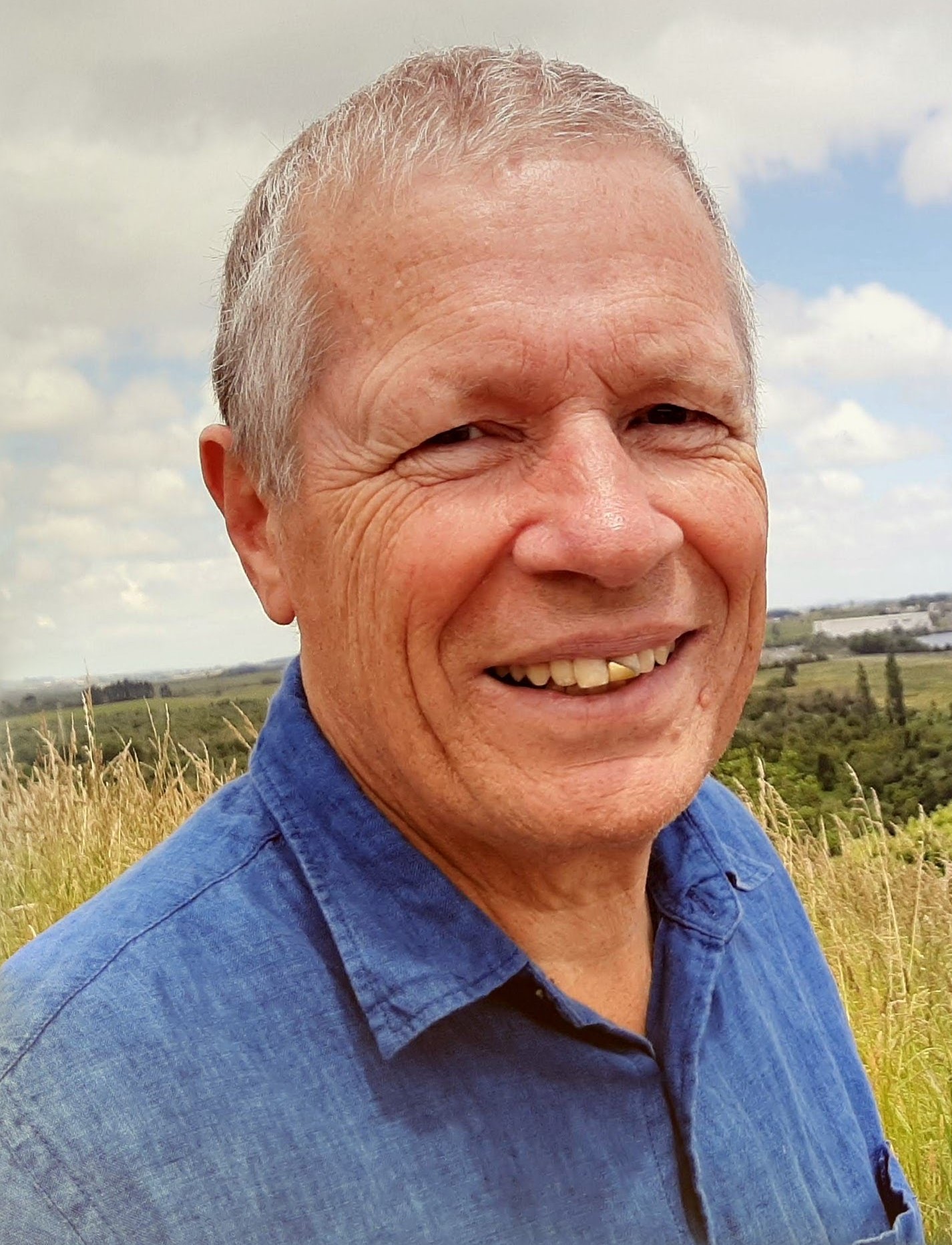
    Updates to this page

    Published 29 May 2025

    MIL OSI United Kingdom

  • MIL-OSI Africa: Cabinet welcomes reset of SA-US Relations

    Source: South Africa News Agency

    Cabinet has welcomed the reset of strategic relationships between South Africa (SA) and the United States (US) during President Cyril Ramaphosa’s working visit to the United States of America.

    Speaking during a post-Cabinet briefing in Cape Town on Thursday, Minister in The Presidency Khumbudzo Ntshavheni said the SA and US teams will finalise the details of the trade deal between the two countries. 

    “It is safe to emphasise that the objectives that SA had set for the trip have been met. Cabinet looks forward to the continued participation of the US administration in the G20, including the possible attendance of President Trump to the G20 Leaders’ Summit,” the Minister said.

    President Cyril Ramaphosa concluded a working visit to Washington DC in the United States last week Wednesday. The meeting at the Oval House was attended by senior US and South African officials. 

    READ I SA and US have ‘everything to gain’ from closer relations

    The South African delegation consisted of several Cabinet Ministers, notable business figures, and prominent South Africans.

    President Ramaphosa was flanked by the Minister of International Relations and Cooperation Ronald Lamola, Minister Ntshavheni, Minister of Trade, Industry and Competition Parks Tau, and Minister of Agriculture John Steenhuisen. 

    In addition, the President was accompanied by Johann Rupert, the Founder of Richemont and Chairman of Remgro. Vice President of Business Unity South Africa (BUSA) Adrian Gore and President of the Congress of South African Trade Unions (COSATU) Zingiswa Losi also formed part of the delegation.

    South African pro golfers Ernie Els and Retief Goosen were also in attendance. 

    President Trump was flanked by several key officials including Vice President JD Vance, Defence Secretary Pete Hegseth, Commerce Secretary Howard Lutnick, Deputy Secretary of State Christopher Landau, Chief of Staff Susie Wiles, Special Government Employee Elon Musk, and Dr Massad Boulos, who serves as a Senior Advisor for Africa as well as on Arab and Middle Eastern Affairs.

    South Africa – France Relations

    Cabinet has also welcomed the working visit by Deputy President Paul Mashatile aimed at strengthening relations between South Africa and France. 

    READ I Deputy President concludes working visit to France

    The Deputy President and the SA delegation also attended the SA-France Investment Conference with a view to improving investments by French Companies into South Africa and vice versa and also establishing partnerships between South African and French companies in joint investments through the African Continental Free Trade Area. – SAnews.gov.za

    MIL OSI Africa

  • MIL-OSI Global: Waiting for Godot has been translated into Afrikaans: what took so long

    Source: The Conversation – Africa – By Rick de Villiers, Associate professor, University of the Free State

    At last, the most infamous latecomer in all of literature has arrived – not in the flesh, but in South Africa’s Afrikaans language. Irish playwright Samuel Beckett’s best-known drama, Waiting for Godot, now also lives as Ons Wag vir Godot.

    Published and staged in 2024, the translation was inspired by the official centenary of Afrikaans in 2025.

    As a Beckett scholar, I think it’s worth asking why Afrikaans is so late on the scene – and why it matters.

    Godot in many tongues

    First written in French, En attendant Godot was published in 1952 and debuted on stage the next year.

    The action involves two tramps, Vladimir and Estragon, who have a series of absurd conversations and encounters as they wait for a man called Godot who never arrives. Beckett would self-translate the drama into English in 1954, calling it “a tragicomedy in two acts”.

    Since then, translations of the play have exploded. By 1969 – the year of Beckett’s Nobel Prize for Literature – Waiting for Godot could already be read in dozens of languages, including Albanian, Marathi, and even Icelandic.

    Samuel Beckett and South Africa

    Beckett’s connections with South Africa are surprisingly varied. As a young man, he unsuccessfully applied for a lectureship at the University of Cape Town. His 1951 novel, Molloy, was translated from French into English with the help of a South African student, Patrick Bowles. And in 1968, Beckett made a donation to the then-banned resistance party, the African National Congress, in the form of a manuscript for auction.

    This gesture was unprecedented for the Irish writer, who was wary of political causes. Yet not only did Beckett feel strongly enough about apartheid’s injustices to make this donation, he also refused to let anyone perform his plays before South Africa’s racially segregated audiences.


    Read more:
    The case of the acclaimed South African novel that ‘borrows’ from Samuel Beckett


    Already in 1963 Beckett had signed the petition Playwrights Against Apartheid. He would continue to refuse performance rights in South Africa until 1980, when the Baxter Theatre was allowed to stage Waiting for Godot with a racially integrated cast.

    Nevertheless, unauthorised Godots materialised before this. Athol Fugard, the South African playwright whose own dramas were influenced by Beckett, directed one of the earliest South African productions in 1962. Featuring an all-black cast, it testified to the play’s political charge, which Fugard emphasised:

    Vladimir and Estragon … were at Sharpeville or the first in at Auschwitz.

    It’s reasonable to think that Beckett would have supported this protest performance. But he would probably have denounced the first and unofficial Afrikaans version, Afspraak met Godot, translated by Suseth Brits and performed in 1970 at the Potchefstroom University College (now North-West University) behind closed doors.

    For different reasons, Beckett would also have frowned on the substantial “borrowings” in Afrikaans novelist Willem Anker’s 2014 novel, Buys.

    Domesticating a European classic

    Fully sanctioned by Beckett’s estate and beautifully translated (from the French and English) by now-retired professor of French at the University of the Free State Naòmi Morgan, Ons Wag vir Godot arrives at a different moment altogether.

    The translation retains the gallows humour of the original while adding local flavour. For instance, where Vladimir originally names the Eiffel Tower as a picturesque site to commit suicide, his Afrikaans counterpart nominates Van Stadensbrug, a bridge over a ravine in the Eastern Cape. The slave-like Lucky once entertained his master with European dances: “the farandole, the fling, the brawl, the jig, the fandango”. These now become a South African mix: “volkspele, die riel, die pantsula, selfs die horrelpyp” (folk games, riel dance, pantsula dance, a hiding).

    In translation-speak, Ons Wag vir Godot is therefore fully “domesticated”: the play’s universality comes through even though – and perhaps even more so because – it’s anchored in a particular place and time.

    This struck me when I attended the play’s limited-run production, expertly directed by Dion van Niekerk, at the 2024 Vrystaat Kunstefees (Free State arts festival). Its set managed to thread together subtle South African roadside details: a toppled rubbish bin, pylons on the horizon, a (broken) picnic bench.

    In the text itself, we encounter familiar place names, sayings and cultural clues. Consider how Beckett’s abstract phrase “the essential doesn’t change” is grounded in African mythology: “Jakkals verander van hare, maar nie van streke nie” (The leopard doesn’t change its spots). Then there’s the charming touch of the dog in Vladimir’s song snatching “’n stukkie wors” (a piece of sausage particular to South Africa) rather than a measly “bone”.

    Godot and the Afrikaans canon

    Ons Wag vir Godot achieves its most profound tribute to Beckett and Afrikaans through its intertextual richness. Both the French and English originals are highly allusive texts: they invoke other works of literature to increase their range of meaning and subtlety. Morgan is attuned to this subtlety and to the parallels to be found in Afrikaans literature. There are references to works by canonical Afrikaans writers like Eugène Marais, Totius and C.J. Langenhoven, each adding its own resonance.


    Read more:
    Koos Prinsloo: the cult Afrikaans writer has been translated to English – here’s a review


    Yet the dilemma any translator faces is not so much in bringing in the new, but in striking a balance with the old. Consider the judicious swapping of a line from Percy Bysshe Shelley for a line from C. Louis Leipoldt.

    In the English version, Estragon looks up forlornly at the moon and half-quotes the English Romantic poet: “Pale for weariness … Of climbing heaven and staring on the likes of us.” In the Afrikaans, he gives us a fragment from the wistful poem, Die Moormansgat: “ek kyk na die lig van die volle silwermaan” (I behold the light of the full silver moon). At face value, this lacks the detached, woeful quality of Shelley’s line. But read in the context of Leipoldt’s poem, it is every bit as poignant.

    The virtue of waiting

    “Vladimir would agree,” Morgan concludes in the preface to her translation, “that a century is a decent amount of time to hone a language for the translation of one of the best-known dramas in world literature”.


    Read more:
    Animal Farm has been translated into Shona – why a group of Zimbabwean writers undertook the task


    And indeed, the riches of the Afrikaans language are on display in this sensitive, witty and allusive rendering of Beckett’s European classic. But it’s also true that a certain amount of political baggage had to be shaken off before such a feat could be realised – not just in the right words, but in the right spirit. Of course, if Beckett’s play teaches us anything, it’s the virtue of waiting.

    Rick de Villiers does not work for, consult, own shares in or receive funding from any company or organisation that would benefit from this article, and has disclosed no relevant affiliations beyond their academic appointment.

    ref. Waiting for Godot has been translated into Afrikaans: what took so long – https://theconversation.com/waiting-for-godot-has-been-translated-into-afrikaans-what-took-so-long-257345

    MIL OSI – Global Reports

  • MIL-OSI Global: The American mass exodus to Canada amid Trump 2.0 has yet to materialize

    Source: The Conversation – Canada – By Lori Wilkinson, Professor of Sociology, University of Manitoba

    In February 2025, the New Republic, reported there were a growing number of Americans who wanted to leave the country following the election of Donald Trump.

    Canadian reports backed up the assertion, particularly the news that three high-profile Yale professors would be joining the faculty of the University of Toronto in the fall of 2025.


    Read more:
    Yale scholars’ move to Canada can prompt us to reflect on the rule of law


    For some Canadian observers, it may feel like a case of déjà vu. After Trump’s first election in 2016, some media predicted a sharp increase in Americans seeking to escape their country’s harsh social and political climate for Canada’s “sunny ways.”

    According to Google Analytics, web searches originating in the United States involving “how to move to Canada” increased by 350 per cent on election night in 2016. A few months earlier, they’d increased by 1,500 per cent over normal search rates for the same phrase in March 2016, when Trump clinched the Republican nomination for president.

    More Canadians head south

    Despite such post-election musings nine years ago, the pending American mass exit didn’t materialize. According to migration data (a download is required) from Immigration, Refugees and Citizenship Canada (IRCC), the number of Americans applying for permanent residency from January through March 2017 rose only slightly. There were 1,882 applications, just 66 more than from the same period in 2016.

    As for visas and authorizations issued to people from the U.S. during the same time period, they barely increased — from 2,497 in 2016 to just 2,523 in 2017.

    Americans taking up permanent residency in Canada jumped from about 8,400 in 2016 to 10,800 in 2019. However, that increase in the modest number of moves from the U.S. to Canada can hardly be construed as an exodus. Over those same two years, the number of Canadians becoming permanent residents of the U.S. continued to exceed the number of Americans who headed north.

    There has been, however, a decline in the number of Canadians moving to the U.S. In 2016, the year Trump was first elected, just over 19,300 Canadians moved to the U.S. In 2019, the year before Trump lost to Joe Biden, 14,700 Canadians took up residence in the U.S.

    That trend didn’t last as the gap in cross-border permanent residency widened once more during the Biden era. In 2023, while 10,600 Americans moved to Canada, 18,600 Canadians moved to the U.S.

    Looking at the data from 2016 to 2023 suggests politics isn’t the primary reason why Americans head to Canada. It’s more likely driven by economic considerations, better job offers or family ties.

    In terms of the apparent uptick in migrants from the U.S. heading to Canada during Trumps’s second term, it’s too early to draw definitive conclusions. But numbers for the first quarter of 2025, according to the same IRCC datasets, show no signs of any significant uptake, with a drop from 2,485 Americans headed Canada’s way between January to March 2024 to 955 over the same period in 2025.

    Moving to Canada isn’t easy

    Despite the surge in American internet searches on moving to Canada in 2016, when Trump won the Republican nomination and then the presidency, acting on impulse in a moment of political turmoil is complicated.

    Moving to Canada is not as simple as it may seem; it can be long and arduous. There’s a process and a waiting line with requirements that include an offer of employment in Canada, liquid assets and language proficiency in English, or French if Québec is the ultimate destination.

    It’s easier to immigrate to Canada if there’s a close family member already living there, but still not guaranteed. Canada’s tax rate is a migration deterrent for some, even though these higher tax rates come with more services.

    Although Canada’s health-care system is more inclusive and affordable, the wait times for procedures, along with the perception that Canadian services are not as robust as American health services, could also be a deterrent to migration.

    In short, even for Americans, it’s not easy to migrate to Canada.

    There is, however, one group of people living in the U.S. who may consider relocating to Canada: asylum-seekers.

    The second Trump administration has ended Temporary Protection Status for Afghan, Venezuelan, Nicaraguan, Cuban and Haitian residents.

    This means that people from these strife-torn countries must apply for permanent residency or “self-deport” — otherwise, they will become undocumented.

    Haiti is currently unsafe. Gangs control the country’s cities and neighbourhoods and have staged a successful coup. The country is also still rebuilding after the devastating 2010 earthquake.


    Read more:
    With Haiti in chaos, Canada buries its head in the sand


    Afghanistan remains in the throes of a decades-long war where women have have no rights. Venezuela is in a state of civil unrest; about 19 million citizens do not have enough food or sanitation. Nearly 7.7 million people have fled the country.

    The plight of asylum-seekers

    The crackdown on other undocumented residents and the recent issuing of large “civil penalties” in the form of fines for failing to self-deport may force others to leave the U.S. Where might they go?

    Many will return to their country of residence, but others may be unable to do so and could consider Canada a convenient and safe destination. In 2016, 23,919 people made asylum claims in Canada. That number slowly rose throughout the first Trump administration to 64,020 in 2019, the last full year of the president’s first term.

    Those seeking asylum in Canada declined to 23,680 in 2020 — the first year of the COVID-19 pandemic — but had increased to 171,850 by the end of 2024.

    The geographic distribution of these asylum-seekers was uneven. In 2017, 50 per cent of all asylum-seekers to Canada made their claim in Québec; in 2022, 64 per cent of asylum claims were made there.

    So rather than seeing a large influx of American citizens migrating to Canada during Trump’s second administration, there will likely be a larger number of asylum-seekers, many of whom have legitimate fears of persecution. How Canada chooses to handle these claims remains to be seen — but it’s urgently important for Canadian elected officials to figure it out immediately.


    Jack Jedwab, CEO of the Association for Canadian Studies and the Metropolis Institute, co-authored this article

    Lori Wilkinson does not work for, consult, own shares in or receive funding from any company or organisation that would benefit from this article, and has disclosed no relevant affiliations beyond their academic appointment.

    ref. The American mass exodus to Canada amid Trump 2.0 has yet to materialize – https://theconversation.com/the-american-mass-exodus-to-canada-amid-trump-2-0-has-yet-to-materialize-256853

    MIL OSI – Global Reports

  • MIL-OSI Global: A 16th-century Chinese writer spoke of workplace burnout, leaving a blueprint for radical acts of rest

    Source: The Conversation – Canada – By Jason Wang, Postdoctoral Fellow, Modern Literature and Culture Research Centre, Toronto Metropolitan University

    Gathering at the Orchid Pavilion by Qian Gu, 1560 (Chinese, 1508–ca. 1578), Ming dynasty (1368–1644). Handscroll, ink C. C. Wang Family, Gift of Douglas Dillon, 1980/ MET open collection, CC BY

    We are in the middle of a global workplace burnout epidemic — aptly named the “burnout society” by Korean-German philosopher Byung-Chul Han.

    Four centuries ago, late Ming Dynasty scholar-official Yuan Hongdao (1568–1610) shifted from state administrative work to xiaopin — brief, personal essays celebrating everyday pleasures like gardening, leisurely excursions and long vigils beside a rare blossom.

    The cover of ‘Burnout Society’ by Byung-Chul Han.
    (Stanford U Press)

    Today, his Ming Dynasty-era practice resonates with uncanny urgency within our burnout epidemic.

    Amid the Wanli Emperor’s neglect and escalating bureaucratic infighting in Beijing, Yuan turned away from what today we call a “toxic workplace.”

    Instead, he found refuge in Jiangnan’s landscapes and literary circles. There he exchanged hierarchical pressures, administrative tedium and cut-throat careerism for moments of unhurried attention.

    Yuan’s xiaopin, alongside those of his contemporaries, transformed fleeting sensory moments into radical acts of resilience, suggesting that beauty, not institutions, could outlast empires.

    The Ming Dynasty: A literary rebellion

    The late Ming Dynasty (1368–1644) was an era of contradictions.

    While Europe hurtled toward colonialism and scientific rationalism, China’s Jiangnan region — the fertile Yangtze Delta in today’s Jiangsu and Zhejiang provinces — flourished via merchant wealth, global silver trade and a thriving print culture.

    Bookshops lined city streets like modern cafés. They peddled plays, poetry and xiaopin volumes like Meiyou Pavilion of Arts and Leisure (1630) and Sixteen Xiaopin Masters of the Imperial Ming (1633).

    The imperial examination system, a civil service written exam — once a path to prestige — had become a bottleneck. Thousands of scholars languished in bureaucratic limbo, channelling their frustrations and exhaustion into xiaopin’s intimate vignettes.

    Chinese imperial examination candidates gathering around the wall where the results are posted (painting by Qiu Ying, c. 1540)
    (National Palace Museum)

    In his preface to Meiyou Pavilion, editor Zheng Yuanxun (1603–1644) praised the genre’s “flavour beyond flavour, rhythm beyond rhythm” — a poetic nod to its rich sensory detail and subtle musicality — rejecting moralizing orthodox prose by embracing immersive aesthetics.

    Against neo-Confucianism’s rigid hierarchies, xiaopin elevated the private, the ephemeral and the esthetically oblique: a well-brewed pot of tea, the texture of moss on a garden rock and incense wafting through a study.

    Wei Shang, professor of Chinese culture at Columbia University, has noted such playful text flourished among late Ming literati disillusioned with the era’s constraints. The texts reframed idleness and sensory pleasure as subtle dissent within a status-obsessed society.

    When doing less becomes radical

    Long before French poet Charles Baudelaire’s flâneur used dandyism and idle promenades to resist the alienating pace of western modernity, Ming literati like Chen Jiru (1558–1639) and Gao Lian (1573–1620) framed idleness as defiance.

    Drawing on Daoist wu wei (non-action), Gao praised the “crystal clear retreat” that scrubbed the heart of “worldly grime” and cultivated “a tranquil heart and joyful spirit.” For him, human worth lay not in bureaucratic promotions but in savouring tea, listening to crickets or resting against a well-fluffed pillow.

    A hanging scroll, ink on paper of a plum blossom branch by Chen Jiu (1558–1639).
    (Yale University Art Gallery/S. Sidney Kahn, 1959/Christie’s, lot 677, 1983/Bones of Jade, Soul of Ice, 1985), CC BY

    Hung-tai Wang, a cultural historian at Academia Sinica in Taipei, identifies xiaopin as a “leisurely and elegant” esthetic rooted in nature’s rhythms.

    Chen Jiru, a Ming Dynasty-era painter and essayist, embodied this framework by disallowing transactional logic. In one essay, Chen lauds those who possess “poetry without words, serenity without sutras, joy without wine.” In other words, he admired those whose lives resonated through prioritizing lived gestures over abstract ideals.

    The art of living in a disconnected age

    In the late Ming’s burgeoning urban and commercial milieu, xiaopin turned everyday objects into remedies for social isolation.

    In the Jiangnan gardens, late Ming essayists saw landscapes infused with emotion. At the time, essayist Wu Congxian called it “lodging meaning among mountains and rivers:” moonlight turned into icy jade, oar splashes to cosmic echoes.

    Chen Jiru had study rituals — fingering a bronze cauldron, tapping an inkstone — curated what he termed “incense for solitude, tea for clarity, stone for refinement.”

    This cultivation of object-as-presence anticipates American academic Bill Brown’s “thing theory,” where everyday items invite embodied contemplation and challenge the subject-object binary that enables commodification.

    The Ming Dynasty-era scholar-connoisseur, Wen Zhenheng (1585–1645), turned domestic minutiae into philosophical resistance.

    His xiaopin framed everyday choices — snowmelt for tea, rooms facing narrow water, a skiff “like a study adrift” — as rejections of abstraction. Through details like cherries on porcelain or tangerines pickled before ripening, he asserted that value lies in presence, not utility.

    Wen suggests that exhaustion stems not from labour but from disconnection.

    The Garden of the Inept Administrator (Zhuozheng Yuan) by Wen Zhengming, 1551. Wen painted 31 views of the site, each accompanied by a poem and a descriptive note.
    (Gift of Douglas Dillon, 1979/MET open source collection), CC BY

    The burnout rebellions: ‘Tang ping,’ ‘quiet quitting’

    Just as xiaopin turned domestic rituals into resistance, today’s movements recast the mundane as a mode of defiance.

    In April 2021, China’s tang ping (“lying flat”) movement surfaced with a post by former factory worker Luo Huazhong: “Lying flat is justice.” The message was simple and subversive: work had become intolerable, and opting out was not laziness but resistance.

    In a backlash against China’s “996” work model extolled by tech moguls like Jack Ma, tang ping rejects the sacrifice of dignity and mental health for productivity and casts idleness as a quiet revolt against exploitative norms.

    In the West, the COVID-19 pandemic sparked similar reckonings. The “Great Resignation” saw millions leave unfulfilling jobs. And “quiet quitting” rejected unpaid overtime and emotional labour. These movements emerged as a soft refusal of hustle culture.

    As anthropologist David Graeber argues in Bullshit Jobs (2018), the “moral and spiritual damage” inflicted by meaningless work reflects a profound political failure.

    Just like the late Ming literati who poured their lives into a state that repaid them with hollow titles and bureaucratic decay, today’s workers withdraw from institutions that exploit their labour yet treat them as disposable.

    Unlike French philosopher Michel de Montaigne’s introspective self-examination in his Renaissance-era Essays, xiaopin refuses utility. In doing so, it inverts the contemporary self-help trend critiqued by Byung-Chul Han, which co-opts personal “healing” as a form of productivity through neoliberal logic.

    Xiaopin proposes resistance as an existential shift beyond (self-)optimization. Its most radical gesture is not to demand change, but to live as if the system’s demands are irrelevant.

    The revolution of pause

    Xiaopin asks: What is progress without presence? Its fragments — on lotus ponds, summer naps, a cat’s shadow — prove that resistance need not be loud.

    Like Japanese writer Haruki Murakami’s vision of contemporary literature as “space of individual recovery,” the genre shelters us from “hierarchy and efficiency.”

    Here, time is not spent but reclaimed.

    To pause in an age of weaponized ambition is in fact revolt. Tracing a petal’s vein, sipping tea until bitterness fades, lying flat as the machinery of productivity grinds on — these are not acts of shirking reality, but defiant gestures against the systems that feed on our exhaustion. They are affirmations of agency: microcosms where we rehearse what it means to belong to ourselves, and thus, to the world.

    Xiaopin’s revolution awakens in a flicker of attention: a reminder that presence, too, is a language — one that hums beneath the buzz of progress, waiting to be heard.

    The authors do not work for, consult, own shares in or receive funding from any company or organisation that would benefit from this article, and have disclosed no relevant affiliations beyond their academic appointment.

    ref. A 16th-century Chinese writer spoke of workplace burnout, leaving a blueprint for radical acts of rest – https://theconversation.com/a-16th-century-chinese-writer-spoke-of-workplace-burnout-leaving-a-blueprint-for-radical-acts-of-rest-256651

    MIL OSI – Global Reports

  • MIL-OSI Africa: Waiting for Godot has been translated into Afrikaans: what took so long

    Source: The Conversation – Africa – By Rick de Villiers, Associate professor, University of the Free State

    At last, the most infamous latecomer in all of literature has arrived – not in the flesh, but in South Africa’s Afrikaans language. Irish playwright Samuel Beckett’s best-known drama, Waiting for Godot, now also lives as Ons Wag vir Godot.

    Published and staged in 2024, the translation was inspired by the official centenary of Afrikaans in 2025.

    As a Beckett scholar, I think it’s worth asking why Afrikaans is so late on the scene – and why it matters.

    Godot in many tongues

    First written in French, En attendant Godot was published in 1952 and debuted on stage the next year.

    Naledi Books

    The action involves two tramps, Vladimir and Estragon, who have a series of absurd conversations and encounters as they wait for a man called Godot who never arrives. Beckett would self-translate the drama into English in 1954, calling it “a tragicomedy in two acts”.

    Since then, translations of the play have exploded. By 1969 – the year of Beckett’s Nobel Prize for Literature – Waiting for Godot could already be read in dozens of languages, including Albanian, Marathi, and even Icelandic.

    Samuel Beckett and South Africa

    Beckett’s connections with South Africa are surprisingly varied. As a young man, he unsuccessfully applied for a lectureship at the University of Cape Town. His 1951 novel, Molloy, was translated from French into English with the help of a South African student, Patrick Bowles. And in 1968, Beckett made a donation to the then-banned resistance party, the African National Congress, in the form of a manuscript for auction.

    This gesture was unprecedented for the Irish writer, who was wary of political causes. Yet not only did Beckett feel strongly enough about apartheid’s injustices to make this donation, he also refused to let anyone perform his plays before South Africa’s racially segregated audiences.


    Read more: The case of the acclaimed South African novel that ‘borrows’ from Samuel Beckett


    Already in 1963 Beckett had signed the petition Playwrights Against Apartheid. He would continue to refuse performance rights in South Africa until 1980, when the Baxter Theatre was allowed to stage Waiting for Godot with a racially integrated cast.

    Nevertheless, unauthorised Godots materialised before this. Athol Fugard, the South African playwright whose own dramas were influenced by Beckett, directed one of the earliest South African productions in 1962. Featuring an all-black cast, it testified to the play’s political charge, which Fugard emphasised:

    Vladimir and Estragon … were at Sharpeville or the first in at Auschwitz.

    It’s reasonable to think that Beckett would have supported this protest performance. But he would probably have denounced the first and unofficial Afrikaans version, Afspraak met Godot, translated by Suseth Brits and performed in 1970 at the Potchefstroom University College (now North-West University) behind closed doors.

    For different reasons, Beckett would also have frowned on the substantial “borrowings” in Afrikaans novelist Willem Anker’s 2014 novel, Buys.

    Domesticating a European classic

    Fully sanctioned by Beckett’s estate and beautifully translated (from the French and English) by now-retired professor of French at the University of the Free State Naòmi Morgan, Ons Wag vir Godot arrives at a different moment altogether.

    From left: Peter Taljaard (Pozzo), Charl Henning, Chris Vorster and Gerben Kamper (Lucky). Leopold Frechow/UFS

    The translation retains the gallows humour of the original while adding local flavour. For instance, where Vladimir originally names the Eiffel Tower as a picturesque site to commit suicide, his Afrikaans counterpart nominates Van Stadensbrug, a bridge over a ravine in the Eastern Cape. The slave-like Lucky once entertained his master with European dances: “the farandole, the fling, the brawl, the jig, the fandango”. These now become a South African mix: “volkspele, die riel, die pantsula, selfs die horrelpyp” (folk games, riel dance, pantsula dance, a hiding).

    In translation-speak, Ons Wag vir Godot is therefore fully “domesticated”: the play’s universality comes through even though – and perhaps even more so because – it’s anchored in a particular place and time.

    This struck me when I attended the play’s limited-run production, expertly directed by Dion van Niekerk, at the 2024 Vrystaat Kunstefees (Free State arts festival). Its set managed to thread together subtle South African roadside details: a toppled rubbish bin, pylons on the horizon, a (broken) picnic bench.

    Chris Vorster as Vladimir and Sibabalwe Jokani as Seun/Boy. Leopold Frechow/UFS

    In the text itself, we encounter familiar place names, sayings and cultural clues. Consider how Beckett’s abstract phrase “the essential doesn’t change” is grounded in African mythology: “Jakkals verander van hare, maar nie van streke nie” (The leopard doesn’t change its spots). Then there’s the charming touch of the dog in Vladimir’s song snatching “’n stukkie wors” (a piece of sausage particular to South Africa) rather than a measly “bone”.

    Godot and the Afrikaans canon

    Ons Wag vir Godot achieves its most profound tribute to Beckett and Afrikaans through its intertextual richness. Both the French and English originals are highly allusive texts: they invoke other works of literature to increase their range of meaning and subtlety. Morgan is attuned to this subtlety and to the parallels to be found in Afrikaans literature. There are references to works by canonical Afrikaans writers like Eugène Marais, Totius and C.J. Langenhoven, each adding its own resonance.


    Read more: Koos Prinsloo: the cult Afrikaans writer has been translated to English – here’s a review


    Yet the dilemma any translator faces is not so much in bringing in the new, but in striking a balance with the old. Consider the judicious swapping of a line from Percy Bysshe Shelley for a line from C. Louis Leipoldt.

    In the English version, Estragon looks up forlornly at the moon and half-quotes the English Romantic poet: “Pale for weariness … Of climbing heaven and staring on the likes of us.” In the Afrikaans, he gives us a fragment from the wistful poem, Die Moormansgat: “ek kyk na die lig van die volle silwermaan” (I behold the light of the full silver moon). At face value, this lacks the detached, woeful quality of Shelley’s line. But read in the context of Leipoldt’s poem, it is every bit as poignant.

    The virtue of waiting

    “Vladimir would agree,” Morgan concludes in the preface to her translation, “that a century is a decent amount of time to hone a language for the translation of one of the best-known dramas in world literature”.


    Read more: Animal Farm has been translated into Shona – why a group of Zimbabwean writers undertook the task


    And indeed, the riches of the Afrikaans language are on display in this sensitive, witty and allusive rendering of Beckett’s European classic. But it’s also true that a certain amount of political baggage had to be shaken off before such a feat could be realised – not just in the right words, but in the right spirit. Of course, if Beckett’s play teaches us anything, it’s the virtue of waiting.

    – Waiting for Godot has been translated into Afrikaans: what took so long
    – https://theconversation.com/waiting-for-godot-has-been-translated-into-afrikaans-what-took-so-long-257345

    MIL OSI Africa

  • MIL-OSI USA: Governor Polis: Court Rejection of Trump Tariff Tax is A Win for Americans

    Source: US State of Colorado

    DENVER – Today, a court struck down President Trump’s tariffs that raised the cost for Americans on everyday goods. Colorado helped lead a lawsuit against this tariff tax. Governor Polis has been outspoken about the negative impacts these tariffs have on the American people and applauded the court for their decision today. 

    “This is great news for our economy and every American family. I am grateful that this court decision striking down many tariffs checks the sweeping presidential power that the President has attempted to impose on the American people and businesses. The President’s tariff tax on groceries and everyday items is bad for hardworking people, our economy and business certainty. Unfortunately, President Trump has already caused a lot of damage with his tariff tax and the uncertainty they’ve caused for business and our economy, effectively freezing investment, but I am thrilled with the court’s decision and encourage the President to strengthen trade with our allies and decreases taxes and barriers for imports and exports,” said Governor Polis. 

    In addition to raising prices, reports show that tariffs lead to increases in fraud and crime. 

    In 2024, Colorado exported a record $10.5 billion of goods to the world and imported $16.8 B in goods. Colorado’s top export partners are Mexico ($1.7B), Canada ($1.6B), China ($0.8B) South Korea ($0.6B), and Malaysia ($0.6 B), accounting for half of all Colorado exports in 2024. Top export commodities include meat (17%); nuclear reactors, boilers, machinery (15%); electric machinery (13%); optic, photo, medical or surgical instruments (11%); and aircraft, spacecraft, and related parts (5%). In 2022, exports from Colorado supported an estimated 40 thousand jobs. 

    Colorado in 2024 exported $500 million in aerospace, spacecraft, and related parts, accounting for roughly 4.8% of all Colorado exports. The European Union, Brazil, France, Canada and Mexico were the top five export destinations, accounting for 63% of Colorado’s aerospace exports. In 2024, Colorado imported $1 billion of aerospace, spacecraft and related parts, accounting for roughly 6.2% of all Colorado imports. Switzerland, the EU, Germany, Canada, and France were the top five import sources, accounting for over 90% of Colorado’s aerospace imports. 

    An estimated 820,200 jobs in Colorado are supported by international trade, representing 20.8% of all jobs in the state. Colorado’s top import partners are Canada ($5.4 B), China ($1.8 B), Mexico ($1.1 B), Switzerland ($0.9 B) and Germany ($0.9 B), accounting for 60% of imports in 2024. Top import commodities include oil, mineral fuel (20%); electric machinery (14%); nuclear reactors, boilers, machinery (11%); optic, photo, medical or surgical instruments (8%); and aircraft, spacecraft and related parts (6%). 

    In addition to the commodities traded, Colorado also trades services and runs a services trade surplus. In 2022, Colorado exported $16 B in services, supporting 97,260 jobs. Top services export markets were Canada ($1.3 B), the United Kingdom ($0.9 B), Mexico ($0.9 B), and China ($0.6 B). As a bloc, the EU was the top services export market with $3.8 B in services exports supporting over 18,900 jobs. 

    ###

    MIL OSI USA News