Category: Germany

  • MIL-OSI Russia: Remembering History, Opening the Future: Xi Jinping Participates in Victory Day Celebrations in Moscow

    Translation. Region: Russian Federal

    Source: People’s Republic of China in Russian – People’s Republic of China in Russian –

    Source: People’s Republic of China – State Council News

    Moscow, May 10 (Xinhua) — Chinese President Xi Jinping, along with Russian President Vladimir Putin and more than 20 other leaders, laid red roses at the Tomb of the Unknown Soldier.

    The ceremony was a tribute to the memory and respect of the heroes who died in the Great Patriotic War, on the occasion of the 80th anniversary of the Victory.

    The ceremonial events ended with a grand military parade on Red Square. On the main platform, Xi Jinping and V. Putin sat next to each other and exchanged words from time to time.

    More than 11,500 troops took part in the parade, including contingents from more than 10 countries. Among them was an honor guard from the People’s Liberation Army (PLA). Xi Jinping stood up from his seat as the PLA troops passed the stands.

    During the historical part of the parade, Russian servicemen, dressed in uniforms from the Great Patriotic War, carried old military flags and weapons in their hands, reminiscent of the years of resistance to fascism.

    On the evening of May 8, 1945, the Act of Unconditional Surrender of Germany was signed in the Berlin suburb of Karlshorst, marking the end of World War II in Europe. Meanwhile, in Moscow, it was already May 9, which was declared “Victory Day” by the Soviet Union and then Russia. Since 1995, military parades and other commemorative events have been held in Russia every year on May 9.

    “The Soviet Union took upon itself the most ferocious, merciless blows of the enemy,” said V. Putin in his speech at the parade.

    “We will always remember that the opening of the second front in Europe – after the decisive battles on the territory of the Soviet Union – brought victory closer. We highly value the contribution to our common struggle of the soldiers of the allied armies, the resistance fighters, the courageous people of China. All those who fought for a peaceful future,” said V. Putin.

    The Soviet Union was the main theater of World War II in Europe and lost 27 million people, while China was the main theater of war in Asia and lost more than 35 million people killed and wounded, resisting the main forces of Japanese militarism. Together, Russia and China became the bulwark of resistance to Japanese militarism and German Nazism, making a decisive contribution to the victory in the World Anti-Fascist War.

    Eighty years ago, the peoples of the two countries united in the face of the brutal aggression of militarism and Nazism, fought shoulder to shoulder against a common enemy and wrote a remarkable and heroic chapter in history, Xi Jinping said at a joint press conference with Vladimir Putin after talks in the Kremlin.

    Xi Jinping took part in the Victory Day celebrations for the second time; in 2015, he came to Moscow to mark the 70th anniversary of the Victory. That same year, on September 3, V. Putin attended the parade in Beijing in honor of the Victory of the Chinese people in the War of Resistance Against Japanese Aggression and the World Anti-Fascist War.

    The past decade has been a time of major upheavals and transformations in the international situation, Xi Jinping said during a joint meeting with the media on Thursday.

    In the face of global, epochal and historical changes, China and Russia should firmly guide the development trend of bilateral ties and human society, Xi said, calling for more active joint efforts to safeguard international justice.

    In the run-up to Xi Jinping’s state visit to Russia, his article “Lessons from the Past for the Sake of the Future” was published in Russian media.

    “Historical memory and truth, not erased by time, give us inspiration and lessons, always reminding us of reality and pointing the way to the future. It is important to preserve historical memory, the lessons of World War II should be learned,” he wrote. -0-

    MIL OSI Russia News

  • MIL-OSI Russia: Special Report: Standing on the Right Side of History and Justice – Op-Ed by Chinese President Xi Jinping Sparks Great Response from International Community

    Translation. Region: Russian Federal

    Source: People’s Republic of China in Russian –

    Source: People’s Republic of China – State Council News

    BEIJING, May 10 (Xinhua) — Chinese President Xi Jinping recently published an article entitled “Lessons from the Past for the Future” in the Rossiyskaya Gazeta newspaper, stressing the need to learn from history, draw wisdom and strength from the profound experience of World War II and the great victory in the World Anti-Fascist War, resolutely oppose all forms of hegemonism and power politics, and jointly create a better future for humanity.

    Representatives of many countries told Xinhua that in this article, the Chinese leader, based on the common interests of all mankind, looks at both the past and the present and puts forward a series of important proposals. Today, when unilateralism, hegemonism, tyranny and bullying have become serious threats, all countries in the world should stand on the right side of history, the side of justice, resolutely safeguard the post-war world order, firmly uphold international justice and work together for a bright future for mankind.

    “TO PROTECT HISTORICAL TRUTH, WE MUST WORK HARD”

    On the occasion of the 80th anniversary of the Victory of the Chinese People in the War of Resistance against Japanese Aggression and the Victory of the Soviet Union in the Great Patriotic War, Chinese President Xi Jinping emphasized that holding a correct view of the history of World War II is of great practical importance. In his opinion piece, the Chinese leader quoted a line from the well-known Soviet song “Katyusha”: “Apple and pear trees were in bloom.” This not only reminded us of the shared historical memory of the two peoples who fought shoulder to shoulder in World War II, but also that Russian-Chinese friendship has only grown stronger,” said Alexei Rodionov, a sinologist and professor at St. Petersburg State University.

    “The air raid sirens for the victims of the Nanjing Massacre still sound, and the railway tracks in front of the Auschwitz concentration camp still gleam coldly,” said Virun Phichaiwonphakdee, director of the Thailand-China Belt and Road Studies Center. “Historical memory and truth that are not erased by time provide us with inspiration and lessons, always reminding us of reality and pointing the way to the future,” he quoted Xi Jinping as saying. “Victory in World War II was achieved at the cost of blood and sacrifice. Protecting history is not only respecting history, but also protecting justice in the modern world,” the expert noted.

    “Any attempt to distort the historical truth about World War II and deny the victory in World War II will not succeed. The people of the world will not tolerate attempts to turn back history,” said Japanese biological weapons expert, Professor Emeritus of Shiga Medical University Kazuo Nishiyama. He fully agrees that humanity should draw wisdom and strength from the profound lessons of World War II and the great victory in the anti-fascist war. “In order to protect the historical truth, it is still necessary to work tirelessly to prevent the repetition of tragedies in the future,” the scientist believes.

    “World War II is a tragedy for all of humanity. We must tell history in a comprehensive and truthful manner, deeply understand the atrocities of war, and strengthen education for peace,” said Pawel Machcewicz, founding director of the Museum of World War II in Gdansk, Poland.

    “For Serbia, Xi Jinping’s article carries an important message: defending the truth requires great efforts. The state visit of President Xi Jinping to Russia is such an effort,” said Aleksandar Mitic, a research fellow at the Serbian Institute of International Politics and Economics. “Unfortunately, we still see how certain Western forces are trying to downplay the enormous sacrifices and contributions of China, Russia, Serbia and other countries to the historic victory over fascism and militarism, but these attempts are doomed to failure,” he said.

    According to French entrepreneur and commentator Arnaud Bertrand, Xi Jinping’s article contains many profound thoughts, especially when he compares the past and the present, points out that humanity is once again at a crossroads of “solidarity or division, dialogue or confrontation, win-win or zero-sum game,” and declares the need to resolutely defend the post-war international order and the authority of the UN. “President Xi Jinping’s opinion piece is a window into China’s contemporary strategic thinking. As a defender of the post-war world order, China is committed to countering hegemonic forces and is an important power that upholds the multilateral system and international law,” A. Bertrand noted.

    “CHINA, AS THE MAIN THEATER OF MILITARY OPERATIONS IN THE EAST, MADE AN OUTSTANDING CONTRIBUTION TO THE VICTORY IN WORLD WAR II”

    In his opinion article, Xi Jinping emphasized that, as the main theaters of military operations in Asia and Europe, China and the Soviet Union bore the brunt of the attacks of militaristic Japan and Nazi Germany, and made a decisive contribution to the victory in the World Anti-Fascist War. The international community generally believes that the victory on the main eastern front completely destroyed the ambitions of militarism and fascism and was of great global significance.

    “The victory was achieved thanks to the joint efforts of the anti-Hitler coalition, and the USSR and China were its most important part,” emphasized the scientific secretary of the Victory Museum in Moscow Boris Cheltsov. According to him, the peoples of the USSR and China fought shoulder to shoulder against fascism and militarism, supporting each other. As the main theater of military operations in the East, China made an invaluable contribution to the final defeat of Japanese militarism and the victory over fascism due to the enormous sacrifice of the entire people.

    Guzel Maitdinova, Director of the Center for Geopolitical Studies at the Russian-Tajik /Slavonic/ University, noted that China has always been the main force in the fight against Japanese militarism, and most of the Japanese army was held back on the Chinese front. The Chinese people, having made enormous sacrifices, held the main eastern front and made an outstanding contribution to the victory in World War II, she added.

    “Without China, World War II might not have ended in 1945,” said Faruk Borić, chairman of the Bosnian-Chinese Friendship Association. According to him, the front in China effectively held back the Japanese invaders and provided valuable time for victory in Europe, playing an important role in the global fight against fascism. He also noted that as a permanent member of the UN Security Council, China has always actively supported the multilateral order, firmly upholding the international system with the UN as the core and the world order based on international law. “China’s respect for history makes it an indispensable force in maintaining world peace,” the expert said.

    President Xi Jinping has emphasized that Taiwan’s return to China is an important part of the outcome of World War II and the post-war world order. Gu Xuewu, Director of the Center for Global Studies at the University of Bonn in Germany, noted that Taiwan’s return was one of the outcomes of the victory in World War II and was widely recognized by the international community. Undermining these outcomes would seriously disrupt the existing world order.

    Muhab Nassar, an associate professor of international law at Cairo University, said China’s sovereignty over Taiwan is a legally justified and recognized fact. Xi Jinping’s opinion piece once again expressed a firm position: the Taiwan issue concerns China’s fundamental interests, which China will not compromise under any circumstances.

    “TO ACHIEVE UNIVERSAL DEVELOPMENT AND PROSPERITY, THE WORLD NEEDS JUSTICE, NOT HEGEMONY”

    In his opinion article, President Xi Jinping stated that today’s world still faces a growing deficit in peace, development, security and governance. The vision of a community with a shared future for humanity, the Global Development Initiative, the Global Security Initiative and the Global Civilization Initiative are designed to address this deficit, actively participate and join forces with other countries in advancing the reform of the global governance system through the prism of justice and fairness.

    Akkan Suver, chairman of Turkey’s Marmara Group Foundation for Strategic and Social Research, said the three global initiatives proposed by Xi Jinping “represent a fair concept of global governance that truly protects multilateralism.” “Amid the rise of unilateralism, China firmly opposes any form of hegemony and power politics, and is committed to upholding the international order and norms that serve the interests of developing countries. In the face of multiple conflicts, the world needs dialogue and cooperation rather than division, and global development needs reason and conscience rather than dictate,” he said.

    General Secretary of the Central Committee of the Communist Party of Kurdistan operating in Iraq Kawa Mahmud fully agrees with Xi Jinping’s statement that “the world needs justice, not hegemony.” He noted that today’s world still suffers from manifestations of hegemonism and power politics, which only increases uncertainty in the international situation. “To achieve universal development and prosperity, the world needs justice, not hegemony. Only a fair and rational system of global governance can meet the interests of all countries. The formation of a multipolar world based on mutual respect and mutual benefit has become the consensus of most states,” the politician emphasized.

    “The Middle East has long been an arena of instability, from the war in Iraq to the Syrian crisis, the conflict in Yemen and the Palestinian-Israeli issue. The peace deficit is only getting worse,” said Abdullah al-Dosari, editor-in-chief of the Kuwaiti newspaper Al-Arab, after reading Xi Jinping’s article. “The concept of a community with a common destiny for humanity that he proposed, the emphasis on dialogue rather than confrontation, on partnership rather than the creation of blocs, on mutually beneficial cooperation rather than a zero-sum game – all of this is important for ensuring peace and stability in the region,” the editor-in-chief is confident.

    Qaiser Nawab, Chairman of Pakistan’s Belt and Road Organization for Sustainable Development, said President Xi Jinping had deeply revealed China’s understanding of the world order, emphasizing dialogue, common development and respect for diversity, and calling for a more inclusive and fair international governance system. He said China’s three global initiatives are helping to shape a fairer and more inclusive world.

    “In his article, President Xi Jinping noted that light will dispel darkness, and justice will ultimately triumph over evil. This is not only a profound summary of the historical lessons of World War II, but also a reflection of the realities of the modern world: peace and justice do not come naturally, they must be firmly defended,” said Chuan Keng Koon, director of the Sun Yat-sen Centre of the Penang Science Society (Malaysia). “Today, when we recall that history, we do not do so for the sake of inciting hatred, but to gain wisdom and strength. By learning from the past, we resolutely oppose hegemonism and power politics, and always uphold the path of peace, development and mutually beneficial cooperation,” the expert emphasized. –0–

    MIL OSI Russia News

  • MIL-OSI United Kingdom: G7 Foreign Ministers’ statement on India and Pakistan

    Source: United Kingdom – Executive Government & Departments

    News story

    G7 Foreign Ministers’ statement on India and Pakistan

    G7 Foreign Ministers gave a statement on India and Pakistan

    Joint statement:

    We, the G7 Foreign Ministers of Canada, France, Germany, Italy, Japan, the United Kingdom and the United States of America and the High Representative of the European Union, strongly condemn the egregious terrorist attack in Pahalgam on April 22 and urge maximum restraint from both India and Pakistan. Further military escalation poses a serious threat to regional stability. We are deeply concerned for the safety of civilians on both sides.

    We call for immediate de-escalation and encourage both countries to engage in direct dialogue towards a peaceful outcome. We continue to monitor events closely and express our support for a swift and lasting diplomatic resolution.

    Media enquiries

    Email newsdesk@fcdo.gov.uk

    Telephone 020 7008 3100

    Contact the FCDO Communication Team via email (monitored 24 hours a day) in the first instance, and we will respond as soon as possible.

    Updates to this page

    Published 10 May 2025

    MIL OSI United Kingdom

  • MIL-OSI United Nations: Committee on the Elimination of Racial Discrimination Closes One Hundred and Fifteenth Session, Issues Concluding Observations on Reports of Gabon, Kyrgyzstan, Mauritius, Republic of Korea and Ukraine

    Source: United Nations – Geneva

    The Committee on the Elimination of Racial Discrimination this afternoon closed its one hundred and fifteenth session, during which it reviewed the reports of Gabon, Kyrgyzstan, Mauritius, Republic of Korea and Ukraine.

    Chinsung Chung, Committee Rapporteur, said that the Committee’s concluding observations for the five country reviews conducted during the session were available on the session’s webpage.  The Committee thanked the State party delegations that participated in dialogues; the national human rights institutions of Ukraine and the Republic of Korea for submitting written reports and providing updates during the session; and the various civil society representatives who contributed essential information to the reviews.

    Ms. Chung said that this year was the sixtieth anniversary of the International Convention on the Elimination of All Forms of Racial Discrimination.  During the yearlong campaign, the Committee would highlight the achievements made in the last 60 years and identify effective and concrete ways to overcome structural and emerging challenges in making the Convention’s goal – a world free of racial discrimination – a reality.  Information on the anniversary was available on the webpage for the campaign.

    At the opening meeting of the session, Ms. Chung reported, Antti Korkeakivi, Representative of the Secretary-General and Chief of the Human Rights Treaties Branch of the Office of the United Nations High Commissioner for Human Rights, gave a speech highlighting the Committee’s important work and its contributions to promoting and protecting the human rights of all people without discrimination.  He underlined that the sixtieth anniversary of the Convention was an opportunity to explore avenues to generate greater political will and concrete action to fight against racial discrimination.

    Mr. Korkeakivi recognised the negative impact of the United Nations’ liquidity crisis on the planning and implementation of the work of all Committees, as the holding of the next sessions for this year was still uncertain.  He confirmed that the Office of the High Commissioner was doing its utmost to ensure that the treaty bodies could implement their mandates.  Nevertheless, all indications pointed to a continuation of the difficult liquidity situation for the foreseeable future. 

    During the one hundred and fifteenth session, Ms. Chung said, the Committee reviewed follow-up reports for Croatia, Germany, Morocco, Uruguay and Tajikistan.  The Committee thanked these States parties for their reports and invited them to duly consider its recommendations and include the steps taken to implement them in their next periodic reports.

    The Committee pursued its work toward the elaboration of its joint general recommendations 38 and 39 with the Committee on the Protection of the Rights of All Migrant Workers and Members of their Families on eradicating xenophobia towards migrants and others perceived as such.

    Ms. Chung said the Committee also discussed the development of a general recommendation on reparations for the injustices of the transatlantic trade in enslaved Africans, their treatment as chattel, and the ongoing harms to people of African descent, holding a half-day of general discussion on 25 April 2025 as part of this process.  Two expert panels examined legal frameworks for reparations and the lasting effects of slavery, including systemic racism and institutional responsibility. Drawing on these discussions and over 60 written submissions, the Committee would now begin drafting the general recommendation, which would be shared for public input before adoption. Further information was available on the Committee’s webpage.

    Further, Ms. Chung reported, the Committee considered 16 submissions under its early warning and urgent action procedure and endorsed 13 letters to States parties assessed in this procedure.  It also considered four cases under the individual complaints procedure. It declared admissible one case against Germany and discontinued three other cases.

    Ms. Chung also provided an update on the follow-up procedure to the Ad-Hoc Conciliation Commission report published in August 2024 on the inter-State communication submitted by the State of Palestine against Israel under article 11 of the Convention.  Today, 9 May, the Committee issued a statement on the catastrophic humanitarian crisis in the occupied Palestinian territory, acting under its follow-up and early warning and urgent action procedure.

    On 24 April, Ms. Chung said, the Committee held a meeting with States parties.  The Committee thanked all States parties’ representatives who contributed to this event and appreciated that it was well attended.  Earlier today, the Committee also held a meeting with civil society organizations.  In addition, during the session, the Committee heard a report on follow-up to article 13 of the Convention and adopted an updated version of its Rules of Procedure, which would be made available shortly.

    In closing remarks, Michal Balcerzak, Committee Chairperson, said this had been a very productive session.  He thanked the Committee Experts, who had all contributed significantly to the Committee’s work throughout the session, and to working towards the Committee’s mandate of the elimination of all forms of racial discrimination wherever it occurred.  He also thanked all other persons who had contributed to the smooth execution of the Committee’s work.

    Summaries of the public meetings of the Committee can be found here, while webcasts of the public meetings can be found here.  Other documents related to the session can be found here.

    Due to the current financial situation, the dates of the second sessions of some treaty bodies are not yet confirmed. The next session of the Committee is scheduled take place between 11 and 29 August 2025, with the reports of Burundi, Guatemala, Maldives, New Zealand, Sweden and Tunisia scheduled for review. All information, including the proposed programme of work, will be available on the session webpage.

    ___________

    Produced by the United Nations Information Service in Geneva for use of the media; 
    not an official record. English and French versions of our releases are different as they are the product of two separate coverage teams that work independently.


    CERD25.009E

    MIL OSI United Nations News

  • MIL-OSI Economics: Isabel Schnabel: Keeping a steady hand in an unsteady world

    Source: European Central Bank

    Speech by Isabel Schnabel, Member of the Executive Board of the ECB, at Hoover Monetary Policy Conference “Finishing the Job and New Challenges”, Stanford University

    Stanford, 10 May 2025

    Standard theory of monetary policy rests on a simple premise: a stable relationship between inflation and the output gap. This is the logic behind the Phillips curve, which, in its most common form, relates inflation to a measure of economic slack, expected inflation and supply shocks.[1]

    The relationship between output and inflation was already under scrutiny well before the pandemic.

    After the global financial crisis of 2008, inflation didn’t fall nearly as much as had been implied by conventional Phillips curve estimates. And once economies around the world recovered and unemployment fell, the bounce-back in inflation fell short of model predictions.

    This is why that episode is known as the period of “missing deflation” and “missing inflation”.[2]

    The situation changed fundamentally in the aftermath of the pandemic, when the relationship between inflation and the output gap proved to be much stronger than what would have been expected based on historical estimates. We observed a noticeably steeper Phillips curve across advanced economies, including the euro area (Slide 2).[3]

    In my remarks today, I would like to draw lessons from the instability of the Phillips curve over the past 20 years for the optimal conduct of monetary policy. I will argue that the evidence of a re-flattening of the Phillips curve after the long period of high inflation suggests that, in the euro area, the most appropriate policy response to the potential risks to price stability arising from fiscal expansion and protectionism is to keep a steady hand and maintain rates close to where they are today – that is, firmly in neutral territory.

    Monetary policy and the slope of the Phillips curve

    The slope of the Phillips curve has first-order implications for the conduct of monetary policy.

    If the curve is steep, as it appeared to be in recent years, monetary policy is highly effective in reducing inflation, with only a limited impact on growth and employment. The smaller “sacrifice ratio” suggests that central banks should react more forcefully to deviations of inflation from target, even when the economy is hit by a supply shock that pushes inflation up and output down.[4]

    A steep Phillips curve hence improves the trade-off facing central banks, weakening the case for “looking through”, as forceful policy action minimises the risks of inflation expectations unanchoring and of inflation becoming entrenched.[5]

    Policy prescriptions differ fundamentally if the Phillips curve is flat.

    In this case, a large policy impulse is required to move output sufficiently to generate aggregate price effects. It can then be optimal for policy to tolerate moderate deviations of inflation from target, as the cost of closing a small inflation gap relative to the target may exceed the benefits.

    This prescription holds in both directions.

    When inflation is above the target, a flat Phillips curve would require a sharp rise in policy rates to bring medium-term inflation down from, say, 2.3% to 2%. Such a course of action may imply a substantial rise in unemployment and may thus not be welfare-improving for society at large – a trade-off central banks may face during the last mile of disinflation.[6]

    The experience of the 2010s, when inflation was persistently below the target, demonstrates that the argument also holds in the opposite direction.

    If bringing inflation up from 1.7% to 2%, for example, requires purchasing a large fraction of outstanding government bonds and making potentially time-inconsistent promises about the future path of interest rates, then the central bank must consider carefully whether the benefits outweigh the costs, such as making losses in the future, market dysfunction, rising wealth inequality, financial instability and threats to its reputation.[7]

    The role of inflation expectations

    However, the ability to tolerate moderate deviations of inflation from target critically hinges on a firm anchoring of inflation expectations – that is, a low sensitivity of inflation expectations to realised inflation.

    If inflation expectations are well-anchored, policymakers can tolerate moderate deviations from target, as fluctuations in inflation tend to fade away. If, however, inflation expectations are at risk of unanchoring, central banks should act forcefully.[8]

    There are two challenges to this strategy.

    One is that the anchoring of inflation expectations is endogenous. Central banks themselves can cause an unanchoring if inaction in the face of price shocks is perceived as weakening its commitment to securing price stability.[9]

    History shows that it can be costly to reestablish the credibility of the nominal anchor once it has been lost. This is also because inflation expectations are path-dependent. Research shows that the experience of high inflation may raise the sensitivity of inflation expectations to new inflation surprises.[10]

    The other challenge is that different measures of inflation expectations often yield different results (Slide 3). As such, robust trends cannot easily be identified in real time, much like the slope of the Phillips curve.[11]

    Measures of inflation expectations can even point in opposite directions. Research from the early days of the pandemic showed that most consumers expected the pandemic to raise prices, contrary to the views held by professional forecasters at the time.[12]

    State-dependent pricing and tight labour markets can explain steeper Phillips curve and post-pandemic inflation surge

    The recent period of high inflation illustrates how sensitive policy conclusions can be to the assessment of the slope of the Phillips curve and to measures of inflation expectations that central banks use in their analysis.

    Two key theories have been proposed to explain the post-pandemic inflation surge.[13]

    The first relates to firms’ price-setting behaviour.

    Standard New Keynesian models assume that the probability of firms resetting their prices is constant over time. This is a fair description of aggregate price movements when inflation is low and aggregate shocks are small (Slide 4).

    However, the past few years have demonstrated that this “linear” relationship breaks down in the face of large shocks.[14] When marginal costs increase rapidly and threaten to erode profit margins, firms tend to raise their prices more frequently. As a result, the Phillips curve steepens.

    This feedback loop is strongly asymmetric.[15] It acts as an inflation accelerator when firms face positive demand or adverse cost-push shocks.[16] But it does little to firms’ pricing strategies in the face of disinflationary shocks due to downward price rigidities.

    This helps explain why inflation did not fall much when the pandemic broke out but increased sharply after the reopening of our economies (Slide 5).[17]

    The second theory relates to the tightness of the labour market.

    Downward nominal wage rigidity has been a key factor explaining the “missing deflation” in the aftermath of the global financial crisis.[18] If nominal wages do not fall, or fall only very slowly, firms’ marginal costs change only moderately, and hence disinflationary pressures face a natural lower bound, even if slack is large.

    But when the labour market is tight, wages are more flexible as firms outbid each other in securing their desired workforce.

    Benigno and Eggertsson show that this channel led to a non-linear inflation surge in the United States whenever the number of job vacancies exceeded the number of unemployed workers (Slide 6).[19] In the euro area, the threshold was lower, but the curve still exhibited strong signs of non-linearity.

    Rising near-term inflation expectations may have shifted the Phillips curve up

    New research for the United States, however, suggests that the evidence in favour of the second theory is not very robust.

    Specifically, the finding of non-linearity depends critically on which measure is used to control for inflation expectations: non-linearity holds when controlling for expectations of professional forecasters, but it disappears once inflation expectations of households and firms are considered.[20]

    In other words, it is conceivable that the Phillips curve did not become steeper but rather shifted upwards as inflation expectations rose.[21] Non-linearity has also been rejected recently using a similar approach based on regional data for the euro area.[22]

    Moreover, the expectations that are relevant for such an upward shift are not necessarily the longer-term expectations that central banks typically pay most attention to.

    These have remained remarkably stable over the past few years (Slide 7).

    Rather, inflation expectations over the near term, such as the next 12 months, may be more important in driving macroeconomic outcomes.

    Bernanke and Blanchard, for example, show that one-year-ahead inflation expectations explain a significant share of the recent marked rise in nominal wages, and hence inflation, in the United States.[23] Similar evidence has been found for the euro area and other advanced economies.[24]

    Again, there appears to be an asymmetry: the risks that the Phillips curve shifts downwards are substantially lower. Research shows that consumers tend to respond more to inflationary than disinflationary news, as households value increases in their purchasing power and as they pay less attention to inflation when it is low.[25]

    The impact of tariffs on inflation in the euro area

    Understanding the reasons behind the recent inflation surge is not only important from a conceptual perspective. It also matters for setting monetary policy today, as we are once again confronted with historically large shocks.

    For central banks, this is a difficult environment to navigate.

    Memories of high inflation are still fresh after a long period of sharply rising prices. And just as during the pandemic, there is considerable uncertainty about how firms and households are going to respond to shocks that are largely outside the historical empirical range.

    Ultimately, the impact of current shocks on prices and wages, and hence the appropriate monetary policy response, will depend on the shape and location of the Phillips curve.

    Monetary policy should focus on the medium term and underlying inflation

    Let me illustrate this by looking at the euro area.

    Given the lags in policy transmission, the relevant horizon for monetary policy is the medium term. The past few years, however, demonstrated that inflation forecasting at times of large structural shocks is inherently difficult and plagued by large uncertainty.

    For this reason, the ECB and other central banks have increasingly turned to a data-dependent approach to monetary policy, where the observed dynamics of underlying inflation and the strength of monetary transmission are used to cross-check the inflation projections.[26]

    This approach remains valid today.[27] But data dependence is not in contrast to being forward-looking.

    In the current situation, the high level of economic uncertainty, together with the sharp fall in energy prices and a stronger euro exchange rate, will likely dampen headline inflation in the short run, potentially pushing it below our 2% target.

    The question is whether these developments provide meaningful signals about the net impact of current shocks on medium-term inflation.

    During the pandemic, for example, a strong appreciation of the euro against the US dollar, by nearly 14% over seven months, and a marked decline in energy prices were followed by a historical inflation surge.

    Data dependency hence requires examining the potential channels through which current shocks could affect underlying inflation over the medium term.

    In the euro area, there are two main forces that could have the size and persistence to pull underlying inflation sustainably away from our 2% medium-term target.

    One is fiscal policy, which is set to expand on a scale unseen outside periods of deep economic contraction.

    Germany has eased its constitutional debt brake for defence-related spending, and has committed to spending €500 billion, or more than 10% of GDP, on infrastructure and the green transition over the next 12 years. In addition, the European Commission has invited Member States to activate the national escape clause to accommodate increased defence expenditure across the EU.

    The impact of these measures on inflation will depend on how they are implemented, especially their impact on the supply side of the economy. But on balance, the fiscal impulse is likely to put upward pressure on underlying inflation over the medium term.

    Global fragmentation is the second force that could have a lasting impact on prices and wages.

    As we speak, the scale and scope of tariffs, the extent of retaliation as well as how financial markets respond to these developments all remain highly uncertain.

    Ongoing negotiations are a sign that mutually beneficial agreements may still be reached. An ideal outcome – the “zero-for-zero” tariff agreement advocated by the European Commission – could even boost growth and employment on both sides of the Atlantic.

    However, should these negotiations fail, the euro area will simultaneously face adverse supply and demand shocks, as the EU has announced that it will retaliate against higher tariffs.

    Similar to the pandemic, assessing the relative strength of these forces is inherently difficult. Overall, however, there are risks that a lasting and meaningful increase in tariffs will reinforce the upward pressure on underlying inflation arising from higher fiscal spending over the medium term.

    To see this, it is useful to look at the factors driving the macroeconomic propagation of tariffs.

    Euro area foreign demand may prove resilient, with limited effects on inflation

    The severity of the negative demand shock will depend on two factors.

    One is the hit to economic activity in the United States and to global demand from raising tariffs across the board. Under the 2 April tariff rates, the United States will face a supply shock of historic proportions. Inflation is poised to rise, real incomes to fall and unemployment to increase. Retaliatory tariffs would weaken the economy further.

    So even in the absence of demand reallocation, foreign demand can be expected to decline if there is a broad increase in tariffs. The depth and persistence of this decline will also depend on other policies, such as tax and spending cuts and deregulation.

    And it will crucially depend on the final outcome of tariff negotiations, which is likely to be far less severe than the 2 April announcement.

    The second factor affecting the severity of the demand shock relates to the degree of demand reallocation – that is, the elasticity of substitution between foreign and domestic products. This elasticity is highly uncertain and varies across industries, products and countries.[28]

    However, a robust finding in the literature is that products that are more differentiated tend to be relatively price-inelastic, as they are more difficult to substitute.

    This has great relevance for the euro area, where the bulk of exports to the United States comprise pharmaceuticals, machinery, vehicles and chemicals. These goods are typically highly differentiated (Slide 8, left-hand side).

    For instance, the supply of machines for producing semiconductors is basically monopolised by one Dutch company. Similarly, banknotes in the United States are overwhelmingly printed using machinery from a single German manufacturer.

    These and other machines are not easy to replace in the short run, giving euro area exporters leverage to pass higher costs on to foreign importers and limiting the hit to foreign demand.

    In addition, trade diversion may benefit euro area exports.

    Should prohibitive tariffs on Chinese imports remain in place, they will measurably raise the euro area’s price competitiveness in the US market. This can be expected to stimulate demand for euro area goods if there are no alternatives in the United States itself, especially as the number of industries in which both Chinese and euro area firms have comparative advantages has increased measurably over the past two decades (Slide 8, right-hand side).[29]

    New research corroborates this view.[30] It finds that the euro area stands to win in relative terms from a global trade war, as its net exports to the world will rise rather than fall as global demand is reallocated across the global network, offsetting the hit to domestic consumption.[31]

    In other words, for as long as tariffs are not prohibitive to trade and the uncertainty paralysing activity fades, aggregate euro area foreign demand may prove relatively resilient under a range of potential tariff outcomes.

    The recent appreciation of the euro does not refute this view.

    The euro has gone through two distinct phases since the US presidential election in November last year. It first depreciated in nominal effective terms by 3% until mid-February, before starting to appreciate. So, in net terms, the euro is trading just 2.6% above last year’s average.

    In addition, as most exports to the United States are invoiced in US dollars, the pass-through of changes in the exchange rate to import prices tends to be moderate – by recent estimates just about one-fifth.[32] And potential losses in price competitiveness in third countries are in part compensated by lower import costs, as euro area exports have, on average, a large import content.

    This price inelasticity is also reflected in recent surveys, with manufacturing firms reporting an expansion in output for the first time in more than two years (Slide 9). Also, fewer firms are reporting falling export orders.

    Even if part of these developments may reflect frontloading by firms, it is remarkable how resilient sentiment has remained in the face of the extraordinary increase in economic uncertainty.

    Supply shock puts upward pressure on inflation, reinforced by global supply chains

    The downward effects on inflation caused by lower demand are likely to be offset, partly or even fully, by the supply shock hitting the euro area through retaliatory tariffs imposed by the EU and other economies.

    The strength of this supply shock also depends on two factors.

    One is the extent to which firms pass higher tariffs on to consumers.

    In the United States, evidence from the 2018 tariff increase suggests that, in most cases, the pass-through to import prices was de facto complete.[33] At the same time, many firms chose to absorb part of the increase in import prices in their profit margins, thereby limiting the increase in consumer price inflation, at least in the short run.[34]

    Whether firms will respond similarly to a renewed rise in tariffs in the current environment is uncertain.

    On the one hand, the recent appreciation of the euro, if persistent, provides some margin for euro area firms to buffer cost increases from retaliatory tariffs. On the other hand, profit margins have already been squeezed by high wage growth and a sluggish economy, and the post-pandemic inflation surge may have lowered the bar for firms to pass higher costs on to consumers.

    Overall, recent surveys of companies in the United States and the euro area suggest that they plan to gradually pass higher tariffs on to consumers over the coming years.[35]

    In addition, in order to compensate for the hit to input costs, firms also tend to raise the prices of goods not directly affected by tariffs. There is evidence that retailers broadly adjust price markups even if only a subset of wholesale prices change.[36]

    The second, and related, factor determining the strength of the supply shock relates to global value chains.

    Unlike during the wave of protectionism in the 1930s, today the dominant share of international trade, about 70%, reflects multinational firms distributing production across countries and along the value chain to minimise costs. In this process, parts and components often cross borders many times.

    Prohibitive tariffs between the United States and China are already disrupting supply chains. Shipments of goods are declining, potentially causing future shortages of critical intermediate goods that could reverberate across the world.

    While current conditions are very different from those seen during the pandemic, when supply chain disruptions were a main factor driving the surge in inflation, the impact of tariffs is likely to be amplified as the increase in firms’ marginal costs propagates through the production network.

    ECB staff analysis shows that, even if the EU does not retaliate, higher production costs transmitted through global value chains could more than offset the disinflationary pressure coming from lower foreign demand, making tariffs inflationary overall (Slide 10, left-hand side).[37]

    These effects will become stronger with full retaliation, including intermediate goods. So far, the EU’s retaliatory measures have disproportionately targeted final consumer goods, such as beverages, food and home appliances – precisely to avoid broader cost effects being transmitted through value chains (Slide 10, right-hand side).

    But if the trade conflict intensifies, the scale of retaliation will widen and increasingly include intermediate goods, as these account for nearly 70% of euro area imports from the United States.

    In other words, retaliatory tariffs on intermediate goods would constitute a much broader cost-push shock for euro area firms, reminiscent of the post-pandemic supply chain disruptions.[38]

    It is possible that these effects will be mitigated by China redirecting goods originally destined for the United States towards the euro area and other economies at a discount.

    In practice, however, this mitigation channel is likely to be contained. India, for example, has already raised temporary tariffs on China to curb a surge in imports. Similarly, the European Commission has repeatedly clarified that it intends to protect euro area firms against dumping prices should imports from China rise significantly in response to the evolving trade conflict with the United States.[39]

    Policy implications

    How, then, should the ECB respond to the current shocks?

    The lessons from the post-pandemic surge in inflation suggest that, from today’s perspective, the appropriate course of action is to keep rates close to where they are today – that is, firmly in neutral territory.

    A “steady hand” policy provides the best insurance against a wide range of potential outcomes. In other words, it is robust to many contingencies.

    Specifically, it avoids reacting excessively to volatility in headline inflation at a time when domestic inflation remains sticky and new forces are putting upward pressure on underlying inflation over the medium term. Given lags in policy transmission, an accommodative policy stance could amplify risks to medium-term price stability.

    This steady hand policy also avoids overreacting to concerns that tariffs may destabilise inflation expectations once again.

    In recent months, households’ short-term inflation expectations have reversed and started rising again. According to the ECB’s Consumer Expectations Survey, expectations for inflation one year ahead increased to 2.9% in March from their trough of 2.4% in September 2024 (Slide 11, left-hand side). Qualitative inflation expectations, as measured by the European Commission, even rose to levels last seen in late 2022 (Slide 11, right-hand side).

    Currently, there are no indications that this rise is persistent, or that inflation expectations are at risk of unanchoring.

    Hence, we can afford to look through the rise in short-term inflation expectations. This could change if we see clear signs of a strong and front-loaded pass-through of potential tariff increases – something that could bring us back to the steep part of the Phillips curve. So far, however, evidence suggests that firms have notably slowed the frequency with which they revise their prices.

    A steady hand policy also addresses risks of a more substantial decline in aggregate demand in response to the trade conflict.

    If tight labour markets were the main culprit for the recent steepening of the Phillips curve, risks of a sharp decline in inflation caused by a rise in unemployment are much more moderate today.

    The reason for this is that in both the United States and the euro area, the vacancy-to-unemployment ratio has fallen markedly and is now at a level that suggests that labour markets are much more balanced (Slide 12).

    We are thus likely to be operating close to, or at, the flat part of the Phillips curve where a change in unemployment has only limited effects on underlying inflation, in stark contrast to the high inflation period.[40]

    We would only need to react more forcefully to the tariff shock if we observed a sharp deterioration in labour market conditions or an unanchoring of inflation expectations to the downside.

    Both seem unlikely at the current juncture.

    Despite the number of vacancies declining, the euro area labour market has proven resilient, with unemployment at a record low. And most measures of medium-term inflation expectations remain tilted to the upside, including those of professional forecasters (Slide 13).

    Conclusion

    My main message today, and with this I would like to conclude, is therefore simple: now is the time to keep a steady hand.

    In the current environment of elevated volatility, the ECB needs to remain focused on the medium term. Given long and variable transmission lags, reacting to short-term developments could result in the peak impact of our policy only unfolding when the current disinflationary forces have passed.

    Over the medium term, risks to euro area inflation are likely tilted to the upside, reflecting both the increase in fiscal spending and the risks of renewed cost-push shocks from tariffs propagating through global value chains.

    Therefore, from today’s perspective, an accommodative monetary policy stance would be inappropriate, also because recent inflation data suggest that past shocks may unwind more slowly than previously anticipated.

    By keeping interest rates near their current levels, we can be confident that monetary policy is neither excessively holding back growth and employment, nor stimulating it. We are thus in a good place to evaluate the likely future evolution of the economy and to take action if risks materialise that threaten price stability.

    Thank you.

    MIL OSI Economics

  • MIL-OSI Banking: Isabel Schnabel: Keeping a steady hand in an unsteady world

    Source: European Central Bank

    Speech by Isabel Schnabel, Member of the Executive Board of the ECB, at Hoover Monetary Policy Conference “Finishing the Job and New Challenges”, Stanford University

    Stanford, 10 May 2025

    Standard theory of monetary policy rests on a simple premise: a stable relationship between inflation and the output gap. This is the logic behind the Phillips curve, which, in its most common form, relates inflation to a measure of economic slack, expected inflation and supply shocks.[1]

    The relationship between output and inflation was already under scrutiny well before the pandemic.

    After the global financial crisis of 2008, inflation didn’t fall nearly as much as had been implied by conventional Phillips curve estimates. And once economies around the world recovered and unemployment fell, the bounce-back in inflation fell short of model predictions.

    This is why that episode is known as the period of “missing deflation” and “missing inflation”.[2]

    The situation changed fundamentally in the aftermath of the pandemic, when the relationship between inflation and the output gap proved to be much stronger than what would have been expected based on historical estimates. We observed a noticeably steeper Phillips curve across advanced economies, including the euro area (Slide 2).[3]

    In my remarks today, I would like to draw lessons from the instability of the Phillips curve over the past 20 years for the optimal conduct of monetary policy. I will argue that the evidence of a re-flattening of the Phillips curve after the long period of high inflation suggests that, in the euro area, the most appropriate policy response to the potential risks to price stability arising from fiscal expansion and protectionism is to keep a steady hand and maintain rates close to where they are today – that is, firmly in neutral territory.

    Monetary policy and the slope of the Phillips curve

    The slope of the Phillips curve has first-order implications for the conduct of monetary policy.

    If the curve is steep, as it appeared to be in recent years, monetary policy is highly effective in reducing inflation, with only a limited impact on growth and employment. The smaller “sacrifice ratio” suggests that central banks should react more forcefully to deviations of inflation from target, even when the economy is hit by a supply shock that pushes inflation up and output down.[4]

    A steep Phillips curve hence improves the trade-off facing central banks, weakening the case for “looking through”, as forceful policy action minimises the risks of inflation expectations unanchoring and of inflation becoming entrenched.[5]

    Policy prescriptions differ fundamentally if the Phillips curve is flat.

    In this case, a large policy impulse is required to move output sufficiently to generate aggregate price effects. It can then be optimal for policy to tolerate moderate deviations of inflation from target, as the cost of closing a small inflation gap relative to the target may exceed the benefits.

    This prescription holds in both directions.

    When inflation is above the target, a flat Phillips curve would require a sharp rise in policy rates to bring medium-term inflation down from, say, 2.3% to 2%. Such a course of action may imply a substantial rise in unemployment and may thus not be welfare-improving for society at large – a trade-off central banks may face during the last mile of disinflation.[6]

    The experience of the 2010s, when inflation was persistently below the target, demonstrates that the argument also holds in the opposite direction.

    If bringing inflation up from 1.7% to 2%, for example, requires purchasing a large fraction of outstanding government bonds and making potentially time-inconsistent promises about the future path of interest rates, then the central bank must consider carefully whether the benefits outweigh the costs, such as making losses in the future, market dysfunction, rising wealth inequality, financial instability and threats to its reputation.[7]

    The role of inflation expectations

    However, the ability to tolerate moderate deviations of inflation from target critically hinges on a firm anchoring of inflation expectations – that is, a low sensitivity of inflation expectations to realised inflation.

    If inflation expectations are well-anchored, policymakers can tolerate moderate deviations from target, as fluctuations in inflation tend to fade away. If, however, inflation expectations are at risk of unanchoring, central banks should act forcefully.[8]

    There are two challenges to this strategy.

    One is that the anchoring of inflation expectations is endogenous. Central banks themselves can cause an unanchoring if inaction in the face of price shocks is perceived as weakening its commitment to securing price stability.[9]

    History shows that it can be costly to reestablish the credibility of the nominal anchor once it has been lost. This is also because inflation expectations are path-dependent. Research shows that the experience of high inflation may raise the sensitivity of inflation expectations to new inflation surprises.[10]

    The other challenge is that different measures of inflation expectations often yield different results (Slide 3). As such, robust trends cannot easily be identified in real time, much like the slope of the Phillips curve.[11]

    Measures of inflation expectations can even point in opposite directions. Research from the early days of the pandemic showed that most consumers expected the pandemic to raise prices, contrary to the views held by professional forecasters at the time.[12]

    State-dependent pricing and tight labour markets can explain steeper Phillips curve and post-pandemic inflation surge

    The recent period of high inflation illustrates how sensitive policy conclusions can be to the assessment of the slope of the Phillips curve and to measures of inflation expectations that central banks use in their analysis.

    Two key theories have been proposed to explain the post-pandemic inflation surge.[13]

    The first relates to firms’ price-setting behaviour.

    Standard New Keynesian models assume that the probability of firms resetting their prices is constant over time. This is a fair description of aggregate price movements when inflation is low and aggregate shocks are small (Slide 4).

    However, the past few years have demonstrated that this “linear” relationship breaks down in the face of large shocks.[14] When marginal costs increase rapidly and threaten to erode profit margins, firms tend to raise their prices more frequently. As a result, the Phillips curve steepens.

    This feedback loop is strongly asymmetric.[15] It acts as an inflation accelerator when firms face positive demand or adverse cost-push shocks.[16] But it does little to firms’ pricing strategies in the face of disinflationary shocks due to downward price rigidities.

    This helps explain why inflation did not fall much when the pandemic broke out but increased sharply after the reopening of our economies (Slide 5).[17]

    The second theory relates to the tightness of the labour market.

    Downward nominal wage rigidity has been a key factor explaining the “missing deflation” in the aftermath of the global financial crisis.[18] If nominal wages do not fall, or fall only very slowly, firms’ marginal costs change only moderately, and hence disinflationary pressures face a natural lower bound, even if slack is large.

    But when the labour market is tight, wages are more flexible as firms outbid each other in securing their desired workforce.

    Benigno and Eggertsson show that this channel led to a non-linear inflation surge in the United States whenever the number of job vacancies exceeded the number of unemployed workers (Slide 6).[19] In the euro area, the threshold was lower, but the curve still exhibited strong signs of non-linearity.

    Rising near-term inflation expectations may have shifted the Phillips curve up

    New research for the United States, however, suggests that the evidence in favour of the second theory is not very robust.

    Specifically, the finding of non-linearity depends critically on which measure is used to control for inflation expectations: non-linearity holds when controlling for expectations of professional forecasters, but it disappears once inflation expectations of households and firms are considered.[20]

    In other words, it is conceivable that the Phillips curve did not become steeper but rather shifted upwards as inflation expectations rose.[21] Non-linearity has also been rejected recently using a similar approach based on regional data for the euro area.[22]

    Moreover, the expectations that are relevant for such an upward shift are not necessarily the longer-term expectations that central banks typically pay most attention to.

    These have remained remarkably stable over the past few years (Slide 7).

    Rather, inflation expectations over the near term, such as the next 12 months, may be more important in driving macroeconomic outcomes.

    Bernanke and Blanchard, for example, show that one-year-ahead inflation expectations explain a significant share of the recent marked rise in nominal wages, and hence inflation, in the United States.[23] Similar evidence has been found for the euro area and other advanced economies.[24]

    Again, there appears to be an asymmetry: the risks that the Phillips curve shifts downwards are substantially lower. Research shows that consumers tend to respond more to inflationary than disinflationary news, as households value increases in their purchasing power and as they pay less attention to inflation when it is low.[25]

    The impact of tariffs on inflation in the euro area

    Understanding the reasons behind the recent inflation surge is not only important from a conceptual perspective. It also matters for setting monetary policy today, as we are once again confronted with historically large shocks.

    For central banks, this is a difficult environment to navigate.

    Memories of high inflation are still fresh after a long period of sharply rising prices. And just as during the pandemic, there is considerable uncertainty about how firms and households are going to respond to shocks that are largely outside the historical empirical range.

    Ultimately, the impact of current shocks on prices and wages, and hence the appropriate monetary policy response, will depend on the shape and location of the Phillips curve.

    Monetary policy should focus on the medium term and underlying inflation

    Let me illustrate this by looking at the euro area.

    Given the lags in policy transmission, the relevant horizon for monetary policy is the medium term. The past few years, however, demonstrated that inflation forecasting at times of large structural shocks is inherently difficult and plagued by large uncertainty.

    For this reason, the ECB and other central banks have increasingly turned to a data-dependent approach to monetary policy, where the observed dynamics of underlying inflation and the strength of monetary transmission are used to cross-check the inflation projections.[26]

    This approach remains valid today.[27] But data dependence is not in contrast to being forward-looking.

    In the current situation, the high level of economic uncertainty, together with the sharp fall in energy prices and a stronger euro exchange rate, will likely dampen headline inflation in the short run, potentially pushing it below our 2% target.

    The question is whether these developments provide meaningful signals about the net impact of current shocks on medium-term inflation.

    During the pandemic, for example, a strong appreciation of the euro against the US dollar, by nearly 14% over seven months, and a marked decline in energy prices were followed by a historical inflation surge.

    Data dependency hence requires examining the potential channels through which current shocks could affect underlying inflation over the medium term.

    In the euro area, there are two main forces that could have the size and persistence to pull underlying inflation sustainably away from our 2% medium-term target.

    One is fiscal policy, which is set to expand on a scale unseen outside periods of deep economic contraction.

    Germany has eased its constitutional debt brake for defence-related spending, and has committed to spending €500 billion, or more than 10% of GDP, on infrastructure and the green transition over the next 12 years. In addition, the European Commission has invited Member States to activate the national escape clause to accommodate increased defence expenditure across the EU.

    The impact of these measures on inflation will depend on how they are implemented, especially their impact on the supply side of the economy. But on balance, the fiscal impulse is likely to put upward pressure on underlying inflation over the medium term.

    Global fragmentation is the second force that could have a lasting impact on prices and wages.

    As we speak, the scale and scope of tariffs, the extent of retaliation as well as how financial markets respond to these developments all remain highly uncertain.

    Ongoing negotiations are a sign that mutually beneficial agreements may still be reached. An ideal outcome – the “zero-for-zero” tariff agreement advocated by the European Commission – could even boost growth and employment on both sides of the Atlantic.

    However, should these negotiations fail, the euro area will simultaneously face adverse supply and demand shocks, as the EU has announced that it will retaliate against higher tariffs.

    Similar to the pandemic, assessing the relative strength of these forces is inherently difficult. Overall, however, there are risks that a lasting and meaningful increase in tariffs will reinforce the upward pressure on underlying inflation arising from higher fiscal spending over the medium term.

    To see this, it is useful to look at the factors driving the macroeconomic propagation of tariffs.

    Euro area foreign demand may prove resilient, with limited effects on inflation

    The severity of the negative demand shock will depend on two factors.

    One is the hit to economic activity in the United States and to global demand from raising tariffs across the board. Under the 2 April tariff rates, the United States will face a supply shock of historic proportions. Inflation is poised to rise, real incomes to fall and unemployment to increase. Retaliatory tariffs would weaken the economy further.

    So even in the absence of demand reallocation, foreign demand can be expected to decline if there is a broad increase in tariffs. The depth and persistence of this decline will also depend on other policies, such as tax and spending cuts and deregulation.

    And it will crucially depend on the final outcome of tariff negotiations, which is likely to be far less severe than the 2 April announcement.

    The second factor affecting the severity of the demand shock relates to the degree of demand reallocation – that is, the elasticity of substitution between foreign and domestic products. This elasticity is highly uncertain and varies across industries, products and countries.[28]

    However, a robust finding in the literature is that products that are more differentiated tend to be relatively price-inelastic, as they are more difficult to substitute.

    This has great relevance for the euro area, where the bulk of exports to the United States comprise pharmaceuticals, machinery, vehicles and chemicals. These goods are typically highly differentiated (Slide 8, left-hand side).

    For instance, the supply of machines for producing semiconductors is basically monopolised by one Dutch company. Similarly, banknotes in the United States are overwhelmingly printed using machinery from a single German manufacturer.

    These and other machines are not easy to replace in the short run, giving euro area exporters leverage to pass higher costs on to foreign importers and limiting the hit to foreign demand.

    In addition, trade diversion may benefit euro area exports.

    Should prohibitive tariffs on Chinese imports remain in place, they will measurably raise the euro area’s price competitiveness in the US market. This can be expected to stimulate demand for euro area goods if there are no alternatives in the United States itself, especially as the number of industries in which both Chinese and euro area firms have comparative advantages has increased measurably over the past two decades (Slide 8, right-hand side).[29]

    New research corroborates this view.[30] It finds that the euro area stands to win in relative terms from a global trade war, as its net exports to the world will rise rather than fall as global demand is reallocated across the global network, offsetting the hit to domestic consumption.[31]

    In other words, for as long as tariffs are not prohibitive to trade and the uncertainty paralysing activity fades, aggregate euro area foreign demand may prove relatively resilient under a range of potential tariff outcomes.

    The recent appreciation of the euro does not refute this view.

    The euro has gone through two distinct phases since the US presidential election in November last year. It first depreciated in nominal effective terms by 3% until mid-February, before starting to appreciate. So, in net terms, the euro is trading just 2.6% above last year’s average.

    In addition, as most exports to the United States are invoiced in US dollars, the pass-through of changes in the exchange rate to import prices tends to be moderate – by recent estimates just about one-fifth.[32] And potential losses in price competitiveness in third countries are in part compensated by lower import costs, as euro area exports have, on average, a large import content.

    This price inelasticity is also reflected in recent surveys, with manufacturing firms reporting an expansion in output for the first time in more than two years (Slide 9). Also, fewer firms are reporting falling export orders.

    Even if part of these developments may reflect frontloading by firms, it is remarkable how resilient sentiment has remained in the face of the extraordinary increase in economic uncertainty.

    Supply shock puts upward pressure on inflation, reinforced by global supply chains

    The downward effects on inflation caused by lower demand are likely to be offset, partly or even fully, by the supply shock hitting the euro area through retaliatory tariffs imposed by the EU and other economies.

    The strength of this supply shock also depends on two factors.

    One is the extent to which firms pass higher tariffs on to consumers.

    In the United States, evidence from the 2018 tariff increase suggests that, in most cases, the pass-through to import prices was de facto complete.[33] At the same time, many firms chose to absorb part of the increase in import prices in their profit margins, thereby limiting the increase in consumer price inflation, at least in the short run.[34]

    Whether firms will respond similarly to a renewed rise in tariffs in the current environment is uncertain.

    On the one hand, the recent appreciation of the euro, if persistent, provides some margin for euro area firms to buffer cost increases from retaliatory tariffs. On the other hand, profit margins have already been squeezed by high wage growth and a sluggish economy, and the post-pandemic inflation surge may have lowered the bar for firms to pass higher costs on to consumers.

    Overall, recent surveys of companies in the United States and the euro area suggest that they plan to gradually pass higher tariffs on to consumers over the coming years.[35]

    In addition, in order to compensate for the hit to input costs, firms also tend to raise the prices of goods not directly affected by tariffs. There is evidence that retailers broadly adjust price markups even if only a subset of wholesale prices change.[36]

    The second, and related, factor determining the strength of the supply shock relates to global value chains.

    Unlike during the wave of protectionism in the 1930s, today the dominant share of international trade, about 70%, reflects multinational firms distributing production across countries and along the value chain to minimise costs. In this process, parts and components often cross borders many times.

    Prohibitive tariffs between the United States and China are already disrupting supply chains. Shipments of goods are declining, potentially causing future shortages of critical intermediate goods that could reverberate across the world.

    While current conditions are very different from those seen during the pandemic, when supply chain disruptions were a main factor driving the surge in inflation, the impact of tariffs is likely to be amplified as the increase in firms’ marginal costs propagates through the production network.

    ECB staff analysis shows that, even if the EU does not retaliate, higher production costs transmitted through global value chains could more than offset the disinflationary pressure coming from lower foreign demand, making tariffs inflationary overall (Slide 10, left-hand side).[37]

    These effects will become stronger with full retaliation, including intermediate goods. So far, the EU’s retaliatory measures have disproportionately targeted final consumer goods, such as beverages, food and home appliances – precisely to avoid broader cost effects being transmitted through value chains (Slide 10, right-hand side).

    But if the trade conflict intensifies, the scale of retaliation will widen and increasingly include intermediate goods, as these account for nearly 70% of euro area imports from the United States.

    In other words, retaliatory tariffs on intermediate goods would constitute a much broader cost-push shock for euro area firms, reminiscent of the post-pandemic supply chain disruptions.[38]

    It is possible that these effects will be mitigated by China redirecting goods originally destined for the United States towards the euro area and other economies at a discount.

    In practice, however, this mitigation channel is likely to be contained. India, for example, has already raised temporary tariffs on China to curb a surge in imports. Similarly, the European Commission has repeatedly clarified that it intends to protect euro area firms against dumping prices should imports from China rise significantly in response to the evolving trade conflict with the United States.[39]

    Policy implications

    How, then, should the ECB respond to the current shocks?

    The lessons from the post-pandemic surge in inflation suggest that, from today’s perspective, the appropriate course of action is to keep rates close to where they are today – that is, firmly in neutral territory.

    A “steady hand” policy provides the best insurance against a wide range of potential outcomes. In other words, it is robust to many contingencies.

    Specifically, it avoids reacting excessively to volatility in headline inflation at a time when domestic inflation remains sticky and new forces are putting upward pressure on underlying inflation over the medium term. Given lags in policy transmission, an accommodative policy stance could amplify risks to medium-term price stability.

    This steady hand policy also avoids overreacting to concerns that tariffs may destabilise inflation expectations once again.

    In recent months, households’ short-term inflation expectations have reversed and started rising again. According to the ECB’s Consumer Expectations Survey, expectations for inflation one year ahead increased to 2.9% in March from their trough of 2.4% in September 2024 (Slide 11, left-hand side). Qualitative inflation expectations, as measured by the European Commission, even rose to levels last seen in late 2022 (Slide 11, right-hand side).

    Currently, there are no indications that this rise is persistent, or that inflation expectations are at risk of unanchoring.

    Hence, we can afford to look through the rise in short-term inflation expectations. This could change if we see clear signs of a strong and front-loaded pass-through of potential tariff increases – something that could bring us back to the steep part of the Phillips curve. So far, however, evidence suggests that firms have notably slowed the frequency with which they revise their prices.

    A steady hand policy also addresses risks of a more substantial decline in aggregate demand in response to the trade conflict.

    If tight labour markets were the main culprit for the recent steepening of the Phillips curve, risks of a sharp decline in inflation caused by a rise in unemployment are much more moderate today.

    The reason for this is that in both the United States and the euro area, the vacancy-to-unemployment ratio has fallen markedly and is now at a level that suggests that labour markets are much more balanced (Slide 12).

    We are thus likely to be operating close to, or at, the flat part of the Phillips curve where a change in unemployment has only limited effects on underlying inflation, in stark contrast to the high inflation period.[40]

    We would only need to react more forcefully to the tariff shock if we observed a sharp deterioration in labour market conditions or an unanchoring of inflation expectations to the downside.

    Both seem unlikely at the current juncture.

    Despite the number of vacancies declining, the euro area labour market has proven resilient, with unemployment at a record low. And most measures of medium-term inflation expectations remain tilted to the upside, including those of professional forecasters (Slide 13).

    Conclusion

    My main message today, and with this I would like to conclude, is therefore simple: now is the time to keep a steady hand.

    In the current environment of elevated volatility, the ECB needs to remain focused on the medium term. Given long and variable transmission lags, reacting to short-term developments could result in the peak impact of our policy only unfolding when the current disinflationary forces have passed.

    Over the medium term, risks to euro area inflation are likely tilted to the upside, reflecting both the increase in fiscal spending and the risks of renewed cost-push shocks from tariffs propagating through global value chains.

    Therefore, from today’s perspective, an accommodative monetary policy stance would be inappropriate, also because recent inflation data suggest that past shocks may unwind more slowly than previously anticipated.

    By keeping interest rates near their current levels, we can be confident that monetary policy is neither excessively holding back growth and employment, nor stimulating it. We are thus in a good place to evaluate the likely future evolution of the economy and to take action if risks materialise that threaten price stability.

    Thank you.
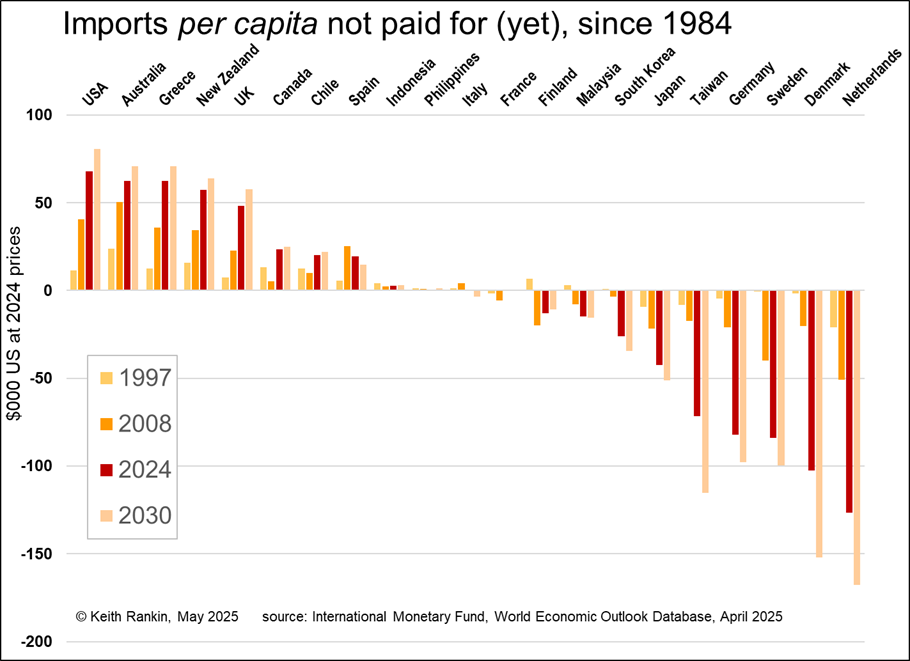
    MIL OSI Global Banks

  • MIL-OSI China: Remember history to illuminate future — Xi attends Victory Day commemorations in Moscow

    Source: People’s Republic of China – State Council News

    Remember history to illuminate future — Xi attends Victory Day commemorations in Moscow

    Chinese President Xi Jinping, along with other leaders, lays flowers at the Tomb of the Unknown Soldier and observes a moment of silence, following the celebrations marking the 80th anniversary of the victory in the Soviet Union’s Great Patriotic War in Moscow, Russia, May 9, 2025. Leaders from more than 20 countries and international organizations are invited to the events. [Photo/Xinhua]

    MOSCOW, May 9 — Bouquet in hand before the Eternal Flame at the Red Square, Chinese President Xi Jinping joined Russian President Vladimir Putin and more than 20 other leaders to lay red flowers at the Tomb of the Unknown Soldier.

    The solemn ceremony marked a moment of remembrance and tribute to those who perished in the Soviet Union’s Great Patriotic War, as Russia celebrated the 80th anniversary of victory in that war on Friday.

    This year’s commemorations culminated in a grand military parade at the Red Square earlier in the day. At the main viewing stand, Xi and Putin sat side by side and talked from time to time.

    Chinese President Xi Jinping attends celebrations marking the 80th anniversary of the victory in the Soviet Union’s Great Patriotic War in Moscow, Russia, May 9, 2025. [Photo/Xinhua]

    Over 11,500 military personnel, including contingents from more than 10 countries, took part in the parade. Among them was the Guard of Honor of the Chinese People’s Liberation Army (PLA). Xi rose from his seat when the PLA unit passed through the square.

    In the parade’s “historical” segment, Russian service members, clad in uniforms from the era of the Soviet Union’s Great Patriotic War, carried vintage military flags and weapons, evoking memories of the years of resistance against Fascism.

    The Guard of Honor of the Chinese People’s Liberation Army (PLA) attend a grand parade marking the 80th anniversary of the victory in the Soviet Union’s Great Patriotic War in Moscow, Russia, May 9, 2025. [Photo/Xinhua]

    On the night of May 8, 1945, Germany signed the surrender document in Karlshorst, Berlin, marking the end of WWII in Europe. Meanwhile in Moscow, it was already May 9, which was designated by the Soviet Union and later Russia as “Victory Day.” Since 1995, Russia has been holding military parades and other commemorative events every year on May 9.

    “The Soviet Union took upon itself the most ferocious, merciless blows of the enemy,” Putin said in an address ahead of the parade. “We shall always remember that the opening of the Second Front in Europe after the decisive battles on the territory of the Soviet Union brought victory closer.”

    “We highly value the contribution to our common struggle of Allied soldiers, members of the resistance, the courageous people of China, all those who fought for a peaceful future,” Putin said.

    The Soviet Union was the principal theater of World War II in Europe, losing 27 million lives, while China was the main theater in Asia, suffering 35 million casualties in its resistance against the bulk of Japanese militarist forces. Together, the two countries served as the mainstay of resistance against Japanese militarism and German Nazism, making pivotal contributions to the victory in the World Anti-Fascist War.

    Eighty years ago, in the face of brutal aggression of militarism and Nazism, the Chinese and Russian peoples stood united, fighting side by side against a common enemy and writing a remarkable and heroic chapter in history, Xi said when he and Putin jointly met the press on Thursday after their talks at the Kremlin.

    Chinese President Xi Jinping and Russian President Vladimir Putin jointly meet the press after their talks at the Kremlin in Moscow, Russia, May 8, 2025. [Photo/Xinhua]

    This is the second time for Xi to attend Russia’s Victory Day celebrations after he traveled to Moscow upon the 70th anniversary 10 years ago. That same year, Putin also attended China’s Victory Day parade on Sept. 3 in Beijing to commemorate the victory of the Chinese People’s War of Resistance against Japanese Aggression and the World Anti-Fascist War.

    The past decade has been one of profound turbulence and transformation in the international landscape, Xi noted when meeting the press with Putin on Thursday.

    In the face of the changes of the world, of the times and of historical significance, China and Russia should keep a firm grasp on the development direction of bilateral ties and the general trend of the development of human society, Xi said, calling for greater joint efforts in safeguarding international fairness and justice.

    Ahead of his state visit to Russia, Xi published a signed article in Russian media titled “Learning from History to Build Together a Brighter Future.”

    “Indeed, historical memory and truth will not fade with the passage of time. They serve as inspirations that mirror the present and illuminate the future. We must learn from history, especially the hard lessons of the Second World War,” he wrote.

    MIL OSI China News

  • MIL-OSI Europe: Isabel Schnabel: Keeping a steady hand in an unsteady world

    Source: European Central Bank

    Speech by Isabel Schnabel, Member of the Executive Board of the ECB, at Hoover Monetary Policy Conference “Finishing the Job and New Challenges”, Stanford University

    Stanford, 10 May 2025

    Standard theory of monetary policy rests on a simple premise: a stable relationship between inflation and the output gap. This is the logic behind the Phillips curve, which, in its most common form, relates inflation to a measure of economic slack, expected inflation and supply shocks.[1]

    The relationship between output and inflation was already under scrutiny well before the pandemic.

    After the global financial crisis of 2008, inflation didn’t fall nearly as much as had been implied by conventional Phillips curve estimates. And once economies around the world recovered and unemployment fell, the bounce-back in inflation fell short of model predictions.

    This is why that episode is known as the period of “missing deflation” and “missing inflation”.[2]

    The situation changed fundamentally in the aftermath of the pandemic, when the relationship between inflation and the output gap proved to be much stronger than what would have been expected based on historical estimates. We observed a noticeably steeper Phillips curve across advanced economies, including the euro area (Slide 2).[3]

    In my remarks today, I would like to draw lessons from the instability of the Phillips curve over the past 20 years for the optimal conduct of monetary policy. I will argue that the evidence of a re-flattening of the Phillips curve after the long period of high inflation suggests that, in the euro area, the most appropriate policy response to the potential risks to price stability arising from fiscal expansion and protectionism is to keep a steady hand and maintain rates close to where they are today – that is, firmly in neutral territory.

    Monetary policy and the slope of the Phillips curve

    The slope of the Phillips curve has first-order implications for the conduct of monetary policy.

    If the curve is steep, as it appeared to be in recent years, monetary policy is highly effective in reducing inflation, with only a limited impact on growth and employment. The smaller “sacrifice ratio” suggests that central banks should react more forcefully to deviations of inflation from target, even when the economy is hit by a supply shock that pushes inflation up and output down.[4]

    A steep Phillips curve hence improves the trade-off facing central banks, weakening the case for “looking through”, as forceful policy action minimises the risks of inflation expectations unanchoring and of inflation becoming entrenched.[5]

    Policy prescriptions differ fundamentally if the Phillips curve is flat.

    In this case, a large policy impulse is required to move output sufficiently to generate aggregate price effects. It can then be optimal for policy to tolerate moderate deviations of inflation from target, as the cost of closing a small inflation gap relative to the target may exceed the benefits.

    This prescription holds in both directions.

    When inflation is above the target, a flat Phillips curve would require a sharp rise in policy rates to bring medium-term inflation down from, say, 2.3% to 2%. Such a course of action may imply a substantial rise in unemployment and may thus not be welfare-improving for society at large – a trade-off central banks may face during the last mile of disinflation.[6]

    The experience of the 2010s, when inflation was persistently below the target, demonstrates that the argument also holds in the opposite direction.

    If bringing inflation up from 1.7% to 2%, for example, requires purchasing a large fraction of outstanding government bonds and making potentially time-inconsistent promises about the future path of interest rates, then the central bank must consider carefully whether the benefits outweigh the costs, such as making losses in the future, market dysfunction, rising wealth inequality, financial instability and threats to its reputation.[7]

    The role of inflation expectations

    However, the ability to tolerate moderate deviations of inflation from target critically hinges on a firm anchoring of inflation expectations – that is, a low sensitivity of inflation expectations to realised inflation.

    If inflation expectations are well-anchored, policymakers can tolerate moderate deviations from target, as fluctuations in inflation tend to fade away. If, however, inflation expectations are at risk of unanchoring, central banks should act forcefully.[8]

    There are two challenges to this strategy.

    One is that the anchoring of inflation expectations is endogenous. Central banks themselves can cause an unanchoring if inaction in the face of price shocks is perceived as weakening its commitment to securing price stability.[9]

    History shows that it can be costly to reestablish the credibility of the nominal anchor once it has been lost. This is also because inflation expectations are path-dependent. Research shows that the experience of high inflation may raise the sensitivity of inflation expectations to new inflation surprises.[10]

    The other challenge is that different measures of inflation expectations often yield different results (Slide 3). As such, robust trends cannot easily be identified in real time, much like the slope of the Phillips curve.[11]

    Measures of inflation expectations can even point in opposite directions. Research from the early days of the pandemic showed that most consumers expected the pandemic to raise prices, contrary to the views held by professional forecasters at the time.[12]

    State-dependent pricing and tight labour markets can explain steeper Phillips curve and post-pandemic inflation surge

    The recent period of high inflation illustrates how sensitive policy conclusions can be to the assessment of the slope of the Phillips curve and to measures of inflation expectations that central banks use in their analysis.

    Two key theories have been proposed to explain the post-pandemic inflation surge.[13]

    The first relates to firms’ price-setting behaviour.

    Standard New Keynesian models assume that the probability of firms resetting their prices is constant over time. This is a fair description of aggregate price movements when inflation is low and aggregate shocks are small (Slide 4).

    However, the past few years have demonstrated that this “linear” relationship breaks down in the face of large shocks.[14] When marginal costs increase rapidly and threaten to erode profit margins, firms tend to raise their prices more frequently. As a result, the Phillips curve steepens.

    This feedback loop is strongly asymmetric.[15] It acts as an inflation accelerator when firms face positive demand or adverse cost-push shocks.[16] But it does little to firms’ pricing strategies in the face of disinflationary shocks due to downward price rigidities.

    This helps explain why inflation did not fall much when the pandemic broke out but increased sharply after the reopening of our economies (Slide 5).[17]

    The second theory relates to the tightness of the labour market.

    Downward nominal wage rigidity has been a key factor explaining the “missing deflation” in the aftermath of the global financial crisis.[18] If nominal wages do not fall, or fall only very slowly, firms’ marginal costs change only moderately, and hence disinflationary pressures face a natural lower bound, even if slack is large.

    But when the labour market is tight, wages are more flexible as firms outbid each other in securing their desired workforce.

    Benigno and Eggertsson show that this channel led to a non-linear inflation surge in the United States whenever the number of job vacancies exceeded the number of unemployed workers (Slide 6).[19] In the euro area, the threshold was lower, but the curve still exhibited strong signs of non-linearity.

    Rising near-term inflation expectations may have shifted the Phillips curve up

    New research for the United States, however, suggests that the evidence in favour of the second theory is not very robust.

    Specifically, the finding of non-linearity depends critically on which measure is used to control for inflation expectations: non-linearity holds when controlling for expectations of professional forecasters, but it disappears once inflation expectations of households and firms are considered.[20]

    In other words, it is conceivable that the Phillips curve did not become steeper but rather shifted upwards as inflation expectations rose.[21] Non-linearity has also been rejected recently using a similar approach based on regional data for the euro area.[22]

    Moreover, the expectations that are relevant for such an upward shift are not necessarily the longer-term expectations that central banks typically pay most attention to.

    These have remained remarkably stable over the past few years (Slide 7).

    Rather, inflation expectations over the near term, such as the next 12 months, may be more important in driving macroeconomic outcomes.

    Bernanke and Blanchard, for example, show that one-year-ahead inflation expectations explain a significant share of the recent marked rise in nominal wages, and hence inflation, in the United States.[23] Similar evidence has been found for the euro area and other advanced economies.[24]

    Again, there appears to be an asymmetry: the risks that the Phillips curve shifts downwards are substantially lower. Research shows that consumers tend to respond more to inflationary than disinflationary news, as households value increases in their purchasing power and as they pay less attention to inflation when it is low.[25]

    The impact of tariffs on inflation in the euro area

    Understanding the reasons behind the recent inflation surge is not only important from a conceptual perspective. It also matters for setting monetary policy today, as we are once again confronted with historically large shocks.

    For central banks, this is a difficult environment to navigate.

    Memories of high inflation are still fresh after a long period of sharply rising prices. And just as during the pandemic, there is considerable uncertainty about how firms and households are going to respond to shocks that are largely outside the historical empirical range.

    Ultimately, the impact of current shocks on prices and wages, and hence the appropriate monetary policy response, will depend on the shape and location of the Phillips curve.

    Monetary policy should focus on the medium term and underlying inflation

    Let me illustrate this by looking at the euro area.

    Given the lags in policy transmission, the relevant horizon for monetary policy is the medium term. The past few years, however, demonstrated that inflation forecasting at times of large structural shocks is inherently difficult and plagued by large uncertainty.

    For this reason, the ECB and other central banks have increasingly turned to a data-dependent approach to monetary policy, where the observed dynamics of underlying inflation and the strength of monetary transmission are used to cross-check the inflation projections.[26]

    This approach remains valid today.[27] But data dependence is not in contrast to being forward-looking.

    In the current situation, the high level of economic uncertainty, together with the sharp fall in energy prices and a stronger euro exchange rate, will likely dampen headline inflation in the short run, potentially pushing it below our 2% target.

    The question is whether these developments provide meaningful signals about the net impact of current shocks on medium-term inflation.

    During the pandemic, for example, a strong appreciation of the euro against the US dollar, by nearly 14% over seven months, and a marked decline in energy prices were followed by a historical inflation surge.

    Data dependency hence requires examining the potential channels through which current shocks could affect underlying inflation over the medium term.

    In the euro area, there are two main forces that could have the size and persistence to pull underlying inflation sustainably away from our 2% medium-term target.

    One is fiscal policy, which is set to expand on a scale unseen outside periods of deep economic contraction.

    Germany has eased its constitutional debt brake for defence-related spending, and has committed to spending €500 billion, or more than 10% of GDP, on infrastructure and the green transition over the next 12 years. In addition, the European Commission has invited Member States to activate the national escape clause to accommodate increased defence expenditure across the EU.

    The impact of these measures on inflation will depend on how they are implemented, especially their impact on the supply side of the economy. But on balance, the fiscal impulse is likely to put upward pressure on underlying inflation over the medium term.

    Global fragmentation is the second force that could have a lasting impact on prices and wages.

    As we speak, the scale and scope of tariffs, the extent of retaliation as well as how financial markets respond to these developments all remain highly uncertain.

    Ongoing negotiations are a sign that mutually beneficial agreements may still be reached. An ideal outcome – the “zero-for-zero” tariff agreement advocated by the European Commission – could even boost growth and employment on both sides of the Atlantic.

    However, should these negotiations fail, the euro area will simultaneously face adverse supply and demand shocks, as the EU has announced that it will retaliate against higher tariffs.

    Similar to the pandemic, assessing the relative strength of these forces is inherently difficult. Overall, however, there are risks that a lasting and meaningful increase in tariffs will reinforce the upward pressure on underlying inflation arising from higher fiscal spending over the medium term.

    To see this, it is useful to look at the factors driving the macroeconomic propagation of tariffs.

    Euro area foreign demand may prove resilient, with limited effects on inflation

    The severity of the negative demand shock will depend on two factors.

    One is the hit to economic activity in the United States and to global demand from raising tariffs across the board. Under the 2 April tariff rates, the United States will face a supply shock of historic proportions. Inflation is poised to rise, real incomes to fall and unemployment to increase. Retaliatory tariffs would weaken the economy further.

    So even in the absence of demand reallocation, foreign demand can be expected to decline if there is a broad increase in tariffs. The depth and persistence of this decline will also depend on other policies, such as tax and spending cuts and deregulation.

    And it will crucially depend on the final outcome of tariff negotiations, which is likely to be far less severe than the 2 April announcement.

    The second factor affecting the severity of the demand shock relates to the degree of demand reallocation – that is, the elasticity of substitution between foreign and domestic products. This elasticity is highly uncertain and varies across industries, products and countries.[28]

    However, a robust finding in the literature is that products that are more differentiated tend to be relatively price-inelastic, as they are more difficult to substitute.

    This has great relevance for the euro area, where the bulk of exports to the United States comprise pharmaceuticals, machinery, vehicles and chemicals. These goods are typically highly differentiated (Slide 8, left-hand side).

    For instance, the supply of machines for producing semiconductors is basically monopolised by one Dutch company. Similarly, banknotes in the United States are overwhelmingly printed using machinery from a single German manufacturer.

    These and other machines are not easy to replace in the short run, giving euro area exporters leverage to pass higher costs on to foreign importers and limiting the hit to foreign demand.

    In addition, trade diversion may benefit euro area exports.

    Should prohibitive tariffs on Chinese imports remain in place, they will measurably raise the euro area’s price competitiveness in the US market. This can be expected to stimulate demand for euro area goods if there are no alternatives in the United States itself, especially as the number of industries in which both Chinese and euro area firms have comparative advantages has increased measurably over the past two decades (Slide 8, right-hand side).[29]

    New research corroborates this view.[30] It finds that the euro area stands to win in relative terms from a global trade war, as its net exports to the world will rise rather than fall as global demand is reallocated across the global network, offsetting the hit to domestic consumption.[31]

    In other words, for as long as tariffs are not prohibitive to trade and the uncertainty paralysing activity fades, aggregate euro area foreign demand may prove relatively resilient under a range of potential tariff outcomes.

    The recent appreciation of the euro does not refute this view.

    The euro has gone through two distinct phases since the US presidential election in November last year. It first depreciated in nominal effective terms by 3% until mid-February, before starting to appreciate. So, in net terms, the euro is trading just 2.6% above last year’s average.

    In addition, as most exports to the United States are invoiced in US dollars, the pass-through of changes in the exchange rate to import prices tends to be moderate – by recent estimates just about one-fifth.[32] And potential losses in price competitiveness in third countries are in part compensated by lower import costs, as euro area exports have, on average, a large import content.

    This price inelasticity is also reflected in recent surveys, with manufacturing firms reporting an expansion in output for the first time in more than two years (Slide 9). Also, fewer firms are reporting falling export orders.

    Even if part of these developments may reflect frontloading by firms, it is remarkable how resilient sentiment has remained in the face of the extraordinary increase in economic uncertainty.

    Supply shock puts upward pressure on inflation, reinforced by global supply chains

    The downward effects on inflation caused by lower demand are likely to be offset, partly or even fully, by the supply shock hitting the euro area through retaliatory tariffs imposed by the EU and other economies.

    The strength of this supply shock also depends on two factors.

    One is the extent to which firms pass higher tariffs on to consumers.

    In the United States, evidence from the 2018 tariff increase suggests that, in most cases, the pass-through to import prices was de facto complete.[33] At the same time, many firms chose to absorb part of the increase in import prices in their profit margins, thereby limiting the increase in consumer price inflation, at least in the short run.[34]

    Whether firms will respond similarly to a renewed rise in tariffs in the current environment is uncertain.

    On the one hand, the recent appreciation of the euro, if persistent, provides some margin for euro area firms to buffer cost increases from retaliatory tariffs. On the other hand, profit margins have already been squeezed by high wage growth and a sluggish economy, and the post-pandemic inflation surge may have lowered the bar for firms to pass higher costs on to consumers.

    Overall, recent surveys of companies in the United States and the euro area suggest that they plan to gradually pass higher tariffs on to consumers over the coming years.[35]

    In addition, in order to compensate for the hit to input costs, firms also tend to raise the prices of goods not directly affected by tariffs. There is evidence that retailers broadly adjust price markups even if only a subset of wholesale prices change.[36]

    The second, and related, factor determining the strength of the supply shock relates to global value chains.

    Unlike during the wave of protectionism in the 1930s, today the dominant share of international trade, about 70%, reflects multinational firms distributing production across countries and along the value chain to minimise costs. In this process, parts and components often cross borders many times.

    Prohibitive tariffs between the United States and China are already disrupting supply chains. Shipments of goods are declining, potentially causing future shortages of critical intermediate goods that could reverberate across the world.

    While current conditions are very different from those seen during the pandemic, when supply chain disruptions were a main factor driving the surge in inflation, the impact of tariffs is likely to be amplified as the increase in firms’ marginal costs propagates through the production network.

    ECB staff analysis shows that, even if the EU does not retaliate, higher production costs transmitted through global value chains could more than offset the disinflationary pressure coming from lower foreign demand, making tariffs inflationary overall (Slide 10, left-hand side).[37]

    These effects will become stronger with full retaliation, including intermediate goods. So far, the EU’s retaliatory measures have disproportionately targeted final consumer goods, such as beverages, food and home appliances – precisely to avoid broader cost effects being transmitted through value chains (Slide 10, right-hand side).

    But if the trade conflict intensifies, the scale of retaliation will widen and increasingly include intermediate goods, as these account for nearly 70% of euro area imports from the United States.

    In other words, retaliatory tariffs on intermediate goods would constitute a much broader cost-push shock for euro area firms, reminiscent of the post-pandemic supply chain disruptions.[38]

    It is possible that these effects will be mitigated by China redirecting goods originally destined for the United States towards the euro area and other economies at a discount.

    In practice, however, this mitigation channel is likely to be contained. India, for example, has already raised temporary tariffs on China to curb a surge in imports. Similarly, the European Commission has repeatedly clarified that it intends to protect euro area firms against dumping prices should imports from China rise significantly in response to the evolving trade conflict with the United States.[39]

    Policy implications

    How, then, should the ECB respond to the current shocks?

    The lessons from the post-pandemic surge in inflation suggest that, from today’s perspective, the appropriate course of action is to keep rates close to where they are today – that is, firmly in neutral territory.

    A “steady hand” policy provides the best insurance against a wide range of potential outcomes. In other words, it is robust to many contingencies.

    Specifically, it avoids reacting excessively to volatility in headline inflation at a time when domestic inflation remains sticky and new forces are putting upward pressure on underlying inflation over the medium term. Given lags in policy transmission, an accommodative policy stance could amplify risks to medium-term price stability.

    This steady hand policy also avoids overreacting to concerns that tariffs may destabilise inflation expectations once again.

    In recent months, households’ short-term inflation expectations have reversed and started rising again. According to the ECB’s Consumer Expectations Survey, expectations for inflation one year ahead increased to 2.9% in March from their trough of 2.4% in September 2024 (Slide 11, left-hand side). Qualitative inflation expectations, as measured by the European Commission, even rose to levels last seen in late 2022 (Slide 11, right-hand side).

    Currently, there are no indications that this rise is persistent, or that inflation expectations are at risk of unanchoring.

    Hence, we can afford to look through the rise in short-term inflation expectations. This could change if we see clear signs of a strong and front-loaded pass-through of potential tariff increases – something that could bring us back to the steep part of the Phillips curve. So far, however, evidence suggests that firms have notably slowed the frequency with which they revise their prices.

    A steady hand policy also addresses risks of a more substantial decline in aggregate demand in response to the trade conflict.

    If tight labour markets were the main culprit for the recent steepening of the Phillips curve, risks of a sharp decline in inflation caused by a rise in unemployment are much more moderate today.

    The reason for this is that in both the United States and the euro area, the vacancy-to-unemployment ratio has fallen markedly and is now at a level that suggests that labour markets are much more balanced (Slide 12).

    We are thus likely to be operating close to, or at, the flat part of the Phillips curve where a change in unemployment has only limited effects on underlying inflation, in stark contrast to the high inflation period.[40]

    We would only need to react more forcefully to the tariff shock if we observed a sharp deterioration in labour market conditions or an unanchoring of inflation expectations to the downside.

    Both seem unlikely at the current juncture.

    Despite the number of vacancies declining, the euro area labour market has proven resilient, with unemployment at a record low. And most measures of medium-term inflation expectations remain tilted to the upside, including those of professional forecasters (Slide 13).

    Conclusion

    My main message today, and with this I would like to conclude, is therefore simple: now is the time to keep a steady hand.

    In the current environment of elevated volatility, the ECB needs to remain focused on the medium term. Given long and variable transmission lags, reacting to short-term developments could result in the peak impact of our policy only unfolding when the current disinflationary forces have passed.

    Over the medium term, risks to euro area inflation are likely tilted to the upside, reflecting both the increase in fiscal spending and the risks of renewed cost-push shocks from tariffs propagating through global value chains.

    Therefore, from today’s perspective, an accommodative monetary policy stance would be inappropriate, also because recent inflation data suggest that past shocks may unwind more slowly than previously anticipated.

    By keeping interest rates near their current levels, we can be confident that monetary policy is neither excessively holding back growth and employment, nor stimulating it. We are thus in a good place to evaluate the likely future evolution of the economy and to take action if risks materialise that threaten price stability.

    Thank you.
    MIL OSI Europe News

  • MIL-OSI Canada: G7 Foreign Ministers’ statement on India and Pakistan

    Source: Government of Canada News

    May 9, 2025 – Ottawa, Ontario – Global Affairs Canada

    We, the G7 Foreign Ministers of Canada, France, Germany, Italy, Japan, the United Kingdom and the United States of America and the High Representative of the European Union, strongly condemn the egregious terrorist attack in Pahalgam on April 22 and urge maximum restraint from both India and Pakistan. Further military escalation poses a serious threat to regional stability. We are deeply concerned for the safety of civilians on both sides.

    We call for immediate de-escalation and encourage both countries to engage in direct dialogue towards a peaceful outcome. We continue to monitor events closely and express our support for a swift and lasting diplomatic resolution.

    MIL OSI Canada News

  • MIL-OSI United Kingdom: European leaders set to travel to Kyiv as the US, France, Germany, Poland and the UK call for 30-day ceasefire

    Source: United Kingdom – Government Statements

    Press release

    European leaders set to travel to Kyiv as the US, France, Germany, Poland and the UK call for 30-day ceasefire

    The leaders of France, Germany, Poland and the UK will be in Kyiv tomorrow as calls intensify for Russia to agree a ceasefire and come to the negotiating table.

    The leaders of France, Germany, Poland and the UK will be in Kyiv tomorrow as calls intensify for Russia to agree a ceasefire and come to the negotiating table.

    President Emmanuel Macron, Chancellor Friedrich Merz, Prime Minister Donald Tusk and Prime Minister Keir Starmer are expected to meet President Zelenskyy in Kyiv on Saturday morning, underlining their steadfast commitment to Ukraine.

    The historic visit, which is the first time the leaders of the four countries have travelled together to Ukraine – and Chancellor Merz’ first visit to Ukraine as Germany’s new Chancellor – comes as they and President Trump call for Russia to agree to a 30-day ceasefire to allow for unfettered peace talks.

    In a joint statement, the leaders said:

    “We, the leaders of France, Germany, Poland the United Kingdom will stand in Kyiv in solidarity with Ukraine against Russia’s barbaric and illegal full-scale invasion.

    “We reiterate our backing for President Trump’s calls for a peace deal and call on Russia to stop obstructing efforts to secure an enduring peace.

    “Alongside the US, we call on Russia to agree a full and unconditional 30-day ceasefire to create the space for talks on a just and lasting peace.

    “We are ready to support peace talks as soon as possible, to discuss technical implementation of the ceasefire, and prepare for a full peace deal. 

    “We are clear the bloodshed must end, Russia must stop its illegal invasion, and Ukraine must be able to prosper as a safe, secure and sovereign nation within its internationally recognised borders for generations to come.

    “We will continue to increase our support for Ukraine. Until Russia agrees to an enduring ceasefire, we will ratchet up pressure on Russia’s war machine.”

    During the visit, the leaders are expected pay their respects to the fallen defenders and casualties of Russia’s war on the Maidan, where flags are placed by Ukrainians to remember those killed.

    Later in the day, the leaders are expected to host a virtual meeting, alongside President Zelenskyy, to update leaders on the progress being made for a future coalition of an air, land, maritime and regeneration force that would help regenerate Ukraine’s armed forces after any peace deal and strengthen confidence in any future peace.

    Updates to this page

    Published 9 May 2025

    MIL OSI United Kingdom

  • MIL-OSI Russia: Moscow hosts parade dedicated to 80th anniversary of Victory in Great Patriotic War

    Translation. Region: Russian Federal

    Source: People’s Republic of China in Russian – People’s Republic of China in Russian –

    Source: People’s Republic of China – State Council News

    Moscow, May 9 (Xinhua) — A grand military parade was held on Moscow’s Red Square on May 9 to mark the 80th anniversary of the Soviet Union’s victory in the Great Patriotic War. Russian President Vladimir Putin spoke in his speech about the need to remember the lessons of World War II, not to allow history to be distorted, and to remember all those who gave their lives for the Victory.

    More than 11,500 servicemen and over 180 units of equipment took part in the Victory Parade. Leaders from over 20 countries were present. Representatives of all strata of Russian society and veterans from various countries who participated in the war against fascism were on the podium.

    “Today, we are all united by feelings of joy and sorrow, pride and gratitude, admiration for the generation that crushed Nazism and, at the cost of millions of lives, won freedom and peace for all of humanity,” said V. Putin.

    “We remember the lessons of World War II and will never agree with the distortion of its events, with attempts to justify the executioners and slander the true victors,” the Russian leader emphasized.

    In memory of the fallen, the Russian President declared a minute of silence.

    V. Putin noted that the complete defeat of Nazi Germany, militaristic Japan and their satellites was achieved through the joint efforts of the countries of the anti-Hitler coalition.

    “We will always remember that the opening of the second front in Europe – after the decisive battles on the territory of the Soviet Union – brought Victory closer. We highly value the contribution to our common struggle of the soldiers of the allied armies, the participants of the Resistance, the courageous people of China. All those who fought for a peaceful future,” added the head of the Russian state. “Glory to the victorious people!”

    Servicemen from the Ministry of Defense and other law enforcement agencies of the Russian Federation – the Federal Security Service, the Ministry of Emergency Situations, the Russian National Guard, cadets from military schools and academies of the Russian army and navy, and members of the youth patriotic organization Yunarmiya marched in a ceremonial march across Red Square.

    This was followed by parade units from friendly states: China, Belarus, Kazakhstan, Egypt, Vietnam and other countries.

    The mechanized column consisted of 183 units of combat equipment from the Great Patriotic War and modern models in service with the Russian army: T-90M Proryv, T-72B3M and T-80BVM tanks, BMP-2M and BMP-3 infantry fighting vehicles, BMD-4 airborne combat vehicles, BRM-1K combat reconnaissance vehicles, BTR-82A armored personnel carriers, Tigr-M armored vehicles, transport vehicles, S-400 anti-aircraft missile systems, Iskander-M missile systems, Yars strategic missile systems, Orlan-10, Orlan-30, Lancet-51, Lancet-52, and Geran unmanned aerial vehicles.

    For the first time, modern models of the Tornado-S multiple launch rocket systems, the Tosochka heavy flamethrower systems, and the Malva and Giatsint-K artillery systems took part in the parade.

    The parade was completed by pilots of the aerobatic teams “Russian Knights” and “Swifts” on Su-30 and MiG-29 fighters. Six Su-25 attack aircraft closed the parade formation.

    After the parade, Russian and foreign leaders laid flowers at the Tomb of the Unknown Soldier near the Kremlin Wall.

    In addition to Moscow, military parades dedicated to the 80th anniversary of Victory were held in 27 other Russian cities, including St. Petersburg, Volgograd, Yekaterinburg, Khabarovsk and Vladivostok. –0–

    MIL OSI Russia News

  • MIL-OSI Security: Law Enforcement Seizes Nine DDoS-for-Hire Webpages as Part of Global Crackdown on ‘Booter’ and ‘Stresser’ DDoS Services

    Source: Federal Bureau of Investigation (FBI) State Crime Alerts (b)

    LOS ANGELES – The Justice Department today announced the court-authorized seizure of nine internet domains associated with some of the world’s leading DDoS-for-hire services. Poland’s Central Cybercrime Bureau simultaneously announced the arrests of four administrators of such services, investigations which were assisted by U.S. authorities. Several of the arrested administrators operated websites seized pursuant to previous operations by the Central District of California. 

    Federal law enforcement continues to seize websites that allow paying users to launch powerful distributed denial-of-service (DDoS) attacks. These attacks flood targeted computers and servers with information to prevent them from being able to access the internet.

    Booter services such as those named in this action allegedly attacked a wide array of victims in the United States and abroad, including schools, government agencies, gaming platforms, and millions of people. In addition to affecting targeted victims, these attacks can significantly degrade internet services and completely disrupt internet connections. 

    The websites targeted in this operation were used for hundreds of thousands of actual or attempted DDoS attacks targeting victims worldwide. While some of these services claimed to offer “stresser” services that purportedly could be used for network testing, the Defense Criminal Investigative Service (DCIS) determined these claims to be a pretense, and “thousands of communications between booter site administrators and their customers…make clear that both parties are aware that the customer is not attempting to attack their own computers,” according to an affidavit filed in support of court-authorized warrants to seize the booter sites.

    Today’s announcement builds on the success of the prior cases by targeting all known booter sites, shutting down as many as possible, and undertaking a public education campaign. In the last four years more than 11 defendants have been charged in Los Angeles and Anchorage for facilitating DDoS-for-hire services. More than 75 domains associated with such services have been seized.

    “Booter services facilitate cyberattacks that harm victims and compromise everyone’s ability to access the internet,” said United States Attorney Bill Essayli for the Central District of California. “This week’s sweeping law enforcement activity is a major step in our ongoing efforts to eradicate criminal conduct that threatens the internet’s infrastructure and our ability to function in a digital world.”

    “DDoS for hire criminal booter services impact internet services for victims in every corner of the United States, including Alaska,” said U.S. Attorney Michael J. Heyman for the District of Alaska. “This threat highlights the continued need to pursue cybercrime services like booter providers. We remain committed to bolstering our collaborative partnerships in the U.S. and abroad to address threats to critical internet infrastructure and services.”

    “The enforcement actions launched today, made possible by enduring partnerships between law enforcement and private industry, represents continued pressure on DDoS-for-hire services and the cybercriminals and hacktivists who use them.” said Special Agent in Charge Kenneth DeChellis of the Defense Criminal Investigative Service (DCIS), Cyber Field Office. “This success demonstrates the resolve of the DCIS to relentlessly pursue those who target our warfighters and their information systems.”

    In conjunction with the website seizures, Homeland Security Investigations, DCIS, and the Netherlands Police have launched an advertising campaign using targeted placement ads in search engines, which are triggered by keywords associated with DDoS activities. The purpose of the ads is to deter potential cybercriminals searching for DDoS services in the United States and around the globe, and to educate the public on the illegality of DDoS activities.

    In recent years, booter services have continued to proliferate as they offer a low barrier to entry for users looking to engage in cybercriminal activity. These types of DDoS attacks are so named because they result in the “booting” or dropping of the targeted computer from the internet.

    For additional information on booter and stresser services and the harm that they cause, please visit: https://www.fbi.gov/contact-us/field-offices/anchorage/fbi-intensify-efforts-to-combat-illegal-ddos-attacks.

    The seizures announced today were performed by DCIS’s Cyber-West Resident Agency.

    These law enforcement actions were taken in conjunction with Operation PowerOFF, an ongoing, coordinated effort among international law enforcement agencies aimed at dismantling criminal DDoS-for-hire infrastructures worldwide, and holding accountable the administrators and users of these illegal services. Principal partners in Operation PowerOFF include EUROPOL; the United States Attorney’s Office for the District of Alaska; The Department of Justice Computer Crime and Intellectual Property Section (CCIPS); FBI’s Anchorage and Los Angeles field offices; HSI’s Columbus field office; Germany’s Bundeskriminalamt (BKA); United Kingdom’s National Crime Agency (NCA); Netherlands Police; Polish Central Cybercrime Bureau; Brazilian Federal Police, Japan’s National Police Agency, France’s Police Nationale, and many others.

    Assistance was provided by Akamai, Amazon Web Services, Cloudflare, Digital Ocean, Flashpoint, Google, PayPal, The University of Cambridge, and Unit 221B.

    Assistant United States Attorneys James E. Dochterman of the Asset Forfeiture and Recovery Section and Aaron Frumkin of the Cyber and Intellectual Property Crimes Section are handling this investigation.

    MIL Security OSI

  • MIL-OSI Europe: President Meloni’s telephone conversation with Chancellor Merz

    Source: Government of Italy (English)

    9 Maggio 2025

    The President of the Council of Ministers, Giorgia Meloni, had a telephone conversation today with the Federal Chancellor of the Federal Republic of Germany, Friedrich Merz.

    As well as providing President Meloni with the opportunity to once again wish Chancellor Merz all the best with his work, the call allowed for an exchange of views on the main international and European issues, starting with the revitalisation of European competitiveness, in particular in the automotive industry, and migration management.

    The two leaders also highlighted the excellent state of bilateral relations, as also shown by bilateral trade figures, and confirmed their intention to continue fostering the strategic partnership between Germany and Italy, also by implementing the joint Action Plan signed in Berlin in 2023.

    MIL OSI Europe News

  • MIL-OSI United Kingdom: Thompsons Lecture: Employment law and the fundamental right to security

    Source: United Kingdom – Executive Government & Departments

    Speech

    Thompsons Lecture: Employment law and the fundamental right to security

    On Thursday 8 May 2025, the Attorney General Lord Hermer KC delivered the Thompson Foundation Lecture on “Employment law and the fundamental right to security”

    Introduction

    Thank you very much for this opportunity to celebrate the remarkable legacy of Thompsons Solicitors, a firm that has been a beacon of justice for over a century.

    One of the features of my new life in government is that you are often give a very clear steer about what you have to talk about, so it was a particular pleasure to be invited to give a lecture with no title, and no particular ask as to what I should talk about at all – so let me thank you all for accepting an invitation to a lecture in which I suspect you have no idea at all about what I am about to say.

    In the first days of government, the Prime Minister, in an article entitled ‘Our Government of Service’, set out how the first obligation of government is to provide security to those that they serve. By security, Keir, was not limiting himself to the military defence of our country but also security in the wider sense – drawing on his own life experience, Keir described seeing the security that his parents derived from having their own home, a pebble-dashed semi in Oxted – the security and dignity that comes with a key to your own home. But Keir went on to say this “It’s not just security at home that matters, but security at work. That’s why we will level-up rights at work to deliver security and dignity for working people. It’s what they deserve.”

    The right to security is a fundamental human right, recognised in all the international human rights treaties which the UK has chosen to sign up to.

    It also underpins many of the Government’s missions in its Plan for Change, and that Plan for Change is premised on the central insight that effective protection of people’s right to security often requires positive state action to protect the vulnerable against the privately powerful. Security at work is a principle that the has been fought for by generations [Redacted political content] – they have time and time again taken on vested interests to secure basic rights for working people, often with the help of lawyers such as Thompsons.

    So, what I would like to do tonight is to seize this moment when the human right to security is central to the Government’s priorities and talk about the role that law can play in improving the security of working people in the workplace – how it plays a role as a standard setter for societal expectations of what is acceptable, what is not – what requires protection, and what does not.

    And I would also like to talk about the role of lawyers in ensuing that protective laws are applied effectively and consistently- as well as ensuring that those who break the law are held to account and those workers who suffer as a result are adequately compensated – and I want to exemplify this by taking as my central theme our current efforts to bring the Employment Rights Bill into law in the context of attempts by reforming governments of the past to bring in radical change for the benefit of the people of this country.

    This is, I hope both a timely theme and appropriate venue for such a talk.

    It’s timely because the Employment Rights Bill is currently winding its way through Parliament. This is I believe landmark legislation that will significantly advance the human right to security by fundamentally changing workers protections.

    Yet it is also legislation that faces sustained and alarmist criticism from sectors of society and our opponents in parliament who claim that (at best) it will curtail the UK’s competitiveness and (at worst) will bring the economy to a juddering halt. What I would like to do in part tonight is put these criticisms in their historical context – to show that these voices have always been present whenever reforming governments have sought to introduce progressive policies to make the lives of working people more secure but that these voices have consistently been shown to be misplaced.

    I also think that the Thompson’s lecture is the perfect venue to talk about how Government intends to change working life for the better. Founded in 1921 by the visionary civil rights lawyer, Harry Thompson (who also once lived in Oxted for which I thank Wikipedia), this firm has always championed the rights of the injured and mistreated. The firm is an inspiring illustration of how the law can be used as a powerful tool to protect and uplift working people.

    Driven by a profound commitment to social justice since its inception, Harry Thompson’s vision was clear: to create a legal practice that would serve as a shield for those who faced adversity and injustice. It has achieved this in large part through working in partnership with trade unions. The history of labour law in this country, the history of the establishment of the fundamental rights of labour to organise itself, the history of protections in the workplace and the history of the creation of employment rights, is the history of our trade union movement. That history is a source of immense national pride and Thompsons have realised a shared vision through partnership in tireless advocacy, groundbreaking legal victories, and unwavering dedication to the cause of justice and fairness.

    My own connections with Thompsons extend back decades to my early years at the Bar. When I started at the Bar, instructions from Thompsons were a form of golden ticket to not only legally interesting cases but ones that made real differences to people’s lives.

    To just pick two examples of cases that will always stay with me – Mick Antoniw, then a partner in the Cardiff office, now an Member of the Senedd and former Counsel General of Wales, instructed me to work with him on a tragic case of a 17 year old, Daniel Dennis, who on his very first day of work was sent up to work on a roof of a warehouse in Cwmbran without training or safety equipment. Daniel fell to his death and Thompsons worked tirelessly to ensure justice for his family, overcoming a deeply disappointing and unfair inquest result, successfully judicially reviewing a CPS decision not to prosecute his employer leading eventually to his conviction for manslaughter of that employer. Working in partnership with a bereaved family, Thompsons took on the company, took on the coronial system, took on the CPS in a successful fight for justice and it was a privilege to be part of it.

    In another case, I was instructed by Thompsons to represent the family of a young council workers, Ryan Preece and Robert Simpson, who had been sent down into the sewers in Crymlyn Burrows near Swansea to unblock drains only to be overcome and killed by fumes. A long inquest and subsequent civil claims including a group action showed that the cause of death was exposure to a covered-up spill from a nearby chemical factory – a coroner’s jury after many days returned an unlawful killing verdict and the company were forced to pay compensation, and Local Authority employers pleaded guilty to offences under the Health & Safety Act. It was a long, hard legal battle fought for the seemingly powerless against large vested interests who at one stage would have appeared invincible – the type of work for which Thompsons is famed and no doubt of which Harry Thomspon would have been proud. This was in the late 1990’s and I was instructed by a young, brilliant and utterly committed solicitor at Thompsons by the name of Jo Stevens, now a cabinet colleague and Secretary of State for Wales – applying those same qualities in her new job to the benefit of all of us.

    Enough of the reminiscing – let me turn to the substance of tonight’s talk.

    The Employment Rights Bill –

    As we know all too well, more than four million people in the UK are in precarious employment, with over one million employed on zero-hours contracts. Millions more lack access to proper sick pay schemes, leaving them vulnerable and unsupported in times of need.

    Wage growth under the previous government was worse than any other period since the 1920s. This stagnation has had a profound impact on our collective living standards, making it harder for working families to make ends meet.

    The government is now taking significant steps to address these issues through the introduction of new workers’ rights laws via the Employment Rights Bill, as I said, currently being debated in Parliament.

    This plan to make people’s lives less precarious, by making work pay, was developed in collaboration with both unions and business and as our Deputy Prime Minister Angela Rayner said, on the Bill’s introduction, this is the biggest upgrade to rights at work for a generation, boosting pay and productivity with employment laws fit for a modern economy.

    It is a long, hugely ambitious Bill whose impact reaches across many aspects of working life and working conditions, so I will not dwell on every aspect but allow me to highlight some particular measures:

    As an aside, time and time again, there are some people saying we aren’t doing anything to help real people. As I was typing away at this speech, I reminded myself of how excellent this Bill is.

    First are a raft of measures designed to provide far greater guarantees for working people – addressing the scourge of the lack of security that so many in our society feel from zero hours contracts, lack of guaranteed hours, lack of day-one rights etc, standards that most would consider reflect basic decency. The Bill will:

    • introduce new rights to guaranteed hours, reasonable notice of shifts and compensation payments for shift cancellation, and for movement and curtailment at short notice for those on zero and other specified contracts
    • provide a right to request flexible working, remove the waiting period and lower earnings limit which apply in relation to statutory sick pay and strengthen protections in relation to tips and gratuities.

    Second the Bill will address the economic inequalities faced by women at work, manifested through higher levels of poverty and lack of financial independence, which evidence shows are linked to another area of government priority namely addressing violence against women and girls.

    The Bill:

    • provides a right to parental leave from day one of employment. It introduces provisions to require employers to take all reasonable steps to prevent sexual harassment at work and to prevent harassment at work by third parties.
    • It’ll make sure whistleblowing protections are extended to apply to disclosures relating to sexual harassment.
    • It introduces workplace support for women going through menopause

    Third, the Bill will modernise trade union legislation giving trade unions greater freedom to organise, represent and negotiate on behalf of their workers. This includes:

    • Repealing the Strikes (Minimum Service Levels) Act 2023, a punitive piece of legislation that set trade unionists’ rights back decades.
    • Strengthening trade unions’ right of access, including providing for digital access, allowing unions to operate more effectively.
    • Simplifying the trade union recognition process, including providing better access arrangements for unions and dealing more effectively with unfair practices.
    • Introducing new rights and protections for trade unions representatives.
    • And finally introducing a duty for employers to inform workers of their right to join a trade union. This is vital, because employers should not withhold information from workers that grants them greater protection- which joining a union does

    Fourth, is a point of critical importance – though under-reported – is the focus on enforcement of these new rights. The Bill will establish the Fair Work Agency, which will bring together the enforcement of domestic agency rules, the National Minimum Wage, licensing of gangmasters, and action against serious labour exploitation. It will also take on additional functions such as the enforcement of holiday pay. Its new powers will allow it to investigate, inspect and take action against businesses that are flouting the law. These include powers to investigate a wider range of cases of labour abuse, issue penalties, and bring cases to the employment tribunal on the behalf of workers.

    If delivered in full, this bill will benefit over 10 million workers, including many on low incomes. This is not just about improving individual lives; it’s about creating a fairer, more just society where all of us has the opportunity to thrive, and the privately powerful cannot exploit the vulnerable.

    The reaction to the Bill has been for the most part extremely positive. YouGov polling showed that 68% of the country were in favour of banning zero hours contract, 65% want to see the right to work flexible hours expanded and 62% are in favour of employment protections from day one. The reaction from business was also supportive – for example the Chief Executive of Centrica said this: “This isn’t just the right thing to do – its a foundation for the high growth, high skill economy the UK needs. While no one business has all the answers, our experience [at Centrica] show that our business thrives when our people thrive – so stronger rights for workers means stronger businesses, and that’s a win for everyone.”

    The Pushback

    Yet – although this Bill is self-evidently for the benefit of millions of working people, the reaction to it in some quarters has taken an often apocalyptic/feverish tone.

    A recent newspaper headline trivialised the significance of this Bill in ordinary workers’ lives, declaring that the Government believes a “Pub ‘banter ban’ is needed so anxious staff can feel safe at work […] and warned it could let workers ‘sue employers for hurt feelings’.”

    This, it turns out, refers to the Bill’s requirement that employers to take all reasonable steps to prevent harassment of their staff by third parties.

    An opposition peer claimed that the “Workers’ rights bill will bring back ‘chaos of the 1970s’.” The Institute for Economic Affairs says that the Bill would stifle economic growth while hurting the very workers the Bill intends to protect. This is scaremongering, again seeking to distract from the benefits that workers stand to gain.

    There has been some concern about the costs involved and of course I recognise that is entirely legitimate for business leaders to seek detail on what changes mean for them.

    But the answer to this, as very many businesses big and small appreciate, is that improving worker well-being, reducing workplace conflict, and creating a more level playing field for good employers has the effect of increasing productivity – and we consider will lead to benefits worth billions of pounds a year. To give an insight on this, the Bill as I have described seeks to make work a safer and better place of work for women – obviously vitally important in itself but with huge potential impact on our growth agenda in the context of evidence showing that an increase in employment of women by 5% adds £125billion a year to the economy. That type of benefit is why as TUC research shows there’s strong backing among managers for better workers’ rights – a clear majority believe they will improve workforce retention, profits and productivity.

    But despite the values in this Bill, despite the evidence of positive impact on working people’s lives and on productivity –– there are those on the opposite benches in parliament who continue to claim that the Bill will be a drag on the economy.

    Then: resisting progressive legislation

    As a history graduate, I have a natural bias in believing that contemporary problems benefit from analysis in their historical context. Here, it is not simply interesting but instructive to see how the current criticisms of the Bill mirror attacks on earlier reforms to the improve the lives of working people. That is because it demonstrates that not simply were past reforms not nearly as damaging as the doomsayers predicted, not simply did they markedly improve the lives of millions of working people, but they were actually stimulants rather than drags on the economy.

    The history of social reform, legislation aiming to give ordinary people the most basic of rights, is littered with examples of doomsaying – that they would crash the economy or give rise to any number of social ills. Criticism in almost exactly the same terms as today and equally as misplaced.

    Let me start with an Act that predates the formation of the Labour Party, indeed was passed by the conservative government of Lord Salisbury, namely the Workmen’s Compensation Act 1897 a landmark British law that established the principle of employer liability for workplace injuries irrespective of fault and mandated insurance in place to pay for compensation.

    The 1897 Act covered industrial workers, including those in railways, mining, quarrying, factory work, and laundry work – work in which safety standards were minimal and the rate of injuries high – at a time in which injured workers and their families had no meaningful support from the state – indeed it was still 30 years still before the abolition of the poor house .

    And yet, the introduction of the legislation met opposition painting a dystopian picture of the consequences of compensating workers irrespective of fault – in particular an argument was advanced that it would lead to a massive drop in production because it was feared workers would deliberately chose to injure themselves in order to receive compensation. The Mining Association particularly objected to being, in their own words ‘selected for an experiment in legislation of the most novel and revolutionary character’.

    The argument made by one Geoffrey Drage MP, to understand the level of outrage in the House of Commons. Drage was a former secretary of the Royal Commission on Labour Relations and in the parliamentary debate listed issues that had arisen when a similar bill was passed in German. In short, Drage believed that to give a right of compensation would lead to endless false claims from workers and the massive reduction in productivity – in other words, workers were simply not to be trusted with basic rights.

    First, Drage said there had been “a remarkable increase in the number of industrial accidents in Germany” as “the working men showed increased carelessness, and, what was far more serious, an amount of negligence and malingering hitherto absent”.

    Second, he argued that “The workman in Germany had shown no scruples in preying on the [insurance] funds.” Drage suggested these new insurance schemes created an “extreme resentment” amongst the working classes if there were any delays or refusals for payouts, and in a lie echoed by the IEA today that “in the long run, the expense would be borne by the working classes, either as wage-earners, or as consumers, or as taxpayers.”

    Finally, Drage warned “that employers would not subscribe to charitable purposes so liberally as before” and that “a scheme of this kind would press heavily on the small employer, who was gradually being crushed out of existence.”

    In summary, the London Evening News (11/05/1897) recorded Geoffrey Drage’s views as denouncing the Bill “as a measure destructive of social peace in the industrial world.” All of this, scaremongering and hyperbole in response to the proposal that injured workers should have a right to compensation in an economy with no social safety nets beyond the Poor House.

    The Trade Boards Act 1909 represented a state-driven effort to control low pay, the first for virtually a century. It is a fitting Act to recall on VE day because it was introduced by the then President of the Board of Trade, Winston Churchill who when introducing the Bill said “it is a serious national evil that any class of His Majesty’s subjects should receive less than a living wage in return for their utmost exertions”. That’s 1909. The Bill established trade boards with the authority to set legally enforceable minimum wages.

    These boards consisted of representatives from workers, employers, and appointed government members – somewhat revolutionary when one considers that the Act came into force only a few decades after collective bargaining and strike action were finally decriminalised.

    So trenchant was the criticism of the Boards and the introduction of a power to set minimum wages that the Government set up the Cave Commission at which some employers argued that the Boards were the source of huge economic damage – as the Labour MP Rhys Davies noted in the House the arguments were akin to those where employers in the cotton mills of Lancashire used to say, nearly a century ago, that if you took away children of eight and ten years of age from the textile industry, that industry could not possibly be carried on at a profit, and the statements made by employers, particularly in the distributing and allied domestic trades, before this Cave Commission, are just of that type which are made from age to age by bad employers in all parts of the world

    By way of aside, then, as now, immigrants received much of the blame for stifling economic opportunities for domestic workers. In what was not, I suggest a high point for a trade union leader, John Burnett’s report on London’s East End, stated that Jewish immigrants, through their competition for work, reduced native labour to the verge of destitution. I pause to reflect that very few contemporary political moments do not have political and historical resonance.

    More surprising still for contemporary tastes is the opposition mounted to the Equal Pay Act 1970, ground-breaking legislation that I am sure for many of us here will be forever associated by the late, great Labour giant, Barbara Castle.

    It came into full effect in 1975, laying the groundwork for further advancements in gender equality and a precursor to the more comprehensive Equality Act 2010. The notion that women should receive equal rights in the workplace was not simply opposed by many, but was portrayed as a threat to very existence of ordered society.

    I quote directly from Martin Maddan MP in the Commons:

    If we invest highly in the training of all women, will there then be pressure on those women to continue their careers rather than to have children?” … “There is evidence that working mothers, especially those working full-time, may become less sensitive to the emotional and psychological, as well as the physical, needs of their children… Today’’s grandmothers are used to looking after children all day. What will be the position with tomorrow’’s grannies who have not devoted themselves to looking after children?

    Similarly, the implementation of minimum wage legislation in the 1990s was fiercely contested by employers who predicted economic ruin and job losses.

    A choice headline from the Daily Express in May 1998 shouted:

    Bosses wage war” – Jobs will be lost if a national minimum wage is brought in, bosses warned yesterday. Small firms groups said staff in pubs, petrol stations and the textile industry would face lay-offs. Industry chiefs and Tory MPs also warned that the figure of £3.60 an hour, proposed by the Low Pay Commission, could stoke inflation.

    The CBI argued until 1995 that a minimum wage – even if low – would create major problems for wage structures in a wide range of companies and destroy opportunities. That hasn’t aged well.

    [Redacted political content]

    So, despite dire warnings, the minimum wage has proven to be a success, raising living standards without the predicted negative impacts on employment. And it was a great moment last month to be part of a Government where we were able to raise the national minimum wage by £1,400 a year for a full-time eligible worker and a record cash increase for young workers and apprentices.

    Takeaways

    This is no more than a light touch review that can never aspire to even begin to do justice to the two hundred plus years of the modern struggle to establish basic labour rights in this country, the right to a union, the right to collective bargaining, the right to fair wages, the right to be safe in the workplace, the right not to be discriminated against in the workplace – and indeed the associated struggles to create, through law, the welfare state to support those unable to work through reasons of injury, infirmity, age or in times of economic hardship. At each turn these have been opposed, as now, by forces that sought to paint them, as existential threats to the economy and or our way of life, developments now accepted as having been of enormous benefit to the wealth as well as health of the nation.

    Let me then turn to this history of success in face of fierce opposition and seek to draw out five observations about the nature of law in the protection of working people, about the role of lawyers and finally to outline the political moral underpinnings of what the current Bill represents in the context of what has come before it.

    My first observation is how law, specifically in the form of legislation can radically change for the better what we as a society consider to be acceptable behaviour – it lifts us up and sets standards. Of course, there will always be a wide variety of reason why societal attitudes change over time but legislation is most certainly capable of playing its role. Here the struggles of the trade union movement, realised in the last 100 years most materially by Labour governments, has been to legislate in order to entrench into society standards of behaviour that at the time may have seen radical, indeed revolutionary but shortly thereafter were accepted as little more basic rights.

    The coming into force of these laws has of itself helped inform and change societies conception of what is right and what is wrong in the workplace. In the classroom this would be defined as a normative theory of law – how legal frameworks help set standards – it’s real world application has led to a fundamental change about how we perceive the nature of work and the value we attach to labour and the protections that working people must be afforded as part of their rights.

    My second observation is how this system of laws has brought enormous practical benefits to ordinary working people – drastically improving the quality of life for millions.

    It is at once inspiring and instructive to remind ourselves of the breadth of the ambition of those who brought in these fundamental transformations – the changes wrought by Unions, politicians and campaigners from fighting for the rights of their members, to ensure that people earned enough for their labour to live in dignity, to ensure equality in the workplace, to ensure that that workplaces were safe – these are measures that have had a profoundly positive impact on the quality of life for millions.

    To give one example, The Health and Safety at Work Act 1974, was brought in the wake of the Aberfan disaster, introduced by Michael Foot. It’s success can be measured in a very simple metric, namely the lives and limbs saved: since 1974 occupational deaths and injuries have decreased by over 75%. Considering economic and occupational changes, fatalities at work have declined from 2.9 per 100,000 workers in 1974 to 0.42 per 100,000 workers in 2023-24. The simple fact is that legislation saved lives, limbs, sight and hearing.

    Of course there will always be push back – there will be those who argue that health and safety laws place an unnecessary burden on the economy. Yet, having acted for victims of the Grenfell Tower disaster I was struck how what seemed like a growing trend amongst some sectors of society to mock and ridicule ‘health & safety’ came to an abrupt stop on the night of 14 June 2017. It provides a cruel, stark but unanswerable example of the importance of compliance with health and safety laws and its measured by the converse – the tragic consequences measured in human life when we do not.

    My third observation is the essential role played by lawyers such as Thompsons and many others in the enforcement of this legislative framework and the work that they do to ensure accountability for victims of violations of those laws. A good legal framework is only half the battle – without legal professionals dedicated to ensuring through public law that laws are upheld and rights defended, without legal professionals ensuring through private law that those injured by failures to comply with obligations are adequately compensated then those laws risk becoming ineffective. A right without a remedy is no right at all – and the essential job of labour lawyers, employment lawyers and personal injury lawyers for generations has been to ensure that working people’s hard won legislative gains are capable of vindication and a determined effort to ensure that common law keeps step – the work of these lawyers is an essential part of the system.

    My fourth observation draws from the history of the struggle to secure rights for working people and the determination to deliver notwithstanding the opposition faced. That spirit of determination, to effect real positive change in the lives of millions of people in this country, is what drives this Government to place the Employment Rights Bill at the centre of our agenda of change. Of course we want to make the Bill as good as possible, of course we are not as arrogant to think that every criticism of the Bill during its passage through Parliament has to be dismissed out of hand – but nobody should underestimate on our single minded determination to deliver, borne out of a belief that the changes we seek to bring about will make a real difference to the lives of those we serve.

    None of this I stress should be taken in any sense as being anti-business. To the contrary, under Keir gone are the days in which there was a binary choice between labour and business.

    I passionately believe that good employers recognise, even as matter of enlightened self-interest, that laws which protect the fundamental rights of their workforce are a source of good and lead to greater not less economic productivity. Similarly, I think it is well understood in the labour movement that this country needs an environment in which business flourish, our economy grows and investment flows. Thus we are advancing this package of ambitious change in the Bill at the same time as, and complimentary to, the ongoing work of Rachel Reeves and Jonny Reynolds to boost economic growth and attract investment – in a week we got two trade deals and a Bank of England cut in interest rates. The country has an incredible offer to investors – we are a stable democracy at a time of global uncertainty, we have one of the most advanced economies in the world and are well placed to lead in a changing world not least in AI and green technology, whilst at the same time, as our intervention in Scunthorpe demonstrated, a will not hesitate to act to protect vital parts of our infrastructure.

    A workforce whose fundamental rights are protected by law is a boon to an economy – an economy in which people feel valued, in which legal protections reflect the values in which they are held, is far more likely to be a strong and resilient economy.

    My fifth and final observation is to reflect upon the motivation and principles that lie behind our determination to introduce this Bill which brings me back to the central importance for this Government of the fundamental right to security for the people of this country. The measures are of course about securing increased justice and equality in the workplace but underlying this is a profound belief in the dignity of every human being and an understanding that the role of the State is to ensure that each person is accorded dignity in all aspects of their lives, including where necessary by regulating private power, not least in the realm of employment.

    Our belief in the dignity of each person is also mirrored in our anger at how so many are mistreated in the workplace disdainfully, patronisingly, without respect, belittled and bullied. This belief in the dignity of all drives our determination to ensure that every person is afforded the opportunity to work, that we have the opportunity to realise our potential at work, that we are employed in decent, safe workplaces, that we are protected from exploitation and discrimination and that we are paid a fair wage. We go further – this Bill is designed to empower people to flourish in our workplaces. It recognises that the workplace is one of the most important domains in British citizens’ lives, where we will spend most of our time, and we should be able to flourish in this setting as we do with our families and in our communities.

    The promotion and protection of the dignity of all of us lies at the heart of what the labour and trade union movement fought for decade upon decade.

    As the ILO Constitution puts it, we have “a right to pursue our material well being and spiritual development in conditions of freedom and dignity, of economic security and equal opportunity.”

    [Redacted political content]

    So, to draw all these points together–- A belief in the dignity of all, a commitment to giving practical effect to the human right to security, a sense of boiling anger when those around us are not treated with dignity and respect – and a steely determination to do something about it.

    These are the qualities that no doubt inspired Harry Thompson to create this great firm, that inspired the Trade Union and labour movement to effect fundamental change in society and will continue to be a guiding force for this Labour government, this government of service, in creating the change that this country needs.

    Updates to this page

    Published 9 May 2025

    MIL OSI United Kingdom

  • MIL-OSI Security: NATO Secretary General welcomes Germany’s new Chancellor to NATO headquarters

    Source: NATO

    NATO Secretary General Mark Rutte welcomed Germany’s Chancellor Friedrich Merz to NATO headquarters on Friday (9 May 2025) for bilateral talks, and to discuss preparation of the NATO Summit in The Hague.

    Mr Merz visited NATO in his first week in office as German chancellor. Secretary General Rutte emphasised Germany’s central role in the Alliance. “Germany is a leading power in Europe. And you play a crucial role within NATO. Your contributions to our collective security are substantial.”

    He commended Germany’s increased defence spending as we “build a stronger, fairer and more lethal NATO.” 

    “We need to ensure our militaries have the capabilities they need to deter and defend – and keep our one billion people safe,” Mr Rutte said at a joint press conference.

    MIL Security OSI

  • MIL-OSI Russia: Economic Review: German manufacturers struggle under US tariffs amid growing global uncertainty

    Translation. Region: Russian Federal

    Source: People’s Republic of China in Russian – People’s Republic of China in Russian –

    Source: People’s Republic of China – State Council News

    BERLIN, May 9 (Xinhua) — Germany’s manufacturing sector, long the backbone of Europe’s largest economy, is feeling the impact of new U.S. tariffs, with small and medium-sized exporters sounding the alarm over rising costs, shrinking profits and growing uncertainty.

    At the medium-sized gearbox manufacturer Tornado Antriebstechnik GmbH in northern Berlin, the production lines are running non-stop. In 2024, the company delivered 160,000 custom-made units, of which around 15 percent were destined for the US market. However, the recent tariff hikes have disrupted this flow, increasing cross-border costs and complicating investment planning.

    “We simply cannot cover these costs indefinitely,” said CEO Norbert Mensing, noting that the company has been forced to shift some of the burden onto its customers. “We were planning to develop in the American market, but now we are moving in a different direction,” he explained.

    Despite having a subsidiary in the US, some key components of the Tornado were subject to high tariffs, significantly increasing the overall cost of production. The company’s plans to expand production in the US are now on hold.

    “Due to the unpredictability of US trade policy, we are considering the possibility of curtailing our activities in this country and reorienting investments to the domestic market,” explained N. Mensing.

    Tornado’s predicament reflects broader concerns among German manufacturers, many of whom see unpredictable trade policies as a major threat to stability. The latest tariffs, dubbed “equivalence tariffs” by the Donald Trump administration, have introduced new risks into long-established transatlantic supply chains. German companies say the tariffs, intended to address trade imbalances, have actually increased uncertainty and dampened investment appetite.

    LOWER MARGINS, SLOWER GROWTH

    Germany’s export-oriented economy remains highly vulnerable to external shocks. While industrial giants like Volkswagen and Mercedes-Benz have the flexibility to shift production around the world, smaller manufacturers like Tornado have far less ability to cope with the fallout.

    The fears are spreading across Germany’s industrial heartland. The country has a vast ecosystem of so-called “hidden champions” – small and medium-sized companies that have succeeded in niche markets. These companies thrive on precision engineering, long-term strategic planning and robust cross-border supply chains.

    For many of them, massive tariff hikes by the US and increasingly unpredictable trade policies are not just a blow to profits. They are shaking the foundations of the global production and supply chains on which these companies rely to remain competitive.

    Economist Hermann Simon, who coined the term “hidden champions,” noted that in today’s world, tariffs are no longer just price mechanisms — they have become structural disruptors. “Supply chains are so tightly intertwined that even small disruptions can have far-reaching consequences,” he told Xinhua.

    For companies built on trust, stability and global connectivity, uncertainty itself is more damaging than regulation, Simon warned.

    BREAKING TRUST

    Recent data confirms the growing concerns. In April, 28.3 percent of German companies surveyed by the Ifo Institute for Economic Research reported a deterioration in business conditions, the highest figure since late 2022. US trade policy was cited as the main external risk.

    That same month, Germany’s federal government cut its 2025 GDP growth forecast to zero, after falling in 2023 and 2024. If confirmed, it would mark the country’s first three-year economic contraction since World War II. Officials cited U.S. tariffs as a major factor in the revised forecast.

    According to estimates by the Institute of German Economy, if current tariffs remain in place until 2028, Germany’s total losses could reach 290 billion euros (about 325.48 billion US dollars), which is about 1.2 percent of annual GDP.

    The report notes that such tariff policies are becoming a catalyst for global economic turmoil, undermining investment confidence and hindering the coordinated development of industrial ecosystems around the world.

    “Many companies’ investment projects are being postponed or cancelled,” says G. Simon. “When companies stop expanding and start waiting, it sets off a chain reaction that can become a systemic brake.”

    INTERDEPENDENCE AND RISK

    Despite rising tensions, economic ties between the United States and Germany remain strong. In 2024, the United States accounted for 10.4 percent of German exports, the highest level since 2002. Last year, Germany also posted a record trade surplus with the United States of €69.8 billion.

    But German executives warn that unpredictable trade policy is undermining trust in the global rules-based trading system. In a world of tightly interconnected supply chains, sudden changes not only cause disruptions, they threaten the foundations of long-term industrial cooperation.

    This is particularly acute for mid-sized manufacturers like Tornado, which are often referred to as the “backbone” of the German economy. Unlike global multinationals, such firms cannot easily relocate production or overcome geopolitical upheavals. Their competitiveness depends on a stable environment, long-term investments and deeply integrated supplier networks.

    In the current circumstances, Germany faces significant challenges: it must uphold open market principles, restore confidence in industry and support its manufacturing sector in a world where economic certainty is increasingly difficult to find.

    While the US justifies its “equivalence tariff” policy on the principle of fairness, critics argue that this approach puts national interests above global stability. This could have the opposite effect, disrupting supply chains and harming American consumers. –0–

    MIL OSI Russia News

  • MIL-OSI Global: Germany’s new government wants to be a foreign policy power

    Source: The Conversation – UK – By Gabriele Abels, Jean Monnet Professor for Comparative Politics & European Integration, University of Tübingen

    When the CDU/CSU and the SPD sealed their coalition agreement to form the next German government, the would-be chancellor Friedrich Merz proudly announced: “Germany is back on track”. Against a backdrop of considerable geopolitical and geoeconomic challenges, the partners wanted to send clear signal not only to the German public, but also to the European and international partners. After three years of intense government infighting, a new, stable administration was in charge in Germany.

    However, a very different message was ultimately sent when a routine vote to confirm Merz as chancellor became an unprecedented fiasco.

    Merz failed to gain enough support to be confirmed as chancellor, having lost votes from his own coalition. Merz did manage to secure the parliament’s nomination in a second round of voting, but there is now plenty of gossiping about who was responsible for this disaster. Who in his coalition was taking “revenge” by voting against him in this secret ballot – and on what grounds?


    Read more:
    Friedrich Merz confirmed as Germany’s chancellor – but betrayal by MPs in a secret ballot means he starts from a position of weakness


    Merz will have to work to move beyond this early blow to his authority and implications in the domestic and international arena. His first action was to embark on a multi-capital tour to meet his fellow European leaders. This is a strong sign of his intentions as chancellor – to look outward, emphasising foreign policy.

    Prioritising defence and consolidating power

    For a long time, continuity has prevailed when it comes to Germany’s policy towards Europe. However, relations with neighbours are currently undergoing a period of transition due to a changing international environment. A big step came under former social democratic chancellor Olaf Scholz, who overturned post-war policy by announcing a €100 million investment in the military in the wake of Russia’s invasion of Ukraine.

    Merz now wants Germany to become a “leading medium-size power”. The coalition agreement signed between Merz’s CDU/CSU and the social democratic SPD, grants the chancellor a stronger role in order to achieve this aim.

    The 144-page document, entitled “Responsibility for Germany” (Verantwortung für Deutschland), prioritises defence, deterrence and strengthening resilience — in military, economic, political and social terms.

    EU partners expect leadership from the new German government and a stronger commitment from Merz in particular, because of his first-hand experience as a member of the European Parliament from 1989 to 1994. Merz is certainly committed to European integration and to the EU, which is mentioned in the coalition agreement as “a guarantor of freedom, peace, security and prosperity”.

    The coalition agreement emphasises closing ranks with the European partners. Merz cemented this commitment by visiting Paris and Warsaw the day after taking office to announce a reboot of the “Weimar triangle” – a regional allegiance between France, Germany and Poland created in 1991 – as a commitment to what he sees as Germany’s two most important European partners.

    There are strong elements of continuity between this government’s approach to Europe and that of its predecessor. There remains an unwavering commitment to the EU and NATO and comprehensive support for Ukraine. What is, however, new, is the strong emphasis on defence in the coalition agreement.

    “We want to be able to defend ourselves, so that we don’t have to defend ourselves,” the document states.

    With this in mind, a long-held conservative ambition is being realised — the creation of a national security council (Bundessicherheitsrat) within the federal chancellery. This gives the chancellor a stronger role in foreign policy.

    In addition, the new minister for foreign affairs, Johann Wadephul, is a Merz loyalist from the CDU. Traditionally, this was a role held by the junior coalition partner. This new situation, in which the chancellor and minister for foreign affairs are from the same party, plus the new national security council, means that power is concentrated in the chancellery.

    Further afield

    Beyond the immediate neighbourhood, positioning Germany towards the US, China and Israel are high on the agenda. In line with the German “Staatsräson” – an element of foreign policy that recognises Israel’s right to exist and sees Israeli security as a German national interest.

    Merz announced in February 2025 that he is willing to find “means and ways” to welcome the Israeli prime minister Benjamin Netanyahu to Berlin. This despite the the International Criminal Court’s arrest warrant against him. Such a visit would be a breach with the strong German tradition of rule of law and the respect for multilateral institutions.

    Merz is also known to be a transatlanticist and his camp had already reached out to the US administration before taking office. Tariff wars are detrimental to the German economy given the strong dependence on exports to the US. It is similar for China, another important trading partner, but also a “systemic rival” which requires a sound “de-risking” strategy.

    Yet, given the destructive Trump presidency and the insecurity when it comes to the US commitment to European security, a policy towards the US will be paramount. Strengthening relations with the UK in cooperation with the EU partners is meant to go some way to balancing the lack of US support, especially in relation to Ukraine.

    Merz appears willing to take up these challenges and to focus his chancellorship on EU and foreign policy. It helps that the conservative European People’s Party (of which the CDU/CSU is a member) currently dominates the European Parliament and that the powerful position of European Commission president is currently held by a German, in the form of Ursula von der Leyen.

    Yet the ballot fiasco in the national parliament shows that Merz is more vulnerable at home than he would like to be. This may end up frustrating his ambition to lead change in Europe.

    Merz also still needs to win the trust of ordinary Germans, too. He is not a popular chancellor. Less than 40% Germans have trust in him and women especially dislike his style. In addition to efficient policymaking, he will need to improve on his pointed and polarising communicative style if he is to reach out to the people.

    Gabriele Abels is a member of the Europa-Union Deutschland which belongs to the Union of European Federalists.

    ref. Germany’s new government wants to be a foreign policy power – https://theconversation.com/germanys-new-government-wants-to-be-a-foreign-policy-power-256190

    MIL OSI – Global Reports

  • MIL-OSI: Sharc Energy Featured in Ottawa’s LeBreton Flats Redevelopment District Energy Project

    Source: GlobeNewswire (MIL-OSI)

    VANCOUVER, British Columbia, May 09, 2025 (GLOBE NEWSWIRE) — SHARC International Systems Inc. (CSE: SHRC) (FSE: IWIA) (OTCQB: INTWF) (“SHARC Energy” or the “Company”) is pleased to announce that two SHARC 880 Wastewater Energy Transfer (“WET”) systems will be used to power a district energy system (also referred to as thermal energy network), in the Canadian capital of Ottawa, Ontario, serving the LeBreton Flats redevelopment.

    A new era of sustainable energy is dawning in Ottawa with the formation of the LeBreton Community Utility Partnership, a joint venture between Envari Holding Inc. (a subsidiary of Hydro Ottawa Holding Inc.) and Theia Partners. Together with the City of Ottawa, the partners have formalized a landmark agreement to implement an advanced WET system.

    The formation of the LeBreton Community Utility partnership marks a significant step in realizing a truly sustainable energy model for urban development. Our WET technology, powered by SHARC Energy’s Canadian innovation, will provide reliable, efficient, and environmentally responsible thermal energy to the LeBreton community, starting with DREAM’s Odenak development, stated Scott Demark, Partner at Theia Partners.

    “This is more than just a project; it’s a testament to Ottawa’s dedication to leading the way in sustainable energy solutions. Hydro Ottawa is proud to be at the forefront of this innovation, demonstrating the power of collaboration and forward-thinking technology, including the highly efficient and Canadian-made SHARC Energy WET System, in building a sustainable future for the community we serve. We are especially pleased that this project supports vital affordable housing and aligns with our commitment to ensuring all customers can participate in a smart and equitable energy future,” says Bryce Conrad, President and CEO of Hydro Ottawa Holding Inc.

    This groundbreaking energy project will harness the untapped thermal potential of wastewater to provide 9 Megawatts (MW) of sustainable and efficient building heating and cooling to the LeBreton Flats redevelopment including DREAM’s Odenak development at 665 Albert Street, the inaugural customer for LeBreton Community Utility’s WET system. Odenak is a 600-unit, two-tower project adjacent to the Pimisi light rail transit (LRT) station. It features a mix of market-rate and affordable residential units as well as retail spaces. The WET system utilizes highly efficient heat pumps and operates entirely without fossil fuel, marking a significant step towards a cleaner energy future for the city.

    “HTS is incredibly proud to be involved in this monumental project, which sets a new standard in sustainability. We are honored to contribute to such an innovative solution that not only pushes the boundaries of technology but also fosters a more sustainable future. This project reflects our commitment to advancing environmentally responsible practices and delivering the most advanced HVAC solutions,” said Wael Khalaf, P.Eng. HTS, SHARC Energy’s Ontario representative.

    By utilizing SHARC Energy’s WET system, the LeBreton Community Utility estimates a reduction of approximately 5,066 tonnes of greenhouse gas (GHG) emissions annually compared to traditional buildings relying on boilers and chillers. To visualize 5,066 tonnes, it is the equivalent of the electricity used by 3,387 homes for a full year (as calculated by the Natural Resources Canada’s Greenhouse Gas Equivalencies Calculator).

    “Almost 95 per cent of Ottawa’s greenhouse gases emissions are not within the City’s direct control. Instead, they require community action and commitment to achieve our reduction targets. In partnering on this innovative sewage energy project at LeBreton Flats, the City is supporting other local businesses and organizations to help us achieve a clean energy future for all of Ottawa,” said Mayor Mark Sutcliffe, City of Ottawa

    Construction to connect to the City’s sewer infrastructure is slated to begin later this year, following a collaborative design phase between the City of Ottawa and the LeBreton Community Utility partners. SHARC Energy anticipates commencing submittals for the SHARC WET systems in 2025 with equipment build and delivery expected during 2026.

    The LeBreton Community Utility Partnership is also engaged in discussions with the National Capital Commission (NCC) to explore the potential for the WET network to serve additional land parcels at the LeBreton Flats redevelopment, to take advantage of economies of scale. This forward-thinking approach positions the site as a model for sustainable community energy infrastructure in Canada. Moreover, this presents additional opportunities for the implementation of SHARC WET equipment.

    About SHARC Energy

    SHARC International Systems Inc. is a world leader in energy transfer with the wastewater we send down the drain every day. SHARC Energy’s systems exchange thermal energy with wastewater, generating one of the most energy-efficient and economical systems for heating, cooling & hot water production for commercial, residential and industrial buildings along with thermal energy networks, commonly referred to as “District Energy”.

    SHARC Energy is publicly traded in Canada (CSE: SHRC), the United States (OTCQB: INTWF) and Germany (Frankfurt: IWIA) and you can find out more on our SEDAR profile.

    Learn more about SHARC Energy: Website | Investor Page | LinkedIn | YouTube | PIRANHA | SHARC

    About HTS

    HTS is North America’s largest independent distributor of built-to-order, full-service commercial and industrial HVAC solutions. HTS is dedicated to driving shared success by collaborating with all those involved in the design, selection, installation, and maintenance of the ideal HVAC solution for each project.

    ON BEHALF OF THE BOARD

    Freid Andriano
    Chairman

    The Canadian Securities Exchange does not accept responsibility for the adequacy or accuracy of this release.

    Forward-Looking Statements 

    Certain statements contained in this news release may constitute forward-looking information. Forward-looking information is often, but not always, identified using words such as “anticipate”, “plan”, “estimate”, “expect”, “may”, “will”, “intend”, “should”, and similar expressions. Forward-looking information involves known and unknown risks, uncertainties and other factors that may cause actual results or events to differ materially from those anticipated in such forward-looking information. SHARC Energy’s actual results could differ materially from those anticipated in this forward-looking information as a result of regulatory decisions, competitive factors in the industries in which the Company operates, prevailing economic conditions, and other factors, many of which are beyond the control of the Company. SHARC Energy believes that the expectations reflected in the forward-looking information are reasonable, but no assurance can be given that these expectations will prove to be correct and such forward-looking information should not be unduly relied upon. Any forward-looking information contained in this news release represents the Company’s expectations as of the date hereof and is subject to change after such date. The Company disclaims any intention or obligation to update or revise any forward-looking information whether because of new information, future events or otherwise, except as required by applicable securities legislation. 

    A photo accompanying this announcement is available at https://www.globenewswire.com/NewsRoom/AttachmentNg/a8dbc469-7d83-4929-8402-906d4e192f12

    The MIL Network

  • MIL-OSI Banking: HIV market to surpass $32 billion across 7MM in 2033, forecasts GlobalData

    Source: GlobalData

    HIV market to surpass $32 billion across 7MM in 2033, forecasts GlobalData

    Posted in Pharma

    The human immunodeficiency virus (HIV) market across the seven major markets (7MM*) is forecast to grow at a compound annual growth rate (CAGR) of 1.9% from $26.5 billion in 2023 to $32.1 billion in 2033, forecasts GlobalData, a leading data and analytics company.

    GlobalData’s report, “Human Immunodeficiency Virus (HIV): Seven-Market Drug Forecast,” reveals that market growth will primarily be driven by the increased uptake of long-acting injectable therapies, as well as the anticipated launch of novel single tablet regimens (STRs).

    Anaelle Tannen, Infectious Disease Analyst at GlobalData, comments: “The pipeline analysis indicates a shift away from 3-drug STRs and towards 2-drug STRs. These are hoped to have reduced toxicities and side effects as a result.”

    Six products are currently in Phase III development and are expected to launch by 2033, including four two-drug STRs. These are Gilead Sciences’ (Gilead) once-daily combination of bictegravir and lenacapavir, Merck’s once-daily doravirine and islatravir, Gilead’s once-weekly islatravir and lenacapavir, and a once-weekly regimen of GS-1720 and GS-4182 developed jointly by Gilead and Merck.

    Tannen continues: “Currently all STRs require daily administration and there is a need for alternative and more convenient options for patients which islatravir+lenacapavir and GS-1720+GS-4182 could address.”

    Other notable therapies in late-stage development include CytoDyn’s once-weekly leronlimab, which is expected to be used in patients with CCR5-type virus, and Gilead’s biannual injectable lenacapavir for pre-exposure prophylaxis (PrEP)**.

    Tannen adds: “Long-acting injectable therapies will gain significant market share across the 7MM as this method requires infrequent dosing and is thus more convenient. Lenacapavir, for example, is initially expected to be administered subcutaneously biannually for PrEP, and clinical trials are underway to see its efficacy when administered once a year. Data from a Phase I trial has demonstrated lenacapavir’s potential when administered intramuscularly once yearly.”

    Subcutaneous lenacapavir has demonstrated 100% efficacy in preventing new HIV infections in the PURPOSE1 Phase III trial and thus has shown its potential as an important new tool for PrEP. However, subcutaneous lenacapavir is expected to be more expensive than daily oral PrEP and the key opinion leaders (KOLs) interviewed by GlobalData have highlighted that this may be a barrier to access.

    Furthermore, despite the anticipated launch of several innovative products, generic erosion will represent a barrier to growth over the forecast period, with key products such as Biktarvy and Dovato losing patent protection and becoming vulnerable to competition from generics.

    Tannen concludes: “Whilst many pipeline drugs have demonstrated promising efficacy and safety profiles, none will be superior, in terms of commercial success, to the current standard of care Biktarvy.”

    *The US, France, Germany, Italy, Spain, the UK, and Japan.

    **Lenacapavir is already marketed across the 7MM under the brand name Sunlenca for usage in treatment-experienced patients with multidrug-resistant HIV.

    MIL OSI Global Banks

  • MIL-OSI Europe: Remarks by President António Costa at the press conference following the meeting with Federal Chancellor of Germany Friedrich Merz

    Source: Council of the European Union

    European Council President António Costa met with newly elected German Chancellor Friedrich Merz on 9 May 2025. During a joint press conference, he congratulated the Chancellor on his election and highlighted Germany’s key role in making the EU stronger and more competitive.

    MIL OSI Europe News

  • MIL-OSI United Kingdom: Mayor leads VE Day 80 celebrations in St Albans District

    Source: St Albans City and District

    Publication date:

    St Albans Mayor, Councillor Jamie Day, laid a wreath at the City’s War Memorial to commemorate the 80th anniversary of Victory in Europe Day.

    He was joined by Cllr Jenni Murray, the Deputy Mayor, Daisy Cooper, the MP for St Albans, John Gauthier, from the Royal British Legion, and senior officers from St Albans City and District Council.

    Canon Margaret Tinsley led prayers at the ceremony by the memorial in St Peter’s Street.

    Earlier, the Town Crier Stephen Potter read the VE Day 80 National Proclamation at the Clock Tower at the same time as 300 criers from around the UK and Commonwealth.

    Both events attracted a gathering of dozens of residents who came together to pay their respects to the millions of victims of the Second World War.

    VE Day occurred on 8 May 1945 when Nazi Germany surrendered to Britain and its allies, bringing an end to the Second World War in Europe.

    After the wreath laying, the Mayor launched a display of storyboards at the Assembly Room of St Albans Museum + Gallery.

    The photographs and text explore the unique personal stories of eight individuals from across the District with topics ranging from evacuation to life as a Prisoner of War.

    After viewing the display, the Mayor hosted a coffee morning for armed forces’ veterans at the Civic Centre.

    Inspector Paul Caro, representing Hertfordshire Constabulary, also attended the event and talked to some of the guests.

    The Mayor also attended a special Commemorative Evensong at St Albans Cathedral and joined the ringers at the Bell Tower as they joined a national ring-out to celebrate the occasion.

    Cllr Day, the Mayor of St Albans City and District, said:

    It was a great honour to lead the District’s celebration of VE Day 80, undoubtedly the highlight of my civic year.

    I was pleased that so many of our residents joined me at the Clock Tower and War Memorial where we had a very moving service.

    It was a fitting tribute to the thousands of men and women who gave their lives during the war in Europe so we could continue to enjoy our freedoms and way of life. We will always remember them.

    Admission to the Museum + Gallery display is free and on Saturday 10 May there will be a performance of wartime songs by a local choir.

    There will be two sessions, at noon and 2pm, when the community group The Monday Choir will sing the hits of Vera Lynn and other 1940s favourites. 

    The Charter Market on the same day will be VE Day-themed with traders encouraged to put up red, white and blue bunting as well as other appropriate decorations.

    At Wheathampstead, the Parish Council is organising a free VE Day exhibition at Marford Memorial Hall, 11am to 5pm, on Saturday 10 and Sunday 11 May.

    Curated by the local history society, it will feature photographs, uniforms and other artefacts to bring to life the wartime stories of residents and evacuees.

    There will also be a street café selling 1940s style cakes and other treats.

    Photos: top, from the left: Daisy Cooper, St Albans MP, Cllr Jenni Murray, Deputy Mayor, Cllr Jamie Day, the Mayor, Canon Margaret Tinsley, veteran John Gauthier, and the Town Crier, Stephen Potter .Below, the Town Crier reads out the VE Day 80 Proclamation at the Clock Tower; the Mayor tries out a World War Two jeep; the Mayor at the Museum + Gallery display; Inspector Paul Caro talks to veterans at the coffee morning.

    Contact for the media: John McJannet, Principal Communications Officer: 01727-819533;  john.mcjannet@stalbans.gov.uk

    MIL OSI United Kingdom

  • MIL-OSI: Himax to Debut Breakthrough Ultra-Luminous Miniature Dual-Edge Front-lit LCoS Microdisplay at SID Display Week 2025

    Source: GlobeNewswire (MIL-OSI)

    TAINAN, Taiwan, May 09, 2025 (GLOBE NEWSWIRE) — Himax Technologies, Inc. (Nasdaq: HIMX) (“Himax” or “Company”), a leading supplier and fabless manufacturer of display drivers and other semiconductor products, today announced the unveiling of its miniature ultra-luminous Dual-Edge Front-lit LCoS microdisplay at Display Week 2025. Organized by the Society for Information Display (SID), Display Week is one of the premier symposiums and exhibitions in the display industry and taking place May 11–16, 2025 in San Jose. Himax Senior Director, Simon Fan-Chiang will deliver an in-depth presentation on this cutting-edge technology during Session 3 of the symposium on May 13.

    Himax’s proprietary Dual-Edge Front-lit LCoS microdisplay integrates both the illumination optics and LCoS panel into an exceptionally compact form factor, as small as 0.09 c.c., and weighing only 0.2 grams, while targeting up to 350,000 nits brightness and 1 lumen output at just 250mW maximum total power consumption, demonstrating unparalleled optical efficiency. With a 720×720 resolution and 4.25µm pixel pitch, it delivers outstanding clarity and color vibrancy in a miniature footprint. The microdisplay’s compact and power-efficient design enables significantly smaller form factors without compromising brightness, clarity, or color, redefining the boundaries of high-performance miniature optics. With industry-leading compact form factor, superior brightness and power efficiency, it is ideally suited for next-generation AR glasses and head-mounted displays where space, weight, and thermal constraints are critical.

    “We are proud to introduce our state-of-the-art Dual-Edge Front-lit LCoS microdisplay, a true milestone in display innovation,” said Jordan Wu, CEO of Himax. This achievement is the result of years of rigorous development, delivering an industry-leading combination of ultra-compact size, extremely lightweight design, high brightness, and exceptional power efficiency to meet the demanding needs of AR device makers. We believe this breakthrough technology will be a game-changer for next-generation AR applications.”

    About Himax Technologies, Inc.

    Himax Technologies, Inc. (NASDAQ: HIMX) is a leading global fabless semiconductor solution provider dedicated to display imaging processing technologies. The Company’s display driver ICs and timing controllers have been adopted at scale across multiple industries worldwide including TVs, PC monitors, laptops, mobile phones, tablets, automotive, ePaper devices, industrial displays, among others. As the global market share leader in automotive display technology, the Company offers innovative and comprehensive automotive IC solutions, including traditional driver ICs, advanced in-cell Touch and Display Driver Integration (TDDI), local dimming timing controllers (Local Dimming Tcon), Large Touch and Display Driver Integration (LTDI) and OLED display technologies. Himax is also a pioneer in tinyML visual-AI and optical technology related fields. The Company’s industry-leading WiseEye™ Ultralow Power AI Sensing technology which incorporates Himax proprietary ultralow power AI processor, always-on CMOS image sensor, and CNN-based AI algorithm has been widely deployed in consumer electronics and AIoT related applications. Himax optics technologies, such as diffractive wafer level optics, LCoS microdisplays and 3D sensing solutions, are critical for facilitating emerging AR/VR/metaverse technologies. Additionally, Himax designs and provides touch controllers, OLED ICs, LED ICs, EPD ICs, power management ICs, and CMOS image sensors for diverse display application coverage. Founded in 2001 and headquartered in Tainan, Taiwan, Himax currently employs around 2,200 people from three Taiwan-based offices in Tainan, Hsinchu and Taipei and country offices in China, Korea, Japan, Germany, and the US. Himax has 2,603 patents granted and 389 patents pending approval worldwide as of March 31, 2025.

    http://www.himax.com.tw

    Forward Looking Statements

    Factors that could cause actual events or results to differ materially from those described in this conference call include, but are not limited to, the effect of the Covid-19 pandemic on the Company’s business; general business and economic conditions and the state of the semiconductor industry; market acceptance and competitiveness of the driver and non-driver products developed by the Company; demand for end-use applications products; reliance on a small group of principal customers; the uncertainty of continued success in technological innovations; our ability to develop and protect our intellectual property; pricing pressures including declines in average selling prices; changes in customer order patterns; changes in estimated full-year effective tax rate; shortage in supply of key components; changes in environmental laws and regulations; changes in export license regulated by Export Administration Regulations (EAR); exchange rate fluctuations; regulatory approvals for further investments in our subsidiaries; our ability to collect accounts receivable and manage inventory and other risks described from time to time in the Company’s SEC filings, including those risks identified in the section entitled “Risk Factors” in its Form 20-F for the year ended December 31, 2024 filed with the SEC, as may be amended.

    Company Contacts:

    Karen Tiao, Head of IR/PR
    Himax Technologies, Inc.
    Tel: +886-2-2370-3999
    Fax: +886-2-2314-0877
    Email: hx_ir@himax.com.tw
    www.himax.com.tw

    Mark Schwalenberg, Director
    Investor Relations – US Representative
    MZ North America
    Tel: +1-312-261-6430
    Email: HIMX@mzgroup.us
    www.mzgroup.us

    The MIL Network

  • MIL-OSI Security: NATO Secretary General meets the Chancellor of the Federal Republic of Germany

    Source: NATO

    On Friday, 9 May 2025, the NATO Secretary General, Mr Mark Rutte, will receive the Chancellor of the Federal Republic of Germany, Mr Friedrich Merz, at NATO Headquarters, in Brussels.

    Media advisory

    13:30 (CEST) Joint press conference by the Secretary General and the Federal Chancellor

    Media coverage

    • Media representatives who have annual accreditation to NATO can attend the event in person.
    • Media representatives without annual accreditation and who are interested in covering the event should email NatoAccreditations@hq.nato.int. Please note that due to the short time to process applications, ad-hoc accreditation may not be guaranteed.
    • The press statements will be streamed live on the NATO website and on X @NATOPress. A transcript of the Secretary General’s remarks, as well as photographs, will be on the NATO website.
    • The video can be downloaded from the NATO Multimedia Portal after the event.

    For more information:
    For general queries: Contact the NATO Press Office
    Follow us on X: @NATO@SecGenNATO and @NATOPress

    MIL Security OSI

  • MIL-OSI Russia: Special Report: Sounding Memory – Two Great Compositions of China and Russia in the Year of the 80th Anniversary of the Great Victory

    Translation. Region: Russian Federal

    Source: People’s Republic of China in Russian – People’s Republic of China in Russian –

    Source: People’s Republic of China – State Council News

    Moscow, May 9 /Xinhua/ — There are musical works that very accurately reflect their time and the collective unconscious of millions of people. They arise at turning points in history and shape the historical memory of peoples.

    During the celebration of the 80th anniversary of the great Victory in Russia, the song “The Holy War” by Alexander Alexandrov is heard, and in China, the cantata “The Yellow River” by Xian Xinghai is heard. Despite the fact that these works were born in different years and in different countries, they have become cultural symbols for the peoples who fought together on the fronts of World War II.

    MONUMENTS OF THE NATIONAL SPIRIT BORN IN THE FIRE OF WAR

    During the World Anti-Fascist War, China was the main theater of military operations in Asia, and the USSR was in Europe. The Chinese people were the first to rise up in the fight against the Japanese militarists, waged the longest war and, like the Soviet Union, suffered colossal losses.

    The legendary Yellow River Cantata was created in 1939, when the Chinese people had already been fighting Japanese aggression for almost eight years. The 34-year-old composer Xian Xinghai wrote it in six days and nights in the communist-liberated area of Yan’an (Shaanxi Province, Northwest China). He was inspired by a patriotic poem by Guan Weiran, which formed the basis of the lyrics.

    “They both shared the same aspiration of expressing the nation’s voice during the War of Resistance Against Japanese Aggression through music,” said Liu Ni, director of the Yan’an Revolutionary Memorial Museum.

    The piece was first performed in April 1939 and soon spread throughout China, becoming a symbol of national resistance to Japanese aggressors. “The cantata, in which the Yellow River symbolizes the nation, sounded like a powerful battle cry for the people of China,” said Liu Meng, a professor at the Yan’an Cadre School.

    “A work like the Yellow River Cantata means that the Chinese nation and the Chinese people cannot be defeated by external enemies,” said Zuo Zhenguan, a renowned composer and musicologist who has researched the life and work of Xian Xinghai.

    “Arise, great country, rise to mortal combat with the dark fascist force, with the damned horde!” — these words from the Soviet song “Sacred War” performed by the Academic Song and Dance Ensemble of the Russian Army named after A. V. Alexandrov send shivers down your spine. This song, like an eternal memory of the feat of the Soviet people in the Great Patriotic War, has lived for more than 80 years and is performed by the ensemble at concerts both in Russia and abroad.

    According to the head of the ensemble – artistic director Gennady Sachenyuk, in the first days after Germany’s attack on the USSR, composer Alexander Alexandrov saw in one of the newspapers the poems of the poet Vasily Lebedev-Kumach that struck him. According to the recollections of eyewitnesses of those events, he immediately went to write music, and the next day the musicians were already rehearsing the song in the ensemble’s building. “This song was probably needed like air, precisely in those days,” said G. Sachenyuk.

    On June 26, 1941, the song “Svyatnaya Voina” was first performed at the Belorussky Station in Moscow, from where trains with Red Army soldiers were leaving for the front. It was a one-song concert and its premiere. “You always imagine the faces of the people who went through all this, how it all united them, especially when people stand up in the audience. And they stand up during this song at every concert,” says Dmitry Trunov, an artist of the choir of the A. V. Alexandrov Ensemble.

    According to the rector of the Gnessin Russian Academy of Music, Alexander Ryzhinsky, these two great musical works provided spiritual support for the fight against Japanese militarism and German fascism, and also became monuments to the national spirit of China and Russia.

    “VICTORY OVERTURES”

    In May 1940, Xian Xinghai, on the instructions of the Central Committee of the Communist Party of China, went from Yan’an to the Soviet Union to complete work on a documentary film about the Chinese People’s War of Resistance against Japanese Aggression. In the Soviet Union, he made corrections to “Yellow River” and completed its editing.

    “This cantata is a spiritual monument to the Chinese nation. The Yellow River has the same effect on Chinese citizens as the Holy War has on Russians, being a symbol of struggle, a symbol of victory, an impulse to further aspiration to live and remain strong,” Nikolai Kirillov, chief conductor of the A. V. Alexandrov Ensemble, told Xinhua. “Each of them, at one time, produced such an effect for their country, for their people, provided such assistance, such support, which was needed at that moment.”

    “Both the Yellow River and the Sacred War cantatas combined the national musical language with the fight against the enemy, becoming a powerful spiritual weapon in the anti-fascist war,” said Ren Xuewen, deputy director of the Department of Party History and Party Construction at the Yan’an Cadre School. He noted that during World War II, the Soviet Union performed the Yellow River, and the Soviet song Sacred War was distributed in China on the radio.

    “The Yellow River” and “The Holy War” are “victory overtures” created by life itself, which testify to a great friendship forged in blood.

    On April 18, 2025, the Chinese Embassy in Russia held a photo exhibition, “Sincere Friends Tempered in Trials,” dedicated to the 80th anniversary of the Victory in the Chinese People’s War of Resistance against Japanese Aggression and the World Anti-Fascist War. “The joint celebration of the 80th anniversary of the Victory in the Anti-Fascist War will help bring peace to all of humanity,” military retiree Vyacheslav Pechugin, a visitor to the event, said in an interview with Xinhua.

    During the war, many events took place that united the two nations. More than 2,000 Soviet pilots defended the skies of China, delivering powerful blows to the Japanese aggressors. Chinese pilot Tang Do participated in the Great Patriotic War as a deputy squadron commander of a fighter aviation regiment. Chinese journalist Hu Jibang wrote about the decisive struggle of the Soviet people.

    “The cooperation between China and the USSR during the anti-fascist war was not only interstate strategic mutual assistance, but also a demonstration of friendship established by peoples at the expense of their lives and sacrifices,” Ren Xuewen emphasized.

    THE MAJESTIC POWER OF HISTORICAL SIGNIFICANCE

    Every time there are important holidays, the Yellow River Cantata is performed in Yan’an, the birthplace of the great work. It is also a compulsory performance at local music colleges. “It is a masterpiece that most reflects the national spirit of China,” said Guo Qiang, deputy director of the Xi’an Conservatory of Music.

    For 86 years since the Yellow River appeared, it has been performed many times in concert halls in Russia. This has become a good tradition and part of the growing humanitarian exchanges between the two countries. At the same time, Holy War has been constantly performed by Chinese musicians, appeared in TV programs and films, and has become known to many Chinese.

    “These two pieces of art born in the fire of war have become a cultural heritage that knows no national boundaries,” said Zhou Zhou, a Chinese graduate student at Russia’s V.S. Popov Academy of Choral Art who has conducted Chinese and Russian student choirs performing “Holy War” and “Yellow River” on numerous occasions.

    During the war, the two countries shared hardships, and today they are developing together. Relations between China and Russia, good neighbors and true friends, are constantly moving forward. In particular, cooperation in the humanitarian sphere is dynamic.

    A rich and varied program has been developed within the framework of the China-Russia Cross Years of Culture /2024-2025/. For example, about 1.5 million people attended hundreds of events within the framework of the “Chinese New Year in Moscow” festival, which took place from January 28 to February 9.

    “Russian-Chinese cooperation in the humanitarian sphere is the most important component of the multifaceted complex of bilateral relations of comprehensive partnership and strategic interaction. We are always pleased to note its progressive development in all areas,” said the official representative of the Russian Foreign Ministry, Maria Zakharova.

    “Today, when the concept of building a community with a shared future for mankind is gaining popularity, the time and space of the symphony of sounds of the Yellow River and Holy War cantatas tell us that only by continually strengthening the ties between people and preserving the hard-won peace can we pay tribute to our ancestors,” Liu Meng said. –0–

    MIL OSI Russia News

  • MIL-OSI Global: Pope Leo XIV: Why the College of Cardinals chose the Chicago native and Augustinian to lead the church after Francis

    Source: The Conversation – USA – By Joanne M. Pierce, Professor Emerita of Religious Studies, College of the Holy Cross

    Newly elected Pope Leo XIV appears on the central loggia of St. Peter’s Basilica at the Vatican shortly after his election as pontiff, on May 8, 2025. AP Photo/Domenico Stinellis

    When the 69-year-old Cardinal Robert Francis Prevost on May 8, 2025, appeared on the main balcony of St. Peter’s Basilica for the first time as Pope Leo XIV, he was cheered loudly by the huge crowd of pilgrims, tourists, local Catholics and other onlookers, who had waited hours for the first sign of white smoke and the official announcement.

    As a specialist in Catholic history and ritual, I know how important this moment was for Catholics and others all over the world. A new pope brings with him a sense of excitement often mixed with uncertainty.

    But the choice of the College of Cardinals came as a surprise to some. Prevost is the first pope from the United States, and, traditionally, the European-dominated College of Cardinals has had reservations about choosing a cardinal from the U.S. for fear of too much American influence in the church.

    So, who is Prevost and what might have influenced the cardinals’ vote?

    Early experiences

    Born in Chicago, Illinois, Prevost joined a Catholic religious order at the age of 20: the Order of St. Augustine, called Augustinians, founded in the 13th century. Instead of withdrawing from the world in isolated monasteries, members of this order traveled as mendicants to aid the poor as well as serve as missionaries and teachers.

    Prevost studied theology both in the U.S. and in Rome and, as a newly ordained priest, spent a year in Peru. After a short return to the U.S. as an official of the Augustinian order in Illinois, he returned to Peru as a seminary professor to teach canon law, the legal structure of the Catholic Church. He would stay in Peru for the next 10 years.

    In 1999, he became the prior – that is, the head – of the local Augustinian province in Chicago, and was later elected prior of the worldwide Augustinian order. This gave him a truly global experience, since the Augustinians had some 50 communities spread across every continent.

    In 2015, Pope Francis appointed him bishop for the diocese of Chiclayo in Peru. In 2019, Francis appointed him a member of several important Vatican dicasteries, or departments, where he became very familiar with the central church administration. Most importantly, he served as prefect – or chairman – on the Dicastery for Bishops.

    Catholics hold a photo of newly elected Pope Leo XIV, in front of the Cathedral of Chiclayo, Peru, on May 8, 2025, where he served as bishop for several years.
    AP Photo/Manuel Medina

    In fact, because of his lengthy pastoral experience in Peru and service at the Vatican, some commentators had noted before Prevost was chosen that, if the cardinals were to elect an American pope, it would be him. His service on the Dicastery for Bishops was considered especially important, since members play a key role in selecting new bishops.

    Global church

    During the 20th century, especially after the Second Vatican Council – a series of meetings of the world’s bishops to modernize the church, ending in 1965 – the popes began to name cardinals from other parts of the world that were previously considered to be on the periphery of the Catholic Church.

    And this led to popes being chosen from outside of Italy for the first time in centuries. Pope St. John Paul II was Polish and the first non-Italian pope since the 16th century. Pope Benedict XVI was another non-Italian, born in Germany, who had served as a Vatican official. Pope Francis was born in South America to parents who were Italian-born immigrants to Argentina.

    The College of Cardinals, which had few representatives from other continents until recently, is now much more international. Some 80% of the cardinal-electors were named by Francis, many from countries that had never before had a cardinal.

    In reviewing his record, the cardinal-electors might have taken a number of factors into account. Prevost would be an effective administrator as head of the church, and was an expert in church canon law. He had decades of experience doing pastoral work in South America, as well as in North America. And as prior general of the entire Augustinian Order, he would likely have traveled widely to visit many of the communities he supervised.

    Papacy under Leo

    The moment when the new pope emerged on the Vatican balcony.

    The new pope appeared on the Vatican balcony wearing the traditional papal garments: white cassock, short red cape, decorated red and gold stole, and golden cross hanging around his neck. Francis, on the other hand, had appeared dressed in the plain white cassock of a pope.

    Certainly, he had not chosen the simplicity of Francis. Was this a sign that he would be more of a traditionalist?

    His choice of a papal name, I believe, could indicate a different point of view. Pope Leo XIII wrote a groundbreaking encyclical in 1891, “Rerum Novarum,” subtitled “On Dignity and Labor.” In this he stressed the rights of workers to unionize and criticized the conditions in which they worked and lived. He also championed other rights the ordinary worker deserved from their bosses and from their government.

    Pope Leo XIII.
    Francesco De Federicis via Wikimedia Commons

    In his first remarks from the balcony, offering a glimpse into the direction of his papacy, Leo XIV stressed the role of Catholics and the church as peacemakers and bridge-builders, in dialogue with other religious traditions and cultures. His first words were “Peace be with you all,” describing this peace as “a disarmed peace, a disarming peace.” He further urged Catholics to act together “without fear … united with one another … to build bridges” through dialogue and outreach – to bring peace to the world.

    He may not follow exactly in Francis’ footsteps, but he will likely continue walking in the same direction.

    Joanne M. Pierce does not work for, consult, own shares in or receive funding from any company or organization that would benefit from this article, and has disclosed no relevant affiliations beyond their academic appointment.

    ref. Pope Leo XIV: Why the College of Cardinals chose the Chicago native and Augustinian to lead the church after Francis – https://theconversation.com/pope-leo-xiv-why-the-college-of-cardinals-chose-the-chicago-native-and-augustinian-to-lead-the-church-after-francis-256305

    MIL OSI – Global Reports

  • MIL-OSI China: Europe marks 80th anniversary of WWII victory with calls for peace, unity

    Source: People’s Republic of China – State Council News

    This photo taken on May 7, 2025 shows a view of ceramic poppies displayed at the Tower of London in London, Britain. An installation of nearly 30,000 ceramic poppies is on display from May 6 to Nov. 11 at the Tower of London, commemorating the 80th anniversary of the end of the Second World War. [Photo/Xinhua]

    Europe celebrated the 80th anniversary of the end of the Second World War this week, with parades and wreath-laying ceremonies unfolding across the continent. The defeat of Fascism and Nazism in 1945 is celebrated on Victory in Euorpe (VE) Day and throughout the week, European leaders underscored the enduring value of peace and unity.

    In Poland, nationwide observances on Thursday culminated in Warsaw’s Wesola district, home to the Polish Army’s Tadeusz Kosciuszko Armored Brigade. During an address to the army, Polish Prime Minister Donald Tusk vowed to strengthen Poland’s defense capability and safeguard the country.

    Meanwhile, on the social media platform X, Polish President Andrzej Duda posted a strong plea: “No more war! This appeal must resound today.” He called for a world grounded in “the force of law” rather than “the law of force,” and called the memories of World War II a solemn reminder of the need to be “responsible stewards of peace.”

    A ceremony commemorating the 80th anniversary of the end of World War II in Europe, known as Victory in Europe Day, is held at the Tomb of the Unknown Soldier in Warsaw, Poland, on May 8, 2025. [Photo/Xinhua]

    German Federal President Frank-Walter Steinmeier on Thursday reflected on Germany’s responsibility for the wars and called for the protection of unity, citing challenges including growing extremist forces in the country. He also reaffirmed Germany’s commitment to the principles of the post-war international order.

    In addition, the CEOs of 48 major German companies, including BASF, Evonik, Siemens, Bayer, and Deutsche Bank, issued a joint statement acknowledging their companies’ historical responsibility in the Nazi era and calling for efforts against hatred, exclusion and antisemitism.

    On the eve of the anniversary of VE Day on Wednesday, a meeting between newly-elected German Chancellor Friedrich Merz and French President Emmanuel Macron in Paris bore a special significance. The two leaders, representing nations once bitter enemies, emphasized the significance of German-French reconciliation.

    “German-French friendship is a gift, a gift of forgiveness and reconciliation, especially for us Germans,” Merz said during his first trip abroad since being elected.

    People attend a ceremony commemorating the 80th anniversary of the end of World War II in Europe at the Brandenburg Gate in Berlin, Germany, May 8, 2025. [Photo/Xinhua]

    Earlier this week in Britain, nearly 30,000 ceramic red poppies cascaded down the walls of the Tower of London, representing the loss of lives during the war. British King Charles and Queen Camilla reviewed a military parade in front of Buckingham Palace, as part of four days of commemorations beginning on Monday.

    In Slovakia, Prime Minister Robert Fico laid a wreath on Tuesday at the Red Army Military Cemetery in Michalovce, a city liberated by the Russian Red Army. Paying tribute to young soldiers who sacrificed their lives during the liberation of Slovakia, Fico emphasized that victory over fascism is a celebration of peace and life.

    In the Netherlands, flags were flown at half-mast across the country for the national day of remembrance. Thousands gathered in Amsterdam on Monday, where Dutch King Willem-Alexander laid a wreath at a war memorial, and the nation held a two-minute silence to honor the fallen.

    Italy’s commemorations began earlier, on April 25, with Liberation Day parades in Rome, Milan, Florence and other cities. National museums and parks offered free admission to the public as part of the celebrations. Italian President Sergio Mattarella, accompanied by Prime Minister Giorgia Meloni and Defense Minister Guido Crosetto, laid a wreath on the Tomb of the Unknown Soldier at the Altar of the Fatherland.

    “Defending the freedom of the European peoples is a shared task,” President Mattarella declared. “Now, equality, the affirmation of the rule of law, cooperation, the same freedom and democracy, have become common goods of the European peoples to be protected by all the parties to the European Union pact.”

    This photo taken on May 7, 2025 shows a view of ceramic poppies displayed at the Tower of London in London, Britain. An installation of nearly 30,000 ceramic poppies is on display from May 6 to Nov. 11 at the Tower of London, commemorating the 80th anniversary of the end of the Second World War. [Photo/Xinhua]

    At the EU level, the European Parliament marked the occasion in a plenary session that featured three Second World War veterans on Wednesday. Parliamentary President Roberta Metsola stressed that the best tribute to those who gave their lives is the resolve to “never again” repeat such wars.

    European Council President Antonio Costa underlined: “Peace is a heritage, but also a responsibility.”

    MIL OSI China News

  • MIL-OSI Russia: Happy Great Victory Day!

    Translation. Region: Russian Federal

    Source: Novosibirsk State University – Novosibirsk State University – Dear students, teachers and staff of the university! We sincerely congratulate you on Victory Day!

    This holiday reminds us of the great feat of our compatriots who fought for the freedom and independence of the Motherland.

    Many outstanding scientists who stood at the origins of Siberian science, directly participated in military actions and made their tangible contribution to the victory of the people of the Soviet Union over fascist Germany thanks to their scientific works. Many university teachers were at the front, survived all the hardships of the war, later returned to study, teaching, science and dedicated their lives to raising new generations of scientists, engineers, researchers.

    We are proud that our university is implementing many projects dedicated to this important date. They help preserve the memory of those who gave their lives for our freedom and pass this memory on to future generations.

    We wish you good health, prosperity and a peaceful sky above your head! Let this holiday be a reason for pride and unity for all of us.

    Happy holiday, dear friends!

    Please note: This information is raw content directly from the source of the information. It is exactly what the source states and does not reflect the position of MIL-OSI or its clients.

    MIL OSI Russia News

  • MIL-OSI China: Wirtz era looms as Bayern prepares to bid farewell to Muller

    Source: People’s Republic of China – State Council News

    A change of superstars appears to be on the horizon in Munich.

    As 2025 Bundesliga champions Bayern Munich prepare for Thomas Muller’s final home appearance against Borussia Monchengladbach, his record-setting 750th match, fans are not only anticipating an emotional send-off, but also the presentation of the league trophy.

    Hovering over the celebrations is the growing buzz around Florian Wirtz, the most sought-after player in German football. The Bayer Leverkusen star is reportedly poised to usher in a new era at Bayern, with the club prepared to invest up to 150 million euros to secure his services.

    Florian Wirtz (L) of Bayer 04 Leverkusen vies with Ozan Kabak of TSG Hoffenheim during the first division of Bundesliga match in Leverkusen, Germany, March 30, 2024. (Photo by Joachim Bywaletz/Xinhua)

    According to reports, Wirtz has informed Leverkusen and head coach Xabi Alonso of his intention to only leave for Bayern. Supervisory board member Uli Hoeneb has reportedly been involved in behind-the-scene negotiations for months, meeting several times with Wirtz’s father and agent, Hans-Joachim Wirtz.

    The tabloid Bild reported that the 22-year-old forward has made his decision. His recent comments only add fuel to the speculation.

    “It motivates me to leave my comfort zone,” Wirtz said. “I know locker rooms well enough to adapt anywhere.” The German international added that money has never been a motivating factor for him-only sporting ambitions. “When I was 16 and joined Leverkusen, my parents gave me just €150 per month from my salary because they didn’t want me spending too much.”

    He also praised his teammates from South America and Africa, noting their courage in leaving home to pursue their careers. “So far, I’ve always had everything and everyone close by,” he said.

    As Wirtz’s name dominates headlines, Bayern leadership is reportedly planning major staff changes and a tactical overhaul. A dual playmaker system featuring Wirtz and Jamal Musiala is said to be under consideration. To finance the transfer, Bayern could sell key players including Leroy Sane, Kingsley Coman, Serge Gnabry, and Leon Goretzka.

    With two games left, Bayern has already scored 93 goals-putting the single-season record of 101 goals, set in 1971-72, within reach.

    Still, Muller’s farewell after 25 years at the club is expected to take center stage at Saturday’s match. The 131-cap German international could be the one to lift the trophy-normally the captain’s role-as goalkeeper Manuel Neuer remains sidelined and Joshua Kimmich would otherwise step in.

    Former coaches including Julian Nagelsmann, Jupp Heynckes, and Hansi Flick have all praised Muller as a club legend.

    “I’m not too emotional right now, but it’s getting closer,” said the 2014 World Cup champion and two-time UEFA Champions League winner with a wink.

    Even so, Muller seems to know the tears will come

    MIL OSI China News

  • MIL-OSI New Zealand: Climate – Students representing New Zealand at the ‘Olympics of science fairs’ forging pathway for international recognition – NIWA

    Source: NIWA

    Two students are on their way to the United States to represent New Zealand at the ‘Olympics’ of science fairs, the Regeneron International Science and Engineering Fair (ISEF) in Columbus, Ohio, which starts this weekend. The two New Zealand students are hoping to stand out among the nearly 2,000 young scientists from 70 other countries to win a share of the US $9 million (NZ$15 million) in awards and scholarships.
    The last time a New Zealand student attended this event was in 2013 and it is only the second time that more than one student from New Zealand has taken part in the international event showcasing scientific inquiry, innovation and creativity.
    Wellington College Year 13 student Jesse Rumball-Smith and Wellington Girls’ College Year 11 student Isabelle Aduna were selected following success in last year’s Australian Science and Engineering Fair (AUSSEF), and are joining nine Australian students chosen from the 105 top science and engineering projects at last year’s event. As well as the opportunity to showcase school science projects on a global stage, the event is regarded as a platform for future leaders in innovation and real-world problem-solving.
    While NIWA promotes science careers through its sponsorship of regional science fairs throughout New Zealand, because there is currently no national event the top students from regional fairs had to take part in the Australian event to qualify for selection to the international science and engineering fair.
    Wellington College Year 13 student Jesse Rumball-Smith has developed a smartphone app to detect road risks and promote safer driving, reducing risky behaviour by 30 percent. The app incorporates state-of-the-art safety features, including recognising when the driver is fatigued.
    Jesse has been taking part in science fairs since Year 7, and in 2023 won the NIWA Wellington Regional Science Fair. After a lot of ‘searching, struggling and (persistently) emailing’, he represented New Zealand at the Taiwan International Science Fair. Last year he also presented his project at an international conference in Germany, and at AUSSEF he came third.
    He is hoping that his participation in the US will be inspiring for other students, and also that it will create an easier pathway for future students through a recognised National Science Fair in New Zealand. “This will be the second time in history that New Zealand has competed at the oldest, largest, and most prestigious international science fair – the first one-off event was more than a decade ago. For a country that wants to be a science-driven nation, we’re a bit late to the party! Hopefully Isabelle and I going will set the stage for this to change.”
    Wellington Girls’ College Year 11 student Isabelle Aduna also developed her Power-Up with Produce project from a real-world problem, exploring the use of fruit and vegetable waste as natural dyes for sustainable solar cells. The organic food waste is made into eco-friendly dye-sensitized solar cells. Last year Isabelle won the NIWA Wellington Regional Science Fair.
    Isabelle says going to ISEF will be a unique opportunity. “It is truly an honour and I feel proud and humbled at the same time to be representing New Zealand at ISEF. It will be a journey of many ‘firsts’ that I am looking forward to experiencing. I am most looking forward to being surrounded by diverse cultures. I can’t wait to participate and meet bright young people from across the world. This experience will allow me to connect with diverse perspectives, discuss groundbreaking research, and challenge my thinking. Ultimately, I hope to come away from ISEF inspired, not only with new ambitions for my own research, but with a developed appreciation for science’s role in our environment and society’s development. I hope that my participation inspires other young people to think beyond limitations and pursue a career in science and innovation.”
    She’s also hopeful that plans for New Zealand to have its own national science and engineering fair come to fruition, so top qualifiers from the NIWA regional science fairs can have the direct opportunity to be selected for the ISEF instead of having to go through the Australian event. “I hope that my participation inspires other young people to think beyond limitations and pursue a career in science and innovation.”
    The students are travelling with Amanda Hood, a science educator and NIWA Wellington Regional Science and Technology Fair Organising committee member, and are supported by Royal Society Te Apārangi and their communities. She says the funding will also assist the development of a National Science and Engineering Fair for New Zealand. “Currently we don’t have a national STEM fair in New Zealand, and there has been little opportunity for talented students to compete internationally. The participation of Isabelle and Jesse as New Zealand’s first team at the world’s most prestigious science fair could be a landmark event in showcasing our best and brightest on the global stage, following the footsteps of world-leading achievements of pioneers Ernest Rutherford, William Pickering, Maurice Wilkinson, Alan MacDiarmid, and Beatrice Tinsley.”

    MIL OSI New Zealand News