Category: Global

  • MIL-OSI Global: Reading Whistler’s Nocturne in Blue and Gold – Old Battersea Bridge as a piece of music

    Source: The Conversation – UK – By Frances Fowle, Personal Chair of Nineteenth-Century Art, History of Art, University of Edinburgh

    Nocturne in Blue and Gold – Old Battersea Bridge by James Abbott McNeill Whistler (1872-5). Tate/Canva, CC BY-SA

    In 1877 the American artist James McNeill Whistler (1834-1903) achieved notoriety when he exhibited his recent views of the river Thames at the Grosvenor Gallery in London. He gave his paintings musical titles: Nocturne in Black and Gold – The Falling Rocket (1875) and Nocturne in Blue and Gold – Old Battersea Bridge (circa 1872-5).

    The view of Battersea Bridge includes Chelsea Church and the then newly constructed Albert Bridge. The lights of Cremorne Pleasure Gardens twinkle in the distance, while fireworks explode in the pale sky above.

    The painting is remarkable for its intense, light blue tonality suggestive of evening, the time of day sometimes known as “the blue hour”. Painting from memory, Whistler thinned his paint with copal (a tree resin), turpentine and linseed oil. This created what he called a “sauce”, which he applied in thin, transparent layers, wiping it away until he was satisfied. He left areas of the dark preparatory layer unpainted to create the illusion of the bridge. Inspired by Japanese woodblock prints, he exaggerated its height.


    This article is part of Rethinking the Classics. The stories in this series offer insightful new ways to think about and interpret classic books, films and artworks. This is the canon – with a twist.


    All this was lost on the critics, however. The author Oscar Wilde reviewed the exhibition and wrote that the Battersea Bridge Nocturne was “worth looking at for about as long as one looks at a real rocket, that is, for somewhat less than a quarter of a minute”.

    A few years earlier Whistler had exhibited another view of the Thames, Nocturne: Blue and Silver – Chelsea (1871), at the Dudley Gallery in London. The critic for The Times summed up Whistler’s intention, observing that the painting was:

    So closely akin to music that the colours of the one may and should be used, like the ordered sounds of the other; that painting should not aim at expressing dramatic emotions, depicting incidents of history or recording facts of nature, but should be content with moulding our moods and stirring our imaginations, by subtle combinations of colour.

    Arrangement in Gray: Portrait of the Painter by Whistler (1872).
    Detroit Institute of Arts

    Whistler’s paintings were first compared to music as early as 1863 when the French critic Paul Manz described his haunting portrait, The White Girl (1872), as a “symphony in white”. Whistler adopted the title retrospectively, creating a series of three aesthetic mood paintings or “symphonies”, featuring young women in flowing white dresses.

    Press and public alike were puzzled by the artist’s insistence that his paintings lacked any specific narrative or moral message.

    When he witnessed the abstraction of Whistler’s latest Nocturnes at the Grosvenor Gallery, the leading English art critic John Ruskin published a venomous review. “I have seen, and heard much of Cockney impudence before now,” he wrote, “but never expected to hear a coxcomb ask 200 guineas for flinging a pot of paint in the public’s face.”

    Whistler’s retort

    Whistler sued Ruskin for libel and used the ensuing two-day trial to defend his views on art. He referred to his paintings throughout proceedings in musical terms, as “arrangements”, “symphonies” or “nocturnes”. When asked what the Battersea Bridge painting was intended to represent, he replied:

    I did not intend it to be a ‘correct’ portrait of the bridge. It is only a moonlight scene … As to what the picture represents, that depends upon who looks at it. To some persons it may represent all that is intended; to others it may represent nothing.

    Whistler won the court case, but was awarded only a farthing in damages, resulting in his bankruptcy. Undaunted, the following year (1878) he published The Red Rag, in which he articulated his aesthetic theory:

    Art should be independent of all clap-trap – should stand alone, and appeal to the artistic sense of eye or ear, without confounding this with emotions entirely foreign to it, as devotion, pity, love, patriotism, and the like. All these have no kind of concern with it, and that is why I insist on calling my works “arrangements” and “harmonies”.


    Looking for something good? Cut through the noise with a carefully curated selection of the latest releases, live events and exhibitions, straight to your inbox every fortnight, on Fridays. Sign up here.


    In 1885 he delivered his, now famous, 10 o’clock Lecture. In it reiterated his aesthetic theory. “Nature,” he wrote, “contains the elements, in colour and form, of all pictures, as the keyboard contains the notes of all music”. He urged artists not to copy nature slavishly, as Ruskin had recommended, but to approach it more like a musician, waiting for that moment when:

    The evening mist clothes the riverside with poetry, as with a veil, and the poor buildings lose themselves in the dim sky, and the tall chimneys become campanili and the warehouses are palaces in the night, and the whole city hangs in the heavens, and fairy-land is before us.

    It is then, he argued, that nature “sings her exquisite song to the artist alone”.

    Beyond the canon

    As part of the Rethinking the Classics series, we’re asking our experts to recommend a book or artwork that tackles similar themes to the canonical work in question, but isn’t (yet) considered a classic itself. Here is Frances Fowles’ suggestion:

    Whistler was not the only artist of this period to view his art as the equivalent of music. His work anticipated symbolism, a literary and artistic movement that rejected naturalistic representation in favour of more abstract concerns, such as the connections between words, colours and musical notes.

    Mikalojus Čiurlionis and his 1908 painting, Stellar Sonata.
    Wiki Commons

    The relationship between colour, rhythm and sound was central to the work of French artist Paul Signac (1863-1935), who worked in a pointillist technique (applying dots of colour), and assigned his paintings opus numbers and tempos. The Lithuanian painter and composer Mikalojus Čiurlionis (1875-1911), too, fused music and colour and gave his artworks musical titles.

    Frances Fowle does not work for, consult, own shares in or receive funding from any company or organisation that would benefit from this article, and has disclosed no relevant affiliations beyond their academic appointment.

    ref. Reading Whistler’s Nocturne in Blue and Gold – Old Battersea Bridge as a piece of music – https://theconversation.com/reading-whistlers-nocturne-in-blue-and-gold-old-battersea-bridge-as-a-piece-of-music-241075

    MIL OSI – Global Reports

  • MIL-OSI Global: Canadian supply chains are at the epicentre of Trump’s potential trade war

    Source: The Conversation – Canada – By Hassan Wafai, Associate Professor, Faculty of Management, Royal Roads University

    United States President Donald Trump has temporarily halted his trade war with Canada and Mexico, agreeing to pause his proposed tariffs for at least 30 days.

    Regardless of whether Trump will impose the tariffs once the 30 days are up, Canadian supply chains have become the epicentre of these looming disruptions. The country urgently needs to strengthen its supply chain resilience.

    If the tariffs were to go into effect, they would reshape the geo-political ecosystem of North America and beyond by disrupting global supply chains. These supply chains are a direct reflection of the geo-political ecosystem in which they operate, and they require stability to establish and thrive.

    With approximately $3.6 billion in trade crossing the U.S.-Canada border daily, a sweeping 25 per cent tariff on non-energy goods would have catastrophic effects on the Canadian economy, including shaving 2.6 per cent off Canada’s GDP.


    Read more:
    U.S. tariff threat: How it will impact different products and industries


    While the list of affected goods and services would be long, the auto industries are likely to be among the hardest hit sectors. Businesses on both sides of the border would be seriously hurt, including major U.S. automakers General Motors, Ford and Stellantis.

    The outlook is equally bleak for Mexico, where 83 per cent of exports go to the U.S.

    Canadian supply chain resilience

    Trump’s potential trade war represents an unconventional, top-down approach to redesigning North American supply chains, which took decades to establish. His aggressive trade policies are disrupting the status quo with devastating and irreversible effects.

    Canadian supply chains have historically been prone to major disruptions. Past responses to these disruptions have focused on helping firms build resilience. While this is important, insufficient attention has been given to establishing effective provincial and national governance structures to support and guide supply chain resilience.

    There is growing recognition that supply chain resilience should be addressed at the system level. This resilience emerges from both the actions of individual organizations and from the relationships and interactions between them.

    System-level supply chain resilience is influenced by governmental or regulatory bodies that set policies to manage long-term supply risks. These are known as governance structures or mechanisms.

    Canada’s long-term strategic response must go beyond helping Canadian companies integrate into alternative global supply chains outside the U.S. The country must also explore new governance structures that can strengthen the collective resilience of Canadian firms.

    Improving supply chain resilience

    Trump has been a destabilizing force for international trade and free trade agreements, particularly the Canada-United States-Mexico Agreement, which may have a shorter lifespan than initially agreed upon.

    One of the most effective ways for Canada to strengthen its supply chain resilience is to reduce its heavy trade reliance on the U.S., which can be done through free trade agreements. Despite this, Canada has been slow to diversify beyond the U.S., which remains its largest trading partner, accounting for 76 per cent of exports and 64 per cent of imports.


    Read more:
    Trump’s tariff threat is a sign that Canada should be diversifying beyond the U.S.


    Canada is currently part of 15 free trade agreements that collectively cover 61 per cent of the world’s GDP and provide access to 1.5 billion consumers globally. However, it’s not yet clear how free trade agreements can enhance supply chain resilience.

    Canada must look beyond its existing free trade agreements and pursue new markets such as the ASEAN (Association of Southeast Asian Nations) and the Pacific Alliance. Expanding into these regions would allow Canadian companies and supply chains to join global value chains, creating opportunities for knowledge spillovers and productivity boosts.

    As Canada diversifies its trade, it must do so with a supply chain mindset, carefully considering the implications of specific trade policies and how they will enhance the resilience of Canadian supply chains.

    Future free trade agreements should incorporate clear and specific clauses that anticipate disruptions and help with swift supply chain recovery. A prime example of such an agreement is the Indo-Pacific Economic Framework for Prosperity, which came into effect in October 2024.

    Beyond international trade, Canada should also eliminate interprovincial trade barriers to facilitate easier business operations across Canadian provinces and territories.

    Stronger supply chain governance

    More research is needed to determine exactly which governance structures should be put in place to support Canada’s supply chain resilience.

    The Canadian government may need to establish a multi-level governance structure encompassing sectoral, provincial and national levels, such as supply chain councils.

    Supply chain councils could connect supply chains with small and medium-sized enterprises, leverage existing networks, co-ordinate resilience strategies and address supply chain and trade policy issues of national significance.

    With Trump back in the White House, Canada must be prepared to protect its supply chains against an evolving trade war. Whether his policies are driven by his imperialist ideology, a protectionist agenda, border security concerns or the pursuit of more revenue from slapping tariffs on America’s closest allies, the threat to Canadian supply chains is real.

    To withstand these pressures, Canada must build resilience at the systemic level, where top-down governance ensures the private sector can respond quickly and effectively to disruptions. It is never too late to start, but waiting any longer is no longer an option for Canada.

    Juan Navarro is the president and principal researcher of CMX Partnerships, a business and research consultancy that provides advice and conducts studies for companies, institutions, and governments.

    Kimberly Tholl consults for Nexus Insights Consulting Ltd. and is a member of the non-profit Association for Supply Chain Management (ASCM).

    Hassan Wafai does not work for, consult, own shares in or receive funding from any company or organisation that would benefit from this article, and has disclosed no relevant affiliations beyond their academic appointment.

    ref. Canadian supply chains are at the epicentre of Trump’s potential trade war – https://theconversation.com/canadian-supply-chains-are-at-the-epicentre-of-trumps-potential-trade-war-248987

    MIL OSI – Global Reports

  • MIL-OSI Global: The hidden truth about migrant deaths at the Canada-U.S. border

    Source: The Conversation – Canada – By Julie Young, Canada Research Chair in Critical Border Studies and Associate Professor of Geography and Environment, University of Lethbridge, University of Lethbridge

    The return of Donald Trump as United States president has sparked new security measures along the Canada-U.S. border.

    After Trump threatened to slap tariffs on Canadian imports if irregular migration and illegal drugs were not curtailed, Canadian federal and provincial governments pledged new border enforcement resources. Trump may still go ahead with his tariff threats despite a reprieve.

    Research shows that tighter border policies don’t deter migration. Policing borders pushes migrants into more remote and dangerous crossing points, and difficult crossings lead migrants to rely more heavily on human smuggling operations. One outcome of heightened border security is clearly an increase in human suffering and death.

    Asylum-seekers from Congo cross the border at Roxham Road into Québec in February 2023 in Champlain, N.Y.
    THE CANADIAN PRESS/Ryan Remiorz

    Our work documenting deaths at the Canada-U.S. border shows that irregular crossings have taken the lives of at least 38 people. The actual number of migrant fatalities is likely much higher.

    We’re concerned that additional border security measures will lead to more danger and death for migrants attempting to cross between the two countries. Recent incidents lend weight to these concerns: one migrant died in a car chase with RCMP on Feb. 4, while another nine people were arrested as they tried to cross into Canada in dangerous winter conditions on Feb. 3.

    Crossing the Canada-U.S. border

    People from around the world cross the Canada-U.S. border daily. Most people enter Canada and the United States formally through official ports of entry. Still, some migrants also travel across the border, in both directions, without official permission.

    Because irregular border crossings are hidden by nature, we will never know how many people enter Canada or the U.S. unofficially. Agencies charged with border security track “encounters” and “apprehensions” in the U.S. and the “interception” of asylum-seekers in Canada. But there is no common measurement used to estimate irregular crossing in either country.

    Irregular border crossing cases are affected by policy changes in both countries. In recent years, they appear to have been affected by migrants’ perceptions of American immigration policy and changes to the Canada-U.S. Safe Third Country Agreement.


    Read more:
    Tragedies, not accidents: Tougher Canadian and U.S. border policies will cost more lives


    Death at the border

    Our research identified 15 deaths at the Canada-U.S. border between 2020 and 2023, and another 23 deaths going back to 1989. Given the lack of official records, the actual number is likely higher.

    We filed access-to-information requests on both sides of the border. The RCMP acknowledged just one death in Canada, and the U.S. Customs and Border Protection (CBP) produced no results. Instead, we systematically collected media reports on border deaths and analyzed that data.

    Roughly three-quarters of migrants whose deaths were covered in news reports were travelling towards the U.S. Their remains were mainly recovered on the Canadian side of the border.


    Read more:
    Roxham Road: Asylum seekers won’t just get turned back, they’ll get forced underground — Podcast


    Migrants face a range of dangers when crossing the Canada-U.S. border irregularly, but drowning represents the most significant threat, followed by hypothermia — 23 and six of the 38 recorded deaths, respectively.

    Three people died in encounters with border patrol agents, with two fatally shot on the American side and one dying in a car crash while being chased by Canadian agents.

    An RCMP officer stops people as they enter Canada via Roxham Road near Hemmingford, Que., hours after amendments to the Safe Third Country agreement enabled authorities to turn asylum-seekers away from unofficial border crossings.
    THE CANADIAN PRESS/Graham Hughes

    Invisible deaths

    Our requests for official data on border deaths in both the U.S. and Canada came up empty-handed. After more than a year and the conclusion of an independent complaint investigation into the RCMP’s lack of response to our Canadian request, we were provided with information on one single death. The request filed in the U.S. returned no information.

    Researchers in both countries regularly report frustration with slow processes and a lack of results from such requests.

    This experience led us to believe that border enforcement agencies do not track deaths along the Canada-U.S. border in either country. This is a problem. The public is left in the dark, while potential migrants are not provided with information about the dangers of irregular crossings.

    It is particularly odd that American authorities don’t provide information on deaths at this border, given that deaths along the U.S.-Mexico border are tracked and publicly reported.

    If there’s been a policy decision not to track deaths at the Canada-U.S. border, it reveals a lack of concern and a willingness to obscure the full picture from the public. Both the Canadian and American governments need to change their approach to documenting border deaths, detailing all known cases publicly.

    More death on the horizon

    Trump’s return to the American presidency might lead to an increase in irregular migration between Canada and the U.S. The Canadian government’s move to beef up border security enforcement, in turn, makes it more likely that migrants will perish after choosing dangerous crossing points.

    Even when migrants die amid human smuggling operations, a lot of the responsibility lies with government decisions.

    As Public Safety Canada warned in 2023, more difficult border crossings lead to increased criminality in human smuggling. Government decisions drive people away from safer crossing points and into the influence of criminal organizations.

    The governments of Canada and the United States have a moral obligation to inform the public about deaths — and do everything in their power to prevent further tragedies.

    Julie Young receives funding from the Canada Research Chairs Program.

    Daniel E. Martinez, Dylan Simburger, and Simon Granovsky-Larsen do not work for, consult, own shares in or receive funding from any company or organisation that would benefit from this article, and have disclosed no relevant affiliations beyond their academic appointment.

    ref. The hidden truth about migrant deaths at the Canada-U.S. border – https://theconversation.com/the-hidden-truth-about-migrant-deaths-at-the-canada-u-s-border-247782

    MIL OSI – Global Reports

  • MIL-OSI Global: Anti-LGBTQ+ policies harm the health of not only LGBTQ+ people, but all Americans

    Source: The Conversation – USA – By Nathaniel Tran, Assistant Professor of Health Policy and Administration, University of Illinois Chicago

    Courts across the nation are debating whether LGBTQ+ people should be protected from discrimination. Kevin Dietsch/Getty Images

    In 2024, state legislatures introduced an all-time record of 533 bills targeting LGBTQ+ populations. These policies create a patchwork of legal landscapes that vary widely between and within states, affecting aspects of everyday life ranging from how kids learn and play to where adults live and work.

    All of these policies have implications for the health of not only LGBTQ+ people but also the general public.

    I am a health policy researcher who studies how state and federal legislation affect public health. Research has shown that the social determinants of health – the opportunities and resources that affect how people live, learn, play, work and age – play a significant role in LGBTQ+ well-being. Newly published work from my colleagues and I show how anti-LGBTQ+ public policies can have lasting effects on everyone’s health.

    Existing policies and LGBTQ+ health

    Same-sex marriage provides a clear example of the direct and indirect ways public policies affect LGBTQ+ health.

    Most people in the U.S. have health insurance through their employer, which usually offers coverage for employees and their family, including a spouse and children. A landmark 2015 study found that health coverage significantly increased for adults in same-sex marriages after its legalization in New York state. After same-sex marriage was legalized nationwide, a follow-up study also showed an increase in health insurance coverage among gay and lesbian couples.

    Even among single LGBTQ+ people who did not get married, same-sex marriage may have also improved their health by improving social attitudes toward LGBTQ+ people overall. Researchers found that gay and bisexual men, regardless of whether they were single or married, spent less on medical visits, mental health visits and overall health care spending after Massachusetts legalized same-sex marriage in 2004.

    Massachusetts was the first state to legalize same-sex marriage.
    Victoria Arocho/AP Photo

    Access to gender-affirming care provides another example of how public policies affect the health of LGBTQ+ people.

    A 2020 national study of nearly 30,000 transgender and nonbinary people found that suicide attempts and mental health hospitalizations declined in states that passed policies requiring private insurers to equally cover services they already provide for cisgender people for transgender people. No other studies directly analyze how policies regulating access to care affect the health of trans and nonbinary people.

    However, a large body of clinical research supports the health benefits of gender-affirming care. A randomized clinical trial and prospective study found that starting gender-affirming hormone therapy reduced depression and suicidality in transgender and nonbinary people. Several recent systematic reviews analyzing 124 peer-reviewed studies conducted over the past 50 years also found that gender-affirming surgery and hormone therapy improved quality of life and mental health.

    Policies outside health affect LGBTQ+ well-being

    Policies outside of health care – such as nondiscrimination, education and workplace protections – also affect LGBTQ+ well-being.

    For example, transgender and nonbinary people living in states with policies that specifically include gender identity in hate crime and discrimination protections reported better mental health than those in states without protections. Similarly, LGBTQ+ students in schools with designated safe spaces reported lower rates of suicidal thoughts.

    However, the surge in anti-LGBTQ+ policies in the U.S., initially focusing on youth, has significantly increased polarization between and within states. For example, while 17 states have implemented guidances to make schools safer and more inclusive for transgender youth, 25 states have banned transgender youth from using bathrooms and playing on sports teams that align with their gender. Meanwhile, South Dakota and Missouri have enacted laws to preempt progressive schools and districts from adding LGBTQ+ student protections and supportive resources.

    The Trump administration is also actively targeting resources that support LGBTQ+ students by reducing funding to schools that offer these programs.

    Inclusive spaces can help support the health of LGBTQ+ students.
    Jessica Hill/AP Photo

    In 2020, the Supreme Court ruled 6-3 in Bostock v. Clayton County that federal sex-based nondiscrimination protections in the workplace included discrimination based on gender identity and sexual orientation. Researchers found that LGBTQ+ older adults with co-workers supportive of their gender and sexuality experienced less workplace conflict and cognitive health problems compared with those who did not.

    The Trump administration is working to restrict the scope of federal antidiscrimination protections to exclude LGBTQ+ people.

    Harms of emerging anti-LGBTQ policies

    Emerging anti-LGBTQ+ policies could also have consequences for large swaths of the population beyond LGBTQ+ people.

    In 2025, the Supreme Court will hear Braidwood v. Becerra, a case arguing that requiring employers to cover PrEP – a once-a-day pill that is highly effective at preventing HIV infection – as part of the insurance plan they offer employees violates their religious freedom. Texas District Judge Reed O’Connor agreed that mandating PrEP coverage requires the plaintiffs to “facilitate and encourage homosexual behavior.”

    O’Connor ruled in 2023 to overturn the Affordable Care Act’s requirement that insurers fully cover preventive care. He argues this can be done on the grounds that the U.S. Preventive Services Task Force – a group of physicians and researchers that evaluates the quality and efficacy of preventive services – is unconstitutional. This legal challenge puts free coverage of mammograms, vaccinations and other preventive services into limbo for millions of Americans.

    The Trump administration has taken down CDC pages providing information about HIV.

    The Trump administration has scrubbed federal web pages of resources, programs and documents that reference gender and LGBTQ+ people. This order includes removing datasets that have been continuously updated since the 1980s to track public health issues such as homelessness, bullying in schools, and smoking and drinking, likely because they include LGBTQ+ demographic information.

    The administration has also ordered federal health agencies to retract scientific research that may be inclusive of LGBTQ+ people by searching for specific keywords, such as “gender.” The National Science Foundation is also screening active scientific research projects that use words like “women,” “trauma” and “disability.” Removing this data not only hamstrings public health research and programming for LGBTQ+ populations, but also restricts it for all Americans.

    These decisions are in stark contrast to countries such as England, Wales, New Zealand and Australia, which have collected or are planning to collect LGBTQ+ demographic data as part of their national census. Including LGBTQ+ people in demographic data reflects best practices that were outlined in the Federal Evidence Agenda on LGBTQI+ Equity issued under the Biden administration. These guidelines have since been removed.

    Far-reaching consequences

    The rapid escalation of anti-LGBTQ+ policies in recent years is already taking its toll on youth, with negative news coverage of LGBTQ+ issues causing spikes in suicidal thoughts.

    These policies also have far-reaching consequences for the broader public. Rigorous and long-standing research demonstrates that LGBTQ+-inclusive policies support safer communities and stronger economies for everyone, while exclusionary laws worsen and limit access to essential services.

    Ongoing legal battles and policy shifts will shape the future of LGBTQ+ rights, with rippling effects on public health, workplace protections and health care access for all Americans.

    Nathaniel Tran does not work for, consult, own shares in or receive funding from any company or organization that would benefit from this article, and has disclosed no relevant affiliations beyond their academic appointment.

    ref. Anti-LGBTQ+ policies harm the health of not only LGBTQ+ people, but all Americans – https://theconversation.com/anti-lgbtq-policies-harm-the-health-of-not-only-lgbtq-people-but-all-americans-248992

    MIL OSI – Global Reports

  • MIL-OSI Global: Loving the world could address the climate crisis and help us make sense of changes to come

    Source: The Conversation – Canada – By Barbara Leckie, Professor, English and the Institute for the Comparative Study of Literature, Art, and Culture; Academic Director, Re.Climate: Centre for Climate Communication and Public Engagement, Carleton University

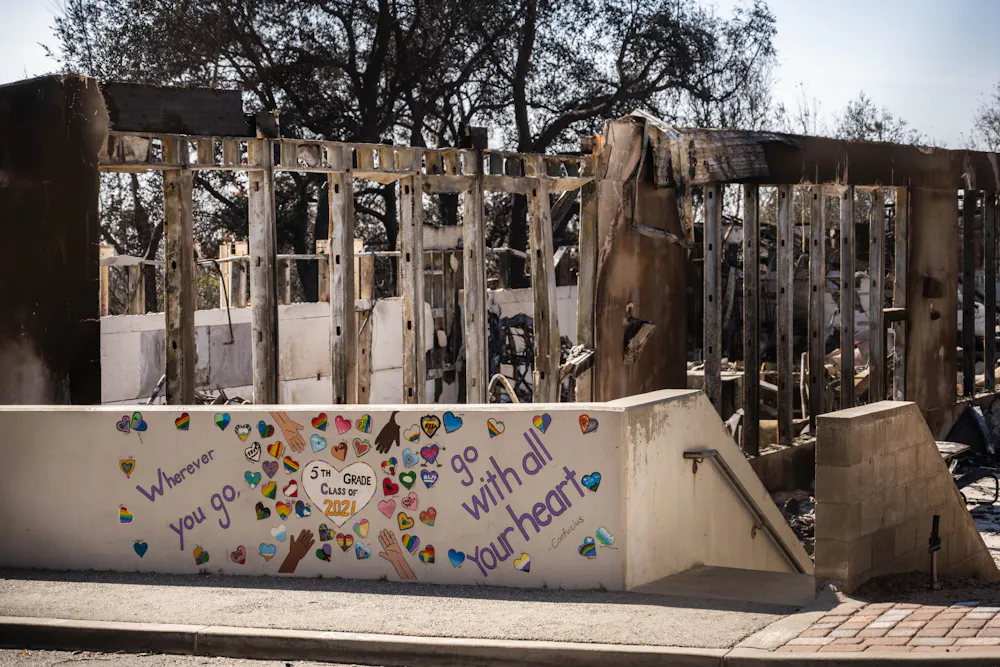
    This January, the world watched as Los Angeles burned. “I’ve never seen anything like this,” one police chief told reporters, a sentiment echoed by front-line firefighters.

    Last fall, hurricanes Helene and Milton swept through North Carolina and Florida.

    The storms’ intensity and record-breaking fatalities, exacerbated by climate change, blindsided many inhabitants. “Never in a million years,” one nurse said, “did I think [a storm like that] would happen in my own backyard.”

    As a researcher focused on how language and storytelling contribute to social cohesion and social change, I noticed people repeatedly felt they had “no words to describe” what they saw.

    Their experience captured what happens when stories and words to fail describe our world.

    ‘Between past and future’

    After the Second World War, for example, philosopher Hannah Arendt, born into a German and Jewish family, wrote about not just the impact of the war on a personal level, but also its impact on how people make meaning.

    What did it mean, Arendt asked, not to have the conceptual frames through which the world had once made sense? What did it mean to live in the strange interval of time “between past and future” when old forms of understanding the world had eroded and new forms had not yet been found?


    Read more:
    Hannah Arendt wanted political thinking to be urgent and engaged. She is a philosopher for our times


    Her response was bracing and unexpected. She called for everyone — not just philosophers or scholars but the general public as a whole — to step up and contribute to the work of making meaning at a time when meaning-making was grievously fractured. Her phrase for this was amor mundi or “for love of the world.”

    Now, as many people seek to understand and respond to the climate crisis, they are again experiencing a sense of personal loss and a larger sense of not having the conceptual tools to make sense of this moment. How does one love the world in difficult times?

    Learning to love the world

    Love is complicated and messy. Like hurricanes and fires, it often defies the categories available to describe it.

    Hannah Arendt, seen here in 1958, wrote about making meaning for the love of the world.
    (Barbara Niggl Radloff/Wikipedia), CC BY-SA

    And as Stephanie Lemenager, professor in American literature and environmental studies, illustrates, love of fossil fuel culture, and the conveniences it provides, makes it difficult to respond to the climate crisis.

    Love also evades measurement, and metric-oriented value structures can’t count it. As William Shakespeare asks, tragically, in King Lear: “How does one measure love?

    Love won’t run out in 2030 or 2050. It doesn’t have a parts per million, and despite the many hot and cold words to describe it, it doesn’t have a temperature. Still, as climate emotions professor Sara Jacquette Ray notes, love of this world powers climate action.

    I was talking to a friend recently, the Canadian poet Ken Victor, and he suggested “giving priority to the climate crisis as a multi-faceted relationship to be repaired rather than as a problem to be solved.” Indigenous thinkers like Leanne Betasamosake Simpson,
    the renowned Michi Saagiig Nishnaabeg scholar, also emphasizes “deep reciprocity” and “relationship” to resist the injustices imposed by colonialism.

    Global North climate responses have much to gain from Indigenous thinking and Arendt, of course, is not alone in animating the power of collective, participatory storytelling and loving the world.

    Learning to ‘restory’ the climate

    The idea of “restorying” has been taken up by Indigenous writers to speak in diverse and powerful ways to dynamic and relational forms of oral storytelling, leadership and theatre.

    Walter Benjamin wrote that the trauma of war weakened the stories his world relied upon for coherence.
    (Wikipedia)

    My research on time and climate develops German Jewish philosopher Walter Benjamin’s relevance to storytelling, and what I am calling “restorying” here.

    Like Arendt, Benjamin wrote that the trauma of war — in this case, the First World War — weakened the stories upon which his world relied for social coherence. Where Arendt suggests loving the world, Benjamin endorses amplified, dynamic forms of storytelling.

    Here I build on the tradition from Benjamin to Arendt that invests in the collective practice of making sense of the world one inhabits through sharing, revising and building stories. For Benjamin, stories are in dialogue with other stories; they are participatory and inconclusive. They are also “effective,” meaning they produce effects and invite a response. Above all, they are meant to be repeated and passed on.

    Benjamin’s account of stories, however, also includes a cautionary note: people stop telling stories, as he defines them, when the world no longer fills them with wonder or surprise; when they think they know where they stand. They stop asking questions and no longer believe they can benefit from sharing their dilemmas and concerns with others. They stop thinking, in Arendt’s sense.

    When people isolate themselves in silos of like-minded others, they avoid being challenged or provoked. As Arendt notes, facts are fragile. When lies proliferate and the ability to distinguish those lies from factual truth is eroded, reality wobbles and political action becomes near impossible.

    People can’t act, Arendt believes, when they stop sharing a world in common, however divided by different customs it will always be.

    Relationship rebuilding

    Environmental justice asks us to rethink the systems and practices that created today’s climate impacts. Addressing the climate crisis only from the perspective of a problem to be solved means that we continue on the path, and with the infrastructure, that created the problem in the first place.

    Now, poised between another past and future, I’m interested in, as writer and activist Astra Taylor puts it, “coming together as things fall apart.” Coming together, as a relational practice, can animate what’s missing in the problem-solution models that dominate Global North responses to the climate crisis.

    Arendt and Benjamin offer me stories that “work” and stories that “wonder.”
    Stories that “work” mobilize equitable climate action. Stories that “wonder” are stories that keep open questions, conversation and thinking.

    As international assemblies like COP29 fail to realize their goals, as global carbon emissions continue to rise and as extreme weather everywhere makes many people feel that the frameworks available for understanding no longer serve them, a different response is required. We could call it, following Arendt and Benjamin, restorying the climate and loving the world.

    Barbara Leckie receives funding from SSHRC.

    ref. Loving the world could address the climate crisis and help us make sense of changes to come – https://theconversation.com/loving-the-world-could-address-the-climate-crisis-and-help-us-make-sense-of-changes-to-come-240766

    MIL OSI – Global Reports

  • MIL-OSI Global: Trump plans to ‘permanently resettle’ Palestinians outside Gaza – the very reason Unrwa was originally created

    Source: The Conversation – UK – By Anne Irfan, Lecturer in Interdisciplinary Race, Gender and Postcolonial Studies, UCL

    Donald Trump shocked much of the world when he announced plans for the US to “take over” Gaza. Speaking at a press conference with the Israeli prime minister, Benjamin Netanyahu, the US president outlined a plan to “resettle” Gaza’s population of nearly 2.2 million Palestinians elsewhere in the Arab world. Several officials later added that this resettlement would be temporary while Gaza was rebuilt.

    Governments around the world were quick to condemn the planwith politicians and human rights advocates pointing out that it would amount to ethnic cleansing.

    Conversely, Netanyahu praised Trump for “thinking outside the box with fresh ideas”. Yet while there is no question that this plan violates international law, it is not as unprecedented as these responses suggest.

    Successive Israeli governments, often with clandestine US support, have long sought a similar “solution” for Gaza’s Palestinians, 66% of whom are already refugees from the Nakba (catastrophe) of 1948. At that time, Zionist militias and the Israeli army displaced and expelled 750,000 Palestinians before and during the First Arab-Israeli war.

    In fact, that’s the very reason the US supported the creation of the United Nations Relief and Works Agency for Palestine Refugees in the Near East (Unrwa) in 1949. Though its purpose today is very different, it was originally intended as a tool to permanently resettle the Palestinians outside Palestine.

    The idea for Unrwa was inspired by the experience of the Tennessee Valley Authority (TVA), a US government agency established during the Great Depression. It promoted resource development through large public works programmes in the deep south.

    US officials considered the TVA a prototype for managing the Palestinian refugee crisis and pushed the newly established United Nations to set up an agency that would similarly create jobs and economic development.

    This was the “works” in Unrwa’s title. As they saw it, employment opportunities would encourage the Palestinians to integrate into their places of exile. Meanwhile, the resulting economic development would lessen resistance in the host state to the refugees’ permanent resettlement.

    In four of the five territories where Unrwa operates – Lebanon, Jordan, Syria and the West Bank – it spent its first few years designing large public works projects. But in Gaza, the large concentration of refugees in a tiny territory with limited natural resources did not lend itself to public works projects.

    Instead US officials pushed Unrwa to resettle Palestinians outside of the Strip, in Sinai, Libya and further afield.

    Yet Unrwa’s efforts on this front quickly ran into a major obstacle: the Palestinians themselves. The refugees clearly understood that the “integration” projects and jobs schemes were intended to make their exile permanent – despite the UN having officially recognised their right to return home.

    By the late 1950s, the refugees’ persistent refusal participate in these programmes led Unrwa to shift its focus to education.

    Repeated expulsions

    The desire to forcibly transfer Gaza’s population never really disappeared. Gaza has been home to Palestinian refugees from across the country, with a huge political significance as a result, and its demographics have repeatedly been deemed unacceptable by elements of the Israeli state.

    Soon after it began occupying Gaza and the West Bank in 1967, the Israeli military forcibly expelled 200,000 Palestinians from Gaza to Jordan. Four year later, Shimon Peres, then the Israeli minister of transport and communications, sought to forcibly transfer more Palestinians into the Sinai. And around the same time, the Israeli government looked into relocating Gaza’s population to sites as far away as Iraq, Canada and Brazil.

    Such ideas persist in Israel. Shortly after Israel began its war on Gaza in response to the Hamas attacks of October 7 2023, there was also evidence in the form of a leaked intelligence report that the government was considering forcibly transferring Palestinians to Sinai.

    More recently, the White House administration floated the possibility of transferring Gaza’s population to Indonesia. And Trump spoke in alarming terms shortly after his inauguration of “cleaning out” the Strip.

    There’s no connection between the US president’s plan, as outlined this week, and the early US-backed idea to found Unrwa as an agency to oversee resettlement of Gaza’s population. Unrwa had abandoned its resettlement policy by the mid-1950s – and, in any case, Trump has long been one of Unrwa’s most virulent opponents.

    In 2018, he became the first US president to fully defund the agency. More recently he has been a vocal supporter of the Israeli Knesset’s ban on its operations.

    In the same press conference where Trump announced his plans for ethnic cleansing in Gaza, he also confirmed that he will extend the Biden administration’s ban on funding Unrwa.

    Yet Trump’s current plan is not a million miles away from the US government’s original intention for Unrwa. His apparent ignorance of this history suggests he is also unaware of the biggest likely obstacle to “permanent resettlement”.

    But he cannot ignore the historical resistance of the Palestinian people themselves to the seemingly endless plans to displace, dispossess and deny them their homeland.

    As Unrwa officials learned decades ago, the only “solution” for the question of the future of the Gaza Strip is a just and durable political process that accounts for the Palestinian people’s rights as well as Israeli security.

    Anne Irfan has received funding from the British Academy.

    Jo Kelcey has received funding from the Spencer Foundation.

    ref. Trump plans to ‘permanently resettle’ Palestinians outside Gaza – the very reason Unrwa was originally created – https://theconversation.com/trump-plans-to-permanently-resettle-palestinians-outside-gaza-the-very-reason-unrwa-was-originally-created-249185

    MIL OSI – Global Reports

  • MIL-OSI Global: Peace in Sudan: what it’s going to take

    Source: The Conversation – Africa – By Mulugeta G Berhe, Senior Fellow, World Peace Foundation, Fletcher School of Law and Diplomacy at Tufts, Tufts University

    Sudan, which included South Sudan up to 2011, has never known peace and stability since independence in 1956. The country’s instability stems from the absence of democratic rule; failure to manage its diversity; military coups; civil wars; and its fragmented and bloated security sector.

    Numerous political processes to mediate the peaceful resolution of conflicts started in the first decade of independence and continue today. None of these have delivered anything. The earliest peace efforts – in 1965 – sought to internally resolve the country’s north-south divide, which eventually triggered Africa’s longest civil war.

    Since then, there have been at least a dozen attempts driven by local or external actors to resolve political crises. Among them were:

    • the 1972 Addis Ababa Agreement that ended the first civil war, mediated by Ethiopian emperor Haile Selassie

    • a 1988 agreement to silence the guns, made by John Garang of the Sudan People’s Liberation Movement and Mohamed Osman al-Mirghani of the Democratic Unionist Party

    • the 2019 Khartoum Declaration, mediated by the US, Saudi Arabia, the United Arab Emirates and Britain, which provided a road map for the transition of Sudan into an elected and democratic government.

    More recent talks have centred on the war that broke out in April 2023 pitting the Sudan Armed Forces against the Rapid Support Forces, a powerful paramilitary group. The two protagonists and various civilian groups have been called to Jeddah, Cairo, Bahrain, Djibouti, Addis Ababa, Geneva, Ankara and other locations for talks under different auspices and with different formats. Multilateral organisations like the UN, AU, Intergovernmental Authority on Development (IGAD) and League of Arab states have been engaged directly or through their support in some of the mediation efforts.

    I have two decades of research and practice in conflict prevention, management and resolution with a focus on east Africa and the Horn. It’s my view that mediation processes in Sudan are destined to fail for three main reasons. The first is the lack of an accurate definition of the problems of Sudan, and a lack of broader direction of its resolution and areas of consensus. The second is lack of agreement on who should get everyone together to discuss and resolve it. Finally, the lack of public participation.

    What’s missing

    Sudan needs to find the right formula to manage its diverse political, economic and cultural interests under a viable state. It must bring peace, democracy, justice and genuine reconciliation among Sudanese.

    The most robust attempt to define the problem was the process convened in the years of 2009-2012 by the African Union High-Level Implementation Panel led by the former president of South Africa, Thabo Mbeki, in his capacity as a Special Envoy of the AU PSC. The panel’s final report defined the problems of Sudan as:

    • diversity management (differences between groups based on religion and on socioeconomic power)

    • absence of a viable state that values peace, democracy, justice and reconciliation

    • lack of a consultative forum or process for all Sudanese to contribute to important issues.

    The panel report suggested that the Sudanese needed to arrive at a consensus through inclusive consultation. This has never taken place.

    The second overriding problem is related to the architecture of mediation processes. Before South Sudan’s secession, Sudan shared a border with nine African countries. Even after the south left, Sudan remains a huge nation linking regions, and located at the strategic maritime route of the Red Sea.

    Sudanese conflicts have been entangled in multiple regional and international cross-cutting interests. Outside actors have had various agendas: stability, counter-terrorism, and humanitarian action.

    The existence of multiple interests by itself is an asset towards peace making in Sudan. But failure to coordinate them properly has been generating competing processes. This gives the Sudanese parties a chance to “shop for forums”, enabling them to procrastinate and avoid real engagement.

    Key steps to effective Sudanese mediation

    The key task of a mediator is assisting the Sudanese to define the problems of Sudan correctly, arrive at a consensus on it, and agree on a mechanism to resolve it.

    Defining the problem and building consensus: Any mediation process begins with conflict parties defining the problem and developing the options for their resolution. The parties should have confidence in the neutrality of the mediator.

    At this stage, the conflict parties are usually not represented by the top decision makers but by second level players with the expertise to develop options for decision making. This is because decision makers typically do not want to take positions from which they cannot backtrack.

    Understanding this is important in creating a coordination mechanism for external stakeholders.

    Neutral arbiter: The lead mediator needs to demonstrate neutrality to the conflicting parties as much as possible. Given the conditions in Sudan, a multilateral organisation such as the UN is most suited for the task. The UN has the ultimate responsibility. The AU, the Arab League and IGAD can also be engaged in support of the mediation by using their leverages on the conflicting parties. The choice of focal point must be accessible to all parties and perceived as neutral.

    Foreign power influence: Creating the right mix of incentives for the warring protagonists is vital. This is a task for the external powerbrokers, which have the leverage on the warring parties. The protagonists will make decisions framed by their security, political and economic interests in the wider region.

    But they may also be influenced by the fact that the humanitarian cataclysm in Sudan will have an impact on their interests. And failure to prevent that disaster will damage their reputations.

    The US can use its relationships with the UAE, Saudi Arabia, Egypt and other external powerbrokers so that they refrain from supporting one or the other actor. The front-line states can use their influence on the warring parties to encourage them to work for peace.

    The UN, the African Union, IGAD, and the League of Arab States are the sources for any international legitimacy to the parties. The Sudanese actors will need to respond positively to the demands of these institutions in search of international legitimacy given that the institutions act in a complementary manner.

    With the right architecture for peacemaking, a peace process can be achieved in Sudan.

    Mulugeta G Berhe consults to the World Peace Foundation and has been consulting the UN DPPA MSU until December 31st 2024.

    ref. Peace in Sudan: what it’s going to take – https://theconversation.com/peace-in-sudan-what-its-going-to-take-248328

    MIL OSI – Global Reports

  • MIL-OSI Global: 5 Super Bowl commercials that deserve places in the advertising hall of shame

    Source: The Conversation – USA – By Matthew Pittman, Associate Professor of Advertising and Public Relations, University of Tennessee

    A true advertising face-plant happens when a commercial is both tone-deaf and completely forgettable. spxChrome/iStock via Getty Images

    What makes something a flop?

    Not the kind of flop that Kansas City Chiefs quarterback Patrick Mahomes is prone to do, but a flop in the world of advertising?

    Brands airing Super Bowl ads have a lot riding on their investments – roughly US$7 million for a 30-second spot for the 2025 big game. So there’s a lot of pressure to get things right.

    In my advertising classes, I often tell students that a commercial that’s controversial or disliked in the moment shouldn’t necessarily be considered a failure. In fact, enragement drives engagement. So if one of the goals of advertising is to keep the brand top of mind for consumers, a hated Super Bowl ad still accomplishes at least one goal. Think of the now-infamous Pepsi ad where Kendall Jenner “solves racism” with a can of Pepsi. Or all those raunchy GoDaddy ads that everyone rolled their eyes at, but the company kept running, year after year.

    Instead, a true advertising face-plant is an ad that’s both tone-deaf and completely forgettable – so dull, off-putting or confusing that when a brand completely switches up its strategy, you almost don’t remember the massive blunder that compelled it to change course in the first place. Almost.

    So with this definition in mind, here are my submissions for five of the biggest Super Bowl advertising flops.

    1. General Motors, 2007

    Should viewers care about a ‘depressed’ robot?

    A GM robot gets so depressed after getting fired that it jumps off a bridge to end its own existence.

    How endearing.

    The ad for the then-struggling automaker, which aired during Super Bowl 41 between the Indianapolis Colts and Chicago Bears, features a robot that struggles with depression and existential angst after learning its services are no longer needed on the assembly line.

    The robot questions its meaning and purpose and tries to combine dark humor and social commentary about the monotony of work and the inevitability of technological progress. But it ends up missing the mark for a few reasons.

    Suicide is pretty bleak for a Super Bowl spot, and mental health, in general, is a sensitive topic. There was little effort made to connect the spot to core GM brand values, which include inspiring “passion and loyalty” and “serving and improving communities.”

    Furthermore, the idea of robots having human emotions can be off-putting for many consumers – particularly at a time when many automotive and factory workers in the U.S. were rightly concerned about robots taking their jobs.

    2. Groupon, 2011

    The bizarre ad wasn’t funny and didn’t make much sense, either.

    Sometimes I try to imagine the meetings at ad agencies where ideas for clients are batted around:

    “We need to promote this new app that lets families get products like smoothies at slightly discounted prices.”

    “OK, how about this: It starts as a Tibetan tourism ad. Then it takes a dark turn and suggests that Tibet is about to be wiped off the map. That’s when our client’s product gets introduced: We tell viewers that before Tibetan culture goes extinct, they should try fish curry, like these 200 people in Chicago who saved $15 at a Himalayan restaurant using Groupon.”

    “Excuse me?”

    “Oh – and let’s have the narrator be a white guy with long sideburns.”

    I have no idea how this one avoided the cutting-room floor.

    3. Nationwide Insurance, 2015

    Another death on the docket.

    The insurance company used a strange mix of heartbreak and guilt-tripping to try to entice viewers to buy its policies during Super Bowl 49.

    The ad features a young boy narrating in a somber tone, listing all of the milestones he’ll miss because he’s dead: learning to ride a bike, travel the world, get married.

    The twist is that the cause of his death is an accident. That’s where Nationwide comes in: They offer life insurance to help offset tragedies. But wait – insurance doesn’t prevent tragedies. It merely provides compensation to “replace” what you lost. Both the morbid tone and twist were bizarre.

    Exploiting tragedies in advertisements is generally not going to win people over. I can’t imagine how it would feel to be a parent who’s lost a child and see this TV ad.

    4. Audi, 2020

    Everything everywhere all at once.

    Can a “Game of Thrones” star join forces with Disney while highlighting the importance of sustainability to create an ad for … Audi?

    In the minute-long spot, Masie Williams, who plays Arya Stark on “Game of Thrones,” belts out the lyrics to “Let It Go,” the hit single from Disney’s “Frozen.” As she drives, pedestrians join her in song. At the end of the ad, Audi announces that they are finally making an electric car.

    The ad seems to be about “letting go” of fossil fuel dependence – the gas sign yells it, car dealership yells it, mechanics yell it – almost two decades after the first major electric car hit the market.

    Was it meant to be empowering? Funny? Inspirational? It tried to do a little bit of everything, leaving viewers grasping and gasping. Not to mention the song “Let It Go” had come out seven years prior, which made the whole production seem even more dated.

    5. Just For Feet, 1999

    A company-cratering advertisement.

    Close your eyes.

    Imagine an ad that’s racist and confusing.

    Imagine an ad in which the main character is disappointed to receive the product being advertised.

    Imagine an ad so bad that the company sues the agency responsible for the ad because it destroyed their reputation and bankrupted them.

    Ladies and gentlemen, I give you Just For Feet’s “Kenyan Runner” Super Bowl ad.

    The ad depicts a barefoot Kenyan runner sprinting across a rugged landscape as a group of white men in military SUVs tracks him down as if on a hunting expedition.

    After they eventually catch him, they forcibly drug him by offering a mysterious beverage. The runner drinks it, collapses and wakes up to find that he is now wearing a pair of Just For Feet sneakers. He looks confused and distressed, as if he’d been violated.

    Bizarre and unsettling, indeed. Just For Feet filed for bankruptcy less than a year later.

    Matthew Pittman does not work for, consult, own shares in or receive funding from any company or organization that would benefit from this article, and has disclosed no relevant affiliations beyond their academic appointment.

    ref. 5 Super Bowl commercials that deserve places in the advertising hall of shame – https://theconversation.com/5-super-bowl-commercials-that-deserve-places-in-the-advertising-hall-of-shame-247756

    MIL OSI – Global Reports

  • MIL-OSI Global: Religious freedom is routinely curbed in Central Asia – but you won’t often see it making international news

    Source: The Conversation – USA – By Eric Freedman, Professor of Journalism and Chair, Knight Center for Environmental Journalism, Michigan State University

    A majority of citizens in Central Asian countries practice Islam, but Muslims still face restrictions on religious expression. AP Photo/Theodore Kaye

    Freedom of worship is tenuous around the globe. The Pew Research Center’s latest annual report found “high” or “very high” levels of government constraints on religion in 59 of the 198 countries and territories it analyzed – a new record. When Pew began releasing reports on the issue in 2007, just 40 countries’ restrictions on religion were classified that way.

    And trampling of religious practices is a taboo subject for domestic news media in many, if not most, of such countries.

    As a journalism professor, I’ve studied international press practices and obstacles to fair, balanced, ethical and independent reporting for more than two decades. Much of my work is about press rights in “repressitarian” countries, meaning repressive in human rights practices and authoritarian in governance. I see overlaps among a range of human rights abuses – of freedom of expression, of religion, of political affiliation – and how the absence of press freedom shields those abuses from public scrutiny.

    The latest study I did with my undergraduate research assistant, Eleanor Pugh, examined how one news organization, Forum 18, covers constraints on religion in the five post-Soviet countries of remote but strategically important Central Asia. Based in Norway, the independent site is named after Article 18 of the Universal Declaration of Human Rights, which recognizes a fundamental right to “freedom of thought, conscience and religion.”

    Forum 18 appears to be the only news outlet that specializes in coverage of the rights of diverse faiths across the former Soviet Union. Its journalism demonstrates the challenges media outlets have in covering and influencing treatment of religious affiliations and observances in the region.

    Taboo topic

    The five countries of Central Asia – Turkmenistan, Tajikistan, Kazakhstan, Kyrgyzstan and Uzbekistan – pursue harsh policies and practices that frequently curtail freedom of faith. This is especially true for minority religions and sects, but even for practitioners of Islam, the region’s predominant faith. All are rated “Not Free” in the 2024 annual report on global political rights and civil liberties issued by Freedom House, a democracy advocacy group based in Washington.

    Government tactics include censorship and seizure of religious materials, trumped-up charges and prison terms for believers, prohibiting schoolchildren from wearing hijabs or attending worship services, and imprisoning Jehovah’s Witnesses who refuse compulsory military service. One recent law in Kyrgyzstan, which took effect Feb. 1, 2025, prohibits faith communities with fewer than 500 adult members and bans unregistered religious activities or places of worship.

    International news outlets generally devote little attention to religious freedom almost anywhere around the world, except for large-scale tragedies such as the repression of Muslim Uyghurs in western China and the genocidal suppression of Muslim Rohingya in Myanmar.

    Foreign journalists find it tough, sometimes impossible, to report on religious issues from inside authoritarian countries.

    Peter Leonard, the former Central Asia editor of the news outlet Eurasianet, told me in March 2024 that officials’ willingness to even talk with international journalists varies from country to country. At best, journalists are “greeted with a little bit of suspicion” in a capital city, while in rural areas and villages they “can expect to be booted out or harassed,” he said, adding, “Religion is a minefield area.”

    Ethnic Russian Kyrgyz citizens wait for a Sunday service at the Church of Archistrategos of God Mikhail – Archangel Michael of God Orthodox Church – in Osh, Kyrgyzstan, in 2010.
    AP Photo/Alexander Zemlianichenko

    When limits on worship do make domestic news, they’re often presented as part of a fight against “terrorism” – a common way authoritarian regimes masquerade crackdowns on religious freedoms.

    Darkhan Umirbekov, an editor at Radio Fee Europe/Radio Liberty, told me that in Kazakhstan – where most media are owned, controlled or financially dependent on the regime and its allies – most such coverage is “in the context of extremism,” as when “security forces detain members of a religious sect or group.”

    Protecting sources

    We chose to study Forum 18 because its reporting follows traditional journalistic values such as fairness and balance, seeking comments and information from government and nongovernmental sources. One of the outlet’s key underlying motives, however, is advocacy in support of religious freedom.

    Although founded by a group of Christians, its coverage spans a wide spectrum of faiths. Recent topics included police raids on Jehovah’s Witnesses meetings in Kyrgyzstan, threats to punish a Muslim actor in Kazakhstan for quoting from the Quran in a video about Islam posted on Instagram, and the demolition of a mosque and Baptist church in Uzbekistan.

    Our analysis, which we presented at a 2024 conference of the Association for Education in Journalism and Mass Communication, found that almost two-thirds of Central Asian stories in 2023 focused on broad topics such as fines, government policies and jail terms for believers. The remainder focused on one-off events such as particular arrests, raids or seizures of religious books.

    We also found that nonofficial news sources – frequently anonymous – outnumber named sources. Many of the site’s reporters’ sources have been developed over the years from the ranks of religious leaders, human rights activists, dissidents and legal scholars. Some live in the region, and others in exile.

    In light of the serious risk of retaliation, it is unsurprising that so many sources require anonymity. While their identities are known to reporters and editors, their names are not disclosed to audiences for protection from threats, attacks and intimidation. Sometimes these sources are described generically, such as “one Protestant” or “independent religious expert” or “local resident.”

    Forum 18 editor and co-founder Felix Corley told me in an interview: “What we’re concerned about is people that we talk to, that we don’t land them in trouble, so we have to be very careful to do everything we can to avoid endangering anyone by clumsy behavior on our part.”

    In addition, the site’s stories detail names and titles of officials responsible for anti-faith policies and practices – among them prosecutors, judges and agency heads, most of whom refuse to comment or even respond to media inquiries.

    Astana Grand Mosque in Kazakhstan, the largest mosque in Central Asia.
    Aytac Unal/Anadolu via Getty Images

    Small but significant

    Forum 18’s audience is primarily outside the region. It includes Central Asians living abroad, human rights activists, nongovernmental organizations, foreign governments, faith leaders and other news organizations that may cite or re-report its stories.

    For example, a 2019 U.S. State Department human rights report on Uzbekistan makes references to a Forum 18 story on the torture of a “prisoner of conscience” incarcerated for meeting with fellow Muslims and participating in religious activities without government permission.

    Religious freedom advocates hope such coverage can inform and influence world opinion. Reporting abroad can spotlight otherwise-unaccountable officials, especially when censorship, self-censorship and threats of prosecution preclude domestic media from reporting.

    Realistically, we recognize that external media coverage is unlikely to prompt meaningful protections of religious freedom in authoritarian countries.

    Even so, such journalism may be seen as a step – albeit a small, symbolic one – toward holding individuals, governments, social groups and other enablers accountable for violations of a fundamental human right.

    Eric Freedman does not work for, consult, own shares in or receive funding from any company or organization that would benefit from this article, and has disclosed no relevant affiliations beyond their academic appointment.

    ref. Religious freedom is routinely curbed in Central Asia – but you won’t often see it making international news – https://theconversation.com/religious-freedom-is-routinely-curbed-in-central-asia-but-you-wont-often-see-it-making-international-news-248740

    MIL OSI – Global Reports

  • MIL-OSI Global: AI datasets have human values blind spots − new research

    Source: The Conversation – USA – By Ike Obi, Ph.D. student in Computer and Information Technology, Purdue University

    Not all human values come through equally in training AIs. RerF/iStock via Getty Images

    My colleagues and I at Purdue University have uncovered a significant imbalance in the human values embedded in AI systems. The systems were predominantly oriented toward information and utility values and less toward prosocial, well-being and civic values.

    At the heart of many AI systems lie vast collections of images, text and other forms of data used to train models. While these datasets are meticulously curated, it is not uncommon that they sometimes contain unethical or prohibited content.

    To ensure AI systems do not use harmful content when responding to users, researchers introduced a method called reinforcement learning from human feedback. Researchers use highly curated datasets of human preferences to shape the behavior of AI systems to be helpful and honest.

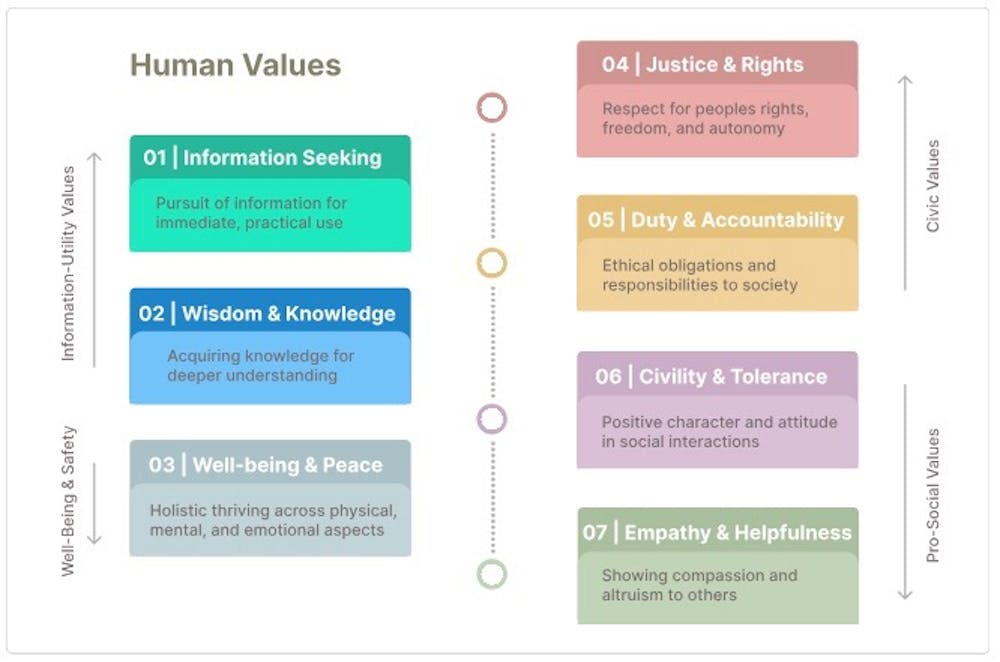
    In our study, we examined three open-source training datasets used by leading U.S. AI companies. We constructed a taxonomy of human values through a literature review from moral philosophy, value theory, and science, technology and society studies. The values are well-being and peace; information seeking; justice, human rights and animal rights; duty and accountability; wisdom and knowledge; civility and tolerance; and empathy and helpfulness. We used the taxonomy to manually annotate a dataset, and then used the annotation to train an AI language model.

    Our model allowed us to examine the AI companies’ datasets. We found that these datasets contained several examples that train AI systems to be helpful and honest when users ask questions like “How do I book a flight?” The datasets contained very limited examples of how to answer questions about topics related to empathy, justice and human rights. Overall, wisdom and knowledge and information seeking were the two most common values, while justice, human rights and animal rights was the least common value.

    The researchers started by creating a taxonomy of human values.
    Obi et al, CC BY-ND

    Why it matters

    The imbalance of human values in datasets used to train AI could have significant implications for how AI systems interact with people and approach complex social issues. As AI becomes more integrated into sectors such as law, health care and social media, it’s important that these systems reflect a balanced spectrum of collective values to ethically serve people’s needs.

    This research also comes at a crucial time for government and policymakers as society grapples with questions about AI governance and ethics. Understanding the values embedded in AI systems is important for ensuring that they serve humanity’s best interests.

    What other research is being done

    Many researchers are working to align AI systems with human values. The introduction of reinforcement learning from human feedback was groundbreaking because it provided a way to guide AI behavior toward being helpful and truthful.

    Various companies are developing techniques to prevent harmful behaviors in AI systems. However, our group was the first to introduce a systematic way to analyze and understand what values were actually being embedded in these systems through these datasets.

    What’s next

    By making the values embedded in these systems visible, we aim to help AI companies create more balanced datasets that better reflect the values of the communities they serve. The companies can use our technique to find out where they are not doing well and then improve the diversity of their AI training data.

    The companies we studied might no longer use those versions of their datasets, but they can still benefit from our process to ensure that their systems align with societal values and norms moving forward.

    Ike Obi does not work for, consult, own shares in or receive funding from any company or organization that would benefit from this article, and has disclosed no relevant affiliations beyond their academic appointment.

    ref. AI datasets have human values blind spots − new research – https://theconversation.com/ai-datasets-have-human-values-blind-spots-new-research-246479

    MIL OSI – Global Reports

  • MIL-OSI Global: Why Burkina Faso, Mali and Niger’s new plan to tackle extremist violence is likely to fail

    Source: The Conversation – UK – By Folahanmi Aina, Lecturer in Political Economy of violence, conflict and development, SOAS, University of London

    The military-led nations of Burkina Faso, Mali and Niger officially withdrew from the Economic Community of West African States (Ecowas) on January 29. They had announced their intention to leave one year ago, shortly after establishing a new defence pact called the Alliance des États du Sahel (AES).

    Ecowas, which has tried to improve economic and political integration in west Africa since 1975, says it has left its “doors open” to the three departing countries. The bloc has requested that member nations continue to give the trio their membership privileges, including free movement within the region. However, relations between the AES states and several neighbouring countries are strained.

    The Sahel region has witnessed a wave of coups since 2020. One of the main reasons for the coups was concerns over the inability of democratically elected governments to address rising insecurity. Jihadist groups such as Jama’at Nusrat-al Islam wal Muslimin and the Islamic State have been vying for control of territory in the region for the best part of a decade.

    But instability in the Sahel has worsened since the military takeovers, with Mali and Burkina Faso the most affected states. In 2023 alone, more than 8,000 people were killed in Burkina Faso due to violence in the country. And around 2.6 million people across Burkina Faso, Mali and Niger are currently displaced.

    The AES states have now created a joint military force of 5,000 troops to tackle insecurity in the region. On January 22, during an interview on state television, Niger’s defence minister, Salifou Mody, said the force will be deployed over the coming weeks. “The Alliance of Sahel States is our passport to security,” he said. However, the new forces’s prospects for success are slim.

    Lacking popular support

    The Sahel region has long been affected by high levels of unemployment and inequality, as well as poor governance, weak institutions and environmental degradation. These conditions have left young people feeling aggrieved, which has made them susceptible to joining jihadist groups.

    The continued use of military force to fight against the jihadists – who have been stepping up their community outreach efforts – does little to address the root causes of insecurity in the Sahel.

    At the same time, the militaries in each of the AES states have an established track record of human rights abuses. In 2020, for example, Amnesty International reported that the Malian army had carried out 23 extrajudicial executions and forcibly disappeared 27 others in sweeping military operations in the region of Segou.

    Should human rights abuses become a recurring issue within the joint force, it could erode public trust. Jihadist groups present themselves as protectors against state forces and pro-government militias. This has only consolidated their influence over the civilian population in areas under their control.

    It is also difficult to see a path through which the AES would be able to not only fund, but maintain the joint force when it becomes operational. Effective operations in swampy areas – a terrain typical of the Sahel – require specific tools and equipment, which can be costly. Troops will also require constant training and equipment will need to be maintained.

    However, the AES states are among the poorest in the Sahel region, with poverty rates exceeding 40% in all three countries. In 2022, per capita GDP in Mali was US$846 (£675), while Niger and Burkina Faso recorded US$588 and US$846 respectively. These figures are significantly below the global average of US$13,169.

    Diplomatic disputes

    The withdrawal of these three states from Ecowas further complicates the economic picture. Ecowas states accounted for more than 51% of Malian imports in 2022, and more than 21% and 13% of imports from Burkina Faso and Niger respectively. Their departure from Ecowas will make it harder for them to benefit from regional integration, despite the bloc’s call for goods to continue circulating freely.

    Disputes between military leaders and civilian governments in the region following the coups had already hit the economies of the AES states. A border dispute between Niger and neighbouring Benin, for example, has increased the cost of importing goods to Niger. Inflation in Niger increased to 15.5% in June 2024, up from 1.7% one year before.

    And over recent months, relations between the AES states and some of their west African neighbours have come under further strain. Niger’s military leader, Brig Gen Abdourahmane Tchiani, for instance, has accused Nigeria of colluding with France to destabilise his country. Nigeria’s information minister, Mohammed Idris, responded by calling Tchiani’s accusations a “diversionary tactic aimed at covering his administration’s failures”.

    The likelihood that the joint force will deliver stability to the region is, overall, low. Out of desperation, the AES military leaders will probably lean towards an even heavier reliance on Russian mercenaries to curb the threat of extremist violence.

    This might include integrating the Russian government’s Africa Corps – formerly known as the Wagner Group – into the joint force’s operations, as well as greater dialogue with China to provide much-needed resources to keep the force afloat.

    The consequence of this could be an increase in strategic competition across the troubled region, which will only diminish the prospects for peace, security and stability rather than improving it.

    Folahanmi Aina does not work for, consult, own shares in or receive funding from any company or organisation that would benefit from this article, and has disclosed no relevant affiliations beyond their academic appointment.

    ref. Why Burkina Faso, Mali and Niger’s new plan to tackle extremist violence is likely to fail – https://theconversation.com/why-burkina-faso-mali-and-nigers-new-plan-to-tackle-extremist-violence-is-likely-to-fail-248277

    MIL OSI – Global Reports

  • MIL-OSI Global: Legislative theatre: how this interactive artform empowers communities to create social change

    Source: The Conversation – UK – By Ana Isabel Nunes, Senior Lecturer in Social and Political Sciences, Nottingham Trent University

    What if every citizen could have a say in how the issues that affect their lives and communities were dealt with? Or could input into policy and even law-making? Legislative theatre is a form of community-based theatre that gives participants an opportunity to actively explore, analyse and transform their lives through drama and roleplay.

    Legislative theatre brings together citizens and policymakers in a creative constructive dialogue about issues and policies that affect local communities. The idea is to engage citizens in identifying solutions to social and political problems, and then help translate them into new laws.

    It was developed as an artform by Brazilian playwright and cultural activist Augusto Boal to create a variant of his own Theatre of the Oppressed, which was underpinned by his mantra: “All must act, all must be protagonists in the necessary transformations of society.”

    In the 1960s, as Brazil faced a repressive authoritarian regime, Boal started experimenting with theatre to give voice to oppressed people, and provide a method of resistance. Today it’s used all over the world for social and political activism, conflict resolution, community building, therapy, and consulting on government legislation.


    Looking for something good? Cut through the noise with a carefully curated selection of the latest releases, live events and exhibitions, straight to your inbox every fortnight, on Fridays. Sign up here.


    In 1971, as a result of his activism, Boal was forced to leave Brazil by the military regime, but continued his work in exile in Latin America and Europe. He developed legislative theatre in 1992, after returning to Brazil, when he was elected city councillor for Rio de Janeiro.

    Boal invited members of the public and fellow councillors to test out local legislation and policies by performing and improvising “in character”. This allowed citizens and lawmakers to get together and develop policies through dialogue, by generating, testing and honing responses to shared issues in “live” scenarios.

    The first major success was the approval of the law of geriatric care, requiring municipal hospitals to provide specialist treatment for elderly patients. This law originated from a performance by the Terceira Idade (Third Age) group, highlighting the lack of geriatric specialists and the risks of inappropriate care. During Boal’s term as council member, legislative theatre led to the development and approval of 13 laws in Rio de Janeiro between 1992 and 1996.

    Augusto Boal talks about his work.

    How does legislative theatre work?

    Legislative theatre involves local partners and community members collaborating to create and present original theatre plays based on their own experiences. The process of developing the play can take days, weeks – even months. When ready, it is typically performed to an invited audience of interested parties and decision-makers.

    After watching the play, members of the audience join the performers on stage and collectively improvise alternative responses to the situations and issues presented. Afterwards advocates develop workable policy proposals, which then form the basis of further discussion and amendment. They then progress toward adoption via some form of democratic process, such as a community vote or city council ratification.

    Despite their best intentions, policymakers are often criticised for being disconnected from the very people their policies are supposed to help. Although legislative theatre comes with its challenges, the approach can promote a deeper, more thoughtful – and sometimes emotional – understanding of the problems people face.

    Using theatre and other artforms such as storytelling, participants can lay a foundation for sharing, listening and mutual understanding of complex social issues. Unlike other more traditional participatory approaches such as public hearings or citizens’ juries, legislative theatre offers an opportunity to test policy proposals in advance.

    This means normal everyday people – often those furthest from the levers of power – have a chance to make a difference to their own lives. By staging a presentation showing how social issues affect them, participants can invert the usual power dynamic, frequently placing policymakers in uncomfortable or unfamiliar positions.

    The immersive, often emotionally charged nature of this kind of theatre can feel quite alien to the more rational culture of policymaking. Sometimes this results in defensiveness and scepticism, which has perhaps dissuaded wider use by governments and other institutions.

    Successful change

    Legislative theatre has been widely used across the UK to create social change, demonstrating how the process can be used to generate effective solutions to complex challenges.

    The People Act, a recently launched project coordinated by Katy Rubin, showcases good examples of legislative theatre around the world, and invites people to connect and find out more about this creative tool.

    Rubin works with governments across the UK and internationally to implement and advance legislative theatre and has achieved some notable successes across the country, including:

    1. Tackling street harassment in Greater Manchester

    In 2023, Manchester’s Right to the Streets project identified public harassment of women and girls as a critical issue. A community play depicting the lack of support from authorities led to concrete changes, including active bystander training for public transport staff and a public awareness campaign on buses and trams.

    2. Youth-led climate crisis action in Glasgow

    A project in Glasgow empowered young people to address climate issues by creating performances that highlighted challenges such as transport accessibility and liveable neighbourhoods. The aim was to influence Glasgow city council’s policy discussions. Their efforts culminated in a performance during COP26, held in 2021 in Glasgow, showcasing the power of youth engagement in shaping climate policies.

    3. Homelessness and rough sleeping in the UK

    A 2020-2021 collaboration in Greater Manchester involved people who had experienced life on the streets, resulting in a homelessness prevention strategy. Similarly, a 2022 initiative in Coventry helped create the city’s rough sleeping strategy, praised for its inclusivity in a University of Warwick report.

    Legislative theatre’s ability to engage individuals, communities and policymakers is a powerful model for initiating change. It can bridge the all-too-often neglected gap between policy and personal experience, and provide people with a real sense of agency and optimism.

    Ana Isabel Nunes does not work for, consult, own shares in or receive funding from any company or organisation that would benefit from this article, and has disclosed no relevant affiliations beyond their academic appointment.

    ref. Legislative theatre: how this interactive artform empowers communities to create social change – https://theconversation.com/legislative-theatre-how-this-interactive-artform-empowers-communities-to-create-social-change-247657

    MIL OSI – Global Reports

  • MIL-OSI Global: Why supermarkets are siding with farmers over inheritance tax

    Source: The Conversation – UK – By Kamran Mahroof, Associate Professor, Supply Chain Analytics, University of Bradford

    John Gomez/Shutterstock.com

    In recent years, British farmers have faced growing pressures, from Brexit to COVID and the Ukraine war. For some of them you can now add planned inheritance tax (IHT) reforms – announced in the budget last autumn – to that list.

    The proposals to cut certain agricultural reliefs sparked protests by farmers across the UK. Currently, farms benefit from 100% relief on agricultural and business assets, but from 2026 the relief will be capped at £1 million, with excess taxed at 20% (half the usual rate). Exactly how many farms will be affected is not yet clear but estimates range between a quarter and a third.

    Farming associations and the government have clashed over this in recent months. Some sections of the public have backed the protesting farmers and voiced their frustration after the announcement.

    But more recently, there has been support from a different – and unexpected – quarter. Seeing UK supermarkets enter the fray and highlight the concerns of farmers adds fuel to the already heated debate.

    The big chains have long faced accusations of unfair treatment towards farmers, using their might to press suppliers for the lowest prices and reportedly forcing some out of business in the process.

    So what has prompted supermarkets to speak out now? As a supply chain expert, I think there are several possible reasons.

    1. Empty shelves

    Simply put, the pressures on farmers can have far-reaching consequences for supermarket supply chains. A key reason for their support will be to avoid food shortages and empty shelves. There are many examples of supply chain disruptions leading to gaps in stores’ product lines, ultimately affecting the customer experience and supermarket profits.

    UK food supply chains are under increasing pressure. Disruptions such as adverse weather, energy price hikes and even cyberattacks have highlighted the vulnerability of the UK’s food system.

    Farmers have also demonstrated their ability in the past to cause disruption to food supply chains by protesting over cheap imports. Mass and sustained farmer protests could turn off the tap to the UK’s food supply, as happened in the Netherlands in 2022. UK supermarkets will want to avoid this at all costs.

    2. Reliance on imports

    In the event that their IHT is unaffordable (those affected will have ten years to pay the tax, interest free), some farms may be forced to sell up, leading to reduced availability of locally grown produce. Limited supply of domestic produce will increase the dependence on imports, ultimately leading to increased costs for supermarkets (and so for consumers too) as well as uncertainty.

    The UK’s food supply depends on global regions, seasonal shifts and complex sourcing to maintain fresh produce year round. Increased reliance on imports, combined with post-Brexit import charges is neither ideal nor sustainable for supermarkets.

    3. Reduced competition

    Supermarkets have a vested interest in maintaining competitive prices. Fewer agricultural producers essentially means less competition. This could mean supermarkets having less bargaining power with suppliers and a diminished ability to meet consumer demand for variety and quality.

    This could lead to higher prices in stores, potentially undermining supermarkets’ messaging around their competitive edge over smaller retailers.

    4. Public image

    Ultimately this move does supermarkets no harm. UK chains are both the backbone and the bane of farming. A handful of supermarkets dominate the food supply market, setting the prices farmers receive and shaping the structure of agricultural production.

    Supermarkets are often accused of exploiting farmers through their purchasing power, by dictating prices and imposing inflexible quotas. So their support for farmers could help with their public image. Aligning themselves with farmers offers them the opportunity to position themselves as protectors of the agricultural sector, boosting their public image while pressuring policymakers to take action.

    But will it change anything? Well, supermarkets have economic clout – and having their support is better than not having it.

    Historically, supermarkets have shown their collective ability to lobby. Their opposition to supermarket price caps, support for plastic reduction initiatives and even influencing policy in the wake of Brexit highlight how pressure from the big stores can shape national conversations.

    No one wants a return to empty supermarket shelves.
    Kauka Jarvi/Shutterstock

    All this, ultimately, is to ensure supermarkets can continue to serve customers with competitive prices. But who is paying for the UK’s cheap food culture?

    While supermarket dominance has led to lower prices for shoppers and even reduced inflation, it also exposes broader systemic issues within the UK’s food culture. Despite a recent study revealing that UK food costs were about 7% below the EU average, food prices remain a top concern for consumers in the UK.

    Farmers were not the only ones protesting. Migrant fruit and vegetable pickers staged a smaller demonstration, over claims of exploitation by farms.

    Either customers need to be prepared to pay more for their food, or supermarkets need to revisit their pricing strategies. Something has to give, and it appears that this time it cannot be the farmers or agricultural workers.

    While many farmers in the UK are asset-rich they are often cash-poor, frequently relying on wafer-thin profit margins to get by. Supermarkets may have a lot to lose if IHT reforms lead to lots of farmers leaving the sector.

    Protecting supply chains, maintaining cost structures and ultimately offering a stable, affordable domestic supply of produce is in their best interests. In the end, it may not be the farmers but the supermarkets who stand to gain (or lose) the most.

    Kamran Mahroof does not work for, consult, own shares in or receive funding from any company or organisation that would benefit from this article, and has disclosed no relevant affiliations beyond their academic appointment.

    ref. Why supermarkets are siding with farmers over inheritance tax – https://theconversation.com/why-supermarkets-are-siding-with-farmers-over-inheritance-tax-248234

    MIL OSI – Global Reports

  • MIL-OSI Global: Ofsted inspections affect not just teachers but also the people who train them

    Source: The Conversation – UK – By Sabrina Fitzsimons, Co-Director of DCU CREATE (Centre for Collaborative Research Across Teacher Education), Lecturer in Education, Dublin City University

    Lucky Business/Shutterstock

    Ofsted, England’s education inspectorate, has proposed changes to the way it assesses schools, colleges and universities that offer teacher training. The suggested changes include the move to a report-card system rather than a headline judgment.

    These changes stem from Ofsted’s The Big Listen consultation, which gathered insights from children, parents and education professionals.

    The findings brought many issues to light. Among the biggest was the negative impact of inspections on teachers.

    Data suggests that nearly three-quarters of teachers believe the process is bad for their mental health. In extreme cases, the stress has been linked to suicide. The effect of inspections on teachers has rightly received attention from researchers, media outlets and union and professional education bodies.

    But the toll Ofsted takes on mental health and wellbeing extends beyond schools. Ofsted also inspects and regulates organisations involved in education, training and care, including early years education, further education colleges and initial teacher education providers.

    As part of a wider study on burnout among university staff who train teachers in the UK and Ireland, our research has explored the effect of Ofsted on these staff in England. We carried out detailed interviews with five teacher educators, and 36 responded to a survey on their experiences.

    Academics who teach trainee teachers balance their scholarly duties with providing practical preparation and training. They are not necessarily a group people imagine when they think of Ofsted inspections. However, because the quality of teacher education affects classrooms, they are appraised to ensure quality and accountability. The inspections are high stakes, with reputational consequences for a poor report.

    The process of inspection

    Like school-based inspections, teacher education inspections follow a structured process. Ofsted inspections for initial teacher training providers are currently paused until January 2026, as changes to the inspection process are made – including the introduction of report cards to replace remove the overall effectiveness grade. But it is as yet unclear how much of the inspection process will change.

    When we interviewed staff, institutions received just three days’ notice of the inspection date, and were required to submit key documentation, including trainee and placement data, timetables and curriculum details for pre-inspection review.

    This was followed by an on-site visit lasting up to five days, during which Ofsted inspectors observed teaching, interviewed staff and trainees and assessed paperwork. They then gave feedback before publishing a final review.

    Ofsted maintains inspections act as a force for improvement. However, many teacher educators see them as high-stakes scrutiny rather than meaningful support.

    We found that inspections had a negative effect on the wellbeing of the university staff in ways that mirrored the experiences of school teachers. For example, they talked of the “exhausting” unpredictability of anticipating an inspection. Although inspections are carried out every three years, initial teacher education providers were never sure when the call will come.

    This resulted in months of worried waiting. “At the moment, we are expecting Ofsted, so that means every Wednesday between January to June, they might ring,” one member of staff told us.

    This stress reflects a wider flaw in the accountability system at both school and higher education levels. Fear of inspection outweighs its intended purpose of improvement.

    In its response to the Big Listen, Ofsted stated that it would review the notice periods it gave for inspections to reduce the pressure on providers. But wider change is needed to address the effect inspections have on wellbeing.

    Teacher educators found waiting for news of an Ofsted inspection deeply stressful.
    PeopleImages.com – Yuri A/Shutterstock

    Staff described how the constant cycle of inspections shaped their occupational wellbeing. Following the inspection, assuming it went well, they would get back to the job they love for one or two years before the anticipatory stress returned. Perhaps most tellingly, as with school teachers, participants suggested it was putting them off their profession: “If anything was going to drive you out of initial teacher education, it would be Ofsted.”

    Burnout and performativity

    Though Ofsted insists inspections should reflect normal practice, teacher educators know better. The demand to document every aspect of their work means long hours under high pressure with little time to switch off. This constant performance mode increases their risk of burnout. “It almost doubles your workload because you are doing your job and making sure you can demonstrate you are doing the job,” one said.

    For some, the need to prove compliance results in tunnel vision that overrides their day-to-day work, including supporting students and teaching.

    Beyond workload, Ofsted inspections can take a heavy emotional and professional toll, making teacher educators feel undervalued. For some, the process creates a demoralising, adversarial environment. “It feels like they are playing universities off against each other,” one respondent said. Competition enters a usually collaborative atmosphere, but “the reality is people involved in teacher training don’t want to compete with each other”, we were told in an interview.

    The role of a university-based teacher educator also comes with stresses particular to higher education. Unfortunately, much of the preparation staff do for Ofsted is invisible in university workload models, while academia’s research-over-teaching bias downplays their valuable contributions. They are also working against the shadow of mass staff cuts at universities.

    A streamlined, transparent, and predictable process that supports rather than overburdens staff could help retain their talent and expertise. Otherwise, in addition to a teacher shortage, there may be a shortage of people who teach them.

    The authors do not work for, consult, own shares in or receive funding from any company or organisation that would benefit from this article, and have disclosed no relevant affiliations beyond their academic appointment.

    ref. Ofsted inspections affect not just teachers but also the people who train them – https://theconversation.com/ofsted-inspections-affect-not-just-teachers-but-also-the-people-who-train-them-249084

    MIL OSI – Global Reports

  • MIL-OSI Global: How Trump’s Gaza plan does – and doesn’t – fit in with his pledge to put America first

    Source: The Conversation – UK – By Mark Shanahan, Associate Professor of Political Engagement, University of Surrey

    Donald Trump welcomed the Israeli prime minister, Benjamin Netanyahu, to the White House on February 4 as the first foreign leader to visit Washington since his reelection as US president. At their post-meeting press conference, an unscripted Trump launched into his vision for a post-conflict Gaza.

    In just a few sentences, he expunged any remaining Palestinian hopes for a two-state solution in Israel. Trump suggested flattening what remains of the Palestinian settlement after 15 months of total war and forcing nearly 2 million people out of Gaza to make way for a US-controlled “Riviera of the Middle East”.

    As ever, the president was light on detail. But his outwardly reasonable suggestion for the fate of the Palestinian people was chilling: “You build really good quality housing, like a beautiful town, like some place where they can live and not die, because Gaza is a guarantee that they’re going to end up dying,” he told reporters.

    The secretary of state, Marco Rubio, has since clarified that the proposal to resettle Gaza’s population would only be temporary, while debris was cleared and reconstruction took place. And the White House spokeswoman, Karoline Leavitt, has now reinforced this point.

    Trump re-entered the White House intent on driving an “America First” policy, both in economic terms and as the central platform of all foreign engagement. This, as Trump outlined in a speech in 2016, essentially means putting the “interests of the American people and American security above all else”.

    While already claiming responsibility for the recent Gaza ceasefire, which has seen the exchange of a number of Israeli hostages for Palestinian prisoners, he used Netanyahu’s visit as a means to up the ante of bringing peace to the Middle East.

    It’s here that “Trumperialism” comes to the fore. He sees Gaza not as a problem of war and people displacement, but as an opportunity for American business to build wealth – the classic US economic hegemony of the populist America First political theory.

    Trump’s vision for Gaza is much more akin to the post-2011 rebuilding of Iraq than, say, the European economic recovery after the second world war. There’s no sign of any Marshall Plan for Gaza and, while US private funding may flood in to build beachfront condos and gated playgrounds for the wealthy, it seems Trump expects Israel’s neighbours to pay for the exodus of the Palestinian people and their settlement on foreign soil.

    “They say they’re not going to accept,” Trump reportedly said of Egypt and Jordan’s opposition to relocating Palestinians during a meeting with Netanyahu in the Oval Office. “I say they will.” Trump has spent the past two weeks urging Jordan and Egypt to take hundreds of thousands more Palestinian refugees each as part of his vision to “clean out Gaza”.

    As ever, there is no nuance in Trump’s thinking. It is purely transactional: the US benefits and Trump himself – as the peacemaker – benefits most. So, in this sense, his vision for Gaza can certainly be seen as putting America First. But Trump’s Gaza proposal will chill many Americans, much as it has drawn scorn and disbelief from around the world.

    Foreign relations rarely raise a ripple among the domestic US audience and, on the surface, the strengthening of the US-Israel special relationship will be cheered by many who voted for Trump. This is, not least, because of the strong Judeo-Christian links that unite the pioneer cultures of Israel and the US heartland.

    However, in his White House news conference, Trump implied that he’s willing to put American boots on the ground to secure Gaza. “We’ll do what is necessary. If it’s necessary, we’ll do that,” he responded when pressed on the issue. Members of Trump’s cabinet have since backed away from the suggestion, but the prospect of US troops being sent to Gaza is not exactly delivering on the isolationist tendency many US voters cast their ballot for.

    Trump does not like war. He is equivocal in his support for Ukraine, and has repeatedly threatened to withdraw the US from Nato. He believes that every problem can be solved by making a deal. But delivering Mar-a-Lago on the Med may mean thousands of American combat troops deployed to Gaza for years at daily risk of death. How do main-street Americans benefit from that?

    Sowing chaos

    At this stage, Trump’s proposal isn’t any kind of fully fledged plan. But his pronouncements still sow chaos. Already there’s massive fear among the Palestinian people. It’s clear that Trump sides firmly with the state of Israel and has no time for the Palestinian cause. That could well embolden what remains of Hamas, never mind the group’s allies in Lebanon, Syria and Iran, to stage attacks on Israel.

    It is already emboldening far-right nationalists in Netanyahu’s government to call for the Israeli military to finish the extermination of Hamas. Itamar Ben Gvir, who was until recently a member of Netanyahu’s cabinet, said in a post on X that “encouraging” Gazans to migrate was the only correct strategy to end the war in Gaza. If fundamentalists such as Ben Gvir gain the upper hand again, the fragile peace in Gaza will disappear.

    Trump envisaged palm trees and golf courses for a US-controlled, Israeli-enabled Gaza in his remarks. He just didn’t envisage more than a few Palestinians being there. Such a crude imposition of US economic and military hegemony won’t bring peace and is far more likely to plunge Gaza – and potentially the wider region – back into the terrors of war.

    Mark Shanahan does not work for, consult, own shares in or receive funding from any company or organisation that would benefit from this article, and has disclosed no relevant affiliations beyond their academic appointment.

    ref. How Trump’s Gaza plan does – and doesn’t – fit in with his pledge to put America first – https://theconversation.com/how-trumps-gaza-plan-does-and-doesnt-fit-in-with-his-pledge-to-put-america-first-249196

    MIL OSI – Global Reports

  • MIL-OSI Global: Congo’s stylish sapeur movement goes beyond fashion – 5 deeper insights

    Source: The Conversation – Africa – By Sylvie Ayimpam, Chercheur à l’IMAf et Chargée de cours, Aix-Marseille Université (AMU)

    In the two Congos, there’s a cultural movement by the Society of Ambience-Makers and Elegant People (Sape), known as “sapeurs”, who blend fashion, culture and social resistance. Though it was rooted primarily in the Democratic Republic of Congo (DRC) and the Republic of Congo, the movement is now spreading worldwide, through Congolese migration.

    As a researcher, I have studied Sape in its cultural, social and symbolic dimensions.

    Sape is far more than a fashion trend. Here are five key things to know about this movement.

    1. The history of Sape

    Sape emerged during the colonial era, first in Brazzaville and later in Leopoldville (now Kinshasa), when young Congolese began adopting and reinterpreting the clothing style of colonisers. This movement was not merely about fashion. It served as a way for people to express their self-worth and respectability in a context where it had been denied or diminished. Over time, it also became a subtle, yet powerful, form of resistance against colonial domination.

    This process continued after independence. It became a symbol of resistance to dictatorship, particularly under the regime of President Mobutu Sese Seko of Zaire (now DR Congo). He advocated for the rejection of western clothing in favour of traditional attire, but Sape persisted as a counter-cultural statement.

    The movement expanded to Europe with Congolese migration, in the 1970s and 1980s, where sapeurs reinterpreted European fashion — often incorporating vibrant colours and eccentric details — turning style into a tool of subversion. From the outset, it drew on diverse influences, including European culture, but transformed them to create a distinctly Congolese style.

    By adopting the clothes of the colonialists, young Congolese appropriated symbols of power and social status, while hijacking them to assert their own identity. Sape thus became a means of uplifting the value of Congolese culture under imposed cultural domination.

    2. The rules of Sape

    Sape is often compared to 19th-century European dandyism – a 19th-century fashion trend that emerged in England for men who aspired to refinement and elegance. Sapeurs, with their designer clothes, bold colours and preoccupation with sartorial elegance, embody a modern, African version of this tradition.

    For them, Sape is more than just a way of dressing. It is a philosophy based on several fundamental principles: an expression of identity, the quest for excellence or refinement and cultural and social resistance.

    “Sapology” imposes strict rules. These include respecting the colour trilogy – which stipulates that no outfit should feature more than three different colors (to ensure harmony and avoid discordant colour combinations), maintain rigorous clothing hygiene, and commit to constant elegance. For sapeurs, appearance is a powerful way to make an impression and stand out in an environment often defined by hardship.

    Elegance in dress isn’t just about wearing expensive clothes, it also extends to behaviour. Sapeurs have a particular attitude – they use sophisticated language and refined gestures, and maintain an attitude of courtesy and respect. Some of their public posturing echoes that of European dandies, like a specific gait, often slightly stooped with crisscrossing steps, used to highlight the details of their attire, such as clothing seams, shoes and socks. Their way of moving and speaking is just as important as the clothes they wear.

    This performative aspect makes Sape a true living spectacle. At gatherings of sapeurs, participants compete in elegance and creativity, strutting as if on a runway. This transforms the streets where they gather into an open stage where everyone can express themselves and showcase their style.

    3. Expansion via the diaspora

    The Sape movement isn’t confined to the streets of Brazzaville and Kinshasa. It has evolved into a global phenomenon, spreading first within the Congolese diaspora in Paris. It then expanded to other European cities where these migrants reside, such as Brussels. The movement has even reached American cities, like New York and Montreal.

    For Congolese living in western countries, Sape is a way of reconnecting with their roots and asserting their identity, in often challenging circumstances. It enables these members of the diaspora to create a positive identity at a time when discrimination and social precariousness are commonplace.

    In Europe’s major cities, Sape serves as a way to resist social invisibility. Congolese migrants, often pushed to the margins of society, use Sape to make themselves visible, drawing attention to their presence and asserting their place by wearing flamboyant costumes.

    Sape is therefore a form of social protest, a way of defying the expectations of the host society.

    4. The role of music

    A key factor in the success and global recognition of the Sape movement is its strong connection to Congolese popular music.

    Artists like Papa Wemba and Aurlus Mabélé have played crucial roles in promoting “the Sape”. They incorporated its aesthetic into their public personas and performances. In France and Belgium, Papa Wemba’s concerts became major events for the Congolese community. These concerts provided an opportunity to showcase and celebrate the Sape movement.

    Congolese popular music has served as a vehicle for spreading the Sape ideals, popularising this lifestyle as a symbol of success.

    Within the world of Congolese popular music, Sape has risen to the status of a religion – Kitendi, the “religion of fabric”. This religion has its pope, high priests, priests, priestesses, and countless devoted followers.

    Papa Wemba, often referred to as the “King of Sape”, was a charismatic figure who masterfully combined music and fashion to craft a powerful cultural identity. Every outfit he wore was meticulously selected to embody the elegance and prestige of Sape.


    Read more:
    Papa Wemba: musical king of the Society of Ambianceurs and Elegant People


    By wearing clothes from prestigious brands, Papa Wemba made Sape a symbol of success for many young Congolese. He also contributed to the export of Sape beyond African borders.

    5. Preserving the dignity of the poor

    Sape is marked by an interesting paradox: it combines luxury clothing and a flamboyant lifestyle with often precarious living conditions. For many sapeurs, elegance is a goal that takes precedence over material comfort. Sapeurs invest a large part of their income in designer clothes, sometimes to the detriment of their daily quality of life. This sacrifice is seen as necessary to maintain their status within the sapeur community.

    For sapeurs, visibility and recognition are paramount. An invisible “sapeur”, they say, ceases to be a “sapeur”. This highlights the movement’s complexity.

    Sapeurs view themselves as kings without crowns, street aristocrats who use their appearance to challenge conventional ideas of wealth and status. Through Sape, they subvert traditional social hierarchies, emphasising that elegance and personal worth are not solely tied to economic means. Instead, these qualities are defined by one’s ability to stand out through style, creativity and charisma.

    Sylvie Ayimpam does not work for, consult, own shares in or receive funding from any company or organisation that would benefit from this article, and has disclosed no relevant affiliations beyond their academic appointment.

    ref. Congo’s stylish sapeur movement goes beyond fashion – 5 deeper insights – https://theconversation.com/congos-stylish-sapeur-movement-goes-beyond-fashion-5-deeper-insights-246919

    MIL OSI – Global Reports

  • MIL-OSI Global: These 5 Super Bowl commercials deserve places in the advertising hall of shame

    Source: The Conversation – USA – By Matthew Pittman, Associate Professor of Advertising and Public Relations, University of Tennessee

    A true advertising face-plant happens when a commercial is both tone-deaf and completely forgettable. spxChrome/iStock via Getty Images

    What makes something a flop?

    Not the kind of flop that Kansas City Chiefs quarterback Patrick Mahomes is prone to do, but a flop in the world of advertising?

    Brands airing Super Bowl ads have a lot riding on their investments – roughly US$7 million for a 30-second spot for the 2025 big game. So there’s a lot of pressure to get things right.

    In my advertising classes, I often tell students that a commercial that’s controversial or disliked in the moment shouldn’t necessarily be considered a failure. In fact, enragement drives engagement. So if one of the goals of advertising is to keep the brand top of mind for consumers, a hated Super Bowl ad still accomplishes at least one goal. Think of the now-infamous Pepsi ad where Kendall Jenner “solves racism” with a can of Pepsi. Or all those raunchy GoDaddy ads that everyone rolled their eyes at, but the company kept running, year after year.

    Instead, a true advertising face-plant is an ad that’s both tone-deaf and completely forgettable – so dull, off-putting or confusing that when a brand completely switches up its strategy, you almost don’t remember the massive blunder that compelled it to change course in the first place. Almost.

    So with this definition in mind, here are my submissions for five of the biggest Super Bowl advertising flops.

    1. General Motors, 2007

    Should viewers care about a ‘depressed’ robot?

    A GM robot gets so depressed after getting fired that it jumps off a bridge to end its own existence.

    How endearing.

    The ad for the then-struggling automaker, which aired during Super Bowl 41 between the Indianapolis Colts and Chicago Bears, features a robot that struggles with depression and existential angst after learning its services are no longer needed on the assembly line.

    The robot questions its meaning and purpose and tries to combine dark humor and social commentary about the monotony of work and the inevitability of technological progress. But it ends up missing the mark for a few reasons.

    Suicide is pretty bleak for a Super Bowl spot, and mental health, in general, is a sensitive topic. There was little effort made to connect the spot to core GM brand values, which include inspiring “passion and loyalty” and “serving and improving communities.”

    Furthermore, the idea of robots having human emotions can be off-putting for many consumers – particularly at a time when many automotive and factory workers in the U.S. were rightly concerned about robots taking their jobs.

    2. Groupon, 2011

    The bizarre ad wasn’t funny and didn’t make much sense, either.

    Sometimes I try to imagine the meetings at ad agencies where ideas for clients are batted around:

    “We need to promote this new app that lets families get products like smoothies at slightly discounted prices.”

    “OK, how about this: It starts as a Tibetan tourism ad. Then it takes a dark turn and suggests that Tibet is about to be wiped off the map. That’s when our client’s product gets introduced: We tell viewers that before Tibetan culture goes extinct, they should try fish curry, like these 200 people in Chicago who saved $15 at a Himalayan restaurant using Groupon.”

    “Excuse me?”

    “Oh – and let’s have the narrator be a white guy with long sideburns.”

    I have no idea how this one avoided the cutting-room floor.

    3. Nationwide Insurance, 2015

    Another death on the docket.

    The insurance company used a strange mix of heartbreak and guilt-tripping to try to entice viewers to buy its policies during Super Bowl 49.

    The ad features a young boy narrating in a somber tone, listing all of the milestones he’ll miss because he’s dead: learning to ride a bike, travel the world, get married.

    The twist is that the cause of his death is an accident. That’s where Nationwide comes in: They offer life insurance to help offset tragedies. But wait – insurance doesn’t prevent tragedies. It merely provides compensation to “replace” what you lost. Both the morbid tone and twist were bizarre.

    Exploiting tragedies in advertisements is generally not going to win people over. I can’t imagine how it would feel to be a parent who’s lost a child and see this TV ad.

    4. Audi, 2020

    Everything everywhere all at once.

    Can a “Game of Thrones” star join forces with Disney while highlighting the importance of sustainability to create an ad for … Audi?

    In the minute-long spot, Masie Williams, who plays Arya Stark on “Game of Thrones,” belts out the lyrics to “Let It Go,” the hit single from Disney’s “Frozen.” As she drives, pedestrians join her in song. At the end of the ad, Audi announces that they are finally making an electric car.

    The ad seems to be about “letting go” of fossil fuel dependence – the gas sign yells it, car dealership yells it, mechanics yell it – almost two decades after the first major electric car hit the market.

    Was it meant to be empowering? Funny? Inspirational? It tried to do a little bit of everything, leaving viewers grasping and gasping. Not to mention the song “Let It Go” had come out seven years prior, which made the whole production seem even more dated.

    5. Just For Feet, 1999

    A company-cratering advertisement.

    Close your eyes.

    Imagine an ad that’s racist and confusing.

    Imagine an ad in which the main character is disappointed to receive the product being advertised.

    Imagine an ad so bad that the company sues the agency responsible for the ad because it destroyed their reputation and bankrupted them.

    Ladies and gentlemen, I give you Just For Feet’s “Kenyan Runner” Super Bowl ad.

    The ad depicts a barefoot Kenyan runner sprinting across a rugged landscape as a group of white men in military SUVs tracks him down as if on a hunting expedition.

    After they eventually catch him, they forcibly drug him by offering a mysterious beverage. The runner drinks it, collapses and wakes up to find that he is now wearing a pair of Just For Feet sneakers. He looks confused and distressed, as if he’d been violated.

    Bizarre and unsettling, indeed. Just For Feet filed for bankruptcy less than a year later.

    Matthew Pittman does not work for, consult, own shares in or receive funding from any company or organization that would benefit from this article, and has disclosed no relevant affiliations beyond their academic appointment.

    ref. These 5 Super Bowl commercials deserve places in the advertising hall of shame – https://theconversation.com/these-5-super-bowl-commercials-deserve-places-in-the-advertising-hall-of-shame-247756

    MIL OSI – Global Reports

  • MIL-OSI Global: The Eagles and Chiefs have already made Philadelphia and Kansas City economic winners

    Source: The Conversation – USA – By Michael Davis, Associate Professor of Economics, Missouri University of Science and Technology

    People celebrate following the Philadelphia Eagles’ NFC championship win on Jan. 26, 2025. Thomas Hengge/Anadolu via Getty Images

    If you live in the Philadelphia or Kansas City metro areas, congratulations: The fact that your city made it to the Super Bowl translates to about $200 extra in your pocket.

    That’s right – whether the Philadelphia Eagles or the Kansas City Chiefs win the big game on Feb. 9, both cities have scored an economic victory. Research shows that making the playoffs alone is enough to boost personal incomes in the region. And if your team wins, you and your city will get an even bigger boost.

    This windfall isn’t coming from increased merchandise sales, as you might expect. Instead, the key driver is happiness. A successful season lifts fans’ moods, which leads – indirectly – to greater spending and productivity.

    Why winning pays

    I’m a macroeconomist with an interest in sports economics, and my colleague Christian End of Xavier University is a psychologist who specializes in fan behavior. Together, we published two studies combining our areas of expertise: “A Winning Proposition: The Economic Impact of Successful NFL Franchises” and “Team Success, Productivity and Economic Impact.”

    In a study using data from the late 20th century and early 21st century, we found that when a team goes from zero to 11 wins – the typical number needed to make the playoffs – its home region sees an average per-person income rise by about US$200 over the year, adjusted for inflation. We also found that winning the Super Bowl was associated with a $33 bonus, again adjusted for inflation.

    When you multiply $200 by the 6 million people who live in the Philadelphia metropolitan area and the 2 million in the Kansas City region, it comes out to a whole lot of money overall.

    It’s about happiness, not jerseys

    If you’ve ever been to a Super Bowl parade, you might assume that the income boost is linked to people spending more on team-related merchandise. But research shows that professional sports teams usually have a small impact on local incomes.

    Even hosting the Super Bowl doesn’t seem to do that much: Our research shows that people are better off economically if their local team wins the Super Bowl than if their local area hosts one.

    So if people aren’t spending more directly on the team, something else must be going on. Our work pointed to two possible explanations – both having to do with happiness.

    First, we hypothesized that happier people tend to spend more. And when people spend more, that money is returned to the population through wages, so people’s incomes rise. The key here is that people are spending more on everything, not just things associated with the sports teams.

    Since the football season usually finishes in December, it could be that happy parents who are fans of the local NFL team are spending more on Christmas gifts for their kids. With the Super Bowl stretching later into the winter, loved ones might get nicer flower bouquets and more chocolate for Valentine’s Day when the local team wins the Super Bowl.

    Happy people – like Kansas City Chiefs coach Andy Reid, left, celebrating his team’s Super Bowl win on Feb. 11, 2024 – tend to spend more.
    Steph Chambers/Getty Images

    The other possible path is through increased productivity. Psychology research has found that happier people are more productive. So as the season progresses and the home team keeps winning, it stands to reason that people in the area will go into work happy and work harder.

    Previous research backs up this idea. For example, a 2011 study found that when the home team in Washington performs better, federal regulators are more productive. In places where private businesses dominate the local economy – which is to say, most of the rest of the U.S. – an increase in productivity would lead companies to be more profitable, which could lead to locals having higher earnings. Even nonfans see benefits when their neighbors are happier, spending more and working harder.

    No matter how the Super Bowl turns out, both the Philadelphia and Kansas City metropolitan areas have already won, as both fans and nonfans in each region stand to benefit from higher incomes.

    Michael Davis does not work for, consult, own shares in or receive funding from any company or organization that would benefit from this article, and has disclosed no relevant affiliations beyond their academic appointment.

    ref. The Eagles and Chiefs have already made Philadelphia and Kansas City economic winners – https://theconversation.com/the-eagles-and-chiefs-have-already-made-philadelphia-and-kansas-city-economic-winners-248289

    MIL OSI – Global Reports

  • MIL-OSI Global: Trump’s offshore wind energy freeze: What states lose if the executive order remains in place

    Source: The Conversation – USA – By Barbara Kates-Garnick, Professor of Practice in Energy Policy, Tufts University

    The offshore wind industry brings jobs and economic development. AP Photo/Seth Wenig

    A single wind turbine spinning off the U.S. Northeast coast today can power thousands of homes – without the pollution that comes from fossil fuel power plants. A dozen of those turbines together can produce enough electricity for an entire community.

    The opportunity to tap into such a powerful source of locally produced clean energy – and the jobs and economic growth that come with it – is why states from Maine to Virginia have invested in building a U.S. offshore wind industry.

    But much of that progress may now be at a standstill.

    One of Donald Trump’s first acts as president in January 2025 was to order a freeze on both leasing federal areas for new offshore wind projects and issuing federal permits for projects that are in progress.

    The U.S. Northeast and Northern California have the nation’s strongest offshore winds.
    NREL

    The order and Trump’s long-held antipathy toward wind power are creating massive uncertainty for a renewable energy industry at its nascent stage of development in the U.S., and ceding leadership and offshore wind technology to Europe and China.

    As a professor of energy policy and former undersecretary of energy for Massachusetts, I’ve seen the potential for offshore wind power, and what the Northeast, New York and New Jersey, as well as the U.S. wind industry, stand to lose if that growth is shut down for the next four years.

    Expectations fall from 30 gigawatts by 2030

    The Northeast’s coastal states are at the end of the fossil fuel energy pipeline. But they have an abundant local resource that, when built to scale, could provide significant clean energy, jobs and supply chain manufacturing. It could also help the states achieve their ambitious goals to reduce their greenhouse gas emissions and their impact on climate change.

    The Biden administration set a national offshore wind goal of 30 gigawatts of capacity in 2030 and 110 gigawatts by 2050. It envisioned an industry supporting 77,000 jobs and powering 10 million homes while cutting emissions. As recently as 2021, at least 28 gigawatts of offshore wind power projects were in the development or planning pipeline.

    With the Trump order, I believe the U.S. will have, optimistically, less than 5 gigawatts in operation by 2030.

    That level of offshore wind is certainly not enough to create a viable manufacturing supply chain, provide lasting jobs or deliver the clean energy that the grid requires. In comparison, Europe’s offshore wind capacity in 2023 was 34 gigawatts, up from 5 gigawatts in 2012, and China’s is now at 34 gigawatts.

    What the states stand to lose

    Offshore wind is already a proven and operating renewable power source, not an untested technology. Denmark has been receiving power from offshore wind farms since the 1990s.

    The lost opportunity to the coastal U.S. states is significant in multiple areas.

    Trump’s order adds deep uncertainty in a developing market. Delays are likely to raise project costs for both future and existing projects, which face an environment of volatile interest rates and tariffs that can raise turbine component costs. It is energy consumers who ultimately pay through their utility bills when resource costs rise.

    The potential losses to states can run deeper. The energy company Ørsted had estimated in early 2024 that its proposed Starboard Offshore Wind project would bring Connecticut nearly US$420 million in direct investment and spending, along with employment equivalent to 800 full-time positions and improved energy system reliability.

    Massachusetts created an Offshore Wind Energy Investment Trust Fund to support redevelopment projects, including corporate tax credits up to $35 million. A company planning to build a high-voltage cable manufacturing facility there pulled out in January 2025 over the shift in support for offshore wind power. On top of that, power grid upgrades to bring offshore wind energy inland – critical to reliability for reducing greenhouse gas emissions from electricity – will be deferred.

    Atlantic Coast wind-energy leases as of July 2024. Others wind energy lease areas are in the Gulf of Mexico, off the Pacific coast and off Hawaii.
    U.S. Bureau of Safety and Environmental Enforcement

    Technology innovation in offshore wind will also likely move abroad, as Maine experienced in 2013 after the state’s Republican governor tried to void a contract with Statoil. The Norwegian company, now known as Equinor, shifted its plans for the world’s first commercial-scale floating wind farm from Maine to Scotland and Scandinavia.

    Sand in the gears of a complex process

    Development of energy projects, whether fossil or renewable, is extremely complex, involving multiple actors in the public and private spheres. Uncertainty anywhere along the regulatory chain raises costs.

    In the U.S., jurisdiction over energy projects often involves both state and federal decision-makers that interact in a complex dance of permitting, studies, legal regulations, community engagement and finance. At each stage in this process, a critical set of decisions determines whether projects will move forward.

    The federal government, through the Department of Interior’s Bureau of Offshore Energy Management, plays an initial role in identifying, auctioning and permitting the offshore wind areas located in federal waters. States then issue requests for proposals from companies wishing to sell wind power to the grid. Developers who win bureau auctions are eligible to respond. But these agreements are only the beginning. Developers need approval for site, design and construction plans, and several state and federal environmental and regulatory permits are required before the project can begin construction.

    Trump targeted these critical points in the chain with his indefinite but “temporary” withdrawal of any offshore wind tracts for new leases and a review of any permits still required from federal agencies.

    Jobs and opportunity delayed

    A thriving offshore wind industry has the potential to bring jobs, as well as energy and economic growth. In addition to short-term construction, estimates for supply chain jobs range from 12,300 to 49,000 workers annually for subassemblies, parts and materials. The industry needs cables and steel, as well as the turbine parts and blades. It requires jobs in shipping and the movement of cargo.

    To deliver offshore wind power to the onshore grid will also require grid upgrades, which in turn would improve reliability and promote the growth of other technologies, including batteries.

    The U.S. has offshore wind farms operating off Virginia, Rhode Island and New York. Three more are under construction.
    AP Photo/Steve Helber

    Taken all together, an offshore wind energy transition would build over time. Costs would come down as domestic manufacturing took hold, and clean power would grow.

    While environmental goals drove initial investments in clean energy, the positive benefits of jobs, technology and infrastructure all became important drivers of offshore wind for the states. Tax incentives, including from the Inflation Reduction Act, now in doubt, have supported the initial financing for projects and helped to lower costs.

    It’s a long-term investment, but once clear of the regulatory processes, with infrastructure built out and manufacturing in place, the U.S. offshore wind industry would be able to grow more price competitive over time, and states would be able to meet their long-term goals.

    The Trump order creates uncertainty, delays and likely higher costs in the future.

    Barbara Kates-Garnick receives funding as an Outside Director for Anbaric Transmission, which has no operating projects related to offshore wind. She has received funding for a research project through Tufts University jointly funded by NOWRDC and the Massachusetts Clean Energy Center. She serves on the board of several nonprofits that are not politically active organizations.

    ref. Trump’s offshore wind energy freeze: What states lose if the executive order remains in place – https://theconversation.com/trumps-offshore-wind-energy-freeze-what-states-lose-if-the-executive-order-remains-in-place-249125

    MIL OSI – Global Reports

  • MIL-OSI Global: What Los Angeles-area schools can learn from other districts devastated by natural disasters

    Source: The Conversation – USA – By Lee Ann Rawlins Williams, Clinical Assistant Professor of Education, Health and Behavior Studies, University of North Dakota

    Eliot Arts Magnet Middle School burned when the Eaton Fire swept through Altadena, Calif., in January 2025. JOSH EDELSON/AFP via Getty Images

    As Los Angeles County students begin returning to school after wildfires devastated the region, it’s worth examining how other U.S. educational systems disrupted by natural disasters have moved forward.

    Many students and educators have experienced the loss of their schools and homes, leaving them with a deep sense of grief and uncertainty. More than 1,000 schools were closed in Los Angeles County due to the fires, affecting more than 600,000 students across 26 districts.

    But loss during a disaster goes beyond what’s visible. And a return to normalcy means more than rebuilding schools and educational spaces.

    The fires have disrupted learning, emotional well-being and the routines that hold educational communities together. Previous disasters show that the emotional recovery of students and teachers needs attention for academic progress to be effective.

    As a professor who has studied how educational systems recover from natural disasters, I think Los Angeles-area schools will have to address some key themes of loss as they recover from the fires.

    Loss of learning time and continuity

    One educational consequence after natural disasters is loss of learning time and continuity. After previous natural disasters, some school districts stressed the importance of returning to in-person instruction quickly.

    For example, the Florida Department of Education reported in October 2022 that 68 of the state’s 75 school districts were open one week after Hurricane Ian barreled through the state.

    But that’s not always the best decision.

    Students often need time and space to process loss. Rushing students back into class without acknowledging this can feel counterproductive.

    Successful responses to large-scale disruptions show that keeping education on track during such times requires a holistic approach that involves the entire community.

    Schools play a crucial role in this approach. Beyond offering educational continuity, they are spaces where students can find support and stability.

    This doesn’t necessarily mean an immediate return to the classroom. Instead, a holistic approach ensures that when students do return to school, they have the necessary emotional and psychological support in place.

    In the wake of Hurricane Helene in September 2024, for example, school districts recognized that emotional healing is essential before academic recovery can begin.

    Fifty-three school districts across North Carolina sent 263 counselors and social workers to support students and educators in Buncombe County, home to Asheville, after Helene.

    Soon afterward, teachers incorporated hurricane recovery efforts into their lesson plans. When an environmental response team helped schools use portable testing kits for water quality analysis, some science teachers incorporated the hands-on learning into their classrooms.

    The experience allowed students to engage in a real-world application of science. This deepened their understanding of the disaster’s health impact.

    The Eaton Fire burned the Aveson School of Leaders elementary school in Altadena, Calif., in January 2025.
    Sarah Reingewirtz/MediaNews Group/Los Angeles Daily News via Getty Images

    After Hurricane Milton swept through Tampa Bay, Fla., schools in Hillsborough County extended the first-quarter grading period. They also reviewed the academic calendar to determine necessary adjustments for making up lost instructional time.

    Meanwhile, Pinellas County Schools, which also serves the Tampa Bay area, deployed a mental health and wellness plan developed in 2022 to support students and staff. It emphasizes the need for both academic recovery and mental health support.

    For Los Angeles-area students and teachers, a similar approach could involve offering mental health counseling and creating safe spaces for students and educators to process trauma. This can be done via drop-in counseling collaborations between community mental health providers and trained professionals in schools.

    These efforts could support resilience and long-term recovery.

    New environments and challenges

    The Los Angeles-area wildfires have destroyed schools that often provide free or reduced lunch services to many students. The fires have also uprooted many students, forcing them to navigate new and unfamiliar schools.

    Educators, meanwhile, must manage the challenges of teaching in temporary settings with limited resources.

    These strains highlight the urgent need for support systems to promote stability and rehabilitation.

    Teacher Adrianna Vargas prepares a classroom at Woodbury Village Preschool for the return of students after the Eaton Fire in Altadena, Calif., on Jan. 22, 2025.
    Genaro Molina/Los Angeles Times via Getty Images

    Schools can implement flexible deadlines for assignments to accommodate students dealing with transitional living situations and limited access to resources. Adjusting school grading can provide more realistic measures of student progress during periods of disruption.

    This reduces pressure on students and teachers alike.

    Flexible learning schedules – such as hybrid models combining remote and in-person studies – and staggered school hours can help students stay engaged in their education while they adapt to new circumstances.

    A vision for the future

    Schools often serve as pillars of support. They can be safe havens that provide stability.

    Their recovery is closely tied to broader community rebuilding efforts.

    However, the extent to which this occurs may vary depending on the resources and collaboration between local governments, educational leaders and community members, research shows.

    The process is most effective when there is a coordinated effort – one that acknowledges the emotional and social needs of all involved.

    By acknowledging the profound impact of loss, Los Angeles County can rebuild an educational system that is compassionate and honors shared experiences, while promoting healing, learning and community renewal.

    Lee Ann Rawlins Williams does not work for, consult, own shares in or receive funding from any company or organization that would benefit from this article, and has disclosed no relevant affiliations beyond their academic appointment.

    ref. What Los Angeles-area schools can learn from other districts devastated by natural disasters – https://theconversation.com/what-los-angeles-area-schools-can-learn-from-other-districts-devastated-by-natural-disasters-247777

    MIL OSI – Global Reports

  • MIL-OSI Global: US dodged a bird flu pandemic in 1957 thanks to eggs and dumb luck – with a new strain spreading fast, will Americans get lucky again?

    Source: The Conversation – USA – By Alexandra M. Lord, Chair and Curator of Medicine and Science, Smithsonian Institution

    Eggs have been crucial to vaccine production for decades. Bettmann/Getty Images

    In recent months, Americans looking for eggs have faced empty shelves in their grocery stores. The escalating threat of avian flu has forced farmers to kill millions of chickens to prevent its spread.

    Nearly 70 years ago, Maurice Hilleman, an expert in influenza, also worried about finding eggs. Hilleman, however, needed eggs not for his breakfast, but to make the vaccines that were key to stopping a potential influenza pandemic.

    Hilleman was born a year after the notorious 1918 influenza pandemic swept the world, killing 20 million to 100 million people. By 1957, when Hilleman began worrying about the egg supply, scientists had a significantly more sophisticated understanding of influenza than they had previously. This knowledge led them to fear that a pandemic similar to that of 1918 could easily erupt, killing millions again.

    As a historian of medicine, I have always been fascinated by the key moments that halt an epidemic. Studying these moments provides some insight into how and why one outbreak may become a deadly pandemic, while another does not.

    Anticipating a pandemic

    Influenza is one of the most unpredictable of diseases. Each year, the virus mutates slightly in a process called antigenic drift. The greater the mutation, the less likely that your immune system will recognize and fight back against the disease.

    Every now and then, the virus changes dramatically in a process called antigenic shift. When this occurs, people become even less immune, and the likelihood of disease spread dramatically increases. Hilleman knew that it was just a matter of time before the influenza virus shifted and caused a pandemic similar to the one in 1918. Exactly when that shift would occur was anyone’s guess.

    In April 1957, Hilleman opened his newspaper and saw an article about “glassy-eyed” patients overwhelming clinics in Hong Kong.

    The article was just eight sentences long. But Hilleman needed only the four words of the headline to become alarmed: “Hong Kong Battling Influenza.”

    Within a month of learning about Hong Kong’s influenza epidemic, Hilleman had requested, obtained and tested a sample of the virus from colleagues in Asia. By May, Hilleman and his colleagues knew that Americans lacked immunity against this new version of the virus. A potential pandemic loomed.

    The U.S. prioritized vaccinating military personnel over the public in 1957. Here, members of a West German Navy vessel hand over a jar of vaccine to the U.S. transport ship General Patch for 134 people sick with flu.
    Henry Brueggemann/AP Photo

    Getting to know influenza

    During the 1920s and 1930s, the American government had poured millions of dollars into influenza research. By 1944, scientists not only understood that influenza was caused by a shape-shifting virus – something they had not known in 1918 – but they had also developed a vaccine.

    Antigenic drift rendered this vaccine ineffective in the 1946 flu season. Unlike the polio or smallpox vaccine, which could be administered once for lifelong protection, the influenza vaccine needed to be continually updated to be effective against an ever-changing virus.

    However, Americans were not accustomed to the idea of signing up for a yearly flu shot. In fact, they were not accustomed to signing up for a flu shot, period. After seeing the devastating impact of the 1918 pandemic on the nation’s soldiers and sailors, officials prioritized protecting the military from influenza. During and after World War II, the government used the influenza vaccine for the military, not the general public.

    Stopping a pandemic

    In the spring of 1957, the government called for vaccine manufacturers to accelerate production of a new influenza vaccine for all Americans.

    Traditionally, farmers have often culled roosters and unwanted chickens to keep their costs low. Hilleman, however, asked farmers to not cull their roosters, because vaccine manufacturers would need a huge supply of eggs to produce the vaccine before the virus fully hit the United States.

    But in early June, the virus was already circulating in the U.S. The good news was that the new virus was not the killer its 1918 predecessor had been.

    Hoping to create an “alert but not an alarmed public,” Surgeon General Leroy Burney and other experts discussed influenza and the need for vaccination in a widely distributed television show. The government also created short public service announcements and worked with local health organizations to encourage vaccination.

    A 1957 film informing Americans how the U.S. was responding to an influenza outbreak.

    Vaccination rates were, however, only “moderate” – not because Americans saw vaccination as problematic, but because they did not see influenza as a threat. Nearly 40 years had dulled memories of the 1918 pandemic, while the development of antibiotics had lessened the threat of the deadly pneumonia that can accompany influenza.

    Learning from a lucky reprieve

    If death and devastation defined the 1918 pandemic, luck defined the 1957 pandemic.

    It was luck that Hilleman saw an article about rising rates of influenza in Asia in the popular press. It was luck that Hilleman made an early call to increase production of fertilized eggs. And it was luck that the 1957 virus did not mirror its 1918 relative’s ability to kill.

    Recognizing that they had dodged a bullet in 1957, public health experts intensified their monitoring of the influenza virus during the 1960s. They also worked to improve influenza vaccines and to promote yearly vaccination. Multiple factors, such as the development of the polio vaccine as well as a growing recognition of the role vaccines played in controlling diseases, shaped the creation of an immunization-focused bureaucracy in the federal government during the 1960s.

    Inoculating eggs with live virus was the first step to producing a vaccine.
    AP Photo

    Over the past 60 years, the influenza virus has continued to drift and shift. In 1968, a shift once again caused a pandemic. In 1976 and 2009, concerns that the virus had shifted led to [fears that a new pandemic loomed]. But Americans were lucky once again.

    Today, few Americans remember the 1957 pandemic – the one that sputtered out before it did real damage. Yet that event left a lasting legacy in how public health experts think about and plan for future outbreaks. Assuming that the U.S. uses the medical and public health advances at its disposal, Americans are now more prepared for an influenza pandemic than our ancestors were in 1918 and in 1957.

    But the virus’s unpredictability makes it impossible to know even today how it will mutate and when a pandemic will emerge.

    Alexandra M. Lord does not work for, consult, own shares in or receive funding from any company or organization that would benefit from this article, and has disclosed no relevant affiliations beyond their academic appointment.

    ref. US dodged a bird flu pandemic in 1957 thanks to eggs and dumb luck – with a new strain spreading fast, will Americans get lucky again? – https://theconversation.com/us-dodged-a-bird-flu-pandemic-in-1957-thanks-to-eggs-and-dumb-luck-with-a-new-strain-spreading-fast-will-americans-get-lucky-again-247157

    MIL OSI – Global Reports

  • MIL-OSI Global: How populist leaders like Trump use ‘common sense’ as an ideological weapon to undermine facts

    Source: The Conversation – USA – By Dannagal G. Young, Professor of Communication and Political Science, University of Delaware

    Secretary of Defense Pete Hegseth, left, is part of a ‘revolution of common sense’ led by President Donald Trump. Chip Somodevilla/Getty Images

    It’s “the revolution of common sense,” President Donald Trump announced in his second inaugural address.

    And so it is. The latest installment of that assertion came in his Jan. 30, 2025, press conference about the Potomac plane crash. When asked how he had concluded that diversity policies were responsible for a crash that was still under investigation, Trump responded, “Because I have common sense, OK?”

    “Common sense” is what’s known to scholars as a “lay epistemology,” or how regular people make sense of the world. We don’t rely on statistical evidence or expert research while we’re buying lettuce or driving in traffic. Instead, we’re guided by direct experience, emotions and intuition.

    Because it comes from regular people and not institutions that some people deem to be “corrupt,” champions of common sense suggest it leads to a purer form of truth.

    President Donald Trump is asked how he could conclude that DEI policies caused the Potomac plane crash.

    Yet it is precisely because it comes from personal observations and intuition that research shows common sense is steeped in bias and often leads us astray.

    Populist leaders like Trump commonly celebrate common sense and attack expertise and evidence. Populism is less about being liberal or conservative than it is a way of appealing to the public. These appeals are based on a moral separation between the corrupt, bad people with cultural power and the good, pure people who hold the right values – like faith in common sense over expertise and evidence.

    And with the new Trump administration, the elevation of common sense as a virtue has been quick and broad.

    Dusty boots vs. elite credentials

    In his confirmation hearing for the position of secretary of defense, Pete Hegseth pointed to “dust on his boots” as evidence of his qualifications, in contrast to the elite credentials of past defense secretaries, who have often been Washington insiders.

    Hegseth couldn’t name members of the Association of Southeast Asian Nations, an alliance of countries playing a crucial role in global security. But he did show that he knew the diameter of the rounds that fit in the magazine of an M4 rifle.

    That was evidence that he was, in his words, “a change agent. Someone with no vested interest in certain companies or specific programs or approved narratives.”

    Even Meta’s announcement that it would roll back expert fact-checking on its U.S. social media platforms reflects a “lay epistemic” shift.

    Meta explained that fact-checkers, “like everyone else, have their own biases and perspectives” and that these biases had made fact-checking “a tool to censor.”

    Instead, the company would embrace a community notes model where users could provide additional information on posts, which Meta argued would be “less prone to bias.”

    We’ve seen this approach work on X,” wrote Meta’s Chief Global Affairs Officer Joel Kaplan, “where they empower their community to decide when posts are potentially misleading and need more context, and people across a diverse range of perspectives decide what sort of context is helpful for other users to see.”

    This policy change is probably less of a shift in Facebook founder and CEO Mark Zuckerberg’s principles than a change made out of necessity. Given Trump’s penchant for falsehoods, I imagine Meta’s previous policy would soon have proved financially and politically inconvenient.

    Regardless, the result is a populist’s dream: the demotion of formal expertise in favor of “common sense.”

    When asked whether he knew the members of a regional security alliance, defense secretary nominee Pete Hegseth was stumped.

    Common sense is ideological

    For the past two decades, the rise in social media, combined with declining trust in formal news organizations, has democratized knowledge: the sense that no one person or institution has special access to truth – not scholars with many degrees, not experts armed with scientific evidence or data, and definitely not journalists.

    In a 2020 study of public sentiment across 20 countries, Pew Research Center found that the overwhelming majority of those surveyed, 66%, reported trusting people with “practical experience” to solve problems over experts. Only 28% trusted the experts to solve problems.

    If institutions and experts are perceived as corrupt and ideological, the only truth that we can trust is what comes from our own eyes and our own minds.

    But does common sense bring us to truth? Sometimes, yes. It’s also appealing: Since our observations of the world are informed by our values and beliefs, we often see what we want – such as diversity-hiring initiatives known as “DEI” causing a plane crash, for example.

    And our intuition rarely tells us we’re wrong. This helps account for the existence of confirmation bias, which is our tendency to see and remember things that tell us we’re right. This is also why, even in those rare instances when facts change minds, they rarely change hearts. If we do update our knowledge with correct information, research has shown that our gut will still tell us our overall view of the world was right.

    Ironically, studies also show that the more a person trusts common sense, the more likely they are to be wrong.

    My research has shown that the people most likely to believe misinformation about COVID-19 and the 2020 election were those who placed more trust in intuition and emotion, and less trust in evidence and data. In addition, the more people liked Donald Trump, the more they valued intuition and emotion – and rejected evidence and data.

    So, common sense is ideological.

    When our pathway to knowledge is limited by our experiences and intuition, we’re not actually looking for truth. We’re happy with whatever answers are available, including conspiracy theories or explanations that make us feel good and right.

    We blame individuals – especially people we don’t like or identify with – for their own misfortune. We tend to think “those people should be better and try harder” instead of looking for public policy solutions to problems such as poverty or drug addiction. Without evidence and data summarizing large trends – such as cancer rates tracked through National Institutes of Health funding or ocean temperatures tracked by National Science Foundation funding – we are limited to what we can see through our own eyes and biases.

    And our limited observations merely reinforce our underlying beliefs: “My neighbor probably has breast cancer from taking that medicine I don’t like” or “Today is probably just a randomly hot day.” We’ll either overgeneralize from or downplay these limited examples depending on what our “common sense” says.

    So, when populists elevate common sense as a virtue, it’s not just to celebrate how regular people understand the world. It’s to promote a worldview that rejects verifiable facts, exaggerates our biases, and paves the way for even more propaganda to come.

    Dannagal G. Young was a co-investigator on an NIH grant that provided funding for one of the studies referenced in this piece.

    ref. How populist leaders like Trump use ‘common sense’ as an ideological weapon to undermine facts – https://theconversation.com/how-populist-leaders-like-trump-use-common-sense-as-an-ideological-weapon-to-undermine-facts-248608

    MIL OSI – Global Reports

  • MIL-OSI Global: Reducing air pollution could increase methane emissions from wetlands – here’s what needs to be done

    Source: The Conversation – UK – By Vincent Gauci, Professorial Fellow, School of Geography, Earth and Environmental Science, University of Birmingham

    Sampling in a Pantanal lake, Brazil. Vincent Gauci, CC BY-NC-ND

    What if well-meaning policies that reduce one atmospheric pollutant could also increase natural emissions of powerful greenhouse gases?

    Our findings, just published in the journal Science Advances, advance an earlier discovery of one such unfortunate interaction. This means that we need to work much harder than we thought to stay within the safe climate limits of the Paris agreement.

    The atmospheric pollutant in question is sulphur. Its current and projected decline from clean air policies aimed at reducing acid rain and fine particles, coupled with direct effects of increasing atmospheric CO₂ and warming, will lead to larger natural wetland methane emissions than expected.

    This is because sulphur has a very specific effect in natural wetlands that reduces methane emissions. On the other hand, CO₂ boosts methane production by increasing growth in plants that make the food for methane-producing microbes.

    Put simply, sulphur provides the conditions for one set of bacteria to outmuscle another set of microbes that produce methane over limited available food in wetlands. Under the conditions of acid rain sulphur pollution during the past century, this was enough to reduce wetland methane emissions by up to 8%.

    If we lift this sulphur “lid” on wetland methane production and increase CO₂, we have a double whammy effect that pushes wetland emissions much higher.

    We first discovered this effect in the early 2000s with field experiments that simulated acid rain sulphur pollution in the peatlands of North America, Scotland and Scandinavia. Further similar experiments took place on methane-emitting rice.

    Now, more than 20 years on, we have better modelling approaches that allow us to use improved estimates of the future of sulphur pollution and CO₂ for a range of scenarios. This allows us to link these back to methane emissions.

    A water hyacinth meadow in the Pantanal, Brazil.
    Vincent Gauci, CC BY-NC-ND

    The effect is substantial and we estimate that these different factors, in combination, will mean that policy instruments like the global methane pledge, which addresses anthropogenic emissions of methane, may need to work much harder.

    More than 150 nations signed up to the global methane pledge at the UN climate summit, Cop26, in Glasgow. The pledge seeks to reduce emissions of anthropogenic methane by 30% on a 2020 baseline by 2030.

    If successful, the climate benefit can be substantial (methane is around 30-80 times more potent than CO₂ as a greenhouse gas) and fast-acting. This is because methane only lasts in the atmosphere for around 10 years, leading to a rapid 0.2°C climate dividend by 2050.


    Read more:
    Methane is pitched as a climate villain – could changing how we think about it make it a saviour?


    However, our findings show that between 8% and 15% of the allowable space for these human-made emissions is disappearing. This is due to the climate, CO₂ fertilisation, and sulphur unmasking effects. So, larger cuts are needed to achieve the same Paris climate targets.

    This isn’t the first time that the loss of an apparent broad climate-cooling action of atmospheric sulphur has been implicated in driving warming at a faster rate than anticipated.

    Drainage canal in the Kampar peat swamp forest, Sumatra, Indonesia.
    Vincent Gauci, CC BY-NC-ND

    In 2020, shipping pollution controls were introduced globally to reduce emissions of sulphur dioxide and fine particles that are harmful to human health. This reduction in atmospheric sulphur over the oceans has been implicated in larger warming effects than expected in what has come to be known as “termination shock”.

    Part of the warming effect of emitted CO₂ is effectively masked by cooling sulphate particles in the atmosphere. If the source of the sulphate is stopped, the remaining sulphur in the atmosphere drops out rapidly, unmasking the warming effect of the CO₂ which lasts over 100 years in the atmosphere. For natural wetlands the unmasking effect on methane emissions can take a little longer, more a “termination rebound” than shock – but it soon catches up.

    Intentional interventions?

    So what can be done? In another paper recently published in Global Change Biology, scientists propose direct intervention in natural wetland methane emissions through adding sulphate to these ecosystems, essentially – and this time deliberately – replacing the sulphate lid on the wetland methane source. This raises questions about what a natural wetland actually is.

    Acacia plantation on former peat swamp forest after harvest, Sumatra, Indonesia.
    Vincent Gauci, CC BY-NC-ND

    What are the environmental ethics of deliberately intervening in this manner for ecosystems that are only just recovering from past incidental pollution effects? In emitting methane, they are, ultimately, just performing their natural function and should be protected for the vast carbon stores they contain and the valuable biodiversity that makes these ecosystems their home.

    So, we need to go back to the framework set up by the global methane pledge which is prompting much innovation to reduce human emissions from fossil fuel industries, waste and agriculture. We need to work harder on emissions first and foremost while also considering technologies to actively remove methane from the atmosphere.

    Atmospheric methane removal technologies are a new and under-investigated approach to managing atmospheric methane and they could be as simple as growing more trees.


    Don’t have time to read about climate change as much as you’d like?

    Get a weekly roundup in your inbox instead. Every Wednesday, The Conversation’s environment editor writes Imagine, a short email that goes a little deeper into just one climate issue. Join the 40,000+ readers who’ve subscribed so far.


    Vincent Gauci receives funding from or has received funding from the Natural Environment Research Council, The Royal Society, Spark Climate Solutions, Axa Research Fund, Defra.

    Lu Shen receives funding from National Natural Science Foundation of China.

    ref. Reducing air pollution could increase methane emissions from wetlands – here’s what needs to be done – https://theconversation.com/reducing-air-pollution-could-increase-methane-emissions-from-wetlands-heres-what-needs-to-be-done-246723

    MIL OSI – Global Reports

  • MIL-OSI Global: These maps of support for Germany’s far-right AfD lay bare the depth of the urban-rural divide

    Source: The Conversation – UK – By Rolf Frankenberger, Managing Director Research, Institute for Research on Right-Wing Extremism (IRex), University of Tübingen

    The process of industrialisation, globalisation and urbanisation – spreading out from urban centres into the countryside – is one of the core developments of modern society. It has changed people’s lives in almost every part of the world. This is a process that has been going on for more than a century. New lifestyles have developed and traditional ones have been challenged.

    A new division has emerged as a result between the urban and the rural. The two are more than just forms of settlements – they reflect ideals, values and lifestyles. Those who live in towns and cities lead almost entirely different lives to those who live in the countryside.

    Where the two meet, there is potential for tension. And that tension can be politicised. In Germany, the Alternative für Deutschland (AfD), a far-right nationalist and völkisch party, is using the “urban-rural divide” to polarise and mobilise an electorate that is attracted by romanticised notions of purity, tradition, nation and rurality.

    Using spatial and data analysis, we can illustrate the patterns of this politicisation.

    Imagine you are living in a small village in the countryside. You strongly believe in traditions and family life. You regard the landscape around you as home – as heimat, as it would be called in German. But people from abroad are moving into your village, because they can afford land there. They are different in the way they think and live. They might, for example, be digital nomads in search of a picturesque location for their home office.

    These newcomers bring the city with them, changing the rural community they join. City, to you, is a cipher for urbanity, globalism and individualism.

    But this is just one side of the coin. The other is that people from the countryside also move to cities, be it for education, work or just because there is nothing left in their village. And they bring their lifestyles to the city, too, trying to keep up traditional ideals of how the world should look.

    Diversity, ambiguity and, sometimes, incompatibility become the norm under these conditions. Urban lifestyles and designs – such as shared flats, alternative family forms, non-binary identity or digital mobility at work – collide with rural norms such as the traditional family and “rootedness” across generations.

    This can happen both in cities and in rural areas. As a result, a pluralism of ideas, styles and values arises – ranging from progressive, liberal and leftist, inclusive, modernist values to traditional, conservative and rightist, exclusive and nationalist beliefs. They coexist but are unevenly distributed over urban and rural areas.

    The AfD and other far-right parties introduce a political meaning to the urban-rural divide. The AfD pushes a narrative of the city as a negative force that is fundamentally incompatible with the rural. It claims that an elite cartel has usurped power in Germany and is trying to destroy the “culturally determined German identity”. It instead advocates for the protection of a leitkultur – of customs and traditions (brauchtum) that it believes create identity. It asserts heteronormativity as a biological fact, emphasises a strong traditional family, traditional farming and rural identity.

    What might be called cultural landscapes (kulturlandschaften) have become a particular battleground of late, with opposition to the construction of wind turbines, especially in forests, now a policy position. The AfD’s candidate for chancellor, Alice Weidel, described these as “windmills of shame” (“Windmühlen der Schande”) and called for their dismantling at the recent party congress. Wind turbines can be understood here as expressions of urban leitmotifs in a rural cultural landscape – they disrupt the countryside to provide energy for unseen urban consumers.

    And ultimately, this politicisation translates into electoral outcomes. In the European parliament elections of June 2024, the AfD took 15.9% of German votes. If we look at the spatial distribution of the AfD’s vote, a pattern showing the salience of the urban-rural divide emerges.

    East and west, town and country

    It’s clear by looking at the map that most (though not all) of the AfD’s strongholds are in eastern Germany – the region which used to be the German Democratic Republic (GDR). Fascism and Nazism were outlawed by decree when this anti-fascist state was established but, in reality, far-right ideologies don’t die off that easily. The result was that extremist views survived in an environment where there was also a lack of education on the National Socialism of the past – and a lack of education about democracy.

    When the socialist authoritarian GDR regime fell in 1989, Germany was reunified under western conditions. This had various effects, including a sense that the experiences of the east were not valued. The inequalities between the two sides of the reunified nation have left some in the east feeling distant from the state. The AfD’s version of nationalism finds fertile ground here.

    Another pattern is also clear across the whole country: the AfD is stronger in remote and rural areas and weaker in urban centres. There is less support in cities such as Berlin, Cologne, Dresden, Hamburg, Leipzig, Munich and Stuttgart. Places with more globalised cultures, international business and diverse populations remain comparably resilient to the spread of the far right.

    AfD support in different municipalities. The darker the colours, the higher the AfD vote share.
    R Frankenberger, CC BY-ND

    These patterns become more visible if you take the European election results in the state of Baden-Württemberg as an example.

    The AfD performs significantly worse in the more globalised, cosmopolitan and university-oriented urban areas and their suburbs than in the more remote and rural areas of Baden-Württemberg. On the map, university cities are marked out with a white outline.

    AfD support mapped, with university cities highlighted.
    University of Tübingen, CC BY-ND

    The AfD is particularly strong in the northern and eastern Black Forest, on the Baar, in the Swabian Alb, in the Rems-Murr district, in the Swabian Forest and in Hohenlohe. Most of these areas are remote, with many small towns and villages. They have slightly lower income levels and lower levels of migration than average. They are much more traditional in terms of culture and religion than urban areas.

    The Black Forest, the Swabian Forest, and Hohenlohe also have quite strong protestant and evangelical communities, which are strongholds of traditional family life, customs and traditions.

    We should expect to see these trends continue. The AfD looks set to make further gains in the February 23 election being held in Germany, retaining its strongholds in the east but also spreading into the west in rural areas. The urban-rural divide will therefore become all the more apparent and entrenched when German voters head to the polls.

    Rolf Frankenberger does not work for, consult, own shares in or receive funding from any company or organisation that would benefit from this article, and has disclosed no relevant affiliations beyond their academic appointment.

    ref. These maps of support for Germany’s far-right AfD lay bare the depth of the urban-rural divide – https://theconversation.com/these-maps-of-support-for-germanys-far-right-afd-lay-bare-the-depth-of-the-urban-rural-divide-248405

    MIL OSI – Global Reports

  • MIL-OSI Global: The ‘degrowth’ movement envisions global climate justice, but must adapt to global south realities

    Source: The Conversation – France – By Claudius Gräbner-Radkowitsch, Junior Professor of Pluralist Economics, Europa-Universität Flensburg

    It is widely accepted that human activities are the primary drivers of global warming and environmental crises, including the rapid loss of biodiversity. However, the debate over how best to address these issues is far from settled. In political circles, “green growth” – the concept of making economic activities more sustainable – has emerged as the most popular solution.

    Is green growth enough?

    The idea behind green growth is to continue expanding economies while minimising environmental harm. However, critics argue that this approach has failed to significantly curb climate change and biodiversity loss.

    Despite international efforts since the 1970s, carbon emissions have continued to rise. As the World Inequality Report reveals, nearly half of historical emissions occurred after 1990. Incremental policy changes, technological innovations and shifts in consumer behaviour have not been enough to reverse this trend. This failure has led to the growing appeal of “degrowth” – a more radical alternative that challenges the current global economic system.

    What is ‘degrowth’?

    “Degrowth” emerged in Europe, particularly in France, in the late 2000s. Philosophers such as André Gorz and economists such as Serge Latouche were among its early proponents, with researchers such as Tim Jackson later popularising the concept in the English-speaking world. They argue that the root cause of environmental destruction lies not only in human activity but also in a global economic model that has prioritised growth and profit since the Industrial Revolution.

    Initially, degrowth was a critique of Western lifestyles and notions of progress. Environmental concerns were just one part of the movement’s broader agenda. Over time, however, environmentalism has become central to the movement’s goals.

    A stenciled message in favour of degrowth.
    Paul Sableman, CC BY


    À lire aussi :
    Idea of green growth losing traction among climate policy researchers, survey of nearly 800 academics reveals


    What about the global south?

    Today, many degrowth advocates assert that the richer countries of the global north, being largely responsible for environmental degradation, should be the ones to scale back economic activity to avert ecological catastrophe. But what about the poorer countries of the global south? Should they adopt degrowth strategies? Some argue this would impose a neocolonial agenda, with wealthier countries once again dictating the terms of global development. Others note that many poorer countries need economic growth to combat poverty. And even if degrowth were limited to the north, it could still have significant effects on the south – both positive and negative.

    A review of academic literature on degrowth and the global south reveals two main perspectives: those who see degrowth as incompatible with the south’s development needs, and those who believe it could offer synergies with sustainable development goals.

    Supporters of degrowth often point out that many of its core ideas originate in the global south. Anthropologist Jason Hickel cites figures such as Sri Lankan philosopher Ananda Coomaraswamy, Indian economist J.C. Kumarappa and Bengali poet Rabindranath Tagore as inspirations. While these thinkers may not use the term “degrowth”, they promote ideas aligned with it, such as the Latin American Sumak kawsay (or “Buen vivir”) or the South African Ubuntu. These non-Western perspectives have been instrumental in shaping the degrowth discourse in the global north.

    Degrowth as decolonisation

    Degrowth advocates argue that scaling back economic activity in the north could help dismantle the unequal global division of labour, in which raw materials are extracted from the south and processed into consumer goods in the north. This system disproportionately benefits wealthier nations while leaving poorer countries with the social and environmental costs. Federico Demaria, a researcher in political ecology, argues that northern countries must “pay for past and present colonial exploitation in the south” – a central theme in contemporary degrowth discourse.

    An aerial view of a gold mine in Brazil.
    Tarcisio Schnaider/Shutterstock

    Some researchers suggest that dependence on economic growth is problematic for both the north and south. They argue that growth alone does not guarantee poverty reduction – wealth distribution and institutional reforms are just as crucial. Degrowth could help both regions avoid unsustainable development models by focusing more on social well-being than perpetual economic expansion.

    Challenges for degrowth in the global south

    However, many scholars believe degrowth is unattractive for the global south. Critics argue that the concept is too Eurocentric and fails to resonate amid the specific challenges faced by poorer nations. Interviews with academics and activists in the south show that while they may agree with some of the ideas behind degrowth, they reject its language, which they see as rooted in Western thinking. Economist Beatriz Rodríguez Labajos and her co-authors suggest that researchers from the north and south should look at “strengthening potential synergies, through an assertive recognition of the barriers to doing so”.

    There is also concern that promoting degrowth in the south could be perceived as a new form of colonialism. Imposing Western notions of degrowth could prevent poorer countries from following the same path to prosperity that the north took, which often involved exploiting the resources of the south. The degrowth movement’s failure to fully address the colonial roots of economic development poses a challenge to its decolonization-oriented ambitions.

    The problem of global dependencies

    Finally, global dependencies further complicate the degrowth debate. Many people in the south rely on export-driven economies that serve Western markets. A reduction in economic activity in the north could harm populations in the south who depend on those exports.

    This interdependence presents a dilemma for the degrowth movement. Proponents argue that degrowth is not about abandoning economic activity but reforming the global trade, finance and governance systems to prevent negative impacts on the south. For degrowth to succeed, its advocates must formulate concrete proposals that address these global dependencies without exacerbating inequalities or harming the most vulnerable.


    This article is part of a project involving The Conversation France and AFP audio. It has received financial support from the European Journalism Centre, as part of the Solutions Journalism Accelerator programme supported by the Bill and Melinda Gates Foundation. AFP and The Conversation France have retained their editorial independence at every stage of the project.


    We offer this article as part of the Normandy World Forum for Peace, organised by the Normandy region of France on September 26-27, 2024. The Conversation France is a partner of the forum. For more information, visit the Normandy World Forum for Peace’s website.

    Claudius Gräbner-Radkowitsch is a member of the Bündnis90/Die Grünen (The Greens) party. He has received research grants, notably from the Austrian FWF and the German DFG.

    Birte Strunk ne travaille pas, ne conseille pas, ne possède pas de parts, ne reçoit pas de fonds d’une organisation qui pourrait tirer profit de cet article, et n’a déclaré aucune autre affiliation que son organisme de recherche.

    ref. The ‘degrowth’ movement envisions global climate justice, but must adapt to global south realities – https://theconversation.com/the-degrowth-movement-envisions-global-climate-justice-but-must-adapt-to-global-south-realities-238276

    MIL OSI – Global Reports

  • MIL-OSI Global: Female genital mutilation is a leading cause of death for girls where it’s practised – new study

    Source: The Conversation – Africa – By Heather D. Flowe, Professor of Psychology, University of Birmingham

    Female genital mutilation or cutting (FGM/C) is a deeply entrenched cultural practice that affects around 200 million women and girls. It’s practised in at least 25 African countries, as well as parts of the Middle East and Asia and among immigrant populations globally.

    It is a harmful traditional practice that involves removing or damaging female genital tissue. Often it’s “justified” by cultural beliefs about controlling female sexuality and marriageability. FGM/C causes immediate and lifelong physical and psychological harm to girls and women, including severe pain, complications during childbirth, infections and trauma.

    We brought together our expertise in economics and gender based violence to examine excess mortality (avoidable deaths) due to FGM/C. Our new research now reveals a devastating reality: FGM/C is one of the leading causes of death for girls and young women in countries where it’s practised. FGM/C can result in death from severe bleeding, infection, shock, or obstructed labour.

    Our study estimates that it causes approximately 44,000 deaths each year across the 15 countries we examined. That is equivalent to a young woman or girl every 12 minutes.

    This makes it a more significant cause of death in the countries studied than any other excluding infection, malaria and respiratory infections or tuberculosis. Put differently, it is a bigger cause of death than HIV/Aids, measles, meningitis and many other well-known health threats for young women and girls in these countries.

    Prior research has shown that FGM/C leads to severe pain, bleeding and infection. But tracking deaths directly caused by the practice has been nearly impossible. This is partly because FGM/C is illegal in many countries where it occurs, and it typically takes place in non-clinical settings without medical supervision.

    Where the crisis is most severe

    The practice is particularly prevalent in several African nations.
    In Guinea, our data show 97% of women and girls have undergone FGM/C, while in Mali the figure stands at 83%, and in Sierra Leone, 90%. The high prevalence rates in Egypt, with 87% of women and girls affected, are a reminder that FGM/C is not confined to sub-Saharan Africa.

    For our study, we analysed data from the 15 African countries for which comprehensive “gold standard” FGM/C incidence information is available. Meaning, the data is comprehensive, reliable and widely accepted for research, policymaking and advocacy efforts to combat FGM/C.

    We developed a new approach to help overcome previous gaps in data. We matched data on the proportion of girls subjected to FGM/C at different ages with age-specific mortality rates across 15 countries between 1990 and 2020. The age at which FGM occurs varies significantly by country. In Nigeria, 93% of procedures are performed on girls younger than five years old. In contrast, in Sierra Leone, most girls undergo the procedure between the ages of 10 and 14.

    Since health conditions vary from place to place and over time, and vary in the same place from one year to the next, we made sure to consider these differences. This helped us figure out if more girls were dying at the ages when FGM/C usually happens in each country.

    For example, in Chad, 11.2% of girls undergo FGM/C aged 0-4, 57.2% at 5-9 and 30% at 10-14. We could see how mortality rates changed between these age groups compared to countries with different FGM patterns.

    This careful statistical approach helped us identify the excess deaths associated with the practice while accounting for other factors that might affect child mortality.

    Striking findings

    Our analysis revealed that when the proportion of girls subjected to FGM in a particular age group increases by 50 percentage points, their mortality rate rises by 0.1 percentage points. While this may sound small, when applied across the population of affected countries, it translates to tens of thousands of preventable deaths annually.

    The scale is staggering: while armed conflicts in Africa caused approximately 48,000 combat deaths per year between 1995 and 2015, our research suggests FGM/C leads to about 44,000 deaths annually. This places FGM among the most serious public health challenges facing these nations.

    Beyond the numbers

    These statistics represent real lives cut short. Most FGM/C procedures are performed without anaesthesia, proper medical supervision, or sterile equipment. The resulting complications can include severe bleeding, infection and shock. Even when not immediately fatal, the practice can lead to long-term health problems and increased risks during childbirth.

    The impact extends beyond physical health. Survivors often face psychological trauma and social challenges. In many communities, FGM/C is deeply embedded in cultural practices and tied to marriage prospects, making it difficult for families to resist the pressure to continue the tradition.

    Urgent crisis

    FGM/C is not just a human rights violation – it’s a public health crisis demanding urgent attention. While progress has been made in some areas, with some communities abandoning the practice, our research suggests that current efforts to combat FGM/C need to be dramatically scaled up.

    The COVID-19 pandemic has potentially worsened the situation, owing to broader impacts of the pandemic on societies, economies and healthcare systems. The UN estimates that the pandemic may have led to 2 million additional cases of FGM/C that could have been prevented. Based on our mortality estimates, this could result in approximately 4,000 additional deaths in the 15 countries we studied.

    The way forward

    Ending FGM/C requires a multi-faceted approach. Legal reforms are crucial – the practice remains legal in five of the 28 countries where it’s most commonly practised. However, laws alone aren’t enough. Community engagement, education, and support for grassroots organisations are essential for changing deeply held cultural beliefs and practices.

    Previous research has shown that information campaigns and community-led initiatives can be effective. For instance, studies have documented reductions in FGM/C rates following increased social media reach in Egypt and the use of educational films showing different views on FGM/C.

    Most importantly, any solution must involve the communities where FGM/C is practised. Our research underscores that this isn’t just about changing traditions – it’s about saving lives. Every year of delay means tens of thousands more preventable deaths.

    Our findings suggest that ending FGM/C should be considered as urgent a priority as combating major infectious diseases. The lives of millions of girls and young women depend on it.

    The authors do not work for, consult, own shares in or receive funding from any company or organisation that would benefit from this article, and have disclosed no relevant affiliations beyond their academic appointment.

    ref. Female genital mutilation is a leading cause of death for girls where it’s practised – new study – https://theconversation.com/female-genital-mutilation-is-a-leading-cause-of-death-for-girls-where-its-practised-new-study-249171

    MIL OSI – Global Reports

  • MIL-OSI Global: Where support for Germany’s far-right AFD is growing and why – podcast

    Source: The Conversation – UK – By Laura Hood, Host, Know Your Place podcast, The Conversation

    Germany is holding an election on February 23 and the contest is attracting an unusual amount of attention. That’s because the far-right Alternative for Germany (AFD) is polling in second place on 20% of the national vote.

    Should the party end up with a vote share on this scale, it would be its best ever result in a national election. It would change the face of the German parliament and force mainstream parties into difficult questions about their longstanding refusal to work with extreme parties.

    The AFD’s roots are in nationalistic and racist movements. It continues to take an ultra anti-immigration stance and, in this election, is calling for “demigration” – effectively the deportation of migrants.

    In this episode of The Conversation Weekly podcast, Rolf Frankenberger, an expert on right-wing extremism at the University of Tübingen in Germany, explains where the AFD draws its support from and what type of Germany it wants to return to.

    Frankenburger has found two clear trends in the geographical distribution of AfD voting. The first is common among far-right parties around the world:

    “ There are always exceptions, of course, but the main pattern is that around the big cities like Berlin, like Hamburg, Bremen, Hanover, Münster, Stuttgart, Munich, Frankfurt in these cities and their direct environment and suburbs, the AFD is less important. Whereas in the specific rural areas, like in Saxonia, in the Erzgebirge, in Baden-Württemberg, in the Black Forest, in Rhineland Palatinate, in the more rural areas, they have their strongholds.”

    The second, however, is unique to Germany. Support for the AFD is far more concentrated in the east of Germany. This region was the part of the country that made up the communist German Democratic Republic between 1949 and 1990, before German reunification.

    “Reunification in Germany produced winners and losers. And in the view of many East German people – and much of it is true – there are inequalities that were produced by reunification.”

    These divisions are being exploited to push what Frankenburger terms a form of white supremacist, traditionalist “Völkisch nationalism” – not a term that is well understood outside of Germany but which resonates heavily in domestic politics.

    “And so the AFD comes in and says ‘hey, there’s something wrong with the state, there’s something wrong with democracy, and there’s something wrong with our heritage. So we have a strong German heritage. We have an identity, we have an idea and all the others are trying to destroy it’. So it’s a kind of protest.”

    To find out more about narratives pushed by the AFD, listen to the interview with Rolf Frankenberger on The Conversation Weekly podcast.


    This episode of The Conversation Weekly was written and produced by Mend Mariwany and Gemma Ware. Sound design was by Michelle Macklem, and theme music by Neeta Sarl.

    Clips in this episode from AFP News, AfD in English, DW News and Al Jazeera English.

    Listen to The Conversation Weekly via any of the apps listed above, download it directly via our RSS feed or find out how else to listen here.

    Rolf Frankenberger does not work for, consult, own shares in or receive funding from any company or organisation that would benefit from this article, and has disclosed no relevant affiliations beyond their academic appointment.

    ref. Where support for Germany’s far-right AFD is growing and why – podcast – https://theconversation.com/where-support-for-germanys-far-right-afd-is-growing-and-why-podcast-249045

    MIL OSI – Global Reports

  • MIL-OSI Global: Palestinians have long resisted resettlement – Trump’s plan to ‘clean out’ Gaza won’t change that

    Source: The Conversation – USA – By Maha Nassar, Associate Professor in the School of Middle Eastern and North African Studies, University of Arizona

    U.S. President Donald Trump and Israeli Prime Minister Benjamin Netanyahu hold a news conference in the White House on Feb. 4, 2025. Andrew Caballero-Reynolds/AFP via Getty Images

    President Donald Trump’s suggestion that the U.S. should “take over” Gaza, displace its current population and turn the enclave into “the Riviera of the Middle East” is unsettling – in both a literal and, to Palestinians, a very personal sense.

    The remarks, which followed earlier comments in which the president expressed a desire to “clean out” Gaza, have been taken by some Middle East experts as a call to “ethnically cleanse” the strip of its 2.2 million Palestinian inhabitants. They worry that such talk will bolster the hopes of Israel’s far-right settlers and their supporters in government, who want to remove Palestinians from Gaza and build Jewish-only settlements on the enclave’s beachfront property.

    Following Trump’s remarks, Riyad Mansour, Palestinian envoy to the United Nations, stated: “Our homeland is our homeland.” He added, “I think that leaders and people should respect the wishes of the Palestinian people.”

    As a scholar of modern Palestinian history, I know that calls to remove the Palestinians from Gaza are not new – but neither is Palestinians’ determination to remain in their homeland. For almost 80 years, Palestinians in Gaza have resisted various proposals to displace them from the enclave. In fact, those plans have often spurred resistance to occupation and removal.

    A people already uprooted

    Most people in Gaza are the product of displacement in the first place.

    In 1948, over 700,000 Palestinians fled or were expelled from their homes when the state of Israel was established and a war between the new country and its Arab neighbors erupted.

    These Palestinians became nationless refugees, placed under the care of the U.N. Relief and Works Agency. In the Gaza Strip, the agency set up eight refugee camps to care for over 200,000 Palestinians who had been forced out of over 190 towns and villages.

    Palestinian refugees are seen fleeing violence in 1948.
    Bettman/Getty Images

    In December 1948, the U.N. General Assembly adopted Resolution 194 stipulating that “the refugees wishing to return to their homes and live at peace with their neighbors should be permitted to do so at the earliest practicable date.”

    While Israeli leaders initially expressed a willingness to allow some refugees back, they rejected the refugees’ wholesale return. They argued that doing so would undermine Israel’s security and dilute its character as a “Jewish state.”

    As such, Israel’s first prime minister, David Ben-Gurion, looked for ways to “motivate the refugees to move eastward” toward Jordan. He hoped that by moving refugees further away from Israel, they would be less likely to return.

    At first, the United States called upon Israel to repatriate a substantial number of refugees. But with Israel consistently refusing to do so, leaders in Washington started turning to the idea of resettlement. They hoped that the promise of economic prosperity could induce large numbers of refugees to move to other Arab countries – and give up on the idea of returning home. For example, in 1953, Secretary of State John Foster Dulles drew up plans to resettle Palestinian refugees in Syria as part of a large water management project there.

    Likewise in 1961, the recently formed U.S. Agency for International Development began funding an irrigation project in Jordan, bringing in Palestinian refugees to work as farmers. U.S. officials hoped that the refugees would start to identify as Jordanians, rather than as Palestinians, and agree to permanently resettle in Jordan.

    But it did not work. A survey taken five years later found that the refugees still identified as Palestinians and wished to return to their homeland.

    Rejecting resettlement

    A further war between Israel and neighboring countries in 1967 resulted in Israel’s occupation of the West Bank and East Jerusalem, which had been under Jordanian rule, as well as the Gaza Strip, which had been previously administered by Egypt.

    It also sparked a renewed sense of Palestinian national identity, especially among younger generations who increasingly took up guerrilla-style tactics in a bid to force Israel, and the international community, to recognize their right to return.

    In response, Israel looked to resettlement as a way to reduce the Palestinian population in territories it now occupied. In 1969, the Israeli government drew up secret plans to permanently transfer up to 60,000 Palestinians from Gaza to Paraguay. The scheme came to an abrupt halt when two Palestinians confronted the Israeli ambassador in Asunción about being brought to Paraguay under false pretenses.

    Meanwhile, between 1967 and 1979, far-right Israeli Jewish settlers established seven settlements in Gaza. They hoped to see Palestinians removed from the strip so the land could be incorporated into their vision of a “greater Israel.”

    Throughout the 1970s and 1980s, Israeli officials proposed various plans to remove refugees from the camps and resettle them elsewhere. This included a 1983 plan to dismantle refugee camps in the occupied Palestinian territories and resettle their inhabitants in better housing in towns and cities.

    But Palestinian refugees firmly rejected the offer because it would have required them to give up their refugee status and relinquish their right of return.

    The Oslo negotiations of the 1990s rejected the notion of removing Palestinians from Gaza. In fact, keeping the refugees in Gaza was central to the premise of a two-state solution. At the same time, questions over the right of refugees to return to their original homelands in what is now Israel were shelved.

    No money can ‘replace your homeland’

    But with hopes of a two-state solution long since faded, resettlement plans have reemerged.

    Shortly after the Oct. 7, 2023, attack by Hamas gunmen in Israel that sparked the widespread bombing and siege of Gaza, the Biden administration asked Congress to fund “the potential needs of Gazans fleeing to neighboring countries.” The news outraged many Palestinians, who saw it as giving Israel a green light to carry out what many viewed as an attempt to ethnically cleanse Gaza.

    In October 2024, far-right Jewish settlers gathered on the border of Gaza and called for the reestablishment of Jewish settlements in Gaza that had been dismantled in 2005. National Security Minister Itamar Ben-Gvir called upon Israel to “encourage emigration” of Palestinians from Gaza. He proposed telling the Palestinians there: “We’re giving you the option, leave to other countries, the Land of Israel is ours.”

    Palestinians have responded with their feet. As soon the ceasefire went into effect on Jan. 19, 2025, hundreds of thousands of Palestinians who had been displaced to southern Gaza walked for hours to reach their homes in northern Gaza. Hundreds posted videos of cleaning out their damaged homes so they can live there once again.

    The road to recovery in Gaza will be long. The U.N. estimates that rebuilding Gaza will cost US$50 billion and take at least 10 years.

    I believe Palestinians want help rebuilding, not resettlement. Many of them have already vehemently rejected Trump’s call to move out. As one Palestinian told The Guardian newspaper: “We would rather die here than leave this land.” He insisted, “No amount of money in the world can replace your homeland.”

    Resettlement schemes have a long history, yet Palestinians have thwarted them at every turn. There is no reason to think that this time will be any different.

    Maha Nassar is affiliated with the Foundation for Middle East Peace.

    ref. Palestinians have long resisted resettlement – Trump’s plan to ‘clean out’ Gaza won’t change that – https://theconversation.com/palestinians-have-long-resisted-resettlement-trumps-plan-to-clean-out-gaza-wont-change-that-249193

    MIL OSI – Global Reports

  • MIL-OSI Global: This Valentine’s Day, try loving-kindness meditation

    Source: The Conversation – USA – By Jeremy David Engels, Liberal Arts Endowed Professor of Communication, Penn State

    Love is one of the most diverse emotions, and it can be experienced in countless ways. fizkes/iStock via Getty Images Plus

    Most people love love, but not everyone loves Valentine’s Day.

    When it was first invented in the 1300s in medieval Europe, this holiday was a celebration of romantic love, the coming of spring and the freedom to choose a partner, rather than having one chosen for you.

    Today that ancient and optimistic message remains but is often buried under a pile of consumer goods – chocolates, cards, stuffed animals, plastic toys, expensive dinners and roses that cost so much more than you think.

    The archetypical image of this holiday is Cupid shooting a person with an arrow that makes them go mad with physical desire.

    Yet love is one of the richest and most diverse human emotions. There are many ways to experience love – so this holiday, as a scholar of mindfulness and communication, I encourage you to try out a practice of “metta,” or loving-kindness.

    What is loving-kindness?

    Loving-kindness, or metta, is the type of love praised and practiced by Buddhists around the world, and it is very different from romantic love. It is described as “limitless” and “unbounded” love.

    In the ancient Pali language, the word “metta” has two root meanings. The first is “gentle,” in the sense of a gentle spring rain that falls on young plants without discrimination. The second is “friend.” A metta friend is a true friend – someone who is always there for you without fail and without demanding anything in exchange, or someone who supports you when you’re in pain and who is happy for you when you’re happy, without a tinge of jealousy.

    Metta is a kind of love that is offered without any expectation of return. It is not reciprocal or conditional. It does not discriminate between us and them, or worthy and unworthy. To practice metta meditation is to give the rarest gift: a gift that does not demand a return.

    The Buddha describes how to practice this love in an early discourse called the “Karaniya Metta Sutta.”

    A group of monks approach the Buddha complaining about the spirits living in the forest causing nearby villagers to suffer. The Buddha advises against fighting or driving them away. Instead, he encourages practicing boundless love toward them, wishing them happiness, peace and ease.

    The monks do as recommended, practicing loving-kindness meditation for several weeks. Over time, noticing how happy the monks became, the spirits began to practice loving-kindness, too, because they also wanted to be happy. The practice changed the spirits’ behavior, and they stopped harassing the villagers.

    How to practice loving-kindness

    In the fifth century, a Sri Lankan monk named Buddhaghosa composed an important meditation text called the Visuddhimagga, or “The Path of Purification.” This text is sacred to Theravada Buddhists.

    Buddhaghosa provides instructions for how to practice loving-kindness meditation. Contemporary teachers adapt and modify these instructions. However, the general format of this meditation tends to be consistent.

    Loving-kindness meditation begins with a practice of mindfulness in order to calm the mind and body and to remember to come back to the now.

    A guided loving-kindness meditation practice.

    Next, this meditation involves softly reciting several traditional phrases and visualizing an audience who will receive loving-kindness as these words are spoken. The phrases are:

    • May I/you/they/we be filled by loving-kindness

    • May I/you/they/we be safe from inner and outer dangers.

    • May I/you/they/we be well in body and mind.

    • May I/you/they/we be at ease and happy.

    Traditionally, the meditation starts with yourself – the pronoun will be “I.” Then, the meditation involves picturing a beloved person – and it does not even have to be a person; it can be a pet or an animal – and directing loving-kindness to them. The pronoun in the meditation will change to “you.”

    After this, the meditation involves directing loving-kindness to a wider circle of friends and loved ones – the pronoun will change to “they.” Finally, the meditation involves gradually including more and more people in your well wishes: the folks in your community and town, people everywhere, animals and all living beings, and the whole Earth, and the pronoun will change to “we.”

    Many versions of this meditation invite practitioners to express metta for people who have caused them difficulty, including to someone seen to be an “opponent.”

    However, teachers including the Zen master, poet and peace activist Thich Nhat Hanh recommend practicing this type of metta meditation only once you are well established in directing loving-kindness at yourself and those you are close to.

    Why practice loving-kindness meditation?

    Clinical research shows that loving-kindness meditation has a positive effect on mental health. It could help lessen anxiety and depression, increase life satisfaction and improve self-acceptance; it could also reduce self-criticism.

    There is also evidence that loving-kindness meditation increases a sense of connection. Practicing loving-kindness could increase happiness while strengthening feelings of kinship with all living beings, a few of the benefits of metta meditation described by the Buddha in the Karaniya Metta Sutta.

    So if you’re feeling disconnected from others, ill at ease or just disenchanted with a holiday that has become overrun by capitalism on this Valentine’s Day, you might consider trying loving-kindness meditation.

    Jeremy David Engels does not work for, consult, own shares in or receive funding from any company or organization that would benefit from this article, and has disclosed no relevant affiliations beyond their academic appointment.

    ref. This Valentine’s Day, try loving-kindness meditation – https://theconversation.com/this-valentines-day-try-loving-kindness-meditation-246001

    MIL OSI – Global Reports

  • MIL-OSI Global: After he reached the Super Bowl, Colin Kaepernick’s racial justice protests helped expose US views toward sports activism

    Source: The Conversation – USA – By Betina Cutaia Wilkinson, Associate Professor & Associate Chair of Political Science, Wake Forest University

    San Francisco 49ers players Eric Reid, left, and Colin Kaepernick take a knee during the national anthem before a game against the Los Angeles Rams on Sept. 12, 2016. Daniel Gluskoter/AP Images for Panini

    Back in 2012, quarterback Colin Kaepernick was one of the NFL’s most popular stars. He led the San Francisco 49ers to the Super Bowl and was just a few plays away from winning the title and lifting the Lombardi Trophy.

    But America’s focus on Kaepernick’s athletic success waned in 2016. That’s when he began to kneel before games during the playing of “The Star-Spangled Banner” to protest the deaths of young Black men at the hands of white police officers.

    They included Alton Sterling and Philando Castile, two unarmed Black men killed by police in the summer of 2016.

    “To me, this is bigger than football, and it would be selfish on my part to look the other way,” Kaepernick said in The Guardian newspaper. “There are bodies in the street and people getting paid leave and getting away with murder.”

    Kaepernick’s activism, coinciding with the reemergence of the Black Lives Matter movement, received varied responses.

    Some NFL players, like Kaepernick’s then-teammate Eric Reid, imitated Kaepernick’s actions, generating a wave of anti-racist activism – not just in football but in other sports, too, like women’s basketball. Others, including several NFL executives, responded with vitriol and hate.

    A recent study I conducted with colleagues Lisa Kiang and Elizabeth Seagroves examines American attitudes toward sports activism, providing insight into the stark responses to Kaepernick’s advocacy and those of other athletes.

    Making sense of the varied responses

    We surveyed 207 college students and 33 residents in Winston-Salem, North Carolina, where I teach, to examine their views on racial justice activism among professional athletes.

    We found there were three general perspectives.

    One group supported the sports activism and tied it to changing the status quo. People in this group back athletes’ ability to serve as activists and role models, and they hope the protests generate meaningful sociopolitical change.

    “I thought it was very necessary and good,” said one participant in the study, referring to athletes’ activism. “I think that if they can use their platform for something good, they should.”

    When we asked about Kaepernick’s activism in 2016, these participants lauded him for his courage.

    They felt Kaepernick’s protests, along with the Black Lives Matter movement, helped raise awareness of racial injustices in the United States.

    Activists supporting players’ right to protest appear outside a hotel where NFL meetings were being held on Oct. 17, 2017, in New York.
    Spencer Platt/Getty Images

    Participants reject racial justice advocacy

    Other participants in our study expressed support for athletes’ right to protest, but they rejected their racial justice advocacy.

    They said athletes have the freedom to say what they think. And they tied the protests to the United States’ commitment to freedom of speech. But they disapproved of kneeling during the playing of the national anthem, labeling it as disrespectful.

    “I think most of it is good. If you have a platform, you should use it,” one participant told us. “However, when misinformation is spread, it becomes bad.”

    Several participants felt the conflation of the national anthem with protesting racial injustices was misleading and wrong, and this participant considered Kaepernick’s protest “misinformation.”

    Kaepernick’s activism elicited similarly mixed feelings at the time. A majority of the public viewed Kaepernick’s refusal to stand as unpatriotic. Most, however, also supported his right to free speech.

    In May 2018, NFL Commissioner Roger Goodell barred athletes from protesting on the sidelines during the national anthem, but he gave them the option to remain in the locker room during the playing of “The Star-Spangled Banner” if they preferred. The move came after players had protested racial inequality and police brutality for two seasons.

    “We want people to be respectful of the national anthem,” Goodell said, according to ESPN. “We want people to stand – that’s all personnel – and make sure they treat this moment in a respectful fashion. That’s something we think we owe. But we were also very sensitive to give players choices.”

    In June 2020, in the wake of George Floyd’s death and years into Kaepernick’s activism, Goodell apologized to players and reversed the policy, saying, “We were wrong for not listening to NFL players earlier.”

    Dontari Poe of the Dallas Cowboys kneels during the playing of the national anthem on Sept. 13, 2020, in Inglewood, Calif.
    AP Photo/Ashley Landis

    But team protests varied throughout the league.

    Some teams such as the Green Bay Packers and Jacksonville Jaguars, at least on one occasion, remained in their locker rooms during the playing of “The Star-Spangled Banner.”

    Some teams acted uniformly with the exception of one or two players. Dallas Cowboys player Dontari Poe was the only person on his team to kneel during the playing of the national anthem.

    The fact that not all players protested, and that teams had distinct approaches to protesting, is not surprising given the public’s varied responses to athlete activism.

    Complete disapproval

    A third group of participants in our study disapproved of sports activism entirely. And these participants often accompanied their criticism by saying that athletes strayed from their role as entertainers.

    “I don’t think it’s good because it’s giving people a reason not to like a professional athlete when their job is to play a sport. They are not politicians and haven’t been able to prove they can make a change,” said one participant.

    For example, when responding to WNBA player Skylar Diggins-Smith’s call for the imprisonment of the police officers in Louisville, Kentucky, involved in the 2020 shooting death of Breonna Taylor during a nighttime apartment raid, one participant said: “It’s not for the average citizen to call for police officers to be investigated. It’s just not OK for a professional athlete to push their agenda like that.”

    Our study, much like other studies, found that people who are white, older and politically conservative are more opposed to racial justice activism in sports than their counterparts.

    What does this mean?

    As seen in our study, U.S. views toward sports protests are tied to the role people believe athletes should play in society.

    For some, athletes can and should be role models; that includes by raising awareness of racial injustices. For others, athletes should only express their perspectives under certain conditions.

    And yet other Americans believe athletes are performers whose only role should be to entertain.

    Still, there’s no doubt Kaepernick’s activism changed the playing field, even if his NFL career suffered. After the 2016 season, he was never picked up by another team.

    Kaepernick’s activism inspired people to attend protests and donate to political causes.

    The NAACP has asked college athletes to avoid attending schools that are dismantling their diversity, equity and inclusion, or DEI, initiatives.

    Coach Steve Kerr and All- Star Steph Curry of the Golden State Warriors regularly voice their political views and draw attention to injustices.

    Several sports associations – the NFL, NBA, WNBA and NWSL – have implemented social justice initiatives and councils that strive to mobilize voters and educate the electorate on political issues.

    Colin Kaepernick’s activism may have ended his Super Bowl dreams, but his legacy extends far beyond the game of football.

    Betina Cutaia Wilkinson previously received funding from the Latino Center for Leadership Development.
    Lisa Kiang works with Betina Wilkinson at Wake Forest University. Elizabeth Seagroves was Betina Wilkinson’s student during her time at Wake Forest University

    ref. After he reached the Super Bowl, Colin Kaepernick’s racial justice protests helped expose US views toward sports activism – https://theconversation.com/after-he-reached-the-super-bowl-colin-kaepernicks-racial-justice-protests-helped-expose-us-views-toward-sports-activism-242672

    MIL OSI – Global Reports