While this temporary reprieve provides some breathing room, the long-run question of how Canada should handle Trump and the American descent into authoritarianism remains.
Reducing Canada’s dependence on the U.S. economy is necessary in our current moment, as I’ve previouslyargued. But it will impose significant costs on Canadians and require a fundamental readjustment in how we think about our economy and society.
The Third Option, revived
This current crisis isn’t taking place in a historical vacuum. More than 50 years ago, similar concerns about Canada’s dependence on the U.S. led to a policy discussion centred on what became known as the “Third Option.”
In 1972, then-Secretary of State for External Affairs Mitchell Sharp wrote a paper called “Canada-US Relations: Options for the Future.” At the time, international politics were in a moment of transition, and the U.S. was recalibrating its understanding of its national interest.
Sharp proposed reconsidering the Canada-U.S. relationship. He observed that while Canadians recognized the benefits of ties with the U.S., they were increasingly wary of the direction of the relationship and in support of measures to “assure greater Canadian independence.”
Echoing today’s concerns, Sharp argued that the central question for Canada was whether its interdependence with the U.S. would “impose an unmanageable strain on the concept of a separate Canadian identity, if not on the elements of Canadian independence.”
The options that Sharp proposed are the same ones on offer today:
The First Option: Maintain Canada’s current relationship with the U.S. with minimal policy adjustments
The Second Option: Move toward closer integration with the U.S.
The Third Option: Pursue a long-term strategy to strengthen the Canadian economy and reduce vulnerability
From three options to one
Sharp’s analysis is clear on the costs and benefits of free trade. In terms of benefits, economic prosperity would be easier to attain. In fact, this proved decisive in 1988, when Canada embraced the Second Option — closer integration through the 1988 Canada-U.S. Free Trade Agreement.
But, as Sharp warned presciently, a free-trade agreement would be a “well-nigh irreversible option for Canada” because it would tie the country so closely to the U.S., raising the cost of disentanglement.
Meanwhile, the U.S. would always be free to redefine the relationship for any reason. This is what happened in 2001 when the U.S. prioritized security over prosperity in response to the 9/11 attacks. It’s what’s happening now.
Already, Canada is struggling to recruit American allies to fight against the tariffs because U.S. businesses and politicians are afraid to stand up to Trump. Choosing to more deeply integrate would only worsen Canada’s position, making it a part of the U.S. economy while losing even more political influence.
Autocratic governments, as Trump’s administration is demonstrating with his ultimatums against Canada and Mexico, are bullies who will always push the advantage. Taking their demands at face value is a surefire way to surrender Canadian autonomy one piece at a time. So, the First Option — maintaining the status quo — is also off the table.
Which leaves the Third Option.
The mortal peril facing Canada
The Third Option has become more appealing across the political spectrum mainly because the U.S. is forcing Canada’s hand. The uncertainty Trump has injected into the relationship, even in the presence of a trade agreement, has made it more costly for businesses to engage in cross-border trade.
If Trump’s tariff threat remains, and his attack on the rule of law continues, the U.S. market will become even more unattractive, not least because of the toxic uncertainty Trump has injected into the relationship.
But his actions also underscore the new, extreme danger Canada now faces.
As Sharp recognized in 1972, shared social values were the bedrock of successful Canada-U.S. relations. He understood that, for the Third Option to work, the relationship needed to be “harmonious.” Even as he considered ways to reduce Canada’s dependence, he never doubted Canada and the U.S. were “broadly compatible societies.”
That shared foundation — “based on a broad array of shared interests, perceptions and goals” — made it possible for Canada to chart its own path while maintaining a productive relationship with the U.S.
This is the needle Canadian politicians have to thread. By geography alone, Canada must continue to have a relationship with the U.S. But the absence of shared values makes it incredibly difficult to have any kind of healthy, productive relationship.
The cost of democracy
As Sharp recognized, there is a cost to following the Third Option. It will require a “deliberate, comprehensive and long-term strategy” on a scale not seen since the 1960s — meaning higher taxes, more government intervention and a level of global engagement Canada hasn’t undertaken in quite a while.
This must all be done in a landscape where Canada and the U.S. no longer share values — a shift even ardent Canadian nationalists recognized was necessary for Canadian independence — while pursuing policies that do not antagonize the U.S.
For the Third Option to be viable today, Canadians must embrace an independent Canadian identity based on respect for democracy, pluralism, the rule of law and human rights. It likely requires consensus that U.S. authoritarianism is wholly unacceptable to Canada.
Canada is being pushed toward the Third Option as the least worst approach. But, as was true in Sharp’s time, the Third Option come at a cost. Independence and democracy don’t come for free.
Blayne Haggart does not work for, consult, own shares in or receive funding from any company or organisation that would benefit from this article, and has disclosed no relevant affiliations beyond their academic appointment.
Source: The Conversation – Canada – By Bruce Campbell, Adjunct Professor, Faculty of Environmental and Urban Change, York University, Canada
Before assessing the impact of United States President Donald Trump’s climate and energy policies, some context about the current state of the planet is in order. United Nations Secretary General Antonio Guterres recently called the world’s fossil fuel addiction “a Frankenstein’s monster sparing nothing and no one.”
The 2024 Lancet Countdown on Health and Climate Change report found that climate-related global health threats are reaching new records, including heat-related deaths, food insecurity and the spread of infectious diseases.
The U.S. is the largest oil producer and oil consumer, accounting for almost one-quarter of global production and more than 20 per cent of consumption in 2022. Canada is the fourth-largest oil producer and the ninth-largest consumer, and also has the highest per-capita CO2 emission levels of any country.
The world’s 60 largest banks, meanwhile, earmarked US$6.9 trillion over the last eight years to enable the fossil fuel industry.
According to an Oxfam International report, the richest one per cent of the world’s population, most of whom live in developed countries, are responsible for more than twice as much carbon pollution each year as the poorest 50 per cent of humanity. Low-income countries that make up nearly 60 per cent of the world’s population, on the other hand, account for less than 15 per cent of global greenhouse gas emissions.
At COP 29 in Azerbaijan last year, developed countries, including Canada, pledged to triple their financial support for poor climate-vulnerable countries to $300 billion a year by 2035 to help them mitigate emissions, adapt to climate threats and help pay for loss and damage.
But this is far from the $1.3 trillion demanded by Global South countries. Their pledges bear little resemblance to global fossil fuel subsidies that totalled an estimated $7 trillion in 2022.
Trump’s climate-related actions
Ahead of Trump’s recent inauguration, and under sustained pressure by Republicans, major American and Canadian banks withdrew from the Net-Zero Banking Alliance (NZBA) originally led by Canada’s Mark Carney as the United Nations’ Special Envoy for Climate Action.
The oil and gas industry donated more than $75 million to Trump’s campaign, though donations provided by those with links to fossil fuels were estimated to be five times greater than that.
· Withdrew the U.S. from the Paris Climate Agreement, which he called one-sided, joining only three other petro-states — Iran, Libya and Yemen — that are not signatories to the Agreement.
Elon Musk, among Trump’s closest billionaire allies, has been silent on the president’s 2025 exit from the Paris Climate Accord.
This is noteworthy because after Trump’s first withdrawal from the accord in 2017, Musk announced he was leaving presidential advisory councils, stating: “Climate change is real, leaving Paris is not good for America or the world.”
What’s ahead
Notwithstanding the Trump fossil fuels embrace, there are some silver linings.
Although the Trump snub of the COP climate conferences is generally seen as a setback, stronger climate action may now be possible without the U.S. at the table. Furthermore, many American states and municipalities will continue to push forward with aggressive emissions reduction measures. And thousands of climate lawsuits against U.S. governments and corporations are underway.
A global movement of governments, elected officials, organizations and individuals has endorsed the Canadian-founded Fossil Fuels Non-Proliferation treaty initiative. Modelled on the Nuclear Non-Proliferation Treaty, it sets clear deadlines for the global phaseout of fossil fuels.
He warned that climate change will lead to financial crises and falling living standards unless the world’s biggest economies do more to ensure their companies come clean about their current and future carbon emissions.
Payam Akhavan, an Iranian-born Canadian human rights lawyer, served as legal counsel to the Commission of Small Island States at the recent International Court of Justice climate hearings where these nations presented evidence about the devastating impact of climate change on their citizens.
In an interview with CBC Ideas, Akhavan said: “What’s happening to the small island states today is going to happen to all of us tomorrow.”
Ultimately, the writing is on the wall for fossil fuels. It’s not a matter of if the world moves away from them dramatically, but when.
Bruce Campbell was awarded a Community Leadership in Justice fellowship from the Ontario Law Foundation in 2016. He is a voluntary member of the Canadian Centre for Policy Alternatives, the Rideau Institute for International Affairs, and the Group of 78.
Philadelphia Eagles quarterback Jalen Hurts’ innovative plays demonstrate ‘brain connectivity at its finest,’ the author writes.Mitchell Leff via Getty Images
The Super Bowl is one of the world’s most significant single-day sporting events.
It attracts over 100 million U.S. viewers and [tens of millions of international viewers], making it an entertainment phenomenon. For Eagles fans who are not making the trip to the Superdome in New Orleans, there will be plenty of places to watch in Philadelphia – including rowdy bars, living rooms and even home tailgates, all while the city is lit in Eagles green.
For me, the Super Bowl is a real-life laboratory. As a sports scientist, neuropsychology professor and the former athletic director at Drexel University in Philadelphia, I investigate how high-performance athletes prepare cognitively and psychologically for a winning performance on game day.
When the stakes are at their highest, what can psychology reveal about who is mentally prepared to win the Super Bowl?
Professional athletes work incredibly hard and are disciplined, well organized, goal-oriented, reliable and generally sociable.
A new focus in personality research in competitive athletes is on creativity and, specifically, being open to experience, which includes being receptive to new ideas and being flexible.
Openness has become increasingly important in the modern blueprint for winning football games. Daniel Memmert, a sports scientist at German Sport University Cologne, calls this “tactical creativity.” It is a cognitive style that allows one to be imaginative and engage in divergent thinking – which is an ability to think flexibly outside of routines and devise multiple solutions – even in real-time competitive situations.
Divergent thinking in high-performance sports includes focusing on the task at hand and paying attention to relevant information while ignoring irrelevant information in the athletic arena. The creative athlete knows when and where to look in order to win a play or avoid a costly error.
Creative and cool under pressure
Creativity is essential in unscripted football plays – when a planned play has not been executed properly, like a fumble or an interception.
Intentionally distracting your opponent has become an important part of sports competition. It is why quarterbacks often change the play at the line of scrimmage. But it becomes even more critical during improvised offensive plays when everything is unscripted. In a sport where milliseconds matter, being creative and engaging in something your opponent doesn’t expect can be the difference between winning and losing.
When the Eagles won the Super Bowl in 2018, backup quarterback Nick Foles calmly executed a trick play on fourth-and-goal, becoming the first player in history to both throw and catch a touchdown pass in a Super Bowl. The play is now called the Philly Special.
To engage in tactical creativity, however, an athlete must be relaxed. That’s not easy when millions of people are watching your every move.
Philadelphia Eagles wide receiver Trey Burton fires a touchdown pass to quarterback Nick Foles, not pictured, on a trick play during Super Bowl LII in Minneapolis in 2018. Jim Davis/The Boston Globe via Getty Images
Brain connectivity at its finest
Performance anxiety is a leading cause of poor athletic performance. Research suggests an athlete’s competitive anxiety can be cumulative and maybe even be contagious, affecting teammates negatively.
That makes the Super Bowl as much a battle of nerves as it is about the physical execution of plays. So, how do professional athletes do it? The athlete practices how to think as much as they practice to play. Training is intentionally hard and uncomfortable to assist with preparing the body and mind.
For athletes, it is relatively easy to elevate their emotions to push the ball forward with a play like the Philadelphia brotherly shove – an almost unstoppable offensive play used by the Eagles in which the team pushes the quarterback through the opponent’s defense for a short gain when needed.
But calming those emotions to execute a synchronized, attacking, complex passing play is more challenging cognitively.
A successful football player must easily transition from being highly aroused to remaining composed on command within seconds.
This cognitive efficiency and fluidity requires many hours to master. I am fully aware that while watching the Eagles’ Jalen Hurts, I am not just observing a great, innovative quarterback; I am witnessing brain connectivity at its finest.
Philadelphia Eagles fans celebrated the team’s first Super Bowl win with a victory parade on Feb. 8, 2018. Corey Perrine via Getty Images
Psychology of Eagles fans
How fans experience Super Bowl Sunday is entirely different, psychologically speaking, from the players.
To perform at the highest level, the players are process oriented. They attempt to be present in real time and play without fear. On game day, it is advantageous for the competitor to play like a kid, full of joy and confidence.
Fans, on the other hand, are results oriented. And they are nervous wrecks, like parents watching their kids compete.
One remedy for managing this stress is watching the game with other fans. Philadelphians represent diverse socioeconomic and ethnic groups that often unite through sports. These social connections – which Germans, who were among the first settlers in the city, call Gemeinschaftsgefühl – are a hallmark of good psychological health.
I know I will never forget when the Eagles won Super Bowl LII: the game, the season and the parade.
And new research indicates why.
According to University of California, Berkeley psychology professor Dacher Keltner, these authentic “awe” moments are shortcuts to happiness. Football fans might experience awe when a seemingly unpredictable interception or touchdown has significant consequences.
In other words, the thrill of the game and the excitement of winning not only unite fans, but they can also transform them into happier versions of themselves.
Eric Zillmer does not work for, consult, own shares in or receive funding from any company or organization that would benefit from this article, and has disclosed no relevant affiliations beyond their academic appointment.
Source: The Conversation – UK – By Tom Chudley, Leverhulme Early Career Fellow, Department of Geography, Durham University
Tom Chudley
Observing Greenland from a helicopter, the main problem is one of comprehending scale. I have thought we were skimming low over the waves of a fjord, before noticing the tiny shadow of a seabird far below and realising what I suspected were floating shards of ice were in fact icebergs the size of office blocks. I have thought we were hovering high in the sky over a featureless icy plane below, before bumping down gently onto ice only a few metres below us.
Crevasses – cracks in the surface of glaciers – are the epitome of this baffling range of scales. Formed by stresses at the surface, their direction and size tell us how the ice sheet is flowing towards the ocean. Inland, far away from the fast-flowing glaciers that discharge hundreds of gigatonnes of icebergs a year into fjords, crevasses can be tiny cracks only millimetres wide.
As the ice speeds up, they can be metres in diameter, sometimes covered by deceptive snow bridges that require suitable safety equipment and rescue training to traverse. Finally, where the ice meets the ocean and no scientist would ever dare to stand, they can be monsters over 100 metres from wall to wall. And across Greenland, they are growing.
Cracks you could fly a helicopter through. Tom Chudley
It shouldn’t be particularly surprising to scientists that crevasses are getting larger across Greenland. As the ocean warms, the ice sheet has sped up in response, increasing the stresses acting upon its surface. However, observations from satellites and in-person fieldwork are so poor that to date, we had no idea how extensively or quickly this process has been occurring.
Mapping cracks
In a new study, my colleagues and I mapped crevasses across the entirety of the Greenland ice sheet in 2016 and 2021. To do this, we used the “ArcticDEM”: three-dimensional surface maps of the polar regions based on high resolution satellite images. By applying image-processing techniques to over 8,000 maps, we could estimate how much water, snow or air would be needed to “fill” each crevasse across the ice sheet. This enabled us to calculate their depth and volume, and examine how they evolved.
We found that from 2016 to 2021, there were significant increases in crevasse volume across fast-flowing sectors of the Greenland ice sheet. In the southeast of the ice sheet, an area that has been particularly vulnerable to ocean-induced acceleration and retreat in the past few years, crevasse volume increased by over 25%.
In most Greenland glaciers that flow into the ocean, scientists found crevasses are increasing in size and depth. Chudley et al / Nature Geoscience
However, against our expectations, crevasse volume across the whole ice sheet increased by only 4.3%. That’s much closer to an overall balance than the extremes observed in certain sectors. What had happened? In fact, the significant increases elsewhere were being offset by a single source: an outlet glacier known as Sermeq Kujalleq (Danish: Jakobshavn Isbræ).
Sermeq Kujalleq is the fastest-flowing glacier on the planet, reaching speeds of nearly 50 metres a day and providing an outsized proportion of Greenland’s total sea-level rise contribution. In 2016, responding to an influx of cold water from the north Atlantic ocean, the glacier slowed and thickened. As it did this, the crevasses on the surface began to close – offsetting increases across the rest of the ice sheet.
This slowdown was short-lived. Since 2018, Sermeq Kujalleq has once again reverted to acceleration and thinning in response to ongoing warming. We won’t be able to rely on it to offset ice-sheet-wide increases in crevassing in the future.
Cracks grow into icebergs
Crevasses play an integral part in the life cycle of glaciers, and as they grow they hold the potential to further accelerate ice-sheet loss. They deliver surface meltwater into the belly of the ice sheet: once inside, water can act to warm the ice or lubricate the bed that the glacier slides over, both of which can make the ice sheet flow faster into the ocean. Meanwhile, where the ice meets the sea, crevasses form the initial fractures from which icebergs can break off, increasing the output of icebergs into the ocean.
Where Sermeq Kujalleq, or Jakobshavn Glacier, meets the sea. That iceberg filled fjord is several miles wide. Copernicus Sentinel / lavizzara / shutterstock
In short, crevasses underpin the dynamic processes that occur across Greenland and Antarctica. However, these processes are very poorly understood, and their future evolution is the single largest uncertainty in our predictions of sea-level rise. Together, the increased discharge of ice holds the potential to add up to 10 metres of additional sea-level rise by 2300 (75% of all cities with more than 5 million inhabitants exist less than 10m above sea level). We need to better understand these processes – including crevasses – so that informed sea-level projections can form the basis of our responses to the global challenges that climate change presents.
Since 2023, an international coalition of polar scientists has been urging the world to limit warming to 1.5˚C to avoid the most catastrophic melt scenarios for global glaciers and ice sheets. Last month, the EU’s Copernicus Climate Change Service confirmed that 2024 was the first year in which average global temperatures exceeded this threshold.
Every fraction of a degree matters. We may still be able to save ourselves from the worst of the damage the climate change will bring – but we are desperately running out of time.
Tom Chudley received funding from the Leverhulme Trust.
Restless legs syndrome (RLS), also known as Willis-Ekbom Disease, is a neurological condition that affects about 7% of people.
Typical symptoms include an irresistible urge to move your legs, alongside sensations of aching, crawling, creeping, itching, pulling or throbbing. Until the age of 35, the condition is equally common in men and women, but after that age, RLS affects twice the number of women than men.
Each person’s condition is categorised as mild, moderate, severe or very severe according to the international rating scale, which measures the effects of RLS on limb discomfort and sleep disruption, as well as frequency of symptoms.
RLS symptoms have a 24-hour cycle known as a circadian rhythm. Symptoms tend to peak at night, coinciding with the body’s increase in melatonin release. Melatonin reduces dopamine – the brain chemical that affects movement and mood – to help us sleep but, because dopamine helps control muscles, low dopamine levels can cause involuntary movements.
There is no test for RLS. Diagnosis is based on symptoms and medical history. Primary RLS runs in families – there are genetic links to a number of chromosomes. RLS has an autosomal dominant inheritance pattern, meaning you only need one “defective” copy to present with symptoms. Some cases, however, develop with no known cause.
Age seems to be a risk factor for RLS. In 2000, a study found that 10% of adults aged 30 to 79 have RLS, increasing to 19% of those over the age of 80. However, understanding of the condition has improved since that study was conducted, so it’s likely these figures are higher – particularly in children, where some RLS symptoms have been confused with “growing pains” or ADHD in the past.
Pregnancy is another risk factor. The further you are through the trimesters, the higher your chance of being affected BY RLS – with 8%, 16% and 22% of women suffering through their respective first, second and third trimesters. Multiple pregnancies increase the risk of pregnancy-related RLS, and research has found that women who’ve given birth may have a higher incidence of RLS in later life, compared with women of the same age who haven’t given birth.
Obesity is also considered a risk factor for RLS. One study showed that each 5kg/m² increase in body mass index increased the likelihood of developing RLS by 31%.
Triggers and treatments
Research has shown smoking and alcohol consumption seem to make RLS worse, so lifestyle changes such as stopping smoking and drinking alcohol can help manage symptoms.
Research has also found that exercise and stretching is beneficial for symptom relief or reduction – although study participants suggest that morning exercise is more effective for improving symptoms, while evening exercise can make restless legs worse. Patients with secondary forms of RLS, lower BMI and less severe cases of the condition may benefit the most from lifestyle changes to manage symptoms.
Also, treatment of underlying issues can also alleviate or reduce some of the symptoms. For instance, iron deficiency anaemia reduces dopamine levels, which can lead to restless legs. Iron supplements may benefit some sufferers – but the evidence is mixed so supplements won’t help everyone.
In terms of medication, research has found that neurological therapies, such as the anticonvulsant Gabapentin – usually prescribed as a treatment for epilepsy – can improve symptoms and overall quality of life for those suffering with restless legs. These therapies target nerve cells in the brain, reducingtheir activity.
While there may not be a cure for RLS, there is hope for sufferers – and options for managing and reducing symptoms.
Adam Taylor does not work for, consult, own shares in or receive funding from any company or organisation that would benefit from this article, and has disclosed no relevant affiliations beyond their academic appointment.
Source: The Conversation – UK – By Gemma Cutler-Colclough, Lecturer in Theatre and Performance, University of Reading
The theatre has long staged and debated society’s most pressing concerns. But when protest moves beyond the script and into the theatre itself, the reaction can shift from applause to confusion, and even outrage.
Such was the case last week, when a Just Stop Oil demonstration interrupted a performance of The Tempest at The Theatre Royal, Drury Lane. Actor Sigourney Weaver sat aghast as protesters walked on stage and fired a confetti cannon, holding placards and announcing politely: “We’ll have to stop the show, ladies and gentlemen, sorry.”
Audience-members can be heard both booing and cheering in footage of the moment. But despite the shock of the crowd and actors, protest at the theatre has a long history.
The moment Just Stop Oil protestors invaded the stage during a performance of The Tempest.
Rather than interlopers like Just Stop Oil, these protests have often come from theatregoers themselves. In 1809, for example, riots erupted when the new theatre at Covent Garden in London raised its ticket prices, making theatre less accessible to working-class patrons.
For over two months, theatregoers disrupted performances with whistles, horns and placards, ultimately forcing a reversal of the price hikes. The message was clear: the theatre belonged to the people, not just the elite.
In more recent history, the feminist play The Vagina Monologues, has been the subject of protest and the vehicle for it in almost equal measure. Various groups have stood against its empowerment of women, and others have used it to fight for the very same thing.
And in 2004, the play Behzti (Dishonour) was shut down after just two days of performances at Birmingham Rep, following violent protests by members of the Sikh community.
The play, which depicted sexual abuse and murder inside a Sikh place of worship, sparked fierce opposition, with critics arguing it was deeply offensive to their faith. While the theatre was intended as a space for difficult conversations, protesters saw it as a site that needed to be defended from perceived harm.
Looking for something good? Cut through the noise with a carefully curated selection of the latest releases, live events and exhibitions, straight to your inbox every fortnight, on Fridays. Sign up here.
Political theatre
Protest is not only something that happens at the theatre but an integral part of the art-form itself. Performance holds a mirror to society and asks us to look at ourselves.
As a result, political theatre has long shaped public discourse in England. Agitprop, for example, a highly politicised theatre movement that originated in 1920s Europe and aimed to educate and mobilise audiences.
More recently in 2018, participatory London theatre company Coney staged an intervention with their youth arm, Young Coneys at the Society of Motor Manufacturers and Traders (SMMT) annual dinner, blurring the line between activism and performance.
In a production called Codename Violet, young performers took on the role of activist agitators, posing as “very junior doctors”, informing guests of the health impact of diesel emission air pollution. “Is your event more important than a man’s life?” asked an actor calling out the industry’s role in the climate crisis.
Like the Just Stop Oil’s action at The Tempest, this protest captured attention. Yet, while political theatre is often praised for its boldness, real-world disruptions are usually met with hostility.
Perhaps the key difference is control. Audiences willingly engage with radical ideas when framed within a performance, but an uninvited protest strips them of choice. This is likely where the bewilderment arises over Just Stop Oil’s recent intervention. While theatre remains a space for political engagement, many still see it as a controlled environment, where the audience decides when and how to confront difficult and complicated truths.
The tension between theatre as protest and protest at the theatre reveals an ongoing struggle over who gets to dictate the terms of political discourse.
As long as theatre remains a mirror to society, the stage – and the spaces around it – will continue to be contested. Whether we see protest at the theatre as an intrusion or an extension of its radical tradition may depend on how willing we are to let performance spill into real life.
Gemma Cutler-Colclough does not work for, consult, own shares in or receive funding from any company or organisation that would benefit from this article, and has disclosed no relevant affiliations beyond their academic appointment.
Chinese people around the world have just celebrated lunar new year, which this year has run from January 28 to February 4. It is the biggest festival of the year in China, signalling the start of spring, and this is the year of the wood snake. According to Chinese astrology, the characteristics of the snake – renewal, potential, opportunity and wisdom – will affect the year ahead.
As we start the new lunar year, it feels like a good time to look ahead to look at the prospects for the Chinese economy through the prism of these characteristics.
Renewal of traditional economic drivers
China dominates global manufacturing – its manufacturing production is as large as the next seven largest competitors combined. This has earned China the title of the world’s manufacturing superpower – but it has come at a cost. The latest data shows that China is among the top 20 most polluted countries across the world.
Therefore, it’s likely that over the next 12 months, there will be a continued drive towards the renewal, or upgrading, of traditional industrial sectors that have historically driven growth in China but are also heavy polluters.
This is part of a broader push by China to improve its climate footprint and reduce emissions. These are goals outlined in the national climate action plan, referred to by the Paris climate agreement as the nationally determined contributions.
Potential for a surge into AI
China has identified the potential for adopting AI, robotics and 3D printing in transforming its manufacturing base. Meanwhile, the country’s next generation AI development plan sets out clear objectives to make AI the main driver of Chinese economic change and industrial development. Expect to see more progress towards this goal in 2025.
China’s machine-learning sector has experienced considerable growth, and is predicted to grow by an average of 34.8% a year over the next five years. While the US is the major competitor and commands the largest market size, the recent release of the R1 chatbot by DeepSeek has created a stir.
DeepSeek claims to have developed its latest R1 model at a cost of around US$6 million (£4.8 million), which is considerably less than its US competitors such as Open AI’s ChatGPT-4, which is reported to have cost more than US$100 million. It’s an indication of the strength of innovation which underlines the potential growth of China’s AI sector, and is likely to help narrow the gap with the US.
Opportunities for foreign investment
In addition to upgrading traditional industries, we can expect to see opportunities around new areas of growth in advanced technology sectors such as fintech and green tech. China will continue shifting its focus to industries in which its firms can add lots of value, such as in technology-related manufacturing.
Major investment is needed to fund these industries and two major changes have occurred in recent months, recognising that this cannot come only from domestic sources.
First, the changes to China’s A-share market, which went into effect in December 2024, will make it easier for a wider range of overseas investors to enter. For example, smaller amounts of capital are required, and foreign capital can now come from unlisted companies.
Second, in November 2024, China opened up its manufacturing sector to foreign capital by removing all access restrictions.
Over the next year, we can expect to see these changes increase the amount of foreign capital in China, and help realise these new areas of growth.
The wisdom of opening up
China continues to see the wisdom of opening its economy in terms of investment – and therefore that it is critically important to remain well-connected to the rest of the world.
The geopolitical tensions with the US are a challenge: the US president, Donald Trump, has said he will impose tariffs of 10% on imports from China. But on a more positive note, breaking protocol last month, Chinese vice-president Han Zheng was invited to, and attended, Trump’s inauguration ceremony.
It’s an indication of the current US administration’s view of the importance of America’s relationship with China.
The year ahead is also likely to bring opportunities for the UK to continue its efforts to reset its relationship with China. During the recent visit to Beijing by the chancellor of the exchequer, Rachel Reeves, there was a discussion of a “stable and balanced UK-China relationship”.
Few expect, or desire, a return to the “golden era” rhetoric of the likes of former UK chancellor George Osborne, who in a speech at the Shanghai Stock Exchange in September 2015 called for Britain and China to work together to ensure mutual prosperity: “Let’s stick together to make Britain China’s best partner in the west. Let’s stick together and create a golden decade for both of our countries.”
However, greater dialogue with China may be possible, while at the same time carefully managing the UK’s relationship with the new US administration.
China watchers will be keeping their eyes peeled for other economic developments over the year ahead – for example, the progress of Chinese fiscal reforms and their impact on local and regional finances and income distribution. Also, there is the matter of the real estate market. After significant falls in housing sales and investment during 2024, house prices are showing signs of stabilising.
China’s economy will face challenges in the year ahead. But there are also some clear opportunities for this manufacturing giant, particularly in the tech sector as it starts to narrow the gap with the US.
Karen Jackson does not work for, consult, own shares in or receive funding from any company or organisation that would benefit from this article, and has disclosed no relevant affiliations beyond their academic appointment.
Source: The Conversation – UK – By Dale Pankhurst, PhD Candidate, School of History, Anthropology, Philosophy and Politics, Queen’s University Belfast
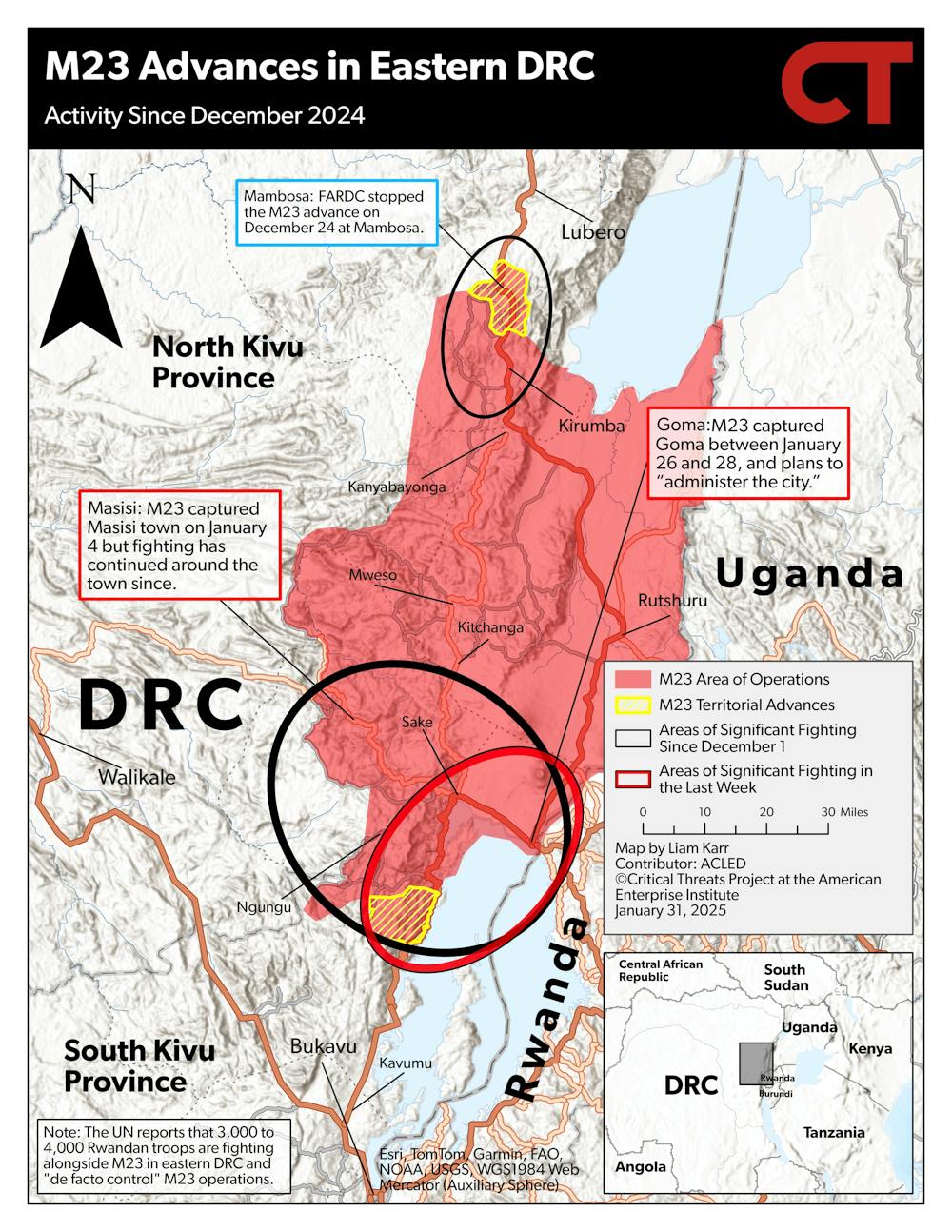
In a major escalation in the conflict in the eastern Democratic Republic of the Congo (DRC), rebels from the March 23 Movement – or M23 – have seized Goma, the capital city of North Kivu province. At least 773 people have been killed there since the M23 claimed to have won control on January 27, while rebels have also seized several other towns in North Kivu including Sake and Minova.
The rebels are now reportedly advancing towards Bukavu, the capital of South Kivu province. And Corneille Nangaa, who leads a rebel alliance of which M23 is the largest member, has vowed to march on the DRC’s capital in Kinshasa. Located 1,000 miles west of Goma, the capture of Kinshasa is unlikely. But the conflict still looks set to spread deeper into the DRC.
The speed of the M23 advance has taken many by surprise. The rebels captured Goma, a city of 2 million people, within just three days. But the conflict between the DRC and the M23, which takes its name from the 2009 date on which a deal was reached to end a revolt by members of the ethnic Tutsi group, has been grinding on intermittently for years.
Beginning in April 2012, when the M23 was formally created, the conflict has its roots in the same deep ethnic divisions that led to the Rwandan genocide in 1994. Following the genocide, where radical ethnic Hutus killed roughly 800,000 minority Tutsis, many Hutu extremists fled over the border into the DRC and settled in areas including North Kivu.
The M23 seeks to act as a self-defence force for Congolese Tutsis against discrimination both by the DRC and non-state actors. This includes targeting by the Democratic Forces for the Liberation of Rwanda, a Hutu-dominated rebel group that seeks to overthrow the Rwandan government. The group has in the past committed egregious acts of violence against civilians in North Kivu, including mass killings and sexual violence.
The seizure of Goma is crucial for several reasons. First, it means that a sizeable and strategically important border province of the DRC is now in rebel hands. North Kivu is an active volcanic region that is rich in various minerals such as coltan, which is used in electronic equipment and the aerospace industry.
In May 2024 the M23 seized Rubaya, a key mining town that produces 15% of the world’s coltan. Since then, the group has generated considerable income from controlling mineral production and trade. Indeed, the Global Initiative against Transnational Organized Crime labels the agendas of armed groups in the eastern DRC as “profit-driven”.
Second, the capture of Goma has exacerbated inter-state tension between the DRC and Rwanda, raising the prospect of another inter-state war. News of the prized seizure came hours after the DRC’s foreign minister, Thérèse Kayikwamba Wagner, accused Rwandan troops of invading Congolese territory.
A UN report from 2013 found that Rwanda not only supports the M23 group, but actively commands its troops. UN experts now estimate that there are up to 4,000 Rwandan troops fighting alongside the M23 in the DRC. Rwanda has denied backing the M23 despite ample evidence to the contrary.
The Congolese government says Rwanda’s involvement is part of a ploy to exploit North Kivu’s vast mineral resources. In a report from December 2024, a panel of UN experts wrote that “fraudulent [mineral] extraction, trade and export to Rwanda” benefited both the M23 “and the Rwandan economy”. According to the Rwandan government’s own figures, the country exports far more gold than it mines.
And third, the escalating conflict will deepen an already grave humanitarian crisis in the region. In March 2024, the UN reported that the number of internally displaced people in the DRC had reached 7.2 million – one of the largest such crises in the world. It is estimated that over 6 million civilians in the east of the DRC are now facing high levels of food insecurity.
What next
The DRC and Rwandan governments have already gone to war on two previous occasions, once in 1996 and then again in 1998 in what turned into a more protracted five-year conflict. The first war was triggered by Rwanda’s invasion of the DRC to target anti-Rwandan rebel groups seeking refuge there. The war soon drew in other states and became known as Africa’s first world war. Since 1996, conflict in the eastern DRC has killed approximately 6 million people.
Yet despite this increased tension, there are hopes that a diplomatic solution can be reached. In the past, warring factions in the eastern DRC have agreed to temporary ceasefires following intensive mediation by international institutions such as the East African Community and the African Union, as well as neighbouring countries like Angola.
However, previous ceasefires have also been violated by both sides. And the stakes are arguably higher this time, with the DRC losing further territory and control over strategic cities to the rebels.
The Congolese government may be reluctant to accept peace conditions until it regains control over lost portions of territory. Indeed, the Congolese president, Félix Tshisekedi, has already snubbed prospective peace talks to establish a ceasefire.
Western powers hold key leverage, and may be able to subdue the M23 insurgency. France has given its backing to the DRC government and has warned of the catastrophic humanitarian consequences should the situation deteriorate further.
The US and other major powers like the UK have also withdrawn state funding for Rwanda in the past over its support for the M23 insurgency. In 2013, for example, cuts to foreign aid forced Rwanda to scale back its support for the rebels, both through reduced military training and supply runs. The UK government has threatened to withdraw funding to Rwanda again following the M23’s capture of Goma.
Belgium, on the other hand, is leading calls for the EU to suspend a controversial minerals deal with Rwanda that boosts the bloc’s access to several elements in exchange for funding to help Kigali develop its mineral extraction infrastructure. When the deal was signed in 2024, Tshisekedi described it as “a provocation in very bad taste”.
In any case, a ceasefire between the DRC and the M23 is not enough. What is needed is a long-term, durable solution that addresses the root causes and fears that are driving the armed conflict.
Dale Pankhurst does not work for, consult, own shares in or receive funding from any company or organisation that would benefit from this article, and has disclosed no relevant affiliations beyond their academic appointment.
Peat swamp in Danau Sentarum National Park, West Kalimantan.(Bramanthya Fathi Makarim/Shutterstock)
Protecting and restoring peatlands and mangroves can strengthen Southeast Asian countries’ efforts to combat climate change, according to new findings from an international team of researchers.
Carbon-dense peatlands and mangroves comprise only 5% of Southeast Asia’s surface. Protecting and restoring them, however, can reduce approximately 770±97 megatonnes of CO2 equivalent (MtCO2e) annually. This is equal to more than half of the carbon emissions from land use in the region.
Conserving offers larger mitigation potential through reduced emissions from ecosystem loss in the region compared to gains from restoration. If optimally implemented, restoration can still play an important role in nature-based carbon sequestration.
Having peatlands and mangroves included in the new climate pledges (Nationally Determined Contributions 3.0) can help countries set higher emissions reduction targets for 2030 and 2035.
More benefits to offer
The study reports extensive climate benefits from conserving and restoring peatlands and mangroves. Therefore, they make effective natural climate solutions for Southeast Asian countries.
Both ecosystems protect organic matter from decay under natural conditions, acting as net carbon sinks. This means that carbon uptake exceeds carbon loss.
Net carbon gains are mainly accumulated in their soils instead of their vegetation. More than 90% of carbon stocks in peatlands and 78% in mangroves are in their soils.
At scale, protecting and restoring both types of wetlands also supports other valuable co-benefits. These include biodiversity preservation, water quality improvement, coastal protection, food security and rural development for millions of coastal people across Southeast Asian countries.
Challenges remain
Despite the benefits, many challenges and risks persist in conserving and restoring peatlands and mangroves.
When peatlands and mangroves are disturbed – commonly due to land use change – they release large quantities of carbon into the atmosphere. This release can later exacerbate climate change.
The new estimates suggest that changes in their land use for the past two decades (2001-2022) had caused the release of approximately 691±97 MtCO2e of excess emissions.
Indonesia accounts for the largest portion of the region’s emissions, accounting for 73%. Malaysia (14%), Myanmar (7%), and Vietnam (2%) follow. The other seven Southeast Asian countries generate the remaining 4% of emissions.
In Southeast Asia, mangroves and peatlands are often treated as unproductive land. Still, they have long been subject to agricultural land expansion planning.
Despite these challenges, government and corporate interest in developing conservation and restoration-based carbon projects for peatlands and mangroves is rapidly increasing.
That is why now is a good opportunity to recognise their vital roles — not only for climate change mitigation — but also for people and nature.
Implications for national emissions reduction targets
The new study addresses a critical gap in climate policy for Southeast Asian by providing annual climate change mitigation potentials from peatlands and mangroves.
Climate mitigation potential for national land-use emissions varies widely between countries.
The findings suggest that it could reduce national land-use emissions by up to 88% in Malaysia, 64% in Indonesia, and 60% in Brunei. Other countries include Myanmar at 39%, the Philippines at 26%, Cambodia at 18%, Vietnam at 13%, Thailand at 10%, Laos at 9%, Singapore at 2%, and Timor-Leste at 0.04%.
In its 2022 NDCs, Indonesia plans to reduce its annual emissions from FOLU by 2030 between 500-729 MtCO2e, depending on the level of external support. According to the study, this figure is within the same order of mitigation potential as peatlands and mangroves can collectively generate.
However, peatland and mangrove mitigation potentials are insufficient to avoid dangerous levels of climate change in the future.
Decarbonisation remains the most effective means of curbing climate change and its impacts, with peatland and mangrove protection enhancing these efforts.
Susan Elizabeth Page menerima dana dari University of Leicester, UK.
Dan Friess, David Taylor, Massimo Lupascu, Pierre Taillardat, Sigit Sasmito, dan Wahyu Catur Adinugroho tidak bekerja, menjadi konsultan, memiliki saham, atau menerima dana dari perusahaan atau organisasi mana pun yang akan mengambil untung dari artikel ini, dan telah mengungkapkan bahwa ia tidak memiliki afiliasi selain yang telah disebut di atas.
For Canada, the tariffs on Canadian products will significantly affect Canada’s competitiveness in the U.S. market by driving up prices. Such tariffs could pose serious challenges for various sectors in Canada, given the country’s heavy reliance on the U.S. economy.
Effects on different sectors
The impact of U.S. tariffs on Canadian prices is likely to differ across sectors and products, depending on their reliance on the U.S. market.
Sectors with a higher dependence on U.S. trade are likely to experience more severe disruptions. If the tariffs make certain products uncompetitive, Canadian producers may struggle to secure alternative markets in the short term.
In the agricultural and forestry sector, wood and paper products, along with cereals, are among Canada’s largest exports to the U.S., with the U.S. accounting for 86 to 96 per cent of these exports, according to data from the World Integrated Trade Solution.
When examining the impact on different products, it’s not only the value of trade that matters, but also the share of trade. The share of trade indicates how reliant Canada is on the U.S. compared to other markets.
A high trade share with the U.S. suggests a product is particularly vulnerable to trade disruptions, as Canada depends heavily on the U.S. market for that product. Conversely, a lower share indicates that Canada has diversified suppliers, which reduces its dependence on the U.S.
For instance, in 2023, Canada’s top exports to the U.S. included vehicles and parts, nuclear machinery and plastics, according to data from the World Integrated Trade Solution. The U.S. accounted for 93 per cent of vehicle and parts exports, 82 per cent of nuclear machinery exports, and 91 per cent of plastics exports.
This data highlights Canada’s extreme dependence on the U.S. market, making these industries within the manufacturing sector highly susceptible to the tariff. This could harm jobs in the manufacturing sector, which is vital to employment in Canada, providing jobs for over 1.8 million people.
Canada’s reliance on the U.S. is also evident in imports. In 2023, vehicle imports totalled US$92 billion, with the U.S. accounting for 58 per cent of that amount.
The dependence is also evident in the agri-food and forestry sector, where Canada heavily relies on U.S. imports. This suggests that retaliatory tariffs on agricultural goods from the U.S. could have a substantial impact on food prices in Canada.
Prime Minister Justin Trudeau says this includes immediate tariffs on $30 billion worth of goods as of Tuesday, followed by further tariffs on $125 billion worth of American products in 21 days’ time to “allow Canadian companies and supply chains to seek to find alternatives.”
This will include tariffs on “everyday items such as American beer, wine and bourbon, fruits and fruit juices, including orange juice, along with vegetables, perfume, clothing and shoes,” and also on major consumer products like household appliances, furniture and sports equipment, and materials like lumber and plastics.
Given Canada’s significant dependence on U.S. imports, the retaliatory tariffs will raise the cost of American goods entering the country, further driving up consumer prices and exacerbating inflation.
In its latest policy rate announcement, the Bank of Canada warned of the severe economic consequences of Trump’s tariffs, highlighting their potential to reverse the current downward trend in inflation.
What should Canada do now?
Canada must extend its economic diplomacy efforts beyond the Trump administration, engaging with the U.S. Congress and Senate to advocate for the reconsideration of tariffs on Canadian goods. The Canadian government should persist in leveraging this channel to push for a reversal of the tariffs. This kind of broader negotiation remains the most effective approach to mitigating trade tensions and ensuring stable economic relations with the U.S.
At the same time, Canada must reduce dependence on the U.S. market by adopting a comprehensive export diversification strategy. While the U.S. remains a convenient and accessible trade partner, expanding into emerging and developing markets would help mitigate risks and create more stable long-term trade opportunities.
One effective way to achieve export diversification is by expanding free trade agreements (FTAs) with emerging and developing economies. Currently, Canada has 15 FTAs covering about 51 countries, but there is room for expansion. However, signing FTAs alone is insufficient; Canada must ensure these agreements translate into tangible trade growth with partner countries.
International politics is increasingly shaping global trade, making it imperative for Canada to proactively manage diplomatic and trade relations. In recent years, tensions have emerged with key partners such as China, India and Saudi Arabia. These countries could all become potential markets for Canadian products. Given that China is Canada’s second-largest export destination, there is significant potential to expand trade ties.
Canada stands at a critical juncture in its trade relationship with the U.S. While diplomatic efforts remain essential to averting harmful tariffs, they cannot be the country’s only line of defence.
Boosting productivity is one of the most effective ways for Canada to improve its competitiveness in global markets. Canadian producers should prioritize innovation and the adoption of advanced technologies to enhance efficiency and maintain a competitive edge, particularly as they seek to expand beyond the U.S.
In response to potential U.S. tariffs, the Canadian government should implement a bailout strategy to provide short-term relief and mitigate revenue losses to firms that will be mostly affected. Additionally, Canada should leverage its embassies and consulates worldwide to promote exports and help affected firms identify and access new market opportunities.
By doing this, Canada can position itself as a more self-reliant and competitive player in the global economy — one less vulnerable to shifting U.S. policies.
Sylvanus Kwaku Afesorgbor receives funding from the OMAFRA and the USDA. He is affiliated with the Centre for Trade Analysis and Development (CeTAD Africa).
Naduni Uduwe Welage and Promesse Essolema do not work for, consult, own shares in or receive funding from any company or organisation that would benefit from this article, and have disclosed no relevant affiliations beyond their academic appointment.
Nonetheless, Canada’s closest ally is all but tearing up the Canada-U.S.-Mexico trade deal negotiated only seven years ago. The rationale behind what the Wall Street Journal editorial board has called “the dumbest trade war in history” isn’t even clear.
The pessimistic view is that if Canada doesn’t give Trump everything he wants, he will bulldoze the country with more tariffs, sanctions on banks, enhanced border inspections and even a travel ban — everything he recently threatened to do to Colombia.
Canada’s political class is scrambling because the U.S. has long been a cultural sibling and an economic partner. But now it is toxic, threatening and untrustworthy. Will Canada sign another trade deal with Trump in office? The chances recede the longer the tariffs remain in place.
Iron-fisted
It’s never been more clear that Trump is obsessive, seldom a bluffer and always iron-fisted. He seems to have planned and executed this tariff bomb to cause maximum pain and chaos. Now he says the European Union is next on his list.
Trump is counting on his new majorities in U.S. Congress to ram through his radical right populist agenda, forcing other countries to play a role in his melodrama.
In response to Trump’s charge that the U.S. subsidizes Canadian trade, former Conservative prime minister Stephen Harper pointed out that half of America’s imported oil comes from Canada, and its price is significantly discounted due to a lack of pipeline capacity. “It’s actually Canada that subsidizes the United States in this regard,” Harper said.
Nevertheless, Trump’s preferred foreign policy tactic is to hit first with economic sanctions and negotiate later. With his near total grip on U.S. government, he can now achieve all his aims through tariffs.
For example, America’s 19th-century navy of wooden sailing ships was purchased with tariffs. But it would be impossible to fund modern-day health care, student loans and $13 billion aircraft carriers with tariff revenues.
A recent study by the Peterson Institute for International Economics shows the math doesn’t add up. Tariffs are levied on imported goods and are worth about US$3 trillion. American income tax is levied on incomes and are worth more than US$20 trillion. Government would have to be much smaller, and tariffs would have to be so high they would choke American trade, for tariffs to make economic sense.
And yet Trump has a broad mandate. In the summer of 2024, the U.S. Supreme Court ruled in Trump v. United States that presidents require a broadly defined “presumptive immunity from prosecution for … official acts.”
This decision has given Trump the legal clout to force the entire federal government to answer to the president himself.
Trump is using his vast new mandate to wage multiple wars simultaneously. These wars against the guardrails of liberal democracy require the punishment of his enemies inside his own party.
Republicans who have voted against Trump legislation during his first term faced high-profile challenges in the primaries as he funded their opponents. Today, the war is waged against those who are insufficiently loyal, including the highest ranks of the Coast Guard and the FBI.
The war against the administrative state involves the mass firing of independent inspectors, federal lawyers and thousands of civil servants to be replaced by foot soldiers personally loyal to the leader.
The Trump administration has sent out “deferred resignation” notices that invite the entire civil service to resign. This is the tactic Trump’s key adviser, Elon Musk, implemented at X, and it suggests a wave of firings will soon begin.
Nonsensical trade war
The trade war against Canada and Mexico is peculiar because neither country has expressed any willingness to abolish the United States-Mexico-Canada Agreement, which is among the achievements of Trump’s first administration.
Nevertheless, the paranoid Trump seems to be convinced that he got a raw deal in 2018, and so he wants to scrap the whole treaty and negotiate something tougher that brings more jobs home.
In 2024, the cars that were ranked most “American” in terms of their content and final assembly were made by Tesla, Honda and Volkswagen. By comparison, the best-selling the Dodge Ram 1500 pickup truck ranked No. 43 on the list. What Trump considers American and non-American isn’t clear, even to voters.
A new Bank of Canada forecast predicts that American tariffs may reduce Canadian GDP by six per cent. The federal government is planning an enormous bailout package to compensate for widespread job losses like the one offered to businesses and individuals during the pandemic.
Unsurprisingly, Trump divides Canada’s leadership. Alberta and Saskatchewan have publicly criticized the Team Canada approach. Alberta Premier Danielle Smith refused to sign the joint federal/provincial statement and played to her secessionist base.
Even so, former Alberta premier Jason Kenney recognizes the peril, arguing that Alberta needs to “be prepared to retaliate … we can’t be wusses about this; we have to have a spine.”
What’s next?
Canada is an export-led economy based on natural resources. Its strength lies not in refusing to buy California wine or Florida orange juice. Its main sources of leverage are oil and gas, potash and uranium, rare earth minerals, timber products and hydroelectric power. But of all these, oil, uranium, and hydro-electric power are Canada’s biggest guns.
It’s not yet clear how effective the Canadian government’s strategy will be. Previous rounds of retaliation after the steel and aluminum tariffs in Trump’s first term did not drive him to the negotiating table. It’s also unclear what the CEOs of Canada’s branch-plant multinational corporations will do when their loyalties are divided between Trump and Canada.
Furthermore, it’s anyone’s guess how much the dissent of western Canadian premiers has hurt Canada’s case with Trump. Certainly, his preferred tactic is to divide and conquer.
Finally, it’s unclear if Ontario Premier Doug Ford’s “Captain Canada” approach will earn the respect or disdain of Republicans — although, ultimately, it doesn’t matter what the rest of the American political class thinks because Trump and his inner circle are calling all the shots.
The authors do not work for, consult, own shares in or receive funding from any company or organisation that would benefit from this article, and have disclosed no relevant affiliations beyond their academic appointment.
Source: The Conversation – USA – By Matthew Kriner, Director of Strategy, Partnerships and Intelligence at the Center on Terrorism, Extremism, and Counterterrorism, Middlebury Institute of International Studies
Once again, a presidential administration headed by Donald Trump is in the spotlight over allegations of hiddenfascist sympathies. This time, it’s precipitated by what one observer called a “stiff-armed salute” that presidential supporter and adviser Elon Musk did twice during inauguration festivities.
Musk turned the controversy over his gesture into something like a joke about Nazis. On X, he posted, “Don’t say Hess to Nazi accusations!” and “Bet you did nazi that coming.”
This is not the first time that Trump or someone close to him has been accused of sending fascist messages, even if they denied doing so. Nor even is it the first time a well-known figure endorsing Donald Trump has been accused of giving a Nazi salute.
As a scholar of far-right extremism, I regularly review instances of coded fascist symbols and other right-wing messages being sent by public figures and their supporters, some more obvious than others.
Laura Ingraham speaks and gestures at a Trump rally in 2016.
In 2021, the Conservative Political Action Conference set up its center stage in the shape of an odal rune. That is an ancient pagan symbol coopted by Germany’s Nazi regime and worn prominently during World War II on the uniforms of the brutal Waffen SS units. Social media erupted in outrage over the likeness, and columnists spilled much ink. Event organizers rejected the criticism, calling it “outrageous and slanderous.”
Trump himself has been reluctant to criticize white supremacists. In August 2017, he responded to a reporter’s statement that neo-Nazis had “started” the violence during and after a rally they held in Charlottesville, Virginia, by saying “(t)hey didn’t put themselves down as neo-Nazis. And you had some very bad people in that group. But you also had people that were very fine people on both sides.”
During the September 2020 presidential debate, Trump responded to a request from moderator Chris Wallace to condemn right-wing paramilitary groups by instead referencing one of them, saying, “Proud Boys, stand back and stand by.”
The night before the ‘Unite the Right’ rally in Charlottesville, Va., in August 2017, people carrying torches and chanting fascist slogans marched through the University of Virginia campus.
Coded messages
In other more abstract and lesser-known incidents, Trump may make his sympathies known without making direct statements himself. And I have personally observed white supremacists remark upon – and take encouragement from – these implied messages on Telegram channels dedicated to antisemitism and hate.
In June 2020, Facebook removed Trump campaign ads for iconography invoking Nazi concentration camp symbols that “violat(ed) our policy against organized hate.” A campaign official disputed the association, saying other groups, including Facebook and anti-fascist groups, used the same symbol.
In September 2024, pro-Trump CEO Mike Lindell’s company MyPillow ran a sale discounting a pillow from $49.98 to $14.88. Critics quickly pointed out that this aligned with the 14-word white supremacist slogan and the numerical reference “88” that white supremacists use to mean “Heil Hitler,” because H is the eighth letter of the alphabet. Lindell denied any connection between the price and right-wing messaging.
A list of the 14 people whose Jan. 6-related sentences President Donald Trump commuted. Screenshot of WhiteHouse.gov
Sending these sorts of fascist and white supremacist messages allow Trump and his supporters to court right-wing extremist supporters while claiming innocence in the face of public outrage.
If they deny the allegations of veiled fascism or white supremacy, Trump and his backers can claim their opponents are inflamed against them and conducting ideological witch hunts.
Family members and friends of people imprisoned for their actions on Jan. 6, 2021, wait outside the Washington, D.C., jail for their release on Jan. 22, 2025. Celal Gunes/Anadolu via Getty Images
But failure to directly deny allegations of fascism is a common strategy used by far-right and radical conservative movements seeking to obscure deeper links to extremist groups to avoid public backlash.
The lack of explicit admission can end up leaving these actions and symbols open to interpretation. Trump’s MAGA movement members, led by his inner circle of advisers and lieutenants, have consistently sought to use outrage and anger to generate additional momentum and attention for their agenda.
But as the old saying goes, “where there’s smoke there’s fire” – and in this case the smoke is probably closer to a book-burning bonfire in Berlin than a tiki torch carried in Charlottesville.
Matthew Kriner does not work for, consult, own shares in or receive funding from any company or organization that would benefit from this article, and has disclosed no relevant affiliations beyond their academic appointment.
Source: The Conversation – Canada – By Carmela Cucuzzella, Dean, Faculty of Environmental Design, Université de Montréal, Full Professor School of Design, Université de Montréal
Those designing university courses should ensure issues of universal accessibility are embedded throughout a student’s academic journey.(Shutterstock)
People living with disabilities, ranging in severity, regularly face barriers. Oftentimes, built environments are designed in ways that fail to consider the needs of those in situations of disability. That can include improperly sized ramps for wheelchair users or public spaces that are not sensory friendly.
If our public spaces are not accessible to all, then they cannot be truly public. The first step in changing our built environment is to bring awareness to the different forms of disabilities that people in Canada experience.
As a professor in a school of design and the dean of the Faculty of Environmental Design at the Université of Montréal, I believe it’s urgently important to explore how faculties of architecture, design, landscape architecture and urbanism can inform design practices through the way we teach and conduct research.
Our objective must be to teach students how to make our built environment more inclusive and universally accessible through creative means rather than basic technological add-ons.
In 2022, the Canadian Survey on Disability showed that 27 per cent of Canadians aged 15 years and older had one or more disabilities that impacted their daily activities. (Shutterstock)
Standards exist for accessibility and inclusivity in Canada, but they are not systematically applied. Furthermore, when designing for universal accessibility, the emphasis is on conformity rather than experience, on separation rather than integration, and on functionality rather than fulfillment.
Take, for example, a multi-storey office building that provides separate entrances and facilities for people with disabilities. The building complies with the minimum accessibility requirements set by local building codes, but does so in a way that isolates people with disabilities rather than integrating their needs into the overall design. This building does not provide the same experience to all people and therefore separates rather than includes diverse populations.
The universal accessibility of public spaces and buildings is a complex design problem. It is especially difficult for retrofits, since solutions can quickly become costly, particularly in heritage buildings.
But if changes are managed carefully, costs can become manageable. Universal accessible design is also challenging for new buildings and spaces, but if universal design is prioritized right from the outset of a project, architects and developers can create inclusive environments that accommodate diverse needs without incurring substantial additional expenses.
Universities that offer teaching and research programs in universal accessible design can make a real difference. (Shutterstock)
How universities can help
Universal accessible design is not just a question of following a set of codes, but rather a question of designing for an equitable, qualitative accessible experience. This means ensuring that all people, regardless of their physical or mental situations, are offered equivalent spatial experiences.
Universities that offer teaching and research programs in a universal accessible design can make a real difference. But it’s integral that teaching is developed alongside the research, as understanding of needs and best practices are in continual renewal.
Faculties with such programs and courses could achieve this by enabling students through creative engagement of this difficult subject. Furthermore, being in these design environments allows students to understand these societal issues as leverage for innovative solutions, rather than just satisfying building codes.
Those designing university courses should ensure issues of universal accessibility are embedded throughout a student’s academic journey, and included in a way that helps empower the graduating students.
Students graduating from these programs will become the young professionals in the fields of design, architecture, urbanism or landscape architecture.
Unfortunately, the exact likelihood of students specializing in universal accessibility — and applying their knowledge in their careers — is challenging due to limited specific data. But there is an increasing recognition of the importance of accessibility in various sectors, leading to more roles that require expertise in universal design and inclusive practices.
Incorporating more discussion on universal accessibility in the classroom and in university research environments can help students apply their expertise in the design of our built environment throughout their careers.
By fostering dialogue between research, education and practice, universities can ensure a future where accessibility is seamlessly integrated into the every day.
Carmela Cucuzzella receives funding from FRQSC and SSHRC.
Source: The Conversation – UK – By Takahiro Kubo, Senior Researcher in National Institute for Environmental Studies (NIES) & Visiting Researcher in ICCS, University of Oxford
Governments often use bans to protect wildlife that’s most threatened by trade. However, in our recent study we ask the question: could banning wildlife trade in one threatened species increase the trade in other threatened species?
The expansion of online markets has made it easier for people to buy and sell wildlife. This potential for larger-scale commercial trade creates a potential threat to wildlife, particular when populations are small, which is often the case for species that inhabit islands.
To deal with the risk of overexploitation, the government of Japan, one of the world’s largest wildlife markets, banned the trade of three threatened species: the giant water bug, the Tokyo salamander and the golden venus chub.
While the ban successfully halted legal sales of the policy-targeted species, it had an unintended consequence: an increase in the sales of similar, non-banned species, some of which are threatened.
This pattern, known as the “spillover effect”, suggests that when a species is no longer available, demand often moves to alternative species rather than disappearing entirely. However, these effects affected different species in different ways, with the spillover lasting for more than a year for water bugs, but disappearing over the same period for the salamanders and freshwater fish.
These spillovers can be problematic as they can drive buyers to seek exotic pet species from other countries or even continents. Based on past experience in Japan and elsewhere, we know that these are often then released into nature by those that can no longer keep them. This increases the pressure on native fauna through competition and the spread of disease which may threaten not only native wildlife but also human health. Our findings highlight the need for a more comprehensive approach to wildlife trade regulations – one that considers both direct conservation efforts and indirect global impacts.
Balancing bans
While wildlife trade bans can play an important step, their ability to address overexploitation on their own is limited. To conserve species, we need complementary strategies that can manage demand and monitor supply.
Prior to a ban, it is key to work to reduce the demand for the species to be targeted or redirect it to species that are well managed and not of conservation concern. This would be likely to minimise the effects of any unintended spillover after the trade ban comes into effect. If buyers understand why a species is at risk and are offered sustainable alternatives, they may be less likely to shift their interest to other vulnerable wildlife.
Governments also need to enforce stronger monitoring to be able to track which species are traded and in what amount. This may be hard to implement across all trade but is feasible when we talk about online legal trade, which represents a large part of the global wildlife trade. Instead of focusing only on banned species, authorities should keep an eye on similar species that could become the next target for trade.
For this to be effective, international cooperation, in the form of data sharing, for example, is critical since wildlife trade crosses borders. Countries need to work together to track and regulate trade so that bans don’t simply push demand to other regions.
Finally, promoting legal, ethical and sustainable alternatives – such as responsible captive breeding programs or well-managed wild source populations – can help meet consumer demand without harming wild species.
Our study serves as an important reminder: conservation has no silver bullets and we must be willing to embrace a multitude of tools if we are to deal with the different sides of an issue as complex as the wildlife trade. If we only focus on banning species without considering how the market will react, we risk simply moving the risk of extinction from one species to the next. A well-rounded approach – one that includes consumer behaviour change, improved monitoring and sustainable alternatives – offers the best chance of protecting wildlife for the long term.
Don’t have time to read about climate change as much as you’d like?
Takahiro Kubo receives funding from Japan Society for the Promotion of Science (JSPS). He is a member of the IUCN SSC CEC Behaviour Change Taskforce.
Diogo Veríssimo is the Chair of the IUCN SSC CEC Behaviour Change Taskforce.
Taro Mieno does not work for, consult, own shares in or receive funding from any company or organisation that would benefit from this article, and has disclosed no relevant affiliations beyond their academic appointment.
Professors and students alike argue that unrestricted use of generative AI threatens the purpose of an education in disciplines like philosophy, history or literature. They say that, as a society, we should care about this loss of intellectual competencies.
But why is it important that traditional learning not become obsolete — as some predict?
Today, when corrupt leaders promote AI development, AI reflects repressive political biases. There are serious concerns about AI disinformation, so it’s critical to consider the original purpose of modern universities.
The German term Bildung captures this broad understanding of the educational process, denoting the activity of shaping yourself according to your inner purpose.
For the philosophers of Bildung, self-development couldn’t take place in isolation but required a community of equals where mutual recognition and critical engagement with each other unlocked everyone’s potential.
They envisioned the university as a community of learners where teachers facilitate the self-development of students by supporting their critical faculties instead of adapting them to fulfil predetermined roles for society. They believed education should prepare for lifelong learning about the self and world.
It was Humboldt who turned these lofty ideals into concrete reforms, laying the groundwork for the modern university and its research-led teaching model. For Humboldt, the realm of Bildung had political significance.
Living under Prussian absolutism, he feared the paternalism of the state that turned its citizens into loyal subjects under the pretence of furthering their spiritual and material welfare.
He was critical of the attempt of Frederick the Great, the Prussian king, to regulate economic life and to control private consumption. Humboldt saw such a concentration of power as a despotic tendency that all forms of government could succumb to, including oligarchy and democracy. He therefore insisted on spaces for individual expression and free association. Literary salons were the initial community space for Bildung, and were a model for the modern idea of universities.
A drawing by Georg Melchior Kraus depicts the salon of Duchess Anna Amalia, showing, among others, writer Johann Wolfgang von Goethe in discussion. The image suggests the important role of women and community in the Bildungs context. (Wikimedia)
The Declaration of the Rights of Man and of the Citizen from 1789 restricted active citizenship to male property owners and did not abolish slavery. Advocacy for applying equal rights to all was soon taken up by members of oppressed groups to justify their emancipatory pursuits.
Early feminists in late 19th-century Germany, such as the philosopher and writer Hedwig Dohm, demanded access to educational institutions so that women could also “become who they are.”
We find a similar battle cry in the United States, where writer and educator Anna Julia Cooper regarded the higher education of Black women as a key step to social change.
I believe that the idea of Bildung still captures the value of humanities education. In-depth engagement with the complex manifestation of human cultures seen in philosophical ideas, forms of knowledge or literary texts fosters important skills necessary for self-development.
Students learn critical thinking, enabling them to question authorities and discern their own convictions from received values. They experience thinking as a process which takes time and demands the exploration of different points of view — similar to democratic decision-making.
Methods to understand others are therefore an important subject of the humanities. The humanities nurture the ability to connect and to develop solidarity with each other.
The classroom itself is a space where students experience understanding as a collaborative process by discussing with their peers and the instructor.
Instructors must actualize high-level pedagogical goals by creating concrete exercises through which intellectual skills can be learned and practised.
Assessing claims, justifying evaluations
Writing an essay has been the pinnacle of traditional humanities education, since it demands employing the full set of interpretative tools such as identifying sources, analyzing arguments, assessing claims and justifying evaluations independently. It also demands expressing oneself intellectually.
Basic analytic skills such as formulating an argument or giving an objection can be taught in class. But in-class assignments cannot replace pondering an issue over some time and expressing one’s interpretation of it.
The important exercise of individual study is deprived of its value when students use technological shortcuts to complete writing tasks. AI-driven chatbots undermine a key part of the learning process through which students improve their critical thinking. This happens through sustained engagement with complex issues, through which students grow by overcoming challenges and practising habits of thinking.
Relying on AI can undermine processes through which students improve their critical thinking. (Pexels/Cottonbro)
In the U.S., as seen recently in Donald Trump’s second presidential inauguration, the economic elite dominates the political system. Tech oligarchs have found a president who is using his vast powers to further their interests and is prepared to do so without checks and balances.
More than ever, we need citizens who have learned to think for themselves and developed capacities for paying attention to and caring about complex challenges in our ever-changing world.
At their best, the humanities are a laboratory to cultivate essential skills for critically assessing the status quo and imagining better alternatives in both political and economic life.
Johannes Steizinger does not work for, consult, own shares in or receive funding from any company or organisation that would benefit from this article, and has disclosed no relevant affiliations beyond their academic appointment.
A nationwide plan to digitise immigration documents recently came into force. Since January 1, millions of foreign nationals who live in the UK must now use digital-only status documents, as all biometric residence permits expired at the end of 2024.
The Home Office says an online system will mean faster processing times and lower risk of fraud. However, the rollout has created significant problems for some migrants, with reports of non-citizens being denied entry to the UK after border agents did not accept their proof of status.
My recent work with colleagues at the Oxford Migration Observatory suggests this was predictable. When migration rules and processes change, non-citizens are less likely to understand the rules. This can have serious consequences, as their access to housing, employment and healthcare hinges on their ability to show they have a valid immigration status.
Even when migrants do understand the rules, they may still experience problems proving their status if the people they interact with – such as employers and landlords – do not, or if the processes are unclear. This has been the case for some Ukrainians in the UK, who have been unable to renew their tenancies and face losing their jobs because of uncertainty surrounding visa extensions.
Want more politics coverage from academic experts? Every week, we bring you informed analysis of developments in government and fact check the claims being made.
The results of an online survey by the Migration Observatory reveal non-UK citizens’ knowledge of the rights and conditions attached to their immigration status. The survey asked respondents which immigration status they held, a question not usually included in British surveys or the census.
Using this data, we compared the experiences and understanding of people who received their status under the EU Settlement Scheme (EU citizens and their family members who came to the UK under EU free movement rules) and those with “non-EUSS” statuses (typically non-EU citizens arriving on family, work or study visas).
We found that migrants were less likely to understand their rights and responsibilities when immigration rules related to their situation had recently changed.
There was, for example, no consensus among EUSS pre-settled status holders (people who arrived in the UK under EU free movement but have lived in the UK for fewer than five years) as to whether their status had an expiry date. While 72% said their status would not expire, 17% said they would need to reapply, and 11% did not know. For comparison, 99% of respondents with temporary immigration statuses – such as a work or family visa – knew their status had an expiry date.
One likely reason for the confusion is that the situation is genuinely a bit complicated and keeps changing. When the EU settlement scheme was introduced, pre-settled status lasted for only five years. People who did not upgrade to the more secure “settled status” would see their leave expire.
However, since December 2022, people with pre-settled status can stay in the UK indefinitely if they still meet the original eligibility criteria. Rules on permitted absences (the amount of time somebody can spend outside the UK without it affecting their immigration status) have also changed several times.
Similarly, almost a third of in-work pre-settled status holders did not know they were eligible for most benefits, such as universal credit. This is another area where the rules have evolved following several court cases. A surprisingly high share also did not know they were entitled to free NHS hospital treatment.
By contrast, pre-settled status holders were more likely to know they could work for any employer, an area where the conditions for access have been consistent. This suggests that some people who are not aware of what they are entitled to access may refrain from seeking support they require.
Changing immigration processes
To access the labour and housing markets, receive secondary healthcare, or get married, migrants must show they hold valid leave (permission to live in the UK). At the time of the survey, most non-EUSS status holders could show a physical document, such as a biometric residence permit.
Most EUSS status holders, however, had a digital eVisa. This is a relatively new addition to the immigration system. People with an eVisa prove their status by presenting a “share code” linked to gov.uk.
Most respondents from both groups – 92% – had not experienced issues proving their right to live and work in the UK. However, problems were more common among people with a digital-only status than with physical documentation.
In addition, this group faced different challenges — 48% of digital-only respondents who encountered an issue said it was because the person checking their status would not accept the proof provided, compared to 29% of people with physical documentation.
While most people with a digital-only status were confident they could generate a share code to demonstrate their status to an employer or landlord, a substantial minority of older respondents lacked this confidence. People who had experienced a problem proving their status in the past also lacked confidence, and they considered having a physical card to prove their status to be more important to them.
The challenges migrants face in navigating the UK immigration system are unlikely to disappear — rules and processes will continue to evolve in the years ahead in response to changes in UK migration patterns more broadly. However, policymakers cannot assume that everyone understands the rules, particularly when they keep changing.
Ben Brindle does not work for, consult, own shares in or receive funding from any company or organisation that would benefit from this article, and has disclosed no relevant affiliations beyond their academic appointment.
Have you ever bought a souvenir from a local market on holiday? Or tried to travel overseas with a guitar? If so, you may have been stopped at the airport if your item contains animal or plant parts. This is because most countries, and also the EU, implement Cites, the Convention on International Trade in Endangered Species of Wild Fauna and Flora.
Cites is the main global agreement regulating international wildlife trade to ensure the protection of the 41,000 species covered by the convention. Under Cites, trade measures are established for species to ensure that international trade is legal and ecologically sustainable. For most species (96%), this comprises close regulation of trade. For more threatened species (3%), commercial international trade in wild animals and plants is banned (the remaining 1% refers to a third category of species protected in at least one country).
Under Cites, countries must prohibit international trade in violation of the convention. They are also encouraged to restrict or prohibit the collection of – and domestic trade in – Indigenous species included under Cites. Crucially, countries must enact laws to implement the convention. By design, Cites relies mainly on state-led law-enforcement to achieve its goals.
This year, as Cites marks its 50th anniversary, our new study evaluates the convention’s effectiveness. It asks whether it solves the problem for which it was designed, as well as outlining how it could be more effective.
Taking stock
Cites has had several successes. It can boast an effective system of international cooperation among 184 countries and the EU. Much international trade in Cites-listed species is legally permitted and has been determined to be sustainable. The convention has helped raise the profile of, and catalysed conservation action for, species threatened by international trade, such as pangolins and seahorses.
The convention has also supported the recovery of species, such as crocodiles and vicuña, a member of the camel family that lives in South America. Since 2010, Cites has generated awareness of, and coordinated action to address, illegal wildlife trade, most notably through the establishment of the International Consortium on Combating Wildlife Crime.
However, there are some major problems with the Cites approach. Illegal or unsustainable wildlife trade involving thousands of Cites-listed species occurred in at least 162 signatory countries from 2015 to 2021. This includes countries such as the US that are well resourced to deter it. A predominant focus on state-led law enforcement is therefore proving ineffective in many instances.
We find that many law enforcement agencies are not well enough resourced to deter illegal collection and trade of species. Simply creating laws does not necessarily mean that people or businesses will comply with them.
Also, regulating or prohibiting international wildlife trade does not necessarily reduce the threat to the species concerned. These measures may signal scarcity and lead to price increases, which could accelerate over-exploitation by incentivising speculative collection and stockpiling. In this context, there is much room for improvement.
What needs to change
Deciding on appropriate Cites trade measures for species relies primarily on biological criteria, such as population size. Typically, that process does not involve consultation with the people extracting or trading wildlife. Nor does it really consider insights from the social sciences, including economics, on the likely impact of trade measures on wildlife and people. Decisions by the world’s governments to establish these measures are therefore highly uncertain.
To better prevent species from being overexploited for international trade through Cites, countries need to have a greater understanding of how different species are traded. This would enable them to identify the most appropriate combination of rights, rules and decision-making procedures along supply chains, and then pre-test and implement interventions specific to these systems.
Countries therefore need to analyse how species are traded. This would include looking at the relevant property rights and other laws that affect people involved in the trade, as well as understanding factors such as incentives for people to harvest species, the extent to which trade contributes to peoples’ income, and market size for traded species and products.
Countries could then reconfigure rights and rules so that they are aligned along supply chains. This is needed to avoid creating loopholes and facilitating illegal trade. Where trade (both within countries and between countries) is taking place, these arrangements should support it to be legal and sustainable. That’s the ultimate aim of Cites. The relevant actors, including collectors and traders should also be consulted – or better yet involved in co-designing regulations – so that the rules are legitimate to them.
The most appropriate interventions will depend on each country’s analysis of its own trading situation and their role in the trade of given species. They may include devolving land or use rights to Indigenous peoples so that they manage and can benefit from the species. Or interventions may be programmes to reduce consumer demand or develop responsible markets for wildlife products as appropriate.
The approach we propose in our study has the potential to reduce reliance on state-led law enforcement along international supply chains. Pluralist regulatory approaches, including self-regulation, community monitoring or the engagement of appropriate third parties, could be used to support compliance with new rules at each stage of supply chains. Where property rights are appropriately assigned, clear and enforceable, this could mean less reliance on state law-enforcement. This is because local people with a sense of ownership of wildlife are more likely to help protect it rather than overexploit it.
How could Cites be more effective? By understanding the dynamic trade systems for species in greater detail. Then, identifying the most appropriate combination of rights, rules and decision-making procedures to achieve sustainability throughout supply chains. And, finally, integrating Cites trade measures within these broader systems.
Don’t have time to read about climate change as much as you’d like?
Dan Challender receives funding from the Global Challenges Research Fund through the Trade, Development, and the Environment Hub, the A. G. Leventis Foundation, and the Paul G. Allen Family Foundation. He serves as CITES Focal Point for the IUCN Species Survival Commission (SSC) Pangolin Specialist Group, and is a member of the IUCN Commission on Environmental, Economic, and Social Policy (CEESP)/SSC Sustainable Use and Livelihoods Specialist Group.
Michael ‘t Sas-Rolfes has consulted as a technical advisor to Rhinomics, an initiative working to develop an ethical and sustainable trading model for the benefit of rhino conservation. He serves on the IUCN Species Survival Commission (SSC) African Rhino Specialist Group, and is a member of the IUCN Commission on Environmental, Economic, and Social Policy (CEESP)/SSC Sustainable Use and Livelihoods Specialist Group.
Source: The Conversation – UK – By Sofia Nilsson Warkander, PhD Candidate, 17th-Century Literature, Stockholm University
José Lourenço’s film adaptation of German author Johann Wolfgang von Goethe’s epistolary novel The Sorrows of Young Werther opens with a line on screen stating it is “based on the smash hit 1774 novel of tragic romance”. Set in contemporary Canada, it revolves around Werther (Douglas Booth), who falls tragically in love with Charlotte (Alison Pill), who is already engaged to Albert (Patrick J. Adams).
Goethe’s “smash hit” was written in a new literary landscape, where both readers and writers increasingly belonged to the growing middle class. It was one of the most influential works of the Sturm und Drang movement, also called Geniezeit (the age of genius), which cultivated individual emotion and expression, rejecting antiquated class structures in favour of an “aristocracy of feeling”.
The movement’s interest in the individual’s inner life was revolutionary at the time. Today, it has become an integral part of western ideology and culture, and is arguably part of the reason that romantic comedy is such a popular genre.
Looking for something good? Cut through the noise with a carefully curated selection of the latest releases, live events and exhibitions, straight to your inbox every fortnight, on Fridays. Sign up here.
In recent years, movie adaptations of early modern works have been made with a tongue-in-cheek style far removed from BBC adaptations of the 1990s. One notable example is Carrie Cracknell’s 2022 adaptation of Jane Austen’s Persuasion, where much of the original novel’s tone was changed for a strong flavour of the television series Fleabag. But still, successful reworkings generally show a director’s appreciation for the original.
Lourenço’s comedy, however, strips away much of the complexity of Goethe’s masterpiece. In I’ve Never Wanted Anyone More, the literary genius of The Sorrows of Young Werther is metamorphosed into tropes so contemporary that they already seem dated.
The jovial movie Werther is a trust-fund baby who loves gelato and bespoke tailoring. Instead of an artist, here he is an aspiring science-fiction writer. And although they share an enthusiasm for J.D. Salinger, the film’s Werther and Charlotte generally find more joy in sample sales and smoking joints than poetry.
The trailer for I’ve Never Wanted Anyone More.
The film also has a bizarre penis fixation. Werther’s confidant, Paul, has an obsession with semen, and his uncle repeatedly urges him to avoid condoms. In the moment of their greatest confrontation, Charlotte’s fiancé Albert and Werther agree that linden trees (a passing reference to the ones the literary Werther is buried between) smell like semen.
Apparently, after a fistfight, this is all two romantic rivals have to talk about. As the seminal male bond prevails, I can’t help feeling that the film would have been more credible without trying to be American Pie.
Adapting Goethe
Beyond passion, Goethe’s novel also depicts different social dilemmas. In the book, Werther leaves a promising bureaucratic career because he cannot overcome a sense of disgust at having to navigate social hierarchies with flattery and falseness. In fact, it often seems that it is this social order that he cannot survive, rather than his infatuation with Charlotte.
Unlike Werther, in the novel Charlotte can’t give in to her feelings, because of the expectations of female modesty of the time as well as her duty to provide for her younger siblings by marrying the well-to-do Albert.
In the film version, Charlotte is despondent about how much of her own life she has had to sacrifice to care for her family. The film’s exploration of this sacrifice, and her loneliness as Albert neglects her in favour of his work, shows the potential for a more nuanced characterisation of the heroine.
Unfortunately, I’ve Never Wanted Anyone More is typical of much contemporary screenwriting in its over-explanation of actions and desires, telling rather than showing.
Lourenço often appears inspired by Whit Stillman’s deftly crafted romantic comedies. Love and Friendship (2016), Stillman’s brilliantly funny adaptation of Jane Austen’s novella Lady Susan, could be a model for any attempt to rework centuries-old prose. However, I’ve Never Wanted Anyone More lacks the light touch and meticulous writing that made that adaptation glimmer, exposing original genius alongside the new version’s appeal.
Instead, the film turns both social analysis and tragedy into pat, moral lessons. The literary Werther’s reluctance to partake in a society still ruled by arbitrary privilege is excised from the movie. After being chastised by a friend for being unhappy instead of recognising the advantages he already possesses, Werther instead helps Albert and Charlotte improve their marital relationship.
This therapy speak seems oddly in touch with contemporary pop psychology touting the benefits of gratitude. Instead of suicide, in the film Werther’s despair is transmuted into an artistic breakthrough and an exultant trip to Berlin with Paul, as Charlotte and Albert settle into wedded bliss.
Touching on the novel’s social critique would have made for a more complex and satisfying adaptation. It also has its own interest in times of increasing income disparity and the eradication of the middle class. Keeping more such characteristic marks could have made this reworking stand out among blander cinematic fare.
I’ve Never Wanted Anyone More’s problem is that it cannot decide whether to be burlesque or emotional, whether it’s adapting a novel or its Sparknotes summary. Again, differences between model and adaptation might not be a work’s most important quality. But if the director wants to deviate so consistently, why choose a literary model at all?
Sofia Nilsson Warkander does not work for, consult, own shares in or receive funding from any company or organisation that would benefit from this article, and has disclosed no relevant affiliations beyond their academic appointment.
It has taken decades for some to accept the devastating effects of climate change on our planet. Despite scientific evidence that was available years ago, many people were reluctant to make the connection between increasing use of fossil fuels, rising global temperatures and devastating weather events.
A key reason for this reluctance is the dislocation of cause and effect, both in time and geography. And here there are clear parallels with another deadly human activity that is causing increasing levels of suffering across the planet: the production, trafficking and consumption of illicit drugs. Here are some troubling “highlights” from the UN’s latest World Drugs Report:
Cocaine production is reaching record highs, with production climbing in Latin America coupled with drug use and markets expanding in Europe, Africa and Asia.
Synthetic drugs are also inflicting great harm on people and communities, caused by an increase in methamphetamine trafficking in south-west Asia, the near and Middle East and south-eastern Europe, and fentanyl overdoses in North America.
Meanwhile, the opium ban imposed by the de facto authorities in Afghanistan is having a significant impact on farmers’ livelihoods and incomes, necessitating a sustainable humanitarian response.
The report notes how organised criminal groups are “exploiting instability and gaps in the rule of law” to expand their trafficking operations, “while damaging fragile ecosystems and perpetuating other forms of organised crime such as human trafficking”.
Illicit drug use is damaging large parts of the world socially, politically and environmentally. Patterns of supply and demand are changing rapidly. In our new longform series Addicted, leading drug experts bring you the latest insights on drug use and production as we ask: is it time to declare a planetary emergency?
At every stage of the process of producing drugs such as cocaine, there are not only societal impacts but environmental ones too. An example of the interconnected relationship between climate change and drugs is demonstrated in the use of land.
Demand for cocaine has grown rapidly across many western countries, and meeting this can only be met by changing how land is used. Forests are cleared in South America to make way for growing coca plants. The refinement of coca into cocaine involves toxic chemicals that pollute the soil and nearby watercourses. This in turn compromises those living in these areas as access to clean water and fertile land is reduced.
Until this is reversed, these local communities will not be able to cultivate the land to earn an income or rely on water sources to live. And each year, some of their number will add to the hundreds of thousands of people around the world who die, directly or indirectly, as a result of illicit drug use.
People in the world with drug use disorders (1990-2021)
Having spent most of my career researching the human toll of drug use at almost every stage of the supply and consumption chain, I believe a complete shift in the way we think about the world’s drug problem is required.
We already have many years of evidence of the ways that drugs – both natural and (increasingly) synthetic – are destabilising countries’ legal and political institutions, devastating entire communities, and destroying millions of lives. My question is, as with climate change, why are we so slow to recognise the existential threat that drug use poses to humanity?
The disconnect between users and producers
For decades, problems with drugs have been viewed as a mainly western issue, affecting Europe, North America and Australasia in terms of drug taking. This perception was fostered in part by US president Richard Nixon’s “war on drugs” announcement in June 1971, when he declared drug abuse to be “public enemy number one”.
This western-centric focus has come at a cost – we still have little data and information about drug use and problems in Africa, for example. But we are beginning to see how far drugs and their associated devastation has reached beyond traditional western borders.
Illicit drug use has increased by 20% over the past decade, only partly due to population growth. Almost 300 million people are estimated to consume illicit drugs regularly, with the three most popular being cannabis (228 million users), opioids (60 million) and cocaine (23 million). According to the UN report:
The range of drugs available to consumers has expanded, making patterns of use increasingly complex and polydrug use a common feature in most drug markets. One in 81 people (64 million) worldwide were suffering from a drug use disorder in 2022, an increase of 3% compared with 2018.
There are multiple harmful consequences of drug use. The largest global burden of disease continues to be attributed to opioids, use of which appears to have remained stable at the global level since 2019, in contrast to other drugs.
In the same way that climate change has threatened whole populations, so too have drugs. Yet many of us remain disconnected from how they are produced and distributed – and the misery they cause throughout the supply chain, all over the world.
The production of cocaine, for example, is associated with violence and exploitation at every stage of the manufacturing process. Death threats to farmers and unwilling traffickers have all increased in parallel with the growing demand for cocaine in the US and Europe.
Global drug use disorder deaths by substance (2000-21):
Organised crime groups not only supply and distribute drugs but also trade in people, whether for the commercial sex trade or other forms of modern slavery. This makes sense as the infrastructure and contacts to move drugs are similar to those used to move humans across borders and even continents. Yet many cocaine users are oblivious – wilfully or otherwise – of the violence associated with how this drug is supplied to them. As the UK National Crime Agency points out:
Reducing demand is another critical factor in reducing the supply of illegal drugs. Many people see recreational drug use as a victimless crime. The reality is that the production of illegal drugs for western markets has a devastating impact in source countries in terms of violence, exploitation of vulnerable and indigenous people and environmental destruction.
While some of the suffering associated with the production of drugs like cocaine makes the headlines, it’s often overshadowed by the glamorisation of criminal drug gangs in films and on TV. To the extent that people worry about the impact of drugs, it’s usually focused on those in our immediate communities, such as people dependent on heroin who are sleeping rough and vulnerable to exploitation. But there have already been other victims before the drug reaches our streets.
Shifts in the global supply chain
Tracking heroin routes demonstrates the way that drug supply is an international effort which affects every community on its journey, from the Afghan farmer to officials who are bribed so the drug can cross borders or be let through ports without being seized, to the person injecting or smoking the finished product.
Much of Europe’s heroin is produced in Afghanistan by small farming operations growing opium, which is then transformed into the drug. Most Afghan farmers are simply surviving growing the crop, and don’t reap significant wealth from their harvest. It is those supplying and distributing the opium as heroin who can make serious money from it.
Meanwhile, following the return of the Taliban to power in Afghanistan in August 2021, those farmers’ livelihoods have faced a new threat.
The Taliban is ideologically opposed to the production of opium. Soon after assuming control, its leaders issued a decree banning farmers from growing opium. They have enforced this by destroying crops when farmers have ignored the ban – although there is still believed to be a significant stockpile of heroin in the country, meaning that as yet, there has not been a big impact on supply to Europe and the UK. But this could change amid the emergence of more deadly synthetic alternatives, including nitazenes and other new synthetic opioids.
Heroin trafficking flows based on reported seizures (2019-22):
Either way, the drug gangs who traffic heroin won’t worry about the opium farmers’ wellbeing. As so often happens with changes in the availability of illicit drugs, when there is a shortage, these groups prove adaptable and nimble at providing alternatives quickly.
While gathering intelligence about organised crime gangs is difficult and potentially dangerous, the European Union Drugs Agency (EUDA) has provided some insights about who these groups are and how they operate. The Netherlands remains an important hub for the distribution of heroin, with several Dutch criminal groups involved in importing and distributing heroin from Afghanistan.
But others are involved too: the EUDA’s intelligence shows that criminal networks with members from Kurdish background are central to the wholesale supply and have control over many parts of the supply chain. These professional, well-organised groups have established legal businesses throughout the route of supply that facilitate their illicit activities – largely along the Balkan route with hubs in Europe.
Intermediate & final recipients of heroin shipments (2019-22):
Unlike these organised crime gangs, governments and law enforcement appear to respond to emerging threats slowly and lack the flexibility and ingenuity that the gangs repeatedly demonstrate.
As drug detection techniques have improved, organised crime has shown how inventive it can be. Taking advantage of the COVID-19 pandemic, dealers used consignments of surgical masks to conceal large quantities of cocaine being trafficked to China and Hong Kong from South America.
And as western markets for cocaine become saturated, organised crime gangs have exploited new markets in Asia, where cocaine seizures, a proxy for use of cocaine, have increased. But the shifting landscape is also reflected in changes in consumption, with use of the synthetic stimulant methamphetamine growing rapidly in Asia – reflected in record levels of seizures in the region in 2023.
For the organised crime gangs, production and supply of synthetic drugs is in many ways easier, as it is not reliant on an agricultural crop in the way that heroin and cocaine are and can be manufactured locally. This reduces the distribution logistics and distance needed for an effective supply chain. According to the UN Office on Drugs and Crime, organised crime gangs are exploiting gaps in law enforcement and state governance to both traffic large volumes of drugs and expand their production in the region.
Where there is destabilisation, there is opportunity for those who seek to profit from drug addiction. In Syria, Russia and Ukraine, war has made some people very rich.
Syria and Russia: the new drug hotspots
The wars in Syria and Ukraine bear testament to the way drugs provide solutions to people who are experiencing the worst of times – and to governments that are ready to exploit evolving situations.
As the war in Syria progressed, the Bashar Al-Assad regime actively developed a strategy to dominate the captagon market in the Middle East and North Africa. First produced in the 1960s in Germany to treat conditions such as attention deficit disorders and narcolepsy and other conditions, captagon is a stimulant that staves off hunger and sleep, making it ideal for military use – particularly in countries where food supplies are inconsistent. It has been referred to as the “drug of jihad” used by Islamic fighters in the region.
As the war progressed in Syria, the country and its leader became increasingly isolated, its economy crashed creating the perfect conditions to develop the trade in captagon. Rather than drug production leading to the collapse of law and order, it was the other way round.
Isolated by the west and with a historically strained relationship with its neighbours including Saudi Arabia, the Assad regime – under the guidance, reportedly, of Assad’s brother Maher al-Assad– ruthlessly positioned itself as the world’s main producer and distributor of this drug, then used this position to leverage its influence and try to reintegrate into the Arab world.
Video by TRT World.
Captagon also provided much-needed revenue for the Assad regime. The drug was estimated to be worth US$5.7 billion annually to the Syrian economy – at a time when western governments have placed severe sanctions on the country, restricting its ability to raise revenue. Saudi Arabia was one of the main countries being supplied captagon by Syria. Until the fall of Assad, it was the senior leadership in Syria that controlled the supply and distribution of the drug – giving rise to the label “the world’s largest narco state”.
The Assad government achieved this position by making captagon good value – a viable alternative to alcohol in terms of price and for those who don’t drink. Exploiting many of its own citizens, the regime encouraged individuals and businesses to participate in manufacturing and distributing the drug.
The fall of Assad and his hurried escape to Russia left the rebel fighters to pick up vast hauls of captagon and other drug ingredients. “We found a large number of devices that were stuffed with packages of captagon pills meant to be smuggled out of the country. It’s a huge quantity,” one fighter belonging to the Hayat Tahrir al-Sham (HTS) group told the Guardian. What this will do to drug production and supply in the region is unclear.
While the latest UN World Drug Report highlights “a rapid increase in both the scale and sophistication of drug trafficking operations in the region over the past decade”, it goes on to highlight that “one of the most striking changes worldwide in drug trafficking and drug use over the past decade has taken place in Central Asia, Transcaucasia [Armenia, Azerbaijan and Georgia] and eastern Europe”, where there has been a shift “away from opiates, mostly originating in Afghanistan – towards the use of synthetic stimulants, notably cathinones … There is hardly any other region where cathinones play such a significant role.”
This is part of “a groundbreaking shift in the global drug trade, pioneered in Russia and now spreading globally,” according to the Global Initiative Against Transnational Organized Crime. This shift is changing the nature of drug sales, using “darknet markets and cryptocurrency for anonymous transactions, allowing buyers to retrieve drugs from hidden physical locations or ‘dead drops’, rather than direct exchanges.”
The rise of Russia’s dead drop drug trade stems from several unique national factors: restrictive anti-drug policies, strained western trade relations, and a strong technological foundation. Enabled by these conditions, the dead drop model has reshaped how drugs are distributed in Russia.
Drug transactions now involve no face-to-face interactions; instead, orders are placed online, paid for with cryptocurrency, and retrieved from secret locations across cities within hours. This system, offering convenience and anonymity, has seen synthetic drugs – especially synthetic cathinones like mephedrone – overtake traditional imported substances like cocaine and heroin in Russia … These potent synthetic drugs are cheap, easy to manufacture, and readily distributed through Russia’s vast delivery networks.
The report notes that this shift in drug distribution has been accompanied by rising levels of violence including punishment beatings, and a public health crisis.
Podcast by the Global Initiative Against Transnational Organized Crime.
Yet officially, there is very little reliable data about drug use in Russia. Under the premiership of Vladimir Putin, Russia has no sympathy with those who are dependent, viewing them as weak and without value. And its invasion of Ukraine three years ago has had ramifications for Ukraine’s users too.
Prior to the war, Ukraine had demonstrated an increasingly progressive policy towards those who had problems with drugs, establishing treatment centers and encouraging access to treatment. Since Russia invaded Ukraine in February 2022, this strategy has been severely set back, with many people who need access to substitute treatments such as methadone unable to secure consistent supply of these drugs.
Another global blind spot is China, where, like Russia, little is known about the extent or type of problems that drugs are causing. Both regimes are ideologically opposed to recreational or problem drug use and, as far as we know, there is no state-funded rehabilitation provided in either country; the approach is to criminalise people rather than offer health-based interventions.
We shouldn’t be too critical as many western countries, including the UK, also need to pivot from a criminal approach to drug problems towards a health-focused one. Portugal made such a policy change several years ago, recognising that people who develop problems with drugs such as dependency need help rather than punishment.
This radical shift in thinking has made a significant change to the way those using drugs are treated, in the main offered help and specialist support rather than being arrested and sent to jail, only to be released and then repeat the same cycle of drug use, arrest and prison.
The evidence of this policy change is impressive: not only have drug-related deaths fallen, but population-level drug use is among the lowest in Europe. Nowhere is this policy shift more urgent than the US.
North America: epicentre of the opioid crisis
In the US, the synthetic opioids fentanyl and oxycodone have contributed to more than 100,000 fatal overdoses each year since 2021. While there are signs this deaths toll is at last beginning to fall, the harm and pain of addiction and overdose affects every strata of American society – as shown in moving portrayals of America’s opioid crisis such as Painkiller and Dopesick. Most fatalities are caused by respiratory depression where breathing is significantly slowed or stops altogether.
Official trailer for Painkiller (Netflix)
Fentanyl is an analgesic drug that is 50-100 times more potent than heroin or morphine. Where China used to be the principal manufacturer and supplier of fentanyl to the US, Mexico is now the primary source. In December 2024, Mexican authorities announced “the largest mass seizure of fentanyl pills ever made” – amounting to more than 20 million doses of fentanyl pills worth nearly US$400 million. The pills were found in Mexico’s Sinaloa state, home of the Sinaloa drug cartel and a hub of fentanyl production,
“This is what makes us rich,” one fentanyl cook recently told the New York Times. He was scathing about the idea that Donald Trump would be able to stamp out the supply of fentanyl from Mexico to the US by threatening Mexico’s government with tariffs. “Drug trafficking is the main economy here.”
However, the introduction of synthetic opioids to the US came not via organised crime but through a deliberate strategy of the pharmaceutical industry. Upon launching its prescription opioid painkiller OxyContin (a brand name for oxycodone) in 1996, Perdue Pharma, owned by the Sackler family, devised a plan to increase prescriptions of the drug by incentivizing and rewarding doctors to give these drugs to their patients. On a business level, this was a success; on a human level, it has been a disaster.
As patients quickly developed tolerance to drugs such as OxyContin, they had to take higher doses to avoid withdrawal symptoms or the positive feelings it gave them. Taking more of these opiates increases the risk of accidental overdose, many of which proved to be fatal. It has also driven those dependent on drugs to the black market, and into the hands of organised drug gangs, as they seek the drugs in greater quantities.
Dependency on fentanyl and other opioids is all-consuming. When not using these drugs, people are entirely focused on ensuring sufficient supply of the next dose. This includes funding supply which can take people to places they thought they would never be, for example breaking the law, shoplifting or getting involved in commercial sex to make enough money to buy drugs.
Synthetic opiates like OxyContin and fentanyl have proved to be classless, ageless and sex blind. The first-hand experience of addiction and fatalities have radically altered the way many Americans think about drugs and the problems they cause. Canada, too, is suffering a major crisis.
Compounding this tragedy is the failure of the state to provide interventions and treatment that could have reduced fatal and non-fatal overdoses. It is only now that evidence-based interventions are beginning to be made widely available, such as access to Naloxone – a drug that can reverse the effects of opiates and potentially save a life.
Of course, it isn’t just hospitals and health professionals that are challenged by the results of widespread use of opioids, but public services like the police and fire service. In some areas of the US, there have been so many daily overdoses that every service was called on to try and deal with it. Local mayors have made it a priority to train police and fire personnel to be trained as first responders, such is the scale of the problem.
But it is not just in North America that we see the failure of politicians and the state to act when faced with growing problems with drugs. In the UK, where record numbers are dying because of using drugs such as heroin, the government has not invested in overdose prevention strategies. At a time when fatal overdoses increase year on year, budgets for specialist treatment have been reduced. It remains to be seen what the recently elected Labour government will do, if anything, to tackle the tragic rise in drug related fatalities.
What connects both examples from the US and UK is the attitude and perception of drug use many of us have. Drug use and the heavy use of prescription painkillers is still heavily stigmatised. Many of us still view this as something individuals bring on themselves or have a choice about.
So, if we don’t care about what happens to people who develop problems with drugs, why should our elected representatives? In part, it is our bigotry that is enabling the lack of timely intervention, despite us possessing the knowledge and evidence of how drug harms can be minimised.
Latin America: breakdown of the rule of law
Under the last Conservative government, the UK Home Office asserted that people who used cocaine recreationally are supporting violence not only in the UK but in the countries that produce its raw ingredients. It’s not clear if this has made any difference to those using cocaine in the UK – personally, I doubt many people consider or are aware of how cocaine is produced or its provenance.
Perhaps if those using cocaine, mainly in western countries, realised the extent of violence and suffering that cocaine manufacture causes they might think again. Latin America has suffered enormously, with few countries there not touched in some way by the violence and breakdown of law associated with drug production and supply. According to the latest UN World Drugs Report:
Global cocaine supply reached a record high in 2022, with more than 2,700 tons of cocaine produced that year, 20% more than in the previous year … The impact of increased cocaine trafficking has been felt in Ecuador in particular, which has seen a wave of lethal violence in recent years linked to both local and transnational crime groups, most notably from Mexico and the Balkan countries.
Cocaine seizures and homicide rates increased five-fold between 2019 and 2022 in Ecuador, with the highest such rates reported in the coastal areas used for trafficking the drug to major destination markets in North America and Europe.
Cocaine trafficking flows based on reported seizures (2019-22):
As with opium production in Afghanistan, it is small-scale farmers in Colombia, Peru and Bolivia that grow the coca plant that will be turned into cocaine. Like their Afghan counterparts, they grow coca as it is more profitable than alternatives such as coffee. While it may be profitable in the short term, there are greater costs to them and their society.
Cocaine production brings with it violence as those further up the drug production chain try to control its trade. Few parts of these societies are unscathed, from bribing local politicians through to whole regions that are controlled by organised crime. Keeping control means that the use of firearms and violence increases. Against this backdrop, it is unsurprising that basic health and social services suffer.
So, while a coca grower may have more money, every other aspect of their life is negatively impacted. Whether it is regional or state institutions, both are compromised by the drug trade and those that control it. While this may not lead to the total collapse of law and order, it does create injustice and distorts the rule of law in many areas of Latin America and the Caribbean, where competition between gangs has also resulted in an increase in homicides.
The impact is on all sectors of society, now and into the future. For example, while historically the role of women has been largely underrepresented in research and drug policy, the UN report recognises that this is changing:
As women increasingly participate in economic activities, the role that women play in the drug phenomenon may become increasingly important. For example, a shift away from plant-based drug production may affect many women in rural households involved in opium poppy and coca bush cultivation.
The UN also identifies the specific risk to young people and the drugs trade, highlighting:
Long-term efforts to dismantle drug economies must provide socioeconomic opportunities and alternatives, which go beyond merely replacing illicit crops or incomes and instead address the root structural causes behind illicit crop cultivation, such as poverty, underdevelopment, and insecurity. They must also target the factors driving the recruitment of young people into the drug trade, who are at particular risk of synthetic drug use.
Meanwhile, demand for treatment in Europe due to problems with cocaine has risen significantly in recent years, since 2011 there has been an 80% increase in treatment presentations. This reflects the growing number of people using cocaine and the rise in purity of the drug.
Amid what may seem to be a story of unrelenting despair and hopelessness, there are local initiatives and even a few state-wide policies that provide optimism that change is possible.
In my roles both as clinician and scientist, I’ve often been amazed by how ingenious people can be when faced with the apparently impossible. For example, the way some people use heroin to dampen their psychotic symptoms, such as auditory and visual hallucinations – or the development of Naloxone, a drug that can temporarily reverse the effects of opioids, providing a short window for emergency services to treat people who have overdosed.
Early in my career, I witnessed the emergence of HIV in the UK in the 1980s. The speed at which this disease spread was not matched by our ability to treat it. Our response to HIV was undoubtedly hampered by prejudice and stigma towards marginalised groups in society, namely gay men and those using drugs (particularly injecting them).
However, unexpectedly and courageously, the Conservative government recognised those who were most at risk of contracting HIV, and organised a package of measures to contain the spread of infection. One part of this was a media campaign based on public health messaging designed to reduce the risk of contracting the disease. But the government also invested in treatment for those who had been infected and engaged with people at high risk, such as those intravenously injecting drugs.
I worked in specialist HIV clinics for those using drugs. At the time, methadone and diamorphine were provided as an alternative to heroin. Regulations and protocols that restricted the prescribing of these medical opioids were eased, so we could ensure patients attending these clinics were given sufficient oral and injectable opioids that they didn’t need to source street heroin.
This meant they had access to medical grade opioids and, crucially, were given regular supplies of sterile injecting equipment. It was this that reduced the risk of contracting HIV, as some people would share injecting equipment when using heroin.
This impressive policy ran counter to the Conservative party’s ideology at the time, which was to punish rather than help those using drugs like heroin. It showed me how, even with traditional mindsets, it is possible to shift policy thinking in the face of a health crisis. And make no mistake, the global drug problem is an ongoing health crisis. Today, the UN points to the risks that intravenous users of drugs still face:
An estimated 13.9 million people injected drugs in 2022, with the largest number living in North America and East and South-East Asia … The relative risk of acquiring HIV is 14 times higher for those who inject drugs than in the wider population globally.
There are, though, signs of positive change in the way some countries and regions are changing their drug policies. Scotland recently opened a drug consumption facility in Glasgow – a safe place for people to use their drugs, usually injecting drugs like heroin. Such spaces provide access to sterile injecting equipment, reducing the risk of blood-borne infections such as HIV or Hepatitis. At the same time, they offer the opportunity to engage with people who have not accessed traditional health services.
Portugal, as mentioned earlier, has made substantial changes to the way it approaches drug use and the problems associated with it. This policy shift since 2000 has saved lives and brought a more humane way of treating people who develop problems with drugs.
Contrast this with the wasted effort and resources ploughed into the war on drugs – initiated by Nixon and followed by so many western governments ever since. My plea to policymakers is simple: employ the same evidence-based science you use for health issues towards drugs and problem drug use.
Science and research can help in many ways, if given the chance. Some of it might seem radical, like providing safe drug consumption spaces. Some of it is more mundane, but vital – like tackling inequality, a clear driver of problem drug use across the world.
But while we often look to politicians to take the lead on change, it is people – us – that really hold the solution. By far the greatest threat to people and society from drugs is ignorance and bigotry. So many lives have been lost to drugs because of shame, either as a driver of drug use or a barrier to seeking help.
Beliefs are notoriously difficult to shift. As with climate change, the most powerful driver of change is personal experience. We know that when a family or community is affected by a drug overdose, their beliefs and perceptions change. But this is not the way any of us should want to see change happen.
To hear about new Insights articles, join the hundreds of thousands of people who value The Conversation’s evidence-based news. Subscribe to our newsletter.
Ian Hamilton does not work for, consult, own shares in or receive funding from any company or organisation that would benefit from this article, and has disclosed no relevant affiliations beyond their academic appointment.
Source: The Conversation – UK – By Jennifer Mathers, Senior Lecturer in International Politics, Aberystwyth University
North Korea is believed to be preparing to send another group of soldiers to come to Vladimir Putin’s aid in the war in Ukraine, despite heavy combat losses already suffered by troops from the east Asian country.
When Ukrainian forces crossed the border into the Kursk region of Russia in August 2024, Ukraine’s military commanders hoped that their surprise move would force Moscow to withdraw troops from eastern Ukraine to defend Russia’s own territory. Kyiv did not expect its troops to end up fighting North Koreans.
Neither Moscow nor Pyongyang have officially confirmed that North Korean troops are fighting side by side with Russians. But South Korean intelligence has been reporting on their presence since October 2024, when approximately 1,500 North Korean special forces were observed to have arrived in Russia’s far eastern city of Vladivostok, initially for training.
This group was later joined by another 10,000 or so of their comrades (some of whom are also believed to be from North Korean special forces units). They were transported nearly 7,000 kilometres across Russia to reach the combat zone.
North Korea, an isolated dictatorship with few allies, is one of Russia’s most reliable suppliers of weapons, including missiles and millions of rounds of ammunition that Russia needs to continue to fight its war against Ukraine. North Korea, however, would seem to have little reason to send its own people to risk their lives in that conflict. But North Korean soldiers appear to be at the heart of a deal struck by North Korea’s supreme leader Kim Jong-un and Russian president Vladimir Putin.
What does Putin want?
For Putin the gains are clear. His campaign in Ukraine has received a much-needed influx of trained soldiers to shore up efforts to retake Russian territory occupied by Ukrainian forces.
Although the numbers of North Korean troops are relatively small, their strategic deployment allows Russia to push the Ukrainians back without diverting any of its forces from their offensive operations in eastern Ukraine. Expectations are high that Donald Trump’s return to the White House could mean an end to the war – or at least a pause – sooner rather than later. This gives Putin an incentive to occupy as much Ukrainian territory as possible ahead of a ceasefire, when occupied areas are likely to form the basis of territorial settlements.
The suggestion that Russia is not capable of maintaining its position in Ukraine and also defending its own territory without the addition of foreign troops is very revealing.
Moscow is struggling to recruit enough of its own citizens to fight in Ukraine. This is despite offering salaries and benefits packages to prospective soldiers that are beyond generous. The lack of resistance to Kyiv’s summer incursion into Russian territory made it clear that Russia is relying upon barely trained conscripts – that is, teenage boys doing their one year of compulsory military service – to defend its borders rather than professional soldiers. And while Russia has regained control of a substantial proportion – perhaps more than 60% – of the area seized by Ukraine in the summer, this has taken nearly six months to accomplish.
What does Kim Jong-un want?
For Kim Jong-un, sending his soldiers to fight with Russia provides his troops with valuable experience of combat in a conflict that is rapidly defining how war will be waged in the future.
Since the end of the Korean War (1950-53), Pyongyang has placed a high priority on maintaining a large and heavily armed standing army. After training, North Korean soldiers are mostly used for patrolling the de-militarized zone that marks its border with South Korea. Participating in Russia’s war against Ukraine provides the North Korean military with its first experience of combat in more than 70 years.
North Korean soldiers captured in Ukraine.
Observations from Ukrainian soldiers suggest the North Korean soldiers are courageous and determined fighters but with no experience of actual combat. The Ukrainians have described the North Koreans as relying on strategies typical of the second world war – for example advancing in large groups on foot, where they provide easy targets for artillery and drone strikes. They were also apparently bemused by the appearance of drones on the battlefield and had no idea that these objects could deliver lethal attacks.
This degree of inexperience, together with Russia’s tactic of using the North Koreans to draw the fire of the Ukrainians and clear the way for the Russians to advance, is believed to be the reason for such high losses so soon after their deployment.
In January the Ukrainians managed to capture two North Koreans and question them, which has provided the clearest picture so far of their experiences of fighting with the Russian armed forces. The North Korean soldiers both had false identity papers with Russian names, which is consistent with official denials of their presence. The men, who do not speak any foreign languages and had to be questioned through an interpreter, said that they had both been soldiers for several years. This supports the Ukrainians’ impression that the North Koreans are trained and disciplined. Both prisoners, however, reportedly believed they were being sent to Russia to participate in training exercises, not to fight in a war.
Considering the heavy losses and the brutal treatment that North Korean troops have already suffered, Kim Jong-un might be expected to seek the speedy return of his soldiers rather than preparing to send more of their comrades to fight with Russia. But high casualties on the battlefield seems to be a price that North Korea’s president is willing to pay for combat experience that might give his army an edge in any future war that he fights on his own behalf.
Jennifer Mathers does not work for, consult, own shares in or receive funding from any company or organisation that would benefit from this article, and has disclosed no relevant affiliations beyond their academic appointment.
The UK government’s new plan to foster innovation through artificial intelligence (AI) is ambitious. Its goals rely on the better use of public data, including renewed efforts to maximise the value of health data held by the NHS. Yet this could involve the use of real data from patients using the NHS. This has been highly controversial in the past and previous attempts to use this health data have been at times close to disastrous.
Patient data would be anonymised, but concerns remain about potential threats to this anonymity. For example, the use of health data has been accompanied by worries about access to data for commercial gain. The care.data programme, which collapsed in 2014, had an similar underlying idea: sharing health data across the country to both publicly funded research bodies and private companies.
Poor communication about the more controversial elements of this project and a failure to listen to concerns led to the programme being shelved. More recently, the involvement of the US tech company Palantir in the new NHS data platform raised questions about who can and should access data.
The new effort to use health data to train (or improve) AI models, similarly relies on public support for success. Yet perhaps unsurprisingly, within hours of this announcement, media outlets and social media users attacked the plan as a way of monetising health data. “Ministers mull allowing private firms to make profit from NHS data in AI push,” one published headline reads.
These responses, and those to care.data and Palantir, reflect just how important public trust is in the design of policy. This is true no matter how complicated technology becomes – and crucially, trust becomes more important as societies increase in scale and we’re less able to see or understand every part of the system. It can, though, be difficult, if not impossible, to make a judgement as to where we should place trust, and how to do that well. This holds true whether we are talking about governments, companies, or even just acquaintances – to trust (or not) is a decision each of us must make every day.
The challenge of trust motivates what we call the “trustworthiness recognition problem”, which highlights that determining who is worthy of our trust is something that stems from the origins of human social behaviour. The problem comes from a simple issue: anyone can claim to be trustworthy and we can lack sure ways to tell if they genuinely are.
If someone moves into a new home and sees ads for different internet providers online, there isn’t a sure way to tell which will be cheaper or more reliable. Presentation doesn’t need – and may not even often – reflect anything about a person or group’s underlying qualities. Carrying a designer handbag or wearing an expensive watch doesn’t guarantee the wearer is wealthy.
Luckily, work in anthropology, psychology and economics shows how people – and by
consequence, institutions like political bodies – can overcome this problem. This work is known as signalling theory, and explains how and why communication, or what we can call the passing of information from a signaller to a receiver, evolves even when the individuals communicating are in conflict.
For example, people moving between groups may have reasons to lie about their identities. They might want to hide something unpleasant about their own past. Or they might claim to be a relative of someone wealthy or powerful in a community. Zadie Smith’s recent book, The Fraud, is a fictionalised version of this popular theme that explores aristocratic life during Victorian England.
Yet it’s just not possible to fake some qualities. A fraud can claim to be an aristocrat, a doctor, or an AI expert. Signals that these frauds unintentionally give off will, however, give them away over time. A false aristocrat will probably not fake his demeanour or accent effectively enough (accents, among other signals, are difficult to fake to those familiar with them).
The structure of society is obviously different than that of two centuries ago, but the problem, at its core, is the same — as, we think, is the solution. Much as there are ways for a truly wealthy person to prove wealth, a trustworthy person or group must be able to show they are worth trusting. The way or ways this is possible will undoubtedly vary from context to context, but we believe that political bodies such as governments must demonstrate a willingness to listen and respond to the public about their concerns.
The care.data project, was criticised because it was publicised via leaflets dropped at people’s doors that did not contain an opt-out. This failed to signal to the public a real desire to alleviate people’s concerns that information about them would be misused or sold for profit.
The current plan around the use of data to develop AI algorithms needs to be different. Our political and scientific institutions have a duty to signal their commitment to the public by listening to them, and through doing so develop cohesive policies that minimise the risks to individuals while maximising the potential benefits for all.
The key is to place sufficient funding and effort to signal – to demonstrate – the honest motivation of engaging with the public about their concerns. The government and scientific bodies have a duty to listen to the public, and further to explain how they will protect it. Saying “trust me” is never enough: you have to show you are worth it.
Richard Milne receives funding from Wellcome under grant 220540/Z/20/A to the Wellcome Sanger Institute and the Kavli Foundation, grant G115418 to the University of Cambridge.
Jonathan R Goodman does not work for, consult, own shares in or receive funding from any company or organisation that would benefit from this article, and has disclosed no relevant affiliations beyond their academic appointment.
Visit a supermarket in 2025 and you’ll see that a tub of Lurpak butter can cost £5.70. It may strike you that this represents a staggering increase from £3.65 just three years ago, so instead of paying the premium, you reach for the supermarket’s own brand at £3.80.
This kind of switch, multiplied across millions of shopping baskets, represents a massive shift in consumer behaviour that has been largely invisible to official statistics. But that’s changing, as the UK embarks on its biggest revolution in measuring living costs since the second world war.
The Office for National Statistics (ONS) is transforming the way it tracks inflation, moving from painstakingly checking prices to analysing millions of real purchases through supermarket scanners. Consider olive oil, the price of which surged by 47% in a year, or milk, which jumped by more than 25%. While official statistics captured these price rises, they couldn’t track how households adapted – whether by switching to cheaper alternatives, buying less, or cutting back elsewhere. This was a blind spot in our understanding of consumer behaviour.
Currently, price collectors visit stores across the country each month, checking the prices of about 25,000 products. It’s like taking a snapshot of what’s on the shelves at a particular moment. But this system, designed decades ago, often misses the real impact of inflation on different household types in things like choosing different products or switching stores.
This is crucial for understanding the real impact of inflation on lower-income households. These families often have less flexibility in their budgets and must make more dramatic changes to their shopping habits when prices rise. During recent periods of high inflation, many on low incomes found that official figures didn’t match their experience, which was of even higher inflation than the headline rates. And there’s a good reason why.
Inflation statistics aren’t just academic exercises. They drive decisions that affect every aspect of our financial lives. The Bank of England uses them to set interest rates, which in turn influence mortgage payments and savings returns. Employers use them in wage negotiations. Government uses them to adjust benefits, state pensions and tax thresholds. Even commercial contracts, including mobile phone bills and rail fares, are often linked to inflation rates.
When these numbers don’t accurately reflect price pressures, it can have serious consequences. If official figures underestimate the inflation experienced by lower-income households, benefit increases might not keep pace with their actual cost increases. Similarly, if wages don’t rise in line with real living costs, workers effectively experience a pay cut.
The scanner data revolution
The ONS’s new approach, to be introduced next year, will analyse around 300 million price points from supermarket scanners, covering about half of all grocery transactions in the UK. Instead of just seeing what’s on the shelf, they’ll know exactly what prices people are paying at checkouts across the country.
This massive increase in data points – from 25,000 to 300 million – will allow for a more nuanced understanding of consumer behaviour.
The change will also enable quicker identification of emerging price trends. After the start of the COVID pandemic and the Ukraine war, prices of certain goods changed rapidly. Scanner data could help spot these changes faster, allowing for more timely policy responses. It might also reveal regional variations in price pressures.
Take the 2023 surge in food prices – while overall food inflation hit 19%, the impact varied dramatically across households. Current statistics would not capture lower-income families switching from fresh to frozen vegetables, or from branded to value ranges.
In times of cost pressures, shoppers may switch from fresh produce to frozen. sirtravelalot/Shutterstock
With scanner data, policymakers could spot these trends quickly and respond more precisely – perhaps by adjusting benefit payments or targeting support to specific households when essential food costs spike. Instead of waiting for quarterly surveys to reveal hardship, they will be able to see in real time how different groups are coping with price pressures.
The ONS recently said full implementation will come in 2026, a year later than planned. While it will have the technical capability ready by March 2025, it is opting for a year of parallel running to ensure accuracy. This approach reflects how crucial these statistics are for the economy.
It has already modernised other areas of price collection, including incorporating 40 million train fare data points and 300,000 used car prices. But grocery prices, being central to household budgets and varying significantly across different income groups, require extra attention.
The change is coming at a crucial time. Recent years have shown how rapidly economic conditions can change and how differently these changes can affect various segments of society. The pandemic, Brexit adjustments, and global supply chain disruptions have all contributed to price pressures.
For consumers, while the changes won’t directly lower prices, they could lead to more appropriate responses from the Bank of England, government and employers. Most importantly, it could ensure that official inflation figures better reflect the reality of the weekly shop, particularly during times of economic stress.
The transformation of inflation statistics might seem like a technical detail, but its implications reach far beyond government offices and economic reports. It’s about ensuring that the official measures of living costs better reflect the reality experienced by millions of households across the UK. In this challenging economic environment, that’s something worth getting right.
Marcel Lukas receives funding from the British Academy. He is the Director of Executive Education at the University of St Andrews and Fellow of the ONS. The presented views are his own and do not represent the ONS.
The way you see nutrition labels on food packaging is about to change. By 2025, new front-of-package labels will start appearing on grocery store shelves, and by January 2026, they’ll be mandatory.
Over the past two decades, nutrition labelling has evolved into a cornerstone of public health strategies worldwide. Traditional back-of-package labels, which provide comprehensive nutritional details, are often overlooked due to their complexity and placement, making them less effective in guiding consumer choices.
Front-of-package labels address this issue by simplifying key nutritional information and positioning it in a more prominent, visible space. This streamlined approach has proven successful in leading consumers toward healthier choices, as research indicates that simplified, visible labels can influence purchasing decisions.
Globally, front-of-package systems vary, with some countries employing warning symbols to flag excessive nutrient levels, while others use colour-coded “traffic light” systems or endorsement icons to promote healthier options.
Canadian policy
The Canadian government’s new policy requiring front-of-package nutrition symbols aims to guide consumers toward healthier food choices by highlighting foods high in sodium, sugars or saturated fats. These nutrients are closely linked to chronic conditions such as heart disease, diabetes and hypertension.
Designed for simplicity and consistency, the labels feature a black-and-white magnifying glass icon. This design’s uniformity in size, placement and bilingual presentation is intended to make it easily recognizable and understandable.
Fresh produce, plain dairy products and raw, single-ingredient meats are exempt from the regulations, acknowledging their inherent nutritional benefits.
The policy is intended to promote transparency and improve public health by helping Canadians make more informed food choices. With full implementation set for January 2026, further research and targeted actions such as meetings and correspondence on healthy eating by Health Canada are required to ensure the effectiveness of the policy.
Since 2016, extensive consumer testing, including focus groups, online surveys and in-store experiments, has informed decisions regarding the labels’ design, size and placement. As a result, the labels have been refined to better meet their goal of providing consumers with clearer, more actionable nutritional information.
While the initiative holds promise, several gaps could undermine its overall effectiveness. Varying levels of health literacy may hinder consumers’ ability to fully comprehend and act on the front-of-package labels, with some potentially unaware of the health risks associated with flagged nutrients like sodium, sugars and saturated fats.
Additionally, manufacturers face challenges in adhering to new labelling standards, reformulating products to meet healthier benchmarks and overcoming potential consumer resistance.
Addressing these issues requires significant investment in consumer education, alongside targeted support for manufacturers from the Canadian government in form of consultation in adapting to the new requirements.
The policy also presents an opportunity to engage consumers more deeply in their health choices. Education campaigns such as community workshops and public health initiatives, and point of sale posters that explain the purpose and interpretation of front-of-package labels, can empower consumers to make informed decisions.
These campaigns should address disparities in health literacy, ensuring that all Canadians benefit from the initiative regardless of socioeconomic status. Collaborative efforts among government agencies, health-care providers and community organizations could amplify these educational initiatives, reaching a wider audience.
Industry response
For manufacturers, the introduction of front-of-package labels often triggers efforts to reformulate products, reducing sodium, sugars or saturated fats to avoid negative labelling.
This process frequently involves ingredient substitution, recipe adjustments or portion size reductions. However, retaining the taste, texture and overall consumer satisfaction of a product while meeting nutritional targets requires significant innovation. If reformulated products fail to meet consumer expectations, brands risk losing loyalty and market share.
The stakes are particularly high for manufacturers whose flagship products are most at risk of being flagged. To overcome these challenges, collaboration with food scientists, ingredient suppliers and regulatory bodies is essential. Research and development efforts must focus on finding innovative solutions that meet regulatory requirements without sacrificing consumer preferences.
Beyond reformulation, compliance with front-of-package labelling requirements presents logistical and financial challenges. Packaging must be redesigned to incorporate the bilingual, standardized labels, often at significant cost. Smaller manufacturers with limited resources may find these changes particularly burdensome.
Updating supply chains to include new packaging materials and ensuring consistent application across product lines add further complexity. In addition to these financial and operational pressures, reformulation may affect production processes and shelf life, necessitating further adjustments.
Potential impact
Despite these challenges, front-of-package labelling has the potential to drive significant change within the food industry. By prioritizing healthier formulations, companies can gain a competitive advantage, particularly as consumer demand for health-conscious products grows.
Over time, this shift could lead to broader industry trends, pushing manufacturers toward greater transparency and accountability in their product offerings.
However, these positive outcomes require supportive policies. Tax incentives, subsidies for reformulation and clear regulatory guidance can help ease the financial and operational burdens faced by manufacturers, particularly smaller businesses.
While front-of-package labelling shows promise in promoting healthier choices and encouraging innovation, its long-term impact remains to be fully understood.
Key areas for future research include examining how manufacturers prioritize reformulation, tracking changes in nutrient composition over time, and analyzing consumer behaviour in response to labelled products. Studies that link front-of-package labels to dietary intake and health outcomes could provide a comprehensive view of their effectiveness in achieving public health goals.
This story was co-authored by Christopher Marinangeli. He is a nutrition scientist and regulatory expert with the Centre for Regulatory Research and Innovation at Protein Industries Canada, a not-for-profit organization and one of Canada’s five Global Innovation Clusters.
Zahra Saghafi receives funding from Arrell Food Institute, Protein Industries Canada, and Mitacs for her PhD research. She is affiliated with the Lang School of Business and Economics at the University of Guelph.
A painting of President Andrew Jackson hangs in the Oval Office on the day Donald Trump was inaugurated for the second time, Jan. 20, 2025.AP Photo/Evan Vucci)
The portrait of President Andrew Jackson has recently made a comeback in the Oval Office. “Old Hickory” – Jackson’s nickname – has long been a favorite of President Donald Trump.
And there is a commonality of philosophical and political visions. The two tap into the same definition of freedom. They both believe the president has freedom from all restraint and from every form of legislative or judicial control.
However, differences exist between the two that might prompt Trump to consider the potential danger of how he governs and whom he listens to.
When Jackson had to choose his advisers and shape his first Cabinet, he relied on cronies from his beloved Tennessee – plus a handful of relatives.
The most famous and infamous of those chums was John H. Eaton. Eaton had developed a brotherly relationship with Jackson. Jackson felt indebted to him because Eaton had run his presidential campaigns of 1824 and 1828. Eaton would become secretary of war, but he also ended up embarrassing the president.
A political cartoon depicts President Andrew Jackson sitting stunned as his Cabinet, represented as rats, runs to escape his falling house during the political scandal surrounding the Eaton Affair. Bettman/Getty Images
First off, he had an affair with a married woman, Margaret O’Neale Timberlake, whose husband was often at sea. When in 1828 Mr. Timberlake died abroad, rumor spread that he had slashed his own throat because of Margaret’s infidelity.
Jackson was irate. He had always realized he didn’t belong in the elite society of Washington, D.C. He was too self-conscious about his entire persona and too aware that he was perceived as an interloper. Consequently, he usually reacted defensively and often violently, thus betraying insecurity: “Our society wants purging here,” he wrote to one of his friends in 1829.
Under the same roof
Jackson’s clan lived with him in the White House. There was Andrew Jackson Jr., a nephew and his adopted son. Andrew Jr. would inherit a huge fortune, but he would die in debt. It’s no surprise that historians have described him as “irresponsible and ambitionless, a considerable disappointment to his father.”
There was Andrew Jackson Donelson and his wife, Emily. Donelson was the nephew of the just-deceased wife of the president, Rachel Jackson, who tragically died just days after her husband won the 1828 election. Donelson had served with Jackson in the Florida War – known as the First Seminole War – and later became his private secretary. Emily Donelson would act as the president’s hostess in the White House.
Another close friend from Tennessee, Maj. William B. Lewis, also moved into the White House. Also a presidential adviser, Lewis gained the official title of second auditor of the Treasury. But the Donelsons couldn’t stand the man. Emily Donelson would eventually label him a “sycophant” who had seized an opportunity to “save himself all expense.”
As he shaped his first Cabinet, Jackson consistently ignored the suggestions coming from the two higher-profile characters of his administration, Martin Van Buren and John C. Calhoun. It wasn’t just an ideological difference; it was that neither of them had been early Jackson men.
Surrounded by a few favorites
Jackson, the president who made no secret that he was running a one-man show, had a presidential style derived from his military experience. As a general, Jackson rarely summoned councils of war. When he had to decide on a given course of action, he didn’t share responsibility.
To describe the informal group of friends, family members and advisers whom they believed maintained too great an influence over the president, the opposition coined the phrase “kitchen cabinet.”
But the opposition’s image of the “kitchen cabinet” was not the reality. No matter his personal quirks, Jackson proved to be an excellent administrator. And contrary to Emily Donelson’s fears, he resisted sycophants and self-interested counselors.
Elon Musk, right, is a top adviser and donor to Donald Trump and directs the administration’s effort to cut government spending. Brandon Bell/Getty Images
He sought to create a blueprint for a government that would outlast him. He enacted impersonal rules that were sustained by elaborate systems of checks and balances. Whether you like him or not, Jackson was a builder, not a destroyer, of administrations.
The circumstances of the Jackson and Trump presidencies might look similar, but the key is that they are two very different men. Both wanted to fully reform the federal government, faced scandal, felt like an outsider in Washington, D.C., and had all sorts of close loyalists around pushing their agendas.
But Jackson didn’t get distracted. So he was not a useful puppet for those who sought to exploit him that way.
There’s no doubt that they are a potential liability more dangerous than Jackson’s sycophants, more problematic than his cronies, more embarrassing than his wacky nephews.
Maurizio Valsania does not work for, consult, own shares in or receive funding from any company or organization that would benefit from this article, and has disclosed no relevant affiliations beyond their academic appointment.
Commuting in Kinshasa, the capital of the Democratic Republic of Congo, presents challenges for its 17 million residents. Massive traffic jams and unsafe driving cause chaos on the roads, leading to long delays.
The chaos has become a pressing concern for residents. Reaching Gombe, Kinshasa’s central business district, for instance, can take up to five hours from surrounding neighbourhoods.
When he came to power in January 2019, President Felix Tshisekedi promised to combat Kinshasa’s traffic chaos by targeting road infrastructure. This included constructing an interchange and flyover. One-way traffic was introduced on certain streets. These have had little effect. Kinshasa’s traffic issues persist.
While congestion in the capital is usually blamed on poor infrastructure, there are some harder-to-see causes. As social science researchers, we set out to understand what institutional factors might be behind the city’s gridlock.
In a recent paper, we analysed an illegal revenue-generating scheme inside Kinshasa’s traffic police agency involving a coalition of traffic police agents, their managers and judicial officers. We studied the role this scheme plays in the city’s traffic conditions.
Under the scheme, known as the quota system, station managers (police commanders) assign street agents a daily quota of drivers to escort to the station, often based on fabricated allegations.
Our findings and analysis provide insights into how the quota system causes traffic jams and accidents, undermining the police agency’s mandate of traffic regulation. We also detail how corruption operates as a coordinated system rather than as isolated acts of individual misconduct.
The problem
Like many traffic police agencies worldwide, Kinshasa’s traffic police are tasked with managing key intersections and enforcing traffic rules.
A major way in which this is done is through a specific scheme involving traffic police agents. We found that station managers assign different street agents a daily quota of drivers to bring to the station.
To meet this quota, agents often use brute force and have the discretion to invent infractions that they report at the police station. The dilapidated state of most cars in Kinshasa helps police officers with this task.
At the station, agents pass the allegations to judicial officers, who have the power to issue charges – or demand bribes so drivers avoid formal penalties. Many drivers try to avoid this extortion by developing relationships with influential protectors. These are people who can intervene on a driver’s behalf and are often high-placed security officers or politicians.
Our research
After three years of qualitative fieldwork, we built trust with a large number of individuals inside and around the traffic police agency. This enabled us to design data collection systems in 2015 to study the traffic police agency’s practices.
We relied on the cooperation of 160 individuals and generated the following data:
direct observations of over 13,000 interactions between officers and drivers at intersections
station records of 1,255 escorted vehicles, including bribe negotiations and outcomes
traffic flow and accident data from 6,399 hourly observations.
To quantify the cost of this scheme on public service, we added an experiment: we collaborated with police commanders to reduce the daily quotas for some teams and days.
We encouraged commanders to temporarily cut their teams’ quotas in half. Reducing quotas could be expected to lower corruption demands on agents, reducing corruption overall. It would also enable agents to focus more of their time on managing traffic – an outcome later confirmed by our findings.
To ensure this approach worked, we compensated commanders for the private income losses they would experience due to the quota reduction, which we carefully estimated before implementing the study. This compensation is not unlike traditional anti-corruption incentives routinely used across the world, except that rather than it being targeted at street-level agents, it targeted the node of this particular scheme: the police commanders.
What we found
The scheme generates large illicit revenue. The traffic police agency’s real revenue is five times larger than its official income from fines. We found that 68% of the illicit revenue generated through the quota scheme came from bribes paid by drivers after they’d been escorted to the station. The rest of the illicit revenue comes from street-level bribes outside of this quota scheme.
The revenue raised relies on extortion at police stations. Judicial police officers had the power to threaten to issue arbitrary charges. We found that, first, 82% of the allegations were unverifiable by third parties. Second, the amount raised in station bribes was strongly linked to whether a driver was able to call a powerful “protector”.
Extortion in police stations relies on the street agents’ power to arbitrarily escort drivers. These agents use their discretion to fabricate allegations and/or physical force to bring drivers to the station. When a driver was not seen making an infraction, force was more likely to be used.
Overall, this means that the scheme hinged on a coalition of managers, agents and judicial officers.
Through the reduction in the quota scheme levels, our scheme also revealed some social costs of this scheme. We found two important results.
Worse traffic: the quota scheme was accountable for a significant share of traffic jams and accidents observed at street intersections from where the agents operate. Partly through their induced absence and partly through their behaviour, the police officers also create numerous traffic jams and accidents. While this is suggestive rather than conclusive, our estimates suggest that 40% of traffic jams at the main intersections of the city are due to the scheme.
Diluted incentives to respect the law: the scheme made it less likely that drivers would respect the law. They could be escorted to a police station regardless of whether they complied with the traffic code.
Why the findings matter
Our study, which provides rare, detailed evidence of how corruption operates, has three policy implications.
Target officials’ managers, rather than the officials themselves. Visible corruption is only the tip of the iceberg, and hinges on relationships of power and coalitions inside the state.
Limit the discretion of judicial officers to charge the public, or that of agents to escort drivers to police stations arbitrarily.
Incentivise “good” corruption. Encouraging station officials to take a significant share of fines for genuine infractions could give agents an incentive to escort drivers who actually break traffic rules. However, the trade-offs between traffic flow, safety and compliance must be carefully weighed, as quotas tied to fines could worsen congestion.
Raúl Sanchez de la Sierra is a co-founder of Marakuja Kivu Research, a data collection organization specialized in data collection in war-torn zones especially eastern Democratic Republic of the Congo.
Kristof Titeca is an associate Senior Research Fellow at the Egmont Institute in Belgium.
Albert Malukisa Nkuku and Haoyang (Stan) Xie do not work for, consult, own shares in or receive funding from any company or organisation that would benefit from this article, and have disclosed no relevant affiliations beyond their academic appointment.
We live in a golden age for space exploration. Scientists are gathering massive amounts of new information and scientific evidence at a record pace. Yet the age-old question remains unanswered: are we alone?
New telescope technologies, including space-based tools such as the James Webb Telescope, have enabled us to discover thousands of potentially habitable exoplanets that could support life similar to that on Earth.
Gravitational wave detectors have opened a new avenue for space exploration by detecting space-time distortions caused by black holes and supernovae millions of light-years away.
Commercial space ventures have further accelerated these advancements, leading to increasingly sophisticated spacecraft and reusable rockets, signifying a new era in space exploration.
NASA’s OSIRIS-REx mission successfully touched down on asteroid Bennu when it was 207 million miles away from Earth and brought back rock and dust samples.
Several countries have developed the ability to deploy robots on the moon and Mars, with plans to send humans to these celestial bodies in the future.
A central driver of all these ambitious endeavours is still that fundamental question of whether life exists — or ever existed — elsewhere in the universe.
The James Webb telescope was launched in 2021, and is the most powerful telescope ever sent into space. (Shutterstock)
Defining life
Defining life is surprisingly challenging. While we intuitively recognize living organisms as having life, a precise definition remains elusive. Dictionaries offer various descriptions, such as the ability to grow, reproduce and respond to stimuli.
But even these definitions can be ambiguous.
A more comprehensive definition considers life as a self-sustaining chemical system capable of processing information and maintaining a state of low entropy, with little disorder or randomness.
Living things constantly require energy to sustain their molecular organization and maintain their highly organized structures and functions. Without this energy, life would quickly descend into chaos and disrepair. This definition encompasses the dynamic and complex nature of life, emphasizing its ability to adapt and evolve.
Life on Earth, as we currently understand it, is based on the interplay of DNA, RNA and proteins. DNA serves as the blueprint of life, containing the genetic instructions necessary for an organism’s development, survival and reproduction. These instructions are converted into messages that guide the production of proteins, the workhorses of the cell that are responsible for a vast array of functions.
This intricate system of DNA replication, protein synthesis and cellular processes — all based on long strings of molecules linked by carbon atoms — is fundamental to life on Earth. However, the universe may harbour life forms based on entirely different principles and biochemistries.
An illustration of NASA’s Perseverance Mars rover, which uses an X-ray spectrometer to help search for signs of ancient microbial life in rocks. (NASA/JPL-Caltech)
If they exist, silicon-based life forms may exhibit unique characteristics and adaptations. For instance, they might use silicon-based structures for support, analogous to bones or shells in carbon-based organisms.
Even though silicon-based organisms have not yet been found on Earth, silicon plays an important role in many existing life forms. It is an important secondary component for many plants and animals, serving structural and functional roles. For example, diatoms, a type of algae found in the ocean, feature glassy cell walls made of transparent silicon dioxide.
This doesn’t make diatoms silicon-based life forms, but it does prove silicon can indeed act as a building block of a living organism. But we still don’t know if silicon-based life forms exist at all, or what they would look like.
There are competing hypotheses on how life arose on Earth. One is that that life’s building blocks were delivered on or in meteorites. The other is that those building blocks came together spontaneously via geochemistry in our planet’s early environment.
Meteorites have indeed been found to carry organic molecules, including amino acids, which are essential for life. It’s possible that organic molecules formed in deep space and were then brought to Earth by meteorites and asteroids.
On the other hand, geochemical processes on early Earth, such as those occurring in warm little ponds or in hydrothermal vents deep in the ocean, could have also provided the necessary conditions and ingredients for life to emerge.
However, no lab has yet been able to present a comprehensive, certain pathway to the formation of RNA, DNA and the first cellular life on Earth.
Many biological molecules are chiral, meaning they exist in two forms that are mirror images of each other, like left and right hands. While both left- and right-handed molecules are typically naturally produced in equal amounts, recent analyses of meteorites have revealed a slight asymmetry, favouring the left-handed form by as much as 60 per cent.
Chirality refers to the existence in nature of mirror images of the same thing. (Shutterstock)
This asymmetry in space-derived organic molecules is also observed in all biomolecules on Earth (proteins, sugars, amino acids, RNA and DNA), suggesting it could have arisen from the slight imbalance delivered from space, supporting the theory that life on Earth is extraterrestrial in origin.
Chances of life
The slight imbalance in chirality observed in many organic molecules could be an indicator that life on Earth originated from the delivery of organic molecules by extraterrestrial life. We could well be descendants of life that originated elsewhere.
The Drake equation, developed by astronomer Frank Drake in 1961, provides a framework for estimating the number of detectable civilizations within our galaxy.
This equation incorporates factors such as the rate of star formation, the fraction of stars with planets, and calculates the fraction of those planets where intelligent life may emerge. An optimistic estimate using this formula suggests that 12,500 intelligent alien civilizations might exist in the Milky Way alone.
The primary argument for extraterrestrial life remains probabilistic: considering the sheer number of stars and planets, it seems highly improbable that life wouldn’t have arisen elsewhere.
The probability of humanity being the sole technological civilization in the observable universe is considered to be less than one in 10 billion trillion. Additionally, the chance of a civilization developing on any single habitable planet is better than one in 60 billion.
With an estimated 200 billion trillion stars in the observable universe, the existence of other technological species is highly likely, potentially even within our Milky Way galaxy.
Maikel Rheinstadter receives funding from the National Science and Engineering Council Canada (NSERC), the Canadian Foundation for Innovation (CFI), the Province of Ontario and McMaster University..
On the night of July 1, 1839, 53 enslaved Africans revolted aboard the slaving schooner La Amistad – Spanish for “Friendship” – while they were being shipped to a plantation in Puerto Príncipe, Cuba.
Kidnapped and trafficked from modern-day Sierra Leone to Havana on a larger vessel, they had been transferred to the smaller La Amistad to reach Puerto Príncipe.
A 25-year-old man named Sengbe Pieh led the rebels, who suffered 10 fatalities in the fray. They still managed to kill the captain, Ramon Ferrer, and take control of the ship, ordering the surviving crew to return them to Sierra Leone. But the crew instead sailed the vessel north, where it was captured in Long Island Sound.
A remarkable set of 22 drawings reveal the faces of these rebels, providing a rare glimpse into their humanity when they were affirming their right to live free.
I served as the lead historian and researcher for an exhibition where three of these portraits are now on display, “In Slavery’s Wake: Making Black Freedom in the World,” at the Smithsonian National Museum of African American History and Culture.
But historians know very little about the individuals aboard these slave ships. More often than not, their existence was reflected in numbers on ledgers and spreadsheets. Their birth names, birth dates, family histories – anything that would have humanized them – were hard to come by.
Portraits of enslaved people from the 19th century were also unusual. Enslavers often viewed them as mere chattel and not worth the expense and effort of commissioning a painting. If they did appear in art, it was in the background as loyal servants, helpless victims or stereotypical brutes.
Historians don’t know exactly why Townsend decided to draw them, only that he lived locally and sat in the courtroom during the trial. In 1934, these portraits were donated to Yale University’s Beinecke Library by one of Townsend’s descendants.
While his motivations for drawing these portraits remain unclear, the humanity he depicted is clear. The expressions of his subjects often evoke both their resistance and their desire for freedom.
Fuli, one of several captives who had stolen water on board the vessel and had been ordered flogged by Captain Ferrer during the voyage, gazes at the viewer with a solemn, self-possessed air. It’s easy to imagine him as a leader steeled by all the suffering he experienced over the course of his journey.
Marqu – or Margru – was one of the three young girls who were aboard the Amistad. In her portrait, she gently smiles – a glint of a personality that’s persevered despite the trauma of the voyage and her time spent in prison awaiting trial.
Marqu, drawn by William H. Townsend, was one of three enslaved girls aboard the Amistad. Library of Congress
Grabo – or Grabeau – was second-in-command to Pieh in the revolt. He was a rice planter and was married at the time of his capture, and was enslaved to repay a debt his family owed. In his portrait, he gazes with his eyebrows raised – inquisitive, proud and at ease.
Lights of freedom
Despite their different facial expressions, the three appear to be united in their collective determination to be agents in their own liberation. In Pieh’s words: “Brothers, we have done that which we purposed. … I am resolved it is better to die than to be a white man’s slave.”
Grabo, second-in-command of the rebels aboard the Amistad, drawn by William H. Townsend. Library of Congress
The lawyers hired by abolitionists to represent the 53 surviving rebels – Roger S. Baldwin, Theodore Sedgwick and Seth Staples – argued that they rebelled because “each of them are natives of Africa and were born free, and ever since have been and still of right are and ought to be free and not slaves.”
Eventually, the case made it to the U.S. Supreme Court. The court found that because the captives aboard the Amistad were free at the time of their capture in Long Island, they could not be considered property of Spain.
The verdict became a landmark case for litigating the illegal slave trade, which continued to expand over the next two decades until finally ending in the 1860s. The Amistad rebels inspired other captives: In 1841, as the American ship Creole traveled between Richmond, Virginia, and New Orleans, those on board revolted, wresting control of the ship and sailing it to the Bahamas, where they eventually gained their freedom.
These portraits, like the testimony in court and the revolt onboard the Amistad, bring the massive, messy, contested story of slavery down to the scale of individual humans. Their visages call upon present and future generations to collectively imagine not only the horrors of the slave trade, but also the power of individual dignity and collective resistance.
They light the darkness – in the 1840s and in the world today.
Kate McMahon does not work for, consult, own shares in or receive funding from any company or organization that would benefit from this article, and has disclosed no relevant affiliations beyond their academic appointment.
Source: The Conversation – USA – By Sara Hughes, Adjunct Professor of Environment and Sustainability, University of Michigan
Las Vegas’ water supplier offers rebates to residents who tear out their grass lawns to save water.LPETTET/iStock/Getty Images Plus
Water scarcity is often viewed as an issue for the arid American West, but the U.S. Northeast’s experience in 2024 shows how severe droughts can occur in just about any part of the country.
Cities in the Northeast experienced record-breaking drought conditions in the second half of 2024 after a hot, dry summer in many areas. Wildfires broke out in several states that rarely see them.
Parts of the Northeastern U.S. were so dry in summer 2024 that several large wildfires burned in New Jersey, as well as in New York, Connecticut, Massachusetts and even in New York City. New Jersey Department of Environmental Protection via AP
Before the drought, many people in the region weren’t prepared for water shortages or even paying much attention to their water use.
As global temperatures rise, cities throughout the U.S. are more likely to experience hotter, drier conditions like this. Those conditions increase evaporation, drying out vegetation and soil and lowering groundwater tables.
The Northeast drought was easing in much of the region in early 2025, but communities across the U.S. should take note of what happened. They can learn from the experiences of cities that have had to confront major water supply crises – such as Cape Town, South Africa; São Paulo, Brazil; Melbourne, Australia; Las Vegas; and New Orleans – and start planning now to avoid the worst impacts of future droughts.
Lessons from cities that have seen the worst
Our new analysis of these five cities’ experiences provides lessons on how to avoid a water supply crisis or minimize the effects through proactive policies and planning.
Many cities have had to confront major water supply crises in recent years. Perhaps the most well-known example is Cape Town’s “Day Zero.”
After three years of persistent drought in the region, Cape Town officials in fall 2017 began a countdown to Day Zero – the point at which water supplies would likely run so low that water would be turned off in neighborhoods and residents would need to fetch a daily allocation of water at public distribution points. Initially it was forecast to occur in April 2018.
Residents in Cape Town, South Africa, line up to fill water jugs during a severe drought in 2018. AP Photo/Bram Janssen
Water rates were raised, and some households installed flow restrictors, which would automatically limit the amount of water that could be used. Public awareness and conservation efforts cut water consumption in half, allowing the city to push back its estimate for when Day Zero would arrive. And when the rains finally came in summer 2018, Day Zero was canceled.
A second example is São Paulo, which similarly experienced a severe drought between 2013 and 2015. The city’s reservoirs were reduced to just 5% of their capacity, and the water utility reduced the pressure in the water system to limit water use by residents.
Water pricing adjustments were used to penalize high water users and reward water conservation, and a citywide campaign sought to increase awareness and encourage conservation. As in Cape Town, the crisis ended with heavy rains in 2016. Significant investments have since been made in upgrading the city’s water distribution infrastructure, preventing leaks and bringing water to the city from other river basins.
Planning ahead can reduce the harm
The experiences of Cape Town and São Paulo – and the other cities in our study – show how water supply crises can affect communities.
When major changes are made to reduce water consumption, they can affect people’s daily lives and pocketbooks. Rapidly designed conservation efforts can have harmful effects on poor and vulnerable communities that may have fewer alternatives in the event of restrictions or shutoffs or lack the ability to pay higher prices for water, forcing tough choices for households between water and other necessities.
Planning ahead allows for more thoughtful policy design.
Lake Mead, a huge reservoir on the Colorado River that Las Vegas relies on for water, reached record low levels in 2022. AP Photo/John Locher
Since 2023, the Las Vegas Valley Water District has implemented water rates that encourage conservation and can vary with the availability of water supplies during droughts. In its first year alone, the policy saved 3 billion gallons of water and generated US$31 million in fees that can be used by programs to detect and repair leaks, among other conservation efforts. A state law now requires businesses and homeowner associations in the Las Vegas Valley to remove their decorative grass by the end of 2026.
Since 2002, per capita water use in Las Vegas has dropped by an impressive 58%.
Solutions and strategies for the future
Most of the cities we studied incorporated a variety of approaches to building water security and drought-proofing their community – from publishing real-time dashboards showing water use and availability in Cape Town to investing in desalination in Melbourne.
But we found the most important changes came from community members committing to and supporting efforts to conserve water and invest in water security, such as reducing lawn watering.
Prioritizing green infrastructure, such as retention ponds and bioswales, that help absorb rain when it does fall and investing in water recycling can also diversify water supplies.
Taking these steps now, ahead of the next drought, can prepare cities and lessen the pain.
Michael Wilson is an employee of RAND, a nonprofit, nonpartisan research organization. This research was funded by the RAND Center for Climate and Energy Futures.
Sara Hughes does not work for, consult, own shares in or receive funding from any company or organization that would benefit from this article, and has disclosed no relevant affiliations beyond their academic appointment.
Rural America faces many challenges that Congress and the federal government could help alleviate under the new Trump administration.
Rural hospitals and their obstetrics wards have been closing at a rapid pace, leaving rural residents traveling farther for health care. Affordable housing is increasingly hard to find in rural communities, where pay is often lower and poverty higher than average. Land ownership is changing, leaving more communities with outsiders wielding influence over their local resources.
Here are some ways we believe the Trump administration could work with Congress to boost these communities’ health and economies.
1. Rural health care access
One of the greatest challenges to rural health care is its vulnerability to shifts in policy and funding cuts because of rural areas’ high rates of Medicare and Medicaid beneficiaries.
Funding from those federal programs affects rural hospitals, and rural hospitals are struggling.
Nearly half of rural hospitals operate in the red today, and over 170 rural hospitals have closed since 2010. The low population density of rural areas can make it difficult for hospitals to cover operating costs when their patient volume is low. These hospital closures have left rural residents traveling an extra 20 miles (32 km) on average to receive inpatient health care services and an extra 40 miles (64 km) for specialty care services.
The government has created programs to try to help keep hospitals operating, but they all require funding that is at risk. For example:
The Low-volume Hospital Adjustment Act, first implemented in 2005, has helped numerous rural hospitals by boosting their Medicare payments per patient, but it faces regular threats of funding cuts. It and several other programs to support Medicare-dependent hospitals are set to expire on March 31, 2025, when the next federal budget is due.
The rural emergency hospital model, created in 2020, helps qualifying rural facilities to maintain access to essential emergency and outpatient hospital services, also by providing higher Medicare payments. Thus far, only 30 rural hospitals have transitioned to this model, in part because they would have to eliminate inpatient care services, which also limits outpatient surgery and other medical services that could require overnight care in the event of an emergency.
Rural emergency hospitals can get extra funding, but there’s a catch: They have no inpatient beds, so people in need of longer care must go farther. AP Photo/Rogelio V. Solis
Services for pregnant women have also gotten harder to find in rural areas.
Before the COVID-19 pandemic, telehealth – the ability to meet with your doctor over video – wasn’t widely used. It could be difficult for doctors to ensure reimbursement, and the logistics of meeting federal requirements and privacy rules could be challenging.
The pandemic changed that. Improving technology allowed telehealth to quickly expand, reducing people’s contact with sick patients, and the government issued waivers for Medicare and Medicaid to pay for telehealth treatment. That opened up new opportunities for rural patients to get health care and opportunities for providers to reach more patients.
However, the Medicare and Medicaid waivers for most telehealth services were only temporary. Only payments for mental and behavioral health teleheath services continued, and those are set to expire with the federal budget in March 2025, unless they are renewed.
Like their urban peers, rural communities face a shortage of affordable housing.
Unemployment in rural areas today exceeds levels before the COVID-19 pandemic. Job growth and median incomes lag behind urban areas, and rural poverty rates are higher.
Rural housing prices have been exacerbated by continued population growth over the past four years, lower incomes compared with their urban peers, limited employment opportunities and few high-quality homes available for rent or sale. Rural communities often have aging homes built upon outdated or inadequate infrastructure, such as deteriorating sewer and water lines.
Rental homes in older towns can become run down. Community maintenance of pipes and other services also requires funding. LawrenceSawyer/E+ via Getty Images
One proposal to help people looking for affordable rural housing is the bipartisan Neighborhood Homes Investment Act, which calls for creating a new federal tax credit to spur the development and renovation of family housing in distressed urban, suburban and rural neighborhoods.
Similarly, the Section 502 Direct Loan Program through the U.S. Department of Agriculture, which subsidizes mortgages for low-income applicants to obtain safe housing, could be expanded with additional funding to enable more people to receive subsidized mortgages.
3. Locally owned land benefits communities
Seniors age 65 and older own 40% of the agricultural land in the U.S., according to the American Farmland Trust. That means that more than 360 million acres of farmland could be transferred to new owners in the next few decades. If their heirs aren’t interested in farming, that land could be sold to large operations or real estate developers.
A farmer carries organic squash during harvest. Young farmers often struggle to find land to expand their operations. Thomas Barwick/Stone via Getty Images
Congress can take some steps to help communities keep more farmland locally owned.
The proposed Farm Transitions Act, for example, would establish a commission on farm transitions to study issues that affect locally owned farms and provide recommendations to help transition agricultural operations to the next generation of farmers and ranchers.
About 30% of farmers have been in business for less than 10 years, and many of them rent the land they farm. Programs such as USDA’s farm loan programs and the Beginning Farmer and Rancher Development Program help support local land purchases and could be improved to identify and eliminate barriers that communities face.
We believe that by addressing these issues, Congress and the new administration can help some of the country’s most vulnerable citizens. Efforts to build resilient and strong rural communities will benefit everyone.
Randolph Hubach receives funding from the National Institutes of Health and the Health Resources and Services Administration.
Cody Mullen receives funding from the Health Resources and Services Administration. He is affiliated with the National Rural Health Association.
On Jan 26, 2025, Colombian President Gustavo Petro turned away American military planes carrying people being deported from the United States. In response, U.S. President Donald Trump threatened 25% tariffs and travel bans on Colombian government officials. Despite insisting that “the U.S. cannot treat Colombian migrants as criminals” and needed to “establish a protocol for the dignified treatment of migrants before we receive them,” Petro’s government backed down and resumed cooperation with U.S. immigration officials.
All this took place in the span of just a few hours. But “migration diplomacy” – the use of diplomatic tools and threats to control the number and flow of migrants – isn’t new. Indeed, it was a feature of Trump’s first administration. And it is not unique to Trump; it has been in the foreign policy playbook of previous U.S. presidents as well as the European Union and governments around the world.
Richer countries with increasingly populist, nationalist bases are putting in place anti-migrant policies. But these same nations depend on poorer countries to accept deportations and host the majority of the world’s refugees – governments can’t unilaterally “dump” deported immigrants back into the home country, or in a third country.
And while migration diplomacy can be cooperative, there’s always the possibility a disagreement will spiral into diplomatic spats or outright conflict.
Threats to control migration
Migration diplomacy is a relatively recent academic term. But the practice of using foreign policy tools to control migration is centuries old. Common tools of migrant diplomacy fall between the “carrots” of bilateral treaties, development aid and infrastructure investment, and the “sticks” of tariffs, travel bans and sanctions.
Trump, during his first term, focused more on the sticks, frequently threatening tariffs or cuts in aid to push through deals on migration. For example, in 2018, Trump posted on Twitter that if Honduras and other Central American governments did not stop migrant caravans to the U.S., he would cut all aid: “no more money or aid will be given … effective immediately!”
A few months later, Trump followed through with the threat, suspending US$400 million in aid to Guatemala, Honduras and El Salvador.
Trump then upped the ante, posting: “Now we are looking at the ‘BAN,’ … Tariffs, Remittance Fees, or all of the above. Guatemala has not been good.”
Within three days, Guatemala signed a deal with the U.S. to cooperate on asylum and deportations. Honduras and El Salvador followed suit two months later.
Similarly, in 2019, Trump threatened Mexico that the U.S. would impose a 5% tariff on goods “until such time as illegal migrants coming through Mexico, and into our Country, STOP.”
Within 11 days, Mexico signed the Migrant Protection Protocols, known as the “Remain in Mexico” policy, institutionalizing what human rights groups called “illegal pushbacks” that put people at risk of torture, sexual violence and death.
And during his first term, Trump imposed visa restrictions on people from Cambodia, Eritrea, Ghana, Guinea, Laos, Myanmar, Pakistan and Sierra Leone because those countries were deemed to be not cooperating with deportations.
Nations also use migration policy as tools to push other foreign policy goals not necessarily related to migration. As political scientist Kelly Greenhill explored in her book “Weapons of Mass Migration,” governments are using coercive engineered migration to create pressure against other rival nations. This was seen in 2021 when Belarus bused asylum seekers to the Polish border in an apparent effort to overwhelm the EU’s asylum system.
Similarly, Trump used migration policies to bully other nations into cooperating with the United States. The “Muslim ban” of his first administration – rebranded in later iterations as travel bans – banned entry of citizens from Chad, Iran, Iraq, Libya, Somalia, Sudan, Syria and Yemen. While the first executive order pertaining to the ban was immediately criticized as Islamophobic, the administration changed legal reasoning in front of the Supreme Court, arguing that the ban stemmed from nations not sharing information about potential terrorists and due to their passports being vulnerable to fraud.
The travel bans were an attempt to coerce nations into sharing information with the U.S. and enforcing U.S. standards of identity documents. Indeed, Chad was later removed from the ban when it adopted these standards.
The use of migration diplomacy by the U.S. government predates Trump. Tit-for-tat restrictions on travel were common throughout the Cold War. In 2001, President George W. Bush applied visa sanctions to Guyana when its government refused to cooperate on deportations. In 2016, President Barack Obama also applied retaliatory visa restrictions on Gambia for failing to accept U.S. deportation flights.
Conditional aid from EU
The European Union tends to use carrots rather than sticks to encourage cooperation on deportations. For example, a 2016 EU-Turkey deal provided 6 billion euros (US$6.25 million) in aid for refugees in Turkey in exchange for accepting the deportation of what the EU describes as “irregular migrants.” In 2023, the EU also struck a 105 million euro ($109 million) deal with Tunisia in return for the North African country’s cooperation on preventing irregular migration.
Trump’s threats and EU migration deals reveal a type of migration interdependence: Rich states in the Global North don’t want to host large numbers of migrants and refugees and need willing partners in the Global South to accept deportations, enforce emigration restrictions and continue hosting the majority of the world’s refugees.
This interdependence is typically balanced by rich countries footing the bill and poor countries accepting deportations. But migration diplomacy is also used by less powerful nations aware of the opportunity of exacting concessions out of countries, blocs or international bodies. For example, the Kenyan government repeatedly threatened to close the Dadaab refugee camp and expel all Somali refugees unless it received more international aid. Similarly, Pakistan threatened to deport Afghan refugees unless the international community did more, but backed down after significant increases in aid.
Similarly, the small South Pacific island nation of Nauru was paid more than $118 million with the aim of hosting all asylum seekers to Australia. The policy broke down after reports of abysmal conditions in Nauru’s detention facilities.
While migration diplomacy does work both ways, richer countries by and large have the upper hand. And Trump’s threats against Colombia – and others – are just one example of this hardball migration diplomacy.
Nicholas R. Micinski does not work for, consult, own shares in or receive funding from any company or organization that would benefit from this article, and has disclosed no relevant affiliations beyond their academic appointment.