Category: Global

  • MIL-OSI Global: Science requires ethical oversight – without federal dollars, society’s health and safety are at risk

    Source: The Conversation – USA – By Christine Coughlin, Professor of Law, Wake Forest University

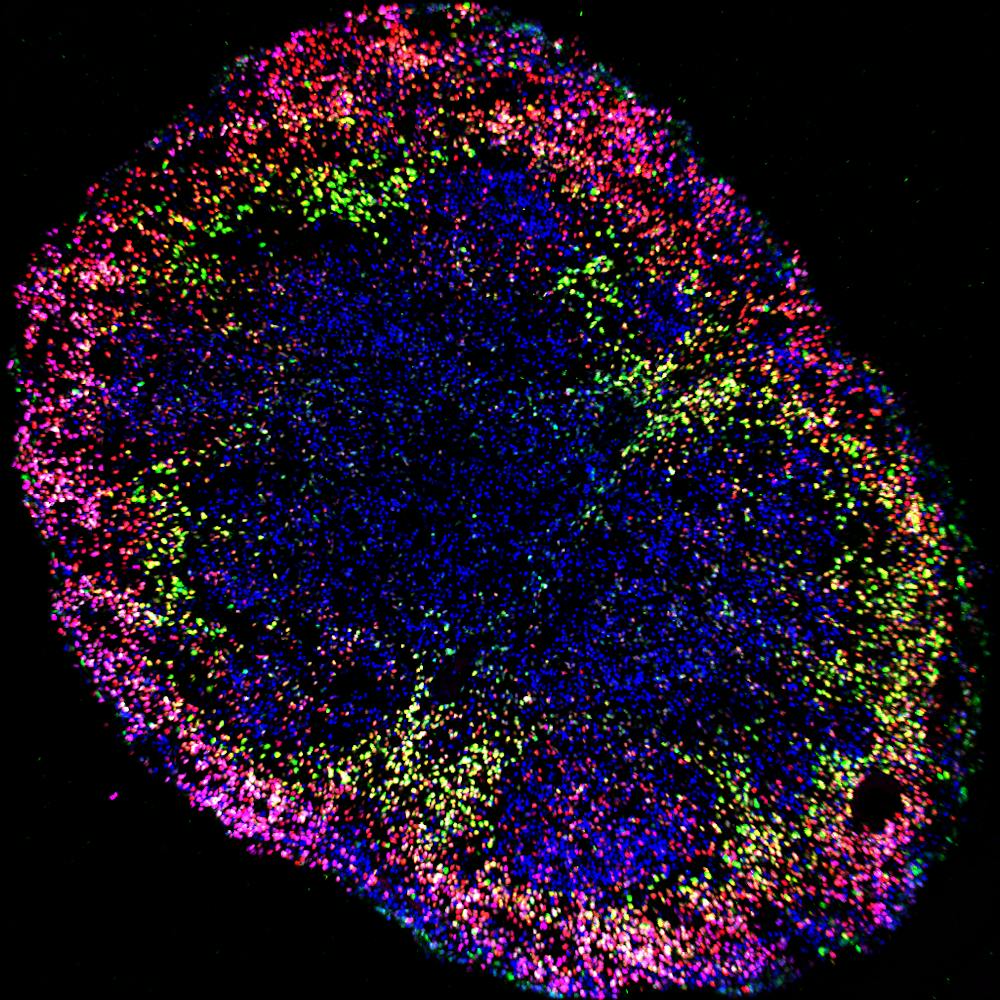
    Brain organoids, pictured here, raise both many medical possibilities and ethical questions. NIAID/Flickr, CC BY-SA

    As the Trump administration continues to make significant cuts to NIH budgets and personnel and to freeze billions of dollars of funding to major research universities – citing ideological concerns – there’s more being threatened than just progress in science and medicine. Something valuable but often overlooked is also being hit hard: preventing research abuse.

    The National Institutes of Health has been the world’s largest public funder of biomedical research. Its support helps translate basic science into biomedical therapies and technologies, providing funding for nearly all treatments approved by the Food and Drug Administration from 2010 to 2019. This enables the U.S. to lead global research while maintaining transparency and preventing research misconduct.

    While the legality of directives to shrink the NIH is unclear, the Trump administration’s actions have already led to suspended clinical trials, institutional hiring freezes and layoffs, rescinded graduate student admissions, and canceled federal grant review meetings. Researchers at affected universities say that funding will delay or possibly eliminate ongoing studies on critical conditions like cancer and Alzheimer’s.

    The Trump administration has deeply culled U.S. science across agencies and institutions.

    It is clear to us, as legal and bioethics scholars whose research often focuses on the ethical, legal and social implications of emerging biotechnologies, that these directives will have profoundly negative consequences for medical research and human health, with ripple effects that will last decades. Our scholarship demonstrates that in order to contribute to knowledge and, ultimately, to biomedical treatments, medical research at every stage depends on significant infrastructure support and ethical oversight.

    Our recent focus on brain organoid research – 3D lab models grown from human stem cells that simulate brain structure and function – shows how federal support for research is key to not only promote innovation, but to protect participants and future patients.

    History of NIH and research ethics

    The National Institutes of Health began as a one-room laboratory within the Marine Hospital Service in 1887. After World War I, chemists involved in the war effort sought to apply their knowledge to medicine. They partnered with Louisiana Sen. Joseph E. Ransdell who, motivated by the devastation of malaria, yellow fever and the 1928 influenza pandemic, introduced federal legislation to support basic research and fund fellowships focusing on solving medical problems.

    By World War II, biomedical advances like surgical techniques and antibiotics had proved vital on the battlefield. Survival rates increased from 4% during World War I to 50% in World War II. Congress passed the 1944 Public Health Services Act to expand NIH’s authority to fund biomedical research at public and private institutions. President Franklin D. Roosevelt called it “as sound an investment as any Government can make; the dividends are payable in human life and health.”

    As science advanced, so did the need for guardrails. After World War II, among the top Nazi leaders prosecuted for war crimes were physicians who conducted experiments on people without consent, such as exposure to hypothermia and infectious disease. The verdicts of these Doctors’ Trials included 10 points about ethical human research that became the Nuremberg Code, emphasizing voluntary consent to participation, societal benefit as the goal of human research, and significant limitations on permissible risks of harm. The World Medical Association established complementary international guidelines for physician-researchers in the 1964 Declaration of Helsinki.

    At least 100 participants died in the Tuskegee Untreated Syphilis Study.
    National Archives

    In the 1970s, information about the Tuskegee study – a deceptive and unethical 40-year study of untreated syphilis in Black men – came to light. The researchers told study participants they would be given treatment but did not give them medication. They also prevented participants from accessing a cure when it became available in order to study the disease as it progressed. The men enrolled in the study experienced significant health problems, including blindness, mental impairment and death.

    The public outrage that followed starkly demonstrated that the U.S. couldn’t simply rely on international guidelines but needed federal standards on research ethics. As a result, the National Research Act of 1974 led to the Belmont Report, which identified ethical principles essential to human research: respect for persons, beneficence and justice.

    Federal regulations reinforced these principles by requiring all federally funded research to comply with rigorous ethical standards for human research. By prohibiting financial conflicts of interest and by implementing an independent ethics review process, new policies helped ensure that federally supported research has scientific and social value, is scientifically valid, fairly selects and adequately protects participants.

    These standards and recommendations guide both federally and nonfederally funded research today. The breadth of NIH’s mandate and budget has provided not only the essential structure for research oversight, but also key resources for ethics consultation and advice.

    Brain organoids and the need for ethical inquiry

    Biomedical research on cell and animal models requires extensive ethics oversight systems that complement those for human research. Our research on the ethical and policy issues of human brain organoid research provides a good example of the complexities of biomedical research and the infrastructure and oversight mechanisms necessary to support it.

    Organoid research is increasing in importance, as the FDA wants to expand its use as an alternative to using animals to test new drugs before administering them to humans. Because these models can simulate brain structure and function, brain organoid research is integral to developing and testing potential treatments for brain diseases and conditions like Alzheimer’s, Parkinson’s and cancer. Brain organoids are also useful for personalized and regenerative medicine, artificial intelligence, brain-computer interfaces and other biotechnologies.

    Brain organoids are built on knowledge about the fundamentals of biology that was developed primarily in universities receiving federal funding. Organoid technology began in 1907 with research on sponge cells, and continued in the 1980s with advances in stem cell research. Since researchers generated the first human organoid in 2009, the field has rapidly expanded.

    Brain organoids have come a long way since their beginnings over a century ago.
    Madeline Andrews, Arnold Kriegstein’s lab, UCSF, CC BY-ND

    These advances were only possible through federally supported research infrastructure, which helps ensure the quality of all biomedical research. Indirect costs cover operational expenses necessary to maintain research safety and ethics, including utilities, administrative support, biohazard handling and regulatory compliance. In these ways, federally supported research infrastructure protects and promotes the scientific and ethical value of biotechnologies like brain organoids.

    Brain organoid research requires significant scientific and ethical inquiry to safely reach its future potential. It raises potential moral and legal questions about donor consent, the extent to which organoids should be grown and how they should be disposed, and consciousness and personhood. As science progresses, infrastructure for oversight can help ensure these ethical and societal issues are addressed.

    New frontiers in scientific research

    Since World War II, there has been bipartisan support for scientific innovation, in part because it is an economic and national security imperative. As Harvard University President Alan Garber recently wrote, “[n]ew frontiers beckon us with the prospect of life-changing advances. … For the government to retreat from these partnerships now risks not only the health and well-being of millions of individuals but also the economic security and vitality of our nation.”

    Cuts to research overhead may seem like easy savings, but it fails to account for the infrastructure that provides essential support for scientific innovation. The investment the NIH has put into academic research is significantly paid forward, adding nearly US$95 billion to local economies in fiscal year 2024, or $2.46 for every $1 of grant funding. NIH funding had also supported over 407,700 jobs that year.

    President Donald Trump pledged to “unleash the power of American innovation” to battle brain-based diseases when he accepted his second Republican nomination for president. Around 6.7 million Americans live with Alzheimer’s, and over a million more suffer from Parkinson’s. Hundreds of thousands of Americans are diagnosed with aggressive brain cancers each year, and 20% of the population experiences varying forms of mental illness at any one time. These numbers are expected to grow considerably, possibly doubling by 2050.

    Organoid research is just one of the essential components in the process of learning about the brain and using that knowledge to find better treatment for diseases affecting the brain.

    Science benefits society only if it is rigorous, ethically conducted and fairly funded. Current NIH policy directives and steep cuts to the agency’s size and budget, along with attacks on universities, undermine globally shared goals of increasing understanding and improving human health.

    The federal system of overseeing and funding biomedical science may need a scalpel, but to defund efforts based on “efficiency” is to wield a chainsaw.

    The authors do not work for, consult, own shares in or receive funding from any company or organization that would benefit from this article, and have disclosed no relevant affiliations beyond their academic appointment.

    ref. Science requires ethical oversight – without federal dollars, society’s health and safety are at risk – https://theconversation.com/science-requires-ethical-oversight-without-federal-dollars-societys-health-and-safety-are-at-risk-252794

    MIL OSI – Global Reports

  • MIL-OSI Global: Missile strikes and drone attacks heighten South Asian crisis – 8 questions answered over the role of Pakistan’s military in responding

    Source: The Conversation – Global Perspectives – By Ayesha Jalal, Professor of History, Tufts University

    A mosque lies in ruins after an Indian airstrike in Muzaffarabad, the capital of Pakistan-administered Kashmir, on May 7, 2025. Zubair Abbasi/Middle East Images//AFP via Getty Images

    Pakistan’s government has pledged to respond “at a time, place and manner of its choosing” following an air attack from India that killed 31 people in Pakistan on May 6, 2025.

    The missile strike comes at a time of increased tension between the two South Asian neighbors following a terror attack in Indian-controlled Kashmir on April 22 that resulted in the deaths of 26 Indian tourists.

    India blamed the assault on its neighbor although has yet to provide any solid proof of a link between the assailants and the Pakistani state.

    To understand more about how Pakistan’s powerful military is viewing the incident, and weighing a response, The Conversation U.S. turned to Ayesha Jalal, an expert on South Asian history and politics who is the Mary Ricardson Professor of History at Tufts University.

    Who will makes the decisions over how Pakistan responds?

    This is clearly a defense issue, so the Pakistani military is going to take the lead. Any decision over how to respond to the Indian airstrikes will have to be done in consultation with the civilian government. But ultimately it will be the powerful Pakistani generals that will be making the decisions.

    In Pakistan, this is the usual way of doing things. The military has dominated politics in Pakistan for decades. Partly, this is due to the very dynamic we are seeing now. From the creation of Pakistan onward, there has been tension with India, including over Kashmir. Indeed the two countries went to war over Kashmir within a year of the partition of India soon after the creation of Pakistan. So the military has always been seen as central to Pakistan’s view of itself as an independent nation.

    Then in 1958, the Pakistani army toppled the civilian government in the country’s first of several military coup attempts, three of which have been successful.

    Since that time onward, no civilian government has been able to govern successfully for long without the support of the army. Recent political developments in the country – the ouster and arrest of former Prime Minister Imran Khan and a 2024 election that resulted in a weak coalition government – have only strengthened the hand of Pakistan’s military.

    What do we know about Pakistan’s army chief Gen. Syed Asim Munir?

    Despite the Pakistani Army’s position of power, Gen. Syed Asim Munir, the Chief of Army Staff, is someone who has tried to keep out of the spotlight. He is known as a very religious character – he is a Hafiz, meaning he has memorized the Quran. And he is seen as a tough, fairly inaccessible soldier.

    He is also a hawk when it comes to relations with India. Speaking after the Kashmir attack and before India’s airstrikes, Munir warned, “Let there be no ambiguity: Any military misadventure by India will be met with a swift, resolute, and notch-up response.”

    Chief of Army Staff Syed Asim Munir on July 16, 2023.
    Iranian Presidency/Anadolu Agency via Getty Images

    This approach is somewhat of a departure from that of the man he replaced in 2022, former Army Chief Qamar Javed Bajwa. Bajwa was more inclined to look for a peaceful resolution with India over Kashmir and other issues.

    Munir, by contrast, presents a a more belligerent front in the face of what many in Pakistan see as Indian aggression, while framing the rivalry between the two nations in religious terms.

    What role has he and the Pakistani army played so far in the crisis?

    A lot has been made, especially in India, of comments that Munir made a few days before the attack in Pahalgam.

    Munir described Kashmir as Pakistan’s “jugular vein” and framed the long-running animosity between Pakistan and India in religious terms, invoking the “two-nation” theory that states that India is a homeland for Hindus; Pakistan is one for Muslims. The theory, conveyed by much of India’s media, is that Munir’s was an inflammatory statement that encouraged the Pahalgam attack.

    But there is nothing in what he said that was entirely original or new: This has been the narrative of the Pakistani military for several decades. It is simply how they talk.

    Is there evidence that Pakistan’s military played a role in the attack?

    None that India has presented as yet.

    India has blamed Pakistan for supporting the Kashmiri militants responsible – but hasn’t articulated what the actual relationship is between Pakistan and the militant group, The Resistance Front.

    Certainly, Pakistan has in the past had ties to some of the many militant groups in Kashmir. For some groups, that has meant crossing over from Indian-controlled Kashmir to Pakistan for training.

    But the argument that “Pakistan used to do it, so they must be doing it now” seems unsupported – certainly, Indian hasn’t presented solid evidence to any international body.

    What has the reaction of the international community been?

    India is not on as strong of ground as it was in 2019, when a suicide bomber in Pulwama, Indian-administerd Kashmir, killed 40 members of the Central Reserve Police Force. On that occasion, the international community swung behind India, with the U.S. offering counterterrorism support while calling on Pakistan to stop sheltering terrorists.

    Without firm evidence of a link between the attack and Pakistan this time around, the international community has found it difficult to go with India’s narrative of the attack. The U.S. has called on both sides to find a “peaceful resolution.”

    Meanwhile China has indicated that it is standing by Pakistan in a statement in which it expressed “regret over India’s military actions” while also calling on both India and Pakistan to “avoid taking actions that further complicate the situation.”

    What pressures will the Pakistani army be under to respond?

    In Pakistan, the view is this is India attempting to assert its dominance and create what analysts have called a “new normal” in relationships between the two countries – one in which India will retaliate to any perceived Pakistani-linked terror attack with missile strikes on Pakistan’s territory.

    The theory here is that India doesn’t mind escalation, in fact it is seen as serving the Hindu nationalist aims of India’s Prime Minister Narendra Modi.

    But I wouldn’t describe it as public pressure on Pakistan’s military to respond, it is more strategic pressure. Pakistan will need to prevent this “new normal” happening, and so will, in my view, very likely respond in kind to the Indian airstrikes.

    What can Pakistan do in response?

    Well, for starters it has, in theory, the capacity to hit over 200 Indian cities with its arsenal of missiles. But Pakistan Defense Minister Khawaja Muhammad Asif has already said that strikes would only target Indian military targets and not civilians. Pakistan also has to weigh how India may respond to any retaliatory strikes.

    But India has expanded the usual terms of engagement when it comes to Kashmir. Typically in recent years, fighting has been contained along the “line of control” – the border between Indian- and Pakistani-controled Kashmir.

    But the Indian airstrike was deep within Pakistan. India says that the targets were all terrorist, but civilians were killed in the process – and Pakistan’s military will not be able to just leave it at that. A response is very much expected, especially now that India has upped the ante by using Israeli made Harop drones in an attempt to target the Pakistani air defense system. Pakistan claims it has shot down 25 of these drones.

    What are the risks of escalation for Pakistan?

    Obviously the most pressing risk is that Pakistan and India are both nuclear states. If Pakistan retaliates in an escalatory way, and then India responds in a similar fashion, this gets to a point where the use of nuclear weapons is a very real risk.

    War would also hit Pakistan’s economy at a time when it is seen to be improving after years of crisis. But that will likely be of secondary importance in the decision-making process for Pakistan’s military if it believes that the country’s integrity is being threatened.

    In addition, Pakistan’s generals will likely be of the view that India, in attacking Pakistan, is trying to thwart any economic recovery in Pakistan – with the belief being that India’s government fears a powerful, more economically stable rival.

    Ayesha Jalal does not work for, consult, own shares in or receive funding from any company or organization that would benefit from this article, and has disclosed no relevant affiliations beyond their academic appointment.

    ref. Missile strikes and drone attacks heighten South Asian crisis – 8 questions answered over the role of Pakistan’s military in responding – https://theconversation.com/missile-strikes-and-drone-attacks-heighten-south-asian-crisis-8-questions-answered-over-the-role-of-pakistans-military-in-responding-256185

    MIL OSI – Global Reports

  • MIL-OSI Global: The prospect of a US pope was once viewed with suspicion – but Leo XIV could prove an important counter to Trump

    Source: The Conversation – UK – By Massimo D’Angelo, Research Associate in the Institute for Diplomacy and International Affairs, Loughborough University

    Pope Leo XIV has been elected as the 267th pontiff, leader of the Catholic church and spiritual guide to more than 1.4 billion Catholics. He is the first pope in history to come from the United States.

    Since the 19th century, the influence of the United States within the Catholic Church has steadily increased, mirroring the country’s global geopolitical rise. US bishops, institutions and donors have played a growing role in shaping church policy, appointments and international engagement, signalling a shift away from traditional European dominance.

    This growing influence had long been accompanied by unease over the idea of entrusting the leadership of the global Catholic community to a figure from the world’s most powerful nation. In this sense, the election of Leo XIV is an unexpected and significant choice.

    Robert Francis Prevost, born in Chicago in 1955, has spent much of his ecclesiastical life to date in Peru, where he became a respected figure within the local church. He had been sent to Peru on a missions after taking his solemn vows as an Augustinian and studying in Rome.

    Once there, he served for many years as judicial vicar and professor of canon, patristic (early Christian), and moral theology in Trujillo. In 2014, he was appointed apostolic administrator of Chiclayo and became its bishop in 2015, a post he held until 2023.

    Prevost gained Peruvian citizenship and was widely regarded as a stabilising, pastoral presence in a church often divided between liberation theology and ultra-traditionalism. Known for his humility and approachability, he was respected for his ability to foster dialogue among Peru’s diverse episcopate.

    His longstanding commitment to Latin America helped shape his international reputation and proved key to his eventual election as the church’s first North American pope.

    Continuity or rupture with Francis?

    It is difficult to determine at this early stage whether the election of Leo XIV will mark a continuation of Pope Francis’s pontificate or a clear departure from it. More likely, it will represent something of a middle path.

    The first image of the newly elected pope – appearing on the balcony in traditional white and red papal garments, adorned with a gold cross – was striking. It echoed the appearance of Benedict XVI in 2005, in contrast to Francis’s more austere choice of a plain white cassock and silver cross, which reflected a deliberate gesture of humility.

    Yet, Leo XIV’s strong focus on the poor – rooted in his years as a missionary in Peru – and his warm greeting to the Peruvian community, one of the Church’s global peripheries, suggest a clear line of continuity with Francis’s pastoral priorities.

    Even his choice of name evokes Leo XIII, pope from 1878 to 1903 and author of Rerum Novarum, the landmark encyclical on social justice and the rights of the poor. Leo XIV may, therefore, embody a papacy that maintains a firm commitment to the marginalised, while adopting a less confrontational, more measured style than that of his reformist predecessor, who sometimes adopted openly anti-curial stances.

    A Counterweight to Trump?

    Prior to becoming pope, Prevost has, on several occasions, openly criticised the current US administration – particularly on matters of migration policy. As a cardinal, he voiced concern over statements made by US vice president J.D Vance, who converted to Catholicism in 2019.

    He shared an article challenging Vance’s interpretation of Christian love in relation to immigration. Prevost also shared posts critical of both Donald Trump and Salvadoran president Nayib Bukele regarding the deportation of Kilmar Abrego Garcia, a Salvadoran national living in Maryland.

    In this light, the election of an American pope – once a prospect viewed with suspicion – could now represent one of the strongest moral voices against the hardline migration policies of his own country’s government and a counterbalance to Donald Trump’s influence.

    The choice of the name Leo is also potentially significant here. Pope Leo XIII strongly opposed extreme nationalism, viewing it as a threat to the Church’s universal mission and moral authority.

    While acknowledging the value of legitimate patriotism, he maintained that loyalty to God and the church must always take precedence over allegiance to the nation-state. In encyclicals such as Immortale Dei and Sapientiae Christianae, he defended the church’s supranational character and cautioned against subordinating faith to national interests.

    For Leo XIII, true civic virtue could never conflict with divine law, and any form of nationalism that did so risked becoming a kind of idolatry. In an era of rising nationalism across the globe – particularly in the United States – connecting to this message would be a clear and powerful statement.

    While the prospect of an American pope once caused concern, the choice of Leo XIV shows sensitivity to the world’s margins. Yet, in a Church where Catholic growth is most pronounced in Africa and Asia – while numbers continue to decline in Europe and the Americas – the election of another western pontiff is not without its challenges. Some regions may still feel overlooked or underrepresented.

    A promising gesture was the decision to deliver a brief message in Spanish from the balcony of St Peter’s – the first time in papal history. At the same time, it is striking that the most globally diverse conclave ever convened has placed the church’s leadership in the hands of a cardinal from the world’s most powerful nation. The new pope will need to unify a church that is increasingly global and moving beyond its eurocentric past.

    Massimo D’Angelo does not work for, consult, own shares in or receive funding from any company or organisation that would benefit from this article, and has disclosed no relevant affiliations beyond their academic appointment.

    ref. The prospect of a US pope was once viewed with suspicion – but Leo XIV could prove an important counter to Trump – https://theconversation.com/the-prospect-of-a-us-pope-was-once-viewed-with-suspicion-but-leo-xiv-could-prove-an-important-counter-to-trump-256146

    MIL OSI – Global Reports

  • MIL-OSI Global: The prospect of an American pope was once viewed with suspicion – but Leo XIV could prove an important counter to Trump

    Source: The Conversation – UK – By Massimo D’Angelo, Research Associate in the Institute for Diplomacy and International Affairs, Loughborough University

    Pope Leo XIV has been elected as the 267th pontiff, leader of the Catholic church and spiritual guide to more than 1.4 billion Catholics. He is the first pope in history to come from the United States.

    Since the 19th century, the influence of the United States within the Catholic Church has steadily increased, mirroring the country’s global geopolitical rise. American bishops, institutions and donors have played a growing role in shaping church policy, appointments and international engagement, signalling a shift away from traditional European dominance.

    This growing influence had long been accompanied by unease over the idea of entrusting the leadership of the global Catholic community to a figure from the world’s most powerful nation. In this sense, the election of Leo XIV is an unexpected and significant choice.

    Robert Francis Prevost, born in Chicago in 1955, has spent much of his ecclesiastical life to date in Peru, where he became a respected figure within the local church. He had been sent to Peru on a missions after taking his solemn vows as an Augustinian and studying in Rome.

    Once there, he served for many years as judicial vicar and professor of canon, patristic (early Christian), and moral theology in Trujillo. In 2014, he was appointed apostolic administrator of Chiclayo and became its bishop in 2015, a post he held until 2023.

    Prevost gained Peruvian citizenship and was widely regarded as a stabilising, pastoral presence in a church often divided between liberation theology and ultra-traditionalism. Known for his humility and approachability, he was respected for his ability to foster dialogue among Peru’s diverse episcopate.

    His longstanding commitment to Latin America helped shape his international reputation and proved key to his eventual election as the church’s first North American pope.

    Continuity or rupture with Francis?

    It is difficult to determine at this early stage whether the election of Leo XIV will mark a continuation of Pope Francis’s pontificate or a clear departure from it. More likely, it will represent something of a middle path.

    The first image of the newly elected pope – appearing on the balcony in traditional white and red papal garments, adorned with a gold cross – was striking. It echoed the appearance of Benedict XVI in 2005, in contrast to Francis’s more austere choice of a plain white cassock and silver cross, which reflected a deliberate gesture of humility.

    Yet, Leo XIV’s strong focus on the poor – rooted in his years as a missionary in Peru – and his warm greeting to the Peruvian community, one of the Church’s global peripheries, suggest a clear line of continuity with Francis’s pastoral priorities.

    Even his choice of name evokes Leo XIII, pope from 1878 to 1903 and author of Rerum Novarum, the landmark encyclical on social justice and the rights of the poor. Leo XIV may, therefore, embody a papacy that maintains a firm commitment to the marginalised, while adopting a less confrontational, more measured style than that of his reformist predecessor, who sometimes adopted openly anti-curial stances.

    A Counterweight to Trump?

    Prior to becoming pope, Prevost has, on several occasions, openly criticised the current US administration – particularly on matters of migration policy. As a cardinal, he voiced concern over statements made by US vice president J.D Vance, who converted to Catholicism in 2019.

    He shared an article challenging Vance’s interpretation of Christian love in relation to immigration. Prevost also shared posts critical of both Donald Trump and Salvadoran president Nayib Bukele regarding the deportation of Kilmar Abrego Garcia, a Salvadoran national living in Maryland.

    In this light, the election of an American pope – once a prospect viewed with suspicion – could now represent one of the strongest moral voices against the hardline migration policies of his own country’s government and a counterbalance to Donald Trump’s influence.

    The choice of the name Leo is also potentially significant here. Pope Leo XIII strongly opposed extreme nationalism, viewing it as a threat to the Church’s universal mission and moral authority.

    While acknowledging the value of legitimate patriotism, he maintained that loyalty to God and the church must always take precedence over allegiance to the nation-state. In encyclicals such as Immortale Dei and Sapientiae Christianae, he defended the church’s supranational character and cautioned against subordinating faith to national interests.

    For Leo XIII, true civic virtue could never conflict with divine law, and any form of nationalism that did so risked becoming a kind of idolatry. In an era of rising nationalism across the globe – particularly in the United States – connecting to this message would be a clear and powerful statement.

    While the prospect of an American pope once caused concern, the choice of Leo XIV shows sensitivity to the world’s margins. Yet, in a Church where Catholic growth is most pronounced in Africa and Asia – while numbers continue to decline in Europe and the Americas – the election of another western pontiff is not without its challenges. Some regions may still feel overlooked or underrepresented.

    A promising gesture was the decision to deliver a brief message in Spanish from the balcony of St Peter’s – the first time in papal history. At the same time, it is striking that the most globally diverse conclave ever convened has placed the church’s leadership in the hands of a cardinal from the world’s most powerful nation. The new pope will need to unify a church that is increasingly global and moving beyond its eurocentric past.

    Massimo D’Angelo does not work for, consult, own shares in or receive funding from any company or organisation that would benefit from this article, and has disclosed no relevant affiliations beyond their academic appointment.

    ref. The prospect of an American pope was once viewed with suspicion – but Leo XIV could prove an important counter to Trump – https://theconversation.com/the-prospect-of-an-american-pope-was-once-viewed-with-suspicion-but-leo-xiv-could-prove-an-important-counter-to-trump-256146

    MIL OSI – Global Reports

  • MIL-Evening Report: USP World Press Freedom Day warnings over AI, legal reform and media safety

    World Press Freedom Day is not just a celebration of the vital role journalism plays — it is also a moment to reflect on the pressures facing the profession and Pacific governments’ responsibility to protect it.

    This was one of the key messages delivered by two guest speakers at The University of the South Pacific (USP) Journalism’s 2025 World Press Freedom Day celebrations this week, the UN Human Rights Adviser for the Pacific, Heike Alefsen, and Fiji Media Association’s general secretary, Stanley Simpson.

    In her address to journalism students and other attendees on Monday, chief guest Alefsen emphasised that press freedom is a fundamental pillar of democracy, a human right, and essential for sustainable development and the rule of law.

    “Media freedom is a prerequisite for inclusive, rights-respecting societies,” Alefsen said, warning of rising threats such as censorship, harassment, and surveillance of journalists — especially with the spread of AI tools used to manipulate information and monitor media workers.

    UN Human Rights Adviser for the Pacific Heike Alefsen (from left), USP Journalism programme head Dr Shailendra Singh, and Fiji Media Association’s general secretary Stanley Simpson . . . reflecting on pressures facing the profession of journalism. Image: Mele Tu’uakitau

    AI and human rights
    She stressed that AI must serve human rights — not undermine them — and that it must be used transparently, accountably, and in accordance with international human rights law.

    “Some political actors exploit AI to spread disinformation and manipulate narratives for personal or political gain,” she said.

    She added that these risks were compounded by the fact that a handful of powerful corporations and individuals now controlled much of the AI infrastructure and influenced the global media environment — able to amplify preferred messages or suppress dissenting voices.

    “Innovation cannot come at the expense of press freedom, privacy, or journalist safety,” she said.

    Regarding Fiji, Alefsen praised the 2023 repeal of the Media Industry Development Act (MIDA) as a “critical turning point,” noting its positive impact on Fiji’s ranking in the RSF World Press Freedom Index.

    World Press Freedom Day at The University of the South Pacific on Monday. Image: USP — the country rose four places to 40th in the 2025 survey.

    However, she emphasised that legal reforms must continue, especially regarding sedition laws, and she highlighted ongoing challenges across the Pacific, including financial precarity, political pressure, and threats to women journalists.

    According to Alefsen, the media landscape in the Pacific was evolving for the better in some countries but concerns remained. She highlighted the working conditions of most journalists in the region, where financial insecurity, political interference, and lack of institutional support were prevalent.

    “Independent journalism ensures transparency, combats disinformation, amplifies marginalised voices, and enables people to make informed decisions about their lives and governance. In too many countries around the world, journalists face censorship, detention, and in some cases, death — simply for doing their jobs,” she said.

    Strengthening media independence and sustainability
    Keynote speaker Stanley Simpson, echoed these concerns, adding that “the era where the Fiji media could survive out of sheer will and guts is over.”

    “Now, it’s about technology, sustainability, and mental health support,” he said.

    Speaking on the theme, Strengthening Media Independence and Sustainability, Simpson emphasised the need for the media to remain independent, noting that journalists are often expected to make greater sacrifices than professionals in other industries.

    “Independence — while difficult and challenging — is a must in the media industry for it to maintain credibility. We must be able to think, speak, write, and report freely on any matter or anyone,” Simpson said.

    According to Simpson, there was a misconception in Fiji that being independent meant avoiding relationships or contacts.

    “There is a need to build your networks — to access and get information from a wide variety of sources. In fact, strengthening media independence means being able to talk to everyone and hear all sides. Gather all views and present them in a fair, balanced and accurate manner.”

    He argued that media could only be sustainable if it was independent — and that independence was only possible if sustainability was achieved. Simpson recalled the events of the 2006 political upheaval, which he said contributed to the decline of media freedom and the collapse of some media organisations in Fiji.

    “Today, as we mark World Press Freedom Day, we gather at this great institution to reflect on a simple yet profound truth: media can only be truly sustainable if it is genuinely free.

    “We need democratic, political, and governance structures in place, along with a culture of responsible free speech — believed in and practised by our leaders and the people of Fiji,” he said.

    USP students and guests at the 2025 World Press Freedom Day event. Picture: Mele Tu’uakitau

    The new media landscape
    Simpson also spoke about the evolving media landscape, noting the rise of social media influencers and AI generated content. He urged journalists to verify sources and ensure fairness, balance and accuracy — something most social media platforms were not bound by.

    While some influencers have been accused of being clickbait-driven, Simpson acknowledged their role. “I think they are important new voices in our democracy and changing landscape,” he said.

    He criticised AI-generated news platforms that republished content without editorial oversight, warning that they further eroded public trust in the media.

    “Sites are popping up overnight claiming to be news platforms, but their content is just AI-regurgitated media releases,” he said. “This puts the entire credibility of journalism at risk.”

    Fiji media challenges
    Simpson outlined several challenges facing the Fiji media, including financial constraints, journalist mental health, lack of investment in equipment, low salaries, and staff retention. He emphasised the importance of building strong democratic and governance structures and fostering a culture that respects and values free speech.

    “Many fail to appreciate the full scale of the damage to the media industry landscape from the last 16 years. If there had not been a change in government, I believe there would have been no Mai TV, Fiji TV, or a few other local media organisations today. We would not have survived another four years,” he said.

    According to Simpson, some media organisations in Fiji were only one or two months away from shutting down.

    “We barely survived the last 16 years, while many media organisations in places like New Zealand — TV3’s NewsHub — have already closed down. The era where the Fiji media would survive out of sheer will and guts is over. We need to be more adaptive and respond quickly to changing realities — digital, social media, and artificial intelligence,” he said.

    Dr Singh (left) moderates the student panel discussion with Riya Bhagwan, Maniesse Ikuinen-Perman and Vahefonua Tupola. Image: Mele Tu’uakitau

    Young journalists respond
    During a panel discussion, second-year USP journalism student Vahefonua Tupola of Tonga highlighted the connection between the media and ethical journalism, sharing a personal experience to illustrate his point.

    He said that while journalists should enjoy media freedom, they must also apply professional ethics, especially in challenging situations.

    Tupola noted that the insights shared by the speakers and fellow students had a profound impact on his perspective.

    Another panelist, third-year student and Journalism Students Association president Riya Bhagwan, addressed the intersection of artificial intelligence and journalism.

    She said that in this era of rapid technological advancement, responsibility was more critical than ever — with the rise of AI, social media, and a constant stream of information.

    “It’s no longer just professional journalists reporting the news — we also have citizen journalism, where members of the public create and share content that can significantly influence public opinion.

    “With this shift, responsible journalism becomes essential. Journalists must uphold professional standards, especially in terms of accuracy and credibility,” she said.

    The third panelist, second-year student Maniesse Ikuinen-Perman from the Federated States of Micronesia, acknowledged the challenges facing media organisations and journalists in the Pacific.

    She shared that young and aspiring journalists like herself were only now beginning to understand the scope of difficulties journalists face in Fiji and across the region.

    Maniesse emphasised the importance of not just studying journalism but also putting it into practice after graduation, particularly when returning to work in media organisations in their home countries.

    The panel discussion, featuring journalism students responding to keynote addresses, was moderated by USP Journalism head of programme Dr Shailendra Singh.

    Dr Singh concluded by noting that while Fiji had made significant progress with the repeal of the Media Industry Development Act (MIDA), global experience demonstrated that media freedom must never be taken for granted.

    He stressed that maintaining media freedom was an ongoing struggle and always a work in progress.

    “As far as media organisations are concerned, there is always a new challenge on the horizon,” he said, pointing to the complications brought about by digital disruption and, more recently, artificial intelligence.

    • Fiji rose four places to 40th (out of 180 nations) in the RSF 2025 World Press Freedom Index to make the country the Oceania media freedom leader outside of Australia (29) and New Zealand (16).

    Niko Ratumaimuri is a second-year journalism student at The University of the South Pacific’s Laucala Campus. This article was first published by the student online news site Wansolwara and is republished in collaboration with Asia Pacific Report.

    USP Journalism students, staff and guests at the 2025 World Press Freedom Day celebrations at Laucala campus on Monday. Image: Mele Tu’uakitau

    Article by AsiaPacificReport.nz

    MIL OSI AnalysisEveningReport.nz

  • MIL-OSI Global: Is Kenya’s president safe in a crowd? Security expert scans VIP protection checklist

    Source: The Conversation – Africa – By Douglas Lucas Kivoi, Principal Policy Analyst, Governance Department, The Kenya Institute for Public Policy Research and Analysis (KIPPRA)

    Protecting any president requires multiple layers of intelligence, physical security and rapid response security protocols. Exact operational details are classified, but there are global best practices in VIP protection.

    The issue of presidential protection in Kenya has become particularly relevant following an incident in early May 2025 when someone in a crowd threw a shoe at President William Ruto during a public event, hitting his hand.

    I have studied policing and security policies in Kenya for over 15 years, interacting closely with the country’s security protocols. In my view this incident exposed several critical security lapses around the elite officers tasked with protecting the president.

    The security of the president is a critical issue in Kenya. The country is exposed to terror groups like the Somalia-based Al-Shabaab and other criminal networks in the region.

    In 2021, a businessman embedded himself into the presidential motorcade and drove into then president Uhuru Kenyatta’s official residence. In 2017, an unidentified man who was said to have illegally accessed the highly protected state house grounds was shot dead by presidential guards.

    There are multiple layers to Kenya’s protection protocols. They include National Intelligence Service officers, the Kenya Defence Force, Presidential Escort Police officers drawn from the highly trained General Service Unit, bomb disposal experts and regular police officers. Their deployment depends on the nature of the presidential engagement.

    While the shoe incident may be passed off as simply embarrassing, it should serve as a wake-up call to tighten security protocols around the president without necessarily compromising his public engagement with citizens.

    What’s in place

    Prior to any presidential visit across the country, security teams conduct a thorough reconnaissance of the destination. This includes coordinating with local policing agencies, clearing airspace, mapping secure transport routes and identifying nearby medical facilities in case of emergencies.

    Presidential motorcade routes are pre-planned and a dry run is made. This often includes mapping alternative routes to avoid predictability should there be assailants along a presidential route. It is common to see some roads temporarily closed and security officers conducting sweeps for any threats or explosives. In areas deemed high risk, counter security sniper teams are covertly deployed in strategic areas.

    Cases of attacks on presidential motorcades are rare in Kenya. However, in 2002 during presidential campaigns, angry opposition supporters stoned then president Daniel Moi’s motorcade. In November 2021, an angry mob hurled rocks at then deputy president Ruto’s motorcade.

    The National Intelligence Service and Presidential Escort Unit covertly scout locations in advance, assessing potential security vulnerabilities. Crowd sizes, and entry and exit points for the head of state are mapped out in advance.

    In cases where meetings are held in town halls or huge tents, attendees are screened using metal detectors and/or physical searches. Uniformed and plainclothes security officers embed themselves in the crowd to monitor any threats.

    The president and any dignitaries accompanying him have at least three layers of security.

    The inner ring consists of close protection officers who are always within an arm’s length of the president to physically thwart any threats. The middle ring has armed security guards who watch for, among others, sudden movements and abnormal behaviour within the crowd. The outer ring consists of regular police and paramilitary units from the General Service Unit who secure the outside perimeter.

    The presidential motorcade is a coordinated convoy of heavily armoured vehicles. It includes lead and chase cars, communication units and emergency response teams. Traffic is managed by local traffic police officers to ensure unobstructed movement. Routes are kept confidential until necessary.

    The president’s security may opt to use a decoy vehicle if there is a security threat, to confuse and derail potential risk sources. In all these cases, there is a contingent of specialised General Service Unit officers, called the Recce unit, that always accompanies the president.

    Kenya’s presidential security precautions follow standard VIP security protection like those for heads of state across the world. However, in some neighbouring countries, for instance, presidents move in heavily armed military convoys. This has not been seen in Kenya.

    If a potential threat is detected, the president is immediately shielded and whisked away to a secure vehicle or evacuated by air in high-risk events. In such cases, the Kenya Defence Forces secures the president.

    Despite stringent security measures, incidents can occur. For instance, in March 2025, a British tourist was fatally hit by a vehicle in Ruto’s motorcade. This prompted investigations and reviews on motorcade safety protocols.

    Such events highlight the challenges of balancing presidential security with public safety, especially in densely populated urban areas.

    Security failures

    The shoe-throwing incident targeting Ruto highlighted five major failures in presidential protection protocols.

    First, crowd screening and access control failures. The alleged assailant was very close to the president, suggesting an inadequate distance between the crowds and the president. The inner ring of security also failed to spot the perpetrator raising a shoe in the air to use as a projectile. This indicates weak front-row eye sweeps and scans by the president’s security.

    Second, there was an apparent delay in security response. The elite officers around the president should have subdued the alleged attacker within seconds. It could mean most had their eyes on the president or cameras, as opposed to scanning the crowds for any sudden movements.

    Third, security allowed the president to stand too close to a crowd that hadn’t been screened. Best practices require a no-go zone of three to five metres for individuals who have not been scanned or screened.

    Fourth, there was an apparent gap in intelligence and threat assessment. Aggressive or agitated people next to the president should draw the attention of security officers. Plainclothes security officers are usually deployed to monitor crowd behaviour. It isn’t enough to rely on uniformed officers.

    Undercover agents are critical for flagging pre-attack signals, such as nervousness or repeated adjustments of positions.

    Fifth, there was no clear evacuation plan for the president. After the incident, the president continued speaking. In high-risk scenarios, protocols often demand instant relocation of the president to a secure vehicle or helicopter, where the military takes over and airlifts him to safety.

    What should change

    Kenya’s presidential security detail may be forced to:

    • increase standoff distance between the president and crowds

    • deploy more plainclothes officers to blend in and monitor crowds around the president

    • mandate stricter screening of those in close proximity to the president

    • conduct more frequent security risks drills for rapid neutralisation of potential threats.

    The exact details of presidential security in Kenya are confidential. However, the overarching structure aims to provide comprehensive protection to the president while maintaining public safety and order during official engagements. No security protocol is 100% foolproof. But a balance needs to be struck between overly aggressive crowd control and accessibility.

    Douglas Lucas Kivoi does not work for, consult, own shares in or receive funding from any company or organisation that would benefit from this article, and has disclosed no relevant affiliations beyond their academic appointment.

    ref. Is Kenya’s president safe in a crowd? Security expert scans VIP protection checklist – https://theconversation.com/is-kenyas-president-safe-in-a-crowd-security-expert-scans-vip-protection-checklist-256268

    MIL OSI – Global Reports

  • MIL-Evening Report: The Kiwi heart surgeon, his wife and the film maker in Palestine

    Auckland film maker Paula Whetu Jones has spent nearly two decades working pro bono on a feature film about the Auckland cardiac surgeon Alan Kerr, which is finally now in cinemas.

    She is best known for co-writing and directing Whina, the feature film about Dame Whina Cooper.

    She filmed Dr Kerr and his wife Hazel in 2007, when he led a Kiwi team to Gaza and the West Bank to operate on children with heart disease.

    What started as a two-week visit became a 20 year commitment, involving 40 medical missions to Gaza and the West Bank and hundreds of operations.

    Paula Whetu Jones self-funded six trips to document the work and the result is the feature film The Doctor’s Wife, now being screened free in communities around the country.

    20 years of inspirational work in Palestine

    Pacific Media Watch reports that Paula Whetu Jones writes on her film’s website:

    I met Alan and Hazel Kerr in 2006 and became inspired by their selflessness and dedication. I wanted to learn more about them and shine a light on their achievements.

    I’ve been trying to highlight social issues through documentary film making for 25 years. I have always struggled to obtain funding and this project was no different. We provided most of the funding but it wouldn’t have been possible to complete it without the generosity of a small number of donors.

    Others gave of their time and expertise.

    Film maker Paula Whetu Jones . . . “Our documentary shows the humanity of everyday Palestinians, pre 2022, as told through the eyes of a retired NZ heart surgeon, his wife and two committed female film makers.” Image: NZ On Film

    Our initial intention was to follow Dr Alan in his work in the West Bank and Gaza but we also developed a very special relationship with Hazel.

    While Dr Alan was operating, Hazel took herself all over the West Bank and Gaza, volunteering to help in refugee camps, schools and community centres. We tagged along and realised that Dr Alan and his work was the heart of the film but Hazel was the soul. Hence, the title became The Doctor’s Wife.

    I was due to return to Palestine in 2010 when on the eve of my departure I was struck down by a rare auto immune condition which left me paralysed. It wasn’t until 2012 that I was able to return to Palestine.

    Wheelchair made things hard
    However, being in a wheelchair made everything near on impossible, not to mention my mental state which was not conducive to being creative. In 2013, tragedy struck again when my 22-year-old son died, and I shut down for a year.

    Again, the project seemed so far away, destined for the shelf. Which is where it sat for the next few years while I tried to figure out how to live in a wheelchair and support myself and my daughter.

    The project was re-energised when I made two arts documentaries in Palestine, making sure we filmed Alan while we were there and connecting with a NZ trauma nurse who was also filming.

    By 2022, we knew we needed to complete the doco. We started sorting through many years of footage in different formats, getting the interviews transcribed and edited. The last big push was in 2023. We raised funds and got a few people to help with the logistics.

    I spent six months with three editors and then we used the rough cut to do one last fundraiser that helped us over the line, finally finishing it in March of 2025.

    Our documentary shows the humanity of everyday Palestinians, pre-2022, as told through the eyes of a retired NZ heart surgeon, his wife and two committed female film makers who were told in 2006 that no one cares about old people, sick Palestinian children or Palestine.

    They were wrong. We cared and maybe you do, too.

    What is happening in 2025 means it’s even more important now for people to see the ordinary people of Palestine

    Dr Alan and his wife, Hazel are now 90 and 85 years old respectively. They are the most wonderfully humble humans. Their work over 20 years is nothing short of inspiring.

    This article is republished under a community partnership agreement with RNZ.

    MIL OSI AnalysisEveningReport.nz

  • MIL-OSI Global: Pope Leo XIV: Why the College of Cardinals chose the Chicago native and Augustinian to lead the church after Francis

    Source: The Conversation – USA – By Joanne M. Pierce, Professor Emerita of Religious Studies, College of the Holy Cross

    Newly elected Pope Leo XIV appears on the central loggia of St. Peter’s Basilica at the Vatican shortly after his election as pontiff, on May 8, 2025. AP Photo/Domenico Stinellis

    When the 69-year-old Cardinal Robert Francis Prevost on May 8, 2025, appeared on the main balcony of St. Peter’s Basilica for the first time as Pope Leo XIV, he was cheered loudly by the huge crowd of pilgrims, tourists, local Catholics and other onlookers, who had waited hours for the first sign of white smoke and the official announcement.

    As a specialist in Catholic history and ritual, I know how important this moment was for Catholics and others all over the world. A new pope brings with him a sense of excitement often mixed with uncertainty.

    But the choice of the College of Cardinals came as a surprise to some. Prevost is the first pope from the United States, and, traditionally, the European-dominated College of Cardinals has had reservations about choosing a cardinal from the U.S. for fear of too much American influence in the church.

    So, who is Prevost and what might have influenced the cardinals’ vote?

    Early experiences

    Born in Chicago, Illinois, Prevost joined a Catholic religious order at the age of 20: the Order of St. Augustine, called Augustinians, founded in the 13th century. Instead of withdrawing from the world in isolated monasteries, members of this order traveled as mendicants to aid the poor as well as serve as missionaries and teachers.

    Prevost studied theology both in the U.S. and in Rome and, as a newly ordained priest, spent a year in Peru. After a short return to the U.S. as an official of the Augustinian order in Illinois, he returned to Peru as a seminary professor to teach canon law, the legal structure of the Catholic Church. He would stay in Peru for the next 10 years.

    In 1999, he became the prior – that is, the head – of the local Augustinian province in Chicago, and was later elected prior of the worldwide Augustinian order. This gave him a truly global experience, since the Augustinians had some 50 communities spread across every continent.

    In 2015, Pope Francis appointed him bishop for the diocese of Chiclayo in Peru. In 2019, Francis appointed him a member of several important Vatican dicasteries, or departments, where he became very familiar with the central church administration. Most importantly, he served as prefect – or chairman – on the Dicastery for Bishops.

    Catholics hold a photo of newly elected Pope Leo XIV, in front of the Cathedral of Chiclayo, Peru, on May 8, 2025, where he served as bishop for several years.
    AP Photo/Manuel Medina

    In fact, because of his lengthy pastoral experience in Peru and service at the Vatican, some commentators had noted before Prevost was chosen that, if the cardinals were to elect an American pope, it would be him. His service on the Dicastery for Bishops was considered especially important, since members play a key role in selecting new bishops.

    Global church

    During the 20th century, especially after the Second Vatican Council – a series of meetings of the world’s bishops to modernize the church, ending in 1965 – the popes began to name cardinals from other parts of the world that were previously considered to be on the periphery of the Catholic Church.

    And this led to popes being chosen from outside of Italy for the first time in centuries. Pope St. John Paul II was Polish and the first non-Italian pope since the 16th century. Pope Benedict XVI was another non-Italian, born in Germany, who had served as a Vatican official. Pope Francis was born in South America to parents who were Italian-born immigrants to Argentina.

    The College of Cardinals, which had few representatives from other continents until recently, is now much more international. Some 80% of the cardinal-electors were named by Francis, many from countries that had never before had a cardinal.

    In reviewing his record, the cardinal-electors might have taken a number of factors into account. Prevost would be an effective administrator as head of the church, and was an expert in church canon law. He had decades of experience doing pastoral work in South America, as well as in North America. And as prior general of the entire Augustinian Order, he would likely have traveled widely to visit many of the communities he supervised.

    Papacy under Leo

    The moment when the new pope emerged on the Vatican balcony.

    The new pope appeared on the Vatican balcony wearing the traditional papal garments: white cassock, short red cape, decorated red and gold stole, and golden cross hanging around his neck. Francis, on the other hand, had appeared dressed in the plain white cassock of a pope.

    Certainly, he had not chosen the simplicity of Francis. Was this a sign that he would be more of a traditionalist?

    His choice of a papal name, I believe, could indicate a different point of view. Pope Leo XIII wrote a groundbreaking encyclical in 1891, “Rerum Novarum,” subtitled “On Dignity and Labor.” In this he stressed the rights of workers to unionize and criticized the conditions in which they worked and lived. He also championed other rights the ordinary worker deserved from their bosses and from their government.

    Pope Leo XIII.
    Francesco De Federicis via Wikimedia Commons

    In his first remarks from the balcony, offering a glimpse into the direction of his papacy, Leo XIV stressed the role of Catholics and the church as peacemakers and bridge-builders, in dialogue with other religious traditions and cultures. His first words were “Peace be with you all,” describing this peace as “a disarmed peace, a disarming peace.” He further urged Catholics to act together “without fear … united with one another … to build bridges” through dialogue and outreach – to bring peace to the world.

    He may not follow exactly in Francis’ footsteps, but he will likely continue walking in the same direction.

    Joanne M. Pierce does not work for, consult, own shares in or receive funding from any company or organization that would benefit from this article, and has disclosed no relevant affiliations beyond their academic appointment.

    ref. Pope Leo XIV: Why the College of Cardinals chose the Chicago native and Augustinian to lead the church after Francis – https://theconversation.com/pope-leo-xiv-why-the-college-of-cardinals-chose-the-chicago-native-and-augustinian-to-lead-the-church-after-francis-256305

    MIL OSI – Global Reports

  • MIL-OSI Global: From the moment he steps onto the balcony, each pope signals his style of leadership – here’s how Pope Leo XIV’s appearance compares with Pope Francis’ first

    Source: The Conversation – USA – By Daniel Speed Thompson, Associate Professor of Religious Studies, University of Dayton

    Newly elected Pope Leo XIV waves to pilgrims gathered in St. Peter’s Square shortly after his election on May 8, 2025. Vatican Media via AP

    As crowds celebrated in St. Peter’s Square, a man in white and red stepped onto the balcony of the basilica, prompting cheers from the plaza.

    It was American Cardinal Robert Francis Prevost: Pope Leo XIV, as he will now be known. On May 8, 2025 – the second day of the conclave following Pope Francis’ death – the College of Cardinals selected him to lead the Catholic Church.

    In the days to come, people may pore over videos of those first few minutes of Leo’s papacy, analyzing everything from his vestments and multilingual speech to his choice of papal name. Appearing on the balcony of St. Peter’s is a pope’s first appearance – a tradition full of symbolism.

    I am a scholar who studies Roman Catholic theology and history. I am particularly interested in how popes exercise authority and leadership today, including their use of symbols.

    When Francis first appeared on that balcony in 2013, he used four aspects of the ritual to convey a message about his intentions for his papacy. Leo, too, adapted symbols of the ritual – and time will tell how much of his own intentions he showed.

    Pilgrims at the Vatican react after the announcement of the newly elected Pope Leo XIV.
    AP Photo/Francisco Seco

    What’s in a name?

    Since the sixth century C.E., new bishops of Rome have often taken a new name. Jorge Mario Bergoglio opted for “Francis,” the first pope to do so.

    It refers to Francis of Assisi, an Italian saint who lived at the turn of the 13th century who was renowned for his simplicity, poverty, concern for the Earth and desire to imitate Jesus. Over the next 12 years, these traits proved central to his papacy.

    Prevost chose “Leo,” making him the 14th pope to bear that name.

    Which Leo is the new pope referring to as his model? Probably more than one. One of the most significant Pope Leos, however, was the most recent. Leo XIII was pope from 1878-1903, and is particularly remembered for his writings on social justice, economics, politics and labor, which have grounded Catholic social teaching for more than 100 years.

    Leo XIII is also credited for promoting Thomas Aquinas, the important medieval theologian and saint, as the model for Catholic theology and its response to the modern world.

    Not a king

    On the balcony, Francis wore simple white papal garments instead of the more elaborate adornments worn by some of his predecessors. He wore his old, simple cross across his chest, rather than a new, more luxurious one.

    Francis waves during his first appearance as pope on March 13, 2013.
    AP Photo/Dmitry Lovetsky

    Popes have worn white garments as a symbol of their office for centuries. But many of them also used symbols of monarchy, such as the triple papal tiara or crown. Pope Paul VI, whose papacy was from 1963-1978, was the last to wear the tiara and to have a coronation ceremony. The following year, he sold the crown and donated the proceeds to emphasize the church’s commitment to the poor.

    Later popes have followed Paul’s example of avoiding royal symbolism, such as by no longer using a “sedia gestatoria,” the portable throne that traditionally carried the pope in formal processions. Francis took this trend even further and made simplicity of dress and lifestyle a hallmark of his time in office.

    When he appeared on the balcony, Leo returned to the tradition of popes before Francis by wearing the “mozzetta,” a short cape, and the gold cross offered to a pope when he accepts the office – showing somewhat more continuity with his predecessors.

    Bishop of Rome

    When Francis first addressed the crowd in St. Peter’s, he described himself as the new bishop of Rome.

    In Catholicism, the pope holds many titles representing the scope and duties of his office. For starters, he is not only the spiritual leader of the Roman Catholic Church but “sovereign of the State of Vatican City.”

    In terms of religious titles, some accentuate the pope’s authority. “Vicar of Christ,” for example, means he is Jesus’ representative on Earth. Others, such as “servus servorum Dei” – “servant of the servants of God” – emphasize his role as a support to other bishops and ministers of the church.

    Francis certainly did not deny the traditional authority of the pope’s office. However, he chose to identify himself first as the local bishop of the diocese of Rome, emphasizing how even the pope was first part of a local community. In the official Vatican yearbook for 2020, Francis listed his only title as “Bishop of Rome” and listed the rest as “historic.”

    Catholics from the parish of St. Joan Antida in Rome arrive to attend Pope Francis’ inaugural Mass at the Vatican on March 19, 2013.
    AP Photo/Domenico Stinellis

    When the new Pope Leo addressed the crowd, he described himself as the “successor of Peter,” the first pope. Like Francis before him, he also referred to the pope’s role as “bishop of Rome,” quoting the early church theologian St. Augustine: “For you I am a bishop, with you I am a Christian.” This identifies him first as a fellow Christian – and in that sense, not just a leader above his flock.

    ‘Pray for me’

    Francis asked the assembled crowd to pray for him before he offered his first papal blessing.

    Traditionally, popes making their first appearance would offer a blessing to the people gathered in St. Peter’s Square. Francis took this ritual and reversed it. In harmony with his views on simplicity and his role as the bishop of Rome, he emphasized the mutual connection between him and the people. He downplayed the view of the pope as a hierarchical ruler above the people.

    Leo concluded his address to the crowd with the traditional blessing in Latin, addressed “to the city and to the world.” He did not ask, as Francis did, that the crowd bless him first.

    In some ways, it seems like Leo’s symbolic message was “I am not Francis,” emphasizing his continuity with previous popes. Yet in his address, he clearly praised and thanked Francis, and invoked his predecessor’s emphasis on “synodality”: a church where all Catholics walk together. He repeated Francis’s message that the Christian message should call to and include everyone.

    Perhaps it is better to say that Leo’s first appearance on the balcony meant: “I am not Francis, but Francis’ vision will continue.”

    This is an updated version of an article originally published on May 6, 2025. It was updated on May 8, 2025 to reflect Pope Leo XIV’s election.

    Daniel Speed Thompson does not work for, consult, own shares in or receive funding from any company or organization that would benefit from this article, and has disclosed no relevant affiliations beyond their academic appointment.

    ref. From the moment he steps onto the balcony, each pope signals his style of leadership – here’s how Pope Leo XIV’s appearance compares with Pope Francis’ first – https://theconversation.com/from-the-moment-he-steps-onto-the-balcony-each-pope-signals-his-style-of-leadership-heres-how-pope-leo-xivs-appearance-compares-with-pope-francis-first-255585

    MIL OSI – Global Reports

  • MIL-Evening Report: PNG’s Gorethy Kenneth: 23 years of fearless journalism and unwavering truth

    PROFILE: By Alu J Kalinoe

    At Papua New Guinea’s Post-Courier, our senior journalists often operate in the shadows, yet their courageous efforts are often overlooked — continuously pushing boundaries to bring us important stories that shape our lives and venturing outside their comfort zones to deliver top-notch content.

    This is the tale of one of Post-Courier’s esteemed senior journalists, Gorethy Kenneth. From Tegese Village, Lontis on Buka Island in the Autonomous Region of Bougainville, “GK” (Gee-Kay) as her colleagues fondly call her, has dedicated 23 years of her life to journalism at this newspaper.

    When asked about who inspired her to pursue a career in media and journalism, she said, “My late father!” She mentions that she “always wanted to be an economist like her uncle Julius Longa”.

    However, she states that “Maths was horrible . . .  So, my late papa told me, I talk too much and should think about television — I ended up with newspaper reporting.”

    Fast forward to 2024
    Through her dedication and persistence, Kenneth is now a senior journalist within the company, specialising as a political editor. She commends the company for its commitment to well-researched investigative journalism, impartial reporting, comprehensive coverage, community involvement, thorough analysis, and informative content.

    Starting off with Uni Tavur student journalist newspaper at the University of Papua New Guinea, Kenneth has amassed a wealth of experience as a profound writer and encountered different personalities over the years, noting numerous stories she covered during her tenure at the Post-Courier.

    As a proud Bougainvillean, she highlights her interview with Francis Ona, the reclusive leader of her home province at the time. Reflecting on the experience, she remarks, “I was the first and last to interview him — the journey to get through to him was tough, despite my Bougainvillean heritage.”

    Kenneth is known for her unique approach to investigative journalism. One memorable story she recalls, is about a scandalous love triangle between a former Secretary of Foreign Affairs and his secret lover, known as “Jolyne”.

    Senior Post-Courier journalist Gorethy Kenneth . . . a distinguished career marked by championing significant projects and advocating for social change. Image: Post-Courier

    Using a clever tactic, Kenneth assumed the identity of “Jolyne” and managed to reach the Secretary through a landline call, shedding light on the secretive affair. Amusingly, veteran journalists now refer to her as “Jolyne”, a nod to the character she ingeniously portrayed to deceive the unsuspecting Secretary.

    In the early 2000s, she, alongside security reporter Robyn Sela, daringly stepped out of their comfort zone, orchestrating an audacious plan: deliberately getting themselves arrested and spending time in Boroko Jail.

    Their goal? To delve into the conditions of a prison cell in Port Moresby and report on it firsthand. However, their scheme didn’t escape the notice of chief-of-staff Blaise Nangoi and editor Oseah Philemon, who, upon discovering their intentions, expressed concern.

    “They almost sidelined us for getting bailed out with company money – BUT, we got our story,” she gladly remarked.

    As one of Post-Courier’s prominent writers, Kenneth has faced numerous hurdles during her time as a journalist. She faced threats and legal disputes from unsatisfied readers and grappled with “ethical dilemmas” while covering sensitive topics — she has encountered her fair share of challenges.

    Moreover, she has confronted issues surrounding gender and diversity during her career.

    Senior Post-Courier journalist Gorethy Kenneth with her “big, big, big very big boss”, News Corp’s Rupert Murdoch. Image: Gorethy Kenneth/FB

    In addition to these personal and professional obstacles, Kenneth highlights the impact of “digital disruption” on the newspaper industry. The transition from traditional print media to digital platforms, including the widespread use of social media and streaming services, has significantly challenged newspaper companies like the Post-Courier in recent years.

    Fortunately, Kenneth managed to power through these challenges with the support of training and supervision provided by Post-Courier. She applauds the company for its unwavering support during trying times.

    Additionally, she took proactive steps to enhance her understanding of journalistic issues, demonstrating her commitment to growth and professional development.

    Gorethy Kenneth . . . proactive steps to enhance her understanding of journalistic issues, demonstrating her commitment to growth and professional development. Image: Post-Courier

    Continuing to persevere, Gorethy forged a distinguished career marked by championing significant projects and advocating for social change. Armed with the ability to influence public opinion, she found her work as a journalist immensely rewarding.

    Her career afforded her the opportunity to travel both locally and internationally, and she reported on stories rife with conflict and controversy. Furthermore, she finds fulfillment in the role of mentoring future journalists, cherishing the chance to impart her knowledge and experience onto the next generation.

    When asked about what she is proud of, she says . . .  “I am still 16 at heart – don’t tell me I’m old among my young journo colleagues.”

    During her free time, she enjoys sipping on her whiskey and reading. She continues to support her family, friends, enemies and her community at a personal level and at a professional level as a senior journalist.

    Republished from the Post-Courier with permission.

    Reporting during the covid-19 pandemic in Papua New Guinea. Image: Post-Courier

    MIL OSI AnalysisEveningReport.nz

  • MIL-OSI Global: Alberta has long accused Ottawa of trying to destroy its oil industry. Here’s why that’s a dangerous myth

    Source: The Conversation – Canada – By Ian Urquhart, Professor Emeritus, Political Science, University of Alberta

    “Alberta is a place soaked in self-deception.” Those words began Alberta-based journalist Mark Lisac’s 2004 book aimed at shattering the myths that have unhelpfully animated too much of Alberta’s politics over the past few decades.

    Current and former Alberta politicians are once again embracing and treating separatist grievances seriously. That means it’s time once again to highlight and challenge political misconceptions that have the potential to destroy Canada.

    Oil is the root of one such myth. The misconception? That Ottawa perenially opposes the oil and gas sector and is determined to stop its continued growth. The National Energy Program (1980), the Northern Gateway pipeline project (2016), the Energy East Pipeline (2017) and the proposed greenhouse gas pollution cap allegedly prove Ottawa’s hostility.

    Notably missing from these grievances is the Keystone XL pipeline and the Trans Mountain Expansion Project. Ottawa supported these projects aimed at transporting Alberta oilsands crude to foreign markets. The federal government even purchased the Trans Mountain project from Kinder Morgan in 2018 — not to kill it, but to build it.


    Read more:
    Justin Trudeau’s risky gamble on the Trans Mountain pipeline


    As for Keystone XL, Alberta Premier Jason Kenney thanked Prime Minister Justin Trudeau for supporting the project. This doesn’t fit the separatist narrative, so it’s largely ignored.

    Oilsands booster

    No one should dispute the National Energy Program’s devastating impact on Alberta’s conventional oil and gas sector 40 years ago. But the oilsands, not conventional oil, propelled Canada to its position as the world’s fourth largest oil producer.

    Has Ottawa facilitated or obstructed the spectacular post-1990 growth of oilsands production?

    The record shows that, since the mid-1970s, Ottawa has facilitated and supported the oilsands sector. The federal government helped keep the Syncrude project alive in 1975 when it took a 15 per cent interest in Canada’s second oilsands operation.

    Ironically, Ottawa’s enthusiasm for more, not less, petroleum from the oilsands also appeared in 1980 via the National Energy Program (NEP), the devil in Alberta’s conservative catechism. What most accounts of the NEP don’t mention is that Ottawa offered tax benefits to oilsands companies while stripping them from conventional oil producers.

    Furthermore, the NEP’s “made-in-Canada” pricing effectively guaranteed Syncrude would receive the world price for its production. At $38 per barrel, Syncrude received more than double what conventional producers received. If the NEP was harsh on conventional oil producers, it helped create a golden future for the oil sands.

    In the mid-1990s, Ottawa helped propel the post-1995 oilsands boom. The industry-dominated National Task Force on Oil Sands Strategies sought federal tax concessions to promote oilsands growth. The federal government delivered them in its 1996 budget, despite Prime Minister Jean Chretien’s general concern with cutting the deficit.

    Again, these measures clearly contradict the myth of federal opposition to the oil industry.

    Generous emissions caps

    Ottawa’s policy favouritism towards the oilsands didn’t end there. It has consistently animated the federal government’s treatment of the oilsands in its climate change policies.

    The federal Climate Change Plan for Canada (2002) treated oil and gas leniently. Its measures for large industrial emitters bore a striking resemblance to the climate change policy preferences of the Canadian Association of Petroleum Producers. Suncor and Syncrude, the two leading oilsands producers, estimated these federal proposals would add a pittance, between 20 and 30 cents, to their per barrel production costs.

    Justin Trudeau’s response to Alberta’s 2015 oilsands emissions cap also underlined Ottawa’s favouritism, not hostility, to the dominant player in Canada’s oil patch.

    Rachel Notley’s NDP government set this cap at 100 million tonnes of GHG per year, plus another 10 million tonnes allowed to new upgrading and co-generation facilities. This cap was a whopping 39 million tonnes or 55 per cent higher than what the oilsands emitted in 2014.

    This generous cap contributed to a tremendous increase in oilsands production. Healthy profits became record profits in 2022. Ottawa embraced Alberta’s largesse, incorporating the province’s cap into its post-2015 climate policies.

    Furthermore, Ottawa increased its leniency towards the oilsands by exempting new in-situ (non-mining) oilsands projects in Alberta from the federal Impact Assessment Act. This exemption applies until Alberta’s emissions cap is reached. Canada’s latest National Inventory Report on greenhouse gas emissions reported record oilsands GHG emissions of 89 million tonnes in 2023, still 11 million tonnes shy of the 100 million tonne threshold.

    Weaponizing myths

    Finally, we have today’s proposed national cap on greenhouse gas emissions. Alberta is apoplectic about the cap. But whether or not it’s intentional, Premier Danielle Smith’s outrage feeds into secessionist sentiment by seemingly misrepresenting the cap’s impact on oil and gas production.

    Smith and her environment minister use the work of the Parliamentary Budgetary Officer (PBO) to nurture their “Ottawa hates oil” narrative. They claim the officer’s analysis of the cap’s economic impact showed it “will cut oil and gas production by five per cent, or more than 245,000 barrels per day.”

    This is simply not true.

    In fact, the PBO concluded that, with the cap, oilsands production “is projected to remain well above current levels” — 15 per cent higher than in 2022. The proposed federal emissions cap, like the Alberta NDP’s cap of a decade ago, is higher than current oilsands emissions levels. The PBO concluded the proposed ceiling for oilsands emissions would be six per cent higher than 2022 emissions.

    Ottawa’s proposed cap, in fact, continues its decades-long support of the oilsands.

    Myths are central to our being. When I tell my grandsons about the pot of gold at the end of the rainbow, I hope to inspire curiosity, imagination and interest in their grandmother’s Irish heritage.

    But in politics, fanciful stories can be dangerous. Some weaponize myths, using the fictions at their core to encourage followers to let falsehoods rule their behaviour. That seems to be playing out yet again in Alberta. We must demand better from the political class.

    Ian Urquhart does not work for, consult, own shares in or receive funding from any company or organisation that would benefit from this article, and has disclosed no relevant affiliations beyond their academic appointment.

    ref. Alberta has long accused Ottawa of trying to destroy its oil industry. Here’s why that’s a dangerous myth – https://theconversation.com/alberta-has-long-accused-ottawa-of-trying-to-destroy-its-oil-industry-heres-why-thats-a-dangerous-myth-255908

    MIL OSI – Global Reports

  • MIL-OSI Global: How Donald Trump’s assault on universities echoes earlier American conservative ideas

    Source: The Conversation – Canada – By Michael Williams, Professor of International Politics, L’Université d’Ottawa/University of Ottawa

    Fifty years ago, the American philosopher and conservative thinker James Burnham wrote his most infamous book, The Suicide of the West: An Essay on the Meaning and Destiny of Liberalism.

    Burnham argued that liberalism — which he associated with unbridled individualism and excessive belief in human progress — was eroding the foundations of the West’s social orders and, equally importantly, its geopolitical power.

    In an ironic twist, it’s not liberals ushering in the decline of America in contemporary times. Burnham’s acolytes in Donald Trump’s administration are busy doing that work.

    Influence on the American right

    It is easy to recognize Burnham’s ideas in the arguments and actions of the Trump administration.

    In both The Suicide of the West and his previous 1941 bestseller, The Managerial Revolution, Burnham argued that liberalism’s individualism weakened social bonds and national allegiance. At the same time, it promoted the rise of a new class of experts that eroded democracy and individual rights under the guise of acting for the common good.

    This “new class” of highly educated, managerial elites had come to dominate virtually all aspects of life, from business and bureaucracy to commerce, culture and education.

    Ruling through their claims to expertise, Burnham argued that these elites spread relativistic liberal values that undermined social cohesion and national confidence, sapping the West’s ability to define and defend its fundamental values.

    If these trends continued, he warned, the West would not long survive. Burnham exercised an important influence on the American right from the 1950s through the 1970s, and near the end of his life received the Presidential Medal of Freedom from Ronald Reagan. Yet by the 1990s, his ideas had fallen out of fashion and few remembered his warnings.

    Rediscovered by radical conservatives

    Recently, however, Burnham’s provocative ideas have resurfaced as one of the most important intellectual lineages underpinning American radical conservatism and its attacks on “elite institutions.”

    In his writings, and those of his followers such as Samuel Francis, a range of political and intellectual figures have found the ideological ammunition needed to launch their crusade against liberalism in order to save the West — or in the case of the U.S., to “Make America Great Again.”


    Read more:
    Why the radical right has turned to the teachings of an Italian Marxist thinker


    JD Vance’s attack on Europe’s democratic credentials, Elon Musk’s DOGE determination to “deconstruct” the administrative state and the Trump administration’s assaults on elite universities all reflect Burnhamite ideas.

    Risk bringing about America’s decline

    There is considerable irony in this situation. Most obviously, Burnham was wrong about the self-inflicted death of the West. Contrary to his predictions, liberalism did not lead to the erosion of western global power.

    Far from collapsing, the United States and its allies fought the Cold War to a victorious conclusion and by the turn of the 20th century emerged with a power and dominance that Burnham could scarcely have imagined. Liberalism was the reigning ideology. American and western commerce, culture, science and technology dominated the world.

    Yet the greatest irony is that Burnham’s followers risk bringing about the very situation he sought to avoid – the decline of America and its dominant status.

    Nowhere is this clearer than in the attack on elite universities, where no one should not be misled by charges of antisemitism.

    Important as addressing antisemitism is, this framing distracts from the ways that the right’s attack on universities are part of its wider assault the foundations of “new class” power.

    Tech leadership, geopolitical dominance

    In this broader campaign, leading illiberal zealots in the Trump administration are pursuing policies that will damage the foundations of American power far more than liberalism ever did.

    Most obviously, the attacks on universities threaten U.S. technological leadership, since research universities remain an indispensable site of basic research, innovation and next-generation training — something especially vital at a time when the country’s leadership in these areas is challenged in ways unseen for nearly half a century.


    Read more:
    Three scientists speak about what it’s like to have research funding cut by the Trump administration


    At the same time, assaults on academic freedom threaten the considerable cultural power and prestige that, as Burnham was well aware, are vital areas of geopolitical struggle.

    Finally, these policies undermine the American ability to attract the best and the brightest from around the world — a capacity that has long underpinned its dominance in science and innovation, and ultimately its global influence.

    Diminished intellectual capital

    One might be tempted to say: fine, if America no longer values its intellectual capital, other countries can reap the benefit by attracting the expertise it shuns. To some degree, this may be true.

    But no western country or group of countries – such as the EU – possesses the institutional research capacity, network density and depth of funding found until now in the U.S.

    At best, a more fragmented, diffuse and less impactful situation is likely to occur, with America weakened and the benefits gained by others unlikely to make up the balance. The West as a whole is likely to emerge weaker rather than stronger.

    Geopolitical decline

    Recognizing these negative outcomes does not require treating elite universities as paragons of virtue or viewing higher education as beyond reproach. Nor are today’s Burnhamites completely delusional. Increased inequality, economic dislocation and the death of local industries have followed in the footsteps of liberal globalization.


    Read more:
    How Commonwealth universities profited from Indigenous dispossession through land grants


    Cultural divides are significant, even if they are often polarized for political purposes. But addressing such issues demands serious engagement, not simplistic accusations of elite decadence and divisive political rhetoric. Crucially, it requires seeing elite (and other) universities as sources of global power as well as sites of education.

    The conservative columnist Irving Kristol once said that politics is a struggle over “who owns the future.”

    Materially and ideologically, Burnham’s contemporary followers are making sure that America will no longer be on the winning side of this struggle. Their efforts to “make America great again” misunderstand important parts of what made it great in the first place. The most likely outcome will be the decline, not the recovery, of America.

    The Conversation

    Michael Williams receives funding from the Social Sciences and Humanities Research Council of Canada.

    Rita Abrahamsen receives funding from Social Sciences and Humanities Research Council of Canada (SSHRC)

    ref. How Donald Trump’s assault on universities echoes earlier American conservative ideas – https://theconversation.com/how-donald-trumps-assault-on-universities-echoes-earlier-american-conservative-ideas-255470

    MIL OSI – Global Reports

  • MIL-OSI Global: The attack on public broadcasting is part of a growing threat to press freedom and democracy

    Source: The Conversation – Canada – By Lorry-Ann Austin, Assistant Professor, Social Work and Human Services, Thompson Rivers University

    In a disturbing parallel between two countries, President Donald Trump’s recent attack on the two largest public broadcasters in the United States mirrors threats to Canada’s own public broadcaster that were recently dodged by the electoral defeat of Conservative Pierre Poilievre.

    These attacks are part of a larger authoritarian move to slander and disempower a free and independent press.

    In the grab to reclaim power from the people, authoritarians and the oligarchs who support them recoil from criticism and dissent, demanding that all people support government positions regardless of the rationality of their claims.

    While they may come for the media first, other institutions are also targeted, including those that nurture critical thinking and uphold the rule of law.


    Read more:
    Yale scholars’ move to Canada can prompt us to reflect on the rule of law


    Essential to democracy

    The news media are a key pillar of democracy and a vigilant monitor of human rights. Often identified as the Fourth Estate, the press is tasked with keeping political power in check while informing people about events beyond their own experiences. This function makes it a prime target for authoritarian assault.

    Both Poilievre and Trump have long attacked the integrity of journalists as they worked to undermine public trust in the media. They both denigrate reporters and limit media accessibility.

    With accusations of fake news and attempts to discredit journalists as leftist and partisan propaganda pedlars, Poilievre and Trump’s call to defund public broadcasters seems aimed at silencing criticism and obscuring oversight of their actions.

    Public broadcasters like PBS, NPR and CBC/Radio-Canada provide vital links to news and life-saving information in times of crisis. They inform regions that no longer have access to local corporate news and they educate the public and strengthen its culture.

    Public broadcasters receive public funding through government legislation, but make no mistake, these are not state propaganda machines as some politicians allege.

    CBC/Radio-Canada, PBS and NPR are all governed by broadcasting acts within their respective nations. CBC/Radio-Canada’s editorial independence is protected by the federal Broadcasting Act. In the U.S., the federal Public Broadcasting Act assures PBS and NPR have “maximum freedom …from interference with, or control of, program content or other activities.”

    These media outlets are publicly funded but their editorial independence is enshrined in law.

    Tracking media coverage

    My exploration of the framing practices of public broadcasters, mainstream corporate media and alternative news agencies in Canada and the U.S. lends support to the expressed independence of publicly funded broadcasters.

    This research tracked press coverage of debates about sexual orientation and gender expression in schools over a 10-year period — from Trump’s initial declaration to seek the Oval Office in 2015 to his return to power in November 2024.

    From an initial sample of close to 38,000 news stories, 60 were randomly selected and subjected to multimodal critical discourse analysis.

    A third of these stories were produced by publicly funded news agencies. Findings suggest that while they consistently use polarizing conflict language to present debates to the public — just as corporate and alternative media outlets do — the majority of the publicly funded news accounts I examined adhered to the principles of fact-based reporting.

    These principles include accuracy and objectivity in reporting as well as the inclusion of a balance of perspectives on a given event, and the maintenance of a non-partisan approach to coverage.

    Only one story produced by a public broadcaster in the U.S. represented propaganda in its attempt to persuade the audience to agree with the biased argument presented within. It was an educational video debunking claims that critical race theory was being taught in schools.

    None of the content produced by public broadcasters represented examples of movement journalism, which rejects objectivity in favour of activism to promote human rights and social change.

    No draining on public coffers

    While these findings cannot be extended to all content produced by public broadcasters, they do suggest these news agencies adhere to requirements of non-partisan coverage.

    Without evidence, Poilievre and Trump claim the public broadcasters in their nations are biased against conservative politics. They also claim that they’re a drain on tax revenues, and that cutting their funding will represent significant tax savings.

    This also fails to hold up to a fact check. CBC/Radio-Canada received less than 0.28 per cent of the money allocated in the 2024 federal budget. In the U.S., federal tax dollars allocated to NPR and PBS represent 0.0001 per cent of the federal budget.

    Given the lack of evidence supporting accusations of partisan bias and the minuscule savings that would come from defunding, something else must be driving the assault on public broadcasting.

    It’s likely no coincidence that Trump’s most recent attack on the media coincided with World Press Freedom Day. It’s a day that asserts the importance of a free and independent press in democracy, and the need to protect the ability of journalists to report the truth without fear or interference.

    Lorry-Ann Austin does not work for, consult, own shares in or receive funding from any company or organisation that would benefit from this article, and has disclosed no relevant affiliations beyond their academic appointment.

    ref. The attack on public broadcasting is part of a growing threat to press freedom and democracy – https://theconversation.com/the-attack-on-public-broadcasting-is-part-of-a-growing-threat-to-press-freedom-and-democracy-255855

    MIL OSI – Global Reports

  • MIL-OSI Global: Pope Leo XIV faces limits on changing the Catholic Church − but Francis made reforms that set the stage for larger changes

    Source: The Conversation – USA – By Dennis Doyle, Professor Emeritus of Religious Studies, University of Dayton

    Newly elected Pope Leo XIV appears at the balcony of St. Peter’s Basilica at the Vatican on Thursday, May 8, 2025. AP Photo/Andrew Medichini

    Cardinal Robert Prevost of the United States has been picked to be the new leader of the Roman Catholic Church; he will be known as Pope Leo XIV.

    Attention now turns to what vision the first U.S. pope will bring.

    Change is hard to bring about in the Catholic Church. During his pontificate, Francis often gestured toward change without actually changing church doctrines. He permitted discussion of ordaining married men in remote regions where populations were greatly underserved due to a lack of priests, but he did not actually allow it. On his own initiative, he set up a commission to study the possibility of ordaining women as deacons, but he did not follow it through.

    However, he did allow priests to offer the Eucharist, the most important Catholic sacrament of the body and blood of Christ, to Catholics who had divorced and remarried without being granted an annulment.

    Likewise, Francis did not change the official teaching that a sacramental marriage is between a man and a woman, but he did allow for the blessing of gay couples, in a manner that did appear to be a sanctioning of gay marriage.

    To what degree will the new pope stand or not stand in continuity with Francis? As a scholar who has studied the writings and actions of the popes since the time of the Second Vatican Council, a series of meetings held to modernize the church from 1962 to 1965, I am aware that every pope comes with his own vision and his own agenda for leading the church.

    Still, the popes who immediately preceded them set practical limits on what changes could be made. There were limitations on Francis as well; however, the new pope, I argue, will have more leeway because of the signals Francis sent.

    The process of synodality

    Francis initiated a process called “synodality,” a term that combines the Greek words for “journey” and “together.” Synodality involves gathering Catholics of various ranks and points of view to share their faith and pray with each other as they address challenges faced by the church today.

    One of Francis’ favorite themes was inclusion. He carried forward the teaching of the Second Vatican Council that the Holy Spirit – that is, the Spirit of God who inspired the prophets and is believed to be sent by Christ among Christians in a special way – is at work throughout the whole church; it includes not only the hierarchy but all of the church members. This belief constituted the core principle underlying synodality.

    Pope Francis with the participants of the Synod of Bishops’ 16th General Assembly in the Paul VI Hall at the Vatican on Oct. 23, 2023.
    AP Photo/Gregorio Borgia

    Francis launched a two-year global consultation process in October 2022, culminating in a synod in Rome in October 2024. Catholics all over the world offered their insights and opinions during this process. The synod discussed many issues, some of which were controversial, such as clerical sexual abuse, the need for oversight of bishops, the role of women in general and the ordination of women as deacons.

    The final synod document did not offer conclusions concerning these topics but rather aimed more at promoting the transformation of the entire Catholic Church into a synodal church in which Catholics tackle together the many challenges of the modern world. Francis refrained from issuing his own document in response, in order that the synod’s statement could stand on its own.

    The process of synodality in one sense places limits on bishops and the pope by emphasizing their need to listen closely to all church members before making decisions. In another sense, though, in the long run the process opens up the possibility for needed developments to take place when and if lay Catholics overwhelmingly testify that they believe the church should move in a certain direction.

    Change is hard in the church

    A pope, however, cannot simply reverse official positions that his immediate predecessors had been emphasizing. Practically speaking, there needs to be a papacy, or two, during which a pope will either remain silent on matters that call for change or at least limit himself to hints and signals on such issues.

    In 1864, Pius IX condemned the proposition that “the Church ought to be separated from the State, and the State from the Church.” It wasn’t until 1965 – some 100 years later – that the Second Vatican Council, in The Declaration on Religious Freedom, would affirm that “a wrong is done when government imposes upon its people, by force or fear or other means, the profession or repudiation of any religion. …”

    A second major reason why popes may refrain from making top-down changes is that they may not want to operate like a dictator issuing executive orders in an authoritarian manner. Francis was accused by his critics of acting in this way with his positions on Eucharist for those remarried without a prior annulment and on blessings for gay couples. The major thrust of his papacy, however, with his emphasis on synodality, was actually in the opposite direction.

    Notably, when the Amazon Synod – held in Rome in October 2019 – voted 128-41 to allow for married priests in the Brazilian Amazon region, Francis rejected it as not being the appropriate time for such a significant change.

    Past doctrines

    The belief that the pope should express the faith of the people and not simply his own personal opinions is not a new insight from Francis.

    The doctrine of papal infallibility, declared at the First Vatican Council in 1870, held that the pope, under certain conditions, could express the faith of the church without error.

    The limitations and qualifications of this power include that the pope be speaking not personally but in his official capacity as the head of the church; he must not be in heresy; he must be free of coercion and of sound mind; he must be addressing a matter of faith and morals; and he must consult relevant documents and other Catholics so that what he teaches represents not simply his own opinions but the faith of the church.

    The Marian doctrines of the Immaculate Conception and the Assumption offer examples of the importance of consultation. The Immaculate Conception, proclaimed by Pope Pius IX in 1854, is the teaching that Mary, the mother of Jesus, was herself preserved from original sin, a stain inherited from Adam that Catholics believe all other human beings are born with, from the moment of her conception. The Assumption, proclaimed by Pius XII in 1950, is the doctrine that Mary was taken body and soul into heaven at the end of her earthly life.

    The documents in which these doctrines were proclaimed stressed that the bishops of the church had been consulted and that the faith of the lay people was being affirmed.

    Unity, above all

    One of the main duties of the pope is to protect the unity of the Catholic Church. On one hand, making many changes quickly can lead to schism, an actual split in the community.

    In 2022, for example, the Global Methodist Church split from the United Methodist Church over same-sex marriage and the ordination of noncelibate gay bishops. There have also been various schisms within the Anglican communion in recent years. The Catholic Church faces similar challenges but so far has been able to avoid schisms by limiting the actual changes being made.

    On the other hand, not making reasonable changes that acknowledge positive developments in the culture regarding issues such as the full inclusion of women or the dignity of gays and lesbians can result in the large-scale exit of members.

    Pope Leo XIV, I argue, needs to be a spiritual leader, a person of vision, who can build upon the legacy of his immediate predecessors in such a way as to meet the challenges of the present moment. He already stated that he wants a synodal church that is “close to the people who suffer,” signaling a great deal about the direction he will take.

    If the new pope is able to update church teachings on some hot-button issues, it will be precisely because Francis set the stage for him.

    Dennis Doyle does not work for, consult, own shares in or receive funding from any company or organization that would benefit from this article, and has disclosed no relevant affiliations beyond their academic appointment.

    ref. Pope Leo XIV faces limits on changing the Catholic Church − but Francis made reforms that set the stage for larger changes – https://theconversation.com/pope-leo-xiv-faces-limits-on-changing-the-catholic-church-but-francis-made-reforms-that-set-the-stage-for-larger-changes-256181

    MIL OSI – Global Reports

  • MIL-OSI Global: How the Take It Down Act tackles nonconsensual deepfake porn − and how it falls short

    Source: The Conversation – USA – By Sylvia Lu, Faculty Fellow and Visiting Assistant Professor of Law, University of Michigan

    The Take It Down bill, co-authored by U.S. Sen. Ted Cruz, R-Texas, easily passed both houses of Congress. President Trump is expected to sign it into law. Andrew Harnik/Getty Images

    In a rare bipartisan move, the U.S. House of Representatives passed the Take It Down Act by a vote of 409-2 on April 28, 2025. The bill is an effort to confront one of the internet’s most appalling abuses: the viral spread of nonconsensual sexual imagery, including AI-generated deepfake pornography and real photos shared as revenge porn.

    Now awaiting President Trump’s expected signature, the bill offers victims a mechanism to force platforms to remove intimate content shared without their permission – and to hold those responsible for distributing it to account.

    As a scholar focused on AI and digital harms, I see this bill as a critical milestone. Yet it leaves troubling gaps. Without stronger protections and a more robust legal framework, the law may end up offering a promise it cannot keep. Enforcement issues and privacy blind spots could leave victims just as vulnerable.

    The Take It Down Act targets “non-consensual intimate visual depictions” – a legal term that encompasses what most people call revenge porn and deepfake porn. These are sexual images or videos, often digitally manipulated or entirely fabricated, circulated online without the depicted person’s consent.

    The bill compels online platforms to build a user-friendly takedown process. When a victim submits a valid request, the platform must act within 48 hours. Failure to do so may trigger enforcement by the Federal Trade Commission, which can treat the violation as an unfair or deceptive act or practice. Criminal penalties also apply to those who publish the images: Offenders may be fined and face up to three years in prison if anyone under 18 is involved, and up to two years if the subject is an adult.

    A growing problem

    Deepfake porn is not just a niche problem. It is a metastasizing crisis. With increasingly powerful and accessible AI tools, anyone can fabricate a hyper-realistic sexual image in minutes. Public figures, ex-partners and especially minors have become regular targets. Women, disproportionately, are the ones harmed.

    These attacks dismantle lives. Victims of nonconsensual intimate image abuse suffer harassment, online stalking, ruined job prospects, public shaming and emotional trauma. Some are driven off the internet. Others are haunted repeatedly by resurfacing content. Once online, these images replicate uncontrollably – they don’t simply disappear.

    In that context, a swift and standardized takedown process can offer critical relief. The bill’s 48-hour window for response has the potential to reclaim a fragment of control for those whose dignity and privacy were invaded by a click. Despite its promise, unresolved legal and procedural gaps can hinder its effectiveness.

    NBC News gives an overview of the Take It Down Act.

    Blind spots and shortfalls

    The bill targets only public-facing interactive platforms that primarily host user-generated content such as social media platforms. It may not reach the countless hidden private forums or encrypted peer-to-peer networks where such content often first appears. This creates a critical legal gap: When nonconsensual sexual images are shared on closed or anonymous platforms, victims may never even know – or know in time – that the content exists, much less have a chance to request its removal.

    Even on platforms covered by the bill, implementation is likely to be challenging. Determining whether the online content depicts the person in question, lacks consent and affects the hard-to-define privacy interests requires careful judgment. This demands legal understanding, technical expertise and time. But platforms must reach that decision within 24 hours or less.

    On the other hand, time is a luxury victims do not have. But even with the 48-hour removal window, the content can still spread widely before it is taken down. The bill does not include meaningful incentives for platforms to detect and remove such content proactively. And it provides no deterrent strong enough to discourage most malicious creators from generating these images in the first place.

    This takedown mechanism can also be subject to abuse. Critics warn that the bill’s broad language and lack of safeguards could lead to overcensorship, potentially affecting journalistic and other legitimate content. As platforms may be flooded with a mix of real and malicious takedown requests – some filed in bad faith to suppress speech or art – they may resort to poorly designed and privacy-invasive automated monitoring filters that tend to issue blanket rejections or err on the side of removing content that falls outside the scope of the law.

    Without clear standards, platforms may act improperly. How – and even whether – the FTC will hold platforms accountable under the act is another open question.

    Burden on the victims

    The bill also places the burden of action on victims, who must locate the content, complete the paperwork, explain that it was nonconsensual, and submit personal contact information – often while still reeling from the emotional toll.

    Moreover, while the bill targets both AI-generated deepfakes and revenge porn involving real images, it fails to account for the complex realities victims face. Many are trapped in unequal relationships and may have “consented” under pressure, manipulation or fear to having intimate content about them posted online. Situations like this fall outside the bill’s legal framing. The bill bars consent obtained through overt threats and coercion, yet it overlooks more insidious forms of manipulation.

    Even for those who do engage the takedown process, the risks remain. Victims must submit contact information and a statement explaining that the image was nonconsensual, without legal guarantees that this sensitive data will be protected. This exposure could invite new waves of harassment and exploitation.

    Loopholes for offenders

    The bill includes liability-evasive conditions and exceptions that could allow distributors to escape liability. If the content was shared with the subject’s consent, served a public concern, or was unintentional or caused no demonstrable harm, they may avoid consequences under the Take It Down Act. If offenders deny causing harm, victims face an uphill battle. Emotional distress, reputational damage and career setbacks are real, but they rarely come with clear documentation or a straightforward chain of cause and effect.

    Equally concerning, the bill allows exceptions for publication of such content for legitimate medical, educational or scientific purposes. Though well-intentioned, this language creates a confusing and potentially dangerous loophole. It risks becoming a shield for exploitation masquerading as research or education.

    Getting ahead of the problem

    The notice and takedown mechanism is fundamentally reactive. It intervenes only after the damage has begun. But deepfake pornography is designed for rapid proliferation. By the time a takedown request is filed, the content may have already been saved, reposted or embedded across dozens of sites – some hosted overseas or buried in decentralized networks. The current bill provides a system that treats the symptoms while leaving the harms to spread.

    In my research on algorithmic and AI harms, I have argued that legal responses should move beyond reactive actions. I have proposed a framework that anticipates harm before it occurs – not one that merely responds after the fact. That means incentivizing platforms to take proactive steps to protect the privacy, autonomy, equality and safety of users exposed to harms caused by AI-generated images and tools. It also means broadening accountability to cover more perpetrators and platforms, supported by stronger safeguards and enforcement systems.

    The Take It Down Act is a meaningful first step. But to truly protect the vulnerable, I believe that lawmakers should build stronger systems – ones that prevent harm before it happens and treat victims’ privacy and dignity not as afterthoughts but as fundamental rights.

    Sylvia Lu does not work for, consult, own shares in or receive funding from any company or organization that would benefit from this article, and has disclosed no relevant affiliations beyond their academic appointment.

    ref. How the Take It Down Act tackles nonconsensual deepfake porn − and how it falls short – https://theconversation.com/how-the-take-it-down-act-tackles-nonconsensual-deepfake-porn-and-how-it-falls-short-255809

    MIL OSI – Global Reports

  • MIL-OSI Global: India-Pakistan: escalating conflict between two nuclear powers

    Source: The Conversation – UK – By Jonathan Este, Senior International Affairs Editor, Associate Editor

    This article was first published in The Conversation UK’s World Affairs Briefing email newsletter. Sign up to receive weekly analysis of the latest developments in international relations, direct to your inbox.


    Once again, India and Pakistan are locked in conflict over Kashmir. A diplomatic crisis that started with a terrorist attack that killed 26 tourists, all but one of them Indian, became a fortnight of cross-border skirmishes and pugilistic posturing from New Delhi and Islamabad. India responded on May 7 with Operation Sindoor, a series of airstrikes apparently aimed at what India said were terrorist training camps, in which at least 31 people were reportedly killed. Pakistan has vowed revenge and launched its own deadly attacks. And so an old emnity is rekindled.

    India and Pakistan have been at loggerheads over Kashmir virtually since partition in 1947. Its mixed population, its geography and, importantly, its history as what was known as a “princely state”, virtually guaranteed it. Princely states, which were not administered by the British Raj were given the choice of joining either independent India or the newly created Pakistan. Kashmir, ruled over by the Hindu maharaja Hari Singh, eventually joined India.

    Hari Singh reportedly did so with some misgivings. The state he ruled over had a majority population of Muslims. But when the first conflict broke out at the end of 1947, with an invasion by Pakistani tribesmen looking to take control of Kashmir, he called on India for assistance and signed a deal temporarily incorporating the state into India pending a plebiscite – which never took place.

    The first India-Pakistan war ended in 1949 with a UN-mandated ceasefire. A border was drawn through the state giving India roughly two-thirds control over Jammu and Kashmir, with Pakistan controlling the other third. Both sides have claimed the whole territory ever since.

    Violence has broken out periodically in the intervening decades, characterised since the 1980s by insurgencies, which India routinely accuses Pakistan of backing – an accusation which Pakistan routinely denies. Groups such as Lashkar-e-Taiba (LeT) and Jaish-e-Mohammed (JeM) have carried out terror attacks in both Kashmir and India, including LeT’s 2008 Mumbai massacre in which 166 people were killed.


    Sign up to receive our weekly World Affairs Briefing newsletter from The Conversation UK. Every Thursday we’ll bring you expert analysis of the big stories in international relations.


    Now the situation which the rest of the world has worried about for years, a conflict between two neighbouring nuclear armed powers, has begun to escalate with fears it might spiral out of control. Natasha Lindsteadt, an expert in international security, takes a look at the military – and nuclear– capabilities and policies of the two countries.

    She writes that India has a far larger military (it’s ranked as one of the world’s top five military nations by Military Watch magazine, with Pakistan ranked ninth). The two countries have a roughly comparable nuclear arsenal. But while India has a “no first use” policy, Pakistan has never committed itself in this way, arguing it needs its nuclear arsenal to counter India’s larger conventional forces.

    But even a small nuclear exchange between the two could kill more than 20 million people, writes Lindsteadt.


    Read more:
    Why are India and Pakistan on the brink of war and how dangerous is the situation? An expert explains


    Part of the problem seems to be a complete lack of communications at the highest level. US president, Donald Trump, initially appeared reluctant to get involved, saying that he is “sure they’ll figure it out one way or the other … There’s great tension between Pakistan and India, but there always has been.” He is since reported to have offered to step in, an offer apparently politely rejected by New Delhi.

    “What is needed now is robust, real-time crisis communication between the two nations,” write security experts Syed Ali Zia Jaffery of the University of Lahore and Nicholas Wheeler of the University of Birmingham. The problem is that there is no mechanism for that.

    And as we know from the Cuban missile crisis, when the US and Soviet Union came very close to a nuclear exchange, it’s all too easy for mistakes to be made which could escalate a conflict between two nuclear powers into a conflagration.

    After that crisis, the two leaders involved, John F. Kennedy and Nikita Krushchev, set up a communications link (which became known as the “hotline”) to enable direct communications. As Jaffery and Wheeler point out, this served to keep the rival powers from further dangerous confrontation (it even helped in bringing about arms treaties when Ronald Reagan was in the White House and Mikhail Gorbachev was in the Kremlin.


    Read more:
    Why a hotline is needed to help bring India and Pakistan back from the brink of a disastrous war


    For a deeper dive into the crisis and the long history of conflict between India and Pakistan, here are five essential reads, carefully curated for you by my colleague Matt Williams, senior international editor at The Conversation in the US.


    Read more:
    India-Pakistan strikes: 5 essential reads on decades of rivalry and tensions over Kashmir


    Netanyahu’s Gaza plan

    In the Middle East, meanwhile, the Israel Defense Forces (IDF) are planning to move in large numbers into Gaza with a plan to occupy the whole of the territory. The prime minister, Benjamin Netanyahu, has described the move as a “forceful operation” which will destroy Hamas and rescue its remaining hostages. The remaining population of 2.1 million Palestinian civilians will be moved “to proect it”.

    With more than 50,000 people dead in Gaza since the conflict began in October 2023, you have to say Israel’s attempts to protect civilians have been decidedly unsuccessful.

    Leonie Fleischmann, senior lecturer in international politics at City St George’s, University of London, sees this as Israel’s next step towards clearing Gaza of Palestinians, something she says Netanyahu’s far-right enablers have been pushing for all along. But she also sees parallels with what is happening in the West Bank, where Israel is gradually annexing land occupied by Palestinians and mandated by the Oslo accords of the 1990s as part of a future Palestinian state.

    The recent Louis Theroux documentary film showed the terrible circumstances under which Palestinians live on the West Bank, juxtaposing that with the determination of extreme Zionists to take over what they see as the land of their forefathers.

    Fleischmann notes that this week, Israeli cabinet minister Bezalel Smotrich approved plans for construction on land in an area which, if given to settlers, would effectively cut the West Bank in two. This would, she says, “bury any remaining hope for a two-state solution”. Rather chillingly, Smotrich is quoted as saying: “This is how you kill the Palestinian state.”


    Read more:
    Israeli plan to occupy all of Gaza could open the door for annexation of the West Bank


    Where would Palestinians go under Netanyahu’s plan? Well, if the Israeli prime minister shares Donald Trump’s vision of redeveloping Gaza as some sort of Middle Eastern “riviera”, they’d be dispersed into countries such as Egypt and Jordan.

    This idea is a non-starter, writes Scott Lucas of University College Dublin. Lucas, a Middle East expert who has written regularly for us about Israel and Gaza and answered our questions about the situation. He says Egyptian president, Abdel Fattah al-Sisi has definitively ruled out accepting a mass exodus of Palestinians via the Rafah crossing at Gaza’s southern end. And Jordan is equally unwilling to accept any more Palestinian refugees. Apart from anything else, it already has about 3 million.

    As Lucas writes: “Any Arab government that takes in Gazans, even amid a humanitarian crisis, would be tacitly burying the idea of a Palestinian state. That would break a 77-year-old principle and resurrect the Nakba – the forced displacement and ethnic cleansing of Palestinians in 1948.”

    Israel is unlikely to get much international support for such a move either, Lucas adds. Donald Trump is preoccupied with other things and, even if he weren’t, the rest of the international community would hardly stand for what would probably be seen as an act of ethnic cleansing on a massive scale.


    Read more:
    What does Netanyahu’s plan for ‘conquering’ Gaza mean for Israel, Palestine and their neighbours? Expert Q&A


    But what do ordinary Israelis think of their government’s plans for Gaza? For most Israelis the paramount factor is their security. So far the Netanyahu government’s actions in Gaza had enjoyed majority suppport for that reason and in the hope that somehow the conflict might lead to getting the remaining hostages home.

    But the latest plan to take Gaza completely could scupper any hope of repatriating the hostages. And there are signs that many Israelis are getting tired of the constant crisis and conflict. There appears to be a growing appetite for peace.

    Or so writes Yuval Katz of Loughborough University, who grew up in Israel but left eight years ago to pursue an academic career. He was recently home for the first time in two years and spent time contacting peace groups. Here is what he found.


    Read more:
    Israel’s peace movement offers a ray of hope amid the pain of Gaza conflict


    World Affairs Briefing from The Conversation UK is available as a weekly email newsletter. Click here to get updates directly in your inbox.


    ref. India-Pakistan: escalating conflict between two nuclear powers – https://theconversation.com/india-pakistan-escalating-conflict-between-two-nuclear-powers-256277

    MIL OSI – Global Reports

  • MIL-OSI Global: Ontario Chief Coroner reports raise concerns that MAID policy and practice focus on access rather than protection

    Source: The Conversation – Canada – By Trudo Lemmens, Professor of Health Law and Policy, University of Toronto

    The Ontario Coroner’s reports cover two aspects of medical assistance in dying (MAID): waiver of final consent, and same- or next-day provision of MAID. (Shutterstock)

    The Chief Coroner for Ontario recently released two new reports of its interdisciplinary MAID Death Review Committee: on Same or Next Day Provision of MAID and on Waiver of Final Consent.

    The MAID Death Review Committee — of which I am a member — reviews cases of Medical Assistance in Dying (MAID) that are selected by the coroner’s MAID team for the common issues they raise. The review helps inform policy recommendations.

    Committee reports contain case summaries and summaries of committee discussions, and the Chief Coroner’s recommendations. The newly released reports appear to confirm what is argued in several chapters in our recently co-edited volume, Unravelling MAiD in Canada: Euthanasia and Assisted Suicide as Medical Care, and in other publications: Canada’s MAID law, policy and practice focuses excessively on promoting access to death, not on protection.

    Some of the cases suggest a troubling prioritizing of ending patients’ lives with MAID rather than a precautionary approach. In my opinion, they reveal an urgent need for more rigorous legal and professional standards. Committee members’ starkly contrasting views on the ethics of some of the practices, which can be gleaned from the anonymous summaries of the committee’s discussions, are striking.

    Most assisted dying laws or policies in other countries prohibit same-day provision of MAID and waiving of final consent.
    (Shutterstock)

    Access over protection

    The topics of the reports illustrate how Canada’s MAID law reform has prioritized access over protection. Most assisted dying laws or policies in other countries prohibit same-day provision of MAID and waiving of final consent. Many impose a reflection period to protect patients against rushed and desperate decision-making, for example following a devastating diagnosis.

    Before 2021, Canada’s MAID law had a 10-day reflection period, which could be shortened by request. This was removed in the 2021 expansion of MAID, which also removed the safeguard of a reasonably foreseeable natural death.

    At the time, concerns that removing the 10-day reflection period could lead to rushed decisions were dismissed, with a hypothetical example involving same-day MAID provision being described as “absurd.” An official report now documents the practice.

    Waiver of final consent, which was also introduced in 2021, moves Canada clearly away from unambiguous or clear consent, which the Supreme Court emphasized as a key safeguard in its 2015 Carter decision — the decision that declared an absolute criminal law prohibition on euthanasia and assisted suicide to be unconstitutional.

    A waiver enables track 1 patients (those with a reasonably foreseeable death) who are at risk of losing capacity to receive MAID at a specific time in the near future. In contrast, with an advance request for MAID, a patient authorizes someone else to request MAID on their behalf in the future, when they have lost capacity and specified conditions are met.

    Québec recently introduced advanced requests, and Health Canada has organized public consultations on the topic, seemingly considering it. But it remains prohibited under the Criminal Code. Rightly so, since it raises unique ethical, legal and professional challenges.

    The coroner’s report on waiver of final consent includes cases, and notes on case discussions, that demonstrate the fine line between flexible use of such waivers and circumventing the prohibition of advance request. In some cases, it appears that different guidance documents of the Canadian Association of MAID Assessors and Providers have been combined to facilitate MAID: guidance on waiver of final consent and on dementia.

    In a journal publication, my co-authors and I warned that combining these guidance documents, which we consider to be obfuscating, could lead to advance requests for MAID even though they remain prohibited under the criminal code.

    Case reports

    Take the case of Mr. A. Distressed by short-term memory loss and a diagnosis of an onset of Alzheimer’s disease, he signed a waiver scheduling MAID 3.5 years later. Some, but not all, members of the committee opined that scheduling it so much in advance was incompatible with a track 1 approval, since it revealed that he was not approaching his death, not in an advanced state of irreversible decline of capability and could hardly be considered to suffer intolerably at the time of approval.

    The MAID provider ended up not using the waiver for Mr. A’s consent for MAID. However, his MAID death remains problematic due to concerns about how the provider accepted he was able to provide final consent.

    Less than a year after signing the waiver, he was hospitalized after a fall. He was deemed delirious, confused and had hallucinations. During “a period of cognitive improvement” the MAID provider deemed him capable of confirming final consent and provided MAID based on the original assessment.

    Family pressures, such as caregiver burnout, need to be sufficiently investigated.
    (Shutterstock)

    Informed consent concerns also arose in the case of 80-year-old Mrs. B, who told a first MAID assessor she preferred palliative care because of personal and religious values. When a palliative care physician noticed her husband’s “caregiver burnout,” he requested hospice care for Mrs. B, which was rejected.

    Her husband then contacted a second MAID assessor, who approved her for MAID and who rejected the first assessor’s request to talk to Mrs. B. the next day. A third assessor confirmed the second assessor’s approval and Mrs. B received MAID the same day.

    The case of Mr. C involved a man in his 70s, diagnosed with metastatic cancer, who requested a MAID assessment five days after admission into palliative care. But before he could be assessed, he experienced cognitive decline and “loss of ability to communicate.”

    When the palliative care team told a MAID provider the next day that he had lost capacity to consent, the provider “vigorously roused Mr. C., who opened his eyes and mouthed ‘yes’” when asked if he wanted MAID. After withholding pain medication for 45 minutes, the provider considered him more “alert.” A second MAID assessor confirmed his eligibility after an online assessment, also accepting mouthing yes, and “nodding his head in presumed agreeance” as clear and capable informed consent, and he was euthanized.

    These and some other cases described in the committee reports raise several concerns. They show how MAID has been provided in cases where assessors clearly disagree about the application of access criteria, with two seemingly limited assessments favouring MAID overriding others.

    Some patients received MAID after capacity and informed consent procedures that appear problematic, in the case of Mr. C overriding a capacity assessment by a treating palliative care team. Family pressures, such as caregiver burnout, may also be insufficiently investigated, as in the case of Mrs. B.

    And MAID appears to have been delivered in the case of Mr. C. when the patient appeared otherwise comfortable in palliative care and may not have had capacity to consent.

    The reports also reveal that even patients specifically hospitalized for suicidal ideation and in need of mental health care are offered MAID, as earlier coroner reports already revealed. Some cases appear to stretch the contours of MAID law.

    Starkly differing views

    The committee discussions included in the report further suggest starkly different views among MAID Death Review Committee members, including on standards for assessing capacity for consent.

    As discussed in a recent study I co-authored, most of Canada’s MAID practice is driven by a relatively small group of frequent providers. The study found that there are 1,837 MAID providers in Canada, but up to 336 of these are frequent providers who are likely responsible for the majority of annual MAID deaths. This adds to concerns about arguably overly flexible provision of MAID among these providers.

    Another committee member recently discussed how the report on same- or next-day provisions reveals this practice is disproportionately present in some geographical locations. This suggests, as others have discussed in relation to Québec’s MAID practice, that there may be starkly different professional standards and approaches among providers.

    To date there have been no known cases of criminal or professional sanctions against a MAID provider. However, the Chief Coroner’s reports, as well as media reports, indicate that this does not mean Canada’s MAID practice is exemplary, safe and compliant. When reading these cases, many likely wonder, as I do, what it will take for political, judicial and professional authorities to provide firmer guidance, investigate thoroughly and put a halt to problematic delivery of MAID.

    The United Nations Committee on the Rights of Persons with Disabilities, after hearing evidence from both the federal government and civil society organizations, recently urged Canada to withdraw track 2 MAID (MAID cases in which the patient’s death is not reasonably foreseeable), not to introduce MAID for mental illness and with advance requests, and to improve MAID monitoring and safeguards.

    The UN committee cited the earlier coroner reports. The two most recent reports, which the UN committee did not have yet at its disposal, clearly confirm the urgent need for a revisiting of our MAID law, and for refocusing on protection, not on further expansion.

    Trudo Lemmens is a member of the Chief Coroner of Ontario MAID Death Review Committee. He has been an expert witness for the Federal Attorney General in the Truchon and Lamb cases. He has been an advisor to the Vulnerable Person Standard. His research is partly funded by a Scholl Chair in Health Law and Policy. He is co-editor of a McGill/Queens University Press book Unravelling MAID in Canada: Euthanasia and Assisted Suicide as Medical Care.

    ref. Ontario Chief Coroner reports raise concerns that MAID policy and practice focus on access rather than protection – https://theconversation.com/ontario-chief-coroner-reports-raise-concerns-that-maid-policy-and-practice-focus-on-access-rather-than-protection-253917

    MIL OSI – Global Reports

  • MIL-OSI Global: A new pope is chosen: A look back on the jostling for the papacy and the conclave’s history

    Source: The Conversation – Canada – By Colin Rose, Associate Professor of European and Digital History, Brock University

    Cardinal Robert Prevost of the United States is the new pope, succeeding Pope Francis, and taking the name Pope Leo XIV. He’s been elected following a millennium-old ceremony known as the papal conclave. During the conclave, the 135 eligible Cardinal Electors of the Catholic Church sequestered themselves and elected the new pope in isolation.

    During that time, they had no contact with the outside world and they voted repeatedly, in written ballots and verbal declaration, until one of them achieved a two-thirds majority.

    Every failure brings sighs from the crowds in St. Peter’s Square as the votes, burned with a chemical admixture, send up a plume of inky black smoke from the chimney of the Sistine Chapel. White smoke, signalling a new pope has been elected, provokes cheers and celebrations and the beginning of a new papal era, as was the case after the election of Leo on May 8, 2025.


    Read more:
    How the next pope will be elected – what goes on at the conclave


    The history of the conclave, especially during the Italian Renaissance that I teach and research, tells us a lot about how the papacy is both a religious and a political office.

    The pope is at once the supreme pontiff of the Catholic Church as well as the absolute monarch of Vatican City. He is both bishop of Rome and head of state of the smallest sovereign state in the world.

    Politics of the papacy

    In the 15th, 16th and 17th centuries, the Vatican was the capital of a much-larger Papal State. This territorial buffer around Rome at its height bordered the territories of Florence, Naples, Milan and Venice, and covered much of northern Italy.

    Popes wielded great influence in the dramatic politics of famous Italian families like the Medici: it was a Medici pope, Clement VII, who helped negotiate the installation of the first Medici duke in Florence.

    Apocryphal accounts persist of Julius II, the so-called “Warrior Pope,” leading a charge over the walls of Bologna in 1506.

    At the same time popes, and Catholic policy, had profound consequences for European and global politics: Clement’s successor Paul III excommunicated England’s King Henry VIII, cementing the English break with Rome in 1538.

    A portrait of Pope Alexander VI Borgia circa 1495.
    (Vatican Museums)

    Alexander VI was more audaciously imperial: he sponsored the treaty that arbitrarily divided the entire world outside of Europe between Spain (his home country) and Portugal in 1494.

    Alexander VI’s historical infamy is perhaps outdone only by his son, Cesare Borgia, made famous by his mention is Niccolo Machiavelli’s book The Prince.

    Becoming pope was a big deal for a cardinal and his family. Leading candidates known as papabili (pope-ables) began strategizing and negotiating even before popes died.

    When a pontiff died, those cardinals abroad began their travels to Rome, construction began on the temporary cells that would house them all during the sequestration and the real work of electing a pope began.

    Enea Silvio Piccolomini left a detailed memoir of his election as Pius II in 1458. In it he describes a process of negotiating, threatening, cajoling and strategizing that make the scheming in the recent movie Conclave look unsophisticated.

    Renaissance Italy wrestled with and ultimately reconciled itself to the political nature of the papacy.

    Many, including popes such as Pius II, expressed discomfort with the political power of the papacy. While it was a clear factor in the schism of European Christendom that led to the emergence of the Protestant churches in the 16th century, in early modern Italy the political power of the papacy was a reality of the diplomatic milieu.

    The empty throne

    The conclave marks a special place in early modern history as a time when ordinary political order was overturned for a brief period known as the sede vacante (the Vacant See).

    The Vacant See was a time when identities were swappable and when, as one Paolo di Grassi told a judge in 1559, “in Vacant See [Romans] are the masters. The People are the Masters.” Di Grassi had, during the Vacant See of November 1559, pursued his own longstanding grudges against his enemies and been involved in at least one armed brawl.

    While they waited for a new pope, Romans and everyone else might have passed the time with another favourite vice: gambling on the conclave’s outcome.


    Read more:
    Who will the next pope be? Here are some top contenders


    European princes and other potentates of the church paid close attention to conclaves, tried to smuggle information in and out and steer the conclave in favour of their preferred candidate.

    In 1730, for instance, Cardinal Lambertini smuggled a letter out of his conclave thanking a benefactor for their donations to his future ordination as Pope Benedict XIV.

    The election held everyone’s attention as a rare and unusually impactful event in the Roman calendar.

    While Rome’s streets thrummed with tension during the chaotic days of a Vacant See, the conclave proceeded serenely and secretly within the Vatican’s walls.

    The use of white smoke to mark the election of a pope only began in the 20th century. During the Renaissance, the sound of bells would be a more effective way to spread the news through Rome, before the new pope was announced to the city and the world.

    Much turns on that announcement now, as much did in previous centuries. The conclave elects both a pope and a head of state. While Vatican City is magnitudes smaller than the Papal State of the past, it remains a sovereign state.

    Papal pronouncements shape not just religious thought but political action, through voting, advocacy and more. The crowds who awaited the announcement of the new pope might be less raucous than Renaissance Romans, but they were nonetheless invested in the results.

    Colin Rose receives funding from the Social Sciences and Humanities Research Council of Canada.

    ref. A new pope is chosen: A look back on the jostling for the papacy and the conclave’s history – https://theconversation.com/a-new-pope-is-chosen-a-look-back-on-the-jostling-for-the-papacy-and-the-conclaves-history-255492

    MIL OSI – Global Reports

  • MIL-OSI Global: Even with Pope Leo XIV in place, US Catholics stand ‘at a crossroads’

    Source: The Conversation – USA – By Maureen K. Day, Research Fellow, Center for Religion and Civic Culture and Institute for Advanced Catholic Studies, USC Dornsife College of Letters, Arts and Sciences

    Parishioners attend a memorial Mass in honor of Pope Francis at the Cathedral of Our Lady of the Angels in Los Angeles on April 21, 2025. Patrick T. Fallon/AFP via Getty Images

    Shortly after 6 P.M. in Rome, the longed-for sight appeared above the Sistine Chapel: white smoke.

    Over the course of a day and a half, the more than 130 members of the College of Cardinals had come to a decision on who should lead the world’s 1.4 billion Catholics. On May 8, 2025, they elected Cardinal Robert Prevost, who chose the name Leo XIV – becoming the first pope from the United States.

    The Conversation U.S. asked Maureen Day, a researcher at the University of Southern California who has written several books about the contemporary church, to explain what Catholicism looks like in the U.S. at this high-stakes moment.

    How is Catholic identity and practice in the U.S. changing, compared with a generation ago?

    In 1987, the year of the first American Catholic Laity survey, nearly half of American Catholics said that faith was “the most” or “among the most” important parts of their life. Now, only 37% say the same.

    Others are leaving the Catholic Church completely. The General Social Survey, a national survey conducted every year or two since the 1970s, asks people about the faith they grew up with, as well as their present religious identity. According to our analysis of its data, in 1973 only 10% of Americans who grew up Catholic had changed religions, and another 7% had left religion altogether. By 2018, each of those percentages had increased to 18%.

    A Pew Research Center study conducted in 2024 found that for every American who converts to Catholicism, another 8.4 leave. The only reason that Catholicism is able to maintain a relatively steady share of the U.S. population – about 20% – is due to the high percentage of immigrants and migrants who are Catholic.

    So my co-authors and I chose the title of our 2025 book, “Catholicism at a Crossroads,” quite intentionally. The church has been facing a variety of challenges for decades, both nationally and across the globe. It’s not just about disaffiliation, but also issues such as the sexual abuse crises and bishops’ decreasing influence on lay Catholics’ personal decisions.

    The Rev. Athanasius Abanulo celebrates Mass in Lanett, Ala., in 2021. Many international clergy, like Abanulo, are helping to ease a shortage of priests in the U.S.
    AP Photo/Jessie Wardarski

    In response, church leaders have mostly offered minor adjustments, such as encouraging parishes to become more family- or young adult-friendly. They have not yet made larger shifts that could substantially alter some of those trend lines.

    Some of your work focuses on what you call ‘cultural Catholics’ − defined as Catholics who attend Mass less than once per month. How would you describe cultural Catholicism in the U.S. today?

    A big concern of Catholic leaders right now is decreasing Mass attendance, as weekly Mass is an important precept of the Catholic Church. Sunday Mass is a place for Catholics to participate in the sacraments, strengthen their faith and build relationships with other Catholics.

    One of the things Catholic leaders tend to attribute this drop in attendance to is a broader trend of secularism. There might be some merit to this, but it can’t be the whole story. In our analysis of General Social Survey data, for example, the percentage of Protestant Christians who say they attend worship services weekly was 35% in 1950 and 40% in 2023. Among Catholics, however, weekly Mass attendance has declined from 63% to 30% in these same years.

    “Cultural Catholics” who say they attend Mass “a few times a year” or “seldom or never” account for 53% of U.S. Catholics. Many of them demonstrate strong ties to Catholic teachings in other ways. For example, around 70% to 80% of cultural Catholics say that it is “essential” or “somewhat essential” to Catholicism to help the poor, have a devotion to Mary and practice daily prayer.

    There are findings that can lend themselves to either a “glass half empty” or “glass half full” interpretation. For instance, it might be heartening to Catholic leaders to know that 62% of cultural Catholics say it is important that future generations of their family are Catholic – although this is much lower than the 89% among those who attend Mass frequently.

    Sister Maris Stella Vaughan teaches a religion class at St. John Paul II Catholic School in Phoenix, Ariz., in 2020.
    AP Photo/Dario Lopez-Mills

    And when these cultural Catholics imagine future generations of their family being Catholic, what does that mean? Perhaps it entails simply a few milestones, like receiving baptism, First Communion and possibly Confirmation – the three sacraments that initiate a person into the Catholic faith. The way many cultural Catholics are loosely tethered to the church, without much involvement in parish life, is a great concern for many Catholic leaders.

    What main challenges do you see for the American church under the next pope?

    I would argue that the American church’s biggest challenge is how to heal the factionalism within itself.

    On the one hand, there is a great deal of common ground among the most active Catholics, even with the diversity still found here. According to our analysis, 20% of Catholics are “high commitment”: those who say they attend Mass weekly, are unlikely to leave the faith, and that the church is very important to them. These Catholics are more likely to depart from their political party’s position on an issue if it does not align with Catholic teachings. For example, high-commitment Catholic Republicans are much more likely to support the bishops’ position on making the immigration process easier for families. High-commitment Catholic Democrats, meanwhile, are more likely to be against abortion than are their moderate- or low-commitment counterparts.

    In other words, these high-commitment Catholics tend to be less polarized and could find common cause with one another.

    Catholics pray during Mass at Benedictine College on Dec. 3, 2023, in Atchison, Kan.
    AP Photo/Charlie Riedel

    However, there are more extreme pockets – such as those who called into question the legitimacy of Francis’ papacy – that are more militant about their vision of Catholicism. While these Catholics are few in number, they are very vocal. There are fringe groups that mobilized to try to change the direction of the Catholic Church after Francis’ papacy, which they saw as a series of liberal reforms.

    Within more mainstream Catholicism, there are divides over styles of worship, with media attention on some young Americans flocking to more conservative or traditional parishes. However, sociologist Tim Clydesdale and religion scholar Kathleen Garces-Foley found that young adult Catholics are split: While some are attracted to churches with pastors who demonstrate “orthodoxy,” a similar number prefer “openness.”

    What do you wish more people understood about Catholicism in the U.S.?

    I think the “missing piece” for many is the incredible diversity of U.S. Catholicism, from race and ethnicity to politics and practice. Many Americans tend to associate the religion with one or two issues, such as abortion and same-sex marriage, and assume that Catholics are fairly monolithic, both in their demographics and their politics.

    Catholics themselves can also forget – or never learn – that their small slice of Catholicism is not the whole of Catholicism.

    Recognizing and elevating what unites this vast family of Catholics, both personally and collectively, is going to be critical as the church moves forward.

    This article was updated on May 8, 2025 to include Pope Leo XIV’s election.

    The work mentioned in this article was funded largely by the Louisville Institute. Her previous research has received funding from many sources, including the United States Conference of Catholic Bishops.

    ref. Even with Pope Leo XIV in place, US Catholics stand ‘at a crossroads’ – https://theconversation.com/even-with-pope-leo-xiv-in-place-us-catholics-stand-at-a-crossroads-255177

    MIL OSI – Global Reports

  • MIL-OSI Global: Even with Pope Leo XIV in place, US Catholics stand ‘at a crossroads’ − a sociologist explains

    Source: The Conversation – USA – By Maureen K. Day, Research Fellow, Center for Religion and Civic Culture and Institute for Advanced Catholic Studies, USC Dornsife College of Letters, Arts and Sciences

    Parishioners attend a memorial Mass in honor of Pope Francis at the Cathedral of Our Lady of the Angels in Los Angeles on April 21, 2025. Patrick T. Fallon/AFP via Getty Images

    Shortly after 6 P.M. in Rome, the longed-for sight appeared above the Sistine Chapel: white smoke.

    Over the course of a day and a half, the more than 130 members of the College of Cardinals had come to a decision on who should lead the world’s 1.4 billion Catholics. On May 8, 2025, they elected Cardinal Robert Prevost, who chose the name Leo XIV – becoming the first pope from the United States.

    The Conversation U.S. asked Maureen Day, a researcher at the University of Southern California who has written several books about the contemporary church, to explain what Catholicism looks like in the U.S. at this high-stakes moment.

    How is Catholic identity and practice in the U.S. changing, compared with a generation ago?

    In 1987, the year of the first American Catholic Laity survey, nearly half of American Catholics said that faith was “the most” or “among the most” important parts of their life. Now, only 37% say the same.

    Others are leaving the Catholic Church completely. The General Social Survey, a national survey conducted every year or two since the 1970s, asks people about the faith they grew up with, as well as their present religious identity. According to our analysis of its data, in 1973 only 10% of Americans who grew up Catholic had changed religions, and another 7% had left religion altogether. By 2018, each of those percentages had increased to 18%.

    A Pew Research Center study conducted in 2024 found that for every American who converts to Catholicism, another 8.4 leave. The only reason that Catholicism is able to maintain a relatively steady share of the U.S. population – about 20% – is due to the high percentage of immigrants and migrants who are Catholic.

    So my co-authors and I chose the title of our 2025 book, “Catholicism at a Crossroads,” quite intentionally. The church has been facing a variety of challenges for decades, both nationally and across the globe. It’s not just about disaffiliation, but also issues such as the sexual abuse crises and bishops’ decreasing influence on lay Catholics’ personal decisions.

    The Rev. Athanasius Abanulo celebrates Mass in Lanett, Ala., in 2021. Many international clergy, like Abanulo, are helping to ease a shortage of priests in the U.S.
    AP Photo/Jessie Wardarski

    In response, church leaders have mostly offered minor adjustments, such as encouraging parishes to become more family- or young adult-friendly. They have not yet made larger shifts that could substantially alter some of those trend lines.

    Some of your work focuses on what you call ‘cultural Catholics’ − defined as Catholics who attend Mass less than once per month. How would you describe cultural Catholicism in the U.S. today?

    A big concern of Catholic leaders right now is decreasing Mass attendance, as weekly Mass is an important precept of the Catholic Church. Sunday Mass is a place for Catholics to participate in the sacraments, strengthen their faith and build relationships with other Catholics.

    One of the things Catholic leaders tend to attribute this drop in attendance to is a broader trend of secularism. There might be some merit to this, but it can’t be the whole story. In our analysis of General Social Survey data, for example, the percentage of Protestant Christians who say they attend worship services weekly was 35% in 1950 and 40% in 2023. Among Catholics, however, weekly Mass attendance has declined from 63% to 30% in these same years.

    “Cultural Catholics” who say they attend Mass “a few times a year” or “seldom or never” account for 53% of U.S. Catholics. Many of them demonstrate strong ties to Catholic teachings in other ways. For example, around 70% to 80% of cultural Catholics say that it is “essential” or “somewhat essential” to Catholicism to help the poor, have a devotion to Mary and practice daily prayer.

    There are findings that can lend themselves to either a “glass half empty” or “glass half full” interpretation. For instance, it might be heartening to Catholic leaders to know that 62% of cultural Catholics say it is important that future generations of their family are Catholic – although this is much lower than the 89% among those who attend Mass frequently.

    Sister Maris Stella Vaughan teaches a religion class at St. John Paul II Catholic School in Phoenix, Ariz., in 2020.
    AP Photo/Dario Lopez-Mills

    And when these cultural Catholics imagine future generations of their family being Catholic, what does that mean? Perhaps it entails simply a few milestones, like receiving baptism, First Communion and possibly Confirmation – the three sacraments that initiate a person into the Catholic faith. The way many cultural Catholics are loosely tethered to the church, without much involvement in parish life, is a great concern for many Catholic leaders.

    What main challenges do you see for the American church under the next pope?

    I would argue that the American church’s biggest challenge is how to heal the factionalism within itself.

    On the one hand, there is a great deal of common ground among the most active Catholics, even with the diversity still found here. According to our analysis, 20% of Catholics are “high commitment”: those who say they attend Mass weekly, are unlikely to leave the faith, and that the church is very important to them. These Catholics are more likely to depart from their political party’s position on an issue if it does not align with Catholic teachings. For example, high-commitment Catholic Republicans are much more likely to support the bishops’ position on making the immigration process easier for families. High-commitment Catholic Democrats, meanwhile, are more likely to be against abortion than are their moderate- or low-commitment counterparts.

    In other words, these high-commitment Catholics tend to be less polarized and could find common cause with one another.

    Catholics pray during Mass at Benedictine College on Dec. 3, 2023, in Atchison, Kan.
    AP Photo/Charlie Riedel

    However, there are more extreme pockets – such as those who called into question the legitimacy of Francis’ papacy – that are more militant about their vision of Catholicism. While these Catholics are few in number, they are very vocal. There are fringe groups that mobilized to try to change the direction of the Catholic Church after Francis’ papacy, which they saw as a series of liberal reforms.

    Within more mainstream Catholicism, there are divides over styles of worship, with media attention on some young Americans flocking to more conservative or traditional parishes. However, sociologist Tim Clydesdale and religion scholar Kathleen Garces-Foley found that young adult Catholics are split: While some are attracted to churches with pastors who demonstrate “orthodoxy,” a similar number prefer “openness.”

    What do you wish more people understood about Catholicism in the U.S.?

    I think the “missing piece” for many is the incredible diversity of U.S. Catholicism, from race and ethnicity to politics and practice. Many Americans tend to associate the religion with one or two issues, such as abortion and same-sex marriage, and assume that Catholics are fairly monolithic, both in their demographics and their politics.

    Catholics themselves can also forget – or never learn – that their small slice of Catholicism is not the whole of Catholicism.

    Recognizing and elevating what unites this vast family of Catholics, both personally and collectively, is going to be critical as the church moves forward.

    This article was updated on May 8, 2025 to include Pope Leo XIV’s election.

    The work mentioned in this article was funded largely by the Louisville Institute. Her previous research has received funding from many sources, including the United States Conference of Catholic Bishops.

    ref. Even with Pope Leo XIV in place, US Catholics stand ‘at a crossroads’ − a sociologist explains – https://theconversation.com/even-with-pope-leo-xiv-in-place-us-catholics-stand-at-a-crossroads-a-sociologist-explains-255177

    MIL OSI – Global Reports

  • MIL-OSI Global: Israel’s peace movement offers a ray of hope amid the pain of Gaza conflict

    Source: The Conversation – UK – By Yuval Katz, Lecturer in Communication and Media, Loughborough University

    The first thing I do when going back to Israel for a visit is go for a run. After more than two years abroad, it is a good opportunity to refamiliarise myself with the home I left to pursue my academic career more than eight years ago.

    I knew things would not feel the same. On October 7 2023, Hamas militants breached the fence surrounding the Gaza Strip, killing over 1,000 Israelis and taking more than 200 hostage. It was the worst massacre of Jews since the Holocaust and a resounding blow against the founding idea of the state of Israel, which was established as a safe haven for the Jewish people, who have been persecuted for millennia.

    But in the 18 months that have passed since this catastrophic day, I have grown increasingly critical of the path Israel has taken. It has become a path of revenge, in which Israel has killed more than 50,000 Palestinians through ruthless air strikes and ground operations in the Gaza Strip.

    Now, as many government officials openly declare that there are “no innocent people in Gaza”, plans are in the making to cleanse Gaza of Palestinians through “voluntary immigration”. Although it has not been recognised as such by international law (charges of genocide are currently being investigated by the International Court of Justice), the Netanyahu government has been accused of premeditated genocide, carried out by Jews only 80 years after the Holocaust ended.


    Sign up to receive our weekly World Affairs Briefing newsletter from The Conversation UK. Every Thursday we’ll bring you expert analysis of the big stories in international relations.


    In the meantime, Israelis are frustrated and exhausted. Their security has not improved, and 59 hostages remain in Gaza (only 24 of whom are thought to be alive). Those who returned from captivity alive report that military operations kill rather than save them – many of them urge the government to stop the war.

    During my run, I was amazed by the mesmerising advocacy campaign to release the hostages. Faces of the hostage and their stories are omnipresent across the public sphere – in posters hung on walls and fences, on flags, bumper stickers and slogans sprayed in graffiti on highways.

    One cannot escape the simultaneous presence (absence) of the hostages. When driving across the country, I listened to radio hosts mentioning those left behind in the Gaza tunnels at the beginning of every hour. Lest we forget.

    Yet, with all the yearning to bring them home comes a devastating helplessness. Benjamin Netanyahu’s government, whose intelligence failures were responsible for October 7 and the endless war, is still in power – and many ordinary people feel there is little they can do to change this reality.

    Perhaps it was my indefatigable search for hope that led me to an organisation that embodies the alternative to endless cycles of conflict.

    My academic work focuses on how media forms – whether that be popular television shows, digital activism, or mainstream journalism – generate spaces where Palestinians and Jews meet each other. Where they can process their traumas together creatively through art and storytelling in ways that offer new possibilities for a life worth living between the Jordan River and the Mediterranean Sea.

    But I completed collecting the data for my book project before October 7. Now, returning, I felt an urgency to discover whether a vision for peace was still possible amid this unbearable despair.

    Standing together

    The movement, Standing Together, was founded in late 2015 in the wake of a series of violent incidents. Witnessing the incompetence of left-wing parties and human rights organisations to protect Palestinian citizens of the state from growing racism, a few dozen activists decided to organise a joint demonstration for Palestinians and Jews, so they set up a Facebook page to invite people to join.

    Trailer for No Other Land.

    The movement has expanded significantly since then; from a group of roughly 20 activists, it now consists of over 6,000 registered members, operating in 14 local centres across the country and is a leading organiser of political activities on Israeli campuses.

    I visited its headquarters in Tel Aviv – where the movement has expanded from a couple of rooms to a whole floor of an office building, with paid staff managing its data, media content, finances, and student relations.

    I conducted several interviews with Standing Together’s managers in which they indicated that membership and donations have grown exponentially since the war started. They told me many Palestinians and Israelis are looking for a political home to advance a vision of peace, equality and solidarity.

    The activities of Standing Together include operating information booths which also collect humanitarian aid for Gaza and send it across the border. They screen events and movies for members that reflect the harsh reality of the Israeli-Palestinian conflict while offering an alternative to perpetual violence.

    A series of national screenings was dedicated to the Oscar-winning documentary, No Other Land, which depicts the dispossession of the Palestinian community of Masafer Yatta in the West Bank.

    The movie had been banned from commercial screening in Israel, but the filmmakers, peace activists for whom changing the political reality in Masafer Yatta is more important than anything else, have made it free to screen – they want all Israelis to see it.

    It also screened the joint Memorial Day service, a ceremony that has been staged for years now to allow bereaved families from both sides to meet and grieve together and call for a political change in which no more people join this community of pain.

    People who attended a screening of the Israeli-Palestinian memorial day ceremony at a synagogue in the city of Ra’anana at the end of April were attacked by right-wing activists. There was no response or condemnation from government officials.

    As darkness threatens to consume the people of Israel and Palestine with little regard for human life, movements like Standing Together spread light and bring hope.

    Yuval Katz does not work for, consult, own shares in or receive funding from any company or organisation that would benefit from this article, and has disclosed no relevant affiliations beyond their academic appointment.

    ref. Israel’s peace movement offers a ray of hope amid the pain of Gaza conflict – https://theconversation.com/israels-peace-movement-offers-a-ray-of-hope-amid-the-pain-of-gaza-conflict-256030

    MIL OSI – Global Reports

  • MIL-OSI Global: Donald Trump has reduced tariffs on British metals and cars, but how important is this trade deal? Experts react

    Source: The Conversation – UK – By Maha Rafi Atal, Adam Smith Senior Lecturer in Political Economy, School of Social and Political Sciences, University of Glasgow

    The US president called it a “very big deal”. The UK prime minister said it was “fantastic, historic” day. For sure, Keir Starmer and his team will have been delighted that the UK was first in line to negotiate adjustments to Donald Trump’s sweeping tariffs announced on “liberation day” just a few weeks ago. But what might the trade deal between the UK and US actually mean? We asked four economic experts to respond to the Oval Office announcement.

    Wins for the UK are real, but limited

    Maha Rafi Atal, Adam Smith Senior Lecturer (Associate Professor) in Political Economy, University of Glasgow

    The new UK-US trade announcement is less a breakthrough than a careful balancing act – partial, tactical and politically calculated.

    Key UK wins are real but limited. Tariffs on British metals and autos are eased, thanks in part to the UK government acquisition of the Chinese-owned Scunthorpe steelmaking facility, removing a longstanding US objection. But even auto tariffs are only scaled back to the general baseline of 10% and not eliminated.

    Agriculture and tech remain the real stress points. The UK has granted market access to US agricultural products, including beef, but crucially without changing its food safety standards. This sidesteps a domestic political fight and avoids undermining the UK’s Northern Ireland arrangements or its EU alignment. Still, if US beef doesn’t meet those standards, the market access may prove meaningless in practice – setting up future pressure points.

    Perhaps the most notable UK win: it retains its digital services tax on US tech giants. That tax hits Silicon Valley hard, and the US wanted it gone. Instead, the announcement punts this to future talks – holding the line for now, but not securing it permanently.

    This isn’t the long-anticipated UK-US free trade agreement. It’s not a treaty, not comprehensive, and not ratified. It’s a limited, executive-level arrangement with more questions than answers – and more negotiations to come.

    Stronger ties and badly needed growth to come

    David Collins, Professor of International Economic Law, City St George’s, University of London

    This deal is an excellent development that should help restore the UK-US trade relationship to what it was before President Trump took office for the second time. At the time of writing, few details about the arrangement are known. But the 25% tariff on UK steel and aluminium has been removed, as has the tariff rate on most car exports – from 27.5% to 10%

    The lower car rate applies to the first 100,000 vehicles exported from the UK to the US each year. Around 101,000 were exported last year.

    More details are promised in the coming days and weeks. Perhaps they will include an agreement which separates the UK from any restrictions that the US intends to impose on the film industry. In return, the UK might eliminate its digital services tax on the US (which I argue it should never have imposed because it will only raise prices for consumers and generate little revenue).

    But overall, it seems clear that the Labour government has prioritised the UK’s relationship with the EU, evidently seeking as close as possible a connection without formally rejoining. So, while this agreement with Trump is well short of a comprehensive free trade agreement, it is a welcome development that should strengthen Anglo-American ties and bring some badly needed economic growth to both countries.

    Political theatre for both sides

    Conor O’Kane, Senior Lecturer in Economics, University of Bournemouth

    This announcement is a framework for a trade deal rather than an actual formal completed agreement. Trade deals are detailed, complex and take many months to negotiate.

    The US and the UK are both countries with massive persistent structural trade deficits. It is very unlikely that what has been announced will significantly shift the dial on either country’s structural deficit or growth forecast.

    Jerome Powell, chair of the US Federal Reserve, recently warned that Donald Trump’s tariff policy risked higher inflation and higher unemployment at the same time, what economists call “stagflation”. The president’s announcement will prove a welcome distraction from Powell’s comments.

    The deal should perhaps be viewed as symbolic. Trump’s US tariff policy has been chaotic to date and his administration finally has something they can point to as a win in the aftermath of “liberation day”.

    Of course, a trade deal is also a good news story for the Labour government after disappointing local elections. Prime Minister Keir Starmer can claim economic credibility by being first in line for a trade deal, perhaps cementing the “special relationship”.

    Mini-tariffs on UK cars.
    balipadma/Shutterstock

    However, is the US a reliable partner to sign a trade deal with? During his first term, Trump signed a free trade deal with Mexico and Canada (the 2020 United States-Mexico-Canada Agreement, or USMCA – the successor to Nafta). At the time, he said the deal “will be fantastic for all”. But he subsequently reneged on it.

    There is also a wider strategic element to this. First, the US wanted to get a trade deal in place with the UK ahead of what looks like a comprehensive EU-UK trade deal coming down the line. Second, Trump sees the EU as an economic rival. By signing a deal with the UK, he is signalling to other European countries the possibility of a potentially better trading relationship with the US outside of the EU.

    Deal leaves the door open for EU relationship

    Sangeeta Khorana, Professor of International Trade Policy, Aston University

    The agreement is a tactical win for both countries. It eases trade frictions, supports key industries and sets the framework for a broader UK-US free trade agreement without impacting on the UK’s economic reset with the European Union.

    The UK–US agreement, which suspends some of Trump’s recent tariffs, is sector-specific and far from comprehensive. It preserves UK food safety and animal-welfare standards. And it safeguards post-Brexit EU links while allowing the UK to cement its strategic partnership with Washington. Talks will be launched on aerospace, advanced batteries, data flows and services liberalisation within 12 months.

    This is a timely coup, coming so soon after the India deal. The pact represents a strategic diplomatic gain that brings tariff relief (and potentially the associated uncertainty) for key British industries, while also preserving UK’s regulatory alignment with the EU.

    Maha Rafi Atal is sometimes a volunteer organiser for the US Democratic party/candidates and has no party affiliation or involvement in the UK.

    Sangeeta Khorana is Professor and endowed Chair of International Trade Policy at Aston University.

    Conor O’Kane and David Collins do not work for, consult, own shares in or receive funding from any company or organisation that would benefit from this article, and have disclosed no relevant affiliations beyond their academic appointment.

    ref. Donald Trump has reduced tariffs on British metals and cars, but how important is this trade deal? Experts react – https://theconversation.com/donald-trump-has-reduced-tariffs-on-british-metals-and-cars-but-how-important-is-this-trade-deal-experts-react-256240

    MIL OSI – Global Reports

  • MIL-OSI Global: Four records that embody the joy of the double album – from the Beatles to Outkast

    Source: The Conversation – UK – By Glenn Fosbraey, Associate Dean of Humanities and Social Sciences, University of Winchester

    In the summer of 1966, a race was on between two very different opponents. On one side was Bob Dylan, the established and bestselling folk artist. On the other was new act The Mothers of Invention, a genre- (and mind-) bending band led by avant garde composer Frank Zappa. The aim? To release the first “double album” (four-sided LP) in popular music.

    On June 20, Dylan’s Blonde on Blonde prevailed, pipping The Mothers of Invention’s Freak Out! by a single week. But the outcome was largely unimportant – not least because the first double album had actually been released six years prior, in the form of R&B singer Jimmy Clanton’s Jimmy’s Happy/Jimmy’s Blue.

    But the “race” did at least demonstrate there was interest in the double album as a format – and that, with the commercial success of Blonde on Blonde (Freak Out! unsurprisingly failed to trouble the charts), the public weren’t put off by the inflated price of a two-LP set.


    Looking for something good? Cut through the noise with a carefully curated selection of the latest releases, live events and exhibitions, straight to your inbox every fortnight, on Fridays. Sign up here.


    The double album may have subsequently gone through a rocky patch in the 1970s when “self-indulgent” prog rockers used it to unleash interminable dreary eternities – but it remains a crucial, albeit uncommon, part of pop music. Here are some of the standouts that you may or may not have come across.

    1. Speakerboxxx/The Love Below by Outkast (2003)

    Rumours of a falling out between Outkast members Big Boi and André 3000 were rife in the lead-up to the release of Speakerboxxx/The Love Below in September 2003. The fact thia project was essentially two solo albums stuck together didn’t help matters.

    Roses by Outkast from Speakerboxxx/The Love Below.

    Whatever the circumstances it was recorded under, the result was synapse-popping, gut-reorganising, breathtakingly adventurous music. It’s not perfect and, like many double albums before and since, critics have suggested it would have been better served trimmed down and issued as a single disc. But the benefit of the double album format is that it allows artists the time and freedom to experiment.

    Across its two-and-a-half-hour running time, Big Boi and André push boundaries and create a space for hip hop to embrace its weirdness.

    2. Blinking Lights and Other Revelations by Eels (2005)

    American alt-rock band Eels’ sixth studio album saw songwriter-singer-producer Mark Everett (known as “E”) in reflective mood, taking stock of his entire life up to this point.

    Given that his life had included his sister’s 1996 suicide, his mother’s death from cancer soon after, his father’s alcoholism and the death of his cousin in 9/11, it would have been reasonable to expect one of the most depressing albums of all time. And yet, somehow, it’s anything but.

    Described by the Guardian as “one of the best albums to have arisen out of grief” and by E as “a love letter to life itself, in all its beautiful, horrible glory”, Blinking Lights manages to take all that pain and misery and turn it into something genuinely positive and life-affirming.

    Hey Man (Now You’re Really Living) by Eels from Blinking Lights and Other Revelations.

    Recorded over several years, mostly in E’s Los Angeles basement, the album’s production veers between intricate and lo-fi. E’s singing voice – a unique combination of gruff and tender – is its only constant.

    Having spent 90 minutes going through every conceivable emotion (and perhaps several more besides), we make it to the final line of the final track, Things the Grandchildren Should Know, where E tells us: “If I had to do it all again, then it’s something I’d like to do.”

    After all the struggles, all the devastation and trauma, the fact he still considers life sweet enough to live all over again is goosebump-inducing: an extraordinary moment from an extraordinary album.

    3. Aerial by Kate Bush (2005)

    For whatever reason, the number of double albums released by male artists dwarfs those released by females. Donna Summer, Christina Aguilera and Beyoncé are among the few, and Taylor Swift almost had one with The Tortured Poets Department (technically its 15-song “second instalment” was a separate release from the first). But these are relatively uncommon examples.

    As for a double album that’s been written and produced solely by a female artist – well, replace “uncommon” with “almost non-existent”.

    King of the Mountain by Kate Bush from Aerial.

    “Almost” because in 2005, Kate Bush did it with Aerial. Her first album in over a decade, Aerial saw Bush at her idiosyncratic best. In her hands (and voice), commonplace events are made to sound extraordinary – and they’re sung to a constantly shifting palette of musical styles, ranging from baroque to dance.

    It’s impossible to predict what’s going to come next, and that is joyous. Just to show how nothing is ever perfect, though, two of the tracks feature disgraced Australian entertainer Rolf Harris, whose contributions Bush removed from the 2018 re-issue.

    4. The Beatles/The White Album by The Beatles (1968)

    On May 30 1968, almost exactly one year after the release of Sgt. Pepper’s Lonely Hearts Club Band, the fab four returned to Abbey Road studios to begin work on their next album, a self-titled affair which will forever be known as the White Album.

    But where do the most important band in the world go after they’ve just hit a “musically ground-breaking, hyper-influential career high-water mark”? They go bigger, of course.

    Millions of words have already been written about the brilliance of the Beatles, but their prolific artistry around this period still can’t be overstated. When the White Album was released in November 1968, the band had produced a staggering 53 songs in just 18 months, spread across two albums (one a double), a double EP and four chart-topping singles. Thirty of those songs appear on this album, most of them written during the band’s meditation retreat to Rishikesh in India in early 1968.

    While My Guitar Gently Weeps by the Beatles from the White Album.

    It’s the least collegiate of all the Beatles’ albums and Harrison, Lennon and McCartney would often work on their own tracks in three different studios. But it’s also their most experimental and diverse, taking in everything from hard rock and blues-rock to saloon satire, pastoral folk, vaudeville, and avant-garde sound collage.

    Its stark, plain white cover may have been designed to contrast with the colourfully trippy artwork of Sgt. Pepper’s, but it shares its acclaim, regularly making “best album cover of all time” lists.

    The Beatles may have been coming apart as a group when they were making it – and the sound collage track Revolution 9 may make beginning-to-end listens a bit of a challenge – but for many of us, the White Album is still the biggest and best album from the biggest and best band.

    Do you have a favourite double album? We’d love to hear about it. Let us know your pick in the comments below.

    Glenn Fosbraey does not work for, consult, own shares in or receive funding from any company or organisation that would benefit from this article, and has disclosed no relevant affiliations beyond their academic appointment.

    ref. Four records that embody the joy of the double album – from the Beatles to Outkast – https://theconversation.com/four-records-that-embody-the-joy-of-the-double-album-from-the-beatles-to-outkast-255244

    MIL OSI – Global Reports

  • MIL-OSI Global: Objective pain score? Here’s the problem with that

    Source: The Conversation – UK – By Laurenz Casser, Leverhulme Trust Early Career Fellow, University of Sheffield

    Nenadmil/Shutterstock

    Are you in pain? Are you sure? On a scale from zero to ten, where zero is no pain at all and ten is the worst pain imaginable, how much pain is it?

    Invitations to rate your pain on some arbitrary scale of numerals, or on a display of smiley faces that range from happy to sad (if you’re a child), remain the standard ways of assessing people’s pain. If a doctor wants to know how much pain their patient is in, that’s how they’ll try to find out. And they do this for good reason: no one knows a person’s pain better than the person whose pain it is.

    And yet, ratings like these have their limitations. After all, people interpret their pains differently. Some make much of very little, giving high ratings to fairly light pains, while others make little of very much, giving low ratings to pretty bad pains. When a patient rates their pain a five out of ten, who’s to say how much pain that five actually stands for (other than the patient)?

    Luckily, we are promised that these problems with subjective pain ratings will soon be a matter of the past. Several labs around the world report that they are on the cusp of releasing the first objective pain measurement technology: devices that will be able to determine the type and intensity of a person’s pain without having to rely on anyone’s rating or interpretation at all.

    These measurement devices differ in their specifics, but converge in kind. They track patterns in so-called “biomarkers” that correlate with pain experiences – such as the activation of certain nerve fibres, pupil dilation, or variations in blood flow – and compare these patterns with lots of data from people in pain. Doing so, these devices are meant to measure how much pain a person is in based on their biomarker profile.


    Get your news from actual experts, straight to your inbox. Sign up to our daily newsletter to receive all The Conversation UK’s latest coverage of news and research, from politics and business to the arts and sciences. Join The Conversation for free today.


    The upshots of this technology are expected to be tremendous: more accurate diagnostics, better testing of analgesic drugs, massive savings for the healthcare system, you name it. Objective pain measurement is meant to transform pain management as we know it.

    But there’s a catch, and it’s a big one. Ask yourself: how did anyone ever figure out that these devices actually work? I mean, how can these researchers be sure that these patterns of nerve activation or those variations in blood flow correspond to that much pain? The answer may surprise you.

    To test the accuracy of their devices, pain researchers evaluate their measurements by reference to the only glimpse of people’s pain experiences they have access to: subjective pain ratings. That’s right. The ultimate test for how good an “objective” pain measurement device truly is is to see how it stacks up against people’s subjective ratings – the very ratings that were deemed so problematic that we wanted new ones.

    The reason researchers do this is that they’re caught in a catch-22: to verify that they have accurately measured a person’s pain, they would have to know how much pain the person was in to begin with, which of course they don’t – that’s why they’re developing a measurement device. What they do know, however, is how that person rates their pain, and so that’s all they have to evaluate the accuracy of their measurements with.

    But a device that predicts people’s pain ratings based on their biomarkers is a far cry from an “objective pain measurement” technology. Its measurements can’t tell us how much pain a person is in with any more accuracy, any less bias, or any more authority than a person’s own rating. Why? Because it’s trained on subjective pain ratings we had trouble interpreting in the first place.

    Pain is subjective. There’s no getting away from it.
    guruXOX/Shutterstock.com

    A philosophical issue

    The problem here has nothing to do with technology. It’s not about how sophisticated your algorithms are, how advanced your equipment is, or how much research funding you got. It’s about the philosophical issue that pain is a subjective experience with only one person who has access to it: the person in pain. Linking biomarkers to pain ratings will never make that access more public.

    Should we be disappointed? I’m not so sure. If objective measures of pain existed, and if they were worth their salt, then they would come apart from people’s own assessments of their pain. They’d have to, since they could hardly be any better or any more accurate if they came out just the same.

    But if what I make of my pain and what a device makes of it is different, then whose assessment is the more important one here? And who is my doctor going to take more seriously in guiding their treatment recommendations: the flashy objective pain score or my little subjective rating? I’m glad I won’t have to find out.

    Laurenz Casser receives funding from the Leverhulme Trust.

    ref. Objective pain score? Here’s the problem with that – https://theconversation.com/objective-pain-score-heres-the-problem-with-that-255063

    MIL OSI – Global Reports

  • MIL-OSI Global: A beginner’s guide to vegan fashion (and how to spot ‘greenwashing’)

    Source: The Conversation – UK – By Dr Songyi Yan, Senior Lecturer in Sustainable Fashion Management, Manchester Metropolitan University

    Ksw Photographer/Shutterstock

    “Vegan” and “plant-based” are not just food labels anymore; they are fashion’s latest buzzwords. Imagine walking into a high-street fashion store, drawn to a stylish bomber jacket labelled “100% vegan”. You flip the tag, looking for material details, only to find none. Nearby, a luxury handbag proudly announces it’s made from vegan leather. A closer look reveals it’s 56% recycled polyester and 44% polyurethane – basically plastic.

    It’s easy to assume vegan clothes are more ethically and sustainably produced. While it’s evident that vegan leathers avoid animal-derived materials and can support higher animal welfare, labels can be misleading. Many vegan leathers are primarily plastic-based, with environmental consequences that aren’t always communicated clearly.

    Even when made from recycled polyester, these materials still contribute to pollution. They will shed plastic microfibres that persist in landfills and oceans for centuries, and require energy intensive recycling. In some cases, plastic-based vegan leather can be more environmentally damaging than natural alternatives such as vegetable-tanned leather, which is a by-product of the meat industry that biodegrades more easily.

    Fashion’s veganism doesn’t stop with plastics. Material innovations such as cactus leather, mushroom-based mycelium and algae-derived threads promise exciting alternatives to plastic-based and animal-derived fabrics. Brands often use terms such as “plant-based”, “bio-material”, and “100% biodegradable” to attract consumers. Unfortunately, these labels are often vague, inconsistently defined, and can hide potential issues, including synthetic coatings, unclear biodegradability or short product lifespans.

    I’m a researcher in sustainable fashion, focusing on consumer behaviour and sustainability communication. Together with colleagues, I have analysed the websites of 21 innovative materials companies and found that sustainability messaging is often carefully curated and lacking transparency. Vegan alternatives can help brands build an eco image and cut production costs, without necessarily reducing environmental harm.

    Few companies disclose important details such as product durability, recyclability or the conditions needed to biodegrade. Meanwhile, terms like “100% biodegradable” can give the impression that their algae-derived T-shirt will simply decompose in the garden – when, in reality, it requires specific industrial conditions such as sustained high heat, controlled humidity and specialised microbial environments to break down properly. Such miscommunication contributes to “greenwashing”, where marketing sounds greener than the reality.

    Often vegan products are made from plastic polymers.
    TaraPatta/Shutterstock

    To help consumers make informed choices, brand messaging about sustainability needs to be clear and consistent. Terms such as “vegan”, “plastic-free” and “biodegradable” currently lack standardised definitions and aren’t regulated rigorously in markets such as the UK and EU, making them nearly meaningless without verifiable proof. Even upcoming legislation aimed at regulating green claims faces major challenges, as legally binding definitions remain vague.

    This lack of transparency isn’t limited to fashion. I’ve seen a vegan sofa marketed without details about its materials, leaving consumers unaware of plastics and synthetic chemicals involved.

    Similarly, a computer bag is marketed as made from Banbū, a plant-based material derived from bamboo. While the exact composition isn’t disclosed, similar materials often combine natural fibres with synthetic elements for durability. Without full transparency, it’s difficult for consumers to know whether such items are entirely plastic-free or not.

    How to shop smarter

    So, what can we do as consumers? With so much greenwashing and fuzzy language, it’s easy to feel powerless. Here are some practical ways to help you question vague eco-claims:

    Read beyond the label: Don’t stop at buzzwords such as “vegan” or “plant-based”, check what the product is actually made of. Is it 100% natural or blended with plastics like polyurethane? If material details aren’t listed, that’s a red flag.

    Check for trusted certifications: Claims are stronger when backed by certifications. Look out for certifications such as the Global Recycled Standard (GRS), Global Organic Textile Standard (GOTS), or Cradle-to-Cradle Certified™ help verify claims around recycled content, chemical safety and sustainability across products’ lifecycle.

    Think long-term: A durable product you can use for years is more sustainable than one that’s vegan but only lasts a season. Ask yourself: Will this item stand the test of time? Can it be repaired, reused, or easily recycled once it reaches the end of its wearable life?

    Prioritise transparency: Choose brands that don’t just tell feel-good stories but openly share facts. One good example is Veja – the footwear brand openly discusses its practices with vegetable-tanned leather, admitting it wasn’t durable enough for wide use. While they don’t claim perfection, Veja is relatively honest about their materials, production practices, and sustainability challenges and limitations – that transparency is still quite rare.


    Don’t have time to read about climate change as much as you’d like?

    Get a weekly roundup in your inbox instead. Every Wednesday, The Conversation’s environment editor writes Imagine, a short email that goes a little deeper into just one climate issue. Join the 45,000+ readers who’ve subscribed so far.


    Dr Songyi Yan does not work for, consult, own shares in or receive funding from any company or organisation that would benefit from this article, and has disclosed no relevant affiliations beyond their academic appointment.

    ref. A beginner’s guide to vegan fashion (and how to spot ‘greenwashing’) – https://theconversation.com/a-beginners-guide-to-vegan-fashion-and-how-to-spot-greenwashing-253770

    MIL OSI – Global Reports

  • MIL-OSI Global: How Tove Jansson’s Moomins illustrations taught us to imagine, resist and belong

    Source: The Conversation – UK – By Amelia Huw Morgan, Senior Lecturer Illustration, Cardiff Metropolitan University

    There is a world beyond our own, where imagination and reality meet, and where, for 80 years, Tove Jansson’s Moomins illustrations have offered readers a way to recognise themselves.

    Before Moomin books began to be published in 1945, early Moomin characters appeared, grumpily, in publications like the Finnish satirical magazine Garm. Jansson had started her career there in 1929. Her witty caricatures led to her making a name for herself, relishing the opportunity to be “beastly to Stalin and Hitler”.

    But as war engulfed the world in the 1940s, Jansson turned away from direct satire. Instead, she took the Moomins to the soft refuge of her newly imagined Moominvalley, to live more safely, simply and happily, where they continued to grapple with serious issues. She later recalled that at the time she “felt that the only thing one could do was to write fairy tales”.

    Cover of the 1950 paperback edition of Finn Family Moomintroll.
    Tove Jansson/Wikimedia

    Since then, her creations have provided a haven where melancholy, joy and wonder can exist side by side. Through their soft, contrary, strange and heavy lightness, the Moomins’ theorise and share wisdom.

    Illustrated children’s books like the Moomins can turn into our forever books. For this reason, children’s literature should always be taken seriously, as former children’s laureate Lauren Child has argued.

    But in today’s publishing world, illustrations often seem designed simply to fatten pages up. They look like something but can feel like nothing.

    Golden age

    During the golden age of illustration between 1890 and 1930, illustrators gave children a new and vital aspect of childhood. They created books that supported young readers as they grew.

    Illustrators like Kate Greenaway and Beatrix Potter who Jansson much admired, took children seriously. They met them unpatronisingly and valued their imaginations.

    Greenaway’s illustrations for songs, parlour games and nursery rhymes, as well as her famous drawings for the Pied Piper of Hamelin, and Potter’s courageous problem-solving animals, charm the child who will one day become an adult.

    Front cover of The Moomins and the Great Flood.
    Tove Jansson/Wikimedia

    Jansson’s tiny ink marks continued this tradition. As you travel through the expanse of Moominvalley, she holds the reader close, transporting them to the Moomins’ consciousness. The texture of her illustrations make them almost tangible.

    Our imaginations become fertile and awake. From the slippery feel of seaweed underfoot to the dim light of a cold room, everything is heightened by the Moomins’ glowing whiteness. Their thoughtful eyes widen to produce subtle emotions.

    Jansson’s techniques are much like the methods used by writers such as Katherine Mansfield (1888 – 1923). She was a pioneering modernist and her work is now praised for its accessible approach to writing short stories. Mansfield threw her readers into her characters’ experiences to feel their feelings and think their thoughts. Mansfield’s astute observations and empathy entwined to sustain sophisticated stories which feel fresh to this day.

    Similarly, Jansson’s drawings refuse to patronise or simplify. They respect the reader’s intelligence, offering stories that enchant and challenge in equal measure.

    Jansson placed her characters between reality and imagination. Her comic strips had spoken to a world of dictators, of vanity and class. This allowed her to form, in Moominvalley, a place also to observe, make comment, fight back, perhaps even ridicule. She kept the satirical qualities but made them more palatable to children as well as adults.

    The UK version of the Polish felt stop motion Moomins animation.

    Texture

    Perhaps the 1977 to 1982 Polish stop-motion Moomin animations captured the texture of Jansson’s world best. In these felted forms, the Moomins remained soft, slightly wobbly and imperfect, just as in the original ink lines.

    The more polished, digital and sharp-edged the Moomins become, the more their truth seems to recede. Commercialisation has pushed the Moomins into the bright, glossy world of merchandise – mugs, theme parks and endless shelf life. But in the rush to perfect and brand them, we risk losing the open, imaginative spaces Jansson drew.

    Her illustrations matter because they are portals, openings into parallel worlds that help us better understand ourselves. Early fairy tales were deliberately sparse and undetailed, leaving space for a child’s imagination to roam freely. Jansson’s illustrations do the same.

    In the penultimate chapter of her second Moomin book Comet in Moominland, Moominmama sings a lullaby to the children who have returned from their adventure:

    Snuggle up close and shut your eyes tight

    And sleep without dreaming the whole of the night

    The comet is gone and your mother is near

    To keep you from harm till the morning is near

    It’s a moment of comfort, of deep protection. A mother willing her children to forget what they’ve seen. But viewed from today’s perspective, in a world saturated with fear, uncertainty and noise, it also raises a question. Should we be lulled into forgetting, or, as Jansson’s illustrations suggest, should we remain half-awake?

    Her drawings never offer perfection. The ink lines wobble and hold tension and gentleness together, just as her stories balance safety with peril. Jansson’s illustrations invite us to embrace the vulnerability and the danger, the wholesome and the pure. They give us space to feel deeply and think clearly, in a world that often discourages both.

    Amelia Huw Morgan does not work for, consult, own shares in or receive funding from any company or organisation that would benefit from this article, and has disclosed no relevant affiliations beyond their academic appointment.

    ref. How Tove Jansson’s Moomins illustrations taught us to imagine, resist and belong – https://theconversation.com/how-tove-janssons-moomins-illustrations-taught-us-to-imagine-resist-and-belong-254631

    MIL OSI – Global Reports

  • MIL-OSI Global: Keep calm and carry on buying: how Ukrainian consumers are hitting back at Russia

    Source: The Conversation – UK – By Cristina Galalae, Senior Lecturer in Marketing, The Open University

    Political conflicts and global tensions always affect people on the ground and across borders. Unable to influence events such as the ongoing war against Ukraine or proposed sweeping US tariffs, people turn to whatever resources are available for defending their livelihoods, institutions and communities.

    This explains the recent surge of boycotts and “buycotts” where consumers swerve a brand or actively support it for political reasons. For example, shoppers across the world are replacing US goods with local alternatives to protect national pride and economies.

    In the early days of Russia’s 2022 full-scale invasion of Ukraine, shoppers were making similar public commitments to boycott Russian products.

    But there are many other ways in which brands and consumers responded to the start of the invasion in 2014. Global and local reactions from brands included donations, divestment, the creation of new products or product names and advertising and social media content linked to the invasion. In turn, consumer responses to these brand initiatives are a form of civic action.

    In a study we undertook (along with our colleagues Carlo Mari, Verónica Martín Ruiz and Lizette Vorster), we analysed how marketing professionals and ordinary consumers create and interpret products and brands explicitly or implicitly acknowledging the war in Ukraine. To do this, we conducted in-depth interviews with marketing managers and consumers and analyses of brand and product imagery.

    Our findings highlight three ways that marketing resources and consumer responses support psycho-social and cultural resilience in war-affected communities.

    1. Using satire to ease symbolic threat

    Humour and satire have long been used for addressing pressing societal issues, and many brands in Ukraine have embraced them in response to the invasion. For example, mayonnaise brand Ukrop Style, marketed by Ukrainian firm Olkom, leant on satire to boost consumer morale.

    The term “Ukrop” (meaning “dill” in Ukrainian) has been used by Russia as a slur against Ukrainians since the beginning of the war. Several “ukrop”-themed products and services then sprang up to reclaim the word and its imagery. It was used in new product names and packaging, as Olkom did.

    Several participants in our study discussed engagement with brands like this to mobilise the public spirit of defiance. For them, the use of humour helped lessen the insult directed at their nation.

    2. National symbols for societal cohesion

    When people perceive that their society and way of life is under threat, they often turn to cultural symbols. These can help to assert connections with others.

    Several brands have incorporated symbolic references to Ukraine in their communication messages, with national flags and designs depicting vyshyvanka
    embroidery (which is specific to traditional Ukrainian shirts).

    A Samsung advert using vyshyvanka, traditional Ukrainian garments and the phrase “Evolution is beautiful” evokes Ukraine’s 2014 Revolution of Dignity and the shared Ukrainian identity built on dignity, freedom and togetherness.

    Samsung taps into Ukrainian national pride.

    3. Promoting the origin of products

    Between 2014 and 2022, Ukraine and Russia continued to trade in consumer goods. During this time, several major retail chains in Ukraine used flags to mark the origin of products.

    These marketing signals kept consumers informed, but potentially also supported boycotts and buycotts. Since 2022, Ukraine’s trade in consumer goods with Russia has ceased. But the labelling of Ukraine-made goods has grown. The Ukrainian ministry of economy has launched a “Made in Ukraine” trademark, encouraging people to support local manufacturers.

    Even when brand boycotts are no longer needed – as is the case with Ukraine and Russia, since the two countries no longer trade – consumers still use their collective power to support their local economy.

    The response of consumers

    Participants in our study shared the view that brand activism and marketing related to political shocks can offer people an outlet for a civic response. It also opens up conversations about the distressing events affecting them and their country.

    Some described these marketing activities as grassroot initiatives by fellow citizens – owners and managers of brands engaging in activism. Others stressed that their willingness to support brand activism is dependent on whether they perceive it as sincere or mere profit-seeking. Few interviewees separated private consumption from political views and actions.

    Brand activism and marketing related to conflict and political shocks could well be a trend that will grow in scale and scope. After all, consumption remains one domain where people have collective power.

    Boy/buycotting movements responding to the US tariffs are gaining momentum, while the #buyforukraine and #shopukrainian initiatives have stood the test of time.

    Brands and governments may be tempted to leverage this social sentiment, but here our research tells a cautionary tale. The consumers we interviewed were savvy in their assessment of the sincerity of brand activism. And they held different views about its appropriateness as a form of civic action.

    Brand activism merely seeking to encourage sales may backfire, evoking consumer cynicism rather than support. For example, brands like Unilever and Pepsi were criticised for appearing to be insincere in their announced suspension of sales and production in Russia.

    At the same time, brand activism increasingly requires careful, nuanced consideration. More widely, consumers are not united on whether companies should take positions on political and social issues. Whether brand activism proves to be this century’s “Keep Calm and Carry On” remains to be seen.

    The authors do not work for, consult, own shares in or receive funding from any company or organisation that would benefit from this article, and have disclosed no relevant affiliations beyond their academic appointment.

    ref. Keep calm and carry on buying: how Ukrainian consumers are hitting back at Russia – https://theconversation.com/keep-calm-and-carry-on-buying-how-ukrainian-consumers-are-hitting-back-at-russia-256000

    MIL OSI – Global Reports

  • MIL-OSI Global: How to make your apology more effective – new research

    Source: The Conversation – UK – By Shiri Lev-Ari, Reader in Psychology, Royal Holloway University of London

    pathdoc/Shutterstock

    It can be difficult to find the right words to show you really mean it when you apologise. But there are linguistic cues you can use to get your message across. My recent research suggests that the length of the words that we choose influences how sincere the apology seems.

    Apologies are often described as “cheap talk” – anyone can say they’re sorry, regardless of how they actually feel. But apologies work. Research shows that people feel better and are more likely to cooperate again with someone who wronged them if the person apologised.

    One way to make an apology more persuasive is to make it more costly. When
    apologisers are willing to incur a cost in the form of spending money, effort, or time, their apology is better received.

    A 2009 study found people seemed to be more convinced by apologies that the apologiser had to spend money to deliver than by ones that could be delivered at no cost. Similarly, that study found that apologies are more convincing if the transgressor inconvenienced themselves to deliver the message, such as by showing up to an early class that they are not enrolled in to apologise to their friend rather than apologising at the next convenient opportunity.

    There are other ways to make an effort when you apologise though. A word’s length and commonness affect how hard it is to say or write. Longer words require more articulation. Uncommon words are harder to remember and to say or write. So, if someone wants to express their regret by making greater effort in their apology, they could use longer and less common words.

    At the same time, uncommon words are also harder to understand, meaning they burden the recipient as well as the transgressor. But longer words that are not uncommon aren’t usually harder to understand. They tend to be more distinct than other words, which means they might even be easier to understand. A sophisticated apologiser, then, might select longer but not rarer words – making the apology harder for themselves, but not harder for the recipient.

    Do you always mean it when you apologise?
    Cast Of Thousands/Shutterstock

    I conducted two studies to investigate the role of word length and word commonness in apologies. One analysed real-world apologies, and one tested people’s perceptions of apologies with words of different length and commonness.

    In the first study, I used apology tweets from X (formerly Twitter) written by 25 celebrities and 25 non-celebrities. These apology tweets were compared to other tweets from the same users. My results showed that apology tweets consisted of longer words than the non-apology tweets. They did not differ in word commonness though.

    In a second study I examined whether people perceived apologies with longer or less common words as more apologetic. Participants were presented with triads of apologies that had the same meaning but differed in either word length or word commonness.

    Example one:

    • My action does not show who I am (short, common)

    • My action does not reflect my true self (short, less common)

    • My action does not represent my true character (long, less common)

    Example two:

    • I did not mean to answer in a hostile way (short, common)

    • I did not mean to reply in a combative style (short, less common)

    • I did not mean to respond in a confrontational manner (long, less common)

    Participants were presented with the sentences in the triad in a random order and they ranked them from most to least apologetic. The results showed that participants graded the sentences with longer words as more apologetic than the sentences with short words that were matched for commonness. In contrast, word commonness did not influence how apologetic the sentences seemed.

    The results of the two studies align: people use longer words when apologising and perceive apologies with longer words as more apologetic. But apologies that employ uncommon words don’t seem to have the same effect. In other words, people seem to express their regret by delivering apologies that are harder for them to say or write but not harder for the addressees to understand.

    My research shows how we convey messages not only via the meaning of the words we use but also via the form of the words. It also shows how the form of a word (in this case, its length) can express contextual meaning. That is, the word “character” does not have an apologetic meaning in general, but in the context of an apology, its length symbolises effort and may be interpreted as expressing greater remorse. So if now you cannot stop humming Sorry Seems to Be the Hardest Word, I am unequivocally and exceedingly remorseful.

    Shiri Lev-Ari receives funding from the Leverhulme Trust.

    ref. How to make your apology more effective – new research – https://theconversation.com/how-to-make-your-apology-more-effective-new-research-255730

    MIL OSI – Global Reports

  • MIL-OSI Global: Girls’ voices are needed to tackle misogyny and the manosphere – but they are being ignored

    Source: The Conversation – UK – By Chiara Fehr, PhD Candidate in Gender and Sexuality Studies, UCL

    yunulia/Shutterstock

    The Netflix series Adolescence has sparked important conversations about the role of social media in spreading harmful content. It has widened the public’s understanding of the rampant uptake of digitally disseminated misogyny, the legacies of Andrew Tate and those like him, and the violence perpetuated by the manosphere. Prime Minister Keir Starmer has even supported a plan to show the series to young people in schools.

    But when the term “misogyny” is brought up in reference to the manosphere, girls and women often become abstract representations of victimhood. Their voices are missing. Conversation around Adolescence, as well as wider coverage on the online misogyny, tends to prioritise the opinions, behaviour and experiences of boys and how they can be supported.

    Very little so far has been said about how those victimised feel towards the cultural uptake of misogyny. We need to know how this is playing out in real time in and around schools for girls, and what structures of support are necessary for them.

    The crux of online misogyny lies in the systemic dehumanisation of women and girls. We need this to be a part of the discussion and to find solutions.

    In 2021, in the wake of COVID-19, an Ofsted review explored sexual abuse in schools and colleges. Girls were asked about the types of sexual behaviour they experienced among their peer group. 92% of girls mentioned sexist name calling, and 88% said that they or their peers had received unsolicited explicit pictures or videos.

    Similarly, one of us (Jessica) has carried out research with colleagues on over 600 young people on their experiences of sexual violence online and at school. The research found that 78% of all participants had experienced harms that included misogynistic, sexually harassing or homophobic comments, and image-based sexual abuse.

    For almost all the young people in the study – 98.5% – these experiences had increased during COVID-19.

    The other of us (Chiara), is conducting doctoral research into teenage girls’ online experiences. So far this research has found that most participants had been negatively affected by rhetoric of online misogyny influencers, both online and offline. For most, these negative experiences involved behaviour from their male peers at school.

    Misogyny is normalised as ‘lad banter’.
    Tsuguliev/Shutterstock

    The girls recounted seeing a lot of manosphere content online and hearing discussions at school, which they found “unsettling” and “scary” as they promoted harmful body image and toxic sexual scripts. Much of this related to the standards boys in their schools would set for girls’ appearance.

    The girls also discussed how boys at their school did not understand the seriousness of their misogynist behaviour. “They do it to wind us up, to get a reaction from us … to them it’s all a joke,” one girl said.

    This aligns with previous research by Jessica and her colleagues on manosphere messages and the sharing of nude images in school. Misogyny is legitimised as part of lad banter. “It’s normalised with boys to like to behave that way, I think,” a year-nine girl (aged 13-14) in one study said.

    An everyday reality

    Young people are already very familiar with, and regularly deal with, the mundane reality of misogyny in their everyday lives. They do not need to be shown a television show, like Adolescence, which sensationalises and dramatises misogyny through the murder of a young girl. This show was not intended for educational purposes and would do little to change misogynist attitude of boys while potentially terrify girls.

    When addressing the radicalisation of boys online, the experiences of those who have been victimised need to be included. Young people should be taught to recognise patriarchal power structures and to be critical of online media, so they can better identify manosphere type messaging that legitimises misogyny.

    Unfortunately, although relationships and sex education is now a compulsory subject in UK schools, it is often poorly resourced and low priority. It does not necessarily cover issues such as sexual violence and misogyny, nor does it typically connect the dots to how sexual violence is normalised in digital and non-digital environments. Jessica and colleagues have co-produced relationships and sex education lessons that cover the complexity of online and offline sexual harassment, abuse and misogyny.

    Politicians across the UK need to make a systematic and concerted effort to support and regulate high-quality relationships and sex education. Training for teachers is necessary to address issues of sexual violence in a wider and more comprehensive way.

    Relying on a TV show that sensationalises misogyny and the manosphere, re-centres masculinity and erases the experiences of those victimised including girls and gender diverse youth, will not solve any of the pressing contemporary issues around the influx of digitally exacerbated misogyny.

    Jessica Ringrose receives funding from Arts and Humanities Research Council

    Chiara Fehr does not work for, consult, own shares in or receive funding from any company or organisation that would benefit from this article, and has disclosed no relevant affiliations beyond their academic appointment.

    ref. Girls’ voices are needed to tackle misogyny and the manosphere – but they are being ignored – https://theconversation.com/girls-voices-are-needed-to-tackle-misogyny-and-the-manosphere-but-they-are-being-ignored-254626

    MIL OSI – Global Reports

  • MIL-OSI Global: Five evidence-based ways to manage chronic stress – by an expert in behavioural psychology

    Source: The Conversation – UK – By Tanisha Douglas, Assistant Lecturer in Psychology, , Birmingham City University

    Pixel-Shot/Shutterstock

    Spend too long on social media and you might start to hear the term “cortisol face” used to describe someone with supposedly puffy eyes or cheeks. The phrase describes the physical signs that some believe result from prolonged stress, particularly elevated levels of the hormone cortisol. It’s often used to encourage people to do something about their stress levels.

    Cortisol is a natural hormone that plays an essential role in regulating metabolism, inflammation, blood sugar and, most importantly, the body’s response to stress. When we’re under pressure, cortisol levels rise to help us respond to the challenge at hand. It’s part of the “fight-or-flight” response that has evolved over millions of years to keep us safe.

    But managing stress isn’t just about reducing cortisol — it’s about supporting your body and mind. And because of the wide variety of physical and mental health effects that stress can cause – particularly when it becomes chronic – stress-management strategies should focus on improving overall wellbeing, not just how you look.

    This means creating a toolkit of habits and practices that signal safety to the body, helping it shift out of survival mode. Here are five evidence-based ways to manage stress long term.

    1. Start small — and stick with it

    When life feels overwhelming, the idea of making major changes can be enough to stop us in our tracks. But science shows that meaningful improvement often begins with the tiniest of steps.

    Maybe it’s five minutes of stretching while the kettle boils, switching your phone to “Do Not Disturb” after 9pm, or simply taking a few deep breaths before starting your day.

    The key isn’t intensity — it’s consistency. Like building muscle, stress resilience grows with regular, manageable effort. Start small, and let those early wins build momentum.

    2. Set goals you can actually measure

    Saying “I want to be less stressed” is a good intention — but it’s also vague. How would you know if you succeeded? Instead, try setting clear, specific targets like: “I’ll take a 20-minute walk after dinner on Mondays, Wednesdays, and Fridays,” or “I’ll turn off all screens an hour before bed this week.”

    Specific goals give your brain something to work with. They also make it easier to track your progress — and celebrate it. Achievable goals create confidence, and confidence helps calm the nervous system.

    3. Check in with yourself regularly

    Stress doesn’t stay the same — and neither should your coping strategies. What worked for you during exam season or a tough breakup might not suit your current schedule or state of mind. That’s why it’s important to reflect and recalibrate.

    Ask yourself: What’s been helpful lately? What’s felt like a chore? You don’t need a journal (though it can help). Just a few minutes of honest reflection can show you where to tweak your routine. Think of it as emotional maintenance — like checking your car’s oil, but for your mind.

    4. Don’t underestimate the basics

    The foundations of wellbeing are often the most powerful — and the most overlooked. Regular movement, a good night’s sleep, nourishing food and spending time with people you trust all buffer the effects of stress. But it’s not about perfection – it’s about patterns.

    You don’t need to hit the gym five times a week or cook gourmet meals. Even a short walk, a better breakfast, or texting a friend instead of scrolling social media can nudge your nervous system in the right direction. Small improvements in the basics can create big shifts over time).


    Read more:
    The ‘cortisol belly’ myth: when diet culture is rebranded as ‘wellness’


    5. Tame the voice in your head

    Not all stress comes from outside pressures, some of it comes from how we talk to ourselves. Maybe it’s a voice saying “you’re falling behind” or “you can’t cope.” These thoughts can feel automatic, but they’re often based on distorted beliefs, not facts.

    Cognitive behavioural therapy (CBT) offers practical tools to spot and challenge these patterns. When you catch a thought like “I always mess things up,” pause and ask: is that really true? What evidence do I have?

    Reframing unhelpful thoughts won’t make stress disappear, but it can change the way you carry it.

    Stress may be a natural part of life, but how we manage it makes all the difference. By understanding the science behind stress and taking small, practical steps to support our wellbeing, we can train our bodies to move out of survival mode and into a state of balance.

    You don’t need a perfect routine or hours of free time — just a willingness to check in with yourself and make space for small, consistent change. Because in a world that rarely slows down, learning how to care for your nervous system is not just self-care — it’s a powerful act of resilience.

    Tanisha Douglas does not work for, consult, own shares in or receive funding from any company or organisation that would benefit from this article, and has disclosed no relevant affiliations beyond their academic appointment.

    ref. Five evidence-based ways to manage chronic stress – by an expert in behavioural psychology – https://theconversation.com/five-evidence-based-ways-to-manage-chronic-stress-by-an-expert-in-behavioural-psychology-254333

    MIL OSI – Global Reports