Source: United States Bureau of Alcohol Tobacco Firearms and Explosives (ATF)
One defendant has prior convictions of drug distribution and assault with intent to murder
BOSTON – Two Lynn men have been indicted by a federal grand jury in Boston on drug trafficking and firearm offenses.
Lexus Perez, 30, and Denys Gonzalez Hernandez, 32, were indicted on charges of possession with intent to distribute 400 grams or more of fentanyl, 28 grams or more of cocaine base, and methamphetamine. The defendants are also charged with possessing a firearm in furtherance of drug trafficking. Perez is separately charged with being a felon in possession of a firearm and ammunition. The defendants were previously arrested and charged by criminal complaint in March 2025.
According to the charging documents, during a February 2025 search of Perez and Gonzalez Hernandez’s shared apartment in Lynn, it is alleged that two loaded firearms, 465 grams of fentanyl, 34 grams of cocaine base (commonly known as crack cocaine) and 21 grams of methamphetamine were seized. Following the search, Gonzalez Hernandez was located outside the apartment and taken into custody. During a search of his person, 16 baggies of cocaine and two baggies of fentanyl were allegedly located in Gonzalez Hernandez’s sock.
Several days later, Perez was located in a hotel room in Saugus. It is alleged that when law enforcement knocked on the hotel room to execute a search warrant, the sound of a toilet flushing could be heard. He was immediately taken into custody.
Before these charges, Perez had been convicted in state court for drug distribution and armed assault with intent to murder resulting in state prison sentences.
The charge of possession with intent to distribute 400 grams or more of fentanyl, 28 grams or more of cocaine base, and methamphetamine provides for a sentence of at least 10 years and up to life in prison, at least five years and up to a lifetime supervised release and a fine of $5 million. Perez is subject to enhanced sentencing due to his prior criminal history. Perez faces at least 25 years and up to life in prison, at least 10 years and up to a lifetime supervised release and a fine of $20 million. The charge of possession of a firearm in furtherance of drug trafficking carries a sentence of at least five years consecutive to any other term of imprisonment. The charge of being a felon in possession of a firearm and ammunition provides for a sentence of up to 15 years in prison, three years of supervised release and a fine of $250,000. Sentences are imposed by a federal district court judge based upon the U.S. Sentencing Guidelines and statutes which govern the determination of a sentence in a criminal case.
United States Attorney Leah B. Foley; Scott Riordan, Acting Special Agent in Charge of the Bureau of Alcohol, Tobacco, Firearms & Explosives, Boston Field Division; Essex County District Attorney Paul F. Tucker; and Christopher P. Reddy, Chief of the Lynn Police Department made the announcement today. Assistant U.S. Attorney Philip C. Cheng of the Organized Crime & Gang Unit is prosecuting the case.
This case is part of Operation Take Back America, a nationwide initiative that marshals the full resources of the Department of Justice to repel the invasion of illegal immigration, achieve the total elimination of cartels and transnational criminal organizations (TCOs) and protect our communities from the perpetrators of violent crime. Operation Take Back America streamlines efforts and resources from the Department’s Organized Crime Drug Enforcement Task Forces (OCDETFs) and Project Safe Neighborhood (PSN).
The details contained in the charging documents are allegations. The defendants are presumed innocent unless and until proven guilty beyond a reasonable doubt in a court of law.
Source: United States Bureau of Alcohol Tobacco Firearms and Explosives (ATF)
One defendant has prior convictions of drug distribution and assault with intent to murder
BOSTON – Two Lynn men have been indicted by a federal grand jury in Boston on drug trafficking and firearm offenses.
Lexus Perez, 30, and Denys Gonzalez Hernandez, 32, were indicted on charges of possession with intent to distribute 400 grams or more of fentanyl, 28 grams or more of cocaine base, and methamphetamine. The defendants are also charged with possessing a firearm in furtherance of drug trafficking. Perez is separately charged with being a felon in possession of a firearm and ammunition. The defendants were previously arrested and charged by criminal complaint in March 2025.
According to the charging documents, during a February 2025 search of Perez and Gonzalez Hernandez’s shared apartment in Lynn, it is alleged that two loaded firearms, 465 grams of fentanyl, 34 grams of cocaine base (commonly known as crack cocaine) and 21 grams of methamphetamine were seized. Following the search, Gonzalez Hernandez was located outside the apartment and taken into custody. During a search of his person, 16 baggies of cocaine and two baggies of fentanyl were allegedly located in Gonzalez Hernandez’s sock.
Several days later, Perez was located in a hotel room in Saugus. It is alleged that when law enforcement knocked on the hotel room to execute a search warrant, the sound of a toilet flushing could be heard. He was immediately taken into custody.
Before these charges, Perez had been convicted in state court for drug distribution and armed assault with intent to murder resulting in state prison sentences.
The charge of possession with intent to distribute 400 grams or more of fentanyl, 28 grams or more of cocaine base, and methamphetamine provides for a sentence of at least 10 years and up to life in prison, at least five years and up to a lifetime supervised release and a fine of $5 million. Perez is subject to enhanced sentencing due to his prior criminal history. Perez faces at least 25 years and up to life in prison, at least 10 years and up to a lifetime supervised release and a fine of $20 million. The charge of possession of a firearm in furtherance of drug trafficking carries a sentence of at least five years consecutive to any other term of imprisonment. The charge of being a felon in possession of a firearm and ammunition provides for a sentence of up to 15 years in prison, three years of supervised release and a fine of $250,000. Sentences are imposed by a federal district court judge based upon the U.S. Sentencing Guidelines and statutes which govern the determination of a sentence in a criminal case.
United States Attorney Leah B. Foley; Scott Riordan, Acting Special Agent in Charge of the Bureau of Alcohol, Tobacco, Firearms & Explosives, Boston Field Division; Essex County District Attorney Paul F. Tucker; and Christopher P. Reddy, Chief of the Lynn Police Department made the announcement today. Assistant U.S. Attorney Philip C. Cheng of the Organized Crime & Gang Unit is prosecuting the case.
This case is part of Operation Take Back America, a nationwide initiative that marshals the full resources of the Department of Justice to repel the invasion of illegal immigration, achieve the total elimination of cartels and transnational criminal organizations (TCOs) and protect our communities from the perpetrators of violent crime. Operation Take Back America streamlines efforts and resources from the Department’s Organized Crime Drug Enforcement Task Forces (OCDETFs) and Project Safe Neighborhood (PSN).
The details contained in the charging documents are allegations. The defendants are presumed innocent unless and until proven guilty beyond a reasonable doubt in a court of law.
Source: The Conversation – Africa – By Saleem Badat, Research Professor, UFS History Department, University of the Free State
Ruth First, born 100 years ago, was a South African freedom fighter, journalist and scholar who worked against the racist system of apartheid during white minority rule. She was assassinated by apartheid forces in her office at the Eduardo Mondlane University in Mozambique in 1982.
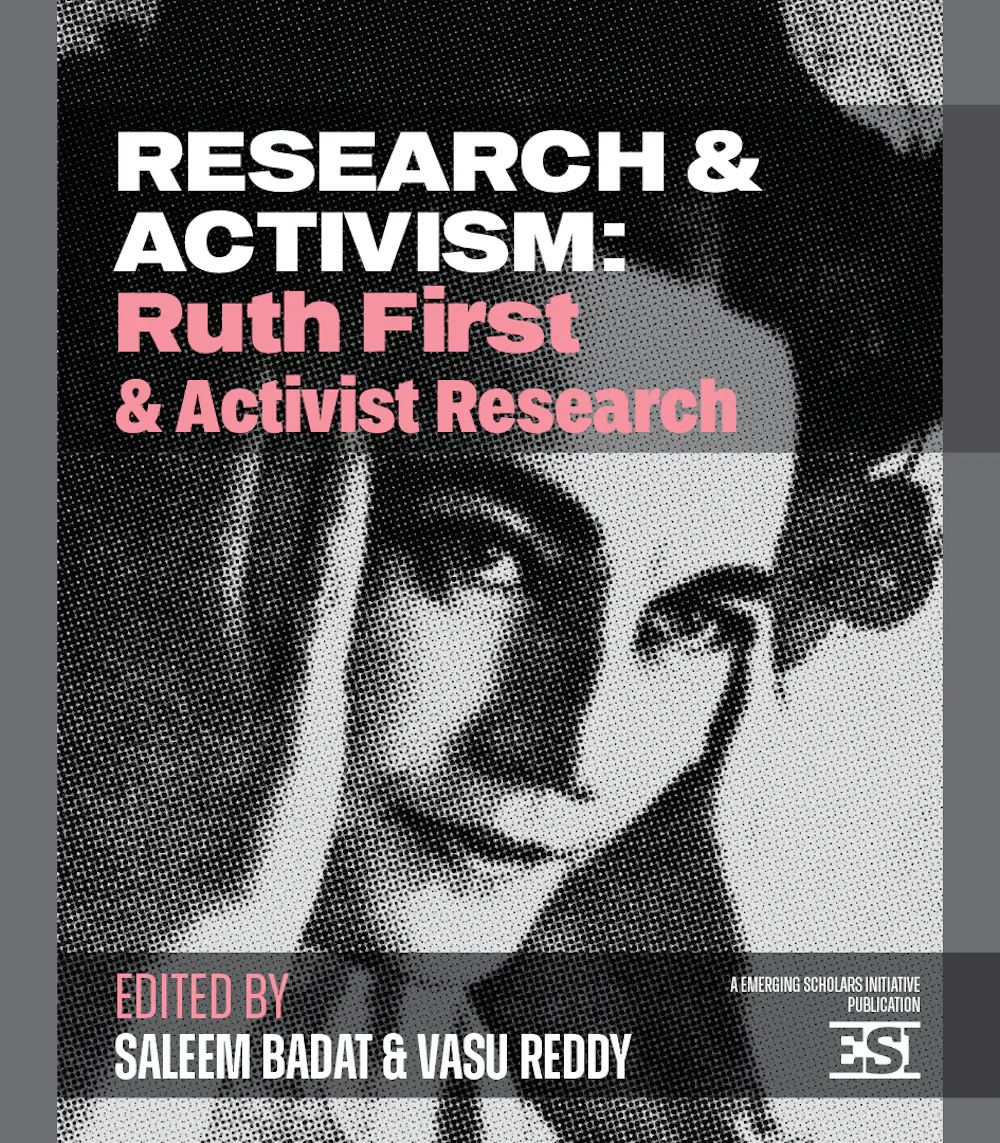
Her ideas, work and legacy live on. Sociologists Saleem Badat and Vasu Reddy have edited a new book called Research and Activism: Ruth First & Activist Research. We asked them about her and their project.
Who was Ruth First?
Heloise Ruth First was born on 4 May 1925 in Johannesburg to Jewish parents who had migrated from eastern Europe to South Africa in the early 1900s. Her parents were founder members of the South African Communist Party.
She joined the Young Communist League and the Federation of Progressive Students and graduated from the University of the Witwatersrand in 1946 with a Bachelor of Arts degree.
At 21, First joined the left-wing South African newspaper The Guardian. When it was banned, the New Age took its place until it too was banned in 1962. She served as the newspaper’s Johannesburg editor for 17 years.
In 1963, First was arrested at the University of the Witwatersrand library and held in solitary confinement for 117 days, during which time she was ruthlessly interrogated. The following year she and her three children left South Africa for England on an exit permit, where they joined her partner, the activist and politician Joe Slovo. She would not set foot again in South Africa. Continuing with her activist research in England, she taught at Durham University and then joined Eduardo Mondlane University until hear death.
Ruth First.Courtesy the Slovo family
The mid-1940s to early 1960s were tumultuous years in South Africa. With the rise of formal apartheid in 1948, racial segregation was intensified.
First’s intrepid and penetrating journalistic research exposed her to the brutality of labour exploitation and control on the mines and the farms. It reinforced her understanding of South Africa in Marxist terms.
The will to fight is born out of the desire for freedom.
She was confident that:
The power of the people is greater than the power of any government.
First believed that ignorance is “the enemy of progress and justice” and that knowledge and education are “key to empowering individuals and challenging oppressive systems”. These words ring true in today’s global events driven by right-wing authoritarianism, US imperialism and acts of genocide.
On learning of her death, former South African President Nelson Mandela recalled:
I was in prison when Ruth First was assassinated, felt almost alone. Lost a sister in arms … It is no consolation to know that she lives beyond her grave.
What is activist research and how is it applied in the book?
As authors, we revisit Ruth First’s life, work and ideas and its relevance for the current context. We focus especially on the nature of her scholarship and how she navigated the tensions between her activism and her research – whether journalistic or for her books on South West Africa (today’s Namibia), Libya or western investment in apartheid. Other of her acclaimed books included The Barrel of a Gun: Political Power in Africa and the Coup d’etat and, during her Mozambican sojourn, Black Gold: The Mozambican Miner, Proletarian and Peasant.
In the process we invite renewed critical reflection about her life and work. Inspired by First’s contributions, the book considers how universities and scholars engage with institutions and social movements beyond the university.
ESI Press
For example, in the book a research group from Durham University in the UK considers how to balance objectivity (showing no bias) with more politically participatory research methods and how objectivity can be enhanced despite the difficulties faced by activist research.
Other scholars reflect on the work of the assassinated South African anti-apartheid activist scholar and lecturer Rick Turner on climate change. And on the complexities of undertaking activist research in Marikana with a women’s organisation, Sikhala Sonke. Marikana was the site where South African police opened fire on and killed 34 striking mineworkers in 2012.
There is examination of a research partnership between University of Cape Town activist scholars and some Khoi-San communities, reflection on the challenges of legal practice and education, and critical analysis of the decolonisation challenges of the KwaZulu-Natal Society of the Arts.
How do you frame activist research in your book?
The book shows that there is a difference between engaged research, critical research and activist research.
Engaged research tries to connect knowledge produced by academics with institutions, movements and experts outside the university to collaboratively address issues and promote cooperation.
Critical research uses radical critical theory to critique oppression and injustice, to show the gap between what exists today and more just ways of living. However, it does not necessarily connect with political and social movements.
Ruth First addresses a rally in Trafalgar Square, London in 1960.Courtesy the Slovo family
First’s research was not only engaged, but also critical in orientation and activist in nature. As activist research it challenged oppression and inequality.
It both critiqued the status quo in South Africa and elsewhere and tried to change it. It was linked with movements and connected to political activism that was anti-colonial, anti-imperialist, and committed to socialism.
First’s activist research did not confine itself to the academic arena but engaged with larger, wider and more diverse publics. It used this experience to critique dominant and often limited thinking at universities and promoted other ways of producing knowledge. The expertise developed was used to improve scholarship in various ways.
What do you want readers to take away?
There is much talk about the “engaged university” and engaged research. However, only certain connections and engagements seem to be valued.
Prior to democracy in 1994, South African researchers connected with social movements for change. Now this is seldom the case. Universities and scholars largely engage with those with money – the state, business, elites and donors.
This raises questions about the roles of researchers in South Africa, whose interests are prioritised and the place of critical and activist research in the engaged university.
How should Ruth First be remembered?
We must honour her for her intellectual and practical activism. What matters is not just her knowledge archive, but also her example as both an outstanding interpreter of the world and an activist scholar committed to changing society in the interests of the downtrodden, marginalised and voiceless.
First was a critical and independent thinker who refused to accept anything as settled and beyond questioning. But that intellect was committed to loyalty to the national liberation movement of which she was an invaluable cadre.
The views expressed in this piece do not reflect or represent the position of the university to which Badat and Reddy are affiliated.
– Ruth First and activist research: the legacy of a South African freedom fighter – https://theconversation.com/ruth-first-and-activist-research-the-legacy-of-a-south-african-freedom-fighter-257687
Source: United States Bureau of Alcohol Tobacco Firearms and Explosives (ATF)
A man who possessed a firearm as a felon was sentenced today to two years in federal prison.
Chrishawn Lloyd Stuckey, age 43, from Birmingham, Alabama, received the prison term after a February 7, 2025 guilty plea to one count of possession of a firearm by a felon.
Evidence at the sentencing hearing showed that Stuckey was intoxicated while at a Wal-Mart in Waterloo, Iowa. He left the store and drove erratically. When a law enforcement officer attempted to stop his car, Stuckey refused to pull over. Stuckey instead got onto an on-ramp to the highway. Officers used a car maneuver to force Stuckey to stop. Stuckey then put his car in reverse and backed up into a squad car, damaging it. Officers found a loaded stolen firearm in Stuckey’s car. Stuckey has felony convictions for trafficking in stolen weapons and possession of a firearm by a felon.
Stuckey was sentenced in Cedar Rapids by United States District Court Chief Judge C.J. Williams. Stuckey was sentenced to 24 months’ imprisonment and must also serve a 3-year term of supervised release after the prison term. There is no parole in the federal system.
This case is part of Project Safe Neighborhoods (PSN), a program bringing together all levels of law enforcement and the communities they serve to reduce violent crime and gun violence, and to make our neighborhoods safer for everyone. On May 26, 2021, the Department launched a violent crime reduction strategy strengthening PSN based on these core principles: fostering trust and legitimacy in our communities, supporting community-based organizations that help prevent violence from occurring in the first place, setting focused and strategic enforcement priorities, and measuring the results.
Stuckey is being held in the United States Marshal’s custody until he can be transported to a federal prison.
The case was prosecuted by Assistant United States Attorney Devra T. Hake and investigated by the Waterloo Police Department, the Bureau of Alcohol, Tobacco, Firearms & Explosives, and the Federal Bureau of Investigation.
Source: United States Bureau of Alcohol Tobacco Firearms and Explosives (ATF)
NEWARK, N.J. – Five New Jersey men, including associates of a New Jersey gang associated with the Bounty Hunter Bloods criminal street gang were charged by a superseding indictment with Racketeer Influenced and Corrupt Organizations (RICO) conspiracy, drug trafficking, and firearms offenses, U.S. Attorney Alina Habba announced.
The Indictment charges Carl Napier, a/k/a “Smash” (“Napier”), Hamir Wright, a/k/a “Lil Smash” (“Wright”), Alexis Tejada (“Tejada”), Jihad Bibbs, Sr. (“Bibbs”), and Jamie Archer-Monroe, a/k/a “Raziq” (“Archer-Monroe”), all of Somerset County and Middlesex County, New Jersey, with a racketeering conspiracy that included multiple murders, fraud schemes, and narcotics distribution. Napier and Bibbs are in federal custody on previously filed related federal charges. Tejada and Archer-Monroe were arrested and appeared in federal court in Newark before the Hon. Stacy Adams, U.SM.J. for initial appearances. Wright is in state custody on previously filed unrelated charges and will appear in federal court at a later date.
The charges are the result of a long-running investigation, coordinated between the U.S. Attorney’s Office, the Federal Bureau of Investigation, the Middlesex County Prosecutor’s Office, the Somerset County Prosecutor’s Office, the New Brunswick Police Department, and the Franklin Township Police Department.
“There will be zero tolerance for violent crime and gang activity in the state of New Jersey. My office will continue to use all resources to find and prosecute those who instill fear in our citizens and undermine the safety of our communities. These criminals do not run our streets — the law does, and my office will enforce it without hesitation.”
– U.S. Attorney Alina Habba
“The apprehension of these individuals is a momentous step towards making New Jersey safer, one day at a time. By freeing these communities from those who allegedly distribute drugs, firearms, and use violence as a means of coercion, the FBI continues its mission to combat violent crime,” said Acting Special Agent in Charge Stefanie Roddy.
According to documents filed in this case and statements made in court:
Napier and Wright, each were allegedly associates of the Bounty Hunter Bloods, who operated under the umbrella of the neighborhood street gangs known as “Parkside” in Somerset and “The Ville” in New Brunswick. Some of the charged defendants are alleged to have also engaged in numerous violent acts on behalf of and for the benefit of the gang, including assaults, shootings, and murders, some of which targeted rival gang members. For example, on or about March 12, 2024, Napier and Wright, while with other gang members in New Brunswick, got into a confrontation regarding narcotics distribution with purported rival gang members and shot at them, killing Victim 1 and resulting in injury to Victim 2.
In addition to this violent act, the defendants, are alleged to have routinely distributed narcotics and trafficked firearms in and around the gang’s territory in both New Brunswick and Somerset.
This investigation is part of Operation Take Back America, a nationwide initiative that marshals the full resources of the Department of Justice to repel the invasion of illegal immigration, achieve the total elimination of cartels and transnational criminal organizations (TCOs), and protect our communities from the perpetrators of violent crime. Operation Take Back America streamlines efforts and resources from the Department’s Organized Crime Drug Enforcement Task Forces (OCDETFs) and Project Safe Neighborhood (PSN).
U.S. Attorney Habba credited special agents of the FBI, under the direction of Special Agent in Charge (SAC) Stefanie Roddy, investigators of the Middlesex County Prosecutor’s Office, under the direction of Prosecutor Yolanda Ciccone, investigators of the Somerset County Prosecutor’s Office, under the direction of Prosecutor John McDonald, the New Brunswick Police Department, under the direction of Chief Vincent Sabo and the Franklin Township Police Department, under the direction of Director of Public Safety Quovella Mayweather, for the investigation leading to the charges. U.S. Attorney Habba and SAC Roddy would also like to thank the Central New Jersey Safe Streets Task Force, Woodbridge Police Department, Raritan Township Police Department and the Bureau of Alcohol, Tobacco, Firearms & Explosives.
The government is represented by Assistant U.S. Attorney Kendall Randolph, Deputy Chief of the District of New Jersey’s Organized Crime and Gangs Unit in Newark, and Assistant U.S. Attorney Sean Nadel of the Office’s Organized Crime and Drug Enforcement Task Force Unit in Newark.
Source: United States Bureau of Alcohol Tobacco Firearms and Explosives (ATF)
NASHVILLE – Darryl Deshaun Humphrey, 49, of Nashville, has been charged by criminal complaint with being a felon in possession of a firearm, possession with intent to distribute fentanyl and cocaine, and possession of a firearm during a drug trafficking crime, announced Acting United States Attorney Robert E. McGuire for the Middle District of Tennessee.
“Our Bond Watch program prioritizes keeping felons who are on bond for serious offenses but get caught with guns and deadly drugs like fentanyl off the streets of our community,” said Acting United States Attorney Robert E. McGuire. “Those on bond awaiting trial need to know that if they continue to violate the law we will hold them accountable for their crimes and keep our citizens safe from their dangerous and illegal activity.”
According to court documents, on June 19, 2025, Metro Nashville Police Department (MNPD) officers conducted a traffic stop, which resulted in Humphrey’s arrest. Uniformed patrol officers were conducting routine patrol and enforcement operations in the area of Whites Creek Pike and W. Trinity Lane in Nashville. The officers saw Humphrey standing outside the driver side door of a Cadillac Escalade in a gas station parking lot, ran the Escalade’s license plate tag through law enforcement databases and learned that Humphrey, the registered owner, had a suspended driver’s license. The officers saw Humphrey drive the Escalade out of the parking lot traveling north on Whites Creek Pike and initiated a traffic stop on the Escalade based on the driver’s license violation. The Escalade came to a stop, and officers saw Humphrey move from the driver’s seat to the passenger seat. Humphrey got out of the Escalade on the passenger side, walked around the Escalade, and told the officers that he was not driving. Officers advised Humphrey of the violation and why they stopped him and told him to stop walking. Humphrey ignored the officers’ commands and took a fighting stance at which time an officer utilized his department-issued taser to subdue and arrest Humphrey.
From outside of the Escalade, officers observed on the driver seat floorboard a large plastic bag that contained a white rocky substance that the officer immediately recognized to be consistent with controlled substances. Additionally, there was a firearm on the driver’s seat. A query of law enforcement databases showed Humphrey was a previously convicted felon. Officers conducted a search of the Escalade and located two large plastic bags containing a controlled substance that field tested positive for fentanyl: the first bag contained approximately 257 grams and the second contained approximately 378.9 grams. Officers recovered another second plastic bag with approximately 1.27 pounds of suspected cocaine which field tested positive, a box of empty plastic baggies, five digital scales, and approximately $18,600 in U.S. Currency. Additionally, multiple tablets and/or pills were located which were identified as various controlled substances. Officers also seized a Ruger, Caliber: 9x19mm pistol and a Caspian, Caliber: .45 ACP pistol.
Humphrey has multiple prior felony convictions in state and federal courts. His felony convictions in Davidson County Criminal Court include Possession with Intent to Distribute Marijuana, for which he received a two-year sentence, and two convictions for Possession with Intent to Distribute Controlled Substance – Cocaine .5grams or more, for which he received an eight-year sentence and a six-year sentence. Humphrey also was convicted of Possession with Intent to Distribute Cocaine in U.S. District Court for the Middle District of Tennessee, for which he received a 10-year sentence. At the time of his arrest, Humphrey was on bond for Possession with Intent to Distribute more than 26 grams of cocaine, Possession of a Firearm During the Commission of a Dangerous Felony, Possession with Intent to Distribute Marijuana, Felon in Possession of a Firearm, Evading Arrest, and Resisting Arrest, from a June 2023 arrest in Davidson County.
If convicted, Humphrey faces a maximum of 15 years in federal prison and a $250,000 fine on the possession of a firearm by a convicted felon charge, up to 20 years in federal prison and a $1 million fine on the drug charge, and 5 years to life in prison and a $250,000 fine on the possession of a firearm during a drug trafficking crime charge.
This case is being investigated by the Bureau of Alcohol, Tobacco, Firearms and Explosives, and the Metropolitan Nashville Police Department. Assistant U.S. Attorney Rachel M. Stephens is prosecuting the case.
This case is part of Project Safe Neighborhoods (PSN), a program bringing together all levels of law enforcement and the communities they serve to reduce violent crime and gun violence, and to make our neighborhoods safer for everyone. On May 26, 2021, the department launched a violent crime reduction strategy strengthening PSN based on these core principles: fostering trust and legitimacy in our communities, supporting community-based organizations that help prevent violence from occurring in the first place, setting focused and strategic enforcement priorities, and measuring the results.
A complaint is merely an allegation. The defendant is presumed innocent until proven guilty beyond a reasonable doubt in a court of law.
Source: United States Bureau of Alcohol Tobacco Firearms and Explosives (ATF)
NASHVILLE – Darryl Deshaun Humphrey, 49, of Nashville, has been charged by criminal complaint with being a felon in possession of a firearm, possession with intent to distribute fentanyl and cocaine, and possession of a firearm during a drug trafficking crime, announced Acting United States Attorney Robert E. McGuire for the Middle District of Tennessee.
“Our Bond Watch program prioritizes keeping felons who are on bond for serious offenses but get caught with guns and deadly drugs like fentanyl off the streets of our community,” said Acting United States Attorney Robert E. McGuire. “Those on bond awaiting trial need to know that if they continue to violate the law we will hold them accountable for their crimes and keep our citizens safe from their dangerous and illegal activity.”
According to court documents, on June 19, 2025, Metro Nashville Police Department (MNPD) officers conducted a traffic stop, which resulted in Humphrey’s arrest. Uniformed patrol officers were conducting routine patrol and enforcement operations in the area of Whites Creek Pike and W. Trinity Lane in Nashville. The officers saw Humphrey standing outside the driver side door of a Cadillac Escalade in a gas station parking lot, ran the Escalade’s license plate tag through law enforcement databases and learned that Humphrey, the registered owner, had a suspended driver’s license. The officers saw Humphrey drive the Escalade out of the parking lot traveling north on Whites Creek Pike and initiated a traffic stop on the Escalade based on the driver’s license violation. The Escalade came to a stop, and officers saw Humphrey move from the driver’s seat to the passenger seat. Humphrey got out of the Escalade on the passenger side, walked around the Escalade, and told the officers that he was not driving. Officers advised Humphrey of the violation and why they stopped him and told him to stop walking. Humphrey ignored the officers’ commands and took a fighting stance at which time an officer utilized his department-issued taser to subdue and arrest Humphrey.
From outside of the Escalade, officers observed on the driver seat floorboard a large plastic bag that contained a white rocky substance that the officer immediately recognized to be consistent with controlled substances. Additionally, there was a firearm on the driver’s seat. A query of law enforcement databases showed Humphrey was a previously convicted felon. Officers conducted a search of the Escalade and located two large plastic bags containing a controlled substance that field tested positive for fentanyl: the first bag contained approximately 257 grams and the second contained approximately 378.9 grams. Officers recovered another second plastic bag with approximately 1.27 pounds of suspected cocaine which field tested positive, a box of empty plastic baggies, five digital scales, and approximately $18,600 in U.S. Currency. Additionally, multiple tablets and/or pills were located which were identified as various controlled substances. Officers also seized a Ruger, Caliber: 9x19mm pistol and a Caspian, Caliber: .45 ACP pistol.
Humphrey has multiple prior felony convictions in state and federal courts. His felony convictions in Davidson County Criminal Court include Possession with Intent to Distribute Marijuana, for which he received a two-year sentence, and two convictions for Possession with Intent to Distribute Controlled Substance – Cocaine .5grams or more, for which he received an eight-year sentence and a six-year sentence. Humphrey also was convicted of Possession with Intent to Distribute Cocaine in U.S. District Court for the Middle District of Tennessee, for which he received a 10-year sentence. At the time of his arrest, Humphrey was on bond for Possession with Intent to Distribute more than 26 grams of cocaine, Possession of a Firearm During the Commission of a Dangerous Felony, Possession with Intent to Distribute Marijuana, Felon in Possession of a Firearm, Evading Arrest, and Resisting Arrest, from a June 2023 arrest in Davidson County.
If convicted, Humphrey faces a maximum of 15 years in federal prison and a $250,000 fine on the possession of a firearm by a convicted felon charge, up to 20 years in federal prison and a $1 million fine on the drug charge, and 5 years to life in prison and a $250,000 fine on the possession of a firearm during a drug trafficking crime charge.
This case is being investigated by the Bureau of Alcohol, Tobacco, Firearms and Explosives, and the Metropolitan Nashville Police Department. Assistant U.S. Attorney Rachel M. Stephens is prosecuting the case.
This case is part of Project Safe Neighborhoods (PSN), a program bringing together all levels of law enforcement and the communities they serve to reduce violent crime and gun violence, and to make our neighborhoods safer for everyone. On May 26, 2021, the department launched a violent crime reduction strategy strengthening PSN based on these core principles: fostering trust and legitimacy in our communities, supporting community-based organizations that help prevent violence from occurring in the first place, setting focused and strategic enforcement priorities, and measuring the results.
A complaint is merely an allegation. The defendant is presumed innocent until proven guilty beyond a reasonable doubt in a court of law.
by Pascale Rizk
[embedded content]
Chunchon (Agenzia Fides) – For more than 50 years, the Sisters of Our Lady of the Good Shepherd in Chuncheon, Seoul, and Jeju, South Korea, have prayed and worked for women and girls in difficulty: single mothers, immigrants, pregnant women, and girls abused within the family. In recent months, they inaugurated a new facility for women in need at their provincial house of the International Congregation of Religious in Chuncheon.Founded in 1995 with the help of donations, the sisters’ house in Chuncheon continues to grow today with the support of old and new benefactors who value the sisters’ work on behalf of women and girls from all over the country.At the inauguration ceremony last April, Bishop Simon Kim Ju-young of Chuncheon addressed the benefactors, saying: “You must be the happiest of all. You should know that while we priests sometimes neglect prayer, the nuns, on the contrary, always pray diligently.” It was he himself who, a year earlier, had invited the parishes of the diocese to support the fundraising campaign launched by the sisters. “Since 1993,” reports Sister Marie Jean Bae, who served as Provincial Superior from 2014 to 2019, “the sisters of Chuncheon had used the land on which the new building stands free of charge. Then, in 2022, the owner put the land up for sale. If it had been sold and another building had been built on the site, the nuns would have had to abandon their project.” “We and the sisters of the contemplative branch prayed together out of desperation. The merciful God heard our prayers, and just two days after we intensified our prayers, the owner of the land changed his mind and decided to donate it to the convent, apologizing for not having done so sooner,” the nun continued. “What is even more surprising is that he also thanked us for accepting the donation,” summarizes Sister Marie Jean, who has since become the South Korean coordinator of “Talita khum,” the international network of consecrated women against human trafficking.This year, the Congregation celebrates the bicentenary of its contemplative branch, whose history dates back to the works and spiritual insights of Saint John Eudes (1601-1680) in the 17th century, when prostitution was a social scourge punishable by imprisonment. Faced with the misery and injustice that prevailed during a time of spiritual and moral decline, Eudes was urged by the young Madeleine Lamy in Caen, Normandy, to found the first house of refuge, a true “hospital for these souls.” From papal approval until the revolution of 1789, 150 years passed, during which the religious were dispersed and their houses closed. It was not until 1825 that the houses were reopened thanks to the courage of a young superior, Maria Eufrasia, the foundress of the Sisters of St. Magdalene, now the Sisters of Our Lady of Charity of the Good Shepherd.Religious Sisters at the Side of Women in needBetween the 1960s and 1970s—immediately after the Second Vatican Council—changes in the lives of the sisters in Korea also began to emerge. In 1966, at the invitation of Bishop Peter Han Kong-ryel of the Diocese of Gwangju, four American nuns came to Korea to establish the spirituality of the Sisters of the Good Shepherd. Han was shocked by the sexual exploitation of young girls and women by the US military in his diocese and, in the charism of their foundress, Saint Mary Eufrasia, asked the sisters to help these victims of oppression. Thus, in 1968, the sisters established a dormitory and vocational school near the US Air Force base in Gunsan. This facility remained in operation until 1976. Inspired by the motto “One life is more precious than the whole world,” their commitment to supporting single pregnant women clearly demonstrated how important it was for the Catholic Church to create appropriate facilities for these women. Thus, at the invitation of Bishop Park Thomas Stewart, the sisters began with a small house in Seoul and opened “Mary’s Home” for single mothers in Chuncheon Province in 1979, before moving to the current provincial house complex and the counseling and support centers for women in 1985. With the entry into force in South Korea of the law against prostitution in 2004 and the significant increase in international marriages – mainly due to the establishment of diplomatic relations with China in 1992 – forms of support for women in distress have been strengthened to meet the urgent need for counselling for women who are victims of domestic violence and to improve communication between spouses of different nationalities, which is often hampered by language and cultural barriers.Healing wounds of body and soulIncreased awareness of justice and the denunciation of abuse against women led to the adoption of the “Basic Law for the Development of Women” (여성발전기본법) in South Korea in 1995. In centers for pregnant women such as “Mary’s Home,” women are prepared for a safe birth and can then decide whether to keep their child or place it in foster care. The work of the sisters is crucial in this area, as they advocate for anti-abortion policies in favor of the dignity of life. By welcoming women into these homes, they also aim to protect them from social prejudice. Mothers who have been victims of various forms of violence can also come from outside to seek refuge in the facilities run by the sisters, for example, at the “House of Friends” in Seoul or at another women’s shelter in Jeju. Support can be short-term (six months) – renewable – or long-term (two years). To facilitate their return to normalcy, programs are developed to help them heal their emotional and physical wounds. The women are guided through their personal and professional development and receive support in the form of free room and lodging, medical care, vocational training to achieve economic independence, and preparation for the GED, an exam equivalent to a high school diploma. The center in Chuncheon, which is operated in cooperation with Caritas, offers special legal support and advice, for example, in filing lawsuits against the perpetrator or drafting a statement in civil proceedings. The sisters also run homes for girls who have been victims of domestic violence and family problems. In these facilities, such as the “House of the Good Shepherd”, they receive support from their families. At organizations such as the “Good Shepherd House” in Seoul, efforts are being made to give young girls back the warmth of family, the feeling of love and acceptance in a safe and comfortable place, where they are given a sense of normality. “There is no greater pain than being abused at home by one’s parents. It is a long road to achieve healthy independence and psycho-emotional recovery, but they do it,” says Mariana Inea Young, a ‘Sand Play’ therapist and social worker. “So many come back to share their stories of recovery,” adds Sister Damiana Ham.A hotline for women in needEvery Thursday, Sister Rufina Hwa Jung Shim—66 years old and now retired after seven years as head of the “hotline” in Jeju—went to the neighborhoods to help women on the streets. Her zeal, the fourth vow of the Sisters of the Good Shepherd, allows her to transcend the boundaries of space and time to continue her mission. “We begin every morning with a Bible reading, and even though the staff includes women from all Korean denominations, the Gospel remains the heart of the mission.”At the “1366 Center,” the sisters are commissioned by the diocese to manage the “Catholic Women’s Line” telephone counseling service, established in 1998 by the Ministry of Health and Welfare. Depending on the case, women are supported locally or placed in women’s shelters and connected with the police, hospitals, or other facilities established for their protection. In recent years, increased awareness of women’s issues in South Korea has led to a substantial change in government-sponsored social welfare services. Social service agencies working in the field are consulted by the government before defining the most appropriate policies. Appropriate professional qualifications are also required.Meanwhile, on July 1, the Ministry of Equal Opportunities and Family Affairs passed a law implementing the “Advance Family Allowance System.” The system provides for the advance payment of family allowances and contributions even if one parent (usually the father) evades their child support obligations. The unpaid contributions of the insolvent parent remain with the parent as a debt to public institutions, which must be settled by paying contributions to the social security institutions. The law provides for monthly maintenance of 200,000 KRW (equivalent to 125 euros) for each child until they reach adulthood. This is a form of support that also alleviates the economic difficulties of single mothers and women abandoned by their spouses. (Agenzia Fides, 3/7/2025)Share:
by Pascale Rizk
[embedded content]
Chunchon (Agenzia Fides) – For more than 50 years, the Sisters of Our Lady of the Good Shepherd in Chuncheon, Seoul, and Jeju, South Korea, have prayed and worked for women and girls in difficulty: single mothers, immigrants, pregnant women, and girls abused within the family. In recent months, they inaugurated a new facility for women in need at their provincial house of the International Congregation of Religious in Chuncheon.Founded in 1995 with the help of donations, the sisters’ house in Chuncheon continues to grow today with the support of old and new benefactors who value the sisters’ work on behalf of women and girls from all over the country.At the inauguration ceremony last April, Bishop Simon Kim Ju-young of Chuncheon addressed the benefactors, saying: “You must be the happiest of all. You should know that while we priests sometimes neglect prayer, the nuns, on the contrary, always pray diligently.” It was he himself who, a year earlier, had invited the parishes of the diocese to support the fundraising campaign launched by the sisters. “Since 1993,” reports Sister Marie Jean Bae, who served as Provincial Superior from 2014 to 2019, “the sisters of Chuncheon had used the land on which the new building stands free of charge. Then, in 2022, the owner put the land up for sale. If it had been sold and another building had been built on the site, the nuns would have had to abandon their project.” “We and the sisters of the contemplative branch prayed together out of desperation. The merciful God heard our prayers, and just two days after we intensified our prayers, the owner of the land changed his mind and decided to donate it to the convent, apologizing for not having done so sooner,” the nun continued. “What is even more surprising is that he also thanked us for accepting the donation,” summarizes Sister Marie Jean, who has since become the South Korean coordinator of “Talita khum,” the international network of consecrated women against human trafficking.This year, the Congregation celebrates the bicentenary of its contemplative branch, whose history dates back to the works and spiritual insights of Saint John Eudes (1601-1680) in the 17th century, when prostitution was a social scourge punishable by imprisonment. Faced with the misery and injustice that prevailed during a time of spiritual and moral decline, Eudes was urged by the young Madeleine Lamy in Caen, Normandy, to found the first house of refuge, a true “hospital for these souls.” From papal approval until the revolution of 1789, 150 years passed, during which the religious were dispersed and their houses closed. It was not until 1825 that the houses were reopened thanks to the courage of a young superior, Maria Eufrasia, the foundress of the Sisters of St. Magdalene, now the Sisters of Our Lady of Charity of the Good Shepherd.Religious Sisters at the Side of Women in needBetween the 1960s and 1970s—immediately after the Second Vatican Council—changes in the lives of the sisters in Korea also began to emerge. In 1966, at the invitation of Bishop Peter Han Kong-ryel of the Diocese of Gwangju, four American nuns came to Korea to establish the spirituality of the Sisters of the Good Shepherd. Han was shocked by the sexual exploitation of young girls and women by the US military in his diocese and, in the charism of their foundress, Saint Mary Eufrasia, asked the sisters to help these victims of oppression. Thus, in 1968, the sisters established a dormitory and vocational school near the US Air Force base in Gunsan. This facility remained in operation until 1976. Inspired by the motto “One life is more precious than the whole world,” their commitment to supporting single pregnant women clearly demonstrated how important it was for the Catholic Church to create appropriate facilities for these women. Thus, at the invitation of Bishop Park Thomas Stewart, the sisters began with a small house in Seoul and opened “Mary’s Home” for single mothers in Chuncheon Province in 1979, before moving to the current provincial house complex and the counseling and support centers for women in 1985. With the entry into force in South Korea of the law against prostitution in 2004 and the significant increase in international marriages – mainly due to the establishment of diplomatic relations with China in 1992 – forms of support for women in distress have been strengthened to meet the urgent need for counselling for women who are victims of domestic violence and to improve communication between spouses of different nationalities, which is often hampered by language and cultural barriers.Healing wounds of body and soulIncreased awareness of justice and the denunciation of abuse against women led to the adoption of the “Basic Law for the Development of Women” (여성발전기본법) in South Korea in 1995. In centers for pregnant women such as “Mary’s Home,” women are prepared for a safe birth and can then decide whether to keep their child or place it in foster care. The work of the sisters is crucial in this area, as they advocate for anti-abortion policies in favor of the dignity of life. By welcoming women into these homes, they also aim to protect them from social prejudice. Mothers who have been victims of various forms of violence can also come from outside to seek refuge in the facilities run by the sisters, for example, at the “House of Friends” in Seoul or at another women’s shelter in Jeju. Support can be short-term (six months) – renewable – or long-term (two years). To facilitate their return to normalcy, programs are developed to help them heal their emotional and physical wounds. The women are guided through their personal and professional development and receive support in the form of free room and lodging, medical care, vocational training to achieve economic independence, and preparation for the GED, an exam equivalent to a high school diploma. The center in Chuncheon, which is operated in cooperation with Caritas, offers special legal support and advice, for example, in filing lawsuits against the perpetrator or drafting a statement in civil proceedings. The sisters also run homes for girls who have been victims of domestic violence and family problems. In these facilities, such as the “House of the Good Shepherd”, they receive support from their families. At organizations such as the “Good Shepherd House” in Seoul, efforts are being made to give young girls back the warmth of family, the feeling of love and acceptance in a safe and comfortable place, where they are given a sense of normality. “There is no greater pain than being abused at home by one’s parents. It is a long road to achieve healthy independence and psycho-emotional recovery, but they do it,” says Mariana Inea Young, a ‘Sand Play’ therapist and social worker. “So many come back to share their stories of recovery,” adds Sister Damiana Ham.A hotline for women in needEvery Thursday, Sister Rufina Hwa Jung Shim—66 years old and now retired after seven years as head of the “hotline” in Jeju—went to the neighborhoods to help women on the streets. Her zeal, the fourth vow of the Sisters of the Good Shepherd, allows her to transcend the boundaries of space and time to continue her mission. “We begin every morning with a Bible reading, and even though the staff includes women from all Korean denominations, the Gospel remains the heart of the mission.”At the “1366 Center,” the sisters are commissioned by the diocese to manage the “Catholic Women’s Line” telephone counseling service, established in 1998 by the Ministry of Health and Welfare. Depending on the case, women are supported locally or placed in women’s shelters and connected with the police, hospitals, or other facilities established for their protection. In recent years, increased awareness of women’s issues in South Korea has led to a substantial change in government-sponsored social welfare services. Social service agencies working in the field are consulted by the government before defining the most appropriate policies. Appropriate professional qualifications are also required.Meanwhile, on July 1, the Ministry of Equal Opportunities and Family Affairs passed a law implementing the “Advance Family Allowance System.” The system provides for the advance payment of family allowances and contributions even if one parent (usually the father) evades their child support obligations. The unpaid contributions of the insolvent parent remain with the parent as a debt to public institutions, which must be settled by paying contributions to the social security institutions. The law provides for monthly maintenance of 200,000 KRW (equivalent to 125 euros) for each child until they reach adulthood. This is a form of support that also alleviates the economic difficulties of single mothers and women abandoned by their spouses. (Agenzia Fides, 3/7/2025)Share:
by Pascale Rizk
[embedded content]
Chunchon (Agenzia Fides) – For more than 50 years, the Sisters of Our Lady of the Good Shepherd in Chuncheon, Seoul, and Jeju, South Korea, have prayed and worked for women and girls in difficulty: single mothers, immigrants, pregnant women, and girls abused within the family. In recent months, they inaugurated a new facility for women in need at their provincial house of the International Congregation of Religious in Chuncheon.Founded in 1995 with the help of donations, the sisters’ house in Chuncheon continues to grow today with the support of old and new benefactors who value the sisters’ work on behalf of women and girls from all over the country.At the inauguration ceremony last April, Bishop Simon Kim Ju-young of Chuncheon addressed the benefactors, saying: “You must be the happiest of all. You should know that while we priests sometimes neglect prayer, the nuns, on the contrary, always pray diligently.” It was he himself who, a year earlier, had invited the parishes of the diocese to support the fundraising campaign launched by the sisters. “Since 1993,” reports Sister Marie Jean Bae, who served as Provincial Superior from 2014 to 2019, “the sisters of Chuncheon had used the land on which the new building stands free of charge. Then, in 2022, the owner put the land up for sale. If it had been sold and another building had been built on the site, the nuns would have had to abandon their project.” “We and the sisters of the contemplative branch prayed together out of desperation. The merciful God heard our prayers, and just two days after we intensified our prayers, the owner of the land changed his mind and decided to donate it to the convent, apologizing for not having done so sooner,” the nun continued. “What is even more surprising is that he also thanked us for accepting the donation,” summarizes Sister Marie Jean, who has since become the South Korean coordinator of “Talita khum,” the international network of consecrated women against human trafficking.This year, the Congregation celebrates the bicentenary of its contemplative branch, whose history dates back to the works and spiritual insights of Saint John Eudes (1601-1680) in the 17th century, when prostitution was a social scourge punishable by imprisonment. Faced with the misery and injustice that prevailed during a time of spiritual and moral decline, Eudes was urged by the young Madeleine Lamy in Caen, Normandy, to found the first house of refuge, a true “hospital for these souls.” From papal approval until the revolution of 1789, 150 years passed, during which the religious were dispersed and their houses closed. It was not until 1825 that the houses were reopened thanks to the courage of a young superior, Maria Eufrasia, the foundress of the Sisters of St. Magdalene, now the Sisters of Our Lady of Charity of the Good Shepherd.Religious Sisters at the Side of Women in needBetween the 1960s and 1970s—immediately after the Second Vatican Council—changes in the lives of the sisters in Korea also began to emerge. In 1966, at the invitation of Bishop Peter Han Kong-ryel of the Diocese of Gwangju, four American nuns came to Korea to establish the spirituality of the Sisters of the Good Shepherd. Han was shocked by the sexual exploitation of young girls and women by the US military in his diocese and, in the charism of their foundress, Saint Mary Eufrasia, asked the sisters to help these victims of oppression. Thus, in 1968, the sisters established a dormitory and vocational school near the US Air Force base in Gunsan. This facility remained in operation until 1976. Inspired by the motto “One life is more precious than the whole world,” their commitment to supporting single pregnant women clearly demonstrated how important it was for the Catholic Church to create appropriate facilities for these women. Thus, at the invitation of Bishop Park Thomas Stewart, the sisters began with a small house in Seoul and opened “Mary’s Home” for single mothers in Chuncheon Province in 1979, before moving to the current provincial house complex and the counseling and support centers for women in 1985. With the entry into force in South Korea of the law against prostitution in 2004 and the significant increase in international marriages – mainly due to the establishment of diplomatic relations with China in 1992 – forms of support for women in distress have been strengthened to meet the urgent need for counselling for women who are victims of domestic violence and to improve communication between spouses of different nationalities, which is often hampered by language and cultural barriers.Healing wounds of body and soulIncreased awareness of justice and the denunciation of abuse against women led to the adoption of the “Basic Law for the Development of Women” (여성발전기본법) in South Korea in 1995. In centers for pregnant women such as “Mary’s Home,” women are prepared for a safe birth and can then decide whether to keep their child or place it in foster care. The work of the sisters is crucial in this area, as they advocate for anti-abortion policies in favor of the dignity of life. By welcoming women into these homes, they also aim to protect them from social prejudice. Mothers who have been victims of various forms of violence can also come from outside to seek refuge in the facilities run by the sisters, for example, at the “House of Friends” in Seoul or at another women’s shelter in Jeju. Support can be short-term (six months) – renewable – or long-term (two years). To facilitate their return to normalcy, programs are developed to help them heal their emotional and physical wounds. The women are guided through their personal and professional development and receive support in the form of free room and lodging, medical care, vocational training to achieve economic independence, and preparation for the GED, an exam equivalent to a high school diploma. The center in Chuncheon, which is operated in cooperation with Caritas, offers special legal support and advice, for example, in filing lawsuits against the perpetrator or drafting a statement in civil proceedings. The sisters also run homes for girls who have been victims of domestic violence and family problems. In these facilities, such as the “House of the Good Shepherd”, they receive support from their families. At organizations such as the “Good Shepherd House” in Seoul, efforts are being made to give young girls back the warmth of family, the feeling of love and acceptance in a safe and comfortable place, where they are given a sense of normality. “There is no greater pain than being abused at home by one’s parents. It is a long road to achieve healthy independence and psycho-emotional recovery, but they do it,” says Mariana Inea Young, a ‘Sand Play’ therapist and social worker. “So many come back to share their stories of recovery,” adds Sister Damiana Ham.A hotline for women in needEvery Thursday, Sister Rufina Hwa Jung Shim—66 years old and now retired after seven years as head of the “hotline” in Jeju—went to the neighborhoods to help women on the streets. Her zeal, the fourth vow of the Sisters of the Good Shepherd, allows her to transcend the boundaries of space and time to continue her mission. “We begin every morning with a Bible reading, and even though the staff includes women from all Korean denominations, the Gospel remains the heart of the mission.”At the “1366 Center,” the sisters are commissioned by the diocese to manage the “Catholic Women’s Line” telephone counseling service, established in 1998 by the Ministry of Health and Welfare. Depending on the case, women are supported locally or placed in women’s shelters and connected with the police, hospitals, or other facilities established for their protection. In recent years, increased awareness of women’s issues in South Korea has led to a substantial change in government-sponsored social welfare services. Social service agencies working in the field are consulted by the government before defining the most appropriate policies. Appropriate professional qualifications are also required.Meanwhile, on July 1, the Ministry of Equal Opportunities and Family Affairs passed a law implementing the “Advance Family Allowance System.” The system provides for the advance payment of family allowances and contributions even if one parent (usually the father) evades their child support obligations. The unpaid contributions of the insolvent parent remain with the parent as a debt to public institutions, which must be settled by paying contributions to the social security institutions. The law provides for monthly maintenance of 200,000 KRW (equivalent to 125 euros) for each child until they reach adulthood. This is a form of support that also alleviates the economic difficulties of single mothers and women abandoned by their spouses. (Agenzia Fides, 3/7/2025)Share:
by Pascale Rizk
[embedded content]
Chunchon (Agenzia Fides) – For more than 50 years, the Sisters of Our Lady of the Good Shepherd in Chuncheon, Seoul, and Jeju, South Korea, have prayed and worked for women and girls in difficulty: single mothers, immigrants, pregnant women, and girls abused within the family. In recent months, they inaugurated a new facility for women in need at their provincial house of the International Congregation of Religious in Chuncheon.Founded in 1995 with the help of donations, the sisters’ house in Chuncheon continues to grow today with the support of old and new benefactors who value the sisters’ work on behalf of women and girls from all over the country.At the inauguration ceremony last April, Bishop Simon Kim Ju-young of Chuncheon addressed the benefactors, saying: “You must be the happiest of all. You should know that while we priests sometimes neglect prayer, the nuns, on the contrary, always pray diligently.” It was he himself who, a year earlier, had invited the parishes of the diocese to support the fundraising campaign launched by the sisters. “Since 1993,” reports Sister Marie Jean Bae, who served as Provincial Superior from 2014 to 2019, “the sisters of Chuncheon had used the land on which the new building stands free of charge. Then, in 2022, the owner put the land up for sale. If it had been sold and another building had been built on the site, the nuns would have had to abandon their project.” “We and the sisters of the contemplative branch prayed together out of desperation. The merciful God heard our prayers, and just two days after we intensified our prayers, the owner of the land changed his mind and decided to donate it to the convent, apologizing for not having done so sooner,” the nun continued. “What is even more surprising is that he also thanked us for accepting the donation,” summarizes Sister Marie Jean, who has since become the South Korean coordinator of “Talita khum,” the international network of consecrated women against human trafficking.This year, the Congregation celebrates the bicentenary of its contemplative branch, whose history dates back to the works and spiritual insights of Saint John Eudes (1601-1680) in the 17th century, when prostitution was a social scourge punishable by imprisonment. Faced with the misery and injustice that prevailed during a time of spiritual and moral decline, Eudes was urged by the young Madeleine Lamy in Caen, Normandy, to found the first house of refuge, a true “hospital for these souls.” From papal approval until the revolution of 1789, 150 years passed, during which the religious were dispersed and their houses closed. It was not until 1825 that the houses were reopened thanks to the courage of a young superior, Maria Eufrasia, the foundress of the Sisters of St. Magdalene, now the Sisters of Our Lady of Charity of the Good Shepherd.Religious Sisters at the Side of Women in needBetween the 1960s and 1970s—immediately after the Second Vatican Council—changes in the lives of the sisters in Korea also began to emerge. In 1966, at the invitation of Bishop Peter Han Kong-ryel of the Diocese of Gwangju, four American nuns came to Korea to establish the spirituality of the Sisters of the Good Shepherd. Han was shocked by the sexual exploitation of young girls and women by the US military in his diocese and, in the charism of their foundress, Saint Mary Eufrasia, asked the sisters to help these victims of oppression. Thus, in 1968, the sisters established a dormitory and vocational school near the US Air Force base in Gunsan. This facility remained in operation until 1976. Inspired by the motto “One life is more precious than the whole world,” their commitment to supporting single pregnant women clearly demonstrated how important it was for the Catholic Church to create appropriate facilities for these women. Thus, at the invitation of Bishop Park Thomas Stewart, the sisters began with a small house in Seoul and opened “Mary’s Home” for single mothers in Chuncheon Province in 1979, before moving to the current provincial house complex and the counseling and support centers for women in 1985. With the entry into force in South Korea of the law against prostitution in 2004 and the significant increase in international marriages – mainly due to the establishment of diplomatic relations with China in 1992 – forms of support for women in distress have been strengthened to meet the urgent need for counselling for women who are victims of domestic violence and to improve communication between spouses of different nationalities, which is often hampered by language and cultural barriers.Healing wounds of body and soulIncreased awareness of justice and the denunciation of abuse against women led to the adoption of the “Basic Law for the Development of Women” (여성발전기본법) in South Korea in 1995. In centers for pregnant women such as “Mary’s Home,” women are prepared for a safe birth and can then decide whether to keep their child or place it in foster care. The work of the sisters is crucial in this area, as they advocate for anti-abortion policies in favor of the dignity of life. By welcoming women into these homes, they also aim to protect them from social prejudice. Mothers who have been victims of various forms of violence can also come from outside to seek refuge in the facilities run by the sisters, for example, at the “House of Friends” in Seoul or at another women’s shelter in Jeju. Support can be short-term (six months) – renewable – or long-term (two years). To facilitate their return to normalcy, programs are developed to help them heal their emotional and physical wounds. The women are guided through their personal and professional development and receive support in the form of free room and lodging, medical care, vocational training to achieve economic independence, and preparation for the GED, an exam equivalent to a high school diploma. The center in Chuncheon, which is operated in cooperation with Caritas, offers special legal support and advice, for example, in filing lawsuits against the perpetrator or drafting a statement in civil proceedings. The sisters also run homes for girls who have been victims of domestic violence and family problems. In these facilities, such as the “House of the Good Shepherd”, they receive support from their families. At organizations such as the “Good Shepherd House” in Seoul, efforts are being made to give young girls back the warmth of family, the feeling of love and acceptance in a safe and comfortable place, where they are given a sense of normality. “There is no greater pain than being abused at home by one’s parents. It is a long road to achieve healthy independence and psycho-emotional recovery, but they do it,” says Mariana Inea Young, a ‘Sand Play’ therapist and social worker. “So many come back to share their stories of recovery,” adds Sister Damiana Ham.A hotline for women in needEvery Thursday, Sister Rufina Hwa Jung Shim—66 years old and now retired after seven years as head of the “hotline” in Jeju—went to the neighborhoods to help women on the streets. Her zeal, the fourth vow of the Sisters of the Good Shepherd, allows her to transcend the boundaries of space and time to continue her mission. “We begin every morning with a Bible reading, and even though the staff includes women from all Korean denominations, the Gospel remains the heart of the mission.”At the “1366 Center,” the sisters are commissioned by the diocese to manage the “Catholic Women’s Line” telephone counseling service, established in 1998 by the Ministry of Health and Welfare. Depending on the case, women are supported locally or placed in women’s shelters and connected with the police, hospitals, or other facilities established for their protection. In recent years, increased awareness of women’s issues in South Korea has led to a substantial change in government-sponsored social welfare services. Social service agencies working in the field are consulted by the government before defining the most appropriate policies. Appropriate professional qualifications are also required.Meanwhile, on July 1, the Ministry of Equal Opportunities and Family Affairs passed a law implementing the “Advance Family Allowance System.” The system provides for the advance payment of family allowances and contributions even if one parent (usually the father) evades their child support obligations. The unpaid contributions of the insolvent parent remain with the parent as a debt to public institutions, which must be settled by paying contributions to the social security institutions. The law provides for monthly maintenance of 200,000 KRW (equivalent to 125 euros) for each child until they reach adulthood. This is a form of support that also alleviates the economic difficulties of single mothers and women abandoned by their spouses. (Agenzia Fides, 3/7/2025)Share:
by Pascale Rizk
[embedded content]
Chunchon (Agenzia Fides) – For more than 50 years, the Sisters of Our Lady of the Good Shepherd in Chuncheon, Seoul, and Jeju, South Korea, have prayed and worked for women and girls in difficulty: single mothers, immigrants, pregnant women, and girls abused within the family. In recent months, they inaugurated a new facility for women in need at their provincial house of the International Congregation of Religious in Chuncheon.Founded in 1995 with the help of donations, the sisters’ house in Chuncheon continues to grow today with the support of old and new benefactors who value the sisters’ work on behalf of women and girls from all over the country.At the inauguration ceremony last April, Bishop Simon Kim Ju-young of Chuncheon addressed the benefactors, saying: “You must be the happiest of all. You should know that while we priests sometimes neglect prayer, the nuns, on the contrary, always pray diligently.” It was he himself who, a year earlier, had invited the parishes of the diocese to support the fundraising campaign launched by the sisters. “Since 1993,” reports Sister Marie Jean Bae, who served as Provincial Superior from 2014 to 2019, “the sisters of Chuncheon had used the land on which the new building stands free of charge. Then, in 2022, the owner put the land up for sale. If it had been sold and another building had been built on the site, the nuns would have had to abandon their project.” “We and the sisters of the contemplative branch prayed together out of desperation. The merciful God heard our prayers, and just two days after we intensified our prayers, the owner of the land changed his mind and decided to donate it to the convent, apologizing for not having done so sooner,” the nun continued. “What is even more surprising is that he also thanked us for accepting the donation,” summarizes Sister Marie Jean, who has since become the South Korean coordinator of “Talita khum,” the international network of consecrated women against human trafficking.This year, the Congregation celebrates the bicentenary of its contemplative branch, whose history dates back to the works and spiritual insights of Saint John Eudes (1601-1680) in the 17th century, when prostitution was a social scourge punishable by imprisonment. Faced with the misery and injustice that prevailed during a time of spiritual and moral decline, Eudes was urged by the young Madeleine Lamy in Caen, Normandy, to found the first house of refuge, a true “hospital for these souls.” From papal approval until the revolution of 1789, 150 years passed, during which the religious were dispersed and their houses closed. It was not until 1825 that the houses were reopened thanks to the courage of a young superior, Maria Eufrasia, the foundress of the Sisters of St. Magdalene, now the Sisters of Our Lady of Charity of the Good Shepherd.Religious Sisters at the Side of Women in needBetween the 1960s and 1970s—immediately after the Second Vatican Council—changes in the lives of the sisters in Korea also began to emerge. In 1966, at the invitation of Bishop Peter Han Kong-ryel of the Diocese of Gwangju, four American nuns came to Korea to establish the spirituality of the Sisters of the Good Shepherd. Han was shocked by the sexual exploitation of young girls and women by the US military in his diocese and, in the charism of their foundress, Saint Mary Eufrasia, asked the sisters to help these victims of oppression. Thus, in 1968, the sisters established a dormitory and vocational school near the US Air Force base in Gunsan. This facility remained in operation until 1976. Inspired by the motto “One life is more precious than the whole world,” their commitment to supporting single pregnant women clearly demonstrated how important it was for the Catholic Church to create appropriate facilities for these women. Thus, at the invitation of Bishop Park Thomas Stewart, the sisters began with a small house in Seoul and opened “Mary’s Home” for single mothers in Chuncheon Province in 1979, before moving to the current provincial house complex and the counseling and support centers for women in 1985. With the entry into force in South Korea of the law against prostitution in 2004 and the significant increase in international marriages – mainly due to the establishment of diplomatic relations with China in 1992 – forms of support for women in distress have been strengthened to meet the urgent need for counselling for women who are victims of domestic violence and to improve communication between spouses of different nationalities, which is often hampered by language and cultural barriers.Healing wounds of body and soulIncreased awareness of justice and the denunciation of abuse against women led to the adoption of the “Basic Law for the Development of Women” (여성발전기본법) in South Korea in 1995. In centers for pregnant women such as “Mary’s Home,” women are prepared for a safe birth and can then decide whether to keep their child or place it in foster care. The work of the sisters is crucial in this area, as they advocate for anti-abortion policies in favor of the dignity of life. By welcoming women into these homes, they also aim to protect them from social prejudice. Mothers who have been victims of various forms of violence can also come from outside to seek refuge in the facilities run by the sisters, for example, at the “House of Friends” in Seoul or at another women’s shelter in Jeju. Support can be short-term (six months) – renewable – or long-term (two years). To facilitate their return to normalcy, programs are developed to help them heal their emotional and physical wounds. The women are guided through their personal and professional development and receive support in the form of free room and lodging, medical care, vocational training to achieve economic independence, and preparation for the GED, an exam equivalent to a high school diploma. The center in Chuncheon, which is operated in cooperation with Caritas, offers special legal support and advice, for example, in filing lawsuits against the perpetrator or drafting a statement in civil proceedings. The sisters also run homes for girls who have been victims of domestic violence and family problems. In these facilities, such as the “House of the Good Shepherd”, they receive support from their families. At organizations such as the “Good Shepherd House” in Seoul, efforts are being made to give young girls back the warmth of family, the feeling of love and acceptance in a safe and comfortable place, where they are given a sense of normality. “There is no greater pain than being abused at home by one’s parents. It is a long road to achieve healthy independence and psycho-emotional recovery, but they do it,” says Mariana Inea Young, a ‘Sand Play’ therapist and social worker. “So many come back to share their stories of recovery,” adds Sister Damiana Ham.A hotline for women in needEvery Thursday, Sister Rufina Hwa Jung Shim—66 years old and now retired after seven years as head of the “hotline” in Jeju—went to the neighborhoods to help women on the streets. Her zeal, the fourth vow of the Sisters of the Good Shepherd, allows her to transcend the boundaries of space and time to continue her mission. “We begin every morning with a Bible reading, and even though the staff includes women from all Korean denominations, the Gospel remains the heart of the mission.”At the “1366 Center,” the sisters are commissioned by the diocese to manage the “Catholic Women’s Line” telephone counseling service, established in 1998 by the Ministry of Health and Welfare. Depending on the case, women are supported locally or placed in women’s shelters and connected with the police, hospitals, or other facilities established for their protection. In recent years, increased awareness of women’s issues in South Korea has led to a substantial change in government-sponsored social welfare services. Social service agencies working in the field are consulted by the government before defining the most appropriate policies. Appropriate professional qualifications are also required.Meanwhile, on July 1, the Ministry of Equal Opportunities and Family Affairs passed a law implementing the “Advance Family Allowance System.” The system provides for the advance payment of family allowances and contributions even if one parent (usually the father) evades their child support obligations. The unpaid contributions of the insolvent parent remain with the parent as a debt to public institutions, which must be settled by paying contributions to the social security institutions. The law provides for monthly maintenance of 200,000 KRW (equivalent to 125 euros) for each child until they reach adulthood. This is a form of support that also alleviates the economic difficulties of single mothers and women abandoned by their spouses. (Agenzia Fides, 3/7/2025)Share:
Source: United States Bureau of Alcohol Tobacco Firearms and Explosives (ATF)
SCRANTON – The United States Attorney’s Office for the Middle District of Pennsylvania announced that Daniyel Jamal Heyward, age 45, of West Nanticoke, Pennsylvania, was indicted by a federal grand jury on drug trafficking charges.
According to Acting United States Attorney John C. Gurganus, the indictment charges Heyward with possession with the intent to distribute cocaine on February 13, 2025, and conspiracy to possess with the intent to distribute cocaine between January 1, 2025 and February 13, 2025.
The case was investigated by the Luzerne County Drug Task Force and the Bureau of Alcohol, Tobacco, Firearms and Explosives. Assistant U.S. Attorney Luisa Honora Berti is prosecuting the case.
This case is part of Operation Take Back America (https://www.justice.gov/dag/media/1393746/dl?inline) a nationwide initiate that marshals the full resources of the Department of Justice to repel the invasion of illegal immigration, achieve the total elimination of cartels and transnational criminal organizations (TCOs), and protect our communities from the perpetrators of violent crime. Operation Take Back America streamlines efforts and resources from the Department’s Organized Crime Drug Enforcement Task Forces (OCDETFs) and Project Safe Neighborhood (PSN).
The maximum penalty under federal law for these offenses are 40 years of imprisonment, a term of supervised release following imprisonment, and a fine. A sentence following a finding of guilt is imposed by the Judge after consideration of the applicable federal sentencing statutes and the Federal Sentencing Guidelines.
Indictments and Criminal Informations are only allegations. All persons charged are presumed to be innocent unless and until found guilty in court.
Source: United States Bureau of Alcohol Tobacco Firearms and Explosives (ATF)
SCRANTON – The United States Attorney’s Office for the Middle District of Pennsylvania announced that Daniyel Jamal Heyward, age 45, of West Nanticoke, Pennsylvania, was indicted by a federal grand jury on drug trafficking charges.
According to Acting United States Attorney John C. Gurganus, the indictment charges Heyward with possession with the intent to distribute cocaine on February 13, 2025, and conspiracy to possess with the intent to distribute cocaine between January 1, 2025 and February 13, 2025.
The case was investigated by the Luzerne County Drug Task Force and the Bureau of Alcohol, Tobacco, Firearms and Explosives. Assistant U.S. Attorney Luisa Honora Berti is prosecuting the case.
This case is part of Operation Take Back America (https://www.justice.gov/dag/media/1393746/dl?inline) a nationwide initiate that marshals the full resources of the Department of Justice to repel the invasion of illegal immigration, achieve the total elimination of cartels and transnational criminal organizations (TCOs), and protect our communities from the perpetrators of violent crime. Operation Take Back America streamlines efforts and resources from the Department’s Organized Crime Drug Enforcement Task Forces (OCDETFs) and Project Safe Neighborhood (PSN).
The maximum penalty under federal law for these offenses are 40 years of imprisonment, a term of supervised release following imprisonment, and a fine. A sentence following a finding of guilt is imposed by the Judge after consideration of the applicable federal sentencing statutes and the Federal Sentencing Guidelines.
Indictments and Criminal Informations are only allegations. All persons charged are presumed to be innocent unless and until found guilty in court.
Source: United States Bureau of Alcohol Tobacco Firearms and Explosives (ATF)
SCRANTON – The United States Attorney’s Office for the Middle District of Pennsylvania announced that Daniyel Jamal Heyward, age 45, of West Nanticoke, Pennsylvania, was indicted by a federal grand jury on drug trafficking charges.
According to Acting United States Attorney John C. Gurganus, the indictment charges Heyward with possession with the intent to distribute cocaine on February 13, 2025, and conspiracy to possess with the intent to distribute cocaine between January 1, 2025 and February 13, 2025.
The case was investigated by the Luzerne County Drug Task Force and the Bureau of Alcohol, Tobacco, Firearms and Explosives. Assistant U.S. Attorney Luisa Honora Berti is prosecuting the case.
This case is part of Operation Take Back America (https://www.justice.gov/dag/media/1393746/dl?inline) a nationwide initiate that marshals the full resources of the Department of Justice to repel the invasion of illegal immigration, achieve the total elimination of cartels and transnational criminal organizations (TCOs), and protect our communities from the perpetrators of violent crime. Operation Take Back America streamlines efforts and resources from the Department’s Organized Crime Drug Enforcement Task Forces (OCDETFs) and Project Safe Neighborhood (PSN).
The maximum penalty under federal law for these offenses are 40 years of imprisonment, a term of supervised release following imprisonment, and a fine. A sentence following a finding of guilt is imposed by the Judge after consideration of the applicable federal sentencing statutes and the Federal Sentencing Guidelines.
Indictments and Criminal Informations are only allegations. All persons charged are presumed to be innocent unless and until found guilty in court.
Source: United States Bureau of Alcohol Tobacco Firearms and Explosives (ATF)
SCRANTON – The United States Attorney’s Office for the Middle District of Pennsylvania announced that Daniyel Jamal Heyward, age 45, of West Nanticoke, Pennsylvania, was indicted by a federal grand jury on drug trafficking charges.
According to Acting United States Attorney John C. Gurganus, the indictment charges Heyward with possession with the intent to distribute cocaine on February 13, 2025, and conspiracy to possess with the intent to distribute cocaine between January 1, 2025 and February 13, 2025.
The case was investigated by the Luzerne County Drug Task Force and the Bureau of Alcohol, Tobacco, Firearms and Explosives. Assistant U.S. Attorney Luisa Honora Berti is prosecuting the case.
This case is part of Operation Take Back America (https://www.justice.gov/dag/media/1393746/dl?inline) a nationwide initiate that marshals the full resources of the Department of Justice to repel the invasion of illegal immigration, achieve the total elimination of cartels and transnational criminal organizations (TCOs), and protect our communities from the perpetrators of violent crime. Operation Take Back America streamlines efforts and resources from the Department’s Organized Crime Drug Enforcement Task Forces (OCDETFs) and Project Safe Neighborhood (PSN).
The maximum penalty under federal law for these offenses are 40 years of imprisonment, a term of supervised release following imprisonment, and a fine. A sentence following a finding of guilt is imposed by the Judge after consideration of the applicable federal sentencing statutes and the Federal Sentencing Guidelines.
Indictments and Criminal Informations are only allegations. All persons charged are presumed to be innocent unless and until found guilty in court.
Source: United States Bureau of Alcohol Tobacco Firearms and Explosives (ATF)
Tampa, FL – U.S. District Judge William F. Jung has sentenced Yaphet Martin (38, New Port Richey) to 12 years and 7 months in federal prison for possessing with intent to distribute controlled substances and possessing a firearm as a convicted felon. Martin pleaded guilty in August 2024.
According to court documents, on July 7, 2023, officers with the Clearwater Police Department pulled over a vehicle being driven by Martin. When the officers approached the vehicle, they smelled marijuana emanating from the vehicle. Officers searched the vehicle and located a small green camouflage bag behind the center console containing what laboratory testing would later confirm to be 3 grams of fentanyl, 7.66 grams of MDMA, and 3.48 grams of cocaine. The bag also contained a digital scale, glass pipe, and $3,182 in cash. Officers also recovered a firearm loaded with four rounds of ammunition from the vehicle.
At the time, Martin had four prior felony convictions including forgery, robbery in the first degree, delivering an imitation controlled substance, and felonious possession of a firearm. He is therefore prohibited from possessing a firearm or ammunition under federal law. In addition, his prior drug and crime of violence convictions subjected him to an enhanced penalty.
This case was investigated by the Clearwater Police Department and the Bureau of Alcohol, Tobacco, Firearms and Explosives. It was prosecuted by Assistant United States Attorney Samantha Newman. The forfeiture is being handled by Assistant United States Attorney Suzanne Nebesky.
This case is part of Project Safe Neighborhoods (PSN), a program bringing together all levels of law enforcement and the communities they serve to reduce violent crime and gun violence, and to make our neighborhoods safer for everyone. On May 26, 2021, the Department launched a violent crime reduction strategy strengthening PSN based on these core principles: fostering trust and legitimacy in our communities, supporting community-based organizations that help prevent violence from occurring in the first place, setting focused and strategic enforcement priorities, and measuring the results.
Source: United States Bureau of Alcohol Tobacco Firearms and Explosives (ATF)
Tampa, FL – U.S. District Judge William F. Jung has sentenced Yaphet Martin (38, New Port Richey) to 12 years and 7 months in federal prison for possessing with intent to distribute controlled substances and possessing a firearm as a convicted felon. Martin pleaded guilty in August 2024.
According to court documents, on July 7, 2023, officers with the Clearwater Police Department pulled over a vehicle being driven by Martin. When the officers approached the vehicle, they smelled marijuana emanating from the vehicle. Officers searched the vehicle and located a small green camouflage bag behind the center console containing what laboratory testing would later confirm to be 3 grams of fentanyl, 7.66 grams of MDMA, and 3.48 grams of cocaine. The bag also contained a digital scale, glass pipe, and $3,182 in cash. Officers also recovered a firearm loaded with four rounds of ammunition from the vehicle.
At the time, Martin had four prior felony convictions including forgery, robbery in the first degree, delivering an imitation controlled substance, and felonious possession of a firearm. He is therefore prohibited from possessing a firearm or ammunition under federal law. In addition, his prior drug and crime of violence convictions subjected him to an enhanced penalty.
This case was investigated by the Clearwater Police Department and the Bureau of Alcohol, Tobacco, Firearms and Explosives. It was prosecuted by Assistant United States Attorney Samantha Newman. The forfeiture is being handled by Assistant United States Attorney Suzanne Nebesky.
This case is part of Project Safe Neighborhoods (PSN), a program bringing together all levels of law enforcement and the communities they serve to reduce violent crime and gun violence, and to make our neighborhoods safer for everyone. On May 26, 2021, the Department launched a violent crime reduction strategy strengthening PSN based on these core principles: fostering trust and legitimacy in our communities, supporting community-based organizations that help prevent violence from occurring in the first place, setting focused and strategic enforcement priorities, and measuring the results.
Source: United States Bureau of Alcohol Tobacco Firearms and Explosives (ATF)
NEW ORLEANS, LOUISIANA – Acting United States Attorney Michael M. Simpson announced that BRIAN PICQUET, age 38, of Orleans Parish, pled guilty on Tuesday, June 24, 2025, before United States District Judge Brandon S. Long to Conspiracy to Distribute, and Possess with Intent to Distribute, Fentanyl, in violation of Title 21, United States Code, Sections 841(a)(1), 841(b)(1)(C), and 846, and two counts of Distribution of Fentanyl, in violation of Title 21, United States Code, Sections 841(a)(1), 841(b)(1)(C), and Title 18, United States Code, Section 2.
As to each count, PICQUET faces a maximum penalty of twenty years imprisonment, a fine of up to $1,000,000.00, and at least three years of supervised release following any term of imprisonment. PICQUET also faces payment of a $100 mandatory special assessment fee as to each count.
Sentencing in this matter is set for September 30, 2025.
According to court documents, on March 14, 2024 and March 22, 2024, during the course of a Bureau of Alcohol, Tobacco, Firearms, and Explosives (ATF) investigation, PICQUET sold fentanyl to an individual whom he believed to be a legitimate buyer.
The case was investigated by the Bureau of Alcohol, Tobacco, Firearms, and Explosives. The prosecution is being handled by Assistant United States Attorney Briana Williams of the Narcotics Unit.
Source: United States Bureau of Alcohol Tobacco Firearms and Explosives (ATF)
NEW ORLEANS, LOUISIANA – Acting United States Attorney Michael M. Simpson announced that BRIAN PICQUET, age 38, of Orleans Parish, pled guilty on Tuesday, June 24, 2025, before United States District Judge Brandon S. Long to Conspiracy to Distribute, and Possess with Intent to Distribute, Fentanyl, in violation of Title 21, United States Code, Sections 841(a)(1), 841(b)(1)(C), and 846, and two counts of Distribution of Fentanyl, in violation of Title 21, United States Code, Sections 841(a)(1), 841(b)(1)(C), and Title 18, United States Code, Section 2.
As to each count, PICQUET faces a maximum penalty of twenty years imprisonment, a fine of up to $1,000,000.00, and at least three years of supervised release following any term of imprisonment. PICQUET also faces payment of a $100 mandatory special assessment fee as to each count.
Sentencing in this matter is set for September 30, 2025.
According to court documents, on March 14, 2024 and March 22, 2024, during the course of a Bureau of Alcohol, Tobacco, Firearms, and Explosives (ATF) investigation, PICQUET sold fentanyl to an individual whom he believed to be a legitimate buyer.
The case was investigated by the Bureau of Alcohol, Tobacco, Firearms, and Explosives. The prosecution is being handled by Assistant United States Attorney Briana Williams of the Narcotics Unit.
Source: United States Bureau of Alcohol Tobacco Firearms and Explosives (ATF)
Tampa, Florida – U.S. District Judge Virginia M. Hernandez Covington today sentenced Darrence White (29, Brooksville) to 20 years in federal prison for possession with the intent to distribute methamphetamine and fentanyl. White pleaded guilty on April 7, 2025.
According to court documents, on March 11, 2023, a deputy with the Pasco Sheriff’s Office conducted a traffic stop on a vehicle in which White was a passenger. The deputy detected a strong odor of narcotics emitting from the vehicle and removed the occupants, including White. An officer located a bag in the glove compartment that contained methamphetamine, fentanyl, and a blue latex glove. During a subsequent search of White, officers recovered additional controlled substances and a blue latex glove like the one from the glovebox.
This case is part of Project Safe Neighborhoods (PSN), a program bringing together all levels of law enforcement and the communities they serve to reduce violent crime and gun violence, and to make our neighborhoods safer for everyone. On May 26, 2021, the Department launched a violent crime reduction strategy strengthening PSN based on these core principles: fostering trust and legitimacy in our communities, supporting community-based organizations that help prevent violence from occurring in the first place, setting focused and strategic enforcement priorities, and measuring the results.
This case was investigated by the Bureau of Alcohol, Tobacco, Firearms and Explosives and the Pasco Sheriff’s Office. It was prosecuted by Assistant United States Attorney Maria Guzman.
Source: United States Bureau of Alcohol Tobacco Firearms and Explosives (ATF)
Tampa, Florida – U.S. District Judge Virginia M. Hernandez Covington today sentenced Darrence White (29, Brooksville) to 20 years in federal prison for possession with the intent to distribute methamphetamine and fentanyl. White pleaded guilty on April 7, 2025.
According to court documents, on March 11, 2023, a deputy with the Pasco Sheriff’s Office conducted a traffic stop on a vehicle in which White was a passenger. The deputy detected a strong odor of narcotics emitting from the vehicle and removed the occupants, including White. An officer located a bag in the glove compartment that contained methamphetamine, fentanyl, and a blue latex glove. During a subsequent search of White, officers recovered additional controlled substances and a blue latex glove like the one from the glovebox.
This case is part of Project Safe Neighborhoods (PSN), a program bringing together all levels of law enforcement and the communities they serve to reduce violent crime and gun violence, and to make our neighborhoods safer for everyone. On May 26, 2021, the Department launched a violent crime reduction strategy strengthening PSN based on these core principles: fostering trust and legitimacy in our communities, supporting community-based organizations that help prevent violence from occurring in the first place, setting focused and strategic enforcement priorities, and measuring the results.
This case was investigated by the Bureau of Alcohol, Tobacco, Firearms and Explosives and the Pasco Sheriff’s Office. It was prosecuted by Assistant United States Attorney Maria Guzman.
Source: Peter the Great St Petersburg Polytechnic University – Peter the Great St Petersburg Polytechnic University –
The Higher School of Service and Trade (HSST) of the Institute of Industrial Management, Economics and Trade of SPbPU successfully defended the final qualification works of bachelors. The event became a key stage in the implementation of a large-scale joint research grant with the partner Indonesian University of Gunadarma.
Students of the Higher School of Social Sciences of the Institute of Mathematics, Economics and Telecommunications of St. Petersburg Polytechnic University Anastasia Pakhaturidi and Yulia Mavlyutova presented the results of their research carried out within the framework of the project “Cross-cultural research and promotion of smart agribusiness of growing marigolds based on digital marketing (a joint project of Indonesia and Russia)”. Both defenses were rated excellent.
The aim of the project is to study the potential of smart agribusiness and digital marketing in the flower industry, specifically focusing on marigolds, which have high economic importance for the cosmetic, pharmaceutical and food industries. The project is unique in its cross-cultural approach, synchronizing the agribusiness models of Russia (temperate climate, EAEU) and Indonesia (tropical climate, ASEAN) through the prism of digitalization.
Anastasia Pakhaturidi (supervisor — PhD in Economics, Associate Professor Nelli Kozlova) and Yulia Mavlyutova (supervisor — Doctor of Economics, Professor Svetlana Bozhuk) developed a strategy for promoting the project in the Indonesian and ASEAN markets using digital marketing tools. Optimal promotion channels for the B2B and B2C segments were identified, their specifics were described, and recommendations on content were given. An in-depth analysis of the Russian flower market and marketing tools for promoting marigolds was also conducted, including the development of a brand concept and a content plan for the VKontakte social network.
Working on the GUT Marigold project was not easy, but it left only pleasant impressions! The most interesting thing for me was studying consumers, since even at the initial stage it became clear how much the buyer in Asia differs from the Russian one I am used to. This expanded my worldview and gave me knowledge that I hope to apply in my profession in the future. I am grateful to my scientific supervisor Nelli Anatolyevna Kozlova for the opportunity, competent and qualified guidance and support, – shared Anastasia Pakhaturidi.
The research project will continue next year.
Yulia Mavlyutova noted: It was interesting to work on a part of a real project and feel my contribution to the common cause. Most of all I liked creating the concept of a new flower brand and making a content plan. I am very glad that I had the opportunity to work with Svetlana Bozhuk. She very competently guided me along the way and also gave very good advice.
This initiative not only has high scientific and practical value in the field of digital marketing and smart agriculture, but also strengthens the position of St. Petersburg as a center of innovation and international cooperation. The project opens up new opportunities for St. Petersburg enterprises in the agricultural sector and promotes the development of international programs in the field of agrobiotechnology and digital marketing in the city’s scientific and educational institutions, fully consistent with its strategic development goals until 2035.
Please note: This information is raw content directly from the source of the information. It is exactly what the source states and does not reflect the position of MIL-OSI or its clients.
The Reserve Bank of Australia and the Commonwealth Bank publish rates for different countries.
If we do not publish a rate for the country or year you need, you can use an appropriate exchange rate provided by:
a banking institution operating in Australia including, where relevant, the banking institution through which your foreign income is received
another reliable external source.
Keep the rate used and the source of rates with your records. Be mindful that you cannot obtain an average rate (or rates) of exchange from an associate, or from yourself, unless otherwise notified by us.
* The Reserve Bank of Australia has recommenced reporting on the Swiss franc after a period of absence, part way through the financial year 2024–25. For this reason, the average rates for the financial years 2023–24 and 2024–25 are not available for this currency.
We’ve published draft Practice Statement Law Administration PS LA 2025/D1Public country-by-country reporting exemptions.
It sets out our administrative approach to the Commissioner’s discretion for granting an exemption from the Public country-by-country (CBC) reporting obligations. It applies to all entities subject to Public CBC reporting that may consider applying for a full or partial exemption from publishing information, or from publishing information of a particular kind.
We’re taking public comments until 5 September 2025. You can find instructions on how to submit your comments in PS LA 2025/D1.
We have also updated our web guidance on Public CBC reporting with information about how to apply for an exemption.
We’ll also be hosting virtual consultation meetings on 7 and 22 August 2025 about the exemptions to Public CBC reporting. You can email PublicCBC@ato.gov.au to express interest in participating.
Keep up to date
We have tailored communication channels for medium, large and multinational businesses, to keep you up to date with updates and changes you need to know.
email notifications about new and updated information on our website – you can choose to receive updates relevant to your situation. Choose the ‘Business and organisations’ category to ensure your subscription includes notifications for more Business bulletins newsroom articles like this one.
SACRAMENTO – As House Republicans vote on the measure as soon as tonight, President Trump’s “big beautiful” national debt-adding bill is a massive tax break for the wealthiest Americans, at the cost of programs and services used by everyday families. It gives tax breaks to the ultra-rich, balloons our national debt, and guts programs that most Americans depend on – including health care, food assistance, and public safety programs. Allow us to demonstrate:
A plan for the ultra-rich
Starting in 2029, those making $30,000 a year or less would see a tax increase, while the top 0.1 percent would get a $309,000 tax cut, on average – an annual tax break that is more than three times what the typical American household earns in an entire year.
Oh, and the “no taxes on tips” program that Trump keeps raving about? Many workers will see little to no benefit. The program for tipped workers is temporary, expiring in 2028, meanwhile the tax cut for the ultra-wealthy is permanent. By 2029, those earning less than $30,000 a year will see their taxes increase, on average. These same families will also be harmed by cuts to health care and food assistance.
Here’s how Trump’s plan will hurt you
This bill is a complete betrayal of Americans by the Trump administration. Not only does it cut programs for families trying to make ends meet, but decimates middle-class opportunities – including health care and children’s access to college.
❌Eliminates American taxpayer jobs
Puts 686,000 California jobs at risk, through the elimination of the Inflation Reduction Act’s clean energy tax credits. NABTU says that if enacted, “this stands to be the biggest job-killing bill in the history of this country.”
❌Significantly cuts critical family support programs
More than $28.4 billion slashed in federal Medicaid funding to California – increasing medical debt and jeopardizing health care providers’ ability to keep their doors open.
More than 11 million newly uninsured for health care nationally.
Roughly 17 million people would lose coverage and become uninsured by 2034 due to various Medicaid reductions and the exclusion of enhanced premium subsidies.
Cuts necessary food assistance for people for 3 million people nationwide in need of quality nutrition and food.
Establishes a tax hike for parents who pay for child care.
Rural hospitals across the state are likely to see care offered cut or doors closed entirely.
❌Defunds public safety
$646 million from the Federal Emergency Management Agency (FEMA) for violence and terrorism prevention.
$545 million from the Federal Bureau of Investigation (FBI), cutting its workforce by more than 2,000 personnel and reducing its capacity to keep criminals off the street.
$491 million from the Cybersecurity and Infrastructure Security Agency (CISA), making our cyber and physical infrastructure more vulnerable to attack.
$468 million from the Bureau of Alcohol, Tobacco, and Firearms (ATF), greatly reducing its ability to crack down on firearm trafficking and reduce gun violence.
$212 million from the Drug Enforcement Administration (DEA), greatly reducing its capacity to help state and local law enforcement and weakening efforts to fight international drug smuggling impacting the United States.
$107 million from Bureau of Indian Affairs (BIA) Public Safety and Justice, exacerbating current understaffing and making tribal communities less safe.
❌Endangers wildfire-prone communities
Cuts wildfire prevention programs like – raking the forests, forest management services – and eliminates personnel hired to fight wildfires.
❌Defunds Planned Parenthood
Defunds Planned Parenthood – essentially creating a backdoor abortion ban – that could put health care for 1.1 million patients at risk and force nearly 200 health centers to close, mostly in states where abortion is legal.
❌Unfairly targets green vehicles
Creates penalties for families who own a hybrid or electric vehicle – increasing the cost of taking personal responsibility even more.
❌Unjustly targets American students
Takes away college access from millions of children by limiting families’ ability to access financial aid for college, including Pell Grants.
Betrays student loan borrowers by ending student loan deferment for borrowers who experience job loss or other financial hardships, and forbids any future student loan forgiveness programs.
❌Raises costs and separates American families
Pours billions of dollars into supercharging the cruel and reckless raids like we have seen in Southern California and across agricultural areas, expanding the targeting of families, workers and businesses and harassment of U.S. citizens nationwide. Americans overwhelmingly agreewe should have a pathway to citizenship for immigrants who have been here for years, pay their taxes, and are good members of their communities, such as farmworkers, Dreamers, and mixed-status families.
Recent news
Jul 2, 2025
News SACRAMENTO – Governor Gavin Newsom today announced the following appointments: Tamie McGowen, of Folsom, has been appointed Senior Advisor for Strategy and Operations for the California State Transportation Agency. McGowen has been Deputy Secretary of…
Jul 2, 2025
News SACRAMENTO – Governor Gavin Newsom issued the following statement regarding the death of California Highway Patrol Officer Miguel Cano:“Officer Miguel Cano dedicated his life to serving our communities, and his passing is a heartbreaking loss for the state and…
Jul 2, 2025
News What you need to know: Governor Newsom is more than doubling the state’s Film and Television Tax Credit Program, and adding 16 new television projects that will generate $1.1 billion in new economic activity. BURBANK – Today, Governor Gavin Newsom joined labor…
ER Report: Here is a summary of significant articles published on EveningReport.nz on July 3, 2025.
Childcare sexual abuse is mostly committed by men. Failing to recognise that puts children at risk Source: The Conversation (Au and NZ) – By Delanie Woodlock, Senior research fellow, UNSW Sydney Australians are reeling from the news that Victorian childcare worker Joshua Dale Brown has been charged with more than 70 offences against children, including rape. As 1,200 children await results for sexually transmitted infections, a horror no parent should ever
Overtourism is reshaping communities in Europe – could Australia be next? Source: The Conversation (Au and NZ) – By Freya Higgins-Desbiolles, Adjunct professor and adjunct senior lecturer in tourism management, University of South Australia Bumble Dee/Shutterstock A media frenzy erupted over the recent Jeff Bezos “wedding of the century” in Venice. Also notable were the public protests that showed tensions around tourism, especially mass tourism, are
How should I talk to my kids about abuse and body safety? Source: The Conversation (Au and NZ) – By Elizabeth Westrupp, Associate Professor in Psychology, Deakin University Jose Luis Peleaz/Getty Hearing about child abuse in trusted places such as childcare centres is every parent’s worst nightmare. So, how can we talk to our kids about it and help them stay safe? While it’s not always possible
Creative Australia’s backflip on Venice Biennale representatives exposes deep governance failures Source: The Conversation (Au and NZ) – By Samuel Cairnduff, Lecturer in Media and Communications, The University of Melbourne The reinstatement of artist Khaled Sabsabi and curator Michael Dagostino as Australia’s representatives for the 2026 Venice Biennale closes a bruising recent cultural episode and exposes the fragility of the systems meant to protect artistic freedom
Catholic Church warns against PNG declaring itself a ‘Christian country’ By Reinhard Minong in Port Moresby The Catholic Church has strongly warned against Papua New Guinea’s political rhetoric and push to declare the nation a Christian country, saying such a move threatens constitutional freedoms and risks dangerous implications for the country’s future. Speaking before the Permanent Parliamentary Committee on Communication on Tuesday at Rapopo during
Antarctic research is in decline, and the timing couldn’t be worse Source: The Conversation (Au and NZ) – By Elizabeth Leane, Professor of Antarctic Studies, School of Humanities, University of Tasmania Oleksandr Matsibura/Shutterstock Ice loss in Antarctica and its impact on the planet – sea level rise, changes to ocean currents and disturbance of wildlife and food webs – has been in the news a lot
Homes are more than walls and a roof, especially for Indigenous people. It’s time housing policy reflects that Source: The Conversation (Au and NZ) – By Giles Gunesekera, PhD Researcher, University of Technology Sydney Australia is experiencing a housing crisis. But for many Aboriginal and Torres Strait Islander people, the challenge runs deeper than high rents and limited supply. A major problem is that housing in Australia is rarely designed with Indigenous communities
Fallout: Spies on Norfolk Island – SBS podcast Pacific Media Watch In July 1985, Australia’s Pacific territory of Norfolk Island (pop. 2188) became the centre of a real life international spy thriller. Four French agents sailed there on board the Ouvéa, a yacht from Kanaky New Caledonia, after bombing the Rainbow Warrior in Auckland, killing Greenpeace photographer Fernando Pereira. The Rainbow Warrior was
Trump is not like other presidents – but can he beat the ‘second term curse’ that haunts the White House? Source: The Conversation (Au and NZ) – By Garritt C. Van Dyk, Senior Lecturer in History, University of Waikato Getty Images While he likes to provoke opponents with the possibility of serving a third term, Donald Trump faces a more immediate historical burden that has plagued so many presidents: the “second term curse”. Twenty-one US
More and more tourists are flocking to Antarctica. Let’s stop it from being loved to death Source: The Conversation (Au and NZ) – By Darla Hatton MacDonald, Professor of Environmental Economics, University of Tasmania VCG via Getty Images The number of tourists heading to Antarctica has been skyrocketing. From fewer than 8,000 a year about three decades ago, nearly 125,000 tourists flocked to the icy continent in 2023–24. The trend is
Australia’s superannuation regulator is worried about your fund’s spending. Should you be? Source: The Conversation (Au and NZ) – By Mark Melatos, Associate Professor of Economics, University of Sydney GettyImages skynesher/Getty Australia’s superannuation regulator has written to Australian superannuation funds raising concerns their spending might not be benefiting members. The Australian Prudential Regulation Authority is not just concerned with the type of expenses, but with the corporate
Thumbs up: good or passive aggressive? How emojis became the most confusing kind of online language Source: The Conversation (Au and NZ) – By Brittany Ferdinands, Lecturer in Digital Content Creation, Discipline of Media and Communications, University of Sydney The Conversation, CC BY Emojis, as well as memes and other forms of short-form content, have become central to how we express ourselves and connect online. Yet as meanings shift across different
Lung cancer screening hopes to save lives. But we also need to watch for possible harms Source: The Conversation (Au and NZ) – By Katy Bell, Professor of Clinical Epidemiology, Sydney School of Public Health, University of Sydney There is much to commend about Australia’s lung cancer screening program, which started on July 1. The program is based on gold-standard trial evidence showing this type of screening is likely to reduce
Uganda’s ride-hailing motorbike service promised safety – but drivers are under pressure to speed Source: The Conversation (Au and NZ) – By Rich Mallett, Research Associate and Independent Researcher, ODI Global Motorcycle-taxis are one of the fastest and most convenient ways to get around Uganda’s congested capital, Kampala. But they are also the most dangerous. Though they account for one-third of public transport trips taking place within the city,
Philadelphia’s $2B affordable housing plan relies heavily on municipal bonds, which can come with hidden costs for taxpayers Source: The Conversation (Au and NZ) – By Jade Craig, Assistant Professor of Law, University of Mississippi The Parker administration says it will issue $800 million in bonds over the next four years to fund affordable housing. Jeff Fusco/The Conversation, CC BY-NC-SA Philadelphia Mayor Cherelle Parker’s Housing Opportunities Made Easy initiative, which was included in
Around 250 million years ago, Earth was near-lifeless and locked in a hothouse state. Now scientists know why Source: The Conversation (Au and NZ) – By Andrew Merdith, DECRA Fellow, School of Earth Sciences, University of Adelaide Some 252 million years ago, almost all life on Earth disappeared. Known as the Permian–Triassic mass extinction – or the Great Dying – this was the most catastrophic of the five mass extinction events recognised in
Politics with Michelle Grattan: Kerrynne Liddle on seizing more opportunities with Indigenous Australians Source: The Conversation (Au and NZ) – By Michelle Grattan, Professorial Fellow, University of Canberra From this Sunday, Australians will be celebrating NAIDOC Week, which marks its 50th anniversary this year. The week highlights the achievements, history and culture of Australia’s First Peoples. It’s also a time to reflect on the huge effort needed to
Supervision gaps can lead to child abuse – what can be done? Source: The Conversation (Au and NZ) – By Marg Rogers, Senior Lecturer, Early Childhood Education; Post Doctoral Fellow, Manna Institute, University of New England Suwatchai Pluemruetai/Shutterstock The horrific allegations of child abuse by an early childhood educator in Victoria came to light at a time when the early learning sector was already under fire for
Trump’s ‘big beautiful bill’ has passed the US Senate – these are the winners and losers Source: The Conversation (Au and NZ) – By Lester Munson, Non-Resident Fellow, United States Studies Centre, University of Sydney Igor Link/Shutterstock One of the unique aspects of Washington life is a Senate “vote-a-rama,” in which the upper house of Congress tortures itself by pulling a marathon all-nighter of speeches, amendments and votes on a critical
Tonga cybersecurity attack wake-up call for Pacific, warns expert By Teuila Fuatai, RNZ Pacific senior journalist A Tongan cybersecurity expert says the country’s health data hack is a “wake-up call” for the whole region. Siosaia Vaipuna, a former director of Tonga’s cybersecurity agency, spoke to RNZ Pacific in the wake of the June 15 cyberattack on the country’s Health Ministry. Vaipuna said Tonga and
ER Report: Here is a summary of significant articles published on EveningReport.nz on July 3, 2025.
Childcare sexual abuse is mostly committed by men. Failing to recognise that puts children at risk Source: The Conversation (Au and NZ) – By Delanie Woodlock, Senior research fellow, UNSW Sydney Australians are reeling from the news that Victorian childcare worker Joshua Dale Brown has been charged with more than 70 offences against children, including rape. As 1,200 children await results for sexually transmitted infections, a horror no parent should ever
Overtourism is reshaping communities in Europe – could Australia be next? Source: The Conversation (Au and NZ) – By Freya Higgins-Desbiolles, Adjunct professor and adjunct senior lecturer in tourism management, University of South Australia Bumble Dee/Shutterstock A media frenzy erupted over the recent Jeff Bezos “wedding of the century” in Venice. Also notable were the public protests that showed tensions around tourism, especially mass tourism, are
How should I talk to my kids about abuse and body safety? Source: The Conversation (Au and NZ) – By Elizabeth Westrupp, Associate Professor in Psychology, Deakin University Jose Luis Peleaz/Getty Hearing about child abuse in trusted places such as childcare centres is every parent’s worst nightmare. So, how can we talk to our kids about it and help them stay safe? While it’s not always possible
Creative Australia’s backflip on Venice Biennale representatives exposes deep governance failures Source: The Conversation (Au and NZ) – By Samuel Cairnduff, Lecturer in Media and Communications, The University of Melbourne The reinstatement of artist Khaled Sabsabi and curator Michael Dagostino as Australia’s representatives for the 2026 Venice Biennale closes a bruising recent cultural episode and exposes the fragility of the systems meant to protect artistic freedom
Catholic Church warns against PNG declaring itself a ‘Christian country’ By Reinhard Minong in Port Moresby The Catholic Church has strongly warned against Papua New Guinea’s political rhetoric and push to declare the nation a Christian country, saying such a move threatens constitutional freedoms and risks dangerous implications for the country’s future. Speaking before the Permanent Parliamentary Committee on Communication on Tuesday at Rapopo during
Antarctic research is in decline, and the timing couldn’t be worse Source: The Conversation (Au and NZ) – By Elizabeth Leane, Professor of Antarctic Studies, School of Humanities, University of Tasmania Oleksandr Matsibura/Shutterstock Ice loss in Antarctica and its impact on the planet – sea level rise, changes to ocean currents and disturbance of wildlife and food webs – has been in the news a lot
Homes are more than walls and a roof, especially for Indigenous people. It’s time housing policy reflects that Source: The Conversation (Au and NZ) – By Giles Gunesekera, PhD Researcher, University of Technology Sydney Australia is experiencing a housing crisis. But for many Aboriginal and Torres Strait Islander people, the challenge runs deeper than high rents and limited supply. A major problem is that housing in Australia is rarely designed with Indigenous communities
Fallout: Spies on Norfolk Island – SBS podcast Pacific Media Watch In July 1985, Australia’s Pacific territory of Norfolk Island (pop. 2188) became the centre of a real life international spy thriller. Four French agents sailed there on board the Ouvéa, a yacht from Kanaky New Caledonia, after bombing the Rainbow Warrior in Auckland, killing Greenpeace photographer Fernando Pereira. The Rainbow Warrior was
Trump is not like other presidents – but can he beat the ‘second term curse’ that haunts the White House? Source: The Conversation (Au and NZ) – By Garritt C. Van Dyk, Senior Lecturer in History, University of Waikato Getty Images While he likes to provoke opponents with the possibility of serving a third term, Donald Trump faces a more immediate historical burden that has plagued so many presidents: the “second term curse”. Twenty-one US
More and more tourists are flocking to Antarctica. Let’s stop it from being loved to death Source: The Conversation (Au and NZ) – By Darla Hatton MacDonald, Professor of Environmental Economics, University of Tasmania VCG via Getty Images The number of tourists heading to Antarctica has been skyrocketing. From fewer than 8,000 a year about three decades ago, nearly 125,000 tourists flocked to the icy continent in 2023–24. The trend is
Australia’s superannuation regulator is worried about your fund’s spending. Should you be? Source: The Conversation (Au and NZ) – By Mark Melatos, Associate Professor of Economics, University of Sydney GettyImages skynesher/Getty Australia’s superannuation regulator has written to Australian superannuation funds raising concerns their spending might not be benefiting members. The Australian Prudential Regulation Authority is not just concerned with the type of expenses, but with the corporate
Thumbs up: good or passive aggressive? How emojis became the most confusing kind of online language Source: The Conversation (Au and NZ) – By Brittany Ferdinands, Lecturer in Digital Content Creation, Discipline of Media and Communications, University of Sydney The Conversation, CC BY Emojis, as well as memes and other forms of short-form content, have become central to how we express ourselves and connect online. Yet as meanings shift across different
Lung cancer screening hopes to save lives. But we also need to watch for possible harms Source: The Conversation (Au and NZ) – By Katy Bell, Professor of Clinical Epidemiology, Sydney School of Public Health, University of Sydney There is much to commend about Australia’s lung cancer screening program, which started on July 1. The program is based on gold-standard trial evidence showing this type of screening is likely to reduce
Uganda’s ride-hailing motorbike service promised safety – but drivers are under pressure to speed Source: The Conversation (Au and NZ) – By Rich Mallett, Research Associate and Independent Researcher, ODI Global Motorcycle-taxis are one of the fastest and most convenient ways to get around Uganda’s congested capital, Kampala. But they are also the most dangerous. Though they account for one-third of public transport trips taking place within the city,
Philadelphia’s $2B affordable housing plan relies heavily on municipal bonds, which can come with hidden costs for taxpayers Source: The Conversation (Au and NZ) – By Jade Craig, Assistant Professor of Law, University of Mississippi The Parker administration says it will issue $800 million in bonds over the next four years to fund affordable housing. Jeff Fusco/The Conversation, CC BY-NC-SA Philadelphia Mayor Cherelle Parker’s Housing Opportunities Made Easy initiative, which was included in
Around 250 million years ago, Earth was near-lifeless and locked in a hothouse state. Now scientists know why Source: The Conversation (Au and NZ) – By Andrew Merdith, DECRA Fellow, School of Earth Sciences, University of Adelaide Some 252 million years ago, almost all life on Earth disappeared. Known as the Permian–Triassic mass extinction – or the Great Dying – this was the most catastrophic of the five mass extinction events recognised in
Politics with Michelle Grattan: Kerrynne Liddle on seizing more opportunities with Indigenous Australians Source: The Conversation (Au and NZ) – By Michelle Grattan, Professorial Fellow, University of Canberra From this Sunday, Australians will be celebrating NAIDOC Week, which marks its 50th anniversary this year. The week highlights the achievements, history and culture of Australia’s First Peoples. It’s also a time to reflect on the huge effort needed to
Supervision gaps can lead to child abuse – what can be done? Source: The Conversation (Au and NZ) – By Marg Rogers, Senior Lecturer, Early Childhood Education; Post Doctoral Fellow, Manna Institute, University of New England Suwatchai Pluemruetai/Shutterstock The horrific allegations of child abuse by an early childhood educator in Victoria came to light at a time when the early learning sector was already under fire for
Trump’s ‘big beautiful bill’ has passed the US Senate – these are the winners and losers Source: The Conversation (Au and NZ) – By Lester Munson, Non-Resident Fellow, United States Studies Centre, University of Sydney Igor Link/Shutterstock One of the unique aspects of Washington life is a Senate “vote-a-rama,” in which the upper house of Congress tortures itself by pulling a marathon all-nighter of speeches, amendments and votes on a critical
Tonga cybersecurity attack wake-up call for Pacific, warns expert By Teuila Fuatai, RNZ Pacific senior journalist A Tongan cybersecurity expert says the country’s health data hack is a “wake-up call” for the whole region. Siosaia Vaipuna, a former director of Tonga’s cybersecurity agency, spoke to RNZ Pacific in the wake of the June 15 cyberattack on the country’s Health Ministry. Vaipuna said Tonga and
Australia is experiencing a housing crisis. But for many Aboriginal and Torres Strait Islander people, the challenge runs deeper than high rents and limited supply. A major problem is that housing in Australia is rarely designed with Indigenous communities in mind.
In 2021, roughly 13% of Aboriginal and Torres Strait Islander households faced unmet housing needs. This equated to around 45,700 low-income Indigenous households lacking suitable accommodation.
Overcrowding remains a significant issue, with only 81.4% of Indigenous Australians living in appropriately sized housing in 2021, falling short of the 88% target set for 2031 under Closing The Gap.
Cultural obligations, such as caring for extended family and accommodating kinship networks, are often at odds with standard tenancy agreements that limit guest numbers and occupancy terms.
These mismatches contribute to stress, overcrowding and, in some cases, eviction.
Housing that works
Housing is often described as a human right. In reality, housing policy is shaped by market forces, supply targets and regulatory compliance. While these may meet administrative goals, they frequently fail to reflect the cultural, social and emotional needs of First Nations people.
But there are programs that work.
Our research examines how community-led, culturally safe housing can support long-term improvements in health, stability and inclusion for Indigenous and marginalised communities
One compelling example is the Ngalang Moort Wangkiny project in Western Australia. Led by Aboriginal researchers, this project explored the experiences of Aboriginal families living in social housing. Through yarning circles, tenants shared how housing design and tenancy rules often work against their cultural needs.
Many homes are built for small families and do not accommodate extended kinship networks. Tenancy agreements may limit guests or require the names of all residents.
These arrangements create tension for Aboriginal families who have a strong cultural obligation to care for relatives and host kin. Policies that ignore these responsibilities are stressful and often produce in unsuitable results.
The research demonstrated many of these issues can be avoided through co-design. Aboriginal families who are involved in planning, decision-making and service delivery are more likely to experience positive housing outcomes. They feel a sense of safety, support and community ownership.
With models like these, housing can be a stable foundation, not a point of vulnerability.
The benefits of culturally safe housing extend beyond comfort or cultural fit. Evidence shows strong links between stable housing and improvements in education, employment and health.
People who feel respected and secure in their homes are more likely to access services, remain in school and sustain employment.
These organisations are governed by Aboriginal communities and grounded in local knowledge and values. In housing, they provide tenancy support, manage properties, and deliver wraparound services such as mental health care and employment programs.
Many of these organisations continue to operate under pressure. Funding is often short-term, rigid and inconsistent, with recent findings showing governments are leaving the financial heavy lifting to under-resourced Aboriginal groups.
But policies are designed remotely with little input from communities. Tenancy frameworks still reflect assumptions based on Western models of home life, which may not align with Indigenous ways of living.
Standard house layouts with separate, enclosed rooms may not support communal living or outdoor gathering spaces that are central to many Indigenous households.
Addressing these gaps requires national policy reform recognising housing as essential social infrastructure. Long-term funding, flexible tenancy arrangements and support for Indigenous-led organisations would all help.
A more inclusive planning system would ensure co-design becomes standard practice rather than the exception.
Doing more to meet goals
We can also draw valuable lessons from international models.
Globally, community land trusts have enabled low-income and racially marginalised communities to secure long-term control of housing and land.
These trusts work by holding land in a nonprofit trust while allowing residents to own or rent homes on it through long-term, renewable leases. This structure removes land from the speculative market, keeps housing costs stable and ensures decisions remain in the hands of the local community.
In Chile, the Half a House model gives families a solid, expandable foundation to grow their homes as their resources allow.
A growing number of Australian policymakers have acknowledged this need for change. The National Agreement on Closing the Gap includes targets for improved housing outcomes and increased community control.
The 2024 Implementation Plan outlines steps toward reducing overcrowding and strengthening Aboriginal-controlled service delivery.
Turning these goals into practice requires sustained effort. Indigenous communities must be seen as partners in decision-making, not simply as service recipients. Their insights and lived experiences should shape every stage of the housing process.
Uniform solutions will not meet diverse local needs. Place-based approaches, developed in collaboration with communities, are essential.
Housing is more than shelter. For Aboriginal and Torres Strait Islander communities, it is a space to practise culture, strengthen kinship, and pass on knowledge. It is where identity is lived and preserved.
Proven models already exist. Communities across Australia are leading the way. What is required now is a policy environment that listens, invests and follows their lead.
Giles Gunesekera OAM works for Global Impact Initiative, an organisation that constructs impact investments with the dual focus of sustainable financial return and measurable, actionable, social impact.
Dr Allan Teale receives funding from UTS.
In 2023, he received a Churchill Fellowship that enabled him to travel to Canada and the United States to study Indigenous community housing. My report can be found at this link: https://www.churchilltrust.com.au/fellow/allan-teale-nsw-2022/
Australia is experiencing a housing crisis. But for many Aboriginal and Torres Strait Islander people, the challenge runs deeper than high rents and limited supply. A major problem is that housing in Australia is rarely designed with Indigenous communities in mind.
In 2021, roughly 13% of Aboriginal and Torres Strait Islander households faced unmet housing needs. This equated to around 45,700 low-income Indigenous households lacking suitable accommodation.
Overcrowding remains a significant issue, with only 81.4% of Indigenous Australians living in appropriately sized housing in 2021, falling short of the 88% target set for 2031 under Closing The Gap.
Cultural obligations, such as caring for extended family and accommodating kinship networks, are often at odds with standard tenancy agreements that limit guest numbers and occupancy terms.
These mismatches contribute to stress, overcrowding and, in some cases, eviction.
Housing that works
Housing is often described as a human right. In reality, housing policy is shaped by market forces, supply targets and regulatory compliance. While these may meet administrative goals, they frequently fail to reflect the cultural, social and emotional needs of First Nations people.
But there are programs that work.
Our research examines how community-led, culturally safe housing can support long-term improvements in health, stability and inclusion for Indigenous and marginalised communities
One compelling example is the Ngalang Moort Wangkiny project in Western Australia. Led by Aboriginal researchers, this project explored the experiences of Aboriginal families living in social housing. Through yarning circles, tenants shared how housing design and tenancy rules often work against their cultural needs.
Many homes are built for small families and do not accommodate extended kinship networks. Tenancy agreements may limit guests or require the names of all residents.
These arrangements create tension for Aboriginal families who have a strong cultural obligation to care for relatives and host kin. Policies that ignore these responsibilities are stressful and often produce in unsuitable results.
The research demonstrated many of these issues can be avoided through co-design. Aboriginal families who are involved in planning, decision-making and service delivery are more likely to experience positive housing outcomes. They feel a sense of safety, support and community ownership.
With models like these, housing can be a stable foundation, not a point of vulnerability.
The benefits of culturally safe housing extend beyond comfort or cultural fit. Evidence shows strong links between stable housing and improvements in education, employment and health.
People who feel respected and secure in their homes are more likely to access services, remain in school and sustain employment.
These organisations are governed by Aboriginal communities and grounded in local knowledge and values. In housing, they provide tenancy support, manage properties, and deliver wraparound services such as mental health care and employment programs.
Many of these organisations continue to operate under pressure. Funding is often short-term, rigid and inconsistent, with recent findings showing governments are leaving the financial heavy lifting to under-resourced Aboriginal groups.
But policies are designed remotely with little input from communities. Tenancy frameworks still reflect assumptions based on Western models of home life, which may not align with Indigenous ways of living.
Standard house layouts with separate, enclosed rooms may not support communal living or outdoor gathering spaces that are central to many Indigenous households.
Addressing these gaps requires national policy reform recognising housing as essential social infrastructure. Long-term funding, flexible tenancy arrangements and support for Indigenous-led organisations would all help.
A more inclusive planning system would ensure co-design becomes standard practice rather than the exception.
Doing more to meet goals
We can also draw valuable lessons from international models.
Globally, community land trusts have enabled low-income and racially marginalised communities to secure long-term control of housing and land.
These trusts work by holding land in a nonprofit trust while allowing residents to own or rent homes on it through long-term, renewable leases. This structure removes land from the speculative market, keeps housing costs stable and ensures decisions remain in the hands of the local community.
In Chile, the Half a House model gives families a solid, expandable foundation to grow their homes as their resources allow.
A growing number of Australian policymakers have acknowledged this need for change. The National Agreement on Closing the Gap includes targets for improved housing outcomes and increased community control.
The 2024 Implementation Plan outlines steps toward reducing overcrowding and strengthening Aboriginal-controlled service delivery.
Turning these goals into practice requires sustained effort. Indigenous communities must be seen as partners in decision-making, not simply as service recipients. Their insights and lived experiences should shape every stage of the housing process.
Uniform solutions will not meet diverse local needs. Place-based approaches, developed in collaboration with communities, are essential.
Housing is more than shelter. For Aboriginal and Torres Strait Islander communities, it is a space to practise culture, strengthen kinship, and pass on knowledge. It is where identity is lived and preserved.
Proven models already exist. Communities across Australia are leading the way. What is required now is a policy environment that listens, invests and follows their lead.
Giles Gunesekera OAM works for Global Impact Initiative, an organisation that constructs impact investments with the dual focus of sustainable financial return and measurable, actionable, social impact.
Dr Allan Teale receives funding from UTS.
In 2023, he received a Churchill Fellowship that enabled him to travel to Canada and the United States to study Indigenous community housing. My report can be found at this link: https://www.churchilltrust.com.au/fellow/allan-teale-nsw-2022/