Source: United Nations (video statements)
11th International Day of Yoga at the United Nations with the theme “Yoga for One Earth, One Health”.
Source: United Nations (video statements)
11th International Day of Yoga at the United Nations with the theme “Yoga for One Earth, One Health”.
Source:
23 June 2025
Exposure to high levels of the body’s primary stress hormone – cortisol – in preterm fetuses can disrupt normal heart development, potentially increasing the risk of cardiovascular disease in later life.
That’s the finding from a new study led by the University of South Australia (UniSA), showing that elevated cortisol levels in preterm lambs significantly alters molecules that control proper heart development.
The findings, published in Experimental Physiology, offer vital insights into how early life stress may influence heart health in later life and could help inform how corticosteroids are used in pregnancy.
Lead author Professor Janna Morrison, Head of the Early Origins of Adult Health Research Group at UniSA, says preterm birth is a leading cause of neonatal mortality and is associated with an increased risk of cardiovascular disease in adulthood.
“Our research sought to understand how cortisol – whether naturally elevated or via synthetic versions of cortisol to promote lung development – affects the developing cardiovascular system in preterm fetuses,” Prof Morrison says.
“We know that cortisol rises naturally in late pregnancy and plays a critical role in maturing fetal organs in preparation for birth, but we did not know how crucial molecules involved in heart development were impacted by cortisol in the preterm period.
“When cortisol levels rise too early – either due to maternal stress or medical intervention – it may accelerate heart development in ways that aren’t entirely beneficial, increasing the risk of cardiovascular disease many years later.”
Pregnancy complications such as gestational diabetes, preeclampsia, obesity and placental insufficiency can lead to a premature increase in cortisol concentrations earlier in gestation that impacts the developing fetus.
To mimic the cortisol levels that are normal in late gestation, researchers administered cortisol to preterm sheep fetuses over seven days and then studied the impact on signalling molecules in the heart.
The results showed significant changes in the heart’s molecular structure.
“We found that elevated levels of cortisol during early heart development disrupt key cardiac pathways by suppressing glucocorticoid receptors and altering molecular signals involved in growth, energy metabolism, and cardio-protection,” says co-author UniSA researcher Dr Reza Amanollahi.
“These disruptions may leave the premature heart more susceptible to cardiovascular instability. Given the close similarities between sheep and human heart development, our findings raise important concerns that prenatal stress could also compromise heart health in preterm human infants.”
Co-lead on the project, Dr Mitchell Lock, says that while antenatal corticosteroids remain critical for improving survival, our research highlights the importance of closely monitoring their use in pregnancy.
“We hope these findings will also help refine the clinical care of preterm babies to support better long-term outcomes.”
“Elevated cortisol concentration in preterm sheep fetuses impacts heart development” was authored by researchers from the University of South Australia, the University of Queensland and Oregon Health & Science University. DOI: 10.1113/EP092506
A video discussing the findings is available here.
Notes for editors
Cardiovascular disease is the number one cause of death worldwide and several risk factors such as age, pre-existing conditions and lifestyle contribute to its disease burden. This study explores the causes from a different angle: the influence of stress hormones when the heart is developing in the fetus.
…………………………………………………………………………………………………………………………
Contact for interview: Dr Reza Amanollahi E: reza.amanollahi@unisa.edu.au
Media contact: Candy Gibson M: +61 434 605 142 E: candy.gibson@unisa.edu.au
Source: The Conversation (Au and NZ) – By Alexis Shub, Obstetrician & Maternal Fetal Medicine specialist, The University of Melbourne
How Australian pregnant women are tested for gestational diabetes is set to change, with new national guidelines released today.
Changes are expected to lead to fewer diagnoses in women at lower risk, reducing the burden of extra monitoring and intervention. Meanwhile the changes focus care and support towards women and babies who will benefit most.
These latest recommendations form the first update in screening for gestational diabetes in more than a decade, and potentially affect more than 280,000 pregnant women a year across Australia.
The new guidelines, which we have been involved in writing, are released today by the Australasian Diabetes in Pregnancy Society and published in the Medical Journal of Australia.
Gestational diabetes (also known as gestational diabetes mellitus) is one of the most common medical complications of pregnancy. It affects nearly one in five pregnancies in Australia.
It is defined by abnormally high levels of glucose (sugar) in the blood that are first picked up during pregnancy.
Most of the time gestational diabetes goes away after the birth. But women with gestational diabetes are at least seven times more likely to develop type 2 diabetes later in life.
In Australia, routine screening for gestational diabetes is recommended for all pregnant women. This will continue.
That’s because treatment reduces the risk of poorer pregnancy outcomes. This includes
babies being born very large – a condition called macrosomia – which can lead to difficult births, and a caesarean. Treatment also reduces the risk of pre-eclampsia, when women have high blood pressure and protein in their urine, and other serious pregnancy complications.
Screening for gestational diabetes is also an opportunity to identify women who may benefit from diabetes prevention programs and ways to support their long-term health, including support with nutrition and physical activity.
Most women benefit from detection and treatment. However, for some women, a diagnosis can have negative impacts. This often relates to how care is delivered.
Women have described feeling shame and stigma after the diagnosis. Others report challenges accessing the care and support they need during pregnancy. This may include access to specialist doctors, allied health professionals and clinics. Some women have restricted their diet in an unhealthy way, without appropriate supervision by a health professional. Some have had to change their preferred maternity care provider or location of birth because their pregnancy is now considered higher risk.
So we must diagnose the condition in women when the benefits outweigh the potential costs.
Diagnosing gestational diabetes is based on having blood glucose levels above a certain threshold.
However, there is no clear level above which the risk of complications starts to increase. And determining the best thresholds to identify who does, and who does not, have gestational diabetes has been subject to much research and debate.
Globally, screening approaches and diagnostic criteria vary substantially. There are differences in who is recommended to be screened, when in pregnancy screening should occur, which tests should be used, and what the diagnostic glucose levels should be.
The new recommendations are the result of reviewing up-to-date evidence with input from a wide range of professional and consumer groups.
Screening will continue
All pregnant women who don’t already have a diagnosis of pre-pregnancy diabetes, or gestational diabetes, will still be recommended screening at between 24 and 28 weeks’ gestation. They’ll still have an oral glucose tolerance test, a measure of how the body processes sugar. The test involves fasting overnight, and having a blood test in the morning before drinking a sugary drink. Then there are two more blood tests over two hours. However, fewer women will have this test twice in their pregnancy.
Changes mean more targeted care
The following changes mean health services should be able to reorient resources to ensure women have access to the care they need to support healthier pregnancies, including early support for women who need it most:
women with risk factors of existing, undiagnosed diabetes (such as a higher body-mass index or BMI, or a previous large baby) will be screened in the first trimester, with a single, non-fasting blood test (known as HbA1c)
fewer women will have an oral glucose tolerance test early in the pregnancy, ideally between ten and 14 weeks gestation. This early testing will be reserved for women with specific risk factors, such as gestational diabetes in a previous pregnancy, or a high level on the HbA1c test
women will only be diagnosed if their blood glucose level is above new, higher cut-off points for the oral glucose tolerance test, for tests conducted early or later in the pregnancy.
These changes will be implemented over coming months. So women are encouraged to speak to their maternity care provider about how the changes apply to them.
Alexis Shub is a board director of the Australasian Diabetes in Pregnancy Society. She has received research funding from ADIPS.
Matthew Hare has received research funding from the NHMRC, MRFF, Diabetes Australia, Australian Diabetes Society, Royal Australasian College of Physicians, Viertel Charitable Foundation and Australian government Department of Health. He has received honoraria for consultancies, steering committees and invited talks from Novo Nordisk, Eli Lilly, Boehringer Ingelheim and AstraZeneca. He is president and board chair of the Australasian Diabetes in Pregnancy Society, and a member of the Australian Diabetes Society and Endocrine Society of Australia.
Susan de Jersey has received research funding from the NHMRC, MRFF, Royal Brisbane and Women’s Hospital Foundation, Diabetes Australia, Metro North Health. She is a member of Dietitians Australia, Australian Diabetes Educators Association, and is vice chair and board director of the Australasian Diabetes in Pregnancy Society.
– ref. How pregnant women are tested for gestational diabetes is changing. Here’s what this means for you – https://theconversation.com/how-pregnant-women-are-tested-for-gestational-diabetes-is-changing-heres-what-this-means-for-you-259260
Source: The Conversation (Au and NZ) – By Alexis Shub, Obstetrician & Maternal Fetal Medicine specialist, The University of Melbourne
How Australian pregnant women are tested for gestational diabetes is set to change, with new national guidelines released today.
Changes are expected to lead to fewer diagnoses in women at lower risk, reducing the burden of extra monitoring and intervention. Meanwhile the changes focus care and support towards women and babies who will benefit most.
These latest recommendations form the first update in screening for gestational diabetes in more than a decade, and potentially affect more than 280,000 pregnant women a year across Australia.
The new guidelines, which we have been involved in writing, are released today by the Australasian Diabetes in Pregnancy Society and published in the Medical Journal of Australia.
Gestational diabetes (also known as gestational diabetes mellitus) is one of the most common medical complications of pregnancy. It affects nearly one in five pregnancies in Australia.
It is defined by abnormally high levels of glucose (sugar) in the blood that are first picked up during pregnancy.
Most of the time gestational diabetes goes away after the birth. But women with gestational diabetes are at least seven times more likely to develop type 2 diabetes later in life.
In Australia, routine screening for gestational diabetes is recommended for all pregnant women. This will continue.
That’s because treatment reduces the risk of poorer pregnancy outcomes. This includes
babies being born very large – a condition called macrosomia – which can lead to difficult births, and a caesarean. Treatment also reduces the risk of pre-eclampsia, when women have high blood pressure and protein in their urine, and other serious pregnancy complications.
Screening for gestational diabetes is also an opportunity to identify women who may benefit from diabetes prevention programs and ways to support their long-term health, including support with nutrition and physical activity.
Most women benefit from detection and treatment. However, for some women, a diagnosis can have negative impacts. This often relates to how care is delivered.
Women have described feeling shame and stigma after the diagnosis. Others report challenges accessing the care and support they need during pregnancy. This may include access to specialist doctors, allied health professionals and clinics. Some women have restricted their diet in an unhealthy way, without appropriate supervision by a health professional. Some have had to change their preferred maternity care provider or location of birth because their pregnancy is now considered higher risk.
So we must diagnose the condition in women when the benefits outweigh the potential costs.
Diagnosing gestational diabetes is based on having blood glucose levels above a certain threshold.
However, there is no clear level above which the risk of complications starts to increase. And determining the best thresholds to identify who does, and who does not, have gestational diabetes has been subject to much research and debate.
Globally, screening approaches and diagnostic criteria vary substantially. There are differences in who is recommended to be screened, when in pregnancy screening should occur, which tests should be used, and what the diagnostic glucose levels should be.
The new recommendations are the result of reviewing up-to-date evidence with input from a wide range of professional and consumer groups.
Screening will continue
All pregnant women who don’t already have a diagnosis of pre-pregnancy diabetes, or gestational diabetes, will still be recommended screening at between 24 and 28 weeks’ gestation. They’ll still have an oral glucose tolerance test, a measure of how the body processes sugar. The test involves fasting overnight, and having a blood test in the morning before drinking a sugary drink. Then there are two more blood tests over two hours. However, fewer women will have this test twice in their pregnancy.
Changes mean more targeted care
The following changes mean health services should be able to reorient resources to ensure women have access to the care they need to support healthier pregnancies, including early support for women who need it most:
women with risk factors of existing, undiagnosed diabetes (such as a higher body-mass index or BMI, or a previous large baby) will be screened in the first trimester, with a single, non-fasting blood test (known as HbA1c)
fewer women will have an oral glucose tolerance test early in the pregnancy, ideally between ten and 14 weeks gestation. This early testing will be reserved for women with specific risk factors, such as gestational diabetes in a previous pregnancy, or a high level on the HbA1c test
women will only be diagnosed if their blood glucose level is above new, higher cut-off points for the oral glucose tolerance test, for tests conducted early or later in the pregnancy.
These changes will be implemented over coming months. So women are encouraged to speak to their maternity care provider about how the changes apply to them.
Alexis Shub is a board director of the Australasian Diabetes in Pregnancy Society. She has received research funding from ADIPS.
Matthew Hare has received research funding from the NHMRC, MRFF, Diabetes Australia, Australian Diabetes Society, Royal Australasian College of Physicians, Viertel Charitable Foundation and Australian government Department of Health. He has received honoraria for consultancies, steering committees and invited talks from Novo Nordisk, Eli Lilly, Boehringer Ingelheim and AstraZeneca. He is president and board chair of the Australasian Diabetes in Pregnancy Society, and a member of the Australian Diabetes Society and Endocrine Society of Australia.
Susan de Jersey has received research funding from the NHMRC, MRFF, Royal Brisbane and Women’s Hospital Foundation, Diabetes Australia, Metro North Health. She is a member of Dietitians Australia, Australian Diabetes Educators Association, and is vice chair and board director of the Australasian Diabetes in Pregnancy Society.
– ref. How pregnant women are tested for gestational diabetes is changing. Here’s what this means for you – https://theconversation.com/how-pregnant-women-are-tested-for-gestational-diabetes-is-changing-heres-what-this-means-for-you-259260
Source: The Conversation (Au and NZ) – By Nick William Smith, Associate Investigator in Nutritional Science, Te Kunenga ki Pūrehuroa – Massey University
The latest update to the New Zealand food composition database, a comprehensive collection of nutrient data collated jointly by Plant & Food Research and the Ministry of Health, brings more than just numbers: it adds insights into culturally important foods and their role in diets.
For the first time, certain traditional foods such as rēwena (Māori bread) and ingredients such as natto, paneer, jackfruit and lentils are included. Alongside these are modern supermarket staples, including lactose-free yoghurts and dairy-free cheeses.
As New Zealand’s population continues to diversify and people’s food choices evolve, the database is keeping pace, ensuring everyone’s plate is represented. The latest update introduces 191 new or updated food records, each with a detailed list of all nutrients, from a wide range of culturally relevant, plant-based and speciality diet foods. These include:
traditional Māori foods such as rēwena
ethnic staples, including natto, paneer, black beans
high-protein yoghurts, dairy-free cheeses and lactose-free options, reflecting market trends.
New Zealand’s population is becoming more ethnically diverse. The 2023 census shows nearly a third of New Zealand residents were born overseas and the population of people with Asian ethnicity is the fastest growing in the country. Our supermarkets and food services reflect these changes in their offering.
At the same time, demand is growing for plant-based options, allergen-friendly foods and products tailored to different dietary needs. The database update captures these shifts, offering data on foods that might previously have been overlooked or underestimated.
For example, including rēwena means nutrition professionals working with Māori communities or individuals can offer tailored advice using culturally relevant foods. Including natto or paneer gives dietitians more information to support New Zealanders of Asian or Indian heritage.
The newly added foods weren’t chosen at random. They reflect real changes in the way New Zealanders eat, informed by surveys that reflect the quantities of foods consumed and also how important they are for delivering essential nutrients. The additions also capture new products available in supermarkets or significant changes in recipes.
Foods are collected from around the country to represent our geographically spread population. They are then sent for independent lab analysis to quantify their content of macro (proteins, carbohydrates, fats) and micronutrients (minerals and vitamins).
Including new foods ensures the database stays relevant for a modern, multicultural population and provides accurate nutrition information for consumers, healthcare providers, food businesses and researchers. This facilitates future national surveys to more accurately capture the diversity of New Zealand diets and their implications for population nutrition.
With the addition of 74 new food components, including detailed profiles of fatty acids and a new method for measuring dietary fibre, the database doesn’t just tell us what is in our food, but also how these foods contribute to nutrition.
Many of the newly included foods are rich in protein, dietary fibre or plant-based nutrients. This is true for rēwena, which includes potato and is higher in protein and dietary fibre than most white breads. Black beans and lentils are affordable sources of protein and iron, while jackfruit offers a low-fat, meat-like texture for vegetarian meals.
The database is reviewed and updated every two years to reflect what people are actually eating. With 2,857 foods and 434 nutrient components now in the system, it offers an unparalleled window into New Zealand’s food supply and provides information to support national nutrition surveys and dietary intake studies.
The data also supports educational resources, such as those produced by organisations that encourage New Zealanders to eat fruits and vegetables.
The food composition database is New Zealand’s most comprehensive source of high-quality nutrient data. It is used by researchers, the food industry, public health agencies and regulators to develop and reformulate products, create accurate nutrition labels, model dietary trends and monitor how changing food habits affect nutrition.
Nick William Smith works for Plant & Food Research.
Carolyn Elizabeth Lister does not work for, consult, own shares in or receive funding from any company or organisation that would benefit from this article, and has disclosed no relevant affiliations beyond their academic appointment.
– ref. NZ’s changing diet: Māori bread and jackfruit join other new foods in the country’s nutritional database – https://theconversation.com/nzs-changing-diet-maori-bread-and-jackfruit-join-other-new-foods-in-the-countrys-nutritional-database-257791
Source: The Conversation (Au and NZ) – By Nick William Smith, Associate Investigator in Nutritional Science, Te Kunenga ki Pūrehuroa – Massey University
The latest update to the New Zealand food composition database, a comprehensive collection of nutrient data collated jointly by Plant & Food Research and the Ministry of Health, brings more than just numbers: it adds insights into culturally important foods and their role in diets.
For the first time, certain traditional foods such as rēwena (Māori bread) and ingredients such as natto, paneer, jackfruit and lentils are included. Alongside these are modern supermarket staples, including lactose-free yoghurts and dairy-free cheeses.
As New Zealand’s population continues to diversify and people’s food choices evolve, the database is keeping pace, ensuring everyone’s plate is represented. The latest update introduces 191 new or updated food records, each with a detailed list of all nutrients, from a wide range of culturally relevant, plant-based and speciality diet foods. These include:
traditional Māori foods such as rēwena
ethnic staples, including natto, paneer, black beans
high-protein yoghurts, dairy-free cheeses and lactose-free options, reflecting market trends.
New Zealand’s population is becoming more ethnically diverse. The 2023 census shows nearly a third of New Zealand residents were born overseas and the population of people with Asian ethnicity is the fastest growing in the country. Our supermarkets and food services reflect these changes in their offering.
At the same time, demand is growing for plant-based options, allergen-friendly foods and products tailored to different dietary needs. The database update captures these shifts, offering data on foods that might previously have been overlooked or underestimated.
For example, including rēwena means nutrition professionals working with Māori communities or individuals can offer tailored advice using culturally relevant foods. Including natto or paneer gives dietitians more information to support New Zealanders of Asian or Indian heritage.
The newly added foods weren’t chosen at random. They reflect real changes in the way New Zealanders eat, informed by surveys that reflect the quantities of foods consumed and also how important they are for delivering essential nutrients. The additions also capture new products available in supermarkets or significant changes in recipes.
Foods are collected from around the country to represent our geographically spread population. They are then sent for independent lab analysis to quantify their content of macro (proteins, carbohydrates, fats) and micronutrients (minerals and vitamins).
Including new foods ensures the database stays relevant for a modern, multicultural population and provides accurate nutrition information for consumers, healthcare providers, food businesses and researchers. This facilitates future national surveys to more accurately capture the diversity of New Zealand diets and their implications for population nutrition.
With the addition of 74 new food components, including detailed profiles of fatty acids and a new method for measuring dietary fibre, the database doesn’t just tell us what is in our food, but also how these foods contribute to nutrition.
Many of the newly included foods are rich in protein, dietary fibre or plant-based nutrients. This is true for rēwena, which includes potato and is higher in protein and dietary fibre than most white breads. Black beans and lentils are affordable sources of protein and iron, while jackfruit offers a low-fat, meat-like texture for vegetarian meals.
The database is reviewed and updated every two years to reflect what people are actually eating. With 2,857 foods and 434 nutrient components now in the system, it offers an unparalleled window into New Zealand’s food supply and provides information to support national nutrition surveys and dietary intake studies.
The data also supports educational resources, such as those produced by organisations that encourage New Zealanders to eat fruits and vegetables.
The food composition database is New Zealand’s most comprehensive source of high-quality nutrient data. It is used by researchers, the food industry, public health agencies and regulators to develop and reformulate products, create accurate nutrition labels, model dietary trends and monitor how changing food habits affect nutrition.
Nick William Smith works for Plant & Food Research.
Carolyn Elizabeth Lister does not work for, consult, own shares in or receive funding from any company or organisation that would benefit from this article, and has disclosed no relevant affiliations beyond their academic appointment.
– ref. NZ’s changing diet: Māori bread and jackfruit join other new foods in the country’s nutritional database – https://theconversation.com/nzs-changing-diet-maori-bread-and-jackfruit-join-other-new-foods-in-the-countrys-nutritional-database-257791
Source: The Conversation – USA – By Brian Bossak, Professor of Public Health, College of Charleston
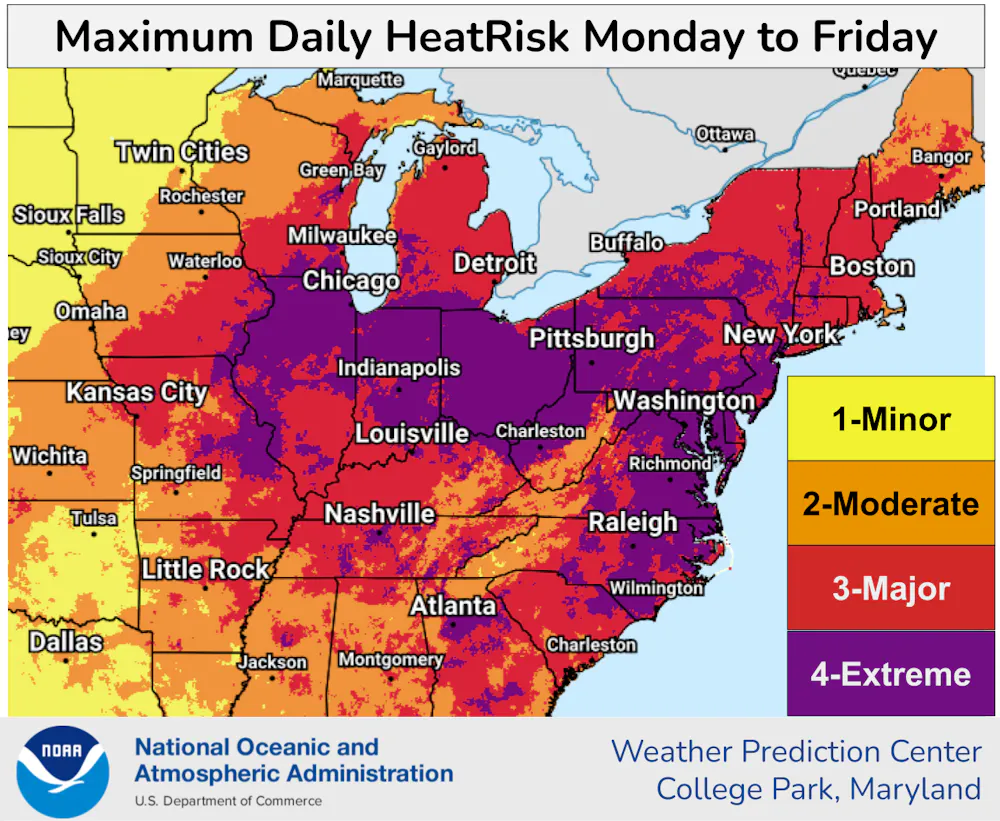
Summer is just getting started, and millions of people are under heat advisories as a major heat wave spreads across large parts of the central and eastern U.S. in June 2025.
For many people, summer is their favorite season, a time for cookouts, beach trips and other outdoor activities. However, summer also brings the risk of dangerously high temperatures and humidity.
In the U.S., hundreds of people working or playing outside – even those who seem healthy – succumb to heat-related illnesses each year. Older adults and people in areas that historically haven’t needed air conditioning tend to see the highest rates of illnesses during heat waves, as Chicago saw in 1995 when at least 700 people died in a heat wave.
Even in places where heat is recognized as a dangerous health threat, people can be caught off guard as the thermometer creeps higher, on average, each year. In some cases, dangerous heat can arise quickly. In 2021, a young family died of heat stroke on a California trail after setting out for a hike when temperatures were still in the 70s Fahrenheit (low to mid 20s Celsius).
I study health risks in a warming climate as a professor of public health, and I’ve seen heat become a growing concern. Here are some of the key warning signs to watch for when temperatures rise – and ways to keep cool when the heat and humidity get too high.
Heat-related illnesses occur across a spectrum, and mild heat stress can quickly progress to life-threatening heat stroke if a person is exposed to dangerous conditions for too long.
Mild forms of heat-related illness include heat cramps and heat rash, both of which can be caused by extensive sweating during hot conditions. Cooling the body and drinking cool fluids can help.
When heat-related illnesses progress into heat exhaustion, the situation is more serious. Heat exhaustion includes symptoms such as dizziness, nausea, excessive sweating, feeling weak, thirst and getting a headache.
Heat exhaustion is a signal that the body is losing its ability to maintain a stable core temperature. Immediate action such as moving to a cool, ideally air-conditioned space, drinking liquids, loosening clothes and applying wet cloths are some of the recommended steps that can help keep heat exhaustion from progressing to the most dangerous form of heat-related illness, heat stroke.
Heat stroke is a medical emergency. At this point, the body can no longer maintain a stable core temperature. A body with heat stroke can reach 106 degrees Fahrenheit or higher rapidly, and that heat can quickly damage the brain, heart and kidneys.
Typically, someone suffering heat stroke has exhausted their reserves of sweat and salt to stay cool, so sweating eventually stops during heat stroke. Their cognitive ability fails, and they cannot remove themselves from danger. Heat stroke can cause seizures or put someone into a coma as their core temperature rises. If the condition is not treated immediately, and the core temperature continues to rise, heat stroke becomes fatal.
Because heat exhaustion can lead to heat stroke, addressing heat-related illnesses before they progress is vital.
Heat risk isn’t just about temperature – humidity also increases the risk of heat-related illnesses because it affects how well sweating will cool the human body when it gets hot.
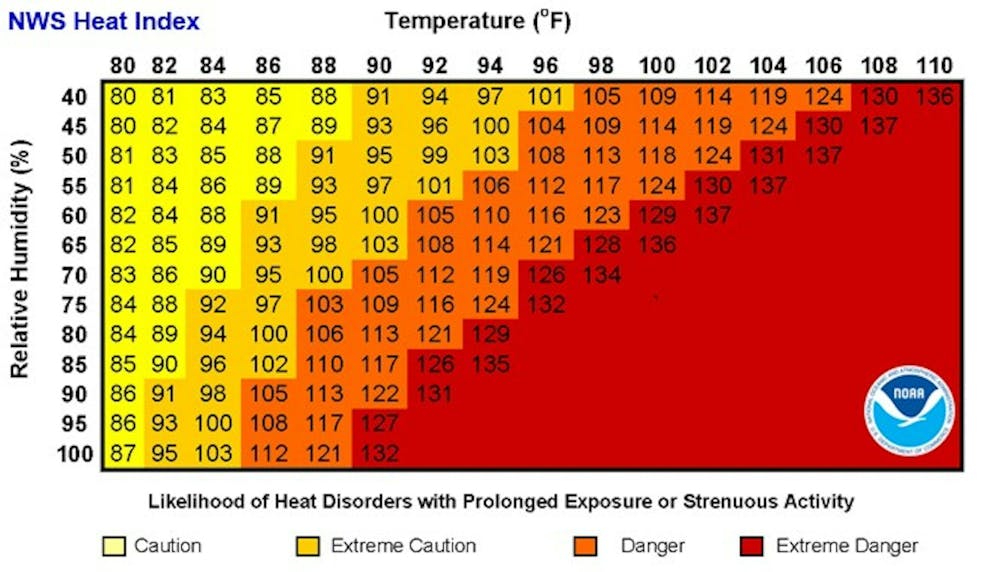
Instead of just looking at temperature when planning outdoor activities, check the heat index, which accounts for heat illness risk associated with temperature and relative humidity.
It doesn’t take very high temperatures or very high humidity for the heat index to enter dangerous territory.
However, the heat index is still a conservative measure of the impact of heat on humans, particularly for outdoor workers and athletes at summer practices. This is because temperature measurements used in weather forecasting are taken in the shade and are not exposed to direct sunlight. If someone is outside and exposed to the direct sun, the actual heat index can be as much as 15 F higher than the heat index chart indicates.
A more sophisticated measurement of heat effects on human health is what’s known as the wet-bulb globe temperature, which takes into account other variables, such as wind speed and cloud cover. Neither takes into account a person’s physical exertion, which also raises their body temperature, whether working at a construction site or playing soccer.
How can you stay cool when heat waves set in? The answer depends in part on where you are, but the main points are the same:
Avoid strenuous outdoor activities in high temperatures if possible. If you start to feel symptoms of heat-related illnesses, drink fluids that will hydrate you. Find shade, rest, and use cool, damp cloths to lower your body temperature. If you see signs of heat stroke in someone else, call for medical help.
Be careful with fans. Fans can be useful if the temperature isn’t too high because they wick sweat away from the body and induce evaporative cooling. But at very high temperatures, they can accelerate heat buildup in the body and lead to dangerous conditions. If indoor temperatures reaches 95 degrees or higher, using fans can actually be dangerous and raise the risk of heat-related illnesses.
Find a cooling center, library or community center where you can get inside and rest in an air-conditioned space in the hottest hours. In places such as Phoenix, where high temperatures are a regular hazard, cooling centers are typically opened in summer. Northern cities are also opening cooling centers as heat waves occur there more frequently than they did in the past. Urban areas with a lot of pavement and buildings – known as heat islands – can have temperatures well above the city’s average.
Hydrate, hydrate, hydrate! Drink plenty of fluids, and don’t forget about the importance of electrolytes. Heat-related dehydration can occur when people sweat excessively, losing water and necessary salts from the body. Some sports drinks or rehydration fluids restore electrolytes and hydration levels.
Older adults and people with disabilities often face higher risks from heat waves, particularly if they can’t easily move to a cooler environment. Communities and neighbors can help protect vulnerable populations by providing cooling centers and bottled water and making regular wellness checks during high heat.
Summer can be a season of fun. Just remember the risks, keep an eye on your friends and neighbors when temperatures rise, and plan ahead so you can beat the heat.
This article, originally published June 19, 2025, has been updated with new heat advisories and forecasts.
Brian Bossak is not currently receiving relevant external funding for heat-related illness research. In 2017-2019, he served as a consultant on a heat-related research award from the Southeastern Coastal Center for Agricultural Health and
Safety at the University of Florida.
– ref. How to stay safe during heat waves – and heat stroke warning signs to watch for – https://theconversation.com/how-to-stay-safe-during-heat-waves-and-heat-stroke-warning-signs-to-watch-for-257708
Source: South Africa News Agency
Sunday, June 22, 2025
The South African National Defence Force (SANDF) and the South African Police Service (SAPS) have launched a joint investigation into the deaths of two soldiers at the at Macadamia Military Base in Mpumalanga.
The SANDF confirmed Saturday’s incident near Komatipoort in a statement.
“A SANDF member, who had been approved for withdrawal from duty, attacked fellow soldiers in his accommodation. One member died during the incident. The attacker later died from self-inflicted wounds when he stabbed himself on the neck,” said the SANDF on Saturday.
The SANDF said Military Health and Chaplain Services were sent to support the affected members.
“The SANDF and the South African Police Service (SAPS) launched a joint investigation. The names of the deceased were withheld until their families had been informed. Further details will be shared as the investigation continues.”
The Minister of Defence and Military Veterans Angie Motshekga and the Chief of the SANDF, General Rudzani Maphwanya have sent their deepest condolences to the families of the deceased. –SAnews.gov.za
Source: South Africa News Agency
Following the recent floods in the Eastern Cape which claimed the lives of over 90 people, several Deputy Ministers are today visiting the affected areas to assess ongoing relief efforts.
“Human Settlements Deputy Minister Tandi Mahambehlala, together with Deputy Minister in the Presidency, Nonceba Mhlauli, Deputy Minister of Home Affairs, Njabulo Nzuza, and Deputy Minister of COGTA [Cooperative Governance and Traditional Affairs], Zolile Burns-Ncamashe will be in the Eastern Cape to assess ongoing relief efforts, taking into account the plight of affected communities after the disastrous floods two weeks ago, that left many homes destroyed, and more than 90 people losing their lives,” said the Presidency.
The Deputy Ministers visit on Sunday is part of government efforts to enhance the responses and measures that have been put in place to assist those affected by the floods that ravaged areas of Mthatha and Butterworth.
“Government officials from Home Affairs, SASSA [South African Social Security Agency], Human Settlements Emergency Housing and Health have been on the ground since the floods occurred to assist affected communities,” said the Presidency.
The Deputy Ministers will visit the Mnquma Local Municipality’s Home Affairs Mobile Service as well as the Theko Fihla Village. In the KSD Local Municipality, the Deputy Ministers will visit the Slovo Anglican Church in Mthatha and the temporary residential accommodation for flood victims at Innoview Lodge among others.
On Thursday the Eastern Cape Provincial Government held a Provincial Day of Mourning in honour of the victims of the floods.
President Cyril Ramaphosa also visited the province where he expressed his sorrow over the floods.
The country’s commander-in-chief emphasised the severity of the situation, noting that while the impact has been tragic, quick response teams prevented an even worse outcome.
“We are very, very disturbed that so many people have passed away, but it could have been much worse. The response teams acted quickly.”
In response to the devastating situation in Mthatha, government officials, key Ministers, the Premier, and local government representatives, visited the area to offer support and assess the damage.
READ | Government commits to supporting families who were affected by storms and strong winds
– SAnews.gov.za
Source: Government of India
Source: Government of India (4)
Prime Minister Narendra Modi on Sunday commended the people of Andhra Pradesh for their inspiring commitment to integrating Yoga into daily life, further propelling the nationwide movement for health and wellness.
PM Modi praised the state’s grassroots enthusiasm and the proactive support shown under the Yogandhra initiative during the 11th International Yoga Day event held at Visakhapatnam on Saturday.
Responding to a post by Guinness World Records on X, PM Modi said, “Yoga brings people together, once again! Compliments to the people of Andhra Pradesh for the manner in which they have strengthened the movement to make Yoga a part of their lives. The #Yogandhra initiative and the programme in Visakhapatnam, which I also took part in, will always motivate several people towards good health and well-being.”
PM Modi led the Yoga Day celebrations from the scenic beachfront of Visakhapatnam on Saturday, participating in a massive Common Yoga Protocol (CYP) session alongside nearly 5 lakh people.
The national celebration witnessed Yoga sangam events held at over 3.5 lakh locations across India, marking one of the largest synchronized yoga demonstrations in the world.
After the Yoga Day event, Guinness World Records said on X, “Today an incredible 300,105 participants took part in the largest yoga lesson ever, in Visakhapatnam, Andhra Pradesh, India – organised by Gov. of Andhra Pradesh to celebrate International Day of Yoga.”
The Guinness World Records also asked the yoga event participants to get a digital certificate at https://gwr.co/YogaLesson.
This year’s theme, “Yoga for One Earth, One Health,” underscored the vital link between human and planetary well-being, echoing the Indian philosophy of “Sarve Santu Niramaya” (May all be free from disease).
To boost public engagement, special contests such as Yoga with Family and youth-centric initiatives under Yoga Unplugged were launched on MyGov and MyBharat platforms, encouraging mass participation.
Since the United Nations General Assembly adopted India’s proposal in 2015 to observe June 21 as International Yoga Day, PM Modi has led the celebrations from diverse locations including New Delhi, Chandigarh, Lucknow, Mysuru, Srinagar, and even the UN Headquarters in New York, transforming IDY into a global health and wellness movement.
Translation. Region: Russian Federal
Source: People’s Republic of China in Russian – People’s Republic of China in Russian –
Source: People’s Republic of China – State Council News
ASTANA, June 22 (Xinhua) — The Xinhua Research Institute on Sunday released a report in the Kazakh capital Astana titled “Development of the Central Asia-China Spirit: Achievements, Possibilities, and Prospects of Regional Cooperation.” The full text of the report is given below.
Development of the “Central Asia-China Spirit”:
achievements, opportunities and prospects of regional cooperation
Xinhua News Agency Research Institute
Table of contents
Preface
Chapter 1. Results of cooperation between China and Central Asia
1.1 Strengthening trade and economic ties
1.2 Infrastructure development and deepening interconnectivity
1.3 Accelerated development of cooperation along the entire production chain in the energy industry
1.4 Innovative cooperation towards a green transition
1.5 Promoting the formation of internal development potential in the countries of Central Asia
1.6 Dialogue of civilizations as a solid spiritual basis for cooperation
1.7 Peace, security and stability as a basis for sustainable development
Chapter 2. Opportunities and Challenges in China-Central Asia Cooperation
2.1 New Opportunities as a Result of China’s Opening Up
2. Potential for cooperation in the field of green economy and digital technologies
2.3 Regional cooperation as a factor of geo-economic expansion
2.4 Risks and challenges in the field of development and security
Chapter 3. Looking to the Future: Strengthening the Regional Community of Shared Destiny
3.1 Mutual support as the basis of a regional community of common destiny
3.2 Joint development for the sake of regional prosperity
3.3 Formation of a common security barrier for stability of the entire region
3.4 Friendship of peoples in the spirit of the times as a guarantee of mutual understanding
Conclusion
Explanatory note and thanks
Preface
Central Asia is the heart of Eurasia, closely linked to China by a common nature and destiny, like two banks of a single river: different, but inseparable. This region is a crossroads of ancient civilizations, where different peoples and customs meet and merge. The region serves as a hub of interregional connections and a real “melting pot” of human culture.
Looking back, we can see how China, together with the peoples of Central Asia, contributed to the establishment and prosperity of the great Silk Road, leaving behind vivid evidence of cooperation over the centuries: “Caravans stretched to the horizon, and overseas merchants flocked to the border outposts day after day.”
In the new era, China and the Central Asian countries have become good neighbors, reliable friends, partners and brothers bound by a common destiny. Together, they are opening a new page of “friendly, safe and prosperous neighborhood” in the Eurasian space, developing and shaping the “Central Asia-China Spirit” characterized by mutual respect, mutual trust, mutual benefit, mutual assistance and promoting joint modernization through high-quality development.
They are creating a model example of regional cooperation for the entire world.
Since Chinese President Xi Jinping put forward the Belt and Road Initiative in 2013, China and Central Asian countries have been working together to promote the comprehensive revival of the Silk Road and build a close partnership for the future. Bilateral relations have entered a new era and reached an unprecedented level. President Xi Jinping has paid nine visits to Central Asia, visiting all five countries and eight cities, and established strong friendship with the leaders of the region. The video summit to mark the 30th anniversary of the establishment of diplomatic relations and the first China-Central Asia Summit have become important milestones in the history of bilateral ties. Based on the interests of their peoples and striving for a brighter future, China and the Central Asian countries have made a historic choice to build a closer community of shared destiny, which once again underscores their determination to develop cooperation at a higher level, with higher standards and on a qualitatively new basis.
The recently concluded second China-Central Asia Summit marked a new start in the development of cooperation between China and the countries of the region. At this historic moment, this report offers a comprehensive overview of the key achievements, existing opportunities and challenges of the China-Central Asia partnership in the new era, as well as forecasts and analytical assessments of the prospects for further cooperation.
The report notes that since the beginning of the new era, cooperation between China and Central Asian countries has borne rich fruit in seven major areas: trade and economic cooperation, infrastructure development, energy cooperation, new areas of partnership, enhancing development potential, mutual cultural enrichment, and joint promotion of peace and stability. China’s high-quality development, high level of its openness, as well as a new round of scientific and technological revolution and industrial transformation create unique opportunities for expanding China-Central Asian cooperation. At the same time, the partnership faces a number of challenges, including unilateral actions, rising protectionism, geopolitical risks, and threats in the field of non-traditional security.
Looking to the future, the report stressed that cooperation between China and Central Asian countries should be based on the concept of building a community with a shared future for mankind and follow the three global initiatives. Mutual support, common development, common security and friendship passed down from generation to generation should remain the fundamental principles, aiming to strengthen the regional community with a shared future, jointly create a new chapter of regional prosperity, build a common security shield and deepen the cordial affinity between the peoples.
We believe that in the new era, cooperation between China and Central Asia will bring sustainable development and more benefits to the peoples of the region, bring stability and positive energy to the troubled world, and become an important example of regional partnership in building a community with a shared future for mankind.
Chapter 1. Results of cooperation between China and Central Asia
Our cooperation is rooted in more than two thousand years of friendly relations, is reinforced by solidarity and mutual trust that has been established for 30 years since the establishment of diplomatic relations, and is significantly moving forward thanks to mutually beneficial cooperation in the new era. Many years of experience and practice have enabled us to develop and shape the “Central Asia-China Spirit”, characterized by mutual respect, mutual trust, mutual benefit, mutual assistance and the promotion of joint modernization through high-quality development.
— Chairman of the People’s Republic of China Xi Jinping
1.1 Strengthening trade and economic ties
In recent years, trade and economic cooperation between China and the Central Asian countries has been steadily developing in both quantitative and qualitative terms. China has become the largest trading partner and the main source of investment for the countries in the region. After the first China-Central Asia Summit was held in 2023, the Chinese side took additional measures to promote trade, ensuring the stable flow of goods and expanding the supply of products from the Central Asian countries. As a result, bilateral trade is becoming increasingly diversified, the potential for economic cooperation continues to be actively realized, and the scale of trade is reaching new levels. The total volume of trade between China and the Central Asian countries reached 94.8 billion US dollars in 2024, an increase of 5.4 billion compared with the previous year, representing an increase of 7.2%. Compared with the initial period of establishing diplomatic relations, when this figure was only 460 million dollars, it has increased more than a hundredfold.
Strategic alignment of the parties. An important feature of cooperation between China and the Central Asian countries is the strategic alignment of key plans and initiatives in the field of economic development. The parties strive for in-depth coordination and alignment of the Belt and Road initiative with the national development programs of the countries of the region: the New Economic Policy of Kazakhstan, the National Development Program of Kyrgyzstan until 2026, the National Development Strategy of Tajikistan for the period up to 2030, the Revival of the Silk Road strategy of Turkmenistan and the Development Strategy of the new Uzbekistan for 2022-2026. Such alignment strengthens practical cooperation in various fields and contributes to the formation of a new model of complementary and mutually beneficial partnership. During the second China-Central Asia Summit, China and the five Central Asian countries signed a treaty on eternal good-neighborliness, friendship and cooperation, which enshrined the principle of friendship between generations in legal form and became a new milestone in the history of relations between the six countries.
Practical cooperation enters the “highway”. As China-Central Asia cooperation deepens, practical cooperation enters the “highway”. The two sides improve trade policies and work hard to ensure a stable, fair, transparent and sustainable investment climate, making trade, investment and business environment even more attractive. As of December 2024, China’s accumulated direct investment in Central Asian countries exceeded US$17 billion, and the total volume of completed contract work amounted to more than US$60 billion. Cooperation covers such areas as oil and gas production, interconnected infrastructure, manufacturing and the digital economy.
In the Xinjiang-Uygursky Autonomous Region of China, bordering the countries of Central Asia, optimizing the work of border crossings with Kazakhstan, Kyrgyzstan and Tajikistan, passes are more quickly and more efficient. The first cross -border cooperation zone of Horgos, jointly created by China and Kazakhstan, has been operating in the innovative model of “inside the country – outside the customs territory (or“ within the country, but outside customs borders ”). This International Center has become a flagship project of bilateral economic cooperation as part of the“ One Belt, One Way. ”The starting point of the ancient shalk track. – Shensi’s province forms the center of trade in widespread consumption, such as grain, fruits and vegetables, together with the countries of the region, China develops international logistics nodes and logistics parks The Center in the north-west of the Ciano International Port, introduced the RFID radio frequency technology, which allowed to reduce the assembly time of new energy cars and increase the efficiency of organizing trains on the route China-Europe.
Chinese -made products, including everyday goods, machine -building equipment and electronic products, are in sustainable demand among consumers in Central Asia. Products from the category of “new three types” became the basis of Chinese exports to the region. At the same time, energy resources and agricultural products from Central Asia countries are expanding the Chinese market, expanding the choice for consumers. China discovered eight “green corridors” for accelerated customs clearance of agricultural products, completely covering all car border crossings. The trade in agricultural products between the parties is rapidly developing. Export to China of high -quality agricultural goods from Central Asia, such as lemons from Tajikistan and cherries from Uzbekistan, is growing rapidly. At the same time, fresh peaches from Hebei province and Yanan apples first entered the tables of consumers in Central Asia. The Kerekhovaya and oil and fat industrial group “Aiju Grain and Oil Group), effectively using complementarity in agrarian cooperation between China and the countries of Central Asia, built and commissioned the logistics and agro-industrial park with a capacity of 1 million tons in the North Kazakhstan region. Chinese standards in the field of equipment, technology, management and service have brought real benefits to the local population. Such interaction contributes to mutually beneficial cooperation in the field of food security. Thanks to the joint efforts of China and the countries of Central Asia, the stability and effectiveness of regional production and logistics chains are ensured.
1.2 Infrastructure development and deepening interconnectivity
Connectivity development is a priority area of cooperation between China and Central Asian countries. The two sides make full use of the region’s geographical advantages to build “fast corridors” for the free movement of people and improve “green corridors” for the efficient movement of goods. These measures help transform Central Asian countries from “landlocked” to “land-connected,” strengthening their position as an important transportation hub on the Eurasian continent. Such infrastructure development improves people’s living conditions and stimulates the unleashing of the potential of higher-level connectivity, including the Internet of Things and other areas of digital integration between China and Central Asia.
China and Central Asian countries have been pioneers in jointly implementing the Belt and Road Initiative, accelerating the construction of the China-Central Asia Transport Corridor and forming a multi-layered and diversified system of regional connectivity. This has resulted in the implementation of many mutually beneficial infrastructure projects. China’s construction of the Kamchik Pass Tunnel of the Angren-Pap Railway, the longest in Central Asia, has eliminated the need to bypass third countries when transporting through Uzbekistan, radically changing the mode of transportation for tens of millions of people. The China-Kyrgyzstan-Uzbekistan Highway, which crosses the Tien Shan Mountains, and the China-Tajikistan-Uzbekistan Highway, which passes through the Pamir Plateau, form a dense network of routes for freight transportation between China and Central Asian countries, significantly improving logistics and bringing tangible benefits to the people of the region.
On December 27, 2024, the construction of the China-Kyrgyzstan-Uzbekistan railway officially began. The route of the new line starts in Kashgar, passes through the territory of Kyrgyzstan and enters Uzbekistan, with the prospect of further construction in the direction of West and South Asia. Once completed, the railway will become an important part of the southern route of the New Eurasian Continental Bridge. It will provide a convenient transport corridor connecting East and Southeast Asia with Central, West Asia, North Africa and Southern Europe. This will significantly reduce the costs of international trade for the participating countries and increase their level of integration into the world economy.
China has signed intergovernmental air transport agreements with all five Central Asian countries, and the opening up of the aviation market continues to progress. Air traffic between Xi’an and the countries in the region has evolved from no routes at all to covering seven cities in all five countries. Currently, eight passenger flights are operating regularly, connecting China with seven cities in Central Asia. These airlines provide a strong link between the economic zones of China and Central Asia, promoting the effective integration of industrial and social supply chains.
The China-Europe and China-Central Asia trains, which operate non-stop day and night, effectively ensure the stability and continuity of international logistics chains. On April 23, a China-Europe freight train with 55 containers of consumer goods and electronic components departed from the Khorgos border station in Xinjiang to the Polish city of Malaszewicze. This trip was a landmark one, as the number of trains passing through the Khorgos railway checkpoint exceeded 3,000, and this figure was reached 27 days earlier than last year. This was a new historical record, exceeding the figure of last year by 28.7%. According to statistics, 19 thousand China-Europe trains were sent in 2024, which is 10% more than in the previous year, and the volume of transportation amounted to 2.07 million TEU (conventional containers), which is 9% higher than the same indicator last year. 12 thousand trains were sent on the China-Central Asia route (an increase of 10%), 880 thousand TEU were transported (an increase of 12%). Currently, the China State Railway Corporation has approved 44 regular routes in the direction of Central Asia, thereby forming new international transport corridors in the Eurasian space.
The Trans-Caspian International Transport Corridor starts in China, passes through Kazakhstan, the Caspian coast, Azerbaijan and Georgia, and then stretches to Turkey and European countries. In July 2024, Chinese President Xi Jinping and Kazakh President Kassym-Jomart Tokayev jointly attended the launch ceremony of the China-Europe direct express route via video link. For the first time, Chinese vehicles reached a Caspian port via a direct road route, which marked the official formation of a multi-level and multi-vector interconnected system combining road, rail, air and pipeline transport.
The China-Europe train consolidation centers are developing at an accelerated pace, forming a more efficient and convenient transportation system. In February 2024, the Kazakhstan terminal in Xi’an, built in cooperation between Xi’an Free Trade Port Construction and Operation Co., Ltd. and KTZ Express JSC, began operating. In just one year, the terminal handled over 150 thousand tons of cargo, which contributes to the accelerated consolidation and distribution of Kazakhstani goods undergoing import and export operations through Xi’an. In addition, the terminal has become the embodiment of Kazakhstan’s initiative to accelerate the creation of a trade and logistics center in China. With the commissioning of the China-Kazakhstan logistics hub in Almaty on June 10 this year, the hub-to-hub transport corridor has moved to a new level.
1.3 Accelerated development of cooperation along the entire production chain in the energy industry
Central Asian countries are important oil and gas producers, and have a high degree of complementarity with China in such aspects as natural resource conditions and industrial structure. In recent years, China and Central Asian countries, through a mutually beneficial cooperation model, have been jointly building multi-vector, safe and efficient energy corridors, consistently expanding cooperation in such basic areas as energy and mining.
Chinese enterprises attach great importance to the development of energy cooperation with the Central Asian countries, building long-term and strong partnerships with relevant government agencies and energy companies in the region. Back in 1997, the China National Petroleum Corporation (CNPC) successfully won a tender for the development of the Akzhuba oil field in Kazakhstan, which marked the beginning of cooperation between China and Kazakhstan in the oil and gas sector. Over the past years, Akzhubin has grown from an enterprise with an annual oil production volume of just over 2 million tons into a large oil and gas company with an annual production of over 10 million tons of oil and gas. On its basis, a full chain of the industry cycle was formed, including oil and gas exploration and production, pipeline construction and operation, oil refining and petroleum product trading, engineering and construction services, oil and gas equipment production and transportation, information technology and logistics support. The project also contributed to the creation of over 20 thousand jobs for the local population.
In Tajikistan, Chinese energy equipment manufacturing companies built and commissioned the Thermal Power Plant No. 2 in Dushanbe, which made it possible to permanently resolve the problem of electricity shortages in the capital in winter. In Kyrgyzstan, with the support of the Chinese side, the modernization of the Bishkek Thermal Power Plant was completed, as a result of which its annual electricity generation increased from the previous 262 million kilowatt-hours to 1.74 billion, and the volume of heat supply almost doubled. In Turkmenistan, as part of the project to develop natural gas fields in the Amu Darya basin, implemented with the participation of the China National Petroleum Corporation, a production level equal to tens of millions of tons of oil equivalent per year has already been achieved, and the annual capacity of natural gas supplies exceeds 10 billion cubic meters. The implementation of a number of such large-scale projects contributes to the steady expansion of oil and gas trade between China and the countries of Central Asia, as well as to the deepening of cooperation along the entire production chain of the energy industry.
Thanks to many years of practical cooperation between China and Central Asian countries, the network of pipeline infrastructure construction and operation is gradually improving. Lines A, B and C of the China-Central Asia gas pipeline, running through endless deserts, have been successfully put into operation and connected to the II and III stages of China’s West-East mainline. The construction of Line D is proceeding at an accelerated pace, bringing real benefits to the people of the countries along the route. In addition, the Kazakhstan-China oil pipeline has become the first international energy corridor directly connecting Kazakhstan with foreign end markets. Its implementation has made a significant contribution to the diversification of Kazakhstan’s energy exports.
With the steady advancement of the Belt and Road Initiative, energy cooperation between China and Central Asian countries continues to deepen. It not only helps improve the region’s energy infrastructure and inject new impetus into the socio-economic development of both sides, but also makes a significant contribution to optimizing the region’s energy structure and ensuring sustainable ecological development.
1.4 Innovative cooperation towards a green transition
Fossil fuels currently account for about 95% of the energy supply in the five Central Asian countries. Against the backdrop of increasing climate change and the global energy transition, the region’s countries are showing growing interest in cooperation in the areas of renewable energy and green economy. However, due to limited financial resources, a shortage of specialists, and an insufficient level of technological development, the implementation of a green transition faces certain difficulties.
During the first China-Central Asia Summit, China and the five countries in the region reached a number of agreements, including launching a joint initiative on green and low-carbon development, as well as deepening cooperation on sustainable development and combating climate change. In support of the Central Asian countries’ course towards ecological transformation, China, using its governance and production advantages in the field of new energy, is actively promoting the region’s significant potential in the field of renewable energy resources.
In early April 2025, the Bash and Dzhankeldy wind energy projects, implemented with the investment and operational participation of China Southern Power Grid, were officially commissioned in Uzbekistan. These facilities have become the largest completed wind farms in Central Asia. Their annual output is expected to be about 3 billion kilowatt-hours of clean electricity, which will reduce carbon dioxide emissions by 1.6 million tons annually.
More and more Chinese companies are investing in the construction of enterprises and the development of green energy in Central Asian countries, actively expanding cooperation in the field of renewable energy sources. In Uzbekistan, a 100-megawatt solar power plant was commissioned in Navoi, in Kazakhstan – a wind farm in Zhanatas, a hydroelectric power station in Turgu-Sun and a solar power plant in Almaty. The Chinese energy corporation China Huadian Group has begun construction of a gas turbine power plant in Aktau and a solar power plant in Sheli. These projects not only provide Central Asian countries with stable and sustainable green electricity, but also contribute to the modernization of local industries and create a significant number of jobs.
China is actively developing international cooperation with Central Asian countries in combating desertification. The practical experience and scientific approaches developed in the framework of ecological recovery of the “Three Norths”, including Ningxia Hui Autonomous Region, Inner Mongolia and other regions, as well as the experience of developing the Taklamakan Desert have become a reference point for Central Asian countries that are facing similar problems of land degradation. Such cooperation not only offers real solutions in the field of sustainable development, but also opens up broad prospects for promoting the green direction within the framework of the “One Belt, One Road” initiative.
The Aral Sea, located on the border of Uzbekistan and Kazakhstan, was previously considered the fourth largest lake in the world. But due to half a century of large-scale development of land and water resources, its area has shrunk from about 67,000 square kilometers in 1960 to about 6,000 square kilometers in 2020. This has caused serious environmental consequences: desertification, soil salinization, loss of biodiversity, and other problems. In the face of the environmental crisis, China and Central Asian countries have joined forces to implement comprehensive measures to restore the ecosystem of the Aral region. The Institute of Ecology and Geography of the Xinjiang Branch of the Chinese Academy of Sciences signed a cooperation agreement with the government of Uzbekistan and specialized organizations aimed at the ecological rehabilitation of the Aral Sea. In 2023, a pilot site was organized in the city of Nukus in western Uzbekistan, where drip irrigation technology under a film with the simultaneous supply of water and fertilizers for growing cotton was tested. Already in the first year, the yield reached a record level for this region. Currently, the institute’s specialists continue to work in the city of Muynak, located on the shallow coast. Here, salt- and drought-resistant plant species are being selected, which will become the basis for the future “greening” of the dried-up seabed and the restoration of the region’s ecosystems.
1.5 Promoting the formation of internal development potential in the countries of Central Asia
“China’s experience in overcoming poverty clearly shows that with persistence, step-by-step implementation of a unified plan, and persistence like a drop breaking through a rock, the problem of poverty in developing countries can be solved. Even the weakest bird can fly first – and fly high. If China can do it, other developing countries can too.” These are the words with which Chinese President Xi Jinping shared China’s experience in combating poverty with the world community at the G20 Leaders’ Summit in Rio de Janeiro in November 2024.
Poverty is a long-standing problem of human society and a common challenge facing the entire world. China’s experience in combating poverty has attracted the attention of the international community and has become an important source of inspiration for Central Asian countries. China’s cooperation with the countries of the region has gradually shifted from the traditional one-sided “donor aid” to a model of mutual development based on technology transfer, industrial modernization, personnel training and other forms of assistance. This contributes to the joint formation of internal potential for sustainable growth and social stability.
Implementation of targeted projects on poverty reduction with an emphasis on technology localization in accordance with the needs of Central Asian countries. China and the Central Asian countries are actively developing specialized cooperation in the field of scientific and technological support for poverty alleviation. Taking into account regional characteristics and industry constraints, the parties are accelerating the transfer of technologies to upgrade production in areas such as agricultural modernization, energy transition and infrastructure development. Within the framework of the first China-Central Asia summit, China and Uzbekistan agreed to establish a subcommittee on cooperation in the field of poverty reduction under the Intergovernmental Cooperation Committee. This is the first such subcommittee established by China in the format of interstate cooperation. Since the launch of the China-Uzbekistan cooperation mechanism on poverty reduction, the parties have achieved significant results in the areas of institutional development, personnel training and exchange of practical experience. These efforts not only contribute to the socio-economic development of Uzbekistan, but also significantly expand the content of the bilateral partnership. According to a joint study conducted by the National Statistics Committee of the Republic of Uzbekistan and the World Bank, in 2024, 719 thousand people overcame the poverty line, and the overall poverty level in the country decreased to 8.9%.
In recent years, Northwest University of Agricultural and Forestry Science and Technology of China, based on its strong scientific areas (crop breeding, plant protection from diseases and pests, water-saving irrigation, veterinary medicine and animal husbandry, development of saline lands and food processing), has established eight overseas agricultural research and demonstration parks in Central Asian countries. One of them, a demonstration park for the technology of breeding elite varieties of fruit trees, was founded in Kyrgyzstan in 2023 in cooperation with local universities and enterprises. Taking into account the hot and dry climate of the region, which is unfavorable for growing apple trees, Chinese agricultural experts developed and selected variety-rootstock combinations. These combinations showed higher efficiency of moisture use and better survival rate compared to traditional seedlings, which made it possible to significantly increase yields and contribute to an increase in the income of local gardeners.
Implementation of technical skills development programs as a basis for building domestic development potential. The Lu Ban Workshops, named after the legendary Chinese craftsman Lu Ban, have become a new platform for international cooperation in vocational education. In Central Asian countries, these workshops develop technical training programs based on the actual needs of local development, providing sustainable support for industrialization and poverty reduction in the region.
Kazakhstan has become the first country in Central Asia to introduce electric vehicles on new energy sources on a large scale. However, despite the rapid growth of this sector, the country is experiencing a serious shortage of qualified specialists capable of servicing such vehicles. In December 2023, the first “Lu Ban Workshop” began operating in Kazakhstan. The first educational program was “Vehicles and Technologies”. Four training and production zones were created for practical training: on vehicle maintenance, traditional (fuel) transport systems, vehicles on new energy sources, and intelligent network transport systems. In response to the needs of the local labor market, in 2024 the workshop developed a number of new courses, including “Transmission and Intelligent Vehicle Control Technologies”, “Driver Assistance Systems (ADAS)”, and others. In addition, a new educational program “Smart Transport and Artificial Intelligence” was launched. Graduates of the Lu Ban Workshop are in high demand, and are actively invited to work by the largest automakers, as well as enterprises in the metallurgical and mining industries of Kazakhstan. In July 2024, China decided to open a second Lu Ban Workshop in the country, which will focus on training personnel for the rapidly developing artificial intelligence industry.
At the same time, Lu Ban Workshops is implementing a “dual education” model – a combination of Chinese language training and professional skills development, which helps integrate the education system with the real needs of industry. In the context of the implementation of the “One Belt, One Road” initiative, Chinese enterprises are actively being created in Central Asian countries, which opens up broad employment opportunities for local people. The “Chinese language professional skills” model effectively improves the skills of local people through short-term courses, extra-academic and formal vocational training programs. This not only helps partially solve the problem of shortage of qualified personnel for enterprises with Chinese participation, but also promotes job creation, and thus contributes to socio-economic development and improving the standard of living in the region.
1.6 Dialogue of civilizations as a solid spiritual basis for cooperation
More than two thousand years ago, the civilization of central China and the cultures of Central Asia entered an era of deep integration thanks to the ancient Silk Road. This historical process laid the foundation for mutually beneficial cultural exchange and coexistence, becoming a solid foundation for modern inter-civilizational dialogue and cultural solidarity. Today, civilizational interaction between China and the Central Asian countries continues at a new level. It not only preserves and develops the cultural genes of the Silk Road era, but also serves as a powerful spiritual resource for promoting the idea of a community with a common destiny for humanity in the context of global transformation.
A thousand-year-old friendship with the aroma of medicine remains forever. Since the emergence of the Silk Road, traditional Chinese medicine began to spread to the countries of Central Asia along with trade caravans, gradually integrating with local medical practices and contributing to their development. The Xi’an Declaration of the first China-Central Asia Summit particularly emphasized the need to “promote the establishment of traditional Chinese medicine centers, develop cooperation in the field of growing and processing medicinal herbs, and jointly pave the “Healthy Silk Road”.” In recent years, China’s cooperation with the Central Asian countries in the field of traditional medicine has been actively expanding on the basis of a number of specific joint projects. A multi-layered partnership network is being formed, covering healthcare, education and scientific research. Traditional Chinese medicine is becoming an important link, strengthening humanitarian ties and mutual understanding between the peoples of China and Central Asia.
In March 2023, the Fourth Clinical Hospital of Xinjiang Medical University (regional hospital of traditional Chinese medicine), together with the Institute of Physical and Chemical Technology of the Xinjiang Branch of the Chinese Academy of Sciences, founded the first Center for Treatment and Training of Specialists in Traditional Chinese Medicine in Central Asia in Tashkent. As part of the project, 14 Chinese therapy methods, including acupuncture and Tuina massage, were successfully integrated into the regional healthcare system. In September of the same year, the above-mentioned hospital won a tender for the implementation of a national project to establish a China-Uzbekistan Center for Traditional Chinese Medicine. And in October, a course in Chinese medicine became a mandatory discipline in the bachelor’s degree program in traditional medicine at Tashkent State Medical University. This became the first full-fledged introduction of Chinese medicine into the higher education system of Central Asia, opening the way for the systematic training of specialized personnel locally.
Culture as a bridge to bring hearts together.
The Year of Tourism, the Year of Culture and the Central Asian Art Festival have been very popular with the Chinese people, and Chinese TV series such as “Minning City” and “My Altai” have resonated with Central Asian viewers. In order to implement key high-level agreements, China and Turkmenistan organized mutual Years of Culture in 2023-2024, thereby demonstrating their desire to strengthen humanitarian cooperation. Both countries have rich cultural heritage and centuries-old history. Through dance, vocal and theatrical arts, the parties presented their national identity and artistic originality, which contributed to deep cultural integration and rapprochement of peoples.
The Nauryz holiday is an ancient tradition of the peoples of Central Asia. In March 2025, an art group from the Samarkand region of Uzbekistan presented a vibrant festive program at the Silk Road Happy World Cultural Park in the Chinese city of Xi’an. Through songs and dances, the artists conveyed the atmosphere of spring renewal, and the treat of national dishes turned the performance into a real gastronomic holiday. In April, the Consulate General of the Republic of Kazakhstan in Xi’an organized festive events in honor of Nauryz. The program included a friendly mini-football match, traditional national games, a talent contest, as well as performances of Kazakh folk music and dance. The goal of the holiday was to promote ethnocultural traditions, deepen people’s diplomacy and expand platforms for multilateral humanitarian exchange.
Cultural and tourist exchange on the Silk Road is a movement towards each other. Tourism is becoming one of the most dynamically developing areas of cooperation between China and the Central Asian countries. The basis for this is not only favorable natural conditions and geographical proximity, but also a common historical and cultural heritage, as well as the complementary needs of the tourism markets of both sides. Deepening political trust, coordinated use of tourism resources and active market interaction make it possible to form a balanced and mutually respectful model of tourism as a form of humanitarian partnership. This gives new energy to the construction of a regional community of a common destiny and strengthens the cultural relationship between peoples.
Central Asia is one of the fastest growing and most promising regions for inbound tourism to China. At the same time, China remains a key source of tourist flow for the countries of the region. All five Central Asian states are already fully included in the list of priority destinations for outbound tourism for Chinese citizens. In order to expand cross-border tourism, the Central Asian countries are consistently implementing measures to liberalize the visa regime. Since 2021, Uzbekistan has become the first country in the region to grant Chinese citizens the right to a visa-free stay for up to 10 days; to enter, it is enough to have a valid passport and confirmation of the travel itinerary. In November 2023, China and Kazakhstan signed an agreement on a full mutual visa-free regime, providing for the possibility of staying in the partner’s territory for up to 30 days without the need for a visa. Kyrgyzstan and Tajikistan have introduced electronic visa systems, significantly simplifying the entry procedure. On June 1, 2025, the “Agreement between the Government of the People’s Republic of China and the Government of the Republic of Uzbekistan on the mutual abolition of visas” came into force, which became another step towards strengthening humanitarian ties and facilitating mutual travel between the two countries.
By holding tourism presentations, thematic exhibitions and other promotional activities, both sides consistently increase the recognition of tourism brands, which contributes to the growth of the attractiveness of cross-border tourism. 2024 was declared the Year of Kazakhstan Tourism in China. Thanks to the introduction of a mutual visa-free regime, there was a sharp increase in tourist flow in both directions, the number of Kazakhstani tourists visiting China increased by 31%, and the number of Chinese citizens visiting Kazakhstan increased by more than 50%. On May 29, 2025, the first cultural and tourist train “China – Central Asia” was launched, opening a new route for humanitarian interaction in the Eurasian space. This project not only strengthened the transport interconnectivity between the regions, but also gave new content to the humanitarian dimension of Chinese-Central Asian cooperation.
1.7 Peace, security and stability as a basis for sustainable development
At the first China-Central Asia Summit held on May 19, 2023, Chinese President Xi Jinping emphasized that the sovereignty, security, independence and territorial integrity of Central Asian countries must be reliably protected. The development path freely chosen by the peoples of the region should be respected. Central Asia’s efforts to ensure peace, good-neighborliness and stability deserve full and comprehensive support.
In the Xi’an Declaration of the First China-Central Asia Summit, all parties unanimously noted the exceptional importance of ensuring national security, political stability and constitutional order. Any interference in the internal affairs of other states, regardless of form and pretext, including attempts to undermine the legitimate state power and organize so-called “color revolutions”, was strongly condemned. The parties also expressed firm rejection of all forms of terrorism, separatism and extremism, and confirmed their readiness to jointly combat the “three evil forces”, as well as drug trafficking, transnational organized crime, cybercrime and other types of threats. At the same time, the summit participants declared their intention to strengthen the exchange of experience on ensuring the security of key facilities and large-scale events, as well as jointly promote the safe and sustainable implementation of strategically significant projects.
In recent years, China and the Central Asian countries have been developing comprehensive and multi-level cooperation in maintaining regional peace and stability in order to build a security community. The parties are actively increasing cooperation in the fight against terrorism, developing effective formats for multilateral interaction, and seeking new, innovative solutions in the field of security. Cooperation has been consistently expanding in key areas such as border control, countering terrorism in cyberspace, and conducting joint operations. These efforts contribute to the formation of a reliable regional security network and give a powerful impetus to ensuring long-term stability.
In September 2024, the mechanism of the first meeting of the ministers of public security and internal affairs of China and Central Asian countries was officially launched in Lianyungang. The parties reached a number of agreements on countering transnational crime, extremism and cybercrime, and agreed to establish a permanent mechanism for exchanging information and conducting joint operations. In the same month, a meeting of the chief justices of the Supreme Courts of China and Central Asian countries was held in Urumqi, during which the parties agreed to intensify international judicial cooperation and joint efforts to combat violent extremism and terrorism. Representatives of Uzbekistan, Kazakhstan and other countries shared their experiences in the field of anti-terrorism legislation and its enforcement, which gave impetus to the formation of a new format for regional coordination in the fight against terrorism. In April 2025, at the sixth meeting of China-Central Asia foreign ministers, the participants expressed support for the establishment of the SCO Anti-Drug Center in Dushanbe. The center will operate in conjunction with the Central Asian Regional Information and Coordination Center for Combating Illicit Drug Trafficking, which will strengthen measures to identify drug trafficking and combat transnational crime.
At the same time, China and the Central Asian countries are making efforts to deepen the institutionalization of cooperation in law enforcement and security. Multilateral and bilateral joint exercises and border patrols are held on a regular basis, which significantly reduces the space for the so-called “three evil forces”. This set of measures effectively promotes the protection of common interests in the field of security and makes a significant contribution to maintaining peace and stability in the region.
The Xinjiang Uygur Autonomous Region of China borders on Central Asian countries. Since the first China-Central Asia Summit, China has consistently promoted security cooperation between Xinjiang and neighboring countries, strengthening cross-border cooperation mechanisms and jointly building a reliable border security line aimed at protecting peace and stability in the region. Given the complex geographical conditions and special challenges in border control in the border areas between China and Kazakhstan, Kyrgyzstan and Tajikistan, local authorities and relevant departments of both sides have been implementing innovative cooperation models.
In November 2024, the first meeting of the Chinese-Kazakh mechanism of coordination of the activities of local authorities on the International Center for Border Cooperation “Horgos” was held in Sinjiang in the city of Horgos. The parties discussed the joint promotion of the high-quality development of the Center, as well as the strengthening of the interregional interaction between the Xinjiang-Uyghur Autonomous Region and the Zhetysu region of Kazakhstan. During the meeting, the participants exchanged views on a number of key areas of cooperation, including infrastructure development, organizing cross -border tourism, normalizing the border market environment, expanding interaction in the field of phytosanitary and veterinary control, as well as joint measures to combat crime. According to the results of the meeting, “Protocol of the first meeting of the mechanism for coordination of the activities of local authorities” and “Memorandum on the creation of a zone of cooperation in the field of cross -border tourism“ Horgos ”” were signed. In January 2025, the first meeting of the joint Sino-Kazakh commission on state border issues took place in Beijing. The parties officially announced the creation of the commission, approved its charter and highly appreciated the current state of bilateral relations, as well as the progress in the implementation of the “agreement between China and Kazakhstan on the regime of managing the state border”. It was noted that between the two countries, clearly certain boundaries were established, the border areas retain the atmosphere of stability, peace and good neighborliness. Both parties expressed their readiness to use the creation of a commission as an important impulse to further deepen cooperation in the field of border control, thereby making a contribution to the sustainable development of a comprehensive strategic partnership between China and Kazakhstan.
Today, a stable, united and peaceful region is rapidly emerging in Central Asia, making a significant contribution to peace and stability, thereby creating a solid foundation for building a closer community with a shared future “China-Central Asia”. In March 2025, Kyrgyzstan, Tajikistan and Uzbekistan signed a border alignment agreement, finally settling border issues, which became a model for strengthening peace, stability and prosperity in the region. /follows/
Translation. Region: Russian Federal
Source: People’s Republic of China in Russian – People’s Republic of China in Russian –
Source: People’s Republic of China – State Council News
SHENYANG, June 22 (Xinhua) — The opening ceremony of a seminar on educational institution management for SCO countries was held in Shenyang, capital of northeast China’s Liaoning Province, on June 20.
The seminar is organized by the Ministry of Commerce of the People’s Republic of China and Shenyang Normal University (SNU). The event is supported by Liaoning Heshi Ophthalmology Hospital.
The SCO Educational Institution Management Seminar is a project of China’s overseas aid training program. It aims to enable students to gain a more comprehensive understanding of Chinese universities’ research and experience in talent cultivation, integration of industry, universities and scientific research, and digital medical service through training activities.
Wang Xin, head of the International Relations Department of Shenyang Normal University, said that SHNU has successfully carried out 29 training projects since 2012, involving 756 students from 62 countries such as Russia, Uzbekistan and Kazakhstan.
“The current seminar will become a platform for exchanges in medical universities. The students will be able not only to gain professional knowledge, but also to strengthen their friendship,” she said.
The seminar lasts 14 days and is attended by 13 students from Kazakhstan and Uzbekistan.
Fathulloh Abdullaev from Uzbekistan said that China’s experience in medical education and health care is worth emulating. “This seminar not only created a platform for academic exchanges, but also became a clear evidence of fruitful cooperation between Uzbekistan and China,” he added. -0-
Translation. Region: Russian Federal
Source: International Atomic Energy Agency –
The Council was presented with the IAEA Annual Report and Technical Cooperation Report for 2024, which reflect the Agency’s work in the fields of science, international cooperation and innovation.
In his speech, Mr. Grossi outlined the IAEA’s flagship initiatives:“Rays of Hope: Cancer Treatment for All“,Atoms4foodAnd“NUTEK plastics”.
The 2025 Spotlight Forum will be held in Ethiopia in late June, providing an opportunity to take stock of the work done over the past three years, strengthen collaboration mechanisms, and continue to mobilize resources. Spotlight aims to increase access to affordable cancer care where it is needed most, supporting countries to deliver life-saving radiotherapy and build the capacity of radiation medicine professionals. More than 90 countries have applied for support from the initiative.
The IAEA will also continue to work with partners through Atoms4Food, its joint initiative with the Food and Agriculture Organization of the United Nations to fight hunger worldwide, Mr Grossi said. Joint FAO/IAEA Centre for Nuclear Techniques in Food and Agriculture, which is one element of this initiative, promotes the use of nuclear technologies to strengthen global food security and sustainable agricultural development.
Speaking about NUTEC Plastics, the IAEA initiative to combat plastic pollution, Mr Grossi said: “At the UN Ocean Conference this week, we are demonstrating what we are doing concretely to combat plastic pollution using new technologies.”
IAEA uses opportunities nuclear technologies, which involve using radiation to improve waste recycling methods and create bioplastics, which are a sustainable alternative to conventional oil-based plastics.
With support from the NUTEC Plastics Initiative, 104 Member States are now using nuclear technology to monitor microplastics and 52 are collaborating with the IAEA on their recycling.
Please note: This information is raw content directly from the source of the information. It is exactly what the source states and does not reflect the position of MIL-OSI or its clients.
Source: International Atomic Energy Agency (IAEA)
The joint IAEA and FAO Assessment Mission team examine new rice varieties during the first Atoms4Food Initiative Assessment Mission in Burkina Faso. (Photo: Victor Owino/IAEA)
In a critical step toward addressing food insecurity in West Africa, the International Atomic Energy Agency (IAEA) and the Food and Agriculture Organization (FAO) of the United Nations have launched their first joint Atoms4Food Initiative Assessment Mission in Burkina Faso.
This mission aims to identify key gaps and opportunities for delivering targeted technical support to Burkina Faso for food and agriculture in a country where an estimated 3.5 million people—nearly 20% of the population—are facing food insecurity. By leveraging nuclear science and technology, Atoms4Food seeks to bolster agricultural resilience and agrifood systems in one of the region’s most vulnerable nations.
The mission, conducted from 26 May to 1 June, assessed how nuclear and related technologies are being used in Burkina Faso to address challenges in enhancing crop production, improving soil quality and in animal production and health, as well as human nutrition.
The Atoms4Food Initiative was launched jointly by IAEA and FAO in 2023 to help boost food security and tackle growing hunger around the world. Atoms4Food will support countries to use innovative nuclear techniques such as sterile insect technique and plant mutation breeding to enhance agricultural productivity, ensure food safety, improve nutrition and adapt agrifood systems to the challenges of climate change. Almost €9 million has been pledged by IAEA donor countries and private companies to the initiative so far.
As part of the Atoms4Food initiative, Assessment Missions are used to evaluate the specific needs and priorities of participating countries and identify critical gaps and opportunities where nuclear science and technology can offer impactful solutions. Based on the findings, tailored and country-specific solutions will be offered.
Burkina Faso is one of 29 countries who have so far requested to receive support under Atoms4Food, with more expected this year. Alongside Benin, Pakistan, Peru and Türkiye, Burkina Faso was among the first countries to request an Atoms4Food Assessment Mission in 2025.
A large proportion of Burkina Faso’s population still live in poverty and inequality. Food insecurity has been compounded by rapid population growth, gender inequality and low levels of educational attainment. In addition, currently, 50% of rice consumed in Burkina Faso is imported. The government aims to achieve food sovereignty by producing sufficient rice domestically to reduce reliance on imports.
“Hunger and malnutrition are on the rise globally, and Burkina Faso is particularly vulnerable to this growing challenge,” said IAEA Director General Rafael Mariano Grossi. “This first Atoms4Food assessment mission marks a significant milestone in our collective efforts to harness the power of nuclear science to enhance food security. As the Atoms4Food Initiative expands worldwide, we are committed to delivering tangible, sustainable solutions to reduce hunger and malnutrition.”
The mission was conducted by a team of ten international experts in the areas of crop production, soil and water management, animal production and health and human nutrition. During the mission, the team held high-level meetings with the Burkina Faso Ministries of Agriculture, Health and Environment and conducted site visits to laboratories including the animal health laboratory and crop breeding facility at the Institute of Environment and Agricultural Research, the crop genetics and nutrition laboratories at the University Joseph Ki-Zerbo, and the bull station of the Ministry of Agriculture in Loumbila.
“The Government of Burkina Faso is striving to achieve food security and sovereignty, to supply the country’s population with sufficient, affordable, nutritious and safe food, while strengthening the sustainability of the agrifood systems value-chain,” said Dongxin Feng, Director of the Joint FAO/IAEA Centre for Nuclear Techniques in Food and Agriculture and head of the mission to Burkina Faso. “Though much needs to be done, our mission found strong dedication and commitment from the Government in developing climate-resilient strategies for crops, such as rice, potato, sorghum and mango, strengthening sustainable livestock production of cattle, small ruminants and local poultry, as well as reducing malnutrition among infants and children, while considering the linkages with food safety.”
The Assessment Mission will deliver an integrated Assessment Report with concrete recommendations on areas for intervention under the Atoms4Food Initiative. This will help develop a National Action Plan in order to scale up the joint efforts made by the two organizations in the past decades, which will include expanding partnership and resource mobilization. “Our priority now is to deliver a concrete mission report with actionable recommendations that will support the development of the National Action Plan aimed at improving the country’s long term food security,” Feng added.
Source: International Atomic Energy Agency (IAEA)
A person receiving radiotherapy treatment for liver cancer in Mumbai, India. (Photo: IAEA)
The IAEA and UK social enterprise MedAccess have launched a new partnership under the Rays of Hope: Cancer Care for All initiative. This collaboration will focus on advancing innovative financing solutions to improve access to affordable, high-quality radiation medicine services in low- and middle-income countries.
“Through this partnership with MedAccess under the framework of the Rays of Hope initiative, we are unlocking new pathways to accelerate access to life-saving cancer care” said IAEA Director General Rafael Mariano Grossi during the partnership signing ceremony on Monday. “By combining financial innovation with technical expertise, we are helping countries turn ambition into action”.
“Innovative financing models have an important role in enabling countries to invest in radiotherapy equipment and services for cancer patients,” MedAccess CEO Michael Anderson said. “Rays of Hope provides a platform to evaluate and test such models to accelerate access to reliable radiation therapy.”
Source: International Atomic Energy Agency (IAEA)
Ministers and senior officials of governments and international organizations will convene at the International Atomic Energy Agency (IAEA) next week to discuss the role of nuclear science and technology in tackling some of the world’s most pressing challenges. The IAEA Ministerial Conference on Nuclear Science, Technology and Applications and the Technical Cooperation Programme will take place in Vienna, Austria, from 26 to 28 November 2024.
IAEA Director General Rafael Mariano Grossi will open the conference on Tuesday, 26 November, at 09:30 CET, alongside Co-chair of the Conference Kai Mykkänen, Minister of Climate and the Environment, Finland; Co-chair of the Conference Kwaku Afriyie, Minister for Environment, Science, Technology and Innovation, Ghana; Dongyu Qu, Director General, Food and Agriculture Organization of the United Nations (FAO); Ailan Li, Assistant Director-General, Universal Health Coverage/Healthier Populations, World Health Organization (WHO); Shaimaa Al-Sheiby, Vice President for Public Sector and Strategy, the OPEC Fund for International Development; Demetrios Papathanasiou, Global Director, Energy and Extractives Global Practice, the World Bank; and Tom McCulley, Chief Executive Officer, Anglo American Crop Nutrients. This is the second Ministerial Conference of its kind.
A ministerial declaration is expected to be adopted on 26 November, recognizing the role of nuclear science and technology and the Technical Cooperation Programme in addressing global challenges, advancing the 2030 Agenda and fostering international collaboration for peaceful purposes, with a focus on capacity building and equitable access for all Member States.
The conference will take place in Boardroom B/M1, M Building, Vienna International Centre (VIC). The conference, including the ministerial segments, technical sessions and panels, is open to media and will be livestreamed. The provisional programme is available here.
Nuclear applications are an integral part of the technological solution to address development challenges the world is facing today, including climate change, health, food safety and security, and water resource management. Since the first Ministerial Conference in 2018, the IAEA launched the Zoonotic Disease Integrated Action (ZODIAC), NUclear TEChnology for Controlling Plastic Pollution (NUTEC Plastics), Rays of Hope, Atoms4NetZero and, together with the FAO, the Atoms4Food initiative. Through these initiatives, the IAEA can support its Member States and mobilize resources to realize the full potential of nuclear solutions towards global goals.
Among 1400 participants, more than 50 high-level officials, including ministers, are expected to deliver national statements. The scientific and technical programme comprises panel discussions among ministers, scientists and experts on the latest developments in nuclear science, technology and applications. Member State’s representatives will also share experiences on how the IAEA Technical Cooperation Programme has contributed to their national development.
Accreditation
All journalists interested in covering the meeting in person – including those with permanent accreditation – are requested to inform the IAEA Press Office of their plans. Journalists without permanent accreditation must send copies of their passport and press ID to the IAEA Press Office by 14:00 CET on Monday, 25 November.
We encourage those journalists who do not yet have permanent accreditation to request it at UNIS Vienna.
Please plan your arrival to allow sufficient time to pass through the VIC security check.
Source: International Atomic Energy Agency (IAEA)
When we met the last time, at ICONS 2020, many of us could not have imagined the momentous change we would experience between then and today, change that would affect billions of people, international peace and security, and nuclear security. A global pandemic was in the making and a war – in Ukraine – for first time soon would be fought among the facilities of one of Europe’s biggest nuclear power programmes.
Meanwhile, profound technological advances have been made. Assessing their impact on nuclear security is a crucial task. Artificial Intelligence, and unmanned vehicles pose both a threat to nuclear security and offer new tools with which to enhance it. In the nuclear field itself, Small Modular Reactors promise new opportunities for applications such as desalination and power brought to remote communities via barge, but also require us to consider new security elements.
The use of nuclear science and technology, often facilitated by the IAEA, has come on in leaps and bounds. Climate change and the drive for energy security are fuelling a desire for nuclear power. At this past Conference of the Parties to the UN Framework Convention on Climate Change, COP28, world leaders – those whose states use nuclear power and those whose do not – for the first time in nearly 30 years of COP meetings agreed nuclear power must be part of the transition to net zero. More than 20 countries have signed a pledge towards tripling nuclear power capacity and at the IAEA’s Nuclear Energy Summit in March heads of state agreed on the urgent need for conducive financial conditions.
Nuclear security is relevant throughout all the steps of the nuclear fuel cycle and is part of the social contract that underpins the existence and growth of nuclear power. Nuclear power programmes require national nuclear security threat assessments and “security by design”. Nurturing relevant research and a strong security culture are key, not only in countries with NPPs.
The use of life-saving and life-affirming applications of nuclear science and technology is growing, from cancer patients gaining access to radiotherapy to farmers benefiting from new crop varieties developed with the help of irradiation. IAEA initiative such as Rays of Hope: Cancer care for all; Nutec Plastics; Zoonotic Disease Integrated Action (ZODIAC); and Atoms4Food are key vehicles facilitating wider access.
All these opportunities to use nuclear and radioactive material depend on a strong and adaptive global nuclear security regime. For countries new to using nuclear and radioactive material, this means building up legal infrastructure, practices and culture that bolster nuclear security. Nationally and across borders, collaboration and laser-focused vigilance are key to preventing groups with malicious intent from using nuclear and radioactive material to cause panic and harm.
The threats to nuclear and other radioactive material and associated facilities are real and varied. The international nuclear security threat landscape keeps evolving. Today, anyone can type a few words into a computer and generative AI can create images of nuclear Armageddon, meaning it is now possible to spread panic about radiation fallout without a nuclear device. Risk scenarios include theft of nuclear and other radioactive material for use in improvised devices and sabotage at nuclear installations or during transport of nuclear and radioactive material. The risk of cyber-attacks requires the implementation of computer security programmes by those who use nuclear power and those who don’t. Risks come from outsiders and from those within the fold who are disgruntled or have been corrupted.
Nuclear security is the national responsibility of individual states, but it also benefits enormously from close collaboration and the enabling role of the IAEA. ICONS, which started in 2013, has been the place for ministers, policymakers, senior officials, and experts to gather to assesses current priorities, prepare for new challenges, and engage in scenario-based policy discussions. ICONS 2024, presided over by the co-presidents, HE Tim Watts, Assistant Minister for Foreign Affairs of Australia and HE Sungat Yessimkhanov, Vice-Minister of Energy of the Republic of Kazakhstan, covers the themes of policy, law and regulation; technology and infrastructure for prevention, detection and response; capacity building; and cross-cutting areas, such as the interface between nuclear security and nuclear safety. ICONS is the most important high-level international meeting on nuclear security. At this time of heightened tensions, it is imperative that there remains a unity of purpose and that nuclear security does not become a political football.
This year marks the 10-year anniversary of the IAEA’s Division of Nuclear Security. The IAEA is at the forefront of adapting nuclear security to new challenges, including war. The seven indispensable pillars for ensuring nuclear safety and security have broad international support. They have brought crucial clarity at a time of war and are testament to the adaptiveness of the IAEA and the security regime.
Those seven pillars are backed up by an enormous ongoing effort by the IAEA to support Ukraine, including through the continuous presence of IAEA experts at all of Ukraine’s nuclear power plants, including Zaporizhzhya NPP on the front lines of the war. When there were allegations of nuclear security breaches, the IAEA was there to investigate with impartiality and science. We set the facts straight that no nuclear material had been diverted, cutting through the fog of war, and diffusing a tense situation.
Not all our efforts require quite as much courage as our experts have shown in Ukraine, nor do they make international headlines. But every day, the IAEA – the Secretariat and the Member States – work together fastidiously to underpin nuclear security, never resting, always learning.
Radioactive sources are extensively used in many domains, including medicine, industry, agriculture and research. An incident in one State can have far-reaching consequences for others, so security for one is security for all. That means supporting States with no, or less developed nuclear security infrastructure makes everyone safer. That support, which often comes via the IAEA, includes making lawmakers aware of their responsibilities.
Nuclear Security requires the implementation of appropriate and robust legislative regulatory frameworks. In 2022, the first Conference of the Parties to the Amendment to the Convention on the Physical Protection of Nuclear Material (A/CPPNM) was held under the auspices of the IAEA. Reflecting the global importance of the legal framework and of nuclear security, parties managed to agree an outcome document and for the IAEA convene a subsequent conference. Since 2020, 14 new parties have joined the A/CPPNM bringing the total to 136. Five new Parties joined the CPPNM, bringing that total to 164. In addition to the A/CPPNM, political commitment to legally non-binding instruments, like the Code of Conduct on the Safety and Security of Radioactive Sources and its supplementary guidance, is a strong indication of radiation safety and nuclear security culture.
But legal frameworks are just the beginning. They must be implemented. The IAEA plays a central role in assisting its Members States so they are able to do that. Last year we inaugurated the most visible symbol of our collaboration: the Nuclear Security Training and Demonstration Centre (NSTDC). This first-of-its-kind space, made possible by 15 donors, is a cornerstone for capacity building amid the growing need for sophisticated hands-on nuclear security training using advanced, specialized equipment. The NSTDC is part of a wide range of services offered by the IAEA, including peer reviews, such as the International Physical Protection Advisory Service (IPPAS), of which there have now been more than 100, and Advisory Missions on Regulatory Infrastructure for Radiation Safety and Nuclear Security (RISS), a service we launched in 2022. Our Incident and Trafficking Database (ITDB) now has 145 members and has enabled the reporting of more than 600 incidents in which nuclear or radioactive material went out of regulatory control. Almost 8,000 people have benefited from our training in nuclear security, and we continue to work very hard to remove barriers that prevent talent from entering the field. In March 2021, we launched the Women in Nuclear Security Initiative (WINSI) to support the achievement of gender equality in nuclear security. Meanwhile, the IAEA’s Marie Sklodowska Curie Fellowship Programme financially supports women pursuing a master’s degree in nuclear subjects and offers them internships, while our Lise Meitner offers women in the early and middle part of their career enriching opportunities within the field.
As the use of nuclear and other radioactive material around the world increases, more and more States are needing to increase their level of nuclear security. Nuclear security is as important as nuclear safety – we must put it on equal footing in terms of reliability of funding and the robustness of implementation.
At ICONS 2024 we are – as the name of the conference indicates – “shaping the future”, not only of nuclear security, but of the world our children will inherit. That is because nuclear security is about more than preventing nuclear terrorism. It is an enabler to providing, through nuclear science and technology, the clean energy; cutting-edge medicine; nutritious food and hope for a better tomorrow.
Source: International Atomic Energy Agency (IAEA)
(As prepared for delivery)
As the armed conflict in Ukraine enters its fourth year, the nuclear safety and security situation throughout the country continues to be highly precarious. The presence of the IAEA at all Ukrainian nuclear facilities has been and continues to be an invaluable asset to the international community and must be preserved.
The IAEA remains present at Ukraine’s nuclear power plant facilities. Difficult conditions have in the past month complicated and delayed one rotation of experts, which was safely completed in recent days. Back in December, a drone hit and severely damaged an IAEA official vehicle during a rotation. As I reported to you in the special Board meeting shortly afterward, staff survived this unacceptable attack unharmed, but the rear of the vehicle was destroyed. Other episodes followed, confirming the dangerous situation.
Around Ukraine, the Khmelnitsky NPP, the Rivne NPP and the South Ukraine NPP, continue to operate amid serious challenges, including on the electricity infrastructure, a major risk to the reliable and stable supply of power crucial for the safe operation of NPPs. The electrical grid’s ability to provide a reliable off-site power supply to Ukrainian NPPs was further reduced by damage sustained following military attacks in November and December 2024, a mission of IAEA experts that visited and assessed seven critical electrical substations concluded late last year. Considering the seriousness of the situation, I visited the Kyivska electrical substation last month to observe the damage sustained first hand. On what was my 11th visit to Ukraine since the start of the war, I also met with President Volodymyr Zelenskyy, reiterating the IAEA’s commitment to supporting nuclear safety and security in Ukraine and our readiness to support the country’s plans to expand nuclear power at Khmelnytskyy NPP. Consultations with Moscow have also taken place and will continue, in the interest of nuclear safety and security at Zaporizhzhya Nuclear Power Plant.
At Ukraine’s Zaporizhzhya Nuclear Power Plant (ZNPP), where the 6 reactor units are in cold shutdown, the status of the off-site power supply remains extremely vulnerable. For about one week ZNPP had to rely on a single off-site power line following the loss of its only remaining back-up line, confirming the extremely fragile situation.
Last month at the Chornobyl site a drone caused significant damage to the structure built to prevent any radioactive release from the reactor damaged in the 1986 accident and to protect it from external hazards. Although this attack did not result in any radioactive release, it nevertheless underlines the persistent risk to nuclear safety during this military conflict.
Since the Board gathered for its last regular meeting in November 2024, the Agency has arranged 31 deliveries of nuclear safety, security and medical equipment and supplies to Ukraine, bringing the total so far to 108 deliveries valued at more than EUR 15.6 million. The Agency also has initiated the first phase of its support on safety and security of radioactive sources in Ukraine.
We are grateful to all 30 donor states and the European Union for their extrabudgetary contributions, and I encourage those who can, to support the delivery of the comprehensive assistance programme, for which EUR 22 million are necessary.
As reflected in my latest report to the Board on Nuclear Safety, Security and Safeguards in Ukraine, I would like to reiterate that all the IAEA’s activities in Ukraine are being conducted in line with relevant resolutions of the UN General Assembly and of the IAEA policy-making organs.
Madame Chairperson,
In February, I travelled to Fukushima to participate in collecting water samples off the coast of the Fukushima Daiichi Nuclear Power Station. I did this together with scientists from China, Korea and Switzerland as part of additional measures to promote transparency and build trust in the region during the ongoing release of ALPS-treated water from the plant. Additional measures focus on expanding international participation and transparency, allowing hands-on independent measurements of the concentration level of the water. This work is conducted within agreed parameters set by the IAEA in its role as an independent, impartial and technical organization. IAEA officials and experts from laboratories from China, France, the Republic of Korea, and Switzerland also sampled ALPS -treated water – prior to dilution – from measurement/confirmation tanks on the premises at the site. The IAEA has maintained its independent monitoring and analysis efforts, confirming that tritium concentrations in the discharged batches remain far below operational limits.
In December 2024, an IAEA Task Force concluded that the approach TEPCO, and the Government of Japan are taking continues to align with international safety standards.
While in Japan, I also visited facilities where soil removed after the Fukushima Daiichi Nuclear Power Station accident is safely stored, managed, and recycled, an effort the IAEA has been supporting by working to ensure it meets international safety standards.
You have before you the Nuclear Safety Review 2025 and the Nuclear Security Review 2025. Both documents present, in their respective areas, an analytical overview, the global trends, and the Agency’s main activities in 2024. They also identify the top priorities for the years ahead.
This month the inaugural meeting of the Nuclear Security Working Group established under the Nuclear Harmonization and Standardization Initiative’s Regulatory Track will identify nuclear security topics of common interest amongst participating States and share regulatory approaches, good practices and lessons learned in ensuring the security of SMRs.
Our preparatory work in advance of the launch of Atomic Technology Licensed for Applications at Sea (ATLAS) later this year is progressing. ATLAS will provide a framework to enable the peaceful maritime uses of nuclear technology, a prospect that is generating significant interest.
Contracting Parties to the Joint Convention on the Safety of Spent Fuel Management and on the Safety of Radioactive Waste Management (Joint Convention) later this month will participate in the 8th Review Meeting to study National Reports with the aim of improving safety in radioactive waste and spent fuel management.
December saw the start of a new project supporting the establishment of sustainable regulatory infrastructure for radiation safety and the security of radioactive material in Central East Asia and the Pacific Islands.
In June, Romania will host ConvEx-3, the IAEA’s highest level and most complex emergency exercise. In the event of an incident with transboundary implications, Member States will be called upon to implement a harmonized response and therefore this exercise will have a particular focus on regional collaboration.
The International Conference on Nuclear and Radiological Emergency Preparedness and Response will be held in December in Riyadh in the Kingdom of Saudi Arabia.
Madame Chairperson,
Today, 417 nuclear power reactors operating in 31 countries make up almost 377 gigawatts of installed capacity, providing just under 10 per cent of the world’s total electricity and a quarter of its low-carbon supply.
It is clear that countries are turning more and more to nuclear energy. In the IAEA’s high case scenario, global nuclear electricity generating capacity is seen increasing two and a half times by 2050. Delivering on that promise will require public support. That is why the first IAEA International Conference on Stakeholder Engagement for Nuclear Power Programmes will gather governments, industry and practitioners from around the world in the final week of May. Mayors of municipalities with nuclear power facilities from around the world will share their experiences. No one is better placed to assess the impact and contribution to the community of nuclear facilities than those living there.
Following our first Nuclear Stakeholder Engagement School, hosted by the Abdus Salam International Centre for Theoretical Physics in Trieste, Italy last November, we are now planning two more later this year. In addition, we have also established a new Stakeholder Engagement Advisory Service, which will help countries assess and strengthen their stakeholder engagement programmes.
The use of Artificial Intelligence (AI) is rapidly evolving and growing in all spheres of life, including in nuclear science and technology. AI data centres require a lot of energy and nuclear reactors provide clean, reliable, and adaptable options, including in the form of SMRs and micro reactors. Meanwhile, the integration of AI into the nuclear sector offers the chance to streamline operations across the nuclear power project life cycle. In this context the IAEA will host the International Symposium on Artificial Intelligence and Nuclear Energy this December. We look forward to welcoming as many of you as possible to this important and first-of-a-kind event here at the Agency’s headquarters.
Within the Secretariat we are also intent on making the most of AI while mitigating its risks, therefore we have established official guidelines, a portal and a community of practice.
Our work on fusion continues apace with the publication of Experiences for Consideration in Fusion Plant Design Safety and Safety Assessment.
Madame Chairperson,
The Nuclear Technology Review before you highlights key advancements in nuclear applications that support Member States in addressing critical priorities. This year’s review places particular emphasis on innovations in food safety and authenticity, energy security, early disease detection and cancer treatment, environmental sustainability, and advanced manufacturing.
In November, the IAEA hosted the Ministerial Conference on Nuclear Science, Technology and Applications and the Technical Cooperation Programme. The Ministerial Declaration recognized both the critical role of nuclear science, technology, and applications in tackling global challenges, and the important role of the Technical Cooperation programme as a key mechanism in transferring, expanding and further accelerating Member State access to nuclear technology, materials, equipment and expertise for peaceful purposes.
I am pleased to report the IAEA’s technical cooperation programme achieved an implementation rate of 86% in 2024. We provided our emergency assistance to Türkiye and Syria, assessing damage to civil structures following the earthquakes and building the capacities of Turkish and Syrian experts in non-destructive testing. We initiated procurement to reinstate X-ray and laboratory services in Grenada and Honduras in the aftermath of Hurricane Beryl and Tropical Storm Sara, and we aided oil-spill clean-up efforts in Trinidad and Tobago.
In 2024, the Rate of Attainment for contributions to the TC Fund was 95%, underscoring Member States’ commitment to our work. To ensure resources for the TC programme are sufficient, assured and predicable, I urge Member States to contribute on time, and in full, to the TC Fund.
Our flagship initiatives are making progress across the globe. Under Atoms4Food, about 27 countries from all regions have officially requested support. Member States have pledged almost EUR 9 million, two thirds of which was contributed by Japan to support livestock production in Côte d’Ivoire, food safety in Mauritania, and molecular laboratories in Vietnam, among other projects.
Our network of international partnerships has grown with Memoranda of Understanding having been signed with Anglo American, CGIAR, and the Inter-American Institute of Cooperation in Agriculture (IICA). The partnership with Anglo American focuses on combating soil salinization through climate-smart agricultural practices.
While I was in Japan last month, I signed a partnership with Sumitomo Corporation, one of the world’s largest integrated trading companies, to cooperate particularly in the area of sustainable uses of nuclear related technologies for multiple areas, including healthcare, shipping, fusion and capacity building efforts.
Under Rays of Hope, the Anchor Centre in Argentina held its first capacity-building event to strengthen paediatric radiotherapy services in Latin America and the Caribbean, creating a regional network for knowledge exchange and support.
In January 2025, the IAEA conducted its first national-level quality assurance audit in diagnostic radiology, reviewing 16 hospitals in Qatar.
The International Conference on Advances in Radiation Oncology (ICARO-4) will take place in the first week of June, focusing on emerging radiotherapy techniques to address global health challenges.
Under the Zoonotic Disease Integrated Action (ZODIAC), a novel surveillance technology for high-risk pathogens was transferred to the IAEA’s Animal Production and Health Laboratory in November and will soon be passed on to Member States. New funding pledges from the Republic of Korea, Portugal, and Japan are supporting ZODIAC’s coordinated research projects in Asia and Africa, as well as the development of AI-driven platforms for zoonotic disease monitoring.
Under NUTEC Plastics 104 Member States are engaged in microplastic monitoring, with 42 developing recycling technologies. Four countries in Asia-Pacific and Latin America have validated radiation-based upcycling technology at lab scale, with private sector collaboration helping to build up operations. China is developing a pilot-scale facility, bringing the total number of countries promoting the technology to nine.
In November this year, the International High-Level Forum on NUclear TEChnology for Controlling Plastic Pollution (NUTEC-Plastics): Scaling Solutions and Partnerships for Global Impact will take place in the Philippines. I thank the Philippines Government for hosting this important milestone.
The Global Water Analysis Laboratory Network (GloWAL) baseline survey has received 85 responses from 65 countries, informing future activities. Its first coordination meeting for the Spanish-speaking Latin America and the Caribbean is underway.
Under ReNuAL 2, the construction of new greenhouses in Seibersdorf is nearing completion and the modernized laboratories will be ready to welcome staff soon.
Madame Chairperson,
Regarding the issue of Iran’s nuclear programme, you have before you my latest report on verification and monitoring in the Islamic Republic of Iran in light of United Nations Security Council Resolution 2231 (2015).
Following my last report, Iran’s stockpile of uranium enriched up to 60% U‑235 has increased to 275 kg, up from 182 kg in the past quarter. Iran is the only non-nuclear weapon State enriching to this level, causing me serious concern.
It has been four years since Iran stopped implementing its nuclear-related commitments under the Joint Comprehensive Plan of Action (JCPOA), including provisionally applying its Additional Protocol and therefore it is also four years since the Agency was able to conduct complementary access in Iran.
You also have before you my report on the NPT Safeguards Agreement with the Islamic Republic of Iran. Iran says it has declared all nuclear material, activities and locations required under its NPT Safeguards Agreement. However, this statement is inconsistent with the Agency’s findings of uranium particles of anthropogenic origin at undeclared locations in Iran. The Agency needs to know the current location(s) of the nuclear material and/or of contaminated equipment involved.
There is also a discrepancy in the material balance of uranium involved in uranium metal production experiments conducted at Jaber Ibn Hayan Mutlipurpose Laboratory, for which Iran has not accounted.
Having stated it had suspended such implementation, Iran still is not implementing modified Code 3.1, which is a legal obligation for Iran.
I am seriously concerned that the outstanding safeguards issues remain unresolved. They stem from Iran’s obligations under its Comprehensive Safeguards Agreement and need to be resolved for the Agency to be in a position to provide assurance that Iran’s nuclear programme is exclusively peaceful.
I deeply regret that Iran, despite having indicated a willingness to consider accepting the designation of four additional experienced Agency inspectors, did not accept their designation.
There has been no significant progress towards implementing the Joint Statement of 4 March 2023. I call upon Iran urgently to implement the Joint Statement through serious engagement.
In response to the Board’s request in its resolution of November 2024, I will produce a comprehensive and updated assessment on the presence and use of undeclared nuclear material in connection with past and present outstanding issues regarding Iran’s nuclear programme.
High-level engagement is indispensable to making real progress. My visit to Tehran last November, and meetings with President Masoud Pezeshkian and Foreign Minister Abbas Araghchi indicate that there may be room for constructive compromises. I hope to see them again soon and pursue effective dialogue and tangible results.
The Board has before it for approval a draft Additional Protocol for Saint Vincent and the Grenadines.
I have made it a priority to strengthen the legal framework for safeguards. Since the last Board meeting in November, Oman, Mongolia, Cyprus, Saint Vincent and the Grenadines and Zambia have amended their original Small Quantities Protocols and Saudi Arabia has rescinded its original SQP. The number of States with safeguards agreements in force remains 191, and 143 of these States have additional protocols in force. I call upon the remaining three States Parties to the Treaty on the Non-Proliferation of Nuclear Weapons without comprehensive safeguards agreements to bring such agreements into force without delay. I also encourage States that have not yet concluded additional protocols to do so as soon as possible, and I reiterate my repeated calls for the remaining 14 States with SQPs based on the original standard text to amend or rescind them as soon as possible. Let me assure you that I will continue to use my good offices to strengthen the indispensable legal framework on which the continued peaceful uses of nuclear science and technology rest.
The IAEA continues to monitor the Democratic People’s Republic of Korea’s nuclear programme.
The Agency has observed that the 5MW(e) reactor at Yongbyon resumed operation in mid-October 2024, following a shutdown period of approximately 60 days. This shutdown is assessed to be of sufficient length to refuel the reactor and start its seventh operational cycle. Strong indicators of preparations for a new reprocessing campaign, including the operation of the steam plant serving the Radiochemical Laboratory, have been observed.
In late-January 2025, the DPRK released photographs of General Secretary Kim Jong Un visiting “the nuclear material production base and the Nuclear Weapons Institute”. The depicted centrifuge cascades and infrastructure are consistent with the layout of a centrifuge enrichment facility and with the structure of the Yongbyon Uranium Enrichment Plant. This development follows the DPRK’s publication in September 2024 of photographs of an undeclared enrichment facility at the Kangson Complex. The undeclared enrichment facilities at both Kangson and Yongbyon, combined with General Secretary Kim’s call for “overfulfilling the plan for producing weapons-grade nuclear materials,” are of serious concern. There are indications that the uranium enrichment plants at Kangson and Yongbyon continue to operate, and there are indications that the light water reactor (LWR) at Yongbyon continues to operate. Additions to the support infrastructure have been observed adjacent to the LWR.
There were no indications of significant changes at the Nuclear Test Site at Punggye-ri, which remains prepared to support a nuclear test.
The continuation and further development of the DPRK’s nuclear programme are clear violations of relevant UN Security Council resolutions and are deeply regrettable. I call upon the DPRK to comply fully with its obligations under relevant UN Security Council resolutions, to cooperate promptly with the Agency in the full and effective implementation of its NPT Safeguards Agreement and to resolve all outstanding issues, especially those that have arisen during the absence of Agency inspectors from the country. The Agency continues to maintain its enhanced readiness to play its essential role in verifying the DPRK’s nuclear programme.
Concerning the safety of the LWR, we lack the necessary information to make an assessment. Safety should always be a paramount consideration when operating a reactor. Nuclear safety is a sovereign responsibility of the State and the IAEA supports the States in this area.
Following the change of Government in the Syrian Arab Republic towards the end of 2024, I have written to the new Minister of Foreign Affairs and Expatriates. I requested cooperation with the Agency to enable us to fulfill our obligation to verify nuclear material and facilities under Syria’s safeguards agreement. I conveyed the importance of continuing and reinforcing cooperation between Syria and the Agency to address unresolved issues. Clarifying these issues remains essential to Syria demonstrating its commitment to nuclear non-proliferation and international peace and security.
I hope to be able to engage with the new government soon. Bringing total clarity to the situation regarding past activities in this field in Syria is indispensable to the realization of current efforts to modernize the country and put it on a firm path to peace and development.
In April and May, the IAEA will participate in the Third Preparatory Meeting for the 2026 Review Conference of the Nuclear Non-Proliferation Treaty (NPT) in New York.
Madame Chairperson,
The IAEA’s Marie Sklodowska‑Curie Fellowship Programme has been expanding the talent base for the nuclear field since 2020 with 760 female students and graduates from 121 Member States so far having been supported in studying in 72 countries. In the current, fifth cycle, we selected 200 candidates from 109 countries. I would like to thank Member States that have contributed so far. For this programme to continue accepting new fellowship candidates it urgently needs further support. I ask those who can, to support this endeavor.
This year, we have planned three Lise Meitner Programme cohorts, in Argentina, Canada and Japan. They are focused on nuclear power, advanced nuclear technologies and research reactors.
I am happy to report that we have reached parity, women now make up half the staff in the professional and higher categories. This is up from about 30% when I took office in 2019.
I thank Member States who have paid their regular budget contributions, including some who paid in advance. It is important that all Member States pay their contributions in a timely manner. This will ensure liquidity of the regular budget throughout the year, allowing the Agency to carry out its activities effectively.
You recently received for your consideration my proposed programme and budget for the 2026-2027 biennium.
It has been prepared with due consideration of the constraints of the prevailing financial environment. Despite increasing demands and higher operational costs, I have decided for the third time in a row to propose a zero real growth budget. The proposal maintains balance among the different programmes and emphasises my commitment to ensuring our resources are managed with discipline, efficiency and restraint so that we maximize the impact of the Agency’s work.
This being our first Board meeting of 2025, I want to conclude by saying that I look forward to making 2025 a successful year in which the IAEA benefits all Member States as we advance our common goals of peace and development.
Source: United States Navy
FALLS CHURCH, Va. – Today, the 127th birthday of the U.S. Navy Hospital Corps was celebrated with honor and pride at the Defense Health Headquarters. The ceremony brought together Navy Medicine leadership and corpsmen to reflect on the enduring legacy of the Hospital Corps and their continuing impact across the fleet and around the world.
Source: United States Navy
When most people hear the term “U.S. Navy Special Operations,” they typically think of Navy Sea, Air, and Land Teams (SEALs), as the elite, unconventional warfare experts who endure the hardest training the U.S. military has to offer. But while SEALs are deserving of the high esteem in which they are held, the team often overshadows the other exclusive roles that comprise the Navy Special Ops community – Aviation Rescue Swimmers, Explosive Ordnance Disposal Technicians, Hospital Corpsmen-Advanced Technical Field, Divers, and Special Warfare Combat Crewmen.
Source: United States Navy
JOINT BASE PEARL HARBOR-HICKAM, Hawaii – Navy Closure Task Force – Red Hill (NCTF-RH) submitted Supplement 4 of the Red Hill Bulk Fuel Storage Facility (RHBFSF) Closure Plan to the Hawaii Department of Health (DOH) and the U.S. Environmental Protection Agency (EPA), marking a significant milestone in the facility’s permanent closure.
Source: Family First
MEDIA RELEASE – 21 June 2025
PROSTITUTION LAW REVIEW: BENEFITS EXAGGERATED, SHORTCOMINGS IGNORED, DENIED OR HIDDEN
Family First says that a TVNZ report on child prostitution is no surprise, given the lack of oversight of the law and a failure to formally review its many failings.
An indepth review in 2021 of the effects of the 2003 prostitution law change revealed a huge gap between the reputation of the law and its actual impact. The detailed analysis challenged the assumption that the decriminalisation of prostitution has been a success, finding the benefits of the Prostitution Reform Act 2003 (PRA) have been exaggerated and its shortcomings ignored, denied or hidden.
“IS IT WORKING? An evidenced-based review of the decriminalisation of prostitution in New Zealand” highlighted several significant concerns:
Increased numbers of prostitutes. The New Zealand Prostitutes’ Collective has failed to collect accurate data on the numbers of people involved in prostitution, despite being contracted by the Government to do so.
Health and safety violations – and the reality of violence. Continuing health and safety violations include coercion into unwanted sex acts, high levels of violence, physical injury, unsafe sex, and exploitative practices such as long working hours. Violence is a risk every prostitute takes on a daily basis. Assault, rape and strangulation are not uncommon.
What other business or sector of society in New Zealand would tolerate this – and yet the sex industry is sold as a success story. Where is the Occupational Safety and Health? No other work employment sector has a risk factor where rape is considered an inherent part of the work, and why would we want a family member to be in a type of work where there is a 35% chance of being sexually molested i.e forced to accept sex from a man they did not want to.
Fuelled by increasingly violent pornography and a notorious drinking culture, punters frequently enjoy hurting women; overseas studies show that some men think raping a prostitute is not even possible. As a result, studies continue to document depression, post-traumatic stress disorder (PTSD), anxiety disorders, dissociative disorders and bipolar disorder in women involved in prostitution.
Yet New Zealand’s official Health and Safety Manual for prostitution normalises violence and coercion by advising prostitutes to ‘identify potentially dangerous situations,’ and to devise strategies ‘to protect themselves.’ The prostitutes’ collective stated openly in 2016 that it was impossible to wipe out violence in the industry.
Low rates of reporting and prosecuting violations. Fewer than 20% of those who had been physically assaulted reported it to the police. Since 2003 there have been only two prosecutions for coercion – committed usually by women’s managers (pimps) – despite repeated reports that it happens frequently.
Street workers experience 2 to 3 times more violence than other workers, and actual serious violence (rape, holding against will, and physical violence) are significantly underreported to the Police. Even the Prostitute Collective’s reports to the Ministry of Health make frequent mention of violence and coercion, often by brothel ‘managers’ (pimps).
The black market. The industry realities of gang involvement, child exploitation and internal trafficking are largely denied or ignored by the NZPC. The Ministry for Children confirmed that under-age prostitution was not a target area and that no funding had been made available to tackle it.
Lack of support for exiting the industry. No resources have been provided to support women who wish to exit the industry. When the law reform was being debated, it was promoted as helping to prevent entry and facilitate exiting, however the NZPC does not support that approach.
Failure to implement recommended changes: A review of the law reform in 2008 made 28 recommendations, however, only 11 have been followed through in any way.
Despite dangerous conditions continuing, New Zealand’s prostitution law reform has been widely lauded – particularly overseas – as beneficial for the women involved. The report identifies the main reason for this misinformation: the conversation is dominated by the New Zealand Prostitutes Collective (NZPC), a lobby group whom the Government relies on overwhelmingly for information regarding any issue related to prostitution.
TVNZ also fell into this same trap.
The report found that the NZPC does not provide support for those wishing to exit, has no official contact with the black market of prostitution, and plays down the industry-wide realities of violence and exploitation – denying the existence of under-age abuse and internal trafficking, rejecting the voices of exited women, and amplifying the voices of pimps.
When implementing the law reform in 2003, Parliament was clear that its impact should be fully scrutinised. Five years later, in 2008, the Prostitution Law Reform Committee’s review of the new law recommended assessing it again in 2018. Such an assessment never happened, and the Ministry of Justice says there are no plans to review the law again – in spite of the fact only 11 of the 28 recommendations made by the 2008 review have been implemented.
The report makes a number of recommendations, including a focus on child sexual exploitation and trafficking; funding and resourcing exiting & prevention (including awareness of the impacts of pornography); and ultimately, the recriminalisation of brothels and pimping.
Source: US GOIAM Union
IAM Local 2917 members recently hit the track to raise much needed donations for the Relay For Life 2025. The annual event, sponsored by the American Cancer Society at multiple sites around the world, gives teams an opportunity to raise money for medical research to end cancer. It has raised billions of dollars for cancer research since its first event in 1985.
IAM Local 2917 members raised nearly $2,000 with their walk.
“The Local could have just made a donation with a check, but the Women’s Committee and the Veterans Services program challenged our members to step up and walk,” said IAM Local 2917 Recording Secretary Margie Smith. “And we did more than walk! It was truly a great challenge and team effort.”
Smith recently completed the Leadership Excellence Assembly of Dedicated Sisters, or IAM LEADS course. She brought the enthusiasm from that course back to Eastern Georgia to rally her brother and sister union members to come together to form a team for this event.
Local 2917 represents Service Contract Act workers at Fort Stewart and Hunter Army Airfield just over 40 miles from Savannah, Ga. It is home to the 3rd Infantry Division, and one of the largest military mobilization points on the East Coast.
Local 2917’s team won the award for “Best T-Shirt” for the 80’s-themed event by combining the image of the “Walk This Way” record with a “Back to the 80’s” logo.
IAM Local 2917 members have participated in the Relay for Life event for three years, raising thousands of dollars each year.
The team was honored to walk this year in memory of late Local 2917 President Ray Caywood, who passed away from cancer unexpectedly this past February. Current Local 2917 President Colleen Brutton is also fighting cancer, and was at the event to inspire her members.
“These are the types of activities that warm my heart,” said IAM Southern Territory General Vice President Craig Martin. “We always come together when one of our own is in a fight, and cancer is a fight that we can’t see. Union members, like our brothers and sisters at 2917, are doing great work in their communities and supporting each other. I am honored to make a donation to their cause on behalf of the Southern Territory and the Executive Council.”
Anyone can still donate now at the link here to support this year’s donation from the Fighting Machinists of Local 2917.
The post A Cause that Hits Close to Home: Georgia Local 2917 Walks to Raise Cancer Research Funds appeared first on IAM Union.
Source: New Zealand Police
The passenger in a crash has been critically injured following a crash on Main Road Stoke, Stoke.
At about 5.20am on Sunday 22 June, Police were called to a car that had crashed into a trailer.
The critically injured person has been flown to Wellington Hospital.
The driver received minor injuries and is speaking to Police.
Enquiries are ongoing with the Serious Crash Unit conducting a scene examination.
ENDS
Issued by the Police Media Team
Source: Green Party of England and Wales
Deputy leader of the Green Party, Zack Polanski, spoke at today’s National March for Palestine in London attended by tens of thousands of people.
Polanski said:
“Today, tens of thousands of people marched through the streets of our capital with one clear message: the Genocide in Gaza must stop – now. I was proud to stand alongside so many others who refuse to look away from the horror and injustice unfolding before our eyes.”
“We have to be clear and say this loud – our government is not just complicit but active participants. Entire neighbourhoods reduced to rubble. Hospitals targeted. Children buried beneath collapsed buildings
“The many thousands on the street today were clear: this is not self-defence, this is collective punishment. The UK must immediately end arms sales to Israel, support an urgent and permanent ceasefire, and back a full international investigation into war crimes and crimes against humanity.”
“The people of Gaza need more than our solidarity – they need action. That’s why I marched today, and why Greens across the country will continue to speak out until justice, safety, and freedom are secured for all Palestinians and Israelis alike.”
“We cannot allow political cowardice to stand in the way of human rights. The world is watching – and history will remember where we stood.”
Source: Green Party of England and Wales
Deputy leader of the Green Party, Zack Polanski, spoke at today’s National March for Palestine in London attended by tens of thousands of people.
Polanski said:
“Today, tens of thousands of people marched through the streets of our capital with one clear message: the Genocide in Gaza must stop – now. I was proud to stand alongside so many others who refuse to look away from the horror and injustice unfolding before our eyes.”
“We have to be clear and say this loud – our government is not just complicit but active participants. Entire neighbourhoods reduced to rubble. Hospitals targeted. Children buried beneath collapsed buildings
“The many thousands on the street today were clear: this is not self-defence, this is collective punishment. The UK must immediately end arms sales to Israel, support an urgent and permanent ceasefire, and back a full international investigation into war crimes and crimes against humanity.”
“The people of Gaza need more than our solidarity – they need action. That’s why I marched today, and why Greens across the country will continue to speak out until justice, safety, and freedom are secured for all Palestinians and Israelis alike.”
“We cannot allow political cowardice to stand in the way of human rights. The world is watching – and history will remember where we stood.”
Source: Government of India
Source: Government of India (4)
Source: GlobeNewswire (MIL-OSI)
New York City, June 21, 2025 (GLOBE NEWSWIRE) — As uncertainty continues to shape the global social and economic landscape, more individuals are turning to spiritual tools for personal insight. Among these, online tarot reading has emerged as a widely accessed form of self-guidance, with free tarot card platforms reporting record engagement in 2025.
The rise in interest spans across various life domains—particularly love, career, and financial well-being. According to user trends, many individuals report turning to tarot readings during times of emotional stress, decision-making challenges, or when seeking spiritual grounding.
What Is Tarot Reading and Why Is It Trending?
Tarot reading is a centuries-old divination practice that uses a deck of 78 symbolic cards to uncover information about a person’s past, present, and potential future. Each card reflects psychological archetypes, emotions, and life patterns that can be interpreted to offer clarity or new perspectives.
Traditionally done in person, tarot has transitioned successfully into the digital age. With online tools and platforms offering free access, individuals worldwide can now receive real-time insights without prior experience or travel. This accessibility has contributed to its growing popularity, especially among younger audiences seeking self-help alternatives.
Motivations Behind the Shift to Online Tarot
Experts note several reasons why more people are embracing tarot reading in digital spaces:
New Approach Combines Tarot with Spiritual Messaging
One development contributing to tarot’s renewed appeal is the integration of spiritual elements, such as angelic interpretations, into the reading process. This hybrid model blends traditional card meanings with intuitive insights believed to channel higher energy or divine guidance. While such practices remain rooted in metaphysical belief systems, users describe them as deeply personal and emotionally resonant.
Common Use Cases: Love, Career, and Finances
Popular categories in online tarot reading include:
What to Ask During a Tarot Reading
Professional readers advise that effective tarot sessions begin with specific, open-ended questions. Examples include:
User Testimonials Highlight Impact
Recent feedback from online tarot users points to a sense of validation and clarity post-reading. One respondent shared that a reading helped her gain closure after a breakup, while another credited tarot with the confidence needed to make a major career move.
Tips to Maximize the Reading Experience
Those seeking accurate readings are advised to:
Looking Ahead
The growth of online tarot suggests a broader cultural shift toward personalized, spiritual tools for well-being and self-awareness. As the world continues to navigate change, platforms offering accessible and reflective guidance are expected to remain relevant.
Media Contact:
Email: support@masterlitarot.com
Website: https://masterlitarot.com/
Attachment
Source: Government of India
Source: Government of India (4)
Translation. Region: Russian Federal
Source: People’s Republic of China in Russian – People’s Republic of China in Russian –
Source: People’s Republic of China – State Council News
TEHRAN, June 21 (Xinhua) — Israeli strikes have killed more than 400 Iranians and injured 3,056 in the past nine days, Health Ministry public relations chief Hossein Kermanpour said on Saturday.
“Among the injured, 2,220 people received treatment and were discharged from the Ministry of Health hospitals, and 232 people were provided outpatient care on the spot,” H. Kermanpour reported on the social network X.
The official said most of the victims in the Israeli strikes were civilians, with 54 of the dead being women and children. –0–