Category: Health

  • MIL-OSI USA: Lankford Introduces Legislation to Protect Rural Seniors’ Access to Care

    US Senate News:

    Source: United States Senator for Oklahoma James Lankford
    WASHINGTON, DC – Senators James Lankford (R-OK) and Deb Fischer (R-NE) introduced the Protecting Rural Seniors’ Access to Care Act. The legislation would reverse a Biden-era nursing home staffing rule that will harm facilities across rural America and could force many to close. The legislation would also establish an advisory panel on nursing home staffing that includes voices from both urban and rural communities. The panel would submit a report to Congress that analyzes workforce shortages and makes practical recommendations to strengthen the workforce.
    “Oklahoma seniors, especially in rural communities, deserve high quality, safe health care. Biden’s CMS proposed a one-size-fits-all staffing mandate that has significantly threatened the ability for patients to receive post-acute care in rural communities. My colleagues and I are taking all available steps to stop the overreaching staffing mandate from CMS—they clearly have not adequately understood the problems families and seniors are facing when finding care in rural America,” said Lankford.
    “Nursing homes across the country face historic staffing shortages, and nowhere are those challenges more real than in rural states like Nebraska. This mandate from the Biden administration is on track to force many facilities to shut their doors, depriving America’s seniors of care. My legislation will reverse this staffing rule and create solutions that will protect rural facilities,” said Fischer.“We thank Senators Fischer and Lankford for their leadership in safeguarding seniors’ access to care by reintroducing this bill. The Biden Administration’s staffing mandate threatens to displace tens of thousands of nursing home residents in communities across the country. The concerns in Congress we’ve seen on both sides of the aisle reaffirm what the profession has been saying for years: these unrealistic standards will only force more nursing homes to downsize or close. There is a better way to support our nation’s seniors, and we look forward to working with members of Congress on more productive solutions to grow our workforce,” said American Health Care Association/National Center for Assisted Living President and CEO Clifton J. Porter II.
    “Ensuring access to quality care is a top priority for our nonprofit and mission-driven nursing home members. Quality care and staffing are tightly connected. However, the federal minimum staffing rule for nursing homes, while well-intentioned, will only exacerbate the current challenges that providers, particularly those serving rural communities, must navigate: a shortage of qualified workers and a highly competitive labor market,” said LeadingAge President and CEO Katie Smith Sloan. “The federal staffing mandate does not include any funding to help pay for staff recruitment and training. Without staff, there is no care; shortages force providers to make difficult choices, including limiting admissions, taking beds offline, or, worse yet, closing wings or even ceasing operations. Solutions to address longstanding workforce issues in aging services are needed. We commend Senators Fischer and Lankford for their leadership on the Protecting Rural Seniors’ Access to Care Act to stop implementation of this unworkable staffing rule and also create an advisory panel to tackle the ongoing workforce shortages facing aging services providers.”
    Background:
    On September 1, 2023, the Centers for Medicare and Medicaid Services (CMS) proposed a rule that would mandate new minimum staffing standards for long-term care (LTC) facilities. According to CMS, 75 percent of nursing homes would have to increase staffing to comply with the proposed standards. This standard will be even harder to meet in rural areas, which already face historic staffing shortages. While CMS estimates that the cost for this rule is $4 billion, LeadingAge, the association for nonprofit providers of aging services, believes that the CMS proposed budget is significantly underestimating real costs. LeadingAge estimates that the rule’s staffing requirements will cost providers nearly $7 billion in the first year alone.
    Senator Lankford introduced the Congressional Review Act (CRA) last year to prohibit the Biden Administration from implementing this ill-informed rule. Lankford also sent a letter to CMS pushing back against this rule.

    MIL OSI USA News

  • MIL-OSI Global: Bringing art into classrooms can benefit students who are learning to speak English

    Source: The Conversation – Canada – By Chenkai Chi, Postdoctoral Research Fellow, Educational Studies, University of Windsor

    For students who are learning to speak English, art can empower a shift of focus away from rote memorization to creative and meaningful inquiry (Shutterstock)

    Most English-language learning classrooms use conventional teaching methods that focus on grammar drills, vocabulary memorization, reading comprehension and structured writing tasks — all with the emphasis on language accuracy. Unfortunately, these teaching methods don’t address newcomers’ needs or build on their strengths.

    This manner of teaching also fails to acknowledge students’ diverse experiences, skills and talents — including their knowledge of other languages. These experiences and skills can be important resources in their learning.

    Our recent study suggests there’s a better way of teaching and learning English. We found that English-language learners developed confidence, a sense of belonging and deeper language skills when the arts were incorporated into teaching and learning practices.

    To develop a new way of teaching English using the arts, we used the arts-integrated Parallaxic Praxis model. This is a research framework that celebrates and values diverse perspectives. The model was developed by Pauline Sameshima, one of the authors of this story, and her colleagues.

    Creative inquiry

    According to the Parallaxic Praxis model, engaging with different modes of creative communication — such as photography and drawing — can empower students to shift their focus from rote memorization to creative and meaningful inquiry. This helps students connect their personal experiences with language learning.

    The model has three phases for learning: The data collection phase, the analysis phase (where what a person has learned is transformed into something new — such as making a painting from a text description) and the rendering phase (where knowledge is produced). The model celebrates and values diverse perspectives, ensuring that the unique experiences of English-language learners are valued and acknowledged.

    In our study, adult English-language learners in southwestern Ontario were encouraged to connect with their community through photography — recording meaningful moments and writing descriptions that explained the personal significance of each image.

    The photographs served as data. Written reflections served as translations and analysis of the data. The photos and analyses they created (their renderings) served to produce new knowledge.

    The use of photographs

    For instance, Ning (pseudonym), a graduate student from China who participated in the study, faced a significant decision: to either stay in Canada or to return home.

    Rather than writing a standard essay, she instead photographed an intersection of roads — using the image as a metaphor for her uncertainty and being at a crossroad in her life. Ning said the arts integrated activity helped “express my feelings in English, making the language more personal and meaningful.”

    A different student, Jack (pseudonym) from Saudi Arabia, photographed houses on a quiet, snowy street. The buildings were connected with each other — but the people inside were noted to be isolated from one another. Reflecting on this, Jack wrote: “Though the houses are connected; the people inside are not connected. If people do not help each other, that will be a disaster.”

    Jack said that art made him more willing to communicate in English, stating: “Art is a powerful tool that helps us express many things. I feel more comfortable sharing in English when engaging in artistic activities.” This exercise helped him express complicated emotions in English while strengthening his critical thinking and narrative skills.

    Both Ning’s and Jack’s experiences highlight one underlying premise: that making and analyzing art helps students learn English on a more personal and emotional level than traditional approaches do.

    Challenging conventional learning approaches

    Using the Parallaxic Praxis model is more than an alternative approach in teaching English. It’s a challenge to conventional thinking and the way language education is understood.

    Many English-language learning programs are still mired in a deficit model that positions non-English-speaking students as outsiders who need to quickly “catch up”. Language learning should be an empowering process — not one where students are overly concerned with correcting small technicalities.

    Most English-language learning programs focus on memorization and correcting technicalities.
    (Shutterstock)

    Instead of the language-learning approach of rote memorization, this arts-integrated approach celebrates how all students bring their diverse perspectives and cultural and linguistic knowledge to the classroom. The Parallaxic Praxis model allows for different modes of creative expression to be used in the process of language learning — such as visual storytelling and creative writing.

    This concept echoes the idea of West-East Reciprocal Learning, the mutual learning of cultures across both sides, rather than a unilateral assimilation process, where the dominant culture often expects the other to conform. Teaching within a reciprocal learning paradigm emphasizes strengths, rather than weaknesses — and teachers view students as contributors with valuable personal experiences to offer and learn from.

    The arts-integrated Parallaxic Praxis model welcomes students to be their full selves, while becoming adept English language speakers. Other research has also shown that using arts in English language learning classes can lead to higher levels of analysis and challenge students.

    There are many ways in which the arts can be incorporated into English-language classrooms, such as:

    1. Using artistic activities: Rather than doing more grammar drills, ask students to take photos and write about their photos.
    2. Encourage many types of creativity: Students can translate their knowledge into English using stories, poems, scripts or narratives from illustrations.
    3. Foster collaboration: Create group storytelling projects, peer feedback sessions and digital showcases for student work.
    4. Focus on strengths, not deficits: Value students’ diverse cultural backgrounds, skills and talents — alongside their multilingual skills. These are all important resources to their learning, rather than barriers. Encourage students to use other languages they already know together with English in order to better express themselves — a strategy known as translanguaging.
    5. Make learning real-world and personal: Give students reflective projects, such as writing letters to their future selves.

    Language is not simply literal words and rigid rules. Recognizing how words facilitate culture, meaning, identity and human connection can deepen learning engagement and experience. Incorporating the arts into English-language learning does this — and creates a collaborative learning space that’s engaging and meaningful.

    Chenkai Chi receives funding from SSHRC Doctoral Fellowship and Ontario Graduate Scholarship.

    Mehdia Hassan receives funding from the Ontario Graduate Scholarship.

    Pauline Sameshima has received funding from the Social Sciences and Humanities Research Council.

    ref. Bringing art into classrooms can benefit students who are learning to speak English – https://theconversation.com/bringing-art-into-classrooms-can-benefit-students-who-are-learning-to-speak-english-247761

    MIL OSI – Global Reports

  • MIL-OSI Canada: Parliamentary secretary’s statement on B.C. Seniors Care Providers Day

    Source: Government of Canada regional news

    Susie Chant, parliamentary secretary for seniors’ services and long-term care, has released the following statement in recognition of B.C. Seniors Care Providers Day on Wednesday, March 5, 2025: 

    “B.C. Seniors Care Providers Day recognizes the invaluable contribution of thousands of dedicated, compassionate workers, volunteers and family members who provide care for seniors in our communities for our friends and loved ones. The efforts and expertise of these workers enrich the lives of seniors at home, in long-term care homes and in assisted living centres, and we thank and celebrate them.

    “The unwavering commitment of those providing care and support to seniors can often go unsung, but their contributions are vital to building and supporting healthy and vibrant communities. As a nurse working in health care since the mid-1980s, I know the essential role that those working in health-care settings offer seniors, including those living with mental and physical disabilities. Health care and recreation assistants help seniors stay physically active and engaged in their communities, impacting and improving lives each and every day. Those in support and administration services maintain the structure necessary to sustain the health and wellness of this vulnerable population. And perhaps most importantly, families and friends do it all: assisting with meals, dressing, bathing, driving them to and from appointments, and offering companionship.

    “I would also like to recognize the health authorities, long-term care and assisted living operators, community-based seniors’ services and organizations that advocate for improvements in care for seniors, such as the BC Care Providers Association and Denominational Health. As well, I acknowledge the important role the Office of the Seniors Advocate has in monitoring and advocating for the health and well-being of B.C.’s seniors, and reflecting the concerns raised by seniors and their families.

    “As our population ages, there will be more opportunities for careers in this growing sector, which is why we’re investing in our workforce so care can be available for everyone who needs it. We also know that seniors want to stay at home for as long as possible, and that’s why we’re hiring more home-care workers and investing in community-based seniors’ programs such as Better at Home and Social Prescribing, so seniors can receive the services they need to remain safely in their own homes. We’re also expanding innovative programs such as Long-Term Care at Home and Hospital at Home, to give seniors and other people in British Columbia additional supports.

    “We know that wait times to access long-term care are increasing and the seniors’ population in B.C. is growing. That’s why we’re building more care homes and upgrading facilities in communities throughout the province. By 2030, we will have added 5,400 new and replacement beds in 32 new long-term care homes in B.C. communities. These buildings are designed with features such as small neighbourhoods and home-like environments to better meet the needs of those experiencing dementia.

    “Please join me in celebrating the unwavering commitment of those who help make seniors’ lives better every day. We thank you for enhancing the lives of seniors in British Columbia and look forward to working with you to ensure people receive the best care possible.”

    Learn More:

    To learn more about the B.C. Seniors’ Guide, visit:
    https://www2.gov.bc.ca/assets/gov/people/seniors/about-seniorsbc/guide/bc-seniors-guide-12th-edition.pdf

    To learn more about the Long-Term Care at Home program, visit: 
    https://news.gov.bc.ca/releases/2024HLTH0117-001230

    To learn more about Hospital at Home in Island Health, visit: 
    https://www.islandhealth.ca/our-services/hospital-home-services/hospital-home

    SeniorsBC website: https://www2.gov.bc.ca/gov/content/family-social-supports/seniors

    Office of the Seniors Advocate: https://www.seniorsadvocatebc.ca/

    BC Care Providers Association and EngAge BC: https://www.bccare.ca

    Denominational Health Association: https://www.denominationalhealth.ca

    Better at Home: https://betterathome.ca

    MIL OSI Canada News

  • MIL-OSI: OBSI announces new board members

    Source: GlobeNewswire (MIL-OSI)

    TORONTO, March 05, 2025 (GLOBE NEWSWIRE) — The Board of Directors for the Ombudsman for Banking Services and Investments (OBSI) is pleased to announce three appointments to the board:

    • Maureen L. Buckley CPA, CA has joined the board as a Community Director. Ms. Buckley has held several leadership positions within the Ontario Public Service, most recently as the Provincial Controller where she led the preparation and release of the Ontario Public Accounts. Previously, she was the Chief Administrative Officer at multiple ministries within the Ontario Public Service. Before joining the Ontario Public Service, Ms. Buckley held several roles at Price Waterhouse where she earned her Chartered Accountant designation. She holds an undergraduate degree from York University.
    • Jason Enouy B.A., JD has joined the board as an Industry Director. He is the Senior Vice President and Chief Compliance Officer at Raymond James Ltd., leading all compliance functions for the firm. Before joining the firm, he led compliance and risk management functions at two large Canadian wealth management and securities firms, as well as a schedule II chartered bank. Mr. Enouy is a member of the Law Society of Ontario and holds a Juris Doctor from the University of Toronto and a Bachelor of Arts from Carleton University in Ottawa. He sits on the Board of the Raymond James Canada Foundation.
    • Professor Marina Pavlović LL.B, LL.M has joined the board as a Consumer Interest Director. She is an Associate Professor at the University of Ottawa, Faculty of Law, Common Law Section. A leading Canadian expert on consumer rights and technology policy, she brings extensive experience in research, advocacy, and law reform focused on consumer rights and access to justice. Ms. Pavlović has strong ties with consumer and public interest organizations and has represented them as counsel before the Supreme Court of Canada in landmark cases, including Douez v. Facebook, Uber v. Heller, and International Air Transport Association v. Canada. She has also appeared before the CRTC, the Canadian Transportation Agency, and parliamentary committees, influencing key policy and regulatory decisions affecting consumer rights. An award-winning educator, Ms. Pavlović is recognized for redefining legal education through her innovative and immersive teaching. She holds a law degree from the University of Belgrade, an LL.M. in Law & Technology from the University of Ottawa and is a member of the Law Society of Ontario.

    OBSI is overseen by an independent Board of Directors. OBSI’s bylaws require that a majority of directors, including the Board Chair, be independent, meaning they have not been affiliated with industry for at least two years. These independent directors are referred to as community directors. Three of the community directors are also designated as consumer interest directors, who have a particular interest in, access to, and competency with the interests and perspectives of the consumers that OBSI serves. The board also includes three designated industry directors who are directly affiliated with a participating firm.

    Industry directors and consumer interest directors are expected to bring their unique perspectives and expertise to board deliberations to ensure that OBSI governance is undertaken with an understanding and appreciation of the interests and concerns of all the stakeholders served by the organization. All directors have a fiduciary duty to OBSI and do not advocate for or represent any outside interest while engaged in OBSI governance.

    More information about the Board of Directors is available here.

    Canada’s Ombudsman for Banking Services and Investments (OBSI) is a national, independent, not-for-profit organization that helps resolve and reduce disputes between consumers and financial services firms in both official languages. OBSI is responsive to consumer inquiries, conducts fair and accessible investigations of unresolved disputes, and shares its knowledge and expertise with all stakeholders and the public. If a consumer has a complaint against an OBSI participating bank or investment firm that they are not able to resolve with the bank or firm, OBSI will investigate at no cost to the consumer. Where a complaint has merit, OBSI may recommend compensation up to a maximum of $350,000.

    For more information, contact:

    Mark Wright, Director, Communications and Stakeholder Relations

    416-287-2877 ext.2225

    publicaffairs@obsi.ca

    The MIL Network

  • MIL-OSI United Kingdom: Martyn Oliver’s speech at the Nursery World Business Summit

    Source: United Kingdom – Executive Government & Departments

    Speech

    Martyn Oliver’s speech at the Nursery World Business Summit

    Sir Martyn Oliver, Ofsted’s Chief Inspector, spoke at the 2025 Nursery World Business Summit in London.

    Hello, thank you for the invitation to speak to you all today.

    Congratulations also to Nursery World on your hundred-year anniversary. That’s a fantastic achievement.

    I want to start by also thanking you for the wonderful work you do every day.

    We all know how important it is to make sure children get the best start in life.

    The early years are when the first building blocks are laid and when we set children on a lifelong journey of learning.

    So, thank you again.

    I’m looking forward to hearing from you and having a discussion with Catherine, but I just want to take a few minutes to tell you about the changes we’re proposing to how we work with you and other education providers.

    If you don’t already know, we’re consulting on a new approach on how we inspect and on how we report.

    Our aims

    We had several goals in mind as we developed these proposals.

    Firstly, and importantly, we want to keep the best of the current framework. The prominence of things like communication and language, what we want children to learn and, of course, how we keep them safe. They will all stay. I hope you agree that these elements have driven ever higher standards and a focus on what really matters in those precious early years.

    Secondly, we want to better inform parents and families. And so, we’re proposing a new report card that gives more detailed, more specific, and more nuanced information about the places educating their children, removing those simplistic overall effectiveness grades.

    Choosing a nursery is often the first educational choice families make.

    And it’s often the choice for which they have the most options to make a decision between.

    I believe our new report cards will do more to help them with this decision.

    And I believe they will do more to shine a light on the great things you’re doing and what makes your settings unique.

    Too often, what makes you remarkable was lost behind a few headline words.

    Soon, our proposals suggest that families will be able to see, in more detail, what’s special about you, what you do well and what you’re working on.

    Thirdly, we want to put inclusion at the heart of what we do. We’re proposing a new evaluation area looking very specifically at how you support the most vulnerable and disadvantaged children. And we’re threading it through every other evaluation area that we look at. Because, and I’ve always said this, I believe if you’re getting it right for the most disadvantaged and vulnerable, you’ll be getting it right for all your children.

    But alongside all of that, we want to make life easier and simpler for you.

    That’s why we’ve developed our new inspection toolkits for how we inspect. These set out the standards we expect, the standards that you all work to and in many cases beyond, across a range of evaluation areas.

    The evaluation areas themselves are, we believe, the core elements that go to make up great provision. And, fundamentally, these are rooted in the regulations and the statutory requirements that you already have to work to in the early years foundation stage – the EYFS. We’re not asking anything new of you, or anything you won’t already be doing.

    Tailoring our approach to you

    We heard in the Big Listen, last year, that you felt the current framework didn’t fully recognise the uniqueness of early years.

    So, the first thing to say is that these toolkits are bespoke to the different types and stages of education. Rather than a one-size-fits-all framework, there’s a toolkit specifically for you, for the early years sector. For nurseries like you and anyone else educating the youngest children.

    We’ll then go even further. And we’ll tailor our approach to how you work. We will train our inspectors on how to apply the toolkit in each type of provision – and share this information with you. And we’ll shape our inspection activities to the age and stage of development of the children in your care, and the context in which you’re working. That’s so crucial.

    So, for example, your inspection will look different to one at a childminder. This all means we can match our approach to what’s really important to your children and to their families.

    And we can take proper consideration of the challenges and the context that you are facing.

    Using existing standards

    As I’ve mentioned, we have also built the standards in all of our toolkits on the existing requirements for each sector. So, in your case, as I’ve just said, they are based around the requirements set out in the EYFS with the statutory and the regulatory standards at the core.

    We want you to be working for your children, not doing things ‘for Ofsted’.

    Nothing that we’re looking at should come as a surprise.

    We want to see things like:

    • safe and supportive environments
    • well-designed and delivered curricula
    • support and professional development for your staff
    • children developing across all the areas of learning
    • and a thoughtful combination of explicit teaching, planned and purposeful play, yes, purposeful play, and lots of positive interactions between you and your children

    How we recognise that you’re doing these things is also changing. We heard from parents in the Big Listen that a single word summary grade didn’t provide that nuance and a complex picture of a provider that they wanted.

    So, we will provide one of 5 grades for a range of evaluation areas. There will be ‘causing concern’ and ‘attention needed’ grades for an area where something isn’t quite good enough, and needs some focus to improve.

    But, if you’re meeting the government’s EYFS requirements for the learning, development and care of your children, you will also be meeting the standards for a ‘secure’ grade. And if you are going beyond these standards then you will be working at a ‘strong’ level. Perhaps, you may even have an element of your work that is at our new highest ‘exemplary’ standard.

    Your funding

    We know that your funding can often be dependent on our grades. So, let me also take this opportunity to reassure you that we are working with the department for education to maintain the continuity in this funding as our approach and our grades change.

    And if for any reason we do find something that needs attention, we will return more quickly than ever to check on the improvements you’re making. And that way, you won’t have long periods with an inspection outcome that no longer reflects your provision.

    Helping you grow

    But if you’re doing well, and you want to grow your business, we want to make sure you’re able to do just that. We want to help the best providers to get more settings registered more quickly. To offer care and education to more children.

    But to do this, I know you need to be able to recruit good staff too. And I know that’s really difficult for many of you right now.

    We want to make sure more people can enter the sector. We want you to have access to the workforce you need and young children need to have the consistent relationships with fantastic practitioners like you that they deserve.

    But I do need to be clear. The answer isn’t lower standards.

    Having appropriately qualified staff is important, and Ofsted does have concerns about the government’s new experience-based route. We will work with them to make sure any new routes into the profession continue to meet the high standards that we all want in this room for children.

    Next steps

    So that’s a quick run through of our proposals, and some of our other current priorities.

    I’m happy to answer questions on any and all of that, or anything else you want to ask about.

    I’m also delighted that Wendy Ratcliff, our Principal Officer for Early Years Education, is going to join me for the discussion. If you’ve got any really tricky questions, watch how nimbly I pass them over to Wendy. You’ve got me stumped!

    What’s more, if we run out of time, Wendy and her colleagues will be running a drop-in zone in the lunch breakout area after the session. So, you can go and ask them anything we don’t get to in this session.

    But before all of that, I just want to finish with a plea.

    A plea for you all to take part in our consultation. You can find it on our website, and you have until 28th April to participate.

    I’m really proud of the proposals we’re making. I think they will be better for you, better for parents, and most importantly, better for children.

    But I’m sure they can still be improved. And I’m sure that we need your help for that.

    You’re out there every day, making a difference in children’s lives. So please bring that wealth of experience that exists in this room, to bear and help us make the best possible system we can.

    Perhaps something is unclear or ambiguous? Perhaps we can do more to recognise the nuances of different types of provision or your unique context and challenges? Or perhaps we need to aim even higher and expect more to make sure all children get that crucial best start in life?

    Whatever it is, please don’t miss this opportunity to tell us. You can make a real difference, and we need your help.

    So thank you, and let’s get to some questions.
    Updates to this page

    Published 5 March 2025

    MIL OSI United Kingdom

  • MIL-OSI United Kingdom: Big Open Weekend of free activities returns to four Oxford leisure facilities

    Source: City of Oxford

    Published: Wednesday, 5 March 2025

    More Leisure Community Trust has announced its Big Open Weekend, offering two days of free fitness taster sessions, classes, events and more for the whole family to enjoy on March 8th and 9th.

    Visitors can expect swimming lesson taster sessions, free activities such as badminton and pickleball, free fitness classes, exclusive deals and much more. Free public skate and ice-skating taster lessons will also be available at Oxford Ice Rink throughout the two days.

    The four facilities taking part over the two days are: Barton Leisure Centre, Leys Pools & Leisure Centre, Ferry Leisure Centre and Oxford Ice Rink.

    Robert Jennings, Contract Manager for More Leisure Community Trust, said:

    “We love the Big Open Weekend as it gives us a chance to showcase everything that’s good about our centres. The weekend gives visitors the opportunity to try out our facilities for free, and experience the kind of fun, inclusive and friendly sessions we offer at each centre.

    “To see what’s on offer and to book activities, visit our website. We look forward to welcoming you this weekend!”

    Cllr Chewe Munkonge, Cabinet Member for A Healthy Oxford, said:

    “The Big Open Weekend is a fantastic opportunity for people of all ages to get active, try something new, and experience the great facilities we have in Oxford. We want to make it as easy as possible for everyone, of all ages and abilities, to enjoy the benefits of an active lifestyle, and free events like this help break down barriers to participation. I encourage everyone to come along, get involved, and have fun!”

    To find the centre nearest to you, so you can start planning your Big Open Weekend, please visit the trust’s website: Oxford City Leisure

    In partnership with Serco Leisure, More Community Leisure Trust manage five facilities on behalf of Oxford City Council.

    MIL OSI United Kingdom

  • MIL-OSI United Kingdom: Inspectors praise Stanley Primary School

    Source: Scotland – City of Perth

    Stanley Primary School and Early Learning and Childcare has been praised for their work to improve outcomes for children.

    Inspectors from Education Scotland visited the school in January and highlighted several strengths in the school’s work.

    They also praised the school’s approach to children’s wellbeing, and the leadership opportunities given to pupils throughout their time at the school.

    The inspection also identified areas for improvement, including improving approaches to learning, teaching and assessment and enhancing planning and assessment strategies to ensure all children make the best possible progress.

    Education Scotland’s evaluations for Stanley Primary School and Early Learning and Childcare are as follows:

    Primary Stages:

    • Leadership of change: Satisfactory
    • Learning, teaching, and assessment: Satisfactory
    • Ensuring wellbeing, equality, and inclusion: Good
    • Raising attainment and achievement: Good

    Nursery Class:

    • Leadership of change: Good
    • Learning, teaching, and assessment: Good
    • Ensuring wellbeing, equality, and inclusion: Good
    • Securing children’s progress: Good

    Councillor John Rebbeck, convener of Perth and Kinross Council’s Learning and Families Committee, said: “This inspection report achievement is a testament to the dedication, hard work, and commitment of the entire school community.

    “This report not only recognises the school’s current successes but also sets a benchmark for continued growth and improvement.”

    Last modified on 05 March 2025

    Share this page

    Print

    MIL OSI United Kingdom

  • MIL-OSI Security: Deer Lake — Deer Lake RCMP investigates fatal snowmobile incident near Angus Lake

    Source: Royal Canadian Mounted Police

    Deer Lake RCMP is investigating a fatal snowmobile incident that occurred on March 4, 2025. A 55-year-old man is deceased.

    At approximately 1:45 p.m. on Tuesday, police received the report. A group of snowmobilers were traveling together in a remote area near Angus Lake. One of the riders ended up in a brook, trapped underneath his snowmobile. The unresponsive man was removed from the water by his friends who administered countless rounds of CPR. Efforts to revive the man were unsuccessful.

    Deer Lake Search and Rescue was engaged, along with the Joint Rescue Coordination Centre (JRCC). The man’s body was removed from the area by JRCC and was transported to Western Memorial Regional Hospital in Corner Brook. The man was pronounced deceased during his transport to the hospital by a medical professional onboard the aircraft.

    The Office of the Chief Medical Examiner is engaged and the investigation is continuing.

    MIL Security OSI

  • MIL-OSI United Kingdom: UKHSA publishes latest survey on healthcare-associated infections

    Source: United Kingdom – Executive Government & Departments

    News story

    UKHSA publishes latest survey on healthcare-associated infections

    The report finds that overall healthcare-associated infections were present in 7.6% of patients, a 1% increase on the last reported figures in 2016.

    The UK Health Security Agency (UKHSA) has published its Point Prevalence Survey (PPS) on healthcare-associated infections (HCAIs), antibiotic use (AMU) and antibiotic stewardship (AMS) for England in 2023.

    The survey looks at data from 121 NHS trusts and independent sector organisations across England. It provides a one-day snapshot of prevalence levels in our healthcare system, offering insights on current practices and where targeted intervention across various healthcare settings are needed most.

    The report for 2023 found that overall HCAIs were present in 7.6% of patients, a 1% increase on the last reported figures in 2016. This rise could be associated with increased pressure on the healthcare system following the COVID-19 pandemic and more unwell patients due to an ageing population or more patients with comorbidities. Work is being done to understand the increase further.

    The results suggest England’s HCAI prevalence level is consistent with trends seen in other European countries, including Spain, Sweden and Ireland.

    Prevalence varied across different settings. In acute NHS trusts, 8% of patients tested positive for an HCAI. However, expected higher levels at 16.6% were recorded in acute specialty trusts, such as orthopaedic and children’s trusts where patients can be more susceptible to HCAIs. Among specialty trusts, HCAI prevalence was highest in Intensive Care Units (ICUs) at 15.9%.

    Of the total number of 3,493 HCAIs reported by the participating organisations, pneumonia/lower respiratory tract infections (PNLRI) were the most common sites of infection (29.6%), followed by urinary tract infections (UTIs) (17.5%), and sepsis/disseminated infections (10.6%).

    This year’s report included mental health and community sites for the first time, with prevalence levels at 5.1% and 5% respectively. These additional data sets are essential to develop our understanding of the HCAI risks and antibiotic use levels across different healthcare settings in England for comparative purposes.

    The overall prevalence of antibiotic use in all hospital patients surveyed was 34.1% in 2023. This means that out of the 44,372 patients included in the national analysis, 15,134 were treated with an antibiotic on the day of the survey. In NHS acute care hospitals, the overall antibiotic use prevalence was similar in 2023 (37.3%), compared to 2016 (36.7%).

    Further analysis of the antibiotics prescribed showed that ‘Access’ and ‘Reserve’ antibiotics accounted for 31.3% and 6% of total antibiotic use respectively in participating hospitals. The UK’s 2024 AWaRe (Access, Watch, Reserve) categorisation system is a tool used to help healthcare professionals prescribe the most appropriate antibiotics for patients while protecting their future effectiveness. Most patients should receive ‘Access’ antibiotics in the first instance. They offer the most effective treatment while minimising the potential for resistance. However, in some cases, for example seriously ill patients in hospitals, treatment with ‘Watch’ or ‘Reserve’ antibiotics may be required. Watch’ antibiotics are first or second choice antibiotics for a limited number of infections, while ‘Reserve’ are “last resort” or new antibiotics.

    By 2029, the UK is aiming to achieve 70% of total use of antibiotics from ‘Access’ across the human healthcare system to preserve efficacy. According to the latest assessment in 2023, this was 64.1% for England across the healthcare sector.

    Dr Colin Brown, Deputy Director at UKHSA, said:

    It’s good to see that overall levels of healthcare-associated infections remained relatively similar in 2023, compared to 2016. This is likely thanks to the efforts of staff across the healthcare system who work tirelessly to implement effective infection prevention and control measures, and ensure antibiotics are being prescribed and taken appropriately.

    However, levels have still increased in some parts of the health service, which must be addressed – together with continuing to drive down overall levels. Work is being conducted to better understand the drivers so that we can protect patients, especially those who are more susceptible to these types of infection such as the elderly and people with comorbidities.

    Updates to this page

    Published 5 March 2025

    MIL OSI United Kingdom

  • MIL-OSI United Kingdom: Government partners with young people to help develop new national youth strategy

    Source: United Kingdom – Executive Government & Departments

    Press release

    Government partners with young people to help develop new national youth strategy

    Young voices to be at the heart of policymaking as government breaks down barriers to opportunity through Plan for Change

    • Government launches national listening exercise to let young people have their say on support services, facilities and opportunities they need outside the school gates
    • Through youth engagement charity My Life My Say and the #iwill Movement young people will be able to engage with Government both in-person and online. 

    Young people across the country will be able to have their say on decisions that affect their lives as the Government launches one of the most ambitious listening exercises in a generation today.

    Ahead of the landmark National Youth Strategy, those aged 10-21 years old, and up to 25 years old for those with special educational needs and disabilities (SEND), will be asked to take part in a survey to hear what support services, facilities and opportunities they need outside the school gates to benefit their lives and futures.

    Young people will be able to submit their views on a range of topics including what issues matter to them in their local area, what services they think should be available to young people, and how money should be spent in their area – delivering on the government’s Plan for Change to spread opportunity across the country.

    Input will be collected by the Government in a range of ways including via an online survey, plus physical events including peer led focus groups known as ‘Democracy Cafes’, and workshop sessions so young people can offer views in their own words. The survey is now open here, and will close on 16 April. 

    This period of consultation will inform the Government’s new National Youth Strategy, previously announced by the Culture Secretary, designed to prioritise delivering better coordinated youth services and policy at a local, regional and national level. It will make sure decision-making moves away from a one-size-fits all approach, handing power back to young people and their communities, and rebuilding a thriving and sustainable sector. This will help deliver on the government’s missions, spreading opportunities, making our streets safer and taking pressure off health services.

    Culture Secretary, Lisa Nandy said: 

    We are handing power back to young people and their communities, giving them a genuine opportunity to help make the policies that affect their lives. 

    We want to hear from young people directly through one of the most ambitious listening exercises for a generation – Today’s Youth, Tomorrow’s Nation. 

    We are providing young people with a genuine voice, delivering on our Plan for Change and creating opportunities in every part of the country.

    Minister for Civil Society, Stephanie Peacock said:

    We are breaking down the barriers to opportunity that young people face and giving them the chance to have their say – on what they want from the Government and how public policies can work for them.

    I encourage all young people to fill in the survey and tell us what you think so you can help shape a brighter future for you and your generation.” 

    To ensure that young people’s voices are at the heart of the process throughout, the Government has appointed 13 young people to form a Youth Advisory Group (YAG). Members span multiple sectors and have experience across key areas including advocacy, violence prevention, social mobility and mental health. They include Jhemar Jones (member of London’s Violence Reduction Unit Young People’s Action Group), Yahye Abdi (Youth Development Coordinator with the Hope Collective) and Zafeera Akarim (Member of Youth Parliament).

    An Expert Advisory Group (EAG) will sit alongside the YAG to help guide the national conversation with young people, providing expertise and challenging thinking throughout the National Youth’s Strategy development. The group is made up of 14 experts from a variety of sectors including Isa Guha (sports presenter and founder of Cricket charity championing women and girls, Take Her Lead), Alex Holmes OBE (Deputy CEO at The Diana Award), and Paul Lindley OBE (founder of Ella’s Kitchen), among other highly experienced voices. 

    Young people will also be able to take part in ‘Hackathon’ events, collaborating with others alongside youth engagement experts and professional researchers to try and solve some of the most pressing issues they’re facing. Over the past few weeks, young people have been meeting at peer-led focus groups called ‘Democracy Cafés’ across the country, discussing the issues they want to see addressed.

    An expert consortium of partners will facilitate the widespread engagement with young people, comprising market research consultancy Savanta; key leader in youth-led engagement in the UK, My Life My Say (MLMS); and the #iwill Movement, a social movement supporting Youth Social Action with coordination from leading civil society and social action charity Volunteering Matters and UK Youth. They will be working with ten Youth Collaborators, young people recruited to ensure all activities are genuinely co-produced. 

    ENDS

    Additional quotes: 

    YAG member and Volunteer with Sea Cadet Corp Munachiso Thornton said:

    It is encouraging to see that outstanding individuals from a wide range of backgrounds have been recruited for the Youth Advisory Group, and we shall endeavour to authentically represent and amplify youth experiences. It is my earnest hope that the result of our input will contribute to a strategy that truly services young people of the UK.

    EAG member and Head of Artist Management at Off the Rells, Mickey Perkins said:

    Young people are the future of this country, and it’s crucial that they have a direct voice in shaping the policies that impact their lives. Through the Expert Advisory Group, we are ensuring that youth engagement goes beyond a mere tick-box exercise; it’s about fostering real conversations, creating real influence, and driving real change. The survey provides a platform for young people to express their views, helping bridge the gap between the government and the next generation. This will ensure that their ideas and experiences are no longer overlooked and can play a role in shaping the national agenda.

    Co-chair of #iWill Movement, Sami Gichki said:

    The National Youth Strategy isn’t something that has been decided, it is open – it will be shaped by young people so that it will be fit for purpose. It is hope; hope for creating a Britain where young people don’t just survive but thrive!

    Chair of Back Youth Alliance (BYA) & OnSide Chief Executive, Jamie Masraff said: 

    I am delighted that the Government is developing a new National Youth Strategy, something the BYA has been calling for over the last few years. This is a real opportunity to set out an overarching vision for young people that brings together priorities and recognises the importance of youth work and enrichment up and down the country.

    Associate Director of Policy at Centre for Mental Health, Kadra Abdinasir said: 

    The forthcoming youth strategy offers a crucial opportunity to enhance support for the nation’s children and young people.Hearing from young people is essential to ground the process in their views and experiences. I’m hopeful that the strategy will be a step toward creating a more confident and supported generation that feels heard, regardless of their background, and I’m pleased to be a member of the expert advisory group helping to shape its direction

    Bradley Riches autistic actor and author, Calls for Youth Voices to Shape the Future said:

    As a young person who has faced challenges growing up neurodivergent, I know how important it is to feel heard and understood. This initiative is an incredible opportunity for young people to have a say in shaping the support and services that will directly impact their futures. By listening to real experiences, the Government can make meaningful changes that empower young people from all backgrounds. I encourage everyone to get involved—your voice matters, and together, we can help shape a brighter, more inclusive future.

    Notes to editors: 

    Deliver You is the name of this national campaign across England, which will seek views directly from young people to inform the National Youth Strategy. The campaign, co-created with young people, is an ambitious and exciting opportunity for young people to share their views, experiences, and ideas- and to tell the Government what really matters to them.   – The Deliver You campaign is powered by DCMS, #iWill Movement, My Life My Say and Savanta – a partnership driven by a commitment to equipping and enabling young people to shape and lead change.

    Youth Advisory Group:

    • Yahye Abdi, Youth Development Coordinator, The Hope Collective
    • Zafeera Akarim, Member of Youth Parliament for Gloucester and Forest of Dean
    • Reuben Byfield, Youth Advisory Board member, NCS Trust
    • Jhemar Jones, youth worker and consultant
    • Charlotte Atherton, Girlguiding Advocacy Panel
    • Hilary Balogan, Girlguiding Advocacy Panel
    • Sophie Pender, founder, The 93% Club and Foundation
    • Serene Weibe, campaigner, boxing coach and mentor at Empire Fighting Chance
    • Dan Lawes, Co-CEO of My Life My Say and an #iwill ambassador
    • Sami Gichki, Co-Chair, #iwill Movement
    • Joe Seddon, Founder and CEO, Zero Gravity
    • Koby Davis, Youth Justice Case Manager, Leicestershire County Council
    • Lauren Roberts-Turner, researcher and campaigner
    • Munachiso Thornton, Volunteer with Sea Cadet Corp

    Expert Advisory Group:

    • Kadra Abdinasir, Associate Director of Policy at the Centre for Mental Health
    • Paul Lindley OBE, entrepreneur, campaigner and author
    • Professor Joht Singh Chandan, Clinical Professor of Public Health, University of Birmingham
    • Alex Holmes OBE, Deputy CEO, Diana Award
    • Alex Goat, CEO, Livity 
    • Jason Arthur, CEO, Mission 44
    • Mickey Perkins, Head of Artist Management, Off the Rells
    • Harris Bokhari OBE, Chair, National Citizen Service Trust
    • Jonathan Hopkins, public affairs consultant
    • Ciaran Thapar, Director of Public Affairs and Communications, Youth Endowment Fund
    • Jamie Masraff, CEO, OnSide
    • Leigh Middleton OBE, CEO, National Youth Agency
    • David Knott, CEO, The National Lottery Community Fund
    • Isa Guha, founder/chair of Take Her Lead and Presenter/Commentator for BBC and Fox

    Updates to this page

    Published 5 March 2025

    MIL OSI United Kingdom

  • MIL-OSI Security: St. John’s — RCMP NL arrests five drivers for recent impaired operation offences

    Source: Royal Canadian Mounted Police

    RCMP NL recently arrested five drivers, three on March 1, 2025 and two others on March 2, 2025, in various areas of the province for impaired driving offences.

    At approximately 4:45 a.m. on March 1, Burin Peninsula RCMP conducted a traffic stop with a vehicle that was parked on the Creston Causeway in Marystown. The driver, a 28-year-old man, showed signs of alcohol impairment and was arrested for impaired operation. Back at the detachment, the man provided further breath samples that were nearly twice the legal limit.

    Later in that morning, at approximately 7:15 a.m., Happy Valley-Goose Bay RCMP received a report of a vehicle off the road in a residential area of the town. Police attended the scene and checked on the driver, a 44-year-old, man who was seated in the driver’s seat of the idling vehicle. The man showed signs of alcohol impairment and failed a roadside breath test. He was arrested for impaired operation and, back at the detachment, provided breath samples that were above the legal limit.

    Later that afternoon, at approximately 1:45 p.m., Grand Falls-Windsor RCMP were called to a residential disturbance in Buchans. While officers were responding, information received stated that one of the individuals involved in the disturbance departed the residence in a vehicle while impaired. Officers located the 45-year-old man a short time later at another residence. He showed signs of impairment and was arrested. At the detachment, the man provided breath samples that were more than twice the legal limit.

    At approximately 3:00 p.m. on March 2, Harbour Grace RCMP stopped a vehicle traveling in front of the detachment after the driver passed a vehicle on a solid line. The driver, a 74-year-old man, showed signs of alcohol impairment and had open alcohol in the vehicle. Police administered a roadside breath test and the driver failed to provide a breath sample. He was arrested for refusal of a breath demand.

    Later that same evening, at approximately 8:45 p.m., Gander RCMP received a report of a suspected impaired driver on the Trans-Canada Highway, west of Gander. The vehicle was reportedly stopped on the highway without any headlights or tail lights activated. Police located the vehicle and conducted a traffic stop. The driver, a 65-year-old man, showed signs of impairment consistent with alcohol and drugs. He was arrested, was provided a demand for a blood sample and was transported to James Paton Memorial Regional Health Centre in Gander. Officers await the results of the testing to determine if charges of impaired operation are appropriate.

    Each driver was released from custody with a future court date to face charges, a licence suspension and a vehicle impound and seizure, where appropriate.

    Impaired drivers place themselves and all others who share the roadway at increased risk of serious injury or death. RCMP NL is dedicated to keeping roadways safe and free from those who choose to drive while impaired. If you suspect a driver is operating a vehicle while impaired, please immediately contact your local police to make a report.

    MIL Security OSI

  • MIL-OSI: CERo Therapeutics Holdings, Inc. to Present Data at the Society for Immunotherapy of Cancer Spring Scientific March 12-14

    Source: GlobeNewswire (MIL-OSI)

    New poster to highlight preclinical data of CER-1236 in ovarian cancer

    SOUTH SAN FRANSCISCO, Calif., March 05, 2025 (GLOBE NEWSWIRE) — CERo Therapeutics Holdings, Inc., (Nasdaq: CERO) (“CERo” or the “Company”) an innovative immunotherapy company seeking to advance the next generation of engineered T cell therapeutics that employ phagocytic mechanisms, announces it will be presenting preclinical results of lead compound CER-1236 in ovarian cancer during the Spring Scientific from the Society for Immunotherapy of Cancer (SITC) in San Diego, March 12-14.

    The poster, titled, “TIM-4-L Expression on Ovarian Cancer Samples can be Targeted by Engineered Chimeric Engulfment Receptor T cells without Toxicity,” will be presented March 13, 2025.  The Company will announce the data concurrently with the presentation at the conference by making the poster available on its website at 9:00AM ET on March 13, 2025.

    Chris Ehrlich, CERo CEO commented, “As we progress toward launching our Phase 1 trial in AML, we continue to present additional data in ovarian cancer along with the substantial data we’ve already presented in Non-Small Cell Lung Cancer (NSCLC). We have significant data in multiple liquid and solid tumors for CER-1236 demonstrating tremendous potential across many cancer types. Moreover, we will not only be testing CER-1236 shortly in AML but anticipate doing so as well in ovarian cancer and non-small cell lung cancer in 2025. We are grateful for the opportunity to share these outcomes and discuss them with the scientific community, look forward to sharing the data concurrently with the meeting, and to providing progress updates on our AML program in the near term.”

    About CERo Therapeutics Holdings, Inc.

    CERo is an innovative immunotherapy company advancing the development of next generation engineered T cell therapeutics for the treatment of cancer. Its proprietary approach to T cell engineering, which enables it to integrate certain desirable characteristics of both innate and adaptive immunity into a single therapeutic construct, is designed to engage the body’s full immune repertoire to achieve optimized cancer therapy. This novel cellular immunotherapy platform is expected to redirect patient-derived T cells to eliminate tumors by building in engulfment pathways that employ phagocytic mechanisms to destroy cancer cells, creating what CERo refers to as Chimeric Engulfment Receptor T cells (“CER-T”). CERo believes the differentiated activity of CER-T cells will afford them greater therapeutic application than currently approved chimeric antigen receptor (“CAR-T”) cell therapy, as the use of CER-T may potentially span both hematological malignancies and solid tumors. CERo anticipates initiating clinical trials for its lead product candidate, CER-1236, in 2024 for hematological malignancies.

    Forward-Looking Statements

    This communication contains statements that are forward-looking and as such are not historical facts. This includes, without limitation, statements regarding the financial position, business strategy and the plans and objectives of management for future operations of CERo the timing and completion of the reverse stock split, and the acceptance and implementation of its proposed plan of compliance with Nasdaq continued listing standards. These statements constitute projections, forecasts and forward-looking statements, and are not guarantees of performance. Such statements can be identified by the fact that they do not relate strictly to historical or current facts. When used in this communication, words such as “anticipate,” “believe,” “continue,” “could,” “estimate,” “expect,” “intend,” “may,” “might,” “plan,” “possible,” “potential,” “predict,” “project,” “should,” “strive,” “would” and similar expressions may identify forward-looking statements, but the absence of these words does not mean that a statement is not forward-looking. When CERo discusses its strategies or plans, it is making projections, forecasts or forward-looking statements. Such statements are based on the beliefs of, as well as assumptions made by and information currently available to, CERo’s management.

    Actual results could differ from those implied by the forward-looking statements in this communication. Certain risks that could cause actual results to differ are set forth in CERo’s filings with the Securities and Exchange Commission, including its Annual Report on Form 10-K, filed on April 2, 2024, and the documents incorporated by reference therein. The risks described in CERo’s filings with the Securities and Exchange Commission are not exhaustive. New risk factors emerge from time to time, and it is not possible to predict all such risk factors, nor can CERo assess the impact of all such risk factors on its business, or the extent to which any factor or combination of factors may cause actual results to differ materially from those contained in any forward-looking statements. Forward-looking statements are not guarantees of performance. You should not put undue reliance on these statements, which speak only as of the date hereof. All forward-looking statements made by CERo or persons acting on its behalf are expressly qualified in their entirety by the foregoing cautionary statements. CERo undertakes no obligation to update or revise publicly any forward-looking statements, whether as a result of new information, future events or otherwise, except as required by law.

    Contact:
    Chris Ehrlich
    Chief Executive Officer
    chris@cero.bio

    Investors:
    CORE IR
    investors@cero.bio

    The MIL Network

  • MIL-OSI Global: COVID-19 is the latest epidemic to show biomedical breakthroughs aren’t enough to eliminate a disease

    Source: The Conversation – USA – By Powel H. Kazanjian, Professor of Infectious Diseases and of History, University of Michigan

    COVID-19 has become a part of modern life that many people don’t pay much attention to. Spencer Platt via Getty Images News

    The COVID-19 pandemic transformed over the past five years from a catastrophic threat that has killed over 7 million people to what most people regard today as a tolerable annoyance that doesn’t require precaution. Nonetheless, COVID-19 continues to kill over 2,000 people per month globally and cause severe illness in the infirm or elderly.

    The evolution of the COVID-19 pandemic – from devastation, to optimism for eradication, to persistent, uneven spread of disease – may seem unprecedented. As an infectious disease doctor and medical historian, however, I see similarities to other epidemics, including syphilis, AIDS and tuberculosis.

    Vaccines, medications and other biomedical breakthroughs are necessary to eliminate epidemic diseases. But as I explore in my book, “Persisting Pandemics,” social, economic and political factors are equally important. On its own, medical science is not enough.

    Syphilis, AIDS and TB have stuck around

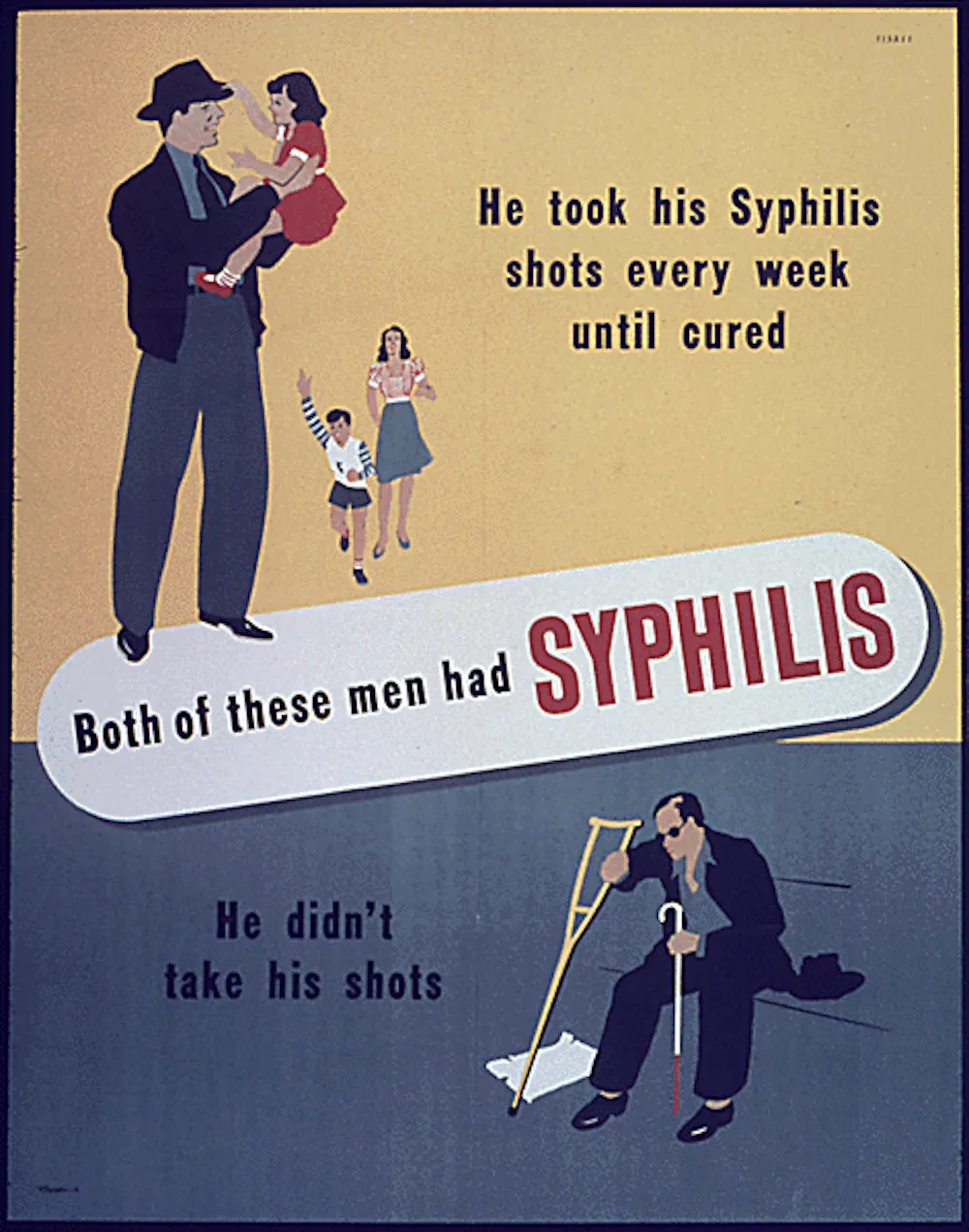
    Syphilis is a sexually transmitted disease first identified in 1495. It causes skin rashes and may progress to causing paralysis, blindness or both. For centuries, syphilis weakened nations by disabling parents, workers and soldiers in the prime of their lives. Innovative drugs – first Salvarsan (1909), then penicillin (1943) – offered a path toward eradication when used together with widespread testing.

    A 1940s poster focuses on the medical cure for the disease.
    National Archives, CC BY

    Public health programs conducted from the 1930s through the 2000s, however, failed – not because of the efficacy of the treatments but because of socioeconomic conditions.

    One challenge has been persistent stigma around getting tested for the disease and tracing sexual partners. Poverty is another; it can force women into commercial sex activities and prevent people from learning how to protect themselves from sexually transmitted infections. Population migration due to commerce or war can cause high-risk behaviors such as sexual promiscuity. Women in some cultures lack authority to negotiate for condom use. And governments have not consistently prioritized the sustained funding needed to support efforts to eliminate the disease.

    Despite societal indifference toward syphilis, in the 2020s over 8 million new cases occur globally each year, particularly among racial minorities and low-income populations.

    The history of HIV/AIDS is shorter than that of syphilis, but the trajectory has similarities. Doctors first described HIV/AIDS in 1981, when it was a nearly uniformly fatal sexually transmitted disease. Novel antiretroviral drugs introduced in 1996 offered medical scientists the hope of disease elimination through public health campaigns, centered on widespread testing and treatment, implemented in 2013.

    But these programs, for reasons like with syphilis, are not meeting their treatment targets across all countries, especially among low-income populations and racial minorities. Sustaining funding for health care infrastructure and the multidrug regimens for 39 million people living with HIV poses an added challenge. Today, despite a cavalier public attitude toward the disease, AIDS causes over 630,000 deaths globally. That number will likely increase substantially given the Trump administration’s decision to cut funding for United States Agency for International Development programs.

    Tuberculosis is a third disease that also depleted workforces and weakened nations, particularly in postindustrial revolution 19th-century cities. The disease spread widely because poverty placed people in poorly ventilated working conditions and crowded tenement dwellings. The development of new combination antimicrobial drug regimens offered an avenue for disease eradication in the 1960s.

    Nonetheless, the inability to sustain funding to complete complex treatment courses, problems isolating people who could not afford suitable homes, and poor adherence due to homelessness, incarceration or migration during war or trade have compromised public health campaigns. Despite societal nonchalance, tuberculosis today kills up to 1.6 million globally yearly.

    Memories of the early, emergency phase of the COVID-19 pandemic have faded.
    Stan Grossfeld/The Boston Globe via Getty Images

    The COVID-19 case study

    The trajectories of these epidemics show how campaigns based solely on biomedical approaches that target pathogens are not enough to eliminate disease.

    COVID-19 provides the latest example. In the U.S., the pandemic and its lockdowns disproportionately affected low-income people and racial minorities, especially those employed in front-line jobs that did not allow remote work from home. These groups were more likely to reside in crowded residences with poor ventilation or no space for isolation.

    Despite the rapid development of a breakthrough mRNA vaccine that offered hope for what President Joe Biden euphorically termed “independence from the virus,” the promise never fully materialized.

    Too few people received shots, in large part due to socioeconomic factors.

    Wealthy countries purchased vaccines that lower-income countries could not afford. Allocation difficulties kept vaccines from remote regions of the world.

    Vaccine hesitancy due to mistrust in science, along with sentiment that vaccine mandates violated individual freedoms, also prevented people from getting the shot. Similar attitudes reduced rates of mask-wearing and isolation.

    Consequently, surges that could have been avoided took more lives.

    Drugs and vaccines can’t do it alone

    Modern medical science is unmatched in treating pathogens and disease symptoms. But to stop disease, it’s also critical to address the social, economic and political conditions that enable its spread.

    Public health officials have started to implement a variety of structural solutions:

    A peer educator talks about HIV/AIDS with his colleagues at a maintenance shop in Kenya.
    Wendy Stone/Corbis Historical via Getty Images

    Early 20th-century public health officials had hoped that efficient scientific solutions alone could take the place of 19th-century, pre-germ-theory environmental sanitation efforts. COVID-19, syphilis, HIV/AIDS and tuberculosis show that while biomedical breakthroughs are necessary to eliminate epidemic diseases, sustained focus and resources aimed at helping the most socially and economically vulnerable are essential.

    Powel H. Kazanjian does not work for, consult, own shares in or receive funding from any company or organization that would benefit from this article, and has disclosed no relevant affiliations beyond their academic appointment.

    ref. COVID-19 is the latest epidemic to show biomedical breakthroughs aren’t enough to eliminate a disease – https://theconversation.com/covid-19-is-the-latest-epidemic-to-show-biomedical-breakthroughs-arent-enough-to-eliminate-a-disease-245827

    MIL OSI – Global Reports

  • MIL-OSI United Kingdom: Progress in tackling waiting times

    Source: Scottish Government

    Frailty services expansion to build on improved performance.

    The national roll-out of specialist frailty services at all 30 A&E departments will build on recent progress to clear long waits and help reduce hospital stay length for the most vulnerable people.

    Frailty Units are specialist beds that focus on intense assessment of older people with frailty – the services offer access to specialist skills and care plans, accelerate early discharge and look to reduce delays and length of stay.

    The expansion, supported through the £200 million announced as part of the 2025-26 Budget, will be a key focus of the Scottish Government’s new Operational Improvement Plan for the NHS, due to publish this Spring. This will include changes to the way acute services are delivered to help reduce waiting times. In recent weeks Health Boards have reported significant progress against long waits, including:

    • the pledge to carry out 64,000 procedures through £30 million additional funding by the end of March 2025 has already been exceeded – with boards reporting to have 75,500 delivered by end of January 2025.
    • a 4% decrease in the total waiting list size for diagnostics – with waits now at their lowest since October 2021
    • a 12% decrease from a recent peak in April 2024 in total ongoing waits for eight key diagnostic tests combined
    • 90.6% of Child and Adolescent Mental Health Services (CAMHS) referrals being seen within 18 weeks from October to December– the standard is 90%.

    On a visit to Glasgow Royal Infirmary, Health Secretary Neil Gray outlined the Scottish Government’s plans to build on this progress by installing a frailty service in every site with a core A&E by the summer.

    Mr Gray met staff working in the hospital’s dedicated frailty service which has reported significant progress in the last 18 months – with average length of stay for vulnerable patients reducing by 3 days, without any increase in readmission. The service has also reported enhanced co-ordination and collaboration among healthcare teams leading to improved patient outcomes.

    Mr Gray said:

    “In recent weeks we have seen good progress in reducing waits and there are encouraging signs that our plan is working. However, we know there is more to do and we want to drive further improvement. That is why we are investing £200 million to help clear waiting list backlogs, improve capacity and reduce delayed discharge.

    “I was pleased to meet the team working in the Glasgow Royal Infirmary frailty service and see first-hand the positive impact their crucial work is having – with the service allowing speedier assessment of vulnerable people presenting at A&E and reducing length of stay for patients significantly.

    “We want to replicate this success across Scotland and shift the balance of care from acute, to community. Through a portion of our £200 million investment, we will deliver direct access to specialist frailty teams in every A&E by this summer. This will enable people who experience frailty to be referred directly by GPs and the Scottish Ambulance Service to specialist frailty services as an alternative to attending A&E or admission.”

    Laura Duffy, Consultant Geriatrician at the Glasgow Royal Infirmary, said: 

    “Working with our colleagues in the Emergency Department and Acute Assessment Unit, we have created a process which identifies people living with frailty. This enables us to direct and prioritise these people to receive care from a specialist team, in specialist areas and initiate early Comprehensive Geriatric Assessment. A key part of developing this service has been ensuring that we identify the priorities and concerns of our patients and their carers promptly and work in partnership with them to develop a plan for their care.

    “We have also worked at further developing and enhancing our links and interface working with our colleagues in the community and in social care. We have developed daily CGA Huddles which can be attended by a variety of acute, community and social care teams. These allow the early exchange of key information and collateral information gathering about patients, which helps provide more effective, timely and patient centred care.

    “The results so far have been promising with 74% of patients admitted through the Acute Medical Receiving Unit being screened for frailty. We have also noted a reduction in length of stay of three days for people with frailty, without an increase in readmissions.”

    Background

    There are currently five frailty units – these have been set up during the Focus on Frailty programme led by Health improvement Scotland across Ayrshire and Arran, Lanarkshire, Tayside, Glasgow and Dumfries and Galloway. There is variation in these services with no standard model. The services provide a dedicated closed unit or area staffed by frailty / medicine of the elderly staff with frailty assessment within the first hour of arrival at hospital.

    In April 2024 the Scottish Government funded NHS boards to deliver 64,000 procedures (40,000 diagnostic procedures, 12,000 surgeries and 12,000 new outpatient appointments) by March 2025. By 31 January 2025, 56,500 diagnostic procedures, almost 9,200 surgeries, and over 9,800 outpatient appointments had been delivered.

    MIL OSI United Kingdom

  • MIL-OSI United Kingdom: Plymouth reflects on fifth anniversary of COVID-19 pandemic

    Source: City of Plymouth

    The 9 March will be the fifth anniversary of the pandemic, where people across the UK are invited to come together to remember and reflect on this unique period of our history as well as their own experiences. 

    To mark the day, the Council will be joining the nation by lighting Smeaton’s Tower yellow on the evening of 9 March, from sunset.

    Councillor Mary Aspinall, Cabinet Member for Health and Adult Social Care, said: “The COVID-19 Day of Reflection is a solemn occasion, allowing us to reflect on the profound impact the pandemic has had on our community, particularly here in Plymouth. 

    “The pandemic brought unprecedented challenges to our city. Many of us lost loved ones and as we remember those who succumbed to the virus, and we extend our deepest sympathies to their families and friends.  

    “The people of Plymouth showed remarkable resilience and solidarity during those trying times. Our health and care system, despite being stretched to its limits, responded with unwavering dedication and compassion.  

    “The doctors, nurses, social care workers, public health workers and all frontline staff worked tirelessly, often at great personal risk, to provide care and support to those in need. Their courage and commitment were nothing short of heroic. 

    “On 9 March we will stand united in remembrance and hope. We will be lighting Smeaton’s Tower as we honour the memory of those we lost, celebrate the resilience of our community, and commit to building a healthier, more compassionate future for all.”

    For more information about the day, visit: COVID-19 Day of Reflection 2025

    MIL OSI United Kingdom

  • MIL-OSI China: CPPCC members commend China’s achievements

    Source: China State Council Information Office 2

    Members of the 14th National Committee of the Chinese People’s Political Consultative Conference (CPPCC) took part in a group interview with the press in Beijing on March 4 ahead of the opening of its third session, sharing insights on China’s new milestones and prospects.

    Members of the 14th National Committee of the CPPCC take part in a group interview at the Great Hall of the People, Beijing, March 4, 2025. [Photo by Zheng Liang/China.org.cn]
    Lin Songtian, deputy director of the CPPCC National Committee’s Foreign Affairs Committee, called the Belt and Road Initiative (BRI) a landmark project linking five continents, promoting global prosperity and benefiting current and future generations.
    “The initiative has benefited people in over 150 countries, paving a new path for cooperation, mutual benefit and shared development worldwide,” Lin told reporters at the Great Hall of the People. He noted that the BRI has driven development in partner countries, improved investment environments and established numerous economic zones and industrial parks, creating vast employment opportunities, enhancing livelihoods and enabling Chinese enterprises to expand globally with robust infrastructure, legal and policy support.
    Since 2013, the BRI has delivered global benefits through key projects: the China-Laos Railway boosted Asia’s regional connectivity, the Addis Ababa-Djibouti Railway provided Ethiopia sea port access, Peru’s Chancay Port became a green, smart logistics hub, and the China-Europe Railway Express strengthened Asia-Europe ties, connecting 25 countries and over 220 cities with more than 100,000 freight trains.
    “With joint efforts from all parties, high-quality BRI cooperation will allow Chinese people to pursue their dreams worldwide with greater accessibility, while enabling more people around the globe to share in development opportunities and prosperity,” he said.
    Qiao Hong, academician of the Chinese Academy of Sciences (CAS) and CPPCC member, highlighted China’s remarkable progress in humanoid robotics in recent years, noting that the country now accounts for more than half of global robot deployment and leads the world in related technologies.
    Qiao emphasized that humanoid robots, a key manifestation of artificial intelligence (AI) and a vital platform for general-purpose physical AI systems, represent the cutting edge of technological evolution. She added that the “Q-series” humanoid robots, independently developed by the CAS’ Institute of Automation, have successfully established the core technological foundation for the humanoid robot mega-factory.
    “As part of China’s national strategic technological force, we will continue to harness our technological advancements and talent resources to solidify the nation’s core technological foundation and advance China’s goal of becoming a global technological powerhouse,” Qiao said.

    Members of the 14th National Committee of the CPPCC take part in a group interview at the Great Hall of the People, Beijing, March 4, 2025. [Photo by Zheng Liang/China.org.cn]
    Jin Li, vice-president of the Southern University of Science and Technology and CPPCC member, addressed challenges posed by China’s aging population, highlighting efforts to develop the silver economy and improve the well-being of elderly people.
    China’s silver economy, driven by its aging population, is set for significant growth, potentially creating 100 million jobs by 2050 and tapping into a market worth $4 trillion by 2035, boosting economic vitality. Currently, there are more than 300 million people aged 60 and above in China, with this figure expected to exceed 400 million by 2035.
    “The growing population aged 60 to 70 brings a wealth of energy and experience. A silver think tank can unlock opportunities in this demographic,” Jin said, noting that improving education and health care enables older individuals to continue making significant contributions to the workforce and society.
    Jin highlighted that the needs of China’s aging population are shifting from basic necessities like clothing, food, shelter and transportation to personal growth, including health care, elderly care, leisure and exploration, as the silver economy offers vast opportunities in terms of both supply and demand.
    Yan Jianbing, president of Huazhong Agricultural University and CPPCC member, emphasized that China’s innovation in agricultural science and technology ranks among the world’s highest, making significant contributions to agricultural progress.
    Yan expressed optimism in maintaining food security, praising the efforts of agricultural science and technology workers. In 2024, China’s grain output exceeded 700 million metric tons for the first time, with per capita availability surpassing 500 kilograms — well above the international food security threshold.

    Members of the 14th National Committee of the CPPCC take part in a group interview at the Great Hall of the People, Beijing, March 4, 2025. [Photo by Zheng Liang/China.org.cn]
    Zhao Hong, chief physician at the Chinese Academy of Medical Sciences’ Cancer Hospital and CPPCC member, highlighted China’s remarkable progress in biopharmaceutical innovation in recent years, aimed at better safeguarding public health. Last year, the nation approved 48 novel drugs and 65 innovative medical devices, with the number of novel medicines in the pipeline ranking second globally.
    “China has shifted from imitation to innovation in the biopharmaceutical field, significantly enhancing its capabilities and demonstrating a promising future,” Zhao said.
    CPPCC member Zhou Lan also noted China’s increased efforts to renovate old residential areas, creating modern and convenient living environments. Over 66,000 urban renewal projects have been carried out, updating and renovating 250,000 old neighborhoods, benefiting more than 100 million residents.
    “These urban renewal projects have not only optimized residents’ living conditions but also attracted new, efficient investment to these cities while preserving their cultural and historical heritage,” she said.

    MIL OSI China News

  • MIL-OSI USA: Martial Arts, Cancer, and the Degree Program that Helps Patients Heal Through Exercise

    Source: US State of Connecticut

    Ashkan Novin was looking for a program to bring together his love of martial arts and his research on cancer treatments. He is both a competitor and a coach in karate. As a researcher, he is the founder of Genesist, a biotechnology company focused on gene therapy to combat cancer. He found UConn’s online Exercise Prescription graduate program to be the perfect complement to his interests because, for him, “exercise is not one-size-fits-all.”

    “In the traditional approach in the way we look at planning and prescribing activities, we had one group of exercises for everyone,” says Ashkan. “After this program, it changed my mindset towards a more precision and personalized approach. Everyone has their own needs.”

    Exercise Prescription is offered as both an online master’s degree and a graduate certificate program in the Department of Kinesiology in the College of Agriculture, Health and Natural Resources. The program is designed for working professionals and those interested in exercise science, sports medicine, kinesiology, personal training, exercise physiology, health and fitness, and others, with coursework 100% online.

    Novin enrolled in the certificate program to augment his studies as a biomedical engineering student in a doctoral partnership program between UConn’s College of Engineering and UConn Health.

    One of the class assignments propelled him deeper into bringing together his martial arts passion and an exercise strategy to reduce negative impacts from cancer treatments.

    “This program is great for whoever wants to upgrade their exercise knowledge to help their athletes, clients, or patients reach better outcomes,” says Novin.

    For Meghan O’Neil ‘23 (Neag), who is graduating from the Exercise Prescription master’s degree program this spring, she says the program aligned with her career goals after earning a UConn degree in sports management

    In December 2024, she joined Duke University as a Sports Performance Fellow. In this role she will assist with women’s soccer, women’s tennis, men’s and women’s golf, and men’s and women’s cross country, and volleyball teams. During her time at UConn, she was a student-athlete, playing five seasons as a pitcher on the UConn softball team.

    “It is very important for me to be educated on how to help others live healthier lives,” says O’Neil. “The knowledge I have gained will help me in the field of programming exercise routines in the correct way to my clients.”

    Novin and O’Neil said that even though the Exercise Prescription programs are online and asynchronous, they found each to be highly interactive.

    “My experience working with the other students within the program has been great,” says O’Neil. “The instructors do an outstanding job of allowing us to bounce ideas off each other, ask each other questions, and make connections.”

    “It was definitely one of the most effective virtual programs that I have ever experienced,” says Novin. “I’m still in touch with some of my classmates, which means, at the end of the day, the interaction worked, and it was sustainable.”

    O’Neil suggests if the program is of interest to reach out to the faculty who head the program, Distinguished Board of Trustees Professor Linda Pescatello and Tori DeScenza, assistant professor-in-residence, both in the Department of Kinesiology.

    “Speak with them about what your goals are and what you want to get out of this program. They are very big on communication and want to make your experience the most applicable for your future career.”

    This work relates to CAHNR’s Strategic Vision area focused on Enhancing Health and Well-Being Locally, Nationally, and Globally.

    Follow UConn CAHNR on social media

    MIL OSI USA News

  • MIL-OSI United Kingdom: Future research on Cystic Fibrosis in the UK

    Source: United Kingdom – Executive Government & Departments

    Cystic Fibrosis (CF) is an incurable, life-limiting condition, affecting over 11,300 people in the UK costing the NHS millions in care.

    Unbeknown to many, a game changing drug called Kaftrio was made available on the NHS at the start of the pandemic which has transformed the lives of many patients. People who thought all their lives that they would die in their 20s or 30s are now living to have families and careers and the change of a much longer and fuller life. But behind this wonderful success story lies huge challenges. Some patients don’t have the right genotype to respond to Kaftrio and others can’t tolerate the drug. Also with longer life expectancy, patients face a new and daunting list of health issues that come with living longer with a chronic disease. Research on CF now needs to adapt to this new era.

    To mark the end of Cystic Fibrosis Trust’s 60th anniversary year the SMC invited the Cystic Fibrosis Trust and a panel of leading academics and charity experts to discuss the future of Cystic Fibrosis and the charity’s new research goals, alongside the publication of a new briefing: The Future of Cystic Fibrosis Care in the UK. The briefing covered the research goals being developed to: –

    1. Develop effective treatments for all
    2. Improve the diagnosis and treatment of CF lung infections and maintain lung health
    3. Treat all of the symptoms of CF throughout the body
    4. Enable people with CF to live longer, healthier lives

    Speakers included:

    Dr Lucy Allen, Director of Research and Healthcare Data, Cystic Fibrosis Trust

    Professor Jane Davies, Honorary Consultant in Paediatric Respiratory Medicine, Royal Brompton Hospital and Professor of Paediatric Respiratory Medicine and Experimental Medicine, Imperial College London

    Dr Frederick Frost, Senior Lecturer, University of Liverpool and Honorary Consultant Respiratory Physician

    David Ramsden, Chief Executive, Cystic Fibrosis Trust

    MIL OSI United Kingdom

  • MIL-OSI Security: Captain Vernon’s Patient Informational Minute – Virtual Health

    Source: United States Navy (Medical)

    Captain TaRail A. Vernon, Commanding Officer, U.S. Naval Hospital Sigonella, had the opportunity to discuss Virtual Health options with Lt. Cmdr. Leland Comer and RN Liz Broomfield-Smith on his monthly AFN radio show, Capt. Vernon’s Patient Informational Minute. The team spoke about the convenience of telephone and video enabled virtual health appointments, where patients can have a medical appointment with their primary care physician on health care concerns that do not include diagnostic and hands on physical exams. Patients can have a medical appointment with their provider for a wide variety of topics such as medication refills. Patients can also speak with their physician about established concerns that require specialists throughout the military healthcare network to include, Naples, Bahrain, Souda Bay and Germany. The interview concluded with the team educating patients about the convenience of virtual health, how to book appointments and the coordination of specialty health care.

    U. S. Naval hospital Sigonella is one of The Defense Health Agency’s Overseas Military Treatment Facilities (MTF). The staff are comprised of active duty service members, General Service (GS), contractors, and Local Nationals. It ensures maximum readiness by providing high-quality, safe patient and family-centered care to maximize force health protection for all beneficiaries, to included NATO and transient DoD forces in the U.S. Fifth Fleet and U.S. Sixth Fleet areas of operation.

    MIL Security OSI

  • MIL-OSI Asia-Pac: Strategic Public Policy Research Funding Scheme 2025-26 opens for applications

    Source: Hong Kong Government special administrative region

    Strategic Public Policy Research Funding Scheme 2025-26 opens for applications
    ******************************************************************************

    The Chief Executive’s Policy Unit (CEPU) today (March 5) announced that the Strategic Public Policy Research Funding Scheme (SPPRFS) 2025-26 is open for applications between now and April 23, 2025.      The SPPRFS is aimed at encouraging local think tank experts and scholars (including universities and civil society think tanks) to apply their expertise to conduct evidence-based research on key public policy issues, and to facilitate the knowledge transfer of research findings to policy considerations, serving as a channel for the Government to tap the public policy research expertise of society. In light of the policy priorities of the Government, six strategic themes have been identified for the SPPRFS 2025-26. They are: (a) Development Opportunities from the Guangdong-Hong Kong-Macao Greater Bay Area; (b) New Quality Productive Forces; (c) Integrated Development of Education, Technology and Talents; (d) International Financial, Shipping and Trade Centre; (e) Integrated Development of Culture, Sports and Tourism; and (f) Elderly and Healthcare Services.      Applications for the SPPRFS must be made under one of the above specified strategic themes and be in line with the specified research areas. Those falling outside the specified strategic themes and specified research areas will not be considered generally. Each SPPRFS project may be granted a maximum of HK$5 million and last from one to five years.      Separately, the major themes and indicative research areas of the Public Policy Research Funding Scheme (PPRFS), which is also administered by the CEPU, have been updated having regard to Hong Kong’s current and long-term development as well as the need for research on various social issues. While applications for the SPPRFS are accepted at specific times each year, the PPRFS focuses on research studies of shorter duration and smaller scale with applications accepted throughout the year. Applications for the PPRFS will be vetted, and notifications of the results will be issued by batch.      Assessments for the SPPRFS and PPRFS will be conducted by an Assessment Panel, which comprises experienced academics and professional experts. The Assessment Panel will also take into account comments from external reviewers who are experienced academics and professional experts during the assessment process. To ensure the policy relevance of the research proposals, views of relevant government bureaux/departments will also be sought for reference by the Panel. A declaration of interests system is in place to ensure that the assessments are fair and impartial.      Research quality and relevance to public policy needs are the primary considerations in evaluating research proposals under both Schemes, including the reasonableness of the research proposal, the research team’s capability, the cost-effectiveness of the proposed budget, and whether the research findings can be effectively translated into practicable policy recommendations.      For details of the SPPRFS and PPRFS, including eligibility criteria, research areas, assessment mechanism, application method and other related information, please visit the CEPU’s website (www. cepu.gov.hk/en/PRFS).

    Ends/Wednesday, March 5, 2025Issued at HKT 12:00

    NNNN

    MIL OSI Asia Pacific News

  • MIL-OSI Asia-Pac: DH suspends licence of day procedure centre in Causeway Bay

    Source: Hong Kong Government special administrative region

    DH suspends licence of day procedure centre in Causeway Bay
    ***********************************************************

    In response to media enquiries about the suspension of the licence of a day procedure centre (DPC) in Causeway Bay, a spokesman for the Department of Health (DH) today (March 5) responded as follows:     “Upon receipt of a complaint about a suspected mishandling of medical equipment by a DPC, Dr MD Clinic and Ambulatory Centre located at the World Trade Centre in Causeway Bay, the DH immediately investigated and conducted unannounced inspections. During the inspections, the DPC was found to have contravened the Code of Practice for Day Procedure Centres under the Private Healthcare Facilities Ordinance, namely improper handling and management of an anaesthetic drug, failure to properly sterilise medical equipment, and inadequate staff training and supervision. In addition, the DPC was suspected to have filled in false information in the checking and monitoring of records, including those concerning medical equipment.      The DH has not received any reports of adverse events related to this DPC on the matter so far.           Given the potential risks to patients of the multiple serious breaches of the Code of Practice, and in order to protect the public interest, the DH announced the suspension of the DPC’s licence with immediate effect. The DPC in question will not be allowed to provide any specialised services listed on its licence, including surgical and anaesthetic procedures.           At the same time, the DH has initiated the process for cancellation of the licence for the DPC concerned. Under sections 30 and 31 of the Private Healthcare Facilities Ordinance, the licensee will be given a 14 days’ notice and an opportunity to make representations within 10 days from the date of the notice given to the licensee before the licence is cancelled.           If there is sufficient evidence, the DH will also refer the case to the relevant enforcement or professional regulatory bodies for necessary follow-up action on the suspected use of a false instrument and professional misconduct by the person involved.           The DH reminds those who have undergone anaesthetic procedures, including tumescent anesthesia at the above-mentioned DPC, to seek immediate medical attention if they feel unwell.      The DH will continue to closely monitor licensed private healthcare facilities to protect patient safety.”

    Ends/Wednesday, March 5, 2025Issued at HKT 12:30

    NNNN

    MIL OSI Asia Pacific News

  • MIL-OSI: Victor Ciardelli Appoints Shant Banosian as President of Rate Mortgage while Continuing as CEO and President of All Rate Companies

    Source: GlobeNewswire (MIL-OSI)

    CHICAGO, March 05, 2025 (GLOBE NEWSWIRE) — Victor Ciardelli proudly announces the appointment of Shant Banosian as President of Rate Mortgage. With Rate Mortgage being the last Rate company without a dedicated president—Banosian will partner with Ciardelli to help take Rate Mortgage to the next level of innovation and excellence in the industry. Ciardelli will continue to work closely with the Presidents of all 15 Rate Companies, reinforcing Rate’s status as one of the nation’s top mortgage lenders and a pioneer in fintech and holistic financial wellness.

    Welcomed Partnership & Help

    As CEO and President of Rate Companies, Ciardelli is known for industry innovation and transformation, starting with the release of the first Digital Mortgage, most recently the Same Day Mortgage, and many other industry transformations. Ciardelli is a student of using technology and streamlining business operations to provide better products, service, and pricing to the consumer.

    The 15 Presidents, who oversee 10 mortgage companies, two AI technology companies, a title company, an insurance company, and the personal lending group, will continue to report to and work directly with Ciardelli as he partners with Banosian to elevate Rate Mortgage into the premier mortgage company in the industry.

    Ciardelli described Banosian’s appointment as a pivotal moment for the company, “There is no one in the industry that I would rather partner with than Shant. He is a transformative leader whose relentless drive, strategic mindset, and commitment to excellence have set a new standard in the mortgage industry. He embodies the best of Rate’s culture and values, and we are partnering to take Rate Mortgage to the next level. His expertise and vision will inspire the Rate team and the entire industry.”

    Ciardelli added, “At Rate, we never stand still and are never satisfied. Our mission is to push boundaries, relentlessly innovate, and empower our customers, loan officers, and referral partners with the best technology and platform in the industry. With Shant joining me in top leadership, we’re doubling down on our vision to make homeownership more cost-effective, faster, smarter, and more accessible than ever.”

    A Proven Leader in the Mortgage Industry

    Over the past two decades, Banosian has funded over $10 billion in total loan volume and secured his place as the top loan officer in the U.S. over the past six consecutive years. In 2024, Banosian funded over $1B in volume as the #1 loan officer in the country. Ciardelli describes Banosian as “the Best of the Best in the industry.” He continues, “There is not a better loan professional on the planet to lead Rate Mortgage to its next level of dominance. He is a leader and a teacher all in one and will build the best team of Loan Officers in the industry. Elevating Shant Banosian as President of Rate Mortgage is a natural progression of our shared ambition and complementary strengths, positioning Rate for accelerated growth and reinforcing its industry leadership.”

    Banosian, who has closed over 40,000 loans, firmly believes in education-based lending, customer-first service, and intelligent business scaling. As President of Rate Mortgage, his focus will be on driving innovation, enhancing operational efficiency, and fostering an environment he describes as a “Loan Officer’s Paradise”—a place where professionals have everything they need to thrive and best serve their customers in a rapidly evolving market; a place where a loan officer can easily double and triple their business while better serving their customers; a place that optimally serves our aspiring and existing homeowners, Realtors, and business partners.

    Banosian has built a record-breaking career focusing on strategic growth, operational efficiency, and exceptional customer service. His ability to adapt to market shifts, leverage technology, and lead high-performing teams has made him one of the most respected figures in the mortgage industry. “The mortgage industry is evolving fast, and I am excited to build on Victor Ciardelli’s amazing vision and lead Rate Mortgage into the future,” said Banosian. “We are committed to empowering customers, real estate professionals, and loan officers with the ultimate tools, education, and service available, ensuring that every interaction exceeds expectations.”

    A Passion for Giving Back
    Beyond his professional success, Banosian is deeply committed to philanthropy and community impact. He actively supports a range of charitable organizations, including:

     • The Rate Foundation: Providing financial assistance to individuals and families facing unexpected hardships—a cause Banosian has personally supported since the foundation’s inception.
    St. Jude Children’s Research Hospital: Supporting the fight against childhood cancer and other life-threatening diseases, with over $500,000 raised through team efforts.
    The Greater Boston Food Bank: Working to end hunger and provide healthy meals for families in need.
    Soles4Souls: Turning unwanted shoes and clothing into opportunities for people in need worldwide.

    “Giving back is not just a responsibility, but an important core value of Victor and the company culture,” Banosian said. “It is a privilege to give back, and it is a core part of who we are at Rate.”

    About Rate

    Rate Companies is a leader in mortgage lending and digital financial services. Headquartered in Chicago, Rate has over 850 branches across all 50 states and Washington D.C. Since its launch in 2000, Rate has helped more than 2 million homeowners with home purchase loans and refinances. The company has cemented itself as an industry leader by introducing innovative technology, offering low rates, and delivering unparalleled customer service. Honors and awards include Best Mortgage Lender for First-Time Homebuyers by NerdWallet for 2023; HousingWire’s Tech100 award for the company’s industry-leading FlashClose℠ digital mortgage platform in 2020, MyAccount in 2022, and Language Access Program in 2023; the most Scotsman Guide Top Originators for 11 consecutive years; Chicago Agent Magazine’s Lender of the Year for seven consecutive years; and Chicago Tribune’s Top Workplaces list for seven straight years. Visit rate.com for more information.

    Media Contact

    press@rate.com

    The MIL Network

  • MIL-OSI Africa: World Health Organization (WHO) and Partners equip Community Health Workers to support Marburg outbreak response in Kagera

    Source: Africa Press Organisation – English (2) – Report:

    Download logo

    The Tanzanian Ministry of Health, with technical and financial support from the World Health Organization (WHO), Africa Centres for Disease Control and Prevention (Africa CDC), and UNICEF, equipped over 600 community health workers (CHW) with hands-on skills to enhance local capacities in addressing the ongoing Marburg response efforts.

    The training focused on key areas like community engagement, contact tracing, alert management, infection prevention and control (IPC), water, sanitation, hygiene (WASH), self-care, and psychological first aid. These skills are essential for improving the early detection of Marburg cases and preventing further spread within communities.

    Mariam Matabalo, a community health worker from Ruziba health facility, expressed her appreciation for the training, especially in areas related to effective communication with the public. ‘Since the Marburg outbreak was declared in my village, many people have had questions about how the virus spreads. But with the skills I’ve gained from this training, I feel more confident in addressing these concerns and providing accurate information to my community,’” she said. 

    Dr. Ona Machangu, the Assistant Director of Health Promotion, praised the collaborative efforts of WHO, UNICEF, and Africa CDC in creating a unified training package and ensuring that CHWs were actively involved in the response efforts. ‘Harmonizing the training and actively engaging community health workers is one of the best practices that strengthens the overall response. We are very grateful for the support from our partners to make this happen,’ he said.

    WHO has played a pivotal role in coordinating these efforts, working alongside local health authorities and partners to ensure that the training is not only well-executed but also effective in bolstering local health systems. 

    Dr. Faraja Msemwa, the Emergency Preparedness and Response (EPR) lead, reaffirmed WHO’s commitment to supporting Tanzania’s health system, ensuring that the country is better equipped for potential health emergencies in the future. ‘WHO is refocusing its resources to enhance health systems for a more effective response to potential health emergencies.

    This community-based approach highlights the importance of local involvement in managing public health crises. Through strengthened community resilience and the active participation of community health workers, Tanzania is improving its ability to prevent, detect, and manage the Marburg outbreak, while also preparing for future health threats.

    Distributed by APO Group on behalf of World Health Organization – United Republic of Tanzania.

    MIL OSI Africa

  • MIL-OSI NGOs: Lebanon: Israeli attacks on health facilities, ambulances and paramedics must be investigated as war crimes

    Source: Amnesty International –

    The Israeli military’s repeated unlawful attacks during the war in Lebanon on health facilities, ambulances and health workers, which are protected under international law, must be investigated as war crimes, Amnesty International said today.

    The Lebanese government should provide the International Criminal Court (ICC) the jurisdiction to investigate and prosecute crimes within the Rome Statute committed on Lebanese territory, and ensure victims’ right to remedy, including by calling on Israel to provide reparation for serious violations of international humanitarian law.

    In findings released today, Amnesty International presents the results of its investigations into four Israeli attacks on healthcare facilities and vehicles in Beirut and in south Lebanon between 3 and 9 October 2024, which killed 19 healthcare workers, wounded 11 more, and damaged or destroyed multiple ambulances and two medical facilities in a one-week period in October 2024.

    During the war in Lebanon in 2024, the Israeli military repeatedly attacked health facilities and medical vehicles. The Israeli military has not provided sufficient justifications, or specific evidence of military targets being present at the strike locations, to account for these repeated attacks, which weakened a fragile healthcare system and put lives at risk.

    “Israel’s unlawful attacks on medical facilities and personnel are not only serious violations of international humanitarian law and likely war crimes but also have devastating consequences for civilians more broadly. We call for the government of Lebanon, with the support of the international community, to step up and act to ensure that suspected perpetrators of war crimes can be held accountable. The new Lebanese government must grant the International Criminal Court jurisdiction over all Rome Statue crimes committed on or perpetrated from its territory,” said Amnesty International’s Senior Director for Research, Policy, Advocacy and Campaigns, Erika Guevara Rosas.

    “Israel’s unlawful attacks on medical facilities and personnel are not only serious violations of international humanitarian law and likely war crimes but also have devastating consequences for civilians more broadly” – Erika Guevara Rosas, Senior Director for Research, Policy, Advocacy and Campaigns

    Lebanon must urgently accede to the Rome Statute of the ICC and make a declaration granting the Court jurisdiction from 2002. In the interim, Lebanon should make an ad hoc declaration accepting the exercise of the ICC’s jurisdiction with respect to all Rome Statute crimes committed on or perpetrated from Lebanese territory.

    The Israeli military repeatedly accused Hezbollah of using ambulances to transport fighters and weapons, and of using medical centres affiliated with the Islamic Health Association (IHA) as a “cover for terrorist activities”. In the four attacks investigated, however, Amnesty International did not find evidence that the facilities or vehicles were being used for military purposes at the time of the attacks.

    “When a health system is attacked, civilians suffer. Even when hospitals are thought to be used for military purposes and lose their protected status under international law, they can only be attacked after a warning that gives sufficient time for the evacuation of patients and staff goes unheeded. An attacking party remains at all times bound by the principle of proportionality, weighing the concrete and direct military advantage anticipated from an attack against the expected harm to civilians and civilian objects, including the reverberating humanitarian consequences resulting from the attack,” said Erika Guevara Rosas.

    Amnesty International interviewed 17 people, including medical workers, witnesses to the attacks, local officials, and family members of the victims. Researchers also visited the site of the attack on the IHA’s centre in Bachoura, Beirut. In addition, Amnesty International verified 46 photographs and videos from the attacks shared directly with the organization or published in the media and on social media. Amnesty International wrote to the Israeli military with its findings on 11 November 2024 but had not received a response by the time of publication.

    Medical personnel, hospitals, and other medical facilities are protected under international humanitarian law.  According to the International Committee of the Red Cross (ICRC), people who have exclusively non-combat functions in armed groups or are merely members of or affiliated with political entities with an armed component, such as Hezbollah, may not be targeted unless and for such time that they are directly participating in hostilities. Medical personnel affiliated with Hezbollah, including those assigned to civil defence organizations, exclusively assigned to medical or humanitarian duties are protected from attack.

    A ceasefire was announced in Lebanon in late November 2024. In early 2025, healthcare workers impacted by the four Israeli attacks said they were doing their best to provide care while still grappling with damaged or destroyed facilities and vehicles and the loss of their colleagues. One civil defence team member, whose centre was destroyed in an Israeli attack, said the team was now working from a local villager’s home, which he said they had “offered to us, on temporary basis… until we find and move to a new locale.”

    “It is crucial that all attacks against medical staff and facilities are investigated to ensure that perpetrators are punished, victims receive reparations, and these crimes are never repeated” – Erika Guevara Rosas

    “It is crucial that all attacks against medical staff and facilities are investigated to ensure that perpetrators are punished, victims receive reparations, and these crimes are never repeated. A ceasefire is only the first step to ending and preventing harm. To move forward, victims of serious violations by all parties must see justice and receive redress,” said Erika Guevara Rosas.

    Before Israel launched its operation Northern Arrows on 23 September 2024, Amnesty International had verified over 80 photos and videos from 11 attacks that hit medical crews and facilities in Lebanon between 8 October 2023 and 24 June 2024.

    According to the Lebanese Ministry of Health, between October 2023 and November 2024 the Israeli military attacked 67 hospitals, 56 primary health care centres, and 238 emergency medical teams, killing at least 222 medical and emergency relief workers.

    According to the World Health Organization, as of 21 November 2024, “47% of the attacks on health care – 65 out of 137 – have proven fatal to at least one health worker or patient in Lebanon”.

    The Lebanese healthcare sector was already straining due to multiple, ongoing and compounding crises, including a massive economic crisis that spiralled in late 2019, followed by the Beirut Port explosion in 2020, while the country tried to recover from the impact of the Covid-19 outbreak.

    On 27 November, Israel and Lebanon agreed to a 60-day ceasefire deal. Within days, numerous violations of the ceasefire deal were reported. On 27 January, the ceasefire got extended for another few weeks. Israel later announced it intended to remain in a number of positions in Lebanon’s territory.

    Amnesty International has also documented evidence of unlawful airstrikes that killed and injured civilians. In a briefing published in December 2024, Amnesty International documented four air strikes by Israeli forces across Lebanon which killed at least 49 civilians and killed entire families and that must be investigated as war crimes. 

    During the war, Hezbollah repeatedly fired unguided rocket salvos into northern Israel, including carrying out attacks that killed and injured civilians. In some cases, they insisted they were aiming at military targets, but in others said they were attacking the civilian city or town generally.

    MIL OSI NGO

  • MIL-OSI NGOs: Lebanon: Israeli attacks on health facilities, ambulances and paramedics must be investigated as war crimes – new investigation

    Source: Amnesty International –

    Four attacks on healthcare facilities and vehicles which killed 19 healthcare workers investigated

    Israeli military has not provided sufficient justifications or specific evidence of military targets being present at the strike locations

    Lebanon must urgently provide the ICC the jurisdiction to investigate and prosecute crimes within the Rome Statute

    It is crucial that all attacks against medical staff and facilities are investigated to ensure that perpetrators are punished, victims receive reparations, and these crimes are never repeated’ – Erika Guevara Rosas

    The Israeli military’s repeated unlawful attacks during the war in Lebanon on health facilities, ambulances and health workers, which are protected under international law, must be investigated as war crimes, Amnesty International said today.

    In findings released today, Amnesty presents the results of its investigations into four Israeli attacks on healthcare facilities and vehicles in Beirut and in south Lebanon between 3 and 9 October 2024, which killed 19 healthcare workers, wounded 11 more, and damaged or destroyed multiple ambulances and two medical facilities in a one-week period.

    During the war in Lebanon in 2024, the Israeli military repeatedly attacked health facilities and medical vehicles. The Israeli military has not provided sufficient justifications, or specific evidence of military targets being present at the strike locations, to account for these repeated attacks, which weakened a fragile healthcare system and put lives at risk.

    Lebanon must urgently accede to the Rome Statute of the ICC and make a declaration granting the Court jurisdiction from 2002. In the interim, Lebanon should make an ad hoc declaration accepting the exercise of the ICC’s jurisdiction with respect to all Rome Statute crimes committed on or perpetrated from Lebanese territory.

    Four attacks investigated

    The Israeli military repeatedly accused Hezbollah of using ambulances to transport fighters and weapons, and of using medical centres affiliated with the Islamic Health Association (IHA) as a “cover for terrorist activities”. In the four attacks investigated, however, Amnesty did not find evidence that the facilities or vehicles were being used for military purposes at the time of the attacks.

    Amnesty interviewed 17 people, including medical workers, witnesses to the attacks, local officials, and family members of the victims. Researchers also visited the site of the attack on the IHA’s centre in Bachoura, Beirut. In addition, Amnesty verified 46 photographs and videos from the attacks shared directly with the organisation or published in the media and on social media. Amnesty wrote to the Israeli military with its findings on 11 November 2024 but had not received a response by the time of publication.

    Medical personnel, hospitals, and other medical facilities are protected under international humanitarian law.  According to the International Committee of the Red Cross, people who have exclusively non-combat functions in armed groups or are merely members of or affiliated with political entities with an armed component, such as Hezbollah, may not be targeted unless and for such time that they are directly participating in hostilities. Medical personnel affiliated with Hezbollah, including those assigned to civil defence organisations, exclusively assigned to medical or humanitarian duties are protected from attack.

    A ceasefire was announced in Lebanon in late November 2024. In early 2025, healthcare workers impacted by the four Israeli attacks said they were doing their best to provide care while still grappling with damaged or destroyed facilities and vehicles and the loss of their colleagues. One civil defence team member, whose centre was destroyed in an Israeli attack, said the team was now working from a local villager’s home, which he said they had “offered to us, on temporary basis… until we find and move to a new locale.”

    Before Israel launched its operation Northern Arrows on 23 September 2024, Amnesty had verified over 80 photos and videos from 11 attacks that hit medical crews and facilities in Lebanon between 8 October 2023 and 24 June 2024.

    According to the Lebanese Ministry of Health, between October 2023 and November 2024 the Israeli military attacked 67 hospitals, 56 primary health care centres, and 238 emergency medical teams, killing at least 222 medical and emergency relief workers. According to the World Health Organization, as of 21 November 2024, “47% of the attacks on health care – 65 out of 137 – have proven fatal to at least one health worker or patient in Lebanon”.

    The Lebanese healthcare sector was already straining due to multiple, ongoing and compounding crises, including a massive economic crisis that spiralled in late 2019, followed by the Beirut Port explosion in 2020, while the country tried to recover from the impact of the Covid-19 outbreak.

    Violations of the ceasefire deal

    On 27 November, Israel and Lebanon agreed to a 60-day ceasefire deal. Within days, numerous violations of the ceasefire deal were reported. On 27 January, the ceasefire got extended for another few weeks. Israel later announced it intended to remain in a number of positions in Lebanon’s territory.

    Amnesty has also documented evidence of unlawful airstrikes that killed and injured civilians. In a briefing published in December 2024, Amnesty documented four air strikes by Israeli forces across Lebanon which killed at least 49 civilians and killed entire families and that must be investigated as war crimes. 

    During the war, Hezbollah repeatedly fired unguided rocket salvos into northern Israel, including carrying out attacks that killed and injured civilians. In some cases, they insisted they were aiming at military targets, but in others said they were attacking the civilian city or town generally.

    Call to investigate war crimes

    The Lebanese government should provide the ICC the jurisdiction to investigate and prosecute crimes within the Rome Statute committed on Lebanese territory, and ensure victims’ right to remedy, including by calling on Israel to provide reparation for serious violations of international humanitarian law.

    Erika Guevara Rosas, Amnesty International’s Senior Director for Research, Policy, Advocacy and Campaigns, said:

    “Israel’s unlawful attacks on medical facilities and personnel are not only serious violations of international humanitarian law and likely war crimes but also have devastating consequences for civilians more broadly.

    “When a health system is attacked, civilians suffer. Even when hospitals are thought to be used for military purposes and lose their protected status under international law, they can only be attacked after a warning that gives sufficient time for the evacuation of patients and staff goes unheeded. An attacking party remains at all times bound by the principle of proportionality, weighing the concrete and direct military advantage anticipated from an attack against the expected harm to civilians and civilian objects, including the reverberating humanitarian consequences resulting from the attack.

    “It is crucial that all attacks against medical staff and facilities are investigated to ensure that perpetrators are punished, victims receive reparations, and these crimes are never repeated. A ceasefire is only the first step to ending and preventing harm. To move forward, victims of serious violations by all parties must see justice and receive redress.

    “We call for the government of Lebanon, with the support of the international community to step up and act to ensure that suspected perpetrators of war crimes can be held accountable. The new Lebanese government must grant the ICC jurisdiction over all Rome Statue crimes committed on or perpetrated from its territory.”

    MIL OSI NGO

  • MIL-OSI Asia-Pac: Alice Ho Miu Ling Nethersole Hospital announces incident of patient care assistant suspected to have been indecently assaulted

    Source: Hong Kong Government special administrative region

    Alice Ho Miu Ling Nethersole Hospital announces incident of patient care assistant suspected to have been indecently assaulted
    ******************************************************************************************

    The following is issued on behalf of the Hospital Authority:     The spokesman for Alice Ho Miu Ling Nethersole Hospital (AHNH) made the following statement today (March 5) regarding an incident of a patient care assistant suspected to have been indecently assaulted:     A patient care assistant (PCA) was suspected to have been indecently assaulted while performing care procedures for a 73-year-old male patient in a medical ward yesterday afternoon (March 4). Upon receiving the report from the PCA, the hospital reported the incident to the Police immediately. A man was subsequently arrested by the Police in the ward.     AHNH is highly concerned about the incident. The hospital strongly condemns the suspected indecent acts against its staff, resolutely adopts a zero-tolerance attitude towards this incident, and will follow up seriously while fully co-operating with the Police’s investigation. The hospital has expressed sympathy and provided support to the PCA concerned.     The hospital has reported the incident to the Hospital Authority Head Office via the Advance Incident Reporting System.

    Ends/Wednesday, March 5, 2025Issued at HKT 16:10

    NNNN

    MIL OSI Asia Pacific News

  • MIL-OSI Asia-Pac: CHP receives case of severe paediatric influenza B infection complicated with myocarditis

    Source: Hong Kong Government special administrative region

    CHP receives case of severe paediatric influenza B infection complicated with myocarditis
    *****************************************************************************************

    The Centre for Health Protection (CHP) of the Department of Health today (March 5) received a report of a case of severe paediatric influenza B infection complicated with myocarditis and urged the public who have not yet received the seasonal influenza vaccination (SIV) to act immediately to minimise the risk of serious complications and death after infection.                The case involved an 8-year-old boy with good past health. He developed cough, runny nose and sore throat since March 1 and developed fever the next day. He sought medical attention from a private doctor on March 3. He attended the Accident and Emergency Department of United Christian Hospital yesterday (March 4) and was admitted to the paediatric ward. He was subsequently transferred to the paediatric intensive care unit of Hong Kong Children Hospital. His nasopharyngeal swab specimen tested positive for the influenza B virus upon laboratory testing. The clinical diagnosis was influenza B infection complicated with myocarditis. He is still hospitalised and in critical condition.     The boy had no travel history during the incubation period. His two household contacts had upper respiratory symptoms recently. He received SIV for the current season.                Including the above-mentioned boy, the CHP has recorded 10 cases of severe influenza virus infection in children since the start of this influenza season in early January, seven of whom were unvaccinated. Influenza vaccination has been scientifically proven to be one of the most effective ways to prevent seasonal influenza and its complications, while significantly reducing the risk of hospitalisation and death from seasonal influenza. All persons aged 6 months and above (except those with known contraindications) who have not yet received SIV should act immediately, particularly the elderly and children who have a higher risk of becoming infected with influenza and developing complications.                Furthermore, the SIV coverage rate for children aged 6 months to under 2 years remained relatively low at about 25 per cent as of March 2. Although slightly higher than that of the same period last year, it was still lower than that of other age groups of children. To enhance relevant vaccination services and boost the vaccination rate, the Government has opened the DH’s Maternal and Child Health Centres (MCHCs) to all children aged 6 months to under 2 years. Parents may book an appointment for their children to receive vaccinations at designated MCHCs via the online booking system.               The surveillance data of the CHP shows that the seasonal influenza activity in Hong Kong remains above the baseline thresholds. To protect their health and that of their family members, in addition to receiving SIV, the public should also maintain good personal and environmental hygiene, and take the following measures to prevent contracting influenza and other respiratory illnesses:

    Patients can wear surgical masks to prevent transmission of respiratory viruses. Therefore, it is essential for persons who are symptomatic (even if having mild symptoms) to wear a surgical mask;
    High-risk persons (e.g. persons with underlying medical conditions or persons who are immunocompromised) should wear surgical masks when visiting public places. The general public should also wear a surgical mask when taking public transport or staying in crowded places. It is important to wear a mask properly, including performing hand hygiene before wearing and after removing a mask;
    Avoid touching one’s eyes, mouth and nose;
    Practise hand hygiene frequently, wash hands with liquid soap and water properly whenever possibly contaminated;
    When hands are not visibly soiled, clean them with 70 to 80 per cent alcohol-based handrub;
    Cover the mouth and nose with tissue paper when sneezing or coughing. Dispose of soiled tissue paper properly into a lidded rubbish bin, and wash hands thoroughly afterwards;
    Maintain good indoor ventilation;
    Avoid sharing personal items;
    When having respiratory symptoms, wear a surgical mask, consider to refrain from going to work or school, avoid going to crowded places and seek medical advice promptly; and
    Maintain a balanced diet, perform physical activity regularly, take adequate rest, do not smoke and avoid overstress.

    For the latest information, members of the public can visit the CHP’s seasonal influenza and COVID-19 & Flu Express webpages.

    Ends/Wednesday, March 5, 2025Issued at HKT 17:00

    NNNN

    MIL OSI Asia Pacific News

  • MIL-OSI Asia-Pac: National Workshop on ‘Capacity Building in Indian Knowledge Systems’: Documentation, Validation, and Communication

    Source: Government of India (2)

    Posted On: 05 MAR 2025 11:09AM by PIB Delhi

    CSIR-National Institute of Science Communication and Policy Research (CSIR-NIScPR), in collaboration with Dwarka Doss Goverdhan Doss Vaishnav College, successfully organized a one-day National Workshop on ‘Capacity Building in Indian Knowledge Systems (IKS): Documentation, Validation, and Communication’ at DDGD Vaishnav College, Chennai as a part of the CSIR-NIScPR’s national initiative SVASTIK (Scientifically Validated Societal Traditional Knowledge) to communicate scientifically validated Indian traditional knowledge to the society. The workshop aimed to give an insight to the participants including faculty members, teachers, scientists, and science communicators, on various aspects of IKS and its documentation, validation, and dissemination.

    The workshop was inaugurated by Padma Shri Prof M D Srinivas, Chairman, Centre for Policy Research, Chennai and Chief Guest of the session, Dr K Vijayalakshmi, Research Director, Centre for Indian Knowledge System, Dr. S. Santhosh Baboo, Principal of DDGD Vaishnav College, and the Coordinators from CSIR-NIScPR and DDGD Vaishnav College.

    Dr. Uthra Dorairajan, Associate Professor, DDGD Vaishnav College, Chennai welcomed the speakers and participants andemphasised on the integration of Indian traditional knowledge with modern science. Dr. S. Santhosh Baboo, Principal of DDGD Vaishnav College, highlighted the various initiatives of the college’s to promote IKS and its importance in education.

    Padma Shri Prof M D Srinivas, a renowned expert in theoretical physics delivered the keynote address. Hehighlighted India’s rich intellectual traditions, the relevance of IKS in modern science, andemphasised on collaborative efforts and initiatives aimed at bridging the gap between ancient knowledge and present-day advancements.

    First technical session on India’s Science & Technology Heritage chaired by Prof M S Sriram, President, Prof K V Sarma Research Foundation, Chennai featuredplenary talks by Dr K Vijayalakshmi, Research Director, Centre for Indian Knowledge Systems, Chennai and Dr V Aarthi, Research officer (Siddha), Central Council for Research in Siddha, Chennai, and Dr Charu Lata, Principal Scientist and Coordinator SVASTIK, CSIR-NIScPR, New Delhi. Dr K Vijayalakshmi emphasised about the indigenous knowledge in agriculture for sustainable development. She mentioned about various traditional rice landraces and the need to conserve them. Dr V Aarthi delivered an engaging talk on the Traditional Siddha Medicine. She highlighted various aspects of the Siddha system of medicine and ways to integrate this traditional medicine system with modern sciences. Dr Charu Lata gave insights on the ongoing activities of the national initiative SVASTIK. She talked about the process, challenges and way forward in the area of disseminating IKS to the masses. The second session on Hands-on Training on IKS Communication was led by Dr Paramananda Barman, Senior Scientist, CSIR-NIScPR, New Delhi and Team SVASTIK, who provided interactive learning experiences on effective science communication strategies. They introduced attendees to various science communication tools and the ways to use them for designing infographics and short videos. The workshop concluded with a feedback session from the participants where many of them shared their learning experiences from the workshop. An exhibition of SVASTIK stories and publications was also put up by the team for the participants and dignitaries attending the workshop.

    Dr Uthra Dorairajan expressed gratitude to all participants and emphasized the significance of such initiatives in preserving and promoting India’s rich scientific heritage.


    ***

    NKR/PSM

    (Release ID: 2108280) Visitor Counter : 51

    MIL OSI Asia Pacific News

  • MIL-OSI Global: How schools can improve gender equality in Latin America

    Source: The Conversation – UK – By Natalia López-Hornickel, Postdoctoral researcher, Department of Education, University of Bath

    Marcos Castillo/Shutterstock

    In Latin America, deeply ingrained cultural beliefs about gender roles – what women and men should and shouldn’t do – persist. This is despite increased involvement by women in traditionally male spheres, such as business and politics.

    And these ideas are held among young people, too. A study in 2020 found that only 32% of adolescents in Latin America fully support gender equality. My past research has found that in Mexico, 63.6% of teenagers believe women should not be involved in politics.

    In Chile and Colombia, however, teens’ support for gender equality is much higher. This disparity suggests that gender attitudes are shaped by broader social and political contexts.

    My recent research with colleagues suggests that schools have the power to shape students’ beliefs about gender equality.

    We found that there is a link between classes in which open discussion takes place and students with a strong grasp of civic topics and support for gender equality. We also found that schools with supportive and inclusive environments are linked with more positive attitudes among students towards gender equality.

    The influence of inequality

    The economic and political landscape of Latin America plays a role in restricting gender equality. Latin America is one of the most economically divided regions in the world, with extreme concentrations of wealth at the top and poverty at the bottom. This extends to education. Children from wealthier backgrounds have access to better education, further reinforcing inequality. Studies show that lower levels of education are linked to prejudices such as sexism.

    And economic inequality is not the only challenge. Despite the fact that most Latin American countries transitioned to democracy over 40 years ago, political instability remains widespread. Alarmingly, many people still see authoritarianism as a solution to social issues.

    This belief is particularly strong among young people. A 2016 study found that 69% of secondary students in five Latin American countries thought a dictatorship would be justified if it solved security problems. Authoritarian mindsets are strong predictors of sexism.

    Open discussion is crucial.
    Daniel M Ernst/Shutterstock

    This means it is challenging to achieve gender equality in a society where authoritarianism and inequality remain deeply rooted.

    Our research analysed data from a large-scale study of 25,319 eighth graders (aged 13-14) in 888 schools in Chile, Colombia, the Dominican Republic, Mexico and Peru.

    We explored the relationships between the socioeconomic background of students, the promotion of open classroom discussions by teachers, the level of civic knowledge, the ideological climate that schools have and the attitudes toward gender equality held by students. We wanted to explore how far education can be associated with these views.

    We found that educational practices account for 19% of the variation in students’ support for gender equality. In other words, what happens inside the classroom matters.

    Open discussions

    Schools that foster open classroom discussions about political and social issues help students develop critical thinking skills and tolerance. This kind of open dialogue counteracts authoritarian beliefs. It creates a space where students can challenge traditional gender roles.

    Inclusive educational practices are not confined to wealthier schools. They can be embraced by any school committed to enhancing educational equity and embracing diverse student needs. But research suggests that students from wealthier backgrounds are more likely to endorse gender equality. This reflects their access to better education and civic knowledge.

    Students with higher civic knowledge are more likely to support gender equity. Understanding rights, democracy, and social structures gives students the tools to question inequality and advocate for change.

    However, the challenge is that many students are still exposed to authoritarian ideologies – both at home and in school.

    Our research revealed a concerning trend. Schools with authoritarian climates tend to reinforce gender biases rather than challenge them. This suggests that if we move students with lower personal support for authoritarianism to an environment where authoritarianism is dominant, those students are susceptible to adopting sexist attitudes. Students are not just shaped by their own beliefs but by the ideological views of their peers.

    This means that while schools have the potential to promote gender equity, they can also reinforce inequality if authoritarian ideas dominate the school culture.

    Latin America’s structural inequalities and political instability create significant barriers to gender equality. Schools, particularly in underprivileged areas, can counterbalance this by encouraging open discussion and civic education, even in societies resistant to change. Education systems have the potential to play a key role in setting the trajectory of gender equality in Latin America.

    Natalia López-Hornickel receives funding from the South West Doctoral Training Partnership (SWDTP).

    ref. How schools can improve gender equality in Latin America – https://theconversation.com/how-schools-can-improve-gender-equality-in-latin-america-249772

    MIL OSI – Global Reports

  • MIL-OSI United Nations: Environmental Research: Health

    Source: UNISDR Disaster Risk Reduction

    Mission

    Environmental Research: Health is a multidisciplinary, open access journal devoted to addressing important global challenges at the interface of the environment and public health in a way that bridges scientific progress and assessment with efforts relating to impact/future risks, resilience, mitigation, adaptation, security and solutions in the broadest sense.

    All research methodologies are encouraged comprehensively covering qualitative, quantitative, experimental, theoretical and applied approaches; exposure assessments; implementation studies; and policy analysis.

    MIL OSI United Nations News