NewzIntel.com

    • Checkout Page
    • Contact Us
    • Default Redirect Page
    • Frontpage
    • Home-2
    • Home-3
    • Lost Password
    • Member Login
    • Member LogOut
    • Member TOS Page
    • My Account
    • NewzIntel Alert Control-Panel
    • NewzIntel Latest Reports
    • Post Views Counter
    • Privacy Policy
    • Public Individual Page
    • Register
    • Subscription Plan
    • Thank You Page

Category: Health

  • MIL-OSI Australia: Local outbreak of measles in Victoria

    Source: Government of Victoria 3

    Key messages

    • An outbreak of measles has been identified in Victoria, after two new cases were reported who likely acquired their infection in metropolitan Melbourne. These cases have had no history of overseas travel or known contact with other cases of measles.
    • These cases were infectious at multiple locations around Melbourne and Greater Bendigo. People who have attended a listed exposure site during the specified dates and times should monitor for symptoms of measles and follow the instructions below.
    • Measles is a highly infectious viral illness that can spread from person-to-person and potentially lead to serious health complications including pneumonia and brain inflammation (encephalitis).
    • Anyone who develops symptoms of measles should seek medical care and testing for measles. Wear a face mask and call ahead to make sure you can be isolated from others.
    • Healthcare professionals should be alert for measles in patients with fever and rash, particularly those who have recently returned from overseas or attended a listed exposure site during the specified period.
    • Clinicians should also consider measles in people with compatible symptoms who have spent time in metropolitan Melbourne in the prior 7 to 18 days.
    • Suspected cases should be tested, advised to isolate, and notified to the Department of Health immediately by calling 1300 651 160.
    • All Victorians are eligible to receive the free measles-mumps-rubella (MMR) vaccine if born during or after 1966. Two doses are required for immunity.
    • Victorians born between 1966 and 1992 may not have received two doses of vaccine. If you are unsure, see an immunisation provider now to ask for an MMR vaccine.
    • Anyone planning overseas travel should make sure they have received appropriate travel vaccinations, including the MMR vaccine. This is especially important for anyone planning on travelling to South and South-East Asia, including Vietnam.

    What is the issue?

    Two new cases of measles have been reported in Victoria that have not travelled overseas, and have no known links to recent cases of measles. These cases were infectious at multiple locations in Greater Bendigo and metropolitan Melbourne. This means there is now local transmission of measles in the community.

    Measles is a highly infectious viral illness that can lead to uncommon but serious complications, such as pneumonia and brain inflammation (encephalitis). There have been 8 cases of measles identified in Victoria in 2025.

    A number of populations in Victoria are susceptible to measles, including anyone who is unvaccinated, infants under 12 months of age, immunocompromised people and adults who were born between 1966 and 1992 who may not have received two MMR vaccines in childhood.

    Any overseas travel could also lead to exposure to measles, with outbreaks reported in multiple countries and regions, including Vietnam, Thailand, India, Africa, Europe and the UK, the Middle East, and the USA.

    Active public exposures sites in Victoria for recent cases are listed in the table below.

    Date Time Location Monitor for onset of symptoms up to
    Wednesday 26 February 2025 12:01am to 12:25am

    The Royal Melbourne Hospital Emergency Department

    300 Grattan St, Parkville VIC 3050

    Sunday 16 March 2025
    Tuesday 25 February 2025 5:20pm to 12:00am (midnight)

    The Royal Melbourne Hospital-Emergency Department

    300 Grattan St, Parkville VIC 3050

    Saturday 15 March 2025
    Tuesday 25 February 2025 11:00am to 12:00pm (mid-day)

    DiagnostiCare Specialist Radiology Clinic

    Unit 46/235 Milleara Rd, Keilor East VIC 3033

    Saturday 15 March 2025
    Tuesday 25 February 2025 10:00am to 11:00am

    Australian Clinical Labs

    Eastbrooke Family Clinic Lincolnville, 493-495 Keilor Road, Niddrie VIC 3042

    Saturday 15 March 2025
    Tuesday 25 February 2025 9:00am to 11:00am

    Eastbrooke Family Clinic Lincolnville

    493-495 Keilor Road, Niddrie VIC 3042

    Saturday 15 March 2025
    Monday 24 February 2025 5:50am to 9:00am

    Bendigo Hospital – Emergency Department

    Bendigo Health, Drought St & Arnold Street, North Bendigo VIC 3550

    Thursday 14 March 2025
    Saturday 22 February 2025 4:30pm to 5:05pm

    Chemist Warehouse Airport West

    Westfield Airport West

    40/29-35 Louis St, Airport West VIC 3042

    Tuesday 12 March 2025
    Saturday 22 February 2025 11:30am to 4:30pm

    Keilor East Leisure Centre Swimming Pool

    84 Quinn Grove, Keilor East VIC 3033

    Tuesday 12 March 2025
    Thursday 20 February 2025 4:30pm to 6:30pm

    Epsom Village

    16-20 Howard St, Epsom VIC 3551

    Monday 10 March 2025
    Thursday 20 February 2025 5:50pm to 6:30pm

    Epsom Village Pizza

    Shop 8/16-20 Howard St, Epsom VIC 3551

    Monday 10 March 2025
    Thursday 20 February 2025 5:20pm to 6:15pm

    Chemist Warehouse Epsom

    S/C 16 to Shops 1 to 3/40 Howard St, Epsom VIC 3551

    Monday 10 March 2025
    Thursday 20 February 2025 5:10pm to 5:45 pm

    Woolworths Epsom

    16/40 Howard St, Bendigo VIC 3550

    Monday 10 March 2025
    Thursday 20 February 2025 4:30pm to 5:45pm

    Aldi Epsom

    182/192 Midland Hwy, Epsom VIC 3551

    Monday 10 March 2025
    Thursday 20 February 2025 12:30pm to 01:05pm

    Coles Bendigo

    Williamson St & Myers St, Bendigo VIC 3550

    Monday 10 March 2025
    Wednesday 19 February 2025 4:00pm to 5:30pm

    Oscar Nails and Beauty

    305a Buckley St, Aberfeldie VIC, 3040

    Sunday 9 March 2025
    Wednesday 19 February 2025 8:30pm to 9:05pm

    Lansell Square

    267 High St, Kangaroo Flat VIC 3555

    Sunday 9 March 2025
    Wednesday 19 February 2025 8:30 pm to 9:05pm

    Coles Lansell Square

    267 – 283 High St, Kangaroo Flat VIC 3555

    Sunday 9 March 2025
    Wednesday 19 February 2025: 4:00pm to 5:00pm

    Highpoint Shopping Center

    120-200 Rosamond Rd, Maribyrnong VIC 3032

    Sunday 9 March 2025
    Wednesday 19 February 2025 4:00pm to 5:00pm

    Timezone Highpoint

    Level 1 Highpoint Shopping Centre 120-200 Rosamund Rd, Maribyrnong VIC 3032

    Sunday 9 March 2025

    Anyone who has attended a listed exposure site during the specified times above should monitor for symptoms and seek medical care if symptoms develop for up to 18 days after the exposure and follow the recommendations below.

    In addition, anyone who presents with signs and symptoms compatible with measles should be tested and notified to the Department of Health immediately. There should be an especially high level of suspicion if they have travelled overseas or visited any of the sites listed above and are unvaccinated or partially vaccinated for measles.

    Who is at risk?

    Anyone born during or since 1966 who does not have documented evidence of having received two doses of a measles-containing vaccine, or does not have documented evidence of immunity, is at risk of measles. This is also known as being susceptible to measles.

    Unvaccinated infants are at particularly high risk of contracting measles. Victorians born between 1966 and 1992 may not have received two doses of vaccine, which are required to provide immunity.

    Young infants, pregnant women and people with a weakened immune system are at increased risk of serious complications from measles.

    Symptoms and transmission

    Symptoms of measles include fever, cough, sore or red eyes (conjunctivitis), runny nose, and feeling generally unwell, followed by a red maculopapular rash. The rash usually starts on the face before spreading down the body. Symptoms can develop between 7 to 18 days after exposure.

    Initial symptoms of measles may be similar to those of COVID-19 and influenza. If a symptomatic person tests negative for COVID-19 and/or influenza but develops a rash, they should be advised to continue isolating and be tested for measles.

    People with measles are considered infectious from 24 hours prior to the onset of initial symptoms until 4 days after the rash appears. Measles is highly infectious and can spread through airborne droplets or contact with nose or throat secretions, as well as contaminated surfaces and objects. The measles virus can stay in the environment for up to 2 hours.

    Figures: Example of a typical measles rash

    Recommendations

    For the general public

    • Anyone who has attended a listed exposure site during the specified date and time should monitor for symptoms and seek medical care if symptoms develop for up to 18 days after the exposure.
    • Anyone who attended a listed exposure site and is not fully vaccinated for measles may be eligible to receive the MMR vaccine if they present within 72 hours (3 days) of exposure. Anyone who is immunocompromised or pregnant and not fully vaccinated for measles should seek medical review if within 6 days of exposure to a measles case.
    • Anyone who develops symptoms of measles should seek medical care and testing for measles. Call the health service beforehand to advise that you may have been exposed to measles and wear a face mask.
    • The measles-mumps-rubella (MMR) vaccine provides safe and effective protection against measles. The MMR vaccine is available for free:
      • on the National Immunisation Program, routinely given at 12 months and 18 months of age.
      • for anyone born during or after 1966 who have not already received two doses of measles-containing vaccine, are unsure of their vaccination status, or do not have evidence of immunity to measles.
      • for young infants aged 6 to 12 months prior to overseas travel to countries where measles is endemic or where outbreaks of measles are occurring. If an infant receives an early dose of MMR vaccine prior to travel, they should still receive routine doses at 12 months and 18 months of age as per the National Immunisation Program schedule.
    • Victorians born between 1966 and 1992 may not have received two doses of vaccine. If you are unsure, see an immunisation provider now to ask for an MMR vaccine. Two doses are required for immunity.
    • Anyone planning overseas travel should make sure they have received appropriate travel vaccinations, including MMR vaccination.

    For health professionals

    • For persons who have attended an exposure site, anyone who is not fully vaccinated for measles may be eligible to receive the MMR vaccine if they present within 72 hours (3 days) of exposure. Anyone who is immunocompromised or pregnant and not fully vaccinated for measles may be eligible to receive normal human immunoglobulin (NHIG) if they present up to 144 hours (6 days) after close exposure to a measles case.
    • Clinicians should be alert for measles in patients presenting with compatible illness if they have travelled overseas or attended a listed exposure site during the specified dates and times and are not fully vaccinated against measles.
    • These new cases now indicate local transmission of measles within Victoria. Clinicians should also consider measles in people with compatible symptoms who have spent time in metropolitan Melbourne in the prior 7 to 18 days.
    • Anyone who presents with signs and symptoms compatible with measles should be tested, isolated and notified to the Department of Health immediately, by calling 1300 651 160 and connecting to the relevant Local Public Health Unit.
    • Discuss the need for polymerase chain reaction (PCR) testing using nose and throat swabs with the Local Public Health Unit (PCR testing for measles does not attract a Medicare rebate).
    • Take blood samples for measles serology in all suspected cases.
    • Minimise the risk of measles transmission within your practice/department/community:
      • avoid keeping patients with fever and rash in shared waiting areas (send to a separate room).
      • if measles is suspected, give the patient a single use, fitted face mask and isolate under airborne precautions until a measles diagnosis can be excluded.
      • leave all rooms that were used to assess the suspected case vacant for at least 30 minutes after the consultation.
      • if returning home, patients should isolate at home until test results are available.
    • Offer MMR vaccine to people born during or after 1966 who do not have documented evidence of receiving two doses of a measles-containing vaccine or documented evidence of immunity.
    • Serology is not required before vaccinating.
    • People who are not Medicare eligible can also receive the free MMR vaccine. Refer to the Australian Immunisation Handbook – MeaslesExternal Linkfor further guidance on immunisation.

    MIL OSI News –

    February 27, 2025
  • MIL-OSI New Zealand: New wellness clinic opens for local patients

    Source: New Zealand Government

    Mental Health Minister Matt Doocey today officially opened a new community wellness clinic in Lower Hutt that will better integrate the clinic’s services into the community.

    The clinic is primed to expand its service offerings, and currently caters to people receiving treatment. It offers an alternative to more clinical settings, with a more comfortable and therapeutic environment for clients with a kitchen space and a variety of activities – such as arts and crafts – to make use of while waiting. 

    “It’s great to be here today at the opening of this new clinic and to see what a therapeutic environment it provides people using the services,” Mr Doocey says.

    “Having a space where people feel comfortable and safe is vitally important for their wellbeing, and I’m glad to see this in action for people getting support with their mental health challenges.”

    The clinic is a partnership between Health New Zealand’s Community Mental Health service and PACT, an NGO that provides a broad range of support to people with mental health issues. 

    “The two agencies collaborated on scoping out and understanding how our communities would benefit from accessing services that welcome them in their treatment space,” Mr Doocey says. 

    “This clinic sees that collaboration come to fruition and is a great example of how NGOs and clinical specialist services are working together to deliver care closer to the community for those who need it. It aligns with one of the Government’s five mental health targets, specifically around ‘Faster access to specialist mental health and addiction services’. 

    “The next steps are to replicate the clinic in other spaces around the country, ultimately with the intention of creating pleasant, convenient spaces and reducing barriers for people needing treatment. This will create better outcomes for them and their families, friends, loved ones, and communities, which is what we’re all striving for.”

    MIL OSI New Zealand News –

    February 27, 2025
  • MIL-OSI New Zealand: Community-based approaches to reduce alcohol harm

    Source: New Zealand Government

    Alcohol-related harm in New Zealand’s communities is being addressed through a new fund that will focus on local and community-led early prevention, intervention, and innovation, Mental Health Minister Matt Doocey announced today.
    “Alcohol can cause serious harm and has an ongoing impact on individuals, families, and communities, which can be multi-generational. However, these same groups can have a massive impact in prevention, and in helping others who may be struggling with alcohol.
    “As Mental Health Minister, I see the impact of hazardous alcohol consumption when it can contribute to exacerbating mental health issues. The Government has a clear focus on early intervention and prevention.
    “The new Community Action Fund is focussed on funding more local, community-led services and innovative local projects and initiatives that focus on alcohol harm. It will also support partnerships and greater collaboration, and focus on high-needs groups that are most impacted by alcohol harm.
    “The initiatives it will enable can include community-led partnerships, education on alcohol for young people, and alternative social spaces. The fund can also enable better capability and resourcing among services, including workshops, and initiatives to reduce the supply of alcohol to underage people.
    “We know that community-based organisations are already delivering results, for example initiatives to encourage positive change, and early intervention projects working with high-risk young people.
    “They provide a valuable option in the toolkit of methods to reduce alcohol harm, and will build on the other work being done in areas including health and education.
    “The goal is to form sustainable partnerships and systems to support local action and build stronger, more resilient communities – to help more Kiwis to get through what they’re struggling with, so that they ultimately can thrive in life and in their relationships, and pursue what they desire. 
    “We have incredible providers and organisations around the country who are doing amazing work. We want to grow that, and we’re committed to supporting communities to be innovative and work in ways that work for them.”
    The first funding round of $1 million will include grants, pilot projects and contracts, with hopes of a second round of funding later this year.  

    MIL OSI New Zealand News –

    February 27, 2025
  • MIL-OSI Australia: Injured skipper rescued from yach near Eddystone Point

    Source: Tasmania Police

    Injured skipper rescued from yach near Eddystone Point

    Thursday, 27 February 2025 – 2:58 pm.

    A man has been rescued after being injured while sailing from George Town to Hobart yesterday.
    A distress call was received by Tas Maritime Radio about 2.30pm Wednesday after the skipper of a yacht – who was sailing alone – had been struck in the head by the yacht’s boom.
    Tasmania Police’s Northern Marine Services was contacted and police boarded a St Helens Volunteer Marine Rescue vessel along with an Ambulance Tasmania paramedic.
    The man was treated on the yacht by the paramedic while the vessel was skippered by police to Binalong Bay.
    The patient was transferred from the yacht about 9pm and transported to St Helens District Hospital for assessment.
    Tasmania Police would like to thank the members of St Helens Volunteer Marine Rescue for their assistance and skill during difficult sailing conditions.

    MIL OSI News –

    February 27, 2025
  • MIL-Evening Report: What’s the difference between burnout and depression?

    Source: The Conversation (Au and NZ) – By Gordon Parker, Scientia Professor of Psychiatry, UNSW Sydney

    Yuri A/Shutterstock

    If your summer holiday already feels like a distant memory, you’re not alone. Burnout – a state of emotional, physical and mental exhaustion following prolonged stress – has been described in workplaces since a 5th century monastery in Egypt.

    Burnout and depression can look similar and are relatively common conditions. It’s estimated that 30% of the Australian workforce is feeling some level of burnout, while almost 20% of Australians are diagnosed with depression at some point in their lives.

    So what’s the difference between burnout and depression?

    Depression is marked by helplessness and burnout by hopelessness. They can have different causes and should also be managed differently.

    What is burnout?

    The World Health Organization defines burnout as an “occupational phenomenon” resulting from excessively demanding workload pressures. While it is typically associated with the workplace, carers of children or elderly parents with demanding needs are also at risk.

    Our research created a set of burnout symptoms we captured in the Sydney Burnout Measure to assist self-diagnosis and clinicians undertaking assessments. They include:

    • exhaustion as the primary symptom

    • brain fog (poor concentration and memory)

    • difficulty finding pleasure in anything

    • social withdrawal

    • an unsettled mood (feeling anxious and irritable)

    • impaired work performance (this may be result of other symptoms such as fatigue).

    People can develop a “burning out” phase after intense work demands over only a week or two. A “burnout” stage usually follows years of unrelenting work pressure.

    What is depression?

    A depressive episode involves a drop in self-worth, increase in self-criticism and feelings of wanting to give up. Not everyone with these symptoms will have clinical depression, which requires a diagnosis and has an additional set of symptoms.

    Clinically diagnosed depression can vary by mood, how long it lasts and whether it comes back. There are two types of clinical depression:

    1. melancholic depression has genetic causes, with episodes largely coming “out of the blue”

    2. non-melancholic depression is caused by environmental factors, often triggered by significant life events which cause a drop in self-worth.

    When we created our burnout measure, we compared burnout symptoms with these two types of depression.

    Burnout shares some features with melancholic depression, but they tend to be general symptoms, such as feeling a loss of pleasure, energy and concentration skills.

    We found there were more similarities between burnout and non-melancholic (environmental) depression. This included a lack of motivation and difficulties sleeping or being cheered up, perhaps reflecting the fact both have environmental causes.

    Looking for the root cause

    The differences between burnout and depression become clearer when we look at why they happen.

    Personality comes into play. Our work suggests a trait like perfectionism puts people at a much higher risk of burnout. But they may be less likely to become depressed as they tend to avoid stressful events and keep things under control.

    Excessive workloads can contribute to burnout.
    tartanparty/Shutterstock

    Those with burnout generally feel overwhelmed by demands or deadlines they can’t meet, creating a sense of helplessness.

    On the other hand, those with depression report lowered self-esteem. So rather than helpless they feel that they and their future is hopeless.

    However it is not uncommon for someone to experience both burnout and depression at once. For example, a boss may place excessive work demands on an employee, putting them at risk of burnout. At the same time, the employer may also humiliate that employee and contribute to an episode of non-melancholic depression.

    What can you do?

    A principal strategy in managing burnout is identifying the contributing stressors. For many people, this is the workplace. Taking a break, even a short one, or scheduling some time off can help.

    Australians now have the right to disconnect, meaning they don’t have to answer work phone calls or emails after hours. Setting boundaries can help separate home and work life.


    Read more:
    Australians now have the right to disconnect – but how workplaces react will be crucial


    Burnout can be also be caused by compromised work roles, work insecurity or inequity. More broadly, a dictatorial organisational structure can make employees feel devalued. In the workplace, environmental factors, such as excessive noise, can be a contributor. Addressing these factors can help prevent burnout.

    As for managing symptoms, the monks had the right idea. Strenuous exercise, meditation and mindfulness are effective ways to deal with everyday stress.

    Regular exercise can help manage symptoms of burnout.
    alexei_tm/Shutterstock

    Deeper contributing factors, including traits such as perfectionism, should be managed by a skilled clinical psychologist.

    For melancholic depression, clinicians will often recommend antidepressant medication.

    For non-melancholic depression, clinicians will help address and manage triggers that are the root cause. Others will benefit from antidepressants or formal psychotherapy.

    While misdiagnosis between depression and burnout can occur, burnout can mimic other medical conditions such as anemia or hypothyroidism.

    For the right diagnosis, it’s best to speak to your doctor or clinician who should seek to obtain a sense of “the whole picture”. Only then, once a burnout diagnsois has been affirmed and other possible causes ruled out, should effective support strategies be put in place.


    If this article has raised issues for you, or if you’re concerned about someone you know, call Lifeline on 13 11 14.

    Gordon Parker receives funding from the University of of NSW.

    – ref. What’s the difference between burnout and depression? – https://theconversation.com/whats-the-difference-between-burnout-and-depression-250043

    MIL OSI Analysis – EveningReport.nz –

    February 27, 2025
  • MIL-OSI USA: Gillibrand, Schumer, Garbarino, Nadler, Kean, Goldman Introduce Bipartisan, Bicameral Legislation To Fix World Trade Center Health Program Funding Shortfall

    US Senate News:

    Source: United States Senator for New York Kirsten Gillibrand
    Without Congressional Action, The WTCHP Will Have To Start Turning Away First Responders And Survivors, Cut Back Access To Care For Existing Enrollees By 2028
    Today, U.S. Senator Kirsten Gillibrand (D-NY), Minority Leader Chuck Schumer (D-NY), and U.S. Representatives Andrew Garbarino (R-NY), Jerrold Nadler (D-NY), and Dan Goldman (D-NY) joined advocates and survivors to introduce the 9/11 Responder and Survivor Health Funding Correction Act of 2025. Representative Tom Kean (R-NJ) is also an original House cosponsor. 
    Despite recent congressional action, the World Trade Center Health Program (WTCHP) continues to face an impending funding shortfall. As a result, by October 2028, the program will be forced to close enrollment to new 9/11 responders and survivors, and existing enrollees will face direct cuts to their care and be denied medical monitoring and treatment. 
    The 9/11 Responder and Survivor Health Funding Correction Act of 2025 would update the program’s outdated funding formula to ensure adequate funding until the program’s expiration in 2090. The bill would also increase funding for data collection on 9/11-related conditions and expand access to mental health care for program members. 
    A full recording of the press conference is available here. 
    “Yet again, we are introducing a bill to fix a projected funding shortfall in the World Trade Center Health Program,” said Senator Gillibrand. “Thousands of Americans risked their lives to protect our country in its darkest hour, and it is now our responsibility as members of Congress to be there for them as they continue to battle the horrific health ramifications from that day and the many days after. Our bill updates the funding formula for the WTCHP so that no 9/11 hero has to worry about losing coverage year after year. It is beyond time to get this passed, and I look forward to working across the aisle to do so.” 
    “‘Never Forget’ does not mean just commemorating 9/11, it is a promise to always take care of our 9/11 first responders and survivors. That’s why we are introducing legislation to stop funding patches and make this healthcare program funded permanently: now and forever,” said Senator Schumer. “Our 9/11 heroes should not have to come down here year after year, month after month, pleading for the funding for the healthcare they have earned, deserve, and was promised to them. It’s time for America to put its money where its mouth is and prove to the heroes of 9/11 that we mean it when we say will Never Forget.”
    “Today, alongside my House and Senate co-leads, responders, and survivors, I was proud to announce the reintroduction of the 9/11 Responder and Survivor Health Funding Correction Act,” said Congressman Garbarino. “This legislation would ensure the World Trade Center Health Program has the resources it needs to continue providing care for those suffering from 9/11-related conditions. We made a promise to never forget, and today, we stood together to reaffirm our commitment to delivering on that promise.”
    “While over twenty years have passed since the 9/11attacks, so many of our heroic responders and survivors continue to carry with them the burden of that terrible day as they have fallen sick from the air surrounding Ground Zero,” said Congressman Nadler. “Congress must uphold the promise made to our first responders and survivors by fully funding the WTCHP to provide the injured and their families the aid they need and deserve. I’m proud to join my colleagues in introducing the 9/11 Responder and Survivor Health Funding Correction Act of 2025, which will address the funding shortfall to keep the program available for those who need it for years to come.”
    “Every New Yorker has been impacted by the profound loss and devastating pain from the September 11th attacks, including those like me who lived in Lower Manhattan at the time,” said Congressman Goldman. “We owe a permanent debt to the first responders and unwavering support for the survivors who continue to bear the physical and emotional scars. The 9/11 Responder and Survivor Health Funding Correction Act will ensure that these heroes receive the health care they are owed. As representatives of New York, it is our bipartisan duty to guarantee that these American heroes receive the assistance they deserve from the federal government.”
    “Everyone remembers the dark day of 9/11, a day etched in history,” said Congressman Kean. “We honor all who ran toward danger, risking everything to help those in need. As an original cosponsor of the 9/11 Responder and Survivor Health Funding Correction Act of 2025, I am committed to ensuring that the heroes and survivors of 9/11 receive the care and support they deserve. This bill corrects outdated funding formulas, expands mental health resources, and strengthens data collection to address the long-term health impacts of that tragic day. We have a responsibility to stand by those who sacrificed so much, and this legislation reaffirms that commitment.”
    In addition to Reps. Garbarino, Nadler, Goldman, and Kean the 9/11 Responder and Survivor Health Funding Correction Act of 2025 is cosponsored by Reps. Michael Lawler (R-NY), Laura Gillen (D-NY), Nick LaLota (R-NY), Ritchie Torres (D-NY), George Latimer (D-NY), Yvette Clarke (D-NY), Nick Langworthy (R-NY), Adriano Espaillat (D-NY), Claudia Tenney (R-NY), Pat Ryan (D-NY), Josh Riley (D-NY), Tom Suozzi (D-NY), Nydia Valazquez (D-NY), Paul Tonko (D-NY), Gregory Meeks (D-NY), Josh Gottheimer (D-NY), Brian Fitzpatrick (R-PA), Nicole Malliotakis (R-NY), Tim Kennedy (D-NY), Grace Meng (D-NY), and Alexandria Ocasio-Cortez (D-NY).
    “Cancer, COPD, Pulmonary Fibrosis and other serious respiratory illnesses are literally decimating the 9/11 Community from the toxic aftermath of 9/11,” said 9/11 advocate John Feal. “But we fail to mention the Toxic Redundancy in DC that continues to to take its toll on the deathly ill men & women, uniform and non uniform heroes and survivors who continue to travel over and over and over again to implore lawmakers to enact legislation again. The redundancy of traveling, the redundancy of being away from family, the redundancy of telling their stories, and the redundancy of me watching them die one by one. So one more time, no one last time we implore Congress to “ACT” now, so we can be left alone. The WTCHP is a lifeline for 140,000. $3 billion is a small ask for what we have been through dealing with our injuries, illnesses and most of all the redundancy we had to put up with for over two decades now. Together, today “WE” all have the opportunity “NOW” to stop the madness, the cruelty and redundancy!”
    “My name is Mariama James. I’m the daughter of two now late survivors dead of 9/11-related disease, the mom of three young survivors all with multiple WTC Health Program certifications, and I’m a health-impacted survivor myself,” said Mariama James, 9/11 survivor and advocate. “I stepped into this fight as a young woman, believing justice and care would swiftly follow the devastation of 9/11. Now, nearly 24 years later, I stand here still, imploring our leaders: fully and permanently fund the WTC Health Program. Time is not healing, it’s revealing the ongoing toll, and our commitment must match that reality.” 
    “Firefighters and officers are suffering from 9/11-related illnesses every day,” said Jim Brosi, President of the Uniformed Fire Officers Association. “Congress has a duty to uphold the promise made to first responders and ensure the WTCHP is fully funded for as long as our members need care. Access to treatment and medication is the least we can do for those who sacrificed their personal health to save the lives of countless victims.”
    “While it has been nearly 24 years since terrorists attacked our nation on 9/11, we still have daily reminders of the heavy price paid by the NYPD, FDNY, and first responders across this nation who willingly and selflessly answered the call to duty,” said NYPD Sergeants Benevolent Association (SBA) President Vincent Vallelong. “These brave men and women did not delay, they did not hesitate, and their actions in the weeks and months that followed September 11 gave our nation hope and the strength to rebuild.  The original Zadroga Act and the World Trade Center Health Program recognize our nation’s obligation to care for those first responders who sacrificed so much on that fateful day. The SBA is grateful for the continuing strong leadership of Sen. Gillibrand, Rep. Garbarino, Sen. Schumer, and the New York delegation in reintroducing the 9/11 Responder and Survivor Health Funding Correction Act and ensuring Congress fulfills its obligation to fully fund this critical program.”
    ““We walked the halls of Congress in 2010 to enact the World Trade Center Health Program, and again in 2015 to reauthorize this vital program to ensure our nation took care of those suffering from 9/11-related chronic health conditions as a result of the September 11, 2001 attacks on the United States. Attacks that left many Port Authority Police Officers with severe disabling and life-threatening illnesses contracted during the selfless performance of their duties in the World Trade Center Rescue and Recovery efforts,” said Frank Conti, President of the Port Authority Police Benevolent Association. “The WTCHP is facing a significant funding gap that, if not addressed by Congress, will impact its ability to provide necessary care to our nation’s 9/11 responders and survivors, including the officers we represent. We thank Senator Gillibrand and Representatives Garbarino and Goldman for their support, and we stand with them in urging Congress to pass the 9/11 Responder and Survivor Health Funding Correction Act now. This is not over…the sacrifice continues.”  
    “We fought for the enactment and near permanent reauthorization of the WTCHP as we view it as our obligation and duty to ensure that responders, who risked their lives to protect us, and survivors continue to receive the care that they deserve,” said Bill Johnson, Executive Director of the National Association of Police Organizations. “The 9/11 Responder and Survivor Health Funding Correction Act honors that obligation and ensures the WTCHP is fully funded. We thank Senator Gillibrand and Congressman Garbarino for their leadership and stand with them in support of this legislation.”
    We have vowed to never forget our heroes and survivors of the horrific attacks of 911. Yet, here we stand today, fighting for them once more. The actions Elon Musk has taken against the World Trade Center Health program are as insulting as they are inhumane. Our heroes and survivors deserve the utmost respect and the best possible care. I would like to thank the New York and New Jersey Republican members of Congress, led by Congressman Garbarino, for having the courage to stand shoulder to shoulder with us. Their actions were instrumental in having President Trump rescind the termination of many of the program’s key providers. Standing here in solidarity, hopefully Congressman Garbarino can convince more of his colleagues to do the right thing and fully fund the World Trade Center Health Program. As stated earlier we will never forget, and we will never go away until all our heroes and survivors are treated with the respect and dignity they deserve.” said Thomas Hart, President of Citizens for the Extension of the James Zadroga Act and President of Local 94 International Union of Operating Engineers.

    MIL OSI USA News –

    February 27, 2025
  • MIL-OSI New Zealand: Universities – Wāhine toa and women’s health champion a finalist for Kiwibank New Zealander of the Year – Vic

    Source: Te Herenga Waka—Victoria University of Wellington

    Professor Bev Lawton ONZM (Ngāti Porou), founder of Te Tātai Hauora o Hine, Te Herenga Waka—Victoria University of Wellington’s national centre for women’s health research, gets up every morning to save lives—and she’s up for the 2025 Kiwibank New Zealander of the Year award for her groundbreaking research.

    Throughout her career, first as a GP, then as founder of Te Tātai Hauora o Hine, Bev has sought to reduce preventable harm and death for Māori and non-Māori women, their children and whānau. With a kaupapa Māori lens, she focuses on clinical care pathways, and systems to identify how these can better perform for women, babies, and whānau.

    “Every member of my team works to eliminate preventable harm and death for women, babies, and whānau. One such goal includes eliminating cervical cancer. With the taonga of vaccination, and HPV self-testing, this is now achievable,” says Bev.

    The achievement Bev is most proud of in her career is her advocacy for HPV self-testing. She says, “The voices of women in Aotearoa New Zealand have contributed to everything about the way in which this programme has been implemented. It was research in real-time. Those that had had the test as part of research projects, were informing the programme as it was being rolled out.”

    “Regularly I meet people who tell me they were not just happy to do their HPV self-test, they were proud of it—because they own it, and they tell their friends to do it too. It is reaching a lot of people. Screening rates are going up.”

    Bev is a partner in the ongoing campaign to eliminate cervical cancer. “We have the tools, but it will require funding, and a plan. The introduction of HPV self-testing in September 2023 is a fantastic step, but our HPV vaccination coverage is very low in comparison to Australia, where their government has committed nearly $50m to support the national elimination strategy.

    “If I had a wish, it is that tomorrow, myself and every woman in Aotearoa be literally or figuratively, standing behind the Minister of Health when they announce their commitment to resourcing a cervical cancer elimination strategy.”

    Previous Patron of Te Tātai Hauora o Hine and advisory board member Dame Silvia Cartwright says, “Over many years of association with Bev, I have been deeply impressed both by the quality and breadth of her research, but also by the skill she has demonstrated in nurturing the work of a whole generation of younger researchers who share her passion for the improvement in health care delivery. Bev has the rare ability to gather wide support for her work, but also to make it available at every level of the health care community. Her academic rigour and advocacy for improvement in health care together make her stand out in a field where it is notoriously difficult to achieve real, practical results.”

    Working with iwi and communities, including Ngāti Pāhauwera, Ngāti Porou and Ngāti Toa, Bev leads projects and programmes to create positive, long term health system transformation. Each, she says, comes from years of relationship-building across iwi, hapū, health care providers and champions—all with the overall goal or serving community to reduce harm and save lives.

    Bev speaks to the impact of having a rōpū Kaumātua advising her, saying, “The kaumātua ensure our mahi is tika (true) and responds to community. I get the right people on the waka. It’s not just my effort that has achieved the successes we have had in women’s health. It takes a lot of people to make this happen, as well as our vision for māmā and pēpi flourishing,” says Bev.

    Deputy Vice-Chancellor, Māori, Professor Rawinia Higgins says, “Bev’s career exemplifies how research can create real-life, meaningful change. Her research shapes a better world, where women and children live longer, healthier lives.

    “Her ability to collaborate with health providers, policy advisers, kuia kaumātua, funders, and people in the Māori community, exemplifies what we as a university want to achieve through research. Her achievement, to become a finalist in these prestigious awards, is superbly well-deserved—and if one more person self-tests because they’ve seen her story and experienced her advocacy, then she has achieved her goal.”

    The other two finalists in New Zealander of the Year are Dame Lisa Carrington for pushing boundaries in sport and inspiring the next generation, and Sarah Hirini ONZM for redefining what is possible on and off the rugby field.

    The winners will be announced at a ceremony at the Viaduct Events Centre in Auckland on 20 March.

    MIL OSI New Zealand News –

    February 27, 2025
  • MIL-OSI Australia: Call for information – Serious assault – Katherine

    Source: Northern Territory Police and Fire Services

    The Northern Territory Police Force is calling for information in relation to a serious assault that occurred in Katherine this morning.

    Around 03:30am, police received a report that a woman had been located at an address on Maluka Road with serious injuries. It is alleged she was assaulted by her partner while they were exiting a taxi on Maluka Road.

    Police and St John attended, and the 35-year-old woman was conveyed to Katherine Hospital for treatment for serious physical injuries to her neck.

    The alleged offender was not at the scene at the time of police attendance.

    Detectives from the Northern Investigation Section are investigating and urge anyone who was in the area of Maluka Road and Acacia Drive between midnight and 3am to contact police on 131 444 and quote reference NTP2500021142.

    Alternatively, you can report anonymously via Crime Stoppers on 1800 333 000.

    MIL OSI News –

    February 27, 2025
  • MIL-OSI Global: What’s the difference between burnout and depression?

    Source: The Conversation – Global Perspectives – By Gordon Parker, Scientia Professor of Psychiatry, UNSW Sydney

    Yuri A/Shutterstock

    If your summer holiday already feels like a distant memory, you’re not alone. Burnout – a state of emotional, physical and mental exhaustion following prolonged stress – has been described in workplaces since a 5th century monastery in Egypt.

    Burnout and depression can look similar and are relatively common conditions. It’s estimated that 30% of the Australian workforce is feeling some level of burnout, while almost 20% of Australians are diagnosed with depression at some point in their lives.

    So what’s the difference between burnout and depression?

    Depression is marked by helplessness and burnout by hopelessness. They can have different causes and should also be managed differently.

    What is burnout?

    The World Health Organization defines burnout as an “occupational phenomenon” resulting from excessively demanding workload pressures. While it is typically associated with the workplace, carers of children or elderly parents with demanding needs are also at risk.

    Our research created a set of burnout symptoms we captured in the Sydney Burnout Measure to assist self-diagnosis and clinicians undertaking assessments. They include:

    • exhaustion as the primary symptom

    • brain fog (poor concentration and memory)

    • difficulty finding pleasure in anything

    • social withdrawal

    • an unsettled mood (feeling anxious and irritable)

    • impaired work performance (this may be result of other symptoms such as fatigue).

    People can develop a “burning out” phase after intense work demands over only a week or two. A “burnout” stage usually follows years of unrelenting work pressure.

    What is depression?

    A depressive episode involves a drop in self-worth, increase in self-criticism and feelings of wanting to give up. Not everyone with these symptoms will have clinical depression, which requires a diagnosis and has an additional set of symptoms.

    Clinically diagnosed depression can vary by mood, how long it lasts and whether it comes back. There are two types of clinical depression:

    1. melancholic depression has genetic causes, with episodes largely coming “out of the blue”

    2. non-melancholic depression is caused by environmental factors, often triggered by significant life events which cause a drop in self-worth.

    When we created our burnout measure, we compared burnout symptoms with these two types of depression.

    Burnout shares some features with melancholic depression, but they tend to be general symptoms, such as feeling a loss of pleasure, energy and concentration skills.

    We found there were more similarities between burnout and non-melancholic (environmental) depression. This included a lack of motivation and difficulties sleeping or being cheered up, perhaps reflecting the fact both have environmental causes.

    Looking for the root cause

    The differences between burnout and depression become clearer when we look at why they happen.

    Personality comes into play. Our work suggests a trait like perfectionism puts people at a much higher risk of burnout. But they may be less likely to become depressed as they tend to avoid stressful events and keep things under control.

    Excessive workloads can contribute to burnout.
    tartanparty/Shutterstock

    Those with burnout generally feel overwhelmed by demands or deadlines they can’t meet, creating a sense of helplessness.

    On the other hand, those with depression report lowered self-esteem. So rather than helpless they feel that they and their future is hopeless.

    However it is not uncommon for someone to experience both burnout and depression at once. For example, a boss may place excessive work demands on an employee, putting them at risk of burnout. At the same time, the employer may also humiliate that employee and contribute to an episode of non-melancholic depression.

    What can you do?

    A principal strategy in managing burnout is identifying the contributing stressors. For many people, this is the workplace. Taking a break, even a short one, or scheduling some time off can help.

    Australians now have the right to disconnect, meaning they don’t have to answer work phone calls or emails after hours. Setting boundaries can help separate home and work life.


    Read more:
    Australians now have the right to disconnect – but how workplaces react will be crucial


    Burnout can be also be caused by compromised work roles, work insecurity or inequity. More broadly, a dictatorial organisational structure can make employees feel devalued. In the workplace, environmental factors, such as excessive noise, can be a contributor. Addressing these factors can help prevent burnout.

    As for managing symptoms, the monks had the right idea. Strenuous exercise, meditation and mindfulness are effective ways to deal with everyday stress.

    Regular exercise can help manage symptoms of burnout.
    alexei_tm/Shutterstock

    Deeper contributing factors, including traits such as perfectionism, should be managed by a skilled clinical psychologist.

    For melancholic depression, clinicians will often recommend antidepressant medication.

    For non-melancholic depression, clinicians will help address and manage triggers that are the root cause. Others will benefit from antidepressants or formal psychotherapy.

    While misdiagnosis between depression and burnout can occur, burnout can mimic other medical conditions such as anemia or hypothyroidism.

    For the right diagnosis, it’s best to speak to your doctor or clinician who should seek to obtain a sense of “the whole picture”. Only then, once a burnout diagnsois has been affirmed and other possible causes ruled out, should effective support strategies be put in place.


    If this article has raised issues for you, or if you’re concerned about someone you know, call Lifeline on 13 11 14.

    Gordon Parker receives funding from the University of of NSW.

    – ref. What’s the difference between burnout and depression? – https://theconversation.com/whats-the-difference-between-burnout-and-depression-250043

    MIL OSI – Global Reports –

    February 27, 2025
  • MIL-Evening Report: Head lice are getting harder to kill. Here’s how to break the nit cycle

    Source: The Conversation (Au and NZ) – By Cameron Webb, Clinical Associate Professor and Principal Hospital Scientist, University of Sydney

    DGLimages/Shutterstock

    Wrangling head lice, and the children they infest, must be up there with the most challenging duties a parent or carer has to face.

    And the job is getting harder. Commonly used chemical products aren’t working as well as they once did, meaning head lice are harder to kill.

    You can still rid your children of lice – but it’s likely to take some patience and persistence.

    Remind me, what are head lice? And nits?

    Head lice are tiny six-legged insects that are only found in the hair on a human’s head – most commonly in the hair of primary school-aged children.

    Head lice have been a constant companion for humans throughout their millions of years of evolution.

    Lice love living in our hair. But they scoot down to our scalp up to a half dozen times a day to drink our blood.

    Their claws are perfectly designed to scuttle up and down shafts of hair. But while they’re nimble on our hair, once they’re off, they don’t last long –they’re clumsy, uncoordinated and die quickly.

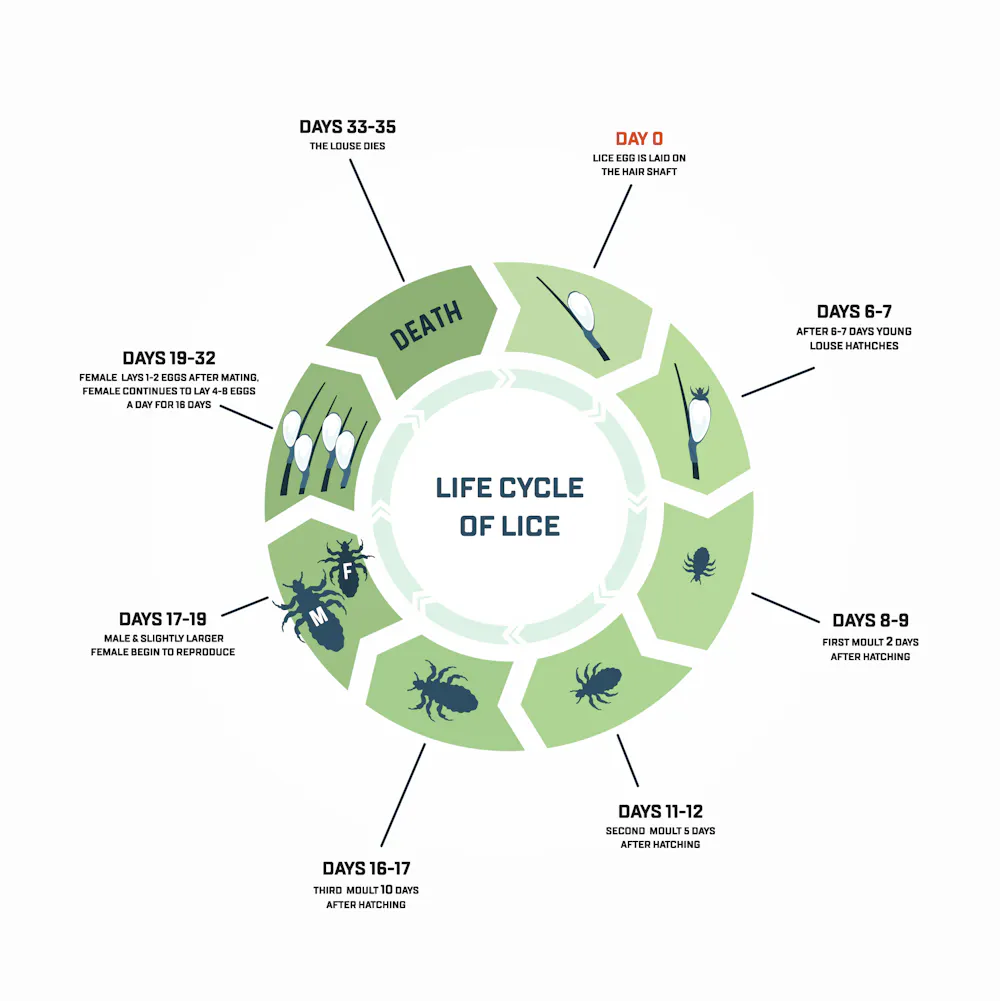
    The term “nits” actually describes the eggs of head lice. They’re often the first sign of an infestation. And with one louse laying more than 100 in their month-long lifespan, there can be a lot of them.

    Head lice live for around a month.
    logika600/Shutterstock

    Can they spread diseases?

    No. Head lice are annoying and their bites may cause skin reactions. But Australian health authorities don’t consider lice a health risk. There is no evidence that head lice can spread pathogens that cause disease.

    The stigma of head lice infestations can be greater than any direct health consequences for infested children.

    Why do my children always pick up lice?

    From child care through to primary school, it’s likely your child has had a head lice infestation at least once. One Australian study found the infestation rate in Australian classrooms ranged from no cases to 72% of children affected.

    Girls are more likely to be carry head lice than boys. Long hair means it’s easier for the head lice to hitch a ride.

    One study found that in some classrooms, almost three in four children had head lice.
    CDC/Unsplash

    Head lice don’t jump or fly, they move from head to head via direct contact.

    Head lice come home with your children because they spend time in close contact with other children, hugging, playing or crowding around books or screens. Any head-to-head contact is a pathway of infections.

    Rules differ slightly between states but in New South Wales and Queensland, children don’t need to be kept home from school because of head lice.

    How can I keep my home free of head lice?

    Keeping the house clean and tidy won’t keep head lice away. They don’t care how clean your bed sheets and towels are, or how frequently you vacuum carpets and rugs.

    There may be a risk of head lice transfer on shared pillows, but even that risk is low.

    There’s no need to change the child’s or other family member’s bedding when you find lice in a child’s hair. Research-based recommendations from NSW Health are that “bed linen, hats, clothing and furniture do not harbour or transmit lice or nits and that there is no benefit in washing them as a treatment option”.

    I’ve used nit solution. Why isn’t it working?

    A wide range of products are available at your local pharmacy to treat head lice. Australia’s Therapeutic Goods Administration assesses products to ensure that they are both safe and effective.

    The problem is that most of these products are insecticides that kill the lice on contact but may not kill the eggs.

    Also, if treatments aren’t completed as directed on product labels, some head lice won’t be killed.

    Head lice also seem to be fighting back against the chemicals we’ve been using against them and it’s getting harder to clear children of infestations.

    So how can you get rid of them?

    You’ll need conditioner and a nit comb.
    riopatuca/Shutterstock

    Don’t expect any miracle cures but health authorities in Australia generally recommend the “conditioner and comb” or “wet comb” method. This means you physically remove the lice without the need for chemical applications.

    There are three key steps:

    1. immobilise the lice by applying hair conditioner to the child’s damp hair and leaving it there for around 20 minutes

    2. systematically comb through the hair using a fine toothed “lice comb”. The conditioner and lice can be wiped off on paper towels or tissues. Only adult lice will be collected but don’t worry, we’ll deal with the eggs later

    3. repeat the process twice, about a week apart, to break the life cycle of the head lice.

    Repeating the process after a week allows the remaining eggs to hatch. It sounds counter-intuitive but by letting them hatch, the young lice are easier to remove than the eggs. You just need to remove them before they start laying a fresh batch of eggs and the infestation continues.

    While children are much more likely to have head lice, the reality is that everyone in the household is just as likely to host a head louse or two. You don’t necessarily need everyone to have a treatment but “grown ups” should be on the lookout for lice too.

    Cameron Webb and the Department of Medical Entomology, NSW Health Pathology and University of Sydney, have been engaged by a wide range of insect repellent and insecticide manufacturers to provide testing of products and provide expert advice on medically important arthropods. Cameron has also received funding from local, state and federal agencies to undertake research into various aspects of management of various medically important arthropods.

    – ref. Head lice are getting harder to kill. Here’s how to break the nit cycle – https://theconversation.com/head-lice-are-getting-harder-to-kill-heres-how-to-break-the-nit-cycle-250397

    MIL OSI Analysis – EveningReport.nz –

    February 27, 2025
  • MIL-OSI USA: Fischer Pushes for Legislation to Protect Rural Nursing Homes

    US Senate News:

    Source: United States Senator for Nebraska Deb Fischer
    During a speech on the Senate floor, U.S. Senator Deb Fischer (R-Neb.) pushed for passage of her Protecting Rural Seniors’ Access to Care Act, which would overturn a harmful Biden-era rule regulating nursing homes. Senator Fischer reintroduced the legislation today.
    In her remarks, Senator Fischer emphasized how unrealistic the Biden administration’s staffing standards are for rural nursing homes and the detrimental effects of nursing home closures in rural communities. She stressed her commitment to passing this legislation to protect rural seniors from upheaval in their final years.
    Click the image above to watch a video of Senator Fischer’s remarks.
    Click here to download audio 
    Click here to download video
    Following is a transcript of Senator Fischer’s remarks as prepared for delivery:M. President,
    Across America, 1.3 million people live in nursing homes.
    Many of us have parents, grandparents, or other loved ones who rely on these homes for care and community in their golden years.
    We understand just how vital nursing homes are—in urban, suburban, and rural areas alike—to help seniors around our country thrive.
    But unfortunately, a federal rule that is still in place from the Biden era is putting many of America’s nursing homes in jeopardy—especially those in rural communities.
    Last year, under President Biden, the Centers for Medicare & Medicaid Services finalized a rule that placed strict, unrealistic regulations on nursing homes.
    The rule requires a registered nurse to be present 24/7 in these homes, and requires three and a half daily hours of dedicated nursing care for each resident.
    If this rule is not stopped, the regulations will be imposed on every nursing home in America over the next few years.
    It may sound nice to have a nurse on hand in nursing homes every moment of the day or night. But the reality is that these homes are already facing historic staffing shortages.
    Across the country, nursing homes lost more than 200,000 workers from February 2020 to December 2022.
    These shortages have already caused many nursing homes to close down.
    Since 2015, 44 nursing homes and 35 assisted living facilities have shut their doors in Nebraska alone.
    Those closures deprived Nebraskans of over 3,000 beds and hurt seniors who wanted to stay in their home community, close to family and friends.
    The CMS rule will worsen this crisis. According to the agency itself, 75 percent of America’s nursing homes will have to increase staffing to comply with its regulations.
    Under the Biden administration’s rule, nursing homes now have to scramble to find staff in the midst of overwhelming shortages.
    If they fail, they’ll have to shut their doors, depriving seniors of care and housing.
    That’s why today, I reintroduced legislation to stop this Biden-era rule in its tracks.
    My Protecting Rural Seniors’ Access to Care Act will prevent the rule’s misguided requirements from going into full effect.
    It will also establish an advisory panel on the nursing home workforce representing various stakeholders, including members from rural and underserved areas.
    This will ensure that the government hears voices outside the big cities on the coasts when it comes to nursing homes.
    Nursing homes are few and far between in rural areas of our country. If one facility closes, the next closest one could be many miles or even hours away.
    Just one closure could be detrimental to seniors in some of our communities.
    But if our nursing homes stay open, seniors won’t have to face upheaval in their final years.
    They won’t have to leave family and loved ones behind to find a new home.
    They won’t have to experience the loneliness, uncertainty, and depression that can come along with moving to an unfamiliar place.
    My bill advocates for these seniors, their care, and their families. It fights for our rural communities and for nursing homes in Nebraska.
    I’ll keep pushing for this legislation until the president signs it into law—to protect seniors from a rule that would only harm them, their families, and their caretakers.
    Thank you, M. President, I yield the floor.

    MIL OSI USA News –

    February 27, 2025
  • MIL-OSI USA: Natural Dior LLC Issues Voluntary Nationwide Recall of Vitafer-L Gold Liquid Due to Presence of Undeclared Tadalafil

    Source: US Department of Health and Human Services – 3

    Summary

    Company Announcement Date:
    February 25, 2025
    FDA Publish Date:
    February 26, 2025
    Product Type:
    Dietary SupplementsDrugs
    Reason for Announcement:

    Recall Reason Description
    Undeclared Tadalafil

    Company Name:
    Natural Dior LLC
    Brand Name:

    Brand Name(s)
    Natural Dior LLC

    Product Description:

    Product Description
    Dietary Supplement

    Company Announcement
    FOR IMMEDIATE RELEASE – Natural Dior LLC (USA) – February 25, 2025 – Natural Dior LLC, is voluntarily recalling the affected lots of Vitafer-L Gold Liquid, a dietary supplement with iron and vitamins, to the consumer level. The product has been found to contain undeclared tadalafil, an ingredient in FDA approved products for treatment of male erectile dysfunction in the family of drugs known as phosphodiesterase (PDE-5) inhibitors. Products containing tadalafil cannot be marketed as dietary supplements. Vitafer-L Gold Liquid is an unapproved new drugs for which safety and efficacy have not been established and, therefore, subject to recall.
    Risk Statement: Consumption of products with undeclared tadalafil may interact with nitrates found in some prescription drugs (such as nitroglycerin) and may cause a significant drop in blood pressure that may be life threatening. People with diabetes, high blood pressure, high cholesterol, or heart disease often take nitrates. Among the adult male population, who are most likely to use this product, adult males who use nitrates for cardiac conditions are most at risk. To date, Natural Dior LLC has not received any reports of adverse events related to this recall.
    The product is used as a state indication(s) and is packaged in 16.9 fl oz (1.06 pt) 500 mL bottles in a folding cardboard box.

    Lot Numbers and Expiration Dates:

    Lot 7021-2304 – Exp. April 2025
    Lot 7017-2304 – Exp. April 2025
    Lot 7040-2305 – Exp. May 2025
    Lot 10020-2402 – Exp. February 2026
    Lot 10011-2404 – Exp. April 2026
    Lot 7695-2307 – Exp. Not specified
    Lot R6715-2303 – Exp. March 2025
    Lot 7292-2305 – Exp. May 2025
    Lot 9669-2403 – Exp. March 2025
    Lot 10060-2404 – Exp. April 2026

    The product was sold nationwide via Amazon and Walmart and distributed through wholesale accounts. The product was also exported to Miami, Florida, through an importer (Laboratorio Natural Dior LLC).
    Consumers who have purchased this product should stop using it immediately and dispose of it properly or return it to the place of purchase for a refund.
    Consumers with questions regarding this recall can contact Natural Dior LLC at +57 315 2814091 from 10AM – 5PM or via email at vitafer.original@gmail.com.
    Consumers should contact their physician or healthcare provider if they have experienced any problems that may be related to taking or using this product.
    Adverse reactions or quality problems experienced with the use of this product may be reported to the FDA’s MedWatch Adverse Event Reporting Program either online, by regular mail, or by fax. No adverse reactions have been reported to Natural Dior LLC (USA) as of February 20, 2025

    This recall is being conducted with the knowledge of the U.S. Food and Drug Administration.
    Natural Dior LLC is committed to ensuring the safety and quality of its products and is taking all necessary steps to remove the affected product from the market.

    Company Contact Information

    Product Photos

    Content current as of:
    02/26/2025

    Regulated Product(s)

    Follow FDA

    MIL OSI USA News –

    February 27, 2025
  • MIL-OSI Submissions: Tech – Bridgetown Research raises $19M from Lightspeed and Accel to deploy AI business research agents

    Source: Stockwood Strategy

    Bridgetown Research is building the first AI agents focussed on research and analysis using primary and secondary data for verticals including private equity, consulting and strategy

    Seattle, Washington – February 26, 2025: Strategic business decisions have traditionally been expensive and slow for a fundamental reason: they don’t happen enough. This means companies lack both historical data to learn from and experts who have seen enough similar cases. Bridgetown Research is changing that. Today, the AI decision science startup announced $19 million in Series A funding led by Lightspeed and Accel, with participation from a leading research university.
     
    Bridgetown Research has developed AI agents that autonomously execute research. Most notable amongst these agents are voice bots trained to recruit and interview industry experts, gathering primary data that can be analyzed alongside alternative data sourced from their partners.
     
    Founded by Harsh Sahai, who previously led machine learning teams at Amazon before leading strategy engagements at McKinsey & Co., Bridgetown Research was born from a simple observation: the majority of business analyses are a permutation of a small number of automatable tasks. The founding team, comprising former professionals from McKinsey, Bain, Amazon, and leading tech startups, brings together extensive experience across strategy consulting and technology.
     
    “We are excited to be a catalyst for change. We are working with multiple private equity firms, management consulting firms, and corporate teams to help make strategic decisions better and faster. This in turn is driving up demand for advisory and information services downstream. We enable $10+ of advisory and information services revenue for every $1 we make. Together with leading institutions, we’re building something bigger than ourselves—an ecosystem where everyone thrives,” commented Harsh Sahai, CEO & founder of Bridgetown Research.
     
    While many AI solutions focus on searching and summarizing information using LLMs, real world business decisions require much more than synthesising the open web. They need proprietary data such as primary data from experts and customer surveys, along with frameworks to understand markets, what Harsh Sahai calls “ontologies”. Moreover, outputs need to be repeatable and auditable for a business to use them to make decisions with tens of millions of dollars at stake. Bridgetown Research is the only player using agents to gather primary data and systematically find patterns in it to generate original insights.
    “AI is causing widespread disruptions across many enterprise functions, and Bridgetown Research is riding that wave by assisting executives in making important strategic decisions. We are pleased to see Bridgetown serving several marquee customers, with users likening its platform to having a team of top-tier consultants at their fingertips. We are excited to partner with Harsh, who, with his background as an ace AI research scientist turned management consultant, blends a unique combination of skills and insight needed to imagine this whole new category of applied AI,” said Anagh Prasad, Investor at Accel.

    Bridgetown Research started with a focus on private equity deal screening diligence. Multiple top-tier PE & VC firms already use Bridgetown Research for deal screening and deeper commercial diligence. They’re able to screen their pipeline much faster with initial analysis taking 24 hours instead of weeks without Bridgetown enabling teams to focus on actual decision making instead of research and analysis. For other customers Bridgetown has enabled voice of customer conversations that cover hundreds of respondents in parallel, and within days.
     
    Ishaan Preet Singh, Investor at Lightspeed added “Companies are built on the quality of strategic decisions, and the research and analysis behind it. Bridgetown Research enables the smartest executives and investors to make these decisions with an order of magnitude more information, and at a pace that was earlier impossible. Harsh and Bridgetown are already creating immense value for their customers, but are still just scratching the surface of the leverage that AI can create.”

    As global markets become increasingly complex, the demand for efficient and effective decision-making tools continues to rise. With this funding round, Bridgetown Research plans to invest further in training its AI agents to perform a broader set of analyses across a broader range of domains, and deepening industry partnerships to enhance access to domain-specific intelligence.

    About Bridgetown Research
    Bridgetown Research builds AI agents for decision research. Its voice agents and web crawlers find and clean data, while its analyses agents produce repeatable, auditable, and reliable analyses. The team consists of computer scientists, econometricians, software engineers, investors and business consultants, working across geographies. For more information please visit https://www.bridgetownresearch.com/

    About Accel
    Accel is a global venture capital firm that aims to be the first partner to exceptional teams everywhere (Facebook, Flipkart, etc.), from inception through all phases of private company growth. Accel has been operating in India since 2008, and its investments include companies like BookMyShow, Browserstack, Flipkart, Freshworks, FalconX, Infra.Market, Chargebee, Clevertap, Cure Fit, Musigma, Moneyview, Mensa Brands, Myntra, Moglix, Ninjacart, Swiggy, Stanza Living, Urban Company, Zetwerk, and Zenoti, among many others. We help ambitious entrepreneurs build iconic global businesses. For more, visit: www.accel.com
     
    About Lightspeed
    Lightspeed is a global multi-stage venture capital firm focused on accelerating disruptive innovations and trends in the Enterprise, Consumer, Health, and Fintech sectors. Over the past two decades, the Lightspeed team has backed hundreds of entrepreneurs and helped build more than 500 companies globally including Affirm, Acceldata, Carta, Cato Networks, Darwinbox, Epic Games, Faire, Innovaccer, Guardant Health, Mulesoft, Navan, Netskope, Nutanix, Physics Wallah, Razorpay, Rubrik, Sharechat, Snap, OYO Rooms, Ultima Genomics, Zepto and more. Lightspeed and its global team currently manage $25B in AUM across the Lightspeed platform, with investment professionals and advisors in the U.S., Europe, India, Israel, and Southeast Asia. www.lsip.com

    MIL OSI – Submitted News –

    February 27, 2025
  • MIL-OSI New Zealand: IHC – Disability survey data highlights inequities that could last generations

    Source: IHC

    New Government figures released today show further evidence of widespread disadvantage for people with intellectual disability.

    IHC New Zealand Director of Advocacy Tania Thomas says data from Stats NZ’s Household Disability Survey, collected following the 2023 Census, paints a concerning picture of the everyday challenges faced by disabled people.

    “This data underscores the systemic disadvantage faced by people with an intellectual disability,” says Tania. “Our own research shows what we already know – disabled people, particularly those with intellectual disabilities, are being left behind in nearly every measure of wellbeing.

    “More than half of disabled New Zealanders are struggling to find adequate housing, put food on the table and meet other basic needs, compared to a third of non-disabled people.

    “While these stats for disabled people are tough, we know it’s even tougher for people with intellectual disability.”

    IHC is set to release a new report in the coming months highlighting the significant hardship experienced by intellectually disabled people, using data from Stats NZ. The report will provide a stark look at the extreme hardship faced by people with an intellectual disability, reinforcing the urgent need for targeted policy responses.

    Tania says these reports aim to ensure policymakers, service providers and the public understand the realities facing some of New Zealand’s most marginalised citizens.

    “Without urgent action, these inequities will persist for generations.”

    In particular, IHC notes from today’s statistics:

    Financial Hardship: More than half (53 percent) of disabled New Zealanders report struggling to meet basic needs like food, housing, and clothing, compared with 33 percent of non-disabled people. Disabled children are also more likely to experience material hardship.
    Poor Health and Wellbeing: 39 percent of disabled adults rate their health as poor, compared with just 6 percent of non-disabled adults. Life satisfaction scores are significantly lower, and disabled adults are more likely to experience discrimination, loneliness, and limited social contact.
    Housing Inequality: Disabled people are more likely to live in poor-quality housing, with 29 percent saying their home is colder than they would like in winter and 25 percent reporting damp living conditions.
    Unmet Support Needs: 62 percent of disabled people report an unmet need for support in areas such as healthcare, education, work accommodations, and accessibility modifications at home.
    Barriers to Employment: 72 percent of unemployed disabled adults want to work, but face barriers such as inflexible workplaces, lack of accommodations, and difficulties accessing training and transport.

    MIL OSI New Zealand News –

    February 27, 2025
  • MIL-OSI USA: Senator Murray Blasts Trump and Musk for Attacks on Child Care, Head Start & Focus on Tax Cuts for Billionaires Like Themselves

    US Senate News:

    Source: United States Senator for Washington State Patty Murray

    Murray: “Trump and Musk are preparing lifeboats for billionaires who can already buy their own fleet of yachts—but ripping away support for families who have been struggling for years to keep their heads above water.”

    ***VIDEO HERE***

    Washington, D.C. — Today, U.S. Senator Patty Murray (D-WA), Vice Chair of the Senate Appropriations Committee and a senior member and former Chair of the Senate HELP Committee, joined a virtual press call to discuss the Trump administration’s recent attacks on child care and Head Start—and President Trump’s utter failure to do anything to help families find and afford child care, despite his promises to lower costs for American families. The call was hosted by Child Care for Every Family, Zero to Three, the National Women’s Law Center, and MomsRising.

    Senator Murray blasted the Trump administration’s mass firings at Department of Health and Human Services’ Office of Head Start and Office of Child Care—which reportedly lost roughly 20% and 25% of their staff respectively—as well as the Trump administration’s blanket funding freeze that caused chaos and uncertainty for Head Start centers nationwide, including in Washington state.

    “In a shock to no one, a billionaire like Donald Trump and his boss, Elon Musk—the literal richest man on the planet—have absolutely zero clue why child care is so important to families and to our economy. Despite the President’s grand campaign promises to lower families’ costs, Trump and Musk have done absolutely nothing to increase child care openings, nothing to lower child care costs, nothing whatsoever to address the child care crisis,” said Senator Murray. “When it comes to helping themselves, they are gearing up to give themselves and other billionaires trillions in tax cuts—but when it comes to helping parents and kids, a big fat zero.”  

    Senator Murray’s remarks, as delivered on today’s press call, are below:

    “In a shock to no one, a billionaire like Donald Trump and his boss, Elon Musk—the literal richest man on the planet—have absolutely zero clue why child care is so important to families and to our economy.

    “And despite the President’s grand campaign promises to lower families’ costs, Trump and Musk have done absolutely nothing to increase child care openings, nothing to lower child care costs, nothing whatsoever to address the child care crisis.

    “Of course, when it comes to helping themselves, they are gearing up to give themselves and other billionaires trillions in tax cuts—but when it comes to helping parents and kids, a big fat zero.

    “And really, even that is being far too kind—because all they have done so far is make the child care crisis worse, and all their plans for what to do next are to make it even worse!

    “When Trump and Musk are haphazardly freezing Head Start funding, then promising to turn it back on, but not actually ensuring that happens, and throwing Head Start centers and families who count on them into complete chaos; when they are firing, left and right, without rhyme or reason, the very workers who help child care providers and Head Start centers keep their doors open and who help ensure the kids in their care are safe—they are turning their backs on families and making the child care crisis that much worse.

    “President Trump and Elon Musk have reportedly already fired a fifth of workers at the federal Office of Head Start and Office of Child Care—and it’s clear they plan to keep firing federal workers with reckless abandon. These are folks that help all of our states keep child care and Head Start centers open.

    “There’s no mistaking it: Trump and Musk’s agenda will have devastating consequences for families and for our economy.

    “Because—despite how important Elon Musk thinks he is—the reality is that working families are the backbone of our economy. And mom and dad can’t go to work if they can’t get child care.

    “And of course, if things weren’t bad enough—Republicans’ next big priority involves ripping health care away from kids and families and seniors to shower even more tax cuts on billionaires. Child care doesn’t become more affordable when parents and their kids get kicked off Medicaid.

    “In other words, Trump and Musk are preparing lifeboats for billionaires who can already buy their own fleet of yachts—but ripping away support for families who have been struggling for years to keep their heads above water.

    “They are telling fellow billionaires: ‘Whatever you want!’ And telling parents and kids: ‘Tough luck!’

    “Well, I have fought for child care from my first day in politics and I am going to make sure they know I am not stopping now.”

    MIL OSI USA News –

    February 27, 2025
  • MIL-OSI USA: Murray, Warnock, Rep. Schrier Introduce Bill to Improve Children’s Health Care Access

    US Senate News:

    Source: United States Senator for Washington State Patty Murray

    ICYMI: Murray Slams Republican Plan for Deep Cuts to Medicaid That Will Rip Away Health Care From Millions

    In Washington state, over 1.83 million individuals rely on health care through Medicaid, including over 840,000 children

    Washington, D.C. — Today, U.S. Senator Patty Murray (D-WA), a senior member and former Chair of the Senate Health, Education, Labor and Pensions (HELP) Committee, and Senator Raphael Warnock (D-GA) introduced the Kids’ Access to Primary Care Act in the Senate—legislation that would require Medicaid to pay at least the same rate as Medicare for primary care services, which would incentivize more providers to participate in Medicaid and increase access to care for children and families. Congresswoman Kim Schrier, M.D. (D, WA-08) introduced the legislation in the House with Representatives Brian Fitzpatrick (R, PA-01) and Kathy Castor (D, FL-14).

    “Medicaid is a lifeline for tens of millions of American families, especially women and children—one in five women and nearly half of all children in America get their health care through Medicaid. Our legislation is a commonsense solution that would encourage more providers to see Medicaid patients and make it easier for families who rely on Medicaid to get timely care close to home,” said Senator Murray. “Right now, Republicans are doubling down on their plans to make deep cuts to Medicaid and rip away health care from millions of people who need it—it’s dangerous and flat-out-wrong. I’ll keep fighting back and working to strengthen Medicaid and bring down the cost of health care in America.”

    “I’ve been in the Medicaid fight long before I got to the Senate, so I know the importance that affordable health care provides for so many Americans, including millions of children. In Georgia, kids make up over 70 percent of all Medicaid enrollees,” said Senator Reverend Warnock. “Right now, nearly half of our country’s children get health care through Medicaid, which is why it’s so troubling that Washington Republicans are fighting to make cuts to health care access. That is why the Kids’ Access to Primary Care Act is so important. This commonsense solution shouldn’t be a partisan issue, kids and parents deserve the peace of mind that comes with knowing you have health care access.”

    “As a pediatrician, I have seen firsthand the impact that proper medical care can have for the health and well-being of families and children. The current Medicaid payment rate has led to fewer available doctors, longer waiting periods, and overall reduced health care coverage for families across the country,” said Congresswoman Schrier. “My bill offers a commonsense, clear solution. Almost half of the children in the United States are insured through Medicaid, so the best way to take care of our kids is to strengthen Medicaid.”

    “I want to thank Senator Murray and Representative Schrier for their unwavering commitment to children’s healthcare with the introduction of the Kids’ Access to Primary Care Act,” said Jeff Sperring, MD, CEO of Seattle Children’s Hospital. “Now, more than ever, ensuring that children’s healthcare is prioritized is of the upmost importance. Healthy kids means a healthy community and a healthy future- this bill puts us closer to that goal.” 

    “Timely access to primary care for children is non-negotiable. The AAFP supports the Kids’ Access to Primary Care Act, which will help raise Medicaid payment rates for primary care services to Medicare levels,” Jen Brull, MD, FAAFP, President, American Academy of Family Physicians. “Increasing access to Medicaid coverage leads to better health outcomes and reduces long standing health disparities. We urge Congress to pass this legislation to improve access to care and ensure family physicians have the resources they need to treat Medicaid patients.” 

    “The WSMA believes that primary care is the foundation of an effective, efficient, patient-centered healthcare system. Increasing Medicaid reimbursement rates to Medicare levels is essential to ensuring our patients have access to timely, quality healthcare,” said Washington State Medical Association President John Bramhall, MD, PhD. “Without adequate reimbursement, many physicians are unable to sustain their practices while serving this population, leading to reduced access to care, longer wait times, greater distances traveled, worsening health disparities, and associated increased healthcare costs. We applaud Congresswoman Schrier and Senator Murray for investing in the health of our communities by introducing the Kid’s Access to Primary Care Act of 2025.”

    “Children should be able to receive the health care they need, when they need it. For too long, low Medicaid payments have made it difficult for children to get timely care. The Kids’ Access to Primary Care Act takes a critical first step to address the barriers families face when trying to access high quality primary care. Raising Medicaid payments to at least Medicare rates for the same services will help ensure pediatricians and other primary care clinicians can provide the care children need to learn, grow, and thrive. The American Academy of Pediatrics thanks Senators Murray (D-Wash.) and Warnock (D-Ga.) for their leadership on this issue and calls on Congress to advance this legislation without delay,” said AAP President Susan Kressly, MD, FAAP.

    Right now, Medicaid pays a lower rate than Medicare for the same primary care procedures and services. This discrepancy severely reduces the number of providers who participate in Medicaid and limits access to health care for children and families. In Washington alone, over 1.83 million individuals are insured through Medicaid, including over 840,000 children who depend on the program for their health care needs. The Kids’ Access to Primary Care Act would improves Medicaid coverage by ensuring that providers are paid at least the same rate as they are for Medicare. Experts agree that higher Medicaid payment rates will broaden the provider network and increase access to care for Medicaid patients, including the more than half of children in the U.S who rely on Medicaid or the Children’s Health Insurance Program (CHIP).

    Senator Murray has fought to strengthen and protect Medicaid throughout her career and previously led similar legislation that would raise the Medicaid reimbursement rate to Medicare levels for primary care services—the Ensuring Access to Primary Care for Women & Children Act—with former Senator Sherrod Brown (D-OH) in the 113th, 114th, 116th, and 117th Congresses.

    In the Senate, in addition to Senators Murray and Warnock, the Kids’ Access to Primary Care Act is also cosponsored by Senators Cory Booker (D-NJ), Richard Blumenthal (D-CT), Ben Ray Luján (D-NM), Jeff Merkley (D-OR), and Peter Welch (D-VT).

    The legislation is supported by the American Academy of Pediatrics, American Academy of Family Physicians, Seattle Children’s Hospital, and the Washington State Medical Association.

    The full text of the legislation is HERE.

    MIL OSI USA News –

    February 27, 2025
  • MIL-OSI USA: FACT SHEET: Trump and Musk Endanger Veterans’ Care, Heartlessly Fire Thousands Who’ve Served in Uniform

    US Senate News:

    Source: United States Senator for Washington State Patty Murray

    Trump’s VA announced another round of 1,400 indiscriminate firings late Monday–jeopardizing veterans’ benefits and care

    VA’s cancellation of nearly 900 contracts supporting patient safety and veteran privacy, as well as its decision to reduce medical centers’ purchase card limits to $1, will further endanger veterans’ access to benefits and care

    Trump and Musk fire veterans across government

    Washington, D.C. – Today, U.S. Senator Patty Murray (D-WA), Vice Chair of the Senate Appropriations Committee, detailed how President Trump and his billionaire co-president Elon Musk’s hazardous directives and indiscriminate mass firings endanger the benefits and care veterans have earned and deserve–and how the two are thoughtlessly firing thousands of veterans who have served our nation in uniform who fulfill critical roles across the federal government.

    In a statement, Senator Murray said:

    “Donald Trump and Elon Musk are utterly betraying our veterans–indiscriminately firing men and women who have served our nation in uniform and endangering the care and benefits they deserve and have earned.

    “Trump and Musk’s heartless firings will worsen VA’s longstanding staffing shortage and force veterans to wait longer to have their claims handled, have their phone calls picked up, or even see a doctor. That is downright unacceptable.

    “Now, Trump and Musk are also paralyzing countless operations at VA hospitals across the country by essentially freezing their purchase cards–preventing them from buying more supplies for hospitals, operating shuttles for patients, covering lodging for veterans, and much more. This is a totally senseless and reckless move that is creating more chaos for VA providers and their patients. 

    “Trump and Musk have now fired thousands of veterans who–after serving their nation in uniform–have chosen to next serve their country as civilians. Now, these veterans are without jobs, wondering what they’ll do next and how they will provide for themselves and their families.

    “Trump and Musk are jeopardizing VA patient safety, and they are going to push out the VA staff that remain with their uninformed and thoughtless mandates and staffing cuts. This shutdown of the VA, bit by bit, must immediately stop.”

    INTENSIFYING VA’s STAFF SHORTAGE

    The Department of Veterans Affairs (VA) has long suffered severe staffing shortages, including in clinical positions, which have negatively impacted veterans’ ability to get the support, benefits, and care they need. 

    To address these shortages, VA has sought–and Congress has provided–expanded hiring authorities and increased pay and bonus schedules for certain VA employees, underscoring how serious staffing challenges have been. VA’s Office of Inspector General reported, for instance, 2,959 severe occupational staffing shortages at Veterans Health Administration (VHA) facilities in fiscal year 2024.

    Nonetheless, President Trump has not only initiated a federal hiring freeze but has indiscriminately fired thousands of VA staff–without providing information about who has been laid off or why.

    Trump and Musk have now fired more than 2,400 staff at the Department of Veterans Affairs (VA) in mass–with VA announcing the firing of 1,000 staff on February 13 and another 1,400 on February 23. 

    VA has also lost other critical staff through the Trump administration’s “deferred resignation program.”

    ENDANGERING VETERANS’ ACCESS TO BENEFITS AND CARE—AND PATIENTS’ SAFETY

    Veterans deserve to be able to get the benefits and care they have earned, but Donald Trump and Elon Musk’s heartless firings of VA staff are threatening their ability to do just that.

    Firing VA employees will–among much else–likely force veterans to wait longer: 

    • To see health care providers; 
    • To have their disability claims adjudicated;
    • To have someone to pick up their calls at the Veterans Crisis Line; 
    • To have burial and funeral expense reimbursement requests processed;
    • And much more. 

    A number of staff supporting the Veterans Crisis Line–which provides 24/7, confidential crisis support for veterans and their loved ones–were among those fired by Trump and Musk.

    In 2022, Congress also passed the PACT Act, the largest expansion of veterans’ benefits in two decades, which requires a significant influx of resources and staff to deliver the benefits and care under the law. Trump and Musk’s firings–and hiring freeze–badly undercut VA’s ability to process claims under the law. The mass firings and the ongoing hiring freeze, which prohibits new disability claims raters from coming on board, will force the backlog of unprocessed claims to grow above 254,000.

    Firing long-time VA researchers also puts clinical trials that veterans are enrolled in at risk and jeopardizes research that could yield critical breakthroughs for veterans. 

    • Ongoing VA research is examining treatment options for PTSD and opioid addiction, as well as for cancer that was caused by veterans’ exposure to toxic chemicals, among much else. 
    • According to VA, in fiscal year 2024, there were 102 active research sites nationwide, with 3,685 active principal investigators who led 7,278 active funded research projects involving teams of researchers. In addition, VA investigators authored or coauthored 11,732 published research articles.

    VA’s dangerous directives this week, which they have already begun to walk back, cause more harmful chaos and confusion and also have detrimental impacts on the ability of veterans to receive their care and benefits. 

    • VA issued a blanket cancellation on Tuesday of nearly 900 contracts–supporting patient safety efforts like chemical waste disposal and monitoring of hospital air quality, systems providing secure storage of veterans’ private records, clinical recruitment efforts, and more. 
    • VA also implemented a decision to reduce purchase card limits to $1–curbing VA medical centers’ ability to purchase supplies and equipment they need to serve veterans or to provide lodging for transplant patients.  

    While the Trump administration tries to rehire clinical staff they have already fired and may ultimately walk back the purchase card limits and contract cancellations, it is clear that they are acting before thinking–and the people paying the price are veterans.

    BETRAYING VETERANS WITH ZERO JUSTIFICATION

    Beyond indiscriminately firing workers who help get veterans the benefits and care they have earned, Trump and Musk have also indiscriminately fired thousands of veterans who have served our country in uniform. In firing probationary and other federal workers across government, Trump and Musk have fired scores of veterans.

    • Veterans make up 30% of the federal workforce, and the federal government is the largest single employer of veterans in the country.
    • Trump and Musk have already fired nearly 6,000 veterans, by one recent estimate.
    • Federal agencies uniquely work to hire and accommodate veterans with service-related disabilities. Longstanding law requires, for example, that veterans who are disabled or who serve on active duty in the Armed Forces in military campaigns are entitled to preference over others in hiring from a list of eligible, competitive applicants. In 2021, there were 337,000 disabled Veterans serving in the federal government, making up 16% of the federal workforce.

    As one veteran in Washington state who was laid off by VA through no fault of his own told Senator Murray last week: 

    “I swore an oath to serve our country—first in the U.S. Army and then at the VA—only to be abruptly terminated by the very institution that promised to care for those who have served. My termination isn’t just a personal tragedy; it’s a stark reminder that our federal government is dismantling essential support systems for veterans and vulnerable communities. When cost-cutting means sacrificing dedicated, disabled service members and committed federal employees, it isn’t about efficiency—it’s about eroding the trust and dignity that our nation owes to those who answer the call to serve.”

    MIL OSI USA News –

    February 27, 2025
  • MIL-OSI USA: ICYMI: Grassley-Durbin WSJ Letter to the Editor: What RFK Jr. Gets Right on Big Pharma

    US Senate News:

    Source: United States Senator for Iowa Chuck Grassley
    WASHINGTON – In a Wall Street Journal letter to the editor, Sens. Chuck Grassley (R-Iowa) and Dick Durbin (D-Ill.) welcomed Health and Human Services Secretary Robert F. Kennedy Jr.’s support for enhanced transparency regarding direct-to-consumer (DTC) prescription-drug advertisements. Grassley and Durbin are leading bipartisan legislation to require price disclosures in DTC commercials.
    President Trump recently signed an Executive Order to empower patients and increase price transparency.
    Text of Grassley and Durbin’s letter to the editor follows:
    We write in regard to the Jan. 2 article “What RFK Jr.’s Dislike for Drug TV Commercials Could Mean for the Ad Industry” (CMO Today), describing Robert F. Kennedy Jr.’s support for banning direct-to-consumer prescription-drug advertisements.
    The U.S. Senate previously passed our bipartisan measure to require price disclosures in these commercials. In fact, the last Trump administration supported our legislation. A federal watchdog review we requested found that nearly two-thirds of Medicare’s drug spending is on a small handful of costly medications shown on TV.
    We recently reintroduced our bipartisan bill to bring price transparency to prescription-drug advertising and put patients in the driver’s seat. By ending Big Pharma’s secrecy, patients will be empowered to make more informed choices. Drug corporations may also think twice about price increases or running commercials if they had to be honest about the cost.
    We look forward to working with the second Trump administration on this.
    Sen. Dick Durbin (D., Ill.)
    Sen. Chuck Grassley (R., Iowa)
    -30-

    MIL OSI USA News –

    February 27, 2025
  • MIL-OSI USA: Duckworth, Durbin Join Pritzker and Illinois Congressional Delegation in Pressing White House on Withholding $1.8 Billion from Taxpayers

    US Senate News:

    Source: United States Senator for Illinois Tammy Duckworth

    February 26, 2025

    [WASHINGTON, DC] – Today, U.S. Senators Tammy Duckworth (D-IL) and Dick Durbin (D-IL) joined Illinois Governor JB Pritzker and members of the Illinois congressional delegation in issuing a joint letter to White House Office of Management and Budget (OMB) Director Russell Vought demanding action and accountability from OMB on the approximately $1.88 billion in funding that is illegally being withheld from Illinois taxpayers despite the funding being appropriated by Congress and numerous court orders.

    “On behalf of our constituents, we are seeking full transparency and accountability on any and all funding that has been paused or interrupted. If the Trump Administration is unable to follow the law and uphold their end of the deal, the people of our state deserve to know,” wrote the lawmakers in a letter to OMB Director Vought.

    The letter provides an update that as of mid-February many agencies and organizations in Illinois have reported an inability to access funds, with some in danger of needing to pause operations, cancel projects, or lay off staff. Impacted grant programs and organizations include, but are not limited to:

    • Nine state agencies, boards and commissions have a total of $692 million in federal funds obligated but not yet received and they are unable to access those funds.
    • 10 state agencies, boards and commissions have a total of $1.19 billion in federal funds anticipated/awarded but not yet obligated and the grants/programs are essentially paused.
    • 14 state agencies, boards and commissions have a total of $1.88 billion in impacted federal funds, including the Illinois Department of Agriculture, Illinois Department of Commerce and Economic Opportunity, Illinois Community College Board, Illinois Emergency Management Agency, Illinois Environmental Protection Agency, Illinois Finance Authority, the Illinois Department of Human Rights, Illinois Department of Natural Resources, Illinois Power Agency, Illinois Department of Transportation, Illinois State Board of Education, Illinois Commerce Commission, Illinois Department of Labor and Illinois Department of Healthcare and Family Services.

    A copy of the full letter is available on the Senator’s website and below:

    Dear Director Vought:

    As we write this letter, the federal government continues to withhold $1.88 billion from Illinois. These are federal funds that were passed by Congress, signed into law, and promised to Illinois. State agencies, small businesses, nonprofit organizations, and everyday citizens across Illinois— including in rural communities—are still having trouble accessing allocated federal funding. We have an obligation to Illinois taxpayers and residents to demand answers about the future of this funding, including when the Trump Administration will follow the law and make good on the federal government’s promise to deliver hard-earned taxpayer dollars back into Illinois’ economy, workforce, and communities.

    The evening of January 27th, our offices read in the news that the White House Office of Management and Budget (OMB) had released a memorandum directing Federal agencies to “temporarily pause all activities related to obligation or disbursement of all federal financial assistance.” Throughout the following day, we received widespread reports of system outages and lockouts that prevented grantees from accessing entitled funding. Attempted communications with government liaisons were often ignored and public statements from the White House were inconsistent with the experiences of our grantees.

    Since then, despite OMB’s rescission of the memo, we have continued to receive reports from agencies and organizations detailing their inability to access funds. This uncertainty over receiving future, assured funds, along with little clarity provided by the Administration, has forced many to pause operations, cancel projects, or cut staff.

    We are seeking clarity on your actions, as well as assurances that you will legally uphold your financial commitments to the State of Illinois. These funds have been contractually agreed to, allocated, and planned around by their recipients—which include childcare providers, educational institutions, small businesses, community and economic development organizations, and more. Needless to say, the restriction of these funds will have a detrimental impact on vulnerable people, local economies, and the state as a whole.

    As of February 24, 2025, impacted grants programs and organizations include, but are not limited to:

    • Nine state agencies, boards, and commissions have a total of $692 million in federal funds obligated but not yet received, and they are unable to access those funds.
    • 10 state agencies, boards, and commissions have a total of $1.19 billion in federal funds anticipated/awarded but not yet obligated, and the grants/programs are essentially paused.
    • In total, this constitutes $1.88 billion in impacted federal funds across 14 state agencies, boards, and commissions in Illinois, including the Illinois Department of Commerce and Economic Opportunity, Illinois Community College Board, Illinois Emergency Management Agency, Illinois Environmental Protection Agency, Illinois Finance Authority, the Illinois Department of Human Rights, Illinois Department of Natural Resources, Illinois Power Agency, Illinois Department of Transportation, Illinois State Board of Education, Illinois Commerce Commission, Illinois Council on Developmental Disabilities, Illinois Department of Labor, and Illinois Department of Healthcare and Family Services.

    These frozen funds impact programs that provide technical assistance for small businesses, provide affordable solar energy for low-income residents, improve roads and bridges, and more.

    On behalf of our constituents, we are seeking full transparency and accountability on any and all funding that has been paused or interrupted. If the Trump Administration is unable to follow the law and uphold their end of the deal, the people of our state deserve to know.

    Pursuant to that, we ask that you answer the following questions by March 4, 2025:

    1. Please identify any forms of federal financial assistance for which federal funding disbursements did not promptly resume following the recission of OMB Memorandum M-25-13.
    2. For all forms of federal financial assistance that did not promptly resume, please describe the steps you have taken or will take to resume the disbursement of funds in compliance with court orders. Also indicate when the disbursement of funds can be expected to resume.
    3. For any disbursement of funds that have not been promptly resumed, and following two federal judges issuing temporary restraining orders regarding the funding freeze, what is your legal basis for continuing to withhold funds?
    4. What steps have you taken to identify and communicate with grant recipients who have been negatively affected by this oversight?
    5. What steps will you take to ensure that this issue does not occur again?

    We appreciate your timely attention to this matter.

    Sincerely,

    -30-

    MIL OSI USA News –

    February 27, 2025
  • MIL-OSI New Zealand: Health – Healthline Diverts 83 Patients Daily from Te Manawa Taki (Midlands) Region Emergency Departments

    Source: Whakarongorau Aotearoa

    A new study by Te Pūnaha Matatini and Auckland University reveals that Healthline, operated by Whakarongorau Aotearoa, prevents approximately 83 unnecessary Emergency Department (ED) visits per day across the Te Manawa Taki (Midlands) region, with potential to reduce ED pressure further.
    Analysis of data from July 2019 to June 2024 demonstrates that Healthline advice has successfully diverted 14.6% of potential ED presentations, while identifying an additional 6% of current ED visits that could be managed through the telehealth service.
    “These findings confirm what we’ve always believed — that Healthline plays a crucial role in connecting New Zealanders with the right care at the right time,” says Glynis Sandland, CEO of Whakarongorau Aotearoa. “By providing 24/7 clinical advice, we’re not only making healthcare more accessible but also reducing unnecessary pressure on our emergency departments.
    “The study showed particularly strong impact in the Bay of Plenty, where Healthline prevented 29.6% of potential ED visits, followed by Lakes (23.5%) and Waikato (14.1%).
    “Every unnecessary ED presentation we prevent allows hospital clinicians to work at the top of their scope, focusing on patients who truly need emergency care,” Sandland adds. “This is about creating a more efficient healthcare system that works better for everyone — patients, whānau, and healthcare providers alike.
    “The research identified that Healthline is particularly effective at supporting younger and older individuals, Māori communities, and people from higher deprivation areas who might otherwise default to ED services due to uncertainty about care options or access barriers.
    About Whakarongorau Aotearoa: Whakarongorau Aotearoa is New Zealand’s national telehealth service provider, operating Healthline and other essential health and wellbeing support services. We connect the people of New Zealand with healthcare professionals 24/7, providing clinical advice, support, and information when and where it’s needed most.

    MIL OSI New Zealand News –

    February 27, 2025
  • MIL-OSI New Zealand: Universities – Team behind University’s first Pacific Strategy spans the Moana

    Source: University of Auckland (UoA)

    Finance Opposition spokesperson, the Hon Pesetatamalelagi Barbara Edmonds visited her alma mater, the University of Auckland to talk with Business academics and learn more about the Pacific Strategy and Pacific Academy initiatives launching this year.

    Edmonds (Fale’ula, Faleatiu, Safotu, Fasito’o/Sāmoa) is the MP for Mana and visited the University on 24 February. She met with leaders from the School of Business, Schools and Community Engagement, and the Office of the Pro Vice-Chancellor Pacific.
     
    “It’s nice to be back home, it does feel like home, this is my alma mater where I did my Law and Arts degree that set me up for my career.”
     
    Edmonds says it was good to be amongst Pacific students and to have in-depth discussions focused on economic policies.
     
    “We had good discussions with the School of Business, around macro and micro economic policies that we will be testing as part of our policies that we will be forming,” she says.
     
    Pro Vice-Chancellor Pacific Professor Jemaima Sipaea Tiatia-Siau says drafting the University’s first Pacific Strategy in 142 years has been a huge task over the last year; having someone with the expertise and calibre of the Finance Opposition Spokesperson view the work undertaken highlights the strategy’s significance.
     
    “We’re grateful to have had the Hon Barbara Edmonds come onto campus, to be able to share with her the work we have undertaken.
     
    “She’s a great example of why drawing up a road map for Pacific success here at the University is important, so that our young people can flourish at the University and leave ready to take on the world.”
     
    Professor Tiatia-Siau says the Mana MP relished learning about initiatives to prepare school leavers for the university environment such as Auckland Maths Challenge and the Pacific Academy, ensuring Pacific youth were able to thrive.
     
    Edmonds says it was also important to encourage the Pacific community into the Business space.  She pivoted during her career path starting out in Health Sciences before graduating with a Bachelor of Laws and Bachelor of Arts in 2008, going on to become a specialist tax lawyer.
     
    A mother of eight, her path to becoming a Cabinet Minister began eight years ago while working as a private secretary for the National Party’s Ministers of Revenue, Michael Woodhouse and Judith Collins. The following year in 2017 she was appointed as a political adviser for the Labour Government’s Revenue and Police Minister Stuart Nash. She entered Parliament in 2020 as the MP for Mana and became a Cabinet Minister in 2023, holding the Internal Affairs and Pacific Peoples portfolios.
     
    “I came into the business space through the Arts and through Law, it was a very different pathway, says the 44-year-old.
     
    “I got into the area of tax through law, it’s a good indicator of broadening [your scope]. The Humanities and the Arts are important, it means you have a good grounding for a diverse career.
     
    “I’ve been really fortunate that I had a good grounding here, with the Law School and with the Faculty of Arts, and that means decades later you become a Finance Opposition spokesperson for a major political party – don’t knock the Arts!”
     
    Professor Tiatia-Siau says Edmonds’ visit to give guidance and moral support to developing the Pacific Strategy was timely.
     
    “We are this week welcoming our first-year students and we are also on the eve of a great milestone. The presence of Pesetatamalelagi the Hon. Barbara Edmonds is a show of support for the work we are doing, and she is a wonderful role model of what can be accomplished once you have secured a university education.”

    MIL OSI New Zealand News –

    February 27, 2025
  • MIL-OSI Australia: Arrest – Aggravated burglary – Larrakeyah

    Source: Northern Territory Police and Fire Services

    The Northern Territory Police Force has arrested an 18-year-old male in relation to an aggravated assault and burglary in Larrakeyah last night.

    About 5pm, police received reports of an ongoing disturbance within a unit complex on Mitchell Street. It is alleged that three males unlawfully entered a residence, one armed with a machete, and assaulted two females before fleeing the scene. It is believed the offenders were known to the victims.

    Police arrived and conveyed the 13-year-old female who received injuries to her eye to Royal Darwin Hospital for medical assessment and obtained statements from the other two victims.

    Later that evening, police arrested an 18-year-old male at a residence in Malak. He is expected to be charged later today and will appear in court at a later date.

    Detectives from the Crime Command have carriage of the investigation.

    If you have any information in relation to the incident, police are urging you to make contact on 131 444 and reference P25055389.

    MIL OSI News –

    February 27, 2025
  • MIL-Evening Report: Dutton hints he’ll sack 36,000 public servants. Voters deserve to know what services will be affected

    Source: The Conversation (Au and NZ) – By John Hawkins, Senior Lecturer, Canberra School of Politics, Economics and Society, University of Canberra

    Peter Dutton and his Coalition colleagues have dithered for several weeks on their plans for the Commonwealth public sector.

    While being upfront that public service jobs would be targeted, they’ve made numerous contradictory statements about the number of public servants who would be sacked if the Coalition wins the coming election.

    But Peter Dutton’s most recent comments confirm that he clearly wants to make significant cuts.

    And it’s hard to see how the sackings wouldn’t erode important front line services that many Australians depend on for help and support.

    36,000 jobs on the line

    This week the opposition leader declared the Coalition would achieve A$24 billion in savings by reducing the size of the public service.

    He was unequivocal. The money would be clawed back over four years and would more than cover the Coalition’s promised $9 billion injection into Medicare.

    Dutton explicitly tied the $24 billion in savings to the 36,000 Commonwealth public servants who have been hired since the last election

    Under the Labor Party, there are 36,000 additional public servants, that’s at a cost of $6 billion a year, or $24 billion over the forward estimates. This program totals $9 billion over that period. So, we’ve well and truly identified the savings.

    While still not nominating a precise number of job cuts, it’s Peter Dutton’s clearest statement of intent to date. By “truly” identifying the savings, 36,000 jobs are on the line. And it accords with Dutton’s earlier comments that the extra workers are not providing value for money for Australian taxpayers.

    (They have) not improved the lives of Australians one iota

    While this sounds like he wants to dismiss them all, senior colleagues are more circumspect.

    According to Nationals leader David Littleproud, the number of job cuts has not yet been decided. Shadow Public Service Minister Jane Hume further muddied the waters by referring to the cuts being by attrition, and excluding frontline services.

    Frontline services

    The public service head count has grown to 185,343, as of June 2024. So cutting 36,000 staff, or even a large proportion of that number, would be a very significant reduction.

    The agencies that added the most public servants between June 2023 and June 2024 were the National Disability Insurance Agency (up 2,193), Defence (up 1,425), Health and Aged Care (up 1,173) and Services Australia (up 1,149).

    Many of these extra staff would be providing invaluable front line services to clients and customer who are accessing essential support.

    And some of the new public servants replaced more expensive outsourced workers. Finance Minister Katy Gallagher has claimed the Albanese government has saved $4 billion of taxpayers’ money by reducing spending on consultants and contractors.

    Rather than the alleged explosion in the size of the bureaucracy, the growth in public service numbers has closely matched the increase in the population. Last year, they accounted for 1.36% of all employed persons, up by only a minuscule degree on the 1.35% in 2016.

    Canberra bashing

    According to Dutton, the 36,000 additional public servants hired under Labor all work in Canberra. It was not a slip of the tongue. The claim is also in the Liberal Party’s pre-election pamphlet.

    But only 37% of the public service workforce is located in the national capital. Half are based in state capitals. A full quarter of those involved in service delivery work in regional Australia.

    The Liberals clearly think they have nothing to lose among Canberra voters, given they have no members or senators from the Australian Capital Territory.

    The coming election will no doubt tell us if Canberra bashing still resonates with voters elsewhere in the country. Dutton has clearly made the political judgement that it does.

    Another night of the long knives?

    A change of government often precipitates a clean out at the top of the public service.

    When the Howard government was elected in 1996, no fewer than six departmental secretaries were sacked on the infamous night of the long knives. Then prime minister Tony Abbott dismissed four departmental chiefs in one fell swoop after taking office in 2013. He didn’t even consult his treasurer before dumping the head of Treasury.

    This pattern of culling senior public servants represents a chilling risk to good policy development. Departmental secretaries concerned about losing their jobs may be reluctant to give the “frank and fearless advice” their positions demand.


    Read more:
    After robodebt, here’s how Australia can have a truly ‘frank and fearless’ public service again


    Spending cuts after the election

    Voters are entitled to know what the Coalition has planned for the public service before they cast their ballots.

    The lack of detail on job losses is matched by a reluctance to outline spending cuts elsewhere. Dutton has ruled out an Abbott-style audit commission. He is prepared to cut “wasteful” spending, but won’t say if it may be necessary to also chop some worthwhile outlays to dampen inflationary pressures.

    Dutton is adamant that any spending cuts by a government he leads will be determined after the election, not announced before it. This does nothing for democratic accountability. It does not give the electorate the chance to cast their votes on the basis of an alternative vision from the alternative government.

    All Australians, not just public servants, deserve to know before polling day just how deep Dutton and the Coalition are really planning to cut.

    John Hawkins is a former public servant and lives in Canberra.

    – ref. Dutton hints he’ll sack 36,000 public servants. Voters deserve to know what services will be affected – https://theconversation.com/dutton-hints-hell-sack-36-000-public-servants-voters-deserve-to-know-what-services-will-be-affected-250797

    MIL OSI Analysis – EveningReport.nz –

    February 27, 2025
  • MIL-OSI United Kingdom: Ministers approve long awaited A47 road scheme to support over 40,000 homes and 30,000 new jobs

    Source: United Kingdom – Executive Government & Departments

    Press release

    Ministers approve long awaited A47 road scheme to support over 40,000 homes and 30,000 new jobs

    Road scheme will speed up journeys and revive economic growth across Norwich.

    • A47 road scheme which was held up in the courts given the green light for construction as the government delivers another vital road project
    • long-awaited A47/A11 Thickthorn junction scheme will speed up journey times, support 44,000 new homes in the area and creating 33,000 new jobs as part of the wider city deal
    • over £200 million set aside for the scheme as part of the government’s commitment to renew national infrastructure and drive growth as part of the Plan for Change

    Norwich residents are set to see faster journeys and thousands of new homes and jobs in the region as ministers approve the long delayed A47/A11 Thickthorn Junction scheme, the government has announced today (27 February 2025).

    Backed by over £200 million, this road development will significantly speed up journey times, reduce pressure on the junction and save commuters, businesses and freight hundreds of hours off journeys each week.

    On the eastbound A11 to A47, drivers will save 3 to 4 minutes off journeys in the morning and afternoon travel peaks. Along the A11, the route will also shave off 2 to 3 minutes in the morning and afternoon peaks.

    The scheme is supporting the Greater Norwich City Deal, attracting more businesses to operate in Norwich and is expected to create over 44,000 homes, 33,000 new jobs and 360 additional hectares of new commercial land by 2038. 

    Today’s announcement follows the Prime Minister’s commitment to ‘clear the path to get Britain building’ by overhauling rules that allow vital infrastructure projects including the A47 to be challenged in courts 3 times – causing years of delays and costing taxpayers hundreds of millions of pounds.

    The A47 is an example of an infrastructure project which has been delayed by over a year due to expensive legal challenges which have been dismissed by the courts as having ‘no logical basis’ – preventing areas like Norwich from unlocking their full potential.

    Ministers have now finally given the go ahead to the project as part of a wider drive to unblock vital transport infrastructure development. Since entering office, the government has approved the A130 Fairglen Interchange, the A647 scheme in Leeds and is supporting expansion of Heathrow Airport.

    This is an important milestone for this pro-growth and pro-infrastructure government, cutting the red tape which has for too long held up vital schemes and cost the taxpayer millions as part of the Plan for Change.

    To mark this significant milestone for drivers in Norwich, the Future of Roads Minister, Lilian Greenwood, has visited the A47 to mark the approval of the scheme and understand its impact on the local economy.

    The Future of Roads Minister, Lilian Greenwood, said:

    This scheme is finally getting to go-ahead it deserves, after years of expensive legal blocks, as we are now able to unlock this vital scheme that Norwich has waited long for. We are determined to get Britain building again as this scheme is set to not only improve journeys but create thousands of new homes and jobs. 

    To help deliver our Plan for Change, we’re investing in more vital road schemes such as this over £200 million funding for Norwich, and the recently announced £90 million for other schemes across England, to renew our national infrastructure, speed up journeys and revive economic growth.

    The upgraded junction will also improve links between Norwich and Peterborough, expanding job opportunities and better connecting communities, and is also a key route to Norwich University Hospital.

    The new design will also improve safety, with rerouted traffic and safer pedestrian and cycle routes, projected to save as many as 26 fatal or serious injury collisions over the next 60 years.

    The plans include the construction of 2 new free-flowing slip roads that will connect the A47 with the A11, re-routing traffic away from the junction and flowing it under new underpasses.

    The government is providing over £200 million for the scheme which is expected to generate millions more for the local economy of Norfolk. It is part of the government’s Plan for Change to renew infrastructure and grow the economy.

    With the aim to accelerate the delivery of infrastructure across the UK, the government is focused on improving the UK’s road network to increase economic growth.

    As well as faster journeys, drivers in Norfolk are also set to benefit from improved road surfaces, thanks to a recently announced £56 million uplift in highway maintenance funding for Norfolk. This is part of the government’s record £1.6 billion investment to fill the equivalent of 7 million potholes and repair roads across England.

    Nicola Bell, Executive Director of Major Projects at National Highways, said:

    Getting the green light to improve the junction at Thickthorn is great news for local people and those who regularly work or travel in and around Norwich.

    This will help support economic growth in the area, significantly reduce congestion, improve journey times, and make the road safer.

    Councillor Graham Plant, Cabinet member for Highways Infrastructure and Transport, Norfolk County Council, said:

    We’re thrilled that this long-anticipated project has received approval. Thickthorn Junction has been a persistent bottleneck and we’ve been pushing for these improvements for a number of years.

    This scheme will unlock significant economic growth, helping to supercharge the vital connection between the A11 and the nationally significant businesses that have found a home in Norfolk. Norfolk residents will benefit from safer and more reliable journeys as they make their way to Norwich and beyond.

    Nova Fairbank, Chief Executive, Norfolk Chambers of Commerce, said:

    The Norfolk business community has long campaigned for improvements to the whole of the A47, our main route from east to west and a key part of this route is the Thickthorn Junction, which connects the A11 to the A47. As a result, they welcome the allocation of much needed funding for the Thickthorn Junction scheme. Businesses are looking forward to seeing safety improvements and the reduction of congestion and journey times.

    The ability to deliver further housing, jobs and new commercial opportunities, as a result of this junction upgrade, will make a significant difference. This infrastructure investment will give more businesses confidence to invest in their own growth and thus, help unlock wider economic growth for our region.

    Roads media enquiries

    Media enquiries 0300 7777 878

    Switchboard 0300 330 3000

    Share this page

    The following links open in a new tab

    • Share on Facebook (opens in new tab)
    • Share on Twitter (opens in new tab)

    Updates to this page

    Published 27 February 2025

    MIL OSI United Kingdom –

    February 27, 2025
  • MIL-OSI Australia: Community Redesign Expert Advisory Group – members appointed

    Source: Government of Victoria 2

    The Department of Health has appointed an Expert Advisory Group to inform the redesign of community-based mental health and wellbeing services in Victoria.

    The Mental Health and Wellbeing Community Redesign project aims to improve the way we deliver level 5 community-based services for people of all ages with moderate to severe mental illness who have more intensive treatment, care and support needs.

    The Expert Advisory Group includes six peak and industrial body representatives, and eight sector experts appointed via an expression of interest process. The members are:

    Nominated roles

    Vrinda Edan – Victorian Mental Illness Awareness Council

    Joanna Tilkeridis – Tandem Carers

    Karen McAlear – Victorian Aboriginal Community Controlled Health Organisation

    Phillipa Thomas – Mental Health Victoria

    Kimberley Gallaher – Health and Community Services Union

    Jade Chandler – Australian Nursing and Midwifery Federation

    Service level roles

    Anita Conlon – Wellways

    Emer Diviney – Association of Participating Service Users at Self Help Addiction Resource Centre

    Lisa Gill – Peninsula Health

    Paul Denborough – Alfred Health

    Kirsty Barger – Western Health

    Anoop Raveendran Nair Lalitha – Ballarat Health

    Belinda McCullough – Mind Australia

    Nicholas Teo – EACH

    The group will provide strategic guidance on service design and planning. It will also offer expert insight into risks and implications for communities, services, and stakeholders.

    MIL OSI News –

    February 27, 2025
  • MIL-Evening Report: Peter Dutton strongly hints he’ll sack 36,000 public servants. Voters deserve to know what services will be affected

    Source: The Conversation (Au and NZ) – By John Hawkins, Senior Lecturer, Canberra School of Politics, Economics and Society, University of Canberra

    Peter Dutton and his Coalition colleagues have dithered for several weeks on their plans for the Commonwealth public sector.

    While being upfront that public service jobs would be targeted, they’ve made numerous contradictory statements about the number of public servants who would be sacked if the Coalition wins the coming election.

    But Peter Dutton’s most recent comments confirm that he clearly wants to make significant cuts.

    And it’s hard to see how the sackings wouldn’t erode important front line services that many Australians depend on for help and support.

    36,000 jobs on the line

    This week the opposition leader declared the Coalition would achieve A$24 billion dollars in savings by reducing the size of the public service.

    He was unequivocal. The money would be clawed back over four years and would more than cover the Coalition’s promised $9 billion injection into Medicare.

    Dutton explicitly tied the $24 billion in savings to the 36,000 Commonwealth public servants who have been hired since the last election

    Under the Labor Party, there are 36,000 additional public servants, that’s at a cost of $6 billion a year, or $24 billion over the forward estimates. This program totals $9 billion over that period. So, we’ve well and truly identified the savings.

    While still not nominating a precise number of job cuts, it’s Peter Dutton’s clearest statement of intent to date. By “truly” identifying the savings, 36,000 jobs are on the line. And it accords with Dutton’s earlier comments that the extra workers are not providing value for money for Australian taxpayers.

    (They have) not improved the lives of Australians one iota

    While this sounds like he wants to dismiss them all, senior colleagues are more circumspect.

    According to Nationals leader David Littleproud, the number of job cuts has not yet been decided. Shadow Public Service Minister Jane Hume further muddied the waters by referring to the cuts being by attrition, and excluding frontline services.

    Frontline services

    The public service head count has grown to 185,343, as of June 2024. So cutting 36,000 staff, or even a large proportion of that number, would be a very significant reduction.

    The agencies that added the most public servants between June 2023 and June 2024 were the National Disability Insurance Agency (up 2,193), Defence (up 1,425), Health and Aged Care (up 1,173) and Services Australia (up 1,149).

    Many of these extra staff would be providing invaluable front line services to clients and customer who are accessing essential support.

    And some of the new public servants replaced more expensive outsourced workers. Finance Minister Katy Gallagher has claimed the Albanese government has saved $4 billion of taxpayers’ money by reducing spending on consultants and contractors.

    Rather than the alleged explosion in the size of the bureaucracy, the growth in public service numbers has closely matched the increase in the population. Last year, they accounted for 1.36% of all employed persons, up by only a minuscule degree on the 1.35% in 2016.

    Canberra bashing

    According to Dutton, the 36,000 additional public servants hired under Labor all work in Canberra. It was not a slip of the tongue. The claim is also in the Liberal Party’s pre-election pamphlet.

    But only 37% of the public service workforce is located in the national capital. Half are based in state capitals. A full quarter of those involved in service delivery work in regional Australia.

    The Liberals clearly think they have nothing to lose among Canberra voters, given they have no members or senators from the Australian Capital Territory.

    The coming election will no doubt tell us if Canberra bashing still resonates with voters elsewhere in the country. Dutton has clearly made the political judgement that it does.

    Another night of the long knives?

    A change of government often precipitates a clean out at the top of the public service.

    When the Howard government was elected in 1996, no fewer than six departmental secretaries were sacked on the infamous night of the long knives. Then prime minister Tony Abbott dismissed four departmental chiefs in one fell swoop after taking office in 2013. He didn’t even consult his treasurer before dumping the head of Treasury.

    This pattern of culling senior public servants represents a chilling risk to good policy development. Departmental secretaries concerned about losing their jobs may be reluctant to give the “frank and fearless advice” their positions demand.


    Read more:
    After robodebt, here’s how Australia can have a truly ‘frank and fearless’ public service again


    Spending cuts after the election

    Voters are entitled to know what the Coalition has planned for the public service before they cast their ballots.

    The lack of detail on job losses is matched by a reluctance to outline spending cuts elsewhere. Dutton has ruled out an Abbott-style audit commission. He is prepared to cut “wasteful” spending, but won’t say if it may be necessary to also chop some worthwhile outlays to dampen inflationary pressures.

    Dutton is adamant that any spending cuts by a government he leads will be determined after the election, not announced before it. This does nothing for democratic accountability. It does not give the electorate the chance to cast their votes on the basis of an alternative vision from the alternative government.

    All Australians, not just public servants, deserve to know before polling day just how deep Dutton and the Coalition are really planning to cut.

    John Hawkins is a former public servant and lives in Canberra.

    – ref. Peter Dutton strongly hints he’ll sack 36,000 public servants. Voters deserve to know what services will be affected – https://theconversation.com/peter-dutton-strongly-hints-hell-sack-36-000-public-servants-voters-deserve-to-know-what-services-will-be-affected-250797

    MIL OSI Analysis – EveningReport.nz –

    February 27, 2025
  • MIL-OSI USA: Ernst Ensures Relief for Iowa Poultry Farmers, Consumers

    US Senate News:

    Source: United States Senator Joni Ernst (R-IA)

    WASHINGTON – U.S. Senator Joni Ernst (R-Iowa), a member of the Senate Committee on Agriculture, Nutrition, and Forestry, secured critical relief for Iowa poultry farmers who have been affected by highly pathogenic avian influenza (HPAI) while simultaneously moving forward a strategy to drive down egg prices for consumers.
    Following an announcement from Secretary of Agriculture Brooke Rollins that the U.S. Department of Agriculture (USDA) will be implementing many of Ernst’s recommendations to enhance the agency’s response to the ongoing outbreak, Ernst continued to amplify the experiences of producers at today’s Senate Agriculture Committee hearing.
    She emphasized the impact of the outbreak on Iowa producers and asked witnesses about the importance a vaccination strategy to protect laying hens and turkeys from the virus while also maintaining export access to international markets.

    Watch her full line of questioning here.
    Download audio from Senator Ernst here.
    “In the last few months, we have seen over 7 million birds just in Iowa alone that have been impacted, and unfortunately, it is a number that continues to grow every single day — even with farmers who are adopting the heightened biosecurity protocols and states that are implementing strict movement controls,” said Ernst. “While there is a significant amount of work ahead — I am thankful that this remains a top priority for the administration — and we did see earlier today Secretary Rollins announcing several steps she is taking to mitigate the ongoing outbreak.”
    Background:
    Ernst has long been a champion of foreign animal disease prevention and preparedness efforts including the bipartisan Animal Disease and Disaster Prevention, Surveillance, and Rapid Response Act and her Beagle Brigade Act, which was recently signed into law.
    Following the increase in HPAI outbreaks in both Iowa poultry flocks and dairy herds, she has also worked to hold federal agencies accountable to provide public and state agencies with coordinated, up-to-date, and accurate information on the spread of HPAI. Most recently, she has worked directly with President Trump’s USDA togive a roadmap for HPAI response.

    MIL OSI USA News –

    February 27, 2025
  • MIL-OSI New Zealand: Captive kākā, Charlie, to stay in Dunedin

    Source: Department of Conservation

    Date:  27 February 2025

    Professor of Animal Welfare Science Ngaio Beausoleil, from Te Kunenga ki Pūrehuroa Massey University’s Tāwharau Ora School of Veterinary Science, who carried out the assessment, recommended Charlie remain where she is to provide stability and allow her to adapt to her new environment over time.

    Department of Conservation Fauna Science Manager Ash Murphy says DOC is working with wildlife husbandry experts at the Dunedin Botanic Garden Aviary (DBGA) and an avian specialist veterinarian at the Dunedin Wildlife Hospital on a plan to address recommendations in Professor Beausoleil’s report.

    “The plan includes keeping Charlie with her enclosure mate in their current aviary and maintaining her high standard of care.

    “Her keepers will gradually introduce more opportunities for Charlie to choose to have positive human interactions through training for rewards to increase her wellbeing, as recommended.

    “Any changes made to Charlie’s care including training activities will be recorded and her behaviour closely monitored to gauge whether she’s responding positively. Her diet, eating habits and weight will also continue to be monitored.

    “We encourage the public to give Charlie the time she needs to settle in, bond with her mate and enjoy her life at the Dunedin Botanic Garden Aviary,” Ash Murphy says.

    Professor Beausoleil’s assessment concluded that Charlie is in good physical health and is well cared for at DBGA, including appropriate management of her chronic arthritis from old injuries.

    It found Charlie exhibited abnormal repetitive behaviours such as swaying and toe nibbling which had increased since her move to DBGA, as she struggled to adapt to changes in her environment.

    Charlie does not behave like a normal captive kākā because of ingrained behaviours she developed in her first year of captivity as a young bird in severely impoverished conditions prior to her transfer to Te Anau Bird Sanctuary. When Charlie is stressed, these behaviours are amplified.

    Charlie was moved from Te Anau Bird Sanctuary to Dunedin in June 2024 to join other South Island kākā at the Dunedin Botanic Garden Aviary as part of the captive breed-for-release programme. She has been an excellent Mum and foster parent and raised multiple clutches of chicks previously.  

    In Dunedin she is currently paired up with male kākā, Bling, who she successfully bred with when they were both in Te Anau. Despite positive early signs with mating recorded several times, the pair did not produce any offspring this season.

    Following concerns raised by people about Charlie’s behaviour in Dunedin, the Ministry for Primary Industries recommended DOC commission an independent welfare assessment.

    Professor Beausoleil also made some recommendations for the kākā breed-for-release programme more generally, including developing an ‘ethogram’ or catalogue of behaviour in captive kākā and guidelines to be incorporated in an updated Kākā Husbandry Manual to enable better monitoring of kākā welfare in captive facilities.

    DOC is considering these recommendations as they relate to the South Island kākā breed-for-release programme.

    Background information

    Charlie Girl kākā welfare assessment report (PDF, 511K)

    Contact

    For media enquiries contact:

    Email: media@doc.govt.nz

    MIL OSI New Zealand News –

    February 27, 2025
  • MIL-OSI USA: Senator Marshall Introduces Legislation to Halt Dangerous Viral Gain of Function Research

    US Senate News:

    Source: United States Senator for Kansas Roger Marshall
    Washington, DC – U.S. Senator Roger Marshall, M.D. (R-Kansas) today introduced the Dangerous Viral Gain of Function Research Moratorium Act, which calls for the immediate halt of dangerous gain-of-function (GOF) research. GOF research aims to genetically alter a virus or organism to gain or lose function on its transmissibility or pathogenicity. Most evidence suggests the COVID-19 virus is more than likely the product of GOF research conducted in Wuhan, China. Senator Marsha Blackburn (R-Tennessee) is a cosponsor of the legislation. 
    Senator Marshall has repeatedly called for complete transparency and accountability from the federal government regarding the origins of the COVID-19 pandemic. Part of this responsibility requires that all present and future gain-of-function research be halted immediately due to safety concerns.
    “History has proven that viruses can escape even the most secure labs, and gain-of-function research can kill more people than a nuclear weapon,” said Senator Marshall. “The Dangerous Viral Gain-of-Function Research Moratorium Act is critical to ensure the federal government immediately ceases funding for this irresponsible, high-risk work. The era of unaccountable taxpayer-funded science done in the name of ‘global health’ needs to end.”
    “If the COVID pandemic taught us anything, it’s that we cannot allow gain-of-function research to do more harm than good,” said Senator Blackburn. “This legislation would halt all federal research grants involving risky gain-of-function research on potential pandemic pathogens until oversight is improved and safety guardrails become a guarantee.”
    “This bill from Senator Dr. Roger Marshall (R-KS) to stop federal funding of dangerous gain-of-function research is a common sense solution to preventing the next laboratory-acquired infection from becoming another pandemic,” said Dr. Steven Quay, M.D., PhD., Physician-Scientist and CEO of biopharmaceutical company Atossa Therapeutics.
    Click HERE to read the bill text.
    Background:
    In 2024, Senate Democrats blocked Senator Marshall’s effort to pass similar legislation.
    In 2014, The Obama Administration ordered a pause on all gain-of-function research due to increased leaks and infectious material spills from laboratories receiving government dollars.
    In 2017 – with key cabinet appointments vacant or pending Senate confirmations – the National Institute for Health (NIH) successfully advocated for lifting the moratorium.
    Reports released from the Republican-led Select Subcommittee on the Coronavirus Pandemic concluded that “the Wuhan Institute of Virology used NIAID money to conduct ‘gain-of-function’ studies that modified distantly related coronaviruses,” an outcome which undoubtedly led to the global COVID-19 pandemic via a lab-leak. 
    To learn more about Senator Marshall’s oversight efforts of GOF research, click here.

    MIL OSI USA News –

    February 27, 2025
  • MIL-OSI China: China’s first wholly foreign-owned tertiary general hospital opens in Tianjin

    Source: People’s Republic of China – State Council News

    A medical worker walks by a billboard for the opening ceremony at the Perennial General Hospital Tianjin opens in north China’s Tianjin Municipality, Feb. 26, 2025. The Perennial General Hospital Tianjin, China’s first wholly foreign-owned, tertiary general hospital, opened to public service here on Wednesday. This 500-bed hospital was built and owned by Singapore’s Perennial Holdings Private Limited, with a total investment of about 1 billion yuan (about 138 million U.S. dollars), capable of comprehensive services including individualized medication. [Photo/Xinhua]

    TIANJIN, Feb. 26 — China’s first wholly foreign-owned tertiary general hospital opened Wednesday in Tianjin Municipality, marking the latest development following China’s expanded opening-up policy in the healthcare sector.

    The 500-bed hospital, named Perennial General Hospital Tianjin, represents an investment of about 1 billion yuan (roughly 139.4 million U.S. dollars) by Singapore’s Perennial Holdings Private Limited.

    The hospital offers comprehensive medical services to meet the diagnosis and treatment needs of both common and complex diseases. It also has an international department that provides customized healthcare services — including health management and chronic disease management.

    In September 2024, China issued notice of the pilot program for expanding opening up in the healthcare sector, with north China’s Tianjin designated as one of the nine provinces and municipalities to launch wholly foreign-funded hospital trials.

    Pua Seck Guan, executive chairman and chief executive officer of Perennial Holdings, said China has demonstrated a strong and significant determination to open up in the medical and health sector, which sends a positive signal to the international investment community, providing new market opportunities and further promoting the diversified development of China’s medical market.

    The hospital aims to introduce access to top international medical resources for Chinese patients, while also creating new pathways for foreign patients seeking medical treatment in China, Pua added.

    The new hospital can more flexibly introduce advanced international medical technologies and management models, facilitating the recruitment of high-end talent and the acquisition of advanced diagnostic and treatment equipment, said Tan Bee Lan, CEO of Perennial Healthcare.

    Since 2000, China has allowed the establishment of foreign-funded joint medical institutions. After more than two decades of development, there are currently over 60 foreign-funded joint medical institutions in the country.

    Perennial General Hospital Tianjin received the first business license for a wholly foreign-owned tertiary general hospital issued by Tianjin authorities in December last year.

    Tianjin and Singapore have a long history of cooperation. The local government in Tianjin has standardized approval processes and high work efficiency, leading to a favorable business environment, Pua said.

    Perennial Holdings will also increase its investment in other Chinese cities including Kunming, Xi’an and Guangzhou, according to Pua, who hoped that foreign investment in healthcare can further stimulate industry innovation and promote the advancement of China’s healthcare system towards greater efficiency and inclusiveness.

    This photo taken on Feb. 26, 2025 shows an interior view of the Perennial General Hospital Tianjin in Xiqing District of north China’s Tianjin Municipality. [Photo/Xinhua]
    A patient consults a doctor at the Perennial General Hospital Tianjin in Xiqing District of north China’s Tianjin Municipality, Feb. 26, 2025. [Photo/Xinhua]
    A patient inquires a nurse at the Perennial General Hospital Tianjin in Xiqing District of north China’s Tianjin Municipality, Feb. 26, 2025. [Photo/Xinhua]
    Medical workers are pictured at the outpatient pharmacy of the Perennial General Hospital Tianjin in Xiqing District of north China’s Tianjin Municipality, Feb. 26, 2025. [Photo/Xinhua]
    A medical worker checks a medical examination device at the Perennial General Hospital Tianjin in Xiqing District of north China’s Tianjin Municipality, Feb. 26, 2025. [Photo/Xinhua]
    Nurses tidy up a bed at the Perennial General Hospital Tianjin in Xiqing District of north China’s Tianjin Municipality, Feb. 26, 2025. [Photo/Xinhua]
    Medical workers are on duty at a nurse station of the Perennial General Hospital Tianjin in Xiqing District of north China’s Tianjin Municipality, Feb. 26, 2025. [Photo/Xinhua]

    MIL OSI China News –

    February 27, 2025
←Previous Page
1 … 409 410 411 412 413 … 608
Next Page→
NewzIntel.com

NewzIntel.com

MIL Open Source Intelligence

  • Blog
  • About
  • FAQs
  • Authors
  • Events
  • Shop
  • Patterns
  • Themes

Twenty Twenty-Five

Designed with WordPress