NewzIntel.com

    • Checkout Page
    • Contact Us
    • Default Redirect Page
    • Frontpage
    • Home-2
    • Home-3
    • Lost Password
    • Member Login
    • Member LogOut
    • Member TOS Page
    • My Account
    • NewzIntel Alert Control-Panel
    • NewzIntel Latest Reports
    • Post Views Counter
    • Privacy Policy
    • Public Individual Page
    • Register
    • Subscription Plan
    • Thank You Page

Category: housing

  • MIL-OSI United Nations: Time for Reparatory Justice, Permanent Security Council Seats for Africa, Secretary-General Tells Continental Summit

    Source: United Nations General Assembly and Security Council

    Following are UN Secretary-General António Guterres’ remarks at the African Union Summit, held today in Addis Ababa:

    President Mohamed Ould Ghazouani — thank you for your leadership in the outstanding exercise of your mandate.  Presidente João Lourenço — parabéns e aguardo com expetativa a oportunidade de trabalhar consigo como novo Presidente da União Africana.

    I also want to give a very special expression of gratitude to the Chairperson of the African Union Commission, Moussa Faki, for his eight years of strong and permanent commitment to multilateralism and impeccable cooperation with the United Nations.  Dear Moussa, working with you is a privilege, a pleasure and an honour.

    The partnership between the African Union and the United Nations has never been stronger.  Together, we see an Africa brimming with hope and possibility.  You have a booming, enterprising population, including the largest number of young people in the world.  The African Continental Free Trade Area is poised to turbocharge the region’s economy.

    And calls to address the legacies of colonialism and slavery are growing louder, as reflected in your theme this year — and as reflected in the leadership of so many passionate voices for the liberation of Africa such as the great Dr. Sam Nujoma of Namibia whose life we celebrate and whose loss we mourn.

    The world must never forget that Africa is the victim of two colossal and compounded injustices.  First, the profound impact of colonialism and the trans-Atlantic slave trade.  The roots stretch back centuries and the bitter fruit continues to affect Africans and people of African descent to this day.

    Decolonization, alone in itself, was not a panacea.  Political independence did not free countries from structures based on exploitation and decades of economic, social and institutional underinvestment.  It is high time for reparatory justice frameworks to be put in place.

    Second, Africa was under colonial domination when today’s multilateral system was created — and that injustice endures.  Look no further than the United Nations Security Council. There is no excuse that Africa still lacks permanent representation in the twenty-first century.

    I will keep working with the African Union and all Member States to ensure the representation Africa needs and the justice you deserve — including with two permanent members of the Security Council. And we will keep pressing together for an international financial architecture that is no longer outdated, dysfunctional and unfair.

    Correcting age-old injustices is essential to address here-and-now challenges.  And the good news is that we have many of the solutions we need.  Last year, you helped drive that effort at the United Nations, with the Pact for the Future.  I thank Africa for its support that was vital to approve the Pact.  Our task now is to make those commitments a reality.  South Africa’s Group of 20 (G20) Chairmanship could not come at a better time.

    Let me point to four areas for action.

    First, we must push for peace, security and alleviating appalling levels of human suffering.  Sudan is being torn apart before our eyes — and is now home to the world’s largest displacement crisis and famine.

    As we near the holy month of Ramadan, it is time for an immediate cessation of hostilities.  The international community must come together to stop the flow of weapons and the bankrolling of bloodshed.

    In the Democratic Republic of the Congo, the Congolese people have been suffering — yet again — from a brutal cycle of violence.  And the fighting that is raging in South Kivu — as a result of the continuation of the M23 [23 March Movement] offensive — threatens to push the entire region over the precipice.

    Regional escalation must be avoided at all costs. There is no military solution.  The deadlock must end — the dialogue must begin. And the sovereignty and territorial integrity of the DRC must be respected.

    The conclusions of the recent joint EAC-SADC [East African Community-Southern African Development Community] Summit offer a way forward — with a renewed call for an immediate ceasefire and new momentum for regional efforts based on the Luanda and Nairobi processes.

    Now is the time for swift implementation.  And you can count on the continued support of the United Nations, including the United Nations Organization Stabilization Mission in the Democratic Republic of the Congo (MONUSCO).

    In the Sahel, the clear and present threat of terrorism is undermining peace, security and sustainable development.  And in Somalia, we are urging predictable funding for the African Union Support and Stabilization Mission, and I hope that our voice will be heard by the Security Council.

    And as we gather here in Africa, I know all our minds are also very much on Gaza.  A resumption of hostilities must be avoided at all costs.  The Palestinian people have suffered too much.  I welcome efforts by the parties to abide by the ceasefire agreement — and urge action for a permanent ceasefire and release of all hostages.

    Peace is possible in the Middle East — and that starts with tangible, irreversible and permanent progress toward the two-State solution — Israel and Palestine — living side-by-side in peace and security.

    On all fronts, we stand shoulder-to-shoulder with the African Union to advance security, stability, human rights and the rule of law.

    Second, we must keep working together to deliver the AU 2063 Agenda and the 2030 Agenda for Sustainable Development — and drive action on finance.  African countries pay up to eight times more to borrow than developed countries.  Twenty are in or at risk of debt distress.

    The Pact for the Future supports international a financial architecture reform to reflect today’s economy, ensuring fair representation, and urging effective action on debt relief.  And I will stand with Africa as a matter of justice and to right the historic wrongs.

    Third, the climate crisis.  Climate disasters are tearing across Africa:  Destroying lives, upending livelihoods, devastating economies, and inflaming conflict.  At the same time, the renewables revolution is unstoppable — and Africa is poised to become a global clean energy powerhouse.

    Yet today Africa receives just 2 per cent of global renewables investment.  Realizing Africa’s potential requires access to affordable finance — including by implementing the twenty-ninth Conference of the Parties to the United Nations Framework Convention on Climate Change (COP29) finance decision fully and on time  and supporting development of a road map to realize $1.3 trillion a year.

    Africa has contributed little to the climate crisis, yet is paying the price with record droughts, floods and heat.  Climate justice requires a massive investment in adaptation, with the international community bearing an enormous responsibility.

    Developed countries must double adaptation finance.  And countries must significantly boost the Loss and Damage Fund.  Allow me a note, when the Loss and Damage Fund was created, the pledging conference that took place has allowed for an amount that is equivalent to the highest contract for a [baseball] player in the United States.  It is absolutely necessary to make the Loss and Damage Fund an effective instrument to support developing countries in adaptation.

    And we also need justice when it comes to your abundant critical minerals.  Too often, your countries are plundered — bound to the bottom of value chains — as others grow rich on your resources.

    The work of the United Nations Panel on Critical Energy Transition Minerals is designed to help embed justice, sustainability and human rights across the value chain.  Africa’s minerals must benefit Africa’s people.

    Finally, we need action on new technologies, including artificial intelligence (AI).  Almost two thirds of all Africans have no reliable internet access.  We have a historic responsibility to ensure AI benefits humanity, not just a privileged few, States and businesses.

    The Global Digital Compact shares the ambitions of the African Digital Compact — universal connectivity, capacity- building, and responsible AI governance.  I will soon present a report on innovative voluntary financing models and capacity-building initiatives to help the global South harness AI for the greater good.  Together, let’s ensure these commitments are honoured.

    The United Nations and the African Union stand united in our determination to deliver justice for your continent, leaving no one behind.  We have much to build upon.  So, together, let’s make commitments reality.  And say with one voice:  Viva Africa!

    MIL OSI United Nations News –

    February 18, 2025
  • MIL-OSI Global: When a bishop called on Trump to ‘have mercy’, she was following the old Christian tradition of parrhesia

    Source: The Conversation – UK – By Morwenna Ludlow, Professor of Christian History and Theology, University of Exeter

    Ambrose.

    When Bishop Mariann Budde closed her sermon at the National Prayer Service at Washington National Cathedral on January 21 she called on Donald Trump, who was sitting in front of her, “to have mercy upon the people in our country who are scared now”.

    Trump demanded an apology later the same day from “the so-called Bishop” who he said was “nasty in tone”. Republican congressman Mike Collins even suggested that Budde (a US citizen) should be deported.

    The bishop was building on a long tradition of Christian leaders using bold speech. But the idea of bold speech goes back further – to the concept of “parrhesia” in democratic Athens when every freeborn male citizen had the right to speak freely in public debates.

    French philosopher Michel Foucault highlighted that with the decline of democracy, parrhesia came to mean boldly speaking truth to power. For instance, in the Roman Empire, it meant having the bravery to speak to an emperor, a governor, or one’s master as if one was their equal.

    Early Christians picked up on this use of the term in the New Testament. The Acts of the Apostles describes the arrest of Peter and John for healing and preaching in Jerusalem and recounts that the assembled “rulers, elders and scribes” were amazed to hear such parrhesia from “uneducated and ordinary men”.

    The apostles were so popular that the council released them after vainly threatening them to keep quiet. Peter and John’s own community of followers was even said to be so inspired by their bold example that they prayed to be given parrhesia too, a prayer which was immediately answered by the gift of the Holy Spirit (Acts 4:29, 31). Parrhesia here is seen as a powerful divine gift which enables ordinary people to challenge dominant religious authorities.

    Several sermons on martyrs from John Chrysostom (who was apppointed as the archbishop of Constantinople in AD397) close with exhortations to emulate a martyr’s parrhesia. Chrysostom’s Discourse on Blessed Babylas and against the Greeks describes a bishop who reprimanded an emperor for murdering a child hostage. Chrysostom praises Bishop Babylas for moderate parrhesia, guided by reason, keeping anger and other emotions in check. It recalls the advice of the philosopher Plutarch in “How to tell a flatterer from a friend”: parrhesia must be respectful, in due measure and at the right moment.

    Babylas’s moderate parrhesia produces astonished admiration from the crowd, but it provoked the outraged emperor to order Babylas’ execution.

    Such stories set expectations for the behaviour of bishops even under Christian emperors. Scholars have shown how bishops have exploited their educational and social standing to leverage limited influence with governors and sometimes even emperors.

    Gregory of Nazianzus tells how his friend Basil, a 4th century bishop, faced down the rage of an imperial representative who “roared like a lion till most men dared not approach him”, threatening “confiscation, banishment, torture, death”. When Basil refused to back down, the astonished official declared that no-one had spoken to him with such parrhesia. “Perhaps you’ve not met a bishop before,” Basil replied. “Generally, we know our place and we submit to the law. But where the interests of God are at stake, we care about nothing else.”

    Two of the most famous examples of bishops who exercised parrhesia against imperial authority were the aforementioned Chrysostom and Ambrose (who became bishop of Milan in AD374). Both Chrysostom and Ambrose wrote substantial treatises which (among other things) defended the priest’s right to censure whomever was guilty of sin. Chrysostom warns that fear of powerful authorities causes people to flatter them rather than speaking the truth. Ambrose makes a similar point, reminding his audience that John the Baptist did not flatter King Herod, despite having reason to fear him. These comments resonate with Foucault’s observation that a speaker addressing someone more powerful must choose between flattery and parrhesia.

    Bishop Budde speaking at Washington National Cathedral.

    But the point of these examples is that by the 4th century there was a strong belief that part of the job of being a bishop was being prepared to speak boldly against wrongdoing – even if the wrongdoer was an emperor. And the power of their parrhesia was not so much the success (or otherwise) of their requests, but the way their bold speech sent ripples out into the wider community.

    It is here that we can identify resonances with the case of Bishop Budde. First, parrhesia involves a direct, public but personal appeal to someone who could normally expect to be in authority over the speaker (the Jewish council of elders, a Roman governor).

    The appeal is often made respectfully, but it is still risky and disruptive. It challenges the addressee’s declared vision of the truth, setting against it the speaker’s own sources of authority, including appeals to the divine.

    In Budde’s case too we find this tension between respect and challenge. In an interview for the New Yorker, Budde reflected that she “needed to honor the office of the President and the fact that millions of people placed their trust in him”.

    By addressing Trump respectfully, she acknowledged he had the authority to be merciful. But in drawing on the authority of scripture, Christian tradition and her episcopal role, she challenged the president’s moral authority on key questions of public policy.

    Basil’s parrhesia astonished the imperial representative, but gave his friend Gregory a model for his own episcopal ministry. Similarly, Budde had a two-fold audience in mind. She used parrhesia respectfully but firmly to challenge the authority of a powerful person who did not expect to be challenged and was outraged when they were.

    It is evident that Budde’s past experience of criticising Trump (she commented in the New York Times about Trump posing for a photo with a Bible in 2020) left her in no doubt that her “audacious” direct appeal to the president would bring anger on herself. But she also addressed a wider audience, intending that “people overhearing me talk to Trump” would hear words of solidarity and hope for them.

    The power of Budde’s speech does not depend on the success of her appeal for mercy but in the disruptive nature of her challenge to Trump’s moral authority and the way it rippled out into wider audiences, provoking astonishment, anger or praise.

    History prompts us to look harder at the power dynamics that create such varied and highly charged emotional responses. Now, as in the ancient world, it is in the absence of an open hearing for all, when bold speech is needed.

    Morwenna Ludlow will receive funding from the Leverhulme Trust for a project on ‘God and Good Speech’ for two years from September 2025. She is a priest in the Church of England and has an honorary role as Canon Theologian at Exeter Cathedral.

    – ref. When a bishop called on Trump to ‘have mercy’, she was following the old Christian tradition of parrhesia – https://theconversation.com/when-a-bishop-called-on-trump-to-have-mercy-she-was-following-the-old-christian-tradition-of-parrhesia-248494

    MIL OSI – Global Reports –

    February 18, 2025
  • MIL-OSI Global: Geoengineering is politically off-limits – could a Trump presidency change that?

    Source: The Conversation – UK – By Hugh Hunt, Professor of Engineering Dynamics and Vibration, University of Cambridge

    One possible plan involves adding clouds in the upper atmosphere to reflect away sunlight. Thiago B Trevisan / shutterstock

    Donald Trump’s second presidential term is likely to mean big changes for those of us interested in geoengineering. The term refers to deliberate large-scale manipulation of the climate, perhaps by blocking out some sunlight or directly removing greenhouse gases from the atmosphere. Sometimes called climate engineering, we prefer the term “climate repair”.

    Trump is not the most natural supporter of climate change interventions. He is set to expand oil and gas production hot on the heels of the most terrible wildfires in California. At some point the US could see hurricanes on scales even more extreme than Katrina or Helene.

    Extreme weather will become harder to ignore. Trump could of course downplay any link to climate change but there’s a chance this might trigger him to decide emergency action is required and demand to know more about climate engineering options.

    After all, Trump is close to certain tech figures who like big technological solutions to global problems. He likes to act fast and is prepared to deal with democratic reactions later. In those circumstances he might feel that we should do whatever it takes to deploy new climate-saving strategies at speed.

    The most effective methods for cooling the planet involve making the Earth more reflective so that it absorbs less heat from the sun. One option, known as stratospheric aerosol injection, involves spraying sulphur dioxide into the upper atmosphere to mimic the cooling effect of volcanic eruptions.

    Clouds could also be altered to become more reflective, an option known as marine cloud brightening. We can even make ice in the Arctic more reflective by thickening it during the winter months so that it lasts longer in the summer, reflecting the sun’s heat back into space.

    The 1991 eruption of Mount Pinatubo in the Philippines added so much ash to the upper atmosphere the world cooled by about 0.5°C for a year.
    James St John / Flickr

    These technologies sound rather fanciful. Some might find them scary. But with the devastation of hurricanes and wildfires, Trump could potentially instruct the US military to give aerosol injection a go. At present, the technology would rely on high-altitude jets to take millions of tonnes of sulphur dioxide up to the stratosphere above the Arctic, and the US has a lot of these planes.

    Alternatively, Trump might take the opposite path and say “this is just part of the natural cycle of weather”. Climate-change deniers or those who believe reducing emissions alone will work to hit the 1.5°C or even 2°C targets may be given a platform to convince us all that there is no need for geoengineering.

    Geoengineering as an investment

    Maybe there is a middle ground. Trump could decide to support geoengineering research to help the insurance industry. If insurance companies will benefit by having fewer storms and fires, then this would be good for the US economy. So perhaps some expenditure on research right now may be a strategic investment.

    Behind the scenes are deep discussions on geoengineering governance. There are some who argue that geoengineering is so risky for the climate (what if the world cools too much? are we prepared for any unintended consequences?) that it shouldn’t be researched – or at least the research should not be funded by governments.

    Others argue that global governance and democratic issues (who is in charge? who gets a say?) need to be addressed before any research can begin. Then there’s the “slippery slope” argument, that once we start then we’ll never stop.

    Until now these kinds of arguments have slowed the pace of research, but Trump could say that the current position is wrong, as it holds back our knowledge of something which might help the US economy. If Trump decides to unlock geoengineering as an opportunity, then he may not just provide funding but instruct the national labs to get on with research at pace, thereby accelerating our knowledge of the different options. With good data we can make informed decisions.

    How much would this cost? It turns out that geoengineering research is not very expensive and Trump may figure that the potential upside is huge. If he gets excited about it, then geoengineering might suddenly capture the imagination of the US public.

    There is increased interest around the world so the situation in the US is being watched closely. With additional funding and instructions from the new president, geoengineering would soon become established in the mainstream.

    Our team at the Centre for Climate Repair in Cambridge are not the only ones thinking about all of this. This is a hot topic and one which is likely to see significant changes in the coming year.

    Hugh Hunt is affiliated with the Centre for Climate Repair at the University of Cambridge. The centre receives funds from various philanthropic sources.

    Shaun Fitzgerald receives funding from Philanthropists, Trusts and Foundations, and Government grants to work on a range of activities including greenhouse gas removal through and climate engineering.

    – ref. Geoengineering is politically off-limits – could a Trump presidency change that? – https://theconversation.com/geoengineering-is-politically-off-limits-could-a-trump-presidency-change-that-248589

    MIL OSI – Global Reports –

    February 18, 2025
  • MIL-OSI United Nations: Remarks by UNFPA Executive Director Dr. Natalia Kanem to the Committee on the Elimination of Discrimination against Women (CEDAW)

    Source: United Nations Population Fund

    Ms. Nahla Haider, Chair of the Committee on the Elimination of Discrimination against Women, 

    Distinguished Members of the Committee, 

    Delegates, experts, friends,

    Greetings of peace! 

    We enter CEDAW deliberations on General Recommendation 41 on Gender Stereotypes at a moment of grave import for the human rights of women and girls and, indeed, their very bodily autonomy. 

    There is powerful pushback against the rights of women, in all their diversities, and particularly their reproductive rights. Across the globe, we discern fierce opposition that threatens decades of progress. 

    And what progress! 

    • Maternal mortality down by one third since the year 2000. 
    • Adolescent births have also dropped by a third over the same period.
    • More than 160 countries have passed laws to address domestic violence. 

    Yet within the halls of the United Nations, previously agreed longstanding language on gender equality, diversity and sexual and reproductive health and reproductive rights comes under attack with increasing frequency. In this game of diplomatic chess, women and girls are the disposable pawns.

    That’s not hyperbole. Gender stereotypes are not merely societal nuisances; they are deep-rooted causes of discrimination that affect women and girls in profound ways.

    The effects show in stories we at UNFPA constantly hear from girls our programmes support, like Amina. 

    Amina was a bright girl who excelled in her studies. She dreamed of becoming a doctor. Yet when she was 13, her parents told her she was to be married. In her village, girls were expected to marry young and raise children. 

    It’s a familiar story – one that plays out day after day, year in, year out, in communities around the world. Not all will have happy endings. Indeed, failure to act upon harmful gender stereotypes can mean a death sentence for a girl coerced into marriage or forced to bear children before her mind and her body are ready.

    Fortunately, Amina’s story took a good turn when UNFPA helped her find her voice, stand up for her rights and return to school. Now, she is inspiring other girls in her village to imagine a different future and pursue their dreams.

    In this context, thank goodness for the Convention on the Elimination of Discrimination against Women. CEDAW is a fundamental safeguard in our shared commitment to advancing gender equality. 

    Gender stereotypes remain an impediment to human progress. Stereotyping constrains women’s and girls’ access to sexual and reproductive health and rights by controlling their bodies, denying them autonomy in healthcare decisions, and perpetuating stigma and shame around their sexuality.

    Harmful stereotypes pose significant risks to economic, social and political stability. 

    They limit the participation of women in the workforce, contribute to the gender wage gap, restrict leadership opportunities and decrease productivity.  

    Women still earn just 77 cents for every $1 dollar paid to men, not to mention their unpaid labor in the home. Is it any wonder that poverty so often wears a woman’s face?

    Stereotypes increase all forms of gender-based violence. Now, with the rise of unregulated technology, they are being amplified and weaponized. Biased algorithms and toxic online interactions add yet another layer of disadvantage, discrimination and often violence, severely limiting the opportunities, potential and participation of women and girls. This must change.

    The ripple effects of these pernicious stereotypes touch every aspect of our lives and our societies.

    They drive political polarization, fracture communities and undermine the very foundations of democracy. By reinforcing harmful divisions, fueling bitter conflicts and exacerbating inequality, stereotypes contribute to a more fractured and unstable world, where progress and peace become ever more elusive.

    Gender equality is a fundamental human right. Yet gender discrimination persists, and factors such as age, race, class, disability and sexual orientation intersect to compound challenges for women and girls. 

    What more must be done to end the stereotyping of women of African descent and other ethnic minorities, which remains so pervasive in popular culture?

    This flattening of identities and experiences can have deadly consequences. A Black woman is told by her doctor that he is uncomfortable treating her with adequate pain medicine. Even though the woman is herself a doctor, and familiar with all the protocols, she is denied life-saving care.

    What happens when systems fail to truly ‘see’ a woman with disabilities in all her complexity? When we fail to see that she, too, has needs and desires?

    I am reminded of Mary, a young woman in Uganda with a physical disability. She has dreams for her life but tells us that she always feels invisible. Healthcare providers often overlook her sexual and reproductive health needs, assuming that she’s not sexually active.

    A local organization, supported by UNFPA, provided Mary with accessible information about her body, reproductive health and healthy relationships. We also trained healthcare workers to provide the inclusive, non-judgmental care all women, regardless of their abilities, deserve.

    Empowered with knowledge and confident in her rights, Mary has become an advocate for other women with disabilities, challenging the stigma and stereotypes that so often limit their right to make informed choices about their bodies and lives.

    The gender stereotypes that CEDAW aims to dislodge are deeply woven into the fabric of our societies, perpetuated by everyone from governments and the media to schools and healthcare systems.

    And let us remember, stereotypes don’t just harm women and girls. They affect everyone. That’s why I expect men to step up. 

    Men need to be willing to step away from roles that privilege their power and choices over women’s. Gender stereotypes affect them, too – how they express or suppress their emotions, the interests and jobs they pursue, their financial responsibilities and their recourse to violence and aggression. This in turn shapes laws, policies and many aspects of life, ranging from healthcare to employment.

    At UNFPA, we are tackling harmful gender stereotypes head on.

    We fight for laws that protect women and girls. We work with communities to shift harmful social and gender norms, and we support comprehensive sexuality education to help young people develop healthy attitudes and behaviours and to empower girls to become leaders. Education is transformative.

    Technology, too, can transform lives. Together with partners, UNFPA is working to create a digital world that is safe and accessible to all. We are taking the lead in demanding that big tech respect women and girls and make the digital space gender bias–free.

    We also work with boys and men, so that they become allies in the fight for gender equality and are not themselves trapped by harmful gender norms.

    Fathers’ Schools in Armenia, Azerbaijan, Belarus, Georgia, Moldova and Ukraine, funded by the European Union and implemented by UNFPA and UN Women, are encouraging men to embrace their roles as engaged fathers while also creating pathways for women to thrive in the workforce.

    By shining a light on gender stereotypes as a grave human rights issue, setting clear international standards and holding States accountable, CEDAW, through this General Recommendation, can help drive societal change.

    Drawing on this General Recommendation, and in response to national demands, UNFPA will continue to support legislation, policies, and programmes that aim to eliminate discriminatory practices and social norms.

    Quoting Dr. bell hooks:

    “Stereotypes abound when there is distance. They are an invention, a pretense that one knows when the steps that would make real knowing possible cannot be taken or are not allowed.”

    Quoting Audre Lorde:

    “For the master’s tools will never dismantle the master’s house.”

    People of CEDAW,

    Continue to formulate processes that give a woman her own money – that’s power, beyond empowerment. Wallet autonomy.

    Continue to deliver self-agency, self-determination and bodily autonomy. That’s part of human dignity.

    Fashion changes to match the female face of healthcare and caregiving, and also adapt to the female face of logistics, of shipping and other industries that are newly big employers of women.

    From menarche through menopause and across a woman’s life course, hopefully, to healthy longevity – break stereotypes and allow people to speak to what matters.

    Distinguished Delegates,

    In this uncertain moment, don’t fail to stand with women – all women – unapologetically, without reservation.

    The nature of your noble mandate calls you to be selfless, but allow me to add that you also need to look after your own self, with kindness.

    Sisters, I encourage you to renew your personal commitment to Article 24 of the Universal Declaration of Human Rights: Women absolutely have the right to rest and leisure. 

    In closing, I urge each of you, whatever your role—whether in government, civil society, academia, United Nations agencies or other stakeholders—to engage actively in the development of this General Recommendation.

    This is not the time to roll back the clock on women’s rights and choices. Yes, compromise will be necessary. Yet set the essential boundaries. Hold fast to long-standing international norms. Stand up for women and stay inspired. 

    The pendulum swings. So, again, seek what inspires you. Because the march continues. And your work saves and transforms lives.

    Let us keep moving forward – together.

    Thank you.

    MIL OSI United Nations News –

    February 18, 2025
  • MIL-Evening Report: Remembering the Poly-1: what NZ’s forgotten homegrown school computer can teach us about state-led innovation

    Source: The Conversation (Au and NZ) – By Mark Rickerby, Lecturer, School of Product Design, University of Canterbury

    The Poly-1. MOTAT , CC BY-NC

    Some 45 years ago, a team of staff and students at Wellington Polytechnic designed and built a desktop computer with an operating system customised for the needs of New Zealand schools.

    The Poly-1 was far ahead of international competition, but New Zealand failed to capitalise on the opportunity. At the time, public investment in a new knowledge-based industry ran counter to both “Think Big” industrial policy and the emerging neoliberal agenda in government.

    As New Zealand looks to scale up investment in artificial intelligence (AI) and advanced technologies, the story of the Poly-1 has enduring lessons about research and innovation policy – and the importance of multidisciplinary collaboration.

    Leading the world

    The Poly-1 was designed in 1980 as a learning device and teacher support tool. It was advanced for its time with colour graphics and powerful processors. It incorporated a networking feature, enabling up to 32 workstations across multiple sites to communicate over a real-time connection.

    Its tough, rounded fibreglass case with carry handles and integrated keyboard was ergonomically designed to handle the rigours of classroom use. A range of bold colour options were meant to make it more relatable for children.

    Fifty working prototypes were built in less than a year. A large group of volunteer teachers worked over the summer break to integrate course content and ensure it was ready for use in classrooms.

    In 1981, the Department of Education signed a NZ$10 million purchase agreement for 1,000 units per year over a five year period.

    The Poly-1 went into production under Polycorp, a joint venture with Lower Hutt-based Progeni. Manufacturing was backed by the state-owned Development Finance Corporation venture capital fund.

    Polycorp was poised for scale with a field-tested product and unique distributed learning model. Wide deployment in classrooms would position New Zealand as leading the world in maths education and applied computing.

    Blocking innovators and boosting importers

    Voicing outrage at this use of public funds, corporate lobbyists began publicly attacking “bureaucrats and boffins”. Privately, they put pressure on ministers sympathetic to a nascent deregulation agenda. They argued only the market could properly decide which computers were used.

    In 1982, then prime minister Robert Muldoon’s cabinet scuttled the deal, halting higher volume production and discarding two years of work.

    The beneficiary of the broken contract was Apple, which targeted New Zealand as its first education market outside the United States. It gave away free Apple II computers to schools, then followed up by offering larger volumes to the Department of Education at below cost.

    The Apple computers were unsupported by curriculum resources, lacked teacher training and were soon obsolete.

    By the mid 1980s, the rollout of computers in classrooms stalled as the Fourth Labour Government prioritised administrative reforms in education. Schools were left on their own to deal with hawkish IT vendors and distributors.

    Missed opportunities

    Relying on an underdeveloped market to serve the growing demand for computers in education led to anti-competitive practices and a devaluing of the teaching expertise behind the software and services.

    It’s unlikely the Poly-1 would have survived through the early 1990s as cheap IBM-compatible clones became widespread. But its ultimate end was a consequence of finance rather than technology.

    The collapse of the government-owned Development Finance Corporation in a complex tangle of failed property investments left Progeni directly exposed as a debtor to the BNZ, which was also teetering on the edge of collapse.

    In late 1989, Progeni was forced into receivership by the bank, which asset-stripped the company and sold it at a nominal value.

    Innovation is interdisciplinary

    The current government has recently announced major structural changes to New Zealand’s research and innovation system, including a new Public Research Organisation focused on advanced technology.

    Institutional reform is much needed and long overdue, but significant challenges remain. A narrow focus on science and technology driving economic growth is not enough. More attention to detail is needed to bridge from current capacity to a desired future state.

    The Poly-1 required collaboration with industrial designers and teachers to become market-ready – and the same is true today.

    Successfully commercialising research in AI and other advanced technologies requires contributions from experts across design, social science, arts and business.

    Like personal computers in 1980, AI is a new category with contested meanings. This has an impact on policy and the reception of new products.

    Discussions about state-led innovation often default to arguments about picking winners. But direct support for industries and firms is only part of the broader picture.

    In order to see economic and public benefits of investment in AI, the government has a role to play in coordinating interdisciplinary efforts across sectors. This requires visions for the future that are a practical response to the needs of individuals, businesses and communities.

    Countries like New Zealand have so far been consumers rather than producers of current generation AI. Changing this balance requires willingness to learn from past mistakes to support leadership in both innovation and regulation. Poly-1 still has lessons to teach us.

    Mark Rickerby was the recipient of an arts innovation grant from Manatū Taonga, Ministry for Culture & Heritage in 2021. He is a member of the New Zealand Game Developers Association (NZGDA).

    – ref. Remembering the Poly-1: what NZ’s forgotten homegrown school computer can teach us about state-led innovation – https://theconversation.com/remembering-the-poly-1-what-nzs-forgotten-homegrown-school-computer-can-teach-us-about-state-led-innovation-249577

    MIL OSI Analysis – EveningReport.nz –

    February 18, 2025
  • MIL-OSI Global: YouTube at 20: how it transformed viewing in eight steps

    Source: The Conversation – UK – By Alex Connock, Senior Fellow, Said Business School, University of Oxford

    Chay Tee

    The world’s biggest video sharing platform, YouTube, has just turned 20.

    It was started inauspiciously in February 2005 by former PayPal employees Chad Hurley, Steve Chen and Jawed Karim – with a 19-second video of Karim exploring San Diego Zoo.

    That year, YouTube’s disruption of the media timeline was minimal enough for there to be no mention of it in The Guardian’s coverage of TV’s Digital Revolution at the Edinburgh TV Festival.

    Twenty years on, it’s a different story.

    YouTube is a massive competitor to TV, an engagement beast, uploading as much new video every five minutes as the 2,400 hours BBC Studios produces in a whole year. The 26-year-old YouTube star Mr Beast earned US$85 million (£67 million) in 2024 from videos – ranging from live Call of Duty play-alongs to handing out 1,000 free cataract operations.

    As a business, YouTube is now worth some US$455 billion (2024 Bloomberg estimate). That is a spectacular 275 times return on the US$1.65 billion Google paid for it in 2006. For the current YouTube value, Google could today buy British broadcaster ITV about 127 times.

    YouTube has similar gross revenue (US$36.1 billion in 2024) to the streaming giant Netflix – but without the financial inconvenience of making shows, since most of the content is uploaded for free.

    YouTube’s first video: a 19-second look at the elephants of San Diego Zoo.

    YouTube has 2.7 billion monthly active users, or 40% of the entire global population outside China, where it is blocked. It is also now one of the biggest music streaming sites, and the second biggest social network (to Facebook), plus a paid broadcast channel for 100 million subscribers.

    YouTube has built a video Library of Babel, its expansive shelves lined eclectically with Baby Shark Dance, how to fix septic tanks, who would win a shooting war between Britain and France … and quantum physics.

    The site has taken over global children’s programming to the point where Wired magazine pointed out that the future of this genre actually “isn’t television”. But there are flaws, too: it has been described as a conduit for disinformation by fact checkers.

    So how did all that happen? Eight key innovations have helped YouTube achieve its success.

    1. How new creativity is paid for

    Traditional broadcast and print uses either the risk-on, fixed cost of hiring an office full of staff producers and writers, or the variable but risky approach of one-off commissioning from freelancers. Either way, the channel goes out of pocket, and if the content fails to score with viewers, it loses money.

    YouTube did away with all that, flipping the risk profile entirely to the creator, and not paying upfront at all. It doesn’t have to deal with the key talent going out clubbing all night and being late to the set, not to mention other boring aspects of production like insurance, cash flow or contracts.

    2. The revenue model of media

    YouTube innovated by dividing any earnings with the creator, via an advertising income split of roughly 50% (the exact amount varies in practice). This incentivises creators to study the science of engagement, since it makes them more money. Mr Beast has a team employed just to optimise the thumbnails for his videos.

    3. Advertising

    Alongside parent company Google/Alphabet, and especially with the introduction (March 2007) of YouTube Analytics and other technologies, the site adrenalised programmatic video advertising, where ad space around a particular viewer is digitally auctioned off to the highest buyer, in real time.

    That means when you land on a high-rating Beyoncé video and see a pre-roll ad for Grammarly, the advertiser algorithmically liked the look of your profile, so bid money to show you the ad. When that system works, it is ultra efficient, the key reason why the broad, demographics-based broadcast TV advertising market is so challenged.

    4. Who makes content

    About 50 million people now think they are professional creators, many of them on YouTube. Influencers have used the site to build businesses without mediation from (usually white and male) executives in legacy media.

    This has driven, at its best, a major move towards the democratisation and globalisation of content production. Brazil and Kenya both have huge, eponymous YouTube creator economies, giving global distribution to diverse voices that realistically would been disintermediated in the 20th century media ecology.

    5. The way we tell stories

    Traditional TV ads and films start slow and build to a climax. Not so YouTube videos – and even more, YouTube Shorts – which prioritise a big emotive hit in the first few seconds for engagement, and regular further hits to keep people there. Mr Beast’s leaked internal notes describe how to do sequential escalation, meaning moving to more elaborate or extreme details as a video goes on: “An example of a one thru three minute tactic we would use is crazy progression,” he says, reflecting his deep homework. “I spent basically five years of my life studying virality on YouTube.”

    6. Copyright

    Back in 2015, if someone stole your intellectual property – say, old episodes of Mr Bean – and re-broadcast it on their own channel, you would call a media lawyer and sue. Now there is a better option – Content ID – to take the money instead. Through digital rights monetisation (DRM), owners can algorithmically discover their own content and claim the ad revenue, a material new income stream for producers.

    7. Video technicalities

    Most technical innovations in video production have found their way to the mainstream via YouTube, such as 360-degree, 4k, VR (virtual reality) and other tech acronyms. And now YouTube has started to integrate generative AI into its programme-producing suite for creators, with tight integration of Google’s Veo tools.

    These will offer, according to CEO Neal Mohan, “billions of people around the world access to AI”. This is another competitive threat to traditional producers, because bedroom creators can now make their own visual effects-heavy fan-fiction episodes of Star Wars.

    8. News

    YouTube became a rabbit hole of disinformation, misinformation and conspiracy, via a reinforcement-learning algorithm that prioritises view time but not editorial accuracy. Covid conspiracy fans got to see “5G health risk” or “chemtrail” videos, because the algorithm knew they might like them too.

    How can the big, legacy media brands respond? Simple. By meeting the audience where the viewers are, and putting their content on YouTube. The BBC has 14.7 million YouTube subscribers. ITV is exploiting its catalogue to put old episodes of Thunderbirds on there. Meanwhile in February 2025, Channel 4 also announced success in reaching young viewers via YouTube. Full episode views were “up 169% year-on-year, surpassing 110 million organic views in the UK”.

    Alex Connock has worked or consulted for BBC, Channel 4, ITV and Meta.

    – ref. YouTube at 20: how it transformed viewing in eight steps – https://theconversation.com/youtube-at-20-how-it-transformed-viewing-in-eight-steps-250083

    MIL OSI – Global Reports –

    February 18, 2025
  • MIL-OSI Global: Europe left scrambling in face of wavering US security guarantees

    Source: The Conversation – UK – By Stefan Wolff, Professor of International Security, University of Birmingham

    European leaders are scrambling to respond to what looks like the end of reliable US protection of the continent. It is unclear what the “main European countries” (which includes the UK) might be able to agree at a hastily convened meeting in Paris on Monday February 17. But individual countries, including the UK and Germany, have come forward to put concrete offers on the table for Ukraine’s security, which could include putting their troops on the ground.

    This unusual circling of the wagons was triggered by the 2025 Munich Security Conference, which ended the previous day. It brought to a close a week of remarkable upheaval for Europe, leaving no doubt that two already obvious trends in the deteriorating transatlantic relationship accelerated further.

    What the world saw was unabashed US unilateralism when it comes to the war in Ukraine. Ominously, there was also a clear indication of the extent of American intentions to interfere in the domestic political processes of European countries – most notably the upcoming German parliamentary elections on February 23.

    None of this should have come as a surprise. But the full-force assault by Donald Trump’s envoys to Europe was still sobering – especially once all its implications are considered. What was, perhaps, more surprising was that European leaders pushed back and did so in an unusually public and unequivocal way.

    Over the course of just a few days, two of the worst European fears were confirmed. First, the Trump administration is pushing ahead with its idea of a US-Russia deal to end the war in Ukraine. And all the signs are that Washington plans to leave Ukraine and the EU out of any negotiations and to their own devices when it comes to post-ceasefire security arrangements.

    On February 12, the US president announced he had spoken at length with Russian president Vladimir Putin, and subsequently informed Ukraine’s president Volodymyr Zelensky of the conversation. The same day, US defence secretary Pete Hegseth, confirmed at a press conference after a meeting of Nato defence ministers in Brussels that direct negotiations between Russia and the US would begin immediately. They will not include any European or Ukrainian officials, he said.

    Hegseth also poured cold water on any hopes that there would be robust US security guarantees for Ukraine. He explicitly ruled out US troops for any peacekeeping forces deployed by other Nato members, or that any attack on those forces would be considered an attack on the whole alliance under article 5 of the Nato treaty.

    The European response was swift and, at least on paper, decisive. Right after Hegseth’s comments in Brussels, the Weimar+ group (Germany, France, Poland + Italy, Spain, the United Kingdom, the EU’s diplomatic service and the European Commission) issued a joint statement reiterating their commitment to enhanced support in defence of Ukraine’s independence, sovereignty and territorial integrity.

    On February 14, the EU’s top officials – European council president António Costa and European Commission president Ursula von der Leyen – met with Zelensky on the margins of the conference. They assured him of the EU’s “continued and stable support to Ukraine until a just, comprehensive and lasting peace is reached”.

    The following day, Costa’s speech in Munich reiterated this commitment. Similar to earlier comments by Nato’s secretary general, Mark Rutte, Costa underlined Europe’s determination to “to act better, stronger and faster in building the Europe of defence”.

    But these declarations of the EU’s determination to continue supporting Ukraine do not reflect consensus inside the Union on such a position. Weimar+ only includes a select number of EU member states, institutions and the UK, underlining the continuing difficulties in achieving unanimity on critical security and defence issues. Unsurprisingly, Hungary’s prime minister, Viktor Orbán, issued a scathing condemnation of the Weimar+ statement as a “sad testament of bad Brusselian leadership”.

    Orbán’s comments play right into many Europeans’ fears about another dark side of Trump’s agenda when it comes to transatlantic relations. As foreshadowed in the influential Project 2025 report by a coalition of conservative US thinktanks, the Trump administration is intent on weakening European unity. This will include preventing the UK from slipping “back into the orbit of the EU” and “developing new allies inside the EU – especially the Central European countries”.

    Opening up divides

    The US vice-president, J.D. Vance, used his speech in Munich to claim that the real threat to European security was not coming from Russia or China, but rather “from within”. He went on to chide “EU commissars” and insinuated that Europe’s current leaders had more in common with the “tyrannical forces on this continent” who lost the cold war.

    In Romania, where presidential elections were cancelled after evidence of massive Russian election interference emerged, opposition parties revelled in Vance’s comments that the move had been based on the “flimsy suspicions of an intelligence agency and enormous pressure from its continental neighbours”. The vice-president has further exacerbated political divisions in a key European and Nato ally right on the border with Ukraine.

    Vance subsequently sought out Alice Weidel, the co-leader of the right-wing Alternative for Germany (AfD). The pair reportedly discussed the war in Ukraine, German domestic politics and the so-called brandmauer. This is the agreement between centre-right and left-wing parties in Germany to form a “firewall” to prevent extreme right-wing parties from joining coalitions, which has recently been weakened.

    Their meeting was widely criticised as yet another American attempt for the party to boost its chances at Germany’s upcoming parliamentary elections on February 23. Referring to Germany’s historical experience with Nazism, the German chancellor, Olaf Scholz defended the need to hold the line against far-right political parties like the AfD.

    Polar shift

    There have been many watershed moments and wake-up calls for Europe in the past. What is different now is that a new multipolar order is emerging – and Europe is not one of its poles. Equally importantly, given the determination of this US administration to upend the existing international order, Europe is not a part of any pole anymore either.

    Simultaneously at stake are European unity and the transatlantic relationship. These are the two key pillars that have ensured European security, democracy and prosperity since the end of the second world war. Out of necessity, Europe will most likely have to adjust to a much-weakened transatlantic relationship. But the European project will not survive without unity.

    This is a critical juncture for Europe. The continent needs to define its future place and role in the dysfunctional love triangle of Trump, Putin and Xi, a triumvirate that will shape and dominate the new global order.

    Stefan Wolff is a past recipient of grant funding from the Natural Environment Research Council of the UK, the United States Institute of Peace, the Economic and Social Research Council of the UK, the British Academy, the NATO Science for Peace Programme, the EU Framework Programmes 6 and 7 and Horizon 2020, as well as the EU’s Jean Monnet Programme. He is a Trustee and Honorary Treasurer of the Political Studies Association of the UK and a Senior Research Fellow at the Foreign Policy Centre in London.

    – ref. Europe left scrambling in face of wavering US security guarantees – https://theconversation.com/europe-left-scrambling-in-face-of-wavering-us-security-guarantees-249978

    MIL OSI – Global Reports –

    February 18, 2025
  • MIL-OSI Global: Feel like you’re in a funk? Here’s what you can do to get out of it – and how you can prevent it from happening in the future

    Source: The Conversation – UK – By Jolanta Burke, Senior Lecturer, Centre for Positive Health Sciences, RCSI University of Medicine and Health Sciences

    Whatever the reason, there are many things you can do to get out of a funk. Vectorium/ Shutterstock

    Are you feeling worn out? Struggling with lingering sadness, anxiety or feelings of indifference? If so, you might be stuck in a funk.

    There are many reasons you might find yourself in a funk – including returning home after a holiday, not being sure what your goals in life are and a lack of meaning and purpose driving you forward. Sometimes, there’s no clear reason why we find ourselves in a funk.

    Whatever the cause, don’t lose hope. There are many things you can do to turn the way you’re feeling around.


    Ready to make a change? The Quarter Life Glow-up is a new, six-week newsletter course from The Conversation’s UK and Canada editions.

    Every week, we’ll bring you research-backed advice and tools to help improve your relationships, your career, your free time and your mental health – no supplements or skincare required. Sign up here to start your glow-up at any time.


    1. Express yourself

    As obvious as it sounds, one of the best ways to get out of a funk is exploring the reasons you’re feeling this way.

    Try writing down your deepest thoughts and feelings without judgement – no matter how disjointed they are. Or, grab a paintbrush, spray paint, pencil or chalk and express your emotions through art. You might even choose to dance, letting your movements convey what you’re feeling and help you get to the root of your funk.

    Whatever form of self-expression works for you, all that matters is getting your feelings out. This will help you make sense of what’s causing your funk, and may make it easier to overcome.

    2. Remember the good times

    When we’re in a funk, we’re often overwhelmed by feelings of sadness or indifference. It can be hard to reduce these negative emotions – especially since negative feelings serve a purpose, by helping us understand what’s going on inside.

    Instead of trying to banish bad feelings, try instead to layer positive emotions on top of them. This may help balance your emotions out.

    You can do this by closing your eyes and savouring a happy moment from the past when you felt alive, vibrant and fulfilled. Use every sense as you relive those joyful memories.

    3. Connect with someone

    Research shows the most fulfilled people don’t bury themselves in their thoughts when feeling down. Instead, they look outward – engaging with others and their surroundings.

    So when you’re in a funk, try finding ways of connecting, even briefly, with the people around you. Even a simple conversation with a stranger might lift your spirits.

    Or take it a step further if you can and do something kind for someone – or try volunteering. This may help break you out of your low mood by giving you a sense of fulfilment?

    4. Heal in nature

    Nature is shown to improve wellbeing in many ways – such as lowering blood pressure, refreshing your mind and reminding you that you’re part of something larger than yourself.

    A walk in the park may have many benefits for your wellbeing.
    GoodStudio/ Shutterstock

    If you’ve been feeling down, try going for a walk in the park or find a quiet place to stop on a hike. Lift your head to the sky, listen for the birds singing, immerse yourself in the foliage and let the sound of water wash over you. All of these things are linked with better mental health.

    Preventing a funk

    Doing any of these activities even just once can make a difference to the way your feeling. The more often you do them, the better.

    And once you’ve broken out of your funk, there are things you can do to avoid slipping into one in the future.

    1. Build resilience

    Resilience isn’t just about bouncing back. It’s more about finding the right resources to help you get out of a funk – and knowing how to use these resources effectively.

    For example, if connecting with your friends helps boost your wellbeing, this would be considered one of your “resources” that can help break you out of a funk. Of course, schedules can get in the way, so you’ll need to to find a time that works best for everyone.

    This is what resilience is all about. Identifying your go-to resources for preventing those low feelings can help you create a ready-made toolkit to draw from whenever you feel a funk coming on. To build your tool-kit, think about the things that made the biggest difference in pulling you out of a funk the last time.

    2. Cultivate hope

    Hope isn’t just wishful thinking. It’s about cultivating the will to keep moving forward and finding a way to get there. It’s a pathway to a better life, keeping us focused on growth.

    But one of the challenges in building hope is the lack of a clear vision of where we want to be. To overcome this, take some time to imagine your best-case scenario – what your life would look like ten years from now if everything you’ve ever hoped for came true.

    Spend 20 minutes writing it down. Don’t stop to worry about spelling or grammar (this is just for you). Repeat this exercise as often as needed to create your ideal future.

    When you’re finished, write down how you can achieve what you hope for. Having a well-defined vision of your best possible self can help keep you motivated and prevent you from feeling stuck – and will also give you a reserve of hope to draw upon when facing hard times.

    3. Practise self-acceptance

    Most importantly, focus on practising self-acceptance. Everyone experiences rough patches, so don’t be hard on yourself for being in a funk — it’s just a temporary state.

    Embrace where you are and accept yourself fully, regardless of your current situation. And remember that self-acceptance doesn’t mean resignation. It’s about acknowledging, “It’s okay to be me,” while also envisioning how you want “me” to evolve in the future. With this mindset, you can work towards becoming the person you aspire to be.

    Unlike trees, which are rooted in place, we have the flexibility to grow and change. Remember this the next time you start feeling stuck.

    Jolanta Burke does not work for, consult, own shares in or receive funding from any company or organisation that would benefit from this article, and has disclosed no relevant affiliations beyond their academic appointment.

    – ref. Feel like you’re in a funk? Here’s what you can do to get out of it – and how you can prevent it from happening in the future – https://theconversation.com/feel-like-youre-in-a-funk-heres-what-you-can-do-to-get-out-of-it-and-how-you-can-prevent-it-from-happening-in-the-future-235986

    MIL OSI – Global Reports –

    February 18, 2025
  • MIL-OSI Global: A short history of the separation of powers: from Cicero’s Rome to Trump’s America

    Source: The Conversation – UK – By Vittorio Bufacchi, Senior Lecturer, Department of Philosophy, University College Cork

    Studies in democracy: Cicero, left, and Donald Trump. Capitoline Museum/Mary Harrsch and EPA-EFE/Will Oliver, CC BY-SA

    In the four weeks since he was inaugurated for his second term as US president, Donald Trump has issued dozens of executive orders – many of which are now the subject of legal challenges on the grounds they exceed his authority under the US constitution. As a result, some will inevitably end up in front of the US Supreme Court.

    What the court rules – and how the Trump administration responds to its judgments – will tell us a great deal whether the separation of powers still works as US founding fathers intended when they drafted the constitution.

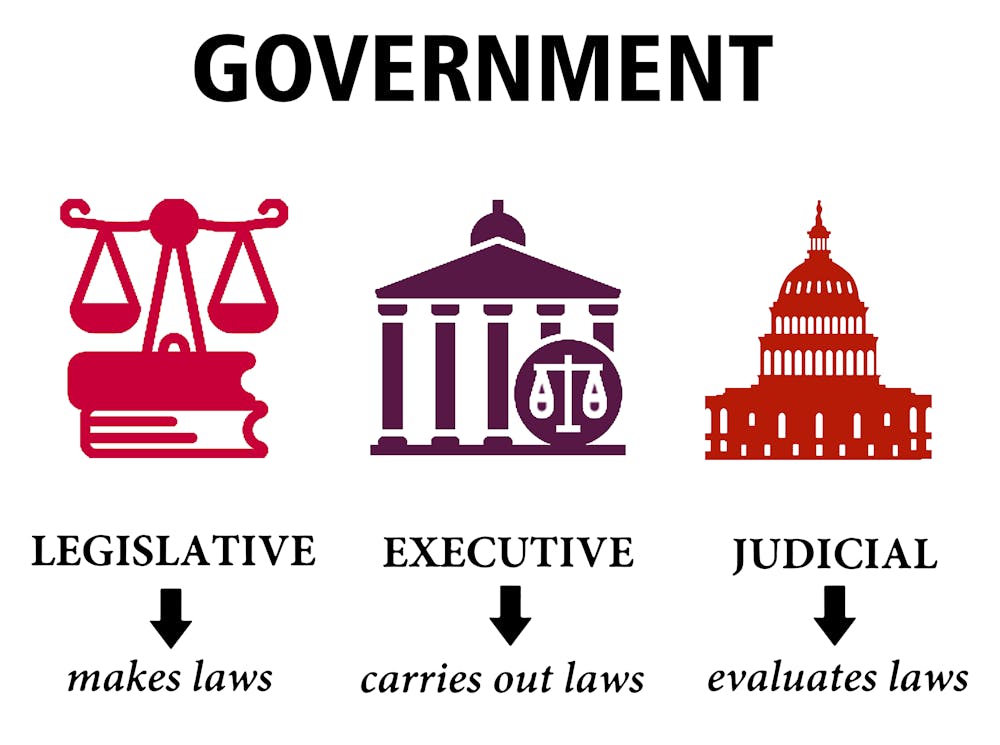
    The concept of separation of powers is incorporated into just about every democratic constitution. It rests on the principle of the separation of powers between the three fundamental branches of government: executive, legislature and judiciary.

    It’s what enables the political ecosystem of checks and balances to create the conditions for democracy to exist and freedom to flourish. But if one of the three branches of government dominates the other two, the equilibrium is shattered and democracy collapses.

    We owe this idea of constitutional democracy as a tripartite division of power to an 18th-century French political philosopher, Charles de Montesquieu. He was the author of one of the most influential books to come out of the Enlightenment period, The Spirit of the Laws.

    Published in 1748, this work gradually reshaped every political system in Europe, and had a powerful influence on America’s Founding Fathers. The 1787 US constitution was drafted in the spirit of Montesquieu’s recommendations.

    Modern democracies are more complex than those of the 18th century – and new institutions have developed to keep up with the times. These include specialised tribunals, autonomous regulatory agencies, central banks, audit bodies, ombudsmen, electoral commissions and anti-corruption bodies.

    What all these institutions have in common is that they operate with a considerable degree of independence from the three aforementioned arms of government. In other words, more checks and balances.

    Notwithstanding his immense influence, the idea of a separation of powers at the heart of democracy predates Montesquieu by many centuries. One of the earliest formulations of this idea can be found in Aristotle’s work, the Politics. This includes the argument that “the best constitution is made up of all existing forms”. By this Aristotle meant a mixed government of monarchy, aristocracy and democracy.

    But it was the Romans who developed a working model of checks and balances. The constitution of the Roman republic was characterised by the separation of powers between the tribune of the plebs, the senate of the patricians, and the elected consuls.

    The consuls held the highest political office, akin to a president or prime minister. But since the Romans did not trust anyone to have too much power, they elected two consuls at a time, for a period of 12 months. Each consul had veto power over the actions of the other consul. Checks and balances.

    The greatest advocate of the Roman republic and its constitutional mechanisms, was the Roman philosopher, lawyer and statesman Marcus Tullius Cicero. It was Cicero who inspired Montesquieu’s work – as well as influencing John Adams, James Madison and Alexander Hamilton in the US.

    The Roman republic had lasted for approximately 500 years but came to an end following the violent death of Cicero in 43BC. He had devoted his life resisting authoritarian populists from undermining the Roman republic and establishing themselves as sole despots. His death (on top of the assassination of Julius Ceasar the previous year) are seen as key moments in Rome’s transition from republic to empire.

    Democracy under threat

    Today our democracies are facing the same predicament. In many different parts of the world this simple institutional mechanism has come under increasing attack by individuals hell-bent on curbing the independent power of the judiciary and the legislative.

    In Europe, following in the footsteps of Hungarian prime minister Viktor Orbán, the Italian far-right premier Giorgia Meloni has been pushing for constitutional reforms that reinforce the executive branch of government at the expense of the other two branches.

    Checks and balances: the three branches of government.
    TREKPix/Shutterstock

    The assault on the system of checks and balances has also been identified in Washington. The use and abuse of presidential executive orders is an indication of this growing political cancer.

    During his time as 46th US president, from January 2021 to January 2025, Joe Biden signed 162 executive orders – an average of 41 executive orders per year. By comparison, during his first term Donald Trump’s annual average was 55 executive orders. Barack Obama before him was 35.

    In his first 20 days since returning to the White House Donald Trump has already signed 60 executive orders. This has included pardoning some 1,500 people who were involved in the January 6 insurrection at the US capitol.

    But of much greater concern is the Trump administration’s veiled threats to overturn the landmark decision of the US Supreme Court from 1803, Marbury v. Madison, the case that established the principle that the courts are the final arbiters of the law.

    In recent weeks Trump has openly criticised federal judges who have tried to block some of his most executive orders. He’s been supported by his vice-president, J.D. Vance, who has been quoted as saying that “judges aren’t allowed to control the executive’s legitimate power”.

    Meanwhile the president’s senior advisor, Elon Musk, accused a judge’s order to temporarily block the newly formed Department of Government Efficiency from accessing confidential treasury department data of being “a corrupt judge protecting corruption”.

    So democracy’s delicate balancing act is under serious pressure. If the separation of powers does not hold, and the checks and balances prove to be ineffective, democracy will be threatened.

    The next few months and years will determine whether the rule of law will be displaced by the rule of the strongest. At the moment the odds don’t look good for Cicero, Montesquieu and Madison.

    It takes a brave person to bet on democracy to win this contest, but we live in hope that America will remain the land of the free and the home of the brave.

    Vittorio Bufacchi is affiliated with the Labour Party in Ireland.

    – ref. A short history of the separation of powers: from Cicero’s Rome to Trump’s America – https://theconversation.com/a-short-history-of-the-separation-of-powers-from-ciceros-rome-to-trumps-america-249819

    MIL OSI – Global Reports –

    February 18, 2025
  • MIL-OSI USA: Governor McKee, Rhode Island Department of Housing Announce Municipal Fellows Program Awards to Help Address the Housing Crisis

    Source: US State of Rhode Island

    Published on Monday, February 17, 2025

    PROVIDENCE, RI — Governor Dan McKee and the Rhode Island Department of Housing today announced grant awards to eight municipalities totaling approximately $1.1 million through the Municipal Fellows Program. This program places early-career professionals in roles focused on planning, zoning, and housing development, to support municipal efforts to increase housing production as well as grow the pipeline of planners in the state.

    “My administration has made historic investments in housing development and preservation. Continued progress on housing goals depends on action at the local level,” said Governor Dan McKee. “With the Municipal Fellows program, we are directly supporting municipalities to move projects forward and address local barriers to housing production.”

    “Addressing Rhode Island’s housing crisis requires an all-hands-on-deck approach. We need municipalities to be our partners in creating more housing, and we also need more professionals in the planning field so that our cities and towns can strategically address zoning and development,” said House Speaker K. Joseph Shekarchi. “The Municipal Fellows program addresses both of these objectives and the end result will benefit our entire state.”

    “Addressing Rhode Island’s housing crisis requires a comprehensive and collaborative approach. These grant awards, and the fellowships they will support, represent the kind of action necessary to bolster our efforts and ensure our communities have the tools necessary to meet our housing needs,” said Senate President Dominick J. Ruggerio.

    Following in-depth discussions with municipal leaders, the Department of Housing identified key challenges to housing production, including staffing shortages at the local level which impact review process timelines and capacity to address local zoning issues. In response, the Department, in collaboration with its partners, launched the Municipal Fellows program as part of a series of municipal supports.

    “Our municipalities play a critical role in addressing the housing crisis,” said Rhode Island Department of Housing Secretary Deborah Goddard. “The Department has engaged in conversations with all 39 cities and towns, as well as the League of Cities and Towns. It is clear that municipal leaders are eager to grow housing opportunities but often face barriers. In many conversations, we heard that staff capacity to engage in planning is a problem. That’s where the municipal fellows program comes in: putting new capacity right into cities and towns to move projects forward.”

    Fellows are funded for nearly two years and are focused on planning and development activities within the municipality. Awardees include:

    • Newport — $154,000
    • Coventry — $154,000
    • Cranston —$147,000
    • Foster — $147,000
    • Johnston — $147,000
    • Westerly — $147,000
    • Lincoln — $147,000
    • Cumberland — $103,459

    “Our Fellow, Diego, possesses ability, interest, and professionalism that are most impressive,” said Shawn Lacey, Westerly Town Manager. “His desire and ability to learn the fundamentals of planning in the public sector is apparent. We look forward to his contribution, with his architectural and urban planning skills, to the Town’s’ evolving affordable housing policy and the creation of a strategic production plan for the next decade.”

    To date, Coventry, Cranston, Newport, Johnston, Lincoln, and Westerly have successfully hired fellows, with the remaining municipalities making significant progress in their hiring efforts.

    The Municipal Fellows program is part of a series of municipal supports created by the Department of Housing and other partners. Additional municipal supports include the recently announced $2.8 million in municipal infrastructure grants, led by the Rhode Island Infrastructure Bank in partnership with the Department of Housing, to enhance municipal infrastructure and support the development of affordable housing across the state.

    The Municipal Fellows program is funded by State Fiscal Recovery Funds. 

    For more information on all Department of Housing programs, please visit www.housing.ri.gov.

    MIL OSI USA News –

    February 18, 2025
  • MIL-OSI USA News: Remarks by President Trump After Air Force One Arrival

    Source: The White House

    class=”has-text-align-center”>Palm Beach International Airport

    West Palm Beach, Florida

    (February 16, 2025)

    4:00 P.M. EST

         THE PRESIDENT:  So, Daytona was fantastic.  The crowd was amazing.  The people love that sport, and they’re wonderful people that run it.  And they had a little rain delay, but we’ll go home and watch it, I guess — or some of you will.  And others will try and create peace throughout the world.

         Do you have any questions, please?

         Q    Sir, did you speak to Secretary Rubio this morning?

         THE PRESIDENT:  I did.

         Q    What is the latest with the negotiations in Saudi Arabia?  What’s he taki- —

         THE PRESIDENT:  We’re moving along.  We’re trying to get a peace with Russia-Ukraine, and we’re working very hard on it.  It’s a war that should have never started.

         Q    Do you expect Zelenskyy to be involved in these conversations?  What will his role be?

         THE PRESIDENT:  Yeah, I do.  I do.  He will be involved, yes.

         Q    Mr. President, would you allow the Europeans to buy U.S.-made weapons for Ukrainians?

         THE PRESIDENT:  Yeah, I would.

         Q    Sir, Zelenskyy said today that Russia is going to wage war on NATO.  Do you — do you agree with that?  Do you have any concerns about —

         THE PRESIDENT:  No, I don’t agree.  I don’t agree with that.  Not even a little bit.

         Q    Vice President Vance said that the United States would potentially take military action against Russia if they won’t come to an agreement.  Do you agree with that stance?

         THE PRESIDENT:  I don’t know if that’s what he said.  I don’t think he said that.

         Q    Sir, based on your conversations — based on your conversations with President Putin, what do you think he wants, ultimately, in Ukraine?

         THE PRESIDENT:  I think he wants to stop fighting.  I see that.  We spoke long and hard.  Steve Witkoff was with him for a very extended period, like about three hours.  I think he wants to stop fighting.

         They have a big, powerful machine.  You understand that.  And they defeated Hitler, and they defeated Napoleon.  You know, they’ve been fighting a long time.  They’ve done it before and — but I think he would like to stop fighting.

         Q    Do you think he wants the whole of Ukraine, or just a pa- — like, what do you think he wants in terms territory?

         THE PRESIDENT:  No, I think he wants to stop.  That was my question to him.  Because if he’s going to go on, that would have been a big problem for us, and that would have caused me a big problem, because you just can’t let that happen. 

         I think he wants to end it, and they want to end it fast — both of them.  And Zelenskyy wants to end it too.

         Q    Sir, when do you think that could actually happen?  When do you think the fighting can stop?

         THE PRESIDENT:  Well, we’re working to get it done.  I mean, you know, it’s too bad it started.  It would have been a lot easier to end it before it started.  Right?  But it started because we had an incompetent president that — he didn’t know what he was doing.  That should have never started.

         That war was so easy to stop.  Remember this: that under Bush, they took a lot.  Under Obama, they took a lot.  Under Biden, they’re trying to take the whole thing.  And under Trump, they took nothing — nothing.  Nothing was gone, not even a little bit.  So, it’s too bad.  It’s really too bad. 

         A lot of people are dead right now that should be alive, and a lot of cities are destroyed that can never come back like they were.  Those beautiful golden domes and all of the multi-colored domes that were 1,000 years old, they’re all laying in — you know, just shattered.  So, it’s very sad.  They ruined a culture.

         Q    They’re beginning phase two — they’re beginning phase two of the ceasefire deal —

         THE PRESIDENT:  Yeah.

         Q    — between Israel and Hama- — Hamas.  What is — what’s going on there?  Have you been briefed on the latest relating to that?

         THE PRESIDENT:  Well, I told you — I have been briefed.  I told Bibi, “You do whatever you want.”  Because, you know, my statement was, “They got to come back now.”  The reason I made that statement: because they said they weren’t going to deliver — they were not going to deliver the people that they said they were going to deliver, that they agreed to deliver.  And they did agree to do that, but they broke that agreement.  When I made the statement, they delivered everybody, plus an American.

         Now, the good news is, they look like they’re in pretty good shape, because the people from the week before didn’t look like they were in good shape.  They looked like Holocaust survivors, frankly — horrible.  Whatever happened to them was horrible.
        
         But that will be up to Israel what the next step is, in consultation with me.

         Q    Sir, what would the — what are they supposed to use these weapons for that you’ve now allowed to be shipped?  Given the fact that there’s a ceasefire supposed to be in effect, why ship those big bombs now?

         THE PRESIDENT:  Peace through strength.  You understand that, right?  It’s called peace through strength.  You know, they contracted for those weapons a long time ago, in the Biden administration, and then Biden wouldn’t deliver the weapons.

         But I look at it differently.  I say “peace through strength.”  They were sitting there.  Nobody knew what to do with them.  They bought them.  But I believe in that very strongly.

         Q    On the EU —

         Q    Sir, do you have an update on your —

         Q    Sir, on the EU.  The — the European Union is talking about banning food imports from the U.S., kind of along the lines of your reciprocal tariffs.

         THE PRESIDENT:  Why is that?  Why?

         Q    They says it’s like the reciprocal tariffs.  They don’t like the (inaudible) —

         THE PRESIDENT:  That’s all right.  I don’t mind.  Let them do it.  Let them do it.  They’re just hurting themselves if they do that.  I can’t imagine it, but doesn’t matter.

         We’re having reciprocal tariffs.  Whatever they charge, we charge.  Very simple.

         If a certain country, like India, which is very high tariff — if they charge us X dollars, we charge them X dollars.  It’s all right.  It’s a fair — it’s a fair thing to do.  Even the media said it was fair.  And it’s going to be very good for the United States.

         Q    Do you have an update on your timing of your meeting with Putin in Saudi Arabia?

         THE PRESIDENT:  No, we — there’s no time set, but it could be very soon.

         Q    Like this — this month or —

         THE PRESIDENT:  Well, it’ll be soon.  We’ll see what happens.  But they’re meeting right now, and that’s more — I mean, this should have been done four years ago — three years ago, before it started.  But it should have been done immediately after it started, as opposed to now, three years later.

         Q    Sir, egg prices have reached an all-time high.  What’s your administra- —

         THE PRESIDENT:  Which is?  What?

         Q    Egg prices have reached an all-time high.

         THE PRESIDENT:  Well, there’s the flu.  And it was a long — before I ever got here, it was at an all-time — this didn’t st- — remember, I’ve been here for three weeks.  And when you saw the inflation numbers, I’ve been here for three weeks.  I have had nothing to do with inflation.  This was caused by Biden.
        
         I had four years of virtually no inflation.  So, I’m just taking over.

         But I’ll tell you what, this country has made more progress in the last three weeks than it’s made in the last four years, and we’re respected again as a country.

         Thank you very much.  Thank you.

                                  END                    4:07 P.M. EST

    MIL OSI USA News –

    February 18, 2025
  • MIL-OSI: Correction: Interim Management Statement Q1 2025

    Source: GlobeNewswire (MIL-OSI)

    Correction to the announcement made at 07:00 on 17/02/2025 (Interim Management Statement Q1 2025): The RNS was dated incorrectly. All other information was correct:

    17 February 2025

    HARGREAVE HALE AIM VCT PLC
    (the “Company”)

    Interim Management Statement

    Q1 2025

    Introduction

    This interim management statement covers the first quarter of the 2024/25 financial year, 1 October 2024 to 31 December 2024. Investment performance measures contained in this report are calculated on a pence per share basis and include realised and unrealised gains and losses.

    Overview

    Once again, we have endured a difficult start to the financial year, albeit for very different reasons. The 2024 Autumn budget, preceded by some unhelpfully stark messaging, has weighed on economic activity. GDP, employment reports and PMI surveys all highlight a notable softening in the UK economy through the second half of (cal.) 2024.

    Measures of UK consumer and business confidence dipped, suggesting that households and companies were becoming increasingly cautious. Although a very significant increase in public spending is expected to support economic activity pickup in 2025, there is clear evidence that The Office for Budget Responsibility forecast for GDP to increase from 1.1% in 2024 to 2.0% in 2025 is likely to be revised lower when next updated.

    UK fiscal policy is seen as being negative to growth and positive for inflation. In the round, this adds up to fewer rate cuts in 2025. With higher inflation and lower growth undermining the case for lending to the UK Government, UK Gilt yields broke out to the upside and Sterling to the downside. The move higher in borrowing costs was exacerbated by higher yields in the US Treasuries market. The Government is on the back foot and will need to respond before the 2025 Autumn budget.

    None of this has been helpful for investor interest in UK equities with outflows increasing again after a period of improving sentiment through the early Summer. This was particularly acute for AIM and, more broadly, the IA UK Small Cap sector.

    Reflecting this, the FTSE AIM All-Share Index was noticeably weak ahead of and subsequent to the budget, with the index steadily declining for 7 months through to 31 December 2024. Within the period, the AIM All-Share index returned -2.32% in the three months to 31 December 2024, lagging the FTSE All Share Index (-0.35%). We continue to believe that many small companies trading on AIM offer exceptional value.

    Performance

    In the three months to 31 December 2024, the unaudited NAV per share decreased by 0.40 pence from 40.55 pence (cum-dividend) to 40.15 pence, giving a total return of -0.99%.

    The qualifying investments fell by 0.09 pence per share whilst the non-qualifying investments made a loss of 0.25 pence per share. The adjusting balance was the net of running costs and investment income.

    Qualifying Investments

    Aquis Exchange (+93.1%, +£1.66m) received a takeover offer from its larger Swiss peer SIX Exchange at 727p. This was a 120% premium to the previous closing price, a 45% premium to the average share price over the prior 12 months and slightly above the 2021 share price high of 720p. This equates to an exit multiple of 4.7x for the VCT. The transaction was approved on 18 December 2024 and is expected to complete in Q2 2025.

    PCI-PAL (+30.3%, +£1.09m) reported good FY24 results with revenues +20% to £18.0m and positive EBITDA of £0.9m. The company also reported strong SAAS metrics with ARR growing by 23%, Net Retention Rate at 102% and low churn. Following a £3.3m fundraise in March 2024, the balance sheet is strong with £4.3m cash. Positive news flow continued subsequently with a key contract renewal and in-line AGM trading update. Post period end, the company reported strong trading for the 6m to 31 December 2025 and re-iterated guidance for FY25.

    Cohort (+15.0%, +£0.65m) announced strong interim results for the 6m to 31 October 2024 with revenues increasing by 25% and a record order book of £541m. The company confirmed it remains on track to achieve market forecasts for FY25. Separately, Cohort announced the £74m acquisition of Australian-based satellite communications company EM Solutions. The acquisition was partly funded through existing cash & debt facilities, combined with a £40m fundraise at 875p.

    Following weak financial performance in FY24, Equipmake (-40.0%, -£0.93m) raised £3m in October 2024. The additional capital, when combined with cost action, has extended the company’s cash runway to March 2025. This was followed by the subsequent launch of a strategic review and a formal sale process.

    Fadel (-42.9%, -£0.72m) saw customer implementation delays and an unsuccessful new business tender. Revenue forecasts for FY24 were reduced by 12% from $14.8m to $13m. The high drop through of revenues to profits meant that projected FY24 EBITDA losses increased from $2.3m to $4m. The company has adopted a more disciplined approach to cost that has yielded an improved outlook for losses and cash performance in 2025.

    Team Internet (-27.7%, -£0.43m) shares fell sharply in Q4 2024 as the company announced that revenues at a recently acquired online marketing business Shinez would fall short of expectations. More recently the shares have begun to recover as the company announced it had received a preliminary takeover proposal.

    Non-Qualifying Investments

    The IFSL Marlborough UK Micro-Cap Growth Fund (+0.6%, +£0.06m) and IFSL Marlborough Special Situations Fund (-1.3%, -£0.13m) were broadly flat over the period. Within the non-qualifying portfolio, the weaker outlook for the UK economy following the Autumn budget impacted WH Smith, Wickes and Hollywood Bowl. Chemring also fell as earnings forecasts were impacted by rising national insurance costs and the curtailment of the company’s share buy-back in favour of preserving funds for organic investment.

    Portfolio structure

    The VCT is comfortably above the HMRC defined investment test and ended the period at 87.5% invested as measured by the HMRC investment test. By market value, the weighting to qualifying investments increased from 56.0% to 56.9%.

    The market remains very subdued with just two VCT qualifying IPOs within the last 12 months. There were two new equity investments into companies listed on AIM and one CLN into an existing portfolio company listed on AIM. We remain hopeful that improving market conditions will help drive an increase in deal flow during 2025.

    The new qualifying investments included a following on (CLN) investment into Rosslyn Data Technologies and new equity investments into Feedback and Ixico. There were no material disposals in the quarter. We sold two legacy tail investments (Gfinity and Surface Transforms) and trimmed our investment in Cohort following a period of strong share price performance.

    There were no substantial changes to the allocation to the two IFSL Marlborough Funds, non-qualifying equities, fixed income, ETFs or cash which respectively represented 13.4%, 6.8%, 12.9%, 0.4% and 9.6% of net assets.

    The HMRC investment tests are set out in Chapter 3 of Part 6 Income Tax Act 2007, which should be read in conjunction with this interim management statement. Funds raised by VCTs are first included in the investment tests from the start of the accounting period containing the third anniversary of the date on which the funds were raised. Therefore, the allocation of qualifying investments as defined by the legislation can be different to the portfolio weighting as measured by market value relative to the net assets of the VCT.

    Share Buy Backs & Discount

    3.9 million shares were acquired in the quarter at an average price of 38.27 pence per share. The share price decreased from 39.00p to 38.40p and on 31 December 2024 traded at a discount of 4.74% to the last published NAV per share (as at 27 December 2024, published on 31 December 2024).

    Post Period End

    The unaudited NAV per share increased from 40.15 pence to 40.22 pence (cum div) as at 7 February 2025, an increase of 0.17%. The FTSE AIM All-Share index increased by 0.09%.         

    END

    For further information please contact:

    Oliver Bedford, Canaccord Genuity Asset Management

    Tel: 020 7523 4837

    LEI: 213800LRYA19A69SIT31        

    The MIL Network –

    February 18, 2025
  • MIL-OSI USA: Federal government challenges auxiliary system

    Source: US International Brotherhood of Boilermakers

    The establishment of auxiliary locals by the Boilermakers’ union was a product of segregationist practices during the early 20th century. While this isn’t a proud moment for the union, it’s an important part of Boilermaker history that cannot be ignored.

    These were Jim Crow-era ideas that marginalized Black workers, subjecting them to discriminatory rules and limited union representation. Auxiliary locals, controlled by nearby white locals, were not allowed to send their own delegates to Convention, which silenced Black members in union decision-making.

    Members of auxiliary locals lacked business agents, grievance committees or any channel to negotiate with employers. Black workers also faced barriers to career advancement, such as being excluded from apprenticeship programs and facing restrictions on promotions from helper to mechanic. Union insurance policies were also unequal, with death and injury benefits for Black members set at half the amount granted to white members.

    Black members paid the same dues as white members but received less in return. This inequitable treatment was not unique to the Boilermakers, as many unions did the same. Since the practice ended in the last century, the union has apologized for its past treatment of Black members and changed its ways.

    The situation began to shift with the onset of World War II. Although segregation was still widespread, the federal government started to challenge racial discrimination in wartime industries. President Franklin D. Roosevelt barred companies that held federal contracts from engaging in racial discrimination, leading to the establishment of the Fair Employment Practices Committee in 1941. The FEPC encouraged workers to report discriminatory practices—especially workers employed by companies tied to federal defense contracts.

    By late 1942, complaints began surfacing from Black Boilermakers in Portland, Oregon. Local 72 had 65% of shipyard employees in the region, including those at the massive Kaiser Shipyards. Eager to diversify its workforce, Kaiser began recruiting Black workers from New York City, but Local 72 resisted integration. They formed an auxiliary local for Black members. Local NAACP leaders even backed the decision because they saw it as a step toward inclusion.

    However, many Black workers were unwilling to accept a segregated system. In July 1943, more than 300 Black workers at Kaiser Shipyards were dismissed for refusing to join the auxiliary local, citing inequities. The firings sparked FEPC public hearings, where Local 72’s attorney, Leland Tanner, defended the auxiliary system by claiming, “We live in that house, we didn’t build it and we’re not the architects of it.” Tanner’s statement highlighted the nature of segregation in American society, where legal precedents, such as the Supreme Court’s Plessy v. Ferguson decision in 1896, had enshrined racial separation as an acceptable norm.

    Segregation reached a boiling point when Providence, Rhode Island, Local 308 integrated its lodge by accepting around 500 Black members. In 1943, the local elected a Black delegate for Convention. Union leadership was not pleased.

    IVP William J. Buckley intervened, stating the Black delegate would not be recognized and his vote would be invalidated. Subsequently, he pressured Local 308 to create a segregated auxiliary lodge.

    It wasn’t the hoped-for outcome, but the controversy surrounding the auxiliary system exposed the racial divides within the union, which mirrored the broader national struggle over civil rights. And future battles would eventually dismantle segregated practices in the Boilermakers.  

    In the next issue of The Boilermaker Reporter, read how the auxiliary lodge practice ended at the Boilermakers.  

    MIL OSI USA News –

    February 18, 2025
  • MIL-OSI USA: Travel Advisory: RIDOT to Reduce Travel Lanes on Route 113 over I-95 and I-295 in Warwick as Bridge Replacement Project Begins

    Source: US State of Rhode Island

    Starting on Friday night, February 21, RIDOT will reduce the number of travel lanes on both directions of Route 113 (East Avenue) in Warwick where the road passes over I-95 and I-295, located between the Route 5 intersection and the main entrance to the Community College of Rhode Island (CCRI) Knight Campus. The changes are the first steps in a project to replace two structurally deficient bridges over the Interstates along this important transportation corridor.

    The temporary traffic pattern requires the closure of the left lane in both directions of Route 113 so RIDOT can set up a work zone to begin demolition of the existing median barrier. There will be one through lane for Route 113 east and west traffic as well as a lane for merging traffic coming onto and off of the Interstate. All ramps will remain open.

    The traffic pattern will be in place until mid-spring, when RIDOT will shift traffic onto the eastbound side of the bridges while it begins demolition and reconstruction of the other side. The second phase of this work for the westbound side of the bridges will take place from mid-summer to late fall. By the end of the year all travel lanes will be restored to their original configuration.

    If adverse weather occurs on February 21, RIDOT will shift the traffic pattern change to the following Friday, February 28.

    The bridges were built in 1965 and carry up to 33,000 vehicles per day on Route 113, a major east-west corridor for Warwick that links large residential and commercial areas including access to CCRI.

    The bridge replacements are part of the new $102.4 million Warwick Corridor Project. In addition to the bridge work, RIDOT will improve several other important corridors and intersections, with paving, sidewalk work, ADA accessibility, new traffic signal upgrades, and new pedestrian crossing and other safety features. Specifically, RIDOT will pave sections of East Avenue, Route 2 (Bald Hill Road), East Avenue, Main Avenue, West Shore Road and Post Road. More information on this project is available at www.ridot.net/WarwickCorridor.

    All construction projects are subject to changes in schedule and scope depending on needs, circumstances, findings, and weather.

    The replacement of these bridges is made possible by RhodeWorks. RIDOT is committed to bringing Rhode Island’s infrastructure into a state of good repair while respecting the environment and striving to improve it. Learn more at www.ridot.net/RhodeWorks.

    MIL OSI USA News –

    February 18, 2025
  • MIL-OSI Global: Deeply religious African countries (surprisingly) provide little state support to religion – unlike countries in Europe

    Source: The Conversation – Africa – By David Jeffery-Schwikkard, PhD Candidate (Theology and Religious Studies), King’s College London

    In most of the world, countries with religious populations are more likely to have governments that support religion through laws and policies. These laws might include religious education, funding for religious institutions, and laws based on religious values. Not so in sub-Saharan Africa.

    In a recently published research paper, David Jeffery-Schwikkard, who studies secularism, argues that sub-Saharan African countries provide little state support for religion, even though their populations are among the most devout globally.

    These findings unsettle many common misconceptions about the role of religion in politics. The Conversation Africa asked him a few questions.


    How prevalent is religion in countries in sub-Saharan Africa?

    A population is normally considered very religious if most people say religion is “very important” in their lives or report attending religious services at least once a week.

    In surveys conducted between 2007 and 2018 by the Pew Research Centre, 46% of respondents outside sub-Saharan Africa said religion was very important in their lives. Within sub-Saharan Africa, the average is nearly twice that: 89%. Ethiopia and Senegal are among the most religious countries in the world. In both cases, 98% of people said religion was very important. Of the 20 countries in sub-Saharan Africa for which Pew has data, Botswana (71%) and South Africa (75%) are the least religious. Yet even these countries are far above the global average.

    What does this matter for how states are run?

    Generally, countries with religious populations have states that provide a lot of support to religion. This is what you would expect, since religious citizens probably want more state support for their religions.

    What this means, though, is that commentators often assume that religious citizens are a threat to secular states. This then shapes how analysts make sense of public displays of religion. One example of this is in South Africa, where many people assumed that former president Jacob Zuma, who often used religious rhetoric, would pursue religious laws and policies.


    Read more:
    TB Joshua scandal: the forces that shaped Nigeria’s mega pastor and made him untouchable


    These assumptions are especially common in analyses of religion and politics in Africa. Yet, while it is easy to identify laws or policies in sub-Saharan Africa that are religious, one can easily overlook the fact that having some of these laws is not unusual globally. In other words, having some pro-religion laws and policies doesn’t necessarily mean that countries are governed by religious beliefs.

    Thus one might focus on Ghana’s support for Hajj, while forgetting that the UK reserves seats in the House of Lords for the Church of England, and that Germany collects taxes on behalf of churches. Yet the UK and Germany are rarely seen as religious states. Some level of state support for religion does not mean that a country is governed by religious beliefs.

    Why are African countries different?

    Contrary to the global trend, countries in sub-Saharan Africa provide very little state support to religion – less than half the global average. This is as measured by the Religion and State Project at Bar Ilan University, based on the number of different types of support provided, such as reserving political positions for religious leaders or funding religious schools.

    One of the most popular explanations for the scant support for religion is that states in sub-Saharan Africa lack the necessary financial and administrative capacity. These states, the argument goes, would provide more support if only they had more money and were better able to implement their policies.

    However, data from the World Bank shows that this is not the case: overall, there is no relationship between state capacity and support for religion.


    Read more:
    Catholic synod: the voices of church leaders in Africa are not being heard – 3 reasons why


    A more plausible explanation is that religious actors in these countries tend to lack moral authority. Moral authority, as theorised by American political scientist Anna Grzymala-Busse, is the extent to which people see religious actors as defenders of the nation.

    Several factors are conducive to moral authority. These include whether people share the same ethnicity or religion, whether religious actors have control over education, and whether they have sided with the “right side” in moments of national crisis.

    Can you give an example?

    Consider Rwanda and Mozambique.

    Until 1994, the Roman Catholic Church in Rwanda enjoyed moral prestige. The church controlled a significant share of the education system and had supported the independence movement against Belgium. Most Rwandans were Catholic. And indeed, the church maintained a very close relationship with the state after independence in 1962.

    Yet this moral authority was forfeited after the church was seen to be complicit in the Rwandan Genocide in 1994, which claimed about 800,000 lives. Today, the government keeps a careful distance from religion, despite 90% of Rwandans reporting that religion is very important in their lives.


    Read more:
    Rwanda’s genocide could have been prevented: 3 things the international community should have done – expert


    Mozambique provides a contrast to Rwanda, yet with similar outcomes. The Roman Catholic Church denounced the liberation movement’s struggle against Portugal. The country has no religious or ethnic majority. At independence, formal education was scarce.

    There was therefore little reason for Mozambicans to see the church as a defender of the nation. On the contrary, religious institutions were persecuted after independence. Like Rwanda, Mozambique provides extremely little state support for religion, despite being one of the most religious countries internationally.


    Read more:
    Between state and mosque: new book explores the turbulent history of Islamic politics in Mozambique


    These factors – religious diversity, limited enrolment in schools controlled by religious organisations, and moments of political crisis in which those organisations can misstep – make it less likely that religious actors are held by citizens as integral to national identity. And while sub-Saharan Africa is extremely varied, common historical influences, such as the legacies of colonialism, may make these factors more likely.

    What can we learn from this?

    Clearly, we need to be more careful in how we interpret the role of religion in politics. While it might be tempting to see religious fervour as a threat to secular democracy, it is not necessarily so. A politician might use religious rhetoric, but this does not mean that it will translate into religious laws. Equally, some state support for religion is not unusual globally. Analyses of single policies need to keep this in mind.


    Read more:
    Christianity is changing in South Africa as pentecostal and indigenous churches grow – what’s behind the trend


    This research also upends the way many people normally think about secularism. Many people in Europe have become less religious. Consequently, European states are offered as models of secularism. However, this has it backwards.

    Despite their electorates being less religious, European states are more involved in religion than their counterparts in sub-Saharan African. If secularism is the separation of religion and the state, then countries in sub-Saharan Africa – which maintain a secular state despite widespread religion – are in fact the exemplar.

    David Jeffery-Schwikkard does not work for, consult, own shares in or receive funding from any company or organisation that would benefit from this article, and has disclosed no relevant affiliations beyond their academic appointment.

    – ref. Deeply religious African countries (surprisingly) provide little state support to religion – unlike countries in Europe – https://theconversation.com/deeply-religious-african-countries-surprisingly-provide-little-state-support-to-religion-unlike-countries-in-europe-245490

    MIL OSI – Global Reports –

    February 18, 2025
  • MIL-OSI Africa: Deeply religious African countries (surprisingly) provide little state support to religion – unlike countries in Europe

    Source: The Conversation – Africa – By David Jeffery-Schwikkard, PhD Candidate (Theology and Religious Studies), King’s College London

    In most of the world, countries with religious populations are more likely to have governments that support religion through laws and policies. These laws might include religious education, funding for religious institutions, and laws based on religious values. Not so in sub-Saharan Africa.

    In a recently published research paper, David Jeffery-Schwikkard, who studies secularism, argues that sub-Saharan African countries provide little state support for religion, even though their populations are among the most devout globally.

    These findings unsettle many common misconceptions about the role of religion in politics. The Conversation Africa asked him a few questions.


    How prevalent is religion in countries in sub-Saharan Africa?

    A population is normally considered very religious if most people say religion is “very important” in their lives or report attending religious services at least once a week.

    In surveys conducted between 2007 and 2018 by the Pew Research Centre, 46% of respondents outside sub-Saharan Africa said religion was very important in their lives. Within sub-Saharan Africa, the average is nearly twice that: 89%. Ethiopia and Senegal are among the most religious countries in the world. In both cases, 98% of people said religion was very important. Of the 20 countries in sub-Saharan Africa for which Pew has data, Botswana (71%) and South Africa (75%) are the least religious. Yet even these countries are far above the global average.

    What does this matter for how states are run?

    Generally, countries with religious populations have states that provide a lot of support to religion. This is what you would expect, since religious citizens probably want more state support for their religions.

    What this means, though, is that commentators often assume that religious citizens are a threat to secular states. This then shapes how analysts make sense of public displays of religion. One example of this is in South Africa, where many people assumed that former president Jacob Zuma, who often used religious rhetoric, would pursue religious laws and policies.


    Read more: TB Joshua scandal: the forces that shaped Nigeria’s mega pastor and made him untouchable


    These assumptions are especially common in analyses of religion and politics in Africa. Yet, while it is easy to identify laws or policies in sub-Saharan Africa that are religious, one can easily overlook the fact that having some of these laws is not unusual globally. In other words, having some pro-religion laws and policies doesn’t necessarily mean that countries are governed by religious beliefs.

    Thus one might focus on Ghana’s support for Hajj, while forgetting that the UK reserves seats in the House of Lords for the Church of England, and that Germany collects taxes on behalf of churches. Yet the UK and Germany are rarely seen as religious states. Some level of state support for religion does not mean that a country is governed by religious beliefs.

    Why are African countries different?

    Contrary to the global trend, countries in sub-Saharan Africa provide very little state support to religion – less than half the global average. This is as measured by the Religion and State Project at Bar Ilan University, based on the number of different types of support provided, such as reserving political positions for religious leaders or funding religious schools.

    One of the most popular explanations for the scant support for religion is that states in sub-Saharan Africa lack the necessary financial and administrative capacity. These states, the argument goes, would provide more support if only they had more money and were better able to implement their policies.

    However, data from the World Bank shows that this is not the case: overall, there is no relationship between state capacity and support for religion.


    Read more: Catholic synod: the voices of church leaders in Africa are not being heard – 3 reasons why


    A more plausible explanation is that religious actors in these countries tend to lack moral authority. Moral authority, as theorised by American political scientist Anna Grzymala-Busse, is the extent to which people see religious actors as defenders of the nation.

    Several factors are conducive to moral authority. These include whether people share the same ethnicity or religion, whether religious actors have control over education, and whether they have sided with the “right side” in moments of national crisis.

    Can you give an example?

    Consider Rwanda and Mozambique.

    Until 1994, the Roman Catholic Church in Rwanda enjoyed moral prestige. The church controlled a significant share of the education system and had supported the independence movement against Belgium. Most Rwandans were Catholic. And indeed, the church maintained a very close relationship with the state after independence in 1962.

    Yet this moral authority was forfeited after the church was seen to be complicit in the Rwandan Genocide in 1994, which claimed about 800,000 lives. Today, the government keeps a careful distance from religion, despite 90% of Rwandans reporting that religion is very important in their lives.


    Read more: Rwanda’s genocide could have been prevented: 3 things the international community should have done – expert


    Mozambique provides a contrast to Rwanda, yet with similar outcomes. The Roman Catholic Church denounced the liberation movement’s struggle against Portugal. The country has no religious or ethnic majority. At independence, formal education was scarce.

    There was therefore little reason for Mozambicans to see the church as a defender of the nation. On the contrary, religious institutions were persecuted after independence. Like Rwanda, Mozambique provides extremely little state support for religion, despite being one of the most religious countries internationally.


    Read more: Between state and mosque: new book explores the turbulent history of Islamic politics in Mozambique


    These factors – religious diversity, limited enrolment in schools controlled by religious organisations, and moments of political crisis in which those organisations can misstep – make it less likely that religious actors are held by citizens as integral to national identity. And while sub-Saharan Africa is extremely varied, common historical influences, such as the legacies of colonialism, may make these factors more likely.

    What can we learn from this?

    Clearly, we need to be more careful in how we interpret the role of religion in politics. While it might be tempting to see religious fervour as a threat to secular democracy, it is not necessarily so. A politician might use religious rhetoric, but this does not mean that it will translate into religious laws. Equally, some state support for religion is not unusual globally. Analyses of single policies need to keep this in mind.


    Read more: Christianity is changing in South Africa as pentecostal and indigenous churches grow – what’s behind the trend


    This research also upends the way many people normally think about secularism. Many people in Europe have become less religious. Consequently, European states are offered as models of secularism. However, this has it backwards.

    Despite their electorates being less religious, European states are more involved in religion than their counterparts in sub-Saharan African. If secularism is the separation of religion and the state, then countries in sub-Saharan Africa – which maintain a secular state despite widespread religion – are in fact the exemplar.

    – Deeply religious African countries (surprisingly) provide little state support to religion – unlike countries in Europe
    – https://theconversation.com/deeply-religious-african-countries-surprisingly-provide-little-state-support-to-religion-unlike-countries-in-europe-245490

    MIL OSI Africa –

    February 18, 2025
  • MIL-OSI United Kingdom: Leuchars Station medical and dental centre marks major construction milestone

    Source: United Kingdom – Government Statements

    Around 3,700 armed forces personnel and their families will benefit from the new building at Leuchars Station.

    The project team celebrate at a topping out ceremony. (Crown Copyright)

    A ceremony has been held to mark the topping out of a new medical and dental centre at Leuchars Station in Fife. 

    The Defence Infrastructure Organisation (DIO) is managing the build on behalf of the British Army, and contracted the £22 million facility to Graham Building North who began construction in October. 

    The new building will replace the current medical and dental centre which was built in 1936. Around 3,700 personnel at the British Army establishment and their dependents will benefit from the new building, which will house physical rehabilitation and mental health facilities as well as GP and dental services. Leuchars Station is to become the army’s hub in Scotland, and the new building has been designed to cater for this increase in personnel .

    The building has been carefully designed to be as sustainable as possible, including through thermal efficiency, solar panels, air source heat pumps and 4 electric vehicle charging stations. Building materials have been selected not only on the basis of suitability but also to reduce carbon impact on the environment. It is hoped that the building can be an example of sustainability in construction of future MOD medical and dental centres. 

    Shaun Purdy, DIO’s Project Manager, said: 

    Reaching this milestone, with completion of the structure, means it’s easy for both the medical staff and other personnel at Leuchars to see the scale of this new facility and how well-suited it will be for their needs. Our focus now moves to the interior of the building as we look forward to the completion of the building in the coming months.

    Lt Col Christopher Stewart, Senior Medical Officer, said: 

    The East of Scotland Medical Practice team is thrilled to see the new medical and dental centre taking shape at speed. This state-of-the-art facility will provide us considerably more clinical space and allow us to deliver a greater number of services simultaneously, whilst supporting our outputs as a training practice.  

    Our mission is to deliver an exceptional level of care to the service personnel and families we serve and this new facility will help us to achieve this.

    Commander Defence Primary Healthcare, Surgeon Commodore (RN) Andy Nelstrop, said: 

    Seeing this facility take shape at such speed is remarkable. Providing expert healthcare to armed forces personnel is a priority within the Defence Medical Services (DMS), and this facility will provide a modern environment for both Defence Primary Healthcare staff and patients based at Leuchars, improving access to services, making the patient and staff experience better and enabling the best clinical outcomes.  

    This brand new, purpose-built building, highlights the value and importance that we place on protecting the health of our armed forces and ensuring they are fit to fight. It builds on the successes of previous work to make it easier for personnel to see the right medical professional as quickly as possible.

    Chris MacLeod, Graham Building North’s Regional Director, said: 

    Our team have been working diligently to deliver this medical and dental facility for our longstanding client, the Defence Infrastructure Organisation. With the frame completed, we can now visualise this sustainable, state of the art building and the services it will provide for the military personnel and their families at Leuchars and in the wider region. 

    With the structure built to its full height, attention now turns to interior works. Once the replacement facility is complete, medical personnel and patients will transition over to the new medical and dental centre and Graham will demolish the old building. 

    Share this page

    The following links open in a new tab

    • Share on Facebook (opens in new tab)
    • Share on Twitter (opens in new tab)

    Updates to this page

    Published 17 February 2025

    MIL OSI United Kingdom –

    February 18, 2025
  • MIL-OSI Security: Placentia — Displaced seal safely escorted back to the ocean by Placentia RCMP and Department of Fisheries

    Source: Royal Canadian Mounted Police

    Yesterday, Placentia RCMP received a call about a young seal who had made its way to the parking lot of the Placentia Mall on Blockhouse Drive in Placentia, most likely from the frozen inlet behind the mall.

    While police were responding, the seal continued to travel further from the water. It crossed over a roadway and entered the back yard of a nearby residence. With the little guy not knowing the rules of the road, police remained in the area to prevent him from entering back onto the roadway, while officers with Fisheries and Oceans Canada were called in to assist.

    The seal was safely escorted back to the ocean by Fisheries and Oceans Canada.

    MIL Security OSI –

    February 18, 2025
  • MIL-OSI Canada: Premier’s statement on Family Day

    Source: Government of Canada regional news

    Premier David Eby has issued the following statement celebrating Family Day:

    “Family Day is an opportunity to spend time with the people you love, doing the things you love, whether that is exploring the outdoors, enjoying a cozy day at home or, like my family, heading to the playground with the best swing.

    “This day also invites us to reflect on the importance of family, especially in these times of extraordinary change and uncertainty. Our families – those we are born into and those we choose – provide us with unconditional love and support. They are our ties to our past, present and future. And they are always there for us when we need them.

    “Our government is there for families, too. We know B.C. families are facing big challenges and we are focused on addressing the issues that you are talking about at the kitchen table, during school dropoff and on the playground.

    “Tomorrow, Lt. Gov. Wendy Cocchia will deliver the speech from the throne, laying out our government’s plan to defend British Columbians in these uncertain times and secure a brighter future for everyone who calls this place home. 

    “We will continue reducing costs for families by expanding affordable child care and helping people buy their first family home. We will further strengthen health care by helping more families get a family doctor. We will make our communities safer by working with law enforcement and social agencies to crack down on organized crime and keep repeat offenders off our streets. And we will accelerate our work to build a sustainable, clean economy with good, family-supporting jobs so generations to come can keep the family tree firmly planted here in British Columbia.

    “This is a special Family Day for my crew as it is our first as a family of five. That means more fun, more laughs and more rides on the swing.

    “From my family to yours, happy Family Day!”

    MIL OSI Canada News –

    February 18, 2025
  • MIL-OSI United Kingdom: Gallery presents Rhea Storr’s ‘Subjects of State, Labours of Love’

    Source: City of Wolverhampton

    Subjects of State, Labours of Love (2025) is a 2 part film, shot on 16mm film. The works forms an intimate portrait of Caribbean Associations in Wolverhampton from the 1980s onwards, and present day Sheffield African and Caribbean Community Association SADACCA.

    Opening on Saturday 8 March, Subjects of State, Labours of Love is presented as an immersive video installation and exhibition that captures the shared joys, celebrations, struggles, oppressions and complexities experienced by Caribbean heritage communities.

    The film captures a discussion among key people involved in Black/Caribbean community organising during the 1980s through to the present day in Wolverhampton, a turbulent time marked by race riots in major British cities, the brutal policing of Black communities and the rise of far right groups like the National Front.

    Against this backdrop, Black/Caribbean organisers provided vital community spaces at a time when Black people faced widespread discrimination and inequality in education, housing, and the job market. In the conversation, the members share their experiences of organising, the challenges they encountered, particularly related to British politician Enoch Powell’s lasting racist rhetoric, and the joys of solidarity and community.

    The second chapter of the film is an observational portrait of present day Sheffield and District African Caribbean Community Association, SADACCA. The work highlights how SADACCA, which used to be a manufacturing site, now serves as a valuable resource for the community and a central part of the social fabric of the city. This chapter also looks at the importance of archiving from the perspective of what future generations of Black people living in the UK might need, and how their changing position in UK society influences the viability of the space.

    Councillor Chris Burden, the City of Wolverhampton Council’s Cabinet Member for City Development, Jobs and Skills. said, “Subjects of State, Labours of Love is a stunning exploration of Caribbean heritage and community resilience.

    “Through Rhea Storr’s evocative 16mm film installation, visitors will be able to uncover the power of shared stories, celebrations, and struggles that shape identity and inspire connection.

    “It is a must see journey through memory, history, and cultural pride.”

    Jenny Waldman, Art Fund Director, said: “Rhea Storr’s powerful new work, Subjects of State, Labours of Love, sheds new light on the rich history and important contributions of Caribbean communities in the UK. Commissioning contemporary artists to create new work helps keep museum collections dynamic and engaging. We’re delighted to support the commissioning of this new work and its acquisition for Wolverhampton Art Gallery’s collection.”

    Commissioned by Film and Video Umbrella, Site Gallery and Wolverhampton Art Gallery, the commission and its acquisition by Wolverhampton Art Gallery are made possible with Art Fund support. It is supported using public funding by Arts Council England.

    The exhibition is open from Saturday 8 March until Sunday 8 June 2025 and entry is free. Wolverhampton Art Gallery is open Monday to Saturday from 10.30am to 4.30pm and Sunday from 11am to 4pm. For more information, please visit Wolverhampton Arts and Culture.

    MIL OSI United Kingdom –

    February 18, 2025
  • MIL-OSI United Kingdom: Response to international conflict shaped by University Assembly How the University of Aberdeen should respond to international conflict was the subject of in-depth debate at a groundbreaking event on campus last week.

    Source: University of Aberdeen

    Professor Paul Gready, Claire Hajaj, Dr Rebekah Widdowfield and Professor Jo-Anne Murray at the Aberdeen University Assembly on International ConflictHow the University of Aberdeen should respond to international conflict was the subject of in-depth debate at a groundbreaking event on campus last week.
    A University Assembly was held on Friday, 14 February which saw more than 30 delegates, comprising both students and staff, discuss possible University responses to international conflict.
    The Assembly, held at King’s Pavillion, was announced last year following discussions in Senate around conflict issues and the encampment on Elphinstone Lawn to seek input and guidance from students and staff on this challenging issue facing the University and our community.
    During the half-day event, which was hosted by Professor Jo-Anne Murray, Vice-Principal (Education), delegates heard from speakers Claire Hajaj, a specialist in conflict and post-conflict dynamics, and Professor Paul Gready, Co-Director of the Centre for Applied Human Rights (CAHR) at the University of York.
    Dr Rebekah Widdowfield, Vice-Principal for People & Diversity at the University of St Andrews, facilitated a broad-ranging discussion for delegates in the final session.
    Professor Jo-Anne Murray commented: “The University Assembly was a very special and positive event which allowed students and staff to express their views on how we can respond to international conflicts and what we can do to address them at a local level.
    “The delegates participated in a constructive way to discuss a very challenging and sensitive topic, sometimes with opposing views but always with the aim of finding common ground and it was pleasing to see the emergence of actions the University can take forward.”

    We’re pleased that the University is taking this approach and is open to collaboration, allowing for a lively and meaningful discussion. This event and the next steps will give everyone the opportunity to share their views and have a direct influence on the University’s response to international conflicts.” Christina Schmid, Student President

    A report summarising the outcomes of the Assembly, and proposed next steps, will be published shortly, with a review on progress in a year’s time.
    The Assembly format originated in Ireland as a form of participative democracy to provide real insights into complex issues.  The model has also been applied, including at Aberdeen, in the form of Climate Assemblies.  Professor David Farrell, University College Dublin, provided expert guidance in designing the event based on his experience of delivering and researching the Irish Citizens’ Assembly model.  Although he was unable to attend the event, he provided valuable advice to delegates on creating a ‘safe space’ within which views can be shared via a recorded video message.
    Nick Edwards, Assembly Co-Lead, Deputy Director of People, said: “International conflicts affect all of us in many ways and social media brings it into our homes in a way that was not possible before.
    “The Assembly format encourages all participants to express their views and help to shape the University’s response. For me, the strength of this approach is allowing members of our community to directly engage in discussions on these important topics, and I hope it is an approach we can refine and use again in the future.”
    A key part of the Assembly was the involvement of students in the design, delivery and support of the event over several months.
    Christina Schmid, Student President, Aberdeen University Students’ Association, said: “The Assembly was an important event, and it was encouraging to see students at the heart of its planning and delivery. We’ve always believed it’s crucial that students’ voices are not just heard but genuinely respected and valued in these discussions—not just as a token gesture.
    “We’re pleased that the University is taking this approach and is open to collaboration, allowing for a lively and meaningful discussion. This event and the next steps will give everyone the opportunity to share their views and have a direct influence on the University’s response to international conflicts.”
    Related Content

    MIL OSI United Kingdom –

    February 18, 2025
  • MIL-OSI United Kingdom: Innovation@Leeds funding aims to provide launchpad for future business success

    Source: City of Leeds

    Funding has been confirmed for seven projects that will provide support to business trailblazers in Leeds and strengthen the city’s reputation as an innovation hotspot.

    Leeds City Council’s Innovation@Leeds programme recently invited grant applications from organisations that were ready, willing and able to use their expertise to turbocharge the development of a new wave of digital and tech-savvy companies.

    A total of 40 applications were received, with the seven successful bidders – chosen by the council following a competitive selection process – each receiving a grant of up to £25,000.

    They will now use the funding to run a range of knowledge-sharing events and mentoring programmes aimed at people from diverse communities and backgrounds who want to launch or further develop their own innovation-led businesses.

    This work will, it is anticipated, help the participants build the kind of skills and contacts that will prove crucial as they look to carve out their own niche in fields such as artificial intelligence or health and financial tech.

    In the longer term, it is hoped their businesses will go on to deliver cutting-edge products, processes and services that make Leeds a healthier and greener place to live.

    The grants are also designed to benefit the Leeds economy by driving inclusive growth while showcasing the city’s innovation strengths to outside investors.

    The initiatives that have been chosen to receive funding are:

    • GreenTech Gathering, four full-day workshops that will provide green technology businesses with expert insight in areas such as investor readiness and brand strategy. The sessions will be delivered with support from madeby.studio, Sustainable Ventures, Bruntwood SciTech and Optimo;
    • A programme of mentoring, workshops and public speaking opportunities – delivered by FinTech North – that will help aspiring entrepreneurs and future business leaders develop their pitching and presenting skills;
    • The Brand Lab, which will see creative design studio Buttercrumble running a series of workshops focused on how tech organisations can connect with target audiences through the use of techniques such as visual storytelling and inclusive communication;
    • Athena VC Elevate, a venture capital-focused programme – being run by Lifted Ventures – that will aim to give business founders the tools and knowledge they need to achieve rapid growth and long-term success;
    • A programme of business support – including grant-writing assistance and one-to-one mentoring – delivered by Quick Labs, a science innovation hub that provides affordable, fully-equipped laboratory space for early-stage tech start-ups;
    • Global Innovators, a project designed to help innovative businesses better understand – and realise – their international growth potential. The programme will be delivered by Creaticity, Synhrgy and Investor Ladder;
    • AI 360 Leeds, an AI Tech UK business support programme that will give start-ups, entrepreneurs and others the chance to find out more about artificial intelligence strategies and how they can be used to power growth.

    Innovation@Leeds was launched by the council in 2021 to try to ensure that opportunities in sectors such as digital are made available to all.

    The programme’s latest grants are being funded through central government’s UK Shared Prosperity Fund, which is administered locally by the West Yorkshire Combined Authority.

    The award of the grants will align with a city-wide vision – co-created by the council with key local partners – for stimulating innovation in a way that has a positive social impact.

    One aspect of that vision is the further development and transformation of the Leeds Innovation Arc, an area on the west side of the city centre that is home to globally-renowned educational, health and cultural establishments as well as an array of start-ups, scale-ups and major businesses.

    Councillor Jonathan Pryor, Leeds City Council’s deputy leader and executive member for economy, transport and sustainable development, said:

    “We are determined, as a council, to play our part in giving people from all backgrounds and communities the opportunity to make the most of their potential.

    “These Innovation@Leeds grants are a great example of how that ambition can be achieved, with the chosen projects set to offer expert insight and guidance to a diverse range of founders, entrepreneurs and thinkers.

    “Their success will be the city’s success, as a productive future for their businesses will have a positive wider impact on Leeds and its economy through the creation of jobs and other opportunities.

    “By sharing knowledge and expertise, the projects also underline how a collaborative approach to working can help our thriving innovation sector reach even greater heights.”

    ENDS

    MIL OSI United Kingdom –

    February 18, 2025
  • MIL-OSI Russia: Alexander Novak took part in the board meeting of the Ministry of Economic Development

    Translartion. Region: Russians Fedetion –

    Source: Government of the Russian Federation – An important disclaimer is at the bottom of this article.

    Alexander Novak took part in the board meeting of the Ministry of Economic Development

    February 17, 2025

    Alexander Novak took part in the board meeting of the Ministry of Economic Development

    February 17, 2025

    Previous news Next news

    Alexander Novak took part in the board meeting of the Ministry of Economic Development

    At the meeting, the participants of the board of the Ministry of Economic Development summed up the main results of the department’s work for 2024. The priorities were identified as maintaining macroeconomic stability, mitigating risks in industries and increasing the potential for economic growth.

    “Despite the ongoing sanctions pressure from unfriendly countries, our economy has demonstrated a high degree of resilience. Moreover, it has shown unprecedented growth rates. GDP growth rates in 2024 amounted to 4.1%, over the past two years – 8.4%. They were the highest in the last decade. The achieved indicators are higher than the global average and significantly higher than the growth rates of Western economies. In nominal terms, since 2020, Russian GDP has doubled and amounted to 200 trillion rubles at the end of last year. Budget revenues were doubled, and the share of oil and gas revenues was reduced. This indicates the diversification of the Russian economy,” said Deputy Prime Minister Alexander Novak, opening the board meeting.

    Taking into account the current challenges, the work of the Government and the Ministry of Economic Development, in particular, is focused on solving three main tasks, noted Minister of Economic Development Maxim Reshetnikov in his report. “The first is ensuring macro stability. Together with the Bank of Russia and the Ministry of Finance, we are working on the interrelationship of monetary and fiscal policy,” he explained and recalled that this topic was discussed in January at a strategic session led by the Prime Minister.

    The second task is to mitigate risks in individual sectors due to the consequences of tightening monetary policy. The third block of questions is related to the growth of the economy’s potential. “We estimate the economy’s potential at 3% per year and believe that this parameter is achievable,” the minister confirmed.

    The head of the department emphasized the need for further support of investments in the regions and the development of existing support mechanisms. Thus, last year, special economic zones appeared in three regions (Rostov and Tver regions, Mordovia), and were expanded in seven. “A record 230 new residents came. There are 1,300 of them in total, which means that every fifth investor came last year,” he said.

    With the support of the State Duma Committee on Economic Policy, the criteria for creating SEZs have been updated to allow for the development of individual specializations. The entry threshold for investments in technical sovereignty projects has been lowered. The ban on residents pledging lease rights to state-owned land has been lifted so that investors can attract loans at the construction stage.

    The first stage of work on mechanisms that help build infrastructure for investors has been completed. “This year, the task is to restart them, preserving the main principle: to focus on projects that have effects for the economy. They will generate taxes, not costs,” added Maxim Reshetnikov.

    “We will continue to improve the business climate: reduce costs and barriers within the framework of the TDC [transformation of the business climate], reengineering the rules of industrial construction, regional and municipal investment standards. Now, together with the Agency for Strategic Initiatives, we are restarting the national business model,” the minister said.

    Speaking about other priorities for work in 2025, the head of the Ministry of Economic Development emphasized the importance of developing state statistics. A large-scale project has already been launched to digitalize statistics, collect information, and combine data with departmental systems. The task is to create a single digital statistics platform, take all interactions to a new level, reduce data processing time and the reporting burden on businesses, he noted.

    Another important area is the OKVED reform. A law has been passed that assumes that the OKVED code will not be what the enterprise once determined during registration, but will reflect the real economic structure of its activities. A lot of interdepartmental work is ahead to switch to the new system. “This is important for the formation of adequate statistics. On the other hand, we will receive an instrument of mass support for enterprises,” the minister said.

    “The Federation Council has developed very productive relations with the economic bloc of the Government. We meet almost weekly to discuss further measures to ensure the stability of the financial sector and various sectors of the economy,” said Deputy Chairman of the upper house of parliament Nikolai Zhuravlev.

    “There are many joint issues on the agenda of the relevant committees of the Federation Council. Among them are the implementation of the Strategy for Spatial Development of Russia, support for long-term investments, and reduction of the administrative burden on business. And of course, the key task for the Federation Council remains the work on improving the investment climate in the regions,” he added.

    Chairman of the State Duma Committee on Economic Policy Maxim Topilin, in turn, noted the importance of the extensive legislative work carried out by the Ministry of Economic Development. As an example, he cited the law on creative industries, on technology policy, and changes to the law on concessions. In addition, according to him, existing support measures need to be accumulated within a single Internet platform, similar to government services.

    “Even seven or eight years ago, government services existed, in essence, in the form of a description of certain administrative regulations. Today, most of them can be obtained electronically. For business structures, it is necessary to set the task of creating similar access to the full range of support measures, everything related to preferential regimes,” the deputy said.

    Please note: This information is raw content directly from the source of the information. It is exactly what the source states and does not reflect the position of MIL-OSI or its clients.

    MIL OSI Russia News –

    February 18, 2025
  • MIL-OSI: VEEA® and VAPOR IO Announce a Strategic Partnership to Provide Turnkey AI-as-a-Service Pioneering Solutions for AI Inferencing, Federated Learning, Agentic AI and AIoT

    Source: GlobeNewswire (MIL-OSI)

    Visit us at Mobile World Congress in Barcelona, Spain, March 3-6, 2025, for demonstrations
    By appointment (marketing@veea.com) in Hall 6, Stand 6A or on M37 Yacht in Port Vell, Barcelona

    NEW YORK, Feb. 17, 2025 (GLOBE NEWSWIRE) — Veea Inc. (NASDAQ: VEEA), a pioneer in hyperconverged heterogenous Multiaccess Edge Computing (MEC) with AI-driven cybersecurity and edge solutions and Vapor IO, the leading developer of Zero Gap™ AI for zero-configuration data centers enabling comprehensive training utilizing a catalog of state of the art models, delivering ultra-low latency AI inferencing with private 5G networks across distributed edge locations, announced a partnership to offer turnkey AI-as-a-Service (AIaaS) to enterprises, municipalities and others without investing in capital-intensive edge devices, servers, networking equipment and data center facilities.

    For enterprise applications, such as Smart Manufacturing, Smart Warehouses, Smart Hospitals, Smart Schools, Smart Construction, Smart Infrastructure, and many others, Veea Edge Platform™ collects and processes the raw data at the Device Edge, where user devices, sensors and machines connect to the network, most importantly, for reasons of low-latency, data privacy and data sovereignty. VeeaWare® full stack software running on VeeaHub® devices and on third-party hardware solutions with GPUs, TPUs or NPUs, such as NVIDIA AGX Orin and Qualcomm Edge AI Box-based hardware on a Veea computing mesh, provide for the full gamut of AI inferencing with cloud-native edge applications and AI-driven cybersecurity with bespoked Agentic AI and AIoT for the specific use cases. Combined with its VeeaCloud management functions, AIoT platform and extension of network slicing through the LAN with SDN and NFV, Veea Edge Platform offers an unrivaled capability for AI inferencing for enterprise use cases at the edge.

    The core of Vapor IO’s Zero Gap AI is built around Supermicro MGX servers with the NVIDIA GH200 Grace Hopper Superchip for high-performance accelerated computing and AI applications. The Zero Gap AI makes it possible to simultaneously deliver AI inferencing and train complex models while supporting 5G private networks, including NVIDIA Aerial-based 5G private network services. Through a PoC together with Supermicro and NVIDIA in Las Vegas, Vapor IO demonstrated how Zero Gap AI customers can receive the benefits of AI inferencing for a range of use cases including by those in mobile environments with the highest level of performance and reliability that may be achieved today. For low-latency use cases, Zero Gap AI is offered as high-performance micro data centers, strategically placed in close proximity where AI inferencing is delivered. Zero Gap AI offering provides for the AI tools, libraries, SDKs, pre-trained models, frameworks and other components that may optionally be employed to develop AI apps.

    “AI represents a new class of software. Just as computing evolved from the client-server architectures to more decentralized models, for most enterprise applications AI will inevitably migrate to the edge sooner rather than later—driven by the need for data sovereignty, real-time processing, lower latency, enhanced security, and greater autonomy. The future of AI is on the edge, where intelligence meets efficiency,” stated Allen Salmasi, co-founder and CEO of Veea. “As the first PCs brought general computing to business customers first, through the partnership with Vapor IO, we intend to accomplish the same by streamlining the application of AI where data is generated at the edge. By integrating scalable computing, storage, hyperconverged networking and AI-driven cybersecurity into a unified system with a cloud-native architecture at Device Edge and VeeaCloud management capabilities together with Vapor IO we have taken much of the uncertainty and friction out of the adoption of AI at the edge.”

    The combined capabilities of Veea Edge Platform and Zero Gap AI, offer a unified, automated platform with orchestration for seamless workload distribution, which enables a new class of collaborative, distributed AI applications as an AI-in-a-Box solution:

    • VeeaCloud management of GPU clusters – Plays a crucial role in balancing performance, scalability, and efficiency for AI inferencing, while utilizing cloud orchestration for resource optimization, model updates, and intelligent workload distribution.
    • Providing On-Demand AI Compute – Eliminates the need for enterprises to invest in costly on-prem AI hardware by offering scalable, GPU-accelerated AI compute at the edge.
    • Enabling AI at Any Scale – Supports AI workloads ranging from lightweight IoT analytics to full-scale deep learning training, ensuring enterprises can adopt AI incrementally or at full scale.
    • Harnessing Agentic AI – Integrates intelligent, autonomous decision-making capabilities that enable AI systems to adapt and optimize their performance in real-time, enhancing the effectiveness of applications across various edge environments.
    • Facilitating Federated Learning – Supports collaborative model training across distributed edge devices while maintaining data privacy, allowing enterprises to leverage insights from decentralized data sources without compromising sensitive information.
    • Supporting Model Hosting & AI Inference – Allows users to deploy, manage, and scale AI models in real-time, with low-latency inference APIs available across edge locations.
    • Offering Bare Metal and Virtualized AI Instances – Users can lease dedicated AI hardware or deploy workloads in multi-tenant GPU/CPU environments, ensuring flexibility for both small and large-scale AI applications.
    • Integrating Edge Storage & AI Data Management – Includes NVMe-based high-speed caching for inference and object storage for large-scale AI datasets, reducing reliance on cloud-based data transfers.
    • Ensuring Seamless Connectivity Options – A range of ultra-low latency connectivity options to optimize AI data transfer between on-prem devices and Edge-to-Edge compute.
    • Reducing AI Deployment Complexity – Automates AI workload orchestration, allowing businesses to expand, migrate, or failover AI models across distributed edge nodes without manual reconfiguration.
    • Accelerating Time-to-Value for AI Deployments – Provides a pre-integrated solution that reduces AI setup time from months to minutes, allowing enterprises to launch AI-powered solutions with minimal friction and on-going maintenance.

    “According to Gartner, 85% of all AI models/projects fail because of poor data quality or little to no relevant data. We have largely addressed this industry pain point most cost-effectively with much reduced complexity and little risk of disappointment through our Edge-to-Edge partnership with Veea,” explained Cole Crawford, Vapor IO’s founder and CEO. “With our substantial ecosystem of major partners and developers, we are well positioned to offer one of the most competitive turnkey real-time AI inferencing capabilities in the market with federated learning, Agentic AI and AIoT to public and private enterprises.”

    About Veea

    Veea Inc. (NASDAQ: VEEA) was formed in 2014 and is headquartered in New York City with a rich history of major innovations in the development of advanced networking, wireless and computing technologies. Veea® has unified computing, communications, edge storage and cybersecurity solutions through fully integrated cloud- and edge-managed products. Veea’s pioneering Multiaccess Edge Computing (MEC) product, developed from the ground up in several compact form factors, brings together the functionality typically provided for through any combination of servers, Network Attached Storage (NAS) devices, routers, firewalls, Wi-Fi APs, IoT gateways, 4G or 5G wireless access, and Cloud Computing by means of multiple hardware, software and systems integrated and maintained by IT/OT professionals.

    Veea Edge Platform™ is a cloud-managed full-stack platform designed to manage multi-vendor heterogeneous devices with a Linux server hosting VeeaWare stack to enable compute capabilities with any combination of GPUs, TPUs, and NPUs on a networking and computing mesh. VeeaHub products are hyperconverged, multi-access and multi-protocol devices that provide for control plane management of heterogeneous devices on any vMesh cluster. This leading-edge solution enables network slicing for seamless connectivity across diverse network environments with Network Function Virtualization (NFV) and advanced Software Defined Networking (SDN) with fixed-line and/or wireless WAN connection, including 5G. AI-driven cybersecurity and Zero Trust Network Access (ZTNA) provide for a highly simplified Secure Access Service Edge (SASE). Its integrated compute and storage support a virtualized software environment enabling cloud-native applications to run in Secured Docker™ containers. Veea Edge Platform provides for end-to-end cloud management of devices, applications and services. Veea Developer Portal and development tools provide for rapid development of edge applications. The combined capabilities with AI-driven intelligence enables unparalleled scalability, security, and operational efficiency for enterprises, IoT ecosystems, and next-gen AI applications.

    Veea has been recognized in 2021 and 2023 by Gartner for the innovativeness and capabilities of its Edge Computing platform. Veea was named a top 10 Edge AI solution provider alongside IBM, Microsoft, AWS and others in Market Reports in its research report published in October 2023. For more information, visit veea.com and follow us on LinkedIn.

    About Vapor IO
    Vapor IO stands at the forefront of the AI revolution, delivering ultra-fast and ultra-low latency solutions on- premises and across distributed edge locations with AI and private 5G networks. The company’s Zero Gap™ AI platform uniquely delivers on-demand GPUs and AI services directly to the locations where it’s needed and through Network-Delivered AI services in 36 key U.S. markets, including cities like Dallas, Las Vegas, and Seattle. Zero Gap AI uses Vapor IO’s Kinetic Grid® infrastructure, Supermicro’s AI-optimized servers, and NVIDIA’s groundbreaking AI silicon, including NVIDIA Aerial 5G private networks, to offer on-demand AI services in top U.S. markets.

    Zero Gap AI is a uniquely cost-effective way for enterprises, municipalities, and cloud providers to implement or expand their AI capabilities without investing in capital-intensive servers, networking equipment and data center facilities. Multiple AI access points in each market can be configured as availability zones, allowing for nearly unlimited degrees of resilience and continuous operating without interruption. Uniquely packaged with spectrum, highly optimized NVIDIA Aerial 5G private network services extend Zero Gap AI services to wherever they’re needed in many markets. Vapor IO’s extensive partner ecosystem can deliver specialized AI solutions built around the Zero Gap platform. From Smart City to Smart Retail, network of partners has the industry know how to build best-in-class solutions. Discover the difference Vapor IO can make with Network-Delivered AI solutions that fit your specific needs. Visit www.zerogap.ai to learn more.

    Zero Gap, Vapor, Kinetic Edge, Kinetic Grid, and Kinetic Edge Exchange are registered trademarks or trademarks of Vapor IO, Inc.

    Forward-Looking Statements
    This press release contains forward-looking statements within the meaning of Section 27A of the Securities Act of 1933, as amended (“Securities Act”) as well as Section 21E of the Securities Exchange Act of 1934, as amended, and the Private Securities Litigation Reform Act of 1995, as amended, that are intended to be covered by the safe harbor created by those sections. Forward-looking statements, which are based on certain assumptions and describe the Company’s future plans, strategies and expectations, can generally be identified by the use of forward-looking terms such as “believe,” “expect,” “may,” “will,” “should,” “would,” “could,” “seek,” “intend,” “plan,” “goal,” “project,” “estimate,” “anticipate,” “strategy,” “future,” “likely” or other comparable terms, although not all forward-looking statements contain these identifying words. All statements other than statements of historical facts included in this press release regarding the Company’s strategies, prospects, financial condition, operations, costs, plans and objectives are forward-looking statements. Important factors that could cause the Company’s actual results and financial condition to differ materially from those indicated in the forward-looking statements. Such forward-looking statements include, but are not limited to, risks and uncertainties including those regarding: the Company’s business strategies, and the risk and uncertainties described in “Risk Factors,” “Management’s Discussion and Analysis of Financial Condition and Results of Operations,” “Cautionary Note on Forward-Looking Statements” and the additional risk described in Veea’s Form 10-Q for the fiscal quarter ended September 30, 2024 and any subsequent filings which Veea makes with the U.S. Securities and Exchange Commission. You should not rely upon forward-looking statements as predictions of future events. The forward-looking statements made in the press release relate only to events or information as of the date on which the statements are made in the press release. We undertake no obligation to update or revise any forward-looking statements, whether as a result of new information, future events or otherwise, after the date on which the statements are made or to reflect the occurrence of unanticipated events except as required by law. You should read this press release with the understanding that our actual future results may be materially different from what we expect.

    The Equity Group

    Devin Sullivan
    Managing Director
    dsullivan@equityny.com

    Conor Rodriguez
    Associate
    crodriguez@equityny.com

    The MIL Network –

    February 18, 2025
  • MIL-OSI: fullthrottle.ai™ Appoints Ken Kennedy as CEO, Accelerating Next Phase of Growth

    Source: GlobeNewswire (MIL-OSI)

    PHILADELPHIA, Feb. 17, 2025 (GLOBE NEWSWIRE) — FullThrottle Technologies, LLC, a pioneering innovator in first-party data media solutions and AdTech operating systems, is proud to announce the appointment of Ken Kennedy as its new Chief Executive Officer. This strategic move sets the stage for further expansion, growth and advancement in the rapidly evolving AdTech ecosystem.

    Ken Kennedy brings more than 30 years of experience building and deploying highly scalable software solutions to help customers grow their business. Most recently, Ken served as the Chief Operating Officer at CSG, a publicly traded SaaS company where he consistently drove strategic growth and operational excellence through transformative solutions.

    “We are excited to welcome Ken to the fullthrottle.ai family,” said David Regn, Co-founder of fullthrottle.ai™. “His deep industry expertise, visionary leadership, and proven ability to scale organizations positions him perfectly to lead us into the next phase of our growth.”

    As fullthrottle.ai™ continues to empower agencies, brands, and media companies within the AdTech space, Kennedy’s stewardship marks a key milestone. His extensive background in scaling high-performance teams and delivering transformative results will be critical as fullthrottle.ai™ works to revolutionize the industry by activating the AdTech easy button with an all-in-one platform that identifies first-party audiences, activates media with an 85%+ match rate, and measures everything down to transactional business outcomes.

    Ken Kennedy, CEO of fullthrottle.ai™, commented, “I am thrilled to join fullthrottle.ai at such a pivotal time in its journey. The company has a strong foundation, a talented team, and incredible potential for growth. Together, we will build on our successes, drive innovation, and unlock new opportunities to deliver value for our customers every day. I look forward to leading the next chapter of growth and making a lasting impact.”

    “Over the past few years, we’ve built a highly successful platform and established strong product-market fit,” said Amol Waishampayan, Co-founder and Chief Product Officer of fullthrottle.ai™. “As we enter our next phase of hyper-scaling, Ken’s guidance will be crucial in driving growth and taking us to new heights.”

    About fullthrottle.ai™:

    fullthrottle.ai™ is a first-party data-powered technology company that addresses the challenges of accelerating signal loss in the marketplace. Through its patented platform, fullthrottle.ai™ empowers agencies, media companies, brands, publishers, and AdTech partners to create and deploy their own data assets, identify and target prospects, measure outcomes, and drive incremental value – all in one place. By transforming website visitors into addressable households and actionable, in-market leads, fullthrottle.ai™ helps businesses leverage first-party data across the customer lifecycle, from exposure to attribution, offering a comprehensive end-to-end marketing solution. Trusted by over 6,000 businesses across the United States, fullthrottle.ai™ enables clients to transform their data into tangible business results. For more information, visit www.fullthrottle.ai.

    For media inquiries, please contact:

    Jai Journay

    VP of Marketing

    fullthrottle.ai™

    Email: jai.journay@fullthrottle.ai

    The MIL Network –

    February 18, 2025
  • MIL-OSI Economics: Eddie Yue: Navigating new growth corridors in Asia-Pacific

    Source: Bank for International Settlements

    Ladies and Gentlemen, good morning.

    Let me first thank ASIFMA for inviting me here today, and also for hosting this flagship conference in Hong Kong again.

    The theme of this year’s conference, “Navigating New Growth Corridors in Asia-Pacific”, is very timely. The region is undergoing profound transformation, driven by a host of factors including the realignment of global supply chains, shifting economic landscapes, changing investment and consumption patterns, etc.  These factors have resulted in more frequent economic interaction among some of its key economies, particularly between China and ASEAN.  Over the last couple of years, we have often heard the catchy term “corridor business” or “network business”, which describes the commercial opportunities that could arise from such interaction.  What I hope to do today is to share with you what I see are the fundamental forces underpinning these corridors or networks, how Hong Kong has been positioning itself for the resulting opportunities, and what more needs to be done.

    The New Growth Corridors

    Let me start with the forces that are reshaping cross-border commerce and business in the region.

    First is the changing pattern of trades. Part of that and also the headline-grabbing part is driven by changes in geopolitical dynamics and trade policies in the west.  But there are longer term economic considerations too.  Asia is no longer just the world’s factory or a source of low-cost labour.  It has emerged as a powerhouse of innovation and consumption, with China leading the way.  Policies also play a part.  Trade agreements such as the Regional Comprehensive Economic Partnership (RCEP) are facilitating the flow of goods and services in the region.

    The result of these is a stronger trade relationship between China and ASEAN. By 2024, ASEAN has become China’s largest export destination and import source, accounting for 16.4% of China’s exports and 15.3% of imports in 2024.

    Arguably more important is that we are seeing deeper integration of supply chains in the region. In 2023, close to 10% of ASEAN exports were value added sourced from China, almost doubling the share in 2017.  This reflects how China and ASEAN are more tightly wedded together to form an integral part of the global supply chain.

    The second factor is the growth of cross-border investment. This is the most notable in foreign direct investment.  In 2023, China’s FDI to ASEAN reached USD 25 billion, an increase by over one-third in just one year.  As of July 2024, the cumulative bilateral investment between China and ASEAN surpassed USD 400 billion.  Chinese investments cover not only manufacturing sectors, but also increasingly in emerging fields such as the digital economy and the green economy.  On financial investments, China’s investment in ASEAN securities has also seen rapid growth in recent years, hitting USD 18.5 billion as of June 2024, with a yearly growth of over 20%.

    Hong Kong’s Unique Role

    Now, what is Hong Kong’s role as we see the rapid growth of the China-ASEAN corridor?

    As a leading international financial centre in Asia, Hong Kong has always been a key provider of efficient cross-border payments and financing services to support the region’s trade and investment. Of the roughly USD 50 billion outstanding trade finance loans offered by banks in Hong Kong, around 40% were used to finance merchandise trade not touching Hong Kong, reflecting Hong Kong’s role in financing trades in the broader region.

    In fact, our role in trade finance is becoming more significant as RMB gains recognition as an international currency. Data from SWIFT shows that RMB’s share in the global trade finance reached 6.4% in November 2024, ranking second just after the US dollar.  As the world’s largest offshore RMB hub, Hong Kong handles approximately 75% of all offshore RMB transactions, particularly those related to cross-border trade payment and settlement.  This strong position in RMB business, together with our extensive offshore RMB liquidity pool, allow us to provide the most cost-effective RMB trade finance solutions, so that ASEAN exporters and importers can settle their transactions with China conveniently in offshore RMB.

    Let’s turn to our role in cross border investment. Hong Kong has always been the key intermediary for investment going into and out of the Mainland, handling about two-third of such flows in the past few decades. 

    And we do much more than just passing money from one hand to another. Hong Kong’s capital market has been a key venue for raising capital by firms across the region.  Our equity market has continued to be one of the world’s most liquid and resilient, even with the challenging macro environment.  With improved investor sentiment, our market is rebounding and our IPO market returned to the fourth place globally in 2024.  Less visible but no less important is our bond market.  According to our internal analysis, over USD 130 billion of Asian international bonds were arranged in Hong Kong in 2024, with a yearly growth of more than 50%, making Hong Kong the largest bond arranging hub in the region.  As in the case of trade financing, RMB’s share of investment and fundraising activities in the region has also been on the rise.  In the first three quarters of last year, dim sum bond issuance in Hong Kong totalled over RMB 770 billion, increasing by 35% over 2023.

    Enhancing the Trade and Financial Corridors

    All this is good. But what do we need to do next to strengthen our role in enhancing this important growth corridor?  Naturally, as the region’s trade, economic and investment landscapes continue to shift, Hong Kong would have to broaden and adapt our offerings to maintain our leading position.

    Part of this involves building on our traditional strengths. For example, the HKEX introduced a new listing route in 2023 to facilitate the listing of specialist technology companies, which aims at further supporting companies in accessing capital to fund their innovative ideas and drive growth.  For the bond market too, the HKMA and the SFC have jointly established a task force with market participants to explore ways to further promote Hong Kong’s status as a premier fixed income and currency hub.

    With RMB taking up an increasingly larger share of cross-border trade and investment, we have also been beefing up our RMB offerings. On liquidity for example, just last week, we launched the offshore RMB repo business using Northbound Bond Connect bonds as collateral; and HKEX will also soon allow the use of these bonds as margin collateral at OTC Clearing Hong Kong.  To further support trade financing, the HKMA will introduce the RMB Trade Financing Liquidity Facility next week.  The facility will provide banks in Hong Kong with up to RMB 100 billion in liquidity for up to six months, and that will help reinforce Hong Kong’s position as the global leader in offshore RMB business.

    We are also making systematic efforts to look at what more needs to be done to ensure that Hong Kong continues to stay at the forefront. As announced by the Chief Executive in last year’s Policy Address, the HKMA has established a working group to study future supply chain shifts and develop policy recommendations to enhance Hong Kong’s capacity for the related financial services.  The Hong Kong Association of Banks is also setting up a new committee on corridor business. 

    While this is probably not the right occasion to discuss in details the findings of such groups, I would just like to outline three themes emerging from the study as key to capturing the opportunities from the new business corridors in the region.

    First is the importance of digitalisation and innovation, in order to reduce cost, enhance efficiency, and enhance security and reliability. Trade finance is an area ripe for “digital disruption”.  Over the years there have been attempts within the industry to go “electronic” in trade documentation and in obtaining trade financing.  But there is still a lot more that we collectively can help improve.  For instance, we are experimenting with tokenisation use cases in the area of trade and supply chain finance through our Project Ensemble Sandbox.

    The second key theme is sustainability. If you just look at the news headlines, it is hard to shake the impression that sustainability is on the retreat.  To us at the HKMA though, our commitment to an orderly and inclusive transition is as firm as ever.  Last October, we launched the Sustainable Finance Action Agenda, setting out our vision to further consolidate Hong Kong’s position as the sustainable finance hub in the region and support the sustainable development of Asia and beyond.  This commitment is underpinned by two beliefs.  First, our moral obligations, particularly given that the region is the world’s biggest emitter and many of the region’s emerging markets would be badly affected by climate change.  Hong Kong, as the region’s financial centre, has the duty and capability to help. 

    But our commitment is also underpinned by our belief that sustainability is a good business. Hong Kong is Asia’s largest location for issuing international green and sustainable bonds, with over USD 40 billion of these bonds issued here in 2024, capturing 45% of the regional market.  If we include green and sustainability loans as well, total green and sustainable credits issued in Hong Kong exceeded USD 80 billion.  Despite the news headlines, sustainability initiatives across the world, from disclosure standards and climate risk management practices, are coming into force.  They would bring new opportunities to those that are prepared, and we want to make sure that Hong Kong is at the centre of it.

    The third key theme is engagement. Hong Kong has always been the “China gateway”.  But to continue to effectively perform this role at a time when many Mainland corporations and investors are looking abroad, and when businesses in many Asian markets are looking to do business with China, Hong Kong must also get to know these markets, and to tell them our strength.  To really get to know each of these markets, engagement is critical.  Over the past two years, the HKMA has visited various countries in the region to pursue collaborative initiatives with central banks and have welcomed delegations to Hong Kong.  Some of such interaction are being converted into tangible work.  For example, last October, the HKMA and the Bank of Thailand announced the collaboration on Project Ensemble and Project San. Together, we will explore Payment versus Payment (PvP) and Delivery versus Payment (DvP) tokenisation use cases, including trade payments and carbon credits.  The objective of such central bank collaboration is to lay a foundation for the private sector to build on and turn into concrete businesses.  That should be the focus going forward.

    Conclusion

    To conclude, I would just say that the China-ASEAN corridor is definitely expanding at a rapid pace, and Hong Kong is right in the middle. In performing our role as an international financial centre, apart from leveraging on our traditional strengths in banking services and capital markets, we need to focus more on three things: digitalisation, sustainability, and engagement.  I hope this introduction will help set the scene for your discussions through the day, and I wish you all a very successful conference.

    MIL OSI Economics –

    February 18, 2025
  • MIL-OSI: Sustain SoCal to Host Second Annual Sustainable Communities: Solutions in Resiliency Conference

    Source: GlobeNewswire (MIL-OSI)

    IRVINE, Calif., Feb. 17, 2025 (GLOBE NEWSWIRE) — via InvestorWire — Sustain Southern California (“Sustain SoCal”) is proud to host the Sustainable Communities: Solutions in Resiliency conference to be held on Thursday, February 20, 2025. The in-person event will take place at The Cove at UCI Beall Applied Innovation, located at 5270 California Ave., Irvine, CA 92617.

    Following its successful launch in 2024, we are pleased to organize the second edition of this event, addressing housing-related concerns, including critical issues such as climate readiness and availability, resilience in the face of environmental disruptions, the changing landscape of insurance, fire safety, and local self-resiliency.

    Given recent fire emergencies in states such as California’s unchecked urbanization, water quality risk as a result of burn zone runoff, and instability in our energy grid, the demand for such a forum has never been greater. This one-of-a-kind conference is where innovation meets sustainability. Among the promising advancements driving the transformation of communities is the integration of digital twin technologies, helping usher in an era of eco-conscious urban development.

    This event will unite industry veterans, renowned pioneers, thought leaders, and policy influencers from Southern California and surrounding regions. Invaluable perspectives and practical insights will be explored, fostering dialogue and collaboration to drive the transformation of communities into vibrant, resilient, and sustainable hubs.

    The conference agenda will include dynamic, insights-rich sessions such as:

    • Housing: How Climate Readiness & Availability Intersect
    • How Beneficial Fire Will Mitigate the Wildfire Crisis: An Environmental Liability Solution
    • Water Management as Key to Disaster Preparedness & Cleanup
    • Wildfire Resilience: How Smart Buildings Safeguard Critical Infrastructure
    • Microgrids & Mobile Energy Units as Emergency Resources

    The event will also feature the Innovator Showcase, a special exhibition where attendees can interact with cutting-edge innovations to help achieve responsible, sustainable urban and suburban living.

    The conference also provides attendees with a unique opportunity to engage directly with key experts, industry peers, enthusiastic researchers, and students.

    C. Scott Kitcher, President and CEO of Sustain SoCal, reiterated the significance of this event: “What began as an event to lay the foundation for Sustain SoCal’s extensive 2025 program has quickly transformed into a complex discussion about climate resilience and emergency preparedness in light of the recent LA fires. This event will examine a multitude of lessons learned when it comes to housing development, the changing landscape of insurance, water quality, the research needed in regards to ecological buffer zones, microgrid applications in times of evacuation and emergency response, and much more. Conversations kicked off during Sustainable Communities: Solutions in Resiliency will be continued throughout the upcoming year in our Communities Working Group, offered to Sustain SoCal Members.”

    For more information and registration details, visit: https://sustainsocal.org/event/sustainable-communities/

    About Sustain SoCal
    Sustain SoCal, a non-profit organization, accelerates sustainability and economic growth through innovation, collaboration and education in Southern California. The organization has a ten-year history in exploring and implementing pragmatic, real-world solutions to the challenges created by growth, change and inefficiency. It conducts conferences, workshops and networking events that lead to initiatives that positively impact our region’s economic progress and sustainability. For more information, please visit www.sustainsocal.org.

    About IBN

    IBN is a cutting-edge communications and digital engagement platform providing tailored Platform Solutions for select private and public companies. Over the course of 18+ years, IBN has introduced over 65+ investor facing brands to the investment public and amassed a collective audience of millions of social media followers. These distinctive investor brands amplify recognition and reach as well as help fulfill the unique needs of our rapidly growing and diverse base of client-partners. IBN will continue to expand our branded network of influential properties as well as leverage the energy and experience of our team of professionals to best serve our clients.

    IBN’s Platform Solutions provide access to: (1) our Dynamic Brand Portfolio (DBP) through 65+ investor facing brands; (2) article and editorial syndication to 5,000+ news outlets; (3) full-scale distribution to a growing social media audience; (4) a network of wire solutions via InvestorWire to effectively reach target markets and demographics; (5) Press Release Enhancement to ensure accuracy and impact; (6) a full array of corporate communications solutions; and (7) total news coverage solutions.

    For more information, please visit https://www.InvestorBrandNetwork.com

    Please see full terms of use and disclaimers on the InvestorBrandNetwork website applicable to all content provided by IBN, wherever published or re-published: http://IBN.fm/Disclaimer

    Corporate Communications

    IBN
    Austin, Texas
    www.InvestorBrandNetwork.com
    512.354.7000 Office
    Editor@InvestorBrandNetwork.com

    The MIL Network –

    February 18, 2025
  • MIL-OSI Economics: Christodoulos Patsalides: Cyprus and the euro area – navigating growth, stability, and opportunities

    Source: Bank for International Settlements

    I would like to thank the Cyprus Shipping Chamber for giving me the opportunity to address this meeting today and discuss key economic developments. My remarks will begin with an overview of Cyprus’ economic performance. I will then discuss the notable progress achieved in the banking sector and underscore the critical role of the shipping industry in driving export revenues. Following this, I will turn to the broader economic outlook for the Euro Area, concluding with insights into the European Central Bank’s latest monetary policy decision on achieving price stability.

    Domestic economic outlook

    The Cypriot economy continues to exhibit robust growth, despite facing persistent external challenges in a turbulent and uncertain global environment. Geopolitical risks, such as the ongoing war in Ukraine, conflicts in the Middle East, and rising international tensions, have elevated economic uncertainty.

    Amidst these conditions, the Cypriot economy has consistently demonstrated remarkable resilience and flexibility. This is clearly reflected in its recent upgrades by credit rating agencies to the “A” category, further cementing its reputation in international financial markets. These upgrades underscore the growing confidence in Cyprus’s fiscal policies and the solid outlook for its economic and banking systems.

    Improved fiscal performance has been a cornerstone of these positive developments. Public debt has been reduced significantly, declining from 114% of GDP in 2020 to 74% in 2023, highlighting disciplined financial management. Projections from the Ministry of Finance indicate that this downward trajectory will continue, with public debt expected to fall below 50% of GDP by 2028. This progress strengthens fiscal sustainability and enhances the country’s ability to respond to future challenges, reflecting a strong commitment to long-term economic stability.

    According to the December 2024 projections of the Central Bank of Cyprus (CBC), economic growth for 2024 is expected to reach 3.7%, significantly higher than the projected Eurozone average of 0.7%. The expansion of productive sectors such as technology, trade, tourism, financial and professional services, shipping, and construction-particularly large private sector infrastructure projects-has been a key driver of growth.

    For the period 2025-2027, GDP is expected to grow by approximately 3% annually, driven primarily by a projected increase in domestic demand and, to a lesser extent, external demand. Domestic demand is expected to be supported by a rise in private consumption due to the increase in real disposable household income and the continued resilience of the labour market. Additionally, domestic demand will benefit from ongoing large-scale private non-residential investments, infrastructure projects aimed at supporting digital and green development, and other reform projects under the Recovery and Resilience Plan.

    Regarding the shipping sector in particular, our small island has a maritime history spanning hundreds of years, and it is rightly is considered as one of the main pillars of the Cypriot economy. The country’s maritime industry considerably contributes directly and indirectly to the country’s GDP. Based on 2023 data, the shipping sector ranks third with a share of 17.2% to the total value of exports of services, after the Information and Communication Technology sector, the financial services and the tourism sectors, with shares of 30.2%, 20.3% and 11,5% respectively. In view of the aforementioned figures, it is evident that the sector managed to stay focused and strong despite the unprecedented challenges faced in the last few years, namely the covid pandemic, the wars in Ukraine and Gaza as well as the tensions in the Red Sea. 

    The strength of the labour market further reinforces this positive narrative. Unemployment has declined to 5% in the first nine months of 2024, compared to 5.8% in 2023. It is projected to remain at 5% for the full year and to fall further to 4.6% by 2027, approaching levels indicative of full employment. These figures compare favourably to the euro area, where unemployment is forecast to stabilize at 6.1% by 2027.

    On the prices front, inflationary pressures have eased significantly, with inflation dropping to 2.2% in the first eleven months of 2024, compared to 4.1% in the same period of 2023. According to the CBC’s December 2024 projections, inflation is expected to stabilize near the 2% medium-term target, reaching 1.9% in 2025, 2.1% in 2026, and 2.0% in 2027.

    The Cyprus banking sector

    The Cyprus banking sector has demonstrated tangible progress and resilience, with key financial metrics reflecting a strong and sound performance. A primary indicator of this strength is the solid improvement in terms of solvency, with the Common Equity Tier 1 (CET1) ratio increasing from 21.5% in December 2023 to 23.5% in September 2024. This increase marks the highest CET1 ratio in the Union, surpassing the EU average of 16.0%.

    Despite the challenges posed by consecutive crises, no tangible signs of credit quality deterioration are observed up to this point. In fact, the Non-Performing Loans (NPL) ratio has continued its positive downward trend. As of September 2024, the NPL ratio stands at 6.5%, a marked improvement from 7.9% in December 2023. This reduction reflects the sector’s ongoing commitment to addressing legacy issues, bolstering the financial health of the asset side of its balance sheet, and reinforcing its capacity to support economic recovery. Yet, there is still some way to go, particularly considering that the average NPL ratio of the EU sector stands as of September 2024 at 1.9%. Furthermore, the improvement within the Cyprus banking sector has not been homogeneous across all institutions, with certain banks lagging behind. These institutions must therefore accelerate their efforts to align with the sector-wide advancements.

    Profitability metrics have been robust, with the Return on Equity (RoE) reaching 23.2% in September 2024 as opposed of 11,1% of the EU average. Operational efficiency has improved as the cost-to-income ratio declined to 35.5%, a notable reduction from previous years and lower than the EU average of 53%.

    Cyprus banks also exhibit some of the highest liquidity standings in the EU, reinforcing their ability to meet potential liquidity demands. The Liquidity Coverage Ratio (LCR), a measure of a bank’s ability to withstand large liquidity outflows under a stressed period, stands as of September 2024 at 336%, compared to the EU average of 161% and minimum requirement of 100%. Furthermore, the Net Stable Funding Ratio (NSFR), which assesses the stability of a bank’s funding base, stands also high at 187%, surpassing both the EU average of 127% and the minimum regulatory requirement of 100%. The Cypriot banking sector is thus well-positioned to face potential market disruptions and continue driving economic stability.

    Through the first 11 months of 2024, Cypriot banks granted €3.3 billion in new loans to households and non-financial corporations (NFCs), surpassing the already high €2.9 billion provided during the same period in 2023. A negative side effect of a strongly liquid banking sector in a small country is the slow adjustment of interest rates in response to ECB monetary policy actions. Banks must exhibit responsible pricing policies in the face of reputation risk and the need to support the competitiveness of the economy.

    Looking to the future, the banking sector faces challenges such as adapting to AI, mitigating cyber risks, addressing geopolitical uncertainties, and transitioning to a greener economy. Tackling these priorities is essential for sustaining the sector’s positive trajectory and remains central to our supervisory agenda.

    Economic Developments in the Euro Area

    The risks to economic growth continue to lean towards the downside. Increased disruptions in global trade may hinder euro area growth by suppressing exports and slowing the global economy. Additionally, reduced confidence could delay the recovery of consumption and investment beyond current expectations. The ECB’s December projections estimate economic growth of 0.7% in 2024, 1.1% in 2025, 1.4% in 2026, and 1.3% in 2027. This recovery is expected to be driven primarily by rising real incomes, which should enable households to boost consumption, alongside increased investment by firms.

    On the price front, euro area inflation rose to 2.4%, in December 2024, up from 2.2% in November, primarily driven by increased energy costs but this was expected due to energy-related upward base effects.

    Despite the upticks in recent months, the disinflation process is well on track. ECB Staff see headline inflation averaging 2.4 per cent in 2024, 2.1 per cent in 2025, 1.9 per cent in 2026 and 2.1 per cent in 2027 when the expanded EU Emissions Trading System becomes operational. Services inflation continues to be sticky at around 4%, largely stemming from the delayed catch-up adjustment of certain services prices to past inflation surges and ongoing wage pressures. At the same time, recent signals point to continued moderation in wage pressures and to the buffering role of profits.

    Inflation is expected to fluctuate around its current level in the near term. It should then settle sustainably at around the two per cent medium-term target. Easing labour cost pressures and the continuing impact of past monetary policy tightening on consumer prices should help this process. Most measures of longer-term inflation expectations continue to stand at around 2 per cent.

    ECB Monetary Policy

    Based on our updated assessment of the inflation outlook, underlying inflation dynamics, and the effectiveness of monetary policy transmission, we decided at our January Governing Council meeting to further reduce the three key ECB interest rates by 25 basis points. This adjustment brought the deposit facility rate-the primary tool for steering our monetary policy stance-to 2.75%

    Overall, the euro area’s economic environment remains intricate, with the risks to economic growth tilted to the downside and with both upside and downside risks to inflation present. The ECB continues to navigate these challenges through measured, careful adjustments in its monetary policy stance. Growth is a factor influencing inflation dynamics. It is crucial to ensure that the economy does not grow too slowly, as this could lead to inflation stabilizing below the target. As we move forward, in the current environment of elevated uncertainty stemming from potential global trade frictions and geopolitical tensions, the ECB’s prudent data-dependent meeting by meeting approach shall continue to be important in addressing the evolving economic conditions within the euro area to ensure the timely return to the inflation target in a sustainable manner. The ECB is not pre-committing to a particular rate path.

    Conclusion

    Let me now conclude: the Cypriot economy has shown resilience and adaptability, supported by strong performance, prudent fiscal policies, and a stable financial system, with key contributions from banking and shipping. As one of the pillars of our economy, the shipping sector continues to demonstrate global competitiveness and innovation, further strengthening Cyprus’s position as a leading maritime hub. Looking ahead, challenges like climate change and geopolitical risks demand strategic foresight, but Cyprus is well-prepared to sustain growth.

    At the Euro Area level, the economic outlook balances risks and opportunities, with the ECB ensuring price stability and sustainable growth through proactive, data-driven policies. By remaining data-driven and proactive, we can ensure that the monetary framework across the region remains resilient and responsive to evolving global dynamics.

    Thank you.

    MIL OSI Economics –

    February 18, 2025
  • MIL-OSI Economics: Ida Wolden Bache: Economic perspectives

    Source: Bank for International Settlements

    Data accompanying the speech

    “Some of the richest countries in the world are small. They are also outward looking.”

    So starts the first chapter of Victor Norman’s textbook on a small open economy. This is also an apt description of our country. Openness and trade have been essential to our prosperity.

    Victor Norman passed away last year, and with that Norway lost a leading researcher and an outstanding communicator. The first edition of Victor Norman’s book was published in 1983. The quotation I just cited is taken from the expanded edition released ten years later. That was more than 30 years ago, but the book bears its age well. The insights it provides are no less relevant today.

    The framework conditions for international cooperation and trade are in play. There is war in Europe, and the governments of many countries see a need for rearmament. In today’s world, emphasis must be placed on national security and preparedness considerations.

    But the gains from trade with other countries are still there in full, especially for a small economy like ours. Norman points out that small countries often have a narrow resource base as they tend to cover a small part of the earth’s crust. Norway, for example, is abundant in energy resources, but poor in arable land and the crop season is short. Norman posits in his textbook that if we shut ourselves out, such a resource base would have left us sitting hungry in overly heated homes. Trade with other countries allows us to decouple consumption from production. Small countries also have small markets, which means that the cost of producing some things domestically is higher than importing them. International trade expands markets. We can sell aluminium and buy aircraft.

    But as Norman writes: “Open economies are not without their problems. Small countries must (almost by definition) take the world as it is – with minimal possibility of influencing international developments.” This is something we have experienced, most recently during the pandemic and the subsequent global surge in inflation.

    MIL OSI Economics –

    February 18, 2025
  • MIL-OSI Global: Trump has purged the Kennedy Center’s board, which in turn made him its chair – why does that matter?

    Source: The Conversation – USA – By E. Andrew Taylor, Associate Professor and Director of Arts Management, American University

    Former Kennedy Center President Deborah Rutter walks by The Reach, a major expansion of the performing arts center completed during her tenure. AP Photo/Patrick Semansky

    President Donald Trump dismissed half the appointed trustees of the John F. Kennedy Center for the Performing Arts’ board on Feb. 12, 2025. The remaining board members, most of whom he had recently appointed, then voted to make Trump the center’s chair. The board also fired Deborah Rutter, who had served as the center’s president since 2014 and already planned to step down seven months later.

    The board replaced Rutter with Richard Grenell, who served in the first Trump administration.

    The Conversation U.S. asked E. Andrew Taylor, an arts management scholar, to explain how the Kennedy Center operates and sum up the significance of Trump’s unprecedented interference with its operations.

    Why is the government involved in the Kennedy Center?

    The Kennedy Center, a unique cultural enterprise located along the Potomac River in Washington, has a complex ownership and operating structure. The campus includes three large performance halls, two midsize theaters and many smaller venues and public spaces that host musical, theatrical and dance performances, lectures, exhibits and other special events. In form and function, it looks a lot like other major metropolitan performing arts centers, such as New York City’s Lincoln Center. But its structure is different.

    The Kennedy Center is part of the federal government. Officially, it’s a bureau under the Smithsonian Institution.

    It was originally conceived during the Eisenhower administration and later championed by President John F. Kennedy. It was named after JFK following his assassination.

    The center opened in 1971, with a world premiere of composer Leonard Bernstein’s “Mass.” President Richard M. Nixon did not attend after the FBI warned him of possible anti-war messages encoded in the Latin text that might be designed to embarrass him.

    The center’s current mission statement captures its purpose and goals:

    “As the nation’s cultural center, and a living memorial to President John F. Kennedy, we are a leader for the arts across America and around the world, reaching and connecting with artists, inspiring and educating communities. We welcome all to create, experience, learn about, and engage with the arts.”

    Why does the Kennedy Center have a nonprofit board?

    From the start, the Kennedy Center was planned as a public-private effort. Government funding covers the maintenance, upkeep, security and restoration of the building and grounds.

    Private funds, largely derived from ticket sales, individual donors, foundations and corporations, cover the performances, productions and other programs.

    Those private funds cover more than three-quarters of the Kennedy Center’s budget. Its 2023 annual report explained that its US$286 million in revenue included $152 million from ticket sales, services and fees, $85 million from donations and $45 million from the federal government, with the rest derived from income from its endowment and other sources.

    In accordance with this public-private mix of revenue, the center’s governance has always been a hybrid, with the structure of a nonprofit board but with political appointees.

    The Kennedy Center’s board is authorized by its legislation to solicit and accept private donations, enter into contracts, maintain its halls and grounds, and appoint and oversee professional leadership. For the most part, it has the same responsibilities as any nonprofit board.

    There’s a big exception, however.

    While most nonprofit boards recruit, elect and develop their own membership, the Kennedy Center board consists of government appointees. About two dozen trustees serve by virtue of their government office, such as the librarian of Congress, the secretary of state, the mayor of Washington and the speaker and the minority leader of the U.S. House of Representatives;.

    Up to 36 more are appointed by the president, each serving staggered six-year terms so that they don’t all expire at the same time.

    Singer-songwriter Sara Bareilles performs Elton John’s ‘Goodbye Yellow Brick Road’ with the National Symphony Orchestra in February 2025 at the Kennedy Center’s sold-out Concert Hall.

    Is the board supposed to be nonpartisan?

    The six-year terms reflect a goal of establishing a largely nonpartisan governing board, since presidents usually appoint board members aligned with their own party. Until now, that balance has been the norm. But that outcome wasn’t mandated when Congress passed legislation establishing the Kennedy Center.

    Having a politically balanced board has historically helped the Kennedy Center raise money and attract world-class artists. For example, the 2025 season, as of mid-February, will or has included Alvin Ailey American Dance Theater, jazz pianist Kenny Barron, soprano Renée Fleming, author David Sedaris, comedian Sarah Silverman and touring productions of “Parade” and “Les Misérables.”

    Its in-house productions are often classic works, such as “La Bohème” and Beethoven’s symphonies. Many of the center’s theatrical productions have gone on to Broadway and national tours, including “42nd Street,” “Noises Off” and revivals of “The King and I,” “Annie” and “Spamalot.”

    I’m concerned that many longtime or potential future donors may not want to contribute to a cause that has suddenly become subject to partisan leadership.

    Many artists and creative partners have already begun to sever their ties to the Kennedy Center or cancel upcoming shows at its venues out of an aversion to the board’s dramatic political turn. Some performances and tours tied to the center have been called off for other reasons that haven’t yet been made public.

    Members of the public may balk at attending events at a politically charged venue, especially with so many other performing arts options in and around Washington, reducing ticket sales.

    What does the Kennedy Center chair do?

    Board chairs are in charge of the governing board, expending considerable energy, attention, effort, political muscle and often personal wealth to ensure that the organization can thrive.

    The Kennedy Center’s prior chairs have not been figureheads. Rather, they have been actively engaged in fundraising, strategic planning and public advocacy. The legislation that chartered the center requires that its chair and secretary “shall be well qualified by experience and training to perform the duties of their respective offices.”

    Trump has admitted that he’s never seen a show at the Kennedy Center. He has no prior relevant arts board leadership experience. And he is constrained from serving on a nonprofit board in the state of New York after admitting to the misuse of charitable funds by the now-dissolved Donald J. Trump Foundation.

    David Rubenstein, the board chair ousted by this upheaval, has given the Kennedy Center at least US$111 million, making him the center’s biggest donor ever. The philanthropist spearheaded fundraising for its first major expansion, securing significant support from private corporations and foundations.

    Former Kennedy Center Chair David Rubenstein speaks at an event at the performing arts venue in 2022.
    AP Photo/Kevin Wolf

    Has anything like this happened before?

    No U.S. president has served as a member of the Kennedy Center board before, let alone its chair.

    Presidents do often appoint their friends and allies to government boards and commissions, and often remove appointees of previous administrations. President Joe Biden, for example, removed Sean Spicer – a former Trump press secretary and White House communications director – from the Naval Academy advisory board.

    But that board is leading a strictly governmental body, not a public-private hybrid so dependent on private funding. And the speed and scale of this purge are unprecedented.

    What are the potential consequences?

    All big, multi-venue metropolitan performing arts centers are extraordinarily complex and difficult to manage.

    The John F. Kennedy Center for the Performing Arts is particularly so. It hosts approximately 2,200 performances that draw more than 2 million visitors each year, with an in-house symphony and opera company. It produces the Kennedy Center Honors, which celebrate exceptional American artists with an annual gala, performance and television broadcast, and the Mark Twain Prize, which honors one accomplished American comedic actor, author or performer each year.

    The Kennedy Center hosts an annual event honoring a wide range of performers and other leaders in the arts.

    It’s also a national hub for arts education that serves 2.1 million students and teachers across all 50 states, doubling as an open campus: It offers daily free performances of everything from classical chamber music and ballet to jazz and rock bands.

    Even under the best possible conditions, this is a lot to handle.

    Successful arts nonprofits benefit from a governing board whose members have expertise in the arts, business and philanthropy, are loyal to the mission above themselves, and rigorously follow the law. Beyond those basics, ideal conditions also include having enthusiastic audiences, passionate donors, eager and exceptional artistic collaborators, and creative and administrative teams that are supported and empowered to do their difficult work.

    With Trump’s takeover of the Kennedy Center board, this national cultural center has now, essentially, turned into a branch of the White House. In my view, that’s a disturbing turn of events in a nation that celebrates free and creative expression. It’s also disruptive to a complex, mission-driven enterprise that demands care, loyalty and obedience from its governing board.

    E. Andrew Taylor directs American University’s Arts Management Program. Some of its alumni and students have worked as staff and fellows for The Kennedy Center.

    – ref. Trump has purged the Kennedy Center’s board, which in turn made him its chair – why does that matter? – https://theconversation.com/trump-has-purged-the-kennedy-centers-board-which-in-turn-made-him-its-chair-why-does-that-matter-249934

    MIL OSI – Global Reports –

    February 18, 2025
←Previous Page
1 … 1,051 1,052 1,053 1,054 1,055 … 1,471
Next Page→
NewzIntel.com

NewzIntel.com

MIL Open Source Intelligence

  • Blog
  • About
  • FAQs
  • Authors
  • Events
  • Shop
  • Patterns
  • Themes

Twenty Twenty-Five

Designed with WordPress