Question for written answer E-000487/2025 to the Commission Rule 144 Ondřej Knotek (PfE), Jana Nagyová (PfE)
According to various sources, the Commission is currently working on the draft of a new ecodesign directive 2027. If fireplaces, wood-burning stoves and fireplace inserts have to be connected to the electricity grid, this will eliminate the advantage of independence from other energy sources. In addition, the limit values for soot particle emissions are to be reduced so drastically – from 1 500 milligrams to just 500 milligrams – that stoves will become almost unaffordable for most people, as the costs for technically complex conversions or for new stoves will increase enormously. A large proportion of the population would thus be deprived of being able to have a cosy open fire in their own home.
Is the Commission able to grant EU citizens the freedom and independence to use fireplaces and wood-burning stoves in the future, as is possible today?
WASHINGTON, D.C. – Today, House Foreign Affairs Committee Chairman Brian Mast delivered opening remarks at a bipartisan roundtable with family members of hostages being held by Hamas following the horrific October 7th terrorist attacks on Israel.
WATCH HERE
-Remarks as delivered –
Good morning. Thank you for taking the time to be with us today.
I have some formal remarks to give, but I think – given what occurred yesterday with the return of Marc Fogel and what will occur today – I think it puts us all in a little bit more hopeful light. We know that we are in a different time, a different place, and a different commitment on behalf of the United States of America than what we’ve experienced in the past. I think that’s something that gives every single one of us hope. It should give us all hope. It gives me more hope because I do know the commitment of President Trump, and his commitment is that we don’t leave our men behind.
I want to thank you all for being here today. And, formally, I do want to congratulate President Trump for securing the release of Marc Fogel from Russian captivity. As I just stated, President Trump has a commitment of leaving no man behind. It’s important to reflect on that. President Trump is showing that when an Americans are being wrongfully detained abroad, the U.S. government will move Heaven and Earth to get them back. That is a stark difference from what Marc had experienced before that.
We know that we have Americans and our allies being detained abroad by Hamas in Gaza. I welcome you families who have come here to D.C. to share your stories with us.
I think we all know that there was a bit of a blizzard that took place last night here in Washington and there were questions by a number of individuals – shouldn’t we cancel this roundtable? How can we expect people to come in for this with the snow on the ground? And the response to everybody that had a question was simple: How could we say to any one of you that have individuals being detained in unfathomable conditions that we can’t do something simply because of a little white powder on the ground? And I thought it was just a interesting place to really put in to perspective how we take things for granted in our First World situation that we live in each and every day, that are nothing, nothing compared to what your families have had to go through.
I can only imagine the pain that you and your loved ones, who are held hostage, are experiencing. I can’t put myself into that situation and I pray to God I never have to.
Sixteen months after the brutal October 7 massacre, Hamas still holds dozens of innocent people hostage in Gaza, including six Americans.
We remember each one of them, and we will not rest until they are all safely brought home and Hamas is eradicated.
Today, we will have the opportunity to hear from the family members of six hostages being held by Hamas.
We have Ronen Neutra with us – Orna Neutra, Ilana Gritzewsky, Moshe Lavi, Daniel Lifshitz, Gal Dalal, and Ilay David. Thank you all for being with us today. And you will all have the opportunity to introduce yourselves more thoroughly.
Congress and the world must hear from each of you because there are individuals in Washington and across the globe who will deny, and they will whitewash, and they will simply ignore what has taken place. It’s up to us to make sure that does not take place.
They will make excuses for the terrorists who raped and slaughtered 1,200 innocent Israelis and Americans on October 7th. They will make excuses for the animals who continue to hold Americans hostages in Gaza right now as we speak.
There is no path to ending this conflict without the release of hostages. The purpose of our meeting today is to keep their freedom at the top of the agenda. We need to bring them home now.
It’s hard to remember a time the United States seemed as tense and divided as it does today. That should serve as a stark reminder of just how important it is to monitor the health of our own nation.
Today, our new report card on Australia’s progress will be launched in Canberra. It assesses progress on 80 economic, social and environmental targets and models a range of policy shifts that could boost progress.
We find that progress on more than half of these targets has either stagnated or is going backwards. And growing inequalities threaten the wellbeing of many Australians.
Our report comes on the heels of America’s own State of the Nation report, which puts the US near the bottom of global rankings on inequality, violence, trust and polarisation.
The situation in Australia is not yet as dire. However, our results signal a need to start thinking long-term and take bold action on inequality to avoid a similar fate.
Not an A+ student overall
Our report draws on the 17 UN Sustainable Development Goals (SDGs) to select a broad and balanced set of 80 economic, social and environmental indicators.
Each of our indicators can be grouped under one of these 17 goals and includes a 2030 target. We use this target to evaluate progress and allocate “traffic lights” that tell us about the direction in which the country is moving.
We also benchmark Australia against peer nations from the OECD, including the US.
The overall outlook for Australia is mixed. We aren’t completely on track to meet any of the 17 SDGs. And on some indicators, Australia is actually going backwards, away from the target.
Many areas of concern centre on increasing inequality. These include:
a 30% decline in the share of wealth held by the bottom 40% of Australians since 2004
almost 20% of Australians living in financial stress
over 40% of lower-income renter households living in housing stress
There are also some broader economic concerns. Australia’s level of investment in innovation is nearly 40% below OECD averages. Economic complexity – which measures the sophistication and diversity of what our economy produces – has fallen behind Honduras, Armenia and Uganda.
And there’s been a rapid decline in education outcomes for students from lower socio-economic groups.
Shining in some areas
On the other hand, Australia is on track and actually leading our peers in life expectancy, road fatalities, tertiary education, water efficiency and government debt.
We’re also above average on closing gender gaps in both income and political representation. Australia also has very low homicide rates and high feelings of safety and trust compared to our peers.
In some key areas, Australia is actually trending rapidly towards SDG targets.
The gender gap in superannuation, for example, has fallen from 53% in 2014 to 21% in 2021.
The share of renewable electricity in our national energy grid has climbed to 35% and greenhouse gas emissions are steadily falling.
And rates of unemployment, underemployment and youth unemployment have all declined to within or closer to SDG target levels of below 5-6%.
How does the US compare?
America’s State of the Nation report, which tracks progress on a range of similar measures to our report, paints a bleak picture.
There are only four measures where the US performs in the top 20% of high-income countries – economic output, productivity, years of education and long-term unemployment.
Compared to Australia, the US outperforms us on average per-capita income, investments in research and development and knowledge-based capital, economic complexity, household debt and broadband connection speeds.
But despite their apparent economic success, mental health and life satisfaction have deteriorated. Social connections are fraying with increased social isolation, polarisation and eroding trust.
Tragically, suicide rates, fatal overdoses and shootings have increased.
Far worse on some measures
In areas where Australia is also trending backwards, things in the US are often far worse.
Income and wealth inequality, for example, are much higher in the US. The top 1% of Americans hold around 35% of wealth – compared to 24% for the top 1% of Australians.
US welfare payments are almost 90% below the poverty line and the poverty rate is 30% higher than in Australia. Yet US government debt as a share of GDP is almost double that of Australia.
This stark contrast suggests America’s approach to pursuing material prosperity is undermining social wellbeing, with rising inequalities fuelling social tensions and polarisation.
Bold action needed
For the first time, our new report models two future scenarios for Australia, exploring policies that reverse negative trends and accelerate progress towards SDG targets by 2050.
Our modelling shows that with increased policy ambition, Australia can halve poverty and reduce income inequality by a third. We can also boost health, education and productivity, improve biodiversity, and deliver net-zero greenhouse gas emissions.
To do it, we’d need to increase public investment by around 7% a year over 10 years in key areas such as education and health, disaster resilience, sustainable food, energy and urban systems and the natural environment.
Our modelling shows that with these measures, Australia could achieve 90% of our Sustainable Development Goal targets by 2050.
Without them, our future prosperity is projected to stagnate and decline by 2050, reaching just 55% progress towards our targets and with GDP around A$300 billion lower than our more ambitious scenario.
There’s a famous aphorism that in the long run, economic productivity is almost everything. The social fissures in the US despite a strong economy would suggest otherwise.
Australia should take note and take action to ensure the long-term sustainable prosperity of our nation.
Cameron Allen receives funding from the Australian Research Council.
John Thwaites is Chair of Monash Sustainable Development Institute and Climateworks Centre which receive funding for research, education and action projects from the Commonwealth and state governments as well as from philanthropy and industry. He is a former Deputy Premier of Victoria (1999 – 2007)
Source: United States Senator Marsha Blackburn (R-Tenn)
“Nashville is a cultural Mecca: from music to food to sports, Tennessee’s capital has it all.”
WASHINGTON, D.C. – Today, U.S. Senators Marsha Blackburn (R-Tenn.) and Bill Hagerty (R-Tenn.) sent a letter to the Women’s National Basketball Association (WNBA) Commissioner Cathy Engelbert to express their support for Nashville’s bid to expand the WNBA and host a franchise in Tennessee. The team would be named the “Tennessee Summitt” in honor of the late Lady Vols women’s basketball coach Pat Summitt.
As a Top Global Travel Destination, Nashville Would Be an Ideal Choice for WNBA Franchise
“We write to you in support of Nashville’s bid to expand the Women’s National Basketball Association (WNBA) and host a franchise in our great state. Nashville is a cultural Mecca: from music to food to sports, Tennessee’s capital has it all. People want to visit Nashville—evidenced by the record 16.4 million visitors in 2023… In fact, Nashville has been named a top global travel destination by major travel outlets for more than a decade, in part because of the state of Tennessee’s investment in our unique culture and industries. The investment in our sports teams is evident, and Tennessee’s sports fans are unmatched. Tennessee’s fanbases extend across cities—everyone roots for the Predators, the Titans, Nashville Soccer Club, and the Memphis Grizzlies. In the good times and the bad, that support would be extended to the Tennessee Summitt.”
Nashville’s Infrastructure is Well-Equipped to Host the Tennessee Summitt
“Additionally, Nashville undoubtedly has the infrastructure to host a WNBA franchise. The Tennessee Summitt would play in Nashville’s Bridgestone Arena, home of the Predators. This facility has won multiple awards for its superior programming, effective marketing, and incredible experience, including the Pollstar Arena of the Year Award, the International Entertainment Buyers Association Venue of the Year Award, the Academy of Country Music Arena of the Year Award, and the Country Music Association Touring Award. Not only will Bridgestone be open to the Tennessee Summitt, but the investors supporting the bid have committed to building a state-of-the art practice facility in Nashville. As long-term advocates for opportunities and equal facilities for female athletes, we are confident that the Tennessee Summitt will be well served in Nashville.”
WNBA Team Would Serve as Beacon of Opportunity for Tennessee Women
“Some of the strongest women in history have called Tennessee home—from suffragist Anne Dallas Dudley to artist and philanthropist Dolly Parton to athletes like Wilma Rudolph and Pat Summitt. A WNBA team in Tennessee—which would become only the second franchise in the Southeast—would serve as a beacon of opportunity for women and girls in the state and across the South. We are grateful for the legacy of Pat Summitt and to individuals like Bill and Chrissy Haslam, Candace Parker, Peyton Manning, Faith Hill, Tim McGraw, and others who have brought this forward. We urge you to award the bid for the Tennessee Summitt, and we stand ready to provide you with any additional information or support you may need as you consider this proposal.”
In view of increased irregular arrivals via the Western Balkan route, the Commission presented an EU Action Plan[1] in December 2022.
This Plan allowed to increase engagement with the region on the main challenges: border management, readmission and returns, fighting migrant smuggling, visa policy alignment, asylum and reception capacities.
The implementation of the Plan brought significant results and contributed to a 79% decrease in irregular border crossings from the Western Balkan so far in 2024.
Between 2021-2024, the Instrument for Pre-accession Assistance (IPA) III[2] has financed bilateral and regional actions for over EUR 350 million to strengthen Western Balkan partners’ migration and border management capacities.
These actions include regional programmes focusing on border security, combatting migrant smuggling and human trafficking, supporting migration management systems and training partners to carry out returns to countries of origin.
Negotiations of a Status Agreement with Bosnia and Herzegovina have been finalised in September 2024. Once it enters into force, it will enable deployments of the standing corps by the European Border and Coast Guard Agency (Frontex) on the territory of Bosnia and Herzegovina .
The EU is committed to providing resettlement and humanitarian admission to the most vulnerable refugees displaced in non-EU countries, in accordance with EU and national law.
As part of the current ad hoc EU-funded scheme (2024-2025), Member States voluntarily provided resettlement and humanitarian admission pledges, including for refugees displaced in Lebanon.
The EU provides financial support to Member States undertaking resettlement and humanitarian admission efforts via the Asylum, Migration and Integration Fund[1]. However, a decision to grant a visa, including a humanitarian visa, lies with the competent national authorities of the Member States.
The Commission has acted swiftly in response to the increasing immediate needs amidst the conflict escalation in Lebanon since September 2024 and allocated an additional EUR 45 million in humanitarian and non-humanitarian assistance.
In addition, the Commission has adjusted ongoing programs with implementing partners in areas such as social protection, education, and primary healthcare.
In 2024, the Commission provided EUR 92 million in humanitarian aid to help vulnerable populations in Lebanon, including Syrian and Palestinian refugees as well as vulnerable host communities and displaced Lebanese[2].
The (over) EUR 92 million include EUR 10 million from the EUR 30 million emergency support announced by the President of the Commission on 3 October 2024. Furthermore, in October 2024, the EU provided EUR 5.5 million in humanitarian aid to respond to the influx of displaced people from Lebanon to Syria[3].
The agreed ceasefire, effective as of 27 November 2024 for an initial period of two months, will facilitate the delivery of humanitarian aid in the region.
Headline: Minecraft Education’s CyberSafe series explores risks and opportunities of AI
Getting a Jump Start on AI Literacy and Skills
CyberSafe AI: Dig Deeper builds on the success of the CyberSafe DLC series, available free on the Minecraft Marketplace and in Minecraft Education, which has helped a generation of players learn key digital citizenship skills like password protection, data privacy, and ways to deal with online bullying. Last year’s launch of Good Game inspired millions of young Minecrafters to create in-game codes of conduct. Through a partnership between Xbox and Minecraft, the CyberSafe series has reached more than 80 million downloads since 2022.
With Dig Deeper, players will learn the critical questions to ask when working with AI or encountering AI-generated content and build an understanding of how to navigate these systems thoughtfully and safely. Ultimately, the experience aims to illustrate that for all their capabilities, AI systems require human intelligence, intervention, and oversight to work safely and constructively. Use the included Minecraft Family Cyber Toolkit for further guidance on navigating the CyberSafe DLC series.
If you’re looking for more resources and tips for family gaming, visit xbox.com/family. You can learn more about what Xbox offers for families, including information about privacy and access to privacy tools, the Xbox Family Settings app and Community Standards.
You can read more about Microsoft’s Global Online Survey Results and the efforts being taken to tackle abusive AI-generated content risks at Microsoft’s Safer Internet Day 2025 blog.
Source: United States Senator for Virginia Tim Kaine
WASHINGTON, D.C. – Today, U.S. Senators Tim Kaine (D-VA) and Ted Cruz (R-TX), members of the Senate Foreign Relations Committee, introduced the Korean American Divided Families National Registry Act, bipartisan legislation to help reunite Korean Americans who have been separated from their relatives in North Korea since the Korean War. For Korean Americans who have immigrated to the U.S. since the war, there is no official channel to reunite with family members still in North Korea.
“There are countless heartbreaking stories of Koreans being torn apart from their family members during the Korean War. Today, many of them are proud Virginians who still dream of one day reuniting with their loved ones,” said Kaine. “That’s why I’m introducing this bipartisan legislation to help facilitate the reunification of Korean Americans with their relatives.”
Cruz said, “Reuniting Korean-Americans with their loved ones should be a humanitarian imperative. I am proud to work with Sen. Kaine in introducing and advancing this bill, and to work toward reuniting Americans with family members who have long suffered and are suffering today under the North Korean regime.”
Specifically, the Korean American Divided Families National Registry Act would:
Create a national registry through the State Department’s Office of the Special Envoy on North Korean Human Rights Issues with information regarding divided Korean American families and their relatives in North Korea.
Allow the U.S. government to access the registry to facilitate in person or virtual opportunities for living and willing family members to meet.
Encourage dialogue between the U.S. and North Korea.
Virginia is home to the sixth largest Korean American population in the country. Last year in Centreville, Kaine met with Korean Americans who have been separated since the Korean War.
The legislation is cosponsored by U.S. Senators Chris Coons (D-DE), Pete Ricketts (R-NE), and Mark Kelly (D-AZ). Companion legislation is being introduced in the U.S. House of Representatives by U.S. Representatives Suhas Subramanyam (D-VA-10) and Young Kim (R-CA-40).
Source: United States Bureau of Alcohol Tobacco Firearms and Explosives (ATF)
Tampa, Florida – United States Attorney Roger B. Handberg announced today the filing of a criminal complaint charging Taqiy Lewis (27, Lakeland) with possessing a firearm and ammunition as a convicted felon. If convicted, Lewis faces a maximum penalty of 15 years in federal prison.
According to the criminal complaint, on December 24, 2020, M.C., a 70-year-old woman, was outside her Lakeland home with her family, including young children. At approximately 5:30 p.m., Lewis and others engaged in a shootout just outside M.C.’s residence. M.C. was struck twice and killed. A.L., a thirteen-year-old child, was also shot and wounded.
More than two years later, on February 9, 2023, during an unrelated investigation, ATF special agents and officers from the Lakeland Police Department recovered a Kahr CM9 9mm pistol while executing a search warrant. Forensic testing using the National Integrated Ballistic Information Network (NIBIN) confirmed that this firearm was the one used to kill M.C. and injure A.L. Further investigation revealed that six casings collected from the crime scene, two spent projectiles recovered from a home, and a bullet recovered from M.C.’s body were all fired by Lewis and the Kahr CM9 pistol he possessed. At the time of the shooting, Lewis was a convicted felon and prohibited from possessing firearms or ammunition under federal law.
A complaint is merely a formal charge that a defendant has committed one or more violations of federal criminal law, and every defendant is presumed innocent unless, and until, proven guilty.
This case was investigated by the Bureau of Alcohol, Tobacco, Firearms and Explosives and the Lakeland Police Department. It will be prosecuted by Assistant United States Attorney Diego F. Novaes.
This case is part of Project Safe Neighborhoods (PSN), a program bringing together all levels of law enforcement and the communities they serve to reduce violent crime and gun violence, and to make our neighborhoods safer for everyone. On May 26, 2021, the Department launched a violent crime reduction strategy strengthening PSN based on these core principles: fostering trust and legitimacy in our communities, supporting community-based organizations that help prevent violence from occurring in the first place, setting focused and strategic enforcement priorities, and measuring the results.
Stan’s new series Invisible Boys follows four young gay men as they understand and explore their identities while living in Geraldton, a regional town in Western Australia.
Charlie Roth (Joseph Zada), Zeke Calogero (Aydan Clafiore), Kade “Hammer” Hammersmith (Zach Blampied) and Matt Jones (Joe Klocek) represent four very different young men. Yet they share the experience of feeling invisible because of their sexuality.
An adaptation of Holden Sheppard’s novel of the same name, the story challenges linear narratives of progress and typical ideals of queer life. It also shows how such mentalities can lead gay and bisexual men growing up in regional Australia to feel invisible, as they often don’t fit the neat narratives associated with “progress”.
Invisible Boys is an example of what my colleague Whitney Monaghan and I have termed a queer storyworld, which centres LGBTQIA+ stories, communities and issues in complex and nuanced ways.
Australian teen drama found international success in the 1990s. Series such as Heartbreak High (1994–99) and Sweat (1996) included underrepresented stories of cultural diversity and diverse sexuality, and were promoted with reference to their “gritty” themes.
The terms “gritty” and “real” have become key markers of the Aussie teen drama. Journalist Grace Back notes how Heartbreak High’s appeal lay in its characters having to “grapple with gritty issues”.
Similarly, Janine Kelly from the Australian Children’s Television Foundation describes More Than This (2022) as a “real, gritty and powerful series [that] reflects the diversity of the suburban Australian public-school environment.”
The trailer for Invisible Boys features a review describing the show as “powerful, topical and all too real”, placing it alongside the bold teen dramas that have come before.
But I’d argue no previous teen drama has been quite as truthful in its representation of some young gay and bisexual men’s experiences.
Sexual desire in the gay teen narrative
Invisible Boys is set in 2017, against the backdrop of the highly visible and divisive same-sex marriage survey.
The show examines how gay teen sex manifests in environments that often aren’t very visible. In the first five minutes, we see 17-year-old Charlie attempting to have sex at a beat – a public space where gay men seek anonymous sexual intimacy.
Later, an inciting incident occurs when Charlie uses an app to arrange a sexual encounter with an older married man in his home, before being caught by his wife.
Joseph Zada plays Charlie, a young gay man living in Geraldton. Stan
Invisible Boys examines how the sexual desires of gay and bisexual men do not hibernate in the face of oppression.
Research shows some older gay adolescents (under 18) seek out and have positive experiences of sex with older men. That these experiences exist means they should have a place in teen dramas, to examine and drive important conversations.
Queer as Folk (1999–2000) faced criticism for its underage sex storyline from the broader public and the LGBTQIA+ community alike, wherein the series opens with 15-year-old Nathan (Charlie Hunnam) seeking and finding a sexual partner on the gay scene in Manchester.
However, this story was based in something real: the oppressive Section 28 laws in England that made it illegal for gay and bisexual men under 18 to explore their sexuality. This drove them to spaces where they could remain anonymous.
Invisible Boys tackles the reality of gay and bisexual life in a regional town. Other teen series in other markets, such as Heartstopper (2022–), present a somewhat normative view of queer teen life under banners of “love is love”. And while this story is true for some, it has been told.
Invisible Boys gives audiences something that will challenge their worldview. Stan
Challenging gay respectability politics
Respectability politics is the view that “marginalised groups must demonstrate that they adhere to normative values before they will be accepted or granted rights by dominant groups”. We see this in the dominance of homonormative representation in Australian TV, which sees heterosexual norms being applied to LGBTQIA+ people – as well as in its exclusion of gay sex.
Invisible Boys challenges the dominance of gay respectability politics in the teen drama genre.
While older Australian series such as Dance Academy (2010–13) (admittedly aimed at younger teen audiences) explored queer sexuality through chaste kisses and teen angst, primetime series such as Please Like Me (2013–16) and In Our Blood (2022) made headway by telling complex, intimate stories of gay men.
Similarly, the horny gay teen isn’t hidden away in Invisible Boys – nor are his choices always comfortable.
A sign for streamers and Australian TV
Streaming services have often struggled to nail Australia’s television sensibility. Netflix’s Tidelands (2018) was criticised for not quite capturing what made Australian series appealing, while Stan’s Eden (2021) was met with similar critiques.
More recently, Prime Video’s Deadloch (2023–) and the Netflix reboot of Heartbreak High (2022–24) have signalled a shift to something more suited to local viewers.
Yet the creators of Heartbreak High made certain decisions that stood out to local viewers, such as not including school uniforms (likely to appeal to a global audience). Invisible Boys does not dilute the specificity of regional Aussie experiences.
The series challenges the way gay adolescence is often understood by broader communities. Stan
In the tradition of iconic teen dramas from 1970s and 1990s, such as Class of ‘74 (1974–75), the original Heartbreak High (1994–99), and Sweat (1996), the series is willing to go there by tackling the inconvenient truths of teenage life.
As someone who grew up gay in regional Australia, it feels like an authentic representation of my own experience. There’s something universal about Charlie, Zeke, Kade and Matt’s stories of not fitting in, and of being invisible to be safe.
Most striking is the way the series captures the complicated mix of joy and fear – the clash of opportunity and consequence – that accompanies becoming visibly gay in these environments.
Invisible Boys is streaming on Stan.
Damien O’Meara does not work for, consult, own shares in or receive funding from any company or organisation that would benefit from this article, and has disclosed no relevant affiliations beyond their academic appointment.
Statistics tell us Indigenous children are 11 times more likely to be removed by child protection systems than non-Indigenous children. Indigenous babies aged under one are at greatest risk.
But beyond the data, what do parents tell us about this experience?
Our recent study reviewed all the studies available about child protection processes in the perinatal period (during pregnancy and the year following birth) in Australia and across the world.
We looked at parents’ experiences across the board, with a special interest in whether First Nations families had been included in existing research.
Families that interact with child protection systems often already face multiple and complex forms of adversity. This can include poverty, homelessness, racism, intergenerational trauma, family violence, disability, mental illness, substance use and incarceration.
The perinatal period offers a unique window for early intervention and family support to reduce the risk of removal.
This could involve greater help accessing suitable housing and addressing family violence, and enhancing access to health care that is culturally safe and trauma-informed, before and after birth.
What we found
Our systematic review examined 24 studies about child protection services becoming involved with families during pregnancy and the first year after birth. This included research from Australia, the United Kingdom, Canada, the United States, New Zealand and Sweden.
We looked at what parents told researchers about their experiences and found striking similarities, regardless of where they lived.
Globally, there were comparatively few studies including First Nations families. But both Indigenous and non-Indigenous parents reported punitive processes that had an enduring impact on the health and wellbeing of the parent and family.
They also agreed that early, transparent, compassionate and culturally appropriate support was required to address their needs. These included legal support to understand court processes, as well as being able to access health care without fear it could lead to removal.
Four themes emerged from these lived experiences. Here, we’ve included the voices of Aboriginal mothers who participated in a 2023 Australian study to illustrate the importance of these issues to Indigenous families.
1. A lack of support before and after removal
Parents often found the birth of their babies life-changing. However many believed child protection services didn’t adequately understand their experience or inform and support them at this time.
Mothers felt confused and overwhelmed, experiencing symptoms of post-traumatic stress disorder and enduring grief following the removal of their babies.
There is no support… I think they should help towards improving family and helping family before taking a child away. It should be the absolute last option.
You have to do what they want; they control everything… who you hang out with, what you do […] There is no fixing the family… What they say goes or they take your kids.
3. Feeling powerless in the system
Many mothers had been in care themselves. They felt unfairly punished, because it was assumed they would not be capable parents due to past and present trauma.
First-time parents felt especially powerless to prove their parenting capacity.
We had got secure accommodation with family. […] We weren’t doing any drugs; we were on the methadone… we had a caseworker…
They led us to believe we’re keeping her… [then] they handed me a piece of paper and said, “We’re taking your baby”. I was in shock… I felt like I was ambushed.
Parents with complex health issues also felt judged according to negative stereotypes and traditional, white, middle-class standards.
Some parents lost welfare entitlements and housing because babies had been removed, compounding their difficulties.
In Australia, current Indigenous-led research and the work of Aboriginal state, territory, and national children’s commissioners is critical to guiding the development of support for families to stay together and thrive.
Parents and researchers are united about the immediate need for child protection systems to:
provide early and sustained family-centred support during pregnancy and beyond
address families’ practical and material needs, including poverty and homelessness
train professionals to reduce power imbalances and build trusted relationships
offer trauma-informed and culturally matched support services
provide immediate and ongoing mental health support if babies are removed.
Renna (a co-author on this article and also a proud Walbunja woman from the Yuin Nation, academic and social worker) reflects on the removal of her baby not long before the apology.
Eighteen years later, I know we will never feel whole, left with empty arms, a life stolen, the shadow festers and grows.
Special thanks to our review co-authors Melissa O’Donnell, Lisa Wood, Colleen Fisher and Renée Usher, our expert advisory group, the Stan Perron Charitable Foundation and the original participants and researchers whose primary studies made our review and this article possible.
*Names have been changed for privacy.
If this article has raised issues for you, or if you’re concerned about someone you know, call Lifeline on 13 11 14. 13YARN is a free and confidential 24/7 national crisis support line for Aboriginal and Torres Strait Islander people who are feeling overwhelmed or having difficulty coping. Call 13 92 76.
Sam Burrow receives a PhD scholarship from the Stan Perron Charitable Foundation.
Renna Gayde is affiliated with SAFeST start coalition, a stream of the Replanting the Birthing Trees Project.
When we think of Valentine’s Day, chubby Cupids, hearts and roses generally come to mind, not industrial processes like mass production and the division of labor. Yet the latter were essential to the holiday’s history.
As a historian researching material culture and emotions, I’m aware of the important role the exchange of manufactured greeting cards played in the 19th-century version of Valentine’s Day.
At the beginning of that century, Britons produced most of their valentines by hand. By the 1850s, however, manufactured cards had replaced those previously made by individuals at home. By the 1860s, more than 1 million cards were in circulation in London alone.
The British journalist and playwright Andrew Halliday was fascinated by these cards, especially one popular card that featured a lady and gentleman walking arm-in-arm up a pathway toward a church.
Halliday recalled watching in fascination as “the windows of small booksellers and stationers” filled with “highly-coloured” valentines, and contemplating “how and where” they “originated.” “Who draws the pictures?” he wondered. “Who writes the poetry?”
In 1864 he decided to find out.
Manufactured intimacy
Today Halliday is most often remembered for his writing on London beggars in a groundbreaking 1864 social survey, “London Labour and the London Poor.” However, throughout the 1860s he was a regular contributor to Charles Dickens’ popular journal “All the Year Round,” in which he entertained readers with essays addressing various facets of ordinary British daily existence, including family relations, travel, public services and popular entertainments.
In one essay for that journal – “Cupid’s Manufactory,” which was later reprinted in 1866 in the collection “Everyday Papers” – Halliday led his readers on a guided tour of one of London’s foremost card manufacturers.
Inside the premises of “Cupid and Co.,” they followed a “valentine step by step” from a “plain sheet of paper” to “that neat white box in which it is packed, with others of its kind, to be sent out to the trade.”
Touring ‘Cupid’s Manufactory’
“Cupid and Co.” was most likely the firm of Joseph Mansell, a lace-paper and stationary company that manufactured large numbers of valentines between the 1840s and 1860s – and also just happened to occupy the same address as “Mr. Cupid’s” in London’s Red Lion Square.
The processes Halliday described, however, were common to many British card manufacturers in the 1860s, and exemplified many industrial practices first introduced during the late 18th century, including the subdivision of tasks and the employment of women and child laborers.
Halliday moved through the rooms of “Cupid’s Manufactory,” describing the variety of processes by which various styles of cards were made for a range of different people and price points.
He noted how the card with the lady and gentleman on the path to the church began as a simple stamped card, in black and white – identical to one preserved today in the collections of the London Museum – priced at one penny.
A portion of these cards, however, then went on to a room where a group of young women were arranged along a bench, each with a different color of “liquid water-colour at her elbow.” Using stencils, one painted the “pale brown” pathway, then handed it to the woman next to her, who painted the “gentleman’s blue coat,” who then handed it to the next, who painted the “salmon-coloured church,” and so forth. It was much like a similar group of female workers depicted making valentines in the “Illustrated London News” in the 1870s.
These colored cards, Halliday noted, would be sold for “sixpence to half-a-crown.” A portion of these, however, were then sent on to another room, where another group of young women glued on feathers, lace-paper, bits of silk or velvet, or even gold leaf, creating even more ornate cards sometimes sold for 5 shillings and above.
All told, Halliday witnessed “about sixty hands” – mostly young women, but also “men and boys,” who worked 10 hours a day in every season of the year, making cards for Valentine’s Day.
Yet, it was on the top floor of the business that Halliday encountered the people who arguably fascinated him the most: the six artists who designed all the cards, and the poets who provided their text – most of whom actually worked offsite.
Here were the men responsible for manufacturing the actual sentiments the cards conveyed – and in the mid-19th century these encompassed a far wider range of emotions than the cards produced by Hallmark and others in the 21st century.
A spectrum of ‘manufactured emotions’
Many Victorians mailed cards not only to those with whom they were in love, but also to those they disliked or wished to mock or abuse. A whole subgenre of cards existed to belittle the members of certain trades, like tailors or draper’s assistants, or people who dressed out of fashion.
Cards were specifically designed for discouraging suitors and for poking fun of the old or the unattractive. While some of these cards likely were exchanged as jokes between friends, the consensus among scholars is that many were absolutely intended to be sent as cruel insults.
Furthermore, unlike in the present day, in the 19th century those who received a Valentine were expected to send one in return, which meant there were also cards to discourage future attentions, recommend patience, express thanks, proclaim mutual admiration, or affirm love’s effusions.
Halliday noted the poet employed by “Cupid’s” had recently finished the text for a mean-spirited comic valentine featuring a gentleman admiring himself in a mirror:
Looking at thyself within the glass,
You appear lost in admiration;
You deceive yourself, and think, alas!
You are a wonder of creation.
This same author, however, had earlier completed the opposite kind of text for the card Halliday had previously highlighted, featuring the “lady and gentleman churchward-bound”:
“The path before me gladly would I trace,
With one who’s dearest to my constant heart,
To yonder church, the holy sacred place,
Where I my vows of Love would fain impart;
And in sweet wedlock’s bonds unite with thee,
Oh, then, how blest my life would ever be!”
These were very different texts by the very same man. And Halliday assured his readers “Cupid’s laureate” had authored many others in every imaginable style and sentiment, all year long, for “twopence a line.”
Halliday showed how a stranger was manufacturing expressions of emotions for the use of other strangers who paid money for them. In fact, he assured his readers that in the lead up to Valentine’s Day “Cupid’s” was “turning out two hundred and fifty pounds’ worth of valentines a week,” and that his business was “yearly on the increase.”
Halliday found this dynamic – the process of mass producing cards for profit to help people express their authentic emotions – both fascinating and bizarre. It was a practice he thought seemed like it ought to be “beneath the dignity of the age.”
And yet it thrived among the earnest Victorians, and it thrives still. Indeed, it remains a core feature of the modern holiday of Valentine’s Day.
This year, like in so many others, I will stand at a display of greeting cards, with many other strangers, as we all try to find that one card designed by someone else, mass-produced for profit, that will convey our sincere personal feelings for our friends and loved ones.
Christopher Ferguson does not work for, consult, own shares in or receive funding from any company or organization that would benefit from this article, and has disclosed no relevant affiliations beyond their academic appointment.
Headline: Governor Stein Announces Additional Team Members
Governor Stein Announces Additional Team Members lsaito
Raleigh, NC
Today, Governor Stein announces additional staff as he continues to grow his team committed to building a safer, stronger North Carolina.
Adam Chandler, Policy Director
Adam Chandler is a native of Burlington, North Carolina, and a 12-year veteran of the U.S. Department of Justice, where he served most recently as Associate Deputy Attorney General and Chief of Staff to the Deputy Attorney General. Adam previously practiced at the Department as an appellate attorney, specializing in antitrust law, and served as a speechwriter for two attorneys general. He graduated from Yale Law School; the University of Oxford, where he studied as a Rhodes Scholar; and Duke University.
Kindl Detar, Senior Policy Advisor
Kindl Detar previously served as a Special Deputy Attorney General and the Director of the Public Protection Section at the North Carolina Department of Justice. Prior to her state government service, she worked at Foundation For The Carolinas and Robinson Bradshaw. Kindl is a graduate of the University of North Carolina at Chapel Hill and the University of Pennsylvania School of Law. A native of Concord, she resides in Charlotte with her husband and three children.
Sadie Weiner, Senior Advisor
Sadie Weiner has worked in state and federal government and campaigns for almost two decades. She served in the Office of Governor Roy Cooper first as Communications Director and most recently as Director of External Affairs. Previously, Weiner was the Communications Director of the Democratic Senatorial Campaign Committee (DSCC), supporting campaigns across the country and picking up two Senate seats. She was also the Communications Director for U.S. Senator Kay Hagan in both her Senate office and her re-election campaign. Weiner lives in Raleigh with her husband and two children.
Awo Eni, Digital Director
Awo Eni returns to North Carolina after working on Cheri Beasley’s campaign for Senate in 2022 as the Deputy Digital Director. She most recently served as Director of Digital Content on Senator Sherrod Brown’s campaign for re-election in Ohio. Awo is a proud British-born Nigerian-American immigrant who calls Texas home. She is a graduate of the University of North Texas.
Liz Doherty, Policy Advisor
Liz Doherty joins the Stein Administration as a policy advisor in the Governor’s office. Prior to this role, she served as a policy advisor to Governor Roy Cooper and held various campaign roles, including as Governor Cooper’s communications director in 2020. She also serves as a board member on the NC Council for Women and completed a Master’s of Public Policy from the Duke University Sanford School in 2023.
Rania Hassan, Policy Analyst
Rania Hassan is a policy analyst in the Office of Governor Josh Stein. She previously worked as policy assistant and analyst in the Office of Governor Roy Cooper. She graduated from NC State University with a B.S. in Environmental Science and a minor in Environmental Policy and Justice.
Madhu Vulimiri, Senior Advisor for Health & Families Policy
Madhu Vulimiri joins the Governor’s Office from the North Carolina Department of Health and Human Services, where she served as the Deputy Director for the Division of Child and Family Well-Being overseeing nutrition programs that support children and families. Prior to that, she led cross-agency priority initiatives at NCDHHS, including in the COVID-19 response, in chief of staff and senior strategy roles to the Chief Deputy Secretary of NCDHHS and at NC Medicaid. She earned her Bachelor of Science in Public Health from the University of North Carolina-Chapel Hill, where she was a Morehead-Cain Scholar, and her Master of Public Policy from Duke University, where she was a Margolis Scholar in Health Policy and Management.
Elena Ashburn, Senior Advisor for Education Policy
Elena Ashburn joins the policy team after serving as an area superintendent in the Wake County Public School System, where she led 17,000 students in 23 schools. She began her career in education as a Teach For America teacher and later served as a middle and high school principal. Elena earned a doctorate in educational leadership from UNC Chapel Hill and was named the North Carolina Wells Fargo Principal of the Year in 2021.
Jonathan Moch, Senior Advisor for Climate & Energy Policy
Jonathan Moch was most recently Science and Technology Policy Advisor for the Office of the Special Presidential Envoy for Climate and Office of Global Change in the U.S. Department of State, where he designed, negotiated, and implemented international climate and energy initiatives and agreements. Prior to the State Department, he was an interdisciplinary Postdoctoral Fellow with joint appointments in Harvard’s engineering, public health, and government schools. Jonathan holds a Ph.D. in Earth and Planetary Sciences with a secondary field in Science, Technology and Society, a master’s in Environmental Science and Engineering from Harvard University, and an undergraduate degree from Princeton University.
P.J. Connelly, Director of the Governor’s Eastern North Carolina Office
P.J. Connelly will serve as the Director of the Governor’s Eastern North Carolina Office. He served in this role for former Governor Roy Cooper from 2022 to 2024. Prior to that, Connelly served North Carolina’s rural communities through the Governor’s Hometown Strong Initiative. He also served as Assistant Director of Boards and Commissions in the Office of the Governor from 2017 to 2019. Connelly is from New Bern, North Carolina.
Source: The Conversation (Au and NZ) – By Pandanus Petter, Postdoctoral Research Fellow, School of Politics and International Relations, Australian National University
The upcoming federal election will see the incumbent Labor prime minister, Anthony Albanese, face off against Liberal opposition leader, Peter Dutton. We’ll likely see a strong focus on the personal qualities and performance of the two leaders.
We tend to think a popular leader can win an election for their party while an unpopular one can lose it. Much of the commentary on the Coalition’s 2022 election loss, for example, centred on the widespread dislike of Scott Morrison.
But how much do party leaders actually affect their party’s vote share, and ultimately, the outcome of an election? We looked at 40 years of opinion polling to find out.
Our research
Opinion polls in Australia have been conducted since the 1940s, but it was not until the 1980s that they began to regularly ask questions about leader satisfaction and voting intention. In recent decades, the proliferation of polls has seen a greater consistency in question wording and protocols.
We have been analysing the polling data on government popularity and responsiveness in Australia. This enables us to track and compare leaders over an extended period.
We’ve crunched the numbers on voter intention and leader satisfaction from September 1985 until December 2024.
We can cross-reference these statistics to show which prime ministers and opposition leaders were a net benefit to their party (more popular than their party overall) and which were a net drag (less popular than their party).
Prime ministers: who helped and who hindered?
By this measure, the prime minister who provided the most electoral benefit to their party was Kevin Rudd between 2007 and 2010.
Rudd achieved some of the highest levels of voter satisfaction recorded since the early Bob Hawke years, averaging 60% satisfaction, a 14-point net benefit for his party.
His popularity declined considerably just before his replacement by Julia Gillard in 2010, and never fully recovered when he became prime minister again in 2013.
John Howard ranks second, with Morrison and Albanese (so far) sharing third place in terms of satisfaction. However, there’s a larger difference between Albanese’s personal popularity and his party’s vote intention.
Morrison’s tenure in office was skewed by the COVID pandemic, which saw a “rally around the flag” effect, seeing a spike in voters’ trust in government.
Paul Keating comes at the bottom of the list. His personal popularity trailed his party’s by eight percentage points on average, with an upset victory in 1993 not enough to win over the public to defeat a resurgent Howard in 1996.
Similiarly, Tony Abbott, although party leader when the Coalition returned to power after the Rudd-Gillard-Rudd years, was consistently less popular than his party – by seven points in opposition and four as prime minister.
What about opposition leaders?
Among opposition leaders, Rudd again tops the list. He was more popular than Labor overall in the year prior to winning the election in December 2007, peaking at 65.5% satisfaction.
The opposition leader who represents the greatest drag on their party was Andrew Peacock in the late 1980s, in what was his second incarnation as Liberal leader.
Overall, prime ministers have a greater impact on their party’s fortunes than opposition leaders. This is expected as incumbency has advantages, with prime ministers usually given more opportunity for media attention, greater recognition with the public, and hopefully a record of achievements in government to point to.
Prime ministers register a net gain to their party of about four percentage points, compared with minus three points for opposition leaders.
Labor leaders show a net gain to their party of two points, compared to minus four points for their Liberal counterparts.
The personalisation of politics
Since at least the 1970s, political leaders have attracted increasing attention in democratic elections around the world.
This trend has not been restricted to countries with presidential systems, such as the United States. It’s also playing out in parliamentary systems such as Australia’s and the United Kingdom’s. This is despite the fact voters elect local members to parliament, rather than voting for the prime minister directly.
This profound shift in democratic politics has been based on several social changes.
First, the rise of television, and more recently social media, has provided the visual images that direct voters’ attention towards the leader.
While television’s heyday has passed – in both the 2019 and 2022 elections, the Australian Election Study surveys show more people followed the election on the internet than on television – visual images of the leaders dominate the media, both traditional and social.
Second, party de-alignment has seen voters moving away from their traditional party loyalties, with the personalities of the leaders filling this gap.
In the 1960s, around one in ten voters said they did not identify with a party, compared with one in four in the 2022 election.
Third, the unprecedented expansion in university education has produced critical voters who are more volatile in their voting than any groups in the past.
One factor that can sway their vote is policies, but another is the leader they find most competent.
What does this mean for the next election?
For Australian voters, leaders matter, rightly or wrongly, for evaluating the performance of a government and choosing which party to vote for.
As we close in on an election in 2025, voters will be looking to Albanese and Dutton. In the chart below, we can see that while on average Dutton has been only marginally beneficial for his party compared with Albanese, this gap has narrowed in the latter half of 2024.
Although Albanese started at a historically very strong position, it appears his popularity began to decline in May 2023. The defeat of the Voice to Parliament Referendum in November sped up the decline.
Dutton received a short-term boost after the result, after which his popularity declined and then has steadily built over time. Current projections indicate the next election will likely be close-run.
It also appears the two current leaders, whatever their other merits, have fallen short of the levels reached by the most popular prime ministers and opposition leaders of the past.
Albanese’s early popularity has waned, while the Coalition and Dutton’s fortunes rise in step with one another.
This reflects a return to a normal vote share for the party after their loss in 2022. While it may prove problematic for the government, it doesn’t necessarily indicate a meteoric increase in Dutton’s personal popularity.
Pandanus Petter is employed at the Australian National University with funding from The Australian Research Council.
Ian McAllister receives funding from the Australian Research Council.
The UN Special Envoy for Syria on Wednesday called on the country’s caretaker authorities to make the transition to democratic rule inclusive, warning that transparency, rule of law and fair elections – particularly for women taking part – remain key concerns.
Briefing ambassadors in the Security Council, Geir Pedersen acknowledged commitments made by interim president Ahmad Al-Sharaa but stressed that Syrians across the country expect tangible actions.
“All Syrians I met…stressed to me how much they want institutional appointments, the transitional government, the provisional legislative body, the national dialogue process and any preparatory committees, and these need to be credible and inclusive,” he said.
He added that Syrian women, in particular, seek more than protection.
“They want meaningful participation in decision-making or appointments in key positions, based on their qualifications, [and] to participate in transitional institutions, so that their perspectives are considered, including on issues related to the status and rights of Syrian women.”
Security and economic risks
The fragile security situation continues to threaten political progress, Mr. Pedersen warned, citing ongoing hostilities in the northeast, including daily clashes, artillery exchanges, and airstrikes that are impacting civilians and infrastructure.
A recent wave of car bombings in residential areas has caused significant casualties.
While welcoming initial dialogue between caretaker authorities and the Kurdish-led Syrian Democratic Forces (SDF) in the northeast, he urged the United States, Türkiye, and regional and national actors to work together on “genuine compromises” that enable peace and stability.
“It is crucial that all doors remain open to ensuring the inclusion of all parts of Syria and all key constituencies within the political transition,” he added.
Concerns are also growing over economic stability against a backdrop of sanctions, widespread poverty and sudden donor cuts to humanitarian aid.
Mr. Pedersen urged sanctioning states to consider easing restrictions in critical sectors such as energy and finance, noting that many Syrians will measure progress not only by political reforms but by the price of food, access to electricity and employment opportunities.
Worsening humanitarian crisis
As political talks continue, the humanitarian situation in Syria remains dire, with more than 70 per cent of the population in need assistance.
Joyce Msuya, Assistant Secretary-General for UN aid coordination, emphasised that humanitarians are scaling up efforts to deliver aid despite challenges.
Fresh fighting, particularly in the north, has displaced over 25,000 people from Manbij near the restive Turkish border area and attacks continue to hinder efforts to repair Tishreen Dam, a vital source of water and electricity for hundreds of thousands. In addition, explosive ordinance continues to pose a threat to civilians and hamper humanitarian efforts.
“All parties must take constant care to spare civilians and civilian infrastructure in the course of military actions,” Ms. Msuya stressed.
Assistant Secretary-General Msuya briefing the Security Council.
Aid delivery
The UN has been scaling up aid deliveries despite immense logistical challenges, having reached over 3.3 million people with food assistance since late November, following rapid gains made by opposition forces in against Assad regime-controlled areas.
Cross-border operationsfrom Türkiye remain a lifeline, with 94 trucks carrying food, medical supplies, and other essential aid arriving in Syria last month – more than triple the amount delivered during the same period last year.
However, funding shortfalls remain a major constraint.
Ms. Msuya noted that dozens of health facilities are at risk of closure, while water and sanitation services have already been suspended in displacement camps, affecting more than 635,000 people.
Furthermore, the recent suspension of US funding for aid programmes – which accounted for over a quarter of thehumanitarian response budget in 2024– have added to the uncertainty.
“Delays or suspension of funding will affect whether vulnerable people can access essential services,” Ms. Msuya warned.
Refugees weigh return
Increasing numbers of Syrian refugees are considering returning home, the deputy relief chief said.
Since December, approximately 270,000 Syrians have returned from neighbouring countries. A recent UN survey found that more than a quarter of refugees intend to return within the next year – a notable increase from previous years.
Ms. Msuya stressed that sustainable, safe, and dignified returns require major investments in livelihoods, health services, education and infrastructure.
“Now is the time to invest in Syria’s future,” she said, underscoring the need to ensure protection of civilians, facilitate flow of aid and a peaceful transition.
“Alongside the most critical lifesaving support, we must sustain and restore critical health, water, and other services that can enable people to rebuild their lives and livelihoods.”
As part of work statewide to protect children and families from the hazards of lead exposure, the Rhode Island Department of Health (RIDOH) has launched its Rental Registry public database. (See link below.)
With this dashboard, a resident can look up their rental property to see if the property’s landlord has secured a Certificate of Lead Conformance, or other lead certificate, for the property. These have been required by Rhode Island law for pre-1978 homes since 2005. They are issued by a licensed lead inspector and document that a property is in a lead-safe condition. The registry will also make the contact information of the property owner or manager available.
“This new public database promotes transparency, safety, and accountability for people who rent their homes in Rhode Island,” said Director of Health Jerry Larkin, MD. “All children and families deserve to live in housing that is healthy and safe. By ensuring compliance with the requirement for landlords to provide lead-safe housing – which has been on the books for two decades – we are one step closer to that goal.”
A requirement for landlords to register their rental properties by October 1, 2024 was laid out in the Residential Landlord and Tenant Act (R.I. Gen. Laws � 34-18-58), which became law in Rhode Island in 2023. Through increased trainings and licensing professionals who were already license-holders in other states, RIDOH has significantly increased the number of licensed lead inspectors who are available to inspect properties for lead.
In addition to allowing people who rent to search their properties, the new system also features a portal for landlords that makes it easier to register their rental properties. Landlords who have already registered their properties do not need to take any additional action right now. RIDOH will provide information to landlords about when re-registration is required. Landlords must re-register every year. (In the upcoming version of the Rental Registry, landlords will no longer need to upload their lead certificates. The new system will automatically recognize whether a property’s units are lead certificate compliant.)
Most homes in Rhode Island were built before 1978 and likely have lead-based paint. (Lead paint was banned after 1978.) Lead paint and paint dust can harm young children’s health. Children younger than six years old are at greatest risk. Lead exposure can slow a child’s development and cause learning disabilities and behavior problems. The most effective way to prevent lead exposure is to properly maintain lead-painted surfaces or remove lead-based paints.
RIDOH is continuing to focus its efforts on landlord education through broad social media and paid media campaigns right now. However, the failure to register and/or have a lead certificate can result in fines. RIDOH anticipates beginning to fine noncompliant landlords this summer. RIDOH will do additional, wide communication to landlords and the public before any fines are levied.
The fine for failure to register is $50 per month, per unit. The fine for failure to obtain a valid lead certificate, where applicable, is $125 per month, per unit. A landlord who continues to fail to register or obtain a lead certificate is subject to additional, more significant penalties. Additionally, landlords cannot file for eviction for nonpayment of rent unless the property involved is registered in the Rhode Island Rental Registry.
The rental registry includes rental properties that have been registered by landlords and properties that may be rental units that are still unregistered. (Potential rental properties were identified using tax assessor data and other public information.) As more properties are registered, the registry will become more complete. If tenants do not find their residence while searching the database, they can write to rentalregistry@health.ri.gov.
Source: The Conversation (Au and NZ) – By Michael Jensen, Associate professor, Institute for Governance and Policy Analysis, University of Canberra, University of Canberra
Hate speech on X was consistently 50% higher for at least eight months after tech billionaire Elon Musk bought the social media platform, new research has found.
The research looked at the prevalence of overt hate speech including a wide range of racist, homophobic and transphobic slurs.
The study, published today in PLOS ONE, was conducted by a team of researchers led by Daniel Hickney from the University of California, Berkeley.
On October 27 2022, Musk officially purchased X (then known as Twitter) for US$44 billion and became its CEO. His takeover was accompanied by promises to reduce hate speech on the platform and tackle bots and other inauthentic accounts.
But after he bought X, Musk made several changes to the platform to reduce content moderation. For example, in November 2022 he fired much of the company’s full time workforce. He also fired outsourced content moderators who tracked abuse on X, despite research showing social medial platforms with high levels of content moderation contain less hate speech.
This new study is the first to show that this wasn’t an anomaly.
Hate speech including homophobic, racist and transphobic slurs was significantly higher on X after Elon Musk bought the platform. The black lines represent standard errors. Hickey et al., 2025 / PLOS One
More than 4 million posts
The study examined 4.7 million English language posts on X from the beginning of 2022 through to June 9 2023. This period includes the ten months before Musk bought X and the eight months afterwards.
The study measured overt hate speech, the meaning of which was clear to anyone who saw it – speech attacking identity groups or using toxic language. It did not measure covert types of hate speech, such as coded language used by some extremist groups to spread hate but plausibly deny doing so.
As well as measuring the amount of hate speech on X, the study also measured how much other users engaged with this material by liking it.
The researchers’ access to X data was cut off during the study due to a policy change by the platform, replacing free access to approved academic researchers with payment options which are generally unaffordable. This significantly hampered their ability to collect sample posts. But they don’t mention whether it affected their results.
A clear increase in hate
The study found “a clear increase” in the average number of posts containing hate speech following Musk’s purchase of X. Specifically, the volume of posts containing hate speech was “consistently” 50% higher after Musk took over X compared to beforehand – a jump from an estimated average of 2,179 to 3,246 posts containing hate speech per week.
Transphobic slurs saw the highest increase, rising from an average of roughly 115 posts per week before Musk’s acquisition to an average of 418 afterwards.
The level of user engagement with posts containing hate speech also increased under Musk’s watch. For example, the weekly rate at which hate speech content was liked by users jumped by 70%.
The researchers say these results suggest either hate speech wasn’t taken down, hateful users became more active, the platform’s algorithm unintentionally promoted hate speech to users who like such content – or a combination of these possibilities.
The study also detected no decrease in the activity of inauthentic accounts on X. In fact, it found a “potential increase” in the number of bot accounts partly based on a large upswing in posts promoting cryptocurrency, which are typically associated with bots.
An important data-driving deep dive
There were a number of limitations to the study. For example, it only measured hate speech posts in English, which accounts for only 31% of posts on the platform.
Even so, the study is an important, data-driven deep dive into the state of X. It shows it is a platform where hate speech is prolific. It also shows Musk has failed to fulfil his earlier promises to address problems on X such as hate speech and bot activity.
As Musk himself said at the White House earlier this week: “Some of the things I say will be incorrect and should be corrected”.
Michael Jensen receives funding from the Australian Research Council, Bayer, and the Australian Department of Defence Science and Technology Group.
Anti-immigrant sentiment has profoundly reshaped Germany’s political landscape. It is connected to the surge of the far-right Alternative for Germany (AfD), as well as the rightward shift of the Christian Democrats and Liberals, and the social democrat SPD under current chancellor Olaf Scholz.
Even the Greens and the Left party were internally conflicted on the matter, ultimately leading the anti-immigration BSW to split off from the Left.
At the centre of the debate is the notion of “welfare magnetism”. This is the idea that migrants are drawn to Germany by its generous welfare system. Actors like the AfD and Christian Democratic chancellorship-hopeful Friedrich Merz refer to it more pointedly as “Sozialtourismus” – welfare tourism.
Welfare magnetism: what does the evidence say?
For decades, politicians in Germany have suspected welfare as a “pull factor” for migrants, especially those living in poverty. Parties have proposed and implemented the same solution again and again: welfare exclusions. In 2006 and 2016, EU migrant citizens were excluded from two major social assistance schemes for their first five years in Germany.
Aside from normalising anti-immigrant sentiment, this achieved very little. In a major research project on the interplay between migration and social policy that ran from 2019 to 2024, we could find no evidence that introducing these exclusions led to declining migrant numbers.
Even researchers promoting the idea struggle to produce convincing evidence. Their findings are often limited to hyper-specific scenarios, such as migration between border towns of two US states.
While immigration economist George Borjas claims that “differences in welfare benefits generate strong magnetic effects” he himself calls the empirical evidence “relatively weak”, and notes that “there may well be alternative stories that explain the evidence”.
Want more politics coverage from academic experts? Every week, we bring you informed analysis of developments in government and fact check the claims being made.
In one study, researchers claimed to find “some of the first causal evidence on the welfare magnet hypothesis” in Denmark. Yet they analysed a case in which many of the immigrants in question were also excluded from the labour market and where their belongings were (partially) confiscated upon entering the country.
Under these circumstances, the researchers found that radically cutting welfare benefits by up to 50% could lead asylum seekers – who were migrating either way – to choose a different country of destination. As the researchers point out, “most newly arrived refugees have very limited job opportunities and therefore no alternative to welfare benefits”.
A major driving force of international migration is conflict. If refugees fleeing war are given no alternative option of sustaining a living than receiving benefits – and if these benefits are then cut – the refugees in question may seek asylum elsewhere. This, however, has little to do with a “pull effect” and is a far cry from anything that could be considered welfare tourism.
When confronted with the research, centrist politicians argue that regardless of how big a threat welfare magnetism actually is, people are afraid of it. To beat the far right, politicians feel obliged to copy their arguments.
But research shows this approach does not work. By copying the far right, mainstream parties normalise instead of weakening the fringes. Far-right parties will always be able to make more extreme demands than the mainstream – there is no point in trying to beat them on their own turf.
Policies that link migration and welfare can also make situations in already struggling areas worse. In our forthcoming research, we identified such problems in Germany.
In Nordstadt, a deprived neighbourhood in Dortmund, many migrants face poor living conditions as economic disadvantages overlap with welfare exclusions. Many cannot afford proper housing and healthcare, and have to accept exploitative working conditions.
Social assistance could provide help, yet excluding migrants from federally funded welfare schemes means that municipalities are largely left to deal with these challenges.
Working with the far right
Despite the lack of evidence for welfare tourism, the current political trajectory suggests that anti-immigrant sentiment will thrive further in Germany. Recent acts of violence by asylum seekers, including a fatal stabbing in Aschaffenburg, led the far-right AfD – accompanied by mainstream parties – to immediately push for restrictive immigration policy reforms.
In a watershed moment for German politics, the Christian Democrats subsequently broke with a postwar taboo, voting with the AfD in favour of border closures and similar measures. Merz was harshly criticised for cooperating with the AfD, and his immigration bill ultimately failed.
But, notably, hardly any party openly opposed his anti-immigration positions as such. The dispute was primarily about his cooperation with the AfD and less about disagreement over policy substance.
This was evident in the first televised debate between Scholz and Merz, where competition over who was tougher on migrants took up a significant portion of the run time.
Rarely have German elections seen a list of lead candidates so unequivocally united in characterising migrants as a threat. However, political tides may shift. Some of these candidates will unavoidably lose – and, perhaps, parties will shift gear once in opposition or government responsibility.
Dominic Afscharian has previously received funding from the German Federal Ministry of Labour and Social Affairs under the FIS research grant. This article has followed from the associated project “Freedom of Movement and Social Policy in Historical and International Comparison (FuS)”. He currently works for the Zentrum für neue Sozialpolitik in Berlin, Germany, which was not involved in the genesis of this article.
Martin Seeleib-Kaiser has previously received funding from the German Federal Ministry of Labour and Social Affairs under the FIS research grant. This article has followed from the associated project “Freedom of Movement and Social Policy in Historical and International Comparison (FuS)”.
Following an investigation into a serious assault that occurred at a home in Natuashish on February 10, 2025, 32-year-old Antonia Jacobish was arrested and charged by Natuashish RCMP.
Shortly before midnight on Monday, Natuashsish RCMP received a report of the assault. A woman received serious injuries resulting from a physical attack that occurred inside a home. The victim was airlifted out of the community for urgent medical attention.
The investigation, which was assisted by RCMP NL’s West District General Investigation Section, resulted in the arrest of Jacobish on February 11, 2025. She attends court today, charged with aggravated assault and assault with a weapon. The victim of the crime is recovering from injuries that are now considered non-life threatening.
Prime Minister Christopher Luxon wants New Zealand to “go for growth”.
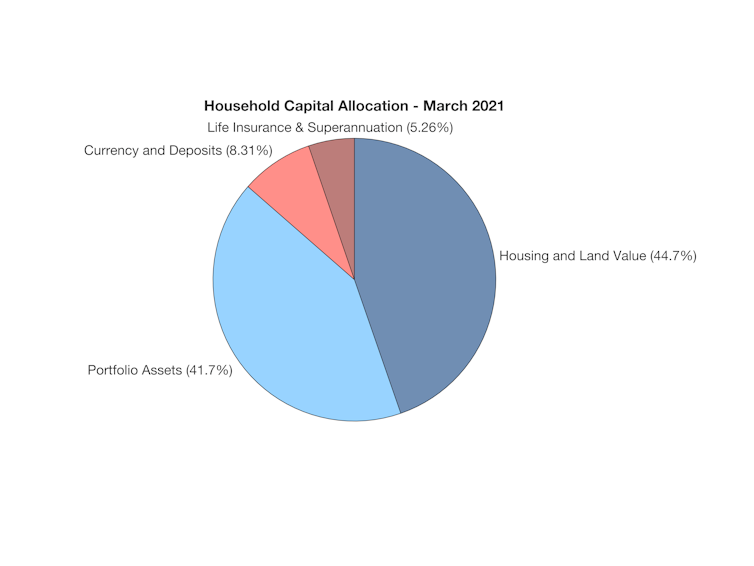
But his plan, focused on reforming foreign investment, planning and competition laws, as well as boosting the tourism and mining sectors, is hampered by a fundamental reality of New Zealand’s economy: much of the country’s capital is tied up in unproductive (and expensive) housing.
While this issue is not new, with New Zealand’s economy once described as “a housing market with bits tacked on”, the solution may lie in making housing more readily available through deregulation and policy reform. This would free up capital for drivers of growth such as infrastructure and business investment.
Household capital allocation March, 2021. Data source: RBNZ Household Balance Sheet. Author provided
The temptation of housing
Rapidly growing house prices over the past two decades have provided strong incentives to direct investment to the housing market.
On average, the price of a typical house has grown by around 8% per year, far outpacing household income growth. For example, in 2005 the median house price was roughly five times the average household income. By the middle of the pandemic house values had ballooned to nine times the average income.
Soaring prices have made residential investment extremely profitable for a long time. This means savings and investments have tended to flow into residential property rather than other productive sectors of the economy.
Constraints on housing supply
The problem is that in recent decades additional residential investment has not led to a substantial increase in new homes.
Local and central government rules and regulations have long hampered the construction of new houses. Instead, more investment in real estate has generally led to even higher prices.
As concerning as this is, it does not mean investments in housing have been misplaced. Rather, high prices and profits are what the market required in order to encourage those willing to build (few that there are) despite the costs, delays and uncertainties associated with bureaucratic battles with councils, planners and local NIMBY groups.
Banning property speculation might have kept prices down and reallocated investment to other productive uses. But in the absence of those speculators, the supply constraints would not have been any looser. Lower prices mean lower returns over building costs, leading to even fewer houses built.
Shifting capital out of the housing market in this way would not have benefited the country – we might have produced more and goods and services but fewer homes in which to live.
Christopher Luxon is pushing forward his plan for growth focused on reforming foreign investment, planning and competition laws, as well as boosting the tourism and mining sectors. Hagen Hopkins/Getty Images
Reforming housing supply
Fortunately, New Zealand has made meaningful progress on housing supply recently. For example, Auckland and Lower Hutt changed zoning laws in the 2010s making it easier to build, and Wellington City has recently followed suit.
These changes have led to local construction booms and, crucially, lower house prices and rents.
These reforms make it easier to build, reduce house prices and mean less investment capital is required for each new house built. So these policies have the dual benefit of improving housing affordability and freeing up capital for other productive sectors of the economy.
As prices come down, New Zealanders will no longer need to pour nine times their income into a home.
That will free up funds for investments in new bridges and tunnels, small businesses, and exciting new startups that will help drive innovation and generate the long-run growth we seek.
New Zealand need not give up its housing dreams in order to get business moving. Rather, it can do both.
All that requires is for local and central government to continue to let people build the housing they want so that we can free up the capital our infrastructure and businesses need.
James Graham has received research funding from the Australian Housing and Urban Research Institute and is a member of Sydney YIMBY.
PORTLAND, Ore.–A construction company operating in Hood River, Oregon, and a property management company operating in The Dalles, Oregon, together with the owners, pleaded guilty Friday to violating asbestos work standards and negligent endangerment by discharging a hazardous pollutant in violation of the Clean Air Act.
The property management company Horseshoe Grove, LLC pleaded guilty to violating asbestos work practice standards, and its owner and operator, Ryan Richter, 44, of The Dalles, pleaded guilty to negligent endangerment by discharging a hazardous pollutant.
The construction and demolition company Chamness Dirt Works Inc. pleaded guilty to violating asbestos work practice standards, and its owner and president, Ronald Chamness, 58, of Hood River, pleaded guilty to negligent endangerment by discharging a hazardous pollutant.
According to court documents, in November 2022, Horseshoe Grove purchased a property operating as a mobile home rental site with approximately thirty tenant spaces. The property also contained two dilapidated structures located near the actively rented tenant spaces. At the time of sale, Richter received an asbestos survey completed in 2021 which reported over 5,000 square feet of asbestos within the dilapidated structures. Richter also received a demolition estimate from Chamness Dirt Works to sample, test and remove asbestos containing materials but excluded the costs for asbestos abatement.
In February 2023, Richter and Horseshoe Grove hired Chamness Dirt Works to demolish the two asbestos-laden structures. On February 20, 2023, Chamness received a quote from an asbestos abatement contractor for the proper removal and disposal of asbestos containing materials. Despite knowing the structures contained asbestos, Chamness and Richter, through and with their companies, knowingly violated the Clean Air Act by demolishing the structures without hiring a certified asbestos abatement contractor or implementing the precautionary measures mandated by federal regulations for handling such materials.
On November 19, 2024, Richter, Chamness, Horseshoe Grove, and Chamness Dirt Works were charged by criminal information with negligent endangerment and violating the Clean Air Act’s asbestos work practice standards.
Richter and Chamness each face a maximum sentence of one year in prison, a $100,000 fine, and five years of supervised release. Horseshoe Grove and Chamness Dirt Works each face a maximum sentence of five years’ probation and $500,000 fine. As part of the plea agreement, Richter and Chamness have agreed to conduct asbestos remediation on the property. They will be sentenced on April 3, 2025, before U.S. District Court Judge Marco A. Hernández.
This case was investigated by the Environmental Protection Agency and is being prosecuted by Bryan Chinwuba, Assistant U.S. Attorney for the District of Oregon.
Fargo – United States Attorney Mac Schneider announced that Collin Ray Delorme, also known as Collin Ray Delorme Sr., age 30, from St. Michael, North Dakota, appeared in United States District Court for the District of North Dakota in Fargo today and was sentenced by Chief Judge Peter Welte to serve 40 years in federal prison, to be followed by three years of supervised release during which time he will be required to follow a number of conditions. Delorme was also ordered to pay restitution, joint and severally with his codefendant, for medical and funeral expenses.
On February 18, 2023, Baker called 911 from a home in St. Michael, North Dakota within the boundaries of the Spirit Lake Reservation. Delorme’s co-Defendant, Kenzie Rose Baker, reported her one-year-old child was not breathing. The child was transported to CHI St. Alexius in Devils Lake, North Dakota and was pronounced dead. An autopsy concluded the cause of death was “battered child” due to multiple, repeated injuries of various ages, evident upon external and internal examination. The child’s internal injuries were untreated which created infection and sepsis.
Two of the charges to which Delorme pled are related to his abuse of the deceased one-year-old child. The third charge is the result of his abuse of a three-year-old child that included hitting the child on the arms and throwing him on a bed.
On August 16, 2024, Baker pleaded guilty to charges of Accessory after the Fact; Child Abuse in Indian country; Child Neglect in Indian country. Baker is scheduled to be sentenced on February 24, 2025.
“This sentence provides a measure of accountability for the horrendous abuse and tragic death of a toddler,” Schneider said. “Through their work on multi-disciplinary teams on each reservation with tribal social services, law enforcement, tribal court prosecutors, and behavioral health partners, our Indian country prosecutors are committed to preventing child abuse. They also will not hesitate to bring forceful prosecutions against child abusers in federal court. Our hope is that today’s sentence serves as a deterrence in our efforts to keep children safe.”
“The abuse and neglect that these children experienced is truly horrific. No child should ever endure such suffering,” said Special Agent in Charge Alvin M. Winston Sr. of FBI Minneapolis. “Today’s sentencing demonstrates the FBI and our partners’ commitment to protecting the most vulnerable in our communities and ensuring that those who harm children are brought to justice.”
This case was investigated by the Federal Bureau of Investigation and prosecuted by Assistant United States Attorneys Lori H. Conroy and SheraLynn Ternes.
SOMERVILLE, Mass. — U.S. Immigration and Customs Enforcement apprehended an illegally present Turkish national charged in Massachusetts with assault and battery against a household member, witness intimidation, and two counts of assault and battery against a person with an intellectual disability when officers arrested Berkan Karamurtlu, 27, in Somerville, Jan. 22.
“This is a tragic example of what can go wrong when local jurisdictions refuse to honor immigration detainers,” said ICE Enforcement and Removal Operations Boston acting Field Office Director Patricia H. Hyde. “The local jurisdiction ignored our detainer and released Berkan Karamurtlu into the community. Unfortunately, he re-offended resulting in a second arrest for assaulting an intellectually disabled resident. Fortunately, the local authorities honored our second detainer and Karamurtlu is now in ICE custody. ICE Boston will continue to prioritize public safety by apprehending and removing egregious alien offenders.”
Karamurtlu lawfully entered the United States Oct. 11, 2021, at John F. Kennedy International Airport in New York but later violated the terms of his lawful admission.
The Somerville District Court arraigned Karamurtlu Dec. 24, 2024, for the offenses of assault and battery on an intellectually disabled person and witness intimidation. ICE lodged an immigration detainer against Karamurtlu with the Somerville District Court, which ignored the detainer and released Karamurtlu from custody.
The Somerville District Court again arraigned Karamurtlu Jan. 21 for the offenses of assault and battery on a person with intellectual disabled person and assault and battery on a family or household member. ICE then lodged an immigration detainer against Karamurtlu with the Medford Police Department.
ICE served Karamurtlu with a notice to appear before a Department of Justice immigration judge following his arrest.
Members of the public can report crimes and suspicious activity by dialing 866-DHS-2-ICE (866-347-2423) or completing the online tip form.
Learn more about ICE’s mission to increase public safety in our New England communities on X: @EROBoston.
Headline: NCDHHS Announces First Pediatric Flu Deaths of 2024-25 Season, Urges Vaccination for Children Ages 6 Months and Older
NCDHHS Announces First Pediatric Flu Deaths of 2024-25 Season, Urges Vaccination for Children Ages 6 Months and Older jwerner
The North Carolina Department of Health and Human Services is reporting two pediatric flu-related deaths, the first for the 2024-2025 flu season. One child in the Eastern region and another in the Central region of the state recently died due to complications of influenza. To protect both families’ privacy, additional information will not be released about these cases.
“We at the North Carolina Department of Health and Human Services extend our deepest sympathies to the families of these children,” said State Epidemiologist Zack Moore, M.D, MPH. “This is a sad reminder that seasonal influenza can be serious and, in some cases, even fatal. If you or your loved ones have not received the flu vaccine this season, please consider doing so to help protect your family and those around you.”
North Carolina has seen a rise in flu cases in recent weeks in combination with continued COVID-19 activity, and 171 adult flu-associated deaths have already been reported in North Carolina this season. NCDHHS tracks influenza, COVID-19, RSV and other respiratory viruses that may be circulating and publishes data weekly on the Respiratory Virus Surveillance Dashboard.
Flu vaccinations are especially important for children who are at higher risk of developing severe disease or complications, including those younger than 5 years old, especially under 2 years, or those with chronic health conditions like asthma, diabetes or a weakened immune system.
The CDC recommends all children ages 6 months and older receive a seasonal flu vaccine and an updated COVID-19 vaccine. Parents should also talk with their health care provider about options to protect infants from severe RSV disease, including vaccines for pregnant women during weeks 32 through 36 of pregnancy.
Early testing and treatment with an antiviral drug can also help prevent flu and COVID-19 infections from becoming more serious in children. Antiviral treatment works best if started soon after symptoms begin.
In addition to vaccines and treatment, everyone should take the following preventive actions to protect themselves and their loved ones against respiratory viruses:
Regularly wash your hands with soap and water or use an alcohol-based cleaner or sanitizer to prevent the spread of viruses to others
Avoid touching your eyes, nose and mouth
Clean and disinfect frequently touched surfaces and objects that may be contaminated
Cover coughs and sneezes with a tissue and then discard the tissue promptly
Stay home when sick, except to seek medical care or testing, and take steps to avoid spreading infection to others in your home, including:
Staying in a separate room from other household members, if possible
Using a separate bathroom, if possible
Avoiding contact with other members of the household and pets
Not sharing personal household items, like cups, towels and utensils
Wearing a mask when around other people
For more information on respiratory viruses, including how to access vaccines, testing and treatment in your community, visit vaccines.gov/en, flu.ncdhhs.gov or covid.19.ncdhhs.gov.
El Departamento de Salud y Servicios Humanos de Carolina del Norte (NCDHHS, por sus siglas en inglés) informa sobre dos muertes pediátricas relacionadas con la influenza (gripe), la primera de la temporada de 2024-2025. Un niño en la región oriental y otro en la región central del estado murieron recientemente debido a complicaciones de la influenza. Para proteger la privacidad de ambas familias, no se divulgará información adicional sobre estos casos.
“En el Departamento de Salud y Servicios Humanos de Carolina del Norte expresamos nuestro más sincero pésame a las familias de estos niños”, dijo el epidemiólogo estatal Zack Moore, MD, MPH. “Este es un triste recordatorio de que la influenza estacional (gripe estacional) puede ser grave y, en algunos casos, incluso mortal. Si usted o sus seres queridos no han recibido la vacuna contra la influenza esta temporada, considere hacerlo para ayudar a proteger a su familia y a quienes lo rodean”.
Carolina del Norte ha visto un aumento en los casos de gripe en las últimas semanas en combinación con la continua actividad de COVID-19, y ya se han reportado 171 muertes asociadas a la gripe en adultos en Carolina del Norte esta temporada. NCDHHS rastrea la influenza, COVID-19, virus sincitial respiratorio (VSR) y otros virus respiratorios que pueden estar circulando y publica datos semanalmente en elTablero de control de vigilancia de virus respiratorios.
Las vacunas contra la gripe son especialmente importantes para los niños que corren un mayor riesgo de desarrollar enfermedades o complicaciones graves, incluidos los menores de 5 años, especialmente los menores de 2 años, o aquellos con afecciones crónicas de salud como asma, diabetes o un sistema inmunitario debilitado.
Los CDC recomiendan que todos los niños de 6 meses o más reciban una vacuna contra la gripe estacional y una vacuna actualizada contra COVID-19. Los padres también deben hablar con su proveedor de atención médica sobre las opciones para proteger a los bebés de la enfermedad grave por VSR, incluidas las vacunas para mujeres embarazadas durante las semanas 32 a 36 del embarazo.
Las pruebas y el tratamiento tempranos con un medicamento antiviral también pueden ayudar a prevenir que la gripe y las infecciones por COVID-19 se vuelvan más graves en los niños. El tratamiento antiviral funciona mejor si se inicia poco después de que comiencen los síntomas.
Además de las vacunas y el tratamiento, todos deben tomar las siguientes medidas preventivas para protegerse a sí mismos y a sus seres queridos contra los virus respiratorios:
Lávese las manos regularmente con agua y jabón o use un limpiador o desinfectante a base de alcohol para evitar la propagación de virus a otras personas
Evite tocarse los ojos, la nariz y la boca
Limpie y desinfecte las superficies y los objetos que podrían estar contaminados.
Cubra la tos y los estornudos con un pañuelo de papel y luego deseche el pañuelo de papel rápidamente
Quédese en casa cuando esté enfermo, excepto para buscar atención médica o pruebas, y tome medidas para evitar transmitir la infección a otras personas en su hogar, como:
Alojarse en una habitación separada de otros miembros del hogar, si es posible
Usar un baño separado, si es posible
Evitar el contacto con otros miembros del hogar y mascotas
No compartir artículos personales de uso doméstico, como tazas, toallas y utensilios
Usar una mascarilla cuando esté cerca de otras personas
Para obtener más información sobre los virus respiratorios, incluido cómo acceder a las vacunas, las pruebas y el tratamiento en su comunidad, visite vaccines.gov/en,flu.ncdhhs.govocovid.19.ncdhhs.gov.
To address this, retrofit programs that improve home energy efficiency have become one of Canada’s main strategies to cut emissions in the housing sector. These programs focus on upgrades like air sealing, enhanced insulation, upgrading heating and cooling systems and installing energy-efficient windows and doors.
But do these programs deliver on their promises of lower bills and reduced carbon emissions? Our recent study, forthcoming in Energy Economics, examined the outcomes of the federal ecoENERGY home retrofit program, a predecessor to the Greener Homes Initiative.
Our findings shed light on where the program succeeded, where it fell short and what this all means for Canadian families and policymakers moving forward.
Real-world energy savings
Our study analyzed a decade of monthly electricity and natural gas consumption data from Medicine Hat, Alta., where residents participated in the federal ecoENERGY retrofit program that was in place between 2008 to 2012.
We found that households undertaking comprehensive envelope retrofits — which includes insulation and air sealing — reduced their total energy use by an average of 25 per cent per household. Natural gas usage dropped by 35 per cent on average for these same households, and these savings lasted for at least 10 years after the retrofit.
However, our study found that homes achieved only about 60 per cent of the predicted savings projected in pre-retrofit estimates. While measures like air sealing and attic and wall insulation were relatively effective, other upgrades, such as basement insulation and energy-efficient windows, showed zero effect on energy use.
This gap between projected and actual savings suggests that the estimates shown to households during pre-retrofit audits might be overestimating the benefits. This could leave families with lower-than-expected savings on their energy bills after making significant financial investments. These findings align with similar studies in the United States and Europe, where realized energy savings hover at around 60 per cent of pre-retrofit projections.
Despite this gap, there are promising opportunities for low-cost, high-return investments. Our research suggests that relatively cheap measures like air sealing generate high returns. Adopting electric heat pumps and fuel switching also show promise for delivering both energy savings and reductions in greenhouse gas emissions.
The need for broader participation
Our study also revealed significant gaps in program access and the distribution of benefits. Although the ecoENERGY program was available to all Canadian households, participation was highest among families of mid-valued houses.
Participation among families in lower-valued houses was disappointingly low: about four per cent of the families in lowest-valued houses took part, even though they stood to benefit the most from reduced energy bills. Homes in our study saw bill savings ranging from eight to 17 per cent, based on a comparison of their actual consumption before and after the retrofit. The highest savings were observed in homes with assessed values of $100,000.
Middle-valued homes with the highest retrofit program participant rate tended to save the least amount of money; this group had average gas bill reductions of approximately 10.5 per cent.
The maximum amount that could be claimed under the ecoENERGY program was $5,000, yet the average rebate received was $1,100. This disparity not only limited the program’s potential to reduce emissions on a large scale, but also means Canada’s current approach to energy retrofits may be missing an opportunity to improve energy affordability for those who need it most.
Room for improvement
Energy-saving retrofits have significant potential, but current prediction models often overestimate the savings homeowners can achieve. Improving these models could allow homeowners to make better-informed choices, leading to greater efficiency and improved household welfare.
Upfront costs also remain a significant barrier, particularly for lower-income families. Many cannot afford the upfront expenses associated with retrofitting their homes. Expanded financial support, such as rebates or no-interest loans, may provide much-needed support necessary to allow more households to participate, and more research is needed to evaluate how best to incentivize household participation.
Another major challenge is a lack of awareness. Many Canadians are unaware of the benefits of deep retrofits. Public awareness campaigns, possibly delivered in collaboration with community organizations, may also help educate homeowners on the long-term value of retrofits and make the process more accessible and appealing.
Our project is the first in Canada to use detailed household-level data to assess energy savings from retrofits in houses of various values. We were able to achieve this through partnerships between academia, utilities and the federal government. Such collaborations are crucial for advancing research that informs effective policies and programs.
As Canada advances toward net-zero emissions by 2050, energy-efficient housing should remain central to its climate strategy. Achieving sustainable progress in this area will require retrofit programs that deliver on their promises by enhancing household welfare, addressing energy affordability and ensuring continued public support.
Maya Papineau receives funding from Social Sciences and Humanities Research Council and the National Science and Engineering Research Council and the National Research Council of Canada.
Nicholas Rivers receives funding from the Social Sciences and Humanities Research Council and the National Science and Engineering Research Council. He is affiliated with the Canadian Climate Institute.
Kareman Yassin does not work for, consult, own shares in or receive funding from any company or organisation that would benefit from this article, and has disclosed no relevant affiliations beyond their academic appointment.
Source: United States Senator for Washington State Patty Murray
Murray calls for Budget hearing with Elon Musk
Murray: “Republicans are going down this partisan path because they know Democrats are not going to join them in throwing Medicaid, nutrition assistance, and veterans’ benefits into the wood chipper so they can throw more tax cuts at billionaires.”
Murray: “There is a serious, bipartisan path forward for our country–but it is one where Congress works together to avoid a shutdown, stops the de facto shutdown that is already happening, and reasserts its authority to protect the funding our communities need. Unfortunately, that is a far cry from the path Republicans are setting out on today with this pro-billionaire, anti-middle-class budget resolution.”
***VIDEO HERE***
Washington, D.C. — Today, at the Senate Budget Committee’s mark up of Senate Republicans’ budget resolution, U.S. Senator Patty Murray (D-WA), Vice Chair of the Senate Appropriations Committee and a senior member and former Chair of the Senate Budget Committee, underscored in opening comments that the resolution Senate Republicans have put forth is a roadmap to devastating cuts to programs families count on every day—from Medicaid to SNAP to veterans benefits—so that Republicans can later pass more tax breaks for the ultra-rich.
Senator Murray underscored that right now Congress’ focus should be on addressing the fast-approaching March 14 funding deadline and addressing President Trump and Elon Musk’s sweeping, illegal funding freeze—not a partisan measure to gut investments in working people. She also called for Elon Musk to come before the Committee to discuss his already in-motion efforts to decimate programs people count on.
Senator Murray’s remarks, as delivered, are below:
“I would like to remind my colleagues that we are just a month away from a deadline to pass bills to fund our government and as we approach that deadline, the entire world is watching as President Trump and Elon Musk effectively shut the government downpiece by piece, bit by bit–whatever parts Elon doesn’t like.
“I want to repeat that: we are already in a partial shutdown. Trump and Musk are shuttering entire agencies, locking workers out of their devices and out of their buildings, and demanding the work of the American people come to a screeching halt.
“They are illegally blocking hundreds of billions in funding we all secured for the people we represent back home–putting good-paying jobs on the chopping block, creating incredible uncertainty for businesses, and choking off key funds for infrastructure and energy projects, anda lot more.
“Remember, this is the richest man on earth—with deep ties to China and a direct line to Putin—unilaterally, clandestinely, and illegally deciding if our constituents will see the taxpayer dollars they are owed.
“What they are doing is not just illegal–it is devastating for working people in every single zip code.
“Right now, we need to be speaking out with a unified voice to ensure that when Congress passes a bill, that law is followed. And we need to focus on negotiating serious funding bills on a bipartisan basis ahead of the fast-approaching March 14 deadline. That is what I am trying to do right now.
“But–and this is really critical–we’ve got to know that once those bills become law, Trump will actually follow them.
“We cannot just reach an agreement, pass a bill, and then stand by while President Trump rips our laws in half.
“There is a serious, bipartisan path forward for our country–but it is one where Congress works together to avoid a shutdown, stops the de facto shutdown that is already happening, and reasserts its authority to protect the funding that our communities need.
“Unfortunately, that is a far cry from the path Republicans are setting out on today with this pro-billionaire, anti-middle-class budget resolution.
“Let’s be clear: the Chairman’s mark doesn’t just accept, but doubles down on what Trump and Musk are doing—adding both another distraction from the urgent bipartisan work that needs to happen to fund our government and a roadmap for partisan policies and absolutely painful cuts to programs families count on each and every day.
“Republicans are going down this partisan path because they know Democrats are not going to join them in throwing Medicaid, nutrition assistance, and veterans benefits into the wood chopper so they can throw more tax cuts at billionaires.
“Make no mistake: this budget resolution is the DOGE resolution, as it assumes the staggering amount of $1 trillion in unspecified cuts in 2025 alone and $9 trillion over 10 years.
“Where do we think those sort of dramatic cuts are going to come from? It’s going to come out of SNAP benefits that keep kids from going hungry. It is going to come out of public schools and community health centers. It is going to come out of life-saving medical research.
“Make no mistake: if you are cutting that deeply, that painfully, you are going to start cutting things like veteran’s health care, assistance to our farmers, Medicare, and Medicaid, which, for the information of all Senators, 30 million children rely on.
“There is just no other way to make these numbers work–especially when we know that this is just step one inthe plan and step two is more tax breaks for billionaires and massive corporations.
“So, first they are handing Elon Musk a chainsaw to cut programs families rely on with no accountability and then they are rewarding him with enormous tax breaks.
“That is completely unacceptable to me. We should not be cutting health care for working families to deliver massive tax breaks for the wealthiest billionaires.
“So I urge all of my colleagues: hit the breaks, and not just on this devastating, partisan budget resolution. Hit the breaks on what President Trump and Elon Musk are doing right now. Let’s come together, and work on a serious, bipartisan bill to fund the government—and get investments that are sorely needed out to the folks we represent. And let’s come together to demand real accountability for the shutdown they are conducting right now.
“Instead of a markup to hand Elon Musk more power, we need a hearing to hold him accountable. This billionaire is operating completely in the dark, hoping his lies about corruption are loud enough to drown out any calls for truth.
“When he tweeted out the names of government employees months ago, that was ‘accountability’ – but when reporters name people gaining illegal access to Treasury’s payment system, that is a ‘crime?’
“He gets to look at all of our most sensitive data–but no one gets to look at what he is actually doing? That cannot be the standard.
“So when are we going to have a hearing with the people who are illegally firing workers who protect families from scams, illegally cancelling grants to community health centers, illegally freezing funds to rebuild your local highway, illegally shuttering entire agencies that are keeping our country safe, and now this plan is outsourcing $1 trillion in cuts for this year alone?
“That is not rhetorical: I hope the Chair will answer. When will we have a hearing with Elon Musk? He seems to be central to your budget plan–but no one, at least no one on our side of the aisle, has heard from him.No one.
“And he is making big decisions about our country’s spending, and he is not just doing it without Congress–he is doing it in spite of what Congress has decided.
“We should not be giving up our power of the purse. We should be getting answers. If Elon Musk really has nothing to hide, then he should try to leave his safe place on X and Trump rallies and come before this Committee, Mr. Chairman, to be accountable to the public.”
Check against delivery.
1 Introduction
Ladies and gentlemen, It’s a pleasure and an honour for me to speak here before such a distinguished audience.
Remember to look up at the stars and not down at your feet. This was advice from Stephen Hawking, the famous English physicist and author of numerous books on the cosmos. And who would want to contradict the genius?
So today I invite you to join me on a stargazing tour. If you don’t have a telescope with you, no worries. However, I should add a disclaimer here: When a couple look up at the stars, things could get romantic. When astronomers observe the stars, impressive images can come into view. When economists talk about stars, it usually gets complicated. Now you know what you’re getting into!
I’m sure you’ve already guessed what topic I have in mind: the natural rate of interest – also known as r-star. It is a concept that economists have been grappling with for more than 125 years.[1] And it has perhaps never received more attention than in the current era of monetary policy.
From a central banker’s perspective, I would like to discuss what role r-star can and should play in the monetary policy universe. I will structure my lecture around four key questions: What is r-star and why is it of interest for monetary policy? How have estimates for r-star evolved over the past decades? What drives uncertainty about current estimates and the future evolution of r-star? What conclusions should monetary policy draw from this?
2 Definition of r-star and use for monetary policy
Let’s start with the definition. The natural rate is the real interest rate that would prevail if the economy were operating at its potential and prices were stable. R-star is commonly thought to be driven by real forces that structurally affect the balance between saving and investment. Think of technological progress and demographics, for example. This also means that r-star should, by definition, be independent of monetary policy. The latter follows from the widely held belief that monetary policy can affect real variables only temporarily, but is neutral in the long term.
At first glance, the natural rate could be a guiding star for the conduct of monetary policy. If a central bank sets its policy rates so that the real interest rate is above r-star, monetary policy is restrictive or “tight”. Consequently, economic activity slows and the inflation rate should decrease. If the real rate is below r-star, monetary policy is expansionary or “loose”. It provides incentives for consumers to purchase more and for enterprises to step up investment and output. Hence, this should result in more economic activity and a higher inflation rate.
However, the idea of the natural rate serving as a guiding star for monetary policy comes with profound challenges. Perhaps the name r-star evokes associations with astronomy and navigation. But these would be misleading. If r-star were like a star in the sky, it would be relatively easy to locate. Stars emit light and are therefore observable.
The natural rate is a theoretical concept. It is based on a hypothetical state of the world. That means the natural rate is, by nature, unobservable. It can only be estimated. For example, models use assumptions about the relationship between measurable variables and r-star. In this respect, the natural rate is not so much like a star shining brightly in the sky. It is more a case of dark matter. As it is invisible, astronomers infer dark matter indirectly by observing its gravitational effects.
If something is hard to find, it only spurs researchers to look even harder – whether they are astronomers or economists. Therefore, we can draw on a variety of estimation methods for the evolution of the natural rate.
3 Estimates for r-star over time
Since around the 1980s various estimates of different types have been pointing to a downward trend for r-star over several decades and across many advanced economies.[2] In the wake of the global financial crisis, the estimates slumped to exceptionally low levels.[3] This development was roughly in line with the observed trajectory of actual real interest rates of short- and long-term government bonds during this period. And no wonder: In the long run, both should be driven by the same fundamental forces affecting the balance between saving and investment.
So the question is this: what has lifted saving and depressed investment? A simple answer would be: in the long term, the most important driver is potential growth. But this finding is not very enlightening. Potential growth is also not observable. It is determined by underlying forces such as demographics and technological progress. This is where we need to look for the causes.
Indeed, according to a number of recent studies, waning productivity growth and population ageing were the key factors in pushing saving up and investment down.[4] Lower productivity reduces the return on investment, so people are less willing to invest. As they expect to live longer, they are more willing to save.
In addition, inequality, risk aversion and fiscal policy could be other factors. For example, growing inequality raises saving, as richer households save a larger share of their income. Similarly, higher risk aversion leads to higher saving, especially in safe assets, while lowering investment.[5]
Many of the estimates for r-star reached their lowest point in the pandemic years 2020 and 2021. After that, there were signs of a partial reversal. A recent analysis by Eurosystem economists across a suite of models and data up to the end of 2024 suggests that estimates of r-star range from − ½ % to ½ % in real terms. In nominal terms, they find that it ranges between 1¾ % and 2¼ %.[6]
It is clear that these ranges depend on the estimating approaches considered. Taking into account an even wider array of measures, Bundesbank staff calculations using data up to the end of 2024 reveal a range of 1.8 % to 2.5 %.[7] And the ECB found for the third quarter of 2024: When three estimates derived from versions of the Holston-Laubach-Williams model are factored in, the range of real r-star is − ½ % to 1 % and the nominal range is 1¾ % to 3 %.
All in all, the results suggest that the range of r-star estimates most likely increased by about one percentage point from their lows. The latest estimates by economists from the Bank for International Settlements come to similar findings.[8]
The reasons for the increase after the pandemic are not yet fully clear. For example, high fiscal spending with rising public debt levels could play a role. Or higher needs for capital, as companies make their value chains more resilient by duplicating structures and increasing stock levels.
4 Uncertainties around r-star estimates
Stargazing tours in economics are a journey into the uncertain. This is also and especially true for r-star. Estimates of the natural rate of interest are subject to major uncertainties, shaped by three M’s: megatrends, methodology and monetary policy.
First, we are facing a number of megatrends. Think of climate change, ageing societies, digitalisation, and the risks of de-globalisation and increasing geopolitical divisions. The effects of these megatrends on natural rates are difficult to gauge and may change over time.
On the one hand, they could contribute to a higher natural rate. Here are some examples: The widespread uptake of artificial intelligence could boost productivity growth. The green transition could lead to higher investment. Fiscal deficits could persist at an elevated level due to higher defence spending given geopolitical tensions. The entry of the baby boomer generation into retirement could reduce savings.
On the other hand, life expectancy is predicted to keep rising; the high hopes for the productivity-enhancing effect of AI could turn out to be too optimistic; and given high public debt levels, fiscal space for additional spending is limited in many countries. Overall, it is virtually impossible to predict which developments will prevail in affecting r-star.
The second factor of uncertainty is methodology. The methods used to define and estimate r-star differ in important ways, especially in terms of time and risk.
Ricardo Reis demonstrates this impressively in a recent paper.[9] He presents four different “r-stars”. They are based on four different conceptual approaches. And they developed quite differently between 1995 and 2019.
One major difference is the risk dimension. Knut Wicksell’s original definition of the natural rate was the rate of return on physical capital in equilibrium.[10] The rate of return on physical capital is the return on investment in the real economy. And this rate is very much associated with risks.
However, this perspective has been lost in virtually all of the model approaches. Generally, they use rather secure government bond yields as a starting point. Again, with regard to the real economy, a risky return on capital would be a more appropriate yardstick. When we look at measures for the return on private capital, we see a strong contrast with risk-free rates. Returns on private capital have remained broadly stable over the last decades in the US,[11] Germany[12] and the euro area as a whole.[13]
From these observations, Ricardo Reis draws the following conclusion: focusing exclusively on the return on government bonds as the measure of r-star, while neglecting the return on private capital, leads to the wrong policy advice.[14]
Another case in point is the time horizon that is considered. Commonly cited estimates seek to assess the real rate that prevails in the longer run, when all shocks have dissipated. Most of these estimates are highly imprecise. Many methods simply project the current or the historical level of real rates into the future. This may confound permanent trends with cyclical factors, which may not be representative for the future. As a result, such methods could miss important turning points in real rate trends.
Other approaches characterise a short-run real rate in a hypothetical world without frictions. While interesting, this concept is of limited value for actual policymaking in the real world. Methods based on a short-term equilibrium tend to produce more volatile estimates of r-star.
There is a third reason for caution: monetary policy itself may play a role in shaping the natural rate or its estimates. A number of studies challenge the view that money is neutral in the long run.[15]
There are different channels through which monetary policy could have lasting effects on real interest rates. Prolonged tight monetary policy, for example, may lower investment, innovation and productivity growth.[16] By contrast, persistent monetary easing could fuel financial imbalances and contribute to zombification.[17]
Moreover, recent research suggests that central bank announcements provide guidance about the trend in real rates. For instance, a narrow window around Fed meetings captures most of the trend decline in US real long-term yields since 1980.[18] This could mean: when central banks look for r-star in financial market prices, they might actually be looking in a mirror.[19] Feedback loops between monetary policy and markets could unduly reinforce their perceptions about r-star. And shifts in perceived r-star could affect actual r-star as it influences saving and investment decisions.
5 Conclusions for monetary policy
Against the backdrop of these major uncertainties, the final key question of my speech is this: what role can and should r-star play for monetary policy in practice?
Let’s approach the answer with a thought experiment: Put yourself in the shoes of a monetary policymaker who only looks at r-star. The relevant interest rate with which you steer the monetary policy stance is currently 2.75 %. After a previous series of interest rate cuts, you consider whether a further cut would be appropriate.
Your staff inform you that various point estimates of r-star range from around 1.8 % to 2.5 % in nominal terms. If r-star were at the upper end of the estimates, the policy rate would become neutral with the next rate cut. Things would be different if r-star were at the lower end of the estimates: Monetary policy would continue to be restrictive, even after several further rate cuts.
So how would you proceed, given a certain stance you want to achieve? Beware: If you rely on a wrong estimate, your decision may have a different effect on inflation than you intended. Simply choosing the middle of the range might not be a happy medium. Around the point estimates, there are often uncertainty bands of different sizes and with asymmetries.
As you have probably guessed: It is no coincidence that I have described this particular decision-making situation. It looks similar in the euro area ahead of the next monetary policy meeting of the ECB Governing Council at the beginning of March. After several rate cuts, the neutral rate could already be near – or there may still be some way to go.
The President of the New York Fed, John Williams, put the problem in a nutshell when he said: as we have gotten closer to the range of estimates of neutral, what appeared to be a bright point of light is really a fuzzy blur.[20]
The bottom line here is this: The closer we get to the neutral rate, the more appropriate it becomes to take a gradual approach. For this purpose, r-star is a helpful concept: it indicates when we need to be more cautious with policy rate moves so that we don’t take a wrong step.
At the same time, the limits of the concept are also clear: it would be risky to base decisions mainly on r-star estimates. Much more is needed to assess the current monetary policy stance and the optimal policy path for the near future.
That is why the Eurosystem uses a variety of financial, real economic and other indicators along the monetary policy transmission mechanism. We want the fullest picture possible. And, of course, r-star also has a place in this picture. For instance, r-star is included in model-based optimal policy projections that we use in the decision-making process.
In my opinion, proceeding in a data-driven and gradual manner has served the ECB Governing Council well. There is no reason to act hastily in the present uncertain environment. The data will tell us where we need to go.
Away from day-to-day monetary policymaking, the concept of the natural rate of interest provides a useful framework. This is also exemplified in the policy scenarios that Ricardo Reis presented last week in Brussels.[21]
He works with the assumption that government bond rates remain around current levels. I would add the assumption that inflation stays on target – actually, that is what I am in office for and committed to. Assuming output is at capacity, policy rates would be persistently higher than in the past. But the recommendations on actual monetary policy depend on the driving forces: is the new setting caused by less demand for safe and liquid assets or by an increase in productivity? And he has two more scenarios in his paper!
That provides a good example of why we should take a close look at the factors behind r-star estimates. Here it is important to even better understand the forces that are shifting real interest rate trends. We need to find out how these forces and trends affect our work to ensure price stability.
Reviewing our monetary policy strategy from time to time is therefore vital. That is precisely what we are doing right now in the Eurosystem. And, of course, in this process, we look at all the questions I mentioned about r-star.
Our stargazing tour is drawing to a close. It turns out we were dealing more with dark matter than with a shining star. Just as dark matter is an exciting field for astronomers, r-star is a rewarding topic for economists.
Using r-star alone to navigate the monetary policy universe could be like flying almost blind. But having it as one of many instruments in your cockpit is highly useful.
I would like to end by quoting Stephen Hawking again: Mankind’s greatest achievements have come about by talking, and its greatest failures by not talking.
Footnotes:
Wicksell, K. (1898), Geldzins und Güterpreise: eine Studie über die den Tauschwert des Geldes bestimmenden Ursachen, Jena, G. Fischer (English version as ibid. (1936), Interest and prices: a study of the causes regulating the value of money, London, Macmillan).
Obstfeld, M., Natural and Neutral Real Interest Rates: Past and Future, NBER Working Paper, No 31949, December 2023.
Brand, C., M. Bielecki and A. Penalver (2018), The natural rate of interest: estimates, drivers, and challenges to monetary policy, ECB Occasional Paper, No 217.
Cesa-Bianchi, A., R. Harrison and R. Sajedi (2023), Global R*, CEPR Discussion Paper No 18518; Davis, J., C. Fuenzalida, L. Huetsch, B. Mills and A. M. Taylor (2024), Global natural rates in the long run: Postwar macro trends and the market-implied r* in 10 advanced economies, Journal of International Economics, Vol. 149; International Monetary Fund (2023), The natural rate of interest: drivers and implications for policy, World Economic Outlook, April, Chapter 2.
On the development of risk appetite in financial markets, see Deutsche Bundesbank, Risk appetite in financial markets and monetary policy, Monthly Report, January 2025.
Brand, C., N. Lisack and F. Mazelis (2025), Natural rate estimates for the euro area: insights, uncertainties and shortcomings, ECB Economic Bulletin, 1/2025.
Additional models would also provide values outside this range, but are currently not deemed sufficiently robust.
Benigno, G., B. Hofmann, G. Nuño and D. Sandri (2024), Quo vadis, r*? The natural rate of interest after the pandemic, BIS Quarterly Review, March.
Reis, R. (2025), The Four R-stars: From Interest Rates to Inflation and Back, draft working paper.
Wicksell, K. (1898), op. cit.
Caballero, R., E. Farhi and P.-O. Gourinchas (2017), Rents, Technical Change, and Risk Premia Accounting for Secular Trends in Interest Rates, Returns on Capital, Earning Yields, and Factor Shares, American Economic Review: Papers & Proceedings 107(5), pp. 614‑620.
Deutsche Bundesbank, The natural rate of interest, Monthly Report, October 2017.
Brand, C., M. Bielecki and A. Penalver (2018), The natural rate of interest: estimates, drivers, and challenges to monetary policy, ECB Occasional Paper, No 217.
Reis, R., Which r-star, public bonds or private investment? Measurement and policy implications, Unpublished manuscript, September 2022.
Jordà, Ò., S. Singh and A. Taylor, The long-run effects of monetary policy, NBER Working Papers, No 26666, January 2020, revised September 2024; Benigno, G., B. Hofmann, G. Nuño and D. Sandri (2024), Quo vadis, r*? The natural rate of interest after the pandemic, BIS Quarterly Review, March.
Baqaee, D., E. Farhi and K. Sangani, The supply-side effects of monetary policy, NBER Working Paper, No 28345, January 2021, revised March 2023; Ma, Y. and K. Zimmermann, Monetary Policy and Innovation, NBER Working Paper, No 31698, September 2023.
Borio, C., P. Disyatat, M. Juselius and P. Rungcharoenkitkul (2022), Why so low for so long? A long-term view of real interest rates, International Journal of Central Banking, Vol. 18, No 3.
Hillenbrand, S. (2025), The Fed and the Secular Decline in Interest Rates, The Review of Financial Studies, forthcoming.
Williams, J. C. (2017), Comment on “Safety, Liquidity, and the Natural Rate of Interest”, by M. Del Negro, M. P. Giannoni, D. Giannone, and A. Tambalotti, Brookings Papers on Economic Activity, Vol. 1, pp. 235‑316; Rungcharoenkitkul, P. and F. Winkler, The natural rate of interest through a hall of mirrors, BIS Working Paper No 974, November 2021.
Williams, J. C., Remarks at the 42nd Annual Central Banking Seminar, Federal Reserve Bank of New York, New York City, 1 October 2018.
Reis, R. (2025), op. cit.
U.S. 6th Fleet held a joint celebration of its 75th anniversary and the Navy’s 250th birthday onboard its flagship, the Blue Ridge-Class Command and Control ship USS Mount Whitney (LCC 20) Feb. 12, 2025.
Originally named U.S. Naval Forces, Mediterranean, U.S. Sixth Fleet was established February 12th, 1950. Sixth Fleet provides credible combat forces to Europe and Africa, promoting regional security and stability to ensure safety for the world’s oceans and sea lanes.
“As we mark the 75th anniversary of the U.S. 6th Fleet, we honor the enduring legacy of our Sailors, past and present, who have worked tirelessly to promote peace, stability, and prosperity in the Mediterranean,” said Vice Adm. J.T. Anderson, Commander, U.S. Sixth Fleet. “Sixth Fleet has been a cornerstone of U.S. Naval presence in Europe and Africa and we remain committed to defending our nation’s interests and upholding the principles of freedom and security that have guided us since our founding.”
Sixth Fleet has enhanced transatlantic security through support to NATO, building partnership capacity and working with partners to promote trade and freedom, stop unlawful activity at sea, and ensure enduring relationships with allies.
This year’s celebration coincides with the 250th birthday of the U.S. Navy, on Oct. 13. For 250 years, America’s Navy has promoted prosperity and security, deterred aggression, and protected the American way of life. The U.S. Navy, through Sixth Fleet, deploys its force of combat-ready Sailors, alongside Allies and partners, in waters and coasts throughout Europe and Africa.
Gaeta served as the home of U.S. Sixth Fleet from 1967-2005 when it was united with U.S. Naval Forces Europe in Naples, Italy. One of the Navy’s first visits to Gaeta came in 1849 when Pope Pius IX visited former flagship USS Constitution. It marked the first time a Pope stepped foot on sovereign U.S. territory.
Mount Whitney became Sixth Fleet’s flagship when it transited to Italy and relieved USS LaSalle (AGF 3) in 2005. The ship’s current Commanding Officer, Capt. Colin Price, assumed command Jan. 31.
“Mount Whitney has proudly served as the Sixth Fleet Flagship for the last 20 years,” Price said. “Our ship and crew enables the Sixth Fleet Commander to lead both U.S. and NATO forces at sea and deliver decision advantage to Vice Adm. Anderson and his staff. We’re honored to be a part of this team and to play a role in writing the next chapter in the Sixth Fleet’s storied history.”
Sixth Fleet, headquartered in Naples, Italy, conducts the full spectrum of joint and naval operations, often in concert with allied, and interagency partners, in order to advance U.S. national interests and security and stability in Europe and Africa.
Professor Ian Graham will rejoin the Board for a second term.
Professor Ian Graham has been reappointed to the board of Royal Botanic Gardens, Kew for a second term of three years.
His term will run from 1 May 2025 to 30 April 2028.
The reappointment has been made in accordance with the Governance Code on Public Appointments.
Biography
Professor Graham is currently based at the University of York, in the Centre for Novel Agricultural Products and holds the Weston Chair in Biochemical Genetics. He has previously held roles in the University of Glasgow, University of Oxford, and Stanford University.
Professor Ian Graham completed his PhD in Plant Molecular Biology from the University of Edinburgh. His research interests now focus on plant natural products such as noscapine (anti-cancer), codeine (analgesic), and artemisinin (antimalarial).
Ian was elected as a Fellow of the Royal Society in 2016 and won the Biochemical Society’s 2017 Heatley Medal and Prize for “exceptional work in applying advances in biochemistry, and especially for developing practical uses that have created widespread benefits and value for society”.
The Royal Botanic Gardens, Kew
The Royal Botanic Gardens, Kew is a world-famous scientific organisation, internationally respected for its outstanding collections as well as its scientific expertise in plant and fungal diversity, conservation and sustainable development in the UK and around the world.
Kew Gardens is a major international and a top London visitor attraction. Kew Gardens’ 132 hectares of landscaped gardens, and Wakehurst, Kew’s wild botanic garden in Sussex, attract over 2.5 million visits every year. Kew Gardens was made a UNESCO World Heritage site in July 2003 and celebrated its 260th anniversary in 2019. Wakehurst is home to Kew’s Millennium Seed Bank, the largest wild plant seed bank in the world, as well as over 500 acres of designed landscapes, wild woodlands, ornamental gardens and a nature reserve.
The Kew Madagascar Conservation Centre is Kew’s third research centre and only overseas office. RBG Kew receives approximately one third of its funding from government through the Department for Environment, Food and Rural Affairs and research councils. Further funding needed to support RBG Kew’s vital work comes from donors, membership and commercial activity including ticket sales.
We are in the early days of a seismic shift in the global AI industry. DeepSeek, a previously little-known Chinese artificial intelligence company, has produced a “game changing”“ large language model that promises to reshape the AI landscape almost overnight.
But DeepSeek’s breakthrough also has wider implications for the technological arms race between the US and China, having apparently caught even the best-known US tech firms off guard. Its launch has been predicted to start a “slow unwinding of the AI bet” in the west, amid a new era of “AI efficiency wars”.
In fact, industry experts have been speculating for years about China’s rapid advancements in AI. While the supposedly free-market US has often prioritised proprietary models, China has built a thriving AI ecosystem by leveraging open-source technology, fostering collaboration between government-backed research institutions and major tech firms.
This strategy has enabled China to scale its AI innovation rapidly while the US – despite all the tub-thumping from Silicon Valley – remains limited by restrictive corporate structures. Companies such as Google and Meta, despite promoting open-sourceinitiatives, still rely heavily on closed-source strategies that limit broader access and collaboration.
What makes DeepSeek particularly disruptive is its ability to achieve cutting-edge performance while reducing computing costs – an area where US firms have struggled due to their dependence on training models that demand very expensive processing hardware.
Where once Silicon Valley was the epicentre of global digital innovation, its corporate behemoths now appear vulnerable to more innovative, “scrappy” startup competitors – albeit ones enabled by major state investment in AI infrastructure. By leveraging China’s industrial approach to AI, DeepSeek has crystallised a reality that many in Silicon Valley have long ignored: AI’s centre of power is shifting away from the US and the west.
It highlights the failure of US attempts to preserve its technological hegemony through tight export controls on cutting-edge AI chips to China. According to research fellow Dean Ball: “You can keep [computing resources] away from China, but you can’t export-control the ideas that everyone in the world is hunting for.”
DeepSeek’s success has forced Silicon Valley and large western tech companies to “take stock”, realising that their once-unquestioned dominance is suddenly at risk. Even the US president, Donald Trump, has proclaimed that this should be a “wake-up call for our industries that we need to be laser-focused on competing”.
But this story is not just about technological prowess – it could mark an important shift in global power. Former US secretary of state Mike Pompeo has framed DeepSeek’s emergence as a “shot across America’s bow”, urging US policymakers and tech executives to take immediate action.
DeepSeek’s rapid rise underscores a growing realisation: globally, we are entering a potentially new AI paradigm, one where China’s model of open-source innovation and state-backed development is proving more effective than Silicon Valley’s corporate-driven approach.
The Insights section is committed to high-quality longform journalism. Our editors work with academics from many different backgrounds who are tackling a wide range of societal and scientific challenges.
I’ve spent much of my career analysing the transformative role of AI on the global digital landscape – examining how AI shapes governance, market structures and public discourse, and exploring its geopolitical and ethical dimensions, now and far in the future.
I also have personal connections with China, having lived there while teaching at Jiangsu University, then written my PhD thesis on the country’s state-led marketisation programme. Over the years, I have studied China’s evolving tech landscape, observing firsthand how its unique blend of state-driven industrial policy and private-sector innovation has fuelled rapid AI development.
I believe this moment may come to be seen as a turning point not just for AI, but for the geopolitical order. If China’s AI dominance continues, what could this mean for the future of digital governance, democracy, and the global balance of power?
China’s open-source AI takeover
Even in the early days of China’s digital transformation, analysts predicted the country’s open-source focus could lead to a major AI breakthrough. In 2018, China was integrating open-source collaboration into its broader digitisation strategy, recognising that fostering shared development efforts could accelerate its AI capabilities.
Unlike the US, where proprietary AI models dominated, China embraced open-source ecosystems to bypass western gatekeeping, scale innovation faster, and embed itself in global AI collaboration. China’s open-source activity surged dramatically in 2020, laying the foundation for the kind of innovation seen today. By actively fostering an open-source culture, China ensured that a broad range of developers had access to AI tools, rather than restricting them to a handful of dominant companies.
The trend has continued in recent years, with China even launching its own state-backed open-source operating systems and platforms in 2023, to further reduce its dependence on western technology. This move was widely seen as an effort to cement its AI leadership and create an independent, self-sustaining digital ecosystem.
Video: BBC.
While China has been steadily positioning itself as a leader in open-source AI, Silicon Valley firms remained focused on closed, proprietary models – allowing China to catch up fast. While companies like Google and Meta promoted open-source initiatives in name, they still locked key AI capabilities behind paywalls and restrictive licenses.
In contrast, China’s government-backed initiatives have treated open-source AI as a national resource, rather than a corporate asset. This has resulted in China becoming one of the world’s largest contributors to open-source AI development, surpassing many western firms in collaborative projects. Chinese tech giants such as Huawei, Alibaba and Tencent are driving open-source AI forward with frameworks like PaddlePaddle, X-Deep Learning (X-DL) and MindSpore — all now core to China’s machine learning ecosystem.
But they’re also making major contributions to global AI projects, from Alibaba’s Dragonfly, which streamlines large-scale data distribution, to Baidu’s Apollo, an open-source platform accelerating autonomous vehicle development. These efforts don’t just strengthen China’s AI industry, they embed it deeper into the global AI landscape.
This shift had been years in the making, as Chinese firms (with state backing) pushed open-source AI forward and made their models publicly available, creating a feedback loop that western companies have also – quietly – tapped into. A year ago, for example, US firm Abicus.AI released Smaug-72B, an AI model designed for enterprises that built directly upon Alibaba’s Qwen-72B and outperformed proprietary models like OpenAI’s GPT-3.5 and Mistral’s Medium. But the potential for US companies to further build on Chinese open-source technology may be limited by political as well as corporate barriers.
In 2023, US lawmakers highlighted growing concerns that China’s aggressive investment in open-source AI and semiconductor technologies would eventually erode western leadership in AI. Some policymakers called for bans on certain open-source chip technologies, due to fears they could further accelerate China’s AI advancements.
But by then, China’s AI horse had already bolted.
AI with Chinese characteristics
DeepSeek’s rise should have been obvious to anyone familiar with management theory and the history of technological breakthroughs linked to “disruptive innovation”. Latecomers to an industry rarely compete by playing the same game as incumbents – they have to be disruptive.
China, facing restrictions on cutting-edge western AI chips and lagging behind in proprietary AI infrastructure, had no choice but to innovate differently. Open-source AI provided the perfect vehicle: a way to scale innovation rapidly, lower costs and tap into global research while bypassing Silicon Valley’s resource-heavy, closed-source model.
From a western and traditional human rights perspective, China’s embrace of open-source AI may appear paradoxical, given the country’s strict information controls. Its AI development strategy prioritises both technological advancement and strict alignment with the Chinese Communist party’s ideological framework, ensuring AI models adhere to “core socialist values” and state-approved narratives. AI research in China has thrived not only despite these constraints but, in many ways, because of them.
Video: CNBC.
China’s success goes beyond traditional authoritarianism; it embodies what Harvard economist David Yang calls “Autocracy 2.0”. Rather than relying solely on fear-based control, it uses economic incentives, bureaucratic efficiency, and technology to manage information and maintain regime stability.
The Chinese government has strategically encouraged open-source development while maintaining tight control over AI’s domestic applications, particularly in surveillance and censorship. Indeed, authoritarian regimes may have a significant advantage in developing facial-recognition technology due to their extensive surveillance systems. The vast amounts of data collected through these networks enable private AI companies to create advanced algorithms, which can then be adapted for commercial uses, potentially accelerating economic growth.
China’s AI strategy is built on a dual foundation of state-led initiatives and private-sector innovation. The country’s AI roadmap, first outlined in the 2017 new generation artificial intelligence development plan, follows a three-phase timeline: achieving global competitiveness by 2020, making major AI breakthroughs by 2025, and securing world leadership in AI by 2030. In parallel, the government has emphasised data governance, regulatory frameworks and ethical oversight to guide AI development “responsibly”.
A defining feature of China’s AI expansion has been the massive infusion of state-backed investment. Over the past decade, government venture capital funds have injected approximately US$912 billion (£737bn) into early-stage firms, with 23% of that funding directed toward AI-related companies. A significant portion has targeted China’s less-developed regions, following local investment mandates.
Compared with private venture capital, government-backed firms often lag in software development but demonstrate rapid growth post-investment. Moreover, state funding often serves as a signal for subsequent private-sector investment, reinforcing the country’s AI ecosystem.
China’s AI strategy represents a departure from its traditional industrial policies, which historically emphasised self-sufficiency, support for a handful of national champions, and military-driven research. Instead, the government has embraced a more flexible and collaborative approach that encourages open-source software adoption, a diverse network of AI firms, and public-private partnerships to accelerate innovation. This model prioritises research funding, state-backed AI laboratories, and AI integration across key industries including security, healthcare, and infrastructure.
Despite strong state involvement, China’s AI boom is equally driven by private-sector innovation. The country is home to an estimated 4,500 AI companies, accounting for 15% of the world’s total.
As economist Liu Gang told the Chinese Communist Party’s Global Times newspaper: “The development of AI is fast in China – for example, for AI-empowered large language models. Aided with government spending, private capital is flowing to the new sector. Increased capital inflow is anticipated to further enhance the sector in 2025.”
China’s tech giants including Baidu, Alibaba, Tencent and SenseTime have all benefited from substantial government support while remaining competitive on the global stage. But unlike in the US, China’s AI ecosystem thrives on a complex interplay between state support, corporate investment and academic collaboration.
Recognising the potential of open-source AI early on, Tsinghua University in Beijing has emerged as a key innovation hub, producing leading AI startups such as Zhipu AI, Baichuan AI, Moonshot AI and MiniMax — all founded by its faculty and alumni. The Chinese Academy of Sciences has similarly played a crucial role in advancing research in deep learning and natural language processing.
Unlike the west, where companies like Google and Meta promote open-source models for strategic business gains, China sees them as a means of national technological self-sufficiency. To this end, the National AI Team, composed of 23 leading private enterprises, has developed the National AI Open Innovation Platform, which provides open access to AI datasets, toolkits, libraries and other computing resources.
DeepSeek is a prime example of China’s AI strategy in action. The company’s rise embodies the government’s push for open-source collaboration while remaining deeply embedded within a state-guided AI ecosystem. Chinese developers have long been major contributors to open-source platforms, ranking as the second-largest group on GitHub by 2021.
Founded by Chinese entrepreneur Liang Wenfeng in 2023, DeepSeek has positioned itself as an AI leader while benefiting from China’s state-driven AI ecosystem. Liang, who also established the hedge fund High-Flyer, has maintained full ownership of DeepSeek and avoided external venture capital funding.
Though there is no direct evidence of government financial backing, DeepSeek has reaped the rewards of China’s AI talent pipeline, state-sponsored education programs, and research funding. Liang has engaged with top government officials including China’s premier, Li Qiang, reflecting the company’s strategic importance to the country’s broader AI ambitions.
In this way, DeepSeek perfectly encapsulates “AI with Chinese characteristics” – a fusion of state guidance, private-sector ingenuity, and open-source collaboration, all carefully managed to serve the country’s long-term technological and geopolitical objectives.
Recognising the strategic value of open-source innovation, the government has actively promoted domestic open-source code platforms like Gitee to foster self-reliance and insulate China’s AI ecosystem from external disruptions. However, this also exposes the limits of China’s open-source ambitions. The government pushes collaboration, but only within a tightly controlled system where state-backed firms and tech giants call the shots.
Reports of censorship on Gitee reveal how Beijing carefully manages innovation, ensuring AI advances stay in line with national priorities. Independent developers can contribute, but the real power remains concentrated in companies that operate within the government’s strategic framework.
The conflicted reactions of US big tech
DeepSeek’s emergence has sparked intense debate across the AI industry, drawing a range of reactions from leading Silicon Valley executives, policymakers and researchers. While some view it as an expected evolution of open-source AI, others see it as a direct challenge to western AI leadership.
Microsoft’s CEO, Satya Nadella, emphasised its technical efficiency. “It’s super-impressive in terms of both how they have really effectively done an open-source model that does this inference-time compute, and is super-compute efficient,” Nadella told CNBC. “We should take the developments out of China very, very seriously”.
Silicon Valley venture capitalist Marc Andreessen, a prominent advisor to Trump, was similarly effusive. “DeepSeek R1 is one of the most amazing and impressive breakthroughs I’ve ever seen – and as open source, a profound gift to the world,” he wrote on X.
For Yann LeCun, Meta’s chief AI scientist, DeepSeek is less about China’s AI capabilities and more about the broader power of open-source innovation. He argued that the situation should be read not as China’s AI surpassing the US, but rather as open-source models surpassing proprietary ones. “DeepSeek has profited from open research and open source (e.g. PyTorch and Llama from Meta),” he wrote on Threads. “They came up with new ideas and built them on top of other people’s work. Because their work is published and open source, everyone can profit from it. That is the power of open research and open source.”
Not all responses were so measured. Alexander Wang, CEO of Scale AI – a US firm specialising in AI data labelling and model training – framed DeepSeek as a competitive threat that demands an aggressive response. He wrote on X: “DeepSeek is a wake-up call for America, but it doesn’t change the strategy: USA must out-innovate & race faster, as we have done in the entire history of AI. Tighten export controls on chips so that we can maintain future leads. Every major breakthrough in AI has been American.”
Elon Musk added fuel to speculation about DeepSeek’s hardware access when he responded with a simple “obviously” to Wang’s earlier claims on CNBC that DeepSeek had secretly acquired 50,000 Nvidia H100 GPUs, despite US export restrictions.
Beyond the tech world, US policymakers have taken a more adversarial stance. House speaker Mike Johnson accused China of leveraging DeepSeek to erode American AI leadership. “They abuse the system, they steal our intellectual property. They’re now trying to get a leg up on us in AI.”
For his part, Trump took a more pragmatic view, seeing DeepSeek’s efficiency as a validation of cost-cutting approaches. “I view that as a positive, as an asset … You won’t be spending as much, and you’ll get the same result, hopefully.”
The rise of DeepSeek may have helped jolt the Trump administration into action, leading to sweeping policy shifts aimed at securing US dominance in AI. In his first week back in the White House, the US president announced a series of aggressive measures, including massive federal investments in AI research, closer partnerships between the government and private tech firms, and the rollback of regulations seen as slowing US innovation.
The administration’s framing of AI as a critical national interest reflects a broader urgency sparked by China’s rapid advancements, particularly DeepSeek’s ability to produce cutting-edge models at a fraction of the cost traditionally associated with AI development. But this response is not just about national competitiveness – it is also deeply entangled with private industry.
Musk’s growing closeness to Trump, for example, can be viewed as a calculated move to protect his own dominance at home and abroad. By aligning with the administration, Musk ensures that US policy tilts in favour of his AI ventures, securing access to government backing, computing power, and regulatory control over AI exports.
At the same time, Musk’s public criticism of Trump’s US$500 billion AI infrastructure plan – claiming the companies involved lack the necessary funding – was as much a warning as a dismissal, signalling his intent to shape policy in a way that benefits his empire while keeping potential challengers at bay.
Not unrelated, Musk and a group of investors have just launched a US$97.4 billion (£78.7bn) bid for OpenAI’s nonprofit arm, a move that escalates his feud with OpenAI CEO Sam Altman and seeks to strengthen his grip on the AI industry. Altman has dismissed the bid as a “desperate power grab”, insisting that OpenAI will not be swayed by Musk’s attempts to reclaim control. The spat reflects how DeepSeek’s emergence has thrown US tech giants into what could be all-out war, fuelling bitter corporate rivalries and reshaping the fight for AI dominance.
And while the US and China escalate their AI competition, other global leaders are pushing for a coordinated response. The Paris AI Action Summit, held on February 10 and 11, has become a focal point for efforts to prevent AI from descending into an uncontrolled power struggle. France’s president, Emmanuel Macron, warned delegates that without international oversight, AI risks becoming “the wild west”, where unchecked technological development creates instability rather than progress.
But at the end of the two-day summit, the UK and US refused to sign an international commitment to “ensuring AI is open, inclusive, transparent, ethical, safe, secure and trustworthy … making AI sustainable for people and the planet”. China was among the 61 countries to sign this declaration.
Concerns have also been raised at the summit about how AI-powered surveillance and control are enabling authoritarian regimes to strengthen repression and reshape the citizen-state relationship. This highlights the fast-growing global industry of digital repression, driven by an emerging “authoritarian-financial complex” that may exacerbate China’s strategic advancement in AI.
Equally, DeepSeek’s cost-effective AI solutions have created an opening for European firms to challenge the traditional AI hierarchy. As AI development shifts from being solely about compute power to strategic efficiency and accessibility, European firms now have an opportunity to compete more aggressively against their US and Chinese counterparts.
Whether this marks a true rebalancing of the AI landscape remains to be seen. But DeepSeek’s emergence has certainly upended traditional assumptions about who will lead the next wave of AI innovation – and how global powers will respond to it.
End of the ‘Silicon Valley effect’?
DeepSeek’s emergence has forced US tech leaders to confront an uncomfortable reality: they underestimated China’s AI capabilities. Confident in their perceived lead, companies like Google, Meta, and OpenAI prioritised incremental improvements over anticipating disruptive competition, leaving them vulnerable to a rapidly evolving global AI landscape.
In response, the US tech giants are now scrambling to defend their dominance, pledging over US$400 billion in AI investment. DeepSeek’s rise, fuelled by open-source collaboration, has reignited fierce debates over innovation versus security, while its energy-efficient model has intensified scrutiny on AI’s sustainability.
Yet Silicon Valley continues to cling to what many view as outdated economic theories such as the Jevons paradox to downplay China’s AI surge, insisting that greater efficiency will only fuel demand for computing power and reinforce their dominance. Companies like Meta, OpenAI and Microsoft remain fixated on scaling computational power, betting that expensive hardware will secure their lead. But this assumption blinds them to a shifting reality.
DeepSeek’s rise as the potential “Walmart of AI” is shaking Silicon Valley’s foundation, proving that high-quality AI models can be built at a fraction of the cost. By prioritising efficiency over brute-force computing power, DeepSeek is challenging the US tech industry’s reliance on expensive hardware like Nvidia’s high-end chips.
This shift has already rattled markets, driving down the stock prices of major US firms and forcing a reassessment of AI dominance. Nvidia, whose business depends on supplying high-performance processors, appears particularly vulnerable as DeepSeek’s cost-effective approach threatens to reduce demand for premium chips.
Video: CBS News.
The growing divide between the US and China in AI, however, is more than just competition – it’s a clash of governance models. While US firms remain fixated on protecting market dominance, China is accelerating AI innovation with a model that is proving more adaptable to global competition.
If Silicon Valley resists structural change, it risks falling further behind. We may witness the unravelling of the “Silicon Valley effect”, through which tech giants have long manipulated AI regulations to entrench their dominance. For years, Google, Meta,and OpenAI shaped policies that favoured proprietary models and costly infrastructure, ensuring AI development remained under their control.
More than a policy-driven rise, China’s AI surge reflects a fundamentally different innovation model – fast, collaborative and market-driven – while Silicon Valley holds on to expensive infrastructure and rigid proprietary control. If US firms refuse to adapt, they risk losing the future of AI to a more agile and cost-efficient competitor.
A new era of geotechnopolitics
But China is not just disrupting Silicon Valley. It is expanding “geotechnopolitics”, where AI is a battleground for global power. With AI projected to add US$15.7 trillion to the global economy by 2030, China and the US are racing to control the technology that will define economic, military and political dominance.
DeepSeek’s advancement has raised national security concerns in the US. Trump’s government is considering stricter export controls on AI-related technologies to prevent them from bolstering China’s military and intelligence capabilities.
As AI-driven defence systems, intelligence operations and cyber warfare redefine national security, governments must confront a new reality: AI leadership is not just about technological superiority, but about who controls the intelligence that will shape the next era of global power.
China’s AI ambitions extend beyond technology, driving a broader strategy for economic and geopolitical dominance. But with over 50 state-backed companies developing large-scale AI models, its rapid expansion faces growing challenges, including soaring energy demands and US semiconductor restrictions.
China’s president, Xi Jinping, remains resolute, stating: “Whoever can grasp the opportunities of new economic development such as big data and artificial intelligence will have the pulse of our times.” He sees AI driving “new quality productivity” and modernising China’s manufacturing base, calling its “head goose effect” a catalyst for broader innovation.
To counter western containment, China has embraced a “guerrilla” economic strategy, bypassing restrictions through alternative trade networks, deepening ties with the global south, and exploiting weaknesses in global supply chains. Instead of direct confrontation, this decentralised approach uses economic coercion to weaken adversaries while securing China’s own industrial base.
Video: AP.
China is also leveraging open-source AI as an ideological tool, presenting its model as more collaborative and accessible than western alternatives. This narrative strengthens its global influence, aligning with nations seeking alternatives to western digital control. While strict state oversight remains, China’s embrace of open-source AI reinforces its claim to a future where innovation is driven not by corporate interests but through shared collaboration and global cooperation.
But while DeepSeek claims to be open access, its secrecy tells a different story. Key details on training data and fine-tuning remain hidden, and its compliance with China’s AI laws has sparked global scrutiny. Italy has banned the platform over data-transfer risks, while Belgium and Ireland launched privacy probes.
Under Chinese regulations, DeepSeek’s outputs must align with state-approved narratives, clashing with the EU’s AI Act, which demands transparency and protects political speech. Such “controlled openness” raises many red flags, casting doubt on China’s place in markets that value data security and free expression.
Many western commentators are seizing on reports of Chinese AI censorship to frame other models as freer and more politically open. The revelation that a leading Chinese chatbot actively modifies or censors responses in real time has fuelled a broader narrative that western AI operates without such restrictions, reinforcing the idea that democratic systems produce more transparent and unbiased technology. This framing serves to bolster the argument that free societies will ultimately lead the global AI race.
But at its heart, the “AI arms race” is driven by technological dominance. The US, China, and the EU are charting different paths, weighing security risks against the need for global collaboration. How this competition is framed will shape policy: lock AI behind restrictions, or push for open innovation.
DeepSeek, for all its transformational qualities, continues to exemplify a model of AI where innovation prioritises scale, speed and efficiency over societal impact. This drive to optimise computation and expand capabilities overshadows the need to design AI as a truly public good. In doing so, it eclipses this technology’s genuine potential to transform governance, public services and social institutions in ways that prioritise collective wellbeing, equity and sustainability over corporate and state control.
A truly global AI framework requires more than political or technological openness. It demands structured cooperation that prioritises shared governance, equitable access, and responsible development. Following a workshop in Shanghai hosted by the Chinese government last September, the UN’s general secretary, António Guterres, outlined his vision for AI beyond corporate or state control: “We must seize this historic opportunity to lay the foundations for inclusive governance of AI – for the benefit of all humanity. As we build AI capacity, we must also develop shared knowledge and digital public goods.”
Both the west and China frame their AI ambitions through competing notions of “openness” – each aligning with their strategic interests and reinforcing existing power structures.
Western tech giants claim AI drives democratisation, yet they often dominate digital infrastructure in parts of Africa, Asia and Latin America, exporting models based on “corporate imperialism” that extract value while disregarding local needs. China, by contrast, positions itself as a technological partner for the rest of the global south; however, its AI remains tightly controlled, reinforcing state ideology.
China’s proclaimed view on international AI collaboration emphasises that AI should not be “a game of rich countries”“, as President Xi stated during the 2024 G20 summit. By advocating for inclusive global AI development, China positions itself as a leader in shaping international AI governance, especially via initiatives like the UN AI resolution and its AI capacity-building action plan. These efforts help promote a more balanced technological landscape while allowing China to strengthen its influence in global AI standards and frameworks.
However, beneath all these narratives, both China and the US share a strategy of AI expansion that relies on exploited human labour, from data annotation to moderation, exposing a system driven less by innovation than by economic and political control.
Seeing AI as a connected race for influence highlights the need for ethical deployment, cross-border cooperation, and a balance between security and progress. And this is where China may face its greatest challenge – balancing the power of open-source innovation with the constraints of a tightly controlled, authoritarian system that thrives on restriction, rather than openness.
To hear about new Insights articles, join the hundreds of thousands of people who value The Conversation’s evidence-based news. Subscribe to our newsletter.
Peter Bloom does not work for, consult, own shares in or receive funding from any company or organisation that would benefit from this article, and has disclosed no relevant affiliations beyond their academic appointment.