NewzIntel.com

    • Checkout Page
    • Contact Us
    • Default Redirect Page
    • Frontpage
    • Home-2
    • Home-3
    • Lost Password
    • Member Login
    • Member LogOut
    • Member TOS Page
    • My Account
    • NewzIntel Alert Control-Panel
    • NewzIntel Latest Reports
    • Post Views Counter
    • Privacy Policy
    • Public Individual Page
    • Register
    • Subscription Plan
    • Thank You Page

Category: housing

  • MIL-OSI New Zealand: Housing Finance Analysis – Difficult mortgage decisions for borrowers likely to continue

    Analysis by Kelvin Davidson, CoreLogic NZ Chief Property Economist

    The ‘perfect’ strategy for fixing mortgage rates through time is only ever known in hindsight, however new data points to a strong preference for short-term loans. 

    At a macro level this means any reduction in rates will flow through to balance sheets quickly, but with the labour market weakening there are clear ‘tail risks’ to watch for in terms of rising loan repayment problems.

    As it’s become clear in recent months that the medium-term outlook is for fairly steady declines in the official cash rate and mortgage interest rates, there’s been a strong preference for borrowers to take out short-term fixed loans. 

    In December last year, for example, 36% of new loans (by value) were taken out for a fixed term of up to 12 months. But that had spiked to 56% by February and reached a new record high of 68% in August – driven by an especially large surge in six-month activity, off the back of that first OCR cut. 

    Our analysis suggests that existing borrowers who are rolling over their loans onto a new fixed rate will have been behaving in a very similar way to new borrowers, and indeed the Reserve Bank’s figures show that the share of existing loans that are currently fixed but due to change mortgage rates (‘reprice’) within the next 12 months has now risen back to around 66% – matching a peak previously seen in the first half of 2021.
    Some of that stock growth will have also come from all of those recent new borrowers who have been fixing short too.
    In hindsight, it might not have been the best decision for borrowers – in aggregate – to fix for such short periods back in mid-2021 (unless they wanted loan flexibility for lump sum repayments, as an example).
    Indeed, anybody who bucked the trend and took out a five-year rate of around 3% at that time will still have about 18 months to run at those ultra-low rates. On the other hand, one can understand why borrowers are now choosing to take shorter fixed periods in the hope they will benefit from a series of loan renewals in the coming year or two at ever-lower rates.

    On that note, the one-year change in the average ‘special’ (high equity) one-year fixed mortgage rate, for example, has recently turned negative for the first time since mid-2021; i.e. people currently rolling off a one-year rate from October 2023 will be seeing their costs fall. 

    Some of the currently available market interest rates have recently dropped below the average rate prevailing across the stock of existing fixed loans for the first time in about three years too.
    Of course, much like it wasn’t necessarily an easy decision to decide on the ‘best’ fixed rate back in mid-2021 (although it’s clearer in hindsight what should have happened), it’s not necessarily straight-forward now either. 
    After all, the very short-term rates (e.g. six months fixed at 6.7%) remain quite a bit higher than the slightly longer terms (e.g. 12 months fixed at 6.2%) – so for the strategy of taking two consecutive six-month fixes to pay off (i.e. to get the lowest average rate over the relevant term), that rate basically needs to drop to 5.7% or less by April next year.
    Could that happen? Nothing’s out of the question, especially given the continued weakness of the economy and an emerging risk that inflation falls much more sharply than has been anticipated; which would likely see the OCR also fall more rapidly, alongside extra downward pressure on mortgage rates. 
    But at the same time, there could also be a sense at the moment that some of the potential future falls in the OCR have already been captured (‘priced in’) by current mortgage rates, meaning that the scope for more declines from here, regardless of the fixed term, could be a bit slower/smaller than what we’ve seen to date. Either way, the delicate decisions currently faced by mortgage borrowers may continue for a while yet.
    In addition, even though interest rates are now falling, it doesn’t necessarily mean we’ve passed the worst for financial stress amongst mortgage borrowers. Indeed, the non-performing loans ratio (loans that are at least 90 days in arrears or regarded as impaired) on banks’ books has recently edged up to around 0.6% of existing mortgages, the highest figure in more than a decade. 
    It was close to double that figure in 2009-10, however, these numbers are surely still a concern – and could continue to rise, given the job losses that we’re now seeing.
    Based on RBNZ figures, the trading banks themselves recently seem to have been raising provisions for possible future ‘bad’ housing loans, to the point where these allowances are now about 40% above even the largest COVID-era figure. 
    Mortgage stress will remain a factor to watch for some time to come yet and is another reason to be cautious about the size and strength of any upturn in house sales and prices as we head into 2025.

    MIL OSI New Zealand News –

    January 23, 2025
  • MIL-OSI United Kingdom: Racecourse reading hub proves a hit

    Source: City of Derby

    A new reading hub has been created at a Derby football and community venue. Derby City Council’s Derby Libraries service has provided the facility for visitors to Derby Racecourse Hub.

    The state-of-the-art Racecourse Hub opened earlier this year as a centre for football, fitness and community activities. Managed by Leisure United, it’s already attracted thousands of visitors.

    By bringing books to the Racecourse Hub, the aim is to engage with the wider community and make reading more accessible to those who might not usually visit a library.

    The reading hub has a wide selection of books to choose from, from popular fiction and thrillers, books on health and wellbeing and lots of picture books and board books to keep little ones entertained.

    It operates on an honesty basis, where everyone is welcome to borrow a book to read at the hub or at home and then return the book for someone else to enjoy.

    Derby Libraries now wants to start Rhymetimes sessions for children and Book Club events at the Racecourse Hub and is looking for volunteers to help run them. These popular programmes are already offered at libraries throughout the city.

    Councillor Sarah Chambers, Derby City Council Cabinet Member for Cost of Living, Equalities and Communities, said:

    The reading hub has already been very popular, particularly at weekends when the Racecourse is busy. One example of the great impact it’s having is parents taking the opportunity to share books with their younger children while older siblings play football.

    As a Labour administration, we recognise that Derby’s libraries are a valuable community resource that enrich people’s lives. We’re really pleased that Leisure United share that view and we can provide this facility.

    We want reading to be accessible people of all ages and backgrounds, and the reading hub could help us reach people who may not already be a member of our libraries. If you’ve enjoyed using it and want to read more, you can join Derby Libraries for free.

    We’d love to see Rhymetimes and Book Club sessions running at the hub. If you’re interested in helping children develop a love of reading, or you’re an enthusiastic reader who loves talking about books over a coffee, why not volunteer?

    The Racecourse Hub was jointly funded by Derby City Council and the Premier League, The FA, and the Government’s Football Foundation.

    Richard Smith, regional manager for Leisure United, said:

    We are extremely proud to support the reading hub. Initiatives like this goes to show that the Racecourse Hub is not just about football, but a flexible space for positive initiatives like this one.

    We’ve seen many people from the local community using the library – and even some of the staff – and we look forward to supporting it for years to come.

    Find out how to volunteer on the Derby Libraries website. For more information about Derby Racecourse Hub, go to the Leisure United website.

    MIL OSI United Kingdom –

    January 23, 2025
  • MIL-Evening Report: From mass deportations to huge tariff hikes, here’s what Trump’s economic program would do to the US and Australia

    Source: The Conversation (Au and NZ) – By Peter Martin, Visiting Fellow, Crawford School of Public Policy, Australian National University

    Prashantrajsingh/Shutterstock

    It’s time to take Donald Trump seriously. Betting markets say it’s as likely as not he will be elected US president four weeks from today.

    And unlike in 2016 when his program wasn’t clearly defined, he has set out plainly what he intends to do. Which means it’s possible to model the consequences.

    The three Trump promises with the greatest economic impact are

    • the deportation of millions of US residents

    • steep restrictions on imports, especially from China

    • presidential influence over interest rates.

    The best way to model the consequences is with an established model of the kind used by the International Monetary Fund and central banks around the world rather than one set up for the purpose that could be seen as designed to favour or not favour Trump.

    The Washington-based Peterson Institute for International Economics has just done that, noting that during Trump’s first term as president he “by and large” did what he said he would do.

    It finds

    ironically, despite his ‘make the foreigners pay rhetoric’, Trump’s package of policies does more damage to the US economy than to any other in the world.

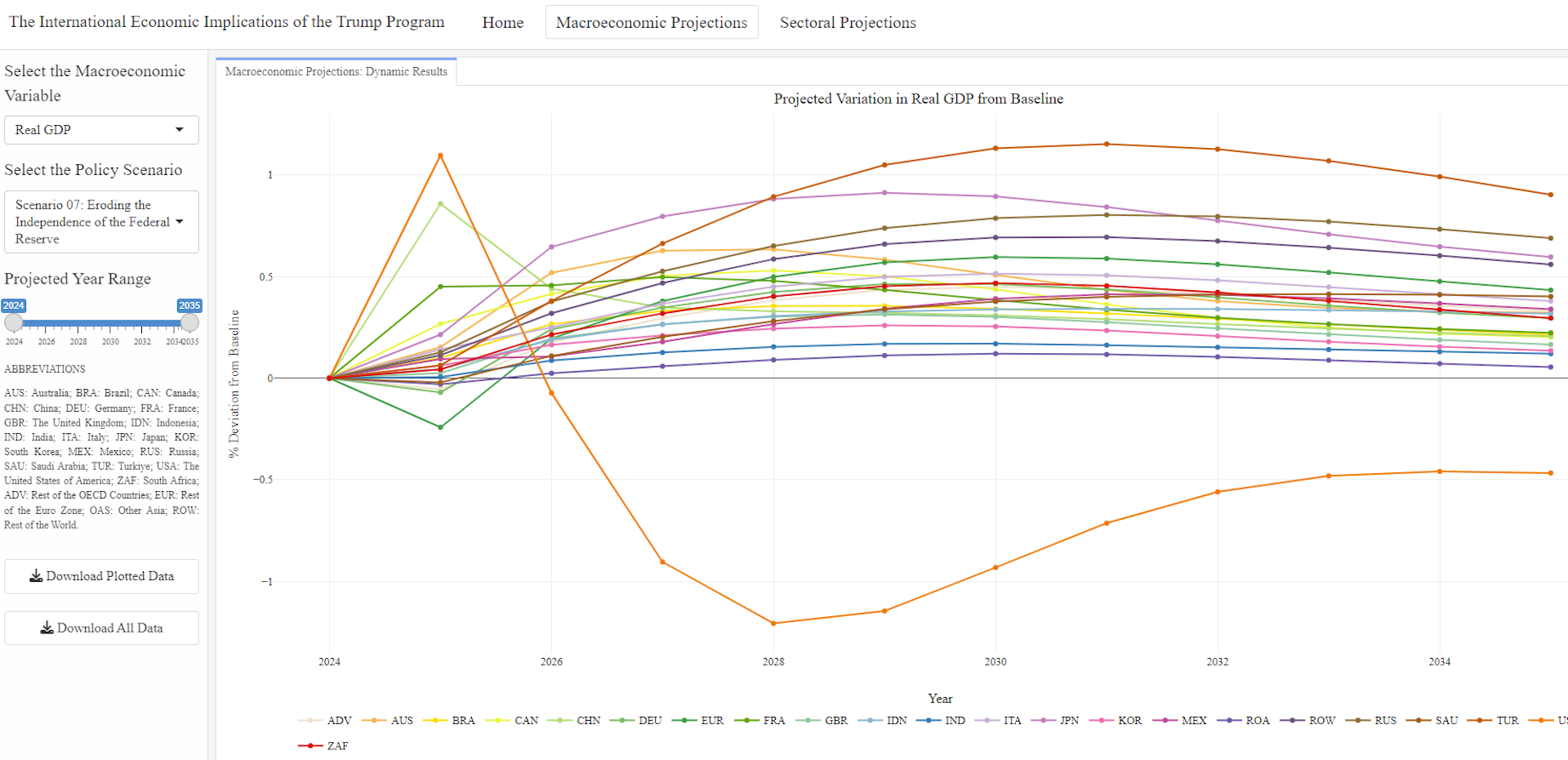
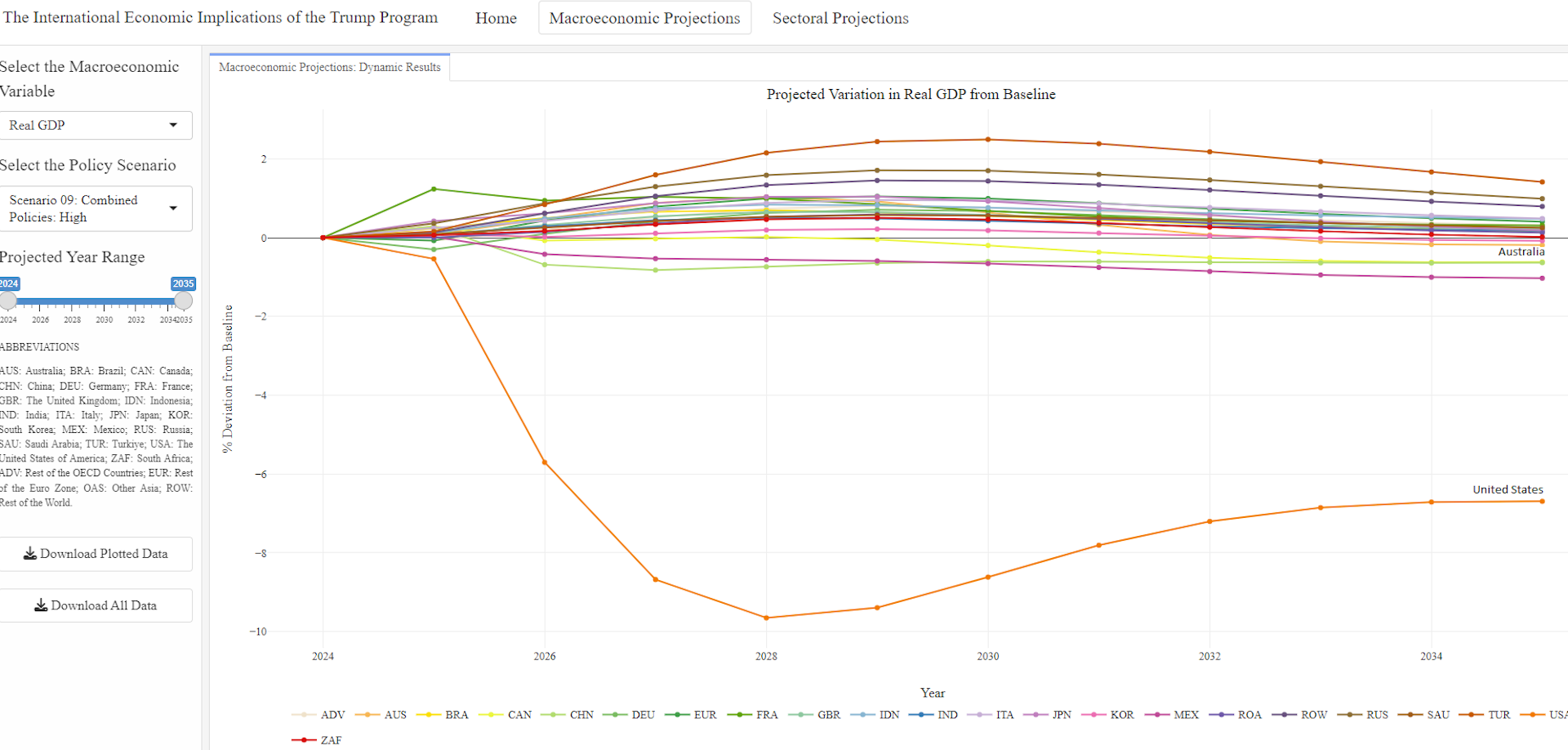
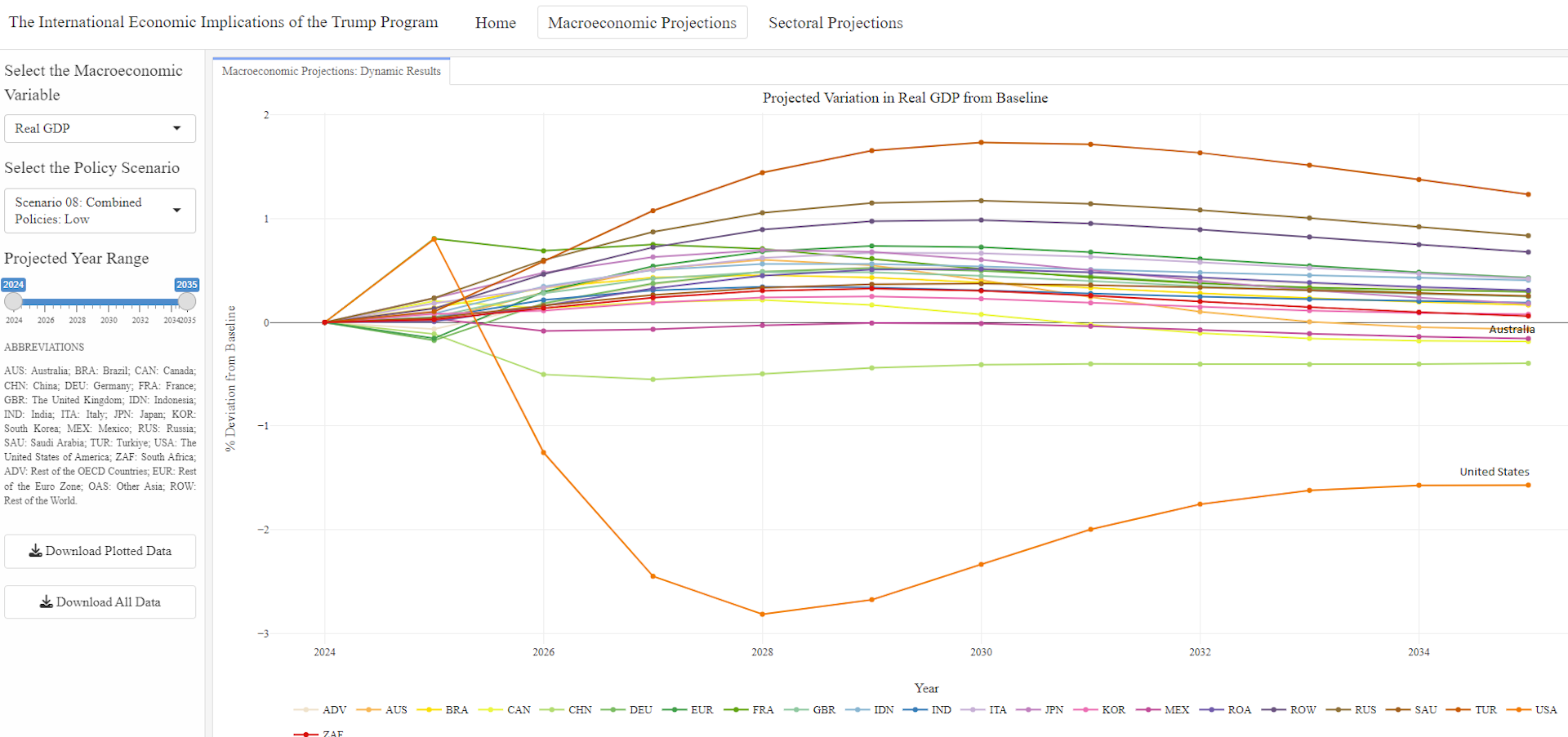
    No other country in the world would be hurt by Trump’s program as much as the US – not even China – although several US allies would suffer, including Australia, which would be the fourth-worst hit by the most extreme version of what Trump is proposing.

    Peterson Institute for International Economics.

    Mass deportations

    Trump has repeatedly promised the “largest domestic deportation operation in American history,” targeting up to 20 million unauthorised immigrants, including about 8.3 million thought to be in the workforce.

    He says his model is Operation Wetback – a 1956 Eisenhower administration program that used military-style tactics to deport 1.3 million Mexicans.

    The institute says Eisenhower’s success makes it easy to believe Trump could remove 1.3 million immigrant workers. It has modelled two scenarios: removing 1.3 million and 8.3 million, both over two years in 2025 and 2026.

    Both slash employment, including the employment of non-immigrants, both push up inflation, which eventually is brought under control, and both make the US a less attractive place to invest, which benefits much of the rest of the world.

    The institute says the low and high scenarios differ “only by the degree of damage inflicted on people, households, firms, and the overall economy”.

    Huge tariff hikes

    Trump wants to increase every tariff on goods imported to the US by 10 percentage points, including where there is at present no tariff. And he wants at least a 60% tariff on imports from China. The institute has modelled both, with and without retaliatory tariffs from China and the rest of the world.

    It finds, unsurprisingly, that extra tariffs push up the price of US imports and the prices of US-produced goods that compete with imports. Many are used as inputs in manufacturing, which means US manufacturing suffers (which is probably not what Trump had in mind).

    Fewer imports mean less demand for foreign exchange within the US, which means a higher US dollar which makes US exports less competitive. The US economy is weaker as a result, although China’s is weaker still and Australia’s is weakened as much as the US given its role in providing resources to China.

    Nobbling the Fed

    Trump has raised the prospect of more presidential influence over interest rates, saying he thinks he has “a better instinct than, in many cases” the board of US Federal Reserve. This could be achieved by requiring the president to be consulted on rate decisions or by appointing a compliant chair.

    However it’s done, the institute’s “conservative” assumption based on what happens in developing countries with less central bank independence is that it will push inflation two percentage points higher.

    The modelled result is capital flight. While the US economy is initially stronger than it would have been because of the Fed’s willingness to tolerate higher inflation, after a few years it is weaker and every other economy is stronger.

    When all the measures are combined, under the extreme scenarios the US economy is 6.7% weaker than it would have been by 2035 and Australia’s is 0.2% weaker. Under the more modest scenarios, the US economy is 1.6% weaker and Australia’s is 0.06% weaker.

    Why not examine Harris?

    Despite a history of non-partisanship, the Peterson Institute is prepared for criticism. It points out that the economic model it used is regarded as the best in the world for scenario planning and is Australian, built by Warwick McKibbin of the Australian National University.

    And it says it has modelled the Trump policies rather than the Harris policies because only Trump’s represent a departure from business as usual.

    As the Institute’s president Adam Posen put it in Washington last month, the Harris campaign has said it will not impose across-the-board tariffs, will not engage in mass deportations and will not interfere with the independence of the US Federal Reserve.

    The Trump campaign has indicated it will do all three.

    It’s entirely possible that in office Trump wouldn’t do everything he proposed while campaigning, and it’s entirely possible that he would change course if what was doing damaged the US in the way the modelling suggests.

    But there’s something to be said for taking people at their word, at least to get an idea of what we could be in store for after a knife-edge election.

    Peter Martin is Economics Editor of The Conversation.

    – ref. From mass deportations to huge tariff hikes, here’s what Trump’s economic program would do to the US and Australia – https://theconversation.com/from-mass-deportations-to-huge-tariff-hikes-heres-what-trumps-economic-program-would-do-to-the-us-and-australia-240650

    MIL OSI Analysis – EveningReport.nz –

    January 23, 2025
  • MIL-OSI Economics: Frank Elderson: Interview with Delo

    Source: European Central Bank

    Interview with Frank Elderson, Member of the Executive Board of the ECB and Vice-Chair of the Supervisory Board of the ECB, conducted by Miha Jenko

    8 October 2024

    You hold two high positions in the European Central Bank: you are a member of the ECB’s Executive Board as well as the Vice-Chair of its Supervisory Board. You are responsible for both monetary matters and banking supervision in the euro area. Can you explain your dual role at the ECB?

    Let me clarify that, at the ECB, decision-making on monetary policy and banking supervision is separate, and for good reason. We want these two functions to pursue their specific objectives and we want to avoid potential conflicts of interest.

    That being said, it is important for each side to be aware of what the other is thinking and to understand how the decisions being taken affect the other side. Let me give you a couple of examples. During our strategy review in 2021 we explicitly recognised the importance of safe and sound banks for our price stability mandate, acknowledging that financial stability is a precondition for price stability. Moreover, banks that are safe and sound are able to effectively pass through our monetary policy.

    So in the governance of the ECB there is a bridge between the two sides. And I currently occupy this bridge as a member of the Executive Board, which has six members including President Lagarde, as a member of the Governing Council and as Vice-Chair of the Supervisory Board. In practice, this means that I inform the Executive Board about what was discussed in the Supervisory Board, and I debrief the Supervisory Board on the decisions taken by the Governing Council. In short, my role is to help ensure that the ECB does not carry out these two separate tasks in isolation.

    What is the purpose of your current visit to Slovenia?

    The ECB’s two decision-making bodies – the Supervisory Board and the Governing Council – will meet in Slovenia in the space of a week. The Supervisory Board will meet for its regular retreat to discuss strategic issues, while the Governing Council will hold its next monetary policy meeting here. Our colleagues at Banka Slovenije are kindly hosting both events.

    Turning to banking supervision, how are banks’ activities and lending affected by the current environment of weak economic growth and deteriorating economic trends, which include increasing bankruptcies in some euro area countries? How resilient is the banking sector in Europe?

    European banks are resilient. They have sufficient and adequate capital and liquidity buffers which enable them to absorb losses and withstand shocks. But they should not be complacent, especially in the context of the worsening geopolitical environment, which could have direct and indirect effects on banks. Near-term growth prospects have deteriorated and are subject to high uncertainty because of these rising geopolitical risks. And banks also face several medium-term, more structural challenges.

    In this context, our supervisory priorities, which we update every year, help us focus on both the near-term and medium-term challenges faced by banks. We want to ensure that banks are resilient not only today, but also in the long run. As part of our priorities, we want to increase their resilience to sudden macroeconomic and geopolitical shocks and to accelerate the remediation of shortcomings in the governance and management of climate-related and environmental risks. At the same time, banks need to make further progress with their digital transformation and build up their operational resilience.

    In short, banks are resilient, but we should not be complacent amid these longer-term challenges, which we will address through our supervision over the coming years.

    What lessons have the ECB and the Eurosystem learned from the last financial crisis in order to be better prepared for a possible new crisis, which will not necessarily originate in the banking sector itself, but in companies connected to it?

    Since the global financial crisis we have created strong pan-European supervision – the Single Supervisory Mechanism. The financial reforms implemented after that crisis have strengthened banks without compromising their lending capacity. Several things have happened since the global financial crisis: we have had a pandemic, Russia’s invasion of Ukraine, an energy shock and high inflation. So European economies have been exposed to unforeseen challenges. We also witnessed turmoil in international banking markets last year, which exposed fragilities in banks’ risk management and internal governance.

    The European banking sector has shown itself to be resilient in the face of these challenges. Take non-performing loans, for example, which have fallen significantly in the European banking system. In 2015, their share was 7%, while in 2023 it was below 2%. That is a big step forward. And as I said, capital and liquidity indicators are now much higher than they were a decade ago. But as supervisors, we should never be complacent, especially given the new risk drivers, such as energy prices, cyberattacks, climate and nature-related risks and geopolitical risks.

    Turning now to current developments in the European banking sector, where UniCredit Group’s intention to take over the German bank Commerzbank has recently made headlines. What is your view as euro area banking supervisor?

    Let me first say that I cannot comment on individual banks, so my answer will be more general.

    We have been crystal clear that cross-border consolidation can be an instrument for further integration of the European banking sector, and we stand by that. Consolidation can also help address long-standing issues in the European banking sector, such as low profitability.

    Nonetheless, mergers always carry risks and, as supervisors, we assess them carefully, always applying the limitative criteria set out in Article 23 of the Capital Requirements Directive. Our job is to ensure that every banking transaction – whether at cross-border or national level – results in a banking group that can comply with supervisory requirements in the foreseeable future.

    What is your view of the banking sector in our country? What is your message to Slovenia?

    Thanks to the reforms implemented after the great financial crisis, banks in Slovenia have come a long way, and in the right direction. When the crisis hit, the Government had to support the three largest banks with a recapitalisation of €3.5 billion. And, naturally, it has taken several years for lending to strengthen. More recently, the privatisation of state-owned banks increased competition in the sector, and this has attracted international banks. Slovenian banks are now well-capitalised, highly profitable and are above the euro area average for profitability, mainly on account of very high net interest margins. Some of this progress can also be attributed to the work of supervisors, including those at Banka Slovenije, with whom we work very well.

    So, like in the rest of Europe, your banks are robust but they will continue to face a number of headwinds stemming from the macro-financial environment, geopolitical shocks and challenges related to the green and digital transitions.

    As mentioned, our central bank will host a Governing Council meeting next week. Do you expect a new interest rate decision at this meeting?

    We will come to Slovenia with an open mind, so I am looking forward to the trip to Ljubljana and to a very genuine and open discussion. Before the meeting, we will take note of all the data and analysis and, as we have said many times before, we will take a meeting-by-meeting approach. A number of recent indicators suggest that downside risks to economic growth are already materialising, so we will need to carefully assess whether this has any implications for our inflation outlook.

    What is very clear, however, is the direction of travel in the period ahead. If our projections that inflation will converge towards our 2% target in the second half of 2025 continue to be confirmed, we will continue to gradually ease our restrictive policy stance. At the same time, we need to maintain flexibility regarding the pace of adjustments. This will depend on incoming data, on the economic situation and on inflation. The latest data will of course be taken into account in whatever decision we take in Slovenia.

    What specific downside risks to growth do you have in mind?

    Economic growth came in at 0.2% in the second quarter, falling somewhat short of our projections. We look at a broad range of data, but we have seen that households are consuming less than anticipated and firms are less keen to invest than we had projected.

    What is your view on the exact nature of inflation in the euro area? In particular, services price inflation remains very persistent. Why?

    We expect inflation to decline to our target in the second half of 2025. Headline inflation is projected to average 2.5% in 2024, then 2.2% in 2025 and 1.9% in 2026. Services inflation remains strong but, according to our projections, we will see a deceleration going into the new year.

    We always look at the upside and downside risks surrounding these projections. Geopolitical tensions could raise energy prices, shipping costs and other transport costs in the short term, which could also lead to disruptions to global trade, which would push prices up. Inflation could also increase if wages rise more than expected or if profit margins increase, and extreme weather events and the climate crisis could increase food prices. However, there are also downside risks to inflation, such as lower than expected demand or an unexpected deterioration in the economic environment in the United States and globally.

    At the ECB, you are also responsible for monitoring the effects of climate change, in addition to the dual tasks mentioned at the beginning. This year we saw the catastrophic effects of floods in some central European countries, and last year we experienced them in Slovenia as well. Greece, Spain and other parts of southern Europe are ravaged by catastrophic droughts and fires. Can the ECB and national central banks contribute more effectively to mitigating the effects of climate change? After all, you have the power – you have monetary policy and banking supervision in your hands…

    I am very aware of the consequences of floods, and of those last year in Slovenia. They caused €10 billion of damage and more than two-thirds of the country was affected. Some places in the Koroška region were cut off from the world and most roads were completely submerged. Recently, we have seen similar things in several other EU countries.

    When talking about climate, nature and the ECB, I always say that we are not climate policymakers. We are not involved in climate policy. This is a task for governments, who implement legislation and policies like the European Climate Law and the EU “Fit for 55” plan, for example.

    But this topic is also extremely relevant for our mandate, because extreme events like flooding, wildfires and summer droughts also lead to financial risks for banks and the wider economy. In our banking supervision, we check whether banks are adequately managing their climate and nature-related risks. We also take climate and nature into account in our macroeconomic projections.

    Are you in favour of introducing more decisive measures that would offer banks more targeted incentives to grant loans for more environmentally friendly or “greener” purposes?

    It would be speculative to talk about possible measures that we might hypothetically take in the future. What is clear is that any measure we implement must be consistent with our primary objective of price stability. Our current monetary policy stance is restrictive, so a green lending facility would be something for us to consider in the future, in another phase of the cycle.

    That being said, climate change is part of our monetary policy strategy, and we have committed to regularly reviewing our climate-related measures to ensure that we continue to support a decarbonisation path that is consistent with the EU’s climate objectives. For this, within our mandate, all options are on the table. If we were to design new instruments in the future, it’s fair to assume that they would include climate considerations.

    In terms of global competitiveness, the EU is falling behind the United States and China. Former ECB President Mario Draghi recently presented a very ambitious plan to increase European competitiveness, including investments of up to €800 billion per year. In his opinion, this money could also be raised through European borrowing, so common European debt. What is your take on this proposal and Mr Draghi’s other recommendations?

    We welcome the publication of this report, how concrete it is and its call for urgent action. Competitiveness is critical for sustainable growth, improving the living standards of citizens and boosting economic resilience, especially in the current environment of heightened geopolitical fragmentation. We strongly support this urgent call for coordinated action at the European and national levels. It is now a matter of turning these proposals into concrete measures.

    Meeting the strategic investment needs identified in the report requires completing the capital markets union, which we have been advocating for a long time.

    The private sector will not be able to finance all of these investment needs alone. European initiatives, including financing through common European funds, could help finance common European public goods such as defence, public procurement, energy grids, disruptive innovation and cross-border infrastructure. Under the right conditions, the potential issuance of common European debt could help bridge the financing gap.

    Finally, a new European Commission is expected to start its work in a few weeks’ time. How do you see your cooperation, including on the common objective of making Europe more competitive?

    I am very much looking forward to continuing our excellent interactions with the European Commission, both with the outgoing Commission and the incoming one. There are a number of common European initiatives that we both have a very strong interest in. I have already mentioned the capital markets union. Further progress could be made on that, as well as on finalising all aspects of the banking union. And we know from the ECB’s stress tests that the longer we take to complete the green transition, the more it will cost us, so we would very much welcome further progress on that front as well.

    MIL OSI Economics –

    January 23, 2025
  • MIL-OSI Russia: SPbGASU took part in the International Construction Week

    MILES AXLE Translation. Region: Russian Federation –

    Source: Saint Petersburg State University of Architecture and Civil Engineering – Saint Petersburg State University of Architecture and Civil Engineering – From left to right: Andrey Nikulin, Sergey Mikhailov, Svetlana Golovina, Inna Sukhanova, Dmitry Ulrikh and Denis Nizhegorodtsev

    From October 1 to 4, the International Construction Week was held in Yekaterinburg. It was attended by a delegation from SPbGASU, consisting of First Vice-Rector Svetlana Golovina, Vice-Rector for Educational Activities Sergey Mikhailov, Director of the Educational Center for Digital Competencies Inna Sukhanova, Deputy Director of the Educational Center for Digital Competencies Denis Nizhegorodtsev, Dean of the Faculty of Civil Engineering Andrey Nikulin, Dean of the Faculty of Environmental Engineering and Urban Management Dmitry Ulrikh, Head of the Department of Construction Organization Roman Motylev and fourth-year bachelor’s student of the Faculty of Civil Engineering Angelina Koroleva.

    Representatives of our university took part in the IV International Construction Championship, as well as the XI International Construction Forum and Exhibition 100 TechnoBuild, within the framework of which a meeting of the board of the Association of Construction Universities and the presidium of the Federal Educational and Methodological Association was held.

    Andrey Nikulin shared his impressions. According to him, the key event of the forum and exhibition was the plenary session “Construction of the Future”, at which representatives of developers and authorities discussed the transformation of residential spaces, the development of small towns, and trends in industrial and infrastructure construction.

    – The speakers disagreed on the prospects of the “15-minute city” concept and even noted that this innovative format, actively promoted by Western countries, resembles the Khrushchev period of Soviet development, where all everyday human needs were provided within walking distance within the microdistrict. This is economically beneficial for government bodies and developers, but, of course, it harms the moral and ethical development of a person, artificially confined to the sphere of consumption. At the same time, the speakers noted the need to develop transport infrastructure, which would allow people to leave the microdistricts and reach key cultural and historical centers in 15 minutes. However, this requires significant infrastructure costs, which is beyond the capabilities of regional budgets. As the speakers noted, the city of the future will be managed by artificial intelligence, and for its residents it will become commonplace to accept the delivery of goods, carried out by drones, at floor-by-floor reception points (new residential complexes are designed for this possibility).

    Andrey Nikolaevich noted a wide range of modern software products of domestic production that use TIM models of buildings and structures to control construction production, optimize costs for the purchase of building materials and equipment. Particularly memorable were BIM scanners and solutions based on artificial intelligence, which allow improving the quality of design solutions and minimizing the “human factor” in construction.

    According to Andrey Nikulin, the main result of participation in events of this level is the professional calibration of knowledge, ideas and vision of the future. In addition, this is, of course, the expansion of business contacts, “building professional bridges” with representatives of the real sector of the economy, which is very important for the development of scientific and educational areas of activity.

    Representatives of the companies Ascon, BRIO, PlanRadar, Jetstyle, Gectaro, TehnoPar and others received invitations to international conferences that will be held at SPbGASU in the near future.

    Inna Sukhanova and Denis Nizhegorodtsev joined the expert committee of the School League of the International Construction Championship. Roman Motylev acted as an expert of the Professional League. Angelina Koroleva, who participated in the Student League competition in the nomination “Labor Protection”, was awarded third place.

    Denis Nizhegorodtsev spoke about his work:

    – We were able to listen to and evaluate the works of the participants in the nomination “TIM-specialist”, in which schoolchildren of grades 8–11 from different regions of Russia competed. Their task was to model architectural solutions in the classrooms of a new school in Yekaterinburg. I would like to note the high level of the participants’ works. I am very glad that modern educational projects on construction topics are already available to schoolchildren and allow them to get acquainted with the profession in advance.

    Please note: This information is raw content directly from the source of the information. It is exactly what the source states and does not reflect the position of MIL-OSI or its clients.

    Please note; This information is raw content directly from the information source. It is accurate to what the source is stating and does not reflect the position of MIL-OSI or its clients.

    http://www.spbgasu.ru/nevs-and-events/nevs/spbgasu-took-participation-in-international-construction-week/

    EDITOR’S NOTE: This article is a translation. Apologies should the grammar and or sentence structure not be perfect.

    MIL OSI Russia News –

    January 23, 2025
  • MIL-OSI Video: Department of State Daily Press Briefing – October 8, 2024 – 1:15 PM

    Source: United States of America – Department of State (video statements)

    Spokesperson Matthew Miller leads the Department Press Briefing, at the Department of State, on October 8, 2024

    ———-
    Under the leadership of the President and Secretary of State, the U.S. Department of State leads America’s foreign policy through diplomacy, advocacy, and assistance by advancing the interests of the American people, their safety and economic prosperity. On behalf of the American people we promote and demonstrate democratic values and advance a free, peaceful, and prosperous world.

    The Secretary of State, appointed by the President with the advice and consent of the Senate, is the President’s chief foreign affairs adviser. The Secretary carries out the President’s foreign policies through the State Department, which includes the Foreign Service, Civil Service and U.S. Agency for International Development.

    Get updates from the U.S. Department of State at http://www.state.gov and on social media!
    Facebook: https://www.facebook.com/statedept
    Twitter: https://twitter.com/StateDept
    Instagram: https://www.instagram.com/statedept
    Flickr: https://flickr.com/photos/statephotos/

    Subscribe to the State Department Blog: https://www.state.gov/blogs
    Watch on-demand State Department videos: https://video.state.gov/
    Subscribe to The Week at State e-newsletter: http://ow.ly/diiN30ro7Cw

    State Department website: https://www.state.gov/
    Careers website: https://careers.state.gov/
    White House website: https://www.whitehouse.gov/
    Terms of Use: https://state.gov/tou

    #StateDepartment #DepartmentofState #Diplomacy

    https://www.youtube.com/watch?v=FrnkZ_Wlopk

    MIL OSI Video –

    January 23, 2025
  • MIL-OSI Global: Trump and Harris are sharply divided on science, but share common ground on US technology policy

    Source: The Conversation – USA – By Kenneth Evans, Scholar in Science and Technology Policy, Baker Institute for Public Policy, Rice University

    Science topics don’t always come up during presidential debates – but they did on Sept. 10, 2024. Mario Tama via Getty Images

    For the first time in American history, quantum computing was mentioned by a candidate during a presidential debate, on Sept. 10, 2024. After Vice President Kamala Harris brought up quantum technology, she and former President Donald Trump went on to have a heated back-and-forth about American chipmaking and China’s rise in semiconductor manufacturing. Science and technology policy usually takes a back seat to issues such as immigration, the economy and health care during election season.

    What’s changed for 2024?

    From COVID-19 to climate change, ChatGPT to, yes, quantum computers, science-related issues are on the minds of American policymakers and voters alike. The federal government spends nearly US$200 billion each year on scientific research and development to address these challenges and many others. Presidents and Congress, however, rarely agree on how – and how much – money should be spent on science.

    With the increasing public focus on global competitiveness, the climate crisis and artificial intelligence, a closer look at Trump’s and Harris’ records on science and technology policy could provide a hint about how they’d approach these topics if elected this fall.

    Two distinct visions for science funding

    If politics can be described as “who gets what and when,” U.S. science and technology policy can be assessed through the annual budget process for R&D. By this measure, the differences between the Trump and Biden-Harris administrations couldn’t be starker.

    In his first budget request to Congress, in 2017, Trump spurned decades of precedent, proposing historic cuts across nearly every federal science agency. In particular, Trump targeted climate-related programs at the Department of Energy, the National Oceanic and Atmospheric Administration and the Environmental Protection Agency.

    Trump’s fiscal policy took a page from Reagan-era conservative orthodoxy, prioritizing military spending over social programs, including R&D. Unlike Reagan, however, Trump also took aim at basic research funding, an area with long-standing bipartisan support in Congress. His three subsequent budget proposals were no different: across-the-board reductions to federal research programs, while pushing for increases to defense technology development and demonstration projects.

    Congress rebuked nearly all of Trump’s requests. Instead, it passed some of the largest increases to federal R&D programs in U.S. history, even before accounting for emergency spending packages funded as part of the government’s pandemic response.

    In contrast, the Biden-Harris administration made science and innovation a centerpiece of its early policy agenda – with budgets to match. Leveraging the slim Democratic majority during the 117th Congress, Biden and Harris shepherded three landmark bills into law: the Infrastructure Investment and Jobs Act, the Inflation Reduction Act and the CHIPS and Science Act. These laws contain significant R&D provisions focused on environmental projects (IIJA), clean energy (IRA) and American semiconductor manufacturing (CHIPS).

    CHIPS set up programs within the National Science Foundation and the Department of Commerce to create regional technology hubs in support of American manufacturing. The act also set ambitious funding targets for federal science agencies, especially at NSF, calling for its budget to be doubled from $9 billion to over $18 billion over the course of five years.

    Despite its initial push for R&D, the Biden-Harris administration’s final two budget proposals offered far less to science. Years of deficit spending and a new Republican majority in the House cast a cloud of budget austerity over Congress. Instead of moving toward doubling NSF’s budget, the agency suffered an 8% decrease in fiscal year 2024 – its biggest cut in over three decades. For FY2025, which runs from Oct. 1, 2024, through Sept. 30, 2025, Biden and Harris requested a meager 3% increase for NSF, billions of dollars short of CHIPS-enacted spending levels.

    An emerging consensus on China

    On technology policy, Biden and Harris share more with Trump than they let on.

    Their approach to competing with China on tech follows Trump’s lead: They’ve expanded tariffs on Chinese goods and severely limited China’s access to American-made computer chips and semiconductor manufacturing equipment.

    Biden and Harris have also ramped up research security efforts intended to protect U.S. ideas and innovation from China. Trump launched the China Initiative as an attempt to stop the Chinese government from stealing American research. The Biden-Harris administration ended the program in 2022, but pieces of it remain in place. Scientific collaborations between the United States and China continue to decline, to the detriment of American scientific leadership.

    Semiconductor manufacturing is a key to many technologies; by extension, where it happens can be a security issue.
    Costfoto/NurPhoto via Getty Images

    The Biden-Harris administration has also drawn from Trump-era policy to strengthen America’s leadership in “industries of the future.” The term, coined by Trump’s then-chief science adviser Kelvin Droegemeier, refers to five emerging technology areas: AI, quantum science, advanced manufacturing, advanced communications and biotechnology. This language has been parroted by the Biden-Harris administration as part of its focus on American manufacturing and throughout Harris’ campaign, including during the debate.

    In short, both candidates align with the emerging Washington bipartisan consensus on China: innovation policy at home, strategic decoupling abroad.

    Science advice not always a welcome resource

    Trump’s dismissal of and at times outright contempt for scientific consensus is well documented. From “Sharpiegate,” when he mapped his own projected path for Hurricane Dorian, to pulling out of the Paris climate agreement, World Health Organization and the Iran nuclear deal, Trump has demonstrated an unwillingness to accept any advice, let alone from scientists.

    Indeed, Trump took over two years to hire Droegemeier as director of the White House Office of Science and Technology Policy, or OSTP, doubling the previous record for the length of time a president has gone without a scientific adviser. This absence was no doubt reflected in Trump’s short-on-science budget requests to Congress, especially during the beginning of his administration.

    On the other hand, the Biden-Harris administration has promoted science and innovation as a core part of its broader economic policy agenda. It elevated the role of OSTP: Biden is the first president to name his science adviser – a position currently held by Arati Prabhakar – as a member of his Cabinet.

    By law, the president is required to appoint an OSTP director. But it is up to the president to decide how and when to use their advice. If the new White House wants the U.S. to remain a global leader in R&D, the science adviser will need to continue to fight for it.

    Kenneth Evans receives funding from the National Science Foundation, the American Institute of Physics, and the Clinton Foundation. He is affiliated with Rice University and Rice University’s Baker Institute for Public Policy.

    – ref. Trump and Harris are sharply divided on science, but share common ground on US technology policy – https://theconversation.com/trump-and-harris-are-sharply-divided-on-science-but-share-common-ground-on-us-technology-policy-239053

    MIL OSI – Global Reports –

    January 23, 2025
  • MIL-OSI Global: How foreign operations are manipulating social media to influence your views

    Source: The Conversation – USA – By Filippo Menczer, Professor of Informatics and Computer Science, Indiana University

    Russians, Chinese, Iranians – even Israelis – are trying to affect what you believe. Sean Gladwell/Moment via Getty Images

    Foreign influence campaigns, or information operations, have been widespread in the run-up to the 2024 U.S. presidential election. Influence campaigns are large-scale efforts to shift public opinion, push false narratives or change behaviors among a target population. Russia, China, Iran, Israel and other nations have run these campaigns by exploiting social bots, influencers, media companies and generative AI.

    At the Indiana University Observatory on Social Media, my colleagues and I study influence campaigns and design technical solutions – algorithms – to detect and counter them. State-of-the-art methods developed in our center use several indicators of this type of online activity, which researchers call inauthentic coordinated behavior. We identify clusters of social media accounts that post in a synchronized fashion, amplify the same groups of users, share identical sets of links, images or hashtags, or perform suspiciously similar sequences of actions.

    We have uncovered many examples of coordinated inauthentic behavior. For example, we found accounts that flood the network with tens or hundreds of thousands of posts in a single day. The same campaign can post a message with one account and then have other accounts that its organizers also control “like” and “unlike” it hundreds of times in a short time span. Once the campaign achieves its objective, all these messages can be deleted to evade detection. Using these tricks, foreign governments and their agents can manipulate social media algorithms that determine what is trending and what is engaging to decide what users see in their feeds.

    Adversaries such as Russia, China and Iran aren’t the only foreign governments manipulating social media to influence U.S. politics.

    Generative AI

    One technique increasingly being used is creating and managing armies of fake accounts with generative artificial intelligence. We analyzed 1,420 fake Twitter – now X – accounts that used AI-generated faces for their profile pictures. These accounts were used to spread scams, disseminate spam and amplify coordinated messages, among other activities.

    We estimate that at least 10,000 accounts like these were active daily on the platform, and that was before X CEO Elon Musk dramatically cut the platform’s trust and safety teams. We also identified a network of 1,140 bots that used ChatGPT to generate humanlike content to promote fake news websites and cryptocurrency scams.

    In addition to posting machine-generated content, harmful comments and stolen images, these bots engaged with each other and with humans through replies and retweets. Current state-of-the-art large language model content detectors are unable to distinguish between AI-enabled social bots and human accounts in the wild.

    Model misbehavior

    The consequences of such operations are difficult to evaluate due to the challenges posed by collecting data and carrying out ethical experiments that would influence online communities. Therefore it is unclear, for example, whether online influence campaigns can sway election outcomes. Yet, it is vital to understand society’s vulnerability to different manipulation tactics.

    In a recent paper, we introduced a social media model called SimSoM that simulates how information spreads through the social network. The model has the key ingredients of platforms such as Instagram, X, Threads, Bluesky and Mastodon: an empirical follower network, a feed algorithm, sharing and resharing mechanisms, and metrics for content quality, appeal and engagement.

    SimSoM allows researchers to explore scenarios in which the network is manipulated by malicious agents who control inauthentic accounts. These bad actors aim to spread low-quality information, such as disinformation, conspiracy theories, malware or other harmful messages. We can estimate the effects of adversarial manipulation tactics by measuring the quality of information that targeted users are exposed to in the network.

    We simulated scenarios to evaluate the effect of three manipulation tactics. First, infiltration: having fake accounts create believable interactions with human users in a target community, getting those users to follow them. Second, deception: having the fake accounts post engaging content, likely to be reshared by the target users. Bots can do this by, for example, leveraging emotional responses and political alignment. Third, flooding: posting high volumes of content.

    Our model shows that infiltration is the most effective tactic, reducing the average quality of content in the system by more than 50%. Such harm can be further compounded by flooding the network with low-quality yet appealing content, thus reducing quality by 70%.

    Curbing coordinated manipulation

    We have observed all these tactics in the wild. Of particular concern is that generative AI models can make it much easier and cheaper for malicious agents to create and manage believable accounts. Further, they can use generative AI to interact nonstop with humans and create and post harmful but engaging content on a wide scale. All these capabilities are being used to infiltrate social media users’ networks and flood their feeds with deceptive posts.

    These insights suggest that social media platforms should engage in more – not less – content moderation to identify and hinder manipulation campaigns and thereby increase their users’ resilience to the campaigns.

    The platforms can do this by making it more difficult for malicious agents to create fake accounts and to post automatically. They can also challenge accounts that post at very high rates to prove that they are human. They can add friction in combination with educational efforts, such as nudging users to reshare accurate information. And they can educate users about their vulnerability to deceptive AI-generated content.

    Open-source AI models and data make it possible for malicious agents to build their own generative AI tools. Regulation should therefore target AI content dissemination via social media platforms rather then AI content generation. For instance, before a large number of people can be exposed to some content, a platform could require its creator to prove its accuracy or provenance.

    These types of content moderation would protect, rather than censor, free speech in the modern public squares. The right of free speech is not a right of exposure, and since people’s attention is limited, influence operations can be, in effect, a form of censorship by making authentic voices and opinions less visible.

    Filippo Menczer receives funding from the Knight Foundation, Sloan Foundation, NSF, DoD, and the Swiss National Science Foundation.

    – ref. How foreign operations are manipulating social media to influence your views – https://theconversation.com/how-foreign-operations-are-manipulating-social-media-to-influence-your-views-240089

    MIL OSI – Global Reports –

    January 23, 2025
  • MIL-OSI Global: Why wildfires started by human activities can be more destructive and harder to contain

    Source: The Conversation – USA – By Virginia Iglesias, Interim Earth Lab Director, University of Colorado Boulder

    Heavy equipment working near dry brush sparked a destructive wildfire near Riverside, Calif., in September 2024. AP Photo/Eric Thayer

    Wildfires are becoming increasingly destructive across the U.S., as the country is seeing in 2024. Firefighters were battling large blazes in several states from California to North Dakota in early October 2024, including fires burning near homes and communities.

    Research shows wildfires are up to four times larger and three times more frequent than they were in the 1980s and ‘90s, with some consuming hundreds of thousands of acres in a single blaze.

    Lightning strikes are one cause, but the majority of wildfires that threaten communities are sparked by human activities.

    Metal from cars or mowers dragging on the ground can spark fires. So can power lines touching trees. Officials confirmed on Oct. 2 that a broken power line started the deadly 2023 Maui fire that destroyed the town of Lahaina, Hawaii. California’s largest fire in 2024 started when a man pushed a burning car into a ravine near Chico. The fire destroyed more than 700 homes and buildings.

    Although the number of fires in 2024 has not been unusually high, the acreage burned has far surpassed the 10-year average, displacing thousands of people, destroying homes and straining firefighting resources.

    What makes these wildfires so destructive and difficult to contain?

    The answer lies in a mix of changing climate, the legacy of past land-management practices, and current human activities that are reshaping fire behavior and increasing the risk they pose.

    Fire’s perfect storm

    Wildfires rely on three key elements to spread: conducive weather, dry fuel and an ignition source. Each of these factors has undergone pronounced changes in recent decades. While climate change sets the stage for larger and more intense fires, humans are actively fanning the flames.

    Climate and weather

    Extreme temperatures play a dangerous role in wildfires. Heat dries out vegetation, making it more flammable. Under these conditions, wildfires ignite more easily, spread faster and burn with greater intensity. In the western U.S., aridity attributed to climate change has doubled the amount of forestland that has burned since 1984.

    Compounding the problem is the rapid rise in nighttime temperatures, now increasing faster than daytime temperatures. Nights, which used to offer a reprieve with cooler conditions and higher humidity, do so less often, allowing fires to continue raging without pause.

    Ranchers watch as firefighting planes battle the Park Fire, which was fueled by extremely hot, dry conditions in Butte County, Calif.
    AP Photo/Noah Berger

    Fuel

    Fire is a natural process that has shaped ecosystems for over 420 million years. Indigenous people historically used controlled burns to manage landscapes and reduce fuel buildup. However, a century of fire suppression has allowed vast areas to accumulate dense fuels, priming them for larger and more intense wildfires.

    Invasive species, such as certain grasses, have exacerbated the issue by creating continuous fuel beds that accelerate fire spread, often doubling or tripling fire activity.

    Additionally, human development in fire-prone regions, especially in the wildland-urban interface, where neighborhoods intermingle with forest and grassland vegetation, has introduced new, highly flammable fuels. Buildings, vehicles and infrastructure often ignite easily and burn hotter and faster than natural vegetation. These changes have significantly altered fuel patterns, creating conditions conducive to more severe and harder-to-control wildfires.

    Ignition

    Lightning can ignite wildfires, but humans are responsible for an increasing share. From unattended campfires to arson or sparks from power lines, over 84% of the wildfires affecting communities are human-ignited.

    Human activities have not only tripled the length of the fire season, but they also have resulted in fires that pose a higher risk to people.

    More than 600 homes and buildings burned in the Park Fire, one of California’s largest fires on record. Officials say the fire was started by a man pushing a burning car into a ravine near Chico.
    AP Photo/Eugene Garcia

    Lightning-started fires often coincide with storms that carry rain or higher humidity, which slows fires’ spread. Human-started fires, however, typically ignite under more extreme conditions – hotter temperatures, lower humidity and stronger winds. This leads to greater flame heights, faster spread in the critical early days before crews can respond, and more severe ecosystem effects, such as killing more trees and degrading the soil.

    Human-ignited fires often occur in or near populated areas, where flammable structures and vegetation create even more hazardous conditions. As urban development expands into wildlands, the probability of human-started fires and the property potentially exposed to fire increase, creating a feedback loop of escalating wildfire risk.

    2024 fire season’s whiplash weather

    The record-breaking summer heat in 2024 intensified fire hazards, with vegetation rapidly drying out and leaving landscapes parched in many areas. In addition, a phenomenon known as whiplash weather, marked by unusually wet winters and springs followed by extreme summer heat, has been especially pronounced in Southern California.

    A wet spring fostered vegetation growth, which then dried out under scorching summer temperatures, turning into highly combustible fuel. Severe heat waves, along with the associated lack of nighttime cooling, created conditions where fires not only spread faster, but were also more difficult to contain.

    This cycle has fueled some of the biggest fires of the 2024 season, several of which were started by humans. Atmospheric instability during some of these fires also led to the formation of pyrocumulonimbus clouds – massive, fire-fueled thunderheads that can generate their own weather, including lightning and tornado-like winds that drive flames even further.

    As these factors converge, the potential for increasingly severe wildfires looms ever larger. Severe fires also release large amounts of carbon from trees, vegetation and soils into the atmosphere, increasing greenhouse gas emissions and exacerbating climate change, contributing to more extreme fire seasons.

    Virginia Iglesias receives funding from the National Science Foundation.

    – ref. Why wildfires started by human activities can be more destructive and harder to contain – https://theconversation.com/why-wildfires-started-by-human-activities-can-be-more-destructive-and-harder-to-contain-239058

    MIL OSI – Global Reports –

    January 23, 2025
  • MIL-OSI Global: Is it COVID-19? Flu? At-home rapid tests could help you and your doctor decide on a treatment plan

    Source: The Conversation – USA – By Julie Sullivan, Chief Operating Officer of RADx Tech, Emory University

    Over-the-counter multiplex tests for more than one illness may soon come to a pharmacy near you. Paco Burgada/iStock via Getty Images

    A scratchy, sore throat, a relentless fever, a pounding head and a nasty cough – these symptoms all scream upper respiratory illness. But which one?

    Many of the viruses that cause upper respiratory infections such as influenza A or B and the virus that causes COVID-19 all employ similar tactics. They target the same areas in your body – primarily the upper and lower airways – and this shared battleground triggers a similar response from your immune system. Overlapping symptoms – fever, cough, fatigue, aches and pains – make it difficult to determine what may be the underlying cause.

    Now, at-home rapid tests can simultaneously determine whether someone has COVID-19 or the flu. Thanks in part to the National Institutes of Health’s Rapid Acceleration of Diagnostics, or RADx, program, the Food and Drug Administration has provided emergency use authorization for seven at-home rapid tests that can distinguish between COVID-19, influenza A and influenza B.

    Our team in Atlanta – composed of biomedical engineers, clinicians and researchers at Emory University, Children’s Healthcare of Atlanta and Georgia Institute of Technology – is part of the RADx Test Verification Core. We closely collaborate with other institutions and agencies to determine whether and how well COVID-19 and influenza diagnostics work, effectively testing the tests. Our center has worked with almost every COVID and flu diagnostic on the market, and our data helped inform the instructions you might see in many of the home test kits on the market.

    While no test is perfect, to now be able to test for certain viruses at home when symptoms begin can help patients and their doctors come up with appropriate care plans sooner.

    A new era of at-home tests

    Traditionally, identifying the virus causing upper respiratory illness symptoms required going to a clinic or hospital for a trained medical professional to collect a nasopharyngeal sample. This involves inserting a long, fiber-tipped swab that looks like a skinny Q-tip into one of your nostrils and all the way to the back of your nose and throat to collect virus-containing secretions. The sample is then typically sent to a lab for analysis, which could take hours to days for results.

    The COVID-19 pandemic made over-the-counter tests for respiratory illnesses commonplace.
    DuKai/Moment via Getty Images

    Thanks to the COVID-19 pandemic, the possibility of using over-the-counter tests to diagnose respiratory illnesses at home became a reality. These tests used a much gentler and less invasive nasal swab and could also be done by anyone, anytime and in their own home. However, these tests were designed to diagnose only COVID-19 and could not distinguish between other types of illnesses.

    Since then, researchers have developed over-the-counter multiplex tests that can screen for more than one respiratory infection at once. In 2023, Pfizer’s Lucira test became the first at-home diagnostic test for both COVID-19 and influenza to gain emergency use authorization.

    What are multiplex rapid tests?

    There are two primary forms of at-home COVID-19 and COVID-19/flu combination tests: molecular tests such as PCR that detect genetic material from the virus, and antigen tests – commonly referred to as rapid tests – that detect proteins called antigens from the virus.

    The majority of over-the-counter COVID-19 and COVID-19/flu tests on the market are antigen tests. They detect the presence of antigens in your nasal secretions that act as a biological signature for a specific virus. If viral antigens are present, that means you’re likely infected.

    Respiratory illnesses such as flu, COVID-19 and RSV can be hard to tell apart.

    To detect these antigens, rapid tests have paper-like strips coated with specially engineered antibodies that function like a molecular Velcro, sticking only to a specific antigen. Scientists design and manufacture specialized strips to recognize specific viral antigens, like those belonging to influenza A, influenza B or the virus that causes COVID-19.

    The antibodies for these viral targets are placed on the strip, and when someone’s nasal sample has viral proteins that are applied to the test strip, a line will appear for that virus in particular.

    Advancing rapid antigen tests

    Like all technologies, rapid antigen tests have limitations.

    Compared with lab-based PCR tests that can detect the presence of small amounts of pathogen by amplifying them, antigen tests are typically less sensitive than PCR and could miss an infection in some cases.

    All at-home COVID-19 and COVID-19/flu antigen tests are authorized for repeat use. This means if someone is experiencing symptoms – or has been exposed to someone with COVID-19 but is not experiencing symptoms – and has a negative result for their first test, they should retest 48 hours later.

    Another limitation to rapid antigen tests is that currently they are designed to test only for COVID-19, influenza A and influenza B. Currently available over-the-counter tests aren’t able to detect illnesses from pathogens that look like these viruses and cause similar symptoms, such as adenovirus or strep.

    Because multiplex texts can detect several different viruses, they can also produce findings that are more complex to interpret than tests for single viruses. This may increase the risk of a patient incorrectly interpreting their results, misreading one infection for another.

    Researchers are actively developing even more sophisticated tests that are more sensitive and can simultaneously screen for a wider range of viruses or even bacterial infections. Scientists are also examining the potential of using saliva samples in tests for bacterial or viral infections.

    Additionally, scientists are exploring integrating multiplex tests with smartphones for rapid at-home diagnosis and reporting to health care providers. This may increase the accessibility of these tests for people with vision impairment, low dexterity or other challenges with conducting and interpreting at-home tests.

    Faster and more accurate diagnoses lead to more targeted and effective treatment plans, potentially reducing unnecessary antibiotic use and improving patient outcomes. The ability to rapidly identify and track outbreaks can also empower public health officials to better mitigate the spread of infectious diseases.

    Research conducted by ACME POCT received funding by the National Institutes of Health.

    Wilbur Lam receives funding from the National Institutes of Health.

    – ref. Is it COVID-19? Flu? At-home rapid tests could help you and your doctor decide on a treatment plan – https://theconversation.com/is-it-covid-19-flu-at-home-rapid-tests-could-help-you-and-your-doctor-decide-on-a-treatment-plan-231253

    MIL OSI – Global Reports –

    January 23, 2025
  • MIL-OSI USA: ‘Hidden Gem’ at UConn Helps International Studies Scholars Find their Academic Home

    Source: US State of Connecticut

    A decade ago, Sercan Canbolat ’17 MA ’23 Ph.D. was a graduate student in his home country of Turkey. His focus was studying the political psychology of leaders.

    What makes them think?

    How do they make decisions?

    What influences them in their decision making?

    His particular focus was on political leaders in the Middle East, where he had grown up and completed his undergraduate degrees.

    But as a master’s student at Bilkent University in Turkey’s capital city of Ankara, he knew first-hand some of the challenges he would face as he tried to present his research to a broader, international audience.

    “I’m from Turkey,” Canbolat says, “and I know in the broader Middle East and North Africa regions, we don’t have a lot of opportunities to get our work published, to present our work to top scholars in the field, and to get good feedback – to learn and acquire the best research skills and presentation skills.”

    Sercan Canbolat ’17 MA ’23 Ph.D. at the ISA International Conference 2017 in Hong Kong. (Contributed photo)

    It was during his master’s studies that his advisor, Özgür Özdamar, first introduced him to the International Studies Association, or ISA – one of the oldest interdisciplinary organizations dedicated to understanding international, transnational, and global affairs.

    “I was writing my MA thesis with him,” Canbolat explains, “and he offered for me to write a paper that we could present at ISA. But I couldn’t get a visa. So, my advisor went to the conference instead, and he presented our paper.”

    The following year, though – in 2014 – Canbolat was able to travel to the ISA conference in Toronto, where he put himself in front of a global audience for the first time to present his research.

    “I got some feedback from the chair and from the audience, and it was great,” he says. “It helped me to build self-confidence, and actually, through ISA, I met many scholars based in the U.S., Canada, and Western Europe. Those connections helped me to apply for and receive a Fulbright scholarship to come to the U.S. for my Ph.D.”

    That Fulbright Ph.D. grant led Canbolat to UConn in 2014, where he started his doctoral studies in political science.

    And in 2015, the organization that helped Canbolat make those connections and first share his research on a global stage – the International Studies Association – also came to UConn.

    Best-Kept Secret

    Founded in 1959, the ISA has long served as a central hub for the exchange of ideas, for networking, and for programmatic initiatives among those involved in the study, teaching, and practice of international studies.

    Through its international and regional conferences and its academic journals, the organization works to promote rigorous discussion, research, and writing on a broad range of topics, including foreign policy, environmental studies, global health, diplomacy, human rights, peace studies, law, and religion.

    ISA has been headquartered at UConn since 2015. Under agreements with UConn’s Office of Global Affairs, it will remain in residence at UConn until at least 2030.

    Sarah Dorr, Ph.D., ISA director of professional development (Contributed photo)

    From 2015 to 2024, ISA was under the leadership of Mark Boyer, Board of Trustees Distinguished Professor Emeritus at UConn. As of July 1, 2024, Mike Bosia, professor of political science and international relations and director of gender and sexuality studies at Saint Michael’s College, took over the role of ISA’s executive director.

    “ISA is a hidden gem – one of the best kept secrets at UConn,” says Sarah Dorr, the ISA’s director of professional development. “We have over 7,000 members in 120 countries.”

    UConn and ISA are a good fit for each other, says Daniel Weiner, a professor of geography and UConn’s vice president for global affairs, because both the organization and the University share similar missions to foster a sense of global-mindedness and facilitate life-transformative educational and research experiences.

    “ISA is really a success story about the positive impact of international collaboration,” Weiner says. “One of our major goals in Global Affairs is to support interdisciplinary research and engagement on issues of worldwide importance and impact, so partnership with ISA here at UConn is really a natural pairing.”

    Evolving and Growing

    In a complex and ever-changing world, adapting to the needs of the time is important for any organization – ISA included.

    “Our organization is constantly evolving and growing,” says Dorr, “and we offer different levels of interaction to help people make connections and foster dialogue – something that we feel is particularly critical at this point in time in our increasingly polarized world.”

    The ISA publishes seven academic journals, co-sponsors an eighth, and partners with Oxford University Press to publish the International Studies Encyclopedia, the most comprehensive reference work of its kind for the fields of international studies and international relations.

    The organization has steadily grown its online and social media presence and, in response to the pandemic in 2020, launched a roster of unique virtual programs to broaden its reach to scholars who might not otherwise have the ability to take part in global opportunities.

    Not all students and academics have access to the same resources at their institution. ISA’s virtual initiative provides these programs to level the playing field and create community whilst doing so. &#8212 Sarah Dorr, ISA’s director of professional development

    “Not all students and academics have access to the same resources at their institution,” says Dorr, who curates virtual programming as part of her role at ISA. “ISA’s virtual initiative provides these programs to level the playing field and create community whilst doing so. Virtual programming allows people to interact with the association throughout the year, and it widens participation and increases accessibility to ISA’s pedagogical and research communities.”

    ISA’s virtual programming is available to all members of the UConn community, regardless of membership. To date in 2024, ISA has produced more than 30 programs, with additional virtual events scheduled for the remainder of the calendar year on topics including banal nationalism, Fulbright scholar opportunities, and the impending results of the 2024 U.S. Presidential Election.

    But what ISA has historically been known for are its national and regional conferences – gatherings where scholars from all walks of life and levels of experience come together to share their research, build new networks, and contribute to scholarship on a global level.

    An Academic Home

    Canbolat’s first ISA conference was in Toronto, but in the years since, ISA has taken him to San Francisco, Nashville, Atlanta, and even Hong Kong.

    “It was a great experience; my first time in that part of the world,” he recalls about the 2017 Hong Kong conference. “It was amazing. I really enjoyed it.”

    ISA supported Canbolat’s travel to its conferences through a grant program that assists junior scholars, senior graduate students, and scholars from low-income countries in attending conferences that would otherwise be out of reach.

    “Grad students don’t have a great budget to go to conferences, and it’s expensive,” Canbolat says. “Travel, accommodations – ISA is really great at providing financial help, especially to students and junior scholars. I benefitted a lot from my ISA travel grants. It really helped make it happen, to go and attend the conferences.”

    While on those trips, Canbolat says he had opportunities to meet eminent scholars in his field, network and build relationships with them, attend panel discussions, and meet and workshop with both journal editors and book publishers.

    UConn President Radenka Maric delivers remarks at the ISA International Conference 2024 at the University of Rijeka in Croatia. (Photo Courtesy of UNIRI)

    “Even if you don’t present, it’s still a great experience to go to panels, listen to state-of-the-art research being presented by both prominent scholars and rising scholars,” he says. “I’ve really enjoyed meeting top scholars, prominent scholars, in a personal setting – not in a panel or in a workshop, but at a reception, and to really make personal connections. Tell them about my family. Tell them about my background. Tell them about my plans. And they were very helpful, listening and giving great feedback.

    “I think that stands out, meeting those big names. We always read their books, their articles, but it’s something else to meet them, especially in a personal setting, a relaxed environment. Having a coffee with them. That stands out,” he says.

    ISA holds a series of regional conferences throughout each year as well as an annual convention, which will be held in Chicago in 2025.

    “One of the major benefits of attending ISA regional conferences is they become a source of intellectual community,” says Dorr. “But ISA’s annual convention is where people go to find their ‘academic home.’”

    In June 2024, the ISA built on its long-standing collaboration with the Central and Eastern European International Studies Association, or CEEISA, to host a joint international conference at the University of Rijeka in Croatia.

    Focused on “Knowing the Global-Local: Imagining Pasts, Debating Futures,” the conference hosted 800 participants – including Weiner and UConn President Radenka Maric – from 65 countries to discuss global and local political science and international relations.

    The conference marked the largest gathering of experts in international relations in Croatia to date.

    Full Circle

    Canbolat wasn’t able to travel to Croatia in June, but earlier this year, he attended an ISA conference in San Francisco – to accept the ISA Foreign Policy Analysis Section Best Book Award for 2024.

    In 2023, Canbolat and his co-author, Özdamar, published their book, Leaders in the Middle East and North Africa: How Ideology Shapes Foreign Policy, through Cambridge University Press in 2023.

    The book is based on the initial research that Canbolat presented at his very first ISA conference in Toronto in 2014.

    Co-authors Sercan Canbolat ’17 MA ’23 Ph.D. (center) and Özgür Özdamar, professor of international relations at Bilkent University in Ankara, Turkey, (right) — with Danielle Lupton, associate professor of political science at Colgate University (left) — accept the 2024 ISA Best Book in Foreign Policy Analysis Award at the ISA 2024 Annual Convention in San Francisco. (Contributed photo)

    “We published it as a journal article first,” he says. “After I presented at ISA, I got feedback. We published it in a good journal. It was well-received, and we got great feedback. And then, we discussed and decided to turn it into a book, into a larger project, and we worked on it for like five, six years. It was a blast, because it kept giving.”

    Also in 2023, Canbolat completed his Ph.D. at UConn. He’s now serving as the inaugural director of Abrahamic Programs at UConn Global Affairs, and he’s teaching as a postdoctoral lecturer in the Department of Political Science.

    He says he tells all his students about ISA – how it’s headquartered at UConn and how they can access the programs and opportunities ISA has to offer.

    And he tells other faculty at UConn as well.

    “I was surprised that some faculty don’t know that ISA is here at UConn,” Canbolat says. “I strongly suggest for anyone to try and at least give ISA a shot. Attend one year, and actually, they will be hooked.”

    To learn more about or connect with the International Studies Association, headquartered at UConn Storrs, visit isanet.org. To stay up-to-date on the latest ISA virtual programs, sign up for ISA Connected at isanet.org/Programs/Virtual-Programs/ISA-Connected.

    For more information about global learning, research, and entrepreneurship opportunities available through UConn’s Office of Global Affairs, visit global.uconn.edu.

    MIL OSI USA News –

    January 23, 2025
  • MIL-OSI Asia-Pac: Interdepartmental working group on festival arrangements summarises visitor arrivals to Hong Kong during National Day Golden Week

    Source: Hong Kong Government special administrative region

         The seven-day National Day Golden Week of the Mainland ended yesterday (October 7), with the overall number of inbound visitors aligning with earlier estimates. The number recorded on National Day (October 1) reached a daily record high since the post-pandemic full opening of the borders.     During the seven-day National Day Golden Week, the Immigration Department recorded a total of around 1.38 million visitors coming to Hong Kong through various sea, land and air control points. Among them, Mainland visitors accounted for about 1.22 million, representing 88 per cent of the total arrivals. The daily average of Mainland visitors was around 170 000, which exceeded that of the 2023 National Day Golden Week and the 2024 Labour Day Golden Week around 27 per cent and some 13 per cent respectively.     Mainland inbound visitor arrivals peaked on National Day with around 220 000 visitors arriving in Hong Kong, marking a daily record high since the post-pandemic opening of the borders and setting a corresponding record for the overall number of visitors to Hong Kong in a single day. During the National Day Golden Week, the Lok Ma Chau Spur Line and the Express Rail Link West Kowloon were the two ports with the highest daily average number of Mainland visitors, and operations at various control points and transport services ran smoothly.     Regarding large-scale events, the National Day Fireworks Display over Victoria Harbour on October 1 attracted over 330 000 spectators. The event concluded with effective crowd control arrangements and was well-received by local residents and tourists.     Visitors went to different parts of Hong Kong during the National Day Golden Week, with high visitor flow observed at major tourist attractions including the West Kowloon Cultural District, Ocean Park, Hong Kong Disneyland, the Peak Tram and Ngong Ping 360. Smooth and effective crowd management measures were implemented. In addition, according to the information provided by the hotel industry, the overall hotel occupancy rate during the first four days of the Golden Week (October 1 to 4) reached 90 per cent.      In terms of tour groups, according to the Travel Industry Authority’s information, around 1 050 Mainland inbound tour groups visited Hong Kong during the National Day Golden Week, with around 80 per cent engaged in overnight itineraries. These tour groups involved around 36 000 visitors, accounting for around 3 per cent of all Mainland visitors, and they were generally in good order.     The interdepartmental working group on festival arrangements, led by the Chief Secretary for Administration, Mr Chan Kwok-ki, is pleased to note that the rich array of National Day special offers from the Government and various sectors of society were well-received by the public. Among them, the 1st October Movie Fiesta: Half-Price Spectacular 2024 organised by the Hong Kong Theatres Association and subsidised by the Government took place in 59 commercial theatres across Hong Kong. On the day of the event, there were nearly 2 000 screenings, with cumulative admissions reaching 189 000, breaking last year’s record of 155 000 and representing an increase of 22 per cent. Free admission was offered to museums and art spaces under the Leisure and Cultural Services Department on October 1, attracting nearly 60 000 attendees. Among them, there were more than 11 000 visitors to the Hong Kong Space Museum, setting a record for single-day attendance.     In addition, several public transportation services provided free rides or discounts during National Day, benefitting a total of approximately 4.43 million passengers. Different sectors such as catering and retail actively launched special offers to attract spending from both locals and visitors, contributing to a festive atmosphere throughout the city. Various trade representatives and merchants reported increased customer flow and business during National Day.     The embarkation and disembarkation arrangements for two homeport deployments of a mega cruise ship at Kai Tak Cruise Terminal (KTCT) during the National Day Golden Week of the Mainland were smooth, with various transport services arranged to adequately meet visitor needs. Notably, direct coach services connecting the Heung Yuen Wai Boundary Control Point and KTCT were arranged by the Hong Kong Tourism Board in collaboration with a local coach operator to provide facilitation for a total of 3 500 Mainland visitors.     Mr Chan said, “Thanks to the concerted efforts of relevant government departments, organisations and industries in making preparations and responses, this year’s arrangements for receiving visitors during the National Day Golden Week operated smoothly, enabling both locals and visitors to celebrate National Day together. The Government will draw on this experience and further enhance various arrangements in future to provide an even better experience for visitors to Hong Kong during festive periods.”

    MIL OSI Asia Pacific News –

    January 23, 2025
  • MIL-OSI Russia: Yuri Trutnev summed up the first results of the master plan implementation in Kamchatka

    MILES AXLE Translation. Region: Russian Federation –

    Source: Government of the Russian Federation – An important disclaimer is at the bottom of this article.

    Yuri Trutnev heard reports on the implementation of the long-term plan for the comprehensive socio-economic development of the Petropavlovsk-Kamchatsky urban district

    October 8, 2024

    Yuri Trutnev, Governor of Kamchatka Krai Vladimir Solodov and Deputy Minister for the Development of the Far East and the Arctic Elvira Nurgalieva

    October 8, 2024

    Yuri Trutnev held a meeting with the management and instructors of the Kamchatka branch of the Voin center

    October 8, 2024

    Previous news Next news

    Yuri Trutnev heard reports on the implementation of the long-term plan for the comprehensive socio-economic development of the Petropavlovsk-Kamchatsky urban district

    As part of a working visit to Kamchatka Krai, Deputy Prime Minister and Presidential Plenipotentiary Representative in the Far Eastern Federal District Yuri Trutnev heard reports on the implementation of the long-term plan for the comprehensive socio-economic development of the Petropavlovsk-Kamchatsky urban district, and also held a meeting with investors and assessed the work of the Kamchatka branch of the Voin center.

    The long-term plan for the socio-economic development of the Petropavlovsk-Kamchatsky urban district provides for the implementation of 17 events containing 52 objects for the period up to 2030. The key events of the master plan include the construction of a number of roads, including a bypass road from Petropavlovsk Highway to the residential area of Severo-Vostok and a public road to the Pacific Ocean coast. A campus for students of the city’s universities and colleges will appear in the capital of Kamchatka. It is planned to place educational institutions, clubs, public spaces, recreation and leisure areas for students on the campus territory. The construction of the children’s and youth scientific and educational center “Voskhod” has begun. Among the key events of the master plan is the improvement of the city center with the construction of a public center.

    The master plan includes an environmental component. Within its framework, Kultuchnoye Lake in the city center will be cleaned. City landfills will also be reclaimed and an eco-technopark will be built. At the same time, integrated development projects will also be implemented in other areas: in the Severny microdistrict, the Zarechny microdistrict (near the airport), on Pogranichnaya Street, on Komsomolskaya Square, and also on the site of the existing regional hospital after its relocation to a new location. The construction of the bypass road TPP-1 – TPP-2 also plays a major role in the development of the regional capital.

    This year, the design of the interactive planetarium and creativity center on Nikolskaya Hill, the improvement of the Historical Quarter, the walking area along 50 Let Oktyabrya Street, Leninskaya, Sovetskaya, Partizanskaya Streets and the Kultuchnoye Ozero ecopark, three sewage pumping stations were completed. The implementation of 26 events continues.

    By the end of the year, work is planned to be completed at 15 sites. Work on the improvement of the central embankment and the park along Voytsesheka Street will be completed. The cultural heritage site (at 13 Krasintsev Street) will be restored as part of the art cluster, and equipment will be purchased for the creative industries school being created. The construction of sewage treatment facilities for the planned building of the regional children’s hospital will be completed. The design of a cable car, a building of the regional children’s hospital, a community center, an eco-technopark, two sewage treatment facilities (“Chavycha”, “29 km”) and five sewage pumping stations (“Rybny Port”, “Torgovy Port”, “Drama Theater”, “1/1E”, “Zarechnaya”) will be completed.

    Work is actively underway on the following projects, the commissioning of which is planned for 2025. A road to Khalaktyrsky Beach is being built. Construction of a gas boiler house has begun in the Severny microdistrict as part of the Far Eastern Quarter project. The Yu.A. Gagarin Children’s Health Camp is being renovated. It is planned to begin major repairs of the road along Leninskaya Street in the city center. This year, a large and extremely important project for the region will also begin on the construction of an LNG regasification complex in Rakova Bay, with a completion date of 2025.

    According to Deputy Minister for the Development of the Russian Far East and Arctic Elvira Nurgalieva, 12 billion rubles of a single presidential subsidy from the Ministry for the Development of the Russian Far East and 1.5 billion rubles of special treasury loans will be allocated for the implementation of the master plan for Petropavlovsk-Kamchatsky. The region has already received some of the funds for the design, major repairs and construction of facilities. The region will receive 0.6 billion rubles as part of a landscaping competition from the Russian Ministry of Construction. These funds were used to create an observation deck on Petrovskaya Sopka, and to improve the embankment in the city center along Ozernovskaya Kosa Street, a park along Voytsesheka Street, and Nikolskaya Sopka. This year, the Russian Ministry of Culture allocated funds for the purchase of equipment for the creation of a school of creative industries as part of the art cluster. The Russian Ministry of Energy will provide funding for the construction of an LNG regasification complex in Rakova Bay.

    Thanks to the implementation of the master plan activities, positive dynamics have been observed in a number of indicators this year: the volume of construction work is growing (an increase of 5.5% in the first half of 2024), the number of people employed in the construction industry is increasing, and indicators in related industries have increased many times over: the cargo turnover of sea transport has increased by more than a quarter, and automobile transport has more than doubled.

    Plans for 2025–2027 were discussed. In particular, it is planned to improve Nikolskaya Sopka by 2026 using funds from the federal project “Formation of a Comfortable Urban Environment”. It is planned to build five sewage pumping stations (“Zarechnaya”, “1/1E”, “Rybny Port”, “Torgovy Port”, “Drama Theater”). The deadlines for completing the construction of a public center on Lenin Square, a hotel and business center with improvement of the park on the territory of “Petropavlovskaya Gavan”, a fish market on the territory of “Prichal Mekhzavod” and a cable car have been set by the end of 2027.

    “There are initial results. An observation deck has been built, the embankment is being improved. We only started implementing the master plan this year. And there is still a lot of work to be done,” Yuri Trutnev summed up the discussion.

    During a meeting with investors, the Deputy Prime Minister noted that more than 250 investors with projects worth almost 300 billion rubles have taken advantage of state support in Kamchatka, with 106 billion rubles already invested. 79 projects have been commissioned, and more than 11,000 new jobs have been created.

    According to Vladimir Solodov, Governor of Kamchatka Krai, 128.2 billion rubles were attracted to Kamchatka Krai in 2023. Investment growth was 60% compared to the previous year. Tourism is a priority industry. Last year, investment growth in this area was 53%. At the same time, 17 new hotels were built in 2023 alone, and the number of accommodations increased by 1,031 places.

    Projects for the construction of hotels in the Kamchatka priority development area were discussed. The Cosmos Hotel Kamchatka company plans to build a five-star tourist and recreational complex. The Berloga company will create a five-star hotel complex with a thermal spa complex in the Elizovsky district of the Kamchatka priority development area. The implementation of a major investment project by a Kamchatka priority development area resident to create an international standard resort, the Three Volcanoes Park, was discussed.

    The progress of completing the construction of the new passenger terminal of the Petropavlovsk-Kamchatsky International Airport (Yelizovo) was also considered. Several contractors are involved in the construction of the new airport complex of the Yelizovo airport. A total of 1,200 people and 50 units of special equipment are working on the construction of the facility. The overall construction readiness is 82%.

    On the same day, Yuri Trutnev held a meeting with the management and instructors of the Kamchatka branch of the Voin center. “I always take the opportunity when I am in a territory where there is a branch of the center, to visit it, to see how things are going. Reviving patriotic education is our initiative with Sergei Vladilenovich [Kiriyenko]. It was supported by the President of Russia. And of course, we must monitor how things are going. The most important thing, in my opinion, the most positive thing, is that the feedback from the cadets is good everywhere. This shows that we started our work on time and that the desire for patriotism, the desire to be able to defend your homeland, to love it are in demand,” Yuri Trutnev opened the meeting.

    Addressing the branch management and instructors of the Voin center, the Deputy Prime Minister emphasized the importance of work on patriotic education: “You are shaping the future by educating a new generation of Russians. There are currently 21 branches of the Voin center operating in the Russian Federation, including branches created in all liberated territories. Since the start of the Voin center, 35 thousand young men and women have been trained. And this year, the Voin center will train 30 thousand young people across the country.”

    It was noted that the Voin center had developed a draft textbook, Basics of Initial Military Training. It is currently in the final stages of revision. This academic year, it is planned to test the publication by cadets of the Voin center and students of some educational organizations.

    Director of the Voin Center branch in Kamchatka Alexander Burkhavetsky and Chairman of the regional branch of DOSAAF of Russia Dmitry Pavlov reported on the work of the Kamchatka branch. About 800 teenagers will undergo training in Kamchatka by the end of the year. Currently, construction of classrooms and arrangement of the territory of the Military Sports Training Center in the Yelizovsky District is underway. By the end of November 2024, it is planned to complete the construction of classrooms with a parade ground, a GTO site, a combined arms obstacle course, a parking lot and an entry group. In 2025, it is planned to complete the construction of a 500-meter gallery for sniping, arrangement of a tactical field, construction of several shooting galleries, installation of a facade for storming the building (for assault mountaineering), construction of a canteen, barracks for 120 people, preparation of a place for placing a tent camp for 160 people.

    Please note: This information is raw content directly from the source of the information. It is exactly what the source states and does not reflect the position of MIL-OSI or its clients.

    Please note; This information is raw content directly from the information source. It is accurate to what the source is stating and does not reflect the position of MIL-OSI or its clients.

    http://government.ru/nevs/52936/

    EDITOR’S NOTE: This article is a translation. Apologies should the grammar and or sentence structure not be perfect.

    MIL OSI Russia News –

    January 23, 2025
  • MIL-Evening Report: Government to put pressure on opposition with legislation to ensure NBN stays in public hands

    Source: The Conversation (Au and NZ) – By Michelle Grattan, Professorial Fellow, University of Canberra

    The Albanese government on Wednesday will introduce legislation to ensure the NBN remains in government ownership.

    The move is designed to set up a test for the Coalition, putting pressure on the opposition ahead of the election to declare whether it would try to privatise the NBN.

    The government said in a statement from Prime Minister Anthony Albanese, Finance Minister Katy Gallagher and Communications Minister Michelle Rowland: “The Coalition rushed to declare the NBN ‘complete’ so they could put it on the block for sale – selling out Australian consumers and regional communities.

    “The Albanese government won’t let that happen. This legislation will ensure the NBN is owned by who it belongs to – the Australian people.”

    The upgrades the government had undertaken “are already making a real difference in the lives of Australians through faster, more reliable internet access. Keeping the NBN in public hands will lock in affordable and accessible high speed internet for all Australians for generations to come.”

    Albanese said:“The Coalition made a mess of the NBN – my government is getting on with the job of fixing it and making sure it stays in public hands, where it belongs.”

    Rowland said: “Australians don’t trust the Coalition not to flog off the NBN just like they did with Telstra, resulting in higher prices and poorer services, especially in the regions.”

    Downgraded

    The Rudd Labor government announced what was to be a predominantly fibre-to-the-home wholesale network in 2009, promising it would cost $43 billion and later be privatised to claw back the expense.

    In 2010 Communications Minister Stephen Conroy said Labor “remained firmly committed to selling its stake in NBN Co after the network was fully built and operational, subject to market conditions and security considerations”.

    By 2020 the government was estimated to have spent $51 billion on a scaled-down version of the project completed using a mix of technologies.

    In June that year a review by the Parliamentary Budget Office put its fair value at $8.7 billion.

    Michelle Grattan does not work for, consult, own shares in or receive funding from any company or organisation that would benefit from this article, and has disclosed no relevant affiliations beyond their academic appointment.

    – ref. Government to put pressure on opposition with legislation to ensure NBN stays in public hands – https://theconversation.com/government-to-put-pressure-on-opposition-with-legislation-to-ensure-nbn-stays-in-public-hands-240807

    MIL OSI Analysis – EveningReport.nz –

    January 23, 2025
  • MIL-OSI Economics: Going Above & Beyond: Samsung Care Technicians Celebrate their Rewarding Customer Experiences

    Source: Samsung

    When an appliance breaks down, it can throw our daily routines into chaos. Whether it’s a malfunctioning oven that interrupts family dinners, a broken washer or dryer that delays weekend plans, or an inoperable TV right before movie or game night, these inconveniences remind us of the value of fast, reliable, and high-quality service.
    To celebrate Customer Service Week (October 7-11, 2024) and this year’s theme, “Above & Beyond,” we’re shining a spotlight on our very own dedicated Samsung Care technicians who go the extra mile to restore normalcy. From innovative digital care solutions to best-in-class training, our Samsung Care pros are committed to providing a customer-first care experience no matter where you live.
    Samsung provides 99.9% of the U.S. with convenient Care coverage. With programs like Samsung Beyond Boundaries, customers within a four-hour radius of a Samsung Care Center in various U.S. regions can receive at-home repairs, ensuring that even the most remote customers have access to our top-notch care. Samsung also delivers #1 Quality and Service Coverage in the U.S. for mobile devices,1 providing Galaxy owners access to more than 9,000 Samsung Mobile certified technicians with convenient walk-in, mail-in and We Come to You repair options.
    Hear from some of our Samsung Care technicians as they share their rewarding experiences and the impact of delivering exceptional customer care — along with our valued customers’ reviews.

    “Technician Scott, knew exactly what he was doing. He had a lot of patience with me and fixed my TV immediately after receiving the appropriate part from the factory. He was very pleasant and polite. I am 80 years old and live alone and am nervous with letting a strange man into my home, but he made me feel very comfortable. Thank you, Scott, you did wonderful job. Now I can enjoy sleeping in my own bed again. I can only go to sleep with the TV on.”
    – Real customer feedback Samsung service technician, Scott
    “The tech was fast, friendly, and on the ball. He had my dryer up and running quickly as well as did a full diagnostic on everything else in the unit. Samsung has been a brand I personally trust. Every cell phone I have owned has been a Samsung. I recommend their products and can attest if they go down, they get the tech out as fast as possible to resolve your issue, not many companies care like that.”
    – Real customer feedback Samsung service technician, Lloyd
    Introducing the Samsung Care Compliment Program
    Samsung has launched the Care Compliment program, making it easier for customers who’ve had a great repair experience to share feedback directly with the service technician who worked on their appliance or mobile device at an authorized service center. This includes repairs performed on appliances or mobile phones using Samsung’s walk-in service or in-home service repair partners.
    How it works: After a repair, customers receive a feedback form. If customers indicate they had a positive Care experience, they can leave additional comments that are shared directly with the technician. This program seamlessly integrates technician recognition into our feedback system — and highlights that when customers are empowered to share their positive experiences, they’re more motivated to offer compliments.

    Celebrating Samsung Care Technicians
    On October 9th at Samsung 837, our Samsung Care team is excited to host A Night with Mýa. Join us in-person, as our Vice President of Customer Care, Mark Williams, and other team members as they discuss Care Tech and how we extend the life of our customers’ devices. Enjoy fun competitions with our Samsung Certified Technicians, celebrate their achievements, and get an exclusive behind-the-scenes look at how phones are built and repaired. To make the event even more special, we’ll offer on-the-spot phone repairs in-store and the ability to schedule repairs for a time that is convenient for you. It’s a great opportunity to honor the hard work of our technicians and show how we care for your devices.
    Underscoring Samsung’s efforts in product quality and service, the company achieved #1 customer satisfaction and #1 overall service quality among 5G mobile devices in the 2024 American Customer Satisfaction Index (ASCI®) Survey. Samsung also secured #1 rankings in TVs for overall customer satisfaction and #1 in home appliance service experience for the second year in row in the ACSI® survey.
    Looking for more news or need additional support from the Samsung Care team? Visit the Samsung Care YouTube Channel, check out the Samsung Members App and Samsung Communities, or text us any time by messaging 1-800-SAMSUNG to start a conversation with a Samsung Care Pro.

    MIL OSI Economics –

    January 23, 2025
  • MIL-OSI: eCaring™ Announces Key Hires to Support Continued Growth

    Source: GlobeNewswire (MIL-OSI)

    Boston, Oct. 08, 2024 (GLOBE NEWSWIRE) — eCaring™, an integrated software platform specifically for the in-home care industry, is pleased to welcome several new members to its rapidly growing team. The Company has focused on adding industry experts who bring a wealth of experience in home care and technology:

    • Justin Hanzlik, with over 15 years of experience in enterprise software development, has recently been promoted to Chief Operating Officer. In this role, he will continue to lead key departments, driving growth, scaling operations, and fostering innovation across the organization;
    • Linda Palutzke, Director of Client Services, will lead eCaring’s Client Services division as an expert in implementation and client relationships. Linda joins the team from WellSky where she has spent the last eight years driving client implementations of the WellSky and TapCloud platform. She’s joining forces with Keith Dzialo and Devin Farley to ensure a best-in-class experience for our customers;
    • Stefan Gomez, Director of Engineering, brings over 15 years of tech industry experience to eCaring, drawing on a wealth of knowledge from his work with startups at various stages of growth. In his career, Stefan has led the payments engineering team at SkillShare and gained valuable experience in the home care industry during his time at WellSky and Anonymous Health;
    • Ray Krehn, Senior Product Owner, has joined the product team alongside Mike Sincavage, both veterans of the home care space with previous roles at Homewatch CareGivers and Bayada;
    • Justin Woods has been appointed to lead all sales efforts, bringing expertise from his previous positions at WellSky and Cezta. Justin has 20 years of experience working with businesses implementing SaaS solutions.

     “The additions to our team reflect our commitment to building a top-tier organization capable of delivering the best possible service and technology to our clients,” said Justin Hanzlik, Chief Operating Officer. “Each of these individuals brings unique experience and perspective, and we are thrilled to have them on board as we continue to scale and innovate.”

    About eCaring™

    eCaring is an integrated software platform that aligns the entire in-home care team, allowing home care agencies, caregivers, clinicians, families, and payors to communicate seamlessly. By converting traditional paper logs into an electronic home care record (eHCR™), eCaring enables real-time, proactive management of client health for better outcomes, engaging and rewarding caregivers while streamlining the delivery of non-medical and medical services.

    For more information, visit http://www.ecaring.com.

    The MIL Network –

    January 23, 2025
  • MIL-OSI: SADA launches Managed SecOps powered by Google Security Operations

    Source: GlobeNewswire (MIL-OSI)

    LOS ANGELES, Oct. 08, 2024 (GLOBE NEWSWIRE) — SADA (an Insight company), a leading business and technology consultancy and award-winning Google Cloud Premier Partner across various products and engagement models, announces the launch of its Managed Security Operations (SecOps) services, available Oct. 8, 2024.

    This comprehensive offering provides organizations with a fully managed, 24/7 security solution leveraging the power of Google Security Operations (formerly Chronicle). SADA’s Managed SecOps empowers businesses to achieve:

    • Enhanced Threat Detection and Rapid Response: Identify and neutralize threats with Google Cloud’s industry-leading, intelligence-driven, and AI-powered security analytics and automation capabilities.
    • Cost-Effective Security Operations: Reduce the burden on internal resources and eliminate the need for expensive in-house Security Operation Center (SOC) infrastructure.
    • Improved Security Detection: Gain deeper visibility and continuous monitoring across your entire IT environment, from cloud and SaaS to on-premises.

    Addressing the Security Operations Challenge

    Today’s organizations grapple with a constant barrage of security data and alerts, often lacking the skills and expertise to manage them effectively. Traditional security information and event management (SIEM) and security orchestration, automation, and response (SOAR) solutions continue to increase in complexity, along with the threats they are trying to defend against. As a result, SOC management is resource-intensive, leaving security teams overwhelmed and unable to maintain 24/7 monitoring.

    Building and maintaining an in-house SOC is costly and requires advanced security solutions and analyst resources. There is a growing opportunity for security engineering teams to leverage AI to optimize their operations and tackle the challenges of increasing workloads; however, understanding how to best utilize these tools requires significant investment and technical knowledge.

    “The ever-expanding threat landscape requires organizations to adopt advanced security solutions with continuous monitoring and rapid response capabilities,” said Rocky Giglio, Global Director of Security GTM at SADA. “Our Managed SecOps service leverages the power of Google Cloud and its proven ability to handle massive amounts of data and its Security Operations platform, combined with SADA’s global team of experienced security analysts to deliver comprehensive protection and peace of mind to our customers.”

    SADA’s Managed SecOps addresses these challenges directly by providing:

    • Top Experts in Google Security Operations:
      SADA’s Google Cloud-certified experts leverage the advanced threat detection and automation capabilities of Google Security Operations to deliver comprehensive security monitoring.
    • Continuous Threat Monitoring and Response:
      SADA’s security operations center, staffed by highly trained analysts, provides 24/7 monitoring and rapid response to security incidents, including both external and insider threats.
    • Reduced Alert Fatigue:
      SADA’s security teams filter out noise and prioritize high-risk threats, enabling customer technical staff to focus on the most critical issues with a high-touch ticket portal providing quick remediation handoff.
    • Improved Threat Investigation:
      Leveraging our expertise and Google Cloud’s advanced analytics, SADA can perform threat hunts and investigate complex threats quickly and efficiently, powered by Mandiant Intelligence.
    • Enhanced Security Posture:
      SADA’s Managed SecOps helps customers maintain a strong security posture by supporting customers’ regulatory compliance and data security, including receiving an annual Security Assessment to check up on their security configuration across their IT environment.
    • AI Augmentation:
      SADA’s Managed Security Team can act quickly and effectively with the help of Google Security Operations’ AI capabilities to build and enhance Security Operation workflows in ways that legacy Managed Security Service Providers cannot, such as rapid, tailored query creation or custom playbook automation development.

    About SADA, An Insight company
    SADA, An Insight company, is a market leader in professional services and an award-winning solutions provider of Google Cloud. Since 2000, SADA has been committed to helping customers in healthcare, media, entertainment, retail, manufacturing, and the public sector solve their most complex challenges so they can focus on achieving their boldest ambitions. With offices in North America, India, and Armenia providing sales and customer support teams, SADA is positioned to meet customers where they are in their digital transformation journey. SADA is a 7x Google Cloud Partner of the Year award winner with 10 Google Cloud Specializations and has been named to Inc. Magazine’s Best Workplaces four years in a row. Learn more at http://www.sada.com

    Media Contact
    Stephanie Krivacek
    press@sada.com

    The MIL Network –

    January 23, 2025
  • MIL-OSI: Need for Vehicle Affordability Becoming More Pronounced, According to New CarGurus Report

    Source: GlobeNewswire (MIL-OSI)

    Analysis of third quarter trends also highlights hybrid demand overtaking electric vehicles, the ongoing balance between new car inventory and sales, and more

    BOSTON, Oct. 08, 2024 (GLOBE NEWSWIRE) — CarGurus, Inc. (Nasdaq: CARG), the No. 1 visited digital auto platform for shopping, buying, and selling new and used vehicles1, today released its Quarterly Review for Q3 2024, identifying areas of opportunity as the consumer need for affordability becomes more pronounced.

    “As we near the end of 2024, it’s clear that consumers are speaking loudly with their wallets. After years of post-pandemic revenge spending, consumers are becoming more prudent as they face economic uncertainty, still-high interest rates, and vehicle prices that remain elevated,” said Kevin Roberts, Director of Economic and Market Intelligence at CarGurus. “As a result, we’re seeing concentrated demand for more affordable cars, with sales of certain price segments—$20,000 to $30,000 for new and $15,000 to $20,000 for used—accounting for the greatest share of annual sales growth, 43% and 59% respectively.”

    According to CarGurus data, the shift is especially pronounced in the used market, with vehicles $30,000 and under driving year-over-year sales growth, while cars over $30,000 declined. Further reflecting this trend, used cars over $35,000 are remaining on dealer lots longer compared to more affordable options.

    Additional highlights from the report include:

    • Hybrids are having the year many expected for electric vehicles (EVs): There were big expectations for EV demand in 2024, but hybrids have taken the spotlight with more affordable pricing and fewer concerns around range and charging. Year-to-date, new hybrids accounted for nearly 11% of total retail sales, while EVs were 4% (excluding direct-to-consumer sales volumes). New hybrid retail sales volumes are up nearly 44% year-over-year.
    • New car inventory working to find equilibrium with demand: As automakers try to balance new inventory with demand, a larger share of aging new cars remain on dealer lots. At the end of September, about 58,000 new listings nationwide were two years or older (a nearly 58% increase compared to pre-Covid averages). With 2025 models rolling onto lots, the surplus of these new, but slightly older, models could present an opportunity for price-conscious shoppers.
    • The upcoming election could impact new and used sales demand: In analyzing vehicle sales from 2002 onward—and comparing the seasonality of non-presidential election years to presidential election years—presidential election years tend to see a decline in sales demand in August, October, and November before rebounding at year-end.
    • Immediate impact of interest rate cuts might be muted: While interest rate reductions are a welcome update, the September cuts will do little to improve near-term affordability concerns. Because auto rates tend to follow two- and five-year treasury rates as opposed to the short-term Federal Funds Rate, consumers will not immediately see significant declines. Additionally, with auto loan delinquencies rising, financial institutions may be more hesitant to lend credit or quickly lower rates.

    To read about these trends and more, the complete Quarterly Review for Q3 2024 is available here.

    About CarGurus, Inc.

    CarGurus (Nasdaq: CARG) is a multinational, online automotive platform for buying and selling vehicles that is building upon its industry-leading listings marketplace with both digital retail solutions and the CarOffer online wholesale platform. The CarGurus platform gives consumers the confidence to purchase and/or sell a vehicle either online or in-person, and it gives dealerships the power to accurately price, effectively market, instantly acquire and quickly sell vehicles, all with a nationwide reach. The company uses proprietary technology, search algorithms and data analytics to bring trust, transparency, and competitive pricing to the automotive shopping experience. CarGurus is the most visited automotive shopping site in the U.S.1

    CarGurus also operates online marketplaces under the CarGurus brand in Canada and the United Kingdom. In the United States and the United Kingdom, CarGurus also operates the Autolist and PistonHeads online marketplaces, respectively, as independent brands.

    To learn more about CarGurus, visit http://www.cargurus.com, and for more information about CarOffer, visit http://www.caroffer.com.

    CarGurus® is a registered trademark of CarGurus, Inc., and CarOffer® is a registered trademark of CarOffer, LLC. All other product names, trademarks and registered trademarks are the property of their respective owners.

    1Similarweb: Traffic Insights (Cars.com, Autotrader.com, TrueCar.com), Q2 2024, U.S.

    Media Contact:
    Maggie Meluzio
    Director, Public Relations & External Communications
    pr@cargurus.com

    Investor Contact:
    Kirndeep Singh
    Vice President, Investor Relations
    investors@cargurus.com

    The MIL Network –

    January 23, 2025
  • MIL-OSI United Kingdom: The Generator hub expands to Ancoats, boosting support for local businesses

    Source: City of Manchester

    The Generator enterprise hub has opened a site at Royal Mills in Ancoats. It is the second to launch as part of a multi-site project to support early-stage business across Greater Manchester.

    The first site opened in St Peter’s Square, adjacent to Manchester Central Library, earlier this year and has since benefited over 300 pre-startups, new businesses, freelancers and hybrid/remote workers.

    This new site offers a modern and flexible workspace with a wide range of office amenities to meet the needs of Manchester’s growing creative community and includes an in-house podcasting studio, mini photo studio and editing suite, which members can use for free to further their activities.

    Members can meet new people through workshops and networking events as well as receiving on-site support from an Enterprise Officer.

    Additionally, they can benefit from expert IP advice, start-up and new business advice, and access to £5million worth of business resources available through the Business and IP Centre of Greater Manchester and the Build a Business programme.

    Councillor Bev Craig, Leader of Manchester City Council said:

    “The Generator hubs provide a unique opportunity for independent small businesses and freelancers to access to a range of support to help grow their businesses as well as meeting like-minded people in a creative environment. This second Generator hub in Ancoats is a welcome addition to the original one in the city centre.”

    Below is what some businesses, who have already benefited from the Generator services, have said about their experience:


    Wafa Elamin – Founder of Ladr said:

    “Finding the Generator has been a godsend. Before, I was working alone at home but now I love my morning walks into the city to start my day at the Generator. It is convenient, comfortable and quiet and the staff are always friendly!”

    Andrea Whyne and Duré Shahawar, Co-founder of Consult Integrated Solutions said:

    “We both connected at a Generator networking event. Through shared ideas and experiences, we immediately felt a common purpose to bring about sustainable change, and our partnership has flourished ever since. Our experience at the Generator workspace has been invaluable. The creative, collaborative environment has provided the ideal setting to work with like-minded founders. The staff at Generator have been consistently supportive, offering guidance and encouragement. This support network has significantly boosted our journey, helping us feel supported as we take the next steps in growing our business.”


    Amy Thomson – Founder of the Travel Podcast Agency said:

    “Using the conference meeting space at Royal Mills Ancoats was brilliant! I held a concept development session there with my first big contract client. This meant I was able to offer a professional workspace in front of my client, I used the big TV screen to present podcast concepts to them and by the end of the day we even raised the standing desk so we could get some much needed movement into the meeting too. As always, the Generator team were super helpful and organised, which made the day totally stress-free”

    The Generator project has received £565,879 from the UK government through the UK Shared Prosperity Fund.

    MIL OSI United Kingdom –

    January 23, 2025
  • MIL-OSI USA: Hurricane Helene update #10 from Congressman Edwards

    Source: United States House of Representatives – Congressman Chuck Edwards (NC-11)

    Dear enewsletter.salutation_for_merging.merge,

    Here’s to hope: 6,586 people have been rescued, evacuated or assisted by search and rescue teams since Hurricane Helene hit, including 39 survivors being rescued on Saturday, October 5, over eight full days into rescue efforts.

    More than 4,000 first responders, national guardsmen, and active-duty military are in Western North Carolina looking for your friends, your family, or if you’re still stranded waiting for help – they’re looking for you. And they won’t stop until every missing person is accounted for.

    I’m sure many of you have heard that there is a second hurricane brewing on the coast of Florida. It is not expected to hit Western North Carolina, but if it maintains it’s intensity as a Category 4 hurricane, it is expected to be catastrophic. I’m here to tell you that we will support Florida in any way we can, but I am also committed to making sure Western North Carolina does not get left behind in place of the newest natural disaster.

    The resources and help I have listed over the last nine days are here to stay.

    Today is update number 10 and includes details on where to find critical health care services including orthopedic care, dialysis treatments, and oxygen tanks, and an updated timeline on power restoration for individuals in the hardest hit areas. More information is to come in the following days.

    As always, please make sure to read everything and share it with your friends and family.

    • Supplying drinkable water remains a top priority for emergency crews.
      • 84 water systems are on a boil advisory.
      • 24 treatment plants have reported having no power and 33 systems are out of water.
        • Water restoration trends continue to move in a positive direction.
    • The Federal Emergency Management Agency has promised 120 truckloads a day of food and water with no specified end date.
      • FEMA has shipped 13 million meals and 13 million liters of water utilizing the $20 billion in funds that I helped to draft and pass for disaster relief just two days before Hurricane Helene hit.
        • Of the shipped food and water, more than 6 million liters of water and 4 million individual meals have already been delivered to Western NC communities.
    • Walmart is hosting activities at the following locations:
      • Hendersonville, NC Store 1242
        • 250 Highlands Square Dr., Hendersonville, NC 28792
          • Portable restrooms
          • Serving hot meals at 12:00 p.m. and 4:00 p.m. daily
      • Arden, NC Store 1179
        • 60 Airport Rd., Arden, NC 28704
          • Portable restrooms
          • Laundry
          • Showers
          • Wi-fi hotspot and charging stations
        • Buncombe County
          • Buncombe County has begun water distribution at multiple sites. Each will be available daily from 1:00 -7:00 p.m.:
            • Pack Square Park – you MUST bring your own container for this site
              • 80 Court Plz., Asheville, NC 28801
            • William W. Estes Elementary School
              • 275 Overlook Rd., Asheville, NC 28803
            • Sand Hill-Venable Elementary
              • 154 Sand Hill School Rd., Asheville, NC 28806
            • North Windy Ridge Intermediate School
              • 20 Doan Rd., Weaverville, NC 28787
            • Fairview Elementary
              • 1355 Charlotte Hwy., Fairview, NC 28730
          • The following major feeding site is available in Buncombe County, where citizens can access food, water and other basic necessities:
            • Biltmore Baptist Church
              • 35 Clayton Rd., Arden, NC 28704
                • Distribution and bulk pickup for volunteers looking to take bulk loads of supplies to in-need community members
                  • Saturday hours: 10:00 a.m. – 1:00 p.m.
                • Community drive-thru for anyone in the community needing supplies
                  • Saturday hours: 3:00-6:00 p.m.
            • First Baptist Church – Weaverville
              • 63 N. Main St., Weaverville, NC 28787
                • Hot showers available from 10:00 a.m. to 6:00 p.m.
                • Unlimited clean drinking water is available, bring your own container.
                • Supplies and bottled water.
                • Hot lunch served at 1:30 p.m.
          • Food and drinking water are available from 9:00 a.m. to 7:00 p.m. daily at the following locations:
            • Asheville Middle School
              • 211 S. French Broad Ave., Asheville, NC 28801
            • Ingles
              • 550 NC-9, Black Mountain, NC 28711
                • This location also has handwashing stations and portable restrooms
            • Linwood Crump Shiloh Community Center
              • 121 Shiloh Rd., Asheville, NC 28803
            • Lucy Herring Elementary
              • 98 Sulphur Springs Rd., Asheville, NC 28806
            • Oakley Elementary School
              • 753 Fairvew Rd., Asheville, NC 28803
        • Haywood County
          • The following locations are providing community members with essential resources such as but not limited to, food, water, cleaning products, baby formula, and pet food, Monday through Fridays:
            • Fines Creek Community Center
              • 190 Fines Creek Rd., Clyde, NC 28721
              • Open every day until 6:00 p.m.
            • Pigeon Community Center
              • 450 Pigeon St., Waynesville, NC 28786
                • Also offering hot meals every day at 2:00 p.m.
                • Daily Hours: 9:00 a.m. – 4:00 p.m.
            • Cruso Community Center
              • 13186 Cruso Rd., Canton, NC 28716
                • Daily Hours: 10:00 a.m. to 2:00 p.m.
            • First United Methodist Church
              • 566 S. Haywood St., Waynesville, NC 28786
                • Includes shower access.
                • Daily Hours: 9:00 a.m. to 12:00 p.m.
            • Maggie Valley Pavilion
              • 3935 Soco Rd., Maggie Valley, NC 28751
                • Daily Hours: 8:00 a.m. to 8:00 p.m.
            • Woodland Baptist Church
              • 545 Crabtree Rd., Waynesville, NC 28786
                • Daily Hours: 9:00 a.m. to 6:00 p.m.
            • Bethel Elementary School
              • 4700 Old River Rd., Canton, NC 28716
                • Daily Hours: 9:00 a.m. to 6:00 p.m.
            • Jonathan Valley Elementary School
              • 410 Hall Dr., Waynesville, NC 28786
                • Daily Hours: 9:00 a.m. to 6:00 p.m.
                • Monday through Friday
            • St. John the Evangelist Catholic Church – in the Parish Hall
              • 234 Church St., Waynesville, NC 28786
                • Daily Hours: 9:00 a.m. to 5:00 p.m.
                  • Monday to Friday
                • Hot food available from 4:00 p.m. to 7 :00 p.m. daily.
            • St. Barnabas Catholic Church
              • 109 Crescent Hill Rd., Arden, NC 28704
                • Daily Hours: 10:00 a.m. to 2:00 p.m.
            • Reynolds Baptist Church – Family Life Center
              • 520 Rose Hill Rd., Asheville, NC 28803
                • Daily Hours: 9:00 a.m. to 4:00 p.m.
                • This location also has potable water available to residents who bring their own vessels to fill.
          • The following location offers hot meals daily:
            • Maggie Valley Fire Department
              • 2901 Soco Rd., Maggie Valley, NC 28751
          • The following location offers showers daily from 7:00 a.m. to 7:00 p.m.:
            • Calvary Baptist Church
              • 2701 Soco Rd., Maggie Valley, NC 28751
        • Henderson County
          • Henderson County has stood up Resource Hub locations for water distribution and other supplies as they become available.
          • Distribution will be taking place daily from 10:00 a.m. – 4:00 p.m. on Sunday, October 6 at the following locations:
            • Etowah Elementary: 320 Etowah School Rd., Etowah, NC 28729
            • Rugby Middle School: 3345 Haywood Rd., Hendersonville, NC 28791
            • East Henderson High School: 150 Eagle Pride Dr., East Flat Rock, NC 28726
            • North Henderson High School: 35 Fruitland Rd., Hendersonville, NC 28792
            • Mills River Town Hall: 124 Town Center Dr., Mills River, NC 28759
            • Fletcher Town Hall: 300 Old Cane Creek Rd., Fletcher, NC 28732
          • Each family unit will be provided supplies for one day’s meal and water as available.
          • Individuals are asked to enter the drive-through and remain in your car unless otherwise instructed by volunteers to ensure an efficient process.
        • Jackson County
          • In partnership with the Red Cross, the following is available for citizens of Jackson County:
            • The Boys & Girls Club of the Plateau are providing shelf-stable meals at the following location:
              • 558 Frank Allen Rd., Cashiers, NC 28717
              • Hours of operation to come.
              • The Canada Fire Department is distributing emergency supplies at the following location:
                • 149 Charleys Creek Rd., Tuckasegee, NC 28783
                • Hours of operation to come.
        • Madison County
          • The following locations are offering food, water, and some supply distribution in Madison County:
            • Beech Glen Community Center
              • 2936 Beech Glen Rd., Mars Hill, 28754
              • Daily hours: Unable to locate daily hours at this time.
            • Center Community Center
              • 1300 Grapevine Rd., Marshall, NC 28753
              • Daily hours: 8:00 a.m. – 4:00 p.m.
            • Ebbs Chapel Community Center
              • 281 Laurel Valley Rd., Mars Hill, NC 28754
              • Daily hours: 9:00 a.m. – 5:00 p.m.
            • Enon Baptist Church
              • 174 Ammons Branch Rd., Marshall, NC 28753
              • Open Sunday 12:00-4:00 p.m.
            • Freedom Christian Church
              • 7350 US 25/70 Bypass, Marshall, NC 28753
              • Daily hours: 10:00 a.m. – 5:00 p.m.
              • This location offers additional resources such as hygiene products, blankets, clothes, cleaning supplies, diapers, pet food, etc.
            • Laurel Community Center – also has supplies
              • 4100 NC 212 Hwy., Marshall, NC 28753
              • Daily Hours: 8:00 a.m. – 8:00 p.m.
            • Revere-Rice Community Center
              • 3980 Revere Rd., Marshall, NC 28753
              • Daily hours: 11:00 a.m. – 2:00 p.m. (Mon-Sat)
            • Spring Creek Community Center
              • 13075 NC 209 Hwy., Hot Springs, NC 28743
              • Daily hours: 11:00 a.m. – 5:00 p.m.
              • This location also has additional resources such as pet food, livestock feed and hay.
            • Walnut Community Center – also has supplies
              • 46 School Rd., Marshall, NC 28753
              • Daily hours: Unable to locate daily hours at this time.
            • N.C. Cooperative Extension – Madison County Center
              • 258 Carolina Ln., Marshall, NC 28753
              • Daily hours: 10:00 a.m. – 6:00 p.m.
              • This location is offering drive-thru food distribution only.
        • McDowell County
          • McDowell County has established multiple points of distribution that are open daily from 10:00 a.m. – 12:00 p.m. and 4:00-6:00 p.m., depending on supply levels.
          • Distribution takes place daily at the following locations:
            • Former TJ’s Discounts – North Cove
              • 8153 US 221 N., Marion, NC 28752
            • Old Fort Town Hall
              • 38 Catawba Ave., Old Fort, NC 28762
            • New Manna Baptist Church
              • 225 E. Court St., Marion, NC 28752
            • Solid Rock Free Will Baptist Church – Dysartsville 
              • 7860 NC 226 S., Nebo, NC 28761
            • Zion Hill Baptist Church
              • 1036 Zion Hill Rd., Marion, NC 28752
          • Hot meals are also being provided at the following location:
            • Grace Community Church
              • 5182 US 70 W., Marion, NC 28752
                • Lunch is served every day from 11:00 a.m. to 12:30 p.m.
                • Dinner is available from 4:00-5:30 p.m.
          • First Baptist Church of Marion is offering hot showers, air conditioning, and areas to charge devices.
            • Current hours: 9:00 a.m. – 12:00 p.m. and 2:00-5:00 p.m., Monday-Saturday.
        • Polk County
          • The following locations are offering food and water distribution for residents in need from 1:00-5:00 p.m.:
            • Mill Spring/Green Creek Community
              • 25 International Blvd., Mill Spring, NC 28756
            • Columbus Community
              • 95 Walker St., Columbus, NC 28722
            • Saluda Community Bus Parking Lot
              • 214 E. Main St., Saluda, NC 28773
            • Tryon Community
              • 301 N. Trade St., Tryon, NC 28782
            • Sunny View
              • 86 Sunny View School Rd., Mill Spring, NC 28756
        • Rutherford County
          • The following locations are open from 9:00 a.m. – 6:00 p.m. for citizens to get food and emergency supplies:
            • Thomas Jefferson High School
              • 2527 US-221A Hwy., Mooresboro, NC 28114
            • Florence Baptist Church
              • 201 S. Broadway St., Forest City, NC 28043
            • Rutherford County Health Department
              • 221 Callahan Koon Rd., Spindale, NC 28160
            • Gilkey Church of God
              • 255 Oak Springs Rd., Rutherfordton, NC 28139
            • Parks, Recreation, & Lake Office
              • 658 Memorial Hwy., Lake Lure, NC 28746
            • Lake Lure Baptist Church
              • 6837 US-74 ALT, Lake Lure, NC 28746
            • Ingles at Lake Lure – meals only
              • 276 NC-9, Lake Lure, NC 28746
                • Offers hot meals at 11:30 a.m. – 1:30 p.m. and 4:30-6:30 p.m.
                • Also offers showers, restrooms, a mobile health van, a tool trailer, a charging station (please bring your own charging cord), and wi-fi.
            • Father’s Vineyard – also has shower and charging stations
              • 724 Oakland Rd., Spindale, NC 28160
            • Spencer Baptist Church – water distribution only
              • 187 N Oak St., Spindale, NC 28160
            • United Way of Rutherford County – water distribution and charging stations only
              • 668 Withrow Rd., Forest City, NC 28043
            • The Church at Sapphire – through October 10
              • 620 Whitewater Rd., Sapphire, NC 28774
              • Daily hours: 12:00 – 4:00 p.m.
            • Little River Baptist Church – through October 11
              • 51 Little River Church Rd., Penrose, NC 28766
              • Breakfast hours: 8:00-10:00 a.m.
              • Lunch hours: 12:30-2:00 p.m.
              • Dinner hours: 6:00-7:30 p.m.
        • Transylvania County
          • The following locations are providing hot meals to county residents:
            • The Church at Sapphire – through October 10
              • 620 Whitewater Rd., Sapphire, NC 28774
                • Daily hours: 12:00-4:00 p.m.
              • Little River Baptist Church – through October 11
                • 51 Little River Church Rd., Penrose, NC 28766
                  • Breakfast hours: 8:00-10:00 a.m.
                  • Lunch hours: 12:30-2:00 p.m.
                  • Dinner hours: 6:00-7:30 p.m.
              • Cedar Mountain Community Center
                • 10635 Greenville Hwy., Cedar Mountain, NC 28718
                  • Breakfast hours: 9:00-11:00 a.m.
                  • Lunch hours: 12:00-2:00 p.m.
                  • Dinner hours: 4:00-6:00 p.m.
              • Balsam Grove Community Center – daily until power is fully restored
                • 8732 Parkway Rd., Balsam Grove, NC 28708
                  • Daily hours: 11:00 a.m. – 4:00 p.m.Resource pick-up locations are listed below by county. As I learn more, I will keep you posted:
          • Bottled water is available daily at local fire departments and 9:00 a.m. – 5:00 p.m. at Anchor Baptist Church located at:
            • 3232 Hendersonville Hwy., Pisgah Forest, NC 28768
          • Water filling stations can be found at the following locations:
            • City Sports Complex
              • 824 Ecusta Rd., Brevard, NC 28712
              • Daily hours: 10:00 a.m. – 2:00 p.m.
            • Cedar Mountain Outpost
              • 8431 Greenville Hwy., Brevard, NC 28712
              • No posted daily hours.
            • Territory Brevard
              • 43 S. Broad St, Brevard, NC 28712
              • No posted daily hours.
            • DD Bullwinkles
              • 60 E. Main St., Brevard, NC 28712
              • No posted daily hours.
            • First United Methodist Church
              • 325 N. Broad St., Brevard, NC 28712
              • Daily hours: 9:00 a.m. – 12:00 p.m.
            • Pisgah Forest Baptist Church
              • 494 Hendersonville Hwy., Pisgah Forest, NC 28768
              • Daily hours: 10:00 a.m. – 4:00 p.m.
            • Newfound Artisan
              • 22 W. Jordan St., Brevard, NC 28712
              • Through today, October 6.
              • Hours: 12:00-5:00 p.m.
          • Food, water, and other supplies such as hygiene products are being distributed at the following locations:
            • Anchor Baptist Church
              • 3232 Hendersonville Hwy., Pisgah Forest, NC 28768
              • Daily hours: 9:00 a.m. – 5:00 p.m.
            • The Church at Sapphire
              • 620 Whitewater Rd., Sapphire, NC 28774
              • Through October 10.
              • Daily hours: 12:00-4:00 p.m.
        • Yancey County
          • Yancey County has transitioned to one centralized distribution site for water, food and ice located at the following address:
            • Altec
              • 150 Altec Rd., Burnsville, NC 28714
          • Mobile laundry facilities are available in the GO Grocery parking lot located at the following address:
            • 631 W Hwy. 19E Bypass, Burnsville, NC 28714

    • Additionally, the following counties have resources for where to take debris waste.
      • Buncombe
        • Curbside collection will begin Monday for City of Asheville sanitation customers.
          • There will be no recycling pick up until the recycling plant is operational.
          • Residents can use both recycling and trash carts for household waste.
            • The following materials cannot be collected at this time: Mud, construction debris, concrete and other bulky or hazardous items.
          • Debris collection is estimated to start in mid-October.
        • The Town of Black Mountain Public Works Department has secured four 15-yard dumpsters located in two sites for Black Mountain residents to throw away household trash ONLY:
          • Tractor Supply: 125 Old US Hwy. 70 E., Black Mountain, NC 28711
          • Ingles: 550 NC-9, Black Mountain, NC 28711
          • Please Note: Yard waste, bulk item, separate recycling and debris collection are not available at this time. 
        • Waste Pro collection service will resume today, October 7, for regular Monday route customers.
          • Recycling services are currently suspending while repair work is underway at the recycling process facility.
      • Haywood
        • Household waste will be accepted at the Materials Recovery Facility at 247 Recycle Rd., Clyde and at Convenience Centers at Jonathan Creek, Beaverdam, Bethel, Hazelwood, Mauney Cove, Jones Cove and Highway 110.
        • White Oak Landfill has reopened.
      • Henderson
        • Henderson County Transfer Station is open and accepting storm debris with normal fees.
        • Henderson County has begun curbside storm debris removal to county residents as a free service.
          • The county will pick up storm debris for free if it is pushed to the right of way of a property.
        • Storm debris includes tree branches, leaves, logs, building materials, furniture, paint etc.
          • Please be patient.
          • The county will pick up storm debris for free as quickly as possible.
      • Madison
        • The Hot Springs collection center is operating on normal hours for household trash ONLY:
          • Monday: 7:30 a.m. – 6:00 p.m.
          • Wednesday: 7:30 a.m. – 5:30 p.m.
          • Friday: 7:30 a.m. – 6:00 p.m.
          • Saturday: 8:00 a.m. – 5:00 p.m.
        • Hot Springs trash pickup is returning to Mondays like usual.
          • Please only use this pickup service if you cannot bring it to the collection center yourself.
          • The pickup service is being led by volunteers at this time.
      • Polk
        • The Polk County landfill is open Monday-Friday, 8:00 a.m. – 4:30 p.m. and Saturday 8:00 a.m. – 4:30 p.m.
          • 322 Landfill Rd., Mill Spring, NC 28756
          • The service fee is waived through October 8.
          • Beginning on October 9, drop off of residential trash will be $10.
        • GFL trash services will continue on the regular schedule. However, certain areas may be inaccessible due to ongoing power outages from Hurricane Helene.
          • Two dumpsters are located on Gibson Street for immediate trash disposal due to road inaccessibility.
      • Transylvania
        • The City of Brevard has resumed regular trash pickup.
      • Yancey
        • The Riverside and East Yancey Recycling Centers were expected to resume operations by yesterday, October 5.
        • No update has been published, but I will keep you posted once I have received confirmation that the facilities have been reopened.

    • The North Carolina State Board of Elections has provided pertinent information and recommendations for voters in the Helene disaster area during the 2024 general election.
      • To review information on voting in the 2024 general election after Hurricane Helene, you can follow this link.
        • The site provides information on absentee voting, how to change your polling location, county board of elections, office closures and more.
        • For any additional questions on voting post-hurricane, please contact your county Board of Elections.
          • Please note: Your county Board of Elections is the best place to get any questions answered.
            • I have been permitted to share the above, nonpartisan information but am prohibited from answering any questions related to the 2024 general election.

    • USPS anticipates continued improvement of mail delivery operations with local recovery efforts, to include power, connectivity, and roads.
    • There are some facilities unable to provide full retail and mail delivery due to road closures and current conditions.
      • No drop shipments will be accepted at any of the locations listed below.
        • The following sites are closed with no retail or delivery:
          • Barnardsville – 28709
          • Cedar Mountain – 28718
          • Hot Springs – 28743
          • Rosman – 28772
          • Swannanoa – 28778
        • The following site is closed with no retail, but delivery is being attempted where it is safe to do so:
          • Newland – 28657
        • The following sites are closed with alternative facilities listed:
          • Alexander – 28701
          • Alternative location: 270 N. Main St., Weaverville, NC 28787
            • Daily hours M-F: 8:45 a.m. – 5:00 p.m.
            • Open Saturdays: 9:00 a.m. – 12:00 p.m.
          • Bat Cave – 28710
            • Alternative location: 1800 Four Season Blvd., Ste. 11, Hendersonville, NC 28739
              • Daily hours M-F: 9:00 a.m. – 5:00 p.m.
              • Open Saturdays: 9:00 a.m. – 12:00 p.m.
          • Chimney Rock – 28720
            • Alternative location: 2432 Memorial Hwy., Lake Lure, NC 28746
            • Daily hours M-F: 8:00 a.m. – 4:00 p.m., closed 12:00-1:00 p.m.
          • Edneyville – 28727
            • Alternative location: 1800 Four Seasons Blvd., Ste. 11, Hendersonville, NC 28739
              • Daily hours M-F: 9:00 a.m. – 5:00 p.m.
              • Open Saturdays: 9:00 a.m. – 12:00 p.m.
          • Gerton – 28735
            • Alternative location: 1352 Charlotte Hwy., Fairview, NC 28730
              • Daily Hours M-F: 8:30 a.m. – 4:30 p.m.
              • Open Saturdays: 10:00 a.m. – 12:00 p.m.
          • Green Mountain – 28740
            • Alternative location: 670 W. Main St., Burnsville, NC 28714
            • Daily hours M-F: 8:30 a.m. – 4:30 p.m.
            • Open Saturdays: 9:00 a.m. – 12:00 p.m.
          • Marshall – 28753
            • Alternative Location: 270 N. Main St., Weaverville, NC 28787
              • Daily hours M-F: 8:45 a.m. – 5:00 p.m.
              • Open Saturdays: 9:00 a.m. – 12:00 p.m.
          • Micaville – 28755
            • Alternative location: 670 W. Main St., Burnsville, NC 28714
              • Daily hours M-F: 8:30 a.m. – 4:30 p.m.
              • Open Saturdays: 9:00 a.m. – 12:00 p.m.
          • Montreat – 28757
            • Alternative location: 2 Tucker Rd., Ridgecrest, NC 28770
              • Daily hours M-F: 12:30-4:30 p.m.
          • Penland – 28765
            • Alternative location: 899 Oak Ave., Spruce Pine, NC 28777
              • Daily hours M-F: 8:00 a.m. – 4:30 p.m.
              • Open Saturdays: 10:00 a.m. – 12:00 p.m.
        • All remaining locations are attempting delivery where it is safe to do so.
        • Due to internet outages and connectivity issues, the following sites are providing retail services with cash only, PO Box only:
          • Dana – 28724
          • Enka – 28728
          • Flat Rock – 28731
          • Hendersonville MPO – 28739
          • Lake Lure (OIC) – 28746
          • Little Switzerland – 28749
          • Mountain Home – 28758
          • Naples – 28760
          • Pisgah Forest – 28768
          • Ridgecrest – 28770
          • Skyland – 28776
          • Zirconia – 28790
          • Bostic – 28018
      • Multiple United Parcel Service (UPS) sites continue to be affected by power, flooding, and downed trees/power and lines/storm related obstacles.
        • The Hendersonville and Asheville UPS buildings in North Carolina are currently operational and are being powered by portable generators.
        • Delivery of packages in these areas is increasing as road conditions improve daily.

    • The Administration for Strategic Preparedness and Response under the Department of Health and Human Services has activated the Emergency Prescription Assistance Program (EPAP) for North Carolinians as of Friday, October 4.
      • The EPAP program helps uninsured residents replace prescription medication or certain medical equipment lost or damaged during Hurricane Helene.
      • Through the program, uninsured residents can:
        • Request a free 30-day supply of certain prescription medications at any EPAP-participating pharmacy which can be renewed every 30 days while the EPAP is active.
        • Replace certain medical equipment and supplies such as canes, crutches, walkers, wheelchairs, blood sugar meters and blood sugar test strips for diabetics.
          • Uninsured North Carolina residents affected by the recent hurricane can call the EPAP hotline, 855-793-7470, or visit the EPAP website to check their eligibility, determine if their medications or medical equipment are covered, or locate a participating pharmacy.
      • Prescription Pad is open from 9:00 a.m. – 5:00 p.m. and filling prescriptions for Yancey County residents at the following location:
        • 730 E. Main St., Burnsville, NC 28714
    • For individuals able to safely travel to fill a prescription, CVS at the following locations are actively open as of October 2:
      • 324 Long Shoals Rd., Arden, NC 28704
      • 505 Smokey Park Hwy., Asheville, NC 28806
      • 371 Asheville Hwy., Brevard, NC 28712
      • 3450 Hendersonville Rd., Fletcher, NC 28732
      • 1605 Four Seasons Blvd., Hendersonville, NC 28792
      • 2001 Spartanburg Hwy., Hendersonville, NC 28792
      • 111 S Main St., Rutherfordton, NC 28139
      • 773 Russ Ave., Waynesville, NC 28786
    • You can also use this link to locate non-CVS pharmacy locations open to the public by county.
    • How to Acquire a Prescription:
      • If a store is closed, you can still call the number and the pharmacy’s phone lines have been rerouted to a nearby CVS Pharmacy that is open to help patients access their prescriptions.
      • Patients can visit any CVS Pharmacy for assistance with immediate prescription needs.

    • There is a field hospital with physicians, nurses and paramedics who can treat patients at the Burnsville Fire Department. The address is as follows:
      • 305 Pineola St., Burnsville, NC 28714
    • The following urgent cares are open and accessible for community members with non-life-threatening illnesses and injuries:
      • Locations open between 8:30 a.m. – 6:00 p.m.:
        • Mercy Urgent Care Weaverville
          • 61 Weaver Blvd., Weaverville, NC 28787
        • Mercy Urgent Care West Asheville
          • 1201 Patton Ave., Asheville, NC 28806
        • Mercy Urgent Care Waynesville
          • 120 Frazier St., Ste. 6, Waynesville, NC 28786
      • Locations open between 9:00 a.m. – 5:00 p.m.:
        • Mercy Urgent Care Brevard
          • 22 Trust Ln., Brevard, NC 28712
      • Locations open between 8:30 a.m. – 5:00 p.m.:
        • Mercy Urgent Care Columbus
          • 140 West Mills St., Columbus, NC 28722
      • Locations open between 9:00 a.m. – 6:00 p.m.:
        • Mobile Urgent Care Clinic
          • 12 Florida Ave., Black Mountain, NC 28711
        • Mental Health & Basic Medical Support Center
          • 130 Montreat Rd., Black Mountain, NC 28711
        • Pardee Urgent Care
          • 45 Hendersonville Hwy., Ste. A, Pisgah Forest, NC 28768
      • Locations open from 12:00-5:00 p.m.
        • Hot Springs Elementary School – Art Room (mental health services only)
        • 63 N. Serpentine Ave., Hot Springs, NC 28743
      • The following emergency orthopedic offices are open from 8:00 a.m. to 4:00 p.m. daily:
        • 800 Fleming St., Hendersonville, NC 28791
        • 2585 Hendersonville Rd., Arden, NC 28704
        • 9 Haywood Office Park, Ste. 102 and 103, Waynesville, NC 28785
        • Please Note: Emergency orthopedic phone services are down so patients will be seen on a walk-in basis without appointment.

    • The following location is open and available for dialysis treatments in NC-11:
      • Pardee Hospital
        • 800 N. Justice St., Hendersonville, NC 28791
          • This location can dialyze 30 patients a day.
        • DaVita Kidney Care nurses are reaching out to their patients to coordinate treatment, but the following DaVita locations are available:
          • DaVita Greer South Dialysis
            • 3254 Brushy Greek Rd., Greer, SC 29650
            • Contact Number: (864) 801-2065
          • DaVita Saluda River Dialysis
            • 8080 Augusta Rd., Piedmont, SC 29673
            • Contact Number: (833) 378-2702
          • DaVita Wofford at Home
            • 8024 White Ave., Spartanburg, SC 29303
            • Contact Number: (864) 583-4788
          • DaVita Boiling Springs Dialysis
            • 196 Sloane Garden Rd., Boiling Springs, SC 29316
            • Contact Number: (833) 458-4809

    • Hendersonville High School
      • 1 Bearcat Blvd., Hendersonville, NC 28791
        • Must be assessed through Pardee Hospital.
      • Lincare is only serving established patients.
        • Patients must bring in empty tanks to one of the following locations:
          • Asheville Lincare
            • 103 Elk Park Dr., Asheville, NC 28804
            • Fax number: (866) 234-6698
          • Greenville Lincare
            • 355 Woodruff Rd., Ste. 204 and 205, Greenville, SC 29607
            • Fax Number: (864) 288-0339
      • The following locations are available for oxygen refills, but patients must bring their own oxygen equipment – fire departments are available 24/7:
        • Boiling Springs Fire Department
          • 186 Rainbow Lake Rd., Boiling Springs, SC 29316
        • Reidville Fire Department
          • 7450 Reidville Rd., Woodruff, SC 29388
        • Inman City Fire Department
          • 6 Humphrey St., Inman, SC 29349
        • First Presbyterian Church
          • 393 E. Main St., Spartanburg, SC 29302
          • Daily hours: 9:00 a.m. to 8:00 p.m.
        • Greer Relief Indigo Hope Neighborhood Impact Center
          • 113C Berry Ave., Greer, SC 29651
          • Daily hours: 2:00-5:00 p.m.
        • Croft Fire Department
          • 370 Cedar Springs Rd., Spartanburg, SC 29302
        • Arkwright Fire Department
          • 1070 Southport Rd., Spartanburg, SC 29306
        • Roebuck Fire Department
          • 2639 Stone Station Rd., Roebuck, SC 29376
        • North Spartanburg Fire Department
          • 8767 Asheville Hwy., Spartanburg, SC 29316

    • Legionnaires, Sons of the American Legion members and Legion Posts that have been displaced from their primary residence due to damage sustained during Hurricane Helene may be eligible for financial assistance through the American Legion.
      • Legionnaires and Sons of the American Legion members may be eligible for up to $3,000.
      • Legion Posts may be eligible for up to $10,000.
        • To learn more or to request assistance, please use this link.
        • Applications must be submitted within 90 days of the disaster: Dec. 26, 2024.
    • The Charles George VA Medical Center in Asheville and Master Sergeant Jerry K. Crump VA Clinic in Forest City are open for essential and emergency services.
      • Veterans can:
        • Visit the Asheville VA Hospital pharmacy for medication refills or:
        • Call the Regional Clinical Contact Center at (855) 679-0074 and press 1 for pharmacy representatives.
      • Local pharmacies in the VA’s community care network will also fill written prescriptions, or prescriptions as they appear on an active VA prescription bottle that is not older than six months and has available refills, to provide a 30-day supply.
    • Hickory and Franklin outpatient VA clinics are now operating regularly.
      • Due to the damage and personal losses caused by Hurricane Helene to the staff of the VA, it will take some time to bring staffing to full capacity.
      • Please be patient as the VA works to rebuild their workforce.

    • The United States Department of Agriculture is beginning to put together a list of resources for farmers and other agricultural industry members.
      • If your agricultural operation has been impacted by Hurricane Helene, you can review this link, farmers.gov, for emergency and disaster assistance programs.

    • About 117,000 customers remain without power in Western North Carolina.
      • Customers whose properties are inaccessible or not able to receive power may be without electricity for an extended period of time as Duke Energy works to rebuild critical infrastructure.
    • Restoration of service for all other customers in the heavily impacted areas is anticipated within a week, by Sunday, October 13.
      • Crews are working around the clock to restore power as quickly as possible.
    • As work on substations conclude, Duke Energy is moving personnel to work on the power grid’s thousands of miles of lines and poles that serve individual homes and businesses.
      • This work can feel slower because the same amount of work restores fewer customers.
    • For more information on Duke Energy’s power restoration efforts, you can review the following links:

    • A “DO NOT DRIVE” message remains in place from the North Carolina Department of Transportation for most of Western North Carolina.
      • Unless it is an emergency, please do not travel to the hardest hit communities.
      • Cherokee, Graham, Clay and Swain counties ARE FULLY OPEN to people who can access them through safe routes.
        • Please DO NOT try to visit or travel through the areas hardest hit by the storm such as Henderson and Buncombe counties.
    • USDOT approved an initial $100 million in Emergency Repair funds to NCDOT.
      • Damage to our mountain roads exceeds $100 million but USDOT’s investment is a significant and most welcome start.
    • A total of 2,050 DOT employees are working to restore and repair road access in WNC.
      • NCDOT also has:
        • DOT also has:
          • 1,100 pieces of heavy equipment for debris clearance and road repairs in affected areas, including dump trucks, backhoes, loaders, graders, etc.
          • More than 50 personnel from neighboring states on the ground providing assistance.
    • NCDOT is reporting about 650 road closures, 106 of which are to primary routes.
      • Now that communications have been largely restored, NCDOT has a more comprehensive picture of debris blocking roadways, road damage, and necessary repairs in our mountains.
      • At least 100 bridges are irreparable and will require replacement.
    • All roadways in Alleghany, Ashe, Avery, Caldwell, and Wilkes counties are accessible, although some are requiring four-wheel drive.
      • While none of the above-listed counties are in NC-11, they are a welcome sign of what’s to come.
    • Progress has been made on NCDOT and Tennessee DOT’s plans for reconstruction of I-40 in the Pigeon River Gorge.
      • Bids for stabilization of the westbound lanes of I-40 where the eastbound lanes no longer exist will be opening today, October 7.
      • A contract will be awarded shortly after the bid closes.
      • NCDOT is working to expedite the necessary repairs to restore mobility to the area as soon as possible.
    • Air traffic has sustained at 300 percent above pre-hurricane levels in Western NC.
      • NCDOT’s aviation division continue to work to make sure flight operations are safe coming into and out of airports, including by:
        • Scheduling landing/unloading times and aircraft parking so aircraft are spaced out and to reduce the risk of incidents.
        • Establishing a first of its kind “corridors in the sky” to separate civilian and military aircraft in the air.
        • Having search and rescue partners use short, time and location specific restrictions on air operations to enhance safety when multiple helicopters are engaged in search and rescue efforts.
      • The state of North Carolina is NOT turning away civil aviation support so long as it has been coordinated through the proper channels with NC Emergency Management.
        • If you or someone you know is interested in providing civil aviation support and don’t know where to coordinate your efforts, please call my office and we will help you get in touch with the right folks.
    • NCDOT has launched a detour map to show motorists how to get around closures on I-26 and I-40 at the Tennessee border.
      • You can access the map here.

    • Internet providers are working with local energy and cell providers to restore service for customers across Western North Carolina.
      • Restoration timelines are not available at this time.
    • Internet providers including Optimum and Spectrum are working around the clock to restore service for customers. However, part of the network’s infrastructure was destroyed by mudslides and collapsed bridges making restoration a lengthy process.
      • As a result, some impacted areas will require a rebuild of the network from scratch.
    • To mitigate the lack of service, Optimum, formerly Altice USA, has set up an Optimum Wi-Fi Trailer that is open from 8:00 a.m. to 8:00 p.m. at the following locations:
      • 717 S. Grove St., Hendersonville, NC 28792
      • 1800 Four Seasons Blvd., Hendersonville, NC 28792
    • The following locations are offering free public wi-fi:
      • First Baptist Church – Weaverville
        • 63 N. Main St, Weaverville, NC 28787
      • Downtown Franklin
        • The Town of Franklin has free wi-fi on the town hill area in downtown.
      • Transylvania County Library – 24/7
        • 212 S. Gaston St., Brevard, NC 28712
      • Newfound Artison through today, October 6
        • High-speed internet and charging outlets
        • Available 12:00-5:00 p.m.
      • The Yard Brevard
        • 284 Railroad Ave., Brevard, NC 28712
      • Brevard Visitor Center
        • 175 E. Main St., Brevard, NC 28712
        • Available daily from 9:00 a.m. – 5:00 p.m.

    • Communications in the region are improving rapidly.
      • Cell service providers reported significant gains in service coverage on Sunday, October 6.
      • Roughly 80 percent of access to cell service has been restored in Western North Carolina.
      • More than 100 temporary network assets have been deployed across all service providers in NC-11 to assist with service quality.
    • Cell service providers have implemented disaster roaming for any phone located in Western North Carolina to maximize phone service for all users.
      • Disaster roaming allows users to connect to any mobile network during a disaster when other networks are down.
        • This allows users to access emergency services, such as 911, even when their own network is out.
      • If you have service one moment, but experience a reduction in service the next, try restarting your phone to jumpstart disaster roaming again.
    • UpCycle Tech in Transylvania County is offering free computers and phones for use at the following location:
      • 470 Asheville Hwy., Brevard, NC 28712
    • AT&T has deployed its Mobile Connectivity Center to the following location:
      • Sam’s Club: 645 Patton Ave., Asheville, NC 28806
        • The Mobile Connectivity Center is an air-conditioned mobile unit open to the public, equipped with laptops, charging stations and wi-fi.
        • The public can use the center for various needs including contacting your insurance company, filling out paperwork or connecting with loved ones.
    • Verizon has deployed Wireless Emergency Communication Centers to help hurricane survivors stay connected to their friends, family and other important contacts.
      • Wireless Emergency Communication Centers are generator-powered mobile units that have device charging and computer workstations, along with wireless phones, tablets, and other devices available for use.
      • Verizon’s Wireless Emergency Communication Centers have been set up at the following locations:
        • A-B Technical Community College
          • 340 Victoria Rd., Asheville, NC 28801
        • Asheville YMCA
          • 30 Woodfin St., Asheville, NC 28801
        • Family Justice Center
          • 35 Woodfin St., Asheville, NC 28801
        • Groce United Methodist Church
          • 954 Tunnel Rd., Asheville, NC 28805
      • Verizon also has charging stations at the following locations:
        • YMCA of Western North Carolina
          • 348 Grace Corpening Dr., Marion, NC 28752
            • Two charging stations at this location
        • WNC Agricultural Center
          • 761 Boylston Hwy., Fletcher, NC 28732
            • Three charging stations at this location
        • A-B Technical Community College
          • 340 Victoria Rd., Asheville, NC 28801
          • One charging station at this location
    • T-Mobile has set up satellite cellular on light trucks (SatCOLTs), providing cellular voice and data along with wi-fi and charging stations at the following locations:
      • Asheville Middle School
        • 211 S. French Broad Ave., Asheville, NC 28801
      • Dr. Wesley Grant Sr. Southside Community Center
        • 285 Livingston St., Asheville, NC 28801
      • First Baptist Church
        • 130 Montreat Rd., Black Mountain, NC 28711
    • Additional T-Mobile satellite cell on trucks are located in Hendersonville and at a Tractor Supply Co. in Asheville, with others planned for Mission Hospital in Asheville, Cherokee County Emergency Operations Center in Murphy, and in Cherokee.

    • Almost 1,800 North Carolina National Guard soldiers and airmen have been deployed to provide support to Western North Carolina so far.
      • The total number of deployed guardsmen will continue to increase over the coming days.
    • The National Guard has more than 700 vehicles and 50 helicopters from six states and two active-duty units in Western NC for rescue and recovery, debris clearing, and other missions.
      • So far, the National Guard has:
        • Delivered more than 2,614 tons of commodities to affected areas
        • Cleared 1,052 obstacles
        • Rescued nearly 1,000 individuals
    • The Guard’s key tasks continue to be search and rescue of impacted civilian personnel, followed by:
      • Delivery of essential relief supplies to points of need
      • Clearing of routes to gain access to isolated communities
    • Although airspace is limited due to ongoing missions by the National Guard and Department of Defense, a process has been established for private pilots seeking to fly in humanitarian relief to coordinate with local authorities.
      • If you are looking to fly in resources and don’t know where to turn, call my office and we will get you in contact with the right coordinators.
    • On October 2, the Secretary of Defense authorized the movement of up to 1,000 active-duty soldiers, including soldiers from the 82nd Airborne Division from Ft. Liberty (formerly Ft. Bragg).
      • Nearly all 1,000 of the authorized active-duty soldiers have been mobilized to support the residents and affect counties devastated by Hurricane Helene in Western NC.
      • These soldiers are providing additional manpower and logistics capabilities to reach the hardest hit areas as quickly as possible.
    • In addition to the 1,000 previously authorized soldiers, another 500 troops with advanced technological assets were approved for deployment to Western NC to provide greater situational awareness on the ground.
      • These troops are not yet in NC-11, but coordination is taking place for rapid deployment over the coming days.
      • The Department of Defense has also committed 22 helicopters to assist with search and rescue operations.
    • Here are a few key phone numbers from the NCNG:
      • HOTLINE: 888-892-1162
      • Emergency management watch: 919-733-3300
      • Donated goods: 919-825-2474
        • These lines have very high call volumes. If you do not get through the first try, keep calling.

    • Asheville Regional Airport closed mid-day on Friday, September 27, due to risk of flooding.
    • Commercial flights at Asheville Regional Airport have resumed.
    • If you parked your car in an Asheville Regional Airport lot and could not retrieve the vehicle due to the storm, great news – none of the airport’s lots flooded and all cars are fine.
      • Stay safe and pick up your car when you are able.
    • PLEASE NOTE:
      • No general aviation pilots are allowed to land at Asheville Regional Airport without prior clearance from FEMA to ensure the safety of aircraft and personnel.
        • Supply deliveries by civilian pilots ARE permitted to land at Asheville Regional Airport so long as they have prior clearance from FEMA.
        • FEMA is not turning away any pilot that has gone through the proper channels to coordinate delivery and ensure the safety of his fellow aircraft and personnel.

    Federal Nutrition Programs

      • SNAP
        • North Carolina was granted a waiver for the 10-day reporting requirement for the replacement of food purchased with SNAP benefits lost because of the hurricane.
        • This waiver provides additional time beyond the standard 10-day time frame for households to report food losses and receive replacement benefits for food that was destroyed and previously purchased with SNAP benefits.
      • Child Nutrition
        • The North Carolina Department of Public Instruction was approved for a waiver pertaining to the child nutrition programs.
          • Under the waiver approval, NCDPI’s local program operators may:
            • Serve meals in a non-congregate setting
            • Adjust the time of meal service
            • Allow parent pick-up
            • Allow service of meals at school sites
      • Food and Nutrition Services Program
        • People and families in North Carolina who are enrolled in the Food and Nutrition Services program can now use their EBT card to purchase hot food.
          • This flexibility will remain in effect until November 3.
      • Special Supplemental Nutrition Program for Women, Infants, & Children (WIC)
        • Families participating in WIC who may have relocated to a new area can go to any NC WIC agency to:
          • Have a new eWIC card issued
          • Request replacement breastfeeding supplies or breast pumps
          • Request replacement food that was purchased with current WIC benefits and lost due to Hurricane Helene

    • If you own a medical practice in NC-11 and are experiencing financial hardship due to Hurricane Helene, the North Carolina Medical Society will be reactivating its Financial Recovery Program (FRP) to help you recover and open your doors again.
      • The FRP will be back online to provide much needed assistance soon.
      • More information to follow.
    • The Department of Health and Human Services through the Centers for Medicare & Medicaid Services (CMS) has made available:
      • Accelerated payments to Medicare Part A providers affected by Hurricane Helene
      • Advance payments to Medicare Part B suppliers affected by Hurricane Helene

    • For county leaders: This is a reminder to make sure your Emergency Operation Center has submitted the request for gasoline, food, water, cell service deployables, etc. with North Carolina Emergency Management to have your request processed and resources delivered.
      • My office stands ready to assist with checking the status of your request if the county or municipality has not heard back from NC Emergency Management within 24 hours.

    North Carolina received a Major Disaster Declaration for the following counties: Buncombe, Clay, Haywood, Henderson, Jackson, Macon, Madison, McDowell, Polk, Rutherford, Swain, Transylvania and Yancey counties and the Eastern Band of Cherokee Indians.

    People with damage to their homes or personal property who live in one of the above-listed counties should apply for Individual Assistance through FEMA, which may include upfront funds to help with essential items like food, water, baby formula and other emergency supplies.

    • Funds may also be available to repair storm-related damage to homes and personal property, as well as assistance to find a temporary place to stay.

    Individual Assistance provides financial aid and services to eligible individuals and households that have been affected by a disaster to assist with the recovery process. Individuals can officially begin applying for Individual Assistance online at www.DisasterAssistance.gov, or by calling the application phone number at 1-800-621-3362 (TTY: 800-462-7585) between 7:00 a.m. and 10:00 p.m. EST.

    • To date, FEMA has paid out more than $30 million in housing and other types of assistance and more than 96,000 Western North Carolinians have registered for Individual Assistance.

    • Residents trying to connect with family members may call NC 211 (or 1-888-892-1162 if calling from out-of-state) to report missing loved ones or request a welfare check.
    • People in the impacted areas can indicate that they are safe by reporting themselves safe through Red Cross Reunification by calling 1-800-RED-CROSS (1-800-733-2767).
      • Please only use 911 for life-threatening emergencies so the lines remain open for critical situations.
    • If you are still trying to locate a friend or family member, please complete this form to notify local officials of their missing status.
      • The form was created by Buncombe County but information is being shared amongst all counties.
      • Regardless of which county your loved one was last known to be in, you can still submit the form.
        • Buncombe County will share the information with the appropriate officials to initiate search and rescue efforts.
      • United Way is also fielding missing person/welfare check requests.
        • Text PERSON to 40403 to add a loved one to search and rescue efforts or fill out this form.

    For information on the status of utilities, debris sites, etc., we want to share the following resources. As communications are restored and more information becomes available, these sites will continue to be updated.

      • Filing FEMA claims and appeals (a process which can be overwhelmingly bureaucratic and burdensome)
      • Replacement of lost or destroyed legal and government documents, including driver’s licenses and identification cards
      • Medical and insurance claims
      • Home repair contracts
      • Utility disputes related to restoration of services
      • Consumer protection issues like construction fraud, price-gouging on repairs and identity theft
      • Housing issues such as unlawful eviction and foreclosures
      • Bankruptcy
      • Probate and clearing title for survivors living in generational homes without a clear title
      • Family law cases and children in need of services (unfortunately, domestic violence tends to rise following a natural disaster)
    • If you need civil legal assistance, please contact Legal Aid of North Carolina via the following toll-free hotline:
      • (866) 219-LANC or (866) 219-5262
        • The hotline is available from:
          • 8:30 a.m. to 1:30 p.m., Monday through Friday; and 5:30 p.m. to 8:30 p.m. on Monday and Thursdays.
        • Constituents can also apply online at legalaidnc.org/get-help/ between 1:00-4:30 p.m., Monday – Friday.

      • IRS has extended various filing deadlines for taxpayers in impacted areas, including 2024 individual/business returns, certain quarterly estimated income tax payments, and certain payroll/excise taxes.
      • Tax relief for qualified payments, disaster-related losses:
        • IRS released provided guidance to taxpayers on how to address disaster-related losses in their 2024 tax return, as well as providing guidance on how qualified disaster relief payments – like government assistance payments – are generally excluded from gross income.

    • For those unable to evacuate to a safe location or in need of a place to go, the following shelters are currently open and available as of October 5:
      • Buncombe
        • A-B Technical Community College
          • 340 Victoria Rd., Asheville, NC 28801
        • Gold’s Gym
          • 801 Fairview Rd, Asheville, NC 28803
        • WNC Agricultural Center
          • 1301 Fanning Bridge Rd., Fletcher, NC 28732
      • Haywood
        • Haywood County Government Armory
          • 285 Armory Dr., Clyde, NC 28781
      • Henderson
        • Edneyville Elementary School
          • 2875 Pace Rd., Hendersonville, NC 28792
        • Henderson County Recreation Center
          • 708 S. Grove St., Hendersonville, NC 28792
      • Madison
        • Madison Early College High School
          • 5374 US Hwy 25-70, Marshall, NC 28755
      •  McDowell
        • Glenwood Baptist Church
          • 1550 Glenwood Baptist Church Rd., Marion, NC 29640
        • YMCA of Western North Carolina
          • 348 Grace Corpening Dr., Marion, NC 28752
      • Polk
        • Polk County High School
          • 1681 NC 108 Hwy. E., Columbus, NC 28722
      • Rutherford
        • Rutherfordton/Spindale Central High School
          • 641 US 221 Hwy. N., Rutherfordton, NC 28139
      • Transylvania
        • Transylvania Parks & Rec
          • 1078 Ecusta Rd., Brevard, NC 28712
      • Yancey
        • Blue Ridge Elementary
          • 910 Cane River School Rd., Burnsville, NC 28714
        • Cane River Middle School
          • 1128 Cane River School Rd., Burnsville, NC 28714

    With my warmest regards,

    Chuck Edwards
    Member of Congress

    MIL OSI USA News –

    January 23, 2025
  • MIL-OSI United Kingdom: Our ambition to rebuild general practice

    Source: United Kingdom – Executive Government & Departments 2

    The Health and Social Care Secretary spoke at the Royal College of General Practitioners (RCGP) annual conference 2024, in Liverpool.

    Delivered on:
    4 October 2024 (Transcript of the speech, exactly as it was delivered)

    Political content has been removed.

    I’d like to begin by saying a public thank you to you, Kamila, and, by extension, to your college. In opposition, we engaged in good-natured but robust debate on the things we disagreed on and, more often than not, found ourselves in violent agreement on the state of general practice today and our responsibility to rebuild general practice for a brighter tomorrow.

    That relationship, based on mutual respect and a spirit of partnership, means I come here today feeling that I am not only among friends, but among teammates – a theme I’ll build upon in my speech this morning.

    In that same spirit, can I also say a special thank you to Sunaina, Paula, Rumshia and Andy for those outstanding presentations.

    You are proof that, while the NHS may be in the midst of the worst crisis in its history, the biggest asset we have are the people who work in it. More than that, you provide hope to a country that is desperately looking for it, because you are showing us not only is reform possible, but it is already happening, and you are showing us what a reformed NHS could look like.

    I’m delighted to be the first Secretary of State personally addressing this conference in 7 years. I can’t imagine what the others were so worried about.

    I imagine some of you were quite happy to not have to hear from my 7 predecessors who held the job in that time. The good news is I’m here this year, the bad news is, whether you cheer or boo, I’ll be back for more next year. For 2 reasons:

    First, I always welcome challenge, and as you might have gathered by now, I love a good argument.

    More seriously, I recognise that the health service is in a deep hole, and it’s only by working together that we’ll get out of it.

    It’s my job to mobilise nearly 2 million people who work across the NHS to be the team that takes the NHS from the worst crisis in its history, gets it back on its feet, and makes it fit for the future.

    I can’t do it on my own. We can only do it as a team.

    The team spirit we need to build together starts with honesty.

    The NHS is broken. That’s what 2 in every 3 patients believe. I suspect a poll of NHS staff would find the same sort of result. I’m yet to speak to a GP who tells me – on many of the visits I’ve done in the last few years – everything going really well, my workload is entirely manageable, this is just what I signed up for.

    And I want to be clear about something else too: the NHS is broken, but GPs didn’t break it.

    [Political content has been removed]

    And that’s not just my view – that’s effectively the conclusion of the Darzi investigation.

    I know he’s a surgeon. Sorry about that.

    But I think that, if you’ve read his report, the analysis is so stark and so clear that you might even forgive him for polyclinics.

    Lord Darzi found, “GPs are expected to manage increasingly complex care, but do not have the resources, infrastructure and authority that this requires.”

    Hospital resources have shot up, while primary care has been neglected. There are 1,500 fewer fully qualified GPs in the NHS today than 7 years ago.

    While hospital productivity has fallen, the reverse is true in general practice. Despite there being fewer of you, you’re delivering more appointments than ever before – squeezing the time you spend with each patient. And as RCGP’s research this week revealed, it’s the poorest areas hit the hardest.

    Cuts to capital investment mean that one in every 5 of you are working in buildings older than the NHS itself.

    [Political content has been removed]

    In Lord Darzi’s words, “GPs were to all intents and purposes set up to fail.”

    We’re left with a status quo that isn’t working for anyone. Not for patients, 2 in 3 of whom aren’t satisfied with the service they receive – a record low.

    Nor does the status quo work for staff – you are working harder than ever before, pushing you to burn out and in too many cases pack it in.

    Patients are frustrated they can’t see you. You’re frustrated you can’t meet their demands. It’s not sustainable.

    The NHS is broken, but not beaten, and I think what unites all of us – staff, patients and, crucially, the evidence – is the shared conviction that continuity of care, what most people would call the ‘family doctor relationship’ really matters. It’s what drives patient satisfaction, your job satisfaction and better outcomes for patients.

    It will be at the heart of this government’s plan to reimagine the NHS as much as a neighbourhood health service as a national health service.

    We’ll shortly be embarking on a wide-ranging and deep engagement exercise to build our 10-year plan.

    That 10-year plan for the NHS will deliver 3 big shifts in the focus of healthcare:

    • from hospital to community
    • analogue to digital
    • sickness to prevention

    And general practice is fundamental to each one.

    Just look at what the GPs who introduced me today are already doing.

    Paula is using basic technology to meet demand for same-day appointments and giving patients a digital front door, leading the way on ending the 8am scramble.

    Advances in big data are going to transform the NHS’s ability to end the cruel postcode lottery of health inequality. Rumshia is already showing us how – by taking screening, checks and care directly to the communities most in need – intervening early and preventing ill health from worsening, what we can already do.

    And as Andy and Sunaina have shown, if we bring GPs together with colleagues from mental health services, community pharmacy and social care, all working in lockstep as one team, more patients can be treated in the comfort of their own home – where they want to be. That’s the neighbourhood health service we want to build. That’s the future of the NHS.

    And I think we’ve seen in the last 3 months we’ve started as we mean to go on.

    [Political content has been removed]

    GPs were left qualifying into unemployment this summer. While patients can’t get a GP appointment, GPs couldn’t get a job.

    You asked us to act, so we did – in what might be the first example in history of someone signing a petition that actually led to action.

    I received RCGP’s petition, we cut red tape, found the funding and we’re recruiting an extra 1,000 GPs this year, our first step to fixing the front door of the NHS.

    In my first week as Health and Social Care Secretary, I pledged to increase the proportion of NHS resources going to primary care. And in our first month, the government made a down payment on that pledge, providing practices with their biggest funding increase in years.

    I’ve never pretended that one measure on GP recruitment or indeed the funding that was announced was a panacea. But given the £22 billion blackhole we inherited, and the painful cuts we’ve had to make and are having to make elsewhere, be in no doubt how hard we had to fight to deliver that extra funding. It was a serious statement of intent. A proof point. An early decision to demonstrate that we’re serious about rebuilding general practice.

    Not everything is about more money. It’s also about less waste.

    When I spend time shadowing GPs, one of the things they are dying to show me is the sheer amount of paperwork you are required to fill in to refer a patient.

    I was genuinely stunned to hear about one practice that has to complete more than 150 different forms to refer patients into secondary care services.

    Practices spend as much as 20% of their time on admin and work created by poor communications with secondary care.

    This is intolerable. That time should be spent with patients.

    That’s why today I can announce that Amanda Pritchard and I will launch a red tape challenge to bulldoze bureaucracy so GPs are freed up to deliver more appointments.

    The challenge will be led by Claire Fuller and Stella Vig, primary and secondary care leaders who have their bulldozers at the ready. Tell them what’s working well, but more importantly what needs to change. We will listen, act and solve this problem together.

    Amanda and I will receive the conclusion of this work in the new year. And NHS England will hold ICBs and trusts to account if they fail to act.

    The other frustration I hear from staff and patients alike are the pointless appointments you’re forced to hold and patients are forced to attend. You didn’t go through 5 years of medical school plus 5 years of training to tick boxes. So where there are appointments that can be cut out, with patients seen by specialists faster and GPs’ time freed up to do what only GPs can do, we will act.

    Starting in November, 111 online, which is available through the NHS app, will pilot directly referring women with a worrying lump to a breast clinic.

    That means faster diagnosis for cancer patients.

    And more GP appointments freed up.

    Better for patients and better for GPs.

    I suspect there are other cases that come across your desks every week, where a patient has been passed to you by someone else in the NHS to refer them on to someone else in the NHS. It is a waste of everyone’s time, including yours, and where you give us examples of patient pathways that can be simplified through appropriate patient self-referral or direct referral by other NHS services to save your time, we will act.

    It’s not just that I value your time, I respect your profession and your expertise.

    General practice is a specialism.

    That’s why I am committed to the creation of a single register of GPs and specialist doctors and this government will legislate to give the GMC the power to do it.

    It’s symbolic, but it’s also meaningful.

    It reflects the partnership I want to build with this profession.

    What I need from you in return, is goodwill and the same team spirit.

    When the BMA’s GPC returned their ballot result on collective action, I wasn’t remotely surprised.

    I know that after years of rising pressures, declining resources and a worsening service for patients, you feel it is your duty to sound the alarm.

    And trust me, you weren’t the only ones who wanted to punish the previous government.

    [Political content has been removed]

    Capping appointments now will only punish patients and make the road to recovery steeper. Be in no doubt – it is shutting the door on patients.

    Their care will suffer, receptionists will bear the brunt of their frustration, and the rest of the NHS will be left to pick up the pieces.

    Worse still, our collective job will be made harder. Collective action really means collective failure.

    Your message has been received. Not from this one vote, but from all the time I’ve spent in general practice in the past 3 years, literally looking over GPs’ shoulders, seeing what you deal with and the state of the crisis for myself.

    There’s a reason that, back in July, I rejected the list of hospitals suggested to me for my first visit as Secretary of State, and instead went to Dr Ellie Cannon’s Abbey Medical Centre in North London.

    I wanted to send a message that I understand how bad things are, and I am determined to fix them. But I can’t do that alone. We can only do this together.

    So I ask GPs to stand down collective action and instead work with a new government that is serious about working with you, to rebuild our NHS together.

    There are some tricky issues we’ll need to navigate together.

    Take data.

    It’s the future of the NHS.

    Advances in genomics and data mean the NHS will be able to do things never before possible.

    From the moment a child is born, we will know their risk of disease, giving you the tools you need to keep them healthy.

    Cancer could be detected from its earliest signs, saving countless lives.

    And the NHS will be able to treat patients with personalised medicine – far more effective, with fewer side effects. 

    That’s the prize waiting for us.

    But beyond the day-to-day challenge of whether your machines reliably boot up and the number of passwords you have to enter across a range of applications, we don’t even share patients’ records across primary and secondary care.

    I know there are issues we need to work through together around information governance, risk and liabilities. There’s also, let’s be honest, some producer interest in play.

    But here’s the consequence of inaction.

    Keir and I met a family at Alder Hey earlier this year. Their baby had heart surgery to save his life. When they’d taken the baby home and visited their GP, they weren’t just surprised to find their GP didn’t have sight of the hospital records, they were frightened. Imagine how those parents felt: a tiny life in their hands in front of a medical professional who had only a partial sight on their experience. Imagine how the GP felt, having to ask basic questions about fundamental aspects of that baby’s medical history.

    So we need to work together to create a single patient record, owned by the patient, shared across the system so that every part of the NHS has a full picture of the patient.

    This applies as much to research as to care. The two go hand in hand.

    World-leading studies like the UK Biobank, Genomics England and Our Future Health are building up incredibly detailed profiles of our nation’s health.

    Patients have given their consent for their data to be shared with these studies.

    But we still see, far too often, that this data is not shared according to patients’ wishes.

    That’s why I am directing NHS England to take away this burden from you. Just like they did during the pandemic, if a patient explicitly consents to sharing their data with a study, NHS England will take responsibly for making this happen. In return, we will demand the highest standards of data security.

    My concern is that this isn’t just an information governance issue, it’s a culture issue that, unless addressed, will not only exacerbate the shortcomings of the system today, but also squander the potential of tomorrow.

    A world in which genomics, AI and machine learning will combine to change our entire model of care – not simply to drive earlier diagnosis and treatment, but to predict and prevent illness in the first place – is a world that we’ve got to embrace.

    The UK could lead the world in medical research.

    The NHS, created in 1948, a single payer system, is ideally placed to harness the benefits of the revolution in science and technology in a way that Attlee and Bevan could never have imagined 76 years ago.

    This isn’t just about the system, the model, but also the ethos. Why do we pay our taxes into an NHS that is free at the point of use? Of course it is because we all derive a personal benefit, but it is also because we are paying in for the common good. In this century, our data will be as valuable as our taxes: we contribute our data in the knowledge that it will lead to more personalised medicine, but also because it will contribute to better care for everyone.

    It is that collectivist ethos that created the NHS in 1948 to see us through the 20th century, that will underpin an NHS fit for the 21st century.

    Nothing I have seen or experienced in the last 3 months as our country’s Health and Social Care Secretary has weakened my conviction that, while the NHS may be broken, it is not beaten.

    But the future isn’t just in my hands, it’s in yours too.

    The 3 shifts that underpin this government’s reform agenda:

    From hospital to community.

    Analogue to digital.

    Sickness to prevention.

    Those shifts aren’t new ideas and they aren’t radical.

    But delivering them really would be.

    I can’t do it on my own.

    I need every part of the NHS to pull together as one team with one purpose:

    To be the generation that took the NHS from the worst crisis in its history, got it back on its feet and made it fit for the future.

    That’s the mission of this government and I’m confident that together we will rise to it.

    Thank you.
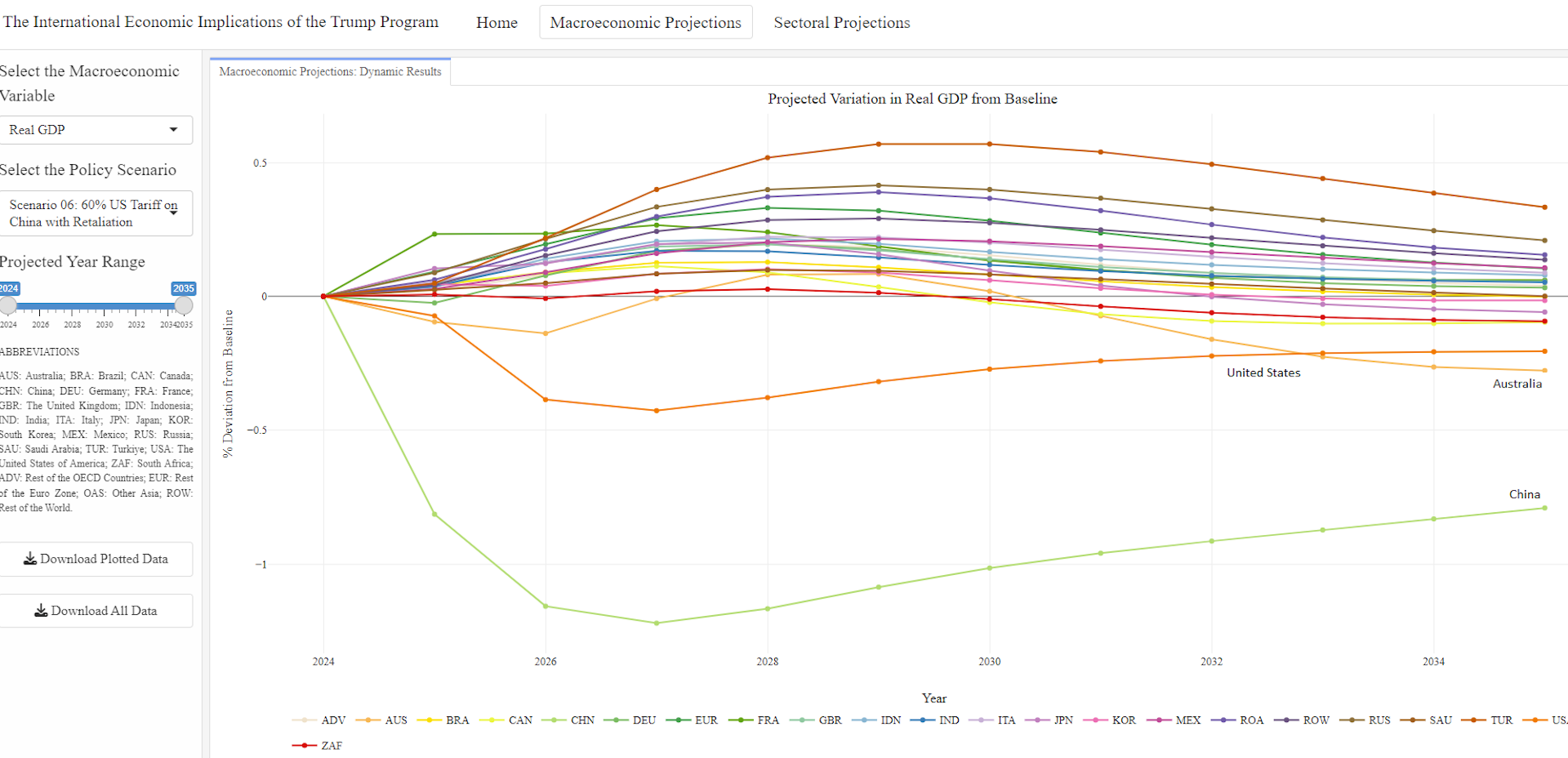
    Updates to this page

    Published 4 October 2024

    MIL OSI United Kingdom –

    January 23, 2025
  • MIL-OSI USA: Rep. Young Kim, Colleagues Condemn Hamas’s October 7 Attack on Israel One Year Later, Urge for Release of Hostages 

    Source: United States House of Representatives – Representative Young Kim (CA-39)

    Washington, DC – Today, U.S. Representatives Young Kim (CA-40), Josh Gottheimer (NJ-05), Joe Wilson (SC-02), and Lois Frankel (FL-22) introduced a bipartisan resolution condemning Hamas’s attack on Israel on October 7, 2023 and calling attention to the ongoing atrocities nearly one year since that deadly day. 

    On October 7, 2023, Hamas terrorists infiltrated Israel and brutally murdered, raped, and burned alive more than 1,200 individuals. They took 251 hostages, including Americans and citizens of more than 40 countries.  

    Today, Hamas still holds 101 hostages, including seven Americans: Edan Alexander, Itay Chen, Sagui Dekel-Chen, Gadi Haggai, Judith Weinstein Haggai, Omer Neutra, and Keith Siegel. Several young women remain in Hamas captivity, subjected to sexual violence and held in dark tunnels. 

    “Hamas’s brutal terrorist attack against our ally Israel on October 7, 2023 put the worst of evil on display for the world to watch. We will not forget the darkness of that day that will live in infamy,” said Rep. Young Kim. “One year later, the United States cannot waver in standing with our freedom-loving allies and against terrorism – wherever it rears its ugly head. On the Foreign Affairs Committee, I’ll keep working to bring Americans held hostage back home safely and to hold the Iran regime and its terrorist proxies Hamas, Hezbollah, and the Houthis accountable for their unfathomable violence and disregard for human decency.” 

    “As we commemorate one year since October 7, we honor the memory of the innocent civilians who were brutally murdered by Hamas terrorists and we stand with our greatest ally in the Middle East, Israel in its efforts to secure the safe return of the remaining hostages. We can never forget that Hamas terrorist terrorists launched a devastating attack against Israel, brutally murdering more than 1,200 people, and kidnapping more than 240 people. 101 people remain captive, including 7 Americans,” said Congressman Josh Gottheimer (NJ-5). “We must continue to combat the surge in antisemitism that has followed and ensure that Iran and its proxies, including Hamas, Palestinian Islamic Jihad (PIJ), Hezbollah, and the Houthis, are held accountable. This bipartisan resolution reaffirms America’s unwavering commitment to Israel’s security and to the release of all the remaining hostages, including American citizens.”  

    “On October 7th, 2023, the world watched in horror as Iranian puppet Hamas attacked Israel and committed mass murder and other atrocities on innocent men, women, and children. One year later, the U.S. remains steadfast in its support of the Israeli people and its commitment to securing the safe release of the remaining hostages,” said Congressman Joe Wilson (SC-2). 

    “Today, we mark a devastating and somber anniversary—one year since Hamas terrorists unleashed the deadliest attack on the Jewish people since the Holocaust. On October 7, 2023, the world witnessed in horror as Hamas murdered, raped, and maimed thousands of innocent civilians, while taking 240 hostages—unknown how many remain alive captive in Hamas’s dark tunnels, enduring unimaginable suffering,” said Congresswoman Lois Frankel (FL-22). “More than ever, it is important that there is no separation in the bond between the United States and Israel and that Hamas release the hostages.” 

    The resolution is supported by ADL (Anti-Defamation League); American Jewish Committee (AJC);  FDD Action; Hadassah, the Women’s Zionist Organization of America, Jewish Federations of North America; Jewish Women International; and, National Council of Jewish Women (NCJW).

    “On October 7, 2023 the world witnessed the largest antisemitic event perpetrated against the Jewish people since the Holocaust,” said Anti-Defamation League (ADL) CEO and National Director Jonathan Greenblatt. “These horrific terrorist attacks led by Hamas, Palestinian Islamic Jihad, and others, have ultimately led to the targeting of Jewish communities around the globe and a groundswell of antisemitic rage unseen in decades. We thank Reps. Gottheimer, Kim, Frankel, and Wilson for leading this bipartisan resolution, calling for the return of all hostages still in Gaza, and condemning the Hamas terrorist attacks and the ensuing global antisemitic wave that continues to present new threats to communities and students on campuses around the world each day.” 

    “As we approach one year since the mass murder, torture and kidnapping of men, women and children by Hamas, the world must understand that Hamas’ atrocities did not stop after October 7, 2023. Hamas continues to launch rockets into Israel, uses Palestinian civilians as human shields, and worst of all, is still holding 101 hostages from 21 nations. But this is not the only threat facing Israel as Iran’s proxies, including Hezbollah, continue to show. The world must continue to condemn these brutal acts and support Israel’s right to defend itself from ongoing terrorism. This is why I am deeply grateful to Representatives Josh Gottheimer (D-NJ), Young Kim (R-CA), Lois Frankel (D-FL), and Joe Wilson (R-SC) for speaking out forcefully and reminding the world of Hamas and other Iranian proxies’ demonstration of pure evil. As October 7, 2024 nears, we must recommit ourselves to doing everything possible to bring the remaining hostages home and ensure the safety and security of Israel prevails over the death and destruction chosen by Hamas, Hezbollah and other terrorist organizations,” said Ted Deutch, CEO of American Jewish Committee. 

    “Hadassah supports Reps. Josh Gottheimer, Lois Frankel, Young Kim, and Joe Wilson’s efforts through this resolution to commemorate one year since Hamas’ brutal October 7, 2023, attack against Israel, honor the victims of Hamas’s murderous terror and rampant sexual violence, and demand the immediate, safe return of the hostages. The massacres that day and the devastating events that have followed continue to have a profound impact on Jewish communities around the world,” said Hadassah National President Carol Ann Schwartz.  

    “The bipartisan resolution reflects Congress’s moral clarity about the genocidal atrocities committed by Hamas against Israel on Oct 7. It underscores the enduring threat posed by the terrorist organization to American citizens and citizens of scores of other countries.  The resolution could not be more important at a time when there are those who seek to normalize Hamas’s actions and justify its brutality in an inversion of reality. Congress rightly puts on the record Israel’s right to defend itself against the actions of the Islamic Republic of Iran and its proxies. FDD Action supports this resolution and honors the lives of those killed by Hamas and supports the unconditional release of all remaining hostages,” said FDD Action. 

    “National Council of Jewish Women applauds Representatives Josh Gottheimer, Lois Frankel, Joe Wilson, and Young Kim for introducing this crucial resolution to ensure that October 7 remains at the forefront of our collective memory,” said National Council of Jewish Women CEO Sheila Katz. “As we approach the one-year mark since Hamas terrorists brutally attacked nearly 1,200 lives, took hundreds of innocent people hostage, and used sexual violence as a tool of war, we echo this call to unconditionally condemn these atrocities of October 7. We are also grateful that this resolution addresses the alarming rise in global antisemitism. Everyone deserves to live free from violence and discrimination.”  

    “Nearly one year ago, Hamas terrorists changed the lives of Jews around the globe – how we act, how we are treated, and how we live. But Jews refuse to live in fear or be cowed from living our full Jewish lives in community. That’s why Jewish Federations will be marking the anniversary with more than 100 events that will remember the victims, honor the heroes, and stand in solidarity with Israel. That is why we strongly support a bipartisan Congressional resolution commemorating the events of October 7th, as it condemns Hamas for their atrocities, calls for Hamas to surrender and return the hostages, and reaffirms Israel’s right to self-defense. We are proud that the sponsors realize the importance of this day and want it to be recognized by the rest of the United States,” said Jewish Federation of North America President and CEO Eric Fingerhut.  

    “As the most documented atrocity in history, including Go-Pro video uploaded by the terrorists themselves in order to amplify the terror and trauma, intentional campaigns of distortion have led to denial that Hamas and their allies committed sexual atrocities, or far worse, that the rapes of Israelis and others were deserved as acts of resistance,” said Meredith Jacobs, CEO of Jewish Women International. “At JWI, we hold fast to the tenets of our work — victims are never blamed, survivors are believed, rape is never justified. Acknowledging the truth, attributing the strategic and systemic use of sexual violence as a weapon of war to Hamas, is a critical first step in giving some sort of historic justice to the victims and survivors. We thank Representatives Gottheimer, Frankel, Wilson, and Kim for their leadership in introducing this resolution.”

    Read the full resolution HERE. 

    MIL OSI USA News –

    January 23, 2025
  • MIL-OSI USA: Catawba Indian Nation, Jasper and York Counties Eligible for FEMA Assistance in South Carolina

    Source: US Federal Emergency Management Agency

    Headline: Catawba Indian Nation, Jasper and York Counties Eligible for FEMA Assistance in South Carolina

    Catawba Indian Nation, Jasper and York Counties Eligible for FEMA Assistance in South Carolina

    ATLANTA – Homeowners and renters in Jasper and York counties and tribal members of the Catawba Indian Nation who had uninsured damage or losses caused by Hurricane Helene are now eligible to apply for FEMA disaster assistance.

    FEMA may be able to help with serious needs, displacement, temporary lodging, basic home repair costs, personal property loss or other disaster-caused needs. The Catawba Indian Nation, Jasper and York counties join Abbeville, Aiken, Allendale, Anderson, Bamberg, Barnwell, Cherokee, Edgefield, Greenville, Greenwood, Hampton, Laurens, Lexington, McCormick, Newberry, Oconee, Pickens, Richland, Saluda, Spartanburg and Union counties previously authorized for assistance to households.

    The quickest way to apply is to go online to DisasterAssistance.gov. You can also apply using the FEMA App for mobile devices or calling toll-free 800-621-3362. The telephone line is open every day and help is available in most languages. If you use a relay service, such as Video Relay Service (VRS), captioned telephone or other service, give FEMA your number for that service. To view an accessible video on how to apply visit Three Ways to Apply for FEMA Disaster Assistance – YouTube.

    What You’ll Need When You Apply

    • A current phone number where you can be contacted.
    • Your address at the time of the disaster and the address where you are now staying.
    • Your Social Security number.
    • A general list of damage and losses.
    • Banking information if you choose direct deposit.
    • If insured, the policy number or the agent and/or the company name.

    If you have homeowners, renters’ or flood insurance, you should file a claim as soon as possible. FEMA cannot duplicate benefits for losses covered by insurance. If your policy does not cover all your disaster expenses, you may be eligible for federal assistance.

    For the latest information about South Carolina’s recovery, visit http://www.fema.gov/disaster/4829.

    Follow FEMA on X at x.com/femaregion4 or on Facebook at facebook.com/fema.

    sandra.habib
    Mon, 10/07/2024 – 15:58

    MIL OSI USA News –

    January 23, 2025
  • MIL-OSI USA: In Photos: Commonwealth of Virginia and FEMA Working Together to Support Recovery for Helene Survivors

    Source: US Federal Emergency Management Agency

    Headline: In Photos: Commonwealth of Virginia and FEMA Working Together to Support Recovery for Helene Survivors

    In Photos: Commonwealth of Virginia and FEMA Working Together to Support Recovery for Helene Survivors

    Richmond, Va.— In partnership with the Commonwealth of Virginia, FEMA is on the ground working in Virginia communities that were impacted by Hurricane Helene. 

    On Friday, Oct. 3, FEMA leadership, including Federal Coordinating Officer Timothy Pheil, Deputy Federal Coordinating Officer Jeff Jones, and Region 3 Deputy Regional Administrator Lilian Hutchinson met with Governor Youngkin to survey damage in Damascus, Va. firsthand. Led by the Virginia Department of Emergency Management (VDEM) as well as local and county officials, they were accompanied by members of the Virginia National Guard and U.S. Army Corps of Engineers.

    This strong, interagency partnership makes a difference for communities who will benefit from the unified mission our agencies share to help Virginia recover. 

    Survivors in designated communities can apply for assistance by visiting disasterassistance.gov, calling 800-621-3362 or using the FEMA App.

    These photos show collaborative response and recovery efforts across southwest Virginia: 

    WASHINGTON COUNTY, Va.— Federal Recovery Coordinating Officer Timothy Pheil (Ieft) and Governor Youngkin shake hands, while FEMA Region 3 Deputy Regional Administrator Lilian Hutchinson looks on. (Nicholas Monteleone/ FEMA)
    WASHINGTON COUNTY, Va.— An official points to damage from Hurricane Helene, speaking with FEMA Federal Coordinating Officer Timothy Pheil. Officials surveyed damage with staff from the Virginia Department of Emergency Management, Virginia National Guard, U.S. Army Corps of Engineers and FEMA. (Nicholas Monteleone/ FEMA)
    WASHINGTON COUNTY, Va.— Disaster Survivor Assistance Team Specialist Mo helps a Damascus, Va. resident fill out an application for federal assistance on Oct. 3, 2024. (Philip Maramba/FEMA)
    WASHINGTON COUNTY, Va.— Crews working to restore utilities and infrastructure damaged by Helene. (Nicholas Monteleone/ FEMA)
    PULASKI COUNTY, Va.— Representatives from the Small Business Administration, Virginia Department of Emergency Management, and FEMA speak with a disaster survivor outside of her home. (Philip Maramba/ FEMA)
    MONTGOMERY COUNTY, Va.— Representatives from the Small Business Administration, Virginia Department of Emergency Management, and FEMA survey Helene-related property damage as part of joint Preliminary Damage Assessments. (Philip Maramba/ FEMA)

    FEMA has set up a rumor response webpage to clarify our role in the Helene response. Visit Hurricane Helene: Rumor Response | FEMA.gov. 

    For more information on Virginia’s disaster recovery, visit vaemergency.gov,  the Virginia Department of Emergency Management Facebook page , fema.gov/disaster/4831 and facebook.com/FEMA. 

    ###

    FEMA’s mission is helping people before, during, and after disasters. FEMA Region 3’s jurisdiction includes Delaware, the District of Columbia, Maryland, Pennsylvania, Virginia and West Virginia. Follow us on X at x.com/FEMAregion3 and on LinkedIn at linkedin.com/company/femaregion3.

    Disaster recovery assistance is available without regard to race, color, religion, nationality, sex, age, disability, English proficiency, or economic status. If you or someone you know has been discriminated against, call FEMA toll-free at 833-285-7448. If you use a relay service, such as video relay service (VRS), captioned telephone service or others, give FEMA the number for that service. Multilingual operators are available (press 2 for Spanish and 3 for other languages).

    erika.osullivan
    Mon, 10/07/2024 – 14:41

    MIL OSI USA News –

    January 23, 2025
  • MIL-OSI USA: As Federal Assistance for Hurricane Helene Exceeds $210 Million, FEMA Prepares for Dual Response with Hurricane Milton Strengthening as it Moves Toward Gulf Coast of Florida

    Source: US Federal Emergency Management Agency

    Headline: As Federal Assistance for Hurricane Helene Exceeds $210 Million, FEMA Prepares for Dual Response with Hurricane Milton Strengthening as it Moves Toward Gulf Coast of Florida

    As Federal Assistance for Hurricane Helene Exceeds $210 Million, FEMA Prepares for Dual Response with Hurricane Milton Strengthening as it Moves Toward Gulf Coast of Florida

    FEMA Prepares for Hurricane Milton While Continuing to Mobilize Federal Resources for Helene Survivors

    WASHINGTON — Federal support for survivors of Hurricane Helene has now surpassed $210 million, reflecting the Biden-Harris Administration’s commitment to helping impacted communities recover and rebuild. FEMA remains focused on coordinating comprehensive recovery efforts across the Southeast, mobilizing resources and personnel to provide immediate and long-term support to those affected.

    Administrator Deanne Criswell continues to lead the Helene response and recovery efforts and will join Governor Roy Cooper, Department of Defense Assistant Secretary Rebecca Zimmerman Dual Status Commander Wes Morrison and NORTHCOM Commander Gen. Gregory Guillot for a press conference this morning to provide updates on the storm damage assessments and response efforts.

    Administrator Criswell has directed FEMA’s Deputy Director Erik Hooks to travel to North Carolina today to support response and recovery efforts while she travels to Florida. There, she will meet with local and state officials as she directs the federal response on the ground and prepares for the impacts of Hurricane Milton, which is expected to make landfall on the Gulf Coast of Florida on Wednesday evening as a major hurricane. Administrator Criswell will return to North Carolina this evening.

    As FEMA maintains its focus on Helene response and recovery, the agency is also pre-positioning resources to support local and state response efforts ahead of Hurricane Milton. FEMA is fully prepared to respond to the storm’s potential impacts and has already begun staging resources and personnel to support communities in its path. The agency’s capacity to manage multiple simultaneous disasters ensures that it can continue to prioritize response and recovery efforts for Helene, while also being ready to respond to Milton. Residents in the storm’s projected path are urged to stay informed and prepare now.

    Helene Response

    The agency is actively working alongside state, local and tribal partners to assess damage and support those affected by Helene. Nearly 7,000 personnel from across the federal workforce are deployed, including FEMA staff. To date, FEMA has shipped over 15.6 million meals, more than 13.9 million liters of water, 157 generators and more than 505,000 tarps to the region. 

    Disaster survivors in certain areas of Georgia, Florida, North Carolina, South Carolina, Tennessee and Virginia can begin their recovery process by applying for federal assistance through FEMA. People with damage to their homes or personal property who live in the designated areas should apply for assistance, which may include upfront funds to help with essential items like food, water, baby formula, breastfeeding supplies and other emergency supplies. Funds may also be available to repair storm-related damage to homes and personal property, as well as assistance to find a temporary place to stay. Homeowners and renters with damage to their home or personal property from previous disasters, whether they received FEMA funds or not, are still eligible to apply for and receive assistance for Helene.   

    There are three ways to apply for FEMA assistance:  

    Support for North Carolina

    Financial Support: FEMA has approved more than $32 million in housing and other types of assistance for over 27,000 households.

    Staffing: As response efforts continue in North Carolina, more than 800 FEMA staff are on the ground, with more arriving daily. Over 1,200 Urban Search and Rescue personnel remain in the field helping people. These teams have rescued or supported over 3,200 survivors to date. In a move to strengthen recovery operations in Western North Carolina, President Biden has ordered an additional 500 active-duty troops equipped with advanced technological assets to the area. This brings the total number of active-duty military personnel supporting the response to 1,500. Dozens of Disaster Survivor Assistance staff are on the ground in affected areas to help survivors apply for FEMA assistance and connect them with additional state, local, federal and voluntary agency resources. Experienced FEMA leaders from around the country are in the field to bolster response efforts. 

    Sheltering: Over 1,700 people who cannot return home are staying in safe and clean lodging through FEMA’s Transitional Sheltering Assistance program. Transitional Sheltering Assistance is available for North Carolinians displaced by Helene. Residents in declared counties who have applied for disaster assistance may be eligible to stay temporarily in a hotel or motel paid for by FEMA while they work on their long-term housing plan. People do not need to request this assistance. FEMA will notify them of their eligibility through an automated phone call, text message and/or email, depending upon the method of communication they selected at the time of application for disaster assistance. 

    Shelter numbers continue to decline, with 22 shelters housing just under 1,000 occupants. Mobile feeding operations continue to help survivors in heavily impacted areas, including three mass feeding sites in Buncombe, McDowell and Watauga counties.  

    Power and Cellular Restoration: As of today, more than 86% of originally reported power outages have been restored. Cellular restoration continues to improve, with less than 20% of cellular sites down. FEMA is boosting response coordination by providing Starlink units to ensure first responders can communicate with each other. 

    Commodities: Commodity distribution, mass feeding and hydration operations are underway in areas of western North Carolina. FEMA commodity shipments are enroute to support operations. The agency is on track to meet requested delivery timelines for meals and water. Voluntary organizations are supporting feeding operations with bulk food and water deliveries coming via truck and aircraft. The Salvation Army has nine mobile feeding units supporting the massive operation and has provided emotional and spiritual care to more than 900 people. To date, The Salvation Army has served over 12,600 meals, 9,600 drinks and 5,600 snacks. The American Red Cross is engaging in targeted distribution of emergency supplies in low-income communities with high levels of minor or affected residential damage. 

    Resources: 

    • Residents can visit: ncdps.gov/helene to get information and additional assistance.  
    • Residents can get in touch with loved ones by calling 2-1-1 or visiting unitedwaync.org to add them to search and rescue efforts.  

    Support for Florida  

    As recovery efforts continue in Florida, FEMA has approved more than $87 million for over 13,000 households. FEMA specialists are canvassing Florida communities affected by Helene to help survivors apply for assistance. Additionally, FEMA inspectors are visiting applicants’ homes to verify disaster-caused damage.

    Residents in need of information or resources should call the State Assistance Information Line (SAIL) at
    1-800-342-3557. English, Spanish and Creole speakers are available to answer questions.  

    Support for South Carolina 

    As recovery efforts continue in South Carolina, FEMA has approved over $57 million for more than 73,500 households. FEMA Disaster Survivor Assistance Teams are on the ground in neighborhoods across the affected counties continuing to help survivors apply for FEMA assistance and connect them with additional state, local, federal and voluntary agency resources.  

    Residents with questions on Helene can call the state’s toll-free hotline, open 24 hours a day, at 1-866-246-0133. 

    Residents who are dependent on medical equipment at home and who are without power due to Helene may be eligible for a medical needs shelter. Call the state’s Department of Public Health Care Line at 1-855-472-3432 for more information. 

    Support for Georgia 

    FEMA has approved over $31 million for more than 39,000 households. FEMA Disaster Survivor Assistance Teams are on the ground in neighborhoods across the affected counties helping survivors apply for FEMA assistance and connecting them with additional state, local, federal and voluntary agency resources. 

    Resources: Residents can find resources like shelters and feeding sites at gema.georgia.gov/hurricane-helene. 

    Support for Virginia 

    To date, FEMA has approved nearly $500,000 for over 89 households. FEMA Disaster Survivor Assistance Teams are on the ground in neighborhoods across the affected counties helping survivors apply for FEMA assistance and connecting them with additional state, local, federal and voluntary agency resources.

    Residents can find resources like shelters and feeding sites at: Recover – Hurricane Helene | VDEM (vaemergency.gov)

    Support for Tennessee

    FEMA has approved more than $632,000 for disaster assistance for over 33 households. FEMA Disaster Survivor Assistance Teams are on the ground in neighborhoods across the affected counties helping survivors apply for FEMA assistance and connecting them with additional state, local, federal and voluntary agency resources.

    • Residents can call 1-800-824-3463 to report a missing person. Callers should be prepared to provide as much information as possible including names, phone numbers, vehicle identification and last known whereabouts.  
    • Counties continue to establish donation centers. For the evolving list, visit TEMA’s website. 

    Voluntary Organizations

    Voluntary organizations are also providing personnel and resources to the hardest hit areas. The American Red Cross has hundreds of trained disaster workers providing comfort and operating shelters. Additionally, they are helping find loved ones through their helpline 1-800-RED-CROSS (1-800-733-2767) or by the Red Cross Hurricane Helene Reunification page where people can enter pertinent information about the person they’re looking for. If someone is missing a child related to this disaster or any other incident, they need to call 9-1-1 and then 1-800-THE-LOST to receive assistance from the National Center for Missing and Exploited Children. 

    People can receive free services like cutting fallen trees, tarping roofs and mold mitigation with the help of Crisis Cleanup by calling 844-965-1386. The hotline is open through October 11 and can connect people with volunteers from local relief organizations, community groups and the faith-based community who may be able to assist.  

    alex.fonseca
    Mon, 10/07/2024 – 14:18

    MIL OSI USA News –

    January 23, 2025
  • MIL-OSI New Zealand: Property Market – Spring marks subtle shift in market conditions – QV

    Source: Quality Valuation (QV)

    Spring has sprung, but green shoots of growth remain scarce across New Zealand Aotearoa’s housing market – for the time being.

    Our latest QV House Price Index shows the average home decreased in value nationally by 0.4% last month and by 1.6% in the September quarter – compared to a 0.5% monthly decline and a 2% quarterly decline in our August index. The national average is now $901,920, which is just 0.3% higher than the same time last year.

    The latest data also shows that home values have continued to slowly level out across much of the country in the September quarter, with the average three-month rolling rate of reduction slowing in Auckland (-1.7%), Christchurch (-0.8%), Hamilton (-1.2%), Dunedin (-0.8%) and most of the other main urban areas we monitor around the country.

    The most notable exception was Wellington, where home values have reduced at twice the national average rate. The Wellington region’s average home value has reduced by an average of 3.2% in the September quarter – a slightly higher rate of reduction than the 3% decline reported for the August quarter.

    QV operations manager James Wilson commented: “Interest rates have started to come down now, so we’re really starting to see sentiment shift across much of the country. There seems to be a spreading expectation that interest rates can only go one way, and so we’re seeing more people at open homes, in auction rooms, and browsing for property online.

    “And so it certainly seems like a general uplift in property values is now on the horizon, but despite growing confidence and optimism that we’re through the worst of it, the conditions aren’t yet conducive to growth. The cost of borrowing still remains relatively high, the cost of living is restrictive, and there are significant worries about job security – especially in Wellington.”

    Mr Wilson said high levels of stock for sale on the market today were also having a dampening effect on prices. “Generally speaking, those who are in a position to purchase still have a raft of different options to choose from right now, especially within the main centres. So there isn’t so much pressure on prices currently, with more than enough houses for sale to meet the current level of demand.”

    However, he expected that balance to slowly shift over the coming months – particularly if interest rates continue to fall. “All eyes will be on the Reserve Bank’s October announcement. If the Official Cash Rate drops again, as many are expecting it to, it will reinforce the growing perception that now is a decent time to become reacquainted with the property market. A larger cut, like what we saw recently in the US, will only reinforce it even more.”

    “First-home buyers remain very much in the ascendancy right now, but we’re already starting to see more investors coming out of the woodwork. This will ramp up the level of competition in the housing market and help to absorb some of that excess stock. Values will inevitably tighten again when prospective buyers aren’t so spoilt for choice. That hasn’t happened yet,” Mr Wilson concluded.

    Northland

    Home values continue to decline across the wider Northland region at a quicker rate than the national average.

    The average rate of decline slowed somewhat in Whangarei, where the average home value reduced by 2.1% in the September quarter to $714,322 – compared to a 2.6% reduction in the three months to the end of August.

    Otherwise, the average home value decreased in the Far North by 7.3% to $673,508 this quarter, and by 8.6% to $793,395 in Kaipara. These figures remain highly volatile due to continued low sales volumes.

    Auckland

    Green shoots of home value growth remain rare across Tāmaki Makaurau, despite a notable shift in sentiment following recent interest rate cuts.

    Of Auckland’s seven former local government areas, only Papakura (0.4%) experienced a small amount of home value growth on average this quarter. Otherwise, Franklin (-3.3%) saw the largest average decline and Rodney (-1.5%) saw the smallest.

    However, the average rate of home value decline did slow across every Auckland district this quarter. Home values reduced by an average of 1.7% across the wider region – compared to a 2.8% decline average decline throughout the three months to the end of August.

    The average value of a home in Auckland is now $1,228,955, which is 2.6% lower than the same time last year and now 4.4% lower than at the start of 2024.

    Local QV registered valuer Hugh Robson commented: “There are increasing signs that a slow recovery is underway now across the Auckland region, with more developers, investors and buyers in general, all out there looking to buy.”

    Tauranga

    The average rate of home value decline has increased in Tauranga.

    The city’s average home value reduced by 1% in the month of September – compared to a 0.4% reduction in August – with its three-month rolling rate of decline now sitting at 2.1%. This also compares to a 1.6% average decline nationally this quarter.

    Tauranga’s average home value is now $1,005,282, which is still 0.3% higher than the same time last year.

    Waikato

    Modest patches of growth have emerged across Waikato’s residential property market.

    After four consecutive months of decline, home values lifted slightly across the wider region by an average of 0.6% during the month of September, with almost every district recording minor amounts of growth.

    Hamilton was the exception. Its average home value decreased by 0.3% to $772,473 in September. The average home here is now worth 0.5% less than the same time last year and 1.6% less than at the start of 2024.

    Local QV property consultant Marshall Wu commented: “The regional market is mixed. Most of the larger districts – including Thames-Coromandel, Waikato, Matamata-Piako and Waipa – have experienced a quarterly decrease, whereas smaller districts like Hauraki, Otorohanga, and Waitomo are displaying signs of recovery.”

    “The outlook for the housing market remains intertwined with the trajectory of interest rates, economic growth and labour market conditions. Although market activity has increased since the start of spring, overall trends indicate a flat to slightly declining housing market. The high volume of properties currently for sale has strengthened buyers’ positions, leading to extended selling times for vendors, declining asking prices, and lower auction clearance rates,” Mr Wu said.

    “First-time home buyers are benefiting from this environment, adopting a ‘wait and see’ approach ahead of the OCR announcement in October,” he added.

    Taranaki

    There were some very small pockets of growth across the Taranaki region last month but the market remains largely flat overall.

    Average home values in New Plymouth (0.4%) and Stratford (0.8%) increased in September, but reduced by 1.6% in neighbouring in South Taranaki.

    Home values remain 0.4% lower on average across the region for the quarter but 1.2% higher than at the same time last year.

    Hawke’s Bay

    There is little home value growth to speak of in the Hawke’s Bay.  

    Residential property values in Napier ($729,034) and Hastings ($774,635) reduced by 4.2% and 1.8% respectively this quarter – though the latter did record a modest amount (0.7%) of positive home value growth during the month of September itself.

    Once again, only Central Hawke’s Bay managed to buck the trend this quarter, with its average home value increasing by 2.6% to $587,346 throughout the three months to the end of September.

    Palmerston North

    Property values remain relatively steady in Palmerston North.

    The latest QV House Price Index shows the city’s average value decreased by 1.3% to $628,981 in the September quarter – just slightly worse than the 0.8% decline recorded in the August quarter – but that figure is still 0.3% higher on average than at the same time last year.

    Local QV registered valuer Olivia Betts commented: “The real estate market typically picks up when spring begins. However, affordability concerns remain, with many potential buyers facing challenges due to higher interest rates. Although these have dropped in recent times, further drops are required to relive this price pressure.”

    “We’re continuing to see a slight weakening of the centre point of the market, but there has been some solid interest around the mid-$500,000 price bracket from first-home buyers looking for anything modernised in the last 20 years. Properties with older, outdated features are struggling to attract buyers and are often having to sit on the market for extended periods of time,” she added.

    Wairarapa

    The latest housing data continues to be volatile in some areas of the country due to low sales volumes.

    The average home value in Carterton has reduced by 6.9% to $588,340 in the September quarter – well down on the 0.7% decline QV recorded for the August quarter – with Masterton’s average value also reducing by 4.6% to $569,813.

    South Wairarapa recorded a much more modest 1.3% reduction this quarter. Its average home value is now $750,126.

    Wellington

    Home values in Wellington have reduced at twice the average rate nationally.  

    Our latest QV House Price Index shows the region’s average home value decreased by 3.2% to $837,878 throughout the September 2024 quarter – compared to a 3% average decline in the three months to the end of August and a national average quarterly decline of 1.6%.  

    During the month of September, home values reduced by an average of 0.9% across the wider region – compared to a 1.3% average decline in August and a national average monthly decline of 0.4%.

    Breaking it down by district, Kapiti Coast and Hutt City both experienced the largest average home value declines this quarter at 3.6%. Upper Hutt recorded the smallest average quarterly decline at 1.5%, with Wellington City (-3.2%) and Porirua (-2%) sitting in between those three.

    “Home loan serviceability, job sector uncertainty and the general cost of living are all having an impact on existing homeowners and prospective buyers,” said local QV registered valuer Jack Whiteman.

    “Despite having the advantage of choice and competitive pricing, buyers are having to take a cautious approach to the market. Given the current economic circumstances and uncertainty about job security following some public sector redundancies earlier in the year, only those with secure employment are willing to take on debt at this time. This is resulting in a relatively quiet property market.”

    Nelson

    The property market remains relatively flat throughout the Tasman region.

    Our latest QV House Price Index shows Nelson’s average home value increased by 0.6% to $776,415 throughout the September 2024 quarter – compared to an even smaller 0.3% average increase in the three months to the end of August.

    In Tasman District, the average home value remained almost completely static this quarter – increasing by just 0.1% to $818,215. Meanwhile, the average home value in Marlborough reduced by 1.4% to $701,622.

    QV Nelson/Marlborough manager Craig Russell said sales volumes remained low throughout the region with properties taking an extended period to sell.

    “There is greater market activity at the lower end of the market, where a combination of first-home buyers and owner-occupiers are active. But properties that are situated in locations that have been deemed high risk are being discounted by purchasers, which is in part due to the uncertainty that these properties have obtaining insurance now and into the future.”

    West Coast

    Home values have done little more than break even across the wider West Coast region this quarter.

    The average home value across the wider region increased by 0.3% in the three months to the end of September. Westland (2.5%) and Grey (1.2%) performed above average, while home values in Buller (-3.2%) experienced a small loss on average this quarter.

    The average home value is $346,295 in Buller, $428,762 in Grey, and $452,068 in Westland.

    Canterbury

    Home values remain almost as flat as the Canterbury Plains.

    Our latest QV House Price Index shows the average home value across the wider Canterbury region decreased by just 0.7% throughout the three months to the end of September 2024 – compared to average decreases of 1.1% and 0.7% in the August and July quarters respectively.

    Waimakariri experienced an average quarterly decline of 0.9%, with home values in Selwyn and Hurunui holding up slightly better this quarter with average deficits of just 0.3% and 0.4% respectively.

    In Christchurch, the average home value reduced by 0.8% this quarter, including by 0.4% during the month of September itself.

    QV senior consultant Olivia Brownie commented: “The latest QV House Price Index has seen a little sales slump for Christchurch, with an increase of spring listings tipping the equilibrium slightly to a minor decrease in home values.”

    “With interest rates easing and some increase in spring activity, we may see the Canterbury market have a further slowdown in home value decline, if not some positive movement over the next few months. However, this is all offset by a sizable supply of new builds and stock available, and still some economic uncertainty in some business sectors across the Canterbury region.”

    Otago

    Home values all-but broke even in Dunedin last month.

    The city’s average home value decreased by 0.8% this quarter, including by only 0.1% in September. At $638,297, the average home is now worth 4.6% more than at the same time last year and 1.8% more than at the start of 2024.

    “Dunedin’s number of properties listed for sale appears to have jumped back up after four months of decline, with the average number of days to sell still remaining high. So it’s still obviously a buyers’ market,” said local QV registered valuer Rebecca Johnston.

    “Though vacant land sales remain slow compared to the market’s peak at the end of 2021, they have increased across the city compared to 2022 and early 2023, indicating more positive sentiment for new builds/developments. Well located properties – including in new subdivisions on the Taieri, on the coast, and in Residential 2 and Inner City Residential zoned properties – have the greatest demand.”

    Meanwhile, the average home value increased by 0.5% across the wider Otago region this quarter. Only Dunedin and Central Otago (-0.9%) recorded small average home value deficits, with values increasing marginally in all the other districts.

    Queenstown

    Home values remain flat to gently rising in Queenstown.

    The latest QV House Price Index shows its average home value lifted by 1% in the September quarter to $1,846,833. That is twice as much growth as in the three months to the end of August 2024.

    The average home in Queenstown is now worth 7% more than the same time last year. This compares to an average annual increase of just 0.3% nationally.

    Invercargill

    Residential property values grew by an average of 1.2% last month in Invercargill.

    The city’s average home value is $486,639, which is now 4% higher than the same time last year.

    Local QV registered valuer Andrew Ronald commented: “Market conditions remain flat across all price brackets. There is still steady demand from first-home buyers, and investors are beginning to return to the market with the restoration of interest tax deductibility rules.”

    “However, continued high interest rates appear to be limiting price growth,” he added.

    MIL OSI New Zealand News –

    January 23, 2025
  • MIL-OSI USA: Readout of President  Biden’s Call with President Herzog of  Israel

    US Senate News:

    Source: The White House
    This morning President Biden spoke with Israeli President Isaac Herzog on the solemn occasion of the one-year anniversary of the horrific Hamas October 7 terrorist attacks. 
    President Biden expressed his deepest condolences to the people of Israel and to the families of the 1,200 innocent people – including 46 Americans – massacred by the terrorist group Hamas on a day of unspeakable brutality. He stressed that the United States will never give up until we bring all of the remaining hostages home safely.
    President Biden conveyed his commitment to the safety of the Jewish people, the security of Israel, and its right to exist, and reaffirmed his support for Israel’s right to defend itself against attacks from Iran and all Iranian-backed terrorist groups, including Hezbollah, Hamas, and the Houthis.
    The President also expressed deep sadness for the loss of innocent life in Gaza and the ongoing suffering of Palestinian civilians as a result of the war that Hamas unleashed. The two leaders reaffirmed their commitment to achieving a deal in Gaza that brings the hostages home, secures Israel, alleviates the suffering of Palestinian civilians, and paves the way for a lasting peace with Hamas never again able to control Gaza or reconstitute its military capabilities. 

    MIL OSI USA News –

    January 23, 2025
  • MIL-OSI USA: Rep. Jackson Introduces Legislation to Rename Post Office After Amarillo Legend Jerry H. Hodge

    Source: United States House of Representatives – Congressman Ronny Jackson (TX-13)

    WASHINGTON, DC — Last week, Representative Ronny Jackson (TX-13) introduced legislation to rename the U.S. Post Office in downtown Amarillo, Texas as the “Mayor Jerry H. Hodge Post Office Building” to honor the life and legacy of Jerry Hodge. Jerry Hodge was a businessman, rancher, and philanthropist who died peacefully in Amarillo, TX at the age of 81 on July 25, 2024.

    Jackson said: “Jerry Hodge’s legacy is a testament to his remarkable journey. His dedication and passion for Amarillo was unparalleled. From being elected as the youngest mayor in Amarillo’s history, to turning Maxor Drug into a national leader in pharmacy services, to playing a crucial role in bringing the Sod Poodles, the Texas Tech School of Pharmacy, and the Texas Tech School of Veterinary Medicine to Amarillo, Jerry Hodge’s leadership and vision left a permanent mark on the city. Beyond his professional achievements, Jerry cared deeply for his wife Margaret, his family, friends, and community, and I am proud to have called him a friend. His generosity and commitment to excellence were evident to all, which is why I am honored to introduce this legislation to rename the downtown post office as the “Mayor Jerry H. Hodge Post Office Building.”

    Tedd L. Mitchell, M.D., Chancellor of the Texas Tech University System said: “Jerry was an extraordinary leader, businessman, and philanthropist who made an incredible impact on the people of Amarillo and the surrounding area. A true trailblazer, he took risks and never hesitated to stand tall for the causes he believed in. Jerry and his wife, Margaret, have been instrumental supporters of the Texas Tech University System and our universities. Without the Hodges, Texas Tech University and Texas Tech University Health Sciences Center would not have such a crucial presence in Amarillo today. I want to thank Congressman Jackson for his efforts to recognize Jerry’s tremendous contributions to this community.”

    Vance Reed, Chairman of Reed Beverage said: “Jerry Hodge was a man of many facets – a lover of land and longhorns, an admirer of good horses, and above all, a person with sincere devotion to mankind. His legacy is etched not only in the businesses he built, but also in the lives he touched. The impact of Jerry and his wife Margaret’s generosity is visible across Amarillo and the states of Texas and Oklahoma, with numerous buildings bearing their names. In a fitting tribute, thanks to District 13 Congressman Ronny Jackson, there are plans to rename the Downtown Post Office in Jerry’s honor. This gesture will serve as a lasting reminder of Jerry Hodge’s contributions and his choice to call Amarillo, Texas his home.”

    Alex Fairly, Executive CEO of the Fairly Group said: “Jerry Hodge was an extraordinary human being. He loved his community and he shared his time, influence, and wealth in a passionate pursuit of improving it. Amarillo is better because of Jerry’s unselfish leadership and generosity, and Congressman Jackson is right to mark Jerry’s impact on our community with this honor so that we do not forget his example and impact.”

    Richard Ware, Chairman of Amarillo National Bank said: “Amarillo has been blessed and honored to have Jerry Hodge as our leading citizen since the inception of the town. Jerry has served successfully in more positions than anyone – each of these bringing growth and advancement to Amarillo. He was a man of his word and a true friend to many. The Post Office would be a fitting memorial to all that Jerry has done for Amarillo and West Texas.”

    The legislation can be found here. 

    Biography of Jerry H. Hodge: Jerry Hodge was born on September 7, 1942, in Carnegie, OK. His family moved to Amarillo in 1957 where he went on to graduate from Tascosa High School in 1960. He earned a pharmacy degree from Southwestern Oklahoma State University in 1965. At 23, he purchased Maxor Drug, over the next 49 years, he grew Maxor from a single downtown location in Amarillo to a nationwide producer of pharmacy services across the country. At 30, Jerry was elected to the Amarillo City Commission and served two terms. At 34, he was elected as the youngest Mayor of Amarillo in 1977 and later won re­election by one of the most substantial total votes in the history of the city.

    In 1991, Jerry met Margaret, the love of his life. Jerry persuaded Margaret to move to Texas following their marriage on July 29, 1994. With Margaret by his side for nearly 30 years, they were an unstoppable team positively influencing the City of Amarillo. Jerry’s passions also included ranching, owning High Card Ranch in Clarendon, TX and Dos Rios Ranch outside of Springer, NM. Jerry was involved in the Coors Ranch Rodeo since it first began in 1988, and the High Card Ranch competes in the Coors Ranch Rodeo to this day.

    After 49 years, Jerry retired as CEO of Maxor in 2016 but continued to serve on the board for an additional 7 years. In 2019, he fulfilled a longtime passion by leading the effort to bring minor league baseball to Amarillo, resulting in the creation of Hodgetown Stadium, named in his honor. In Amarillo, Jerry also played a key role in establishing the Jerry H. Hodge School of Pharmacy, which is named in his honor, as well as the Texas Tech School of Veterinary Medicine. Additionally, he published his memoir, You’re On, Cowboy, in which he shared life lessons both good and bad with honesty and humor.

    Jerry is survived by his wife, Margaret Hodge, stepmother, Dolores Hodge, his children Heath Hodge (Donna), Ryan Hodge (Kim), Sunny Hodge-Campbell (Michael Flowers), Angela Serio Harney (Seth), former son-in-law Andrew Campbell, grandchildren Jerry Heath, Jordan, and Jacob Hodge; Josh Hodge; Ellen Campbell; Imogene, Geneva, and Violet Harney, and great-grandchildren Hollis, Lawrence, Cecille, Lola, Jett, Jayton, and River. 

    ###

    MIL OSI USA News –

    January 23, 2025
  • MIL-OSI USA: Manning Statement on the One-Year Anniversary of Hamas’s October 7th Attack Against Israel

    Source: United States House of Representatives – Congresswoman Kathy Manning (NC-06)

    Manning Remembers October 7th Victims, Calls for the Release of all Hostages, and Reaffirms Commitment to Israel’s Security

    Washington, DC – Today, Congresswoman Kathy Manning (NC-06), Vice Ranking Member of the House Foreign Affairs Committee, released the following statement on the one-year anniversary of Hamas’s brutal October 7th attack against Israel, which killed over 1,000 innocent civilians in the deadliest single day for Jews since the Holocaust, and saw hundreds taken hostage. 

    “The events of October 7th continue to weigh heavily on Israel and the countless families devastated by Hamas’s brutal attack. The profound pain of those who lost loved ones, coupled with the trauma survivors have endured, cannot be overstated. The incomprehensible atrocities Hamas has inflicted on innocent civilians, alongside its ongoing torment of hostages, should shock the conscience of the entire world. 

    “Since October 7th, Hamas terrorists have brutally murdered over forty American citizens, and four remain held hostage, including Keith Siegel from my home state of North Carolina. Today, I renew my call for the immediate release of all remaining hostages. Their freedom is essential for the international community to assist in the reconstruction of Gaza and to bring about a stable government that is willing to live in peace with Israel. 

    “Israel is our strongest, most dependable, and only democratic ally in the Middle East, and the United States must unwaveringly stand by Israel as it faces relentless attacks from Iran and its proxies. From the unprecedented missile attacks Iran has launched against Israel to the ongoing barrage of rockets from Hamas and Hezbollah, these actions aim to destabilize the region and undermine Israel’s security. The international community must hold Iran and its proxies accountable for their continued provocations. 

    “As we reflect on the horrors of October 7th, I join others in reaffirming America’s ironclad commitment to the security of Israel. The unimaginable cruelty of Hamas’s assault must never be repeated, and I urge Congress to ensure that Israel receives the support it needs to protect its citizens.”  

    Watch Congresswoman Manning’s House Floor remarks on the October 7th anniversary here. 

    ###

    MIL OSI USA News –

    January 23, 2025
  • MIL-OSI: Euronext announces volumes for September 2024

    Source: GlobeNewswire (MIL-OSI)

    Contacts Media Contact Investor Relations
    Amsterdam +31 20 721 4133 Brussels +32 2 620 15 50 +33 1 70 48 24 17
    Dublin +39 02 72 42 62 13 Lisbon +351 91 777 68 97  
    Milan +39 02 72 42 67 56 Oslo +47 41 69 59 10  
    Paris +33 1 70 48 24 45      

    Euronext announces volumes for September 2024

    Amsterdam, Brussels, Dublin, Lisbon, Milan, Oslo and Paris – 7 October 2024 – Euronext, the leading pan-European market infrastructure, today announced trading volumes for September 2024.

    Monthly and historical volume tables are available at this address:

    https://euronext.com/investor-relations#monthly-volumes

    CONTACTS

    About Euronext
    Euronext is the leading pan-European market infrastructure, connecting European economies to global capital markets, to accelerate innovation and sustainable growth. It operates regulated exchanges in Belgium, France, Ireland, Italy, the Netherlands, Norway and Portugal. With nearly 1,900 listed issuers and around €6.3 trillion in market capitalisation as of end of September 2024, it has an unmatched blue-chip franchise and a strong diverse domestic and international client base. Euronext operates regulated and transparent equity and derivatives markets, one of Europe’s leading electronic fixed income trading markets and is the largest centre for debt and funds listings in the world. Its total product offering includes Equities, FX, Exchange Traded Funds, Warrants & Certificates, Bonds, Derivatives, Commodities and Indices. The Group provides a multi-asset clearing house through Euronext Clearing, and custody and settlement services through Euronext Securities central securities depositories in Denmark, Italy, Norway and Portugal. Euronext also leverages its expertise in running markets by providing technology and managed services to third parties. In addition to its main regulated market, it also operates a number of junior markets, simplifying access to listing for SMEs. For the latest news, go to euronext.com or follow us on Twitter (twitter.com/euronext) and LinkedIn (https://www.linkedin.com/company/euronext)

    Disclaimer

    This press release is for information purposes only: it is not a recommendation to engage in investment activities and is provided “as is”, without representation or warranty of any kind. While all reasonable care has been taken to ensure the accuracy of the content, Euronext does not guarantee its accuracy or completeness. Euronext will not be held liable for any loss or damages of any nature ensuing from using, trusting or acting on information provided. No information set out or referred to in this publication may be regarded as creating any right or obligation. The creation of rights and obligations in respect of financial products that are traded on the exchanges operated by Euronext’s subsidiaries shall depend solely on the applicable rules of the market operator. All proprietary rights and interest in or connected with this publication shall vest in Euronext. This press release speaks only as of this date. Euronext refers to Euronext N.V. and its affiliates. Information regarding trademarks and intellectual property rights of Euronext is available at http://www.euronext.com/terms-use.

    © 2024, Euronext N.V. – All rights reserved. 

    The Euronext Group processes your personal data in order to provide you with information about Euronext (the “Purpose”). With regard to the processing of this personal data, Euronext will comply with its obligations under Regulation (EU) 2016/679 of the European Parliament and Council of 27 April 2016 (General Data Protection Regulation, “GDPR”), and any applicable national laws, rules and regulations implementing the GDPR, as provided in its privacy statement available at: http://www.euronext.com/privacy-policy. In accordance with the applicable legislation you have rights with regard to the processing of your personal data: for more information on your rights, please refer to: http://www.euronext.com/data_subjects_rights_request_information. To make a request regarding the processing of your data or to unsubscribe from this press release service, please use our data subject request form at connect2.euronext.com/form/data-subjects-rights-request or email our Data Protection Officer at dpo@euronext.com.

    Attachment

    • Euronext PR – Volumes – September 2024

    The MIL Network –

    January 23, 2025
←Previous Page
1 … 1,383 1,384 1,385 1,386 1,387 … 1,471
Next Page→
NewzIntel.com

NewzIntel.com

MIL Open Source Intelligence

  • Blog
  • About
  • FAQs
  • Authors
  • Events
  • Shop
  • Patterns
  • Themes

Twenty Twenty-Five

Designed with WordPress