Category: housing

  • MIL-OSI Submissions: From Seattle to Atlanta, new social housing programs seek to make homes permanently affordable for a range of incomes

    Source: The Conversation – USA (2) – By Susanne Schindler, Research Fellow at the Joint Center for Housing Studies, Harvard Kennedy School

    Activists in Seattle gather signatures to put a social housing initiative on the ballot. In early 2025, voters passed the measure, which implements a payroll tax on high incomes to fund the program. House Our Neighbors, CC BY-SA

    Seattle astounded housing advocates around the country in February 2025, when roughly two-thirds of voters approved a ballot initiative proposing a new 5% payroll tax on salaries in excess of US$1 million.

    The expected revenue – estimated to amount to $52 million dollars annually – would go toward funding a public development authority named Seattle Social Housing, which would then build and maintain permanently affordable homes.

    The city has experienced record high rents and home prices over the past two decades, attributed in part to the high incomes and relatively low taxes paid by tech firms like Amazon. Prior attempts to make these companies do their part to keep the city affordable have had mixed results.

    So despite nationwide, bipartisan skepticism of government and tax increases, Seattle’s voters showed that in light of a severe affordability crisis, a new role for the public sector and a new, dedicated fiscal revenue stream for housing were not only necessary, but possible.

    As a trained architect and urban historian, I study how capitalist societies have embraced – or rejected – housing that’s permanently shielded from market forces and what that means for architecture and urban design.

    To me, Seattle’s social housing initiative shows that the country’s traditional, “either-or” housing model – of unregulated, market-rate housing versus tightly regulated, income-restricted affordable housing – has reached its limits.

    Social housing promises a different path forward.

    The rise of the ‘two-tiered’ system

    After World War I, amid a similarly dire housing crisis, journalist Catherine Bauer traveled to Europe and learned about the continent’s social housing programs.

    She publicized her findings in the 1934 book “Modern Housing,” in which she advocated for housing that would be permanently shielded from the private real estate market. High-quality design was central to her argument. (The book was reissued in 2020, reflecting a renewed hunger for her ideas.)

    Early New Deal programs supported “limited-dividend,” or nonprofit, housing sponsored by civic organizations such as labor unions. The Carl Mackley Houses in Philadelphia exemplified this approach: The government provided low-interest loans to the American Federation of Full-Fashioned Hosiery Workers, which then constructed housing for its workers with rents set at affordable rates. The complex was built with community rooms and a swimming pool for its residents.

    Financed by $1.2 million in federal funds, the Carl Mackley Houses, completed in 1935, provided homes for union workers.
    Alfred Kastner papers, Collection No. 7350, Box 45, Record 12, American Heritage Center, University of Wyoming

    However, the 1937 U.S. Housing Act omitted this form of middle-income housing. Instead, the federal government chose to support public rental housing for low-income Americans and private homeownership, with little in between.

    Historian Gail Radford has aptly termed this a “two-tiered system,” and it was problematic from the start.

    Funding for public housing in the U.S. – as well as for its successor, private-sector-built affordable housing – has always been capped in ways that fall far short of demand, with access to the homes largely restricted to households with the lowest incomes. Private-sector-built affordable housing depends on dangling tax credits for private investors, and rent restrictions can expire.

    While the U.S. promoted this two-tiered system, cities like Vienna pursued a different path.

    In Austria’s culturally vibrant capital, today half of all dwellings are permanently removed from the private market. Roughly 80% of households qualify to live in them. The buildings take a range of forms, are located in all neighborhoods, and are built and operated as rental or cooperative housing either by the city or by nonprofit developers.

    Rents do not rise and fall according to household income, but are instead set to cover capital and operation expenses. These are kept low thanks to long-term, low-interest loans. These loans are funded through a nationwide 1% payroll tax, split evenly between employers and employees. Renters also make a down payment, priced in relation to the size and age of the apartment, which keeps monthly rents down. To guarantee access to low-cost land, the municipality has pursued an active land acquisition policy since the 1980s.

    Vienna’s Pilotengasse Housing Estate, a social housing development featuring low-rise buildings with abundant greenery, was completed in 1992 and serves a range of income groups.
    Viennaslide/Construction Photography/Avalon/Getty Images

    Housing shielded from the private market

    The inequities created by the two-tiered system – along with the absence of viable options for moderate- and middle-income households – are what social housing advocates in the U.S. are trying to address today.

    In 2018, the think tank People’s Policy Project published what was likely the first 21st-century report advocating for social housing in the U.S., citing Vienna as a model.

    Across the U.S., social housing is being used to describe a range of programs, from limited equity cooperatives and community land trusts to public housing.

    They all share a few underlying principles, however.

    First and foremost, social housing calls for permanently shielding homes from the private real estate market, often referred to as “permanent affordability.” This usually means public investment in housing and public ownership of it. Second, unlike the ways in which public housing has traditionally operated in the U.S., most social housing programs aim to serve households across a broader range of incomes. The goal is to create housing that is both financially sustainable and appealing to broad swaths of the electorate. Third, social housing aspires to give residents more control over the governance of their homes.

    Social housing doesn’t all look the same. But thoughtful design is key to its success. It’s built to be owned and operated in the long-term, not for short-term financial gain. Construction quality matters, and developers realize it needs to be appealing to a range of tenants with different needs.

    Early successes

    In recent years, there have been significant wins for the social housing movement at the state and local levels.

    In 2023, Atlanta created a new quasi-public entity to co-develop mixed-income housing on city-owned land. In 2024, Rhode Island voters and the Massachusetts legislature funded pilot projects to test public investment in social housing. And 2025 has seen the the passage of Chicago’s Green Social Housing ordinance.

    Many of these programs were directly inspired by affordable housing initiatives in Montgomery County, Maryland.

    Since 2021, the county’s housing authority has used a $100 million housing fund to invest in new mixed-income developments. Through these investments, the county retains co-ownership and has been able to bring down the cost of development enough to offer 30% of homes at significantly below market rents, in perpetuity. If Vienna is the global paragon for social housing, Montgomery County has become its domestic counterpart.

    In Seattle, social housing will mean homes delivered and permanently owned by Seattle Social Housing, which is funded through the payroll tax on high incomes. The initiative envisions developments featuring a range of apartment sizes to meet the needs of different family sizes, built to high energy-efficiency standards. Homes will be available to households earning up to 120% of area median income, with residents paying no more than 30% of their income on rent. In Seattle, that means that a single-person household making up to $120,000 will qualify.

    Members of the New York City Council hold a rally with housing activists to promote social housing legislation in March 2023.
    William Alatriste/NYC Council Media Unit, CC BY-SA

    Ongoing debates

    Despite these successes, many Americans remain skeptical of social housing.

    Sign up for a webinar on the topic, and you’ll hear participants question the term itself. Isn’t it far too “socialist” to be broadly adopted in the U.S.? And isn’t this just “old wine in new bottles”?

    Join a housing task force, and established nonprofits will be the ones to push back, arguing that they already know how to build and manage housing, and that all they need is money.

    Some housing activists also question whether using scarce public dollars to pay for mixed-income housing will yet again shortchange those who most need governmental assistance – namely, the poor. Others point to the need to provide more ways to build intergenerational wealth, especially for racial minorities, who have historically faced barriers to homeownership.

    Urban planner Jonathan Tarleton has highlighted another important issue: the danger of social housing reverting over time to private ownership, as has been the case with some cooperatives in New York City. Tarleton stresses the need for “social maintenance” – the importance of telling and retelling the story of whom social housing is meant to serve.

    These debates raise important questions. Social housing may be a confusing term and an aspirational concept. But it is here to stay: It has galvanized organizers and policymakers around a new approach to the design, development and maintenance of housing.

    Social housing keeps prices down through long-term public investment, ensuring that future generations will still benefit. Developers can design and provide homes that respond to how people want to live. And in an increasingly polarized country, social housing will allow people of various backgrounds, incomes and ideological persuasions to live together again, rather than apart.

    Whether it’s the kind found in Seattle, in Maryland or somewhere in between, I believe social housing is needed more than ever before to address the country’s twin problems of affordability and a lack of political imagination.

    This article is part of a series centered on envisioning ways to deal with the housing crisis.

    Susanne Schindler receives funding from Harvard’s Joint Center for Housing Studies.

    ref. From Seattle to Atlanta, new social housing programs seek to make homes permanently affordable for a range of incomes – https://theconversation.com/from-seattle-to-atlanta-new-social-housing-programs-seek-to-make-homes-permanently-affordable-for-a-range-of-incomes-255097

    MIL OSI

  • MIL-OSI Submissions: What schools can learn from skate culture

    Source: The Conversation – UK – By Sander Hölsgens, Assistant Professor, Leiden Institute of Cultural Anthropology and Development Sociology, Leiden University

    Dean Drobot/Shutterstock

    At a school in Malmö, Sweden, skateboarding is on the curriculum. John Dahlquist, vice principal of Bryggeriets High School, teaches skate classes and brings lessons from skateboarding into other subjects. By encouraging teenagers to have fun together through skating and beyond, he notices that they want to attend school. Writing in a recent book I co-edited on skateboarding and teaching, Dahlquist notes that he even sees students longing to be back in the classroom after the weekend.

    Skateboarding is creative, requiring ingenuity in adapting to new environments. It’s collaborative and social: skaters cheer each other on when they try to learn something new, acknowledging that everyone operates at a different level and faces a distinct challenge.

    When skateboarding is done well, individual growth takes place among a community of care and mutual support. And it requires a willingness to fail. There’s no way to master a trick without trying and failing, over and over again.

    My colleagues and I have researched the value of a skateboarding philosophy in schools, and how teachers can bring it into their classrooms.


    Get your news from actual experts, straight to your inbox. Sign up to our daily newsletter to receive all The Conversation UK’s latest coverage of news and research, from politics and business to the arts and sciences.


    Take Dahlquist’s teaching in Malmö. He notes that interweaving skate classes with other subjects has multiple noteworthy effects. The physical activity of skateboarding improves levels of concentration. Some students even say that they’d never been successful in any other learning environment. Elsewhere, they’d be unable to focus on the task at hand.

    What’s more, a skateboarding mindset – being prepared to learn difficult tricks in unfamiliar settings – equipped students with the capacity to master other kinds of new skills.

    Able to fail

    The process of overcoming the anxiety to fail is crucial. Skaters cannot be afraid to fall if they want to learn new tricks. The motivation to learn through repeated efforts helps skaters in other areas of life, too. Skaters at Bryggeriet aren’t worried as much about failing grades, precisely because they see it as an opportunity to learn and move forward.

    As Dahlquist says, “At the end of my classes, I usually have to throw my students out of the classroom. A lot of them beg for three more tries: ‘I’ve got this, just give me three more tries. I promise I will learn.‘”

    This mindset decreases grades as education’s cornerstone and, by extension, enhances students’ mental health. My colleague Esther Sayers, who conducted fieldwork at Bryggeriets, found another effect. Teachers help students to develop the skills to get motivated, to reach a point of feeling inspired – or what skaters call “stoke”.

    Skateboarding fosters a non-competitive learning culture.
    PeopleImages.com – Yuri A

    Bryggeriets High School isn’t the only place where skateboarding is helping teach people how to learn. Reaching beyond its historical status as a self-regulated street culture, skateboarding now plays an important role in building engaged learning communities across the globe. Berlin-based skate organisation Skateistan hosts skate classes, gives young people access to education and offers funds for young and upcoming community leaders.

    Concrete Jungle Foundation co-builds skateparks with young people in Peru, Morocco and Jamaica, in order to exchange knowledge and drive local ownership and apprenticeship. Similarly, the New York-based Harold Hunter Foundation runs skate workshops that also provide mentoring and career guidance.

    Colleagues Arianna Gil and Jessica Forsyth have studied working class black and Latin American skate crews, run by genderdiverse community organisers. They found that skate crews such as Brujas and Gang Corp mobilise skaters according to the “for us, by us” spirit.

    Challenging institutional models of authority, these skate crews develop services based on the hopes and aspirations of their communities – ranging from teach-ins to recreational programmes. This includes a talk on the history and meaning of hoodies, and modules on the power of storytelling and the danger of propaganda. The crux, here, is to learn about stuff you encounter in your daily lives.

    Skaters who experience poverty and oppression create their own ecosystem for learning from one another, from being out of an educational system that is organised in a top-down way. This means creating a grassroots school model where skate crews choose what and how they want to learn. Rather than grades and degrees, education here is structured around the process of learning from your peers – with the idea of passing on this knowledge in the near future.

    The effects of this approach are threefold. First, it centers mentorship and apprenticeship, resulting in intergenerational knowledge exchange. Second, skateboarding’s DIY spirit can help overcome access barriers. By embracing grassroots teaching practices and formats, education can be tailored to the specific needs and desires of a community, rather than following standardised learning objectives.

    Third, rather than focusing on memorising facts or learning for grades, this new ecosystem is structured around problem-based learning. Presented with worldly problems such as human rights violations and hostile architecture, skaters learn not just how to analyse their surroundings, but also how to cope with and engage oppressive societal structures.

    As formal education faces incremental budget cuts and deepened governmental influence, skateboarding shows us new ways to organise our learning spaces. Schools and teachers can engage their students by integrating aspects of a learning culture that decentres evaluations and assessments and celebrates attempts, rather than just successes.

    Sander Hölsgens received a ‘starting grant’ from OCW, The Netherlands. He is affiliated with Pushing Boarders, a platform tracing the social impact of skateboarding worldwide.

    ref. What schools can learn from skate culture – https://theconversation.com/what-schools-can-learn-from-skate-culture-255239

    MIL OSI

  • MIL-OSI Submissions: What people really want from their GP – it’s simpler than you might think

    Source: The Conversation – UK – By Helen Atherton, Professor of Primary Care Research, University of Southampton

    Stephen Barnes/Shutterstock.com

    Booking a GP appointment is a routine task, yet for many people it’s a source of frustration. Long waits, confusing systems and impersonal processes have become all too familiar. While much attention has been paid to how difficult it is to get an appointment, less research has asked a more fundamental question: what do patients actually want from their general practice?

    To answer this, my colleagues and I reviewed 33 studies that were a mixture of study designs, and focused on patients’ expectations and preferences regarding access to their GP in England and Scotland.

    What people wanted was not complicated or cutting edge. People were looking for connection; a friendly receptionist and good communication from the practice about how they could expect to make an appointment. And they wanted a general practice in their own neighbourhood with clean, calm waiting rooms. So far, so simple.


    Get your news from actual experts, straight to your inbox. Sign up to our daily newsletter to receive all The Conversation UK’s latest coverage of news and research, from politics and business to the arts and sciences.


    People wanted booking systems that were simple and user-friendly, without long automated phone menus (“press one for reception”). Preferences varied. Some patients valued the option to book appointments in person at the reception desk, while others preferred the convenience of online booking.

    Regardless of how they booked, patients wanted shorter waiting times or, at least, clear information about when they could expect an appointment or a callback.

    Ideally, general practice would be open on Saturdays and Sundays for those who cannot attend during the week.

    Remote consultations – by phone, video or email – have become more common since the pandemic, and many patients found them helpful. For those with caring responsibilities or mobility issues, they offered a convenient way to access care without needing to leave home.

    However, remote appointments weren’t suitable for everyone. Some patients lacked privacy at work, while others – particularly those with hearing impairments – found telephone consultations difficult or impossible to use.

    What patients consistently wanted was choice, particularly when it came to remote consultations. While in-person appointments were seen as the gold standard, many recognised that telephone or video consultations could be useful in certain situations. Preferences varied widely, which made the ability to choose the type of consultation especially important.

    Patients also wanted choice over who they saw, especially for non-urgent issues or when managing ongoing health conditions.

    In today’s general practice, care is often delivered by a range of professionals, including nurses, pharmacists and physiotherapists. While many patients were open to seeing different healthcare professionals, older adults and people from minority ethnic backgrounds were more likely to prefer seeing a GP.

    Overall, patients wanted the option to choose a GP over another healthcare professional – or at least be involved in that decision.

    Satisfaction at all-time low

    Unsurprisingly, what patients want from general practice varies, reflecting different lifestyles, needs and circumstances. But what was equally clear is that many people are not able to get what they want from the appointment system.

    According to a recent British Social Attitudes survey, patient satisfaction with general practice is at an all-time low, with just below one in three people reporting that they are very or quite satisfied with GP services.

    Some elements of the UK government’s recently announced ten-year plan for the NHS in England may address some of these concerns, but it remains far from certain. The emphasis on the NHS app as a “doctor in your pocket” does not align with what many patients are asking for: genuine choice over whether they access care online or in person.


    Read more:
    NHS ten-year plan for England: what’s in it and what’s needed to make it work


    Not everyone wants a doctor in their pocket.
    NHS/Shutterstock.com

    The proposal to open neighbourhood health centres on weekends could benefit those who need more flexible access. However, simply increasing the number of appointments misses the point: patients want more than just availability. They want care that is accessible, personalised and responsive to their individual needs.

    The evidence is clear and the solutions simple, yet patient satisfaction remains at an all-time low. The government must stop assuming technology is the answer and start listening to what patients are actually telling them. The cost of ignoring their voices is a healthcare system that serves no one well.

    Helen Atherton receives funding from the National Institute for Health Research and the Research Council of Norway.

    ref. What people really want from their GP – it’s simpler than you might think – https://theconversation.com/what-people-really-want-from-their-gp-its-simpler-than-you-might-think-260520

    MIL OSI

  • MIL-OSI Submissions: Georgia: how democracy is being eroded fast as government shifts towards Russia

    Source: The Conversation – UK – By Natasha Lindstaedt, Professor in the Department of Government, University of Essex

    Georgia was once considered a post-Soviet success story. After years of authoritarian rule, followed by independence which brought near state collapse, corruption and chaos, Georgia appeared to have transitioned to democracy.

    In a period after independence in 1991 and before 2020, elections were regularly held and were deemed mostly free and fair, the media and civil society were vibrant and corruption levels had diminished significantly.

    The “Rose revolution” in 2003 ushered in an era of unprecedented reform and suggested a move towards democracy and a closer relationship with the west. Georgians were full of hope for the country’s future, and prospects of joining the European Union – or at least moving closer to Europe.

    Fast forward two decades and Georgia has fully returned to authoritarianism. Six opposition leaders are in prison or facing charges and now thinktank leaders are being targeted with investigations that could land them in prison. Typically these charges centre around accepting foreign funding or criticising the government.


    Get your news from actual experts, straight to your inbox. Sign up to our daily newsletter to receive all The Conversation UK’s latest coverage of news and research, from politics and business to the arts and sciences.


    In moves in line with other authoritarian regimes around the world, opposition organisations such as thinktanks are being told to produce financial documents in short timeframes, and accused of financial mismanagement and threatened with prosecution if they don’t.

    In May 2024, Georgia passed a Russian-inspired foreign agent law — which would require non-governmental organisations (NGOs) receiving foreign funding to register themselves and face restrictions. Protests erupted each time Georgia’s parliament debated this measure, but eventually the pro-RussianGeorgia Dream party prevailed. More than 90% of NGOs receive funding from abroad, so the new law cripples the efforts of some 26,000 of them.

    Many Georgians were outraged that the passage of the bill may end dreams of one day becoming a European Union candidate country. Regular surveys have found that about 80% of Georgians have aspirations for their country to join the EU.

    Though Georgia faces a host of economic problems, the Georgia Dream party has campaigned on delivering a return to traditional values. Like Russia they have also passed a series of laws in 2024 that target the LGBTQ+ community, such as banning content that features same-sex relationships and stripping same-sex couples of rights, such as adoption.

    Parallels with Russia?

    Georgia Dream also passed legislation making treason a criminal offence, a clear attempt to eliminate political opponents. Any insults of politicians online are also considered a criminal offence.

    Also, in June of this year civil society organisations in Georgia received court orders requiring them to disclose highly sensitive data. Meanwhile, members of the Georgia Dream party were accused of assaulting opposition party leader Giorgi Gakharia suffering a broken nose and a concussion, which they denied.

    In another effort to exercise greater control over the state, since the beginning of this year more than 800 civil servants have been dismissed. Similar to the purges that took place in Turkey — this is not being done in the name of efficiency, but to ensure that the bureaucracy is loyal to wishes of the Georgia Dream government.

    This hasn’t happened overnight, as the laws had already changed several times to weaken legal protections for civil servants.

    During its time in government, the Georgia Dream party has moved the country much closer to Russia, often by portraying the nation as locked in a cultural struggle against the west. Despite this, 69% of Georgians still see Russia as Georgia’s main enemy, up from 35% in 2012.

    Though the Georgia Dream party faces increasing public opposition to its rule, it gained nearly the same amount of votes in the 2024 elections as it did in 2012 – when it was at its peak of popularity. The election result in October 2024 may be partly explained by accusations of fraud and other irregularities.

    How did this happen?

    One of the first big threats to Georgia’s democracy came in August 2008 when Russia invaded the country to offer support for two breakaway regions in South Ossetia and Abkhazia which declared themselves independent from Georgia. The international community did little to censure Russia, giving Russian president Vladimir Putin the confidence to engage in further acts of aggression.

    Russia has maintained troops in South Ossetia, only about 30 miles from Georgia’s capital Tbilisi, and continues to play an important role in Georgian politics, undermining democracy.

    The next threat came from within. Billionaire Bidzina Ivanishvili was elected prime minister of Georgia in 2012 as the leader of Georgia Dream. despite the fact that he officially stepped down from this position in 2013, he has wielded power behind the scenes and is still widely considered to be the de facto leader of Georgia.

    Though Georgia did not immediately slide towards autocracy under the Georgia Dream party, today there are few remnants of democracy left. The major opposition parties are banned, opposition politicians and journalists are spied on, and protests are repressed by the police.

    Cameras are now installed on the streets of Tbilisi as part of a crackdown on protest and fines for protesting have increased. Elections are no longer considered to be free and fair by the European Union and others as the Georgia Dream party uses its access to the state resources to dole out patronage to its supporters and intimidate voters.

    In just over two decades, Georgia has managed to plunge back to authoritarianism. Once hailed as a beacon of democratic reform, the country is now gripped by a Russian-influenced ruling party that has consolidated power through repression, surveillance and manipulation.

    But while the Georgia Dream party has tried to dismantle the country’s democratic institutions, support for resistance is high. According to a poll in 2025, more than 60% of respondents supported protests against the government and 45% identified as active supporters. And 82% feel Georgia is in crisis, with 78% blaming Georgian Dream.

    It appears that Russia may have succeeded in undermining democracy in Georgia, but not in shaping hearts and minds.

    Natasha Lindstaedt does not work for, consult, own shares in or receive funding from any company or organisation that would benefit from this article, and has disclosed no relevant affiliations beyond their academic appointment.

    ref. Georgia: how democracy is being eroded fast as government shifts towards Russia – https://theconversation.com/georgia-how-democracy-is-being-eroded-fast-as-government-shifts-towards-russia-260430

    MIL OSI

  • MIL-OSI Submissions: US backs Nato’s latest pledge of support for Ukraine, but in reality seems to have abandoned its European partners

    Source: The Conversation – UK – By Stefan Wolff, Professor of International Security, University of Birmingham

    Recent news from Ukraine has generally been bad. Since the end of May, ever larger Russian air strikes have been documented against Ukrainian cities with devastating consequences for civilians, including in the country’s capital, Kyiv.

    Amid small and costly but steady gains along the almost 1,000km long frontline, Russia reportedly took full control of the Ukrainian region of Luhansk, part of which it had already occupied before the beginning of its full-scale invasion of Ukraine in February 2022.

    And according to Dutch and German intelligence reports, some of Russia’s gains on the battlefield are enabled by the widespread use of chemical weapons.


    Get your news from actual experts, straight to your inbox. Sign up to our daily newsletter to receive all The Conversation UK’s latest coverage of news and research, from politics and business to the arts and sciences.


    It was therefore something of a relief that Nato’s summit in The Hague produced a short joint declaration on June 25 in which Russia was clearly named as a “long-term threat … to Euro-Atlantic security”. Member states restated “their enduring sovereign commitments to provide support to Ukraine”. While the summit declaration made no mention of future Nato membership for Ukraine, the fact that US president Donald Trump agreed to these two statements was widely seen as a success.

    Yet, within a week of the summit, Washington paused the delivery of critical weapons to Ukraine, including Patriot air defence missiles and long-range precision-strike rockets. The move was ostensibly in response to depleting US stockpiles.

    This despite the Pentagon’s own analysis, which suggested that the shipment – authorised by the former US president Joe Biden last year – posed no risk to US ammunition supplies.

    This was bad news for Ukraine. The halt in supplies weakens Kyiv’s ability to protect its large population centres and critical infrastructure against intensifying Russian airstrikes. It also puts limits on Ukraine’s ability to target Russian supply lines and logistics hubs behind the frontlines that have been enabling ground advances.

    Despite protests from Ukraine and an offer from Germany to buy Patriot missiles from the US for Ukraine, Trump has been in no rush to reverse the decision by the Pentagon.

    Russia is now claiming to have completed its occupation of the province of Luhansk in eastern Ukraine.
    Institute for the Study of War

    Another phone call with his Russian counterpart, Vladimir Putin, on July 3, failed to change Trump’s mind, even though he acknowledged his disappointment with the clear lack of willingness by the Kremlin to stop the fighting. What’s more, within hours of the call between the two presidents, Moscow launched the largest drone attack of the war against Kyiv.

    A day later, Trump spoke with Zelensky. And while the call between them was apparently productive, neither side gave any indication that US weapons shipments to Ukraine would resume quickly.

    Trump previously paused arms shipments and intelligence sharing with Ukraine in March, 2025 after his acrimonious encounter with Zelensky in the Oval Office. But the US president reversed course after certain concessions had been agreed – whether that was an agreement by Ukraine to an unconditional ceasefire or a deal on the country’s minerals.

    It is not clear with the current disruption whether Trump is after yet more concessions from Ukraine. The timing is ominous, coming after what had appeared to be a productive Nato summit with a unified stance on Russia’s war of aggression. And it preceded Trump’s call with Putin.

    This could be read as a signal that Trump was still keen to accommodate at least some of the Russian president’s demands in exchange for the necessary concessions from the Kremlin to agree, finally, the ceasefire that Trump had once envisaged he could achieve in 24 hours.

    If this is indeed the case, the fact that Trump continues to misread the Russian position is deeply worrying. The Kremlin has clearly drawn its red lines on what it is after in any peace deal with Ukraine.

    These demands – virtually unchanged since the beginning of the war – include a lifting of sanctions against Russia and no Nato membership for Ukraine, while also insisting that Kyiv must accept limits on its future military forces and recognise Russia’s annexation of Crimea and four regions on the Ukrainian mainland.

    This will not change as a result of US concessions to Russia but only through pressure on Putin. And Trump has so far been unwilling to apply pressure in a concrete and meaningful way beyond the occasional hints to the press or on social media.

    Coalition of the willing

    It is equally clear that Russia’s maximalist demands are unacceptable to Ukraine and its European allies. With little doubt that the US can no longer be relied upon to back the European and Ukrainian position, Kyiv and Europe need to accelerate their own defence efforts.

    A European coalition of the willing to do just that is slowly taking shape. It straddles the once more rigid boundaries of EU and Nato membership and non-membership, involving countries such as Moldova, Norway and the UK.
    and including non-European allies including Canada, Japan and South Korea.

    The European commission’s white paper on European defence is an obvious indication that the threat from Russia and the needs of Ukraine are being taken seriously and, crucially, acted upon. It mobilises some €800 billion (£690 billion) in defence spending and will enable deeper integration of the Ukrainian defence sector with that of the European Union.

    At the national level, key European allies, in particular Germany, have also committed to increased defence spending and stepped up their forward deployment of forces closer to the borders with Russia.

    US equivocation will not mean that Ukraine is now on the brink of losing the war against Russia. Nor will Europe discovering its spine on defence put Kyiv immediately in a position to defeat Moscow’s aggression.

    After decades of relying on the US and neglecting their own defence capabilities, these recent European efforts are a first step in the right direction. They will not turn Europe into a military heavyweight overnight. But they will buy time to do so.

    Stefan Wolff is a past recipient of grant funding from the Natural Environment Research Council of the UK, the United States Institute of Peace, the Economic and Social Research Council of the UK, the British Academy, the NATO Science for Peace Programme, the EU Framework Programmes 6 and 7 and Horizon 2020, as well as the EU’s Jean Monnet Programme. He is a Trustee and Honorary Treasurer of the Political Studies Association of the UK and a Senior Research Fellow at the Foreign Policy Centre in London.

    ref. US backs Nato’s latest pledge of support for Ukraine, but in reality seems to have abandoned its European partners – https://theconversation.com/us-backs-natos-latest-pledge-of-support-for-ukraine-but-in-reality-seems-to-have-abandoned-its-european-partners-260334

    MIL OSI

  • MIL-OSI Submissions: Nature-friendly farming budget swells in UK – but cuts elsewhere make recovery fraught

    Source: The Conversation – UK – By Nathalie Seddon, Professor of Biodiversity, Smith School of Enterprise and Environment and Department of Biology, University of Oxford

    Skylarks are a red-listed species, which means they are of high conservation concern in the UK. WildlifeWorld/Shutterstock

    Nature in the UK appeared to receive a rare funding boost in the June spending review, with the government setting a spending target of up to £2 billion a year for England’s environmental land management (ELM) scheme by 2028-29.

    By steering public funds toward farmers who restore hedgerows, soils and wetlands, England’s ELM programme is meant to renew landscapes that absorb carbon, support pollinators and keep water clean while helping rural businesses stay viable in a changing climate.

    If delivered in full, the package would elevate the UK’s post-Brexit model of investing public money in shared ecological care (rather than payments based on acreage) to one of the most generously funded in the world.

    Yet, scrutinise the details and a more complicated story emerges.


    Get your news from actual experts, straight to your inbox. Sign up to our daily newsletter to receive all The Conversation UK’s latest coverage of news and research, from politics and business to the arts and sciences.


    The review has trimmed the day-to-day budget of the Department for Environment, Food and Rural Affairs (Defra) in real terms. Defra now faces the unenviable task of signing and monitoring thousands of new ELM agreements with fewer staff and shrinking data resources. Without the capacity to check whether fields really have become richer in skylarks or streams clearer of fertiliser, large sums could be delayed or misdirected.

    Scale is another challenge. An independent analysis published in 2024 estimated that roughly £6 billion every year across the UK is needed to bring agriculture in line with the Environment Act targets for habitat restoration and net zero commitments.

    Even the full £2 billion promised for England would meet only about half of that evidence-based need. And the “up to” £400 million for trees and peatlands is not new money: it is funding that was first promised in 2024 and the payment schedule has still not been confirmed.

    Money could be paid to farmers for allowing woodlands to regenerate.
    Richard Hepworth, CC BY

    While the review earmarked £4.2 billion for flood and coastal defence, it does not specify how much of that will support nature-based measures such as floodplain restoration, or the creation of saltmarshes or riparian woodlands. The Environment Agency is consulting on a funding model that could embed such solutions, but the Treasury papers are silent on who will pay for that shift.

    Tech spending dwarfs habitat investment

    Contrast this with the sums heading to the Department for Energy Security and Net Zero.

    Roughly £30 billion is earmarked for nuclear fission, fusion research and carbon-capture hubs. These projects are heavy on concrete and steel (materials with a hefty carbon cost) but have no immediate ecological benefit.

    While new low-carbon technologies are crucial, thriving and resilient soils, wetlands and woodlands nourish food systems, safeguard water and hold vast stores of carbon – benefits that deepen and become more cost-effective over time.

    Nature-based solutions can also revitalise local economies. The Office for National Statistics estimates that replacing the benefits flowing from the UK’s forests, rivers and soils – flood buffering, crop pollination, cleaner air, recreation and more – would cost about £1.8 trillion, a figure that only hints at their deeper, immeasurable value.

    Yet the review sets out no plan to safeguard these life-support systems, or to factor their decline into the Treasury’s green book (the rule book used to appraise public investments) or the Bank of England’s stress tests, which check how shocks could ripple through the financial system.

    This is also a matter of fairness and public health. Growing evidence shows that regular contact with nature lowers the risks of heart disease and anxiety, while improving children’s cognitive development. These are benefits with a value that defies any price tag.

    Yet the places with the fewest trees and parks tend to be the same post-industrial towns ministers want to “level up”. The review is silent on biodiversity net gain (the flagship policy meant to channel private finance into local habitats) and on a proposed national nature wealth fund that could blend public and private capital for large-scale restoration.

    Housing money could repeat past mistakes

    One line in the spending review could still shift the balance.

    The chancellor has earmarked £39 billion for building social and affordable housing over the next decade. If every development delivers at least a 10% net gain for biodiversity onsite, and if schemes build in climate-smart design (living roofs, shade-giving street trees, permeable surfaces) with local residents, Britain could pioneer the world’s first large-scale, nature-positive, net-zero housing programme.

    Without those safeguards, “levelling up” risks repeating old mistakes: sealing green space under concrete today and paying tomorrow to retrofit drainage, shade and parks.

    Green space is scarce on this new housing estate near Cardiff, Wales.
    Shutterstock

    That risk is heightened by the government’s planning and infrastructure bill, now before parliament. In an open letter to MPs, economists and ecologists warn that the bill would let developers “pay cash to trash” irreplaceable habitats by swapping onsite protection for a levy, a move they describe as a “licence to kill nature”.

    At the next UN climate summit, Cop30 in Brazil in November 2025, the UK will have to show the world that its domestic spending matches its international rhetoric.

    More than 150 UK researchers made that point in an open letter to the prime minister, urging him to put nature at the centre of the UK’s Cop30 stance. Converting the Treasury’s headline figures into habitat gains and locking robust rules into both the planning bill and the housing drive would give ministers credible proof of progress when they update the UK’s climate and nature pledges on the Cop30 stage.

    The spending review may have nudged farm policy in the right direction and set a new higher water mark for nature-positive agriculture. Yet amid the squeeze on Defra, the recycling rather than expansion of tree and peat budgets and the continued dominance of technology over habitat, nature still comes a distant second to hard infrastructure in the UK growth model.

    There is still time to change course. Guaranteeing Defra’s capacity, publishing a timetable for the tree-and-peat fund, reserving part of the flood budget for community-led nature-based solutions and hardwiring strong biodiversity net gain rules into housing and planning reforms would turn headline promises into projects that enrich daily life while stewarding public money wisely.


    Don’t have time to read about climate change as much as you’d like?

    Get a weekly roundup in your inbox instead. Every Wednesday, The Conversation’s environment editor writes Imagine, a short email that goes a little deeper into just one climate issue. Join the 45,000+ readers who’ve subscribed so far.


    Nathalie Seddon receives funding from UKRI and the Leverhulme Trust and sits on the UK Climate Change Committee. She is also a trustee of the Circular Bioeconomy Alliance and is a non-executive director of the social venture, Nature-based Insights.

    ref. Nature-friendly farming budget swells in UK – but cuts elsewhere make recovery fraught – https://theconversation.com/nature-friendly-farming-budget-swells-in-uk-but-cuts-elsewhere-make-recovery-fraught-259091

    MIL OSI

  • MIL-OSI: BIO-Europe® 2025 Gathers Global Life Sciences Leaders in Vienna

    Source: GlobeNewswire (MIL-OSI)

    MUNICH, Germany, July 07, 2025 (GLOBE NEWSWIRE) — The 31st annual edition of BIO-Europe, the premier partnering conference for the global biopharmaceutical industry organized by EBD Group, will take place in Vienna, Austria, from November 3 – 5, 2025, followed by a digital partnering experience on November 11 – 12.

    BIO-Europe continues to serve as a cornerstone event for life science dealmaking and brings together key decision-makers to spark innovation, investment, and partnerships. The 2025 edition is expected to welcome 5,700+ participants from 2,900 companies worldwide, including top-level management from the world’s top 50 pharma firms. Attendees will engage in over 30,000 one-to-one meetings, advancing therapeutic innovation and dealmaking across the ecosystem.

    “In times when uncertainty and complexity shape the global landscape, strategic collaboration is more vital than ever,” said Claire Macht, European Portfolio Director for EBD Group. “BIO-Europe provides a high-impact platform where partnerships flourish – across borders, disciplines, and development stages. Innovation in life sciences doesn’t happen in isolation, it happens when people connect, share ideas, and transform vision into action. Vienna’s vibrant ecosystem and scientific excellence make it the ideal setting for shaping the future of healthcare together.”

    Vienna stands out as one of Europe’s most dynamic life sciences locations. The Austrian capital accounts for over half of the nation’s life sciences activity and employs nearly 50,000 people across 754 organizations, including 646 companies and 19 renowned research and education institutions. The sector generated €22 billion in annual revenues in 2023, underscoring the city’s growing influence in the European biotech and pharma industry.1

    “Welcoming BIO-Europe to Vienna is both an honor and a strategic opportunity,” said Philipp Hainzl, Managing Director of LISAvienna. “Austria’s life sciences community is eager to engage with international peers, investors, and innovators. We look forward to showcasing the regional strength in research, entrepreneurship, and collaborative growth on a global stage. Together with our leading biotech innovators, we will contribute to an unforgettable conference experience. Participants are warmly invited to our Welcome Reception at the magnificent Vienna City Hall.” The local host LISAvienna is Vienna’s central life sciences cluster platform operated by Austria Wirtschaftsservice (aws) and the Vienna Business Agency on behalf of the Austrian Federal Ministry of Economy, Energy and Tourism and the City of Vienna.

    Program Highlights

    Inspired by Vienna’s legendary coffeehouse culture and music, BIO-Europe 2025 will offer an engaging program involving expert-led panel discussions, company presentations, including the startup spotlight pitch competition, the Advanced Business Development course, an active exhibition floor, and networking opportunities designed to inspire collaboration across the life science industry.

    A highlight of the event – the Opening Plenary – with David Loew, CEO of Ipsen, and Jeremy Levin, CEO of Ovid Therapeutics, will explore Europe’s evolving role in global healthcare innovation – will it be a symphony or a solo act?

    BIO-Europe serves the entire biopharma ecosystem, with tailored content for early-stage startups, innovators, academic researchers, as well as large pharma and venture investors. Serendipitous networking, both in-person and online, is a hallmark of the experience.

    Partnering and Registration

    Partnering for BIO-Europe opens on September 22, 2025. One-to-one meetings will be powered by partneringONE®, EBD Group’s industry-standard platform that enables delegates to search, request, schedule, and conduct meetings efficiently.

    To enhance access and extend engagement beyond the in-person event, the conference will continue with two days of virtual partnering on November 11-12, allowing participants to connect regardless of time zone or travel constraints.

    Registration is now open (information is available online), with the biggest savings available through the first early bird deadline on July 25, 2025. Additional discounted rates are available until November 2, 2025.

    For more information, please visit the conference website at: https://informaconnect.com/bioeurope/

    Additional links and information:

    Follow BIO-Europe 2025 on X @EBDGroup (hashtag: #BIOEurope) or on LinkedIn.

    About EBD Group

    EBD Group’s mission is to help collaborations get started across the life science value chain. Our range of partnering conferences has grown to become the largest and most productive conference platform in the industry. Each one of our landmark events held in key life science markets around the world is powered by our state-of-the-art partnering software, partneringONE, that enables delegates to efficiently identify and engage with new opportunities via one-to-one meetings. Today our events (BIO-Europe, BIO-Europe Spring®, Biotech Showcase™, ChinaBio® Partnering Forum, Asia Bio Partnering Forum and BioEquity Europe) annually attract more than 15,000 senior life science executives who engage in over 50,000 one-to-one partnering meetings. These vital one-to-one engagements are the wellspring of deals that drive innovation in our industry. EBD Group is an Informa company. For more information, please visit www.ebdgroup.com.

    Media Contacts:

    MC Services AG
    +49 89 2102280
    contact@mc-services.eu

    EBD Group
    Karina Marocco
    kmarocco@ebdgroup.com

    1Vienna Life Science Report 2024/2025

    The MIL Network

  • MIL-OSI Africa: Challenges in the Basic Education and Early Childhood Development (ECD) Centres Must Not Become a Phenomenon, Education Committee Chair

    Source: APO


    .

    The Select Committee on Education, Sciences and the Creative Industries has called for coordination of resources in order to maximise the impact Early Childhood Development (ECD) have in society.

    The Chairperson of the committee, Mr Makhi Feni, said the ECD centres are an empowerment tool whose role and importance should never be forsaken.

    “It is really concerning to the committee that we read of challenges besieging the ECD sector when we had just transferred the function to the Department of Basic Education (DBE) Surely, our portfolio will not and must not fail our children, as there was a reason to migrate the function to education.”

    “This is a function that requires everyone and any help with regards to the welfare and foundation phase education of our children. We are building a nation; and our actions include budget allocated for this specific function must support that,” emphasised Mr Feni.

    Weekend reports indicated that several ECD centres, and some attached to schools, struggled with basic necessities like water, sanitation and food items especially in the rural Limpopo and the Eastern Cape.

    Mr Feni said the committee would love to receive an update briefing on empirical and manifest challenges since the migration of the function to the DBE.

    “We do not want a system that breaks our children and their early educators either through budget constraints or infrastructure. We call on the minister and the provincial MECs to prioritise the work around ECD centres. These are areas where our children spend the longest time without parental supervision and outside their homes.”

    The committee also noted the challenges around payment of student teachers and tutors in Quintile One schools. Mr Feni said the committee accepted the fiscal constrained environment the DBE operated in. “But we do not want the challenges to become a phenomenon; the DBE must attend to this matter urgently wherever it is manifest.”

    “Salaries of teachers are a no-go area for cuts and hiccups. These are meagre salaries, it is not as if these teachers are paid millions.”

    Mr Feni said the committee’s interest was a functional system where all parents see value and trust that their children will turn out responsible and accountable young adults whose skills will be relevant to a 21st Century economy.

    Distributed by APO Group on behalf of Republic of South Africa: The Parliament.

    MIL OSI Africa

  • MIL-OSI Europe: ASIA/NEPAL – New School Law: Catholics demand guarantee of the right to education

    Source: Agenzia Fides – MIL OSI

    St Xavier School, Nepal

    Kathmandu (Agenzia Fides) – Nepal’s new education law, currently being approved, has sparked intense public debate and protests by teachers. The Nepal Teachers’ Federation has threatened to launch a fresh protest if the School Education Bill is not endorsed within a week. The bill, with 163 sections, had received more than 1,700 amendments. It took one and a half months of rigorous discussions for the panel to reach a conclusion. However, the federation has said the revised version is more regressive than the original bill that was registered in Parliament in September 2023.The Minister of Education has stated that the government has allocated 211 billion rupees to the education sector for next year and plans to include private schools under state regulation. Teachers are demanding fair wages, job security, and better working conditions, with one priority objective: guaranteeing the right to education for all children. Despite the Nepalese Constitution recognizes this right, problems such as poverty, social exclusion, gender discrimination, outdated teaching methods, and inadequate infrastructure persist. “Despite the progress made, challenges such as poverty, social exclusion, and gender bias continue to compromise children’s access to education,” Father Pius Perumana, a priest of the Apostolic Vicariate of Nepal, the ecclesiastical district that covers the entire country, told Fides. “One of the issues at stake,” he notes, “is the effort to ensure that private schools are exclusively profit-oriented, which, in my opinion, is a good measure. The main problem in Nepal is how to make the right to education accessible to children even in the most remote corners of the country,” he emphasizes. Nepal is home to 11.5 million children out of a population of 33 million, and nearly one million are orphans. Children aged 0 to 14 represent 39% of the population, with 3.5 million of them being of school age (8-12 years). The 2015 Constitution guarantees free and compulsory education up to the primary level (grades 1-8) and free education up to the secondary level (grades 9-12). This right has been strengthened by the Free and Compulsory Education Act, which includes marginalized groups such as Dalit children and children with disabilities. According to the Statistical Yearbook of the Catholic Church (data as of December 31, 2023), the Apostolic Vicariate of Nepal, which has a community of 8,000 Catholics, operates, with the support of religious orders, 24 kindergartens (1,300 children), 29 primary schools (more than 13,000 students), and 25 secondary schools with 25,000 students of different ethnicities and religions, actively contributing to the right to education in the country. (PA) (Agenzia Fides, 7/72025)
    Share:

    MIL OSI Europe News

  • MIL-OSI Economics: Your Privacy, Secured: Inside the Tech Powering Safe, Personalized Galaxy AI Experiences

    Source: Samsung

    The potential of AI is limitless, but to truly unlock the full potential of what it can do, user inputs that power personalized experiences are critical. AI needs to understand you — your preferences and your routines — to deliver a mobile experience that feels like a natural extension of your everyday life.
     
    Intuitive, context-aware Galaxy AI features bring these personalized experiences to life, transforming your smartphone from a tool to a smart companion that anticipates your needs and offers suggestions designed to make your life more productive, creative and connected.
     
    To deliver a fully personalized experience, your device naturally needs access to certain data. This is what allows AI to understand you and tailor its responses in ways that are genuinely helpful and suited to your lifestyle. To ensure your personal data is safeguarded in this era of AI, we’re constantly innovating data protection on your device, so that nothing falls into the wrong hands.


    Personalization Made Possible With the Personal Data Engine
    Samsung Electronics’ Personal Data Engine (PDE)1 is a key component of safely delivering these highly personal experiences. First introduced with the Galaxy S25 series, the PDE is the powerhouse behind some of Galaxy’s most life-changing AI experiences yet. It works silently behind the scenes to learn from your habits and preferences, resulting in a truly personalized, unique experience.
     
    Whether it’s Now Brief2 guiding you through your day with curated updates or simply finding that one perfect photo in your Gallery with natural language input, Galaxy AI makes every AI-powered action feel seamless. And because the PDE safely processes your data on-device, you can enjoy all the benefits of deeply customized AI — without compromising privacy.


    Powerful Advancements With Knox Enhanced Encrypted Protection
    To further strengthen the security of Galaxy AI experiences, Samsung developed Knox Enhanced Encrypted Protection (KEEP)3 — a powerful new layer of on-device security that protects your most sensitive data without interrupting your experience. First developed for the PDE, KEEP now also safeguards other Galaxy AI features like Smart Suggestions, Now Brief, Samsung Moments and more, running quietly in the background to ensure that each supported app is kept secure.
     
    Think of your phone like a house. Each app has its own room — separate, but all under the same roof. Then there’s Secure Folder,4 which works like a fully detached guesthouse with its own key, set apart from the main home. It’s great for keeping certain things extra private, especially when you want complete isolation from the rest of your device. But as AI features like the PDE start handling more sensitive tasks in real time, there’s a growing need for security that’s just as strong, yet more connected to your everyday experience.
     
    That’s where KEEP comes in. Imagine turning part of the house into a private suite — still under the same roof, but with its own secure entrance that only you can use. It’s more private than a regular room, but not completely separate like the guesthouse. KEEP works the same way: it creates a secure, dedicated space for individual apps — like the PDE — so it can safely handle your data without sending it anywhere or getting in the way of how you use your phone.
     
    As our mobile experiences become more intelligent, KEEP ensures your most personal data stays safe by design. Together with tools like Secure Folder, it reinforces Samsung’s multi-layered approach to data protection — giving both users and services the right type of security for different privacy needs.
     
    With Galaxy AI becoming more personal, features like the Personal Data Engine and Knox Enhanced Encrypted Protection are setting a new standard for mobile intelligence — where personalization and privacy go hand in hand. As these experiences grow smarter and more attuned to your needs, you can rest assured that your most sensitive information will stay safe on your device, exactly where it belongs.
     
     
    1 The Personal Data Engine functions when the Personal Data Intelligence menu is on. Analyzed data will be deleted once the Personal Data Intelligence menu is turned off.
    2 Now Brief feature requires a Samsung Account login. Service availability may vary by country, language, device model and apps. Some features may require a network connection.
    3 Available on Galaxy smartphones and tablets with One UI 8 or later.
    4 Secure Folder offers users a separate and protected area of their phone or tablet to store sensitive apps and data. It allows users to set up separate profiles which can duplicate your apps. Users can customize the Secure Folder app and set up their own lock type, including PIN, pattern, password and fingerprint. For enhanced security, Secure Folder users are also provided with an option to hide and encrypt the Secure Folder, which helps keep data safe from advanced cybersecurity threats. While hidden, the apps will stop working to keep your data safe. Once the Secure Folder is opened again, the encryption will be deactivated, and the apps will resume normal operation.

    MIL OSI Economics

  • MIL-OSI Russia: Two Palestinians killed by Israeli soldiers in West Bank

    Translation. Region: Russian Federal

    Source: People’s Republic of China in Russian – People’s Republic of China in Russian –

    An important disclaimer is at the bottom of this article.

    Source: People’s Republic of China – State Council News

    NABLUUS, July 7 (Xinhua) — Two Palestinians were killed Sunday by Israeli soldiers after they surrounded a house in the village of Salem, east of the northern West Bank city of Nablus, a Palestinian official and eyewitnesses said.

    Nablus Governor Ghassan Daglas identified the victims as Wissam Ishtaie, 37, and Qusay Nasser, 23.

    Israeli forces surrounded a house in Salem for several hours, during which there was a shootout and clashes with Palestinian youths, local witnesses said.

    The Israeli military has not yet commented on the incident. –0–

    Please note: This information is raw content obtained directly from the source of the information. It is an accurate report of what the source claims and does not necessarily reflect the position of MIL-OSI or its clients.

    .

    MIL OSI Russia News

  • MIL-OSI: Novel Digital Test Provides Revolutionary Tool to Assess Brain Chemistry

    Source: GlobeNewswire (MIL-OSI)

    SAN FRANCISCO, July 07, 2025 (GLOBE NEWSWIRE) — For the first time, a study shows a digital assessment can provide a scientific measure of acetylcholine – a key brain chemical whose decline signals the progression of cognitive impairment and Alzheimer’s disease. The assessment (here) can be self-administered and completed in about three minutes on internet-connected devices — with big implications for cognitive aging and dementia. The assessment was developed by Posit Science, the maker of BrainHQ brain training exercises and assessments, and examined as part of an NIH-funded study in collaboration with researchers at McGill University.

    “Currently, it’s impossible for doctors to monitor this brain chemical despite its importance because it requires expensive imaging equipment and special expertise available at few research centers,” said Dr. Henry Mahncke, CEO of Posit Science. “This breakthrough shows a new path for routine monitoring of brain health by doctors and individuals.”

    The brain’s neuromodulatory system produces brain chemicals that impact mood, learning, attention, responsiveness, and memory. Brain scientists have known for decades that the system (and its subsystems that produce various brain chemicals) operate more sluggishly (downregulate) with aging and various health conditions.

    The assessment focuses on the cholinergic system — a subsystem that produces the brain chemical acetylcholine — sometimes called the “pay attention” chemical, because it is produced when you pay attention. The production of acetylcholine is known to down regulate with normal aging, and even more severely with pre-dementia and with Alzheimer’s disease and related dementias (ADRD).

    Cholinergic function is recognized as a key biomarker of overall brain health, regulates the ability of the brain to change (“plasticity”), and is associated with stronger cognitive performance (in sensory processing, attention, learning, memory, and executive function). Poor cholinergic function is linked to the production of plaque and tangles associated with ADRD, as well deficits in other conditions.

    Currently there is no easily accessible way to measure cholinergic function. No standardized blood test to directly measure it exists. Positron Emission Tomography (PET) brain imaging techniques can be used; however, this method is costly, requires specialized expertise, and exposes participants to radiation, limiting its use in clinical practice.

    “We developed a digital cognitive test to be a sensitive measure of brain health. To validate the test, we approached the researchers at The Neuro at McGill University, because it is one of a small number of places on the planet with the imaging technology to measure acetylcholine directly,” said Dr. Henry Mahncke. “In this study, they measured acetylcholine alongside cognitive performance using our assessment.”

    The imaging study enrolled 92 healthy older adults (average age 72). Each was measured using: a BrainHQ assessment (Double Decision); two other validated neuropsychological assessments; and a PET scan using tracer to evaluate cholinergic neurotransmission.

    The study showed better scores on the Double Decision assessment correlated with higher cholinergic function, indicating that the assessment could estimate cholinergic function without the complexity and risk of doing a PET scan. These results align with prior studies showing a significant relationship between cholinergic function and cognitive performance as measured by clinician-administered tools.

    The assessment was brief, taking an average of 3 minutes to complete, and demonstrated good usability with reasonable descriptive and psychometric properties. It was sensitive to age within the narrow band measured of 65-83 years and was not influenced by demographic factors such as years of education or gender.

    The researchers conclude: “The results support the adoption of this scalable form of biomarker-informed cognitive assessment available to individuals with an internet-connected device.”

    “These researchers also are looking at whether our brain exercises can upregulate acetylcholine, which would have a tremendous impact on cognitive aging and ADRD research,” Dr. Mahncke added. “We look forward to learning more.

    BrainHQ exercises have shown benefits in more than 300 studies. Such benefits include gains in cognition (attention, speed, memory, decision-making), in quality of life (depressive symptoms, confidence and control, health-related quality of life) and in real-world activities (health outcomes, balance, driving, workplace activities). BrainHQ is used by leading health and Medicare Advantage plans, by leading medical centers, clinics, and communities, and by elite athletes, the military, and other organizations focused on peak performance. Consumers can try a BrainHQ exercise for free daily at https://www.brainhq.com.

    This research was supported by the National Institute on Aging of the National Institutes of Health under Award Numbers R44AG039965 and 3R44AG039965-06S1. This content is solely the responsibility of the authors and does not necessarily represent the official views of the National Institutes of Health

    The MIL Network

  • MIL-OSI: From Investment to Real Estate: U.S. Accepts Bitcoin for Home Purchases, and LET Mining Helps Asset Growth

    Source: GlobeNewswire (MIL-OSI)

    New York City, NY, July 07, 2025 (GLOBE NEWSWIRE) — As new federal guidelines enable cryptocurrency to qualify as a mortgage asset, U.S. homeowners can now leverage Bitcoin directly in home purchases—with LET Mining poised to support this evolution by helping investors grow and diversify their holdings through efficient, eco‑friendly cloud mining.

    Last week, Federal Housing Finance Agency Director William Pulte directed Fannie Mae and Freddie Mac to consider cryptocurrency holdings on U.S.-regulated centralized exchanges as qualifying assets in mortgage assessments, without requiring conversion to cash. This landmark shift could unlock homeownership opportunities for Bitcoin holders who previously faced forced liquidation or margin loans.

    To capitalize on this growing trend, LET Mining, a crypto‑mining and financial services platform founded in 2021, offers a secure, sustainable path to increase Bitcoin assets through its green‑powered intelligent cloud mining infrastructure. By enabling investors to compound Bitcoin holdings over time, LET Mining empowers users to build crypto reserves that now directly translate into home-buying power.

    How to create more value for BTC through LET Mining
    1. Log in to the website https://letmining.com/ and register an account in one minute. After successful registration, you can get a $12 reward

    LET Mining provides users with cloud computing power contracts with flexible investment strategies. Users have the following options (you can participate with a minimum of $100 worth of BTC)

    ●Experience Contract: Investment amount: $100, contract period: 2 days, daily income of $4, expiration income: $100 + $8
    ●BTC Classic Hash Power: Investment amount: $500, contract period: 5 days, daily income of $6, expiration income: $500 + $30
    ●DOGE Classic Hash Power: Investment amount: $3,500, contract period: 24 days, daily income of $50.4, expiration income: $3,500 + $1,209.6
    ●BTC Advanced Hash Power: Investment amount: $5,000, contract period: 30 days, daily income of $76, expiration income: $5,000 + $2,280
    ●BTC Advanced Hash Power: Investment amount: $10,000, contract period: 45 days, daily income of $173, expiration income: $10,000 + $7,785

    (Click here to view more high-yield contract details)

    3. Automatically obtain income every day and withdraw funds at any time

    “With Bitcoin now qualifying as a mortgage asset, investors need reliable, performance‑driven ways to grow their crypto holdings,” said Lillian Austen, Communications Director at LET Mining. “Our smart, renewable‑energy mining services help users scale their portfolios—and access the American dream through real estate.”

    LET Mining’s smart cloud platform combines smart contracts, AI‑driven currency allocation, and predictive maintenance to ensure maximum mining efficiency. Its data centers rely on renewable energy and industrial-scale economies, reducing costs and carbon footprint while maximizing real output.

    As crypto-backed mortgages and cash‑deal home purchases gain traction, LET Mining also streamlines treasury growth for users. Instead of selling Bitcoin at the time of purchase, investors can continue accumulating via mining and rely on crypto mortgages or cash offers backed by their growing reserves. This reduces tax friction, volatility concerns, and liquidity constraints that previously hindered crypto holders from entering the housing market.

    Industry watchers anticipate only 1% of U.S. home purchases have involved crypto proceeds so far—but that figure is expected to rise sharply as institutional frameworks adapt, and platforms like LET Mining make growth accessible and sustainable.

    About LET Mining
    LET Mining, founded in 2021, is a leading cloud-mining and blockchain financial services provider. The London‑based platform specializes in green‑energy-powered, AI‑enabled mining solutions, enabling everyday investors to grow digital assets through efficient, secure, and compliant means. To learn more, visit https://letmining.com/.

    Media Contact:

    Lillian Austen
    Communications Director, LET Mining
    info@letmining.com

    Attachment

    The MIL Network

  • MIL-OSI: From Investment to Real Estate: U.S. Accepts Bitcoin for Home Purchases, and LET Mining Helps Asset Growth

    Source: GlobeNewswire (MIL-OSI)

    New York City, NY, July 07, 2025 (GLOBE NEWSWIRE) — As new federal guidelines enable cryptocurrency to qualify as a mortgage asset, U.S. homeowners can now leverage Bitcoin directly in home purchases—with LET Mining poised to support this evolution by helping investors grow and diversify their holdings through efficient, eco‑friendly cloud mining.

    Last week, Federal Housing Finance Agency Director William Pulte directed Fannie Mae and Freddie Mac to consider cryptocurrency holdings on U.S.-regulated centralized exchanges as qualifying assets in mortgage assessments, without requiring conversion to cash. This landmark shift could unlock homeownership opportunities for Bitcoin holders who previously faced forced liquidation or margin loans.

    To capitalize on this growing trend, LET Mining, a crypto‑mining and financial services platform founded in 2021, offers a secure, sustainable path to increase Bitcoin assets through its green‑powered intelligent cloud mining infrastructure. By enabling investors to compound Bitcoin holdings over time, LET Mining empowers users to build crypto reserves that now directly translate into home-buying power.

    How to create more value for BTC through LET Mining
    1. Log in to the website https://letmining.com/ and register an account in one minute. After successful registration, you can get a $12 reward

    LET Mining provides users with cloud computing power contracts with flexible investment strategies. Users have the following options (you can participate with a minimum of $100 worth of BTC)

    ●Experience Contract: Investment amount: $100, contract period: 2 days, daily income of $4, expiration income: $100 + $8
    ●BTC Classic Hash Power: Investment amount: $500, contract period: 5 days, daily income of $6, expiration income: $500 + $30
    ●DOGE Classic Hash Power: Investment amount: $3,500, contract period: 24 days, daily income of $50.4, expiration income: $3,500 + $1,209.6
    ●BTC Advanced Hash Power: Investment amount: $5,000, contract period: 30 days, daily income of $76, expiration income: $5,000 + $2,280
    ●BTC Advanced Hash Power: Investment amount: $10,000, contract period: 45 days, daily income of $173, expiration income: $10,000 + $7,785

    (Click here to view more high-yield contract details)

    3. Automatically obtain income every day and withdraw funds at any time

    “With Bitcoin now qualifying as a mortgage asset, investors need reliable, performance‑driven ways to grow their crypto holdings,” said Lillian Austen, Communications Director at LET Mining. “Our smart, renewable‑energy mining services help users scale their portfolios—and access the American dream through real estate.”

    LET Mining’s smart cloud platform combines smart contracts, AI‑driven currency allocation, and predictive maintenance to ensure maximum mining efficiency. Its data centers rely on renewable energy and industrial-scale economies, reducing costs and carbon footprint while maximizing real output.

    As crypto-backed mortgages and cash‑deal home purchases gain traction, LET Mining also streamlines treasury growth for users. Instead of selling Bitcoin at the time of purchase, investors can continue accumulating via mining and rely on crypto mortgages or cash offers backed by their growing reserves. This reduces tax friction, volatility concerns, and liquidity constraints that previously hindered crypto holders from entering the housing market.

    Industry watchers anticipate only 1% of U.S. home purchases have involved crypto proceeds so far—but that figure is expected to rise sharply as institutional frameworks adapt, and platforms like LET Mining make growth accessible and sustainable.

    About LET Mining
    LET Mining, founded in 2021, is a leading cloud-mining and blockchain financial services provider. The London‑based platform specializes in green‑energy-powered, AI‑enabled mining solutions, enabling everyday investors to grow digital assets through efficient, secure, and compliant means. To learn more, visit https://letmining.com/.

    Media Contact:

    Lillian Austen
    Communications Director, LET Mining
    info@letmining.com

    Attachment

    The MIL Network

  • MIL-OSI: Home Decor Brand Graham & Brown Boosts Operational Efficiency and Growth with BigCommerce

    Source: GlobeNewswire (MIL-OSI)

    AUSTIN, Texas and LONDON, July 07, 2025 (GLOBE NEWSWIRE) — BigCommerce (Nasdaq: BIGC), a leading provider of open, composable commerce solutions for B2C and B2B brands, retailers, manufacturers and distributors, today announced that Graham & Brown, a leading UK wallcoverings and home décor company, has achieved measurable improvements in customer experience, revenue growth, operational efficiency and digital maturity since launching its B2B ecommerce site on BigCommerce.

    In an industry traditionally driven by human touchpoints and manual processes, Graham & Brown recognised a fundamental shift in buyer expectations to increasingly demand the convenience and efficiency of digital self-service. Working with BigCommerce, Graham & Brown built a B2B ecommerce site to improve the buyer experience and its own business operations.

    Achieving revenue growth and market expansion

    This transformation moved quickly from concept to delivery. Within just 12 weeks, Graham & Brown launched a fully functioning B2B ecommerce site in January 2025. Adoption was rapid with 90% of key accounts having embraced the new digital channel, in the first few months, underlying the demand for a more efficient, customer-centric buying experience.

    Building on this early success, Graham & Brown rapidly expanded the platform beyond the UK, launching in Ireland and the broader European market by March. Designed from the outset with global scale in mind, the platform supports multi-currency transactions in GBP, USD, EUR, AUD, and NZD.

    Enhancing customer experience

    Central to Graham & Brown’s digital transformation was a focus on delivering a better customer experience. By engaging real customers in the build process, Graham & Brown gained direct insights into day-to-day user needs, enabling the development of features specifically tailored to the B2B buyer. BigCommerce allowed Graham & Brown to streamline the buyer experience, including a Quick Order tool for frequent, high-volume purchases, real-time visibility into credit balances and industry-specific functionality such as specifying batch numbers for wallpaper orders to ensure exact colour consistency.

    Another standout innovation was the launch of bespoke print-to-order wallpaper mural creation tools for B2B customers. This innovative feature allows trade clients to input custom dimensions and crop and zoom onto the design, to create a bespoke feature wall mural.

    “BigCommerce’s platform has been incredibly successful at delivering and achieving our digital goals from the onset,” said Mike Berry, head of ecommerce at Graham & Brown. “Not only has the platform elevated our customers’ journey by creating a more tailored and personalised experience, but it has also significantly eased the burden on our sales team.”

    Realising operational efficiencies

    The benefits of the new platform have been felt strongly inside the organisation. By shifting routine transactions and inquiries online, Graham & Brown has achieved significant operational efficiencies. The customer service team experienced a reduction in inbound calls, as common questions about stock, pricing and order status were answered by the website’s self-service tools. Likewise, the sales team has seen the typical Monday morning backlog of orders and emails decline.

    “We’re thrilled that Graham & Brown’s B2B website is delivering a tailored, elevated digital experience that meets the unique needs of the home furnishings industry,” said Lance Owide, general manager of B2B at BigCommerce. “Graham & Brown had a vision to use ecommerce to drive operational efficiency, and to power the company’s global growth ambitions, and the results so far have achieved this while staying true to the core values of the brand.”

    To learn more about BigCommerce B2B Edition, click here.

    About BigCommerce

    BigCommerce (Nasdaq: BIGC) is a leading open SaaS and composable ecommerce platform that empowers brands, retailers, manufacturers and distributors of all sizes to build, innovate and grow their businesses online. BigCommerce provides its customers sophisticated professional-grade functionality, customisation and performance with simplicity and ease-of-use. Tens of thousands of B2C and B2B companies across 150 countries and numerous industries rely on BigCommerce, including Coldwater Creek, Harvey Nichols, King Arthur Baking Co., MKM Building Supplies, United Aqua Group and Uplift Desk. For more information, please visit www.bigcommerce.com or follow us on X and LinkedIn.

    BigCommerce® is a registered trademark of BigCommerce Pty. Ltd. Third-party trademarks and service marks are the property of their respective owners.

    Media Contact:
    Brad Hem
    pr@bigcommerce.com 

    The MIL Network

  • MIL-OSI: Home Decor Brand Graham & Brown Boosts Operational Efficiency and Growth with BigCommerce

    Source: GlobeNewswire (MIL-OSI)

    AUSTIN, Texas and LONDON, July 07, 2025 (GLOBE NEWSWIRE) — BigCommerce (Nasdaq: BIGC), a leading provider of open, composable commerce solutions for B2C and B2B brands, retailers, manufacturers and distributors, today announced that Graham & Brown, a leading UK wallcoverings and home décor company, has achieved measurable improvements in customer experience, revenue growth, operational efficiency and digital maturity since launching its B2B ecommerce site on BigCommerce.

    In an industry traditionally driven by human touchpoints and manual processes, Graham & Brown recognised a fundamental shift in buyer expectations to increasingly demand the convenience and efficiency of digital self-service. Working with BigCommerce, Graham & Brown built a B2B ecommerce site to improve the buyer experience and its own business operations.

    Achieving revenue growth and market expansion

    This transformation moved quickly from concept to delivery. Within just 12 weeks, Graham & Brown launched a fully functioning B2B ecommerce site in January 2025. Adoption was rapid with 90% of key accounts having embraced the new digital channel, in the first few months, underlying the demand for a more efficient, customer-centric buying experience.

    Building on this early success, Graham & Brown rapidly expanded the platform beyond the UK, launching in Ireland and the broader European market by March. Designed from the outset with global scale in mind, the platform supports multi-currency transactions in GBP, USD, EUR, AUD, and NZD.

    Enhancing customer experience

    Central to Graham & Brown’s digital transformation was a focus on delivering a better customer experience. By engaging real customers in the build process, Graham & Brown gained direct insights into day-to-day user needs, enabling the development of features specifically tailored to the B2B buyer. BigCommerce allowed Graham & Brown to streamline the buyer experience, including a Quick Order tool for frequent, high-volume purchases, real-time visibility into credit balances and industry-specific functionality such as specifying batch numbers for wallpaper orders to ensure exact colour consistency.

    Another standout innovation was the launch of bespoke print-to-order wallpaper mural creation tools for B2B customers. This innovative feature allows trade clients to input custom dimensions and crop and zoom onto the design, to create a bespoke feature wall mural.

    “BigCommerce’s platform has been incredibly successful at delivering and achieving our digital goals from the onset,” said Mike Berry, head of ecommerce at Graham & Brown. “Not only has the platform elevated our customers’ journey by creating a more tailored and personalised experience, but it has also significantly eased the burden on our sales team.”

    Realising operational efficiencies

    The benefits of the new platform have been felt strongly inside the organisation. By shifting routine transactions and inquiries online, Graham & Brown has achieved significant operational efficiencies. The customer service team experienced a reduction in inbound calls, as common questions about stock, pricing and order status were answered by the website’s self-service tools. Likewise, the sales team has seen the typical Monday morning backlog of orders and emails decline.

    “We’re thrilled that Graham & Brown’s B2B website is delivering a tailored, elevated digital experience that meets the unique needs of the home furnishings industry,” said Lance Owide, general manager of B2B at BigCommerce. “Graham & Brown had a vision to use ecommerce to drive operational efficiency, and to power the company’s global growth ambitions, and the results so far have achieved this while staying true to the core values of the brand.”

    To learn more about BigCommerce B2B Edition, click here.

    About BigCommerce

    BigCommerce (Nasdaq: BIGC) is a leading open SaaS and composable ecommerce platform that empowers brands, retailers, manufacturers and distributors of all sizes to build, innovate and grow their businesses online. BigCommerce provides its customers sophisticated professional-grade functionality, customisation and performance with simplicity and ease-of-use. Tens of thousands of B2C and B2B companies across 150 countries and numerous industries rely on BigCommerce, including Coldwater Creek, Harvey Nichols, King Arthur Baking Co., MKM Building Supplies, United Aqua Group and Uplift Desk. For more information, please visit www.bigcommerce.com or follow us on X and LinkedIn.

    BigCommerce® is a registered trademark of BigCommerce Pty. Ltd. Third-party trademarks and service marks are the property of their respective owners.

    Media Contact:
    Brad Hem
    pr@bigcommerce.com 

    The MIL Network

  • MIL-OSI: Home Decor Brand Graham & Brown Boosts Operational Efficiency and Growth with BigCommerce

    Source: GlobeNewswire (MIL-OSI)

    AUSTIN, Texas and LONDON, July 07, 2025 (GLOBE NEWSWIRE) — BigCommerce (Nasdaq: BIGC), a leading provider of open, composable commerce solutions for B2C and B2B brands, retailers, manufacturers and distributors, today announced that Graham & Brown, a leading UK wallcoverings and home décor company, has achieved measurable improvements in customer experience, revenue growth, operational efficiency and digital maturity since launching its B2B ecommerce site on BigCommerce.

    In an industry traditionally driven by human touchpoints and manual processes, Graham & Brown recognised a fundamental shift in buyer expectations to increasingly demand the convenience and efficiency of digital self-service. Working with BigCommerce, Graham & Brown built a B2B ecommerce site to improve the buyer experience and its own business operations.

    Achieving revenue growth and market expansion

    This transformation moved quickly from concept to delivery. Within just 12 weeks, Graham & Brown launched a fully functioning B2B ecommerce site in January 2025. Adoption was rapid with 90% of key accounts having embraced the new digital channel, in the first few months, underlying the demand for a more efficient, customer-centric buying experience.

    Building on this early success, Graham & Brown rapidly expanded the platform beyond the UK, launching in Ireland and the broader European market by March. Designed from the outset with global scale in mind, the platform supports multi-currency transactions in GBP, USD, EUR, AUD, and NZD.

    Enhancing customer experience

    Central to Graham & Brown’s digital transformation was a focus on delivering a better customer experience. By engaging real customers in the build process, Graham & Brown gained direct insights into day-to-day user needs, enabling the development of features specifically tailored to the B2B buyer. BigCommerce allowed Graham & Brown to streamline the buyer experience, including a Quick Order tool for frequent, high-volume purchases, real-time visibility into credit balances and industry-specific functionality such as specifying batch numbers for wallpaper orders to ensure exact colour consistency.

    Another standout innovation was the launch of bespoke print-to-order wallpaper mural creation tools for B2B customers. This innovative feature allows trade clients to input custom dimensions and crop and zoom onto the design, to create a bespoke feature wall mural.

    “BigCommerce’s platform has been incredibly successful at delivering and achieving our digital goals from the onset,” said Mike Berry, head of ecommerce at Graham & Brown. “Not only has the platform elevated our customers’ journey by creating a more tailored and personalised experience, but it has also significantly eased the burden on our sales team.”

    Realising operational efficiencies

    The benefits of the new platform have been felt strongly inside the organisation. By shifting routine transactions and inquiries online, Graham & Brown has achieved significant operational efficiencies. The customer service team experienced a reduction in inbound calls, as common questions about stock, pricing and order status were answered by the website’s self-service tools. Likewise, the sales team has seen the typical Monday morning backlog of orders and emails decline.

    “We’re thrilled that Graham & Brown’s B2B website is delivering a tailored, elevated digital experience that meets the unique needs of the home furnishings industry,” said Lance Owide, general manager of B2B at BigCommerce. “Graham & Brown had a vision to use ecommerce to drive operational efficiency, and to power the company’s global growth ambitions, and the results so far have achieved this while staying true to the core values of the brand.”

    To learn more about BigCommerce B2B Edition, click here.

    About BigCommerce

    BigCommerce (Nasdaq: BIGC) is a leading open SaaS and composable ecommerce platform that empowers brands, retailers, manufacturers and distributors of all sizes to build, innovate and grow their businesses online. BigCommerce provides its customers sophisticated professional-grade functionality, customisation and performance with simplicity and ease-of-use. Tens of thousands of B2C and B2B companies across 150 countries and numerous industries rely on BigCommerce, including Coldwater Creek, Harvey Nichols, King Arthur Baking Co., MKM Building Supplies, United Aqua Group and Uplift Desk. For more information, please visit www.bigcommerce.com or follow us on X and LinkedIn.

    BigCommerce® is a registered trademark of BigCommerce Pty. Ltd. Third-party trademarks and service marks are the property of their respective owners.

    Media Contact:
    Brad Hem
    pr@bigcommerce.com 

    The MIL Network

  • MIL-OSI: Home Decor Brand Graham & Brown Boosts Operational Efficiency and Growth with BigCommerce

    Source: GlobeNewswire (MIL-OSI)

    AUSTIN, Texas and LONDON, July 07, 2025 (GLOBE NEWSWIRE) — BigCommerce (Nasdaq: BIGC), a leading provider of open, composable commerce solutions for B2C and B2B brands, retailers, manufacturers and distributors, today announced that Graham & Brown, a leading UK wallcoverings and home décor company, has achieved measurable improvements in customer experience, revenue growth, operational efficiency and digital maturity since launching its B2B ecommerce site on BigCommerce.

    In an industry traditionally driven by human touchpoints and manual processes, Graham & Brown recognised a fundamental shift in buyer expectations to increasingly demand the convenience and efficiency of digital self-service. Working with BigCommerce, Graham & Brown built a B2B ecommerce site to improve the buyer experience and its own business operations.

    Achieving revenue growth and market expansion

    This transformation moved quickly from concept to delivery. Within just 12 weeks, Graham & Brown launched a fully functioning B2B ecommerce site in January 2025. Adoption was rapid with 90% of key accounts having embraced the new digital channel, in the first few months, underlying the demand for a more efficient, customer-centric buying experience.

    Building on this early success, Graham & Brown rapidly expanded the platform beyond the UK, launching in Ireland and the broader European market by March. Designed from the outset with global scale in mind, the platform supports multi-currency transactions in GBP, USD, EUR, AUD, and NZD.

    Enhancing customer experience

    Central to Graham & Brown’s digital transformation was a focus on delivering a better customer experience. By engaging real customers in the build process, Graham & Brown gained direct insights into day-to-day user needs, enabling the development of features specifically tailored to the B2B buyer. BigCommerce allowed Graham & Brown to streamline the buyer experience, including a Quick Order tool for frequent, high-volume purchases, real-time visibility into credit balances and industry-specific functionality such as specifying batch numbers for wallpaper orders to ensure exact colour consistency.

    Another standout innovation was the launch of bespoke print-to-order wallpaper mural creation tools for B2B customers. This innovative feature allows trade clients to input custom dimensions and crop and zoom onto the design, to create a bespoke feature wall mural.

    “BigCommerce’s platform has been incredibly successful at delivering and achieving our digital goals from the onset,” said Mike Berry, head of ecommerce at Graham & Brown. “Not only has the platform elevated our customers’ journey by creating a more tailored and personalised experience, but it has also significantly eased the burden on our sales team.”

    Realising operational efficiencies

    The benefits of the new platform have been felt strongly inside the organisation. By shifting routine transactions and inquiries online, Graham & Brown has achieved significant operational efficiencies. The customer service team experienced a reduction in inbound calls, as common questions about stock, pricing and order status were answered by the website’s self-service tools. Likewise, the sales team has seen the typical Monday morning backlog of orders and emails decline.

    “We’re thrilled that Graham & Brown’s B2B website is delivering a tailored, elevated digital experience that meets the unique needs of the home furnishings industry,” said Lance Owide, general manager of B2B at BigCommerce. “Graham & Brown had a vision to use ecommerce to drive operational efficiency, and to power the company’s global growth ambitions, and the results so far have achieved this while staying true to the core values of the brand.”

    To learn more about BigCommerce B2B Edition, click here.

    About BigCommerce

    BigCommerce (Nasdaq: BIGC) is a leading open SaaS and composable ecommerce platform that empowers brands, retailers, manufacturers and distributors of all sizes to build, innovate and grow their businesses online. BigCommerce provides its customers sophisticated professional-grade functionality, customisation and performance with simplicity and ease-of-use. Tens of thousands of B2C and B2B companies across 150 countries and numerous industries rely on BigCommerce, including Coldwater Creek, Harvey Nichols, King Arthur Baking Co., MKM Building Supplies, United Aqua Group and Uplift Desk. For more information, please visit www.bigcommerce.com or follow us on X and LinkedIn.

    BigCommerce® is a registered trademark of BigCommerce Pty. Ltd. Third-party trademarks and service marks are the property of their respective owners.

    Media Contact:
    Brad Hem
    pr@bigcommerce.com 

    The MIL Network

  • MIL-OSI Economics: Christine Lagarde, Philip R Lane: ECB press conference in Sintra – introductory statement

    Source: Bank for International Settlements

    Good afternoon, ECB Chief Economist Philip Lane and I welcome you to this press conference, on the occasion of the conclusion of the 2025 assessment of our monetary policy strategy.

    The Governing Council recently agreed on an updated monetary policy strategy statement. You can find this statement on our website, together with an explanatory overview note and the two occasional papers presenting the underlying analyses.

    I will start by putting this strategy assessment into the broader context. Philip Lane will then go through the updated strategy statement and explain what has changed and why, as well as what has remained unchanged.

    Following the strategy review we carried out in 2020-21, the Governing Council committed to “assess periodically the appropriateness of its monetary policy strategy, with the next assessment expected in 2025”. Such regular assessments ensure that our framework, toolkit and approach remain fit for purpose in a changing world.

    And the world has changed significantly over the last four years. Some of the issues we were most concerned about back in 2021 – including inflation being too low for too long – have taken a rather different turn.

    Not only did we see inflation surge, but some fundamental structural features of our economy and the inflation environment are changing: geopolitics, digitalisation, the increasing use of artificial intelligence, demographics, the threat to environmental sustainability and the evolution of the international financial system.

    All of those suggest that the environment in which we operate will remain highly uncertain and potentially more volatile. This will make it more challenging to conduct our monetary policy and fulfil our mandate to keep prices stable.

    During the strategy assessment, we asked: what do these changes mean for the way we assess the economy, conduct our policy, use our toolkit, take our decisions and communicate them? In seeking to answer this question, our mindset was forward-looking.

    On the whole, we concluded that our monetary policy strategy remains well suited to addressing the challenges that lie ahead.

    But our strategy also needs to be updated and adjusted in certain areas, so that the ECB can remain fit for purpose in the years to come. The next assessment is expected in 2030.

    With our updated strategy statement, we are taking a comprehensive perspective on the challenges facing our monetary policy, so that the ECB can remain an anchor of stability in this more uncertain world.

    This is our core message to the euro area citizens we serve: the new environment gives many reasons to worry, but one thing they do not need to worry about is our commitment to price stability.

    The ECB is committed to its mandate and will keep itself and its tools updated to be able to respond to new challenges.

    Let me conclude by thanking, on behalf of the Governing Council, all the colleagues across the Eurosystem who have contributed to this assessment in a great team effort.

    I now hand over to our Chief Economist Philip Lane and, following his remarks, we will be ready to take your questions.

    * * *

    Philip R. Lane: I’m going to focus on the 12 paragraphs of The ECB’s monetary policy strategy statement. What’s important is that behind these paragraphs is a lot of work. The base layer is the two occasional papers. I’m sure you’ve already read the 400 pages in those two occasional papers. There’s a lot of rich new analysis of many dimensions in those two occasional papers. Then we have the overview note, which the Governing Council worked on collectively and which basically provides the elaboration behind these 12 paragraphs. And I would say that in these 12 paragraphs, in this review, we essentially tried to review the economic assessment: where are we and where are we likely to be? That was one of the two work streams. That essentially primarily shows up in paragraph 1.

    So paragraph 1, you might say, is one paragraph, but it’s a very important paragraph because it essentially outlines the challenges that we may face. We had a similar paragraph last time, but last time the focus was essentially on a lot of factors that can give rise to a low-inflation world and a low interest rate world. Whereas the assessment this time of the Eurosystem staff behind this is that when we look where we are now in the structural changes facing the world economy, we have geopolitics, and a lot of this is in the direction of rolling back globalisation. Last time we were looking at globalisation as a force which did contribute to low inflation before the pandemic. There are many dimensions to geopolitics, but we are of course already living it and this is something we do think is going to shape the next five years. We already mentioned digitalisation the last time, but this time we’re calling that as a separate and important element: artificial intelligence. Because, of course, I think for a long time it has been understood that the world economy automates and digitalises. That’s been around for a while. That’s mature. What’s not mature and where there’s really a wide range of possibilities is: what does it mean as the business sector and the public sector incorporate artificial intelligence? I think we had already called out demography and the threat to environmental sustainability, and I think we’re very correct to have done so five years ago. We’ve seen a lot on these fronts in these five years. Let me remind you: without immigration, the European labour force would be shrinking. So demography is not just a future trend, it’s a year-by-year reality for us. And then this week, last week, this year, last year, all the time we see the impact of weather shocks and the impact of the green transition. By the way, investment in Europe in recent years would have been a lot lower without the green transition. It’s the one solid driver of investment for many sectors at the moment. We call out all of these elements, but what’s critical for our conclusion for monetary policy is that it creates uncertainty, it creates volatility, and we think what we may be faced with is larger deviations from our 2% target in both directions. So we have this two-sided risk assessment. And as I go through these paragraphs, essentially once we’ve identified this economic assessment, the natural question to ask is: how do we manage it? How does monetary policy manage this two-sided risk? And essentially in what follows, we will turn to the monetary policy implications. But the other thing to note about paragraph 1 is that there is a new sentence. That’s the final sentence. It is that we don’t live in a bubble. We don’t say monetary policy is the only game in town. And we do highlight here that a more resilient financial architecture – supported by progress on the savings and investments union, the completion of banking union and the introduction of a digital euro – would also support the effectiveness of monetary policy in this evolving environment. So, in other words, all of these structural changes are much more easily handled if we have a more resilient euro, European and euro-denominated financial system. And I think that’s also important and maybe helps you to understand why we as Board members, and more generally the Governing Council, spend a lot of time talking about these wider issues. It’s not a distraction from monetary policy. It’s an important underpinning for monetary policy.

    Paragraph 2 is unchanged because paragraph 2 is setting the legal context. We have a mandate given by the Treaty, and so to make the strategy statement self-contained, it’s a reminder to you of the legal and Treaty constraints we live under. And that essentially remains the same as last time.

    The third paragraph, because remember in the European Treaty there’s not a super detailed definition of price stability, so it’s important and this is something that evolved over the years: that in terms of measurement, we’re focused on the Harmonised Index of Consumer Prices (HICP). And again, this is stable from last time. Last time we highlighted that we did think a reform of the HICP to include owner-occupied housing would be desirable. We continue to hold that view. But in the end it’s for the European Statistical System to make progress on that. So what we say is that in the meantime we do take into account inflation measures that include estimates of the cost of owner-occupied housing. So, in other words, we create supplementary indicators. These are not official data, but we do take a look. And these would be relevant in scenarios where house prices were rising far more quickly or far more slowly than the overall inflation rate. By the way, this has not been particularly the issue in recent years. It would not have made a big difference in recent years, but of course in principle we could be in a situation in the future where it made a difference.

    Paragraph 4 is again largely stable from last time. It’s explaining why we target 2%, not zero, and that’s a fairly mature topic: why you want to have a safety margin. We do, and I think correctly this time, in the final sentence of paragraph 4 include intersectoral adjustment. In the last five years we’ve seen this massive change between goods prices and services prices. And actually it turns out that that’s a very important consideration. It’s a lot easier to handle an under 2% inflation target than if you’re trying to hit zero. Essentially if you’re trying to hit zero and the price of energy compared with goods rose, implicitly you need to drive down the price of goods. And we know for many reasons that deflation, even at the sectoral level, is difficult. So having a 2% target is reinforced by including intersectoral adjustment in that list. So, paragraph 4 says you need a safety margin.

    Paragraph 5 says 2% is the best way to maintain price stability and that our commitment is symmetric. So what this symmetry means is that we consider negative and positive deviations from the target as equally undesirable. The last sentence, I think, has been critical in these years: having a clear target. You may have heard us all many times say 2%. It’s not somewhere in the region of 2%. It’s 2%. And having that clarity is very important for anchoring expectations, so I think it turned out that that choice we made to be precise about what our orientation is in the medium term is very important.

    Let me turn to a paragraph where I think there has been an important change, a sensible change – something that you might say sounds so sensible, why are you talking about it? But it’s worth highlighting the update. Last time, in 2021, we felt we needed to point out that the symmetry of the target doesn’t mean that how we set monetary policy looks identical whether we’re above the target or below the target. And so we pointed out that if we have a lower bound issue, we need to be appropriately forceful or persistent. What have we learnt from these five years? That remains true for below-target inflation, but actually it’s equally true for above-target inflation. And what we actually did was we had a phase of being forceful. So from July 2022 to September 2023, we hiked a lot. And then we went into a persistent phase. So from September 2023 to June 2024, we had 4%. The overview note goes into more detail about why you need the blend of forceful and persistent. But when we reviewed this, peers said these were important concepts in relation to the lower bound, but they’re equally appropriate concepts in relation to being above target. It’s not, of course, in relation to blips. What we talk about here is in response to large, sustained deviations. So you have to first of all make the call. What we see in front of us is something that’s materially away from 2% and that would remain away from 2% unless we responded. And this is why we say “appropriately forceful or persistent”, because what exactly is appropriate depends on whether you are dealing with an upside shock, a downside shock and a wider set of issues. So that, I think, is important. Let me come back to this issue that we have a symmetric commitment and we’re two-sided, but the headache is different on both sides. On the downside, the lower bound is the main headache. On the upside – and this reflects so much of the last number of years and reflects a lot of the work in the occasional papers – is possible non-linearities in price and wage-setting. What we learnt is that once inflation starts to build, it can take off and it can accelerate. You can get this non-linear dynamic. And that’s why you need to be forceful on the upside. That’s not really true for downside shocks. They tend not to accelerate, but downside shocks tend to get embedded because your ability to respond on monetary policy is different.

    Going back to this point that it’s not about smoothing out every deviation from 2% and it’s large, sustained deviations: this is very much in the spirit of the medium-term orientation. And that’s paragraph 7. So paragraph 7 is stable. We already had a medium-term orientation, I think, throughout the whole history of the ECB. And I think that’s been very wise. Our commitment, in line with the opening remarks from the President, is that people should be able to count on our commitment to price stability. If we see a deviation, we will bring it back to 2%. And that’s our medium-term orientation. There’s one enrichment here, which I think makes sense. People often ask: how long is the medium term? And I think a very important discipline on that is in the final sentence now: “subject to maintaining anchored inflation expectations”. That really defines the medium term. As you know, in recent years we mapped that into “we will make sure inflation returns to target in a timely manner”. You need to impose some discipline on yourself as opposed to saying the medium term is always just over the projection horizon. The medium term means not so long that the anchoring of expectations is put at risk. So again, I think that’s always been true, but it’s better to be explicit about it. And maybe now, as journalists, if you ask Governing Council members in the future how long the medium term is, the medium term is how long it takes without putting into question the anchoring of expectations.

    Paragraph 8 is our toolbox paragraph. We already said in 2021 that our primary instrument is the set of ECB policy rates. I do wonder, for those of you who were involved in looking at the ECB in 2021, how many of you fully believed that as we moved away from the lower bound, we would stop quantitative easing (QE) and we would stop forward guidance? But that was in our strategy and that’s what we did. These are tools that make sense at the lower bound. They are not tools from a stance point of view that have the same role away from the lower bound. So one basic message is: already in 2021 we told you a lot about how the toolbox works, but we did obviously come back and look at this. It’s an important topic. Let me highlight a couple of revisions here, or amplifications. One is that I think we are more articulate now about when these tools come into play. One is to steer the monetary policy stance when the rates are close to the lower bound. That’s what we said last time. That’s definitely a big category. But the second category is “or to preserve the smooth functioning of monetary policy transmission”. March 2020 is one example. When the world’s financial market was hit by the pandemic shock, central banks in general did a lot of asset purchasing, refinancing operations and other elements to stabilise the transmission of monetary policy. So again, what I would say is either it’s because we’re near the lower bound or there’s some big drama causing an interruption to the transmission of monetary policy. But otherwise these instruments remain in the toolbox. They’re available, but they’re not used on a continuous basis. And so we list out these tools just as a reminder. Longer-term refinancing and asset purchases: those two would possibly be used either way. For the stance or for smoothing the transmission of policy. Whereas of course negative rates and forward guidance are more particular to the lower bound. So there is a differentiation within that category. We also said last time that we will respond flexibly to new challenges as they arise and we can consider new instruments. And of course we told you that we considered new instruments and we actually did it, because we did introduce the Transmission Protection Instrument in 2022. And then the last sentence is important because this is where a lot of the discussion in the last year has been. It is to look back at these this set of instruments and on a forward basis say, in the future, if we ever came to these situations, how would we use these instruments? So we say in this important sentence: the choice of which one we use or which combination we use, the design – because on day zero, we usually have a press release or a legal act saying here’s the design of our instrument – and the implementation. So in other words, month by month, how we adjust it and how we bring it to an end in terms of exit. All of these, number one, will enable an agile response to new shocks. So let’s not get locked into rigid programmes that would inhibit our ability to respond to new shocks. They will reflect the intended purpose. So there can be differences between a stance-orientated intervention and a transmission-smoothing-type intervention. And then, of course, all of these will be subject to a comprehensive proportionality assessment. So in considering the choice of tools, the design and the implementation, we need the checklist of whether this is proportional to the challenge we face. So that’s, as I say, the toolbox.

    Then paragraph 9 is explaining how we make decisions. A lot of this is similar to last time. Last time we basically had to tell you that we’ve decided, rather than having a two-pillar strategy where we have an economic pillar and a monetary pillar, we make an integrated assessment. And in that integrated assessment, for example, we take into account macro-financial linkages, financial stability and so on. So a lot of that remains, but maybe you might find this new sentence interesting. The second sentence is that in how we make decisions, we take into account not only the most likely path for inflation in the economy, i.e. in a projection for the baseline, we don’t just look at the baseline, but also the surrounding risks and uncertainty. How do we do that? Including through the appropriate use of scenario and sensitivity analysis. This is something we have done forever, but it’s probably true that it’s not always visible in how we communicate. And also internally, of course, the science of how you should do scenarios and the science of how you should make sure your decisions are robust is always evolving. So we do want to make this clear. And in fairness for you and for others watching us, you can say “I think I understand this decision in the context of the baseline, but I have a natural question: is it also robust to the risk assessment of the ECB?” And I think that will be a step forward in the conversation about monetary policy. By the way, this is already reflected, importantly, because, as you may have noticed, what we’ve said in the last couple of years is that we make our decisions not only based on the inflation outlook, but also in relation to underlying inflation and the strength of monetary transmission. Because those two dimensions capture a lot of risk. Underlying inflation captured a lot of risk when we were bringing inflation down from 10% to 2%. The strength of monetary transmission captured a lot of risk as we moved interest rates, first of all, steeply upwards and then as we’ve been reversing. So the logic behind the three-pronged reaction function that we’ve been using reflects these principles.

    Paragraph 10 reaffirms, and I think everything we’ve learnt from the last four years validates the assessment that, in terms of price stability, climate change has profound implications in terms of the structure of the economy, the rise and fall of particular sectors, the cycle, including through the impact of weather shocks, and also in terms of how the financial system is adjusting. This is also a policy priority for the European Union and a global challenge. So we are committed to ensuring the Eurosystem fully takes into account, in line with the EU’s goals and objectives, the implications of climate change and nature degradation for monetary policy and central banking. We added – because we’ve already added it elsewhere – “and nature degradation” because essentially it’s the same headache. And in terms of our economic analysis, you’ve also seen it in our publications. The same underlying failure to incorporate the global public good of a sustainable environment permeates that.

    Paragraph 11 reaffirms that clear communication is centre stage of our policymaking. We want effective communication at all levels. And this is why we think the layered and visualised approach to monetary policy communication is essential. Also, we want to adapt in this rapidly changing communication landscape. There’s more on that in the overview note. And, as you know, the ECB has been rolling out new types of communication, including Espresso Economics on YouTube in recent times.

    And then maybe in line with the idea that it’s good housekeeping to have a regular calendar-based commitment, the next assessment of the appropriateness of the strategy will be in 2030.
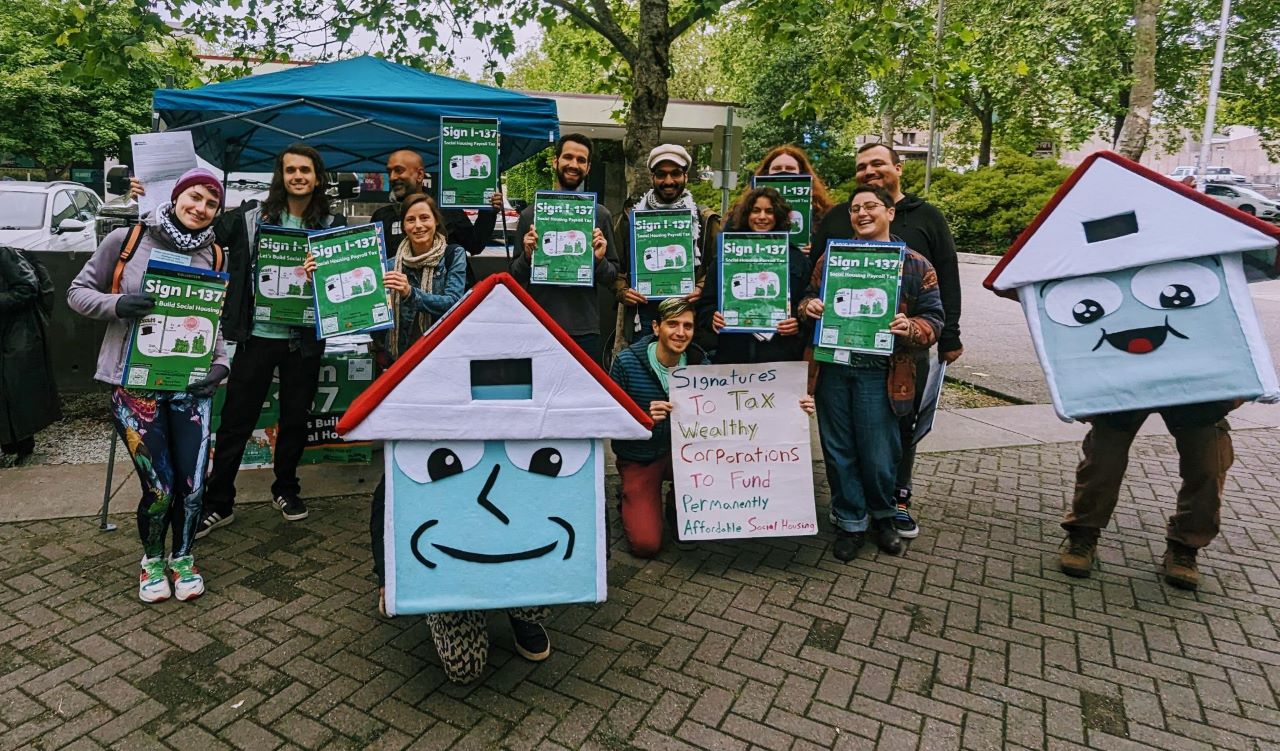
    MIL OSI Economics

  • MIL-OSI Economics: Christine Lagarde, Philip R Lane: ECB press conference in Sintra – introductory statement

    Source: Bank for International Settlements

    Good afternoon, ECB Chief Economist Philip Lane and I welcome you to this press conference, on the occasion of the conclusion of the 2025 assessment of our monetary policy strategy.

    The Governing Council recently agreed on an updated monetary policy strategy statement. You can find this statement on our website, together with an explanatory overview note and the two occasional papers presenting the underlying analyses.

    I will start by putting this strategy assessment into the broader context. Philip Lane will then go through the updated strategy statement and explain what has changed and why, as well as what has remained unchanged.

    Following the strategy review we carried out in 2020-21, the Governing Council committed to “assess periodically the appropriateness of its monetary policy strategy, with the next assessment expected in 2025”. Such regular assessments ensure that our framework, toolkit and approach remain fit for purpose in a changing world.

    And the world has changed significantly over the last four years. Some of the issues we were most concerned about back in 2021 – including inflation being too low for too long – have taken a rather different turn.

    Not only did we see inflation surge, but some fundamental structural features of our economy and the inflation environment are changing: geopolitics, digitalisation, the increasing use of artificial intelligence, demographics, the threat to environmental sustainability and the evolution of the international financial system.

    All of those suggest that the environment in which we operate will remain highly uncertain and potentially more volatile. This will make it more challenging to conduct our monetary policy and fulfil our mandate to keep prices stable.

    During the strategy assessment, we asked: what do these changes mean for the way we assess the economy, conduct our policy, use our toolkit, take our decisions and communicate them? In seeking to answer this question, our mindset was forward-looking.

    On the whole, we concluded that our monetary policy strategy remains well suited to addressing the challenges that lie ahead.

    But our strategy also needs to be updated and adjusted in certain areas, so that the ECB can remain fit for purpose in the years to come. The next assessment is expected in 2030.

    With our updated strategy statement, we are taking a comprehensive perspective on the challenges facing our monetary policy, so that the ECB can remain an anchor of stability in this more uncertain world.

    This is our core message to the euro area citizens we serve: the new environment gives many reasons to worry, but one thing they do not need to worry about is our commitment to price stability.

    The ECB is committed to its mandate and will keep itself and its tools updated to be able to respond to new challenges.

    Let me conclude by thanking, on behalf of the Governing Council, all the colleagues across the Eurosystem who have contributed to this assessment in a great team effort.

    I now hand over to our Chief Economist Philip Lane and, following his remarks, we will be ready to take your questions.

    * * *

    Philip R. Lane: I’m going to focus on the 12 paragraphs of The ECB’s monetary policy strategy statement. What’s important is that behind these paragraphs is a lot of work. The base layer is the two occasional papers. I’m sure you’ve already read the 400 pages in those two occasional papers. There’s a lot of rich new analysis of many dimensions in those two occasional papers. Then we have the overview note, which the Governing Council worked on collectively and which basically provides the elaboration behind these 12 paragraphs. And I would say that in these 12 paragraphs, in this review, we essentially tried to review the economic assessment: where are we and where are we likely to be? That was one of the two work streams. That essentially primarily shows up in paragraph 1.

    So paragraph 1, you might say, is one paragraph, but it’s a very important paragraph because it essentially outlines the challenges that we may face. We had a similar paragraph last time, but last time the focus was essentially on a lot of factors that can give rise to a low-inflation world and a low interest rate world. Whereas the assessment this time of the Eurosystem staff behind this is that when we look where we are now in the structural changes facing the world economy, we have geopolitics, and a lot of this is in the direction of rolling back globalisation. Last time we were looking at globalisation as a force which did contribute to low inflation before the pandemic. There are many dimensions to geopolitics, but we are of course already living it and this is something we do think is going to shape the next five years. We already mentioned digitalisation the last time, but this time we’re calling that as a separate and important element: artificial intelligence. Because, of course, I think for a long time it has been understood that the world economy automates and digitalises. That’s been around for a while. That’s mature. What’s not mature and where there’s really a wide range of possibilities is: what does it mean as the business sector and the public sector incorporate artificial intelligence? I think we had already called out demography and the threat to environmental sustainability, and I think we’re very correct to have done so five years ago. We’ve seen a lot on these fronts in these five years. Let me remind you: without immigration, the European labour force would be shrinking. So demography is not just a future trend, it’s a year-by-year reality for us. And then this week, last week, this year, last year, all the time we see the impact of weather shocks and the impact of the green transition. By the way, investment in Europe in recent years would have been a lot lower without the green transition. It’s the one solid driver of investment for many sectors at the moment. We call out all of these elements, but what’s critical for our conclusion for monetary policy is that it creates uncertainty, it creates volatility, and we think what we may be faced with is larger deviations from our 2% target in both directions. So we have this two-sided risk assessment. And as I go through these paragraphs, essentially once we’ve identified this economic assessment, the natural question to ask is: how do we manage it? How does monetary policy manage this two-sided risk? And essentially in what follows, we will turn to the monetary policy implications. But the other thing to note about paragraph 1 is that there is a new sentence. That’s the final sentence. It is that we don’t live in a bubble. We don’t say monetary policy is the only game in town. And we do highlight here that a more resilient financial architecture – supported by progress on the savings and investments union, the completion of banking union and the introduction of a digital euro – would also support the effectiveness of monetary policy in this evolving environment. So, in other words, all of these structural changes are much more easily handled if we have a more resilient euro, European and euro-denominated financial system. And I think that’s also important and maybe helps you to understand why we as Board members, and more generally the Governing Council, spend a lot of time talking about these wider issues. It’s not a distraction from monetary policy. It’s an important underpinning for monetary policy.

    Paragraph 2 is unchanged because paragraph 2 is setting the legal context. We have a mandate given by the Treaty, and so to make the strategy statement self-contained, it’s a reminder to you of the legal and Treaty constraints we live under. And that essentially remains the same as last time.

    The third paragraph, because remember in the European Treaty there’s not a super detailed definition of price stability, so it’s important and this is something that evolved over the years: that in terms of measurement, we’re focused on the Harmonised Index of Consumer Prices (HICP). And again, this is stable from last time. Last time we highlighted that we did think a reform of the HICP to include owner-occupied housing would be desirable. We continue to hold that view. But in the end it’s for the European Statistical System to make progress on that. So what we say is that in the meantime we do take into account inflation measures that include estimates of the cost of owner-occupied housing. So, in other words, we create supplementary indicators. These are not official data, but we do take a look. And these would be relevant in scenarios where house prices were rising far more quickly or far more slowly than the overall inflation rate. By the way, this has not been particularly the issue in recent years. It would not have made a big difference in recent years, but of course in principle we could be in a situation in the future where it made a difference.

    Paragraph 4 is again largely stable from last time. It’s explaining why we target 2%, not zero, and that’s a fairly mature topic: why you want to have a safety margin. We do, and I think correctly this time, in the final sentence of paragraph 4 include intersectoral adjustment. In the last five years we’ve seen this massive change between goods prices and services prices. And actually it turns out that that’s a very important consideration. It’s a lot easier to handle an under 2% inflation target than if you’re trying to hit zero. Essentially if you’re trying to hit zero and the price of energy compared with goods rose, implicitly you need to drive down the price of goods. And we know for many reasons that deflation, even at the sectoral level, is difficult. So having a 2% target is reinforced by including intersectoral adjustment in that list. So, paragraph 4 says you need a safety margin.

    Paragraph 5 says 2% is the best way to maintain price stability and that our commitment is symmetric. So what this symmetry means is that we consider negative and positive deviations from the target as equally undesirable. The last sentence, I think, has been critical in these years: having a clear target. You may have heard us all many times say 2%. It’s not somewhere in the region of 2%. It’s 2%. And having that clarity is very important for anchoring expectations, so I think it turned out that that choice we made to be precise about what our orientation is in the medium term is very important.

    Let me turn to a paragraph where I think there has been an important change, a sensible change – something that you might say sounds so sensible, why are you talking about it? But it’s worth highlighting the update. Last time, in 2021, we felt we needed to point out that the symmetry of the target doesn’t mean that how we set monetary policy looks identical whether we’re above the target or below the target. And so we pointed out that if we have a lower bound issue, we need to be appropriately forceful or persistent. What have we learnt from these five years? That remains true for below-target inflation, but actually it’s equally true for above-target inflation. And what we actually did was we had a phase of being forceful. So from July 2022 to September 2023, we hiked a lot. And then we went into a persistent phase. So from September 2023 to June 2024, we had 4%. The overview note goes into more detail about why you need the blend of forceful and persistent. But when we reviewed this, peers said these were important concepts in relation to the lower bound, but they’re equally appropriate concepts in relation to being above target. It’s not, of course, in relation to blips. What we talk about here is in response to large, sustained deviations. So you have to first of all make the call. What we see in front of us is something that’s materially away from 2% and that would remain away from 2% unless we responded. And this is why we say “appropriately forceful or persistent”, because what exactly is appropriate depends on whether you are dealing with an upside shock, a downside shock and a wider set of issues. So that, I think, is important. Let me come back to this issue that we have a symmetric commitment and we’re two-sided, but the headache is different on both sides. On the downside, the lower bound is the main headache. On the upside – and this reflects so much of the last number of years and reflects a lot of the work in the occasional papers – is possible non-linearities in price and wage-setting. What we learnt is that once inflation starts to build, it can take off and it can accelerate. You can get this non-linear dynamic. And that’s why you need to be forceful on the upside. That’s not really true for downside shocks. They tend not to accelerate, but downside shocks tend to get embedded because your ability to respond on monetary policy is different.

    Going back to this point that it’s not about smoothing out every deviation from 2% and it’s large, sustained deviations: this is very much in the spirit of the medium-term orientation. And that’s paragraph 7. So paragraph 7 is stable. We already had a medium-term orientation, I think, throughout the whole history of the ECB. And I think that’s been very wise. Our commitment, in line with the opening remarks from the President, is that people should be able to count on our commitment to price stability. If we see a deviation, we will bring it back to 2%. And that’s our medium-term orientation. There’s one enrichment here, which I think makes sense. People often ask: how long is the medium term? And I think a very important discipline on that is in the final sentence now: “subject to maintaining anchored inflation expectations”. That really defines the medium term. As you know, in recent years we mapped that into “we will make sure inflation returns to target in a timely manner”. You need to impose some discipline on yourself as opposed to saying the medium term is always just over the projection horizon. The medium term means not so long that the anchoring of expectations is put at risk. So again, I think that’s always been true, but it’s better to be explicit about it. And maybe now, as journalists, if you ask Governing Council members in the future how long the medium term is, the medium term is how long it takes without putting into question the anchoring of expectations.

    Paragraph 8 is our toolbox paragraph. We already said in 2021 that our primary instrument is the set of ECB policy rates. I do wonder, for those of you who were involved in looking at the ECB in 2021, how many of you fully believed that as we moved away from the lower bound, we would stop quantitative easing (QE) and we would stop forward guidance? But that was in our strategy and that’s what we did. These are tools that make sense at the lower bound. They are not tools from a stance point of view that have the same role away from the lower bound. So one basic message is: already in 2021 we told you a lot about how the toolbox works, but we did obviously come back and look at this. It’s an important topic. Let me highlight a couple of revisions here, or amplifications. One is that I think we are more articulate now about when these tools come into play. One is to steer the monetary policy stance when the rates are close to the lower bound. That’s what we said last time. That’s definitely a big category. But the second category is “or to preserve the smooth functioning of monetary policy transmission”. March 2020 is one example. When the world’s financial market was hit by the pandemic shock, central banks in general did a lot of asset purchasing, refinancing operations and other elements to stabilise the transmission of monetary policy. So again, what I would say is either it’s because we’re near the lower bound or there’s some big drama causing an interruption to the transmission of monetary policy. But otherwise these instruments remain in the toolbox. They’re available, but they’re not used on a continuous basis. And so we list out these tools just as a reminder. Longer-term refinancing and asset purchases: those two would possibly be used either way. For the stance or for smoothing the transmission of policy. Whereas of course negative rates and forward guidance are more particular to the lower bound. So there is a differentiation within that category. We also said last time that we will respond flexibly to new challenges as they arise and we can consider new instruments. And of course we told you that we considered new instruments and we actually did it, because we did introduce the Transmission Protection Instrument in 2022. And then the last sentence is important because this is where a lot of the discussion in the last year has been. It is to look back at these this set of instruments and on a forward basis say, in the future, if we ever came to these situations, how would we use these instruments? So we say in this important sentence: the choice of which one we use or which combination we use, the design – because on day zero, we usually have a press release or a legal act saying here’s the design of our instrument – and the implementation. So in other words, month by month, how we adjust it and how we bring it to an end in terms of exit. All of these, number one, will enable an agile response to new shocks. So let’s not get locked into rigid programmes that would inhibit our ability to respond to new shocks. They will reflect the intended purpose. So there can be differences between a stance-orientated intervention and a transmission-smoothing-type intervention. And then, of course, all of these will be subject to a comprehensive proportionality assessment. So in considering the choice of tools, the design and the implementation, we need the checklist of whether this is proportional to the challenge we face. So that’s, as I say, the toolbox.

    Then paragraph 9 is explaining how we make decisions. A lot of this is similar to last time. Last time we basically had to tell you that we’ve decided, rather than having a two-pillar strategy where we have an economic pillar and a monetary pillar, we make an integrated assessment. And in that integrated assessment, for example, we take into account macro-financial linkages, financial stability and so on. So a lot of that remains, but maybe you might find this new sentence interesting. The second sentence is that in how we make decisions, we take into account not only the most likely path for inflation in the economy, i.e. in a projection for the baseline, we don’t just look at the baseline, but also the surrounding risks and uncertainty. How do we do that? Including through the appropriate use of scenario and sensitivity analysis. This is something we have done forever, but it’s probably true that it’s not always visible in how we communicate. And also internally, of course, the science of how you should do scenarios and the science of how you should make sure your decisions are robust is always evolving. So we do want to make this clear. And in fairness for you and for others watching us, you can say “I think I understand this decision in the context of the baseline, but I have a natural question: is it also robust to the risk assessment of the ECB?” And I think that will be a step forward in the conversation about monetary policy. By the way, this is already reflected, importantly, because, as you may have noticed, what we’ve said in the last couple of years is that we make our decisions not only based on the inflation outlook, but also in relation to underlying inflation and the strength of monetary transmission. Because those two dimensions capture a lot of risk. Underlying inflation captured a lot of risk when we were bringing inflation down from 10% to 2%. The strength of monetary transmission captured a lot of risk as we moved interest rates, first of all, steeply upwards and then as we’ve been reversing. So the logic behind the three-pronged reaction function that we’ve been using reflects these principles.

    Paragraph 10 reaffirms, and I think everything we’ve learnt from the last four years validates the assessment that, in terms of price stability, climate change has profound implications in terms of the structure of the economy, the rise and fall of particular sectors, the cycle, including through the impact of weather shocks, and also in terms of how the financial system is adjusting. This is also a policy priority for the European Union and a global challenge. So we are committed to ensuring the Eurosystem fully takes into account, in line with the EU’s goals and objectives, the implications of climate change and nature degradation for monetary policy and central banking. We added – because we’ve already added it elsewhere – “and nature degradation” because essentially it’s the same headache. And in terms of our economic analysis, you’ve also seen it in our publications. The same underlying failure to incorporate the global public good of a sustainable environment permeates that.

    Paragraph 11 reaffirms that clear communication is centre stage of our policymaking. We want effective communication at all levels. And this is why we think the layered and visualised approach to monetary policy communication is essential. Also, we want to adapt in this rapidly changing communication landscape. There’s more on that in the overview note. And, as you know, the ECB has been rolling out new types of communication, including Espresso Economics on YouTube in recent times.

    And then maybe in line with the idea that it’s good housekeeping to have a regular calendar-based commitment, the next assessment of the appropriateness of the strategy will be in 2030.

    MIL OSI Economics

  • MIL-OSI Economics: Christine Lagarde, Philip R Lane: ECB press conference in Sintra – introductory statement

    Source: Bank for International Settlements

    Good afternoon, ECB Chief Economist Philip Lane and I welcome you to this press conference, on the occasion of the conclusion of the 2025 assessment of our monetary policy strategy.

    The Governing Council recently agreed on an updated monetary policy strategy statement. You can find this statement on our website, together with an explanatory overview note and the two occasional papers presenting the underlying analyses.

    I will start by putting this strategy assessment into the broader context. Philip Lane will then go through the updated strategy statement and explain what has changed and why, as well as what has remained unchanged.

    Following the strategy review we carried out in 2020-21, the Governing Council committed to “assess periodically the appropriateness of its monetary policy strategy, with the next assessment expected in 2025”. Such regular assessments ensure that our framework, toolkit and approach remain fit for purpose in a changing world.

    And the world has changed significantly over the last four years. Some of the issues we were most concerned about back in 2021 – including inflation being too low for too long – have taken a rather different turn.

    Not only did we see inflation surge, but some fundamental structural features of our economy and the inflation environment are changing: geopolitics, digitalisation, the increasing use of artificial intelligence, demographics, the threat to environmental sustainability and the evolution of the international financial system.

    All of those suggest that the environment in which we operate will remain highly uncertain and potentially more volatile. This will make it more challenging to conduct our monetary policy and fulfil our mandate to keep prices stable.

    During the strategy assessment, we asked: what do these changes mean for the way we assess the economy, conduct our policy, use our toolkit, take our decisions and communicate them? In seeking to answer this question, our mindset was forward-looking.

    On the whole, we concluded that our monetary policy strategy remains well suited to addressing the challenges that lie ahead.

    But our strategy also needs to be updated and adjusted in certain areas, so that the ECB can remain fit for purpose in the years to come. The next assessment is expected in 2030.

    With our updated strategy statement, we are taking a comprehensive perspective on the challenges facing our monetary policy, so that the ECB can remain an anchor of stability in this more uncertain world.

    This is our core message to the euro area citizens we serve: the new environment gives many reasons to worry, but one thing they do not need to worry about is our commitment to price stability.

    The ECB is committed to its mandate and will keep itself and its tools updated to be able to respond to new challenges.

    Let me conclude by thanking, on behalf of the Governing Council, all the colleagues across the Eurosystem who have contributed to this assessment in a great team effort.

    I now hand over to our Chief Economist Philip Lane and, following his remarks, we will be ready to take your questions.

    * * *

    Philip R. Lane: I’m going to focus on the 12 paragraphs of The ECB’s monetary policy strategy statement. What’s important is that behind these paragraphs is a lot of work. The base layer is the two occasional papers. I’m sure you’ve already read the 400 pages in those two occasional papers. There’s a lot of rich new analysis of many dimensions in those two occasional papers. Then we have the overview note, which the Governing Council worked on collectively and which basically provides the elaboration behind these 12 paragraphs. And I would say that in these 12 paragraphs, in this review, we essentially tried to review the economic assessment: where are we and where are we likely to be? That was one of the two work streams. That essentially primarily shows up in paragraph 1.

    So paragraph 1, you might say, is one paragraph, but it’s a very important paragraph because it essentially outlines the challenges that we may face. We had a similar paragraph last time, but last time the focus was essentially on a lot of factors that can give rise to a low-inflation world and a low interest rate world. Whereas the assessment this time of the Eurosystem staff behind this is that when we look where we are now in the structural changes facing the world economy, we have geopolitics, and a lot of this is in the direction of rolling back globalisation. Last time we were looking at globalisation as a force which did contribute to low inflation before the pandemic. There are many dimensions to geopolitics, but we are of course already living it and this is something we do think is going to shape the next five years. We already mentioned digitalisation the last time, but this time we’re calling that as a separate and important element: artificial intelligence. Because, of course, I think for a long time it has been understood that the world economy automates and digitalises. That’s been around for a while. That’s mature. What’s not mature and where there’s really a wide range of possibilities is: what does it mean as the business sector and the public sector incorporate artificial intelligence? I think we had already called out demography and the threat to environmental sustainability, and I think we’re very correct to have done so five years ago. We’ve seen a lot on these fronts in these five years. Let me remind you: without immigration, the European labour force would be shrinking. So demography is not just a future trend, it’s a year-by-year reality for us. And then this week, last week, this year, last year, all the time we see the impact of weather shocks and the impact of the green transition. By the way, investment in Europe in recent years would have been a lot lower without the green transition. It’s the one solid driver of investment for many sectors at the moment. We call out all of these elements, but what’s critical for our conclusion for monetary policy is that it creates uncertainty, it creates volatility, and we think what we may be faced with is larger deviations from our 2% target in both directions. So we have this two-sided risk assessment. And as I go through these paragraphs, essentially once we’ve identified this economic assessment, the natural question to ask is: how do we manage it? How does monetary policy manage this two-sided risk? And essentially in what follows, we will turn to the monetary policy implications. But the other thing to note about paragraph 1 is that there is a new sentence. That’s the final sentence. It is that we don’t live in a bubble. We don’t say monetary policy is the only game in town. And we do highlight here that a more resilient financial architecture – supported by progress on the savings and investments union, the completion of banking union and the introduction of a digital euro – would also support the effectiveness of monetary policy in this evolving environment. So, in other words, all of these structural changes are much more easily handled if we have a more resilient euro, European and euro-denominated financial system. And I think that’s also important and maybe helps you to understand why we as Board members, and more generally the Governing Council, spend a lot of time talking about these wider issues. It’s not a distraction from monetary policy. It’s an important underpinning for monetary policy.

    Paragraph 2 is unchanged because paragraph 2 is setting the legal context. We have a mandate given by the Treaty, and so to make the strategy statement self-contained, it’s a reminder to you of the legal and Treaty constraints we live under. And that essentially remains the same as last time.

    The third paragraph, because remember in the European Treaty there’s not a super detailed definition of price stability, so it’s important and this is something that evolved over the years: that in terms of measurement, we’re focused on the Harmonised Index of Consumer Prices (HICP). And again, this is stable from last time. Last time we highlighted that we did think a reform of the HICP to include owner-occupied housing would be desirable. We continue to hold that view. But in the end it’s for the European Statistical System to make progress on that. So what we say is that in the meantime we do take into account inflation measures that include estimates of the cost of owner-occupied housing. So, in other words, we create supplementary indicators. These are not official data, but we do take a look. And these would be relevant in scenarios where house prices were rising far more quickly or far more slowly than the overall inflation rate. By the way, this has not been particularly the issue in recent years. It would not have made a big difference in recent years, but of course in principle we could be in a situation in the future where it made a difference.

    Paragraph 4 is again largely stable from last time. It’s explaining why we target 2%, not zero, and that’s a fairly mature topic: why you want to have a safety margin. We do, and I think correctly this time, in the final sentence of paragraph 4 include intersectoral adjustment. In the last five years we’ve seen this massive change between goods prices and services prices. And actually it turns out that that’s a very important consideration. It’s a lot easier to handle an under 2% inflation target than if you’re trying to hit zero. Essentially if you’re trying to hit zero and the price of energy compared with goods rose, implicitly you need to drive down the price of goods. And we know for many reasons that deflation, even at the sectoral level, is difficult. So having a 2% target is reinforced by including intersectoral adjustment in that list. So, paragraph 4 says you need a safety margin.

    Paragraph 5 says 2% is the best way to maintain price stability and that our commitment is symmetric. So what this symmetry means is that we consider negative and positive deviations from the target as equally undesirable. The last sentence, I think, has been critical in these years: having a clear target. You may have heard us all many times say 2%. It’s not somewhere in the region of 2%. It’s 2%. And having that clarity is very important for anchoring expectations, so I think it turned out that that choice we made to be precise about what our orientation is in the medium term is very important.

    Let me turn to a paragraph where I think there has been an important change, a sensible change – something that you might say sounds so sensible, why are you talking about it? But it’s worth highlighting the update. Last time, in 2021, we felt we needed to point out that the symmetry of the target doesn’t mean that how we set monetary policy looks identical whether we’re above the target or below the target. And so we pointed out that if we have a lower bound issue, we need to be appropriately forceful or persistent. What have we learnt from these five years? That remains true for below-target inflation, but actually it’s equally true for above-target inflation. And what we actually did was we had a phase of being forceful. So from July 2022 to September 2023, we hiked a lot. And then we went into a persistent phase. So from September 2023 to June 2024, we had 4%. The overview note goes into more detail about why you need the blend of forceful and persistent. But when we reviewed this, peers said these were important concepts in relation to the lower bound, but they’re equally appropriate concepts in relation to being above target. It’s not, of course, in relation to blips. What we talk about here is in response to large, sustained deviations. So you have to first of all make the call. What we see in front of us is something that’s materially away from 2% and that would remain away from 2% unless we responded. And this is why we say “appropriately forceful or persistent”, because what exactly is appropriate depends on whether you are dealing with an upside shock, a downside shock and a wider set of issues. So that, I think, is important. Let me come back to this issue that we have a symmetric commitment and we’re two-sided, but the headache is different on both sides. On the downside, the lower bound is the main headache. On the upside – and this reflects so much of the last number of years and reflects a lot of the work in the occasional papers – is possible non-linearities in price and wage-setting. What we learnt is that once inflation starts to build, it can take off and it can accelerate. You can get this non-linear dynamic. And that’s why you need to be forceful on the upside. That’s not really true for downside shocks. They tend not to accelerate, but downside shocks tend to get embedded because your ability to respond on monetary policy is different.

    Going back to this point that it’s not about smoothing out every deviation from 2% and it’s large, sustained deviations: this is very much in the spirit of the medium-term orientation. And that’s paragraph 7. So paragraph 7 is stable. We already had a medium-term orientation, I think, throughout the whole history of the ECB. And I think that’s been very wise. Our commitment, in line with the opening remarks from the President, is that people should be able to count on our commitment to price stability. If we see a deviation, we will bring it back to 2%. And that’s our medium-term orientation. There’s one enrichment here, which I think makes sense. People often ask: how long is the medium term? And I think a very important discipline on that is in the final sentence now: “subject to maintaining anchored inflation expectations”. That really defines the medium term. As you know, in recent years we mapped that into “we will make sure inflation returns to target in a timely manner”. You need to impose some discipline on yourself as opposed to saying the medium term is always just over the projection horizon. The medium term means not so long that the anchoring of expectations is put at risk. So again, I think that’s always been true, but it’s better to be explicit about it. And maybe now, as journalists, if you ask Governing Council members in the future how long the medium term is, the medium term is how long it takes without putting into question the anchoring of expectations.

    Paragraph 8 is our toolbox paragraph. We already said in 2021 that our primary instrument is the set of ECB policy rates. I do wonder, for those of you who were involved in looking at the ECB in 2021, how many of you fully believed that as we moved away from the lower bound, we would stop quantitative easing (QE) and we would stop forward guidance? But that was in our strategy and that’s what we did. These are tools that make sense at the lower bound. They are not tools from a stance point of view that have the same role away from the lower bound. So one basic message is: already in 2021 we told you a lot about how the toolbox works, but we did obviously come back and look at this. It’s an important topic. Let me highlight a couple of revisions here, or amplifications. One is that I think we are more articulate now about when these tools come into play. One is to steer the monetary policy stance when the rates are close to the lower bound. That’s what we said last time. That’s definitely a big category. But the second category is “or to preserve the smooth functioning of monetary policy transmission”. March 2020 is one example. When the world’s financial market was hit by the pandemic shock, central banks in general did a lot of asset purchasing, refinancing operations and other elements to stabilise the transmission of monetary policy. So again, what I would say is either it’s because we’re near the lower bound or there’s some big drama causing an interruption to the transmission of monetary policy. But otherwise these instruments remain in the toolbox. They’re available, but they’re not used on a continuous basis. And so we list out these tools just as a reminder. Longer-term refinancing and asset purchases: those two would possibly be used either way. For the stance or for smoothing the transmission of policy. Whereas of course negative rates and forward guidance are more particular to the lower bound. So there is a differentiation within that category. We also said last time that we will respond flexibly to new challenges as they arise and we can consider new instruments. And of course we told you that we considered new instruments and we actually did it, because we did introduce the Transmission Protection Instrument in 2022. And then the last sentence is important because this is where a lot of the discussion in the last year has been. It is to look back at these this set of instruments and on a forward basis say, in the future, if we ever came to these situations, how would we use these instruments? So we say in this important sentence: the choice of which one we use or which combination we use, the design – because on day zero, we usually have a press release or a legal act saying here’s the design of our instrument – and the implementation. So in other words, month by month, how we adjust it and how we bring it to an end in terms of exit. All of these, number one, will enable an agile response to new shocks. So let’s not get locked into rigid programmes that would inhibit our ability to respond to new shocks. They will reflect the intended purpose. So there can be differences between a stance-orientated intervention and a transmission-smoothing-type intervention. And then, of course, all of these will be subject to a comprehensive proportionality assessment. So in considering the choice of tools, the design and the implementation, we need the checklist of whether this is proportional to the challenge we face. So that’s, as I say, the toolbox.

    Then paragraph 9 is explaining how we make decisions. A lot of this is similar to last time. Last time we basically had to tell you that we’ve decided, rather than having a two-pillar strategy where we have an economic pillar and a monetary pillar, we make an integrated assessment. And in that integrated assessment, for example, we take into account macro-financial linkages, financial stability and so on. So a lot of that remains, but maybe you might find this new sentence interesting. The second sentence is that in how we make decisions, we take into account not only the most likely path for inflation in the economy, i.e. in a projection for the baseline, we don’t just look at the baseline, but also the surrounding risks and uncertainty. How do we do that? Including through the appropriate use of scenario and sensitivity analysis. This is something we have done forever, but it’s probably true that it’s not always visible in how we communicate. And also internally, of course, the science of how you should do scenarios and the science of how you should make sure your decisions are robust is always evolving. So we do want to make this clear. And in fairness for you and for others watching us, you can say “I think I understand this decision in the context of the baseline, but I have a natural question: is it also robust to the risk assessment of the ECB?” And I think that will be a step forward in the conversation about monetary policy. By the way, this is already reflected, importantly, because, as you may have noticed, what we’ve said in the last couple of years is that we make our decisions not only based on the inflation outlook, but also in relation to underlying inflation and the strength of monetary transmission. Because those two dimensions capture a lot of risk. Underlying inflation captured a lot of risk when we were bringing inflation down from 10% to 2%. The strength of monetary transmission captured a lot of risk as we moved interest rates, first of all, steeply upwards and then as we’ve been reversing. So the logic behind the three-pronged reaction function that we’ve been using reflects these principles.

    Paragraph 10 reaffirms, and I think everything we’ve learnt from the last four years validates the assessment that, in terms of price stability, climate change has profound implications in terms of the structure of the economy, the rise and fall of particular sectors, the cycle, including through the impact of weather shocks, and also in terms of how the financial system is adjusting. This is also a policy priority for the European Union and a global challenge. So we are committed to ensuring the Eurosystem fully takes into account, in line with the EU’s goals and objectives, the implications of climate change and nature degradation for monetary policy and central banking. We added – because we’ve already added it elsewhere – “and nature degradation” because essentially it’s the same headache. And in terms of our economic analysis, you’ve also seen it in our publications. The same underlying failure to incorporate the global public good of a sustainable environment permeates that.

    Paragraph 11 reaffirms that clear communication is centre stage of our policymaking. We want effective communication at all levels. And this is why we think the layered and visualised approach to monetary policy communication is essential. Also, we want to adapt in this rapidly changing communication landscape. There’s more on that in the overview note. And, as you know, the ECB has been rolling out new types of communication, including Espresso Economics on YouTube in recent times.

    And then maybe in line with the idea that it’s good housekeeping to have a regular calendar-based commitment, the next assessment of the appropriateness of the strategy will be in 2030.

    MIL OSI Economics

  • MIL-OSI Analysis: Are people at the South Pole upside down?

    Source: The Conversation – USA (2) – By Abigail Bishop, Ph.D. Student in Physics, University of Wisconsin-Madison

    At the South Pole, which way is up? Abigail Bishop

    Curious Kids is a series for children of all ages. If you have a question you’d like an expert to answer, send it to CuriousKidsUS@theconversation.com.


    Are people on the South Pole walking upside down from the rest of the world? – Ralph P., U.S.


    When I was standing at the South Pole, I felt the same way I feel anywhere on Earth because my feet were still on the ground and the sky was still overhead.

    I’m an astrophysicist from Wisconsin who lived at the South Pole for seven weeks from December 2024 to January 2025 to work on an array of detectors looking for extremely high energy particles from outer space.

    I didn’t feel upside down, but there were some differences that still made the South Pole feel flipped over from what I was used to.

    As someone who loves looking for the Moon, I noticed that the face of the man on the Moon was flipped over, like he went from to . All the craters that I was used to seeing on the top of the Moon from Wisconsin were now on the bottom – because I was looking at the Moon from the Southern Hemisphere instead of the Northern Hemisphere.

    How the Moon looks depends on your point of view.
    The Planetary Society, CC BY-SA

    After noticing this difference, I remembered something similar in the night skies of New Zealand, a country near Antarctica where my fellow travelers and I got our big red coats that kept us warm at the South Pole. I had looked for Orion, a constellation that in the Northern Hemisphere is viewed as a hunter holding a bow and drawing an arrow from his quiver. In the night sky of New Zealand, Orion looked like he was doing a handstand.

    Everything in the sky felt upside down and opposite, compared with what I was used to. A person who lives in the Southern Hemisphere might feel the same about visiting the Arctic or the North Pole.

    ‘The Big Blue Marble’ photo, taken in 1972 by the crew of Apollo 17.
    NASA

    An out-of-this-world perspective

    To understand what’s happening, and why things are really different but also feel very much the same, it might be useful to back up a bit from Earth’s surface. Like into outer space. On space missions to the Moon, astronauts could see one side of the Earth’s sphere at once.

    If they had superhero vision, an astronaut would see the people at the South Pole and North Pole standing upside down from each other. And a person at the equator would look like they were sticking straight out the side of the planet. In fact, even though they might be standing on the equator, people in Colombia and Indonesia would also look like they were upside down from each other, because they would be sticking out from opposite sides of the Earth.

    Of course, if you asked each person, they would say, “My feet are on the ground, and the sky is up.”

    That’s because Earth is essentially a really big ball whose gravitational pull on every one of us points to the center of the planet. The direction that Earth pulls us in is what people call “down” all over the planet. Think about holding a baseball between your pointer fingers. From the perspective of your fingertips on the ball’s surface, both are pointing “down.” But from the perspective of a friend nearby, your fingers are pointing in different directions – though always toward the center of the ball.

    These relationships between people on the Earth’s surface are good for a little bit of fun, though. While I was at the South Pole, I pointed my body in the same direction as my friends in Wisconsin – by doing a handstand. But if you look at the picture the other way around, it looks like I’m holding up the entire planet, like Superman.

    This is the right way up: Abigail Bishop does a handstand at the ceremonial South Pole.
    Abigail Bishop

    Hello, curious kids! Do you have a question you’d like an expert to answer? Ask an adult to send your question to CuriousKidsUS@theconversation.com. Please tell us your name, age and the city where you live.

    And since curiosity has no age limit – adults, let us know what you’re wondering, too. We won’t be able to answer every question, but we will do our best.

    Abigail Bishop receives funding from National Science Foundation Award 2013134 and has received funding from the Belgian American Education Foundation.

    ref. Are people at the South Pole upside down? – https://theconversation.com/are-people-at-the-south-pole-upside-down-256754

    MIL OSI Analysis

  • MIL-OSI Analysis: Are people at the South Pole upside down?

    Source: The Conversation – USA (2) – By Abigail Bishop, Ph.D. Student in Physics, University of Wisconsin-Madison

    At the South Pole, which way is up? Abigail Bishop

    Curious Kids is a series for children of all ages. If you have a question you’d like an expert to answer, send it to CuriousKidsUS@theconversation.com.


    Are people on the South Pole walking upside down from the rest of the world? – Ralph P., U.S.


    When I was standing at the South Pole, I felt the same way I feel anywhere on Earth because my feet were still on the ground and the sky was still overhead.

    I’m an astrophysicist from Wisconsin who lived at the South Pole for seven weeks from December 2024 to January 2025 to work on an array of detectors looking for extremely high energy particles from outer space.

    I didn’t feel upside down, but there were some differences that still made the South Pole feel flipped over from what I was used to.

    As someone who loves looking for the Moon, I noticed that the face of the man on the Moon was flipped over, like he went from to . All the craters that I was used to seeing on the top of the Moon from Wisconsin were now on the bottom – because I was looking at the Moon from the Southern Hemisphere instead of the Northern Hemisphere.

    How the Moon looks depends on your point of view.
    The Planetary Society, CC BY-SA

    After noticing this difference, I remembered something similar in the night skies of New Zealand, a country near Antarctica where my fellow travelers and I got our big red coats that kept us warm at the South Pole. I had looked for Orion, a constellation that in the Northern Hemisphere is viewed as a hunter holding a bow and drawing an arrow from his quiver. In the night sky of New Zealand, Orion looked like he was doing a handstand.

    Everything in the sky felt upside down and opposite, compared with what I was used to. A person who lives in the Southern Hemisphere might feel the same about visiting the Arctic or the North Pole.

    ‘The Big Blue Marble’ photo, taken in 1972 by the crew of Apollo 17.
    NASA

    An out-of-this-world perspective

    To understand what’s happening, and why things are really different but also feel very much the same, it might be useful to back up a bit from Earth’s surface. Like into outer space. On space missions to the Moon, astronauts could see one side of the Earth’s sphere at once.

    If they had superhero vision, an astronaut would see the people at the South Pole and North Pole standing upside down from each other. And a person at the equator would look like they were sticking straight out the side of the planet. In fact, even though they might be standing on the equator, people in Colombia and Indonesia would also look like they were upside down from each other, because they would be sticking out from opposite sides of the Earth.

    Of course, if you asked each person, they would say, “My feet are on the ground, and the sky is up.”

    That’s because Earth is essentially a really big ball whose gravitational pull on every one of us points to the center of the planet. The direction that Earth pulls us in is what people call “down” all over the planet. Think about holding a baseball between your pointer fingers. From the perspective of your fingertips on the ball’s surface, both are pointing “down.” But from the perspective of a friend nearby, your fingers are pointing in different directions – though always toward the center of the ball.

    These relationships between people on the Earth’s surface are good for a little bit of fun, though. While I was at the South Pole, I pointed my body in the same direction as my friends in Wisconsin – by doing a handstand. But if you look at the picture the other way around, it looks like I’m holding up the entire planet, like Superman.

    This is the right way up: Abigail Bishop does a handstand at the ceremonial South Pole.
    Abigail Bishop

    Hello, curious kids! Do you have a question you’d like an expert to answer? Ask an adult to send your question to CuriousKidsUS@theconversation.com. Please tell us your name, age and the city where you live.

    And since curiosity has no age limit – adults, let us know what you’re wondering, too. We won’t be able to answer every question, but we will do our best.

    Abigail Bishop receives funding from National Science Foundation Award 2013134 and has received funding from the Belgian American Education Foundation.

    ref. Are people at the South Pole upside down? – https://theconversation.com/are-people-at-the-south-pole-upside-down-256754

    MIL OSI Analysis

  • MIL-OSI Analysis: Are people at the South Pole upside down?

    Source: The Conversation – USA (2) – By Abigail Bishop, Ph.D. Student in Physics, University of Wisconsin-Madison

    At the South Pole, which way is up? Abigail Bishop

    Curious Kids is a series for children of all ages. If you have a question you’d like an expert to answer, send it to CuriousKidsUS@theconversation.com.


    Are people on the South Pole walking upside down from the rest of the world? – Ralph P., U.S.


    When I was standing at the South Pole, I felt the same way I feel anywhere on Earth because my feet were still on the ground and the sky was still overhead.

    I’m an astrophysicist from Wisconsin who lived at the South Pole for seven weeks from December 2024 to January 2025 to work on an array of detectors looking for extremely high energy particles from outer space.

    I didn’t feel upside down, but there were some differences that still made the South Pole feel flipped over from what I was used to.

    As someone who loves looking for the Moon, I noticed that the face of the man on the Moon was flipped over, like he went from to . All the craters that I was used to seeing on the top of the Moon from Wisconsin were now on the bottom – because I was looking at the Moon from the Southern Hemisphere instead of the Northern Hemisphere.

    How the Moon looks depends on your point of view.
    The Planetary Society, CC BY-SA

    After noticing this difference, I remembered something similar in the night skies of New Zealand, a country near Antarctica where my fellow travelers and I got our big red coats that kept us warm at the South Pole. I had looked for Orion, a constellation that in the Northern Hemisphere is viewed as a hunter holding a bow and drawing an arrow from his quiver. In the night sky of New Zealand, Orion looked like he was doing a handstand.

    Everything in the sky felt upside down and opposite, compared with what I was used to. A person who lives in the Southern Hemisphere might feel the same about visiting the Arctic or the North Pole.

    ‘The Big Blue Marble’ photo, taken in 1972 by the crew of Apollo 17.
    NASA

    An out-of-this-world perspective

    To understand what’s happening, and why things are really different but also feel very much the same, it might be useful to back up a bit from Earth’s surface. Like into outer space. On space missions to the Moon, astronauts could see one side of the Earth’s sphere at once.

    If they had superhero vision, an astronaut would see the people at the South Pole and North Pole standing upside down from each other. And a person at the equator would look like they were sticking straight out the side of the planet. In fact, even though they might be standing on the equator, people in Colombia and Indonesia would also look like they were upside down from each other, because they would be sticking out from opposite sides of the Earth.

    Of course, if you asked each person, they would say, “My feet are on the ground, and the sky is up.”

    That’s because Earth is essentially a really big ball whose gravitational pull on every one of us points to the center of the planet. The direction that Earth pulls us in is what people call “down” all over the planet. Think about holding a baseball between your pointer fingers. From the perspective of your fingertips on the ball’s surface, both are pointing “down.” But from the perspective of a friend nearby, your fingers are pointing in different directions – though always toward the center of the ball.

    These relationships between people on the Earth’s surface are good for a little bit of fun, though. While I was at the South Pole, I pointed my body in the same direction as my friends in Wisconsin – by doing a handstand. But if you look at the picture the other way around, it looks like I’m holding up the entire planet, like Superman.

    This is the right way up: Abigail Bishop does a handstand at the ceremonial South Pole.
    Abigail Bishop

    Hello, curious kids! Do you have a question you’d like an expert to answer? Ask an adult to send your question to CuriousKidsUS@theconversation.com. Please tell us your name, age and the city where you live.

    And since curiosity has no age limit – adults, let us know what you’re wondering, too. We won’t be able to answer every question, but we will do our best.

    Abigail Bishop receives funding from National Science Foundation Award 2013134 and has received funding from the Belgian American Education Foundation.

    ref. Are people at the South Pole upside down? – https://theconversation.com/are-people-at-the-south-pole-upside-down-256754

    MIL OSI Analysis

  • MIL-OSI Analysis: Are people at the South Pole upside down?

    Source: The Conversation – USA (2) – By Abigail Bishop, Ph.D. Student in Physics, University of Wisconsin-Madison

    At the South Pole, which way is up? Abigail Bishop

    Curious Kids is a series for children of all ages. If you have a question you’d like an expert to answer, send it to CuriousKidsUS@theconversation.com.


    Are people on the South Pole walking upside down from the rest of the world? – Ralph P., U.S.


    When I was standing at the South Pole, I felt the same way I feel anywhere on Earth because my feet were still on the ground and the sky was still overhead.

    I’m an astrophysicist from Wisconsin who lived at the South Pole for seven weeks from December 2024 to January 2025 to work on an array of detectors looking for extremely high energy particles from outer space.

    I didn’t feel upside down, but there were some differences that still made the South Pole feel flipped over from what I was used to.

    As someone who loves looking for the Moon, I noticed that the face of the man on the Moon was flipped over, like he went from to . All the craters that I was used to seeing on the top of the Moon from Wisconsin were now on the bottom – because I was looking at the Moon from the Southern Hemisphere instead of the Northern Hemisphere.

    How the Moon looks depends on your point of view.
    The Planetary Society, CC BY-SA

    After noticing this difference, I remembered something similar in the night skies of New Zealand, a country near Antarctica where my fellow travelers and I got our big red coats that kept us warm at the South Pole. I had looked for Orion, a constellation that in the Northern Hemisphere is viewed as a hunter holding a bow and drawing an arrow from his quiver. In the night sky of New Zealand, Orion looked like he was doing a handstand.

    Everything in the sky felt upside down and opposite, compared with what I was used to. A person who lives in the Southern Hemisphere might feel the same about visiting the Arctic or the North Pole.

    ‘The Big Blue Marble’ photo, taken in 1972 by the crew of Apollo 17.
    NASA

    An out-of-this-world perspective

    To understand what’s happening, and why things are really different but also feel very much the same, it might be useful to back up a bit from Earth’s surface. Like into outer space. On space missions to the Moon, astronauts could see one side of the Earth’s sphere at once.

    If they had superhero vision, an astronaut would see the people at the South Pole and North Pole standing upside down from each other. And a person at the equator would look like they were sticking straight out the side of the planet. In fact, even though they might be standing on the equator, people in Colombia and Indonesia would also look like they were upside down from each other, because they would be sticking out from opposite sides of the Earth.

    Of course, if you asked each person, they would say, “My feet are on the ground, and the sky is up.”

    That’s because Earth is essentially a really big ball whose gravitational pull on every one of us points to the center of the planet. The direction that Earth pulls us in is what people call “down” all over the planet. Think about holding a baseball between your pointer fingers. From the perspective of your fingertips on the ball’s surface, both are pointing “down.” But from the perspective of a friend nearby, your fingers are pointing in different directions – though always toward the center of the ball.

    These relationships between people on the Earth’s surface are good for a little bit of fun, though. While I was at the South Pole, I pointed my body in the same direction as my friends in Wisconsin – by doing a handstand. But if you look at the picture the other way around, it looks like I’m holding up the entire planet, like Superman.

    This is the right way up: Abigail Bishop does a handstand at the ceremonial South Pole.
    Abigail Bishop

    Hello, curious kids! Do you have a question you’d like an expert to answer? Ask an adult to send your question to CuriousKidsUS@theconversation.com. Please tell us your name, age and the city where you live.

    And since curiosity has no age limit – adults, let us know what you’re wondering, too. We won’t be able to answer every question, but we will do our best.

    Abigail Bishop receives funding from National Science Foundation Award 2013134 and has received funding from the Belgian American Education Foundation.

    ref. Are people at the South Pole upside down? – https://theconversation.com/are-people-at-the-south-pole-upside-down-256754

    MIL OSI Analysis

  • MIL-OSI Analysis: Are people at the South Pole upside down?

    Source: The Conversation – USA (2) – By Abigail Bishop, Ph.D. Student in Physics, University of Wisconsin-Madison

    At the South Pole, which way is up? Abigail Bishop

    Curious Kids is a series for children of all ages. If you have a question you’d like an expert to answer, send it to CuriousKidsUS@theconversation.com.


    Are people on the South Pole walking upside down from the rest of the world? – Ralph P., U.S.


    When I was standing at the South Pole, I felt the same way I feel anywhere on Earth because my feet were still on the ground and the sky was still overhead.

    I’m an astrophysicist from Wisconsin who lived at the South Pole for seven weeks from December 2024 to January 2025 to work on an array of detectors looking for extremely high energy particles from outer space.

    I didn’t feel upside down, but there were some differences that still made the South Pole feel flipped over from what I was used to.

    As someone who loves looking for the Moon, I noticed that the face of the man on the Moon was flipped over, like he went from to . All the craters that I was used to seeing on the top of the Moon from Wisconsin were now on the bottom – because I was looking at the Moon from the Southern Hemisphere instead of the Northern Hemisphere.

    How the Moon looks depends on your point of view.
    The Planetary Society, CC BY-SA

    After noticing this difference, I remembered something similar in the night skies of New Zealand, a country near Antarctica where my fellow travelers and I got our big red coats that kept us warm at the South Pole. I had looked for Orion, a constellation that in the Northern Hemisphere is viewed as a hunter holding a bow and drawing an arrow from his quiver. In the night sky of New Zealand, Orion looked like he was doing a handstand.

    Everything in the sky felt upside down and opposite, compared with what I was used to. A person who lives in the Southern Hemisphere might feel the same about visiting the Arctic or the North Pole.

    ‘The Big Blue Marble’ photo, taken in 1972 by the crew of Apollo 17.
    NASA

    An out-of-this-world perspective

    To understand what’s happening, and why things are really different but also feel very much the same, it might be useful to back up a bit from Earth’s surface. Like into outer space. On space missions to the Moon, astronauts could see one side of the Earth’s sphere at once.

    If they had superhero vision, an astronaut would see the people at the South Pole and North Pole standing upside down from each other. And a person at the equator would look like they were sticking straight out the side of the planet. In fact, even though they might be standing on the equator, people in Colombia and Indonesia would also look like they were upside down from each other, because they would be sticking out from opposite sides of the Earth.

    Of course, if you asked each person, they would say, “My feet are on the ground, and the sky is up.”

    That’s because Earth is essentially a really big ball whose gravitational pull on every one of us points to the center of the planet. The direction that Earth pulls us in is what people call “down” all over the planet. Think about holding a baseball between your pointer fingers. From the perspective of your fingertips on the ball’s surface, both are pointing “down.” But from the perspective of a friend nearby, your fingers are pointing in different directions – though always toward the center of the ball.

    These relationships between people on the Earth’s surface are good for a little bit of fun, though. While I was at the South Pole, I pointed my body in the same direction as my friends in Wisconsin – by doing a handstand. But if you look at the picture the other way around, it looks like I’m holding up the entire planet, like Superman.

    This is the right way up: Abigail Bishop does a handstand at the ceremonial South Pole.
    Abigail Bishop

    Hello, curious kids! Do you have a question you’d like an expert to answer? Ask an adult to send your question to CuriousKidsUS@theconversation.com. Please tell us your name, age and the city where you live.

    And since curiosity has no age limit – adults, let us know what you’re wondering, too. We won’t be able to answer every question, but we will do our best.

    Abigail Bishop receives funding from National Science Foundation Award 2013134 and has received funding from the Belgian American Education Foundation.

    ref. Are people at the South Pole upside down? – https://theconversation.com/are-people-at-the-south-pole-upside-down-256754

    MIL OSI Analysis

  • MIL-OSI Africa: World Food Programme (WFP) airdrops food to prevent catastrophe as hunger surges in conflict-hit parts of South Sudan

    Source: APO


    .

    The United Nations World Food Programme (WFP) began airdropping emergency food assistance to thousands of families in South Sudan’s Upper Nile State, where surging conflict since March has forced families from their homes and pushed some communities to the brink of famine.

    These distributions mark WFP’s first access in over four months to deliver life-saving food and nutrition assistance to more than 40,000 people facing catastrophic hunger in the most remote parts of Nasir and Ulang counties, areas only accessible by air.

    “The link between conflict and hunger is tragically clear in South Sudan and we’ve seen this over the past few months in Upper Nile,” said Mary-Ellen McGroarty, WFP Country Director in South Sudan. “Without a major scale-up in assistance, the counties of Nasir and Ulang risk slipping into full-blown famine. We urgently need to get food to these families, and we are doing everything possible to reach those who need it most before the situation spirals.”

    More than one million people across Upper Nile are facing acute hunger, including over 32,000 people already experiencing Catastrophic levels of hunger (IPC5) – the highest level of food insecurity. This figure has tripled since armed conflict flared in March, triggering mass displacement, including across the border into Ethiopia where WFP is providing life-saving food aid to around 50,000 people who have fled from Upper Nile in search of food and safety.

    WFP aims to reach 470,000 people in Upper Nile and Northern Jonglei through the lean season – the hungriest time of year, which runs through August – but continued fighting and logistical constraints have hindered access and a comprehensive response. WFP has only been able to reach 300,000 people in Upper Nile so far this year. 

    The main river routes into the state must be reopened urgently in order to reach hungry families with sustained humanitarian support. These routes are the most cost-effective way to reach large swathes of Upper Nile and northern Jonglei states to deliver crucial assistance but have been blocked by active fighting since mid-April. WFP has 1,500MT of food ready to transport once river routes are operational again.

    “Where we have been able to consistently deliver, we’ve seen real progress,” McGroarty said. “In the first half of this year, we pushed back catastrophic hunger in areas of Jonglei State through regular deliveries of food assistance, and we can do the same in Upper Nile. But if we can’t get the food to people, hunger will deepen and famine is a real and present threat.”

    A global funding slowdown is worsening the already dire humanitarian situation in South Sudan. Nationwide, 7.7 million people – 57 percent of the population – are facing crisis, emergency, or catastrophic levels of hunger. An unprecedented 2.3 million children are at risk of malnutrition.

    Due to funding gaps, WFP has prioritized assistance with reduced rations for only the most vulnerable 2.5 million people—just 30 percent of those in acute need – to stretch limited resources. WFP urgently needs US$274 million to continue life-saving operations through December.

    Distributed by APO Group on behalf of World Food Programme (WFP).

    MIL OSI Africa

  • MIL-OSI Africa: Talks in Gogrial West reveal need for awareness-raising on right to protection

    Source: APO


    .

    Many residents of Gogrial West County are unaware of their fundamental right to be protected, often silently enduring violence, theft, or domestic abuse.

    Despite being a relatively peaceful part of Warrap State, people living here are sometimes subject to conflicts and their consequences, crime, risks related to climate change and, last but not least, the frequent incidents of domestic violence mostly suffered by women and girls. 

    “They, like everyone else, have the right to live safely and with dignity,” stated Bakhita Burke, Gender-Based Violence Coordinator at Women for Change, a women-led non-governmental organization, adding that a lack of tangible conflict is no guarantee of peace on the home front.

    “Behind closed doors, many women continue to suffer,” she said, remarking that recent months have seen a concerning increase of suicides related to physical abuse

    Ms. Burke and some other 50 invited guests, including political and community leaders, survivors of violence and other stakeholders, discussed a variety of topics, all related to advocacy for human rights, at a workshop in Kuajok facilitated by the United Nations Mission in South Sudan (UNMISS). 

    Another such issue is cattle raiding and the profound distress this harmful and unlawful practice causes. Alongside gender-based violence, cattle theft emerged as another significant issue during discussions. Daniel Mangar, Executive Director for Gogrial West County, elaborated on the profound economic and emotional distress caused by these incidents.

    “These thefts may seem minor to outsiders, but they create fear, tensions and financial losses for anyone affected,” commented Mariang Martin Agoth, Executive Director of the Relief and Rehabilitation Commission, highlighting the importance of partnerships.

    “Humanitarians step in precisely where government resources fall short, trying to make sure that displaced families and other vulnerable community members are not forgotten.” 

    Lucy Okello, a Protection, Transition & Reintegration Officer serving with UNMISS, reflected on the bigger picture and the people of South Sudan the peacekeeping mission is here to serve. 

    “Each statistic we discuss represents real families, facing real and severe hardship. Our talk today must be translated into actions tomorrow.”

    Distributed by APO Group on behalf of United Nations Mission in South Sudan (UNMISS).

    MIL OSI Africa

  • MIL-OSI Africa: Local Women Lead Peacebuilding and Recovery Efforts in Mozambique

    Source: APO


    .

    Amid the challenges faced by conflict-affected communities in Mozambique, women have emerged as strategic agents of change. Rabeca Gerente Almeida Thomas, 51, is one such transformative example. A pastor, mother, and respected community leader in Báruè district (Manica Province), Rabeca transitioned from faith leader to peacebuilder — a journey that symbolizes the power of local women’s leadership in building more just and resilient societies.

    Rabeca is one of 240 Peace Sentinels trained under the Women, Peace and Security (WPS) project, implemented by UN Women and partners such as CESC, Lemusica, GMPIS, and Hikone, with financial support from the Government of Norway. The initiative aimed at ensuring that Women and girls contribute to and to have greater influence in building sustainable peace and resilience, and to benefit equally from the prevention of conflicts and disasters in Mozambique.

    When Rabeca first joined the training sessions on conflict mediation, human rights, and gender justice conducted by CESC and its partners, she had no idea just how deeply it would change her and her community. She learned not only how to navigate disputes but also how to challenge the barriers that kept women from having a voice in local decisions.

    As her confidence grew, Rabeca didn’t just use her skills; she multiplied them. Women sought her guidance, and slowly, change unfolded. Her training unlocked doors, not just for her, but for every woman inspired by her courage.

    “After the training, I started working with women’s groups and establishing safe spaces where they can share experiences, seek support, and find collective solutions. Today, I speak with confidence about peace, justice, and rights.”

    Since joining the project, Rabeca has exceeded the original goal by creating eight safe spaces — places for protection, support, and community mobilization, essential for women and girls at risk. One of these spaces was set up in the home of a local leader, showing the growing engagement of men as allies in the cause.

    These spaces have directly helped prevent at least six cases of forced and early marriages and continue to provide ongoing support to vulnerable girls and women. Nationally, more than 55 safe spaces have been established by peace sentinels across nine districts.

    Political Participation in Action: Rabeca as Election Observer in 2024

    A landmark in Rabeca’s journey was her accreditation as an observer in the 2024 presidential elections. In a context where women’s political participation still faces numerous barriers, her role underscores the vital contribution of women not only as voters but as guardians of transparency and integrity in democratic processes.

    She is part of a group of three women peace sentinels who monitored incidents of gender-based electoral violence and advocated for inclusive and secure voting. In total, 2,454 women were reached through awareness campaigns led by the peace sentinels via community radio and dialogue spaces on political participation and gender equality.

    Rabeca also played a strategic role in promoting interparty dialogue. Through her leadership and mediation skills, she helped bring together representatives from the three largest political parties in Báruè to sign a Women’s Peace Commitment Declaration, overcoming historical divisions and reinforcing women’s role as unifiers in social cohesion efforts.

    In addition to her contributions to conflict mediation and political engagement, Rabeca leads five community savings groups, involving around 115 women. These groups serve as an economic empowerment and social protection strategy, promoting not only income generation but also autonomy and solidarity among women in communities deeply affected by conflict.

    Distributed by APO Group on behalf of UN Women – Africa.

    MIL OSI Africa

  • MIL-OSI Banking: Stay Cosy and Warm This Winter with Samsung’s Energy Efficient Air Conditioners

    Source: Samsung

    When we think of air conditioners, we often associate them with the sweltering summer heat and the need to cool down. But what if your air conditioner could do more than just battle the summer heat? The winter season is upon us, and with Samsung’s innovative technology air conditioners, staying cosy, comfortable and warm is not only possible, it’s also energy-efficient and smart.


    Samsung air conditioners are designed to provide year-round comfort, making them a valuable investment for every season. Let’s explore how these advanced appliances can transform your winter experience.
     
    Warmth That Wraps Around You
    Gone are the days of uneven heating or cold corners in your home. Samsung’s WindFree air conditioners have a large fan, wide inlet, and wide blades to assist with wide distribution of air. This powerful combination ensures warm air in your space, creating a consistent and cosy environment even on the coldest days.
     
    Energy Efficiency That Pays Off
    Keeping warm in winter often comes with the concern of rising energy bills. That’s where Samsung’s digital inverter technology makes a difference. Once your desired room temperature is reached, the system automatically slows down, using just enough energy to maintain that level of warmth. This translates to significant energy savings – so you can stay warm without the worry.
     
    Smart Heating at Your Fingertips
    With the SmartThings App, Samsung puts the control right in your hand, literally. Whether you’re out running errands or tucked in bed, you can monitor and adjust your air conditioner’s settings remotely. You can also check energy usage, schedule heating times, or tweak the temperature for when you’re on your way home. It’s smart, convenient, and designed for today’s connected lifestyle[1].
     

    Sleep Better, Wake Up Refreshed
    A good night’s sleep is essential, Samsung’s Good Sleep Mode assists with this, ensuring your room stays at the optimal temperature throughout the night. By automatically managing the climate to match different stages of your sleep cycle, it helps you rest more deeply and wake up feeling refreshed.
     
    Choose the Right Model for Your Home

    Wall-mount Non Inverter AC AR3000: Cool a whole room rapidly and effectively. Fast Cooling mode operates with fast fan speed, before slowing down. So it takes shorter time to cool or heat up to reach the desired temperature. It’s ideal for immediate relief from the heat or cold outside.
    AR4500 with Digital Inverter: Save money every day with digital inverter technology. It maintains the desired temperature without frequently turning off and on, so there’s less fluctuation. And it uses strong magnets and a Muffler, so it is quieter, lasts much longer and reduces energy consumption.
    AR6500 Wall-mount AC with Windfree TM and AI technology: Stay comfortable cool with WindFree Cooling. It gently and quietly disperses air through 23,000 micro air holes, so there is no unpleasant feeling of cold wind on your skin.
    Wind-Free AR8500T Wall-mount AC with Wind-Free : Save money every day with energy-efficient WindFree Cooling. When operating in WindFree mode, the outdoor unit consumes minimal power, so you can stay comfortably cool without worrying about your electricity.
    Wall-mount AC with Wind-Free AR9500: The premium option with advanced smart features, powerful heating, and superior comfort control. Great for larger rooms or homes looking for top-tier performance. The AR9500 also includes full integration with Samsung’s SmartThings ecosystem, advanced sleep optimisation modes, and superior energy management tools.

     
    With Samsung’s air conditioners, it’s time to change the way we think about home heating. These aren’t just summer appliances, they’re smart climate control systems for every season. So if you’re looking to upgrade your winter comfort, there’s never been a better time to make the switch, visit https://www.samsung.com/za/air-conditioners/all-air-conditioners/.
     
    [1] Only the AR9500 and AR8500 have SmartThings compatibility

    MIL OSI Global Banks