Category: housing

  • MIL-OSI: Temenos named best-selling core banking provider for 20th consecutive year by IBS Intelligence

    Source: GlobeNewswire (MIL-OSI)

    GRAND-LANCY, Switzerland, June 13, 2025 (GLOBE NEWSWIRE) — Temenos (SIX: TEMN), a global leader in banking technology, today announced it has been recognized as the #1 best-selling software provider in 13 categories in the IBSi Sales League Table (SLT) 2025.

    Temenos ranked #1 for core banking for the 20th consecutive year, while also topping the table for categories covering digital, payments, wealth and Islamic banking. The results highlight the breadth of Temenos’ leadership as the banking technology provider of choice across multiple product segments.

    The IBS Intelligence Annual Sales League Table is an annual benchmarking exercise, which is now in its 24th year and is based on the number of new customer contracts signed in a calendar year. The SLT is recognized as the barometer for financial technology providers’ sales performance across the banking industry.

    Jean-Pierre Brulard, CEO, Temenos, said: “I’m delighted to see Temenos top the rankings in 13 different categories in the IBSi Sales League Table, highlighting the strength and breadth of our market-leading capabilities. Being named the number one core banking software provider globally for 20 years in a row reflects both our customer-centric focus and relentless investment in innovation. As we continue to lead banking forward with the launch of game-changing Generative and Agentic AI capabilities, the advanced functionality, agility and scalability of our solutions makes Temenos a compelling choice for banks of all sizes around the world.”

    Temenos ranked #1 In the IBSi SLT 2025 across the following 13 categories:

    • Universal Banking – Core
    • Digital Banking and Channels
    • Payments – Retail
    • Private Banking and Wealth Management
    • Risk Management
    • Treasury and Risk Management
    • Digital Only Banks
    • Datawarehouse & BI
    • Islamic Banking – Universal Banking – Core
    • Islamic Banking – Risk Management
    • Islamic Banking – Payments – Retail
    • Islamic Banking – Wholesale Banking Treasury
    • Islamic Banking – Digital Banking and Channels

    With its market-leading core banking suite and best-in-class modular solutions, Temenos offers financial institutions choice, flexibility and a proven path to banking modernization – underpinned with cloud-native architecture, and embedded AI. Trusted by over 950 core banking clients and over 650 digital clients around the world, Temenos software can be deployed on-premises, in the cloud, or as SaaS.

    Investing around 20% of revenues in R&D, Temenos continues to enhance its capabilities. Recent innovations include the launch of a Gen AI Copilot to help financial institutions design, launch, test and optimize financial products faster, as well as an FCM AI Agent that can help banks significantly reduce false positives in sanctions screening.

    Nikhil Gokhale, Director – Research & Digital Properties at IBS Intelligence, commented: “The 2025 edition of the IBSi Sales League Table reflects the growing maturity of digital transformation across the global banking industry. With sustained investment in modern core platforms, intelligent digital channels, and real-time payments, banks are clearly prioritizing agility, scale, and customer experience. Temenos has once again demonstrated exceptional global leadership, with standout performance in Core, Digital, Payments, and Risk. On behalf of IBSi, I extend my congratulations to the Temenos team for consistently being at the forefront of innovation and execution. The SLT continues to serve as a trusted benchmark for momentum in banking technology worldwide.”

    Recognition in the IBSi SLT is the latest industry accolade for Temenos, which was also named a Leader in the 2024 IDC MarketScapes for Digital Core Banking Platforms in North America, EMEA and Asia Pacific and in the Forrester Wave™: Digital Banking Processing Platforms, Q4 2024.

    The MIL Network

  • MIL-OSI China: Unlocking consumption key to sustaining China’s growth: World Bank

    Source: People’s Republic of China – State Council News

    Unleashing consumption potential will help sustain economic growth in China, according to a World Bank report published in Beijing on Friday.

    Policy support has helped boost China’s consumption and spurred a rise in home sales in major cities, with the economy maintaining growth momentum in early 2025, the report said.

    “Household consumption will be key to sustaining growth amid external and domestic economic challenges,” said Mara Warwick, World Bank division director for China, Mongolia and Korea.

    She said stronger social safety nets, especially for migrant and temporary workers, would encourage more spending by improving financial security and reducing the need for precautionary saving.

    By expanding public investment and providing targeted support to households, China’s proactive fiscal policy is expected to support China’s economic growth, the report stated.

    China’s infrastructure and manufacturing investment has responded strongly with faster increases to policy support, such as accelerated issuance and disbursement of government bonds, policy incentives for firms to upgrade equipment, and targeted support for priority sectors, it noted.

    China’s gross domestic product grew by 5.4 percent year on year in the first quarter of 2025, while retail sales of consumer goods, a major indicator of the country’s consumption strength, rose 4.7 percent year on year in the first four months of 2025, official data showed. 

    MIL OSI China News

  • MIL-OSI Asia-Pac: Draft Tuen Mun Outline Zoning Plan approved

    Source: Hong Kong Government special administrative region

    Draft Tuen Mun Outline Zoning Plan approved 
         “The approved OZP provides a statutory land use planning framework to guide the development and redevelopment within the Tuen Mun area,” a spokesman for the Town Planning Board said today (June 13). 
     
    The planning scheme area, covering an area of about 2 260 hectares, is located at the head of Castle Peak Bay in the North West New Territories. It is bounded by the ridges of Castle Peak to the west, Lam Tei Interchange of Castle Peak Road to the north, and Tai Lam Country Park to the east. To the southeast, it extends to Siu Lam Interchange of Tuen Mun Road, while to the southwest, it extends to the power station at Tap Shek Kok.
     
    The approved OZP has incorporated amendments shown on the draft Tuen Mun OZP No. S/TM/40, which mainly involve (i) rezoning a site to the northwest of Light Rail Transit Goodview Garden Station from “Government, Institution or Community” (“G/IC”) to “Residential (Group A)29” (“R(A)29”) for private residential development; (ii) rezoning a site being part of the residential development ‘Oceania Heights’ from “G/IC” to “R(A)” to reflect the as-built conditions; (iii) rezoning a site to the east of Tuen Mun Town Plaza from “Green Belt” (“GB”) and an area shown as ‘Road’ to “R(A)30” for private residential development; and (iv) rezoning a site to the west of Hing Fu Street from “GB” to “G/IC(5)” for columbarium use.
     
    The Notes and Explanatory Statement of the OZP have been amended to reflect the above amendments. Opportunity is also taken to update the general information of various land use zonings and the planning circumstances, where appropriate.
     
    The approved Tuen Mun OZP No. S/TM/41 is available for public inspection during office hours at (i) the Secretariat of the Town Planning Board, (ii) the Planning Enquiry Counters, (iii) the Tuen Mun and Yuen Long West District Planning Office, (iv) the Tuen Mun District Office and (v) the Tuen Mun Rural Committee.
     
    Copies of the approved OZP are available for sale at the Map Publications Centre in North Point. The electronic version of the OZP can be viewed on the Town Planning Board’s website (www.tpb.gov.hkIssued at HKT 16:00

    NNNN

    MIL OSI Asia Pacific News

  • MIL-OSI Global: Just one man survived the Air India crash. What’s it like to survive a mass disaster?

    Source: The Conversation – Global Perspectives – By Erin Smith, Associate Professor and Discipline Lead (Paramedicine), La Trobe University

    Viswashkumar Ramesh, a British citizen returning from a trip to India, has been confirmed as the only survivor of Thursday’s deadly Air India crash.

    “I don’t know how I am alive,” Ramesh told family, according to his brother Nayan, in a video call moments after emerging from the wreckage. Another brother Ajay, seated elswhere on the plane, was killed.

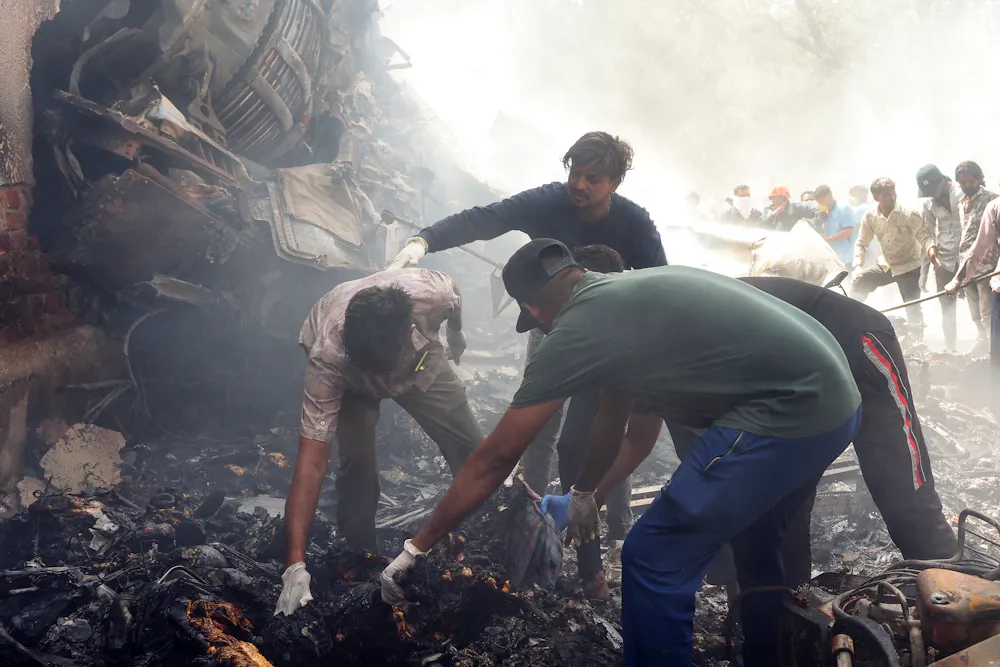
    The Boeing 787-7 Dreamliner crashed into a medical college less than a minute after taking off in the city of Ahmedabad, killing the other 229 passengers and 12 crew. At least five people were killed on the ground.

    Surviving a mass disaster of this kind may be hailed as a kind of “miracle”. But what is it like to survive – especially as the only one?

    Surviving a disaster

    Past research has shown disaster survivors may experience an intense range of emotions, from grief and anxiety to feelings of loss and uncertainty.

    These are common reactions to an extraordinary situation.

    Some people may develop post-traumatic stress disorder (PTSD) and have difficulty adjusting to a new reality after bearing witness to immense loss. They may also be dealing with physical recovery from injuries sustained in the disaster.

    Most people recover after disasters by drawing on their own strengths and the support of others. Recovery rates are high: generally less than one in ten of those affected by disasters develop chronic, long-term problems.

    However, being a sole survivor of a mass casualty may have its own complex psychological challenges.

    Survivor’s guilt

    Survivors can experience guilt they lived when others died.

    My friend, Gill Hicks, spoke to me for this article about the ongoing guilt she still feels, years after surviving the 2005 bombings of the London underground.

    Lying trapped in a smoke-filled train carriage, she was the last living person to be rescued after the attack. Gill lost both her legs.

    Yet she still wonders, “Why me? Why did I get to go home, when so many others didn’t?”

    In the case of a sole survivor, this guilt may be particularly acute. However, research addressing the impact of sole survivorship is limited. Most research that looks at the psychological impact of disaster focuses on the impact of disasters more broadly.

    Those interviewed for a 2013 documentary about surviving large plane crashes, Sole Survivor, express complex feelings – wanting to share their stories, but fearing being judged by others.

    Being the lone survivor can be a heavy burden.

    “I didn’t think I was worthy of the gift of being alive,” George Lamson Jr. told the documentary, after surviving a 1985 plane crash in Nevada that killed all others on board.

    Looking for meaning

    People who survive a disaster may also be under pressure to explain what happened and relive the trauma for the benefit of others.

    Vishwashkumar Ramesh was filmed and interviewed by media in the minutes and hours following the Air India crash. But as he told his brother: “I have no idea how I exited the plane”.

    It can be common for survivors themselves to be plagued by unanswerable questions. Did they live for a reason? Why did they live, when so many others died?

    These kinds of unaswerable questions reflect our natural inclination to look for meaning in experiences, and to have our life stories make sense.

    For some people, sharing a traumatic experience with others who’ve been through it or something similar can be a beneficial part of the recovery process, helping to process emotions and regain some agency and control.

    However, this may not always be possible for sole survivors, potentially compounding feelings of guilt and isolation.

    Coping with survivor guilt

    Survivor guilt can be an expression of grief and loss.

    Studies indicate guilt is notably widespread among individuals who have experienced traumatic events, and it is associated with heightened psychopathological symptoms (such as severe anxiety, insomnia or flashbacks) and thoughts of suicide.

    Taking time to process the traumatic event can help survivors cope, and seeking support from friends, family and community or faith leaders can help an individual work through difficult feelings.

    My friend Gill says the anxiety rises as the anniversary of the disaster approaches each year. Trauma reminders such as anniversaries are different to unexpected trauma triggers, but can still cause distress.

    Media attention around collectively experienced dates can also amplify trauma-related distress, contributing to a cycle of media consumption and increased worry about future events.

    On the 7th of July each year, Gill holds a private remembrance ritual. This allows her to express her grief and sense of loss, and to honour those who did not survive. These types of rituals can be a valuable tool in processing feelings of grief and guilt, offering a sense of control and meaning and facilitating the expression and acceptance of loss.

    But lingering guilt and anxiety – especially when it interferes with day-to-day life – should not be ignored. Ongoing survivor guilt is associated with significantly higher levels of post-traumatic symptoms.

    Survivors may need support from psychologists or mental health professionals in the short and long term.

    Erin Smith does not work for, consult, own shares in or receive funding from any company or organisation that would benefit from this article, and has disclosed no relevant affiliations beyond their academic appointment.

    ref. Just one man survived the Air India crash. What’s it like to survive a mass disaster? – https://theconversation.com/just-one-man-survived-the-air-india-crash-whats-it-like-to-survive-a-mass-disaster-258905

    MIL OSI – Global Reports

  • MIL-OSI Africa: Conflict, Displacement and disease drive food insecurity and malnutrition to alarming level in parts of South Sudan


    Download logo

    The population in two counties in South Sudan are at risk of famine in the coming months, as conflict in Upper Nile state escalates, destroying homes, disrupting livelihoods, and impeding the delivery of humanitarian aid.

    The latest update by the Integrated Food Security Phase Classification (IPC) shows a deterioration in food and nutrition conditions in areas of South Sudan hit by fighting in the last few months. In Upper Nile state, people in 11 of the 13 counties are now facing emergency levels of hunger. 

    Of extreme concern are Nasir and Ulang counties in Upper Nile, where people are deemed to be at-risk of famine, in the worst-case scenario. These areas have faced intense clashes and aerial bombardments that began in March, leading to large scale displacement. Some 32,000 people are in Catastrophic (IPC Phase 5) hunger conditions in Upper Nile state, more than three times the previous projection.

    Other parts of the country that have been spared from the conflict have seen improvements, with food security classification shifting from emergency (IPC Phase 4) to crisis (IPC Phase 3) – linked in some areas to better crop production and in others to sustained humanitarian interventions. This highlights the positive impact stability can have on food security.

    Nonetheless, 7.7 million people (57 percent of the population) continue to face acute food insecurity (IPC Phase 3+), and there have been persistent pockets of catastrophic hunger (IPC Phase 5) in South Sudan in recent years, with conflict as a core driver. The last time famine was confirmed in South Sudan was in 2017.

    “South Sudan cannot afford to sink into conflict at this point in time. It will plunge already vulnerable communities into severe food insecurity, leading to widespread hunger as farmers will be prevented from working on their land,” said Meshack Malo, Country Representative of the Food and Agriculture Organization of the United Nations in South Sudan. “Improvement from IPC Phase 4 to IPC Phase 3, in ten counties, is clear testament of the dividends of peace”

    Humanitarian access in the conflict-affected areas remains severely constrained, leaving vulnerable communities without vital support during the lean season, amid ongoing conflict and displacement. The report also found that 66 percent (1.04 million people) of Upper Nile state’s population are now facing Crisis (IPC Phase 3), Emergency (IPC Phase 4), or Catastrophic (IPC Phase 5) levels of hunger.

    “Once again, we are seeing the devastating impact conflict has on food security in South Sudan,” said Mary-Ellen McGroarty, Country Director and Representative for the United Nations World Food Programme (WFP) in South Sudan. “Conflict doesn’t just destroy homes and livelihoods, it tears communities apart, cuts off access to markets, and sends food prices spiraling upward. Long-term peace is essential, but right now, it is critical our teams are able to access and safely distribute food to families caught in conflict in Upper Nile, to bring them back from the brink and prevent famine.”

    Malnutrition is also surging among children and mothers amidst a cholera outbreak with three additional counties in Upper Nile and Unity states reaching the most critical levels of malnutrition classification. The number of children at risk of acute malnutrition across South Sudan has risen to 2.3 million, from 2.1 million earlier in the year – an already unprecedented number. 

    “These latest projections place a further 200,000 young children at high risk of malnutrition. The ongoing challenges with access in some of the most affected areas, as well as health and nutrition site closures reduce the chances of early intervention and treatment. In addition, the cholera outbreak has added to an already difficult situation, putting young lives in a precarious fight for survival,” said Noala Skinner, UNICEF’s country representative in South Sudan. “Now more than ever we need continuity and scale-up of services for prevention and treatment of malnutrition” she added.

    As conflict, displacement, and disease continue to converge, humanitarian agencies are warning that the time to act is passing quickly for thousands of families in Upper Nile who are on the brink of catastrophe.

    Distributed by APO Group on behalf of World Food Programme (WFP).

    MIL OSI Africa

  • MIL-OSI Russia: Happy birthday to Sergey Chuev!

    Translation. Region: Russian Federal

    Source: State University of Management – Official website of the State –

    Immediately after Russia Day, the State University of Management celebrates the birthday of the adviser to the rector’s office of the State University of Management, head of the department of state and municipal administration, candidate of historical sciences, member of the Union of Writers of Russia and a true patriot, Sergei Chuev.

    Sergey Vladimirovich is known for his active work at the State University of Management and beyond. Thus, he spent the beginning of the summer in Blagoveshchensk, at the 10th International Public Writers’ and Publishing Forum. He barely had time to return when he took part in a round table discussion with the Chairman of the Presidential Council for the Development of Civil Society and Human Rights Valery Fadeyev on the topic of preparing a textbook on economics. The birthday boy does a lot to restore and popularize the rich history of our university, in particular, he contributed to the opening of a memorial exhibition in the Scientific Library of the State University of Management. He regularly participates in various conferences and forums as a speaker. He enthusiastically joins all projects dedicated to literature. He often appears as an expert political scientist on television. In general, he is an incredibly active employee – an example of an excellent leader at a university for the best managers in the country.

    For the greater benefit of our university and the country as a whole, we wish Sergei Chuev to continue his career in the same spirit, to successfully carry out all his projects and come up with new ones, to delight his colleagues with his easy sense of humor, to always be healthy and cheerful, and to look down on troubles in the literal and figurative sense of the word.

    Please note: This information is raw content directly from the source of the information. It is exactly what the source states and does not reflect the position of MIL-OSI or its clients.

    MIL OSI Russia News

  • MIL-OSI Economics: Yannis Stournaras: Central banks – opportunities and implications posed by artificial intelligence

    Source: Bank for International Settlements

    Introduction

    Many thanks to the conference organisers for inviting me to be here today. It’s a privilege to be part of this dialogue that is helping to shape the digital era.

    Central banks may seem far removed from your world-but we share an important feature: all of us are engaged in understanding complexity, managing uncertainty, and preparing for the future.

    Today, I would like to discuss how central banks can harness the transformative potential of artificial intelligence (AI) in their mission to safeguard monetary and financial stability. My remarks will unfold along three dimensions, focusing on several important issues, but without being exhaustive.

    • First, on the ways that AI intersects with our monetary policy strategy at the European Central Bank (ECB).
    • Second, on the opportunities AI offers to central banks for efficiency gains in areas such as communication and economic analysis.
    • Third, on the implications posed by AI for price stability, monetary policy transmission and financial stability.

    Intersections of monetary policy strategy with AI

    So, let me briefly discuss the ways that AI intersects with our monetary policy strategy.

    When the ECB Governing Council embarked on its strategy review last year, we made it clear that price stability remains our objective. We also decided to keep the symmetric, 2% inflation target unchanged.

    The clarity which that objective provides, and our success in achieving that objective, have provided the ECB with credibility, which was essential in keeping inflation expectations anchored around the 2 per cent level during the recent inflation surge.

    Although our updated strategy is only expected to be concluded and announced later this year, the following is important.

    When the review was initiated, no one could have possibly foreseen the tectonic eruptions to the geopolitical landscape that ensued.

    These developments have only reinforced the importance of the review and the need to ensure that our policies will remain fit for a rapidly evolving world — a world that is now being shaped by geopolitical tensions, trade disruptions, ongoing climate change, and rapid advances in artificial intelligence.

    In such a world, central banks need to be able to respond with agility, which is undoubtedly a guiding virtue for everyone in this room.

    We have to deliver a strategy that is not only robust but also flexible: one that allows adjustments to the monetary policy stance and our toolkit in response to shocks and provides a foundation that can guide the Governing Council in navigating through challenges in the years to come.

    In today’s fast-moving environment-where inflation dynamics can shift rapidly, financial conditions are increasingly volatile and uncertainty is ever-present-we need to improve our ability to communicate, assess economic developments in real time and make more accurate projections of the outlook to guide our monetary policy making.

    This is where AI begins to play a potentially transformative role. In the following, I will focus on the opportunities provided by AI in core central banking fields, namely communication and economic analysis.

    Opportunity to enhance communication

    I start with communication.

    Central banks have come a long way in their communication strategies. As you may know, it was not always the case that the words “central bank” and “communication” could even stand together in the same sentence.

    In the 1960s and 1970s, the conventional wisdom among central bankers was: “the less said, the better.” The aim was often to surprise markets with the announcement of their policy decisions. Significant policy decisions were sometimes made without immediate public disclosure, and the rationale behind them was not always transparently communicated. The language used would often make the oracles of Delphi seem crystal clear.

    Alan Greenspan once captured this perfectly when he said, “if I seem unduly clear to you, you must have misunderstood what I said.”

    Things began to change in the 1980s and 1990s. Two factors, in particular, helped bring about this change.

    The first factor was credibility. As more and more central banks adopted inflation targeting frameworks, they realized that to achieve their targets, they needed to control inflation expectations. In other words, they needed to be credible.

    The second factor was independence. As central banks achieved independence from politicians, they also had to communicate in a transparent way with the public to help build trust, and safeguard accountability.

    An important corollary of the improved communication is that it has increased the effectiveness of monetary policy transmission.

    The previous ECB strategy review in 2021 consolidated this finding, while also calling for central banks in the euro area to use simpler and engaging language to directly access a broader audience.

    More recently, efforts are being made to exploit AI for the benefit of our communication processes, to enhance transparency, foster trust, and ensure that our monetary policy reaction function is clearly understood, thereby supporting the anchoring of inflation expectations.

    An important application involves the sentiment analysis of official publications, such as monetary policy statements, speeches, and press releases. For example, using Large Language Models (LLMs) the impact of ECB statements on financial markets1 can be explored. This kind of work helps understand how the language in communications shapes market expectations for inflation and interest rates.

    AI models can be trained on financial and policy-specific issues to detect subtle shifts in tone – such as whether a message appears more hawkish (in favour of tighter monetary policy) or dovish (in favour of looser monetary policy) – before publication. This allows communications teams to adjust language in order to ensure it aligns with the intended policy signal, minimising the risk of misinterpretation by the markets that could trigger undue volatility.

    AI can also play a growing role in the crafting and refining of speeches by policy makers. LLMs can support a consistent voice in communication, while also tailoring the tone and content to specific audiences – be it financial market analysts, other expert audiences, or the wider public.

    Moreover, AI supports a wide range of multilingual and accessibility needs. Machine translation models – fine-tuned for economic and legal language – help ensure timely publication of central bank materials across multiple official languages, a feature very useful to the European System of Central Banks which speaks all 24 official languages of the EU.

    Recourse to AI for communication purposes, however, necessitates caution. Over-reliance on AI in crafting and interpreting central bank communications could create an “echo chamber.” This would occur when AI tools respond to, and amplify, each other’s outputs, leading to overly uniform narratives and repetitive signals, that may distort the policymakers’ message. This is a clear case that illustrates the need for human oversight in overviewing processes to ensure that communication stays varied, accurate, and relevant.

    Opportunity to improve central bank economic analysis and decision making

    Another area that AI is poised to enhance is economic analysis. Following the AI revolution, we have started to build expertise in incorporating AI and non-traditional data in our analytical tools. These tools are rapidly being applied in the economic analyses that inform our monetary policy decisions.

    A question however arises: Is the use of AI in this context a hype? Or could it mark a methodological revolution that will help us better pursue our mandate? I believe that there are unique opportunities but also several challenges.

    First, central banks rely heavily on economic data to make informed decisions on monetary policy. Traditional statistical methods may not be sufficient to apprehend the complexity of the current uncertain environment. The use of LLMs can deliver enhanced data processing and analysis of unstructured data sets of textual data (like news articles or social media). This enables us to access new and non-traditional data sources, that could provide useful insights into our policies.

    Furthermore, machine learning (ML) models can quickly detect patterns, trends, and potential risks that might not be visible using traditional methods. Thus, we could identify structural breaks and patterns that would otherwise be difficult to detect.

    These tools can also help identify non-linear relationships. This is particularly important in a complex environment, since capturing non-linearities in the data is essential to understanding how the economy will evolve under stress and how seemingly small disturbances could lead to large-scale economic disruptions.

    In addition, by processing real-time data, AI can provide timely insights and rigorous analysis, allowing central banks more flexibility in decision making. This is valuable in a world prone to shocks and in times of pervasive uncertainty.

    There is also a possibility that these tools will be useful in the prediction of turning points in the business cycle and of tail events, such as fiscal crises.

    Finally, AI could improve forecasting and nowcasting inflation and economic activity. The Eurosystem already uses AI to improve its forecasting processes. For example, ML techniques are applied in inflation forecasting2 or in nowcasting global trade3. Moreover, short-term forecasts of economic activity are informed by sentiment indicators derived from the textual analysis of news, using LLMs4. Research5 at the Bank of Greece has produced forecasting models of inflation based on textual indicators of supply and demand disturbances in commodity markets. With the help of AI tools, these indicators can be updated on a daily basis and thus help predict inflation more accurately. This research has found that out-of-sample inflation forecast errors are reduced by up to 30 per cent.

    Still, there are several challenges.

    First, AI models are often complex and opaque, lacking transparency. Being like a “black box”, they are – at least for the time being – difficult to reconcile with the principles of transparency and accountability of central banks.

    Second, AI models (usually LLMs) could occasionally provide inaccurate or misleading information, raising practical, reputational and legal concerns. Therefore, human supervision is of the essence, especially in processes that require rational reasoning.

    Third, the quality of non-traditional data is often poor and the process of reconciling these data with our existing data sources is demanding. In a similar vein, the use of AI should not create an over-reliance on machine-driven outcomes.

    Overall, I believe that AI is a potent technology which has already brought about tectonic shifts in economic analysis. Its potential is still unfolding, and the benefits it offers are only beginning to be realised. The cutting-edge research promoted at this conference marks a point of methodological revolution. I believe that such research will fundamentally transform the way we understand economic dynamics and will ultimately enable us to make better-informed decisions.

    While AI opens unique opportunities for central banks in the pursuit of their mandate, it also brings a number of emerging implications that we must carefully consider. I’d like to share what I see as some of the most significant.

    Implications on productivity, employment, inflation

    Let me start with the effects on the macroeconomic outlook.

    AI has strong potential to raise productivity, both through its direct impact on total factor productivity, but also through improvements of efficiency on individual firm level. However, the aggregate effects remain uncertain and vary widely across studies6.

    One reason is that a disproportionate share of the benefits generated by AI may be concentrated in a small number of highly advanced firms, particularly large technology companies with the resources and infrastructure to develop and deploy cutting-edge AI tools.

    This concentration poses a risk: while AI can deliver substantial productivity benefits at the enterprise level, these gains may not necessarily translate into broad-based growth in aggregate productivity, unless mechanisms are in place to ensure that the diffusion of AI is wide across sectors, firms and countries.

    In a similar vein, the potential impact of AI on employment is difficult to estimate. On the one hand, it can automate routine, lower-skilled tasks – potentially displacing workers. On the other hand, AI can create new opportunities by increasing labour demand for non-automated tasks, as well as giving rise to new types of jobs. To maximise the favourable effects of AI on employment and to mitigate risks such as labour market inequality, reskilling the workforce with AI-complementary skills will be essential.

    Turning to prices, the impact of AI on inflation could go in both directions. Increased global demand for energy – driven by the computational intensity of AI technologies – could raise energy prices. According to the IMF7, electricity used by data centres alone, is already as much as that of Germany or France, and by 2030 would be comparable to that of India which is the world’s third largest electricity user. At the same time, AI can also contribute to more efficient energy use and improved grid management, potentially lowering costs.

    Moreover, AI-induced productivity improvements might help offset labour shortages, especially in times of low unemployment and ageing population. This could lead to a decline in unit labour costs, exerting thus downward price pressures. However, the overall impact of AI on employment and wage growth is difficult to predict.

    Expectations also play a central role in the price formation process. If consumers fully anticipate future benefits from AI (such as better products, lower costs, or higher wages), they may bring forward consumption in the short term, creating inflationary pressures. However, if expectations are only regressively formed, disinflationary forces may dominate in the near term due to delayed consumption and investment.

    Implications for monetary policy transmission

    The transmission of monetary policy to the economy, and thus monetary policy making are significantly impacted by AI.

    As I already noted, AI is expected to bring about distributional shifts in income and wealth. These shifts matter for monetary policy, since they influence households’ marginal propensity to consume and their access to credit.

    Should AI disproportionally raise the income share of lower-income households – with a higher marginal propensity to consume and greater credit constraints – the transmission of monetary policy could be strengthened. In contrast, if the gains accrue mainly to higher-income, more skilled households – who have lower marginal propensity to consume and are less responsive to interest rate changes — then monetary policy transmission may weaken.

    AI is also affecting how firms set prices. Companies that are more digitalised and employ algorithmic pricing tools can adjust prices more frequently and with greater precision in response to economic shocks. Higher price flexibility could induce – all else equal, a more efficient real economy.

    At the same time, ML tools enable firms to personalise prices and introduce heterogeneity, which is likely to weaken the link between monetary policy measures and prices, although AI could provide tools that enhance price transparency and improve consumers’ ability to compare prices. There is also the risk that algorithmic pricing could lead to tacit collusion among firms and greater market power, undermining the effectiveness of monetary policy in controlling inflation.

    Finally, AI may influence wage-setting dynamics. If the presence of automation erodes workers’ bargaining power, wage responsiveness to changes in unemployment could be reduced. This would weaken the sensitivity of inflation to shifts in monetary policy and complicate central banks’ ability to steer inflation effectively.

    Implications for financial stability

    Turning now to financial stability, the implications of AI technologies are complex and multifaceted.

    On the one hand, AI offers powerful tools to enhance financial institutions’ capabilities in risk assessment, liquidity management and strategic decision making. On the other hand, AI can exacerbate existing vulnerabilities and create new ones.

    For example, generative AI could be deliberately misused – such as through the creation of deepfakes or fabricated statements – potentially aimed at manipulating sentiment or triggering market stress.

    There is also the risk of herding behavior. As more institutions adopt similar AI models, the likelihood of systemic stress increases. What may initially appear as isolated, micro-level risk could rapidly escalate via AI and pose serious threats to financial stability.

    If financial institutions, market participants or the public at large base their key decisions on such inputs, without adequate human verification, we may witness situations of disorderly market volatility. Overreliance to a limited number of AI providers could further raise operational risks and adversely affect the resilience of the financial sector.

    Therefore, it is critical that these tools are deployed with caution. Sound governance, robust regulatory oversight, and adequate safeguards will be essential to ensuring that AI acts as a tool for strength, rather than a source of systemic risk.

    Conclusion

    To conclude, the core task of central banks remains safeguarding price and financial stability, and AI poses unprecedented opportunities but also considerable challenges.

    From enhancing communication and improving economic analysis, to reshaping the channels through which monetary policy and the financial system operate, AI is already redefining the way we pursue our tasks.

    As I have outlined today, AI can make central banks more agile, more transparent, and more effective. But its use also demands flexibility – not only in the tools we use, but in the way we think, plan and make decisions. In a world of growing complexity and rapid technological change, we must ensure that innovation goes hand in hand with responsibility, transparency, and trust.

    This calls for thoughtful integration, not blind adoption. As we integrate AI into our policymaking, we must ensure that human judgment and critical thinking remain central to our decisions. AI should serve as a tool to enhance – not replace – our responsibility to make sound, efficient policy choices in the interest of our citizens.

    The euro area faces a dual challenge: harnessing the opportunities that artificial intelligence presents while actively addressing its broader implications.

    To rise to this challenge, it is vital that we craft a comprehensive European AI strategy. To improve the environment for AI innovation and diffusion of new technologies, our strategy has to rest on three pillars: funding, regulation and energy.

    Developing and scaling AI requires substantial investment, particularly in digital infrastructure. There is broad consensus on the importance of building a savings and investment union to jump-start European projects on innovation, including AI.

    Complementary efforts to equip people with the skills they need to thrive in an AI-driven economy and to mitigate the risk of widening inequality are also of high importance.

    In addition, regulatory burdens and weak institutional quality can significantly hold back the expansion of high-tech sectors. That’s why we need simple but efficient regulation, while ensuring protection of personal data and strong institutions to defend AI-generated innovation.

    Energy, too, is a critical piece of the puzzle. AI diffusion across the economy will place greater demands on Europe’s energy infrastructure. Addressing supply constraints now is essential to ensuring that AI adoption is sustainable in the long run.

    All these considerations need to be taken into account when assessing challenges and opportunities arising from this very innovative technology. The successful adoption of AI requires a flexible adjustment in a constantly evolving environment. Therefore, we need to commence our journey on that potentially wonderful vessel with urgency but also with careful consideration, towards a new shore.

    I am confident that the insights shared at this conference, and the research being pursued by many of you in this room, will be instrumental in guiding us forward.

    Thank you.
    MIL OSI Economics

  • Key targets and capabilities: a look at Iran’s nuclear facilities amid Israeli strikes

    Source: Government of India

    Source: Government of India (4)

    Israel said early on Friday it had struck Iranian nuclear targets to block Tehran from developing atomic weapons, and Iranian media and witnesses reported explosions including at the country’s main uranium enrichment facility. Israeli Prime Minister Benjamin Netanyahu said the strikes are aimed at hurting Iran’s nuclear infrastructure, ballistic missile factories and military capabilities.

    Below are some of Iran’s main nuclear facilities.

    WHERE ARE IRAN’S NUCLEAR FACILITIES?

    Iran’s nuclear programme is spread over many locations. While the threat of Israeli airstrikes has loomed for decades, only some of the sites have been built underground.

    DOES IRAN HAVE A NUCLEAR WEAPONS PROGRAMME?

    The United States and the U.N. nuclear watchdog believe Iran had a coordinated, secret nuclear weapons programme that it halted in 2003. The Islamic Republic denies ever having had one or planning to have one.

    Iran agreed to restrictions on its nuclear activities in exchange for relief from international sanctions under a 2015 deal with world powers. That pact fell apart after Trump – then serving his first term as president – pulled the United States out of it in 2018 and Iran started abandoning the restrictions in the following year.

    IS IRAN INCREASING ITS URANIUM ENRICHMENT?

    Yes. Iran has been expanding its uranium enrichment programme ever since the pact broke down, reducing the so-called “breakout time” it would need to produce enough weapons-grade uranium for a nuclear bomb to days or little more than a week from at least a year under the 2015 deal.

    Actually making a bomb with that material would take longer. How long is less clear and is the subject of debate.

    Iran is now enriching uranium to up to 60% fissile purity, close to the 90% of weapons-grade, at two sites, and in theory it has enough material enriched to that level, if enriched further, for six bombs, according to a yardstick of the International Atomic Energy Agency (IAEA), the U.N. watchdog.

    NATANZ

    Netanyahu said on Friday that Israel had targetted Natanz as part of its attack.

    A complex at the heart of Iran’s enrichment programme on a plain abutting mountains outside the Shi’ite Muslim holy city of Qom, south of Tehran. Natanz houses facilities including two enrichment plants: the vast, underground Fuel Enrichment Plant (FEP) and the above-ground Pilot Fuel Enrichment Plant (PFEP).

    An exiled Iranian opposition group revealed in 2002 that Iran was secretly building Natanz, igniting a diplomatic standoff between the West and Iran over its nuclear intentions that continues today.

    The FEP was built for enrichment on a commercial scale, able to house 50,000 centrifuges. Around 16,000 centrifuges are currently installed there, roughly 13,000 of which are in operation, refining uranium to up to 5% purity.

    Diplomats with knowledge of Natanz describe the FEP as being about three floors below ground. There has long been debate about how much damage Israeli airstrikes could do to it.

    Damage has been done to centrifuges at the FEP by other means, including an explosion and power cut in April 2021 that Iran said was an attack by Israel.

    The above-ground PFEP houses only hundreds of centrifuges but Iran is enriching to up to 60% purity there.

    FORDOW

    On the opposite side of Qom, Fordow is an enrichment site dug into a mountain and therefore probably better protected from potential bombardment than the FEP.

    The 2015 deal with major powers did not allow Iran to enrich at Fordow at all. It now has around 2,000 centrifuges operating there, most of them advanced IR-6 machines, of which up to 350 are enriching to up to 60%.

    The United States, Britain and France announced in 2009 that Iran had been secretly building Fordow for years and had failed to inform the IAEA. U.S. President Barack Obama said then: “The size and configuration of this facility is inconsistent with a peaceful programme.”

    ISFAHAN

    Iran has a large nuclear technology centre on the outskirts of Isfahan, its second largest city.

    It includes the Fuel Plate Fabrication Plant (FPFP) and the uranium conversion facility (UCF) that can process uranium into the uranium hexafluoride that is fed into centrifuges.

    Iran also stores enriched uranium at Isfahan, diplomats say.

    There is equipment at Isfahan to make uranium metal, a process that is particularly proliferation-sensitive since it can be used to devise the core of a nuclear bomb.

    The IAEA has said there are machines for making centrifuge parts at Isfahan, describing it in 2022 as a “new location”.

    KHONDAB

    Iran has a partially built heavy-water research reactor originally called Arak and now Khondab. Heavy-water reactors pose a nuclear proliferation risk because they can easily produce plutonium which, like enriched uranium, can be used to make the core of an atom bomb.

    Under the 2015 deal, construction was halted, the reactor’s core was removed and filled with concrete to make it unusable. The reactor was to be redesigned “to minimise the production of plutonium and not to produce weapon-grade plutonium in normal operation”. Iran has informed the IAEA that it plans to start operating the reactor in 2026.

    TEHRAN RESEARCH CENTRE

    Iran’s nuclear research facilities in Tehran include a research reactor.

    BUSHEHR

    Iran’s only operating nuclear power plant, on the Gulf coast, uses Russian fuel that Russia then takes back when it is spent, reducing the proliferation risk.

    (Reuters)

  • MIL-Evening Report: Just one man survived the Air India crash. What’s it like to survive a mass disaster?

    Source: The Conversation (Au and NZ) – By Erin Smith, Associate Professor and Discipline Lead (Paramedicine), La Trobe University

    Vishwashkumar Ramesh, a British citizen returning from a trip to India, has been confirmed as the only survivor of Thursday’s deadly Air India crash.

    “I don’t know how I am alive,” Ramesh told family, according to his brother Nayan, in a video call moments after emerging from the wreckage. Another brother Ajay, seated elswhere on the plane, was killed.

    The Boeing 787-7 Dreamliner crashed into a medical college less than a minute after taking off in the city of Ahmedabad, killing the other 229 passengers and 12 crew. At least five people were killed on the ground.

    Surviving a mass disaster of this kind may be hailed as a kind of “miracle”. But what is it like to survive – especially as the only one?

    Surviving a disaster

    Past research has shown disaster survivors may experience an intense range of emotions, from grief and anxiety to feelings of loss and uncertainty.

    These are common reactions to an extraordinary situation.

    Some people may develop post-traumatic stress disorder (PTSD) and have difficulty adjusting to a new reality after bearing witness to immense loss. They may also be dealing with physical recovery from injuries sustained in the disaster.

    Most people recover after disasters by drawing on their own strengths and the support of others. Recovery rates are high: generally less than one in ten of those affected by disasters develop chronic, long-term problems.

    However, being a sole survivor of a mass casualty may have its own complex psychological challenges.

    Survivor’s guilt

    Survivors can experience guilt they lived when others died.

    My friend, Gill Hicks, spoke to me for this article about the ongoing guilt she still feels, years after surviving the 2005 bombings of the London underground.

    Lying trapped in a smoke-filled train carriage, she was the last living person to be rescued after the attack. Gill lost both her legs.

    Yet she still wonders, “Why me? Why did I get to go home, when so many others didn’t?”

    In the case of a sole survivor, this guilt may be particularly acute. However, research addressing the impact of sole survivorship is limited. Most research that looks at the psychological impact of disaster focuses on the impact of disasters more broadly.

    Those interviewed for a 2013 documentary about surviving large plane crashes, Sole Survivor, express complex feelings – wanting to share their stories, but fearing being judged by others.

    Being the lone survivor can be a heavy burden.

    “I didn’t think I was worthy of the gift of being alive,” George Lamson Jr. told the documentary, after surviving a 1985 plane crash in Nevada that killed all others on board.

    Looking for meaning

    People who survive a disaster may also be under pressure to explain what happened and relive the trauma for the benefit of others.

    Vishwashkumar Ramesh was filmed and interviewed by media in the minutes and hours following the Air India crash. But as he told his brother: “I have no idea how I exited the plane”.

    It can be common for survivors themselves to be plagued by unanswerable questions. Did they live for a reason? Why did they live, when so many others died?

    These kinds of unaswerable questions reflect our natural inclination to look for meaning in experiences, and to have our life stories make sense.

    For some people, sharing a traumatic experience with others who’ve been through it or something similar can be a beneficial part of the recovery process, helping to process emotions and regain some agency and control.

    However, this may not always be possible for sole survivors, potentially compounding feelings of guilt and isolation.

    Coping with survivor guilt

    Survivor guilt can be an expression of grief and loss.

    Studies indicate guilt is notably widespread among individuals who have experienced traumatic events, and it is associated with heightened psychopathological symptoms (such as severe anxiety, insomnia or flashbacks) and thoughts of suicide.

    Taking time to process the traumatic event can help survivors cope, and seeking support from friends, family and community or faith leaders can help an individual work through difficult feelings.

    My friend Gill says the anxiety rises as the anniversary of the disaster approaches each year. Trauma reminders such as anniversaries are different to unexpected trauma triggers, but can still cause distress.

    Media attention around collectively experienced dates can also amplify trauma-related distress, contributing to a cycle of media consumption and increased worry about future events.

    On the 7th of July each year, Gill holds a private remembrance ritual. This allows her to express her grief and sense of loss, and to honour those who did not survive. These types of rituals can be a valuable tool in processing feelings of grief and guilt, offering a sense of control and meaning and facilitating the expression and acceptance of loss.

    But lingering guilt and anxiety – especially when it interferes with day-to-day life – should not be ignored. Ongoing survivor guilt is associated with significantly higher levels of post-traumatic symptoms.

    Survivors may need support from psychologists or mental health professionals in the short and long term.

    Erin Smith does not work for, consult, own shares in or receive funding from any company or organisation that would benefit from this article, and has disclosed no relevant affiliations beyond their academic appointment.

    ref. Just one man survived the Air India crash. What’s it like to survive a mass disaster? – https://theconversation.com/just-one-man-survived-the-air-india-crash-whats-it-like-to-survive-a-mass-disaster-258905

    MIL OSI AnalysisEveningReport.nz

  • MIL-Evening Report: Why did Israel defy Trump – and risk a major war – by striking Iran now? And what happens next?

    Source: The Conversation (Au and NZ) – By Amin Saikal, Emeritus Professor of Middle Eastern and Central Asian Studies, Australian National University; and Vice Chancellor’s Strategic Fellow, Victoria University

    Alarmed by an intelligence assessment that Iran will be able to produce nuclear weapons within months if not weeks, Israel has launched a massive air campaign aiming to destroy the country’s nuclear program.

    Israel’s air strikes hit Iran’s main nuclear enrichment facility at Natanz, as well as its air defences and long-range missile facilities.

    Among the dead are Hossein Salami, the chief of Iran’s powerful Revolutionary Guards Corps; Mohammad Bagheri, the commander-in-chief of the military; and two prominent nuclear scientists.

    Iranian Supreme Leader Ayatollah Ali Khamenei has promised “severe punishment” in response. Iran could potentially target Israel’s own nuclear sites and US bases across the Persian Gulf. Israel claimed Iran launched 100 drones towards it just hours after the attack.

    The Middle East is yet again on the precipice of a potentially devastating war with serious regional and global implications.

    Stalled nuclear talks

    The Israeli operations come against the backdrop of a series of inconclusive nuclear talks between the United States and Iran. These negotiations began in mid-April at President Donald Trump’s request and aimed to reach a deal within months.

    Israeli Prime Minister Benjamin Netanyahu opposed the talks, pressing for military action instead as the best option to halt Iran’s nuclear program.

    The diplomatic efforts had stalled in recent weeks over Trump’s demand that Iran agree to a zero-uranium enrichment posture and destroy its stockpile of some 400 kilograms of enriched uranium at a 60% purity level. This could be rapidly enriched further to weapons-grade level.

    Tehran refused to oblige, calling it a “non-negotiable”.

    Netanyahu has long pledged to eliminate what he has called the Iranian “octopus” – the regime’s vast network of regional affiliates, including Hamas in Gaza, Hezbollah in Lebanon, the regime of former Syrian leader Bashar al-Assad, and the Houthi militants in Yemen.

    Following Hamas’ attack on Israel on October 7 2023, Israel’s military has considerably degraded these Iranian affiliates, one by one. Now, Netanyahu has now gone for beheading the octopus.

    Trump keeping his distance

    Netanyahu has in the past urged Washington to join him in a military operation against Iran. However, successive US leaders have not found it desirable to ignite or be involved in another Middle East war, especially after the debacle in Iraq and its failed Afghanistan intervention.

    Despite his strong commitment to Israel’s security and regional supremacy, Trump has been keen to follow this US posture, for two important reasons.

    He has not forgotten Netanyahu’s warm congratulations to Joe Biden when he defeated Trump in the 2020 US presidential election.

    Nor has Trump been keen to be too closely aligned with Netanyahu at the expense of his lucrative relations with oil-rich Arab states. He recently visited Saudi Arabia, Qatar and the United Arab Emirates on a trip to the Middle East, while bypassing Israel.

    Indeed, this week, Trump had warned Netanyahu not to do anything that could undermine the US nuclear talks with Iran. He has been keen to secure a deal to boost his self-declared reputation as a peace broker, despite not having done very well so far on this front.

    But as the nuclear talks seemed to be reaching a dead end, Netanyahu decided now was the moment to act.

    The Trump administration has distanced itself from the attack, saying it had no involvement. It remains to be seen whether the US will now get involved to defend Israel if and when Iran retaliates.

    What a wider war could mean

    Israel has shown it has the capacity to unleash overwhelming firepower, causing serious damage to Iran’s nuclear and military facilities and infrastructure. But the Iranian Islamic regime also has the capability to retaliate, with all the means at its disposal.

    Despite the fact the Iranian leadership faces serious domestic issues on political, social and economic fronts, it still has the ability to target Israeli and US assets in the region with advanced missiles and drones.

    It also has the capability to close the Strait of Hormuz, through which 20–25% of global oil and liquefied natural gas shipments flow. Importantly, Iran has strategic partnerships with both Russia and China, as well.

    Depending on the nature and scope of the Iranian response, the current conflict could easily develop into an uncontrollable regional war, with none of the parties emerging as victor. A major conflict could not only further destabilise what is already a volatile Middle East, but also upend the fragile global geopolitical and economic landscape.

    The Middle East cannot afford another war. Trump had good reasons to restrain Netanyahu’s government while the nuclear negotiations were taking place to see if he could hammer out a deal.

    Whether this deal can be salvaged amid the chaos is unclear. The next round of negotiations was due to be held on Sunday in Oman, but Iran said it would not attend and all talks were off until further notice.

    Iran and the US, under Barack Obama, had agreed a nuclear deal before – the Joint Comprehensive Plan of Action. Although Netanyahu branded it “the worst deal of the century”, it appeared to be holding until Trump, urged by Netanyahu, unilaterally withdrew from it in 2018.

    Now, Netanyahu has taken the military approach to thwart Iran’s nuclear program. And the region – and rest of the world – will have to wait and see if another war can be averted before it’s too late.

    Amin Saikal does not work for, consult, own shares in or receive funding from any company or organisation that would benefit from this article, and has disclosed no relevant affiliations beyond their academic appointment.

    ref. Why did Israel defy Trump – and risk a major war – by striking Iran now? And what happens next? – https://theconversation.com/why-did-israel-defy-trump-and-risk-a-major-war-by-striking-iran-now-and-what-happens-next-258917

    MIL OSI AnalysisEveningReport.nz

  • MIL-OSI Global: Why did Israel defy Trump – and risk a major war – by striking Iran now? And what happens next?

    Source: The Conversation – Global Perspectives – By Amin Saikal, Emeritus Professor of Middle Eastern and Central Asian Studies, Australian National University; and Vice Chancellor’s Strategic Fellow, Victoria University

    Alarmed by an intelligence assessment that Iran will be able to produce nuclear weapons within months if not weeks, Israel has launched a massive air campaign aiming to destroy the country’s nuclear program.

    Israel’s air strikes hit Iran’s main nuclear enrichment facility at Natanz, as well as its air defences and long-range missile facilities.

    Among the dead are Hossein Salami, the chief of Iran’s powerful Revolutionary Guards Corps; Mohammad Bagheri, the commander-in-chief of the military; and two prominent nuclear scientists.

    Iranian Supreme Leader Ayatollah Ali Khamenei has promised “severe punishment” in response. Iran could potentially target Israel’s own nuclear sites and US bases across the Persian Gulf. Israel claimed Iran launched 100 drones towards it just hours after the attack.

    The Middle East is yet again on the precipice of a potentially devastating war with serious regional and global implications.

    Stalled nuclear talks

    The Israeli operations come against the backdrop of a series of inconclusive nuclear talks between the United States and Iran. These negotiations began in mid-April at President Donald Trump’s request and aimed to reach a deal within months.

    Israeli Prime Minister Benjamin Netanyahu opposed the talks, pressing for military action instead as the best option to halt Iran’s nuclear program.

    The diplomatic efforts had stalled in recent weeks over Trump’s demand that Iran agree to a zero-uranium enrichment posture and destroy its stockpile of some 400 kilograms of enriched uranium at a 60% purity level. This could be rapidly enriched further to weapons-grade level.

    Tehran refused to oblige, calling it a “non-negotiable”.

    Netanyahu has long pledged to eliminate what he has called the Iranian “octopus” – the regime’s vast network of regional affiliates, including Hamas in Gaza, Hezbollah in Lebanon, the regime of former Syrian leader Bashar al-Assad, and the Houthi militants in Yemen.

    Following Hamas’ attack on Israel on October 7 2023, Israel’s military has considerably degraded these Iranian affiliates, one by one. Now, Netanyahu has now gone for beheading the octopus.

    Trump keeping his distance

    Netanyahu has in the past urged Washington to join him in a military operation against Iran. However, successive US leaders have not found it desirable to ignite or be involved in another Middle East war, especially after the debacle in Iraq and its failed Afghanistan intervention.

    Despite his strong commitment to Israel’s security and regional supremacy, Trump has been keen to follow this US posture, for two important reasons.

    He has not forgotten Netanyahu’s warm congratulations to Joe Biden when he defeated Trump in the 2020 US presidential election.

    Nor has Trump been keen to be too closely aligned with Netanyahu at the expense of his lucrative relations with oil-rich Arab states. He recently visited Saudi Arabia, Qatar and the United Arab Emirates on a trip to the Middle East, while bypassing Israel.

    Indeed, this week, Trump had warned Netanyahu not to do anything that could undermine the US nuclear talks with Iran. He has been keen to secure a deal to boost his self-declared reputation as a peace broker, despite not having done very well so far on this front.

    But as the nuclear talks seemed to be reaching a dead end, Netanyahu decided now was the moment to act.

    The Trump administration has distanced itself from the attack, saying it had no involvement. It remains to be seen whether the US will now get involved to defend Israel if and when Iran retaliates.

    What a wider war could mean

    Israel has shown it has the capacity to unleash overwhelming firepower, causing serious damage to Iran’s nuclear and military facilities and infrastructure. But the Iranian Islamic regime also has the capability to retaliate, with all the means at its disposal.

    Despite the fact the Iranian leadership faces serious domestic issues on political, social and economic fronts, it still has the ability to target Israeli and US assets in the region with advanced missiles and drones.

    It also has the capability to close the Strait of Hormuz, through which 20–25% of global oil and liquefied natural gas shipments flow. Importantly, Iran has strategic partnerships with both Russia and China, as well.

    Depending on the nature and scope of the Iranian response, the current conflict could easily develop into an uncontrollable regional war, with none of the parties emerging as victor. A major conflict could not only further destabilise what is already a volatile Middle East, but also upend the fragile global geopolitical and economic landscape.

    The Middle East cannot afford another war. Trump had good reasons to restrain Netanyahu’s government while the nuclear negotiations were taking place to see if he could hammer out a deal.

    Whether this deal can be salvaged amid the chaos is unclear. The next round of negotiations was due to be held on Sunday in Oman, but Iran said it would not attend and all talks were off until further notice.

    Iran and the US, under Barack Obama, had agreed a nuclear deal before – the Joint Comprehensive Plan of Action. Although Netanyahu branded it “the worst deal of the century”, it appeared to be holding until Trump, urged by Netanyahu, unilaterally withdrew from it in 2018.

    Now, Netanyahu has taken the military approach to thwart Iran’s nuclear program. And the region – and rest of the world – will have to wait and see if another war can be averted before it’s too late.

    Amin Saikal does not work for, consult, own shares in or receive funding from any company or organisation that would benefit from this article, and has disclosed no relevant affiliations beyond their academic appointment.

    ref. Why did Israel defy Trump – and risk a major war – by striking Iran now? And what happens next? – https://theconversation.com/why-did-israel-defy-trump-and-risk-a-major-war-by-striking-iran-now-and-what-happens-next-258917

    MIL OSI – Global Reports

  • MIL-OSI Africa: Famine stalks two counties in South Sudan as fragile peace is threatened


    Download logo

    The warning comes amidst increased violence and a worsening food security condition which has 11 out of 13 counties in the state facing emergency levels of hunger and 32,000 of these inhabitants facing catastrophic level hunger conditions, almost three times previous estimates.

    “We are seeing the devastating impact conflict has on food security in South Sudan,” said Mary-Ellen McGroarty, Country Director for the World Food Programme (WFP) in South Sudan.

    “Conflict doesn’t just destroy homes and livelihoods, it tears communities apart, cuts off access to markets, and sends food prices spiralling upward,” Ms. McGroarty said.

    Country-wide hunger

    In total, 7.7 million people across South Sudan will face acute food insecurity, accounting for over half of the entire population. Additionally, 2.3 million children in South Sudan face malnutrition, a rise from 2.1 million at the beginning of the year. 

    FAO expects these numbers to increase as the country prepares to enter the lean and wet season which will further diminish food supplies and potentially worsen displacement.

    The agency did note that counties in which violence has been largely absent have seen improvements in food insecurity as a result of increased crop production and humanitarian efforts. However, hunger continues.

    Despite such ongoing challenges, Meshack Malo, the country representative of FAO in South Sudan, said that these results are proof of the “dividends of peace.”

    Descent into conflict

    South Sudan, the world’s youngest country, gained independence in 2011 and immediately fell into a brutal and devastating civil war which ultimately ended in 2018 thanks to a peace agreement between political rivals which has largely held.

    However, recent political tensions and increased violent attacks, especially in the Upper Nile State, threaten to unravel the peace agreement and plunge the nation back into conflict.

    “South Sudan cannot afford to sink into conflict at this point in time. It will plunge already vulnerable communities into severe food insecurity, leading to widespread hunger,” said Meshack Malo, Country Representative of FAO in South Sudan.

    Humanitarian difficulties

    FAO said that humanitarian access must be improved in order to address the worsening hunger situation.

    The FAO report also emphasized that peace and capacity building is the only sustainable solution for food insecurity in South Sudan.

    “Long-term peace is essential, but right now, it is critical our teams are able to access and safely distribute food to families caught in conflict in Upper Nile, to bring them back from the brink and prevent famine,” said Ms. McGroarty.

    Distributed by APO Group on behalf of UN News.

    MIL OSI Africa

  • MIL-OSI Africa: Revision of the Implementation Plan for the International Peace Cooperation Assignments in South Sudan


    Download logo

    At cabinet meeting on June 13, 2025, the Government of Japan decided to revise the Implementation Plan for the International Peace Cooperation Assignments in South Sudan to extend its period, in light of the significance of continuing contribution toward the international peace and security.

    1. Japan has dispatched JGSDF personnel as staff officers to the headquarters of the United Nations Mission in the Republic of South Sudan (UNMISS) since November 2011 and 4 staff officers are currently in charge of planning and coordination in areas of logistics, information, engineering, and air operations at UNMISS HQs in Juba.
      Regarding Deputy Chief of Staff (jurisdiction over Personnel, Training, Evaluation) and his Personal Assistant who had been additionally dispatched since May 2024, they recently returned home after completion of their one-year mission tour, based on the United Nations Secretariat’s policy to rotate the dispatching country every year through selection.
      Also, regarding Information Officer who is originally tasked to data collection and database maintenance, we have decided to add information analysis as his duty responsibility based on the request from UNMISS.

      On May 8, 2025, the United Nations Security Council adopted resolution 2779 (2025), which extended the mandate of UNMISS until April 30, 2026, following the adoption of resolution 2778(2025) on April 30 this year which had extended its mandate till May 9.

      UNMISS is the only UN peacekeeping operation to which Japan currently deploys its personnel. And the dispatch of staff officers to UNMISS is intended to support the progress of the peace process in South Sudan together with the international community. From the perspective of maintaining and strengthening close engagement with the United Nations, cooperation with African countries in the vicinity of South Sudan and ensuring opportunities for human resource development, the dispatch is meaningful.

    2. The main point of revision is as follows.
      1. Period of the Implementation Plan
        ・Current: till 30 June 2025
        ・After Revision: till 30 June 2026
      2. Change in number of dispatching officers and modifications to their duties

    Distributed by APO Group on behalf of Ministry of Foreign Affairs of Japan.

    MIL OSI Africa

  • MIL-OSI Africa: Committee on Cooperative Governance and Traditional Affairs (COGTA) Committee Chairperson Calls for Assistance for Flood Victims in Eastern Cape and KZN


    Download logo

    The Chairperson of the Portfolio Committee on Cooperative Governance and Traditional Affairs, Dr Zweli Mkhize, has noted with sadness the severe flooding that has left 49 people dead so far and others without homes as flood waters washed away houses and destroyed road infrastructure in the Eastern Cape.

    According to media reports, the disruptive rains, strong winds and snowfall that have hit the province hard started on Monday. Schooling has been suspended in the affected areas and some 58 schools have been damaged in the OR Tambo coastal area, Amathole East and Alfred Nzo West, the most affected areas in the province.

    The bodies of four children, a driver and a conductor who were on a bus that was carried away in flood waters as it was crossing a bridge near Mthatha on Tuesday morning are among those that have been recovered.

    Dr Mkhize said the committee calls for assistance from all those who are able to assist the families affected by floods in the Eastern Cape, particularly in the worst affected districts. Dr Mkhize said disasters of this nature are not new, they come and go, even this one is certainly going to pass. “We note its catastrophic consequences with broken hearts, however,” emphasised Dr Mkhize.

    He said the committee extends its heartfelt condolences to the bereaved families and relatives of those who passed away as a result of the floods. “We are with you in this very difficult and heavy time of loss of the loved ones. May their souls rest in eternal peace.” As floods continue, according to media reports, the number of victims may rise.

    KwaZulu-Natal also experienced flooding and at least 68 schools across nine districts in KZN have been damaged, although no fatalities have been recorded according to media reports. The committee has noted reports of injuries arising from damage to houses and other infrastructure in parts of KZN in the past few days as a result of adverse weather conditions.

    Distributed by APO Group on behalf of Republic of South Africa: The Parliament.

    MIL OSI Africa

  • MIL-OSI Africa: Uganda: Govt Unveils Shs72.3 Trillion Budget to Drive Full Monetisation of Economy


    Download logo

    The Ministry of Finance Planning and Economic Development has unveiled a Shs72.136 trillion national budget for the 2025/2026 financial year, setting its sights on transforming every corner of the country into a hub of commercial activity.

    Presented by Finance Minister Matia Kasaija at the Kololo Ceremonial Grounds on Thursday, 12 June, 2025, the budget signals a strong shift towards full monetisation of Uganda’s economy, underpinned by commercial agriculture, industrialisation, digital transformation, and expanded access to markets.

    Speaking against the backdrop of a rapidly growing economy, Kasaija painted a picture of a Uganda ready to transition from resilience to acceleration.

    “The budget for next financial year, and over the medium term, is focused on people and wealth creation,” he said.

    Consequently, the theme of the financial year 2025/26 is: “Full Monetisation of Uganda’s Economy through Commercial Agriculture, Industrialisation, Expanding and Broadening Services, Digital Transformation and Market Access.’”

    The Shs72.3 trillion resource envelope represents one of the largest in Uganda’s history, with domestic revenue expected to contribute Shs37.2 trillion, roughly 60 percent of the total. The rest will be financed through borrowing and grants. The budget deficit is estimated at 7.6 percent of GDP.

    But Kasaija reassured Ugandans, stating that the government had a clear strategy to enhance domestic revenue mobilisation, widen the tax base, and strengthen tax administration.

    “Government plans to collect Shs37.2 trillion in domestic revenue next financial year,” he said, adding that focus would be placed on tackling smuggling, corruption at Uganda Revenue Authority (URA), and leveraging digital tools like the Electronic Fiscal Receipting and Invoicing System to plug leakages.

    Priority sectors such as health, education, agriculture, infrastructure, and tourism received large shares of the allocation.

    Healthcare emerged as a major beneficiary, with Shs5.87 trillion earmarked for next year. Kasaija detailed plans to functionalise Health Centre IVs, scale up e-health systems, and expand emergency medical services. He said the government had already delivered 20 digital X-ray machines and installed CT scanners in 14 out of 16 regional referral hospitals.

    “We are strengthening the National Ambulance and Emergency Care System,” he added.

    In education, the Minister allocated Shs5.04 trillion to support Universal Primary and Secondary Education, student loans, the construction of new seed schools, and improvements in teacher recruitment and digital inspections.

    Kasaija also confirmed the upcoming operationalisation of Bunyoro and Busoga universities, as well as continued investment in sports infrastructure ahead of African Champions Cup (CHAN) and African Cup of Nation (AFCON 2027).

    “In order to improve compliance with quality standards, Government digitised school inspections in all public schools and TVET institutions,” he said.

    Wealth creation programmes, a lifeline for millions of Ugandans received renewed commitment, with Shs2.43 trillion directed towards the Parish Development Model (PDM), Emyooga, the Uganda Development Bank (UDB), and other grassroots economic empowerment initiatives.

    Kasaija said the PDM alone would receive Shs .059 trillion in FY2025/2026, ensuring every parish continues to receive Shs100 million annually.

    “These investments are changing the lives of Ugandans by boosting household incomes, enhancing food security and creating employment opportunities,” he noted.

    He revealed that over 2.6 million Ugandans have already benefited from PDM funds, with investments spanning food crops, livestock, poultry, and microenterprises. To enhance efficiency and eliminate corruption, PDM operations have been fully digitised, using systems such as the WENDI and ZAIDI apps.

    On the industrial and agricultural front, the government committed Shs1.86 trillion to agro-industrialisation. This includes funding for agricultural research, irrigation schemes, fertilisers, extension services, and value addition. Kasaija highlighted the completion of 145 solar-powered irrigation schemes and the ongoing construction of 157 more.

    He singled out the Agricultural Credit Facility, now worth over Shs1 trillion in disbursements, as a key driver of agricultural transformation.

    “I have provided additional capital of Shs50 billion to the Agricultural Credit Facility next financial year, in addition to insurance that benefits all farmers including PDM beneficiaries.”

    Uganda’s industrial and energy ambitions were also prominently featured, with Kasaija announcing an allocation of Shs875.8 billion for mineral-based industrial development and oil and gas. The East African Crude Oil Pipeline is now 58 percent complete, and an agreement has been signed for the construction of a 60,000-barrel-per-day oil refinery. Once oil production starts in 2026, government expects annual revenues of US$1 to 2.5 billion.

    “Uganda currently saves up to US$72.8 million annually on fuel imports,” Kasaija said, citing the impact of the Uganda National Oil Company’s direct importation of petroleum products, which eliminated middlemen and reduced speculative pricing.

    Tourism, another pillar of the economy, was allocated Shs430 billion, with an additional Shs2.2 trillion indirectly supporting tourism infrastructure such as roads, ICT, and security.

    The government aims to position Uganda as a competitive MICE (Meetings, Incentives, Conferences, and Exhibitions) destination in Africa, following recent successes. “Uganda now ranks 7th in Africa in MICE tourism,” Kasaija stated.

    Even as he celebrated Uganda’s achievements, such as coffee exports surging past US$1.83 billion and tourism earnings reaching US$1.52 billion, Kasaija called on Ugandans to embrace value addition and export diversification.

    “While it took the country more than a century to reach US$1 billion in annual coffee export earnings, it has taken just one year to double these earnings,” he said. “I therefore implore Ugandans to grow more coffee and, most importantly, add value to our coffee before we export it.”

    AUDIO: Minister Kasaija

    Kasaija expressed confidence in the direction the country is taking. With projected economic growth of 7 percent in FY2025/2026 and a GDP per capita increase to US$1,324, Uganda is moving steadily towards middle-income status.

    “The necessary foundation has already been established, the speed of economic transformation is destined to be faster in the medium term.” Kasaija concluded.

    Distributed by APO Group on behalf of Parliament of the Republic of Uganda.

    MIL OSI Africa

  • Israel Launches Unprecedented Strikes on Iran’s Nuclear Program as Middle East Braces for Escalation

    Source: Government of India

    Source: Government of India (4)

    Israel launched widescale strikes against Iran on Friday, targeting nuclear facilities, ballistic missile factories and military commanders in what officials described as the start of a prolonged operation to prevent Tehran from building an atomic weapon. The attacks represent a dramatic escalation in tensions between the two adversaries and have thrown the Middle East into chaos.

    The Israel Defense Forces said the operation, titled ‘Rising Lion’, involved strikes against dozens of military targets, including the country’s nuclear program. Israeli military officials indicated that more than 200 fighter jets participated in the operation, which targeted locations across Iran in the early hours of Friday morning.

    The attacks killed Major General Hossein Salami, the head of Iran’s Islamic Revolutionary Guard Corps. Israeli forces also claimed to have eliminated other senior Iranian military commanders, dealing a significant blow to Iran’s military leadership structure. As head of the Revolutionary Guard Corps, Salami was one of Iran’s most powerful military figures, overseeing the country’s most potent military arm and reporting directly to Supreme Leader Ayatollah Ali Khamenei.

    The strikes targeted Iran’s main uranium enrichment facility at Natanz, though the International Atomic Energy Agency reported no increase in radiation levels at the site following the attacks. The agency confirmed that the Bushehr nuclear power plant was not targeted during the operation.

    Iran’s armed forces spokesperson Brigadier General Abolfazl Shekarchi warned that Israel and the United States would pay a ‘heavy price’ for the strikes. Iranian state media reported that residential areas in Tehran were hit and that civilians, including children, were among the casualties.

    Israel’s Defense Minister Israel Katz declared a special state of emergency across the country, warning citizens to expect missile and drone retaliation. Sirens sounded across Israel in the hours before dawn as the country braced for potential Iranian counter-attacks. The strikes come at a particularly sensitive time, as the Trump administration has been pursuing diplomatic negotiations with Tehran over Iran’s nuclear program.

    Israeli Prime Minister Benjamin Netanyahu has repeatedly characterized Iran’s nuclear program as an existential threat to Israel’s survival. The White House has reportedly sought to distance itself from the Israeli operation, with Trump administration officials stating that the United States provided no military support for the strikes.

  • Families across India mourn loss of loved ones in Ahmedabad plane crash

    Source: Government of India

    Source: Government of India (4)

    As the nation comes to terms with the devastating crash of Air India Flight AI-171, grief has swept across households, with families mourning the loss of loved ones in what is being counted among India’s worst aviation disasters.

    The Boeing 787-8 Dreamliner, flying from Ahmedabad to London Gatwick, crashed seconds after takeoff from Ahmedabad airport on June 12, ramming into a nearby hostel. Only one passenger survived, while casualties on the ground are also feared.

    Among the victims was Anju Sharma, originally from Kurukshetra and living in Vadodara with her family. She was on her way to London to visit her elder daughter when the crash occurred.

    Her uncle, Balkishan Sharma, said he was deeply shaken. “I rarely watch TV. She was my brother’s eldest daughter. I found out about the tragedy from the news.”

    In Uttarsanda village in Gujarat’s Kheda district, the family of Rupal Patel is mourning her death. A resident of London for 15 years and mother of three, Rupal had returned to India for medical treatment.

    “My sister came for a week for treatment. After her operation, she was feeling well. She was happy to return to her husband and three children in London. I dropped her at the airport, and by the time I got home, I heard the devastating news,” said her brother, Pawan Patel.

    Rupal was seated in 19J on the flight. After being informed of the crash, her husband left London immediately with their children — a 13-year-old and twin 7-year-olds — to travel to Gujarat. “The kids were waiting for their mother to return. They had no idea she would never come back,” her husband said.

    In Ahmedabad, families waited overnight outside BJ Medical College as forensic teams carried out DNA sampling to identify the deceased, many of whom were burned beyond recognition.

    “Smoke suddenly rose high in the sky. There was fire. The flight had crashed, there were many people on board,” said Jairam, an eyewitness who lives around two kilometres from the site.

    The list of passengers on flight AI-171 showed that at least 33 of them were from Gujarat’s Anand district, 19 from Vadodara, and 17 from Kheda.

    The government has promised full support to the victims’ families and a thorough investigation into the cause of the crash.

    IANS

  • MIL-OSI USA: LEADER JEFFRIES: “IF THEY CAN ATTACK A SITTING SENATOR, JUST IMAGINE WHAT THEY HAVE IN STORE FOR THE AMERICAN PEOPLE”

    Source: United States House of Representatives – Congressman Hakeem Jeffries (8th District of New York)

    Tonight, House Democratic Leader Hakeem Jeffries appeared on MSNBC’s The Last Word with Lawrence O’Donnell to discuss the Trump administration’s unprecedented assault of Senator Alex Padilla:

    LAWRENCE O’DONNELL: Leading off our breaking news coverage tonight is House Democratic Leader Hakeem Jeffries. Mr. Jeffries, thank you very much for joining us tonight. There is so much for you to consider for us. First of all, let’s begin with Governor Newsom and his big victory in court tonight. This decision that I’ve read by the judge just finds in the governor’s favor all the way through ordering the California National Guard back under the command of Gavin Newsom.

    LEADER JEFFRIES: It’s a big victory for the people of California, for the governor, for the rule of law and for democracy itself. Donald Trump had engaged in aggressive overreach. That was never a need for this deployment. Things were being managed by the LAPD, the California Highway Patrol, as well as local Los Angeles County sheriffs. We all object and reject any efforts to assault police officers, to be disruptive, to engage in unlawful and unruly behavior. That was not the issue here. The issue is, how do we make sure that we can continue to protect the peaceful assembly that is guaranteed by the United States Constitution as part of the right of every American to petition their government to try to get grievances redressed.

    LAWRENCE O’DONNELL: Judge Breyer, Charles Breyer, very carefully reviewed every single event that has happened there that could be called in any way close to violent, every single thing, every mango that was thrown, every bottle that was thrown, every fire in a dumpster that happened. The fires of those driverless cars that happened over the weekend. And he concluded that none of that was beyond the control of LAPD, and in fact, described exactly how local officials, local law enforcement, brought all of those situations under control relatively quickly, thereby proving just in terms of what actually has been happening in Los Angeles, that it was completely under control and no federal support was needed. So he has that finding, in addition to Donald Trump illegally ordered those troops to move into Los Angeles.

    LEADER JEFFRIES: It was an extremely meticulous decision, and this was all about political theater for Donald Trump. He doesn’t want the American people to lock in on the fact that he’s collapsing the economy. He’s failed to lower costs. The GOP Tax Scam is going to rip away healthcare for more than 16 million people, snatch food out of the mouths of children and seniors and veterans, all in service of giving their billionaire donors massive tax breaks. These are all deeply unpopular things. And so, Donald Trump wanted to create a massive distraction in this particular instance. If Donald Trump really believed that we were on the verge of insurrection, then he wouldn’t have attended a Broadway play last evening at the Kennedy Center. It would have been in the Situation Room. Instead, he was out on a night on the town. So this was a fraudulent thing that Donald Trump and his minions at the Department of Homeland Security had engaged in, and it’s now all been exposed in a meticulous decision by Judge Breyer.

    LAWRENCE O’DONNELL: I mean, you know, I said at the outset, when Donald Trump first sent the troops to Los Angeles, that this was specifically, specifically to try to get us to turn our cameras to Los Angeles and away from those senators walking down the halls in Washington who have not been able to come to an agreement on how to do the Trump budget bill in the Senate and to take the focus away from that bill. What are we going to find? What are voters going to find when they put their focus back on this bill and what this bill is trying to do to voters?

    LEADER JEFFRIES: You know, Brendan Boyle, the top Democrat in the House on the Budget Committee, has done a tremendous job of pointing out, one, this is the largest cut to Medicaid in American history, on top of the largest cut to nutritional assistance in American history, all in service of trying to bring about the largest set of tax breaks for billionaires in American history. It’s extraordinary. And they are going to increase the debt and the deficit by trillions of dollars, force our children and grandchildren to pay for it. And as a result of this one big ugly bill, hospitals will close, nursing homes will shut down, community based health clinics are not going to be able to operate. People are going to die because of the lack of being able to receive the medical service that they need. And so Trump is certainly trying to hide the ball from the American people. But this is a disgusting abomination. And the more the American people learn about the GOP Tax Scam, the worse it gets for them.

    LAWRENCE O’DONNELL: Senator Alex Padilla obviously became the news of the day in Washington when that video spread of him being attacked like that in a federal building, a completely secure federal building, that you have to go through metal detectors and have an appointment to get into. Here’s the United States Senator in a federal building being attacked by federal agents, with a Cabinet Secretary looking on, lying about California while that was happening. Where were you when you first saw that video and what was your reaction, maybe holding your phone in your hand looking at that video?

    LEADER JEFFRIES: It was disgusting when the news broke. I was on the Hill, we were preparing for a series of votes on the Floor of the House. And when you looked at the video, first of all, to know Senator Padilla, he is just a kind and decent person, a salt-of-the-earth type of individual. He has an extraordinary story, humble beginnings, eventually became an engineer at MIT, educated, and then walked away from what could have been a very lucrative career in order to serve his community and ultimately his state. And to see him assaulted in this fashion, manhandled, and then for the Secretary to lie about it, and the Department of Homeland Security, these people have zero credibility. And so the California Delegation, the Congressional Hispanic Caucus, every single part of the House Democratic Caucus stands in solidarity with Senator Padilla. If they can attack a sitting Senator in his home state in this fashion, just imagine what they have in store for the American people. That’s why all of us should be concerned. All of us need to push back, and all of us need to stand up for the principle that in the United States of America, there are no kings.

    LAWRENCE O’DONNELL: Senator Padilla has insisted that this story is not about him, it’s what it means to the rest of us. It’s what it means about the people who the ICE agents and the federal agents are going after every day. Let’s listen to what Senator Padilla said when he came out of that federal building after being the– becoming the first United States Senator in history to be manhandled, pushed by federal agents, thrown to the ground and handcuffed for speaking. That has never happened before in American history. Let’s listen to what Senator Padilla said when he emerged from the federal building today.

    SENATOR PADILLA (VIDEO): I came to the press conference to hear what she had to say, to see if I could learn any new additional information. And at one point, I had a question. And let me emphasize, the right for people to peacefully protest and to stand up for their First Amendment rights, for our fundamental rights. I was there peacefully. At one point I had a question and so I began to ask a question. I was almost immediately forcibly removed from the room. I was forced to the ground and I was handcuffed. I was not arrested. I was not detained. I will say this, if this is how this administration responds to a Senator with a question, if this is how the Department of Homeland Security responds to a Senator with a question, you can only imagine what they’re doing to farmworkers, to cooks, to day laborers out in the Los Angeles community and throughout California and throughout the country. Pero una gran pregunta es esta: si esta es la reacción a un senador con una pregunta, imagínense lo que están haciendo con cocineros, jornaleros, campesinos y otros inmigrantes no violentos en la comunidad de Los Ángeles, en otras áreas de el estado de California y en el país.

    LAWRENCE O’DONNELL: Leader Jeffries that statement about imagine, just imagine what they’re doing to other people if this is what they do to the United States senators does seem to be the lesson of the day.

    LEADER JEFFRIES: It’s incredibly powerful words from Senator Padilla. I think it’s one of the reasons why there was such a visceral reaction on the Hill both because we know him to be such a good man and this is just an example of how out of control the Trump administration is at this point. We’ve seen an unprecedented assault on the economy, on healthcare, on Social Security and of course, on the rule of law, on the American way of life, on democracy itself. But that’s why it’s going to be important for all of us to continue to show up and speak up and stand up, push back aggressively against the Trump administration, their extremism against Donald Trump and his minions in Congress who are nothing more than a Reckless Rubber Stamp for his extreme agenda. And we’ll continue to do that in the Congress, in the courts, and in communities all across the country.

    LAWRENCE O’DONNELL: In any other presidency, I would expect you to be getting briefed very soon, if not already, about what has happened on Israel’s strike against Iran tonight. Have you been briefed in any way by the intelligence services about what is happening tonight?

    LEADER JEFFRIES: I have not received an extensive briefing. There was minimal outreach from the administration, but I do expect sooner rather than later that we will receive a more comprehensive briefing about the state of affairs and the situation that exists. I mean, one of the things that Donald Trump, of course, promised on day one of his presidency, in addition to lowering the cost of living that, of course, has not happened. He talked about ending the war in Ukraine. That hasn’t happened. Talked about restoring peace to the Middle East. That has not happened. And so the whole Trump presidency has been a complete failure characterized by chaos, cruelty and corruption. And, you know, I’m hopeful that cooler heads will prevail in the Middle East and the situation is de-escalated. We certainly believe that Iran should never be allowed to become nuclear capable. They are an enemy not just to Israel, but to the United States and to the free world. But we also want to see a reduction in hostilities.

    LAWRENCE O’DONNELL: House Democratic Leader Hakeem Jeffries, thank you very much for joining us in our breaking news coverage tonight on this important night.

    LEADER JEFFRIES: Thank you, Lawrence.

    LAWRENCE O’DONNELL: Thank you.

    The full interview can be watched here.

    ###

    MIL OSI USA News

  • MIL-OSI USA: Cornyn, Cruz Introduce Senate Resolution Honoring Former First Lady Barbara Bush

    US Senate News:

    Source: United States Senator for Texas John Cornyn

    U.S. Senators John Cornyn (R-TX) and Ted Cruz (R-TX) today introduced a Senate resolution honoring the life, achievements, and public service of former First Lady Barbara Pierce Bush on the week of her 100th birthday. Text is below, and you can view the full resolution here.

    “Whereas, on June 8, 1925, Barbara Pierce Bush (referred to in this preamble as ‘Barbara Bush’) was born in New York City, New York;

    Whereas Barbara Bush attended Ashley Hall and Smith College;

    Whereas Barbara Bush worked a factory job to support the United States war effort during World War II in 1943;

    Whereas, on January 6, 1945, Barbara Bush married George Herbert Walker Bush after he returned from serving in World War II;

    Whereas, in 1948, Barbara Bush and George Herbert Walker Bush moved to Odessa, Texas, and had 6 children, George W., Robin, Jeb, Neil, Marvin, and Dorothy;

    Whereas Barbara Bush supported the early business ventures of her husband in oil, which would later evolve into the Pennzoil Corporation;

    Whereas Barbara Bush supported the first forays of her husband in politics during his 1963 Harris County Republican Party chairmanship and 1966 election to the House of Representatives in the 7th Congressional District of Texas;

    Whereas Barbara Bush kept the constituents in Houston informed of happenings in Washington, DC, by writing frequent newspaper columns during the time George Herbert Walker Bush served in the House of Representatives;

    Whereas, during the career of George Herbert Walker Bush before becoming President of the United States, Barbara Bush orchestrated cross-country moves for her family 29 times in 44 years;

    Whereas Barbara Bush supported the political ascension of George Herbert Walker Bush during his appointments as the United States Ambassador to the United Nations in 1970, the Chair of the Republican National Committee in 1972, and the Director of Central Intelligence in 1976;

    Whereas Barbara Bush became Second Lady of the United States when George Herbert Walker Bush was sworn in as the 43rd Vice President of the United States in 1981, and again in 1985 after the 1984 re-election of the Reagan-Bush Administration;

    Whereas, as Second Lady of the United States, Barbara Bush revitalized the vice presidential residence at 1 Observatory Circle with extensive renovations and the hosting of more than 1,000 social events;

    Whereas, as Second Lady of the United States, Barbara Bush used her platform in the Reagan-Bush administration to champion public literacy to combat the cycle of poverty in the United States;

    Whereas, as Second Lady of the United States, Barbara Bush played a significant role in the successful presidential campaign of George Herbert Walker Bush, which saw him win the 1988 Presidential election with 426 electoral votes, a feat which has not been matched since;

    Whereas, as First Lady of the United States, Barbara Bush continued to champion public literacy by establishing the Barbara Bush Foundation for Family Literacy in 1989, and played a significant role in the passage of the National Literacy Act of 1991 (Public Law 102–73; 105 Stat. 333);

    Whereas, as First Lady of the United States, Barbara Bush showed immense compassion to AIDS patients at a time when public opinion was still hostile towards their plight;

    Whereas, after leaving the White House, Barbara Bush published her bestselling book, ‘Barbara Bush: A Memoir’;

    Whereas, after the victory of her son George W. Bush in the 2000 Presidential election, Barbara Bush became the second woman in the history of the United States to have been both married to a President of the United States and the mother of a President of the United States;

    Whereas Barbara Bush showed unwavering support for the presidential campaigns of her sons, George W. Bush in 2000 and 2004, and Jeb Bush in 2016; and

    Whereas, on her passing at her Houston home on April 17, 2018, Barbara Bush was survived by her husband of 73 years, George Herbert Walker Bush, 5 children and their spouses, 17 grandchildren, and 8 great-grandchildren: Now, therefore, be it

    Resolved by the Senate (the House of Representatives concurring), That Congress—

    (1) honors the life, achievements, and distinguished public service of Barbara Pierce Bush (referred to in this resolution as ‘Barbara Bush’);
    (2) recognizes Barbara Bush on the occasion of her 100th birthday and expresses thanks and commendations to her and her family;
    (3) acknowledges the positive impact that Barbara Bush contributed to the United States through her tireless dedication to promoting literacy and uplifting her fellow citizens; and
    (4) celebrates the legacy of Barbara Bush as a model citizen and public servant of the United States.”

    MIL OSI USA News

  • MIL-OSI Africa: Beni: Prison Officers Trained by Mission de l’Organisation des Nations unies en République démocratique du Congo (MONUSCO) on Preventing Radicalization in Detention Facilities


    Download logo

    Twenty-five Congolese prison administration officers from the Beni region in North Kivu, including four women, took part in a training session on June 10, 2025, focused on preventing radicalization and violent extremism of detainees. Organized at Kangbayi Urban Prison by MONUSCO’s Prison Administration Support Unit in Beni, the training aimed to strengthen prison staff capacity in managing inmates at risk of radicalization.

    The session covered the definitions of radicalization and violent extremism, identification of risk factors, indicators of prison radicalization, and best practices for prevention, management, and reintegration of affected detainees. Particular emphasis was placed on the need for an approach that respects the rights and dignity of incarcerated individuals.

    Like many penitentiary facilities in the Democratic Republic of Congo, Kangbayi Prison houses a diverse inmate population. Located in a conflict-affected area, it holds a significant number of armed group members, including elements of the ADF, Maï-Maï militias, and more recently, the AFC/M23. Around 400 individuals are currently detained for offenses related to armed activity.

    The prison director, Tsongo Makelele, highlighted the challenges:
    “It has been observed at the national level that some inmates become radicalized within prison walls. Beni prison houses individuals from armed groups, especially the ADF, and others involved in the eastern DRC conflicts. With only two cells, it’s difficult to ensure proper separation between different categories of inmates.”

    In light of the risk of extremist ideologies spreading, he welcomed the training:
    “Our staff now have tools to prevent radicalization. It’s a critical issue for the security of the facility. When a radicalized inmate adopts a violent or extremist posture, it poses a real threat. Equipping our personnel with the skills to anticipate and manage this phenomenon is essential.”

    This training is part of MONUSCO’s broader efforts to strengthen the resilience of penitentiary institutions in eastern DRC.

    Distributed by APO Group on behalf of Mission de l’Organisation des Nations unies en République démocratique du Congo (MONUSCO).

    MIL OSI Africa

  • MIL-OSI Russia: China welcomes UNGA resolution on ceasefire in Gaza

    Translation. Region: Russian Federal

    Source: People’s Republic of China in Russian – People’s Republic of China in Russian –

    Source: People’s Republic of China – State Council News

    UNITED NATIONS, June 13 (Xinhua) — China’s permanent representative to the United Nations Fu Cong welcomed the UN General Assembly resolution adopted on Thursday calling for an immediate ceasefire in the Gaza Strip and access to large-scale humanitarian aid.

    According to Fu Tsung, this document reflects the call of the international community, is a powerful political signal and embodies solidarity and consensus among the vast majority of UN member states.

    The Chinese envoy expressed regret that the UN Security Council failed to adopt a similar resolution last week due to a US veto. He also called on Israel to stop its military operation in the Gaza Strip.

    “Israel continues to escalate its military offensive on Gaza, and every day a large number of innocent people are killed,” he said.

    An immediate and permanent ceasefire is the surest way to save lives and bring the hostages home. China calls on Israel to immediately stop all military operations in the enclave. The Chinese diplomat said the country, which wields considerable influence, should take an impartial and responsible stance and take effective and decisive action.

    He said China opposes the use of humanitarian aid as a weapon.

    The UN and humanitarian organizations have warned that Gazans are facing imminent large-scale famine. Meanwhile, huge amounts of food have accumulated in warehouses on Gaza’s borders and cannot be delivered to starving civilians, Fu Cong emphasized.

    “Such forced deprivation of people’s right to food is a violation of international law. It is cruel and unacceptable,” said China’s permanent representative to the UN.

    “China firmly opposes the use of humanitarian aid as a weapon and urges Israel to fulfill its obligations as an occupying power by immediately lifting the blockade on Gaza, fully restoring access to humanitarian supplies, and supporting the United Nations and other humanitarian organizations in carrying out their work.” –0–

    MIL OSI Russia News

  • Israel hits Iran nuclear facilities, missile factories; Tehran vows revenge

    Source: Government of India

    Source: Government of India (4)

    Israel launched widescale strikes against Iran on Friday, saying it targeted nuclear facilities, ballistic missile factories and military commanders and that this was start of a prolonged operation to prevent Tehran from building an atomic weapon.

    Iranian media and witnesses reported explosions including at the country’s main uranium enrichment facility at Natanz, while Israel declared a state of emergency in anticipation of retaliatory missile and drone strikes.

    Iran’s elite Revolutionary Guards corps said its top commander, Hossein Salami, was killed and state media reported the unit’s headquarters in Tehran had been hit. Several children had been killed in a strike on a residential area in the capital, it said.

    “We are at a decisive moment in Israel’s history,” Israeli Prime Minister Benjamin Netanyahu said in a recorded video message.

    “Moments ago Israel launched Operation Rising Lion, a targeted military operation to roll back the Iranian threat to Israel’s very survival. This operation will continue for as many days as it takes to remove this threat.”

    Iran’s Supreme Leader Ayatollah Ali Khamenei said in a statement that Israel had “unleashed its wicked and bloody” hand in a crime against Iran and that it would receive “a bitter fate for itself”.

    An Israeli military official said Israel was striking “dozens” of nuclear and military targets including the facility at Natanz in central Iran. The official said Iran had enough material to make 15 nuclear bombs within days.

    The United States said it had no part in the operation, which raises the risk of a fresh escalation in tensions in the Middle East, a major oil producing region.

    Alongside extensive air strikes, Israel’s Mossad spy agency led a series of covert sabotage operations inside Iran, Axios reported, citing a senior Israeli official. These operations were aimed at damaging Iran’s strategic missile sites and its air defence capabilities.

    Iranian state media reported that at least two nuclear scientists, Fereydoun Abbasi and Mohammad Mehdi Tehranchi were killed in Israeli strikes in Tehran.

    Tel Aviv’s Ben Gurion Airport was closed until further notice, and Israel’s air defence units stood at high alert for possible retaliatory strikes from Iran.

    “Following the pre-emptive strike by the State of Israel against Iran, a missile and UAV (drone) attack against the State of Israel and its civilian population is expected in the immediate time frame,” Defence Minister Israel Katz said in a statement.

    Israeli military Chief of Staff Eyal Zamir said tens of thousands of soldiers had been called up and “prepared across all borders”.

    “We are amidst a historic campaign unlike any other. This is a critical operation to prevent an existential threat, by an enemy who is intent on destroying us,” he said.

    Israeli Minister Gideon Saar was holding “marathon of calls” with counterparts around the world regarding Israel’s attack on Iran, the foreign ministry said in a statement.

    U.S. “NOT INVOLVED”

    U.S. President Donald Trump said that Iran cannot have a nuclear bomb and that the United States was hoping to get back to the negotiating table, in an interview with Fox News after the start of the Israeli air strikes on Iran.

    “We will see,” Fox News reporter Jennifer Griffin quoted Trump as saying in a post on X.

    Trump would convene a meeting of the National Security Council on Friday morning, the White House said. He had said on Thursday an Israeli strike on Iran “could very well happen” but reiterated his hopes for a peaceful resolution.

    The U.S. military is planning for the full range of contingencies in the Middle East, including the possibility that it might have to help evacuate American civilians, a U.S. official told Reuters.

    Iran’s armed forces spokesperson said Israel and its chief ally the United States would pay a “heavy price” for the attack, accusing Washington of providing support for the operation.

    While the U.S. tried to distance itself from Israel’s military operation, an Israeli official told public broadcaster Kan that Israel had coordinated with Washington on Iran.

    U.S. Secretary of State Marco Rubio said the United States was not involved in the strikes and Tel Aviv had acted unilaterally for self-defence.

    “We are not involved in strikes against Iran and our top priority is protecting American forces in the region,” Rubio said in a statement.

    “Let me be clear: Iran should not target U.S. interests or personnel,” he added.

    The State Department issued an advisory saying that all U.S. government employees in Israel and their family members should “shelter in place until further notice”.

    The attacks triggered sharp falls in stock prices in Asian trade on Friday, led by a selloff in U.S. futures, while oil prices jumped as investors scurried to safe havens such as gold and the Swiss franc.

    U.N. Secretary-General Antonio Guterres condemned any military escalation in the Middle East, said deputy U.N. spokesperson Farhan Haq.

    “The Secretary-General asks both sides to show maximum restraint, avoiding at all costs a descent into deeper conflict, a situation that the region can hardly afford,” Haq said.

    NUCLEAR TALKS

    U.S. and Iranian officials were scheduled to hold a sixth round of talks on Tehran’s escalating uranium enrichment programme in Oman on Sunday, according to officials from both countries and their Omani mediators.

    A U.S. official said those talks were still scheduled to proceed despite the Israeli attack.

    The Israeli military said on Friday that it was forced to act based on new intelligence information showing that Iran was “approaching the point of no return” in the development of a nuclear weapon.

    “In recent months, this program has accelerated significantly, bringing the regime significantly closer to obtaining a nuclear weapon,” it said in a statement, without disclosing the purported evidence.

    A source familiar with U.S. intelligence reports said there had been no recent change in the U.S. intelligence assessment that Iran was not building a nuclear weapon and that Khamenei had not authorised the restarting of the nuclear weapons programme that was shuttered in 2003.

    (Reuters)

  • MIL-OSI New Zealand: Police acknowledge sentencing in relation to the death of Yanfei Bao

    Source: New Zealand Police

    Attributable to Detective Inspector Nicola Reeves,

    Police acknowledge the sentence handed down to Tingjun Cao today in the Christchurch High Court.

    Mr Cao was sentenced to life imprisonment with 17 and a half years non-parole for the murder of Yanfei Bao.

    A dedicated investigation team, supported by our forensic specialist partners, has worked tirelessly since July 2023 to tell Yanfei’s story and seek a resolution for her and her loved ones. I speak on behalf of all the staff involved when I say this case will stay with us forever.

    Once again, I would like to acknowledge Yanfei’s family, both here in New Zealand and in China, who have showed nothing but strength, grace and courage over the last two years.

    We would also like to thank all the members of our community who have provided valuable information since day one of our investigation. Your support, your observations, and your willingness to assist the investigation and prosecution, directly contributed to this successful result.

    Yanfei was like so many of us, a much loved and admired woman, who was working hard to provide a better life for herself and her family. She had a fundamental right to be safe in her place of work and return home at the end of the day.

    Violent men who harm women will not be tolerated in our community and New Zealand Police will hold offenders to account.

    Violent men should feel under threat, not women and girls going about their lives.

    While there is no outcome that can bring Yanfei back to her family, we hope that today’s sentencing can bring them some closure, as they continue to adjust to life without her.

    This is just one part of the healing process and I hope her family can take some comfort knowing the person responsible has been held to account for his actions.

    ENDS

    Issued by Police Media Centre

    MIL OSI New Zealand News

  • MIL-OSI Global: What do we know about the Air India crash? How did one man survive? What now? An aviation safety expert explains

    Source: The Conversation – Global Perspectives – By Guido Carim Junior, Senior Lecturer in Aviation, Griffith University

    The back of Air India flight 171 after it crashed into a residential building in Ahmedabad. Sam Panthaky / AFP via Getty Images

    An Air India flight crashed shortly after takeoff from Ahmedabad in northwest India on Thursday afternoon local time, killing more than 260 people.

    The Boeing 787-8 Dreamliner, Flight AI171, was carrying 242 people bound for London. Only one passenger, a British man, survived.

    The plane crashed less than a minute after takeoff, coming down on top of a college hostel around 1.5 kilometres from the runway. Little is known so far about the cause of the incident.

    As an aviation safety expert, it is hard to avoid a sense of disbelief that an event such as this – involving one of the most advanced passenger jets in the world, built on the lessons of many earlier accidents – could happen in the 21st century.

    Trouble after takeoff

    Air crashes such as this one, in which a plane experiences trouble immediately after takeoff, are now extremely rare. They were more common in the past.

    In one infamous 1999 incident, 32 people died when LAPA Flight 3142 crashed during takeoff from Buenos Aires. During the accident investigation, it emerged that the Boeing 737’s wing flaps had not been in the right position for takeoff and the crew had ignored alarms from the plane’s internal warning system.

    The 2009 emergency landing of US Airways Flight 1549 on New York’s Hudson River also occurred shortly after takeoff. In that case, the problem was quite different: a collision with a flock of Canada geese shut down both engines, leading to a powerless aircraft.

    However, the aviation industry puts a lot of resources into learning from accidents so they don’t happen again. LAPA Flight 3142 led to recommended improvements in pilot training and flight procedures. The rules for engine design were changed after the “miracle on the Hudson”.

    So whatever caused the Air India crash, it may not be something we have seen before.

    How did one passenger survive?

    One passenger survived the crash. We don’t know exactly how.

    He was sitting in seat 11A, next to an emergency exit. Reports say the plane “broke in half”, and the passenger found himself in the front half while the rear caught fire. He then walked from the wreckage and was found by rescuers.

    Why did he survive when everybody else died? Research suggests that, in general, the seats at the back of the plane are the safest place to be in a crash – but this man was quite close to the front.

    Based on what we know so far, my expert opinion is that we have no better explanation than to call it luck or a miracle.

    Where to from here?

    We won’t have a clear idea of what happened until a full investigation has been carried out. Air crash investigations follow a protocol laid out by an International Civil Aviation Organization document called Annex 14.

    India’s Aircraft Accident Investigation Bureau will lead this investigation, putting together a team that will be assisted by representatives from the US National Transport Safety Bureau and the UK Air Accidents Investigation Branch, representing the countries of the plane’s manufacturer and passengers aboard.

    Rescuers sift through the wreckage of Flight AI171 in Ahmedabad.
    Sam Panthaky / AFP via Getty Images

    The team will conduct a forensic investigation of the crash site to make sense of what happened. Alongside material evidence found at the site, they will look at the data stored in the plane’s “black box”, which includes data from the flight recorder and cockpit voice recorder, to learn about what happened in the leadup to the crash.

    A slow, steady process

    Air crash investigations can take a long time. Typically a preliminary report will be published 3 to 6 months after the crash, followed by a final report a year or two later.

    The report will provide factual information on the cause of the accident and make recommendations. Depending on the cause, these might be changes to maintenance procedures, pilot and crew procedures, or even the design of parts of the aircraft.

    Indian authorities will then disseminate these recommendations to whoever needs them around the world. The process is slow, but it moves in the direction of safer air travel. Everyone will be waiting to find out and learn.

    In the meantime, it’s best to remember that we still don’t know what happened or why. Everyone wants answers, but speculation can do more harm than good.

    Guido Carim Junior does not work for, consult, own shares in or receive funding from any company or organisation that would benefit from this article, and has disclosed no relevant affiliations beyond their academic appointment.

    ref. What do we know about the Air India crash? How did one man survive? What now? An aviation safety expert explains – https://theconversation.com/what-do-we-know-about-the-air-india-crash-how-did-one-man-survive-what-now-an-aviation-safety-expert-explains-258910

    MIL OSI – Global Reports

  • MIL-OSI Global: Speculation about the cause of Air India crash is rife. An aviation expert explains why it’s a problem

    Source: The Conversation – Global Perspectives – By Natasha Heap, Program Director for the Bachelor of Aviation, University of Southern Queensland

    It has only been a few hours since Air India flight AI171 crashed in Ahmedabad, killing more than 260 people, yet public speculation about the causes of the disaster is already rife.

    Parts of the media seem to be encouraging this. For example, earlier today I was contacted by an international news organisation for an interview about the tragedy. While I agreed, I cautioned that I could only say “it is too early to speculate”. They decided not to proceed with the interview. No reason was given, but perhaps it was my aversion to speculation.

    Of course, I want to know as much as anyone else what caused this disaster. But publicly speculating at such an early stage, when there is so little evidence available, is more than unhelpful. It is also harmful, as many examples throughout history have shown.

    Like an archaeological excavation

    Aviation accident investigations start as soon as first responders have extinguished the fires and completed the search for survivors – the first and foremost driver when responding to such a disaster – and have declared the site safe. The identification of the victims will then commence, completed by a different agency, parallel to the accident investigation.

    State authorities aren’t the only people involved. The aircraft manufacturer (in this case Boeing) will usually send representatives to assist the investigation, as can the home countries of victims. Investigators in the country where the accident occurred may also request assistance from countries with more experience in aviation accident investigation.

    An early step for investigators is finding the black boxes (flight data recorders and cockpit voice recorder) among the debris. These contain data about the flight itself, what the aircraft was doing, and what the pilots were saying.

    But a plane crash investigation involves much more than just finding the black box.

    An aviation accident investigation is akin to an archaeological excavation – methodical and painstaking. If the evidence is not collected and preserved for later analysis at the time, it will be irrevocably lost.

    In the case of Air India Flight 171 the scene is further complicated by the crash location – a building. It will take time for the aeroplane wreckage, victims and personal belongings to be sorted from the building debris. This must occur before the search for answers can commence.

    Investigators will also gather witness statements and any video of the event. Their analysis will be further informed by company documentation, training, and regulatory compliance information.

    Around 80% of aviation accidents are due to “human factors”.

    According to the International Civil Aviation Organisation human factors are:

    what we know about human beings including their abilities, characteristics, and limitations, the design of procedures and equipment people use, and the environment in which they function and the tasks they perform.

    It could take several years for the full forensic investigation into this disaster to run its full course. For example, the final report into the Sea World helicopter crash in Queensland, Australia, back in 2023, which claimed the lives of four people and injured nine others, was only released in April this year.

    A history of speculation – and vilification

    There is a long history of undue and harmful public speculation about the possible causes of a plane crash.

    For example, since the disappearance of Malaysia Airlines flight MH370 on March 8, 2014, speculation has swirled about whether chief pilot Zaharie Ahmad Shah was responsible for the disaster and the deaths of the other 238 people on board. This has deeply upset his sister, Sakinab Shah. In 2016, she told CNN she feels her brother is a “scapegoat” she must defend.

    Similarly, the pilots of the British Midlands accident near Kegworth in 1989, in which 47 people died, were also publicly vilified.

    The pilots, who survived the crash, were experienced but misidentified which engine had failed, and shut down the wrong one. They were widely criticised in the press for the error, tarnishing their reputations, losing their jobs, and no doubt causing more stress to their families. The investigation later revealed the pilots themselves had not received any simulator training as they transitioned to a newer variant of the aircraft they were flying.

    This shows how undue public speculation about an airline disaster can add to the distress of victims and their families.

    Respect the process

    No doubt pilots and aviation experts are speculating in private right now about the causes of this particular disaster. Cafes, pubs and crew rooms will be rife with discussions and opinions. It is human nature to want to know what happened.

    But to speculate in public won’t assist the investigative process. Nor will it help the families of the victims, or the first responders and investigators themselves, get through this horrible time.

    Investigators need to work without external pressures to ensure accurate findings. Respecting this process maintains integrity and supports the many people who are currently experiencing unimaginable grief.

    Natasha Heap does not work for, consult, own shares in or receive funding from any company or organisation that would benefit from this article, and has disclosed no relevant affiliations beyond their academic appointment.

    ref. Speculation about the cause of Air India crash is rife. An aviation expert explains why it’s a problem – https://theconversation.com/speculation-about-the-cause-of-air-india-crash-is-rife-an-aviation-expert-explains-why-its-a-problem-258911

    MIL OSI – Global Reports

  • Air India crash in Ahmedabad: 241 dead, only one survivor among 242 on board

    Source: Government of India

    Source: Government of India (2)

    nly one passenger survived after an Air India flight carrying 242 people crashed shortly after take-off in Ahmedabad on Thursday, the airline said in a statement.

    “We regret to inform that, of the 242 aboard, there are 241 confirmed fatalities. The sole survivor is being treated in a hospital,” Air India said.

    “The survivor is a British national of Indian origin,” it added.

    Air India also released a breakdown of the nationalities of those on board: 169 were Indian nationals, 53 British, seven Portuguese, and one Canadian.

    Flight AI-171, bound for London Gatwick, went down minutes after departing Sardar Vallabhbhai Patel International Airport at 1:38 p.m. IST. The aircraft crashed into a residential complex near BJ Medical College, sparking a massive fire and triggering a large-scale emergency response.

    In a separate post on X, the airline said it has established support centers at multiple airports to assist the families of the victims.

    “Air India has set up Friends & Relatives Assistance Centres at Ahmedabad, Mumbai, Delhi and Gatwick airports to provide support and take care of the needs of the families and loved ones of those on flight AI171. These centres are facilitating the travel of family members to Ahmedabad,” the airline said.

    Emergency contact numbers have also been shared for those seeking information: 1800 5691 444 for calls from within India, and +91 8062779200 for international callers.

  • MIL-OSI New Zealand: Police put the brakes on scooter thief

    Source: New Zealand Police

    Good police work intercepted an alleged thief looking for an easy ride in Auckland early this morning.

    Around 3am two offenders arrived at a warehouse on Taylors Road, Morningside.

    “The van both offenders were travelling in was used to force its way through roller doors at the address, damaging them enough to gain entry,” Auckland City West Area Prevention Manager Inspector Wayne Kitcher says.

    Both offenders entered the address and took several large boxes containing e-scooters before driving away.

    A short time later Police located a man allegedly loading the same e-scooter boxes into a different vehicle, only a few minutes from the scene.

    The boxes were identified as identical to the ones taken from the premises.

    “The original vehicle was later discovered hidden at an address only a few hundred metres away from where staff apprehended this man,” Inspector Kitcher says.

    “This was a good result by our staff who put a stop on these alleged offenders being able to benefit from the proceeds of crime.

    “Ram raids have trended downward in recent years, and we continue to prosecute this offending if it occurs.”

    A 37-year-old man appeared in Auckland District Court charged with receiving stolen property.

    Inspector Kitcher says enquiries remain ongoing to locate the second offender.

    ENDS

    Amanda Wieneke/NZ Police

    MIL OSI New Zealand News

  • MIL-OSI: The Keg Royalties Income Fund announces June 2025 cash distribution

    Source: GlobeNewswire (MIL-OSI)

    VANCOUVER, British Columbia, June 12, 2025 (GLOBE NEWSWIRE) — The Keg Royalties Income Fund (the “Fund”) (TSX: KEG.UN) today announced that its June 2025 distribution of $0.0946 per unit has been declared and is payable to unitholders of record as at June 21, 2025. The June 2025 distribution will be paid on June 30, 2025.

    The Fund is a limited purpose, open-ended trust established under the laws of the Province of Ontario that, through The Keg Rights Limited Partnership, a subsidiary of the Fund, owns certain trademarks and other related intellectual property used by Keg Restaurants Ltd. (“KRL”). In exchange for use of those trademarks, KRL pays the Fund a royalty of 4% of gross sales of Keg restaurants included in the royalty pool.

    With approximately 10,000 employees, over 100 restaurants and annual system sales exceeding $700 million, Vancouver-based KRL is the leading operator and franchisor of steakhouse restaurants in Canada and has a substantial presence in select regional markets in the United States. KRL continues to operate The Keg restaurant system and expand that system through the addition of both corporate and franchised Keg steakhouses. KRL has been named the number one restaurant company to work for in Canada in the latest edition of Forbes “Canada’s Best Employers 2025” survey.

    The MIL Network

  • MIL-Evening Report: What do we know about the Air India crash? How did one man survive? What now? An aviation safety expert explains

    Source: The Conversation (Au and NZ) – By Guido Carim Junior, Senior Lecturer in Aviation, Griffith University

    The back of Air India flight 171 after it crashed into a residential building in Ahmedabad. Sam Panthaky / AFP via Getty Images

    An Air India flight crashed shortly after takeoff from Ahmedabad in northwest India on Thursday afternoon local time, killing more than 260 people.

    The Boeing 787-8 Dreamliner, Flight AI171, was carrying 242 people bound for London. Only one passenger, a British man, survived.

    The plane crashed less than a minute after takeoff, coming down on top of a college hostel around 1.5 kilometres from the runway. Little is known so far about the cause of the incident.

    As an aviation safety expert, it is hard to avoid a sense of disbelief that an event such as this – involving one of the most advanced passenger jets in the world, built on the lessons of many earlier accidents – could happen in the 21st century.

    Trouble after takeoff

    Air crashes such as this one, in which a plane experiences trouble immediately after takeoff, are now extremely rare. They were more common in the past.

    In one infamous 1999 incident, 32 people died when LAPA Flight 3142 crashed during takeoff from Buenos Aires. During the accident investigation, it emerged that the Boeing 737’s wing flaps had not been in the right position for takeoff and the crew had ignored alarms from the plane’s internal warning system.

    The 2009 emergency landing of US Airways Flight 1549 on New York’s Hudson River also occurred shortly after takeoff. In that case, the problem was quite different: a collision with a flock of Canada geese shut down both engines, leading to a powerless aircraft.

    However, the aviation industry puts a lot of resources into learning from accidents so they don’t happen again. LAPA Flight 3142 led to recommended improvements in pilot training and flight procedures. The rules for engine design were changed after the “miracle on the Hudson”.

    So whatever caused the Air India crash, it may not be something we have seen before.

    How did one passenger survive?

    One passenger survived the crash. We don’t know exactly how.

    He was sitting in seat 11A, next to an emergency exit. Reports say the plane “broke in half”, and the passenger found himself in the front half while the rear caught fire. He then walked from the wreckage and was found by rescuers.

    Why did he survive when everybody else died? Research suggests that, in general, the seats at the back of the plane are the safest place to be in a crash – but this man was quite close to the front.

    Based on what we know so far, my expert opinion is that we have no better explanation than to call it luck or a miracle.

    Where to from here?

    We won’t have a clear idea of what happened until a full investigation has been carried out. Air crash investigations follow a protocol laid out by an International Civil Aviation Organization document called Annex 14.

    India’s Aircraft Accident Investigation Bureau will lead this investigation, putting together a team that will be assisted by representatives from the US National Transport Safety Bureau and the UK Air Accidents Investigation Branch, representing the countries of the plane’s manufacturer and passengers aboard.

    Rescuers sift through the wreckage of Flight AI171 in Ahmedabad.
    Sam Panthaky / AFP via Getty Images

    The team will conduct a forensic investigation of the crash site to make sense of what happened. Alongside material evidence found at the site, they will look at the data stored in the plane’s “black box”, which includes data from the flight recorder and cockpit voice recorder, to learn about what happened in the leadup to the crash.

    A slow, steady process

    Air crash investigations can take a long time. Typically a preliminary report will be published 3 to 6 months after the crash, followed by a final report a year or two later.

    The report will provide factual information on the cause of the accident and make recommendations. Depending on the cause, these might be changes to maintenance procedures, pilot and crew procedures, or even the design of parts of the aircraft.

    Indian authorities will then disseminate these recommendations to whoever needs them around the world. The process is slow, but it moves in the direction of safer air travel. Everyone will be waiting to find out and learn.

    In the meantime, it’s best to remember that we still don’t know what happened or why. Everyone wants answers, but speculation can do more harm than good.

    Guido Carim Junior does not work for, consult, own shares in or receive funding from any company or organisation that would benefit from this article, and has disclosed no relevant affiliations beyond their academic appointment.

    ref. What do we know about the Air India crash? How did one man survive? What now? An aviation safety expert explains – https://theconversation.com/what-do-we-know-about-the-air-india-crash-how-did-one-man-survive-what-now-an-aviation-safety-expert-explains-258910

    MIL OSI AnalysisEveningReport.nz

  • MIL-Evening Report: Speculation about the cause of Air India crash is rife. An aviation expert explains why it’s a problem

    Source: The Conversation (Au and NZ) – By Natasha Heap, Program Director for the Bachelor of Aviation, University of Southern Queensland

    It has only been a few hours since Air India flight AI171 crashed in Ahmedabad, killing more than 260 people, yet public speculation about the causes of the disaster is already rife.

    Parts of the media seem to be encouraging this. For example, earlier today I was contacted by an international news organisation for an interview about the tragedy. While I agreed, I cautioned that I could only say “it is too early to speculate”. They decided not to proceed with the interview. No reason was given, but perhaps it was my aversion to speculation.

    Of course, I want to know as much as anyone else what caused this disaster. But publicly speculating at such an early stage, when there is so little evidence available, is more than unhelpful. It is also harmful, as many examples throughout history have shown.

    Like an archaeological excavation

    Aviation accident investigations start as soon as first responders have extinguished the fires and completed the search for survivors – the first and foremost driver when responding to such a disaster – and have declared the site safe. The identification of the victims will then commence, completed by a different agency, parallel to the accident investigation.

    State authorities aren’t the only people involved. The aircraft manufacturer (in this case Boeing) will usually send representatives to assist the investigation, as can the home countries of victims. Investigators in the country where the accident occurred may also request assistance from countries with more experience in aviation accident investigation.

    An early step for investigators is finding the black boxes (flight data recorders and cockpit voice recorder) among the debris. These contain data about the flight itself, what the aircraft was doing, and what the pilots were saying.

    But a plane crash investigation involves much more than just finding the black box.

    An aviation accident investigation is akin to an archaeological excavation – methodical and painstaking. If the evidence is not collected and preserved for later analysis at the time, it will be irrevocably lost.

    In the case of Air India Flight 171 the scene is further complicated by the crash location – a building. It will take time for the aeroplane wreckage, victims and personal belongings to be sorted from the building debris. This must occur before the search for answers can commence.

    Investigators will also gather witness statements and any video of the event. Their analysis will be further informed by company documentation, training, and regulatory compliance information.

    Around 80% of aviation accidents are due to “human factors”.

    According to the International Civil Aviation Organisation human factors are:

    what we know about human beings including their abilities, characteristics, and limitations, the design of procedures and equipment people use, and the environment in which they function and the tasks they perform.

    It could take several years for the full forensic investigation into this disaster to run its full course. For example, the final report into the Sea World helicopter crash in Queensland, Australia, back in 2023, which claimed the lives of four people and injured nine others, was only released in April this year.

    A history of speculation – and vilification

    There is a long history of undue and harmful public speculation about the possible causes of a plane crash.

    For example, since the disappearance of Malaysia Airlines flight MH370 on March 8, 2014, speculation has swirled about whether chief pilot Zaharie Ahmad Shah was responsible for the disaster and the deaths of the other 238 people on board. This has deeply upset his sister, Sakinab Shah. In 2016, she told CNN she feels her brother is a “scapegoat” she must defend.

    Similarly, the pilots of the British Midlands accident near Kegworth in 1989, in which 47 people died, were also publicly vilified.

    The pilots, who survived the crash, were experienced but misidentified which engine had failed, and shut down the wrong one. They were widely criticised in the press for the error, tarnishing their reputations, losing their jobs, and no doubt causing more stress to their families. The investigation later revealed the pilots themselves had not received any simulator training as they transitioned to a newer variant of the aircraft they were flying.

    This shows how undue public speculation about an airline disaster can add to the distress of victims and their families.

    Respect the process

    No doubt pilots and aviation experts are speculating in private right now about the causes of this particular disaster. Cafes, pubs and crew rooms will be rife with discussions and opinions. It is human nature to want to know what happened.

    But to speculate in public won’t assist the investigative process. Nor will it help the families of the victims, or the first responders and investigators themselves, get through this horrible time.

    Investigators need to work without external pressures to ensure accurate findings. Respecting this process maintains integrity and supports the many people who are currently experiencing unimaginable grief.

    Natasha Heap does not work for, consult, own shares in or receive funding from any company or organisation that would benefit from this article, and has disclosed no relevant affiliations beyond their academic appointment.

    ref. Speculation about the cause of Air India crash is rife. An aviation expert explains why it’s a problem – https://theconversation.com/speculation-about-the-cause-of-air-india-crash-is-rife-an-aviation-expert-explains-why-its-a-problem-258911

    MIL OSI AnalysisEveningReport.nz