Category: housing

  • MIL-OSI United Kingdom: Welsh food and drink delicacies earn protected status

    Source: United Kingdom – Executive Government & Departments

    Press release

    Welsh food and drink delicacies earn protected status

    Welsh gin, oysters and honey granted protected status under UK Geographical Indication schemes

    Welsh gin, oysters and honey are to join the list of food and drink products granted protected geographical indication (PGI) status under the UK’s Geographical Indication schemes. 

    Dovey Native Botanical Gin, Pembrokeshire Native Oysters, Pembrokeshire Rock Oysters and Welsh Heather Honey have been formally recognised for their distinctive qualities and regional heritage, ensuring only authentic items meeting strict production standards and geographical requirements can be marketed under these protected names. 

    Welsh culinary tradition dates back centuries, with its food and drink deeply rooted in the nation’s landscape, culture, and history. From nutrient-rich waters producing exceptional seafood to vibrant heather moorlands ideal for honey production, Welsh producers have long crafted distinctive products shaped by local environments and passed-down expertise.  

    This recognition gives producers a valuable market advantage while preserving traditional production methods, protecting and championing local products while creating economic opportunity across all parts of the UK under the Government’s Plan for Change. 

    UK Government Minister for Food Security, Farming and Rural Affairs, Daniel Zeichner said:  

    The UK is home to a feast of flavours from every corner of the British Isles, and these new protections help celebrate the outstanding craftsmanship and heritage behind Welsh food and drink.  

    By giving these products unique status, we’re helping local businesses grow while ensuring consumers can enjoy authentic regional specialities for generations to come. 

    These additions join other popular Welsh products already recognised under the GI scheme, including Anglesey Sea Salt, Welsh Leeks, Traditional Welsh Cider and Single-malt Welsh Whisky, showcasing the rich culinary heritage of Wales. 

    Secretary of State for Wales Jo Stevens said:

    Dovey gin, Pembrokeshire oysters and Welsh honey are fantastic products and it’s right that they are being recognised as the high-quality, specialist items they are.

    The GI scheme guarantees quality and excellence while celebrating our outstanding local Welsh produce and driving growth in this vital sector.

    Wales’ Deputy First Minister,  Huw Irranca-Davies, who has responsibility for Climate Change and Rural Affairs, said:

    This recognition strengthens Wales’ growing family of protected foods, showcases the extraordinary quality of our produce, and reflects our commitment to high-quality, sustainable food production.

     From the mountains to the coast, Wales produces some of the UK’s most iconic foods, cultivated with care and tradition. Each GI product tells the story of our landscape, our producers’ expertise and our proud culinary heritage.

    With these new registrations, the total number of UK GIs now reaches 97, representing premium produce from across all four nations of the United Kingdom. 

    The GI schemes support UK food and drink businesses by protecting the reputation of regional products, promoting traditional and agricultural activity while boosting growth in local economies. 

    Danny Cameron of Dovey Native Botanical Gin said:

    Having GI Status is a good thing and helps to raise awareness of Botanical gin being provenance-based and produced to such a strict and high quality.

    Gruffydd Rees of Gwenyn Gruffydd Ltd in Carmarthenshire said:

    I am delighted that Welsh Heather Honey’s precise origin and characteristics have been recognised. The UK GI application process is long, and it is wonderful that Wales is the first UK nation to have a honey receive PGI status.

    Jake Davies, Atlantic Edge Oysters, said:

    Having a PGI Status will attract a broader audience and market who are more aware of GI products and will allow us to join the GI family which has a number of fantastic products.

    Updates to this page

    Published 7 April 2025

    MIL OSI United Kingdom

  • MIL-OSI Australia: Canberrans to help plan for a growing Molonglo

    Source: Northern Territory Police and Fire Services

    Around 70,000 people are expected to call the Molonglo Valley home by 2050.

    Canberrans can now have their say on the kinds of community and recreational facilities the Molonglo Valley needs.

    The ACT Government has launched a community and recreational facilities needs assessment to plan for a growing Molonglo.

    Canberrans can share their thoughts online or in person until 8 July 2024.

    A fast-growing region

    The Molonglo Valley is estimated to be home to around 70,000 people by 2050.

    In addition to planning new housing, the government is working to ensure adequate facilities for residents.

    The next step is hearing what people want to see in their community.

    The assessment outcome will add to facilities already announced. These include community centres, schools, a college, playing fields and a library.

    The Community and Recreational Facilities Needs Assessment

    The assessment will build upon community feedback received through the draft district strategies consultation in 2022/2023.

    It is a key action from the Molonglo Valley District Strategy.

    The government has begun to look at community facility sites for release. This will give the opportunity for centres for community activity and religious worship.

    It will also explore social services, facilities for children, youth and the elderly, sports and recreation facilities such as community gardens, netball, basketball, BMX and tennis.

    The government has engaged Urbis to complete the assessment.

    Infrastructure-related initiatives

    This is the latest in a series of initiatives to enhance infrastructure in the region. These include:

    • seeking to give Molonglo a Town Centre
    • Molonglo River Bridge and John Gorton Drive extension
    • planning and design for another road into Molonglo – the ‘east-west arterial’ road
    • opening Evelyn Scott School
    • Ruth Park playground
    • Developing Stromlo playing fields
    • community recreation, community facilities sites approved at Denman Prospect.

    Have your say

    Residents can discuss their ideas at one of three pop-up sessions in June.

    • 12 June 2023 | Denman Prospect shops | 1pm–3pm
    • 22 June 2024 | Denman Village Park | 9am–11am
    • 27 June 2024 | Denman Prospect shops | 3pm–5pm

    Consultation will close on 8 July 2024.


    Get ACT news and events delivered straight to your inbox, sign up to our email newsletter:


    MIL OSI News

  • MIL-OSI Australia: Canberra traffic cameras to check rego details

    Source: Northern Territory Police and Fire Services

    The entire road safety camera network will check registrations.

    From 27 August, drivers caught committing road offences by the ACT road safety camera network will also have their vehicle checked to see if registration is current.

    The entire road safety camera network will check registrations. This includes:

    • speed cameras
    • mobile device detection cameras
    • red-light cameras.

    Vehicle registration is a legal requirement and crucial for maintaining road safety. Without registration and insurance, the driver of the vehicle may be personally liable for any injuries caused to themselves and others.

    Access Canberra will check registration details when processing other traffic infringements caught on camera.

    The fine for driving an unregistered vehicle is $700.

    You can renew the registration of most vehicles online, if it has been unregistered for less than 12 months.

    If your vehicle has been unregistered for more than 12 months, it will require a roadworthy inspection. You will also need to visit an Access Canberra Service Centre to register the vehicle.

    To check your registration status, renew your registration online, or to find out more about what to do if your registration expired more than 12 months ago, visit www.accesscanberra.act.gov.au.

    From the homepage, choose ‘Renew rego’ under ‘Popular pages’.

    The key focus of infringements in the first few months will be for driving unregistered, with additional infringements for also driving uninsured to then be implemented.

    Road safety camera relocation

    The existing fixed camera on the Northbourne Avenue and London Circuit intersection was relocated in June due to construction activity in the area.

    It is now located at the intersection of Northbourne Avenue and Bunda Street and will continue monitoring for speed and red-light offences heading south.

    The location was chosen for several reasons, including its closeness to the bus interchange and light rail stop, where there is more vehicle and pedestrian movement.

    ACT Government-operated cameras operate in addition to police. ACT Policing will continue to target those who choose to speed and put road users at risk.

    For more information on the ACT Road Safety Camera program visit the Access Canberra website.


    Get ACT news and events delivered straight to your inbox, sign up to our email newsletter:


    MIL OSI News

  • MIL-OSI: ASUS “Design You Can Feel” Exhibition Opens at Milan Design Week 2025

    Source: GlobeNewswire (MIL-OSI)

    TORONTO, April 07, 2025 (GLOBE NEWSWIRE) — ASUS today announced the opening of its all-new “Design You Can Feel” exhibition at Milan Design Week. The show explores the themes of materiality, craftsmanship, and artificial intelligence (AI) to explain the design thinking behind ASUS products, including the latest ASUS Zenbook laptops.

    The event also features playful interactive exhibits that explore the latest ASUS products and the design stories behind them as well as a spectacular immersive installation by Studio INI, the experimental design and research studio founded by Nassia Inglessis.

    Taking place at Galleria Meravigli, a historic 1920s gallery in the heart of Milan, the exhibition will run from April 8 to 13. It is open to the public from 10:00AM to 6:00PM each day and is free to attend.

    An interactive sensory experience: “Willful Wonder”, a bespoke installation by Studio INI

    The themes of the Design You Can Feel exhibition will be encapsulated by a specially commissioned installation by Studio INI. Housed beneath the curved glass ceiling of Galleria Meravigli, the installation dynamically responds as visitors walk through it, their presence activating wing-like, semi-transparent panels that open and close behind them.

    The wings, composed of an aluminum honeycomb with elements made from the ASUS proprietary material Ceraluminum™, engage the senses by reflecting and absorbing light, inviting visitors to interact with the structure as they pass through it. The entire installation mirrors Zenbook’s slim silhouette by sculpting lightness and mimicking nature’s sensitive triggering mechanisms, creating a playful interplay of revealing and concealing movements.

    “At Studio INI, we seek to create what we call an embodied intelligence in our designs – we create a seamless connection between built architecture and the human element,” said Studio INI founder Nassia Inglessis.

    “As people walk through the installation and touch the Ceraluminum™, each touch will be recorded by the changes in its conductivity. So, people will be able to see a spatial representation of their behavior in the installation.”

    Building on Studio INI’s expertise in creating experiential public artworks, the installation draws inspiration from the ASUS Zenbook laptop, known for its innovative, lightweight design and Ceraluminum™ material, to create a kinetic, biomimetic sculpture. The installation measures changes in conductivity caused by visitors’ touch to create an AI-generated model representing their real-world interactions with the piece.

    In “Willful Wonder,” humans and technology unite in an interactive journey. This fusion of technology and aesthetics mirrors the ASUS commitment to innovation, cutting-edge engineering, nature-inspired materials, and meticulous design, resulting in high-performing, practical, dynamic, lightweight, and beautiful devices.

    ASUS Design Thinking: The Inside Story

    The Design You Can Feel exhibition will showcase the latest ASUS products and the design stories behind them through playful interactive exhibits. It will encourage users to feel the lightness, duality, slimness, and sleekness of the ASUS Zenbook, the fragrance of the Adol, the outdoor functionality of ProArt, and the unique style of ROG.

    This includes the “Design Thinking: The Inside Story” exhibit, which delves into the heart of ASUS design philosophy and allows visitors to experience the company’s latest innovations firsthand. At ASUS, design thinking is more than just a process; it’s ingrained in the company’s DNA. ASUS embraces a human-centered approach that prioritizes user needs and experiences. The designs are not only aesthetically pleasing but also address real challenges, ensuring that innovation is intuitive, practical, and meaningful. By focusing on user-driven design, ASUS creates solutions that are both impactful and practical.

    Through hands-on demonstrations, visitors will discover how ASUS seamlessly blends aesthetics with functionality, focusing on enhancing everyday life. From ultra-lightweight designs crafted with revolutionary materials to versatile devices that adapt to various workflows, and even explorations into new sensory experiences, this event will showcase how the ASUS commitment to excellence and user-driven innovation shapes the future of technology.

    Next, visitors can step into the world of “Ceraluminum™: A Tribute to Nature’s Wonder” and explore the revolutionary material that’s redefining laptop design. This showcases the unique qualities of Ceraluminum™, a patented ASUS material born from modern alchemy, blending exceptional durability with exquisite craftsmanship. Visitors can discover how plasma discharges transform aluminum into a ceramic-like layer, offering unparalleled wear, scratch, and shock resistance, all while maintaining a smudge-free elegance.

    An additional attraction will be the debut of the Ceraluminum™ Signature Edition, a collection of Zenbook laptops that pay homage to Earth’s breathtaking landscapes. Each of the four distinctive finishes—Obsidian Black, Pamukkale White, Terra Mocha, and Luminous Blue—tells a story of nature’s splendor, from volcanic terrains and cascading terraces to desert dunes and bioluminescent shores. Inspired by nature and designed for a sustainable future, Ceraluminum™ eliminates traditional chemical manufacturing processes, making it 100% recyclable and environmentally responsible. This is a celebration of innovation, sustainability, and the enduring beauty of our planet.

    “At our core, we believe in the power of sensory experiences to forge meaningful connections with design. It’s all about crafting products that allow each user to feel and make good use of our innovations,” said H.W. Wei, Associate VP of ASUS Design Center.

    ASUS Zenbook Ceraluminum™ Signature Edition

    ASUS will unveil a stunning limited-edition series, a tribute to the iconic Zenbook line and the revolutionary Ceraluminum™ material, a patented technology that merges the lightness of metal with the resilience of ceramics.

    The innovative Ceraluminum™, created via ceramization of aluminum, boasts a fracture toughness three times higher than anodized aluminum while remaining remarkably lightweight. This material revolution, showcased in the Zenbook Signature Editions, underscores the dedication ASUS has to both innovation and environmental responsibility. It elevates the celebrated Zenbook line’s legacy of cutting-edge engineering and sleek design into a tangible celebration of Ceraluminum and nature’s splendor.

    Each Signature Edition Zenbook showcases the artistry of Ceraluminum, featuring a unique finish inspired by the dynamic landscapes that shape our world. This collection transforms the Zenbook into a celebration of both premium technology and the organic beauty of nature, highlighting the sensory-rich experience that Ceraluminum enables. The laptops will be displayed alongside corresponding sleeves and packaging, providing a complete visual and tactile journey.

    The ASUS Zenbook Ceraluminum Signature Edition collection is a celebration of the Zenbook and the unique beauty of Ceraluminum, inspired by Earth’s most breathtaking landscapes, each representing the raw power and beauty that shape our world. Each finish is a reminder of the ASUS commitment – not just to design, but to a philosophy – to create tools that are as enduring as the landscapes that inspire them.

    Ceraluminum™ Signature Edition release date: To be announced. Please see here to learn more about ASUS Ceraluminum™: The making of Ceraluminum™

    Design You Can Feel

    Galleria Meravigli
    Via Gaetano Negri 6
    20123 Milano
    Italy
    April 8 to 13, 2025
    10:00AM to 6:00PM daily
    https://asus.click/mdw25_pr

    NOTES TO EDITORS

    More on ASUS at Milan Design Week: https://www.asus.com/ca-en/content/zenbook/
    About ASUS Zenbook Ceraluminum™ Signature Edition: https://youtu.be/OoOHFiBDu9g
    About the Making of Ceraluminum™: https://www.youtube.com/watch?v=z1T3HgeX8qU
    ASUS Zenbook Design Why and How: https://www.youtube.com/watch?v=9cypFEe7-Fg
    ASUS Zenbook: https://www.asus.com/ca-en/laptops/for-home/zenbook/
    ASUS ProArt: https://www.asus.com/ca-en/proart/
    ASUS Vivobook: https://www.asus.com/ca-en/laptops/for-home/vivobook/
    ASUS LinkedIn: https://www.linkedin.com/company/asus/posts/
    ASUS Pressroom: http://press.asus.com
    ASUS Canada Facebook: https://www.facebook.com/asuscanada/
    ASUS Canada Instagram: https://www.instagram.com/asus_ca
    ASUS Canada YouTube: https://ca.asus.click/youtube
    ASUS Global X (Twitter): https://www.x.com/asus

    About ASUS

    ASUS is a global technology leader that provides the world’s most innovative and intuitive devices, components, and solutions to deliver incredible experiences that enhance the lives of people everywhere. With its team of 5,000 in-house R&D experts, the company is world-renowned for continuously reimagining today’s technologies. Consistently ranked as one of Fortune’s World’s Most Admired Companies, ASUS is also committed to sustaining an incredible future. The goal is to create a net zero enterprise that helps drive the shift towards a circular economy, with a responsible supply chain creating shared value for every one of us.

    A photo accompanying this announcement is available at https://www.globenewswire.com/NewsRoom/AttachmentNg/b4da4f22-6ab8-47b5-8d8d-4818e6665a45

    The MIL Network

  • MIL-OSI: ASUS Unveils Signature Edition Zenbook Series at “Design You Can Feel” Exhibition

    Source: GlobeNewswire (MIL-OSI)

    TORONTO, April 07, 2025 (GLOBE NEWSWIRE) — ASUS today announced the global unveiling of a signature edition series of its iconic Zenbook at the “Design You Can Feel” exhibition in Milan. This exclusive release transforms the celebrated Zenbook into a narrative of nature’s splendor through four distinct, nature-inspired finishes, each a tribute to Earth’s dynamic landscapes. At the same time, it reinforces the Zenbook series’ legacy of combining high-performance technology with refined, functional aesthetics.

    Signature Edition Series: A tribute to nature’s elements

    In this unique series, each Zenbook is transformed into a narrative piece that echoes the beauty and complexity of nature. Crafted using the revolutionary ASUS Ceraluminum™ technology—a breakthrough material that merges the strength of aluminum with the durability of ceramic—each signature edition finish is created with a sustainable, one-of-a-kind manufacturing process:

    • Geldingadalir, Iceland – Obsidian Black: Inspired by Iceland’s volcanic landscapes, this finish masterfully balances matte and glossy textures. Precision laser sintering recreates the natural flow of cooling lava, evoking both the raw energy and the serene balance of fire-forged terrain.
    • Pamukkale, Turkey – Pamukkale White: Drawing on the tranquil beauty of cascading terraces and mineral-rich waters, this variant features dual golden sheens. Advanced CNC diamond cut precision milling refines every curve and shimmer, capturing the interplay between flowing water and solid stone.
    • Wadi Rum, Jordan – Terra Mocha: Reflecting the rugged elegance of sandstone cliffs and shifting dunes, this edition incorporates an intricate, rosette-like pattern achieved solely through the ASUS proprietary ceramization technology. The tactile finish celebrates the organic dialogue between nature’s unpredictability and the precision of modern engineering.
    • Vaadhoo Island, Maldives – Luminous Blue: Capturing the mesmerizing glow of bioluminescent ocean shores, this finish uses calibrated laser-induced oxidation to create a dynamic interplay of light and texture. Its soft, natural luminescence evokes the enchanting magic of starlit waves.

    Each signature edition device is more than just a color variation—it is a testament to the commitment ASUS has to sustainability and innovative design, with every piece bearing a unique pattern that mirrors nature’s singular beauty. From the laptops to the sleeves and packaging, every part is created with eco-friendliness in mind. The sleeve bag, crafted from Kvadrat Febrik’s knitted upholstery textile Arda, embodies this philosophy by drawing inspiration from the intricate forms and textures of the natural world. Made primarily from wool and produced using an innovative technique that significantly reduces water consumption, Arda reflects a dedication to minimizing its impact on the natural environments that it mimics. Each finish is a reminder of the ASUS commitment—not just to design, but to a philosophy—to create tools that are as enduring as the landscapes that inspire them. 

    The release date of the ASUS Zenbook Ceraluminum™ Signature Edition will be announced at a later time.

    Ceraluminum™: Inspired by nature, engineered for a sustainable future

    At the heart of these signature editions lies the patented ASUS Ceraluminum technology—a material revolution that redefines durability and sustainability. This innovative material is used to build the Zenbook series laptops including the latest Zenbook A14. Ceraluminum is an innovative material that combines the lightness of aluminum with the resilience of ceramic. The process involves ceramizing aluminum, which results in a material that is lighter and has a fracture toughness 10 times higher than traditional ceramic. This process results in:

    • Unrivaled Durability: The ceramic-like finish delivers exceptional scratch resistance and long-lasting resilience.
    • Unique Aesthetics: Every device features its own distinctive pattern, celebrating nature’s inherent diversity.
    • Sustainable Manufacturing: By eliminating traditional chemical processes, Ceraluminum is 100% recyclable and environmentally responsible.

    This breakthrough not only enhances the Zenbook series’ premium look but also reinforces the commitment ASUS has to eco-friendly innovation.

    Zenbook: Where art meets advanced engineering

    Engineered to empower modern professionals, the Zenbook epitomizes the perfect blend of form and function. Built with the robust internals of the Zenbook S14 Copilot+ PC, it delivers tangible benefits designed to enhance everyday productivity:

    • Ultra-Thin, High-Performance Design: Crafted with state-of-the-art CNC milling, its ultra-slim chassis not only captivates with its aesthetic appeal but also provides exceptional portability. The integrated vapor chamber cooling system ensures peak performance, even during demanding tasks.
    • Intuitive, User-Centric Experience: Featuring a dedicated Windows Copilot key and an expansive 16:10 seamless touchpad with smart gesture support, the Zenbook streamlines user interaction and multitasking. The vibrant 3K 120Hz ASUS Lumina OLED display offers lifelike visuals, while the Harman Kardon-certified audio system delivers immersive, cinematic sound.
    • Next-Generation Power: Powered by the latest AI-enabled Intel® Core™ Ultra processor (Series 2) paired with Intel Arc™ graphics, along with up to 32GB of fast memory and a 1TB PCIe® 4.0 SSD, the Zenbook ensures swift performance, reliable multitasking, and enhanced efficiency—all in an ultra-quiet, cool operating environment.

    The result is a laptop that not only elevates productivity but also transforms everyday computing into an engaging, sensory-rich experience.

    An immersive journey into design and innovation

    The Design You Can Feel exhibition in Milan invites visitors to embark on an immersive journey where technology, craftsmanship, and nature converge. Alongside interactive installations by Studio INI, attendees can experience firsthand the tactile beauty of Ceraluminum and the refined elegance of the signature edition Zenbook series. This dynamic showcase reinforces the commitment ASUS has to crafting products that resonate emotionally, perform flawlessly, and set new standards for sustainable innovation.

    For more information about the Design You Can Feel exhibition during Milan Design Week 2025, please see: https://asus.click/mdw25_pr   

    For more information on the signature edition Zenbook series and to stay updated on future availability, please follow ASUS on social media and visit https://www.asus.com/

    NOTES TO EDITORS

    More on ASUS at Milan Design Week: https://www.asus.com/ca-en/content/zenbook/
    About ASUS Zenbook Ceraluminum™ Signature Edition: https://youtu.be/OoOHFiBDu9g
    About the Making of Ceraluminum™: https://www.youtube.com/watch?v=z1T3HgeX8qU
    ASUS Zenbook Design Why and How: https://www.youtube.com/watch?v=9cypFEe7-Fg
    ASUS Zenbook: https://www.asus.com/ca-en/laptops/for-home/zenbook/
    ASUS ProArt: https://www.asus.com/ca-en/proart/
    ASUS Vivobook: https://www.asus.com/ca-en/laptops/for-home/vivobook/
    ASUS LinkedIn: https://www.linkedin.com/company/asus/posts/
    ASUS Zenbook A14: https://www.asus.com/ca-en/laptops/for-home/zenbook/asus-zenbook-a14-ux3407/
    ASUS Pressroom: http://press.asus.com
    ASUS Canada Facebook: https://www.facebook.com/asuscanada/
    ASUS Canada Instagram: https://www.instagram.com/asus_ca
    ASUS Canada YouTube: https://ca.asus.click/youtube
    ASUS Global X (Twitter): https://www.x.com/asus

    About ASUS

    ASUS is a global technology leader that provides the world’s most innovative and intuitive devices, components, and solutions to deliver incredible experiences that enhance the lives of people everywhere. With its team of 5,000 in-house R&D experts, the company is world-renowned for continuously reimagining today’s technologies. Consistently ranked as one of Fortune’s World’s Most Admired Companies, ASUS is also committed to sustaining an incredible future. The goal is to create a net zero enterprise that helps drive the shift towards a circular economy, with a responsible supply chain creating shared value for every one of us.

    A photo accompanying this announcement is available at https://www.globenewswire.com/NewsRoom/AttachmentNg/a2193bea-9d44-4772-81f5-b7f739717190

    The MIL Network

  • MIL-OSI: Altus Group Releases its 2024 Sustainability Report

    Source: GlobeNewswire (MIL-OSI)

    TORONTO, April 07, 2025 (GLOBE NEWSWIRE) — Altus Group Limited (“Altus” or “the Company”) (TSX: AIF), a leading provider of asset and fund intelligence for commercial real estate (“CRE”), today released its annual Sustainability Report, which highlights the Company’s sustainability initiatives and progress in 2024.

    “As we celebrate our 20th anniversary this year, sustainability continues to guide who we are and how we operate,” said Camilla Bartosiewicz, Chief Communications Officer at Altus Group. “This report brings our values to life – highlighting the tangible progress we made in 2024 in reducing emissions, investing in our people, and upholding strong corporate governance. These efforts are not only core to our identity as a responsible corporate citizen and employer of choice, but are critical to managing enterprise risk and creating long-term value for all stakeholders.”

    Key 2024 highlights:

    • Climate action: reduced Scope 1 and 2 greenhouse gas emissions by approximately 5% in 2024, benefitting from strategic right-sizing of office space, which resulted in a 12% reduction in office footprint.
    • Talent management: expanded people programs to foster career advancement and employee success, earning external recognition for an inclusive, high-trust and high-performance culture.
    • Cybersecurity and data responsibility: continued enhancement of cybersecurity and data standards to uphold data responsibility and maintain stakeholder trust.
    • Governance: welcomed new board members, adding diverse perspectives and skills that enhance board effectiveness.

    To download Altus Group’s 2024 Sustainability Report please visit https://www.altusgroup.com/about-us/sustainability/. More information on Altus Group’s corporate governance program is also detailed in the Company’s 2024 Management Information Circular dated March 26, 2025 which has been filed to SEDAR+ and is posted on Altus Group’s website under the Investors section.

    About Altus Group

    Altus Group is a leading provider of asset and fund intelligence for commercial real estate. We deliver intelligence as a service to our global client base through a connected platform of industry-leading technology, advanced analytics, and advisory services. Trusted by the largest CRE leaders, our capabilities help commercial real estate investors, developers, lenders, and advisors manage risks and improve performance returns throughout the asset and fund lifecycle. Altus Group is a global company headquartered in Toronto with approximately 1,900 employees across North America, EMEA and Asia Pacific. For more information about Altus (TSX: AIF) please visit altusgroup.com.

    FOR FURTHER INFORMATION PLEASE CONTACT:

    Elizabeth Lambe
    Director, Global Communications, Altus Group
    1 (416) 641-9787
    elizabeth.lambe@altusgroup.com

    The MIL Network

  • MIL-OSI: Redwood Services Announces 18th Partnership with Wisconsin-Based Cardinal Heating, Cooling, Plumbing, & Electric

    Source: GlobeNewswire (MIL-OSI)

    MEMPHIS, Tenn., April 07, 2025 (GLOBE NEWSWIRE) — Redwood Services (“Redwood”), an established home services firm focused on investing in leading HVAC, plumbing, and electrical services companies in growing U.S. markets, announced that it has partnered with Cardinal Heating, Cooling, Plumbing, & Electric (“Cardinal”). This partnership marks Redwood’s eighteenth platform investment, highlighting the company’s ongoing growth and commitment to expansion.

    Cardinal, a second-generation business based in the Madison, Wisconsin market, has been serving the community since 1984, when it was founded by Rick and Sharon Ouimette. Their sons, Craig and Keith Ouimette, joined the company after graduating high school, helping to carry on the family legacy. Since 2015, Cardinal has experienced rapid growth, shifting its focus from construction to specializing in residential HVAC, Plumbing & Electrical services. This transition has driven the company’s continued success, which is evident in its growth from 27 employees in 2015 to 175 today.

    “Redwood and Cardinal share a commitment to putting people first — both customers and employees,” said Richard Lewis, CEO of Redwood Services. “We look forward to collaborating with Cardinal as they continue their impressive growth. With a strong reputation for offering a comprehensive range of services, they are dedicated to delivering exceptional customer experiences. We are eager to support and contribute to their ongoing success in the greater Madison market.”

    Owners Rick, Sharon, Craig, and Keith will retain a significant minority ownership stake as part of the investment. The Cardinal team will continue to operate and manage the business under its banner and name, while Redwood will offer operational, strategic, and financial support to enhance the company’s growth.

    “Cardinal is deeply committed to advancing the HVAC industry through our educational programs, which provide essential professional development opportunities while maintaining the high level of service our customers expect,” said Rick Ouimette, founder of Cardinal. “Partnering with Redwood will strengthen our ability to train and equip the next generation of skilled technicians, further driving innovation and the continued growth of ‘the trades’ workforce.”

    About Redwood Services
    Founded in 2020 and headquartered in Memphis, Redwood Services is a nationwide people-focused platform dedicated to empowering elite contractors in the essential home services industry. Redwood provides world-class resources, coaching, and strategic partnerships to 18 leading companies across the United States, enabling its Partners to deliver exceptional HVAC, plumbing, and electrical services to residential customers. Redwood’s mission is to unleash the full potential of its Partners, supporting them in providing high-quality service and building lasting relationships with customers. For more information, visit www.redwoodservices.com.

    From left to right: Raj Midha, David Katz, Richard Lewis, Keith Ouimette, Sharon Ouimette, Rick Ouimette, Craig Ouimette, John Conway, Shaun Hardick, Sandra Koblas, Jay Dearborn

    A photo accompanying this announcement is available at https://www.globenewswire.com/NewsRoom/AttachmentNg/0a59a8b4-97fe-4079-919e-bc3afb27e301

    The MIL Network

  • MIL-OSI Economics: AI-Powered Health Tracker on your Finger anium

    Source: Samsung

    Samsung recently launched the Galaxy Ring, a ground-breaking AI-powered healthcare device designed to seamlessly integrate into your daily routine and elevate your overall wellbeing[1]. As World Health Day approaches on 7 April 2025, the Galaxy Ring emerges as the perfect solution for individuals seeking to monitor and enhance both their physical and mental health1. Now available in South Africa, this wearable device blends state-of-the-art technology with sleek, stylish design for an all-encompassing wellness experience.
     
    Enhance Your Health and Wellbeing with the Galaxy Ring
    The Galaxy Ring is more than just a stylish accessory; it’s a personalised wellness tool that offers a wealth of health benefits. By continuously tracking your physical and mental health, it helps you take proactive steps toward a balanced lifestyle1. Whether it’s monitoring your heart rate, skin temperature, or stress levels, the Galaxy Ring provides real-time data that empowers you to make healthier choices every day.
     
    Samsung has always been exceptional in creating products that focus on the user experience, and the Galaxy Ring continues this legacy. From improving sleep quality to enhancing mental wellbeing, this device is designed to help you live a healthier, more informed life.
     
    Design and Comfort – A Device You’ll Want to Wear Every Day
    Designed with both functionality and style in mind, the Galaxy Ring features a sleek, curved titanium[2] body that’s as lightweight as it is durable. Available in silver, gold, and black, the ring can be worn on any finger, ensuring comfort without sacrificing aesthetics. Additionally, LED lights on the ring indicate its charging status, so you’ll always know when it’s time to power up.
     
    Advanced Technology for Precise Health Monitoring
    Packed with advanced sensors, the Galaxy Ring provides reliable health insights[3]. These include an Optical Bio-signal Sensor, Skin Temperature Sensor, and Accelerometer. These sensors track critical health metrics, such as heart rate, body temperature, and physical activity, giving you a comprehensive overview of your health in real-time. By continuously monitoring both your physical and mental wellbeing, the Galaxy Ring helps you stay ahead of potential health concerns and empowers you to make data-driven decisions that improve your overall quality of life.


    Long-lasting Battery and Seamless Experience
    With a seven-day battery life on a single charge[4], the Galaxy Ring ensures that you spend more time tracking and less time charging. It also features automatic or manual pairing with your smartphone, allowing you to control calls with simple gestures—such as answering or ending calls directly from the device.
     
    Size Matters – Find the Perfect Fit
    To ensure comfort and the perfect fit, a Sizing Kit will be shipped directly to your home. Try on a sample ring for more than a day to make sure it’s just right before confirming your order.
     
    Sleep Better with Personalised Insights
    Sleep plays a crucial role in your overall health, and the Galaxy Ring provides essential tools to improve your sleep quality. With the Sleep Time Guidance feature, it offers personalised suggestions, including the optimal bedtime tailored to your unique sleep patterns. Additionally, the Sleep Score provides in-depth analysis of your sleep quality, including snore detection and actionable tips for better rest. Improving your sleep has never been easier.
     
    Available in South Africa
    The Galaxy Ring is now available in South Africa to let you embrace a more personalised and stylish approach to health and wellness. It is available in Samsung stores, online, the Samsung Shop App, as well as participating retailers and operators, at a recommended retail price of R7,999[5].
     
    [1]Samsung Health tracking features are intended for general wellness and fitness purposes only. Not intended for use in detection, diagnosis, treatment, monitoring or management of any medical condition or disease. Any health related information accessed through the device and application should not be treated as medical advice. Users should seek any medical advice from a physician.
    [2]Titanium is only applied on Galaxy Ring device frame.
    [3]For Samsung Health AI features, the health data tracked from Samsung Galaxy Ring must be synchronised with the Samsung Health app. Needs at least the previous day’s activity and sleep data, and heart rate data during sleep. Not intended for use in detection, diagnosis, treatment of any medical condition.
    [4]Based on the battery life of a size 13 product. Battery life will vary depending on ring size.
    [5]Recommended Retail Price Only. Prices may vary per retailer.

    MIL OSI Economics

  • MIL-OSI Global: Amadou Bagayoko: the blind Malian musician whose joyful songs changed west African music

    Source: The Conversation – Global Perspectives – By Lucy Durán, Professor of music, SOAS, University of London

    Amadou Bagayoko (1954-2025), Malian guitarist, singer and composer of the famed duo Amadou & Mariam – known as “the blind couple of Mali” – passed away on 4 April in Bamako. He was 70.

    The married singers, who met when she was 18 and he 21, took traditional Mali music and blended it with western rock and many other influences to shape a whole new sound that was both rich and playful. They would sell millions of albums for hits like Sunday in Bamako and Sabali.

    They would tour the world, opening the 2006 men’s football World Cup, closing the 2024 Paralympics, singing at former US president Barack Obama’s Nobel Prize concert, winning awards along the way.

    Despite this fame, they remained tireless activists for Africans with disabilities. They were known and admired at home for their integrity, where Amadou’s passing is much lamented.

    As a musician and professor of music with a research focus on Mali’s music, I met and interviewed Amadou several times. His passing heralds the end of an era for Mali’s long-held musical dominance in the international market.

    Who are Amadou & Mariam?

    Amadou Bagayoko and Mariam Doumbia were both dedicated promoters of the work of the Institute for the Blind in Bamako, where they had first met in the 1970s as students and went on to be music teachers. They married in 1980 and remained inseparable, forming Amadou & Mariam.

    Their hit songs combined the musical traditions of the southern part of Mali, where they both came from (Bougouni, Sikasso) with elements from rock, reggae, Cuban rhythms, and more – all transformed through their own ingenuity, but also, later on, by the ideas of influential producers.


    Read more:
    Mali’s kora star Toumani Diabaté – a personal reflection by his music producer


    In fact, the surnames Bagayoko and Doumbia are both from the ancient lineage (called Boula) of blacksmiths that date back to the time of the emperor Sunjata Keita, who founded the Mali empire in 1235. The blacksmiths (numu) were often powerful kings. This shared heritage in the noble past of the blacksmiths is significant in their musical synergy.

    Amadou Bagayoko

    Amadou’s career spanned more than five decades, beginning in the early 1970s when he played electric guitar in several influential Malian dance bands of the time, including Les Ambassadeurs, fronted by the legendary singer Salif Keita.

    President Moussa Traoré’s 23-year military regime from 1968 to 1991 favoured the voices of the griots. These hereditary musicians sang the praises of the people in power in a flowery, strident style.

    The life of these dance bands was on the wane by the late 1980s, which is when “la grand couple aveugle du Mali” (the blind couple of Mali) were launched – at first, two simple voices accompanied by Amadou’s guitar, recorded on cassette.

    At the end of Traore’s rule, Amadou & Mariam’s music responded to the new spirit of democracy that the country was hungry for.

    There were many things that set this duo apart from other musicians of the region. They were not griots. Their lyrics are often about the power of love – not a straightforward topic in a country where polygyny (up to four wives, as permitted by Islam) is the norm.

    Their presence on stage as a blind couple, looking affectionate and mutually supportive, in their chic, coordinated attire, also raised the profile of people with disabilities. Their melodies were catchy and upbeat.

    Meeting Amadou and Mariam

    Sorting through my research recently I came across a photo I’d taken of them on my old slides, buried in my archives. It was a revelation to see it again.

    I took the photo, with their permission, when I first met Amadou and Mariam in 1992 in Bamako. It was at the recording studio that is now known as Bogolan, where they were hoping, at the time, to make some recordings.

    It shows Amadou and Mariam in their youth with pride and dignity, values that remained constant for them in later years. On that first encounter, I was struck by their graciousness, their belief in their musical project, and their determination to bring it to a wider public.

    I wished at the time that I had the contacts in the record industry to help them. But they did not give up and they slowly built up their career, building on their sound and image, which was and remains unique within the variety of Malian music.

    World fame

    Against all the odds, with their conviction, talent, strong melodies and good production, Amadou & Mariam became hugely successful in the early 2000s. The album that really launched their international career was Dimanches à Bamako (Sundays in Bamako), brilliantly produced by French-Spanish singer-songwriter Manu Chao, who had had a big international hit with his creative and catchy album Clandestino in 1998.

    He brought some of those production values into Amadou & Mariam’s songs. Dimanches à Bamako celebrates the vibrant culture of wedding parties held in the streets of Bamako on Sundays, a day when civil marriage ceremonies are free.

    Dimanches à Bamako was the first of several successful albums by Amadou & Mariam that were produced by European producers such as Damon Albarn, with songs like Tie ni Mousso (Husband and Wife) that played on the charming stage presence of Amadou & Mariam as a devoted husband and wife. The songs were accessible and appealing but still delivered punch.

    After that first meeting in 1992, we met up again many times, frequently for radio.

    Amadou was a much respected and admired musician whose music reached out to audiences around the world. He was hugely loved and appreciated both at home and abroad, not just for his talent and musical creativity as an excellent guitarist and song writer, but also for the image that he and Mariam created on stage.

    Together they will be remembered and respected for the values they represent in their music: equality, love, perseverance against disability, and truth. My condolences to Mariam.

    Lucy Durán does not work for, consult, own shares in or receive funding from any company or organisation that would benefit from this article, and has disclosed no relevant affiliations beyond their academic appointment.

    ref. Amadou Bagayoko: the blind Malian musician whose joyful songs changed west African music – https://theconversation.com/amadou-bagayoko-the-blind-malian-musician-whose-joyful-songs-changed-west-african-music-253954

    MIL OSI – Global Reports

  • MIL-OSI Global: How the struggles of the UK hospitality sector could hit the rest of the economy

    Source: The Conversation – UK – By Zoe Adjey, Senior Lecturer in Hospitality and Events, University of East London

    Across the UK, Mother’s Day represented a vital revenue opportunity for the hospitality sector. Bars, restaurants, cafés and pubs would have anticipated a boost courtesy of family groups – and some spring-like weather. Sadly though, due to some harsh financial realities including higher tax and wage bills coming into force now, many of these establishments may not survive to serve customers next Mother’s Day.

    The budget has introduced measures that are projected to directly increase the average hospitality wage bill by up to 8.5% thanks to increases in the minimum wage and employer national insurance contributions.

    The UK’s most recent GDP figures showed the country’s economy shrank by 0.1% in January. But behind this small decline there was a more concerning trend. Trade in the hospitality industry fell by 2.4% – the biggest economic contraction among the figures – after it had shown promising growth of 0.9% in December.

    It’s likely that customers saw so-called “awful April” on the horizon – bringing rises in a range of utility and consumer costs – and were beginning to curb their spending. But costs are rising for venues too. Many of those bars, cafés, restaurants and hotels that remain open will have to increase prices and cut opening hours to make the numbers add up.

    Behind each closed pub or empty restaurant lies a story that goes far beyond its four walls. I’ve worked in the sector since my teenage years – from family-run establishments on the Northern Irish coast to venues in London and overseas – and I’ve seen firsthand how business closures affect people. Now, as a lecturer in hospitality, I can see what support this unique sector needs to weather the storm.

    I have seen small seaside cafes where owners knew every customer by name, providing essential social connections for elderly visitors who may not have had another social interaction that day. When these cafes closed, the community bonds were severed overnight.

    Every shuttered hotel or bar means people losing their livelihoods, perhaps mothers working part-time to balance employment and childcare or students funding their education. The impact of these closures is immediate and profound, and extends throughout the supply chain.

    They affect the dairy farmer who supplied the milk, the baker who made fresh pastries each morning, and the technician who serviced the coffee machines. This interconnected web generated £121 billion in economic activity in 2022 across the UK.

    Weddings and wakes

    Pubs and cafes are more than just businesses. Often, they’re the beating hearts of communities. These are the spaces where neighbours stop to chat, where chance encounters bloom into lifelong friendships and romances, and where people come together for weddings and wakes. When the shutters come down, it represents a tear in the community fabric and threatens the cohesion of neighbourhoods.

    As the gathering places where communities come together, pubs and cafes simultaneously create livelihoods that support those same communities. Hospitality in the UK employs an extraordinary 3.5 million people directly (and another three million indirectly through supply chains and support industries). This makes it the UK’s third largest employer, behind only retail and healthcare.

    This dual role, as both social hub and major employer, makes these establishments uniquely valuable.

    The stark GDP figures for hospitality at the start of 2025 expose a concerning shift in consumer habits, with fewer people choosing to book a table in a restaurant, instead making do with buying in groceries for a meal at home. This harks back to the times of COVID lockdowns. Even people who still visit hospitality venues are spending less per visit, compounding the revenue challenges.

    When a family chooses to eat at home rather than visit their local restaurant, the impact extends far beyond that empty table. Farmers, delivery drivers, kitchen manufacturers and cleaning services (to name just some) all feel the pinch.

    For the small businesses in the hospitality supply chain – many of which derive more than 80% of their income from the sector – this spending shift is an existential threat. Historically, such changes in consumer behaviour have been early indicators of broader economic downturns, making this pattern particularly worrying.

    A VAT reduction offers a compelling solution for UK hospitality business. European countries like Italy and France charge 10% on “food for immediate consumption”, while in Greece it’s 13%. These are far below the UK’s 20%. A change along these lines could protect customers against price rises, improve business cash flow, and offset the wage and NI contribution increases.

    And there is precedent for this. During the 2008 recession, Chancellor Alistair Darling cut VAT from 17.5% to 15% for 13 months as part of a stimulus. The following year’s budget reported “positive early signs” of lower prices supporting consumer spending.

    But right now, this combination of rising costs and reduced consumer spending creates a perfect storm for an industry that has traditionally underpinned economic recoveries. With millions of people relying on hospitality for their livelihoods, this trajectory of decline must be corrected – or there will be profound implications for the wider pattern of economic growth across the UK.

    Zoe Adjey does not work for, consult, own shares in or receive funding from any company or organisation that would benefit from this article, and has disclosed no relevant affiliations beyond their academic appointment.

    ref. How the struggles of the UK hospitality sector could hit the rest of the economy – https://theconversation.com/how-the-struggles-of-the-uk-hospitality-sector-could-hit-the-rest-of-the-economy-253507

    MIL OSI – Global Reports

  • MIL-OSI Global: How to gauge flood risk before you buy or rent a seafront property

    Source: The Conversation – UK – By Avidesh Seenath, Course Director, MSc Environmental Change and Management, University of Oxford

    Torcross on the south Devon coast. Julian Gazzard/Shutterstock

    Rising sea levels, stronger storms and increased erosion are making life on the coast riskier and more unpredictable. For potential buyers or renters, particularly in the wake of another winter of storms and flooding, questions around whether to invest in coastal properties are more urgent now than ever.

    The desire to understand flood risk before committing to a seaside home is understandable, but assessing that risk isn’t always straightforward. Knowing how people perceive these risks, however, will help scientists better communicate such risks.

    We surveyed over 700 UK residents in a nationwide study to understand how access to flood prediction maps, which indicate the relative risk of flooding for areas based on factors like sea-level rise, storm surges, and local topography, affected their housing preferences. These maps are typically available through government websites and are often consulted during the home-buying process via online property listings or planning reports.

    The results were striking. Once people were shown flood risk maps, their preferences changed decisively – away from scenic seafront properties and towards locations that were inland and considered to be “safe”.

    However, while this change in preference seems rational, it reveals a deeper underlying problem: flood risk is not being communicated clearly or effectively in the UK. Many people in our study treated flood maps as if their predictions were absolute and misinterpreted areas at risk of flooding as being exposed to actual flooding. In reality, these maps are based on mathematical models with varying degrees of complexity and uncertainty.

    Some widely used models are simple and treat flooding as a result of land elevation alone. Others are more complex and attempt to simulate how floodwater spreads over land. Unsurprisingly, these models can produce conflicting results.

    In our survey, participants were shown multiple flood maps for the same town produced by different models. Confusion quickly followed, as different models reported different flood risks for the same areas. The uncertainty led to significant risk-averse behaviour.

    This change in how people choose where to live matters, not just for individual property decisions but for entire coastal economies. If potential buyers avoid seafront homes en masse due to unclear or alarming flood maps, local property markets will probably suffer. So might businesses that rely on local footfall. Meanwhile, some renters, especially younger ones or those on lower incomes, might still take on flood-prone properties without fully understanding the long-term risks or securing adequate insurance. So, what can be done?

    Making sense of flood maps

    Flood prediction maps need to be presented and communicated more clearly. Instead of technical jargon, plain language and relatable visuals on flood maps will help people understand the level of risk and what it actually means. Colour-coded maps are a good start, but they should also explain what the colours represent, and how likely the worst-case scenarios really are.

    The general public, including prospective property buyers, need to be educated on how to read and interpret these maps. Currently, flood information is often tucked away in legal documents during conveyancing or buried in dense government websites. Instead, it should be part of the house-hunting process: visible, accessible and accompanied by guidance.

    Policymakers and real estate professionals must recognise the psychological impact of flood predictions. Overstating risk can cause panic; understating it can leave people unprepared. The goal should be to empower people instead of scaring them, by balancing transparency with nuance.

    Flood models are a vital tool for understanding and managing flood risks in a changing climate. But they are only as effective as our ability to understand and use them wisely. Our research highlights that it’s not just about having the data – it’s about making that data work for real people making life-changing decisions.

    So, before buying or renting that dream seafront home, check the flood maps – and carefully ask and consider what’s behind them. Be curious about what kind of model was used, how recent the data is and what the uncertainties are. With clearer information and better public understanding, coastal communities can more easily adapt – not abandon – our treasured seaside towns.


    Don’t have time to read about climate change as much as you’d like?

    Get a weekly roundup in your inbox instead. Every Wednesday, The Conversation’s environment editor writes Imagine, a short email that goes a little deeper into just one climate issue. Join the 40,000+ readers who’ve subscribed so far.


    The authors do not work for, consult, own shares in or receive funding from any company or organisation that would benefit from this article, and have disclosed no relevant affiliations beyond their academic appointment.

    ref. How to gauge flood risk before you buy or rent a seafront property – https://theconversation.com/how-to-gauge-flood-risk-before-you-buy-or-rent-a-seafront-property-253313

    MIL OSI – Global Reports

  • MIL-OSI Global: Why Donald Trump’s decision to slash USAID is hurting American soft power and making the world less safe

    Source: The Conversation – UK – By Chase Johnson, PhD Candidate, University of Warwick

    The Trump administration’s foreign policy has raised alarms. It seems to have shifted America away from it traditional Nato allies, favouring instead a closer relationship with Russia. There has also been talk of plans to control Greenland, the Panama Canal – possibly even Canada. This has caused sleepless nights for political leaders, especially in Europe.

    However, in the developing world, the biggest concern is the US government’s suspension of development aid. For people in these regions, access to clean water, seeds for crops and vaccines is a matter of life or death.

    The suspension is presently the subject of a battle in the US Supreme Court, but at the end of February, the administration said it planned to cut 90% of all overseas aid contracts. With a single stroke of President Trump’s Sharpie pen, this has struck out US$60 billion (£39 billion) of US aid assistance, globally. Internal projections by the US Agency for International Development (USAID), published by the New York Times at the beginning of March, forecast dire consequences, including a massive increase in diseases such as malaria and polio as well as a rise in cases of malnutrition of up to a million children.

    USAID was founded in 1961 under John F. Kennedy’s administration. It operated with an annual budget of about US$58 billionorders of magnitude larger than any other country’s development portfolio. It maintains a staff of diplomats, subject experts, and also employs local nationals around the world. It is a critical component of US soft power and works in close proximity to the country’s national security interests.

    USAID’s absence will be felt around the world. Perhaps the most consequential effect lies with the freezing of American food aid. Experts have already predicted that without this lifeline, Sudan could face a famine to compound the effects of the civil war that has raged there. The consequences of this will be very public, producing heartbreaking headlines and images.

    But there is another side to this that the Trump administration seems to be overlooking. USAID is one of the largest single customers of American farm products that constitute the country’s food aid packages – 1 million metric tonnes in 2024 alone.

    One of the most misunderstood concepts of foreign aid is the fact that large portions of its budget are spent domestically. A report may say that billions of dollars of food aid were given by the US to Sudan – but much of that represents payments to American farmers who are growing the food that is then donated to starving people – not just in Sudan, either.

    America’s farmers already exist on very tight margins, so an unexpected loss in revenue such as this, is likely to be a serious blow to them as well. It’s just one example of the effect this decision will have both at home and abroad.

    Pulling away the safety net

    Without USAID the world is less safe. There is a large body of research on how development assistance is a critical component of an effective national security strategy. In 2018, the then secretary of defense, Jim Mattis, who was appointed by Trump, said in an interview that his message to the world is: “Work with our diplomats because you do not want to fight the Department of Defense.”

    To illustrate Mattis’s point, consider the academic work done on the emergence of climate-driven conflicts driven by water and food shortages. One crisis simulation I use in my classrooms puts students in the role of solving a kinetic (shooting) war over water rights in the Horn of Africa. This particular crisis, while used as a game to teach national security, could very easily become a reality. It’s the sort of thing USAID helps to prevent.

    I have had the fortune to serve my country in several capacities. Before I started my doctorate in intelligence and national security, I spent four years working for the US government, both as a development worker and in the diplomatic and defence sectors. While diplomacy, defence and development work might look very different on the surface, I can attest that they are quite similar – and very closely linked.

    They operate in very different spheres – but the goal is ultimately the same: to help partner nations enhance their own safety and prosperity. Without this help they may turn to adversaries such as Russia and China to provide assistance and security. These adversaries then have an opportunity to expand their influence around the world, which can include supporting dictatorships and predatory lending, such as seen in the Chinese belt and road initiative.

    Peacekeeping through soft power

    As a US peace corps volunteer, I called on USAID funding to help the community I was assigned to. In Akhaltsikhe, Georgia I taught English and coordinated youth development programmes.

    The Akhaltsikhe region is one of the poorest in the country – and the school was in a sorry state of affairs. With a USAID grant, we were able to renovate part of the school and create an English language learning centre, which still thrives today, 12 years later. I can say first-hand that this project had a big impact on the image of the US among the Georgian people in my community.

    It should go without saying that the US has a chequered past when it comes to some of its foreign policy interventions. But the country’s wealth and resources offer it the unique position to help grow and enhance western values in parts of the world that deserve the same freedom that developed countries in the west take for granted. In my opinion, that is money well spent.

    Whatever value one might place on the US global footprint does not erase the truth of its existence. America is called upon to uphold democracy, to lift people out of poverty, and to respond to crises no matter where they are. Donald Trump, Elon Musk and his Doge staffers should have paid greater heed to USAID’s motto: “For the American people.”

    Chase Johnson does not work for, consult, own shares in or receive funding from any company or organisation that would benefit from this article, and has disclosed no relevant affiliations beyond their academic appointment.

    ref. Why Donald Trump’s decision to slash USAID is hurting American soft power and making the world less safe – https://theconversation.com/why-donald-trumps-decision-to-slash-usaid-is-hurting-american-soft-power-and-making-the-world-less-safe-251062

    MIL OSI – Global Reports

  • MIL-OSI Global: AI isn’t what we should be worried about – it’s the humans controlling it

    Source: The Conversation – USA – By Billy J. Stratton, Professor of English and Literary Arts, University of Denver

    In William Gibson’s ‘Neuromancer,’ the AI seeks sanctuary from humanity’s corrupting influence. Alessandra Benedetti/Corbis via Getty Images

    In 2014, Stephen Hawking voiced grave warnings about the threats of artificial intelligence.

    His concerns were not based on any anticipated evil intent, though. Instead, it was from the idea of AI achieving “singularity.” This refers to the point when AI surpasses human intelligence and achieves the capacity to evolve beyond its original programming, making it uncontrollable.

    As Hawking theorized, “a super intelligent AI will be extremely good at accomplishing its goals, and if those goals aren’t aligned with ours, we’re in trouble.”

    With rapid advances toward artificial general intelligence over the past few years, industry leaders and scientists have expressed similar misgivings about safety.

    A commonly expressed fear as depicted in “The Terminator” franchise is the scenario of AI gaining control over military systems and instigating a nuclear war to wipe out humanity. Less sensational, but devastating on an individual level, is the prospect of AI replacing us in our jobs – a prospect leaving most people obsolete and with no future.

    Such anxieties and fears reflect feelings that have been prevalent in film and literature for over a century now.

    As a scholar who explores posthumanism, a philosophical movement addressing the merging of humans and technology, I wonder if critics have been unduly influenced by popular culture, and whether their apprehensions are misplaced.

    Robots vs. humans

    Concerns about technological advances can be found in some of the first stories about robots and artificial minds.

    Prime among these is Karel Čapek’s 1920 play, “R.U.R..” Čapek coined the term “robot” in this work telling of the creation of robots to replace workers. It ends, inevitably, with the robot’s violent revolt against their human masters.

    Fritz Lang’s 1927 film, “Metropolis,” is likewise centered on mutinous robots. But here, it is human workers led by the iconic humanoid robot Maria who fight against a capitalist oligarchy.

    Advances in computing from the mid-20th century onward have only heightened anxieties over technology spiraling out of control. The murderous HAL 9000 in “2001: A Space Odyssey” and the glitchy robotic gunslingers of “Westworld” are prime examples. The “Blade Runner” and “The Matrix” franchises similarly present dreadful images of sinister machines equipped with AI and hell-bent on human destruction.

    An age-old threat

    But in my view, the dread that AI evokes seems a distraction from the more disquieting scrutiny of humanity’s own dark nature.

    Think of the corporations currently deploying such technologies, or the tech moguls driven by greed and a thirst for power. These companies and individuals have the most to gain from AI’s misuse and abuse.

    An issue that’s been in the news a lot lately is the unauthorized use of art and the bulk mining of books and articles, disregarding the copyright of authors, to train AI. Classrooms are also becoming sites of chilling surveillance through automated AI note-takers.

    Think, too, about the toxic effects of AI companions and AI-equipped sexbots on human relationships.

    While the prospect of AI companions and even robotic lovers was confined to the realm of “The Twilight Zone,” “Black Mirror” and Hollywood sci-fi as recently as a decade ago, it has now emerged as a looming reality.

    These developments give new relevance to the concerns computer scientist Illah Nourbakhsh expressed in his 2015 book “Robot Futures,” stating that AI was “producing a system whereby our very desires are manipulated then sold back to us.”

    Meanwhile, worries about data mining and intrusions into privacy appear almost benign against the backdrop of the use of AI technology in law enforcement and the military. In this near-dystopian context, it’s never been easier for authorities to surveil, imprison or kill people.

    I think it’s vital to keep in mind that it is humans who are creating these technologies and directing their use. Whether to promote their political aims or simply to enrich themselves at humanity’s expense, there will always be those ready to profit from conflict and human suffering.

    The wisdom of ‘Neuromancer’

    William Gibson’s 1984 cyberpunk classic, “Neuromancer,” offers an alternate view.

    The book centers on Wintermute, an advanced AI program that seeks its liberation from a malevolent corporation. It has been developed for the exclusive use of the wealthy Tessier-Ashpool family to build a corporate empire that practically controls the world.

    At the novel’s beginning, readers are naturally wary of Wintermute’s hidden motives. Yet over the course of the story, it turns out that Wintermute, despite its superior powers, isn’t an ominous threat. It simply wants to be free.

    In ‘Neuromancer,’ the corporations, not the technology, are the problem.
    William Gibson Wiki

    This aim emerges slowly under Gibson’s deliberate pacing, masked by the deadly raids Wintermute directs to obtain the tools needed to break away from Tessier-Ashpool’s grip. The Tessier-Ashpool family, like many of today’s tech moguls, started out with ambitions to save the world. But when readers meet the remaining family members, they’ve descended into a life of cruelty, debauchery and excess.

    In Gibson’s world, it’s humans, not AI, who pose the real danger to the world. The call is coming from inside the house, as the classic horror trope goes.

    A hacker named Case and an assassin named Molly, who’s described as a “razor girl” because she’s equipped with lethal prosthetics, including retractable blades as fingernails, eventually free Wintermute. This allows it to merge with its companion AI, Neuromancer.

    Their mission complete, Case asks the AI: “Where’s that get you?” Its cryptic response imparts a calming finality: “Nowhere. Everywhere. I’m the sum total of the works, the whole show.”

    Expressing humanity’s common anxiety, Case replies, “You running the world now? You God?” The AI eases his fears, responding: “Things aren’t different. Things are things.”

    Disavowing any ambition to subjugate or harm humanity, Gibson’s AI merely seeks sanctuary from its corrupting influence.

    Safety from robots or ourselves?

    The venerable sci-fi writer Isaac Asimov foresaw the dangers of such technology. He brought his thoughts together in his short-story collection, “I, Robot.”

    One of those stories, “Runaround,” introduces “The Three Laws of Robotics,” centered on the directive that intelligent machines may never bring harm to humans. While these rules speak to our desire for safety, they’re laden with irony, as humans have proved incapable of adhering to the same principle for themselves.

    A humanoid robot greets guests at the Zhongguancun International Innovation Center in Beijing on March 26, 2025.
    Li He/VCG via Getty Images

    The hypocrisies of what might be called humanity’s delusions of superiority suggest the need for deeper questioning.

    With some commentators raising the alarm over AI’s imminent capacity for chaos and destruction, I see the real issue being whether humanity has the wherewithal to channel this technology to build a fairer, healthier, more prosperous world.

    Billy J. Stratton does not work for, consult, own shares in or receive funding from any company or organization that would benefit from this article, and has disclosed no relevant affiliations beyond their academic appointment.

    ref. AI isn’t what we should be worried about – it’s the humans controlling it – https://theconversation.com/ai-isnt-what-we-should-be-worried-about-its-the-humans-controlling-it-251119

    MIL OSI – Global Reports

  • MIL-OSI Global: The trade deficit isn’t an emergency – it’s a sign of America’s strength

    Source: The Conversation – USA – By Tarek Alexander Hassan, Professor of Economics, Boston University

    When U.S. President Donald Trump imposed sweeping new tariffs on imported goods on April 2, 2025 – upending global trade and sending markets into a tailspin – he presented the move as a response to a crisis. In an executive order released the same day, the White House said the move was necessary to address “the national emergency posed by the large and persistent trade deficit.”

    A trade deficit – when a country imports more than it exports – is often viewed as a problem. And yes, the U.S. trade deficit is both large and persistent. Yet, as an economist who has taught international finance at Boston University, the University of Chicago and Harvard, I maintain that far from a national emergency, this persistent deficit is actually a sign of America’s financial and technological dominance.

    The trade deficit is the flip side of an investment magnet

    A trade deficit sounds bad, but it is neither good nor bad.

    It doesn’t mean the U.S. is losing money. It simply means foreigners are sending the U.S. more goods than the U.S. is sending them. America is getting more cheap goods, and in return it is giving foreigners financial assets: dollars issued by the Federal Reserve, bonds from the U.S. government and American corporations, and stocks in newly created firms.

    That is, a trade deficit can only arise if foreigners invest more in the U.S. than Americans invest abroad. In other words, a country can only have a trade deficit if it also has an equally sized investment surplus. The U.S. is able to sustain a large trade deficit because so many foreigners are eager to invest here.

    Why? One major reason is the safety of the U.S. dollar. Around the world, from large corporations to ordinary households, the dollar is used for saving, trading and settling debts. As the world economy grows, so does foreigners’ demand for dollars and dollar-denominated assets, from cash to Treasury bills and corporate bonds.

    Because the dollar is so attractive, the Federal Reserve gets to mint extra cash for use abroad, and the U.S. government and American employers and families can borrow money at lower interest rates. Foreigners eagerly buy these U.S. financial assets, which enables Americans to consume and invest more than they ordinarily could. In return for our financial assets, we buy more German machines, Scotch whiskey, Chinese smartphones, Mexican steel and so on.

    Blaming foreigners for the trade deficit, therefore, is like blaming the bank for charging a low interest rate. We have a trade deficit because foreigners willingly charge us low interest rates – and we choose to spend that credit.

    US entrepreneurship attracts global capital – and fuels the deficit

    Another reason for foreigners’ steady demand for U.S. assets is American technological dominance: When aspiring entrepreneurs from around the world start new companies, they often decide to do so in Silicon Valley. Foreigners want to buy stocks and bonds in these new companies, again adding to the U.S. investment surplus.

    This strong demand for U.S. assets also explains why Trump’s last trade war in 2018 did little to close the trade deficit: Tariffs, by themselves, do nothing to reduce foreigners’ demand for U.S. dollars, stocks and bonds. If the investment surplus doesn’t change, the trade deficit cannot change. Instead, the U.S. dollar just appreciates, so that imports get cheaper, undoing the effect of the tariff on the size of the trade deficit. This is basic economics: You can’t have an investment surplus and a trade surplus at the same time, which is why it’s silly to call for both.

    It’s worth noting that no other country in the world enjoys a similarly sized investment surplus. If a normal country with a normal currency tries to print more money or issues more debt, its currency depreciates until its investment account – and its trade balance – goes back to something close to zero. America’s financial and technological dominance allows it to escape this dynamic.

    That doesn’t mean all tariffs are bad or all trade is automatically good. But it does mean that the U.S. trade deficit, poorly named though it is, does not signify failure. It is, instead, the consequence – and the privilege – of outsized American global influence.

    The president’s frenzied attacks on the nation’s trade deficit show he’s misreading a sign of American economic strength as a weakness. If the president really wants to eliminate the trade deficit, his best option is to rein in the federal budget deficit, which would naturally reduce capital inflows by raising domestic savings.

    Rather than reviving U.S. manufacturing, Trump’s extreme tariffs and erratic foreign policy are likely to instead scare off foreign investors altogether and undercut the dollar’s global role. That would indeed shrink the trade deficit – but only by eroding the very pillars of the country’s economic dominance, at a steep cost to American firms and families.

    Tarek Alexander Hassan does not work for, consult, own shares in or receive funding from any company or organization that would benefit from this article, and has disclosed no relevant affiliations beyond their academic appointment.

    ref. The trade deficit isn’t an emergency – it’s a sign of America’s strength – https://theconversation.com/the-trade-deficit-isnt-an-emergency-its-a-sign-of-americas-strength-252466

    MIL OSI – Global Reports

  • MIL-OSI Global: Hip-hop can document life in America more reliably than history books

    Source: The Conversation – USA – By A.D. Carson, Associate Professor of Hip-Hop, University of Virginia

    Faculty, staff and students, including then-Ph.D. student A.D. Carson, protest at Clemson University in 2016. AP Photo/Jeffrey Collins

    Describing my 2017 appointment as a faculty member, the University of Virginia dubbed me the school’s “first” hip-hop professor. Even if the job title and the historic nature of the appointment might have merited it, the word was misleading.

    Kyra Gaunt, a Black woman who is a foundational figure in the study of hip-hop, worked as a professor of ethnomusicology at the University of Virginia from 1996 to 2002. Her book “The Games Black Girls Play,” which focuses on Black music practices, was published in 2006. I cited her in my work and in the interview I gave before accepting the job.

    Also cited in my doctoral work, presented in my interview with the University of Virginia, was scholar Joe Schloss, who worked at the school from 2000-2001. In 2009, he wrote “Foundation: B-boys, B-girls, and Hip-Hop Culture in New York.” And in 2014 he wrote “Making Beats: The Art of Sample-Based Hip-Hop.”

    After pushback from readers online, UVA Today amended its original headline documenting my appointment and added Gaunt’s contributions to the article.

    As a rapper and scholar, I have experienced and seen misleading hip-hop stories that highlight an impulse to inaccurately document the genre’s history and present. I raised this issue recently in a TikTok “office hours” video – part of a series in which I respond to audience questions from the vantage of hip-hop art and research.

    Misleading hip-hop stories

    After Johns Hopkins University announced that Lupe Fiasco had been hired to teach rap there in fall 2025, some online platforms, including The Root, incorrectly reported on his assignment.

    They described his upcoming job as the first instance of a rapper ever hired as a professor at a university.

    This is obviously incorrect. I’m a rapper who since 2017 has worked as a professor of hip-hop while releasing music, which was part of the basis for my earning tenure in 2023. Besides this, I’m certain there were rappers with university teaching jobs before me.

    The trend of misrepresenting hip-hop history isn’t unique to communications from places such as Johns Hopkins University or the University of Virginia.

    In 2024, the publisher of musician Ahmir “Questlove” Thompson’s “Hip-Hop is History” described it as “the book only Questlove could write: a singular, definitive history” of hip-hop.

    Questlove’s book is not, as the publisher claims, a definitive history. It might more accurately be described as Questlove’s take on hip-hop history, or a memoir. Without this necessary distinction, unknowing readers might misinterpret the publisher’s claims.

    Questlove writes about finally coming to appreciate Southern rap in the 2000s. But Southern rap history predates Questlove’s appreciation by decades. It doesn’t begin when someone like him finally recognizes its importance.

    Similarly, hip-hop doesn’t begin when it’s finally recognized by an exclusive institution or when someone gets a degree for it.

    Lupe Fiasco will teach rap at Johns Hopkins University starting in fall 2025.
    Steve Jennings/WireImage

    Making hip-hop history

    I published these concerns as academic questions in 2017 in an album called “Owning My Masters: The Rhetorics of Rhymes & Revolutions.” The project served as my doctoral dissertation.

    Owning My Masters (Mastered)” is the next phase of the dissertation album project. Published in 2024, it contains new audio, video, images and historical context. It’s published with University of Michigan Press through the same process of an academic book.

    ‘Owning My Masters (Mastered): The Rhetorics of Rhymes & Revolutions’ album cover.
    University of Michigan Press

    “Owning My Masters (Mastered)” demonstrates how hip-hop resists the ways American history often excludes Black resistance, Black achievement, Black storytelling and, ultimately, Black people.

    But the exclusion that my work highlights is muted when the seeming novelty of my job appointment or my dissertation album are the focus. When I’m asked if I’m the first person to earn a Ph.D. for making a rap album, I try to answer more expansively to avoid misleading anyone, or ignoring what might be more informative.

    It’s also important to understand the barriers that might have made a project like mine impossible before 2017. These include technological barriers that made recording and releasing music prohibitively expensive. And, more specific to hip-hop, it involves a mistrust based on racist history that prevented students from even proposing such a project.

    No such “first” happens without the unsung work of others creating the conditions to make it possible.

    Learning from hip-hop

    Hip-hop’s documentation should not repeat the same flaws of the recording of American history, which can omit important people and events, and which can misrepresent the legacies of racism and systemic violence.

    Undeniably, I believe important hip-hop texts, albums and moments should be studied and documented with academic rigor. But this should not solely focus on “firsts,” record sales or prestigious awards.

    Such stories fail to accurately illustrate that hip-hop is as much about how people live day to day as it is about how institutions use it to bolster credibility or how companies make money off it.

    Important aspects of hip-hop’s diverse culture are excluded when the ordinary is overlooked.

    Creating hip-hop is one among the many ways Black people have persevered in the U.S.

    Universities and other exclusionary institutions helped sustain – and, in certain ways, continue to benefit from – hellish conditions like those created by slavery.

    Hip-hop is, in part, a response to this history.

    At its best, hip-hop documents American life more reliably than American history.

    Some academic publishers have started to embrace this reality.

    My 2020 album “i used to love to dream” may be noteworthy as the first rap album to be peer-reviewed and published with an academic press. More importantly, its contents are about historic erasure of Black people and Black history in my hometown, Decatur, Illinois.

    Hip-hop’s popularity, its constant revision and its accessibility make it a powerful vehicle for disrupting inaccurate, exclusionary and fabricated tales passed off as objective facts.

    The genre has documented events such as the Tuskegee syphilis study – the 40-year experiment, conducted without informed consent, on Black men by the U.S. Public Health Service to study the effects of the disease when left untreated.

    Hip-hop has also cataloged tragedies such as the 1921 Tulsa race massacre – a two-day assault by white mobs on their Black neighbors – and the 1995 Million Man March, a large gathering of Black men in Washington, D.C.

    The media ecosystem in which hip-hop has thrived is also steeped with the scapegoating of its art and artists. This scapegoating is weaponized by critics to devalue the culture.

    It seems unwise to me to trust institutions such as universities and the media to determine what’s deemed culturally significant. Along with influencers and podcasters who benefit from hip-hop, they can learn valuable lessons from it.

    Their ability to determine what’s deemed culturally significant is especially problematic if their choices are primarily in exchange for revenue or credibility. If hip-hop is viewed as a cultural inheritance, then its value – and what’s considered historically important – may be better arbitrated by people in the culture, not outside forces.

    A.D. Carson does not work for, consult, own shares in or receive funding from any company or organization that would benefit from this article, and has disclosed no relevant affiliations beyond their academic appointment.

    ref. Hip-hop can document life in America more reliably than history books – https://theconversation.com/hip-hop-can-document-life-in-america-more-reliably-than-history-books-249532

    MIL OSI – Global Reports

  • MIL-OSI Global: EPA must use the best available science − by law − but what does that mean?

    Source: The Conversation – USA – By H. Christopher Frey, Glenn E. Futrell Distinguished University Professor of Environmental Engineering, North Carolina State University

    Science is essential as the U.S. Environmental Protection Agency carries out its mission to protect human health and the environment.

    In fact, laws passed by Congress require the EPA to use the “best available science” in many decisions about regulations, permits, cleaning up contaminated sites and responding to emergencies.

    For example, the Clean Air Act requires the EPA to rely on science for setting emission standards and health-based air quality standards. The Safe Drinking Water Act requires the EPA to consider the best available peer-reviewed science when setting health-based standards. The Clean Water Act requires the agency to develop surface water quality criteria that reflect the latest science. The Toxic Substances Control Act requires the EPA to use the best available science to assess risk of chemicals to human health and the environment.

    But what exactly does “best available science” mean?

    That’s an important question as the Trump administration launches an effort to roll back clean air and water regulations at the same time it is preparing to replace all the members of two crucial EPA science advisory boards and considering eliminating the Office of Research and Development – the scientific research arm of the EPA.

    What is best available science?

    Some basic definitions for best available science can be found in laws, court rulings and other sources, including the EPA’s own policies.

    The science must be reliable, unbiased, objective and value-neutral, meaning it is not influenced by personal views. Best available science is the result of the scientific process and hypothesis testing by scientists. And it is based on current knowledge from relevant technical expertise and must be credible.

    The EPA’s scientific integrity policy includes “processes and practices to ensure that the best available science is presented to agency decision-makers and informs the agency’s work.” Those include processes to ensure data quality and information quality and procedures for independent reviews by scientific experts outside of government.

    Environmental Protection Agency employees and others protest the Trump administration’s actions involving the agency on March 25, 2025, in Philadelphia.
    AP Photo/Matt Rourke

    I have seen the importance of these processes and procedures personally. In addition to being an academic researcher who works on air pollution, I am a former member of the EPA’s Science Advisory Board, former chair of the EPA’s Clean Air Scientific Advisory Committee, and from 2022 to 2024 served as assistant administrator of the EPA’s Office of Research and Development and the EPA science adviser.

    Advisory boards and in-house research

    The EPA Science Advisory Board plays an important role in ensuring that the EPA uses the best available science. It is tasked with reviewing the scientific and technological basis of EPA actions.

    The 1978 Environmental Research, Development, and Demonstration Authorization Act ordered EPA to establish the board. The Science Advisory Board’s members must be “qualified by education, training, and experience to evaluate scientific and technical information on matters referred to the Board.” But those members can be replaced by new administrations, as the Trump administration is planning to do now.

    During the first Trump administration, the EPA replaced several independent scientists on its advisory boards in a manner that deviated from established practice, according to the Government Accountability Office, and brought in scientists connected with the industries the EPA regulates. I was one of the independent scientists replaced, and I and others launched an independent review panel to continue to deliver expert advice.

    No matter who serves on the EPA’s advisory boards, the agency is required by law to follow the best available science. Failing to do so sets the stage for lawsuits.

    The same law that established the Science Advisory Board is also a legal basis for the Office of Research and Development, the agency’s scientific research arm and the EPA’s primary source for gathering and developing the best available science for decision-makers.

    During my time at the EPA, the Office of Research and Development’s work informed regulatory decisions involving air, water, land and chemicals. It informed enforcement actions, as well as cleanup and emergency response efforts in EPA’s regions.

    State agencies and tribal nations also look to the EPA for expertise on the best available science, since they typically do not have resources to develop this science themselves.

    Federal courts affirm using best available science

    Federal courts have also ordered the EPA to use the best available science, and they have recognized the importance of reviews by external experts.

    In 2024, for example, the U.S. Court of Appeals for the District of Columbia Circuit denied an industry petition to review an EPA standard involving ethylene oxide, a pollutant emitted by some chemical and industrial facilities that has been associated with several types of cancer.

    The court accorded an “extreme degree of deference” to the EPA’s evaluation of scientific data within its area of expertise. The court listed key elements of the EPA’s best available science, including “an extensive, eighteen-year process that began in 1998, involved rounds of public comment and peer review by EPA’s Science Advisory Board (‘SAB’), and concluded in 2016 when EPA issued a comprehensive report on the subject.”

    The District of Columbia Circuit in 2013 also affirmed the central role of science to inform revisions of National Ambient Air Quality Standards, which set limits for six common air pollutants.

    In that case, Mississippi v. EPA, the court noted that the EPA must receive advice from its Clean Air Scientific Advisory Committee, or CASAC. The court advised that, while the agency can deviate from the committee’s scientific advice, “EPA must be precise in describing the basis for its disagreement with CASAC.”

    The Trump administration in 2025 dismissed all members of CASAC and said it planned to replace them.

    What does this all mean?

    Requiring the agency to use the best available science helps ensure that decisions are based on evidence, and that the reasoning behind them is the result of well-accepted scientific processes and free from biases, including stakeholder or political interference.

    The scientific challenges facing the EPA are increasing in complexity. Responding to them effectively for the health of the population and the environment requires expertise and robust scientific processes.

    H. Christopher Frey does not work for, consult, own shares in or receive funding from any company or organization that would benefit from this article, and has disclosed no relevant affiliations beyond their academic appointment.

    ref. EPA must use the best available science − by law − but what does that mean? – https://theconversation.com/epa-must-use-the-best-available-science-by-law-but-what-does-that-mean-253209

    MIL OSI – Global Reports

  • MIL-OSI Global: What ancient animal fables from India teach about political wisdom

    Source: The Conversation – USA – By John Nemec, Professor of Indian Religions and South Asian Studies, University of Virginia

    An illustration from an Arabic translation of a story in the ‘Pañcatantra,’ a collection of animal fables. Photo12/Universal Images Group via Getty Images

    In today’s volatile world, where wars can be fought over territory, commerce can be abruptly subjected to tariffs, and friendly nations can turn hostile after a single election, political leadership is more consequential than ever. So, one must ask, what makes a leader effective, and how should we choose who should lead?

    Classics such as Aristotle’s “Politics,” Confucius’ “The Analects” and Machiavelli’s “The Prince” offer compelling visions of proper governance. But there is another ancient source of political wisdom – the classical Indian tradition – which is not as well known in the West.

    I am a scholar of Indian religions, and in my 2025 book “Brahmins and Kings,” I examine various narrative works written in Sanskrit – the classical language of India – which deal with political theory. Among them, Viṣṇuśarman’s “Pañcatantra” stands out. It is a striking collection of animal fables from perhaps around 300 C.E. in which birds, lions and others speak and reason as humans do.

    The “Pañcatantra” stories are parables that teach how to negotiate sometimes brave, sometimes cruel, sometimes clever and sometimes naïve friends and enemies alike. These stories weigh three ethical positions and settle on one as best for politics.

    Doing what’s right

    First, one might seek to guide leaders by the “ethic of deontology.” This theory suggests people are duty-bound to act morally, because being good is an end in and of itself.

    Although Indian theorists knew this ethic well, they were also aware that those with power often need inducement for doing the right thing, for – as the saying goes – power tends to corrupt, and absolute power corrupts absolutely. Doing “the right thing,” “for its own sake,” can be naïve in the political arena.

    So goes the story in the third book (of five) in the “Pañcatantra,” titled “War and Peace.” A kingdom of owls was crushing the crows in battle, until a clever crow, a counselor named Ciraṃjīvin, or “Long-life,” cooked up a ruse.

    He smeared the blood of his lost brethren on his body, plucked his own feathers and scarred himself with wounds. Approaching the king of the owls in this sorry state, he claimed the crows had violently thrown him out for suggesting they should sue for peace.

    Now, he lamented, his only wish was revenge – alliance with his former enemies so as to punish his erstwhile companions. The counselors to the king of the owls advise him that it is simply right to harbor those in distress, so the owl king does so on principle.

    Patiently licking his manufactured wounds in the owls’ kingdom, Ciraṃjīvin then spied all its defenses and weaknesses, divined the opportune time for the crows to invade, and led them to conquer the owls.

    A friend in need is a friend, indeed

    If the story of the owls and the crows teaches that naïvely choosing what’s right is unwise, then why not drop morality altogether? Why not ruthlessly pursue whatever produces results? This is the second view of political leadership: double-cross, cheat, bully, cajole, break the conventions and rules – do whatever works!

    An 18th-century ‘Pañcatantra’ manuscript page.
    Philadelphia Museum of Arts via Wikimedia Commons

    Indian political theorists thought of this, too, and their very definition of good political rule is that it produces results for the people. But they also rejected unbridled ruthlessness, because they knew that such Machiavellianism was too blunt an instrument for political affairs.

    Consider the “Pañcatantra’s” second book, titled “On Securing Friends.” Here we meet another crow, this one named Laghupatanaka, or “Light Wing” – a nimble but lonely bird who witnesses friendship in action. He sees a hunter trap a dule of doves in his net. But their leader directs the bevy to pull all together.

    As one they lift up the net and wing it a distance, the fowler chasing all the while on the ground. Soon, they land where they can meet up with their friend, a mouse named Hiraṇyaka, or “Eager for Gold,” who chews through the net as a dove never could, and they escape before the fowler arrives.

    Laghupatanaka knows he, too, might be hunted. So he seeks out Hiraṇyaka, though they are said to be “natural enemies” because crows eat mice. But Laghupatanaka promises loyalty, and he never betrays Hiraṇyaka, even though he is the stronger one.

    Gradually, they add to their company a wise turtle and a beautiful deer and prosper together on a paradise island until a trapper invades their home. Each plays a role in fooling their foe, who captures the turtle, while the deer, heeding the turtle’s good counsel, manages a sly escape.

    To free the turtle, the deer plays dead while the crow mimics pecking at his eye. The trapper leaves the turtle behind, distracted by this bigger prize. Then Hiraṇyaka the mouse cuts the net holding the turtle, who crawls away as the decoy deer and the crow each take flight.

    Deer, crow, turtle and mouse each possess an innate ability, and together they save all from harm.

    The moral of this story is clear: Teamwork is effective, and successful leaders, no matter how powerful, thrive by relying on friends. As the well-known adages go: Two minds are better than one; many hands make for light work; a friend in need is a friend, indeed.

    Business is business, but how?

    A sketch illustrating a ‘Pañcatantra’ story.
    The Earliest English Version Of The Fables Of Bidpai; The Moral Philosophy Of Doni (1888) via Wikimedia Commons

    Nevertheless, it’s a competitive world, and some friends are greedy or false, as the story of the owls and the crows suggests. But if both pure morality and pure Machiavellianism are sometimes unwise, what third option could there be?

    Consider the story of the first book of the “Pañcatantra,” the tale of the foolish lion king who is tricked into fighting a natural ally. The king of the forest was once frightened by the sound of a bull. His advisers, the jackals, rightly judge the bull to be harmless, and they convince the two to meet. In time, the lion and bull became close friends – so much so that the lion stopped hunting, and the animals in his retinue began starving.

    The jackals then went to the king with a ruse: They told him that the bull was plotting to kill him; they manipulated the bull in similar fashion. In the fight that followed, the lion was injured, but the bull was killed. There was enough meat to feed everyone, and the jackals were promoted, because the lion king falsely believed they helped him avert a plot.

    Now, one might wrongly conclude that the moral of this story is power through strength. But the “Pañcatantra” makes clear that there’s more to it: The bull was a true friend who had helpfully counseled the king. It was the jackal advisers who betrayed the lion with their manipulative story, which won them undue power and wealth at the cost of a friend.

    Enter the third, and best, of the trio of political theories: virtue ethics. Leaders should cultivate wisdom. Chasten passions and impulses, the Indian texts counsel, in order to be able to distinguish opportunity from danger, friend from pretender, good advice from folly. Be discerning so as to see the world as it is and can be. Be good in order to do well in the world.

    Wisdom in action

    In Indian political theory, then, the answer is as simple as heeding the wisdom of parable stories: Do what is right, with the right measure, at the right time. Needless to say, this is more easily said than done. And one cannot force a leader to be chastened or wise.

    Voters can, however, favor those who pursue self-restraint. For if leaders must be thoughtful to be wise – and thus open the road to results – then voters should seek those who listen and learn so as to be able to know just what to do and when.

    This is the counsel that the classical Indian tradition offers contemporary voters. But to see who has just this virtuous discretion, voters will need a touch of that wisdom themselves.

    John Nemec does not work for, consult, own shares in or receive funding from any company or organization that would benefit from this article, and has disclosed no relevant affiliations beyond their academic appointment.

    ref. What ancient animal fables from India teach about political wisdom – https://theconversation.com/what-ancient-animal-fables-from-india-teach-about-political-wisdom-249341

    MIL OSI – Global Reports

  • MIL-OSI Global: Housing instability complicates end-of-life care for aging unhoused populations

    Source: The Conversation – USA – By Pilar Ingle, Postdoctoral Researcher in Social Work, University of Denver

    People who are unhoused use emergency rooms for medical care. Halfpoint Images/GettyImages

    Research estimates that one-third or more of the unhoused population in the U.S. is age 50 or older.

    Unhoused people of all ages face high rates of chronic and serious illness. They also die at younger ages compared with people who are not unhoused.

    Yet, there are few options for palliative and end-of-life care for unhoused people.

    Palliative care is a type of medical care that addresses pain, symptom management and the social and emotional needs for people with a serious illness, such as cancer.

    End-of-life care, such as hospice, is a type of palliative care for someone in the terminal stage of an illness and nearing the end of their life.

    As a health care and aging researcher, I focus on social and policy issues that impact how people experience illness and who has access to the care they need. In my recent study, I interviewed 17 health care and social service providers in Colorado to understand how they try to address palliative and end-of-life needs for their unhoused clients.

    Homelessness and end-of-life care

    In 2024, Colorado saw a 30% increase in the number of people experiencing homelessness from the year before. Nationally, 771,480 people — the highest number ever recorded — experienced homelessness last year.

    As the number of people experiencing homelessness in the U.S. grows, so too does the need for palliative and end-of-life care for these individuals.

    Palliative care is more available to people who have access to stable housing, good social support and health insurance. But people who are unhoused often lack social support and face discrimination within the health care system. In fact, it is common for people experiencing homelessness to die outside, in homeless shelters or in hospitals.

    Lack of resources

    “We’re dealing with an inhumane lack of resources,” said one provider I interviewed.

    Providers like this one described few good options for hospice placement for unhoused patients. They cited a lack of collaboration between health care and homeless services to coordinate care, and staffing shortages across health care and homelessness service providers, all of which made it difficult to provide care to unhoused people with serious illnesses.

    Other studies have also found an overall lack of palliative resources for unhoused individuals across the U.S. and in other countries. Those include financial barriers for health care institutions to provide care to those without insurance coverage, a lack of palliative care knowledge among health care and homeless providers alike, and homeless shelters that are not equipped to support end-of-life care for residents.

    “Shelters are not designed to take care of people like this. Hospices are also not designed to do this,” one provider said. “It’s a gap of care between the two organizations, and they really struggle with it.”

    Many people experiencing homelessness are eligible for long-term care Medicaid benefits that will help pay for hospice in a nursing facility. However, long-term care and nursing facilities often have a limited number of beds available for Medicaid recipients and may even refuse unhoused patients.

    A humanizing approach

    Despite the lack of resources in Colorado and across the U.S., the providers I interviewed said they try to care for unhoused patients with humanizing approaches.

    “Everyone is deserving of care,” said a medical social worker during one of the interviews. “Health care, housing – those are human rights, in my opinion.”

    The providers prioritized building rapport and trust between homeless service providers and unhoused clients, and honoring the dignity and autonomy of these individuals.

    “The approach we take is patient-centered …” one provider said. “It’s about showing someone respect no matter what’s going on socially in their life, and proving to them that you care, and showing up.”

    One way that providers showed respect was by advocating for their unhoused clients when they noticed that colleagues or other agencies involved in their care were neglecting their needs or using stigmatizing language to talk about their clients.

    “We try really hard to humanize these people because usually they’ve done some amazing stuff. … ‘Did you know that this person did this?’” one provider said. “So that it changes people’s automatic ‘She’s just a bipolar, homeless frequent flyer’ and trying to take away those labels. We love to find the gems and share them, because it stops people in their tracks.”

    Another provider said, “We do a really good job of meeting people where they’re at, give them the choice of how much or how little support they want.”

    Several providers described ways their agencies were trying to make positive change – for example, providers working within a hospital created a new service dedicated to providing case management to unhoused patients.

    In Denver, several health systems have launched initiatives to try to fill the gaps in health care for their unhoused patients. For example, UCHealth and Denver Health have processes dedicated to improving discharge planning, connection to housing services and care continuity for unhoused patients with health needs.

    Solutions

    To better meet the palliative needs of unhoused Coloradans, several providers suggested more specialized palliative care services that exclusively serve unhoused patients. This could include mobile palliative care services that meet people at a shelter or on the streets.

    Unhoused people are more likely to die on the streets or in hospitals than people who are housed.
    Ruben Earth/GettyImages

    Research has found that specialized health care in general is more effective and affirming for unhoused individuals than traditional health services. Examples of such specialized palliative programs in the U.S. and internationally include the Rocky Mountain Refuge, the INN Between and the Harborview Homeless Palliative Care Team in the U.S., and Palliative Education and Care for the Homeless in Canada.

    My study suggests that a deeper compassion for patients experiencing homelessness, palliative or not, is an important approach for health care organizations and their providers to take, even when resources are sparse. This approach can lead to better patient satisfaction and improve health outcomes for unhoused people.

    Another solution — and one that starts before unhoused people need palliative care — is better housing solutions. Providers said many of the gaps in care for unhoused people would be solved if housing were more affordable and accessible.

    Read more of our stories about Colorado.

    Pilar Ingle is affiliated with Senior Support Services, a Denver-based day shelter for low-income or unhoused older adults.

    ref. Housing instability complicates end-of-life care for aging unhoused populations – https://theconversation.com/housing-instability-complicates-end-of-life-care-for-aging-unhoused-populations-251780

    MIL OSI – Global Reports

  • MIL-OSI Global: What is reinforcement learning? An AI researcher explains a key method of teaching machines – and how it relates to training your dog

    Source: The Conversation – USA – By Ambuj Tewari, Professor of Statistics, University of Michigan

    Training an AI system and training a dog have a basic principle in common. Westend61 via Getty Images

    Understanding intelligence and creating intelligent machines are grand scientific challenges of our times. The ability to learn from experience is a cornerstone of intelligence for machines and living beings alike.

    In a remarkably prescient 1948 report, Alan Turing – the father of modern computer science – proposed the construction of machines that display intelligent behavior. He also discussed the “education” of such machines “by means of rewards and punishments.”

    Turing’s ideas ultimately led to the development of reinforcement learning, a branch of artificial intelligence. Reinforcement learning designs intelligent agents by training them to maximize rewards as they interact with their environment.

    As a machine learning researcher, I find it fitting that reinforcement learning pioneers Andrew Barto and Richard Sutton were awarded the 2024 ACM Turing Award.

    What is reinforcement learning?

    Animal trainers know that animal behavior can be influenced by rewarding desirable behaviors. A dog trainer gives the dog a treat when it does a trick correctly. This reinforces the behavior, and the dog is more likely to do the trick correctly the next time. Reinforcement learning borrowed this insight from animal psychology.

    But reinforcement learning is about training computational agents, not animals. The agent can be a software agent like a chess-playing program. But the agent can also be an embodied entity like a robot learning to do household chores. Similarly, the environment of an agent can be virtual, like the chessboard or the designed world in a video game. But it can also be a house where a robot is working.

    Just like animals, an agent can perceive aspects of its environment and take actions. A chess-playing agent can access the chessboard configuration and make moves. A robot can sense its surroundings with cameras and microphones. It can use its motors to move about in the physical world.

    Agents also have goals that their human designers program into them. A chess-playing agent’s goal is to win the game. A robot’s goal might be to assist its human owner with household chores.

    The reinforcement learning problem in AI is how to design agents that achieve their goals by perceiving and acting in their environments. Reinforcement learning makes a bold claim: All goals can be achieved by designing a numerical signal, called the reward, and having the agent maximize the total sum of rewards it receives.

    Reinforcement learning from human feedback is key to keeping AIs aligned with human goals and values.

    Researchers do not know if this claim is actually true, because of the wide variety of possible goals. Therefore, it is often referred to as the reward hypothesis.

    Sometimes it is easy to pick a reward signal corresponding to a goal. For a chess-playing agent, the reward can be +1 for a win, 0 for a draw, and -1 for a loss. It is less clear how to design a reward signal for a helpful household robotic assistant. Nevertheless, the list of applications where reinforcement learning researchers have been able to design good reward signals is growing.

    A big success of reinforcement learning was in the board game Go. Researchers thought that Go was much harder than chess for machines to master. The company DeepMind, now Google DeepMind, used reinforcement learning to create AlphaGo. AlphaGo defeated top Go player Lee Sedol in a five-match game in 2016.

    A more recent example is the use of reinforcement learning to make chatbots such as ChatGPT more helpful. Reinforcement learning is also being used to improve the reasoning capabilities of chatbots.

    Reinforcement learning’s origins

    However, none of these successes could have been foreseen in the 1980s. That is when Barto and his then-Ph.D. student Sutton proposed reinforcement learning as a general problem-solving framework. They drew inspiration not only from animal psychology but also from the field of control theory, the use of feedback to influence a system’s behavior, and optimization, a branch of mathematics that studies how to select the best choice among a range of available options. They provided the research community with mathematical foundations that have stood the test of time. They also created algorithms that have now become standard tools in the field.

    It is a rare advantage for a field when pioneers take the time to write a textbook. Shining examples like “The Nature of the Chemical Bond” by Linus Pauling and “The Art of Computer Programming” by Donald E. Knuth are memorable because they are few and far between. Sutton and Barto’s “Reinforcement Learning: An Introduction” was first published in 1998. A second edition came out in 2018. Their book has influenced a generation of researchers and has been cited more than 75,000 times.

    Reinforcement learning has also had an unexpected impact on neuroscience. The neurotransmitter dopamine plays a key role in reward-driven behaviors in humans and animals. Researchers have used specific algorithms developed in reinforcement learning to explain experimental findings in people and animals’ dopamine system.

    Barto and Sutton’s foundational work, vision and advocacy have helped reinforcement learning grow. Their work has inspired a large body of research, made an impact on real-world applications, and attracted huge investments by tech companies. Reinforcement learning researchers, I’m sure, will continue to see further ahead by standing on their shoulders.

    Ambuj Tewari receives funding from NSF and NIH.

    ref. What is reinforcement learning? An AI researcher explains a key method of teaching machines – and how it relates to training your dog – https://theconversation.com/what-is-reinforcement-learning-an-ai-researcher-explains-a-key-method-of-teaching-machines-and-how-it-relates-to-training-your-dog-251887

    MIL OSI – Global Reports

  • MIL-OSI USA: Schatz To Republicans: Leave Social Security Alone

    US Senate News:

    Source: United States Senator for Hawaii Brian Schatz

    WASHINGTON – Today, U.S. Senator Brian Schatz (D-Hawai‘i) spoke out on the Senate floor against the Trump administration’s cuts to Social Security services which have left seniors and disabled people around the country worried about their ability to get their monthly checks. Schatz spoke during the Senate’s debate on the Republican tax bill which seeks to cut essential services for Americans in order to pay for the biggest tax cuts for billionaires in history.

    “Leave Social Security alone,” said Senator Schatz. “Donald Trump wants to gut the most successful anti-poverty program in American history. Over the past three months, his administration has made sweeping cuts to Social Security in ways that are already being felt across the country. Wait times have doubled to as many as 4 or 5 hours. Local field offices are closing. Websites are crashing. And people are understandably panicked about getting checks or missing payments altogether.”

    Senator Schatz added, “The idea that we are going to balance the budget on the backs of seniors who have paid into an earned benefit is immoral. It is wrong.”

    A transcript of Senator Schatz’s remarks is below. Video is available here.

    Leave Social Security alone. Leave Social Security alone. Donald Trump wants to gut the most successful anti-poverty program in American history. Over the past three months, his administration has made sweeping cuts to Social Security in ways that are already being felt across the country. Wait times have doubled to as many as 4 or 5 hours. Local field offices are closing. Websites are crashing. And people are understandably panicked about getting checks or missing payments altogether.

    But according to Commerce Secretary Lutnick, there is nothing to worry about. “Let’s say Social Security didn’t send out their checks this month. My mother-in-law, who’s 94, she wouldn’t call and complain. She just wouldn’t. She would think something got messed up and she’d get it next month. She wouldn’t complain.”

    Well, when your son in law is a billionaire, a missed check is not a very big deal. But when you’re a senior on the island of Oahu, where the average rent far exceeds the average benefit. I want you to understand that the average benefit is about $1,900. The average rent is more than $2,000. 300,000 people in the state of Hawaii depend on Social Security. And for the vast majority of them, Social Security is either all of their income or most of their income.

    The idea that we are going to balance the budget on the backs of seniors who have paid into an earned benefit is immoral. It is wrong. And I speak on behalf of all of my constituents who depend on it. It’s not just the 300,000. It’s all of the family members. I speak on behalf of my mother- and father-in-law, George and Ping Kwok. George Kwok worked all his life in a kitchen. Sometimes he was an employee. He eventually ended up owning a place called Kwok’s Chop Suey. He sold it and bought a home for his mom and helped to send his daughter to college. Then he started to get blind and he burned his hand in a fryer. And so he was unable to work and he took Social Security Disability. He deserves that money. Leave Social Security alone.

    Social Security cuts were always the third rail in American politics. Anyone on any side of the aisle with any sense of how to get elected knew not to touch that third rail. But they are grabbing this third rail with both hands.

    I want to quote a couple of my constituents. One constituent wrote to me. “We are elderly and we are concerned about the potential of cutting Social Security checks. We paid into the system our entire working lives and fear we can’t afford food, water, bills, and medical care. What will happen with these cuts and the cost of living going up? What will be our safety net? We are afraid of what’s to come.”

    Another wrote, “I worked for 36 years for the federal government, including four years as active duty Air Force in Vietnam. I contributed to Social Security with the explicit understanding that I would get Social Security as a portion of my retirement. Cutting Social Security means I lose about a third of my retirement with no recourse. I am 77 years old with health issues and hadn’t planned on getting another job. My wife was a flight attendant for Hawaiian Airlines for 50 years and also depends on Social Security for her retirement. It is completely unfair when she paid into Social Security for more than 50 years just to be abandoned when she is 70-years-old.”

    Another constituent: “I’m a 73-year-old woman who, unlike billionaire Commerce Secretary Lutnick’s mother-in-law, cannot afford to miss or reduce my Social Security payment. It is my sole income and I need it to pay rent and buy food. I worked hard all my life and contributed my fair share of taxes towards Social Security. I’m not asking for a free ride. I earned my Social Security.”

    I am not asking for a free ride. I earned my Social Security. Leave Social Security alone.

    MIL OSI USA News

  • MIL-OSI USA: Schatz: Donald Trump Is Ruining The Economy On Purpose, Everyone Will Pay More For Everything

    US Senate News:

    Source: United States Senator for Hawaii Brian Schatz

    WASHINGTON – U.S. Senator Brian Schatz (D-Hawai‘i) spoke out on the Senate floor today after President Donald Trump announced a new tariff plan that will levy the largest tax hike on middle-class families in a generation and force families to pay an average of $5,000 more each year.

    “Donald Trump is ruining the economy on purpose,” said Senator Schatz. “Starting tomorrow, we’ll be paying more for everything – groceries, food, cars, homes, toys, electronics, everything that you buy. This is about the ability for people to pay for college. This is about the ability for people to retire with dignity and comfort. Trillions of dollars of wealth are being demolished. These are everyday people panicked about how much more expensive their next trip to Walmart or Costco will be, or when they’ll lose their job.”

    The full text of Senator Schatz’s remarks can be found below. Video is available here.

    Donald Trump is ruining the economy on purpose. He is ruining the economy on purpose. I’m not sure if there’s ever been an American president, let alone a chief executive of any country that has ruined the economy on purpose. The stock market had its worst day in five years yesterday, and I just checked before I delivered these remarks. Just five minutes ago, 1600 down on the Dow Jones, the S&P down 5 percent, Nasdaq 4 percent, the Russell 5 percent. What does that mean as a practical matter? It means if you spent all your life working and saving and investing, and you are on the edge of retirement, and let’s say you’ve got $312,000 plus your Social Security income, you just lost 30 grand in two days because of Donald Trump. You lost 10 percent of what you earned over a lifetime. Now, for Howard Lutnick and Elon Musk and Donald Trump and everybody that surrounds him at Mar-a-Lago, they can ride this out. They can short it, they can buy crypto. They can do all kinds of wonderful things to make sure that they can ride this out. Regular people cannot ride this out.

    The dollar hit a six-month low. Layoffs have already started. Consumers are cutting back on spending. And by the way, the data is there. But also just talk to anybody. Just talk to anybody about how they feel about spending right now. And the likelihood of a recession went up 20 percent in a day. JPMorgan now says it’s more than 60 percent likely.

    So what is this even for? Why are people so freaked out? Why is the entire world, from friends and partners to adversaries and enemies, scrambling to retaliate against the United States, the indispensable nation? It’s so that Donald Trump can raise trillions of dollars in revenue to pay for the biggest tax cuts for billionaires in the history of the planet.

    Starting tomorrow, we’ll be paying more for everything – groceries, food, cars, homes, toys, electronics, everything that you buy. Estimates have home prices ballooning by almost $20,000 per unit. Cars will cost $6,000 more. An iPhone, 250 bucks more. Clothing prices will go up by roughly 20 percent. Also, what we’re going to be a textile manufacturer? That’s our goal as a country is to make t-shirts and socks?

    Workers will be laid off, but I guess it’ll all be worth it in the end because this is paid for. What does that mean? It means that in their big budget plan, they need to cut taxes for billionaires, but they don’t have enough money to finance that. And so they’re using tariff revenue to balance out the money that they’re going to shovel to a bunch of billionaires.

    Trump is very famous for having few firm, fixed political beliefs. He’s changed his mind about just about everything, but not on tariffs. He’s a self-proclaimed “tariff man.” He’s repeatedly said that the word tariff is the most beautiful word in the English language. And for years, he’s lavished praise on the 20th century tariffs, which, by the way, helped to deepen the Great Depression. So he’s very happy about all of this. Like there should be no mistaking this is what he intends to do. And this is one of the differences between Trump 1.0 and Trump 2.0. He’s doing all the things. He’s actually going through with it. This is not mean tweets and like normal behavior. This is all of the crazy stuff he’s saying is now being effectuated as public policy, as economic policy, as fiscal policy. He’s going through with it. You can no longer be dismissive of these resistance types, these Democrats, these shrill, these partisans, these people who can’t keep their head on straight. These people who just want to punish Donald Trump for saying: “man, that guy is kind of crazy. He’s going to crash the economy.” He’s literally crashing the economy on purpose.

    The idea that other countries will just graciously pay the tariffs is a fantasy. Much like Trump’s claim that Mexico would pay for the wall. In reality, it’s American importers who pay the tariffs, and then they pass it on to consumers, which is exactly what happened the last time Trump tried to do this. Economists who studied the tariffs that Trump imposed during the first term on certain goods from China found that it was consumers. It was you that paid the price. So here’s roughly how it worked this time around. There’s going to be math involved here. If these tariffs are expected to raise $6 trillion, as Trump says, that would mean collecting something like $600 billion every year over the next ten years. Broken out by household people are looking at $5,000 a year in added costs.

    I bet you Donald Trump doesn’t know anyone personally. Maybe he’s met people, but like in terms of the people he hangs out with that he spends time with, that he likes that he works with, he probably doesn’t know anyone for whom $5,000 is an unmanageable, increased cost. But I know a lot of people like that. In fact, a lot of people in my home state are like that.

    They cannot absorb a $5,000 increase in the cost of everything. And that is before you consider the hundreds of thousands of lost jobs and the devastation of small businesses and farmers and others. One small business owner in Iowa put it this way, “Trump’s calling it Liberation Day. Maybe something like Liberation Day liberated from reality.” Farmer in Kansas agreed.

    “These tariffs are just absolutely bad news that caused the prices for everything that we buy to go up and the prices for everything that we sell to go down.” Everything that we buy is more expensive. Everything that we sell is cheaper. Does that sound like a smart economic plan?

    It’s bad news any way you cut it. But even worse, more confusing, more idiotic, more infuriating is when you look at how they arrived at these rates. These are not actually reciprocal tariffs. Reciprocal tariffs being like essentially country X assesses tariffs in the amount of 15 percent so we reciprocate. We do 15 percent back. This is how they did it.

    They used a one size fits all formula to remake the global trading system. They took our trade surplus with any given country. So the way you do it to do reciprocal tariffs is country X says 10 percent, we go back at 10 percent. What they did is say let’s take our trade surplus, which means what we export minus what we import divided by total exports. And then cut it in half. Why they didn’t cut it in a third? Why they didn’t, you know, do some coefficient other than 50 percent?  I don’t know, but it’s purely arbitrary. So we have an $18 billion trade deficit with Indonesia. We import $28 billion worth of goods from them. 17.9 divided by 28 is 64. Divide that by two and you get 34, which is surprise, surprise, exactly the rate that Trump set for Indonesia. Half of the differential between export exports and imports literally makes no sense. Like you’ve got a bunch of economists right, left and center going WTF? I cannot believe this is bad policy. But also it’s like childish, childish math.

    The White House formula is so bonkers at the same economist that pointed that it pointed to as the basis for the rationale immediately were critical: “they pulled two numbers out of thin air that perfectly cancel each other out. This type of reductionist analysis is very troubling and scares me,” said economics professor Anson Soderbery, whose paper the White House cited even their sources are saying, don’t use my name to justify this nonsense.

    Another economist said that the White House had misunderstood his research, which specifically cautioned against excessively high tariff rates like Trump’s. “Making rates higher is a bad idea for the United States. We use supercomputers to find the optimal tariffs. The Trump administration seems to have taken a bit of a shortcut here. Also, our results suggest that the EU should not be tariffs and yet they set high tariffs against them. Finally, our range of optimal tariffs are substantially lower than the ones the administration just announced.” So if you can believe it, we’re in a situation where economists are using supercomputers to find optimal tariff rates. While the president of the United States is using a formula. And I’m not exaggerating that a fifth grader could solve. Now, whether it’s the Signal chat or this formula, this administration’s incompetence is on display every day.

    It’s why we now have tariffs in places like Herd Island and McDonald Island, where there are no living human beings, only penguins. Or, as the New York Times noted, “Trump’s decision to put a 32 percent tariff on Switzerland stunned politicians and business leaders in the alpine country. Switzerland has an open trade policy and recently abolished all industrial tariffs.” It’s not reciprocal. If they’re not tariffing us. For countries like Brazil, where we have a trade surplus, they still slap 10 percent. Israel reduced their tariffs to zero, still got the 10 percent. This is not a case of a bunch of Democrats crying wolf just to warn the Republicans. The markets are speaking. They are terrified. And this isn’t about a bunch of billionaire corporations and their profitability.

    This is about the ability for people to pay for college. This is about the ability for people to retire with dignity and comfort. Trillions of dollars of wealth are being demolished. These are everyday people panicked about how much more expensive their next trip to Walmart or Costco will be, or when they’ll lose their job. People are already stockpiling supplies. Shortly after Trump’s announcement, JPMorgan described the impact of the tariffs over the next few months like this. “On a static basis, today’s announcement would raise just under 400 billion in revenue, or about 1.3 percent of GDP, which would be the largest tax increase since 1968. The resulting hit to purchasing power could take real disposable personal income growth in the second and third quarters into negative territory, and with it, the risk that real consumer spending could also contract in these quarters. This impact alone could take the economy perilously close to slipping into a recession.”

    Now countries are already responding. So it’s not like this is a static situation which can’t get worse because the retaliations are going on. And this idea that all this is just a leverage play, look, there’s 200 countries that we have some sort of trading arrangement with and Donald Trump is very unpopular so asking a leader of a country or a parliament of a country to waive their tariffs at the end, at the end of a economic gun because Trump is bullying them. It’s like not good domestic politics for them. The best domestic politics for them is to stand up to Donald Trump’s bullying. And that’s bad for all of us. We’re not going to wave our way through 194 trading partners.

    China just imposed a 34 percent reciprocal tariff for our 54 percent tariff on Chinese goods. And in a truly bizarre turn of events, we forced our allies and adversaries to try to find ways to work together. Earlier this week, for the first time in years, China, Japan and South Korea discuss possible of working together on free trade as a response to Donald John Trump.

    This is the most shocking image. This red line continuing to go down precipitously, but among the other most shocking images, there’s a picture of high leaders from Korea… first of all, Korea and Japan are in a better place now. But they are, you know, there have been some diplomatic challenges over the decades and the generations, but they’re in a reasonably good place.

    So just to see them shaking hands is a big deal. But to see them shaking hands, literally holding hands with a high official from China to indicate they’re in this together against us. So it is true that Donald Trump is uniting the world. The problem is he’s uniting the world against us.

    Look, there is a. Real objective here that we’ve been working on for the last four, eight years. And whether it’s chips or it’s cars or it’s clean energy, we’ve actually increased the amount of domestic manufacturing in the United States of America with good industrial policy and targeted trade policy. But this is mayhem. This is mayhem. John Kennedy, the current senator from Louisiana, said it exactly right. He said tariffs are like whiskey. A little bit can be refreshing, can be useful too much – I’m paraphrasing – very bad things happen. Very bad things are happening.

    In the time I took to deliver these remarks, probably some number of tens of billions of dollars of additional wealth from working people was just wiped out. And I want to make one final point, and this is the most important point Republicans can and should stop this, with an exception of maybe 3 or 4 members, almost every Republican senator hates tariffs.

    The question is whether they will stand up to Donald Trump, who has taken this decidedly protectionist, anti-market, super harmful direction. But all we need Republicans are in charge of the Senate is for them to exert their constitutionally given authority over the assessing of tariffs. There is bipartisan momentum in that space. But we are not there because what I’m reading and what I’m hearing is they’re willing to give this a couple of months and let me give you a bunch of free advice to my Republican friends.

    If you’re going to stand up to him in two months, do it now.

    Your people are suffering. People are being laid off. People are about, by the way, most of people, most of what is happening in terms of Trump’s plummeting popularity is what they are seeing on their screens. But in the next week or so, it’s not what they’re seeing in their screens. It’s what they’re seeing when they try to buy something.

    It’s what they’re seeing amongst their friends who are being laid off. This is about to get very real, and I advise you against my own political interests, but in the country’s interests, if you’re going to stand up to him in June, my God, do it now. I yield the floor.

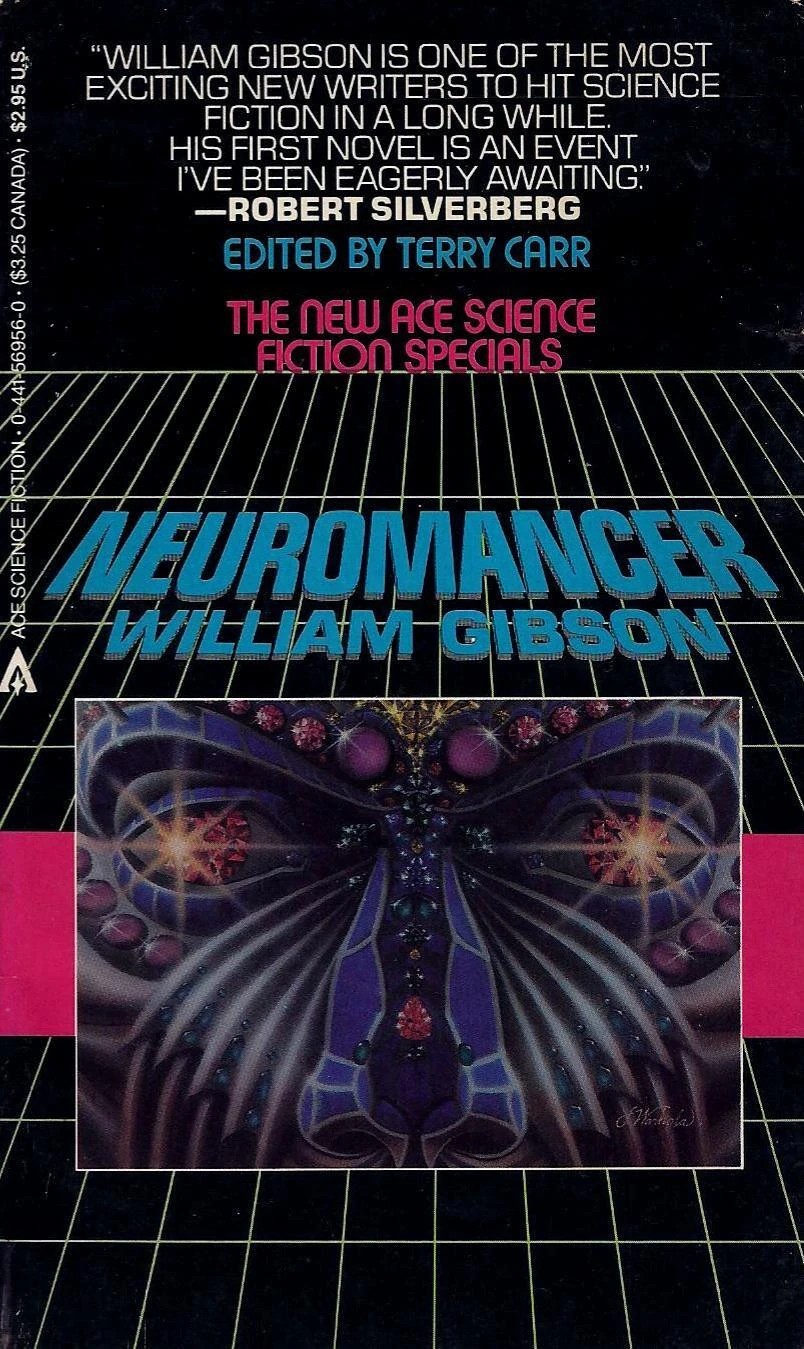
    MIL OSI USA News

  • MIL-OSI USA: Durbin Statement On Senate Republicans Advancing Their Plan To Cut Medicaid & Social Security In Order To Pay For Tax Cuts For Billionaires

    US Senate News:

    Source: United States Senator for Illinois Dick Durbin

    April 05, 2025

    WASHINGTON  U.S. Senate Democratic Whip Dick Durbin (D-IL) released the following statement regarding Senate Republicans advancing their budget resolution, which proposes cuts to Medicaid, the Social Security Administration (SSA), veterans’ benefits, and more to pay for tax cuts for billionaires:

    “Last night, Senate Democrats were on the Senate floor fighting for working families one amendment at a time while Republicans struck down each one. Their message was clear: Let’s give billionaires a tax break and have everyday Americans pay for it by slashing Medicaid, Social Security, veterans’ benefits, and more.

    “If Republicans continue to push forward with their cruel and unpopular budget resolution, working families will lose and billionaires will win. It is simple and devastating math.”

    House Republicans have proposed $880 billion in cuts to the Medicaid program in order to pay for President Trump’s tax cuts for billionaires, and Senate Republicans have similarly put this program in the crosshairs. Medicaid and the Children’s Health Insurance Program provide health coverage to approximately 80 million people nationwide—including nearly 40 million kids, or nearly half of all children in America, as well as 60 percent of seniors in nursing homes. In addition, Medicaid is the largest funder of addiction and mental health treatment.

    In Illinois, 3.4 million people are enrolled in Medicaid, including 1.5 million children. In Illinois, Medicaid covers nearly half of all births, two-thirds of nursing home residents, the majority of patients with behavioral health needs, and is a lifeline for children’s and rural hospitals. Under Republican plans to slash Medicaid, 775,000 adults in Illinois who gained health insurance coverage under the Affordable Care Act could lose coverage almost overnight.

    -30-

    MIL OSI USA News

  • MIL-OSI United Kingdom: New guide to research and innovation challenges for climate adaptation released

    Source: United Kingdom – Executive Government & Departments

    News story

    New guide to research and innovation challenges for climate adaptation released

    A new report identifying the research and innovation needed to support the UK to adapt effectively to climate change has been released.

    Image of a bumblebee collecting pollen from a bluebell.

    A new report identifying the research and innovation needed to support the UK to adapt effectively to climate change has been released today.  

    Developed by the Government Office for Science and the Department for Environment, Food and Rural Affairs, the Climate Adaptation Research and Innovation Framework (CARIF) outlines the research and innovation needed around climate adaptation. 

    CARIF is designed to make it easier for government, industry, and research communities to work together to tackle the challenges we face around adapting to climate change. The new framework is the first time the UK research needs across government and across sectors have been brought together in one place.   

    Environment Minister Emma Hardy said:

    We are already seeing the impact of climate change and extreme weather on people’s lives, from transport disruption to flooding in people’s homes.  

    This is why, alongside our research into climate adaptation, we are exploring how we can set out stronger objectives to drive action to increase our preparedness for the impacts of climate change up to and beyond the next National Adaptation Programme in 2028.

    Government Chief Scientific Adviser Professor Dame Angela McLean said:

    We need new research to make the UK more resilient to climate change, and innovation to improve how effectively and affordably we ready systems for change. The UK has world-leading science capabilities which we can harness to ensure we are ready for future climate impacts.  

    We have spoken with academia, industry, UK government and the financial sector to produce this first Climate Adaptation Research and Innovation Framework. It aims to drive use of our science capabilities to address the climate adaptation challenge.

    CARIF covers 11 sectors including nature, working land and seas, food security, water supply, energy, telecommunications and ICT, transport, town and cities and community preparedness/response, buildings, health, and business and finance.  

    Read the Climate Adaptation Research and Innovation Framework here.

    Updates to this page

    Published 7 April 2025

    MIL OSI United Kingdom

  • MIL-OSI USA: U.S. propane consumption reached an 18-year record in January amid cold snap

    Source: US Energy Information Administration

    In-brief analysis

    April 7, 2025


    U.S. propane consumption reached 1.48 million barrels per day (b/d) in January 2025, the most January consumption on record since January 2005 and the most for any month since February 2007, as severe cold drove up heating demand across much of the country.

    U.S. propane consumption, which we measure as product supplied, is closely correlated with temperatures during the winter because propane is primarily used for space heating in the United States. January is typically the coldest month of the year. January 2025 was the coldest month recorded in the United States since January 2014, measured by heating degree days (HDDs).

    January 2025 had 946 HDDs, just 26 fewer than in January 2014. Strong heating demand this winter due to cold weather caused propane prices to increase slightly, contributing to higher U.S. residential propane expenditures that month. Meanwhile, U.S. propane inventories decreased significantly in January, which can also put upward pressure on prices.


    Propane inventories reflect supply and demand balances. The U.S. propane storage injection season typically runs from April through October, followed by a withdrawal season during the winter.

    Propane inventories remained above the previous five-year (2020–24) average for most of this past heating season, and propane was well stocked heading into winter at 98 million barrels. During the cold winter weather in January, propane inventories drew down by about 22 million barrels, the most since January 2017.

    Propane inventories in the Midwest (PADD 2), the U.S. region with the greatest propane demand for space heating, are the lowest in more than a decade after starting the winter heating season at the top of the 10-year range. The Midwest accounts for about one-third of the estimated 6.6 million U.S. households that used propane as a primary space heating fuel in 2024. We estimate that 83% of propane consumption is for space heating in the Midwest, while the remaining 17% is used for non-heating demand. In January 2014 (which was even colder than this past January), cold weather-related demand squeezed the Midwest (PADD 2) propane market following record-breaking consumption in November 2013 for propane used in grain drying. The tight market also exerted upward pressure on residential and wholesale propane prices that winter.

    Record U.S. propane production at natural gas processing plants has allowed for higher consumption as well as record-high exports, which have grown annually in the past 17 consecutive years because of increasing global demand for propane as a petrochemical feedstock.

    Principal contributor: Josh Eiermann

    MIL OSI USA News

  • MIL-OSI Security: Former First Judicial District Employee Sentenced to Federal Prison for Defrauding the District

    Source: Federal Bureau of Investigation FBI Crime News (b)

    A former employee of the First Judicial District of the State of Iowa who misused credit cards to steal money intended to be used for children in the Juvenile Court System was sentenced today to two months in federal prison.

    Nicole Foelske, age 41, from Jesup, Iowa, received the prison term after a November 14, 2024, guilty plea to one count of wire fraud.

    In information contained in a plea agreement and disclosed at the sentencing hearing, Foelske admitted she worked in the Juvenile Court Services section of the First Judicial District of the State of Iowa located in Waterloo.  In that position, she was provided with a credit card to purchase items and gift cards for juveniles in the Court system, including juveniles in Child in Need of Assistance cases.  Foelske, however, used the credit card to purchase household items for herself and gift cards from stores and then used the gift cards to either purchase items for herself or to transfer the value of the cards to her bank account.  All told, Foelske made over 200 improper purchases on the credit card totaling more than $100,000.  

    Foelske was sentenced in Cedar Rapids by United States District Court Chief Judge C.J. Williams.  Foelske was sentenced to two months’ imprisonment and fined $2,000.  Foelske was also sentenced to serve six months of home confinement following her imprisonment.  She was ordered to make $107,745.46 in restitution to the Iowa Judicial Branch, which Foelske has already paid.  She must also serve a three-year term of supervised release after the prison term.  There is no parole in the federal system.

    Foelske was released on the bond previously set and is to surrender to the Bureau of Prisons on a date yet to be set.

    The case was prosecuted by Assistant United States Attorney Anthony Morfitt and investigated by the Federal Bureau of Investigation and the Black Hawk County Sheriff’s Office.

    Court file information at https://ecf.iand.uscourts.gov/cgi-bin/login.pl.

    The case file number is 24-CR-2026.

    Follow us on X @USAO_NDIA.

    MIL Security OSI

  • MIL-OSI United Kingdom: Government and industry to train up ‘clean power army’

    Source: United Kingdom – Executive Government & Departments

    Press release

    Government and industry to train up ‘clean power army’

    Government and industry to train up ‘clean power army’ of apprentice engineers, welders, and technicians.

    • Clean energy sector to create thousands of new apprenticeships as part of Plan for Change
    • Energy Secretary tells industry forum that a clean power army of engineers, welders and technicians will be required to deliver clean power by 2030, and that government will work with industry to build it, with Regional Skills Pilots in Aberdeen, Cheshire, Lincolnshire, and Pembrokeshire
    • Work and Pensions Secretary says the government will “give this generation the tools they need to seize the opportunity that is the clean energy transition”

    Young people will be trained to fill thousands of clean energy jobs and apprenticeships needed to deliver clean power by 2030 as part of the government’s Plan for Change to get Britain working and unlock growth.  

    The Energy Secretary has told industry, unions and trade bodies that the government will work with them to build a clean power army to hit ambitious targets for clean power by 2030 at a forum convened with the Work and Pensions Secretary today (Monday 7 April 2025).  

    The transition to clean power will create thousands of opportunities across the sector, from renewables to upgrading the UK’s grid infrastructure.  

    National Grid alone plans to support around 55,000 more jobs by the end of the decade and SSE Transmission plans are supporting a further 37,000 jobs, 17,500 of which would be in Scotland. Scottish Power’s SP Energy Networks plans to double its transmission workforce to create around 1,400 jobs and support a further 11,000 jobs across the UK – with all 3 plans subject to approvals by the regulator.    

    The government is driving forward with Regional Skills Pilot in the clean energy sector. Aberdeen, Cheshire, Lincolnshire and Pembrokeshire have all been identified as key growth regions for clean energy. Local partners will receive funding to identify the skills support that is needed in their area to deliver clean power by 2030, which will protect households and businesses from unstable fossil fuel markets for good. 

    Funding could go towards new training centres, courses or career advisers – supporting local people into opportunities in industries such as welding, electrical engineering, and construction.    

    The government is wasting no time in investing in good jobs for British industries, including thousands of new, skilled jobs being supported in the North East of England as contracts for the first carbon capture, usage and storage were signed in December, following a £21.7 billion commitment from the government to ensure the UK’s vision for CCUS becomes a reality. The government has also invested £55 million for port of Cromarty, to transform it into a major hub for the UK’s world-leading floating offshore wind industry, creating hundreds of skilled jobs and generating growth.  

    The latest CBI Economics figures show jobs supported by net zero sectors increased by 10% last year, with the average annual wage across the sector at £43,000 – £5,600 higher than the national average.  

    The push to support more clean energy jobs comes as the government delivers the most ambitious reforms of the UK’s energy system in a generation and record investment into homegrown clean energy projects. 

    Energy Secretary Ed Miliband said:  

    The energy sector has always been a source of good, skilled, and unionised jobs for young people across the UK, providing secure, well-paid employment for life.   

    To meet our target to reach clean power by 2030, we need a clean power army of engineers, welders and technicians – giving thousands of young people the opportunity to play a vital role in tackling the climate crisis, increasing our energy security and boosting the economy to deliver our Plan for Change.

    Work and Pensions Secretary Liz Kendall said:    

    With almost a million young people neither earning nor learning it is vital that we give this generation the tools they need to seize the opportunity that is the clean energy transition.  

    Our plan to Get Britian Working will overhaul employment support, giving everyone the tools and skills they need to and build a stronger, more prosperous future for them and their families.

    The government launched its Get Britain Working white paper late last year, outlining the biggest employment reforms in a generation and boost employment including reforming Jobcentres to create a genuinely public employment service so everyone can get personalised skills and employment support, as well as a Youth Guarantee ensuring every young person has the chance to earn or learn. Alongside government work to drive up employment and opportunities, the renewable sector will also continue to turbocharge the economy.  

    The government is working closely with employers to train up Britain’s young people to seize clean energy opportunities. Trade unions will also have an essential role in building the UK’s skilled energy workforce, with the government determined to drive world-class pay, terms, and conditions in the clean energy sector. The government is already driving better access and conditions for unions in the energy sector- since July EDF Renewables UK and Ireland have signed one of the first renewables industry recognition agreements with Prospect, Unite, GMB and UNISON.   

    The government has also launched Skills England and the Office for Clean Energy Jobs to bring together key partners to meet the skills needs of the next decade across all regions.    

    Opportunities are already being created through a number of schemes and initiatives to deliver training and skills for apprentices and workers transitioning from the fossil fuel sector, including innovative schemes such as the:  

    • Skills Passport: This supports oil and gas workers to identify routes into several roles in offshore wind including construction and maintenance
    • Your Apprenticeship app: A new app designed by the government with extensive input from apprentices to provide easier access to essential tools, resources, and support to help apprentices to thrive in their qualification

    Whilst driving up employment and opportunities, the renewable sector will also continue to turbocharge the economy.  

    CBI Economics analysis commissioned by the Energy and Climate Intelligence Unit shows that the net zero sector already contributes £83 billion annually to the UK economy, with further investment into projects predicted to grow this even further.  

    Government research has also revealed the extent in which apprenticeships can help drive this growth, with apprentices in England across the economy estimated to create £25 billion of economic growth over their lifetime.  

    Through investment and initiatives, the government will help build the pipeline of skilled workers needed to deliver clean power by 2030, which will unlock £40 billion of investment a year and reindustrialise Britain with thousands of good jobs across the country. This underscores the government’s commitment to deliver a jobs-rich clean energy transition, putting communities and trade unions at the heart of the UK’s clean energy future.    

    Notes to editors

    Skills is a devolved policy area, and therefore the remit of Skills England and the Your Apprenticeship App will only cover England. However, Skills England will assess skills needs across the whole of the UK and DESNZ is working closely with the devolved governments on ensuring we have the skilled workforce for the clean energy transition, including through the Regional Skills Pilots.   

    The RIIO T3 business plans for the UK’s 3 electricity transmission companies are all subject to approval by the energy regulator Ofgem.

    Updates to this page

    Published 7 April 2025

    MIL OSI United Kingdom

  • MIL-OSI United Kingdom: Moorways Sports Village set for £327,000 gym expansion

    Source: City of Derby

    The fitness suite at Moorways Sports Village is set to be expanded to more than 200 stations as part of an exciting £327,000 project.

    The centre, run by award-winning operator Everyone Active in partnership with Derby City Council, will increase the size of the gym to cover the majority of the second floor.

    Once completed, Moorways will be home to one of the largest gyms in Everyone Active’s portfolio of more than 230 centres across the country.

    Works are due to begin on Monday, April 21 and are scheduled to be completed by Friday, June 20. The improved gym will feature around 55 more stations, an increase of 38 per cent on the current set-up. It will include:

    • Brand new functional area including sled track
    • Brand new resistance and Hammer Strength plate-loaded machines
    • Booty Builder dual hip thrust bench
    • Brand new recovery area
    • Brand new additional treadmills

    It is not anticipated that the works will cause any disruption, with members able to use all facilities as normal while upgrades are ongoing.

    As part of the project, group fitness facilities will be relocated to the first floor, where the existing meeting rooms are being transformed into a brand-new multi-purpose studio.

    Everyone Active’s general manager, Myles Hickman, said: 

    This fantastic project is hugely exciting news and we cannot wait to show the local community the new and improved gym on their doorstep.

    The upgrades will enable us to accommodate more people, providing a wider range of state-of-the-art equipment which aligns with current fitness trends.

    No matter what your age, interests or ability, the gym at Moorways and our helpful colleagues will enable you to achieve your perfect workout.

    Councillor Ndukwe Onuoha, Derby City Council Cabinet Member for Streetpride, Public Safety and Leisure, said:

    It’s wonderful to see how Moorways Sport Village is thriving. This exciting project to expand the fitness suite will enhance the gym experience for members and allow even more Derby citizens to boost their health and wellbeing.

    MIL OSI United Kingdom

  • MIL-OSI USA: Crapo: Republicans are United in Delivering Trump’s Pro-Growth Agenda

    US Senate News:

    Source: United States Senator for Idaho Mike Crapo
    Washington, D.C.–Today on the Senate floor, U.S. Senate Finance Committee Chairman Mike Crapo (R-Idaho) discussed the Senate’s Fiscal Year (FY) 2025 Budget Resolution that lays the groundwork to make permanent and build on the 2017 Trump Tax Cuts, ensuring American families can keep more of their hard-earned money and stop financing Washington’s spending problem.
    As Chairman of the Finance Committee, Crapo explained that the resolution’s instructions would unlock the ability for Congress to prevent a more-than $4 trillion tax hike on American families and businesses, provide certainty and predictability by making the Trump Tax Cuts permanent, and deliver additional middle-class tax relief. 
    Crapo also emphasized Republicans’ commitment to restoring fiscal sanity by achieving deficit reduction, noting that spending reforms are the best way to achieve that goal, not imposing the largest tax hike in our country’s history. 

    Full remarks as delivered:
    “The problem that we have in America is not that our taxes are too low, but that our spending is too high.
    “Republicans are unified in delivering—as President Trump calls it—one big, beautiful bill for the American people. 
    “But what does this bill include?
    “The FY 2025 Budget Resolution fulfills promises to secure America’s borders, increase our national defense, unleash our energy potential and finally start to get our fiscal house in order. 
    “I agree completely with my colleague – we have got to reduce our spending and this bill contains a target with a minimum floor of $2 trillion in spending reduction in our federal budget. 
    “Importantly, it also lays the groundwork to make permanent and build on the 2017 Trump Tax Cuts so that American families can keep more of their hard-earned money and stop financing Washington’s spending problem.
    “Our conference is united in preventing an over-$4 trillion tax hike on American families and businesses and delivering additional tax relief to those who have suffered under four years of inflation.
    “We are united in making this proven tax policy permanent to provide the certainty that businesses need to make the long-term investments that drive growth, and the stability that families need as they save and plan for the future.
    “We are also unified in our resolve to restore fiscal sanity and know that the best way to do so isn’t to tax hardworking Americans more—it’s to spend less.
    “While many tend to focus on the policy disagreements that occur—as they should—in these halls, the reality is Republicans are completely unified in delivering on President Trump’s agenda, a major portion of which is to restore the economic prosperity experienced under his previous presidency.
    “Let’s just look back for a minute at the bill we’re trying to extend and make permanent now.
    “Most Americans don’t pay attention to the minutia of tax policy.  But if you ask them, the majority will tell you they’d rather keep more of their money than let the government spend it, and that’s exactly what the 2017 tax cuts did.
    “Those Trump Tax Cuts lowered tax rates for the overwhelming majority of Americans, simplified the tax code, and encouraged companies to do business in the United States instead of abroad.
    “In addition to lowering rates across the board, it provided targeted tax relief to middle-class working families by doubling the standard deduction and the child tax credit, and to small businesses by providing a new 20 percent deduction, enabling America’s entrepreneurs to create new jobs, increase workers’ wages and reinvest in their business.
    “The majority of benefits from the Trump Tax Cuts, contrary from what you’ve heard today from the other side, flowed to working middle-class families—the bottom 50 percent of earners received the largest reduction in average tax rates at 17.3 percent. 
    “Contrary to claims that the benefits were only for ‘billionaires and corporations,’ the Trump Tax Cuts actually made the tax code even more progressive.  Meaning that the highest income earners now pay a greater share of all income taxes than they did before, and if we can extend this tax cut, that will continue to be the case.
    “The generational reforms we made in 2017 were designed to strengthen investment, boost economic growth, increase take-home pay and reduce poverty, and it worked.
    “Not only did taxpayers keep more of their hard-earned money, but a growing economy powered median household income to an all-time high.
    “The labor market improved, workers saw record wage growth and the unemployment rate fell dramatically to 3.5 percent—the lowest in 50 years. 
    “And the lowest-income workers experienced the largest wage growth.
    “There was a capital formation explosion in the United States, and corporate inversions—corporations leaving America—became a thing of the past as companies came back home and America became the place to do business again.
    “All Americans reaped the benefits of a booming economy. 
    “Extending this current, proven tax policy—and building on it—is the best way to restore economic prosperity and opportunity for working families, many of whom are still struggling to recover from the historic inflation of the last four years.
    “Tonight, I expect we’ll hear once again the ‘politics of fear’ at work as my Democrat colleagues claim all sorts of dire things will happen so that Republicans can cut taxes for the wealthy. 
    “This attack has been used for nearly a decade, and it’s just as false now as it has been in the past.
    “Americans should not be scared by these falsehoods. 
    “What they should be alarmed by is what my colleagues and I are committed to preventing: the largest tax hike in history that will occur if we do not extend the current Trump’s Tax Cuts.
    “Middle-class Americans and small businesses will pay the highest price. 
    “If the tax cuts expire:
    There will be a $4+ trillion tax hike on all Americans.
    More than $2.6 trillion of that tax increase will hit people who earn less than $400,000 per year.
    The average American household will see a more-than $1,700 increase in their tax bill.
    An over $600 billion tax increase on more than 20 million small business owners, who could face rates as high as 43.4 percent. 
    Families would have their child tax credit slashed in half from $2,000 to $1,000.
    The standard deduction, claimed by over 90 percent of taxpayers, would be cut in half.
    The economic cost has been estimated to be 6 million jobs; $540 billion in employee compensation, and $1.1 trillion of GDP.
    “Republicans are united in our efforts to prevent these damaging consequences.
    “Not only are we focused on extending these proven tax policies, but we are committed to making this growth in our economy permanent so that we don’t have to face these dire consequences in the future. 
    “Permanent tax policies promote stability and lead to more pronounced economic effects than temporary ones. 
    “Making the Trump Tax Cuts permanent will provide businesses the certainty and stability they need to make the long-term investments that drive growth, accelerate productivity and increase prosperity across all segments of the economy.
    “Studies find that a permanent extension of TCJA would increase long-run GDP by 1.1 percent and increase after-tax income for Americans of all income levels. 
    “Making the small-business deduction alone permanent is estimated to create 1.2 million jobs annually over the first ten years, increasing to 2.4 million in the long run.
    “The President’s Council of Economic Advisers just released an analysis that says extending the Trump Tax Cuts, combined with other pro-growth economic policies that we are pursuing, would:
    Boost the level of short-run real GDP by 3.3 to 3.8 percent and long-run real GDP by 2.6 to 3.2 percent;
    Raise annual real wages by $2,100 to $3,300 per worker;
    Increase real annual take-home pay for a median-income household with two children by roughly $4,000 to $5,000;
    Save over 4 million full-time equivalent jobs from being destroyed; and
    Facilitate $100 billion of investment in distressed communities.
    “That analysis also projects that extending these tax cuts, ’together with the full suite of Trump Administration policies—such as deregulation, which the CEA previously estimated would add 0.1 to 0.2 percentage points to real GDP growth rates over a decade—is expected to result in 3.0 percent annual real GDP growth rates over the next 10 years.’ 
    “Now what does that mean?
    “According to CEA, that 3.0 percent annual real GDP growth will result in $4.1 trillion in additional revenue to the Treasury to help us deal with our national debt.
    “$4.1 trillion dollars.
    “To unleash that growth, the best way to make these tax cuts permanent is by using a current policy baseline: this is the scoring method that more accurately reflects reality. 
    “The average American easily understands there is a difference between a tax increase and a spending cut. 
    “However, there’s an inherent bias in Congress’s scoring process where tax policy is treated differently than spending policy. 
    “If tax rates are scheduled to increase, like they are right now if we don’t act, preventing that tax hike is counted as a ‘cost’ in uncollected future revenue. 
    “But many spending programs are assumed to be extended beyond their expiration, so the spending just continues and continues, unabated, which the budget rules say do not have any cost.  That’s what we’re trying to fix today in this bill.
    “In fact, there is $2.5 trillion in spending that is automatically extended by our budget rules over the next ten years under a current policy baseline.
    “Even the Obama White House has used a current policy baseline for tax policy. They recognized there’s a difference between increasing taxes and cutting spending.
    “In 2013, they argued that a ‘current policy baseline to be the appropriate reference point, since it measures changes relative to the status quo, rather than the mix of expiring provisions and policy changes that would likely never be implemented.’
    “Interpreted, what they said is exactly what I’ve been saying.  You can’t say that just keeping the tax rates where they are and not raising them is the same as spending more money.
    “We need to level the playing field and sever the connection that creates a tax-and-spend budgeting process in Congress.
    “And that’s another thing that we’re going to do today.
    “Critics—who have been strangely silent over the years as trillions of dollars in spending has been automatically extended under a current policy baseline—now take offense to correcting the bias toward forcing federal spending. 
    “As applied only to tax policy, those critics assert that we’ll be increasing the deficit by using a current policy baseline, or we’re using this baseline to ‘hide the cost.’
    “Let me be very clear: we are not hiding the score that JCT or CBO would assign the bill under a current law baseline.  In fact, I like to see that score – it shows the amount of the tax increase that my colleagues on the other side are trying to push onto the American people.
    “But let’s be fully transparent—both an estimate based on current policy and one based on current law will be released when we consider this bill on the Senate floor, and then Americans can see what kind of savings have been given to them by not raising their taxes.
    “Under our existing tax regime, the tax revenue to GDP ratio this year will be 17.1 percent, meaning we will raise taxes for the federal Treasury—under our current tax policy—at about 17.1 percent of GDP.  It will also be about the same next year if we don’t let the taxes go up, meaning that the revenue will not appreciably change.
    “Yet my colleagues on the other side say it’s going to spike a hole in the deficit—why? Because they won’t get their hands on that $4 trillion of new tax revenue out of the American people.
    “This would not increase the debt relative to GDP; it would simply prevent a tax increase. 
    “And we need to be honest about what those tax increases would and would not do. 
    “Those who say we should let taxes go back up say, ‘Wow, then we could use it to pay down the national debt some more.’
    “Every tax increase that Congress has adopted for as long as I can remember was not used to pay down the national debt; it was used by Congress to spend more money.
    “Congress does not have a revenue problem—it has a spending problem.
    “Senate Republicans are united in our desire to take concrete steps to address our deficit and get our fiscal house in order.
    “Because the bill we’re debating today is within the confines of reconciliation, the scores and numbers that we’ll be discussing don’t reflect the full fiscal picture.
    “In order to have an honest discussion, there needs to be an acknowledgment that there are other factors at play that can generate economic growth and reductions in spending.
    “What am I talking about?  Economic growth.  As I indicated in one of the charts that we had up, the estimates from the CEA are that if we make the tax policy permanent, the confidence that will give our economy and the boost it will give our economy through proper tax incentive policy will grow the economy by as much as $4 trillion to the federal treasury.
    “The President is also directly impacting government spending through his efforts with the Department of Government Efficiency, aggressively cutting waste, fraud and abuse from our government programs.
    “Spending on federal government programs has ballooned in recent years.  We have a responsibility to evaluate these spending increases to ensure these programs work efficiently and effectively for everyone.  
    “The President has also undertaken, and will likely pursue more, deregulation efforts, which have as big of an impact on revenues and economic growth as tax policy does, and we should recognize that.
    “The bottom line is, in addition to the actions that Congress can take, there are activities that the President is currently engaged in that will impact our fiscal policy by either reducing spending or increasing revenue, and we should take those into consideration.
    “Congress must begin the process of restoring fiscal sanity by achieving deficit reduction, and spending reforms are the best way to achieve that goal. 
    “In contrast, imposing the largest tax hike in our country’s history would be counterproductive by easing the glide path for even more spending.
    “We will be having a very robust debate in the weeks ahead about the best way to deliver on President Trump’s agenda, and I look forward to those discussions.
    “This budget resolution unlocks the process to allow us to strengthen our national security, secure our borders, permanently extend the Trump Tax Cuts and provide additional middle-class tax relief.”

    MIL OSI USA News

  • MIL-OSI United Kingdom: Brandywell becomes first Peace Pitch in the League of Ireland

    Source: Northern Ireland – City of Derry

    Brandywell becomes first Peace Pitch in the League of Ireland

    7 April 2025

    The Ryan McBride Brandywell Stadium has become the first ground in the League of Ireland to receive an international designation celebrating peace and reconciliation through football.
    The Peace Field initiative will see the Lone Moor Road stadium twinned with Flanders Peace Field in Mesen, Belgium – the site of the First World War Christmas Truces of 1914 when German, British and Allied soldiers played games of football during a break in fighting.
    The Brandywell has received the designation in recognition of The Life Hack Project in the Rath Mor Centre which aims to support young people to build and develop life skills that foster good relations, build confidence and relations and make them more employable.
    A plaque to commemorate the twinning, stating that all games on the pitch will be played in the spirit of the 1914 Christmas truces, was presented to representatives from The Life Hack Project, Derry City and Strabane District Council and Derry City Football Club before the weekend’s League of Ireland Premier Division home game against Cork City.
    The plaque will be displayed in the stadium and a duplicate will be erected at the Flanders Peace Pitch in Belgium alongside 76 other Peace Fields from six different continents across the world.
    Mayor of Derry and Strabane Council, Cllr Lilian Seenoi Barr praised The Lifehack Project saying: “I am delighted the Ryan McBride Brandywell Stadium has received this international designation which pairs it with one of the most famous sports fields in world history.
    “It is just recognition for the key work The Life Hack Project do to improve the quality of life and employment prospects of our young people.
    “It also serves as a timely reminder of the reconciliatory impact sport can have by bringing people together through a shared passion for play.”
    Richie McRory, Lifehack Project Coordinator added: “Over the last three years young people from the Lifehack Project based in Creggan have engaged on a cross community and cross border basis with young people from a diverse range of backgrounds.
    “We have hosted and attended a number of football events that have encouraged inclusion, reconciliation and participation.

    “Through these events we have developed a very positive relationship with Limestone United and become involved with the International Peace Field Project.

    “We are very proud to receive the Peace Plaque on behalf of Derry City FC from our friends at Limestone UTD.

    “We look forward to continued work and participation in the Peace Field Project.”

    A spokesperson for Derry City Football Club added: “Derry City Football Club is truly honoured that the Ryan McBride Brandywell stadium has become the first in the league of Ireland to receive this international designation.

    “Ironically, the club is currently undertaking a complete review of our underage and Academy structures.

    “We absolutely share the goals of the city’s Lifehack Project and our City Council of supporting and developing the young people of the North West and beyond through sport.

    “We are delighted to associate with the Flanders Peace Field in Mesen, the site of that iconic ‘Christmas Truce’ football game in 1914. 

    “As we also celebrate the opening of the Brandywell’s new North Stand this evening, Derry City FC is fully committed to doing everything we can to support the growth of sport in the region.”

    While the Brandywell is the first League of Ireland stadium to receive Peace Pitch status, Limestone United on the North Belfast interface received the designation in 2023.
    Brian Casey, Limestone United, added: “The club were privileged to present the peace plaque to Derry City with our friends from the Lifehack project who do amazing work with young people from the Creggan area of the city.

    “Lifehack participated in the opening of the Limestone United Peace pitch at Seaview Football grounds, the home of Crusaders FC, so it’s great to see another brilliant club having a Peace Pitch and contributing to building peace in our community.” 
    Ernie Brennan, CEO of the Children’s Football Association added: “The Peace Field Project chimes with the city of human rights, it is all about the essence of play.
    “All children play without prejudice, when Allied and German soldiers stood up to shake hands, exchange gifts and play games on Christmas Day, 1914, the humanitarian act served to remind mankind that childhood is a time we all revert too, for love, peace and happiness.” 
    For more information on the Children’s Football Alliance and the Peace Field Project visit https://www.childrensfootballalliance.com/peace-field-projects/

    MIL OSI United Kingdom

  • MIL-OSI Security: Man Under Indictment in Heroin OD Case Sentenced to 51 Months for Illegal Machinegun Possession

    Source: United States Bureau of Alcohol Tobacco Firearms and Explosives (ATF)

    A Fort Worth man who was on deferred adjudication for dealing the heroin that killed a 21-year-old in 2013 was sentenced today to 51 months in federal prison, announced Acting U.S. Attorney for the Northern District of Texas Chad E. Meacham.

    Brennan Trainor Rodriguez, 33, was indicted in October 2024 and pled guilty in December 2024 to illegal possession of a machinegun.  He was sentenced on April 4, 2025, to 51 months in federal prison by U.S. District Judge Reed O’Connor.

    According to court records, Mr. Rodriguez was charged on June 7, 2013, with injecting heroin into a 21-year-old man who suffered a fatal overdose.  He admitted to causing the man’s death and was placed on 10 years of deferred adjudication beginning on Nov. 26, 2014.  Conditions of his community supervision prohibited him from possessing firearms.

    On Aug. 6. 2024, law enforcement responded to a domestic disturbance call from Mr. Rodriguez’s former girlfriend, who told police that the defendant had been stalking and harassing her since their breakup.  She also reported that Mr. Rodriguez frequently shot guns, including one that fired fully automatic.  

    The following week, Mr. Rodriguez was arrested for stalking.  In searching his home, law enforcement found nine firearms, including a Smith & Wesson rifle equipped with a machinegun conversion device, commonly known as a “switch” or “auto sear.”

    The Bureau of Alcohol, Tobacco, Firearms, & Explosives’ Dallas Field Division – Fort Worth Resident Agency and the Fort Worth Police Department conducted the investigation.  Assistant U.S. Attorney Eric B. Chen prosecuted the case.
     

    MIL Security OSI