Category: housing

  • MIL-OSI USA: FEMA Continued Temporary Housing Assistance Available for Those Who Still Require Safe Housing

    Source: US Federal Emergency Management Agency

    Headline: FEMA Continued Temporary Housing Assistance Available for Those Who Still Require Safe Housing

    FEMA Continued Temporary Housing Assistance Available for Those Who Still Require Safe Housing

    TALLAHASSEE, Fla

    – Floridians affected by Hurricanes Milton, Helene and Debby who have received rental assistance from FEMA and require further rental assistance while they work towards their permanent housing goals should stay in touch with FEMA

    Continued Temporary Rental Assistance may be available for those who qualify

     Rental Assistance is available as an initial temporary one to two months grant for homeowners and renters to pay for somewhere to live while they repair or rebuild their home

    After the first one to two months, survivors can apply for Continued Temporary Rental Assistance based on three months of their actual monthly costs for rent and utilities or the Fair Market Rent, whichever is less for up to 18 months

     To be eligible to apply for Continued Rental Assistance, survivors must meet the following conditions: Be awarded initial Rental Assistance and show they used this money to pay for temporary housing,Are unable to return to their pre-disaster residence because it is not safe to live in or is no longer available to them, due to the disaster

    Demonstrate a continued disaster-caused financial need

    Show that they have established a permanent housing plan and continue to show that they are working toward meeting their goals

     If you were initially approved for Rental Assistance, an application for Continued Temporary Housing Assistance may be mailed to you 15 days after the grant is approved

    If you do not receive one, please contact FEMA by calling800-621-3362

     Return the form to FEMA by either:Uploading it to your FEMA Disaster Assistance account, available online at DisasterAssistance

    gov

    Mailing the completed form to: FEMA, P

    O

    Box 10055, Hyattsville, MD 20782-8055

    Faxing it to 800-827-8112

    #  #  #FEMA’s mission is helping people before, during and after disaster

    Follow FEMA online, on X @FEMA or @FEMAEspanol, on FEMA’s Facebook page or Espanol page and at FEMA’s YouTube account

    Also, follow on X FEMA_Cam

      For preparedness information follow the Ready Campaign on X at @Ready

    gov, on Instagram @Ready

    gov or on the Ready Facebook page

      
    lindsay

    tozer
    Wed, 03/19/2025 – 19:52

    MIL OSI USA News

  • MIL-OSI USA: DR-4861-WV NR-012 A Second Disaster Recovery Center in McDowell County WV Opening Thursday; Over $10 Million in FEMA Assistance Has Been Approved

    Source: US Federal Emergency Management Agency

    Headline: DR-4861-WV NR-012 A Second Disaster Recovery Center in McDowell County WV Opening Thursday; Over $10 Million in FEMA Assistance Has Been Approved

    DR-4861-WV NR-012 A Second Disaster Recovery Center in McDowell County WV Opening Thursday; Over $10 Million in FEMA Assistance Has Been Approved

    News releaseA Second Disaster Recovery Center in McDowell County, W

    Va

    Opening Thursday March 20; Over $10 Million in FEMA Assistance Has Been ApprovedCHARLESTON, W

    Va

    – A second Disaster Recovery Center (DRC) will be opening in McDowell County at the Board of Education Building at 8:00 a

    m

    on Thursday March 20, 2025

     The opening of this additional DRC coincides with the $10 million milestone in approved FEMA assistance

    FEMA encourages all residents of the impacted counties to register for assistance, including homeowners and renters

    The center is located at: McDowell County (Welch) Disaster Recovery CenterBoard of Education Building900 Mount View High School RoadWelch, WV 24801 Hours of operation:Monday through Friday: 8 a

    m

    to 6 p

    m

     Saturday March 22: 9 a

    m

    to 1 p

    m

    , weather dependentSaturday, March 29: 9 a

    m

    to 1 p

    m

    , weather dependent Closed on Sundays The DRCs located in the table below remain open

    DRCs are open to all, including survivors with mobility issues, impaired vision, and those who are who are Deaf or Hard of Hearing

    Residents of the designated counties can visit any open DRC for assistance

     Mercer County Disaster Recovery CenterMcDowell County Disaster (Bradshaw) Recovery Center Lifeline Princeton Church of God250 Oakvale Road Princeton, WV 24740 Hours of operation:Monday to Friday: 9 a

    m

    – 5 p

    m

    Saturdays: 10 a

    m

    – 2 p

    m

    Closed Sundays Closed March 12, March 22, April 19Bradshaw Town Hall10002 Marshall HwyBradshaw, WV 24817 Hours of operation:Monday to Saturday: 8 a

    m

    to 6 p

    m

    Closed SundaysMingo County Disaster Recovery CenterWyoming County Disaster Recovery CenterWilliamson Campus1601 Armory DriveWilliamson, WV 25661 Hours of operation:Monday through Friday, 8 a

    m

    to 6 p

    m

    Saturdays: 9 a

    m

    to 3 p

    m

    Closed on SundaysWyoming Court House24 Main AvePineville, WV 24874 Hours of operation:Monday through Friday: 8 a

    m

    to 6 p

    m

     Saturdays: 9 a

    m

    to 3 p

    m

    Closed on Sundays Residents in Logan, McDowell, Mercer, Mingo, Wayne, and Wyoming counties who were impacted by the winter flooding between February 15 – 18, 2025 can visit a DRC to apply for assistance, ask questions about their application, speak with representatives from other agencies, including the Small Business Administration, submit receipts for eligible cleanup and repair costs, and more

    Renters may also have eligible costs and should apply for FEMA assistance

    FEMA and SBA staff survey damages in the impacted areas of WV following the February 15-18, 2025 winter flooding

    (FEMA)As a reminder, FEMA disaster assistance comes in the form of grants, which do not need to be repaid, accepting FEMA funds will not affect eligibility for Social Security – including Social Security Disability Insurance (SSDI) and Supplemental Security Income (SSI) – Medicare, Medicaid, Supplemental Nutrition Assistance Program (SNAP) benefits, or other federal benefit programs

    FEMA assistance does not need to be repaid

    Residents should file insurance claims as soon as possible, in addition to submitting an application for FEMA assistance

    By law, FEMA cannot cover expenses that have already been covered by other sources like insurance, crowdfunding, local or state programs, donations, or financial assistance from voluntary agencies

     FEMA remains dedicated to assisting the residents of West Virginia and encourages everyone in Logan, McDowell, Mercer, Mingo, Wayne, and Wyoming counties who were impacted by the winter flooding between February 15 – 18, 2025 to connect with FEMA to identify next steps in your recovery

    For more information on West Virginia’s disaster recovery, visit emd

    wv

    gov, West Virginia Emergency Management Division Facebook page, www

    fema

    gov/disaster/4861, and www

    facebook

    com/FEMA

      ### FEMA’s mission is helping people before, during and after disasters

    Follow FEMA online, on X @FEMA or @FEMAEspanol, on FEMA’s Facebook page or Espanol page and at FEMA’s YouTube account

    Also, follow on X FEMA_Cam

     For preparedness information follow the Ready Campaign on X at @Ready

    gov, on Instagram @Ready

    gov or on the Ready Facebook page

      
    kimberly

    fuller
    Wed, 03/19/2025 – 17:24

    MIL OSI USA News

  • MIL-OSI USA: Disaster Recovery Center Opens in Simpson County

    Source: US Federal Emergency Management Agency

    Headline: Disaster Recovery Center Opens in Simpson County

    Disaster Recovery Center Opens in Simpson County

    FRANKFORT, Ky

    –A Disaster Recovery Center will open tomorrow, March 20, in Simpson County

    Disaster Recovery Centers, operated by the Kentucky Division of Emergency Management and FEMA, offer in-person support to survivors in declared counties as the result of severe storms, straight-line winds, flooding, landslides and mudslides from February

      FEMA representatives can explain available assistance programs, how to apply to FEMA, and help connect survivors with resources for their recovery needs

    The deadline to apply for federal assistance is April 25

    Address: Simpson County Courthouse, 100 Courthouse Square, Franklin KY 42134Hours: 7 a

    m

    to 7 p

    m

    CDT Monday through Saturday and 1 to 7 p

    m

    CDT on SundaysMore Disaster Recovery Centers will continue to open in the counties eligible for disaster assistance

     In addition to FEMA personnel, representatives from the Kentucky Office of Unemployment Insurance, the Kentucky Department of Insurance and the U

    S

    Small Business Administration (SBA) will be available at the recovery centers to assist survivors

    If you are unable to visit the center, there are other ways to apply: online at DisasterAssistance

    gov, use the FEMA mobile app or call 800-621-3362

    If you use a relay service, such as Video Relay Service (VRS), captioned telephone or other service, give FEMA the number for that service

    When you apply, you will need to provide:A current phone number where you can be contacted

    Your address at the time of the disaster and the address where you are now staying

    Your Social Security Number

    A general list of damage and losses

    Banking information if you choose direct deposit

    If insured, the policy number or the agent and/or the company name

    For an accessible video on how to apply for FEMA assistance, go to youtube

    com/watch?v=WZGpWI2RCNw

    For more information about Kentucky flooding recovery, visit www

    fema

    gov/disaster/4860

    Follow the FEMA Region 4 X account at x

    com/femaregion4

    martyce

    allenjr
    Wed, 03/19/2025 – 14:01

    MIL OSI USA News

  • MIL-OSI USA: Paws Off Xylitol; It’s Dangerous for Dogs

    Source: US Food and Drug Administration

    [embedded content]

    Español
    Your six-month-old puppy, Hoover, will eat anything that isn’t tied down. Like many dog owners, you know chocolate can be dangerous to your pooch. But you may not know that if Hoover sticks his nose in your handbag and eats a pack of sugarless chewing gum, the consequences could be deadly.
    Sugarless gum may contain xylitol, a class of sweetener known as sugar alcohol. Xylitol is present in many products and foods for human use, but can have devastating effects on your pet.
    If you think your dog may have eaten a product containing xylitol, call your vet, emergency clinic, or animal poison control center right away.
    Over the past several years, the Center for Veterinary Medicine at the U.S. Food and Drug Administration (FDA) has received several reports—many of which pertained to chewing gum—of dogs being poisoned by xylitol, according to Martine Hartogensis, a veterinarian at the FDA. The most recent report was related to “skinny” (sugar-free) ice cream.
    And you may have heard or read news stories about dogs that have died or become very ill after eating products containing xylitol , which also may be known as birch sugar or wood sugar.
    Other Foods Containing Xylitol
    Gum isn’t the only product containing xylitol. Slightly lower in calories than sugar, this sugar substitute is also often used to sweeten sugar-free candy, such as mints and chocolate bars, as well as sugar-free chewing gum. Other products that may contain xylitol include:

    breath mints
    baked goods
    cough syrup
    children’s and adult chewable vitamins
    mouthwash
    toothpaste
    some peanut and nut butters
    over-the-counter medicines
    dietary supplements
    sugar-free desserts, including “skinny” ice cream

    Xylitol can be used in baked goods, too, such as cakes, muffins, and pies — often because the baker is substituting another sweetener for sugar, as in products for people with diabetes. People can buy xylitol in bulk to bake sweet treats at home. In-store bakeries also are selling baked goods containing the sweetener. Some pediatric dentists also recommend xylitol-containing chewing gum for children, and these products could end up in a dog’s mouth by accident. It’s a good idea to keep all such products well out of your dog’s reach.
    Why is Xylitol Dangerous to Dogs, but Not People?
    In both people and dogs, the level of blood sugar is controlled by the release of insulin from the pancreas. In people, xylitol does not stimulate the release of insulin from the pancreas. However, it’s different in canines: When dogs eat something containing xylitol, the xylitol is more quickly absorbed into the bloodstream, and may result in a potent release of insulin from the pancreas.
    This rapid release of insulin may result in a rapid and profound decrease in the level of blood sugar (hypoglycemia), an effect that can occur within 10 to 60 minutes of eating the xylitol. Untreated, this hypoglycemia can quickly be life-threatening, Hartogensis says.
    A note to cat and ferret owners: Xylitol does not seem to be as dangerous for cats and other pets. Cats appear to be spared, at least in part, by their disdain for sweets. Ferret owners, however, should be careful, as ferrets have been known to develop low blood sugar and seizures, like dogs, after eating products containing xylitol.
    Symptoms to Look For in Your Dog

    Symptoms of xylitol poisoning in dogs include vomiting, followed by symptoms associated with the sudden lowering of your dog’s blood sugar, such as decreased activity, weakness, staggering, incoordination, collapse and seizures.
    If you think your dog has eaten xylitol, take him to your vet or an emergency animal hospital immediately, Hartogensis advises. Because hypoglycemia and other serious adverse effects may not occur in some cases for up to 12 to 24 hours, your dog may need to be hospitalized for medical monitoring.
    What Can You Do to Avoid Xylitol Poisoning in Your Dog?
    Dr. Hartogensis says, “Check the label for xylitol in the ingredients of products, especially ones that advertise as sugar-free or low sugar. If a product does contain xylitol, make sure your pet can’t get to it.” In addition:

    Keep products that contain xylitol (including those you don’t think of as food, such as toothpaste) well out of your dog’s reach. Remember that some dogs are adept at counter surfing.
    Only use pet toothpaste for pets, never human toothpaste.
    If you give your dog nut butter as a treat or as a vehicle for pills, check the label first to make sure it doesn’t contain xylitol.

    You Can Help the FDA by Reporting Safety Issues
    The FDA wants to know if your pet encounters safety issues with a product, and/or unanticipated harmful effects that you believe are related to a product.
    “Timely reporting of problems enables FDA to take prompt action,” Hartogensis says. Each report is evaluated to determine how serious the problem is and, if necessary, additional information may be requested from the person who filed the report.
    You can report problems related to both human and pet foods and treats at the Safety Reporting Portal.
    Want to spread the word about xylitol? Here’s a poster you can print out to give to your veterinarian or pet shop owner, or perhaps your child’s school.
    back to top

    MIL OSI USA News

  • MIL-OSI USA: FEMA to Host Housing Resource Fair Mar. 22 in Appling County

    Source: US Federal Emergency Management Agency 2

    FEMA to Host Housing Resource Fair Mar. 22 in Appling County

    FEMA is hosting a Housing Resource Fair from 9 a.m. to 5 p.m., Saturday, Mar. 22, in Appling County at the following location:Appling County Extension Education Center83 South Oak Street Baxley, GA 31513The Housing Resource Fair will bring together federal, state and local agencies in one place to offer services and resources to families recovering from Hurricane Helene.  The goal of this collaborative effort is to help connect eligible disaster survivors with affordable housing along with valuable information and resources on their road to recovery.Survivors will meet with local housing organizations, property owners and landlords, as well as gain information on the HEARTS Georgia Sheltering Program, and U.S. Small Business Administration (SBA) loans.The Housing Resource Fair is an opportunity for survivors to: Explore affordable housing options and rental assistance programs. Meet with representatives from local housing organizations, landlords and property managers. Gain access to resources for displaced individuals and families. Learn about community partners that will provide educational funding resources to attendees. For FEMA Federal Coordinating Officer Kevin Wallace, the Housing Resource Fair will give survivors that needed one-on-one experience: “We want survivors to know we are here for them and want to see the best outcome, which is moving into safe, sanitary and functioning housing,” he said. “We will walk them through their options to ensure they are aware of the resources that are available to fit their need.”Anyone who was affected by Tropical Storm Debby or Hurricane Helene, whether they have applied for FEMA assistance or not, is welcome to attend.
    jakia.randolph
    Wed, 03/19/2025 – 12:22

    MIL OSI USA News

  • MIL-OSI USA: Governor Newsom proclaims Developmental Disabilities Awareness Month

    Source: US State of California 2

    Mar 19, 2025

    Sacramento, California – Governor Gavin Newsom today issued a proclamation declaring March 2025, as Developmental Disabilities Awareness Month.

    The text of the proclamation and a copy can be found below:

    PROCLAMATION

    California is proud to join states around the country, raising awareness about the many ways in which people with intellectual and developmental disabilities contribute to strong, diverse communities across our state. This March, we shine a light on the work underway to drive the inclusion of people with intellectual and developmental disabilities and reaffirm our collective commitment to breaking down the barriers they face in connecting to the communities where they live.

    Over the last decade, California has worked to support people with intellectual and developmental disabilities such as Autism and Down Syndrome with the resources they need to live and thrive in the community. We are the only state that provides developmental services as an entitlement, and we prioritize home and community-based care – avoiding institutional settings. We’ve increased the rates for our direct service professionals to keep and attract the people who provide vital support. We’re also supporting strong career pathways for those with intellectual and developmental disabilities through investments in education, new laws encouraging earlier career planning, and ending sub-minimum wage as of this last January.

    This year, California’s Health and Human Services Agency (CalHHS) released a draft of the Master Plan for Developmental Services: A Community Driven Vision to leverage investments and strengthen quality, access, and sustainability for all consumers and families – no matter their demographic groups, geographic region, or socioeconomic status. The Master Plan recognizes that California’s developmental services system is deeply connected to other health and social systems. It seeks to create and strengthen bridges between critical systems across CalHHS and other systems and services, including education, housing, employment, transportation, and public safety.

    We are taking a whole-of-government approach, one driven by communities themselves and delivered in partnership with the private sector, to realize a more equitable, person-centered, and data-driven developmental services system. We’ll continue working across sectors and disciplines to ensure that all Californians with intellectual and developmental disabilities can thrive and contribute to all facets of life in their neighborhoods and communities. And this month, we also take the opportunity to celebrate the value and gifts that people with intellectual and developmental disabilities contribute to the Golden State.

    NOW THEREFORE I, GAVIN NEWSOM, Governor of the State of California, do hereby proclaim March 2025, as “Developmental Disabilities Awareness Month.”

    IN WITNESS WHEREOF I have hereunto set my hand and caused the Great Seal of the State of California to be affixed this 17th day of March 2025.

    GAVIN NEWSOM
    Governor of California

    ATTEST:
    SHIRLEY N. WEBER, Ph.D.
    Secretary of State

    Recent news

    News What you need to know: In the first two months of 2025, California National Guard’s Counter Drug Task Force has seized 1,045 pounds of illicit fentanyl with a street valuation of $6.8 million. SACRAMENTO – Continuing an enhanced focus in 2025 to combat the…

    News What you need to know: 51 projects — including 46 independent features — will generate nearly $580 million in economic activity and employ over 6,490 cast and crew thanks to California’s Film & Television Tax Credit Program. HOLLYWOOD — Governor Newsom today…

    News What you need to know: Governor Newsom streamlined a solar and battery storage project in the Fresno area that would provide clean energy to power up to 300,000 homes. SACRAMENTO –  Governor Gavin Newsom today announced he is taking action to streamline a clean…

    MIL OSI USA News

  • MIL-OSI USA: California seizes over 650,000 fentanyl pills so far in 2025

    Source: US State of California 2

    Mar 19, 2025

    What you need to know: In the first two months of 2025, California National Guard’s Counter Drug Task Force has seized 1,045 pounds of illicit fentanyl with a street valuation of $6.8 million.

    SACRAMENTO – Continuing an enhanced focus in 2025 to combat the scourge of illegal fentanyl trafficking, in January and February, the California National Guard (CalGuard) has seized 1,045 pounds and more than 650,000 pills containing fentanyl, with a street valuation of more than $6.8 million. 

    Through their Counter Drug Task Force operations, the Cal Guard Task Force members have been strategically deployed statewide, including at ports of entry, to combat transnational criminal organizations and trafficking illegal narcotics like fentanyl, in support of federal, state, and local law enforcement partners.

    “By disrupting the trafficking of the 1,045 pounds of fentanyl so far this year, Cal Guard’s Counter Drug Task Force continues to save countless lives across our state. I cannot thank them enough for their support in keeping deadly fentanyl out of our communities.”

    Governor Gavin Newsom

    Service members helped confiscate 488 pounds of powder-laced fentanyl and 331,069 pills of this dangerous drug in February, adding to the efforts in January

    In addition, Cal Guard service members continue to transform drug prevention in elementary, middle, and high schools statewide through the Task Force’s Drug Demand Reduction Outreach program. Since October 2024, servicemembers visited 112 schools across the state and engaged with 57,442 students. By conducting in-person outreach and understanding students’ beliefs about their own health using a Health Belief Model, Cal Guard is implementing an impactful initiative in the fight against opioid abuse.

    Latest laboratory testing from the federal Drug Enforcement Agency indicates five out of 10 pills tested in 2024 contain a potentially deadly dose of fentanyl, which is down from seven of 10 pills in 2023.

    How we got here

    In 2024, Governor Newsom doubled down on the deployment of the Cal Guard’s Counterdrug Task Force by more than doubling the number of service members supporting fentanyl interdiction, and seizing other drugs, at California ports of entry to nearly 400. Fentanyl is primarily smuggled into the country by U.S. citizens through ports of entry. 

    Cal Guard’s coordinated drug interdiction efforts in the state are funded in part by California’s $60 million investment over four years to expand Cal Guard’s work to prevent drug trafficking by transnational criminal organizations. This adds to the Governor’s efforts to address fentanyl within California, including by cracking down on fentanyl in communities across the state, including San Francisco.
     

    Addressing the opioid crisis

    The state has launched various initiatives in recent years to combat illicit opioids through the Governor’s Master Plan for Tackling the Fentanyl and Opioid Crisis, which provides a comprehensive framework to support overdose prevention efforts, hold the opioid pharmaceutical industry accountable, crack down on drug trafficking, and raise awareness about the dangers of opioids like fentanyl.

    Recently, through funding designated by the Governor in the 2022-23 budget to develop the Fentanyl Enforcement Program, the Department of Justice recently announced a significant fentanyl bust worth $55 million and leading to the arrest of three major fentanyl traffickers. 

    The Campus Opioid Act, signed by Governor Newsom in 2022, requires that every public college campus in California distribute a federally approved opioid overdose reversal medication like naloxone, and include information about opioid overdoses in their orientation process. Building on this effort, the Governor last year signed AB 2429, requiring that fentanyl education be included in high school health classes starting in the 2026-27 school year.

    Serving as a one-stop tool for Californians seeking resources for prevention and treatment, the website opioids.ca.gov provides information on how California is working to hold Big Pharma and drug traffickers accountable in this crisis.

    The public education campaign Facts Fight Fentanyl informs Californians about the dangers of fentanyl and how to prevent overdoses and deaths. This effort will provide critical information about fentanyl and life-saving tools such as naloxone. 

    Through the Naloxone Distribution Project (NDP), over-the-counter CalRx®-branded naloxone is now available across the state. The CalRx®-branded over-the-counter (OTC) naloxone HCL nasal spray, 4 mg, is available for free to eligible organizations through the state and for sale for $24 per twin-pack through Amneal. Since 2018, there have been over 334,000 reversals reported from NDP naloxone since 2018.

    Recent news

    News What you need to know: 51 projects — including 46 independent features — will generate nearly $580 million in economic activity and employ over 6,490 cast and crew thanks to California’s Film & Television Tax Credit Program. HOLLYWOOD — Governor Newsom today…

    News What you need to know: Governor Newsom streamlined a solar and battery storage project in the Fresno area that would provide clean energy to power up to 300,000 homes. SACRAMENTO –  Governor Gavin Newsom today announced he is taking action to streamline a clean…

    News Sacramento, California – Governor Gavin Newsom today issued a proclamation declaring March 17, 2025 through March 23, 2025, as Women’s Military History Week. The text of the proclamation and a copy can be found below: PROCLAMATION From the Revolutionary War to…

    MIL OSI USA News

  • MIL-OSI USA: While other states chase Hollywood, California locks in record-breaking film slate

    Source: US State of California 2

    Mar 19, 2025

    What you need to know: 51 projects — including 46 independent features — will generate nearly $580 million in economic activity and employ over 6,490 cast and crew thanks to California’s Film & Television Tax Credit Program.

    HOLLYWOOD — Governor Newsom today announced the California Film Commission selected 51 film projects for the latest round of awards under the California Film & Television Tax Credit Program. This batch represents the most projects ever approved in one application window.

    While other states try to chase California’s on-screen success, everyone knows the Golden State is the entertainment capital of the world – built through decades of innovation and hard work. Today’s awards are vital to keeping production where it belongs – generating thousands of good-paying jobs ‘below the line,’ and supporting the local businesses that rely on a thriving film and television industry.

    Governor Gavin Newsom

    Why this matters

    Collectively, these productions are estimated to spend $346.9 million in wages, generate approximately $577.8 million in qualified expenditures statewide, and are expected to hire 6,490 cast and crew members, with 37,000 background performers hired (measured in days worked).

    This latest allocation round includes an impressive slate of 46 independent and 5 non-independent films, reflecting an unprecedented regional diversity and offering significant economic benefits across the state with 31 projects planning to film in various areas beyond Los Angeles. These projects plan to film more than 360 days in Contra Costa, Oakland, Ojai, Merced, and San Diego Counties, among others.

    “The devastating wildfires in Southern California have presented unprecedented challenges for our film and television community, disrupting more than a dozen productions within our Film & Television Tax Credit Program alone and impacting countless more,” said Colleen Bell, Director of the California Film Commission. “These disruptions have impacted employment for thousands of cast and crew members, affecting everything from production schedules and financing to housing and location access. Now more than ever, this program is a critical tool to help productions recover, keeping jobs and investment here in our state, all while ensuring that California remains the heart of the entertainment industry.”

    Highlights from this round of awards include:
    • Untitled Daniels/Wang Project (NBCUniversal), expected to receive $20.8 million in tax credits, generating estimated wages of $61.9 million and total qualified spending of $106.8 million.
    • Business Women (Twentieth Century Studios), securing $5.7 million in tax credits, estimated wages of $27.6 million, and total qualified spending of $49.4 million.
    • Behemoth! (Dialogue Industries Inc.), projected to bring $36.1 million in total qualified spending and generate $28.9 million in wages, securing $7.4 million in tax credits.
    • Cut Off (Warner Bros. Pictures), receiving $10 million in tax credits, with estimated wages of $28.3 million and total qualified spending of $49.4 million.
    • Untitled Drag Queen Movie (World of Wonder Productions), securing $1.7 million in tax credits, estimated wages of $4.4 million, and total qualified spending of $6.6 million.

    “We are LA filmmakers, with very dear LA friends, who happen to be some of the greatest creative talents we’ve worked with,” said The Daniels and Wang in a joint statement. “On ‘Everything Everywhere All At Once’ we received the California tax credit, and had we not, it would have been utterly impossible to make that film. We were also deeply moved by the CFC’s commitment to supporting local filmmakers and the broader community. We’re thrilled to have the opportunity to film our next project in Los Angeles, creating jobs and opportunities for countless Californians.”

    “Category is: there’s no place like home!” said producer RuPaul Charles. “As someone who’s produced a TV series in Los Angeles for 17 years, I’m thrilled that our feature film, ‘Untitled Drag Queen Movie,’ is receiving tax credits from the California Film Commission. These incentives have been instrumental in supporting our financing. And best of all, we’re getting people back to work in Hollywood.”

    Press Releases, Recent News

    Recent news

    News What you need to know: Governor Newsom streamlined a solar and battery storage project in the Fresno area that would provide clean energy to power up to 300,000 homes. SACRAMENTO –  Governor Gavin Newsom today announced he is taking action to streamline a clean…

    News Sacramento, California – Governor Gavin Newsom today issued a proclamation declaring March 17, 2025 through March 23, 2025, as Women’s Military History Week. The text of the proclamation and a copy can be found below: PROCLAMATION From the Revolutionary War to…

    News What you need to know: California will provide a total of $2.4 billion in utility bill credits this year thanks to the state’s Cap-and-Trade program that funds critical climate action. SACRAMENTO – Today, Governor Gavin Newsom announced millions of Californians…

    MIL OSI USA News

  • MIL-OSI USA: Governor Newsom cuts red tape to accelerate Fresno clean energy project

    Source: US State of California 2

    Mar 19, 2025

    What you need to know: Governor Newsom streamlined a solar and battery storage project in the Fresno area that would provide clean energy to power up to 300,000 homes.

    SACRAMENTO –  Governor Gavin Newsom today announced he is taking action to streamline a clean energy project in Fresno that would power up to 300,000 homes.

    The Governor certified the Cornucopia Hybrid Project in Fresno County utilizing a law to build more, faster that was extended in the historic infrastructure package passed in 2023 with the support of the Legislature. The certification means a streamlined process for legal challenges that can otherwise cause long delays.

    “In California, we’re in the ‘how’ business – we’re moving fast to achieve our world-leading clean energy goals. By fast-tracking critical projects like this one in Fresno, we’re creating good-paying jobs, cutting pollution, and building a cleaner, more reliable energy grid to serve Californians for generations.”

    Governor Gavin Newsom

    Why it matters

    • Cleaner, more reliable energy. The Cornucopia Hybrid Project is poised to deliver 300 megawatts (MW) of renewable solar energy and 300 MW of battery storage. This combination will enable the facility to dispatch carbon-free electricity to the grid during peak demand times, including evening and nighttime hours when renewable generation is limited. 
    • Advancing clean energy goals. The project would help California achieve its world-leading climate and clean energy goals, including powering the state with 90% clean electricity by 2035 and 100% by 2045.
    • Spurring economic growth and creating jobs. The project will generate essential tax revenues for local schools, infrastructure, and emergency services, while boosting the economy with construction and long-term operational jobs.
    • Prioritizing safety. The project aligns with California efforts focused on proactively addressing safety for battery storage systems through comprehensive state-level collaborations and regulatory updates. Governor Newsom recently convened a state-level collaborative to find opportunities to improve safety as the technology continues to evolve. Key initiatives include an update to the California Fire Code happening this year, expected to include enhanced BESS safety standards. 

    A swift path to clean energy

    • SB 7 (2021) allows the Governor to certify eligible clean energy and green housing projects for judicial streamlining under the California Environmental Quality Act (CEQA). This key tool to cut red tape was extended in 2023’s SB 149.
    • Courts must decide CEQA challenges to certified projects within 270 days to the extent feasible – saving months or even years of litigation delays after a project has already passed environmental review, while still allowing legal challenges to be heard.

    How we got here

    • Governor Newsom signed into law a package of bills to accelerate critical infrastructure projects across California that will help build our 100% clean electric grid, ensure safe drinking water and boost the state’s water supply, and modernize our transportation system.
    • By streamlining permitting, cutting red tape, and allowing state agencies to use new project delivery methods, these new laws will maximize taxpayer dollars and accelerate timelines of projects throughout the state, while ensuring appropriate environmental review and community engagement.
    • Over the next ten years, the package will take full advantage of an unprecedented $180 billion in state, local, and federal infrastructure funds and create an estimated 400,000 good-paying jobs. Already, California has put $109 billion to work, creating over 200,000 jobs.
    • Find projects building your community at build.ca.gov

    Press Releases, Recent News

    Recent news

    News Sacramento, California – Governor Gavin Newsom today issued a proclamation declaring March 17, 2025 through March 23, 2025, as Women’s Military History Week. The text of the proclamation and a copy can be found below: PROCLAMATION From the Revolutionary War to…

    News What you need to know: California will provide a total of $2.4 billion in utility bill credits this year thanks to the state’s Cap-and-Trade program that funds critical climate action. SACRAMENTO – Today, Governor Gavin Newsom announced millions of Californians…

    News What you need to know: Governor Newsom and Los Angeles community-based organizations (CBOs) today announced $25 million to advance educational outreach to workers and businesses about vital health, safety, and workplace protections. LOS ANGELES — As rebuilding in…

    MIL OSI USA News

  • MIL-OSI Security: Sampson County Illegal Alien Caught with 30 Kilograms and 9 Firearms Sentenced to 17 Years in Prison

    Source: Office of United States Attorneys

    RALEIGH, N.C. – A man from Sampson County was sentenced today to 17 years in prison after he was caught with 30 kilograms of drugs and 9 firearms. On November 7, 2024, Antonio Tamoya Mondragon pled guilty to his charges.

    According to court documents and other information presented in court, Mondragon, age 45, was born in Mexico and illegally entered the United States. Mondragon started distributing drugs as early as 2008. Law enforcement began investigating Mondragon in 2019 and conducted controlled purchases of pure methamphetamine from him on three occasions.

    The investigation culminated in a traffic stop with follow-on search warrants on April 18, 2023. On that day, law enforcement was conducting early morning surveillance at Mondragon’s house. Mondragon and others appeared to be transferring packages into a car.  In a traffic stop, law enforcement found just under 9 kilograms of cocaine hidden in the car’s headliner. As the traffic stop was executed, law enforcement observed a flurry of activity back at Mondragon’s house followed by a second car departing. This car was later searched. Inside was 7 kilograms of fentanyl, 9 kilograms of cocaine, 2 kilograms of heroin, 144 grams of methamphetamine, and a drug ledger. The car also had 8 guns inside with ammunition. Law enforcement then searched Mondragon’s house and seized $28,881 in cash and another gun. Subsequent interviews and investigation made clear that the drugs, guns, and cash all belonged to Mondragon.

    Daniel P. Bubar, Acting U.S. Attorney for the Eastern District of North Carolina made the announcement after sentencing by U.S. District Judge James C. Dever III. The DEA, Sampson County Sherriff’s Office, and SBI investigated the case and Assistant U.S. Attorney Tyler Lemons  prosecuted the case.

    Related court documents and information can be found on the website of the U.S. District Court for the Eastern District of North Carolina or on PACER by searching for Case No. 7:24-CR-040.

    ###

    MIL Security OSI

  • MIL-OSI Security: Lead Defendant in Federal Case Against High-End Brothel Network Sentenced to Four Years in Prison

    Source: Office of United States Attorneys

    Defendant persuaded women to travel interstate to work for prostitution network and required sex buyers to undergo screening process, including providing employer information and references

    BOSTON – The manager responsible for operating an interstate prostitution network of sophisticated high-end brothels in greater Boston and eastern Virginia was sentenced today in federal court in Boston. 

    Han Lee, 42, of Cambridge, Mass., was sentenced by U.S. District Court Judge Julia E. Kobick to four years in prison to be followed by one year of supervised release. The defendant was also ordered pay forfeiture in the amount of $5,418,572 and restitution in an amount to be determined at a later date. In September 2024, Lee pleaded guilty to one count of conspiracy to persuade, induce, entice, and coerce one or more individuals to travel in interstate or foreign commerce to engage in prostitution and one count of money laundering conspiracy. Han Lee was arrested and charged in November 2023 with co-defendants Junmyung Lee, 31, of Dedham, Mass., and James Lee, 69, of Torrance, Calif. The defendants were subsequently indicted by a federal grand jury in February 2024.

    “Han Lee didn’t just recruit women to sell their bodies for sex – she built a criminal enterprise designed to thrive in the shadows, evading law enforcement while profiting off her victims like commodities,” said United States Attorney Leah B. Foley. “We will relentlessly pursue and prosecute those who exploit vulnerable women through interstate sex trafficking and launder their illicit gains. Those who engage in this conduct will be identified, held accountable and sent to federal prison. Full stop.”

    “Han Lee and her co-conspirators crafted an elaborate scheme to set up an interstate commercial sex network and to hide their activity by laundering the proceeds. This secretive and covert industry treats women like commodities and provides no protection for the safety and wellbeing of the participants. Today’s sentence reinforces the seriousness of this crime and our commitment to use every investigative tool we have to pursue justice,” said Homeland Security Investigations New England Special Agent in Charge Michael J. Krol.

    From at least July 2020, Han Lee operated an interstate prostitution network with multiple brothels in Cambridge and Watertown, Mass., as well as in Fairfax and Tysons, Va. The defendant established the infrastructure for these brothels in multiple states for the purposes of persuading, inducing and enticing women – primarily Asian women – to travel to Massachusetts and Virginia to engage in prostitution. 

    Specifically, Han Lee and her co-defendants, rented high-end apartments as brothel locations, which they furnished and regularly maintained. The defendants coordinated the women’s airline travel and transportation and permitted them to stay overnight in the brothel locations so they did not have to find lodging elsewhere, therefore enticing women to participate in their prostitution network. To protect and maintain the secrecy of the business and ensure that the women did not draw attention to the prostitution work inside apartment buildings, Han Lee and her co-defendants established house rules for the women during their stays.  

    The defendants advertised their prostitution network and offered appointments with women in either greater Boston or eastern Virginia via bostontopten10.com and browneyesgirlsva.blog, respectively. Both websites purported to advertise nude models for professional photography at upscale studios as a front for prostitution offered through appointments. Investigators searched and seized the domain names for both websites pursuant to search warrants executed in November 2023.

    Additionally, each website described a verification process that interested sex buyers undertook to become eligible for appointment bookings– including requiring that clients complete a form providing their full names, email address, phone number, employer and reference if they had one. Han Lee and her co-defendants persuaded the women to work for their prostitution network because the business maintained a regular customer base of men that were adequately screened, ensuring that the customers were not members of law enforcement or men who posed a risk to the safety and security of the commercial sex workers.

    Han Lee and her co-defendants maintained local brothel phone numbers which they used to communicate with verified customers and schedule appointments via text messages; send customers a “menu” of available options at the brothel, including the women and sexual services available and the hourly rate; and to text customers directions to the brothel’s location where they engaged in commercial sex with the women. 

    According to the charging documents, the defendants charged sex buyers a premium price for appointments with the women advertised on their websites, which ranged from approximately $350 to upwards of $600 per hour depending on the services and were paid in cash. In total, Han Lee’s brothel network generated over $5.6 million in revenue from approximately 9,450 scheduled dates with sex buyers. 

    To conceal the proceeds of the prostitution network, Han Lee deposited hundreds of thousands of dollars of cash proceeds into personal and third-party bank accounts and peer-to-peer transfers. Additionally, the defendants regularly used hundreds of thousands of dollars of the cash proceeds from the prostitution business to purchase money orders (in values under an amount that would trigger reporting and identification requirements) to conceal the source of the funds. These money orders were then used to pay for rent and utilities at brothel locations in Massachusetts and Virginia.

    In October 2024, Junmyung Lee pleaded guilty and is scheduled to be sentenced on April 18, 2025. James Lee pleaded guilty in February 2025 and is scheduled to be sentenced on May 28, 2025.

    Members of the public who have questions, concerns or information regarding this case should contact USAMA.VictimAssistance@usdoj.gov.

    U.S. Attorney Foley; HSI SAC Krol; and Cambridge Police Commissioner Christine Elow made the announcement today. Valuable assistance was provided by the Central District of California; Eastern District of Virginia; U.S. Postal Service; the Middlesex District Attorney’s Office and Watertown Police Department. Assistant U.S. Attorney Lindsey E. Weinstein of the Criminal Division and Assistant U.S. Attorney Raquelle Kaye, of the Asset Recovery Unit are prosecuting the case.

    MIL Security OSI

  • MIL-OSI Security: Former Employee of Augusta National Golf Club Sentenced to a Year in Prison for Stealing Masters Golf Tournament Merchandise and Memorabilia

    Source: Office of United States Attorneys

    CHICAGO — A former employee of the Augusta National Golf Club in Georgia was sentenced today to a year in federal prison for stealing millions of dollars’ worth of Masters golf tournament merchandise and memorabilia and selling it to online brokers.

    RICHARD BRENDAN GLOBENSKY, 40, of Evans, Ga., pleaded guilty last year in U.S. District Court in Chicago to a federal charge of transporting and transferring stolen goods in interstate commerce.  In addition to the prison term, U.S. District Judge Sharon Johnson Coleman today ordered Globensky to pay $3,448,842 in restitution to Augusta National.

    The sentence was announced by Morris Pasqual, Acting United States Attorney for the Northern District of Illinois, and Douglas S. DePodesta, Special Agent-in-Charge of the Chicago Field Office of the FBI.  Valuable assistance was provided by the FBI’s Art Crime Team.

    Globensky admitted in a plea agreement that he stole the merchandise and memorabilia from 2009 to 2022 while he was employed by the club as a warehouse assistant. The merchandise included Masters shirts, hats, flags, watches, and other goods, while the memorabilia included historically significant items, such as the Green Jackets awarded to tournament winners Arnold Palmer, Gene Sarazen, and Ben Hogan.  Globensky sold the merchandise to an online broker in Florida for a total of approximately $5.3 million.  He sold the historically significant memorabilia to the same broker, as well as to the broker’s associate, for nearly $300,000.  The brokers later re-sold the stolen merchandise and memorabilia, often at significant markups from the amounts paid to Globensky.  At least one of the stolen items was purchased by a collector in Chicago.

    During the last six years of the crime, Globensky spent more than $370,000 to purchase five vehicles and a motorboat, as well as more than $160,000 for Walt Disney-themed vacations and related activities.  Globensky also spent nearly $600,000 on construction of a custom-built residence in Georgia and approximately $32,000 at luxury retailer Louis Vuitton.

    “The funds Globensky obtained enabled him and his spouse to live a lifestyle far beyond their means,” Assistant U.S. Attorney Brian Hayes argued in the government’s sentencing memorandum.  “The manner in which he spent the proceeds suggests greed was his primary motivation for committing the offense.”

    MIL Security OSI

  • MIL-OSI Economics: Straight Talk and NASCAR Return for the Straight Talk Wireless 400™ with Groundbreaking NASCAR Pit Crew Member Brehanna Daniels

    Source: Verizon

    Headline: Straight Talk and NASCAR Return for the Straight Talk Wireless 400 with Groundbreaking NASCAR Pit Crew Member Brehanna Daniels

    MIAMI – Straight Talk Wireless, a leading prepaid brand covered by Verizon’s 5G network and sold at Walmart, is bringing the excitement back to the Homestead-Miami Speedway as the Straight Talk Wireless 400 NASCAR Cup Series race makes its highly anticipated return on Sunday, March 23. As the Entitlement Sponsor of the race and an Official Wireless partner of NASCAR, Straight Talk is delivering an unforgettable experience with exclusive access for fans both on and off the track.

    As part of this year’s “Real Unlimited Fan Experience,” Straight Talk Wireless partnered with Brehanna Daniels, the first ever Black female NASCAR Tire Changer and Cup Series pit crew member, in a social media campaign to bring a lucky fan (and three friends) closer to the action. Through the  #WintoWaveSweepstakes, Brehanna explained how fans could enter for a chance to win a VIP experience at the Straight Talk Wireless 400 —including:

    • Serving as the Honorary Starter and waving the Green Flag to kick off the race.
    • Circling the speedway at top speed and joining the drivers during the Drivers Meeting.
    • Walking Pit Lane and meeting their favorite drivers face-to-face.
    • Watching the race from the rooftop where the spotters work their magic, getting a peek inside the broadcast booth, and enjoying the race from premium seats.
    • After the checkered flag drops, the opportunity to be in Victory Lane and celebrate with the winner of the Straight Talk Wireless 400.

    “It is an honor to partner with Straight Talk Wireless, a brand that shares my passion for breaking barriers and creating unforgettable experiences,” said Brehanna Daniels. “Throughout my career, I’ve cherished connecting with the NASCAR community and building relationships through the sport. This partnership allows us to create unique opportunities for fans to engage with NASCAR and make lasting memories together.”

    “At Straight Talk Wireless, we believe in delivering real, unlimited experiences —just like our customers expect from their wireless service, said Nancy Clark, President of Verizon Value. As an official partner of NASCAR, we’re committed to making the sport more accessible to fans. Partnering with Brehanna Daniels makes this even more special –she’s a trailblazer, and together, we’re excited to offer our NASCAR-loving audience a unique chance to get closer to the action and create unforgettable memories.”

    More Ways to Experience The Excitement

    In addition to the #WinToWaveSweepstakes, fans can get in on the action early at the NASCAR® on Tour event presented by Straight Talk Wireless at Walmart. This high-energy tailgate will set the stage for the Straight Talk Wireless 400 with an unforgettable pre-race celebration at the Walmart store located at 13600 SW 288th St, in Homestead-Miami Speedway on Friday, March 21, from 3-7 pm.

    Fans can expect all the excitement of our in-store events —plus delicious food trucks, a live DJ, and special NASCAR driver appearances. Live music will cap off the night, taking the celebration to the next level, and making it the ultimate way to kick off race weekend.

    The “NASCAR on Tour” series, held exclusively in Walmart parking lots, brings fans closer to the sport across key markets, including Pennsylvania, Miami, Nashville, Charlotte, Atlanta, South Carolina, Wilkesboro and Augusta. For more information, visit www.straighttalkracingtour.com

    Tune in on Sunday, March 23rd on FOX Sports 1 at 3 pm ET to catch all of the exciting action of the Straight Talk Wireless 400. Don’t miss out on this incredible event—tickets are still available for purchase by phone at 1-866-409-7223 or online at www.homesteadmiamispeedway.com.

    For more information on Straight Talk Wireless, visit www.straighttalk.com.


    About Straight Talk Wireless

    Straight Talk Wireless provides quality no-contract wireless solutions to value-conscious consumers and is available exclusively at Walmart, Walmart.com, and Straighttalk.com.

    Straight Talk is part of the Verizon Value portfolio of prepaid brands, which includes Total Wireless, Visible, Tracfone, Simple Mobile, SafeLink, Walmart Family Mobile, and Verizon Prepaid.

    MIL OSI Economics

  • MIL-Evening Report: Rain gave Australia’s environment a fourth year of reprieve in 2024 – but this masks deepening problems: report

    Source: The Conversation (Au and NZ) – By Albert Van Dijk, Professor, Water and Landscape Dynamics, Fenner School of Environment & Society, Australian National University

    Lauren Henderson/Shutterstock

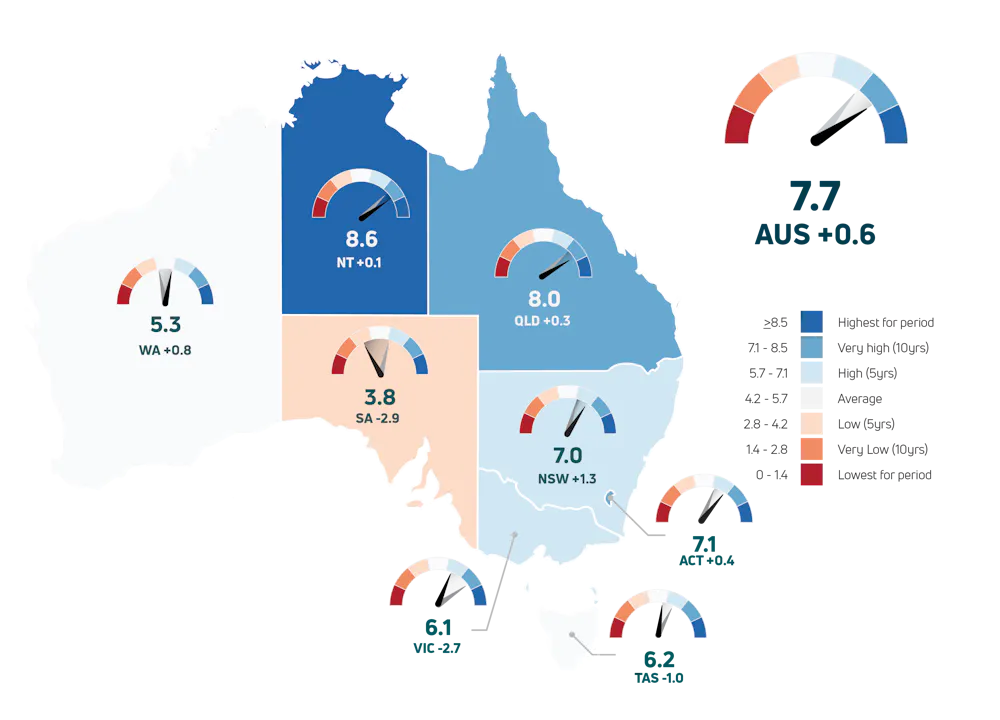
    For the fourth year running, the condition of Australia’s environment has been relatively good overall. Our national environment scorecard released today gives 2024 a mark of 7.7 out of 10.

    You might wonder how this can be. After all, climate change is intensifying and threatened species are still in decline.

    The main reason: good rainfall partly offset the impact of global warming. In many parts of Australia, rainfall, soil water and river flows were well above average, there were fewer large bushfires, and vegetation continued to grow. Overall, conditions were above average in the wetter north and east of Australia, although parts of the south and west were very dry.

    But this is no cause for complacency. Australia’s environment remains under intense pressure. Favourable conditions have simply offered a welcome but temporary reprieve. As a nation we must grasp the opportunity now to implement lasting solutions before the next cycle of drought and fire comes around.

    This snapshot shows the environmental score for a range of indicators in Australia.
    Australia’s Environment Report 2024, CC BY-NC-ND

    Preparing the national scorecard

    For the tenth year running, we have trawled through a huge amount of data from satellites, weather and water measuring stations, and ecological surveys.

    We gathered information about climate change, oceans, people, weather, water, soils, plants, fire and biodiversity.

    Then we analysed the data and summarised it all in a report that includes an overall score for the environment. This score (between zero and ten) gives a relative measure of how favourable conditions were for nature, agriculture and our way of life over the past year in comparison to all years since 2000. This is the period we have reliable records for.

    While it is a national report, conditions vary enormously between regions and so we also prepare regional scorecards. You can download the scorecard for your region at our website.

    Different jurisdictions had quite different environmental scores in 2024.
    Australia’s Environment Report 2024, CC BY-NC-ND

    Welcome news, but alarming trends continue

    Globally, 2024 was the world’s hottest year on record. It was Australia’s second hottest year, with the record warmest sea surface temperatures. As a result, the Great Barrier Reef experienced its fifth mass bleaching event since 2016, while Ningaloo Reef in Western Australia also experienced bleaching.

    Yet bushfire activity was low despite high temperatures, thanks to regular rainfall.

    National rainfall was 18% above average, improving soil condition and increasing tree canopy cover.

    States such as New South Wales saw notable improvements in environmental conditions, while conditions also improved somewhat in Western Australia. Others experienced declines, particularly South Australia, Victoria, and Tasmania. These regional contrasts were largely driven by rainfall – good rains can hide some underlying environmental degradation trends.

    Favourable weather conditions bumped up the nation’s score this year, rather than sustained environmental improvements.

    Mapping the environmental condition score to local government areas reveals poor (red) conditions in the west and the south, with good scores (blue) in the east and north. White is neutral.
    Australia’s Environment Explorer, CC BY-NC-ND

    A temporary respite?

    The past four years show Australia’s environment is capable of bouncing back from drought and fire when conditions are right.

    But the global climate crisis continues to escalate, and Australia remains highly vulnerable. Rising sea levels, more extreme weather and fire events continue to threaten our environment and livelihoods. The consequences of extreme events can persist for many years, like we have seen for the Black Summer of 2019–20.

    To play our part in limiting global warming, Australia needs to reduce its greenhouse gas emissions. Progress is stalling: last year, national emissions fell slightly (0.6%) below 2023 levels but were still higher than in 2022. Australia’s greenhouse gas emissions per person remain among the highest in the world.

    Biodiversity loss remains an urgent issue. The national threatened species list grew by 41 species in 2024. While this figure is much lower than the record of 130 species added in 2023, it remains well above the long-term average of 25 species added per year.

    More than half of the newly listed or uplisted species were directly affected by the Black Summer fires. Meanwhile, habitat destruction and invasive species continue to put pressure on native ecosystems and species.

    The Threatened Species Index captures data from long-term threatened species monitoring. The index is updated annually but with a three-year lag due largely to delays in data processing and sharing. This means the 2024 index includes data up to 2021.

    The index revealed the abundance of threatened birds, mammals, plants, and frogs has fallen an average of 58% since 2000.

    But there may be some good news. Between 2020 and 2021, the overall index increased slightly (2%) suggesting the decline has stabilised and some recovery is evident across species groups. We’ll need further monitoring to confirm whether this represents a lasting turnaround or a temporary pause in declines.

    This graph shows the relative abundance of different categories of species listed as threatened under the EPBC Act since 2000, as collated by the Threatened Species Index.
    Australia’s Environment Report 2024, CC BY-NC-ND

    What needs to happen?

    The 2024 Australia’s Environment Report offers a cautiously optimistic picture of the present. Without intervention, the future will look a lot worse.

    Australia must act decisively to secure our nation’s environmental future. This includes reducing greenhouse gas emissions, introducing stronger land management policies and increasing conservation efforts to maintain and restore our ecosystems.

    Without redoubling our efforts, the apparent environmental improvements will not be more than a temporary pause in a long-term downward trend.

    Australia’s Environment Report is produced by the ANU Fenner School for Environment & Society and the Terrestrial Ecosystem Research Network (TERN), which is enabled by the National Collaborative Research Infrastructure Strategy.

    Albert Van Dijk receives or has previously received funding from several government-funded agencies, grant schemes and programs.

    Shoshana Rapley is a Research Assistant and PhD candidate at the Australian National University and has received funding from the Ecological Society of Australia and BirdLife Australia.

    Tayla Lawrie is a current employee of the Terrestrial Ecosystem Research Network (TERN), funded by the National Collaborative Research Infrastructure Strategy.

    ref. Rain gave Australia’s environment a fourth year of reprieve in 2024 – but this masks deepening problems: report – https://theconversation.com/rain-gave-australias-environment-a-fourth-year-of-reprieve-in-2024-but-this-masks-deepening-problems-report-252183

    MIL OSI AnalysisEveningReport.nz

  • MIL-Evening Report: Southern elephant seals are adaptable – but they struggle when faced with both rapid climate change and human impacts

    Source: The Conversation (Au and NZ) – By Nic Rawlence, Associate Professor in Ancient DNA, University of Otago

    Wikimedia Commons/Antoine Lamielle, CC BY-SA

    Southern elephant seals (Mirounga leonina) are an iconic species of the Southern Ocean. But with rapid environmental changes in their ocean home, the seals’ population range has been shifting.

    Once spread across vast areas of the southern hemisphere, these apex predators are facing challenges from both climate shifts and human activities.

    Our new research examines ancient and modern DNA, archaeological records and ecological data.

    It reveals how these large marine mammals have adapted – and sometimes failed to adapt – to such pressures since the height of the last Ice Age thousands of years ago.

    A dynamic evolutionary history

    Today, the largest southern elephant seal populations are found on subantarctic islands, including South Georgia, Macquarie Island and the Falkland Islands. These colonies act as global strongholds for the species.

    Yet in the past, until just a few hundred years ago, many smaller populations existed on the Victoria Land Coast in Antarctica and closer to temperate zones, on mainland Australia and New Zealand.

    Our study focused on the Australasian lineage of southern elephant seals, drawing on samples from these ancient colonies. By analysing their genetic makeup, we pieced together a timeline of their biological heritage, including population expansions and contractions.

    This has crucial implications for understanding the resilience of elephant seals in the face of climate change.

    Subantarctic islands such as the Kerguelen islands remain strongholds for southern elephant seals.
    Antoine Lamielle, CC BY-SA

    From genetic clues in subfossil and archaeological remains, some thousands of years old, we found evidence of repeated population cycles. Expanding sea ice during cold glacial periods forced the seals northward, only for them to recolonise the Southern Ocean as sea ice retreated during warm interglacials.

    This history was particularly dynamic after the height of the last Ice Age 21,000 years ago. The planet started warming then, which led to dramatic ecological shifts.

    A mummified southern elephant seal found on the Victoria Land Coast in Antarctica.
    Brenda Hall, CC BY-SA

    Elephant seals likely expanded from ice-free refuges in temperate regions such as Tasmania and New Zealand into newly available subantarctic and Antarctic coastlines.

    However, this range expansion wasn’t permanent. As the current warm interglacial (the Holocene) progressed, new challenges arose: Indigenous hunting and, later, extensive European industrial sealing.

    For Indigenous communities in New Zealand and Australia, elephant seals were a part of their diet.

    We know this from seal remains in middens (rubbish dumps) and material culture, including necklaces made from elephant seal teeth which have been found in early Māori archaeological sites.

    Archaeological remains from coastal sites in New Zealand and Tasmania indicate significant hunting and reliance on seals by Indigenous populations. Along with human-driven environmental changes, this led to local extinctions.

    Impacts of humans and climate change

    Genetically, the seals from these ancient Australasian and Antarctic colonies were distinct but related. They formed a unique lineage in the Pacific that included Macquarie Island. This genetic diversity likely resulted from periods of isolation in separate refuges at the height of the last Ice Age.

    However, with modern climate shifts and human exploitation, much of this genetic diversity has been lost. The colonies that once thrived on the Victoria Land Coast in Antarctica are now extinct.

    Meanwhile, Macquarie Island is home to a significant breeding colony facing its own challenges. Changes in Antarctic sea ice are increasing the distance between breeding grounds on the island and feeding grounds at sea. This has affected the colony’s stability in recent decades.

    One of the most striking outcomes of our research is how quickly these large, long-lived animals can respond to environmental pressures. Seals adapted to a shifting climate by expanding their range in response to new habitats and retracting when conditions became unsuitable.

    This ability to move and adapt, however, was limited when confronted by the dual pressures of rapid climate change and human exploitation, which reduced their numbers and genetic diversity drastically over a short period.

    This schematic shows living (solid circles) and extinct (opaque circles) southern elephant seal populations and the extent of sea ice around Antarctica (opaque blue-grey) at the height of the last Ice Age.
    Berg et al (2025), CC BY-SA

    Can the Southern Ocean ecosystem adapt?

    As human-driven climate change continues, the Southern Ocean is expected to continue warming. This will cause further habitat loss for species that depend on sea ice and are affected by shifts in the availability of prey.

    The elephant seals’ history offers a window into how marine mammals may respond to these changes. But it also serves as a warning: human impacts, coupled with environmental pressures, can lead to swift, sometimes irreversible declines.

    Our research underscores the importance of conserving the genetic diversity and habitats of southern elephant seals. These seals are not just a testament to adaptability in a changing world; they are reminders of the vulnerability of even the most resilient species.

    Protecting their remaining strongholds and minimising human impacts on their food sources and breeding grounds will be crucial if we hope to avoid further contractions in their population.

    The story of the southern elephant seal is one of survival, adaptation and loss. As we face our own climate challenges, we must consider the lessons embedded in their genetic and ecological history.

    It’s a reminder that while nature often adapts to change and can weather some ecosystem threats, human-driven impacts can push even the most adaptable species beyond the point of recovery.

    Nic Rawlence receives funding from the Marsden Fund.

    Mark de Bruyn received funding from a Griffith University New Investigator grant.

    Michael Knapp does not work for, consult, own shares in or receive funding from any company or organisation that would benefit from this article, and has disclosed no relevant affiliations beyond their academic appointment.

    ref. Southern elephant seals are adaptable – but they struggle when faced with both rapid climate change and human impacts – https://theconversation.com/southern-elephant-seals-are-adaptable-but-they-struggle-when-faced-with-both-rapid-climate-change-and-human-impacts-251820

    MIL OSI AnalysisEveningReport.nz

  • MIL-OSI Europe: ASIA/INDONESIA – A ‘common vision’ for humanity and peace: Interview with the Indonesian Ambassador to the Holy See on the 75th anniversary of diplomatic relations

    Source: Agenzia Fides – MIL OSI

    Agenzi Fides

    by Paolo AffatatoRome (Agenzia Fides) – “Pope Francis’ visit to Indonesia and the signing of the Istiqlal Declaration last September were a crowning achievement of diplomatic relations between Indonesia and the Holy See,” says Michael Trias Kuncahyono, Ambassador of the Republic of Indonesia to the Holy See, on the occasion of the 75th anniversary of the official establishment of diplomatic relations between Indonesia and the Holy See on March 13, 1950. Fides Agency asked him some questions- Ambassador, can you recall the historical and political context in which the establishment of diplomatic relations between the Holy See and Indonesia took place, 75 years ago?Indonesia had recently completed the journey to gain independence from the Dutch colonizers: Indonesia proclaimed itself independent in 1945. But at that time, however, there were still colonial pressures from European powers, in the specific case of the Dutch. It was then the first native Indonesian bishop, Monsignor Albertus Sugiyopranoto who called on the Vatican to recognize Indonesian independence. Not only because of the assertion of the independence of the State but also because many missionaries were still imprisoned by colonial forces. This fact could have been a good push to get Indonesia’s recognition.- Was the personality of Albertus Sugiyopranoto therefore decisive?A bishop since 1940, he also made an important contribution during the occupation by Japanese forces in 1942, who had arrested priests and nuns. Bishop Sugiyopranoto took a very clear position. When Dutch forces attacked the Indonesians in 1947, he made an impassioned radio address urging Catholics to defend the homeland. He was an advocate for the involvement of Catholics in the independence movement. Meanwhile, he made contact with the Holy See, which sent one of its delegates in December 1947 and initiated direct relations with President Sukarno. Then the Apostolic Delegate, in agreement with Indonesian Vice President Mohamed Atta, dialogued to establish formal relations. Thus on March 13, 1950, the Holy See began diplomatic relations with Indonesia with the status of Apostolic Internunciature, which later became Apostolic Nunciature on December 6, 1966.- What were the respective goals on the two sides in establishing such relations?We know that the Holy See’s diplomacy is different from all other diplomacies in the world. The Vatican ambassador, today the Apostolic Nuncio, is sent to a State not only with the role of an intermediary between states but also to keep in connection and relationship the Church of Rome with the local Church, in the country in which it is located. At that time in Indonesia there was a great growth of the Catholic community, a phenomenon that aroused interest in the Holy See. So there was a need to facilitate the pastoral work and the life of the local Church. There was a need to follow and deepen the apostolic work in Indonesia. The goal of the Holy See is always to take care of the Catholic Church, and the Delegate was the Pope’s representative in this process.Indonesia, for its part, wanted to establish diplomatic relations because, as a very young country, it needed to be recognized in the international community. The international recognition by the Holy See was of immense value: the Holy See was the first European entity to recognize the Indonesian State. This then led other European States to follow the example. It was a decisive step.- Was the Catholic Church then already established in Indonesia? In what forms and with what configuration?The Catholic religion in Indonesia was already a well-established community, mainly thanks to some missionaries and “spiritual fathers” of the community, such as the Jesuit Franciscus Van Lith, who had been very involved in the apostolate of education, opening schools in Java, a work that was highly appreciated by Indonesian society at the time. The first Indonesian Bishop Sugiyopranoto was one of Father Van Lith’s students. Further east in the Flores area, then, a Catholic presence was already established thanks to the Portuguese. Let us remember that Christianity had arrived as early as the 7th century, and then in the 16th century several missionaries from Portugal had landed in Indonesia including Francis Xavier, passing through the Moluccas on his way to China.In addition, the fact that Indonesia, at its birth in 1945, was founded on the “Pancasila” the charter of five principles, one of which was faith in God; and that it adopted the principle of “diverse but one”: this made the Holy See realize that there was fertile ground in which all religions had a chance to flourish.- Was the “unity in diversity” approach a crucial point?That principle was the catalyst in diplomatic relations. But others, such as equality and brotherhood, are also in harmony with Christian values. The founding fathers were quite far-sighted in considering that a nation so rich in different cultures, ethnicities and religions could only survive by staying true to the motto “unity in diversity.” Pope Pius XII already appreciated this and Pope Francis also reiterated it, saying that the model should be taken as an example, especially in countries where there is great pluralism and it is difficult to remain united: we are different but we are brothers.- In Indonesian history, in designing the architecture of the Republic, the choice was made not to build a mono-religious state…It was: the first of the five founding principles was “faith in one God,” then that phrase should have continued by saying “in the Islamic way.” There was a great debate about it, then it was decided to leave only “faith in one God.” Mohammad Atta, the vice president, who was a Muslim and came from Padang a strongly Islamic city, pointed it out clearly because, he said, “we have to remain united.” It was a forward-looking vision.- What common points do you see between Indonesia and the Holy See today in their respective political and cultural approaches?Politically, Indonesia and the Holy See find themselves in a policy that is always in favor of humanity. The Holy See does not work for the maintenance of temporal power but for the development of man, his dignity and rights. I think Indonesia also has the same approach, as the Pancasila and our Constitution say, promoting equality, freedom, democracy as well as peace. These are points that Indonesia and the Holy See have in common.- Is there a common vision also in the use of the instrument of diplomacy?In the instrument of diplomacy, the aspect we have in common can be seen in the founding principles, such as freedom from colonialism and the promotion of peace: we see this in scenarios such as the Middle East, Ukraine, Myanmar. The “diplomacy of hope,” mentioned by Pope Francis in his recent address to the Diplomatic Corps, we understood it as diplomacy that wants to improve the world in a harmonious and comprehensive way. Hope must start from trust, which is the basis of relations between states. Hope for peace in the various conflict scenarios is generated on the basis of trust between the interlocutors.- What did Pope Francis’ trip to Indonesia in 2024 mean?Pope Francis’ visit to Indonesia and the signing of the Istiqlal Declaration last September was a crowning achievement of diplomatic relations between Indonesia and the Holy See. Not all countries with which the Holy See has relations are visited by the pontiff. And three Popes have visited Indonesia – Pope St. Paul VI (1970), Pope St. John Paul II (1989) and Pope Francis (2024).The trip was not perceived as a trip reserved for the Catholic community, but was perceived as a visit to all Indonesians, who welcomed the Pope with great warmth. The Pope became a model of a leader to follow: he was easy-going, showed himself in a non-luxury car, was always very humble, and stopped to greet everyone. Indonesia showed its true face, a plural face, composed of people of different cultures and religions who welcomed the Pope warmly and enthusiastically. Today, at the time of his illness, so many write to me, not only Catholics but also Muslims, saying: let us pray for him.- What do you hope for the future?We want to strengthen more and more the relations between Indonesia and the Holy See: and, since there is no political and economic aspect, to do it through culture. We intend to make the pluralism of Indonesian culture and its peaceful face better known. The Holy See is, for us, also a gateway to the rest of the world. Another field of fruitful cooperation is that of interreligious dialogue, according to the vision of Pope Francis. These are the paths for future relations. (Agenzia Fides, 18/3/2025)
    Share:

    MIL OSI Europe News

  • MIL-OSI Europe: AFRICA/CONGO RD – Appeal by Butembo university students: “Enough 30 years of war imposed on us to plunder our country’s resources”

    Source: Agenzia Fides – MIL OSI

    Kinshasa (Agenzia Fides) – “We have been living in war for more than 30 years. The war was born before our generation. It has produced misery, millions of internally displaced people, millions of dead” say the university students of Butembo-Beni, in North Kivu, in the east of the Democratic Republic of Congo.Since January, vast portions of territory in the provinces of North and South Kivu have been conquered by the M23 guerrilla movement with the support of the Rwandan army, including the two capitals, Goma and Bukavu.In their appeal, sent to Fides, the members of the Student Council of the Catholic University of Graben in Butembo-Beni complain that “the international community has had a passive attitude”. “The conflict endangers the sovereignty of the DRC and our right to life. Children, women and men are exposed to atrocities and all kinds of violence and human rights violations”.The students raise ‘a cry of alarm’. “Aware of the challenges and problems related to peace and security in the world, we express our and the Congolese people’s great weariness. For too long we have been attacked, massacred, killed, deprived of fundamental freedoms, stripped of human dignity. We need peace”. The Butembo-Beni university students remind us that at the root of the war imposed on the Congolese population, there is no ‘ancestral’ conflict, but topical economic and strategic interests: “There is no longer any need to prove that economic and expansionist reasons lie behind this tragedy. Material interests make us prey: our mineral resources, necessary for the technological and energy transition, are among the most coveted by world powers. But to access them, is it really necessary to kill us, condemn us to misery, destroy our cities, our homes, our environment?”. An example of this predation is given by the 10 tonnes of strategic minerals taken in mid-February by M23 militiamen from a plant in South Kivu (see Fides, 26/2/2025; on the kind of Congolese strategic mineral wealth (see Fides, 1/2/2023).This is why the students demand that “our riches benefit the daughters and sons of the DRC. We want the powers to negotiate directly with the DRC partnerships conducted in a fair and peaceful manner, in the interest of all peoples. Our resources must not be extorted through illicit exploitation, at the cost of our lives. Together we must find ways to share them with respect for all human rights and the principle of sovereignty of states”.“We therefore launch an urgent and pressing appeal to all actors on the international scene, so that they play their role correctly. They must work to ensure that the world finds peace and security, to ensure that all the peoples of the world finally have a peaceful life. We have neither weapons production industries nor nuclear weapons laboratories. Why impose war on us? We want peace and security, without conditions”, they conclude. (L.M.) (Agenzia Fides, 18/3/2025)
    Share:

    MIL OSI Europe News

  • MIL-OSI Europe: AMERICA/HAITI – A network of paths for human and economic development in Pourcine Pic Makaya

    Source: Agenzia Fides – MIL OSI

    Wednesday, 19 March 2025

    MM

    Pourcine (Agenzia Fides) – In Pourcine Pic Makaya, the sowing season is coming to an end. The next two months will be difficult for the people awaiting the harvest. They have “put everything they have in the form of money into the ground,” that is, they have used it to prepare the land and sow.”In the coming weeks, agricultural work will decrease significantly; the Community will be able to work on repairing some roads and paths that connect the village plateau with other towns,” writes Father Massimo Miraglio, a Camillian missionary in Haiti, to Fides.“With a salary for the people, organized into work teams, we can help several families in a very difficult economic time. The results we seek are twofold,” continues the Camillian parish priest of Notre Dame du Perpétuel Secours in Pourcine: “to improve the usability of some roads (also to make them safer for children going to school) and to financially assist more than 200 families with a small financial contribution from their work.”The village of Pourcine Pic Makaya is located on a plateau at an altitude of approximately 1,000 meters and surrounded by rugged mountains, where numerous hamlets are connected by difficult and steep paths. Just under 300 families live in Pourcine, with a total of almost 1,500 people; the hamlets, about 15 in number, are home to around 2,000 people. The village is the center of all the area’s inhabitants, and a market is held every Wednesday, the center of the area’s economic activity. In Pourcine, there are two schools, one public and one parish, and a small (informal) parish clinic. Paths lead from the plateau to all the other villages (some several hours’ walk away) and to the three main tracks that connect Pourcine to the rest of the region: the first to the town of Beaumont, the second to the adjacent Castillon valley, and the third to the valley floor and Jérémie.“This entire network of mountain roads plays a fundamental role,” explains Fr. Miraglio, “allowing people to travel from the center to the villages, to the land they cultivate, to the markets for local produce, and to the neighboring towns in the region. Unfortunately, due to the terrain, heavy rainfall, and poor maintenance, this network of roads is in poor condition and, especially during the rainiest periods, is often impassable. Rural roads in particular, which are especially valuable because they allow the transport of products on mule and ensure connections to neighboring areas, are in poor condition. On rare occasions, the local community organizes, with the limited resources at its disposal, to clear the roads and improve their viability.”To help the population, Father Máximo is working on a project to “rehabilitate and maintain the roads and mule tracks that connect the villages of the Pourcine-Pic Makaya mountain community.” This project will enable the population to travel more safely and quickly, using the mules available to transport more local products and essential goods for the community’s life. The project also aims to foster the economic and social development of the area, counteracting depopulation and promoting a participatory and sustainable work model.“The direct beneficiaries of the project will be 268 people,” reports the Camillian, “who will be directly involved in the cleaning and maintenance of the trails, while the indirect beneficiaries will be the entire population of Poucine Pic Makaya, who will be able to benefit from the improvements to the trail network. In particular, the children who daily walk the trails leading from the various villages to the plateau where the school is located will be able to travel more safely and quickly. The direct beneficiaries, men and women (coordinators, team leaders and laborers), will be chosen from among the residents of the most remote areas who most need these income-generating activities at a particularly difficult time for the farmers in the area.” (AP) (Agenzia Fides, 19/3/2025)
    MM

    MM

    Share:

    MIL OSI Europe News

  • MIL-OSI Europe: Written question – Impact of tariffs and quota systems on downstream steel manufacturing in the EU – E-001037/2025

    Source: European Parliament

    Question for written answer  E-001037/2025
    to the Commission
    Rule 144
    Paulo Cunha (PPE), Lídia Pereira (PPE), Sérgio Humberto (PPE), Susana Solís Pérez (PPE), Juan Ignacio Zoido Álvarez (PPE), Dennis Radtke (PPE)

    The downstream steel manufacturing sector in the EU is facing critical challenges, exacerbated by the existing tariffs and quota systems on raw material imports. While intended to protect local industries, these measures are inadvertently placing enormous financial burdens on European manufacturers who rely on competitively priced raw materials.

    Domestic downstream steel manufacturers frequently grapple with rising costs due to tariffs ranging from 25 % to 35 % on essential materials such as hot rolled and alloy steels, making it increasingly difficult to maintain their market position. Alongside this constraint, imported steel products and derivative steel articles, often produced with subsidised steel, circumvent anti-dumping tariffs and countervailing duties through origin misrepresentation and exports routed via warehouses based in non-EU countries. This situation allows these products to enter the EU market at lower prices, thereby avoiding the application of tariffs.

    In the light of these circumstances:

    • 1.What measures does the Commission intend to implement to safeguard downstream industries from unfair competition posed by imported products, particularly those made from subsidised steel coils?
    • 2.Will the Commission consider revising the current tariff structures to impose them on finished goods in proportion to the raw materials used in production, thereby levelling the playing field for EU manufacturers?

    Submitted: 11.3.2025

    Last updated: 19 March 2025

    MIL OSI Europe News

  • MIL-OSI Europe: Briefing – Understanding EU action on Roma inclusion – 19-03-2025

    Source: European Parliament

    The Roma are Europe’s largest ethnic minority. Out of an estimated total of 10-12 million Roma in Europe as a whole, some 6 million live in the European Union (EU) and most of them are citizens of an EU Member State. A significant number of Roma people live in very poor socio-economic conditions. The social exclusion, discrimination and segregation they face are mutually reinforcing. Their restricted access to education and difficulties entering the labour market result in low income and poor health compared with non-Roma people. Since the mid-1990s, the EU has been stressing the need for better Roma inclusion. In 2011, a key EU initiative was launched with the adoption of an EU framework for national Roma integration strategies up to 2020. The aim was to tackle the socio-economic exclusion of and discrimination against the Roma. When the framework came to an end, in early October 2020 the European Commission adopted a new strategy for 2021 to 2030. In March 2021, the Council adopted a recommendation on Roma equality, inclusion and participation, encouraging Member States to adopt strategic frameworks for the inclusion of Roma communities. The European Council conclusions on measures to ensure equal access for Roma to adequate and desegregated housing, and to address segregated settlements, adopted on 9 October 2023, are another key follow-up to the 2020-2030 EU Roma strategy. The EU also supports Member States in their duty to improve the lives of all vulnerable people, including the Roma, through the EU structural and investment funds and other funding instruments. Issues relating to the promotion of democratic values and practices, as well as economic, social and cultural rights for Roma people have received particular attention from civil society organisations. Parliament has been advocating for Roma inclusion since the 1990s. This is an update of a briefing published in April 2024.

    MIL OSI Europe News

  • MIL-OSI Europe: Written question – Lifting of EU sanctions against Syria and repatriation of Syrian asylum seekers – E-000888/2025

    Source: European Parliament

    Question for written answer  E-000888/2025
    to the Commission
    Rule 144
    Petra Steger (PfE)

    Now that the foreign ministers of the Member States have unanimously approved several legal instruments provisionally suspending the EU sanctions against Syria in the banking, energy and transport sectors, which have been in place for years, the conditions must be created for an EU-wide initiative to step up deportations to Syria. It cannot be the case that Syria benefits from significant economic relief while more than a million Syrians, who are urgently needed to rebuild their country, remain in the EU – one hundred thousand of whom in Austria. However, a return of Syrian refugees to their home country would not only contribute to the development of Syria, but would also mitigate the security risks in the host countries, which are suffering massively from the consequences of illegal mass migration.

    • 1.What concrete measures does the Commission plan to take to ensure that the lifting of EU sanctions goes hand in hand with a coordinated return of Syrian asylum seekers to their country?
    • 2.Is the Commission planning to revise the existing asylum regime for Syrian nationals to take into account the changed political circumstances in Syria?
    • 3.How does the Commission plan to support Member States in the implementation of return programmes to enable rapid and efficient remigration of Syrian citizens?

    Submitted: 3.3.2025

    Last updated: 19 March 2025

    MIL OSI Europe News

  • MIL-OSI Europe: Answer to a written question – Measures to allow young couples and young people to become homeowners – E-002949/2024(ASW)

    Source: European Parliament

    The Commission shares the Honourable Member’s concerns about the housing situation in Greece and in the whole EU. The Commission has thus appointed a Commissioner for Energy and Housing and established a Task Force for Housing to coordinate the different work strands

    Although the responsibility for housing rests mainly with Member States, regions and local authorities, the Commission will assess how it can continue to contribute to mitigating the housing crisis at the European level, including for youth.

    The Commission will consult stakeholders in 2025 to better understand all the issues on housing and put forward a European Affordable Housing Plan.

    Various EU funds are already available for Member States and local authorities to support social and affordable housing[1]. In addition, the Greek Recovery and Resilience Plan (RRP) foresees two financial instruments[2] that aim addressing pertinent challenges in Greece’s housing market.

    They constitute parts of a more comprehensive housing strategy that is also included in the Plan and will be implemented in Greece in the coming period.

    Complementary actions under RRP, the cohesion policy also co-finance energy efficiency in housing in Greece.[3] In addition, the Plan contains measures that aim to renovate more than 100 000 residences to significantly save primary energy[4].

    Furthermore, in respect of funding and financing, the Commission will continue working closely with international financial institutions, national promotional banks and other relevant stakeholders[5] to make sure that housing is more affordable, in particular for young people and families.

    Procedures for buying a house are governed by national civil law. Hence, simplification thereof falls within the remit of Member States.

    • [1] To assist Member States, the Commission has published a toolkit that provides an overview of available EU funding opportunities in housing: Social Housing and beyond. https://european-social-fund-plus.ec.europa.eu/en/news/commission-launches-toolkit-support-social-housing-member-states The Recovery and Resilience Facility; the European Regional Development Fund; the European Social Fund Plus; the InvestEU; the Horizon Europe; the Technical Support Instrument; the Single Market Programme; the Asylum, Migration and Integration Fund; the Social Climate Fund. Details on each EU support in the toolkit. In addition, the Cohesion Fund and the Just Transition Fund also support the investments in the energy efficiency of housing stock. Details are available in story ‘how cohesion policy supports housing at the Cohesion open data platform.
    • [2] Loans finance for: (i) the acquisition of primary residence for targeted population groups — program “My Home II” (EUR 1 billion); (ii) energy efficiency renovations of existing properties — program “Upgrade My Home” (EUR 300 million).
    • [3] Under the 2021-27 programming period, cohesion policy co-finances with some EUR 751 million interventions for energy efficiency in housing.
    • [4] To date, and according to the most recent updated by the Greek authorities, more than 44,000 renovations have been completed.
    • [5] https://ec.europa.eu/commission/presscorner/detail/en/ip_25_671
    Last updated: 19 March 2025

    MIL OSI Europe News

  • MIL-OSI Europe: Answer to a written question – Social accommodation in cohousing block – Allocation of 10 flats in Via Fioravanti 24, Bologna – E-000515/2025(ASW)

    Source: European Parliament

    The Commission does not comment on initiatives launched at project level.

    To address the housing crisis and promote more affordable and sustainable housing, the first-ever Commissioner responsible for Energy and Housing will put forward a European Affordable Housing Plan[1].

    The Plan will focus on developing new EU initiatives, as well as supporting national, regional and local authorities to address structural drivers of the housing crisis and add value at the European level.

    Given that primary responsibility for housing lies with actors at national, regional and local level, the Plan will respect the subsidiarity and proportionality principles in its focus to develop policies to improve access to affordable, decent and sustainable housing and address the barriers.

    • [1] https://commission.europa.eu/document/download/1c203799-0137-482e-bd18-4f6813535986_en?filename=Mission%20letter%20-%20JORGENSEN.pdf
    Last updated: 19 March 2025

    MIL OSI Europe News

  • MIL-OSI Europe: Answer to a written question – Action to reduce energy prices and address significant disparities between EU Member States – E-000319/2025(ASW)

    Source: European Parliament

    The Commission adopted the action plan for Affordable Energy together with the Clean Industrial Deal on 26 February 2025[1]. This Action Plan presents measures to reduce energy costs for industry and households and help build a genuine Energy Union that delivers competitiveness, security, decarbonisation, and a just transition.

    As outlined by the cross-border infrastructure, needs are often not matched by concrete projects, leading to undue price disparities between some regions, such as recently observed in southeast Europe.

    Therefore, an indispensable element in this plan is investing in Europe’s grids, to accompany the progress towards an integrated and decarbonised energy system, reduce risks of curtailment for renewable energy and leverage the benefits of its Internal Energy Market for industry and households.

    To enhance coordination across the Energy Union and strengthen the governance of the electricity market, the Commission will also set up an Energy Union Task Force.

    Europe must invest more in modernising and expanding interconnections, its network of energy transmission and distribution infrastructure, accelerating investment in electricity, hydrogen and carbon dioxide transport networks as well as storage systems.

    The Connecting Europe Facility for Energy has been instrumental in supporting key energy infrastructure projects of EU added value.

    At the same time, existing infrastructure needs to be used efficiently. For example, a minimum of at least 70% capacity on interconnectors should be made available for cross-border electricity trading, but most Member States are still far off. Full achievement of this target would reduce price peak episodes.

    • [1] https://energy.ec.europa.eu/strategy/affordable-energy_en

    MIL OSI Europe News

  • MIL-OSI Europe: Answer to a written question – World Trade Organization’s concerns regarding the EU’s F-gas Regulation – E-000401/2025(ASW)

    Source: European Parliament

    Regulation (EU) 2024/573[1] on fluorinated greenhouse gases (F-gases), contains a few restrictions covering all F-gases, i.e. including hydrofluoroolefins (HFOs).

    Such restrictions were only introduced for applications for which alternatives are available and the restrictions have a long transition period, allowing the industry sufficient time to adjust. The Impact Assessment covered such alternatives.

    Some F-gases are per- and polyfluoroalkyl substances (PFAS). PFAS are chemicals which are very persistent and potentially have negative effects on health and the environment.

    Recital (7) of the regulation includes a reference to the full F-gas prohibitions in line with the precautionary principle, to ensure that alternatives which are less harmful for health, the environment and the climate would be used.

    The F-gas Regulation delivers high ambition, while respecting the EU’s international obligations. The Commission is in regular contact with third countries to clarify this, both in the World Trade Organisation and through bilateral contacts.

    The Commission intends to carry out the review of the F-gas Regulation by 2030, in line with the requirements of that regulation.

    As required in Article 35(5)(a) of the regulation, the Commission will in that review evaluate whether cost-effective, technically feasible, energy-efficient, sufficiently available and reliable alternatives exist, which make the replacement of fluorinated greenhouse gases possible in the products and equipment listed in Annex IV covered by prohibitions that have not yet become applicable at the time of the evaluation, especially products and equipment subject to full fluorinated greenhouse gas prohibitions, including ‘split’ air conditioners and heat pumps.

    • [1] https://eur-lex.europa.eu/eli/reg/2024/573/oj/eng

    MIL OSI Europe News

  • MIL-OSI Europe: Answer to a written question – Protecting the rental market from short-term tourist rental platforms – E-002341/2024(ASW)

    Source: European Parliament

    Short-term rentals can influence the availability and affordability of housing, notably in tourism hotspots. At the same time, short-term rentals can also help boost investments in local housing markets and support renovation, notably of vacant houses.

    Firstly, in this context, authorities can increase transparency by requiring hosts to register, and platforms to provide data on short-term rentals, notably thanks to Regulation (EU) 2024/1028[1].

    Moreover, Regulation (EU) 2022/2065[2] requires online platforms to ensure, among others, the traceability of the traders providing services on their platforms and to design their interfaces so that traders can comply with all the obligations required by either national or EU law. The regulation introduces additional obligations for very large platforms, such as Booking.com.

    Furthermore, Directive (EU) 2021/514[3] provides for the exchange of information between platforms and national authorities[4] for tax purposes levelling the playing field in taxation.

    Given the measures above, the Commission has not envisaged, for the time being, to bring forward any legislative initiative to regulate or impose a limit on properties and overnight stays but will continue to explore what can be done to tackle systemic issues with short-term accommodation rentals.

    The Commission intends to launch a policy dialogue with stakeholders to better understand the relationship between short-term rentals and the availability and affordability of housing and identify best practices that are in line Directive 2006/123/EC[5].

    Finally, the Commission has set up a Task Force for Housing that started on 1st February 2025 to support Member States to tackle issues related to the housing crisis.

    • [1] Regulation (EU) 2024/1028 of the European Parliament and of the Council of 11 April 2024 on data collection and sharing relating to short-term accommodation rental services and amending Regulation (EU) 2018/1724.
    • [2] Regulation (EU) 2022/2065 of the European Parliament and of the Council of 19 October 2022 on a Single Market For Digital Services and amending Directive 2000/31/EC (Digital Services Act).
    • [3] Council Directive (EU) 2021/514 of 22 March 2021 amending Directive 2011/16/EU on administrative cooperation in the field of taxation.
    • [4] In the Member States of those platforms and then also among Member States.
    • [5] Directive 2006/123/EC of the European Parliament and of the Council of 12 December 2006 on services in the internal market.

    MIL OSI Europe News

  • MIL-OSI Europe: Answer to a written question – US withdrawal from the Paris Agreement – E-000276/2025(ASW)

    Source: European Parliament

    For more than a decade the EU has worked side-by-side with the United States (US) to design and implement the Paris Agreement, the crucial multilateral agreement in the fight against global warming.

    The Commission therefore regrets the announcement of the President of the US to once again withdraw the US from the Paris Agreement .

    The Commission will stay the course on the Green Deal as the EU’s growth strategy. The Commission will deploy its climate diplomacy to ensure that other major polluters also show ambition in reducing greenhouse gas emissions when presenting their Nationally Determined Contributions ahead of COP 30 in Brazil.

    The Commission’s focus will be on supporting and creating the right conditions for reaching its common goals. This means investing and ensuring access to cheap, sustainable and secure energy supplies and raw materials, including through the Clean Industrial Deal.

    The Clean Industrial Deal, announced in the Political Guidelines for 2024-2029, positions decarbonisation as a powerful driver of growth and prosperity for Europeans.

    Building on the Green Deal Industrial Plan[1], the Net Zero Industrial[2] and Critical Raw Materials Acts[3], it will have a particular focus on energy-intensive industries and the net-zero sector.

    Some of the measures will aim at lowering energy prices, developing lead markets for EU-made decarbonised products, and leveraging circularity for the availability of raw materials.

    All of these measures will support the EU economy, foster the green transition and contribute to the prosperity of EU citizens by creating new jobs.

    • [1] https://commission.europa.eu/strategy-and-policy/priorities-2019-2024/european-green-deal/green-deal-industrial-plan_en
    • [2] https://commission.europa.eu/strategy-and-policy/priorities-2019-2024/european-green-deal/green-deal-industrial-plan/net-zero-industry-act_en
    • [3] https://single-market-economy.ec.europa.eu/sectors/raw-materials/areas-specific-interest/critical-raw-materials/critical-raw-materials-act_en
    Last updated: 19 March 2025

    MIL OSI Europe News

  • MIL-OSI Europe: Answer to a written question – Commission study into the cost of illegal migration – E-002901/2024(ASW)

    Source: European Parliament

    As indicated by the European Border and Coast Guard Agency Report quoted by the Honourable Member, in 2024 irregular border crossings into the EU have significantly decreased, with a 38% reduction compared to 2023.

    In the framework of the Global Alliance to Counter Migrant Smuggling[1], the Commission is working to fight organised criminal groups responsible for migrant smuggling and trafficking in human beings to the EU.

    The implementation of the Pact on Migration and Asylum[2] and enhanced international cooperation on migration will also contribute managing irregular migration and reducing the incentive for migrants to embark in dangerous journeys .

    There is no recent assessment on the fiscal impact of irregular migration on the EU. No such study is currently planned to be carried out. Available studies assessing the fiscal balance in relation to asylum seekers and refugees are specific to the context and the country and show mixed results.

    • [1] https://home-affairs.ec.europa.eu/policies/migration-and-asylum/irregular-migration-and-return/international-conference-global-alliance-counter-migrant-smuggling_en- European Commission
    • [2] https://home-affairs.ec.europa.eu/policies/migration-and-asylum/pact-migration-and-asylum_en
    Last updated: 19 March 2025

    MIL OSI Europe News

  • MIL-OSI Europe: Answer to a written question – Foreseeable overburdening of the German asylum administration owing to the return of Syrians in view of the implementation of EU law and compliance with the rule of law – E-002900/2024(ASW)

    Source: European Parliament

    The rules for the revocation of a refugee or subsidiary protection status are laid down in the Qualification Directive[1], in particular in Article 14 (for the revocation of a refugee status) and Article 19 (for the revocation of a subsidiary protection status).

    These provisions require that the Member States that have granted international protection demonstrate on an individual basis that the person concerned has ceased to be or has never been entitled to such protection. Procedural rules are laid down in Articles 44 and 45 of the Asylum Procedure Directive[2].

    The revocation of the refugee or subsidiary protection status should be based on an individual assessment pursuant to the aforementioned provisions of EU law.

    Likewise, the granting of refugee or subsidiary protection status should be based on an individual assessment as set out in Article 4(3) of the Qualification Directive.

    The Commission is in constant exchange with the Member States in the context of the implementation of the Pact on Migration and Asylum[3] and provides support as needed.

    • [1] https://eur-lex.europa.eu/legal-content/EN/TXT/PDF/?uri=CELEX:32011L0095
    • [2] https://eur-lex.europa.eu/legal-content/EN/TXT/PDF/?uri=CELEX:32013L0032
    • [3] https://home-affairs.ec.europa.eu/policies/migration-and-asylum/pact-migration-and-asylum_en
    Last updated: 19 March 2025

    MIL OSI Europe News

  • MIL-OSI Europe: Answer to a written question – The role of local and regional authorities in implementing the Pact on Migration and Asylum – E-002939/2024(ASW)

    Source: European Parliament

    The Commission supports the principle of integrated policy making, also referred to in Article 3 of the Asylum and Migration Management Regulation (AMMR)[1].

    As stressed in its communication on a Common Implementation Plan for the Pact on Migration and Asylum, the Commission encourages Member States to engage and make use of local and regional authorities and other stakeholders, through regular exchanges and consultation[2].

    The template for the National Implementation Plans, annexed to the Common Implementation Plan, includes a section on governance and interinstitutional cooperation also for this purpose.

    For details relating to the different elements of the Pact of relevance to regional authorities, the Commission also refers the Honourable Member to its forthcoming reply to the opinion of the European Committee of the Regions on the Implementation of the Pact on Migration and Asylum[3].

    The Commission is in regular contact with various stakeholders in relation to the implementation of the Pact. This also includes representatives of regional authorities where relevant or requested.

    The Commission monitors the Common Implementation Plan and the National Implementation Plans, based on its responsibilities under the AMMR and will regularly report to the European Parliament and Council on the state of play.

    • [1] https://eur-lex.europa.eu/eli/reg/2024/1351/oj/eng
    • [2] https://home-affairs.ec.europa.eu/common-implementation-plan-pact-migration-and-asylum_en
    • [3] https://cor.europa.eu/en/our-work/opinions/cdr-2717-2024
    Last updated: 19 March 2025

    MIL OSI Europe News