Category: housing

  • MIL-OSI Russia: More than 120 million rubles were collected on the “Million Prizes” website for SVO participants

    Translartion. Region: Russians Fedetion –

    Source: Moscow Government – Government of Moscow –

    Muscovites transferred more than 120 million rubles on the website “A Million Prizes” in support of fighters participating in the special military operation (SMO) and to provide humanitarian aid to civilians in the new and border territories of Russia.

    Fundraising has been going on since August 15th together with the foundation “People’s Front. Everything for victory!” and other charitable organizations. Muscovites can transfer from 500 to five thousand city (green) points unlimited number of times. One point is equal to one ruble.

    Residents of the capital receive points for participating in projects “City of Ideas”, “Active Citizen”, “Electronic House”, “City of tasks”, “Our City” and others.

    To do a good deed, you need to log in to the site “A Million Prizes” using the login and password from the mos.ru portal account. Then, in the “Incentives” section, select the “Charity” category, the card of the desired fund, the donation amount and click the “Place an order” button. The points will be debited from the user’s account, and their cash equivalent will be sent to the fund.

    Any possible assistance, every invested ruble helps to supply the fighters with the necessary means of protection, equipment, warm clothes and other items. For residents of border regions, the funds received are used to purchase necessary things: food, essential goods and other things.

    “A Million Prizes”— a website where Muscovites can use city points to receive goods and services from more than 400 partner organizations. The loyalty program allows you to use accumulated points to receive discounts in stores, cafes and restaurants, purchase tickets to theaters and museums, and top up your Troika transport card and your parking account in the Parking of Russia app. In addition, users of the site can donate funds to charity.

    The project is being developed by the State Institution “New Management Technologies” andDepartment of Information Technology of the City of Moscow.

    The creation, development and operation of the e-government infrastructure, including the provision of mass socially significant services, as well as other services in electronic form, corresponds to the objectives of the national project “Data Economy and Digital Transformation of the State” and the capital’s regional project “Digital Public Administration”.

    Please note: This information is raw content directly from the source of the information. It is exactly what the source states and does not reflect the position of MIL-OSI or its clients.

    Please Note; This Information is Raw Content Directly from the Information Source. It is access to What the Source Is Stating and Does Not Reflect

    https: //vv.mos.ru/nevs/ite/150700073/

    MIL OSI Russia News

  • MIL-OSI Russia: Career and Family: Muscovites Invited to Free Educational Classes

    Translartion. Region: Russians Fedetion –

    Source: Moscow Government – Government of Moscow –

    The city employment service helps women raising children to realize themselves in business and to undergo training in in-demand specialties. For example, in the center “My career” The “Mama Rabotyat” program is in effect, within the framework of which courses will be held for female residents of the capital in March. Participants will learn more about the profession of a real estate agent, and will also become familiar with methods of promoting goods and services on the Internet.

    “Our program is designed for female applicants who are ready to continue their professional development during maternity leave or after leaving it. The main goal is to allow a woman to implement her model of success, which harmoniously combines a career and caring for a family. This is helped by specialized trainings and short courses, which we regularly conduct in partnership with leading experts and employers from various industries. Thanks to two training courses that will be held at the center in March, women will be able to learn the basics of a realtor’s work, learn how to promote services and goods online, and much more,” said Yulia Belyaeva, head of the “Mom Works” program at the “My Career” center.

    On March 10, the full-time and part-time course “Mom – Real Estate Agent” will begin. The teachers will be market experts and current practitioners. Participants will study types of real estate and channels for promoting properties, learn how to find clients and retain them, and discuss legal and financial nuances of transactions. Future realtors will be able to practice the knowledge they have acquired individually or in a group. The program includes independent study of online lessons and homework with feedback from a mentor. Upon completion of the course, participants will receive certificates. The training will end on March 24, and from March 25 to 28, Muscovites will be invited on excursions to major real estate agencies.

    In-person meetings will be held at the My Career center at the address: 1 Sergiya Radonezhskogo Street, Building 1. Participation is free, but advance registration is required.link.

    On March 17, freelance Moscow women are invited to attend the full-time and part-time course “Mom — Online Expert: From Product to Promotion.” The center’s specialists will tell you how to use your experience wisely, promote yourself and your services, formalize your self-employment, and where to find clients. Invited speakers will share their best practices and secrets of promotion on freelance exchanges. They will also talk about how to form a client base, including with the help of electronic services. The training will end on March 28. As a result, the participants will receive a finished product and an effective strategy for its promotion.

    In-person meetings will be held at the My Career center on Sergius of Radonezh Street. Participation is free, but will require registration.

    The Moscow City Employment Service is the largest state personnel operator that helps residents of the capital find work. Its structure includes employment offices, many of which are located in the My Documents government service centers. The flagship centers are open at the following addresses: Kuusinen Street, Building 2, Building 1, and Shabolovka Street, Building 48. The specialized employment center My Career is located on Sergiya Radonezhskogo Street.

    In the center “Professions of the Future” (Shchepkina Street, Building 38, Building 1) in a maximum of three and a half months, you can master one of 75 in-demand professions in various sectors of the economy. Career mentors will help you find a job after completing your training. The center’s partners include more than three thousand employers. In addition, a comprehensive career guidance program for ninth-grade students is being implemented here.

    Please note: This information is raw content directly from the source of the information. It is exactly what the source states and does not reflect the position of MIL-OSI or its clients.

    Please Note; This Information is Raw Content Directly from the Information Source. It is access to What the Source Is Stating and Does Not Reflect

    https: //vv.mos.ru/nevs/ite/150898073/

    MIL OSI Russia News

  • MIL-OSI Russia: The Sports Weekend project now features online training with stars

    Translartion. Region: Russians Fedetion –

    Source: Moscow Government – Government of Moscow –

    In the project “Sports Weekend”, organized by Moscow City Sports Department and My Documents public service centers, a series of online training sessions with stars and professional trainers has begun. 85 sessions in nine areas are planned. You can join them for free.

    Video workouts will help you improve and maintain your physical fitness without leaving your home. You may need elastic bands, a mat, and a yoga cube for the classes. Each discipline opens with a workout with one of the famous artists, for example, dance with Polina Gagarina, yoga with Alsou, fitrock with ST, and meditation with Assol. Subsequent classes in each discipline will be conducted by coaches from the Sports Weekend project.

    New videos will be published from Monday to Friday on the project’s social media pages, as well as on the Rutube channel. First training already available. The online format is one of the project’s areas, offline classes are held at city venues, and to participate you need to register on the website “Sports weekend”.

    The project includes various sports areas, everyone can find something to their liking – general physical training, stretching, dance training, yoga, Pilates, soft fitness, body combat, fitrock and meditation.

    “Sports Weekend” is one of the largest projects in Moscow. City residents are offered free yoga, stretching and other training sessions under the guidance of qualified trainers. Classes are held at 16 venues in the capital, as well as online. A detailed schedule is published on the project website.

    Please note: This information is raw content directly from the source of the information. It is exactly what the source states and does not reflect the position of MIL-OSI or its clients.

    Please Note; This Information is Raw Content Directly from the Information Source. It is access to What the Source Is Stating and Does Not Reflect

    https: //vv.mos.ru/nevs/ite/150902073/

    MIL OSI Russia News

  • MIL-OSI Russia: Composer Alexey Rybnikov on the Moskino Cinema Park and the music for Buratino

    Translartion. Region: Russians Fedetion –

    Source: Moscow Government – Government of Moscow –

    The full-length film “Buratino”, which was filmed at the Moskino cinema park, will be released on January 1, 2026, 50 years after the premiere of the famous Soviet musical film. The new film was filmed from September to November 2024. The music for it was written by composer Alexey Rybnikov.

    The People’s Artist of Russia created unique arrangements, inspired by the characters’ personalities. The film retains the classic compositions from the Soviet adaptation, and also adds new musical elements.

    “In most of the film we left the compositions from the Soviet film, and, for example, for the scene where Papa Carlo makes a doll, I wrote new lyrics to the music from the first film. All the other songs remained with the classic words, but one of them will sound unusual, it will be a surprise for all viewers,” shared Alexey Rybnikov.

    For the project, the Moskino cinema park built a set called “Provincial Towns of Europe” with an area of over 11 thousand square meters. The composer noted that they were made so naturally and realistically that it created the feeling of filming in a real Italian city. These are several streets with realistic buildings – a church, Giuseppe’s house, a school, a theater and others.

    Numerous streets and squares, small artistic details, fountains, niches, inscriptions – everything is worked out to the smallest detail. Alexey Rybnikov emphasized that the creation of such a site within the boundaries of Moscow is a great help and success for filmmakers.

    The site offers comfortable conditions for work, and each decoration is unique and interesting in its own way. The composer called the idea of creating a world-class cinema park in the capital fantastic.

    “The sets in the film ‟Buratino‟ are an amazing achievement of the set designers and producers who decided to do everything exactly like this. It creates the feeling that you are not in Moscow, but on the streets of Italy, where the action takes place. In general, for the film ‟Buratino‟ there were not many scenes in the pavilion, basically everything happened on the natural set, which is quite unusual. When you shoot in the pavilion, you really feel it, and here everything is natural and great. Therefore, I think that more than one project will definitely be created in the set design,” added Alexey Rybnikov.

    The fairy tale plot of the film will tell viewers how one day Papa Carlo, who dreams of becoming a father, gets a magic key. His dream comes true when a simple log turns into a smart and cheerful wooden boy Buratino. The father dotes on his creation, but Buratino feels that he is not like other children, and sets off on a journey to get to know himself better.

    The film takes much from the traditional interpretation of the fairy tale “Pinocchio”, but Buratino himself will appear before the audience in the form of a wooden three-dimensional doll, brought to life thanks to new computer technologies.

    The project’s director is Igor Voloshin, the producers are Alexander Andryushchenko, Fyodor Bondarchuk and Denis Baglai. The main roles were played by Lev Zulkarnayev, Fyodor Bondarchuk, Mark Eidelshtein, Stepan Belozerov, Anastasia Talyzina, Victoria Isakova, Alexander Petrov and other actors.

    The Moskino cinema park is part of Sergei Sobyanin’s “Moscow – City of Cinema” project and an object of the Moscow cinema cluster, which is being developed by the capital Department of Culture. The first stage of development has already been completed here: 18 natural sites, four pavilions and six infrastructure facilities have been built. Among them are the sets “Center of Moscow”, “Moscow in the 1940s”, “Vitebsk Station”, “Yurovo Airport”, “Cathedral Square of Moscow”, “Deaf Village”, “Partisan Village”, “County Town”, “Cowboy Town”, “St. Petersburg Bar” and other sites.

    The Moscow Film Cluster is an infrastructure facility, services and facilities for filmmakers, which are being developed by the Moscow Government within the framework of the Moscow — City of Cinema project. Its structure includes the Moskino film park, the Gorky Film Studio (sites on Sergei Eisenstein Street and Valdaisky Proyezd), the Moskino film factory, the Moskino cinema chain, the film commission and the Moskino film platform.

    Please note: This information is raw content directly from the source of the information. It is exactly what the source states and does not reflect the position of MIL-OSI or its clients.

    Please Note; This Information is Raw Content Directly from the Information Source. It is access to What the Source Is Stating and Does Not Reflect

    https: //vv.mos.ru/nevs/ite/150917073/

    MIL OSI Russia News

  • MIL-OSI Russia: Investor to Renovate Former Kindergarten Building with Elephant Sculptures in Shchukino

    Translartion. Region: Russians Fedetion –

    Source: Moscow Government – Government of Moscow –

    Entrepreneurs can purchase a cultural heritage site of regional significance at an open auction – the building of the former kindergarten No. 333 in the Shchukino area, also known as the “homeland of pink elephants.” This was reported by the head of the capital’s Department of Competition Policy Kirill Purtov.

    “The city offers investors to purchase an educational building built in 1936. The facility, with an area of over 1,700 square meters, is located at 11 Marshal Vasilevsky Street, Building 6. The main symbol of the former kindergarten is a splash pool decorated with a baluster fence and four elephant sculptures. After restoration work, the winner of the auction will be able to open a development center, boarding school or other institution there,” said Kirill Purtov.

    The two-story building was built according to an individual project. It combines two styles — constructivism and Stalinist neoclassicism — and also has a rounded hall, which is not typical for buildings of that era. Until 2011, a kindergarten operated here, but it was closed due to non-compliance with modern standards, and the groups were distributed to other preschool institutions. In 2019, the building was recognized as a cultural heritage site of regional significance.

    “The kindergarten with elephants in the Moscow district of Shchukino is one of the few educational buildings of the 1930s built according to an original design, despite the fact that at that time the mass standard construction of preschool institutions had just begun. It has preserved its historical appearance to this day. One of its distinctive architectural features is the four legendary figures of elephants, which, like the monument itself, are now in need of conservation work. I hope that in the near future the building will have a new owner who will carefully restore this unique cultural heritage site and give it a new life,” said the head of the capital’s Department of Cultural Heritage.

    Alexey Emelyanov.

    After being assigned the status of a cultural heritage site of regional significance, the building is protected by the state. Its historical appearance may not be violated, and any work may only be carried out after the relevant design documentation has been approved by the capital’s Department of Cultural Heritage and under its control.

    The land plot with an area of 8.7 thousand square meters will be leased to the winner of the auction for the duration of the building’s restoration.

    Applications are accepted until March 6, the auction will take place on March 18. To participate in the auction, you must be registered on the online platform “RoselTorg” and have an enhanced qualified electronic signature.

    Moscow is a city that develops entrepreneurship. The capital puts up for auction various real estate properties, andserves as a showcase investment portal. In the section “Property from the city” publish all the necessary information about the lots: photographs, documentation, conditions and form of implementation. Here you can also take a 3D tour of the objects. You can participate in the city auction remotely: the entire procedure takes place online.

    Development of electronic services for business corresponds to the objectives of the national project “Data Economy and Digital Transformation of the State” and the regional project of the city of Moscow “Digital Public Administration”.

    Please note: This information is raw content directly from the source of the information. It is exactly what the source states and does not reflect the position of MIL-OSI or its clients.

    Please Note; This Information is Raw Content Directly from the Information Source. It is access to What the Source Is Stating and Does Not Reflect

    https: //vv.mos.ru/nevs/ite/150930073/

    MIL OSI Russia News

  • MIL-OSI Australia: Interview with Olivia Caisley, Afternoon Briefing, ABC

    Source: Australian Treasurer

    Oliva Caisley:

    To unpack that and much, much more today, let’s bring in our political panel, LNP Senator Paul Scarr and Assistant Minister for Competition Andrew Leigh.

    Welcome to you both to the program. There is plenty of news to get through today. Paul let’s start with you quickly first. You’re in Queensland, which is in the path of Cyclone Alfred.

    Paul Scarr:

    Yep.

    Caisley:

    How prepared is your community?

    Scarr:

    I think the community is as prepared as it can be. There’s very close liaison between all 3 levels of government: the federal government, the state government, the local government authorities. Sandbags are being made available, people are being given warnings and suggestions and recommendations as to how to prepare. And the community’s coming together, as Queenslanders always come together, whether or not it’s in North Queensland or in the southeast corner, we come together at times like this and help each other.

    Caisley:

    And Paul, we just heard there before the WA Premier Roger Cook referring to the American Vice President as a ‘knob’ over that extraordinary argument that took place in the Oval Office over the weekend. Is that an appropriate way for a state leader to be speaking?

    Scarr:

    I don’t believe so. I don’t believe it is. And I don’t believe it’s helpful. And from my perspective, I think our focus here in Australia should be on Australia’s commitment to the people of the Ukraine, and in respect of that commitment, it’s quite bipartisan.

    And before the last election, the Coalition government had a very strong position with respect to assisting the people of Ukraine and Ukraine’s right to its sovereignty, its own secure sovereign borders, and that policy has continued, notwithstanding there was a change in government after the last election. So, I think we should focus on what Australia’s policy is.

    Caisley:

    And Andrew, what did you think?

    Andrew Leigh:

    Well, US politics is endlessly interesting, and it’s always tempting to express your view every time something happens over in the US. But we’re really focused right now on the challenges that Australia faces.

    As Paul said, preparing for Cyclone Alfred, which is looking like making landfall either on Thursday or Friday of this week.

    I would urge any of your viewers who are able‑bodied to consider signing up for EV CREW, a great on‑the‑ground operation which allows you to help out in the local community.

    And as Paul said, there’s bipartisan support for Ukraine. Australia has given $1.5 billion in assistance, of which $1.3 billion is military aid.

    Caisley:

    We have just seen in the past couple of hours the United States announcing that it’s actually going to freeze aid or support to Ukraine. Could I get both of your response to that? Let’s start with you, Paul.

    Scarr:

    Well, again, that’s a matter for the United States government, and again, I think we should focus on what Australia’s position is. And I attended a campaign rally on the third anniversary of the invasion of Ukraine. There were representatives, again, from all levels of government, both major political parties in Australia, and we’re on the same page in terms of continuing to provide our support to the people of Ukraine. And that’s the way it should be.

    Caisley:

    I was watching Donald Trump’s press conference in the early hours of this morning, and in it, he said that Volodymyr Zelenskyy needs to show more appreciation. We then have seen these reports that aid will be paused until Volodymyr Zelenskyy demonstrates a good faith commitment to peace.

    How does this at all, or if at all, Andrew, change the security equation for Australia?

    Leigh:

    Well, you’ve seen in London a range of European powers stepping in and taking important steps towards peace. It is really important that we see peace in Ukraine. This is a war started by Russian aggression. Australia has stood steadfastly with the people of Ukraine.

    I joined with a range of parliamentarians who met with the Ukrainian Ambassador to Australia during the most recent parliamentary sitting to again show the solidarity of Australians for Ukraine.

    We’ve got the Bushmasters there, the Abrams tanks. We have been a strong supporter of the people of Ukraine, as is appropriate for a fellow democracy seeing the brutality that has been waged on the people of Ukraine through an utterly unprovoked war started by Russia.

    Caisley:

    There’s bipartisanship when it comes to support for Ukraine, but we have seen a point of difference emerging between Peter Dutton and Anthony Albanese when it comes to boots on the ground or potential peacekeeping missions. The Prime Minister today not ruling out sending troops over there; this is in contrast to the Opposition Leader.

    Paul, on the politics of this, is Labor outmanoeuvring the Coalition here on an issue that the Coalition usually feels pretty comfortable in?

    Scarr:

    I don’t believe so. And I think the Coalition was in government when Russia launched its illegal invasion of Ukraine, and we were at the forefront in terms of an appropriate policy response to that, including providing humanitarian places for refugees from Ukraine to Queensland, many of whom I met shortly after their first arrival.

    In terms of so‑called boots on the ground, I think the point Peter Dutton has made, and I think he’s correct, the onus should really be on the Europeans in terms of providing boots on the ground as peacekeepers, and they’ve got the capacity to do that. Australia has its own obligations in the Asia‑Pacific region and from my perspective, given the Europeans have the capacity and we have our own obligations in our own region, I think that’s where our focus should be.

    Caisley:

    Okay. Andrew, I just wanted to get a sense from you from the government’s perspective. So, this openness, I guess, to having boots on the ground is a shift or 180 from the Prime Minister’s office position yesterday. They provided the ABC with a statement saying the deployment of troops wasn’t under consideration. Today, there has been a shift in that view. What has, I guess, prompted that change?

    Leigh:

    Well, Olivia, I think we probably don’t want to get ahead of ourselves in this. The Prime Minister has simply said that Australia would consider such a request if it was to come through.

    Paul’s quite right that the primary role is going to be played here by the Europeans, as it has been throughout this terrible conflict.

    Caisley:

    Do you think, Paul, that it’s even possible to get out from under the US security umbrella, given how close we are as allies with the United States? Is it something that should be considered given the, I guess, particularly febrile environment in the Oval Office right now?

    Scarr:

    Well, the United States is one of our closest allies and our most important ally, and I think that will continue for decades and decades to come. And the historical links between the 2 countries and, more recently, developments such as AUKUS just demonstrate the continuity of that relationship. And I just don’t see any change in that relationship, either in the short term, medium term, or even the long term.

    Caisley:

    Andrew, the Coalition today say they want to stop public servants from working from home. The Independent Senator David Pocock has described this as a culture war distraction. What’s your response to that?

    Leigh:

    Well, another day, another attack on the public service from Peter Dutton. First, he’s saying that we should fire one in five public servants and go back to the days of Robodebt and excessive waiting times. Now he’s suggesting that the kind of modern working arrangements that big Australian corporations extend to their workers shouldn’t exist in the public service.

    What that would mean is that women with caring responsibilities, people with disabilities, would be fired in droves from the public service, and the Australian public would lose out from having less capable people working in the public service.

    Just to take one example, the wait time for a parental leave application to be processed when we came to office was 31 days. We’ve got that down to 3 days. We had a backlog of 42,000 veterans claims, and we’ve dealt with 97 per cent of that backlog.

    You can’t fire one in five public servants without dramatically worsening the public services in Australia and going back to Robodebt and long wait times.

    Caisley:

    Paul, I’ll give you an opportunity to defend the Coalition policy. Why is this a good idea to crack down on public servants working from home?

    Scarr:

    I think we’ve seen across the whole economy, both private sector and the public sector, dealing with this phenomenon that during the COVID‑19 pandemic, more and more people were working from home, and there were reasons for that. But there’s been a slow return back to the workplace, and a lot of the private sector businesses I speak to talk about the concern they’ve had in terms of collaboration in the office, in terms of communication, in terms of productivity.

    And I think the obvious point is being made that when you’ve got people working together in the workplace, collaborating, having those hundreds of interactions you have every single day in a workplace, you’re more productive and quite often, you achieve better results.

    So, the other thing to note is all existing agreements and arrangements will be respected. The simple policy point is if you are going to have a working from home policy, it needs to suit the individual, but it also needs to suit the workplace, and that means people need to work collaboratively together and adopt a common‑sense approach.

    Caisley:

    Just on that, though, Paul, can you give me a sense, is this something that’s being brought up with you in your electorate, is this a concern that’s been raised with you by your constituents?

    Scarr:

    I think the concern about the work from home phenomenon has been raised with me ever since we started coming out of the COVID‑19 pandemic. And just to give you one example, in many of the professional services firms, when I was a young lawyer I’d attend the workplace and you’d have the benefit of that interaction with mentors, with leaders, get all that guidance you got on an ad hoc basis, and a lot of young workers, new employees, have missed out on that because of this increase in working from home.

    So, I think this isn’t an issue to be simplified. I note Andrew’s political spin on it, but there are real issues here in terms of how our workplaces function and how they can be the most productive in terms of what they’re doing.

    Leigh:

    Olivia, if I can just come back on that.

    Caisley:

    Yes, please.

    Leigh:

    I mean, you can either have the position that you want to have a reasonable discussion in respect of workplace arrangements, or you can have the announcement that the Coalition made today that all public servants are coming back into the office.

    Either Paul is rejecting the policy that Jane Hume put forward, or else he is supporting that, and that would immediately mean that a whole lot of people would lose their jobs who have disabilities and caring responsibilities.

    The fact is the Coalition want to play these kind of ideological games. They want to pretend that public servants are all in Canberra. Two‑thirds of our public servants are outside Canberra, and tens of thousands are working in the region.

    Public servants are out there processing tax returns, dealing with cyber security, keeping Australians safe from terrorist threats, dealing with biosecurity challenges. You simply cannot manage a 21st‑century Australia by firing one in five public servants, as the ideologically driven Dutton Opposition would do.

    Caisley:

    So, Paul, maybe if I just go back to you quickly there. I mean, clearly, the public service is in the Coalition’s sights if they do form government. Ultimately, we saw Peter Dutton just a couple of weeks ago on making that Medicare announcement that ultimately he’ll help fund that by, I guess, cutting public servant jobs.

    Scarr:

    Well, I just want to come back to some of the points which Andrew made, and I think it’s really important to note that people need to consider what my good friend Jane Hume said in its totality. And in its totality, it referred to the fact that existing working arrangements will of course be respected, will of course be respected. And that’s the way it should be.

    But in terms of moving forward, you need to have work from home arrangements – and it doesn’t matter if you’re the private sector or the public sector – which are in the best interests of both the employer, in this case the public service, the department, and also the employee.

    So, I think what we’re seeing from Labor is a really disappointing scare campaign. A lot of businesses, a lot of workplaces across the world have struggled with this working from home phenomenon which broke out during the COVID‑19 pandemic, or certainly accelerated, and we’re now trying to achieve more balance.

    Caisley:

    Look, we do have some breaking news now. China will impose retaliatory additional tariffs of 10 to 15 per cent on certain US agricultural imports from March 10. That’s according to a statement from the Chinese Finance Ministry. These goods will include soy beans, pork, beef, fruits, vegetables and dairy products and those duties to kick in next week by the looks of things. I know this is just happening now, but Paul, do you have a response to that?

    Scarr:

    Well, I’d just say from an Australian perspective that tariffs, trade barriers are simply not in Australia’s best interests as a general principle. We are a trading nation. We depend upon trade. And free and open trade is so important to Australia’s economy.

    So, it’s up to the Chinese government what its policy is, but from Australia’s perspective, looking at Australia’s perspective, we are a trading nation. And tariffs and other trade barriers are not in our best interests no matter who applies them.

    Caisley:

    I mean, and Andrew, I’d love your thoughts on this too. At the moment, Australia’s waiting to see if we’ll be slapped with 25 per cent tariffs on steel and aluminium. Now we’re hearing that China is slapping its own tariffs, retaliatory ones on the US. Do you have a view on this?

    Leigh:

    Well, economists disagree about a range of issues, but one thing on which there’s near universal consensus is on the benefits of open markets. Paul’s dead right on tariffs. A trade war doesn’t have any winners. Australia has been benefitted from open markets and from our engagement with the rest of the world.

    We’re just 0.3 per cent of the world’s population, a small share of the world’s economy, and trade allows us to specialise in what we do best and enjoy higher living standards than if we were cut off from the rest of the world.

    So, we’ll continue to argue for trade liberalisation, to work with through multilateral organisations for an open trading system, and to engage with like‑minded partners in order to spread the benefits of open markets, which have been such a key driver of prosperity over recent decades.

    Caisley:

    Andrew, Paul, thank you so much for your time this afternoon.

    Leigh:

    Thanks, Olivia. Thanks, Paul.

    Caisley:

    I note that date, the 10th of March, probably no coincidence there because that is when the US tariffs on China are due to take place as well.

    MIL OSI News

  • MIL-OSI Australia: Panda Mart – Public warning

    Source: Government of Victoria 2

    We are issuing an urgent public warning to anyone who has purchased goods from Panda Mart, a large Cranbourne retail outlet that sells low-cost toys and other items, including homewares, sporting goods and beauty products.

    Our inspectors have last night and today seized thousands of products we believe fail to meet mandatory product safety and information standards, including items that could be dangerous.

    The items we’ve taken off the shelves include toys and baby rattles containing button batteries that were inadequately secured or labelled. Button batteries pose an extreme risk – they can burn through the oesophagus (swallowing tube) of children who ingest them in just two hours, causing internal burns, severe bleeding or death.

    Other products our inspectors have found at the store include items that:

    • present an injury hazard, such as projectiles
    • present a choking or strangulation hazard
    • fail to meet a range of other safety standards, including cosmetics.

    We are working with the business to ensure any remaining dangerous goods are removed from sale immediately, continuing to seize items, and conducting further investigations.

    Consumer Affairs Victoria Director Nicole Rich said businesses had an obligation to ensure the items they sold met safety standards and did not pose a danger to the public.

    ‘We know many Victorians are looking for bargains when they’re shopping given the cost of living, but they shouldn’t have to worry about picking up dangerous products at the same time, especially ones for babies and kids.

    ‘We’ve responded quickly to take action and remove these products from the shelves – but it’s up to businesses to understand the law, and not stock them in the first place.’

    Consumer Affairs Victoria is continuing to investigate this matter and will take further action where required.

    Under the Australian Consumer Law, businesses can be fined up to $50 million, and individuals $2.5 million, for supplying products that do not meet mandatory safety or information standards.

    If you:

    • have purchased any items from Panda Mart, stop using them immediately and return them to the store for a refund
    • are unsure about the safety of a product you have bought or seen for sale, call us on 1300 55 81 81
    • suspect a child has swallowed or inserted a button battery, call the Poisons Information Centre on 13 11 26 for urgent advice. If the child is struggling to breathe, call 000 immediately.

    Read our public safety warning:

    MIL OSI News

  • MIL-OSI Australia: NSW Government enables delivery of new MS Plus centre

    Source: New South Wales Government 2

    Headline: NSW Government enables delivery of new MS Plus centre

    Published: 5 March 2025

    Released by: Minister for Disability Inclusion, Minister for Lands and Property


    A new health and wellbeing centre has opened its doors in a major boost for people living with progressive neurological conditions across the state.

    MS Plus officially opens its new Lidcombe Wellbeing and Accommodation Precinct today, courtesy of a $16 million funding agreement with the NSW Government. 

    The new centre at Betty Cuthbert Drive will provide important allied health and support services, including exercise physiology, physiotherapy, occupational therapy and dietetics, for people living with neurological conditions including multiple sclerosis, Parkinson’s disease, motor neurone disease, muscular dystrophy, epilepsy, dementia and strokes. 

    The NSW Government provided MS Plus with a 8,900 square metre parcel of land to ensure it has a new permanent home to continue its important work. The $16 million funding was allocated to support the construction of the centre. 

    The Lidcombe Wellbeing Centre includes eight therapy areas, a large multipurpose space for various activities; a purpose-built gym, lounge and café areas, a children’s play area, a sensory garden, landscaped outdoor spaces, and accessible parking, toilets, showers and lockers. 

    For more information, visit the 80 Betty Cuthbert Drive, Lidcombe webpage

    Minister for Lands and Property Steve Kamper said: 

    “I am delighted that MS Plus has opened the doors to its new state-of-the-art wellbeing centre, which will provide critical care and support for so many in our community. 

    “This is a great example of the work of Property and Development NSW, which has facilitated MS Plus’ access to land so that it can be put to best use for community benefit.” 

    Minister for Disability Inclusion, Kate Washington said: 

    “The NSW Government is proud to partner with MS Plus, helping deliver this impressive precinct which will make a real difference to people’s lives. 

    “By bringing together specialist services, accessible accommodation, and a strong network of support, it ensures more people with disability can live independently and with dignity.” 

    MS Plus Chief Executive Officer John Blewonski said: 

    “The Lidcombe Wellbeing Centre provides everything needed for vital connection, health and wellbeing in one place: a one-stop-shop for neuro and ageing support, and a place of solace, where patients are understood, and can be supported to live well. 

    “We know that more people are being diagnosed with a variety of neurological conditions — often lifelong and requiring ongoing care. Living with a neuro condition can mean a lot of appointments, and being able to access multiple health professionals from one familiar, welcoming place is so important for people living in Sydney.”

    MIL OSI News

  • MIL-Evening Report: ‘Don’t panic, do prepare’: why it’s not too late to plan for Cyclone Alfred

    Source: The Conversation (Au and NZ) – By Yetta Gurtner, Adjunct senior lecturer, Centre for Disaster Studies, James Cook University

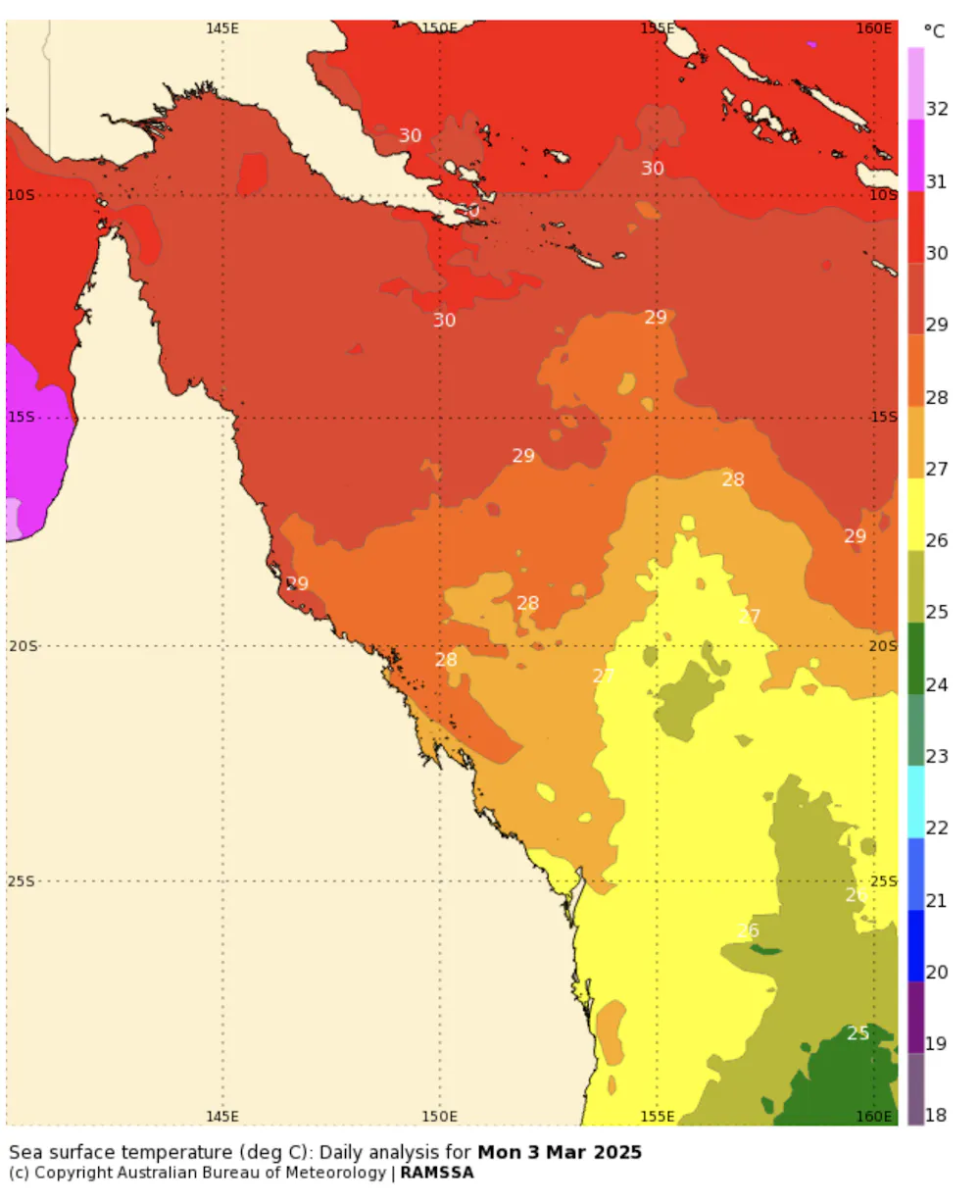
    For millions of people in southeast Queensland and northern New South Wales, Cyclone Alfred will be their first experience living through a cyclone. Alfred is forecast to make landfall about 2am on Friday morning.

    I am a disaster expert based in northern Queensland, which regularly experiences cyclones. In my other role as an acting SES public information officer, I’m heading south to the Gold Coast to help residents prepare and respond.

    Here’s what I want you to know. First, don’t panic. Second, do prepare.

    Preparation has several steps. It’s important to clearly assess your specific threat. If you live near the sea, storm surges – where the sea spills inland – could be a significant threat, while flooding might pose a large risk if you live near a river – especially in the few days after Alfred passes. The highest rainfall is likely on Alfred’s southern flank from the Gold Coast down to northern New South Wales.

    Having enough food, water and medication is vital. Be ready to evacuate too, in case authorities deem it necessary. Check your local council’s disaster website, disaster apps and stay tuned to the ABC, which will run disaster alerts.

    The Bureau of Meteorology’s latest update on Cyclone Alfred’s path and likely impact, as of the morning of Wed 5th March.

    What should I do right now?

    If you’re in the danger zone, make preparations now, before the full intensity of the cyclone arrives.

    Tie down loose objects. Clean gutters to avoid overflow from torrential rain. And prepare your “go bag” – a bag of essentials you can throw in the car if authorities tell you to leave immediately. Don’t take too much – just the bare necessities.

    Buy an AM/FM radio and tune it to ABC National, as you cannot be sure mobile networks will function. Radio is a reliable way to get good information from the ABC, Australia’s designated emergency channel.

    Make sure the car is fuelled or charged. If you’ve got a generator, make sure you have fuel and the generator is positioned outside in a well-ventilated area. Water is often unreliable after disasters. Fill your bathtub or front-loader washing machine with water. Put containers of water in your freezer, to keep food cold if the power goes out and as another water source. Plan for days of power outages. Protect windows with plywood, heavy blankets or mattresses. Put a mattress between your car and garage roller door to stop it blowing in.

    Turn off gas, electricity and solar power.

    Authorities recommend using sandbags to reduce the chance of water getting in. You can get sacks from hardware stores or council-run emergency centres, if available, who also provide sand. You also need plastic sheeting.

    If there’s a shortage of sand, you can use garden soil or commercial bagged soil. If you can’t get sacks, large plastic shopping bags will do.

    Tape strong plastic sheeting around the door or low window where water might get in. This is the barrier that actually keeps water out – sandbags keep it in place.

    Fill sandbags and lay them like bricks. Lay one row, and lay the next row offset for strength.

    Sandbags are good, but they have limits. There’s little point in piling sandbags higher than about 30 centimetres. If floodwaters edge higher, water will get through.

    Many people have had the unpleasant experience of having effluent come back up through toilets during cyclones and subsequent flooding. To stop this, cover your toilet with plastic sheeting (directly on the porcelain) and put a sandbag on top for weight. Do the same for any drains where water might flow back up.

    To reduce water damage, put valuable or important items up high, atop tables or bunk beds or upstairs if you have a second storey.


    Read more:
    How to prepare for a cyclone, according to an expert


    What will it be like when Alfred hits?

    When the cyclone first hits, it can be overwhelming. The sound is like a roaring jet engine.

    If you haven’t been advised to evacuate by authorities, you will be sheltering in place.

    This means finding the safest room in the house, to avoid damage from flying objects. Choose the smallest room with the fewest windows – a bathroom or a room under the stairs. Basements are very safe, but will be the first affected by water.

    As the cyclone picks up intensity, set up inside this safe room with your pets and children. Do not leave this room until you have been told it’s safe by authorities.

    At the centre of strong cyclones is the eye of the storm, which we experience as a period of sudden calm. People often make the mistake of thinking it’s over. But in fact, it’s just a brief reprieve before the intense winds pick up again. Don’t make the mistake of leaving the house – check with authoritative sources.

    Cyclone Alfred is a slow-moving cyclone, which means you might be stuck inside for a while. Be prepared to be inside your house for up to 24 hours, even after the worst has passed. This is because there may well be downed powerlines with live electricity, broken glass, falling trees and so on.

    For your children (and yourself), being in the cyclone is frightening. Young kids find the sound chilling. You can play music through headphones to help soothe them. Board games, books and puzzles can help pass the time. You will need distraction. Have a bucket in the corner for emergency toilet needs.

    Keep track of the storm and any emerging dangers through your radio and internet-enabled phone (if still functioning).

    What if I have to evacuate?

    Authorities are working to set up evacuation centres for people whose homes may not be safe. Authorities will go door-to-door to tell affected residents to leave, as well as broadcasting the information on radio and online.

    You’re more likely to have to evacuate if your house is on low-lying land near the sea, as a storm surge is likely. How much water is pushed ashore will depend on the tide, but it could be as high as 70cm above the high tide line if we’re unlucky.

    Evacuations can happen after the cyclone too. Alfred is packing a lot of rain – up to a metre in some areas. That’s very likely to cause flooding, both flash floods and rivers breaking their banks.

    If you are asked to evacuate, you can go to the house of a friend or family member if it’s on higher ground and outside the flood risk zones. Or you can go to a local evacuation centre – check your council website to see where your closest one is. Take as little as possible with you.

    Many people who choose not to evacuate do so because they’re worried about their pets. This is risky. Some evacuation centres do take pets, so check now. If they don’t, look for other options with friends and family. Staying put after an evacuation order is dangerous.

    What will happen after the cyclone?

    Cyclone Alfred brings three threats: intense winds, high seas and heavy rain.

    After the intense winds die down, the seas will be dangerous for days after Alfred. There are coastal hazard warnings for about 1,000km of coastline.

    Cyclones also often decay into tropical low weather systems, which dump heavy rain for days. This is likely.

    As you move into recovery phase, don’t relax your guard. In far north Queensland, 16 people have now died after being infected with melioidosis, a bacterium found in mud. The bug is more prevalent after heavy rainfall.

    Wear protective gear such as gloves and face masks when dealing with water-damaged goods and mud, and pay close attention to the latest advice authorities are giving.

    But remember – don’t panic. We will get through this.

    Yetta Gurtner has received funding in the past from the Bureau of Meteorology. She is a community engagement officer with the Queensland State Emergency Services.

    ref. ‘Don’t panic, do prepare’: why it’s not too late to plan for Cyclone Alfred – https://theconversation.com/dont-panic-do-prepare-why-its-not-too-late-to-plan-for-cyclone-alfred-251463

    MIL OSI AnalysisEveningReport.nz

  • MIL-OSI Asia-Pac: President Lai meets US Heritage Foundation founder Dr. Edwin Feulner

    Source: Republic of China Taiwan

    Details
    2025-03-04
    President Lai attends opening ceremony of GCTF Workshop on Whole-of-Society Resilience Building, Preparation, and Response
    On the morning of March 4, President Lai Ching-te attended the opening ceremony of the Global Cooperation and Training Framework (GCTF) Workshop on Whole-of-Society Resilience Building, Preparation, and Response. In remarks, President Lai stated that global challenges such as extreme weather, pandemics, and energy crises continue to emerge, and growing authoritarianism presents a grave threat to freedom-loving countries. These challenges have no borders, he said, and absolutely no single country can face them alone. The president said that as a responsible member of the international community, Taiwan is both willing and able to contribute even more to the democracy, peace, and prosperity of the world, and that the GCTF is an important platform where Taiwan can make those contributions by sharing its experiences with the rest of the world. President Lai indicated that Taiwan will join the forces of the central and local governments to enhance social resilience across the board, enhance disaster response capabilities in the community, and leverage its strengths to make contributions to the international community. He said that we are demonstrating to the world our determination to create an even more resilient Taiwan, and expressed hope to advance mutual assistance and exchanges with all the countries involved, so that we can together promote stability and prosperity around the world. A transcript of President Lai’s remarks follows: To begin, I would like to welcome more than 60 distinguished guests from 30 countries, as well as experts from Taiwan. You are all here for this GCTF workshop to discuss whole-of-society resilience building, preparation, and response. As a responsible member of the international community, Taiwan is both willing and able to contribute even more to the democracy, peace, and prosperity of the world. The GCTF is an important platform where Taiwan can make those contributions by sharing its experiences with the rest of the world. I want to thank our full GCTF partners, the United States, Japan, Australia, and Canada. Over the past several years, we have worked with even more countries through this framework and have expanded our exchanges into even more fields. Together, we have met all kinds of new challenges. I am confident that as our cooperation grows stronger, so will our ability to promote global progress. Each of today’s guests is contributing a vital force in that regard. I extend my sincere thanks to you all. Global challenges such as extreme weather, pandemics, and energy crises continue to emerge. And growing authoritarianism presents a grave threat to freedom-loving countries. These challenges have no borders, and absolutely no single country can face them alone. Taiwan holds a key position on the first island chain, and stands at the very frontline of the defense of democracy. With this joint workshop, we are demonstrating to the world our determination to create an even more resilient Taiwan. We are also aiming to advance our mutual assistance and exchanges with all the countries involved, so that we can make our societies more resilient and together promote stability and prosperity around the world. Moving forward, we will continue advancing the following three initiatives: First, we will join the forces of the central and local governments to enhance social resilience across the board. Just last year, I established the Whole-of-Society Defense Resilience Committee at the Presidential Office. Civilian force training, strategic material preparation, and critical infrastructure operation and maintenance are all key discussion areas for our committee. These aim to enhance Taiwan’s resilience in national defense, economic livelihoods, disaster prevention, and democracy. They are also items on the agenda for this GCTF workshop. To cover all the bases, Taiwan must unite and cooperate as a team. Last year, our committee held the very first cross-sector tabletop exercise at the Presidential Office which included central and local government officials as well as civilian observers. We aim to test the government’s emergency response capabilities in high-intensity gray-zone operations and near-conflict situations. We will continue to hold exercises to help the central and local governments work together more efficiently, and strengthen Taiwan’s overall disaster response capabilities. Second is to enhance disaster response capabilities in the community. We fully understand that to build whole-of-society resilience, we must help people increase risk awareness, know how to respond to disasters, and develop abilities to help themselves, help one another, and work together. We are grateful to the American Institute in Taiwan (AIT) for collaborating with the Taiwan Development Association for Disaster Medical Teams to host “Take Action” workshops around the country since 2021. A 2.0 version is already in practice, and continues to train the public in first aid skills. Director of the AIT Taipei Office Raymond Greene and I took part in a Take Action event in New Taipei City last year and personally saw the positive outcomes of the training. In addition to the Take Action workshops, the government is also providing Disaster Relief Volunteer training for ages 11 to 89, and is continuing to expand its target audience. We have also set up Taiwan Community Emergency Response Teams at key facilities nationwide, enhancing the ability of these important facilities to respond independently to disasters. Civilian training will continue to be refined and expanded so that members of the public can serve as important partners in government-led disaster prevention and relief. Third, we will leverage Taiwan’s strengths to make contributions to the international community. The inspiration for our Disaster Relief Volunteer training comes from a similar program run by The Nippon Care-Fit Education Institute in Japan. I am confident that through exchanges like this workshop, Taiwan and other countries can also inspire one another in many areas, and enhance whole-of-society resilience in multiple ways. Taiwan also excels in information and communications and advanced technology. We will set up even more robust cybersecurity systems, expand usage of emerging technologies, and improve the ways we maintain domestic security. We hope that by leveraging our capabilities and sharing our experiences, Taiwan can contribute even more to the international community. I want to welcome all our partners once again, and thank AIT for co-hosting this event. Let’s continue down the path of advancing global security and developing resilience together. Because together, we can travel farther, and we can travel longer. Also in attendance at the event were Japan-Taiwan Exchange Association Deputy Representative Takaba Yo, Australian Office in Taipei Representative Robert Fergusson, and Canadian Trade Office in Taipei Executive Director Jim Nickel.

    Details
    2025-02-24
    President Lai meets Japanese House of Representatives Member Tamaki Yuichiro
    On the afternoon of February 24, President Lai Ching-te met with Japanese House of Representatives Member Tamaki Yuichiro. In remarks, President Lai noted that Taiwan and Japan are important trading partners. The president expressed hope that, in addition to semiconductors, Taiwan and Japan can also bolster cooperation in the fields of hydrogen energy and drones and build non-red supply chains, thus creating economic win-win situations and maintaining peace and stability in the Indo-Pacific region and globally. A translation of President Lai’s remarks follows: I would like to start by warmly welcoming Representative Tamaki on his first trip to Taiwan. Now is a key moment for the cooperative ties between Taiwan and Japan, and the fact that Representative Tamaki has chosen to take time out of his busy schedule to make this trip demonstrates his especially meaningful support for Taiwan. For this I want to express my deepest gratitude. At the beginning of this month, Japan and the United States held a summit meeting. In the post-summit joint leaders’ statement the government of Japan reiterated the importance of maintaining peace and stability across the Taiwan Strait, opposed any attempts to unilaterally change the status quo by force or coercion, and expressed support for Taiwan’s meaningful participation in international organizations. I would like to thank the government of Japan for these statements. Taiwan and Japan are both responsible members of the international community. I welcome an even firmer friendship between Japan and the US and hope to see cooperation among Taiwan, Japan, and the US become a solid force in consolidating peace and stability in the Indo-Pacific region. In addition to complex international conditions, we now also face the threat of China’s red supply chain. More and more countries are becoming increasingly concerned about such issues as economic security and supply chain resilience. As authoritarianism consolidates, democratic nations must also come closer in solidarity. Taiwan and Japan are important trading partners. I hope that, in addition to semiconductors, Taiwan and Japan can also bolster cooperation in the fields of hydrogen energy and drones, and that we can build non-red supply chains, thus creating economic win-win situations and maintaining peace and stability in the Indo-Pacific region and globally. Lastly, I would like once again to welcome Representative Tamaki to Taiwan and wish him a successful visit. I hope he departs Taiwan with a deep impression and that he will visit again. Representative Tamaki then delivered remarks, noting that this was his first visit to Taiwan and thanking President Lai and officials of the Taiwan government for their warm welcome. Pointing out that Taiwan-Japan ties are closer than ever thanks to the major efforts made on this front by President Lai since taking office, Representative Tamaki expressed his admiration and gratitude. Representative Tamaki pointed out that in a changing global landscape, Taiwan, Japan, and the Indo-Pacific region all face major changes, but he firmly believes that Taiwan-Japan relations will develop even further. Recalling President Lai’s previous remarks, the representative said that Japan and the US recently held a summit meeting that yielded important results. In the joint leaders’ statement, he noted, the two sides made a clear commitment regarding peace and stability across the Taiwan Strait and firmly opposed any attempts to unilaterally change the status quo by force or coercion. Representative Tamaki said that the ruling Liberal Democratic Party and the Komeito did not win a majority in last year’s House of Representatives general elections, while the number of seats held by his own Democratic Party for the People quadrupled. This result, he said, has filled him with a feeling of great responsibility. Moving forward, he intends to continue promoting Taiwan-Japan cooperation and strengthening relations. Also in attendance at the meeting was Japan-Taiwan Exchange Association Taipei Office Chief Representative Katayama Kazuyuki.

    Details
    2025-02-21
    President Lai meets Abe Akie, wife of late Prime Minister Abe Shinzo of Japan
    On the morning of February 21, President Lai Ching-te met with Abe Akie, the wife of late Prime Minister Abe Shinzo of Japan. In remarks, President Lai thanked Mrs. Abe for carrying on the legacy of former Prime Minister Abe, being a benevolent and determined force for regional peace and prosperity, and calling on all parties to continue to place attention on peace in the Taiwan Strait. The president stated that Taiwan will carry on the legacy and spirit of former President Lee Teng-hui and former Prime Minister Abe, safeguard the values of freedom and democracy, and deepen the Taiwan-Japan friendship. A translation of President Lai’s remarks follows: Last May, Mrs. Abe came to Taiwan to attend the inauguration ceremony for myself and Vice President Bi-khim Hsiao, and we reminisced about the past here at the Presidential Office. I would like to warmly welcome her back today. I am also delighted to be meeting with all guests in attendance. Yesterday, Mrs. Abe and I attended the opening of the very first Halifax Taipei forum, for which Mrs. Abe also delivered a keynote speech earlier today. In her speech, she offered valuable input on global security and democratic development. I would like to thank Mrs. Abe for making this special trip to Taiwan to take part, showing her strong support for Taiwan. Former Prime Minister Abe pioneered the vision of a free and open Indo-Pacific, and called on the international community to pay attention to peace and stability in the Taiwan Strait and Indo-Pacific. These have become common strategic goals of democratic countries around the world and will have a far-reaching influence over international developments and Taiwan’s security. They were important contributions that former Prime Minister Abe made in regard to the Taiwan Strait and the Indo-Pacific region. Recently, current Prime Minister of Japan Ishiba Shigeru and United States President Donald Trump held a meeting and jointly reiterated the importance of peace and stability across the Taiwan Strait, as well as opposed unilateral changes to the status quo by force or coercion. They also expressed support for Taiwan’s participation in international organizations. This shows that Prime Minister Ishiba is furthering the legacy of former Prime Minister Abe. We are very grateful for the former prime minister’s friendship toward Taiwan, and to Mrs. Abe for carrying on his legacy. Mrs. Abe is a benevolent and determined force for regional peace and prosperity, and has called on all parties at numerous public venues to continue to place attention on peace in the Taiwan Strait. Last December, for instance, she traveled at the invitation of President Trump and his wife to the US, where she addressed cross-strait issues and spoke up for Taiwan. We were deeply moved by this. As authoritarian states continue to expand, Taiwan will keep working alongside like-minded nations such as Japan and the US, as well as the European Union, to jointly contribute to regional and global peace and prosperity. I look forward to continued advancement of regional peace and prosperity with the help of Mrs. Abe’s efforts. Mrs. Abe will also be meeting with daughter of former President Lee and Lee Teng-hui Foundation Chairperson Annie Lee (李安妮) tomorrow. Former President Lee and former Prime Minister Abe were both fully devoted to promoting Taiwan-Japan relations. We will carry on their legacy and spirit, safeguard the values of freedom and democracy, and deepen the Taiwan-Japan friendship. In closing, I wish you all a smooth and successful visit. Mrs. Abe then delivered remarks, first expressing her sincere thanks to President Lai for taking the time to meet. She said that former Prime Minister Abe hailed from Yamaguchi Prefecture, and that accompanying her that day were House of Councillors Member Kitamura Tsuneo, Yamaguchi Prefecture Governor Muraoka Tsugumasa, Yamaguchi Prefectural Assembly Deputy Speaker Shimata Noriaki, and many other important figures from Yamaguchi. If former Prime Minister Abe’s spirit could look upon this scene, she said, he would certainly be very pleased. Mrs. Abe recalled that when the former prime minister passed away, then-Vice President Lai traveled to their official residence to express his condolences and pay tribute. She said that she will never forget such a gesture of deep friendship, heartfelt condolences, and care. The year before last, she indicated, a memorial photo exhibition for former Prime Minister Abe was held in Taiwan, and many Taiwanese people from all walks of life came to view it. Last year, Mrs. Abe continued, she had the privilege of attending President Lai’s inauguration ceremony, where she met with many friends from Taiwan and personally felt the close and beautiful ties that Taiwan and Japan share. Mrs. Abe stated that she will carry out the wishes of former Prime Minister Abe and do her utmost to help raise Taiwan-Japan relations to new heights, saying that she looks forward to hearing the advice that President Lai and all those present have to offer. The delegation also included Japan-Taiwan Exchange Association Taipei Office Chief Representative Katayama Kazuyuki.

    Details
    2025-02-20
    President Lai attends opening of 2025 Halifax Taipei forum
    On the afternoon of February 20, President Lai Ching-te attended the opening of the 2025 Halifax Taipei forum. In remarks, President Lai thanked the Halifax International Security Forum for their strong support for Taiwan, and for having chosen Taiwan as the first location outside North America to hold a forum. Noting that we face a complex global landscape, the president called on the international community to take action. He said that as authoritarianism consolidates, democratic nations must also come closer in solidarity, and called on the international community to create non-red global supply chains, as well as unite to usher in peace. President Lai emphasized that Taiwan will work toward maintaining peace and stability in the Taiwan Strait, and collaborate with democratic partners to form a global alliance for the AI chip industry and together greet a bright, new era. A transcript of President Lai’s remarks follows: To begin, I want to give a warm welcome to all the distinguished guests here at the very first Halifax Taipei forum. The Halifax International Security Forum, held every year in Canada, has been an important gathering for freedom-loving nations worldwide. I would like to thank Halifax and President [Peter] Van Praagh for their strong support for Taiwan. Every year since 2018, Taiwan has been invited to participate in the forum. Last year, former President Tsai Ing-wen was invited to speak, and this year, Halifax has chosen Taiwan as the first location outside North America to hold a forum. As President Van Praagh has said, “While the security challenges ahead are too big for any single country to solve alone, there is no challenge that can’t be met when the world’s democracies work together.” Today, we have world leaders and experts who traveled from afar to be here, showing that they value and support Taiwan. It demonstrates solidarity among democracies and the determination to take on challenges as one. I would like to express my gratitude and admiration to all of you for serving as defenders of freedom. At this very moment, Russia’s invasion of Ukraine is still ongoing. Authoritarian regimes including China, Russia, North Korea, and Iran continue to consolidate. China is hurting economies around the world through its dumping practices. We face grave challenges to global economic order, democracy, freedom, peace, and stability. Taiwan holds a key position on the first island chain, directly facing an authoritarian threat. But we will not be intimidated. We will stand firm and safeguard our national sovereignty, maintain our free and democratic way of life, and uphold peace and stability across the Taiwan Strait. Taiwan cherishes peace, but we also have no delusions about peace. We will uphold the spirit of peace through strength, using concrete actions to build a stronger Taiwan and bolster the free and democratic community. I sincerely thank the international community for continuing to attach importance to the situation in the Taiwan Strait. Recently, US President Donald Trump and Japan’s Prime Minister Ishiba Shigeru issued a joint leaders’ statement expressing their firm support for peace and stability across the Taiwan Strait, and for Taiwan’s participation in international affairs. As we face a complex global landscape, I call on the international community to take the following actions: First, as authoritarianism consolidates, democratic nations must also come closer in solidarity. Just a few days ago, the top diplomats of the US, Japan, and South Korea held talks, underlining the importance of maintaining peace and stability across the Taiwan Strait. They also conveyed their stance against “any effort to destabilize democratic institutions, economic independence, and global security.” On these issues, Taiwan will also continue to contribute its utmost. I recently announced that we will prioritize special budget allocations to ensure that our defense budget exceeds 3 percent of GDP.  Soon after I assumed office last year, I formed the Whole-of-Society Defense Resilience Committee at the Presidential Office. This committee aims to combine the strengths of government and civil society to enhance our resilience in national defense, economic livelihoods, disaster prevention, and democracy. We will also deepen our strategic partnerships in the democratic community to mutually increase defense resilience, demonstrate deterrence, and achieve our goal of peace throughout the world. Second, let’s create non-red global supply chains.  For the democratic community to deter the expansion of authoritarianism, it must have strong technological capabilities. These can serve as the backbone of national defense, promote industrial development, and enhance economic resilience. So, in addressing China’s red supply chain and the impact of its dumping, Taiwan is willing and able to work with global democracies to maintain the technological strengths among our partners and build resilient non-red supply chains. As a major semiconductor manufacturing nation, Taiwan will introduce an initiative on semiconductor supply chain partnerships for global democracies. We will collaborate with our democratic partners to form a global alliance for the AI chip industry and establish democratic supply chains for industries connected to high-end chips. The achievements of today’s semiconductor industry in Taiwan can be attributed to our collective efforts. Government, industry, academia, and research institutions had to overcome various challenges over the last 50 years for us to secure this position.  We hope Taiwan can serve as a base for linking the capabilities of our democratic partners so that each can play a suitable role in the semiconductor industry chain and develop its own strengths, deepening our mutually beneficial cooperation in technology. This benefits all of us. Moreover, it allows us to further enhance deterrence and maintain global security. Third, let’s unite to usher in peace. China has not stopped intimidating Taiwan politically and militarily. Last year, China launched several large-scale military exercises in the Taiwan Strait. Its escalation of gray-zone aggression now poses a grave threat to the peace and stability of the Indo-Pacific region. As a responsible member of the international community, Taiwan will maintain the status quo. We will not seek conflict. Rather, we are willing to engage in dialogue with China, under the principles of parity and dignity, and work toward maintaining peace and stability in the Taiwan Strait. As the agenda of this forum suggests, democracy and freedom create more than just opportunities; they also bring resilience, justice, partnerships, and security. Taiwan will continue working alongside its democratic partners to greet a bright, new era. Once again, a warm welcome to all of you. I wish this forum every success. Thank you. Also in attendance at the event were Mrs. Abe Akie, wife of the late former Prime Minister Abe Shinzo of Japan, and Halifax International Security Forum President Van Praagh.

    Details
    2025-02-18
    President Lai meets British-Taiwanese All-Party Parliamentary Group delegation
    On the morning of February 18, President Lai Ching-te met with a delegation from the British-Taiwanese All-Party Parliamentary Group (APPG). In remarks, President Lai thanked the delegation members, the Parliament of the United Kingdom, and the UK government for continuing to demonstrate support for Taiwan through a variety of means. He also stated that Taiwan-UK relations have advanced significantly in recent years, noting that the Taiwan-UK Enhanced Trade Partnership (ETP) is the first institutionalized economic and trade framework signed between Taiwan and any European country. The president said he looks forward to continuing to deepen Taiwan-UK relations and jointly maintaining regional and global peace and stability, and indicated that together, we can create win-win developments for both Taiwan and the UK and Taiwan and European nations. A translation of President Lai’s remarks follows: This is the first UK parliamentary delegation of the current session to visit Taiwan. On behalf of the people of Taiwan, I extend my sincerest welcome to you all. APPG Chair Sarah Champion visited Taiwan last May to attend the inauguration ceremony of myself and Vice President Bi-khim Hsiao. In July, she also attended the annual summit of the Inter-Parliamentary Alliance on China (IPAC), which was held in Taipei. I am delighted that we are meeting once again. Taiwan-UK relations have advanced significantly in recent years. I would especially like to thank our distinguished guests, as well as the UK Parliament and government, for continuing to demonstrate support for Taiwan through a variety of means. For example, the House of Commons held a debate on Taiwan’s international status last November. After the debate, a motion was unanimously passed affirming that United Nations General Assembly (UNGA) Resolution 2758 does not mention Taiwan. Responding to the motion, Parliamentary Under-Secretary of State Catherine West stated that the UK opposes any attempt to broaden the interpretation of the resolution to rewrite history. This highlighted concrete progress in Taiwan-UK bilateral relations. I would also like to thank the UK Parliament and government for openly opposing on multiple occasions any unilateral change to the status quo across the Taiwan Strait, and for emphasizing that the security of the Indo-Pacific and transatlantic regions is closely intertwined. We look forward to continuing to deepen Taiwan-UK relations and jointly maintaining regional and global peace and stability. Together, we can create win-win developments for both Taiwan and the UK and Taiwan and European nations. For example, the Taiwan-UK ETP is the first institutionalized economic and trade framework signed between Taiwan and any European country. We hope to swiftly conclude negotiations on signing sub-arrangements on investment, digital trade, and energy and net-zero transition. This will facilitate even more exchanges and cooperation between Taiwan and the UK. We also hope that the UK will continue to support Taiwan’s accession to the Comprehensive and Progressive Agreement for Trans-Pacific Partnership. Together, we can build even more resilient global supply chains and further contribute to global prosperity and development. I believe that this visit adds to a strong and solid foundation for future Taiwan-UK cooperation. Thank you once again for backing Taiwan. I wish you a fruitful and successful visit. Chair Champion then delivered remarks, thanking President Lai for his warm welcome and for the hospitality he has shown to her and the delegation, and thanking Taiwan’s excellent team of officials for their care and attention. Chair Champion expressed that she thinks the IPAC conference held in Taiwan at the end of July last year was very significant, with legislators from 23 countries coming to show support for Taiwan, adding that that is something they have built on since the conference. She stated that she is also very proud that the UK Parliament supported the motion which made very clear that UNGA Resolution 2758 is specific to China and only to China, expressing that it was important and powerful that they recognize that. The chair went on to say that after the UK’s general election, more than half of the members of parliament are now new. She said she is very proud that there are new MPs as part of the delegation, and that she hopes it gives President Lai reassurance that their commitment to Taiwan is still there.  Chair Champion emphasized that the all-party group is important because it is indeed all-party, and that they work together for their common interests, stating that the common interest for the UK and for the world is to maintain Taiwan’s sovereignty. She also noted that the United States has now come out very much in support of Taiwan, which she said she hopes encourages other countries around the world to do the same. Chair Champion said that the UK will be going into the 27th trade negotiation with Taiwan, and that they hope the partnership that develops is very fruitful. The chair closed by saying that it is wonderful for the delegation to be meeting President Lai, as well as legislators and ministers, and to be understanding more about the culture of Taiwan so that they can build a deeper, longer-lasting friendship. The delegation also included Lord Purvis of Tweed of the House of Lords and Members of Parliament Ben Spencer, Helena Dollimore, Noah Law, and David Reed. The delegation was accompanied to the Presidential Office by Political and Communications Director at the British Office in Taipei Natasha Harrington.  

    Details
    2025-02-14
    President Lai holds press conference following high-level national security meeting
    On the morning of February 14, President Lai Ching-te convened the first high-level national security meeting of the year, following which he held a press conference. In remarks, President Lai announced that in this new year, the government will prioritize special budget allocations to ensure that Taiwan’s defense budget exceeds 3 percent of GDP. He stated that the government will also continue to reform national defense, reform our legal framework for national security, and advance our economic and trade strategy of being rooted in Taiwan while expanding globally. The president also proposed clear-cut national strategies for Taiwan-US relations, semiconductor industry development, and cross-strait relations. President Lai indicated that he instructed the national security and administrative teams to take swift action and deliver results, working within a stable strategic framework and according to the various policies and approaches outlined. He also instructed them to keep a close watch on changes in the international situation, seize opportunities whenever they arise, and address the concerns and hope of the citizens with concrete actions. He expressed hope that as long as citizens remain steadfast in their convictions, are willing to work hand in hand, stand firm amidst uncertainty, and look for ways to win within changing circumstances, Taiwan is certain to prevail in the test of time yet again. A translation of President Lai’s remarks follows: First, I would like to convey my condolences for the tragic incident which occurred at the Shin Kong Mitsukoshi department store in Taichung, which resulted in numerous casualties. I have instructed Premier Cho Jung-tai (卓榮泰) to lead the relevant central government agencies in assisting Taichung’s municipal government with actively resolving various issues regarding the incident. It is my hope that these issues can be resolved efficiently. Earlier today, I convened this year’s first high-level national security meeting. I will now report on the discussions from the meeting to all citizens. 2025 is a year full of challenges, but also a year full of hope. In today’s global landscape, the democratic world faces common threats posed by the convergence of authoritarian regimes, while dumping and unfair competition from China undermine the global economic order. A new United States administration was formed at the beginning of the year, adopting all-new strategies and policies to address challenges both domestic and from overseas. Every nation worldwide, including ours, is facing a new phase of changes and challenges. In face of such changes, ensuring national security, ensuring Taiwan’s indispensability in global supply chains, and ensuring that our nation continues to make progress amidst challenges are our top priorities this year. They are also why we convened a high-level national security meeting today. At the meeting, the national security team, the administrative team led by Premier Cho, and I held an in-depth discussion based on the overall state of affairs at home and abroad and the strategies the teams had prepared in response. We summed up the following points as an overall strategy for the next stage of advancing national security and development. First, for overall national security, so that we can ensure the freedom, democracy, and human rights of the Taiwanese people, as well as the progress and development of the nation as we face various threats from authoritarian regimes, Taiwan must resolutely safeguard national sovereignty, strengthen self-sufficiency in national defense, and consolidate national defense. Taiwan must enhance economic resilience, maintain economic autonomy, and stand firm with other democracies as we deepen our strategic partnerships with like-minded countries. As I have said, “As authoritarianism consolidates, democratic nations must come closer in solidarity!” And so, in this new year, we will focus on the following three priorities: First, to demonstrate our resolve for national defense, we will continue to reform national defense, implement whole-of-society defense resilience, and prioritize special budget allocations to ensure that our defense budget exceeds 3 percent of GDP. Second, to counter the threats to our national security from China’s united front tactics, attempts at infiltration, and cognitive warfare, we will continue with the reform of our legal framework for national security and expand the national security framework to boost societal resilience and foster unity within. Third, to seize opportunities in the restructuring of global supply chains and realignment of the economic order, we will continue advancing our economic and trade strategy of being rooted in Taiwan while expanding globally, strengthening protections for high-tech, and collaborating with our friends and allies to build supply chains for global democracies. Everyone shares concern regarding Taiwan-US relations, semiconductor industry development, and cross-strait relations. For these issues, I am proposing clear-cut national strategies. First, I will touch on Taiwan-US relations. Taiwan and the US have shared ideals and values, and are staunch partners within the democratic, free community. We are very grateful to President Donald Trump’s administration for their continued support for Taiwan after taking office. We are especially grateful for the US and Japan’s joint leaders’ statement reiterating “the importance of maintaining peace and stability across the Taiwan Strait as an indispensable element of security and prosperity for the international community,” as well as their high level of concern regarding China’s threat to regional security. In fact, the Democratic Progressive Party government has worked very closely with President Trump ever since his first term in office, and has remained an international partner. The procurement of numerous key advanced arms, freedom of navigation critical for security and stability in the Taiwan Strait, and many assisted breakthroughs in international diplomacy were made possible during this time. Positioned in the first island chain and on the democratic world’s frontline countering authoritarianism, Taiwan is willing and will continue to work with the US at all levels as we pursue regional stability and prosperity, helping realize our vision of a free and open Indo-Pacific. Although changes in policy may occur these next few years, the mutual trust and close cooperation between Taiwan and Washington will steadfastly endure. On that, our citizens can rest assured. In accordance with the Taiwan Relations Act and the Six Assurances, the US announced a total of 48 military sales to Taiwan over the past eight years amounting to US$26.265 billion. During President Trump’s first term, 22 sales were announced totaling US$18.763 billion. This greatly supported Taiwan’s defensive capabilities. On the foundation of our close cooperation with the past eight years’ two US administrations, Taiwan will continue to demonstrate our determination for self-defense, accelerate the bolstering of our national defense, and keep enhancing the depth and breadth of Taiwan-US security cooperation, along with all manner of institutional cooperation. In terms of bilateral economic cooperation, Taiwan has always been one of the US’s most reliable trade partners, as well as one of the most important cooperative partners of US companies in the global semiconductor industry. In the past few years, Taiwan has greatly increased both direct and indirect investment in the US. By 2024, investment surpassed US$100 billion, creating nearly 400,000 job opportunities. In 2023 and 2024, investment in the US accounted for over 40 percent of Taiwan’s overall foreign investment, far surpassing our investment in China. In fact, in 2023 and 2024, Taiwanese investment in China fell to 11 percent and 8 percent, respectively. The US is now Taiwan’s biggest investment target. Our government is now launching relevant plans in accordance with national development needs and the need to establish secure supply systems, and the Executive Yuan is taking comprehensive inventory of opportunities for Taiwan-US economic and trade cooperation. Moving forward, close bilateral cooperation will allow us to expand US investment and procurement, facilitating balanced trade. Our government will also strengthen guidance and support for Taiwanese enterprises on increasing US investment, and promote the global expansion and growth of Taiwan’s industries. We will also boost Taiwan-US cooperation in tech development and manufacturing for AI and advanced semiconductors, and work together to maintain order in the semiconductor market, shaping a new era for our strategic economic partnership. Second, the development of our semiconductor industry. I want to emphasize that Taiwan, as one of the world’s most capable semiconductor manufacturing nations, is both willing and able to address new situations. With respect to President Trump’s concerns about our semiconductor industry, the government will act prudently, strengthen communications between Taiwan and the US, and promote greater mutual understanding. We will pay attention to the challenges arising from the situation and assist businesses in navigating them. In addition, we will introduce an initiative on semiconductor supply chain partnerships for global democracies. We are willing to collaborate with the US and our other democratic partners to develop more resilient and diversified semiconductor supply chains. Leveraging our strengths in cutting-edge semiconductors, we will form a global alliance for the AI chip industry and establish democratic supply chains for industries connected to high-end chips. Through international cooperation, we will open up an entirely new era of growth in the semiconductor industry. As we face the various new policies of the Trump administration, we will continue to uphold a spirit of mutual benefit, and we will continue to communicate and negotiate closely with the US government. This will help the new administration’s team to better understand how Taiwan is an indispensable partner in the process of rebuilding American manufacturing and consolidating its leadership in high-tech, and that Taiwan-US cooperation will benefit us both. Third, cross-strait relations. Regarding the regional and cross-strait situation, Taiwan-US relations, US-China relations, and interactions among Taiwan, the US, and China are a focus of global attention. As a member of the international democratic community and a responsible member of the region, Taiwan hopes to see Taiwan-US relations continue to strengthen and, alongside US-China relations, form a virtuous cycle rather than a zero-sum game where one side’s gain is another side’s loss. In facing China, Taiwan will always be a responsible actor. We will neither yield nor provoke. We will remain resilient and composed, maintaining our consistent position on cross-strait relations: Our determination to safeguard our national sovereignty and protect our free and democratic way of life remains unchanged. Our efforts to maintain peace and stability in the Taiwan Strait, as well as our willingness to work alongside China in the pursuit of peace and mutual prosperity across the strait, remain unchanged. Our commitment to promoting healthy and orderly exchanges across the strait, choosing dialogue over confrontation, and advancing well-being for the peoples on both sides of the strait, under the principles of parity and dignity, remains unchanged. Regarding the matters I reported to the public today, I have instructed our national security and administrative teams to take swift action and deliver results, working within a stable strategic framework and according to the various policies and approaches I just outlined. I have also instructed them to keep a close watch on changes in the international situation, seize opportunities whenever they arise, and address the concerns and hope of the citizens with concrete actions. My fellow citizens, over the past several years, Taiwan has weathered a global pandemic and faced global challenges, both political and economic, arising from the US-China trade war and Russia’s invasion of Ukraine. Through it all, Taiwan has persevered; we have continued to develop our economy, bolster our national strength, and raise our international profile while garnering more support – all unprecedented achievements. This is all because Taiwan’s fate has never been decided by the external environment, but by the unity of the Taiwanese people and the resolve to never give up. A one-of-a-kind global situation is creating new strategic opportunities for our one-of-a-kind Taiwanese people, bringing new hope. Taiwan’s foundation is solid; its strength is great. So as long as everyone remains steadfast in their convictions, is willing to work hand in hand, stands firm amidst uncertainty, and looks for ways to win within changing circumstances, Taiwan is certain to prevail in the test of our time yet again, for I am confident that there are no difficulties that Taiwan cannot overcome. Thank you.

    MIL OSI Asia Pacific News

  • MIL-OSI USA News: President Trump is Unleashing American Energy

    Source: The White House

    President Donald J. Trump knows American energy is the cornerstone of the American advantage — and that having efficient, reliable, and affordable energy is the key to American security.

    • President Trump declared a National Energy Emergency to unlock America’s full energy potential and bring down costs for American families.
    • The U.S. is now the largest net exporter of natural gas in the world.
    • President Trump established the National Energy Dominance Council to maximize use of America’s extensive energy resources.
    • President Trump rescinded every one of the Biden Administration’s job-killing, pro-China, anti-American energy regulations.
    • President Trump terminated the job-killing “Green New Scam.”
    • President Trump withdrew from the disastrous Paris Climate Agreement, which unfairly ripped off our country.
    • President Trump paused federal permitting for massive wind farms, which degrade our natural landscapes and fail to serve American consumers.
    • President Trump reversed bureaucratic regulations that impeded Alaska’s ability to develop its vast natural resources.
    • President Trump re-opened 625 million acres for offshore drilling, which Biden banned in his waning days, in order to “drill, baby, drill.”
    • President Trump scrapped an Obama-era rule on greenhouse gases.
    • President Trump ended the Liquefied Natural Gas pause and approved the first LNG project since the Biden Administration banned them last year.

    MIL OSI USA News

  • MIL-OSI USA News: President Trump is Undoing Biden’s Economic Damage

    Source: The White House

    President Donald J. Trump took office on a promise to lower costs for the American people — and the actions he has taken are already paying off while the work continues to turn back the economic plague unleashed by the Biden Administration.

    • President Trump put into action a comprehensive plan to lower egg prices.
    • President Trump directed the heads of all executive departments and agencies to “deliver emergency price relief … to the American people and increase the prosperity of the American worker.”
    • President Trump established the National Energy Dominance Council to maximize use of the U.S.’ extensive energy resources — thereby enabling lower energy prices.
      • Crude oil prices have fallen over 5% since President Trump took office.
    • The Trump Administration postponed burdensome Biden-era efficiency standard rules for the following appliances, saving American consumers large sums:
      • Central air conditioners: Biden rules were slated to make air conditioners $1,100 more expensive.
      • Gas water heaters: Biden rules were slated to make water heaters $2,800 more expensive.
      • Gas stoves: Biden rules were slated to make stoves $3,250 more expensive.
      • Clothes washers and dryers: Biden rules were slated to make washers $200 more expensive.
      • Light bulbs: Biden rules were slated to make light bulbs $140 more expensive.
    • The Trump Administration is requiring agencies to identify at least ten existing rules or regulations to be repealed for every one new rule or regulation they promulgate — putting the country on track to severely reduce costs for everyday Americans.
      • In 2023, the total cost of federal regulations was a record-breaking $2.1 trillion, or $15,788 per U.S. household, according to one analysis — while another found the cost of federal regulations was even greater at $3.079 trillion in 2022.
    • President Trump directed the Department of Government Efficiency (DOGE) to root out bureaucratic waste — and within weeks, it has already saved taxpayers billions of dollars.
    • The Trump Administration eliminated the overbearing Biden-era electric vehicle mandate by resetting Corporate Average Fuel Economy (CAFE) standards.
      • NBER economist Mark R. Jacobsen estimates that “a one-mpg increase in CAFE standards costs consumers of all income levels approximately 0.5% of their income in the first year of the increase. By the 10th year following the increase, however, this cost becomes regressive, as the increase drives up the price of used cars. A one-mpg increase in CAFE standards costs consumers earning less than $25,000 per year 1.12% of their income, but only costs consumers earning more than $75,000 per year 0.41% of their income.”

    MIL OSI USA News

  • MIL-OSI USA News: President Trump is Making Government Work for You Again

    Source: The White House

    President Donald J. Trump immediately undertook a bold, necessary effort to downsize the federal government by ending the waste, fraud, and abuse that has permeated virtually all aspects of the bureaucracy — making sure government works for the taxpayers who fund it.

    • President Trump established the Department of Government Efficiency (DOGE) to maximize government productivity and ensure the best use of taxpayer funds — which has already achieved billions of dollars in savings for taxpayers.
    • President Trump commenced his plan to downsize the federal bureaucracy and eliminate waste, bloat, and insularity.
      • President Trump ordered federal workers to return to the office five days a week.
      • President Trump ordered federal agencies hire no more than one employee for every four employees who leave.
      • President Trump ended the wasteful Federal Executive Institute, which had become a training ground for bureaucrats.
      • President Trump ordered the termination of all federal Fake News media contracts.
    • President Trump is reigning in agencies overtaken by unelected bureaucrats.
      • President Trump stopped the waste, fraud, and abuse within USAID — ensuring taxpayers are no longer on the hook for funding the pet projects of entrenched bureaucrats, such as sex changes in Guatemala.
      • President Trump ordered the Consumer Financial Protection Bureau — the brainchild of Elizabeth Warren, which funneled cash to left-wing advocacy groups — to halt operations.
      • The Environmental Protection Agency canceled tens of millions of dollars in contracts to left-wing advocacy groups, announced an investigation into a scheme by Biden EPA staffers to shield billions of dollars from oversight and accountability, and put 168 “environmental justice” employees on leave.
      • President Trump reversed the massive over-expansion of the IRS that took place during the Biden Administration.
      • President Trump ordered a review of funding for all non-governmental organizations so taxpayers are no longer funding those that undermine America’s interests.
        • The review identified 15,000 grants worth $60 billion for potential elimination.
      • The Department of State issued a “pause” on existing foreign aid grants to ensure accountability and efficiency.
      • President Trump shut down the wasteful Biden-era “Climate Corps” program.
    • President Trump lifted last-minute collective bargaining agreements issued by the Biden Administration, which sought to impede reform.

    MIL OSI USA News

  • MIL-OSI USA News: President Trump is Removing Killers, Rapists and Drug Dealers from Our Streets

    Source: The White House

    President Donald J. Trump has launched the largest criminal illegal immigrant deportation operation in American history — and despite resistance from Democrat politicians in so-called “sanctuary cities,” illegal immigrant killers, rapists, and drug dealers have been taken off the streets in droves as the heroes of law enforcement are once again empowered to do their jobs.

    Here is just a tiny sample of the cold-blooded criminals arrested under President Trump:

    • A Portuguese national convicted of sexual exploitation of a minor—child pornography, apprehended in Philadelphia.
    • A Guatemalan national charged with armed home invasion, kidnapping, intimidation, and assault with a dangerous weapon, apprehended in Rhode Island.
    • A Haitian national charged with three murders, apprehended in North Carolina.
    • A Salvadoran national and MS-13 gang member convicted of aggravated assault with bodily injury and DWI, apprehended in Houston.
    • A Guatemalan national charged with multiple counts of child rape, apprehended in Massachusetts.
    • A Brazilian national and confirmed gang member convicted of assault and battery, apprehended in Boston.
    • A Honduran national convicted of criminal sexual conduct with a minor, apprehended in Minnesota.
    • A Salvadoran national convicted of sodomy/anal intercourse with a child less than 13 years of age, apprehended in Washington.
    • An Ecuadorian national convicted of rape, arrested in Buffalo.
    • A Guatemalan national charged with multiple counts of child rape, apprehended in Massachusetts.
    • A Dominican Republican national convicted of sexual conduct against a child, apprehended in Buffalo.
    • A Mexican national convicted of sexual exploitation of a child, apprehended in San Francisco.
    • A Turkish national who is a known or suspected terrorist, apprehended in New York City.
    • A Mexican national convicted of drug trafficking, apprehended in Texas.
    • A Venezuelan national and known member of the brutal Tren de Aragua gang, arrested in San Antonio.
    • A Salvadoran national and high-ranking leader of the brutal MS-13 gang charged with firearm possession, extortion and terrorist affiliation, arrested in Maryland.
    • A Venezuelan national and known Tren de Aragua gang member — connected to a deadly shooting in Aurora, Colorado — charged with being a fugitive from justice in possession of a firearm, arrested in New York City.

    MIL OSI USA News

  • MIL-OSI USA News: President Trump is Putting American Workers First — And Bringing Back American Manufacturing

    Source: The White House

    President Donald J. Trump is standing up for American workers, strengthening American industries, and making clear to the world that America will no longer be ripped off — a push that has already delivered historic results.

    President Trump is leveling the playing field for American workers.

    • President Trump restored a 25% tariff on steel imports and elevated the tariff to 25% on aluminum imports to protect these critical American industries from unfair foreign competition.
    • President Trump unveiled a plan for fair and reciprocal trade, making clear to the world that the United States will no longer tolerate being ripped off — a plan met with praise across the board.
      • American Iron and Steel Institute: “American steel producers know well the negative impact of foreign unfair trade practices, including subsidies, currency manipulation and other unfair and discriminatory policies and practices, on domestic industries and their workers.”
      • Renewable Fuels Association: “For almost a decade now, we have spent precious time and resources fighting back against an unfair and unjustified tariff regime imposed by Brazil’s government on U.S. ethanol imports … We thank President Trump for taking this action and hope this reciprocal tariff will help encourage a return to free and fair ethanol trade relationship with Brazil.”

    President Trump is securing historic investments as companies seek to make their products in America instead of paying tariffs.

    • Nissan CEO Makoto Uchida said President Trump’s tariffs could push the car manufacturer to move its production from Mexico to the U.S.
    • Honda is expected to produce its next-generation Civic hybrid model in Indiana.
    • After a meeting with President Trump, Stellantis announced it will reopen its assembly plant in Belvidere, Illinois — putting 1,500 employees back to work — and build its next-generation Dodge Durango in Detroit, Michigan. The company also announced new investments in their Toledo, Ohio, and Kokomo, Indiana, facilities.

    In total, President Trump has secured nearly $2 trillion in new U.S. investments.

    • TSMC announced an unprecedented $100 billion investment in U.S.-based semiconductor chip manufacturing.
    • Apple announced a historic $500 billion investment that will create 20,000 new U.S.-based jobs.
    • President Trump announced the largest artificial intelligence infrastructure project in history, securing $500 billion in planned private sector investment — with major CEOs agreeing it would not have been possible without President Trump’s leadership.
    • President Trump secured a $20 billion investment by DAMAC Properties to build new U.S.-based data centers.
    • Wisconsin-based Clarios, a leader in low-voltage energy storage, announced a $6 billion plan to expand its U.S.-based manufacturing.
    • Eli Lilly and Company announced a $27 billion investment in its U.S.-based manufacturing.
    • Saudi Arabia declared its intention to invest $600 billion in the United States over the next four years.
    • Taiwan pledged to boost its investment in the United States.
    • Electronics giants Samsung and LG “are considering moving their plants in Mexico to the U.S.” now that President Trump is back in office.

    MIL OSI USA News

  • MIL-Evening Report: Cyclone Alfred is bearing down. Here’s how it grew so fierce – and where it’s expected to hit

    Source: The Conversation (Au and NZ) – By Steve Turton, Adjunct Professor of Environmental Geography, CQUniversity Australia

    Bureau of Meteorology, Himawari-9 satellite, CC BY-SA

    Tropical Cyclone Alfred is strengthening as it bears down on the coast of southern Queensland and northern New South Wales, prompting fears it may become a destructive category 3 cyclone before it makes landfall.

    As of Wednesday, the cyclone was a category 2 and had begun moving west towards land. It is forecast to maintain intensity on Thursday and cross the coast early on Friday morning, probably between Maroochydore and Coolangatta.

    According to the Bureau of Meteorology, the possibility of the system reaching a low-end category 3 was a low risk but “cannot be ruled out”.

    The bureau has issued warnings from Double Island Point in Queensland to Grafton in NSW. The area includes Brisbane, the Gold Coast, the Sunshine Coast, Byron Bay and Ballina.

    Brisbane Lord Mayor Adrian Schrinner says modelling shows 20,000 properties in Brisbane could be affected by storm surge or flooding.

    The intensifying cyclone is a major concern, and makes Cyclone Alfred an unusual phenomenon. Cyclones typically lose strength as they approach the coast – especially this far south. It means Alfred may cause extensive damage, including to inland areas. We can expect it to last well into Friday before petering out and heading south on Saturday.

    What to expect in the next few days

    From Wednesday afternoon and into Thursday, the bureau forecasts gales, with damaging wind gusts to 120km an hour, along the coast from southeast Queensland to northeast NSW.

    From Thursday afternoon, destructive wind gusts of up to 155km an hour may develop around the coast and islands as Alfred’s “destructive core” approaches and crosses the coast, the bureau says.

    If Alfred crosses the coast on Friday morning during high tide, it may cause a dangerous storm surge along the coast, especially in waterfront suburbs near and south of the cyclone’s centre. This may inundate low-lying areas, such as canal communities of the Gold Coast.

    In Brisbane, peak storm surges are expected from Thursday onwards. Some 20,000 properties have been warned of impacts ranging from minor inundation in yards to significant flooding inside homes. Areas most at risk include Nudgee Beach, Brighton, Windsor, Ashgrove, Morningside and Rocklea.


    Damaging surf may also cause serious erosion at open beaches between Sandy Cape and Grafton, and further south into NSW.

    From Thursday, residents in southeastern Queensland and northeastern NSW have been told to expect heavy to intense rain. It may lead to life-threatening flash flooding – again, near and south of the cyclone centre.

    Northern NSW has already been hit by devastating flooding in recent years, most recently in February 2022. Many of its settlements, including Lismore, are along or close to major river courses. Residents are understandably anxious about what the next few days may bring.

    The bureau released the below map on Wednesday morning. It shows the bureau’s best estimate of the cyclone’s future movement and intensity.

    The grey zone indicates the range of tracks the cyclone centre may follow. The bureau says winds will almost certainly extend to regions outside the rings on this map.

    Cyclone Alfred tracking map released by the Bureau of Meteorology on Wednesday morning shows it circling of the coast of southeast Queensland.
    BoM

    Why is Alfred so fired up?

    Cyclone Alfred has been meandering off Queensland’s coast for almost two weeks. Unusually, it has maintained its cyclonic structure and intensity much further south than is typical.

    Over the past two days, unique atmospheric and oceanic conditions have allowed Cyclone Alfred to intensify.

    It moved towards an area of warmer coastal water (around 27°C), which caused it to strengthen. It also moved into an area of reduced “vertical wind shear” – a variation in wind speed running at right angles to prevailing winds, which often acts to weaken a cyclone.

    Image showing high sea surface temperatures which are fuelling the cyclone.
    BoM

    Usually, cyclones in this part of Australian waters may brush the coast, but are soon pulled south or east by an upper trough of cold air and then flicked away into the cooler waters of the Tasman Sea – to an area known as the “cyclone graveyard”.

    The current situation is unusual because that upper trough is absent. At the same time, a high pressure system in the Tasman Sea is steering the cyclone towards the coast.

    The big question now is whether Alfred reaches category 3 – that is, very destructive winds of 165–224km per hour.

    Should the cyclone’s forward motion towards the coast slow, it raises the chances of becoming a category 3 storm. That’s because it would spend more time passing over the warm area of coastal water.

    Category 3 winds are likely to cause significant structural damage to some buildings. Brisbane is, to some extent, sheltered from the winds by offshore islands. Other areas, such as the Gold Coast, do not have such protections.

    How long will the cyclone last?

    As I write, gales are starting to rake the coast – including where I live, on the Sunshine Coast. Conditions will continue to deteriorate this afternoon and into tonight.

    The cyclone will bring gale-force winds to a large area of coastline – from Double Island Point in the north to potentially as far south as Coffs Harbour.

    By Thursday afternoon, conditions on land and just offshore will be pretty rough. If the cyclone keeps travelling at a constant speed, it will cross the coast in the early hours of Friday morning.

    This is less than ideal. It will be dark and people can’t see what’s going on. But there is much affected communities can do to prepare, as outlined here.

    For cyclone preparedness and safety advice, go to Get Ready Queensland. For emergency assistance call the State Emergency Service (SES) in NSW or Queensland on 132 500.

    A Bureau of Meteorology update on Cyclone Alfred dated March 5.

    Steve Turton has previously received funding from the federal government.

    ref. Cyclone Alfred is bearing down. Here’s how it grew so fierce – and where it’s expected to hit – https://theconversation.com/cyclone-alfred-is-bearing-down-heres-how-it-grew-so-fierce-and-where-its-expected-to-hit-251358

    MIL OSI AnalysisEveningReport.nz

  • MIL-OSI USA: After Trump Levels Sweeping Tariffs on Canada and Mexico, Senate GOP Blocks Shaheen Effort to Pass Her Legislation to Protect Granite Staters from Impact and Higher Costs

    US Senate News:

    Source: United States Senator for New Hampshire Jeanne Shaheen
    **Shaheen’s bill would have limited impact of Canada and Mexico tariffs on American consumers and businesses**
    (Washington, DC) – U.S. Senator Jeanne Shaheen (D-NH), Ranking Member of the U.S. Senate Foreign Relations Committee and a top member of the U.S. Senate Committee on Small Business and Entrepreneurship, took to the Senate floor today to call for unanimous consent to pass her legislation—the Protecting Americans from Tax Hikes on Imported Goods Act. If Republicans had not blocked passage, Shaheen’s bill would have shielded American consumers and businesses from rising prices and higher taxes caused by President Trump’s tariffs on Canada, New Hampshire’s largest trading partner, and Mexico. Her legislation would keep costs down for imported goods by limiting the authority under the International Emergency Economic Powers Act (IEEPA)—which allows a President to immediately place unlimited tariffs after declaring a national emergency—while preserving IEEPA’s use for sanctions and other tools. Click here to watch Shaheen’s remarks in full.  
    Key quotes from Senator Shaheen: 
    “Trump’s tariffs will make everything—from gas to heating to groceries to lumber and more—more expensive for everyday Americans. And I think it bears repeating that tariffs are paid by consumers. They’re paid by Americans, not by other countries. And what the President is doing amounts to a new tax for Americans.” 
    “There are countless other imports that American businesses and families rely on that are going to be hit hard. And these tariffs do nothing to bring down those costs. They do just the opposite. These tariffs could add $1,200 to an average household’s yearly costs – and we won’t have to wait very long for the impact to be felt.” 
    “Businesses plan months, quarters or years in advance. They need to place orders and plot out their growth in order to succeed. How can they plan when they can’t even know whether their costs are going to go up 25% overnight?”
    “[My bill] would stop these tariff taxes on goods and energy coming from Canada and Mexico – and it would give businesses and families more certainty to plan for the future and keep more of their hard-earned dollars in their own pockets.” 
    Full Remarks as Delivered 
    I come to the floor today because I am concerned about President Trump’s actions to, I believe, start a trade war with our top two trading partners, Canada and Mexico. All goods coming from Canada and Mexico. As of midnight last night, I guess midnight today, face a 25% tax. 
    That is all except Canadian energy, which is taxed at 10%. Trump’s tariffs will make everything, from gas to heating to groceries to lumber and more, more expensive for everyday Americans. And I think it bears repeating that tariffs are paid by consumers. They’re paid by Americans, not by other countries. And what the president is doing amounts to a new tax for Americans.  
    For example, heating oil and propane that keeps hundreds of thousands of Granite Staters warm in the winter is going to cost more. We’re going to add about $150 to $250 to the cost of heating homes in New Hampshire. And gas prices are going to go up. In New Hampshire, half of the fuel in our cars and trucks comes from Canada, and U.S. refineries across the Midwest use Canadian oil. The U.S. imports 80% of its potash fertilizer from Canada, and this tariff makes farming and food more expensive. 
    It’s unclear how the American auto industry is going to continue to operate. Ford’s CEO said these tariffs will, and I quote, “blow a hole in the U.S. industry that we have never seen, with up to $12,000 added to the cost of the car.” And this will make lumber and electrical equipment that we need to build housing at a time when housing is already in short supply. It will make them more expensive and harder to find.  
    Those are just a few examples. There are countless other imports that American businesses and families rely on that are going to be hit hard. And these tariffs do nothing to bring down those costs. They do just the opposite. These tariffs could add $1,200 to an average household’s yearly costs. 
    And we won’t have to wait very long for the impact to be felt. It’s already being felt on Wall Street and the stock market. Target’s CEO said this morning that the consumer and I quote, “will likely see price increases over the next couple of days.” And for small businesses, these tariff taxes will be felt by small businesses in all of our states. 
    I was here a month ago today sharing stories from business owners in New Hampshire who weren’t sure how they were going to keep operating if specialized machinery that they can only get from Canada suddenly costs 25% more. And since that time, I’ve heard from even more people in New Hampshire, more small businesses.  
    Last week I heard from a small company in Windham, New Hampshire. It makes allergen free cookies, and they can only get certain ingredients for those cookies from Canada. The CEO built her business, which now employs 30 people, and now she can’t be sure if they’re even going to be able to keep going, let alone keep growing.  
    When I spoke with business representatives across New Hampshire last month, the theme they kept coming back to was uncertainty. 
    As a former small business owner, I know that uncertainty is the most destabilizing aspect of running and growing a business. Yet that’s what this administration keeps creating. Yesterday, we learned that new orders from manufacturers dropped in February for the first time in 22 years. For the first time in 22 years, new orders from manufacturers dropped because companies can’t work with this level of uncertainty. 
    Last Wednesday, the president was talking about Canadian tariffs going into effect April 2nd. The very next morning, he announced 25% tariffs would go into effect today. The whiplash is hard to imagine.  
    I spoke last month about a bus company, C&J Bus Lines in New Hampshire, that was worried about these tariffs and what it would mean for their bottom line. 
    Well, the CEO moved up his delivery date to get three busses in late March before these taxes were set to go into effect. But his costs just went up more than $450,000.  
    Businesses plan months, quarters or years in advance. They need to place orders and plot out their growth in order to succeed. How can they plan when they can’t even know whether their costs are going to go up 25% overnight? 
    How can a developer know if they can start building the housing that New Hampshire desperately needs if their lumber costs 25% more overnight?  
    And how can a family already struggling with high costs continue to pay the rent or put food on the table if their household costs are going to go up $1,200 this year?  
    I want families and businesses to know that the whims of this president are not going to cause them to break the bank on everyday items they need to get by. 
    That’s why I introduced the Protecting Americans from Tax Hikes on Imported Goods Act. It’s a simple change, really. It says that the International Emergency Economic Powers Act, IEEPA, can no longer be used to place taxes on imports. If the president needs to block some dangerous product, he still can. But if there’s a real threat, we’d want to stop it, not just add a tariff tax. 
    That’s what my bill does. It would stop these tariffs on goods and energy coming from Canada and Mexico, and it would give businesses and families more certainty to plan for the future and to keep their hard-earned dollars in their pockets.  
    So, Madam President, I ask unanimous consent that the Committee on Banking, Housing and Urban Affairs be discharged from further consideration of S. 151 and that the Senate proceed to its immediate consideration, that the bill be considered read a third time and passed, and the motion to reconsider be considered made and laid upon the table. 
    Last month, Shaheen introduced the Protecting Americans from Tax Hikes on Imported Goods Act with U.S. Senators Ron Wyden (D-OR) and Tim Kaine (D-VA) to keep costs down for imported goods by limiting the authority under the International Emergency Economic Powers Act (IEEPA)—which allows a President to immediately place unlimited tariffs after declaring a national emergency—while preserving IEEPA’s use for sanctions and other tools.   
    The authorities granted to the President through the IEEPA represent the broadest of the possible paths an administration can take to impose sweeping tariffs. The Protecting Americans from Tax Hikes on Imported Goods Act clarifies that the IEEPA may not be used to increase costs on American consumers and families by placing tariffs or tariff-rate quotas on imported goods. The legislation would preserve crucial national security tools granted to the President through the IEEPA authority to impose sanctions or to block all imports of goods that are dangerous to national security and would preserve the ability to push back on unfair trade practices of the People’s Republic of China.   

    MIL OSI USA News

  • MIL-OSI Australia: Councils should apply flexibility to keep shelves stocked as Tropical Cyclone Alfred approaches

    Source: New South Wales Government 2

    Headline: Councils should apply flexibility to keep shelves stocked as Tropical Cyclone Alfred approaches

    Published: 5 March 2025

    Statement by: Minister for Planning and Public Spaces


    The Minns Government is asking councils to take into consideration the need for additional supply chain support when responding to any complaints about operations at warehouses and distribution centres, wholesale and retail centres.

    As the community prepares for the impacts of Tropical Cyclone Alfred, the NSW Government is asking councils to be considerate of the exceptional circumstances and support supermarkets and other essential retailers to help keep their shelves stocked.

    The Environmental Planning and Assessment Act 1979 and its regulation authorises councils to take compliance action in response to breaches of conditions of a development consent relating to operating hours, noise limits and vehicle movement caps.

    We are reminding councils they also have discretion in choosing whether to exercise their enforcement powers. This includes considering the temporary nature of any breach, the low level of harm caused and the broader public interest in restoring supply chains.

    MIL OSI News

  • MIL-OSI Security: Hollywood Woman Found Guilty of Running Tech-Savvy Drug Delivery Business that Caused Three Near-Fatal Fentanyl Overdoses

    Source: Office of United States Attorneys

    LOS ANGELES – A Hollywood woman was found guilty by a jury today of running a tech-savvy drug delivery business that employed drivers – including a part-time actor – and resulted in three near-fatal fentanyl overdoses.       

    Mirela Todorova, 36, a.k.a. “Mimi,” was found guilty of one count of conspiracy to distribute controlled substances resulting in serious bodily injury, one count of distribution of fentanyl, three counts of distribution of fentanyl resulting in serious bodily injury, one count of possession with intent to distribute methamphetamine, one count of possession with intent to distribute cocaine, one count of possession with intent to distribute MDMA (Ecstasy), and one count of making false statements to federal investigators.

    The jury also found that Todorova must forfeit $498,555 in drug proceeds to the government.

    “This defendant used her knowledge of technology to peddle the poison of fentanyl – despite knowing the pills she sold ran the risk of killing people,” said Acting United States Attorney Joseph McNally. “Investigating and prosecuting these cases saves lives. I commend our local and federal partners for stopping this dangerous criminal organization and bringing justice to the victims here.”

    “This case highlights the importance of looking at every overdose incident,” said Matthew Allen, Special Agent in Charge of the Drug Enforcement Administration’s Los Angeles Field Division. “This case started with a single overdose and led to the identification of the dealer responsible for multiple overdoses. This drug distributor had knowledge of the harm she was creating and didn’t care.”

    According to evidence presented at a nine-day trial, Todorova from June 2020 to March 2021 orchestrated a technology-savvy drug trafficking operation in which she provided cellphones and narcotics – including counterfeit oxycodone pills that contained fentanyl – to drivers to facilitate the delivery of drugs to customers across Los Angeles County and elsewhere. Todorova – who is a citizen of the United States, Canada, and Bulgaria – also delivered drugs herself.

    Several times throughout the drug trafficking conspiracy, Todorova visited Mexico, where she continued to manage her drug operation while tending to her pet jaguar, “Princess.”

    To carry out the scheme, Todorova hired Mucktarr Kather Sei, 39, of Koreatown, as a driver and, later, gave him the keys to her Hollywood drug stash house, allowing him to run the drug ring’s operations while continuing to direct him from abroad.

    Despite warnings from customers that the oxycodone pills she was selling were laced with fentanyl and potentially fatal, Todorova continued to sell them. From November 2020 to January 2021, three customers of Todorova’s drug ring suffered near-fatal overdoses of fentanyl-laced oxycodone pills. Despite knowing their danger, Todorova continued to sell these fentanyl-laced pills until February 2021.

    In March 2021, law enforcement executed search warrants on Todorova’s person, car, and home, seizing numerous drug trafficking materials and narcotics, including lab-confirmed methamphetamine, cocaine, and MDMA, as a well as a single purported oxycodone pill laced with fentanyl.

    In December 2021, Todorova knowingly made series of false statements to federal law enforcement official when she said she thought the drugs seized from her apartment were vitamins, she never instructed anyone how to package or make drugs, and she only met Sei twice.

    United States District Judge André Birotte Jr. scheduled a September 12 sentencing hearing, at which time Todorova will face a mandatory minimum sentence of 20 years in federal prison and a statutory maximum sentence of life imprisonment. She has been in federal custody since April 2021.

    Sei and two other defendants charged in this case – Christopher Y. Moreno Núñez, 29, of Pacific Palisades, and Ashley Alicia Nicole Johnson, 34, of Los Angeles – each pleaded guilty last year to felony narcotics distribution charges and will be sentenced in the coming months. Sei has been in federal custody since February 2022.

    This case is the result of an investigation by the Los Angeles Police Department and the Drug Enforcement Administration’s Overdose Justice Task Force, which was created to address opioid-related deaths in the greater Los Angeles area, most of which are caused by the synthetic opioid fentanyl. Under the Overdose Justice program for the DEA’s Los Angeles Field Division, DEA agents collaborate with local law enforcement to analyze evidence to determine if there are circumstances that might lead to a federal criminal prosecution, and, if so, proactively target the drug trafficker.

    Assistant United States Attorney Patrick Castañeda of the International Narcotics, Money Laundering, and Racketeering Section, Assistant United States Attorneys Jason C. Pang and Suria M. Bahadue of the General Crimes Section, and Assistant United States Attorney James E. Dochterman of the Asset Forfeiture and Recovery Section are prosecuting this case.

    MIL Security OSI

  • MIL-Evening Report: RSF slams ‘horrific conditions’ for journalists in Gaza in wake of fragile ceasefire

    Pacific Media Watch

    The Paris-based global watchdog Reporters Without Borders (RSF) has expressed support for Gaza’s media professionals and called on Israel to urgently lift the blockade on the territory.

    It said the humanitarian catastrophe was continuing in Gaza and hampering journalists’ work on a daily basis.

    The Israeli army had killed their colleagues and destroyed their homes and newsrooms, said RSF in a statement.

    Gaza’s remaining journalists, who had survived 15 months of intensive bombardment, continued to face immense challenges despite the ceasefire between Israel and Hamas that came into effect on 19 January 2025 with the first stage expiring last weekend.

    Humanitarian aid, filtered by the Israeli authorities, is merely trickling into the blockaded territory, and Israel continues to deny entry access to foreign journalists, forbidding independent outlets from covering the aftermath of the war and the ongoing humanitarian catastrophe.

    Exiled Palestinian journalists are also prevented from returning to the Gaza Strip.

    “We urgently call for the blockade that is suffocating the press in Gaza to be lifted,” said RSF editorial director Anne Bocandé.

    “Reporters need multimedia and security equipment, internet and electricity.

    “Foreign reporters need access to the territory, and exiled Palestinian journalists need to be able to return.

    “While the ceasefire in Gaza has put an end to an unprecedented massacre of journalists, media infrastructure remains devastated.

    “RSF continues to campaign for justice and provide all necessary support to these journalists, to defend a free, pluralist and independent press in Palestine.”

    Reporters face the shock of a humanitarian catastrophe

    • Working amid the rubble

    “The scale of the destruction is immense, terrifying,” said Islam al-Zaanoun of Palestine TV.

    “Life seems to have disappeared. The streets have become open-air rubbish dumps. With no place to work, no internet or electricity, I was forced to stop working for several days.”

    Journalists must also contend with a severe fuel shortage, making travel within the country difficult and expensive. Like the rest of Gaza’s population, reporters have to spend long hours in queues every day to obtain water and food.

    • Israeli fire despite the ceasefire

    “Entire areas are unreachable,” Al Jazeera correspondent Hani al-Shaer told RSF.

    “The situation remains dangerous. We came under Israeli fire in Rafah.”

    The journalist explained that due to an unrelenting series of crises, he was forced to choose which stories he covered.

    “The destroyed infrastructure? The humanitarian crisis? Abandoned orphans?” he wondered.

    • Witnesses and targets: the double trauma of reporters

    With at least 180 media professionals killed by the Israeli army in the course of 15 months of war, including at least 42 killed on the job, according to RSF figures, surviving journalists must face their trauma while continuing their news mission.

    Gaza media sources put the journalist death toll at more than 200.

    “We covered this tragedy, but we were also part of it. Often, we were the target,” stressed Islam al-Zaanoun.

    “We still can’t rest or sleep. We’re still terrified that the war will start again,” adds Hani al-Shaer.

    • The suspended lives of exiled journalists

    From Egypt to Qatar, journalists who managed to escape the horror continue to live with the consequences, unable to return to their loved ones and homes.

    “My greatest hope is to return home and see my loved ones again. But the border is closed and my house is destroyed, like those of most journalists,” lamented Ola al-Zaanoun, RSF Gaza correspondent, now based in Egypt.

    The Gaza bureau chief of The New ArabDiaa al-Kahlout is one of many who watched the Israeli Army destroy his house.

    “When they arrested me, they bombed and set fire to my house and car. I’ve lost everything I’ve earned in my career as a journalist, and I’m starting all over again,” he told RSF.

    A refugee in Doha, Qatar, he is still haunted by the abuse inflicted by Israeli forces during his month-long detention in December 2023, following his arbitrary arrest at his home in Beit Lahya, a city in the north of the Gaza Strip.

    “No matter how many times I tell myself that I’m safe here, that I’m lucky enough to have my wife and children with me, I have trouble sleeping, working, making decisions,” confided the journalist, whose brother was killed in the war.

    “I’m scared all the time,” he added.

    Asia Pacific Media Network’s Pacific Media Watch project collaborates with Reporters Without Borders.

    MIL OSI AnalysisEveningReport.nz

  • MIL-OSI Global: What’s the difference between wholemeal and wholegrain bread? Not a whole lot

    Source: The Conversation – Global Perspectives – By Margaret Murray, Senior Lecturer, Nutrition, Swinburne University of Technology

    Phish Photography/Shutterstock

    If you head to the shops to buy bread, you’ll face a variety of different options.

    But it can be hard to work out the difference between all the types on sale.

    For instance, you might have a vague idea that wholemeal or wholegrain bread is healthy. But what’s the difference?

    Here’s what we know and what this means for shoppers in Australia and New Zealand.

    Let’s start with wholemeal bread

    According to Australian and New Zealand food standards, wholemeal bread is made from flour containing all parts of the original grain (endosperm, germ and bran) in their original proportions.

    Because it contains all parts of the grain, wholemeal bread is typically darker in colour and slightly more brown than white bread, which is made using only the endosperm.

    Wholemeal flour is made from all parts of the grain.
    Rerikh/Shutterstock

    How about wholegrain bread?

    Australian and New Zealand food standards define wholegrain bread as something that contains either the intact grain (for instance, visible grains) or is made from processed grains (flour) where all the parts of the grain are present in their original proportions.

    That last part may sound familiar. That’s because wholegrain is an umbrella term that encompasses both bread made with intact grains and bread made with wholemeal flour. In other words, wholemeal bread is a type of wholegrain bread, just like an apple is a type of fruit.

    Don’t be confused by labels such as “with added grains”, “grainy” or “multigrain”. Australian and New Zealand food standards don’t define these so manufacturers can legally add a small amount of intact grains to white bread to make the product appear healthier. This doesn’t necessarily make these products wholegrain breads.

    So unless a product is specifically called wholegrain bread, wholemeal bread or indicates it “contains whole grain”, it is likely to be made from more refined ingredients.

    Which one’s healthier?

    So when thinking about which bread to choose, both wholemeal and wholegrain breads are rich in beneficial compounds including nutrients and fibre, more so than breads made from further-refined flour, such as white bread.

    The presence of these compounds is what makes eating wholegrains (including wholemeal bread) beneficial for our overall health. Research has also shown eating wholegrains helps reduce the risk of common chronic diseases, such as heart disease.

    The table below gives us a closer look at the nutritional composition of these breads, and shows some slight differences.

    Wholegrain bread is slightly higher in fibre, protein, niacin (vitamin B3), iron, zinc, phosphorus and magnesium than wholemeal bread. But wholegrain bread is lower in carbohydrates, thiamin (vitamin B1) and folate (vitamin B9).

    However the differences are relatively small when considering how these contribute to your overall dietary intake.


    Which one should I buy?

    Next time you’re shopping, look for a wholegrain bread (one made from wholemeal flour that has intact grains and seeds throughout) as your number one choice for fibre and protein, and to support overall health.

    If you can’t find wholegrain bread, wholemeal bread comes in a very close second.

    Wholegrain and wholemeal bread tend to cost the same, but both tend to be more expensive than white bread.

    Margaret Murray does not work for, consult, own shares in or receive funding from any company or organisation that would benefit from this article, and has disclosed no relevant affiliations beyond their academic appointment.

    ref. What’s the difference between wholemeal and wholegrain bread? Not a whole lot – https://theconversation.com/whats-the-difference-between-wholemeal-and-wholegrain-bread-not-a-whole-lot-249156

    MIL OSI – Global Reports

  • MIL-OSI USA: Tuberville Speaks with Nominee for Under Secretary of Defense for Policy

    US Senate News:

    Source: United States Senator for Alabama Tommy Tuberville

    WASHINGTON – Today, U.S. Senator Tommy Tuberville (R-AL) joined a Senate Armed Services Committee hearing to speak with President Donald J. Trump’s nominee for Under Secretary of Defense for Policy, Elbridge Colby. During the hearing, Senator Tuberville and Mr. Colby discussed the Trump administration’s plan to counter our foreign adversaries and the importance of selecting locations of military installations based on merit and not politics.

    Read the transcript below or watch the full interaction on YouTube or Rumble.

    ON COUNTERING CHINESE AGGRESSION IN PANAMA CANAL:

    TUBERVILLE: “Good to see you and your family and thank you for wanting to take on this job. It’s going to be very difficult, but we think you can handle it. Mr. Colby, you advocate for a strategy of denial in military and geopolitical context. How does this concept translate to Central and South American places like Panama and the troubling amount of influence that China is starting to have and has had in that area? And by the way, they just announced that one of our major corporations is purchasing both ports at the Panama Canal, which is very good news.”

    MR. COLBY: “Well, thanks very much, Senator. And I think the President’s early initiatives on our hemisphere in places like Panama are very encouraging. I think this is part of an overall strategy, both to secure our own interests directly, secure the territorial integrity of our homeland from unchecked migration and lethal fentanyl flows that are killing hundreds of thousands of Americans. But also, as you said, Senator, to ensure that China does not gain a foothold or beyond a dominant position in critical areas of Latin America, which I think was happening. I think that’s a big part of the strategy now. I think part of that is up to the military, but a lot of it’s part of the other agencies of government, the State Department. I know former ambassador in Mexico, Chris Landau, Ambassador Chris Landau, is going through his hearing downstairs. I believe he’s up for the Deputy Secretary of State. You know, I think that’s a kind of relationship between DOD and State Department where you have a clear picture that we’ve got to have a handle on our hemisphere. We’re pursuing our own strategies and we’re also empowering countries in the hemisphere and in the region to contribute more, you know, through development, through better governance themselves, through alignment with the kind of common-sense approaches that I think that we’re following here. That can result in better outcomes for all of us.”

    TUBERVILLE: “Yeah, I think you’ll find the new administration in Panama is very receptive […] once you get in your position, you’ll find that out. Been down there several times, and they need help as we need more access to the canal. So, thank you for that.”

    ON IMPORTANCE OF BRINGING SPACECOM TO BEST LOCATION:

    TUBERVILLE: “In 2023, President Biden overrode President Trump, the Department of Air Force, and the findings of multiple studies, including an inspector general review and directed that the headquarters of Space Command remain in Colorado instead of moving to its selected location at Redstone Arsenal in Huntsville, Alabama. My State. Mr. Colby, if confirmed, you will be the senior DOD official in charge of space policy, […] as well as strategy plans and capabilities for the entire department. Do you agree with me that, as a matter of policy, it is in our nation’s best interest to make basing decisions on merit and not on political agendas?”

    MR. COLBY: “I do, Senator.”

    TUBERVILLE: “Thank you. Mr. Colby, much of your work is about prioritizing our defense policy towards deterring aggression with China our pacing challenge. What do you make of the progress made over past few years by our adversaries toward integrating with their militaries. I’m talking about since Ukraine, Russia have had their conflict, all the people in the east basically that are running to China. What’s your thought on that?”

    MR. COLBY: “Well, I think it’s really, really disturbing Senator. I think there has been this kind of, think of it as like a counter coalition. China, Russia, Iran, North Korea. China’s kind of the cornerstone of that coalition. It’s by far the largest economy. Their support has made the Russian war effort in Ukraine sustainable. They’re helping the Iranians. The Iranians are helping them. The Russians are helping the North Koreans. So, I think there’s a couple of things to be done about that.

    On the defense side, I think it’s important for us to work with our allies to kind of plug the gaps in our perimeter. A lot of that is getting our forces in a better state of readiness, putting them in the right place, getting our defense industrial base back in a good shape, robust defense funding, and then getting our allies to step up. I think a big part of this is we have some allies—Israel, I’ve mentioned, India, South Korea, Poland— they’re really pulling their weight. You could add Finland up there, is doing a pretty good job. But a lot of the biggest economies in our alliance network really aren’t pulling their weight. They’re starting now. So, I think there’s a real opportunity to capitalize on that because together, we are much wealthier than this counter coalition, but we’ve got to turn that into real military capability.”

    ON BRICS:

    TUBERVILLE: “Your quick thoughts on BRICS.”

    MR. COLBY: “I think, you know, BRICS are sort of a representation of the changing world dynamic. I think Secretary Rubio put it very well. We’re no longer in Charles Krauthammer’s unipolar world. We’re in a world—United States is still, I think, the strongest country out there, but China is the biggest, most powerful rival we face in probably a hundred and fifty years, and other countries are making their decisions. Obviously, the Indians who I think our relationship there is golden going forward, and we should really deepen that. And if confirmed, I would make a big priority of that. They’re part of it, so it’s complicated. But people are going to be moving around talking to, you know, the Saudis are talking to Russians and they’re talking to us. That’s very common. That’s how the world’s going to be. That’s the reality of the world system as it is now, I think.”

    TUBERVILLE: “Thank you.”

    Senator Tommy Tuberville represents Alabama in the United States Senate and is a member of the Senate Armed Services, Agriculture, Veterans’ Affairs, HELP, and Aging Committees.

    MIL OSI USA News

  • MIL-OSI USA: Tuberville: “Every Republican Voted to Protect Women, Every Democrat Voted Against It”

    US Senate News:

    Source: United States Senator for Alabama Tommy Tuberville

    “My Democrat colleagues either hate Donald Trump so bad or they just think that they know better than everybody else.”

    WASHINGTON – Today, U.S. Senator Tommy Tuberville (R-AL) joined Senate Republican Leadership’s weekly press conference to discuss last night’s vote on his bill, the Protection of Women and Girls in Sports Act. During his remarks, Sen. Tuberville called out Democrats for failing to vote to protect women and girls.

    Read excerpts from Senator Tuberville’s remarks below or watch here.

    “I sat up last night trying to think of a word to describe what happened yesterday to girls and women across this country. I still haven’t come up with it. It’s amazing to me that anybody would be against [protecting] girls’ and women’s sports—but that’s what happened yesterday for the third time since I’ve been here for going on five years.

    I spent all my life in coaching and the best thing that’s ever happened to women and women’s sports is Title IX. Folks, it’s being attacked, and attacked daily by the Democrats. There’s no reason why that should not have been a 100-0 vote. It makes no sense. It really doesn’t. And I want you to look at this. Women’s sports [are] being attacked. Men in women’s sports—the Democrats say ‘There’s only a few.’ But it doesn’t take but one to injure somebody. Again, I’ve spent my entire life watching competition. And this is a no-nonsense vote of voting for girls and women. […]

    So, let’s go ahead and run women’s sports into the ground and do away with it. Let’s go ahead and cancel it right now because that’s what they’re saying.

    Here’s another deal—NIL money going to athletes, which I’m fine with because athletes work hard—but the problem is none of the money is going to women’s sports. So, what’s going to happen is we’re going to have transgenders in women’s sports. And now we’re taking all of the women’s sports and saying ‘We do not have funding for you because the money has to go to NIL.’

    Folks, we are ruining women’s athletics. It will be over with in a very short period of time. Only because my Democrat colleagues either hate Donald Trump so bad or they just think that they know better than everybody else and they want to change to one gender or 60 genders. It makes no sense to me.

    So, today I’m challenging my Democrat colleagues: think about it, sleep on it, understand it. Because you’re going to have to own every bit of this because every Republican voted for it, every Democrat voted against it. It will come [up] again in the next few years and we’re going to try to get it passed. Thanks to President Trump for doing an Executive Order, but as we all know that doesn’t last. We’re going to get this done one way or another. And I think the American people will speak next time when they see in their state what Senator voted against women’s sports—and they should. And they should be run out of town. Because it is absolutely not political, it’s common sense.”

    BACKGROUND:

    Under Joe Biden, more than 900 women lost medals to men competing in women’s sports. The issue of men in girls’ and women’s sports proved to be one of the top concerns of voters during the 2024 Presidential Election. A recent New York Times (NYT) poll found 79% of respondents said men should not be allowed to participate in women’s sports. This number is a 10% increase from a 2023 survey where 69% of respondents agreed that men do not belong in women’s sports. This is a bipartisan issue—the same recent NYT poll found that 67% of Democrats agree that male athletes shouldn’t be allowed in women’s sports.

    In February, President Trump signed a historic Executive Order banning men from competing in women’s sports. President Trump has spoken about the need to keep men out of women’s sports on multiple occasions.

    Unfortunately, Executive Orders can be reversed. That’s why last night the Senate voted on Senator Tuberville’s bill, the Protection of Women and Girls in Sports Act, which would make President Trump’s Executive Order permanent. 45 Democrats voted to block the bill from proceeding. 

    Earlier this year, Senator Tuberville also introduced a bill to ban men from competing in women’s U.S. Olympic sports, following USA Boxing’s announcement that it would allow men to box against women.

    IN THE NEWS:

    Not One Democrat Senator Voted to Protect Women’s Sports From Males

    White House Backs Tuberville’s Women’s Sports Legislation Ahead Of Senate Vote

    After This Vote, the Dems Show They Really Haven’t Learned Anything From Their 2024 Loss

    Democrats Stall Senate Bill To Protect Women’s Sports

    Bill to Ban Biological Males From Women’s Sports Blocked by Democrats

    Senate Dems face backlash after bill to prevent boys from playing girls’ sports fails to break filibuster

    Senate Dems Kill Legislative Effort to Protect Women’s Sports

    Senate Democrats block GOP bill to keep male-born athletes out of female sports

    Senate bid to prevent boys from playing girls’ sports get stuck on filibuster

    Fight To Protect Women’s Sports Could Stall In Senate

    Will Democrats stand up for women or let men destroy girls’ sports?

    Senator Tommy Tuberville represents Alabama in the United States Senate and is a member of the Senate Armed Services, Agriculture, Veterans’ Affairs, HELP, and Aging Committees.

    MIL OSI USA News

  • MIL-OSI USA: Durbin, Senate Judiciary Democrats File Misconduct Complaint Against Acting Deputy Attorney General Emil Bove With New York State Bar

    US Senate News:

    Source: United States Senator for Illinois Dick Durbin
    March 04, 2025
    Requesting a disciplinary investigation into Bove, SJC Dems cite inappropriate conduct by Bove involving the dismissal of charges against New York City Mayor Eric Adams
    WASHINGTON – U.S. Senate Democratic Whip Dick Durbin (D-IL), Ranking Member of the Senate Judiciary Committee, led all Senate Judiciary Democrats in filing a professional misconduct complaint against Acting Deputy Attorney General Emil Bove with the New York State Bar.
    In a letter to the Attorney Grievance Committee of the First Judicial Department in New York, which handles complaints against lawyers whose offices are in Manhattan or the Bronx, the Senators cite reported inappropriate conduct by Bove involving the dismissal of charges against New York City Mayor Eric Adams.
    The Senators begin by expressing grave concern about actions taken by Bove and request a disciplinary investigation, writing: “We write to express our grave concern about actions taken by Emil Joseph Bove, III that may constitute serious professional misconduct under the New York State Unified Court System Rules of Professional Conduct. Since becoming Acting Deputy Attorney General forthe U.S. Department of Justice (DOJ), Mr. Bove has abused his position in numerous ways, including using the prosecutorial power of the federal government to coerce an elected state municipal officer to pursue policies to the political benefit of President Donald J. Trump. Rather than carry out an unethical order from Mr. Bove, then-Acting U.S. Attorney for the Southern District of New York (SDNY) Danielle Sassoon, a SDNY assistant U.S. attorney, and at least five career prosecutors in DOJ’s Criminal Division, including the then-acting chief of the Public Integrity Section and a deputy assistant attorney general, resigned.  Due to the serious nature of Mr. Bove’s misconduct, we request that the Departmental Disciplinary Committee for the First Judicial Department open an investigation to determine whether Mr. Bove, who is a member of the New York State Bar, violated applicable New York State Unified Court System Rules of Professional Conduct and should be subject to disciplinary action.”
    The Senators then explain the coercive and political nature of Bove’s role in the dismissal of United States v. Adams, before outlining specific episodes that appear to violate at least four categories of prohibited misconduct by the New York State Unified Court System, writing: “As detailed in official Department of Justice and U.S. Attorney’s Office for the SDNY memoranda and subsequent public reporting, Mr. Bove has explicitly premised the dismissal of charges against Mayor Eric L. Adams upon the extraction of a political favor from Mayor Adams to benefit President Trump. Notably, the dismissal is inherently coercive, because it was without prejudice, therefore allowing Mr. Bove to use the threat of again charging Mayor Adams to ensure the political favor is fulfilled. There is substantial documentary proof of this misconduct, and reportedly dozens of witnesses to verify public reporting of Mr. Bove’s misconduct in this matter[.]”
    The Senators conclude with a request for a professional misconduct investigation into Bove, writing: “Mr. Bove’s conduct not only speaks to his fitness as a lawyer; his activities are part of a broader course of conduct by President Trump and his allies to undermine the traditional independence of Department of Justice’s investigations and prosecutions and the rule of law.  When a government lawyer, particularly one entrusted with a leadership role in the nation’s foremost law enforcement agency, commits serious violations of professional conduct, such actions undermine the integrity of our justice system and erode public confidence in it. Public confidence is further eroded when such serious misconduct is met with no consequences. Therefore, we submit this letter of complaint to respectfully request that the Departmental Disciplinary Committee for the First Department initiate an investigation and take appropriate disciplinary proceedings pursuant to N.Y. Comp. Codes R. & Regs. tit. 22 § 1240.7.”
    In addition to Durbin, the letter is signed by U.S. Senators Sheldon Whitehouse (D-RI), Amy Klobuchar (D-MN), Chris Coons (D-DE), Richard Blumenthal (D-CT), Mazie Hirono (D-HI), Cory Booker (D-NJ), Alex Padilla (D-CA), Peter Welch (D-VT), and Adam Schiff (D-CA).
    For a PDF copy of the complaint against Acting Deputy Attorney General Emil Bove, click here.
    -30-

    MIL OSI USA News

  • MIL-OSI Russia: Asia’s Next Growth Frontier

    Source: IMF – News in Russian

    Opening Remarks by the IMF Managing Director Kristalina Georgieva
    At a conference on Asia and the IMF: Resilience through Cooperation, Tokyo, Japan, March 5, 9AM JST

    March 4, 2025

    (As Prepared for Delivery)

    I would like to thank Finance Minister Kato for welcoming us today and want to express my gratitude to Governor Ueda for joining. I’m very sorry I can’t be with you in person. But thankfully technology allows me to join you virtually.

    Those who have been to Tokyo’s Skytree know that it has the best views of the city. And like so much in Japan, it’s an engineering masterpiece. Gazing across Tokyo’s skyline, it’s hard to imagine just how much the city—and the country—has changed in the 80 years since the Bretton Woods Institutions were established.

    After World War II, Japan invested heavily in infrastructure and manufacturing and introduced sweeping reforms. These set the country on a path to becoming an economic powerhouse.

    Inspired by Japan’s success, other countries in Asia followed suit. Today, the region contributes over 60 percent of global growth, and is home to some of the world’s largest, most innovative companies.

    Of course, Asia is a very diverse continent, with a mix of advanced economies, emerging and frontier markets, and small island states. Demographics and income levels vary too.

    But across the region, openness and deepening economic ties have been crucial to countries’ success.

    The world is changing, however. Many countries face weaker growth prospects and are saddled with high public debt. The COVID-19 pandemic and recent geopolitical developments have brought into focus the importance of security of supplies. Trade is no longer the engine of global growth it used to be. And we are in the midst of massive transformations, from rapid advances in AI to changing patterns of capital flows and trade. 

    Against this background, governments worldwide are shifting their priorities. The new US administration is rapidly reshaping its policies on trade, taxation, public spending, deregulation, and digital assets. And other governments are also recalibrating their approaches and adjusting their policies.

    The future of growth

    How should countries in Asia adapt? Let me highlight three opportunities.

    First, the shift toward services-led growth. While trade in goods has flattened, service flows are surging. In fact, services have already drawn about half of the region’s workers, up from just 22 percent in 1990.

    Economists have traditionally thought of services as less productive than manufacturing. Our research suggests otherwise. Asia’s labor productivity in financial services is four times higher than in manufacturing, and twice as high in business services.

    Second, digitalization and AI. The demand for digital products and services in the region has accelerated quickly and is on track to continue growing faster than the region’s GDP. Japan’s Rakuten, China’s Alibaba Group, and Indonesia’s GoTo Group now rival e-commerce giants Amazon and Walmart.

    In AI development, Japan and China are racing ahead, followed closely by South Korea and Singapore. This could be an important boost for productivity. In Singapore, for example, an estimated 40 percent of jobs could be made more productive by AI. The country has several digital economy agreements now in place, enabling digital companies in the region to connect and share data more easily.

    That brings me to my third point: greaterregional cooperation andtrade. On the surface, it might look as if the world is retreating from integration. But regionally, countries are leaning in.

    Over the past four decades, intra-regional trade in Asia has increased by 43 percent. Today, more than half of Asian trade is regional.

    The trend is the same for foreign direct investment. FDI from Asian countries to Japan, for example has nearly doubled over the past decade, as market opportunities in Japan’s technology sector grow.

    Together, the shift toward services, digitalization and AI, and greater regional integration can lift growth. But to harness these opportunities, the region will need to carefully navigate domestic developments and global changes.

    The IMF’s role

    That is where the IMF comes in. We strive to be trusted partners to our member countries, provide country-specific advice and safeguard the stability of the global economy. Our work spans economic analysis, policy advice, financing and capacity development.

    And as the world economy has changed, we too have evolved. From managing fixed exchange rates in the 1970s, to active surveillance of countries’ economic and financial policies and more systematic coverage of spillovers.

    More recently, our thinking on capital flow management and foreign exchange interventions has changed, and we’ve upgraded our lending toolkit to include more flexible instruments tailored to emerging market economies.

    Thanks in large part to Japan’s support, we are also offering more support to low-income countries, especially in capacity development, and a stronger presence around the world through our regional technical assistance centers.

    We are grateful to Japan for the deep engagement in thinking about the future of the Fund. Today’s discussions are an important part of that. 

    My colleagues and I are keenly interested in ideas and reflections on:

    • how we can best support our members, especially the most vulnerable among them, to grow and build economic resilience;
    • how to tailor more of our advice to support countries’ efforts to deepen regional collaboration, by thinking through our strategic engagement with groups like the ASEAN, the Pacific Island countries, as well as medium sized and larger economies; and
    • how to strengthen the global financial safety net. We’re assessing how IMF facilities can be further improved to support resilience in our member countries. And we are working closely with regional arrangements to enhance crisis prevention and response capabilities.

    We know from experience that reforms are hard, but we also know they can steer countries towards stronger and durable growth and can achieve a more stable and prosperous global economy.

    You can count on the IMF in this journey.

    Deputy Managing Director Nigel Clarke and the rest of our team are excited to be part of today’s productive discussion. I look forward to the outcome.

    Thank you.

    IMF Communications Department
    MEDIA RELATIONS

    PRESS OFFICER:

    Phone: +1 202 623-7100Email: MEDIA@IMF.org

    https://www.imf.org/en/News/Articles/2025/03/05/sp030525-md-asias-next-growth-frontier

    MIL OSI

    MIL OSI Russia News

  • MIL-OSI China: Israeli army kills Hamas commander in N. West Bank

    Source: China State Council Information Office

    Israeli soldiers are seen during a military operation in the West Bank city of Jenin, on March 4, 2025. [Photo/Xinhua]

    The Israeli army on Tuesday killed a senior Qassam Brigades commander and another Palestinian during a large-scale military operation in the eastern neighborhood of the northern West Bank city of Jenin.

    According to Palestinian security sources and eyewitnesses, the Israeli forces, backed by large reinforcements, surrounded several residential buildings in the eastern neighborhood of Jenin, which led to violent clashes that resulted in the killing of Aysar al-Saadi and another young man.

    Hamas mourned the death of Aysar, accusing Israel of resorting to “assassinations after failing to confront the resistance on the ground.”

    In a statement, the Israeli army confirmed the killing of Aysar, alleging that he was responsible for planning attacks against Israeli targets. The statement also claimed that the second Palestinian killed “posed a threat” to Israeli forces in the area.

    The army emphasized that military operations would continue in Jenin to pursue what it described as “terrorist elements.”

    MIL OSI China News

  • MIL-OSI China: Arab leaders adopt Egypt’s Gaza reconstruction plan

    Source: China State Council Information Office

    Karam Haloub’s kids are seen near their damaged house in Beit Lahia in the northern Gaza Strip, on March 3, 2025. [Photo/Xinhua]

    Arab leaders approved on Tuesday an Egyptian reconstruction plan for Gaza, which is estimated to cost 53 billion U.S. dollars and aims to avoid displacing Palestinians from the enclave.

    The plan was accepted at the closing of the emergency Arab summit held in Cairo with full support from participating Arab leaders.

    The summit also agreed to form a non-factional technocratic committee to administer Gaza for at least six months under the umbrella of the Palestinian Authority.

    Following the summit, Egyptian Foreign Minister Badr Abdelatty told a press conference that Egypt will begin to promote its reconstruction plan internationally.

    He detailed that the plan includes the establishment of a seaport and an airport in the Gaza Strip and the recycling of the rubble left by the destruction in Gaza.

    According to the summit’s final statement, the Arab leaders issued a warning that any attempts to displace the Palestinian people or to annex any part of the occupied Palestinian territory would lead the region into a new phase of conflict, undermine opportunities for stability, and expand the conflict to other countries in the region.

    The Arab leaders pledged to provide all types of financial, material, and political support for the implementation of the reconstruction plan, urging the international community and financing institutions to promptly provide the necessary support for the plan, according to the statement.

    The Arab leaders also emphasized the urgency of implementing the second and third phases of the ceasefire agreement between Hamas and Israel, stressing the importance of each party’s commitment to its obligations, particularly the Israeli side, to achieve a permanent cessation of “aggression” against Gaza.

    They demanded that Israel should completely withdraw from the Gaza Strip, including the Philadelphi Corridor between Gaza and Egypt, and ensure safe, adequate, and immediate access to humanitarian, shelter, and medical aid without obstacles.

    Participants pose for a group photo before attending the Extraordinary Arab Summit-Summit for Palestine in New Administrative Capital, Egypt, on March 4, 2025. [Photo/Egyptian Presidency handout via Xinhua]

    The Arab leaders vowed to work on establishing a trust fund to receive financial pledges from all donor countries and financing institutions to implement recovery and reconstruction projects.

    The plan counters a previous proposal by U.S. President Donald Trump, which suggests redeveloping Gaza and relocating Gazans to neighboring countries, including Egypt and Jordan.

    Oren Marmorstein, spokesperson for Israel’s foreign ministry, rejected the plan on X, reiterating Israel’s support for Trump’s plan.

    For his part, UN Secretary-General Antonio Guterres stressed the UN’s readiness to back the Egypt-drafted plan, stressing that Gaza should remain as part of the State of Palestine.

    Describing the situation in Gaza as “horrific,” Guterres called for allowing humanitarian aid into the enclave.

    Hamas welcomed the summit’s outcomes, saying that they reflect significant political support for the Palestinian cause, particularly amid the escalation of “Israeli aggression.”

    In a press statement, Hamas praised the positions of Arab leaders during the summit, highlighting their rejection of attempts to displace Palestinians or undermine their cause.

    Hamas stressed that the unified Arab stance sends a clear message that the Palestinian “Nakba,” the mass displacement and dispossession of Palestinians during the 1948 Arab-Israeli war, will not be repeated.

    The group also commended the summit’s adoption of the Gaza reconstruction plan, calling for all necessary resources to ensure its success.

    MIL OSI China News

  • MIL-Evening Report: What’s the difference between wholemeal and wholegrain bread? Not a whole lot

    Source: The Conversation (Au and NZ) – By Margaret Murray, Senior Lecturer, Nutrition, Swinburne University of Technology

    Phish Photography/Shutterstock

    If you head to the shops to buy bread, you’ll face a variety of different options.

    But it can be hard to work out the difference between all the types on sale.

    For instance, you might have a vague idea that wholemeal or wholegrain bread is healthy. But what’s the difference?

    Here’s what we know and what this means for shoppers in Australia and New Zealand.

    Let’s start with wholemeal bread

    According to Australian and New Zealand food standards, wholemeal bread is made from flour containing all parts of the original grain (endosperm, germ and bran) in their original proportions.

    Because it contains all parts of the grain, wholemeal bread is typically darker in colour and slightly more brown than white bread, which is made using only the endosperm.

    Wholemeal flour is made from all parts of the grain.
    Rerikh/Shutterstock

    How about wholegrain bread?

    Australian and New Zealand food standards define wholegrain bread as something that contains either the intact grain (for instance, visible grains) or is made from processed grains (flour) where all the parts of the grain are present in their original proportions.

    That last part may sound familiar. That’s because wholegrain is an umbrella term that encompasses both bread made with intact grains and bread made with wholemeal flour. In other words, wholemeal bread is a type of wholegrain bread, just like an apple is a type of fruit.

    Don’t be confused by labels such as “with added grains”, “grainy” or “multigrain”. Australian and New Zealand food standards don’t define these so manufacturers can legally add a small amount of intact grains to white bread to make the product appear healthier. This doesn’t necessarily make these products wholegrain breads.

    So unless a product is specifically called wholegrain bread, wholemeal bread or indicates it “contains whole grain”, it is likely to be made from more refined ingredients.

    Which one’s healthier?

    So when thinking about which bread to choose, both wholemeal and wholegrain breads are rich in beneficial compounds including nutrients and fibre, more so than breads made from further-refined flour, such as white bread.

    The presence of these compounds is what makes eating wholegrains (including wholemeal bread) beneficial for our overall health. Research has also shown eating wholegrains helps reduce the risk of common chronic diseases, such as heart disease.

    The table below gives us a closer look at the nutritional composition of these breads, and shows some slight differences.

    Wholegrain bread is slightly higher in fibre, protein, niacin (vitamin B3), iron, zinc, phosphorus and magnesium than wholemeal bread. But wholegrain bread is lower in carbohydrates, thiamin (vitamin B1) and folate (vitamin B9).

    However the differences are relatively small when considering how these contribute to your overall dietary intake.


    Which one should I buy?

    Next time you’re shopping, look for a wholegrain bread (one made from wholemeal flour that has intact grains and seeds throughout) as your number one choice for fibre and protein, and to support overall health.

    If you can’t find wholegrain bread, wholemeal bread comes in a very close second.

    Wholegrain and wholemeal bread tend to cost the same, but both tend to be more expensive than white bread.

    Margaret Murray does not work for, consult, own shares in or receive funding from any company or organisation that would benefit from this article, and has disclosed no relevant affiliations beyond their academic appointment.

    ref. What’s the difference between wholemeal and wholegrain bread? Not a whole lot – https://theconversation.com/whats-the-difference-between-wholemeal-and-wholegrain-bread-not-a-whole-lot-249156

    MIL OSI AnalysisEveningReport.nz

  • MIL-Evening Report: AI deepfakes threaten democracy and people’s identities. ‘Personality rights’ could help

    Source: The Conversation (Au and NZ) – By Wellett Potter, Lecturer in Law, University of New England

    Ray Bond/Shutterstock

    How much is your voice worth?

    It could be as little as roughly A$100. That was how much ABC News Verify recently spent to clone federal senator Jacqui Lambie’s voice – with her permission – using an easily accessible online platform.

    This example highlights how artificial intelligence (AI) apps which create a synthetic replica of a person’s image and/or voice in the form of deepfakes or voice cloning are becoming cheaper and easier to use.

    This poses a serious threat not only to the functioning of democracy (especially around elections), but also to a person’s identity.

    Current copyright laws in Australia are inadequate when it comes to protecting people if their image or voice is digitally cloned without their permission. Establishing “personality rights” could help.

    Detecting what’s fake is difficult

    Deepfake technology is able to produce content which seems increasingly real. This makes it harder to detect what is fake and what is not. Indeed, several people for whom the ABC played the voice clone of Senator Lambie did not initially realise it was fake.

    This shows how unauthorised deepfakes and voice cloning can be easily used to generate misinformation. They can also be extremely damaging to individuals.

    This was highlighted back in 2020, when one of Australia’s first political deepfake videos was released. It featured the then Queensland premier Annastacia Palaszczuk claiming the state was “cooked” and in “massive debt”.

    The video received around 1 million views on social media.

    What laws cover this?

    In Australia, defamation, privacy, image-based abuse laws, passing off and consumer protection laws might be applicable to situations involving deepfake video or audio clips. You may also be able to lodge a complaint with the eSafety commissioner.

    In theory copyright law can also protect a person’s image and voice. However, its application is more nuanced.

    First, a person whose likeness has been cloned by an AI platform often does not own the source material. This material could be an image, video or voice recording which has been copied and uploaded. Even if your image and voice is depicted, if you are not the owner of the source material, you cannot sue for infringement.

    Using Senator Lambie as an example, the ABC only needed 90 seconds of original voice recording to create the AI clone. Senator Lambie’s voice itself is not able to be copyright-protected. That’s because copyright can only attach to a tangible expression, say in written or recorded form. It cannot attach to speech or unexpressed ideas.

    As the ABC arranged, recorded and produced the original 90-second recording, the broadcaster could hold copyright in it as a sound recording. It is a fixed, tangible expression of Senator Lambie’s voice. However, unless the senator and the ABC made an agreement, Senator Lambie would have no economic rights, such as the right to reproduction, to the original voice recording. Nor would she have any rights to the clone of her voice.

    In fact, the AI-generated clone itself is unlikely to be protected by copyright, as it is considered authorless under Australian copyright law. Many AI-generated creations are currently unable to be protected under Australian copyright, due to a lack of original, identifiable human authorship.

    Moral rights – including the right of attribution (to be credited as the performer), the right against false attribution and the right of integrity – are also limited in scope. They could apply to the original audio clip, but not to a deepfake.

    What are ‘personality rights’?

    In most jurisdictions in the United States, there exist what are commonly known as “personality rights”. These rights include the right of publicity, which acknowledges that an individual’s name, likeness, voice and other attributes are commercially valuable.

    Celebrities such as Bette Midler and Johnny Carson have successfully exercised this right to prevent companies using elements of their identity for commercial purposes without permission.

    However, personality rights might not always apply to AI voice clones, with some lawyers arguing that only actual recorded voices are protectable, not clones of voices. This has led to states such as Tennessee introducing legislation to specifically address AI-generated content. The Ensuring Likeness, Voice, and Image Security Act, introduced in 2024, addresses the misappropriation of an individual’s voice through generative AI use.

    Urgent steps are needed

    There has been longstanding scholarly debate about whether Australia should introduce statutory publicity rights.

    One of the challenges is overlap with pre-existing laws, such as Australian consumer law and tort law. Policymakers might be hesitant to introduce a new right, as these other areas of the law may provide partial protection. Another challenge is how to enforce these rights if an AI-generated deepfake is created overseas.

    Australia could also consider introducing a similar law to the “No Fakes Bill” currently being debated in the US. If passed, this bill would allow people to protect their image and voice through intellectual property rights. This should be given serious consideration in Australia too.

    Deepfakes are becoming more and more common, and are now widespread during elections. Because of this, it’s important that Australians remain vigilant to them in the lead up to this year’s federal election.

    And let’s hope that whoever wins that election takes urgent steps to better protect everyone’s image and voice.

    Wellett Potter does not work for, consult, own shares in or receive funding from any company or organisation that would benefit from this article, and has disclosed no relevant affiliations beyond their academic appointment.

    ref. AI deepfakes threaten democracy and people’s identities. ‘Personality rights’ could help – https://theconversation.com/ai-deepfakes-threaten-democracy-and-peoples-identities-personality-rights-could-help-251267

    MIL OSI AnalysisEveningReport.nz

  • MIL-OSI USA: Republican Senators Reintroduce Bill to Increase Accountability at Federal Prisons

    US Senate News:

    Source: United States Senator for Kentucky Mitch McConnell
    Washington, D.C. – U.S. Senator Mitch McConnell (R-KY), alongside Senators Rand Paul (R-KY), Chuck Grassley (R-IA), Marsha Blackburn (R-TN), and James Lankford (R-OK) announced the introduction of the Federal Prisons Accountability Act of 2025. This bill would bring greater accountability to our nation’s federal prisons by requiring the Director of the Bureau of Prisons (BOP) to be confirmed by the U.S. Senate.
    Currently, the BOP Director is not subject to Senate confirmation despite having significant authority over taxpayer dollars and federal personnel. Unlike most U.S. Department of Justice (DOJ) administrators and directors, the BOP Director is appointed by the U.S. Attorney General – not the President – without Senate consideration.
    The Federal Prisons Accountability Act of 2025 would require the President to appoint the BOP Director with the advice and consent of the Senate. The legislation would also delineate any newly confirmed BOP Director’s tenure to a single, 10-year term at the head of the Bureau.
    “The Senate plays a vital role in staffing the federal government, evaluating the qualifications of more than a thousand presidential nominees to ensure transparency and accountability. The Director of the Bureau of Prisons oversees thousands of employees and a multi-billion dollar budget, and should be subject to Senate review and confirmation as well,” said Senator McConnell. “Our bill would extend the Senate’s advice and consent role to the Bureau of Prisons Director and expand supervision over this federal agency. The thousands of Americans – and hundreds of Kentuckians – employed by the Bureau of Prisons deserve Senate oversight and an added layer of protection from harm.”
    “No agency as large as the Bureau of Prisons should have so little accountability. Our bill ensures the concerns of those who work in prisons are heard and acted upon and will provide much needed Senate oversight of a taxpayer funded system,” said Dr. Paul.
    “The Director of the Bureau of Prisons oversees a massive budget and thousands of employees, including many Iowans. It’s a significant responsibility that requires serious oversight to protect inmates and employees from mismanagement or abuse. Requiring the BOP Director to face Senate confirmation would bring much needed transparency and accountability to the federal prison system,” Senator Grassley said.
    “Any government agency that has over 30,000 employees, manages a multi-billion dollar budget, and directly impacts thousands of lives should not be exempt from Senate oversight,” said Senator Blackburn. “This bipartisan bill extends the Senate’s duty of advice and consent to the Director of the Bureau of Prisons, fostering greater transparency for employees and further protecting taxpayer dollars in the federal prison system.”
    “The Senate confirmation process ensures that Oklahoman voices are heard. Requiring Senate confirmation will improve transparency and give taxpayers the accountability they deserve,” said Senator Lankford.
    The BOP Director supervises the federal prison employees who serve in over 120 facilities across the country working under hazardous conditions to protect the public from harm. The legislation announced today would subject the Director to the same congressional scrutiny as other top law enforcement agency chiefs within the DOJ, such as the Federal Bureau of Investigation (FBI) and Bureau of Alcohol, Tobacco, Firearms and Explosives (ATF) Directors and the Drug Enforcement Administration (DEA) Administrator. By extending Senate consideration to the BOP Director, this legislation would encourage the Bureau to provide greater responsiveness to the safety needs of its dedicated federal corrections workers.

    MIL OSI USA News