Category: India

  • Delhi Airport, Air India issue travel advisory amid rising Iran-Israel tensions

    Source: Government of India

    Source: Government of India (4)

    The Indira Gandhi International Airport (IGIA) on Friday issued a travel advisory for passengers flying to Iran and Iraq, urging them to check with their respective airlines for the latest flight schedules and operational updates. The advisory comes amid escalating hostilities between Iran and Israel and growing uncertainty over the region’s airspace.

    The IGIA statement said: “Delhi operations are running smoothly. However, due to the evolving airspace conditions over Iran, Iraq, and the neighbouring region, some flight schedules have been impacted.

    Passengers are advised to contact their respective airlines for the latest updates regarding their flights. We strongly urge all passengers to rely only on official sources for accurate and up-to-date information.”

    On Friday, Israel said it had targeted Iran’s nuclear facilities, ballistic missile factories, and senior military commanders in the initial phase of what it described as a prolonged operation to prevent Tehran from acquiring a nuclear weapon.

    Air India aslo announced that it has altered the routes of several flights. In a post on X, the airline said: “Due to the emerging situation in Iran, the subsequent closure of its airspace, and in view of the safety of our passengers, the following 16 Air India flights are either being diverted or returning to their origin.

    We regret the inconvenience caused to our passengers due to this unforeseen disruption and are making every effort to minimize it, including providing accommodation for passengers. Refunds on cancellations or complimentary rescheduling are also being offered to guests who opt for it. Alternative arrangements are being made to fly passengers to their destinations.”

    Meanwhile, the Indian Embassy in Tel Aviv has issued a separate advisory for Indian nationals in Israel, urging them to remain vigilant, avoid non-essential movement, and strictly follow local safety instructions.

    Sharing the message on social media, the Indian mission underscored the importance of caution and preparedness for citizens residing in or travelling through Israel.

    “In view of the prevailing situation in the region, all Indian nationals in Israel are advised to stay vigilant and adhere to the safety protocols as advised by the Israeli authorities and Home Front Command (https://oref.org.il/eng). Please exercise caution, avoid unnecessary travel within the country, and stay close to safety shelters,” the Embassy posted on X.

    The Embassy also urged Indian citizens to stay informed through official sources and to remain in contact with the mission in case of any emergency.

  • India urges Iran and Israel to avoid escalation, emphasises dialogue and diplomacy

    Source: Government of India

    Source: Government of India (4)

    India on Friday expressed deep concern over the escalating tensions between Iran and Israel and called for restraint from both sides. The Ministry of External Affairs (MEA) issued a statement urging diplomatic efforts to de-escalate the situation.

    “We are deeply concerned at the recent developments between Iran and Israel,” the MEA said.

    The ministry added, “We are closely monitoring the evolving situation, including reports related to attacks on nuclear sites.”

    India urged both nations to avoid further escalation and instead engage through established diplomatic channels.
    “India urges both sides to avoid any escalatory steps. Existing channels of dialogue and diplomacy should be utilised to work towards a de-escalation of the situation and resolving underlying issues. India enjoys close and friendly relations with both countries and stands ready to extend all possible support,” the statement read.

    The MEA also confirmed that Indian missions in both Iran and Israel are in touch with the Indian communities there.
    “All Indian nationals in the region are advised to exercise caution, stay safe, and follow local security advisories,” the statement added.

    The Indian government’s statement comes amid reports that Israel launched a preemptive strike against Iran on Friday. According to The Times of Israel, Israeli Defence Minister Yoav Gallant declared a state of emergency following the military action.

    “Following the State of Israel’s preemptive strike against Iran, a missile and drone attack against the State of Israel and its civilian population is expected in the immediate future,” Gallant was quoted as saying.

    He added that he had signed a special order declaring a state of emergency across the country.
    “You must obey the instructions of the Home Front Command and the authorities and remain in the protected areas,” he said.

    Air raid sirens were sounded across Israel as Prime Minister Benjamin Netanyahu convened his security cabinet. According to Tzvika Tessler of the IDF Home Front Command, the sirens were intended to alert the public to an unprecedented threat level, although no attack had occurred at the time.

    “In the coming few hours, Israel could experience a significant attack from the east,” Tessler said, warning that the assault could involve “heavy missiles” capable of reaching targets across the country. “We will issue far-reaching warnings,” he added.

    The Israeli Defence Forces (IDF) confirmed it had launched an aerial campaign targeting Iran’s nuclear infrastructure. According to the Times of Israel, dozens of military and nuclear-related targets across Iran are being struck as part of the operation, codenamed “Nation of Lions.”

    The IDF claimed that Iran possesses enough enriched uranium to build multiple nuclear bombs within days, which it described as an “imminent threat” requiring immediate action.

    -ANI

  • Air India flight makes emergency landing in Thailand after bomb threat

    Source: Government of India

    Source: Government of India (4)

    An Air India flight from Phuket in Thailand to India’s capital New Delhi received an onboard bomb threat on Friday and made an emergency landing on the island, airport authorities said.

    All 156 passengers on flight AI 379 had been escorted from the plane, in line with emergency plans, an Airports of Thailand official said.

    The aircraft took off from Phuket airport bound for the Indian capital at 9.30 a.m. (0230 GMT) on Friday, but made a wide loop around the Andaman Sea and landed back on the southern Thai island, according to flight tracker Flightradar24.

    The incident follows the crash of an Air India flight in Ahmedabad on Thursday shortly after takeoff.

    AOT did not provide details on the bomb threat. Air India did not immediately respond to a request for comment.

    Indian airlines and airports were inundated with hoax bomb threats last year, with nearly 1,000 hoax calls and messages received in the first 10 months, nearly 10 times that of 2023.

    (Reuters)

  • India, China agree to expedite resumption of direct flights, rebuild bilateral ties

    Source: Government of India

    Source: Government of India (4)

    India and China have agreed to expedite the resumption of direct air services and work towards stabilising and rebuilding their bilateral ties, the Ministry of External Affairs said on Friday.

    The announcement followed a meeting between Chinese Vice Foreign Minister Sun Weidong and Foreign Secretary Vikram Misri during his two-day visit to India. The two sides reviewed the progress made since their last talks in Beijing on January 27 and reaffirmed their commitment to strengthening people-centric exchanges.

    Foreign Secretary Misri expressed appreciation for China’s cooperation in restarting the Kailash Manasarovar Yatra this year.

    Both countries agreed to accelerate steps toward restarting direct flights, with India pressing for the early conclusion of an updated Air Services Agreement. Discussions also covered visa facilitation and enhanced engagement between media and think tanks.

    Marking the 75th anniversary of diplomatic ties, both sides reviewed commemorative activities planned for the year and pledged to support their successful execution.

    Additionally, they agreed to hold functional-level dialogues in economic and trade sectors to resolve outstanding concerns and promote mutual interests.

  • Israel Launches Unprecedented Strikes on Iran’s Nuclear Program as Middle East Braces for Escalation

    Source: Government of India

    Source: Government of India (4)

    Israel launched widescale strikes against Iran on Friday, targeting nuclear facilities, ballistic missile factories and military commanders in what officials described as the start of a prolonged operation to prevent Tehran from building an atomic weapon. The attacks represent a dramatic escalation in tensions between the two adversaries and have thrown the Middle East into chaos.

    The Israel Defense Forces said the operation, titled ‘Rising Lion’, involved strikes against dozens of military targets, including the country’s nuclear program. Israeli military officials indicated that more than 200 fighter jets participated in the operation, which targeted locations across Iran in the early hours of Friday morning.

    The attacks killed Major General Hossein Salami, the head of Iran’s Islamic Revolutionary Guard Corps. Israeli forces also claimed to have eliminated other senior Iranian military commanders, dealing a significant blow to Iran’s military leadership structure. As head of the Revolutionary Guard Corps, Salami was one of Iran’s most powerful military figures, overseeing the country’s most potent military arm and reporting directly to Supreme Leader Ayatollah Ali Khamenei.

    The strikes targeted Iran’s main uranium enrichment facility at Natanz, though the International Atomic Energy Agency reported no increase in radiation levels at the site following the attacks. The agency confirmed that the Bushehr nuclear power plant was not targeted during the operation.

    Iran’s armed forces spokesperson Brigadier General Abolfazl Shekarchi warned that Israel and the United States would pay a ‘heavy price’ for the strikes. Iranian state media reported that residential areas in Tehran were hit and that civilians, including children, were among the casualties.

    Israel’s Defense Minister Israel Katz declared a special state of emergency across the country, warning citizens to expect missile and drone retaliation. Sirens sounded across Israel in the hours before dawn as the country braced for potential Iranian counter-attacks. The strikes come at a particularly sensitive time, as the Trump administration has been pursuing diplomatic negotiations with Tehran over Iran’s nuclear program.

    Israeli Prime Minister Benjamin Netanyahu has repeatedly characterized Iran’s nuclear program as an existential threat to Israel’s survival. The White House has reportedly sought to distance itself from the Israeli operation, with Trump administration officials stating that the United States provided no military support for the strikes.

  • Families across India mourn loss of loved ones in Ahmedabad plane crash

    Source: Government of India

    Source: Government of India (4)

    As the nation comes to terms with the devastating crash of Air India Flight AI-171, grief has swept across households, with families mourning the loss of loved ones in what is being counted among India’s worst aviation disasters.

    The Boeing 787-8 Dreamliner, flying from Ahmedabad to London Gatwick, crashed seconds after takeoff from Ahmedabad airport on June 12, ramming into a nearby hostel. Only one passenger survived, while casualties on the ground are also feared.

    Among the victims was Anju Sharma, originally from Kurukshetra and living in Vadodara with her family. She was on her way to London to visit her elder daughter when the crash occurred.

    Her uncle, Balkishan Sharma, said he was deeply shaken. “I rarely watch TV. She was my brother’s eldest daughter. I found out about the tragedy from the news.”

    In Uttarsanda village in Gujarat’s Kheda district, the family of Rupal Patel is mourning her death. A resident of London for 15 years and mother of three, Rupal had returned to India for medical treatment.

    “My sister came for a week for treatment. After her operation, she was feeling well. She was happy to return to her husband and three children in London. I dropped her at the airport, and by the time I got home, I heard the devastating news,” said her brother, Pawan Patel.

    Rupal was seated in 19J on the flight. After being informed of the crash, her husband left London immediately with their children — a 13-year-old and twin 7-year-olds — to travel to Gujarat. “The kids were waiting for their mother to return. They had no idea she would never come back,” her husband said.

    In Ahmedabad, families waited overnight outside BJ Medical College as forensic teams carried out DNA sampling to identify the deceased, many of whom were burned beyond recognition.

    “Smoke suddenly rose high in the sky. There was fire. The flight had crashed, there were many people on board,” said Jairam, an eyewitness who lives around two kilometres from the site.

    The list of passengers on flight AI-171 showed that at least 33 of them were from Gujarat’s Anand district, 19 from Vadodara, and 17 from Kheda.

    The government has promised full support to the victims’ families and a thorough investigation into the cause of the crash.

    IANS

  • Kohli-backed World Bowling League to roll out next year

    Source: Government of India

    Source: Government of India (4)

    The first edition of the World Bowling League (WBL), backed by celebrity cricketer Virat Kohli and baseball star Mookie Betts, will roll out with six franchises competing in iconic locations early next year, league chief Adi K. Mishra told Reuters.

    The WBL is looking to transform a pastime for millions around the world into a cutting edge, made-for-TV experience via a heady mix of celebrity franchise owners, exotic locations and technological innovation.

    “It’s an incredible sport which just hasn’t been structured correctly for the past 50-60 years and everyone just dismisses it as a recreational activity,” Mishra, the founder and CEO of sports tech firm League Sports Co, said in a video call from the United States.

    “We are going to launch with six franchises in the first quarter of next year. It’s going to be a team of four – two male and two female bowlers.”

    Mishra did not go into detail about the format but said professional bowlers would compete in the core sport while celebrities would take part in auxiliary events, with teams collecting points throughout the season.

    With its origins in ancient Egypt, bowling’s heyday in the United States was in the 1960s and 70s when every town and suburb had its own alley.

    Even today, some 200 million people put on flat-soled shoes and take to the lanes every year, including 75 million in the U.S., Mishra said.

    The WBL is by no means the first attempt to create a professional circuit in the Tenpin game, and American Don ‘Mr Bowling’ Carter was the first athlete in any sport to ink a $1 million sponsorship deal back in 1964.

    What separates the WBL from previous attempts, Mishra says, is its global reach – the league is in the advanced stage of finalising franchises in Japan, South Korea, Singapore and India – and the ambitious vision.

    “Our first fundamental premise was – how can we take this and make this an aspirational product?” Mishra added.

    “We want to take two lanes and put them in iconic locations around the world – Hudson Yards in New York, Marina Bay Sands in Singapore, a variety of different locations in Dubai and India.”

    TAILOR-MADE FOR TV

    Los Angeles Dodgers shortstop Betts bought the first announced franchise in May and the WBL pulled off another marketing coup when Kohli came on board as a strategic investor last month.

    Mishra did not provide financial details of Bett’s purchase but said negotiations on the sale of the remaining franchises were in the final stages.

    The league plans to simplify scoring, gather a host of celebrity and corporate backers, and use ball-tracking and other technology to create a product that works on television and digital platforms.

    Weaving complimentary programming featuring celebrity bowlers like Betts and Kohli around the core sport would make it an irresistible proposition for broadcasters, said Mishra.

    “We already have many broadcasters lined up and a lot of them think this sport, the way we’ve designed it, can fit into their ultra-premium segment.

    “A lot of them believe they can bring in other influencers and celebrities, who come in and bowl as well. So there’s a lot of ‘shoulder programming’ that you can create with the sport, which is not possible with a lot of other sports.”

    Mishra and Kohli know each other through their joint ownership of a team in the E1 electric powerboat world championship, and the cricketer’s fondness for bowling came as a pleasant surprise as the WBL was being in the planning stage.

    “Over the years, I’ve met a lot of celebs who happen to be closet bowlers,” Mishra said.

    “We were speaking about various things about the team and it turned out that he has been bowling and watching it since he was 11-12.

    “That was a big surprise for me and we wanted him to be part of this. Hopefully we’ll get him to bowl when he has more time for it.”

    (Reuters)

  • Air India crash: PM Modi visits Ahmedabad crash site, calls it a scene of “devastation”

    Source: Government of India

    Source: Government of India (4)

    Prime Minister Narendra Modi on Friday visited the site of the Air India crash in Ahmedabad, where the London-bound flight carrying 242 people went down a day earlier.

    The aircraft crashed minutes after takeoff from Sardar Vallabhbhai Patel International Airport, killing 241 people. Only one passenger – a British national of Indian origin – survived.

    “The scene of devastation is saddening,” PM Modi said in a post on X after reviewing the wreckage. “Met officials and teams working tirelessly in the aftermath. Our thoughts remain with those who lost their loved ones in this unimaginable tragedy.”

    He was accompanied by Union Civil Aviation Minister Ram Mohan Naidu Kinjarapu, Gujarat State Home Minister Harsh Sanghavi, and other senior officials during the site inspection.

    Flight AI-171, headed to London Gatwick, crashed into the hostel complex of BJ Medical College at 1:38 p.m. IST on Thursday, triggering a massive blaze and a large-scale emergency response.

    Union Home Minister Amit Shah visited the crash site on Thursday and later chaired a high-level meeting with Civil Aviation Minister Naidu, Gujarat Chief Minister Bhupendra Patel, and senior officials to review relief and rescue measures.

    Shah said DNA testing was underway to confirm the identities of the victims and assured that results would be delivered at the earliest by Gujarat’s Forensic Science Laboratory (FSL) and the National Forensic Sciences University (NFSU). DNA samples of family members arriving from abroad would be collected on arrival, he added.

    A formal investigation into the crash has been launched by the Aircraft Accident Investigation Bureau (AAIB) in accordance with international protocols under the International Civil Aviation Organization (ICAO), said Civil Aviation Minister Naidu. A high-level expert committee is also being formed to examine the incident and suggest safety improvements to prevent future tragedies.

    The United States National Transportation Safety Board (NTSB) announced it would send a team of investigators to India to assist the AAIB.

    “The NTSB will be leading a team of US investigators travelling to India to assist the Aircraft Accident Investigation Bureau with its investigation into the crash of an Air India Boeing 787 in Ahmedabad, India, Thursday,” the agency said, noting that all official updates would come from the Indian government under ICAO’s Annex 13 protocols.

    Rescue and Relief Operations Continue

    Rescue operations continued through the night as teams sifted through debris for missing aircraft parts.

    Parts of the plane’s fuselage were scattered around the smouldering building into which it crashed. The tail of the plane was stuck on top of the building.

    Air India CEO Campbell Wilson reached Ahmedabad early Friday. The airline said it had set up Friends & Relatives Assistance Centres at Ahmedabad, Mumbai, Delhi, and Gatwick airports to support the families of those on board.

    “These centres are facilitating the travel of family members to Ahmedabad,” Air India posted on X. Emergency contact numbers were also issued for those seeking information: 1800 5691 444 for calls from within India, and +91 8062779200 for international callers.

    The Tata Group, which took over Air India in 2022, announced a compensation of Rs 1 crore for the family of each deceased passenger.

    “Tata Group will provide Rs 1 crore to the families of each person who has lost their life in this tragedy. We will also cover the medical expenses of those injured and ensure that they receive all necessary care and support. Additionally, we will provide support in the building up of the B J Medical’s hostel,” Tata Sons Chairman N Chandrasekaran said on X.

    Earlier, Air India released a breakdown of the nationalities of those on board: 169 were Indian nationals, 53 British, seven Portuguese, and one Canadian.

    (With inputs from agencies)

  • After Israel strikes Iran, airlines divert flights, airspace closed

    Source: Government of India

    Source: Government of India (4)

    Airlines cleared out of the airspace over Israel, Iran and Iraq and Jordan on Friday after Israel launched attacks on targets in Iran, Flightradar24 data showed, with carriers scrambling to divert and cancel flights to keep passengers and crew safe.

    Proliferating conflict zones around the world are becoming an increasing burden on airline operations and profitability, and more of a safety concern.

    Six commercial aircraft have been shot down unintentionally and three nearly missed since 2001, according to aviation risk consultancy Osprey Flight Solutions.

    Israel on Friday said it targeted Iran’s nuclear facilities, ballistic missile factories and military commanders at the start of what it warned would be a prolonged operation to prevent Tehran from building an atomic weapon.

    Tel Aviv’s Ben Gurion Airport was closed until further notice, and Israel’s air defence units stood at high alert for possible retaliatory strikes from Iran.

    Israeli flag carrier El Al Airlines said it had suspended flights to and from Israel.

    Iranian airspace has been closed until further notice, according to state media and notices to pilots.

    As reports of strikes on Iran emerged, a number of commercial flights by airlines including Dubai’s Emirates, Lufthansa and Air India were flying over Iran.

    Air India, which overflies Iran for its Europe and North American flights, said several flights were being diverted or returned to their origin, including ones from New York, Vancouver, Chicago and London.

    Emirates and Lufthansa did not immediately respond to requests for comment.

    Iraq early on Friday closed its airspace and suspended all traffic at its airports, Iraqi state media reported.

    Eastern Iraq near the border with Iran contains one of the world’s busiest air corridors, with dozens of flights crossing between Europe and the Gulf, many on routes from Asia to Europe, at any one moment.

    Flights steadily diverted over Central Asia or Saudi Arabia, flight tracking data showed.

    Jordan, which sits between Israel and Iraq, closed its airspace several hours after the Israeli campaign began.

    “The situation is still emerging – operators should use a high degree of caution in the region at this time,” according to Safe Airspace, a website run by OPSGROUP, a membership-based organisation that shares flight risk information.

    Several flights due to land in Dubai were diverted early on Friday. An Emirates flight from Manchester to Dubai was diverted to Istanbul and a flydubai flight from Belgrade diverted to Yerevan, Armenia.

    Budget carrier flydubai said it had suspended flights to Amman, Beirut, Damascus, Iran and Israel and a number of other flights had been cancelled, rerouted or returned to their departure airports.

    Qatar Airways cancelled its two scheduled flights to Damascus on Friday, Flightradar24 data shows.

    The Israeli-Palestinian conflict in the Middle East since October 2023 led to commercial aviation sharing the skies with short-notice barrages of drones and missiles across major flight paths – some of which were reportedly close enough to be seen by pilots and passengers.

    Airspace in the Middle East last year was crossed daily by 1,400 flights to and from Europe, Eurocontrol data show.

    Last year, planes were shot down by weaponry in Kazakhstan and in Sudan. These incidents followed the high-profile downing of Malaysia Airlines flight MH17 over eastern Ukraine in 2014 and of Ukraine International Airlines flight PS752 en route from Tehran in 2020.

    (Reuters)

  • MIL-OSI USA: Statement from Congressman Marc Veasey on the Crash of Air India Flight 171

    Source: United States House of Representatives – Congressman Marc Veasey (33rd District of Texas)

    Headline: Statement from Congressman Marc Veasey on the Crash of Air India Flight 171

    WASHINGTON, D.C. — Congressman Marc Veasey (TX-33), a member of the Congressional Caucus on India and Indian Americans, issued the following statement in response to the tragic crash of Air India Flight 171, which departed from Ahmedabad International Airport and claimed the lives of 290 passengers and crew:

    “I am heartbroken by the devastating crash of Air India Flight 171. My deepest prayers are with the families and loved ones of all those affected by this unspeakable tragedy. As we mourn the loss of 290 souls, we stand in solidarity with the people of India during this painful time.

    As a proud member of the Congressional Caucus on India and Indian Americans, I know how deeply connected our communities are. This tragedy is not just India’s loss — it is a shared loss felt across continents and cultures. The United States grieves with India today.” 

    In addition to being a member of the Congressional Caucus on India and Indian Americans, Congressman Veasey co-chairs the Congressional Aviation Safety Caucus. 

    MIL OSI USA News

  • IAEA says no increase in radiation levels at Iran’s Natanz nuclear site

    Source: Government of India

    Source: Government of India (4)

    The International Atomic Energy Agency on Friday said there was no increase in radiation levels at the Natanz nuclear site that was targeted during an Israeli attack, citing information given to them by Iranian authorities.

    The international atomic energy watchdog also added that the Bushehr nuclear power plant was not targeted during the attack.

    More to follow.

    (Reuters)

  • WTC final, Day 3: Australia target bigger lead as Cummins reflects on milestone wicket

    Source: Government of India

    Source: Government of India (4)

    Australia will look to add 20 to 30 more runs to their second innings total when the third day of the World Test Championship final against South Africa resumes at Lord’s on Friday, said captain Pat Cummins.

    Australia will resume on 144-8 in the second innings, a total of 218 runs ahead as they seek to set an imposing target for South Africa to chase to win the match.

    “Initially, we felt anything over 200 was good but you just want to get as many runs as you can,” Cummins told a press conference at the end of Thursday’s play.

    “Hopefully we’ll get another 20 or 30 in the morning. That’d be good. I think that would give us a few more options to bowl at, allow a few more aggressive fields and those kind of things.”

    Mitchell Starc was unbeaten on 16 and Nathan Lyon had one run at stumps on Thursday.

    In test history at Lord’s there have only been three higher targets successfully chased down, so Australia look to be in the driving seat in a match dominated by high-quality bowling.

    The pick of the bunch was Cummins, who produced the best bowling figures by a test captain at Lord’s as his 6-28 gave Australia a 74-run first-innings lead.

    He also brought up 300 test wickets when Kagiso Rabada was the last wicket in South Africa’s first innings to fall.

    “That’s something I always kind of thought about as a pretty good sign of durability, resilience and longevity. So, I feel pretty proud to join that group,” he added.

    The first test wicket for the 32-year-old was against South Africa in Johannesburg in late 2011.

    “I’ve had a really good run the last half a dozen years or so of not missing too many games. You know for the first few years I didn’t know where my second test match was coming.

    “I feel like I’ve got lots of miles in the legs and don’t feel like I’m going to end any anytime soon.

    “I really need to thank the medical staff, the way they looked after me in the early years to get through test matches,” he added.

    (With agency input)

  • MIL-OSI Economics: Result of Underwriting Auction conducted on June 13, 2025

    Source: Reserve Bank of India

    In the underwriting auction conducted on June 13, 2025, for Additional Competitive Underwriting (ACU) of the undernoted Government securities, the Reserve Bank of India has set the cut-off rates for underwriting commission payable to Primary Dealers as given below:

    Nomenclature of the Security Notified Amount
    (₹ crore)
    Minimum Underwriting Commitment (MUC) Amount
    (₹ crore)
    Additional Competitive Underwriting Amount Accepted
    (₹ crore)
    Total Amount underwritten
    (₹ crore)
    ACU Commission Cut-off rate
    (paise per ₹100)
    6.79% GS 2031 11,000 5,502 5,498 11,000 4.80
    6.98% GOI SGrB 2054 5,000 2,520 2,480 5,000 12
    7.09% GS 2074 14,000 7,014 6,986 14,000 9
    Auction for the sale of securities will be held on June 13, 2025.

    Ajit Prasad          
    Deputy General Manager
    (Communications)    

    Press Release: 2025-2026/537

    MIL OSI Economics

  • Indian stock market opens in red as Israel-Iran tensions rise

    Source: Government of India

    Source: Government of India (4)

    Indian benchmark indices opened sharply lower on Friday as escalating tensions between Israel and Iran rattled investor sentiment. Heavy selling pressure was witnessed in auto, IT, financial services, and PSU bank stocks during early trade.

    At around 9:33 a.m., the Sensex was trading 896.50 points, or 1.10 per cent, lower at 80,795.44, while the Nifty fell 278.50 points, or 1.12 per cent, to 24,609.70.

    The Nifty Bank index dropped 633.80 points, or 1.13 per cent, to 55,448.75. The Nifty Midcap 100 declined by 603.90 points, or 1.03 per cent, to trade at 57,836.95, while the Nifty Smallcap 100 was down 192.75 points, or 1.04 per cent, at 18,272.30.

    Analysts warned that the economic fallout from Israel’s military action could be severe if hostilities with Iran persist. Israel has already declared that its operation could last several days.

    “The market impact will depend on the duration of the conflict. In the near term, investors are likely to adopt a risk-off approach. Sectors dependent on oil derivatives—such as aviation, paints, adhesives, and tyres—may face pressure. In contrast, oil producers like ONGC and Oil India could prove more resilient,” said Dr. V.K. Vijayakumar, Chief Investment Strategist at Geojit Financial Services.

    The Nifty had already closed over one per cent lower in the previous session amid signs of rising geopolitical tension in the Middle East. As of this morning, Israel has launched pre-emptive strikes on Iran, prompting a broad-based risk-off sentiment across global markets.

    “Technically, Wednesday’s ‘buyer rejection’ candle, which followed the bearish ‘upside gap two crows’ pattern earlier in the week, was a clear warning of caution building in the market,” noted Akshay Chinchalkar, Head of Research at Axis Securities.

    Among the top laggards in the Sensex pack were Tata Motors, L&T, PowerGrid, Kotak Mahindra Bank, SBI, Titan, and Infosys.

    Across Asian markets, indices in Hong Kong, Bangkok, Jakarta, Japan, Seoul, and China were all trading in the red.

    In the previous U.S. trading session, the Dow Jones closed at 42,967.62, up 101.85 points or 0.24 per cent. The S&P 500 gained 23.02 points or 0.38 per cent to end at 6,045.26, while the Nasdaq rose by 46.61 points or 0.24 per cent to close at 19,662.49.

    On the institutional front, Foreign Institutional Investors (FIIs) extended their selling for the second consecutive day, offloading equities worth ₹3,831.42 crore on June 12. Meanwhile, Domestic Institutional Investors (DIIs) bought equities worth ₹9,393.85 crore on the same day.

    — IANS

  • Israel hits Iran nuclear facilities, missile factories; Tehran vows revenge

    Source: Government of India

    Source: Government of India (4)

    Israel launched widescale strikes against Iran on Friday, saying it targeted nuclear facilities, ballistic missile factories and military commanders and that this was start of a prolonged operation to prevent Tehran from building an atomic weapon.

    Iranian media and witnesses reported explosions including at the country’s main uranium enrichment facility at Natanz, while Israel declared a state of emergency in anticipation of retaliatory missile and drone strikes.

    Iran’s elite Revolutionary Guards corps said its top commander, Hossein Salami, was killed and state media reported the unit’s headquarters in Tehran had been hit. Several children had been killed in a strike on a residential area in the capital, it said.

    “We are at a decisive moment in Israel’s history,” Israeli Prime Minister Benjamin Netanyahu said in a recorded video message.

    “Moments ago Israel launched Operation Rising Lion, a targeted military operation to roll back the Iranian threat to Israel’s very survival. This operation will continue for as many days as it takes to remove this threat.”

    Iran’s Supreme Leader Ayatollah Ali Khamenei said in a statement that Israel had “unleashed its wicked and bloody” hand in a crime against Iran and that it would receive “a bitter fate for itself”.

    An Israeli military official said Israel was striking “dozens” of nuclear and military targets including the facility at Natanz in central Iran. The official said Iran had enough material to make 15 nuclear bombs within days.

    The United States said it had no part in the operation, which raises the risk of a fresh escalation in tensions in the Middle East, a major oil producing region.

    Alongside extensive air strikes, Israel’s Mossad spy agency led a series of covert sabotage operations inside Iran, Axios reported, citing a senior Israeli official. These operations were aimed at damaging Iran’s strategic missile sites and its air defence capabilities.

    Iranian state media reported that at least two nuclear scientists, Fereydoun Abbasi and Mohammad Mehdi Tehranchi were killed in Israeli strikes in Tehran.

    Tel Aviv’s Ben Gurion Airport was closed until further notice, and Israel’s air defence units stood at high alert for possible retaliatory strikes from Iran.

    “Following the pre-emptive strike by the State of Israel against Iran, a missile and UAV (drone) attack against the State of Israel and its civilian population is expected in the immediate time frame,” Defence Minister Israel Katz said in a statement.

    Israeli military Chief of Staff Eyal Zamir said tens of thousands of soldiers had been called up and “prepared across all borders”.

    “We are amidst a historic campaign unlike any other. This is a critical operation to prevent an existential threat, by an enemy who is intent on destroying us,” he said.

    Israeli Minister Gideon Saar was holding “marathon of calls” with counterparts around the world regarding Israel’s attack on Iran, the foreign ministry said in a statement.

    U.S. “NOT INVOLVED”

    U.S. President Donald Trump said that Iran cannot have a nuclear bomb and that the United States was hoping to get back to the negotiating table, in an interview with Fox News after the start of the Israeli air strikes on Iran.

    “We will see,” Fox News reporter Jennifer Griffin quoted Trump as saying in a post on X.

    Trump would convene a meeting of the National Security Council on Friday morning, the White House said. He had said on Thursday an Israeli strike on Iran “could very well happen” but reiterated his hopes for a peaceful resolution.

    The U.S. military is planning for the full range of contingencies in the Middle East, including the possibility that it might have to help evacuate American civilians, a U.S. official told Reuters.

    Iran’s armed forces spokesperson said Israel and its chief ally the United States would pay a “heavy price” for the attack, accusing Washington of providing support for the operation.

    While the U.S. tried to distance itself from Israel’s military operation, an Israeli official told public broadcaster Kan that Israel had coordinated with Washington on Iran.

    U.S. Secretary of State Marco Rubio said the United States was not involved in the strikes and Tel Aviv had acted unilaterally for self-defence.

    “We are not involved in strikes against Iran and our top priority is protecting American forces in the region,” Rubio said in a statement.

    “Let me be clear: Iran should not target U.S. interests or personnel,” he added.

    The State Department issued an advisory saying that all U.S. government employees in Israel and their family members should “shelter in place until further notice”.

    The attacks triggered sharp falls in stock prices in Asian trade on Friday, led by a selloff in U.S. futures, while oil prices jumped as investors scurried to safe havens such as gold and the Swiss franc.

    U.N. Secretary-General Antonio Guterres condemned any military escalation in the Middle East, said deputy U.N. spokesperson Farhan Haq.

    “The Secretary-General asks both sides to show maximum restraint, avoiding at all costs a descent into deeper conflict, a situation that the region can hardly afford,” Haq said.

    NUCLEAR TALKS

    U.S. and Iranian officials were scheduled to hold a sixth round of talks on Tehran’s escalating uranium enrichment programme in Oman on Sunday, according to officials from both countries and their Omani mediators.

    A U.S. official said those talks were still scheduled to proceed despite the Israeli attack.

    The Israeli military said on Friday that it was forced to act based on new intelligence information showing that Iran was “approaching the point of no return” in the development of a nuclear weapon.

    “In recent months, this program has accelerated significantly, bringing the regime significantly closer to obtaining a nuclear weapon,” it said in a statement, without disclosing the purported evidence.

    A source familiar with U.S. intelligence reports said there had been no recent change in the U.S. intelligence assessment that Iran was not building a nuclear weapon and that Khamenei had not authorised the restarting of the nuclear weapons programme that was shuttered in 2003.

    (Reuters)

  • FIFA World Cup: Miami officials play down travel concerns a year from kick-off

    Source: Government of India

    Source: Government of India (4)

    As a gleaming clock began ticking towards the 2026 World Cup, Miami officials launched the city’s one-year countdown seeking to allay fears that America’s stricter immigration stance could deter the overseas fans that it hopes to attract.

    The celebratory unveiling on Wednesday, featuring singer Marc Anthony, came just days after unrest in Los Angeles and amid the implementation of stricter border controls under President Donald Trump’s administration.

    “I don’t think anybody has anything to be afraid of. Miami is an incredibly welcoming place, and we’re very excited to welcome the world,” Alina T. Hudak, president of the 2026 Miami Host Committee, said at the countdown event.

    The digital clock, soon to greet travellers at Miami International Airport, marks 365 days until the start of the biggest World Cup in history — 48 teams playing 104 matches across three North American nations.

    However, security arrangements have drawn particular scrutiny, especially regarding the involvement of immigration enforcement agencies.

    Marcio Carvalho Da Silva Correia, a Brazilian visitor to Miami, told Reuters he had heard people talking about concerns they had about the World Cup.

    “They’re scared they’ll show up and get deported,” he said.

    “But I think, given how beautiful the party is going to be, nothing like that is going to happen.”

    Rodney Barreto, co-chair of the Miami Host Committee, confirmed that Customs and Border Protection (CBP) and Immigration and Customs Enforcement (ICE) agents will be involved in security operations.

    “They will be there to support us with security, but not to capture people,” he said.

    At Fiorito, an Argentine restaurant in Miami’s Little Haiti neighbourhood, fans of the South American nation’s defending champions expressed confidence that their countrymen would travel regardless.

    “Wherever the World Cup is, it’s great … we’re excited about being world champions and we can do much more,” Argentina supporter Nicolas Lomazzi.

    For Miami, a city shaped by successive waves of immigration, hosting the tournament represents a delicate balancing act — showcasing its multicultural identity while navigating an increasingly complex immigration landscape.

    Brazilian-born Miami resident Pedro Lub said the city’s Latino population was really excited about soccer’s biggest tournament coming to town and he hoped the immigration authorities did not use it as an excuse for a crackdown.

    “I have a lot of friends that are in weird situations without status or something like that and yeah, everybody’s worried,” he told Reuters.

    “People are just trying to watch a soccer match. It’d be pretty bad if they got caught just trying to have fun.

    “I think people are expecting it to be a great tournament.”

    -Reuters

  • NASA delays Axiom-4 mission to ISS amid Russian module air leak concerns

    Source: Government of India

    Source: Government of India (4)

    NASA indefinitely delayed a four-person crew’s mission to the International Space Station on Thursday over an escalating probe into air leaks aboard the orbiting laboratory’s Russian segment.

    The U.S. space agency said it was working with Roscosmos, Russia’s space agency, to “understand a new pressure signature” detected by cosmonauts in the Zvezda Service Module, a more than 2-decade-old core compartment that for months has sprung small leaks.

    “Cosmonauts aboard the space station recently performed inspections of the pressurized module’s interior surfaces, sealed some additional areas of interest, and measured the current leak rate,” NASA said in a statement. “Following this effort, the segment now is holding pressure.”

    The agency did not immediately respond to questions on what the leak rate was.

    Small cracks on the ISS in recent years, particularly on the aging Russian segment, have contributed to the international partnership’s decision to retire the ISS by 2030.

    Leaks of air from the cracks have been minor and posed no immediate safety threats to the station‘s astronauts but are increasingly worrisome signs of aging that NASA and Roscosmos have been investigating, while having crew members patch the leaks with tape, glue and other solutions.

    Scheduled to be aboard the Axiom Mission 4 is Shubhanshu Shukla, an Indian Air Force pilot and one of four astronauts-in-training picked by the Indian Space Research Organization to fly on India’s own debut crewed mission, the Gaganyaan mission planned for 2027.

    Shukla, 39, will be the first astronaut to go to the ISS from India’s astronaut corps.

    -Reuters

  • MIL-OSI Global: What do we know about the Air India crash? How did one man survive? What now? An aviation safety expert explains

    Source: The Conversation – Global Perspectives – By Guido Carim Junior, Senior Lecturer in Aviation, Griffith University

    The back of Air India flight 171 after it crashed into a residential building in Ahmedabad. Sam Panthaky / AFP via Getty Images

    An Air India flight crashed shortly after takeoff from Ahmedabad in northwest India on Thursday afternoon local time, killing more than 260 people.

    The Boeing 787-8 Dreamliner, Flight AI171, was carrying 242 people bound for London. Only one passenger, a British man, survived.

    The plane crashed less than a minute after takeoff, coming down on top of a college hostel around 1.5 kilometres from the runway. Little is known so far about the cause of the incident.

    As an aviation safety expert, it is hard to avoid a sense of disbelief that an event such as this – involving one of the most advanced passenger jets in the world, built on the lessons of many earlier accidents – could happen in the 21st century.

    Trouble after takeoff

    Air crashes such as this one, in which a plane experiences trouble immediately after takeoff, are now extremely rare. They were more common in the past.

    In one infamous 1999 incident, 32 people died when LAPA Flight 3142 crashed during takeoff from Buenos Aires. During the accident investigation, it emerged that the Boeing 737’s wing flaps had not been in the right position for takeoff and the crew had ignored alarms from the plane’s internal warning system.

    The 2009 emergency landing of US Airways Flight 1549 on New York’s Hudson River also occurred shortly after takeoff. In that case, the problem was quite different: a collision with a flock of Canada geese shut down both engines, leading to a powerless aircraft.

    However, the aviation industry puts a lot of resources into learning from accidents so they don’t happen again. LAPA Flight 3142 led to recommended improvements in pilot training and flight procedures. The rules for engine design were changed after the “miracle on the Hudson”.

    So whatever caused the Air India crash, it may not be something we have seen before.

    How did one passenger survive?

    One passenger survived the crash. We don’t know exactly how.

    He was sitting in seat 11A, next to an emergency exit. Reports say the plane “broke in half”, and the passenger found himself in the front half while the rear caught fire. He then walked from the wreckage and was found by rescuers.

    Why did he survive when everybody else died? Research suggests that, in general, the seats at the back of the plane are the safest place to be in a crash – but this man was quite close to the front.

    Based on what we know so far, my expert opinion is that we have no better explanation than to call it luck or a miracle.

    Where to from here?

    We won’t have a clear idea of what happened until a full investigation has been carried out. Air crash investigations follow a protocol laid out by an International Civil Aviation Organization document called Annex 14.

    India’s Aircraft Accident Investigation Bureau will lead this investigation, putting together a team that will be assisted by representatives from the US National Transport Safety Bureau and the UK Air Accidents Investigation Branch, representing the countries of the plane’s manufacturer and passengers aboard.

    Rescuers sift through the wreckage of Flight AI171 in Ahmedabad.
    Sam Panthaky / AFP via Getty Images

    The team will conduct a forensic investigation of the crash site to make sense of what happened. Alongside material evidence found at the site, they will look at the data stored in the plane’s “black box”, which includes data from the flight recorder and cockpit voice recorder, to learn about what happened in the leadup to the crash.

    A slow, steady process

    Air crash investigations can take a long time. Typically a preliminary report will be published 3 to 6 months after the crash, followed by a final report a year or two later.

    The report will provide factual information on the cause of the accident and make recommendations. Depending on the cause, these might be changes to maintenance procedures, pilot and crew procedures, or even the design of parts of the aircraft.

    Indian authorities will then disseminate these recommendations to whoever needs them around the world. The process is slow, but it moves in the direction of safer air travel. Everyone will be waiting to find out and learn.

    In the meantime, it’s best to remember that we still don’t know what happened or why. Everyone wants answers, but speculation can do more harm than good.

    Guido Carim Junior does not work for, consult, own shares in or receive funding from any company or organisation that would benefit from this article, and has disclosed no relevant affiliations beyond their academic appointment.

    ref. What do we know about the Air India crash? How did one man survive? What now? An aviation safety expert explains – https://theconversation.com/what-do-we-know-about-the-air-india-crash-how-did-one-man-survive-what-now-an-aviation-safety-expert-explains-258910

    MIL OSI – Global Reports

  • MIL-OSI Global: Speculation about the cause of Air India crash is rife. An aviation expert explains why it’s a problem

    Source: The Conversation – Global Perspectives – By Natasha Heap, Program Director for the Bachelor of Aviation, University of Southern Queensland

    It has only been a few hours since Air India flight AI171 crashed in Ahmedabad, killing more than 260 people, yet public speculation about the causes of the disaster is already rife.

    Parts of the media seem to be encouraging this. For example, earlier today I was contacted by an international news organisation for an interview about the tragedy. While I agreed, I cautioned that I could only say “it is too early to speculate”. They decided not to proceed with the interview. No reason was given, but perhaps it was my aversion to speculation.

    Of course, I want to know as much as anyone else what caused this disaster. But publicly speculating at such an early stage, when there is so little evidence available, is more than unhelpful. It is also harmful, as many examples throughout history have shown.

    Like an archaeological excavation

    Aviation accident investigations start as soon as first responders have extinguished the fires and completed the search for survivors – the first and foremost driver when responding to such a disaster – and have declared the site safe. The identification of the victims will then commence, completed by a different agency, parallel to the accident investigation.

    State authorities aren’t the only people involved. The aircraft manufacturer (in this case Boeing) will usually send representatives to assist the investigation, as can the home countries of victims. Investigators in the country where the accident occurred may also request assistance from countries with more experience in aviation accident investigation.

    An early step for investigators is finding the black boxes (flight data recorders and cockpit voice recorder) among the debris. These contain data about the flight itself, what the aircraft was doing, and what the pilots were saying.

    But a plane crash investigation involves much more than just finding the black box.

    An aviation accident investigation is akin to an archaeological excavation – methodical and painstaking. If the evidence is not collected and preserved for later analysis at the time, it will be irrevocably lost.

    In the case of Air India Flight 171 the scene is further complicated by the crash location – a building. It will take time for the aeroplane wreckage, victims and personal belongings to be sorted from the building debris. This must occur before the search for answers can commence.

    Investigators will also gather witness statements and any video of the event. Their analysis will be further informed by company documentation, training, and regulatory compliance information.

    Around 80% of aviation accidents are due to “human factors”.

    According to the International Civil Aviation Organisation human factors are:

    what we know about human beings including their abilities, characteristics, and limitations, the design of procedures and equipment people use, and the environment in which they function and the tasks they perform.

    It could take several years for the full forensic investigation into this disaster to run its full course. For example, the final report into the Sea World helicopter crash in Queensland, Australia, back in 2023, which claimed the lives of four people and injured nine others, was only released in April this year.

    A history of speculation – and vilification

    There is a long history of undue and harmful public speculation about the possible causes of a plane crash.

    For example, since the disappearance of Malaysia Airlines flight MH370 on March 8, 2014, speculation has swirled about whether chief pilot Zaharie Ahmad Shah was responsible for the disaster and the deaths of the other 238 people on board. This has deeply upset his sister, Sakinab Shah. In 2016, she told CNN she feels her brother is a “scapegoat” she must defend.

    Similarly, the pilots of the British Midlands accident near Kegworth in 1989, in which 47 people died, were also publicly vilified.

    The pilots, who survived the crash, were experienced but misidentified which engine had failed, and shut down the wrong one. They were widely criticised in the press for the error, tarnishing their reputations, losing their jobs, and no doubt causing more stress to their families. The investigation later revealed the pilots themselves had not received any simulator training as they transitioned to a newer variant of the aircraft they were flying.

    This shows how undue public speculation about an airline disaster can add to the distress of victims and their families.

    Respect the process

    No doubt pilots and aviation experts are speculating in private right now about the causes of this particular disaster. Cafes, pubs and crew rooms will be rife with discussions and opinions. It is human nature to want to know what happened.

    But to speculate in public won’t assist the investigative process. Nor will it help the families of the victims, or the first responders and investigators themselves, get through this horrible time.

    Investigators need to work without external pressures to ensure accurate findings. Respecting this process maintains integrity and supports the many people who are currently experiencing unimaginable grief.

    Natasha Heap does not work for, consult, own shares in or receive funding from any company or organisation that would benefit from this article, and has disclosed no relevant affiliations beyond their academic appointment.

    ref. Speculation about the cause of Air India crash is rife. An aviation expert explains why it’s a problem – https://theconversation.com/speculation-about-the-cause-of-air-india-crash-is-rife-an-aviation-expert-explains-why-its-a-problem-258911

    MIL OSI – Global Reports

  • Delhi airport issues travel advisory amid Iran-Israel tensions

    Source: Government of India

    Source: Government of India (4)

    The Indira Gandhi International Airport (IGIA) on Friday issued a travel advisory for passengers flying to Iran and Iraq, urging them to check with their respective airlines for the latest flight schedules and operational updates. The advisory comes amid escalating hostilities between Iran and Israel and growing uncertainty over the region’s airspace.

    The IGIA statement said: “Delhi operations are running smoothly. However, due to the evolving airspace conditions over Iran, Iraq, and the neighbouring region, some flight schedules have been impacted.

    Passengers are advised to contact their respective airlines for the latest updates regarding their flights. We strongly urge all passengers to rely only on official sources for accurate and up-to-date information.”

    On Friday, Israel said it had targeted Iran’s nuclear facilities, ballistic missile factories, and senior military commanders in the initial phase of what it described as a prolonged operation to prevent Tehran from acquiring a nuclear weapon.

    Air India aslo announced that it has altered the routes of several flights. In a post on X, the airline said: “Due to the emerging situation in Iran, the subsequent closure of its airspace, and in view of the safety of our passengers, the following 16 Air India flights are either being diverted or returning to their origin.

    We regret the inconvenience caused to our passengers due to this unforeseen disruption and are making every effort to minimize it, including providing accommodation for passengers. Refunds on cancellations or complimentary rescheduling are also being offered to guests who opt for it. Alternative arrangements are being made to fly passengers to their destinations.”

    Meanwhile, the Indian Embassy in Tel Aviv has issued a separate advisory for Indian nationals in Israel, urging them to remain vigilant, avoid non-essential movement, and strictly follow local safety instructions.

    Sharing the message on social media, the Indian mission underscored the importance of caution and preparedness for citizens residing in or travelling through Israel.

    “In view of the prevailing situation in the region, all Indian nationals in Israel are advised to stay vigilant and adhere to the safety protocols as advised by the Israeli authorities and Home Front Command (https://oref.org.il/eng). Please exercise caution, avoid unnecessary travel within the country, and stay close to safety shelters,” the Embassy posted on X.

    The Embassy also urged Indian citizens to stay informed through official sources and to remain in contact with the mission in case of any emergency.

  • Air India crash in Ahmedabad: 241 dead, only one survivor among 242 on board

    Source: Government of India

    Source: Government of India (2)

    nly one passenger survived after an Air India flight carrying 242 people crashed shortly after take-off in Ahmedabad on Thursday, the airline said in a statement.

    “We regret to inform that, of the 242 aboard, there are 241 confirmed fatalities. The sole survivor is being treated in a hospital,” Air India said.

    “The survivor is a British national of Indian origin,” it added.

    Air India also released a breakdown of the nationalities of those on board: 169 were Indian nationals, 53 British, seven Portuguese, and one Canadian.

    Flight AI-171, bound for London Gatwick, went down minutes after departing Sardar Vallabhbhai Patel International Airport at 1:38 p.m. IST. The aircraft crashed into a residential complex near BJ Medical College, sparking a massive fire and triggering a large-scale emergency response.

    In a separate post on X, the airline said it has established support centers at multiple airports to assist the families of the victims.

    “Air India has set up Friends & Relatives Assistance Centres at Ahmedabad, Mumbai, Delhi and Gatwick airports to provide support and take care of the needs of the families and loved ones of those on flight AI171. These centres are facilitating the travel of family members to Ahmedabad,” the airline said.

    Emergency contact numbers have also been shared for those seeking information: 1800 5691 444 for calls from within India, and +91 8062779200 for international callers.

  • MIL-Evening Report: What do we know about the Air India crash? How did one man survive? What now? An aviation safety expert explains

    Source: The Conversation (Au and NZ) – By Guido Carim Junior, Senior Lecturer in Aviation, Griffith University

    The back of Air India flight 171 after it crashed into a residential building in Ahmedabad. Sam Panthaky / AFP via Getty Images

    An Air India flight crashed shortly after takeoff from Ahmedabad in northwest India on Thursday afternoon local time, killing more than 260 people.

    The Boeing 787-8 Dreamliner, Flight AI171, was carrying 242 people bound for London. Only one passenger, a British man, survived.

    The plane crashed less than a minute after takeoff, coming down on top of a college hostel around 1.5 kilometres from the runway. Little is known so far about the cause of the incident.

    As an aviation safety expert, it is hard to avoid a sense of disbelief that an event such as this – involving one of the most advanced passenger jets in the world, built on the lessons of many earlier accidents – could happen in the 21st century.

    Trouble after takeoff

    Air crashes such as this one, in which a plane experiences trouble immediately after takeoff, are now extremely rare. They were more common in the past.

    In one infamous 1999 incident, 32 people died when LAPA Flight 3142 crashed during takeoff from Buenos Aires. During the accident investigation, it emerged that the Boeing 737’s wing flaps had not been in the right position for takeoff and the crew had ignored alarms from the plane’s internal warning system.

    The 2009 emergency landing of US Airways Flight 1549 on New York’s Hudson River also occurred shortly after takeoff. In that case, the problem was quite different: a collision with a flock of Canada geese shut down both engines, leading to a powerless aircraft.

    However, the aviation industry puts a lot of resources into learning from accidents so they don’t happen again. LAPA Flight 3142 led to recommended improvements in pilot training and flight procedures. The rules for engine design were changed after the “miracle on the Hudson”.

    So whatever caused the Air India crash, it may not be something we have seen before.

    How did one passenger survive?

    One passenger survived the crash. We don’t know exactly how.

    He was sitting in seat 11A, next to an emergency exit. Reports say the plane “broke in half”, and the passenger found himself in the front half while the rear caught fire. He then walked from the wreckage and was found by rescuers.

    Why did he survive when everybody else died? Research suggests that, in general, the seats at the back of the plane are the safest place to be in a crash – but this man was quite close to the front.

    Based on what we know so far, my expert opinion is that we have no better explanation than to call it luck or a miracle.

    Where to from here?

    We won’t have a clear idea of what happened until a full investigation has been carried out. Air crash investigations follow a protocol laid out by an International Civil Aviation Organization document called Annex 14.

    India’s Aircraft Accident Investigation Bureau will lead this investigation, putting together a team that will be assisted by representatives from the US National Transport Safety Bureau and the UK Air Accidents Investigation Branch, representing the countries of the plane’s manufacturer and passengers aboard.

    Rescuers sift through the wreckage of Flight AI171 in Ahmedabad.
    Sam Panthaky / AFP via Getty Images

    The team will conduct a forensic investigation of the crash site to make sense of what happened. Alongside material evidence found at the site, they will look at the data stored in the plane’s “black box”, which includes data from the flight recorder and cockpit voice recorder, to learn about what happened in the leadup to the crash.

    A slow, steady process

    Air crash investigations can take a long time. Typically a preliminary report will be published 3 to 6 months after the crash, followed by a final report a year or two later.

    The report will provide factual information on the cause of the accident and make recommendations. Depending on the cause, these might be changes to maintenance procedures, pilot and crew procedures, or even the design of parts of the aircraft.

    Indian authorities will then disseminate these recommendations to whoever needs them around the world. The process is slow, but it moves in the direction of safer air travel. Everyone will be waiting to find out and learn.

    In the meantime, it’s best to remember that we still don’t know what happened or why. Everyone wants answers, but speculation can do more harm than good.

    Guido Carim Junior does not work for, consult, own shares in or receive funding from any company or organisation that would benefit from this article, and has disclosed no relevant affiliations beyond their academic appointment.

    ref. What do we know about the Air India crash? How did one man survive? What now? An aviation safety expert explains – https://theconversation.com/what-do-we-know-about-the-air-india-crash-how-did-one-man-survive-what-now-an-aviation-safety-expert-explains-258910

    MIL OSI AnalysisEveningReport.nz

  • MIL-Evening Report: Speculation about the cause of Air India crash is rife. An aviation expert explains why it’s a problem

    Source: The Conversation (Au and NZ) – By Natasha Heap, Program Director for the Bachelor of Aviation, University of Southern Queensland

    It has only been a few hours since Air India flight AI171 crashed in Ahmedabad, killing more than 260 people, yet public speculation about the causes of the disaster is already rife.

    Parts of the media seem to be encouraging this. For example, earlier today I was contacted by an international news organisation for an interview about the tragedy. While I agreed, I cautioned that I could only say “it is too early to speculate”. They decided not to proceed with the interview. No reason was given, but perhaps it was my aversion to speculation.

    Of course, I want to know as much as anyone else what caused this disaster. But publicly speculating at such an early stage, when there is so little evidence available, is more than unhelpful. It is also harmful, as many examples throughout history have shown.

    Like an archaeological excavation

    Aviation accident investigations start as soon as first responders have extinguished the fires and completed the search for survivors – the first and foremost driver when responding to such a disaster – and have declared the site safe. The identification of the victims will then commence, completed by a different agency, parallel to the accident investigation.

    State authorities aren’t the only people involved. The aircraft manufacturer (in this case Boeing) will usually send representatives to assist the investigation, as can the home countries of victims. Investigators in the country where the accident occurred may also request assistance from countries with more experience in aviation accident investigation.

    An early step for investigators is finding the black boxes (flight data recorders and cockpit voice recorder) among the debris. These contain data about the flight itself, what the aircraft was doing, and what the pilots were saying.

    But a plane crash investigation involves much more than just finding the black box.

    An aviation accident investigation is akin to an archaeological excavation – methodical and painstaking. If the evidence is not collected and preserved for later analysis at the time, it will be irrevocably lost.

    In the case of Air India Flight 171 the scene is further complicated by the crash location – a building. It will take time for the aeroplane wreckage, victims and personal belongings to be sorted from the building debris. This must occur before the search for answers can commence.

    Investigators will also gather witness statements and any video of the event. Their analysis will be further informed by company documentation, training, and regulatory compliance information.

    Around 80% of aviation accidents are due to “human factors”.

    According to the International Civil Aviation Organisation human factors are:

    what we know about human beings including their abilities, characteristics, and limitations, the design of procedures and equipment people use, and the environment in which they function and the tasks they perform.

    It could take several years for the full forensic investigation into this disaster to run its full course. For example, the final report into the Sea World helicopter crash in Queensland, Australia, back in 2023, which claimed the lives of four people and injured nine others, was only released in April this year.

    A history of speculation – and vilification

    There is a long history of undue and harmful public speculation about the possible causes of a plane crash.

    For example, since the disappearance of Malaysia Airlines flight MH370 on March 8, 2014, speculation has swirled about whether chief pilot Zaharie Ahmad Shah was responsible for the disaster and the deaths of the other 238 people on board. This has deeply upset his sister, Sakinab Shah. In 2016, she told CNN she feels her brother is a “scapegoat” she must defend.

    Similarly, the pilots of the British Midlands accident near Kegworth in 1989, in which 47 people died, were also publicly vilified.

    The pilots, who survived the crash, were experienced but misidentified which engine had failed, and shut down the wrong one. They were widely criticised in the press for the error, tarnishing their reputations, losing their jobs, and no doubt causing more stress to their families. The investigation later revealed the pilots themselves had not received any simulator training as they transitioned to a newer variant of the aircraft they were flying.

    This shows how undue public speculation about an airline disaster can add to the distress of victims and their families.

    Respect the process

    No doubt pilots and aviation experts are speculating in private right now about the causes of this particular disaster. Cafes, pubs and crew rooms will be rife with discussions and opinions. It is human nature to want to know what happened.

    But to speculate in public won’t assist the investigative process. Nor will it help the families of the victims, or the first responders and investigators themselves, get through this horrible time.

    Investigators need to work without external pressures to ensure accurate findings. Respecting this process maintains integrity and supports the many people who are currently experiencing unimaginable grief.

    Natasha Heap does not work for, consult, own shares in or receive funding from any company or organisation that would benefit from this article, and has disclosed no relevant affiliations beyond their academic appointment.

    ref. Speculation about the cause of Air India crash is rife. An aviation expert explains why it’s a problem – https://theconversation.com/speculation-about-the-cause-of-air-india-crash-is-rife-an-aviation-expert-explains-why-its-a-problem-258911

    MIL OSI AnalysisEveningReport.nz

  • Oil soars more than 9% after Israel strikes Iran, rattling investors

    Source: Government of India

    Source: Government of India (4)

    Oil prices surged more than 9% on Friday, hitting their highest in almost five months after Israel struck Iran, dramatically escalating tensions in the Middle East and raising worries about disrupted oil supplies.

    Brent crude futures LCOc1 jumped $6.29, or 9.07%, to $75.65 a barrel by 0315 GMT after hitting an intraday high of $78.50, the highest since January 27. U.S. West Texas Intermediate crude CLc1 was up $6.43, or 9.45%, at $74.47 a barrel after hitting a high of $77.62, the loftiest since January 21.

    Friday’s gains were the largest intraday moves for both contracts since 2022 after Russia invaded Ukraine, causing energy prices to spike.

    Israel said it targeted Iran’s nuclear facilities, ballistic missile factories and military commanders on Friday at the start of what it warned would be a prolonged operation to prevent Tehran from building an atomic weapon.

    “This has elevated geopolitical uncertainty significantly and requires the oil market to price in a larger risk premium for any potential supply disruptions,” ING analysts led by Warren Patterson said in a note.

    Several oil traders in Singapore said it was still too early to say if the strike will affect Middle East oil shipments as it will depend on how Iran retaliates and if the U.S. will intervene.

    “It’s too early to tell but I think the market is worried about shutting off of the Strait of Hormuz,” one of the traders said.

    MST Marquee senior energy analyst Saul Kavonic said the conflict would need to escalate to the point of Iranian retaliation on oil infrastructure in the region before oil supply is materially impacted.

    He added that Iran could hinder up to 20 million barrels per day of oil supply via attacks on infrastructure or limiting passage through the Strait of Hormuz, in an extreme scenario.

    Iran’s Supreme Leader Ayatollah Ali Khamenei said Israel will receive “harsh punishment” following Friday’s attack that he said killed several military commanders.

    U.S. Secretary of State Marco Rubio on Thursday called Israel’s strikes against Iran a “unilateral action” and said Washington was not involved while also urging Tehran not to target U.S. interests or personnel in the region.

    “Iran has announced an emergency and is preparing to retaliate, which raises the risk of not just disruptions but of contagion in other neighbouring oil producing nations too,” said Priyanka Sachdeva, senior market analyst at Phillip Nova.

    “Although Trump has shown reluctance to participate, U.S. involvement could further raise concerns.”

    In other markets, stocks dived in early Asian trade, led by a selloff in U.S. futures, while investors scurried to safe havens such as gold and the Swiss franc.

    (Reuters)

  • Israel strikes Iran nuclear facilities, missile factories

    Source: Government of India

    Source: Government of India (4)

    Israel said it targeted Iran’s nuclear facilities, ballistic missile factories and military commanders on Friday at the start of what it warned would be a prolonged operation to prevent Tehran from building an atomic weapon.

    Iranian media and witnesses reported explosions including at the country’s main uranium enrichment facility at Natanz, while Israel declared a state of emergency in anticipation of retaliatory missile and drone strikes.

    Iranian state television reported that Hossein Salami, the chief of the elite Revolutionary Guards corps, had been killed and the unit’s headquarters in Tehran had been hit. Several children had been killed in a strike on a residential area in the capital, it said.

    “We are at a decisive moment in Israel’s history,” Israeli Prime Minister Benjamin Netanyahu said in a recorded video message.

    “Moments ago Israel launched Operation Rising Lion, a targeted military operation to roll back the Iranian threat to Israel’s very survival. This operation will continue for as many days as it takes to remove this threat.”

    Iran’s Supreme Leader Ayatollah Ali Khamenei said in a statement that Israel had “unleashed its wicked and bloody” hand in a crime against Iran and that it would receive “a bitter fate for itself”.

    An Israeli military official said Israel was striking “dozens” of nuclear and military targets including the facility at Natanz in central Iran. The official said Iran had enough material to make 15 nuclear bombs within days.

    The United States said it had no part in the operation, which raises the risk of a fresh escalation in tensions in the Middle East, a major oil producing region.

    Alongside extensive air strikes, Israel’s Mossad spy agency led a series of covert sabotage operations inside Iran, Axios reported, citing a senior Israeli official. These operations were aimed at damaging Iran’s strategic missile sites and its air defence capabilities.

    Iranian state media reported that at least two nuclear scientists, Fereydoun Abbasi and Mohammad Mehdi Tehranchi were killed in Israeli strikes in Tehran.

    Tel Aviv’s Ben Gurion Airport was closed until further notice, and Israel’s air defence units stood at high alert for possible retaliatory strikes from Iran.

    “Following the pre-emptive strike by the State of Israel against Iran, a missile and UAV (drone) attack against the State of Israel and its civilian population is expected in the immediate time frame,” Defence Minister Israel Katz said in a statement.

    Israeli military Chief of Staff Eyal Zamir said tens of thousands of soldiers had been called up and “prepared across all borders”.

    “We are amidst a historic campaign unlike any other. This is a critical operation to prevent an existential threat, by an enemy who is intent on destroying us,” he said.

    Israeli Minister Gideon Saar was holding “marathon of calls” with counterparts around the world regarding Israel’s attack on Iran, the foreign ministry said in a statement.

    U.S. “NOT INVOLVED”

    U.S. President Donald Trump would convene a meeting of the National Security Council on Friday morning, the White House said.

    Iran’s armed forces spokesperson said Israel and its chief ally the United States would pay a “heavy price” for the attack, accusing Washington of providing support for the operation.

    An Israeli official told Israel public broadcaster Kan that Israel had coordinated with Washington on the strikes.

    U.S. Secretary of State Marco Rubio however said the United States was not involved and Tel Aviv had acted unilaterally for self-defence.

    “We are not involved in strikes against Iran and our top priority is protecting American forces in the region,” Rubio said in a statement.

    “Let me be clear: Iran should not target U.S. interests or personnel,” he added.

    The State Department issued an advisory saying that all U.S. government employees in Israel and their family members should “shelter in place until further notice”.

    The attacks triggered sharp falls in stock prices in early Asian trade on Friday, led by a selloff in U.S. futures, while oil prices jumped as investors scurried to safe havens such as gold and the Swiss franc.

    NUCLEAR TALKS DEADLOCKED

    U.S. and Iranian officials were scheduled to hold a sixth round of talks on Tehran’s escalating uranium enrichment program in Oman on Sunday, according to officials from both countries and their Omani mediators. But the talks have appeared to be deadlocked.

    Trump said on Thursday an Israeli strike on Iran “could very well happen” but reiterated his hopes for a peaceful resolution.

    A source familiar with U.S. intelligence reports said there has been no recent change in the U.S. intelligence assessment that Iran is not building a nuclear weapon and that Khamenei has not authorised the restarting of the nuclear weapons program that was shuttered in 2003.

    Even so, U.S. intelligence had indicated that Israel was preparing a strike against Iran’s nuclear facilities.

    The U.S. military was planning for the full range of contingencies in the Middle East, including the possibility that it might have to help evacuate American civilians, a U.S. official told Reuters, speaking on condition of anonymity.

    (Reuters)

  • Air India Dreamliner crashes after takeoff from Ahmedabad, 241 dead, one survivor: Air India

    Source: Government of India

    Source: Government of India (4)

    An Air India Boeing 787-8 Dreamliner crashed shortly after takeoff from Ahmedabad on Thursday afternoon, killing 241 people in what is being described as one of the worst aviation disasters in India’s history. Only one passenger survived.

    Flight AI-171, en route from Ahmedabad to London Gatwick, went down minutes after departing from Sardar Vallabhbhai Patel International Airport at 1:38 p.m. IST. The aircraft plunged into a residential complex near BJ Medical College, triggering a massive fire and a large-scale emergency response across the city.

    According to Air India, the flight was carrying 242 people — 230 passengers and 12 crew members, including two pilots. The sole survivor, a British national of Indian origin seated in 11A, is currently undergoing treatment at a local hospital.

    The airline confirmed the tragedy in an official statement on X, saying, “UPDATE: Air India confirms that flight AI171, operating from Ahmedabad to London Gatwick on 12 June 2025, was involved in an accident. The 12-year-old Boeing 787-8 aircraft departed from Ahmedabad at 1338 hrs, carrying 230 passengers and 12 crew. The aircraft crashed shortly after take-off. We regret to inform that, of the 242 aboard, there are 241 confirmed fatalities. The sole survivor is being treated in a hospital.”

    Air India also released a breakdown of the passengers’ nationalities: 169 were Indian, 53 British, seven Portuguese, and one Canadian.

    The airline extended its condolences to the families of the deceased and said a dedicated team has been deployed in Ahmedabad to provide support.
    “Our efforts now are focused entirely on the needs of all those affected, their families and loved ones,” the statement read.

    Air India has pledged full cooperation with the authorities investigating the cause of the crash. Dedicated helplines have been set up for families seeking information. Domestic callers can reach 1800 5691 444, while international callers can dial +91 8062779200.

    -IANS

  • Trump can keep National Guard deployed to Los Angeles for now, appeals court rules

    Source: Government of India

    Source: Government of India (4)

    A U.S. appeals court on Thursday allowed President Donald Trump to maintain his deployment of National Guard troops in Los Angeles amid protests over stepped-up immigration enforcement, temporarily pausing a lower court’s ruling blocking the mobilization.

    The 9th U.S. Circuit Court of Appeals’ decision does not mean that the court will ultimately agree with Trump, but it means he will maintain command of the guard for now.

    Earlier on Thursday, San Francisco-based U.S. District Judge Charles Breyer found that Trump’s deployment of the Guard was unlawful. Breyer had ordered the National Guard to return to the control of California Governor Gavin Newsom, who had brought the case.

    It was a short-lived victory for Newsom, as Breyer’s order was paused a short time later.

    The appeals court decision stands to leave in place the dynamic of weeklong street demonstrations that have been concentrated in downtown Los Angeles, largely at a federal detention center where National Guard troops have stood watch.

    The Guard had also accompanied Immigration and Customs Enforcement agents on operations.

    (Reuters)

  • MIL-OSI Economics: Money Market Operations as on June 12, 2025

    Source: Reserve Bank of India


    (Amount in ₹ crore, Rate in Per cent)

      Volume
    (One Leg)
    Weighted
    Average Rate
    Range
    A. Overnight Segment (I+II+III+IV) 6,31,349.23 5.16 2.00-6.55
         I. Call Money 15,397.47 5.29 4.35-5.36
         II. Triparty Repo 4,16,931.50 5.20 4.75-5.29
         III. Market Repo 1,96,954.26 5.07 2.00-5.50
         IV. Repo in Corporate Bond 2,066.00 5.39 5.35-6.55
    B. Term Segment      
         I. Notice Money** 64.40 5.25 5.00-5.40
         II. Term Money@@ 808.00 5.30-6.00
         III. Triparty Repo 1,998.00 5.28 5.10-5.40
         IV. Market Repo 638.05 4.83 1.00-5.55
         V. Repo in Corporate Bond 0.00
      Auction Date Tenor (Days) Maturity Date Amount Current Rate /
    Cut off Rate
    C. Liquidity Adjustment Facility (LAF), Marginal Standing Facility (MSF) & Standing Deposit Facility (SDF)
    I. Today’s Operations
    1. Fixed Rate          
    2. Variable Rate&          
      (I) Main Operation          
         (a) Repo          
         (b) Reverse Repo          
      (II) Fine Tuning Operations          
         (a) Repo          
         (b) Reverse Repo          
    3. MSF# Thu, 12/06/2025 1 Fri, 13/06/2025 1,095.00 5.75
    4. SDFΔ# Thu, 12/06/2025 1 Fri, 13/06/2025 2,85,659.00 5.25
    5. Net liquidity injected from today’s operations [injection (+)/absorption (-)]*       -2,84,564.00  
    II. Outstanding Operations
    1. Fixed Rate          
    2. Variable Rate&          
      (I) Main Operation          
         (a) Repo          
         (b) Reverse Repo          
      (II) Fine Tuning Operations          
         (a) Repo          
         (b) Reverse Repo          
    3. MSF#          
    4. SDFΔ#          
    D. Standing Liquidity Facility (SLF) Availed from RBI$       8,471.32  
    E. Net liquidity injected from outstanding operations [injection (+)/absorption (-)]*     8,471.32  
    F. Net liquidity injected (outstanding including today’s operations) [injection (+)/absorption (-)]*     -2,76,092.68  
    G. Cash Reserves Position of Scheduled Commercial Banks
         (i) Cash balances with RBI as on June 12, 2025 9,31,678.33  
         (ii) Average daily cash reserve requirement for the fortnight ending June 13, 2025 9,41,551.00  
    H. Government of India Surplus Cash Balance Reckoned for Auction as on¥ June 12, 2025 0.00  
    I. Net durable liquidity [surplus (+)/deficit (-)] as on May 16, 2025 3,48,763.00  
    @ Based on Reserve Bank of India (RBI) / Clearing Corporation of India Limited (CCIL).
    – Not Applicable / No Transaction.
    ** Relates to uncollateralized transactions of 2 to 14 days tenor.
    @@ Relates to uncollateralized transactions of 15 days to one year tenor.
    $ Includes refinance facilities extended by RBI.
    & As per the Press Release No. 2019-2020/1900 dated February 06, 2020.
    Δ As per the Press Release No. 2022-2023/41 dated April 08, 2022.
    * Net liquidity is calculated as Repo+MSF+SLF-Reverse Repo-SDF.
    ¥ As per the Press Release No. 2014-2015/1971 dated March 19, 2015.
    # As per the Press Release No. 2023-2024/1548 dated December 27, 2023.
    Ajit Prasad          
    Deputy General Manager
    (Communications)    
    Press Release: 2025-2026/536

    MIL OSI Economics

  • MIL-Evening Report: Trump may push Albanese on defence spending, but Australia has leverage it can use, too

    Source: The Conversation (Au and NZ) – By Thomas Corben, Research Fellow, Foreign Policy and Defence, University of Sydney

    Ahead of a prospective meeting between Prime Minister Anthony Albanese and US President Donald Trump at the G7 Summit Canada, two key developments have bumped defence issues to the top of the alliance agenda.

    First, in a meeting with Deputy Prime Minister Richard Marles late last month, US Secretary of Defence Pete Hegseth urged Australia to boost defence spending to 3.5% of gross domestic product (GDP).

    This elicited a stern response from Albanese that “Australia should decide what we spend on Australia’s defence.”

    Then, this week, news emerged the Pentagon is conducting a review of the AUKUS deal to ensure it aligns with Trump’s “America First” agenda.

    Speculation is rife as to the reasons for the review. Some contend it’s a classic Trump “shakedown” to force Australia to pay more for its submarines, while others say it’s a normal move for any new US administration.


    Read more:
    Trump may try to strike a deal with AUKUS review, but here’s why he won’t sink it


    The reality is somewhere in between. Trump may well see an opportunity to “own” the AUKUS deal negotiated by his predecessor, Joe Biden, by seeking to extract a “better deal” from Australia.

    But while support for AUKUS across the US system is strong, the review also reflects long-standing and bipartisan concerns in the US over the deal. These include, among other things, Australia’s functional and fiscal capacity to take charge of its own nuclear-powered submarines once they are built.

    So, why have these issues come up now, just before Albanese’s first face-to-face meeting with Trump?

    To understand this, it’s important to place both issues in a wider context. We need to consider the Trump administration’s overall approach to alliances, as well as whether Australia’s defence budget matches our strategy.

    Trump, alliances and burden-sharing

    Senior Pentagon figures noted months ago that defence spending was their “main concern” with Australia in an otherwise “excellent” relationship.

    But such concerns are not exclusive to Australia. Rather, they speak to Trump’s broader approach to alliances worldwide – he wants US allies in Europe and Asia to share more of the burden, as well.

    Trump’s team sees defence spending (calculated as a percentage of GDP) as a basic indicator of an ally’s seriousness about both their own national defence and collective security with Washington.

    As Hegseth noted in testimony before Congress this week, “we can’t want [our allies’] security more than they do.”

    Initially, the Trump administration’s burden-sharing grievances with NATO received the most attention. The government demanded European allies boost spending to 5% of GDP in the interests of what prominent MAGA figures have called “burden-owning”.

    Several analysts interpreted these demands as indicative of what will be asked of Asian partners, including Australia.

    In reality, what Washington wants from European and Indo-Pacific allies differs in small but important ways.

    In Europe, the Trump administration wants allies to assume near-total responsibility for their own defence to enable the US to focus on bigger strategic priorities. These include border security at home and, importantly, Chinese military power in the Indo-Pacific.

    By contrast, Trump’s early moves on defence policy in Asia have emphasised a degree of cooperation and mutual benefit.

    The administration has explicitly linked its burden-sharing demands with a willingness to work with its allies – Japan, South Korea, Australia and others – in pursuit of a strategy of collective defence to deter Chinese aggression.

    This reflects a long-standing recognition in Washington that America needs its allies and partners in the Indo-Pacific perhaps more than anywhere else in the world. The reason: to support US forces across the vast Pacific and Indian oceans and to counter China’s growing ability to disrupt US military operations across the region.

    In other words, the US must balance its demands of Indo-Pacific allies with the knowledge that it also needs their help to succeed in Asia.

    This means the Albanese government can and should engage the Trump administration with confidence on defence matters – including AUKUS.

    It has a lot to offer America, not just a lot to lose.

    Australian defence spending

    But a discussion over Australia’s defence spending is not simply a matter of alliance management. It also speaks to the genuine challenges Australia faces in matching its strategy with its resources.

    Albanese is right to say Australia will set its own defence policy based on its needs rather than an arbitrary percentage of GDP determined by Washington.

    But it’s also true Australia’s defence budget must match the aspirations and requirements set out in its 2024 National Defence Strategy. This is necessary for our defence posture to be credible.

    This document paints a sobering picture of the increasingly fraught strategic environment Australia finds itself in. And it outlines an ambitious capability development agenda to allow Australia to do its part to maintain the balance of power in the region, alongside the United States and other partners.

    But there is growing concern in the Australian policy community that our defence budget is insufficient to meet these goals.

    For instance, one of the lead authors of Australia’s 2023 Defence Strategic Review, Sir Angus Houston, mused last year that in order for AUKUS submarines to be a “net addition” to the nation’s military capability, Australia would need to increase its defence spending to more than 3% of GDP through the 2030s.

    Otherwise, he warned, AUKUS would “cannibalise” investments in Australia’s surface fleet, long-range strike capabilities, air and missile defence, and other capabilities.

    There’s evidence the Australian government understands this, too. Marles and the minister for defence industry, Pat Conroy, have both said the government is willing to “have a conversation” about increasing spending, if required to meet Australia’s strategic needs.

    This is all to say that an additional push from Trump on defence spending and burden-sharing – however unpleasantly delivered – would not be out of the ordinary. And it may, in fact, be beneficial for Australia’s own deliberations on its defence spending needs.

    Thomas Corben receives funding from the Australian Department of Defence.

    ref. Trump may push Albanese on defence spending, but Australia has leverage it can use, too – https://theconversation.com/trump-may-push-albanese-on-defence-spending-but-australia-has-leverage-it-can-use-too-258811
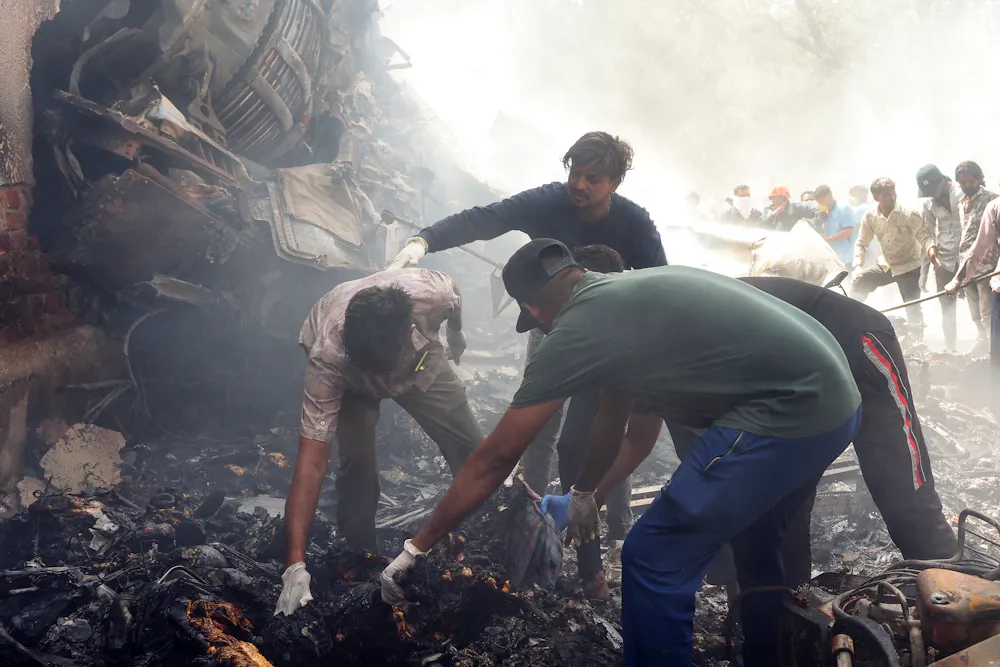
    MIL OSI AnalysisEveningReport.nz

  • MIL-OSI USA: Padilla Joins Lawmakers, DACA Recipients, Advocates to Call for Permanent Protections Ahead of DACA’s 13th Anniversary Amid Growing Hostility Against Immigrant Communities

    US Senate News:

    Source: United States Senator Alex Padilla (D-Calif.)

    Padilla Joins Lawmakers, DACA Recipients, Advocates to Call for Permanent Protections Ahead of DACA’s 13th Anniversary Amid Growing Hostility Against Immigrant Communities

    WASHINGTON, D.C. — As Immigration and Customs Enforcement (ICE) raids and mass deportation assaults intensify in Los Angeles and across the country, U.S. Senator Alex Padilla (D-Calif.), Ranking Member of the Senate Judiciary Immigration Subcommittee, marked the upcoming 13th anniversary of the Deferred Action for Childhood Arrivals (DACA) policy by urging Congress to take immediate action to deliver permanent protections for millions of families, parents, and individuals who are increasingly at risk amid President Trump’s mass deportation agenda. Padilla joined U.S. Senate Democratic Whip Dick Durbin (D-Ill.), Ranking Member of the Senate Judiciary Committee, and Representatives Sylvia R. Garcia (D-Texas-29) and Delia C. Ramirez (D-Ill.-03), along with DACA recipients, Dreamers, advocates, and dozens of immigrant youth and leaders from the Home is Here campaign, to call attention to the blaring threats to the future of DACA and push for the passage of the Dream Act.
    From abductions without warrants, deportations without due process, and the end to other temporary programs, the 13th anniversary of DACA is an important reminder that any effort to limit or end DACA will have painful, far-reaching consequences for the national economy and communities in every corner of the United States. California has over 160,000 DACA recipients who have been contributing to the country for years, and if the policy ended, it could cost the nation nearly $650 billion while potentially cutting over 400,000 workers.
    “Time and time again, we’ve seen the same playbook from Donald Trump. When things go wrong, he scapegoats immigrants. To distract the country from his failed agenda, Trump’s rolling out illegal deportations, ignoring due process, and launching ICE raids in my hometown of Los Angeles,” said Senator Padilla. “This week, as we should be celebrating the 13th Anniversary of DACA, I understand the fear of hundreds of thousands of Dreamers because they feel even more at risk. In addition to being our neighbors and loved ones, Dreamers are our teachers and caregivers, nurses and doctors, small business owners and construction workers paying taxes just like the rest of us. We must pass the Dream Act to provide permanent protections for Dreamers who contribute so much to our country and economy, finally giving them the peace of mind they deserve.”
    “In 2010, I sent a letter, joined by the late Senator Richard Lugar, a Republican from Indiana, asking then-President Obama to stop the deportation of Dreamers. And thirteen years ago this week, President Obama responded—he announced the DACA program. More than 835,000 Dreamers have since come forward and received DACA, which has allowed them to contribute more fully to their country as teachers, nurses, doctors, engineers, and small business owners. Now in their 13th year of waiting, we, the lawmakers, must honor Dreamers’ patience, act on our promises, and finally provide them a pathway to citizenship. I will continue to fight for them—and I urge my Republican colleagues to join me,” said Senator Durbin.
    “I am someone who takes immense pride in being raised in the United States and have always felt American in every way but on paper. And while I have every reason to feel filled with hate after being discriminated against because of my identity, or seeing the ways hard working people like my parents have had to work twice as hard than the average person just to make ends meet, I still love this country deeply. As we approach the 13th anniversary of DACA, this moment is a reminder that immigrants are integral to this country. This is our home, and we urge Congress to do what we know is possible and popular among the vast majority of Americans: deliver a pathway to citizenship now,” said Adrien, a DACA recipient and College student studying computer engineering.
    “For 13 years, I’ve held up my end of the bargain – to work, go to school, pay my taxes, and stay out of trouble. But for those same 13 years, politicians have dangled my future for political points, all while failing to pass a pathway to citizenship for Dreamers like me. Because of this inaction, we’ve been attacked by the President, the courts, elected officials, and states like Texas, who are trying to take away our work permits, in-state tuition, and more. At this very moment, we’re waiting for a judge to modify his decision that would affect thousands of Dreamers like me.  And that isn’t just a moral failure – it’s an economic disaster waiting to happen. The courts can’t decide our future forever. Congress must finally deliver what they’ve promised for years – a pathway to citizenship, stability, and dignity,” said Mariana, a DACA recipient.
    “For 13 years, DACA has been an extraordinary success for the entire country, clearly demonstrating why the process for undocumented immigrants to obtain legal status must remain our long-term, central goal. Nearly 1 million people can live, work, and contribute openly to the only country they’ve ever called home because of DACA. It’s well past time for Congress to pass a permanent legislative solution that provides certainty to DACA recipients, Dreamers, their families, and the country that relies on them,” said Todd Schulte, President of FWD.us.
    “On DACA’s 13th anniversary, it is important to celebrate the wonderful things that DACA has done for our communities across the country and throughout the years. But, we always knew that it was not enough. We need Congress to pass a pathway to citizenship for all DACA recipients, immigrant youth, and our entire communities. With our communities under attack in unprecedented ways, we are beyond the point of urgency. We need words to become action,” said Diana Pliego, Senior Campaigns Strategist at NILC.
    “As we mark the 13th anniversary of DACA, Make the Road Nevada stands with thousands of DACA recipients—and with the undocumented youth still left out—who call this country home. DACA has proven the power and promise of offering protections to immigrant communities. But it’s not enough. Year after year, we’ve seen how vulnerable the program remains, and why we need permanent protections now more than ever. Congress must act to finally deliver stability and security to our neighbors, coworkers, friends, and loved ones—because no one’s future should depend on a temporary policy,” said Leo Murrieta, Executive Director with Make the Road Nevada.
    “As someone who was a DACA recipient, I know firsthand how critical this program has been in opening paths to economic mobility not just for recipients but also for our families and local communities. With DACA, recipients have been able to advance their careers as teachers, lawyers, nurses, mental health practitioners, business owners, and other valued employees. As we reflect on the thirteenth anniversary of DACA, while witnessing the militarized chaos sown in Los Angeles, we are also present to the fact that we need a more permanent solution and a pathway to citizenship for the many who call this country home and contribute to its spirit, economy, and culture. Our community has waited far too long for a working immigration system that keeps families together and treats every person regardless of their status with dignity and respect. Congress must act diligently and swiftly to work toward a solution like the Dream and Promise Act that protects the state and the people they represent,” said Iliana Perez, Executive Director of Immigrants Rising.
    “DACA was never meant to be the finish line—it was a promise, a lifeline, and a call to action. As families across the country live in renewed fear of enforcement raids, we recommit to the fight for permanent protections. Dreamers are not only essential to our communities—they represent the very best of America’s promise. It’s time for Congress to meet this moment with courage and pass lasting solutions that honor their contributions and humanity,” said María Teresa Kumar, President and Co-Founder of Voto Latino.
    Senator Padilla is a leading voice in Congress for immigration reform. He delivered remarks on the Senate floor earlier this week ahead of DACA’s 13th anniversary, pushing for permanent protections for Dreamers rather than the indiscriminate ICE raids stoking fear in Los Angeles communities. To commemorate the 12th anniversary of DACA, Padilla joined immigration advocates, DACA recipients, and other lawmakers to urge Congress to pass a pathway to citizenship for Dreamers and call on former President Biden to protect Dreamers and long-term undocumented communities through executive action. He previously joined his Senate colleagues and directly impacted immigrant youth leaders for a press conference calling on Republicans in Congress to work with Democrats to pass permanent protections for DACA recipients after the 5th Circuit’s 2022 ruling left these recipients in limbo.

    MIL OSI USA News