Category: India

  • MIL-OSI: Varonis at the 2025 Gartner® Security & Risk Management Summit: AI Innovation and Data Security

    Source: GlobeNewswire (MIL-OSI)

    MUMBAI, India, March 03, 2025 (GLOBE NEWSWIRE) — Gartner Security & Risk Management Summit — Varonis Systems, Inc. (Nasdaq: VRNS), a leader in data security, today announced its full schedule at the Gartner Security & Risk Management Summit, March 10 – 11 in Mumbai, India.

    Varonis Activities at the Gartner Security & Risk Management Summit:

    Meet Varonis: Visit Varonis at booth #210 to discover our latest cloud security offerings, see our unified approach to data security, and catch 1:1 demos with our team. Learn how Varonis helps organizations adopt gen AI copilots safely and confidently by putting data first.

    Expert Session:AI Innovation and Security: Insights from a CISO and CFO” — In this panel discussion, Concentrix Global Vice President, Global Security Rishi Rajpal and Varonis CFO and COO Guy Melamed explore the importance of implementing proactive data security for AI and discuss practical strategies for effective risk management to prevent security breaches, legal penalties, and loss of customer trust. 

    Date: Monday, March 10 at 4:35 p.m.

    Location: TH5, Exhibit Showcase Theater, Showroom, Ground Level

    Additional Resources

    GARTNER is a registered trademark and service mark of Gartner, Inc. and/or its affiliates in the U.S. and internationally and is used herein with permission. All rights reserved.

    About the Gartner Security & Risk Management Summit
    Gartner analysts will present the latest research and advice for security and risk management leaders at the Gartner Security & Risk Management Summits, taking place March 3-4, 2025 in Sydney, March 10- 11, 2025 in India, April 7-8 in Dubai, June 9-11 in National Harbor, MD, July 23-25 in Tokyo, August 5-6 in Sao Paulo and September 22-24 in London. Follow news and updates from the conferences on X using #GartnerSEC.

    About Varonis
    Varonis (Nasdaq: VRNS) is a leader in data security, fighting a different battle than conventional cybersecurity companies. Our cloud-native Data Security Platform continuously discovers and classifies critical data, removes exposures, and detects advanced threats with AI-powered automation.

    Thousands of organizations worldwide trust Varonis to defend their data wherever it lives — across SaaS, IaaS, and hybrid cloud environments. Customers use Varonis to automate a wide range of security outcomes, including data security posture management (DSPM), data classification, data access governance (DAG), data detection and response (DDR), data loss prevention (DLP), and insider risk management.

    Varonis protects data first, not last. Learn more at www.varonis.com.

    Investor Relations Contact:
    Tim Perz
    Varonis Systems, Inc.
    646-640-2112
    investors@varonis.com 

    News Media Contact:
    Rachel Hunt
    Varonis Systems, Inc.
    877-292-8767 (ext. 1598)
    pr@varonis.com

    Public Relations Contact
    Sonika Choubey
    Manager, Public Relations
    + 91 8691974117
    sonika.choubey@gartner.com

    Exhibitor Contact(s)
    Gunjan Kotwal
    Conference Manager, Exhibit Operations
    gunjan.kotwal@gartner.com

    The MIL Network

  • MIL-OSI Europe: ASIA/INDIA – Bangalore, the Eucharist chapel desecrated: monstrance with the consecrated host stolen

    Source: Agenzia Fides – MIL OSI

    Monday, 3 March 2025

    Bangalore (Agenzia Fides) – Last weekend, numerous Catholic faithful took part in prayers of reparation in the churches of Bangalore, the capital of the southern Indian state of Karnataka, after the desecration of the Eucharistic chapel of St. Anthony’s Church in the Uttarhalli district a few days ago.According to the archdiocese, unknown persons entered the liturgical room on February 25 and stole the monstrance, which contained a consecrated host. The police, who were immediately alerted, are now investigating to find the stolen monstrance, which, according to the archdiocese of Bangalore, is not made of precious metal.The concern of the entire People of God, meanwhile, is the Eucharistic bread that was in the monstrance. The fear is that the host has been desecrated. For this reason, Archbishop Peter Machado requested rites and prayers of reparation, which were joined by many faithful. (F.B.) (Agenzia Fides, 3/3/2025)
    Share:

    MIL OSI Europe News

  • MIL-OSI Global: America’s designs on annexing Canada have a long history − and record of political failures

    Source: The Conversation – USA – By G. Patrick O’Brien, Assistant Teaching Professor of History, University of Tampa

    Donald Trump has repeatedly raised the specter of annexing Canada since his inauguration to a second term as president.

    The president’s rhetoric about making Canada “the 51st state” may seem to project confidence, a 21st-century vision of manifest destiny, a belief in the United States’ right and obligation to expand.

    Trump is not the first American leader to dream of northern expansion. To me, a historian of early U.S.-Canadian relations, these designs suggest not power, but weakness and simmering divisions inside the United States.

    Early Americans’ lust for Canada

    Even before independence, social conflict helped turn American eyes northward. Throughout the 18th century, England’s Colonial population in North America doubled every 25 years. Successive generations of Colonists along the Eastern Seaboard had to compete with each other, and with Indigenous people, for resources, arable land and trade.

    These unhappy, land-hungry Colonists clamored for expansion, instigating a series of wars against both the French and Spanish empires for control of the northeastern half of the continent, culminating in the French and Indian War, from 1754 to 1763.

    While these Colonists were animated by their thirst for expansion, they had little else unifying them. Many Americans today are familiar with the “Join, or Die” cartoon Ben Franklin printed, featuring a segmented snake with each section representing one of the Colonies. However, few realize that it was not crafted during the Revolution to unite Colonists against Britain, but in 1754, to rally divided British Colonists in their war against France.

    This famous image urging the American Colonies to unite was in support of a war against France, not Britain.
    Benjamin Franklin via Wikimedia Commons

    Britain finished conquering Canada in 1763, but the empire never fully supported Colonial expansion northward. In the 1750s and 1760s, British troops forcibly removed French colonists from Acadia in Nova Scotia and recruited thousands of Colonists from neighboring New England to move north. These settlers had long imagined the region rich in fishing and timber to be a land of opportunity. But disillusioned by the financial cost of sustaining their settlements, many of these Colonists returned to New England by the early 1770s.

    Attempts to settle other lands ceded by France were no more successful. Fearful that Colonists might provoke a costly war with Indigenous people, Parliament issued the Proclamation of 1763, which attempted to protect native land by discouraging Colonial expansion westward. Many Colonists turned against Britain in response, especially those like George Washington, who had speculated in the land west of the Appalachian Mountains.

    The failed invasion of Canada

    In the earliest months of the Revolution, the Continental Congress authorized an American invasion of British-occupied Quebec. In a letter addressed to “Friends and Brethren” of Canada, Washington himself implored Canadians to join invading troops. “The Cause of America, and of Liberty, is the Cause of every virtuous American Citizen,” he wrote. “Come then, ye generous Citizens, range yourselves under the Standard of general Liberty.”

    But at home, Colonists were far from united in their rebellion. Historians estimate that around 20% of the white Colonial population, more than 500,000 people, remained loyal to Britain, and an even larger number hoped to remain neutral.

    The difficult realities of conquest also turned many soldiers against the invasion of Canada. In late October 1775, nearly a quarter of the underfed and overworked troops under the command of soon-to-be turncoat Benedict Arnold abandoned their arduous journey through interior Maine toward Canada. The soldiers who carried on prayed these deserters “might die by the way, or meet with some disaster, Equal to the Cowardly dastardly and unfriendly Spirit they discover’d in returning Back without orders.”

    The more resilient troops who reached Quebec were emphatically defeated by British forces in December, making Washington skeptical of any future efforts to attack Canada.

    American troops clash with British soldiers and the French defenders of Quebec in December 1775.
    Charles William Jefferys, cover art for ‘The Father of British Canada: A Chronicle of Carleton,’ Volume 12 by William Wood, 1916

    19th-century divisions

    Following American independence, tens of thousands of loyal Colonists sailed north to Canada, determined to build British colonies that would become what one of these refugees called “the envy of the American States.” Their presence on the contested northern border was an unsettling reminder to the new American nation about the power Britain still exerted on the continent.

    Conflict with Britain over land and trade in the early 1800s reopened old divisions among Americans. Virginia Congressman John Randolph expressed his frustrations with renewed calls for a northern invasion. “We have but one word, like the whip-poor-will, but one eternal monstrous tone,” an exasperated Randolph noted, “Canada! Canada! Canada!”

    The debate over Canada was one of many issues dividing the nation, and as President James Madison would later explain, he hoped that war would help unify a polarized nation. His gamble paid off, but only after opponents from New England flirted with the idea of secession to negotiate their own end to conflict.

    When the popular editor and columnist John O’Sullivan called for the annexation of Texas and war with Mexico in 1845, he also suggested the annexation of Canada would naturally follow. The anti-expansionist response united pacifists, abolitionists and a variety of religious and literary figures, helping deepen the divides that would lead to the Civil War.

    Annexation talk in the 20th century

    Trump’s posturing has served to unite Canadians and revive Canadian nationalism. In the U.S., most people seem to understand the practical hurdles of adding a new state or dismiss the idea altogether.

    A Canadian demonstrates in Washington, D.C., against President Donald Trump’s policies on Feb. 17, 2025.
    Dominic Gwinn/Middle East Images/AFP via Getty Images

    One example of annexation talk from the 20th century, however, might serve as a warning to Trump, showing how aggressive rhetoric toward Canada has led to political defeat. In 1911, a bill creating free trade with Canada passed Congress with the support of President William Taft, despite objections from protectionists in both parties.

    In an attempt to have the agreement defeated in the Canadian Parliament, U.S. opponents from both sides of the aisle attempted to stir popular sentiment against the U.S. in Canada. Champ Clark, the Democratic speaker of the House and a front-runner for the presidential nomination in 1912, seized on the moment.

    “I hope to see the day when the American flag will float over every square foot of the British North American possessions, clear to the North Pole,” Champ proclaimed on the House floor. William Stiles Bennet, a Republican, proposed a resolution that would authorize the president to begin negotiations for annexation.

    Their approach to defeating the trade agreement worked, at least in Canada. In the general election of September 1911, worried Canadian voters ousted the Liberal Party, which had supported free trade, and the new Conservative majority rejected the agreement.

    Back home, however, the plan backfired. Woodrow Wilson, not Clark, secured the Democratic nomination in 1912 and would go on to defeat both the incumbent Taft and former President Theodore Roosevelt. The bluster led not to success and victory, but loss and defeat.

    G. Patrick O’Brien does not work for, consult, own shares in or receive funding from any company or organization that would benefit from this article, and has disclosed no relevant affiliations beyond their academic appointment.

    ref. America’s designs on annexing Canada have a long history − and record of political failures – https://theconversation.com/americas-designs-on-annexing-canada-have-a-long-history-and-record-of-political-failures-250229

    MIL OSI – Global Reports

  • MIL-OSI: Australian Oilseeds Announces Appointment of Amarjeet Singh as Chief Financial Officer

    Source: GlobeNewswire (MIL-OSI)

    COOTAMUNDRA, Australia, March 03, 2025 (GLOBE NEWSWIRE) — Australian Oilseeds Holdings Limited, a Cayman Islands exempted company (the “Company”) (NASDAQ: COOT), today announced the appointment of Amarjeet Singh as Chief Financial Officer (“CFO”) effective February 28, 2025. Singh brings more than 20 years of finance and accounting experience and held leadership roles at major companies in the global agricultural sector and will replace Bob Wu who is leaving his position to explore new opportunities outside of the Company.

    “We are excited to welcome Amarjeet as the Company’s new Chief Financial Officer,” said Gary Seaton, Chief Executive Officer. “His deep expertise in finance and accounting coupled with a strong background in the global agricultural sector make him the ideal candidate to lead our finance organization at this pivotal time. Amarjeet is a strategic leader with a proven track record of driving growth and productivity along with improving profitability. On behalf of everyone at the Company, I would like to thank Bob for his significant contributions and wish him success in his future endeavors. I am particularly grateful for his leadership and support over the last four years that we have worked together. He has been a critical player to drive our strategic agenda, leading key initiatives, which will benefit us for many years to come”

    Mr. Singh commented, “It’s an exciting time to join Australian Oilseeds as the Company continues to focus on expanding and scaling its business globally. I look forward to working with this talented team to strengthen our foundation and ensure we are well positioned to deliver significant long-term sustainable growth and shareholder value.”

    Mr. Singh is an experienced financial controller with a demonstrated history of working in the Agri-commodities and manufacturing listed companies, with experience in financial reporting, consolidation, budgeting, accounting, treasury management, and management information systems (MIS) including leadership roles at major companies in the global agricultural sector. Before joining Australian Oilseeds, from 2018 to 2025, he served as Head of Finance at MOI International Pty Ltd, a subsidiary of Mewah International, a large agricultural company listed in Singapore. From 2011 to 2017, Mr. Singh was Manager, Accounts and Treasury, at Mewah Oils & Fats, another subsidiary of Mewah International. Prior to Mewah, Mr. Singh held finance and accounting roles of progressive responsibility at divisions of large, NYSE-listed multi-national companies including General Electric and Snap-On Tools from 2008 to 2011 and served as an Audit Senior for BDO Lodha & Co. from 2004 to 2007. Mr. Singh is a graduate of the Institute of Chartered Accountants of India as a chartered accountant, specializing in Finance & Accountancy in 2007.

    About Australian Oilseeds Investments Pty Ltd.: Australian Oilseeds Investments Pty Ltd. is an Australian proprietary company that, directly and indirectly through its subsidiaries, is focused on the manufacture and sale of sustainable oilseeds (e.g., seeds grown primarily for the production of edible oils) and is committed to working with all suppliers in the food supply chain to eliminate chemicals from the production and manufacturing systems to supply quality products to customers globally. The Company engages in the business of processing, manufacture and sale of non-GMO oilseeds and organic and non-organic food-grade oils, for the rapidly growing oilseeds market, through sourcing materials from suppliers focused on reducing the use of chemicals in consumables in order to supply healthier food ingredients, vegetable oils, proteins and other products to customers globally. Over the past 20 years, the Company’s cold pressing oil plant has grown to become the largest in Australia, pressing strictly GMO-free conventional and organic oilseeds.

    Forward-Looking Statements: This press release contains “forward-looking statements” within the meaning of the “safe harbor” provisions of the Private Securities Litigation Reform Act of 1995, including but not limited to, statements regarding our financial outlook, business strategy and plans, market trends and market size, opportunities and positioning. These forward-looking statements are based on current expectations, estimates, forecasts and projections. Words such as “expect,” “anticipate,” “should,” “believe,” “hope,” “target,” “project,” “goals,” “estimate,” “potential,” “predict,” “may,” “will,” “might,” “could,” “intend,” “shall” and variations of these terms and similar expressions are intended to identify these forward-looking statements, although not all forward-looking statements contain these identifying words. Forward-looking statements are subject to a number of risks and uncertainties, many of which involve factors or circumstances that are beyond our control. For example, global economic conditions could in the future reduce demand for our products; we could in the future experience cybersecurity incidents; we may be unable to manage or sustain the level of growth that our business has experienced in prior periods; our financial resources may not be sufficient to maintain or improve our competitive position; we may be unable to attract new customers, or retain or sell additional products to existing customers; we may experience challenges successfully expanding our marketing and sales capabilities, including further specializing our sales force; customer growth could decelerate in the future; we may not achieve expected synergies and efficiencies of operations from recent acquisitions or business combinations, and we may not be able to pay off our convertible notes when due. Further information on potential factors that could affect our financial results is included in our most recent Annual Report on Form 10-K and our other filings with the Securities and Exchange Commission. The forward-looking statements included in this press release represent our views only as of the date of this press release and we assume no obligation and do not intend to update these forward-looking statements.

    Contact
    Australian Oilseeds Holdings Limited
    126-142 Cowcumbla Street
    Cootamundra New South Wales 2590
    Attn: Gary Seaton, CEO
    Email: gary@energreennutrition.com.au

    Investor Relations Contact
    Reed Anderson
    (646) 277-1260
    reed.anderson@icrinc.com

    The MIL Network

  • MIL-OSI: First Busey Corporation Completes Acquisition of CrossFirst Bankshares, Inc. and CrossFirst Bank

    Source: GlobeNewswire (MIL-OSI)

    CHAMPAIGN, Il. and LEAWOOD, Kan., March 03, 2025 (GLOBE NEWSWIRE) — First Busey Corporation (“Busey”) (NASDAQ: BUSE), the holding company for Busey Bank, announced today the completion of its acquisition by merger of CrossFirst Bankshares, Inc. (“CrossFirst”) (NASDAQ: CFB), the holding company for CrossFirst Bank, effective March 1, 2025. The transaction was previously jointly announced on August 27, 2024.

    Busey will operate CrossFirst Bank as a separate banking subsidiary of Busey until it is merged with Busey Bank, which is expected to occur in June 2025. At the time of the bank merger, CrossFirst Bank’s banking centers will become branches of Busey Bank and operate under the Busey brand, creating a premier full-service commercial bank serving clients from 77 locations across 10 states with combined total assets of approximately $20 billion, $17 billion in total deposits, $15 billion in total loans and $14 billion in wealth assets under care. The holding company will be headquartered in Leawood, Kansas in the Kansas City metro area, which is central to the combined footprint. Busey Bank’s headquarters will remain in Champaign, Illinois.

    The combination extends Busey’s regional operating model into high-growth metro markets—bolstering its commercial banking relationships and offering additional opportunities to grow its wealth management business and payment technology solutions subsidiary, FirsTech, Inc.

    “This is a transformational partnership that advances our organization and will ultimately benefit each of our Pillars—associates, customers, communities and shareholders,” said Van Dukeman, Chairman and CEO of Busey and Chairman of Busey Bank. “Over the past few years, we have been keenly focused on maintaining Busey’s fortress balance sheet—featuring exceptional credit quality, strong liquidity, excess capital and diversified revenue streams buttressed by our wealth management and payments processing businesses—to be well positioned to capitalize on a financially and strategically compelling opportunity of size and scale. This is that opportunity and we look forward to fully integrating our banks while leveraging the talent, expertise, increased scale and market presence to benefit our Pillars.”

    “Taking our organization to new heights, this partnership combines our growing commercial bank with the power of Busey’s core deposit franchise, exceptional wealth management platform and the impressive payment tech solutions at FirsTech, Inc.,” said Mike Maddox, former CrossFirst CEO, President and Director who now serves as Vice Chairman and President of Busey and President and CEO of Busey Bank. “We firmly believe our strong metro market footprint, commercial focus and growth potential will help elevate the combined company to be a leading regional banking institution throughout the Midwest and Southwestern regions of the U.S. We look forward to building upon the strong legacy of outstanding service and community engagement that both organizations have developed to create even more opportunities for our teams and clients.”

    Board of Directors
    Effective immediately, Busey and Busey Bank will be governed by a Board of Directors comprised of 13 directors, eight from Busey or Busey Bank and five from CrossFirst:

    • Van Dukeman, Chairman and CEO
    • Mike Maddox, Vice Chairman and President
    • Rod Brenneman, Lead Independent Director
    • Stan Bradshaw
    • Steve Caple
    • Michael Cassens
    • Jennifer Grigsby
    • Karen Jensen
    • Fred Kenney
    • Steve King
    • Kevin Rauckman
    • Scott Wehrli
    • Tiffany White

    Transaction Details
    Under the terms of the merger agreement, at the effective time of the merger on March 1, 2025, each share of CrossFirst’s common stock was converted into the right to receive 0.6675 of a share of Busey common stock, with CrossFirst shareholders receiving cash in lieu of fractional shares. Former CrossFirst common shareholders are eligible to receive Busey’s ongoing dividends as declared. With the transaction now complete, former CrossFirst shareholders own approximately 36.5% of the combined company, on a fully-diluted basis.

    Shares of CrossFirst common stock ceased trading after the closing of the NASDAQ stock market on February 28, 2025. The combined company’s common shares will continue trading on the NASDAQ under the “BUSE” ticker symbol.

    About First Busey Corporation
    As of December 31, 2024, First Busey Corporation (Nasdaq: BUSE) was a $12.05 billion financial holding company headquartered in Champaign, Illinois.

    Busey Bank, a wholly-owned bank subsidiary of First Busey Corporation, had total assets of $12.01 billion as of December 31, 2024, and is headquartered in Champaign, Illinois. Busey Bank currently has 62 banking centers, with 21 in Central Illinois markets, 17 in suburban Chicago markets, 20 in the St. Louis Metropolitan Statistical Area, three in Southwest Florida, and one in Indianapolis. More information about Busey Bank can be found at busey.com. CrossFirst Bank—also a wholly-owned bank subsidiary of First Busey Corporation as of March 1, 2025—had total assets of $7.7 billion as of December 31, 2024, and is a full-service financial institution with locations in Kansas, Missouri, Oklahoma, Texas, Arizona, Colorado and New Mexico.

    Through its Wealth Management division, Busey Bank provides a full range of asset management, investment, brokerage, fiduciary, philanthropic advisory, tax preparation, and farm management services to individuals, businesses, and foundations. Assets under care totaled $13.83 billion as of December 31, 2024. More information about Busey Bank’s Wealth Management services can be found at busey.com/wealthmanagement.

    Busey Bank’s wholly-owned subsidiary, FirsTech, Inc., specializes in the evolving financial technology needs of small and medium-sized businesses, highly regulated enterprise industries, and financial institutions. FirsTech provides comprehensive and innovative payment technology solutions, including online, mobile, and voice-recognition bill payments; money and data movement; merchant services; direct debit services; lockbox remittance processing for payments made by mail; and walk-in payments at retail agents. Additionally, FirsTech simplifies client workflows through integrations enabling support with billing, reconciliation, bill reminders, and treasury services. More information about FirsTech can be found at firstechpayments.com.

    For the first time, Busey Bank was named among the World’s Best Banks for 2024 by Forbes, earning a spot on the list among 68 U.S. banks and 403 banks worldwide. Additionally, Busey Bank was honored to be named among America’s Best Banks by Forbes magazine for the third consecutive year. Ranked 40th overall in 2024, Busey Bank was the second-ranked bank headquartered in Illinois of the six banks that made this year’s list and the highest-ranked bank of those with more than $10 billion in assets. Busey Bank is humbled to be named among the 2024 Best Banks to Work For by American Banker, the 2024 Best Places to Work in Money Management by Pensions and Investments, the 2024 Best Places to Work in Illinois by Daily Herald Business Ledger, the 2024 Best Places to Work in Indiana by the Indiana Chamber of Commerce, and the 2024 Best Companies to Work For in Florida by Florida Trend magazine. We are honored to be consistently recognized globally, nationally and locally for our engaged culture of integrity and commitment to community development.

    For more information about us, visit busey.com.

    First Busey Corporation Contacts
    For Financials:                         
    Scott Phillips, Interim CFO                    
    First Busey Corporation            
    (239) 689-7167                        
    scott.phillips@busey.com          
    For Media:
    Amy L. Randolph, EVP & COO
    First Busey Corporation
    (217) 365-4049
    amy.randolph@busey.com

    Forward-Looking Statements
    This press release includes “forward-looking statements” within the meaning of the Private Securities Litigation Reform Act of 1995, Section 27A of the Securities Act of 1933, as amended. These forward-looking statements are covered by the safe harbor provisions for forward-looking statements contained in the Private Securities Litigation Reform Act of 1995. These statements, which are based on certain assumptions and estimates and describe Busey’s future plans, strategies, and expectations, can generally be identified by the use of the words “may,” “will,” “should,” “could,” “would,” “goal,” “plan,” “potential,” “estimate,” “project,” “believe,” “intend,” “anticipate,” “expect,” “target,” “aim” and similar expressions. These forward-looking statements include statements relating to Busey’s projected growth, anticipated future financial performance, financial condition, credit quality, and management’s long-term performance goals, as well as statements relating to the anticipated effects on results of operations and financial condition from expected developments or events, business and growth strategies, and any other statements that are not historical facts.

    These forward-looking statements are subject to significant risks, assumptions, and uncertainties, and could be affected by many factors. Factors that could have a material adverse effect on Busey’s financial condition, results of operations, and future prospects can be found under the “Special Cautionary Note Regarding Forward-Looking Statements” and “Item 1A. Risk Factors” sections of Busey’s Annual Report on Form 10-K for the year ended December 31, 2024, and other reports Busey files with the U.S. Securities and Exchange Commission (the “SEC”).

    Because of those risks and other uncertainties, Busey’s actual future results, performance, achievement, or industry results, may be materially different from the results indicated by these forward-looking statements. In addition, Busey’s past results of operations are not necessarily indicative of its future results.

    You should not place undue reliance on any forward-looking statements, which speak only as of the dates on which they were made. Busey does not undertake an obligation to update these forward-looking statements, even though circumstances may change in the future, except as required under federal securities law. Busey qualifies all of its forward-looking statements by these cautionary statements.

    The MIL Network

  • MIL-OSI Economics: Samsung India Launches Galaxy A56 5G, Galaxy A36 5G Featuring Awesome Intelligence, All-New Design and Enhanced Durability

    Source: Samsung

    Akshay Rao, General Manager, and Aditya Babbar, Vice President, MX Business, Samsung India at the launch of Galaxy A56 5G and Galaxy A36 5G
     
    Samsung, India’s largest consumer electronics brand, today announced the launch of Galaxy A56 5G and Galaxy A36 5G with Awesome Intelligence, featuring amazing search and visual experiences to reimagine creativity. Sporting an all-new design language, the new Galaxy A series smartphones also feature enhanced durability and performance, along with robust security and privacy protection.
     
    Awesome Intelligence
    Awesome Intelligence is available on Galaxy A56 5G and Galaxy A36 5G, enabling democratization of AI for Indian consumers. Awesome Intelligence, a comprehensive mobile AI suite, brings advanced AI features including Galaxy’s fan-favourite AI features. Google’s enhanced Circle to Search makes it easier than ever to search and discover from the phone’s screen. With the recent enhancements to Circle to Search, users can also instantly search the songs they hear without switching apps. Whether it’s a song playing on social media from their phone or music that’s playing from speakers near them, just long press the navigation bar to activate Circle to Search, then tap the music button to identify the song name and artist.
     
    Awesome Intelligence also features a range of intelligent Visual editing features like Auto Trim, Best Face, Instant Slo-mo and many others. Auto-Trim and Best face are flagship-level AI features that are now getting democratized with Galaxy A56 5G. The new smartphones also come with Object Eraser, allowing users to remove unwanted distractions from photos. Moreover, Filters enables custom filter creation by extracting colours and styles from existing photos for users to apply for a unique and personalized effect depending on mood and taste.
     
    Awesome Design
    Galaxy A56 5G and Galaxy A36 5G come with an all-new design language which now forms the benchmark for Galaxy A series. The new design language features a Linear Floating Camera Module and a ‘Radiance’ inspired colour theme. Galaxy A56 5G and Galaxy A36 5G are the slimmest ever Galaxy A series devices with just 7.4mm thickness.
     
    Awesome Display
    Galaxy A56 5G and Galaxy A36 5G feature a larger display created for a high-quality, immersive viewing experience. Both devices feature a 6.7-inch FHD+ Super AMOLED display with brightness levels reaching up to 1200 nits. New stereo speakers further enhance the experience with rich, balanced sound.
     
    Awesome Camera
    Galaxy A56 5G and Galaxy A36 5G smartphones take the camera experience to a new level with a powerful triple-camera system featuring a 50MP main lens and 10-bit HDR front lens recording on Galaxy A56 5G and Galaxy A36 5G for bright and crisp selfies. Galaxy A56 5G comes with a 12MP ultra-wide lens and brings enhancements to Nightography, with Low Noise Mode making its way to the 12MP selfie camera along with additional wide camera support to capture stunning content in low-light settings.
     
    Awesome Performance
    Both models also deliver enhanced performance for seamless multi-tasking. Galaxy A56 5G is powered by the Exynos 1580 chipset and Galaxy A36 5G runs on the Snapdragon® 6 Gen 3 Mobile Platform. A larger vapor chamber in both devices helps sustain performance, ensuring smooth gameplay and video playback.
     
    Awesome Battery
    With a 5,000mAh battery, Galaxy A56 5G and Galaxy A36 5G are designed to keep up with users’ daily routines. Galaxy A56 5G and Galaxy A36 5G support 45W charging power and Super-Fast Charge 2.0 technology, delivering faster charging for extended use.
     
    Awesome Durability
     
    Galaxy A36 5G and Galaxy A56 5G feature an IP67 dust and water resistance rating. Additionally, an advanced Corning® Gorilla Victus+ Glass adds a layer of durability against scratches and cracks. Moreover, with six generations of Android OS and six years of security updates, the new Galaxy A series reinforces its focus on software longevity. These updates add additional support towards optimizing the devices’ lifecycle, ensuring users can enjoy a smooth and reliable experience for years to come.
     
    Awesome Security and Privacy
    Thanks to the integration of One UI 7 on the Galaxy A series for the first time, Samsung is further supporting robust security and privacy. With Samsung Knox Vault, the Galaxy A series provides an extra, fortified layer of device safety, transparency and user choice – ensuring sensitive data always stays protected. Equipped with the latest One UI 7 security and privacy features, Galaxy A series users benefit from holistic protection — including enhancements in Theft Detection, More Security Settings and other features.
     
    Variants, Price, Colours and Offers
    As part of the launch offers, customers purchasing Galaxy A56 5G and Galaxy A36 5G will get a free storage upgrade worth INR 3000, making it an awesome deal. Customers will get the 12GB 256GB variant at the price of the 8GB 256GB variant and the 8GB 256 GB variant at the price of the 8GB 128GB variant at no extra cost.
     

    Galaxy A56 5G

    Memory
    Price
    Net Effective Price
    Launch Offer
    Colours
    12GB 256GB
    INR 47,999
    INR 44,999
    Get 12GB 256GB variant at the price of 8GB 256GB variant
    Awesome Olive, Awesome Lightgray, Awesome Graphite
    8GB 256GB
    INR 44,999
    INR 41,999
    Get 8GB 256GB variant at the price of 8GB 128GB variant
    8GB 128GB
    INR 41,999
    INR 41,999
    NA
     

    Galaxy A36 5G

    Memory
    Price
    Net Effective Price
    Launch Offer
    Colours
    12GB 256GB
    INR 38,999
    INR 35,999
    Get 12GB 256GB variant at the price of 8GB 256GB variant
    Awesome Black, Awesome Lavender, Awesome White
    8GB 256GB
    INR 35,999
    INR 32,999
    Get 8GB 256GB variant at the price of 8GB 128GB variant
    8GB 128GB
    INR 32,999
    INR 32,999
    NA
     
     
    Galaxy A56 5G will be available in Awesome Olive, Awesome Lightgray and Awesome Graphite colours while Galaxy A36 5G will be available in Awesome Lavender, Awesome Black and Awesome White.
     
    Additional Offers
    Apart from the primary storage upgrade offer, consumers can also get Samsung Care+ one-year screen protection at just INR 999, against the original price of INR 2,999. Customers can also avail up to 18 months no cost EMI on Galaxy A56 5G and up to 16 months no cost EMI on Galaxy A36 5G. Additionally, customers will get an Amazon voucher up to INR 400 on using Samsung Wallet for select transactions.
     
    Availability
    Galaxy A56 and Galaxy A36 are now available for purchase via Samsung.com, across Samsung exclusive and partner stores, and other online platforms.

    MIL OSI Economics

  • MIL-OSI Europe: AMERICA/ARGENTINA – Popular religiosity: distinctive feature of the City of All Saints of Nueva Rioja

    Source: Agenzia Fides – MIL OSI

    Monday, 3 March 2025

    Diocesis de La Rioja

    La Rioja (Agenzia Fides) – La Rioja is known for its rich popular religiosity, which reflects a combination of indigenous beliefs, colonial traditions and Christian elements. In other words, religious celebrations are not only influenced by Catholicism, but also reflect the cultural legacy of the native peoples, who have kept many of their traditions and rites alive over the centuries. “Often, these celebrations represent the link between indigenous spirituality and Christian beliefs,” explains to Fides Sister Silvia Somaré, missionary of the Sisters Slaves of the Heart of Jesus (ECJ) in La Rioja, and member of the Communications Office of the diocese. “Popular religiosity – she continues – is a distinctive feature of our land and of the identity of La Rioja.”This religiosity is manifested mainly through various celebrations that connect the community with its faith, its history and its culture. Pope Benedict XVI himself, at the Shrine of Aparecida on May 13, 2007, stressed that popular religiosity is the diamond of Latin America. The feasts of La Rioja represent a space where the sacred and the everyday intertwine, creating a unique cultural identity. Respect for tradition, strong community participation and attention to customs are some of its distinctive features. These festivities are deeply rooted in the social life of the communities, centered on devotion to the patron saints, the Virgin Mary and the celebration of events that mark both the rural and urban calendar. “Hence,” explains Sister Silvia, “the syncretism, the fusion of indigenous beliefs with Catholicism. This mixture is reflected in the rituals, dances and traditions that symbolize the inhabitants’ connection with their ancestral past and their current faith, as is observed mainly in Tinkunaco” (see Fides, 13/2/2025).Numerous feasts are celebrated throughout the country, the core of which is the simple faith of the people, who live the celebrations of their saints and the Virgin in a festive way. It is no coincidence that La Rioja was founded in 1591 as the City of All Saints of Nueva Rioja.Some especially celebrated anniversaries are those of Saint Nicholas of Bari, every December 6. The Saint known for his generosity, represents a symbol of hope and charity. As well as the festival of the Virgin of the Rosary of Tama, which takes place on the first weekend of October. On this occasion, the inhabitants of the town and its surroundings gather in an emotional procession to the church, where the Virgin of the Rosary is honored, who is considered the protector of the community.During the feast, masses, cultural activities, dances and typical foods are celebrated, creating an atmosphere of joy and unity. The devotion to the Virgin of the Rosary is also manifested in the creation of altars and offerings that the faithful place along the way, an emblematic element of popular religiosity in the region.Another very popular religious feast is that of Saint Rita de Chilecito celebrated on May 22, in honor of “the advocate of impossible cases.” The celebration begins with a novena, where the community gathers to pray and ask for the intercession of the saint. The faithful participate in an emotional procession that culminates with a mass, where testimonies of miracles attributed to Saint Rita are highlighted.At Christmas, in the foothills of the Andes, in the area of Jagüe, the Virgin of Andacollo is celebrated where the miners venerate her and pay homage. And the same devotion is experienced in the area of Sanagasta for the Virgin of India. During Holy Week, a tradition of faith and art is celebrated in Famatina, where everything is deeply rooted in local faith and tradition. What distinguishes it from other commemorations is the presence of an articulated wooden Christ, a unique religious image that is central to processions and liturgical acts. (AP) (Agenzia Fides, 3/3/2025)
    Share:

    MIL OSI Europe News

  • MIL-OSI Economics: RBI imposes monetary penalty on The Magadh Central Co-operative Bank Limited, Bihar

    Source: Reserve Bank of India

    The Reserve Bank of India (RBI) has, by an order dated February 27, 2025, imposed a monetary penalty of ₹1.00 lakh (Rupees One Lakh only) on The Magadh Central Co-operative Bank Limited, Bihar (the bank) for non-compliance with certain directions issued by RBI on ‘Know your Customer (KYC)’. This penalty has been imposed in exercise of powers conferred on RBI under the provisions of Section 47A(1)(c) read with Sections 46(4)(i) and 56 of the Banking Regulation Act, 1949.

    The statutory inspection of the bank was conducted by National Bank for Agriculture and Rural Development (NABARD) with reference to its financial position as on March 31, 2024. Based on supervisory findings of non-compliance with RBI directions and related correspondence in that regard, a notice was issued to the bank advising it to show cause as to why penalty should not be imposed on it for its failure to comply with the said directions. After considering the bank’s reply to the notice, oral submissions made during the personal hearing and examination of additional submissions made by it, RBI found, inter alia, that the following charge against the bank was sustained, warranting imposition of monetary penalty:

    The bank had failed to put in place a system of carrying out periodic review of risk categorisation of accounts at least once in six months.

    This action is based on deficiency in regulatory compliance and is not intended to pronounce upon the validity of any transaction or agreement entered into by the bank with its customers. Further, imposition of this monetary penalty is without prejudice to any other action that may be initiated by RBI against the bank.

    (Puneet Pancholy)  
    Chief General Manager

    Press Release: 2024-2025/2292

    MIL OSI Economics

  • MIL-OSI United Nations: Message from the Director of World Heritage, Lazare Eloundou Assomo, for World Wildlife Day 2025

    Source: United Nations

    Mr. Lazare Eloundou Assomo, Director of the World Heritage Centre (WHC), shares a message for World Wildlife Day 2025.

    Today, World Wildlife Day is a powerful reminder of the urgent need to protect and conserve biodiversity. Around the globe, countless plant and animal species face unprecedented threats, with many on the brink of extinction. This includes some of the rarest and most extraordinary species that inhabit sites protected under the World Heritage Convention.

    UNESCO World Heritage sites exemplify our cultural treasures and the most outstanding natural places. They protect over a fifth of the planet’s mapped species richness.

    World Heritage sites include the mangrove ecosystems of the Sundarbans in Bangladesh and India, home to the largest remaining population of the Bengal tiger. The Rainforests of the Atsinanana in Madagascar and Manú National Park in Peru, are among the most biodiverse places on Earth. World Heritage sites also show how wildlife conservation supports livelihoods and promotes sustainable socio-economic development.

    However, the extraordinary biodiversity found in UNESCO World Heritage sites must be protected from threats such as overexploitation and illegal wildlife trade. To combat these threats, UNESCO and site managers work closely with CITES and other key actors. We need all hands on deck. To protect these irreplaceable places, it is crucial to give site managers the financial resources they need to sustain the rich life these sites support.

    On this World Wildlife Day, I urge everyone to look for innovative financial solutions that will allow wild species of plants and animals to thrive for generations to come. Together, we can ensure the survival of wildlife and the preservation of the planet’s natural wonders.

    Lazare Eloundou Assomo, Director of World Heritage

    MIL OSI United Nations News

  • MIL-OSI Economics: Asian Development Blog: Multi-Stakeholder Solutions Needed for Women Entrepreneurs in South Asia

    Source: Asia Development Bank

    Gender-inclusive entrepreneurship in South Asia remains hindered by financial, social, and structural barriers. A holistic approach—combining access to finance, business development services, and multi-stakeholder partnerships—can accelerate women’s entrepreneurship and foster inclusive growth.

    While gender-inclusive entrepreneurship is a significant enabler of economic growth, only 18% of firms in South Asia are owned by women, compared to 34% globally. Women in the region lack capital and finance, as well as opportunities to access business networks and effectively market products and services. They have limited engagement in trade activities and with innovative solutions. 

    These challenges are compounded by structural barriers, such as social and customary norms and disproportionate household and care responsibilities that limit women’s opportunities as entrepreneurs and hinder their economic participation. 

    The following approaches, which should be tailored to distinct contexts, cultures, and levels of development, can help boost women’s entrepreneurship in South Asia:

    Create an inclusive business ecosystem: Accelerating women’s entrepreneurship in South Asia, a region with complexities and inequalities intertwined, requires development of an ecosystem of inclusive interventions and investments, policies, private sector engagement, and promoting resources that give women access to capital, skills, innovation, services and new markets.

    Access to finance for women has positive direct and indirect impact on business and economic empowerment, reducing poverty, and achieving good health and well-being. 

    Addressing only one issue in the chain of challenges cannot produce a sustainable effect; rather, adopting a holistic approach that creates an enabling environment by explicitly addressing constraints of women and promoting women’s entrepreneurship through specific actions is essential for long-term strategic changes that can support inclusive economic growth and development in South Asia. 

    Providing access to finance for women can be life changing: Limited financial resources confine women to smaller-scale business operations at the micro level in countries such as Sri Lanka, Bhutan, and Bangladesh. Challenges related to capital are often rooted in gender biases, lack of tailored financial products, absence of collateral, and limited understanding of financial institutions.

    Applying innovations in finance, more targeted approaches, including for women in more vulnerable positions, can help overcome the barriers related to social norms, mobility, and control of resources and assets. While 65% of women-led small and medium enterprises in developing countries are unserved financially, access to finance for women has positive direct and indirect impact on business and economic empowerment, reducing poverty, and achieving good health and well-being. 

    Providing targeting approaches and giving access to finance has been done in Bangladesh, India, Sri Lanka, Nepal, and Bhutan and has helped women to expand and grow their businesses. Targeting women as clients has a business case as well, offering opportunities for the private sector to capitalize on this important segment by providing tailored financial products and services.

    Offer comprehensive business development services: Because women-owned enterprises are under-financed and under-resourced in South Asia, offering non-financial services can be a driver of business growth. Business development services, such as mentoring, financial advisory, legal support, skills training, and accessing new markets and networks can be key drivers for women entrepreneurs in Bangladesh, Maldives, Sri Lanka, and other South Asian countries. 

    Providing tailored services for women in start-ups is equally important as challenges at this stage are intertwined with a lack of confidence, social norms, and expectations towards women with limited resources. While also facing other forms of discrimination (particularly, in India and Nepal), supplying women with these services can lead to more equitable access to non-financial resources and significant economic growth on local and regional levels. 

    Leverage multi-stakeholder partnerships: Development partners, governments, and private sector companies – all can play role in advancing women’s entrepreneurship in South Asia. Gender-inclusive investments by development partners, improving policy frameworks by governments, and fostering bold actions by the private sector through targeted investments and financial products can all address the gender divide in entrepreneurship. Moreover, partnerships across stakeholders can only enhance these actions. 

    The path to advancing women’s entrepreneurship and engagement of stakeholders needs to be deepened to also address often discriminatory underlying social norms and practices that hold women back. This is particularly so in South Asia, where gender disparities are intertwined with religion, caste, ethnicity, and other social exclusions that exacerbate gender inequalities.

    MIL OSI Economics

  • MIL-Evening Report: French minister wraps up key talks in New Caledonia, returning late March

    By Patrick Decloitre, RNZ Pacific correspondent French Pacific desk

    French Minister for Overseas Manuel Valls left New Caledonia at the weekend after a one-week stay which was marked by the resumption of inclusive political talks on the French territory’s future.

    He has now submitted a “synthetical” working document to be discussed further and promised he would return later this month.

    During his week-long visit, Valls had taken time to meet New Caledonia’s main stakeholders, including political, economic, education, health, and civil society leaders.

    He has confirmed France’s main pillars for its assistance to New Caledonia, nine months after deadly and destructive riots broke out, leaving 14 dead, several hundred businesses destroyed, and thousands of job losses for a total estimated damage of 2.2 billion euros (NZ$4 billion).

    The French aid confirmed so far mainly consisted of a loan of up to 1 billion euros (NZ$1.8 billion) as well as grants to rebuild all damaged schools and some public buildings.

    Valls also announced French funding to pay unemployment benefits (which were to expire at the end of this month) were now to be extended until the end of June.

    However, the main feature of his stay, widely regarded as the major achievement, was to manage to gather all political tendencies (both pro-independence and those in favour of New Caledonia remaining a part of France) around the same table.

    The initial talks were first held at New Caledonia’s Congress on February 24.

    Two days later, talks resumed at the French High Commission between Wednesday and Friday last week, in the form of “tripartite” discussions between pro-France, pro-independence local parties and the French State.

    As some, especially the pro-independence umbrella FLNKS (Kanak and Socialist National Liberation Front), insisted that those sessions were “discussions”, not “negotiations”, there was a general feeling that all participants now seemed to recognise the virtues of the exchanges and that they had at least managed to openly and frankly confront their respective views.

    Valls, who shared a feeling of relative success in view of what he described as a sense of “historic responsibility” from political stakeholders, even extended his stay by 24 hours.

    Speaking at the weekend, he said he had now left all parties with a document that was now supposed to synthesise all views expressed and the main items remaining to be further discussed.

    New Caledonia’s parties begin talks at the French High Commission in Nouméa last Wednesday. Image: RNZ Pacific/RRB

    ‘A situation no longer sustainable’
    “Political deadlocks, economic and social stagnation, violence, fear, and the lack of prospects for the territory’s inhabitants create a situation that is no longer sustainable. Everyone agrees on this observation,” the document states.

    A cautiously hopeful Valls said views would continue to be exchanged, sometimes by video conference.

    Taking part in the same visit last week was Eric Thiers, a special adviser to French Prime Minister François Bayrou.

    Valls also stressed he would return to New Caledonia sometime later this month, maybe March 22-23, depending on how talks and remote exchanges were going to evolve.

    In the meantime, the shared document would be subjected to many amendments and suggestions in order to take the shape of a fit-enough basis for a compromise acceptable by all.

    The work-in-progress document details a wide range of subjects, such as self-determination, the relationship with France, the transfer of powers, who would be in charge of international relations, independence, a future system of governance (including the organisation of the three provinces), the electoral roll for local elections, the notion of citizenship (with a proposed system of “points-based” accession system), all these under the generic notion of “shared destiny”.

    There was also a form of consensus on the fact that if a future text was to be submitted to popular approval by way of a referendum, it should not be based on a binary “yes” or “no” alternative, but on a comprehensive, wide-ranging “project”.

    On each of those topics, the draft takes into account the different and sometimes opposing views expressed and enumerates a number of possible options and scenarios.

    Based on this draft working document, the next round of talks would lead to a new agreement that is supposed to replace and offer a continuation to the ageing Nouméa Accord, signed in 1998 and install a new roadmap for New Caledonia’s future.

    As part of discussions, another topic was the future of New Caledonia’s great council of chiefs, the Customary Senate, and possible changes from its until-now consultative status to a more executive role to turn New Caledonia’s legislative system from a Congress-only system to a bicameral one (Congress-Parliament and a chiefly Senate).

    Struggling nickel mining industry
    The very sensitive question of New Caledonia’s nickel mining industry was also discussed, as the crucial industry, a very significant pillar of the economy, is undergoing its worst crisis.

    Since August 2024, one of its three factories and smelters, Koniambo (KNS) in the north of the main island has been mothballed and is still up for sale after its majority stakeholder, Anglo-Swiss Glencore, decided to withdraw after more than a decade of losses (more than 13 billion euros — NZ$24 billion).

    Another nickel-producing unit, in the South, Prony, is currently engaged in negotiations with potential investment companies, one South African, one from  the United Arab Emirates and the other Indian.

    New Caledonia’s historic nickel miner, Société le Nickel (SLN, a subsidiary of French giant Eramet), is still facing major hurdles to resume operations as it struggles to regain access to its mining sites.

    The situation was compounded by a changing competition pattern on the world scale, New Caledonia’s production prices being too high and Indonesia now clearly emerging as a world leader, producing much cheaper first-class nickel and in greater quantities.

    ‘A new nickel strategy is needed’, Valls says
    While political parties involved in the talks (all parties represented at the Congress) remained tight-lipped and media-elusive throughout last week, they recognised a spirit of “constructive talks” with a shared goal of “listening to each other”.

    However,  the views remain radically opposed, even irreconcilable — pro-independence supporters’ most clear-cut position (notably that from the Union Calédonienne) consists of a demand for a quick, full independence, with a “Kanaky Accord” to be signed this year, to be followed by a five-year “transition” period.

    On the pro-France side, one of the main bones of contention defended by the two main parties (Les Loyalistes and Rassemblement-LR) is to affirm that their determination to maintain New Caledonia as a part of France has been confirmed by three referenda (in 2018, 2020 and 2021) on self-determination.

    Pro-independence parties argue, however, that the third and last referendum, in December 2021, was boycotted by the pro-independence movement and that it was not legitimate, even though it was ruled by the courts as valid.

    They are also advocating for significant changes to be made in the way the three provinces are managed, a system described as “internal federalism” but decried by opponents as a form of separatism.

    In the pro-France camp, the Calédonie Ensemble party holds relatively more open views.

    In between are the more moderate pro-independence parties, PALIKA and UMP, which favour of a future status revolving around the notion of “independence in association with France”.

    ‘At least no one slammed the door’
    “At least no one slammed the door and that, already, is a good thing,” said pro-France leader and French MP Nicolas Metzdorf.

    “We’re still a long way away from a political compromise, but we have stopped moving further away from it,” he added, giving credit to Vall’s approach.

    On his part, Valls stressed that he did not want to rush things in order to “maintain the thread” of talks, but that provincial elections were scheduled to take place no later than 30 October 2025.

    “I don’t want to force things, I don’t want to break the thread . . . sometimes, we wanted to rush things, and that’s why it didn’t work,” he elaborated, in a direct reference to numerous and unsuccessful attempts by previous French governments, since 2022, to kick-start the comprehensive talks.

    “Some work will be done by video conference. I will always take my responsibilities, because we have to move forward”, Valls told public broadcaster NC la 1ère.

    He said France would then return with its proposals and offers.

    “And we will take our responsibilities. The debate cannot last for months and months. We respect everyone, but we have to move forward. There is no deadline, but we all know that there are provincial elections.”

    Those elections — initially scheduled in May 2024 and then in December 2024 — have already been postponed twice.

    They are supposed to elect the members of New Caledonia’s three provinces (North, South and Loyalty Islands), which in turn makes up the territory’s Congress and the proportional makeup of the government and election of President.

    All parties involved will now to consult with their respective supporters to get their go-ahead and a mandate to embark on full negotiations.

    This article is republished under a community partnership agreement with RNZ.

    MIL OSI AnalysisEveningReport.nz

  • MIL-OSI Asia-Pac: NHRC, India’s ITEC Executive capacity-building programme on human rights in partnership with the MEA for senior functionaries of NHRIs of Global South begins in New Delhi

    Source: Government of India (2)

    NHRC, India’s ITEC Executive capacity-building programme on human rights in partnership with the MEA for senior functionaries of NHRIs of Global South begins in New Delhi

    Inaugurating it, NHRC, India Chairperson, Justice Shri V. Ramasubramanian highlights India’s rich diverse cultural ethos with various castes, communities, art forms and languages and shared values binding its unity for centuries

    Says, there can’t be tailor-made solutions under international norms to addressing human rights problems in every country having its own diverse socio-economic and cultural realities

    Platforms like ITEC provide an opportunity to share and exchange each other’s rich cultural diversity and human rights values, to think and find ways on how best to address the ever-emerging human rights challenges

    Posted On: 03 MAR 2025 4:01PM by PIB Delhi

    The six-day Indian Technical and Economic Cooperation Executive (ITEC) Capacity Building Programme on human rights for the NHRIs of Global South, being organized by the National Human Rights Commission (NHRC), India in partnership with the Union Ministry of External Affairs (MEA) began in New Delhi today. About 47 participants from the NHRIs of 14 countries of the Global South have confirmed their participation. These are Madagascar, Uganda, Samoa, Timor Leste, DR Congo, Togo, Mali, Nigeria, Egypt, Tanzania, Mauritius, Burundi, Turkmenistan, and Qatar.

    Justice V. Ramasubramanian, Chairperson, NHRC, India in his inaugural address said that India is a country of rich diverse cultural ethos with various castes, communities, art forms and languages and yet it thrives in its unity of shared values and traditions for centuries. However, he said that diversity also comes with diverse problems requiring diverse solutions. Every country has its socio-cultural, political, and economic traditions and diversities may face challenges while addressing the human rights issues given their standardised approaches set to dealing with them following the Universal Declaration of Human Rights. Therefore, solutions to the problems can’t be tailor-made for every country to follow.

    Justice Ramasubramanian said that such platforms like ITEC provide an opportunity to share and exchange each other’s rich cultural diversity and human rights values to think and find ways how best to address the ever-emerging human rights challenges in each country with its social, cultural, political and economic realities.

    He expressed his gratitude to the participating senior functionaries of the NHRIs of Global South and their countries for accepting NHRC, India’s invitation to depute them for participation. He also referred to many ancient Indian texts highlighting the human values and ethos practiced in the countries or centuries, which hold relevance even today for the whole world.

    Justice (Dr) Bidyut Ranjan Sarangi, Member, NHRC, India in his remarks stated that the Commission has played a crucial role in shaping India’s human landscape through its wide-ranging initiatives. Unlike many Western approaches that emphasise individual freedom above all else, India follows a more balanced model that values both individual and collective rights. India’s engagement in international human rights forums reflects its dedication to building a just and equitable global order. He said that capacity-building initiatives like ITEC play a crucial role in expanding our knowledge and refining our skills. While engaging in this programme, let us recognise the need to contextualise human rights principles within our national realities while remaining steadfast in our commitment to universal values of dignity, justice and equality.

    Smt Vijaya Bharathi Sayani, Member, NHRC, India said that by sharing our collective wisdom and resources, we can significantly enhance the protection and promotion of human rights across our nations and regions in the scenario of constantly evolving global human rights landscape. She also highlighted some of the key thematic issues of human rights that are being focused on by the NHRC, India, including the rights of women and achieving gender equality, protecting marginalised communities, safeguarding vulnerable populations in the context of development and displacement, among others.

    NHRC, India Secretary General, Shri Bharat Lal in his opening remarks said that India traditionally always wants to share its most cherished knowledge and wisdom for the larger cause of humanity. This training has been organised with the same spirit wherein we hope and expect to learn from each other. He said that India has a federal structure of governance with 27 State Human Rights Commissions besides the National Human Rights Commission and other Commissions to address the issues of the rights and welfare of various segments of society. The NHRC, India is not just a human rights advocacy forum but responsible for enforcing human rights in the country.

    On the occasion, senior officers of the NHRC, India and MEA were present. The capacity building programme has several sessions on various aspects of human rights to be addressed by the eminent expert speakers with a national and international perspective.

    ***

    NSK

    (Release ID: 2107759) Visitor Counter : 29

    MIL OSI Asia Pacific News

  • MIL-OSI Asia-Pac: Union Health Minister Shri JP Nadda visits Rural Health Training Center, Najafgarh and Ayushman Arogya Mandir, Palam; interacts with Patients and Medical Staff

    Source: Government of India

    Union Health Minister Shri JP Nadda visits Rural Health Training Center, Najafgarh and Ayushman Arogya Mandir, Palam; interacts with Patients and Medical Staff 

    Plants sapling in both the health institutes under the “Ek Ped Maa ke Naam” initiative

    Monitors progress of RHTC, Najafgarh and assures Centre’s support in augmenting health facilities of the institute

    Posted On: 03 MAR 2025 3:20PM by PIB Delhi

    Union Health Minister, Shri Jagat Prakash Nadda visited the Rural Health Training Center (RHTC), Najafgarh and Ayushman Arogya Mandir, Palam, today. Shri Ramvir Singh Bidhuri, Member of Parliament (Lok Sabha) from South Delhi and Smt. Kamaljeet Sehrawat, Member of Parliament (Lok Sabha) from West Delhi was also present.

    Shri Nadda interacted with patients and medical staff in both the health centres. He also planted a sapling in both the campuses under the “Ek Ped Maa ke Naam” initiative.

    The Union Health Minister also reviewed the progress report of RHTC and approved the retention of PHCs at Najafgarh, Ujwa, and Palam under Government of India and directed NQAS & IPHS certification within 3 months and full operationalization of the RHTC hospital within 6 months. Emphasizing skill development, he highlighted RHTC’s role as a model for integrated primary, secondary, AYUSH, and training services and assured the support of the Centre in augmenting the health facilities of the institute.

    Background:

    The Rural Health Training Center (RHTC) in Najafgarh, New Delhi under Ministry of Health & Family Welfare, Government of India, has been serving as a key institution for primary and secondary healthcare, along with skill development in the field of health. Established in 1937 as a health centre and upgraded over the years across 3 campus (Najafgarh, Palam and Ujwa), the RHTC is now being developed as a model integrated centre for Primary, Secondary, AYUSH, and Skill Development and in future Tertiary care.

    Najafgarh is set to witness a significant transformation in healthcare services with the expansion of primary services, already introduced secondary health care services. The Ayushman Arogya Mandirs (AAM) will be NQAS accredited reinforcing Government’s commitment to deliver standardized, high-quality healthcare services at doorstep.

    To bridge the gap between primary and tertiary healthcare, RHTC Hospital has been developed as a 183-bedded general hospital. It is a unique healthcare setting providing primary, secondary care and AYUSH services are provided in the same campus at present. This hospital is poised to deliver quality medical treatment, emergency care, and specialized healthcare interventions, ensuring that residents have access to advanced medical facilities closer to home.

    RHTC is embracing IT-enabled healthcare solutions under the Ayushman Bharat Digital Mission (ABDM) to create a digitally empowered healthcare ecosystem, enhancing efficiency, accessibility, and patient-centric care.

    To support the growing healthcare infrastructure, significant efforts are being made in skill development and training. The existing ANM School will be upgraded to develop world class frontline healthcare workers. The ANM course started in 1985 with 20 students per batch, diploma course for girls. An ANM school building was also established in 1985. As on date, 44 students are selected annually, totaling 88 students at a time. RHTC conducts online combined entrance exam every year for RHTC (44) & Lady Reading Health School (LRHS) (44), in 2024, 672 children applied for 88 seats. Post of principal & 8 Sister tutor being created for ANM school. 

    The curriculum of Nursing requires mandatory rural community posting. RHTC with rural setup, a dedicated community and subcenters fulfills the norms of Delhi Nursing Council for compulsory Internship Program. The courses for which nursing interns come to RHTC and its various branches are ANMs, GNMs, B.Sc. Nursing and M. Sc. Nursing.  A total of 19 colleges with 2821 students were provided internship at RHTC in all its AAM & its community through subcentres.

    The strengthening of primary, secondary, and AYUSH services in one campus of Najafgarh reflects a strong commitment of Government of India to public health and community well-being. The initiative of integrating Allopathic facilities, Indigenous AYUSH system with skill development programs, aims to strengthen healthcare accessibility, improve patient outcomes, and create a robust medical workforce for the future.

    These facilities will hugely improve the accessibility and availability of the healthcare facilities in and around the Najafgarh area covering people of adjoining districts from Delhi and Haryana.

    Smt. Punya Salila Srivastava, Union Health Secretary; Dr. Manashvi Kumar, Joint Secretary, Union Health Ministry; Dr G Kausalya, Director, RHTC and senior officers of the Union Health Ministry were present at the event.

    ****

    MV

    HFW/HFM visit to RHTC and AAM/03March2025/1

    (Release ID: 2107742) Visitor Counter : 74

    MIL OSI Asia Pacific News

  • MIL-OSI Asia-Pac: Ministry of Coal Organizes Roadshow on Commercial Coal Mine Auctions in Gandhinagar, Gujarat

    Source: Government of India (2)

    Posted On: 03 MAR 2025 3:04PM by PIB Delhi

    The Ministry of Coal successfully organized a Roadshow on ‘Commercial Coal Mine Auctions and Opportunities in the Coal Sector’ in Gandhinagar, bringing together Government, key stakeholders from the coal industry and private sector. Union Minister of State for Coal and Mines, Shri Satish Chandra Dubey, graced the event as the Chief Guest. Additional Secretary & Nominated Authority, Ministry of Coal, Ms. Rupinder Brar, along with senior officials of the Ministry were also present.

    The roadshow is part of the Ministry’s continuous efforts to engage with potential investors, highlighting the vast opportunities in commercial coal mining, and reinforce India’s commitment to energy security and self-reliance in the coal sector.


    In her welcome address, Smt. Rupinder Brar, Additional Secretary & Nominated Authority, Ministry of Coal, emphasized the potential of commercial coal mining in shaping India’s energy future. She highlighted that coal will remain a crucial pillar of India’s energy security for decades, driving industrial growth and ensuring an uninterrupted power supply. Furthermore, she stated that the Ministry is actively fostering an enabling ecosystem to encourage private sector participation by streamlining processes, offering financial incentives, and enhancing the ease of doing business. She made a special mention of the Single Window Clearance System, stating that it has expedited clearances, and ensured a level playing field for all stakeholders.

    Ms. Brar also noted that the series of roadshows from Kolkata to Mumbai to Ahmedabad have provided investors with valuable insights into the auction framework and policy landscape. She reaffirmed the government’s commitment to transparent, investor-friendly policies while also promoting advanced mining technologies, coal gasification, and sustainable mining practices.

    Delivering the Keynote Address, Shri Satish Chandra Dubey, Minister of State for Coal and Mines, highlighted the Government’s commitment to strengthening the coal sector through progressive policy measures. He underscored that commercial mining is a transformative step, opening new avenues for private sector participation and reducing India’s dependence on coal imports.

    Shri Dubey emphasized that these efforts align with Prime Minister Shri Narendra Modi’s vision of Atmanirbhar Bharat, ensuring a steady and sustainable supply of coal to industries while driving economic growth. Shri Dubey further highlighted the Ministry’s commitment to enhanced safety measures for mineworkers, community welfare and regional development, ensuring that coal mining not only fuels industrial growth but also uplifts local communities through employment generation, skill development, and social infrastructure projects.

    Minister also reaffirmed the Government’s focus on environmental sustainability, emphasizing that coal-mining operations are aligned with strict environmental norms, progressive land reclamation practices, and initiatives like coal gasification to reduce carbon emissions. He assured stakeholders that the Ministry remains committed to fostering an efficient, competitive, and responsible coal-mining ecosystem that balances economic progress with environmental stewardship.


    The event also featured an interactive Q&A session, allowing industry representatives to directly engage with Government officials. Discussions covered policy frameworks, investment incentives and operational aspects of commercial coal mining, further reinforcing the government’s commitment to fostering a transparent and business-friendly environment.

    Reiterating its unwavering commitment, the Ministry of Coal assured stakeholders of continued support, policy stability, and innovation-driven growth in the coal sector. With a vision that balances economic progress with ecological responsibility, India aims to remain a global leader in coal mining, paving the way for a sustainable and community-inclusive energy future.


    ****

    Shuhaib T

    (Release ID: 2107735) Visitor Counter : 107

    MIL OSI Asia Pacific News

  • MIL-OSI Economics: 29th Meeting of the Standing Advisory Committee to Review the Flow of Credit to MSMEs held by Reserve Bank of India

    Source: Reserve Bank of India

    The 29th Meeting of the Standing Advisory Committee (SAC) to review the flow of credit to Micro, Small and Medium Enterprises (MSME) sector was held in Ahmedabad, on March 3, 2025, under the chairmanship of Shri Swaminathan J, Deputy Governor, Reserve Bank of India. The meeting was attended by Executive Director, RBI, Senior Officials from Ministry of MSME and Department of Financial Services, Ministry of Finance, Government of India; Chairman, SIDBI, Senior Management of major banks and NABARD, senior executives of Credit Guarantee Fund Trust for Micro and Small Enterprises, National Credit Guarantee Trustee Company Limited, Khadi & Village Industries Commission, Indian Banks’ Association, Finance Industry Development Council and MSME Associations.

    Deputy Governor, in his keynote address, underscored the pivotal role of the MSME sector in India’s economic development. He reaffirmed the Reserve Bank’s commitment to strengthening institutional credit support through initiatives like the Unified Lending Interface (ULI), the Account Aggregator framework, and the Regulatory Sandbox. Acknowledging key challenges such as financial literacy gaps, information asymmetry, and delayed payments, he stressed the need for digital solutions, alternative credit assessment models, and greater participation in platforms like TReDS. Deputy Governor emphasized the importance of fair lending practices, ensuring transparency and an empathetic approach towards MSMEs facing financial distress. He also reiterated the crucial role of MSME associations in capacity building and bridging information gaps, to help MSMEs better access credit.

    During the meeting, the SAC reviewed the flow of credit to MSMEs and deliberated on ways to address the issues related to credit gap in the sector, cash flow based lending and digital solutions for improved credit linkage, accelerating adoption of TReDS, enhancing the usage of credit guarantee schemes and proactive revival and rehabilitation of MSMEs in financial distress, among others.

    (Puneet Pancholy)  
    Chief General Manager

    Press Release: 2024-2025/2290

    MIL OSI Economics

  • MIL-OSI Economics: Mobile malware evolution in 2024

    Source: Securelist – Kaspersky

    Headline: Mobile malware evolution in 2024

    These statistics are based on detection alerts from Kaspersky products, collected from users who consented to provide statistical data to Kaspersky Security Network. The statistics for previous years may differ from earlier publications due to a data and methodology revision implemented in 2024.

    The year in figures

    According to Kaspersky Security Network, in 2024:

    • A total of 33.3 million attacks involving malware, adware or unwanted mobile software were prevented.
    • Adware, the most common mobile threat, accounted for 35% of total detections.
    • A total of 1.1 million malicious and potentially unwanted installation packages were detected, almost 69,000 of which associated with mobile banking Trojans.

    In 2024, cybercriminals launched a monthly average of 2.8 million malware, adware or unwanted software attacks targeting mobile devices. In total, Kaspersky products blocked 33,265,112 attacks in 2024.

    Attacks on Kaspersky mobile users in 2024 (download)

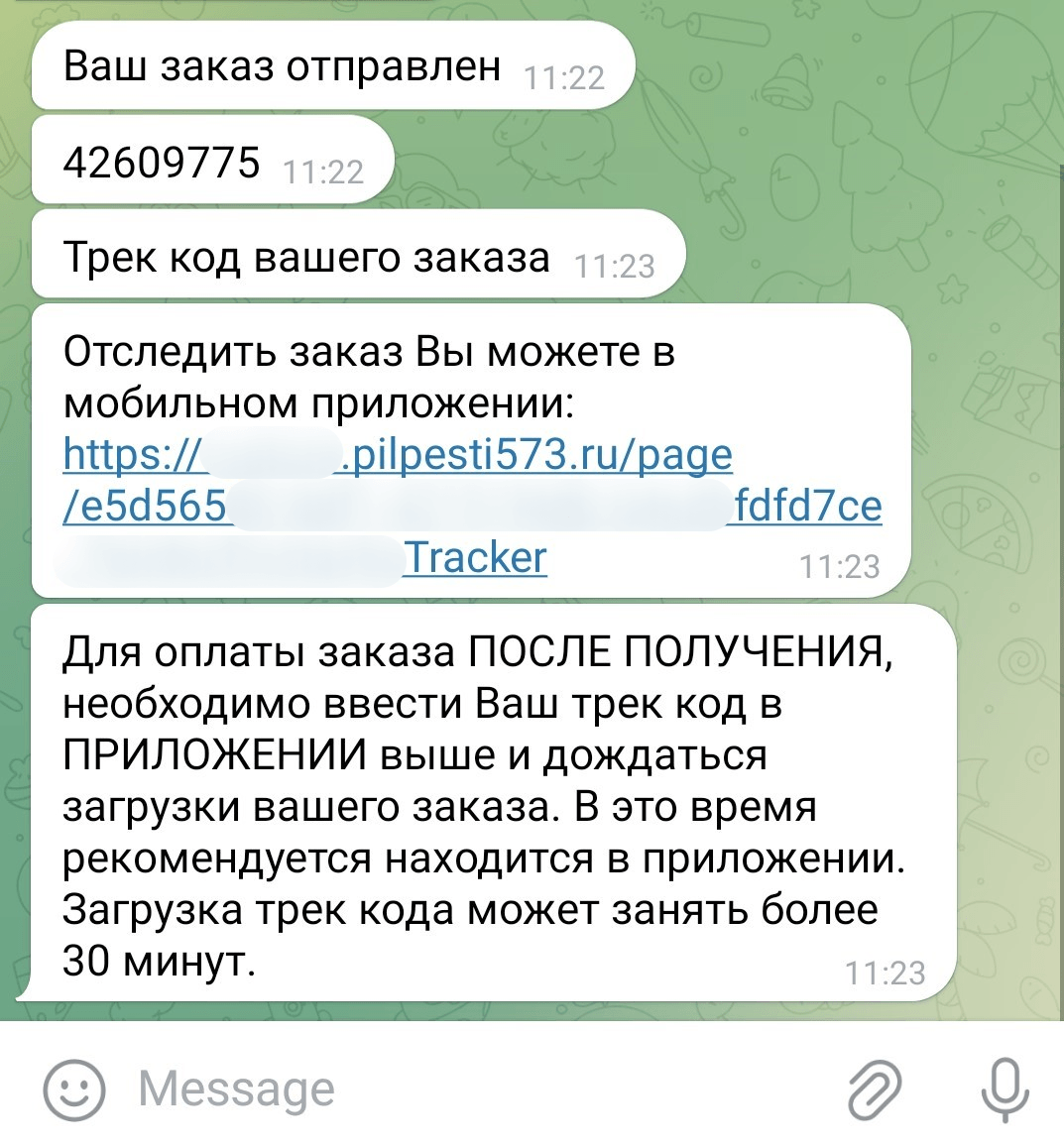
    At the end of 2024, we discovered a new distribution scheme for the Mamont banking Trojan, targeting users of Android devices in Russia. The attackers lured users with a variety of discounted products. The victim had to send a message to place an order. Some time later, the user received a phishing link to download malware disguised as a shipment tracking app.

    The phishing link as seen in the chat with the fraudsters

    See translation

    Your order has shipped.
    42609775
    Your order tracking code.
    You can track your order in the mobile app:
    https://.pilpesti573.ru/page/e5d565fdfd7ce
    Tracker
    To pay for your order AFTER YOU RECEIVE IT, enter your tracking code IN THE APP above and wait for your order details to load. We recommend keeping the app open while you are doing so. Loading the track code may take more than 30 minutes.

    In August 2024, researchers at ESET described a new NFC banking scam discovered in the Czech Republic. The scammers employed phishing websites to spread malicious mods of the legitimate app NFCGate. These used a variety of pretexts to persuade the victim to place a bank card next to the back of their phone for an NFC connection. The card details were leaked to the fraudsters who then made small contactless payments or withdrew money at ATMs.

    A similar scheme was later spotted in Russia, where malware masqueraded as banking and e-government apps. The SpyNote RAT was occasionally used as the malware dropper and NFC activator.

    A screenshot of the fake mobile app

    See translation

    Hold your card against the NFC contactless payment module for verification.
    Ready to scan

    Also in 2024, we detected many new preinstalled malicious apps that we assigned the generalized verdict of Trojan.AndroidOS.Adinstall. A further discovery, made in July, was the LinkDoor backdoor, also known as Vo1d, installed on Android-powered TV set-top boxes. It was located inside an infected system application com.google.android.services. The malware was capable of running arbitrary executables and downloading and installing any APKs.

    On top of the above, we discovered several apps on Google Play, each containing a malicious SDK implant named “SparkCat”, which began to spread at least as early as March 2024. Infected apps were deleted by the store in February 2025: nevertheless, our telemetry data shows that other apps containing SparkCat are distributed through unofficial sources.

    This SDK received a C2 server command with a list of keywords or dictionaries to search the gallery on the device for images to exfiltrate. Our data suggests that the Trojan was aimed at stealing recovery phrases for cryptocurrency wallets of Android users primarily in the UAE, Europe and Asia.

    It is worth noting that the same implant for iOS was delivered via the App Store, which makes it the first known OCR malware to sneak into Apple’s official marketplace. Apple removed the infected apps in February 2025.

    Mobile threat statistics

    We discovered 1,133,329 malicious and potentially unwanted installation packages in 2024. This was below the 2023 figure, but the difference was smaller than the year before. The trend in the number of new unique malware installation packages appears to be plateauing.

    Detected Android-specific malware and unwanted software installation packages in 2021–2024 (download)

    Detected packages by type

    Detected mobile apps by type in 2023 and 2024 (download)

    Adware and RiskTool apps continued to dominate the rankings of detected threats by type. The BrowserAd (22.8%), HiddenAd (20.3%) and Adlo (16%) families accounted for the largest number of new installation packages in the former category. RiskTool’s share grew largely due to an increase in the number of Fakapp pornographic apps.

    Share* of users attacked by the given type of malware or unwanted software out of all targeted Kaspersky mobile users in 2023–2024 (download)

    *The total may exceed 100% if the same users experienced multiple attack types.

    Banking Trojans gained three positions as compared with 2023 to occupy fourth place, following the usual leaders: adware, Trojans, and RiskTool.

    TOP 20 most frequently detected types of mobile malware

    Note that the malware rankings below exclude riskware and potentially unwanted apps, such as adware and RiskTool.

    Verdict %* 2023 %* 2024 Difference in p.p. Change in ranking
    Trojan.AndroidOS.Fakemoney.v 11.76 16.64 +4.88 +2
    DangerousObject.Multi.Generic. 14.82 11.13 –3.70 –1
    Trojan.AndroidOS.Triada.ga 0.00 6.64 +6.64
    Trojan-Banker.AndroidOS.Mamont.bc 0.00 5.36 +5.36
    Trojan.AndroidOS.Boogr.gsh 6.81 4.71 –2.10 –3
    Trojan.AndroidOS.Triada.fd 1.16 4.45 +3.29 +19
    DangerousObject.AndroidOS.GenericML 2.39 4.35 +1.96 +3
    Trojan-Downloader.AndroidOS.Dwphon.a 0.77 3.59 +2.82 +26
    Trojan-Spy.AndroidOS.SpyNote.bz 0.43 3.40 +2.97 +48
    Trojan-Spy.AndroidOS.SpyNote.bv 0.37 2.69 +2.32 +57
    Trojan.AndroidOS.Fakeapp.hk 0.00 2.51 +2.51
    Trojan.AndroidOS.Triada.gs 0.00 2.50 +2.50
    Trojan.AndroidOS.Triada.gn 0.00 2.02 +2.02
    Trojan-Downloader.AndroidOS.Agent.mm 1.46 1.91 +0.45 +6
    Trojan.AndroidOS.Triada.gm 0.00 1.84 +1.84
    Trojan.AndroidOS.Generic. 3.63 1.83 –1.80 –8
    Trojan.AndroidOS.Fakemoney.bw 0.00 1.82 +1.82
    Trojan-Banker.AndroidOS.Agent.rj 0.00 1.63 +1.63
    Trojan.AndroidOS.Fakemoney.bj 0.00 1.61 +1.61
    Trojan-Spy.AndroidOS.SpyNote.cc 0.06 1.54 +1.47

    * Share of unique users who encountered this malware as a percentage of all attacked Kaspersky mobile users

    Fakemoney, a family of investment and payout scam apps, showed the highest level of activity in 2024. Third-party WhatsApp mods with the Triada.ga embedded Trojan were third, following the generalized cloud-specific verdict of DangerousObject.Multi.Generic. Many other messaging app mods in the same family, namely Triada.fd, Triada.gs, Triada.gn and Triada.gm, hit the TOP 20 too.

    Mamont banking Trojans, ranking fourth by number of attacked users, gained high popularity with cybercriminals. These malicious apps come in a multitude of variants. They typically target users’ funds via SMS or USSD requests. One of them spreads under the guise of a parcel tracking app for fake online stores.

    Various malware files detected by machine learning technology ranked fifth (Trojan.AndroidOS.Boogr.gsh) and seventh (DangerousObject.AndroidOS.GenericML). They were followed by the Dwphon Trojan that came preinstalled on certain devices. The SpyNote RAT Trojans, which remained active throughout the year, occupied ninth, tenth and twentieth places.

    Region-specific malware

    This section describes malware types that mostly affected specific countries.

    Verdict Country* %**
    Trojan-Banker.AndroidOS.Agent.nw Turkey 99.58
    Trojan.AndroidOS.Piom.axdh Turkey 99.58
    Trojan-Banker.AndroidOS.BrowBot.q Turkey 99.18
    Trojan-Banker.AndroidOS.BrowBot.w Turkey 99.15
    Trojan.AndroidOS.Piom.bayl Turkey 98.72
    Trojan-Banker.AndroidOS.BrowBot.a Turkey 98.67
    Trojan-Spy.AndroidOS.SmsThief.wp India 98.63
    Trojan-Banker.AndroidOS.Rewardsteal.fa India 98.33
    Trojan.AndroidOS.Piom.bbfv Turkey 98.31
    Trojan-Banker.AndroidOS.BrowBot.n Turkey 98.14
    HackTool.AndroidOS.FakePay.c Brazil 97.99
    Backdoor.AndroidOS.Tambir.d Turkey 97.87
    Trojan.AndroidOS.Piom.bcqp Turkey 97.79
    HackTool.AndroidOS.FakePay.i Brazil 97.65
    Backdoor.AndroidOS.Tambir.a Turkey 97.62
    Trojan-Banker.AndroidOS.Coper.b Turkey 97.45
    HackTool.AndroidOS.FakePay.h Brazil 97.39
    Trojan-Spy.AndroidOS.SmsThief.ya India 97.09
    Trojan-Spy.AndroidOS.SmsThief.wm India 97.09
    Trojan-Banker.AndroidOS.Rewardsteal.hi India 96.68

    * Country where the malware was most active
    * Share of unique users who encountered the malware in the indicated country as a percentage of all Kaspersky mobile security users attacked by the malware

    Turkey and India accounted for the majority of region-specific threats in 2024. A variety of banking Trojans continued to be active in Turkey. Piom Trojans were associated with GodFather and BrowBot banker campaigns.

    Users in India were attacked by Rewardsteal bankers and a variety of SmsThief SMS spies. Our quarterly reports have covered FakePay utilities widespread in Brazil and designed to defraud sellers by imitating payment transactions.

    Mobile banking Trojans

    The number of new banking Trojan installation packages dropped again to 68,730 as compared to the previous year.

    The number of mobile banking Trojan installation packages detected by Kaspersky in 2021–2024 (download)

    The total number of banker attacks increased dramatically over 2023’s level despite the drop in the number of unique installation packages. The trend has persisted for years. This may suggest that scammers began to scale down their efforts to generate unique applications, focusing instead on distributing the same files to a maximum number of victims.

    TOP 10 mobile bankers

    Verdict %* 2023 %* 2024 Difference in p.p. Change in ranking
    Trojan-Banker.AndroidOS.Mamont.bc 0.00 36.70 +36.70
    Trojan-Banker.AndroidOS.Agent.rj 0.00 11.14 +11.14
    Trojan-Banker.AndroidOS.Mamont.da 0.00 4.36 +4.36
    Trojan-Banker.AndroidOS.Coper.a 0.51 3.58 +3.07 +30
    Trojan-Banker.AndroidOS.UdangaSteal.b 0.00 3.17 +3.17
    Trojan-Banker.AndroidOS.Agent.eq 21.79 3.10 –18.69 –4
    Trojan-Banker.AndroidOS.Mamont.cb 0.00 3.05 +3.05
    Trojan-Banker.AndroidOS.Bian.h 23.13 3.02 –20.11 –7
    Trojan-Banker.AndroidOS.Faketoken.z 0.68 2.96 +2.29 +18
    Trojan-Banker.AndroidOS.Coper.c 0.00 2.84 +2.84

    * Share of unique users who encountered this malware as a percentage of all users of Kaspersky mobile security solutions who encountered banking threats

    Conclusion

    The number of unique malware and unwanted software installation packages continued to decline year to year in 2024. However, the rate of that decline slowed down. The upward trend in mobile banking Trojan activity persisted despite the years-long decrease in unique installation packages.

    Cybercriminals kept trying to sneak malware into official app stores like Google Play, but we also discovered a fair number of diverse preinstalled malicious apps in 2024. Speaking of interesting techniques first spotted last year, the use of NFC for stealing bank card data stands out.

    MIL OSI Economics

  • MIL-OSI Economics: Samsung India Releases “Solve for Tomorrow” Documentary Celebrating Young Innovators

    Source: Samsung

     
    Samsung India has unveiled the “Solve for Tomorrow” documentary, which captures the inspiring journeys of the young innovators from across India in shaping ideas to solve some of the pressing problems of society.
     
    The documentary highlights the creativity, ingenuity, and resilience of the winning teams – Eco Tech Innovator and METAL and their innovative yet distinct approaches to tackle one of the most pressing social issues of India – arsenic contamination of water. The documentary is now available on JioHotstar.
     
    Samsung “Solve for Tomorrow” is a STEM (Science, Technology, Engineering and Math) based competition designed to create an innovation ecosystem in the country and foster problem solving skills of young minds. No matter where the participants come from, Samsung’s flagship CSR initiative has made it a mission to nurture their creativity and vision to resolve challenges that their communities face.
     
    The third edition of this programme feature participants from remote regions of India, underlining the reach of this initiative. Sayed Safrahan Ullah Khabir of Team Eco-Tech belongs to Golaghat in Assam, while the three members of Team Metal originate from Bihar.
     
    This 40-minute documentary vividly portrays the lives of the innovators and their challenges as they solve real-world problems that affect their communities. Samsung Solve for Tomorrow helped the participants with support, guidance, resources and funding to refine their innovations and take them to the next level.

    Watch here:  https://hotstar.com/1971002864


    MIL OSI Economics

  • MIL-OSI Asia-Pac: DOPPW conducts Interactive Training Programme under the ‘Rashtriya Karmayogi Jan Seva Program’

    Source: Government of India

    DOPPW conducts Interactive Training Programme under the ‘Rashtriya Karmayogi Jan Seva Program’

    ‘Rashtriya Karmayogi Jan Seva Program’ inspires employees with citizen first approach of the government

    Posted On: 01 MAR 2025 8:47PM by PIB Delhi

    Trained manpower equipped with the sense of dedication towards citizen is imperative for successful implementation of the policy of the government. Hence, to imbibe these qualities in the employees of the Department of Pension & Pensioners’ Welfare (DoPPW), a dynamic and interactive training program under the ‘Rashtriya Karmayogi Jan Seva Program’ was conducted in active coordination with the Capacity Building Commission. The program aimed at capacity building of the employees across various levels, from MTSs to Joint Secretary.

    The program was launched by Shri V. Srinivas, Secretary, Department of Pension & Pensioners’ Welfare, who joined the interactive training along with Shri Dhrubajyoti Sengupta, Joint Secretary, Pension. Sh. V. Srinivas underlined the importance of the training program and reiterated the government’s focus on empowering civil servants for ensuring good governance and effective public delivery mechanism. He emphasized the role of the program in bringing  3 steps transformation- Karamchari to Karmayogi, Rule based to Role based and Organisational transformation.

    The training program consists of four inter-related modules with the focus on granular understanding of the “Karmayogi Mission”. Through these modules, the participants were imparted deep knowledge on the qualities of Rashtriya Karmayogis, motive to become a Rashtriya Karmayogis, ways to create Karmayogi moments and the role of the Rashtriya Karmayogis as a Nation Builder.

    The session was actively attended by the participants and they were made aware of their role along with the importance of the department in the nation building. Vision and Mission of the department were also discussed at length. The experiences gathered during the execution of widely acclaimed Nationwide DLC Campaign 3.0 were specifically referred while discussing the modules of the program. Also, the role of department in pension policy formulation, pensioners’ grievance redressal, reduction in pension related litigation and in ensuring ‘ease in the life of pensioners’ was deliberated in sync with the content of the modules of this program. It helped the participants in relating the content of the program with their duties and responsibilities in the department.

    The program inspired the participants in becoming nation builders and cemented  their commitment  towards citizen first approach of the government.

    *********

    NKR/PSM

    (Release ID: 2107425) Visitor Counter : 16

    MIL OSI Asia Pacific News

  • MIL-OSI Asia-Pac: Text of Vice-President’s address at the 75th Anniversary celebrations of KPB Hinduja College in Mumbai (Excerpts)

    Source: Government of India (2)

    Posted On: 01 MAR 2025 8:12PM by PIB Delhi

    Very good afternoon all of you, Hon’ble Governor, Shri C.P. Radhakrishnan ji, Shri Ashok P. Hinduja ji, Chairman, the Hinduja Foundation. Ashok ji, what you reflected, express your sentiments, there can be many caveats, I am not as good as you indicated. You set a very high benchmark for me.

    We have two very distinguished members of Parliament. Praful Patel has been in Parliament since 1991, Lok Sabha and Rajya Sabha. A former Union Minister, one of the seniormost politicians of the country, has been instrumental with football association and is very good at scoring political goals.

    And another caveat that can come for me, Milind Deora. His father, Murali Deora ji, hand held me. A lovable politician for the entire nation, particularly for Mumbai.

    Milind is very promising and knows when to make the right move. I am talking about those who can give caveats. We have amongst us Honourable Minister, Mangal Prabhat Lodha. He is suave, polite, persuasive and for a man like me, if a person is gifted with three qualities, there is everything to worry about. Because you can’t anticipate, so there can be a legitimate caveat. And on top of it, if I am staggering a little, it is on account of presence of my son- in-law, Karthikeya Vajpayee.

    But the good relief is that Karthikeya is in the sound company of Soman Satya and therefore will not be in that mode at the moment. But Ashokji, you rightly focused on something which is very fundamental and a contemporaneous need. And something which is part of our civilisation ethos and essence.

    We must remain well grounded and rooted to Sanatan. And Sanatan has to be part of our culture, our education. Because Sanatan stands for inclusivity. Sanatan offers solutions to the most intractable problems the global challenges indicate. I therefore appreciate it and the endorsement by the Honourable Governor immediately is vindication of your stand. Smt Harsha Hinduja ji well I have got formidable challenge from my wife, but I take some solace. Ashok ji is facing equally strong challenge. Shri Paula Brown, President of the Hinduja Foundation is a copy book person. It doesn’t deviate from what is requirement for the college. While traversing journey of the college, she unfolded future programmes. Smt. Chandrakala Joshi, Principal, Hinduja College. When I looked at the faculty, the very distinguished faculty, I found she has to be little fair to my gender. There were more women in the faculty than men. To be on her right side, I quickly looked a Praful Patel and then extended an invite to her that the faculty will be my guest for visit to the new building of Parliament, and I’ll have the occasion to have lunch with them along with Shri Praful Patel and Shri Milind Deora.

    Bombay is a place which gave to the country a principle of quid pro quo. And I so recall because I happen to be a politician who went to Parliament in 1989 and was a Minister in 1990. But a small explanation. This is not quid pro quo.

    Distinguished members of the faculty, I must recognise the presence of some whom I know but everyone present here is a distinguished person. I convey my respects. Shri Neeraj Bajaj, Shri Amarlal Hinduja Ji, Dr. Rajesh Joshi and Shri Rupani, I have had some connect with them in one form or the other. I am particularly here for young boys and girls, and let me tell you boys and girls first, there are no backbenchers. There are only backbenches.

    And let me tell you at the outset, all my life I happen to be a gold medalist, and that was never a good idea. I suffered a traumatic obsession what will happen if I don’t come to number one? It was too late in the life I learnt, Heavens have never fallen so far. Why fear them? It is good to be in the first top ten. So never have tension, never have stress. 

    India today is envy of the world for the reason that it has your dividend, dividend of the youth. This demographic dividend is your possession, your repository. Undoubtedly you are the important stakeholders in democracy and governance. And therefore I am happy to announce here that Indian Council of World Affairs of which I happen to be the President, will have an MOU with your organisation.


    MOU will fructify in next two months. And I tell you the reason for the delay. We are awaiting a new Director. We are looking for a good person that will give you an exposure to global events. And there will be footprint of global personalities here. Around the time Ashok Hinduja celebrates his 75th birthday, So does the Institution. The milestone is glorious both for the individual and the Institution. By the way he doesn’t look that old, but this is an occasion also of stocktaking, reflection and planning for way forward. Planning in our times is very challenging. Because we have challenged times on account of onslaught of disruptive technologies. A kind of Industrial revolution. A new era is being heralded virtually every moment. Those of the diplomats who are present here and bring on the table experience and exposure of their own countries will bear me out. And therefore the Institute will have to focus way-forward strategy. It is soothing to note it has quite a mark at the national level.

    It will be a deemed University but time for it to set the tone to become a Global Institute of excellence. It was indicated a while ago. Learning! I keep on telling boys and girls, शिक्षान्त कभी नहीं होती, दीक्षांत होता है।

    Learning never stops. Even after you leave the institute you have to learn every day, and this principle was first put in public domain in pre-Socrates era by a great philosopher Heraclitus. And he was a great philosopher. He was a great philosopher. He was a great philosopher. And Heraclitus reflecting on change said the only constant in life is the change. He buttressed it by an illustration. The same person cannot enter the same river twice because neither the person is the same nor the river is the same. So boys and girls keep on learning, and what your computer tells you keep on self-learning also.

    Because you are your best teacher. Take this institute for instance. It was seeded by Shri Paramchand Hinduja ji. It was a Sindhi teaching school to begin with. And look at that sapling, the shape it has taken now. It is fructifying aspirations of 6000 students.

    Which means a small beginning yields great results. When in 1969 on 20th July, incidentally 20th July happens to be birthday of my wife. Another coincidence it was on that day in 2019, President of India signed my warrant appointing me Governor of the state of West Bengal, but let me invite attention to what Neil Armstrong said. He said small step for me, big leap for mankind.

    What was done to begin with will turn out undoubtedly according to me one of the best institutions in the world. It has vast pool of alumni across sectors. Now this has enormous potential. This potential can reflect in several ways.

    Time to harness it. An initiative can emanate from here, blessed by Hinduja Foundation. For emergence of a confederation of alumni associations. We have alumni associations but I am referring to confederation. This will go a long way in contributing sectoral policy evolution of the government. Just imagine if there are confederations of IIT alumni associations, IIM alumni associations, an association of the kind that your college represents. This confederation can go a long way. Such convergence of talent is a valuable pool for government. It can enlighten the government on policy pathways.


    Hinduja Foundation is well enabled to catalyse alumni confederation culture across institutions in the country. While I appreciate great job that is being done by the faculty, it is a satisfied faculty that makes for the institution. Institution is defined by the infrastructure because that is the basic need, but an institution is recognised by the faculty it has. I am so happy and delighted to see the faculty is committed and vibrant, but then institutions have blossomed beyond faculty and infrastructure.

    It is there in that I express a deep sense of gratitude to Hinduja Foundation and members of the family for sustaining this institution through continuous philanthropy. Ladies and gentlemen, Hinduja group has been at the centre of India’s growth story. The Hinduja group is multinational, multi-sector, conglomerate with pronounced social and cultural footprints.

    Group’s deep interest in education philanthropy and sublime commitment to Bharatiya culture are commendable. It was a pleasant revelation to me when I was laying foundation stone of a building in Bharatiya Vidya Bhavan in New Delhi. I gathered that the Hinduja group helped establish the first overseas branch of Vidya Bhavan in New York.

    A great step. The leaders of the group have realised the need to bridge East and West divide and why it is essential. Because there has to be portrayal of the orient in authentic way. Because there are challenges emanating from the West and from that perspective the group is working in that direction.

    One instance I can share with the distinguished audience. Establishment of Dharam Hinduja Indic Research Centre at Columbia University is a very desirable move. We look forward, Ashokji, for more such steps in this direction. Friends, I need to reflect on some concerning aspects for larger good. Sharing our concern is always good because then we can address the problem. Philanthropic endeavours should not be driven by philosophy of commodification and commercialisation. Our health and education sectors are being plagued by these.

    The group in this context offers emulative instance by confining philanthropy much away from commerce. The group is wedded to the concept of giving back to the society. I urge everyone so involved to nurture this culture. Many in the audience will bear me out that endowments of some of the Universities in the US is in billions of dollars.

    What is there in this country that we do not have this culture? In the West, anyone working out of an institute stands committed to make some fiscal contribution. Quantum is never important. I would urge our corporates to think in that direction.


    Friends, according to me, education is the most impactful transformative mechanism because it brings about equality. It cuts into inequities. It affords level playing field. It creates genius by discovering the genius through the path of education. Our framers of the Constitution were very wise men. They put education in the concurrent list.

    Those of you who are not lawyers, concurrent list means it is a joint concern of the State and the Union. I would appeal from this platform, a platform where I have witnessed that by way of philanthropy, it is giving back to the society. It is concurrent responsibility between the government and the private sector.

    Those in industry, trade, business and commerce must come forward and take initiatives. I appeal the country’s private sector to rise to this occasion and accord highest priority to education. My friend Praful Patel is doing it in his own way.

    I await an invitation to his contribution in this sector. India at the moment is in economic upsurge. We have phenomenal infrastructural growth, deep digitisation, technological penetration because people of this country have tasted in last decade, fruits of development.

    People centric policies have been highly rewarding. This has converted the nation as the most aspirational nation in the world at the moment and therefore education gets primacy.

    Quality education is a gift and we in the country, must work towards educational excellence. We have seen and you noticed by way of Start-ups, Unicorns and otherwise, our industries are evolving. Corporate leaders should view investment in education, not a charity.

    Beyond philanthropy, it is investment in our present, investment in our future and to put it straight away, it is investment for development of the industry, business and trade. And therefore all efforts must be taken that these investments take quantum leap.

    Look at our country. If our GDP at one point of time was one third of the world or more, it was premised on what count? We had glorified Institutions– Udantpuri, Takshashila, Vikramshila, Sompura, Nalanda, Vallabhi. The world frowned. Scholars came from every nook and corner of the globe to get knowledge and give knowledge and share knowledge.

    Thirst of knowledge was satisfied. But then what happened about 1200 years ago? Nalanda, ancient India’s intellectual jewel, it housed 10,000 students and 2,000 teachers. Nine-storied building.

    And what happened? 1193, Bakhtiyar Khilji, reckless destroyer of our culture, our academic Institution. The premises were set to fire. For months, fire consumed vast libraries, turning hundreds and thousands of irreplaceable manuscripts on Mathematics, Medicine and Philosophy to ash.This vandalised devastation wasn’t merely architectural but represented the systematic erasion of centuries of knowledge, and that makes Ashok ji your observation relevant. We must make our people aware about Sanatan values.

    Ladies and gentlemen, what vanished in those flames was the living record of ancient Indian thought, creating an intellectual void that continues to echo through history as one of this civilisation’s most profound cultural losses. Just look around which country can take pride in 5,000 years of civilisation ethos. No one comes close to us.

    And now, fortunately, in this century, we have re-arrived at the global stage. We need to reclaim that glory. We are on way. We have to take a holistic view of education in this country. I call upon leaders, Parliamentarians and thought leaders present here. We have to monetise every moment of this century.

    We cannot afford to fall victim or prey to narratives that emanate from sources that are inimical to the very existence of Bharat. We have to work to revive institutions like Nalanda, our intellectual legacy, and this is essential for realising goal of Viksit Bharat at 2047.

    Friends, the entire world knows today India is no longer a nation with potential. Viksit Bharat is not a dream. It is a certain definitive destination, and it may be fast-tracked much before 2047 if we bestow intelligent attention to education. We have a litany of IITs, IIMs across India’s academic landscape. But right now, if you look around, many niche areas, our Institutional footprint is either fragile, thin or not at all there.

    Now, when we are faced with such a situation, it is fundamentally required that we diagnose the issue. A resolution cannot emanate unless we know the ground reality. These are the areas where we can take lead in the world.

    It is for the first time, I think, in last several decades, that India is in single-digit number of countries that are focussing on Quantum computing, green hydrogen, Artificial Intelligence, and even commercial exploitation of 6G technology, but then, we need skilled men force.

    Our young boys and girls are still in the same silo or groove of government jobs. My young friends, boys and girls, if International Monetary Fund accolades Bharat as a favourite destination of investment and opportunity, it is not on account of government jobs.

    If World Bank hails us with the digitisation that has happened in this country, penetration of opportunity to the last village in six years is otherwise not accomplishable in four decades, and therefore, please be aware of the opportunity basket that is ever getting enlarged for you.

    Whether it is Blue economy, Space economy, whether you are on the sea surface, deep sea, ground, sky or space, opportunities for our youth and corporates are ever enlarging. But then, Institutions like yours have to be crucibles of change. You have to focus very deeply on research.

    I must share with you one concern. Research is not for the shelf. Research is not supposed to be on the shelf. Research is not an assimilation of cut and paste. Research is not surface scratching. Research has to correlate to the ground transformative mechanisms. And therefore, everyone involved with research, we must be having stringent standards to assess our research. This country has a great potential. Government is only one facet.

    If we go much beyond the government and give ideas to the people, in any field, results will be geometric. Ashok ji, I’m making an appeal to you now. Through you, I’m making an appeal to everyone who is possessed of wealth, possessed of wisdom, and keenly devoted to serving the society by giving it back.

    Please, let us have green field institutions in these areas for new and emerging technologies. There must be centres of research. And I can share with you, distinguished audience, and my two very distinguished Parliamentarian friends will bear me out and the Honourable Minister would also know of it. The governmental policies are going a long way in promoting contribution in these areas. Long way. Only a team has to be constituted by leaders in industry, trade, commerce and business to exploit the fullest potential of these areas.

    I have for a long time held an idea dear to me if the corporates come together our organisations like FICCI, CII, ASSOCHAM, PHD and various other chambers. If they pool their CSR, we can have every year Institutes of Excellence springing up in various parts of the country. If the modest target is set for four in a year, the Govt has only land to make available. Rest, I am sure you will bear me out.

    Rest I am sure you will give me out Industries while capable when it comes to creating infrastructure of securing even faculty. Faculty is best attracted through the industry because then there is an assurance of stability. so these kind of Ideas must be there.

    Another issue which we are facing in the countries, we have Institutes of Excellence But the variation is taking place only on the account of faculty, there is no infrastructural variation. faculty mobility you have to think about it. Presently, the system is such that a systemic change is required But the foundation stature of Hinduja foundation  can catalyse the big movement in this area  and therefore faculty members from  one place to another can navigate. There can be a group to look after them that will go a long way.

    Technology has to be used in particular to change the rural landscape of rural education, that is foundational and to bring that about we have to use Technology. The country at the moment has 400 aspirational blocks. If corporates adopt blocks then what they will get.  in every village you will find land for the school, enough infrastructure even teachers are well paid as compared to the private. What is lacking is motivation and greasing. So that engine of education can fire on all cylinders. The corporates converge on this idea to adopt aspirational blocks and that I can assure you will be a gamechanger. This will reflect public private partnership in sublimity and making lives of India much better.

    Friends, as we commemorate 75 years of KPB Hinduja college, Let us celebrate the rich legacy. Let us pay our tributes to the legendary figure who had this vision and nurture it to the next level. Let us leverage every resource to make it a global benchmark. with the collective efforts of faculty, students,  alumni and stakeholders, I have no doubt that this college will scale greater heights in the years to come as deemed University.

    I extend my heartfelt congratulations to KPB Hinduja College, Hinduja Foundation and Hinduja Family on this remarkable milestone.  May the next 75 years be even more glorious, filled with new achievements, milestones, and contributions to society.

    ***

    JK/RC/SM

    (Release ID: 2107409) Visitor Counter : 56

    MIL OSI Asia Pacific News

  • MIL-OSI Asia-Pac: Philanthropic endeavour should not be driven by philosophy of commodification and commercialisation, emphasises the Vice-President

    Source: Government of India (2)

    Philanthropic endeavour should not be driven by philosophy of commodification and commercialisation, emphasises the Vice-President

    Education is the concurrent responsibility of the government and the private sector-VP

    Destruction of Nalanda by Khilji wasn’t merely architectural, but represented the systemic erasure of centuries of knowledge-VP

    VP addresses 75th Anniversary Celebration of KPB Hinduja College in Mumbai

    Posted On: 01 MAR 2025 8:02PM by PIB Delhi

    The Vice-President, Shri Jagdeep Dhankhar today stated that, “ Philanthropic endeavour should not be driven by philosophy of commodification and commercialisation. Our health and education sectors are being plagued by these……..Corporate leaders should view investment in education beyond philanthropy. It is investment in our present, investment in our future and to put it straightway, it is investment for development of industry, business and trade”.

    Delivering his address as Chief guest at the ceremony marking 75 years of K.P.B Hinduja College of Commerce in Mumbai, Maharashtra today , Shri Dhankhar stated,  “ Education is the most impactful, transformative mechanism because it brings about equality. It cuts into inequities, it affords level playing field. It creates genius by discovering the genius through the path of education. Our framers of the Constitution were very wise men. They put education in the concurrent list. Those of you who are not lawyers, by concurrent list means it is a joint concern of the state and the union”.

    Urging the industry and corporate leaders to contribute to education, Shri Dhankhar stated, “ I would appeal from this platform, a platform where I have witnessed that by way of philanthropy, it is giving back to the society. It is concurrent responsibility of the government and the private sector. Those in industry, trade, business and commerce must come forward and take initiative. I appeal the country’s private sector to rise to this occasion and accord the highest priority to education”.

    “Many in the audience will bear me out that endowments of some of the universities in the US are in billions of dollars. What is there in this country that we do not have this culture? In the West, anyone walking out of an institute stands committed to make some fiscal contribution. Quantum is never important”, he added.

    Reflecting on the legacy of institutions like Nalanda, Shri Dhankhar underlined, “We had glorified institutions, Odantapuri, Takshila, Vikramshila, Somapura, Nalanda, Vallabhi…..scholars came from every nook and corner of the globe to get knowledge, give knowledge and share knowledge. Thirst of knowledge was satisfied. But then what happened about twelve hundred years ago! Nalanda, ancient India’s intellectual jewel. It housed ten thousand students and two thousand teachers, nine-storey building and what happened, 1193? Bakhtiyar Khilji, reckless destroyer of our culture, our academic institution, the premises were set to fire. For months, fire consumed vast libraries, turning hundreds and thousands of irreplaceable manuscripts on mathematics, medicine, and philosophy to ash. This vandalized devastation wasn’t merely architectural, but represented the systemic erasure of centuries of knowledge”.

    Dr. Sudesh Dhankhar, spouse of the Vice-President, Shri C.P. Radhakrishnan, Governor of Maharashtra, Shri Ashok P. Hinduja, Chairman of Hinduja Group and other dignitaries were also present on the occasion.

    ***
     

    JK/RC/SM

    (Release ID: 2107404) Visitor Counter : 18

    MIL OSI Asia Pacific News

  • MIL-OSI Asia-Pac: Union Minister of Commerce & Industry Shri Piyush Goyal emphasises mutual funds industry’s role in India’s growth at AMFI Summit 2025

    Source: Government of India (2)

    Union Minister of Commerce & Industry Shri Piyush Goyal emphasises mutual funds industry’s role in India’s growth at AMFI Summit 2025

    Shri Goyal urges industry to safeguard small investors and minimise market volatility

    Domestic investors will shape India’s future, not Foreign Institutional Investors: Shri Goyal

    Posted On: 01 MAR 2025 8:12PM by PIB Delhi

    The mutual funds industry has played a pivotal role in India’s growth story by encouraging financial literacy and taking innovative financial ideas to the industry and the investors. This was stated by Union Minister of Commerce & Industry Shri Piyush Goyal during his address as a Chief Guest at the Association of Mutual Funds in India (AMFI) Mutual Fund Summit 2025 today in Mumbai

    The Minister further complimented the domestic investors for filling the gap created by the foreign institutional investors (FIIs) post-Covid. “Collective investment methods like SIPs along with domestic investors supported the market. They helped in spreading financial awareness and financial products to every part of the country, he said.

    Highlighting the importance of safeguarding the importance of small investors and other key stakeholders, Shri Goyal urged the industry leaders to reflect on ways to minimise volatility in the stock market. Large fund inflows, compulsions of the market to deploy capital, fear among investors on missing out on attractive stocks brought crises among investors during rightsizing. There has been a lot of misinformation flow about the unending ability of the market to go on a one-way street, he noted, and described the unpredictability of the stock market as a wakeup call for the industry and its small investors. 

    AMFI should also become conscious of its duties by isolating misguided investors from the rest. Companies with mettle have maintained reasonable prices at the stock market during recent turbulence, he noted. He said that duties and responsibilities of the industry towards the market are larger than the profitable returns investors enjoy in the short term. He also added that government spending and private capex are showing signs of comeback.  

    Elaborating on the responsibilities of the mutual funds industry towards its investors, the Minister urged the participants to be more diligent in cautioning investors from taking risks. He hoped that initiatives as such will spur India’s growth story for the next 22 years. Shri Goyal urged the industry to support and handhold investors, look at financial inclusion as a collective responsibility and take up financial education as its duty.

    Shri Goyal asserted that assets under management (AUM) in the mutual funds industry at nearly Rs 70 lakh crore and soon to be Rs 100 lakh crore will dominate the market and domestic investors will determine India’s future not the foreign institutional investors. He also highlighted the need for the industry as wealth creators to have a fair and organised market.

    ***

    Abhishek Dayal/Abhijith Narayanan/Asmitabha Manna

    (Release ID: 2107410) Visitor Counter : 44

    MIL OSI Asia Pacific News

  • MIL-OSI Asia-Pac: MIT Professor Jonathan Fleming praises Govt. of India’s efforts and remarkable achievements in women empowerment

    Source: Government of India

    MIT Professor Jonathan Fleming praises Govt. of India’s efforts and remarkable achievements in women empowerment

    Jonathan Fleming interacts with Namo Drone Didis at Pusa Campus of ICAR

    Namo Drone Didis make a live demonstration in field by using drone technology

    Posted On: 01 MAR 2025 7:41PM by PIB Delhi

    Professor Jonathan Fleming, Senior Lecturer, MIT Sloan School of Management, USA has appreciated the efforts of the Government of India and remarkable achievements in women empowerment. While interacting with the Namo Drone Didis at ICAR Pusa campus in New Delhi today, he said he was excited to see how India is using technology for women empowerment and such initiative is an inspiration for not only women in rural areas of India, but also in other countries who can learn from this concept.  Prof. Fleming was highly impressed by the process of training and benefits the women getting from the use of latest technology in India.

        The Drone Didis explained to the visiting professor about the efforts of the Government of India to enable them to use drone technology and providing financial assistance to become Drone Didis. While interacting with Prof. Jonathan Fleming, Didis told how using Drone is helping them spray fertilizers and pesticides in dense crops where manual spraying has been a big challenge. They also told that they feel proud to be called as Drone Didis and their financial condition has improved significantly. The Didis mentioned that Prime Minister of India Shri Narendra Modi is a great visionary and he has brought a great scheme for them.


        Prof. Jonathan also visited the Drone Robotic and Machine Learning Centre of IRAI, where he was showcased different types of drones developed by the institute and how they are making difference in the traditional farming with the use of technology. Dr. Ravi Sahoo, Principal Scientist, Division of Agricultural Physics, IRAI, New Delhi briefed him about Drone journey of India and explained to him on how India is integrating the indigenous knowledge and modern technology to reform the agriculture sector which is the backbone of Indian Economy and social system. Professor Jonathan found this technological development very interesting and said that India is not only transforming the present agriculture system but also investing in the future.

      Namo Drone Didi scheme was briefed to the visiting professor by Mr. Raman Wadhwa, Deputy Director, National Rural Livelihoods Mission. Four Namo Didis namely Ms. Gita, Ms. Sita, Ms. Priyanka, and Ms. Hemlata made a live demonstration of spraying by the Drone in the fields of IARI campus before the US dignitary.

          Later speaking to the media, Professor Jonathan Fleming said 100 percent beneficiaries of the Drone incentive scheme in the USA are men, while in India it’s totally opposite as all the beneficiaries are women which is a great example of how India is using technology for empowerment of women. “I am going back to my country with so many positive messages for my government from my wonderful experiences in India”, he said.


         Dr. Rajeev Ranjan, Senior Scientist, Division of Agricultural Physics, IARI, New Delhi along with his team of scientist, Shri SB Pawar from Ministry of Agriculture, Shri Bibhu and Shri Arvind from NRLM, several officials from IFFCO, officials from states of Haryana and Uttar Pradesh State Livelihood Missions were also present on this occasion.

    *****

    MG/RN/KSR

    (Release ID: 2107388) Visitor Counter : 27

    MIL OSI Asia Pacific News

  • MIL-OSI Asia-Pac: President visits UNESCO World Heritage Site Dholavira

    Source: Government of India

    Posted On: 01 MAR 2025 7:38PM by PIB Delhi

    President of India Smt. Droupadi Murmu, today, visited the UNESCO World Heritage Site Dholavira in Gujarat. The site is located on the arid island of Khadir in Kachchh district.

    President expressed great appreciation for the meticulous conservation efforts carried out by the Archaeological Survey of India to preserve the heritage of the Harappan Civilization despite the site being located at a remote location.

    Accompanied with Governor of Gujarat and other dignitaries, the President was deeply impressed by the sheer size and scale of Dholavira, noting that it would take at least three to four days to fully explore and understand the iconic site.

    She expressed her admiration for the technological advancements of the Harappans, noting that in several aspects, they were more advanced than the present era.

    The Director General of the ASI, Shri Y. S. Rawat, along with other senior officials, had the privilege of guiding the Hon’ble President through the site, explaining the key discoveries and ongoing conservation and upgradation initiatives.


    Dholavira, is one of the most significant and well-preserved archaeological sites in the subcontinent, showcasing architectural and engineering brilliance of the Harappan people. It showcases advanced town planning skills with sophisticated water conservation system, well-structured reservoirs, urban settlements etc.

    With its inscription in the UNESCO World Heritage Site List in 2021, Dholavira has gained international recognition attracting scholars, archaeologists and history enthusiasts from around the world.

    The President’s visit to Dholavira reiterates the importance of creating awareness of its historical treasures and preserving India’s ancient heritage to the people.

    The ancient site of Dholavira was excavated by the Archaeological Survey of India during 1990-2005 under the supervision of Dr. Ravindra Singh Bisht and yielded habitation in seven cultural phases from 3000-1500 BCE, adding new facets in the understanding of the Harappan Civilization and its relation with other Bronze age civilizations during the 3rd Millennium BCE.

    ****

    Sunil Kumar Tiwari

    pibculture[at]gmail[dot]com

    (Release ID: 2107386) Visitor Counter : 70

    MIL OSI Asia Pacific News

  • MIL-OSI Asia-Pac: Secretary, Department of Pharmaceuticals Inaugurates Jan Aushadhi Kendra Model at Dilli Haat, INA, New Delhi today to spread awareness among the citizens

    Source: Government of India

    Secretary, Department of Pharmaceuticals Inaugurates Jan Aushadhi Kendra Model at Dilli Haat, INA, New Delhi today to spread awareness among the citizens

    Interactive session with the people visiting Dilli Haat to enlighten them about Pradhan Mantri Bharatiya Janaushadhi Pariyojna

    Posted On: 01 MAR 2025 7:35PM by PIB Delhi

    A model of Jan Aushadhi Kendra was inaugurated today by Shri Amit Agrawal, Secretary, Department of Pharmaceuticals, Government of India at Dilli Haat, INA, New Delhi, to make the people aware about Pradhan Mantri Bharatiya Janaushadhi Pariyojna (PMBJP).

    Shri Ravi Dadhich, CEO, Pharmaceuticals and Medical Devices Bureau of India (PMBI) was also present on the occasion. An interactive session was conducted with the people visiting Dilli Haat to enlighten them about the high-quality affordable medicines which are being sold through Jan Aushadhi Kendras.

    At the initiative of the Prime Minister Shri Narendra Modi, the 7th of March is celebrated every year as “Jan Aushadhi Diwas” with a view to enhance awareness about the scheme and promote generic medicines.  As in earlier years, week-long events have been planned at various locations across the country from the 1st to the 7th of March 2025.


    As on 31.01.2025, 15000 Jan Aushadhi Kendras (JAKs) have been opened across the country. Product basket of PMBJP comprises 2047 drugs and 300 surgical equipment which are sold at retail shops at 50% to 80% cheaper than branded medicines.

    Under PMBJP, the Government has set a target to open 25000 JAKs by 31st March, 2027 across the country. The target of opening 15000 JAKs by March, 2025 has already been achieved by PMBI on 31.01.2025.

     *****

    MV/AKS

    (Release ID: 2107381) Visitor Counter : 13

    MIL OSI Asia Pacific News

  • MIL-OSI Asia-Pac: ‘Sugamya Yatra’, a pioneering initiative towards Accessibility and Inclusivity, organised on the International Wheelchair Day 2025 in New Delhi

    Source: Government of India

    Posted On: 01 MAR 2025 6:35PM by PIB Delhi

    On the occasion of International Wheelchair Day 2025, Sugamya Yatra was organized today at Rajiv Chowk Metro Station, New Delhi, by the Department of Empowerment of Persons with Disabilities (DEPwD), Union Ministry of Social Justice and Empowerment (MSJE) and the Office of the Chief Commissioner for Persons with Disabilities (CCPD).  The Yatra aims to break myths associated with wheelchair users, promote accessibility, and encourage inclusivity in society.

    The initiative received support from the Pt. Deendayal Upadhyaya National Institute for Persons with Physical Disabilities (PDDU-NIPPD), Indian Sign Language Research and Training Centre (ISLRTC), Delhi Metro Rail Corporation (DMRC), and Samarthyam – Centre for Universal Accessibility. Students and faculty members from the School of Planning and Architecture, the Vastu Kala Academy, Asha School, the PDDU-NIPPD and Delhi University participated in the event.


    Key Activities at the Event:


    • Accessibility Walk – An interactive experience where citizens and policymakers understood the real-life challenges faced by wheelchair users.
    • Experiential Simulation Exercise – Non-disabled individuals used wheelchairs to gain firsthand experience of accessibility challenges.
    • Panel Discussion – A thought-provoking dialogue featuring policymakers, social activists, and members of the disability community on inclusivity, accessibility, and disability rights.


    Speaking at the event, Shri Rajesh Aggarwal, Secretary, DEPwD, MSJE, emphasized the importance of accessibility, stating, “The Accessible India Campaign (Sugamya Bharat Abhiyan) was launched by Prime Minister Shri Narendra Modi in 2015, with the aim of making government buildings accessible to persons with disabilities. However, we often receive complaints that many buildings are still not fully accessible. Keeping this in mind, the campaign has been reactivated nationwide starting last month, with today’s event marking the beginning in New Delhi. This initiative will not only enhance accessibility in both government and private spaces but also create widespread awareness about inclusivity.”

    Shri Aggarwal urged media professionals and the general public to actively participate in fostering an inclusive and accessible environment. He also stressed the importance of making digital content more accessible, stating, “While posting photos on social media, it is essential to add ALT descriptions, and for videos, transcriptions should be mandatory to ensure information is accessible to all”.

    Ms. Manmeet Kaur Nanda, Joint Secretary, DEPwD, reaffirmed the government’s commitment to expanding the Sugamya Yatra initiative nationwide. “Our efforts will not be limited to government offices alone; we will actively engage with private organizations to collaborate on making workplaces and public spaces more accessible for persons with disabilities,” she said.

    Dr. S. Govindaraj, the Commissioner for Persons with Disabilities (CCPD) spoke on how Sugamya Yatra is an expression of a life journey where everyone has many ups and downs. He emphasised that it is the duty of the society to support and strengthen the underprivileged and marginalised sections, especially persons with disabilities so as to let them enjoy the benefits of developments as any other fellow citizen. He highlighted the commitment of the Department of Empowerment of Persons with Disabilities and the CCPD Office to see that our whole nation is accessible and inclusive.  He added that the launch of Sugamya Yatra in New Delhi on the International Day of Wheelchair is not a one-day event but just an initiation which should stay strong till it accomplishes its goal.

    Ms. Anjlee Agarwal, Executive Director, Samarthyam, highlighted the long-term vision of the initiative, and said, “Sugamya Yatra will be conducted across India, from villages to metropolitan cities, beginning today in Delhi. This initiative serves as a crucial message to policymakers, engineers, and architects to take proactive measures in making our environment disability-friendly.”

    The event sent a powerful message that by eliminating mobility barriers, persons with disabilities can achieve greater independence and economic empowerment, paving the way for a truly inclusive society.

    *****

    VM

    (Release ID: 2107354) Visitor Counter : 11

    MIL OSI Asia Pacific News

  • MIL-OSI Asia-Pac: 49th Civil Accounts Day celebrated to mark the 49th foundation day of Indian Civil Accounts Service (ICAS) in New Delhi

    Source: Government of India

    49th Civil Accounts Day celebrated to mark the 49th foundation day of Indian Civil Accounts Service (ICAS) in New Delhi

    In a journey from departmentalisation to digitalisation, ICAS has brought a silent revolution through Public Financial Management System (PFMS): Union Finance Minister Smt. Nirmala Sitharaman

    Expenditure Secretary Dr. Manoj Govil emphasises need of harmonisation of Union and State Accounts including Urban, Rural and Local Bodies

    CGA Shri Shyam Dubey outlined CGA’s demonstrated robustness, especially during the COVID-19 pandemic, transferring over Rs. 22.85 lakh crore, including DBT schemes

    PFMS acts as a critical digital infrastructure to enable transactions between different economic entities efficiently and transparently: Dr. Panagariya

    Posted On: 01 MAR 2025 6:29PM by PIB Delhi

    The Civil Accounts Day 2025 was celebrated in New Delhi today to mark the 49th foundation day of Indian Civil Accounts Service (ICAS) with the Union Minister for Finance and Corporate Affairs, Smt. Nirmala Sitharaman, presiding over as Chief Guest.

    Dr. Manoj Govil, Secretary, Department of Expenditure, Ministry of Finance; and Shri Shyam S. Dubey, Controller General of Accounts (CGA), were also present on the occasion. Officers and staff of the Indian Civil Accounts Organisation, Financial Advisers of Government of India, other Senior Officials of Department of Expenditure and other Ministries /Departments of Government of India, retired ICAS Officers, senior officers from Banks and State Governments, among others, were also part of the celebrations.

    During the inaugural function, the Union Finance Minister also released a compendium on the Public Financial Management System (PFMS), titled “Digitalisation of Public Financial Management in India: The Transformative Decade (2014-24)”.


    During the Foundation Day, a short film on the evolution and achievements of the Indian Civil Accounts Organisation (ICAO) was also screened.

    In her address on the occasion, the Union Finance Minister recognised the role played by PFMS in achieving the key goals of governance which included: reaching the last mile benefitting 60 crore beneficiaries, direct delivery of more than 1200 central and state schemes which includes 1100 DBT schemes, end-to-end digitization through integration with 250 plus external systems such as GeM, GSTIN, TIN 2.0, PM Kisan and many more.

    Smt. Sitharaman said that PFMS has led to strengthening of cooperative federalism through integration of 31 state treasuries and 40 lakh programme implementing agencies enabling seamless financial management for millions of citizens ensuring timely and transparent disbursement of government funds.

    The Union Finance Minister underlined PFMS as the network of networks with 650 financial institutions – RBI, NPCI, Public and Private sector banks – facilitating seamless fund transfers, with the volume of PFMS transactions has gone up exponentially from 2 crore payments in 2015 to 250 crore in 2024.


    Referencing the July 2024 Union Budget, Smt. Sitharaman underlined the suggestion with respect to “improving data governance, collection, processing and management of data and statistics, different sectoral databases, including those established under the Digital India mission, could be utilized with active use of technology tools”, and added that CGA has the potential to work in this regard as the custodian of huge database. The Union Finance Minister emphasised on sharing India’s digital public finance expertise globally, and urged the CGA to collaborate with other countries to leverage PFMS’s technology to enhance their financial governance systems. Smt. Sitharaman also encouraged CGA to make efforts to create public awareness among citizens and taxpayers on how transparent financial systems operate.

    In his address on the occasion, Dr. Manoj Govil recognised the efforts made by CGA and the team of officers towards timely laying of annual accounts, digitisation of accounts and timely discharge of payments and various achievements of PFMS bringing in efficient Public Financial Management. Dr. Govil emphasised on the need of harmonisation of Union and State Accounts including the Urban, Rural and Local Bodies so as to facilitate better financial reporting.


    Earlier, in his welcome address, Shri Shyam S. Dubey gave details of the achievements of the organisation during the year in the area of accounts, Public Financial Management and capacity building. Shri Dubey outlined the organisation’s demonstrated robustness during the COVID-19 pandemic, transferring over Rs. 22.85 lakh crore, including DBT schemes.

    Shri Dubey further informed the gathering of the recently developed functionality of electronic utilisation certificate (e-UC) and e-Asset module of PFMS-SAMPATI, enabling digital recording, tracking and management of capital physical assets as mandated by the FRBM Act.

    The inaugural session was followed by keynote address by Dr. Arvind Panagariya, Chairman, 16thFinance Commission, on “India in the Global Economy: The Next Decade.”

    Calling PFMS as “incredible”, Dr. Panagariya stated that PFMS acts as a critical digital infrastructure to enable transactions between different economic entities efficiently and transparently. Dr. Panagariya stated that UPI & PFMS should be part of India’s international diplomatic outreach and global relationship, and called for greater integration of PFMS with the State Governments and Urban and Rural Local Bodies.

    Despite the periodic global and domestic economic crises, Dr. Panagariya stated that the factual data of economic growth of the last two decades, starting from 2003-2004, shows the plausibility and the feasibility of the growth potential of the Indian economy in the coming decade being able to reach the 10 trillion dollar GDP mark, as well as the 2047 target of “Viksit Bharat” set by the Prime Minister, Shri Narendra Modi.

    ****

    NB/KMN

    (Release ID: 2107352) Visitor Counter : 40

    MIL OSI Asia Pacific News

  • MIL-OSI Asia-Pac: English rendering of PM’s address at post-budget webinar on agriculture and rural prosperity

    Source: Government of India

    Posted On: 01 MAR 2025 3:55PM by PIB Delhi

    Namaskar!

    After the budget, your presence in the budget-related webinar is very important. Thank you all for joining this program. This year’s budget was the first full budget of the third term of our government. This budget not only shows continuity in our policies, but also shows a new expansion in the vision of a developed India. The inputs and suggestions given by all of you stakeholders before the budget were very useful while preparing the budget. Now in implementing this budget more effectively, in getting the best and quickest outcome, in making all the decisions and policies effective, your role has increased further.

    Friends, 

    India’s resolve to move towards the goal of a developed India is very clear. We are all together engaged in building such an India where farmers are prosperous and empowered. Our endeavour is to ensure that no farmer is left behind and every farmer is encouraged to move forward. We have given a place of pride to our Annadatas, considering agriculture as the first engine of development. We are moving together towards two major goals, first- development of the agriculture sector and second- prosperity of our villages.

    Friends, 

    The PM Kisan Nidhi Yojana was implemented 6 years ago. Under this scheme, farmers have received almost 4 lakh crore rupees so far. This amount has been directly transferred to the accounts of nearly 11 crore farmers. With this financial assistance of 6 thousand rupees annually, the rural economy is getting strengthened. We have created a farmer-centric digital infrastructure so that the benefits of this scheme can reach farmers across the country. That is, there is no scope for any middleman to enter or leakage in this, a no-cut company. This is an example of the fact that if experts and visionary people like you cooperate, then the scheme succeeds as soon as possible and gives better results. With your contribution, any scheme can be implemented with full strength and transparency. I would like to appreciate your cooperation in this and your active cooperation always. Now it is necessary that we work together and speedily to implement the announcements of this year’s budget. In this also we will get your cooperation as before, but we should get more cooperation and more comprehensive cooperation in every sector. 

    Friends, 

    As you now know, today India’s agricultural production is at a record level. The agricultural production which was around 265 million tonnes 10-11 years ago has now increased to more than 330 million tonnes. Similarly, the production related to horticulture has increased to more than 350 million tonnes. This is the result of our government’s seed to market approach. Agricultural reforms, empowerment of farmers and strong value chain have made this possible. Now we have to reach even bigger targets by making full use of the agricultural potential of the country. In this direction, we have announced the PM Dhan Dhanya Krishi Yojana in the budget, this is a very important scheme for me. Under this, the focus will be on the development of the 100 districts with the lowest agricultural productivity in the country. You all have seen the results of the Aspirational District program on many parameters of development. These districts are getting a lot of benefits of collaboration, governance and healthy competition, and convergence. I would like all of you to study the results obtained from such districts and learn from their learnings and take the PM Dhan Dhanya Krishi Yojana forward at a very fast pace in these 100 districts. This will help in increasing the income of farmers in these 100 districts.

    Friends, 

    In the last few years, due to our efforts, the production of pulses has increased in the country, and I also congratulate the farmers for this. But, still 20 percent of our domestic consumption is dependent on foreign countries, on imports. That means we have to increase our pulses production. We have achieved self-sufficiency in gram and moong. But we have to work more rapidly to increase the production of tur, urad and masoor. To speed up the production of pulses, it is necessary to maintain the supply of improved seeds and promote hybrid varieties. For this, all of you will have to focus on solving challenges like climate change, market uncertainty, and price fluctuations.

    Friends, 

    In the last decade, ICAR has used modern tools and cutting-edge technologies in the breeding program. This has led to the development of more than 2900 new varieties in various crops including cereals, oilseeds, pulses, fodder, sugarcane between 2014 and 2024. You have to ensure that the farmers of our country get these new varieties at affordable rates. We also have to ensure that the farmers’ yield is not affected by the fluctuations of the weather. You know that this time in the budget, it has been announced to start a national mission for high yielding seeds. I would especially like to tell the people from the private sector who are present in this program to definitely focus on the dissemination of these seeds. To ensure that these seeds reach small farmers, they will have to be made a part of the seed chain, and it is our job to decide how to become one.

    Friends, 

    You all are seeing that today people have become very aware about nutrition. Therefore, in view of the increasing demand for horticulture, dairy and fishery products, a lot of investment has been made in these sectors. Many programs are being run to increase the production of fruits and vegetables. The formation of Makhana Board in Bihar has also been announced. I urge all of you stakeholders to find new ways to spread diverse nutritional foods. Such nutritional foods should reach every corner of the country and the global market.

    Friends, 

    In 2019, we launched the PM Matsya Sampada Yojana. This was an important step towards strengthening the value chain of this sector, creating infrastructure and modernizing it. This helped in improving production, productivity and post-harvest management in the field of fisheries. In the past years, investment in this sector was also increased through many schemes, the results of which are in front of us today. Today fish production has doubled, our exports have also doubled. Our effort is to promote sustainable fisheries from the Indian Exclusive Economic Zone and the open sea. An action plan will be prepared for this. I would like all of you to brainstorm on ideas that promote Ease of Doing Business in this sector and start working on them as soon as possible. Along with this, we will also have to ensure the protection of the interests of our traditional fishermen.

    Friends, 

    Our government is committed to making the rural economy prosperous. Under the Pradhan Mantri Awas Yojana-Gramin, crores of poor people are being given houses, property owners have got ‘Record of Rights’ through the Swamitva Yojana. We have increased the economic strength of self-help groups and have increased help to them. Small farmers and businessmen have benefited from the Pradhan Mantri Gram Sadak Yojana. We have set a target of making 3 crore Lakhpati Didis. Due to our efforts, more than 1.25 crore sisters have become Lakhpati Didis. The announcement of rural prosperity and development programs in this budget has created the possibility of many new employment opportunities. Investment in skilling and technology is creating new opportunities. All of you must discuss these topics on how to make the ongoing schemes more effective. Your suggestions and contributions in this direction will definitely yield positive results. Only with the active participation of all of us, villages will be empowered, rural families will be empowered. And I am confident that this webinar will be truly about implementing the budget as soon as possible, in the shortest possible time, and in the best possible manner, and that too with the cooperation and suggestions of all of you. Now it should not happen that in this webinar there is a discussion about making a new budget. Now this budget has been made, now this scheme has come. Now our entire focus should be on action. What are the difficulties in action, what are the shortcomings, what kind of changes are needed, we must pay attention to that. Only then will this webinar be fruitful. Otherwise, if we discuss today the budget that is going to come after a year, then we will not get the benefit of what has happened now. And that is why I request all of you that with the budget that has come, we have to achieve the targets in a year, and in that, not the government alone, but all the stakeholders of this sector should move in one direction, with one opinion, with one goal. With this one expectation, I thank you very much to all of you.


    DISCLAIMER: This is the approximate translation of PM’s speech. Original speech was delivered

    MIL OSI Asia Pacific News

  • MIL-OSI Asia-Pac: Union Home Minister and Minister of Cooperation Shri Amit Shah says, the Modi government is unsparing in punishing drug traffickers who drag our youth into the dark abyss of addiction for the greed of money

    Source: Government of India

    Union Home Minister and Minister of Cooperation Shri Amit Shah says, the Modi government is unsparing in punishing drug traffickers who drag our youth into the dark abyss of addiction for the greed of money

    As a result of a foolproof investigation with a bottom-to-top and top-to-bottom strategy, 29 drug traffickers have been convicted by the court in 12 different cases across India

    Under the leadership of Prime Minister Shri Narendra Modi, the Government pledges to continue combating the drug menace with ruthless and meticulous investigations to build a drug-free Bharat

    In pursuit to Modi government’s Zero Tolerance policy against drugs, the Narcotics Control Bureau (NCB) has achieved this significant success

    Posted On: 02 MAR 2025 11:33AM by PIB Delhi

    Union Home Minister and Minister of Cooperation Shri Amit Shah said that the Modi Government is unsparing in punishing drug traffickers who drag our youth into the dark abyss of addiction for the greed of money.

    In a post on X platform, Shri Amit Shah said that under the leadership of Prime Minister Shri Narendra Modi, the Government pledges to continue combating the drug menace with ruthless and meticulous investigations to build a drug-free Bharat.

    Home Minister said that as a result of a foolproof investigation with a bottom-to-top and top-to-bottom strategy, 29 drug traffickers have been convicted by the court in 12 different cases across India.

    This success is a testament to the ‘Bottom to Top’ and ‘Top to Bottom’ approach adopted under the leadership of Prime Minister Shri Narendra Modi and the guidance of Union Home Minister Shri Amit Shah. In pursuit to Modi government’s Zero Tolerance policy against drugs, the Narcotics Control Bureau (NCB) has achieved this significant success.

    The details of 12 cases are:

    Ahmedabad Zone

    1.     On 27.07.2019, NCB Ahmedabad Zonal Unit seized 23.859 Kg of Charas at Sabarmati Railway Station, Ahmedabad Gujarat from the possession of Mohd. Rizwan and Mohd. Jishan and a case was registered vide NCB Ahmedabad Crime No 05/2019 and above mentioned two persons were arrested. During the course of investigation, one Sahidul Rehman was arrested. After completion of investigation, a complaint was filed against the above three persons under NDPS Act before the learned Judge at City Civil and Sessions Court Ahmedabad. After completion of trial of the case, the judgment was pronounced by the Court on 29.01.2025 and all the 03 accused persons were convicted for Rigorous Imprisonment for 14 years and a fine of Rs. 01 lakh each.


    Bhopal Zone (Mandsaur)

    2.     In July 2022, NCB Mandsaur, intercepted, a Harrier and a Verna on National Highway 43, at Dhruwar Toll Plaza in Shahdol, Madhya Pradesh and seized 123.080 kgs Ganja. Shivam Singh (owner of the seized vehicles), Sant Kumar Yadav, Balmukund Mishra & Uttam Singh (all carrier) were arrested in the case. The consignment was sourced from Koraput (Odisha) and was destined for Prayagraj, Uttar Pradesh. The Investigation team further arrested the receiver of contraband named Suresh Kumar Bind. On 24.02.2025, the Special NDPS Court, Shahdol convicted the four accused Shivam Singh, Sant Kumar Yadav, Balmukund Mishra & Uttam Singh and sentenced them to 12 years of rigorous imprisonment and a fine of Rs 2 lakh each.

    Chandigarh Zone

    3.     A parcel containing two hockey sticks packed with 438 grams of opium was intercepted at DHL Express, Ludhiana, by the officers of NCB Chandigarh. The parcel was booked by accused Nasib Singh, with Gobind Singh accompanying him during the booking. A case NCB Crime No. 06/2024 was registered, and a complaint was filed after investigation. The Special Court, Ludhiana on 31.01.25, has pronounced its verdict and convicted Nasib Singh and Gobind Singh (Head munshi Punjab Police) under Sections 18(c), 23, 28, and 29 of the NDPS Act, 1985, sentencing them accordingly for their role in attempting to transport opium to Canada. The Court sentenced both the convicts with 3 years rigorous imprisonment and a fine of ₹10,000 (in default, one additional month of imprisonment) under NDPS Act.

    4.     On 30.12.2021, NCB Chandigarh Zonal Unit intercepted Bhim Lama at Chandigarh Railway Station, before he could board Paschim Express to Mumbai in possession of 390 grams of Charas. The accused was formally arrested, and upon completion of the investigation, the case was presented before the Special Court. The accused voluntarily confessed to his guilt, leading to his conviction. On 08.01.2025, The Special Court, Chandigarh, convicted Bhim Lama under Section 20 of the NDPS Act, 1985 for possession of 390 grams of Charas. The court, considering the remorse shown by the convict and the non-commercial quantity of the contraband, awarded 6 months of rigorous imprisonment and a fine of ₹5,000 (one additional month of imprisonment in case of default on fine payment) under NDPS Act.

    Cochin Zone

    5.     On 19.06.2021 NCB Cochin intercepted a Zimbabwean lady named Sharon Chigwaza on her arrival at the Cochin International Airport. Sharon Chigwaza was travelling from Johannesburg to Kochi via Doha by Qatar Airways. Further examination of her checked-in luggage led to the recovery and seizure of 2.910kg Heroin. Accordingly, the said lady was arrested and a case OR No. 04/2021 was registered by the NCB Cochin Zonal Unit. On completion of investigation, a complaint bearing SC No. 554/2022 was filed before the District & Sessions Court, Ernakulam.  The trial was conducted before the VII Additional District & Sessions Court, Ernakulam and on completion of the trial, the Court has found Sharon Chigwaza to be guilty of the offences under Sec 8(c) read with 21(c) and 23(c) of NDPS Act, 1985 for possession and illegal import of the seized contraband. In the detailed judgment pronounced on 29.01.2025, the Court has punished the accused with 11 years rigorous imprisonment and fine of Rs.3,00,000/-.

    Dehradun Zone

    6.     On 05.01.2018, NCB Dehradun seized 450 grams of Charas, leading to the arrest of Naman Bansal. Further investigation in the case led to the arrest of one more co-accused person namely of Ashutosh Uniyal, a resident of Dehradun, on  19.02.2018. After completion of trial proceedings, the NDPS Court, Dehradun (UKD) convicted accused Naman Bansal with 01-year RI and with fine of Rs. 20,000/- on 18.01.2025.

    Delhi Zone

    7.     On 19.03,2021, NCB Delhi Zonal Unit seized 1.950 kg of Charas from the possession of two accused persons namely Sahi Ram and Satywan @ Pandit, and arrested them for trafficking of the seized substance. After a thorough investigation, a complaint was filed in the NDPS Court, Jind (Haryana) under NDPS Case No. 11/2021. The Court convicted both the accused to 10 years RI and with fine of Rs. 01 lakh each on 10.01.2025.


    Hyderabad Zone

    8.     On 24.02.2021, officers of NCB Hyderabad Zone seized 681.8 Kg Ganja at Pedda Amberpet Toll Plaza on Nehru Outer Ring Road, Hayathnagar Mandal, Ranga Reddy District. The contraband was being transported in three vehicles: Mahindra Bolero Pick-Up, Honda City, and Swift Dezire from Sileru, Visakhapatnam (Andhra Pradesh) to Pune and Osmanabad via Hyderabad. Eight accused namely Suresh Shyamrao Pawar, Vishal Ramesh Pawar,  Balaji Ramdas Ware,  Manoj Vilas Dhotre,  Dhyaneshwar Lalasaheb Deshmukh , Ramraje Chaturbhuj Gunjale ,  Akshay Anant Gandhi  and  Sachin Dagadu Sanap ,  were arrested and charged for drug trafficking. the Additional District & Sessions Court, Ranga Reddy, convicted all eight accused and sentenced them to 10 years of Rigorous Imprisonment and imposed a fine of ₹1 lakh under the NDPS Act, 1985.

    Indore Zone

    9.     In September 2021, NCB Indore intercepted a truck on National Highway 07 at Alonia Toll Plaza in Seoni, Madhya Pradesh and seized 152.665 kgs Ganja. Mahendra Singh Yadav & Sohail Daud Khan Pathan were arrested in the case. The consignment was sourced from Vishakhapatnam (Andhra Pradesh) and was destined for Jhansi, Uttar Pradesh.  Investigation team further arrested the receiver Suresh Gupta & Co-receiver as well as owner of seized truck Ram Babu Yadav. On 22.02.2025, the Special NDPS Court, Seoni convicted all the four accused and sentenced them to 15 years of rigorous imprisonment and a fine of Rs 1 lakh each.

    Kolkata Zone

    10.    On 11.07.2020, officers of NCB Kolkata Zone seized 1301 Kgs of Ganja from a TATA 709 Light Goods Vehicle (LGV) bearing Regn No. WB 15 A 3873 at NH12 between Plassey and Krishnanagar near Paglachandi, as per NCB Cr. No. 15/2020. Two accused namely Sahajan Tarafdar and Uttam Debnath were arrested and charged for drug trafficking. The trial continued for over 04 years. On 21.02.2025, the NDPS Spl. Court, Nadia at Krishnanagar convicted the accused Shajahan Tarafdar for 15 years rigorous imprisonment with Rs 1 lakh fine under the NDPS Act, 1985.

    Lucknow Zone

    11.    On 14.02.2022, NCB Lucknow seized 3.1 kilograms of Charas/Hashish from the possession of the accused, Dashrath, son of Devdutt, residing in Chiripur, PS Sirsiya, District Shrawasti, Uttar Pradesh. He was arrested and after investigation a Complaint was filed u/s 8, 20, and 29 of the NDPS Act, 1985. The Additional District Court Shravasti found the accused, Dashrath, ‘Guilty’ of illicit drug trafficking and sentenced him to 15 years of rigorous imprisonment along with a fine of 150,000 rupees on 02.01.2025.

    12.    On 04.01.2024, NCB Lucknow seized 08 kilograms of Opium from the possession of the accused, Dheeraj Kr. Dangi, son of Late Baijnath Dangi, residing in Villlage, Post, &  Police Station- Gidhour, District- Chatra, Jharkhand. He was arrested, and after investigation a Complaint was filed u/s 8, 18, and 29 of the NDPS Act, 1985. The Additional District Court Bareilly found the accused, Dheeraj Kr. Dangi, ‘Guilty’ of illicit drug trafficking and sentenced him to 11 years of rigorous imprisonment along with a fine of 1,00,000 rupees on 21.02.2025.

    These convictions exemplify the NCB’s dedication to ensure successful prosecution of its cases filed before courts. Under the guidance of Union Home Minister and Minister of Coordination, Shri Amit Shah NCB is working relentlessly to realise Prime Minister Shri Narendra Modi ji’s vision of Nasha Mukt Bharat by 2047. NCB seeks support of people in the fight against drugs. Information about drug trafficking can be provided confidentially at NCB’s MANAS Helpline Number 1933.

    *****

    RK/VV/ASH/RR/PS

    (Release ID: 2107483) Visitor Counter : 17

    Read this release in: Hindi

    MIL OSI Asia Pacific News

  • MIL-OSI Asia-Pac: “The Energy and Curiosity Here Are Truly Inspiring”: Dr. Brian Greene Visits Taj Mahal

    Source: Government of India (2)

    “The Energy and Curiosity Here Are Truly Inspiring”: Dr. Brian Greene Visits Taj Mahal

    “India Is Even More Beautiful from the Ground”: NASA Astronaut Mike Massimino on His Visit

    Posted On: 02 MAR 2025 9:44AM by PIB Delhi

    “The passion for science and innovation that I have witnessed in India is unparalleled. The energy and curiosity among students here are truly inspiring,” said Dr. Brian Greene during his visit to the Taj Mahal. Praising India’s distinctive approach to education and scientific research, he emphasized the enthusiasm and ambition of Indian students to make a global impact.

    “India is even more beautiful from the ground,” remarked former NASA astronaut Mike Massimino, who has observed the country from space. Expressing his admiration for India’s aesthetic appeal, he lauded the exceptional craftsmanship of the Taj Mahal, calling it a testament to India’s rich legacy of engineering and design.


    Dr. Brian Greene and Mike Massimino are currently visiting India, immersing themselves in the country’s rich scientific, educational, and cultural heritage. As part of their visit, they explored the iconic Taj Mahal, where they shared their admiration for India’s advancements in science, engineering, and craftsmanship.

    Prof. Brian Greene, a renowned theoretical physicist, author, and professor of mathematics and physics at Columbia University, is celebrated for his groundbreaking contributions to superstring theory, including the co-discovery of mirror symmetry and the discovery of spatial topology change.


    Mike Massimino, a veteran of two NASA space missions, holds a Ph.D. in Mechanical Engineering from the Massachusetts Institute of Technology (MIT) and currently serves as a professor of mechanical engineering at Columbia University. As the first astronaut to tweet from space, he has played a significant role in space exploration, particularly in the Hubble Space Telescope servicing missions in 2002 and 2009.

    Throughout his career, Massimino has been honored with multiple NASA Space Flight Medals, the NASA Distinguished Service Medal, and the American Astronautical Society’s Flight Achievement Award. He currently serves as the Senior Advisor for Space Programs at the Intrepid Sea, Air & Space Museum in New York City.

    Dr. Greene and Mr. Massimino’s visit to the Taj Mahal highlights India’s growing influence in the global scientific community. Their journey serves as a bridge between India’s historical excellence in craftsmanship and its rapidly advancing role in science and innovation on the world stage.

    ***

    Sunil Kumar Tiwari

    pibculture[at]gmail[dot]com

    (Release ID: 2107467) Visitor Counter : 74

    MIL OSI Asia Pacific News

  • MIL-OSI Asia-Pac: Ministry of Textiles Anchors Post-Budget Webinar Sub-Theme on ‘Mission for Cotton Productivity’

    Source: Government of India (2)

    Ministry of Textiles Anchors Post-Budget Webinar Sub-Theme on ‘Mission for Cotton Productivity’

    Strategic Initiatives for Enhancing Cotton Quality and Next-Gen Materials to be Integrated into the Mission

    Posted On: 01 MAR 2025 8:00PM by PIB Delhi


    The Hon’ble Prime Minister Shri Narendra Modi inaugurated the Post-Budget Webinar on Agriculture and Rural Prosperity, hosted by the Department of Agriculture and Farmers Welfare in collaboration with the Ministry of Textiles today. The event was graced by the Union Minister of Textiles, Shri Giriraj Singh, along with Smt. Neelam Shami Rao, Secretary of Textiles, and senior officials from various government departments. The session also saw the participation of key stakeholders and experts from the agriculture sector. Following the inaugural address, the webinar branched into multiple breakout sessions focused on various upcoming schemes and missions.

    Smt. Neelam Shami Rao, Secretary of Textiles, highlighted the government’s strong commitment to strengthening the cotton value chain. She outlined key initiatives such as expanding fibre testing infrastructure, increasing the production of Extra Long Staple (ELS) cotton seeds, and further developing the Kasturi Cotton Bharat initiative to ensure the growth and sustainability of India’s cotton sector.

    As part of this initiative, the Ministry of Textiles led a crucial discussion on the ‘Mission for Cotton Productivity.’ The session brought together senior officials from the Union Ministries of Textiles and Agriculture & Farmers Welfare, State Government representatives, industry stakeholders, and leading experts from the textile value chain, including cotton farmers and ginners.

    The webinar witnessed active participation from a diverse group of panelists, including industry leaders, policymakers from both state and central levels, eminent scientists, research experts, and farmers. The discussions centered on advancing technology, strengthening market linkages, and fostering innovation in sustainable cotton production. The government’s commitment to supporting cotton farmers was underscored, with a focus on leveraging advanced technologies to enhance productivity and ensure long-term sustainability.

    The webinar concluded with remarks from the Union Minister Shri Shivraj Singh Chouhan, who reaffirmed the sentiments shared by the Hon’ble Prime Minister. He emphasized the importance the various Ministries taking coordinated steps to ensure that our farmers are prosperous and empowered.

    ***

    Dhanya Sanal K

    Director

    (Release ID: 2107468) Visitor Counter : 30

    MIL OSI Asia Pacific News