Tampa, FL – United States District Court Judge Virginia M. Covington has sentenced Darrius Lovett (28, St. Petersburg) to 5 years and 10 months in federal prison for possessing a firearm and ammunition as a convicted felon. Lovett pled guilty on January 14, 2025.
According to court documents, on November 2, 2023, the St. Petersburg Police Department Surveillance Unit located Lovett to arrest him on a felony warrant. A police officer who located Lovett told him to get on the ground, and Lovett refused and ran away from the officer. During the short pursuit, the officer observed Lovett toss a firearm from his right hand. The firearm was located in the area of Lovett’s arrest. A second witness, who was working construction in the area, also observed Lovett toss the firearm. Lovett has numerous felony convictions, including a prior felony conviction for felonious possession of a firearm. As such, he is prohibited from possessing a firearm or ammunition under federal law.
This case was investigated by Bureau of Alcohol, Tobacco, Firearms and Explosives and the St. Petersburg Police Department. It was prosecuted by Assistant United States Attorney Samantha Newman.
This case is part of Project Safe Neighborhoods (PSN), a program bringing together all levels of law enforcement and the communities they serve to reduce violent crime and gun violence, and to make our neighborhoods safer for everyone. On May 26, 2021, the Department launched a violent crime reduction strategy strengthening PSN based on these core principles: fostering trust and legitimacy in our communities, supporting community-based organizations that help prevent violence from occurring in the first place, setting focused and strategic enforcement priorities, and measuring the results.
NORFOLK, Va. – A Virginia Beach man was sentenced today to 10 years in prison for coercion and enticement of a minor.
According to court documents, on April 28, 2024, Michael Andrew Cook, 42, using the Whisper social media app, contacted another user who identified herself as a 14-year-old female in Virginia named Brittney. Cook identified himself as Mike and acknowledged Brittney’s age. In reality, Brittney was a special agent from the Naval Criminal Investigative Service (NCIS) working in an undercover capacity.
From April 28, 2024, to July 12, 2024, Cook engaged with Brittney by text messages, telephone conversations, and social media messaging. At the time, Cook was a U.S. Navy servicemember assigned to a Naval Command at Naval Station Norfolk.
Brittney stated that she was staying with her mother in Carrollton, but also stayed with her father in Hampton. Cook and Brittney discussed her father being a U.S. Navy servicemember who was currently deployed. Cook suggested he could be “a kind of father figure” to Brittney.
From June 27, 2024, through July 12, 2024, Cook initiated sexually explicit conversations with Brittney. Cook requested multiple pictures of Brittney and, on July 10, 2024, Cook asked Brittney when she would be in the Hampton area. Cook offered to pick up Brittney down the road from where she was staying and called her to discuss him travelling to meet her.
On July 12, 2024, Cook drove from Virginia Beach to Hampton to meet Brittney. Cook was arrested upon arrival after he messaged Brittney that he was parked in the circle in front of the house.
At the time of the arrest, Cook had in his possession sexual toys, a pair of women’s underwear in a plastic bag, and human collars used in sexual fetishes.
In addition to contacting the agent identified as Brittney, Cook contacted two other undercover agents posing as 14-year-old girls on July 9, 2024, and July 10, 2024.
Erik S. Siebert, U.S. Attorney for the Eastern District of Virginia, and Emily Schmid, Special Agent in Charge of the NCIS Norfolk Field Office, made the announcement after sentencing by Senior U.S. District Judge John A. Gibney Jr.
This case was brought as part of Project Safe Childhood, a nationwide initiative launched in May 2006 by the Department of Justice to combat the growing epidemic of child sexual exploitation and abuse. Led by U.S. Attorney’s Offices and the Child Exploitation and Obscenity Section (CEOS), Project Safe Childhood marshals federal, state, and local resources to better locate, apprehend, and prosecute individuals who exploit children via the internet, as well as to identify and rescue victims. For more information about Project Safe Childhood, please visit www.justice.gov/psc.
A copy of this press release is located on the website of the U.S. Attorney’s Office for the Eastern District of Virginia. Related court documents and information are located on the website of the District Court for the Eastern District of Virginia or on PACER by searching for Case No. 2:24-cr-106.
‘You just didn’t mess around with federal judges,’ says a former federal judge. ‘It was a good way to get your head handed to you.’sesame, DigitalVision Vectors/Getty Images
Legal battles between the Trump administration and advocates for deportees flown to prison in El Salvador have turned into conflicts between the government and the judges overseeing those cases. One federal judge, James Boasberg, accused Trump administration lawyers of the “willful disregard” of his order in March to halt those flights, saying there was “probable cause” to hold officials in criminal contempt. Another federal judge, Paula Xinis, strongly chastised government lawyers for their failure to follow her order – affirmed by the U.S. Supreme Court – to “facilitate” the return of a man, Kilmar Abrego Garcia, wrongly deported to El Salvador. Xinis cited the government’s “repeated refusal to provide even the most basic information as to any steps they have taken.”
All this happened as administration officials made public statements disparaging the judges. Trump aide Stephen Miller described Xinis as a “Marxist judge” who “now thinks she’s president of El Salvador.” President Donald Trump had earlier called Boasberg a “Radical Left Lunatic Judge” in a social media post and demanded his impeachment.
Politics editor Naomi Schalit interviewed Dickinson College President John E. Jones III about this extraordinary conflict. Jones is a former trial lawyer, former federal judge, and a one-time GOP candidate for the U.S. House.
For all the time that I was on the bench, and certainly before that, it was a pretty awe-inspiring thing to go into federal court. The federal court was the big leagues; you just didn’t mess around with federal judges. It was a good way to get your head handed to you, not because judges have hair triggers, but simply because there is a certain decorum that obtains in federal court, a gravity about the proceedings. It’s deference to the court and working within the boundaries of professional ethics. It’s being respectful when the court asks you a question. It involves never criticizing that judge in a personal way outside the courtroom, no matter how much you may disagree with the judge.
I’m struck by the discourteousness of the government attorneys. They’re treating life-appointed district judges like they’re just impediments to what they want to do. It is something that has not ever happened, I think, in the annals of federal jurisprudence.
Attorney General Pam Bondi said Boasberg was “trying to protect terrorists who invaded our country over American citizens.” Is this unusual coming from a U.S. attorney general?
I think we’re seeing unusual behavior from the Department of Justice in every single high-profile instance. I have never seen anything like it.
Even in the most strident disputes, I do not recall an attorney general of the United States or the DOJ senior leadership team so personalizing their criticisms of individual district judges. It borders on unethical, and these are, in many cases, contrived and ad hominem attacks on the integrity of these judges.
Besides professionalism and ethics, one of the reasons you’ve not seen it before is because it puts the DOJ attorneys who are out there on the line in a very difficult spot in front of the judges. You need only look to the unfortunate DOJ career attorney who was suspendedand fired when he essentially did nothing more than fulfill his duty of candor to the court in answering questions.
What is expected of an attorney in the courtroom?
In federal court, attorneys need to bring their A game. The proceedings move more quickly. The requirements to be well-versed in the law and the facts are much greater. The judges are of a different caliber than in some state courts and county courts. So you you have to be on the ball.
What judges really don’t like are circumstances where attorneys are being disrespectful to them, where they’re blatantly being disingenuous and where they are unresponsive to the court’s entreaties. Judges practice law before they get on the bench; they understand that lawyers have a duty to zealously advocate for their client. But when lawyers appear to be misrepresenting what is taking place, that is a cardinal sin in federal court.
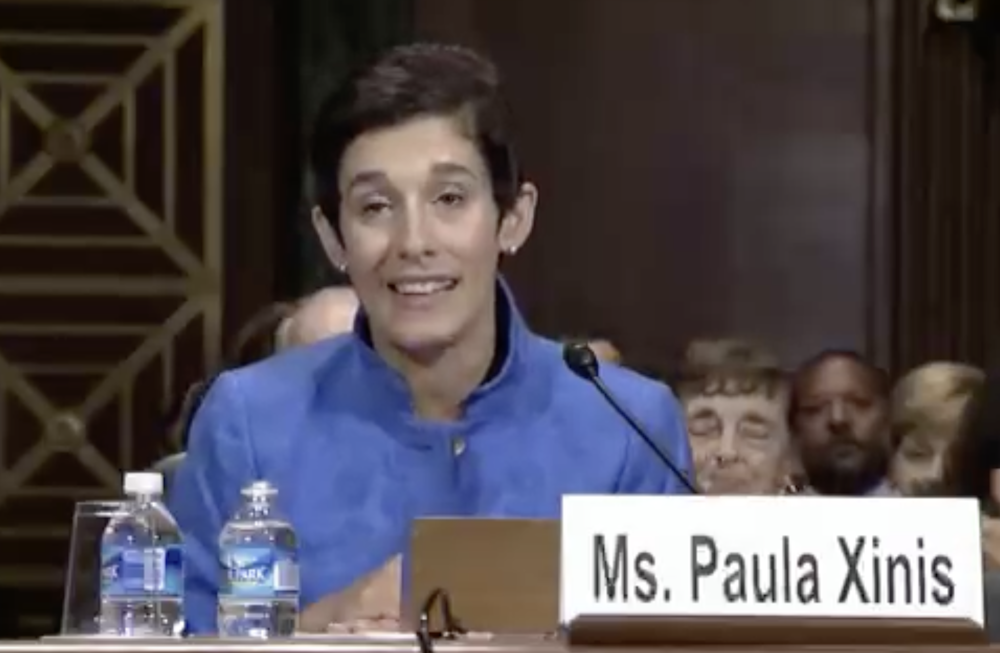
Paula Xinis at the U.S. Senate Committee on the Judiciary hearing on her nomination to be a U.S. district judge for the District of Maryland on July 22nd, 2015. U.S. Senate Committee on the Judiciary
Can you connect what’s going on with Judge Xinis to Judge Boasberg’s finding that probable cause existed to hold the Trump administration in contempt?
In the case of Judge Xinis, she’s not there yet. What she’s doing, in stages, is attempting to test the government’s compliance with the word “facilitate.” The Supreme Court had upheld her earlier order, saying “The order properly requires the Government to ‘facilitate’ Abrego García’s release from custody in El Salvador.”
Unfortunately, in Xinis’ case, I think the situation calls for some clarification. The government’s going to just be obdurate and they’re going to continue to be difficult and espouse their definition of “facilitate” versus what I think is a commonsense reading of the Supreme Court’s opinion.
I don’t think the Supreme Court in any way meant for the government not to bring Abrego Garcia back. But in writing the opinion they were too soft, afraid of traipsing into the executive’s power to run foreign affairs.
You have two judges seriously considering holding someone in the Trump administration in contempt, possibly even criminal contempt. What does it mean for a judge to be in that specific position?
I never issued a criminal contempt citation in 19 ½ years on the bench against anyone or any entity. Never.
The only contempt that I was ever in the business of issuing was civil contempt. Typically it would happen in a civil case when somebody wouldn’t produce a particular record.
But in Boasberg’s case, I think it’s the relentless bad behavior of the government, as he details amply in his opinion, that has gotten him to this point. He’s not going to allow the bad behavior of the government to go unpunished. It’s a signal to the government that he sees their behavior in the worst possible light.
Could the president pardon anyone Boasberg convicts of criminal contempt?
I think he probably could. We’ll see. I think from Boasberg’s standpoint, he can play that out in his mind and say, “This might be an exercise in futility.” But I don’t think that’s the point. I think that the point is that he’s got to vindicate the authority of the court – and that happens even if the executive chooses to exercise the pardon power.
John E. Jones III does not work for, consult, own shares in or receive funding from any company or organization that would benefit from this article, and has disclosed no relevant affiliations beyond their academic appointment.
Police are appealing to identify a woman, who is believed to have been injured following a hit and run collision near Wembley Arena on Thursday, 17 April.
The incident took place at Engineers Way at around 23:10hrs. The area was busy with many people having just left a concert by the artist Alkaline.
Footage filmed by a member of the public shows the woman dancing in the road and narrowly avoiding passing vehicles.
A car can then be seen driving into her and carrying her around 30 yards on the bonnet before she is thrown to the floor.
The car did not stop at the scene. Members of the public called an ambulance but the woman was no longer there when officers and paramedics arrived.
Officers carried out a search of the area and arrested a 33-year-old woman on suspicion of dangerous driving and driving whilst over the prescribed alcohol limit.
She has since been released on bail to a date in early June.
Investigating officers want to identify the woman in the footage to speak to her about the incident, to ensure she is okay and that she gets appropriate medical attention.
Anyone with information is asked to call police on 101 or message @MetCC on X giving the reference 8317/17APR.
To remain 100% anonymous contact the independent charity Crimestoppers on 0800 555 111.
Source: Federal Bureau of Investigation (FBI) State Crime Alerts (c)
TOLEDO, Ohio – Hershel Winbush, 68, of Toledo, Ohio, was sentenced to prison by U.S. District Judge Jack Zouhary after he pleaded guilty to four counts of bank robbery in Lucas County, Ohio, and for violating the conditions of his supervised release for a prior conviction. Imprisonment will be for a total term of 140 months (more than 11 years) for each count to run concurrently and pay $8,210 in restitution. Upon release from imprisonment, the defendant was also ordered to serve two years of supervised release.
According to court documents and court records, Winbush entered several financial institutions in the Toledo, Ohio, area from 2019 through 2024 and threatened bank employees with violence by presenting notes such as “I have a gun, give me all the cash available,” and “This is a hold up. I have a gun.” Federally insured banking institutions that were affected included:
Woodforest National Bank, Glendale Ave., Oct. 24, 2019
Woodforest National Bank, Glendale Ave., Nov. 5, 2019
Jeep Federal Credit Union, Manhattan Blvd., April 8, 2024
Key Bank, Secor Rd., April 22, 2024
During the investigation, authorities discovered that Winbush had a decades-long pattern of bank robberies and had multiple incarcerations and prior convictions for crimes of violence in Michigan. Winbush was classified as a Career-Offender by Judge Jack Zouhary.
This case was investigated by the FBI Toledo Field Office and the Toledo Police Department. The case was prosecuted by Assistant U.S. Attorney Matthew Simko for the Northern District of Ohio.
Source: Federal Bureau of Investigation (FBI) State Crime Alerts (b)
A man who received child pornography was sentenced today to 15 years in federal prison.
John Thomas Carstensen, age 50, from Gladbrook, Iowa, received the prison term after a November 12, 2024 guilty plea to one count of receipt of child pornography.
In a plea agreement, Carstensen admitted that, between August 2021 and August 2022, he knowingly received depictions of minors engaging in sexually explicit conduct. Carstensen has a prior felony conviction from 1993 for sexual exploitation of a minor.
Carstensen was sentenced in Cedar Rapids by United States District Court Chief Judge C.J. Williams. Carstensen was sentenced to 180 months’ imprisonment. He was ordered to make $27,000 in restitution to the victims in the case. He must also serve a five-year term of supervised release after the prison term. There is no parole in the federal system.
This case was brought as part of Project Safe Childhood, a nationwide initiative launched in May 2006 by the Department of Justice to combat the growing epidemic of child sexual exploitation and abuse. Led by the United States Attorneys’ Offices and the Criminal Division’s Child Exploitation and Obscenity Section, Project Safe Childhood marshals federal, state, and local resources to locate, apprehend, and prosecute individuals who sexually exploit children, and to identify and rescue victims. For more information about Project Safe Childhood, please visit www.usdoj.gov/psc. For more information about Internet safety education, please visit www.usdoj.gov/psc and click on the tab “resources.”
Carstensen is being held in the United States Marshal’s custody until he can be transported to a federal prison.
The case was prosecuted by Assistant United States Attorney Adam J. Vander Stoep and was investigated by the Iowa Division of Criminal Investigation, the Internet Crimes Against Children Task Force, and the Federal Bureau of Investigation Human Trafficking and Child Exploitation Task Force.
Source: Federal Bureau of Investigation (FBI) State Crime Alerts (b)
A man who used Snapchat, Instagram, and text messages to persuade children to engage in sexually explicit conduct and send him photographs and videos of this conduct, pled guilty today in federal court in Cedar Rapids, Iowa.
Bryce Hans Plower, age 37, from Prairieburg, Iowa, was convicted of sexual exploitation of children and possession of child pornography.
In a plea agreement, Plower admitted that he persuaded, induced, and enticed multiple children to send him sexually explicit images and videos of themselves. At least two children under the age of 16 did so. Plower paid the children, sometimes as little as $1, so that they would continue to send him sexually explicit images. Plower also possessed photographs and videos of child pornography on his phone, including images of sadistic or masochistic conduct.
This case was brought as part of Project Safe Childhood, a nationwide initiative launched in May 2006 by the Department of Justice to combat the growing epidemic of child sexual exploitation and abuse. Led by the United States Attorneys’ Offices and the Criminal Division’s Child Exploitation and Obscenity Section, Project Safe Childhood marshals federal, state, and local resources to locate, apprehend, and prosecute individuals who sexually exploit children, and to identify and rescue victims. For more information about Project Safe Childhood, please visit www.usdoj.gov/psc. For more information about Internet safety education, please visit www.usdoj.gov/psc and click on the tab “resources.”
Sentencing before United States District Court Chief Judge C.J. Williams will be set after a presentence report is prepared. Plower remains in custody of the United States Marshal pending sentencing. Plower faces a mandatory minimum sentence of 15 years’ imprisonment and a possible maximum sentence of 50 years’ imprisonment, a $500,000 fine, $77,200 in special assessments, and a life of supervised release following any imprisonment.
The case is being prosecuted by Assistant United States Attorney Devra T. Hake and was investigated by the Federal Bureau of Investigation and the Iowa Division of Criminal Investigation.
A Florida executive pleaded guilty today for his role in a scheme to submit fraudulent applications to enroll consumers in Affordable Care Act insurance plans (ACA plans) that were fully subsidized by the government. The purpose of the scheme was to obtain millions of dollars in commission payments from the insurance company that operated the ACA plans. The federal government paid at least $133,900,000 in subsidies for fraudulently enrolled individuals.
According to court documents, Dafud Iza, 54, an executive vice president of an insurance brokerage firm, participated in a scheme to fraudulently enroll ineligible individuals into ACA plans that offered tax credits to eligible enrollees. These tax credits, or “subsidies,” could be paid by the federal government directly to insurance plans as a payment toward the plan’s monthly premium. The scheme involved submitting false and fraudulent applications for individuals whose income did not meet the minimum requirements to be eligible for the subsidies. Iza and his accomplices deceptively marketed subsidized ACA plans to ineligible consumers and falsely inflated consumers’ incomes to obtain the federal subsidies.
In furtherance of the scheme, Iza and his accomplices targeted vulnerable, low-income individuals experiencing homelessness, unemployment, and mental health and substance abuse disorders, and knew that “street marketers” working on their behalf offered bribes to induce those individuals to enroll in subsidized ACA plans. Marketers working for Iza’s accomplices coached consumers on how to respond to application questions to maximize the subsidy amount paid by the federal government and provided addresses and social security numbers that did not match the consumers purportedly applying.
Iza pleaded guilty to one count of major fraud against the United States and faces a maximum penalty of 10 years in prison. A federal district court judge will determine any sentence after considering the U.S. Sentencing Guidelines and other statutory factors.
Matthew R. Galeotti, Head of the Justice Department’s Criminal Division; Acting Special Agent in Charge Brett Skiles of the FBI Miami Field Office; Acting Special Agent in Charge Jesus Barranco of the Department of Health and Human Services Office of Inspector General (HHS-OIG) Miami Regional Office; and Special Agent in Charge Emmanuel Gomez of the IRS Criminal Investigation (IRS-CI) Miami Field Office made the announcement.
The FBI, HHS-OIG, and IRS-CI are investigating the case.
Assistant Chief Jamie de Boer and Trial Attorney D. Keith Clouser of the Criminal Division’s Fraud Section are prosecuting the case.
The Fraud Section leads the Criminal Division’s efforts to combat health care fraud through the Health Care Fraud Strike Force Program. Since March 2007, this program, currently comprised of nine strike forces operating in 27 federal districts, has charged more than 5,800 defendants who collectively have billed federal health care programs and private insurers more than $30 billion. In addition, the Centers for Medicare & Medicaid Services, working in conjunction with HHS-OIG, are taking steps to hold providers accountable for their involvement in health care fraud schemes. More information can be found at www.justice.gov/criminal-fraud/health-care-fraud-unit.
An indictment is merely an allegation. All defendants are presumed innocent until proven guilty beyond a reasonable doubt in a court of law.
Source: Federal Bureau of Investigation (FBI) State Crime News
Acting United States Attorney Matthew R. Molsen announced that Stephanie Kessel, 41, of Omaha, Nebraska, was sentenced on April 16, 2025, in federal court in Omaha for making a false statement in connection with the acquisition of a firearm. United States District Court Judge Brian C. Buescher sentenced Kessel to three years of probation
On July 28, 2023, Kessel met with an individual cooperating with law enforcement in the parking lot of Cabela’s in La Vista, Nebraska. The cooperator told Kessel that the cooperator was a convicted felon and the cooperator could not buy firearms legally. After hearing about the cooperator’s criminal history, Kessel walked into Cabela’s and purchased two Taurus 9mm handguns. After the sale, she walked back out to the parking lot and sold the guns to the cooperator for $1,000. To purchase the handguns, Kessel filled out a mandatory ATF firearms purchase form indicating that she was the actual transferee/buyer of the firearms even though the firearms were actually purchased by the cooperator.
This case was investigated by the Federal Bureau of Investigation and the Omaha Police Department.
LEXINGTON, Ky. – A Waynesburg, Ky., man, Steven Fellmy, 46, was sentenced on Thursday, to 300 months in prison, by U.S. District Judge Karen Caldwell, for possession with intent to distribute 50 grams of methamphetamine.
According to the evidence at trial, on August 8, 2023, a Simpsonville Police Department Detective relayed an anonymous tip to the Mercer County Sheriff’s Office, which concerned the transport of a large quantity of methamphetamine from Anderson County into Mercer County. As a result, Fellmy was traffic stopped in Mercer County, by a Mercer County Sheriff’s Deputy. At the scene, a Harrodsburg Police Department K9 positively alerted to the presence of narcotics in the vehicle. Law enforcement then searched the vehicle, which led to the recovery of 193.5 grams of 95% pure methamphetamine. On his person, Fellmy also had 9.439 grams of methamphetamine and 22.529 grams of heroin.
Under federal law, Fellmy must serve 85 percent of his prison sentence. Upon his release from prison, he will be under the supervision of the U.S. Probation Office for 10 years.
Paul McCaffrey, Acting United States Attorney for the Eastern District of Kentucky; Jim Scott, Special Agent in Charge, DEA, Louisville Field Division; Chief Scott Elder, Harrodsburg Police Department; Chief Thomas Brummer, Simpsonville Police Department; and Sheriff Ernie Kelty, Mercer County Sheriff’s Office, jointly announced the sentence.
The investigation was conducted by DEA, Harrodsburg Police Department, Simpsonville Police Department, and Mercer County Sheriff’s Office. Assistant U.S. Attorney Brittany Baker is prosecuting the case on behalf of the United States.
COVINGTON, Ky. – A Burlington, Ky., man, Juan Velazquez-Rodriguez, 48, was sentenced on Thursday to 85 months in prison by Chief U.S. District Judge David Bunning, for illegal possession of a machine gun.
According to his plea agreement, in January 2024, a law enforcement source reported that Rodriguez offered to sell the source, who was a convicted felon, a machinegun conversion device (MCD). Law enforcement searched Rodriguez’ residence and found a MCD in his dresser. The MCD was not marked with a serial number, and Rodriguez admitted he knew it was designed to convert a firearm into a machinegun.
A search of Rodriguez’ social media and cell phone revealed messages between Rodriguez and another individual about 3D printing firearm parts. Rodriguez later messaged this same associate from jail, and instructed him to remove everything that had to do with the 3D printer from the associate’s apartment. Rodriguez also offered to sell MCDs to multiple other individuals, explaining that the “switch,” or MCD, would convert a Glock handgun or AR-15 rifle to fully automatic.
Under federal law, Rodriguez must serve 85 percent of his prison sentence. Upon his release from prison, he will be under the supervision of the U.S. Probation Office for three years.
Paul McCaffrey, Acting United States Attorney for the Eastern District of Kentucky; Rana Saoud, Special Agent in Charge, Department of Homeland Security, Homeland Security Investigations (HSI); and Sheriff Les Hill, Boone County Sheriff’s Office, jointly announced the sentence.
The investigation was conducted by HSI and Boone County Sheriff’s Office. Assistant U.S. Attorney Joel King is prosecuting the case on behalf of the United States.
This case is part of Project Safe Neighborhoods (PSN), a program bringing together all levels of law enforcement and the communities they serve to reduce violent crime and gun violence, and to make our neighborhoods safer for everyone. On May 26, 2021, the Department launched a violent crime reduction strategy strengthening PSN based on these core principles: fostering trust and legitimacy in our communities, supporting community-based organizations that help prevent violence from occurring in the first place, setting focused and strategic enforcement priorities, and measuring the results.
INDIANAPOLIS— Juan Morales, 49, of Mexico, has been sentenced to 37 months in federal prison followed by one year of supervised release after pleading guilty to illegal reentry of a removed alien after deportation.
According to court documents, on November 6, 2024, Morales was convicted of operating a motor vehicle without ever receiving a license. Further investigation revealed that Morales had been removed from the United States on two separate occasions in 2007 and 2018.
Morales has a lengthy criminal history, including two previous federal convictions for illegal reentry, as well as two convictions in Indiana and Illinois for dealing cocaine and methamphetamine.
“While in the United States unlawfully for a third time, this defendant has repeatedly broken the law, demonstrating time and time again a fundamental lack of respect for this country,” said John E. Childress, Acting United States Attorney for the Southern District of Indiana. “Our office is committed to working with ICE and our other law enforcement partners to ensure criminal defendants like Mr. Morales cannot continue to pose danger to our communities.”
U.S. Immigration and Customs Enforcement investigated this case. The sentence was imposed by U.S. District Judge Richard L. Young
Acting U.S. Attorney Childress thanked Assistant U.S. Attorneys Tiffany J. Preston and Samantha Spiro, who prosecuted this case.
This case is part of Operation Take Back America, a nationwide initiative that marshals the full resources of the Department of Justice to repel the invasion of illegal immigration, achieve the total elimination of cartels and transnational criminal organizations (TCOs), and protect our communities from the perpetrators of violent crime. Operation Take Back America streamlines efforts and resources from the Department’s Organized Crime Drug Enforcement Task Forces (OCDETF) and Project Safe Neighborhoods (PSN)
Gulfport, MS – An Ethiopian national was sentenced today to 12 years in prison for armed robbery of a local supermarket in Gulfport.
According to court documents, Milki Ibrahim walked into the supermarket on February 23, 2024, pulled out a black handgun and said, “Give me the money or I will shoot y’all right now.” The employee behind the cash register complied and gave Ibrahim $1200. Ibrahim threatened to come back and kill the people in the store if they went to the police.
Employees of the store were able to positively identify Ibrahim as the armed robber. A subsequent review of Ibrahim’s cellphone showed he took pictures of himself wearing the same clothes that were worn during the robbery just one day prior. Those same clothes were found in the defendant’s residence along with a firearm that matched the description to the one used in the robbery.
In December 2024, Ibrahim pled guilty to the charge.
Acting U.S. Attorney Patrick A. Lemon of the Southern District of Mississippi and Special Agent in Charge Robert Eikhoff of the Federal Bureau of Investigation made the announcement.
The case was investigated by the FBI and the Gulfport Police Department.
Assistant U.S. Attorney Lee Smith is prosecuting the case.
For non- HSTF cases pursuant to Op. TBA
This case is part of Operation Take Back America (https://www.justice.gov/dag/media/1393746/dl?inline), a nationwide initiative that marshals the full resources of the Department of Justice to repel the invasion of illegal immigration, achieve the total elimination of cartels and transnational criminal organizations (TCOs), and protect our communities from the perpetrators of violent crime. Operation Take Back America streamlines efforts and resources from the Department’s Organized Crime Drug Enforcement Task Forces (OCDETFs) and Project Safe Neighborhood (PSN).
GULFPORT, MS – A Honduran man pleaded guilty on April 16, 2025, to Unlawful Reentry into the United States by a Deported or Removed Alien. According to court documents, Denis Ramon Flores Ortez, age 40, of Honduras pleaded guilty to this federal felony offense in U.S. District Court in Gulfport.
Flores Ortez is scheduled to be sentenced on August 19, 2025, and faces a maximum penalty of two years in prison. A federal district court judge will determine any sentence after considering the U.S. Sentencing Guidelines and other statutory factors. Federal law also provides for Flores Ortez to face Homeland Security removal proceedings after serving any sentence of imprisonment.
On February 3, 2025, the U.S. Border Patrol encountered Flores Ortez, at the Harrison County Adult Detention Center in Gulfport. As a result of official records checks, Flores Ortez was found to be an illegal alien from Honduras who had been lawfully removed from the United States.
Flores Ortez illegally entered the U.S. in 2004, and was afforded the privilege of a voluntary departure in lieu of removal. In 2010, Flores Ortez illegally reentered the U.S. and was apprehended by Immigration & Customs Enforcement (ICE) after his arrest in Jackson County. A removal order was issued against him, and he was physically removed from the U.S. Thereafter, he unlawfully reentered the U.S. after removal and was arrested in Gulfport, MS, in 2025.
Acting U.S. Attorney for the Southern District of Mississippi, Patrick A. Lemon, praised the work of Homeland Security Investigations and the United States Border Patrol. Lemon and Eric P. DeLaune, Special Agent-in-Charge for Homeland Security Investigations in New Orleans, Louisiana, and Adam M. Calderon, Acting Chief Patrol Agent of the Border Patrol’s New Orleans Sector, made the announcement. Assistant U.S. Attorney Stan Harris prosecuted the case.
This case is part of Operation Take Back America www.justice.gov/dag/media/1393746/dl?inline a nationwide initiative that marshals the full resources of the Department of Justice to repel the invasion of illegal immigration, achieve the total elimination of cartels and transnational criminal organizations (TCOs), and protect our communities from the perpetrators of violent crime. Operation Take Back America streamlines efforts and resources from the Department’s Organized Crime Drug Enforcement Task Forces (OCDETFs) and Project Safe Neighborhood (PSN).
Source: Federal Bureau of Investigation (FBI) State Crime Alerts (c)
FBI Houston is on location in the 13000 block of Milan Drive in south Houston responding to an agent-involved shooting. Preliminary information at this time is that on Thursday, April 17, at approximately 5:30 p.m., an FBI Houston agent was at the intersection of Milan Drive and East Anderson Road conducting authorized law enforcement activity when a woman armed with a machete threatened him. In response, the agent fired his weapon. The woman was taken to a local hospital. The agent was not physically harmed. The scene is currently being processed by the FBI’s Evidence Response Team who will be on-site for several hours. Per FBI policy, FBI’s Inspection Division will conduct an independent and objective investigation of the incident. To protect the investigation’s integrity, no more details will be released at this time.
Source: Federal Bureau of Investigation (FBI) State Crime Alerts (b)
ALEXANDRIA, Va. – A federal judge convicted an Alexandria man, who worked for the Department of Commerce, yesterday on charges of receipt and possession of child sexual abuse material (CSAM).
According to court documents and evidence presented at trial, Rafferty Daniel Kelly, 40, worked for the Patent and Trademark Office. In March 2022, a federal CSAM investigation involving an Internet-based, peer-to-peer file sharing service led federal agents to execute a search warrant at Kelly’s home where they seized multiple devices. A review of those devices revealed that over a period of at least two years Kelly had downloaded and stored over 50,000 of images of CSAM and child erotica, including images of infants and prepubescent children. Kelly also possessed a handbook on how to groom children.
At the end of the bench trial, U.S. District Judge Michael S. Nachmanoff found Kelly guilty of one count of receipt of child pornography and one count of possession of child pornography. Kelly is scheduled to be sentenced on July 24 and faces a mandatory minimum sentence of five years and up to 40 years in prison. A federal district court judge will determine any sentence after considering the U.S. Sentencing Guidelines and other statutory factors.
Erik S. Siebert, U.S. Attorney for the Eastern District of Virginia; Matthew R. Galeotti, Head of the Justice Department’s Criminal Division; and Sean Ryan, Special Agent in Charge of the FBI Washington Field Office’s Criminal and Cyber Division, made the announcement after Judge Nachmanoff returned the verdict.
Assistant U.S. Attorney Vanessa K. Strobbe for the Eastern District of Virginia and Trial Attorney Nadia Prinz for the Criminal Division’s Child Exploitation & Obscenity Section are prosecuting the case.
This case was investigated by the FBI Washington Field Office’s Child Exploitation and Human Trafficking Task Force. The task force is composed of FBI agents, along with other federal agents and detectives from northern Virginia and the District of Columbia. The task force is charged with investigating and bringing federal charges against individuals engaged in the exploitation of children and those engaged in human trafficking.
This case was brought as part of Project Safe Childhood, a nationwide initiative launched in May 2006 by the Department of Justice to combat the growing epidemic of child sexual exploitation and abuse. Led by U.S. Attorney’s Offices and the Child Exploitation and Obscenity Section (CEOS), Project Safe Childhood marshals federal, state, and local resources to better locate, apprehend, and prosecute individuals who exploit children via the internet, as well as to identify and rescue victims. For more information about Project Safe Childhood, please visit www.justice.gov/psc.
A copy of this press release is located on the website of the U.S. Attorney’s Office for the Eastern District of Virginia. Related court documents and information are located on the website of the District Court for the Eastern District of Virginia or on PACER by searching for Case No. 1:24-cr-246.
Source: Federal Bureau of Investigation FBI Crime News (b)
ALBUQUERQUE – A Farmington man was sentenced to 30 years in prison for his role in the brutal killing of a man on the Navajo Nation in 2020.
There is no parole in the federal system.
According to court documents, between February 6, 2020, and February 14, 2020, Tyran Begay, 40, an enrolled member of the Navajo Nation, helped confine and torture John Doe alongside Camille Damon and Ronald Belone by binding and beating the victim, and leaving his body exposed to frigid weather in a remote area near Smith Lake, New Mexico.
Upon his release from prison, Begay will be subject to five years of supervised release.
Damon and Belone remain in custody pending trial, which has yet been scheduled.
Acting U.S. Attorney Holland S. Kastrin and Raul Bujanda, Special Agent in Charge of the Federal Bureau of Investigation’s Albuquerque Field Office, made the announcement today.
The Gallup Resident Agency of the FBI Albuquerque Field Office investigated this case with the assistance of the McKinley County Sheriff’s Office. Assistant U.S. Attorney Mark A. Probasco and Meg P. Tomlinson are prosecuting the case.
A multi-agency search is underway for a child who fell into the water in Cook’s Cove.
On April 17, at approximately 1:40 p.m., Guysborough County RCMP, fire services and EHS were dispatched to a report of a chid who had fallen into the water while fishing with a man and another child. The man entered the water immediately to rescue the child but was unsuccessful.
Initial responders were joined by multiple fire services, EHS LifeFlight, several ground search and rescue teams (Pictou County Volunteer GSAR, Straight Area GSAR, Inverness County GSAR, Colchester GSAR), Fisheries and Oceans Canada (DFO), Joint Rescue Coordination Centre (JRCC), Nova Scotia Department of Resources and Renewables Air Services, Civil Air search and Rescue Association (CASARA), and multiple RCMP units.
Residents are asked to avoid the area as the search continues.
RCMP victim services is engaged, and our thoughts are with the child’s loved ones at this difficult time.
Source: Northern Territory Police and Fire Services
In summer, keep your dog healthy and happy by walking in the early morning or evening.
In brief:
There are a lot of things to think about during the summer holiday period.
It’s important to do what you can to keep yourself, your family and your things safe.
This article overviews some actions you can take.
From festive parties to trips away, there are so many things to do and enjoy at this time of year.
Taking a moment to read the following tips will help ensure you can celebrate free of unexpected problems.
Travel safely
If you’re hitting the road this summer, remember to take plenty of breaks and drive to the conditions.
It’s also a good idea to pack supplies just in case the car you’re travelling in breaks down.
Never leave a child or pet in the car, even with the windows down or for short periods. Car interiors can heat to over 60 degrees in just five minutes.
Protect your home while you’re away
House break-ins often increase over holiday periods, because offenders know an empty house can be an easy target.
Try to leave your house looking lived-in with the help of a neighbour or house-sitter.
Keeping windows and doors locked, your mail collected, and your lawn mown while you are away can help.
Staying in the ACT? It’s worth noting changes to bus and light rail timetables during the summer school holidays – from Monday 23 December 2024 to Sunday 2 February 2025.
School services and ‘s’ trip diversions will not be in place during the six-week holiday period.
Bus and light rail services will be free on Christmas Day and New Year’s Eve (from 5pm). There will be a special bus timetable in place. You don’t even need a MyWay+ card – but if you have one, please tap on and off.
If you choose to leave the car at home on New Year’s Eve, you can take advantage of an extended Tuesday timetable with additional bus and light rail services.
And remember, public transport is free on Fridays.
Make your trip even easier by using the MyWay+ app or TC Journey Planner.
As the temperature rises, pets rely on their owners to keep them happy, healthy and safe.
There are some easy ways to do this.
Avoid walks in heat of the day. Early morning and evening walks are best, and this will also protect their paws from burning.
Make sure they have access to fresh drinking water and shade around your house and backyard all day.
Help your pets stay cool with an icy pet treat. There are lots of online recipes to make your own pet-safe summer treats.
Visit one of the dog swimming spots or fill a kids’ splash pool with water to help your pooch cool down.
Arrange for someone to care for your pets if you go on holidays.
Make sure your pet is microchipped and registered so if they escape – such as during a storm – they can easily be returned.
And remember, never leave your dog in an unattended parked car. Even if you leave the windows down, your dog is still at risk of suffering heat exhaustion within minutes.
Source: Federal Bureau of Investigation FBI Crime News (b)
By the time it was over, the Bureau had conducted more than 28,000 interviews, followed some 43,000 investigative leads, amassed three-and-a-half tons of evidence, and reviewed nearly a billion pieces of information.
“The FBI’s investigation of the Oklahoma City bombing was a Herculean effort of enormous breadth,” Louis Freeh, FBI Director at the time of the bombing, has said. “From the moment the bomb exploded, the FBI devoted every conceivable resource to investigating and solving this act of terrorism.
“I am proud of our investigators and support teams who, with their colleagues, worked around the clock to solve this terrible crime. The investigation and prosecution of this case was a success story, a significant accomplishment.”
PENSACOLA, FLORIDA – Austin James McCastler II, 35, was indicted by a federal grand jury this week charging him with two counts of distribution of methamphetamine, possession with intent to distribute fentanyl and marijuana, possession of a firearm in furtherance of a drug trafficking offense, possession of a firearm and ammunition by a convicted felon, attempted prevention of the government’s authority to take property during an authorized search and seizure, attempted murder and assault of a Special Agent of the Drug Enforcement Administration, and discharging a firearm during a violent crime. Michelle Spaven, Acting United States Attorney for the Northern District of Florida, announced the charges today.
McCastler is scheduled for his arraignment in federal court before United States Magistrate Judge Hope Thai Cannon on April 22, 2025, at 2:00 p.m. in Pensacola, Florida. If convicted, McCastler faces up to life imprisonment.
The Bureau of Alcohol, Tobacco, Firearms and Explosives, the Drug Enforcement Administration, the Florida Department of Law Enforcement, the Escambia County Sheriff’s Office, the Pensacola Police Department, and the Santa Rosa County Sheriff’s Office are investigating the case. Assistant United States Attorneys David L. Goldberg and Jessica S. Etherton are prosecuting the case.
An indictment is merely an allegation by a grand jury that a defendant has committed a violation of federal criminal law and is not evidence of guilt. All defendants are presumed innocent and entitled to a fair trial, during which it will be the government’s burden to prove guilt beyond a reasonable doubt at trial.
This case is part of Operation Take Back America (https://www.justice.gov/dag/media/1393746/dl?inline ) a nationwide initiative that marshals the full resources of the Department of Justice to repel the invasion of illegal immigration, achieve the total elimination of cartels and transnational criminal organizations (TCOs), and protect our communities from the perpetrators of violent crime. Operation Take Back America streamlines efforts and resources from the Department’s Organized Crime Drug Enforcement Task Forces (OCDETFs) and Project Safe Neighborhood (PSN).
The United States Attorney’s Office for the Northern District of Florida is one of 94 offices that serve as the nation’s principal litigators under the direction of the Attorney General. To access available public court documents online, please visit the U.S. District Court for the NorthernDistrict of Florida website. For more information about the United States Attorney’s Office, Northern District of Florida, visit http://www.justice.gov/usao/fln/index.html.
A shortfall in this year’s congressional appropriations is significantly impacting the Judiciary’s ability to ensure security at courthouses at a time of rising threats to federal judges and impairing efforts to provide critical legal defense services to people who can’t afford to hire lawyers.
Those concerns were outlined in an April 10 letter (PDF) to appropriators in Congress by Judge Robert J. Conrad, Jr., Judicial Conference secretary, and Judge Amy J. St. Eve, chair of the Conference’s Budget Committee.
The continuing resolution enacted in March provides the Judicial Branch with $8.6 billion, $391 million less than the Judicial Conference had requested. The branch had requested exceptions to the governmentwide funding freeze imposed by the resolution, but the requests were excluded in the final legislation. As a result, many of the Judiciary’s accounts are frozen for a second consecutive year, leaving them operating at fiscal year 2023 levels.
One of them is the $750 million Court Security program.
“We have significant concerns about our ability to properly secure federal courthouses given current resource levels,” Conrad and St. Eve wrote. “Consecutive years of flat security funding comes at a time when threats against federal judges and courthouses are escalating, making this situation unsustainable in the current environment.”
Currently, 67 judges involved in high profile cases are receiving enhanced online security screening services provided by the Administrative Office of the U.S. Courts and the U.S. Marshals Service, which is also operating at reduced staffing levels as a result of the funding freeze. In some instances, the Marshals Service has had to take “extraordinary measures” to ensure the safety of judges, the letter said.
The Judiciary’s Defender Services program was also significantly underfunded for fiscal year 2025. It received $1.45 billion, $129 million below the necessary level. A hiring freeze already in place was extended until at least the end of the fiscal year on Sept. 30. And the Judiciary will have to defer a projected $92 million in payments to private defense attorneys, who are appointed by the courts under the Criminal Justice Act to represent defendants who can’t afford to retain counsel.
“These are payments for constitutionally required legal work that has already been performed but that will be left unpaid for months simply because we cannot afford to make the payments,” Conrad and St. Eve wrote, noting that some attorneys may decline to accept future appointments as a result.
A shortage of qualified defense attorneys willing to take cases could create “unlawful delays in the constitutional right of defendants to a speedy and fair trial,” they said.
The freeze is also having an adverse impact on maintaining necessary staff levels in probation and pretrial services, as well as in clerks of court offices.
“Some clerks of court offices report they cannot sufficiently staff public counters to assist individuals seeking court information or help with filing,” the judges said, also predicting that “probation offices will have to focus limited supervision resources on the most violent, high-risk offenders, leaving low-to-mid risk offenders with less supervision, increasing the risk of offenders committing new crimes.”
As the Judiciary prepares to submit its budget request for fiscal year 2026, Conrad and St. Eve emphasized the need for congressional appropriators to provide adequate funding to help the Judiciary mitigate some of the adverse impacts of the recent appropriations shortfalls. Their letter was sent to the chairs and ranking members of the House and Senate appropriations committees and subcommittees with jurisdiction over Judiciary funding.
Each year, children are invited to celebrate Easter Monday with the president at the annual White House Easter Egg Roll. This beloved tradition was actually started in response to congressional action that put an end to Easter Monday celebrations outside the U.S. Capitol.
In 1876, Congress passed “An act to protect the public property, turf and grass of the Capitol Grounds from injury.” This law made it the duty of the United States Capitol Police to protect the Capitol grounds by prohibiting the grounds from “being used as play grounds or otherwise.”
The prize basket at the Easter egg rolling at the White House. 1923. Library of Congress, Prints and Photographs Division. https://www.loc.gov/item/2002713117/
Before the law was enacted, children would come to the Capitol grounds to celebrate Easter Monday, but Congress was concerned about the time and money required to restore the grounds afterward. Senator Morrill of Vermont explained the reasoning behind his support of the measure:
I suppose the great pleasure of seeing ten thousand children here on Easter Monday, as was witnessed this week and in previous years, has prevented the police from doing their duty; but at the same time, if Senators will notice the injury done, it will be seen to amount to thousands of dollars. This grass cannot be restored for many months, and some of it could not be restored without being replaced by new turf. Although it is a very great pleasure to see these children enjoying themselves here on Easter Monday, it is deemed important that we should protect the grounds.
The prohibition on the use of the Capitol grounds as a playground became law on April 29, 1876, putting an end to the Easter Monday tradition. However, in 1878, President Rutherford B. Hayes issued an order opening the grounds to children who wished to roll their Easter eggs on the White House lawn on Easter Monday.
The law prohibiting the use of the Capitol grounds as a playground is still on the books today, but the White House also continues to make its lawn available for the Easter festivities.
Burlington, Vermont – The Office of the United States Attorney for the District of Vermont announced that on April 17, 2025, a federal grand jury returned an indictment charging Benjamin Gutierrez-Morales, 28, of Sonora, Mexico, with illegally bringing aliens to the United States.
Gutierrez-Morales’s arraignment will occur on April 21, 2025, at 1:00 PM in Burlington, Vermont.
According to court records, Gutierrez-Morales met two aliens north of the United States-Canada international border on April 5, 2025. He led those two aliens on foot south across the border. Law enforcement caught all three aliens near Lost Nation Road in Berkshire, Vermont. The two aliens who Gutierrez-Morales brought to the United States both pleaded guilty to illegally entering the United States on April 7, 2025.
The United States Attorney’s Office emphasizes that an indictment contains allegations only and that Gutierrez-Morales is presumed innocent until and unless proven guilty. Gutierrez-Morales faces up to 10 years of imprisonment if convicted. The actual sentence, however, would be determined by the District Court with guidance from the advisory United States Sentencing Guidelines and the statutory sentencing factors.
Acting United States Attorney Michael P. Drescher commended the investigatory efforts of the United States Border Patrol.
The prosecutor is Assistant United States Attorney Joshua L. Banker. Gutierrez-Morales is represented by Assistant Federal Public Defender Emily Kenyon.
This case is part of Operation Take Back America a nationwide initiative that marshals the full resources of the Department of Justice to repel the invasion of illegal immigration, achieve the total elimination of cartels and transnational criminal organizations (TCOs), and protect our communities from the perpetrators of violent crime. Operation Take Back America streamlines efforts and resources from the Department’s Organized Crime Drug Enforcement Task Forces (OCDETFs) and Project Safe Neighborhood (PSN).
Burlington, Vermont – The United States Attorney’s Office for the District of Vermont stated that on April 14, 2025. Anthony Phelps, 34, of Queens, New York, was sentenced by United States District Judge Frank P. Geraci, Jr. to a term of 57 months’ imprisonment to be followed by a three-year term of supervised release. Phelps previously pleaded guilty to possessing with intent to distribute cocaine and cocaine base as well as being a felon in possession of a firearm.
According to court records, Phelps distributed cocaine base to a confidential informant on three separate occasions, in March and September 2024. On April 17, 2024, law enforcement executed a search warrant at a residence in Essex, Vermont where Phelps was staying. During the search, law enforcement recovered approximately 705.12 grams of cocaine, 90.82 grams of cocaine base, and a 9mm pistol from one room, as well as approximately 92.24 grams of suspected cocaine, 86.78 grams of sodium-bicarbonate, and a rifle from another room. Phelps stipulated that he intended to distribute the cocaine and cocaine base to others. As a prior felon, Phelps was prohibited from possessing the 9mm pistol.
Acting United States Attorney Michael P. Drescher commended the collaborative investigatory efforts of Homeland Security Investigations and the Vermont State Police.
The case was prosecuted by Assistant U.S. Attorney Zachary B. Stendig. Phelps was represented by Kevin Henry, Esq.
TORONTO, April 18, 2025 (GLOBE NEWSWIRE) — ASUS today announced an all-new ASUS TUF Gaming A14 equipped with an AMD Ryzen™ AI 7 350 CPU and an NVIDIA® GeForce RTX™ 5060 Laptop GPU. Housed in an incredibly portable and lightweight 14-inch form factor chassis, the TUF Gaming A14 is the perfect companion for any gamer on the go.
Next-gen RTX™ 50 Series graphics
Backed by the incredible performance of the new NVIDIA® GeForce RTX™ 5060 Laptop GPU, the TUF Gaming A14 is truly primed and ready for the latest AAA and esports games. This card features the latest DLSS suite of technologies, which uses AI and neural rendering to boost FPS, reduce latency, and improve image quality. The latest breakthrough, DLSS 4, brings new Multi Frame Generation and enhanced Ray Reconstruction and Super Resolution, powered by GeForce RTX™ 50 Series GPUs and fifth-generation Tensor Cores. From old classics to the latest AAA titles, the A14 has the power to make your games look and perform better than ever before.
Upgraded processing and AI power
The TUF Gaming A14 is equipped with an AMD Ryzen™ AI 7 350 processor, with 8 cores, 16 threads, and a built-in NPU capable of 50 TOPS of AI performance. A gaming and multi-tasking workhorse, this chip is able to easily power the latest AAA and esports titles all while running your favorite communication apps or streams in the background. And, since local AI performance will become crucial to avoid long wait times and high costs in the cloud, the built-in NPU is a perfect companion to AMD Ryzen™ AI. Users can perform hand gesture detection, eye gaze correction, and use Windows Copilot tools like email summarization locally with less power consumption.
Ultraportable 14-inch form factor
Built to be ultra-portable with excellent performance, the new TUF Gaming A14 weighs only 1.46kg (3.22 lbs), and measures 1.69cm (0.67″) thick. Despite these dimensions, the A14 supports up to an NVIDIA GeForce RTX Laptop GPU with a 110W max TGP in Manual Mode — far more than many of its competitors for an exceptional gaming experience.
In addition, the TUF Gaming A14 comes with dual-channel LPDDR5 memory as well as two M.2 2280 SSD slots, so users can upgrade or add SSDs for extreme amounts of storage in a 14-inch laptop. USB power delivery rounds out this portable powerhouse, for easy charging on-the-go with wide compatibility between devices thanks to USB Type-C.
AVAILABILITY & PRICING1
The new ASUS TUF Gaming A14 will be available later in the beginning of Q3 2025 in Canada. The currently planned specification and pricing for Canada are available below.
For more information, please reach out to your ASUS representative.
SPECIFICATIONS2
ASUS TUF Gaming A14
Model Name
FA401KM-DS74-CA
Marketing Name
ASUS TUF Gaming A14
Color
Jaeger Gray
Processor
AMD Ryzen™ AI 7 350 processor (8 Cores 16 Threads, supporting AMD Ryzen™ AI and Windows Studio Effect, up to 50 TOPs AI Performance)
Graphics
NVIDIA® GeForce RTX™ 5060 Laptop GPU 8GB GDDR7 Max TGP 110 W (with Dynamic Boost)
Dolby Atmos® Hi-Res Audio Two-Way AI Noise Cancelation
WiFi / Bluetooth
WiFi 6E Bluetooth® v5.3
I/O Ports
1 x USB4® (supports DisplayPort™ / Power Delivery) 1 x USB 3.2 Gen 2 Type-C® 2 x USB 3.2 Gen 2 Type-A 1 x HDMI® 2.1 1 x Micro SD Card Reader (UHS II) 1 x Audio combo jack
ASUS is a global technology leader that provides the world’s most innovative and intuitive devices, components, and solutions to deliver incredible experiences that enhance the lives of people everywhere. With its team of 5,000 in-house R&D experts, the company is world-renowned for continuously reimagining today’s technologies. Consistently ranked as one of Fortune’s World’s Most Admired Companies, ASUS is also committed to sustaining an incredible future. The goal is to create a net zero enterprise that helps drive the shift towards a circular economy, with a responsible supply chain creating shared value for every one of us.
1 Laptop prices and configurations are an indication only and are subject to changes. 2 Specifications, content and product availability are all subject to change without notice and may differ from country to country. Actual performance may vary depending on applications, usage, environment and other factors. Full specifications are available at http://www.asus.com
Nearly every country in the world has a central bank – a public institution that manages a country’s currency and its monetary policy. And these banks have an extraordinary amount of power. By controlling the flow of money and credit in a country, they can affect economic growth, inflation, employment and financial stability.
These are powers that many politicians – including, currently, U.S. President Donald Trump – would seemingly like to control or at least manipulate. That’s because monetary policy can provide governments with economic boosts at key times, such as around elections or during periods of falling popularity.
The problem is that short-lived, politically motivated moves may be detrimental to the long-term economic well-being of a nation. They may, in other words, saddle the economy with problems further down the line.
In fact, monetary policymaking that is data-driven and technocratic, rather than politically motivated, has since the early 1990s been seen as the gold standardof governance of national finances. By and large, this arrangement, in which central bankers keep politicians at arm’s length, has achieved its main purpose: Inflation has beenrelatively low and stable in countries with independent central banks, such as Switzerland or Sweden – certainly until the pandemic and war in Europe began pushing up prices globally.
In comparison, countries such as Lebanon and Egypt, where independence was never extended, or Argentina and Turkey, where it has been curtailed, have experienced more bouts of high inflation.
As political economists, we are not surprised to see politicians try to exert influence on central banks. Monetary policy, even with independence, has always been political. For one thing, central banks remain part of the government bureaucracy, and independence granted to them can always be reversed – either by changing laws or backtracking on established practices.
If monetary policy is such a coveted policy tool, how have central banks held off politicians and stayed independent? And is this independence being eroded?
Broadly, central banks are protected by laws that offer long tenures to their leadership, allow them to focus policy primarily on inflation, and severely limit lending to the rest of the government.
Of course, such legislation cannot anticipate all future contingencies, which may open the door for political interference or for practices that break the law. And sometimes central bankers are unceremoniously fired.
However, laws do keep politicians in line. For example, even in authoritarian countries, laws protecting central banks from political interference have helped reduce inflation and restricted central bank lending to the government.
Around the world, appointments to central bank leadership are political – elected politicians select candidates based on career credentials, political affiliation and, importantly, their dislike or tolerance of inflation.
But lawmakers in different countries exercise different degrees of political control.
A 2025 study shows that the large majority of central bank leaders – about 70% – are appointed by the head of government alone or with the intervention of other members of the executive branch. This ensures that the preferences of the central bank are closer to the government’s, which can boost the central bank’s legitimacy in democratic countries, but at the risk of permeability to political influence.
Alternatively, appointments can involve the legislative power or even the central bank’s own board. In the U.S., while the president nominates members of the Federal Reserve Board, the Senate can and has rejected unconventional or incompetent candidates.
Moreover, even if appointments are political, many central bankers stay in office long after the people who appointed them have been voted out. By the end of 2023, the most common length of the governors’ appointment is five years, and in 41 countries the legal mandate was six years or longer. Powell is set to stay on as Fed chair until his term expires in 2026. The Fed chair position has traditionally been protected by law, as Powell himself acknowledged in November 2024: “We’re not removable except for cause. We serve very long terms, seemingly endless terms. So we’re protected into law. Congress could change that law, but I don’t think there’s any danger of that.” But Trump’s firing of leaders of other independent federal agencies has set up a legal challenge that could affect the Fed, too.
In the 2000s, several countries shortened the tenure of their central banks’ governors to four or five years. Sometimes, this was part of broader restrictions in central bank independence, as was the case in Iceland in 2001, Ghana in 2002 and Romania in 2004.
The low inflation objective
As of 2023, all but six central banks globally had low inflation as their main goal. Yet many central banks are required by law to try to achieve additional and sometimes conflicting goals, such as financial stability, full employment or support for the government’s policies.
This is the case for 38 central banks that either have the explicit dual mandate of price stability and employment or more complex goals. In Argentina, for example, the central bank’s mandate is to provide “employment and economic development with social equity.”
Conflicting objectives can open central banks to politicization. In the U.S. the Federal Reserve has a dual mandate of stable prices and maximum sustainable employment. These goals are often complementary, and economists have argued that low inflation is a prerequisite for sustainable high levels of employment.
Since 2000, at least 23 countries have expanded the focus of their central banks beyond just inflation.
Limits on government lending
The first central banks were created to help secure finance for governments fightingwars. But today, limiting lending to governments is at the core of protecting price stability from unsustainable fiscal spending.
History is dotted with the consequences of not doing so. In the 1960s and 1970s, for example, central banks in Latin America printed money to support their governments’ spending goals. But it resulted in massive inflation while not securing growth or political stability.
Yet over the past two decades, almost 40 countries have made their central banks less able to limit central government funding. In the more extreme examples – such as in Belarus, Ecuador or even New Zealand – they have turned the central bank into a potential financier for the government.
And since mid-2021, major central banks have struggled to keep inflation low, raising questions from populist and antidemocratic politicians about the merits of an arm’s-length relationship.
But chipping away at central bank independence, as Trump appears to be doing with his open criticism of the Fed chair and implicit threats of dismissal, is a historically sure way to high inflation.
This is an updated version of an article that was originally published by The Conversation on June 14, 2024.
The authors do not work for, consult, own shares in or receive funding from any company or organization that would benefit from this article, and have disclosed no relevant affiliations beyond their academic appointment.
Source: The Conversation – USA – By Christina Erickson, Associate Dean in the College of Nursing and Professional Disciplines, University of North Dakota
_Nearly a half-century after the Supreme Court ruled that school spankings are permissible and not “cruel and unusual punishment”, many U.S. states allow physical punishment for students who have misbehaved.
Christina Erickson, an associate dean and professor of social work at the University of North Dakota, wrote a book on the subject: “Spanked: How Hitting Our Children is Harming Ourselves.” She discussed the scope of the practice and its effects with The Conversation.
What spanking legislation exists worldwide?
Around the world, 68 countries have banned the hitting of children in any form, including spanking. This movement began in 1979 with Sweden’s ban on all forms of physical punishment, including spanking in any setting, and including in the family home.
Each state in the U.S. has its own child abuse laws, and all states, tribes and territories aim to protect children from abuse. But all state laws also allow parents to hit their children if it does not leave an injury or a mark.
A typical example is Oklahoma’s definition of child abuse and neglect. It includes an exception that permits parents to use ordinary force as a means of discipline, including spanking, using an implement like a switch or a paddle. However, leaving evidence of hitting, such as welts, bruises, swelling or lacerations, is illegal and considered child abuse in all states.
Parental spanking of children is considered unique from other physical violence because of the relational context and the purpose. Laws entitle parents to hit their children for the purpose of teaching a lesson or punishing them to improve behavior. Children are the only individuals in society who can be hit by another person and the law does not regard it as assault.
Spanking’s impact on a child is unfortunately similar to abusive hitting. Spanking has been labeled as an “Adverse Childhood Experience,” or ACE. These are events that cause poor health outcomes over the span of one’s life.
Some school districts require permission from parents to allow disciplinary paddling in school, while others do not require any communication. State law does not assure agreement between parents and school districts on what offenses warrant a paddling. Parents may feel they have no alternative but to keep their child in school, or fear reprisal from school administrators. Some students are old enough to denounce the punishment themselves.
In this school district, physical punishment is used only when parents give written permission.
Is spanking considered the same as hitting?
The term spank conceals the concept of hitting and is so commonplace it goes unquestioned, despite the fact that it is a grown adult hitting a person much smaller than them. The concept is further concealed because hitting a child’s bottom hides any injuries that may occur.
Types of hitting that are categorized as spanking have narrowed over the years but still persist. Some parents still use implements such as tree switches, wooden spoons, shoes or paddles to “spank” children, raising the chances for abuse.
Most spanking ends by the age of 12, partly because children this age are able to fight back. When a child turns 18, parental hitting becomes the same as hitting any other adult, a form of domestic violence or assault throughout the U.S.
There is a lack of a consistent understanding of what constitutes a spanking. The definition of spanking is unique to each family. The number of hits, clothed or not, or using an implement, all reflect geographical or familial differences in understanding what a spanking is.
How do US adults view spanking?
People in the United States generally accept spanking as part of raising children: 56% of U.S. adults strongly agree or agree that “… it is sometimes necessary to discipline a child with a good, hard spanking.” This view has been slowly changing since 1986, when 83% of adults agreed with that statement.
The laws worldwide that protect children from being hit usually begin by disallowing nonparental adults to hit children. This is happening in the U.S. too, where 31 states have banned paddling in schools.
With the slow but steady drop of parents who believe that sometimes children need a good hard spanking, as well as the ban of paddling in schools in 31 states, one could argue that the U.S. is moving toward a reduction in spanking.
What does research say about spanking?
Spanking’s negative influence on children’s behavior has been documented for decades. Spanking seems to work in the moment when it comes to changing or stopping the immediate behavior, but the negative effects are hidden in the short term and occur later in the child’s life. Yet because the spanking seemed to work at the time, the parent doesn’t connect the continued bad behavior of the child to the spanking.
No studies have shown positive long-term benefits from spanking. Because of the long-standing and expansive research findings showing a range of harm from spanking and the increased association with child abuse, the American Psychological Association recommends that parents should never spank their children.
What are some resources for parents?
Consider these questions when choosing a discipline method for your child:
Is the expectation of your child developmentally accurate? One of the most common reasons parents spank is because they are expecting a behavior the child is not developmentally able to execute.
Can the discipline you choose grow with your child? Nearly all spanking ends by age 12, when kids are big enough to fight back. Choose discipline methods you can use over the long term, such as additional chores, apologies, difficult conversations and others that can grow with your child.
Might there be another explanation for your child’s behavior? Difficulty of understanding, fear or miscommunication? Think of your child as a learner and use a growth mindset to help your child learn from their life experiences.
Parents are the leaders of their families. Good leaders show strength in nonthreatening ways, listen to others and explain their decisions. Don’t spoil your kids. But being firm does not have to include hitting.
Practicing calm when with your children will help you be calmer at work and in your other relationships. Listening to and speaking with a child about challenges, even from a very early age, is the best way to make it part of your relationship for the rest of your life.
Choose a method that allows you to grow. Parents matter too.
Christina Erickson does not work for, consult, own shares in or receive funding from any company or organization that would benefit from this article, and has disclosed no relevant affiliations beyond their academic appointment.
Kelsey Juliana, a lead plaintiff in a federal lawsuit over responsibility for climate change, speaks at a 2019 rally in Oregon.AP Photo/Steve Dipaola
The U.S. Supreme Court in March 2025 ended a decade-old lawsuit filed by a group of children who sought to hold the federal government responsible for some of the consequences of climate change. But just two months earlier, the justices allowed a similar suit from the city and county of Honolulu, Hawaii, to continue against oil and gas companies.
So local and state governments and citizens have asked the courts to force companies and public agencies to act. Their results have varied, with limited victories to date. But the cases keep coming.
Attacking the emissions themselves
In general, legal claims in the U.S. can be based on the U.S. and state constitutions, federal and state laws, or what is called “common law” – legal principles created by courts over time.
Lawsuits have used state and federal laws to try to limit greenhouse gas pollution itself and to seek financial compensation for alleged industry cover-ups of the dangers of fossil fuels, among many other types of claims.
In 2007 the U.S. Supreme Court determined that greenhouse gases such as carbon dioxide emitted from motor vehicles were a “pollutant” under the federal Clean Air Act. As a result, the court ordered the Environmental Protection Agency to either determine whether greenhouse gases from new vehicles contribute to climate change, and therefore endanger human health, or justify its refusal to study the issue.
In response to this federal executive seesaw of climate action, some legal claims use a court-based, or common law, approach to address climate concerns. For instance, in Connecticut v. American Electric Power, filed in 2004, nine states asked a federal judge to order power plants to reduce their emissions. The states said those emissions contributed to global warming, which they argued met the federal common law definition of a “public nuisance.”
That case ended when the U.S. Supreme Court ruled in 2011 that the existence of a statute – the federal Clean Air Act – meant common law did not apply. Other plaintiffs have tried to use the “public nuisance” claim or a related common-law claim of “trespass” to force large power plants or oil and gas producers to pay climate-related damages. But in those cases, too, courts found that the Clean Air Act overrode the common-law grounds for those claims.
With those case outcomes, many plaintiffs have shifted their strategies, focusing more on state courts and seeking to hold the fossil fuel industry responsible for allegedly deceiving the public about the causes and effects of climate change.
Rather than directly asking courts to order reduced carbon emissions, these cases tend to seek damages that will help governments cover the costs associated with climate change, such as construction of cooling centers
and repair of roads damaged by increased precipitation.
In legal terms, the lawsuits are saying oil and gas companies violated consumer-protection laws and committed common-law civil violations such as negligence. For instance, the city of Chicago alleges that major petroleum giants – along with the industry trade association the American Petroleum Institute – had “abundant knowledge” of the public harms of fossil fuels yet “actively campaigned” to hide that information and deceive consumers. Many other complaints by states and local governments make similar allegations.
Another lawsuit, from the state of Maine, lists and provides photographs of a litany of internal industry documents showing industry knowledge of the threat of climate change. That lawsuit also cites a 1977 memo from an Exxon employee to Exxon executives, which stated that “current scientific opinion overwhelmingly favors attributing atmospheric carbon dioxide increase to fossil fuel consumption,” and a 1979 internal Exxon memo about the buildup of carbon dioxide emissions, which warned that “(t)he potential problem is great and urgent.”
These complaints also show organizations supported by fossil fuel companies published ads as far back as the 1990s, with titles such as “Apocalypse No” and “Who told you the earth was warming … Chicken Little?” Some of these ads – part of a broader campaign – were funded by a group called the Information Council for the Environment, supported by coal producers and electric utilities.
Lead claimant Rikki Held, then 22, confers with lawyers before the beginning of a 2023 Montana trial about young people’s rights in a time of climate change. William Campbell/Getty Images
Other approaches
Still other litigation approaches argue that governments inadequately reviewed the effects of greenhouse gas emissions, or even supported or subsidized those emissions caused by private industry. Those lawsuits – some of which were filed by children, with help from their parents or legal guardians – claim the governments’ actions violated people’s constitutional rights.
For instance, children in the Juliana v. United States case, first filed in 2015, said 50 years of petroleum-supporting actions by presidents and various federal agencies had violated their fundamental “right to a climate system capable of sustaining human life.” The 9th U.S. Circuit Court of Appeals ruled that their claim was a “political question” – meant for Congress, not the courts. The U.S. Supreme Court declined to reconsider that ruling in March 2025.
Concerned people and groups continue to file climate-related lawsuits across the country and around the world. They are seeing mixed results, but as the cases continue and more are filed, they are drawing attention to potential corporate and government wrongdoing, as well as the human costs of climate change. And they are inspiring shareholders and citizens to demand more accurate information and action from fossil fuel companies and electric utilities.
Hannah Wiseman receives funding from the Alfred P. Sloan Foundation, Arnold Ventures, and the National Science Foundation for work researching the energy transition, renewable energy policy, hydrogen, and carbon capture and sequestration. She is a scholar member of the Center for Progressive Reform.
Following George Floyd’s death at the hands of police in Minneapolis in 2020, the U.S. has undergone a national reckoning over crime prevention and police reform.
Blaming crime on Democratic city leaders was a centerpiece of Donald Trump’s 2024 presidential campaign. He repeatedly made claims about crime spikes in recent years without evidence or context.
More recently, Republican congressional leaders have called several Democratic mayors from across the country to testify before Congress about their sanctuary city policies that are aimed at protecting noncitizens from deportation. These congressional politicians have asserted that these Democratic mayors – Brandon Johnson of Chicago, Mike Johnston of Denver, Michelle Wu of Boston, and Eric Adams of New York – have “created a public safety nightmare” in their cities by allowing immigrants without legal authorization to stay there.
Journalists and politicians on both sides of the aisle have claimed that local election results over the past four years in places like San Francisco and Los Angeles reflect a widespread frustration with Democratic policies on crime in cities.
Under this argument, Democratic city leaders need to change their approach on crime to satisfy voters. It’s become a political axiom of sorts that policies championed largely by Democratic city leaders over the past half decade have resulted in rising crime levels.
As researchers of politics and public policy, we wanted to figure out if that was true.
A New York Times headline from June 8, 2022, linking crime rates and the Democratic Party. The New York Times
Neither party does a better job
As any student of introductory statistics learns, correlation doesn’t imply causation. Looking at increases or decreases in crime rates in Republican or Democratic cities and claiming either party is to blame would be making exactly this error: confusing correlation with causation.
We put to the test the argument that one side or the other is better at fighting crime in our research published in January 2025. By employing three decades of data on mayoral elections from across the country, we were able to disentangle city leaders’ partisanship from other features of cities.
Contrary to much of the political rhetoric and media coverage aimed at most Americans, our results show that neither party is doing a better job at actually causing crime to decrease.
In Dallas, Mayor Eric Johnson has claimed that Democratic leaders aren’t taking public safety seriously and that the Democratic Party is “with the criminals.” Johnson switched from being a Democrat to a Republican in 2023 and attributes his decision at least partially to this partisan difference on crime and policing and the seriousness with which he takes this policy issue.
But our research shows that Johnson’s and others’ claims about Democratic cities becoming more dangerous just aren’t true: Mayors from the Democratic Party aren’t making cities any more – or less – dangerous than mayors from the Republican Party.
Nor, it turns out, is there any support for claims by some progressive Democrats that they would reduce the role – and enormous budgets – of police departments in cities across the country.
When we examined the number of sworn police officers in cities and how much money those cities spend on the police, Democratic and Republican mayors alike have had surprisingly little influence on police department budgets or sizes.
In other words, Democrats aren’t cutting police budgets, nor are Republicans increasing police budgets. Most cities have increased police budgets in the past few years, possibly due to pressure from police unions.
It turns out that campaign promises from both sides of the partisan aisle about crime and policing have little bearing on what’s happening on the ground in most cities and police departments across the country.
Neither party is doing a better job at reducing crime. Nor is either party actually addressing the ballooning financial cost of local police forces in the U.S., nor the long-term reputational costs from police misconduct for trust in the police and government more broadly.
Crime has decreased across the U.S. during the past three decades overall, and the isolated cities where crime has increased recently can reverse these temporary trends.
There are real evidence-backed policies that reduce crime – such as youth jobs programs in Chicago and Boston. Other policies reduce racial disparities in the criminal justice system – such as alternative 911 response programs that use unarmed behavioral health workers to respond to some types of emergencies.
These policies and interventions might not be as slogan-worthy as “defund the police” or “back the blue.” Nor is implementing these policies as politically convenient as blaming sanctuary city mayors. But research shows that they work and can move cities toward the shared goal of improved public safety for their residents.
Justin de Benedictis-Kessner has previously received funding from the Bloomberg Center for Cities, the MIT Election Data + Science Lab, the Massachusetts Department of Transportation, and the Boston Area Research Initiative.
Christopher S. Warshaw receives funding from the MIT Election Data + Science Lab, the Russell Sage Foundation, and Democracy Fund.