Source: United States Senator for Massachusetts – Elizabeth Warren
February 18, 2025
As former head of private equity firm Cerberus, Feinberg drove Massachusetts’ Steward hospital into the ground, would have significant financial conflicts of interest
“Your track record at Cerberus includes mismanagement, profiteering, and little relevant government experience. You have put profits at the center of your work when the Deputy Secretary role requires that you put the Department and its people at the center.”
Text of Letter (PDF)
Washington, D.C. – Ahead of his confirmation hearing before the Senate Armed Services Committee (SASC), U.S. Senator Elizabeth Warren (D-Mass.), Ranking Member of the SASC Subcommittee on Personnel, wrote to Mr. Stephen Feinberg, nominee for Deputy Secretary of the Department of Defense (DoD), pressing him to explain his “serious conflicts of interest” and his track record of mismanagement.
As Deputy Secretary of Defense, Mr. Feinberg will need to be able to manage the building, support the workforce, and “(e)nsure Department-wide capability and resources across all functions to carry out the strategic plan of the DoD in support of national security objectives.” Upon his nomination, President Trump regarded him as “(a)n extremely successful businessman.” However, as the former head of private equity firm Cerberus Capital Management, Mr. Feinberg reportedly ran several companies, including Chrysler, into the ground.
“I am concerned that your track record as a private equity executive shows you lack the skills and demonstrated experience needed to manage and execute the scale of reforms necessary at the Department of Defense,” wrote Senator Warren.
In Massachusetts, residents have had first-hand experience with the damage caused by Cerberus’ private equity model. Cerberus bought into Massachusetts’ Caritas Christi hospital system, in 2010, investing $246 million, rechristening it as Steward, and leaving Dr. Ralph de la Torre in charge as CEO. In 2020, Cerberus began to exit by transferring its ownership stake and then, over a six-year period, straddled Steward with over a billion dollars in liabilities – while Cerberus executives profited handsomely, receiving $800 million in profits. Unable to handle the massive debt load, Steward went bankrupt last year – resulting in the closure of two hospitals in the Commonwealth.
Mr. Feinberg is estimated to own about 75% of Cerberus, which holds large investments in companies that do business with DoD. These investments have included everything from a company testing hypersonic missile technology to an open-source internet scrapping company. They have also included companies that have defrauded the U.S. government. DynCorp, a private military contractor Cerberus previously owned, was sued by the Department of Justice for intentionally overcharging the Department of State while doing a contract overseas. The letter finds Cerberus has investments in at least 7 companies that do at least $15.9 billion in business with the DoD.
“These holdings would pose a conflict of interest between your duty as Deputy Secretary to advance the Department’s national security interests and your personal interest in delivering profits for the defense companies in which you or Cerberus have invested,” said Senator Warren.
The Deputy Secretary is supposed to help ensure international law is followed, including protecting civilians from harm. However, the New York Times, found that “(f)our Saudis who participated in the 2018 killing of the Washington Post journalist Jamal Khashoggi received paramilitary training” from a company owned by Cerberus.
“If the Deputy Secretary has shown disregard for those laws, that will undermine the faith in these laws for the entire organization,” wrote Senator Warren.
Senator Warren also questioned Mr. Feinberg’s qualifications to manage the Department. Beyond a lengthy business and political relationship with President Trump, Mr. Feinberg lacks military experience to lead the Department. Mr. Feinberg participated in the Army Reserve Officers’ Training Corps (ROTC) while studying at Princeton University, but left the program before graduating.
“Without Department of Defense knowledge or experience in government leadership, I have doubts about your qualifications and how your past has prepared you to take on a role such as Deputy Secretary of Defense,” concluded Senator Warren.
Given Mr. Feinberg’s severe conflicts of interest, record of mismanagement and profiteering, and lack of relevant government experience, Senator Warren asked Mr. Feinberg to respond to questions about several areas of concern with his record, including his experience with private equity, potential ties to human rights violations, history of defrauding the federal government, and vision for managing a key part of the federal workforce by February 24, 2025.
SACRAMENTO – California Attorney General Rob Bonta today announced the arrest and charges filed against a suspect who was running an illegal assault weapon manufacturing and assembly operation out of his garage in Roseville. In addition, a significant cache of rifles, large capacity magazines, and ammunition were seized from his residence. An investigation began after the suspect was found to be attempting to sell assault weapons as a gun show trader at the Placerville Gun Show. Felony charges were filed by the DOJ Criminal Division for manufacturing assault weapons for sale, possession of assault weapons, and possession of a silencer.
“As California’s chief law enforcement officer, protecting public safety and our communities from the threat of gun violence is my top priority,” said Attorney General Bonta. “The regulations and protocols surrounding firearm purchases have been put in place to ensure the safety of California. When bad actors try to skirt the rules and bypass these integral processes, it creates situations with deadly consequences. I’m proud of the work our Field Representatives and Special Agents do on behalf of the people of California. These brave agents and field representatives are rarely in the spotlight, but they are working every day to prevent gun violence from ever happening by removing dangerous weapons from communities.”
On November 3, 2024, Field Representatives from the Bureau of Firearms Regulatory Compliance Unit carried out a regulatory inspection at the Placerville Gun Show. During this inspection, they overheard a gun show trader attempting to sell a silencer to potential buyers. Consequently, the trader’s firearms were examined, revealing two illegal assault weapons available for sale. This led Special Agents to conduct a thorough investigation. On November 12, 2024, with the assistance of the Roseville Police Department SWAT team, Special Agents executed a search warrant at the suspect’s residence. They seized 8 illegal assault rifles and a silencer, as well as numerous other handguns, rifles, disassembled rifles, firearm parts, large capacity magazines, and rounds of ammunition.
It is important to note that criminal charges must be proven in a court of law. Every defendant is presumed innocent until proven guilty.
Source: Federal Bureau of Investigation (FBI) State Crime Alerts (b)
BIRMINGHAM, Ala. – Ten men pleaded guilty this week to managing a multi-million-dollar sports-betting operation, announced United States Attorney Prim F. Escalona and Special Agent in Charge Demetrius Hardeman of the Internal Revenue Service Criminal Investigation, Atlanta Field Office.
Timothy J. Pughsley, 53, and Nathan Burdette, 39, of Birmingham, Alabama; Christopher Burdette, 32, of Chelsea, Alabama; Thomas Zito, 59, of Vestavia, Alabama; Gary Rapp, 46, of Lakeland, Tennessee; Mark Giaquinto, 52, of Upton, Massachusetts; Matthew Voorhees, 49, of Englewood, Colorado; David Richards, 39, of Las Vegas, Nevada; and Joshua Gentrup, 38, of Athens, Georgia, entered their guilty pleas before United States District Judge Madeline Haikala to conspiring to operate an illegal gambling business and to their participation in a money laundering conspiracy. Jonathan Lind, 46, of Birmingham, Alabama, also pleaded guilty to conspiring to operate an illegal gambling business. Sentencing hearings for the defendants are set in May 2025.
According to the plea agreements, Pughsley began operating a bookmaking organization at least 17 years ago. The organization eventually became known as “Red44,” and bookmaking and betting activities occurred online via an offshore server located in Costa Rica. It is estimated that the organization accepted over $2 billion in wagers during its existence. Within the plea agreements, the defendants—all senior agents within Red44—agreed to pay excise tax restitution totaling $19,777,382.61 to the IRS arising from their acceptance of wagers from sports betters across the U.S. and to satisfy any income tax obligations that remain outstanding.
“These guilty pleas are the end result of years of hard work by members of federal and state law enforcement agencies to enforce our nation’s gambling and tax laws,” Escalona said. “The defendants illegally accepted millions of dollars in wagers and lived lavishly while avoiding their excise tax obligations. This office will diligently pursue those who enrich themselves in violation of the law.”
“Excise tax evasion and illegal sports betting are not victimless crimes,” said Special Agent in Charge Hardeman. “Money obtained from illegal gambling operations is often used to finance other criminal activities. IRS-CI special agents are skilled at following the money to investigate and expose these illegal organizations, who will be held accountable. Thank you to our local, state, and federal partners who assisted in this investigation.”
IRS-Criminal Investigation and Homeland Security Investigations investigated the case, with assistance from the Vestavia Hills Police Department, Shelby County Sheriff’s Office, Alabama Department of Revenue, and Federal Bureau of Investigation. Assistant United States Attorneys Catherine Crosby, Kristen Osborne, and Ryan Rummage are prosecuting the case.
Source: United States Senator for West Virginia Shelley Moore Capito
WASHINGTON, D.C. – U.S. Senators Shelley Moore Capito (R-W.Va.) and Jim Justice (R-W.Va.), along with U.S. Representatives Carol Miller (R-W.Va.-01) and Riley Moore (R-W.Va.-02) sent a letter to President Donald J. Trump and Federal Emergency Management Agency (FEMA) Acting Regional Administrator Lilian Hutchinson in support of Governor Patrick Morrisey’s request for a major disaster declaration for West Virginia as a result of the recent severe weather events.
“We applaud the tireless dedication of our State and local first responders, as well as the invaluable contributions of our neighbors and volunteers. Nevertheless, the demand for aid remains substantial, and we urge you to do everything in your power to make sure that our communities have the federal support they need to rebuild and recover,” the delegation wrote.
Read the full letter below or by clicking HERE.
Dear President Trump and Acting Regional Administrator Hutchinson,
As members of the West Virginia Congressional Delegation, we write in support of Governor Patrick Morrisey’s request for a major disaster declaration for the State of West Virginia following recent severe weather events.
Severe storms moved through our State causing widespread damage. Heavy rains, straight- line winds, flooding, landslides, and mudslides caused damage in 13 counties throughout central and southern West Virginia beginning on February 15, 2025.
To access federal disaster aid, West Virginia Governor Patrick Morrisey has made a request for a major disaster declaration for the State of West Virginia, submitted on February 17, 2025, under the provisions of Section 401 of the Robert T. Stafford Disaster Relief and Emergency Assistance Act, 42 U.S.C. §§ 5121-5208 (Stafford Act).
We respectfully ask that you carefully review the submission that requests assistance from the FEMA’s Individual Assistance (IA) Program and Public Assistance (PA) Program for Boone, Cabell, Greenbrier, Kanawha, Lincoln, Logan, Mercer, McDowell, Mingo, Raleigh, Summers, Wayne, and Wyoming Counties. Additionally, assistance from the Hazard Mitigation Grant Program has been requested statewide.
We applaud the tireless dedication of our State and local first responders, as well as the invaluable contributions of our neighbors and volunteers. Nevertheless, the demand for aid remains substantial, and we urge you to do everything in your power to make sure that our communities have the federal support they need to rebuild and recover. Therefore, we kindly request that you thoroughly consider the State of West Virginia’s request for a major disaster declaration to address our communities’ recovery needs.
Thank you for your consideration of this request. Please do not hesitate to contact us should you need further assistance in this effort.
Sincerely,
BUFFALO, N.Y. – A New York man was sentenced for child exploitation charges following an investigation by U.S. Immigration and Customs Enforcement with support from New York State Police.
William Seneca, Sr., age 65, was sentenced to 30 years in federal prison to be followed by 15 years of supervised release for sexual exploitation of a child and distribution of child sexual abuse material, the U.S. District Court for the District of Northern New York announced Feb. 12.
“No child should have to live with the horrific trauma Seneca inflicted on his victim for years,” said ICE Homeland Security Investigations Buffalo Special Agent in Charge Erin Keegan. “ICE HSI Buffalo uses a victim-centered approach in their investigations of online child sexual exploitation and abuse to ensure justice is served for the innocent youth preyed upon by depraved predators.”
According to court records, Seneca admitted that, from approximately 2000 through 2008, he engaged in sexual conduct with a minor male child, starting when the child was about seven years old. On several different occasions during that period, Seneca created sexually explicit images depicting that child. Seneca also admitted that, on at least one occasion, he distributed the material he created to someone in Canada.
In addition to the terms of imprisonment and supervised release, Seneca was also ordered to pay $1,141.14 in restitution to the victim and he will have to register as a sex offender upon release from prison.
Know2Protect (K2P) is a national public awareness campaign from the Department of Homeland Security. K2P’s aim is to educate and empower children, teens, parents, trusted adults, and policymakers to prevent, combat, and report online child sexual exploitation and abuse. For more information, please visit our YouTube playlists at Know2Protect Campaign PSA Playlist and Know2Protect Digital Safety Series Playlist on the DHS main channel. Additional resources are available at know2protect.gov, Instagram, Facebook and X.
Almost five years ago, a new law came into force in Wales making it illegal to sell alcohol for less than 50p per unit.
Since its introduction, we have been evaluating the effects of minimum alcohol pricing and our findings have recently been published. These will help Welsh Government ministers decide on the future of the policy beyond its six-year trial period.
The price of many alcoholic drinks in Welsh shops increased in March 2020. Most noticeably, large three litre bottles of strong white cider (containing 22 units of alcohol) rose from less than £5 to £11.
The price of some beers, wines and spirits also increased, though to a lesser extent. In pubs, clubs and restaurants, the introduction of minimum pricing for alcohol made little difference, as prices were already well above the 50p per unit threshold.
Contrary to popular belief, minimum pricing for alcohol is not a tax. This means that any extra money from higher prices goes to the retailers and producers, not to the Welsh government.
While many people enjoy drinking alcohol without any problem, some patterns of alcohol use are associated with significant physical, mental and social harms. It costs UK society more than £27 billion a year through a combination of health, crime, workplace and social welfare costs.
Research has shown that making alcohol less affordable can reduce consumption and hence related harms. The World Health Organization considers minimum pricing one of its “best buys” for tackling harmful alcohol use.
While minimum alcohol pricing is in place in several countries, policies differ. In 2018, Scotland became the first country to introduce a national minimum price for all types of alcohol. Two years later, Wales followed suit.
The Republic of Ireland introduced minimum pricing in January 2022, while Northern Ireland has been engaged in consultation on the policy for several years. There are no plans for the introduction of minimum pricing for alcohol in England.
The policy was introduced in Wales primarily to protect hazardous and harmful drinkers, who tend to consume more low-cost, high-strength alcohol. But evaluating its effect has been complex, especially due to the COVID pandemic, which disrupted drinking habits and the availability of alcohol. Other economic factors, including the cost of living crisis, have also influenced affordability.
What we found
Many of the findings within the 11 reports from our Welsh evaluation have strong resonance with those elsewhere, particularly those of the final Scottish evaluation.
Drawing from our research, we have five important findings. First, implementation in Wales has been smooth. Retailers have largely complied with the law, and enforcement has been effective.
Second, certain cheap alcohol products have disappeared. Large bottles of strong cider, for example, are now rare. There have also been shifts in promotions and product availability.
Third, there are indications that overall alcohol consumption in Wales has declined. While it is difficult to measure directly, purchasing data suggests a reduction.
Fourth, concerns about unintended consequences have not materialised significantly. Predictions of a rise in home brewing, substance switching, shoplifting and cross-border purchasing have not been widely observed. While some people living near the border have bought alcohol in England, this appears to be opportunistic rather than nationwide.
Finally, some drinkers have changed their purchasing habits. A minority have switched from cider to wine or spirits as price differences narrowed. Others, particularly those on low incomes, experienced further struggles in financially maintaining their drinking habits.
Our recommendations
Minimum pricing for alcohol is well supported by evidence. It is not without its critics, especially those citing continued trends in actual numbers of alcohol-related deaths. Its implementation in Wales has noticeable effects, most of which are positive.
Based on our findings, we recommend that the Welsh Government retains minimum alcohol pricing. But we also recognise the need for some adjustments.
The 50p per unit price, set over a decade ago, should be reviewed. Our evidence suggests an increase in price is needed to maintain the policy’s effectiveness. We believe the policy needs to be accompanied by well-funded treatment and support services for people experiencing alcohol-related difficulties.
Policymakers must also acknowledge the disproportionate effect of minimum alcohol pricing on those with the lowest incomes. But this should not be a reason to abandon it. We do not advocate for making unhealthy foods cheaper to tackle food poverty. The same principle applies to alcohol policy.
Minimum alcohol pricing targets affordability rather than addressing all aspects of alcohol harm. It is not a silver bullet, and so should only be one component of comprehensive strategy delivery. If combined with other policy measures and social support, it has the potential to significantly contribute to reductions in alcohol-related harm in Wales.
Katy Holloway currently receives funding from Health Care Research Wales and Welsh Government. She has previously received funding from a wide range of organisations including NIHR, Home Office, and Ministry of Justice.
Wulf Livingston receives funding from Welsh and Scottish Governments, World Health Organisation, National Institute for Health Research, Health Boards, alcohol and drug commissioning partnerships and third sector charities. He has previously recieved funding from many of the aforementioned, and in addition ERSC, Local Authorities, Pocklington Trust, Alcohol research UK and Welsh Universities WIN Fund.
Source: Federal Bureau of Investigation (FBI) State Crime Alerts (b)
Marc H. Silverman, Acting United States Attorney for the District of Connecticut, announced that QUINTEN McKOY, also known as “Quack,” 33, of Bridgeport, was sentenced today by U.S. District Judge Victor A. Bolden in New Haven to 40 months of imprisonment for unlawfully possessing firearms. Judge Bolden ordered McKoy’s sentence to be served consecutive to a state sentence McKoy is currently service for unrelated offenses. Once released from federal custody, McKoy will serve a three-year term of supervised release.
According to court documents and statements made in court, after a series of shootings and murders in Bridgeport and Stratford, the FBI Bridgeport Safe Streets Task Force began an investigation into McKoy and others who were associated with gangs in the South End of Bridgeport. On October 7, 2022, Task Force members conducted a court-authorized search of McKoy’s residence on Logan Street in Bridgeport and seized a stolen Glock .45 semi-automatic handgun; four gun magazines, including a high-capacity magazine loaded with 25 rounds of ammunition; a laser attachment; additional ammunition; and packages of suspected crack cocaine, heroin, and marijuana. McKoy was arrested at that time.
McKoy’s criminal history includes multiple felony convictions in state court for firearm and other offenses. It is a violation of federal law for a person previously convicted of a felony offense to possess a firearm or ammunition that has moved in interstate or foreign commerce.
McKoy has been detained since his arrest. On September 12, 2024, he pleaded guilty to unlawful possession of a firearm by a felon.
This matter was investigated by the FBI’s Bridgeport Safe Streets Task Force and the Bridgeport Police Department. The case was prosecuted by Assistant U.S. Attorneys Karen L. Peck and Ross Weingarten through Project Safe Neighborhoods (PSN)a program bringing together all levels of law enforcement and the communities they serve to reduce gun violence and other violent crime, and to make our neighborhoods safer for everyone. In May 2021, the Justice Department launched a violent crime reduction strategy strengthening PSN based on these core principles: fostering trust and legitimacy in our communities, supporting community-based organizations that help prevent violence from occurring in the first place, setting focused and strategic enforcement priorities, and measuring the results. For more information about Project Safe Neighborhoods, please visit www.justice.gov/psn.
A man has been convicted of murdering his partner at her flat in west London, following an investigation by the Metropolitan Police Service.
A jury at Southwark Crown Court found Steven Clark, 50 (02.03.1974), of Bravington Road, Kilburn, guilty of the murder of 80-year-old Ursula Uhlemann at her home in Queens Park in March 2024.
DCI Wayne Jolley, from the Met’s Specialist Crime South unit – who led the investigation – said:“Ms Uhlemann’s life was taken in appalling circumstances. In light of Clark’s conviction, our thoughts are with those that knew her.
“Clark had consistently lied about his role in Ms Uhlemann’s murder, denying any involvement whatsoever. I would like to thank the numerous witnesses who assisted investigators in building a picture of the events leading up to the killing.”
The court heard that, just after 03:00hrs on Wednesday, 20 March, 2024, a London Ambulance Service crew attended Ms Uhlemann’s flat – inside a retirement housing complex – following a 999 call by Clark. They found Ms Uhlemann unresponsive on the floor of her living room. Despite the efforts of paramedics to resuscitate her, she was pronounced dead at 04:11hrs.
Investigators were alerted of the death by paramedics and attended the flat. They noted that Ms Uhlemann had suffered numerous injuries.
Clark was present at the scene when the police arrived. He told them he had been staying at Ms Uhlemann’s flat that night, and had found her unconscious. Investigators noted inconsistencies in Clark’s account, and, as a result, he was arrested and charged with murder on Friday, 22 March, 2024.
Clark claimed that, after arriving at his partner’s flat on Monday, 18 March, 2024, he had left and returned on several occasions. However, after making CCTV enquiries, investigators established that he had never left the flat at any point in the two days preceding her death.
Officers were able to establish that Clark had been abusive towards the victim on previous occasions. A postmortem later determined that Ms Uhlemann had died from neck compression.
Clark will be sentenced at Southwark Crown Court on Friday, 21 February.
A man has been charged as part of an investigation into a serious assault close to Archway Station.
Police were called at 22:28hrs on Saturday, 15 February after a man was admitted to hospital with stab wounds. Enquiries indicated that the assault had occurred in Navigator Square, N19.
The victim, a man in his 20s remains in hospital. His condition is not believed to be life-threatening.
Richard Sivanda, 22 (20.06.2002) of Highgate Hill, N19 has since been charged with grievous bodily harm with intent and possession of an offensive weapon.
He has been remanded into custody and will appear at Highbury Corner Magistrates Court on Wednesday, 19 February.
CAMDEN, N.J. – The last of four Pennsylvania men who admitted their roles in a conspiracy to burglarize approximately 55 United Parcel Service warehouses was sentenced, U.S. Immigration and Customs Enforcement and U.S. Attorney’s Office, District of New Jersey, announced Feb. 13.
Aboudramane Karamoko, 21, of Philadelphia, Pennsylvania, was sentenced to 39 months’ imprisonment followed by three years’ supervised release in Camden federal court Feb. 13. Three other defendants, all from Philadelphia, were previously sentenced. His accomplices Sekou Fofanah, 20, was sentenced to 24 months’ imprisonment followed by three years’ supervised release; Shamaire Brown, 19, was sentenced to 24 months’ imprisonment followed by three years’ supervised release; and Quamaire Brown, 19, was sentenced to 33 months’ imprisonment followed by three years’ supervised release.
“Our incredible partnership with multiple agencies nationwide garnered sentencings that hold these thieves accountable for the over $1.6 million worth of merchandise they robbed from consumers,” said ICE’s Homeland Security Investigations Newark Special Agent in Charge Ricky J. Patel. “We use every investigative tool available to safeguard the interstate and international commerce of the United States as well as our nation’s overall supply chain.”
As part of their sentences, all four defendants were ordered to pay restitution in the amount of $1,600,157.
According to the investigation, at least as early as January 2021 through at least as recently as April 2023, Fofanah, Brown, Brown, Karamoko, and others conspired to commit burglaries of UPS facilities throughout the United States, including warehouses in New Jersey, New York, Pennsylvania, Indiana, and Rhode Island, among other States. The defendants gained access to the UPS facilities by breaking the windows of the loading bay doors or prying open loading bay doors. Once inside, they sought parcels marked with “lithium-ion battery” warnings, which indicated that the packages contained high-value electronic devices, such as a cell phones.
Agencies nationwide supported ICE HSI Newark in the investigation leading to the sentencings including HSI offices in Philadelphia, State College, Rhode Island. Supporting New Jersey law enforcement agencies include the New Jersey State Police and the South Brunswick Police Department. Pennsylvania law enforcement agencies who assisted include the Pennsylvania State Police, the Centre County District Attorney’s Office, the State College Police Department, the Philadelphia Police Department and the Taylor Borough Police Department. New York agencies include the New York State Police, the Clarkstown Police Department and the Fulton County Sheriff’s Office. Rhode Island’s Warwick Police Department, Michigan’s Livonia Police Department, the Ohio State Highway Patrol, Ohio’s Summit County Prosecutor’s Office and Connecticut’s Brookfield Police Department also assisted in the investigation.
Source: Federal Bureau of Investigation (FBI) State Crime Alerts (b)
Orlando, Florida – United States Attorney Roger B. Handberg announces the arrest and charging by criminal complaint of Italo Rafael Brett Bonini (25, Orlando) for coercion or enticement of a minor using a facility of interstate commerce. If convicted, Brett Bonini faces a mandatory minimum penalty of 10 years, up to life, in federal prison.
According to the criminal complaint, on January 12, 2025, Brett Bonini had a video chat with two prepubescent child victims in Maryland through Discord, an online communication platform. During that video chat, both child victims were enticed into pulling down their pants, and one of the child victims complied with Brett Bonini’s request to display their genitals on screen. Law enforcement also reviewed messages from Brett Bonini to the victims in which Brett Bonini offered currency in an online video game in exchange for the victims to show their genitalia on screen.
The FBI obtained a search warrant for Brett Bonini’s residence and electronic devices. During the execution of that warrant, Brett Bonini admitted that he utilized his desktop computer to communicate with children, stating that children were easier to talk to. He further admitted to communicating with one of the victims on the date in question.
A criminal complaint is merely a formal charge that a defendant has committed one or more violations of federal criminal law, and every defendant is presumed innocent unless, and until, proven guilty.
This case was investigated by the Federal Bureau of Investigation, Maryland State Police, and the Harford County Child Advocacy Center. It is being prosecuted by Assistant United States Attorney Brandon Cruz.
This case was brought as part of Project Safe Childhood, a nationwide initiative launched in May 2006 by the Department of Justice to combat the growing epidemic of child sexual exploitation and abuse. Led by United States Attorneys’ Offices and the Criminal Division’s Child Exploitation and Obscenity Section (CEOS), Project Safe Childhood marshals federal, state, and local resources to locate, apprehend, and prosecute individuals who sexually exploit children, and to identify and rescue victims. For more information about Project Safe Childhood, please visit www.projectsafechildhood.gov.
PLANO, Texas – A former Guatemalan congressman has been sentenced to 18 years in federal prison for his role in an international drug trafficking conspiracy, announced Acting U.S. Attorney Abe McGlothin, Jr. of the Eastern District of Texas.
Jose Armando Ubico Aguilar, 45, a former senior Republic of Guatemala official, pleaded guilty to being involved in an international drug trafficking conspiracy and was sentenced to 216 months in federal prison by U.S. District Judge Michael Truncale on February 11, 2025.
According to information presented in court, Ubico Aguilar served as an elected member of the Congress of the Republic of Guatemala from 2016 to 2024. He also served as an elected Deputy and was the President of the National Defense Committee of the Congress of the Republic of Guatemala from 2018 to 2023.
“The sentencing of this corrupt Guatemalan official who brokered and facilitated cocaine shipments into the United States while betraying his country through his partnerships with known drug traffickers and other corrupt officials shows the commitment of the Eastern District of Texas United States Attorney’s Office to identify, disrupt, and dismantle Transnational Criminal Organizations,” said Acting U.S. Attorney Abe McGlothin, Jr. “I am grateful to our law enforcement partners who worked tirelessly to ensure that Ubico Aguilar will no longer be allowed to hide behind his position of power.”
“The sentencing of this corrupt official who brokered and facilitated cocaine shipments into the United States sends a message to Transnational Criminal Organizations across the world that they will be held responsible for the poison they distribute into the United States,” said Dallas DEA Special Agent in Charge Eduardo A. Chávez. “This sentence reflects our continued resolve to partner with our international law-enforcement counterparts to fight greed, violence, and public corruption.”
On March 3, 2021, a federal grand jury in the Eastern District of Texas indicted Ubico Aguilar charging him with federal drug trafficking violations. In May 2024, Ubico Aguilar arrived in the United States and pleaded guilty. During his plea hearing, Ubico Aguilar admitted his role in the conspiracy, including relaying drug-related information and U.S. currency to another Guatemalan official on behalf of an international drug trafficker. These actions resulted in the safe passage of at least 450 kilograms of cocaine through Guatemala for distribution in the United States.
This effort is part of an Organized Crime Drug Enforcement Task Forces (OCDETF) operation. OCDETF identifies, disrupts, and dismantles the highest-level criminal organizations that threaten the United States using a prosecutor-led, intelligence-driven, multi-agency approach. Additional information about the OCDETF Program can be found at https://www.justice.gov/OCDETF.
This case was investigated by the North Texas Organized Crime Drug Enforcement Task Force (“OCDETF”) Strike Force Group Two; the U.S. Drug Enforcement Administration’s Dallas Division; the DEA’s Guatemala City Country Office and the DEA’s San Jose (Costa Rica) Country Office; the FBI’s Dallas Field Office; the Homeland Security Investigation’s Dallas and Guatemala Field Offices; the U.S. Marshals Service’s Dallas Field Office; and Customs and Border Protection’s San Diego Field Office. The Justice Department’s Office of International Affairs of the Department’s Criminal Division also provided significant assistance in securing the surrender of Ubico Aguilar.
This case was prosecuted by Assistant U.S. Attorney Christopher Eason.
NEW ORLEANS, LOUISIANA- Acting U.S. Attorney Michael Simpson announced that on Wednesday, February 12, 2025, DEBORAH COOPER (“COOPER”), 54, of New Orleans, was found guilty of all charges following a jury trial presided over by U.S. District Judge Jane Triche Milazzo.
The jury found COOPER guilty of all seven counts against her. Count 1 charged COOPER with conspiracy to interfere with commerce by robbery, in violation of 18 U.S.C. § 1951(a). Counts 2 and 4 charged COOPER with interference with commerce by robbery (Hobbs Act robbery), in violation of 18 U.S.C. §§ 1951(a) and 2. Counts 3 and 5 charged COOPER with using, carrying, and brandishing a firearm during the commission of a crime of violence, in violation of 18 U.S.C. §§924(c)(1)(A)(ii) and 2. Count 6 charged COOPER with being a felon in possession of a firearm, in violation of 18 U.S.C. §§922(g)(1) and 924(a)(8). Count 7 charged COOPER with tampering with proceedings, in violation of 18 U.S.C. § 1512(c)(1).
According to court documents, COOPER, and an unknown person, robbed Igor’s Lounge, located on St. Charles Avenue, in New Orleans in February and March of 2022. During the February robbery, COOPER, and the unknown person, held an Igor’s bartender at gunpoint and demanded she open the register and poker drawer. The robbers then forced the bartender to the rear of the bar, and ordered her, at gunpoint, to lie on the floor while they fled. The robbers stole over twelve hundred dollars ($1,200.00) in U.S. currency. Similarly, during the March robbery, COOPER and the unknown person, retuned to Igor’s and robbed another bartender at gunpoint. This time , they stole over seven thousand dollars ($7,000.00) in U.S. currency. The New Orleans Police Department investigated the robberies and obtained surveillance footage showing the robbers parking COOPER’s Ram pickup truck near Igor’s on the day of the February robbery. NOPD then obtained a search warrant for COOPER’s residence and located various items of clothing worn by COOPER during the robberies, twelve hundred dollars ($1,200.00) in U.S. currency, and a Smith and Wesson firearm, that COOPER attempted to hide, during this search. The NOPD also located blue latex gloves in COOPER’s Ram truck, similar to the blue latex gloves worn by the robbers during the March robbery.
U.S. District Judge Jane Triche Milazzo will sentence COOPER on May 7, 2025. COOPER faces a mandatory minimum sentence of 14 years imprisonment up to a maximum term of life imprisonment as a result of being convicted of two counts of using, carrying, and brandishing of a firearm during the commission of a drug trafficking crime. This sentence will run consecutive to the sentences imposed by the Court for the remaining counts for which COOPER was convicted. As it relates to her convictions for conspiracy to commit Hobbs Act Robbery, Hobbs Act Robbery, and Tampering with Proceedings, COOPER faces a maximum term of imprisonment of 20 years. For the felon in possession of a firearm conviction, COOPER faces a maximum term of imprisonment of 10 years. COOPER also faces a term of supervised release of up to 5 years after completing her term of imprisonment. At sentencing, the Court will also impose a mandatory special assessment fee of $700.00. Additionally, the Court may impose fines and restitution.
The case was investigated by the Bureau of Alcohol, Tobacco, Firearms, and Explosives, and the New Orleans Police Department. It is being prosecuted by Assistant United States Attorneys Brittany Reed and Sarah Dawkins of the Violent Crime/Strike Force Unit.
First Assistant U.S. Attorney Brook B. Andrews is now Acting U.S. Attorney
COLUMBIA, S.C. — The United States Attorney’s Office for the District of South Carolina announced today the departure of Adair F. Boroughs as U.S. Attorney following termination by the new administration.
Under the Vacancies Reform Act, First Assistant U.S. Attorney Brook B. Andrews is now the Acting U.S. Attorney for the District of South Carolina. As Acting U.S. Attorney, Andrews is the chief federal law enforcement official in the state of South Carolina.
Andrews is a career federal prosecutor who first joined the Department of Justice through the Attorney General’s Honors Program in 2009. In addition to serving as First Assistant, Andrews previously served as Deputy Criminal Chief over the White Collar and General Crimes Section, District Ethics Officer, and as an Assistant U.S. Attorney handling a wide range of criminal, civil, and appellate matters. Andrews received an undergraduate degree from Davidson College, a master’s degree from the George Washington University, and a law degree from the University of South Carolina School of Law. Before joining the Department of Justice, Andrews clerked for U.S. District Judge Margaret Seymour of the District of South Carolina, and Chief Justice Jean Toal of the South Carolina Supreme Court.
Boroughs was sworn in as United States Attorney in July of 2022, following a nomination by President Biden and confirmation by the U.S. Senate. As United States Attorney, Boroughs oversaw a staff that included approximately 140 attorneys and support personnel. During her tenure, Boroughs prioritized enforcement of federal civil rights laws and partnering with local, state, and federal law enforcement to address violent crime. The office secured five federal hate crime convictions and hosted seven United Against Hate events around the state in partnership with FBI Columbia to educate the public on the existence of a federal hate crime statute and encourage the reporting of hate crime incidents.
Boroughs prioritized the prosecution of offenders driving violence in South Carolina communities and recognized the value of local partners in identifying these offenders. Under her tenure, the office announced multi-defendant indictments and takedowns disrupting gun trafficking rings, illegal narcotics operations, and gang violence. She also oversaw multiple human trafficking, child exploitation, and white-collar prosecutions, including the recent indictment and extradition of a Nigerian national for a sextortion scheme resulting in the death of a 17-year-old Gavin Guffey.
“It has been the honor of my career to return to the Department of Justice and to serve alongside the men and women of the U.S. Attorney’s Office,” said Adair Ford Boroughs, “The career men and women of this office work tirelessly day in and day out to meet the Department’s mission–to uphold the rule of law, keep our country safe, and protect civil rights. It has been my honor to support them in this critical and patriotic work however I could for as long as I could. To my colleagues, our law enforcement partners, and our South Carolina community, thank you for trusting me with this work.”
BILLINGS — The United States Attorney’s Office for the District of Montana today announced the departure of U. S. Attorney Jesse Laslovich, effective yesterday.
Mr. Laslovich has served as the chief federal law enforcement officer for the District of Montana since being sworn into office on June 2, 2022. President Joe Biden nominated Mr. Laslovich for the position on Jan. 31, 2022, and the U.S. Senate confirmed him on May 17, 2022.
As U.S. Attorney, Mr. Laslovich oversaw all federal criminal prosecutions and civil litigation on behalf of the U.S. government. The district has offices in Helena, Great Falls, Missoula, Butte, and Billings.
“It has been the honor of my life to serve as the United States Attorney for the state that raised me. I am profoundly grateful to the talented and hard-working people in this office, as well as our federal, state, local, and tribal law enforcement partners who strive every day to uphold the rule of law, keep people safe, and steadfastly defend the interests of the United States of America. I have never been prouder to have served with them, and I will always be rooting hard for their continued safety and success,” Mr. Laslovich said.
During Mr. Laslovich’s tenure, the U.S. Attorney’s Office focused on prosecuting drug trafficking and violent and sexual abuse crimes occurring on Montana’s six Indian Reservations that are within federal jurisdiction for major crimes; building strong partnerships with other federal, tribal, state and local law enforcement agencies; addressing violent and firearms crimes in communities across the state through initiatives like Project Safe Neighborhoods (PSN) and Organized Crime Drug Enforcement Task Forces (OCDETF); and protecting civil rights for all Montanans. The office continued its work to protect children from online and in person sexual predators, abusers, and traffickers, and to catch fraudsters, especially those who prey on elderly and vulnerable persons.
Mr. Laslovich also emphasized the importance of strong working relationships with numerous law enforcement agencies at the local, state, tribal and federal levels. Mr. Laslovich and office representatives met regularly with tribal leadership to discuss various issues. The office also worked closely with other federal, state, and local law enforcement partners and organizations to strengthen trust, communications, and cooperation in working toward the shared goal of keeping people safe and holding offenders accountable.
In Indian Country, the U.S. Attorney’s Office worked with tribal and federal law enforcement partners to shut down trafficking rings attempting to set up bases on Montana reservations and enlist residents to distribute drugs transported from outside Montana. One of those cases involved dismantling a large, multi-state drug trafficking organization that was based on Crow Indian Reservation property known as Spear Siding and distributed methamphetamine and fentanyl to three other Montana Indian reservations and communities from suppliers in Washington and a Mexican cartel. The case resulted in federal convictions in Montana of 27 persons and was one of the largest federal drug trafficking investigations in Montana.
Additionally, a recent six-month-long enforcement initiative led by the Drug Enforcement Administration, in cooperation with Blackfeet Law Enforcement Services and the Bureau of Indian Affairs Reservation, led to indictments of multiple individuals on drug crimes. The enforcement action was aimed at identifying hot spots and devoting law enforcement resources to communities facing rising rates of drug-related violent crime and overdose deaths.
During the last three years, federal prosecutors remained committed to making communities across Montana safer by identifying and prosecuting the most dangerous offenders through initiatives like PSN and OCDETF. In Great Falls, a multi-agency investigation into a large fentanyl trafficking ring led to a coordinated take down of suspects and convictions of 10 individuals.
During Mr. Laslovich’s tenure, prosecutions of individuals on federal firearms crimes increased significantly. The average number of defendants charged with illegal possession of a firearm averaged 111 cases a year from 2022 through 2024, compared with an average of 83 cases per year from 2014 to 2021. And the number of defendants charged with carrying a firearm in relation to a crime of violence or drug trafficking also increased to an average of 56 cases a year from 2022 to 2024 from an average of 40 cases per year from 2014 to 2021.
Additionally, Mr. Laslovich oversaw the launch in Montana of United Against Hate, a Justice Department initiative focused on improving the prevention of hate crimes and hate incidents by building relationships at the local level. Laslovich and the office’s civil rights coordinator and prosecutor held a series of community meetings across the state with law enforcement partners, community and faith organizations, tribal communities, and citizens to discuss identifying and reporting hate crimes and to learn about available resources. Further, the office successfully prosecuted a Basin man on federal hate and firearms crimes after he fired an AK-style assault rifle at the residence of a woman, who identified as lesbian, and was home at the time. The defendant was sentenced to 18 years in prison.
The office’s civil team continued its work defending the United States in litigation, collecting debts owed to the federal government, and investigating fraud. As part of that work, the U.S. Attorney’s Office reached a civil settlement agreement in 2024 between the federal government and St. Peter’s Health, in Helena, in which St. Peter’s agreed to pay $10,844,201 to resolve allegations that it violated the False Claims Act by submitting false claims for payments to federal health care programs for services performed by an oncology doctor.
Prior to becoming U.S. Attorney, Mr. Laslovich served as regional vice president for SCL Health Montana-Wyoming since 2017. From 2009 to 2016, Mr. Laslovich was chief legal counsel in the office of the Montana Commissioner of Securities and Insurance, where he prosecuted securities fraud cases. During 2011 and 2012, Laslovich also served as a special assistant U.S. attorney on securities cases in the U.S. Attorney’s Office for the District of Montana. He previously worked in the Montana Attorney General’s Office. Mr. Laslovich began his legal career at Datsopoulos, MacDonald & Lind, P.C. in Missoula and taught as an adjunct professor at the University of Montana School of Law for two semesters.
As one of the youngest Montanans ever elected to the Montana Legislature, Mr. Laslovich first served in the House of Representatives from 2001 through 2004 and then in the Senate from 2005 to 2010, representing Anaconda-Deer Lodge, Granite, and Powell counties.
Mr. Laslovich received his J.D. from the University of Montana School of Law in 2006 and his B.A., with high honors, from the University of Montana in 2003.
NEW ORLEANS – STEVE BANKS (“BANKS”), age 49, of New Orleans, was indicted on February 14, 2025, for violations of the Federal Controlled Substances Act and the Federal Gun Control Act, announced Acting U.S. Attorney Michael M. Simpson.
BANKS is charged in Count 1 with possession, with the intent to distribute, 280 grams or more of a mixture and substance containing crack, in violation of 21 U.S.C. §§ 841(a)(1) and 841(b)(1)(A). Count 2 charges BANKS with being a felon in possession of a firearm, in violation of 18 U.S.C. §§ 922(g)(1) and 924(a)(8). Count 3 charges BANKS with possession of a firearm in furtherance of a drug trafficking crime, in violation of 18 U.S.C. §§ 924(c)(1)(A) and 924(c)(1)(A)(i).
As to the drug trafficking charge in Count 1, BANKS faces a mandatory minimum sentence of 10 years, up to life imprisonment, a fine of up to $10,000,000, and at least 5 years of supervised release. For Count 2, BANKS faces a maximum sentence of 15 years of imprisonment, up to a $250,000 fine, and up to 3 years of supervised release. For Count 3, BANKS faces a mandatory minimum sentence of 5 years, up to life imprisonment, a fine of up to $250,000, and up to 5 years of supervised release.
According to the indictment, beginning at a time unknown but prior to September 2024, and continuing to on or about October 21, 2024, BANKS conspired with others to distribute crack in the Eastern District of Louisiana. On October 21, 2024, BANKS possessed, with the intent to distribute, 280 grams or more of a mixture containing crack, and three guns, including a Zastava Model ZPAP85, 5.56 millimeter semi-automatic rifle, a Glock Model 22, 40 millimeter semi-automatic pistol, with a loaded extended magazine, that had been reported stolen, and a Glock Model 17Gen5, nine millimeter semi-automatic pistol.
Acting U.S. Attorney Simpson reiterated that the indictment is merely an allegation and that the guilt of the defendant must be proven beyond a reasonable doubt.
This case is part of Project Safe Neighborhoods (PSN), a program bringing together all levels of law enforcement and the communities they serve to reduce violent crime and gun violence, and to make our neighborhoods safer for everyone. On May 26, 2021, the Department launched a violent crime reduction strategy strengthening PSN based on these core principles: fostering trust and legitimacy in our communities, supporting community-based organizations that help prevent violence from occurring in the first place, setting focused and strategic enforcement priorities, and measuring the results.
This case is being investigated by the Federal Bureau of Investigation and the New Orleans Police Department. Assistant United States Attorney Rachal Cassagne of the Narcotics Unit is in charge of the prosecution.
Source: Federal Bureau of Investigation (FBI) State Crime News
The FBI and Los Lunas Police Department are asking for the public’s help to identify a man who robbed U.S. Bank at 2421 Main Street SE, Los Lunas, on Wednesday, February 12, 2025, at approximately 5 p.m.
Suspect description:
Race: Hispanic
Height: approximately 5’10”- 6’0”
Build: Thin
Clothing: Blue Jeans, Black Hoodie, Sunglasses, Face mask, black shoes
The suspect entered the bank and passed a demand note to the teller, then verbally demanded more money from a second teller. He was observed leaving northbound from the bank.
The FBI is offering a reward of up to $2,000 for information leading to the arrest and conviction of this suspect. Anyone with information about this robbery is asked to contact the FBI at (505) 889-1300.
Information about other bank/credit union robbers wanted by the FBI can be found at bankrobbers.fbi.gov. Bank robbery carries a possible prison term of up to 20 years. The use of a gun, other dangerous weapon, toy gun, or hoax bomb device during the commission of a bank robbery can be punishable by a prison term of up to 25 years.
From July 1 to December 31, 2024, officers from Saskatchewan’s municipal Crime Reduction Teams (CRTs) and Saskatchewan Trafficking Response Team (STRT) seized 67 firearms, more than 23 kilograms of methamphetamine and nearly 2.5 kilograms of fentanyl from Saskatchewan communities. Officers also charged 89 people with a total of 475 criminal charges.
“These numbers highlight the tireless efforts of our specialized policing teams in Saskatchewan and the positive impact they are having on our neighbourhoods and communities,” Corrections, Policing and Public Safety Minister Tim McLeod said. “We are proud to continue supporting provincial law enforcement initiatives, and we are grateful for the work that is done by our municipal police services every day in support of community safety and wellbeing.”
There are currently three municipal CRT and STRT teams operating out of Prince Albert, Regina and Saskatoon. CRTs are dedicated to targeting street gangs and prolific offenders while responding to urban and rural crime surges when needed. STRT investigates illegal weapons, drugs and human trafficking cases.
“Crime is more complex than ever, and we need to be able to respond to the changing needs of our community,” Regina Police Service Chief Farooq Sheikh said. “Collaborating with government and community partners allows us to respond more effectively. This ongoing funding is a great example of how working together we can keep our communities safe.”
Between July and December 2024, municipal STRTs opened 19 human trafficking files and initiated 21 human trafficking interventions.
On November 27, 2024, members of the Saskatoon Police CRT investigated a case of suspected drug trafficking, resulting in the seizure of:
$69,000 CAD;
approximately 16 kilograms of methamphetamine;
470 grams of powdered cocaine;
175 grams of carfentanyl;
4 litres of gamma-hydroxybutyrate;
16 grams of fentanyl; and
assorted paraphernalia consistent with drug trafficking.
As a result of this investigation, 15 charges were laid related to the possession of controlled substances and the proceeds of crime over $5,000.
“The Saskatoon Police Service is appreciative of provincial funding and support that allows us to enhance our policing efforts, invest in critical resources, and ensure our officers have the tools they need to keep our neighbourhoods safe,” Saskatoon Police Service Chief Cameron McBride said. “It is not just an investment in law enforcement – it is an investment in the safety and wellbeing of all of our communities.”
On October 24, 2024, during the execution of two search warrants, the Prince Albert Police Service CRT charged two individuals and seized over 1,200 grams of cocaine, more than $39,000 cash, over 1,300 grams of cutting agent, two firearms and other evidence related to drug trafficking.
“The provincially funded CRTs and STRTs continue to play a critical role in enhancing public safety across the province, including Prince Albert,” Prince Albert Police Service Chief Patrick Nogier said. “These specialized units provide the resources and flexibility needed for officers to focus on 21st century policing initiatives. In Prince Albert, their ongoing efforts have substantially contributed to reducing drug trafficking, removing illegal firearms and disrupting organized crime. This sustained impact reflects the dedication of the Ministry of Corrections, Policing and Public Safety in supporting proactive policing initiatives that protect our communities and promote long-term public safety.”
Provincially funded RCMP Saskatchewan Enforcement Response Teams (SERTs) continue to deliver significant results in preventing and addressing crime in Saskatchewan. From July to December 2024, RCMP SERT executed 385 arrest warrants, seized over 11.4 kilograms of illicit drugs, 144 firearms and more than $286,000 in cash from Saskatchewan communities.
“Our partnership with the RCMP plays an important role in reducing crime across Saskatchewan and promoting community safety,” Corrections, Policing and Public Safety Minister Tim McLeod said. “These teams tackle a wide range of critical issues and we are proud of their accomplishments. The province will continue to work collaboratively with our policing partners to ensure the continued safety and security of Saskatchewan residents.”
SERT includes the Crime Reduction Teams (CRTs), Warrant Enforcement and Suppression Team (WEST), and the Saskatchewan Trafficking Response Team (STRT), each tackling critical areas of enforcement across the province.
“These investigational successes demonstrate how SERT and local RCMP detachments work together as the provincial police force to enhance community safety across Saskatchewan,” Saskatchewan RCMP Commanding Officer Assistant Commissioner Rhonda Blackmore said. “As a highly skilled and specialized unit, SERT’s intelligence-led, enforcement-based policing initiatives continue to combat dangerous crime and violent gang activity in the province. We will continue to help make Saskatchewan a safer place for all those who call it home.”
RCMP STRT is a specialized, intelligence-led enforcement team that investigates weapons, drug and human trafficking cases. From July through December 2024, the STRT opened 17 human trafficking files, executed 37 search warrants and made 31 arrests, seizing over 651,000 packs of tobacco and more than 900 grams of cocaine and laying 81 charges.
In July 2024, a Saskatchewan Highway Patrol (SHP) Officer conducted an inspection of a semi and trailer near Swift Current and determined the semi’s documentation was inconsistent. As a result of the investigation, the officer located approximately 30 pallets of unstamped tobacco in the trailer. Working collaboratively, RCMP STRT took carriage of the investigation with assistance of the Swift Current Rural RCMP detachment. STRT determined the truck was carrying about 8.75 million unstamped cigarettes, which SHP indicated was one of the largest tobacco seizures in their history.
RCMP CRT responds to crime surges in rural areas, targeting prolific offenders and street gangs in Saskatchewan. From July through December 2024, the CRT executed 288 arrest warrants, laid over 400 charges, seized more than 8.6 kg of illicit drugs and made 352 arrests.
In October 2024, North Battleford RCMP CRT- Gang Task Force executed search warrants at two residences as part of an ongoing drug trafficking investigation. At the residences, officers located and seized a loaded handgun, a rifle, approximately 81 grams of methamphetamine, approximately 58 grams of crack cocaine, ammunition, a sum of cash and drug trafficking paraphernalia. Continued investigation led officers to arrest three individuals and charge two with possession for the purpose of trafficking, among other charges.
RCMP WEST targets high-profile offenders who are a significant threat to public safety, such as gang members and violent offenders with outstanding warrants. The RCMP operates one WEST team out of Saskatoon and Meadow Lake and another out of Prince Albert. From July through December 2024, WEST executed 97 arrest warrants and made 82 arrests.
Source: Federal Bureau of Investigation (FBI) State Crime Alerts (b)
WASHINGTON – Jarrett Lewis, 44, of Washington, D.C., pleaded guilty today to one count of wire fraud in connection with an embezzlement scheme that bilked a District non-profit advocacy organization of more than $320,000, announced by U.S. Attorney Edward R. Martin, Jr., and FBI Special Agent in Charge Sean Ryan, of the Washington Field Office’s Criminal and Cyber Division.
U.S. District Court Judge John D. Bates scheduled a sentencing hearing for June 16, 2025.
Lewis was employed by the victim agency between June 2021 and October 2022. According to the statement of facts, while serving as Director of Finance for the non-profit, Lewis perpetrated a scheme to defraud his employer. Lewis was one of three employees at Victim 1 with access to the non-profit’s bank account. It was part of Lewis’s duties to pay bills on behalf of the organization. Lewis was also provided with a VISA card for an account belonging to Victim 1, and was authorized to use the VISA card to incur expenses on behalf of Victim 1 for goods and services related to its operations.
On 32 occasions, Lewis took advantage of his position by accessing Victim 1’s account and causing funds to be transferred to his personal account and for his own personal benefit. The total loss suffered by Victim 1 resulting from these transfers is $309,950.88. Lewis also used the non-profit’s VISA to book and pay for personal travel for himself, his family, and friends, totaling $9, 112. 96. In total, the parties stipulate that Lewis’s scheme to defraud amounts to a total of $321,057.98.
Lewis was arrested on September 5, 2024. He faces a custodial sentence in addition to fines and restitution.
This case was investigated by the FBI’s Washington Field Office. It is being prosecuted by Assistant U.S. Attorney Michael Truscott with the Fraud, Public Corruption, and Civil Rights Section of the U.S. Attorney’s Office for the District of Columbia.
In our last Congress.gov post, Emily announced that Statute Compilations are now available on Congress.gov. Today, we are excited to announce enhancements to the Congressional Globe on Congress.gov that continue the process of migrating the Globe from our legacy Century of Lawmaking site.
The Globe is a predecessor to the Congressional Record and it covers the years 1833-1873, which means that it includes debates on many significant events in American history, including the Civil War and a portion of Reconstruction. You can locate the Congressional Globe by clicking on the browse page at the top of the screen, selecting a Congress between the 23rd – 42nd Congresses, and then taking a look under the heading “Debates of Congress.”
The Globe is legacy data that is not yet full-text searchable, so it is a good idea to use the indexes for the volumes to locate what you are interested in. If you have a particular date in mind, you can also select“Browse by Date.” For instance, you could find congressional reactions to a significant Civil War battle by browsing any debates that took place shortly after the battle. I used the browse-by-date feature to locate a reaction to the first Battle of Bull Run by Rep. Wright.
Map of the Battles of Bull Run Near Manassas. Solomon Bamberger. (1861). World Digital Library, https://hdl.loc.gov/loc.wdl/wdl.2743
Though the Globe is not yet full-text searchable, it is possible to search the page headings of the Globe by selecting “Congressional Record” in the dropdown menu on the Congress.gov homepage, typing in your search terms, and then at the bottom left-hand side of the results screen, clicking on the “Debates of Congress Edition” filter, and selecting “Congressional Globe.” Here is an example of search results concerning debates on the Civil War that have the page heading “Defense of the Union.”
When you select a page you would like to read, you will see a page-turner that has controls at the top that allow you to jump to a certain page using a dropdown menu, turn the page using the arrow buttons, zoom in on the page using the + or – buttons, or download the page. Continuing with the Civil War and Reconstruction theme, this example demonstrates the page-turner with a speech beginning at the bottom, right-hand side of the page by Hiram Revels, the first African American senator who served as a senator from Mississippi from 1870 to 1871.
Hiram R. Revels of Miss. 1870. Library of Congress Prints and Photographs Division, http://hdl.loc.gov/loc.pnp/cwpbh.00554The page-turner display for the Congressional Globe on Congress.gov.
Do you have ideas on how to continue to improve the presentation of the Congressional Globe on Congress.gov? Send us your feedback.
Enhancements
Enhancement – Congressional Globe
Congress.gov Tip
Congress.gov has several two-minute tip videos available on topics ranging from how to set up email alerts, how to locate a bill, how to use search terms and filters, and how to locate appropriations resources on Congress.gov.
Most-Viewed Bills
The most-viewed bills for the week of February 9, 2025 are below.
1.
H.R.899 [119th]
To terminate the Department of Education.
2.
H.R.86 [119th]
NOSHA Act
3.
H.R.722 [119th]
To implement equal protection under the 14th article of amendment to the Constitution for the right to life of each born and preborn human person.
4.
H.R.55 [119th]
To repeal the National Voter Registration Act of 1993.
5.
H.R.8281 [118th]
SAVE Act
6.
S.5 [119th]
Laken Riley Act
7.
H.R.25 [119th]
FairTax Act of 2025
8.
H.Res.59 [119th]
Expressing the sense of the House of Representatives that the sermon given by the Right Reverend Mariann Edgar Budde at the National Prayer Service on January 21st, 2025, at the National Cathedral was a display of political activism and condemning its distorted message.
Detectives from the Met’s Cold Case Homicide Team have charged a woman following the death of a five-year-old girl in 1978.
Janice Nix, 66 (26.08.58), of Rodenhurst Road, SW4, was arrested and charged with manslaughter on Tuesday, 18 February, following the death of Andrea Bernard.
Andrea and Nix were known to each other
Nix was also charged with child cruelty in relation to offences towards another child, who was aged eight at the time.
She is due to appear before Uxbridge Magistrates’ Court on Wednesday, 19 February.
It is reported Andrea was assaulted at an address in Ashley Road, Thornton Heath on 6 June 1978 and was hospitalised.
She was initially treated at hospital in Croydon before being transferred to a specialist burns unit in East Grinstead.
Tragically, as a result of the injuries Andrea sustained, she died on 13 July 1978.
The offences were reported in September 2022 and an investigation was launched.
Source: The Conversation – Africa – By Tracy Ledger, Head: Energy and Society Programme, University of Johannesburg
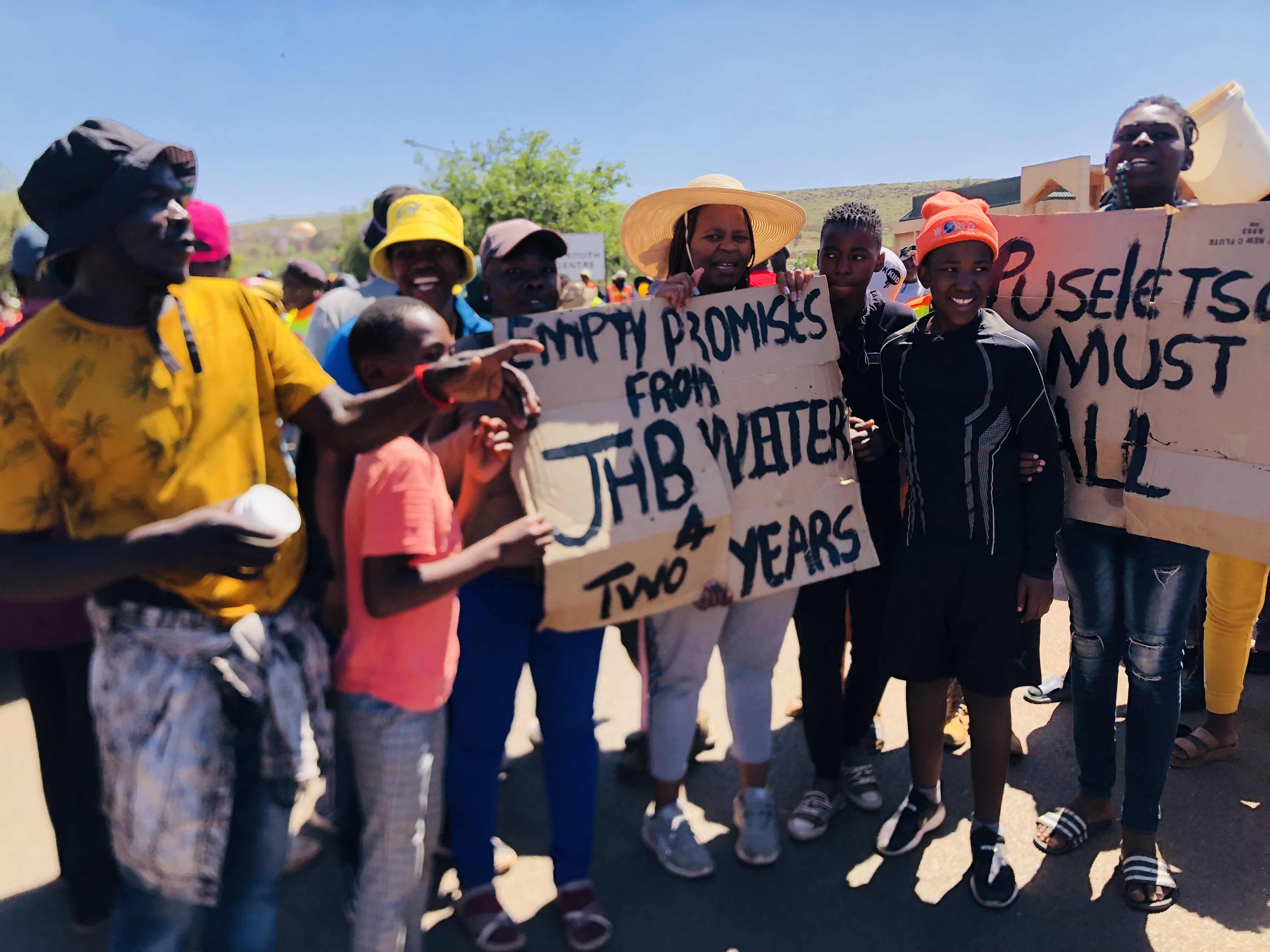
South Africa is one of only 52 countries that guarantee access to water as a human right. “Access” from a human rights perspective means that water is physically accessible, clean and safe for consumption, and affordable. Section 27 of the country’s constitution stipulates that everyone has the right to access sufficient water.
But South Africa is not doing well on meeting the standards of a full human rights approach to water access. In a recent paper, I and my colleagues at the Public Affairs Research Institute’s Just Transition Programme set out the extent of this failure, and mapped out what needs to be done to rectify the situation.
The Just Transition Programme aims to contribute to a successful climate transition that prioritises social justice, equity and poverty reduction.
Part of our research method is ethnography – spending time in communities struggling to access water. We do this to learn what concrete changes are required to improve people’s lives, from their own perspective.
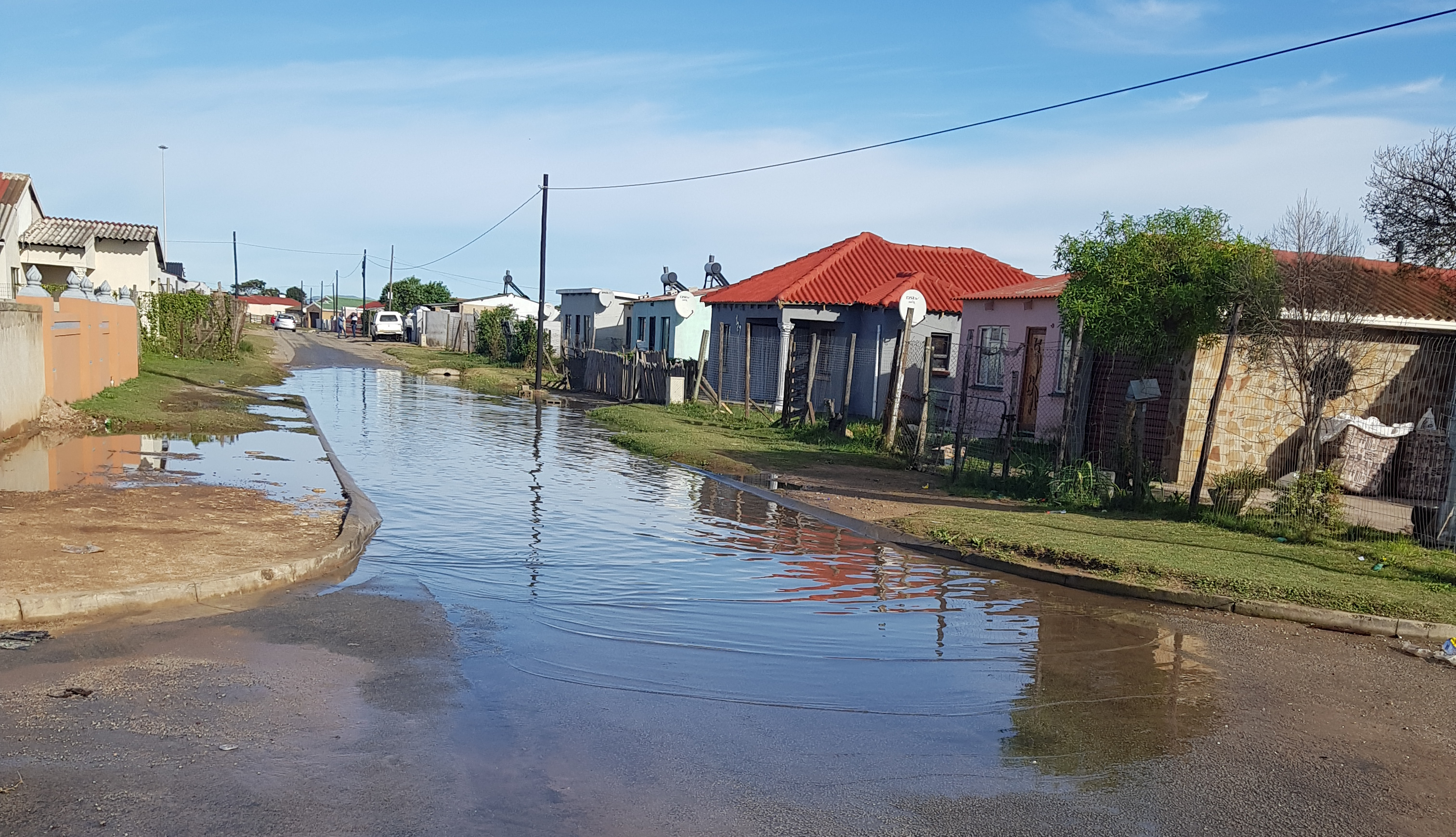
Physical access to water for households has increased significantly since the country’s first democratic elections in 1994. Nevertheless, water quality and safety has declined over the past ten years. Almost half the country’s drinking water is considered unsafe for human consumption. Water service interruptions – sometimes lasting days – are becoming more common.
South Africa’s household poverty rate (the number of households who live below the upper bound poverty line) is now at 55%. We found that water is becoming more and more unaffordable for impoverished households. The result is that these families have to limit the amount of water they use. This worsens poverty and inequality.
To solve this problem, the South African government needs to embrace a human rights approach to access to water, where people are given enough water to live a full life.
What went wrong?
The first problem is affordability. People cannot access water if they don’t have the money to pay for it, but most clean and safe water in South Africa must be paid for. Poverty is a key barrier to access.
The United Nations special rapporteur on the human rights to water and sanitation has emphasised that it is the responsibility of the state to assess whether households can afford to pay for water, without sacrificing other basic essential items such as food. It is up to governments to take steps to make water affordable.
The country’s Free Basic Water policy was originally intended to address this issue. It guaranteed impoverished households access to a free 6,000 litres of water per month. This is roughly 200 litres per household of eight people per day. However, in practice this policy is not a meaningful solution, for two reasons:
the amount provided is an average of 25 litres of water per person per day. This is way below the World Health Organization recommendation of a minimum water allowance of between 50 and 100 litres of water per person per day.
many millions of poor households are excluded from the benefit because of poor implementation of the policy by municipalities.
This situation reflects the failure to create, implement and oversee a regulatory environment that is necessary to realise affordable access to sufficient, clean water for all South Africans.
The policy failures
Firstly, water policy – at both national and municipal levels – has failed to take a human rights approach. A human rights approach requires that access to sufficient, quality and affordable water is the starting point for all policy making and resource allocation decisions. This has not been the case.
Secondly, access to water has been narrowly defined as making water physically available without considering affordability. Most water access policy in South Africa includes statements declaring that water must be affordable for everyone. Unfortunately, all of these policy promises have remained exactly that – just promises.
Meeting the goal of affordability requires more from the government than stating that water should be affordable. The state must develop affordability standards – in other words, calculate a water tariff that everyone can afford – and monitor it. At the moment, there is no national government oversight of water tariffs and so the affordability policy is effectively meaningless.
The actual state practices of tariff setting and approval, particularly in local municipalities, have not translated any of these promises into reality.
Fourthly, the state has failed to acknowledge the contradiction between providing universal access to services, and requiring municipalities to generate enough money to cover 90% of their running costs. Tariffs for water have increased at rates well above inflation over the past 20 years. But in a very impoverished environment where many people cannot afford to pay for water, up to two thirds of South Africa’s municipalities have been classified as being in financial distress.
There is a fundamental – and currently insoluble – conflict between the tariffs that municipalities must charge in order to maintain fully funded budgets, and the tariffs that could be defined as affordable.
What needs to be done?
These actions should be taken in the short term:
the free basic water allowance must be increased
the household indigent policy, which determines how households can access free municipal services like water, must be restructured.
affordability standards must be developed in close consultation with affected communities. This is the only way to set water tariffs that are based on what households are actually able to pay.
there must be oversight of the provision of sufficient, affordable water for everyone.
In the longer term, these two additional problems must be solved:
the local government fiscal framework requires that municipalities earn a surplus on trading services such as water. This must be changed so that municipal finances prioritise affordability of water instead.
The ethnographic research team for this work was led by Mahlatse Rampedi, who holds a master’s degree and has ten years of experience, together with Ntokozo Ndhlovu, who holds an honours degree.
– South Africa has failed to deliver access to enough water for millions – a new approach is needed – https://theconversation.com/south-africa-has-failed-to-deliver-access-to-enough-water-for-millions-a-new-approach-is-needed-247831
McALLEN, Texas – A 36-year-old McAllen resident has been charged with arson and possession of a destructive device, announced U.S. Attorney Nicholas J. Ganjei.
Daniel Eduardo Rivera is expected to make an initial appearance before U.S. Magistrate Judge J. Scott Hacker at 9:00 a.m.
According to the criminal complaint, Rivera has allegedly been targeting an individual since 2022 by setting multiple fires to the victim’s residence and vehicles.
The charges allege that in November 2022 at approximately 2:03 a.m., fire department officials responded to the victim’s residence due to a fire coming from a storage shed. They extinguished it, but authorities later determined it to be incendiary in nature, according to the complaint.
At approximately 1:10 p.m. that same day, the fire department was allegedly dispatched to the victim’s house for a second time where they discovered the porch to be fully engulfed with fire seeping into the home. The charges allege they were again able to extinguish it but not before it had caused significant damage to the home. They also found a Molotov cocktail at the scene, according to the complaint.
According to the victim, Rivera had allegedly confronted him and threatened to kill his family at night and burn the victim’s house down.
The complaint further alleges that in May 2024, fire officials responded to a vehicle fire in McAllen. It has already been extinguished, but authorities allegedly determined another Molotov cocktail was used in an attempt to set the car ablaze. The investigation links Rivera to that incident, according to the charges.
If convicted, Rivera faces up to 20 years in federal prison for the arson and a maximum of 10 for possession of a destructive device.
The Bureau of Alcohol, Tobacco, Firearms and explosives is conducting the investigation with the assistance of the McAllen Fire Marshal’s Office, Fire and Police Departments. Assistant U.S. Attorneys Lee Fry and Devin V. Walker are prosecuting the case.
A criminal complaint is a formal accusation of criminal conduct, not evidence. A defendant is presumed innocent unless convicted through due process of law.
South Africa is one of only 52 countries that guarantee access to water as a human right. “Access” from a human rights perspective means that water is physically accessible, clean and safe for consumption, and affordable. Section 27 of the country’s constitution stipulates that everyone has the right to access sufficient water.
But South Africa is not doing well on meeting the standards of a full human rights approach to water access. In a recent paper, I and my colleagues at the Public Affairs Research Institute’s Just Transition Programme set out the extent of this failure, and mapped out what needs to be done to rectify the situation.
The Just Transition Programme aims to contribute to a successful climate transition that prioritises social justice, equity and poverty reduction.
Part of our research method is ethnography – spending time in communities struggling to access water. We do this to learn what concrete changes are required to improve people’s lives, from their own perspective.
Physical access to water for households has increased significantly since the country’s first democratic elections in 1994. Nevertheless, water quality and safety has declined over the past ten years. Almost half the country’s drinking water is considered unsafe
for human consumption. Water service interruptions – sometimes lasting days – are becoming more common.
South Africa’s household poverty rate (the number of households who live below the upper bound poverty line) is now at 55%. We found that water is becoming more and more unaffordable for impoverished households. The result is that these families have to limit the amount of water they use. This worsens poverty and inequality.
To solve this problem, the South African government needs to embrace a human rights approach to access to water, where people are given enough water to live a full life.
What went wrong?
The first problem is affordability. People cannot access water if they don’t have the money to pay for it, but most clean and safe water in South Africa must be paid for. Poverty is a key barrier to access.
The United Nations special rapporteur on the human rights to water and sanitation has emphasised that it is the responsibility of the state to assess whether households can afford to pay for water, without sacrificing other basic essential items such as food. It is up to governments to take steps to make water affordable.
The country’s Free Basic Water policy was originally intended to address this issue. It guaranteed impoverished households access to a free 6,000 litres of water per month. This is roughly 200 litres per household of eight people per day. However, in practice this policy is not a meaningful solution, for two reasons:
the amount provided is an average of 25 litres of water per person per day. This is way below the World Health Organization recommendation of a minimum water allowance of between 50 and 100 litres of water per person per day.
many millions of poor households are excluded from the benefit because of poor implementation of the policy by municipalities.
This situation reflects the failure to create, implement and oversee a regulatory environment that is necessary to realise affordable access to sufficient, clean water for all South Africans.
The policy failures
Firstly, water policy – at both national and municipal levels – has failed to take a human rights approach. A human rights approach requires that access to sufficient, quality and affordable water is the starting point for all policy making and resource allocation decisions. This has not been the case.
Secondly, access to water has been narrowly defined as making water physically available without considering affordability. Most water access policy in South Africa includes statements declaring that water must be affordable for everyone. Unfortunately, all of these policy promises have remained exactly that – just promises.
Meeting the goal of affordability requires more from the government than stating that water should be affordable. The state must develop affordability standards – in other words, calculate a water tariff that everyone can afford – and monitor it. At the moment, there is no national government oversight of water tariffs and so the affordability policy is effectively meaningless.
The actual state practices of tariff setting and approval, particularly in local municipalities, have not translated any of these promises into reality.
Fourthly, the state has failed to acknowledge the contradiction between providing universal access to services, and requiring municipalities to generate enough money to cover 90% of their running costs. Tariffs for water have increased at rates well above inflation over the past 20 years. But in a very impoverished environment where many people cannot afford to pay for water, up to two thirds of South Africa’s municipalities have been classified as being in financial distress.
There is a fundamental – and currently insoluble – conflict between the tariffs that municipalities must charge in order to maintain fully funded budgets, and the tariffs that could be defined as affordable.
What needs to be done?
These actions should be taken in the short term:
the free basic water allowance must be increased
the household indigent policy, which determines how households can access free municipal services like water, must be restructured.
affordability standards must be developed in close consultation with affected communities. This is the only way to set water tariffs that are based on what households are actually able to pay.
there must be oversight of the provision of sufficient, affordable water for everyone.
In the longer term, these two additional problems must be solved:
the local government fiscal framework requires that municipalities earn a surplus on trading services such as water. This must be changed so that municipal finances prioritise affordability of water instead.
The ethnographic research team for this work was led by Mahlatse Rampedi, who holds a master’s degree and has ten years of experience, together with Ntokozo Ndhlovu, who holds an honours degree.
Tracy Ledger does not work for, consult, own shares in or receive funding from any company or organisation that would benefit from this article, and has disclosed no relevant affiliations beyond their academic appointment.
On February 6, 2025 at approximately 9:56 p.m., Prince Albert RCMP received a report of an armed robbery near a business on Highway 2 and 264 in the Elk Ridge area.
Investigation determined a female approached a vehicle, threatened the driver and directed them to drive to a specified location.
The incident was reported to Prince Albert RCMP and officers located the vehicle at a business in Northside, SK and arrested the suspect at the scene. The driver did not report physical injuries to police.
As a result of continued investigation, Saskatchewan RCMP arrested 20-year-old Jade Grieves.
Jade Grieves from Nipawin is charged with:
one count, robbery – with other offensive weapon, Section 344(1)(b), Criminal Code;
three counts, fail to comply with a probation order, Section 733.1(1), Criminal Code.
Jade Grieves appeared in Prince Albert Provincial Court on February 7 and February 10, 2025.
An adult female is facing a drug trafficking charge after Saskatchewan RCMP executed a search warrant and seized cocaine in Swift Current, SK.
On February 12, 2025, officers with Saskatchewan RCMP’s Swift Current Saskatchewan Trafficking Response Team (STRT), Swift Current Municipal and Rural Detachments, and Police Dog Services (PDS) executed a search warrant at a residence on the 1100 block of Winnie Street East as part of an ongoing drug trafficking investigation.
An adult female was arrested at the residence. RCMP officers located and arrested two adult females in a vehicle at a business on 6th Avenue Northeast and South Service Road.
While searching the residence and vehicle, officers located and seized approximately 109 grams of powder cocaine, a small amount of methamphetamine and other evidence of drug trafficking.
As a result of investigation, 31-year-old Lacey Mandel of Swift Current, SK is charged with one count, possession for the purpose of trafficking – cocaine, Section 5(2), Controlled Drugs and Substances Act.
The two other females were released without charges.
Lacey Mandel will make her first appearance in Swift Current Provincial Court on March 12, 2024.
Interim report published by the CMA in the latest step in its Phase 2 investigation into the merger of two corporate travel businesses.
iStock
The Competition and Markets Authority (CMA) has published a supplementary interim report in its investigation of the merger of corporate travel management companies Global Business Travel Group, Inc (GBT) and CWT Holdings LLC (CWT). Both companies supply travel agency services to global businesses with high travel spend and employees who travel internationally.
This is the first in-depth merger investigation that the CMA has conducted under its revised Phase 2 process. Those process changes included issuing a more provisional ‘interim report’, earlier in the process, to facilitate engagement by merging parties in relation to the independent CMA inquiry group’s initial assessment.
In November, the CMA’s interim report provisionally found the proposed merger between GBT and CWT was likely to substantially lessen competition. Following the interim report, the CMA has continued to gather evidence and has carried out further analysis that suggests CWT would not have performed as strongly absent the merger as the group had initially assessed. As a result, and having considered all the evidence in the round, the group has provisionally concluded that CWT is a significantly weaker competitor than in the past and is likely to continue to weaken in the future. There are other suppliers who will offer customers an alternative to the merged business.
Based on that further analysis, and in line with its usual procedures, the CMA inquiry group is today publishing a supplementary interim report ahead of its final decision. That interim report sets out why the group provisionally considers that the deal should be allowed to proceed.
Martin Coleman, chair of the independent panel of experts conducting this investigation, said:
In this case, having considered all of the evidence in the round, particularly the further analysis of CWT’s financial position, we have now provisionally concluded that the merger will not result in a substantial lessening of competition in corporate travel management services.
This is our first investigation under the revised Phase 2 process, with several benefits including the publication of an interim report at an earlier stage and a higher level of business and third-party engagement with the inquiry group. Today’s supplementary report reflects the flexibility this new process provides.
We will now consider feedback on our supplementary interim report before making a final decision in March.
The inquiry group will now seek feedback on its supplementary interim report before making a final decision by 9 March 2025. The deadline for comments is Tuesday 25 February 2025.
On 10 January 2025 the United States Department of Justice filed a civil antitrust lawsuit seeking to block the merger. The case is currently before the US courts.
New Phase 1 cases opened by the CMA after 25 April 2024 which are referred for an in-depth Phase 2 investigation are run under the new Phase 2 process.
All media enquiries should be directed to the CMA press office by email on press@cma.gov.uk, or by phone on 020 3738 6460.
Source: Federal Bureau of Investigation (FBI) State Crime Alerts (b)
Romanian law enforcement officials conducted dozens of warrants this week in the Romanian counties of Brasov and Mures, following a parallel investigation with the FBI.
The search warrants targeted locations suspected to have ties to an organized crime group engaged in ATM skimming in the United States and money laundering.
During the operation, Romanian officials also detained several individuals for questioning and seized large amounts of cash, several vehicles, as well as skimming devices and associated instruments.
“This group profited handsomely by targeting vulnerable EBT recipients who rely on funds to support their families and callously deprived victims of their basic needs,” said Akil Davis, the Assistant Director in Charge of the FBI’s Los Angeles Field Office. “This investigation is yet another example of FBI Agents working closely with our foreign partners to identify, disrupt and dismantle transnational criminal enterprises who enter the United States illegally for the sole purpose of conducting criminal activity.”
Today’s operation is the culmination of a two-year investigation conducted by the FBI and Romanian authorities to dismantle the command and control of the Dorneanu Organized Crime Group: a transnational criminal organization whose members conduct ATM skimming operations in the United States and then launder the profits back to Romania.
“These individuals targeted and stole from our community’s most vulnerable citizens,” said Acting United States Attorney Joseph T. McNally. “Working together with our local, federal, and international partners, we can and will continue to root out and punish transnational criminal organizations and protect the less fortunate and American taxpayers.”
The subjects targeted in this investigation worked directly for, or were associated with, Mihai Dorneanu—the alleged leader of the Dorneanu Organized Crime Group. Five members of this organization were arrested by the FBI and convicted in the Central District of California with violations including conspiracy, bank fraud, aggravated identity theft, and visa fraud. Four others were arrested for state violations by local authorities in Ventura and San Bernardino Counties. As a result of ongoing efforts in this case to disrupt ATM skimmers in Southern California, law enforcement recovered over 8,500 stolen credit card numbers belonging to victims in the United States.
The five federal defendants include the following:
Dan Eugen Boar was sentenced to four years in federal prison.
Radu-Marian Moldovan was sentenced to time served in federal prison.
Attila Ravasz was sentenced to one year and three months in federal prison.
Andrei-Raul Cirilescu was sentenced to two years and four months in federal prison.
A statement announcing the operation was also issued by Romanian authorities (translation available upon visiting page).
The domestic investigation was conducted jointly by the Ventura County District Attorney’s Office; the San Bernardino County Human Services Fraud Investigation Unit; the Diplomatic Security Service; the Los Angeles Police Department; and the Los Angeles Sheriff’s Department. The federal defendants were prosecuted by the United States Attorney’s Office in Los Angeles.
The FBI’s foreign partners include the Brașov Brigade for Combatting Organized Crime; prosecutors with the Directorate for the Investigation of Organized Crime and Terrorism—Brașov Territorial Service; and Europol.