Category: KB

  • MIL-OSI USA: Kennedy: Americans understand what DOGE is doing

    US Senate News:

    Source: United States Senator John Kennedy (Louisiana)

    Watch Kennedy’s comments here.

    WASHINGTON – Sen. John Kennedy (R-La.) explained why many Americans support the efforts of the Department of Government Efficiency (DOGE) to uncover wasteful spending at the United States Agency for International Development (USAID) in a speech on the Senate floor.

    Key excerpts of the speech are below:

    “[Americans] have had to live through 20% inflation under President Biden. They understand what [Elon] Musk is doing. They understand spending porn and wasting taxpayer money.

    “Now, Mr. Musk started with USAID. . . . He found that USAID gave money to support electric vehicles in Vietnam—our money, taxpayer money. He found that USAID gave money to a transgender clinic in India. I didn’t know that. I bet you the American people didn’t know that.

    “He found that USAID gave $1.5 million to a Serbian LGBTQ group. . . . They got $1.5 million to ‘advance diversity, equity, and inclusion in Serbia’s workplaces and business communities.’ What else did Mr. Musk find that my colleagues don’t want to talk about?”

    . . . 

    “Now, I am not saying everything that USAID does is wasted, but I am saying a lot of it is—a hell of a lot of it is—and we ought to be on the floor of this United States Senate thanking Mr. Musk, and we ought to be asking him to go through every agency and look at everybody’s budget—everybody’s budget.

    “That is what the American people want. They don’t want to talk about process. They don’t want to continue with the Washington way. They want to save some money.”

    Watch Kennedy’s full speech here.

    MIL OSI USA News

  • MIL-OSI USA: Risch, Daines Introduce Bill to Give Small Businesses Permanent Tax Break

    US Senate News:

    Source: United States Senator for Idaho James E Risch

    WASHINGTON – U.S. Senators Jim Risch (R-Idaho) and Steve Daines (R-Mont.) introduced the Main Street Tax Certainty Act to permanently extend the 20 percent tax deduction for pass-through businesses. Should these tax cuts expire, small businesses will face an immediate and massive tax hike.

    “Inflicting a 20% tax increase on Idaho’s small businesses would be damaging to our economy and local communities,” said Risch. “The Main Street Tax Certainty Actensures these establishments remain the driving force Idaho’s economy and thrive for generations to come.”

    “As the son of a contractor, I’ve seen firsthand the hard work it takes to keep a small business flourishing- especially as Americans are still grappling with the effects of Joe Biden’s inflation. It’s absolutely crucial that we pass this legislation to prevent a 20 percent tax increase for hardworking Montanans and I’ll keep fighting for ways to support Montana small businesses, which provide the majority of jobs in our state,” said Daines.

    The 20% small business deduction was created as a part of President Trump’s 2017 tax cuts to level the playing field between small businesses and large corporations. Without Congressional action, 9 out of 10 small businesses will be hit with a massive tax hike when this deduction is set to expire at the end of 2025.  

    Senators John Thune (R-S.D.), John Barrasso (R-Wyo.), Shelley Moore Capito (R-W.V.), James Lankford (R-Okla.), Joni Ernst (R-Iowa), Tom Cotton (R-Ark.), Tim Scott (R-S.C.), Chuck Grassley (R-Iowa), Kevin Cramer (R-N.D.), Jerry Moran (R-Kan.), Marsha Blackburn (R-Tenn.), Mike Rounds (R-S.D.), Pete Ricketts (R-Neb.), Katie Britt (R-Ala.), Eric Schmitt (R-Mo.), Roger Wicker (R-Miss.), Cynthia Lummis (R-Wyo.), Cindy Hyde-Smith (R-Miss.), Tommy Tuberville (R-Ala.), Ted Cruz (R-Texas), John Hoeven (R-N.D.), Thom Tillis (R-N.C.), Roger Marshall (R-Kan.), Jim Justice (R-W.V.), Tim Sheehy (R-Mont.), Deb Fischer (R-Neb.), Bill Cassidy (R-La.), Ted Budd (R-N.C.), Rick Scott (R-Fla.), Bill Hagerty (R-Tenn.), Todd Young (R-Ind.), John Kennedy (R-La.) and Jim Banks (R-Ind.) joined Risch and Daines in introducing the legislation.

    Recently, a new study from Ernst and Young (EY) highlighted the economic activity supported by this small and family-owned business tax deduction, including 2.6 million jobs and $325 billion of the GDP.?

    MIL OSI USA News

  • MIL-OSI Russia: The Institute of Physical Culture, Sports and Tourism celebrated its 10th anniversary

    Translartion. Region: Russians Fedetion –

    Source: Peter the Great St Petersburg Polytechnic University – Peter the Great St Petersburg Polytechnic University –

    On February 5, the Institute of Physical Culture, Sports and Tourism (IPCST) of Peter the Great St. Petersburg Polytechnic University celebrated its tenth anniversary.

    Over the years, the Institute has become a true center of attraction for all who strive for an active sports life and professional development in the field of physical culture and tourism. It trains highly qualified specialists who are able to make a significant contribution to the development of sports and an active lifestyle. Over 10 years, 11 departments have been formed at the IPCST, each of which occupies an important place in the educational process.

    The Department of Physical Fitness and Sport offers elective courses and online learning to over 9,000 students in 10 specializations. The online courses developed by the department are hosted on major educational platforms, making them accessible to a wide audience.

    The Higher School of Sports Education trains qualified personnel, offering more than 20 disciplines and actively cooperating with European universities. Particular attention is paid to the development of competencies in the use of technical means in sports.

    The student sports club “Black Bears-Polytech” is the pride of the institute. With 73 sports, 40 masters of sports and 1250 athletes, the club annually holds about 50 events and has won first place in St. Petersburg student competitions for ten years in a row.

    The Center for Continuing Education organizes the educational process according to general education programs, advanced training programs and professional retraining, ensuring continuous development and updating of knowledge.

    The GTO Standards Testing Center holds festivals twice a year, attracting thousands of participants. Each year, more than 2,000 people receive distinctions through our Center.

    The Center for Physical Culture and Health Services offers a wide range of opportunities for training on the Institute’s sports grounds.

    The Scientific and Educational Center for Computer Sports is actively developing digital sports based on the first university phygital center in Russia, Berloga. The center’s athletes achieve high results in games such as Counter-Strike, DOTA 2, League of Legends, etc.

    The Polytechnic sports complex, with an area of over 32.5 thousand square meters, includes two swimming pools, a multifunctional stadium and over 20 sports halls, providing students with all the necessary conditions for training and competitions.

    “The decade of the IPCST is not only about achievements, but also about plans for the future. We strive to continue developing our programs, introducing new technologies into education and expanding international cooperation,” says IPCST Director Valery Sushchenko. “We thank all teachers, students and partners for their contribution to the development of our institute. Together we create a unique atmosphere for education and sports achievements. Let the next ten years be no less successful and full of new achievements!”

    Please note: This information is raw content directly from the source of the information. It is exactly what the source states and does not reflect the position of MIL-OSI or its clients.

    MIL OSI Russia News

  • MIL-OSI New Zealand: Universities – Can artists really take back their music like Swift? – UoA

    Source: University of Auckland

    Taylor Swift’s re-recordings rocked the music industry – can other artists reclaim their music too? A journal article explores the options.

    Taylor Swift and her millions of fans may be disappointed by her 2025 Grammys ‘snub’, but the billionaire artist still has much to celebrate, most notably, her successful fight to take ownership of her music in an industry long dominated by influential record labels.

    University of Auckland copyright expert Dr Joshua Yuvaraj says Swift significantly impacted the industry when she re-recorded several of her albums after the rights to her music were sold from under her.

    In his paper, published in the Journal of Intellectual Property Law and Practice and presented at the University of Melbourne’s Taylor Swift-themed academic conference, Swiftposium, the senior law lecturer examines how re-recording can help artists gain control of their music. He compares this strategy with the primary mechanism available under US copyright law: statutory reversion. (ref. https://academic.oup.com/jiplp/article/19/12/884/7913103 )

    His article looks at how reversion applies to sound recordings, focusing on the US copyright ‘termination’ provision, which lets creators reclaim copyright, typically after around 35 years. The size of the US recording market makes this scheme the most high-profile reversion system in the world. However, Yuvaraj argues that re-recording may offer a more accessible alternative to these legal processes.

    “In theory, copyright reversion gives artists a second chance at controlling their recordings. But in practice, the US system has significant obstacles: a long waiting period, complex legal requirements, and uncertainty over whether sound recordings are even covered.”

    Many artists simply don’t have the time or resources to navigate this legal quagmire, says Yuvaraj.

    “There are considerable power imbalances between artists and record companies,” he says. “For example, copyright is often assigned before the true value of a song is even known.”

    Re-recording, as Swift did, allows artists to sidestep these legal barriers. While the copyright in an original sound recording remains with the label, a newly recorded version, if produced independently, is treated as a separate work under copyright law – as long as the artist retained control, or had a license to reproduce the song itself, which has a separate musical copyright to the recording.

    “Taylor Swift’s success put re-recording in the spotlight as a way for artists to regain control over their music without waiting decades for copyright reversion laws to take effect,” says Yuvaraj.

    He says that unlike statutory reversion, re-recording requires much shorter waiting periods, allowing musicians to capitalise on market demand more quickly. There’s also less procedural complexity, and as long as artists comply with contractual waiting periods, they are unlikely to face legal action.

    Despite Swift’s success – her re-recorded albums were critically praised and financially lucrative – Yuvaraj notes that re-recording isn’t a viable solution for everyone.

    “It requires a strong fan base willing to embrace the new versions, and not all musicians have that level of market power,” he says.

    And while Swift’s re-recording battle highlighted power imbalances in artist contracts, it also saw record labels tighten their grip. There are reports of extended re-recording restrictions in contracts from the standard three to seven years to 20 or 30 years, making re-recording a less accessible option for future artists.

    Despite this roadblock, Yuvaraj says Swift’s case sparked important conversations about artist rights, and some musicians are now negotiating deals that allow them to retain ownership of their master recordings from the outset, eliminating the need for re-recording altogether.

    “Swift’s case brought re-recording into the public eye, but it doesn’t replace the need for fairer contracts and stronger copyright protections.”

    MIL OSI New Zealand News

  • MIL-OSI New Zealand: Opposition to seabed mining remains strong as Fast-Track process opens for applications – Kiwis Against Seabed Mining (KASM)

    Source: Kiwis Against Seabed Mining (KASM)

    As the government opens the floodgates today for project applications under its new Fast-Track Approvals Act, opposition to seabed mining is as strong as ever, Kiwis Against Seabed Mining (KASM) said today.

    The KASM team spent Waitangi Day in Patea, one of the closest settlements to the proposed mine site in the South Taranaki Bight, and found nothing but fierce opposition, from iwi to fishermen, from surfers to teachers and pensioners – and local councils.

    “There’s a real anger in this community at the prospect that this project could still go ahead after being so roundly and repeatedly rejected by the highest court in the land,” said KASM chairperson Cindy Baxter.

    “This seabed mining project is called a zombie project because it simply did not stand up to scrutiny: there’s so many uncertainties, and the company simply hasn’t done the work.”

    This was evident in the hearing Trans Tasman Resources walked away from last year, when it gave up on trying to meet the Supreme Court’s test of causing “no material harm.”

    KASM doesn’t expect the TTR application to be vastly different from what the company presented to those hearings. Trans Tasman Resources appears to only have focussed on lobbying politicians and spending as little money as possible on the mahi it needed to do, while grossly exaggerating the projected economic impact.

    “Right around the country today communities like Patea are gearing up for a fight to keep their land, their water and their oceans free from pollution, pitted against a government determined to ride roughshod over their future. It shouldn’t have to be this way.”

    The Fast-Track website is now online, advertising that it will post “news” today (ref. https://kasm.us6.list-manage.com/track/click?u=40fd433e2f2344060946f0bb8&id=378af0d022&e=26e06db549 )

    MIL OSI New Zealand News

  • MIL-OSI New Zealand: Universities – ‘Inequities stick out to me’, says new Professor Sir Collin Tukuitonga – UoA

    Source: University of Auckland (UoA)

    This month, Sir Collin Tukuitonga became one of two professors of Niuean descent in the world.

    Professor Sir Collin says it’s an honour to join the ranks of his University of Auckland colleague, Professor of Pacific Health Vili Nosa, also from Niue – one of the smallest countries on the globe, with a population of less than 1,700 people.

    “I’m not a true-blue academic. I didn’t do a PhD and stay in the university forever. I gained a lot of practical experience elsewhere, so it’s nice to be accepted by my peers in academic medicine,” says Sir Collin.

    He is a director of Poutoko Ora a Kiwa – Centre for Pacific and Global Health at the University, was knighted in 2022 and is a man with his own Wikipedia page. His ‘practical experience’ spans everything from being chief executive of the New Zealand Ministry of Pacific Affairs from 2007 to 2012 to developing a global strategy to improve diet and physical activity that was adopted by the World Health Organisation (WHO) in 2004.

    Addressing health inequities faced by Pacific and Māori people has been the motivating force behind Sir Collin’s career over the past 45 years.

    “People with the means often get too much medicine and those who need it the most get the least.

    “Those inequities stick out to me – Māori and Pacific people have poorer health and it’s entrenched.

    “We have the resources, skills, equipment and facilities to make a change and yet we haven’t.

    “It seems unfair, unacceptable to me – and that’s the key driver, why I’m involved in public health,” he says.

    Growing up in Niue, seeds of caring for family and community were planted that have borne fruit during his career in public health.

    “We didn’t have much, not many books. We first had the radio when I was 10, electricity wasn’t a regular thing, so it was a pretty basic existence.

    “You didn’t expect much for yourself – you didn’t think about whether you had the latest flashy clothes or shoes.

    “You helped in the plantation, going fishing, it was all centred around contributing to the family and helping in the village.

    “I guess that’s where I got my sense of social justice – your talents are not just for yourself.”

    At the age of 15, Sir Collin’s fate was shaped by gaining a scholarship to study medicine.

    “I was lucky I had a decent brain and I got one of two New Zealand government scholarships to go to university in Fiji.

    “I had always been interested in helping people, so medicine was a natural selection, but the availability of the scholarship was a big factor.

    “My family would not have been able to send me to university – I would have been a fisherman,” he says.

    Leaving behind his “charmed life” in Niue, where he had been pampered by three sisters and surrounded by cousins, was a huge step, but Fiji still offered the simple pleasures of island life.

    Sir Collin graduated as a junior doctor in 1979 and worked as a “real doctor” in family medicine for about 15 years.

    He returned to Niue to offer his skills to his island community, before being appointed to teach public health at the Fiji School of Medicine in 1987. A military coup later that year raised fears for the safety of his first wife and their young children, so they fled to New Zealand – a place Sir Collin has called home ever since.

    In the late 1980s, he was a key figure involved in setting up a Pacific healthcare clinic in West Auckland, which is now called The Fono.

    Having mainly Pasifika staff and low fees has helped make healthcare more accessible for many Pacific people.

    While working as a GP in West Auckland, he saw patterns of hardship and poor health that made him determined to help change the health system.

    “It was predominantly families with young children and you saw the same things over and over again – chesty coughs, skin infections, those kinds of things, which if you’re a thinking person, you have to say, ‘there has to be a better way than waiting for them to come back to the clinic with the same thing’.

    “Those things were to do with cold, damp, overcrowded housing, poor nutrition and delayed access to health care.

    “I thought if I was involved in public health, you could theoretically prevent those problems.”

    He became Director of Public Health at the New Zealand Ministry of Health in 2001.

    In this role, he contributed to programmes designed to reduce smoking harm in Pacific communities. Over the past 30 years, smoking rates have halved, though about twice as many Māori and Pacific people still smoke, compared to Pakeha New Zealanders.

    “Smoking in young people in New Zealand is now 4.2 percent, compared to 27 percent of adults smoking in 1993. So that’s a significant achievement for New Zealand and I helped contribute to that.”

    Sir Collin helped introduce a vaccine for meningitis B, during an epidemic of the disease in the early 2000s.

    “We had high mortality rates among young Māori and Pacific people in New Zealand and the vaccine led to a significant drop in occurrence of the disease, so I was pleased to help that along.”

    His overseas roles have included three years at the World Health Organisation in Geneva, Switzerland, and seven years in New Caledonia, where he was director-general of the Pacific Community.

    More recently, he played an important role in advising the New Zealand government and communicating with Pacific communities during the Covid pandemic.

    However, in December 2023, he resigned from his role as chairperson of Te Whatu Ora Pacific Senate and spoke out regarding his concerns about the new government’s direction.

    “I was really incensed when they repealed our smoke-free legislation. I know that by undoing that world-leading legislation, Māori and Pacific people are going to be the worst affected – and all for the purpose of them meeting their commitment to their friends to make tax cuts.

    “I couldn’t continue on the advisory committees when clearly they were not interested in anything apart from what was on their agenda.”

    The roots of Pacific people having higher rates of health problems, ranging from cancer to measles, lie in deeper disadvantages, says Sir Collin.

    “Health is a symptom of underlying social conditions. It’s an extension of disparities in education, income, housing and diet.

    “We can’t just deal with it in the health sector, we have to deal with those issues – and they’re difficult issues.”

    Through the hard times, Sir Collin has been buoyed up by Pacific people thanking him for looking out for their wellbeing and speaking up for them.

    These days, the 67-year-old father of five is enjoying mentoring and supporting young people at the University, while much of his spare time is spent developing and planting native trees on his family’s lifestyle block near Pakiri.

    “There’s no set retirement age these days and I love working with my many clever colleagues at the university.

    “My friends say that when you retire and you don’t use your brain, it rots. I’m terrified of that possibility,” he laughs.
    MIL OSI New Zealand News

  • MIL-OSI Australia: Taskforce targets retail theft and anti-social behaviour across Hobart

    Source: Tasmania Police

    Taskforce targets retail theft and anti-social behaviour across Hobart

    Friday, 7 February 2025 – 8:04 am.

    Tasmania Police is launching a new taskforce in Hobart, proactively targeting crime reduction, retail theft and anti-social behaviour.Taskforce Reprisal will commence on Monday 10 February with members to be based out of Hobart Uniform Division.Hobart Acting Inspector Danny Jackson said police had seen success previously through Operation Swipe at Glenorchy, Taskforce Saturate in Hobart, Taskforce Scelus in the Western District, and most recently with the launch of Taskforce Raven in the Northern District.“Taskforces are just one of a number of strategies that should provide the community with reassurance that we are continuing to proactively target known offenders to make our community safer for everyone,” he said.“We know there are concerns about retail theft in particular across the Hobart Division, and this will be one of the areas of focus for this taskforce.”“Everyone deserves to feel safe in our community, and we know that there is a small number of people who are responsible for the majority of crime committed. This taskforce will actively those offenders.”

    MIL OSI News

  • MIL-OSI Economics: GitHub Copilot is all-in on agents. Check out Agent Mode, and a first look at our Autonomous SWE agent.

    Source: Microsoft

    Headline: GitHub Copilot is all-in on agents. Check out Agent Mode, and a first look at our Autonomous SWE agent.

    Today, we are infusing a new force throughout the GitHub Copilot experience, elevating Copilot from a pair to peer programmer with the power of AI agents: – GitHub Copilot Agent Mode: When you toggle on agent mode in VS Code, Copilot goes beyond your initial request, completing all necessary subtasks to ensure your primary goal is achieved. Agent mode allows Copilot to iterate on its own code, propose and guide terminal commands, and analyze and resolve run-time errors. Available today for VS Code Insiders. – GitHub Copilot Edits: We’re also announcing the GA for Copilot Edits in VS Code. First announced at GitHub Universe, it combines the best of inline edits and chat, allowing you to make changes across multiple files by prompting in natural language. And with multi-model choice, you can choose the foundation language model that you prefer between: OpenAI’s GPT-4o, o1, or o3-mini, Anthropic’s Claude 3.5 Sonnet, and now, Gemini 2.0 Flash. – Project Padawan: Finally, a sneak peek at our autonomous SWE agent and how we envision these types of agents will fit into the GitHub user experience. When it’s released later this year, Project Padawan will allow you to directly assign issues to GitHub Copilot – using any of the GitHub clients – and have it produce fully-tested pull requests. From code completions, chat, and multi-file edits to workspace and agents, Copilot puts the human at the center of the creative work that is software development. AI helps with the things you don’t want to do, so you have more time for the things you do. We’re excited to get your feedback on all of the above. Because in our quest to maximize developer productivity and happiness, it’s: Do. Or do not. There is no try.

    MIL OSI Economics

  • MIL-OSI USA: February 6th, 2025 Heinrich’s first bill in new Congress focused on apprenticeship programs

    US Senate News:

    Source: United States Senator for New Mexico Martin Heinrich

    Sen. Martin Heinrich is continuing his focus on apprenticeships and workforce development in the 119th session of Congress, putting forth a bill aimed at creating grants for new high school apprenticeship programs.

    Heinrich, D-N.M., introduced the bipartisan Apprenticeship Pathways Act in January with Sen. Jerry Moran, R-Kan. The pair introduced the same legislation in 2023.

    The bill, if approved, would direct the Secretary of Labor to provide grants for the creation and development of apprenticeship programs for high school students — targeting industries like construction, health care, early childhood education, technology and manufacturing.

    MIL OSI USA News

  • MIL-OSI USA: February 6th, 2025 Heinrich Sounds the Alarm on “DOGE” Risk to National Security & American Privacy

    US Senate News:

    Source: United States Senator for New Mexico Martin Heinrich

    WASHINGTON — Today, U.S. Senator Martin Heinrich (D-N.M.), a member of the Senate Select Committee on Intelligence, pressed the White House on the risks of allowing unvetted “Department of Government Efficiency” (DOGE) staff and representatives to access classified and sensitive government materials. In a letter to White House Chief of Staff Susie Wiles, Heinrich sounded the alarm on the risk DOGE poses to our national security and Americans’ privacy.

    In the letter, Heinrich, U.S. Senator Mark R. Warner (D-Va.), and several colleagues demanded that the administration provide details to Congress about how DOGE staff and representatives are being vetted, which systems, records and information are being shared, and what steps the Trump administration is taking to safeguard them from misuse or disclosure.

    “According to press reports, DOGE inspectors already have gained access to classified materials, including intelligence reports, at the United States Agency for International Development (USAID), sensitive government payment systems, including for Social Security and Medicare, at the Treasury Department, and federal personnel data from the Office of Personnel Management. Further, as of today the scope of DOGE’s access only seems to be expanding, as reports indicate DOGE has now entered the Department of Labor and other agencies,” Heinrich wrote. “No information has been provided to Congress or the public as to who has been formally hired under DOGE, under what authority or regulations DOGE is operating, or how DOGE is vetting and monitoring its staff and representatives before providing them seemingly unfettered access to classified materials and Americans’ personal information.”

    Heinrich added, “As you know, information is classified to protect the national security interests of the United States. Government employees and contractors only receive access to such information after they have undergone a rigorous background investigation and demonstrated a ‘need to know.’ Circumventing these requirements creates enormous counterintelligence and security risks. For example, improper access to facilities and systems containing security clearance files of Intelligence Community personnel puts at risk the safety of the men and women who serve this country. In addition, unauthorized access to classified information risks exposure of our operations and potentially compromises not only our own sources and methods, but also those of our allies and partners. If our sources, allies, and partners stop sharing intelligence because they cannot trust us to protect it, we will all be less safe.”

    Heinrich also raised alarms about the privacy implications of allowing an unknown number of DOGE staff to access unclassified systems containing information about individual American taxpayers and organizations.

    Heinrich continued, “Unclassified government systems also contain sensitive data, the unintended disclosure of which could result in significant harm to individuals or organizations, including financial loss, identity theft, and exposure of medical and other private personal information. The U.S. Treasury payment systems, in particular, are used to disburse trillions of dollars each year, and contain everyday Americans’ personal information, such as Social Security numbers, home addresses, and bank accounts. Allowing DOGE access to this information raises unprecedented risks to Americans’ private personal and financial information.”

    The letter also noted that there are strict cybersecurity controls in place for federal networks that DOGE does not seem to be following, including by reportedly connecting personal devices to sensitive government systems.

    “Such unregulated practices with our government’s most sensitive networks render Americans’ personal and financial information, and our classified national secrets, vulnerable to ransomware and cyber-attacks by criminals and foreign adversaries. The recent unprecedented Salt Typhoon and Change Healthcare attacks that affected tens of millions of Americans further underscore the importance of rigorously fortifying our government systems,” Heinrich stated.

    Alongside Heinrich and Warner, U.S. Senators Ron Wyden (D-Ore.), Angus King (I-Maine), Michael Bennet (D-Colo.), Kirsten Gillibrand (D-N.Y.), Jon Ossoff (D-Ga.), and Mark Kelly (D-Ariz.) joined the letter.

    The full text of the letter is here.

    MIL OSI USA News

  • MIL-OSI USA: February 6th, 2025 Heinrich, Moran Introduce Legislation to Create Pathways to Stable Careers, Expand Access to Apprenticeships & Technical Education

    US Senate News:

    Source: United States Senator for New Mexico Martin Heinrich

    WASHINGTON — U.S. Senator Martin Heinrich (D-N.M.) introduced the Apprenticeship Pathways Act, legislation to create pathways to high-demand careers for high school students by expanding access to apprenticeships and technical education. Heinrich introduced the bill with U.S. Senator Jerry Moran (R-Kan.).

    Apprenticeships and technical education offer a direct path to acquiring in-demand skills, and early exposure to industries can encourage more students to pursue careers in those professions. Expanding apprenticeship programs for high school students can help address workforce shortages and ensure a sustainable workforce pipeline. This legislation particularly focuses on apprenticeship programs for occupations with high need, including the building trades, healthcare, manufacturing, technology, telecommunications, and early childhood education.

    “If we want to set the next generation up for success, we need to go all in on expanding access to career-connected learning like apprenticeships as early as high school. By providing students with more preparation and job skills, we will ensure more New Mexicans have the opportunity to access careers in their own communities that they can build their families around, while strengthening New Mexico’s middle class and growing our state’s economy,” said Heinrich.

    “Apprenticeships bridge the gap between education and production, providing hands-on learning opportunities that benefit both students and employers in technical fields,” said Moran. “Aligning tech training with industry demands will help meet the workforce needs in Kansas and expand high-paying career opportunities in the IT industry.”

    The Apprenticeship Pathways Act would direct the U.S. Secretary of Labor to provide grants to industry intermediaries to develop and establish apprenticeship programs for high school students in the building trades, health care, early childhood education, technology, and manufacturing — based on local, regional, and national workforce trends. This model provides students on-the-job training and instruction, real-world experiences and responsibilities, and inspiring career pathways ahead of their entrance to the workforce.

    “Thanks to Senator Heinrich, and this legislation, New Mexico will soon provide pre-apprenticeship opportunities to young people around the state, especially in our underserved communities. Pre-apprenticeship is an essential on-ramp for high schoolers and recent graduates to access in demand, high wage careers. It’s a critical step in making our communities more prosperous,” said Mike May, Director of Workforce Learning for Future Focused Education.

    The text of the bill is here.

    Heinrich’s Longtime Support for Workforce Training and Apprenticeships:

    This week, Heinrich announced $1,350,000 in federal funding that he secured through the Fiscal Year 2024 appropriations process for the United Association of Plumbers & Pipefitters Local 412 (U.A. Local 412). The funding will support specialized journeyman training focused on filling jobs created by the CHIPS Act and Inflation Reduction Act, including needs specific to semiconductor plants, hospitals, and heat pump installation, service, repair, and maintenance. Through his work on the Senate Appropriations Committee, Heinrich has further supported the U.A. Local 412’s workforce development efforts by securing $1.2 million in the Fiscal Year 2023 Appropriations Bill.

    In October 2024, Heinrich visited U.A. 412’s mobile training unit, which is creating more pathways to in-demand careers in the skilled trades and has already trained dozens of New Mexicans in Española, Taos, Las Vegas, Mora, Raton, and Santa Fe. Heinrich also participated in a training demonstration with U.A. Local 412 leadership and apprentices who are learning skills in the plumbing, pipefitting, and HVAC trades.

    The U.A. Local 412 Mobile Training Unit was initially paid for by an Economic Development Administration (EDA) Good Jobs Challenge Grant, as part of a $6.4 million award to the Northern N.M. Workforce Integration Network. The Good Jobs Challenge funds were authorized by the American Rescue Plan, the critical economic recovery legislation that Heinrich was proud to pass in 2021.

    Heinrich is continuing to press for passage of Fiscal Year 2025 Appropriations Bills. The Senate Appropriations Committee passed bills last year that included an additional $870,000 CDS award that he secured within the Senate Appropriations Committee-passed Labor, Health and Human Services, Education Appropriations Bill to sustain the U.A. Local 412’s mobile training unit’s operations past the original EDA funding, and to expand its reach to new communities including Grants, Gallup, Silver City, and Zuni Pueblo.

    Heinrich has long championed proven workforce training programs like U.A. Local 412’s apprenticeship and pre-apprenticeship programs that are growing the middle class, creating and connecting New Mexicans to high-quality careers they can access in their communities, and continuing New Mexico’s leading role in the clean energy transition that is being built by union workers in the skilled trades.

    Last year, Heinrich hosted a “Pro-Worker, Pro-Business Opportunities” roundtable to talk directly with New Mexicans about how federal legislation he helped pass into law, like the Inflation Reduction Act and Infrastructure Law, is creating careers in high-demand sectors and strengthening New Mexico’s health care, early childhood education, and skilled trades workforce. 

    In the last Congress, Heinrich introduced the bipartisan Apprenticeship Pathways Act, legislation to create pathways to careers for high school students by expanding access to apprenticeship programs for occupations with high need, including the building trades, healthcare, manufacturing, technology, telecommunications, and early childhood education. Last year, Heinrich also introduced the Pre-Apprenticeships To Hardhats (PATH) Act, legislation to strengthen the pipeline for careers in New Mexico, address rising workforce shortages, and grow the state’s economy through quality pre-apprenticeship programs.

    Last Congress, Courtenay Eichhorst, Business Manager of U.A. Local 412 and President of New Mexico Building Trades, testified about the importance of apprenticeships and pre-apprenticeships during a hearing that Heinrich convened as the Chairman of the Joint Economic Committee on “Job Training for the Clean Energy Transition.”

    Eichhorst said during that JEC hearing, “In addition to our ‘gold standard’ apprenticeship programs, the UA and other Building Trades’ unions are also increasingly investing in pre-apprenticeship programs that can be designed to help prepare high school students or individuals from underrepresented communities for a career in the trades. These programs help fill the role that used to be filled by the ‘shop classes’ that were found in high schools but have become increasingly rare. Pre-apprenticeship programs also focus on the ‘soft skills’ that are necessary for success in any industry, such as showing up on time and other work etiquette.”

    Also in the Fiscal Year 2024 Appropriations Bills, Heinrich secured $1,200,000 in Congressionally Directed Spending for the SMART Local Union No. 49 Joint Apprenticeship and Training Committee to enhance and expand specialized HVAC apprenticeship training.

    Last March, Heinrich introduced the Providing Resources and Opportunities for Health Education and Learning (PRO-HEAL) Act, legislation that will tackle the health care provider shortage in New Mexico and nationwide by expanding pathways to high-quality, in-demand health care careers that medical professionals can access in their communities. Specifically, the PRO-HEAL Act addresses medical provider shortages by incentivizing states and institutions of higher education to expand or create health care provider pipeline programs, particularly in underserved and rural communities. The legislation is inspired by the success of the Combined BA/MD Degree Program at the University of New Mexico, where over 65% of students who have graduated from their program practice medicine in New Mexico.   

    Heinrich previously introduced the Pathways to Health Careers Act, legislation that reauthorizes and modernizes the Health Profession Opportunity Grant (HPOG) program to help address health care shortages in New Mexico and across the country and create pathways to high-quality, in-demand health care careers. The HPOG program has a proven track record of successfully educating workers for jobs in the health care industry, while also providing career coaching, job placement, and a mix of other support services. The Pathways to Health Careers Act would restart and expand the HPOG Program, providing $425 million to make HPOG available nationwide from FY2024 through FY2028 and includes set asides for Tribes and U.S. Territories. 

    In 2021, Heinrich and Moran introduced the Championing Apprenticeships for New Careers and Employees in Technology (CHANCE in Tech) Act, bipartisan legislation to create earlier pathways to high-paying careers in the information technology (IT) industry. Heinrich previously introduced the bipartisan legislation in 2019 with former U.S. Senator Cory Gardner (R-Colo.).

    MIL OSI USA News

  • MIL-OSI USA: Senators Marshall, Kaine Introduce Bipartisan Bill to Help More Americans Access High-Quality Job Training, Get Good-Paying Jobs

    US Senate News:

    Source: United States Senator for Kansas Roger Marshall

    Washington, D.C. – U.S. Senators Roger Marshall, M.D. and Tim Kaine (D-VA) introduced the Jumpstarting Our Businesses by Supporting Students (JOBS) Act, bipartisan legislation to help more Americans get good-paying jobs by allowing students to use federal Pell Grants—need-based education grants for lower-income individuals—to pay for shorter-term job training programs for the first time. Currently, students can only use Pell Grants for two- and four-year colleges and universities. By expanding Pell Grant eligibility, the JOBS Act would help close the skills gap by allowing people to access job training they might otherwise be unable to afford but need for careers in high-demand fields.
    “The JOBS Act will provide an incredible opportunity for students in an ever-changing job market,” Senator Marshall said.  “Our legislation will give Americans the chance to learn critical skills for a successful career. I look forward to getting the JOBS Act across the finish line with my colleagues.”
    “No one should be priced out of an education—including a technical education—but I hear from many Virginians that access to high-quality job training programs that align with their goals is out of reach because of financial barriers,” said Senator Kaine. “Simultaneously, I hear from employers throughout the Commonwealth about their struggles to fill skilled labor positions. With these Virginians in mind, I wrote the JOBS Act to help remedy these issues and provide more workers with the skills they need to get good-paying jobs and provide for their families. This bill is good for workers, good for employers, and good for our economy as a whole.”
    The JOBS Act would allow Pell Grants to be used for high-quality job training programs that are at least eight weeks in length and lead to industry-recognized credentials or certificates. Under current law, Pell Grants can only be applied toward programs that are over 600 clock hours or at least 15 weeks in length, rendering students in shorter-term high-quality job training programs ineligible for crucial assistance.
    The legislation is cosponsored by U.S. Senators Tammy Baldwin (D-WI), Richard Blumenthal (D-CT), Lisa Blunt Rochester (D-DE), Cory Booker (D-NJ), Shelley Moore Capito (R-WV), Chris Coons (D-DE), Catherine Cortez Masto (D-NV), Kevin Cramer (R-ND), Steve Daines (R-MT), Tammy Duckworth (D-IL), Kirsten Gillibrand (D-NY), Maggie Hassan (D-NH), Martin Heinrich (D-NM), John Hickenlooper (D-CO), John Hoeven (R-ND), Cindy Hyde-Smith (R-MS), Mark Kelly (D-AZ), Angus King (I-ME), Amy Klobuchar (D-MN), Jeff Merkley (D-OR), Jon Ossoff (D-GA), Gary Peters (D-MI), Jacky Rosen (D-NV), Jeanne Shaheen (D-NH), Dan Sullivan (D-AK), Thom Tillis (R-NC), Tommy Tuberville (R-AL), Chris Van Hollen (D-MD), Mark R. Warner (D-VA), Roger Wicker (R-MS), and Ron Wyden (D-OR).

    MIL OSI USA News

  • MIL-OSI USA: Senator Marshall in Senate Ag Committee Hearing: Farmers’ Mental Health is Near and Dear to My Heart

    US Senate News:

    Source: United States Senator for Kansas Roger Marshall

    Washington, D.C. – U.S. Senator Roger Marshall, M.D. gave remarks in the Senate Agriculture Committee Hearing this week regarding the mental health of America’s farmers. Senator Marshall discussed the immense pressure America’s food producers are under in today’s market, stressing the importance of mental health awareness and community support for farmers and ranchers. 

    [embedded content]

    You may click HERE or on the image above to watch Senator Marshall’s full interview.
    Highlights from Senator Marshall’s remarks include: 
    On mental health awareness for America’s food producers:
    U.S. Senator Roger Marshall, M.D.: “I want to talk about farmer mental health for a second, and farmer suicide. This is something near and dear to my heart for many reasons. Over the past several years, we try to go out in the communities, doing round tables, trying to connect the dots. The resources are out there to help. And I want to back up and just say to all my farmers and ranchers, the pressure is very real. The pressure is very real. The pressure of losing a fifth, sixth, seventh generation farm, to be that person that couldn’t keep the farm together in the family.”
    “…I wanted to talk about solutions, and I know American Farm Bureau has been out here trying to connect these dots as well, on the resources, and appreciate the education programs you’re doing with the farmers. I’m trying to work with lenders out there. The lenders are some of the first people to see the signs and symptoms of depression, and I think we’re making progress, but it’s still tough times in ag land.
    Mr. Zippy Duvall, President, American Farm Bureau Federation: “…Our organizations have worked arm in arm to try to bring awareness to this, you know, and this is a difficult subject to talk about. It really is. But we did a survey in Georgia, Florida area, and the alarming fact that we heard is that young farmers…I think that in less than 10 years, that 50% of them had considered suicide in that 10 years. 50%.”
    “…And you know, I’m a crusty old farmer, and when my wife died, yeah, I bottled it all up inside, like crusty old farmers do, and they say we don’t talk about our feelings. Well, I was wrong. It’s okay to not be okay, but it’s not okay not to talk about it, and we got to get rid of the stigma that goes along with it, and the only way to do that is to talk to farmers, make farmers in the families aware, to be noticeable what’s going around, just like you’re working with the Farm Credit System, because they see them every day.”U.S. Senator Roger Marshall, M.D.: “…I just encourage everybody to be a good neighbor. Most of us notice when our neighbor suddenly is not going to church, or they’re not going to a ball game. And there’s some of those very subtle hints out there that we’re all aware of.”

    MIL OSI USA News

  • MIL-OSI Security: St. Louis County Man Admits Drug Robbery, Carjacking

    Source: Federal Bureau of Investigation (FBI) State Crime Alerts (b)

    ST. LOUIS – A convicted felon from St. Louis County, Missouri on Tuesday admitted possessing a machine gun and committing a drug robbery and a carjacking.

    Walter C. Moore, 19, pleaded guilty in U.S. District Court in St. Louis Tuesday to charges of being a felon in possession of a firearm, possession of a machine gun, robbery, carjacking and brandishing a firearm in furtherance of a crime of violence.

    Moore admitted using Facebook to arrange for the purchase of $900 worth of the painkiller Oxycodone on April 25, 2024. The seller drove to Moore’s house and invited him to sit in her 2014 Mazda6 to complete the sale. Moore pulled out a handgun, grabbed the Oxycodone pills and ordered the seller out, threatening to shoot her. Moore then sped off in her car.

    St. Louis County police located the car near the 1800 block of Chambers Road. Moore ran as police approached, but he was quickly located and arrested. He had discarded a Glock handgun equipped with a “switch,” or machinegun conversion device, rendering it a fully automatic weapon. It also had an extended magazine and a laser sight. Moore’s phone contained pictures of him with that gun and others. As a convicted felon, he is barred from possessing firearms.

    Moore is scheduled to be sentenced May 6. Both the U.S. Attorney’s Office and Moore’s lawyer have agreed to recommend a sentence of 15 years in prison.

    The St. Louis County Police Department and the FBI investigated the case.  Assistant U.S. Attorney Zachary Bluestone is prosecuting the case.

    This case is part of Project Safe Neighborhoods (PSN), a program bringing together all levels of law enforcement and the communities they serve to reduce violent crime and gun violence, and to make our neighborhoods safer for everyone. On May 26, 2021, the Department launched a violent crime reduction strategy strengthening PSN based on these core principles: fostering trust and legitimacy in our communities, supporting community-based organizations that help prevent violence from occurring in the first place, setting focused and strategic enforcement priorities, and measuring the results.

    MIL Security OSI

  • MIL-OSI Security: Siblings Plead Guilty to COVID Relief Fraud

    Source: Federal Bureau of Investigation (FBI) State Crime News

    Hattiesburg, MS – A Forrest County man and woman pled guilty to conspiring with each other to fraudulently obtain unemployment insurance benefits related to the COVID-19 pandemic.

    According to court documents and statements made in court, Artista Garner, 36, of Hattiesburg, assisted her brother, Thaddieus Cooper, 31, in applying for benefits with the Mississippi Department of Employment Security. As an inmate in the Mississippi Department of Corrections (MDOC), Cooper was not entitled to receive unemployment insurance benefits. Cooper was serving a sentence of six years in MDOC custody for armed robbery. Garner used the unemployment funds for her personal benefit and transferred some of the funds to Cooper via his commissary fund.

    The unemployment insurance benefits were federally subsidized through the CARES Act in response to the pandemic.

    A federal grand jury returned an indictment against Cooper and Garner on September 10, 2024. Both Cooper and Garner pled guilty on January 30, 2025, to conspiracy to commit wire fraud. They are scheduled to be sentenced on June 12, 2025, and they each face a maximum penalty of 20 years in prison. A federal district court judge will determine any sentence after considering the U.S. Sentencing Guidelines and other statutory factors.

    Acting United States Attorney Patrick A. Lemon, Mississippi State Auditor Shad White, and Special Agent in Charge Mathew Broadhurst of the U.S. Department of Labor, Office of Inspector General, Southeast Region made the announcement.

    The U.S. Department of Labor, Office of Inspector General and the Mississippi Office of the State Auditor investigated the case.

    Assistant U.S. Attorney Kimberly T. Purdie is prosecuting the case.

    This case is being prosecuted as part of the Department of Justice’s National Unemployment Insurance Fraud Task Force (NUIFTF). In response to the unprecedented scope of Unemployment Insurance (UI) fraud, the Department of Justice established the NUIFTF. The NUIFTF is a prosecutor-led multi-agency task force with representatives from FBI, DOL-OIG, IRS-CI, HSI, DHS-OIG, USPIS, USSS, SSA-OIG, FDIC-OIG, and other agencies. Members of the NUIFTF are working with state workforce agencies, financial institutions, and other law enforcement partners across the country to fight UI fraud, and consumers should be vigilant in light of these threats and take the appropriate steps to safeguard themselves.

    The CARES Act is a federal law enacted on March 29, 2020, designed to provide emergency financial assistance to the millions of Americans who are suffering the economic effects caused by the COVID-19 pandemic. One source of relief provided by the CARES Act is the authorization that expands states’ ability to provide unemployment insurance for many workers impacted by COVID-19, including for workers who are not ordinarily eligible for unemployment insurance benefits.

    Anyone with information about attempted fraud involving COVID-19 can report it by calling the Department of Justice’s National Center for Disaster Fraud Hotline at 866‑720‑5721 or via the NCDF Web Complaint Form at: https://www.justice.gov/disaster-fraud/ncdf-disaster-complaint-form.

    MIL Security OSI

  • MIL-OSI: AFL Clubs Choose Tradable Bits to Revolutionise Fan Engagement

    Source: GlobeNewswire (MIL-OSI)

    MELBOURNE, Australia, Feb. 06, 2025 (GLOBE NEWSWIRE) — Tradable Bits, the leading provider of fan marketing technology, has been selected by 17 Australian Football League (AFL) clubs to drive fan engagement, data collection, and activation strategies for the upcoming season.

    With over six years of collaboration with the AFL, Tradable Bits continues to expand its role in the league, enhancing data intelligence across in-venue, broadcast, email, and mobile SMS platforms.

    Tradable Bits provides comprehensive solutions tailored to the unique needs of sports organizations, including seamless fan engagement tools, a purpose-built CRM for teams, and integrations with ticketing, merchandise, and marketing automation systems.

    Since its initial partnership with the AFL in 2019, Tradable Bits has seen exponential growth, now powering fan engagement initiatives for 17 of the league’s 18 clubs, including Adelaide Crows, Brisbane Lions, Carlton, Essendon, Fremantle, Geelong, Gold Coast Suns, GWS Giants, Hawthorn, Melbourne, North Melbourne, Port Adelaide, Richmond, St Kilda, Sydney Swans, West Coast Eagles, and the Western Bulldogs.

    North Melbourne Football Club’s Digital Marketing and Analytics Manager, Jackson Zilco, highlighted the impact of the long-term partnership:

    “Partnering with Tradable Bits has been instrumental in helping our club better understand and engage with our fans. They’ve grown with us as we’ve evolved our Fan Engagement and Data strategies and are always proactive when it comes to ideas and strategy.”

    “We’re aiming for record membership numbers in 2025, and Tradable Bits is key to our lead generation efforts. It remains an integral part of our technology stack and plays a big role in helping us reach membership targets,” added Zilco.

    Tim Mullaly, General Manager, APAC at Tradable Bits, emphasised the company’s fan-centric philosophy:

    “At Tradable Bits, we’re fans first and foremost. We understand that the core of fandom is connection, and our clubs are always looking to get closer to their fans by delivering unique and authentic experiences. With the vast majority of the AFL industry now using our data intelligence and activation tools, Tradable Bits is powering more fan engagements than ever before.”

    In 2024 alone, Tradable Bits campaigns were responsible for more than 100,000 hours of engagement time by AFL fans.

    Danielle Wooley, Head of Customer Experience & Insights at the Western Bulldogs, noted how Tradable Bits’ automation capabilities have streamlined their fan communications:

    “By integrating directly with Ticketmaster Archtics, we’ve cut our fan welcome email turnaround time from up to three weeks to under 24 hours. Timeliness and relevance matter. Prioritizing this shows our fans that we understand them; it goes a long way in fostering genuine connection.”

    Wooley also highlighted the revenue-driving potential of fan engagement initiatives:

    “We ran a Tradable Bits Personality Quiz during the season, garnering over 3,000 participants. The campaign fed a tailored experience journey, resulting in a 500% attendance increase in one season.”

    As AFL clubs gear up for an exciting 2025 season, Tradable Bits continues to play a crucial role in driving engagement, strengthening connections, and delivering measurable results for teams.

    About Tradable Bits
    Tradable Bits is a leading provider of cutting-edge fan engagement, data analytics, and marketing solutions to the global sports, music, and entertainment industries. Tradable Bits’ proprietary fan engagement platform and CRM leverages zero-party data, artificial intelligence, and machine learning so promoters, sports leagues and teams, and live event organisations can market more effectively, generate revenue, and foster brand loyalty. Tradable Bits’ technology is built exclusively in-house by award-winning engineers and mathematicians working alongside veteran sports and entertainment executives to meet the unique needs of live audience organisations. More than 100 leading organisations rely on Tradable Bits including sports partners in the AFL, NBA, NFL, NRL, NHL, MLB and MLS, and entertainment partners AEG Presents’ GoldenVoice, BMG, Live Nation Canada, Front Gate Tickets, Country Music Association, Danny Wimmer Presents, Life is Beautiful, and Outside Lands. Tradable Bits is headquartered in Vancouver, Canada, and has offices in North America, Australia, and Europe. More information is available at www.tradablebits.com.

    The MIL Network

  • MIL-OSI: Nokia Corporation: Repurchase of own shares on 06.02.2025

    Source: GlobeNewswire (MIL-OSI)

    Nokia Corporation
    Stock Exchange Release
    6 February 2025 at 22:30 EET

    Nokia Corporation: Repurchase of own shares on 06.02.2025

    Espoo, Finland – On 6 February 2025 Nokia Corporation (LEI: 549300A0JPRWG1KI7U06) has acquired its own shares (ISIN FI0009000681) as follows:

    Trading venue (MIC Code) Number of shares Weighted average price / share, EUR*
    XHEL 1,379,268 4.64
    CEUX
    BATE
    AQEU
    TQEX
    Total 1,379,268 4.64

    * Rounded to two decimals

    On 22 November 2024, Nokia announced that its Board of Directors is initiating a share buyback program to offset the dilutive effect of new Nokia shares issued to the shareholders of Infinera Corporation and certain Infinera Corporation share-based incentives. The repurchases in compliance with the Market Abuse Regulation (EU) 596/2014 (MAR), the Commission Delegated Regulation (EU) 2016/1052 and under the authorization granted by Nokia’s Annual General Meeting on 3 April 2024 started on 25 November 2024 and end by 31 December 2025 and target to repurchase 150 million shares for a maximum aggregate purchase price of EUR 900 million.

    Total cost of transactions executed on 6 February 2025 was EUR 6,405,596. After the disclosed transactions, Nokia Corporation holds 240,903,874 treasury shares.

    Details of transactions are included as an appendix to this announcement.

    On behalf of Nokia Corporation

    BofA Securities Europe SA

    About Nokia
    At Nokia, we create technology that helps the world act together.

    As a B2B technology innovation leader, we are pioneering networks that sense, think and act by leveraging our work across mobile, fixed and cloud networks. In addition, we create value with intellectual property and long-term research, led by the award-winning Nokia Bell Labs which is celebrating 100 years of innovation.

    With truly open architectures that seamlessly integrate into any ecosystem, our high-performance networks create new opportunities for monetization and scale. Service providers, enterprises and partners worldwide trust Nokia to deliver secure, reliable and sustainable networks today – and work with us to create the digital services and applications of the future.

    Inquiries:

    Nokia Communications
    Phone: +358 10 448 4900
    Email: press.services@nokia.com
    Maria Vaismaa, Global Head of External Communications

    Nokia Investor Relations
    Phone: +358 931 580 507
    Email: investor.relations@nokia.com

    Attachment

    The MIL Network

  • MIL-Evening Report: Gaza: we analysed a year of satellite images to map the scale of agricultural destruction

    Source: The Conversation (Au and NZ) – By Lina Eklund, Associate Senior Lecturer, Lund University

    Part of North Gaza in November 2023, and again in July 2024.

    SkySat imagery © 2025/Planet Labs PBC

    The ceasefire agreed between Israel and Hamas makes provisions for the passage of food and humanitarian aid into Gaza. This support is much needed given that Gaza’s agricultural system has been severely damaged over the course of the war.

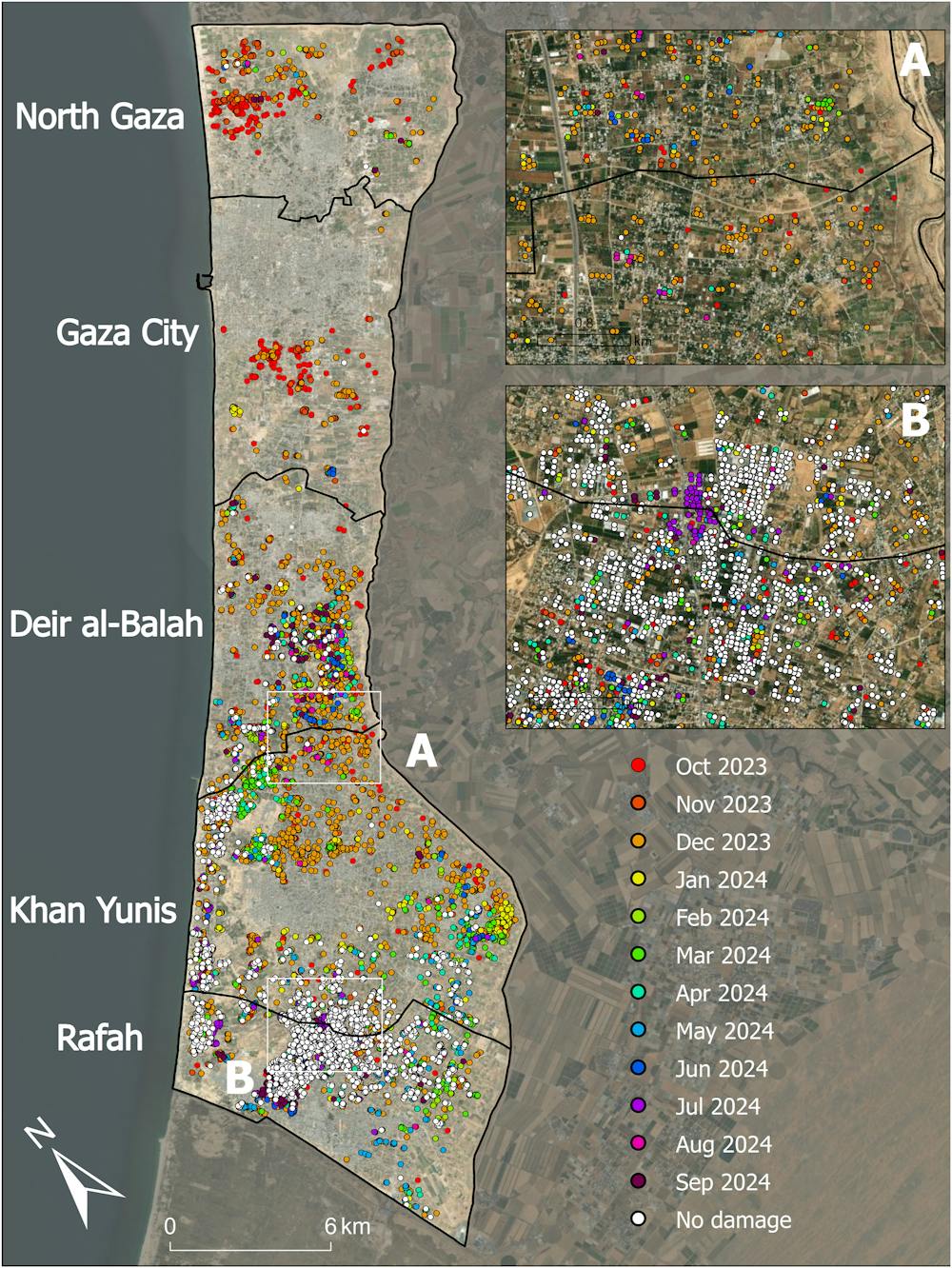
    Over the past 17 months we have analysed satellite images across the Gaza Strip to quantify the scale of agricultural destruction across the region. Our newly published research reveals not only the widespread extent of this destruction but also the potentially unprecedented pace at which it occurred. Our work covers the period until September 2024 but further data through to January 2025 is also available.

    Before the war, tomatoes, peppers, cucumbers and strawberries were grown in open fields and greenhouses, and olive and citrus trees lined rows across the Gazan landscape. The trees in particular are an important cultural heritage in the region, and agriculture was a vital part of Gaza’s economy. About half of the food eaten there was produced in the territory itself, and food made up a similar portion of its exports.

    By December 2023, only two months into the war, there were official warnings that the entire population of Gaza, more than 2 million people, was facing high levels of acute food insecurity. While that assessment was based on interviews and survey data, the level of agricultural damage across the whole landscape remained out of view.

    Most olive and citrus trees are gone

    To address this problem, we mapped the damage to tree crops – mostly olive and citrus trees – in Gaza each month over the course of the war up until September 2024. Together with our colleagues Dimah Habash and Mazin Qumsiyeh, we did this using very high-resolution satellite imagery, detailed enough to focus on individual trees.

    We first visually identified tree crops with and without damage to “train” our computer program, or model, so it knew what to look for. We then ran the model on all the satellite data. We also looked over a sample of results ourselves to confirm it was accurate.

    Our results showed that between 64% and 70% of all tree crop fields in Gaza had been damaged. That can either mean a few trees being destroyed, the whole field of trees completely removed, or anything in between. Most damage took place during the first few months of the war in autumn 2023. Exactly who destroyed these trees and why is beyond the scope of our research or expertise.

    In some areas, every greenhouse is gone

    As greenhouses look very different in satellite images, we used a separate method to map damage to them. We found over 4,000 had been damaged by September 2024, which is more than half of the total we had identified before the start of the war.

    Greenhouses and the date of initial damage between October 2023 and September 2024.
    Yin et al (2025)

    In the south of the territory, where most greenhouses were found, the destruction was fairly steady from December 2023 onwards.

    But in north Gaza and Gaza City, the two most northerly of the territory’s five governorates, most of the damage had already taken place by November and December 2023. By the end of our study period, all 578 greenhouses there had been destroyed.

    North Gaza and Gaza City have also seen the most damage to tree crop fields. By September 2024, over 90% of all tree crops in Gaza City had been destroyed, and 73% had been lost in north Gaza. In the three southern governorates, Khan Younis, Deir al-Balah and Rafah, around 50% of all tree crops had been destroyed.

    Agricultural damage is common in armed conflict, and has been documented with satellite analysis in Ukraine since the 2022 Russian invasion, in Syria and Iraq during the ISIS occupation in 2015, and in the Caucasus during the Chechen wars in the 1990s and 2000s.

    The exact impact can differ from conflict to conflict. War may directly damage lands, as we have seen in Gaza, or it may lead to more fallow areas as infrastructure is damaged and farmers are forced to flee. A conflict also increases the need for local agricultural production, especially when food imports are restricted.

    Our assessment shows a very high rate of direct and extensive damage to Gaza’s agricultural system, both compared to previous conflict escalations there in 2014 and 2021, and in other conflict settings. For example, during the July-August war in 2014, around 1,200 greenhouses were damaged in Gaza. This time round at least three times as many have been damaged.

    Agricultural attacks are unlawful

    Attacks on agricultural lands are prohibited under international law. The Rome Statute of the International Criminal Court from 1998 defines the intentional use of starvation of civilians through “depriving them of objects indispensable to their survival” as a war crime. The Geneva conventions further define such indispensable objects as “foodstuffs, agricultural areas for the production offoodstuffs, crops, livestock, drinking water installations and supplies and irrigation works”.

    Our study provides transparent statistics on the extent and timing of damage to Gaza’s agricultural system. As well as documenting the impacts of the war, we hope it can help the massive rebuilding efforts that will be required.

    Restoring Gaza’s agricultural system goes beyond clearing debris and rubble, and rebuilding greenhouses. The soils need to be cleaned from possible contamination. Sewage and irrigation infrastructure need to be rebuilt.

    Such efforts may take a generation or more to complete. After all, olive and citrus trees can take five or more years to become productive, and 15 years to reach full maturity. After previous attacks on Gaza the trees were mostly replanted, and perhaps the same will happen again this time. But it’s for good reason they say that only people with hope for the future plant trees.

    Lina Eklund receives funding from the Swedish National Space Agency and the Strategic Research Area: The Middle East in the Contemporary World (MECW) at the Centre for Advanced Middle Eastern Studies, Lund University, Sweden.

    He Yin receives funding from NASA.

    Jamon Van Den Hoek receives funding from NASA.

    ref. Gaza: we analysed a year of satellite images to map the scale of agricultural destruction – https://theconversation.com/gaza-we-analysed-a-year-of-satellite-images-to-map-the-scale-of-agricultural-destruction-248796

    MIL OSI AnalysisEveningReport.nz

  • MIL-OSI Video: President Trump welcomed pro-school choice leaders for National School Choice Week

    Source: United States of America – The White House (video statements)

    President Trump reaffirms his commitment to empowering parents and expanding access to quality education.

    https://www.youtube.com/watch?v=KugA9PA0G9E

    MIL OSI Video

  • MIL-OSI Video: Angel Moms Sigh in Relief Over Trump’s Immigration Crackdown: ‘Finally Ridding Country of Illegals’

    Source: United States of America – The White House (video statements)

    President Trump is PROTECTING AMERICAN FAMILIES.

    https://www.youtube.com/watch?v=jzwMGCFoygA

    MIL OSI Video

  • MIL-OSI Video: PROMISES MADE, PROMISES KEPT: Karoline Leavitt Breaks Down President Trump’s First 2 Weeks

    Source: United States of America – The White House (video statements)

    In just two weeks, President Trump is delivering HUGE wins- securing our border, restoring law & order, unleashing energy, and more. Press Secretary Karoline Leavitt breaks it down in 95 seconds!

    https://www.youtube.com/watch?v=Zc5tBjgMGTU

    MIL OSI Video

  • MIL-OSI USA: Murray, Sanders, Baldwin, DeLauro, Scott Demand Answers on Trump’s Plans to Dismantle Education Department

    US Senate News:

    Source: United States Senator for Washington State Patty Murray

    Washington, D.C. — Senators Patty Murray (D-WA), Vice Chair of the Senate Appropriations Committee; Tammy Baldwin (D-WI), Ranking Member of the Senate Appropriations Subcommittee on Labor, Health, and Human Services, and Education; and Bernie Sanders (I-VT), Member of the Senate Health, Education, Labor and Pensions (HELP) Committee alongside Representatives Bobby Scott (D-VA), Ranking Member of the House Committee on Education and Workforce, and Rosa DeLauro (D-Conn.), Ranking Member of the House Appropriations Committee and the Subcommittee on Labor, Health, and Human Services, and Education sent a letter warning against the Trump administration’s reported plans to unilaterally dismantle the Department of Education. The lawmakers asked the acting Secretary of Education for answers on recent actions taken by the Trump administration to put federal workers on administrative leave, coerce employees into leaving their jobs, provide access to students’ sensitive data, and illegally freeze vital funding.

    “Over the course of two weeks, the Trump Administration issued sweeping executive orders and sought to broadly and illegally freeze federal financial assistance,” wrote Sanders and the lawmakers. “Federal employees have been targeted, in some cases for simply following the law. Elon Musk is attempting to shut down the work of entire agencies while gaining access to some of the federal government’s most far reaching and sensitive data systems. Media reports indicate a similar effort may be underway at the Department of Education.”

    “We will not stand by and allow this to happen to the nation’s students, parents, borrowers, educators, and communities. Congress created the Department to ensure all students in America have equal access to a high-quality education and that their civil rights are protected no matter their zip code,” continued the lawmakers. “We urge you to provide information on the steps the Department is taking to ensure the continuity of programs that Americans depend on, the ability of the Department to effectively administer programs for their intended purposes without waste, fraud and abuse, and the safeguards in place to protect student data privacy.”

    The lawmakers note that Trump and Elon Musk have not shared any plans regarding intended changes to the Department of Education with the Congressional committees responsible for its oversight and funding. In their letter, they request information about access to the Department’s sensitive data and steps taken to safeguard it, communications and details regarding Department employees who have been placed on leave and confirmation that no awards have been blocked or terminated.

    The full letter is available HERE.

    MIL OSI USA News

  • MIL-OSI USA: Murray, Merkley, DeLauro, Pingree Demand Answers on Illegal EPA Funding Cuts That Harm Public Health, Environment, and Families

    US Senate News:

    Source: United States Senator for Washington State Patty Murray

    Washington, D.C. – Senate Appropriations Committee Vice Chair Patty Murray (D-WA), Senate Interior-Environment Appropriations Subcommittee Ranking Member Jeff Merkley (D-OR), House Appropriations Committee Ranking Member Rosa DeLauro (CT-03), and House Interior-Environment Appropriations Subcommittee Ranking Member Chellie Pingree (ME-01) demanded recently confirmed Environmental Protection Agency (EPA) Administrator Lee Zeldin answer urgent questions about funding freezes at the agency.

    The letter to Administrator Zeldin follows President Donald Trump’s illegal executive orders that stopped funding for programs that families and communities depend on, such as access to clean drinking water and affordable clean energy, and ongoing efforts to block access to federal funds in communities across the United States.

    “The Trump Administration’s memo freezing vast swaths of federal funds, its failed attempt to clarify the scope of the memo, and its subsequent rescission of the memo have created mass chaos and added to the confusion about what investments are currently being blocked. Today, our understanding is that much of the Agency’s funding is still frozen, but some select programs may resume in the near future. Yet let us be clear – all of EPA’s funding must be made available and disbursed pursuant to the law with no exceptions,” the senior members of the Senate and House Appropriations Committees wrote.

    “Funding freezes – which the administration intentionally implemented before court intervention – devastate programs that protect public health and the environment while increasing costs for families,” the lawmakers continued. “The Trump Administration will be raising energy costs for families and businesses will be losing out on thousands of potential jobs as programs like Solar for All and Clean School Bus rebates are terminated. Continuing to freeze these investments—or permanently blocking them—will unravel critical progress the Agency has made towards clean air and clean water and cost American households and businesses dearly.”

    “Not only does the Constitution vest the power of the purse with Congress and provide no power to the President to impound funds, but there have been several bedrock fiscal statutes enacted to protect Congress’ constitutional power of the purse and prevent unlawful executive overreach, including the Antideficiency Act and the Impoundment Control Act of 1974 (ICA). The ICA prohibits any action or inaction that precludes Federal funds from being obligated or spent, either temporarily or permanently, without following the strictly circumscribed requirements of that law, which have not been honored in this instance,” the lawmakers stressed.

    Full text of the letter can be found HERE.

    MIL OSI USA News

  • MIL-OSI United Nations: ‘Step Up the Pace’ and end female genital mutilation, UN says

    Source: United Nations 4

    Health

    As the world marks the International Day of Zero Tolerance for Female Genital Mutilation on Thursday, the United Nations is warning that without urgent action, a staggering 27 million more girls could undergo the procedure by 2030.

    Female Genital Mutilation (FGM) refers to all procedures involving the partial or total removal of female external genitalia or other injuries to female genital organs for non-medical reasons, according to the World Health Organization (WHO).

    “More than 230 million girls and women alive today are survivors of this abhorrent practice,” said UN Secretary-General António Guterres in his message for the day, describing it as “one of the most brutal manifestations of gender inequality”.

    The UN sexual and reproductive health agency (UNFPA), the UN Children’s Fund (UNICEF) and World Health Organization reaffirmed that FGM has no health benefits, with lifelong consequences including severe infections, complications in childbirth, chronic pain and psychological trauma.

    “Eradicating this vicious human rights violation is urgent, and it is possible,” Mr. Guterres emphasised.

    Progress and challenges

    Since 2008, the UNFPA-UNICEF Joint Programme on the Elimination of FGM, in collaboration with WHO, has provided prevention and protection services to nearly seven million girls and women.

    The initiative has also mobilised 12,000 grassroots organizations and trained 112,000 community and frontline workers. Additionally, 48 million people have publicly declared their commitment to ending the practice.

    Despite these efforts, the road to elimination remains steep. Only seven of the 31 countries with available data are on track to meet the Sustainable Development Goals (SDGs) target of ending genital mutilation by 2030.

    Meanwhile, in The Gambia, attempts to repeal the ban on genital mutilation threaten to reverse years of progress, underscoring the fragility of existing gains.

    ‘Step Up the Pace’

    This year’s theme, Step Up the Pace, serves as a call to accelerate global efforts to eliminate genital mutilation and dismantle the harmful gender and social norms that perpetuate it.

    “We must strengthen global movements to break down harmful attitudes, beliefs and gender stereotypes,” said Mr. Guterres.

    A key part of this effort is The Pact for the Future, adopted by UN Member States last September. This global commitment aims to tackle gender discrimination and harmful social norms, ensuring that laws and policies align with efforts to end FGM worldwide.

    Soundcloud

    Cost of inaction

    Failure to end FGM has dire social, economic and health consequences. According to WHO, treating health complications from genital mutilation costs healthcare systems $1.4 billion annually.

    Meanwhile, the mental and emotional toll on survivors can last a lifetime, impacting their education, employment and overall well-being.

    With less than five years left to reach the 2030 target, the UN is calling for stronger alliances, increased investment and sustained advocacy.

    “Let’s join forces to make female genital mutilation history and ensure a brighter, healthier, and more just future for all women and girls everywhere,” Mr. Guterres concluded.

    MIL OSI United Nations News

  • MIL-OSI Canada: Minister’s statement on Richmond supportive housing

    Source: Government of Canada regional news

    Ravi Kahlon, Minister of Housing and Municipal Affairs, has released the following statement about supportive housing in Richmond: 

    “Our government is committed to connecting people with the housing and supports they need to get on a better path and live full, healthy lives. We’re also dedicated to keeping communities and businesses safe.

    “In summer 2024, we temporarily paused moving forward with the proposed supportive housing project at 3780 Sexsmith Rd. in Richmond so BC Housing staff could explore other potential sites.

    “Since then, staff have evaluated five other locations within the community.

    “Upon review, it was determined that these sites would not meet the needs for supportive housing for various reasons, such as location, lot size and proximity to key services. These are important factors that support residents’ abilities to stabilize their lives, successfully integrate within the community and access required services.

    “Furthermore, shifting to a new location at this stage would require new project designs, adding significant delays to project completion.

    “After careful consideration and exploring all viable options within the community, we have determined the Sexsmith site remains the best option for a supportive housing site in Richmond.

    “This project is crucial to helping address the urgent need for long-term, supportive housing to deal with the growing number of people facing homelessness in Richmond, which has increased 91% since the pandemic to more than 160 people at last count.  

    “We will now initiate engagement with neighbours by organizing facilitated dialogue sessions starting in March 2025. Invitations will be sent to neighbours, providing an opportunity to further discuss the project. We will also continue working with city staff and stakeholders to safely integrate this housing into the community.

    “Following this engagement, the site will be put forward to Richmond city council for final consideration. I would like to acknowledge the work of Richmond city council to date, and members of council’s assertions on the need to move forward with permanent supportive housing in Richmond.

    “Lastly, there has been a significant amount of misinformation about this project. I encourage neighbours to engage directly with BC Housing on the project, either through the upcoming neighbourhood dialogue sessions, submitting questions and feedback directly to BC Housing, and learning more about the proposal online. 

    “This building will be purpose-built for supportive housing, allowing residents to gather indoors. It will have 24/7 staffing and security features, such as cameras, fencing and lighting. Clean-up teams will help keep surroundings tidy, and neighbours will be able to report concerns via a dedicated phone line with the housing provider.

    “We will continue working with BC Housing, the City of Richmond and residents, to bring inside people who are sheltering outdoors, and build a safer and healthier community for everyone.”

    Learn More:

    Learn more about BC Housing’s proposal here: 
    https://letstalkhousingbc.ca/richmond-cambie-sexsmith

    MIL OSI Canada News

  • MIL-OSI Australia: Pedestrian injured in Paradise crash

    Source: South Australia Police

    A pedestrian has suffered critical injuries when he was hit by a car at Paradise last night.

    Emergency services were called to Darley Road about midnight on Thursday 6 February.

    The pedestrian, a 38-year-old Rostrevor man, was taken to hospital by ambulance where he is being treated for critical injuries.

    The driver of the Toyota sedan, a 58-year-old Norton Summit man, was not injured in the crash.

    Major Crash investigators attended the scene to assist patrols examine the scene and investigate the crash.

    The car was towed from the scene and the road reopened at 6am.

    MIL OSI News

  • MIL-OSI Security: Missouri Man Guilty of Traveling to Louisiana for Illicit Sexual Conduct with 12-Year-Old Girl

    Source: Federal Bureau of Investigation (FBI) State Crime News

    NEW ORLEANS –  U.S. Attorney Duane A. Evans announced that ERIC CHARLES FULLER (“FULLER”), age 54, from Springfield, Missouri, pled guilty on February 4, 2025, before United States District Judge Greg Gerard Guidry, to interstate travel with intent to engage in illicit sexual conduct, in violation of Title 18, United States Code, Section 2423(b).

    According to court documents, on or about December 7, 2023, law enforcement personnel, operating undercover online and pretending to be a twenty-nine-year-old mother with a twelve-year-old daughter, met FULLER on a social network and messaging application. Over approximately the next month, on numerous occasions, FULLER discussed his interest in engaging in various sexual acts with the “mother” and daughter.”  These discussions culminated in FULLER making arrangements to travel from his residence in Springfield, Missouri, to the New Orleans, Louisiana area to engage in sexual contact, individually and collectively, with the ”mother” and “daughter.” During his conversations, FULLER described the contact he anticipated as “highly taboo,” “highly illegal,” “risky,” “not the worst way to be,” and “a way to have a happier life.” FULLER drove from Springfield, Missouri on about January 11, 2024, and arrived at a predetermined location in Mandeville, Louisiana, on January 12, 2024, in order to engage in sexual conduct with the individual FULLER believed to be a twelve-year-old female.

    FULLER faces a maximum term of imprisonment of  thirty (30) years.  FULLER also faces at least five (5) years, and up to a lifetime of supervised release, up to a $250,000 fine and a $100 mandatory special assessment fee.  FULLER may also be required to register as a sex offender.  Sentencing before Judge Guidry has been scheduled for May 13, 2025.

    This case was brought as part of Project Safe Childhood, a nationwide initiative to combat the growing epidemic of child sexual exploitation and abuse launched in May 2006 by the Department of Justice.  Led by United States Attorneys’ Offices and the Criminal Division’s Child Exploitation and Obscenity Section (CEOS), Project Safe Childhood marshals federal, state and local resources to better locate, apprehend and prosecute individuals who exploit children via the Internet, as well as to identify and rescue victims.  For more information about Project Safe Childhood, please visit www.projectsafechildhood.gov.

    U.S. Attorney Evans praised the work of the Federal Bureau of Investigation in investigating this matter.  Assistant United States Attorney Jordan Ginsberg, Chief of the Public Integrity Unit, is in charge of the prosecution.

    MIL Security OSI

  • MIL-OSI Security: Statement on Aircraft Incident in Maguindanao del Sur

    Source: United States INDO PACIFIC COMMAND

    On February 6, 2025, an aircraft contracted by the U.S. Department of Defense crashed in the Philippine Province of Maguindanao del Sur.

    The aircraft was providing intelligence, surveillance, and reconnaissance support at the request of our Philippine allies. The incident occurred during a routine mission in support of U.S.-Philippine security cooperation activities. 

    We can confirm no survivors of the crash. There were four personnel on board, including one U.S. military service member and three defense contractors.

    The names of the crew are being withheld pending next of kin notification.

    The cause of the crash is currently under investigation, and we have no further details to release at this time.

    Additional updates will be provided as they become available.

    MIL Security OSI

  • MIL-OSI Security: Washington man indicted for 2023 fatal fentanyl overdoses in Skagway

    Source: Office of United States Attorneys

    JUNEAU, Alaska – A federal grand jury in Alaska returned an indictment last month charging a Washington man with distributing and conspiring to distribute controlled substances that resulted in the fatal overdoses of two people in Skagway in 2023.

    According to court documents, from Jan. 1 to Jan. 13, 2023, Jacob Cotton, 33, allegedly conspired with others to distribute and possess with intent to distribute a substance containing fentanyl to another person. He also allegedly knowingly and intentionally distributed a controlled substance containing fentanyl to a second person during this time frame.

    On Jan. 13, 2023, a 28-year-old man died after overdosing on fentanyl allegedly distributed by Cotton. The following day, a 44-year-old man also died after overdosing on fentanyl allegedly distributed through the conspiracy. 

    Cotton is charged with one count of conspiracy to distribute and to possess with the intent to distribute fentanyl resulting in death and one count of distribution of fentanyl resulting in death. The defendant made his initial court appearance on Jan. 31 before U.S. Magistrate Judge Matthew M. Scoble of the U.S. District Court for the District of Alaska. If convicted, he faces between 20 years and life in prison. A federal district court judge will determine any sentence after considering the U.S. Sentencing Guidelines and other statutory factors.

    First Assistant U.S. Attorney Kate Vogel of the District of Alaska, Special Agent in Charge David Reames of the Drug Enforcement Administration, Seattle Field Division and Skagway Police Chief Jerry Reddick made the announcement.

    The DEA Seattle Field Division and Anchorage District Office, and Skagway Police Department, as part of the Southeast Alaska Cities Against Drugs Task FORCE (SEACAD), are investigating the case.

    Assistant U.S. Attorney Jack Schmidt is prosecuting the case.

    An indictment is merely an allegation, and all defendants are presumed innocent until proven guilty beyond a reasonable doubt in a court of law.

    ###

    MIL Security OSI