NewzIntel.com

    • Checkout Page
    • Contact Us
    • Default Redirect Page
    • Frontpage
    • Home-2
    • Home-3
    • Lost Password
    • Member Login
    • Member LogOut
    • Member TOS Page
    • My Account
    • NewzIntel Alert Control-Panel
    • NewzIntel Latest Reports
    • Post Views Counter
    • Privacy Policy
    • Public Individual Page
    • Register
    • Subscription Plan
    • Thank You Page

Category: KB

  • MIL-OSI Europe: Answer to a written question – Recovery and Resilience Facility and the DANA in Spain – E-002571/2024(ASW)

    Source: European Parliament

    With regards to the preparation and implementation of the recovery and resilience plans, the Commission encourages Member States to engage in a timely and meaningful way with local and regional authorities — which is of course of particular importance in Spain given the high level of administrative and political decentralisation, as well as in this particular instance given the regional dimension of the intended future addendum — , social partners, civil society organisations, youth organisations and other relevant stakeholders with regard to the amendment of recovery and resilience plans.

    The outcome of this consultation and how the input received from the stakeholders is reflected has to be explained in the amended plan.

    The Spanish authorities have communicated their intention to amend their plan in order to include measures to support the recovery of the regions affected by the DANA (Depresión Aislada en Niveles Altos — isolated depression at high levels).

    Article 21 of Regulation (EU) 2021/241 of the European Parliament and of the Council establishing the Recovery and Resilience Facility[1] provides that Member States may require an amendment of their recovery and resilience plans in light of objective circumstances making a measure no longer achievable.

    It has to be noted that only milestones and targets that have not been assessed by the Commission can be amended. The Commission is already actively engaging with the Spanish authorities to support the preparation and eventual official submission of such request in order to ensure that such request and the amended recovery and resilience plan remain in line with the requirements of the Recovery and Resilience Facility Regulation.

    The Commission takes this occasion to reiterate its solidarity with the people and businesses affected by these catastrophic floods, and to reiterate its sincere condolences for the loss of lives.

    • [1] https://eur-lex.europa.eu/legal-content/EN/TXT/?uri=CELEX%3A32021R0241
    Last updated: 6 February 2025

    MIL OSI Europe News –

    February 7, 2025
  • MIL-OSI Europe: Answer to a written question – Drought in Greece – E-002211/2024(ASW)

    Source: European Parliament

    The Common Agricultural Policy (CAP) Strategic Plan Regulation[1] already includes a number of interventions that may help farmers to perform preventive actions, especially to prevent crises and build on medium and long-term resilience.

    For mitigating short-term impacts, the available tools include direct payments to support farmers’ incomes, risk management tools helping farmers managing production risks due to adverse events, including severe drought, sectoral interventions supporting replanting or restocking, and investments in the restoration of production potential.

    Under the CAP Strategic Plan 2023-2027[2], Greece envisages also support for investments to restore agricultural and forestry potential following natural disasters, adverse climatic or catastrophic events.

    On 19 December 2024[3], the co-legislators adopted the Commission proposal to amend Regulation (EU) 2020/2220[4] to allow Member States to support with liquidity beneficiaries who were affected by a destruction of at least 30% of the relevant production potential.

    It is up to the Member States to decide if they will use this possibility. If justified, the Commission can also use resources from the agricultural reserve to provide some support.

    Greek authorities may also support farmers affected by adverse climatic conditions in line with EU State aid rules (without the need for prior notification to the Commission if based on provisions of the Agricultural Block Exemption Regulation[5] or, with prior notification, under the Agricultural Guidelines[6]).

    Limited support can also be granted under the Agricultural de minimis aid Regulation[7].

    • [1] https://eur-lex.europa.eu/legal-content/EN/TXT/?toc=OJ%3AL%3A2021%3A435%3ATOC&uri=uriserv%3AOJ.L_.2021.435.01.0001.01.ENG
    • [2] https://www.agrotikianaptixi.gr/category/sskap-2023-2027/sskap-egkrisi-tropopoiiseis/
    • [3] https://eur-lex.europa.eu/legal-content/en/TXT/?uri=CELEX%3A32024R3242
    • [4]  OJ L, 2020/2220, 28.12.2020.
    • [5]  OJ L 327, 21.12.2022, p. 1-81: https://eur-lex.europa.eu/legal-content/EN/TXT/?uri=CELEX%3A02022R2472-20231213
    • [6]  OJ C 485, 21.12.2022, p. 1-90: https://eur-lex.europa.eu/legal-content/EN/ALL/?uri=CELEX:02022XC1221(01)-20240305
    • [7] Regulation 1408/2013. OJ L 352, 24.12.2013, p. 9-17 (https://eur-lex.europa.eu/legal-content/EN/TXT/?uri=CELEX%3A32013R1408) amended by Regulation 2024/3118. OJ L, 2024/3118, 13.12.2024 (https://eur-lex.europa.eu/legal-content/EN/TXT/?uri=OJ:L_202403118).
    Last updated: 6 February 2025

    MIL OSI Europe News –

    February 7, 2025
  • MIL-OSI Europe: Written question – Future of fishing quotas and access to UK waters after June 2026 – P-000518/2025

    Source: European Parliament

    Priority question for written answer  P-000518/2025
    to the Commission
    Rule 144
    Ton Diepeveen (PfE)

    After June 2026, the EU will automatically lose access to UK waters unless new agreements are concluded. That not only directly impacts European fishers’ access to those waters, but also weakens the EU’s negotiating position in the annual quota negotiations with the UK. It precludes provisional fishing arrangements pending allocation of quotas, undermining the stability of the fisheries sector.

    In addition, a worrying trend can be observed in the trilateral negotiations between the EU, the UK and Norway. The EU’s negotiating position appears to be weaker, structurally, which is detrimental to our fishers and the distribution of shared fish stocks.

    In view of these developments:

    • 1.What specific steps is the Commission taking to make sure that EU fishers keep access to, and sufficient quotas in, UK waters after June 2026?
    • 2.What strategies will the Commission employ to prevent EU fishers from suffering as a result of a weakened negotiating position in the annual quota negotiations after 2026?

    Submitted: 5.2.2025

    Last updated: 6 February 2025

    MIL OSI Europe News –

    February 7, 2025
  • MIL-OSI Europe: Final draft agenda – Tuesday, 11 February 2025 – Strasbourg

    Source: European Parliament

    Final draft agenda
    Strasbourg
    Monday, 10 February 2025 – Thursday, 13 February 2025  
    Tuesday, 11 February 2025   Version: Thursday, 6 February 2025, 13:39

    09:00 – 11:50   Debates     
    Council (including replies) 20′
    Commission (including replies) 20′
    “Catch the eye”   (2×5′) 10′
    Members 104′
    13:00 – 22:00   Debates (or at the end of the votes)     
    Council (including replies) 50′
    Commission (including replies) 65′
    Author (committee) 5′
    “Catch the eye”   (7×5′) 35′
    Members 239′

    32 Continuing the unwavering EU support for Ukraine, after three years of Russia’s war of aggression
    17 European Central Bank – annual report 2024
    Anouk Van Brug (A10-0003/2025) 
        – Amendments Wednesday, 5 February 2025, 13:00
    50 Escalation of violence in the eastern Democratic Republic of the Congo
        – Motion for a resolution Monday, 10 February 2025, 19:00
        – Amendments to motions for resolutions; joint motions for resolutions Tuesday, 11 February 2025, 19:00
        – Amendments to joint motions for resolutions Tuesday, 11 February 2025, 20:00
        – Requests for “separate”, “split” and “roll-call” votes Wednesday, 12 February 2025, 16:00
    Separate votes – Split votes – Roll-call votes
    Texts put to the vote on Tuesday Friday, 7 February 2025, 12:00
    Texts put to the vote on Wednesday Monday, 10 February 2025, 19:00
    Texts put to the vote on Thursday Tuesday, 11 February 2025, 19:00
    Motions for resolutions concerning debates on cases of breaches of human rights, democracy and the rule of law (Rule 150) Wednesday, 12 February 2025, 19:00

    MIL OSI Europe News –

    February 7, 2025
  • MIL-OSI Europe: Final draft agenda – Wednesday, 12 February 2025 – Strasbourg

    Source: European Parliament

    29 Objection pursuant to Rule 115(2) and (3): Genetically modified maize DP910521     – Amendments Wednesday, 5 February 2025, 13:00 28 Objection pursuant to Rule 115(2) and (3): Genetically modified maize MON 95275     – Amendments Wednesday, 5 February 2025, 13:00 42 Recent dismissals and arrests of mayors in Türkiye     – Motions for resolutions (Rule 150) Monday, 10 February 2025, 20:00     – Amendments to motions for resolutions; joint motions for resolutions (Rule 150) Wednesday, 12 February 2025, 13:00     – Amendments to joint motions for resolutions (Rule 150) Wednesday, 12 February 2025, 14:00 44 Repression by the Ortega-Murillo regime in Nicaragua, targeting human rights defenders, political opponents and religious communities in particular     – Motions for resolutions (Rule 150) Monday, 10 February 2025, 20:00     – Amendments to motions for resolutions; joint motions for resolutions (Rule 150) Wednesday, 12 February 2025, 13:00     – Amendments to joint motions for resolutions (Rule 150) Wednesday, 12 February 2025, 14:00 45 Continuing detention and risk of the death penalty for individuals in Nigeria charged with blasphemy, notably the case of Yahaya Sharif-Aminu     – Motions for resolutions (Rule 150) Monday, 10 February 2025, 20:00     – Amendments to motions for resolutions; joint motions for resolutions (Rule 150) Wednesday, 12 February 2025, 13:00     – Amendments to joint motions for resolutions (Rule 150) Wednesday, 12 February 2025, 14:00 Separate votes – Split votes – Roll-call votes Texts put to the vote on Tuesday Friday, 7 February 2025, 12:00 Texts put to the vote on Wednesday Monday, 10 February 2025, 19:00 Texts put to the vote on Thursday Tuesday, 11 February 2025, 19:00 Motions for resolutions concerning debates on cases of breaches of human rights, democracy and the rule of law (Rule 150) Wednesday, 12 February 2025, 19:00

    MIL OSI Europe News –

    February 7, 2025
  • MIL-OSI Europe: Final draft agenda – Monday, 10 February 2025 – Strasbourg

    Source: European Parliament

    17 European Central Bank – annual report 2024
    Anouk Van Brug (A10-0003/2025) 
        – Amendments Wednesday, 5 February 2025, 13:00
    Texts put to the vote on Tuesday Friday, 7 February 2025, 12:00
    Texts put to the vote on Wednesday Monday, 10 February 2025, 19:00
    Texts put to the vote on Thursday Tuesday, 11 February 2025, 19:00
    Motions for resolutions concerning debates on cases of breaches of human rights, democracy and the rule of law (Rule 150) Wednesday, 12 February 2025, 19:00

    MIL OSI Europe News –

    February 7, 2025
  • MIL-OSI Europe: Final draft agenda – Thursday, 13 February 2025 – Strasbourg

    Source: European Parliament

    42 Recent dismissals and arrests of mayors in Türkiye     – Motions for resolutions (Rule 150) Monday, 10 February 2025, 20:00     – Amendments to motions for resolutions; joint motions for resolutions (Rule 150) Wednesday, 12 February 2025, 13:00     – Amendments to joint motions for resolutions (Rule 150) Wednesday, 12 February 2025, 14:00 44 Repression by the Ortega-Murillo regime in Nicaragua, targeting human rights defenders, political opponents and religious communities in particular     – Motions for resolutions (Rule 150) Monday, 10 February 2025, 20:00     – Amendments to motions for resolutions; joint motions for resolutions (Rule 150) Wednesday, 12 February 2025, 13:00     – Amendments to joint motions for resolutions (Rule 150) Wednesday, 12 February 2025, 14:00 45 Continuing detention and risk of the death penalty for individuals in Nigeria charged with blasphemy, notably the case of Yahaya Sharif-Aminu     – Motions for resolutions (Rule 150) Monday, 10 February 2025, 20:00     – Amendments to motions for resolutions; joint motions for resolutions (Rule 150) Wednesday, 12 February 2025, 13:00     – Amendments to joint motions for resolutions (Rule 150) Wednesday, 12 February 2025, 14:00 27 Further deterioration of the political situation in Georgia     – Motions for resolutions Monday, 10 February 2025, 19:00     – Amendments to motions for resolutions; joint motions for resolutions Wednesday, 12 February 2025, 11:00     – Amendments to joint motions for resolutions Wednesday, 12 February 2025, 12:00     – Requests for “separate”, “split” and “roll-call” votes Wednesday, 12 February 2025, 19:00 50 Escalation of violence in the eastern Democratic Republic of the Congo     – Motion for a resolution Monday, 10 February 2025, 19:00     – Amendments to motions for resolutions; joint motions for resolutions Tuesday, 11 February 2025, 19:00     – Amendments to joint motions for resolutions Tuesday, 11 February 2025, 20:00     – Requests for “separate”, “split” and “roll-call” votes Wednesday, 12 February 2025, 16:00 Separate votes – Split votes – Roll-call votes Texts put to the vote on Tuesday Friday, 7 February 2025, 12:00 Texts put to the vote on Wednesday Monday, 10 February 2025, 19:00 Texts put to the vote on Thursday Tuesday, 11 February 2025, 19:00 Motions for resolutions concerning debates on cases of breaches of human rights, democracy and the rule of law (Rule 150) Wednesday, 12 February 2025, 19:00

    MIL OSI Europe News –

    February 7, 2025
  • MIL-OSI Europe: Answer to a written question – Combating fraudulent practices by online platforms selling toys or clothing – E-002429/2024(ASW)

    Source: European Parliament

    The Commission is acting to address the challenges of e-commerce platforms to ensure safety and security, EU sustainable standards and a level playing field within the Single Market .

    In May 2023, it published the Customs Reform package[1] that contains three separate legal proposals: the main regulation that replaces the current Union Customs Code, and establishes the EU Customs Authority, a regulation that removes the 150 duty exemption, and introducing a simplified tariff treatment for low-value consignments and a directive as regards value added tax rules relating to a special scheme for distance sales of goods imported from third countries.

    The proposal is currently under discussion in the Council while the European Parliament adopted its first reading position in March 2024.

    Moreover, the Commission opened two formal proceedings (against AliExpress in March 2024[2] and Temu in October 2024[3]), following the suspicion that the providers of these very large online platforms (VLOPs) may have breached the Digital Services Act (DSA)[4], notably in areas linked to the management and mitigation of the systemic risks of dissemination of illegal content .

    Depending on the findings and the investigations’ outcome, the Commission will take the appropriate actions. If it definitely establishes a breach of the DSA, the Commission may adopt a decision imposing fines up to 6% of the global turnover of the VLOP provider concerned and order the provider to take measures to address the breach by a certain deadline.

    Furthermore, the Commission is working with the Member States’ authorities to support EU law enforcement and better target controls on e-commerce transactions, encouraging cooperation between the different national enforcement authorities.

    • [1] Proposal for a regulation of the European Parliament and of the Council establishing the Union Customs Code and the European Union Customs Authority, and repealing Regulation (EU) No 952/2013.
    • [2] See the Commission decision initiating proceedings and https://ec.europa.eu/commission/presscorner/detail/en/ip_24_1485
    • [3] https://digital-strategy.ec.europa.eu/en/news/commission-opens-formal-proceedings-against-temu-under-digital-services-act
    • [4] Regulation (EU) 2022/2065 of the European Parliament and of the Council of 19 October 2022 on a Single Market For Digital Services and amending Directive 2000/31/EC (Digital Services Act).
    Last updated: 6 February 2025

    MIL OSI Europe News –

    February 7, 2025
  • MIL-OSI: Press release 2024 Results – CIC

    Source: GlobeNewswire (MIL-OSI)


    FEBRUARY 6, 2025
    CIC Press Release

    Results for the year ended December 31, 2024

    In 2024, CIC posted a high net income of €1.7 billion, driven by strong momentum in the specialized business lines

    In a difficult economic and political environment, CIC maintained its high level of income in 2024, with net revenues stabilizing at €6.3 billion (-2.9%) and net income at €1.7 billion (-13.2%).

    These results were driven by the excellent performance of revenues from the specialized business lines, particularly corporate banking (+9.5%), capital markets (+12.9%) and private equity (+4.8%). This partly offset the decline in retail banking (-3%), which remained resilient. However, it was negatively affected by strong pressure on net interest margins in the French banking networks, by the worsening economic outlook, and by a post-Covid catch-up effect in corporate failures, which weighed on the cost of risk. The business line subsidiaries (leasing and factoring) benefited from the rise in interest rates, with net revenue up +21.2%.

    General operating expenses were kept under control at €3.7 billion (-1.8%). This performance was achieved against a backdrop of major technological and strategic investments linked to the new 2024-2027 strategic plan, a strong social pact with its employees, notably in terms of salary increases, and its corporate philanthropy policy in line with its benefit corporation status.

    At end-December, CIC posted a strong operating performance, with a cost/income ratio of 59.3%.

    With €21.1 billion in shareholders’ equity at December 31, 2024 (+€0.8 billion), CIC, a benefit corporation, confirms its solidity and the relevance of its diversified business model.

    Results for the year ended December 31,20241 2024 2023 Change 2024/2023
    NET REVENUE €6.274bn €6.458bn -2.9%
    of which retail banking €3.903bn €4.024bn -3.0%
    of which specialized business lines €2.449bn €2.369bn +3.4%
           
    GENERAL OPERATING EXPENSES -€3.723bn -€3.792bn -1.8%
           
    COST OF RISK -€646m -€468m +38.0%
           
    NET INCOME €1.727bn €1.989bn -13.2%

    Download the full press release: Download the full press release:

    STRONG BUSINESS MOMENTUM IN CUSTOMER SERVICES
    Customer loans Customer deposits Insurance2 Remote surveillance2
    €255.5bn €225.4bn 6.8 million 127 200
    +1.3% -2.1% +216 000 +4 200

    1 The annual audit of the financial statements for the year ended December 31, 2024 is under way.

    2 By number of contracts.

    Attachment

    • Press_release_2024_results_CIC

    The MIL Network –

    February 7, 2025
  • MIL-OSI: NexQloud Files Patent for Distributed Kubernetes Service (DKS) and Migrates Infrastructure from Amazon EKS

    Source: GlobeNewswire (MIL-OSI)

    PALO ALTO, Calif., Feb. 06, 2025 (GLOBE NEWSWIRE) — NexQloud has filed a patent for its Distributed Kubernetes Service (DKS), a breakthrough in decentralized cloud computing that integrates AI, blockchain, and distributed CPU devices to optimize efficiency and security while reducing energy consumption by up to 88%.

    The patent underpins NexQloud’s Decentralized Physical Infrastructure Network (DePIN), powered by NanoServers—specialized, energy-efficient hardware leveraging mobile CPU architecture. These devices consume just 12% of the energy required by traditional data center servers while delivering identical computational performance. This innovation aims to position NexQloud as the leader in sustainable, cost-efficient cloud infrastructure.

    Migration from Amazon EKS to NexQloud DKS

    In a strategic move, NexQloud has begun transitioning its infrastructure from Amazon’s Elastic Kubernetes Service (EKS) to its own DKS platform. This shift underscores the company’s confidence in its enterprise-ready Kubernetes solution, which delivers the same security, reliability, and scalability as AWS EKS and Microsoft Azure Kubernetes Service (AKS), but at a significantly lower cost.

    “This patent filing marks a major step forward in decentralized cloud computing,” said Mauro Terrinoni, CEO of NexQloud. “DKS is designed to address core challenges in the cloud industry, offering enterprises a secure, scalable, and cost-effective alternative to traditional solutions.”

    Scaling Adoption and Market Expansion

    NexQloud continues its rapid deployment of NanoServers across key markets, ensuring robust infrastructure for the upcoming commercial rollout of DKS. The company’s decision to run its own infrastructure on DKS serves as both a real-world validation and a signal of its readiness for enterprise adoption.

    As NexQloud advances toward full-scale implementation, it remains focused on driving efficiency, sustainability, and decentralization in cloud computing.

    About NexQloud

    NexQloud is a decentralized cloud computing provider leveraging blockchain and AI to create a scalable, secure, and cost-efficient cloud infrastructure. By decentralizing computing power, NexQloud reduces reliance on traditional data centers, offering businesses an innovative and sustainable alternative.

    Contact:
    Name: Mauro Terrinoni, CEO
    Email: mterrinoni@nexqloud.io
    Company Name: NexQloud
    Website: nexqloud.io
    Contact: +1 669 241 0916

    The MIL Network –

    February 7, 2025
  • MIL-OSI Global: Trump’s push to shut down USAID shows how international development is all about strategic interests

    Source: The Conversation – Canada – By Nelson Duenas, Assistant Professor of Accounting, L’Université d’Ottawa/University of Ottawa

    The U.S. Agency for International Development (USAID) is on the verge of being shut down by United States President Donald Trump’s administration.

    On Feb. 4, U.S. Secretary of State Marco Rubio announced the agency would be taken over by the State Department. He stated that “all USAID direct hire personnel will be placed on administrative leave globally.”

    This move comes after Trump and his officials have heavily criticized the role and ineffectiveness of the agency. Trump said USAID had “been run by a bunch of radical lunatics, and we’re getting them out,” while Tesla CEO and special government employee Elon Musk said it was “time for it to die.”

    The closure of USAID will have significant consequences for many countries in the Global South. USAID is one of the largest development agencies in the world and funds programs that benefit millions of people, from supporting peace agreements in Colombia to fighting the spread of HIV in Uganda.

    Around US$40 billion is allocated annually from the U.S. federal budget for humanitarian and development aid. If USAID is dismantled, it raises questions about how these funds will be redirected and the long-term impacts it will have on global development efforts.

    A geopolitical fallout?

    The potential dismantling of USAID has raised concerns among international development experts about a potential geopolitical fallout that could create unintended consequences for the U.S. itself.

    Global issues, such as human security and climate change, are expected to be heavily affected. The U.S. also risks losing influence in the fight for soft power since dismantling USAID could leave behind a power vacuum. Other countries like Russia or China may occupy the space left by what was the largest international aid program in the world.


    Read more:
    USAid shutdown isn’t just a humanitarian issue – it’s a threat to American interests


    This shift could result in the U.S. losing its influence in regions like Africa, South America and Asia, where the country distributed aid to a number of non-governmental organizations, aid agencies and non-profits.

    While the future of U.S. foreign assistance remains uncertain, other world powers have a role to play. European donors, despite some limitations in resources, remain committed to the 2030 Sustainable Development agenda.

    Beyond humanitarianism

    If the agency is shut down, it may be widely condemned on moral and humanitarian grounds. However, its closure would respond to a logic of strategic and ideological interests that has long shaped the international development system. This a key finding from my longstanding field research with organizations that receive funding, not only from USAID, but also from Canadian and European donors.

    International development largely unfolded in the aftermath of the Second World War when global powers competed to establish a new world order. This led to the creation of international agreements and multilateral institutions, with major industrialized nations emerging as the primary donors of foreign aid.

    While many international initiatives, like the Millennium Development Goals and the 2030 Agenda for Sustainable Development, have guided development as we know it, the governments of main donor countries have their own interests in mind when providing aid.

    In my research, I have interviewed many people involved in the foreign aid chain, including directors and offices of international non-governmental organizations and governmental co-operation agencies. Many said development relationships are shaped by both the interests of donors and those of recipient populations and organizations.

    While these relationships may be based on humanitarian objectives, such as disaster relief or human rights advocacy, they can also be influenced by ideological, geopolitical, economic and social agendas.

    In this context, the American move to eliminate USAID could be seen as one that prioritizes national security and economic goals over traditional global humanitarian concerns. Governments steer the wheel of international development according to their political ideologies and interests, regardless of the shock this may generate among citizens.

    Canada’s role in all this

    The U.S. is not the only country re-evaluating its international development policy. Sweden, another major country in the foreign aid sphere, is also changing its co-operation strategy following changes in its government and criticism of the NGOs that deploy their development assistance.

    Canada’s role in this unfolding situation remains uncertain. With the resignation of Prime Minister Justin Trudeau as head of the Liberal Party and the upcoming federal election, it’s unclear what will happen to Canada’s international development strategy going forward.

    Under Stephen Harper, the country’s international development strategy was closely tied to expanding trade with developing countries based on maximizing the value of extractive economies and a strong defence policy. This approach aimed to bring value not only to the recipient country of aid, but to Canada as well.

    When Trudeau took office, Canada’s development strategy turned to a more progressive agenda centred on peace keeping, feminist approaches and humanitarian programs.

    Will Canada continue to champion human rights, human security and progressive agendas? Or will Canada reduce funds for foreign assistance, which seems to be the wish of many of its citizens?

    The answer to these questions will depend on the direction that our political leaders decide to take, and the sentiments of citizens. Still, Canada’s approach to development aid will probably remain in a trade-off between moral imperatives of humanitarianism and strategic national interests.

    Nelson Duenas receives funding from the Social Sciences and Humanities Research Council (SSHRC)
    Nelson Duenas is a researcher associated to l’Observatoire canadien sur les crises et l’action humanitaires

    – ref. Trump’s push to shut down USAID shows how international development is all about strategic interests – https://theconversation.com/trumps-push-to-shut-down-usaid-shows-how-international-development-is-all-about-strategic-interests-249118

    MIL OSI – Global Reports –

    February 7, 2025
  • MIL-OSI Video: UN Chief on DRC – Security Council Media Stakeout | United Nations

    Source: United Nations (Video News)

    Press briefing by UN Secretary-General António Guterres on DRC.

    Good morning.

    I wanted to say a few words about the deeply concerning situation in the Democratic Republic of the Congo.

    We are at a pivotal moment and it is time to rally together for peace.

    Tomorrow, leaders from the East African Community and the Southern African Development Community will take part in a Summit in Tanzania.

    The focus will be addressing the crisis in the face of the offensive by the M23, supported by the Rwandan Defence Forces.

    Next week, in Addis Ababa, I will take part in a Summit-level meeting of the African Union Peace and Security Council where this crisis will be also front and centre.

    In advance of these crucial gatherings, I want to make a special appeal for peace.

    Thousands of people have been killed – including women and children – and hundreds of thousands have been forced from their homes in the eastern DRC.

    We also see the continued threat by other armed groups, either Congolese or foreign.

    All of this is having an enormous human toll.

    We have countless reports of human rights abuses, including sexual and gender-based violence, forced recruitment, and the disruption of lifesaving aid.

    The humanitarian situation in and around Goma is perilous.

    Hundreds of thousands of people are on the move, with many of the previous sites hosting displaced people north of the city now looted, destroyed or abandoned.

    Healthcare facilities are overwhelmed.

    And other basic services – including schools, water, electricity, phone lines and the internet – are severely limited.

    Meanwhile, the conflict continues to rage in South Kivu and risks engulfing the entire region.

    I want to pay tribute to all those who have lost their lives, including MONUSCO blue helmets and regional forces.

    And I express my solidarity with the Congolese people who find themselves yet again the victims of a seemingly endless cycle of violence.

    As the Summit in Tanzania gets underway, and as I prepare to leave for Addis Ababa, my message is clear:

    Silence the guns.

    Stop the escalation.

    Respect the sovereignty and territorial integrity of the Democratic Republic of the Congo.

    Uphold international human rights law and international humanitarian law.

    There is no military solution.

    It is time for all the signatories of the Peace, Security and Cooperation Framework for the DRC and the region to honour their commitments.

    It is time for mediation. It is time to end this crisis. It is time for peace.

    The stakes are too high.

    We need the active and constructive role of all players — namely neighbouring countries, subregional organizations, the African Union and the United Nations.

    Let us all act together for peace.

    Thank you.

    https://www.youtube.com/watch?v=9wzsinL2SRw

    MIL OSI Video –

    February 7, 2025
  • MIL-OSI Video: Women’s rights are human rights, with Nyaradzayi Gumbonzvanda | UN Women | Awake at Night

    Source: United Nations (Video News)

    Having grown up in war-torn rural Zimbabwe, Nyaradzayi Gumbonzvanda overcame extreme hardship to pursue a career at the highest levels of the United Nations. Now UN Assistant Secretary-General, and one of two deputy executive directors of UN Women, she wants little girls everywhere to aspire to the same heights.

    “Peace is a prerequisite. It’s so critical for development… for unleashing the potential of the little girls. Peace is so important for enabling mothers, widows to give the best they can.”

    UN Women works to uphold women’s human rights and ensure that every woman and girl lives up to her full potential. In this episode, Nyaradzayi Gumbonzvanda reflects on a childhood touched by war, poverty and disease, on a lifelong love of learning, and on how a recent accident gave her a new perspective on inequality.

    [00:00] Introduction
    [01:10] Growing up in Zimbabwe amidst conflict and war
    [05:51] Family and community support
    [07:37] The power of education
    [10:16] Facing the HIV/AIDS crisis
    [14:24] Becoming the first in her family to attend university
    [16:27] Awakening to women’s rights
    [18:19] The impact of child marriage
    [21:12] A promise to her father
    [23:45] Fighting for women’s autonomy
    [25:16] What keeps Nyaradzayi awake at night
    [26:35] Life with a disability
    [27:32] Empowering survivors
    [28:44] A message to young girls
    [29:36] Closing remarks

    Listen to more Awake at Night episodes: https://music.youtube.com/playlist?list=PLwoDFQJEq_0b6hu1e8oxsch9W0D7vkNqt
    #podcast #unitednations #awakeatnight #UNWomen #womensrights

    About Awake at Night
    Hosted by Melissa Fleming, UN Under-Secretary-General for Global Communications, the podcast ‘Awake at Night’ is an in-depth interview series focusing on remarkable United Nations staff members who dedicate their career to helping people in parts of the world where they have the hardest lives – from war zones and displacement camps to areas hit by disasters and the devastation of climate change.

    https://www.youtube.com/watch?v=u3cDm1iYBVQ

    MIL OSI Video –

    February 7, 2025
  • MIL-OSI Video: Palestine: Committee on the Rights of Palestinian People – Press Briefing | United Nations

    Source: United Nations (Video News)

    Following the CEIRPP meeting, there will be a joint press encounter by members of the newly-elected Committee on the Exercise of the Inalienable Rights of the Palestinian People (CEIRPP Bureau), as follows: 

    Ambassador Coly Seck, Permanent Representative of Senegal, Chair.
    Ambassador Neville Melvin Gertze, Permanent Representative of Namibia, Vice-Chair.  
    Ambassador Jaime Hermida Castillo, Permanent Representative of Nicaragua, Vice-Chair
    Ambassador Hari Prabowo, Deputy Permanent Representative of Indonesia, representing Ambassador Arrmanatha Christiawan Nasir, elected as Vice-Chair.
    Ambassador Ernesto Soberón Guzmán, Permanent Representative of Cuba, Vice-Chair.
    Ambassador Ahmad Faisal Muhamad, Permanent Representative of Malaysia, Vice-Chair and Rapporteur.
    Ambassador Riyad Mansour, Permanent Observer of the Observer State of Palestine

    https://www.youtube.com/watch?v=OhL2Ln6La3k

    MIL OSI Video –

    February 7, 2025
  • MIL-OSI Video: Strengthening solidarity and inclusion for social development | DESA | United Nations

    Source: United Nations (Video News)

    30 years ago, world leaders united around a groundbreaking commitment to put people at the centre of development. At the World Summit for Social Development in Copenhagen, they pledged to eradicate poverty, promote social integration, and achieve full and productive employment for all.

    Read more: https://desapublications.un.org/un-desa-voice/feature/february-2025/strengthening-solidarity-and-inclusion-social-development

    https://www.youtube.com/watch?v=dK-KL2EJPEw

    MIL OSI Video –

    February 7, 2025
  • MIL-OSI USA: Lee, Ogles Introduce BOWSER Act to End DC Home Rule

    US Senate News:

    Source: United States Senator for Utah Mike Lee

    WASHINGTON –Today, Senator Mike Lee (R-UT) and Rep. Andy Ogles (R-TN) introduced the Bringing Oversight to Washington and Safety to Every Resident (BOWSER) Act in the Senate and House, named after District of Columbia Mayor Muriel Bowser. In response to the mayor and city council’s failure to prevent violent crime, corruption, and voting by non-citizens, the bill would repeal the District of Columbia Home Rule Act one year after passage. Congress has the authority to manage the nation’s capital according to Article 1, Section 8, Clause 17 of the Constitution. Rep. Andy Ogles (R-TN) is the lead sponsor of the bill in the House of Representatives.

    “The corruption, crime, and incompetence of the D.C. government has been an embarrassment to our nation’s capital for decades,” said Sen Lee. “It is long past time that Congress restored the honor and integrity of George Washington to the beautiful city which bears his name.” 

    “The radically progressive regime of D.C. Mayor Bowser has left our nation’s Capital in crime-ridden shambles.” said Rep. Ogles. “Washington is now known for its homicides, rapes, drug overdoses, violence, theft, and homelessness. Bowser and her corrupt Washington City Council are incapable of managing the city. As such, it seems appropriate for Congress to reclaim its Constitutional authority and restore the nation’s Capital. The epicenter of not only the United States Federal Government but also the world geopolitics cannot continue to be a cesspool of Democrats’ failed policies.”

    Failures of governance in the District of Columbia include:

    You can read the Text of the BOWSER Act HERE.

    You can read the One Pager HERE.

    MIL OSI USA News –

    February 7, 2025
  • MIL-OSI USA: Lee Sponsors Introduction of REINS Act to Restore Constitutional Government

    US Senate News:

    Source: United States Senator for Utah Mike Lee

    WASHINGTON –Today, Senator Mike Lee (R-UT) joined Senator Rand Paul (R-KY) as a co-sponsor of the Regulations from the Executive In Need of Scrutiny (REINS) Act. This legislation would require that federal regulations with an economic impact of $100 million or more be subject to an up-or-down vote in Congress, reclaiming legislative power from the regulatory state.

    “Without the REINS Act, Americans will continue to live under the tyranny of unelected bureaucrats who effectively make laws but never have to stand for election,” said Sen. Lee. “Congress has an opportunity to restore its constitutional lawmaking role while saving countless American workers, consumers, businesses, and families from the costs imposed by endless federal regulations.”

    Additional cosponsors in the Senate include U.S. Senators Marsha Blackburn (R-TN), Katie Britt (R-AL), Ted Budd (R-NC), Kevin Cramer (R-ND), Mike Crapo (R-ID), Steve Daines (R-MT), Chuck Grassley (R-IA), James Lankford (R-OK), Cynthia Lummis (R-WY), Bernie Moreno (R-OH), James Risch (R-WI), Rick Scott (R-FL), Mike Rounds (R-SD), Tim Sheehy (R-MT), Tommy Tuberville (R-AL), and Eric Schmitt (R-MO).

    Background:

    Under the REINS Act, once major rules are drafted, they must then be affirmatively approved by both chambers of Congress and then signed by the President, satisfying the bicameralism and presentment requirements of the Constitution. Currently, regulations ultimately take effect unless Congress specifically disapproves.

    The bill defines a “major” rule as one that the Office of Management and Budget determines may result in an economic impact of $100 million or greater each year; “a major increase in costs or prices” for American consumers, government agencies, regions, or industries; or “significant adverse effects” on the economy.

    The REINS Act also includes the following provisions:

    • New Defense for Individuals: Individuals can argue that the average person would not have known their actions violated federal law if the statute did not clearly state it.
    • Right to Sue: People can sue to stop enforcement if an agency implements a major rule without getting congressional approval.
    • LIBERTY Act: Agency guidance with an economic impact of $100 million or more needs congressional approval just like major rules.
    • Deregulatory Actions Exempted: Agencies do not need congressional approval to withdraw costly or burdensome rules

    You can read the REINS Act HERE.

    You can find more info on regulatory reform HERE.

    MIL OSI USA News –

    February 7, 2025
  • MIL-OSI USA: Boozman-Backed Recycling Legislation Passes Senate Committee

    US Senate News:

    Source: United States Senator for Arkansas – John Boozman

    WASHINGTON––U.S. Senators John Boozman (R-AR), Chair of the Senate Recycling Caucus, Shelley Moore Capito (R-WV), Chairman of the Senate Committee on Environment and Public Works (EPW), and Sheldon Whitehouse (D-RI), Ranking Member of the Senate EPW Committee, applauded committee passage of the Strategies to Eliminate Waste and Accelerate Recycling Development (STEWARD) Act.

    The STEWARD Act, approved unanimously by Boozman’s EPW Committee colleagues, would improve our nation’s recycling and composting systems and establish a pilot recycling program at the Environmental Protection Agency (EPA) to award grants on a competitive basis to communities interested in improving their recycling accessibility. 

    “Strengthening our commitment to recycling in order to preserve the resources we are blessed with, as well as spur economic growth and encourage industry innovation, benefits all Americans,” said Boozman. “I am proud to see the STEWARD Act advance with bipartisan support as we continue our efforts to encourage sustainable recycling infrastructure systems and practices.”

    “For too many Americans, recycling remains out of reach – either because facilities don’t exist in their communities or because the infrastructure to make recycling economically viable is not in place. The STEWARD Act aims to close these gaps by ensuring that recycling services are accessible to all communities. The bill also recognizes that, to solve a problem, you need to measure and understand it first. The data provisions in the STEWARD Act will empower decision-makers to track progress, identify areas for improvement, and make informed decisions that will drive real change in our nation’s recycling systems,” Capito said.

    “I’m proud to join Chairman Capito and Senator Boozman to lead the STEWARD Act, which is an essential preliminary step in reducing the amount of plastics seeping into our bodies and environment,” said Whitehouse. “Recycling is a stopgap in the rising flood of plastic waste, and I look forward to working with my colleagues—on both sides of the aisle—to tackle this issue on all fronts.”

    Boozman, Capito and Whitehouse introduced the STEWARD Act last month. The measure combines Boozman-authored legislation from previous Congresses known as the Recycling and Composting Accountability Act and the Recycling Infrastructure and Accessibility Act that aim to enhance commercial and curbside recycling.

    As a leader of the Senate Recycling Caucus, Boozman has also hosted events bringing together industry leaders to promote sustainability and preservation of our natural resources.

    Find a one-pager explanation of the bill here.

    MIL OSI USA News –

    February 7, 2025
  • MIL-OSI USA: Ahead of Confirmation Vote, Warren, Kaine Call on RFK Jr. to Forfeit Stake in Anti-Vaccine Lawsuits

    US Senate News:

    Source: United States Senator for Massachusetts – Elizabeth Warren

    February 06, 2025

    After pressure, Kennedy agreed to transfer stake in anti-vaccine lawsuits to his son, but would still have influence over those cases as HHS Secretary

    “Your relationships with these entities [with business before HHS] will raise serious doubts about your impartiality if you participate in decisions about cases and other particular matters that involve them.” 

    Text of Letter (PDF) 

    Washington, D.C. – U.S. Senators Elizabeth Warren (D-Mass.), a member of the Senate Finance Committee, and Tim Kaine (D-Va.), a member of the Senate Committee on Health, Education, Pensions, and Labor, wrote to Robert F. Kennedy, Jr., nominee for Secretary of Health and Human Services (HHS), about his continued conflicts of interest. The senators called out Mr. Kennedy’s plan to enter office with a serious ethics conflict by keeping a financial interest in anti-vaccine lawsuits within his family, asked him to recuse himself from former clients’ matters, commit to not lobbying HHS after his tenure as Secretary, and more. 

    Mr. Kennedy initially had an agreement with the law firm Wisner Baum that would allow him to earn 10% of any payments awarded to plaintiffs in cases he referred to the firm, including cases against the pharmaceutical company Merck’s Gardasil vaccine. As HHS Secretary, Mr. Kennedy would have the power to influence the outcome of those vaccine cases, including influencing Merck’s willingness to settle, or influencing the jury pool. Last week, Mr. Kennedy announced he would transfer his stake in those cases to his adult son, an attorney at Wisner Baum. 

    “This arrangement simply does not pass the smell test. Your son is not an independent third party, and ethics experts have critiqued your plan as exploiting a loophole in the law,” wrote the senators. The lawmakers called on Mr. Kennedy to divest from cases he’s referred to the firm by either forfeiting the fee or agreeing with Wisner Baum to accept an amount not dependent on the outcome of cases during his tenure. 

    Mr. Kennedy has also worked with an anti-vaccine advocacy group, Children’s Health Defense, which regularly sues the agencies he’d oversee as HHS Secretary, and a number of law firms with ongoing health-related matters. Mr. Kennedy has agreed to not work on his former clients’ matters for one year. However, the senators are concerned that the cooling-off period is too short to resolve the concern that he would not be impartial when handling matters involving former clients with whom he still has fresh relationships. To address such concerns, over a dozen Biden appointees voluntarily agreed to recuse themselves from former clients’ matters for four years. 

    Mr. Kennedy also said he would continue to hold investments in a fund invested in multiple companies regulated by HHS, and that he would seek a waiver to work on matters that impact those investments. 

    “You appear to be planning to make decisions that can impact your own investments in numerous health companies. We urge you to either divest these holdings before taking office or to recuse from all particular matters that could impact those holdings,” wrote the lawmakers. 

    During his hearing, Mr. Kennedy committed to not working for a drug company for at least four years after leaving government service. However, he did not commit to not seeking compensation from entities that sue drug companies or that he would regulate or interact with at HHS. Numerous Biden appointees agreed to a cooling-off period of at least four years before working in the industries they regulated. 

    “You should commit to not lobbying HHS for at least four years after leaving office, either as a formal registered lobbyist or informal shadow lobbyist — given that former high-level officials can leverage their influence not only by directly lobbying but through facilitating others to do so,” concluded the lawmakers. 

    The senators asked Mr. Kennedy to make these commitments to increase American’s trust in his ability to serve the public interest during his time at HHS. 

    MIL OSI USA News –

    February 7, 2025
  • MIL-OSI USA: Democrats Hold Floor Overnight, Welch Speaks at 5 A.M. to Oppose Nomination of Project 2025 Author and Nominee for OMB Russell Vought

    US Senate News:

    Source: United States Senator Peter Welch (D-Vermont)

    Welch spoke on the Trump Administration’s lawlessness and illegal actions—from pardoning January 6th defendants to freezing federal funding and international aid
    WASHINGTON, D.C. — U.S. Senator Peter Welch (D-Vt.) took to the Senate Floor at 5:00 a.m. this morning to sound the alarm on the dangers of Donald Trump’s lawlessness and to oppose the nomination of Russell Vought, Trump’s nominee to lead the Office of Management and Budget (OMB). Senator Welch spoke for an hour. 
    View his remarks here: 

    Senate Democrats held the floor all night to oppose Russell Vought’s nomination to OMB and to slam the Trump Administration’s freeze on federal loans and grants. Vought’s radical Project 2025 would slash federal funding, and threaten the programs and services Vermonters rely on, like Medicare, Medicaid, and Social Security. As director of the OMB, Vought will be tasked with carrying out President Trump’s federal funding freeze, which is unconstitutional. Additionally, Vought is an open election denier and told Senators in his confirmation hearing he believed the 2020 election was ‘rigged.’ The Senate is expected to vote on Vought Thursday. 
    Senator Welch last week convened Vermonters to discuss how the Trump Administration’s federal funding freeze has impacted communities, families and workers across the state. The federal courts temporarily blocked the order, and on Monday extended the temporary restraining order. In addition, the court has required OMB to re-open funding currently held by the government and provide the court a compliance report by the end of the week. 
    ■■■ 
    Senator Welch’s Committee and Subcommittee Assignments for the 119th Congress include:   

    Senate Committee on Finance   

    Senate Committee on Agriculture, Nutrition, & Forestry  

    Ranking Member, Subcommittee on Rural Development, Energy, and Credit   

    Senate Committee on the Judiciary  

    Ranking Member, Subcommittee on the Constitution   

    Senate Committee on Rules & Administration  

    MIL OSI USA News –

    February 7, 2025
  • MIL-OSI United Kingdom: PM meeting with Prime Minister Schoof of the Netherlands: 6 February 2025

    Source: United Kingdom – Government Statements

    The Prime Minister met Dutch Prime Minister Dick Schoof in Downing Street today.

    The Prime Minister met Dutch Prime Minister Dick Schoof in Downing Street today.

    The leaders reflected on the UK and Netherlands’ strong friendship and shared approach to global challenges. They talked about the successes of existing cooperation on tackling organised crime, including the people smuggling gangs driving illegal migration. The Prime Minister set out the UK’s approach to disrupting these criminals, and agreed further cooperation with the Netherlands on this issue. 

    The Prime Minister then reflected on his attendance at the Informal European Council meeting in Brussels on Monday, and his ambition to strengthen cooperation with the EU for mutual benefit through the UK-EU reset. 

    Discussing Putin’s illegal war in Ukraine, the Prime Minister reiterated the UK’s iron-clad support and the leaders underscored their commitment to working together so that Ukraine is in the strongest possible position.  They agreed to work towards a new bilateral security partnership led by their Foreign Ministers. 

    Turning to technology and innovation, the leaders agreed on the importance of moving at pace to seize on the opportunities offered by new and emerging technologies, such as artificial intelligence, quantum and semiconductors, and agreed to pursue a new innovation partnership to accelerate growth in key technologies. 

    On the subject of energy, the Prime Minister shared details on his plans to make it easier to build nuclear infrastructure in the UK. The leaders agreed to work towards a new agreement on sustainable energy, including nuclear, and both agreed on the importance of energy security. 

    The leaders looked forward to the fact direct Eurostar services between London and the Netherlands are set to restart on Monday, and hoped to speak again soon.

    Share this page

    The following links open in a new tab

    • Share on Facebook (opens in new tab)
    • Share on Twitter (opens in new tab)

    Updates to this page

    Published 6 February 2025

    MIL OSI United Kingdom –

    February 7, 2025
  • MIL-OSI Canada: Province opens first eating disorders recovery centre

    Alberta’s government is making record investments in mental health and addiction services to support Albertans of all ages in their pursuit of wellness and recovery. Through the Alberta Recovery Model and Recovery Alberta, the province has increased opportunities for recovery of eating disorders. Every aspect of a person’s life can be affected by eating disorders, including both mental and physical health, especially for teenagers who are still in development.

    The EHN Sandstone Recovery Centre is the result of a collaborative partnership between Alberta’s government, Recovery Alberta, Silver Linings Foundation and Edgewood Health Network (EHN Canada).

    With an investment of almost $10 million over three years (2023-26) in partnership with Recovery Alberta to establish the EHN Sandstone Recovery Centre in Calgary, Alberta’s government remains committed to supporting this important recovery program for young Albertans. The Silver Linings Foundation raised $4 million in capital funding for this facility.

    “This is another important step in creating strong, recovery-oriented systems of care in communities across Alberta. Eating disorders can often be misunderstood and can go unrecognized or underdiagnosed. With the opening of this centre, young Albertans can now get the care they deserve and have better access to intensive treatment to better support them in their recovery.”

    Dan Williams, Minister of Mental Health and Addiction

    Operated by EHN Canada, the 12-bed EHN Sandstone Recovery Centre in Calgary increases access to specialized eating disorders treatment in the province providing up to 52 youth and young adults with treatment free of charge every year.

    “EHN Sandstone Recovery Centre provides the highest standard of treatment for eating disorders in a safe, nurturing environment where young people can begin their journey to recovery. Our multidisciplinary team of compassionate experts is dedicated to addressing the unique challenges of eating disorders with evidence-based care and unwavering support. At the heart of our mission is helping patients and their families rediscover hope, rebuild their lives and achieve lasting recovery.”

    Christina Basedow, chief operating officer, EHN Canada

    “Eating disorders have long been overlooked in mental health, leaving a critical gap in care. After a decade of advocacy, we’re proud to see Alberta’s first live-in recovery centre become a reality. This centre addresses a critical need many families, including my own, have faced. Thanks to this partnership, a critical resource is now accessible to Albertan families.”

    Cendrine Tremblay, board chair, Silver Linings Foundation 

    “The opening of this facility means more resources and support for individuals battling eating disorders. Recovery from an eating disorder is a complex and ongoing process that requires dedication and support. The centre’s multidisciplinary team will play a vital role in guiding individuals through their journey, and we look forward to seeing the positive impact this will have on the lives of many in the community.”

    Janet Chafe, executive director, Recovery Alberta

    The EHN Sandstone Recovery Centre helps close a gap in the continuum of care for youth and young adults diagnosed with complex eating disorders. Albertans aged 12 to 24 now have access to intensive treatment in a community setting, reducing the need for long hospital stays and increasing positive health outcomes.

    The centre offers an individualized approach to care, with around-the-clock support from a multidisciplinary team of physicians, nurse practitioners, registered dietitians, nurses, counselors and support staff. Services include academic support, weekly individual and family therapy, daily group therapy, nutritional rehabilitation, structured meal support therapy, self-care and wellness activities, nutritional education, and distress tolerance skills. While treatment length varies, it generally lasts anywhere from three weeks to four months.

    EHN Sandstone Recovery Centre – Bedroom (Credit: EHN Canada)

    EHN Sandstone Recovery Centre – Common area (Credit: EHN Canada)

    EHN Sandstone Recovery Centre – Exterior (Credit: EHN Canada)

    Alberta’s government is committed to building a system of care that gives every person facing mental health challenges an opportunity to pursue recovery and wellness. Albertans experiencing mental health challenges can contact 211 for information on services in their community, including other online supports like Kids Help Phone and the Mental Health Helpline.

    Quick facts

    • The facility welcomed its first client in 2024 and is now fully operational. To date, 18 patients have been admitted to the facility with additional referrals being triaged.

    • Youth and young adults aged 12 to 24 with complex eating disorders can be referred either by an Alberta physician or nurse practitioner.

    • Silver Linings is a charitable foundation working with communities, health professionals and agencies to increase the awareness and understanding of eating disorders, provide community support for those affected and expand access to eating disorder treatment and care options.

    • Edgewood Health Network Canada is the nation’s largest network of industry-leading, evidence-based care mental health, trauma, and addiction treatment facilities, each with a passion for providing quality treatment for Canadians.

    Related information

    • Silver Linings
    • Edgewood Health Network Canada
    • EHN Canada media requests

    Related news

    • Expanding access to youth eating disorder treatment (April 5, 2023)
    • Minister of Mental Health and Addiction mandate letter (Aug. 2, 2023)

    Multimedia

    • Media can download photos and B-roll from here to use for editorial purposes. 

    MIL OSI Canada News –

    February 7, 2025
  • MIL-OSI USA: Guatemalan national sentenced for conspiracy and illegal reentry

    Source: US Immigration and Customs Enforcement

    PROVIDENCE, R.I. — A twice-deported Guatemalan national has been sentenced to 30 months in federal prison on charges of conspiracy to commit interstate transportation of stolen property and illegal reentry into the United States as a result of a large-scale Homeland Security Investigations (HSI) organized retail crime case.

    Marvin Estuardo Morales De Paz, 30, of Cranston, was one of as many as a dozen members of a Rhode Island-based conspiracy of individuals who traveled to home improvement and clothing stores in at least five states to commit thefts. The group then transported the stolen merchandise to Rhode Island to sell. Court documents describe Morales as being “the most consistent member” of the organized group and was present for nearly every theft and set prices and directed sales of the stolen items.

    According to information presented to the court, the ring was involved in at least 35 documented thefts in Rhode Island, Massachusetts, Connecticut, Pennsylvania, and New Jersey. It is estimated that members of the conspiracy stole more than $280,000 worth of merchandise. Tens of thousands of dollars’ worth of stolen goods was recovered from Morales’s residence when HSI special agents arrested him on April 11, 2024.

    Morales was sentenced Jan. 31 by U.S. District Court Senior Judge William E. Smith to 30 months of incarceration to be followed by one year of supervised release. Morales will be turned over to U.S. Immigration and Customs Enforcement and faces deportation upon completion of his term of incarceration.

    The matter was investigated by HSI New England’s Providence Resident Agent in Charge office, with the assistance of HSI Boston and HSI Allentown, Pennsylvania. Additional assistance was provided by police departments in Providence, Coventry, Warwick, Smithfield, and Johnston in Rhode Island; Boston, Norwood, Bellingham, Marlboro, Seekonk, Avon, Auburn police departments in Massachusetts; Montville and Fairfield police departments in Connecticut; Parkesburg, Downingtown, Lebanon, Wyomissing, and Reading police departments in Pennsylvania; Nashua police department in New Hampshire; and Marlboro Police Department in New Jersey.

    MIL OSI USA News –

    February 7, 2025
  • MIL-OSI USA: HSI Tucson, DEA, U.S. Marshals arrest 2 illegal aliens previously convicted for aggravated felonies

    Source: US Immigration and Customs Enforcement

    January 31, 2025Tucson, AZ, United StatesOrganized Crime, Narcotics

    TUCSON, Ariz. — A Mexican national illegally in the United States was arrested Jan. 25 by special agents with Homeland Security Investigations (HSI).

    The arrest unfolded after agents discovered information on the whereabouts of one of the illegal alien who was previously convicted for a felony, after fleeing the scene of an accident involving a death/serious injuries. Additionally, records checks revealed this suspect was under investigation by both HSI and DEA for participating in a transnational criminal organization allegedly trafficking cocaine and fentanyl in Tucson.

    At approximately 2 p.m., agents observed the suspect exit a residence along with two other individuals. The three suspects entered a car and went to the Home Depot located at the intersection of Dodge Blvd and Broadway Ave in Tucson. Agents followed the vehicle to the parking lot and waited for the suspects to return to their vehicle from Home Depot. Once the three suspects returned to the vehicle, HSI, U.S. Marshals and DEA agents detained the individuals and confirmed their identities and citizenship.

    One of the three suspects detained was a United States citizen who was released at the scene. The third suspect was identified as a Mexican citizen also illegally present in the United States. Records checks identified the third suspect had a prior aggravated felony conviction for sexual assault in 2005, after which he was deported.

    Both individuals were administratively detained for re-entering the United States without inspection or parole and both are in ICE custody pending the outcome of their immigration cases.

    The success of these arrests is due to the significant assistance from DEA and the U.S. Marshals.

    MIL OSI USA News –

    February 7, 2025
  • MIL-OSI USA: IAM Union, Working People Protest Billionaire Takeover of Government

    Source: US GOIAM Union

    The IAM, unions and pro-labor politicians gathered Wednesday in Washington, D.C. at the Department of Labor to protest Elon Musk and his anti-worker agency called Department of Government Efficiency (DOGE). DOGE wants to raid and hack the Labor Department’s database, a move that could cripple worker protections and displace union workers at the DOL. DOGE’s latest move comes after a similar event occurred last week at another government agency.

    Share and Follow:

    MIL OSI USA News –

    February 7, 2025
  • MIL-OSI Global: Gaza: we analysed a year of satellite images to map the scale of agricultural destruction

    Source: The Conversation – UK – By Lina Eklund, Associate Senior Lecturer, Lund University

    Part of North Gaza in November 2023, and again in July 2024.

    SkySat imagery © 2025/Planet Labs PBC

    The ceasefire agreed between Israel and Hamas makes provisions for the passage of food and humanitarian aid into Gaza. This support is much needed given that Gaza’s agricultural system has been severely damaged over the course of the war.

    Over the past 17 months we have analysed satellite images across the Gaza Strip to quantify the scale of agricultural destruction across the region. Our newly published research reveals not only the widespread extent of this destruction but also the potentially unprecedented pace at which it occurred. Our work covers the period until September 2024 but further data through to January 2025 is also available.

    Before the war, tomatoes, peppers, cucumbers and strawberries were grown in open fields and greenhouses, and olive and citrus trees lined rows across the Gazan landscape. The trees in particular are an important cultural heritage in the region, and agriculture was a vital part of Gaza’s economy. About half of the food eaten there was produced in the territory itself, and food made up a similar portion of its exports.

    By December 2023, only two months into the war, there were official warnings that the entire population of Gaza, more than 2 million people, was facing high levels of acute food insecurity. While that assessment was based on interviews and survey data, the level of agricultural damage across the whole landscape remained out of view.

    Most olive and citrus trees are gone

    To address this problem, we mapped the damage to tree crops – mostly olive and citrus trees – in Gaza each month over the course of the war up until September 2024. Together with our colleagues Dimah Habash and Mazin Qumsiyeh, we did this using very high-resolution satellite imagery, detailed enough to focus on individual trees.

    We first visually identified tree crops with and without damage to “train” our computer program, or model, so it knew what to look for. We then ran the model on all the satellite data. We also looked over a sample of results ourselves to confirm it was accurate.

    Our results showed that between 64% and 70% of all tree crop fields in Gaza had been damaged. That can either mean a few trees being destroyed, the whole field of trees completely removed, or anything in between. Most damage took place during the first few months of the war in autumn 2023. Exactly who destroyed these trees and why is beyond the scope of our research or expertise.

    In some areas, every greenhouse is gone

    As greenhouses look very different in satellite images, we used a separate method to map damage to them. We found over 4,000 had been damaged by September 2024, which is more than half of the total we had identified before the start of the war.

    Greenhouses and the date of initial damage between October 2023 and September 2024.
    Yin et al (2025)

    In the south of the territory, where most greenhouses were found, the destruction was fairly steady from December 2023 onwards.

    But in north Gaza and Gaza City, the two most northerly of the territory’s five governorates, most of the damage had already taken place by November and December 2023. By the end of our study period, all 578 greenhouses there had been destroyed.

    North Gaza and Gaza City have also seen the most damage to tree crop fields. By September 2024, over 90% of all tree crops in Gaza City had been destroyed, and 73% had been lost in north Gaza. In the three southern governorates, Khan Younis, Deir al-Balah and Rafah, around 50% of all tree crops had been destroyed.

    Agricultural damage is common in armed conflict, and has been documented with satellite analysis in Ukraine since the 2022 Russian invasion, in Syria and Iraq during the ISIS occupation in 2015, and in the Caucasus during the Chechen wars in the 1990s and 2000s.

    The exact impact can differ from conflict to conflict. War may directly damage lands, as we have seen in Gaza, or it may lead to more fallow areas as infrastructure is damaged and farmers are forced to flee. A conflict also increases the need for local agricultural production, especially when food imports are restricted.

    Our assessment shows a very high rate of direct and extensive damage to Gaza’s agricultural system, both compared to previous conflict escalations there in 2014 and 2021, and in other conflict settings. For example, during the July-August war in 2014, around 1,200 greenhouses were damaged in Gaza. This time round at least three times as many have been damaged.

    Agricultural attacks are unlawful

    Attacks on agricultural lands are prohibited under international law. The Rome Statute of the International Criminal Court from 1998 defines the intentional use of starvation of civilians through “depriving them of objects indispensable to their survival” as a war crime. The Geneva conventions further define such indispensable objects as “foodstuffs, agricultural areas for the production offoodstuffs, crops, livestock, drinking water installations and supplies and irrigation works”.

    Our study provides transparent statistics on the extent and timing of damage to Gaza’s agricultural system. As well as documenting the impacts of the war, we hope it can help the massive rebuilding efforts that will be required.

    Restoring Gaza’s agricultural system goes beyond clearing debris and rubble, and rebuilding greenhouses. The soils need to be cleaned from possible contamination. Sewage and irrigation infrastructure need to be rebuilt.

    Such efforts may take a generation or more to complete. After all, olive and citrus trees can take five or more years to become productive, and 15 years to reach full maturity. After previous attacks on Gaza the trees were mostly replanted, and perhaps the same will happen again this time. But it’s for good reason they say that only people with hope for the future plant trees.

    Lina Eklund receives funding from the Swedish National Space Agency and the Strategic Research Area: The Middle East in the Contemporary World (MECW) at the Centre for Advanced Middle Eastern Studies, Lund University, Sweden.

    He Yin receives funding from NASA.

    Jamon Van Den Hoek receives funding from NASA.

    – ref. Gaza: we analysed a year of satellite images to map the scale of agricultural destruction – https://theconversation.com/gaza-we-analysed-a-year-of-satellite-images-to-map-the-scale-of-agricultural-destruction-248796

    MIL OSI – Global Reports –

    February 7, 2025
  • MIL-OSI Global: Fines for term-time holidays are at record levels – this will further erode trust between parents and schools

    Source: The Conversation – UK – By Charlotte Haines Lyon, Associate Professor: Education, York St John University

    PeopleImages.com – Yuri A/Shutterstock

    Recently released government statistics show a record number of fines were given to parents for their children’s absence from school in 2023-24 in England. Of the 487,344 fines issued, 91% were for unauthorised family holidays.

    If these fines, known as fixed penalty notices, go unpaid or in some cases have been previously issued, parents are taken to court. In 2023-24, 28,296 parents were prosecuted over their children’s school attendance.

    Whether the fines have any effect on ensuring attendance is debatable. The figures show that thousands of parents are willing to book a term-time holiday anyway. But fines are certainly affecting the crucial relationship between schools and families.

    When I carried out my doctoral research between 2014 and 2016 on the relationships between schools and parents, these bonds were already quite fragile. People in my study argued that endless “dictats” from school built a “brick wall” rather than a partnership.

    Now, it’s likely that an increasingly strict application of attendance rules is further breaking down trust.

    Fines were first introduced by a Labour government in 2004 as a last resort to tackle truancy. In 2014, then education secretary Michael Gove widened the application of the fines. Local authorities were encouraged to use penalty notices for parents who took their children on holiday during school term time.

    Since Gove, education secretaries – including current education minister Bridget Phillipson – have insisted that every day matters in school, and that there are very few reasons to miss school. Holidays are seen as unacceptable.

    Since the pandemic, even more focus has been placed on attendance as persistent absence rates have increased.

    Trust between parents and school staff is very important.
    fizkes/Shutterstock

    Government statistics show a correlation between attendance and exam results. However, whether lower attendance causes lower results is difficult to prove, especially when factors such as poverty are taken into account.

    What’s more, when holiday absence has been analysed separately, this has not been found to have the same negative affect on achievement at school as other reasons for absence.

    The record number of fines issued last year came before new guidance was set in August 2024. Now, fixed penalty notices have risen from £60 to £80 for a first offence (if paid within 21 days) and to £160 for a second offence (if paid within 28 days). If parents receive two fixed penalty notices within three years, the next offence will result in prosecution. However, councils may choose prosecution earlier if they wish.

    Whereas previously there was more discretion and variance between authorities and schools, all headteachers must now consider the above approach if a child misses more than five days of school. It can only be assumed that the number of fines and prosecutions will increase.

    As a side-effect, we are seeing schools encouraged to clamp down on child illness for fear that parents are lying and are in fact on holiday. While government guidance says that in most cases a parent’s word should be enough evidence that their child is sick, it also states that evidence of illness should be requested in cases where there is “genuine and reasonable doubt about the authenticity of the illness”.

    This suggests that schools should be questioning their trust in their pupils’ parents. This is a fundamental break down of the school-parent relationship, not to mention a strain on NHS time.

    Why parents book term-time holidays

    Term-time holidays are often seen as a way for parents to book a cheaper break, as holidays are generally more expensive during school holidays. But, even leaving aside that many families may only be able to afford a holiday at all if it is taken in term time due to the cost of living crisis, the situation is more complicated.

    There are many reasons for taking holidays within school term time. Families might be visiting relatives overseas for a wedding, funeral or because of a family member’s terminal illness. Often, a school might grant one day of absence, but no more.

    Parents may be unable to take leave from work during school holidays as a result of the industry they work in. They may have family members who work away for long periods, and want to spend time together with the children when they return. They may have a child with particular needs who is unable to cope with busy holiday times, or children in different schools with different holiday periods.

    Relationship breakdown

    When a headteacher refuses to authorise such a holiday this leads to resentment from parents. Resentment like this may cause some to withdraw children from school and choose to home educate.

    There is some effort now for schools to offer support first before legal intervention for families who might have attendance issues for other reasons, such as emotionally based school avoidance. But there is little to no desire to work with families around their complex needs for holidays.

    Partnership with parents is often touted by schools as central to pupils’ wellbeing, progress and attainment. But the power in this partnership is often skewed towards the professionals.

    Parents and schools should work together for the good of children. This does not simply mean parents obeying schools; that is not a recipe for partnership. Instead, it means understanding the different contexts that families and teachers live and work in. If parent engagement is essential to wellbeing and school progress, it is not worth continuing down the road of alienation and punishment.

    Dr Charlotte Haines Lyon is affiliated with Labour Party and UNISON.

    – ref. Fines for term-time holidays are at record levels – this will further erode trust between parents and schools – https://theconversation.com/fines-for-term-time-holidays-are-at-record-levels-this-will-further-erode-trust-between-parents-and-schools-249085

    MIL OSI – Global Reports –

    February 7, 2025
  • MIL-OSI Global: Trump’s Gaza and Ukraine plans come under the spotlight

    Source: The Conversation – UK – By Jonathan Este, Senior International Affairs Editor, Associate Editor

    Steve Bannon may no longer be in Donald Trump’s inner circle, but the newly reinstated US president appears to be adhering to a dictum the conservative disrupter-in-chief outlined back in 2018 as he reflected on his role in getting Trump elected the first time. “The Democrats don’t matter. The real opposition is the media. And the way to deal with them is to flood the zone with shit.”

    It’s fair to say that for the first two weeks of Trump’s second presidency the Democrats haven’t really mattered. But Trump and his advisers have got news organisations struggling to work out which way to look.

    In any normal news cycle, the appointment of vaccine-sceptic RFK Jnr. as health secretary would dominate the headlines, as would the successful installation of any of the more bizarre Trump cabinet picks. But at the same time the media has had to deal with a steady stream of other attention-grabbing announcements: the idea that the US could one way or the other acquire Greenland from Denmark, for instance, or the threats to use force to take control of the Panama Canal. We’ve had conflicting statements about how to end the war in Ukraine (more of which later) and the now you see them, now you don’t tariff threats against Mexico and Canada, not to mention the idea that the latter could be incorporated as the 51st state of the USA.

    The zone has been well and truly flooded. Meanwhile, the administration’s plan to take complete control of the civil service (which appears to be straight out of the Project 2025 playbook) has proceeded apace with career public servants being dismissed in their droves to make way for true Maga (Make America Great Again) believers in key roles. This, needless to say, has struggled for attention in light of all the eye-catching news stories.


    Sign up to receive our weekly World Affairs Briefing newsletter from The Conversation UK. Every Thursday we’ll bring you expert analysis of the big stories in international relations.


    This week’s big idea has to do with his vision for a post-conflict Gaza. Trump foreshadowed this plan last week when he announced he was talking with the leaders of Egypt and Jordan about resettling Gazans there – whether permanently or just for a period of reconstruction of Gaza was not clear, his statement was short on detail. But this week, hosting the Israeli prime minister in Washington (significantly the first foreign leader to visit since his inauguration), Trump expanded on his vision while Benjamin Netanyahu looked on approvingly.

    Initially, it appeared that Trump’s plan was for the permanent relocation of all 2.2 million Gazans to other countries while the Trump administration and its allies considered the considerable real estate investment opportunities presented by turning the 360km² Gaza Strip, with its 40km Mediterranean coastline into the “Middle East Riviera”. But as Simon Mabon notes here, administration officials were later quick to insist that the relocation would only last for as long as it takes to rebuild the stricken enclave.

    Mabon, professor of international relations at the University of Lancaster who specialises in Middle East politics, also notes that the proposal did what few other issues seem able to do: united the Arab nations in opposition. He also believes that while both Egypt and Jordan have signed peace deals with Israel, the relationship is often fractious and this latest announcement won’t have helped.

    Most importantly, perhaps, will be the reaction of Saudi Arabia. Israel (with Washington’s encouragement) has been pursuing normalisation of relations with Riyadh for some years. But the Saudi ruler, Crown Prince Mohammed bin Salman, has explicitly rejected “any attempts to displace the Palestinians from their land as well as affirming that relations with Israel would depend on the establishment of a Palestinian state.


    Read more:
    What Trump’s proposal to ‘take over’ Gaza could mean for Arab-Israeli relations


    It’s not the first time, by any means, that the idea of clearing Gaza of Palestinians has been mooted. It’s not even the first time that the real estate investment potential of such a plan has been discussed by a senior Trump official. Back in March last year, Jared Kushner, Trump’s son-in-law and former senior adviser who was the architect of Trump’s 2020 peace plan, talked up the idea of resettling Gazans in the Negev desert while noting that “Gaza’s waterfront property could be very valuable”.

    Israel’s far-right settler movement, meanwhile, has long yearned to empty out the strip. In December 2023 the leader of the Nachala Israeli settlement movement, Daniella Weiss, declared that Gaza City had always been “one of the cities of Israel. We’re just going back. There was a historical mistake and now we are fixing it.”

    The relocation of Palestinians outside Palestine was actually part of the founding mission of UN agency Unrwa – which, incidentally was banned by Israel last week and has been defunded by the US since allegations surfaced last year that a number of Unrwa employees had taken part in the Hamas attacks on October 2023.

    Anne Irfan of University College London, a specialist in refugees and displacement, and Jo Kelcey of the Lebanese American University, whose core research area covers the politics of education in marginalised communities such as Gaza, recount here that Unrwa was set up in 1949 following the Nakba (catastrophe) when more than 700,000 Palestinians were displaced in fighting before and after the foundation of the State of Israel.

    Unrwa was set up with the aim of resettling the displaced people and sponsoring projects that would create jobs and promote economic development in their new host countries: the “works” in the agency’s title.

    As Irfan and Kelcey note, the staunchest opponents of this plan were Palestinians themselves. They could read between the lines of this mission, that their exile was intended to be permanent. It was a non-starter and within five years of Unrwa’s establishment the resettlement policy was shelved in favour of a focus on education, which remains to this day.

    Not that Trump would be keen to associate any plan of his with Unrwa. In 2018 he fully defunded the agency, the first time a US president has done this. He has also more recently extended Joe Biden’s suspension of Unrwa funding after the allegations of Hamas infiltration and has made it clear he supports Netanyahu’s ban on the agency operating in Israel.


    Read more:
    Trump plans to ‘permanently resettle’ Palestinians outside Gaza – the very reason Unrwa was originally created


    Meanwhile, how would the Gaza plan sit in terms of Trump’s “America First” strategy? Mark Shanahan, of the University of Surrey, believes this is all part of what he refers to here as “Trumperialism”. It’s not so much America as the light on the hill, trying to find a way to fix global problems and seek peaceful solutions to dangerous and distressing conflicts. Rather, in this case at least, it sees Gaza as “an opportunity for American business to build wealth – the classic US economic hegemony of the populist America First political theory”.

    Rather than emulating the Marshall plan of what feels now like a more enlightened era, Trump’s plan for Gaza, at least as he laid it out after his meeting with Netanyahu, is more akin to the plan for the rebuilding of Iraq after the 2003 invasion, writes Shanahan. That is: US private funding for beachside condos and luxury developments while the countries to whom the displaced Palestinians are relocated would be expected to pay for the privilege.

    But Trump also hinted this might mean US boots on the ground in the Middle East, cautions Shanahan, adding that “delivering Mar-a-Lago on the Med may mean thousands of American combat troops deployed to Gaza for years at daily risk of death. How do main-street Americans benefit from that?”


    Read more:
    How Trump’s Gaza plan does – and doesn’t – fit in with his pledge to put America first


    And if you wondered whether – like so many of Trump’s big plans and executive orders issued since his second inauguration – the Gaza Riviera scheme might fall foul of the law, it would. As Tamer Morris –
    an expert in international law at the University of Sydney – explains, the US would require the consent of the Palestinian people to take control of Gaza. And this is not going to happen.

    Forced relocation is forbidden under the Geneva Conventions as is helping another state forcibly relocate people. It could also be interpreted as ethnic cleansing, as defined by the Commission of Experts report on the former state of Yugoslavia to the UN Security Council in 1994.


    Read more:
    Trump wants the US to ‘take over’ Gaza and relocate the people. Is this legal?


    Meanwhile in Ukraine

    Meanwhile, the US president has also been making noises about his ideas for bringing peace to Ukraine. The latest, aired this week, involved linking continuing US support with favourable concessions on Ukraine’s supply of rare earths and other strategic resources. Stefan Wolff, of the University of Birmingham, has been watching the diplomatic manoeuvrings around Trump, Putin, Xi and Ukraine since the war began nearly three years ago. In the past fortnight, he’s been looking at the prospect of a peace deal brokered by the US.

    Wolff thinks it unlikely that anything will be resolved in the foreseeable future beyond a ceasefire and freezing of the battle lines. And that’s not even much more than a distant possibility given that neither Kyiv nor the Kremlin seem to want this for reasons of their own.


    Read more:
    Trump’s vision of a peace deal for Ukraine is limited to a ceasefire – and it’s not even clear if Kyiv or Moscow are going to play ball


    The possibility of Europe bearing the burden of maintaining support to Ukraine without the US bearing the lion’s share of the burden also looks remote. Domestic politics in many EU member states is threatening the bloc’s unity – and, in any case, the ability of Europe to make up the shortfall caused by a possible US withdrawal of aid to Ukraine is distinctly doubtful. And unlikely improve any time soon.


    Read more:
    Ukraine: prospects for peace are slim unless Europe grips the reality of Trump’s world


    It appears, meanwhile, that Putin’s ally Kim Jong-un is poised to send another wave of North Koreans to help. Jennifer Mathers, of Aberystwyth University, takes a detailed look at what we know about how these troops have fared thus far. She concludes that, given the terribly heavy losses the North Korean units are reported to be suffering, it’s possible that their leader may be trading the high casualty rate for much-needed combat experience in case his army might want to fight in a conflict nearer to home.


    Read more:
    North Korea: Kim Jong-un is sending a second wave of soldiers to Ukraine – here’s why


    World Affairs Briefing from The Conversation UK is available as a weekly email newsletter. Click here to get our updates directly in your inbox.


    – ref. Trump’s Gaza and Ukraine plans come under the spotlight – https://theconversation.com/trumps-gaza-and-ukraine-plans-come-under-the-spotlight-249311
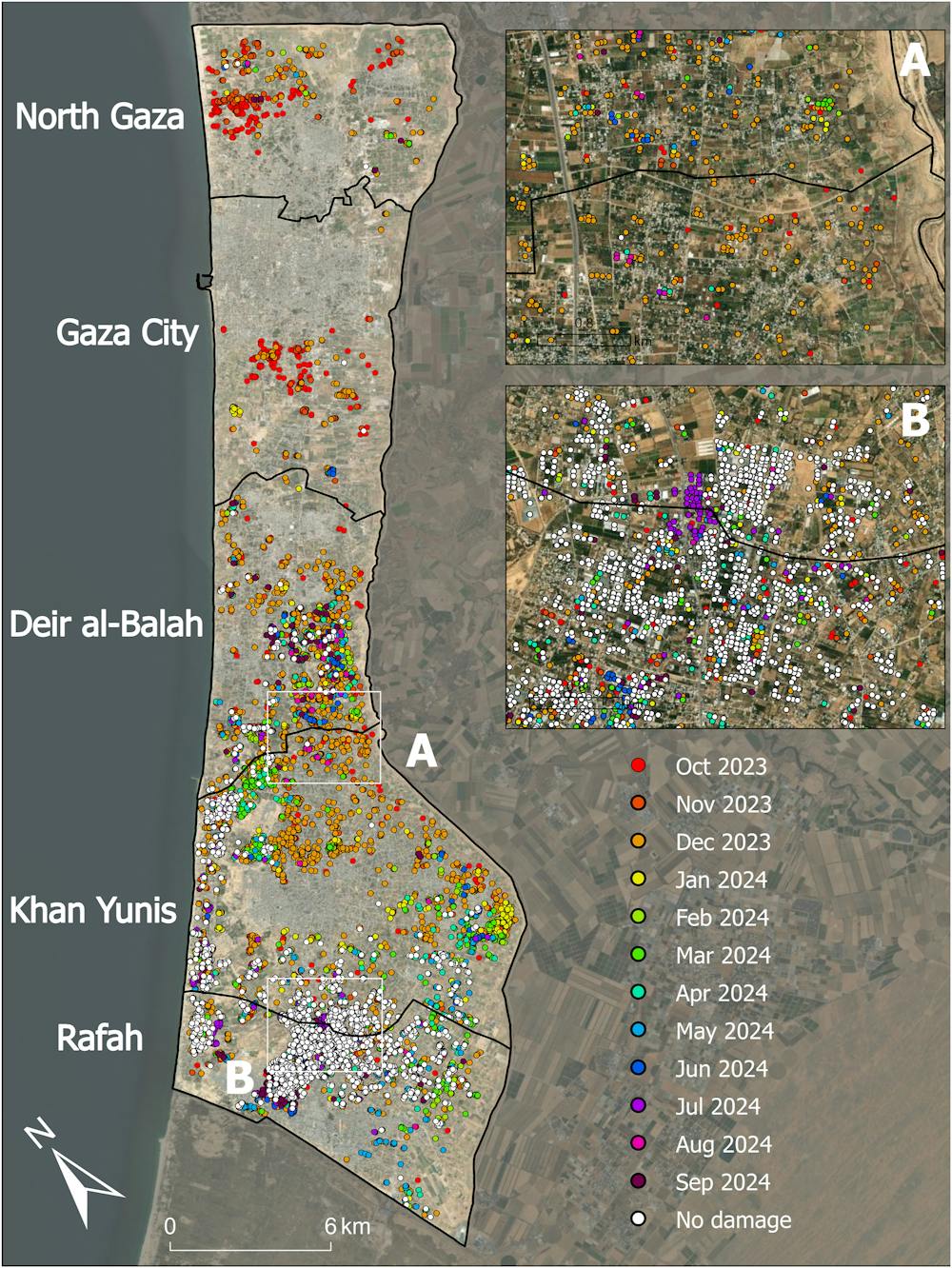
    MIL OSI – Global Reports –

    February 7, 2025
  • MIL-OSI Global: Long COVID: women at greater risk compared to men – could immune system differences be the cause?

    Source: The Conversation – UK – By Helen McGettrick, Reader in Inflammation and Vascular Biology, University of Birmingham

    Women had a 1.3 times higher chance of developing long COVID than men. Daisy Daisy/ Shutterstock

    About 5% of people who catch COVID have long-lasting symptoms. In these people, loss of smell, dizziness, fatigue and other hallmark COVID symptoms can persist for months after the initial illness. Yet even five years after the COVID pandemic began, we still don’t know why some people develop long COVID and others don’t.

    But a recent study brings us a step closer to understanding who is at greatest risk of developing long COVID. The study found that women have a much higher risk of developing long COVID compared to men.

    Published in Jama Network Open, the paper investigated symptoms of long COVID in 12,276 adults. Each participant had had COVID at least six months earlier. Using a questionnaire, participants gave information on their current symptoms, allowing researchers to identify those with long COVID.

    While previous research has also uncovered a similarly increase long COVID risk in women, these studies had small sample sizes and didn’t consider certain factors that may have distorted the findings.

    The new study took these various factors into account in their analysis, including a participant’s age, race, vaccination status and whether they had any other health conditions. This allowed them to better calculate the risks of developing long COVID for men and women.

    Their results indicated that women had 31% higher chance of developing long COVID than men.

    When broken down by age, this difference disappeared in people aged 18-39. However, the risk was even greater in women aged 40-54, who had a 48% higher risk of developing the condition compared with men. Women over 55 had a 34% higher risk of developing long COVID.

    Interestingly, this finding is contrary to data on COVID infection severity, which shows men are more prone to developing severe symptoms. They also make up around two out of three COVID deaths.

    While researchers don’t currently know why women are at greater risk of long COVID, differences in the way men’s and women’s immune systems respond to COVID could be a factor.

    Immune differences

    The immune system is a fascinating, complicated system with many different types of cell, each of which has a specific role in fighting infection.

    For instance, B cells make antibodies that target infections, while non-classical monocytes regulate immune function and clear up dead and damaged cells. Our cytotoxic T cells kill virus-infected cells, while helper T cells help activate other immune cells and signal that there’s an issue.

    But the proportion and type of immune cells that circulate in the body can differ by sex and age.

    For example, older women have lower proportions of cytotoxic and helper T cells, higher percentages of activated B cells and a higher total number of non-classical monocytes compared to younger men and women.

    People with long COVID also have a higher number of non-classic monocytes and more activated B cells compared to those who didn’t have long COVID. Given that older women already have a higher proportion of these cell types even before an infection, it’s possible that this may explain why they were at the greatest risk of developing long COVID.

    The study found peri-menopausal women and women who had reached the menopause had the greatest risk of developing long COVID.
    Gladskikh Tatiana/ Shutterstock

    But these aren’t the only immune function differences in women that may account for their greater risk of long COVID.

    Women generally have a more intense immune response to infections than men – including against COVID. This more intense response can mainly be accounted for by differences in hormones and the fact that women have two X chromosomes.

    In particular, the hormone oestrogen plays a vital role in controlling the immune system. Oestrogen helps contribute to the enhanced immune response that occurs when a person develops an infection. The severe drop in oestrogen that occurs during the menopause may also explain why women are more susceptible to an infection and longer lasting diseases.


    Read more:
    How biological differences between men and women alter immune responses – and affect women’s health


    In this recent Jama study, peri-menopausal women and women who had reached the menopause were at greatest risk of developing long COVID. This suggests oestrogen may be a contributing factor.

    After fighting an infection, immune cells should die off – stopping prolonged, uncontrolled damage to the body. While the more intense immune response women have to an infection may be beneficial in reducing the initial severity of the COVID infection, this persistent, heightened immune response and any damage it causes to the body may increase the possibility of long COVID occurring.

    Such prolonged, higher intensity immune responses are known to promote the development of autoimmune diseases – where the body’s immune system attacks itself. Women have a higher prevalence of many autoimmune conditions, including rheumatoid arthritis, Sjogren’s and multiple sclerosis.

    Although COVID isn’t an autoimmune disease, autoantibodies (proteins released by B cells that attack the body’s own cells and tissues) have been found in people with long COVID. These antibodies promote long COVID symptoms. Possibly women are at greater risk of long COVID for the same reasons they’re at greater risk of developing an autoimmune condition.

    The findings from this recent study add to our understanding of long COVID – pointing to which groups are at greatest risk of developing the condition. More work needs to be done to explore differences in how long COVID differs based on sex and age – and the mechanisms that trigger long COVID to begin with.

    Through understanding the who and why of long COVID, it might allow for new treatments to be developed.

    Helen McGettrick receives funding from Medical Research Council, Wellcome Trust, Wellcome Leap, Helmsley Foundation and ROCHE. She is also an elected member of British Society of Immunology Congress Committee.

    Jonathan Lewis receives funding from the Wellcome Trust and the British Society of Immunology (CARINA).

    – ref. Long COVID: women at greater risk compared to men – could immune system differences be the cause? – https://theconversation.com/long-covid-women-at-greater-risk-compared-to-men-could-immune-system-differences-be-the-cause-248700

    MIL OSI – Global Reports –

    February 7, 2025
  • MIL-OSI Global: Reading Whistler’s Nocturne in Blue and Gold – Old Battersea Bridge as a piece of music

    Source: The Conversation – UK – By Frances Fowle, Personal Chair of Nineteenth-Century Art, History of Art, University of Edinburgh

    Nocturne in Blue and Gold – Old Battersea Bridge by James Abbott McNeill Whistler (1872-5). Tate/Canva, CC BY-SA

    In 1877 the American artist James McNeill Whistler (1834-1903) achieved notoriety when he exhibited his recent views of the river Thames at the Grosvenor Gallery in London. He gave his paintings musical titles: Nocturne in Black and Gold – The Falling Rocket (1875) and Nocturne in Blue and Gold – Old Battersea Bridge (circa 1872-5).

    The view of Battersea Bridge includes Chelsea Church and the then newly constructed Albert Bridge. The lights of Cremorne Pleasure Gardens twinkle in the distance, while fireworks explode in the pale sky above.

    The painting is remarkable for its intense, light blue tonality suggestive of evening, the time of day sometimes known as “the blue hour”. Painting from memory, Whistler thinned his paint with copal (a tree resin), turpentine and linseed oil. This created what he called a “sauce”, which he applied in thin, transparent layers, wiping it away until he was satisfied. He left areas of the dark preparatory layer unpainted to create the illusion of the bridge. Inspired by Japanese woodblock prints, he exaggerated its height.


    This article is part of Rethinking the Classics. The stories in this series offer insightful new ways to think about and interpret classic books, films and artworks. This is the canon – with a twist.


    All this was lost on the critics, however. The author Oscar Wilde reviewed the exhibition and wrote that the Battersea Bridge Nocturne was “worth looking at for about as long as one looks at a real rocket, that is, for somewhat less than a quarter of a minute”.

    A few years earlier Whistler had exhibited another view of the Thames, Nocturne: Blue and Silver – Chelsea (1871), at the Dudley Gallery in London. The critic for The Times summed up Whistler’s intention, observing that the painting was:

    So closely akin to music that the colours of the one may and should be used, like the ordered sounds of the other; that painting should not aim at expressing dramatic emotions, depicting incidents of history or recording facts of nature, but should be content with moulding our moods and stirring our imaginations, by subtle combinations of colour.

    Arrangement in Gray: Portrait of the Painter by Whistler (1872).
    Detroit Institute of Arts

    Whistler’s paintings were first compared to music as early as 1863 when the French critic Paul Manz described his haunting portrait, The White Girl (1872), as a “symphony in white”. Whistler adopted the title retrospectively, creating a series of three aesthetic mood paintings or “symphonies”, featuring young women in flowing white dresses.

    Press and public alike were puzzled by the artist’s insistence that his paintings lacked any specific narrative or moral message.

    When he witnessed the abstraction of Whistler’s latest Nocturnes at the Grosvenor Gallery, the leading English art critic John Ruskin published a venomous review. “I have seen, and heard much of Cockney impudence before now,” he wrote, “but never expected to hear a coxcomb ask 200 guineas for flinging a pot of paint in the public’s face.”

    Whistler’s retort

    Whistler sued Ruskin for libel and used the ensuing two-day trial to defend his views on art. He referred to his paintings throughout proceedings in musical terms, as “arrangements”, “symphonies” or “nocturnes”. When asked what the Battersea Bridge painting was intended to represent, he replied:

    I did not intend it to be a ‘correct’ portrait of the bridge. It is only a moonlight scene … As to what the picture represents, that depends upon who looks at it. To some persons it may represent all that is intended; to others it may represent nothing.

    Whistler won the court case, but was awarded only a farthing in damages, resulting in his bankruptcy. Undaunted, the following year (1878) he published The Red Rag, in which he articulated his aesthetic theory:

    Art should be independent of all clap-trap – should stand alone, and appeal to the artistic sense of eye or ear, without confounding this with emotions entirely foreign to it, as devotion, pity, love, patriotism, and the like. All these have no kind of concern with it, and that is why I insist on calling my works “arrangements” and “harmonies”.


    Looking for something good? Cut through the noise with a carefully curated selection of the latest releases, live events and exhibitions, straight to your inbox every fortnight, on Fridays. Sign up here.


    In 1885 he delivered his, now famous, 10 o’clock Lecture. In it reiterated his aesthetic theory. “Nature,” he wrote, “contains the elements, in colour and form, of all pictures, as the keyboard contains the notes of all music”. He urged artists not to copy nature slavishly, as Ruskin had recommended, but to approach it more like a musician, waiting for that moment when:

    The evening mist clothes the riverside with poetry, as with a veil, and the poor buildings lose themselves in the dim sky, and the tall chimneys become campanili and the warehouses are palaces in the night, and the whole city hangs in the heavens, and fairy-land is before us.

    It is then, he argued, that nature “sings her exquisite song to the artist alone”.

    Beyond the canon

    As part of the Rethinking the Classics series, we’re asking our experts to recommend a book or artwork that tackles similar themes to the canonical work in question, but isn’t (yet) considered a classic itself. Here is Frances Fowles’ suggestion:

    Whistler was not the only artist of this period to view his art as the equivalent of music. His work anticipated symbolism, a literary and artistic movement that rejected naturalistic representation in favour of more abstract concerns, such as the connections between words, colours and musical notes.

    Mikalojus Čiurlionis and his 1908 painting, Stellar Sonata.
    Wiki Commons

    The relationship between colour, rhythm and sound was central to the work of French artist Paul Signac (1863-1935), who worked in a pointillist technique (applying dots of colour), and assigned his paintings opus numbers and tempos. The Lithuanian painter and composer Mikalojus Čiurlionis (1875-1911), too, fused music and colour and gave his artworks musical titles.

    Frances Fowle does not work for, consult, own shares in or receive funding from any company or organisation that would benefit from this article, and has disclosed no relevant affiliations beyond their academic appointment.

    – ref. Reading Whistler’s Nocturne in Blue and Gold – Old Battersea Bridge as a piece of music – https://theconversation.com/reading-whistlers-nocturne-in-blue-and-gold-old-battersea-bridge-as-a-piece-of-music-241075

    MIL OSI – Global Reports –

    February 7, 2025
←Previous Page
1 … 4,562 4,563 4,564 4,565 4,566 … 5,912
Next Page→
NewzIntel.com

NewzIntel.com

MIL Open Source Intelligence

  • Blog
  • About
  • FAQs
  • Authors
  • Events
  • Shop
  • Patterns
  • Themes

Twenty Twenty-Five

Designed with WordPress