Category: KB

  • MIL-OSI Europe: Written question – EU failure to act against the 50-year occupation of Cyprus – E-001740/2024

    Source: European Parliament

    Question for written answer  E-001740/2024/rev.1
    to the Council
    Rule 144
    Nikolaos Anadiotis (NI)

    Ever since its illegal military invasion in 1974, Türkiye has been occupying more than 36% of the territory of Cyprus, in breach of every concept of law.

    It now maintains some 35 000 soldiers in the Occupied Territories. Their pseudo-state, still with the support of Türkiye, has been steadily and methodically settling the Occupied Territories with Turks, continuing to grant them pseudo-nationality and thereby distorting the demographic character of the population.

    At present, there are 160 000 illegal settlers living in the Occupied Territories.[1] The EU effectively leaves Türkiye unpunished for these crimes against a Member State, Cyprus, the whole of which (including the Occupied Territories) has been EU territory since it joined the Union.

    In view of the above, can the Council answer the following:

    • 1.What explanation is there for the impunity Türkiye enjoys in respect of its systematic crimes against a Member State, as opposed to the measures and sanctions imposed on Russia for its invasion of a non-Member State (Ukraine)?
    • 2.Does the EU intend to impose matching sanctions on Türkiye for the above crimes?
    • 3.By what specific measures does the EU plan to protect Cyprus against Turkish aggression?

    Submitted: 17.9.2024

    • [1] https://mfa.gov.cy/turkish-military-invasion-and-occupation.html
    Last updated: 7 October 2024

    MIL OSI Europe News

  • MIL-OSI Europe: Written question – Andalusian government blocking construction of provincial centres for victims of sexual violence. – E-001877/2024

    Source: European Parliament

    Question for written answer  E-001877/2024
    to the Commission
    Rule 144
    Estrella Galán (The Left)

    Although the Andalusian Women’s Institute (IAM) attended to more than 660 victims of sexual violence in 2023 – a doubling in only five years –,the Junta (Government) of Andalucía (Spain) continues to block the opening of provincial shelters caring for victims of sexual violence.

    As established in Directive 2024/1385 (Article 26) and in the Istanbul Convention (Article 25), in force for the Union since 1 October 2023, such facilities are extremely useful resources since anonymity, round-the-clock availability and the fact of not needing a complaint to go to them make them safe places for victims.

    This is why the Andalusian Government received more than EUR 12 million in EU funding – which remains unused – for their construction, since in Spain more than 6% of women over 16 years of age have suffered sexual violence at some point in their lives.

    • 1.Is the Commission aware of the Andalusian Government’s blocking of the construction of these centres despite having received funds for this purpose?
    • 2.Does it intend to make representations to the competent authorities to ensure that these centres are opened in accordance with the provisions of Directive (EU) 2024/1385?

    Submitted: 30.9.2024

    Last updated: 7 October 2024

    MIL OSI Europe News

  • MIL-OSI Europe: Answer to a written question – Censorship of speech under the Digital Services Act (DSA) – P-001375/2024(ASW)

    Source: European Parliament

    Free speech is a pillar of democracy and at the core of the EU Charter of Fundamental Rights[1] and the European Convention on Human Rights[2], which are legally binding on all EU institutions and Member States.

    The Digital Services Act (DSA)[3] does not regulate content[4]. Its objective is to ensure that EU users can enjoy online platform services safely while respecting fundamental rights. It defines the platforms’ responsibilities and mitigates risks, preventing algorithmic amplification of illegal content and over-removal of lawful content, especially for very large online platforms and search engines (VLOPSEs)[5].

    The Commission supervises DSA compliance by the VLOPSEs. To this effect, the co-legislator entrusted the Commission with investigative and enforcement powers.

    These powers and related procedures are laid out in the DSA[6], and include the possibility of accepting commitments, i.e. remedial actions offered by platforms to solve the Commission’s concerns without being subject to fines for non-compliance.

    To assist companies in deciding whether to offer commitments, in line with the principles of good administration, the Commission stands ready to explain to them its concerns.

    The Commission adopted the first DSA commitment decision on 5 August 2024, making binding TikTok’s commitments to permanently withdraw TikTok Lite Rewards programme from the EU[7]. In ensuring compliance with the DSA, the Commission does not require removal of specific pieces of content.

    All acts and decisions adopted by the Commission on the basis of the DSA are taken within the limits of the Commission’s powers and are subject to judicial review.

    • [1] https://eur-lex.europa.eu/legal-content/EN/TXT/HTML/?uri=CELEX%3A12012P%2FTXT
    • [2] https://eur-lex.europa.eu/EN/legal-content/glossary/european-convention-on-human-rights-echr.html
    • [3] Regulation (EU) 2022/2065 of the European Parliament and of the Council of 19 October 2022 on a Single Market for Digital Services and amending Directive 2000/31/EC (Digital Services Act).
    • [4] As in the offline world, that is a matter for specific laws and the courts to determine.
    • [5] VLOPSEs are designated online platforms with more than 45 million users in the EU (10% of the EU population).
    • [6] DSA, Section 4.
    • [7] https://ec.europa.eu/commission/presscorner/detail/en/IP_24_4161
    Last updated: 7 October 2024

    MIL OSI Europe News

  • MIL-OSI Europe: Written question – Question about farmers’ responsibility for water pollution through the use of glyphosate – E-001870/2024

    Source: European Parliament

    Question for written answer  E-001870/2024
    to the Commission
    Rule 144
    Jordan Bardella (PfE)

    For years, European farmers have been unfairly singled out and subject to an avalanche of EU directives and regulations on the use of glyphosate. They are thus accused of being primarily responsible for water pollution. A recent study by the University of Tübingen[1] (Germany) indicates that industrial and domestic detergents are what is really causing glyphosate to persist in our rivers, not farming.

    These results illustrate how EU policies have not only failed to solve the problem of water pollution – they have also imposed major constraints on farmers without any scientific basis.

    • 1.How does the Commission intend to correct this injustice and revise its environmental policies in order to tackle the real sources of water pollution?
    • 2.What steps does the Commission intend to take to support the search for serious alternatives to glyphosate?
    • 3.More generally, what sustainable measures will be taken to lighten the burden on farmers?

    Submitted: 30.9.2024

    • [1] https://uni-tuebingen.de/en/university/news-and-publications/press-releases/press-releases/article/most-of-the-glyphosate-in-our-rivers-may-not-come-from-farming/
    Last updated: 7 October 2024

    MIL OSI Europe News

  • MIL-OSI Europe: Written question – Urgent action needed to reduce food waste in the EU – P-001923/2024

    Source: European Parliament

    Priority question for written answer  P-001923/2024
    to the Commission
    Rule 144
    Biljana Borzan (S&D)

    In the light of Eurostat data revealing that the EU generated 59.2 million tonnes of food waste in 2022, amounting to 132 kg per person. With households contributing over half of this waste, it is clear that the EU faces a significant challenge in addressing food waste. Given that other regions, such as the UK, are implementing stricter food waste regulations, and that innovative technologies and business models are emerging to tackle this issue, it is crucial for the EU to strengthen its efforts.

    • 1.What measures is the Commission planning to introduce or expand to support Member States in reducing food waste, particularly at household and supply chain levels?
    • 2.Additionally, how does the Commission intend to promote innovative technologies such as those emerging in the dairy and agricultural sectors, and encourage the adoption of stricter policies to ensure that the EU meets its goal of halving food waste by 2030, as outlined in the UN Sustainable Development Goals?

    Submitted: 2.10.2024

    Last updated: 7 October 2024

    MIL OSI Europe News

  • MIL-OSI Europe: MOTION FOR A RESOLUTION on strengthening Moldova’s resilience against Russian interference ahead of the upcoming presidential election and a constitutional referendum on EU integration – B10-0082/2024

    Source: European Parliament

    to wind up the debate on the statement by the Vice-President of the Commission / High Representative of the Union for Foreign Affairs and Security Policy

    B10‑0000/2024

    European Parliament resolution on strengthening Moldova’s resilience against Russian interference ahead of the upcoming presidential election and a constitutional referendum on EU integration

    (2024/2821(RSP))

    The European Parliament,

     having regard to Articles 2 and 49 of the Treaty on European Union,

     having regard to the European Council decision of 23 June 2022 to grant EU candidate country status to Moldova,

     having regard to the interim opinion of the Venice Commission of 13 March 2023 on the draft law on limiting excessive economic and political influence in public life (de‑oligarchisation),

     having regard to the joint staff working document of 6 February 2023 entitled ‘Association Implementation Report on the Republic of Moldova’, reviewing Moldova’s implementation of reforms under the EU-Moldova Association Agreement since October 2021 (SWD(2023)0041),

     having regard to Rule 136(2) of its Rules of Procedure,

    A. whereas Moldova is one of the poorest countries in Europe; whereas Russia’s war of aggression against Ukraine has further affected living standards;

    B. whereas the Russian Federation has been using provocation, disinformation, illegal funding of political parties, cyberattacks and other hybrid means to undermine the stability, sovereignty, constitutional order and democratic institutions of the Republic of Moldova;

    C. whereas Russian missiles targeting Ukraine have flown over the Republic of Moldova’s territory on several occasions, in clear violation of Moldova’s sovereignty;

    D. whereas oligarchs have an excessive influence on vested interests in economic, political and public life in Moldova;

    E. whereas in September, certain members of the party founded by fugitive oligarch Ilan Șor were accused by the Moldovan judiciary of having received money from accounts held by the Russian bank Promsvyazbank in order to take part in demonstrations ahead of the presidential election in October; whereas oligarch Ilan Șor fled to Russia in 2019 after being sentenced to 15 years in prison for fraud and money laundering; whereas Șor’s party was declared ‘unconstitutional’ by the Constitutional Court, accused of seeking to destabilise Moldova in collusion with Russia, and banned;

    F. whereas in July 2023, the Transnistrian Communist Party leader, Oleg Khorzhan, was found stabbed to death in his home; whereas Oleg Khorzhan was a public critic of the de facto authorities and reported on human rights abuses in prison; whereas no effective investigation into his death has been carried out;

    G. whereas presidential elections are scheduled to be held on 20 October 2024 in conjunction with a referendum on joining the EU; whereas Moldova was officially granted candidate status by the EU in June 2022 and negotiations were opened in December 2023;

    H. whereas reducing corruption is one of the nine steps Moldova needs to address before joining the EU;

    1. Notes with concern the attempts by Russia to influence the outcome of the presidential election and referendum in Moldova, notably through the actions of several members of the party funded by the convicted oligarch Ilan Șor, who is also subject to EU sanctions;

    2. Notes with concern the increasing spread of pre-election propaganda and disinformation by Russian sources in Moldova on social media, with the aim of misleading voters or reducing turnout in the referendum; calls on social media platforms to adapt the design of their algorithms to mitigate the spread of illegal content, hate speech and disinformation online;

    3. Recognises and encourages the efforts of the Moldovan authorities to allow all Moldovans to vote, including those living in the breakaway Republic of Transnistria or residing abroad;

    4. Expresses understanding that the Moldovan authorities are intervening against social media and other actors who are clearly operating on behalf of Russia in spreading lies and seeking to sabotage a fair election process; underlines the importance of supporting the Moldovan authorities in their efforts to counter Russian influence; calls for the EU to continue helping Moldova to strengthen its capacities and resilience in the area;

    5. Calls on the Moldovan authorities to protect basic democratic values, including freedom of expression, the media and organisation, and to never impose any limits on the possibility to work for a legitimate opposition or engage in critical scrutiny of the media;

    6. Underlines the importance of a stable and democratic Moldova for stability, peace and cooperation throughout the region; calls for the EU to continue to support Moldova’s democratic structures;

    7. Takes note of the importance of the nine conditions set by the Commission for the accession procedure; recognises Moldova’s reform efforts; underlines the importance of continued support from the EU, including strengthening the rule of law and the independence and effectiveness of the Moldovan authorities;

    8. Underscores that financial support should have strong social conditionalities attached to it; recalls that such support should also encompass strengthening the capacities, independence and plurality of civil society organisations and social partner organisations; recommends establishing a sustainable social dialogue as another key area of social intervention;

    9. Highlights the need to speed up the introduction of the new guaranteed minimum wage for all and to improve social protection; reiterates its criticism that the implementation of the social acquis is under-represented in the Commission’s assessments and recommendations and calls for this situation to be changed;

    10. Notes with concern the strong direct and indirect dependence on Russian gas; calls for the EU to support energy conservation, domestic renewable energy production and Moldova’s continued integration into European electricity and gas grids;

    11. Recognises the significant efforts made by the country in receiving Ukrainian refugees; is concerned, however, that with the newest immigration regime, refugees risk losing access to critical goods and services, including access to employment and certain other rights;

    12. Notes Russia’s attempts to foment tensions between the autonomous region of Gaugazia and the Moldovan authorities; condemns Gaugazia Governor Evghenia Gutul’s meeting with Vladimir Putin; encourages the Moldovan Government’s efforts to reduce tensions with the autonomous region of Gaugazia through dialogue and reform;

    13. Underlines the fact that the region of Transnistria is under Russian influence and is being used to destabilise the democratic government in Moldova; condemns President Vladimir Putin’s decision to revoke a 2012 decree committing Russia to finding a solution for Transnistria; calls on Russia to immediately dismantle its military presence in Transnistria; reiterates its support for a comprehensive and peaceful settlement of the Transnistrian conflict, based on the sovereignty and territorial integrity of Moldova with a special status for the region of Transnistria; encourages the implementation of all confidence-building measures designed to avoid destabilisation; believes that a comprehensive and peaceful settlement of the Transnistrian conflict is important for Moldova’s EU accession process;

    14. Instructs its President to forward this resolution to the Council, the Commission, the Vice-President of the Commission / High Representative of the Union for Foreign Affairs and Security Policy, the Government and Parliament of the Republic of Moldova, the Russian Federation, the UN, the Organization for Security and Co-operation in Europe and the Council of Europe.


    MIL OSI Europe News

  • MIL-OSI Europe: Swissmedic inspections: Potential for improvement in hospitals

    Source: Switzerland – Federal Administration in English

    In 2023, Swissmedic conducted medical device inspections in 25 hospitals. The checks again revealed a need for action in all inspected areas, particularly in quality management, maintenance, the basic and further training of the personnel involved, as well as the infrastructure of the reprocessing departments. The identified deviations have an impact on device safety, and thus on the safety of patients.

    MIL OSI Europe News

  • MIL-OSI Europe: Written question – ‘Book and claim’ mechanism for sustainable aviation fuel in Regulation (EU) 2023/2405 (ReFuelEU Aviation): Part 2/2 – E-001879/2024

    Source: European Parliament

    Question for written answer  E-001879/2024
    to the Commission
    Rule 144
    Jan-Christoph Oetjen (Renew)

    While the Commission’s report is still pending, the advisory consultancy Guidehouse organised two stakeholder workshops in November 2023 and March 2024 to gather input. In parallel, stakeholders from the EU and international aviation ecosystems, and beyond – including aircraft operators from various market segments, airports and airport regions, aerospace manufacturers, e-fuel producers and logistics service providers – have repeatedly expressed their support for the introduction of a book and claim system to prevent structural imbalances, and to reduce costs in the EU’s SAF market.

    In the meantime, the long-anticipated report by Mario Draghi on EU competitiveness recognises the persistent price gap between SAF and conventional aircraft fuel, which hampers the decarbonisation of aviation. At international level, the International Civil Aviation Organization (ICAO), as part of its conclusions on its third Conference on Aviation and Alternative Fuels, has also announced that it will conduct a study on the book and claim concept[1].

    How will the Commission ensure it uses the current momentum to develop a working book and claim mechanism in the EU that could lead the way for the ICAO, while supporting a strong EU SAF market, strengthening our industrial base in SAF production, diversifying energy supply chains and ensuring the EU’s overall energy sovereignty?

    Submitted: 30.9.2024

    • [1] See ICAO Global Framework for SAF, LCAF and other Aviation Cleaner Energies, published on 24.11.2023.
    Last updated: 7 October 2024

    MIL OSI Europe News

  • MIL-OSI Europe: Written question – Enquiry on strengthening the enforcement of EU AML regulations and legal protections in cases involving legal professionals – E-001883/2024

    Source: European Parliament

    Question for written answer  E-001883/2024
    to the Commission
    Rule 144
    Tomáš Zdechovský (PPE)

    Concerns have arisen regarding the misuse of attorney trust accounts in the EU, where legal professionals may be implicated in facilitating financial crimes, including money laundering. Despite evidence and existing anti-money laundering (AML) regulations, national courts in some Member States have not sufficiently addressed the responsibility of legal professionals involved in such misconduct. This raises broader questions about the enforcement of EU regulations and the protection of victims who suffer financial losses due to inadequate judicial oversight.

    In relation to this:

    • 1.How does the Commission ensure that the Member States fully implement and enforce AML laws, particularly in cases involving legal professionals?
    • 2.What measures can the Commission take when Member States’ legal systems fail to adequately protect victims of financial crimes or fail to uphold EU legal standards?
    • 3.Can the Commission provide guidance or establish mechanisms for addressing deficiencies in the judicial handling of cases involving legal professionals, especially when it undermines EU financial regulations?

    Submitted: 30.9.2024

    Last updated: 7 October 2024

    MIL OSI Europe News

  • MIL-OSI Europe: Answer to a written question – Technical basis for the assessment of countries under EUDR – E-001499/2024(ASW)

    Source: European Parliament

    The assessment for the classification of countries will be based on criteria in Article 29(3) and (4) of the EU Deforestation Regulation (EUDR)[1], adopted by the European Parliament and the Council.

    The quantitative criteria are: (a) rate of deforestation and forest degradation, (b) rate of expansion of agriculture land for relevant commodities and (c) production trends of relevant commodities and of relevant products. The assessment may also take into account the provisions of Article 29(4) (a)-(e).

    In accordance with its obligations, the Commission is developing the methodology and conducting the assessment, considering latest scientific evidence and internationally recognised sources, in full respect of the principles of fairness, objectivity and transparency.

    Pursuant to Article 29(5), the Commission shall engage in a specific dialogue with all countries that are, or risk to be classified as high risk.

    Regular updates on the risk classification process and methodology take place in the Multi-stakeholder Platform on deforestation[2], where many stakeholders take part, alongside with third countries and the 27 EU Member States.

    The list of the countries or parts thereof, that present a low or high risk shall be published by means of implementing act. The draft implementing act will be submitted to EU Member States as part of the comitology procedure in accordance with the examination procedure referred in Article 5 of Regulation (EU) No 182/2011[3].

    • [1] Regulation (EU) 2023/1115 of the European Parliament and of the Council of 31 May 2023 on the making available on the Union market and the export from the Union of certain commodities and products associated with deforestation and forest degradation and repealing Regulation (EU) No 995/2010, OJ L 150, 9.6.2023, p. 206-247.
    • [2] https://ec.europa.eu/transparency/expert-groups-register/screen/expert-groups/consult?lang=en&do=groupDetail.groupDetail&groupID=3282
    • [3] Regulation (EU) No 182/2011 of the European Parliament and of the Council of 16 February 2011 laying down the rules and general principles concerning mechanisms for control by Member States of the Commission’s exercise of implementing powers, OJ L 55, 28.2.2011, p. 13-18.
    Last updated: 7 October 2024

    MIL OSI Europe News

  • MIL-OSI Europe: Answer to a written question – Millions of dead fish in the Pagasetic Gulf as a result of inaction by the relevant Greek authorities – P-001680/2024(ASW)

    Source: European Parliament

    The Commission services contacted the Hellenic authorities on 13 September 2024 in order to enquire about the causes of this incident.

    The Commission services also asked to be informed about the measures that the national authorities intend to take not only in order to reduce the environmental impact of this incident but also to prevent such a similar event from happening in the future.

    As regards infringement case 2022/2191[1], Greece has made partial progress as all river basin management plans have now been updated and notified to the Commission[2].

    However, Greece still needs to update its flood risk management plans and notify them to the Commission[3].

    • [1] https://ec.europa.eu/commission/presscorner/detail/en/inf_24_663
    • [2] As required by Article 13(7) and 15(1) of Directive 2000/60/EC establishing a framework for Community action in the field of water policy, OJ L  327, 22.12.2000, p. 1-73.
    • [3] As required by Articles 14(3) and 15(1) of Directive 2007/60/EC on the assessment and management of flood risks, OJ L 288, 6.11.2007, p. 27-34.
    Last updated: 7 October 2024

    MIL OSI Europe News

  • MIL-OSI Europe: Answer to a written question – Attacks on judicial independence by Spanish Government ministers – E-001514/2024(ASW)

    Source: European Parliament

    As reflected in the Commission’s 2022, 2023 and 2024 Rule of Law Reports[1], according to European standards, while courts are not immune to criticism and scrutiny, the judiciary must enjoy public confidence to be effective in view of its special role in society.

    Damage to this confidence is particularly relevant in relation to statements by members of the legislative and the executive branches, as all powers of the State must foster and protect the trust of the general public in constitutional institutions including the judiciary.

    As regards the ‘Organic Law on Amnesty for the Institutional, Political and Social Normalisation of Catalonia’, now that the law entered into force on 11 June 2024, the Commission is analysing it in terms of relevance for EU law.

    The Commission remains committed to taking any necessary measures to ensure compliance with EU law and upholding the rule of law in all Member States and will continue to work with the Spanish authorities to promote the rule of law, including within the framework of the rule of law cycle.

    Last updated: 7 October 2024

    MIL OSI Europe News

  • MIL-OSI Europe: Answer to a written question – EU forest owners disadvantaged by the Regulation on deforestation-free products (EUDR) – E-001498/2024(ASW)

    Source: European Parliament

    The EU Deforestation Regulation (EUDR)[1], adopted by the European Parliament and Council, is designed to apply in an even-handed and non-discriminatory manner, i.e. to all commodities and products produced inside as well as outside the EU. All commodities and products covered by the EUDR will be subject to the same requirements.

    The Commission is aware that a majority of EU forest owners already live up to the highest global standards in terms of quality, safety and environmental sustainability of their produce — and hence are well-placed to meet the requirements of the EUDR.

    The Commission sees no indication that EUDR would create a competitive advantage for forest owners outside the EU vis a vis EU forest owner.

    The Commission’s legislative proposal for the EUDR was based on an Impact Assessment[2] which estimated that overall expected benefits of this regulation outweigh the costs of compliance for companies.

    The EU recognises the importance of accompanying tools to support implementation of the EUDR. The Commission has developed frequently asked questions which are regularly updated and is working on additional formal guidelines for specific aspects.

    T he Commission is also actively engaging in dialogue with producer countries and provides support to those with the weaker capacity, e.g. via the global Team Europe Initiative on Deforestation Free Value Chains.

    • [1] Regulation (EU) 2023/1115 of the European Parliament and of the Council of 31 May 2023 on the making available on the Union market and the export from the Union of certain commodities and products associated with deforestation and forest degradation and repealing Regulation (EU) No 995/2010, OJ L 150, 9.6.2023, p. 206-247.
    • [2] https://environment.ec.europa.eu/publications/proposal-regulation-deforestation-free-products_en
    Last updated: 7 October 2024

    MIL OSI Europe News

  • MIL-OSI Europe: Answer to a written question – Withdrawal of the marketing authorisation for AstraZeneca’s vaccine – E-001557/2024(ASW)

    Source: European Parliament

    In August 2020, the Commission, acting on behalf of participating Member States and the company AstraZeneca, entered into an Advance Purchase Agreement (‘EU APA’) for the supply of 300 million doses of the COVID-19 vaccine under development by AstraZeneca.

    The APA remained in force until March 2022, when the final doses purchased under the APA were delivered to the Participating Member States. The withdrawal of the marketing authorisation for Vaxzevria in March 2024 did not affect the implementation of the APA.

    The date of the marketing authorisation withdrawal does also not impact the company’s liability or obligation to provide compensation for side effects from vaccines administered prior to the withdrawal, in line with the terms of the APA.

    Last updated: 7 October 2024

    MIL OSI Europe News

  • MIL-OSI Europe: Answer to a written question – Urgent measures to restore Mediterranean maritime traffic to normal and support Italian supply chains impacted by Houti attacks – E-001436/2024(ASW)

    Source: European Parliament

    The EU has repeatedly condemned[1] the Houthi threats and attacks against commercial ships, including the illegal seizure of the ‘Galaxy Leader’ vessel and its 25-member crew, as unacceptable violations of international law threatening maritime security, peace and stability in the region.

    The EU underlined that they must stop, notably through the High Representative/Vice-President’s (HR/VP) declaration on behalf of the EU and its Member States of 12 January 2024[2], welcoming the 10 January 2024 United Nations Security Council resolution 2722[3] condemning the Houthi attacks.

    On 19 February 2024, the EU deployed its Naval Force (EUNAVFOR) ASPIDES[4] in the Red Sea, with a mandate to protect ships under attack, accompany vessels and reinforce maritime situational awareness, in cooperation with partners.

    Over the last six months of deployment, EUNAVFOR ASPIDES has contributed to uphold the freedom of navigation in the Red Sea and beyond by protecting more than 220 merchant vessels during their transits under missiles and drones threats.

    In addition, it has established in a record time a network of cooperation with the shipping industry. The decision to sail back in the Red Sea is taken by private actors based on their evaluation of the risk analysis between costs and dangers.

    Last updated: 7 October 2024

    MIL OSI Europe News

  • MIL-OSI Europe: Answer to a written question – Irregularities in the election process in Belgium – E-001511/2024(ASW)

    Source: European Parliament

    The Commission does not have a general competence to intervene in elections of the Member States. Subject to the respect of certain basic principles, such as those laid down in Articles 2 and 10 of the Treaty on European Union, and their international commitments, it is the competence and the responsibility of the Member States to lay down the specific conditions for the conduct of elections, including on electronic voting, and of the competent national administrative and judicial authorities to ensure compliance with applicable law and relevant international standards. Such standards may include transparency, fairness and reliability.

    As regards the elections to the European Parliament, national electoral procedures must also comply with the principles set out in the Act concerning the election of the Members of the European Parliament by direct universal suffrage, which do not specify who may vote[1].

    The Court explained in Delvigne[2] that the definition of the persons entitled to exercise that right therefore falls within the competence of each Member State in compliance with EU law.

    In December 2023, the Commission issued a Compendium of electronic voting practices[3] which includes specific information on ensuring integrity of electronic voting systems, including through effective testing and auditing of systems.

    In 2023, the Commission presented a recommendation on inclusive and resilient elections[4] which highlighted, among others, the importance of ensuring necessary safeguards and appropriate training for election officials when introducing e-voting.

    The Commission intends to review the follow-up being given to the recommendation by Member States in the context of the Commission’s Report on the 2024 European elections.

    • [1] https://eur-lex.europa.eu/legal-content/en/TXT/?uri=CELEX%3A01976X1008%2801%29-20020923
    • [2] https://eur-lex.europa.eu/legal-content/en/TXT/?uri=CELEX:62013CJ0650
    • [3] https://commission.europa.eu/system/files/2023-12/compendium.pdf
    • [4] https://eur-lex.europa.eu/legal-content/EN/TXT/?uri=CELEX%3A32023H2829
    Last updated: 7 October 2024

    MIL OSI Europe News

  • MIL-OSI Europe: Written question – Black spot detected in citrus fruits imported from South Africa – E-001876/2024

    Source: European Parliament

    Question for written answer  E-001876/2024
    to the Commission
    Rule 144
    Esther Herranz García (PPE)

    As we have been warning since at least 2015, a fungus that causes citrus black spot disease (Phyllosticta citricarpa) is being frequently detected every season in citrus fruits imported from South Africa.

    Twenty shipments of citrus fruits contaminated with citrus black spot were intercepted in June, July and August. As these are the first three months of the importing season, we fear that the number is set to rise.

    In view of this situation, which has been ongoing for years:

    • 1.What measures does the European Commission intend to take to ensure that this plague does not reach European crops? Is the Commission considering closing its borders to citrus fruit imports from South Africa?
    • 2.Given that imports contaminated with citrus black spot and false codling moth (Thaumatotibia leucotreta) have also been detected in imports from Zimbabwe, when does the Commission intend to extend mandatory cold treatment to imports from that country?

    Submitted: 30.9.2024

    Last updated: 7 October 2024

    MIL OSI Europe News

  • MIL-OSI Europe: Written question – The European Union’s double standard in relation to Ukraine and Cyprus – E-001884/2024

    Source: European Parliament

    Question for written answer  E-001884/2024
    to the Commission
    Rule 144
    Loucas Fourlas (PPE)

    The European Union has shown a strong and immediate response to Russia’s illegal invasion of Ukraine, imposing tough sanctions, providing military and humanitarian assistance and supporting the territorial integrity of the country.

    However, it seems that this same determination and solidarity does not apply in relation to the Republic of Cyprus – a Member State of the European Union – part of which has been illegally occupied by Türkiye for 50 years. The EU has not imposed corresponding sanctions against Türkiye, nor has it exerted the same political pressure to end the occupation.

    In view of this:

    • 1.Given that both Ukraine and Cyprus are facing illegal military occupations, how does the Commission justify the double standard in its approach to the situations in the two countries?
    • 2.Will the Commission review its policy and adopt a more assertive stance towards Türkiye with regard to the illegal occupation of Cyprus, imposing sanctions and other measures equivalent to those in place against Russia?

    Submitted: 30.9.2024

    Last updated: 7 October 2024

    MIL OSI Europe News

  • MIL-OSI Europe: Answer to a written question – Protecting the European music industry by making broadcasting rights payments to third-country nationals subject to reciprocity – E-001423/2024(ASW)

    Source: European Parliament

    The Commission has intensively worked on analysing the consequences of the judgment of the Court of Justice of the European Union in Case C-265/19 on the remuneration of phonogram producers and performers[1].

    The Commission conducted a comprehensive evidence-gathering and engaged in discussions with Member States and stakeholders on this matter. More details and references may be found in the reply to Written Question E-001161/2024.

    The discussions with Member States and the feedback from the stakeholders highlighted significant differences across Member States in the practices of remunerating third-country phonogram producers and performers, based on national treatment or material reciprocity.

    There were as well varying opinions on the necessity of any form of regulatory intervention especially if that intervention would be for the purposes of reversing the judgment of the Court of Justice with the risk of fragmenting the internal market.

    Accordingly, the review of Directive 2006/115/EC[2] was not identified as one of the matters for which the Commission would bring forward proposals under the 2019-2024 mandate. The matter may be further examined under the new Commission.

    • [1] Judgment of 8 September 2020, Recorded Artists Actors Performers Ltd v Phonographic Performance (Ireland) Ltd and Others, C-265/19, EU:C:2020:677.
    • [2] https://eur-lex.europa.eu/legal-content/EN/ALL/?uri=celex%3A32006L0115
    Last updated: 7 October 2024

    MIL OSI Europe News

  • MIL-OSI Europe: MOTION FOR A RESOLUTION on the democratic backsliding and threats to political pluralism in Georgia – B10-0086/2024

    Source: European Parliament

    to wind up the debate on the statement by the Vice-President of the Commission / High Representative of the Union for Foreign Affairs and Security Policy

    B10‑0086/2024

    European Parliament resolution on the democratic backsliding and threats to political pluralism in

    Georgia

    (2024/2822(RSP))

    The European Parliament,

     having regard to its previous resolutions on Georgia,

     having regard to the European Council conclusions of 14 and 15 December 2023 and of 27 June 2024,

     having regard to the Commission communication of 8 November 2023 entitled ‘2023 Communication on EU Enlargement Policy’ (COM(2023)0690) and to the accompanying Commission staff working document entitled ‘Georgia 2023 Report’ (SWD(2023)0697),

     having regard to the joint statement of 8 November 2023 by the Chair of the Delegation for relations with the South Caucasus and the European Parliament’s Standing Rapporteur on Georgia on the Commission recommendation of 8 November 2023 on the EU membership application of Georgia,

     having regard to the Association Agreement between the European Union and the European Atomic Energy Community and their Member States, of the one part, and Georgia, of the other part[1], which entered into force on 1 July 2016,

     having regard to the Treaty on the Functioning of the European Union, in particular Article 215(2) thereof, and to the Treaty on European Union, in particular Article 29 thereof,

     having regard to the Independent International Fact-Finding Mission on the Conflict in Georgia and to its September 2009 report,

     having regard to Rule 136(2) of its Rules of Procedure,

    A. whereas the exercise of freedom of opinion, expression, association and peaceful assembly is a fundamental right enshrined in the Georgian Constitution;

    B. whereas Georgia, as a signatory to the Universal Declaration of Human Rights and the European Convention on Human Rights, as well as a member of the Council of Europe and the Organization for Security and Co-operation in Europe, has committed itself to the principles of democracy, the rule of law and respect for fundamental freedoms and human rights;

    C. whereas Russia has occupied Abkhazia and South Ossetia since the August 2008 conflict that followed Georgia’s attack on Tskhinvali on the night of 7 to 8 August 2008;

    D. whereas in June 2014, the EU and Georgia signed an Association Agreement that entered into force on 1 July 2016;

    E. whereas in December 2023, the European Council granted Georgia the status of EU candidate country;

    F. whereas in March 2017, the EU visa liberalisation agreement with Georgia came into effect, following Georgia’s successful implementation of all the benchmarks set in its visa liberalisation action plan;

    G. whereas parliamentary elections are scheduled to be held in Georgia on 26 October 2024;

    H. whereas Georgia has over 26 000 NGOs –1 for every 142 citizens, which is greater than the EU average;

    I. whereas following the 2020 parliamentary elections, the NGO International Society for Fair Elections and Democracy (ISFED), which received external funding, challenged the official election results and questioned their legitimacy, but later admitted that it had made a significant error in its calculations;

    J. whereas the Parliament of Georgia adopted the ‘transparency of foreign influence’ law, which was signed into law on 3 June 2024 despite the President’s veto; whereas the law was met with protest from parts of Georgian civil society; whereas the law requires organisations receiving more than 20 % of their funding from overseas to register as ‘agents of foreign influence’;

    K. whereas on 17 September 2024, the Parliament of Georgia adopted the ‘family values and the protection of minors’ law, which bans gender transition, prohibits adoption by gay and transgender people, nullifies, on Georgian territory, same-sex marriages performed abroad, and provides a legal basis for the authorities to outlaw Pride events and public displays of the LGBTQ+ rainbow flag and to impose the censorship of films and books;

    L. whereas the Venice Commission stresses that international standards recognise that ensuring gender equality is a positive obligation of the state; whereas on 4 April 2024, the Parliament of Georgia repealed the 2020 amendments introducing gender quotas for candidate lists in parliamentary and local elections, and abolished the associated financial incentives for political parties;

    1. Stresses that Georgia’s future must reflect the will of its people; underlines the necessity of holding free and fair elections, without foreign intervention from any side;

    2. Recalls that the EU accession process is based on objective criteria; regrets the European Council’s decision to suspend financial assistance to Georgia; underlines the benefits of the visa liberalisation agreement and the need to maintain it; emphasises the need for a constructive dialogue between the Government of Georgia and the EU;

    3. Rejects, with deep concern, the adoption of the ‘family values and the protection of minors’ law, and considers it an attack on the LGBTQ+ community and a threat to civil liberties as a whole; rejects, furthermore, the law’s implications for the media, given that it imposes censorship by banning broadcasters from reporting freely on LGBTQ+ issues; reiterates that media freedom and tolerance towards sexual minorities are key factors for the functioning of a democracy;

    4. Notes that the ‘transparency of foreign influence’ law entails the risk that NGOs, civil society organisations, opposition media outlets and other organisations that receive funds from other countries will be labelled as ‘foreign agents’;

    5. Emphasises that the rights to freedom of expression and assembly and to peaceful protest are fundamental freedoms and must be respected in all circumstances; expresses concern over reports of the unnecessary and disproportionate use of force against demonstrators; highlights that the UN High Commissioner for Human Rights, Volker Türk, stated that ‘[a]ny restrictions to these rights must abide by principles of legality, necessity and proportionality. The use of force during protests should always be exceptional and a measure of last resort when facing an imminent threat’;

    6. Expresses its readiness to participate in an impartial and independent international election observation mission;

    7. Takes note of the Parliament of Georgia’s decision to abolish mandatory gender quotas; reiterates the need for balanced gender representation in political participation; calls on the Government of Georgia to undertake initiatives in this regard;

    8. Takes note of Russian Foreign Minister Sergey Lavrov’s statements at a press conference at the UN General Assembly in New York and the corresponding willingness of Georgian officials to resolve outstanding issues in a peaceful, diplomatic way; encourages both sides to undertake solid initiatives in this direction;

    9. Instructs its President to forward this resolution to the Vice-President of the Commission / High Representative of the Union for Foreign Affairs and Security Policy, the Council, the Commission, the governments and parliaments of the Member States, the Council of Europe, the Organization for Security and Co-operation in Europe and the President, Government and Parliament of Georgia.

    MIL OSI Europe News

  • MIL-OSI Europe: MOTION FOR A RESOLUTION on strengthening Moldova’s resilience against Russian interference ahead of the upcoming presidential elections and a constitutional referendum on EU integration – B10-0080/2024

    Source: European Parliament

    to wind up the debate on the statement by the Vice-President of the Commission / High Representative of the Union for Foreign Affairs and Security Policy

    Siegfried Mureşan, Andrzej Halicki, Michael Gahler, Sebastião Bugalho, David McAllister, Željana Zovko, Nicolás Pascual De La Parte, Isabel Wiseler‑Lima, Antonio López‑Istúriz White, Wouter Beke, Krzysztof Brejza, Daniel Caspary, Rasa Juknevičienė, Sandra Kalniete, Ondřej Kolář, Andrey Kovatchev, Andrius Kubilius, Miriam Lexmann, Vangelis Meimarakis, Ana Miguel Pedro, Davor Ivo Stier, Michał Szczerba, Ingeborg Ter Laak, Matej Tonin, Milan Zver, Ioan‑Rareş Bogdan, Daniel Buda, Gheorghe Falcă, Mircea‑Gheorghe Hava, Dan‑Ştefan Motreanu, Virgil‑Daniel Popescu, Adina Vălean, Loránt Vincze, Iuliu Winkler
    on behalf of the PPE Group

    B10‑0080/2024

    European Parliament resolution on strengthening Moldova’s resilience against Russian interference ahead of the upcoming presidential elections and a constitutional referendum on EU integration

    (2024/2821(RSP))

    The European Parliament,

     having regard to its recent resolutions on the Republic of Moldova,

     having regard to the Association Agreement between the European Union and the European Atomic Energy Community and their Member States, of the one part, and the Republic of Moldova, of the other part[1], which includes a Deep and Comprehensive Free Trade Area,

     having regard to the Republic of Moldova’s application for EU membership of 3 March 2022, and the European Council’s consequent granting of candidate status on 23 June 2022 based on a positive assessment by the Commission and in line with the views expressed by Parliament,

     having regard to the convening of the first intergovernmental conference on Moldova’s accession to the EU, held in June 2024,

     having regard to Articles 2 and 49 of the Treaty on European Union,

     having regard to Rule 136(2) of its Rules of Procedure,

    A. whereas the Republic of Moldova will hold presidential elections and a constitutional referendum on EU integration on 20 October 2024;

    B. whereas the Russian Federation has been using provocation, disinformation, illegal funding of political parties, cyberattacks and other hybrid means to undermine the stability, sovereignty, constitutional order and democratic institutions of the Republic of Moldova; whereas Russia’s subversive activities in Moldova seek to undermine popular support for the European path chosen by the Moldovan people and foster destabilisation;

    C. whereas in 2023, the EU imposed sanctions on key Moldovan oligarchs and pro-Russian sympathisers, such as Ilan Shor, Vladimir Plahotniuc, Igor Ceaika, Gheorghe Cavaliuc and Marina Tauber, on the basis of a recently established sanctions regime targeting persons responsible for actions aimed at destabilising, undermining or threatening the sovereignty and independence of the Republic of Moldova;

    D. whereas in June 2024, the US, together with the UK and Canada, exposed Russia’s efforts to engage in subversive activities and electoral interference targeting the Republic of Moldova;

    E. whereas in September 2024, the US designated three entities and two individuals for their involvement in Russia’s destabilising actions abroad, highlighting the covert capabilities of state-funded RT, formerly Russia Today; whereas the US revealed that RT has moved beyond media operations and is actively engaged in cyber activities, covert influence, military procurement, information warfare across multiple regions and efforts to interfere in Moldova’s electoral processes, as well as directly supporting fugitive Moldovan oligarch Ilan Shor and coordinating with Russian intelligence to influence the outcome of Moldova’s October 2024 presidential elections and constitutional referendum on EU accession;

    F. whereas the Republic of Moldova has taken steps to combat Russian interference, including by banning pro-Russian political parties, sanctioning oligarchs, suspending media outlets that spread disinformation, and increasing customs controls;

    G. whereas, despite all these attempts at destabilisation, the Moldovan people and the Moldovan leadership have remained determined to follow their chosen pro-European path;

    H. whereas on 3 March 2022, the Republic of Moldova applied for EU membership and, on 17 June 2022, the Commission presented its opinions on the applications submitted by Ukraine, Georgia and Moldova; whereas Moldova was granted the status of EU candidate country on 23 June 2022; whereas the Commission outlined nine steps for Moldova to address in its 2023 enlargement package report, which was presented on 8 November 2023, recommending the opening of accession negotiations, provided that remaining reforms in justice, anti-corruption and deoligarchisation were accomplished; whereas the European Council decided to open accession negotiations on 14 December 2023, and the first intergovernmental conference formally launching these negotiations was held on 25 June 2024; whereas EU accession remains a merit-based process that requires fulfilment of the EU membership criteria;

    I. whereas the Moldovan Government has been pursuing an ambitious political, judicial and institutional reform process; whereas despite the dramatic effects of the war on Ukraine, the Republic of Moldova has managed to significantly consolidate its democracy and maintain the reform trajectory; whereas the improvements in the country’s democratic system have been reflected in its progress on various international indexes;

    J. whereas on 24 April 2023, the EU set up the Partnership Mission in Moldova under the common security and defence policy, with the objective of enhancing the security sector’s resilience in the areas of crisis management, hybrid threats and countering foreign information manipulation and interference;

    K. whereas on 21 May 2024, Moldova became the first country to sign a Security and Defence Partnership with the EU, which will help strengthen cooperation on security and defence policy between the EU and Moldova;

    1. Reaffirms its commitment to the Republic of Moldova’s future membership of the EU and acknowledges that its place is in the EU; believes that its membership in the EU would constitute a geostrategic investment in a united and strong Europe;

    2. Calls on the Commission to accelerate the completion of the bilateral screening process, which will allow for the swift organisation of future intergovernmental conferences and for the opening of negotiations under Cluster I on Fundamentals as soon as possible;

    3. Condemns the increasing malicious activities, interference and hybrid warfare deployed by the Russian Federation, its institutions and proxies, with the aim of undermining and subverting the democratic electoral process, stability and sovereignty of the Republic of Moldova ahead of the presidential elections and the constitutional referendum on EU integration;

    4. Reiterates its call on the Russian authorities to respect the Republic of Moldova’s independence, sovereignty and territorial integrity, and to cease its provocations and attempts to destabilise the country and undermine its constitutional order and democratic institutions;

    5. Calls for the EU and its Member States to ensure that all necessary assistance is provided to the Republic of Moldova to strengthen its institutional mechanisms and its ability to respond to hybrid threats and counter disinformation and cyberattacks; underlines the importance of the EU Partnership Mission in the Republic of Moldova in strengthening the resilience of Moldova’s security sector in the areas of crisis management and hybrid threats, including cybersecurity and countering foreign information manipulation and interference, and calls for its mandate to be extended;

    6. Encourages the EU and its Member States to actively support Moldova in countering disinformation, hybrid threats, cyberattacks and multifaceted Russian interference; emphasises the particular importance of countering Russia’s falsification and instrumentalisation of history, which underscores its malign interference in the Republic of Moldova and is used to justify its war of aggression against Ukraine and its threats of further aggression against other states; considers that this should include enhancing the Republic of Moldova’s capacity to combat disinformation, strengthen its cybersecurity infrastructure and improve resilience against foreign malign influence, ensuring a secure and democratic environment; calls for increased support for Moldova’s Center for Strategic Communication and Combating Disinformation;

    7. Calls for the EU and like-minded states to closely monitor Russian interference in the Moldovan electoral process and to stand ready to use existing sanctions regimes against individuals and entities that actively participate in subverting and destabilising the political landscape, spread disinformation and sow chaos;

    8. Underlines the importance of continuing the country’s reform process, not only in order to achieve the political objective of EU membership, but above all to tangibly improve the standard of living for all sections of society in the country; welcomes the widespread support in the Republic of Moldova for its European integration;

    9. Calls for the EU and its Member States to increase financial and technical assistance to the Republic of Moldova to facilitate the process of the country’s swift and effective integration into the EU; recommends the creation of robust and flexible tools tailored to Moldova’s specific needs in order to efficiently address its economic and structural challenges, ensuring the country remains resilient and capable of implementing necessary reforms on its EU accession path, and ensuring that it is adequately funded; calls on the Commission, in this regard, to include the Republic of Moldova in the Instrument for Pre-accession Assistance and to prioritise funding for candidate countries in its proposal for the next multiannual financial framework (2028-2034), ensuring the path towards EU membership;

    10. Calls for the adoption of a new growth plan for the Republic of Moldova so as to adequately finance and support Moldova in achieving economic convergence with the EU; believes that this plan should finance investments in infrastructure, human capital and the digital and green transitions, facilitating sustainable economic growth;

    11. Reiterates its call for an innovative, complementary and flexible interaction between the implementation of the Association Agreement and the accession negotiation process, allowing for the Republic of Moldova’s gradual integration into the EU single market, based on a priority action plan and relevant sectoral programmes and providing access to relevant EU funds, enabling Moldovan citizens to reap the benefits of accession during the process rather than only at its completion;

    12. Advocates increased financial assistance from the European Peace Facility to further enhance Moldova’s defence capabilities, with a particular focus on air defence systems, mobility and transport, command and control, electronic warfare and logistics;

    13. Welcomes the Moldovan authorities’ considerable efforts to advance the reform agenda in order to progress towards EU membership; commends the progress made by the Republic of Moldova on justice-sector reform, especially in the context of the implementation of the Commission recommendations on Moldova’s accession application; encourages the Moldovan Government to continue working with all stakeholders towards a sustainable and comprehensive justice and anti-corruption reform, in line with EU and Venice Commission recommendations; emphasises the absolute priority of strengthening the rule of law, which has substantially gained in importance in the EU accession process and remains one of the most important conditions for EU membership to ensure that EU enlargement strengthens rather than weakens the EU and its single market;

    14. Encourages the Commission to assist the Republic of Moldova in strengthening its energy security by supporting the construction of new electricity interconnections with neighbouring countries; calls on the Commission to stand ready to offer emergency assistance in case of an energy crisis ahead of and during the heating season; calls for the EU to support energy efficiency and renewable energy projects as a clean and sustainable way of diversifying Moldova’s energy supply;

    15. Commends Moldova’s accession to EU programmes such as EU4Health, Customs, Horizon Europe, LIFE, FISCALIS, Connecting Europe Facility, the Single Market Programme, Digital Europe, Creative Europe, the EU Civil Protection Mechanism, Joint Procurement Agreement to procure medical countermeasures, Employment and Social Innovation Programme, Interreg NEXT Black Sea Basin Programme 2021-2027, Interreg Danube Region Programme 2021-2027, Interreg NEXT Romania-Republic of Moldova Programme 2021-2027 and Erasmus+; supports the inclusion of Moldova in the ‘roam like at home’ initiative;

    16. Calls on the Commission and the European External Action Service to improve strategic communication about the EU in the Republic of Moldova; calls on the Commission and the Member States to continue to support media literacy and the independence of the media in the Republic of Moldova, and to support the digital hardening of its critical infrastructure and the replacement of Russian-origin information and communications technology systems;

    17. Instructs its President to forward this resolution to the Council, the Commission, the Vice-President of the Commission / High Representative of the Union for Foreign Affairs and Security Policy, the Government and Parliament of the Republic of Moldova, the Russian Federation, the United Nations, the Organization for Security and Co-operation in Europe and the Council of Europe.


    MIL OSI Europe News

  • MIL-OSI Europe: MOTION FOR A RESOLUTION on the democratic backsliding and threats to political pluralism in Georgia – B10-0084/2024

    Source: European Parliament

    to wind up the debate on the statement by the Vice-President of the Commission / High Representative of the Union for Foreign Affairs and Security Policy

    B10‑0084/2024

    European Parliament resolution on the democratic backsliding and threats to political pluralism in Georgia

    (2024/2822(RSP))

    The European Parliament,

     having regard to its previous resolutions on Georgia,

     having regard to the statement by the spokesperson for the European External Action Service of 4 September 2024 on the legislative package on ‘family values and protection of minors’,

     having regard to the statement by the High Representative with the European Commission of 15 May 2024 on the adoption of the ‘transparency of foreign influence’ law,

     having regard to the European Council conclusions of 27 June 2024,

     having regard to the International Covenant on Civil and Political Rights,

     having regard to the European Convention for the Protection of Human Rights and Fundamental Freedoms,

     having regard to Rule 136(2) of its Rules of Procedure,

    A. whereas the exercise of freedom of opinion, expression, association and peaceful assembly are fundamental rights enshrined in the Georgian Constitution;

    B. whereas Georgia, as a signatory to the Universal Declaration of Human Rights and the European Convention on Human Rights, as well as a member of the Council of Europe and the Organization for Security and Co-operation in Europe, has committed itself to the principles of democracy, the rule of law and respect for fundamental freedoms and human rights;

    C. whereas the European Union expects Georgia, a candidate country for EU accession, to abide fully by the international commitments it has made and, in particular, to fulfil the recommendations set out in the Commission’s recommendation of 8 November 2023, on the basis of which the European Council decided to grant candidate status to Georgia;

    D. whereas on 14 May 2024 the Georgian Parliament adopted the ‘transparency of foreign influence’ law despite mass protests of Georgian citizens and repeated calls from Georgia’s European partners to withdraw the draft law which, in spirit and content, contradicts EU norms and values;

    E. whereas the European Council, in its conclusions of 27 June 2024, called on Georgia’s authorities to ‘clarify their intentions by reversing the current course of action which jeopardises Georgia’s EU path, de facto leading to a halt of the accession process’;

    F. whereas on 17 September 2024, the Georgian Parliament adopted another controversial legislative package, namely on ‘family values and protection of minors’;

    1. Condemns the adoption of laws such as those on ‘transparency of foreign influence’ and ‘family values and protection of minors’, which have been met with massive protests by the Georgian public, civil society organisations, independent media, prominent public figures and the country’s European and international partners alike, and which are abused by the government to impose restrictions on critical voices in civil society and the non-governmental organisation (NGO) sector or to discriminate against vulnerable persons;

    2. Expresses its concern about the climate of hatred and antagonism fuelled by statements by Georgian Government representatives and political leaders, as well as by the government’s attacks against political pluralism, such as its threats to ban opposition parties;

    3. Underlines that the aforementioned laws are incompatible with EU values and democratic principles, run against Georgia’s ambitions for EU membership and endanger the country’s Euro-Atlantic integration;

    4. Calls on the Georgian Parliament to withdraw these laws and to refrain from submitting any further legislative proposals that contradict the principles of democracy, the rule of law, human rights and fundamental freedoms and which would therefore directly contradict the criteria for EU membership;

    5. Highlights that the controversial laws betray the aspirations of the large majority of the Georgian people to live in a democratic society, continue democratic and rule of law reforms, pursue close cooperation with Euro-Atlantic partners and engage on a path towards EU membership;

    6. Underlines that the public watchdog role exercised by civil society and independent media is essential to a democratic society and crucial in advancing EU accession-related reforms and therefore calls on the Georgian authorities to do their utmost to guarantee an enabling environment in which civil society and independent media can thrive; emphasises that the legitimate aim of ensuring the transparency of NGOs receiving foreign funding cannot in any way justify measures which restrict their activities, especially not in the field of democracy, the rule of law and human rights;

    7. Condemns the murder of a prominent human rights activist belonging to the transgender community the day after the adoption of the law on ‘family values and protection of minors’, as well as the many recent cases of intimidation and attacks against critical voices in civil society;

    8. Recalls that the European Council granted Georgia candidate status at its summit of 14-15 December 2023 on the understanding that the relevant steps set out in the Commission recommendation of 8 November 2023 would be taken; stresses that this recommendation called on Georgia to ensure, among other things, that civil society was able to operate freely and to fight disinformation against the EU and its values; urges the Georgian Government, therefore, to reverse its current political course and return to a path that is aligned with the will of the Georgian people for continued democratic reforms that open up the perspective of future EU membership;

    9. Reiterates its call on the Vice-President of the Commission / High Representative of the Union for Foreign Affairs and Security Policy, the Commissioner for Neighbourhood and Enlargement and the President of the Commission to remind the Georgian Government of the commitments it made and the values and principles it subscribed to when it applied for EU membership;

    10. Urges the Georgian Government to uphold its commitment to respect, strengthen and promote democracy, the rule of law, human rights and fundamental freedoms, and genuinely engage in the full implementation of the steps required to fulfil the conditions for candidate status and EU membership, in a spirit of engagement and cooperation with Georgia’s civil society and political opposition;

    11. Reiterates its unwavering support for the Georgian people’s legitimate European aspirations and to their wish to see their country join the European family, and expresses its hope that Georgia will return to its path of democratic reform;

    12. Instructs its President to forward this resolution to the Vice-President of the Commission / High Representative of the Union for Foreign Affairs and Security Policy, the Council, the Commission, the governments and parliaments of the Member States, the Council of Europe, the Organization for Security and Co-operation in Europe and the President, Government and Parliament of Georgia.


    MIL OSI Europe News

  • MIL-OSI Europe: Written question – Another pro-Hamas university being funded by the Commission – P-001922/2024

    Source: European Parliament

    Priority question for written answer  P-001922/2024
    to the Commission
    Rule 144
    Fabrice Leggeri (PfE)

    On 30 September 2024[1], Le Journal du Dimanche reported that the Commission has once again provided funding to a pro-Hamas university through the Erasmus+ programme. The EU had previously given funds to the Islamic University of Gaza, which some call the ‘Hamas campus’.

    This time, the Commission has handed over funds to a Turkish university whose rector paid tribute to the ‘martyr’ Ismail Haniyeh, the Hamas leader killed by an Israeli airstrike on 31 July 2024. It seems that there was no problem with that, since the Commission renewed its Erasmus+ partnership with the university shortly thereafter, for the third consecutive year.

    On 12 September 2024, the university in question even announced that it was to lead a research project funded entirely by the Commission – to the tune of EUR 250 000 – in a partnership with several European universities. A few days later, it was approved to take part in the European Solidarity Corps, a Commission-run international volunteer programme for young people who want to get involved in solidarity projects.

    Does the Commission plan to put an end to its partnerships with this university – whose rector paid tribute to the ‘martyr’ Ismail Haniyeh, the Hamas leader – and stop financing Islamism in this way?

    Submitted: 2.10.2024

    • [1] https://www.lejdd.fr/societe/erasmus-lunion-europeenne-sous-le-feu-des-critiques-pour-avoir-integre-une-universite-pro-hamas-150023
    Last updated: 7 October 2024

    MIL OSI Europe News

  • MIL-OSI USA: Hawley Statement on Anniversary of October 7 Attacks

    US Senate News:

    Source: United States Senator Josh Hawley (R-Mo)

    Monday, October 07, 2024

    Today U.S. Senator Josh Hawley (R-Mo.) issued the following statement on the one-year anniversary of the brutal October 7th Hamas attacks on Israel:”One year ago today our great ally Israel was savagely attacked. A year later, they’re still fighting to defend their nation,” Sen. Hawley wrote. “Now more than ever, we must stand with Israel.” 

    Sen. Hawley has been a vocal supporter of Israel. Last year, the Senate passed his resolution condemning Hamas and the antisemitic student groups on college campuses that celebrated the Oct. 7 attack.

    Senator Hawley demanded Secretary Mayorkas terminate a DHS employee who has a documented history of making blatantly antisemitic, pro-Hamas statements.  

    He has also called for a DOJ investigation into third-party funding behind the violent antisemitic protests that convulsed college campuses across the country, supported deportations and visa cancellations for undocumented students participating in these protests, and exposed Biden administration nominees with antisemitic ties.   

    MIL OSI USA News

  • MIL-Evening Report: Failure to launch: why the Albanese government is in trouble

    Source: The Conversation (Au and NZ) – By Carol Johnson, Emerita Professor, Department of Politics and International Relations, University of Adelaide

    It wasn’t meant to be like this.

    In her 2022 study of Anthony Albanese, Katharine Murphy describes a prime minister who thought he’d be successfully managing an idealistic, collaborative and positive “new politics” that would favour the Teal independents rather than Dutton’s Liberals. Albanese seemed confident that Labor was destined for an extended period in office. Given he later appointed Murphy to his communications team, he apparently approved of her analysis.

    However, even at the time Murphy’s Lone Wolf: Albanese and the New Politics was published, various commentators, including myself, queried the “new politics” scenario. While the Teals may represent a new politics, it is clear that the old Liberal politics — of culture wars and denouncing Labor’s economic and climate change policies — is also still very much with us.

    Labor and the Liberals are now neck-and-neck in some polls, with minority government (or worse) potentially looming for Labor. Meanwhile, Gareth Evans and Bill Kelty, key figures from the Hawke/Keating period, have excoriated the Albanese government’s allegedly lacklustre performance.

    How did it all go so wrong?

    Great expectations; modest reality

    Some of the reasons can be traced back to difficulties addressing unrealistic expectations in Labor’s 2022 election strategy. Albanese went to the 2022 election with a “new politics”, collaborative style agenda that sought to bring all Australians, including business, labour, Indigenous and non-Indigenous Australians together. It was a small target strategy based on assumed common interests, kindness and compassion rather than divisiveness.

    As a result, Labor successfully countered Scott Morrison’s populist, “us versus them” campaign strategy. However, Labor’s approach was to prove easier to implement as an election strategy than in government, as three examples show.

    First, Albanese was channelling Bob Hawke when it came to bringing business and labour together. Yet, the Hawke government’s rapprochement with business was based on business being able to pay lower wages, because workers would be compensated by a government-funded “social wage” in the form of benefits and entitlements.

    By contrast, the Albanese government pledged to end the wage stagnation of the Liberal years and generally increase wages. A major emphasis was placed on improving the wages of low-paid women workers. In the process, Labor tackled issues that arose from Keating’s flawed, neoliberal-influenced, enterprise bargaining model.

    However, key business groups criticised Labor’s resulting industrial relations measures, including multi-employer bargaining, increases in the minimum wage, and measures designed to address precarious and contract work. The Liberals have largely sided with business critiques.

    Second, Labor’s attempts to bring Indigenous and non-Indigenous Australians together, via the Voice referendum, fell victim to a divisive, populist campaign by Dutton and others. Dutton depicted the Voice proposal not as arising from a major national meeting of Indigenous representatives but as being an elite “Canberra voice” that would give special rights to Indigenous Australians that were denied to others. Furthermore, he argued that government was so focused on elite “woke” issues such as the Voice, it was neglecting Australian workers’ cost-of-living crisis. Labor’s strategy for countering right-wing populism was in disarray.

    Albanese’s response to the Voice loss was to go even more “small target” in ways that alienated progressive supporters. He abandoned key commitments ranging from the Indigenous Makarrata commission process of Treaty and Truth-telling, to protecting LGBTQI+ teachers and students from being sacked by religious schools. The debacle over including gender identity questions in the census was another result.

    Third, international events, and other parties’ politicisation of them, have impeded the government’s attempts at social cohesion. Australian political debate has become so polarised over developments in the Middle East that the Albanese government is accused of abandoning support for Israel by the Liberals and the Murdoch press, while simultaneously being accused of being “complicit in Israel’s genocide” by the Greens and pro-Palestinian groups.

    Narrative failure

    As its original story of bringing Australians together has been increasingly undermined, the government has floundered when it comes to telling a clear narrative about itself. By contrast, Dutton’s relentless, focused and simply expressed negativity has been cutting through.

    Part of Labor’s problem in countering Dutton is that he is targeting them for things that are often beyond their control.

    For example, Dutton’s claim the government has been too distracted by so-called “woke” issues to address the cost-of-living crisis has been particularly electorally damaging for Labor. So have his claims that Labor’s renewable energy policies are fuelling inflation and pushing up the cost of living still further.

    The government argues it has been providing extensive cost-of-living relief in the form of tax cuts, energy bill relief, rental assistance, wage increases, cheaper medicines and reduced child care costs. However, the problem is that such government measures are being continually undercut by inflation, price increases, high interest rates, and the housing affordability and supply crisis.

    Yet, the housing affordability and supply crisis has been aggravated by decades of poor housing policy that long predate the Albanese government. Furthermore, Labor’s attempts to address it are currently being stymied by a combination of Coalition and Greens opposition, once again sandwiching Labor.

    Meanwhile, the Coalition argues that government spending is exacerbating inflation and high interest rates. However, even the independent Reserve Bank, which sets cash interest rates and is also critical of government spending, has drawn attention to multiple international factors playing a role in inflation. Price increase gouging by some businesses to augment their profits has exacerbated the problem.

    Furthermore, Treasurer Jim Chalmers argues that existing government spending levels have been essential to preventing Australia sliding into recession, while still enabling a budget surplus.

    Chalmers has struggled to cut through in the way that Keating’s messages did. However, Keating benefited from the Coalition largely agreeing with his neoliberal-influenced “reform” agenda, despite arguing it wasn’t going far enough. By contrast, Chalmers has been facing a fundamentally hostile opposition, unsympathetic to key influences on his thought, such as Mariana Mazzucato.

    Labor has also had trouble selling the government’s achievements because, as I argue in a recent book, some of the Albanese government’s most successful reform measures have been in gender equality (although much more still needs to be done). Despite women making up more than half of the population, reforms that affect women tend to be undervalued in what is still a male defined political culture. Furthermore, the working class is often conceived in terms of blue collar male employment, so benefits for women workers are not being adequately recognised. This is particularly the case in Dutton’s hyper-masculine, strongman discourse.

    Mobilising gendered leadership stereotypes has been central to Dutton’s populist “us” versus “them” politics. Dutton consistently depicts Albanese as an emasculated “weak” leader on issues ranging from addressing the cost of living crisis to detaining asylum seekers freed by a High Court decision, and supporting Israel. By contrast, Dutton is depicted as the strong leader who will stand up for everyday Australians allegedly abandoned by Labor and the so-called elites.

    This does not look like a “new politics” at all and it is a divisive, populist terrain that Labor is finding very difficult to negotiate.

    Carol Johnson has received past funding from the Australian Research Council for work on Labor governments and on gender equality policy. .

    ref. Failure to launch: why the Albanese government is in trouble – https://theconversation.com/failure-to-launch-why-the-albanese-government-is-in-trouble-239730

    MIL OSI AnalysisEveningReport.nz

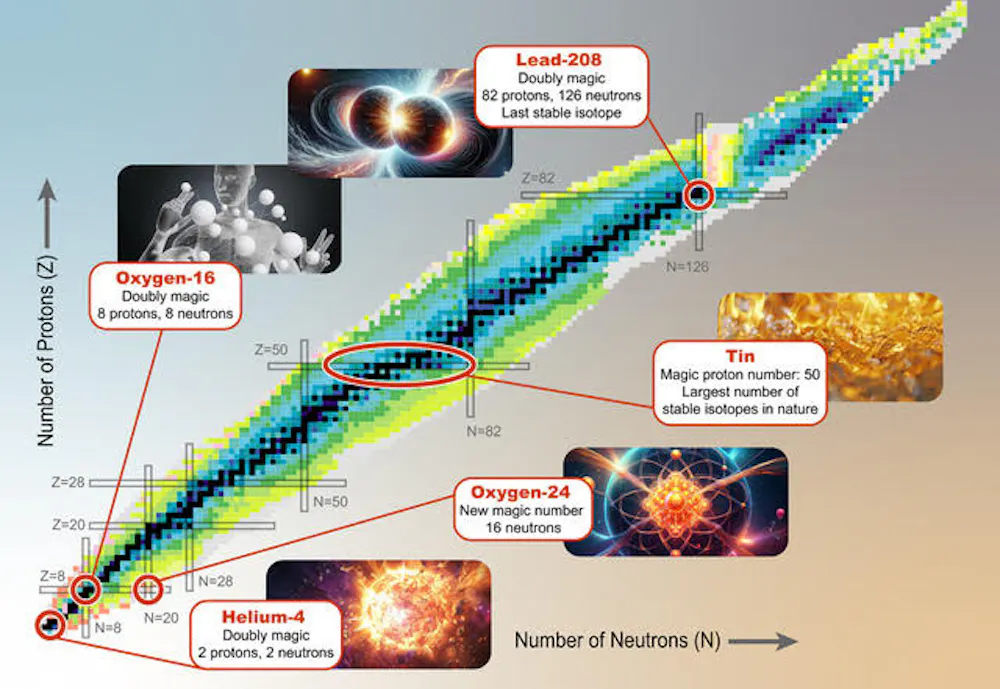
  • MIL-OSI Global: Many stable atoms have ‘magic numbers’ of protons and neutrons − 75 years ago, 2 physicists discovered their special properties

    Source: The Conversation – USA – By Artemis Spyrou, Professor of Nuclear Physics, Michigan State University

    The linear accelerator at the Facility for Rare Isotope Beams, where researchers study rare isotopes of elements. Facility for Rare Isotope Beams

    The word magic is not often used in the context of science. But in the early 1930s, scientists discovered that some atomic nuclei – the center part of atoms, which make up all matter – were more stable than others. These nuclei had specific numbers of protons or neutrons, or magic numbers, as physicist Eugene Wigner called them.

    Maria Goeppert Mayer won the 1963 Nobel Prize in physics.
    Argonne National Laboratory, CC BY-NC-SA

    The race to figure out what made these nuclei so stable began. Understanding these magic numbers would allow scientists to predict the properties of other nuclei, such as their mass or how long they are expected to live. With that, scientists could also predict which combinations of protons and neutrons can result in a nucleus.

    The solution to the puzzle came in 1949 from two directions simultaneously. In the U.S., physicist Maria Goeppert Mayer published an explanation, at the same time as a group of scientists led by J. Hans D. Jensen in Germany found the same solution.

    Hans Daniel Jensen won the 1963 Nobel Prize in physics.
    The Nobel Foundation

    For their discovery, the two physicists each got a quarter of the 1963 Nobel Prize in physics. We’re two nuclear scientists whose work is built on Goeppert Mayer’s and Jensen’s discoveries 75 years ago. These magic numbers continue to play an important role in our research, only now we can study them in nuclei that live for just a fraction of a second.

    Stability in the atom

    The atom is a complex system of particles. It’s made up of a central nucleus consisting of protons and neutrons, called nucleons, with electrons orbiting around the nucleus.

    Nobel prize-winning physicist Niels Bohr described these electrons in the atom as existing in a shell structure. The electrons circulate around the nucleus in particular energy levels, or orbits. These orbits have specific energies, and each orbit can hold only so many electrons.

    Chemical reactions result from interactions between the electrons in two atoms. In Bohr’s model, if an electron orbit is not already filled, then it’s easier for the atoms to exchange or share those electrons and induce chemical reactions.

    The Bohr model of the atom.
    AG Caesar/Wikimedia Commons, CC BY-SA

    One class of elements, the noble gases, hardly ever react with other elements. In noble gases, the electrons occupy completely filled orbits, and as a result the atoms greedily hold onto their electrons instead of sharing and undergoing a chemical reaction.

    In the 1930s, scientists wondered whether protons and neutrons might also occupy orbits, like electrons. But nobody could show this conclusively. For more than a decade, the scientific community was unable to describe the nucleus in terms of individual protons and neutrons. Scientists used a more simplified picture, one that treated protons and neutrons as one single system, like a drop of water.

    Magic numbers

    In 1949, Goeppert Mayer and Jensen developed the so-called shell model of the nucleus.
    Protons and neutrons occupy particular orbits, analogous to electrons, but they also have a property called spin – similar to a spinning top. Goeppert Mayer and Jensen found that when combining the two properties in their calculations, they were able to reproduce the experimental observations.

    Through some experiments, they found that nuclei with certain magic numbers of neutrons or protons are unusually stable and hold onto their nucleons more than researchers previously expected, just like how noble gases hold onto their electrons.

    The magic numbers known to scientists are 2, 8, 20, 28, 50, 82 and 126. They are the same for both protons and neutrons. When a nucleus has a magic number of protons or neutrons, then the particular orbit is filled, and the nucleus is not very reactive, similar to the noble gases.

    For example, the element tin has a magic number of protons. Tin always has 50 protons, and its most common isotope has 70 neutrons. Isotopes are atoms of the same element that have a different number of neutrons.

    There are nine other stable isotopes of tin that can exist – it’s the element with the largest number of stable isotopes. A stable isotope will never spontaneously change into a different element, which is what happens to radioactive isotopes.

    Helium, with two protons and two neutrons, is the lightest “doubly magic” nucleus. Both its neutron count and its proton count are a magic number. The forces that hold the helium-4 nucleus together are so strong that it’s impossible to attach another proton or neutron. If you tried to add another proton or neutron, the resulting atom would fall apart instantaneously.

    On the other hand, the heaviest stable nucleus in existence, lead-208, is also a doubly magic nucleus. It has magic numbers of 82 protons and 126 neutrons.

    Many stable isotopes have magic numbers of protons and neutrons.
    The Facility for Rare Isotope Beams

    Examples of magic numbers and stable nuclei exist everywhere – but scientists couldn’t explain them without the introduction of the shell model.

    Stable nuclei in nature

    The shell structure in nuclei tells researchers about how elements are distributed across the Earth and throughout the universe.

    One of the most abundant elements on our planet and in the human body is oxygen, in particular the isotope oxygen-16.

    With eight protons and eight neutrons, oxygen-16 has an extremely stable nucleus. A nearby star produced the oxygen we find on Earth through nuclear reactions in its core sometime before the solar system was formed.

    Since oxygen nuclei are doubly magic, these nuclei in the star did not interact very much with other nuclei. So more oxygen was left around to eventually act as an essential ingredient for life on Earth.

    In her Nobel lecture, Maria Goeppert Mayer talked about the work she did with physicist Edward Teller. The two had attempted to describe how these elements formed in stars. In the 1930s, it was impossible for them to explain why certain elements and isotopes were more abundant in stars than others. She later found that the increased abundances corresponded to nuclei with something in common: They all had magic numbers of neutrons.

    With the shell model and the explanation of magic numbers, the production of elements in stars was possible and was published in 1957.

    Scientists today continue to use ideas from the nuclear shell model to explain new phenomena in nuclear science. A few accelerator facilities, such as the Facility for Rare Isotope Beams, where we work, aim to create more exotic nuclei to understand how their properties change compared with their stable counterparts.

    At the Facility for Rare Isotope Beams, scientists produce new isotopes by accelerating stable isotopes to about half the speed of light and smashing them at a target. Out of the pieces, we select the rarest ones and study their properties.

    Possibly the most profound modern discovery is the fact that the magic numbers change in exotic nuclei like the type we create here. So, 75 years after the original discovery, the race to discover the next magic number is still on.

    Artemis Spyrou receives funding from the US National Science Foundation.

    Sean Liddick receives funding from the Department of Energy, Office of Science and the Department of Energy, National Nuclear Security Administration.

    ref. Many stable atoms have ‘magic numbers’ of protons and neutrons − 75 years ago, 2 physicists discovered their special properties – https://theconversation.com/many-stable-atoms-have-magic-numbers-of-protons-and-neutrons-75-years-ago-2-physicists-discovered-their-special-properties-239690

    MIL OSI – Global Reports

  • MIL-Evening Report: One of science’s greatest achievements: how the rapid development of COVID vaccines prepares us for future pandemics

    Source: The Conversation (Au and NZ) – By Paul Griffin, Professor, Infectious Diseases and Microbiology, The University of Queensland

    Since COVID was first reported in December 2019, there have been more than 775 million recorded infections and more than 7 million deaths from the disease. This makes COVID the seventh-deadliest pandemic in recorded history.

    Factors including climate change, disruption of animal habitats, poverty and global travel mean we’re only likely to see more pandemics in the future.

    It’s impossible to predict exactly when the next pandemic will happen, or what it will be. But experts around the world are working to prepare for this inevitable “disease X”.

    One of the cornerstones of being prepared for the next pandemic is being in the best possible position to design and deploy a suitable vaccine. To this end, scientists and researchers can learn a lot from COVID vaccine development.

    A look back

    After SARS-CoV-2 (the virus that causes COVID) was discovered, vaccine development moved very quickly. In February 2020 the first batch of vaccines was completed (from Moderna) and the first clinical trials began in March.

    An mRNA vaccine from Pfizer/BioNTech was the first to be approved, on December 2 2020 in the United Kingdom. Approvals for this and other vaccines, including shots developed by Moderna (another mRNA vaccine) and Oxford/AstraZeneca (a viral vector vaccine), followed elsewhere soon afterwards.

    Previously the fastest vaccine developed took around four years (for mumps in the 1960s). Had COVID vaccines taken this long it would mean we would only just be rolling them out this year.

    An estimated 13.72 billion COVID vaccine doses have now been administered, with more than 70% of the world’s population having received at least one dose.

    The rapid development and rollout of COVID vaccines is likely to be one of the greatest achievements of medical science ever. It also means we are in a much better position to respond to future emerging pathogens.

    New vaccine technology

    A lot of work over many years prepared us to develop COVID vaccines as quickly as we did. This included developing new platforms such as viral vector and mRNA vaccines that can be adapted quickly to new pathogens.

    While scientists had been working on mRNA vaccines for decades before the COVID pandemic, the COVID shots from Pfizer/BioNTech and Moderna were the first mRNA vaccines to be approved for human use.

    These vaccines work by giving our body instructions (the “m” in mRNA stands for messenger) to make SARS-CoV-2 spike proteins. These are proteins on the surface of the virus which it uses to attach to our cells. This means when we encounter SARS-CoV-2, our immune system is poised to respond.

    This technology will almost certainly be used to protect against other diseases, and could potentially help with a future pandemic.

    In the meantime, scientists are working to improve mRNA technology even further. For example, “self-amplifying RNA” has the potential to enhance immune responses at lower doses compared with conventional mRNA.

    mRNA vaccines teach our bodies to make SARS-CoV-2’s spike protein.
    Kateryna Kon/Shutterstock

    While our current COVID vaccines are safe and very effective at protecting against severe disease, they’re not perfect. We may never be able to achieve a “perfect” vaccine, but some additional properties we’d like to see in future COVID vaccines include being better at reducing transmission, lasting longer, and needing to be updated less often as new variants emerge.

    Even now there are many COVID vaccines in clinical trials. So hopefully, COVID vaccines that improve on the initial shots will be available relatively soon.

    Other desirable attributes include vaccines we can administer by alternate routes to needles. For COVID and other diseases such as influenza, we’re seeing significant developments locally and internationally on vaccines than can be administered via skin patches, through the nose, and even orally.

    Some challenges

    Developing vaccines for COVID was a huge challenge, but one that can mostly be judged a success. Research has estimated COVID vaccines saved 14.4 million lives across 185 countries in just their first year.

    However, the story of COVID vaccination has also had many other challenges, and arguably a number of failures.

    First, the distribution of vaccines was not equitable. Analysis of the initial rollout suggested nearly 80% of eligible people in high-income countries were vaccinated, compared with just over 10% in low-income nations.

    Supply of vaccines was an issue in many parts of the world, so expanding local capacity to enable more rapid production and distribution of vaccines will be important for the next pandemic.

    Further, adverse events linked to COVID vaccines, such as rare blood clots after the AstraZeneca vaccine, affected perceptions of vaccine safety. While every serious adverse event is significant, these incidents were very rare.

    However, these issues exacerbated other challenges that hampered vaccine uptake, including the spread of misinformation.

    Misinformation remains a problem now and will probably still be prevalent whenever we face the next pandemic. Addressing this challenge involves understanding what’s deterring people from getting vaccinated, then informing and educating, addressing misinformation both about vaccination and the risks of the disease itself.

    Restoring and building trust in public health authorities also needs to continue to be a focus. Trust in governments and health authorities declined during the COVID pandemic, and evidence shows lower trust is associated with lower vaccine uptake.

    The COVID vaccine rollout faced a variety of challenges.
    Yuganov Konstantin/Shutterstock

    Ongoing preparation

    There’s no doubt our recent experience with COVID, particularly the rapid development of multiple safe and effective vaccines, has put us in a better position for the next pandemic.

    This didn’t happen by accident. There was a lot of preparation even before COVID was first discovered that facilitated this. Organisations like the Coalition for Epidemic Preparedness Innovations (CEPI) have been supporting research to develop vaccines rapidly to respond to a new threat for some time.

    CEPI has an ongoing program that aims to be able to develop a vaccine against a new threat, or disease X, in just 100 days. While COVID vaccines have been a huge achievement, work continues in the hope we will be able to develop a vaccine even faster next time.

    This article is part of a series on the next pandemic.

    Paul Griffin is a director and scientific advisory board member of the immunisation coalition. He has served on Medical Advisory Boards including for AstraZeneca, GSK, MSD, Moderna, Biocelect/Novavax, Seqirus and Pfizer and has received speaker honoraria including from Seqirus, Novartis, Gilead, Sanofi, MSD and Janssen.

    ref. One of science’s greatest achievements: how the rapid development of COVID vaccines prepares us for future pandemics – https://theconversation.com/one-of-sciences-greatest-achievements-how-the-rapid-development-of-covid-vaccines-prepares-us-for-future-pandemics-228787

    MIL OSI AnalysisEveningReport.nz

  • MIL-Evening Report: I think my child might need a tutor. What do I need to consider first?

    Source: The Conversation (Au and NZ) – By Matthew White, Lecturer and Researcher Australian Catholic University, Australian Catholic University

    School tutoring is a huge business. Australian estimates suggest it was worth more than of A$1.5 billion as of 2021.

    In Australia, we see frequent media reports of parents using tutors to help their children through school.

    How can you tell if tutoring is right for your child?

    What is tutoring?

    Private tutoring can be take many forms, but involves parents paying for additional lessons outside of schools hours. These are either one-to-one or in small groups.

    There are services available for students in primary school through to senior high school.

    Some tutoring services target specific skills, such as literacy or numeracy. Others offer support for young people with organisation skills and homework or preparation for certain exams.

    Tutoring can go for a short burst over a few weeks to prepare for an exam or it may be regular and ongoing to maintain learning.

    Tutoring could be to catch up on one element of school, such as handwriting or reading.
    Deyan Georgiev/ Shutterstock

    Why do people get tutoring?

    Families can get tutoring for a student for a wide range of reasons.

    A child may be struggling with certain elements of schooling – such as reading, writing, or maths. Tutoring can provide an opportunity to catch-up with tailored support.

    Tutoring can also help children prepare for tests and exams, such as NAPLAN or Year 12.

    Tutoring is used to prepare students for government selective school programs or private school scholarship exams.

    Researchers have highlighted some cultural backgrounds see investing in tutoring as an essential part of educating their children and helping them reach their full potential.

    The tutoring debate

    Tutoring can be expensive and time consuming for families. Families may pay between $30 and $200 a session, depending on the subject and qualifications of the tutor.

    Some argue this gives some children an unfair advantage and students should instead rely on their natural ability.

    Despite the criticism, there are benefits to tutoring. This includes giving students extra opportunities to consolidate their knowledge – we know this can help students learn.

    It can also help build their confidence if a tutor can step through learning in a less pressured environment. As my research has shown, academic progress relies heavily on a students’ belief in their capacity to succeed.

    Does my child need a tutor?

    All students can benefit from personalised support and coaching in whatever they wish to peruse. However, all students do not need a tutor. The choice to engage a tutor should be attached to a goal that you and your child agree on.

    If the young person does not want to engage in tutoring having a tutor is not going to help. Rather, it is more likely to lead to stress and arguments.

    It may help to talk to your child’s teacher and review school reports before starting with a tutor to work out which particular areas need extra attention.

    Depending on what you need, your child’s tutor may be a university student or someone who has made a career out of tutoring.
    Dmytro Zinkevvych/Shutterstock

    If your shared goal is to catch up or help with certain academic skills, it is important to find a tutor who is experienced and can explain the approach they take and what evidence it is based on.

    If the goal is organisation, homework or even just to improve confidence, you could at first try a university student who has past success themselves or with other students. For more specialised goals, seek out tutors who are open about their qualifications, experience and past success.

    Child safety should also be a consideration. The Australian Tutoring Association provides practical advice for parents choosing a tutor and a code of conduct for tutors.

    There is no requirement for tutors to be a member of the association. So parents should make sure any tutor has a current Working with Children check. You can of course also talk to other parents and teachers for recommendations.

    Matthew White does not work for, consult, own shares in or receive funding from any company or organisation that would benefit from this article, and has disclosed no relevant affiliations beyond their academic appointment.

    ref. I think my child might need a tutor. What do I need to consider first? – https://theconversation.com/i-think-my-child-might-need-a-tutor-what-do-i-need-to-consider-first-240091

    MIL OSI AnalysisEveningReport.nz

  • MIL-Evening Report: Ocean protection accounts for 10% of fish in the world’s coral reefs – but we could save so much more

    Source: The Conversation (Au and NZ) – By Joshua Cinner, Professor & ARC Laureate Fellow, Thriving Oceans Research Hub, School of Geosciences, University of Sydney

    Ocean fish populations have fallen dramatically in the past half-century, and climate change is expected to make the problem worse. Governments have designated “marine protected areas”, where where human activity is constrained to protect ocean life. But have these efforts worked?

    About 8% of Earth’s oceans are protected, including about 3% where fishing is banned altogether. Our new study of nearly 2,600 tropical coral reefs around the world is the first to examine whether these areas have helped fish populations.

    We found about one in ten kilograms of fish on coral reefs is the result of efforts such as marine protected areas and other restrictions on fishing. This is promising news. But our study also reveals great room for improvement.

    A video discussing how Earth’s fish stocks are declining.

    Getting to grips with marine protection

    Maintaining healthy fish populations is important. Many communities depend on fishing for their food and livelihoods. And fish play a vital role in ocean ecosystems.

    Marine protected areas are a key policy tool used to increase fish populations. They cover a range of ocean areas including lagoons, coastal waters, deep seabed waters and coral reefs.

    The areas go by several names, including marine parks and conservation zones. Some, where fishing is prohibited, are known as no-take zones.

    Governments often quote figures on the area of ocean protected when seeking to tout their conservation policies. For example in Australia, we are told the federal, state and territory governments have established marine parks covering 4.3 million square kilometres or 48% of our oceans.

    But the extent to which marine protected areas actually conserve marine life varies enormously from place to place. So simply counting up the protected ocean area doesn’t tell you much about what has actually been achieved.


    Measuring success

    We and our colleagues wanted to assess the extent to which marine protection efforts have increased the amount of fish on coral reefs.

    We developed a computer model based on about 2,600 reefs across the global tropics, which includes reefs in the Pacific, Indian, and Atlantic oceans. From that, we estimated the amount of fish currently on each reef – measured in the kilograms of fish per hectare, or “biomass”.

    The estimations were based on information such as:

    • environmental conditions such as ocean temperature and the type of habitat where the reef is located

    • the intensity of fishing activity, known as “fishing pressure”

    • how strong the protection is – for example whether it bans fishing, or just restricts it

    • the level of compliance with no-take zones.

    We then simulated what would happen if we changed the type of protection strategy in each location while keeping everything else the same.

    We ran a few scenarios:

    • no coral reef conservation existed anywhere and all reefs could be fished without constraint

    • sites currently fished without constraint (which amounted to over half of our sites) had restrictions in place

    • fishing was prohibited on 30% of all reefs.

    And the results?

    We found both marine protected areas and other fishing restrictions account for about 10% of the fish “biomass” on reefs. In other words, about one in ten kilograms of fish on coral reefs is due to protection efforts.

    No-take zones punch above their weight. Of the fish biomass attributable to protection efforts, about 20% comes from just 3% of sites in no-take zones. This proportion would be even higher if illegal fishing in no-take zones was stamped out.

    But we found any type of fishing restriction was useful. If everywhere currently fished without constraint was subject to some level of protection – such as banning nets or spear guns – the biomass of fish globally would be another 10.5% higher, our study found. This essentially matches all conservation efforts to date.

    Our modelling also showed fish on coral reefs could be increased by up to 28% globally if the area of no-take zones rose to 30%.

    But these reefs must be chosen strategically. That’s because protection strategies can lead to wildly different results, depending on local conditions. For example, sites with lower fishing pressure in the surrounding seascape got a bigger boost from protection than places surrounded by intensive fishing effort.

    This may be because at heavily fished locations, algae often overtakes coral as the dominant feature. Algae is less fish-friendly than coral, so fish populations may not bounce back quickly even when fishing pressure is reduced.

    Grounds for optimism

    Our study tested the mettle of global coral reef conservation. On one hand, we found conservation efforts have made a contribution to the amount of fish on global coral reefs, which provides grounds for cautious optimism.

    But on the other hand, this contribution is quite modest. Our study shows much greater gains could be made not only by expanding protected marine areas, but also by improving compliance in existing ones.

    Most nations have signed a global agreement to protect 30% of Earth’s land and waters by 2030. That means the amount of ocean in marine protected areas globally will increase nearly fourfold in just six years.

    As governments continue this task, we hope our results help identify ocean sites that will benefit most from protection.

    Joshua Cinner receives funding from the Australian Research Council and National Geographic Society. He is a Fellow of the Academy of Social Sciences in Australia and the International Coral Reef Society.

    Iain R. Caldwell is affiliated with the Wildlife Conservation Society

    ref. Ocean protection accounts for 10% of fish in the world’s coral reefs – but we could save so much more – https://theconversation.com/ocean-protection-accounts-for-10-of-fish-in-the-worlds-coral-reefs-but-we-could-save-so-much-more-239188

    MIL OSI AnalysisEveningReport.nz

  • MIL-OSI USA: Casey Delivers $4.5 Million to Lower Energy Costs for Farmers and Small Business Owners

    US Senate News:

    Source: United States Senator for Pennsylvania Bob Casey
    Grants funded by Casey-backed Inflation Reduction Act
    Grants will go towards purchasing and installing solar energy systems and improving waste digestion to help farmers and small businesses save on energy costs  
    Washington, D.C. – U.S. Senator Bob Casey (D-PA) secured a total of $4,537,255 to lower energy costs for farmers and small businesses across the Commonwealth. The twenty awards will help businesses and farms purchase and install solar photovoltaic systems, which will convert captured solar energy into electricity to power machines and operations and save Pennsylvanians thousands of dollars per year. These funds will also help a Pennsylvania dairy farm purchase and install a new engine for their anerobic digester. The funding comes from the U.S Department of Agriculture’s (USDA) Rural Energy for America (REAP) program, made possible by the Inflation Reduction Act.
    “When we invest in technology that lowers energy costs for our businesses and farmers, we are investing in the Commonwealth’s long-term success,” said Senator Casey. “Thanks to the Inflation Reduction Act, farmers and small businesses can continue supporting their families and their communities and save thousands of dollars each year. I will always fight for investments that lower costs, support businesses, and protect our Commonwealth’s environment for generations to come.”
    See below for a list of project recipients of the Inflation Reduction Act funding.
    Table of Funding Recipients
    Recipient
    Grant
    City/County

    Denis Beachel

    $329,831

    Danville, Montour County

    Charles L. Fisher

    $648,800

    Unionville, Centre County

    McNaughton Bros Inc.

    $152,600

    Indiana, Indiana County

    GeoTech Engineering Inc.

    $49,894

    Morrisdale, Clearfield County

    Ambassador Towers LLC

    $483,300

    Huntington County

    Pax-Terra LLC

    $610,420

    Meyersdale, Somerset County

    Schrack Farms LP

    $479,161

    Loganton, Clinton County

    Unity Lab Corp.

    $387,300

    Dunshore, Sullivan County

    Bruce King Jr.

    $306,150

    Troy, Bradford County

    Ebensburg Animal Hospital Inc.

    $165,773

    Ebensburg, Cambria County

    Mr. B’s Lawn Service Inc.

    $29,080

    Ellwood City, Lawrence County

    Talview Dairy LLC

    $200,704

    Lebanon, Lebanon County

    Philip Wise

    $79,000

    Berks County

    Mann Plumbing and Heating LLC

    $49,810

    Fayetteville, Franklin County

    Shree Sai Nivas LLC

    $81,142

    Mifflin County

    Joeseph Nolt

    $81,216

    Lancaster County

    Bellaire Farms LLC

    $184,050

    Elizabethtown, Lancaster County

    McCartney’s Inc.

    $56,024

    Altoona, Blair County

    Peter G. Reifsnyder Inc.

    $66,250

    Bernville, Berks County

    Eagle Rental Inc.

    $96,750

    Lebanon County

    MIL OSI USA News