Source: United States Senator for Illinois Tammy Duckworth
April 10, 2025
[WASHINGTON, D.C.] – U.S. Senator Tammy Duckworth (D-IL) today met with members of the Quad City Chamber and the Knox County Area Partnership for Economic Development (KCAP) to discuss the harmful impacts Trump’s chaotic trade and other actions are having on the local economy and workers—including the whiplash surrounding his sweeping tariffs, illegal pauses in federal funding and needless trade wars. Duckworth also spoke about how Trump’s blanket tariffs on Canada, Mexico and China negatively impact Illinois consumers, workers and the local manufacturing industry. Photos from today’s meeting with the Quad City Chamber can be found on the Senator’s website.
“Whether imposing sweeping tariffs then pausing them with no warning, starting trade wars or freezing federal funding, Trump’s chaotic and uncertain decision-making is harming Illinois’s workforce and manufacturers, while pushing away our nation’s allies around the world,” Duckworth said. “The consequences of Trump’s needless trade wars will hurt key Illinois manufacturers and small businesses, which employ many hardworking, middle-class workers across our state’s communities. I’m proud to work alongside our local leaders at the Quad City Chamber and KCAP as we continue to push back against Trump and his one-sided political interests.”
The Knox County Area Partnership for Economic Development (KCAP) launched in 2015 to provide economic development services to the Galesburg and Knox County region. The Quad Cities Chamber is made up of the most diverse network of influential business leaders in the Quad Cities region. Their members are committed to advancing the Quad Cities economy and to helping each other succeed.
-30-
Panama has requested the U.S. Embassy to correct and reissue a joint communique in which the U.S. Secretary of Defense Pete Hegseth omitted a phrase acknowledging Panamanian sovereignty over the Panama Canal.
The English version of a communique published on Tuesday evening during Hegseth’s visit to Panama left out the following point: “Secretary Hegseth recognized Panama’s leadership and inalienable sovereignty over the Panama Canal and its adjacent areas,” according to an official note from Panama’s Foreign Affairs Ministry dated Wednesday.
“The aforementioned phrase, which does not appear in the English version, is essential to accurately convey the intent and content of the communique and ensure consistency between both versions,” said the ministry.
The ministry demanded “the English version be updated to include an equivalent translation of this phrase, in order to maintain transparency and fidelity in communicating the message to both audiences.”
The New Development Bank (NDB) has issued a three-year Panda bond worth 7 billion yuan (about 971 million U.S. dollars) in China’s Interbank Bond Market, the bank announced on Thursday.
Panda bonds are yuan-denominated debts sold by overseas issuers to meet financing demand. The latest issuance reinforces NDB’s position as the largest Panda bond issuer in the China Interbank Bond Market, with a cumulative issuance scale of 68.5 billion yuan.
The latest issuance has attracted strong interest from a diversified local and foreign investor base, including central banks, insurance companies and bank treasuries, the bank noted, adding that the net proceeds from the sale of the bond will be used to finance infrastructure and sustainable development projects in NDB member countries.
“The New Development Bank is committed to maintaining a consistent and robust presence in capital markets while diversifying its funding across various instruments, currencies and tenors. In line with the general strategy, NDB is actively expanding its funding sources through local currency-denominated bond issuances, enhancing the Bank’s capability to finance sustainable development projects,” said Monale Ratsoma, NDB vice president and chief financial officer.
Headquartered in Shanghai, the NDB was established by Brazil, Russia, India, China and South Africa in 2014 to mobilize resources for infrastructure and sustainable development projects in BRICS member nations, and in other emerging market economies and developing countries.
Source: United States Senator for Delaware Christopher Coons
WASHINGTON – U.S. Senators Chris Coons and Lisa Blunt Rochester (both D-Del.) joined a letter to Trump Commerce Secretary Howard Lutnick, led by Senator Maria Cantwell (D-Wash.), Ranking Member of the Senate Commerce Committee, demanding answers regarding the administration’s decision to cancel funding for 10 National Institute of Standards and Technology Hollings Manufacturing Extension Partnership (MEP) Centers across the country. In addition to Senators Coons, Blunt Rochester, and Cantwell, Senate Democratic Leader Chuck Schumer (D-N.Y.) and Senators Chris Van Hollen (D-Md.), Tammy Duckworth (D-Ill.), Martin Heinrich (D-N.M.), Mazie Hirono (D-Hawaii), Jacky Rosen (D-Nev.), Ben Ray Luján (D-N.M.), Brian Schatz (D-Hawaii), Ron Wyden (D-Ore.), Gary Peters (D-Mich.) and Dick Durbin (D-Ill.) also signed on.
MEP Centers serve as a crucial bridge between small businesses and federal research facilities, providing businesses with key technologies and knowledge to improve manufacturing, make supply chains more efficient, and strengthen business practices. The affected centers in Delaware, Hawaii, Iowa, Kansas, Maine, Mississippi, Nevada, New Mexico, North Dakota and Wyoming have boosted the productivity and competitiveness of thousands of small American manufacturers across the country for decades. Delaware’s program has helped create or retain 423 jobs within the last year, and generate or maintain $34.3 million in sales and $42.5 million in new client investments.
“Small manufacturers rely on MEP Centers for essential support in adopting the latest advanced technologies, updating their cybersecurity, navigating supply chain challenges, and accessing workforce training—resources that are often out of reach for small businesses without this dedicated assistance,” the senators wrote. “These centers drive innovation, boost productivity, and create high-quality jobs, strengthening both local economies and America’s global competitiveness. Without this critical federal support, MEP Centers—especially those with the fewest resources, and those serving rural and underserved communities—will be at the greatest risk of closure.
Since 1988, the MEP has worked to strengthen and empower U.S. manufacturing through a nationwide network of MEP Centers. The MEP National Network is comprised of 51 MEP Centers located in all 50 states and Puerto Rico and over 1,450 trusted advisors and experts at more than 430 MEP service locations that provide any U.S. manufacturer with access to resources they need to succeed.
The economic impact of these centers has been substantial. A report by Summit Consulting and the Upjohn Institute found that the MEP program generated an economic and financial return ratio of more than 17:1 on the $175 million in funding invested by the federal government in FY2023. The study also determined that MEP Centers contributed to an overall increase of nearly 309,000 jobs nationwide.
The full letter can be read here and below.
Dear Secretary Lutnick,
We write to express our deep concern regarding the Department of Commerce’s recent decision to cancel future funding for ten National Institute of Standards and Technology (NIST) Hollings Manufacturing Extension Partnership (MEP) Centers in Delaware, Hawaii, Iowa, Kansas, Maine, Mississippi, Nevada, New Mexico, North Dakota, and Wyoming. This decision has raised widespread concern across the entire national network of MEP Centers, prompting fears about whether these initial cancellations are the first step in a broader effort to dismantle the program and eliminate federal funding for all 51 centers, with centers in Colorado, Connecticut, Illinois, Indiana, Maryland, Michigan, New York, New Hampshire, North Carolina, Oklahoma, Oregon, Tennessee, Texas, Virginia, Washington, and Wisconsin expected to be notified about their status shortly. Given the MEP program’s long-standing, bipartisan support in strengthening small and medium-sized American manufacturers, we share these concerns and urge you to provide clarity and certainty on your plans for the future of the MEP program.
According to the National Association of Manufacturers, 93% of manufacturers have fewer than 100 employees, while 75% have fewer than 20 employees.[1] Small manufacturers rely on MEP Centers for essential support in adopting the latest advanced technologies, updating their cybersecurity, navigating supply chain challenges, and accessing workforce training—resources that are often out of reach for small businesses without this dedicated assistance. These centers drive innovation, boost productivity, and create high-quality jobs, strengthening both local economies and America’s global competitiveness. Without this critical federal support, MEP Centers—especially those with the fewest resources, and those serving rural and underserved communities—will be at the greatest risk of closure.
Dismantling this program would not only disrupt benefits for small businesses but also undermine decades of federal investment in domestic manufacturing resilience, which Congress prioritized in the MEP program in the Omnibus Trade and Competitiveness Act of 1988. Congress also reauthorized the MEP program in the CHIPS and Science Act of 2022. NIST was provided $175 million in Fiscal Year (FY) 2025 to fund the MEP Centers. In FY2024 alone, the MEP National Network resulted in $2.6 billion in cost savings, $15 billion in new and retained sales, $5 billion in new client investments, and over 108,000 jobs created or retained.[2] Additionally, a report by Summit Consulting and the Upjohn Institute found that the MEP program generated a substantial economic and financial return ratio of more than 17:1 for the $175 million funding invested by the federal government in FY2023. The study also determined that MEP Center projects contributed to an overall increase of nearly 309,000 jobs across the United States.[3]
Given these benefits and the funding in the FY 2025 Continuing Resolution, we request a full explanation of the rationale behind this funding decision and ask that you promptly reconsider. Additionally, we urge the Department of Commerce to provide Congress with an impact assessment detailing how this decision will affect manufacturers in the affected states and regions. This action has caused tremendous uncertainty for all MEP Centers and the thousands of American manufacturing companies and their workers. Therefore, to better understand your plans for renewals across other states in the future, we request a briefing on the way ahead for the overall MEP program prior to making any final non-renewal decisions by April 30, 2025.
Eliminating federal support for MEP Centers would hamper American small and medium-sized manufacturers. We urge you to take immediate action to protect the MEP program and the manufacturers that rely on it. We look forward to your response no later than April 30, 2025, and are ready to work with you to find solutions that maintain and enhance the MEP program’s ability to serve America’s manufacturing sector.
Source: The Conversation – USA – By Jean Lantz Reisz, Clinical Associate Professor of Law, Co-Director, USC Immigration Clinic, University of Southern California
People hold signs on April 4, 2025, supporting Kilmar Abrego Garcia, who was mistakenly deported to El Salvador.AP Photo/Jose Luis Magana
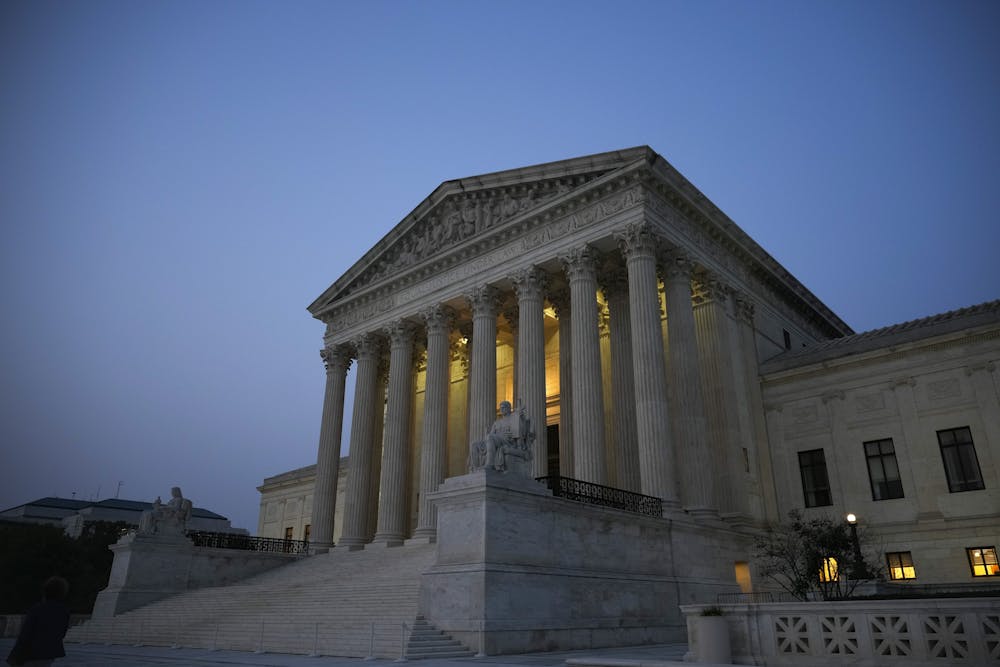
The Supreme Court on April 10, 2025, unanimously upheld the lower court order directing the Trump administration to “facilitate” the return of Kilmar Abrego García, a Maryland man who was wrongly deported to a maximum security prison in El Salvador.
The Supreme Court also directed the lower court to clarify aspects of the order.
“The order properly requires the Government to ‘facilitate’ Abrego García’s release from custody in El Salvador and to ensure that his case is handled as it would have been had he not been improperly sent to El Salvador,” the Supreme Court order states.
The Justice Department admitted to deporting Abrego García to a maximum security prison in El Salvador even though an immigration judge in 2019 ordered that he not be deported. The judge did so under an immigration law called “withholding of removal,” which is a protection, like asylum, for people facing persecution in their home country.
According to the Trump administration, such an order would be “constitutionally intolerable.” The government has compared the court order to return Abrego García to an order to “‘effectuate’ the end of the war in Ukraine or return hostages from Gaza.”
Abrego García should not have been deported
Abrego García received this protective legal status six years ago. That’s when he proved to the court he was highly likely to be persecuted by the government or gangs in El Salvador due to a specific reason, as required under immigration law.
Unlike asylum or refugee status, the status known as “withholding of removal” is not a pathway to citizenship. It allows a person to live and work in the U.S. indefinitely and not be deported to their country of nationality if they face persecution there.
That’s important, because the government failed to follow proper procedure to deport Abrego García based on gang membership. When someone is in “withholding of removal” status, the law requires the government to reopen immigration proceedings based on new evidence and seek to formally terminate the legal withholding status.
Abrego García should have been notified of the government’s desire to deport him, and he should have had the opportunity to make his case at a court hearing. His summary deportation to El Salvador likely violated his right to due process under immigration law and the Constitution.
The crux of the government’s position is that a court does not have the power to order the release of a person in a foreign prison. That would interfere with the separation of powers among the executive and judicial branches. The president has the sole power to conduct foreign relations with El Salvador, and the government has argued that ordering the return of Abrego García interferes with that power.
Prisoners watch as U.S. Secretary of Homeland Security Kristi Noem visits the Terrorist Confinement Center in Tecoluca, El Salvador, on March 26, 2025. Alex Brandon/Pool/AFP via Getty Images
The court cannot order the Salvadoran government to do anything, but it can order the U.S. government to take steps to return García Abrego if he was unlawfully arrested and deported. That’s because the judiciary has the power to determine whether the president’s actions are lawful.
The district court’s order was based on its determination that the president has likely violated immigration law and the Constitution in arresting and deporting Abrego García. The appellate court agreed.
The Supreme Court has now said the order to facilitate Abrego García’s return is proper. But the high court also said the district court judge should further clarify its order, being mindful of the president’s authority when it comes to conducting foreign relations.
Trump administration lawyers have suggested in their briefing to the Supreme Court that there could be reasons under El Salvador law for Abrego García’s imprisonment. The government has not identified any reasons and has not provided any evidence that Abrego García is charged with a crime in El Salvador, or that he is being held under Salvadoran law.
The district and appellate courts determined in this case that the U.S. is using the Salvadoran prison like any other detention facility. Under those circumstances, the U.S. government, not El Salvador, has ultimate control over Abrego García.
The Supreme Court ruled that the government should facilitate Abrego García’s return. Drew Angerer/Getty Images
In fact, other appellate courts have ordered the government to return immigrants who had been removed from the U.S. but later won their appeals of their removal orders. Those people were not in foreign prisons.
U.S. Immigration and Customs Enforcement has created a formal policy for aiding the return of immigrants who were deported while their appeals were pending and then subsequently won their appeals.
The government has argued that those situations are different. Here, it claims the court cannot demand the return of Abrego García, who is imprisoned in another country. The problem with the government’s argument is that it is the Trump administration that put Abrego García in a foreign prison.
The Trump administration has also argued that Abrego García is not entitled to return to the U.S.. It has argued that even though it was a mistake to deport him to El Salvador under his withholding of removal status, Abrego García could have been removed to another country and has no right to return to the U.S..
This would be true if Abrego García voluntarily left the U.S. or was deported to a country other than El Salvador, but that is not what happened. The government removed Abrego García to El Salvador in violation of U.S. law.
The White House’s position in this matter is troubling because the president is supposed to enforce the law, not circumvent it.
As Justice Sonia Sotomayor wrote in a separate statement published with the order and joined by Justices Elena Kagan and Ketanji Brown Jackson: “The Government’s argument, moreover, implies that it could deport and incarcerate any person, including U.S. citizens, without legal consequence, so long as it does so before a court can intervene.”
What steps the government will take to return Abrego García is unclear. The Supreme Court’s decision leaves open the question of how far the court can go to enforce his return.
Jean Lantz Reisz does not work for, consult, own shares in or receive funding from any company or organization that would benefit from this article, and has disclosed no relevant affiliations beyond their academic appointment.
China on Wednesday expressed grave concern and firm opposition to the United States’ “reckless” tariffs at the World Trade Organization (WTO).
On the first day of a two-day meeting of the Council for Trade in Goods, China proposed a discussion on the U.S. “reciprocal tariffs,” urging the United States to uphold the WTO rules, so as to avoid negative impact on global economy and the multilateral trading system.
In its speaking, China slammed the U.S. tariff policy, saying it violates WTO rules and undermines the multilateral trading system.
The rules of multilateral trading system, with the WTO at its core, serve as the indispensable foundation for global trade, and the most favored nation (MFN)-based tariff commitments ensure trade is conducted transparently, predictably and without discrimination, said China.
The U.S. trade measures violate the MFN principle and contravene its own tariff binding commitments under WTO rules, said China, noting the measures are “a typical act of unilateralism, protectionism and economic bullying.”
In addition, China said the United States is a key beneficiary of the multilateral trading system, and described assessing its gains solely through trade deficits or surpluses in goods as a narrow and misleading approach.
The “reciprocal tariffs” will never be a cure for trade imbalances. Instead, they will backfire, harming the United States itself, China said.
Emphasizing its belief that all trade disputes should be resolved through the WTO’s established mechanisms, China called on all WTO members to stand together in safeguarding the rules-based multilateral trading system.
China’s statement was echoed by dozens of WTO members, including the European Union (EU), Switzerland, Canada, Kazakhstan, Britain and Brazil, which took the floor to voice their disapproval of the U.S. measures.
The EU said U.S. tariffs constitute “a major blow to the world economy and the multilateral trading system,” noting such tariffs will not fix the global trade imbalances.
Some members said the tariff actions could lead to increased trade tensions and instability, stressing the importance of resolving trade disputes through dialogue and cooperation within the WTO framework.
TUCSON, Ariz. – Last week, a federal grand jury in Tucson returned a one-count indictment against Andrea Villalva, 32, of Tucson, Arizona, for Smuggling Goods from the United States.
The complaint filed in this case alleges that, on March 7, 2024, Villalva attempted to exit the United States through the DeConcini Port of Entry in Nogales, Arizona. During a physical inspection of Villalva’s vehicle, Customs and Border Protection Officers discovered 8 sealed cases of 5.56 XP193 rifle ammunition hidden behind the rear wall of the trunk. In total, 8,000 rounds of ammunition were recovered. Villalva admitted being paid $150 per box of ammunition that she successfully smuggled into Mexico. She also admitted to having smuggled ammunition into Mexico on three previous occasions.
A conviction for Smuggling Goods from the United States carries a maximum penalty of 10 years in prison, a $250,000 fine, and up to three years of supervised release.
This case is part of Operation Take Back America, a nationwide initiative that marshals the full resources of the Department of Justice to repel the invasion of illegal immigration, achieve the total elimination of cartels and transnational criminal organizations (TCOs), and protect our communities from the perpetrators of violent crime. Operation Take Back America streamlines efforts and resources from the Department’s Organized Crime Drug Enforcement Task Forces (OCDETFs) and Project Safe Neighborhood (PSN).
An indictment is simply a method by which a person is charged with criminal activity and raises no inference of guilt. An individual is presumed innocent until evidence is presented to a jury that establishes guilt beyond a reasonable doubt.
Homeland Security Investigations conducted the investigation in this case. Assistant U.S. Attorney Julie A. Sottosanti, District of Arizona, Tucson, is handling the prosecution.
CASE NUMBER: 25-CR-01724-TUC-AMM RELEASE NUMBER: 2025-053_Villalva
PHOENIX, Ariz. – Bonifacio Renteria-Cruz, 48, a citizen of Mexico, was arrested on Illegal Re-Entry charges on Tuesday during a Homeland Security Investigation (HSI) operation led by Secretary of Homeland Security Kristi Noem and U.S. Immigration and Customs Enforcement Deputy Director Madison Sheahan. Renteria-Cruz was charged by Criminal Complaint for violation of Title 8, U.S.C. 1326(a) and (b)(1).
On October 11, 2006, Renteria-Cruz, a Mexican citizen illegally present in the United States, was convicted of Aggravated Assault, a class 3 felony, in the Maricopa County Superior Court and sentenced to three-and-a-half-years in prison. Renteria-Cruz was deported to Mexico on April 8, 2008.
After his deportation, Mexican authorities charged Renteria-Cruz with homicide for events that occurred on July 20, 2009, in Mexico. Since that time, he has been a fugitive.
Pursuant to a tip in January 2025, HSI learned that Renteria-Cruz had illegally returned to the United States. Agents were able to locate and identify Renteria-Cruz, and on April 8, 2025, Renteria-Cruz was arrested during an Immigration Operation.
This investigation is part of Operation Take Back America, a nationwide initiative that marshals the full resources of the Department of Justice to repel the invasion of illegal immigration, achieve the total elimination of cartels and transnational criminal organizations (TCOs), and protect our communities from the perpetrators of violent crime.
A criminal complaint is simply a method by which a person is charged with criminal activity and raises no inference of guilt. An individual is presumed innocent until evidence is presented to a jury that establishes guilt beyond a reasonable doubt.
Homeland Security Investigations in Phoenix, Arizona conducted the investigation in this case. Assistant U.S. Attorney Addison Owen, District of Arizona, Phoenix, is handling the prosecution.
CASE NUMBER: 25-3128MJ RELEASE NUMBER: 2025-052_Renteria-Cruz
# # #
For more information on the U.S. Attorney’s Office, District of Arizona, visit http://www.justice.gov/usao/az/ Follow the U.S. Attorney’s Office, District of Arizona, on Twitter @USAO_AZfor the latest news.
Source: United States Senator for New Mexico Martin Heinrich
VIDEO:Heinrich Delivers Opening Remarks in Hearing to Consider DOE Nominations, April 10, 2025.
WASHINGTON — In his opening remarks during the Senate Energy and Natural Resources Committee’s nomination hearing to consider Dr. Dario Gil for the U.S. Department of Energy’s (DOE) Under Secretary of Science and Preston Wells Griffith III for DOE’s Under Secretary of Energy, U.S. Senator Martin Heinrich (D-N.M.), Ranking Member of the Committee, sought assurances from the nominees to follow the law as enacted by Congress.
In addition to noting the importance of the Under Secretaries’ roles in delivering for the Department and the American people, Heinrich highlighted how the hearing comes on the heels of significant reductions in the Department’s workforce, grant and loan funding freezes, contract uncertainties and the so-called “hit list” of programs targeted for termination, all of which threaten the important work of the Department.
Heinrich’s remarks as delivered are below:
Thank you, Chairman Lee, and welcome Mr. Griffith and Dr. Gil.
The Committee meets this morning to consider the nominations of Mr. Griffith to be Under Secretary of Energy and Dr. Gil to be Under Secretary of Science. I understand that Ms. Sgamma will not be appearing before this Committee today.
The Office of Under Secretary of Energy was established in 1977 to perform functions and duties assigned by the Secretary.
The Office of Under Secretary for Science was added in 2005 to serve as the Secretary of Science and Technology Advisor to oversee the Department’s research and development programs and to carry out additional duties assigned by the Secretary.
The flexibility built into these two offices has enabled different Secretaries to shift functions and programs between the two Under Secretaries. Most recently, Secretary Granholm combined both science and energy offices under the Under Secretary for Science, and she consolidated the Department’s loan and infrastructure programs under the Under Secretary of Energy, renaming the office the Under Secretary for Infrastructure.
I am told that Secretary Wright has kept Secretary Granholm’s organizational structure, at least for now. But I’m most interested to hear from Dr. Gil and Mr. Griffith, what issues they believe will be in their portfolios, whether there are any plans or if there have been discussions about reorganizing these offices.
Overhanging our hearing this morning are, of course, the reductions in the Department’s workforce, the grant and loan funding freezes, the contract uncertainties and the so-called “hit list” of programs targeted for termination, all of which threaten the important work of the Department.
I will be particularly interested to hear from the two Under Secretary nominees how they will balance their competing obligations to the President who has nominated them, and the statutory requirements enacted by Congress, governing the department’s programs.
Source: United States Senator for New Mexico Martin Heinrich
WASHINGTON – U.S. Senator Martin Heinrich (D-N.M.), Ranking Member of the Senate Energy and Natural Resources Committee, and U.S. Representative Melanie Stansbury (D-N.M.), member of the House Committee on Natural Resources, reintroduced their Buffalo Tract Protection Act to permanently withdraw minerals from development on four parcels of Bureau of Land Management (BLM) lands in southern Sandoval County, including the Buffalo Tract and the Crest of Montezuma. U.S. Senator Ben Ray Luján (D-N.M.) and U.S. Representative Teresa Leger Fernández (D-N.M.) are original cosponsors.
“As New Mexicans have been saying for over a decade: the Buffalo Tract is the wrong place for a gravel mine. It would decrease home values, diminish quality of life, and degrade a vital wildlife corridor linking the Sandia and Jemez Mountains. It would also disregard the cultural significance of Buffalo Tract to the Pueblos of Santa Ana and San Felipe as well as the San Antonio de las Huertas Land Grant heirs,” said Heinrich, Ranking Member of the Senate Energy and Natural Resources Committee. “We need to pass this bill to make the protections that local communities fought for permanent.”
“The protection of New Mexico’s lands and waters is integral to our cultures, ways of life, and our natural resources. We must fight to protect these resources now more than ever,” said Stansbury. “Working collaboratively with our Pueblo and Tribal nations, Sandoval County, and local stakeholders, I am proud to re-introduce the Buffalo Tract Protection Act. This bill will help permanently protect these sacred and ancestral lands of San Felipe and Santa Ana Pueblos, safeguard the health of our communities, and preserve our ecosystems for generations to come.”
“New Mexico’s public lands are sacred to our communities and heritage. I am proud to join Senator Heinrich and Representative Stansbury in introducing this crucial legislation to help protect our public lands for years to come,” said Luján. “This legislation responds to the significant concerns of rural, Tribal, and traditional communities about the harmful impacts of gravel mining and safeguards our landscapes and wildlife for future generations.”
“I’m proud to be an original co-sponsor of the Buffalo Tract Protection Act,” said Leger Fernández. “The Buffalo Tract contains sacred landscapes that hold deep cultural and spiritual meaning for the Pueblos of Santa Ana and San Felipe and generations of New Mexicans. This bill protects those lands from mining and honors the voices of the communities who have spoken clearly for over a decade. We’re making sure these lands remain a place where people can experience their beauty for generations to come — not a site for gravel pits that threaten their beauty, wildlife, and history.”
For years, local communities, Tribes, and homeowners have advocated for the protection of the Buffalo Tract and Crest of Montezuma. These lands hold ancestral and spiritual significance for the Pueblos of San Felipe and Santa Ana, and also provide accessible outdoor recreation opportunities, including hiking, sightseeing, and hunting.
In 2023, the BLM initiated a public engagement process to consider management changes for four public land parcels in the Placitas area. In response to overwhelming support, the BLM withdrew mineral rights on approximately 4,200 acres for the next 50 years. When passed, the Buffalo Tract Protection Act would make these protections permanent under federal law.
Heinrich first introduced the legislation with then-U.S. Senator Tom Udall (D-N.M.) in 2016 after working with local stakeholders and the community to find a solution that would protect public health and the many traditional uses of these public lands. Stansbury began leading the House bill when she joined Congress in 2021.
A map of proposed boundaries is here.
The text of the bill is here.
The Buffalo Tract Protection Act is endorsed by Santa Ana Pueblo, San Felipe Pueblo, Land Use Protection Trust, New Mexico Wild, Eastern Sandoval Citizens Association, Sundance Mesa Homeowners Association, La Mesa Homeowners Association, Anasazi Homeowners Association, Pathways: Wildlife Corridors of NM, and Sandoval County Commission.
A list of endorsements and statements of support are here.
Heinrich Background:
May 2024: Heinrich convenes a celebration with local community members, land grants and Pueblos to commemorate their successful decades long work to protect the Buffalo Tract from mining for 50 years with BLM’s finalized proposal announced in April 2024.
April 2024: Heinrich issues statement celebrating the BLM’s decision to protect the Buffalo Tract from mining for 50 years.
September 2023: Heinrich issues statement welcoming the Biden administration’s proposal to protect Buffalo Tract that comes after his efforts with Pueblos and local community efforts to protect the Buffalo Tract.
March 2023: Heinrich, Stansbury call on Interior Department to withdraw Buffalo Tract from mineral development during community event.
May 2022: Heinrich, Stansbury lead a letter requesting that the U.S. Department of Interior administratively withdraw over 4,200 acres of BLM land near Placitas, New Mexico from mineral development.
November 2021: Heinrich’s Buffalo Tract Protection Act passes out of committee.
October 2021: Heinrich’s Buffalo Tract Protection Act gains support of BLM in key hearing.
February 2021: Heinrich and Luján reintroduce the Buffalo Tract Protection Act.
February 2019: Heinrich and Udall reintroduce the Buffalo Tract Protection Act.
July 2016: Heinrich and Udall introduce the Buffalo Tract Protection Act.
Source: United States Senator for New Mexico Martin Heinrich
New Mexico Delegation Moves to Protect Sacred Site for Years and Generations to Come
Washington, D.C. – Today, U.S. Senator Martin Heinrich (D-N.M.), Ranking Member of the Senate Energy and Natural Resources Committee, U.S. Senator Ben Ray Luján (D-N.M.), and U.S. Representatives Teresa Leger Fernández (D-N.M.), Melanie Stansbury (D-N.M.), and Gabe Vasquez (D-N.M.) reintroduced the Chaco Cultural Heritage Area Protection Act, legislation to protect Chaco Canyon and the greater sacred landscape surrounding the Chaco Culture National Historical Park. The legislation will prevent future leasing and development of oil, gas, and minerals on non-Indian federal lands within a 10-mile buffer zone around the park. This proposed Chaco Protection Zone will preserve the sacred sites and cultural patrimony within Chaco Canyon and the surrounding landscape for generations to come.
Located in northwestern New Mexico, the Greater Chaco landscape is a region of great cultural, spiritual, and historical significance to many Pueblos and Tribes that contains living sacred sites. Chaco was listed as a UNESCO World Heritage Site in 1987 and is one of only 24 such sites in the United States.
In 2023, the Biden Administration announced it would commence a 20-year Administrative Withdrawal of non-Indian federal lands in the 10-mile buffer zone. That welcome step has been successful and is still in place but is under threat from the Trump Administration and Republicans in Congress. By contrast, this legislation would provide permanent protections for the Greater Chaco Region by withdrawing non-Indian federal lands from new mineral development in perpetuity.
“Chaco Canyon is one of the most important living cultural landscapes on the planet. It holds deep meaning for many communities and Pueblos across New Mexico,” said Heinrich, Ranking Member of the Senate Energy and Natural Resources Committee. “Our Chaco Cultural Heritage Area Protection Act will prevent new oil and gas development in the vicinity of Chaco Culture National Historical Park and permanently protect the Chaco Canyon landscape. I am proud to stand alongside the Pueblos, Tribal Nations, and New Mexicans who have called for permanent protection of this irreplaceable and sacred landscape.”
“Chaco Culture National Historical Park – and the Greater Chaco Region – is one of the world’s greatest treasures that must be protected for our future generations. Chaco holds deep spiritual and cultural significance for Tribes and Pueblos and is one of only a handful of World Heritage Sites in the United States,” said Luján. “With the New Mexico Delegation, I am proud to reintroduce legislation to permanently protect the Greater Chaco Region. This legislation is a longstanding priority for Pueblo and Tribal communities, environmental advocates, and the New Mexico Delegation to ensure we protect our sacred sites. I look forward to working with my colleagues to protect Chaco Canyon and the Greater Chaco Region for generations to come.”
“When we visit Chaco Canyon and the Greater Chaco Region, we better understand America’s ancient history and wisdom about astronomy. It is a sacred area that educates, inspires, and compels us to reflect on our shared history and the communities we love today,”said Leger Fernández. “I am reintroducing the Chaco Cultural Heritage Area Protection Act, along with my colleagues in the New Mexico Congressional Delegation, so that we may preserve this irreplaceable, living landscape that so many Indian Tribes and Pueblos still use for traditional purposes. I will continue to work with surrounding communities and Tribal nations to preserve this jewel of New Mexico so future generations may be humbled by its beauty.”
“Pueblo and Tribal leaders have fought to protect the sacred and ancestral lands of Chaco Canyon for generations, and the United States government must step up to ensure these lands remain protected,” said Stansbury, a member of the House Natural Resources Committee. “This legislation will protect sacred lands and sites for future generations, but we must not stop here. Protecting places like Chaco Canyon from the Trump Administration takes all of us. I am proud to join Pueblo and Tribal leaders, and the New Mexico delegation to re-introduce this critical piece of legislation.”
“Chaco Canyon is sacred to Tribal communities and vital to our understanding of the Southwest’s cultural and environmental heritage. I’m proud to stand with leaders across New Mexico to permanently protect this irreplaceable site from future drilling and destruction. We have a responsibility to honor the voices of Indigenous leaders, safeguard our public lands, and preserve Chaco’s legacy for generations to come,” said Vasquez.
“This legislation reflects the APCG’s long-standing commitment to protect Chaco Canyon and the Greater Chaco Region. Through countless meetings, cultural resource studies, and tireless advocacy, we have guided this effort forward. We extend our profound appreciation to Senator Luján, Representative Leger Fernández, our New Mexico Congressional Delegation, and all who stand with our Pueblos in ensuring these sacred landscapes remain a source of inspiration and cultural continuity for generations to come,” said James R. Mountain, Chairman of the All Pueblo Council of Governors.
“As a Diné allottee and community organizer, I welcome the reintroduction of the Chaco Cultural Heritage Area Protection Act as a critical step to defend our land, air, water, and sacred sites. For too long, extractive industries have threatened our health, culture, and future generations. This Act moves us closer to honoring the deep spiritual and cultural significance of Chaco while protecting the integrity of our homelands,” said Joseph Franklin Hernandez, Indigenous Energy Organizer, Naeva, Navajo Nation.
“We are thankful and grateful for the reintroduction of the Chaco Cultural Heritage Protection Act. This would enhance our connections to the land and tell the generations ahead of the history of ancestral knowledge in astronomy, architecture, and independence. All of this in the time of pillage and extraction, the tourism economy will be enhanced. To Our Congressional Leaders, you have our vote of endorsement,” said Former Navajo Councilman Daniel Tso.
To ensure Indian lands and non-federal lands retain rights to develop their lands as the surrounding area is protected, this legislation strengthens protections for infrastructure and development on private, state, and Tribal lands, including Navajo allotments. According to a 2022 federal assessment of the proposed 10-mile buffer zone, only 10 Navajo allotments will be highly impacted by a withdrawal.
The Chaco Cultural Heritage Area Protection Act is supported by the All Pueblo Council of Governors (APCG), Archaeology Southwest, Native Lands Institute, New Mexico Wild, Nuestra Tierra Conservation Project, New Mexico Wildlife Federation, New Mexico Voices for Children, The Wilderness Society, Conservation Lands Foundation, Environment New Mexico, Sierra Club, and the National Wildlife Federation.
Source: United States Senator for Alaska Lisa Murkowski
04.10.25
Washington, DC – In a speech on the Senate floor today, U.S. Senator Lisa Murkowski (R-AK) made her case that Congress needs to reassert its authority – starting with oversight of levying tariffs. In light of the recent trade policies enacted by the executive branch, Senator Murkowski spoke about the role that belongs to Congress, but emphasized that institution has slowly ceded its responsibility to the executive over the last century.
Click here to watch the Senator’s remarks.
Below is the text of Murkowski’s remarks as delivered.
Thank you, Mr. President.
Yesterday was a day that really captured the attention of the world. We’ve all been talking about tariffs for a little bit, but yesterday was the day that really brought the focus to what was going on here in the United States.
At 12:01 in the morning on Wednesday, President Trump’s tariffs on the countries with which the United States has had the largest trade deficits went into effect on top of the 10% tariff rates that had previously applied to all countries, which had been initiated on Saturday, April 5. Just hours later, yesterday afternoon, the President announced a 90-day pause and lowered reciprocal tariffs to 10% and at the same time, announced that he was raising tariffs on China to 125% – now today, it looks like that number is closer to 145%.
So, to say that this has been a dizzying week in Washington, DC is probably an understatement. Those of us that are following the markets, it’s been somewhat head-spinning. I’m not going to comment here on the floor today about the negotiating tactics of President Trump. I think he is legendary, and really world renowned, for his skills in bringing nations to the table. We’re seeing some of this play out literally as we speak. Other countries that have approached the administration to have discussions about tariffs. This is a unique kind of leverage, most certainly keeping those across the table off balance. But bringing the world potentially to the brink of a ruinous trade war certainly qualifies as a very unique point of leverage.
The effort to try to reshore manufacturing here in this country is important, it’s admirable, and it’s something that we should all be working towards. But, I think there has been general agreement that the message from the administration has been decidedly mixed, which leads to further confusion among our trading partners and our allies. If nobody understands where the finish line is, it’s hard to reach it.
I don’t want to focus my comments here this afternoon about these possible strategies and end results of these policies. But I want to focus more on the process of how these tariffs were imposed, because I believe it is yet another example of Congress choosing to cede its powers to the executive branch. And if the global implications of these tariffs have shown us nothing else, it’s that measures that are as important as these should be considered by the 535 elected individuals that are in tune with the American people, rather than vesting that with just one individual acting unilaterally.
It’s under Article One, Section Eight of our United States Constitution that clearly enumerates that “Congress shall have the power to lay and collect taxes, duties, imposts and excises.” In other words, the power to levy tariffs rests with us here in the Congress.
So why have we seen the executive take control over tariff rates? The answer lies in almost in a centuries-long series of bills that we have seen here that Congress has voluntarily enacted and laid down its authority for the executive to pick up.
Following the disastrous Smoot Hawley Act of 1930 which plunged our nation deeper into the Great Depression, Congress passed the following legislation. First, it was the Reciprocal Trade Agreements Act of 1934, which authorized the president to make limited tariff rates without congressional review on top of negotiating bilateral, reciprocal trade agreements.
Then, it was the Trade Expansion Act of 1962, which broadened the President’s trade powers to include multilateral trade agreements, while also allowing the president to unilaterally impose tariffs if imports could threaten national security.
Then, the Trade Act of 1974, which allowed the president to protect U.S. workers by adjusting tariffs if foreign countries engaged in unfair trade practices.
And then, just a few years later, it was the International Emergency Economic Powers Act of 1977, which gives the president authorities to address declared emergencies if “unusual and extraordinary” threats exist to national security, foreign policy, or to the economy. So those powers include, you probably guessed it, the authority to regulate or prohibit imports.
So, in his April 2 executive order, President Trump declared a national emergency because of a lack of reciprocity in our bilateral trade relationships and our trading partners’ economic policies that suppress domestic wages. He is authorized to do so under the National Emergencies Act of 1976, so I want to be clear about all of this: I know some people might not like it, but all of what he has done is clearly above board. The president is clearly within his powers to impose tariffs on our allies, like Mexico and Canada and the EU, just as much as he is with our adversaries, like China and Russia and Iran.
President Trump, and President Biden before him, took this route because Congress has largely relegated tariff authority to the president through the laws that effectively cede to the executive.
And my friends, it’s just one more example of Congress abdicating instead of legislating. In my time here, I have seen a troubling pattern, in both bodies, where the party that controls the White House seems all too comfortable relinquishing authority to the President, and then rubber stamping whatever policies the executive wants enshrined into law.
Both Democrats and Republicans in Congress have deferred to the executive to call the shots, in my view, for far too long. Now we use the phrase around here a lot: “co-equal branches of government.” I use it all the time. But the reality is, Congress was created in Article One of the Constitution. We’re given far more authority than the executive. All you need to do is look in your handy dandy little pocket constitution. Ours is a lot longer.
Look at the authorities that we have:
Congress may impeach and remove a President and members of the judiciary;
Congress can override a presidential veto of legislation;
Congress appropriates the money that funds the operation of all branches of government; and
It is Congress that again, needs to lay and collect taxes, duties, imposts, and excises.
We also say a lot around here that “business loves certainty.” I would suggest the country’s entire tariff regime being subject to the whims of one individual lends anything but certainty. And that’s why I have signed on to Senator Grassley and Senator Cantwell’s legislation. They call it the Trade Review Act of 2025, and it would reclaim this branch’s authority and duty to help manage tariffs as outlined in the U.S. Constitution.
The bill requires notice to Congress of the imposition of, or increase, in any tariffs. It requires notice to Congress in 48 hours. With that congressional notification, it has to include an explanation of the president’s reasoning for imposing or raising the tariffs, as well as providing an analysis of potential impact on American businesses and consumers.
And I can tell you, the Alaskans that I’m talking to back home would really like the last part of this: an analysis of how this is going to impact us.
And then another provision within the Grassley-Cantwell Act is within 60 days, Congress would pass a joint resolution of approval on the new tariff. Otherwise, all new tariffs on imports would expire after that deadline.
What this act effectively would do would be to reaffirm Congress’s role with regards to tariffs. It allows for a greater engagement, if you will, between the executive and the congressional branch. Allows for the debate, allows for that engagement, allows for that understanding.
So, again, I’m hearing from folks all over back home, because they’re worried we already pay high costs for just about everything in Alaska. They’re worried about what it’s going to mean for groceries, for cars, for furniture, electronics, even coffee.
We had a visit with a group of high school students on the on the steps yesterday, and they were from all over the state. We had some from Ketchikan, all the way out to King Cove, and out in the YK Delta. And the first question from one of the 16-year-old’s in that group was, “Can you tell me what’s going on with tariffs? How is this going to impact us?”
I really appreciated that question from that 16-year-old who’s paying attention to what’s going on. He’s got questions. He’s here in Washington, DC, and he’s figuring he’s going to get some answers from his senator.
Alaskans are facing consequences. They want to know they have a voice in it, and their voice is us. It’s their senator, it’s their representative. That’s our role here.
Now it’s been suggested, and the president himself has issued a statement about this legislation: he’s indicated that he does not support it, and that he would veto it. That is absolutely within his power.
But, we also have powers have powers here in Congress, and we need to assert them. And so, I would hope that this bill is maybe just the start, maybe just the toe in the water, where we’re starting to see Congress reassert its authority.
Because if we don’t stand up for the institution, if we don’t stand up for the legislative branch of our government by debating this issue by holding votes, debating. Let’s debate this! Let’s have a vote on the Trade Review Act. Because if we just sit back, if we don’t assert our authority, we’ve only got ourselves to blame when we don’t like the direction that may be taken.
The executive has slowly arrogated more and more power since the end of World War II, and it’s dramatically accelerated post-9/11. We here in Congress have stood by, and we’ve accepted it. We’ve said it’s okay. I think it’s time for Congress to reassert itself, whether it’s on tariffs, whether it’s on the power of appropriation, whether it’s overseeing the bodies, the agencies that we as a body have authorized.
So, let’s legislate. Let’s remember our role is to legislate. We owe that to those that we represent, as well as to this institution, for the long-term good of the nation.
And with that, Mr. President, I yield the floor.
Source: United States Senator Tommy Tuberville (Alabama)
WASHINGTON – Today, U.S. Senator Tommy Tuberville (R-AL) and U.S. Senator Mike Lee (R-UT) introduced the Veterans First Act of 2025, which will redirect wasteful taxpayer funding previously allocated for the U.S. Agency for International Development (USAID) to instead pay for outstanding repairs in state veterans’ homes. This legislation follows the Trump administration’s actions to largely shut down USAID after it was revealed that the agency was using taxpayer funds to pay for woke, leftist priorities. As Alabama’s representative on the Senate Committee on Veterans’ Affairs, Sen. Tuberville is always looking for ways to improve the lives for our veteran heroes.
“Let’s be honest, USAID was largely being used as a Democrat slush fund under Joe Biden,” said Sen. Tuberville. “We don’t need to waste BILLIONS of taxpayer dollars on research in Wuhan or transgender operas in Colombia when our own veterans are living in horrible conditions. There are more than 160 state veteran homes across the country that provide long-term care to eligible military veterans. The VA currently offers construction grants that cover up to 65% of renovation costs, but funding constraints can cause years of delays for homes that are waiting to receive federal funds to match the funds approved at the state level. This critical legislation would provide sufficient federal funding to cover all outstanding Priority 1 VA State Home Construction projects that already have the state-matching funds. Our veteran heroes were willing to lay down their lives for our freedom. The least we can do is make sure they have a decent place to call home.
“Our bill takes 2 billion dollars that was going to be thrown into the USAID money pit and distributed to radical progressive causes across the globe, and instead puts it toward desperately needed housing and hospitals for the men and women who defend America. We should put our veterans before any foreign interests or organizations,” said Sen. Lee.
“Under the Biden-Harris Administration, taxpayer dollars were wastefully sent overseas to fund DEI initiatives while the pressing needs of veterans here at home were ignored,” said Rep. Taylor. “Under President Trump, Republicans are getting our Nation’s priorities straight and our Heroes are at the top of the list. I am proud to lead this bill to ensure State Veterans Homes across our country are equipped with the funding to meet our veterans’ needs.”
Specifically, the Veterans First Act of 2025 would:
Redirect $2 billion of USAID funds toward State Veteran Home repairs and renovations,
Provide sufficient funding to cover all outstanding Priority 1 VA State Home construction grants,
These are ready-to-go projects that already possess state-matching funds and are only awaiting federal matching funds to being work.
Put America’s veterans first and reorient our nation’s spending priorities.
Representative Dave Taylor (R-OH-02) led the effort in the U.S. House of Representatives.
Read full text of the legislation here.
BACKGROUND:
Sen. Tuberville represents Alabama’s more than 400,000 veterans on the Senate Veterans’ Affairs Committee and has worked to make quality improvements for veterans. He has introduced several pieces of legislation that have been signed into law, including the Supporting Families of the Fallen Act, Restoring Benefits to Defrauded Veterans Act, and legislation to streamline Post-9/11 benefits for service members and their dependents.
Already this year, Sen. Tuberville introduced several pieces of legislation aimed at helping veterans, including the Veterans’ Assuring Critical Care Expansions to Support Servicemembers (ACCESS) Act of 2025, Ensuring Continuity in Veterans Health Act, HBOT Access Act, andVeteran Fraud Reimbursement Act.
Senator Tommy Tuberville represents Alabama in the United States Senate and is a member of the Senate Armed Services, Agriculture, Veterans’ Affairs, HELP and Aging Committees.
OAKLAND – California Attorney General Rob Bonta today filed a lawsuit challenging the U.S. Department of Education’s (ED) abrupt and unlawful rescission of prior agency actions that preserved states’ access to hundreds of millions of dollars in funding currently being used by school districts to support the academic recovery of students following the COVID-19 pandemic. Attorney General Bonta joined 15 other attorneys general in filing the lawsuit, arguing that ED’s decision to rescind access to this funding is arbitrary and capricious in violation of the Administrative Procedures Act, exceeds ED’s statutory and regulatory authority under the law, and will cause immediate and devastating harm to school districts in California and across the nation. In California alone, over $200 million in previously awarded and obligated funding is at stake – funding that school districts are already putting to use for programs such as afterschool and summer learning initiatives, the purchase of educational technology, and the provision of mental health services and support.
“The Trump Administration’s blatant disregard for the education of our children is on full display with this latest round of funding cuts,” said Attorney General Bonta. “With each step President Trump takes to dismantle the Education Department, he is throwing our schools into turmoil and jeopardizing the academic success of a generation of American children. As a father, I can’t stand by and let this happen. I’m taking the President to court for the 13th time to help ensure our kids get the educational opportunities they deserve.”
On March 28, 2025, Education Secretary Linda McMahon notified state departments of education that ED had unilaterally rescinded its previous actions preserving states’ access to awarded and obligated education funding that is currently supporting ongoing programs and services in local school districts across the country. These programs and services address, among other things, the impact of lost instructional time; students’ academic, social, and emotional needs; and the disproportionate impact of the coronavirus on economically disadvantaged students, including homeless children and children in foster care.
In the lawsuit, Attorney General Bonta and the multistate coalition assert that the Department’s actions are arbitrary and capricious and contrary to law in violation of the Administrative Procedures Act. The coalition seeks a court order vacating the termination and reinstating ED’s prior approvals allowing states to access this funding through March 2026.
Joining Attorney General Bonta in filing this lawsuit are the attorneys general of Arizona, Delaware, Hawai’i, Illinois, Maine, Maryland, Massachusetts, Michigan, Minnesota, Nevada, New Jersey, New Mexico, New York, Oregon, and the District of Columbia, along with the Governor of Pennsylvania.
Source: United States House of Representatives – Congressman Eric Sorensen (IL-17)
WASHINGTON, DC – Congressman Eric Sorensen (IL-17) has joined a bipartisan group of lawmakers in co-sponsoring the Prevent Tariff Abuse Act, a bill aimed at protecting American families, workers, and farmers from unfair and unnecessary tax hikes disguised as “emergency” tariffs. The bill makes it clear that no president should be able to raise taxes on everyday Americans without approval from Congress.
“Tariffs are taxes—plain and simple—and when presidents abuse their power to impose them without warning, it’s hardworking families and farmers in Central and Northwestern Illinois who pay the price,” said Congressman Eric Sorensen. “This bill protects our communities from skyrocketing prices and economic retaliation. Our small businesses, manufacturers, and agriculture producers deserve a fair and stable economy—not uncertainty created by impulsive decisions made behind closed doors.”
The Prevent Tariff Abuse Act is a response to recent threats to impose massive tariffs on goods from Canada, Mexico, China, and even allies in Europe—all without proper Congressional oversight. These actions could lead to the largest tax increase on American consumers in a generation, raising prices on everything from groceries to gas.
San Diego, CA, April 10, 2025 (GLOBE NEWSWIRE) — HUMBL, Inc. (OTC: HMBL), a U.S.-based holding company with a focus on technology, today announced the mutual unwinding of its previously announced $2 million Share Exchange Agreement and Master Distribution Agreement with NUBURU, Inc., effective immediately.
The decision was driven by HUMBL, Inc.’s strategic focus on enhancing shareholder value and limiting further dilution in non-core segments of its business. The company is now fully directing its efforts toward expanding its newly announced joint venture with MultiCortex, LLC, a U.S. and Brazilian-based artificial intelligence company focused on high-performance computing and advanced inference systems.
“We appreciated the early opportunities presented through the NUBURU initiative, but ultimately, our strategic roadmap is best served by focusing on long-term, high-value ventures like our joint venture with MultiCortex AI,” said Thiago Moura, CEO of HUMBL. “The MultiCortex AI joint venture has the potential to position HUMBL, Inc. at the intersection of AI growth between the U.S. and Latin America.”
The MultiCortex AI collaboration marks the latest addition to HUMBL, Inc.’s portfolio, aimed at creating more connected technology sales and development between the U.S. and Latin America.
About HUMBL, Inc.
HUMBL, Inc. is shifting toward a strategic holding company model under the leadership of CEO Thiago Moura, Principal of Ybyra Capital — a Brazilian holding company with diversified investments, such as commodities and mining.
The company’s unique structure enables it to create two-way distribution pipelines throughout the United States and Latin America, leveraging Ybyra Capital’s established regional presence to offer strategic partners immediate access to high-growth markets.
The company most recently announced a joint venture with a U.S. and Brazilian-based Artificial Intelligence (AI) company. MULTICORTEX | HPC FOR AI
This release contains forward-looking statements within the meaning of the Private Securities Litigation Reform Act of 1995. All statements other than statements of historical fact included herein are forward-looking statements. These forward-looking statements are identified by the use of words such as “anticipate,” “believe,” “estimate,” “expect,” “intend,” “plan,” “predict,” “potential,” “continue,” “may,” “will,” “could,” and similar expressions. All forward-looking statements involve significant risks and uncertainties that could cause actual results to differ materially from those expressed in such statements. Factors that could cause actual results to differ materially include, but are not limited to, risks and uncertainties associated with the ability to achieve the anticipated benefits of the joint venture, competitive conditions, and general market dynamics. HUMBL, Inc. disclaims any intention or obligation to update or revise any forward-looking statements, whether as a result of new information, future events, or otherwise, except as required by law.
Source: United States Senator for Nebraska Deb Fischer
Today, U.S. Senator Deb Fischer (R-Neb.), a member of the Senate Commerce Committee, reintroducedHammers’ Lawto hold the cruise industry accountable for the wrongful deaths of passengers who do not have dependents or income — including children, students, and retirees. In addition to Fischer, the legislation is cosponsored by U.S. Senators Richard Blumenthal (D-Conn.) and Pete Ricketts (R-Neb.).
The bill is named for Larry and Christy Hammer of Omaha, who tragically lost their lives in a fire in their cabin onboard a Peruvian river cruise on April 10th, 2016. Today marks the nine-year anniversary of the incident. “Nine years ago today, Larry and Christy Hammer tragically and unexpectedly lost their lives because of the negligence of a cruise company. Since then, their bereaved daughters, Jill and Kelly, have endured a frustrating fight for accountability. My Hammers’ Law, named for Larry and Christy, will help prevent future tragedies and give families fairer compensation if tragedy does strike,”
said Fischer.
“A century-old law has prevented families from obtaining fair financial accountability when their loved ones die tragically onboard a cruise ship. Our bipartisan effort will ensure that bad actors in the cruise industry fairly compensate Americans whose family members are killed on their ships – just like an airline does, when something goes wrong on a plane. No amount of money can ever fully compensate a family for this kind of tragic loss, but our measure will help bring about some small measure of justice after a cruise catastrophe,”said Blumenthal.
“Families like the Hammers deserve justice when loved ones are wrongfully lost at sea. This bipartisan bill ensures that cruise lines are held to the same accountability standards as airlines,”said Ricketts.
“Hammers’ Law is a crucial step toward justice and accountability for the countless families who have tragically lost loved ones due to negligence onboard cruise ships. This legislation ensures that no victim’s family is denied the right to seek justice solely because of antiquated laws. Hammers’ Law will extend to cruise passengers the same protections airline passengers have enjoyed for decades, compelling cruise companies to prioritize safety and protecting millions of travelers each year,”said the Hammers’ daughters, Jill Hammer Malott and Kelly Hammer Lankford. Background:
Hammers’ Law would amend an over 100-year-old law, known as the Death on the High Seas Act (DOHSA). Today, the cruise industry uses DOHSA to avoid financial accountability for the wrongful deaths of passengers who do not have dependents or income. These passengers — including children, students, and retirees — account for a significant portion of the 12 million Americans who cruise each year.
As retirees, Larry and Christy Hammer did not have financial dependents or wages, so antiquated DOHSA rules restricted the Hammer family from pursuing the accountability that would likely be available for wrongful deaths occurring on dry land. DOHSA was amended in 2000 to allow the same kind of compensation for victims of major airline accidents.
Passing Hammers’ Law will enable future families to pursue fairer compensation when similar tragedies strike, and it will hold the responsible cruise line accountable by allowing for compensation that more fully reflects the company’s negligence.
Hammers’ Law was firstintroducedin 2019. Since then, Fischer has continued to grow support for this legislation, reintroducing it during the117th Congressand againlast Congress.
Source: US State of California Department of Justice
OAKLAND — California Attorney General Bonta today, alongside 23 attorneys general, filed an amicus brief to continue their support for Gwynne Wilcox, who is appealing her case against President Donald Trump’s unlawful attempt to remove her as a Member of the National Labor Relations Board (NLRB). Filed in the United States Court of Appeals for the District of Columbia Circuit, the attorneys general maintain their steadfast support for Member Wilcox and urge the Court to affirm the summary judgment by the Court of Appeals, which blocked the President from removing Wilcox.
On February 28, Attorney General Bonta, as part of a coalition of 20 attorneys general, filed his first amicus brief in Wilcox v. Trump in support of Gwynne Wilcox, who challenged the President’s unlawful removal of her position as a Member of the NLRB. Soon after, the United States District Court for the District of Columbia issued an order declaring that Member Wilcox should remain a full member of the NLRB and found the President’s action firing her to be “blatantly illegal.” The Trump administration appealed and asked for a stay to stop the ruling during the appeal, which would effectively allow her firing to take effect. The attorneys general filed another amicus brief, urging the United States Court of Appeals for the District of Columbia Circuit to deny the administration’s request for a stay. The federal appeals court ultimately denied the Administration’s request, and today’s brief supports Wilcox on the merits of her appeal.
“Time and again, we are seeing the President’s continuous attempt to trample on workers’ rights,” said Attorney General Bonta. “My fellow attorneys general and I remain unwavering in our commitment to stand against the President’s unlawful removal of Member Wilcox from NLRB.”
The NLRB is an independent federal agency that enforces U.S. labor laws related to workers’ rights, union representation, and collective bargaining. It oversees union elections, ensuring that employees can freely choose whether to be represented by a union. The Board also investigates and resolves unfair labor practice charges against employers and unions, addressing issues like retaliation, unlawful firings, and refusal to bargain in good faith. The NLRB also adjudicates disputes under the NLRA and issues rulings that shape labor law policies. To protect the NLRB from political pressure by the President, NLRB board members are appointed by the President and confirmed by Congress for staggered 5-year terms. Board members do not serve at the pleasure of the President. Federal law provides that Board members can only be removed by the President “upon notice and hearing, for neglect of duty or malfeasance in office, but for no other cause.”
In the amicus brief, the attorneys general strongly support the affirmance of the summary judgment by the Court of Appeals, which blocked the President from removing Wilcox and highlight that the President violated the NLRA by unlawfully removing Wilcox from the Board. The attorneys general also lay out the detrimental implications of an incapacitated NLRB should the Trump Administration not be prevented from taking away from American workers the entity that Congress authorized to ensure the ability to join a union and engage in collective bargaining, protections which workers have relied on for decades. This regulatory vacuum will be deeply troubling given the importance and scale of the work done by the NLRB. In the past decade, the NLRB reviewed nearly 3,000 allegations of unfair labor practices.
Attorney General Bonta joins the attorneys general of Arizona, Colorado, Connecticut, Delaware, District of Columbia, Hawaii, Illinois, Maine, Maryland, Massachusetts, Michigan, Nevada, New Jersey, New Mexico, New York, North Carolina, Oregon, Rhode Island, Vermont, Washington and Wisconsin.
Source: United States of America – The White House (video statements)
AG Pam Bondi at Cabinet meeting: “Your directive to me was to keep America safe and that is what we are doing… These gang members are going back to where they came or they’re going to an El Salvador prison.
WASHINGTON – Today, Senator Mike Lee (R-UT) and Senator Tommy Tuberville (R-AL) introduced the Veterans First Act of 2025, which will redirect wasteful taxpayer funding previously allocated for the U.S. Agency for International Development (USAID) to instead pay for outstanding repairs in state veterans’ homes. This legislation follows the Trump administration’s actions to largely shut down USAID after it was revealed that the agency was using taxpayer funds to pay for radical leftist priorities. Rep. Dave Taylor (R-OH) leads the effort in the U.S. House of Representatives.
“Our bill takes 2 billion dollars that was going to be thrown into the USAID money pit and distributed to radical progressive causes across the globe, and instead puts it toward desperately needed housing and hospitals for the men and women who defend America,” said Senator Lee. “We should put our veterans before any foreign interests or organizations.”
“Let’s be honest, USAID was largely being used as a Democrat slush fund under Joe Biden,” said Sen. Tuberville. “We don’t need to waste BILLIONS of taxpayer dollars on research in Wuhan or transgender operas in Colombia when our own veterans are living in horrible conditions. There are more than 160 state veteran homes across the country that provide long-term care to eligible military veterans. The VA currently offers construction grants that cover up to 65% of renovation costs, but funding constraints can cause years of delays for homes that are waiting to receive federal funds to match the funds approved at the state level. This critical legislation would provide sufficient federal funding to cover all outstanding Priority 1 VA State Home Construction projects that already have the state-matching funds. Our veteran heroes were willing to lay down their lives for our freedom. The least we can do is make sure they have a decent place to call home.
“Under the Biden-Harris Administration, taxpayer dollars were wastefully sent overseas to fund DEI initiatives while the pressing needs of veterans here at home were ignored,” said Rep. Taylor. “Under President Trump, Republicans are getting our Nation’s priorities straight and our Heroes are at the top of the list. I am proud to lead this bill to ensure State Veterans Homes across our country are equipped with the funding to meet our veterans’ needs.”
The Veterans First Act of 2025 would:
Redirect $2 billion of USAID funds toward State Veteran Home repairs and renovations,
Provide sufficient funding to cover all outstanding Priority 1 VA State Home construction grants,
These are ready-to-go projects that already possess state-matching funds and are only awaiting federal matching funds to being work.
Put America’s veterans first and reorient our nation’s spending priorities.
Once floodwaters subside, talk of planned retreat inevitably rises.
Within Aotearoa New Zealand, several communities from north to south – including Kumeū, Kawatiri Westport and parts of Ōtepoti Dunedin – are considering future relocations while others are completing property buyouts and categorisations.
Planned retreats may reduce exposure to harm, but the social and cultural burdens of dislocation from land and home are complex. Planning, funding and physically relocating or removing homes, taonga or assets – and even entire towns – is challenging.
Internationally, research has focused on why, when and how planned retreats occur, as well as who pays. But we explore what happens to the places we retreat from.
Our latest research examines 161 international case studies of planned retreat. We analysed what happens beyond retreat, revealing how land use has changed following withdrawal of human activities.
We found a wide range of land use following retreat. In some cases, comprehensive planning for future uses of land was part of the retreat process. But in others we found a failure to consider these changing places.
Planned retreats have happened in response to various climate and hazard risks, including sea-level rise and coastal erosion, tsunami, cyclones, earthquakes, floods and landslides.
The case studies we investigated range from gradual transitions to sudden changes, such as from residential or business activities to conservation or vacant lands. In some cases, “sea change” is evident, where once dry land becomes foreshore and seabed.
Through our research, we identified global “retreat legacies”. These themes demonstrate how communities across the world have sought similar outcomes, highlighting primary land-use patterns following retreat.
The case studies show significant conversions of private to public land, with new nature and open-space reserves. Sites have been rehabilitated and floodplains and coastal ecosystems restored and reconnected.
Open spaces are used for various purposes, including as nature, community, stormwater or passive recreational reserves. Some of these new zones may restrict structures or certain activities, depending on the risk.
For example, due to debris flow hazard in Matatā in the Bay of Plenty, only transitory recreation or specific low-risk activities are allowed in the post-retreat environment because of the high risk to human life.
Planning and investment in new open-space zones range from basic rehabilitation (grassed sites) to established parks and reserves, such as the Grand Forks riverfront greenway which borders rivers in the twin US cities of Grand Forks, North Dakota, and East Grand Forks, Minnesota. This area now hosts various recreational courses and connected trails as well as major flood protection measures.
Project Twin Streams has transformed former residential sites to allow rivers to roam in the floodplain. Wikimedia Commons/Ingolfson, CC BY-SA
Nature-based adaptations are a key function in this retreat legacy. For example, Project Twin Streams, a large-scale environmental restoration project in Waitakere, West Auckland, has transformed former residential sites into drainage reserves to make room for rivers in the floodplain.
Importantly, not all retreats require significant land-use change. Continued farming, heritage preservation and cultural activities show that planned retreats are not always full and final withdrawals from a place.
Instead, they represent an adapted relationship. While sensitive activities are relocated, other practices may remain, such as residents’ continued access to the old village of Vunidogoloa in Fiji for fishing and farming.
Social and economic legacies
Urban development in a small number of retreated sites has involved comprehensive spatial reorganisation, with planning for new urban esplanades, improved infrastructure and cultural amenities.
One example is the comprehensive infrastructure masterplan for the Caño Martín Peña district in San Juan, Puerto Rico, which involves communities living along a tidal channel. The plan applied a community-first approach to retreat. It integrated infrastructure, housing, open space, flood mitigation and ecological planning.
Alternatively, the decision to remove stopbanks and return the landscape to a “waterscape” can become a tourism feature, such as in the marshlands of the Biesbosch National Park in the Netherlands. A museum is dedicated to the transformed environment.
Where there was no post-retreat planning or site rehabilitation, ghost towns such as Missouri’s Pattonsburg leave eerie reminders of the costs of living in danger zones.
Vacant and abandoned sites also raise environmental justice and ecological concerns about which retreat spaces are invested in and rehabilitated to avoid urban blight and environmental risks. Retreat sites may include landfills or contaminated land, requiring major site rehabilitation.
The 12 case studies from Aotearoa New Zealand demonstrate a range of new land uses. These include new open-space reserves, the restoration of floodplains and coastal environments, risk mitigation and re-development, and protection measures such as stopbanks.
Moving beyond retreat
Our research highlights how planned retreats can create a transition in landscapes, with potential for a new sense of place, meaning and strategic adaptation.
We found planned retreats have impacts beyond the retreat site, which reinforces the value of spatial planning.
The definition and practices of “planned or managed retreat” must include early planning to account of the values and uses the land once had. Any reconfigurations of land and seascapes must imagine a future well beyond people’s retreat.
Christina Hanna received funding from the national science challenge Resilience to Nature’s Challenges Kia manawaroa – Ngā Ākina o Te Ao Tūroa and from the Ministry of Business, Innovation and Employment’s Endeavour Fund.
Iain White received funding from the national science challenge Resilience to Nature’s Challenges Kia manawaroa – Ngā Ākina o Te Ao Tūroa, from the Ministry of Business, Innovation and Employment’s Endeavour Fund and from the Natural Hazards Commission Toka Tū Ake. He is New Zealand’s national contact point for climate, energy and mobility for the European Union’s Horizon Europe research program.
Raven Cretney received funding from the national science challenge Resilience to Nature’s Challenges Kia manawaroa – Ngā Ākina o Te Ao Tūroa.
Pip Wallace does not work for, consult, own shares in or receive funding from any company or organisation that would benefit from this article, and has disclosed no relevant affiliations beyond their academic appointment.
Source: United States Senator Ben Ray Luján (D-New Mexico)
WASHINGTON — U.S. Senator Martin Heinrich and Ben Ray Luján (D-N.M.) are demanding answers on the Administration’s decision to cancel funding for ten National Institute of Standards and Technology Hollings Manufacturing Extension Partnership (MEP) Centers across the country, including in New Mexico. The action came on April 1, one day before Trump announced sweeping tariffs on imports that tanked the stock market and raised warnings from experts of a recession.
New Mexico MEP is part of a national network of 51 MEPs that have helped boost the productivity and competitiveness of thousands of small American manufacturers across the country for decades. The economic impact of these centers has been substantial. Last year, New Mexico MEP worked directly with 134 small manufacturers in advanced manufacturing, lean manufacturing, product development, and market expansion. This helped create or retain 700 jobs and generate $40 million in new sales. The administration’s action to cut this program and other MEP centers across the nation will raise costs on consumers, harm small businesses, and weaken businesses’ ability to recruit and retain employees.
“Small manufacturers rely on MEP Centers for essential support in adopting the latest advanced technologies, updating their cybersecurity, navigating supply chain challenges, and accessing workforce training—resources that are often out of reach for small businesses without this dedicated assistance,” the senators wrote. “These centers drive innovation, boost productivity, and create high-quality jobs, strengthening both local economies and America’s global competitiveness. Without this critical federal support, MEP Centers—especially those with the fewest resources, and those serving rural and underserved communities—will be at the greatest risk of closure.
A report by Summit Consulting and the Upjohn Institute found that the MEPprogram generated a substantial economic and financial return ratio of more than 17:1 for the $175 million funding invested by the federal government in FY2023. The study also determined that MEP Center projects contributed to an overall increase of nearly 309,000 jobs nationwide.
The letter was led by Ranking Member of the Senate Commerce Committee U.S. Senator Maria Cantwell (D-Wash.) and Ranking Member of the Science, Manufacturing and Competitiveness Subcommittee Tammy Baldwin (D-Wis.). Alongside Heinrich and Luján, the letter is signed by U.S. Senate Democratic Leader Charles Schumer (D-N.Y.) and Senators Chris Van Hollen (D-Md.), Lisa Blunt Rochester (D-Del.), Tammy Duckworth (D-Ill.), Maizie Hirono (D-Hawaii), Jacky Rosen (D-Nev.), Brian Schatz (D-Hawaii), Ron Wyden (D-Ore.), Chris Coons (D-Del.), Gary Peters (D-Mich.) and Dick Durbin (D-Ill.).
The letter can be found here and below:
Dear Secretary Lutnick,
We write to express our deep concern regarding the Department of Commerce’s recent decision to cancel future funding for ten National Institute of Standards and Technology (NIST) Hollings Manufacturing Extension Partnership (MEP) Centers in Delaware, Hawaii, Iowa, Kansas, Maine, Mississippi, Nevada, New Mexico, North Dakota, and Wyoming. This decision has raised widespread concern across the entire national network of MEP Centers, prompting fears about whether these initial cancellations are the first step in a broader effort to dismantle the program and eliminate federal funding for all 51 centers, with centers in Colorado, Connecticut, Illinois, Indiana, Maryland, Michigan, New York, New Hampshire, North Carolina, Oklahoma, Oregon, Tennessee, Texas, Virginia, Washington, and Wisconsin expected to be notified about their status shortly. Given the MEP program’s long-standing, bipartisan support in strengthening small and medium-sized American manufacturers, we share these concerns and urge you to provide clarity and certainty on your plans for the future of the MEP program.
According to the National Association of Manufacturers, 93% of manufacturers have fewer than 100 employees, while 75% have fewer than 20 employees. Small manufacturers rely on MEP Centers for essential support in adopting the latest advanced technologies, updating their cybersecurity, navigating supply chain challenges, and accessing workforce training—resources that are often out of reach for small businesses without this dedicated assistance. These centers drive innovation, boost productivity, and create high-quality jobs, strengthening both local economies and America’s global competitiveness. Without this critical federal support, MEP Centers—especially those with the fewest resources, and those serving rural and underserved communities—will be at the greatest risk of closure.
Dismantling this program would not only disrupt benefits for small businesses but also undermine decades of federal investment in domestic manufacturing resilience, which Congress prioritized in the MEP program in the Omnibus Trade and Competitiveness Act of 1988. Congress also reauthorized the MEP program in the CHIPS and Science Act of 2022. NIST was provided $175 million in Fiscal Year (FY) 2025 to fund the MEP Centers. In FY2024 alone, the MEP National Network resulted in $2.6 billion in cost savings, $15 billion in new and retained sales, $5 billion in new client investments, and over 108,000 jobs created or retained. Additionally, a report by Summit Consulting and the Upjohn Institute found that the MEP program generated a substantial economic and financial return ratio of more than 17:1 for the $175 million funding invested by the federal government in FY2023. The study also determined that MEP Center projects contributed to an overall increase of nearly 309,000 jobs across the United States.
Given these benefits and the funding in the FY 2025 Continuing Resolution, we request a full explanation of the rationale behind this funding decision and ask that you promptly reconsider. Additionally, we urge the Department of Commerce to provide Congress with an impact assessment detailing how this decision will affect manufacturers in the affected states and regions. This action has caused tremendous uncertainty for all MEP Centers and the thousands of American manufacturing companies and their workers. Therefore, to better understand your plans for renewals across other states in the future, we request a briefing on the way ahead for the overall MEP program prior to making any final non-renewal decisions by April 30, 2025.
Eliminating federal support for MEP Centers would hamper American small and medium-sized manufacturers. We urge you to take immediate action to protect the MEP program and the manufacturers that rely on it. We look forward to your response no later than April 30, 2025, and are ready to work with you to find solutions that maintain and enhance the MEP program’s ability to serve America’s manufacturing sector.
Source: United States Bureau of Alcohol Tobacco Firearms and Explosives (ATF)
Paducah, KY – A federal criminal complaint and arrest warrant was issued this week charging two illegal aliens with possession of a firearm.
U.S. Attorney Michael A. Bennett of the Western District of Kentucky, Special Agent in Charge John Nokes of the ATF Louisville Field Division, Special Agent in Charge Rana Saoud of Homeland Security Investigations, Nashville, and Chief Nathan Kent of the Mayfield Police Department made the announcement.
According to the complaint, Rodrigo Waldemar Caal-Caal, age 22, a citizen of Guatemala, and Rodolfo Ruiz-Hernandez, age 26, a citizen of Mexico,were charged with possessing a firearm on April 6, 2025, in Mayfield, Kentucky knowing they were aliens illegally and unlawfully in the United States. Caal-Caal and Ruiz-Hernandez admitted to possessing a firearm by removing it from the scene of a death investigation in Mayfield on April 6, 2025. The Mayfield Police Department continues to investigate the death. Both defendants are separately charged in state court with additional offenses.
This case is being investigated by the ATF Paducah Satellite Office, HSI Paducah Office, and the Mayfield Police Department.
Both defendants remain state custody and will make initial appearances before a U.S. Magistrate Judge in the U.S. District Court for the Western District of Kentucky at a later date. If convicted on the charges in the complaint, each defendant faces a maximum sentence of 15 years in prison. A federal district court judge will determine any sentence after considering the sentencing guidelines and other statutory factors.
There is no parole in the federal system.
Assistant U.S. Attorney Seth A. Hancock, Chief of the U.S. Attorney’s Paducah Branch Office, is prosecuting the cases.
This case is part of Operation Take Back America, a nationwide initiative that marshals the full resources of the Department of Justice to repel the invasion of illegal immigration, achieve the total elimination of cartels and transnational criminal organizations (TCOs), and protect our communities from the perpetrators of violent crime. Operation Take Back America streamlines efforts and resources from the Department’s Organized Crime Drug Enforcement Task Forces (OCDETFs) and Project Safe Neighborhood (PSN).
A criminal complaint is merely an allegation. All defendants are presumed innocent until proven guilty beyond a reasonable doubt in a court of law.
Source: Federal Bureau of Investigation (FBI) State Crime Alerts (b)
JEFFERSON CITY, Mo. – A former Columbia Missouri, man has been sentenced in federal court for receiving and possessing child pornography.
Diego Antonio Rafael Camargo-Wasserman, 32, was sentenced by U.S. District Judge Steven R. Bough on Wednesday, April 9, 2025, to 10 years in federal prison without parole. The court also sentenced Carmargo-Wasserman to 10 years of supervised release following his release from custody. Carmargo-Wasserman will be required to register as a sex offender upon his release from prison and will be subject to federal and state sex offender registration requirements, which may apply throughout his life.
On August 8, 2024, Camargo-Wasserman pleaded guilty to one count of receipt of child pornography and one count of possession of child pornography.
The investigation began on July 1, 2010, as part of an ongoing investigation into the distribution of child pornography over the internet. During a search warrant execution, Camargo-Wasserman admitted to using Limewire to download child pornography. Multiple videos depicting child pornography were found on Camargo-Wasserman’s cell phone. Camargo-Wasserman was previously indicted on federal charges for this offense in 2010, however in 2013, a bail bond agent provided documentation from Mexico stating Camargo-Wasserman had died on October 5, 2012. Federal charges were dismissed.
In July 2017, the FBI received information that Camargo-Wasserman was alive and was residing in Mexico. Federal charges were filed again in 2018 followed by extradition proceedings to return Camargo-Wasserman to the United States. Camargo-Wasserman was brought to the United States to face charges in 2024. Camargo-Wasserman is a dual citizen of both the United States and Mexico.
This case was prosecuted by Assistant U.S. Attorney Ashley Turner. It was investigated by the Boone County Sheriff’s Office and the Federal Bureau of Investigations.
Project Safe Childhood
This case was brought as part of Project Safe Childhood, a nationwide initiative launched in May 2006 by the Department of Justice to combat the growing epidemic of child sexual exploitation and abuse. Led by the United States Attorneys’ Offices and the Criminal Division’s Child Exploitation and Obscenity Section, Project Safe Childhood marshals federal, state, and local resources to locate, apprehend, and prosecute individuals who sexually exploit children, and to identify and rescue victims. For more information about Project Safe Childhood, please visit www.usdoj.gov/psc . For more information about Internet safety education, please visit www.usdoj.gov/psc and click on the tab “resources.”
Tampa, Florida – United States Attorney Gregory W. Kehoe announces the arrest of Elmer Gustabo Vasquez-Lopez (19, Guatemala) on a criminal complaint charging him with possession of a firearm by an illegal alien. If convicted, Vasquez-Lopez faces a maximum penalty of 15 years in federal prison.
According to the complaint, on March 30, 2025, the Palmetto Police Department responded to a call for service regarding shots fired on 14th Street in Palmetto. An officer from the Palmetto Police witnessed gunshots from a vehicle, and officers arrested the vehicle’s occupants, including Vasquez-Lopez. The occupants were arrested on state charges and two firearms were seized from the vehicle. The next day, Vasquez-Lopez admitted to agents from the Bureau of Alcohol, Tobacco, Firearms and Explosives that he had shot one of the firearms recovered from the vehicle and that he was a Guatemalan national. A review of Vasquez-Lopez’s immigration history showed that the U.S. Border Patrol previously arrested Vasquez-Lopez as an inadmissible alien and that he is in removal proceedings.
A complaint is merely a formal allegation that a defendant has committed one or more violations of federal criminal law, and every defendant is presumed innocent unless, and until, proven guilty.
This case was investigated by the Bureau of Alcohol, Tobacco, Firearms and Explosives, the Palmetto Police Department, the Manatee County Sheriff’s Office, and Homeland Security Investigations. It will be prosecuted by Assistant United States Attorney Adam W. McCall.
This case is part of Operation Take Back America, a nationwide initiative that marshals the full resources of the Department of Justice to repel the invasion of illegal immigration, achieve the total elimination of cartels and transnational criminal organizations (TCOs), and protect our communities from the perpetrators of violent crime. Operation Take Back America streamlines efforts and resources from the Department’s Organized Crime Drug Enforcement Task Forces (OCDETFs) and Project Safe Neighborhood (PSN).
HOUSTON — U.S. Immigration and Customs Enforcement removed Hedilberto Nunez Garay, a 41-year-old illegal alien, to his home country of Mexico, April 9. Nunez is wanted in Durango, Mexico, for aggravated homicide for allegedly murdering Eladio Carrasco Corral, a 63-year-old Mexican national, Sept. 3, 2020.
ICE transported Nunez from the Montgomery Processing Center in Conroe, Texas, to the Juarez-Lincoln Bridge Port of Entry in Laredo, Texas, where he was turned over to Mexican authorities.
“For far too long, dangerous foreign fugitives like this alleged murderer have been able to illegally enter the U.S. and hide out in our local communities to evade prosecution abroad for violent crime,” said ICE Enforcement and Removal Operations Houston Field Office Director Bret Bradford. “Those days are over as the law enforcement community in Texas has banded together to aggressively track down foreign fugitives, transnational gang members and other criminal aliens illegally residing in the country and remove them to their country of origin to face justice for their alleged crimes.”
Nunez illegally entered the U.S. on an unknown date and at an unknown location. The Kendall County Sheriff’s Office arrested Nunez Nov. 12, 2007, in Yorkville, Illinois, for driving without a license. Following his arrest, Nunez departed the U.S. on an unknown date. He illegally reentered the U.S. April 29, 2022, and was apprehended by the U.S. Border Patrol near Eagle Pass, Texas, and expelled to Mexico under Title 42. Nunez illegally entered the U.S. for a third time on an unknown date and at an unknown location. After receiving a tip from the National Criminal Analysis and Targeting Center, ICE fugitive operations officers quickly located Nunez, with assistance from the Waco Police Department and the Texas Department of Public Safety, and he was safely taken into custody June 4, 2024. An immigration judge with the Justice Department’s Executive Office for Immigration Review ordered Nunez removed to Mexico Oct. 30, 2024. The Board of Immigration Appeals dismissed a subsequent appeal of that decision March 20.
Members of the public who have information about foreign fugitives are urged to contact ICE by calling the ICE Tip Line at 1 (866) 347-2423 or internationally at 001-1802-872-6199. They can also file a tip online by completing ICE’s online tip form.
For more news and information on ICE’s efforts to enforce our nation’s immigration laws in Texas follow us on X at @EROHouston.
Marc H. Silverman, Acting United States Attorney for the District of Connecticut, Anish Shukla, Acting Special Agent in Charge of the New Haven Division of the Federal Bureau of Investigation, and Danbury Police Chief Patrick Ridenhour today announced that the following four individuals have been charged by federal criminal complaint with offenses related to the sex trafficking of minors:
OSWALDO ORDONEZ-ORTEGA, 39, of Danbury
MARCO ROBLES, 40, a citizen of Ecuador residing in Brookfield
EDWIN QUILLI-TACURI, 40, a citizen of Ecuador residing in Danbury
BRYAN ISMAEL VASQUEZ-SALINAS, 23, a citizen of Ecuador residing in Danbury
As alleged in court documents and statements made in court, in February 2025, the FBI Child Exploitation Task Force and Danbury Police began investigating a Danbury-based organization believed to be involved in the sex trafficking of minors. On March 11, 2025, after seeing a communication on a WhatsApp messaging account advertising the sale of two 15-year-old females for sexual encounters, investigators executed a state warrant at a residence in Danbury, found a 15-year-old female victim and a 16-year-old female victim, and arrested Ordonez-Ortega, Robles, Quilli-Tacuri, Vasquez-Salinas, and a fifth individual. Quilli-Tacuri was located in a locked bedroom with the 15-year-old victim, and the fifth individual was found in a locked bedroom with the 16-year-old victim. Ordonez-Ortega and Vasquez-Salinas were found together in the kitchen, and Robles was stopped after attempting to leave the area in his vehicle.
It is alleged that the minor victims were briefly interviewed by law enforcement and Connecticut Department of Children and Families investigators before being transported to a local hospital for medical care and evaluation. The investigation, which has also included analysis of cell phones seized at the time of the defendants’ arrests, revealed that Ordonez-Ortega coordinated the transportation of the minor victims to Danbury, made appointments with Robles, Quilli-Tacuri, Vasquez-Salinas, and others to engage in sexual activity with the minors, and received payment from the men, a portion of which he returned to the minors. Ordonez-Ortega scheduled 13 men to engage in sexual activity with the 15-year-old victim, and 11 men to engage in sexual activity with the 16-year-old victim, on March 10 and 11, 2025, in Danbury.
It is further alleged that Robles caused physical injury to the 15-year-old victim during his sexual encounter on March 11.
Each of the four defendants is charged with sex trafficking of children, an offense that carries a mandatory minimum term of imprisonment of 10 years and a maximum term of imprisonment of life.
In addition, Ordonez-Ortega and Vasquez-Salinas are charged with attempted sex trafficking of children and conspiracy to commit sex trafficking of children. Ordonez-Ortega is also charged with coercion and enticement of minors to engage in sexual activity, and with transportation of minors with intent to engage in criminal sexual activity.
Robles and Quilli-Tacuri were arrested on the federal charges yesterday. They appeared before U.S. Magistrate Judge S. Dave Vatti in Bridgeport and currently are detained. Ordonez-Ortega, who is in state custody, and Vasquez-Salinas, who is in U.S. Immigration and Customs Enforcement (ICE) custody, will be presented in federal court at a later date.
Acting U.S. Attorney Silverman stressed that a complaint is only a charge and is not evidence of guilt. Charges are only allegations and each defendant is presumed innocent unless and until proven guilty beyond a reasonable doubt.
This matter is being investigated by the FBI’s Child Exploitation Task Force and the Danbury Police Department, with the assistance of U.S. Immigration and Customs Enforcement (ICE) and the Brookfield Police Department. The case is being prosecuted by Assistant U.S. Attorneys Daniel E. Cummings and Mary G. Vitale.
Acting U.S. Attorney Silverman thanked the State’s Attorney’s Office for the Judicial District of Danbury for its close cooperation in investigating and prosecuting this matter.
This case is part of Operation Take Back America, a nationwide initiative that marshals the full resources of the Department of Justice to repel the invasion of illegal immigration, achieve the total elimination of cartels and transnational criminal organizations (TCOs), and protect our communities from the perpetrators of violent crime. Operation Take Back America streamlines efforts and resources from the Department’s Organized Crime Drug Enforcement Task Forces (OCDETF) and Project Safe Neighborhood (PSN).
Recent funding cuts have caused “severe disruptions” to health services in almost three-quarters of all countries, according to the head of the UN World Health Organization (WHO), Tedros Adhanom Ghebreyesus.
Speaking on Thursday at a press conference in Geneva, Tedros said that in around 25 per cent of countries, some health facilities have had to close completely due to cuts, according to figures from more than 100 countries compiled by WHO.
Severe disruptions
Out-of-pocket payments for health services have led to disruptions to the supply of medicines and other health products, as well as rising job losses in the healthcare sector.
As a result, “countries are revising budgets, cutting costs and strengthening fundraising and partnerships,” said the UN health agency chief.
From aid dependency to self-reliance
Having to revise budgets, cut costs and strengthen partnerships and fundraising, some countries are relying on WHO’s support to transition away from aid dependency towards sustainable self-reliance.
“We are now supporting countries to accelerate that transition,” said Tedros, citing examples of countries such as South Africa and Kenya, who are successfully working towards averting the health impacts of sudden and unplanned cuts.
WHO recommendations
Tedros provided countries with several recommendations on ways to mitigate funding cuts:
The world’s poorest populations need prioritising by limiting their exposure to out-of-pocket spending
Resist reductions in public health spending and protect health budgets
Channel donor funds through national budgets, rather than parallel donation systems
Avoid cutting services or closing facilities, and absorb as much of the impact as possible through efficiency gains in health system
New revenue sources
Through short and long-term tools, WHO also encourages countries to generate new sources of revenues.
Immediate measures such as introducing or increasing taxes on products that harm public health is another effective tool to maintain spending on health, he added.
Countries such Colombia and the Gambia, who in recent years have introduced such taxes, have seen revenues increase and consumption fall, said Tedros.
In the longer term, WHO is advocating for social and community-based health insurance policies, where individuals or families can contribute a small amount to a fund which boosts health service financing.
Although not all measures will be right for every country, WHO is “working with affected countries to identify which measures are best for them, and to tailor those measures accordingly.”
Source: United States House of Representatives – Congresswoman Marcy Kaptur (OH-09)
Washington, DC – Today, Congresswoman Marcy Kaptur (OH-09), and Tracey Mann (KS-01) reintroduced the bipartisan and bicameral Farmer First Fuel Incentives Act, which would protect American farmers by restricting the eligibility of the 45Z Tax Credit to renewable fuels made only from domestically sourced feedstocks. Senators Amy Klobuchar (D-MN) and Roger Marshall, MD (R-KS) have introduced an identical companion bill in the United States Senate.
“Today, I joined my colleagues in this important bicameral and bipartisan effort because helping American farmers, producers, and growers goes beyond state and party lines, and is more important now than ever,” said Congresswoman Marcy Kaptur (OH-09).“We must ensure the Clean Fuel Production tax credit is structured in a way that benefits domestic producers, and not one that advantages foreign-produced feedstocks from China or Brazil. Our legislation extends this credit through 2034 and will bolster American energy independence by prioritizing American producers and the production of domestic biofuels.”
“American tax incentives should benefit American-grown products and American farmers, not foreign producers,” said Congressman Tracey Mann (KS-01). “Foreign feedstocks can play a significant role in producing domestically manufactured ethanol, biodiesel, renewable diesel, and sustainable aviation fuel, but we cannot allow them to displace harvest grown right in our backyard. Our tax code should reward their grit and tenacity, not prop up feedstocks grown overseas.”
This legislation would extend the 45Z tax credit and give the ethanol industry the time and financial incentive to build up the infrastructure needed for the US to be less reliant on foreign fuel, open new markets for farmers, and increase ethanol production across the Midwest. Additionally, this bill fixes the glaring flaw in 45Z that negatively impacts farmers wanting to sell feedstocks to the biodiesel and renewable diesel industry. If 45Z continues as-is, taxpayers are at risk of further subsidizing Chinese-used cooking oil and undermining the use of soy, canola, sorghum, and corn oil in renewable fuels.
“Domestically produced biofuel strengthens our energy independence, supports our farmers, and boosts rural economies,”said Senator Amy Klobuchar (D-MN). “The introduction of the Farmers First Fuel Incentives Act is an important step as we work to maximize the potential of the 45Z Clean Fuel Production Credit and clean fuel investments across rural America. By extending the credit for another ten years, this legislation gives farmers and biofuel producers the certainty they need to provide consumers with affordable, lower-carbon fuel options.”
“The Farmer First Fuel Incentives Act is commonsense legislation that stops sending American taxpayer dollars to China, expands robust domestic markets for agriculture producers, and increases certainty for the biofuels industry,” said Senator Roger Marshall (R-KS). “With President Trump in the White House and Republicans leading both the Senate and House, we are finally putting American farmers first and supporting biofuels made in the USA It’s time our energy and agricultural policies reflect that.”
The Senate companion legislation is cosponsored by US Senators Joni Ernst (R-IA), Deb Fischer (R-NE), Elissa Slotkin (D-MI), Tammy Baldwin (D-WI), and Pete Ricketts (R-NE).
The legislation is supported by Growth Energy, American Soybean Association, National Oilseed Processors Association (NOPA), National Corn Growers Association, National Sorghum Producers, US Canola Association, and Renewable Fuels Association.
“Farmers and businesses need to know this tax credit is here to stay before they can invest in dozens of new energy projects across rural America. With this bill they’ll have the certainty they need to accelerate innovation, create thousands of new jobs, and secure new markets for farmers and biofuel producers,” said Growth Energy CEO Emily Skor. “We applaud this leadership and thank all our rural champions for working to put American renewable fuel producers and farmers in the best possible position to succeed in next generation fuel markets.”
“ASA thanks Senators Marshall and Klobuchar for their leadership to ensure the 45Z tax credit supports domestic biofuel producers and domestic biofuel feedstock suppliers like soybean farmers,” said American Soybean Association President Caleb Ragland. “The updated Farmers First Fuel Incentives Act includes one of our top priorities: removing arbitrary indirect land use change calculations, which put soy and all of US agriculture at a disadvantage to imported waste feedstocks of dubious origin. This legislation provides a roadmap for how the 45Z tax credit can be improved to support farmers, and we are glad to support its introduction.”
“American tax incentives should support American farmers — not put them at a disadvantage. Ensuring that only domestic feedstocks such as U.S.-grown soybeans qualify for U.S. tax credits is a straightforward way to strengthen our domestic supply chain and rural economy,” said National Oilseed Processors Association (NOPA)President and CEO Devin Mogler. “At the same time, eliminating the outdated and flawed Indirect Land Use Change (ILUC) penalty removes an arbitrary barrier that unfairly punishes US producers while benefiting foreign competitors. We appreciate Congresswoman Kaptur, Congressman Mann, and Senators Marshall and Klobuchar for their leadership to ensure the Clean Fuel Production Credit works as intended — to support American agriculture and American energy.”
“We are deeply appreciative of these leaders for introducing legislation that establishes requirements for a tax credit that will level the playing field for America’s corn growers,” said National Corn Growers Association President Kenneth Hartman Jr. “This bill brings American farmers a step closer to unlocking an exciting new market with global reach.”
“We appreciate the focus on “farmers first” legislation and the support of 45Z and domestic feedstocks like sorghum,” said Amy France, Chair of the National Sorghum Producers. “Domestic biofuel production remains critical to our farm and our country’s success.”
“The US Canola Association strongly supports the removal of arbitrary and uncertain indirect land use change (ILUC) assumptions from the calculation of federal clean fuel production tax credits,” said Tim Mickelson, President of the US Canola Association. “We applaud the sponsors and co-sponsors for their efforts to improve and extend the tax credit for biofuels. The flawed assumptions used to calculate indirect emissions have resulted in canola being excluded despite being a proven feedstock that the US EPA’s analysis conservatively shows reduces emissions up to 78%. We urge Congress to enact these important changes to provide certainty, stability, and market opportunity for canola growers and our biofuels industry partners.”
You can find the full House bill text byclicking here.
Background:
In 2024, Congresswoman Kaptur also led multiple bipartisan letters calling for the US Department of the Treasury to restrict the eligibility of the 45Z Tax Credit to renewable fuels made only from domestically sourced feedstocks, like Kansas soybean oil and corn oil.
Source: United States House of Representatives – Congresswoman Stacey E. Plaskett (USVI)
For Immediate Release Contact: Tionee Scotland April 10, 2025 202-808-6129
PRESS RELEASE
CONGRESSWOMAN EXPRESSES CONCERN AND EXTENDS CONDOLENCES TO THE FAMILIES OF THOSE IMPACTED BY THE NIGHCLUB ROOF COLLAPSE IN THE DOMINICAN REPUBLIC
Washington, D.C. – Congresswoman Stacey E. Plaskett shared the following statement on the roof collapse incident that took place earlier this week in the Dominican Republic:
“I was deeply saddened to hear of the tragic roof collapse incident that took place at a popular nightclub in the Dominican Republic a few days ago. More than 180 individuals died and another 150 plus have been hospitalized. This is a devastating time for numerous families across the Dominican Republic and within the Dominican diaspora in the US and the broader Caribbean.
“My heartfelt thoughts and prayers are with the families of those who were lost and with those who are now in recovery. I pray God’s grace and strength surround you all during this difficult time.”