NewzIntel.com

    • Checkout Page
    • Contact Us
    • Default Redirect Page
    • Frontpage
    • Home-2
    • Home-3
    • Lost Password
    • Member Login
    • Member LogOut
    • Member TOS Page
    • My Account
    • NewzIntel Alert Control-Panel
    • NewzIntel Latest Reports
    • Post Views Counter
    • Privacy Policy
    • Public Individual Page
    • Register
    • Subscription Plan
    • Thank You Page

Category: Latin America

  • MIL-OSI USA: Luján, Wyden, Finance Democrats Press RFK Jr. to Reject Big Pharma Pause on Medicare Negotiation

    US Senate News:

    Source: United States Senator Ben Ray Luján (D-New Mexico)

    Following Noncommittal Answer in Committee and Statement by CMS, Finance Democrats Press for Commitment to Continuing Medicare Drug Price Negotiation on Schedule

    Washington, D.C. – U.S. Senator Ben Ray Luján (D-N.M.), Senate Finance Committee Ranking Member Ron Wyden (D-Ore.), and all Democratic members of the Senate Committee on Finance sent a letter to Robert F. Kennedy Jr. pressing him to answer nearly a dozen questions regarding his views on Medicare drug price negotiation and confirm he will not pause negotiations, as CEOs representing the largest pharmaceutical companies have requested.

    “As a result of the Inflation Reduction Act, which passed without a single Republican vote, Medicare drug price negotiation is a powerful tool available right now to President Trump to make good on his long-standing promise to stand up to Big Pharma,” the Senators wrote. “On behalf of the tens of millions of Americans who count on Medicare, Democrats on the Senate Finance Committee want to know whether the Trump Administration will follow through on negotiating with Big Pharma to deliver the lower costs promised to the American people.” 

    The letter, sent to Kennedy in his capacity as the nominee to be secretary of the Department of Health and Human Services (HHS), asks whether he will follow the Inflation Reduction Act’s statutory requirements related to Medicare drug price negotiation, whether the Trump administration will continue to defend the law in court against attacks by Big Pharma, and other questions. Yesterday, the Centers for Medicare & Medicaid Services (CMS) released a concerning statement that appeared to open the door to Big Pharma’s requests.

    “Contrary to what you suggested in today’s hearing, the Trump Administration’s statement is far from an embrace of drug price negotiation and appears to be opening the door to changes that could undermine Medicare’s ability to get the best price possible on drugs,” the Senators continued.

    The full letter can be found here.

    MIL OSI USA News –

    January 31, 2025
  • MIL-OSI Security: Leader of Brockton-Area Drug Trafficking Organization Pleads Guilty to Fentanyl Conspiracy

    Source: Office of United States Attorneys

    BOSTON – A Braintree man pleaded guilty yesterday in federal court in Boston to fentanyl conspiracy charge.

    Jonathan Melendez Decatro, a/k/a “Jacha,” 32, of Braintree, pleaded guilty to one count of conspiracy to distribute and to possess with intent to distribute fentanyl. U.S. District Court Chief Judge F. Dennis Saylor IV scheduled sentencing for May 12, 2025. Pursuant to a plea agreement filed in court, Melendez Decatro will face a sentence of 10 years in prison and five years of supervised release. Melendez Decatro was indicted in June 2023.  

    During an investigation that began in 2019, Melendez Decatro was identified as the leader of a large-scale fentanyl and cocaine trafficking organization (DTO) operating in the Brockton area, who sourced drugs directly from Colombia, Mexico and the Dominican Republic. On two dates in 2021, packages intended for Melendez Decatro were intercepted by law enforcement and each found to contain a kilogram of cocaine. Additionally, on several dates in the spring of 2023, Melendez Decatro conspired with an individual who resided in the Dominican Republic to distribute in total 1.5 kilograms of fentanyl to another individual in Braintree. It was later determined that the purity of the fentanyl exceeded 50% and also contained xylazine. During of search of Melendez Decatro’s residence, over $10,000 in drug proceeds and clothing worn during the fentanyl transactions were recovered.

    The charge of conspiracy to distribute and to possess with intent to distribute controlled substances provides for a sentence of at least 10 years and up to life years in prison, at least five years and up to a lifetime of supervised release and a fine of up to $10 million. Sentences are imposed by a federal district court judge based upon the U.S. Sentencing Guidelines and statutes which govern the determination of a sentence in a criminal case.

    United States Attorney Leah B. Foley; Michael J. Krol, Special Agent in Charge of Homeland Security Investigations in New England; Jodi Cohen, Special Agent in Charge of the Federal Bureau of Investigation, Boston Division; and Stephen Belleau, Acting Special Agent in Charge of the Drug Enforcement Administration, New England Field Division made the announcement today. Valuable assistance was provided by the Drug Enforcement Administration in Bogota; United States Postal Inspection Service; Massachusetts State Police; and the Brockton Police Department. Assistant U.S. Attorney Lindsey E. Weinstein of the Criminal Division is prosecuting the case.

    This operation is part of an Organized Crime Drug Enforcement Task Forces (OCDETF) Strike Force Initiative, which provides for the establishment of permanent multi-agency task force teams that work side-by-side in the same location. This co-located model enables agents from different agencies to collaborate on intelligence-driven, multi-jurisdictional operations to disrupt and dismantle the most significant drug traffickers, money launderers, gangs, and transnational criminal organizations. OCDETF identifies, disrupts, and dismantles the highest-level criminal organizations that threaten the United States using a prosecutor-led, intelligence-driven, multi-agency approach. Additional information about the OCDETF Program can be found at https://www.justice.gov/OCDETF. 
     

    MIL Security OSI –

    January 31, 2025
  • MIL-OSI USA: Luján Calls Out Trump Administration Chaos and Confusion, Exposes Threat of Budget Office Nomination

    US Senate News:

    Source: United States Senator Ben Ray Luján (D-New Mexico)

    Vought as Budget Director Would Fuel Chaos and Confusion of Trump Administration Efforts to Withhold Approved Federal Funding, Hurt New Mexico Families
    WATCH HERE: Senator Luján Warns How Russell Vought Would Hurt New Mexicans
    Washington, D.C. – Today, U.S. Senator Ben Ray Luján (D-N.M.), a member of Senate Committee on the Budget, was joined by Budget Committee Ranking Member Jeff Merkley (D-Ore.), Senate Democratic Leader Chuck Schumer (D-NY), along with Budget Committee Democrats, to call out the threat of Russell Vought’s nomination to be Director of the Office of Management and Budget (OMB). Russell Vought would add to the Trump administration’s unprecedented chaos and confusion. Reporting shows that he worked behind the scenes to orchestrate the halt to all federal funding including grants and loans, upending trillions of dollars and creating cruel and unnecessary chaos for child care centers, firefighters, domestic violence shelters, law enforcement, health care providers, seniors and veterans, and American families.
    “This week, the Trump administration created chaos and confusion across New Mexico with the threat of withholding vital federal funding to every community in America. Russell Vought has not been confirmed, and yet, his fingerprints are all over the Trump administration’s unlawful and dangerous funding freeze. Mr. Vought wrote Project 2025 and now we are seeing the playbook in action,” said Senator Luján. “I’ve heard from New Mexicans in all corners of the state worried about how the chaos and confusion of this administration will impact their daily life. Mr. Vought will only fuel this mayhem and devastate the lives of New Mexico families.”
    “Given the chaos and confusion of this week, I am disappointed that Budget Committee Republicans did not delay this vote,” continued Senator Luján. “The American people deserve answers – not more confusion.”
    Through Senator Luján’s role on the Senate Committee on the Budget, he has expressed his concerns regarding the nomination of Russell Vought to be OMB Director. During the nomination hearing for Russell Vought, Senator Luján called out the nominee’s clear record of proposing drastic cuts to vital programs for pregnant mothers, babies, and early childhood education. Senator Luján also urged the Chairman of the Committee on the Budget to postpone the nomination of Russell Vought.

    MIL OSI USA News –

    January 31, 2025
  • MIL-OSI USA: Luján Meets with Hermit’s Peak Fire Victims to Address Unsettled Claims and Push for Urgent Improvements

    US Senate News:

    Source: United States Senator Ben Ray Luján (D-New Mexico)
    Washington, D.C. – Yesterday, U.S. Senator Ben Ray Luján (D-N.M.) convened a meeting with claimants who have unsettled total loss claims from the Hermit’s Peak/Calf Canyon Fire and Claims Office Director Jay Mitchell. The meeting provided an opportunity for claimants to share their concerns about the process and allow Director Mitchell to provide a direct update on the progress of claims. 
    “I am thankful to all of the total loss victims who joined us today to tell their devastating stories. Each one of your stories is unique, and we need to hear them. What has become clear in these discussions is the urgent need to make people whole again as quickly as possible,” Senator Luján said in the meeting.
    “I have worked hard in Congress to secure $5.45 billion for recovery efforts, but FEMA must improve the claims office process to get victims the compensation they are owed and to speed up the process. New Mexicans are hurting,” said Senator Luján following the meeting. “In our meeting, I am glad that FEMA shared that funding will not be impacted by President Trump’s efforts to freeze federal funding. I continue to urge FEMA to provide clarity to New Mexicans during this chaotic and stressful time.”
    Senator Luján has pressed FEMA to fully compensate the victims of the fire. Earlier this month, Senator Luján met with Director Mitchell to address ongoing issues with the claims process, particularly concerning total loss claims. Senator Luján emphasized the need for immediate action to improve the system, including:
    Confirming the total number of individuals who lost their primary homes and have not yet received substantial payments.
    Reducing the frequency with which claimants are reassigned to new navigators.
    Ensuring that partial payments are sufficient to help families start rebuilding or purchase new homes.
    Senator Luján and the New Mexico delegation have secured more than $5.45 billion for recovery efforts following the Hermit’s Peak/Calf Canyon Fire. The fire, which was started by the U.S. Forest Service, caused widespread damage and uprooted the lives of many New Mexicans.

    MIL OSI USA News –

    January 31, 2025
  • MIL-OSI United Nations: Voluntary Contributions to Peacebuilding Fund ‘Remain Paramount’, Secretary-General Stresses, Urging Countries Provide Additional Support

    Source: United Nations General Assembly and Security Council

    Following are UN Secretary-General António Guterres’ remarks at the opening of the ambassadorial-level formal meeting on the annual report and election of officers of the Peacebuilding Commission, in New York today:

    It is a pleasure to be here with you today.  I wish to start by congratulating the Member States that have recently been elected to the Peacebuilding Commission.  I also congratulate Brazil for leading the Peacebuilding Commission during its eighteenth session and welcome Germany’s candidacy for the chair of the nineteenth session.

    Our world is in trouble.  We see spreading conflicts and widening geopolitical divisions.  We face a deepening climate crisis and widening inequalities.  We are confronting the proliferation of weapons and the spread of disinformation. All of this and more makes the work of the Peacebuilding Commission more critical than ever.

    I want to salute the Commission for its vital advisory role to the Security Council, including in the context of UN mission transitions. I also recognize your important convening role within the UN and beyond — engaging civil society, the private sector, international and regional organizations, and financial institutions.

    Now we have the chance to consolidate and expand that work. The Pact for the Future charts a course to reforming international cooperation — including by prioritizing prevention, mediation and peacebuilding.  It seeks to break siloes by advancing coordination with regional organizations, developing innovative approaches and fostering the full participation of women, youth and marginalized groups in peace processes.  And fundamentally, the Pact calls for strengthening the Peacebuilding Commission.

    This year’s Review of the Peacebuilding Architecture offers an opportunity to further advance these efforts and strengthen the role of the Peacebuilding Commission — namely its relationship with the Security Council.

    My recent report on Peacebuilding and Sustaining Peace lays out concrete suggestions around inflection points where the Commission can help catalyse national efforts.  This includes working to fully empower the Commission to mobilize political and financial support for nationally owned peacebuilding and prevention strategies.

    As the review unfolds, I encourage the Commission to draw on its rich experience to guide deliberations at the General Assembly and Security Council — with actionable recommendations towards strengthening the peacebuilding architecture and transforming people’s lives.

    This brings me to a vital issue:  financing.  The General Assembly’s approval of assessed contributions to the Peacebuilding Fund marks an important step.  But, it is still a far cry from the “quantum leap” of $500 million per year that is needed.  As many Member States have highlighted, voluntary contributions remain paramount — and I encourage countries to provide additional support to the Fund.

    Given the urgent and expanding needs for peacebuilding support, I trust that the Review of the Peacebuilding Architecture will further examine how to ensure the predictability, adequacy and sustainability of the Fund — including by exploring innovative financing mechanisms, public-private partnerships and blended funding models.

    We must never waver in our commitment to pursue, achieve and sustain peace.

    The Peacebuilding architecture — consisting of the Peacebuilding Commission, the Peacebuilding Support Office and the Peacebuilding Fund — working together with UN country teams, are essential tools to help translate aspirations into reality.

    I look forward to continuing to work with you all to strengthen our peacebuilding architecture and help build a world of peace and prosperity for all largely thanks to your precious intervention.

    MIL OSI United Nations News –

    January 31, 2025
  • MIL-OSI United Nations: Committee on the Rights of the Child Holds Sixteenth Informal Meeting with States

    Source: United Nations – Geneva

    The Committee on the Rights of the Child this afternoon held its sixteenth informal meeting with States.  Committee Experts discussed the Committee’s draft general comment on realising children’s rights through access to justice and effective remedies, its communication and simplified reporting procedures, and its work on artificial intelligence and on children in armed conflict, among other topics. 

    Ann Marie Skelton, Committee Chair, opening the meeting, said since the last meeting with States, the thirty-fifth anniversary of the Convention on the Rights of the Child was marked in 2024 by many commemorations across the world, highlighting the global dedication to children’s rights. The Committee had not considered it to be a good moment to celebrate children’s rights, which were under much pressure from around the world, including due to gang violence and conflict. However, the Convention demonstrated a common commitment to upholding and advancing the rights of children. States that were in situations of armed conflict still came to the Committee for the dialogues, including during the last year, where difficult but constructive conversations had been held. 

    Also providing opening statements were Committee Experts Hynd Ayoubi Idrissi, Benoit Van Keirsbilck, Sopio Kiladze and Mikiko Otani. 

    Finland, Mexico, South Africa, Chile, Ukraine, Luxembourg and Pakistan participated in the discussion.

    Summaries of the public meetings of the Committee can be found here, while webcasts of the public meetings can be found here.  The programme of work of the Committee’s ninety-eighth session and other documents related to the session can be found here.

    The Committee will next meet in public on Friday, 31 January, at 5 p.m. to adopt its concluding observations and recommendations on the reports of Slovakia, Eritrea, Honduras, Saint Kitts and Nevis, Peru, the Gambia and Ecuador, which were reviewed during the session, and publicly close the ninety-eighth session.

    Opening Statements by Committee Experts

    ANN MARIE SKELTON, Committee Chair, said since the last meeting with States, the thirty-fifth anniversary of the Convention on the Rights of the Child was marked in 2024 by many commemorations across the world, highlighting the global dedication to children’s rights.  The Committee had not considered it to be a good moment to celebrate children’s rights, which were under much pressure from around the world, including due to gang violence and conflict.  However, the Convention demonstrated a common commitment to upholding and advancing the rights of children.  States that were in situations of armed conflict still came to the Committee for the dialogues, including during the last year, where difficult but constructive conversations had been held. 

    Since the last meeting with States, the status of ratification of and accession to the Convention had not changed; the Convention had been ratified or acceded to by all States except the United States. There had only been one new ratification of one of the Committee’s Optional Protocols during the last year, with Kazakhstan ratifying the Optional Protocol on the communications procedure. Since the last meeting, the Committee had not received any new initial reports under the two substantive Optional Protocols; 36 initial reports were still overdue under the Optional Protocol on the involvement of children in armed conflict, and 46 were overdue under the Optional Protocol on the sale of children, child prostitution and child pornography.

    The Committee had reviewed 23 States party reports since the last meeting with States.  The cancellation of the pre-sessional working group due to the liquidity crisis had slowed down the backlog of reports, which would be 62 at the end of the session. 

    In August 2024, the Committee signed a Memorandum of Understanding with the African Committee of Experts on the Rights and Welfare of the Child to further strengthen the cooperation between the two Committees.  In June 2024, a joint statement was issued with that Committee on the situation of children in armed conflict, with a particular focus on education.  The Committee also took concrete steps to strengthen its cooperation with the Special Representative of the Secretary-General on Children in Armed Conflict and the Special Representative of the Secretary-General on Violence against Children, by signing cooperation agreements with their two offices.

    Ms. Skelton said the Committee was frustrated at the late announcement and cancellation of the pre-session due to the liquidity crisis.  It meant that some States that had been scheduled were unable to attend.  Treaty body strengthening had reached a key moment with the adoption of the treaty body resolution in December 2024.  The Committee would continue to discuss the possibility of adopting a predictable calendar during 2025.  The discontinuance of meetings in hybrid or online format had a negative impact on the participation of civil society organizations, national human rights institutions, and United Nations agencies in the Committee’s work, preventing the Committee from engaging with children around the world. The support of States to ensure the continuation of the meetings would be appreciated. 

    HYND AYOUBI IDRISSI, Committee Expert, speaking on inquiries relating to the Optional Protocol on communications, said the Committee would continue with a normal follow-up as described in the Optional Protocol.  There had been two investigations, one with a country visit and one which was duly completed, with the report currently being adopted.  The Committee had completed two requests to undertake investigations but would not initiate investigations on the requests received. 

    BENOIT VAN KEIRSBILCK, Committee Expert, said currently 52 States had ratified the Optional Protocol on individual communications, but the rate and level of ratification remained low, and this should be improved.  The Committee encouraged States to ratify the Optional Protocol and to provide legal avenues for children to address violations of child rights.  Around 259 cases had been registered and 163 decisions had been adopted.  When views were adopted, in the majority of cases, the Committee found a violation of children’s rights, but there were numerous cases where a positive solution had been found for the child.  The Committee’s jurisprudence showed how the Convention had contributed to children’s rights, with the climate change case being a notable example. 

    The Optional Protocol on individual communications had supported more than 100 children to access education, and prevented children from returning to countries where they would suffer serious human rights violations. Challenges were continuing to affect the Optional Protocol, most notably the lack of resources affecting the Office of the High Commissioner for Human Rights.  The Committee would welcome support from States in this regard, particularly by supporting positions of junior professional officers to support the work of the petition section.  The Office’s lack of capacity had had an increase on the backlog, which was becoming increasingly worrying. 

    The Committee was currently working on a general observation, focusing on the rights of the child to have access to the justice system and effective legal recourse.  Broad consultations had been conducted in 2024, and more than 300 contributions had been received from across the globe.  More than 100 consultations had been held, including many with children, which had led to the implementation of a report.  A first draft had been compiled and subjected to discussions within the Committee, and the Committee had launched a new round of consultations on the text, which would then be adopted in a plenary system. 

    SOPIO KILADZE, Committee Expert, said the explosion of artificial intelligence had created a wide range of opportunities for children, but it also created significant challenges to children’s rights, including safety.  Last year the Committee had decided to focus its work on children and artificial intelligence to allow the Committee to support State parties on positive dynamics in artificial intelligence, in line with child rights.  For this reason, since last year, the topic of artificial intelligence was addressed during the dialogues with each State party, in different contexts.  The Committee had established excellent cooperation with key partners in the artificial intelligence space and had held a closed event in September 2024 for sharing information on child online protection.  As a follow-up, a Working Group on artificial intelligence and child rights was recently created.  The Committee was also working on a joint statement on artificial intelligence and child rights, which would be the first of its kind.  State parties’ contribution to this statement was crucial. 

    MIKIKO OTANI, Committee Expert, said the Committee’s biennial report to the General Assembly included a thematic section on children’s rights and armed conflict, which reflected that the reporting period had been marked by a serious violation of children’s rights in conflict settings.  Close to half a billion children lived in conflict zones around the world, which was double the number from 1990.  During the reporting period, the Committee reviewed reports by several States parties in conflict or post-conflict and made several detailed recommendations concerning children in armed conflict in its concluding observations. 

    Last year, the Committee participated in the Geneva policy workshop on children in armed conflict.  The Committee also decided to take a more holistic response to children in armed conflict during dialogues with States parties, which allowed the Committee to address broader issues of children in armed conflict.  As of now, 37 States parties to the Optional Protocol on children in armed conflict had overdue initial reports.  The Committee had decided to use the simplified reporting procedure to encourage the submission of overdue reports by States parties. 

    Ms. Skelton said five Committee members would soon be leaving the Committee, including Mikiko Otani, Luis Ernesto Pedernera Reyna, Velina Todorova, Zara Ratou and herself.

    Statements and Questions by States Parties

    In the ensuing discussion, speakers representing States parties said they appreciated the opportunity to engage with the Committee and reiterated their support to the Convention and the treaty bodies.  It was regretful that there were no more ratifications on the Optional Protocol on a communications procedure.  The Committee’s support to implementing the Convention was highly appreciated, and the efforts of the Committee in contributing to the enhancement of children’s rights was commended.  One speaker particularly commended the Committee’s commitment to protecting children in the online environment. 

    The situation of children in armed conflict was extremely worrying, and the Committee’s efforts to strengthen the protection of these children were welcomed.  Speakers wished every success to those Committee members who were ending their mandate.  Some speakers noted that hybrid meetings were an important tool for the participation of civil society, children and those from least developed countries. 

    Questions asked in the discussion included: whether the Committee was currently applying the position adopted on mid-term follow up and if so, how did it work in practice?  Was the Committee engaging with civil society on this procedure? Had the Committee sought ideas to pool resources from other regional bodies affected by the liquidity crisis? How could the Committee be involved in monitoring violations committed against Ukrainian children?  Would it be possible to hold a general discussion on the further ratification by States of the Optional Protocol on children in armed conflict?  The Committee’s insights on how to strengthen the rights of children in Gaza were welcomed. 

    Responses by Committee Experts 

    ANN MARIE SKELTON, Committee Chair, said in the agreement signed with the African Committee of Experts, the Committees could consider doing joint follow-up visits in Africa.  Both groups were interested in each other’s jurisprudences under each communication procedures and would like the opportunity to learn from each other in this regard.  The Committee remained open to any suggestions from Ukraine and said days of engagement could be a possibility.  The Committee had been following discussions about the proposal for an open-ended working group dealing with education and did intend to engage in this process. 

    HYND AYOUBI IDRISSI, Committee Expert, said the Committee hoped to see progress in the implementation of recommendations made on individual communications.  The Committee would issue an A, B or C status on cases, depending on whether recommendations had been met.  The issue of the presentation of mid-year reports had not yet arisen.

    MIKIKO OTANI, Committee Expert, said the Committee had realised that more cooperation and synergy had needed to be created among the Geneva mechanisms.  The issue of children and armed conflict was being raised more frequently in the Universal Periodic Review, which gave Member States the opportunity to strengthen the Committee’s recommendation. 

    BENOIT VAN KEIRSBILCK, Committee Expert, said the Committee’s decisions on individual communications took place at two levels.  The requests often involved a demand to overhaul and change processes to ensure greater access to justice.  The Committee wanted children to have recourse at a national level, which could help them satisfy their requests and needs.  In a particular context, the Committee had continued to work with the Council of Europe, providing support to Ukrainian child refugees.  The Committee needed to ensure close contact with the Ukrainian authorities, which was how the Committee could ensure the rights of the child could be upheld during the regretful conflict. 

    ANN MARIE SKELTON, Committee Chair, said the Committee was hopeful that the current ceasefire would lead to a lasting peace so that children’s shattered lives could begin again.

    ___________

    CRC.25.09E

    Produced by the United Nations Information Service in Geneva for use of the media; 
    not an official record. English and French versions of our releases are different as they are the product of two separate coverage teams that work independently.

    MIL OSI United Nations News –

    January 31, 2025
  • MIL-OSI Security: Mexican Citizen Pleads Guilty To Illegally Transporting Undocumented Aliens

    Source: Office of United States Attorneys

    Jacksonville, Florida – United States Attorney Roger B. Handberg announces that Angel Ramon Lopez-Hernandez (36), a citizen of Mexico, has pleaded guilty to being paid to transport undocumented aliens to further their illegal presence in the United States. He faces a maximum penalty of five years in federal prison. A sentencing date has not yet been scheduled.

    According to the plea agreement, on December 11, 2024, a trooper with the Florida Highway Patrol stopped a Ford Explorer on I-75 in Columbia County. Lopez-Hernandez was driving the vehicle, which contained four passengers. Because Lopez-Hernandez and the passengers did not appear to speak English and because the trooper suspected that Lopez-Hernandez was transporting aliens who were unlawfully present in the United States, he contacted U.S. Border Patrol agents for assistance. At the scene, the agents questioned Lopez-Hernandez and the passengers about their citizenship and immigration status. Lopez-Hernandez and two of the passengers stated that they were citizens of Mexico and that they were illegally present in the United States.

    The vehicle’s odometer showed that the mileage at the time of the stop was 401,996. Database checks reflected that Lopez-Hernandez had purchased the vehicle on September 22, 2022, and that the mileage at the time of the purchase was 158,016, meaning that the vehicle had been driven more than 9,000 miles per month since Lopez-Hernandez had purchased it.

    During later questioning, Lopez-Hernandez stated that he was being paid to transport the passengers and admitted that he had previously been paid to transport undocumented aliens, including from North Carolina to Florida. The passengers stated that they had entered the United States illegally and that they had paid for assistance in crossing the Mexican border and being transported to Florida, where they expected to find work.

    This case was investigated by the U.S. Border Patrol and the Florida Highway Patrol. It is being prosecuted by Assistant United States Attorney Arnold B. Corsmeier.

    MIL Security OSI –

    January 31, 2025
  • MIL-Evening Report: Paracetamol pack sizes and availability are changing. Here’s what you need to know

    Source: The Conversation (Au and NZ) – By Natasa Gisev, Clinical pharmacist and Scientia Associate Professor at the National Drug and Alcohol Research Centre, UNSW Sydney

    Bowonpat Sakaew/Shutterstock

    Changes are coming into effect from February 1 about how paracetamol is sold in Australia.

    This mainly affects pack sizes of paracetamol sold outside pharmacies and how paracetamol is accessed in pharmacies.

    The changes, announced by Australia’s drug regulator, are in line with moves internationally to reduce the harms of liver toxicity and the risk of overdose.

    However, there are no new safety concerns when paracetamol is used as directed. And children’s products are not affected.

    What is paracetamol?

    Paracetamol is commonly sold under brand names such as Panadol, Dymadon and Panamax. It’s used to treat mild pain and fever for short periods or can be prescribed for chronic (long-term) pain.

    Millions of packs of this cheap and accessible medicine are sold in Australia every year.

    Small packs (up to 20 tablets) have been available from supermarkets and other retailers such as petrol stations. Larger packs (up to 100 tablets) are only available from pharmacies.

    Paracetamol is relatively safe when used as directed. However, at higher-than-recommended doses, it can cause liver toxicity. In severe cases and when left untreated, this can be lethal.

    Why are the rules changing?

    In 2022, we wrote about how the Therapeutic Goods Administration (TGA) was considering changes to paracetamol access because of an increase in people going to hospital with paracetamol poisoning.

    An expert review it commissioned found there were about 40-50 deaths every year from paracetamol poisoning between 2007 and 2020. Between 2009-10 and 2016-17, hospital admissions for this increased (from 8,617 to 11,697), before reducing in 2019-20 (8,723). Most admissions were due to intentional self-poisonings, and about half of these were among people aged ten to 24.

    After the report, the TGA consulted with the public to work out how to prevent paracetamol poisonings.

    Options included reducing pack sizes, limiting how many packs could be bought at once, moving larger packs behind the pharmacy counter and restricting access by age.

    Responses were mixed. Although responses supported the need to prevent poisonings, there were concerns about how changes might affect:

    • people with chronic pain, especially those in regional areas, where it may be harder to access pharmacies and, therefore, larger packs

    • people on limited incomes, if certain products were made prescription-only.

    Although deaths from paracetamol poisoning are tragic and preventable, they are rare considering how much paracetamol Australians use. There is less than one death due to poisoning for every million packs sold.

    Because of this, it was important the TGA addressed concerns about poisonings while making sure Australians still had easy access to this essential medicine.

    If you buy large packs of paracetamol for chronic pain, you’ll need to go to the pharmacy counter.
    StratfordProductions/Shutterstock

    So what’s changing?

    The key changes being introduced relate to new rules about the pack sizes that can be sold outside pharmacies, and the location of products sold in pharmacies.

    From February 1, packs sold in supermarkets and places other than pharmacies will reduce from a maximum 20 tablets to 16 tablets per pack. These changes bring Australia in line with other countries. These include the United Kingdom, which restricted supermarket packs to 16 tablets in 1998, and saw reductions in poisonings.

    In all jurisdictions except Queensland and Western Australia, packs sold in pharmacies larger than 50 tablets will move behind the pharmacy counter and can only be sold under pharmacist supervision. In Queensland and WA, products containing more than 16 tablets will only be available from behind the pharmacy counter and sold under pharmacist supervision.

    In all jurisdictions, any packs containing more than 50 tablets will need to be sold in blister packs, rather than bottles.

    Several paracetamol products are not affected by these changes. These include children’s products, slow-release formulations (for example, “osteo” products), and products already behind the pharmacy counter or only available via prescription.

    What else do I need to know?

    These changes have been introduced to reduce the risk of poisonings from people exceeding recommended doses. The overall safety profile of paracetamol has not changed.

    Paracetamol is still available from all current locations and there are no plans to make it prescription-only or remove it from supermarkets altogether. Many companies have already been updating their packaging to ensure there are no gaps in supply.

    The reduction in pack sizes of paracetamol available in supermarkets means
    a pack of 16 tablets will now last two days instead of two-and-a-half days if taken at the maximum dose (two tablets, four times a day). Anyone in pain that does not improve after short-term use should speak to their pharmacist or GP.

    For people who use paracetamol regularly for chronic pain, it is more cost-effective to continue buying larger packs from pharmacies. As larger packs (50+ tablets) need to be kept out of sight, you will need to ask at the pharmacy counter. Pharmacists know that for many people it’s appropriate to use paracetamol daily for chronic pain.

    Natasa Gisev receives funding from the National Health and Medical Research Council.

    Ria Hopkins receives funding from the National Health and Medical Research Council.

    – ref. Paracetamol pack sizes and availability are changing. Here’s what you need to know – https://theconversation.com/paracetamol-pack-sizes-and-availability-are-changing-heres-what-you-need-to-know-242200

    MIL OSI Analysis – EveningReport.nz –

    January 31, 2025
  • MIL-OSI Europe: Meeting between Federal Councillor Guy Parmelin and the president of the Republic of Paraguay, Santiago Peña

    Source: Switzerland – Department of Economic Affairs, Education and Research

    On 30 January, Federal Councillor Guy Parmelin, vice president of the Federal Council and head of the Federal Department of Economic Affairs, Education and Research (EAER), welcomed the president of Paraguay, Santiago Peña, to Geneva for a working visit. The meeting focused on bilateral relations, with particular emphasis on economic and trade issues.

    MIL OSI Europe News –

    January 31, 2025
  • MIL-OSI Security: Venezuelan Man Charged with Being in the United States Illegally After Having Been Previously Removed by Immigration Officials

    Source: Office of United States Attorneys

    Burlington, Vermont – The United States Attorney’s Office for the District of Vermont stated that Jorge Humberto Moreno Martinez, 34, of Venezuela, has been charged by criminal complaint with being unlawfully present in the United States after having been previously removed by immigration officials.

    On January 28, 2025, Moreno appeared before United States Magistrate Judge Kevin J. Doyle, who ordered that Moreno be detained during the pendency of this matter.

    According to court records, Moreno was previously removed from the United States by immigration officials on November 15, 2016, after he completed a three-and-a-half-year prison sentence following his New York felony conviction for burglary in the second degree. At that time, Moreno was advised and acknowledged that due to his criminal history he was prohibited from entering or attempting to enter the United States. Despite that warning, Moreno re-entered the United States and his presence in the country thereafter was in violation of U.S. law.

    Court records also state that when agents from the Department of Homeland Security attempted to arrest Moreno at a parking lot in Williston, Vermont, on January 27, 2025, Moreno fled in a vehicle, hitting three law enforcement vehicles before travelling at more than 100 miles per hour on a busy street before he was apprehended. As he drove, items were discarded from Moreno’s vehicle. Law enforcement recovered some of those items, which tested presumptively positive for cocaine base and cocaine.

    The United States Attorney’s Office emphasizes that the complaint contains allegations only and that Moreno is presumed innocent until and unless proven guilty. Moreno faces up to 20 years’ incarceration if convicted. The actual sentence, however, would be determined by the District Court with guidance from the advisory United States Sentencing Guidelines and the statutory sentencing factors.

    Acting United States Attorney Michael P. Drescher commended the investigatory efforts of the United States Department of Homeland Security, including its Homeland Security Investigations (“HSI”), Enforcement and Removal Operations (“ERO”), and U.S. Customs and Border Protection (CBP”) divisions, with assistance from the United States Drug Enforcement Administration (“DEA”).

    The prosecutor is Assistant United States Attorney Colin Owyang. Moreno is represented by Brooks McArthur, Esq.

    MIL Security OSI –

    January 31, 2025
  • MIL-OSI Global: Red Sea crisis: supply chain issues set to continue despite Gaza ceasefire

    Source: The Conversation – UK – By Gokcay Balci, Lecturer in Sustainable Freight Transport and Logistics, University of Leeds

    A large container ship passing through the Suez Canal in Egypt. byvalet / Shutterstock

    The world’s major shipping companies say they won’t be sending vessels back to the Red Sea any time soon despite a pledge by Iran-backed Houthi militants in Yemen not to attack them as long as the ceasefire in Gaza holds.

    French shipping and logistics company CMA CGM said in a statement on January 25 that the improved stability was “a positive but fragile sign” for the industry, and that it would continue to prioritise alternative routes.

    Since November 2023, one month after the war in Gaza began, the Houthis have launched missile and drone attacks against roughly 190 commercial and naval ships in the Red Sea’s Bab al-Mandab Strait. The group claims to have carried out attacks on vessels connected with Israel, or heading to its ports, in solidarity with Palestinians in the Gaza Strip. Though this has not always been the case.

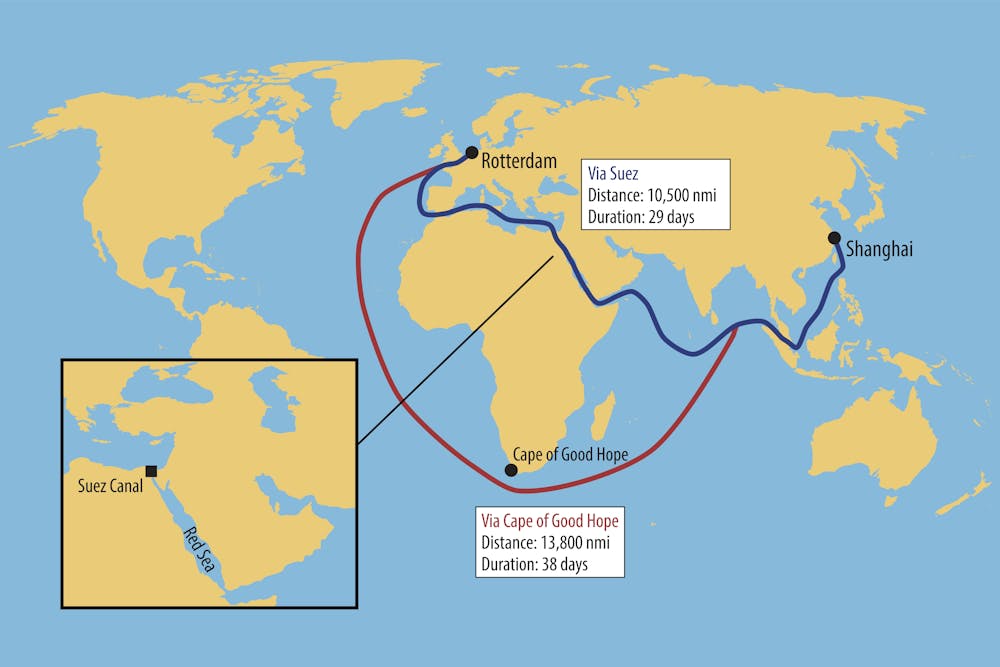
    These attacks have prompted many shipping companies to stop using the Red Sea – a route that around 12% of global trade usually passes through – and divert around the southern tip of Africa. This route adds more than 7,000 nautical miles on to a typical round-trip voyage. The number of commercial ships using the Suez Canal to pass between the Mediterranean and the Red Sea plummeted from over 26,000 in 2023 to 13,200 in 2024.

    Supply chains have had to deal with higher shipping costs, product delivery delays, and increased carbon emissions as a result of this diversion. The Gaza ceasefire gave some hope that the disruption would finally end. But shipping lines will not hurry back to the region until long-term security is guaranteed.

    Since November 2023, shipping companies have been diverting their vessels around the southern tip of Africa to avoid the Red Sea.
    Dimitrios Karamitros / Shutterstock

    During the early stages of the crisis, moving a container from Shanghai in China to Europe cost approximately 250% more than before the war in Gaza began. This was largely due to increased fuel costs and higher insurance premiums. Freight rates (the price companies pay to transport goods) remained high throughout 2024, despite some fluctuations.

    The cost of moving a 40-foot container from Shanghai to Rotterdam in the Netherlands, for example, surged from around US$4,400 on average in January to above US$8,000 by August. This had dropped to US$4,900 at the end of the year.

    It is too early to say whether these costs will be passed on to consumers in the form of higher prices – full transmission through the supply chain to consumer prices can take upwards of 12 months. But some estimates suggest global consumer prices could rise by 0.6% on average in 2025 as these increased shipping costs filter through the supply chain.

    Diverting around southern Africa also resulted in delays in the delivery of many goods and components. The proportion of container ships that arrived on schedule dropped from 60% on average worldwide in 2023 to about 50% throughout 2024. This created congestion at ports because ships often arrived at their destination later than planned, resulting in further delivery delays.

    Unreliable transit times are a significant issue for supply chains because they make it difficult for businesses to plan inventory and coordinate production schedules. Indeed, several vehicle manufacturers, including Tesla and Volvo, temporarily suspended manufacturing in early 2024 due to a lack of components. And food supply chains, including those for avocados, tea and coffee, were also affected by delays.

    Since then, many companies have adapted by increasing their safety stock levels and transporting cargo using alternative modes of transport like air and rail. Some European firms have also adopted a strategy called “nearshoring”, where they source products from regions closer to home such as Turkey and Morocco instead of relying on suppliers in Asia.

    Increased emissions

    The longer route around southern Africa requires that ships travelling between Europe and Asia use around 33% more fuel on average than they would use by travelling through the Red Sea at the same speed.

    Over the past decade, most shipping companies have employed a “slow steaming” policy to economise on fuel use and minimise their carbon emissions. But diverted ships have been travelling around 5% faster than usual in an attempt to minimise delays. The increased vessel speeds will have caused the associated emissions toll to rise – large container vessels require 2.2% more fuel for every 1% increase in speed.

    More data is required to determine the precise amount of additional emissions caused by diverting shipping away from the Red Sea. But estimates suggest that approximately 13.6 million tonnes of CO₂ were emitted by ships rerouted from the Red Sea between December 2023 and April 2024 – equivalent to the carbon emissions of nine million cars over the same period. If ships continue to avoid the region, the increased emissions could amount to 41 million extra tonnes of CO₂ per year.

    Some cargo has also shifted from sea transport to air freight, which has a far greater environmental footprint. Shipping a kilogram of product by long-haul air freight generates at least 50 times more CO₂ emissions on average than container shipping.

    Carbon emissions have increased due to the diversion of vessels around southern Africa.
    David G40 / Shutterstock

    Before returning to the Suez Canal, container lines will want to see a prolonged period of stability around the Red Sea. This is due, in part, to safety and security concerns related to the crew, cargo and the ship.

    But shipping companies also have operational challenges to keep in mind associated with the scheduling of port calls and voyages. Shipping lines will find it difficult to switch back to the longer route around Africa immediately if attacks in the Red Sea resume.

    And, at least for now, the situation in the Bab al-Mandab Strait remains unpredictable. In a televised speech on January 20, Houthi leader Abdul-Malik al-Houthi warned: “We have our finger on the trigger.”

    With other disruptions continuing to affect global shipping, such as port strikes, low water levels in the Panama Canal and extreme weather events, supply chain issues are likely to continue throughout 2025.

    Gokcay Balci does not work for, consult, own shares in or receive funding from any company or organisation that would benefit from this article, and has disclosed no relevant affiliations beyond their academic appointment.

    – ref. Red Sea crisis: supply chain issues set to continue despite Gaza ceasefire – https://theconversation.com/red-sea-crisis-supply-chain-issues-set-to-continue-despite-gaza-ceasefire-248469

    MIL OSI – Global Reports –

    January 31, 2025
  • MIL-OSI Security: Federal Courts Authorize IRS “John Doe” Summonses to Trident Trust Entities

    Source: United States Attorneys General 2

    Summonses Are for Records Relating to U.S. Taxpayers Who May Have Used Network of Offshore Service Providers to Hide Assets and Evade Taxes

    The U.S. District Court for the Northern District of Georgia entered an order earlier this week authorizing the IRS to serve John Doe summonses on TT (USA) Holdings Inc.; Trident Corporate Services Inc. and Trident Fund Services Inc., entities that are members of a multinational group of affiliated companies generally operating under the trade name “Trident Trust” and collectively referred to as the “Trident Trust Group.”

    Separately, on Dec. 18, 2024, the U.S. District Court for the District of South Dakota entered an order, unsealed on Jan. 21, authorizing service of a similar John Doe summons on Trident Trust Company (South Dakota) Inc. The United States also previously obtained approval in the U.S. District Court for the Southern District of New York for the IRS to serve John Doe summonses on a different affiliate entity of the Trident Trust Group, as well as to third party financial service companies, banks and courier services that may have information about Trident Trust Group’s U.S. taxpayer clients.

    The United States is not alleging that any of the entities engaged in wrongdoing. Rather, the IRS uses John Doe summonses to obtain information about possible violations of internal revenue laws by individuals whose identities are unknown. These summonses seek information about U.S. individuals who may have used the Trident Trust Group’s services to underreport their worldwide income and conceal their ownership of certain foreign assets that U.S. individuals are required to report to the U.S. government.

    “The Justice Department and the IRS are dedicated to unearthing tax evasion that uses foreign bank accounts and offshore shell corporations,” said Deputy Assistant Attorney General David A. Hubbert of the Justice Department’s Tax Division. “We will use the many tools available to us, including John Doe summonses like the ones authorized by the courts here, to ensure that taxpayers are fully meeting their responsibilities.”

    Federal law requires certain individual taxpayers, including all U.S. citizens and residents with gross annual income above the reporting threshold, to pay taxes on all income earned worldwide. They must also disclose certain foreign financial accounts, assets and controlled foreign corporations. Failure to report these offshore arrangements can result in serious civil and criminal consequences.

    The government’s petitions allege that Trident Trust Group is an offshore service provider operating in nearly 30 countries worldwide, and it has provided corporate, trust and fund administration services for over 40 years. The petitions further allege that Trident Trust Group offers services that enable offshore account and entity concealment, like mail forwarding and retention, and ready-to-use “shelf” companies. For example, the petitions allege that Trident Trust Group personnel have listed themselves as the founders, directors and officers of thousands of Panamanian companies to help their U.S. clients potentially conceal their interests in and income from those foreign entities.

    A declaration from an IRS revenue agent that accompanied the petitions alleges that at least nine U.S. taxpayers used Trident Trust Group’s services to avoid compliance with U.S. tax laws. The declaration further alleges that the IRS learned of this noncompliance through the Offshore Voluntary Disclosure Program, a program that allowed U.S. taxpayers to voluntarily disclose foreign accounts or entities used to evade tax in exchange for settling their civil liabilities on fixed terms.

    These orders authorize the IRS to issue summonses to TT (USA) Holdings Inc.; Trident Corporate Services Inc.; Trident Fund Services Inc. and Trident Trust Company (South Dakota) Inc seeking information about U.S. taxpayer clients who may have used the services of the entities and the broader Trident Trust Group to establish, maintain, operate or control any foreign financial account or other foreign asset; any foreign corporation, company, trust, foundation or other legal entity or any foreign or domestic financial account or other asset in the name of such foreign entity from 2014 through 2023. By obtaining these records, the IRS expects to be able to identify clients of the Trident Trust Group to investigate whether they potentially used the group’s services to avoid or evade federal taxes.

    Additional information about the Tax Division and its enforcement efforts may be found on the division’s website.

    Tax Division Attorneys Christina T. Lanier and Brij B. Patnaik are handling the case in the U.S. District Court for the District of South Dakota; and they, along with Elisabeth K. Kryska of the Tax Division, are handling the case in the Northern District of Georgia. Assistant U.S. Attorney Anthony J. Sun for the Southern District of New York is handling the case in the U.S. District Court for the Southern District of New York.

    MIL Security OSI –

    January 31, 2025
  • MIL-OSI Security: Previously convicted sex offender arrested for illegally reentering United States

    Source: Office of United States Attorneys

    COLUMBUS, Ohio – A previously convicted sex offender was arrested and charged federally with illegally reentering the United States.

    Carlos Gonzales Hernandez, 55, of El Salvador, is scheduled to appear in federal court in Columbus today.

    According to an affidavit filed in support of the criminal complaint, in August 2017, Gonzales Hernandez was convicted in Franklin County for three felony counts of gross sexual imposition and sentenced to six years in prison.

    In September 2022, Gonzales Hernandez was physically removed based on a final immigration order.

    On Jan. 2, Madison County sheriff’s deputies conducted a traffic stop on Gonzales Hernandez for traffic violations and he was subsequently arrested and placed in the Tri-County Regional Jail in Mechanicsburg. Gonzales Hernandez was then taken into federal custody and charged with illegally reentering the United States, a crime punishable by up to 10 years in prison. If his prior conviction is determined to be an aggravated felony, the penalty could increase to up to 20 years in prison.

    Kenneth L. Parker, United States Attorney for the Southern District of Ohio; and Robert Lynch, Special Agent in Charge, ERO Detroit Field Office; announced the charge. Assistant United States Attorney Sheila G. Lafferty is representing the United States in this case.

    A criminal complaint merely contains allegations, and defendants are presumed innocent unless proven guilty in a court of law.

    # # #

    MIL Security OSI –

    January 31, 2025
  • MIL-OSI Security: U.S. Attorney’s Office Announces Sentencing in Shiprock Fatal Stabbing

    Source: Office of United States Attorneys

    ALBUQUERQUE – A Shiprock man was sentenced to 23 years in federal prison today for the fatal stabbing of John Doe at a gas station in Shiprock, New Mexico in 2021.

    There is no parole in the federal system.

    According to court documents, on October 24, 2021, following a night of drinking and socializing with friends, Marc Gene Clark, 47, an enrolled member of the Navajo Nation, confronted John Doe in the parking lot of a gas station. During the confrontation and without provocation, Clark stabbed Doe with a knife, resulting in significant blood loss and ultimately leading to Doe’s death later that day.

    Surveillance video footage captured the stabbing. Clark was subsequently arrested at a nearby laundromat by officers from the Navajo Nation Police Department, and the knife used in the stabbing was found in his possession.

    Upon his release from prison, Clark will be subject to five years of supervised release.

    U.S. Attorney Alexander M.M. Uballez and Raul Bujanda, Special Agent in Charge of the Federal Bureau of Investigation, made the announcement today.

    The Farmington Resident Agency of the FBI Albuquerque Field Office investigated this case with assistance from the Navajo Police Department and Department of Criminal Investigations. Assistant United States Attorneys Matthew J. McGinley and Paul J. Mysliwiec prosecuted the case.

    # # #

    MIL Security OSI –

    January 31, 2025
  • MIL-OSI USA: Federal Courts Authorize IRS “John Doe” Summonses to Trident Trust Entities

    Source: US State of North Dakota

    Summonses Are for Records Relating to U.S. Taxpayers Who May Have Used Network of Offshore Service Providers to Hide Assets and Evade Taxes

    The U.S. District Court for the Northern District of Georgia entered an order earlier this week authorizing the IRS to serve John Doe summonses on TT (USA) Holdings Inc.; Trident Corporate Services Inc. and Trident Fund Services Inc., entities that are members of a multinational group of affiliated companies generally operating under the trade name “Trident Trust” and collectively referred to as the “Trident Trust Group.”

    Separately, on Dec. 18, 2024, the U.S. District Court for the District of South Dakota entered an order, unsealed on Jan. 21, authorizing service of a similar John Doe summons on Trident Trust Company (South Dakota) Inc. The United States also previously obtained approval in the U.S. District Court for the Southern District of New York for the IRS to serve John Doe summonses on a different affiliate entity of the Trident Trust Group, as well as to third party financial service companies, banks and courier services that may have information about Trident Trust Group’s U.S. taxpayer clients.

    The United States is not alleging that any of the entities engaged in wrongdoing. Rather, the IRS uses John Doe summonses to obtain information about possible violations of internal revenue laws by individuals whose identities are unknown. These summonses seek information about U.S. individuals who may have used the Trident Trust Group’s services to underreport their worldwide income and conceal their ownership of certain foreign assets that U.S. individuals are required to report to the U.S. government.

    “The Justice Department and the IRS are dedicated to unearthing tax evasion that uses foreign bank accounts and offshore shell corporations,” said Deputy Assistant Attorney General David A. Hubbert of the Justice Department’s Tax Division. “We will use the many tools available to us, including John Doe summonses like the ones authorized by the courts here, to ensure that taxpayers are fully meeting their responsibilities.”

    Federal law requires certain individual taxpayers, including all U.S. citizens and residents with gross annual income above the reporting threshold, to pay taxes on all income earned worldwide. They must also disclose certain foreign financial accounts, assets and controlled foreign corporations. Failure to report these offshore arrangements can result in serious civil and criminal consequences.

    The government’s petitions allege that Trident Trust Group is an offshore service provider operating in nearly 30 countries worldwide, and it has provided corporate, trust and fund administration services for over 40 years. The petitions further allege that Trident Trust Group offers services that enable offshore account and entity concealment, like mail forwarding and retention, and ready-to-use “shelf” companies. For example, the petitions allege that Trident Trust Group personnel have listed themselves as the founders, directors and officers of thousands of Panamanian companies to help their U.S. clients potentially conceal their interests in and income from those foreign entities.

    A declaration from an IRS revenue agent that accompanied the petitions alleges that at least nine U.S. taxpayers used Trident Trust Group’s services to avoid compliance with U.S. tax laws. The declaration further alleges that the IRS learned of this noncompliance through the Offshore Voluntary Disclosure Program, a program that allowed U.S. taxpayers to voluntarily disclose foreign accounts or entities used to evade tax in exchange for settling their civil liabilities on fixed terms.

    These orders authorize the IRS to issue summonses to TT (USA) Holdings Inc.; Trident Corporate Services Inc.; Trident Fund Services Inc. and Trident Trust Company (South Dakota) Inc seeking information about U.S. taxpayer clients who may have used the services of the entities and the broader Trident Trust Group to establish, maintain, operate or control any foreign financial account or other foreign asset; any foreign corporation, company, trust, foundation or other legal entity or any foreign or domestic financial account or other asset in the name of such foreign entity from 2014 through 2023. By obtaining these records, the IRS expects to be able to identify clients of the Trident Trust Group to investigate whether they potentially used the group’s services to avoid or evade federal taxes.

    Additional information about the Tax Division and its enforcement efforts may be found on the division’s website.

    Tax Division Attorneys Christina T. Lanier and Brij B. Patnaik are handling the case in the U.S. District Court for the District of South Dakota; and they, along with Elisabeth K. Kryska of the Tax Division, are handling the case in the Northern District of Georgia. Assistant U.S. Attorney Anthony J. Sun for the Southern District of New York is handling the case in the U.S. District Court for the Southern District of New York.

    MIL OSI USA News –

    January 31, 2025
  • MIL-OSI Security: Two Honduran Nationals Indicted For Transporting Minors Across State Lines For Sexual Activity

    Source: Office of United States Attorneys

    Jacksonville, Florida – United States Attorney Roger B. Handberg announces the return of indictments charging Fredi Agustin-Vasquez y Guardado (22, Honduras) and Marlon Ronaldo Canas Trochez (26, Honduras) with transporting minor victims across state lines with the intention that the minor victims engage in sexual activity prohibited by the laws of the state of Florida. If convicted, Agustin-Vasquez and Trochez each face a minimum penalty of 10 years, up to life, in federal prison. 

    According to the Agustin-Vasquez indictment, Agustin-Vasquez transported a minor victim in April or May 2024 with the intent that the minor victim engage in conduct constituting lewd and lascivious battery under Florida law. As alleged in the Trochez indictment, Trochez committed the same offense on September 4, 2024.

    An indictment is merely a formal charge that a defendant has committed one or more violations of federal criminal law, and every defendant is presumed innocent unless, and until, proven guilty.

    This case was investigated by Homeland Security Investigations, the Putnam County Sheriff’s Office, the Clay County Sheriff’s Office, and the North Augusta (South Carolina) Department of Public Safety. The cases will be prosecuted by Assistant United States Attorneys Laura Cofer Taylor and Kelly S. Milliron.

    MIL Security OSI –

    January 31, 2025
  • MIL-OSI Security: Defense News: Five Broward Residents to Enlist During Florida Panthers Game

    Source: United States Navy

    SUNRISE, Fla. – Navy Chief Information Officer (CHINFO) Rear Adm. Ryan Perry, a Fort Lauderdale native, will administer the oath of enlistment to five Broward County residents during the Florida Panthers game against the L.A. Kings on January 29, 2025, at Amerant Bank Arena.

    “They jumped at the opportunity,” said Electronics Technician (Nuclear) 2nd Class Robert Logozzo, attached to Navy Talent Acquisition Group Miami, who will accompany the future Sailors. “They recognized it as a once-in-a-lifetime chance and are excited to create lasting memories as they make life-changing decisions. The community’s support is truly appreciated.”

    The ceremony, set to take place before the pregame activities, is part of Perry’s ongoing visit to his hometown. So far, his engagement has included meetings with members of legislature and non-profit organizations. The trip, which runs through January 30th, is focused on raising Navy awareness, promoting its 250th anniversary, and supporting local recruiting efforts.

    NTAG Miami has 38 recruiting locations throughout South Florida, Puerto Rico, and the Virgin Islands, with a shared mission to recruit the highest caliber Sailors to meet the needs of the fleet.

    Don’t know what Navy Sailors do? Check out navy.com/careers-benefits/careers to explore more about the 150+ jobs they do!

    MIL Security OSI –

    January 31, 2025
  • MIL-OSI Africa: Secretary-General’s remarks to the Ambassadorial-Level meeting of the Peacebuilding Commission [as delivered]

    Source: United Nations – English

    t is a pleasure to be here with you today.

    I wish to start by congratulating the Member States that have recently been elected to the Peacebuilding Commission.

    I also congratulate Brazil for leading the PBC during its 18th session and welcome Germany’s candidacy for the chair of the 19th session.

    Excellencies,

    Our world is in trouble. 

    We see spreading conflicts and widening geopolitical divisions.

    We face a deepening climate crisis and widening inequalities.

    We are confronting the proliferation of weapons and the spread of disinformation.

    All of this and more makes the work of the Peacebuilding Commission more critical than ever.

    I want to salute the Commission for its vital advisory role to the Security Council, including in the context of UN mission transitions.

    I also recognize your important convening role within the UN and beyond – engaging civil society, the private sector, international and regional organizations, and financial institutions.

    Now we have the chance to consolidate and expand that work. 

    The Pact for the Future charts a course to reforming international cooperation – including by prioritizing prevention, mediation and peacebuilding.

    It seeks to break siloes by advancing coordination with regional organizations, developing innovative approaches and fostering the full participation of women, youth and marginalized groups in peace processes.

    And, fundamentally, the Pact calls for strengthening the Peacebuilding Commission.
    This year’s Review of the Peacebuilding Architecture offers an opportunity to further advance these efforts and strengthen the role of the PBC – namely its relationship with the Security Council.

    My recent report on Peacebuilding and Sustaining Peace lays out concrete suggestions around inflection points where the Commission can help catalyze national efforts.

    This includes working to fully empower the Commission to mobilize political and financial support for nationally-owned peacebuilding and prevention strategies.

    As the review unfolds, I encourage the Commission to draw on its rich experience to guide deliberations at the General Assembly and Security Council – with actionable recommendations towards strengthening the peacebuilding architecture and transforming people’s lives.

    Excellencies,

    This brings me to a vital issue: financing.

    The General Assembly’s approval of assessed contributions to the Peacebuilding Fund marks an important step.

    But it is still a far cry from the “quantum leap” of $500 million per year that is needed.

    As many Member States have highlighted, voluntary contributions remain paramount – and I encourage countries to provide additional support to the Fund.

    Given the urgent and expanding needs for peacebuilding support, I trust that the Review of the Peacebuilding Architecture will further examine how to ensure the predictability, adequacy and sustainability of the Fund – including by exploring innovative financing mechanisms, public-private partnerships and blended funding models.

    Excellencies,

    We must never waver in our commitment to pursue, achieve and sustain peace.

    The Peacebuilding architecture – consisting of the Peacebuilding Commission, the Peacebuilding Support Office and the Peacebuilding Fund – working together with UN Country Teams, are essential tools to help translate aspirations into reality.

    I look forward to continuing to work with you all to strengthen our peacebuilding architecture and help build a world of peace and prosperity for all largely thanks to your precious intervention.

    Thank you very much. 

    MIL OSI Africa –

    January 31, 2025
  • MIL-OSI USA: Cornyn-Supported Laken Riley Act Signed into Law

    US Senate News:

    Source: United States Senator for Texas John Cornyn
    WASHINGTON – U.S. Senator John Cornyn (R-TX) released the following statement after President Trump signed the Laken Riley Act, which requires U.S. Immigration and Customs Enforcement (ICE) to arrest and detain migrants who commit theft-related crimes, including offenses resulting in bodily injury or death, until they are removed from the U.S. to ensure they cannot commit further crimes, into law. The legislation included an amendment from Sen. Cornyn, who attended the signing ceremony at the White House, to require U.S. Immigration and Customs Enforcement (ICE) to detain illegal immigrants who assault a member of law enforcement.
    “Laken Riley’s death will not be forgotten, and I’m grateful President Trump signed this historic bill into law to honor her legacy and prioritize making our nation safe again,” said Sen. Cornyn. “With the inclusion of my amendment to require detaining illegal migrants who assault law enforcement officers, this law will protect our men and women in uniform and help restore the safety and security of all Texans and communities across the country.”
    Background:
    On February 22, 2024, 22-year-old Laken Riley was killed in broad daylight while jogging on campus at the University of Georgia. Venezuelan national and Tren de Aragua gang member, Jose Antonio Ibarra, who was released into the interior by the Biden administration after he illegally entered the country, was found guilty of ten criminal charges, including felony murder, in November 2024.
    Last year, Sen. Cornyn wrote a letter to U.S. Department of Homeland Security (DHS) Secretary Alejandro Mayorkas demanding DHS explain why Ibarra was granted parole into the U.S.
    In addition to requiring ICE to arrest and detain migrants who enter the country illegally and commit theft, burglary, larceny, or shoplifting offenses, assault of law enforcement officer, or crimes resulting in death or bodily injury, the Laken Riley Act will ensure states can bring civil actions against federal agencies who violate the law or refuse to enforce immigration law.

    MIL OSI USA News –

    January 31, 2025
  • MIL-OSI Security: IAEA Sees Operational Safety Commitment at Novovoronezh Nuclear Power Plant in Russia

    Source: International Atomic Energy Agency – IAEA

    An International Atomic Energy Agency (IAEA) team of experts said that the operator of the Novovoronezh Nuclear Power Plant (NPP) in the Russian Federation has shown a commitment to enhancing operational safety.

    Requested by the Government of the Russian Federation, the Operational Safety Review Team (OSART) mission ran from 13 to 30 January. The Team reviewed operational safety in Units 4 and 6 of the Novovoronezh NPP. An OSART mission was previously completed for Unit 5 in 2015.

    OSART missions independently assess safety performance against the IAEA’s safety standards. The aim is to advance operational safety by proposing recommendations and, where appropriate, suggestions for improvement.

    The Novovoronezh NPP is located in the Voronezh region, about 600 kilometres south of Moscow. The plant is owned by State Atomic Energy Corporation Rosatom (ROSATOM) and operated by Novovoronezh NPP, a subsidiary of the Rosenergoatom Joint Stock Company. The plant consists of seven units. Units 1, 2 and 3 are permanently shutdown and under decommissioning. Units 4, 5, 6 and 7 are operating. All units are pressurized water reactors (VVERs); Units 4 and 5 are VVER-V179 (417 MWe) and VVER-187 (1000 MWe), respectively. Units 6 and 7 are both VVER-392M (1180 MWe). Russia has 36 nuclear power reactors in operation, providing almost 20 per cent of the country’s total electricity production.

    The team reviewed operating practices in Units 4 and 6 in the areas of leadership and management for safety, training and qualification, operations, maintenance, technical support, radiation protection, chemistry and accident management. The team was composed of seven experts from Belarus, Brazil, China, the Islamic Republic of Iran and South Africa, as well as four IAEA staff members and an observer from Russia.

    To make its assessment, the team reviewed documents from the Novovoronezh plant on its main technical features, staff organization and responsibilities, and its operational programmes, procedures and performance prior to the mission. During the mission, the team observed the plant in operation, examined indicators of its performance and held in-depth discussions with plant personnel.

    The OSART team observed that the staff at the plant are knowledgeable and professional and are committed to improving the operational safety and reliability of the plant.

    The team identified one good practice to be shared with the nuclear industry globally:

    • The main control room operators at Novovoronezh NPP have access to an electronic display for real-time indication of hydrogen ignition risk inside the containment building in the case of a severe accident.

    The mission also provided some suggestions to further improve safety, including that the plant should consider enhancing:

    • The consistent use of tools to minimize human error.
    • The quality of maintenance activities.
    • The arrangements for the monitoring and reporting of equipment condition and material deficiencies to ensure that any degradation is identified and reported.

    “We are grateful to the international experts of the IAEA for conducting a comprehensive inspection at two power units of the Novovoronezh NPP – Unit 4 and Unit 6. This is a reputable team with over 282-years combined operational experience in the nuclear power industry. According to the mission results, the plant received suggestions to enhance further the operational safety performance of Units 4 and 6,” said Vladimir Povarov, Director of Novovoronezh NPP. “The mission confirmed that there was good alignment between the plant practices and the requirements in the IAEA standards.”

    “Three of the four Novovoronezh NPP power units in operation have already successfully undertaken an IAEA international peer review. And we plan for power Unit 7 to be subjected to this procedure in the future,” Povarov added.

    The team provided a draft report of the mission to the plant management. They will have the opportunity to make factual comments on the draft. These comments will be reviewed by the IAEA, and the final report will be submitted to the Government within three months.

    Background

    General information about OSART missions can be found on the IAEA website. An OSART mission is designed as a review of programmes and activities essential to operational safety. It is not a regulatory inspection, nor is it a design review or a substitute for an exhaustive assessment of the plant’s overall safety status.

    Follow-up missions are standard components of the OSART programme and are typically conducted within two years of the initial mission.

    The IAEA Safety Standards provide a robust framework of fundamental principles, requirements and guidance to ensure safety. They reflect an international consensus and serve as a global reference for protecting people and the environment from the harmful effects of ionizing radiation.

    MIL Security OSI –

    January 31, 2025
  • MIL-OSI Security: U.S. Attorney’s Office and FBI Charge Farmington Woman with Assault and Child Abuse

    Source: Office of United States Attorneys

    ALBUQUERQUE – A Farmington woman faces charges of assault with a dangerous weapon and child abuse stemming from an incident on the Navajo Nation.

    According to court records, on or about September 2, 2024, Tenille Quintawna Peshlakai, 32, an enrolled member of the Navajo Nation, allegedly assaulted the victim with a motor vehicle, intending to cause bodily harm, while simultaneously endangering a minor who was improperly restrained in the front passenger seat.

    Peshlakai will remain in custody pending a detention hearing scheduled for January 31, 2025. If convicted, Peshlakai faces up to 10 years in prison.

    U.S. Attorney Alexander M.M. Uballez and Raul Bujanda, Special Agent in Charge of the FBI Albuquerque Field Office, made the announcement today.

    The Farmington Resident Agency of the FBI’s Albuquerque Field Office investigated this case with assistance from the Navajo Police Department and Department of Criminal Investigations and the New Mexico State Police. Assistant U.S. Attorney Nicholas J. Marshall is prosecuting the case.

    An indictment is merely an allegation. All defendants are presumed innocent until proven guilty beyond a reasonable doubt in a court of law.

    MIL Security OSI –

    January 31, 2025
  • MIL-OSI United Nations: Ninth Joint OECD-UNECE Seminar on SEEA Implementation

    Source: United Nations Economic Commission for Europe

    Categories24-7, English, MIL OSI, United Nations, United Nations Economic Commission for Europe

    Post navigation

    Report PDF
    Programme  PDF
    Get to know the speakers PDF
    Concept note PDF
    Link to the Guidelines for Measuring Circular Economy  
    Session 1: Opening & Setting the Scene 
     
    Updates on related work from OECD PDF
    London Group on Environmental Accounting Update PDF
    SEEA-related activities in Asia and the Pacific, ESCAP PDF
    Relevant outcomes from UN Statistical Commission, and work of UNCEEA PDF
    Online inventory of thematic and extended accounts, UNECE PDF
    Session 2: Utilising SEEA for Measuring Circular Economy
     
    2a: Introduction, information needs, existing measurement frameworks and their links with SEEA
     
    The concept of a Circular Economy and the most important measurement points, University of Exeter PDF
    Circular Economy in EU policy, European Commission, DG Environment PDF
    CES Guidelines for Measuring Circular Economy, Finland PDF
    Circular material use rate indicator: how it is calculated, results and interpretation, Eurostat PDF
    2e: Waste Accounts for measuring circularity
    The difficulty of finding circularity in solid waste accounts, Luxembourg PDF
    Limitations of SEEA waste accounts: conceptual, data collection and experiences from policy use, Australia PDF
    Experimental study: Using waste accounts for measuring plastic flows in the EU economy, Eurostat PDF
    2c: New developments and utilising EGSS for measuring jobs, goods and services related to circular-economy
     
    Conceptual framework pillar “socio-economic opportunities of a circular economy”: main indicators, UNECE PDF
    Updating of related classifications-Classification of environmental purposes (CEP), Eurostat PDF
    Using EGSS data for measuring circular economy, France     PDF
    Comparison of EGSS and structural business statistics data on measuring circular economy, Finland PDF
    2d: Measuring flows of biomass and bio-based material in a circular economy
     
    The concept of a Circular Economy and some key agenda for biological materials, University of Exeter PDF
    The sustainable and circular bioeconomy in the EU, European Commission PDF
    Costa Rica: Use of environmental accounts for policy making on circular economy and bioeconomy PDF
    Measuring stocks in the urban mine to monitor circular economy with SEEA, The Netherlands PDF
    2b: Utilising SEEA for measuring physical flows of plastics
     
    Policy development and the development of a statistical guideline on measuring flows of plastic along the lifecycle, UNEP PDF
    Measuring plastic flows with Plastic-KEYs, UNITAR PDF
    What statistics tell us about international trade of plastics? UNCTAD PDF
    Statistics Canada’s Physical Flow Account for Plastic Material PDF
    The use of SEEA – material flow accounts for deriving circular economy indicators, North Macedonia PDF
    Session 3: Informing climate-change-adaptation and response policies with SEEA
     
    3a: Introduction, information needs, existing measurement frameworks and their links with SEEA
    Climate change adaptation policies and SEEA-related information demands, OECD PDF
    Disaster-related statistics and the linkages to SEEA, ESCAP PDF
    Role of NSOs in Achieving National Climate Objectives, UNECE PDF
    3b: Climate change expenditures 
     
    Update on the revision of the Classification of Functions of Government (COFOG), UNSD PDF
    An integrated Approach to the classification of public environmental expenditure, OECD PDF
    G20 Data Gaps Initiative, IMF PDF
    Climate mitigation investments, The Netherlands PDF
    Climate Change Mitigation and Adaptation Expenditures in the Economy: Towards an Operational Definition, United States PDF
    Environmental expenditures account and its application in the Republic of Kazakhstan

    ENG

    RUS

    3c: Measuring ecosystem condition, degradation and loss of ecosystem services
     
    Ecosystem services accounts: from the operational platform (INCA) to their economic bridging (LISBETH), Joint Research Centre  PDF
    The role of the SEEA in the Kunming-Montreal Global Biodiversity Framework (GBF), UNSD PDF
    Ecosystem condition accounting in Statistics Lithuania PDF
    Working with blue carbon ecosystem accounts: value of coastal ecosystems in alleviating impacts of climate change, Australia PDF
    Implementation of Environmental Accounts in Ukraine – results and challenges. Estimation of damages caused by war PDF
    Session 4: Conclusions & Recommendations
     
    Draft conclusions and recommendations  PDF

    MIL OSI United Nations News –

    January 31, 2025
  • MIL-OSI United Nations: HLG-MOS Workshop on the Modernisation of Official Statistics 2023

    Source: United Nations Economic Commission for Europe

    About the meeting

    The High-Level Group for the Modernisation of Official Statistics (HLG-MOS) was established by the Bureau of the Conference of European Statisticians (CES) in 2010 to actively steer the modernisation of statistical organisations. The mission of the HLG-MOS is to work collaboratively to identify trends, threats and opportunities in modernising statistical organisations and provide a common platform for experts to develop solutions in a flexible and agile way. The purpose of the workshop was to ensure that the work of HLG-MOS is community driven and that activities and initiatives are aligned with the implementation of the HLG‑MOS vision, avoiding duplication and maximising efficiency. The workshop will also include sessions where the broad official statistics community could share ongoing initiatives related to modernisation and innovation, thus creating synergies among the organisations and opportunities for further collaboration, which will further enrich the work programme of HLG-MOS.

    The target audience of the workshop is experts, managers and leaders in statistical organisations who work on modernisation and innovation initiatives. This includes experts who have participated in the HLG-MOS activities this year as well as those with a broad knowledge of the recent developments in this area and understanding of international cooperation.

    Document Title

    Documents

    Information Notice 1 (concept note)

    PDF

    Information Notice 2 (logistic information)

    PDF

    Provisional Timetable

    PDF

    Report PDF

    Opening

    Where to go next: a maturing HLG-MOS – Anil Arora (Statistics Canada, chair of HLG-MOS)

    Presentation

    HLG-MOS Projects Reporting

    Cloud for Official Statistics – John Conway (CSO Ireland) and Claude Julien (UNECE Project Manager)

    Presentation

    Data Governance for Interoperability Framework (DAFI) Project – Juan Munoz (INEGI, Mexico) and Carlo Vaccari (UNECE Project Manager)

    Presentation

    ModernStats Carpentries (phase 2 Meta Academy) – Eric Anvar (OECD), Andrew Tait (UNECE), Jonathan Wylie (Statistics Canada)

    Presentation

    Generative AI and Official Statistics

    HLG-MOS White Paper on LLM/GPT – Cathal Curtin (Statistics New Zealand)

    Presentation

    Building a SAS to R translation assistant with ChatGPT – Florian Givernaud (INSEE, France)

    Transforming the Search for Public Information in Mexico with Advanced Language Models – Juan Munoz (INEGI, Mexico)

    Can AI better satisfy users of statistical information? A case study in Istat – Michela Troia, Sara Letardi and Mauro Bruno (Istat, Italy)

    Presentation


    Presentation


    Presentation

    The Promises of Generative AI and What It Means for the Modernisation of NSOs – Doug Smith (Microsoft)

    Presentation

    Innovation Radar

    Digital Twins for Official Statistics – Steve MacFeely (WHO) and Hossein Hassani (International Institute for Applied Systems Analysis)

    Presentation

    ESS Innovation – Jean-Marc Museux (Eurostat)

    Presentation

    Co-development of open source solutions: the .Stat Suite business case – Eric Anvar (OECD)

    Presentation

    HLG-MOS Blue Skies Thinking Network – Barteld Braaksma (Statistics Netherlands)

    Presentation

    HLG-MOS Modernisation Group Reporting and Plans

    HLG-MOS Expert Meetings – InKyung Choi (UNECE)

    Presentation

    Applying Data Science and Modern Methods – Gary Dunnet (Statistics New Zealand) 

    Activity Proposals 2024:

    Presentation 

    Capabilities and Communication – Anna Borowska (Statistics Poland), Elaine O’Mahoney (CSO Ireland), Fabrizio Rotundi (Istat) and Jeremy Visschers (Statistics Netherlands) 

    Activity Proposals 2024:

    Presentation 

    Supporting Standards – Flavio Rizzolo (Statistics Canada)

    Activity Proposals 2024:

    Presentation 

    Setting Modernisation Agenda for 2024

    Soapbox


    HLG-MOS Project Proposals for 2024:


    Small group discussion

    Instruction Notes

    Summary and conclusions – Anil Arora (Statistics Canada, chair of HLG-MOS), Jennifer Banim (CSO Ireland, co-chair of HLG-MOS Executive Board) and Stéphane Dufour (Statistics Canada, co-chair of HLG-MOS Executive Board)


    MIL OSI United Nations News –

    January 31, 2025
  • MIL-OSI Security: Statement of United States Attorney Muldrow on the Departure of Alexis Torres from the Puerto Rico Department of Public Safety

    Source: Office of United States Attorneys

    SAN JUAN, Puerto Rico – On behalf of the United States Attorney’s Office for the District of Puerto Rico, I wish to extend our gratitude to Alexis Torres, in his role as Secretary of the Puerto Rico Department of Public Safety, for his unwavering support of the mission of our office and his commitment to the people of Puerto Rico. We wish you all the best and Godspeed.

    ###

    MIL Security OSI –

    January 31, 2025
  • MIL-OSI United Nations: Secretary-General’s remarks to the Ambassadorial-Level meeting of the Peacebuilding Commission [as delivered]

    Source: United Nations secretary general

    It is a pleasure to be here with you today.
    I wish to start by congratulating the Member States that have recently been elected to the Peacebuilding Commission.
    I also congratulate Brazil for leading the PBC during its 18th session and welcome Germany’s candidacy for the chair of the 19th session.
    Excellencies,
    Our world is in trouble. 
    We see spreading conflicts and widening geopolitical divisions.
    We face a deepening climate crisis and widening inequalities.

    MIL OSI United Nations News –

    January 31, 2025
  • MIL-OSI Europe: Minister for Foreign Affairs visits Peru

    Source: Government of Sweden

    Minister for Foreign Affairs visits Peru – Government.se

    Please enable javascript in your browser

    Press release from Ministry for Foreign Affairs

    Published 30 January 2025

    Minister for Foreign Affairs Maria Malmer Stenergard is visiting Peru on 30–31 January. Her visit will include a meeting with Peru’s Minister of Foreign Affairs Elmer Schialer.
    Ms Malmer Stenergard will also host the Sweden Peru Mining Summit at which Government representatives, companies and agencies from Sweden and Peru will discuss sustainable mining and the green transition.

    “I look forward to visiting Peru together with Swedish companies to discuss how we can better cooperate on key issues to promote sustainable mining, and to deepen our countries’ cooperation on business issues, the green transition and innovation,” says Ms Malmer Stenergard. 

    The aim of the visit is to solidify and develop the already good relations between Sweden and Peru and to further strengthen political and economic ties. Sweden and Peru have a long history of bilateral relations stretching back some 90 years. Peru is a vital partner for Sweden in the region. The visit presents opportunities to broaden and deepen cooperation on investment, trade and the green transition and sustainability, as well as developing our security dialogue. 

    Press contact

    MIL OSI Europe News –

    January 31, 2025
  • MIL-OSI Global: Growing ‘anti-gender’ movements are trying to restrict equality and sex education in schools around the world

    Source: The Conversation – UK – By Rachel Marcus, Senior Research Fellow, Gender Equality & Social Inclusion, ODI Global

    hxdbzxy/Shutterstock

    The start of a new Trump presidency in the US may well signal the introduction of policies that limit the knowledge children can access in schools.

    Already, districts in states across the US are able to ban books from schools and libraries, often on topics such as race and LGBTQ+ identities. And during the presidential campaign, Trump said that he would withhold federal funding from schools that “recognise transgender identities”.

    But these kinds of limits on education are not only present in the US. Across the world, there are concerted efforts to control who can access education and what children can learn in schools.

    “Anti-gender” movements reject the social changes that come from an increase in rights for women and LGBTQI+ people. They promote a social order based on patriarchal gender norms, heterosexual marriage and a binary understanding of gender. They target schools because education has unique potential to influence social norms and attitudes for the long term.

    These movements are funded largely by conservative foundations and individuals, largely in the US and Europe. They work together to disrupt children’s educational opportunities and undermine gender equality in the global south, particularly Africa and Latin America.

    My report, co-written with colleagues from the thinktank ODI Global, has found that this is an accelerating and well-funded trend. But it can be countered, including through the use of legislation that upholds human rights. Understanding the nature of these movements and how to counter them is vital to protect all children’s rights to a quality education.

    Global reach

    In the last decade, these movements have become greatly influential. They are global in reach and include politicians, foundations, think-tanks, media ecosystems, religious institutions and grassroots civil society.

    One such group, for instance, is the multi-lingual online platform CitizenGO. It mobilises people to sign petitions and engage in letter-writing campaigns to influence policy both at national and global levels.

    In 2017 CitizenGo sponsored an orange “anti-trans” bus that travelled through Europe and the Americas. Though the organisation boasts that it is funded by small donations, investigative research indicates it likely received seed funding from religious and far-right sources in Russia and western Europe.

    Between 2008 to 2017, the aggregate revenue of US-based organisations linked to the anti-gender movement amounted to US$6.2 billion (£5 billion) according to research from the Global Philanthropy Project, a group of funders aiming to advance LGBTI+ rights. Over this same period, 11 US-based organisations funnelled at least US$1 billion to like-minded organisations abroad.

    In schools, these movements focus on amplifying and manufacturing outrage around comprehensive sexuality education.

    Stifling sex education

    Comprehensive sex education has been developed to provide young people with age-appropriate and accurate information about sex, relationships, and bodily changes. It has been proven to help reduce teenage pregnancy and encourage safer, more equal sexual relationships. But it has become a lightning rod for the movement to generate fear, backlash and ignite parental protests in places as diverse as South Africa, Peru and Ghana.

    Anti-comprehensive sexuality education campaigns frame this educational content as inappropriate. They advocate for sex education based solely on “biological facts” or the promotion of abstinence.

    They present the discussion of topics such as consent and bodily autonomy, or information on contraception and safe sex practices, as likely to encourage sexual experimentation and teenage pregnancy. This is despite as decades of evidence showing that the opposite is true.

    In Peru, for example, the Con Mis Hijos No Te Metas (Don’t Mess with My Kids) movement started as a parental movement protesting against inclusion of gender equality material in the basic education curriculum. The movement’s campaigns have spread to oppose comprehensive sexuality education in countries including Argentina, Brazil, Chile, Colombia and Mexico.

    Students head to school in Rio de Janeiro, Brazil.
    A. M. Teixeira/Shutterstock

    With long-term flexible funding, the anti-gender movement can respond to emerging policies and situations. It can wage long-term campaigns to shift norms and policies.

    In regions such as Africa and Latin America, one of the most successful tactics has been to deploy anti-colonial language. This includes painting comprehensive sexuality education or acceptance of homosexuality as being imposed by “the west”.

    However, funding from conservative US and European foundations designed to entrench certain gender norms and forms of sexual morality in Latin America and Africa can equally be considered as a form of neo-colonialism. Between 2007 and 2020, over US$54 million was spent on the African continent by US-based Christian groups, supporting campaigns against LGBTQ+ rights and comprehensive sexuality education.

    Another key tactic is the dissemination of misinformation, exploiting parental anxieties and fears. These include exaggerated claims that often bear little relation to the actual content of curricula and learning materials.

    However, our research has found that in countries where legal frameworks and systems uphold human rights, legal action can protect access to a full and effective education.

    For example, strategic litigation has overturned state laws in Mexico and Brazil that restricted sexuality education. Legal approaches have also ended policies that banned adolescent mothers from returning to school in Sierra Leone.

    Countering misinformation about what is taught in schools is vital. This can involve sharing accurate information about topics such as sexuality education with parents, and usually works best as part of a face-to-face dialogue.

    CitizenGO have not responded to a request for comment.

    This research was funded by a grant to ODI Global from Global Affairs Canada.

    – ref. Growing ‘anti-gender’ movements are trying to restrict equality and sex education in schools around the world – https://theconversation.com/growing-anti-gender-movements-are-trying-to-restrict-equality-and-sex-education-in-schools-around-the-world-248071

    MIL OSI – Global Reports –

    January 31, 2025
  • MIL-OSI Global: How nonprofits abroad can fill gaps when the US government cuts off foreign aid

    Source: The Conversation – USA – By Susan Appe, Associate Professor of Public Administration and Policy, University at Albany, State University of New York

    The U.S. Agency for International Development distributes a lot of foreign aid through local partners in other countries. J. David Ake/Getty Images

    The U.S. government gives other nations US$68 billion of foreign assistance annually – more than any other country. Over half of this sum is managed by the U.S. Agency for International Development, including funds for programs aimed at fighting hunger and disease outbreaks, providing humanitarian relief in war zones, and supporting other lifesaving programs such as the President’s Emergency Plan for AIDS Relief.

    President Donald Trump suspended most U.S. foreign aid on Jan. 20, 2025, the day he took office for the second time. The next day, Secretary of State Marco Rubio issued a stop-work order that for 90 days halted foreign aid funding disbursements by agencies like USAID.

    A week later, dozens of senior USAID officials were put on leave after the Trump administration reportedly accused them of trying to “circumvent” the aid freeze. The Office of Management and Budget is now pausing and evaluating all foreign aid to see whether it adheres to the Trump administration’s policies and priorities.

    I’m a scholar of foreign aid who researches what happens to the U.S. government’s local partners in the countries receiving this assistance when funding flows are interrupted. Most of these partners are local nonprofits that build schools, vaccinate children, respond to emergencies and provide other key goods and services. These organizations often rely on foreign funding.

    A ‘reckless’ move

    Aid to Egypt and Israel was spared, along with some emergency food aid. The U.S. later waived the stop-work order for the distribution of lifesaving medicines.

    Nearly all of the other aid programs remained on hold as of Jan. 29, 2025.

    Many development professionals criticized the freeze, highlighting the disruption it will cause in many countries. A senior USAID official issued an anonymous statement calling it “reckless.”

    InterAction, the largest coalition of international nongovernmental organizations in the U.S., called the halt contrary to U.S. global leadership and values.

    Of the $35 billion to $40 billion in aid that USAID distributes annually, $22 billion is delivered through grants and contracts with international organizations to implement programs. These can be further subcontracted to local partners in recipient countries.

    When this aid is frozen, scaled back or cut off altogether, these local partners scramble to fill in the gaps.

    The State Department manages the rest of the $68 billion in annual U.S. foreign aid, along with other agencies, such as the Peace Corps.

    The start of Marco Rubio’s tenure as U.S. secretary of state was marked by chaos and confusion regarding foreign aid flows.
    Kevin Dietsch/Getty Images

    How local nonprofits respond and adapt

    While sudden disruptions to foreign aid are always destabilizing, research shows that aid flows have fluctuated since 1960, growing more volatile over the years. My research partners and I have found that these disruptions harm local service providers, although many of them manage to carry on their work.

    Over the years, I have conducted hundreds of interviews with international nongovernmental organizations and these nonprofits’ local partners across Latin America, Africa and Asia about their services and funding sources. I study the strategies those development and humanitarian assistance groups follow when aid gets halted. These four are the most common.

    1. Shift to national or local government funding

    In many cases, national and local governments end up supporting groups that previously relied on foreign aid, filling the void.

    An educational program spearheaded by a local Ecuadorian nonprofit, Desarrollo y Autogestión, called Accelerated Basic Cycle is one example. This program targets young people who have been out of school for more than three years. It allows them to finish elementary school – known as the “basic cycle” in Ecuador – in one year to then enter high school. First supported in part by funding from foreign governments, it transitioned to being fully funded by Ecuador’s government and then became an official government program run by the country’s ministry of education.

    2. Earn income

    Local nonprofits can also earn income by charging fees for their services or selling goods, which allows them to fulfill their missions while generating some much-needed cash.

    For example, SEND Ghana is a development organization that has promoted good governance and equality in Ghana since its founding in 1998. In 2009, SEND Ghana created a for-profit subsidiary called SENDFiNGO that administers microfinance programs and credit unions. That subsidiary now helps fund SEND Ghana’s work.

    Bangladesh Rural Advancement Committee and the Grameen Bank, which is also in Bangladesh, use this approach too.

    3. Tap local philanthropy

    Networks such as Worldwide Initiatives for Grantmaker Support and Global Fund for Community Foundations have emerged to promote local philanthropy around the world. They press governments to adopt policies that encourage local philanthropy. This kind of giving has become easier to do thanks to the emergence of crowdfunding platforms.

    Still, complex tax systems and the lack of incentives for giving in many countries that receive foreign aid are persistent challenges. Some governments have stepped in. India’s corporate social responsibility law, enacted in 2014, boosted charitable incentives. For example, it requires 2% of corporate profits to go to social initiatives in India.

    4. Obtain support from diaspora communities

    Diasporas are people who live outside of their countries of origin, or where their families came from, but maintain strong ties to places they consider to be their homeland.

    Local nonprofits around the globe are leveraging diaspora communities’ desire to contribute to economic development in their countries of origin. In Colombia, for example, Fundación Carla Cristina, a nongovernmental organization, runs nursery schools and provides meals to low-income children.

    It gets some of its funding from diaspora-led nonprofits in the U.S., such as the New England Association for Colombian Children, which is based outside of Boston, and Give To Colombia in Miami.

    A push for the locals to do more

    Trump’s stop-work order coincided with a resurgence of a localization push that’s currently influencing foreign aid from many countries.

    With localization, nations providing foreign aid seek to increase the role of local authorities and organizations in development and humanitarian assistance. USAID has been a leading proponent of localization.

    I believe that the abruptness of the stop-work order is likely to disrupt many development projects. These projects include support to Ukrainian aid groups that provide emergency humanitarian assistance and projects serving meals to children who don’t get enough to eat.

    To be sure, sometimes there are good reasons for aid to be halted. But when that happens, sound and responsible donor exit strategies are essential to avoid the loss of important local services.

    Susan Appe does not work for, consult, own shares in or receive funding from any company or organization that would benefit from this article, and has disclosed no relevant affiliations beyond their academic appointment.

    – ref. How nonprofits abroad can fill gaps when the US government cuts off foreign aid – https://theconversation.com/how-nonprofits-abroad-can-fill-gaps-when-the-us-government-cuts-off-foreign-aid-248378

    MIL OSI – Global Reports –

    January 31, 2025
  • MIL-OSI United Kingdom: Minister for Latin America and Caribbean speech at RUSI Latin American Security Conference 2025

    Source: United Kingdom – Executive Government & Departments

    Parliamentary Under-Secretary of State for Latin America and Caribbean, Baroness Chapman of Darlington, gave a speech at the RUSI Latin American Security Conference 2025.

    Thank you, Malcolm. I was just saying to Malcolm before that the last time I was here was to hear Douglas Alexander speak. This was at a time before Brexit, before COVID.

    We had a coalition government – he was the Shadow Foreign Secretary then, and much in the world has changed since.

    And it’s been far too long – that was, I think 2014, so 11 years ago. And I hope that I’ll be back here – well let’s see if I’m invited back here after this morning!

    Anyway, thank you Malcolm for that warm introduction.

    And good morning, everyone – bom dÍa, buenos dias a todos y todas.

    If you are joining us from Latin America, as I believe some people are online. Thank you for getting up so early – muchismas gracias.

    My Spanish is atrocious, but I am getting some lessons, so hopefully that will be improving soon. And as the Brazilian Ambassador reminded me yesterday, a little bit of Portuguese wouldn’t go amiss either, so I’ll be working on that.

    Before I say anything else, I want to thank RUSI for bringing us together for the third Latin American Security Conference – and to all of your for making this a priority.

    I have a passion for Latin America, and it is great when you get the opportunity to be in a room full of other people that share that view.

    When I meet with Latin American leaders, they tell me that they do feel that they have an important role to play alongside the UK.

    Nobody has told me that they feel ignored by the UK – which is good – but they have all said that they have the desire to be more included in the future.

    The geopolitics that we all spend our time trying to understand and to shape, drives and shapes the prospects for many of the people in Latin America – whether that’s climate change, economic growth and security, in every sense, they are priorities there exactly as they are priorities for us here.

    The war in Ukraine, the conflict in the Middle East, the role of China, US elections – all influence the politics of Latin America.

    Throw in the descent of Venezuela into autocracy, and our as-yet un-ending tragedy that is Haiti – and we have got a lot to talk about together.

    As we approach 200 years of bilateral relations with Brazil, Argentina and Colombia, we should consider how far we’ve come, but also what needs to come next.

    Speaking recently to the next generation of officer cadets at the Royal Naval College at Dartmouth, some 200 years since the days when John Illingworth and Admiral Lord Cochrane supported growing independence across the region, our defence and security co-operation is strong. In Latin America there is pride in our past relationships, and a strong sense that we should do more, not less, together in the future.

    Combatting serious organised crime to protect communities here as well as there, including the heinous trade in human misery that is illegal migration; getting urgent humanitarian relief to those bearing the brunt of natural disasters across the region; pursuing Antarctic science and wider marine protection.

    Perhaps the fact that the UK has positive relationships in Latin America, the fact that it is a relatively safe, peaceful, democratic region, means the spotlight doesn’t rest on it all that often from here in the UK.

    But I see an open, growing, industrious region of the world, without which this government will find it that much harder to achieve our missions of growth, security and climate action.

    Looking across Latin America, the lesson is clear. Without security, you can’t have growth. And without growth, climate action is impossible.

    As we’ve all said hundreds of times – the first responsibility of every government, the bedrock on which the economy sits, and the ultimate guarantor of everything we hold dear, is security.

    While the focus of our attention is rightly on the wars in Europe and the Middle East, Latin America has led the news twice in recent days here in the UK.

    Extraordinary as that is – and I know because I’ve spoken to them, that Colombia and Panama do not always welcome the reason for this attention – there is a place for Latin American countries in geopolitics now that is changing.

    With attention, I think, being positive, comes opportunity.

    Panama – no longer on the financial services grey list; stable, democratic, and inviting infrastructure investment from the UK. We’re seen as a respectful, trusted partner, and they want to do business with us.

    Latin American countries really do want to work with the UK. They see the long-term value in the tailored offer from the investment and security space. We can be proud of it, but we need to make it easier for countries in Latin America to do business with us.

    And I would like to thank Ecuador particularly at the moment, for their term on the Security Council.

    Because we have so much in common with them as independent nations – we must all stand firm in the face of Russia’s invasion of Ukraine, particularly as Russia turns its sights on Latin America as a key target for disinformation, because we know the truth.

    This illegal and unprovoked war by a Permanent Member of the UN Security Council is a flagrant violation of the UN Charter, and the principles of sovereignty and territorial integrity.

    It makes us all, wherever we are, less safe.

    And with so much strong support for Ukraine from across Latin America. I know you will all be looking forward to hearing from Yaroslav Brisiuck from the Ministry of Foreign Affairs later today – on deepening dialogue and cooperation with Latin America and the Caribbean.

    We are not the only country who sees Latin America’s strategic relevance and weight.

    We know our allies in the US are considering their approach as well. The fact that Secretary Rubio’s first foreign trip is to the region, and that he spoke in his confirmation hearing about the positive relationships as well as the challenges that the US faces there demonstrates the centrality of Latin America for US foreign Policy.

    This is no bad thing. And whilst we will not always agree on the specifics every day of this approach or that, we believe that we must continue to be in close dialogue with the region and the US, to work towards common goals.

    When it comes to China’s engagement in the region, we must understand why so many Latin American countries pursue partnerships with China on development, investment and trade.

    But our job – where we can – is to provide Latin America with a choice. An alternative that many say that they want. Maybe not always cheaper, but better.

    From now on, our approach to China will be consistent – cooperating where we can, competing where we have different interests, and challenging where we must.

    But the most important thing about this, is consistency.

    The schizophrenic posturing doesn’t work.

    It’s about calm, straightforward diplomacy, never ignoring issues where we fundamentally disagree, such as the detention of Jimmy Lai.

    But cooperating where it’s in our interests, especially on climate and growth.

    But we know that sustainable growth can’t happen without security.

    Criminal gangs are multinational. Their power to feed off misery while making billions feeds of weak state institutions, drives corruption, deforestation, drug deaths and sex trafficking.

    They pursue profit at any cost, with little cost to themselves, through the production and trafficking of cocaine and other illegal drugs,  destroying lives, communities, and ecosystems in the process.

    Where organised crime gangs are in competition with the state – this is why our role in supporting the peace process in Colombia… this shows us why, it is so vital.

    Illegal mining, deforestation, and the loss of species, human rights abuses, organised immigration crime, channelling of illicit finance, modern slavery, I could go on.

    The impact is being felt now in Latin America, and on the streets of Britain,
    Most of the world’s cocaine produced in Latin America.  

    It transits through Ecuador, Peru, and Bolivia, before being trafficked via increasingly complex, global routes, entering the UK via European ports.

    But let’s be honest with ourselves about this.

    It is cocaine demand in this country that is fuelling so much misery and insecurity across Latin America.

    A kilo of cocaine was valued at approximately £1,600 – at the start of its journey in Latin America.

    But by the time it reaches the UK, its value leaps by more than 1600% to more than £28,000. And that is one hell of a margin. That’s why this trade is so pervasive.

    We are with working France and the Netherlands and European partners, on joint approaches to tackle maritime cocaine trafficking from Latin America into the UK. And we are working with our partners across the region on this as well.

    This includes £19 million from the UK across six Latin American countries over five years. This is not just about seizures.

    We’re backing our partners’ efforts, following the money, building stronger regional links,  and tackling the flow of illicit finance.

    In Ecuador – we are working with our partners to make sure fewer vulnerable people fall prey to transnational drugs cartels, whether as victims and perpetrators of Serious Organised Crime, as well as working alongside US law enforcement, to conduct regular counternarcotic and other illicit trafficking operations in the Caribbean Sea.

    Talking face to face with the brave, specialist law enforcement teams in Ecuador, Colombia and the Caribbean, it is clear to me just how much they value UK expertise and support. And how much value we can add to their operations, because we listen to their needs, respect their expertise and are partners with them for the long term.

    In Peru, Brazil, Brazil, and Ecuador – we are working together to make financial investigations into mining and logging crimes more effective.

    In Colombia – working with state institutions to improve the enforcement of environmental law is at the heart of our work for forest protection.

    Because we can’t protect a single stick of rainforest. It is regional governments that do that. But we can help them with the tools they need to do the job.

    Access to satellite imagery, intelligence and security co-operation, support with judicial processes, police kit, registration of vehicles. Where we can help, we must.

    The Home Office is working with the courageous Colombian police in Bogotá – as part of their work developing key partnerships to identify and disrupt threats to the UK Border, from illegal migration and the trafficking of drugs.

    Together, we are now using advanced technical equipment, enhanced analytical and detection techniques, and improved intelligence flows – to strengthen border security and our collective ability to detect and prevent the movement of cocaine to the UK and Europe, especially in Brazil, Colombia, Ecuador, Panama and Peru.

    I have also made it my priority in my early months in the job to improve our departmental cooperation with the Home Office, The MoD and the NCA. The new Joint Home Office/FCDO Migration Unit will strengthen the cooperation in Whitehall and our efforts on the Ground.

    The Latin America that hundreds of thousands of UK citizens a year visit today is 660 million people strong and counting – with a combined GDP of nearly $6 trillion.

    And happily, in all my visits to the region as well as our conversations in the UK, our partners across Latin America have made it clear that they share this government’s ambition – to achieve long-term, resilient growth, and bring opportunity to people across our countries.

    This is something we are working together to achieve across a vast range of work.

    In Chile, during my visit at the start of the year, I saw how Anglo-American are introducing innovative, safer, and more responsible mining techniques.

    Extraordinary, as someone who comes from the North East of England, married to the son of Welsh miners, to see a remotely operated mine. Without mining obviously there is no decarbonisation, but this is mining that has been done from the centre of Santiago, out in a mine with nobody underground, nobody’s life at risk. It is really something to behold.

    When I travelled to President Sheinbaum’s inauguration, in Mexico we signed a new Memorandum of Understanding with the Mexican Ministry for Agriculture and Rural Development – which will boost trade, advance sustainable agriculture, and renew our partnership.

    And at the end of last year,  the UK became the first European nation to accede to the growing Indo-Pacific trade bloc, the Trans-Pacific Partnership, or ‘CPTPP’, joining Chile, Mexico, and Peru.

    This makes our collective GDP £12 trillion, means zero tariffs for more than 90% of exports between members, and opens up market opportunities across three continents.

    And building on the four agreements with the region we already have – this does represent a huge opportunity for businesses.

    Of course, none of this is possible if the bigger picture is not in place – which bring me to peace and democracy.

    Latin America is now home to many stable democracies – we share so many values.

    And we are working together to uphold human rights, and the rule of law, across the region and at the UN.

    When it comes to the Falkland Islands, our position is steadfast, and our commitment to defending the Falkland Islanders’ right of self-determination will not waiver.

    Only the Falkland Islanders can and should decide their own future.

    This approach underpins the South Atlantic cooperation agreement with Argentina – announced by the Foreign Secretary and former Argentine Foreign Minister Diana Mondino, last September.

    We are grateful for our work in partnership and our dialogue on these issues with Argentina.

    When it comes to Colombia, this government will  advocate for implementation of the 2016 peace  agreement, as a priority.

    We have learned ourselves, through Northern Ireland, that no piece of paper achieves peace. It’s that consistent work of decades by political and community leaders that keeps peace. Peace is hard, requires constant vigilance, but the UK is with Colombia, for the long term, of this journey.

    But the impact of Venezuela’s catastrophic leadership is being felt across the region.

    That is why the UK sanctioned 15 new members of Nicolas Maduro’s regime, who are responsible for undermining democracy, and committing serious human rights abuses – on 10 January, the same day he asserted power illegitimately in Venezuela once again.

    And at a time where we know that you’re all worried about the wider impacts of the abhorrent violence in Haiti, as well as providing £28 million a year to the multilateral institutions still operating on the ground to support the population,  we are providing £5 million to the Kenyan-led Multinational Security Support Mission – working to bring about the stability that is so desperately needed, to pave the way for free and fair elections.

    However far away that prospect feels today, we must never give up hope.

    No country can do right by its citizens, or play its part in the world, when people live in fear and without hope.

    Our determination to tackle climate change and biodiversity loss binds us together. The region is home to so many of the natural assets on which our global prosperity depends.

    A quarter of the world’s tropical rainforest, including the mighty Amazon, and massive deposits of the metals and minerals we all need to make a leap to clean energy.

    The government welcomes the strong leadership we’re seeing from within the region. Building on generations of care led by indigenous people, and decades of pioneering innovation.

    We’re working together with Brazil, to make the next big climate summit in Belém a success, and I’m delighted that Brazil and Chile are working with us through the finance mission of the new Global Clean Power Alliance that the Prime Minister launched at the G20 in Rio with President Lula last year.

    When it comes to minerals that are critical to the transition away from fossil fuels, and toward clean energy, including two thirds of the world’s lithium, the reserves that we need for batteries, Latin America has the resources, and the UK holds the markets and the institutions.

    So we’re working together – across government in the UK and with businesses, and with partners across the region – to take a strategic approach to deliver more diversified and secure supply chains, while raising standards, and mining more responsibly.

    So to close I just want to thank RUSI for making it a priority to bring us together to discuss how the UK, Latin America and our wider partners and allies can work together even more effectively for our shared security and prosperity.

    I’ve sensed a real appetite for this from our partners across the region, but I want all of us here in the UK to be ambitious about what is possible when we work with Latin America.

    And I want us all to recognise the importance of Latin American leadership in changing what is possible at a global level as well, on the challenges and opportunities we face.

    Sure – this government here can improve our economy, we can do better on our security, and our borders, we can do our bit to reduce carbon emissions and support work against climate change.

    We can do that without changing our approach to Latin America. But how much better, and how much more successful, and how much more secure any gains we make will be if we work alongside our partners, our allies in Latin America, now and in the years ahead.

    Thank you.

    Updates to this page

    Published 30 January 2025

    MIL OSI United Kingdom –

    January 31, 2025
  • MIL-OSI Europe: Trump 2.0: the rise of an “anti-elite” elite in US politics

    Source: Universities – Science Po in English

    US president Donald Trump is surrounded by a new cohort of politicians and officials. While one of his campaign promises was to overthrow the “corrupt elites” he accuses of flooding the American political arena, his second term in office has elevated elites chosen, above all, for their political loyalty to him. Does his second term open the door to elites who can operate without concern for justice and truth?

    An article by William Genieys, CNRS Research Director at the Centre for European Studies and Comparative Politics (CEE) at Sciences Po, and Mohammad-Saïd Darviche, Senior Lecturer at the University of Montpellier, originally published by our partner The Conversation.


    The media’s focus on Trump’s comments on making Canada the 51st US state and annexing Greenland and billionaire Elon Musk’s support for some far-right parties in Europe has obscured the ambitious programme to transform the federal government that the new political elite intends to implement.

    In the wake of Trump’s inauguration on January 20, the Republican elites most loyal to the MAGA (“Make America Great Again”) leader, who staunchly oppose Democratic elites and their policies, are operating amid their party’s control over the executive and legislative branches (at least until the midterm elections in 2026), a conservative-dominated Supreme Court that includes three Trump-appointed justices, and a federal judiciary that shifted right during his first term.

    However, the political project of the Trumpist camp consists less of challenging elitism in general than attacking a specific elite: one particular to liberal democracies.

    Castigating democratic elitism

    Typical anti-elite political propaganda, along the lines of “I speak for you, the people, against the elites who betray and deceive you,” claims that a populist leader would be able to exercise power for and on behalf of the people without the mediation of an elite disconnected from their needs.

    Political theorist John Higley sees behind this form of anti-elite discourse an association between so-called “forceful leaders” and “leonine elites” (who take advantage of the former and their political success): a phenomenon that threatens the future of Western democracies.

    Since the Second World War, there has been a consensus in US politics on the idea of democratic elitism. According to this principle, elitist mediation is inevitable in mass democracies and must be based on two criteria: respect for the results of elections (which must be free and competitive); and the relative autonomy of political institutions.

    The challenge to this consensus has been growing since the 1990s with the increased polarization of American politics. It gained new momentum during and after the 2016 presidential campaign, which was marked by anti-elite rhetoric from both Republicans and Democrats (such as senators Bernie Sanders and Elizabeth Warren). At the heart of some of their diatribes was an aversion to “the Establishment” on the east and west coasts of the United States, where many prestigious financial, political and academic institutions are based, and the conspiracy notion of the “deep state”.

    The re-election of Trump, who has never admitted defeat in the 2020 presidential vote, growing political hostility and the direct involvement of tech tycoons in political communication –especially on the Republican side– further reinforce the denial of democratic elitism.

    Trump’s populism from above: a revolt of the elites

    The idea that democracy could be betrayed by “the revolt of the elites”, put forward by the US historian Christopher Lasch (1932-1994), is not new. For the anthropologist Arjun Appadurai, it is a particular feature of contemporary populism, which comes “from above.” Indeed, if the 20th century was the era of the “revolt of the masses”, the 21st century, according to Appadurai, “is characterized by the ‘revolt of the elites’.” This would explain the rise of populist autocracies (such as those currently led by Viktor Orban in Hungary, Recep Tayyip Erdogan in Turkey and Narendra Modi in India, and formerly led by Jair Bolsonaro in Brazil), but also the election successes of populist leaders in consolidated democracies (including those of Trump in the US, Giorgia Meloni in Italy, and Geert Wilders in the Netherlands, for example).

    As Appadurai explains, the success of Trumpian populism, which represents a revolt by ordinary Americans against the elites, casts a veil over the fact that, following Trump’s victory in November, “it is a new elite that has ousted from power the despised Democratic elite that had occupied the White House for nearly four years.”

    The aim of this “alter elite” is to replace the “regular” Democrat elites, but also the moderate Republicans, by deeply discrediting their values (such as liberalism and so-called “wokeism”) and their supposedly corrupt political practices. As a result, this populism “from above” carried out by the President’s supporters constitutes an alternative elite configuration, the effects of which on American democratic life could be more significant than those observed during Trump’s first term.

    Beyond the idea of a ‘Muskoligarchy’

    The idea that we are witnessing the formation of a “Muskoligarchy” –in other words, an economic elite (including tech barons such as Jeff Bezos, Mark Zuckerberg and Marc Andreessen) rallying around the figurehead of Elon Musk, whom Trump asked to lead what the president has called a “Department of Government Efficiency” (DOGE) –is seductive. It perfectly combines the vision of an alliance between a “conspiratorial, coherent, conscious” ruling class and an oligarchy made up of the “ultra-rich”. For the Financial Times columnist Martin Wolf, it is even a sign of the development of “pluto-populism”. (It is also worth noting that former president Joe Biden, in his farewell speech, referred to “an oligarchy… of extreme wealth” and “the potential rise of a tech-industrial complex.”)

    However, some observers are cautious about the advent of a “Muskoligarchy.” They point to the sociological eclecticism of the new Trumpian elite, whose facade of unity is held together above all by a political loyalty, for the time being unfailing, to the MAGA leader. The fact remains, however, that the various factions of this new “anti-elite” elite are converging around a common agenda: to rid the federal government of the supposed stranglehold of Democratic “insiders.”

    An ‘anti-elite’ elite against the ‘deep state’

    In his presidential inauguration speech in 1981, Ronald Reagan said: “Government is not the solution to our problem; government is the problem.” The anti-elitism of the Trump elite is inspired by this diagnosis, and defends a simple political programme: rid democracy of the “deep state.”

    Although the idea that the US is “beleaguered” by an “unelected and unaccountable elite” and “insiders” who subvert the general interest has been shown to be unfounded, it is nonetheless predominant in the new Trump Administration.

    This conspiracy theory has been taken to the extreme by Kash Patel, the candidate being considered to head the FBI. In his book, Government Gangsters, a veritable manifesto against the federal administration, the former lawyer writes about the need to resort to “purges” in order to bring elite Democrats to justice. He lists around 60 people, including Biden, ex-secretary of state Hillary Clinton and ex-vice president Kamala Harris.

    The appointment of Russell Vought as head of the Office of Management and Budget at the White House, a person who is known for having sought to obstruct the transition to the Biden Administration in 2021, also highlights the hard turn that the Trump administration is likely to take.

    Reshaping the state around political loyalty

    To “deconstruct the administrative state”, the “anti-elite” elites are relying on Project 2025, a 900-plus page programme report that the conservative think-tank The Heritage Foundation, which published it, says was produced by “more than 400 scholars and policy experts.” According to former Project 2025 director Paul Dans, “never before has the entire movement… banded together to construct a comprehensive plan” for this purpose. On this basis, the “anti-elite” elite want to impose loyalty to Project 2025 on federal civil servants.

    But this idea is not new. At the end of his first term, Trump issued an executive order facilitating the dismissal of statutory federal civil servants occupying “policy-related positions” and considered to be “disloyal”. The decree was rescinded by president Biden, but Trump on his first day back in office signed an executive order that seeks to void Biden’s rescindment. As President, Trump is also able to allocate senior positions within the federal administration to his supporters.

    The “anti-elite” elite not only want to reduce the size of the state, as was the case under Reagan’s “neoliberalism”, but to deconstruct and rebuild it in their own image. Their real aim is a more lasting victory: the transformation of democratic elitism into populist elitism.

    MIL OSI Europe News –

    January 31, 2025
←Previous Page
1 … 293 294 295 296 297 … 358
Next Page→
NewzIntel.com

NewzIntel.com

MIL Open Source Intelligence

  • Blog
  • About
  • FAQs
  • Authors
  • Events
  • Shop
  • Patterns
  • Themes

Twenty Twenty-Five

Designed with WordPress