NewzIntel.com

    • Checkout Page
    • Contact Us
    • Default Redirect Page
    • Frontpage
    • Home-2
    • Home-3
    • Lost Password
    • Member Login
    • Member LogOut
    • Member TOS Page
    • My Account
    • NewzIntel Alert Control-Panel
    • NewzIntel Latest Reports
    • Post Views Counter
    • Privacy Policy
    • Public Individual Page
    • Register
    • Subscription Plan
    • Thank You Page

Category: Latin America

  • MIL-OSI USA: EPA Orders the Puerto Rico Department of Transportation to Comply with the Clean Water Act in Ponce, Puerto Rico

    Source: US Environment Protection Agency

    October 18, 2024

    PUERTO RICO – The Environmental Protection Agency has issued an administrative order to the Puerto Rico Department of Transportation and Public Works (DTPW) requiring them to resolve Clean Water Act violations associated with the municipality’s separate storm sewer systems (MS4) and stormwater management program. DTPW owns and operates several storm sewer systems in Puerto Rico, including those located in PR-123 Road and PR-585 Road at Playa Ward in the Municipality of Ponce.

    “Stormwater management is crucial for safeguarding people’s health and the environment. It also helps prevent flooding, especially in coastal communities like Barrio Playa,” said Lisa F. Garcia, Region 2 Administrator. “EPA’s enforcement of the Clean Water Act is addressing past issues such as poor management and flooding, and it is also ensuring a safer, healthier future for the residents of Barrio Playa.”

    EPA has received complaints from the local community about flooding events at PR-123 Road and PR-585 in Ponce Playa. EPA has been inspecting the system since 2022. EPA found that DTPW had not implemented a storm water management plan that would detect illegal discharges into their storm sewer systems at Ponce Playa. Illegal dumping and connections can result in serious pollutants like car oil and sewage getting into storm sewer systems. The most recent EPA investigation was conducted in August 2024. EPA was joined by officials from DTPW, Municipality of Ponce, Puerto Rico Aqueduct and Sewer Authority (PRASA), and Ponce Playa community leaders. The inspection revealed that DTPW’s storm sewer systems lack required operation and maintenance, and unpermitted pollutants are being discharged into the system, to the detriment of the community.

    The order requires DTPW to take a number of actions, including:

    • Develop and submit to EPA a storm sewer map depicting DTPW’s MS4s at specified segments in Ponce Playa.
    • Investigate its storm sewer systems for any connection to PRASA’s sanitary sewer systems that may cause sanitary sewer overflows and notify PRASA of the results of such investigations.
    • Develop an inventory of DTPW’s storm sewer systems discharge outfalls and interconnections in Ponce Playa.
    • Prepare a work plan to perform assessments and make improvements. Thes plan will focus on identifying illegal discharges into the system; inspecting and cleaning storm sewer systems; and replacing or constructing infrastructure, if needed. Perform outfall monitoring for specific pollutants including enterococci, fecal coliform, ammonia, surfactants, boron, pH, and total phosphorus.

    The EPA order includes a detailed schedule for the performance of compliance measures that will result in the elimination of illicit discharges into the Caribbean Sea. 

    For more about EPA’s role in helping prevent Stormwater Pollution:  https://www.epa.gov/npdes/npdes-stormwater-program.

    Follow EPA Region 2 on X and visit our Facebook page. For more information about EPA Region 2, visit our website.

    24-095

    MIL OSI USA News –

    January 24, 2025
  • MIL-OSI Economics: Stealer here, stealer there, stealers everywhere!

    Source: Securelist – Kaspersky

    Headline: Stealer here, stealer there, stealers everywhere!

    Introduction

    Information stealers, which are used to collect credentials to then sell them on the dark web or use in subsequent cyberattacks, are actively distributed by cybercriminals. Some of them are available through a monthly subscription model, thus attracting novice cybercriminals. According to Kaspersky Digital Footprint Intelligence, almost 10 million devices, both personal and corporate, were attacked by information stealers in 2023. That said, the real number of the attacked devices may be even higher, as not all stealer operators publish all their logs immediately after stealing data.

    This year, we analyzed quite a few previously known and new stealers, which we described in detail in our private reports. You will find a few excerpts from these below. To learn more about our crimeware reporting service, contact us at crimewareintel@kaspersky.com.

    Kral

    In mid-2023, we discovered the Kral downloader which, back then, downloaded the notorious Aurora stealer. This changed in February this year when we discovered a new Kral stealer, which we believe is part of the same malware family as the downloader due to certain code similarities.

    The Kral stealer is delivered solely by the Kral downloader. The downloader itself sneaks onto the user’s device when a potential victim visits an adult website that embeds malicious ads. These redirect the victim to a phishing page which offers them to download a file. That file is the Kral downloader. Back in 2023, the downloader was written in a combination of C++ and Delphi, which resulted in relatively large samples. These days, the downloader is solely written in C++, which has shrunk the size of the payload tenfold.

    The Kral stealer has quite some similarities with the downloader. Both are signed and both use the same function for binary integrity verification ( WinVerifyTrust()). Also, they both use the same key for string encryption. Last but not least, the Kral name is used in the PDB paths to both binaries.

    In terms of functionality, the stealer is particularly interested in cryptocurrency wallets and browser data. A random folder is created in C:ProgramData, where stolen data, as well as information about the system (local time, time zone, CPU, etc) are stored. The folder is then zipped and sent to the C2 via the COM interface of the Background Intelligent Transfer Service (BITS). The stealer only collects data once. However, if the user launches it again, it will steal once more.

    AMOS

    The AMOS stealer targeting macOS was first identified in early 2023. In June 2024, we discovered a new domain delivering this malware. The website impersonated the Homebrew package manager. Following a deeper investigation, we found out that users ended up on this site through malvertising.

    Homebrew fake website

    As you can see from the image above, there are two options to install the malware. First, there is an option to download the infected DMG image directly, while the second option is to use an installation script.

    The installation script is fairly simple. It downloads the malicious image and installs it, after which it downloads and installs the legitimate Homebrew package. In the other case, when the user downloads the image, the following screen is displayed:

    DMG file with nested files

    As can be seen, the user is tricked into thinking that they have launched the Homebrew app and opening the AMOS stealer. When the malware is executed, multiple instances of the Terminal and bash processes are started. These processes start collecting system information and creating new hidden session history files. The stealer also embeds a specific trick to collect the macOS user password. Instead of logging keystrokes, the malware displays deceptive dialog boxes requesting the user’s credentials.

    Vidar / ACR

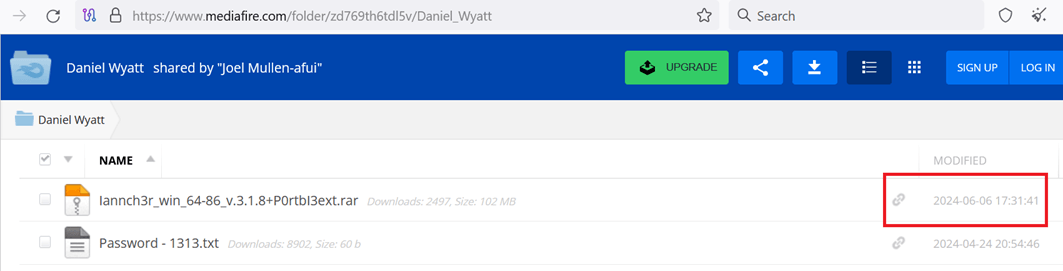
    The actors behind Vidar spread it by adding comments on YouTube that contain links to a ZIP or RAR archive hosted on a file-sharing platform which is changing every week. The archive is password protected, but the password is found at the same URL as the archive.

    Contents of the cloud storage

    The downloaded archive contains another password-protected archive, which contains the following files:

    1. converter.exe: legitimate ImageMagick application;
    2. vcomp100.dll: malicious DLL used for DLL hijacking;
    3. bake.docx: encrypted first stage loader;
    4. blindworm.avi: IDAT loader, the second stage payload.

    The legitimate converter.exe loads vcomp100.dll as the former is vulnerable to DLL hijacking. Next, the malicious DLL reads the encrypted “bake.docx” file, gets the payload and the key from a specified offset, and decodes the payload. That payload is a variant of the Penguish downloader containing an IDAT packed sample. This means we can use the IDAT loader extractor to extract the final payload, which is the Vidar stealer.

    What is interesting here is that instead of stealing data, Vidar actually downloads the ACR stealer. The latter, like many stealers these days, is interested in browser data and wallets. Vidar, too, normally targets the same types of data, however in this case, it uses the ACR Stealer as an exfiltration module.

    According to our telemetry data, most victims are found in Brazil.

    Conclusion

    Stealers are found everywhere, and they are popular among cybercriminals. Stolen data can be either leveraged for further attacks by the attackers themselves or sold on the dark web. Although stealers implement extensive support for snatching crypto-related data, the harvesting of credentials can be just as damaging – or even more so. This is especially true for credentials that provide access to corporate networks which can then be leveraged to deploy ransomware attacks.

    Relatively simple measures, such as 2FA, choosing unique passwords, downloading software only from official websites, and double-checking the website before downloading, can complicate this kind of attacks.

    If you would like to stay up to date on the latest TTPs being used by criminals, or if you have questions about our private reports, contact us at crimewareintel@kaspersky.com.

    Indicators of compromise

    Kral
    02c168aebb26daafe43a0cccd85397b2
    039bebb6ccc2c447c879eb71cd7a5ba8
    0509cc53472b265f8c3fc57008e31dbe

    Amos
    ec7f737de77d8aa8eece7e355e4f49b9
    dd2832f4bf8f9c429f23ebb35195c791

    Vidar
    6f9d3babdeea3275489589ee69bc3f31

    MIL OSI Economics –

    January 24, 2025
  • MIL-OSI Global: Tim Walz’s candidacy for vice president underscores the political power of teachers

    Source: The Conversation – USA – By Christopher Chambers-Ju, Assistant Professor of Political Science, University of Texas at Arlington

    As a former high school teacher, Tim Walz represents a rarity among politicos. PeopleImages/E+ via Getty Images

    On July 25, 2024, Vice President Kamala Harris spoke to the American Federation of Teachers – the first labor union she addressed after announcing her candidacy for president.

    Even though she was speaking to a roomful of teachers, Harris didn’t focus on teacher-specific issues. Rather, she spoke about general policies that working people want, such as sick leave and paid family leave. She also spoke about the labor movement more broadly. “When unions are strong, America is strong,” she said.

    At the Democratic National Convention in August, Harris’ running mate Tim Walz proudly claimed his identity as a teacher. On Instagram, he described himself as being a “dues-paying, card-carrying member of my teachers union for years.”

    Public school teachers are not often talked about as a major force in national politics. They are not wealthy donors. They rarely hold public office. Many congresspeople claim to have been “educators,” but that includes law school professors, school fundraisers and school district superintendents.

    Teachers and their unions, however, can be influential in politics – in the U.S. and globally. Walz’s candidacy prompts a reexamining of their role. Whose interests do they represent? Can teachers really speak on behalf of broader communities?

    Our view, based on political science research we and others have carried out, is that teachers are one of the most – if not the most – well-organized groups advocating in favor of the economic interests of working people in politics today.

    The rise of teachers as political candidates around the world

    Tim Walz taught social studies for 20 years at Mankato West High School in Minnesota. When he served in Congress, he was one of only a handful of teachers from public K-12 schools. The overwhelming majority of congresspeople are lawyers and business professionals who are mostly from higher-income backgrounds, and a disproportionate number studied at elite institutions.

    Walz’s candidacy as a high school teacher turned high-profile politician has few obvious precedents in the United States. But Walz is far from unique globally.

    In many developing democracies, from Colombia to Indonesia and India, teachers are a large group of public sector workers who are organized through powerful labor unions. Around the world, teacher candidates have risen through the ranks politically. In Colombia, for example, the teachers union has 270,000 members, making it the largest union in that country. A number of leaders from that union have moved from the union presidency to the Senate of the republic.

    The 2024 book “Mobilizing Teachers” documents the emergence of teachers as a political force in Latin America beginning three decades ago.

    Former president of Peru Pedro Castillo may be best remembered for being ousted from office in 2022 after attempting to dissolve Congress. But his origins are notable. He was a humble elementary school teacher and union leader who improbably rose to the presidency in 2021. Similarly in Mexico, national teachers union leader Alfonso Cepeda Salas became a senator for the ruling party in 2024.

    Teachers unions aren’t always a force for good governance. In Mexico, they are widely criticized for using corrupt practices to influence politics, such as showing favoritism in promoting teachers aligned with certain parties. In the 1980s, however, teachers mobilized in the streets of Brazil, Chile and Mexico against military dictatorships and authoritarian rule, and Brazilian teachers unions advocated for broader causes such as the right to education and increased spending on public schools.

    In the U.S., public K-12 teachers do not usually become high-profile political candidates. However, they emerged as major political actors in other ways in the late 20th century. This was spurred by economic changes such as automation and globalization, which disrupted the work of many unions – such as manufacturing unions – but not teachers. Today, 1 in 5 union members are teachers. And teachers as a whole make up 8% of the college-educated workforce in the United States.

    Through their labor unions, teachers in the U.S. are sometimes recruited as political candidates, especially in state and local elections. However, their numbers are few. In 2018, for example, teachers were on the ballot in record numbers but still represented just 3% of candidates.

    Teachers and the public interest

    Teachers in the U.S. have faced criticism for opposing reforms such as school choice and connecting teacher evaluations to student test scores. Some scholars believe these reforms could improve education quality.

    In the U.S., there’s also concern about teachers’ strong influence on school board elections and Democratic Party primaries. Some researchers argue that teachers unions have disproportionate power because “they are actively and purposely engaged in an electoral effort to control their own superiors” – school board members. In other words, unlike private sector workers, teachers unions use their political clout to select their own bosses.

    Yet, other scholars have shown that the policies teachers pursue often align with the interests of students. Teachers unions have long argued that better teacher working conditions mean better learning conditions for students, and that’s what they often advocate for.

    In some states and cities, there are severe teacher shortages, which some analysts cite to argue that low pay for teachers has made it an unattractive career. These shortages not only affect the quality of education but also reflect the economic concerns of middle-class Americans. Teacher salaries have stagnated, even though a large body of economics research has shown a cause-and-effect relationship between increasing educational spending and better student achievement, especially when funding increases go to teacher salaries.

    Over the past 16 years in the U.S., teacher strikes have raised teacher salaries and the salaries of other education workers, such as janitors, bus drivers and administrative staff. Teachers have also highlighted the kinds of school-quality concerns that many parents care about, such as free school meals and hiring more counselors, nurses and psychologists at schools.

    The role of teachers in preserving democracy

    Public school teachers are uniquely positioned to uphold democratic institutions – a primary concern for many scholars heading into this election. Teachers are deeply embedded in local communities and habitually organize to coordinate political efforts with other local nonprofits and grassroots groups. We believe they’re one of the few middle-class groups still able to push back against the growing power of large corporations, megadonors and media conglomerates.

    Melissa Arnold Lyon receives funding from a postdoctoral fellowship with the National Academy of Education (NAEd) and the Spencer Foundation.

    Christopher Chambers-Ju does not work for, consult, own shares in or receive funding from any company or organization that would benefit from this article, and has disclosed no relevant affiliations beyond their academic appointment.

    – ref. Tim Walz’s candidacy for vice president underscores the political power of teachers – https://theconversation.com/tim-walzs-candidacy-for-vice-president-underscores-the-political-power-of-teachers-239812

    MIL OSI – Global Reports –

    January 24, 2025
  • MIL-OSI Global: Could fungi actually cause a zombie apocalypse?

    Source: The Conversation – USA – By Matt Kasson, Associate Professor of Mycology and Plant Pathology, West Virginia University

    A zombie cicada fungus, _Massospora cicadina_, has consumed the rear end of this periodical cicada, replacing it with a ‘plug’ of chalky spores. Matt Kasson, CC BY-ND

    Curious Kids is a series for children of all ages. If you have a question you’d like an expert to answer, send it to curiouskidsus@theconversation.com.


    Is a zombie apocalypse caused by fungi, like the Cordyceps from “The Last of Us,” something that could realistically happen? – Jupiter, age 15, Ithaca, New York


    Zombies strike fear into our hearts – and if they’re persistent, eventually they get inside our heads. Animals taken over by zombies no longer control their own bodies or behaviors. Instead, they serve the interests of a master, whether it’s a virus, fungus or some other harmful agent.

    The term “zombi” comes from Vodou, a religion that evolved in the Caribbean nation of Haiti. But the idea of armies of undead, brain-eating human zombies comes from movies, such as “Night of the Living Dead,” television shows like “The Walking Dead” and video games like Resident Evil.

    Those all are fictional. Nature is where we can find real examples of zombification – one organism controlling another organism’s behavior.

    I study fungi, a huge biological kingdom that includes molds, mildews, yeasts, mushrooms and zombifying fungi. Don’t worry – these “brain-eating organisms” tend to target insects.

    The fungus Ophiocordyceps unilateralis infects and kills ants. Over time, they can diminish the local ant population.

    Insect body snatchers

    One of the most famous examples is the zombie ant fungus, Ophiocordyceps unilateralis, which is part of a larger group known as Cordyceps fungi. This fungus inspired the video game and HBO series “The Last of Us,” in which a widespread fungal infection turns people into zombie-like creatures and causes society to collapse.

    In the real world, ants usually comes into contact with this fungus when spores – pollen-size reproductive particles that the fungus makes – fall onto the ant from a tree or plant overhead. The spores penetrate the ant’s body without killing it.

    Once inside, the fungus spreads in the form of a yeast. The ant stops communicating with nestmates and staggers around aimlessly. Eventually it becomes hyperactive.

    Finally, the fungus causes the ant to climb up a plant and lock onto a leaf or a stem with its jaws – a behavior called summiting. The fungus changes into a new phase and consumes the ant’s organs, including its brain. A stalk erupts from the dead insect’s head and produces spores, which fall onto healthy ants below, starting the cycle again.

    A citrus cicada nymph infected with Ophiocordyceps sobolifera. The nymph lives underground, but the fungus ensures that it ‘summits’ to just below the soil line, so that its stalks (pink) and spores find their way above ground.
    Matt Kasson, CC BY-ND

    Scientists have described countless species of Ophiocordyceps. Each one is tiny, with a very specialized lifestyle. Some live only in specific areas: for example, Ophiocordyceps salganeicola, a parasite of social cockroaches, is found only in Japan’s Ryukyu Islands. I expect that there are many more species around the world awaiting discovery.

    The zombie cicada fungus, Massospora cicadina, has also received a lot of attention in recent years. It infects and controls periodical cicadas, which are cicadas that live underground and emerge briefly to mate on 13- or 17-year cycles.

    The fungus keeps the cicadas energized and flying around, even as it consumes and replaces their rear ends and abdomens. This prolonged “active host” behavior is rare in fungi that invade insects. Massospora has family members that target flies, moths, millipedes and soldier beetles, but they cause their hosts to summit and die, like ants affected by Ophiocordyceps.

    The real fungal threats

    These diverse morbid partnerships – relationships that lead to death – were formed and refined over millions of years of evolutionary time. A fungus that specializes in infecting and controlling ants or cicadas would have to evolve vastly new tools over millions more years to be able to infect even another insect, even one that’s closely related, let alone a human.

    In my research, I’ve collected and handled hundreds of living and dead zombie cicadas, as well as countless fungus-infected insects, spiders and millipedes. I’ve dissected hundreds of specimens and uncovered fascinating aspects of their biology. Despite this prolonged exposure, I still control my own behavior.

    Dozens of Massospora cicadina-infected 13-year cicadas being prepared for drying and analyzing in Matt Kasson’s mycology lab at West Virginia University.
    Matt Kasson, CC BY-ND

    Some fungi do threaten human health. Examples include Aspergillus fumigatus and Cryptococcus neoformans, both of which can invade people’s lungs and cause serious pneumonia-like symptoms. Cryptococcus neoformans can spread outside the lungs into the central nervous system and cause symptoms such as neck stiffness, vomiting and sensitivity to light.

    Invasive fungal diseases are on the rise worldwide. So are common fungal infections, such as athlete’s foot – a rash between your toes – and ringworm, a rash that despite its name is caused by a fungus.

    Fungi thrive in perpetually warm and wet environments. You can protect yourself against many of them by showering after you get sweaty or dirty and not sharing sports gear or towels with other people.

    Not all fungi are scary, and even the alarming ones won’t turn you into the walking dead. The closest you’re likely to come to a zombifying fungus is through watching scary movies or playing video games.

    If you’re lucky, you might find a zombie ant or fly in your own neighborhood. And if you think they’re cool, you could become a scientist like me and spend your life seeking them out.


    Hello, curious kids! Do you have a question you’d like an expert to answer? Ask an adult to send your question to CuriousKidsUS@theconversation.com. Please tell us your name, age and the city where you live.

    And since curiosity has no age limit – adults, let us know what you’re wondering, too. We won’t be able to answer every question, but we will do our best.

    Matt Kasson has received funding from the National Science Foundation, the National Geographic Society, USDA ARS and USDA APHIS.

    – ref. Could fungi actually cause a zombie apocalypse? – https://theconversation.com/could-fungi-actually-cause-a-zombie-apocalypse-230761

    MIL OSI – Global Reports –

    January 24, 2025
  • MIL-OSI Global: Presidential election could help decide fate of the 70,000 Afghans living temporarily in the US

    Source: The Conversation – USA – By Idean Salehyan, Professor of political science, University of North Texas

    Afghan evacuees arrive at Dulles International Airport in Dulles, Va., on Aug. 27, 2021. Olivier Douliery/AFP via Getty Images

    The Taliban, an ultraconservative Islamic political group, retook control of Kabul a little more than three years ago, dashing many Afghans’ hopes for a tolerant, democratic government.

    As U.S. troops withdrew from Afghanistan days after the Taliban’s resurgence in 2021, hundreds of thousands of Afghans flocked to the Kabul airport, desperate to be evacuated. Among them were Afghans who worked for U.S. military and NATO forces as interpreters and in other roles – in addition to other people who were afraid of the Taliban.

    Chaotic and sometimes violent scenes of the poorly planned evacuation captured media attention for weeks, as the U.S. military airlifted nearly 124,000 people out of Afghanistan.

    Many of the Afghans who fled their country in 2021 went to Iran, Pakistan and other nearby countries. To offer a lifeline to the Afghans who came to the U.S., the Biden administration announced on Aug. 29, 2021, that evacuated Afghans could legally – but temporarily – stay in the U.S.

    As a scholar of civil conflict and refugee migration, I have been following the Afghan evacuation and policy responses in Washington since 2021. While President Joe Biden renewed humanitarian parole for approximately 70,000 Afghans in 2023, these people remain in legal limbo, unable to fully move forward in their lives.

    The upcoming election will likely be decisive in resolving Afghans’ legal status or not.

    An Afghan couple, including a man who worked as an interpreter for the U.S. military, walk in Charlestown, Mass. in February 2022.
    Joseph Prezioso/AFP via Getty Images

    Understanding humanitarian parole

    The U.S. admitted Afghans into the country through what’s called humanitarian parole, a federal program that the president can authorize to give protection to people in other countries facing extreme emergency circumstances.

    Humanitarian parole must be renewed by a presidential administration every two years, unlike the U.S. refugee admission policy, which gives foreigners who face legitimate fears of returning home the right to get permanent residency in the U.S.

    The Afghan parole program enabled people like Mina Bakhshi – a female rock climber who had no future under the Taliban because of her gender – to enter the U.S. and attend college.

    It also helped people like Qasim Rahimi, a journalist in Afghanistan, to flee to safety with his family and settle in Kansas City, Missouri.

    About one-third of the Afghan evacuees who came to the U.S. settled in California, Virginia and Texas, while the rest settled in other states.

    Yet humanitarian parole is not a permanent solution.

    While these Afghan people can legally work and attend school in the U.S., they often face obstacles with getting stable work or even finding a home to rent because they are not permanent residents and do not have Social Security numbers.

    A long history of parole in the US

    Typically, the U.S. government has used humanitarian parole to rescue people from conflicts in which U.S. armed forces are involved, like Vietnam and Ukraine.

    People who face serious danger because of conflict or other reasons can also enter the U.S. by applying for and receiving refugee status, but it can take more than a year for it to be granted. Humanitarian parole lets the U.S. government act quickly when it wants to help foreigners come to the country during an emergency.

    At the end of the Vietnam War in 1975, for example, the U.S. admitted thousands of Vietnamese, Cambodian and Laotian migrants fleeing their countries.

    As then-President Gerald Ford stated in an address to Congress in 1975, providing humanitarian parole to Vietnamese people who supported the U.S. in its war effort in Vietnam was a “profound moral obligation.” In 1977, Congress passed a law that allowed these refugees to permanently settle in the U.S.

    The U.S. also issued humanitarian parole to Hungarian and Cuban refugees who fled communist dictatorships in the 1950s.

    More recently, the U.S. granted parole to a group of Haitian orphans following a major earthquake in 2010, and to children from Central America who illegally crossed the border without their parents during the Obama administration.

    In 2022, the U.S. government again used humanitarian parole to welcome more than 125,000 Ukrainians fleeing the war in their country.

    What the Afghan Adjustment Act would do

    While Biden issued temporary humanitarian parole to Afghans in 2021 and renewed it in 2023, only Congress has the power to pass an act that would ensure they can legally stay in the country permanently. Yet, a deadlocked Congress has failed to pass legislation to adjust the status of Afghans.

    A proposed bipartisan bill in Congress called the Afghan Adjustment Act would allow Afghan parolees to apply for permanent legal status.

    A coalition of refugee advocates and veterans organizations has championed the Afghan Adjustment Act.

    Yet, a handful of Republican lawmakers, led by Sen. Chuck Grassley, have opposed the act on national security grounds. They say that vetting procedures for newcomers are not sufficient, which could lead to security risks. Some want a more targeted program that focuses only on Afghans who worked with U.S. troops.

    Republican Sen. Tom Cotton has proposed another bill that would significantly reduce a president’s authority to use humanitarian parole for Afghans or anyone else in the future.

    An Afghan evacuee living in Charlestown, Mass., in February 2022 shows a photo of himself working in Afghanistan as a translator.
    Joseph Prezioso/AFP via Getty Images

    The election factor

    The fate of Afghan parolees will likely be determined by the results of the upcoming election. Should Democratic presidential nominee Kamala Harris win office, I believe she is likely to renew parole for Afghans for at least two more years, as Biden did in 2023. Congress may be more likely to pass the Afghan Adjustment Act after the election, since it is rare to pass major legislation during an election period.

    What Republican presidential nominee Donald Trump might do about Afghans living temporarily in the U.S. is an open question. During Trump’s previous presidential term, his administration focused in part on curbing immigration. This included slashing refugee admissions and making it harder to issue U.S. visas to Afghans and Iraqis who worked with the U.S. military.

    On the campaign trail, Trump has promised to renew his travel ban on Muslims and to continue to limit immigration to the U.S.

    In the meantime, Afghans who fled the Taliban continue to face uncertainty about their future in the U.S.

    Idean Salehyan is affiliated with the Niskanen Center in Washington, D.C.

    – ref. Presidential election could help decide fate of the 70,000 Afghans living temporarily in the US – https://theconversation.com/presidential-election-could-help-decide-fate-of-the-70-000-afghans-living-temporarily-in-the-us-233941

    MIL OSI – Global Reports –

    January 24, 2025
  • MIL-OSI Global: Aurora and Springfield aren’t the first cities to become flash points in US immigration debate − here’s what happened in other places used as political soapboxes

    Source: The Conversation – USA – By Miranda Cady Hallett, Associate Professor of Anthropology and Human Rights Center Research Fellow, University of Dayton

    Many Americans had probably never heard of Aurora, Colorado, or Springfield, Ohio, before Donald Trump broadcast his false claims about these cities nationwide late in the 2024 presidential campaign.

    First, in September 2024, the Republican presidential nominee claimed in a debate with Kamala Harris that Haitian immigrants in Ohio were stealing and eating other residents’ pets. A month later, at a rally in Aurora, Trump declared that city to be a “war zone” overrun by Venezuelan gangs.

    Trump’s false claims went viral, creating chaos for these communities. Reporters rushed in. In Springfield, so did bomb threats.

    These stories feel familiar to me as an anthropologist whose work has explored the social dynamics of immigrant destinations in the United States. Springfield and Aurora are only the latest small cities to become sudden flash points in America’s ongoing – and increasingly heated – immigration debate.

    Siler City, North Carolina

    The small town of Siler City, North Carolina, was used as a backdrop for anti-immigrant political rhetoric a quarter century ago.

    In the late 20th century, jobs in Siler City’s local poultry industry became a magnet for Latin American immigrants and their families, leading to rapid demographic change. In 1990, the town was 98% white and African American. By the 2000 census, almost 40% of the town’s 6,000 residents identified as Hispanic or Latino.

    This shift caused some racial tension, and in 2000 the notoriously racist politician David Duke headlined an anti-immigrant rally outside City Hall in Siler City.

    Duke, who was also a former Louisiana state representative and former Ku Klux Klan grand wizard, railed against Latin American immigrants.

    “Do you understand that immigration will destroy the foundations of this country?” Duke asked. “When you have more diversity, you end up with more division and more conflict,” he said, warning of “extinction” for white people in the U.S.

    Duke also railed against school integration. Thirty-five years after desegregation, this remained a favorite complaint of white supremacists.

    Only a handful of people, many of them from out of town, showed up to support Duke’s message, carrying signs like “The Melting Pot is Boiling Over.”

    In the short term, Duke’s rally exacerbated polarization in Siler City. It also stoked fear and anxiety among foreign-born residents, some of whom believed the local government had endorsed Duke’s message because the rally took place in front of the town hall.

    Looking back, however, many Siler City residents see the David Duke incident as a turning point – toward an improvement in ethnic relations in their town.

    After Duke’s rally, local politicians spoke out against the divisiveness and hatred. Within a few months, residents offended by the anti-immigrant rally had organized a unity event and cultural festival.

    By the time I visited Siler City in 2008 as a graduate research assistant studying new immigration destinations, many locals noted with pride that white supremacists could gain no foothold in town. They said Duke’s racist rally caused neighbors to stop and think, and decide what side they were on.

    Today, Siler City has an immigrant community advisory board, and the government actively works to promote integration and social cohesion among residents.

    Lewiston, Maine

    A similar story unfolded in the working-class Maine city of Lewiston in 2002 after its mayor wrote a public letter about the city’s rising refugee population.

    Just over 1,000 Somali refugees had settled in the city in the preceding year, having been displaced by civil war and drought back home.

    “This large number of new arrivals cannot continue without negative results for all,” Mayor Laurier Raymond wrote. “Our city is maxed out financially, physically and emotionally.”

    He called on Somali people to “pass the word (that) we have been overwhelmed.”

    Raymond’s letter got the attention of organized white supremacist groups, who descended on Lewiston, a former sawmill hub of about 35,000 people. In response, local people formed an ad hoc community organization called “Many and One,” and when the hate group World Church of the Creator rallied in Lewiston on Jan. 11, 2003, only 36 people attended. About 4,000 counter-protesters came out to support the Somali community.

    A film crew that had showed up to document the conflict ended up telling the story of Lewistonians sending a message of acceptance and unity.

    The temporary stresses on Lewiston were real, but in general locals came down on the side of inclusion and welcome. By 2021, Lewiston had one of the country’s highest per capita populations of Muslim residents, and of Somali-Americans.

    Twenty years later, the arrival of Somali families has become part of the story Lewiston tells about its history and identity.

    Conservative and anti-immigrant messages continue to resonate in the town. Yet many locals, like author Cynthia Anderson, say they are “moved and inspired” by the resilience of their Somali-American neighbors.

    Like most Haitians living in Springfield, Somali people did not choose to leave their country. They were displaced, and many were traumatized – yet they built new lives and contributed to the community.

    What can this history tell us now?

    While there are key differences between Springfield, Aurora, Siler City and Lewiston, these four places also share many attributes.

    These are all economically beleaguered cities with higher crime rates than the U.S. average but lower housing costs and more entry-level jobs in manufacturing. Such places are sometimes called “emerging gateway cities,” because they are appealing to immigrant families seeking opportunity.

    Yet the same conditions also make these cities attractive to political figures seeking a stage to blame immigrants for the community’s preexisting economic, social and public safety challenges.

    As in Siler City and Lewiston, Springfield and Aurora have mainly rejected false political claims and negative messages about their immigrant residents.

    In Springfield, residents have organized rallies and a prayer vigil in solidarity with Haitians, and Ohio’s Republican governor defended the city against Trump’s allegations.

    The Republican mayor of Aurora said before Trump’s Oct. 11 visit that he hoped “to show him and the nation that Aurora is a considerably safe city – not a city overrun by Venezuelan gangs.”

    The 2024 election has brought tense and polarizing times to these towns. But history suggests that Springfield and Aurora will eventually be home to vibrant and integrated immigrant communities.

    Once the vitriol fades, Trump’s incendiary misinformation will likely become just a footnote to the larger story of the country’s 21st-century transformation.

    Miranda Cady Hallett received funding from the Russell Sage Foundation’s “New Immigrant Destinations” project in 2008-2009, providing support for the North Carolina-based research mentioned in this article.

    – ref. Aurora and Springfield aren’t the first cities to become flash points in US immigration debate − here’s what happened in other places used as political soapboxes – https://theconversation.com/aurora-and-springfield-arent-the-first-cities-to-become-flash-points-in-us-immigration-debate-heres-what-happened-in-other-places-used-as-political-soapboxes-239809

    MIL OSI – Global Reports –

    January 24, 2025
  • MIL-OSI Security: Activity in the U.S. Attorney’s Office

    Source: United States Bureau of Alcohol Tobacco Firearms and Explosives (ATF)

    Federal Land Offenses

    Michael A. Tunis, age 66 of West Yellowstone, Montana, was sentenced to 30 days in jail and a 5-year period of probation, with a ban from Yellowstone National Park during that time, for a DUI per se and open container violation. This case was prosecuted by Assistant U.S. Attorney Ariel Calmes. U.S. Magistrate Judge Stephanie A. Hambrick imposed the sentence on Oct. 11, in Mammoth, Wyoming.

    Darrell C. Osterhout, age 63 of New Brighton, Minnesota, was sentenced to 7 days in jail and 1 year of probation, with a ban from Yellowstone National Park during that time, for DUI per se and interference with law enforcement functions. This case was prosecuted by Assistant U.S. Attorney Ariel Calmes. U.S. Magistrate Judge Stephanie A. Hambrick imposed the sentence on Oct. 16, in Mammoth, Wyoming.

    Production of Child Pornography

    Robert Wayne Eaker, 38, of Boulder, Wyoming, was sentenced to 216 months in federal prison for production of child pornography with 15 years of supervised release. The court also ordered the defendant to pay $36,000 in restitution and a $100 special assessment. According to court documents, Eaker is a registered sex offender for prior offenses involving the sexual abuse of minors. In September 2023, the Wyoming Division of Criminal Investigation (DCI) Internet Crimes Against Children (ICAC) Task Force were conducting an online investigation for people sharing child pornography. Agents discovered a Wyoming IP address sharing numerous files of child pornography and traced it back to Eaker. Agents later received a search warrant for the house where he was living. Agents found Eaker had produced lewd and lascivious files of a child. Eaker admitted to producing the files without the child’s knowledge. In addition, investigators found hundreds of files of child pornography containing prepubescent children on multiple devices belonging to Eaker. DCI-ICAC investigated the crime and Assistant U.S. Attorney Z. Seth Griswold prosecuted the case. Eaker was indicted on May 16, pleaded guilty on July 25, and U.S. District Court Judge Kelly H. Rankin imposed the sentence on Oct. 16, in Cheyenne. 

    Drug and Firearm Offenses

    Brady Mitchell, 33, a transient, was sentenced to 21 months’ imprisonment for being a felon and unlawful user of a controlled substance in possession of a firearm. According to court documents, on April 13, Cheyenne Police Officers contacted Mitchell who was asleep in his van in a gas station parking lot. During questioning, officers saw a hatchet under his seat and smelled marijuana. They asked him to step out of his van so they could secure the weapon and conduct a search. Officers found a .22 revolver on Mitchell and approximately 12 ounces of marijuana, 3.31 grams of Xanax, 3.75 grams of fentanyl, and 1.13 grams of methamphetamine in his van. Mitchell is a previously convicted felon and not allowed to possess a firearm. The Bureau of Alcohol Tobacco Firearms and Explosives and the Cheyenne Police Department investigated this crime. Assistant U.S. Attorney, Michael J. Elmore prosecuted the case. Mitchell was indicted on April 13, pleaded guilty on July 11, and U.S. District Court Judge Kelly H. Rankin imposed the sentence on Oct. 15, in Cheyenne. 

    llegal Re-entry of a Previously Deported Alien

    Luis Barajas-Morales, 46, of Mexico, was sentenced to time served plus 10 days for deportation for illegal reentry into the United States. According to court documents, on Feb. 26, Barajas-Morales was arrested by the Teton County Sheriff’s Department for the charge of contempt of court. Immigration and Customs Enforcement (ICE) was contacted. A Deportation Officer processed the defendant and obtained fingerprints matching pre-existing fingerprints in their database indicating Barajas-Morales was in the U.S. illegally and had not applied for permission to reenter the U.S. after being formally removed in December 2003. ICE investigated the crime and Assistant U.S. Attorney Cameron J. Cook prosecuted the case. U.S. District Court Judge Alan B. Johnson imposed the sentence on Oct. 15, in Cheyenne. Case No. 24-CR-00106.


    About the United States Attorney’s Office

    The United States Attorney’s Office is responsible for representing the federal government in virtually all litigation involving the United States in the District of Wyoming, including all criminal prosecutions for violations of federal law, civil lawsuits brought by or against the government, and actions to collect judgments and restitution on behalf of victims and taxpayers. The Office is involved in several programs designed to make our communities safer. They include:

    Environmental Justice
    The fair treatment and meaningful involvement of all people regardless of race, color, national origin, or income with respect to the development, implementation, and enforcement of environmental laws, regulations, and policies.

    Project Safe Childhood
    Project Safe Childhood (PSC) is a DOJ initiative that combats the proliferation of technology-facilitated sexual exploitation crimes against children. The threat of sexual predators soliciting children for sexual contact is well-known and serious.

    Project Safe Neighborhoods
    Project Safe Neighborhoods (PSN) is a nationwide commitment to reducing gun and gang crime in America by networking existing local programs that target gun crime and providing these programs with additional tools necessary to be successful.

    Victim Witness Assistance
    The Victim Witness Coordinator for the United States Attorney’s Office for the District of Wyoming is dedicated to making sure that victims of federal crimes and their family members are treated with compassion, fairness, and respect.

    To report a federal crime, go to: https://www.justice.gov/actioncenter/report-crime#trafficking

    MIL Security OSI –

    January 24, 2025
  • MIL-OSI Africa: Video message for the COP16 Opening Ceremony on Biodiversity

    Source: United Nations – English

    ownload the video: 

    https://s3.amazonaws.com/downloads2.unmultimedia.org/public/video/evergreen/MSG+SG+/SG+8+Oct+24/3271890_MSG+SG+BIODIVERSITY+OPENING+CEREMONY+08+OCT+24.mp4

    Excellencies, friends,

    I thank the Government of Colombia for hosting this important COP:

    The COP to make peace with nature;

    And the first since countries adopted the historic Kunming-Montreal Global Biodiversity Framework.
     
    That Framework is grounded in a clear truth: for humanity to thrive, nature must flourish.

    Destroying nature inflames conflict, hunger and disease;

    Fuels poverty, inequality, and the climate crisis;

    And damages sustainable development, green jobs, cultural heritage, and GDP.

    A collapse in nature’s services – such as pollination, and clean water – would see the global economy lose trillions of dollars a year – with the poorest hardest hit.

    The Global Biodiversity Framework promises to reset relations with Earth and its ecosystems.

    But we are not on track.

    Your task at this COP is to convert words into action.

    That means countries presenting clear plans that align national actions with all the Framework’s targets.

    It means agreeing a strengthened monitoring and transparency framework.

    And it means honouring promises on finance – and accelerating support to developing countries.

    We must leave Cali with significant investment in the Global Biodiversity Framework Fund, and commitments to mobilise other sources of public and private finance to deliver the Framework in full.

    And those profiting from nature must contribute to its protection and restoration.

    Developing countries are being plundered:

    Digitised DNA from biodiversity underpins scientific discoveries and economic growth. But developing countries don’t gain fairly from these advances – despite being home to extraordinary richness. 

    This COP must operationalise the mechanism that has been agreed – to ensure that when countries share genetic information, they share benefits – equitably. 

    It must engage all of society – as “La COP de la gente”

    And it must strengthen the role of Indigenous Peoples and local communities.

    Indigenous Peoples are the world’s great guardians of biodiversity; luminaries of sustainable use.

    Their knowledge and stewardship must be at the heart of biodiversity action at every level. 

    Excellencies,

    We have a plan to rescue humanity from a degraded Earth.

    I look forward to seeing you in person at the end of the COP to hear how you have delivered.

    Thank you.

    MIL OSI Africa –

    January 24, 2025
  • MIL-OSI Global: The 2026 Commonwealth Games will create an economic model that allows smaller nations to step up and host

    Source: The Conversation – UK – By Gayle McPherson, Chair in Events and Cultural Policy, and Director of the Research Centre for Culture, Sport and Events, University of the West of Scotland

    The tension was palpable as we waited to see if Glasgow would rescue the Commonwealth Games for 2026. After the Australian state of Victoria pulled out, the eyes of the Commonwealth turned to Scotland.

    Glasgow delivered a hugely successful event in 2014, raising questions about whether a future games there could match that success. I was part of the bid team as the cultural advisor for Glasgow 2014 and went on to conduct research on the impact of the games on sustainable community participation for people with a disability. So I understand the positive impact the games had for Scotland.

    My work over the past couple of decades has examined the social impact of mega sports events and their role as agents for change, specifically disability rights, social inclusion, and peace and diplomacy. In other words, considering whether major sport events truly serve as a force for good as it’s often argued they do. If this is indeed the case, why shouldn’t smaller Commonwealth nations benefit from hosting the games?

    Experts often criticise the economic and social impact of major sporting events, but others argue for the social value these events can bring to communities long after they have left town.

    My research team conducted a survey on perceptions of the impact of the Glasgow 2014 games that revealed overwhelming support for their lasting impact on the city and Scotland.

    The results showed that 75% of respondents believed the games increased civic and national pride, boosted Glasgow and Scotland’s chances of securing future events, enhanced their international reputation, and, as often attested, strengthened the nation’s soft power. Scotland ranks second (behind Quebec) out of ten similar territories for overall soft power, and third for sport.

    Amid a rise in the Bric countries (Brazil, Russia, India and China) using sport in soft power terms, other nations have sought to be part of this too. The Commonwealth Games is increasingly being used as a vehicle for positive change and regional soft power.


    Read more:
    Glasgow’s 2026 Commonwealth Games needs to showcase an affordable and socially beneficial way of hosting sporting events


    There has been a rise in emerging states running mega sports events, often wealthy illiberal nations such as China and Qatar. However, what about the smaller nations in the Commonwealth? Only two – Malaysia and Jamaica – have ever hosted the Commonwealth Games, and the only other nation outside of Australia, Canada, UK and New Zealand to do so is India.

    Glasgow is offering a new model that will create a legacy not only for Scotland, but for many other smaller nations in the Commonwealth. The games are known as the “Friendly Games” – it’s a community that is known for three core values: humanity, equality and destiny.

    The family of nations

    The African nations form a significant part of the Commonwealth sports movement, so shouldn’t we expect the model that Glasgow is developing to be transferable, ensuring that sport can serve a common good? An environmentally sustainable approach would use facilities and networks already in place to help developing nations, which already suffer disproportionately in terms of climate and environmental risks.

    Under this model, venues and infrastructure are already in place. The event is athlete-focused, with competitors staying in hotels as opposed to a purpose-built athlete village, and transport needs minimised through walking or the use of team buses. The 2026 Glasgow event could serve as a blueprint for a sustainable approach to games delivery, inspiring nations such as Ghana, which already has the necessary venues and infrastructure to take on future Commonwealth Games.

    With just ten sports across four venues, Glasgow 2026 has thought differently about delivery and digital broadcast. This is the only fully integrated games, hosting para competition at the same time as able-bodied events. This too will help smaller nations’ para-athletes, who often do not get a chance to compete internationally.

    The Commonwealth is made up of 56 independent countries and the Commonwealth Games Federation consists of 72 member nations and territories. Gabon and Togo joined the Commonwealth in 2022, neither of which had previous ties to the British empire or other Commonwealth states, demonstrating that some countries still want to be part of a wider family.

    Given 19 African countries have Commonwealth Games Associations, we could well see one of these take the baton in future. The Ghanaian sports minister made it clear that after hosting a successful African Games in 2024, he believed the next step would be the Commonwealth Games.

    The recent African Games in Ghana’s capital Accra held athletics in a stadium that seats 11,000 spectators, while the World Athletics Championships in 2022 used the University of Oregon’s temporary stadium that seated 13,000. Commonwealth Games Scotland realised that, for 2026, Glasgow could host athletics at an existing stadium in the city with an upgrade to facilities that would provide seating for 11,000.

    Ghana and Scotland are learning from each other to lay a path for smaller nations to host future games. The Birmingham Commonwealth Games in 2022 contributed £1.2 billion to the UK economy and £79.5 million in social value. This is possible for small nations too.

    Glasgow 2026 can create a different legacy for the Commonwealth Games; one that is built on inclusion, diversity and sustainability and which incorporates the culture, values and pride of the Commonwealth. The time is right to offer a new approach to event delivery that offers other smaller nations the chance to benefit from sport as a force for good.

    Professor Gayle McPherson receives funding from the Social Sciences and Humanities Research Council and Sport Canada and has previously received funding from the Peter Harrison Foundation and Observatory for Sport in Scotland.

    – ref. The 2026 Commonwealth Games will create an economic model that allows smaller nations to step up and host – https://theconversation.com/the-2026-commonwealth-games-will-create-an-economic-model-that-allows-smaller-nations-to-step-up-and-host-241059

    MIL OSI – Global Reports –

    January 24, 2025
  • MIL-OSI Global: New report reveals that targets to save 30% of the ocean by 2030 aren’t being met

    Source: The Conversation – UK – By Callum Roberts, Professor of Marine Conservation, University of Exeter

    Qasimphotographer/Shutterstock

    The world is gathering in Colombia for the UN biodiversity conference known as Cop16, a biannual pulse-taking of the living planet where actions to protect the natural world are agreed. At its last meeting in 2022, an ambitious roadmap for nature protection was put in place. As part of that Kunming-Montreal global biodiversity framework, the UN set a bold goal to protect 30% of the world’s land and ocean by 2030 – known as “30×30” – which was agreed by 196 countries and bodies such as the European Commission.

    A key task in Colombia will be to measure progress, and the ocean is in the spotlight. A new report reveals that growth in marine protected areas – designated nature conservation zones that are protected from one or more harmful or damaging human activities – is far too slow to achieve this target. Analysis by conservation experts shows that protected areas are too scattered and unrepresentative.

    Efforts to protect marine life lag far behind conservation on land. When 30×30 was agreed, the world had protected roughly 17% of land and 7.8% of the sea. The sea element was already behind previous targets, set in 2010 by the UN’s Convention on Biological Diversity to reach 17% and 10% protection of land and sea by 2020.

    The 30×30 target is based on what scientists say is required to protect marine diversity, unlike the arbitrary 10% target it replaces. This would give a decent chance of meeting basic conservation goals like representing the full spectrum of habitats and species, or sustaining ecosystem services, such as the provision of seafood to eat and clean water for people. The 30×30 target was designed to turbo-charge conservation, end biodiversity loss and begin nature’s recovery. It hasn’t quite worked out that way, at least not yet.

    The new report, commissioned by philanthropic initiative the Bloomberg Ocean Fund and developed in partnership with environmental organisations Campaign for Nature, the Marine Conservation Institute and SkyTruth, is sobering. Since 2022, the global ocean protected area network has grown by only 0.5 percentage points to 8.3%, still nearly 2% short of the 10% target that 30×30 replaced. On this trajectory, the world is set to crawl towards just 9.7% by 2030. The world is failing badly and there seems little urgency in the pace of progress.

    Some marine protected area designations set fishing restrictions.
    Tamil Selvam/Shutterstock

    Most marine protected areas (MPA) fail the quality test too. Assessed against a global framework of effectiveness, called the MPA guide, most marine protected areas are insufficiently protected or managed to deliver positive benefits to nature. The report calculates that only 2.8% of the world’s ocean is protected “effectively” according to MPA guide criteria. They include tiny protected areas like the South Arran MPA in Scotland, which was set up in 2014 and monitored by the local community, and the vast and still wild Ascension Island protected area that encloses 172,000 square miles (445,000km²) of the tropical Atlantic.

    Even this low figure could overestimate current effectiveness. Reporting against MPA guide criteria is not yet mandatory for countries, so inconsistent definitions of protected areas complicate measurement of progress. And while some countries have declared MPAs as either “highly” or “fully” protected, the report suggests some of these areas aren’t sufficiently funded by governmental or other means to deliver effective management.

    Country protected-area networks – that’s the the total composition of all protected areas – are badly imbalanced. In the global north, countries like the US, UK and France have declared large highly and fully protected areas in their overseas territories to boost the coverage of effective MPAs. Meanwhile, in home waters, most MPAs remain subject to destructive and extractive industrial activities such as bottom-trawl fishing or offshore energy. Their headline percentage protection numbers therefore “blue-wash” the reality of ongoing damage and biodiversity loss.

    This October, Australia expanded the sub-Antarctic Heard and MacDonald Islands MPA, leading its environment minister to declare that with 52% of Australia’s waters protected, it had far exceeded 30×30. This and other huge offshore protected areas hide the fact that only 15% of coastal seas around the main Australian landmass are protected. Much of it is still open to industrial fishing and oil and gas production.

    The 30×30 goal will also be an impossible dream until the world ratifies the UN’s high seas treaty. This was agreed in 2022 to manage and protect the colossal 61% of the ocean (43% of the Earth’s surface) that lies beyond the sovereign waters of any nation. Until that treaty comes into force, there is no agreed legal mechanism to create MPAs there. At present, just 1.4% of international waters are protected, much of them in Antarctica.

    The Bloomberg report recommends governments speed up the creation of more marine protected areas. Another new study suggests a further 190,000 MPAs will be needed to reach 30×30, equivalent to 85 new protected areas daily for the rest of this decade.

    While numbers and size matter, the world must also stop paying lip service to conservation and deliver real protection for nature, matched with sufficient and durable finance to ensure they work. And the high seas treaty needs urgently ratified, since there otherwise remains a near half-planet sized hole in ambitions for 30×30.


    Don’t have time to read about climate change as much as you’d like?

    Get our award-winning weekly roundup in your inbox instead. Every Wednesday, The Conversation’s environment editor writes Imagine, a short email that goes a little deeper into just one climate issue. Join the 40,000+ readers who’ve subscribed so far.


    Callum Roberts receives funding from Convex Insurance, EU H2020, and EU Synergy. He is a board member of Nekton and Maldives Coral Institute, and advisor to Minderoo Foundation, Pew Bertarelli Ocean Legacy and CORDAP, and is a Pew Marine Fellow and WWF Fellow.

    – ref. New report reveals that targets to save 30% of the ocean by 2030 aren’t being met – https://theconversation.com/new-report-reveals-that-targets-to-save-30-of-the-ocean-by-2030-arent-being-met-241584

    MIL OSI – Global Reports –

    January 24, 2025
  • MIL-OSI USA: Climate futures for lizards and snakes

    Source: US Geological Survey

    Have you found your niche? 

    For us humans that usually means we’ve found a job or hobby that is perfectly suited to our interests and skills. A climate niche is similar—it’s the combination of temperature and precipitation that is perfectly suited to a species’ needs. Climate is particularly important for lizards and snakes because they are ectotherms, commonly referred to as “cold-blooded.”  That means they depend on the environment for warmth since their bodies don’t generate heat on their own. 

    It’s no surprise then that the southwestern U.S. and Mexico are home to the most lizard and snake species in western North America. However, as the climate warms and water availability becomes more variable, the locations of species’ climate niches could change. Parts of the continent that were previously suitable for a species could become too warm, while areas farther north or higher in elevation that were previously too cold for reptiles could become “just right.” 

    This classic Goldilocks story was the focus of a recent study by U.S. Geological Survey and U.S. Forest Service researchers. Where will those ideal climate conditions be as climate change unfolds across the West? Answering that question could help us predict where species will live in the future, providing valuable information for those working today to sustain biodiversity tomorrow.

    Scientists gathered data on the recent distributions of 130 lizard and snake species found from Mexico to western Canada. 

    The climate in each species’ current range defined its “climate-niche distribution” or the area where the temperature and precipitation have been suitable for survival and reproduction over the last 30 years or so. 

    Then, the team looked at where those same climate conditions may occur later in the century based on multiple climate change scenarios. 

    Overall, future climate-niche distributions are predicted to shift northward and towards higher elevations. 

    By the end of the century, 68% of the 130 species are predicted to have an expanded climate-niche distribution, potentially resulting in new species arriving across state and international borders if there are no barriers to dispersal. 

    Idaho and Colorado are the states predicted to have the most species knocking at their door. Both states border vast deserts to the south and have remarkable elevation gradients.

    Dede Olson, research ecologist with the U.S. Forest Service Pacific Northwest Research Station says:

    “As species migrate northward, they could cross jurisdictional boundaries, such as private lands, state lines, or even international borders. Natural resource agencies might find themselves managing species that were not previously within their regions.”

    On the map to the right, areas shaded in yellow have suitable climate for a larger number of reptile species. The maximum number of species is 68 in the recent time period and 69 in the future scenario. Areas in purple are suitable for fewer species. 

    Although most species are predicted to enjoy an expanded climate niche, 8.5% of species—mostly in the southwest United States and Mexico—could lose climate-niche space as parts of their current ranges become too warm and dry for survival. The states of Chihuahua and Sonora in Mexico are predicted to lose climate-niche space for the most species.

    The researchers behind the study released the full data set to the public and developed a data visualization tool to make it easy to explore the results and learn more about how climate change could impact local species. The data release includes downloadable data, including full-page illustrations of climate-niche predictions for each species. 

    Anyone from scientists and resource managers to local residents interested in the wildlife in their own backyard can use the tool. The interactive figures display the results by species, state, or elevation.

    Michelle Jeffries, a biologist with the USGS Forest and Rangeland Ecosystem Science Center says:

    “We created this data visualization tool so resource managers will be able to quickly identify which species may need attention as the climate changes. The tool brings the figures from the paper to life. It allows users to interact with the data, filter it, and create their own figures tailored to their specific needs or interests.”  

    Whether those reptile species can actually move towards cooler climates and survive in new habitats depends on many factors. Human-created barriers like cities or roads could block the way, or natural obstacles like rivers and canyons could halt progress. 

    On the map to the right, areas shaded in brown are predicted to lose climate-niche space for reptile species in the future. Areas in teal are predicted to gain species. These simulated dispersal scenarios are on opposite ends of the spectrum. Actual changes in climate-niche species richness will likely fall somewhere in between: some species will be able to disperse and others will not.

    There could be other habitat suitability considerations as well, like food availability or predators. It’s also possible that some species will adapt to the changing climate of their current range and stay put. Populations with enough genetic variation could evolve tolerance to warmer temperatures over generations. In other words, a shift in climate-niche doesn’t necessarily mean a species’ distribution will shift accordingly.

    David Pilliod, research ecologist with the USGS and lead author of the publication said:

    “Researchers around the world are looking at links between genetics and climate adaptation, temperature and reproduction, the timing of life history events and migrations…it’s a long list. Reptiles are a very diverse but understudied group, and we know they’re particularly sensitive to changes in environmental temperature. We wanted to try and focus attention on species and habitats that could be impacted by climate change relatively soon.”

    This early warning that climate-niche distributions could change, and reptile species could be gained or lost, gives wildlife managers a chance to prepare. The results of this study are relevant to managers across 47 states and provinces from Mexico to western Canada with responsibilities for species conservation and habitat management. 

    MIL OSI USA News –

    January 24, 2025
  • MIL-OSI USA: ICYMI: BOEM Completes Environmental Review of Wind Lease Areas Offshore New York and New Jersey

    Source: US State of New Jersey

    TRENTON – In support of the Biden-Harris administration’s goal of deploying 30 gigawatts (GW) of offshore wind energy capacity by 2030, the Bureau of Ocean Energy Management (BOEM) has completed an environmental review to assess potential wind development activities within six wind lease areas covering over 488,000 acres offshore New York and New Jersey in an area known as the New York Bight. BOEM estimates that full development of the lease areas could generate up to 7 GW of offshore wind energy, enough to power up to two million homes.

    “BOEM has collected input from Tribes, Federal and state government agencies, local communities, ocean users, and key stakeholders as part of our comprehensive environmental review,” said BOEM Director Elizabeth Klein. “We appreciate the feedback we have received, and we believe our regional approach will provide a solid baseline for future environmental reviews for any proposed offshore wind projects in the New York Bight.”

    In February 2022, BOEM held an auction that brought in over $4.3 billion for the rights to six lease areas in the New York Bight – a record amount for any U.S. offshore renewable or conventional energy lease sale.

    BOEM prepared a Programmatic Environmental Impact Statement (PEIS) to analyze potential environmental impacts of offshore wind activities in the six New York Bight lease areas. The Proposed Action for the PEIS identifies avoidance, minimization, mitigation, and monitoring (AMMM) measures that BOEM may require as conditions for approval for activities proposed by lessees in the individual construction and operations plans submitted for these six lease areas. Additional environmental analyses specific to each proposed project would build on the PEIS. This is the first time BOEM has conducted a regional analysis of offshore renewable energy development activities across multiple lease areas.

    In early 2024, BOEM held five public meetings and eight regional environmental justice forums between 2022 and 2024 to receive input on the Draft PEIS from Tribal Nations, local community members, government partners, and ocean users. This public engagement was supported by funds from the Inflation Reduction Act. BOEM sought information on important resources and issues, potential impacts to the environment, and AMMM measures found in the Draft PEIS. BOEM received 1,568 unique comments from 560 submissions, which informed the Final PEIS, including the categorization and analysis of the AMMM measures. The Final PEIS analyzes 58 AMMM measures that have been applied previously to offshore wind activities, and eight that have not been applied previously but may help reduce potential impacts.

    Under the Biden-Harris administration, the Department of the Interior has approved more than 15 gigawatts of clean energy from ten offshore wind projects, enough to power nearly 5.25 million homes. It has also held five offshore wind lease auctions, including a record-breaking sale offshore New York and New Jersey and the first-ever sales offshore the Pacific and Gulf of Mexico coasts. Earlier this year, Secretary Haaland announced a schedule of potential additional lease sales through 2028.  

    The “Notice of Availability of a Final Programmatic Environmental Impact Statement for Expected Wind Energy Development in the New York Bight” will publish in the Federal Register on October 25, 2024.

    For more information, see BOEM’s website.

    MIL OSI USA News –

    January 24, 2025
  • MIL-OSI Canada: Statement from Families Minister Nahanni Fontaine, Minister Responsible for Gender Equity, on International Day of the Girl

    Source: Government of Canada regional news

    October 11, 2024

    Statement from Families Minister Nahanni Fontaine, Minister Responsible for Gender Equity, on International Day of the Girl


    Today is International Day of the Girl – a day we acknowledge the rights of girls and the unique challenges they face including barriers to education, food insecurity, forced child marriage, female genital mutilation, sexual violence and access to legal and medical rights.

    Girls and gender-diverse youth are disproportionately impacted by the rising tide of political instability, violence, climate change, economic inequality, child sex human trafficking and all the devastating armed conflicts we see across the world.

    The world’s conflicts and wars – whether in the Congo, Haiti, Chad, Ukraine, Gaza, Sudan or elsewhere – are fought at the expense of girls: their rights, their bodies, their education, their futures and their very lives.

    The ongoing climate crisis also exacerbates these issues, with girls often being the first to lose access to vital resources like food and water, making them more vulnerable to exploitation and abuse.

    Despite these immense challenges, girls and gender-diverse youth continue to lead the way in creating positive change. Whether in their families, their communities, their nations or beyond, they are standing up as advocates, innovators and leaders, often at great personal risk.

    I know so many incredible girls and gender-diverse youth, and they continue to inspire me with their courage, resilience and determination. These are smart, fierce and brave young citizens who not only stand strong in the face of adversity but envision a world where equality, justice and opportunity are within reach for all.

    What we want for girls in Manitoba, we want for girls around the world: a safe and nurturing environment, connection to communities caring for them, access to quality health care and education, and the freedom to pursue their dreams.

    We must continuously speak and stand up for girls here at home and across the world. We must be unapologetically relentless in building an equitable world.

    To all girls in Manitoba, and beyond, your dreams and ideas are powerful. You are strong and beyond capable. You are transformative agents of change. You deserve every opportunity.

    Don’t be afraid to lead, to speak up, take up space and to make your indelible mark on the world.

    You are the future!

    – 30 –

    MIL OSI Canada News –

    January 24, 2025
  • MIL-OSI United Kingdom: UK infrastructure companies visit Costa Rica to explore opportunities

    Source: United Kingdom – Executive Government & Departments

    British Embassy officials facilitated meetings with key stakeholders in the infrastructure sector.

    Representatives of five British companies travelled to Costa Rica this week to participate in an infrastructure mission focused on identifying business opportunities and generating strategic alliances with potential partners in Costa Rica.

    Representatives from Arup, Bechtel, QGMI, Steer Group and WSP, world-renowned for their expertise in engineering, construction, mobility solutions, and design and implementation of infrastructure projects, among other services, held meetings with Congresswoman Carolina Delgado, Secretary of the Infrastructure Commission of the Legislative Assembly, and with officials from the National Concessions Council (CNC), the Ministry of Public Works and Transport (MOPT) and the firm Arias Law.

    They also spoke with officials from institutions like the Ministry of National Planning and Economic Policy (MIDEPLAN), the Costa Rican Electricity Institute (ICE) and the Ministry of Foreign Trade (COMEX) at a reception at the Residence of the British Ambassador, Ben Lyster-Binns.

    At these meetings, the British companies explored opportunities to strengthen their presence in the country, learning more about Costa Rica’s aspirations to update and expand infrastructure projects at the highest international standards.

    Ambassador Ben Lyster-Binns noted:

    The companies that visited us this week are among the leaders in their respective fields and represent the best of what the UK has to offer in the infrastructure sector, from urban planning to sustainable transport projects to designing future-proof cities.

    They are also committed to implementing innovative solutions that support the UK Government’s clean growth agenda.

    The topic of public-private partnerships (PPPs) was of particular interest, since, according to the Embassy’s Director for Business and Trade, Camila Toscana:

    this model provides an opportunity to develop infrastructure projects that are of key importance for Costa Rica’s sustainable growth and to improve the quality of life of the citizens.

    Many of the companies that took part in the mission have offices in the Latin American region, so their interest in the Costa Rican market represents a natural step in expanding their regional presence, offering quality solutions that comply with international best practices.

    The delegation finalized the mission meeting with representatives of CoST, the Infrastructure Transparency Initiative, financed by the UK Government, which promotes transparency and accountability in public infrastructure projects.

    Share this page

    The following links open in a new tab

    • Share on Facebook (opens in new tab)
    • Share on Twitter (opens in new tab)

    Updates to this page

    Published 21 October 2024

    MIL OSI United Kingdom –

    January 24, 2025
  • MIL-OSI USA: Attorney General Bonta Continues Supporting HUD’s Efforts to Fight Housing Discrimination

    Source: US State of California

    Monday, October 21, 2024

    Contact: (916) 210-6000, agpressoffice@doj.ca.gov

    OAKLAND — As part of a coalition of 19 attorneys general, California Attorney General Rob Bonta announced joining an amicus brief before the U.S. Court of Appeals for the Seventh Circuit in support of the U.S. Department of Housing and Urban Development’s (HUD) Discriminatory Effects Rule. The rule imposes liability under the federal Fair Housing Act (FHA) for housing practices that may appear neutral but in reality are discriminatory and have a “disparate impact” on certain populations. The insurance industry — specifically, the Property Casualty Insurers Association of America — is challenging the rule and appealing the trial court’s March 2024 decision granting summary judgment in favor of HUD. Attorney General Bonta also joined an amicus brief in support of the rule on October 17, 2023 before the trial court in this case.  

    “Housing discrimination has no place in our country. While we have made progress in combatting this problem, there is still more work to do,” said Attorney General Bonta. “My office has previously supported the Biden-Harris Administration’s defense of the Discriminatory Effects Rule in court, and we are continuing to back them today. Individuals should be able to bring disparate-impact claims to remedy ongoing discrimination in the insurance industry.” 

    In the amicus brief, the coalition of attorneys general argues that: 

    • Despite the enactment of the FHA, vestiges of residential segregation persist in American social life, and the discriminatory effects doctrine, including disparate-impact liability, is a crucial tool to fight ongoing housing discrimination — whether intentional or unintentional. 
    • Discrimination in homeowner’s insurance can take many forms — such as offering insurance policies with inferior coverage, ignoring interested customers, and imposing different terms and conditions based on neighborhood — and disparate-impact claims have helped to redress discrimination in the homeowner’s insurance market. 
      • For instance, Black plaintiffs recently brought a class action lawsuit against State Farm for its use of algorithms that “allegedly resulted in statistically significant racial disparities in how the insurer processed claims.” According to the plaintiffs, Black claimants had to wait longer to receive payouts as compared to white claimants. The court ruled that the claimants had successfully stated a disparate-impact claim under the FHA. 
    • While the insurance industry argues that state insurance laws categorically shield homeowner’s insurers from federal disparate-impact liability, the attorneys general underscore that federal law and state insurance laws like California’s work together to prohibit both intentional and disparate-impact discrimination.
    • The availability of a disparate-impact claim under the FHA was reinforced by the U.S. Supreme Court’s 2015 decision in Texas Department of Housing & Community Affairs v. Inclusive Communities Project, Inc.

    A separate challenge to the Discriminatory Effects Rule was brought by the National Association of Mutual Insurance Companies and remains pending before the U.S. Court of Appeals for the District of Columbia. On July 11, 2024, Attorney General Bonta joined an amicus brief supporting the rule in that separate challenge.  

    In filing today’s amicus brief, Attorney General Bonta joins the attorneys general of Arizona, Colorado, Delaware, the District of Columbia, Illinois, Maryland, Massachusetts, Minnesota, Nevada, New Jersey, New Mexico, New York, North Carolina, Oregon, Pennsylvania, Rhode Island, Vermont, and Washington.

    A copy of the amicus brief can be found here.

    # # #

    MIL OSI USA News –

    January 24, 2025
  • MIL-OSI Banking: Promoting financial inclusion through technological innovation in the Americas

    Source: Bank for International Settlements

    Technology is rapidly changing how the financial system interacts with end users. Internet and smartphone coverage are rising, while physical access points to the financial system (eg bank branches) have declined. In this new environment, a plethora of new options in payments, credit, insurance and wealth management is supporting financial inclusion. Emerging market and developing economies are closing gaps with advanced economies in this regard.

    Increasing financial inclusion requires actions by the public and private sector, with central banks being a key player. Some are participating directly in their national financial inclusion strategies. Others are improving their retail payment systems and introducing immediate availability of fund transfers on a 24×7 basis. Experiences in the Americas, eg with Brazil’s Pix, show the dramatic potential of fast payment systems to support inclusion.

    Going forward, one of the most challenging areas is cross-border payments. Yet the potential for greater integration in the Americas is great. The BIS remains committed to supporting dialogue among central banks and encouraging disruptive innovations in financial and payment systems through its committees, its research and the BIS Innovation Hub. As we look to the future, integration of fast payment systems across the Americas, similar to in the BIS Innovation Hub Project Nexus, could hold significant potential.

    MIL OSI Global Banks –

    January 24, 2025
  • MIL-OSI Economics: Promoting financial inclusion through technological innovation in the Americas

    Source: Bank for International Settlements

    Technology is rapidly changing how the financial system interacts with end users. Internet and smartphone coverage are rising, while physical access points to the financial system (eg bank branches) have declined. In this new environment, a plethora of new options in payments, credit, insurance and wealth management is supporting financial inclusion. Emerging market and developing economies are closing gaps with advanced economies in this regard.

    Increasing financial inclusion requires actions by the public and private sector, with central banks being a key player. Some are participating directly in their national financial inclusion strategies. Others are improving their retail payment systems and introducing immediate availability of fund transfers on a 24×7 basis. Experiences in the Americas, eg with Brazil’s Pix, show the dramatic potential of fast payment systems to support inclusion.

    Going forward, one of the most challenging areas is cross-border payments. Yet the potential for greater integration in the Americas is great. The BIS remains committed to supporting dialogue among central banks and encouraging disruptive innovations in financial and payment systems through its committees, its research and the BIS Innovation Hub. As we look to the future, integration of fast payment systems across the Americas, similar to in the BIS Innovation Hub Project Nexus, could hold significant potential.

    MIL OSI Economics –

    January 24, 2025
  • MIL-OSI USA: Using a Common Economic Theory to Help Endangered Frogs in Puerto Rico

    Source: US Geological Survey

    Amphibians in the US Caribbean, like the well-known coquí frog, are particularly vulnerable to human-caused climate change. Coquí frogs are represented by 17 species across Puerto Rico and US Virgin Islands and include several mountainous and coastal species that are threatened by extreme heat and drying, loss of coastal freshwater marshes through saltwater intrusion, or both. Over the past decade

    Learn More

    MIL OSI USA News –

    January 24, 2025
  • MIL-OSI USA: Rep. Stansbury Releases Statement on Indigenous Peoples’ Day

    Source: United States House of Representatives – Representative Melanie Stansbury (N.M.-01)

    ALBUQUERQUE — U.S. Representative Melanie Stansbury (NM-01) released the following statement on Indigenous Peoples’ Day:

     “We must honor and celebrate Indigenous peoples and our sovereign Tribal Nations here in New Mexico – and all across the world – today and every day, ” said Rep. Melanie Stansbury (NM-01). “New Mexico’s Tribes and Pueblos have stewarded the lands and waters of our state since time immemorial, and their cultures, traditions, and languages are woven deeply into the fabric of our heritage and ways of life. 

    “On Indigenous Peoples’ Day, we recognize and celebrate the contributions Indigenous people have made in the state and across the U.S.: from the Navajo Code Talkers in World War II to Miguel Trujillo, a champion of Native voting rights, to our own Secretary Deb Haaland, who is blazing the way forward as our country’s first Indigenous Cabinet Secretary.  

    “Today is also a day to reflect on the history and resilience of our Indigenous nations, especially in the face of an often painful past. We must ensure we confront this history head-on, redoubling our commitment to building a more just and powerful world celebrating our Indigenous communities.” 

    ### 

    MIL OSI USA News –

    January 24, 2025
  • MIL-OSI China: NDB positioned to drive growth of member states

    Source: China State Council Information Office

    The New Development Bank will make greater efforts to advance economic growth in emerging economies and help address pressing issues such as climate change as it welcomes more potential members, said Dilma Rousseff, the NDB’s president.

    To help emerging countries ensure stable development and avoid crises, the NDB will facilitate the building of infrastructure in areas such as logistics, education, digital services and healthcare, Rousseff had said during an interview in September after she received China’s Friendship Medal, the highest honor China offers foreigners.

    The NDB has already stepped up efforts to finance infrastructure projects in member countries. It has cumulatively approved loans of $35 billion for 105 projects, with the major ones being the Mumbai Urban Transport Project-III in India, the Serra da Palmeira Wind Power Project in Brazil, and the Jiangxi Urban and Rural Cold Chain Logistics Project in China, according to a Xinhua News Agency report.

    At the end of August, the NDB announced a $280 million loan agreement with Transnet, South Africa’s leading freight transport and logistics company, to support the modernization and improvement of the country’s freight rail sector.

    During a meeting of the bank’s board of directors in late August, a $1-billion loan was approved for financing South Africa’s water and sanitation infrastructure development. Another $150 million loan was approved to China’s Bank of Communications Financial Leasing for the acquisition of at least three liquefied natural gas carriers.

    In January, the NDB inked three loan agreements with India to boost the country’s transportation, water and sanitation infrastructure in designated areas. The combined value of the loans is about $700 million.

    As Rousseff pointed out, developing countries have limited capacity to address climate change. Further development and use of more renewable energy sources was needed, she said. As China is already a world leader in the electric vehicle segment, she hoped the nation would make more progress in energy storage and stable renewable energy supply.

    According to the NDB’s strategy between 2022 and 2026, climate change mitigation will be a focus area, as the majority 40 percent of the bank’s $30 billion financing to be provided by 2026 has been reserved for green goals.

    After issuing a 6-billion yuan ($840 million) five-year panda bond — yuan-denominated bonds issued by overseas institutions in the Chinese onshore market — at the beginning of the year, in July the NDB issued an 8-billion yuan three-year panda bond. The bonds are part of the bank’s efforts to finance infrastructure and sustainable development in member states while addressing the United Nations’ Sustainable Development Goals.

    Initiated by Brazil, Russia, India, China and South Africa in 2014 with the purpose of mobilizing resources for infrastructure and sustainable development projects in emerging markets and developing countries, the NDB formally began operations in July 2015, with its headquarters in Shanghai.

    In 2021, the NDB began expanding its membership and admitted Bangladesh, Egypt, the United Arab Emirates and Uruguay as new member countries.

    “The partnership within the NDB does not sit on the development goals of respective members but rather represents the vision of member countries and better connects them,” she said, adding that the NDB welcomes other countries.

    A model for the future

    According to Rousseff, China’s development trajectory can serve as a good reference for the Global South. The nation’s experiences show that economic, infrastructure and technological development can overcome barriers, sanctions and obstacles, she said.

    Applauding China’s achievements in the fields of socioeconomic and cultural development over the past 75 years, Rousseff said that it is now taking the lead in innovation, helping to advance globalization and reform. The country’s stress on development of new quality productive forces has shown its dedication to scientific and technological development.

    “I feel like that there is no one single moment that I can have a full picture of China, as it is always developing, taking on a new look. The ever ongoing reform and opening-up has been refreshing China’s image,” she said.

    The stronger ties between China and Brazil are another good example, showing that partnership among the Global South countries can help facilitate economic growth and improve people’s well-being, she said.

    Under the Belt and Road Initiative, China and Brazil have strengthened their cooperation in the areas of trade and technology. At the same time, Brazil has served as China’s largest food supplier over the past few years, playing an important role in China’s food security, said Rousseff.

    Meanwhile, Chinese companies’ presence in Brazil is of great importance, facilitating Brazil’s reindustrialization, she said.

    As Rousseff further explained, there are several highlights in China’s investments in Brazil. These include the China National Offshore Oil Corporation’s concession contracts with Brazil’s leading oil and gas company Petrobras for oil exploration in the Pelotas Basin in southern Brazil.

    Also, the less-developed areas in Brazil have benefited from China’s investment in power and overall energy supply, and high-voltage direct transmission lines built by China have helped address Brazil’s energy shortage, she said.

    Since 2009, China has been Brazil’s largest trading partner and a major source of investment, while Brazil has been China’s largest trading partner in Latin America. Trade volume between China and Brazil reached $181.53 billion in 2023.

    MIL OSI China News –

    January 24, 2025
  • MIL-OSI USA: Senator Johnson, Chairman Steil Demand Classified Briefings on Potential Foreign Influence in U.S. Elections

    US Senate News:

    Source: United States Senator for Wisconsin Ron Johnson
    WASHINGTON – On Thursday, U.S. Sen. Ron Johnson (R-Wis.) and U.S. Congressman Bryan Steil (R-Wis.) sent letters to the U.S. Treasury Department, the Federal Bureau of Investigation (FBI), and the Director of National Intelligence (DNI) requesting information on potential election interference through fraudulent donations by foreign actors. In the letter to Treasury, Chairman Steil and Ranking Member Johnson requested Suspicious Activity Reports related to ActBlue. They also requested that all three agencies provide classified briefings on the matter.
    Excerpts from the letters read:
    “As Chairman of the Committee on House Administration (“CHA”) and as the Ranking Member of the Senate Permanent Subcommittee on Investigations (“PSI”), both with broad oversight of our nation’s federal elections, we write to you to raise an urgent concern regarding potential illicit election funding by foreign actors.”
    “CHA has been investigating claims that foreign actors, primarily from Iran, Russia, Venezuela, and China, may be using ActBlue to launder illicit money into U.S. political campaigns. The investigation has indicated that these actors may be exploiting existing U.S. donors by making straw donations without their knowledge.”
    Read the full letters here.
    Background:
    On April 17, 2023, Ranking Member Ron Johnson wrote to the Federal Election Commission (“FEC”) regarding a video posted online by the O’Keefe Media Group on March 28, 2023 alleging that political donations are being made in large amounts to certain political groups without the donors’ knowledge. The FEC refused to confirm or deny whether it is investigating this matter.
    On October 31, 2023, following reports that ActBlue was accepting political contributions without a card verification value (CVV), Chairman Steil sent a letter demanding answers on ActBlue’s practices, questioning if they are complying with federal campaign finance laws and preventing foreign and illegal contributions.
    On November 27, 2023, ActBlue responded to Chairman Steil’s letter saying it did not require a CVV in order to contribute on their website.
    On September 6, 2024, Chairman Steil introduced H.R. 9488, the Secure Handling of Internet Electronic Donations (SHIELD) Act. The legislation prohibits political committees from accepting an online contribution unless the contributor provides the CVV and billing address associated with the card and from accepting online contributions from prepaid cards. It also adopts a top legislative recommendation from the FEC to prohibit individuals from knowingly aiding or abetting a person making a contribution in the name of another person.
    On September 11, 2024, the SHIELD Act passed the Committee on House Administration by a voice-vote.
    On September 18, 2024, Chairman Steil sent letters to the Attorneys General from Texas, Virginia, Arkansas, Florida, and Missouri, updating them on the Committee’s investigation into ActBlue, a major democratic fundraising platform. Along with the letter, the Attorneys General received the data and evidence that the Committee has collected over the course of almost a year. 

    MIL OSI USA News –

    January 24, 2025
  • MIL-OSI Security: Half-Brothers Sentenced for Murdering their Sister and her Family, Including Three Children, in their Tijuana Home

    Source: Office of United States Attorneys

    SAN DIEGO – Half-brothers Christopher Baltezar Hernandez and Victor Armondo Aguilar were sentenced in federal court today to six consecutive life terms and 45 years, respectively, for the premeditated execution of their sister, her three children – ages 9, 8 and 4 – and her significant other in their Tijuana home. The siblings had been involved in a bitter dispute over property prior to the murder.

    “I cannot understand how one can point a gun in front of a child’s face and pull the trigger,” U.S. District Judge Linda Lopez told the defendants during the sentencing hearing. She described the murders as “horrific,” “completely incomprehensible,” and “cold, intentional, planned, calculated, and callous.”

    Aguilar, of Tijuana, pleaded guilty in October 2023 and Hernandez, of Fresno, California, pleaded guilty in December 2023, each to a single count of conspiring to murder a U.S. citizen in a foreign country and five counts of stalking resulting in death. The half-brothers are U.S. citizens. The sister and her children were also U.S. citizens; the significant other was a Mexican national.

    According to their plea agreements, on December 3, 2021, the day of the murders, Hernandez traveled from Fresno to Tijuana through San Diego, armed with an assault rifle, .223 caliber ammunition, and two revolver speed loaders. Hernandez met up with Aguilar in Tijuana, where they acquired a revolver.

    The half-brothers, armed with the firearms and wearing dark clothes and gloves, went to the victims’ residence in Tijuana. According to the plea agreements, which identified the victims by their initials, the defendants first shot and killed the sister, J.H., and her eight-year-old daughter, A.M.M., in the kitchen. The significant other, G.M.V., was shot and killed in a bedroom while he attempted to shield the other two children. The bedroom door was forced open and nine-year-old A.M. and four-year-old S.M. were each shot in the head.

    “Borders do not shield criminals from justice when Americans are victimized abroad,” said U.S. Attorney Tara McGrath. “These executioners were charged, convicted, and held to account in a U.S. court. The Department of Justice will continue to use every available tool to protect Americans from harm at home and abroad.”

    “Jealousy and greed led to one family’s devastating loss of five loved ones,” said FBI San Diego Special Agent in Charge Stacey Moy. “Hernandez’s and Aguilar’s well-deserved prison sentences reflect their total disregard for human life. While their imprisonment will never bring back these lives, we hope it offers some peace to the victims’ family. The FBI, alongside our local and international law enforcement partners, remains dedicated to seeking justice and will not hesitate to hold accountable those involved in violent crimes, whether in the United States or abroad.”

    While there were likely multiple motivations for the murders, the primary reason was a dispute over the ownership of numerous properties in Mexico. According to court documents, in the months leading up to the murders, the sister retained an attorney to help in the property dispute, which prompted Hernandez to text her: “We already know about the lawyer.” Hernandez asked, “You think you can just fuck us over and nothing will happen?” Hernandez then mentioned J.H.’s attorney’s name and that he had the attorney “in are[sic] hands.” Hernandez continued to say, “Fuck you and all your family” and, “The truth is I’m not fucking around. You thought you were going to make a dumbass out of me but no. You’re not going to have anything.” Hernandez then challenged J.H. to “…try me and see how much you can handle because with me you’re not going to be able to finish it.”

    Hernandez had a long history of threats against his sister and her children. In May 2019, J.H. called 911 stating Hernandez was threatening to shoot her and her kids in the head. Hernandez and J.H. had the same parents; Aguilar and J.H. were half-siblings. It’s unclear if J.H. and her significant other were married.

    According to the plea agreements, the murders occurred after months of meticulous and obsessive planning and premeditation. Hernandez and Aguilar had researched the victims’ address and the surrounding area online more than 200 times. Hernandez also bought the parts and built a fully functional .223 caliber assault rifle. The week before, Hernandez researched “ar15 jam clearing” and “ar15 room clearing” and watched ten different videos related to tactical firearms training. Hernandez also researched how to build a hidden compartment in his Toyota Corolla and discussed contingency plans with others, among other preparatory steps. The day before the murders, Hernandez bought a pair of revolver speed loaders, and on the day of the murders, Hernandez and Aguilar acquired a revolver in Tijuana, Mexico.

    Aguilar searched for and listened to a podcast related to homicide investigations just hours before the murders. Minutes before the murders, Hernandez removed the SIM card from his phone, and returned it about a half-hour after the murders.

    Following the murders, Hernandez researched numerous news articles about the killings and searched, “does the fbi investigate murders.” Hernandez and Aguilar also deleted their location and messaging history.

    This case is being prosecuted by Assistant U.S. Attorneys Mario Peia, Matthew Brehm and Fred Sheppard.

    DEFENDANTS                                             Case Number 22cr778-LL                              

    Christopher Baltezar Hernandez                    Age: 27                                   Fresno, CA

    Victor Armondo Aguilar                                Age: 22                                   Tijuana, MX

    SUMMARY OF CHARGES

    Conspiracy to Murder – Title 18, U.S.C., Section 1117

    Maximum penalty: Life in prison

    Stalking Resulting in Death – Title 18, U.S.C., Section 2261A

    Maximum penalty: Life in prison

    INVESTIGATING AGENCIES

    Federal Bureau of Investigation

    San Diego County Sheriff’s Department

    MIL Security OSI –

    January 24, 2025
  • MIL-OSI: Production report for August and September 2024

    Source: GlobeNewswire (MIL-OSI)

    Oslo, 23 October 2024

             August 2024 September 2024
    Operated Boepd (1) Bopd (2) Boepd (1) Bopd (2)
    Colombia 502 292 480 274
    Argentina 723 34 1,602 218
    Total operated 1,225 326 2,082 492
    Total equity 645 206 1,014 276

    (1)   Barrels of oil equivalents per day (includes liquid and gas)
    (2)   Barrels of oil per day (represents only liquids)
    [boepd]: barrels of oil equivalents per day (includes liquid and gas)
    [Operated]: 100% field production operated by Interoil
    [Equity]        : Interoil’s share production net of royalties.

    Comments

    Interoil’s daily average total operated production in September ended at 2,082 boepd, showing a significant improvement from August (+857 boepd). This increase was primarily due to the recovery of Argentina’s production, which had been affected by severe winter conditions. In Colombia, production decreased slightly by 22 boepd, while in Argentina, production surged by 879 boepd.

    In Argentina, production in August was severely impacted by winter weather, which obstructed roads and prevented movement, leading to the shut-in of a significant portion of production. With the arrival of spring, field personnel were able to return to operational duties, resulting in production returning to pre-winter levels in September. The company continues efforts to sustain and further increase production in the current month.

    In Colombia, production at Puli C decreased in September, primarily from the Mana field, while Vikingo-1 remained out of production. The workover rig has been delayed due to a pending oversized load permit from local road transit authorities. The replacement of the downhole production system in Vikingo began in October, and the work program is expected to last 10-15 days, assuming no further delays.

    Additional information

    Further details about production performance are shown in the attached document. The graphs and tables illustrate both operated and equity production of oil and gas by country. “Operated production” refers to the total output from fields operated by Interoil, while “Equity production” refers to Interoil’s share of production, net of royalties.

    This information is subject to the disclosure requirements pursuant to section 5 -12 of the Norwegian Securities Trading Act.

    ***************************

    Please direct any further questions to ir@interoil.no

    Interoil Exploration and Production ASA is a Norwegian based exploration and production company – listed on the Oslo Stock Exchange with focus on Latin America. The Company is operator and license holder of several production and exploration assets in Colombia and Argentina with headquarter in Oslo.

    This information is subject to the disclosure requirements pursuant to Section 5-12 the Norwegian Securities Trading Act

    Attachment

    • Interoil September 2024 Detailed Production Report

    The MIL Network –

    January 24, 2025
  • MIL-OSI NGOs: Cuba: Amnesty International designates four persons as prisoners of conscience in the midst of a new wave of state repression

    Source: Amnesty International –

    In a context of systematic human rights violations, a completely restricted civic space and the criminalization of any form of dissent, Amnesty International today declared political dissident Félix Navarro, independent journalist and Dama de Blanco Sayli Navarro, 11J protester Roberto Pérez Fonseca and activist Luis Robles as prisoners of conscience.

    “These designations are a recognition of the dozens of people who remain in prison in Cuba for peacefully exercising their rights, and of all those who live under constant surveillance, harassment and the threat of criminalization. A recognition of the courage and resistance of the people of Cuba who are standing up to constant and generalized repression and fighting for their rights and the rights of all people,” said Ana Piquer, Americas director at Amnesty International.

    Félix Navarro is a 71-year-old political dissident and founder of the “Pedro Luis Boitel” Party for Democracy. For over 30 years, he has been the coordinator of the Patriotic Union of Cuba and has been associated with the Cuba Decides platform and the Council for the Democratic Transition in Cuba. Félix is currently serving his third prison sentence for political reasons. He was imprisoned in 1992 on charges of “enemy propaganda” for putting up “anti-revolution” posters in his home town. In 2003, he was sentenced to 25 years in prison in the criminal proceedings following the crackdown known as the “Black Spring”, along with 75 other dissidents, journalists and activists. In this context, he was declared a prisoner of conscience by Amnesty International. He was released on extra-penal leave on 23 March 2011, together with fellow prisoner of conscience José Daniel Ferrer, as the last of the group of 75 to be freed after previously refusing to be released in exchange for exile.

    Sayli Navarro, his daughter, is a 38-year-old activist and cofounder of the Damas de Blanco (Ladies in White), a group of mothers, wives and daughters of the group of 75 people arrested during the “Black Spring”. Sayli has lived with the consequences of the state repression exercised against her father since she was a child. She was expelled from university in 2010 because of her “counter-revolutionary links”, and has been arbitrarily detained, subjected to interrogation and threatened on a number of occasions by state security agents and police authorities.  

    Félix and Sayli Navarro were sentenced in March 2022 to 9 and 8 years in prison respectively for events related to the protests of 11 and 12 July 2021. Both were violently arrested on 12 July at their local police station in the town of Perico, Matanzas province, when they went to enquire about the situation of members of their movement who had been arrested during the protests the day before.  

    Luis Robles, 32, was sentenced to four years and six months in prison in March 2022 on charges of enemy propaganda and disobedience for peacefully protesting on a pedestrian street in central Havana in December 2020. Luis was holding up a sign that read ‘’Freedom‘’, ‘’No+Repression‘’ and ‘’#Free-Denis‘’ and walking in circles as dozens of people began to film him. Luis Robles held up the sign for several minutes until the police approached him, took the sign from him and arrested him, with Luis putting up no resistance. This happened a few days after the San Isidro Movement staged a lockdown and hunger strike to demand the release of rapper Denis Solís. Luis wanted to express his solidarity with the rapper and his support for the San Isidro Movement.

    Roberto Pérez Fonseca, 41, was sentenced in October 2021 to 10 years’ imprisonment for his participation in the protests of 11 July 2021. Roberto was charged with the offences of contempt, assault, public disorder and incitement to commit a crime, all of which are typically used by the Cuban authorities against those who exercise their right to freedom of peaceful assembly and association. The United Nations Working Group on Arbitrary Detention found Roberto’s detention to be arbitrary and motivated by the peaceful exercise of his right to freedom of assembly and association, as well as to freedom of opinion and expression. It also found that Roberto’s right to a fair and impartial trial had been violated.

    These designations come in the context of renewed repression by the Cuban authorities against activists, human rights defenders, journalists, intellectuals and independent media in the last weeks of September. This includes an alarming increase in ill-treatment, harassment, arbitrary detentions, new threats of criminalization, denial of prison benefits and worrying reports of deterioration in the health and physical integrity of detainees.

    “Following the widespread state repression unleashed by the July 2021 protests, and with many activists, political opponents and dissidents unjustly imprisoned, the Cuban state seems intent on eradicating any capacity for resistance within Cuban society, which now extends to projects, spaces and activism not linked to traditional political opposition or dissidence,” added Ana Piquer.

    Independent media organizations El Toque, Periodismo de Barrio and Cubanet have claimed in editorials and on social media that their contributors have received threats of criminalization from the authorities in recent weeks. According to these reports, contributors have repeatedly been summoned by police and state security agents and informed of possible criminal prosecution for “mercenarism”. In addition, activists and independent media contributors reported on their social networks that they had received arbitrary summonses followed by interrogations by the authorities and state security agents about their journalistic work and their links to certain individuals or media outlets considered to be “counter-revolutionary”. In this context, Amnesty International has had access to the testimonies of at least 20 activists, who have reported being threatened with imprisonment, forced to record themselves and sign declarations of self-incrimination, and deprived of their mobile phones and computers. Similarly, Cuban human rights organizations reported that at least three independent media contributors were forced to write public resignations on their social networks, expressing their intention not to work with independent media. On 16 September, the cultural magazine PM Magazine announced that it was closing down permanently due to increasing pressure and harassment against its director by state security agents.

    “This climate of constant fear and intimidation adds to our concern at the continuing reports of the deteriorating health and ill-treatment of prisoners of conscience Loreto Hernández, Pedro Albert and José Daniel Ferrer, and the increasing and systematic harassment of journalist Carlos Michael Morales, and Damas de Blanco leader Berta Soler. It is imperative that the international community show solidarity and demand the immediate release of those imprisoned for exercising their rights, and an end to the repression and harassment of dissidents in Cuba,” said Ana Piquer.

    Amnesty International calls for the immediate and unconditional release of prisoners of conscience, and of all those unjustly imprisoned solely for exercising their human rights. The organization also calls on the government of Miguel Díaz-Canel to respect human rights, including the right to freedom of expression, association and peaceful assembly, to repeal repressive legislation, and to end the repression of dissidents.

    In order to determine whether a person is a prisoner of conscience, Amnesty International uses the information available to it regarding the circumstances leading to their detention. By designating a particular person as a prisoner of conscience, Amnesty is affirming that this person must be immediately and unconditionally released but is not endorsing their past or present views or conduct.

    MIL OSI NGO –

    January 24, 2025
  • MIL-OSI Submissions: WHO – Ten additional countries in the Western Pacific Regionpledge to invest in WHO

    Source: World Health Organization (WHO)

    MANILA, 23 October 2024 – In a historic show of support, 10 more countries in the Western Pacific Region pledged to provide an additional US$ 12.1 million to the World Health Organization (WHO) through its first-ever Investment Round. This comes in addition to US$ 18 million announced by Singapore in May. The WHO Investment Round aims to secure predictable, flexible, and resilient resources for WHO’s core work over the next four years.

    The seventy-fifth session of the WHO Regional Committee for the Western Pacific began on Monday with Member States formally endorsing the new regional vision Weaving Health for Families, Communities and Societies in the Western Pacific Region (2025-2029): Working together to improve health, well-being and save lives.

    The financial commitments were made during a Special Event on the Investment Round at the Regional Committee today. Governments and partners from across Asia and the Pacific in attendance emphasized the importance of ensuring WHO has robust financing to implement its global strategy for the 2025-2028 period, the 14th General Programme of Work, which was approved by Member States at the World Health Assembly in May 2024.

    The Government of the Philippines co-hosted the Special Event and made a historic pledge of US$ 10 million to the WHO Investment Round. During his remarks, Secretary of Health Dr Teodoro J. Herbosa of the Philippines said “A robust, reliable, and sustainably funded WHO is crucial for the Western Pacific Region and the world to address inequities and inequalities in health which were amplified by the COVID-19 pandemic. Today, we have taken a significant first step towards a future where health and well-being are accessible to everyone.”

    Malaysia also demonstrated its support of WHO’s work through a US$ 2 million pledge towards the Investment Round.

    In a powerful symbol of Pacific leaders’ commitment to health and WHO’s pivotal role in supporting them, eight Pacific Island countries pledged to double their funding contributions to WHO for 2025.  First-ever voluntary contributions to WHO were announced today by Papua New Guinea, and Cook Islands, Palau, Samoa, Solomon Islands, Tonga, Tuvalu and Vanuatu.

    Speaking to the Regional Committee through a live video connection on Tuesday morning, WHO Director-General Dr Tedros Adhanom Ghebreyesus noted that to support the implementation of the Organization’s new global strategy, “we have launched the first WHO Investment Round, which aims to mobilize the sustainable and predictable resources we need to do our work. Thank you all for your commitment to promoting, providing and protecting health, for all people of the Western Pacific.”

    During the Investment Round Special Event, WHO Regional Director for the Western Pacific, Dr Saia Ma’u Piukala, thanked Member States and partners for their pledges, which will enable the Organization to support countries more effectively.

    “The commitments made today are truly historic,” Dr Piukala said. “They include a doubling of financial contributions from several of our small island developing states, and significant sums from the Philippines and Malaysia.

    “It’s a sign of governments’ confidence in WHO as their partner in health, and a recognition of the need for sustainable financing in order to deliver on the vision of weaving health for families, communities and societies in the Western Pacific,” he said.

    Prior to the meeting, WHO launched the document All for Health, Health for All: WHO Investment Case 2025-28 Western Pacific to capture the impact of a fully-funded Western Pacific Region over the next four years.

    Partners joined Members States in statements of support for WHO. Organizations including the Asian Development Bank, the Institute of Philanthropy and Temasek Trust committed to working closely with WHO during the next four years. Earlier this month, the Institute of Philanthropy made a US$10 million pledge to the Investment Round during the World Health Summit in Berlin, following a $1.2 million pledge in May at the World Health Assembly. The Temasek Foundation also pledged $10 million on the sidelines of the United Nations General Assembly in September.

    “We are off to a great start for the Investment Round in the Western Pacific based on today’s event,” said Dr Piukala. “Today we also heard that we should expect to see more countries and partners stepping up to provide additional resources in the coming weeks.”

    With a fully and sustainably funded operating budget for 2025–2028, WHO will be better able to tackle emergencies and outbreaks that jeopardize health security and threaten lives, reduce the burden of both infectious diseases and noncommunicable diseases (NCDs), and continue working to improve the health and well-being of everyone, especially the most vulnerable.

    Launched at the World Health Assembly in May 2024, the Investment Round aims to mobilize contributions that are flexible and thereby aligned with WHO’s strategy as approved by its Member States, predictably provided at the start of the four-year programme cycle to enable strategic decision-making, and resilient in that they will derive from a larger, more diverse set of donors.

    WHO’s Investment Round will culminate at the G20 leaders’ summit chaired by Brazilian President Lula da Silva next month.

    Notes:

    The seventy-fifth session of the Western Pacific Regional Committee began on 21 October and runs through 25 October at WHO’s Regional Office for the Western Pacific in Manila, Philippines. The agenda (https://cdn.who.int/media/docs/default-source/wpro—documents/regional-committee/session-75/wpr-rc75-01-provisional-agenda.pdf ) and timetable (https://cdn.who.int/media/docs/default-source/wpro—documents/regional-committee/session-75/tentative-timetable_rc75.pdf ) are available online. A livestream of proceedings, all other official documents, as well as fact sheets and videos on the issues to be addressed can be accessed here. https://www.who.int/westernpacific/about/governance/regional-committee/session-75

    Working with 194 Member States across six regions, WHO is the United Nations specialized agency responsible for public health. Each WHO region has a regional committee – a governing body composed of ministers of health and senior officials from Member States. Each regional committee meets annually to agree on health actions and to chart priorities for WHO’s work.

    The WHO Western Pacific Region is home to more than 1.9 billion people across 37 countries and areas: American Samoa (United States of America), Australia, Brunei Darussalam, Cambodia, China, Cook Islands, Fiji, French Polynesia (France), Guam (United States of America), Hong Kong SAR (China), Japan, Kiribati, the Lao People’s Democratic Republic, Macao SAR (China), Malaysia, the Marshall Islands, the Federated States of Micronesia, Mongolia, Nauru, New Caledonia (France), New Zealand, Niue, the Commonwealth of the Northern Mariana Islands (United States of America), Palau, Papua New Guinea, the Philippines, Pitcairn Islands (United Kingdom of Great Britain and Northern Ireland), the Republic of Korea, Samoa, Singapore, Solomon Islands, Tokelau, Tonga, Tuvalu, Vanuatu and Viet Nam, Wallis and Futuna (France).

    MIL OSI – Submitted News –

    January 24, 2025
  • MIL-OSI Africa: Kaspersky uncovers new Grandoreiro light variant, the threat also expands to Asia and Africa

    Source: Africa Press Organisation – English (2) – Report:

    JOHANNESBURG, South Africa, October 23, 2024/APO Group/ —

    Despite the arrest of important operators in early 2024, Grandoreiro continues to be used by its partners in new campaigns. Kaspersky Global Research and Analysis team (GReAT) (www.Kaspersky.co.za) has discovered a new light version focused on Mexico targeting around 30 banks. These findings are to be highlighted at the Security Analyst Summit (SAS) 2024. Remaining one of the most active threats globally and targeting users of more than 1,700 banks, Grandoreiro variants account for around five percent of banking trojan attacks this year.  Mexico is one of the most targeted countries by various Grandoreiro strains, including the new light version, seeing 51,000 recorded incidents this year.

    Kaspersky data indicates Grandoreiro has been active since 2016. In 2024, the threat targets more than 1,700 financial institutions and 276 cryptocurrency wallets across 45 countries and territories, lastly adding Asia and Africa to the list of its targets, making it a truly global financial threat. Among countries affected in Africa are Algeria, Angola, Ethiopia, Ghana, Ivory Coast, Kenya, Mozambique, Nigeria, South Africa, Tanzania, Uganda.

    After assisting an INTERPOL-coordinated action, which has led to Brazilian authorities arresting (http://apo-opa.co/3BUqgrb) operators behind a Grandoreiro banking trojan operation, Kaspersky discovered that the group’s codebase has been split into lighter, fragmented versions of the trojan, to continue its attacks. Recent analysis has identified a specific light version focused primarily on Mexico, which has been used to target approximately 30 financial institutions. The creators likely have access to the source code and are launching new campaigns using the simplified legacy malware.

    “All the recent developments underscore the evolving nature of the threat. Fragmented and lighter versions may represent a trend that could extend beyond Mexico and into other regions, including beyond Latin America. However, we believe that only some trusted affiliates have access to the malware source code to develop such lighter versions. Grandoreiro operates differently from the traditional ‘Malware-as-a-Service’ model we are accustomed to. You won’t find announcements on underground forums selling the Grandoreiro package; instead, access to it appears to be limited,” explains Fabio Assolini, head of the Latin American (GReAT) at Kaspersky.

    Multiple variants of Grandoreiro, including the new light version and the primary malware, accounted for approximately five percent of global banking trojan attacks detected by Kaspersky in 2024, making it one of the most active threats worldwide. Kaspersky has also analysed the newer samples of the primary Grandoreiro from 2024, and observed new tactics. It records mouse activity to mimic real user patterns, aiming to evade detection by machine learning-based security systems that analyse behaviour. By replaying natural mouse movements, the malware aims to trick anti-fraud tools into seeing the activity as legitimate.

    Additionally, Grandoreiro has adopted a cryptographic technique known as Ciphertext Stealing (CTS), which Kaspersky has never seen being used in malware. In this case, its aim is to encrypt the malicious code strings. “Grandoreiro has a large and complex structure, which would make it easier for security tools or analysts to detect if its strings were not encrypted. This is likely why they introduced this new technique – to complicate the detection and analysis of their attacks,” Fabio Assolini elaborated.

    To protect from financial malware, Kaspersky security experts recommend organisations to:

    • Enable a Default Deny policy for critical user profiles, particularly those in financial departments; this ensures that only legitimate web resources can be accessed.
    • Provide cybersecurity awareness training (http://apo-opa.co/4e3nlKa) to staff, especially to employees responsible for accounting, that includes instructions on how to detect phishing pages.
    • Use protection solutions for mail servers with anti-phishing capabilities such as Kaspersky Security for Mail Server, to decrease the chance of infection through a phishing email.

    While banks should educate its customers, individuals are advised to:

    • Never open links or documents included in unexpected or suspicious-looking messages. Be attentive to web pages – from the right web address to details of interface.
    • Use a reliable security solution, such as Kaspersky Premium (http://apo-opa.co/4dWrbEW), that protect digital assets from a wide range of financial cyberthreats.
    • Install only applications obtained from reliable sources.
    • Refrain from approving rights or permissions requested by applications without first ensuring they match the application’s feature set.
    • Install the latest updates and patches for all software used.

    Read more on Securelist (http://apo-opa.co/3C4N5bD). The comprehensive Grandoreiro analysis and overview is to be presented by GReAT at Kaspersky’s sixteenth Security Analyst Summit (SAS) (http://apo-opa.co/3BPHtly), which takes place from October 22-25, 2024, in Bali.

    MIL OSI Africa –

    January 24, 2025
  • MIL-OSI NGOs: Cuba: Amnesty declares four new prisoners of conscience in midst of new wave of state repression

    Source: Amnesty International –

    Widespread state repression has been enforced since the July 2021 protests, but a renewed effort to suppress dissent began this September

    Félix Navarro, Dama de Blanco Sayli Navarro, Roberto Pérez Fonseca and Luis Robles have been named as prisoners of conscience

    ‘This is a recognition of the courage and resistance of the people of Cuba who … fighting for their rights and the rights of all people’ – Ana Piquer

    Amnesty International has declared political dissident Félix Navarro, independent journalist Dama de Blanco Sayli Navarro, 11J protester Roberto Pérez Fonseca and activist Luis Robles as prisoners of conscience.

    These designations come in the context of renewed repression by the Cuban authorities against activists, human rights defenders, journalists, intellectuals and independent media in the last weeks of September. This includes an alarming increase in ill-treatment, harassment, arbitrary detentions, new threats of criminalisation, denial of prison benefits and worrying reports of deterioration in the health and physical integrity of detainees.

    Ana Piquer, Director of the Americas at Amnesty International, said:

    “These designations are a recognition of the dozens of people who remain in prison in Cuba for peacefully exercising their rights, and of all those who live under constant surveillance, harassment and the threat of criminalisation. This is a recognition of the courage and resistance of the people of Cuba who are standing up to constant and generalised repression and fighting for their rights and the rights of all people.

    “Following the widespread state repression unleashed by the July 2021 protests, and with many activists, political opponents and dissidents unjustly imprisoned, the Cuban state seems intent on eradicating any capacity for resistance within Cuban society, which now extends to projects, spaces and activism not linked to traditional political opposition or dissidence.

    “It is imperative that the international community show solidarity and demand the immediate release of those imprisoned for exercising their rights, and an end to the repression and harassment of dissidents in Cuba.”

    Prisoners of conscience

    • Félix Navarro is a 71-year-old political dissident and founder of the “Pedro Luis Boitel” Party for Democracy. For over 30 years, he has been the coordinator of the Patriotic Union of Cuba and has been associated with the Cuba Decides platform and the Council for the Democratic Transition in Cuba. Félix is currently serving his third prison sentence for political reasons. He was imprisoned in 1992 on charges of “enemy propaganda” for putting up “anti-revolution” posters in his hometown. In 2003, he was sentenced to 25 years in prison in the criminal proceedings following the crackdown known as the “Black Spring”, along with 75 other dissidents, journalists and activists. In this context, he was declared a prisoner of conscience by Amnesty. He was released on extra-penal leave on 23 March 2011, together with fellow prisoner of conscience José Daniel Ferrer, as the last of the group of 75 to be freed after previously refusing to be released in exchange for exile.
    • Sayli Navarro, Félix Navarro’s daughter, is a 38-year-old activist and co-founder of the Damas de Blanco (Ladies in White), a group of mothers, wives and daughters of the group of 75 people arrested during the “Black Spring”. Sayli has lived with the consequences of the state repression exercised against her father since she was a child. She was expelled from university in 2010 because of her “counter-revolutionary links”, and has been arbitrarily detained, subjected to interrogation and threatened on a number of occasions by state security agents and police authorities.  

    Félix and Sayli Navarro were sentenced in March 2022 to 9 and 8 years in prison respectively for events related to the protests of July 2021. Both were violently arrested on 12 July at their local police station in the town of Perico, Matanzas province, when they went to enquire about the situation of members of their movement who had been arrested during the protests the day before.  

    • Luis Robles, 32, was sentenced to four years and six months in prison in March 2022 on charges of enemy propaganda and disobedience for peacefully protesting on a pedestrian street in central Havana in December 2020. Luis was holding up a sign that read “Freedom”, “No+Repression” and “#Free-Denis” while walking in circles as dozens of people began to film him. Luis held up the sign for several minutes until the police approached him, took the sign from him and arrested him, with Luis putting up no resistance. This happened a few days after the San Isidro Movement staged a lockdown and hunger strike to demand the release of rapper Denis Solís. Luis wanted to express his solidarity with the rapper and the San Isidro Movement.
    • Roberto Pérez Fonseca, 41, was sentenced in October 2021 to 10 years imprisonment for his participation in the protests of July 2021. Roberto was charged with the offences of contempt, assault, public disorder and incitement to commit a crime, all of which are typically used by the Cuban authorities against those who exercise their right to freedom of peaceful assembly and association. The United Nations Working Group on Arbitrary Detention found Roberto’s detention to be arbitrary and motivated by the peaceful exercise of his right to freedom of assembly and association, as well as to freedom of opinion and expression. It also found that Roberto’s right to a fair and impartial trial had been violated.

    Climate of repression

    Independent media organisations El Toque, Periodismo de Barrio and Cubanet have claimed in editorials and on social media that their contributors have received threats of criminalisation from the authorities in recent weeks. According to these reports, contributors have repeatedly been summoned by police and state security agents and informed of possible criminal prosecution for “mercenarism”. In addition, activists and independent media contributors reported on their social networks that they had received arbitrary summonses followed by interrogations by the authorities and state security agents about their journalistic work and their links to certain individuals or media outlets considered to be “counter-revolutionary”.

    Amnesty has had access to the testimonies of at least 20 activists who have reported being threatened with imprisonment, forced to record themselves and sign declarations of self-incrimination, and deprived of their mobile phones and computers. Similarly, Cuban human rights organisations reported that at least three independent media contributors were forced to write public resignations on their social networks, expressing their intention not to work with independent media.

    On 16 September, cultural magazine PM Magazine announced that it was closing down permanently due to increasing pressure and harassment against its director by state security agents.

    Ana Piquer said:

    “This climate of constant fear and intimidation adds to our concern at the continuing reports of the deteriorating health and ill-treatment of prisoners of conscience Loreto Hernández, Pedro Albert and José Daniel Ferrer, and the increasing and systematic harassment of journalist Carlos Michael Morales, and Damas de Blanco leader Berta Soler.”

    Amnesty calls for the immediate and unconditional release of prisoners of conscience, and of all those unjustly imprisoned solely for exercising their human rights. The organisation also calls on the government of Miguel Díaz-Canel to respect human rights, including the right to freedom of expression, association and peaceful assembly, to repeal repressive legislation, and to end the repression of dissidents.

    In order to determine whether a person is a prisoner of conscience, Amnesty uses the information available to it regarding the circumstances leading to their detention. By designating a particular person as a prisoner of conscience, Amnesty is affirming that this person must be immediately and unconditionally released but is not endorsing their past or present views or conduct.

    MIL OSI NGO –

    January 24, 2025
  • MIL-OSI Global: Why Trump’s messaging is becoming more extreme, a mathematician explains

    Source: The Conversation – UK – By Dorje C. Brody, Professor of Mathematics, University of Surrey

    “Talk about extreme.” That was the response of Democratic presidential nominee Kamala Harris at September’s televised debate, after her rival, Donald Trump, made the baseless claim that migrants had been eating the dogs and cats of their neighbours in Springfield, Ohio.

    Despite mounting criticism, Trump doubled down on the accusation. Likewise, during the more recent vice-presidential debate, Trump’s running mate, JD Vance, falsely claimed that the migrants in Springfield are illegal.

    The arrival of hurricanes Milton and Helene then gave them more opportunities to disseminate disinformation. Trump’s team attacked the government over its response to the disaster, claiming that government money earmarked for disaster victims has been spent on migrants who crossed illegally into the US.

    “Kamala spent all her Fema [Federal Emergency Management Agency] money – billions of dollars – on housing for illegal migrants”, Trump said at a rally in Michigan. This point was also repeated by Vance in an opinion piece on October 8 in the Wall Street Journal.

    The claim is false. But does it make sense for Trump’s team to spread such extreme disinformation? Mathematical analysis suggests it can.

    The positions of the candidates on the various issues, such as migration, can be represented on the political spectrum from the left to the right. It is fair to say that Trump places himself at the right end of the spectrum, while Harris sits at the centre.

    If you are at the far end of the spectrum, left or right, then you want to move people as far in your direction as possible. So, given that these days, in the US at least, there appear to be no consequences for disseminating disinformation, you want your messages to be extreme.

    By consistently hyping up the dangers of migrants, for example, more voters will start feeling that something needs to be done, even if they have never encountered an issue themselves.

    Indeed, mathematical models show that the probability of a candidate positioned at the end of the spectrum winning an election can, at least theoretically, reach 100%, if the messages are nothing but extreme. The same does not apply to a candidate positioned in the middle.

    We have seen this effect manifesting itself in the recent elections in Germany and France. Unless the public already has a strong appetite for the centre ground, which was the case for July’s general election in the UK, positions at the centre are often precarious.

    The path to victory for Harris therefore remains steep. But there are means for an effective counteroffensive.

    Clear communication

    Political messages have two purposes: communicating where the candidate stands on the various issues, and making the voters feel that those positions are desirable. We can apply the mathematics of communication, which explains our cognitive response to digesting information, to infer the impact of political messages.

    In particular, we can study how different messages on a given issue combine and interact. This, of course, only concerns voters who consume a variety of information sources, as opposed to those confined to an information echo chamber.

    For those who consume both Democratic and Republican messages, the effect of combining them can be subtle. But, in many cases, they combine in an additive way with some weights on each message.

    You can think of it as a weighted average of the two information sources. For example, if Harris says one thing and Trump says something opposite on a particular issue, then the net effect is each message muting the other slightly.

    So, if Trump says the illegal Haitian migrants in Springfield are eating people’s pets, and Harris says the migrants are there legally and are not eating anyone’s pets, then people might come to the conclusion that, while there may be illegal Haitian migrants in Springfield, they may not be eating pets.

    However, in some cases, one of the weights can take a negative value. This means that rather than adding them, the receiver of the two messages will subtract them. When this happens, the effect of that message is unexpectedly reversed.

    For example, when clear and convincing evidence of the legal status of the migrants in Springfield is presented, the prevailing noise about their pet-eating habits will, in anything, strengthen people’s belief that the claim is false.

    This can happen when the message from Harris is sufficiently loud and clear. Importantly, this does not mean Harris should loudly deny the disinformation. Provided that Harris sticks to her own messages in a clear and transparent manner, the mathematics of communication predicts that disinformation can turn itself against its spreader, for the following reasons.

    The idea, roughly speaking, goes as follows. Suppose that a recipient of the messages is unaware of the prevalence of disinformation, and that there is a considerable gap between the unsubstantiated disinformation and reliable information, with the latter being communicated very clearly.

    In this situation, communication theory shows that the receiver will dismiss disinformation more strongly than someone who is aware of the prevalence of disinformation.

    It is reminiscent of the Japanese martial art judo where the ultimate aim is to use your opponent’s momentum, rather than your own force.

    Disinformation should be challenged. And, indeed, both Harris and her predecessor Joe Biden have come out to condemn Trump’s “onslaught of lies” in relation to the two hurricanes.

    But merely focusing on challenging disinformation is counterproductive. What is more important is for their own message to be communicated loud and clear.

    No crystal ball can tell us whether the Democrats will retain the White House in November. But simply repeating the point that Trump is a threat to democracy, as Biden was prone to do, will not cut it.

    Dorje C. Brody has received funding from UKRI.

    – ref. Why Trump’s messaging is becoming more extreme, a mathematician explains – https://theconversation.com/why-trumps-messaging-is-becoming-more-extreme-a-mathematician-explains-239421

    MIL OSI – Global Reports –

    January 24, 2025
  • MIL-OSI Europe: Highlights – ad-hoc DEVE delegation to Guatemala – Committee on Development

    Source: European Parliament

    Guatemala flag © Image used under the license of Adobe Stock

    A delegation of 6 Members, led by MEP Lukas MANDL (EPP, AT), will travel to Guatemala from 28 to 30 October. The purpose of the mission is to review the EU development portfolio in the country, especially in the context of the current programming period.

    MIL OSI Europe News –

    January 24, 2025
  • MIL-OSI Video: Transforming Social Safety Nets: A Digital Revolution

    Source: International Monetary Fund – IMF (video statements)

    This Analytical Corner focuses on how digital technologies are transforming social safety nets in various country settings such as Brazil, DRC, India, Pakistan, Togo, and Türkiye. Join us to discover innovative strategies to identify, verify, and pay social benefits to enhance support for vulnerable households, even in low-capacity settings. Related publication: Expanding and Improving Social Safety Nets Through Digitalization: Conceptual Framework and Review of Country Experiences (IMF Note, December 2023).

    https://www.youtube.com/watch?v=XIh2aySlzvo

    MIL OSI Video –

    January 24, 2025
←Previous Page
1 … 319 320 321 322 323 … 358
Next Page→
NewzIntel.com

NewzIntel.com

MIL Open Source Intelligence

  • Blog
  • About
  • FAQs
  • Authors
  • Events
  • Shop
  • Patterns
  • Themes

Twenty Twenty-Five

Designed with WordPress